
Review

Climate Change and the Increasing Burden of Allergies in Children
by
Despoina Koumpagioti
1,*,
Barbara Boutopoulou
2,
Vasilis Grammeniatis
3,
Konstantinos Douros
4 and
Dafni Moriki
4
1
Department of Nursing, University of West Attica, 12243 Athens, Greece
2
Clinical Trial Department, “Andreas Syggros” Hospital of Cutaneous & Venereal Diseases, 16121 Athens, Greece
3
Paediatric Department, General Hospital of Ioannina G. Hatzikosta, 45445 Ioannina, Greece
4
Respiratory and Allergy Unit, 3rd Pediatric Department, National and Kapodistrian University of Athens, General University Hospital “Attikon”, 12462 Athens, Greece
*
Author to whom correspondence should be addressed.
Allergies 2026, 6(3), 25; https://doi.org/10.3390/allergies6030025
Submission received: 9 April 2026 / Revised: 30 May 2026 / Accepted: 22 June 2026 / Published: 6 July 2026
(This article belongs to the Section Pediatric Allergy)

Abstract

Allergic diseases are increasing globally, particularly among children, who are highly vulnerable due to critical windows of immune development. This review examines climate change as a key environmental determinant driving the rising burden of pediatric allergic diseases, including asthma, allergic rhinitis (AR), atopic dermatitis (AD), and food allergy (FA). Climate change influences disease risk through interconnected pathways, such as increased air pollution, altered aeroallergen patterns, and more frequent extreme weather events. Elevated carbon dioxide (CO2) levels and rising temperatures prolong pollen seasons and enhance allergenicity, while pollutants such as ozone (O3) and particulate matter (PM) exacerbate airway inflammation and immune dysregulation. Emerging evidence emphasizes the role of early-life exposure, particularly during prenatal and early postnatal periods, when environmental insults can induce long-term effects via epigenetic modifications and immune reprogramming. These mechanisms may increase susceptibility to allergic sensitization and subsequent disease development. Epidemiological studies consistently link exposure to air pollution, including PM2.5 (PM with aerodynamic diameter < 2.5 μm) and nitrogen dioxide (NO2), with increased risk of allergic diseases in children. Additionally, climate change-related events such as wildfires, sand and dust storms, and thunderstorms further elevate exposure to allergens and pollutants, contributing to acute exacerbations and disease progression. Climate change may also contribute to allergic diseases through microbiome dysbiosis, as altered environmental microbial exposures, biodiversity loss, air pollution, and antibiotic-associated microbial disruption may impair immune tolerance and promote allergic sensitization in children. Addressing this growing public health challenge requires integrated mitigation strategies to reduce greenhouse gas (GHG) emissions and improve air quality, alongside adaptive interventions to enhance resilience and reduce exposure. Understanding these mechanisms is essential for developing targeted prevention strategies and protecting child health in a changing climate.

1. Introduction

Allergic diseases have demonstrated an increasing global prevalence, emerging as a major and growing public health concern, with children being recognized as a particularly vulnerable population [1,2,3,4]. Their etiology is multifactorial, with complex interactions between genetic predisposition and environmental exposures that ultimately result in the disease’s phenotypic expression [5]. Among environmental determinants, climate change has profound impacts on the incidence, severity, and prevalence of allergic diseases, such as asthma, allergic rhinitis (AR), atopic dermatitis (AD), and food allergy (FA) [6]. Children are disproportionately affected, as environmental exposures frequently coincide with critical windows of development, including prenatal stages, early childhood, and adolescence, during which physiological systems are particularly sensitive, leading to potential lifelong adverse effects [7].
One of the key consequences of climate change is the increase in carbon dioxide (CO2) levels and global temperatures [8]. Intergovernmental Panel on Climate Change (IPCC) assessments indicate that the mean global surface temperature has increased by approximately 1.19 °C above pre-industrial levels during 2014–2023, with the vast majority of this warming attributed to anthropogenic greenhouse gas (GHG) emissions and other human activities [9]. Rising CO2 levels and temperatures prolong and intensify pollen seasons while enhancing pollen allergenicity, contributing to increased airway inflammation and a higher prevalence of respiratory diseases such as asthma and AR [8]. In addition, pollen acts not only as an allergen carrier but also releases bioactive lipid mediators that promote inflammation and modulate immune responses in allergic diseases [10]. Moreover, climate change increases ambient air pollution by raising pollutant concentrations and altering their spatial distribution. This leads to higher levels of ozone (O3) and particulate matter (PM), which, in turn, worsen health outcomes [8].
Beyond increasing exposure, these climate- and pollution-driven stressors may also influence susceptibility at the molecular level through epigenetic reprogramming of immune pathways. Epigenetic regulation is increasingly recognized as a critical interface between environmental determinants and the pathogenesis of allergies and autoimmune diseases. Exposure to extreme temperatures, pollen, and polycyclic aromatic hydrocarbons (PAHs) can induce epigenetic changes (including DNA- and RNA-level modifications) that modulate key allergic pathways and promote inflammation through gene–environment interactions [11].
This review aims to comprehensively examine how climate change contributes to the increasing burden of allergic diseases in children by analyzing environmental drivers, critical developmental windows, and underlying biological and epigenetic mechanisms, while highlighting implications for prevention and public health action.

2. Climate Change and Allergic Diseases

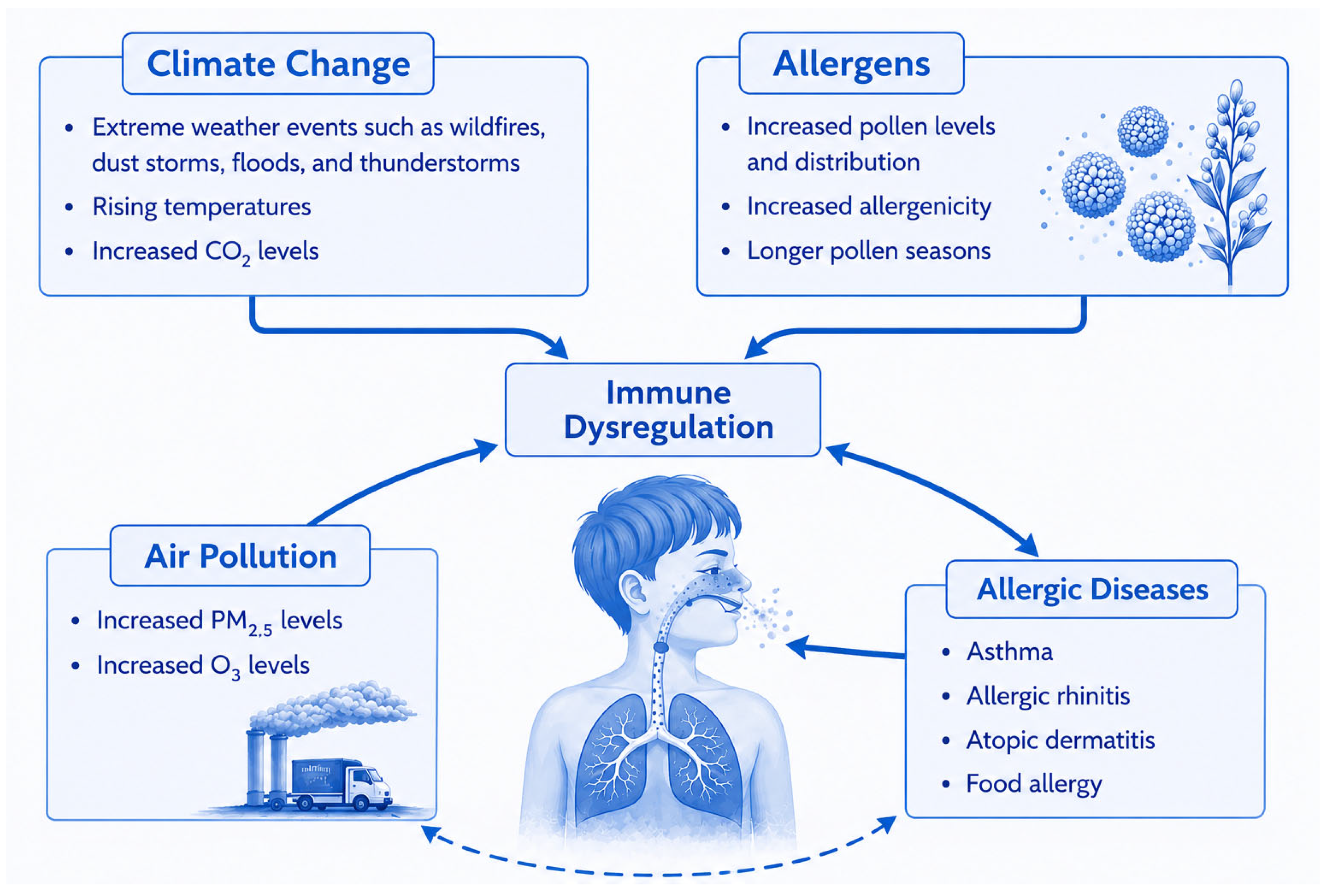
Climate change is increasingly recognized as a systemic driver of allergic disease through its capacity to alter ecosystems and reshape environmental exposures that influence immune tolerance [12]. The interconnected pathways linking climate change, air pollution, aeroallergens, and immune dysregulation in the development of allergic diseases in children are summarized in Figure 1. Climate-related events, including thunderstorms, sand and dust storms, wildfires, and heat waves, modify air quality, allergen distribution, and biodiversity patterns, thereby increasing human exposure to pollutants, GHGs, pollen, and other sensitizing agents. These environmental pressures interact with biological susceptibility factors, such as epithelial barrier dysfunction, impaired immune maturation, and microbial dysbiosis, and disproportionately affect vulnerable populations, such as infants, children, pregnant women, and the elderly [13]. Infants and young children, for instance, are particularly susceptible to air pollution because their organs are still maturing and they inhale a greater volume of air per unit of body weight than adults [8]. The convergence of environmental exposures, host susceptibility, and social vulnerability increases the likelihood of allergic sensitization and progression to allergic disease [13].
Thus, climate change should be regarded not only as an amplifier of allergen burden but also as a modifier of immune regulatory pathways through ecological disruption and microbiome alteration, eventually increasing susceptibility to allergic sensitization in children. Table 1 provides an integrated overview of the key climate change drivers, associated environmental exposures, underlying biological mechanisms, and their corresponding pediatric allergic health outcomes.

3. Prenatal Exposure and Epigenetics

The prenatal period represents a critical window of vulnerability [53]. During this stage, rapid immune differentiation and organ development occur, rendering the fetus particularly sensitive to environmental insults. Fetal immune development begins in utero, and environmental exposures during pregnancy can alter immune maturation through oxidative stress, systemic and placental inflammation, epigenetic modifications, and disruption of cytokine signaling pathways [54]. These early perturbations may influence long-term immune function by modifying developmental programming rather than inducing transient inflammatory responses alone.
Evidence indicates that air pollution exposure during pregnancy is associated with immune dysregulation, including alterations in T-cell polarization, Th2-skewing pathways, and cytokine profiles, with epigenetic mechanisms proposed as key mediators linking exposure to adverse maternal and neonatal outcomes [55]. At the molecular level, increases in ambient pollutants during pregnancy were associated with altered DNA methylation in key cytokine genes, including interleukin 4 (IL4), IL10, and IFNG, as well as changes in T-helper cell subset distributions. Given the central role of these cytokines in Th1/Th2 regulation, such epigenetic alterations may influence immune polarization and potentially contribute to downstream allergic susceptibility [56].
Beyond DNA methylation, prenatal PM2.5 (particulate matter with an aerodynamic diameter < 2.5 μm) exposure is associated with not only cytokine dysregulation but also epigenetic changes in immune cells, including alterations in histone post-translational modifications. These chromatin-level modifications regulate gene transcription by altering chromatin accessibility, suggesting that pollutant exposure may induce sustained immune reprogramming through epigenetic remodeling rather than short-lived inflammatory activation [57].
Importantly, these molecular alterations appear to extend beyond isolated immune genes. A large cohort study has examined prenatal pollutant exposure (nitrogen dioxide [NO2], O3, and PM) in relation to DNA methylation patterns across asthma- and allergy-relevant genes, using biospecimens from the placenta, cord blood, buccal mucosa, nasal mucosa, and lavage. It demonstrated that exposure-associated epigenetic variation may persist after birth and act upstream of later allergic phenotypes [58].
Epidemiological findings strongly support this mechanistic model. A meta-analysis of 38 studies reported that prenatal exposure to air pollutants, particularly PM2.5 and NO2, was associated with increased risks of several childhood allergic diseases. For every 10 µg/m3 increase, risks rose by 34% for AD (odds ratio—OR = 1.34; 95% Confidence Interval—95% CI: 1.10–1.63), 11% for asthma with PM2.5 (OR = 1.11; 95% CI: 1.05–1.18), and 36% for AR with PM2.5 (OR = 1.36; 95% CI: 1.17–1.58) [59].
Similarly, a 14-year birth cohort study of 1439 mother–infant pairs demonstrated that higher prenatal exposure to NO2, carbon monoxide (CO), and sulfur dioxide (SO2) was associated with significantly elevated risks of AD and AR, with high-exposure clusters showing approximately threefold increased risk compared with lower-exposure groups [30]. A Danish cohort study found that higher prenatal exposure to NO2, PM2.5, and PM10 (particulate matter with aerodynamic diameter < 10 μm) was associated with altered early immune responses and increased risk of allergic sensitization (OR = 2.68; 95% CI: 1.58–4.62) and AR (OR = 2.63; 95% CI: 1.18–5.81) by age 6 years. Prenatal pollution-related inflammatory alterations in infancy were also linked to a higher risk of asthma at the age of 6 years (OR = 1.80; 95% CI: 1.18–2.76) [60]. Consistent associations were observed in a retrospective study of 3177 preschool children, where higher prenatal and first-year NO2 exposure was significantly associated with increased odds of asthma, AR, pneumonia, and AD. NO2 exposure during pregnancy increased the odds of AR by approximately 59–68%, and exposure during the first year of life increased the odds by 57–73%, whereas SO2 and PM10 showed no consistent associations [61]. A Ma’anshan birth cohort study found that prenatal PM2.5 exposure during the third trimester significantly increased childhood asthma risk among 1807 children. Children exposed to the highest PM2.5 levels (>76.65 μg/m3) had a 59% higher asthma risk (95% CI: 1.00–2.52), while each log2-unit increase in PM2.5 exposure was associated with a 102% increase in asthma risk (95% CI: 1.24–3.27). Exposure to PM2.5 components, including Cl (OR = 2.13), SO42− (OR = 2.22), NH4+ (OR = 2.28), and NO3 (OR = 2.13), was also significantly associated with increased asthma risk, especially in boys. Additionally, the study identified IL-4 as a key molecular mechanism linking prenatal air pollution exposure to childhood asthma, suggesting that increased IL-4 expression may activate inflammatory pathways, recruit inflammatory cells, and lead to airway hyperinflammation associated with asthma development [62].
Conversely, in the Pélagie mother–child cohort (n = 1322 at 6 years; n = 1118 at 12 years), median prenatal exposure levels were 15 μg/m3 for PM2.5 and 18 μg/m3 for NO2, and overall analyses did not show statistically significant associations with asthma, AR, or AD. However, at 12 years, there was a tendency toward increased asthma risk per interquartile range increase in PM2.5 (OR = 1.38; 95% CI: 0.98–1.93) and NO2 (OR = 1.25; 95% CI: 0.98–1.59), and at 6 years, AD risk was significantly elevated in urban areas for PM2.5 (OR = 1.49; 95% CI: 1.03–2.14) and NO2 (OR = 1.40; 95% CI: 1.08–1.82) [63].
Taken together, the convergence of epigenetic evidence and longitudinal epidemiological data supports a coherent model in which prenatal air pollution exposure induces molecular and immune reprogramming during fetal development, thereby increasing susceptibility to allergic sensitization and allergic disease in childhood.

4. Early-Life Exposure

Growing evidence indicates that early life represents a critical window of susceptibility during which environmental exposures can shape immune maturation and long-term allergic risk. Early postnatal exposure to climate-sensitive pollutants has been increasingly linked to the development of allergic diseases in children. Recent studies suggest that these exposures may exert timing-specific effects, with certain developmental periods demonstrating heightened vulnerability to allergic outcomes [29,64,65,66]. In particular, exposure to air pollution, pollen, and indoor environmental factors during prenatal and postnatal life has been associated with an increased risk of childhood asthma and allergies [67].
A large multicenter study demonstrated that early infancy (30–38 weeks postnatal age; 7.5–9.5 months) constitutes a critical susceptibility window during which O3 exposure increases the risk of AR in preschool children, following a threshold-free J-shaped exposure–response relationship [64]. A population-based cohort study reported that early-life exposure to NO2 and O3 increased the risk of childhood asthma by about 17% and AD by about 7% [28]. In a retrospective cohort of 182,387 children, wildfire smoke exposure during early postnatal life was associated with earlier use of upper respiratory medications, with each additional weekly smoke-day increasing risk by 9.4% in the first 12 weeks (hazardous ratio—HR = 1.094; 95% CI: 1.005–1.191) and 10.8% in weeks 13–24 (HR = 1.108; 95% CI: 1.016–1.209) [65]. In a cohort of 2598 preschool children aged 3–6 years, 14.9% had doctor-diagnosed FA. Early-life exposure to both indoor and outdoor air pollution was significantly associated with FA. Prenatal exposure to mold or dampness nearly doubled the odds of FA (adjusted OR = 1.93; 95% CI: 1.35–2.75), while traffic-related NO2 exposure increased risk both prenatally (OR = 1.24; 95% CI: 1.00–1.54) and postnatally (OR = 1.38; 95% CI: 1.03–1.85) per interquartile range increase [29]. Additionally, a retrospective cohort study of 2598 preschool children found that 33.9% developed early allergic symptoms, including wheeze (14.7%) and rhinitis-like symptoms (25.4%), while 28.4% developed diagnosed allergic diseases, including asthma (6.7%) and AR (7.2%). Prenatal exposure to window condensation significantly increased the risk of early allergic symptoms, with ORs of 1.33 for allergic symptoms, 1.30 for wheeze, and 1.27 for rhinitis-like symptoms. The study also showed that exposure to outdoor air pollution, particularly SO2 and NO2 during the first 3 years of life, was significantly associated with childhood asthma and AR [66]. In another multicenter retrospective cohort study of 20,012 Chinese preschool children aged 3–6 years, an interquartile range increase in postnatal daily minimum temperature exposure was associated with higher odds of childhood asthma (OR = 1.114; 95% CI: 1.060–1.169) and FA (OR = 1.073; 95% CI: 1.037–1.109) [68].
Growing evidence indicates that early-life exposure to ambient air pollution may contribute to the development and progression of childhood asthma. In a multicenter study of 29,418 Chinese children aged 3–6 years, each 10 μg/m3 increase in early-life PM1 (particulate matter with aerodynamic diameter < 1 μm), PM2.5, and PM10 exposure was associated with increased odds of childhood asthma (OR = 1.55, 95% CI: 1.27–1.89; OR = 1.14, 95% CI: 1.03–1.26; and OR = 1.11, 95% CI: 1.02–1.20, respectively), while wheeze was significantly associated with PM1 (OR = 1.23; 95% CI: 1.07–1.41) and PM2.5 exposure (OR = 1.08; 95% CI: 1.01–1.16) [69]. In a pooled analysis of 14,126 children from four European birth cohorts followed up to 14–16 years of age, exposure at the birth address to NO2 and PM2.5 absorbance was associated with increased incident asthma (OR = 1.13 per 10 μg/m3 NO2, 95% CI: 1.02–1.25; OR = 1.29 per unit PM2.5 absorbance, 95% CI: 1.00–1.66), with more consistent effects observed after 4 years of age [70]. Similarly in a multicenter US cohort study including 5279 children followed up to 11 years of age, a 1-IQR (interquartile range) increase in mean NO2 exposure during the first 3 years of life was associated with a 25% higher asthma incidence by age 4 years (HR = 1.25; 95% CI: 1.03–1.52) and a 22% higher incidence by age 11 years (HR = 1.22; 95% CI: 1.04–1.44), while a corresponding increase in PM2.5 exposure was associated with a 31% and 23% higher asthma incidence (HR = 1.31, 95% CI: 1.04–1.66; HR = 1.23, 95% CI: 1.01–1.50 respectively) [71].

5. Air Pollution

Climate change and air pollution are closely interrelated, with climate change influencing air pollutant levels and overall air quality [72]. Air pollution is a complex mixture of gaseous pollutants and PM, including O3, nitrogen oxides (NOx), CO, volatile organic compounds (VOCs), and heavy metals, with sources and biological effects that vary [19]. Human activities such as fossil fuel combustion, deforestation, land-use modification, livestock production, agricultural fertilization, and industrial processes have significantly elevated GHG emissions and enhanced the formation of ground-level O3 [19].
Outdoor air pollution originates from multiple sources, including industrial and vehicular emissions, such as GHGs, PM, and other toxic pollutants, as well as natural events like wildfires and sand and dust storms [73].
Household air pollution is mainly generated by burning fuels such as wood, charcoal, coal, and kerosene for cooking or heating, as well as by tobacco smoke [74,75]. Globally, approximately 2.1 billion people rely on cooking with open fires and inefficient stoves, which expose them to significant air pollution [74]. Exposure to tobacco smoke and second-hand smoke impairs pulmonary and immune function by inducing inflammation, weakening host defenses, and increasing the risk of asthma and other allergic diseases. It also shows that prenatal and early-life exposure can disrupt lung development and cause long-term respiratory dysfunction [76]. In addition, indoor environmental pollutants such as scented candles and fragrances may also contribute to allergic sensitization and respiratory inflammation. Fragranced consumer products and scented candles emit VOCs and PM, which may contribute to airway irritation, oxidative stress, and immune dysregulation [77,78].
Climate-related changes in atmospheric conditions increase human exposure to air pollutants through multiple interconnected mechanisms [13,72]. Rising ambient temperatures and increasingly frequent heatwaves enhance the photochemical reactions between NOx and VOCs, leading to increased formation of ground-level O3, particularly under hot and sunny conditions [72,79]. Moreover, climate change is expected to modify the distribution and intensity of O3 and PM exposure through changes in temperature, wind patterns, rainfall, and humidity [80]. Climate-driven droughts and extreme heat increase the frequency and intensity of wildfires, which are major sources of fine PM (PM2.5) and toxic gaseous pollutants [81,82]. Wildfire smoke contains high concentrations of PM2.5, CO, NOx, VOCs, PAHs, and secondary pollutants formed during atmospheric transport [31,81]. Moreover, wildfire-derived pollutants can be transported over long geographic distances, contributing to the deterioration of air quality even in areas remote from the original fire source [81]. Climate change, additionally, contributes to desertification, soil drying, and land degradation, which increase the occurrence of sand and dust storms and subsequently elevate concentrations of coarse particles, fine particles, bioaerosols, metals, and microbial components in the atmosphere [83]. These climate-sensitive air pollutants can damage the respiratory epithelial barrier, promote pro-inflammatory immune responses, and enhance Th2-mediated inflammation, thereby contributing to allergic sensitization in children [16].
Approximately 93% of children worldwide under the age of 15 years (around 1.8 billion) are exposed to air pollution, placing them at risk of harmful health effects during critical stages of development [84]. Air pollutants can affect children’s respiratory system by inducing epithelial injury, oxidative stress, inflammation, and immune dysregulation, contributing to airway diseases such as asthma [85]. Numerous studies, including meta-analyses, have reported links between air pollutants and allergic diseases in children [23,24,59].

5.1. Ozone

Ground-level O3 represents a major climate-sensitive air contaminant. Its concentrations tend to rise to hazardous levels during hot, sunny conditions [40]. Exposure to O3 during critical periods of lung development can induce structural and morphological alterations, including reduced bronchial branching, decreased alveolar number, disruption of smooth muscle bundle orientation, and hyperinnervation of the pulmonary epithelium. This exposure during early life may increase susceptibility to allergic diseases later in life, including asthma, AD, and AR [19].
A multi-city study including 177,888 children found that long-term O3 exposure was associated with significantly increased odds of allergic diseases, with each interquartile increase in O3 concentration linked to 31% higher odds of asthma, 25% higher odds of AR, 19% higher odds of AD, and 28% higher odds of conjunctivitis [20].

5.2. Particular Matter

PM is a key air pollutant and known for its harmful effects on human health; PM is further classified by aerodynamic equivalent diameter into coarse particles (PM10), fine particles (PM2.5), and ultrafine particles [86]. PM, especially PM2.5 and ultrafine particles, contribute to the pathophysiology of allergic disease by inducing oxidative stress and epithelial barrier dysfunction in the airways and skin, enhancing allergen penetration, and acting as immune adjuvants that promote Th2-skewed inflammation, IgE sensitization, and eosinophilic responses. PM may also contribute to immune dysregulation through mechanisms involving microbiome disruption [87].
A recent meta-analysis showed that exposure to PM was significantly associated with increased asthma morbidity in children and adolescents, with a pooled OR of 1.04 (CI: 1.03–1.06) for PM10 and 1.05 (95% CI: 1.04–1.07) for PM2.5 across 47 observational studies including 417,874 participants. PM exposure was also linked to wheezing, with a pooled OR of 1.06 (95% CI: 1.05–1.07) for PM10 and a stronger association for PM2.5 (OR = 1.15, 95% CI: 1.10–1.20), indicating greater toxicity of finer particles [23]. Another recent meta-analysis included 21 studies with 120,454 children and found that each interquartile range increase in PM2.5 was associated with a 20% higher risk of FA (OR = 1.20; 95% CI 1.01–1.42), while mold or damp exposure increased risk by 53% (OR = 1.53; 95% CI 1.21–1.93) [22]. Likewise, a meta-analysis of 21 studies and 217,396 children demonstrated that each 10 μg/m3 increase in PM2.5 was associated with a 9% increase in the risk of AR in children (OR = 1.09, 95% CI: 1.01–1.17), while each 10 μg/m3 increase in PM10 was associated with a 6% increase in risk (OR = 1.06, 95% CI: 1.02–1.11) [24].
A cross-sectional study showed that PM2.5 exposure was positively associated with AR in adolescents, with each 1 μg/m3 increase in annual mean PM2.5 raising the risk by 11% (OR = 1.110, 95% CI: 1.054–1.169). The overall prevalence of AR in the study population was 17.5% [26]. A population-based study identified that an interquartile-range increase in PM10 was associated with higher odds of AD in children, including increased AD symptoms (OR = 1.06, 95% CI: 1.01–1.12) and physician-diagnosed AD (OR = 1.07, 95% CI: 1.01–1.13) [25]. In addition, indoor PM2.5 exposure was linked to worsening AD symptoms in children, with each 10 μg/m3 increase in PM2.5 raising AD symptom scores by 16.5% in spring and 12.6% in winter. The harmful effects were stronger in children with inhalant allergen sensitization and severe disease, reaching a 15.7% increase in symptoms per 10 μg/m3 rise in PM2.5 [27].

6. Effect of Climate Change on Aeroallergens

Evidence has shown that both rising CO2, O3, and NOx concentrations and global temperatures, as a result of climate change, cause alterations in aeroallergen patterns, particularly pollen, marked by longer seasons, wider spread, higher levels, and increased allergenicity [14,15]. These climate-driven changes in pollen patterns may contribute to more frequent asthma exacerbations and a greater burden of allergic diseases [8,88].
A meta-analysis of 155 included studies, mainly conducted in Europe, examined 11 major allergenic pollen taxa, including Poaceae, Betula, Olea, Cupressaceae, Fraxinus, and Platanus. It found an overall increase in pollen production between 1974 and 2020, with positive trends reported in 100% of Alnus studies, 92% of Fraxinus, 82% of Olea and Betula, 78% of Platanus, 76% of Cupressaceae, and 72% of Poaceae. Conversely, decreases were observed in 70% of Artemisia and 85% of Urticaceae studies, with higher temperatures and rainfall showing species-dependent associations with increased pollen production [89]. Paudel et al. found that climate-related increases in temperature and precipitation were linked to significant changes in pollen activity, including an increase in tree pollen exposure duration by approximately 0.47 weeks and an increase in tree pollen season length by about 0.38 weeks between 2002 and 2019, along with a significant rise in the number of active pollen weeks, in the San Francisco Bay Area (San Francisco, CA, USA). Peak pollen concentrations were positively associated with temperature changes at time lags of 0–1, 0–4, and 0–12 weeks and with precipitation changes at time lags of 0–4, 0–12, and 0–24 weeks [14]. In a study of 11,895 participants (adults and children) in northern Taiwan, 7.8% demonstrated pollen-specific IgE sensitization, with the annual prevalence increasing significantly from 6.7% in 2014 to 9.9% in 2020. They also developed sensitization to several pollens (e.g., Bermuda grass, ragweed mix, black willow), showing strong positive correlations with rising winter temperatures (rs—Spearman’s rank correlation coefficient = 0.821–0.893, p ≤ 0.023) and inverse correlations with winter rainfall [90].
Pollen allergens penetrate epithelial barriers and stimulate epithelial cells to release cytokines such as IL-25, IL-33, and thymic stromal lymphopoietin (TSLP), which activate dendritic cells and innate lymphoid cells, promoting Th2 differentiation and the production of IL-4, IL-5, IL-9, and IL-13. This Th2-skewed immune response induces allergen-specific IgE production and sensitization of mast cells and basophils, leading to mediator release, eosinophilic inflammation, and clinical allergic disease [16].
The meta-analysis by Shrestha et al. found that increases in ambient pollen concentrations were significantly associated with higher pediatric asthma hospitalizations, with each 10 grains/m3 increase in grass pollen linked to approximately a 3% increase in asthma admissions (OR = 1.03; 95% CI: 1.01–1.04). Similarly, birch pollen increases of 10 grains/m3 were linked to a significant rise in childhood asthma admissions, supporting a consistent relationship between elevated pollen exposure and pediatric asthma exacerbations [17]. In a longitudinal study of 8295 children and adolescents in Seoul, the duration of the tree pollen season increased from 98 days to 140 days, coinciding with rising temperatures. Over the same period, sensitization rates to major tree pollens (oak, hazel, and alder) increased by approximately 0.28% per year, demonstrating an association between prolonged pollen exposure and increasing allergic sensitization in the pediatric population [18]. In another longitudinal study of children with asthma, higher pollen severity in the preceding week was significantly associated with poorer asthma control, with each interquartile range increase in pollen linked to a 0.35-point increase in asthma control score (β = 0.35, p < 0.05). This association remained significant after adjustment for PM2.5 and O3 exposure, with an even stronger effect size (β = 0.44, p < 0.05), indicating that pollen independently worsened asthma control in children [91].

7. Extreme Weather Conditions

Climate change directly leads to higher temperatures, including more frequent heatwaves and rapid temperature fluctuations, along with shifts in rainfall patterns that contribute to increased wildfires, floods, drought, sand and dust storms, and thunderstorms [88,92].

7.1. Wildfires

Wildfire smoke is composed of numerous chemical components and produces multiple air pollutants, including PM, O3, and various organic compounds [88]. The respiratory effects of wildfire smoke include oxidative stress, immune dysregulation with heightened inflammation, and impairment of the respiratory epithelial barrier [31].
A recent scoping review of 44 studies found that wildfire smoke exposure was consistently associated with worsening pediatric asthma outcomes, with 42 studies reporting increased exacerbations, including higher medication use (9 studies), increased emergency department visits (20 studies), hospitalizations (8 studies), and reduced lung function (9 studies) [93]. A cross-sectional study that examined the impact of wildfire smoke on pediatric asthma control in the Northeastern United States included 1217 pediatric asthma encounters and found significantly worse asthma control in the wildfire-smoke-affected summer of 2023 compared with 2022, but no significant differences between 2023 and 2024 [32]. In a cohort study of 57,375 children with asthma, on wildfire smoke days (PM2.5 ≥ 20 µg/m3), emergency department visits increased to 6.5 per day versus 5.8 per day on good air quality days, corresponding to a 13% higher rate of asthma exacerbations (incidence ratio rate—IRR = 1.13; 95% CI: 1.02–1.24), whereas non-wildfire-related air pollution did not show a significant increase [33].

7.2. Sand and Dust Storms

Sand and dust storms pose a significant obstacle to sustainable development, especially in arid and semi-arid regions, where environmental vulnerability and land degradation amplify their frequency and impact. Approximately 2 billion tonnes of dust are released into the atmosphere annually, with the Asia-Pacific region accounting for about 27% of those emissions [94]. Sandstorm dust carries a complex mixture of environmental pollutants and microorganisms, such as bacteria, fungi, and viruses. Moreover, sandstorms significantly elevate ambient air pollutant concentrations, particularly PM2.5, CO, and O3, leading to substantial deterioration of air quality. These events increase environmental contamination and pose notable respiratory health risks [95].
In a cohort study, among 131 children with asthma (77 atopic, 54 non-atopic), atopic children had 113.71% higher fractional exhaled nitric oxide (FeNO) concentrations (95% CI: 68.08–171.73%) and a 2.62% lower Forced Expiratory Volume in 1 s/Forced Vital Capacity (FEV1/FVC) ratio (95% CI: −5.00, −0.24) compared with non-atopic peers during dust and pollen periods [37]. In a time-series analysis of 42,920 children, mild dust storms (PM10 > 71 μg/m3) were linked to a 5% increase in asthma reliever medication purchases on the same day and a 15% increase in asthma hospitalizations one day after exposure [38]. In a case-crossover study conducted in Toyama, Japan, involving 620 hospitalizations of children aged 1–15 years, heavy desert dust events (>0.1 mg/m3) were significantly associated with increased asthma admissions, with a crude OR of 1.88 (95% CI: 1.04–3.41) on the same day and 1.83 (95% CI: 1.31–2.56) over the previous week [39].

7.3. Thunderstorm Asthma

Thunderstorms are localized weather events driven by atmospheric convection and are marked by thunder, lightning, powerful winds, and intense precipitation. Thunderstorm asthma occurs when pollen or fungal spores are fragmented and dispersed during storm activity, interacting with underlying atopy to trigger acute, localized surges in pediatric asthma exacerbations. As climate change increases the frequency and unpredictability of severe thunderstorms, susceptible children may face greater exposure to sudden spikes in airborne allergens [35].
Following a thunderstorm asthma outbreak in Yulin, a northwest city of China, 391 children presented with respiratory symptoms, with daily emergency visits increasing 2.7-fold and hospital admissions increasing 16-fold. Among 51 hospitalized children, 56% had no prior asthma, 67% had AR, and 94% were sensitized to mugwort pollen [34]. In addition, during the 2023 London thunderstorm asthma event, 50 children (28%) presented with wheeze on 12 June and 18 (19%) on 13 June, with 57% having no prior asthma, 65% presenting with severe or life-threatening symptoms, and 11% requiring hospital admission, with no deaths or intubations reported [36].

8. Climate Change, Microbiome Dysbiosis, and Allergies in Children

Human microbiota plays a fundamental role in early-life immune system maturation by promoting immune tolerance and regulating the balance between Th1-, Th2-, and Th17-mediated immune responses. Microbial dysbiosis during infancy, caused by factors such as environmental exposures, antibiotic use, and dietary changes, may impair epithelial barrier integrity and increase susceptibility to allergic and inflammatory diseases later in life [44,45].
Climate change can modify environmental microbial exposures through rising temperatures, altered humidity and precipitation patterns, biodiversity loss, wildfires, floods, droughts, and sand and dust storms [8,96]. These environmental changes may affect the distribution, diversity, and seasonality of bacteria, viruses, and fungi, thereby potentially modifying environmental microbial exposures involved in early-life immune maturation [40]. According to the biodiversity hypothesis, reduced contact with biodiverse natural environments, particularly in urbanized settings, leads to diminished environmental microbial exposure and altered human microbiota composition. This microbial deprivation may impair immune tolerance and contribute to the increasing prevalence of allergic and inflammatory diseases [97]. Recent evidence further supports the relevance of urban biodiversity and climate-related environmental change for child immune development and allergy risk [98].
Air pollution may amplify these effects by damaging epithelial barriers and disrupting host-associated microbial communities in the airways and gut, as increasing reactive oxygen species (ROS) generation, epithelial barrier disruption, and systemic inflammation have been associated with microbial imbalance [46]. Climate-sensitive pollutants, including PM2.5, PM10, O3, SO2, NOx, and traffic-related emissions, have been shown to induce oxidative stress, airway inflammation, and alterations in respiratory and gut microbial composition [47]. These alterations may contribute to impaired mucosal immunity, enhanced Th2-type inflammatory responses, and increased susceptibility to allergic diseases [46,47].
In parallel with pollution-induced epithelial injury and microbial imbalance, climate change may also influence infectious disease dynamics. Respiratory infections may represent an additional link between climate change, microbiome disruption, and allergic disease. Climate change has been associated with altered transmission dynamics, seasonality, and emergence of viral respiratory infections through changes in temperature, humidity, precipitation patterns, extreme weather events, host susceptibility, and environmental conditions [41]. Respiratory viral infections are major contributors to childhood asthma and are strongly associated with acute asthma exacerbations [42].
In addition, increased infectious burden may increase antibiotic exposure. Early-life antibiotic exposure can disrupt the normal development of the gut microbiome, leading to reduced microbial diversity, depletion of beneficial bacteria such as Bifidobacterium and Lactobacillus, and overgrowth of potentially pro-inflammatory taxa. These alterations may promote immune dysregulation and allergic sensitization during critical periods of immune development, thereby increasing the risk of asthma, AD, AR, and FA in children [43]. A meta-analysis of 27 studies found that prenatal antibiotic exposure was linked to a 28% increased risk of childhood asthma (RR—relative risk = 1.28; 95% CI: 1.22–1.34), a 51% increased risk of wheeze (RR = 1.51; 95% CI: 1.17–1.94), a 28% increased risk of AD (RR = 1.28; 95% CI: 1.06–1.53), a 13% increased risk of AR (RR = 1.13; 95% CI: 1.02–1.25), and an 81% increased risk of FA (RR = 1.81; 95% CI: 1.11–2.95) [48]. Another meta-analysis of 18 studies including 1,768,874 children found that early-life antibiotic exposure was associated with a 5-fold higher incidence of AR (ES—effect size = 5.00; 95% CI: 4.88–5.13), with an increased risk observed after antibiotic use during the first week (ES = 5.75), first year (ES = 3.37), and first 3 years of life (ES = 5.21) [49]. A meta-analysis of 39 studies including 7,487,925 children found that antibiotic exposure during pregnancy or childhood was associated with a 22% increased risk of AD (OR = 1.22; 95% CI: 1.17–1.28). The risk was higher following childhood rather than prenatal antibiotic exposure and appeared to increase with antibiotic frequency and age at outcome assessment [50].
The gut–lung axis provides a mechanistic framework linking gut microbial dysbiosis with altered respiratory immunity and asthma susceptibility in children [51,52]. Gut microbiota may influence respiratory immune responses through microbial metabolites and immune signaling pathways, while short-chain fatty acids contribute to epithelial barrier integrity and mucosal immune homeostasis [51]. Similarly, disruption of the skin microbiome (gut–skin axis) may aggravate epithelial dysfunction and inflammation in AD [99], while gut microbiome alterations have also been implicated in pediatric FA [100].

9. Adaptation and Mitigation Strategies

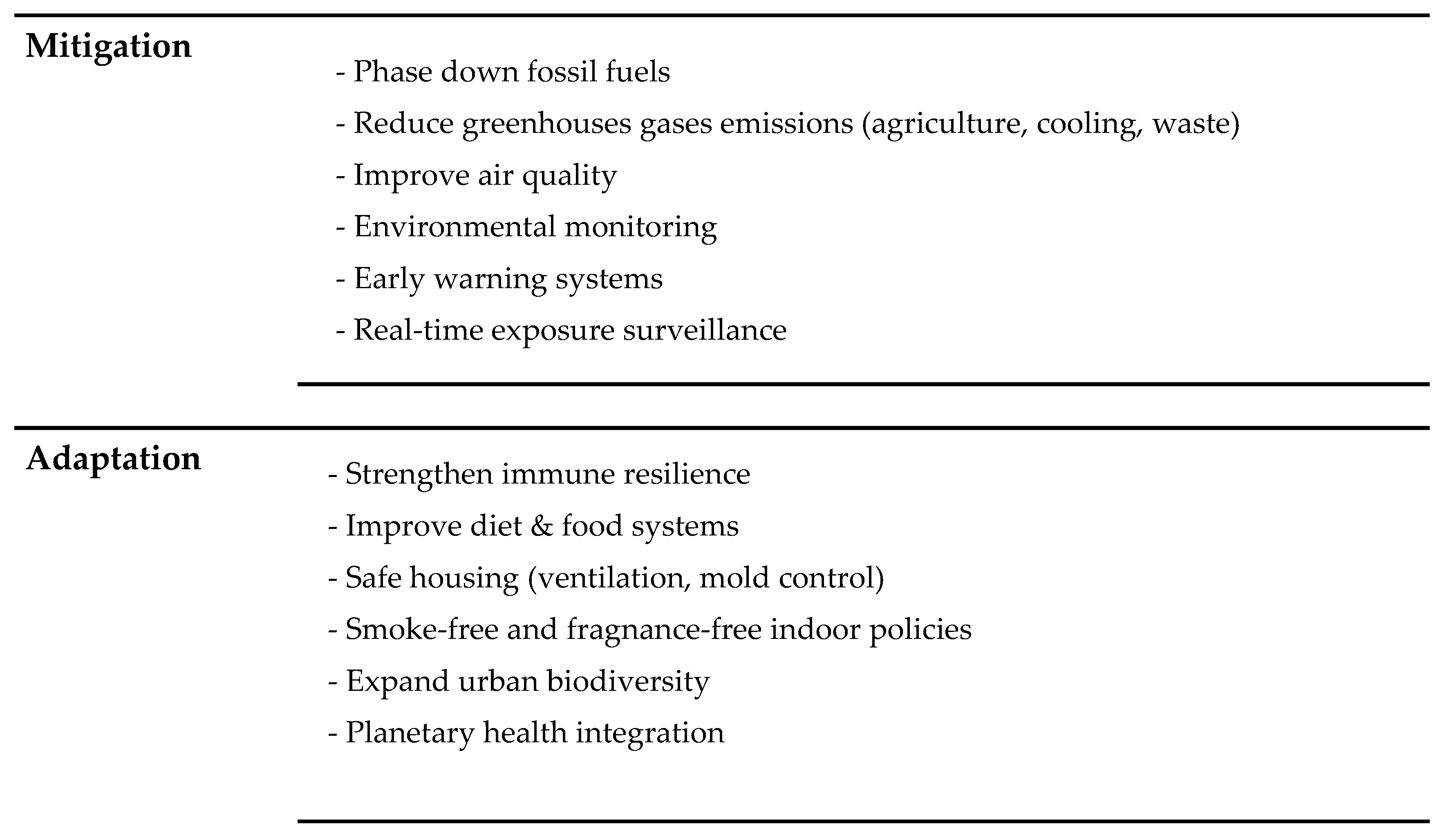
Confronting the effects of climate change on allergic diseases requires a comprehensive, systems-based approach that simultaneously targets the mitigation of climate change and integrates evidence-informed adaptation strategies to minimize associated health burdens (Figure 2).
Mitigation approaches should focus on reducing emissions to improve air quality by decreasing fossil fuel use across household, industrial, and transportation sectors, as well as reducing GHG emissions from agricultural activities, cooling and refrigeration systems, and waste management [13,16]. Additionally, continuous monitoring and the implementation of early warning systems for weather-related events, such as sand and dust storms and wildfires, should be integrated into health information systems. Access to real-time data enables health authorities to anticipate high-risk periods and implement targeted measures to mitigate the health effects of air pollution and aeroallergen exposure [88,101].
Adaptation should emphasize strengthening immune tolerance and resilience through health-promoting environmental and societal interventions, by improving diets and agricultural practices to enhance food security and access to diverse, healthy foods; providing safe housing through improved weatherization, ventilation, and mold remediation; increasing biodiversity, particularly by expanding urban green spaces and promoting planetary health [13,16], and the implementation of smoke-free and fragrance-free indoor policies [102,103].

10. Conclusions

Climate change represents an escalating and multifactorial driver of allergic diseases in children, acting through increased air pollution, altered aeroallergen patterns, extreme weather events, microbiome dysbiosis, and early-life immune reprogramming. Converging epidemiological and mechanistic evidence underscores heightened vulnerability during prenatal and early postnatal windows, with potential long-term consequences for immune tolerance and disease susceptibility. Addressing this growing burden requires coordinated mitigation to reduce emissions and environmental degradation, alongside adaptive strategies that strengthen resilience and health system preparedness. Future research should prioritize longitudinal, mechanistic, and intervention-based studies to inform evidence-driven policies and protect pediatric populations in a changing climate.

Author Contributions

Conceptualization, D.K. and K.D.; methodology, D.K. and K.D.; investigation, D.K. and D.M.; writing—original draft preparation, D.K. and D.M.; writing—review and editing, D.K., V.G., D.M. and B.B.; supervision, D.M. and K.D. All authors have read and agreed to the published version of the manuscript.

Funding

This research received no external funding.

Institutional Review Board Statement

Not applicable.

Informed Consent Statement

Not applicable.

Data Availability Statement

No new data were created for this literature review.

Acknowledgments

During the preparation of this manuscript, the authors used ChatGPT Plus (OpenAI) version 5.3 for the creation of Figure 1. The authors have reviewed and edited the output and take full responsibility for the content of this publication.

Conflicts of Interest

The authors declare no conflicts of interest.

References

  1. Tang, M.L.K.; Mullins, R.J. Food Allergy: Is Prevalence Increasing? Intern. Med. J. 2017, 47, 256–261. [Google Scholar] [CrossRef] [PubMed]
  2. Zheng, J.; Jin, Y.; Wang, C.; Feng, C.; Lai, X.; Hua, S.; Tai, J. Global, Regional, and National Epidemiology of Allergic Diseases in Children from 1990 to 2021: Findings from the Global Burden of Disease Study 2021. BMC Pulm. Med. 2025, 25, 54. [Google Scholar] [CrossRef] [PubMed]
  3. Adamko, D.J.; Hildebrand, K.J. The Changing Epidemiology of Paediatric Childhood Asthma and Allergy in Different Regions of the World. Front. Allergy 2025, 6, 1584928. [Google Scholar] [CrossRef] [PubMed]
  4. Shin, Y.H.; Hwang, J.; Kwon, R.; Lee, S.W.; Kim, M.S.; GBD 2019 Allergic Disorders Collaborators; Shin, J.I.; Yon, D.K. Global, Regional, and National Burden of Allergic Disorders and Their Risk Factors in 204 Countries and Territories, from 1990 to 2019: A Systematic Analysis for the Global Burden of Disease Study 2019. Allergy 2023, 78, 2232–2254. [Google Scholar] [CrossRef] [PubMed]
  5. Wang, J.; Zhou, Y.; Zhang, H.; Hu, L.; Liu, J.; Wang, L.; Wang, T.; Zhang, H.; Cong, L.; Wang, Q. Pathogenesis of Allergic Diseases and Implications for Therapeutic Interventions. Signal Transduct. Target. Ther. 2023, 8, 138. [Google Scholar] [CrossRef] [PubMed]
  6. Singh, A.B.; Kumar, P. Climate Change and Allergic Diseases: An Overview. Front. Allergy 2022, 3, 964987. [Google Scholar] [CrossRef] [PubMed]
  7. Wright, R.J. Influences of Climate Change on Childhood Asthma and Allergy Risk. Lancet Child Adolesc. Health 2020, 4, 859–860. [Google Scholar] [CrossRef] [PubMed]
  8. World Health Organization. Climate Change, Air Pollution, Pollen and Health: Technical Brief. Available online: https://www.who.int/publications/i/item/B09412 (accessed on 5 February 2026).
  9. Forster, P.M.; Smith, C.; Walsh, T.; Lamb, W.F.; Lamboll, R.; Hall, B.; Hauser, M.; Ribes, A.; Rosen, D.; Gillett, N.P.; et al. Indicators of Global Climate Change 2023: Annual Update of Key Indicators of the State of the Climate System and Human Influence. Earth Syst. Sci. Data 2024, 16, 2625–2658. [Google Scholar] [CrossRef]
  10. D’Amato, G.; Holgate, S.T.; Pawankar, R.; Ledford, D.K.; Cecchi, L.; Al-Ahmad, M.; Al-Enezi, F.; Al-Muhsen, S.; Ansotegui, I.; Baena-Cagnani, C.E.; et al. Meteorological Conditions, Climate Change, New Emerging Factors, and Asthma and Related Allergic Disorders. A Statement of the World Allergy Organization. World Allergy Organ. J. 2015, 8, 25. [Google Scholar] [CrossRef] [PubMed]
  11. Lee, A.S.; Aguilera, J.; Efobi, J.A.; Jung, Y.S.; Seastedt, H.; Shah, M.M.; Yang, E.; Konvinse, K.; Utz, P.J.; Sampath, V.; et al. Climate Change and Public Health: The Effects of Global Warming on the Risk of Allergies and Autoimmune Diseases. EMBO Rep. 2023, 24, e56821. [Google Scholar] [CrossRef] [PubMed]
  12. Haahtela, T.; Holgate, S.; Pawankar, R.; Akdis, C.A.; Benjaponpitak, S.; Caraballo, L.; Demain, J.; Portnoy, J.; Von Hertzen, L. The Biodiversity Hypothesis and Allergic Disease: World Allergy Organization Position Statement. World Allergy Organ. J. 2013, 6, 3. [Google Scholar] [CrossRef] [PubMed]
  13. Agache, I.; Akdis, C.; Akdis, M.; Al-Hemoud, A.; Annesi-Maesano, I.; Balmes, J.; Cecchi, L.; Damialis, A.; Haahtela, T.; Haber, A.L.; et al. Climate Change and Allergic Diseases: A Scoping Review. J. Clim. Change Health 2024, 20, 100350. [Google Scholar] [CrossRef] [PubMed]
  14. Paudel, B.; Chu, T.; Chen, M.; Sampath, V.; Prunicki, M.; Nadeau, K.C. Increased Duration of Pollen and Mold Exposure Are Linked to Climate Change. Sci. Rep. 2021, 11, 12816. [Google Scholar] [CrossRef] [PubMed]
  15. Anderegg, W.R.L.; Abatzoglou, J.T.; Anderegg, L.D.L.; Bielory, L.; Kinney, P.L.; Ziska, L. Anthropogenic Climate Change Is Worsening North American Pollen Seasons. Proc. Natl. Acad. Sci. USA 2021, 118, e2013284118. [Google Scholar] [CrossRef] [PubMed]
  16. Agache, I.; Akdis, C.; Akdis, M.; Al-Hemoud, A.; Annesi-Maesano, I.; Balmes, J.; Cecchi, L.; Damialis, A.; Haahtela, T.; Haber, A.L.; et al. Immune-Mediated Disease Caused by Climate Change-Associated Environmental Hazards: Mitigation and Adaptation. Front. Sci. 2024, 2, 1279192. [Google Scholar] [CrossRef] [PubMed]
  17. Shrestha, S.K.; Lambert, K.A.; Erbas, B. Ambient Pollen Concentrations and Asthma Hospitalization in Children and Adolescents: A Systematic Review and Meta-Analysis. J. Asthma 2021, 58, 1155–1168. [Google Scholar] [CrossRef] [PubMed]
  18. Lee, K.S.; Kim, K.; Choi, Y.; Yang, S.; Kim, C.; Moon, J.; Kim, K.R.; Lee, Y.; Oh, J. Increased Sensitization Rates to Tree Pollens in Allergic Children and Adolescents and a Change in the Pollen Season in the Metropolitan Area of Seoul, Korea. Pediatr. Allergy Immunol. 2021, 32, 872–879. [Google Scholar] [CrossRef] [PubMed]
  19. Atkinson, C.E.; Kesic, M.J.; Hernandez, M.L. Ozone in the Development of Pediatric Asthma and Atopic Disease. Immunol. Allergy Clin. N. Am. 2022, 42, 701–713. [Google Scholar] [CrossRef] [PubMed]
  20. Gui, Z.-H.; Guo, Z.-Y.; Zhou, Y.; Dharmage, S.; Morawska, L.; Heinrich, J.; Cheng, Z.-K.; Gan, H.; Lin, Z.-W.; Zhang, D.-Y.; et al. Long-Term Ambient Ozone Exposure and Childhood Asthma, Rhinitis, Eczema, and Conjunctivitis: A Multi-City Study in China. J. Hazard. Mater. 2024, 478, 135577. [Google Scholar] [CrossRef] [PubMed]
  21. World Health Organization. Global Air Quality Guidelines: Particulate Matter (PM2.5 and PM10), Ozone, Nitrogen Dioxide, Sulfur Dioxide and Carbon Monoxide. Available online: https://www.who.int/publications/i/item/9789240034228 (accessed on 17 February 2026).
  22. Xue, Y.; Gu, W.; Li, Q.; Feng, H.; Xu, L.; Tong, S.; Liu, S. The Role of Air Pollution, Seasonal Variations, and Sunlight in Childhood Food Allergy: A Systematic Review and Meta-Analysis. Environ. Res. 2026, 288, 123215. [Google Scholar] [CrossRef] [PubMed]
  23. Keleb, A.; Abeje, E.T.; Daba, C.; Endawkie, A.; Tsega, Y.; Abere, G.; Mamaye, Y.; Bezie, A.E. The Odds of Developing Asthma and Wheeze among Children and Adolescents Exposed to Particulate Matter: A Systematic Review and Meta-Analysis. BMC Public Health 2025, 25, 1225. [Google Scholar] [CrossRef] [PubMed]
  24. Lin, L.; Li, T.; Sun, M.; Liang, Q.; Ma, Y.; Wang, F.; Duan, J.; Sun, Z. Effect of Particulate Matter Exposure on the Prevalence of Allergic Rhinitis in Children: A Systematic Review and Meta-Analysis. Chemosphere 2021, 268, 128841. [Google Scholar] [CrossRef] [PubMed]
  25. Min, K.-D.; Yi, S.-J.; Kim, H.-C.; Leem, J.-H.; Kwon, H.-J.; Hong, S.; Kim, K.S.; Kim, S.-Y. Association between Exposure to Traffic-Related Air Pollution and Pediatric Allergic Diseases Based on Modeled Air Pollution Concentrations and Traffic Measures in Seoul, Korea: A Comparative Analysis. Environ. Health 2020, 19, 6. [Google Scholar] [CrossRef] [PubMed]
  26. Qiu, C.; Feng, W.; An, X.; Liu, F.; Liang, F.; Tang, X.; Zhang, P.; Liang, X. The Effect of Fine Particulate Matter Exposure on Allergic Rhinitis of Adolescents Aged 10–13 Years: A Cross-Sectional Study from Chongqing, China. Front. Public Health 2022, 10, 921089. [Google Scholar] [CrossRef] [PubMed]
  27. Kim, Y.-M.; Kim, J.; Ha, S.-C.; Ahn, K. Effects of Exposure to Indoor Fine Particulate Matter on Atopic Dermatitis in Children. Int. J. Environ. Res. Public Health 2021, 18, 11509. [Google Scholar] [CrossRef] [PubMed]
  28. To, T.; Zhu, J.; Stieb, D.; Gray, N.; Fong, I.; Pinault, L.; Jerrett, M.; Robichaud, A.; Ménard, R.; Van Donkelaar, A.; et al. Early Life Exposure to Air Pollution and Incidence of Childhood Asthma, Allergic Rhinitis and Eczema. Eur. Respir. J. 2020, 55, 1900913. [Google Scholar] [CrossRef] [PubMed]
  29. Zhang, X.; Lu, C.; Li, Y.; Norbäck, D.; Murthy, P.; Sram, R.J.; Deng, Q. Early-Life Exposure to Air Pollution Associated with Food Allergy in Children: Implications for ‘One Allergy’ Concept. Environ. Res. 2023, 216, 114713. [Google Scholar] [CrossRef] [PubMed]
  30. Huang, Y.; Wen, H.-J.; Guo, Y.-L.L.; Wei, T.-Y.; Wang, W.-C.; Tsai, S.-F.; Tseng, V.S.; Wang, S.-L.J. Prenatal Exposure to Air Pollutants and Childhood Atopic Dermatitis and Allergic Rhinitis Adopting Machine Learning Approaches: 14-Year Follow-up Birth Cohort Study. Sci. Total Environ. 2021, 777, 145982. [Google Scholar] [CrossRef] [PubMed]
  31. Noah, T.L.; Worden, C.P.; Rebuli, M.E.; Jaspers, I. The Effects of Wildfire Smoke on Asthma and Allergy. Curr. Allergy Asthma Rep. 2023, 23, 375–387. [Google Scholar] [CrossRef] [PubMed]
  32. Maassel, A.K.; Brochu, P.; Harder, V.S.; Ricketts, T.H.; Teach, S.J.; Robinson, K.J. Wildfire Smoke and Pediatric Asthma Control in the Northeastern United States: A Cross-Sectional Study. Environ. Health 2025, 24, 91. [Google Scholar] [CrossRef] [PubMed]
  33. Moore, L.E.; Oliveira, A.; Zhang, R.; Behjat, L.; Hicks, A. Impacts of Wildfire Smoke and Air Pollution on a Pediatric Population with Asthma: A Population-Based Study. Int. J. Environ. Res. Public Health 2023, 20, 1937. [Google Scholar] [CrossRef] [PubMed]
  34. Xu, Y.-Y.; Xue, T.; Li, H.-R.; Guan, K. Retrospective Analysis of Epidemic Thunderstorm Asthma in Children in Yulin, Northwest China. Pediatr. Res. 2021, 89, 958–961. [Google Scholar] [CrossRef] [PubMed]
  35. Han, P.; Shen, K.-L. Climate Change and Thunderstorm Asthma in Children: Challenges and Responses. World J. Pediatr. 2026, 22, 159–166. [Google Scholar] [CrossRef] [PubMed]
  36. Stewart, C.G.; Mahesh, A.; Mulvenna, C. Thunderstorm Asthma: A Paediatric Emergency Department Experience in London. BMJ Paediatr. Open 2024, 8, e002572. [Google Scholar] [CrossRef] [PubMed]
  37. Qian, Y.; Garshick, E.; Galanakis, E.; Michaelidou, E.; Zembashi, S.; Costi, E.; Michanikou, A.; Kinni, P.; Koutrakis, P.; Yiallouros, P.K.; et al. Allergic Sensitization Worsens Respiratory Health in Children with Asthma During Dust and Pollen Periods. Pediatr. Pulmonol. 2025, 60, e71428. [Google Scholar] [CrossRef] [PubMed]
  38. Yitshak-Sade, M.; Novack, V.; Katra, I.; Gorodischer, R.; Tal, A.; Novack, L. Non-Anthropogenic Dust Exposure and Asthma Medication Purchase in Children. Eur. Respir. J. 2015, 45, 652–660. [Google Scholar] [CrossRef] [PubMed]
  39. Kanatani, K.T.; Ito, I.; Al-Delaimy, W.K.; Adachi, Y.; Mathews, W.C.; Ramsdell, J.W. Desert Dust Exposure Is Associated with Increased Risk of Asthma Hospitalization in Children. Am. J. Respir. Crit. Care Med. 2010, 182, 1475–1481. [Google Scholar] [CrossRef] [PubMed]
  40. Pacheco, S.E.; Guidos-Fogelbach, G.; Annesi-Maesano, I.; Pawankar, R.; D’ Amato, G.; Latour-Staffeld, P.; Urrutia-Pereira, M.; Kesic, M.J.; Hernandez, M.L. Climate Change and Global Issues in Allergy and Immunology. J. Allergy Clin. Immunol. 2021, 148, 1366–1377. [Google Scholar] [CrossRef] [PubMed]
  41. He, Y.; Liu, W.J.; Jia, N.; Richardson, S.; Huang, C. Viral Respiratory Infections in a Rapidly Changing Climate: The Need to Prepare for the next Pandemic. eBioMedicine 2023, 93, 104593. [Google Scholar] [CrossRef] [PubMed]
  42. Ahanchian, H.; Jones, C.M.; Chen, Y.; Sly, P.D. Respiratory Viral Infections in Children with Asthma: Do They Matter and Can We Prevent Them? BMC Pediatr. 2012, 12, 147. [Google Scholar] [CrossRef] [PubMed]
  43. Sameeha, F.N.U.; Riaz, S.; Aslam, M.N.; Perveen, A. Association between Early-Life Antibiotic Exposure and Gut Microbiome Alterations Linked to Allergic Diseases in Children: A Systematic Review. Eur. J. Med. Res. 2025, 31, 98. [Google Scholar] [CrossRef] [PubMed]
  44. Brown, J.A.; Bashir, H.; Zeng, M.Y. Lifelong Partners: Gut Microbiota-Immune Cell Interactions from Infancy to Old Age. Mucosal Immunol. 2025, 18, 509–523. [Google Scholar] [CrossRef] [PubMed]
  45. Zheng, D.; Liwinski, T.; Elinav, E. Interaction between Microbiota and Immunity in Health and Disease. Cell Res. 2020, 30, 492–506. [Google Scholar] [CrossRef] [PubMed]
  46. Mazumder, M.H.H.; Hussain, S. Air-Pollution-Mediated Microbial Dysbiosis in Health and Disease: Lung–Gut Axis and Beyond. JoX 2024, 14, 1595–1612. [Google Scholar] [CrossRef] [PubMed]
  47. Agarwal, S.; Tomar, N.; Makwana, M.; Patra, S.; Chopade, B.A.; Gupta, V. Air Pollution, Dysbiosis and Diseases: Pneumonia, Asthma, COPD, Lung Cancer and Irritable Bowel Syndrome. Future Microbiol. 2024, 19, 1497–1513. [Google Scholar] [CrossRef] [PubMed]
  48. Cait, A.; Wedel, A.; Arntz, J.L.; Duinkerken, J.; Datye, S.; Cait, J.; Alhasan, M.M.; Conrad, M.L. Prenatal Antibiotic Exposure, Asthma, and the Atopic March: A Systematic Review and Meta-analysis. Allergy 2022, 77, 3233–3248. [Google Scholar] [CrossRef] [PubMed]
  49. Liu, X.; Wu, R.; Fu, Y.; Chen, W.; Chen, Y.; Yan, Y.; Bi, J.; Liu, J. Meta-Analysis of Early-Life Antibiotic Use and Allergic Rhinitis. Open Med. 2022, 17, 1760–1772. [Google Scholar] [CrossRef] [PubMed]
  50. Zhao, H.; Luo, Y.; Li, W.; Jiang, C.; Jin, E.; Xu, Z. Association between Antibiotic Exposure and Childhood Atopic Dermatitis: A Systematic Review and Meta-Analysis. eClinicalMedicine 2025, 84, 103296. [Google Scholar] [CrossRef] [PubMed]
  51. Song, X.; Liang, J.; Lin, S.; Xie, Y.; Ke, C.; Ao, D.; Lu, J.; Chen, X.; He, Y.; Liu, X.; et al. Gut-lung Axis and Asthma: A Historical Review on Mechanism and Future Perspective. Clin. Transl. Allergy 2024, 14, e12356. [Google Scholar] [CrossRef] [PubMed]
  52. Aslam, R.; Herrles, L.; Aoun, R.; Pioskowik, A.; Pietrzyk, A. Link between Gut Microbiota Dysbiosis and Childhood Asthma: Insights from a Systematic Review. J. Allergy Clin. Immunol. Glob. 2024, 3, 100289. [Google Scholar] [CrossRef] [PubMed]
  53. Dietert, R.R. Developmental Immunotoxicology (DIT): Windows of Vulnerability, Immune Dysfunction and Safety Assessment. J. Immunotoxicol. 2008, 5, 401–412. [Google Scholar] [CrossRef] [PubMed]
  54. García-Serna, A.M.; Martín-Orozco, E.; Hernández-Caselles, T.; Morales, E. Prenatal and Perinatal Environmental Influences Shaping the Neonatal Immune System: A Focus on Asthma and Allergy Origins. Int. J. Environ. Res. Public Health 2021, 18, 3962. [Google Scholar] [CrossRef] [PubMed]
  55. Aguilera, J.; Konvinse, K.; Lee, A.; Maecker, H.; Prunicki, M.; Mahalingaiah, S.; Sampath, V.; Utz, P.J.; Yang, E.; Nadeau, K.C. Air Pollution and Pregnancy. Semin. Perinatol. 2023, 47, 151838. [Google Scholar] [CrossRef] [PubMed]
  56. Aguilera, J.; Han, X.; Cao, S.; Balmes, J.; Lurmann, F.; Tyner, T.; Lutzker, L.; Noth, E.; Hammond, S.K.; Sampath, V.; et al. Increases in Ambient Air Pollutants during Pregnancy Are Linked to Increases in Methylation of IL4, IL10, and IFNγ. Clin. Epigenet. 2022, 14, 40. [Google Scholar] [CrossRef] [PubMed]
  57. Jung, Y.S.; Aguilera, J.; Kaushik, A.; Ha, J.W.; Cansdale, S.; Yang, E.; Ahmed, R.; Lurmann, F.; Lutzker, L.; Hammond, S.K.; et al. Impact of Air Pollution Exposure on Cytokines and Histone Modification Profiles at Single-Cell Levels during Pregnancy. Sci. Adv. 2024, 10, eadp5227. [Google Scholar] [CrossRef] [PubMed]
  58. Palmore, M.; Thompson, E.E.; Fang, F.; Bastain, T.M.; Breton, C.; Collingwood, S.; Gilliland, F.D.; Gold, D.R.; Habre, R.; Hartert, T.; et al. Prenatal Ambient Air Pollution Associations with DNA Methylation in Asthma- and Allergy-Relevant Genes: Findings from ECHO. Environ. Epigenetics 2025, 11, dvaf013. [Google Scholar] [CrossRef] [PubMed]
  59. Ai, S.; Liu, L.; Xue, Y.; Cheng, X.; Li, M.; Deng, Q. Prenatal Exposure to Air Pollutants Associated with Allergic Diseases in Children: Which Pollutant, When Exposure, and What Disease? A Systematic Review and Meta-Analysis. Clin. Rev. Allergy Immunol. 2024, 66, 149–163. [Google Scholar] [CrossRef] [PubMed]
  60. Tingskov Pedersen, C.-E.; Eliasen, A.U.; Ketzel, M.; Brandt, J.; Loft, S.; Frohn, L.M.; Khan, J.; Brix, S.; Rasmussen, M.A.; Stokholm, J.; et al. Prenatal Exposure to Ambient Air Pollution Is Associated with Early Life Immune Perturbations. J. Allergy Clin. Immunol. 2023, 151, 212–221. [Google Scholar] [CrossRef] [PubMed]
  61. Liu, W.; Huang, C.; Cai, J.; Fu, Q.; Zou, Z.; Sun, C.; Zhang, J. Prenatal and Postnatal Exposures to Ambient Air Pollutants Associated with Allergies and Airway Diseases in Childhood: A Retrospective Observational Study. Environ. Int. 2020, 142, 105853. [Google Scholar] [CrossRef] [PubMed]
  62. Zhong, Y.; Zhou, Y.; Tang, L.; Li, W.; Li, Y.; Gao, H.; Tao, F.; Wu, X. Relationship of Prenatal Ambient Air Pollutants Exposure with Childhood Asthma Risk and Underlying Mechanism: Ma’anshan Birth Cohort Study. Environ. Res. 2025, 274, 121283. [Google Scholar] [CrossRef] [PubMed]
  63. Patlán-Hernández, A.R.; Savouré, M.; Audureau, E.; Monfort, C.; De Castro, M.; Epaud, R.; De Hoogh, K.; Hough, I.; Kloog, I.; Lanone, S.; et al. Associations of Exposure to Outdoor PM2.5 and NO2 during Pregnancy with Childhood Asthma, Rhinitis, and Eczema in a Predominantly Rural French Mother-Child Cohort. Environ. Pollut. 2024, 363, 125206. [Google Scholar] [CrossRef] [PubMed]
  64. Chen, T.; Niu, Z.; Norback, D.; Prapamontol, T.; Svartengren, M.; Ge, E.; Zhang, X.; Lu, C.; Zhang, L.; Yu, W.; et al. Early-Life Ozone Exposure and Childhood Allergic Rhinitis: Critical Exposure Windows, Exposure-Response Relationships, and Protective Modifiers. Environ. Health 2025, 4, 630–640. [Google Scholar] [CrossRef] [PubMed]
  65. Dhingra, R.; Keeler, C.; Staley, B.S.; Jardel, H.V.; Ward-Caviness, C.; Rebuli, M.E.; Xi, Y.; Rappazzo, K.; Hernandez, M.; Chelminski, A.N.; et al. Wildfire Smoke Exposure and Early Childhood Respiratory Health: A Study of Prescription Claims Data. Environ. Health 2023, 22, 48. [Google Scholar] [CrossRef] [PubMed]
  66. Lu, C.; Liu, Z.; Yang, W.; Liao, H.; Liu, Q.; Li, Q.; Deng, Q. Early Life Exposure to Outdoor Air Pollution and Indoor Environmental Factors on the Development of Childhood Allergy from Early Symptoms to Diseases. Environ. Res. 2023, 216, 114538. [Google Scholar] [CrossRef] [PubMed]
  67. Melaram, R. Early Life Exposures of Childhood Asthma and Allergies—An Epidemiologic Perspective. Front. Allergy 2024, 5, 1445207. [Google Scholar] [CrossRef] [PubMed]
  68. Wang, F.; Wang, L.; Jiang, Y.; Lan, M.; Yang, W.; Liu, Z.; Lu, C. Early-Life Exposure to Outdoor Temperature and the Risk of Childhood Allergic Diseases: A Multicentre Retrospective Cohort Study. Build. Environ. 2025, 267, 112317. [Google Scholar] [CrossRef]
  69. Wu, C.; Zhang, Y.; Wei, J.; Zhao, Z.; Norbäck, D.; Zhang, X.; Lu, C.; Yu, W.; Wang, T.; Zheng, X.; et al. Associations of Early-Life Exposure to Submicron Particulate Matter with Childhood Asthma and Wheeze in China. JAMA Netw. Open 2022, 5, e2236003. [Google Scholar] [CrossRef] [PubMed]
  70. Gehring, U.; Wijga, A.H.; Hoek, G.; Bellander, T.; Berdel, D.; Brüske, I.; Fuertes, E.; Gruzieva, O.; Heinrich, J.; Hoffmann, B.; et al. Exposure to Air Pollution and Development of Asthma and Rhinoconjunctivitis throughout Childhood and Adolescence: A Population-Based Birth Cohort Study. Lancet Respir. Med. 2015, 3, 933–942. [Google Scholar] [CrossRef] [PubMed]
  71. Zanobetti, A.; Ryan, P.H.; Coull, B.A.; Luttmann-Gibson, H.; Datta, S.; Blossom, J.; Brokamp, C.; Lothrop, N.; Miller, R.L.; Beamer, P.I.; et al. Early-Life Exposure to Air Pollution and Childhood Asthma Cumulative Incidence in the ECHO CREW Consortium. JAMA Netw. Open 2024, 7, e240535. [Google Scholar] [CrossRef] [PubMed]
  72. Kim, S.; Damialis, A.; Charalampopoulos, A.; Voelker, D.H.; Rorie, A.C. The Effect of Climate Change on Allergen and Irritant Exposure. J. Allergy Clin. Immunol. Pract. 2025, 13, 266–273. [Google Scholar] [CrossRef] [PubMed]
  73. Seastedt, H.; Nadeau, K. Factors by Which Global Warming Worsens Allergic Disease. Ann. Allergy Asthma Immunol. 2023, 131, 694–702. [Google Scholar] [CrossRef] [PubMed]
  74. World Health Organization. Household Air Pollution. Available online: https://www.who.int/news-room/fact-sheets/detail/household-air-pollution-and-health (accessed on 5 March 2026).
  75. Tran, V.V.; Park, D.; Lee, Y.-C. Indoor Air Pollution, Related Human Diseases, and Recent Trends in the Control and Improvement of Indoor Air Quality. Int. J. Environ. Res. Public Health 2020, 17, 2927. [Google Scholar] [CrossRef] [PubMed]
  76. Strzelak, A.; Ratajczak, A.; Adamiec, A.; Feleszko, W. Tobacco Smoke Induces and Alters Immune Responses in the Lung Triggering Inflammation, Allergy, Asthma and Other Lung Diseases: A Mechanistic Review. Int. J. Environ. Res. Public Health 2018, 15, 1033. [Google Scholar] [CrossRef] [PubMed]
  77. Al Khathlan, N.; Basuwaidan, M.; Al Yami, S.; Al-Saif, F.; Al-Fareed, S.; Ansari, K. Extent of Exposure to Scented Candles and Prevalence of Respiratory and Non-Respiratory Symptoms amongst Young University Students. BMC Public. Health 2023, 23, 80. [Google Scholar] [CrossRef] [PubMed]
  78. Macchione, M.; Yoshizaki, K.; Frias, D.P.; Maier, K.; Smelan, J.; Prado, C.M.; Mauad, T. Fragrances as a Trigger of Immune Responses in Different Environments. Toxicol. In Vitro 2024, 96, 105769. [Google Scholar] [CrossRef] [PubMed]
  79. Domingo, K.N.; Gabaldon, K.L.; Hussari, M.N.; Yap, J.M.; Valmadrid, L.C.; Robinson, K.; Leibel, S. Impact of Climate Change on Paediatric Respiratory Health: Pollutants and Aeroallergens. Eur. Respir. Rev. 2024, 33, 230249. [Google Scholar] [CrossRef] [PubMed]
  80. Nolte, C.G.; Spero, T.L.; Bowden, J.H.; Mallard, M.S.; Dolwick, P.D. The Potential Effects of Climate Change on Air Quality across the Conterminous US at 2030 under Three Representative Concentration Pathways. Atmos. Chem. Phys. 2018, 18, 15471–15489. [Google Scholar] [CrossRef] [PubMed]
  81. Balmes, J.R.; Hicks, A.; Johnson, M.M.; Nadeau, K.C. The Effect of Wildfires on Asthma and Allergies. J. Allergy Clin. Immunol. Pract. 2025, 13, 280–287. [Google Scholar] [CrossRef] [PubMed]
  82. Rizzo, L.V.; Rizzo, M.C.F.V. Wildfire Smoke and Health Impacts: A Narrative Review. J. Pediatr. 2025, 101, S56–S64. [Google Scholar] [CrossRef] [PubMed]
  83. World Health Organization. Understanding the Health Impacts of Sand and Dust Storms: Technical Brief. Available online: https://iris.who.int/server/api/core/bitstreams/e796b92c-2c8a-441c-bc50-c4c00ba8eb27/content (accessed on 25 May 2026).
  84. World Health Organization. More than 90% of the World’s Children Breathe Toxic Air Every Day. Available online: https://www.who.int/news/item/29-10-2018-more-than-90-of-the-worlds-children-breathe-toxic-air-every-day (accessed on 8 March 2026).
  85. Goossens, J.; Jonckheere, A.-C.; Dupont, L.J.; Bullens, D.M.A. Air Pollution and the Airways: Lessons from a Century of Human Urbanization. Atmosphere 2021, 12, 898. [Google Scholar] [CrossRef]
  86. Aithal, S.S.; Sachdeva, I.; Kurmi, O.P. Air Quality and Respiratory Health in Children. Breathe 2023, 19, 230040. [Google Scholar] [CrossRef] [PubMed]
  87. Wang, X.; Xu, M.; Xu, M.; Jia, S.; Xu, W.; Zhang, W.; Gao, Y.; Xu, Q.; Wang, A.; Hu, S. Mechanism of PM2.5 Induced/Aggravated Allergic Diseases and Its Prevention and Treatment. Allergy Med. 2024, 2, 100012. [Google Scholar] [CrossRef]
  88. Deng, S.-Z.; Jalaludin, B.B.; Antó, J.M.; Hess, J.J.; Huang, C.-R. Climate Change, Air Pollution, and Allergic Respiratory Diseases: A Call to Action for Health Professionals. Chin. Med. J. 2020, 133, 1552–1560. [Google Scholar] [CrossRef] [PubMed]
  89. Mousavi, F.; Oteros, J.; Shahali, Y.; Carinanos, P. Impacts of Climate Change on Allergenic Pollen Production: A Systematic Review and Meta-Analysis. Agric. For. Meteorol. 2024, 349, 109948. [Google Scholar] [CrossRef]
  90. Liang, Y.-J.; Chiang, B.-L.; Kang, C.-M.; Chu, K.-H.; Yang, Y.-H.; Lin, Y.-T.; Lee, J.-H.; Yu, H.-H.; Hu, Y.-C.; Wang, L.-C. Influence of Climate Change on Prevalence of Pollen Sensitization in Northern Taiwan. J. Microbiol. Immunol. Infect. 2025, 58, 600–606. [Google Scholar] [CrossRef] [PubMed]
  91. Li, Z.; Xu, X.; Thompson, L.A.; Gross, H.E.; Shenkman, E.A.; DeWalt, D.A.; Huang, I.-C. Longitudinal Effect of Ambient Air Pollution and Pollen Exposure on Asthma Control: The Patient-Reported Outcomes Measurement Information System (PROMIS) Pediatric Asthma Study. Acad. Pediatr. 2019, 19, 615–623. [Google Scholar] [CrossRef] [PubMed]
  92. Helldén, D.; Andersson, C.; Nilsson, M.; Ebi, K.L.; Friberg, P.; Alfvén, T. Climate Change and Child Health: A Scoping Review and an Expanded Conceptual Framework. Lancet Planet. Health 2021, 5, e164–e175. [Google Scholar] [CrossRef] [PubMed]
  93. Keil Heinonen, S.A.; Banasiak, N.C.; Filippelli, A.C. Firestorm Asthma: Global Climate Change and Pediatric Asthma—A Scoping Review. J. Nurse Pract. 2025, 21, 105547. [Google Scholar] [CrossRef]
  94. United Nations, Economic and Social Commission for Asia and the Pacific. Sand and Dust Storms: Compendium of Information and Guidance on Assessing and Addressing the Risks; United Nations: Bangkok, Thailand, 2018. [Google Scholar]
  95. Meo, S.A.; Almutairi, F.J.; Abukhalaf, A.A.; Alessa, O.M.; Al-Khlaiwi, T.; Meo, A.S. Sandstorm and Its Effect on Particulate Matter PM 2.5, Carbon Monoxide, Nitrogen Dioxide, Ozone Pollutants and SARS-CoV-2 Cases and Deaths. Sci. Total Environ. 2021, 795, 148764. [Google Scholar] [CrossRef] [PubMed]
  96. Naga, N.G.; Taha, R.M.; Hamed, E.A.; Nawar, E.A.; Jaheen, H.O.; Mobarak, A.A.; Radwan, Y.M.; Faramawy, A.G.; Arayes, M.A. The Silent Microbial Shift: Climate Change Amplifies Pathogen Evolution, Microbiome Dysbiosis, and Antimicrobial Resistance. Trop. Dis. Travel. Med. Vaccines 2025, 11, 43. [Google Scholar] [CrossRef] [PubMed]
  97. Haahtela, T. A Biodiversity Hypothesis. Allergy 2019, 74, 1445–1456. [Google Scholar] [CrossRef] [PubMed]
  98. Seastedt, H.; Schuetz, J.; Perkins, A.; Gamble, M.; Sinkkonen, A. Impact of Urban Biodiversity and Climate Change on Children’s Health and Well Being. Pediatr. Res. 2025, 98, 452–457. [Google Scholar] [CrossRef] [PubMed]
  99. Lee, S.-Y.; Lee, E.; Park, Y.M.; Hong, S.-J. Microbiome in the Gut-Skin Axis in Atopic Dermatitis. Allergy Asthma Immunol. Res. 2018, 10, 354. [Google Scholar] [CrossRef] [PubMed]
  100. Farnetano, M.; Carucci, L.; Coppola, S.; Oglio, F.; Masino, A.; Cozzolino, M.; Nocerino, R.; Berni Canani, R. Gut Microbiome Features in Pediatric Food Allergy: A Scoping Review. Front. Allergy 2024, 5, 1438252. [Google Scholar] [CrossRef] [PubMed]
  101. Beggs, P.J.; Clot, B.; Sofiev, M.; Johnston, F.H. Climate Change, Airborne Allergens, and Three Translational Mitigation Approaches. eBioMedicine 2023, 93, 104478. [Google Scholar] [CrossRef] [PubMed]
  102. Steinemann, A. Ten Questions Concerning Fragrance-Free Policies and Indoor Environments. Build. Environ. 2019, 159, 106054. [Google Scholar] [CrossRef]
  103. Snyder, K.; Vick, J.H.; King, B.A. Smoke-Free Multiunit Housing: A Review of the Scientific Literature. Tob. Control 2015, 25, 9–20. [Google Scholar] [CrossRef] [PubMed]
Figure 1. The interconnected pathways linking climate change, air pollution, aeroallergens, and immune dysregulation in the development of allergic diseases in children. Created with the assistance of ChatGPT Plus (OpenAI) version 5.3, under the authors’ supervision.
Allergies 06 00025 g001
Figure 2. Adaptation and mitigation strategies to reduce the impact of climate change on pediatric allergic diseases.
Allergies 06 00025 g002
Table 1. Climate drivers, environmental exposures, biological mechanisms, and pediatric allergic outcomes.
Climate DriverEnvironmental ExposureBiological MechanismsPediatric Allergic Outcomes
Rising CO2 and global temperatureIncreased pollen production, longer pollen seasons, enhanced allergenicity [14,15]Epithelial activation (IL-25, IL-33, TSLP); Th2 polarization; IgE sensitization; mast cell and eosinophil activation [16]Asthma, AR [2,17,18]
Rising temperature & photochemical reactionsGround-level O3Oxidative stress; airway epithelial injury; altered lung development; airway remodeling [19]Asthma, AR, AD, conjunctivitis [20]
Fossil fuel combustion & industrial emissionsPM2.5, PM10, NO2, SO2Oxidative stress; epithelial barrier dysfunction; Th2 skewing; immune dysregulation; epigenetic remodeling [5,21]Asthma, AR, AD, FA [22,23,24,25,26,27,28,29,30]
Climate-amplified wildfiresSmoke-related PM2.5, organic compoundsOxidative stress; airway inflammation; impairment of the respiratory epithelial barrier [31]Asthma exacerbations [32,33]
Climate change-related thunderstormsThunderstorm-induced fragmentation and dispersion of pollen and fungal spores; sudden spikes in respirable allergenic particles [34]Sudden spikes in airborne allergens → enhanced lower-airway penetration; interaction with underlying atopy; IgE-mediated mast cell activation; acute bronchospasm [35]Acute asthma exacerbations/epidemic thunderstorm asthma events [34,35,36]
Drought & land degradationSand and dust storms (PM10, bioaerosols)Airway inflammation; increased FeNO; bronchial obstruction [37]Asthma exacerbations [38,39]
Climate-related microbiome dysbiosisAltered microbial exposures, increased respiratory infections, and antibiotic use [40,41,42,43]Microbiome dysbiosis; impaired epithelial barriers; reduced immune tolerance; Th2 polarization [44,45,46,47]Asthma, AR, AD, FA [43,48,49,50,51,52]
CO2: carbon dioxide, IL: interleukin, IgE: immunoglobulin E, O3: ozone, PM2.5: particulate matter with aerodynamic diameter < 2.5 μm, PM10: particulate matter with aerodynamic diameter < 10 μm, NO2: nitrogen dioxide, SO2: sulfur dioxide, AR: allergic rhinitis, AD: atopic dermatitis, FA: food allergy, FeNO: fractional exhaled nitric oxide.
Disclaimer/Publisher’s Note: The statements, opinions and data contained in all publications are solely those of the individual author(s) and contributor(s) and not of MDPI and/or the editor(s). MDPI and/or the editor(s) disclaim responsibility for any injury to people or property resulting from any ideas, methods, instructions or products referred to in the content.