Article

Lalibela: Spiritual Genealogy beyond Epistemic Violence in Ethiopia

by
Yirga Gelaw Woldeyes
Centre for Human Rights Education, Curtin University, Bentley 6102, Australia
Genealogy 2019, 3(4), 66; https://doi.org/10.3390/genealogy3040066

Submission received: 31 December 2018 / Revised: 26 November 2019 / Accepted: 26 November 2019 / Published: 2 December 2019

Abstract

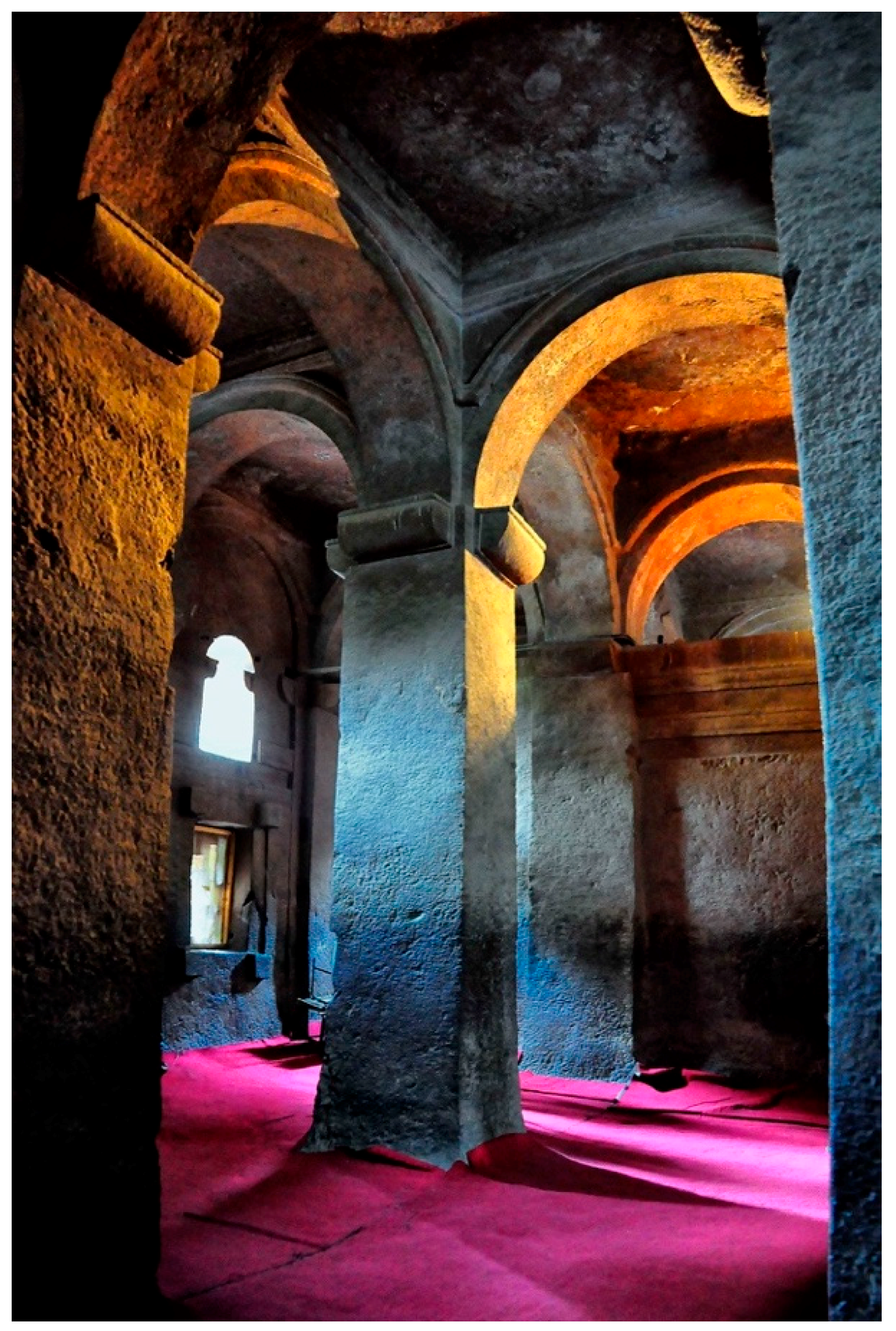
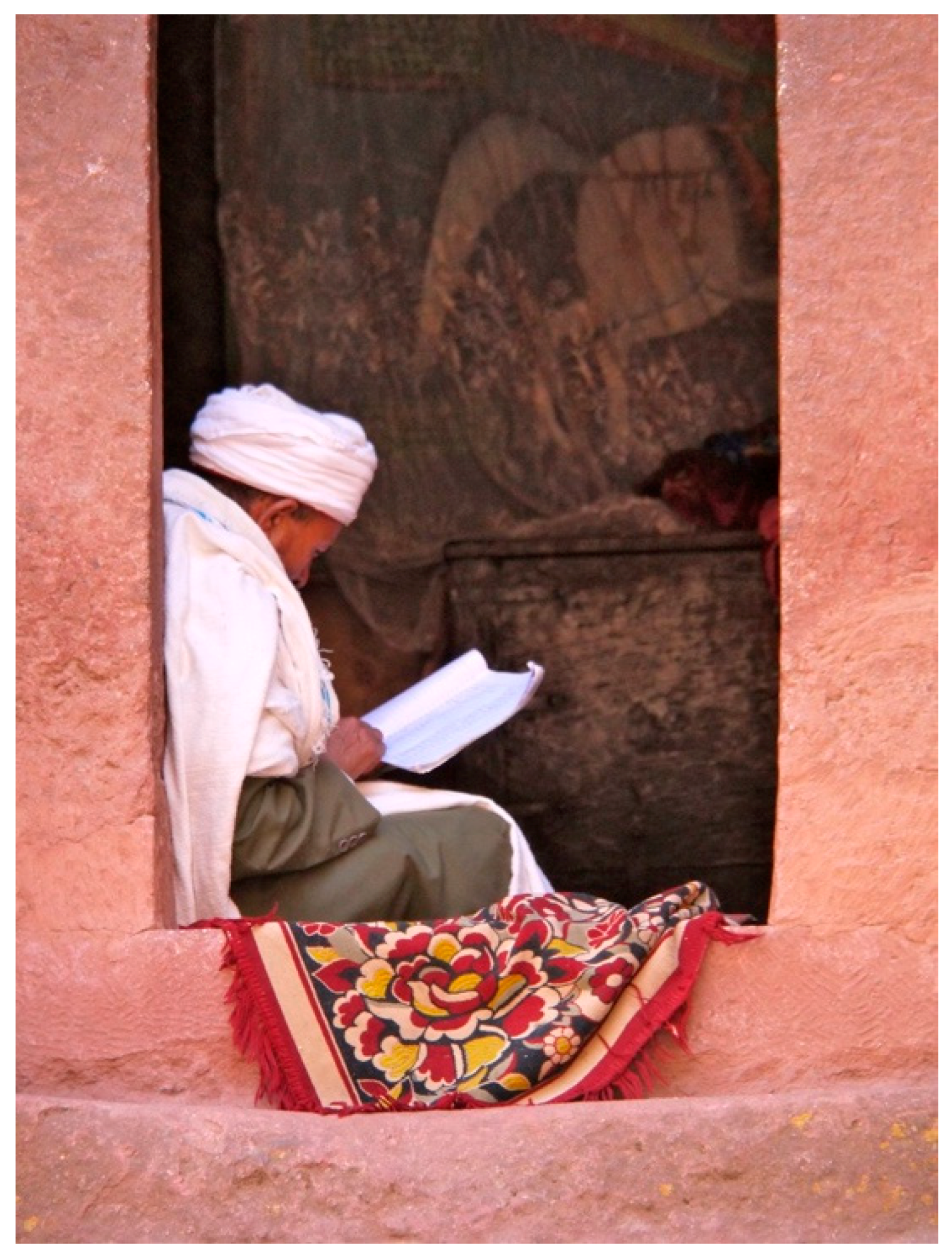
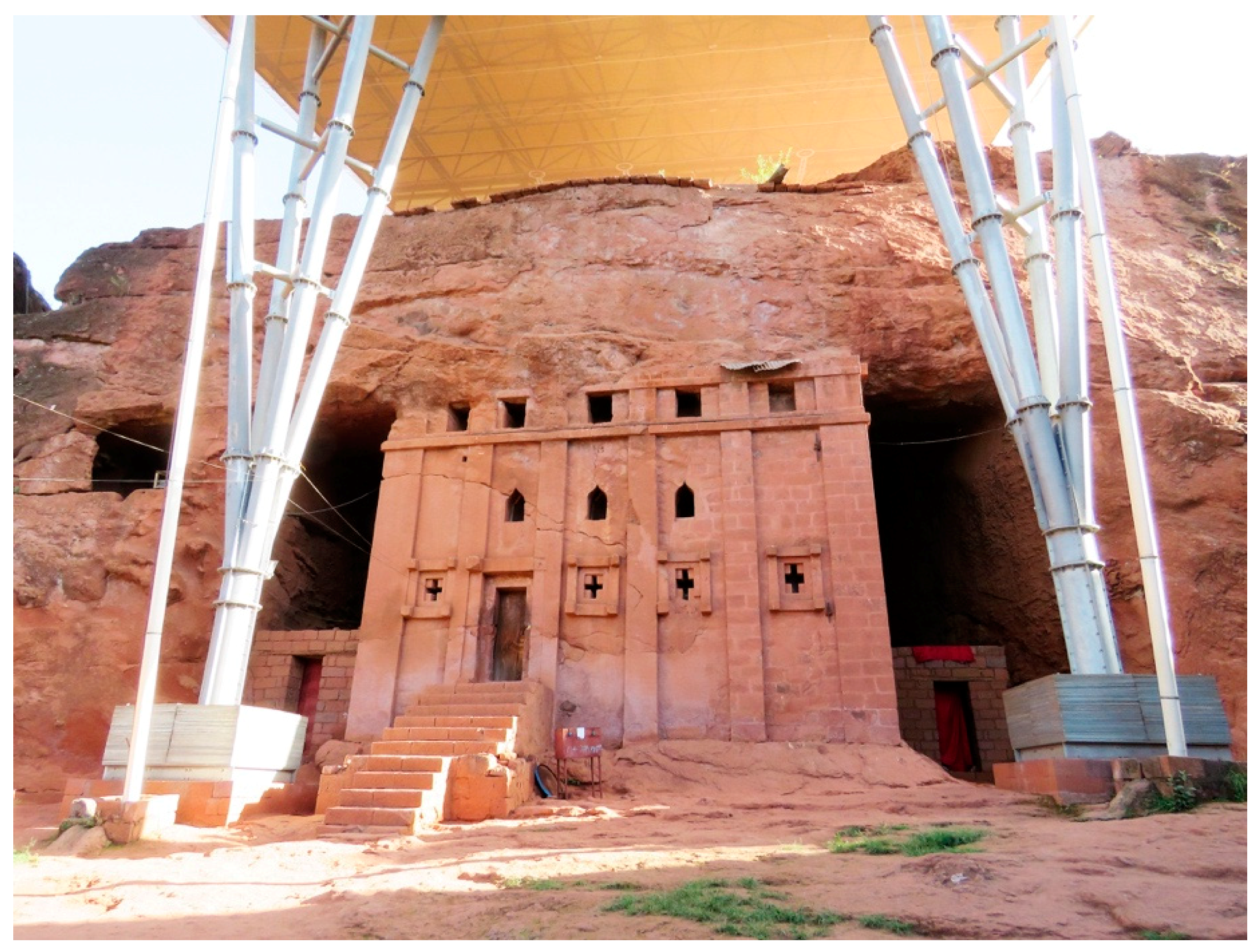
The rock hewn churches of Lalibela have special significance in the formation of Ethiopia’s consciousness as a sacred land of God’s covenant. Numerous local stories express the sanctity of Lalibela as a Heavenly Jerusalem on earth and the faithful use holy soil from the churches to cure the sick. Every year, thousands of Tewahido believers travel to receive blessings. Local scholars who studied decades in the indigenous education system serve as intermediaries between the sanctity of the place and the people, and transmit their knowledge to the younger generation. This paper traces this spiritual genealogy to the creation story in the Kebra Nagast regarding the Ark of the Covenant (Tabot) and relates it to Lalibela’s famous churches. It demonstrates the existence of enduring spiritual genealogy that considers place as alive and powerful. The paper also reflects on how the loss of indigenous sources of knowledges, particularly through the stealing or taking of manuscripts by foreign collectors, and the rise of a Eurocentric interpretation of the history of Lalibela challenges this millennial spiritual tradition. It argues that this has resulted in epistemic violence, the practice of interpreting local knowledge with a foreign lens in a way that reinforces colonial Eurocentric views that are then internalised within Africans themselves. Despite such challenges, it shows how the genealogy continues through the very identity and practice of local communities and individuals.
Keywords: Lalibela; Ethiopia; heritage; conservation; indigenous knowledge; tourism Lalibela; Ethiopia; heritage; conservation; indigenous knowledge; tourism