1. Introduction
Laboratory safety is foundational to the integrity, sustainability, and social license of academic research. Accidents in university laboratories have resulted in severe injuries, fatalities, and long-term environmental and financial consequences, drawing attention from regulators, funding agencies, and the public to the adequacy of institutional safety systems [
1,
2,
3,
4,
5,
6,
7,
8,
9,
10,
11,
12,
13]. As a result, academic institutions are increasingly expected to demonstrate not only regulatory compliance but also proactive, systems-level management of laboratory hazards.
Numerous studies have examined safety culture, safety knowledge, and risk awareness in academic research laboratories, identifying persistent gaps between institutional safety policies and day-to-day laboratory practices [
2,
3,
4,
5,
6,
8,
9,
10,
11,
12,
13]. Prior work highlights recurring challenges including inconsistent safety training, uneven faculty engagement, underuse of standard operating procedures (SOPs), limited near-miss reporting, and variable safety practices across departments and research groups [
2,
3,
4,
5,
6,
9,
14,
15,
16]. Surveys and case studies further show that new graduate students often begin research with substantial deficits in basic safety knowledge while simultaneously assuming supervisory or mentoring responsibilities [
2]. In addition, safety communication patterns vary markedly across laboratories and institutions [
3,
6,
14], and the structure and timing of training strongly influence observable safety behavior in teaching and research laboratories [
4,
5]. Recent work has emphasized the importance of using validity-supported survey instruments to evaluate institutional safety systems, as weak measurement approaches can lead to biased or misleading conclusions [
7]. Because laboratory workers directly interact with hazardous materials, equipment, and operational safety systems on a daily basis, their experiences and perceptions provide important insight into the effectiveness of institutional laboratory safety programs.
However, important gaps remain. First, relatively few studies have jointly examined multiple operational elements of the safety system (for example, training access and sufficiency, SOP use, audits, and near-miss documentation) within the same institutional context while also comparing experiences across faculty, staff, graduate students, and other roles. Second, while prior work has documented safety attitudes and accident outcomes, there is limited empirical evidence on how these operational factors relate to workers’ own perceptions of risk and safety in research laboratories. Third, existing studies often focus on either individual behavior or broad institutional programs, leaving less clarity about the specific, modifiable institutional leverage points that can guide continuous improvement.
The present study addresses these gaps by examining how selected operational dimensions of a university’s laboratory safety system relate to research workers’ perceptions of risk and safety. Specifically, we analyze survey data on laboratory role, access to and adequacy of safety training, SOP use, experience with and perceptions of audits, near-miss reporting practices, work hours, and years of laboratory experience. Rather than proposing a new formal framework or model, this study uses these relationships to identify practical, institution-level leverage points that can inform the design and prioritization of academic research safety initiatives.
Although this study does not directly apply formal accident modeling, the observed prevalence of key safety practices can be conceptually interpreted using the Swiss Cheese Model proposed by Reason [
17,
18,
19,
20]. In this model, multiple layers of defense reduce the probability of adverse events by compensating for weaknesses in any single barrier. In research laboratories, these layers include training programs, SOPs, audit practices, supervision, and organizational safety culture, each contributing to overall system resilience. By examining how these layers are experienced and perceived by different groups of laboratory workers, the study highlights where institutional defenses may be stronger, weaker, or misaligned, thereby pointing to concrete opportunities for improvement.
The study has three objectives:
To use survey responses to generate actionable data for improving laboratory safety performance, understood here as identifying modifiable institutional leverage points (for example, training access, SOP implementation, audits, and near-miss reporting) that administrators and research leaders can influence.
To identify additional best practices to better support individuals working in or managing university research laboratories.
To enhance institutional understanding of the activities, responsibilities, and safety concerns of the research laboratory community, with particular attention to similarities and differences across roles.
The survey was conducted at a large urban research university enrolling over 60,000 students, with a main campus and five regional campuses. The institution maintains extensive collaborations with academic and industrial research partners and supports laboratories engaged in chemical, biomedical, engineering, and life science research. These laboratories may involve a wide range of hazards, including chemical agents, biological agents, ionizing radiation, lasers, noise, pressurized systems, and chemically treated animals.
2. Methods
A cross-sectional survey [
7,
21] was developed by the Research Safety Council of the University, a committee established by the Vice President for Research and comprising six faculty members, one research staff member, one graduate student, the Director of Environmental Health, and Safety, and the Associate Vice President for Research Safety. The instrument was iteratively revised to improve clarity, content coverage, and alignment with institutional safety priorities; however, the instrument was not formally pilot-tested in a separate sample prior to deployment. The survey was distributed electronically to faculty, graduate students, and staff involved in research operations, regardless of field of study (the survey is included in the
Supplementary Material). For the purposes of this study, a “laboratory” is defined as any research space in which experimental work involving potential chemical, biological, physical, or engineering hazards is conducted. The survey collected data on respondents’ laboratory role, work experience, use and perceived effectiveness of training, experience with audits, SOP practices, near-miss reporting, and perceived risk levels.
At the time of the survey, the university had approximately 1500 active research workers; not all were directly engaged in laboratory research. The survey invitation was sent to this broader research community to ensure that all individuals who might work in or around laboratories had the opportunity to respond. A total of 1340 responses were received. Of these, 245 (18%) self-identified as currently working in one or more laboratories; these 245 respondents were included in the present analyses. Respondent identities were not collected, ensuring anonymity. Participants provided information on their current laboratory role, extent of use of university-provided online training courses and videos, years of experience in research laboratories, the number of training courses attempted or completed, hours worked in the laboratory per week, perceived usefulness of safety audits, assessment of laboratory risk, and other safety-related factors (which will be covered individually). Because all survey data were self-reported, the findings reflect participants’ perceptions and experiences and should not be interpreted as direct measures of incident rates or objective safety performance. Since the robustness of EH&S programs and the responsiveness of research personnel to safety initiatives can vary substantially across universities, the response rate and patterns observed here should not be assumed to be representative of all institutions.
Several survey questions permitted text entry, as explanations were considered useful. Text responses for perceived risk were categorized, followed by external EH&S peer review, and those categorical data (high, medium, and low) were used in the analyses. Perceived laboratory risk was assessed using an open-ended text response asking participants to ‘describe the level of risk of the work conducted in your laboratory.’ Because the survey included a broad range of laboratory environments (e.g., chemical, engineering, and biosafety laboratories), and because the extent and effectiveness of safety training were themselves variables under evaluation, an open-ended response format was selected to allow respondents to describe perceived hazards and contextual factors in their own words. Responses were reviewed and categorized into low-, moderate-, or high-risk perception categories and then sent to an external EH&S laboratory safety reviewer. Inter-rater agreement was achieved for 230 of 231 responses (99.6%). The single discrepant response was resolved according to the classification assigned by the external EH&S reviewer. Representative perceived low-risk responses included statements such as ‘very minimal’ whereas statements describing ‘handling of carcinogens’ or ‘uncontrolled particle release’ were categorized as perceived high-risk.
The questionnaire was reviewed and revised by the Research Safety Council and subject-matter experts prior to deployment; however, the instrument was not pilot-tested using a separate sample. Because the survey primarily consisted of operational and categorical items rather than psychometric scales, internal consistency reliability metrics such as Cronbach’s alpha were not considered appropriate. Statistical analyses were conducted using JMP 17.2.0 from SAS Corporation. Categorical data were analyzed using the likelihood ratio chi square test, with α = 0.05. The false discovery rate (FDR) was used to adjust
p values for multiple comparisons [
22]. All analyses are therefore best interpreted as tests of association among self-reported categorical variables within a single-institution context, rather than estimates of causal effects.
3. Results
3.1. Demographics: Role in Research Laboratory
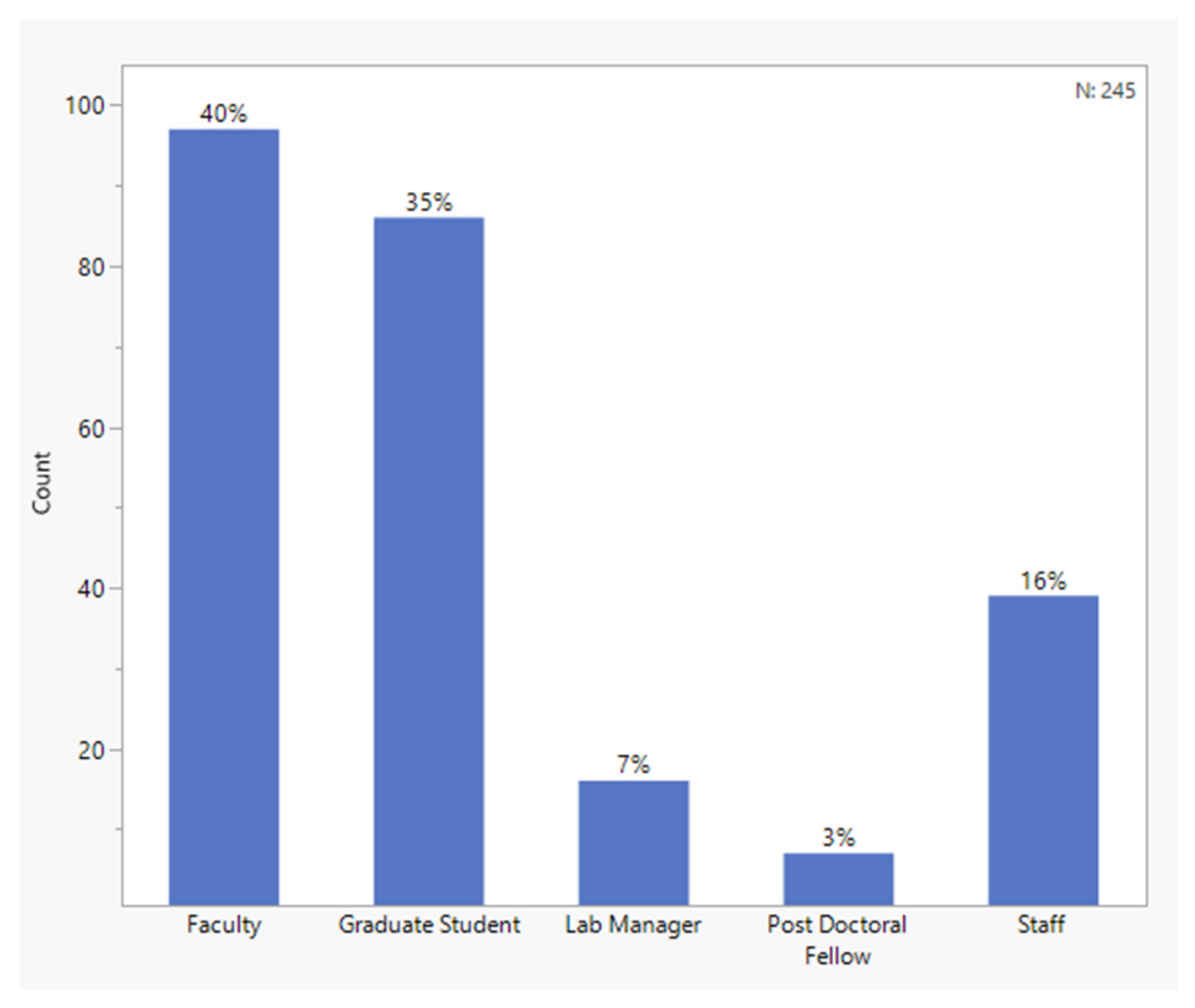
Of the 245 respondents, 40% were faculty members, 35% were graduate students, 16% were staff members, 7% were laboratory managers, and 3% were Post Doctoral Fellows (
Figure 1).
3.2. Organizational Affiliation of Respondent
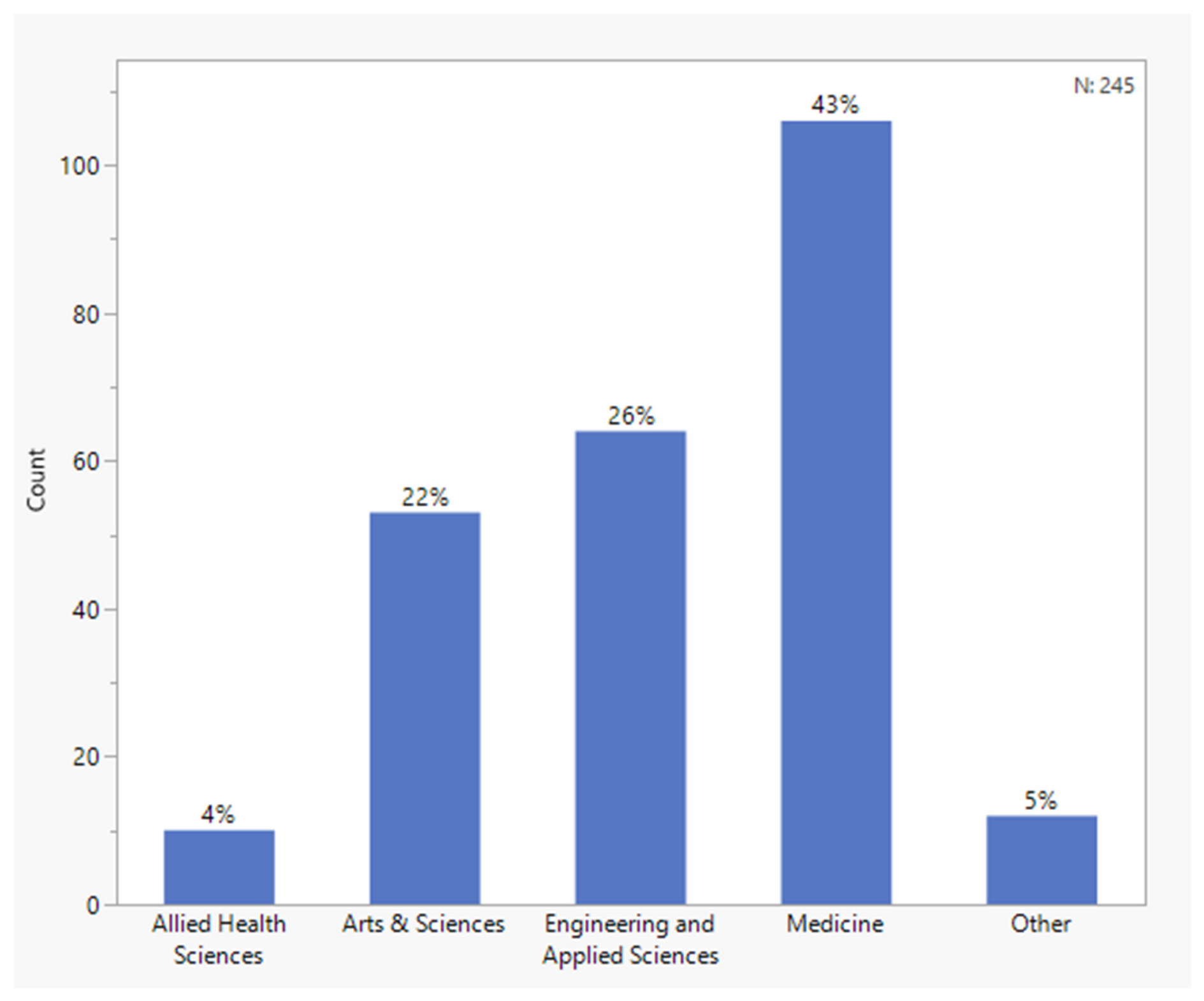
Figure 2 shows the respondents came from the College of Medicine (43%), College of Engineering (26%), College of Arts and Sciences (22%), College of Allied Health Sciences (4%) and an assortment of other colleges (5%).
Table 1 provides a numerical breakdown of the respondents’ organization affiliations.
3.3. Hours Spent in Laboratory per Week
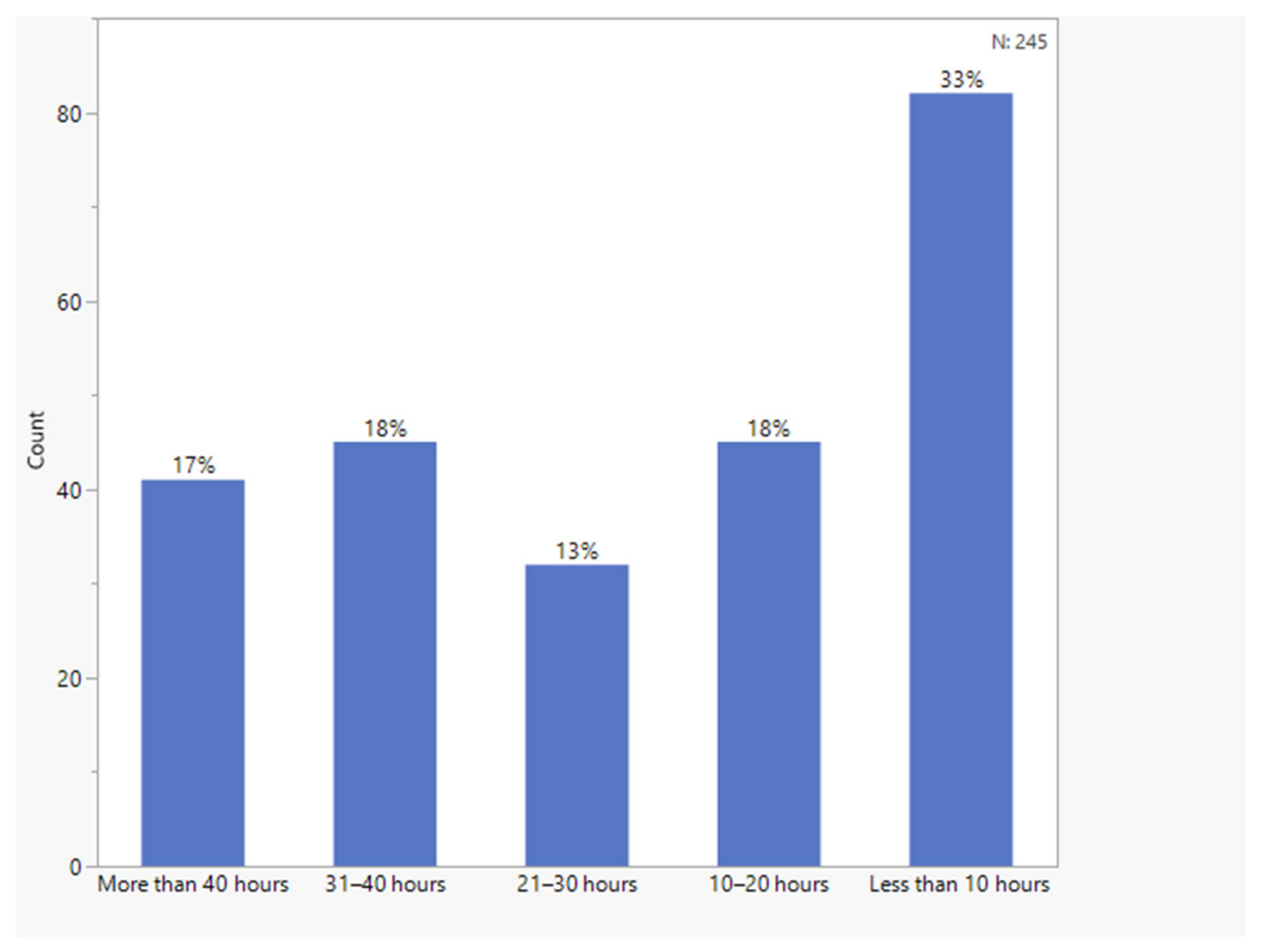
Respondents were asked to select among five categories representing their average weekly time spent in the laboratory, ranging from “0 to 10 h” to “greater than 40 h” per week. Thirty-three percent reported spending fewer than 10 h per week in the laboratory, while 35% reported spending more than 31 h per week, and 17% reported more than 40 h per week (
Figure 3). The amount of time spent in the laboratory varied by role.
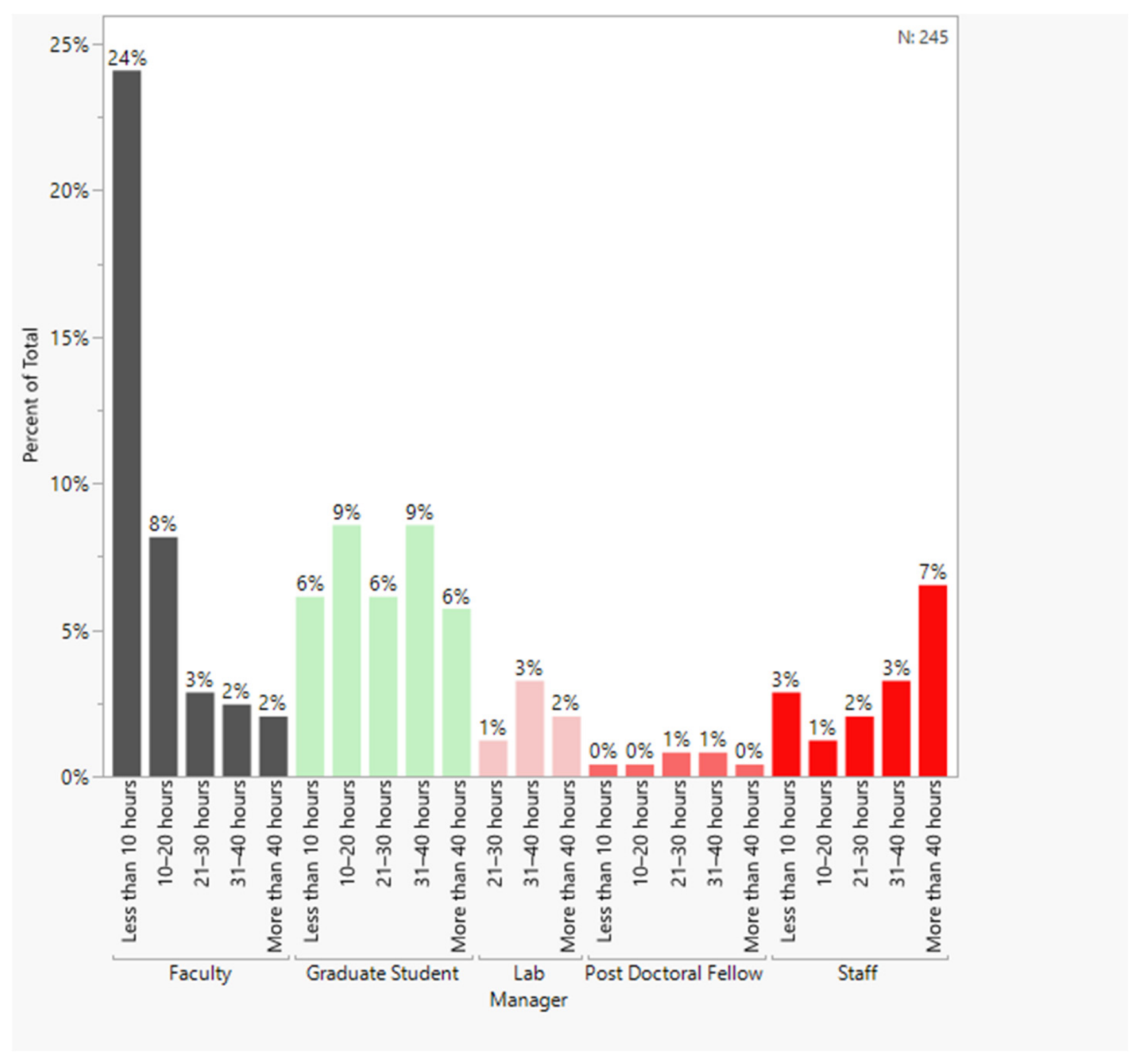
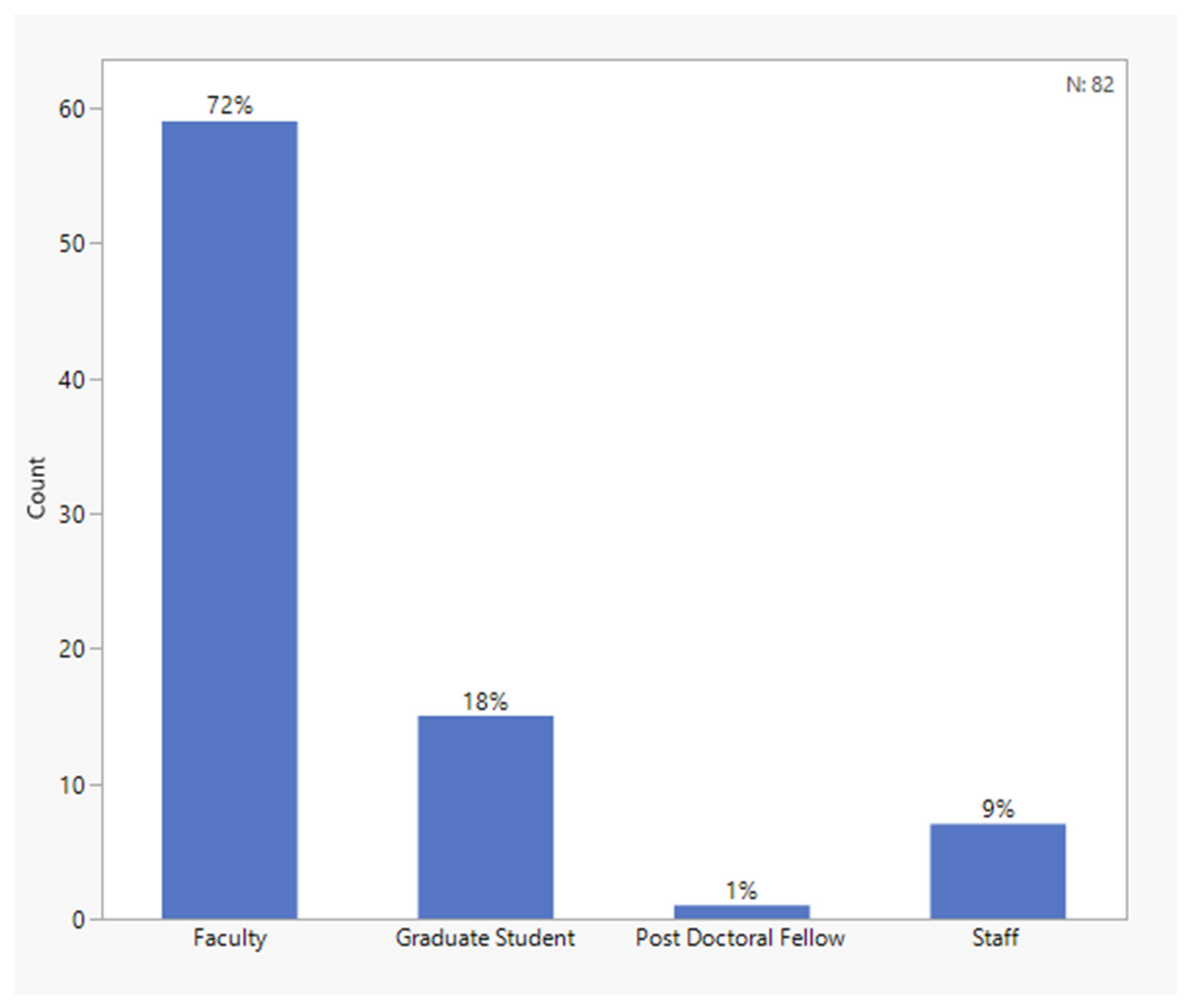
Figure 4 shows the hours spent in the laboratory by role (job). Faculty members comprised the largest proportion of those working fewer than 10 h per week in the laboratory (24% of all respondents), while graduate students and staff members accounted for the majority of those working more than 40 h per week. When the analysis was limited to respondents working fewer than 10 h per week, faculty represented 72% of that subset (
Figure 5).
3.4. Ease of Access to Online Training Materials
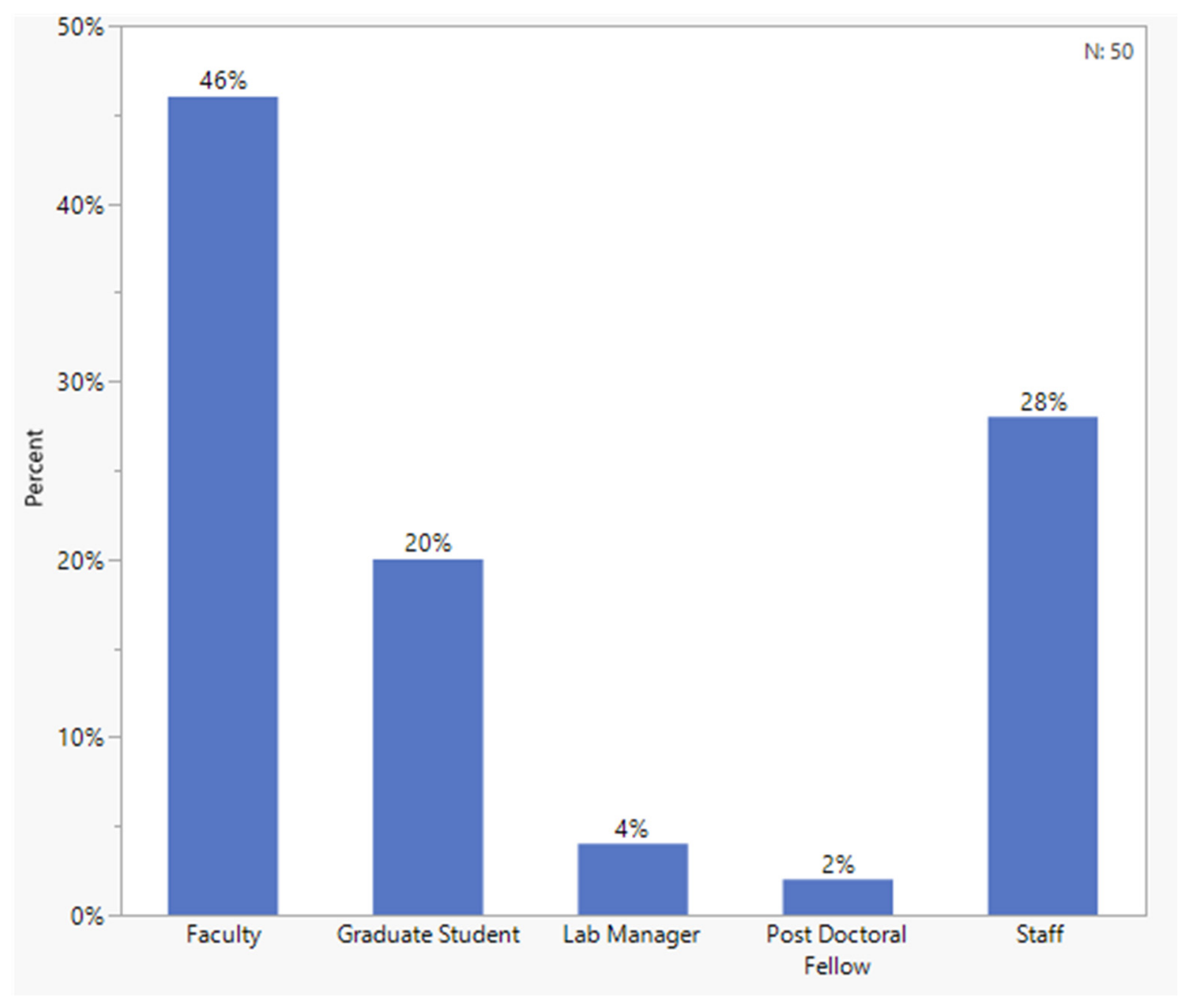
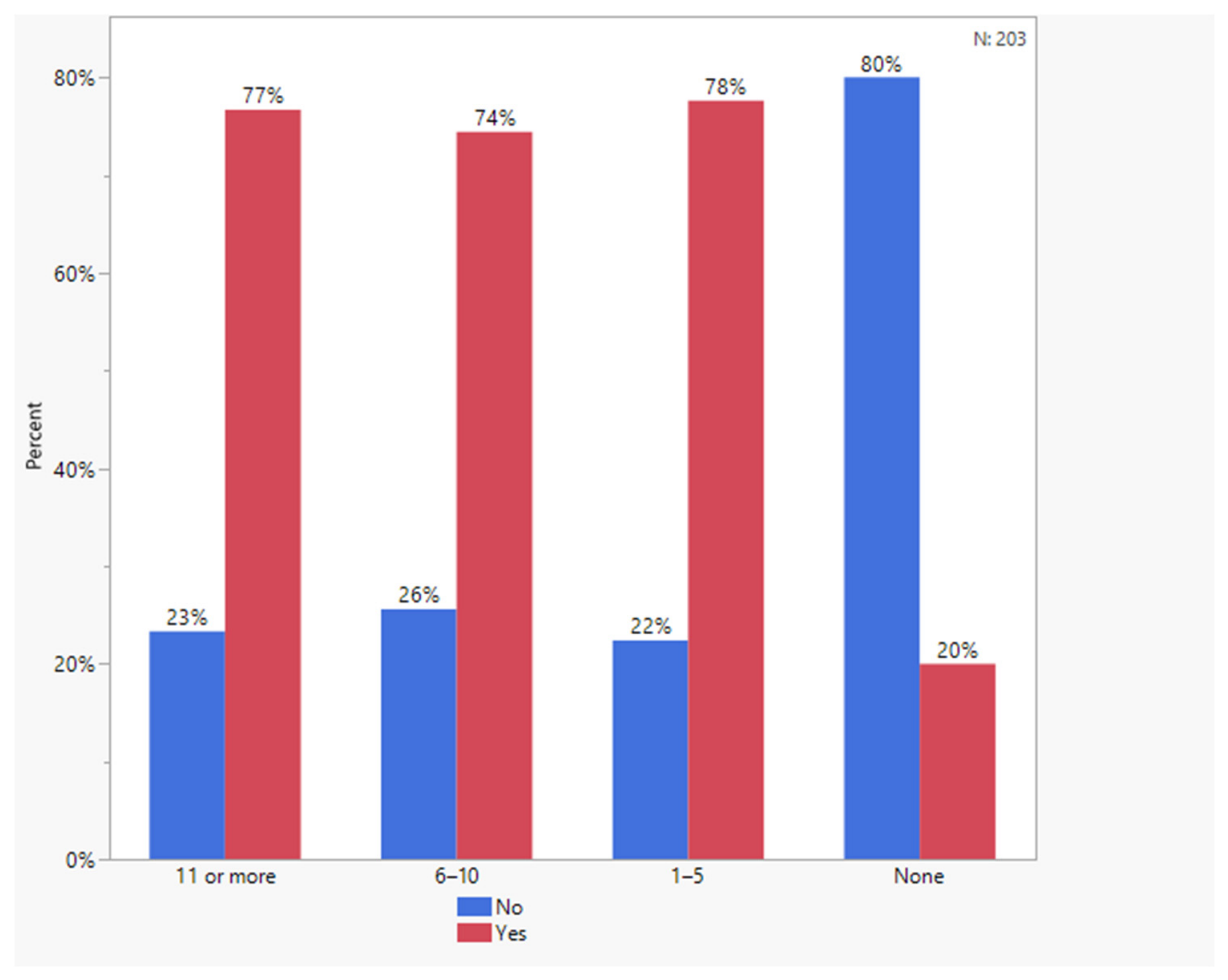
For training to be effective, individuals must have easy access to necessary materials. When asked whether online training materials were easy to find, 75% of the respondents answered yes, while 25% indicated that they had difficulty locating these resources. Of those who reported difficulty accessing training materials, 46% were faculty, 28% were staff, 20% were graduate students, and the remaining 6% were laboratory managers and Post Doctoral fellows (
Figure 6).
Figure 6 therefore highlights which role groups are most affected by access barriers, with faculty and staff disproportionately represented among those who struggle to locate training materials. To better understand whether these access challenges are related to the extent of interaction with the training system itself, we also examined ease of access as a function of the number of courses taken (
Figure 7).
Despite the access challenges, further analysis revealed that 92% of those who initially found it difficult to locate training materials ultimately considered the training they received to be sufficient and helpful for their laboratory, while only 8% did not share this view. Of the respondents who indicated that the training was not easy to locate, 23% had attempted or completed 11 or more courses; 26% were in the 6–10 course group; and 22% were in the 1–5 course group. Notably, five respondents reported taking no training courses, and four of these individuals found it difficult to locate the materials online (
Figure 7).
3.5. Extent of Training Courses Completed/Attempted
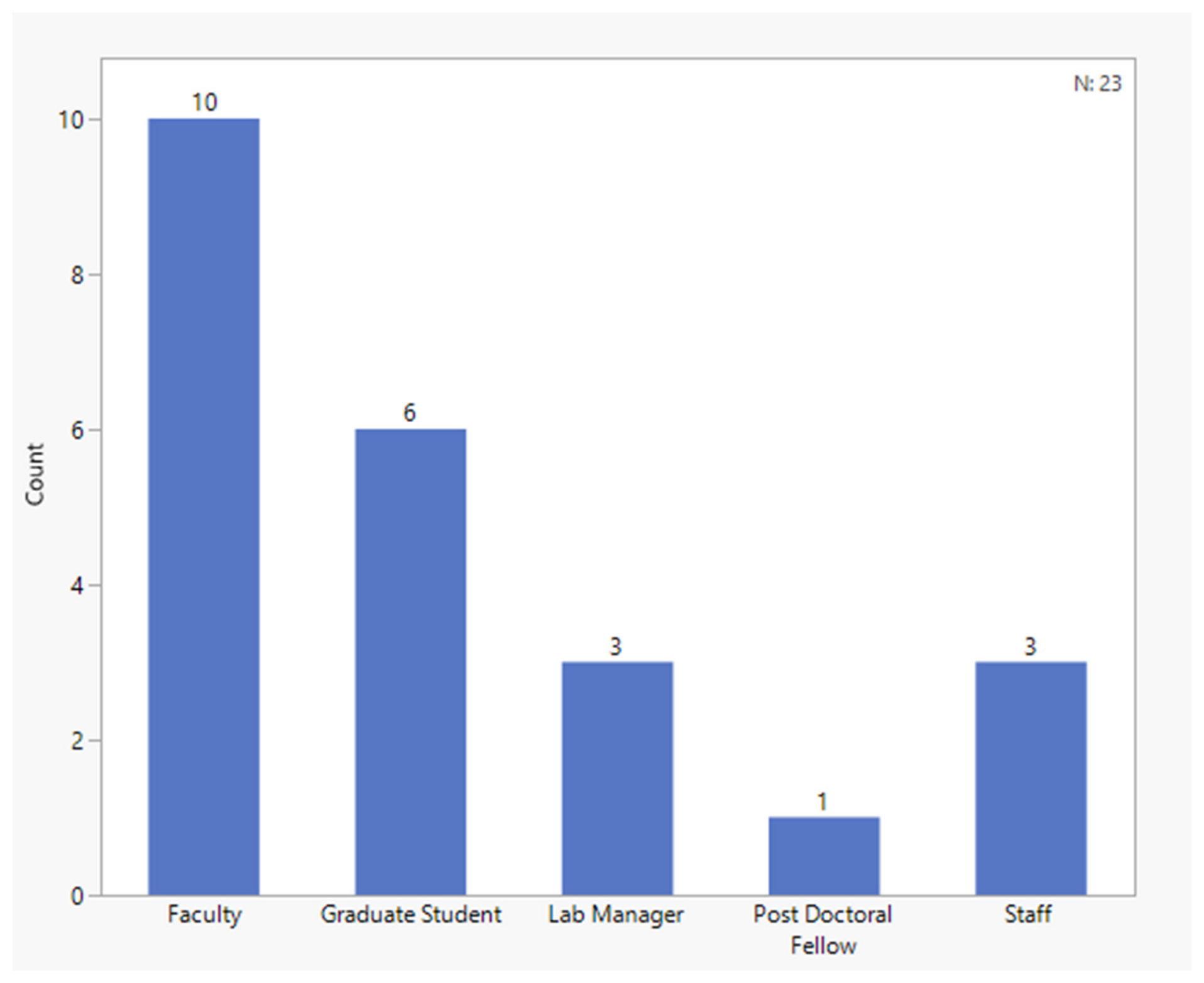
Respondents reported the number of university-supplied online safety training courses completed or attempted and whether the training was sufficient for their role. Fifty responses to the training use question were classified as “NA” and excluded from analysis. “NA” was applied when respondents did not use any training materials, did not answer the question, or explicitly entered “NA” as their response. One NA response pertained to a Federal Aviation Administration (FAA) drone license training, which was required but not offered by the university. For the question regarding sufficiency/helpfulness of training, any response other than “YES” (e.g., “so so,” “moderately,” or “somewhat”) was classified as “No” for analysis. Eighty-eight percent of respondents agreed that safety training was helpful and sufficient for their job, while 12% disagreed. Among those who disagreed (
n = 23), 10 were faculty members, 7 were graduate students, 3 were staff, and 1 was a Post Doctoral fellow (
Figure 8). Faculty comprised the largest proportion of this group, followed by graduate students.
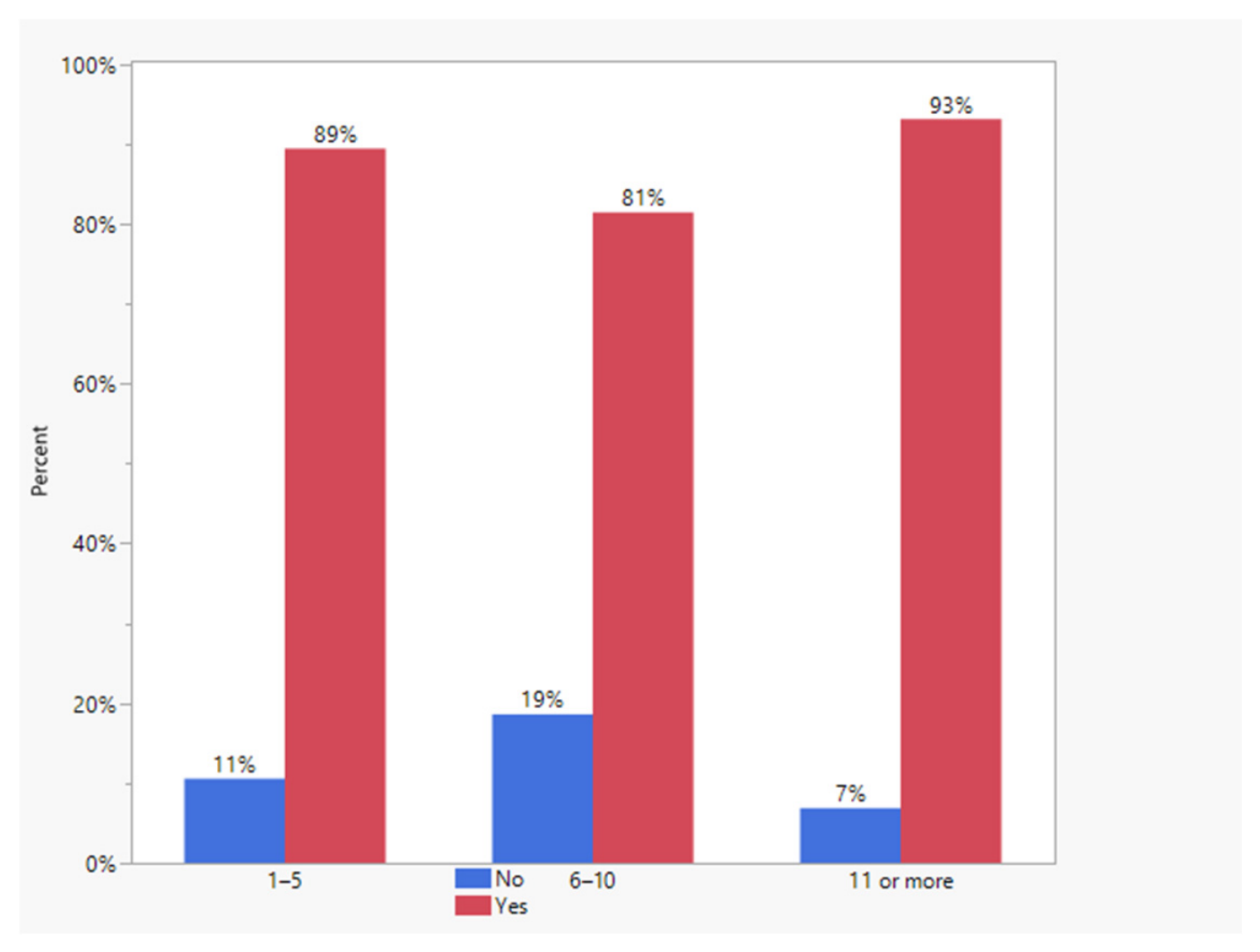
Of the 195 respondents who reported using university supplied training materials, 123 took 1–5 courses, with 89% of this group reporting that training was helpful or sufficient for their job and 11% indicating it was not. Among those who completed 6–10 courses, 81% found the training was sufficient, while 19% did not. For those who took 11 or more courses, 93% reported training was sufficient and 7% reported it was not (
Figure 9).
In total, 88% of respondents reported that the training received was helpful or sufficient, while 12% indicated it was not (
Table 2). Using the likelihood ratio chi square test (LRC), there was no statistically significant association between the extent of use of the online training materials and whether respondents felt that the training materials they did use were sufficient/helpful (
p = 0.27) for their laboratory and job.
3.6. Laboratory Audits
Laboratory audits are a key activity directly impacting research laboratories at the university and are recognized as a central mechanism for maintaining safety in academic laboratories [
23]. These audits address a range of hazards, including biological, radiological, and chemical agents, as well as ergonomic, fire, electrical, and equipment-related risks. Audits were conducted by personnel from three separate university-wide technical support groups.
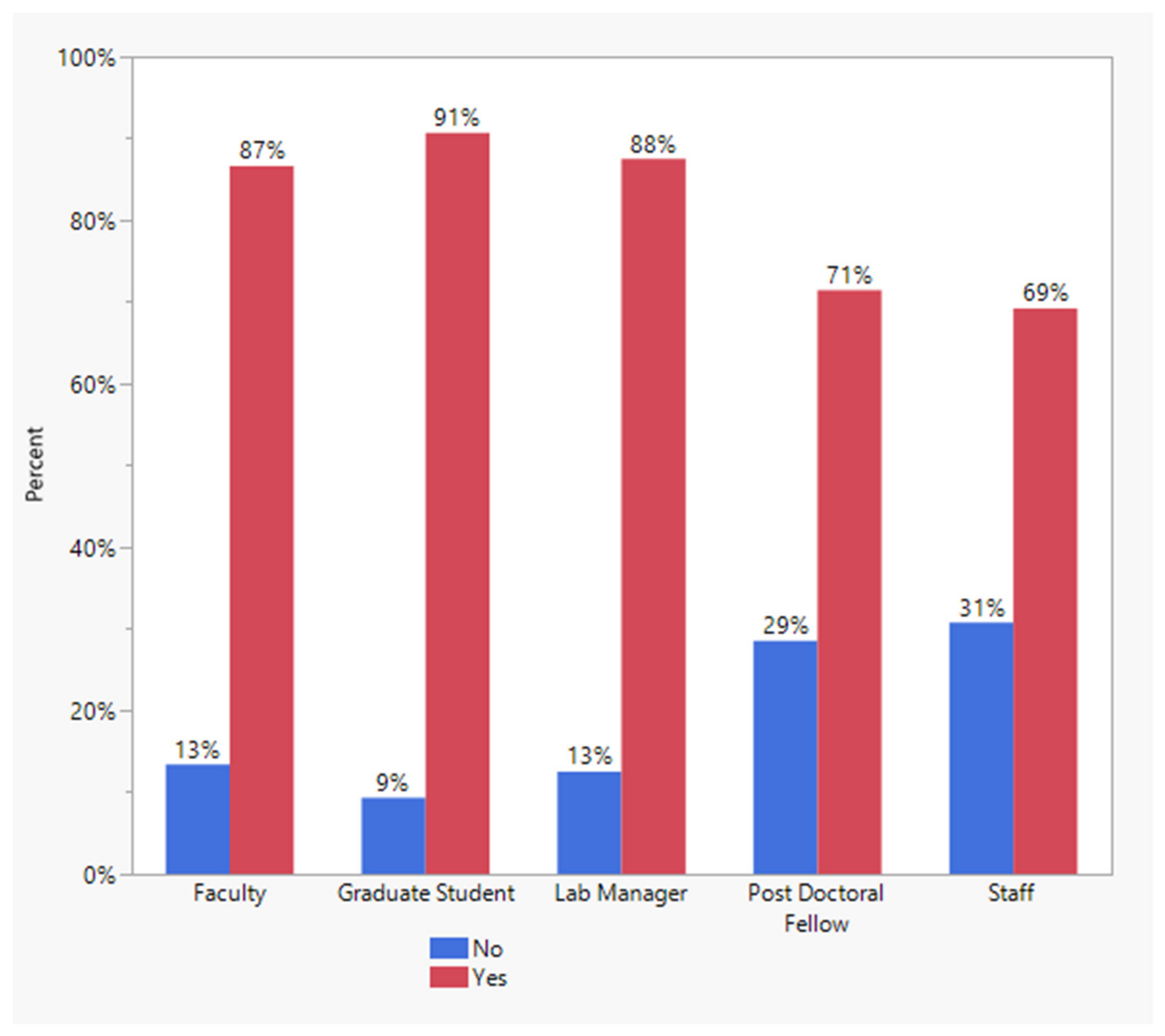
Respondents were asked if they were familiar with audits. Among those who indicated familiarity, 89% believed audits were helpful, while 11% thought they were not. This finding aligns with previous research, such as Leung [
14], who reported that 86% of laboratory workers found audits useful for improving laboratory safety, and Abedsoltan and Shiflett [
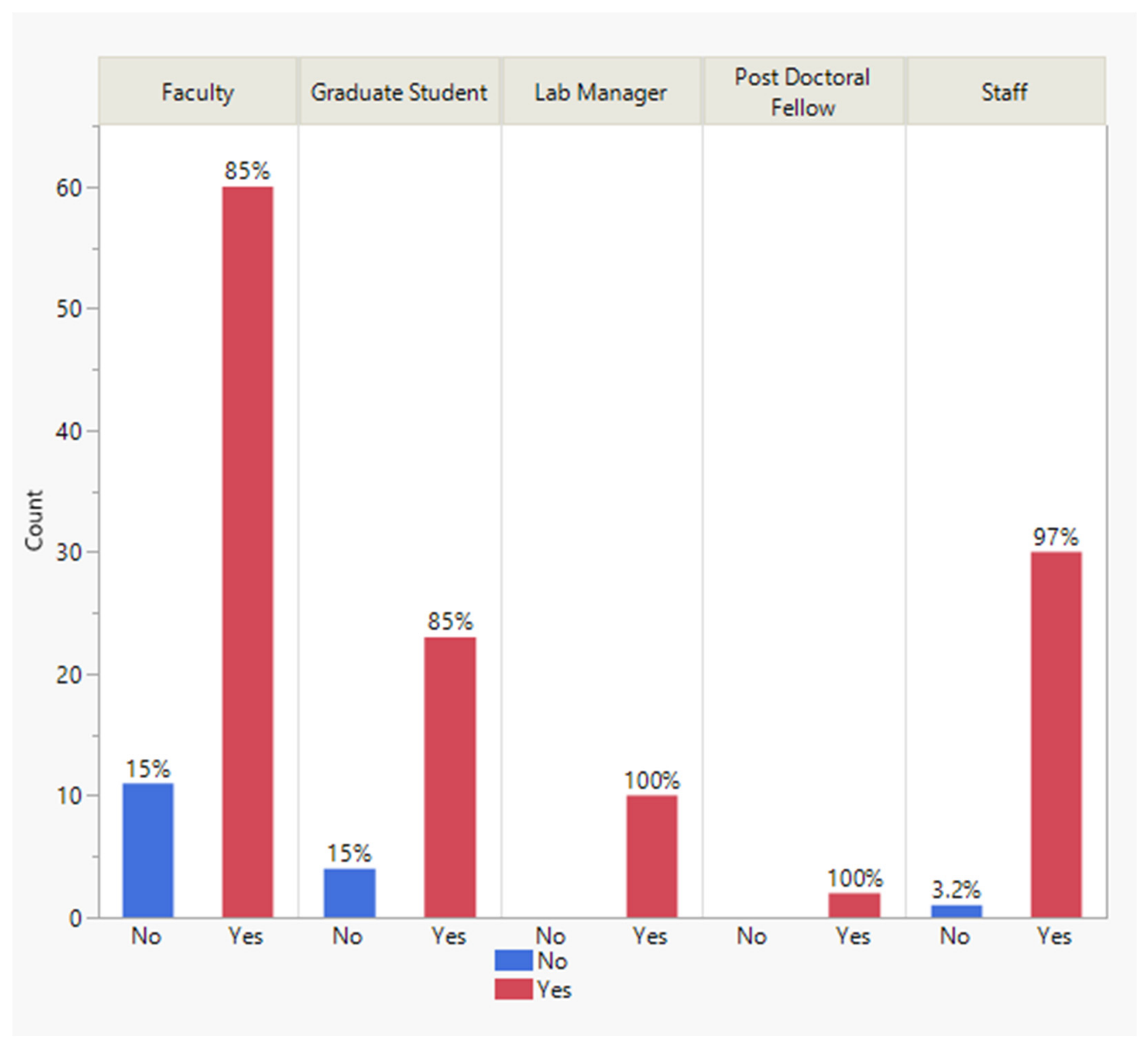
8], who identified audits as a critical risk mitigation practice. Further analysis by role revealed that 85% of faculty and 85% of graduate students viewed audits as helpful. Laboratory managers, Post Doctoral fellows, and staff reported even higher rates, with 97–100% considering audits helpful. Taken together, these high levels of perceived usefulness suggest that, at this institution, the audit program is generally viewed as credible and supportive by laboratory personnel.
Respondents also provided recommendations for improving the audit program. Among those who found audits helpful, common suggestions included making audits less adversarial, improving consistency across different audit teams, and adopting a more formalized approach. Some recommended removing items from audit checklists that are outside laboratory personnel’s control (e.g., facility-related issues), introducing surprise audits, and ensuring laboratories receive written reports of audit findings. Of the respondents who did not find audits helpful, several cited an adversarial tone, lack of completeness, or insufficient formality. Some expressed the view that audits are ineffective if laboratories are expected to self-regulate. Faculty made up the majority of those who viewed audits as unhelpful. These comments reinforce the possibility that, even in institutions where audits are generally well regarded, they may still be experienced as burdensome or misaligned with research needs if not implemented in a collaborative and clearly communicated manner. Statistical analysis found no overall significant differences between laboratory roles and perceptions of audit helpfulness (
p = 0.134), although staff were significantly more likely than faculty to view audits as helpful (
p = 0.050) (
Figure 10).
3.7. Specific Training Offered at Start of Research Laboratory Work
Each respondent was asked whether they were offered laboratory “specific training” when they first started working in their research laboratory. This question referred specifically to training tailored to the particular laboratory and research activities, excluding general university online training; therefore, responses indicating online training as their only training were excluded (
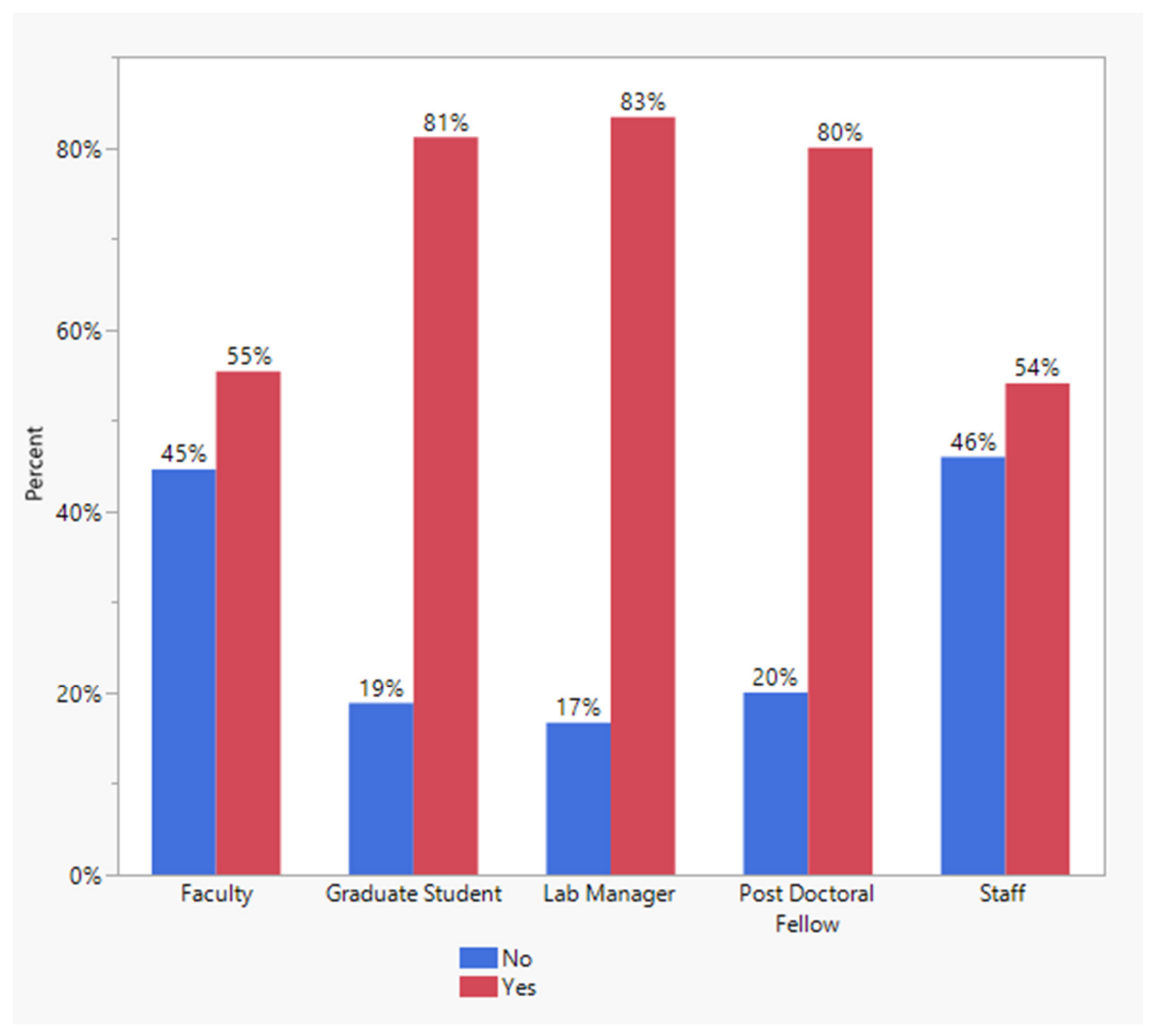
n = 48). The results (
Figure 11) show variation across roles: laboratory managers (83%) and graduate students (81%) reported the highest rates of receiving specific training at the start of their work, whereas faculty (55%) and staff members (54%) were least likely to report receiving such training. Post Doctoral Fellows fell in between, with 80% reporting specific training. These findings align with previous studies that found only about 70% of researchers across academic, government, and industrial laboratories were trained on the specific hazards they encountered [
9,
14].
Statistical analysis using the likelihood ratio chi square test indicated significant differences in the distribution of specific training across roles (p = 0.0032). Faculty were significantly less likely to have received specific training compared to other groups, while graduate students were significantly more likely. Staff members showed marginally lower rates of receiving specific training (p = 0.055). Regarding who delivered the specific training, 46% of respondents (n = 90) reported receiving one-on-one training from faculty, 11% (n = 21) from co-workers, and 19% (n = 37) from laboratory managers.
3.8. Standard Operating Procedures (SOPs) Used in the Laboratory
Eighty-five percent of respondents indicated that Standard Operating Procedures (SOPs) are used in their laboratories. The distribution by role revealed notable differences: 69% of staff members reported using SOPs, while 91% of graduate students did so. Overall, staff reported the lowest use of SOPs, whereas faculty, graduate students, and laboratory managers reported the highest rates (
Figure 12). Statistical analysis using the likelihood ratio chi square test found significant differences between staff and both faculty (
p = 0.022) and graduate students (
p = 0.004), with staff laboratory workers reporting significantly less use of SOPs than other groups.
3.9. Documenting near Misses
The question of near misses arises in many safety situations, not just laboratories. The Occupational Safety and Health Administration [
16] in the United States cites the importance of tracking near misses with the following discussion of what constitutes a “near miss”.
“A near miss is an opportunity to improve health and safety in a workplace based on a condition or an incident with potential for more serious consequences, including:
Unsafe conditions
Unsafe behavior, such as a worker modifying personal protective equipment for comfort
Minor incidents and injuries that had potential to be more serious
Events where injury could have occurred but did not
Events where property damage could have resulted but did not
Events where a safety barrier was challenged, such as a worker bypassing a machine guard
Events where potential environmental damage could have resulted but did not”
The survey collected information on the documenting of near misses in laboratories. Sixty-eight percent (68%) of laboratories documented near misses; 32% did not. In a 2016 study at a university hospital, 56% of the survey respondents reported near misses to their superiors [
24]. The authors tested a safety incident reporting system that included near-miss reporting for research between 2014 and 2019 in Chemistry, Chemical Engineering, and Materials Science [
25]. That study showed that spills, fires, and equipment fires were the most common incidents. The study found that near-miss reports generated “open discussions” in the laboratory regarding the incident. It is important to note that the incident reporting system in that study was anonymous, and the incident could be reported by the person involved or by an observer.
3.10. Risk Levels in Research Laboratories
The survey included a question on the respondents’ assessment of the risk level in the laboratory in which they worked. The responses were classified into three levels of risk: “Low,” “Moderate,” or “High”. Fourteen responses could not be classified due to unclear answers or no answer, e.g., “could not rank the risk”, “did not work there long enough to form an opinion,” “did not understand the question.”. The final sample size for the perceived risk analyses in this section is 231. The roles/jobs of those 14 excluded respondents were broadly distributed among staff members (3), faculty (4), graduate students (5) and laboratory managers (2).
To examine factors associated with perceived laboratory risk, the 231 responses were analyzed alongside other survey variables, including organizational affiliation, extent of training use, audit experience, years of laboratory experience, time spent in the laboratory, and laboratory role.
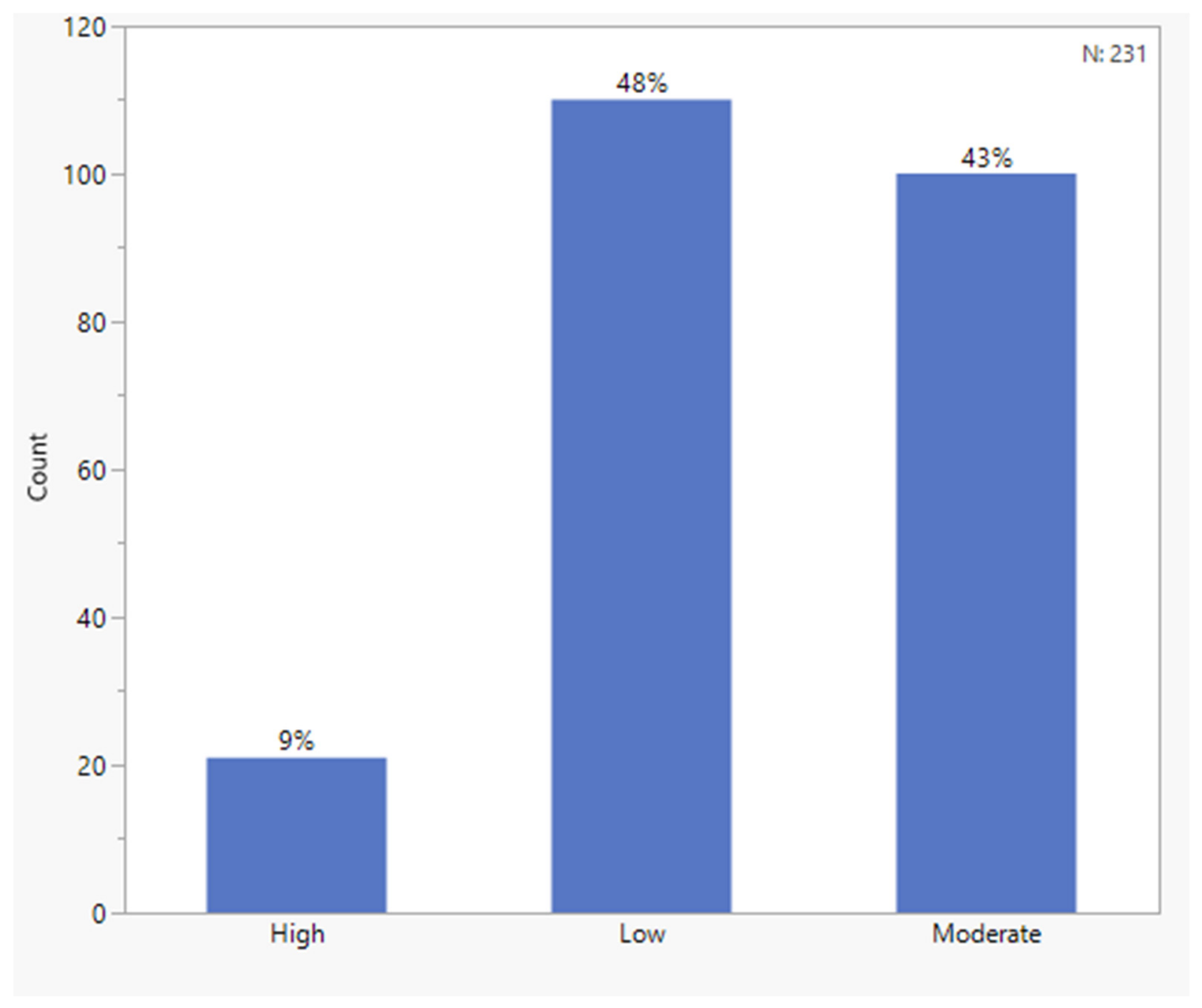
Overall, 48% of the research laboratories were classified as low-risk, 43% as moderate-risk and 9% as high-risk (
Figure 13). These data have a slightly different distribution those found by Leung, where 6.6% of academic laboratories were classified as high-risk, 22% as moderate-risk, and 67% as low-risk [
14]. The higher proportion of moderate- and high-risk laboratories in the current study may reflect differences in research focus, institutional context, or respondent perceptions. These findings underscore the importance of ongoing risk assessment and targeted risk mitigation strategies in university research laboratories. They also highlight the value of collecting perception data to complement objective hazard analyses, as perceptions of risk can influence safety behaviors and engagement with institutional safety practices.
3.11. Is the Laboratory Safe?
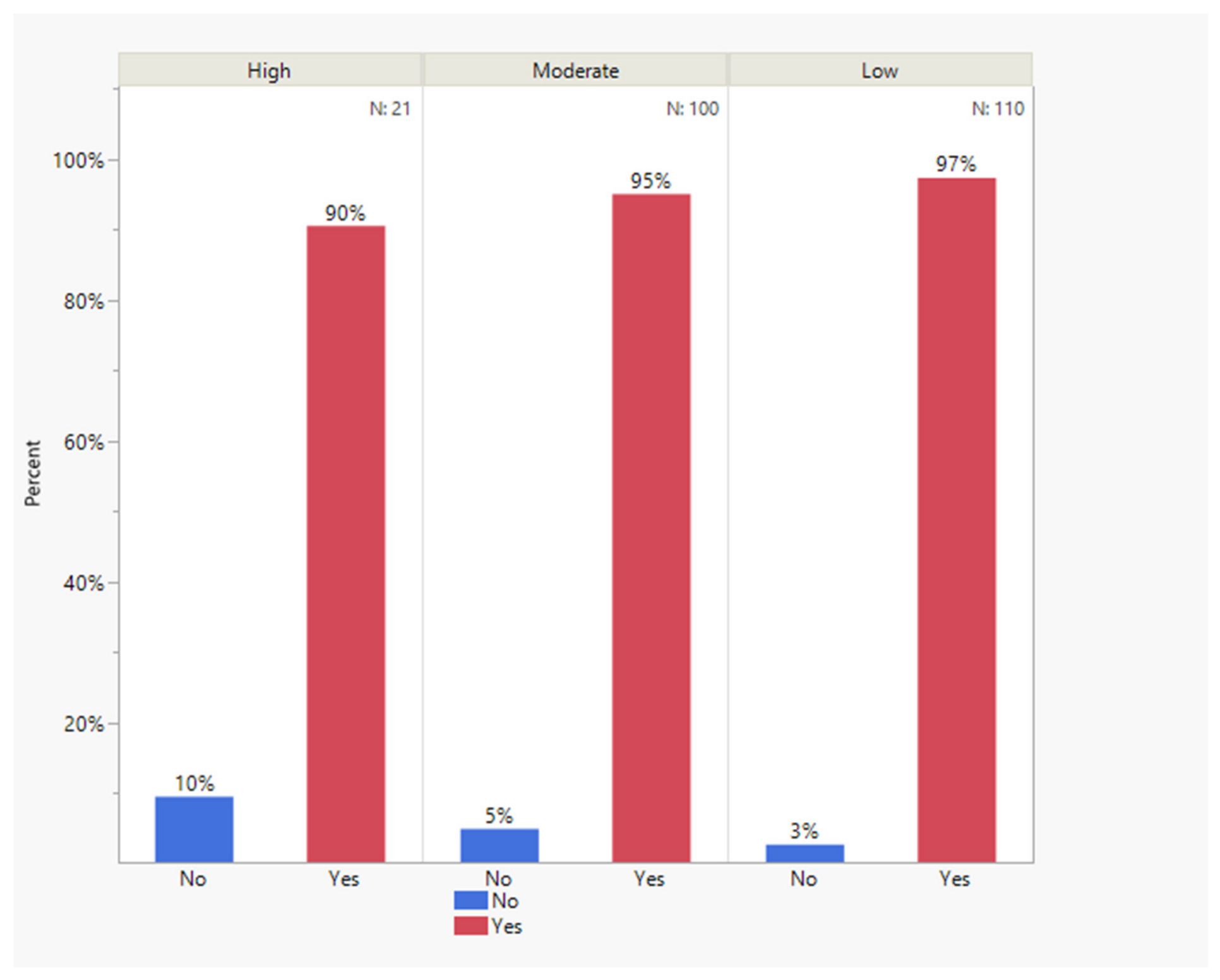
The results (
Figure 14) show that 96% of the respondents viewed their laboratory as safe, a finding that was consistent across perceived risk levels (low, moderate, high) with only minor variation (90–97%). Statistical analysis indicated that this perception did not significantly differ by risk level (LRC,
p = 0.77). Among the 10 respondents who viewed their laboratory as not safe, 3 worked in low-risk laboratories, 5 in moderate-risk laboratories, and 2 in high-risk laboratory groups. They ranged in experience level from less than one year (
n = 1) to more than 10 years (
n = 3) with the remaining 6 having 4–9 years of experience. Role/job was significantly associated with whether a laboratory was considered safe. The specific difference occurred between faculty members and graduate students (
p = 0.027) with faculty viewing their laboratory as safe more often than the graduate students. In a previous survey study [
14], the authors found that 79% of laboratory workers considered the laboratory where they worked safe. In the present study, respondents classified their laboratories as safe 96% of the time. These results suggest that, within this university, there is a strong perception of safety among laboratory personnel, regardless of the objective or perceived risk level of their work environment. However, the finding that some experienced personnel do not view their laboratories as safe, and that graduate students are less likely than faculty to perceive their laboratories as safe, highlights areas for further attention, particularly around communication, training, and engagement with less-experienced researchers.
3.12. High-, Medium-, and Low-Risk Laboratories
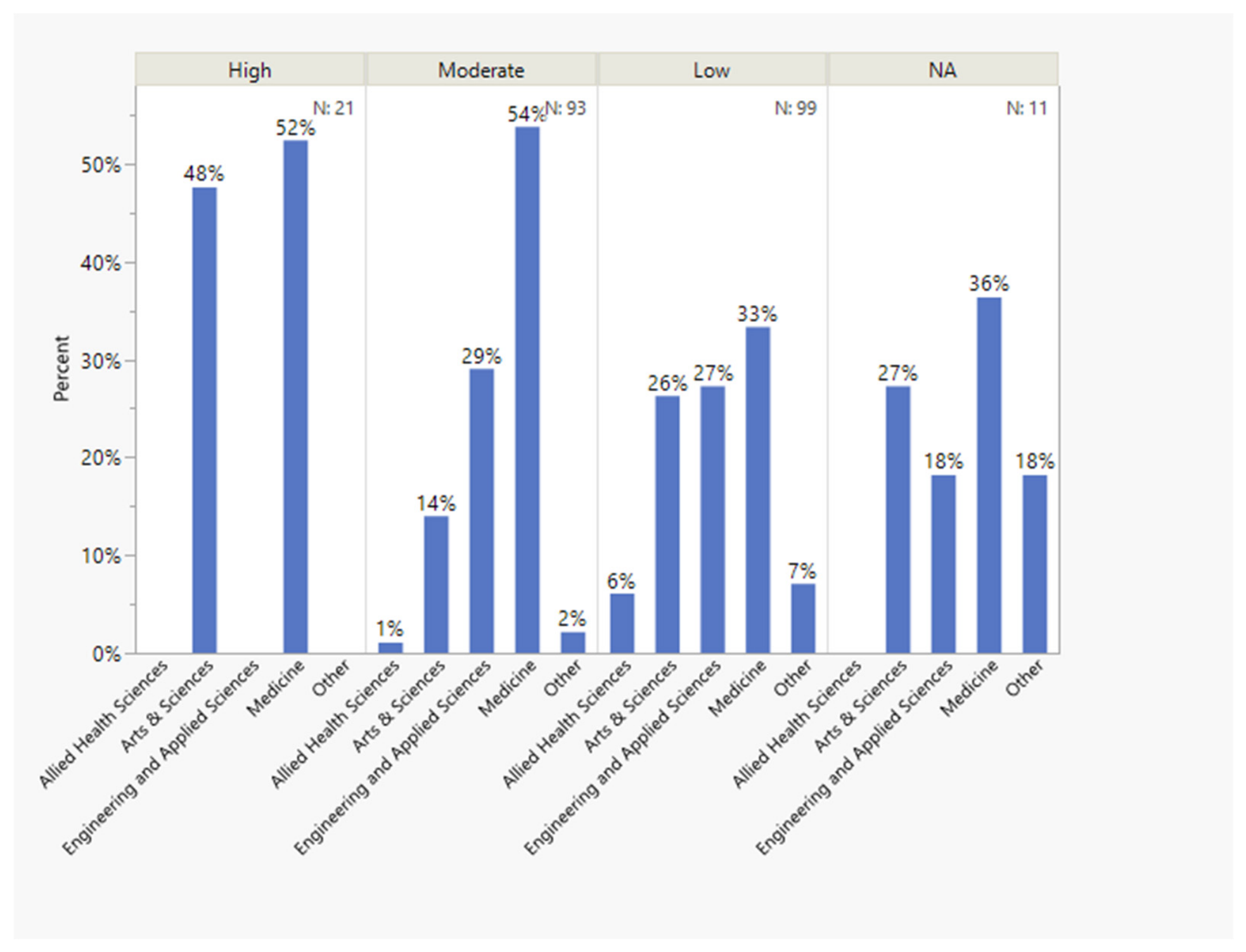
The distribution of perceived risk levels of laboratories within the university by organization/college is shown in
Figure 15. The laboratories classified as high perceived risk are almost equally distributed between Medicine, and Arts and Sciences. Engineering and Applied Science and Medicine accounted for 29% and 54%, respectively, of the moderate-risk laboratories, while Arts and Sciences accounted for 14%. Low-perceived-risk laboratories are more evenly distributed, with 85% of those laboratories in Medicine, Engineering and Applied Science, and Arts and Sciences. Engineering and Applied Sciences had no laboratories ranked as high-risk by the respondents.
3.13. Risk in the Laboratory and Extent of Use of Training Materials
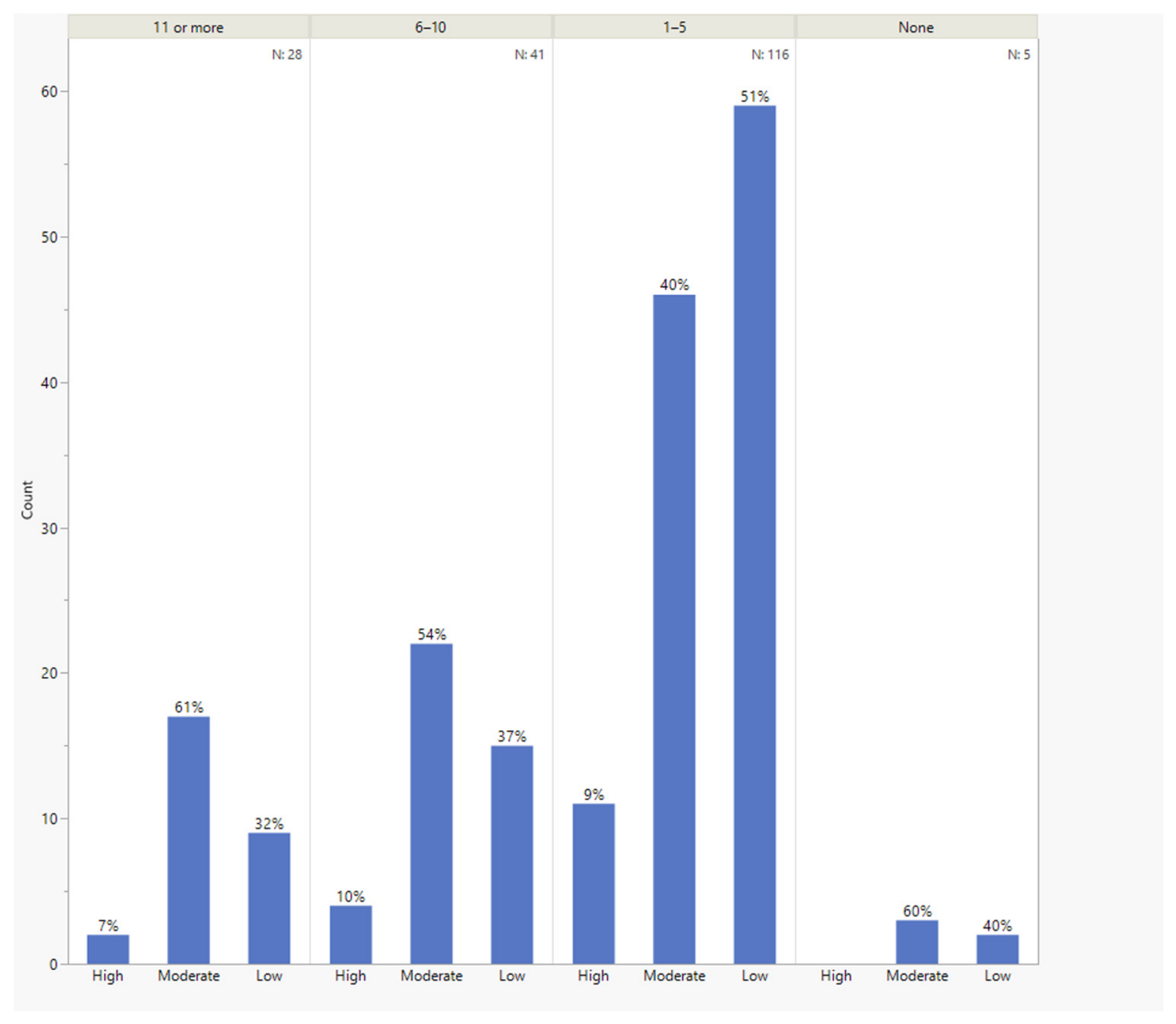
To assess the impact of training on risk perception, responses were grouped by the extent of use of training materials, from no use to 11 or more courses completed. Among those who used training materials, the distribution of high-, low-, and moderate-risk laboratories appears graphically similar, and this is confirmed by the likelihood ratio chi square test (
p = 0.35). Among the small group who did not use any training (
n = 5), none identified their laboratory as high-risk, while those who did complete training, identified high-risk laboratories 7–10% of the time. Respondents identified low-risk laboratories 31–51% of the time and moderate-risk laboratories 40–59% of the time (
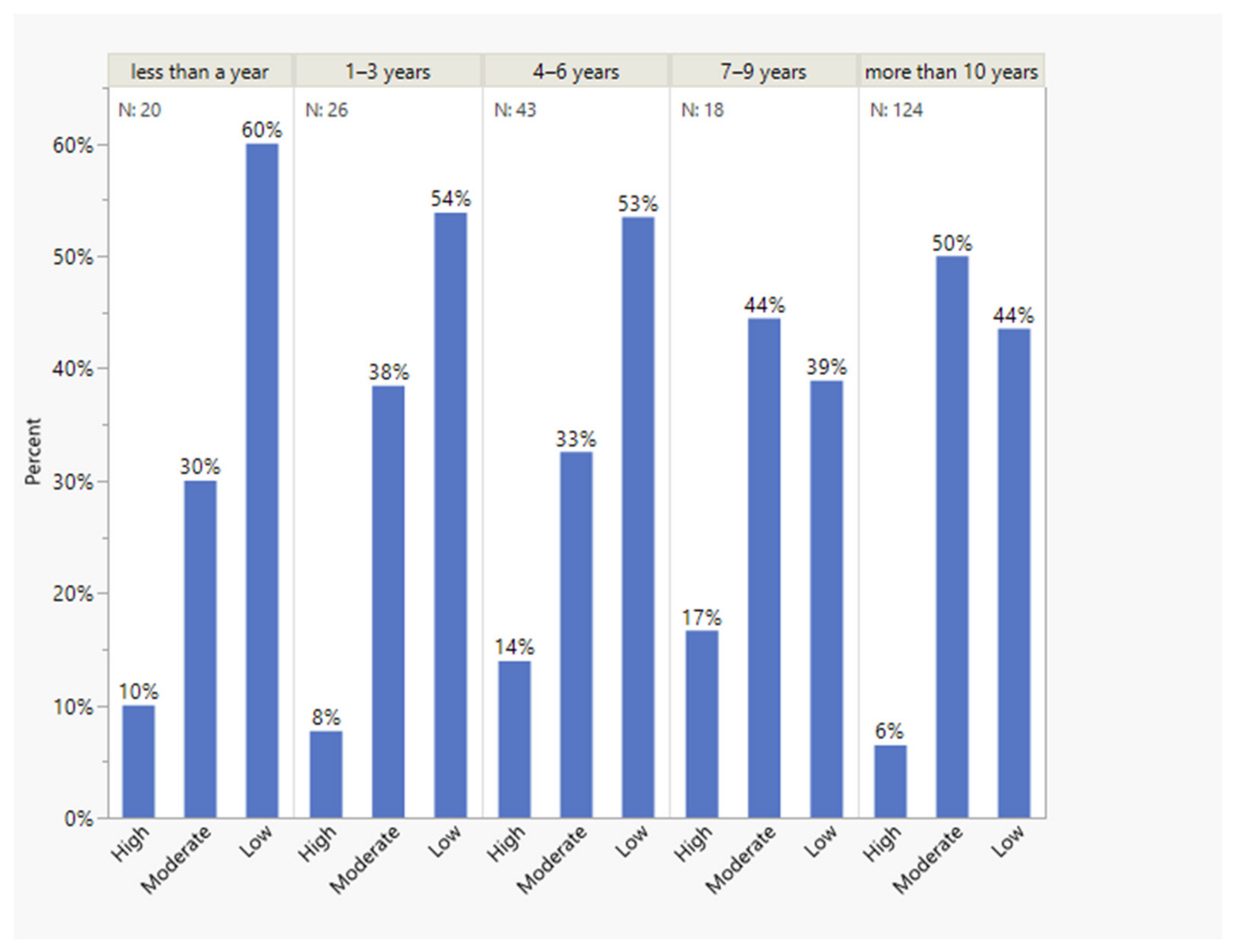
Figure 16). Although years of laboratory experience were not significantly associated with perceived risk level (
Figure 17; likelihood ratio chi-square
p = 0.40), the visual progression across the charts reveals a consistent trend: as years of laboratory experience increase, respondents become less likely to classify their work as low-risk and more likely to acknowledge moderate risk. At the same time, the persistently small high-risk proportions across all groups (6–17%) combined with the survey finding that 96% of respondents overall consider their laboratories safe, suggest a pattern of partial risk normalization, in which routine exposure to hazards may coexist with a strong global perception of safety, although this interpretation should be viewed as tentative given the self-reported, cross-sectional nature of the data [
15]. The data therefore support the value of universal safety interventions (e.g., regular hazard reassessments and case-based discussions) that reinforce accurate risk perception at every career stage, rather than focusing solely on novices or long-term personnel.
3.14. Suggested Most Effective Approaches/Changes to Improve Laboratory Safety
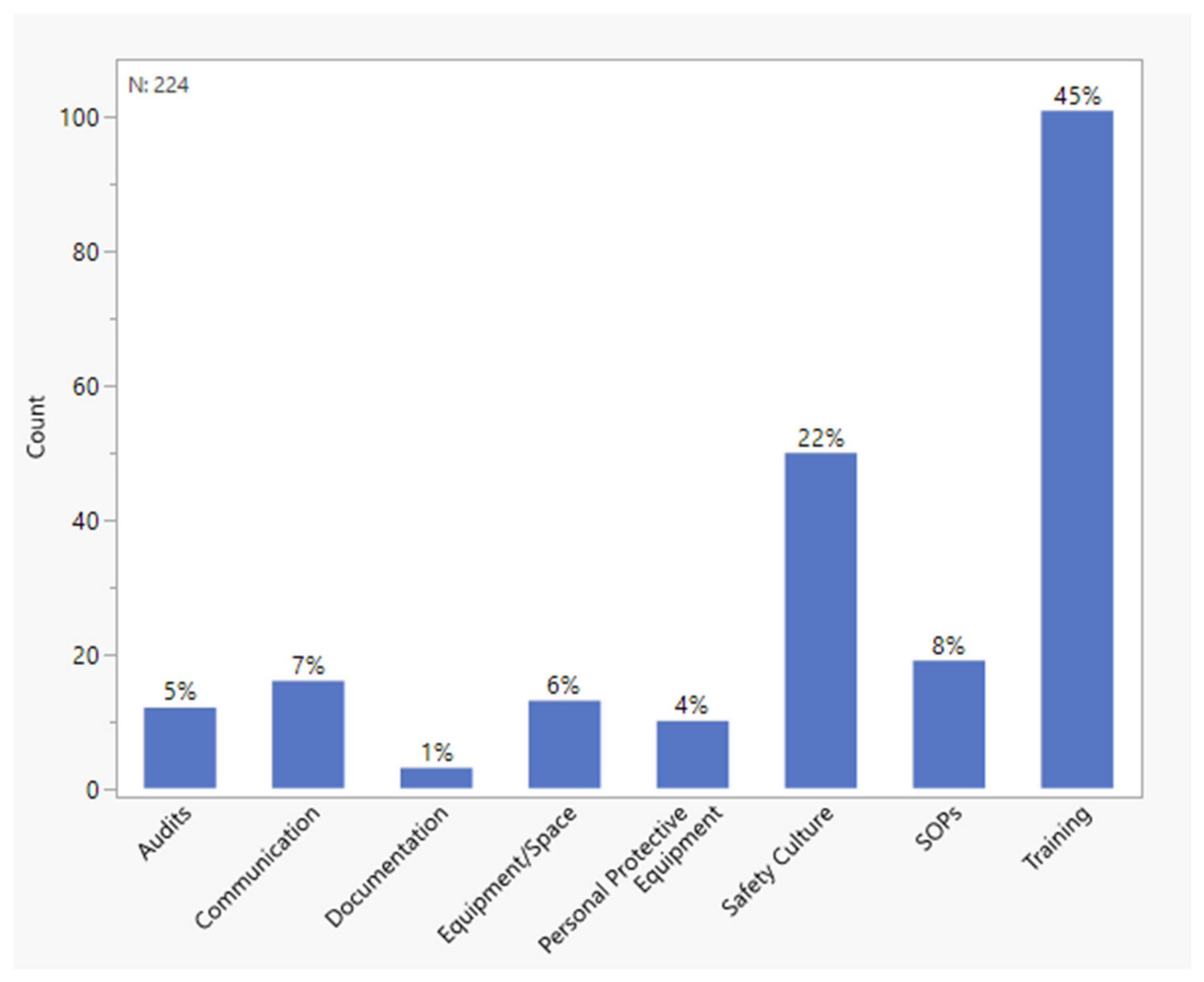
Among the respondents who worked in research laboratories, 91% offered suggestions on what they would recommend as the “most effective” initiative that the university could undertake to increase laboratory safety. The breakdown of recommendations (by category) is shown in
Figure 18. Seventy-five percent of the responses fell into the following three categories: training, safety culture, and use of SOPs.
Nearly half (45%) of the survey responses to improve laboratory safety involved training. The types of training suggested were:
- (1)
Specific training for their laboratory.
- (2)
Training of students by faculty, laboratory managers, or senior laboratory personnel.
- (3)
Updating online training and keeping it current.
- (4)
Making online training more specific and challenging.
- (5)
Training in SOPs.
- (6)
Initial training of new hires.
These 6 sub-categories accounted for 85% of the recommendations related to training. The most common types of training recommendations were for one-on-one training and laboratory-specific training for personnel.
Faculty and graduate students identified training as their recommendation for the most effective means of improving laboratory safety approximately twice as often as the next category (safety culture). Overall, 45% of the recommendations related to training. For every role the two most frequent selections for recommendations were training and safety culture. Overall, 67% of the recommendations fell into these two categories.
4. Discussion and Recommendations
The survey findings align with the systems-level perspective described by Larouzée and Le Coze [
26], who emphasize that organizational accidents rarely stem from isolated unsafe acts but from patterned misalignments across multiple defensive layers. Variability in SOP availability, inconsistency in training practices, and differing perceptions of management support observed in this study can be viewed as “holes” within institutional defenses rather than independent shortcomings. Even when individual behaviors appear adequate, misaligned latent conditions—such as unclear procedures, inadequate communication pathways, or insufficient supervisory engagement—create pathways through which laboratory hazards can more easily propagate. This perspective underscores the value of assessing organizational climate and infrastructure as core determinants of laboratory safety performance, while recognizing that the present study provides an empirical illustration of these concepts rather than a new formal model.
The absence of statistically significant differences in some domains (e.g., between staff and faculty on specific safety attitudes) does not imply negligible risk. The Swiss Cheese Model highlights that latent conditions may remain undetected or appear inconsequential until they combine with operational variability to breach multiple defenses simultaneously. Non-significant findings may therefore reflect uniformly weak or uniformly strong defenses rather than true homogeneity in underlying conditions. Conversely, domains showing significant disparities—such as SOP reliance or perceptions of supervisory expectations—represent areas where defense layers differ across groups, increasing the likelihood that misalignments could contribute to future incidents. In revisiting the results, we therefore organized the Discussion around key operational domains that correspond to these theoretical perspectives (training, audits, SOP implementation, near-miss reporting, and institutional responsibility) to make the connections between empirical findings, established safety theories, and practical recommendations more explicit.
4.1. Access to Safety Training
Survey results demonstrate that access to safety training is generally favorable, with approximately 75% of respondents reporting that training materials were easy to locate. However, a substantial minority (25%) experienced difficulty navigating the training system, a challenge disproportionately reported by faculty and staff (46% vs. 28%). Despite these access barriers, 88% of respondents who completed training indicated that it was helpful and sufficient for their role, suggesting that the primary limitation lies in logistical accessibility rather than content quality. The observation that 92% of individuals who initially struggled to locate training materials nonetheless found the training effective once accessed reinforces this interpretation. These data indicate that improvements in navigation, visibility, and organization of training resources would likely yield meaningful gains in compliance and engagement. Streamlining access pathways, embedding training links in onboarding and routine laboratory communications, and providing role-specific guidance may reduce barriers and further enhance the already positive perception of training content. Particular attention should be directed toward faculty, given their central role in modeling safe laboratory behaviors for students and staff. Mabrouk [
2] complements our survey findings by showing that even first-year doctoral students begin graduate research with significant gaps in basic safety knowledge despite being expected to assume supervisory roles. The study’s emphasis on structured, multi-semester safety instruction and active-learning methods supports our conclusion that improving laboratory safety requires not only policies and SOPs but also systematic, well-designed safety education that engages students directly in identifying hazards and analyzing real incidents.
4.2. Laboratory Audit Program
Laboratory audits were widely perceived as beneficial, with 89% of respondents considering them helpful for improving safety. This positive assessment was largely consistent across roles; however, faculty members were more likely than staff to express dissatisfaction with audits, and qualitative comments frequently referenced concerns regarding inconsistency, lack of clarity, and an adversarial tone. The data suggest that standardization of audit criteria and clearer communication regarding audit scope and expectations could enhance trust and effectiveness. Providing structured post-audit feedback, including written summaries and guidance on corrective actions, would also strengthen learning outcomes. Shifting the audit experience toward a collaborative, improvement-focused model may help address persistent concerns while maintaining the strong baseline support for the audit program observed across the university. However, laboratory audit programs in other institutions may differ substantially in scope, staffing, and approach, and it cannot be assumed that similarly high levels of acceptance or perceived helpfulness would exist in all institutional contexts.
4.3. Risk Perception and Safety Awareness
Nearly half of respondents classified their laboratories as low-risk, while 43% identified their work environments as moderate-risk and 9% as high-risk. Despite this distribution, 96% of respondents considered their laboratory to be safe, suggesting a possible normalization of risk even within environments perceived as moderately or highly hazardous. This paradox highlights an important area for intervention, as perceived safety may not fully align with objective hazard potential. Differences in risk perception were also evident across roles, with faculty more likely than graduate students to consider their laboratories safe. This disparity may reflect variations in experience, exposure, or supervisory position and suggests that early-career researchers may possess heightened sensitivity to hazards or feel less protected by institutional controls. Addressing this gap through targeted risk communication, case-based learning, and structured hazard discussions may help foster more consistent risk awareness across roles.
4.4. Near-Miss Awareness and Reporting
Only 68% of laboratories reported documenting near misses, indicating that nearly one-third of laboratory environments lack formalized mechanisms for capturing and learning from precursor events. Given the well-established role of near-miss reporting in preventing more serious incidents, this finding represents a significant opportunity for improvement. Enhanced clarity, simplification of reporting processes, and reinforcement of non-punitive institutional policies could encourage greater participation. Integrating near-miss discussions into routine laboratory meetings and audits, along with sharing anonymized examples of incidents and outcomes, may help normalize reporting behavior and promote learning-oriented safety practices.
4.5. SOP Practices and Implementation
SOPs are recognized as essential tools for ensuring consistent, reliable, and safe laboratory operations. They provide step-by-step instructions for specific procedures, help minimize errors, enhance reproducibility, and serve as comprehensive training resources for new staff. Regular review and updating of SOPs are recommended to maintain their relevance and effectiveness in supporting both compliance and laboratory safety. While 85% of respondents indicated that SOPs were used in their laboratories, significant disparities were evident across roles. These findings are consistent with those reported by Ezenwa et al. [
15], where 90% of industrial and academic laboratories classified by role indicated SOP use. Staff members reported markedly lower SOP use compared to faculty and graduate students, suggesting uneven integration of procedural controls within certain job categories. Improving SOP standardization, ensuring accessibility across all laboratory spaces, and reinforcing their use through training and audits would promote consistent implementation. Requiring periodic review and updating of SOPs, particularly following procedural changes or the introduction of new hazards, would further ensure their effectiveness and relevance.
4.6. Safety Culture, Risk Management, and Institutional Responsibility
In its 2012 report on academic laboratory safety culture, the American Chemical Society (ACS) Task Force described a strong safety culture as one with clear leadership and accountability, ongoing safety education and critical thinking, learning from incidents, collaboration among faculty, staff, students, postdoctoral scholars, and EH&S personnel, and sustained institutional support [
27]. In this survey, 22% of respondents identified safety culture issues as the change most likely to improve laboratory safety. Suggested improvements included greater day-to-day attention to safety, more frequent discussion of safe practices, stronger faculty–student collaboration, better laboratory management, and clearer responsibility for completing training. Together, these responses suggest that safety is not always fully integrated into routine research activities.
Training, safety culture, and SOP implementation collectively accounted for over two-thirds of respondents’ recommendations for improving laboratory safety. This convergence underscores the importance of embedding safety within the daily identity and operational framework of the research enterprise rather than positioning it as a compliance obligation alone. Respondents emphasized faculty leadership, communication, mutual accountability, and learning from incidents. The broader literature is consistent with these patterns: Sun et al. [
4] show that dispersed, experiment-specific training substantially reduces unsafe behaviors compared with centralized lectures, reinforcing our finding that training must be timely and embedded in laboratory practice; Love et al. [
5] demonstrate at a large scale that comprehensive safety training and supportive institutional practices reduce accident odds in STEM and CTE laboratories, complementing our focus on training adequacy, SOP use, and audits in research settings; Chung et al. [
6] highlight the importance of moving away from blame and toward open communication and psychologically safe reporting, echoing our findings on near-miss underreporting and mixed perceptions of audits; and Cui et al. [
7] emphasize the need for validity-supported safety surveys, aligning with our attention to anonymity, clear item wording, and internal consistency. Together, these studies and the current findings argue that improving laboratory safety requires both robust procedures and a culture that encourages transparency, non-punitive reporting, and continuous learning.
4.7. Time Commitment
An additional consideration emerging from both the literature and practitioner experience is the time required to implement and sustain robust safety practices. Even when policies, SOPs, and training systems are well designed, they impose real time demands on faculty, staff, and students for activities such as preparing documentation, attending training, participating in audits, and reporting near misses. In many universities, safety expectations have expanded more rapidly than formal workload adjustments, leaving laboratory personnel to absorb these responsibilities alongside existing teaching, research, and administrative duties. This misalignment can create perceptions that safety is “extra work” rather than supported core practice and may inadvertently discourage consistent implementation. Recognizing and explicitly resourcing the time needed for safety work—for example, through workload credit, protected time, or formal recognition in evaluation and promotion processes—may therefore be essential for translating institutional safety expectations into sustained everyday practice.
4.8. Integrated Implications
From a statistical perspective, the findings should also be interpreted with appropriate caution. The analyses rely primarily on likelihood ratio chi-square tests of associations among categorical variables, and several comparisons involve modest subgroup sizes, which limits power to detect smaller effects and increases uncertainty around estimated percentages. Non-significant results therefore indicate that no association was found at the chosen alpha level, rather than proving that no relationship exists, and significant results should not be overgeneralized beyond this single-institution context. For these reasons, the patterns observed here are best treated as suggestive leverage points for institutional action and future research rather than definitive causal relationships. Taken together, these findings illustrate that the university possesses a strong foundation of safety awareness and engagement but also faces tangible opportunities for refinement. Enhanced access to training, improved audit consistency, standardized SOP usage, and expanded near-miss reporting systems represent critical areas where institutional efforts can produce measurable advances. Fostering a culture that prioritizes collaboration, transparency, and shared accountability will be instrumental in sustaining long-term laboratory safety resilience.
5. Strengths and Limitations
This study offers several important strengths, including representation from multiple laboratory roles (faculty, staff, graduate students, Post Doctoral Fellows, and laboratory managers) and the integration of both quantitative and qualitative survey data. It also examines several operational dimensions of the safety system within a single institutional context, including training access and adequacy, SOP use, audits, near-miss reporting, and perceived laboratory risk and safety, providing a more comprehensive view than studies focused on a single safety domain [
28].
Although the present study did not administer a formal impression-management scale, several design features were used to mitigate socially desirable responding in safety surveys. The survey was fully anonymous, with no identifying information collected, and items emphasized organizational and procedural conditions (e.g., training access, SOP implementation, audit usefulness, near-miss documentation) rather than moralistic self-evaluations (e.g., “I always work safely”). Administration was independent of supervisory evaluation or compliance processes, and the instrument mixed organizational, behavioral, and perceptual constructs rather than relying on a single domain of self-report. Together, these safeguards reduce the likelihood that impression management substantially distorted the observed patterns, although it cannot be ruled out entirely.
Several limitations should nevertheless be considered. Although 1340 individuals responded to the broader survey, only 245 (18%) self-identified as currently working in research laboratories, introducing the potential for self-selection bias if individuals with particularly strong safety concerns or experiences were more likely to participate. The study did not incorporate objective safety performance indicators such as incident logs, audit findings, or verified training completion records that might validate or contextualize reported perceptions. Certain role categories had relatively small sample sizes, particularly staff members and Post Doctoral Fellows, which may limit statistical power to detect meaningful differences across groups. The survey instrument was not pilot-tested or subjected to full psychometric validation, and the absence of such procedures is an important limitation. Finally, the study was conducted at a single large research university; institutional structures, safety programs, audit practices, and training systems vary widely across academic environments, which may limit the generalizability of the findings. Two factors not assessed in this study were the competency of EH&S personnel and the extent of team-building and collaborative engagement activities between EH&S personnel and the research community. These factors may play important roles in the effectiveness and overall success of laboratory safety programs. Despite these limitations, the survey approach provides actionable, data-driven insights that can support targeted interventions and continuous improvement in research laboratory safety systems.
6. Conclusions
This study examined how operational elements of a university laboratory safety system relate to laboratory workers’ perceptions of risk and safety. While most respondents described their laboratories as safe, the findings identified opportunities for improvement in areas such as training accessibility, documentation of near misses, and consistency in the implementation of safety practices. Perceptions of laboratory safety were not associated with years of experience, hours worked in the laboratory, or the extent of training completed, suggesting that organizational factors may play an important role in shaping safety perceptions. More broadly, the results demonstrate the value of using survey-based assessments to identify strengths, gaps, and priorities within academic research safety programs. By examining how laboratory personnel experience key safety processes, institutions can obtain actionable information to guide continuous improvement efforts. Although the findings are derived from a single institution and should not be interpreted as evidence of causal relationships, the approach provides a practical framework for evaluating laboratory safety programs and informing future safety initiatives in academic research environments.
Author Contributions
Conceptualization, G.R., J.-A.U., J.H.S. and A.R.P.; Methodology, G.R., J.-A.U., J.H.S. and A.R.P.; Investigation, G.R., J.-A.U., J.H.S. and A.R.P.; Writing—original draft, G.R., J.-A.U., J.H.S. and A.R.P.; Writing—review and editing, G.R., J.-A.U., J.H.S. and A.R.P. All authors contributed roughly equally to the conceptualization, survey creation, data analysis, and writing of this manuscript. All authors have read and agreed to the published version of the manuscript.
Funding
This research received no external funding.
Institutional Review Board Statement
The study was conducted in accordance with the Declaration of Helsinki, and approval was waived by the Institutional Review Board (or Ethics Committee) of University of Cincinnati (2026-0341 and date of approval 6 April 2026).
Informed Consent Statement
Participation in the survey discussed in this manuscript was totally voluntary.
Data Availability Statement
The original contributions presented in this study are included in the article/
Supplementary Material. Further inquiries can be directed to the corresponding author.
Acknowledgments
The authors would like to thank Mary Corrigan from Harvard University Environmental Health & Safety (EH&S), for her expertise and assistance in categorizing survey text responses. We also extend our gratitude to Patrick Limbach at the University of Cincinnati, for directing the formation of the Research Safety Council at the University, who sponsored and initiated the survey. We would also like to recognize Environmental Health and Safety Office for their efforts to develop the training and audit programs identified in this study and their ongoing support of the faculty, students and staff.
Conflicts of Interest
The authors declare no conflicts of interest.
References
- Hill, R.H. Building Strong Cultures with Chemical Safety Education. J. Chem. Educ. 2021, 98, 113−117. [Google Scholar] [CrossRef]
- Mabrouk, P.A. A graduate course in chemical safety: Retrospective analysis and lessons learned. J. Chem. Educ. 2025, 102, 5189–5195. [Google Scholar] [CrossRef]
- Salazar-Escoboza, M.A.; Laborin-Alvarez, J.F.; Alvarez-Chavez, C.A.; Noriega-Orozco, L.; Borbon-Morales, C. Safety Climate Perceived by Users of Academic Laboratories in Higher Education Institutes. Saf. Sci. 2020, 121, 93–99. [Google Scholar] [CrossRef]
- Sun, L.; Zeng, D.; Xu, R.; Liu, L. Effects of different safety training methods on students’ unsafe behavior in the laboratory. J. Chem. Educ. 2025, 102, 1981–1990. [Google Scholar] [CrossRef]
- Love, T.S.; Roy, K.R.; Sirinides, P. A national study examining safety factors and training associated with STEM education and CTE laboratory accidents in the United States. Saf. Sci. 2023, 160, 106058. [Google Scholar] [CrossRef]
- Chung, A.B.; Moyle, A.B.; Hensley, M.S.; Powell, J.A. Shifting culture from blame to gain: Challenges and encouragements. ACS Chem. Health Saf. 2023, 30, 139–141. [Google Scholar] [CrossRef]
- Cui, Q.; Harshman, J.T.; Komperda, R. Validity and Reliability of Survey Data: Key to Empowering Chemical Health and Safety Research. ACS Chem. Health Saf. 2024, 31, 121–126. [Google Scholar] [CrossRef]
- Abedsoltan, H.; Shiflett, M.B. Mitigation of Potential Risks in Chemical Laboratories: A Focused Review. ACS Chem. Health Saf. 2024, 31, 104–120. [Google Scholar] [CrossRef]
- Schröder, I.; Yan Qun Huang, D.; Ellis, O.; Gibson, J.H.; Wayne, N.L. Laboratory Safety Attitudes and Practices: A Comparison of Academic, Government, and Industry Researchers. ACS Chem. Health Saf. 2016, 23, 12–23. [Google Scholar] [CrossRef]
- Papadopoli, R.; Giuseppe, C.; Nobile, A.; Trovato, A.; Pileggi, C.; Pavia, M. Chemical Risk and Safety Awareness, Perception, and Practices among Research Laboratories Workers in Italy. J. Occup. Med. Toxicol. 2020, 15, 17. [Google Scholar] [CrossRef] [PubMed]
- Gutiérrez, J.M.; Emery, R.J.; Whitehead, L.W.; Felknor, S.A. A Means for Measuring Safety Climate in the University Work Setting. J. Chem. Health Saf. 2013, 20, 2–11. [Google Scholar] [CrossRef]
- Ayi, H.R.; Hon, C.Y. Safety Culture and Safety Compliance in Academic Laboratories: A Canadian Perspective. J. Chem. Health Saf. 2018, 25, 6–12. [Google Scholar] [CrossRef]
- Sonawane, S.L.; Patil, V.J.; Tigaa, R.A. Evaluating and Promoting Chemical Safety Awareness in the Chemical Sciences. J. Chem. Educ. 2023, 100, 469–478. [Google Scholar] [CrossRef]
- Leung, A.H.-H. Laboratory Safety Awareness, Practice, Attitude, and Perception of Tertiary Laboratory Workers in Hong Kong: A Pilot Study. ACS Chem. Health Saf. 2021, 28, 250–259. [Google Scholar] [CrossRef]
- Ezenwa, S.; Talpade, A.D.; Ghanekar, P.; Joshi, R.; Devaraj, J.; Ribeiro, F.H.; Mentzer, R. Toward Improved Safety Culture in Academic and Industrial Chemical Laboratories: An Assessment and Recommendation of Best Practices. ACS Chem. Health Saf. 2022, 29, 202–213. [Google Scholar] [CrossRef]
- Occupational Safety and Health Administration. Near Miss Reporting Policy. 2021. Available online: https://www.osha.gov/sites/default/files/2021-07/Template%20for%20Near%20Miss%20Reporting%20Policy.pdf (accessed on 8 January 2026).
- Reason, J. Human error: Models and management. BMJ 2000, 320, 768–770. [Google Scholar] [CrossRef]
- Reason, J. Human Error, 1st ed.; Cambridge University Press: Cambridge, UK, 1990. [Google Scholar]
- Reason, J. Managing the Risks of Organizational Accidents; Ashgate Publishing: Surrey, UK, 1997. [Google Scholar]
- Reason, J. The Human Contribution: Unsafe Acts, Accidents and Heroic Recoveries; Ashgate Publishing: Surrey, UK, 2008. [Google Scholar]
- Wu, G.; Yang, Y.; Xu, C. Determination of University Students’ Laboratory Safety Awareness: A Cross-Sectional Study. J. Chem. Educ. 2023, 100, 3402–3409. [Google Scholar] [CrossRef]
- Benjamini, Y.; Hochberg, Y. Controlling the False Discovery Rate: A Practical and Powerful Approach to Multiple Testing. J. R. Stat. Soc. Ser. B Methodol. 1995, 57, 289–300. [Google Scholar] [CrossRef]
- Foster, B.L. Fundamentals of Productive Laboratory Inspections in Academia. ACS Chem. Health Saf. 2003, 10, 28−34. [Google Scholar] [CrossRef]
- Park, M.H.; Kim, H.J.; Lee, B.W.; Bae, S.H.; Lee, J.Y. Near Misses Experienced at a University Hospital in Korea. Qual. Improv. Health Care 2016, 22, 41–57. [Google Scholar] [CrossRef][Green Version]
- Kou, Y.; Peng, X.; Dingwell, C.E.; Reisbick, S.A.; Tonks, I.A.; Sitek, A.A. Learning Experience Reports Improve Academic Research Safety. J. Chem. Educ. 2020, 98, 150–157. [Google Scholar] [CrossRef]
- Larouzée, J.; Le Coze, J.-C. Good and bad reasons: The Swiss cheese model and its critics. Saf. Sci. 2020, 126, 104660. [Google Scholar] [CrossRef]
- ACS Committee on Chemical Safety (CCS). Safety Culture Task Force. In Creating Safety Cultures in Academic Institutions, 1st ed.; American Chemical Society, ACS Joint Board/Council Committee on Chemical Safety: Washington, DC, USA, 2012. [Google Scholar]
- Keiser, H.N.; Payne, S.C. Are employee surveys biased? Impression management as a response bias in workplace safety constructs. Saf. Sci. 2019, 118, 453–465. [Google Scholar] [CrossRef]
Figure 1.
Distribution of roles of survey respondents who self-identified as working in a research laboratory.
Figure 1.
Distribution of roles of survey respondents who self-identified as working in a research laboratory.
Figure 2.
Distribution of organizational affiliation by respondents (n = 245).
Figure 2.
Distribution of organizational affiliation by respondents (n = 245).
Figure 3.
Distribution of hours worked in laboratory per week by all respondents, ranked according to the number reporting in each category.
Figure 3.
Distribution of hours worked in laboratory per week by all respondents, ranked according to the number reporting in each category.
Figure 4.
Percent of respondents showing hours worked in laboratory categorized by job.
Figure 4.
Percent of respondents showing hours worked in laboratory categorized by job.
Figure 5.
Percent of respondents by role/job reporting that they worked fewer than 10 h per week in the laboratory.
Figure 5.
Percent of respondents by role/job reporting that they worked fewer than 10 h per week in the laboratory.
Figure 6.
Breakdown of role/job for respondents who reported training materials were not easy to locate.
Figure 6.
Breakdown of role/job for respondents who reported training materials were not easy to locate.
Figure 7.
Ease of locating online training materials stratified by number of laboratory safety training courses/videos accessed.
Figure 7.
Ease of locating online training materials stratified by number of laboratory safety training courses/videos accessed.
Figure 8.
Breakdown (count) of each respondent’s job among those who reported that training was not helpful or sufficient (total n = 23).
Figure 8.
Breakdown (count) of each respondent’s job among those who reported that training was not helpful or sufficient (total n = 23).
Figure 9.
Distribution of responses on being asked if training received was sufficient/helpful for their role in the laboratory.
Figure 9.
Distribution of responses on being asked if training received was sufficient/helpful for their role in the laboratory.
Figure 10.
Distribution by role/job for those who reported audits as helpful and those who did not.
Figure 10.
Distribution by role/job for those who reported audits as helpful and those who did not.
Figure 11.
Distribution of offer of specific laboratory training at the time of initial start of work (does not include general online training).
Figure 11.
Distribution of offer of specific laboratory training at the time of initial start of work (does not include general online training).
Figure 12.
Distribution of responses on whether SOPs are used in the laboratory in which respondents currently work (n = 245). Significant differences (p < 0.05) between staff and both graduate students and faculty.
Figure 12.
Distribution of responses on whether SOPs are used in the laboratory in which respondents currently work (n = 245). Significant differences (p < 0.05) between staff and both graduate students and faculty.
Figure 13.
Percentage of various reports on perceived risk in the laboratories where survey respondents worked.
Figure 13.
Percentage of various reports on perceived risk in the laboratories where survey respondents worked.
Figure 14.
Distribution of respondents who considered their laboratory safe vs. the level of risk they viewed in their laboratory.
Figure 14.
Distribution of respondents who considered their laboratory safe vs. the level of risk they viewed in their laboratory.
Figure 15.
Perceived risk level in laboratories by organization/college.
Figure 15.
Perceived risk level in laboratories by organization/college.
Figure 16.
Extent of use of training materials and perceived risk of their laboratory.
Figure 16.
Extent of use of training materials and perceived risk of their laboratory.
Figure 17.
Years of experience working in research laboratories vs. perceived risk.
Figure 17.
Years of experience working in research laboratories vs. perceived risk.
Figure 18.
Percent of respondents’ suggestions for changes that would be most effective for improving laboratory safety.
Figure 18.
Percent of respondents’ suggestions for changes that would be most effective for improving laboratory safety.
Table 1.
Counts of roles/jobs of respondents by college within the university.
Table 1.
Counts of roles/jobs of respondents by college within the university.
| Role | Allied Health Sciences | Arts & Sciences | Engineering and Applied Sciences | Medicine | Other |
|---|
| Faculty | 7 | 19 | 27 | 37 | 7 |
| Graduate Student | 1 | 27 | 30 | 25 | 3 |
| Lab Manager | 1 | 0 | 2 | 11 | 2 |
| Post Doctoral Fellow | 1 | 2 | 2 | 2 | 0 |
| Staff | 0 | 5 | 3 | 31 | 0 |
Table 2.
Analysis of reported number of laboratory safety training courses/videos accessed vs. sufficiency of training for their job and laboratory.
Table 2.
Analysis of reported number of laboratory safety training courses/videos accessed vs. sufficiency of training for their job and laboratory.
| Number of Laboratory Safety Courses | Not Sufficient (n) | Not Sufficient (%) | Sufficient (n) | Sufficient (%) | Total (n) |
|---|
| 1–5 | 14 | 11% | 109 | 89% | 123 |
| 6–10 | 7 | 16% | 36 | 84% | 43 |
| 11 or more | 2 | 7% | 27 | 93% | 29 |
| All | 23 | 12% | 172 | 88% | 195 |
| Disclaimer/Publisher’s Note: The statements, opinions and data contained in all publications are solely those of the individual author(s) and contributor(s) and not of MDPI and/or the editor(s). MDPI and/or the editor(s) disclaim responsibility for any injury to people or property resulting from any ideas, methods, instructions or products referred to in the content. |