Article

Unpacking Safety Culture and Safety Compliance: Testing the Six-Factor Framework of Leadership and Safety Practices in South African Manufacturing Small and Medium-Sized Enterprises


by
Reagile Raditsela
*,
Kirsty-Lee Sharp-Eke
and
Ayesha L. Bevan-Dye
School of Management Sciences, Faculty of Economics and Management Sciences, North-West University, Hendrik Van Eck Blvd., Vanderbijlpark 1900, South Africa
*
Author to whom correspondence should be addressed.
Safety 2026, 12(3), 76; https://doi.org/10.3390/safety12030076
Submission received: 7 March 2026 / Revised: 23 April 2026 / Accepted: 30 April 2026 / Published: 1 June 2026

Abstract

Establishing a strong safety culture remains a key challenge for safety professionals in the manufacturing sector. Although safety culture has been examined across South African industries such as food production, aviation and construction, limited research focuses on manufacturing Small and Medium-sized Enterprises (SMEs). This study addresses this gap by examining how employees perceive organizational factors influencing safety culture through a six-factor leadership and safety practices framework. Using a cross-sectional design, data were collected from a convenience sample of 487 employees aged 18–65 years working in South African manufacturing SMEs, recruited through a national market research panel. A structured, self-administered questionnaire measured employee perceptions of organizational factors shaping safety culture and related compliance behaviors. The structural model demonstrated satisfactory reliability and strong model fit, with six core factors identified, namely management commitment, safety incentives, safety training, safety communication with feedback, safety culture, and safety compliance. Findings indicate that stronger safety culture development requires SME leadership engagement, resource allocation and open communication, supported by frequent, context-specific training and intrinsic and extrinsic incentives, while clear, enforceable compliance measures help reduce workplace hazards and maintain regulatory alignment.

1. Introduction

Safety culture is widely recognized as a foundational component of effective occupational health and safety (OHS) systems, particularly within high-risk sectors such as manufacturing [1]. Moreover, Osman et al. [2] define safety culture as the extent to which employees are aware of and engaged with an organization’s safety-related values, norms and environmental conditions. Arzahan et al. [3] expand on this by emphasizing that safety culture encompasses both formal elements, including organizational policies and procedures and informal components, such as employee attitudes and behaviors toward safety-related issues. Collectively, these dimensions influence how safety is internalized, prioritized and enacted across all organizational levels [4].
In a review of the literature, Guldenmund [5] highlights the lack of consensus concerning the exact meaning of safety culture and indicates that it is often confused with and used synonymously with the inter-related yet distinct concept of safety climate. Approximately a quarter of a century later, these two terms are often still being applied inter-changeably [6,7,8]. Guldenmund [5] articulates safety climate as organizational members’ adopted values and consequent attitudes toward safety and contrasts these from safety culture, which he conceptualizes as a functional attribute that provides a frame of reference for safety behavior comprising the leadership-steered external and internal safety processes of an organization. This view resonates with that of Reason [9] who takes a functional approach to safety culture, indicating that it is something that can be deliberately engineered by leadership to support wider organizational interests. Hudson [10] indicates that developing a safety culture necessitates leadership support and the implementation of safety systems and supporting safety tools.
Beyond its role in reducing workplace incidents, safety culture has been linked to broader organizational outcomes, including strategic alignment, operational resilience and long-term competitiveness [11]. As Bhattarai et al. [12] observe, the manifestation of safety culture can be understood as an organization’s collective valuation and prioritization of safety, which in turn influences decision-making, resource allocation and employee conduct. Blokland and Reniers [13] further argue that cultivating a proactive and integrated safety culture is essential across all sectors, regardless of size or maturity, and requires consistent leadership commitment and employee buy-in. Consequently, safety culture may be shaped by and reflective of a shared organizational vision [4,14].
According to Shan et al. [15], employees are not only the key drivers of safety culture but also its primary stakeholders. As such, their perceptions, attitudes and behaviors ultimately determine the extent to which safety principles are operationalized in daily work routines. Consequently, it is imperative for organizations to understand how their employees perceive the existing safety culture, especially in contexts where compliance and hazard mitigation are critical for organizational performance [16]. As Amirah et al. [17] indicate, manufacturing environments are more prone to high operational risks, highlighting the need for the implementation of a robust safety culture. In addition, Burkett [18] suggests that integrating safety into manufacturing processes helps mitigate the risk of occupational injuries, illnesses and fatalities. Consequently, in South Africa, the importance of cultivating a safety culture is rooted in the fundamental objective of preserving human life [19]. Furthermore, Tristancho [20] and Cutler [21] argue that beyond regulatory compliance, well-structured safety initiatives also contribute to improved employee morale, increased productivity and reduced operational costs.
Graham [22] proposes four essential steps that can significantly enhance workplace safety, which include fostering a culture that prioritizes health and safety, deploying appropriate safety tools, delivering targeted training, and maintaining a comprehensive safety management program. Channell [23] adds that these steps not only reduce the frequency and severity of incidents but also create a more resilient and cost-effective operational environment. Unfortunately, the South African context presents unique challenges and opportunities in this regard [24,25]. Despite the presence of comprehensive OHS legislation, the country continues to report high rates of occupational incidents. Between 2001 and 2019, over 3.8 million occupational injuries and approximately 44,000 occupational diseases were reported [26]. Although there was a general decline in annual incidents, reaching 81,995 in 2019, the frequency of injuries remains a pressing concern [25]. This challenge is particularly pronounced in small and medium-sized enterprises (SMEs), which often face constraints related to financial resources, staffing and formalized safety systems [27].
Conner Industries [28] notes that one of the most persistent obstacles faced by safety managers in manufacturing is the creation and reinforcement of a safety-oriented culture. In addition, Esterhuyzen [29] and Nieuwenhuizen [30] highlight that South African SMEs frequently lack the capacity to comply fully with OHS regulations, resulting in gaps in implementation and enforcement. Consequently, a subsequent study by Esterhuyzen [31] reinforces the urgent need to strengthen safety culture within SMEs across various industries, with a particular emphasis on manufacturing. As such, existing studies on safety culture in South Africa have largely concentrated on the food production, aviation and construction sectors [32,33,34]. This gap in sector-specific scholarship underscores the importance of the present study, which seeks to examine how employees within South African manufacturing SMEs perceive the organizational factors that influence safety culture. In addition, the study investigates the relationship between safety culture and employees’ compliance with safety procedures, with the aim of informing targeted managerial interventions. By doing so, the research contributes to the development of evidence-based strategies to improve safety culture and compliance within a critical segment of the South African economy.

2. Literature Review

Safety leadership can aid in the prevention of injuries and accidents that occur in the workplace, safeguard employees from harm that can occur within an organization, and minimize costs that are associated with these injuries and accidents [35]. Furthermore, safety leadership influences all levels of an organization, which ultimately results in good safety performance within organizations [34]. This leads to an increase in productivity and profitability, lower rates of incidents, better working conditions and more motivated employees [36].
Based on the transformational–transactional leadership paradigm [37], this study aims to determine the factors that influence safety culture within South African manufacturing SMEs, namely management commitment, safety communication, safety training, safety incentives and safety compliance [7,38]. Central to this framework is the role of leadership, particularly management commitment, which serves as a foundational element in shaping and sustaining a positive safety culture [39].
In reference to safety management, management commitment signifies that the organization’s management prioritizes safety and views it as an essential value. Management can demonstrate this commitment through the allocation of essential resources, effort and time to ensure that all employees have access to a safe working environment [40]. Consequently, management carries the most influence through its ability to unify all stakeholders within an organization through the articulation and reinforcement of values and norms, as well as by supplying incentives for preferred behaviors [41]. Zhang et al. [7] indicate that management’s commitment to safety encompasses formulating clear safety rules, regulations and policies, prioritizing safety and establishing safety responsibilities, as well as reacting and taking corrective action to unsafe practices. Commitment from management is necessary for the success of any safety management system since it establishes the culture of the entire organization [42]. When management displays commitment toward safety, it directs a message that safety is of great importance in an organization and that it is prepared to invest the essential resources needed to obtain the goal of effective safety within an organization [43].
Ismail et al. [44] found that in the mining industry, management commitment significantly influences safety culture. Another study conducted in the healthcare industry found that management’s commitment toward safety has a significant relationship with patient safety culture within the healthcare industry [45]. Additionally, Cox et al. [46] found that employees’ attitudes to safety and management’s actions toward safety were revealed to have the strongest relationship within the manufacturing industry. Moreover, the results of the study conducted by Tehrani et al. [47] within the construction industry revealed that management commitment influences the development of a safety culture. Additionally, management commitment was found to negatively influence safety culture within the manufacturing industry [17]. Furthermore, a study by Van der Linde [32] found that safety leadership and management commitment in the food industry contributed poorly to safety culture development. In contrast, Davids [33] found that a positive relationship exists between management’s commitment to safety culture and the ability to develop a healthy safety culture in organizations within the aviation industry. Skeepers and Mbohwa [34] found that the visibility of safety leadership within organizations influences safety culture within organizations in the construction industry. Lastly, Arboleda et al. [48] found that lower-level employees’ perceptions of safety culture were significantly influenced by top management’s commitment to safety. Given the consistently observed relationship between management commitment and safety culture across various industries, albeit with some contradictory findings, it is essential to empirically examine this relationship within the context of South African manufacturing SMEs, thereby motivating the formulation of the following hypothesis:
H1. 
Management commitment has a significant direct influence on employees’ perceptions of safety culture within South African manufacturing SMEs.
While management commitment forms the foundation of a strong safety culture, effective safety communication, particularly when coupled with timely feedback, is equally critical in reinforcing safety values and ensuring that employees are informed, engaged and responsive to safety expectations [49]. Safety communication with feedback refers to an ongoing, interactive process of exchanging safety information, instructions and expectations to ensure they are clearly delivered, understood and acted upon. Unlike one-way messaging (such as posters or manuals), this ‘two-way’ approach relies on feedback loops to confirm that the receiver has correctly interpreted the safety message and to allow for the reporting of new hazards or concerns [50]. According to Duncan [51], effective safety communication is important to ensure that every stakeholder within an organization is cognizant of the potential hazards, as well as how to prevent them from occurring. Subsequently, safety communication with feedback is important for cultivating safety culture in organizations, where employees are motivated and empowered to speak up against potential safety incidents, accidents or hazards [52]. Feedback is a crucial element of safety communication as it permits employees to supply information regarding their observations and experiences that are related to safety within an organization [53]. It can assist in the identification of areas of concern and provide vital information to organizations on effective safety procedures and policies [54]. Furthermore, when an organization supplies feedback and shares information regarding safety, employees can help identify areas that may need adjustments or improvements and recommend solutions [43].
A study done by Naji et al. [55] found that a direct relationship exists between safety communication and safety culture within the petrochemical industry. Another study related to the transportation of goods found that safety communication has a very low impact on safety culture when safety leadership is absent [56]. Moreover, in the manufacturing industry, safety communication was deemed the most valuable dimension of safety culture [57]. Furthermore, Van der Linde [32] found that safety communication within organizations in the food industry contributed poorly to developing safety culture. Given the mixed findings across various sectors regarding the role of safety communication in shaping safety culture, it is necessary to explore its specific influence, particularly when accompanied by feedback, within the context of South African manufacturing SMEs, leading to the formulation of the following hypothesis:
H2. 
Safety communication with feedback has a significant direct influence on employees’ perceptions of safety culture within South African manufacturing SMEs.
In addition to communication with feedback, safety training plays an influential role in equipping employees with the knowledge and skills necessary to engage in safe work practices, thereby reinforcing and sustaining a positive safety culture [58,59]. Vinodkumar and Bhasi [60] indicate that safety training encompasses ongoing training sessions designed to equip employees with the necessary ability to react appropriately to emergency situations and to be able to adequately recognize and assess potential safety hazards. As such, safety training incorporates instruction or educational information created to supply the stakeholders of organizations with the skills and knowledge needed to identify and prevent potential hazards from occurring, as well as to react effectively in the case of an accident or emergency [54]. Consequently, safety training can contribute toward an organization in several ways, such as minimizing the risk of injuries and accidents since employees will be able to identify potential hazards and will be educated on how to work safely [51]. It also aids in promoting compliance with the appropriate safety regulations, since safety training will help employees understand and adhere to safety regulations that are related to their day-to-day work [54].
Ismail et al. [61] found that safety training was deemed a significant dimension that influences safety culture within an organization, specifically in the construction industry. Additionally, a study conducted in the manufacturing industry found that safety training plays an imperative role in motivating the commitment of employees toward safety, as well as improving safety culture as a whole [59]. Aburumman et al. [62] found that for organizations that employed the use of safety training as a type of intervention, workplace safety was seen to improve. This study was conducted in multiple industries, namely transportation, maintenance, forestry, construction, health care, manufacturing and utilities. Building on evidence that highlights the effectiveness of safety training in fostering employee commitment and enhancing safety culture across various industries, this study seeks to examine its direct impact within the context of South African manufacturing SMEs, as reflected in the following hypothesis:
H3. 
Safety training has a significant direct influence on employees’ perceptions of safety culture within South African manufacturing SMEs.
Ghasemi et al. [63] highlights that while safety training equips employees with the necessary knowledge and skills, the use of safety incentives serves as a motivational tool that can further encourage adherence to safety practices and strengthen the overall safety culture. Callender [64] identifies safety incentives as the recognition or rewards offered by organizations to employees who demonstrate safe attitudes, behaviors and practices within organizations. In addition, safety incentives can be used to encourage employees to behave in a safe manner, which, in turn, influences the safety culture of an organization [65]. As such, safety incentives assist in the cultivation of safety performance in an organization by motivating employees to be more aware of safety behaviors and practices [66]. Vinodkumar and Bhasi [60] highlight the importance of such incentive systems having a high level of visibility within an organization so as to encourage healthy competition amongst employees to report hazardous practices. They also point to the importance of recognizing safe conduct as a promotion criterion. Callender [64] outlines safety incentives as monetary rewards, such as gift cards or bonuses, and non-monetary rewards, which can include certificates, trophies or engraved plaques, time off or recognition in the form of a bulletin board or an organization-wide newsletter.
A study done in the oil and gas industry found that organizations that implement safety incentives within their systems motivate an overall holistic approach to safety culture [67]. Another study conducted in the construction industry by Karakhan and Gambatese [68] found that safety incentives are normally associated with either intrinsic rewards or extrinsic rewards, which can ultimately aid in enhancing safety culture through the encouragement of safe actions and behaviors from employees within organizations. Additionally, in the construction industry, it has been found that the second most valuable cost to improving safety culture was safety incentives [69]. As intrinsic and extrinsic safety incentives can promote safer behaviors and contribute meaningfully to a stronger safety culture, it is essential to assess their direct influence within South African manufacturing SMEs, as proposed in the following hypothesis:
H4. 
Safety incentives have a significant direct influence on employees’ perceptions of safety culture within South African manufacturing SMEs.
In addition to safety incentives, ensuring that employees adhere to safety practices is crucial for fostering a strong safety culture, making safety compliance an essential element to examine in relation to overall safety culture outcomes [70]. Safety compliance refers to the extent to which employees adhere to established safety rules, procedures and regulations within the workplace [71,72]. In practice, this is reflected in behaviors such as wearing required personal protective equipment (PPE), following prescribed safety procedures when performing tasks and adhering to established protocols during routine or high-risk activities [73]. It also includes completing safety checks, reporting unsafe conditions and stopping work when hazards are identified [74,75]. Safety compliance regulations can take the form of the OHS Act 85 of 1993. This act has several regulations, such as the Ergonomics Regulation, General Safety Regulation, Construction Regulation, General Administrative Regulation and the Driven Machinery Regulation [76]. Adhering to these regulations is essential, not only to escape paying penalties and fines, but also to encourage the well-being and safety of all organizational stakeholders [77]. An organization’s inability to adhere to safety regulations can result in financial and legal repercussions as well as harm to its brand and reputation [78]. Not only does safety compliance play a critical role in encouraging and maintaining a safety culture in an organization, but it also aids in promoting awareness of potential safety hazards, accidents and incidents within an organization while holding all stakeholders accountable in their pursuit of safety procedures and regulations [79].
A study conducted on a government-affiliated organization found a positive correlation between employees’ motivation to be compliant and their motivation to improve the safety culture within the organization [80]. Ayi and Hon [81] found that a lack of safety compliance is strongly related to a lack of a strong and positive safety culture within academic laboratories. Furthermore, Chen et al. [82] found that safety compliance practices played an essential role in minimizing the potential occurrence of dangerous events within organizations based in the construction industry, emphasizing the importance of developing a positive safety culture. For an organization to be safety compliant, it is imperative that organizations conduct routine inspections and audits of their subsequent operations and facilities, assess and update their subsequent procedures and policies, supply continuous training to all stakeholders and maintain efficient and up-to-date reports on all safety incidents and compliance activities [79]. As such, a strong safety culture is essential for employees’ safety compliance. Given the critical role that safety compliance plays in preventing accidents and enhancing overall safety culture, it is important to explore how safety culture influences employees’ compliance behaviors within South African manufacturing SMEs, as captured in the following hypothesis.
H5. 
Safety culture has a significant direct influence on employees’ safety compliance within South African manufacturing SMEs.
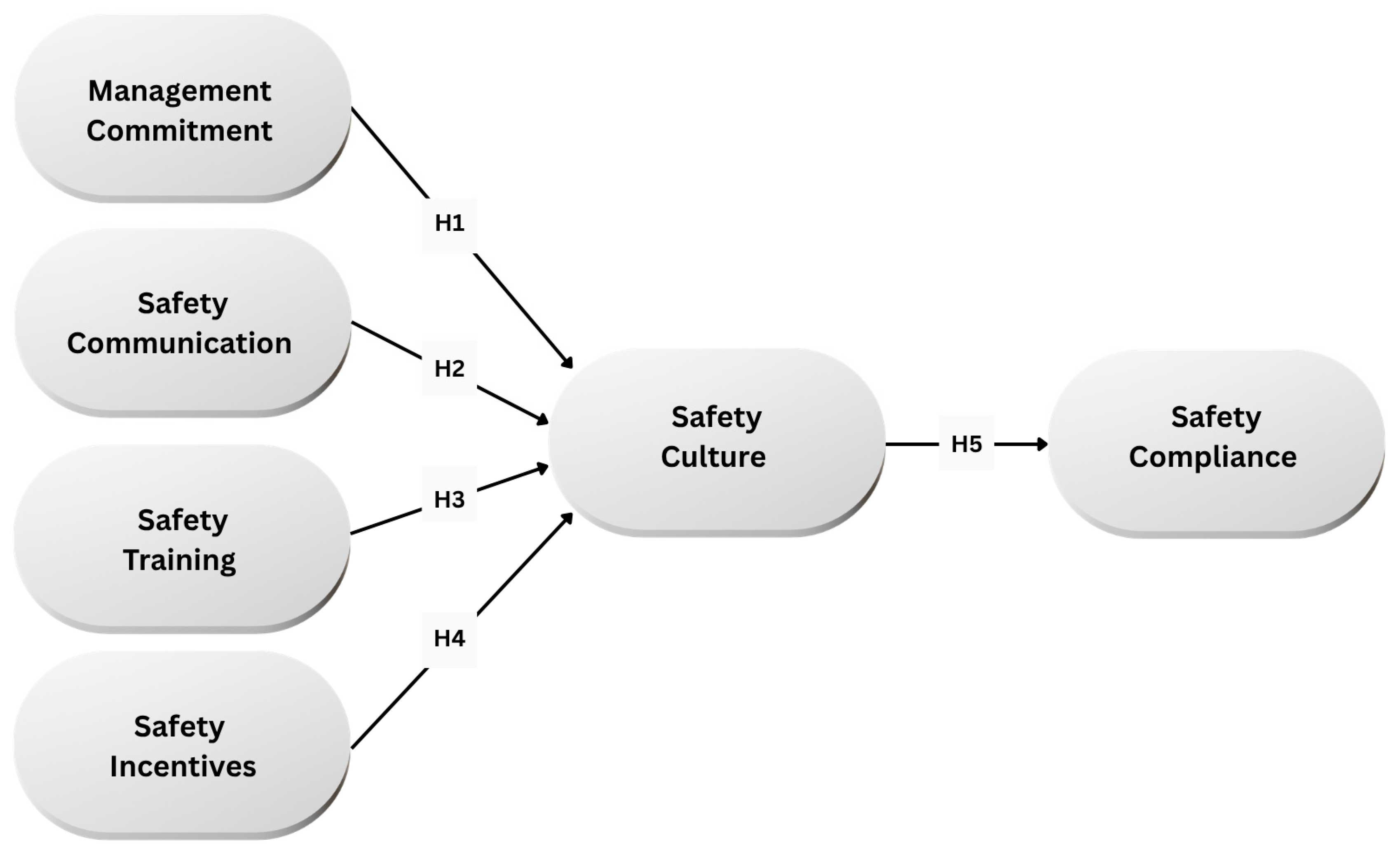
Based on the preceding literature review, Figure 1 illustrates a proposed model of the antecedents of safety culture and consequent safety compliance within South African manufacturing SMEs from an employee perspective.

3. Materials and Methods

3.1. Sampling

This study included employees aged 18 to 65 who are employed in South African manufacturing SMEs. The services of a market research company were employed to gather the required data. This market research company maintains a panel of respondents who are employees of various organizations of various sizes from various industry sectors in South Africa, including employees of SMEs in the manufacturing sector. Therefore, the quasi-sampling frame of this study was the market research company’s panel of South African employee respondents. The company is fully compliant with South Africa’s Protection of Personal Information (POPI) Act 4 of 2013 and adhered to ethical standards and POPI Act regulations during its data-gathering process. A single cross-sectional convenience sample of South African individuals between the ages of 18 and 65 years and employed within South African manufacturing SMEs was selected from a South African market research company panel.
The sample size for this study was set at 500 South African manufacturing SME employees. The sample size was deemed appropriate for conducting multi-variant statistical techniques, as per the guidelines proposed by [83]. A structured, self-administered questionnaire was used to collect data to determine employees’ perceptions of the organizational factors that influence the safety culture within South African manufacturing SMEs and their consequent safety compliance. The measuring scales that were used for this study were adapted from previously validated scales in the literature [7,38,60,84].

3.2. Data Collection Method and Questionnaire Structure

Section 1 of the questionnaire included questions designed to gather biographical and organization-related data. A question pertaining to the number of employees within an organization was used in the questionnaire due to South African-based manufacturing organizations being defined based on the number of full-time paid employees within an organization. These parameters included 11 to 50 for a small manufacturing organization and 51 to 250 for a medium manufacturing organization [85]. Section 2 of the questionnaire included the scaled-response items. Employees’ perceptions of management commitment to safety within their organization were measured using 15 items adapted from Zhang et al. [7] and Biggs et al. [38]. Employees’ perceptions of safety communication with feedback within their organization were measured using four items adapted from Zhang et al. [7] and Wachter and Yorio [84]. Employees’ perceptions of safety training within their organization were measured using four items adapted from Zhang et al. [7], Vinodkumar and Bhasi [60] and Wachter and Yorio [84]. Employees’ perceptions pertaining to safety incentives within their organization were measured using seven items adapted from Zhang et al. [7] and Vinodkumar and Bhasi [60]. Employees’ perceptions of safety culture within their organization were measured using nine items adapted from Biggs et al. [38]. Employees’ perceptions of safety compliance within their organization were measured using three items adapted from Zhang et al. [7].
These perceptions were measured using a six-point Likert scale (1 = Strongly disagree, 6 = Strongly agree). The questionnaire was accompanied by a cover letter describing the nature and purpose of this study, instructions on how to complete the questionnaire, asking the respondents to participate in the study on a voluntary basis and availing the necessary contact details of the research team, namely the researchers and the supervisors.

3.3. Data Analysis

The study, which is quantitative in nature, followed an explanatory research design focused on testing causal relationships. The quantitative data collected were analyzed using Versions 28 of SPSS and AMOS. Data analysis included the computation of percentages, confirmatory factor analysis of the measurement model and path analysis of the structural model. The model fit indices calculated in this study included the chi-square, the SRMR, the RMSEA, the IFI, the TLI and the CFI. Acceptable model fit necessitates a non-significant chi-square, SRMR and RMSEA values below 0.08, and IFI, TLI and CFI values above 0.90 [86]. The reliability of the measurement model was tested using Cronbach’s alpha (a) and composite reliability (CR), where values exceeding 0.07 infer internal consistency and composite reliability. The convergent validity of the measurement model was tested by assessing the standardized factor loading estimates (standardized λ) and the calculated average variance extracted (AVE) values, where standardized λ and AVE values above 0.50 suggest convergent validity [87]. The discriminant validity of the measurement model was tested by computing the hetrotrait–monotrait (HTMT) ratios between the latent factors, where values below 0.85 suggest discriminant validity [88]. Path analysis was conducted on the structural model to test the hypothesized causal relationships, where the level of significance was set at p ≤ 0.01.

4. Results

4.1. Demographic Information

Data collection resulted in 500 questionnaires being returned, of which 13 were identified as outliers and discarded, leaving a final sample size of 487. Of the 487 respondents, 2 percent of employees reported being employed for less than a year, 23 percent between one to three years, 31 percent between four to six years, 15 percent between seven to nine years and 29 percent for ten years or more. The majority of the respondents in this study indicated being female (59%), whereas males represented the remaining 41 percent. Most respondents are employed in Gauteng (41%), followed by the Western Cape (23%), KwaZulu-Natal (15%), Eastern Cape (10%), Free State (3%), Limpopo (3%), Mpumalanga (3%), North West (2%) and Northern Cape (0.4%). The majority of respondents are part of management (56%), followed by foremen (20%), factory supervisor (8%), inspector/tester/sorter/sampler/weigher/assembler (7%), sales representative/purchasing agent/human resources/administrative staff member (5%) and production worker (1%).

4.2. Confirmatory Factor Analysis of the Measurement Model

Confirmatory factor analysis was conducted on the hypothesized measurement model that, in accordance with the literature, was specified as a six-factor structure, comprising management commitment (F1) (15 indicators), safety communication with feedback (F2) (four indicators), safety training (F3) (four indicators), safety incentives (F4) (seven indicators), safety culture (F6) (nine indicators) and safety compliance (F5) (three indicators).
The initial loading on each of the six latent factors was fixed at 1.0, which is necessary for model identification purposes. Consequently, there are 945 distinct sample moments and 141 parameters to be estimated, which resulted in 804 degrees of freedom (df) based on the over-identified model. Furthermore, a chi-square value of 2014.710 was generated with a probability level equal to p = 0.000. While a significant chi-square value is generally indicative of poor model fit, this statistic is known to be sensitive to large sample sizes [89].
Table 1 presents the questionnaire items and the results of the confirmatory factor analysis conducted on the measurement model.
As reported in Table 1, all Cronbach’s alpha values surpassed 0.70, ranging from 0.828 to 0.960, therefore providing evidence of satisfactory internal-consistency reliability of the six latent factors. All CR values also exceeded the suggested cut-off level of 0.70, therefore proving the composite reliability of the constructs. Similarly, all the standardized λ exceed the 0.60 level, and the AVE values are greater than 0.50, thereby meeting the prerequisites for the convergent validity of the six latent factors.
The HTMT ratios were then utilized to evaluate the discriminant validity. These results are reported in Table 2.
Based on the results reported in Table 2, it is clear that all the HTMT values are lower than 0.85, signifying that the prerequisites for discriminant validity have been met between the six latent factors.
The model fit indices calculated in AMOS demonstrate acceptable fit indices, with a SRMR of 0.043, an IFI of 0.934, a RMSEA of 0.056, a TLI of 0.929 and a CFI of 0.934. This suggests a satisfactory degree of fit between the data and the measurement model. Collectively, the results of the confirmatory factor analysis indicate that the measurement model exhibits robust psychometric properties.

4.3. Structural Model

Path analysis of the structural model was then used to test the hypotheses H1 to H5. It was hypothesized that management commitment (F1), safety communication with feedback (F2), safety training (F3) and safety incentives (F4) have a direct positive influence on safety culture (F6), which in turn predicts safety compliance (F5). The results generated by AMOS are reported in Table 3.
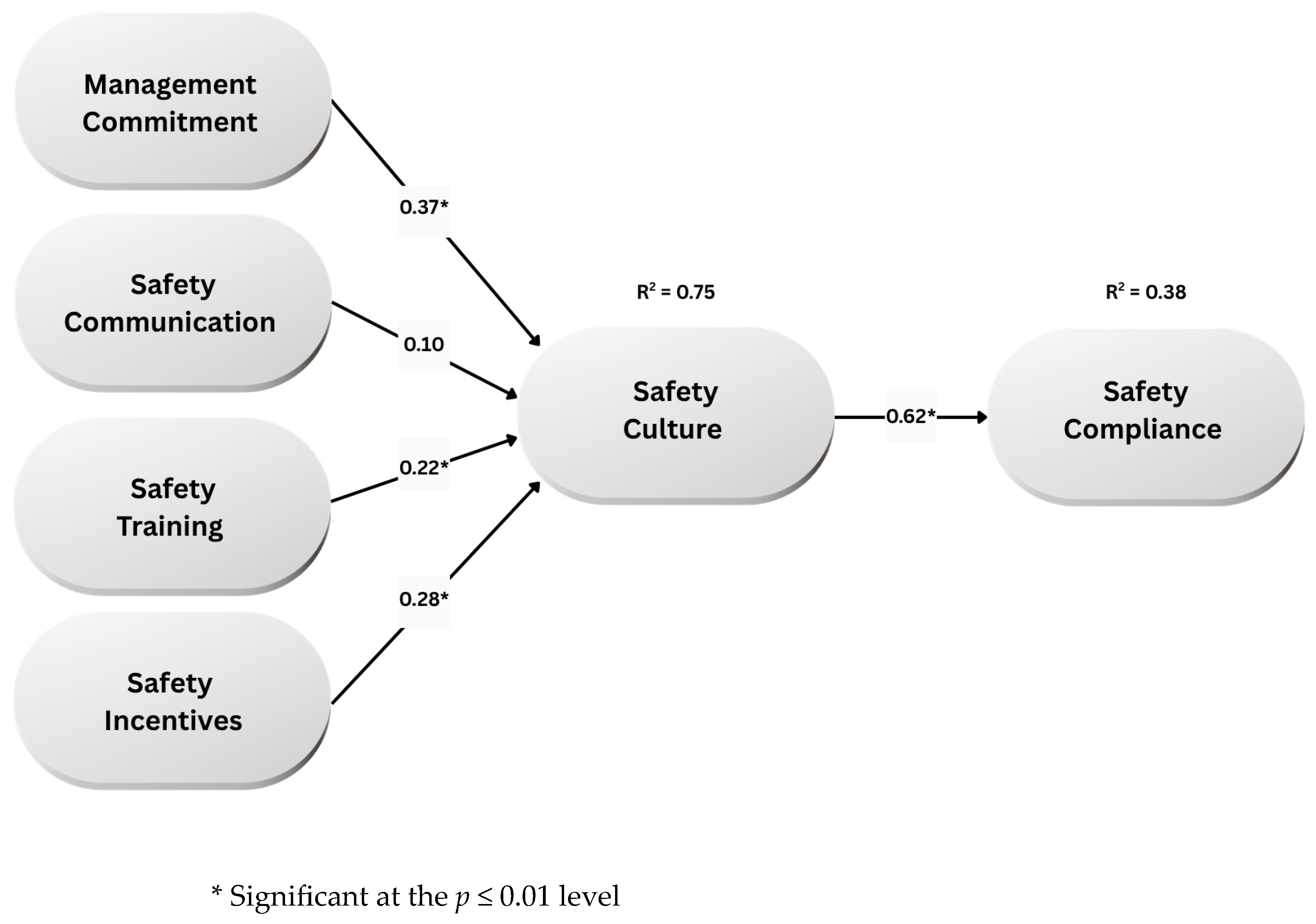
As seen in Table 3, four of the hypothesized paths are significant at the p ≤ 0.01 level. Management commitment (β = 0.370, p = 0.000 < 0.01) had the strongest influence on employees’ perceptions of safety culture within South African manufacturing SMEs, followed by safety incentives (β = 0.281, p = 0.000 < 0.01) and safety training (β = 0.221, p = 0.000 < 0.01). Safety communication with feedback (β = 0.100, p = 0.147 > 0.01) had a positive non-significant influence on employees’ perceptions of safety culture within South African manufacturing SMEs. Safety culture, together with is predictors, had a strong significant influence on safety compliance (β = 0.614, p = 0.001 < 0.01). Therefore, there is sufficient evidence in the sample to conclude H1, H3, H4 and H5. Concerning safety communication with feedback, there is insufficient evidence to conclude H2. Therefore, while management commitment, safety incentives and safety training are statistically significant predictors of employees’ perceptions of safety culture within South African manufacturing SMEs, safety communication with feedback is not. In turn, safety culture is a significant predictor of those employees’ safety compliance. Despite safety communication with feedback not having a significant influence on employees’ perceptions of safety culture, this factor did contribute to their perceptions of safety culture within South African manufacturing SMEs. Figure 2 illustrates the structural model.
As shown in Figure 2, with a squared multiple correlation (R2) of 0.745, management commitment (F1), safety communication with feedback (F2), safety training (F3) and safety incentives (F4) explain 75 percent collectively of the variance in employees’ perceptions of safety culture (F6) within South African manufacturing SMEs. Those employees’ perceptions of their organization’s safety culture then explain 38 percent of the variance of their safety compliance in the work place. Regarding the model fit indices for this structural model, the acceptable fit was evident, with an IFI of 0.932, a RMSEA of 0.056, a TLI of 0.927 and a CFI of 0.932.

5. Discussion

The main purpose of this study was to investigate employees’ perceptions of the organizational factors influencing safety culture within South African manufacturing SMEs and the effect that safety culture has on their safety compliance in the workplace in an attempt to provide managerial guidelines aimed at improving the safety culture and consequent safety compliance within such organizations.
The confirmatory factor analysis results provide strong empirical support for the adequacy and stability of the proposed six-factor measurement model, suggesting that the conceptualization of these safety-related constructs is both theoretically grounded and empirically distinct. The consistently high Cronbach’s a and CR coefficients indicate not only internal consistency but also that the indicators reliably capture the underlying latent constructs. The evidence of convergent validity is compelling, as reflected by strong standardized λ and AVE values exceeding 0.50 across all latent factors. This indicates that the observed variables share a substantial proportion of variance with their respective latent factors, reinforcing the theoretical coherence of each construct. Furthermore, the HTMT ratios confirm that discriminant validity was achieved, implying that each of the six constructs captures a unique dimension of safety-related behavior and perceptions. This is particularly important given the conceptual proximity of constructs like safety culture and management commitment, which are often empirically difficult to distinguish. The results therefore suggest that the sample respondents were able to differentiate between these dimensions in a meaningful way. The model fit indices further strengthen confidence in the measurement model. The SRMR and RMSEA values indicate minimal residual error and a close approximation of the model to the data. The incremental fit indices of the CFI, TLI and IFI suggest that the hypothesized model provides a substantial improvement over a null model. While not indicative of a perfect fit, these values reflect a well-fitting and parsimonious model that balances complexity with explanatory power.
In accordance with the structural model, four of the hypothesized paths were significant. Management commitment was recorded as having the strongest influence on employees’ perceptions of safety culture within South African manufacturing SMEs. As such, there is sufficient evidence in the sample to accept H1; that is, management commitment is an important predictor of safety culture perceptions. This finding is in line with Davids [33] and Ismail et al. [44], who confirmed that management commitment significantly influences safety culture. Similarly, management’s commitment to safety has been found to have a significant positive relationship with safety culture within a variety of industries [45,47]. Safety communication with feedback had a positive influence on employees’ perceptions of safety culture within South African manufacturing SMEs; however, its influence was not statistically significant. As such, there is insufficient evidence in the sample to conclude H2; that is, safety communication with feedback is a positive but non-significant predictor of safety culture perceptions. This finding contradicts that of Naji et al. [55], who found that a direct relationship exists between safety communication and safety culture within the petrochemical industry. This finding is similar to that of Van der Linde [32], who found that safety communication within organizations in the food industry contributed poorly to developing safety culture. Safety training was also found to have a significant influence on employees’ perceptions of safety culture within South African manufacturing SMEs. As such, there is sufficient evidence in the sample to accept H3; that is, safety training is an important predictor of safety culture perceptions. The finding concurs with that of Ismail et al. [61], who found that safety training was deemed a significant dimension that influences safety culture within an organization. Additionally, safety training was found to play an imperative role in motivating the commitment of employees toward safety, as well as improving safety culture as a whole [59]. Safety incentives were also found to have a strong influence on employees’ perceptions of safety culture within South African manufacturing SMEs. As such, there is sufficient evidence in the sample to accept H4; that is, safety initiatives are a salient predictor of safety culture perceptions. This solidifies the previous finding of Esitikot and Udoudom [67], who found that organizations that implement safety incentives within their systems motivate an overall holistic approach to safety culture. In addition, Karakhan and Gambatese [68] found that safety incentives are normally associated with either intrinsic rewards or extrinsic rewards, which can ultimately aid in enhancing safety culture through the encouragement of safe actions and behaviors from employees within organizations. Additionally, it has been found that the second most valuable cost to improving safety culture was safety incentives [69]. Safety culture, together with its predictors, had a strong significant positive influence on employees’ safety compliance within South African manufacturing SMEs. As such, there is sufficient evidence in the sample to accept H5; that is, safety culture as a salient predictor of safety compliance. This finding is in line with previous studies undertaken, where a positive correlation was found between employees’ motivation to be compliant and their motivation to improve the safety culture within the organization [80]. Furthermore, Ayi and Hon [81] found that a lack of safety compliance is strongly related to a lack of a strong and positive safety culture within academic laboratories. In addition, Chen et al. [83] investigated the important role safety compliance practices play in minimizing the potential occurrence of dangerous events within organizations, emphasizing the importance of developing a positive safety culture. This suggests that a strong safety culture is essential for employees’ safety compliance.
These results reveal a clear hierarchy of influences shaping employees’ perceptions of safety culture, with implications for how safety is operationalized in South African manufacturing SMEs. Most noteworthy is that management commitment emerges as the dominant driver, indicating that employees’ perceptions of safety culture are primarily shaped by visible leadership support, prioritization of safety, and managerial accountability. This suggests that safety culture is interpreted less as a set of formal policies and more as a reflection of leadership behavior and organizational intent. The prominence of management commitment in this SME context is likely due to the structural characteristics of smaller enterprises. In SMEs, organizational hierarchies are typically flatter and employees often interact directly with top management. As a result, leadership behavior is highly visible and may exert a disproportionately strong influence on safety culture compared to larger organizations. While safety incentives and safety training also exert statistically significant effects, their comparatively weaker influence implies that these mechanisms function as reinforcing rather than foundational elements of safety culture. Incentives appear to signal organizational priorities through reward structures, whereas training enhances employees’ competence and awareness; however, both depend on managerial commitment to be perceived as credible and meaningful. In contrast, safety communication with feedback does not significantly predict safety culture. This non-significant finding suggests a possible disconnect between the presence of communication mechanisms and their perceived effectiveness. In practice, communication may be occurring but not in a way that employees interpret as authentic, actionable or influential in shaping the broader safety environment. This may also indicate that communication without visible managerial follow-through lacks credibility in SME settings. In other words, in smaller organizations, employees may place greater emphasis on observable leadership behavior than on formal communication processes. Safety culture’s strong effect on safety compliance confirms its role as a key mediating mechanism between organizational practices and employee behavior. This finding reinforces the notion that compliance is not merely rule-driven but is embedded within a broader cultural context. The model’s explanatory power is substantial, with the four antecedents accounting for 75 percent of the variance in safety culture. This indicates that the first part of the model captures the core organizational levers through which safety culture is constructed in SMEs, leaving relatively little unexplained variance. Such a high R2 highlights the centrality of organizational practices, particularly leadership, in shaping collective safety perceptions. However, the 38 percent explained variance in safety compliance is moderate, suggesting that while safety culture is a critical determinant, other factors may also influence safety compliance within manufacturing SMEs in South Africa. Possible factors include risk perceptions or situational constraints. Moreover, attitudes may play an important role, suggesting the need to consider safety climate in addition to safety culture.

6. Conclusions

The findings of the study reported in this article offer a number of theoretical contributions and have several practical implications. As with most research, there are study limitations that need to be considered when interpreting the reported results. These are explained in the following sections.

6.1. Theoretical Contributions

The study makes several meaningful theoretical contributions by refining how safety culture and compliance are conceptualized and empirically linked within the context of South African manufacturing SMEs. Despite existing occupational health and safety legislation, compliance challenges remain prevalent within smaller enterprises. Therefore, the findings of this study contribute to the existing literature on safety management by indicating that strengthening safety culture through leadership commitment, structured training, meaningful incentives, and consistent accountability mechanisms may substantially improve compliance outcomes in smaller organizations.
The study clarifies the hierarchical structure of safety culture antecedents by demonstrating that management commitment is the most influential predictor, surpassing commonly emphasized factors such as communication and training. This advances safety theory by repositioning leadership from being one of several parallel predictors to a central driving mechanism through which other safety practices derive their legitimacy and impact. In doing so, the study reinforces and extends leadership-centric perspectives within safety culture literature. The findings differentiate the functional roles of organizational safety practices, showing that safety incentives and safety training operate as reinforcing mechanisms rather than primary drivers. This contributes to the theory by suggesting a more layered understanding of safety systems, where some practices (for example, leadership commitment) shape underlying cultural perceptions, while others (for example, incentives, training) strengthen those perceptions. In addition, the study provides an important theoretical refinement regarding safety communication with feedback. Contrary to dominant assumptions in prior research, this factor was not a significant predictor of safety culture. This challenges the universality of communication as a core driver and suggests that its effectiveness may be context-dependent, particularly in SME environments where communication processes may be more informal or less strategically embedded. This infers a reconsideration of existing safety models that treat communication as uniformly influential. Furthermore, by empirically confirming that safety culture predicts safety compliance, the study strengthens the theoretical positioning of safety culture as a mediating construct between organizational practices and behavioral outcomes. This supports and extends behavioral safety and safety culture theories by providing evidence that compliance is culturally embedded rather than purely rule-based. The study also contributes contextually by extending safety management theory into the under-researched setting of South African manufacturing SMEs. Much of the existing literature is grounded in large organizations or developed economies; thus, these findings enhance the external validity and generalizability of safety theories by demonstrating how they operate in resource-constrained and developing-market contexts.

6.2. Practical Applications

Based on the findings of this study, SMEs who wish to enhance the safety culture within their organizations should ensure top management visibly demonstrates a strong commitment to safety by actively participating in safety meetings and audits. Additionally, top management should allocate sufficient resources and time for safety-related activities and communicate the importance of safety to all employees. Management should focus on improving safety communication by fostering open and effective communication channels for safety-related information, while ensuring that safety leadership is present and actively engaged to amplify the impact of safety communication. Furthermore, management need to provide regular health and safety training for all employees to establish a safety-conscious organizational culture. This entails the development of tailored training programs to address specific industry needs, such as construction or manufacturing, to enhance their effectiveness. SMEs should also consider the introduction of both intrinsic and extrinsic safety incentives to encourage safe behaviors among employees. This would require the management of SMEs to regularly review and adjust incentive programs to ensure they effectively motivate employees and contribute to safety culture improvement. In addition, SMEs should develop and enforce stringent safety compliance practices to minimize the occurrence of dangerous events. This constitutes continuously monitoring and evaluating safety compliance to ensure adherence and identify areas for improvement. Lastly, given the amplified role of leadership in SMEs, interventions that enhance leadership capability in safety management, such as safety leadership development program, may yield particularly strong returns in improving safety culture and compliance. By implementing these recommendations, SMEs can foster a robust safety culture that is influenced by strong management commitment, effective communication, comprehensive training, motivating incentives and stringent compliance practices.

6.3. Limitations and Future Research

The study employed the use of a cross-sectional design, which limits the ability to infer causality. In addition, the study focused on South African manufacturing SMEs, which may limit the generalizability of the findings to other countries or industries. This poses a limitation as different countries or industries with different safety regulations and cultural contexts may yield different results. While the study identified key factors influencing safety culture, the non-significant influence of safety communication with feedback raises questions about the consistency of this factor across different organizations. The lack of significance could be due to measurement issues or the unique characteristics of the sample. Furthermore, the study relied on employee perceptions, which can be biased or influenced by personal experiences and opinions. This self-reporting bias may impact the accuracy and objectivity of the data collected on safety culture and compliance. The study’s sample size and composition may not fully represent the diversity of South African manufacturing SMEs. Smaller organizations with different operational characteristics might have unique safety culture challenges that were not captured in this research. While the study examined six key factors, other variables influencing safety culture, such as external factors, namely regulatory pressures, industry norms or organizational size, were not considered in-depth. In addition, the study did not consider the influence of safety climate on safety compliance. Future research that considers the dual effects of safety culture and climate will serve to strengthen safety management theory. These factors could play a significant role in shaping safety culture and compliance. The study primarily focused on the perceptions of employees, without exploring the perspectives of management or other stakeholders involved in safety decision-making. A more comprehensive approach involving multiple perspectives could provide a more holistic understanding of safety culture. Lastly, the study did not assess the long-term effects of safety culture interventions or management practices. By engaging in longitudinal research, researchers could provide insights into whether improvements in safety culture are sustained over time and how they influence ongoing safety compliance. Therefore, by addressing these limitations in future research, researchers could deepen the understanding of safety culture dynamics and provide more actionable insights for improving safety practices within SMEs.

Author Contributions

Conceptualization, R.R.; writing of original draft, R.R.; project administration, K.-L.S.-E.; methodology, R.R., K.-L.S.-E. and A.L.B.-D.; writing—review and editing, K.-L.S.-E. and A.L.B.-D.; discussion, R.R. and A.L.B.-D.; supervision, K.-L.S.-E. and A.L.B.-D.; findings, R.R. and A.L.B.-D.; conclusion, R.R., A.L.B.-D. and K.-L.S.-E.; practical applications, R.R. and K.-L.S.-E.; limitations and future research, R.R., K.-L.S.-E. and A.L.B.-D. All authors have read and agreed to the published version of the manuscript.

Funding

This research received no external funding.

Institutional Review Board Statement

The study was conducted in accordance with North-West University’s research policy. Ethical approval was obtained from the Research Ethics Committee of the Faculty of Economic Management Sciences, North-West University (Approval Number: NWU-01945-23-A4; Approval Date: 24 November 2023).

Informed Consent Statement

Informed consent was obtained from all subjects involved in the study.

Data Availability Statement

The dataset analyzed in this study is not publicly available due to privacy and ethical restrictions but is available from the corresponding author on reasonable request.

Acknowledgments

Grammarly was used to assist with grammar, spelling and clarity checks during manuscript preparation (https://www.grammarly.com/).

Conflicts of Interest

The authors declare no conflicts of interest.

Abbreviations

The following abbreviations are used in this manuscript:
AMOSAnalysis of Moment Structures
AVEAverage Variance Extracted
CFIComparative Fit Index
CRComposite Reliability
HTMTHetrotrait–Monotrait
IFIIncremental Fit Index
OHSOccupational Health and Safety
RMSEARoot Mean Square Error of Estimation
POPIAProtection of Personal Information Act
SMEsSmall and Medium-sized Enterprises
SRMRStandardised Root Mean Square Residuals
TLITucker–Lewis index

References

  1. Mixafenti, S.; Moutzouri, A.; Karagkouni, A.; Sartzetaki, M.; Dimitriou, D. Assessment of occupational health and safety management: Implications for corporate performance in the secondary sector. Safety 2025, 11, 44. [Google Scholar] [CrossRef] [Scilit]
  2. Osman, A.; Khalid, K.; AlFaqeeh, F.M. Exploring the role of safety culture factors towards safety behaviour in small-medium enterprise. Int. J. Entrep. 2019, 23, 1–11. [Google Scholar]
  3. Arzahan, I.S.N.; Ismail, Z.; Yasin, S.M. Safety culture, safety climate, and safety performance in healthcare facilities: A systematic review. Saf. Sci. 2022, 147, 105624. [Google Scholar] [CrossRef] [Scilit]
  4. Naji, G.M.A.; Isha, A.S.N.; Mohyaldinn, M.E.; Leka, S.; Saleem, M.S.; Rahman, S.M.N.B.S.A.; Alzoraiki, M. Impact of safety culture on safety performance; mediating role of psychosocial hazard: An integrated modelling approach. Int. J. Environ. Res. Public Health 2021, 18, 8568. [Google Scholar] [CrossRef] [Scilit] [PubMed]
  5. Guldenmund, F.W. The nature of safety culture: A review of theory and research. Saf. Sci. 2000, 34, 215–257. [Google Scholar] [CrossRef] [Scilit]
  6. Cui, L.; Mo, J. How Does supportive leadership impact the safety behaviors of the new generation of construction workers? Behav. Sci. 2025, 15, 110. [Google Scholar] [CrossRef] [Scilit]
  7. Zhang, S.; Hua, X.; Huang, G.; Shi, X. How does leadership in safety management affect employees’ safety performance? A case study from mining enterprises in China. Int. J. Environ. Res. Public Health 2022, 19, 6187. [Google Scholar] [CrossRef] [Scilit]
  8. Zondo, R.W.D. Assessing the Effectiveness of an occupational health and safety system in a selected automotive assembly organisation in South Africa. S. Afr. J. Econ. Manag. Sci. 2021, 24, 3553. [Google Scholar] [CrossRef] [Scilit]
  9. Reason, J. Managing the Risks of Organizational Accidents, 1st ed.; Routledge: London, UK, 1997. [Google Scholar] [CrossRef] [Scilit]
  10. Hudson, P. Implementing a safety culture in a major multi-national. Saf. Sci. 2007, 25, 697–722. [Google Scholar] [CrossRef] [Scilit]
  11. Grover, V.; Tseng, S.L.; Pu, W. A theoretical perspective on organizational culture and digitalization. Inf. Manag. 2022, 59, 103639. [Google Scholar] [CrossRef] [Scilit]
  12. Bhattarai, A.; Dhakal, S.; Gautam, Y.; Bhattarai, N.; Jha, B.; Sharma, U. Perception of safety culture in the Nepalese aviation industry: A factor analysis approach. Transp. Res. Interdiscip. Perspect. 2022, 16, 100723. [Google Scholar] [CrossRef] [Scilit]
  13. Blokland, P.; Reniers, G. Achieving organisational alignment, safety and sustainable performance in organisations. Sustainability 2021, 13, 10400. [Google Scholar] [CrossRef] [Scilit]
  14. Tear, M.J.; Reader, T.W.; Shorrock, S.; Kirwan, B. Safety culture and power: Interactions between perceptions of safety culture, organisational hierarchy, and national culture. Saf. Sci. 2020, 121, 550–561. [Google Scholar] [CrossRef] [Scilit]
  15. Shan, B.; Liu, X.; Gu, A.; Zhao, R. The effect of occupational health risk perception on job satisfaction. Int. J. Environ. Res. Public Health 2022, 19, 2111. [Google Scholar] [CrossRef] [Scilit]
  16. Tear, M.J.; Reader, T.W. Understanding safety culture and safety citizenship through the lens of social identity theory. Saf. Sci. 2023, 158, 105993. [Google Scholar] [CrossRef] [Scilit]
  17. Amirah, N.A.; Him, N.F.N.; Rashid, A.; Rasheed, R.; Zaliha, T.N.; Afthanorhan, A. Fostering a safety culture in manufacturing through safety behavior: A structural equation modelling approach. J. Saf. Sustain. 2024, 1, 108–116. [Google Scholar] [CrossRef] [Scilit]
  18. Burkett, V. Managing Safety: Managing Safety in Process Manufacturing. Available online: https://www.milliken.com/en-us/businesses/performance-solutions-by-milliken/blogs/managing-safety-in-manufacturing-industry (accessed on 9 January 2024).
  19. Kabiesz, P.; Magdalena, T. Developing a culture of safety for sustainable development and public health in manufacturing companies—A case study. Sustainability 2024, 16, 7557. [Google Scholar] [CrossRef] [Scilit]
  20. Tristancho. Process Manufacturing: Definition, Benefits and Examples. Available online: https://www.projectmanager.com/blog/what-is-process-manufacturing (accessed on 13 January 2024).
  21. Cutler, P. Benefits of EHSQ Management Systems for Manufacturing Companies. Available online: https://intellect.com/blog/benefits-of-ehs-management-systems-for-manufacturing-companies/ (accessed on 13 January 2024).
  22. Graham, T. Why is Manufacturing Safety Important. Available online: https://kpa.io/blog/why-is-manufacturing-safety-important/ (accessed on 9 January 2024).
  23. Channell, M. 8 Steps to Improve Safety Culture in the Workplace. Available online: https://www.tsw.co.uk/blog/health-and-safety/how-to-promote-a-positive-health-and-safety-culture-in-the-workplace/ (accessed on 22 May 2025).
  24. Heyman, L. Understanding the Significance of Workplace Safety Culture in South Africa. Available online: https://www.linkedin.com/pulse/understanding-significance-workplace-safety-culture-south-heyman-oavaf (accessed on 22 May 2025).
  25. Department of Employment and Labour (South Africa). The Profile of Occupational Health and Safety South Africa. 2020. Available online: https://www.labour.gov.za/DocumentCenter/Publications/Occupational%20Health%20and%20Safety/The%20Profile%20Occupational%20Health%20and%20Safety%20South%20Africa.pdf (accessed on 22 May 2025).
  26. Rikhotso, O.; Morodi, T.J.; Masekameni, D.M. Occupational health and safety statistics as an indicator of worker physical health in South African industry. Int. J. Environ. Res. Public Health 2022, 19, 1690. [Google Scholar] [CrossRef] [Scilit] [PubMed]
  27. Mhlongo, T.; Daya, P. Challenges faced by small, medium and micro enterprises in Gauteng: A case for entrepreneurial leadership as an essential tool for success. S. Afr. J. Entrep. Small Bus. Manag. 2023, 15, a591. [Google Scholar] [CrossRef] [Scilit]
  28. Conner Industries. 8 Keys to Creating a Safety Culture in Manufacturing. Available online: https://www.connerindustries.com/8-keys-creating-safety-culture/ (accessed on 22 August 2023).
  29. Esterhuyzen, E. Small business barriers to occupational health and safety compliance. S. Afr. J. Entrep. Small Bus. Manag. 2019, 11, a233. [Google Scholar] [CrossRef] [Scilit]
  30. Nieuwenhuizen, C. The effect of regulations and legislation on small, micro and medium enterprises in South Africa. Dev. S. Afr. 2019, 36, 666–677. [Google Scholar] [CrossRef] [Scilit]
  31. Esterhuyzen, E. Occupational health and safety in small businesses: The rationale behind compliance. Afr. J. Bus. Ethics 2022, 16, 42–61. [Google Scholar] [CrossRef] [Scilit]
  32. Van der Linde, K. An Evaluation of Food Safety Culture in Food Manufacturing Organisations of South Africa. Ph.D. Thesis, Stellenbosch University, Stellenbosch, South Africa, 2021. [Google Scholar]
  33. Davids, A.F.G. Assessing Safety Culture of Professional Pilots Within Selected South African Based Aviation Organisations. Master’s Thesis, University of the Western Cape, Bellville, South Africa, 2016. [Google Scholar]
  34. Skeepers, N.C.; Mbohwa, C. A study on the leadership behaviour, safety leadership and safety performance in the construction industry in South Africa. Procedia Manuf. 2015, 4, 10–16. [Google Scholar] [CrossRef] [Scilit]
  35. Wu, T.C.; Chen, C.H.; Li, C.C. A correlation among safety leadership, safety climate and safety performance. J. Loss Prev. Process Ind. 2008, 21, 307–318. [Google Scholar] [CrossRef] [Scilit]
  36. Cooper, D. Effective safety leadership: Understanding types & styles that improve safety performance. Prof. Saf. 2015, 60, 49–53. [Google Scholar]
  37. Rowold, J. Instrumental leadership: Extending the transformational-transactional leadership paradigm. Ger. J. Hum. Resour. Manag. 2014, 28, 367–390. [Google Scholar] [CrossRef]
  38. Biggs, S.E.; Banks, T.D.; Davey, J.D.; Freeman, J.E. Safety leaders’ perceptions of safety culture in a large Australasian construction organisation. Saf. Sci. 2013, 52, 3–12. [Google Scholar] [CrossRef] [Scilit]
  39. Huang, C.H.; Wu, H.H.; Lee, Y.C.; Li, X. The critical role of leadership in patient safety culture: A mediation analysis of management influence on safety factors. Risk Manag. Healthc. Policy 2024, 17, 513–523. [Google Scholar] [CrossRef] [Scilit]
  40. Edet, U. What is Top Management Commitment Towards Occupational Health and Safety? HSE Watch, 2 July 2022. Available online: https://hsewatch.com/top-management-commitment-towards-occupational-health-and-safety/ (accessed on 7 March 2023).
  41. Schein, E.H. Organizational Culture and Leadership, 3rd ed.; Jossey Bass: San Francisco, CA, USA, 2004. [Google Scholar]
  42. Abbas, W.; Asghar, I. The Role of Leadership in Organizational Change: Relating the Successful Organizational Change with Visionary and Innovative Leadership. Master’s Thesis, University of Gävle, Gävle, Sweden, 2010. [Google Scholar]
  43. Van der Werf, R. 3 Key Types of Organisational Commitment. Available online: https://www.effectory.com/knowledge/3-key-types-of-organisational-committment/ (accessed on 7 March 2023).
  44. Ismail, S.N.; Ramli, A.; Aziz, H.A. Influencing factors on safety culture in mining industry: A systematic literature review approach. Resour. Policy 2021, 74, 102250. [Google Scholar] [CrossRef] [Scilit]
  45. Feng, X.Q.; Acord, L.; Cheng, Y.J.; Zeng, J.H.; Song, J.P. The relationship between management safety commitment and patient safety culture. Int. Nurs. Rev. 2011, 58, 249–254. [Google Scholar] [CrossRef] [Scilit]
  46. Cox, S.; Tomas, J.M.; Cheyne, A.; Oliver, A. Safety culture: The prediction of commitment to safety in the manufacturing industry. Br. J. Manag. 1998, 9, S3–S11. [Google Scholar] [CrossRef] [Scilit]
  47. Tehrani, V.Z.; Rezaifar, O.; Gholhaki, M.; Khosravi, Y. Investigating factors of safety culture assessment in construction industry projects. Civ. Eng. J. 2019, 5, 971–983. [Google Scholar] [CrossRef] [Scilit]
  48. Arboleda, A.; Morrow, P.C.; Crum, M.R.; Shelley, M.C., II. Management practices as antecedents of safety culture within the trucking industry: Similarities and differences by hierarchical level. J. Saf. Res. 2003, 34, 189–197. [Google Scholar] [CrossRef] [Scilit]
  49. Kabiesz, P. Safety culture in SMEs of the food industry: A case study and best practices. Sustainability 2024, 16, 11185. [Google Scholar] [CrossRef] [Scilit]
  50. Mashi, M.S.; Subramaniam, C.; Johari, J. The effect of management commitment to safety, and safety communication and feedback on safety behavior of nurses: The moderating role of consideration of future safety consequences. Int. J. Hum. Resour. Manag. 2020, 31, 2565–2594. [Google Scholar] [CrossRef] [Scilit]
  51. Duncan, C. Safety Communications in the Workplace: 10 Best Strategies for 2023. Available online: https://www.alert-software.com/blog/workplace-safety-communications (accessed on 7 March 2023).
  52. Keffane, S. Communication’s role in safety management and performance of the road safety practices. Jordan J. Civ. Eng. 2015, 9, 79–93. [Google Scholar] [CrossRef] [Scilit]
  53. Thorne, J. How to Improve Workplace Safety Communication. Available online: https://osg.ca/how-to-improve-workplace-safety-communication/ (accessed on 7 March 2023).
  54. Tammineni, Y. Why Communication Matters in Developing a Safety Culture. Available online: https://www.linkedin.com/pulse/why-communication-matters-developing-safety-culture-tammineni (accessed on 7 March 2023).
  55. Naji, G.M.A.; Isha, A.S.N.; Alazzani, A.; Saleem, M.S.; Alzoraiki, M. Assessing the mediating role of safety communication between safety culture and employees safety performance. Front. Public Health 2022, 10, 840281. [Google Scholar] [CrossRef] [Scilit] [PubMed]
  56. Brown, J. Safety culture and communication in a fulfillment center: A case study. Open J. Leadersh. 2022, 11, 140–145. [Google Scholar] [CrossRef]
  57. Nawi, M.N.M.; Zainol, N.A.; Naim, F.; Mamat, M.N.; Hamzah, N.A.; Nawi, M.N.M. Employers’ perceptions of the manufacturing industry on workplace safety culture. J. Energy Saf. Technol. 2022, 5, 78–86. [Google Scholar] [CrossRef] [Scilit]
  58. Mcstea, D. The Crucial Role of Health and Safety Training and Why It Is Essential. Available online: https://www.arinite.com/the-crucial-role-of-health-and-safety-training-and-why-it-is-essential (accessed on 22 May 2025).
  59. Tappura, S.; Jääskeläinen, A.; Pirhonen, J. Creation of satisfactory safety culture by developing its key dimensions. Saf. Sci. 2022, 154, 105849. [Google Scholar] [CrossRef] [Scilit]
  60. Vinodkumar, M.N.; Bhasi, M. Safety management practices and safety behaviour: Assessing the mediating role of safety knowledge and motivation. Accid. Anal. Prev. 2010, 42, 2082–2093. [Google Scholar] [CrossRef] [Scilit]
  61. Ismail, F.; Ahmad, N.; Janipha, N.A.I.; Ismail, R. The behavioural factors’ characteristics of safety culture. J. Asian Behav. Stud. 2017, 2, 91–98. [Google Scholar] [CrossRef] [Scilit]
  62. Aburumman, M.; Newnam, S.; Fildes, B. Evaluating the effectiveness of workplace interventions in improving safety culture: A systematic review. Saf. Sci. 2019, 115, 376–392. [Google Scholar] [CrossRef] [Scilit]
  63. Ghasemi, F.; Mohammadfam, I.; Soltanian, A.R.; Mahmoudi, S.; Zarei, E. Surprising incentive: An instrument for promoting safety performance of construction employees. Saf. Health Work 2015, 6, 227–232. [Google Scholar] [CrossRef] [Scilit] [PubMed]
  64. Callender, H. Do Safety Incentive Programmes Really Work? Available online: https://www.pro-sapien.com/blog/do-safety-incentive-programs-work/ (accessed on 7 March 2023).
  65. Russell, R.S. How Safety Incentives Play a Role in Workplace Safety. Available online: https://www.cashort.com/blog/how-safety-incentives-play-a-role-in-workplace-safety (accessed on 17 April 2023).
  66. Durisko, J. Improve Safety with These 5 Principles of Communication. Available online: https://blog.vingapp.com/improve-safety-with-these-5-principles-of-communication (accessed on 7 March 2023).
  67. Esitikot, E.L.; Udoudom, M.D. Perceived effectiveness of safety incentive programme among oil and gas technicians within the Niger Delta Region of Nigeria. GPH-Int. J. Bus. Manag. 2023, 6, 146–154. [Google Scholar]
  68. Karakhan, A.; Gambatese, J. Hazards and risk in construction and the impact of incentives and rewards on safety outcomes. Pract. Period. Struct. Des. Constr. 2018, 23, 1–20. [Google Scholar] [CrossRef] [Scilit]
  69. Tehrani, V.Z.; Rezaeifar, O.; Gholhaki, M.; Khosravi, Y. Impact of safety investment on safety culture in construction projects: Case study of power plant construction projects. Iran Occup. Health 2020, 16, 91–101. [Google Scholar]
  70. Lee, B.; Kim, H. Evaluating the effects of safety incentives on worker safety behavior control through image-based activity classification. Front. Public Health 2024, 12, 1430697. [Google Scholar] [CrossRef] [Scilit] [PubMed]
  71. Lessing, E. Health and Safety and Environment Compliance. Available online: https://www.makrosafe.co.za/blog/Health-and-Safety-and-Environment-Compliance%20 (accessed on 21 April 2026).
  72. Neal, A.; Griffin, M.A.; Hart, P.M. The impact of organizational climate on safety climate and individual behavior. Saf. Sci. 2000, 34, 99–109. [Google Scholar] [CrossRef] [Scilit]
  73. Brondino, M.; Bazzoli, A.; Peiró, J.M.; Pasini, M. Safety climate, safety behaviors, and workplace accidents: What are the mechanisms? A multi-level lagged study. J. Saf. Res. 2025, 94, 459–468. [Google Scholar] [CrossRef] [Scilit]
  74. Affor, M.S. Walk-Around Inspections. Available online: https://www.linkedin.com/posts/maxwell-sefakor-affor-icms-posh-082a671aa_week-three-knowledge-share-walk-around-inspections-activity-7264204020309786624-7CJS (accessed on 21 April 2026).
  75. McLeod, A. What Perfect Health and Safety Compliance Does for Businesses. Available online: https://corehealth.global/blog/what-perfect-health-safety-compliance-does-businesses/ (accessed on 21 April 2026).
  76. Truter, N. Health and Safety Regulations and Requirements in South Africa. Available online: https://absolutehealth.co.za/blog/health-and-safety-regulations/ (accessed on 7 March 2023).
  77. International Labour Organisation. National Labour Law Profile: South Africa. Available online: https://www.ilo.org/ifpdial/information-resources/national-labour-law-profiles/WCMS_158919/lang--en/index.htm (accessed on 19 March 2023).
  78. Chu, P. 5 EHS Tips for Reputation Management: Protecting Your Tech Brand. Available online: https://us.anteagroup.com/news-events/blog/5-ehs-tips-protecting-your-tech-brand-reputation (accessed on 7 March 2023).
  79. Gradwell, D. The Importance of Safety Compliance in the Workplace. Available online: https://www.cloudapper.com/workplace-safety/the-importance-of-safety-compliance-in-the-workplace/ (accessed on 7 March 2023).
  80. Isa, A.A.M.; Wahab, W.A.; Omar, R.C.; Nordin, M.Z.M.; Taha, H.; Roslan, R. Factors influencing the compliance of workplace safety culture in the government linked company (GLC). E3S Web Conf. 2021, 325, 06005. [Google Scholar] [CrossRef] [Scilit]
  81. Ayi, H.R.; Hon, C.Y. Safety culture and safety compliance in academic laboratories: A Canadian perspective. J. Chem. Health Saf. 2018, 25, 6–12. [Google Scholar] [CrossRef] [Scilit]
  82. Chen, W.T.; Wang, C.W.; Lu, S.T.; Pan, N.H. The impact of safety culture on safety performance—A case study of Taiwan’s construction industry. Int. J. Organ. Innov. 2018, 11, 1–15. [Google Scholar]
  83. Hair, J.F.; Black, W.C.; Babin, B.J.; Anderson, R.E. Multivariate Data Analysis: A Global Perspective, 7th ed.; Pearson Prentice-Hall: Upper Saddle River, NJ, USA, 2010. [Google Scholar]
  84. Wachter, J.K.; Yorio, P.L. A system of safety management practices and worker engagement for reducing and preventing accidents: An empirical and theoretical investigation. Accid. Anal. Prev. 2014, 68, 117–130. [Google Scholar] [CrossRef] [Scilit]
  85. Department of Small Business Development (South Africa). National Small Enterprise Act, 1996 (Act No. 102 of 1996): SMMEs and Co-Operatives Funding Policy for South Africa. Gov. Gaz. 2023, 48483, 655. [Google Scholar]
  86. Malhotra, N.K. Marketing Research: An Applied Orientation, 7th ed.; Pearson Education: Harlow, UK, 2020. [Google Scholar]
  87. Hair, J.F.; Black, W.C.; Babin, B.J.; Anderson, R.E. Multivariate Data Analysis, 8th ed.; Cengage: Andover, UK, 2019. [Google Scholar]
  88. Henseler, J.; Ringle, C.M.; Sarstedt, M. A new criterion for assessing discriminant validity in variance-based structural equation modeling. J. Acad. Mark. Sci. 2015, 43, 115–135. [Google Scholar] [CrossRef] [Scilit]
  89. Alavi, M.; Visentin, D.C.; Thapa, D.K.; Hunt, G.E.; Watson, R.; Cleary, M. Chi-square for model fits in confirmatory factor analysis. J. Adv. Nurs. 2020, 76, 2209–2211. [Google Scholar] [CrossRef] [Scilit]
Figure 1. The hypothesized model of employees’ perceptions of the antecedents of safety culture within South African manufacturing SMEs.
Safety 12 00076 g001
Figure 2. Structural model.
Safety 12 00076 g002
Table 1. Measurement model confirmatory factor analysis results.
Questionnaire ItemsStandardized
λ
R2αCRAVE
Management commitment (F1) 0.9600.9600.617
“Management demonstrates a commitment to safety”0.6820.465
“Management encourages personal accountability in relation to safety”0.6520.425
“Management articulates a clear vision and shared values around safety”0.7770.604
“Management listens to employees’ ideas and concerns about safety”0.7480.559
“Management has a clear understanding of the safety culture”0.7910.625
“Safety is given high priority by management”0.8330.693
“Corrective action is always taken when management are told about unsafe practices”0.7490.561
“Management shows an interest in the safety of workers”0.8410.708
“Management consider safety to be as equally important as production”0.7740.599
“Management attend safety meetings”0.7750.600
“When near-miss accidents are reported, management act quickly to solve the problems”0.8290.687
“Safety rules and procedures are strictly followed by management”0.8400.706
“Management emphasizes workplace safety”0.8230.678
“Management have established a safety responsibility system”0.8220.676
“Management explains the safety policy clearly”0.8220.675
Safety communication with feedback (F2) 0.8860.8870.663
“Employees are informed about safety incidents experienced in other similar organizations”0.7980.637
“Employees are informed about safety incidents and/or near misses experienced by other employees within the organization”0.8010.641
“When safety incidents occur, the results of the investigation are shared with the employees”0.8370.700
“The organization has a hazard reporting system where employees can communicate hazard information before incidents occur”0.8210.674
Safety training (F3) 0.9060.9070.710
“I receive on-the-job safety training”0.7960.634
“I am adequately trained to respond to emergency situations within the workplace”0.8500.722
“Adequate safety training is given to me to enable me to assess hazards in the workplace”0.8710.759
“The safety training I have received incorporates elements of hazard recognition and avoidance in the workplace”0.8510.724
Safety incentives (F4) 0.9380.9390.688
“Management reward employees who set an example in safety behavior”0.8510.724
“Management praise employees’ safety behavior”0.8180.669
“Management have set up a safety incentive system”0.8210.675
“Safe conduct is considered as a positive factor for job promotions”0.7820.611
“Employees are rewarded for reporting safety hazards (thanked, cash or other rewards, recognition in newsletter, etc.)”0.8600.740
“Safety celebrations and other safety promotional activities arranged by management are effective in creating safety awareness among employees”0.8270.683
“Healthy competition exists among employees to find out and report unsafe conditions and acts in the organization”0.8480.718
Safety compliance (F5) 0.8280.8330.625
“I maintain safety awareness at work”0.7460.557
“I do not neglect safety, even when in a rush”0.7650.585
“I comply with safety rules and standard operational procedures”0.8560.733
Safety culture (F6) 0.9590.9600.725
“The organization’s systems and frameworks support the desired safety culture”0.8200.672
“Safety roles and accountabilities of employees are clearly defined”0.8810.777
“Safety is fully integrated into organizational documents, processes and systems”0.8210.674
“The organization has a clear stance on safety”0.8530.728
“The organization has a system for reporting on and learning from safety experiences”0.8520.727
“The organization’s business operating structure (e.g., divisions) supports the safety goals”0.8750.765
“Safety policies are consistently applied across business units within the organization”0.8860.786
“Business units customize safety policies to meet the needs of their operations”0.8160.665
“Communication channels are effective for safety messages”0.8570.734
Table 2. Discriminant validity.
Latent FactorsHTMT Ratios
F1F2F3F4F5
Management commitment (F1)
Safety communication with feedback (F2)0.765
Safety training (F3)0.7090.700
Safety incentives (F4)0.5980.6660.616
Safety compliance (F5)0.5890.5040.5280.443
Safety culture (F6)0.7580.7180.7100.6990.553
Table 3. Structural path estimates.
PathsStandardized βt-Valuesp-Value
Management commitment → Safety culture 0.3706.210.000
Safety communication with feedback → Safety culture 0.1001.450.147
Safety training → Safety culture 0.2214.270.000
Safety incentives → Safety culture 0.2816.510.000
Safety culture → Safety compliance 0.61411.560.000
Disclaimer/Publisher’s Note: The statements, opinions and data contained in all publications are solely those of the individual author(s) and contributor(s) and not of MDPI and/or the editor(s). MDPI and/or the editor(s) disclaim responsibility for any injury to people or property resulting from any ideas, methods, instructions or products referred to in the content.