1. Introduction
Citrus production is a major component of global agriculture, with an annual output exceeding 160 million tons. This expansive cultivation contributes to food security, international trade, and rural livelihoods [
1]. Mexico is one of the leading producers, particularly of oranges and Persian limes (
Citrus x latifolia), reaching 6.7 million tons in 2023, of which over 50% were harvested in Veracruz [
2]. These results have promoted the adoption of quality and sustainability certifications in the citrus value chain [
3]. However, the ergonomic conditions of manual picking remain largely overlooked, despite evidence linking this activity to excessive physical strain, awkward postures, and musculoskeletal disorders [
4,
5].
At the international level, several studies have reported a high prevalence of these musculoskeletal disorders among agricultural workers, primarily caused by repetitive movements, continuous load handling, and prolonged static postures [
4,
6]. These risk factors have been consistently associated with upper limb, shoulder, and lower back disorders in fruit harvesting tasks, particularly in systems relying on manual collection methods [
7,
8]. In Mexico, citrus harvesting relies almost entirely on manual labor and the use of traditional tools such as the
ayate (a traditional cloth or canvas bag worn diagonally across the torso) and the
reja (a rigid plastic crate), which have undergone minimal modification for decades [
9]. These tools often lack ergonomic adaptation to body dimensions, load distribution, and task dynamics, which may intensify physical demands during harvesting activities [
10,
11]. These conditions have led to productivity limitations and adverse health effects among citrus pickers [
12].
Moreover, the weight and rigidity of traditional tools can hinder the participation of women in harvesting crews when ergonomic sizes or adjustable designs are unavailable [
13]. Previous research has highlighted that gender-related anthropometric differences are rarely considered in the design of agricultural harvesting tools, potentially increasing discomfort and exclusion in physically demanding tasks [
14,
15,
16]. Despite the national and international importance of citrus cultivation—reflected in the adoption of quality and sustainability certifications, the ergonomic importance of agricultural work remains an unresolved issue [
5,
17]. The integration of ergonomic principles into the design of agricultural tools can help balance labor demands with the protection of workers’ health, providing evidence to guide improvements in both technical practices and public policy [
18,
19].
Applied ergonomics in agriculture has focused on the design of tools that reduce physical load and improve working conditions. In fruit harvesting, previous research has shown that ergonomically designed tools can decrease fatigue, lower the risk of injury, and support continuous task performance [
20,
21]. In regions with high temperatures, research has emphasized the importance of breathable materials and adjustable features in the wearable harvesting bags to help maintain comfort throughout the workday [
22].
In many countries, semi-mechanized platforms, manual harvesters adapted to uneven terrain, and bags with padded and adjustable straps have been evaluated, demonstrating reductions in physical workload, improved posture, and higher user acceptance compared to traditional tools [
23,
24,
25]. However, in Mexico, studies on agricultural ergonomics remain limited, highlighting the lack of context-specific empirical evidence addressing tool performance under real working conditions in citrus-producing regions [
26,
27].
In response to this need, the BLIMPER flexible harvesting tool (
Bolso para cosechar Lima Persa) was designed to distribute fruit weight evenly, improve the posture of citrus harvesters, and facilitate unloading without bending. The BLIMPER incorporates lightweight, breathable materials, adjustable straps, and a front-release system following ergonomic design principles reported in previous agricultural tool development studies [
11,
28] to address the limitations of traditional tools and ease the workload of citrus pickers during lime harvesting.
Previous studies have shown that manual fruit harvesting involves high physical demand due to repetitive movements, awkward postures, and long work hours, increasing the risk of fatigue and musculoskeletal disorders among agricultural workers. In response, ergonomic tools have been proposed to improve working conditions and operational performance; however, many have been evaluated mainly in controlled settings, with limited empirical evidence from real harvesting conditions. Limited attention has been given to workers’ perceptions of functionality, comfort, and ease of use during daily field application, constraining practical validation and user-driven improvement of ergonomic tools.
The aim of this study was to compare the performance of the BLIMPER harvesting tool with traditional tools—the
ayate, the bucket, and the harvesting crate—based on the perceptions of citrus pickers. A structured questionnaire was administered to these harvesters from seven municipalities in Citrus District III of Veracruz. This survey was successful in gathering socioeconomic information and assessing five dimensions: design, comfort, adjustment, usefulness, and fatigue reduction. User-centered perception-based evaluations have been recognized as a valid approach in early-stage ergonomic validation of agricultural tools, particularly when objective measurements are not yet feasible. [
7,
29]. Open-ended questions were also included to capture workers’ qualitative perspectives.
The results document both the benefits and limitations of the BLIMPER tool and, at the same time, positively support its potential acceptance for agricultural use. In this context, productivity-related outcomes are examined from a user-perception and functional performance perspective, rather than through direct time-based measurements [
11,
30]. This study contributes to the field of agricultural ergonomics by contrasting this technically designed harvesting tool with traditional implements. It also incorporates citrus pickers’ firsthand feedback to identify design characteristics that can enhance working conditions, agricultural performance, and the resilience of Mexico’s citrus value chain.
2. Materials and Methods
This quasi-experimental, cross-sectional study is aimed at the ergonomic and perceptual validation of the BLIMPER device under real harvesting conditions, analyzing workers’ perceptions of functionality, comfort, ease of use, and perceived fatigue reduction during routine harvesting activities.
Given the exploratory and initial validation nature of the study, the adopted design is appropriate for assessing device acceptance and identifying practical limitations in real operational contexts. Accordingly, the study does not seek to establish causal relationships or to conduct objective biomechanical, physiological, or productivity measurements, but rather to generate user-based empirical evidence to support future stages of ergonomic evaluation and functional optimization of the device.
2.1. Study Area
The research was conducted in seven municipalities of Citrus District III, located in Veracruz, Mexico: Papantla, Atzalan, Martínez de la Torre, Misantla, San Rafael, Gutiérrez Zamora, and Tlapacoyan. This district, named for the main producer (Martínez de la Torre), accounts for approximately 27% of the national citrus production [
2]. The regional climate is generally hot and humid, with average temperatures ranging from 23.7 °C to 35.6 °C and annual precipitation near 1293.6 mm [
31]. Agricultural use represents less than 50% of the territory, and the predominant soil type is Luvisol. Within the district’s 28,710.1 ha of agricultural land, over 20,000 ha is dedicated to citrus cultivation, underscoring the social relevance of analyzing the working conditions faced by citrus pickers in the region [
2,
32]. Nationally, citrus farming is estimated to require 1.6 million agricultural laborers per year [
33].
Persian lime harvesting in the study region is predominantly performed through manual labor under field conditions involving extended daily working periods. According to technical reports and previous studies in comparable citrus production systems, harvesting activities typically involve 6–8 h workdays, with an estimated requirement of 40–70 labor-hours per hectare, depending on orchard characteristics, yield, terrain, and harvesting method. These parameters provide contextual information on exposure time to repetitive movements, load handling, and sustained postures, characterizing the operational environment in which the BLIMPER tool was evaluated. Although working hours per hectare were not directly measured in this study, this information supports the interpretation of ergonomic perceptions under real field conditions.
2.2. The BLIMPER Tool
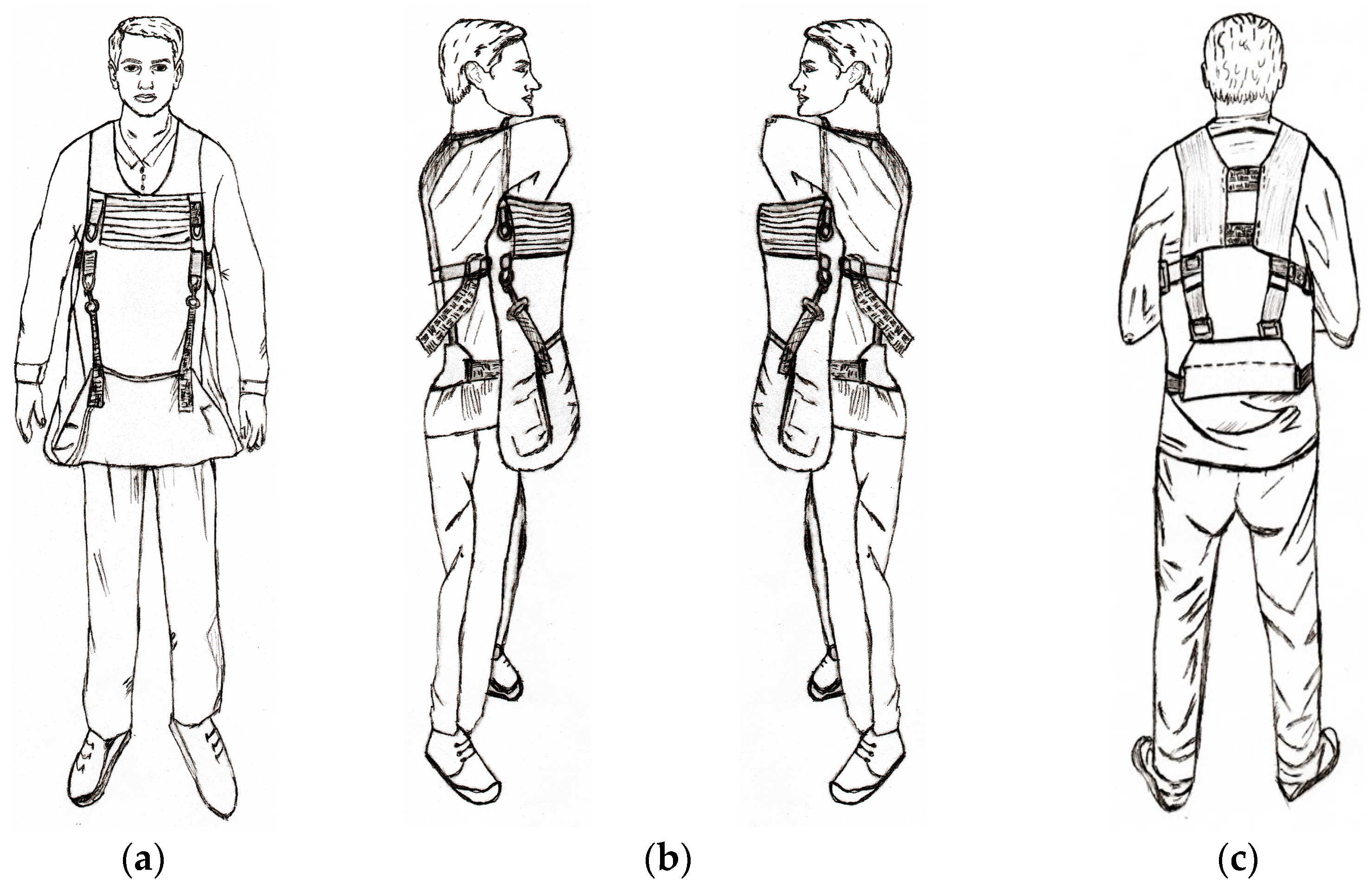
The BLIMPER flexible harvesting tool (
Bolso para cosechar Lima Persa) is an ergonomic front-mounted harvesting bag, designed to facilitate the selective picking, handling, and transport of citrus fruits (
Figure 1). It is made of durable materials and features a system of adjustable vertical and horizontal straps that distribute the load evenly across the shoulders, back, and waist, thereby reducing lumbar pressure and fatigue during extended work periods.
The front pouch, like a kangaroo-style bag, has a reinforced semicircular opening supported by plastic rods to keep the entry open. The bottom is an inverted trapezoid-shaped outlet operated by hooks and rings, allowing the fruit to be unloaded directly into containers without removing the tool. The carrying capacity ranges from 12 to 15 kg, balancing productivity and physical effort.
The BLIMPER was developed to overcome the limitations of traditional tools such as buckets, harvesting crates, or ayates, which often cause physical overload, awkward postures, and inefficient unloading. Its design improves working posture, allows mobility among branches, and facilitates quick unloading, offering an ergonomic and adaptable solution suitable for different body types.
2.3. Participants
The study involved experienced citrus pickers engaged in harvesting activities who used the BLIMPER tool during their workday. A total of 120 citrus pickers were invited to participate, of whom 93 volunteered, representing a 77.5% response rate under a non-probabilistic sampling design. Participation was limited to individuals who agreed to use the BLIMPER tool during a three-day trial period.
2.4. Questionnaire Design
The questionnaire was developed considering principles of agricultural ergonomics and harvesting practices [
25,
34,
35]. Its content was enriched through the collaboration of local experts, including two Persian lime producers, with over 25 years of experience and 10 hectares of cultivated area each. It also included two researchers from the Instituto Tecnológico Superior de Misantla (ITSM), one agronomist specialized in regional citrus production, and one packaging industry entrepreneur with more than 25 years of professional experience.
Table 1 shows the seven sections of the survey, which include 27 multiple-choice questions (MCQs) and six open-ended questions (OEQs). To ensure a high response rate, the questionnaire was administered through face-to-face interviews, with a maximum duration of 20 min per participant.
2.5. Questionnaire Validation
The questionnaire (
Appendix A) was reviewed by a panel of experts—as previously described in
Section 2.3—specializing in ergonomics and agricultural engineering, to ensure the relevance and clarity of the items [
36,
37]. A pilot test was subsequently conducted with 20 citrus pickers to verify item wording and ensure the reliability of the survey [
38].
The internal consistency of the questionnaire was assessed using Cronbach’s alpha for Sections 2 through 6, yielding a value of 0.85, which indicates a high level of internal reliability [
39]. This process confirmed that the questionnaire was appropriate for measuring citrus pickers’ perceptions of the BLIMPER harvesting tool.
2.6. Fieldwork
Data collection was conducted between March and August 2025. The questionnaire was administered in person after the citrus pickers had used the BLIMPER harvesting bag for a three-day trial period during regular Persian lime harvesting activities.
2.7. Sample Size Determination
The sample size was estimated for an unknown population using Equation (1), since no official record exists of the total number of citrus pickers who could participate in the ergonomic tool evaluation [
40]. The initial sample size was calculated with a 90% confidence level, an expected proportion (
p) of 0.5, and a maximum allowable error of 10%, resulting in a required minimum of 68 participants.
where:
n0: Initial estimated sample size for an unknown population.
Z: Critical value of the normal distribution for a given confidence level (1 − α).
p: Expected population proportion with maximum variance.
E: Maximum allowable error.
The inclusion of this calculation is justified because, although the sampling was non-probabilistic (snowball type), it provided a statistical basis to ensure a minimum number of participants, thereby reinforcing the consistency of the results and enhancing methodological transparency in a dispersed agricultural context.
2.8. Sample Strategy
Due to the absence of an official registry of Persian lime citrus pickers, a non-probabilistic snowball sampling technique was employed to identify participants through citrus harvester referrals [
41]. This approach was selected because harvesting activities are spatially dispersed, and the aim during data collection was to ensure diversity in age, work experience, and agricultural working conditions.
The final sample of 93 respondents was limited by logistical constraints and the refusal of some citrus pickers to participate in research activities. The distribution of questionnaires (
Table 2) followed two main criteria: (1) the willingness of workers to participate and (2) the accessibility of the orchards. In Martínez de la Torre and Misantla, municipalities with better infrastructure, a larger number of participants was obtained, whereas in smaller localities, interviews were completed primarily through referrals from initial participants.
2.9. Data Processing
The collected data were recorded in spreadsheets, cleaned to remove inconsistencies and outliers, and coded for analysis. For Section 1, descriptive statistics were applied to quantitative variables, while Section 7 (open-ended responses) was analyzed using thematic coding to identify patterns in citrus pickers’ opinions [
42,
43].
For Sections 2–6 (perception items), item-by-item comparisons between women and men were performed using a two-tailed Welch’s
t-test with a significance level of α = 0.05. Degrees of freedom were estimated using the Welch–Satterthwaite method, based on group means, standard deviations, and sample sizes [
44]. A statistically significant difference was considered when
p < 0.05, leading to rejection of the null hypothesis (H
0: women’s and men’s perceptions are equal) and acceptance of the alternative hypothesis (H
1: perceptions differ), at a 95% confidence level [
45].
The difference between groups was computed using Hedges’ g with bias correction (J) and its 95% confidence interval (CI). A positive g value indicates that women reported a higher perception than men [
46]. The sample presented a gender imbalance (men = 65; women = 28). To mitigate this bias, Welch’s
t-test was used because it adjusts the degrees of freedom based on variance and group size, producing more robust estimates under unequal sample conditions. Nonetheless, this imbalance may limit the statistical power of the comparisons and should be considered when interpreting results.
A comparative perception analysis between men and women regarding the BLIMPER tool was conducted using an adapted Kano model methodology [
47]. No direct time–motion analysis or harvesting rate measurements were performed, as the methodological focus of the study was centered on perceived ergonomic performance, usability, and functional efficiency under real working conditions.
This model classifies attributes into categories that reflect user satisfaction or dissatisfaction with a product or service [
48]. Based on the Likert 5-point scale responses from Sections 2–6 of the questionnaire (
Appendix A), weighted perception (WP) was calculated separately for men and women using Equation (2) [
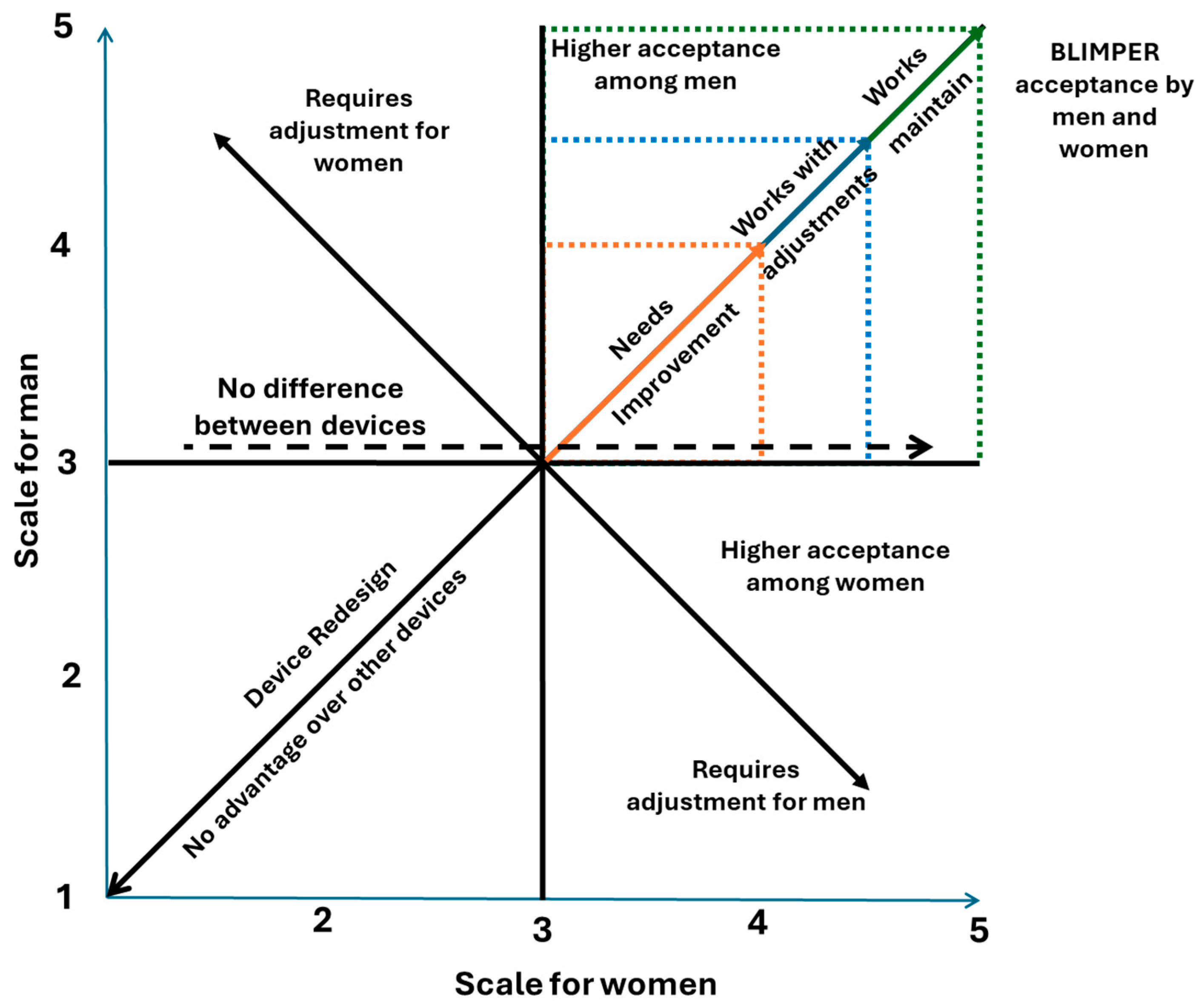
49]. WP values for each group were plotted on a Cartesian plane, where the
X-axis represented the mean perception of women and the
Y-axis that of men.
where:
WP: Weighted perception score on a k-point Likert scale.
Ri = Number of responses in category i.
i = Value assigned to each category on the Likert scale (1, 2,…, k).
k = Total number of scale categories (k = 5).
N = Total number of participants.
This visualization allowed the classification of each variable into four adapted Kano model categories (
Figure 2): Critical redesign (WP ≤ 3): No advantage compared to traditional tools; requires major redesign (tool/method). Needs improvement (3 < WP ≤ 4): Moderate perception; requires design or methodological adjustments but remains functional. Works with adjustments (4 < WP ≤ 4.5): Satisfactory perception; functional but needs fine-tuning or standardization. Works–Maintain (WP > 4.5): Stable performance; maintain and document as effective for the intended activity. This procedure synthesized the results into a graphical interpretation tool that immediately identifies variables requiring redesign and those that should be maintained or standardized.
2.10. Study Limitations
The use of a non-probabilistic snowball sampling method limits the generalizability of the findings to the broader population of citrus pickers. Additionally, the absence of direct time-based productivity measurements (e.g., harvesting rate or task duration) limits the ability to empirically quantify productivity gains, which should be addressed in future validation phases of the BLIMPER tool. Participation was voluntary and depended on each worker’s willingness to take part. Additionally, logistical constraints in some municipalities restricted field coverage, and the study was conducted during a single agricultural cycle.
In addition to the methodological limitations, this study acknowledges circumstances inherent to the BLIMPER device itself. Specifically, aspects related to comfort during prolonged use, objective fatigue reduction, ease of use across different operational contexts, and adaptability to diverse anthropometric profiles and terrain conditions were not exhaustively evaluated. Although these factors were addressed from a perceptual perspective, they were not subject to functional optimization or detailed comparative assessment. Consequently, the results should be interpreted as an initial ergonomic validation based on user experience under real harvesting conditions, rather than as a definitive evaluation of the device’s performance across all possible work environments.
2.11. Ethical Considerations
The study was conducted in accordance with the principles of the Declaration of Helsinki. Participation was voluntary, anonymous, and confidential. All participants provided verbal informed consent prior to completing the questionnaire and testing the BLIMPER harvesting tool. The research protocol was reviewed and approved by the Research Ethics Committee of the Instituto Tecnológico Superior de Misantla (SEyPCI/SE/III-01/2025).
3. Results
This section presents the opinions of Persian lime harvesters who used the BLIMPER device during their routine harvesting activities. The results are organized into four sections: (i) demographic and occupational characteristics of citrus pickers, (ii) workers’ perception of the harvesting tool, (iii) perception analysis using the adapted Kano model, and (iv) qualitative opinions of citrus pickers regarding the harvesting tool compared with traditional implements used in Persian lime harvesting. The findings are reported primarily through descriptive statistics and perceptual comparisons between women and men, to facilitate interpretation and ensure consistency with the stated objectives.
3.1. Demographic and Occupational Characteristics of Citrus Pickers
The results were obtained from the responses of 93 citrus pickers regarding their demographic, anthropometric, and occupational characteristics (
Table 3). The activity was predominantly male (70%), with female participation of 30%, highlighting the need to consider gender differences in the design of harvesting tools. Nearly 46% of citrus pickers had less than two years of experience, while about 21% had more than six years, reflecting heterogeneous learning curves that influence the ergonomic perception of the BLIMPER tool.
Table 3 summarizes citrus pickers’ perceptions of the BLIMPER device in terms of design and comfort attributes. Overall, the results indicate positive evaluations across most items, particularly those related to material durability, load distribution, and ease of unloading, which are directly associated with harvesting tasks. Ratings for physical comfort and device stability were higher than those for mobility and adjustment, suggesting that the tool adequately fulfills its primary function, although certain design features require further refinement. These findings reflect perceived ergonomic performance under real working conditions and should be interpreted as indicators of functional acceptance rather than as direct measures of productivity.
The average age of citrus harvesters was 35 years; men averaged 38 years and women 27 years. This difference suggests that younger workers experience less fatigue, while older workers face greater physical challenges. Regarding anthropometry, the average height was 165.68 cm, and the average weight was 79.78 kg, resulting in a Body Mass Index of 29.06, generally classified as overweight. Men averaged 168.94 cm in height and 83.40 kg in weight, while women averaged 158.06 cm and 71.33 kg, respectively. These conditions highlight the need for adjustable shoulder straps and breathable materials in the harvesting bags because manual harvesting is commonly performed under hot and humid outdoor conditions, where limited heat dissipation and sweat accumulation increase thermal strain and perceived physical effort. Breathable materials have been shown to support moisture transfer and thermal comfort during prolonged agricultural work, while adjustable shoulder straps facilitate load redistribution and accommodate anthropometric variability, reducing localized pressure on the shoulders and lower back pain during load carriage [
4,
50].
Approximately 49% of citrus pickers work on flat terrain, while the rest work on mixed, hilly, or steep surfaces, which demand greater physical effort. In terms of tool preference, the bucket was the most used (50%), followed by harvesting crates (26%), the ayate (13%), a backpack (6%), and a basket (5%). Although these tools are accessible, they present ergonomic disadvantages, such as repetitive movements and awkward postures, which justify exploring alternatives like the BLIMPER harvesting tool.
Overall, these findings suggest that the BLIMPER tool must be adapted to a diverse population in terms of gender, age, experience, physical build, and terrain conditions. Its design should include lumbar support, adjustable straps, and proper weight distribution and ventilation to enhance safety, comfort, and productivity during citrus harvesting.
3.2. Citrus Pickers’ Perception of the BLIMPER Tool
Table 4 summarizes the perceptions of men and women regarding the BLIMPER’s design, comfort, adjustment, usefulness, and fatigue reduction dimensions. The complete results for each Likert-scale item (1–5) are provided in
Appendix B.
Design (
Table 4. A). The material strength variable received the highest ratings: 86% of women and 83% of men agreed that the tool is made of materials that adequately support the fruit’s weight, meeting the requirement for durability in field conditions. However, weight distribution showed the lowest acceptance within the design category (57% of women and 56% of men), revealing that the tool does not yet ensure a balanced load. The comfortable posture aspect was rated acceptable by 71% of women and 70% of men, indicating that the BLIMPER facilitates an upright trunk position during harvesting. In contrast, freedom of movement emerged as the most critical issue: only 39% of women (3.40 ± 0.74) and 37% of men (3.60 ± 0.77) reported that the tool does not restrict mobility, highlighting a structural limitation. Other design attributes, such as maneuverability among branches (75% women; 69% men) and the front unloading mechanism with hooks (68% women; 67% men), were positively evaluated, suggesting advantages over traditional tools like the
ayate and bucket.
Comfort (
Table 4. B). Most citrus pickers considered that the BLIMPER tool reduces physical discomfort, with 68% of women (4.13 ± 0.92) and 67% of men (4.09 ± 0.85) agreeing that it alleviates fatigue during harvesting. Likewise, comfort during use was positively rated by 68% of women (3.73 ± 0.80) and 65% of men (4.09 ± 0.82). The most highly rated attribute within this dimension was perspiration, as 75% of women (4.27 ± 0.59) and 72% of men (3.86 ± 0.73) agreed that the BLIMPER does not increase body heat compared with other bags. This finding is relevant, since under hot and humid field conditions, a harvesting tool that prevents heat buildup offers a clear ergonomic advantage over traditional implements such as buckets and
ayates, which are typically more enclosed and rigid. Similarly, 71% of women (4.07 ± 0.80) and 71% of men (3.91 ± 0.70) reported that end-of-day comfort remained stable, indicating that the unit maintains its functionality after several working hours. However, a portion of citrus pickers perceived no significant difference between the BLIMPER and traditional tools, suggesting that further adjustments (in the straps) are needed to improve fit across different body types.
Adjustment (
Table 4. C). The adjustment dimension examines how well the BLIMPER harvesting tool fits the body of citrus pickers and whether it allows stable work performance with reduced fatigue. Although most participants reported a positive perception, some differences between men and women were observed. The fit to the body was rated favorably by 79% of women (4.20 ± 0.86) and 77% of men (4.17 ± 0.75), indicating that the unit adapts to different body builds, though there remains room for improvement. Fit throughout the workday showed slightly lower acceptance (68% of women; 68% of men), suggesting that straps may loosen with prolonged use or fail to fully adjust during extended movement. Freedom of movement again emerged as the weakest point: only 54% of women (3.80 ± 0.94) and 54% of men (3.80 ± 0.80) evaluated it positively, confirming that restricted mobility is a recurring issue. Practically, this means that when working in dense branches or confined spaces, some citrus pickers feel limited in their range of motion. In contrast, the perception of reduced fatigue at the end of the workday compared with traditional tools was high, with 79% of women (4.00 ± 0.85) and 75% of men (4.17 ± 0.71) reporting less exhaustion. This suggests a positive ergonomic effect by reducing pressure on the shoulders and lower back, especially during long workdays. Overall, the findings confirm that the BLIMPER tool fits most users well and reduces fatigue in over 75% of citrus pickers, though further refinement is needed to improve stability and freedom of movement.
Usefulness (
Table 4. D). The usefulness of the BLIMPER harvesting tool is directly related to its ease of use during picking and mobility across the terrain, two key aspects of citrus harvesting. Workers recognized advantages over traditional tools, though not unanimously. The BLIMPER was valued for enabling hands-free harvesting: 68% of women (3.93 ± 0.79) and 65% of men (3.94 ± 0.80) highlighted this benefit compared with the bucket and
ayate. Both men and women agreed that this feature represents an ergonomic advantage, as it allows faster picking and reduces accident risk. In practice, this means citrus pickers no longer need to hold a bucket or
ayate while gathering fruit, which reduces interruptions and promotes a steady work rhythm throughout the day. The ability to harvest fruit from different parts of the tree was considered useful by 64% of women (3.86 ± 0.74) and 63% of men (3.94 ± 0.83), reflecting the adaptability of the design to various body positions during harvesting. In the field, the BLIMPER allows citrus pickers to work at different heights without removing the tool or adopting awkward postures, representing a clear ergonomic improvement over a less versatile tool. However, the perception that the unit facilitates mobility across the terrain was lower, reported by 57% of women (4.00 ± 0.84) and 57% of men (3.77 ± 0.80). This suggests that, while the BLIMPER improves manual efficiency and frees the hands, it may partially restrict movement in uneven terrain or dense vegetation. For citrus pickers, this aspect is important, as harvesting often takes place not only on flat ground but also on slopes, uneven soil, and in trees with dense canopies.
The BLIMPER harvesting tool provides clear benefits for citrus pickers by freeing the upper limbs and allowing picking from different positions within the tree, which improves both harvesting efficiency and workplace safety. However, its advantage in mobility is not perceived equally by all citrus pickers. Although the unit represents a notable improvement over traditional implements such as the bucket and ayate, it still requires design adjustments to perform effectively in challenging field conditions, which are common in citrus-growing regions.
Fatigue and Tiredness (
Table 4. E). Regarding fatigue associated with the use of the BLIMPER harvesting tool, most citrus pickers considered that it helps reduce tiredness compared with traditional gathering tools. More than half of the workers reported a tangible benefit: 61% of women (4.40 ± 0.82) and 58% of men (3.77 ± 0.84) agreed that the BLIMPER is less physically demanding than other implements. Likewise, the ability to continue working despite fatigue was confirmed by 61% of women (3.66 ± 0.72) and 61% of men (3.97 ± 0.82), indicating that the unit not only reduces initial exertion but also extends workers’ endurance throughout the harvesting day. The most positively rated attribute was the ability to work longer without breaks, reported by 71% of women (3.93 ± 0.88) and 69% of men (4.00 ± 0.72). This finding is particularly relevant in contexts where payment depends on the volume of fruit harvested, as longer effective working periods translate to higher output and income for citrus pickers. Additionally, 75% of women (3.86 ± 0.63) and 72% of men (4.05 ± 0.76) stated that the BLIMPER speeds up picking, reflecting a perceived improvement in work pace and task continuity, rather than a measured increase in harvesting rate. This demonstrates that the unit not only enhances comfort but also improves productivity, which is especially valuable for workers aiming to maximize their harvest volume during long workdays. Finally, 68% of women (4.13 ± 0.74) and 69% of men (3.88 ± 0.75) recommended the unit, reflecting overall acceptance despite certain limitations in mobility and adjustment. This suggests two possible interpretations: (1) future redesigns should account for anthropometric diversity and variable field conditions or, (2) as a new tool, some resistance to change may influence current perceptions.
The perceptions indicate that the BLIMPER harvesting tool provides strength and durability, reduces discomfort and fatigue, and improves operational efficiency in more than 70% of citrus picking across several dimensions. However, recurring weaknesses related to weight distribution and freedom of movement represent key areas for design improvement. The evidence suggests that, although the unit already delivers ergonomic and productivity benefits compared with the bucket, the ayate, and harvesting crates, its full acceptance as a preferred harvesting tool will depend on its ability to better adapt to workers’ anthropometric diversity and perform effectively under irregular terrain conditions.
3.3. Comparative Statistical Analysis Between Female and Male Citrus Pickers
The comparison of perceptions between women and men using Welch’s
t-test showed that, for most variables, no statistically significant differences were found, indicating relatively similar perceptions (
Table 5). However, a few specific contrasts were identified that help to better understand gender-based acceptance of the harvesting tool.
Overall, the results revealed comparable perceptions between women and men (
Table 5); nevertheless, notable differences emerged in certain dimensions. In the design category, weight distribution (DDP) showed a statistically significant difference in favor of women (t = 2.34,
p = 0.02; g = 0.51), suggesting that female participants placed greater emphasis on the need for improved load balance in the unit. In contrast, variables such as comfortable posture (PSC) and freedom of movement (LDM) yielded negative Hedges’ g values (g = −0.28 and g = −0.26, respectively), indicating slightly more favorable perceptions among men, though these differences were not statistically significant.
Within the comfort dimension, the perspiration (SUD) variable reached statistical significance (t = 2.83, p = 0.01; g = 0.59), showing that women reported a higher perception of thermal comfort, as they felt the unit did not increase perspiration compared to men. Conversely, comfort during use (CCC) exhibited a negative Hedges’ g value (g = −0.43 *), suggesting a slightly higher comfort perception among men, although this result did not reach statistical significance.
Besides the fatigue dimension, the variable “less tiring than other tools” (MCD) was significantly higher among women (t = 3.33, p = 0.01; g = 0.75), reinforcing the notion that female participants perceived the BLIMPER tool as a more efficient alternative for reducing fatigue. In contrast, items such as “ability to continue working despite fatigue” (PTC) and “faster harvesting” (CFC) presented negative Hedges’ g values, indicating slightly higher perceptions among men, although these differences were not statistically significant.
3.4. Perception Analysis Between Female and Male Citrus Pickers (Adapted Kano Model)
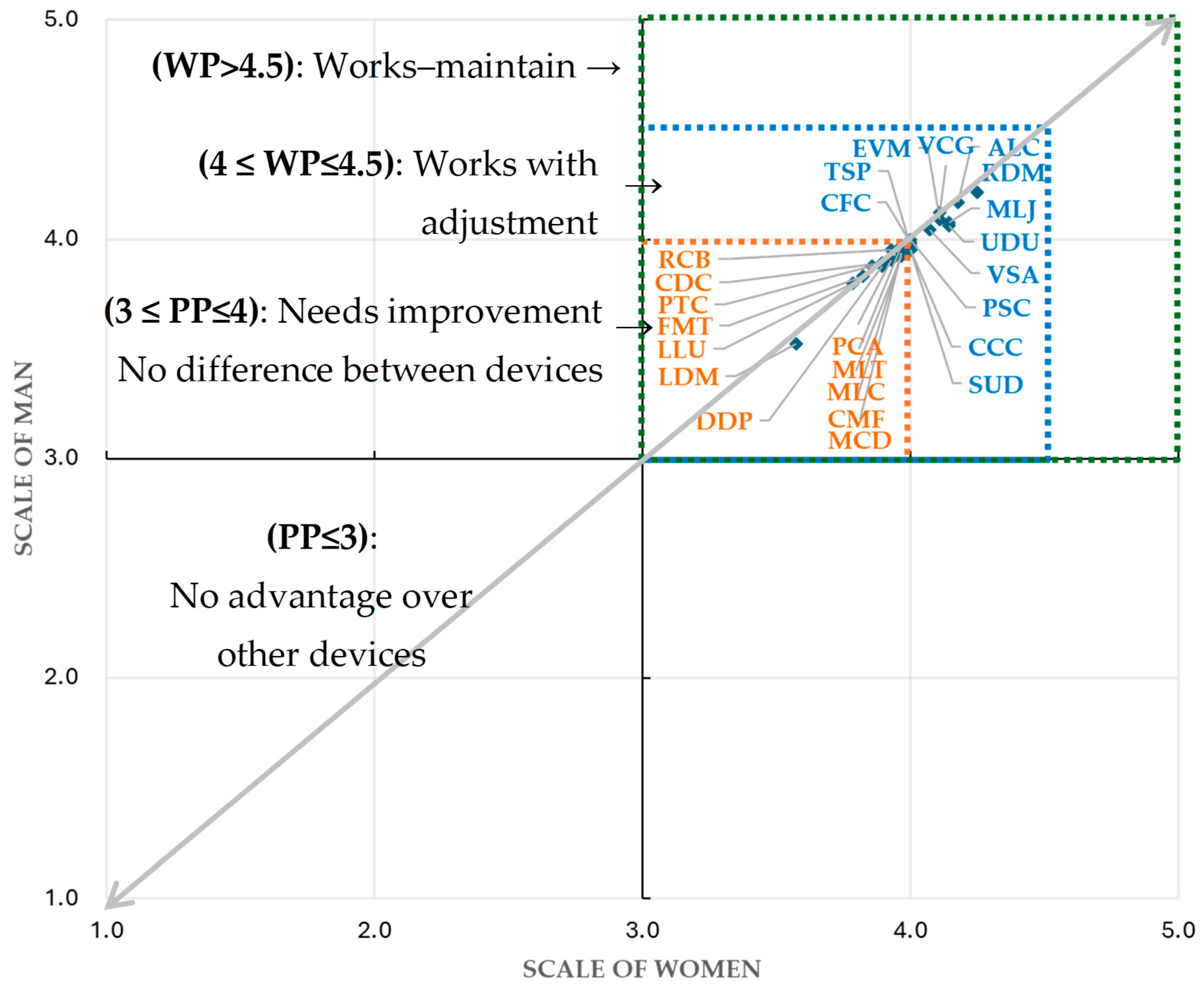
The results indicate that half of the evaluated variables (12 out of 24) are positioned in the “works with adjustments” quadrant, suggesting that both women and men perceive the BLIMPER harvesting tool as acceptable and functional, though still requiring design refinements (
Table 6). Within this group, variables such as material strength (RDM), fit to the body (ALC), and unloading mechanisms (VCG, VSA) stand out, with average ratings near 4.1 in both groups, reflecting a satisfactory level of acceptance. Conversely, the “needs improvement” quadrant includes variables related to mobility and weight distribution (DDP, LDM, LLU, FMT), along with end-of-day comfort (CMF) and recommendation for use (RCB). These findings reveal that citrus pickers identified limitations in freedom, stability, and terrain mobility, which diminish the perceived ergonomic advantage of the unit compared with traditional implements.
The results show that technical variables related to structure and durability tend to cluster in the positive area of the quadrant (
Figure 3), whereas those associated with performance during movement, including mobility, long-term adjustment, and weight distribution, are concentrated in the critical zone. This visualization highlights the balance between the BLIMPER tool’s strengths and weaknesses. The strengths are primarily linked to static attributes that ensure safety and durability, while the weaknesses are associated with dynamic variables of the unit that affect its usability under real harvesting conditions: critical (≤3 points); needs improvement (3 < perception ≤ 4); works with adjustment (4 < perception ≤ 4.5); and works–maintain as is (>4.5 points).
The harvesting tool is perceived as solid and reliable in its construction, yet it requires ergonomic adjustments related to movement and adaptability under different working conditions. Moreover, the dispersion of some data points indicates that perceptions of citrus pickers are not uniform across all dimensions. This reinforces the need to address specific areas to improve the unit’s overall performance and ergonomic integration.
3.4.1. Suggested Improvements to the Design of the BLIMPER Harvesting Tool
Citrus pickers’ comments focused on three main aspects (
Table 7): ergonomic adjustment, construction materials, and ease of unloading. As shown in
Table 7, the most frequent recommendations referred to the need for wider shoulder straps, padded reinforcements, and an improved chest adjustment system. These suggestions are consistent with the findings from the adjustment dimension (
Table 5. C), where some workers indicated stability limitations in the BLIMPER tool.
Regarding the use of more breathable materials, workers emphasized the importance of reducing perspiration during long workdays, reinforcing the observations in the comfort dimension (
Table 5. B). Although more than 70% of participants stated that the harvesting tool did not increase perspiration, a notable portion of respondents still identified discomfort due to heat accumulation. In addition, suggestions such as facilitating unloading without bending, increasing the size of the discharge opening, and reinforcing the side hooks were aimed at improving efficiency in fruit collection and unloading operations. These observations highlight the need to optimize the harvesting tool for dense tree canopies and sloped terrain, where mobility and ergonomic adaptability are critical for safety and performance.
3.4.2. Perceived Benefits of the BLIMPER
The benefits identified by citrus pickers when using the BLIMPER harvesting tool, compared with the
ayate, bucket, and plastic harvesting crates, are presented in
Table 8. These benefits are mainly associated with improved posture, reduced pain, and greater practicality during the workday. Pickers emphasized that the harvesting bag allows them to maintain a better posture, experience less pain at the end of the day, and require fewer rest breaks. These opinions reinforce the findings from the fatigue and tiredness dimension (
Table 5. E), where at least 70% of participants reported that the unit enabled them to work longer without interruption.
There is an overall positive perception of the BLIMPER tool compared with the ayate and harvesting crates, which were described as heavy and uncomfortable. Comments such as “more practical than the ayate” and “lighter than the crate” reflect that the BLIMPER reduces physical effort. Some citrus pickers also mentioned that the unit allows them to harvest faster and work hands-free, enhancing both productivity and safety. Additionally, the harvesting tool was perceived as a suitable option for women and younger workers, as it facilitates their integration into a task historically dominated by men. This perception aligns with the participation of female pickers (30%), underscoring the unit’s potential to promote gender inclusion in the citrus sector.
4. Discussion
Ergonomic analysis of working conditions can significantly reduce repetitive movements and has been associated with improvements in task efficiency and work continuity, with productivity gains reported in previous studies that incorporated direct time-based measurements [
17]. In agricultural contexts characterized by manual harvesting, these ergonomic interventions are particularly relevant due to prolonged exposure to physical load, repetitive actions, and sustained postures. The BLIMPER achieved over 80% approval for material resistance and around 40% for freedom of movement (
Table 4. A). The latter highlights the need for a redesign focused on reducing the length of the back panel and improving unloading mechanisms to enhance efficiency. These findings suggest that while structural robustness is well accepted, mobility-related aspects remain a limiting factor for optimal ergonomic performance. Moreover, reviewing the anthropometric characteristics of citrus pickers is essential to adapt the unit’s structure to user body dimensions. These results are discussed in the context of an early-stage ergonomic prototype evaluated through user perception, rather than as evidence of operational readiness.
Approximately 70% of citrus pickers reported that the harvesting tool does not cause excessive sweating (
Table 4. B), although qualitative comments pointed to the need for more breathable materials. Selecting fabrics that allow better ventilation could enhance comfort, particularly since citrus harvesting occurs in hot climates. Previous ergonomic studies highlight that appropriate fabric selection reduces thermal load and improves worker compliance and comfort [
22,
51]. This is especially relevant in subtropical environments, where heat stress may exacerbate physical fatigue and negatively affect task tolerance during extended work periods.
More than 75% of citrus pickers stated that the harvesting tool fits the body adequately, although only 53% perceived advantages in freedom of movement (
Table 4. C). This suggests that, while the fit is functional, it restricts mobility. This outcome reflects functional limitations of the current prototype rather than deficiencies of a finalized harvesting device. Improvements could include padded, adjustable straps that are customizable to different body builds, significantly reducing muscular strain [
25]. This aligns with pickers’ feedback (
Table 7), where they recommended wider, cushioned, and adjustable straps to enhance stability without compromising mobility. Such design refinements are consistent with ergonomic principles that emphasize load redistribution and adaptability to user variability.
Prototype ergonomic tools used in manual and semi-mechanized harvesting of other crops have shown improvements in comfort and mobility [
23,
52]. Similarly, the BLIMPER prototype showed positive perceived performance in orchard tasks, particularly by allowing hands-free harvesting (≥65%) and fruit collection at different tree heights (≥63%), although these findings do not indicate suitability for routine harvesting operations. Less than 57% of pickers perceived improvements in mobility on uneven terrain (
Table 4. D). Enhancing weight distribution and lumbar stability would make the unit more efficient in irregular field conditions. This limitation is particularly relevant in traditional orchards, where uneven terrain is common and directly influences postural stability during harvesting tasks.
Most citrus pickers agreed that the BLIMPER reduces fatigue, decreases the need for rest periods, and facilitates a perception of increased picking speed and sustained work rhythm (
Table 4. E). However, 40% of respondents did not perceive these benefits clearly. Redesigning the load balance and weight distribution of the fruit, along with reinforcing lumbar support, could improve overall ergonomic performance. Incremental adjustments are recommended, as small design improvements have been proven to significantly reduce fatigue and increase work output [
17,
23]. These results indicate that perceived ergonomic benefits are not uniform across users, underscoring the importance of iterative design refinement. These perceived ergonomic benefits should be interpreted as indicative of potential improvement rather than confirmation of consistent performance in routine harvesting operations.
Women reported fatigue levels comparable to or slightly lower than men, suggesting that the BLIMPER may be better adapted to the female body shape. The literature emphasizes that ergonomic agricultural design should consider gender-based anthropometric differences to minimize musculoskeletal fatigue [
53,
54]. Therefore, future iterations should include strap and padding adjustments tailored to women’s body proportions, ensuring inclusive, comfortable, and equitable use for all workers. Addressing gender-related variability may also contribute to broader adoption of ergonomic tools in agricultural labor.
It is important to note that productivity outcomes in this study are derived from workers’ perceptions of efficiency, endurance, and ease of operation, rather than from objective measurements such as time per fruit harvested or harvesting rate per hour. While perceived productivity is a relevant indicator in ergonomics and user-centered design, future studies should incorporate formal time–motion analysis to quantitatively validate these perceived gains. This distinction allows the present findings to be interpreted within their appropriate methodological scope, avoiding overestimation of productivity effects while highlighting the value of perception-based ergonomic evaluation.
In this context, improvements and functional optimization of the BLIMPER device should not be interpreted as direct outcomes of the present study, but rather as a priority focus for future research. Further technical refinement and iterative redesign processes are required to address the limitations identified in mobility, weight distribution, and adaptability under diverse harvesting conditions. In addition, objective biomechanical evaluations—such as postural analysis, load distribution assessment, and energy expenditure measurements—are necessary to complement the perception-based findings reported here. From an applied ergonomics perspective, the contribution of this study lies in providing field-based empirical evidence that identifies both the strengths and limitations of the device, serving as a foundation for subsequent stages of innovation and validation prior to any consideration of practical implementation.
5. Conclusions
The results of this study indicate that, from an ergonomic and perceptual perspective, the BLIMPER device was favorably evaluated by Persian lime harvesters with respect to functionality, comfort, ease of use, and perceived fatigue reduction during real harvesting activities. These findings correspond to an early-stage ergonomic prototype evaluated through user perceptions, rather than to a fully developed harvesting device. The BLIMPER harvesting tool—specifically designed for selective Persian lime harvesting—shows potential to improve ergonomic and operational conditions compared with traditional implements such as the ayate bag, bucket, and harvesting crates. Its design allows citrus pickers to work in a more upright posture and to perceive reduced musculoskeletal discomfort and improved task continuity, highlighting the value of worker-centered design in agricultural ergonomics.
The results suggest that ergonomic analysis may contribute to perceived improvements in productivity and safety in agricultural environments characterized by heterogeneous age groups and manual labor demands. The BLIMPER enabled between 71% and 75% of citrus pickers to perceive the ability to work longer without breaks and to report faster picking and improved task continuity. These outcomes should be interpreted as perception-based indicators of ergonomic potential, rather than as evidence of consistent productivity gains or readiness for routine harvesting operations.
Despite its positive perceptions, opportunities for improvement remain in weight distribution, mobility, and thermal comfort. Future iterations should integrate lighter, breathable materials and adjustable support systems to optimize comfort under hot, humid conditions and across different body types and genders, ensuring both inclusion and adaptability in the field.
However, the study’s conclusions should be interpreted considering its scope and limitations. In particular, the results correspond to an initial ergonomic validation based on user experience, rather than an objective assessment of biomechanical load, energy expenditure, or productive performance. In this sense, the evidence generated supports the relevance of the BLIMPER as a prototype with ergonomic potential, while guiding future research focused on functional optimization and comprehensive evaluation.
Future research should focus on validating long-term ergonomic effects, including musculoskeletal fatigue reduction, energy expenditure, and postural stability under diverse terrains and climatic conditions. These future stages should incorporate iterative technical refinement, participatory redesign, and objective biomechanical evaluation before practical or large-scale implementation of the BLIMPER device can be considered. Additionally, the implementation of participatory design processes involving both male and female agricultural workers will be essential to strengthen the usability, acceptance, and sustainability of ergonomic innovations in agricultural labor systems.





 ,
,