Article

Developing an IoT-Enabled Smart Helmet for Worker Safety: Technical Feasibility and Business Model


by
Suhas Raghunath
1 and
Seyed Hamidreza Ghaffar
1,2,*
1
Department of Civil Engineering, University of Birmingham, Dubai International Academic City, Dubai P.O. Box 341799, United Arab Emirates
2
Applied Science Research Center, Applied Science Private University, Amman 11937, Jordan
*
Author to whom correspondence should be addressed.
Safety 2025, 11(3), 89; https://doi.org/10.3390/safety11030089

Submission received: 17 July 2025 / Revised: 29 August 2025 / Accepted: 3 September 2025 / Published: 17 September 2025

Abstract

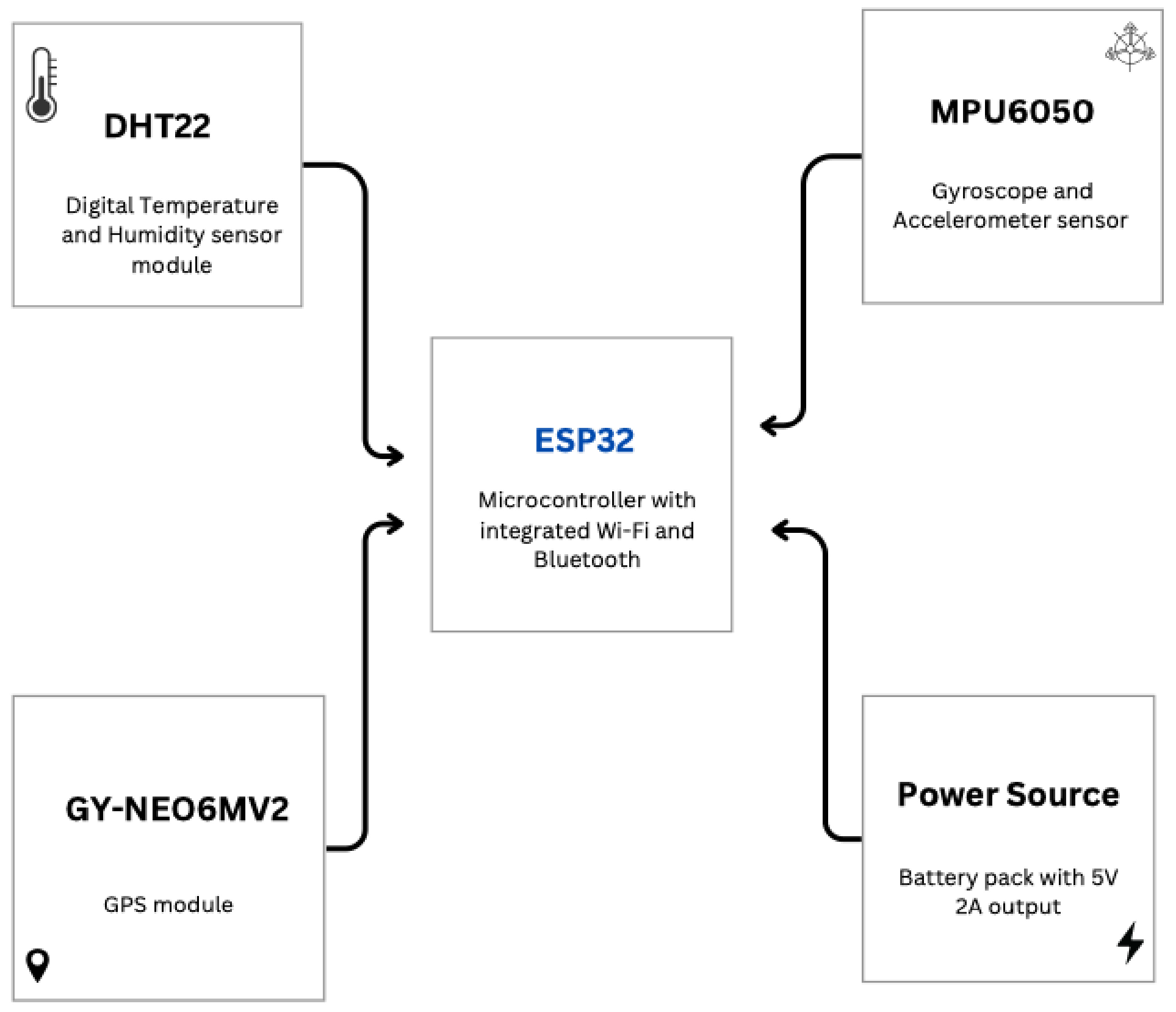
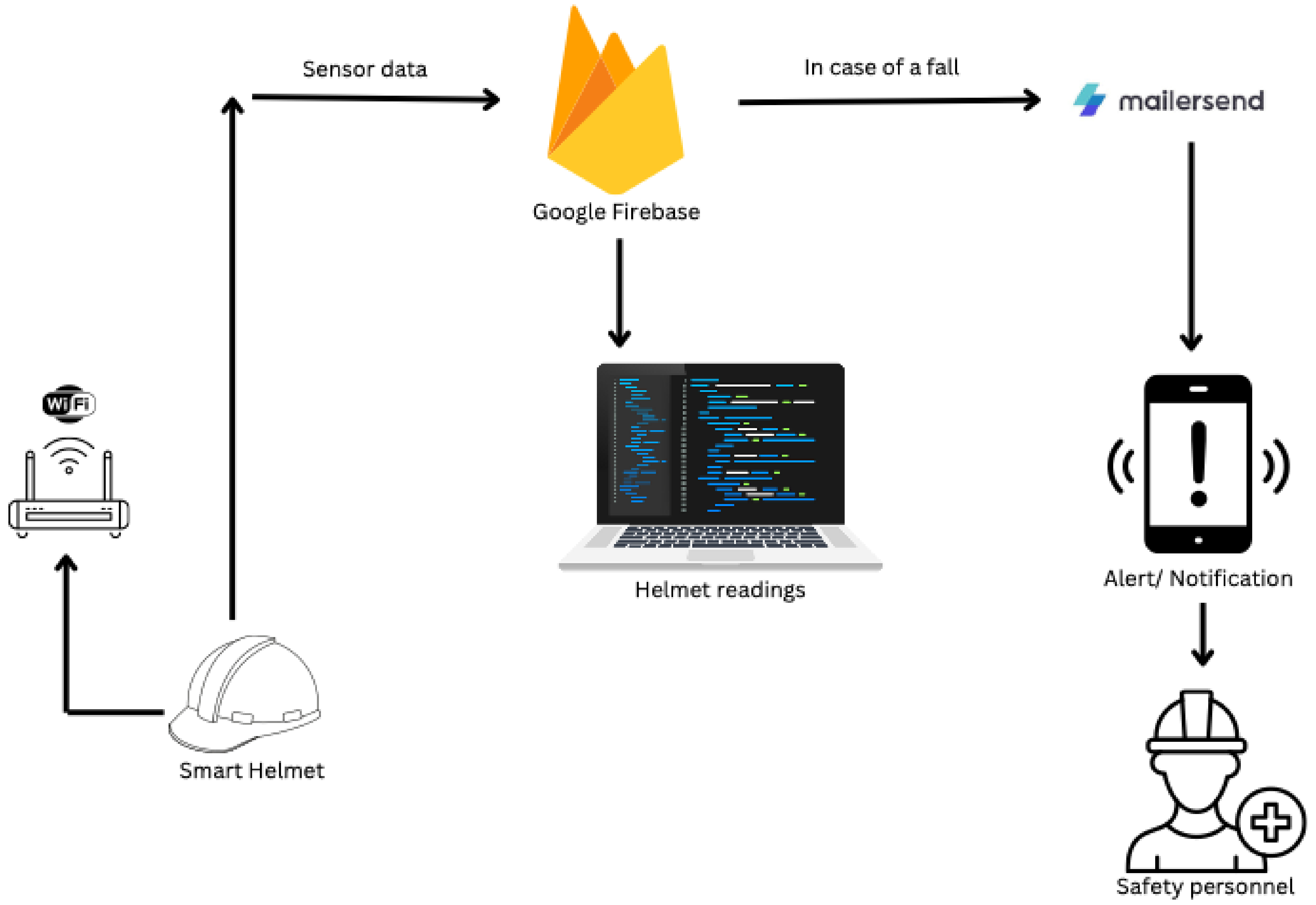
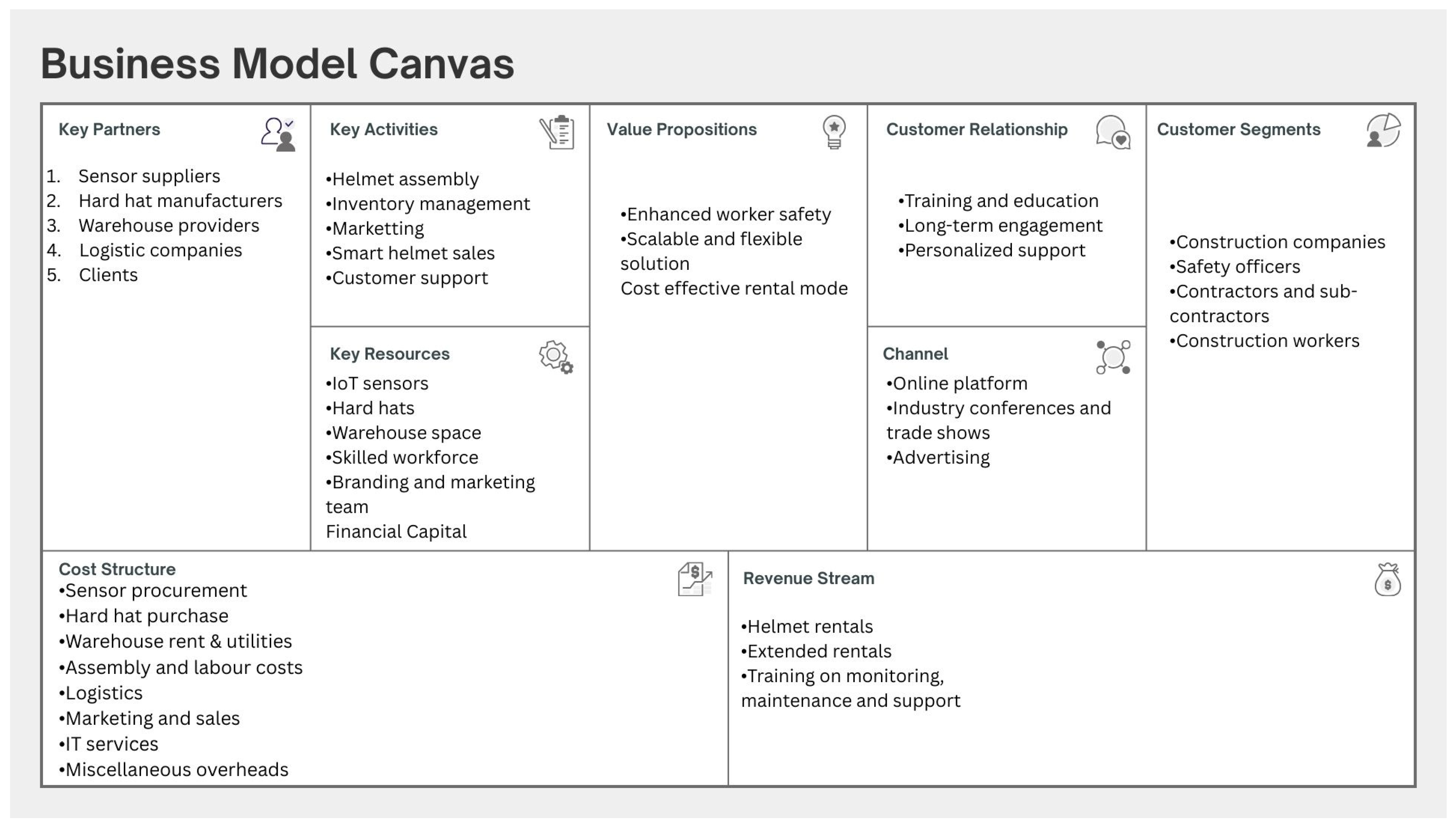
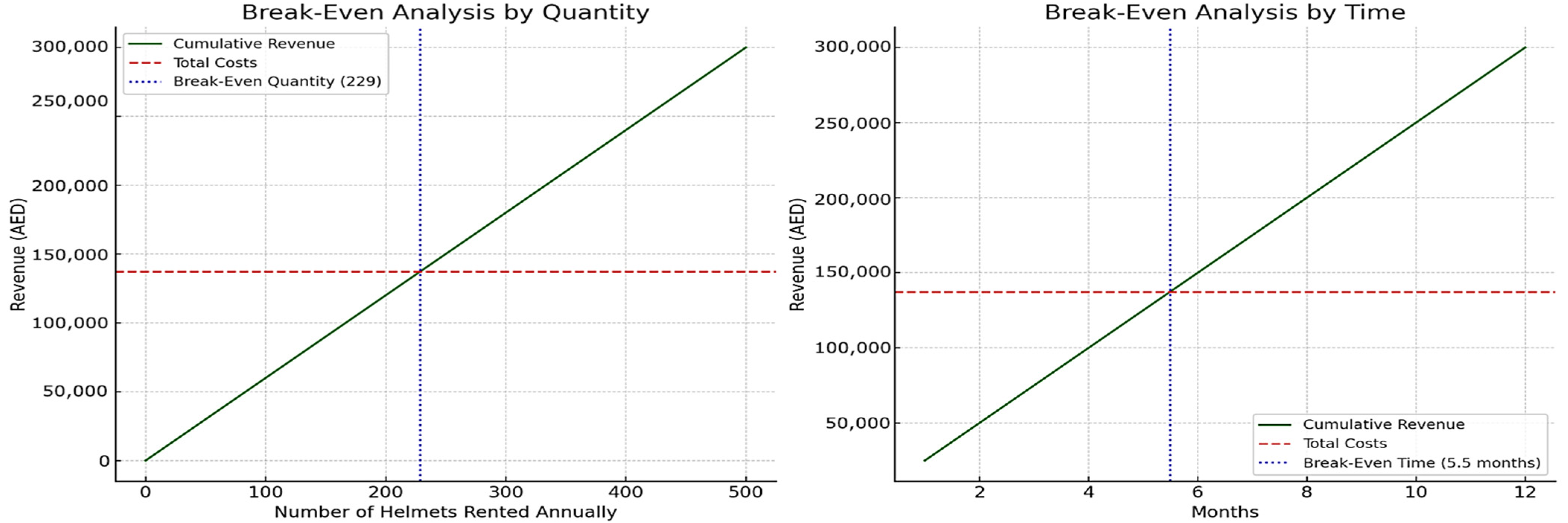
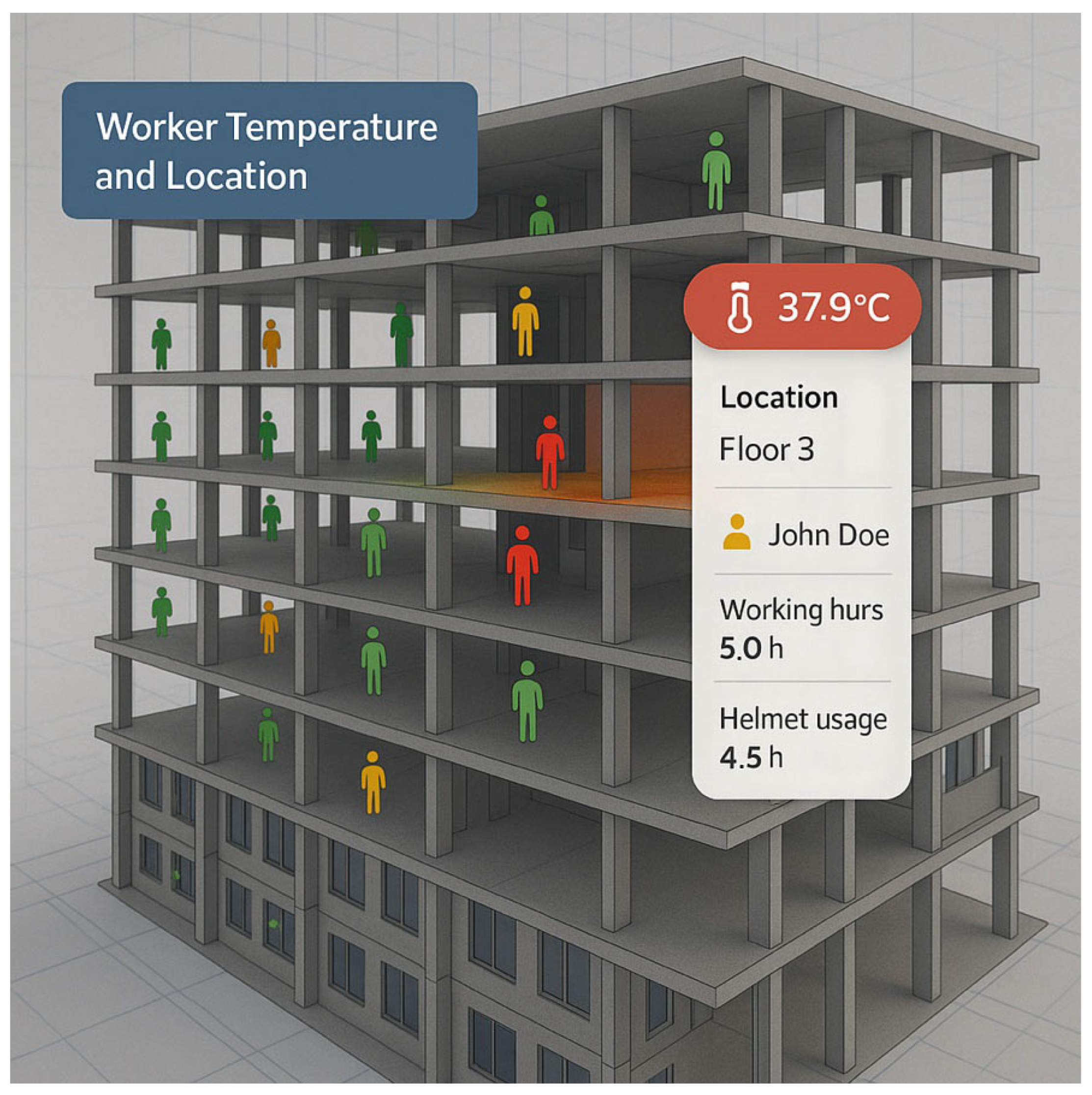
This paper presents the development and evaluation of an IoT-enabled smart helmet designed to enhance worker safety and site productivity in high-risk construction environments. The primary objective is to mitigate fall-related and heat-related risks commonly faced by laborers in the Gulf region. The proposed system integrates GPS, temperature–humidity (DHT11), and motion sensors (MPU6050 gyroscope and accelerometer) into a compact, wearable unit capable of real-time data transmission. A key technological novelty is the embedded fall detection mechanism, which analyzes sudden movement patterns to trigger instant alerts, enhancing response times during critical incidents. A fall detection algorithm was developed to identify abnormal movement patterns and trigger instant alerts, while continuous temperature monitoring addresses risks of heat stress in extreme climatic conditions such as Dubai, where temperatures exceed 45 °C. Field trials and simulations confirmed the feasibility of the system, demonstrating reliable data transmission, accurate fall detection, and effective remote monitoring. The solution is coupled with a rental-based business model, making it cost-effective and scalable for contractors. The findings suggest that the proposed helmet provides a practical and scalable safety solution.
Keywords: IoT; smart helmet; business model; construction; health and safety IoT; smart helmet; business model; construction; health and safety