
Article

Mussel Shell Recycling for Sustainable Bio-Cement Mortar in 3D-Printed Artificial Reefs: Material and Process Insights

by
Letizia Caroscio
1,*,
Cristian Chiavetta
2,
Adrian I. Yoris-Nobile
3,
Eva Cuesta-Astorga
3,
Alessandra Bonoli
1 and
Elena Blanco-Fernandez
3
1
Department of Civil, Chemical, Environmental and Materials Engineering (DICAM), University of Bologna, Via Umberto Terracini 28, 40131 Bologna, Italy
2
ENEA—Italian National Agency for New Technologies, Energy and Sustainable Economic Development, Lungotevere Thaon di Revel, 76, 00196 Rome, Italy
3
Construction Technology Applied Research Group (GITECO), Universidad de Cantabria, Av. de los Castros 44, 39005 Santander, Spain
*
Author to whom correspondence should be addressed.
Recycling 2026, 11(5), 95; https://doi.org/10.3390/recycling11050095
Submission received: 3 April 2026 / Revised: 9 May 2026 / Accepted: 13 May 2026 / Published: 15 May 2026

Abstract

This study investigates the reuse of mussel shell waste as a secondary raw material in bio-cement mortars designed for the additive manufacturing of artificial reefs for marine habitat restoration. The novelty of the research lies in combining a high recycled shell content (60 wt.%), low-clinker cement, and two 3D-printing techniques: Extruded Material Systems (EMS) and Powder-Based Systems (PBS). Mechanical performance was evaluated through flexural and compressive tests after 7, 28, and 91 days under both air and freshwater curing conditions, while environmental impacts were assessed through Life Cycle Assessment (LCA). The LCA evaluated both the environmental performance of shell-based mixtures compared with conventional materials and the impacts associated with the investigated fabrication techniques. The best-performing bio-mixtures achieved compressive strengths up to 46.01 MPa and flexural strengths up to 9.91 MPa after freshwater curing, demonstrating the suitability of shell-based mortars for submerged applications. LCA results showed reduced impacts in land use and mineral resource depletion compared with conventional mixtures, despite slightly higher energy and water demands associated with shell pre-treatment. The results demonstrate the technical and environmental feasibility of integrating aquaculture waste into sustainable 3D-printed marine restoration solutions.

1. Introduction

The search for more sustainable materials and the use of secondary raw materials within waste valorization and resource recovery frameworks in the construction sector are increasingly central topics in a context where waste management and the reduction of natural resource extraction are global priorities [1,2]. This is particularly relevant for the cement industry, which has seen significant growth in recent decades [3].
According to the World Cement Association, global cement production could reach 8.2 billion tonnes by 2030, confirming the key role of this material in building both the present and the future [4]. Cement production is a pillar of the global economy, essential for infrastructure in emerging economies and urbanization in developed countries. However, this sector is also one of the main sources of CO2 emissions, responsible for over 7% of global greenhouse gas emissions, significantly contributing to climate change [4]. Cement production generates large amounts of carbon dioxide, mainly due to the high temperatures required for the calcination of materials such as limestone and clay, a process that occurs at about 900 °C [5].
In recent decades, the search for alternative low-environmental-impact materials independent of virgin raw materials has become a priority, fostering the development of innovative strategies to reduce the sector’s environmental footprint [6]. In this context, the circular economy emerges as an important ally, capable of radically transforming the way production processes are conceived, overcoming the linear model of extraction, use, and disposal [7]. The goal of the circular economy is to overcome the linear consumption model by transforming material and energy flows into virtuous and sustainable cycles in which the waste of one system becomes a resource for another. In this way, the extraction of natural resources is reduced and waste production is minimized through closed material cycles [1,8]. To reduce the environmental impact of the construction sector, research focuses on two main areas: reducing the clinker content in cement through the use of alternative materials with a lower carbon footprint and replacing primary natural aggregates with recycled aggregates; these strategies promote more sustainable solutions for concrete and cement mortars within a circular economy perspective [9,10,11,12,13].
Recent studies have further highlighted the environmental and technical potential of recycled materials in cementitious composites. Recycled aggregates and recycled powders can significantly reduce the consumption of virgin raw materials and construction waste generation while improving resource efficiency and contributing to carbon neutrality targets in the concrete sector [14]. Emerging approaches based on biomaterials offer further opportunities to improve material durability, extend the service life of structures, and reduce CO2 emissions associated with maintenance interventions in sustainable construction systems [15]. Recent advances have also explored the use of marine-based materials in advanced cementitious composites for coastal and offshore applications, with the aim of reducing resource consumption and dependence on conventional natural aggregates, while improving the sustainability and resilience of marine infrastructures [16].
To address the need to make the cement industry more circular and sustainable, this research proposes the reuse of mussel shells, a by-product of the fishing industry often destined for landfill. Through recycling and recovery processes, these waste materials can be used as secondary raw materials in the formulation of bio-cementitious mixtures containing a recycled percentage of shell-derived material, thus contributing to the reduction of environmental impacts [17]. This circular process is possible thanks to the composition of bivalve mollusk shells, which consist of more than 90% calcium carbonate (CaCO3), a fundamental material for numerous industrial applications, including the cement industry [18,19]. In 2022, global mussel production reached 1.927 million tonnes [20]. In the same year, global exports of bivalve mollusks totaled USD 6.0 billion, accounting for about 3% of the total value of aquatic product exports, confirming this as a growing sector [21]. Considering that the shell represents about 60–70% of a mussel’s weight, huge amounts of shell waste are generated annually [22]. This significant expansion of the sector, together with the large amount of waste produced, makes it necessary to develop recycling and reuse supply chains capable of transforming a by-product into a resource and reducing the associated economic and environmental costs [23,24]. Among the various circular economy models, several studies in the literature have proposed the integration of shells into cement mortars. Numerous studies have highlighted both the reuse opportunities and some critical issues, mainly related to shell supply and regulatory restrictions [25].
The integration of shells into cementitious mixtures has been the subject of research for years, highlighting both reuse opportunities and some critical issues, mainly related to the final material’s strength, shell sourcing, and legislative restrictions [26,27,28,29].
To overcome the limitations related to shell supply, this study focuses on the reuse of shells in a cementitious mixture specifically formulated for an innovative application field: the construction of artificial marine reefs. In fact, the integration of bivalve shells into large-scale cement production would be difficult to implement due to the enormous quantities required by the global cement industry and the transport and treatment processes needed to make the shells suitable for such extensive use. However, the use of this mixture in a specific application context, such as the construction of artificial barriers, facilitates its implementation, enhances its environmental benefits, and opens new opportunities for the creation of value chains and emerging market sectors [30].
Artificial reefs are structures designed to enhance marine biodiversity, providing shelter and substrates for the colonization of marine organisms [31]. They mimic natural habitat characteristics, encouraging the growth of corals, algae, and the presence of fish and invertebrates [32]. The continuous decline in marine biodiversity, exacerbated by direct and indirect human impacts, pollution, overfishing, and habitat destruction, has made the adoption of innovative conservation and restoration strategies essential [33].
The innovation of this study in proposing the reuse of shells in a cementitious mortar lies in several key aspects. First, the developed mortar incorporates 60% by weight of recycled aggregates derived from mussel shells, a significantly higher percentage than those commonly reported in shell-based cementitious mixtures [34]. This approach promotes virtuous recycling mechanisms while ensuring adequate technical performance for specific applications, such as the construction of artificial reefs. Secondly, the material was specifically formulated for additive manufacturing applications and the construction of regenerative artificial barriers, combining circular waste valorization, low-clinker cementitious systems, and 3D printing technologies aimed at restoring marine ecosystems.
The aim of this research, in fact, is to develop a bio-cementitious mortar formulated for the production of artificial barriers through 3D printing, intended to support the restoration of marine ecosystems. In particular, the bivalve shell-based mortar is designed to promote the recovery of the European flat oyster (Ostrea edulis), a species severely affected by human activities and climate change [35]. The study therefore promotes the reuse of bivalve shells to support the repopulation of other species through 3D-printed reefs, while also enhancing their bio-attractiveness and colonization capacity [36].
3D printing is particularly suitable for the creation of marine structures within a circular perspective, as it allows the reproduction of complex shapes and diversified habitats by adapting the design to specific environmental needs, seabed conditions, and target species for repopulation [37,38,39]. Moreover, 3D printing, which enables the creation of objects from a three-dimensional model through the superposition of thin layers of material, reduces the excessive use of raw materials by employing only the amount necessary for construction [40]. This approach optimizes resources, minimizes waste, and makes the entire production cycle more efficient, in line with the principles of the circular economy [41].
Given the growing interest and research development in the field of 3D printing, this study also provides an innovative comparison between two extrusion technologies: Extruded Material Systems (EMS) and Powder-Based Systems (PBS), in relation to specimens produced through traditional moulding. The aim is to provide a comprehensive and specific comparison to identify the most suitable technique for this type of application.
In the past, artificial barriers were built without particular attention to the sustainability of the materials used [42]. Today, however, it is possible to adopt a more conscious approach based on the principles of the circular economy through the use of inert materials and the promotion of structural complexity, an area in which 3D printing plays a fundamental role [43]. In this context, the design and construction of 3D-printed artificial barriers using bio-cementitious mixtures represent a promising solution, capable of addressing the need for more sustainable materials, enabling the creation of complex and diversified geometries, and reducing the environmental impacts associated with the selected materials [44].
To assess the environmental sustainability of the bio-cementitious mixture, the study proposes a Life Cycle Assessment (LCA) aimed at evaluating the environmental impacts associated with the reuse of shell waste compared to conventional construction materials [45]. Particular attention is given to impact categories related to resource extraction and use, water consumption, and climate change. In addition, the LCA also evaluates the environmental impacts associated with the different fabrication techniques investigated (Moulding, EMS, and PBS), in order to assess not only their technical performance but also their environmental sustainability. The objective of this study is therefore to evaluate and select the mussel shell-based bio-cementitious mixture that best satisfies ecological requirements together with the technical demands of strength and workability for 3D extrusion.
Through laboratory chemical-physical characterization, flexural and compressive tests, and a subsequent LCA analysis, the aim of this study is to evaluate and select the mussel shell-based bio-cementitious mixture that best meets the technical requirements for the production of reefs through 3D printing and that exhibits sustainability characteristics making it preferable to a conventional mixture. This research aligns with emerging trends in sustainable construction, where bio-based and circular materials are integrated into additive manufacturing processes to reduce the carbon footprint of the building sector [44,45]. By positioning itself within the specific field of habitat restoration through the construction of 3D-printed reefs, this study also responds to European regulations such as the Nature Restoration Law, which aims not only to protect existing ecosystems but also to restore them through targeted interventions [46].
Through the valorization of shell waste from the aquaculture industry for the fabrication of 3D-printed artificial barriers, this study proposes a systemic approach to sustainability that is technically relevant for mortar development and environmentally sustainable. This approach simultaneously supports the restoration of marine ecosystems, fitting within a perspective that is not only circular but also regenerative.

2. Materials and Methods

2.1. Materials

To develop the bio-cementitious mortar mix, several formulations were tested in order to identify the one that best met both environmental and technical requirements for the construction of artificial reefs. Two different samples of mussel shells (Mytilus galloprovincialis) were used as recycled aggregates:
  • one sample from the central Mediterranean basin, referred to as Aggregate “S”,
  • another sample from the European Atlantic coast, referred to as Aggregate “G”.
These two types of shells were selected to evaluate potential differences in chemical composition and behavior within the cementitious matrix, also considering the distinct marine growth environments in terms of temperature, salinity, and habitat [47].
Mussel shells were selected because they are an abundant aquaculture waste characterized by a high calcium carbonate (CaCO3) content, making them chemically compatible with cementitious matrices. Their reuse also represents a promising strategy for reducing landfill disposal and virgin aggregate extraction while promoting circular economy approaches in sustainable construction.
The main binder used was a type III/B 32.5N-SR cement with a low clinker content (31%), the remainder being ground granulated blast-furnace slag. This choice was made to reduce the environmental impact compared to traditional cement production [48], significantly lowering CO2 emissions while maintaining adequate mechanical performance [49]. CEM III/B 32.5N-SR cement was selected not only for its low clinker content and reduced environmental impact, but also for its sulfate resistance and suitability for marine exposure conditions, which are relevant for artificial reef applications.
In a reference mix, a traditional limestone sand aggregate was used instead of mussel shells. Additionally, to enhance technical performance, all mixtures included a limestone filler with a particle size passing through 0.065 mm.
Table 1 summarizes the dry composition and nomenclature of the investigated mixtures. The mixtures were identified according to both the aggregate origin and the production method adopted. In particular, the letters “S” and “G” refer, respectively, to mussel shells sourced from the Mediterranean Sea and the Atlantic Ocean, while “M”, “P”, and “D” indicate the fabrication technique: conventional moulding “M”, Extruded Material Systems (EMS) “P”, and Powder-Based Systems (PBS) using D-Shape technology “D”, respectively. The reference mixture (RB) was produced using conventional limestone sand instead of shell aggregates and was used as a benchmark mixture.
All shell-based mixtures were designed with the same dry composition, consisting of 60 wt.% mussel shell aggregates, 30 wt.% CEM III/B 32.5N-SR cement, and 10 wt.% limestone filler. The limestone filler was incorporated to improve particle packing, rheological behavior, and printability during the additive manufacturing process. A polycarboxylate-based superplasticizer was also used in all mixtures to improve workability and rheological performance, particularly for the additive manufacturing processes. Unlike the shell-based mixtures, the conventional RB mixture contained limestone sand instead of recycled shell aggregates.

2.2. Methods

This section describes the methods used for the preparation, characterization, and testing of bio-based cement mortar incorporating mussel shells produced using three different techniques. As a preliminary assessment of the raw materials, the physico-chemical properties of two types of mussel shells used as aggregates were analyzed: one sample from the central Mediterranean basin (referred to as aggregate “S”) and one from the European Atlantic coast (aggregate “G”). For each aggregate, specific tests were carried out to evaluate their composition and suitability for use in cement mixtures.
Subsequently, test specimens were produced using three manufacturing techniques: conventional mixing with casting in molds, 3D printing using Powder-Based Systems (PBS), and 3D printing with Extruded Material Systems (EMS). The resulting samples were subjected to a series of tests to determine their chemical, physical, and mechanical properties.

2.2.1. Characterization of Mussel Shells

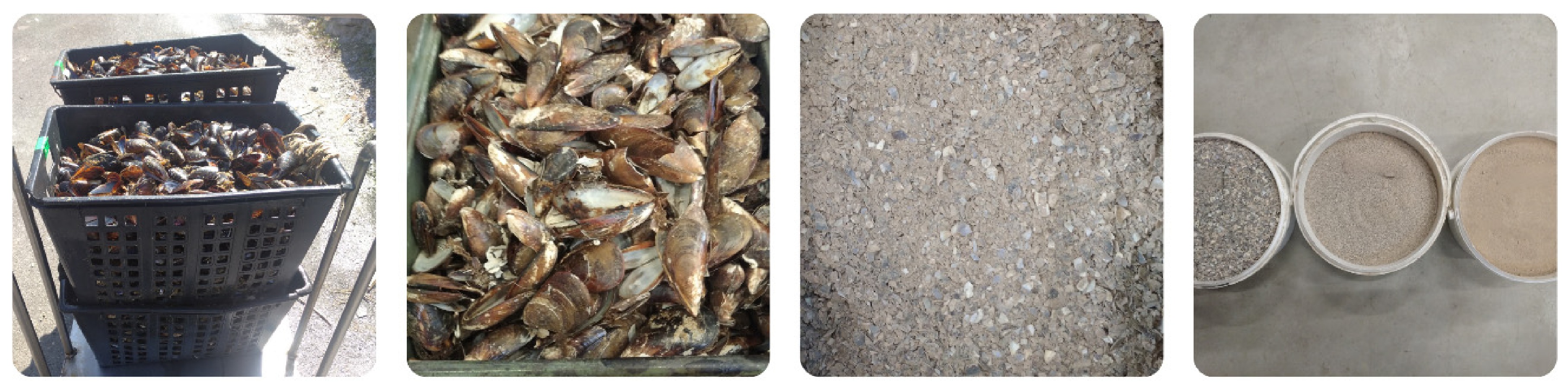
Before being used in the cementitious mixture, the mussel shells underwent a non-invasive thermal treatment at 120 °C for a duration of 2 h. This process aimed to remove residual moisture and reduce the presence of organic matter, ensuring greater stability and compatibility with the cement matrix. After drying, the shells were ground using a Los Angeles mill machine until an appropriate particle size was obtained for use as aggregate (Figure 1).
To characterize the shells and assess their suitability as an aggregate in cement mortar, the following laboratory tests were performed:
  • Size distribution (EN 12620:2008) [50]
  • Determination of organic matter content (ASTM D2974:2020) [51]
  • Water content (EN 1097-5:2008) [52]
  • Carbonate content (EN 196-2:2013) [53]
Preparation of Specimens by Mixing and Casting in Moulds
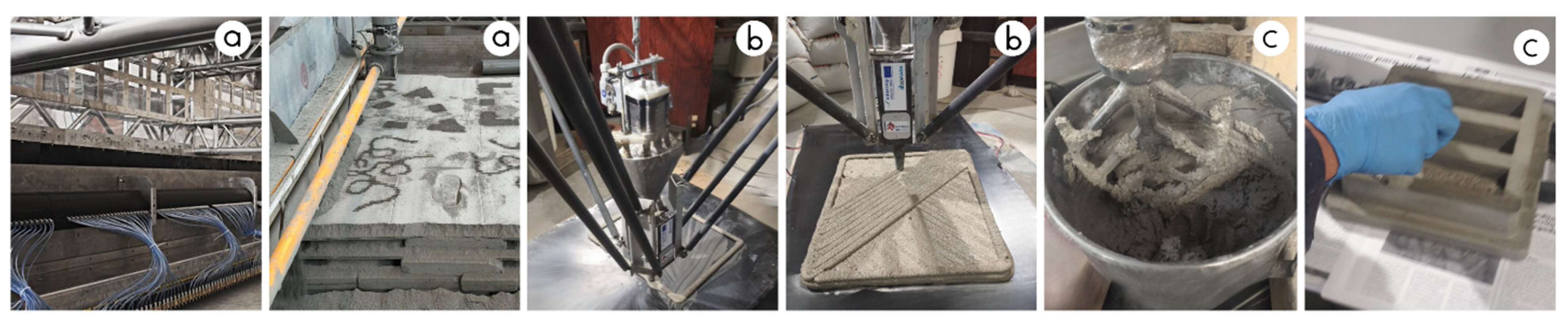
For each mixture, the preparation of the specimens for casting into molds was carried out in accordance with the standard EN 196-1, 2016 [54]. The process began by placing the dry components, as listed in Table 1, into a paddle mixer (Figure 2). The superplasticizer (SP) additive and the required amount of water for cement hydration were then added. Mixing was conducted according to the GITECO method: the materials were dry-mixed at low speed for 15 s, after which the water was gradually added, and mixing continued for 2 min. The superplasticizer additive was then introduced, the speed was increased to a medium level, and mixing continued for an additional 2 min.
The resulting mixture was then cast into standardized prismatic molds (40 mm × 40 mm × 160 mm), in accordance with the EN 196-1:2016 standard [54]. The specimens were then demolded and stored in a controlled environment until testing, in order to evaluate strength parameters. The specimens for the MS, MG, and RB mixtures were prepared using this technique.
Specimen Fabrication via 3D Printing
Additive Manufacturing (AM), more commonly known as 3D printing, is one of the most recent technologies introduced into the construction sector [55]. In recent years, it has also been applied to the development of marine structures, particularly for the creation of artificial reefs [56].
To gain a more comprehensive understanding of the performance of the mussel shell-based cementitious mixture in additive manufacturing processes, two different 3D printing techniques were tested: one based on extrusion and the other on powder layering.
Production According to Extruded Material Systems (EMS)
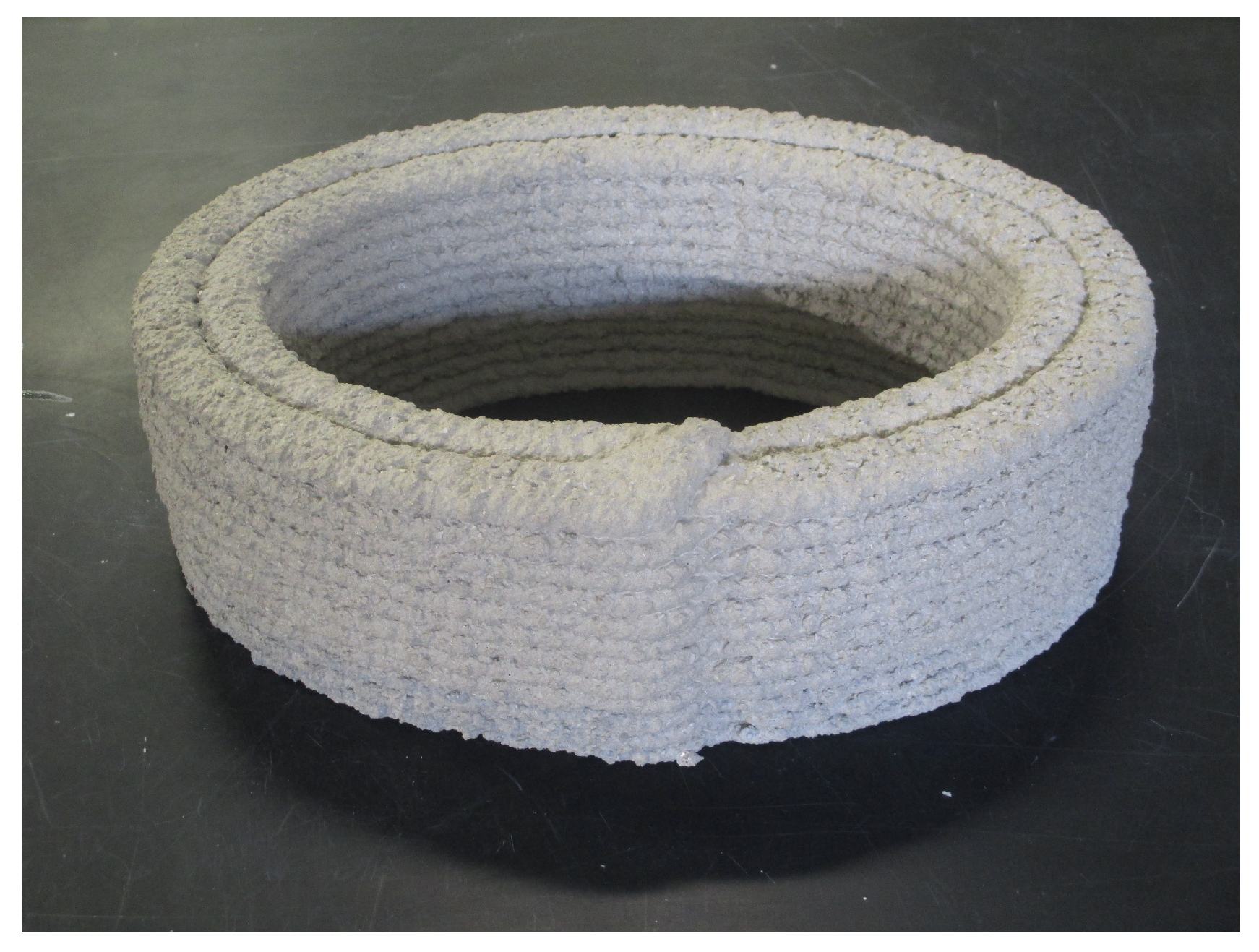
The Extruded Material Systems (EMS) method, when applied to cementitious materials, is a 3D printing technique for construction based on continuous extrusion. A print head (or nozzle) deposits a layer of cementitious paste along a path defined by a digital model, forming the structure layer by layer. The material used must possess specific rheological properties: it must be viscous enough to be pumpable, yet self-supporting, so it maintains its shape once deposited, without the need for formwork. To guarantee that the mortar can be extruded and it can bear its own weight while stacking up layers, printing tests have to be done to fine tune the formulations (Figure 3). Alternatively, formwork can be used, opting for a hybrid printing approach that combines the principles of EMS with those of the Powder-Based Systems (PBS) method.
For this study, a “WASP 3MT” printer was used, equipped with a 20 mm diameter nozzle (Massa Lombarda, Italy). The print head operates at a feed rate between 100 and 200 mm/s, while the screw extruder runs between 100 and 400 revolutions per minute. Specimens of the PS and PG mixtures were produced using this technique. Production According to Powder-Based Systems (PBS)
Powder-Based Systems (PBS) production is a 3D printing technology used in the field of construction materials, primarily for creating architectural structures using cementitious materials. The process is based on a powder bed system, in which a layer of inert material (such as sand or cement powder) is spread horizontally. A chemical binder is then selectively deposited by a print head, solidifying the material only in the areas defined by the digital model [57].
This process is repeated layer by layer until the three-dimensional structure is formed. At the end of the printing process, the unbound material is removed, leaving only the final product.
In this study, a D-Shape printer was used, characterized by an aluminum lattice structure that supports up to 1200 nozzles with a diameter of 10 mm. The print head selectively deposits the binder only in the areas defined by the digital model. Specimens of the DS and DG mixtures were produced using this technique.

2.3. Testing of Specimens

Following the EN 196-1:2016 standard, the mechanical compression and flexural tests were conducted to evaluate the structural properties of the developed cementitious mortar, ensuring its suitability as a material for artificial reefs in marine environments. These tests enabled the analysis of the material’s performance both under standard conditions (in air) and under submerged conditions, simulating real-world usage scenarios.
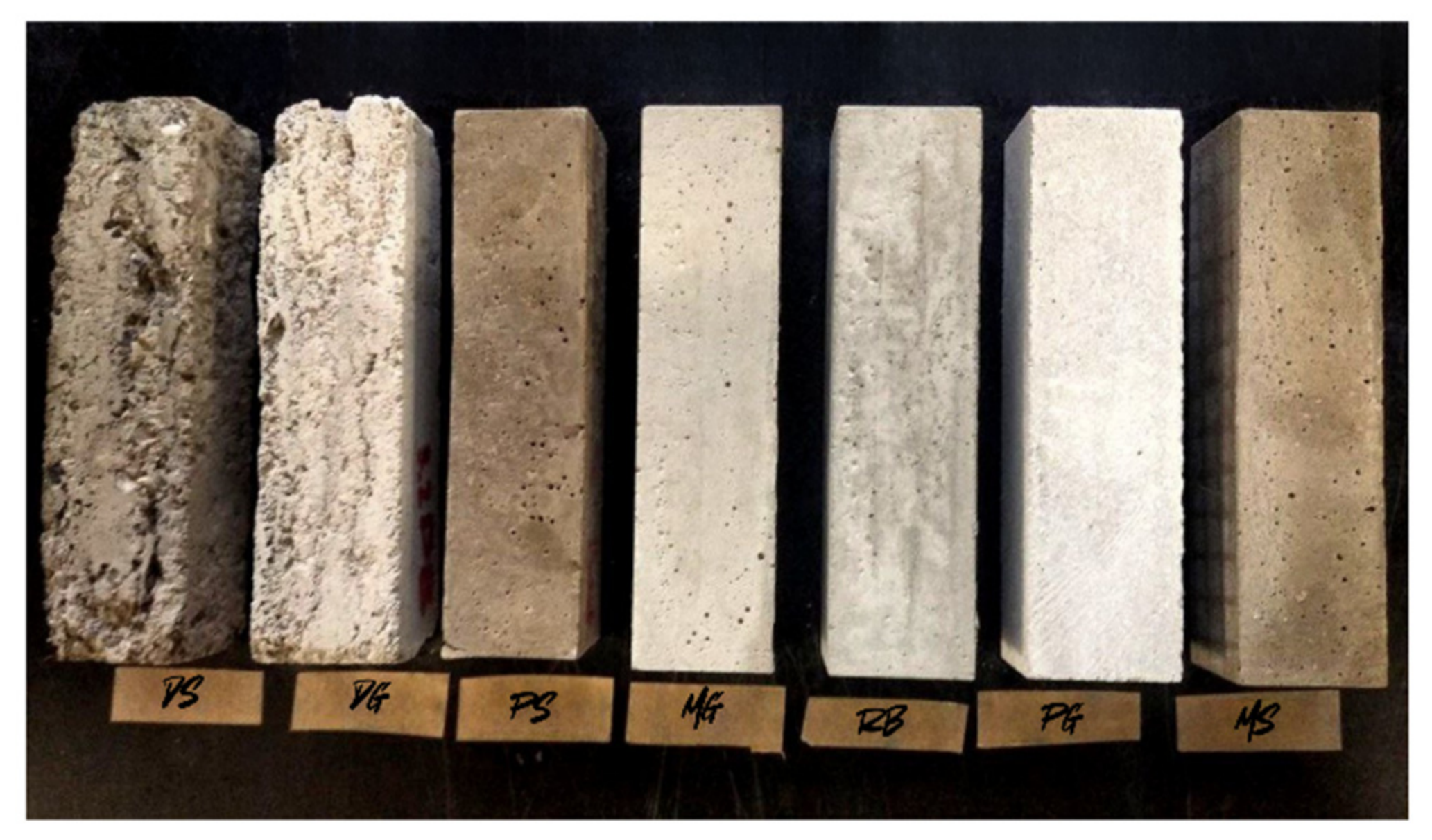
For both tests, standardized prismatic samples (40 mm × 40 mm × 160 mm) were prepared (Figure 4) and subsequently cured under controlled conditions of temperature (20 °C) and relative humidity (≥90%) and subjected to two maturation procedures:
  • Air curing for 91 days to assess the behavior under standard conditions.
  • Freshwater curing for 91 days after an initial 28 days in air. This method simulated the real-life placement of the structures in seawater, allowing for an analysis of the immersion’s impact on mechanical properties.
The tests were performed using a universal test machine, Zwick/Roell Z100 (Ulm, Germany), following these procedures:
  • Flexural test: Prismatic samples were subjected to a three-point loading configuration. Force was applied gradually until fracture occurred, and the flexural strength was calculated by relating the maximum load to the sample’s geometry.
  • Compression test: The two halves of the samples broken during the flexural test were subjected to progressively increasing loads until failure. Compression strength was determined by dividing the maximum load by the loaded surface area.
Figure 4. Overview of the seven specimens (DS, DG, PS, MG, RS, PG, MS) produced from various mixtures and printing methods, as detailed in Table 2.
Recycling 11 00095 g004
Table 2. Printing method adopted for each of the mixtures produced.
METHODMSPSDSMGPGDGRB
MouldX X X
EMS X X
PBS X X

2.4. LCA Analysis of the Mixtures

In order to assess the environmental performance of the developed cementitious mixtures, a Life Cycle Assessment (LCA) was performed in accordance with ISO 14040:2006 and ISO 14044:2006 standards [58,59]. The analysis followed the four standard phases of the LCA framework: (i) goal and scope definition, (ii) life cycle inventory (LCI) (Table 3), (iii) impact assessment, and (iv) interpretation of results [60].
The primary goal of this study is to evaluate the environmental performance of innovative cementitious mixtures containing mussel shells, developed for the production of artificial reefs via additive manufacturing. Specifically, the assessment aims to:
  • Compare the impacts of using recycled mussel shells versus conventional natural aggregates (limestone sand).
  • Evaluate the environmental differences between three production methods: traditional moulding, 3D extrusion (EMS), and 3D powder-based printing (PBS).
The analysis considers a functional unit (FU) of 1 kg of cement mortar mixture. The system boundaries are defined as cradle-to-gate, encompassing raw material extraction, processing, transport, and manufacturing activities, including mixing and either moulding or 3D printing. End-of-life is excluded, as the mixtures are intended for permanent deployment as artificial reefs. The study reflects laboratory-scale production conditions in a European context, using EU-average electricity and transport data, and is based on the processes carried out during the experimental period.
Primary data were collected from laboratory-scale production and testing, while secondary data were sourced from the Ecoinvent database [61]. The modeling was carried out using SimaPro software (version 9), and the impact assessment followed the Environmental Footprint (EF) method, with particular attention to the categories of Global Warming Potential, Resource Use, Water Use and Land Use [62].

3. Results

3.1. Physicochemical Characterization of the Shells

The two mussel shell samples analyzed, one from the Central Mediterranean basin (referred to as aggregate “S”) and the other from the European Atlantic coast (referred to as aggregate “G”), exhibited the physicochemical characteristics detailed in the following sections.

3.1.1. Particle Size Distribution

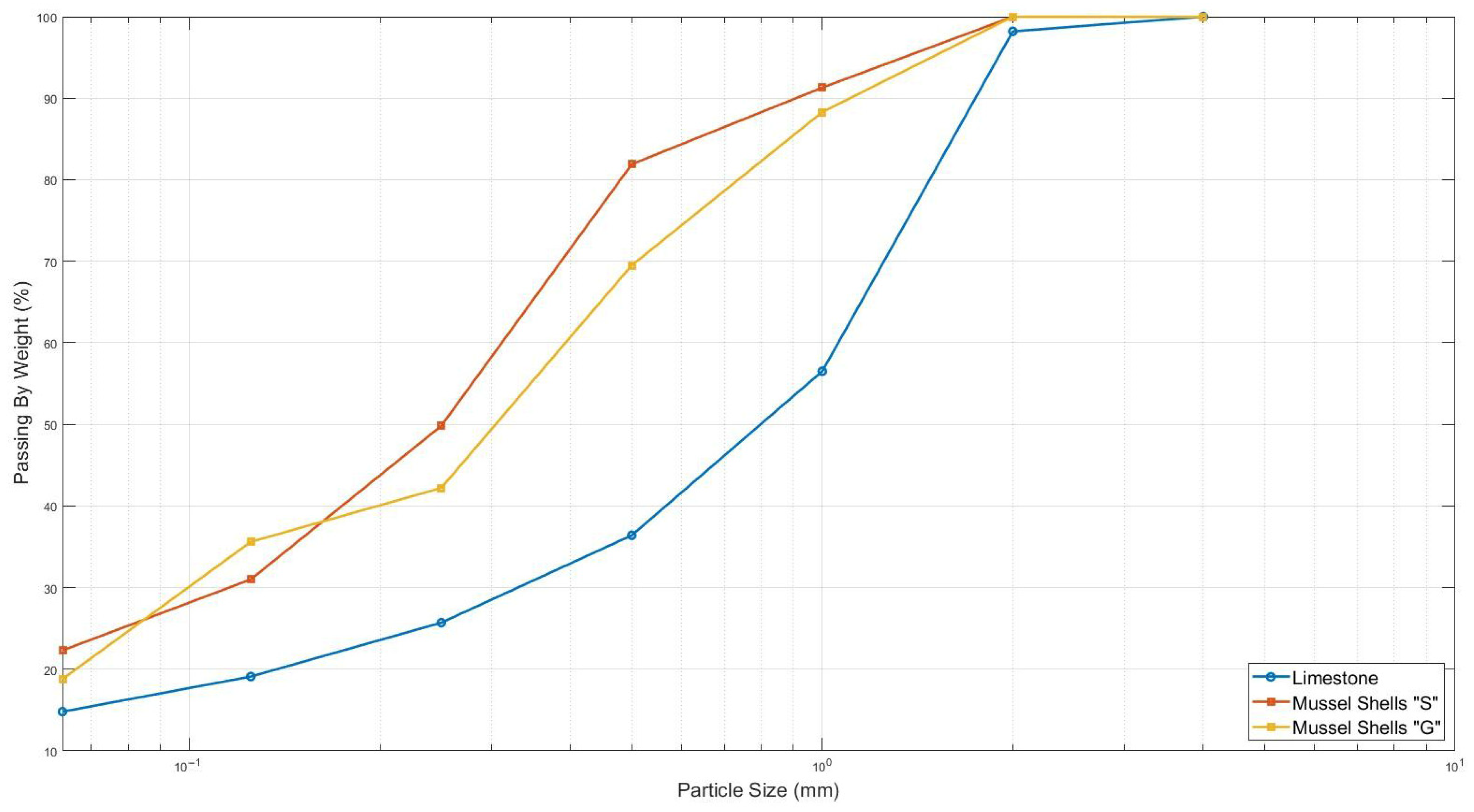
The granulometric analysis of the sand samples was carried out in accordance with the EN 12620:2008 [50] standard, with the objective of determining the particle size distribution (Figure 5). A set of sieves with calibrated mesh sizes was employed, specifically: #5 (4.0 mm), #10 (2.0 mm), #18 (1.0 mm), #35 (0.5 mm), #60 (0.25 mm), #125 (0.125 mm), #230 (0.063 mm), along with the residue collected at the bottom. The sieving process was conducted using a mechanical sieve shaker, for a duration of 5 min, ensuring proper separation of particles according to the specified size ranges.

3.1.2. Calcium Carbonate Content

In accordance with the EN 196-2:2013 standard [53], the calcium carbonate content was determined using a Dietrich-Fruhling calcimeter (Gabbrielli Technology S.r.l., Calenzano, Italy). Two samples of 10 g each were analyzed for each biofiller. The samples were placed in a glass container, into which a test tube containing a hydrochloric acid (HCl) and water mixture (in a 2:1 ratio) was carefully inserted. The solution was then poured into the container and stirred to promote the reaction with the filler. The release of carbon dioxide (CO2) resulting from the reaction caused a displacement in the water column of the device, allowing for the measurement of its stabilized height. The amount of CO2 produced was then used to calculate the calcium carbonate (CaCO3) content in the analyzed samples. The results, presented in Table 4, showed a CaCO3 content of 90.3% for aggregate “S” and 92.1% for aggregate “G”.

3.1.3. Water Content

The water content was measured by oven drying according to the standard procedure EN 1097-5:2008 [52]. The biofiller samples were initially weighed and then placed in a ventilated oven at 105 °C ± 2 °C until a constant weight was achieved. After cooling in a desiccator, the samples were weighed again to determine the mass loss due to water evaporation. The difference between the initial and final weights allowed the calculation of the moisture content of each biofiller. The results are shown in Table 5.

3.1.4. Organic Matter

To determine the organic matter content in a 200 g sample of shell mixture, the standard from [51] was followed. The shells were subjected to thermal treatment at 440 °C, as prescribed by the standard. This temperature removes the organic matter without causing calcination of the material, meaning it does not decompose calcium carbonate (CaCO3) into calcium oxide (CaO), known as quicklime, and carbon dioxide (CO2), which would be released as a gas. The results shown in Table 6 highlight an organic matter content of 6.10% for sample “S” and 3.00% for sample “G”.

3.2. Test Results on Specimens

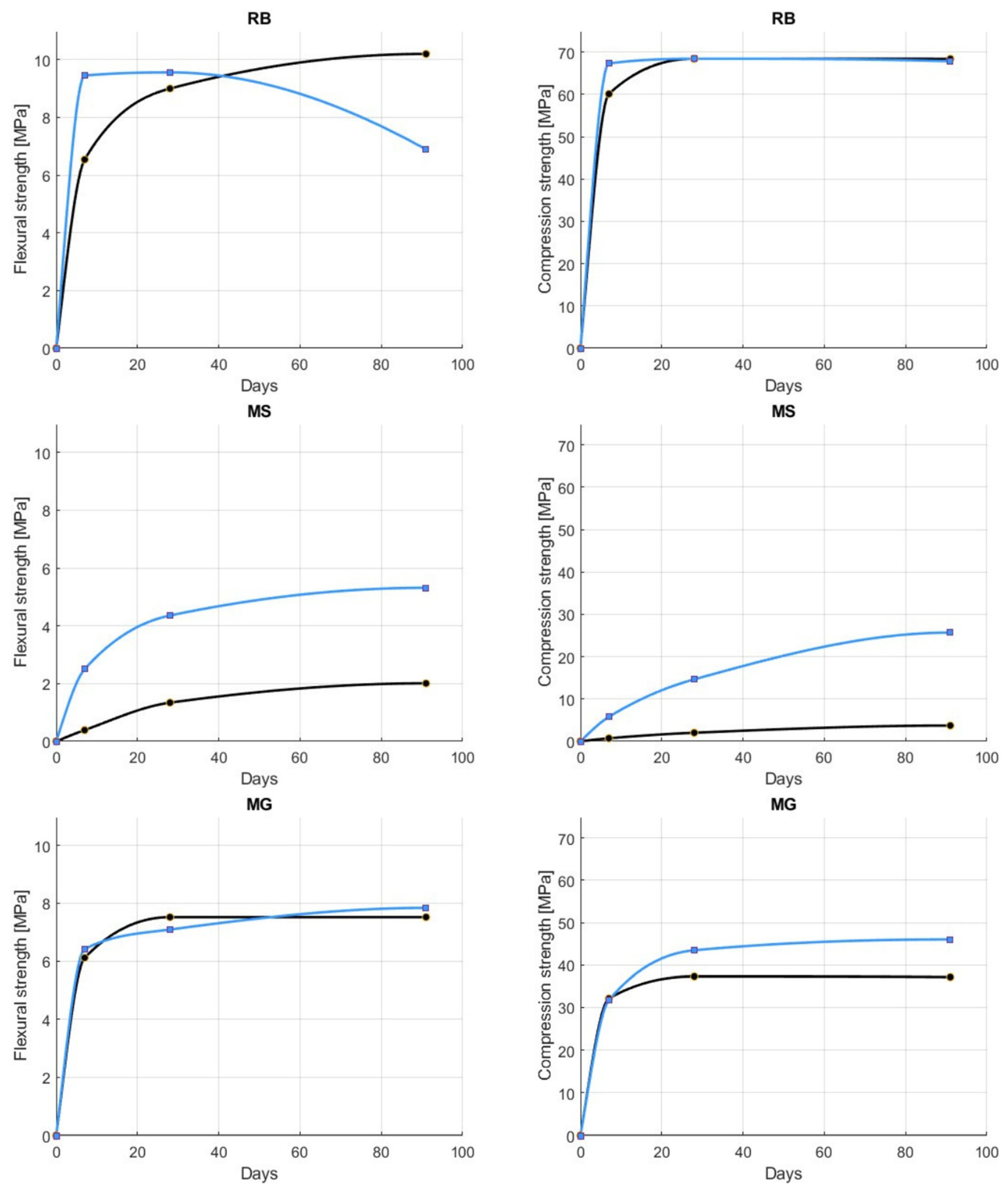
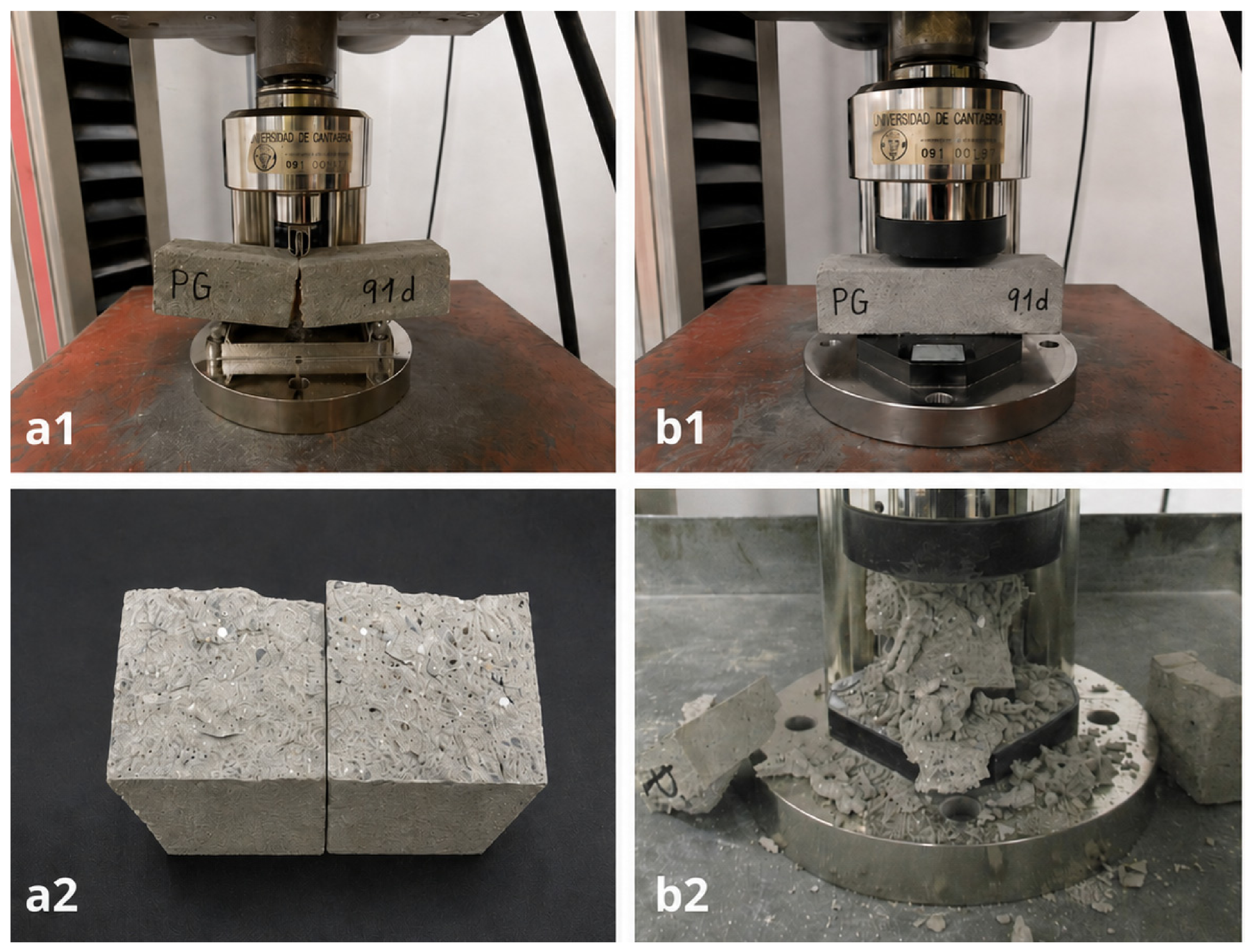
Tests on prismatic specimens, prepared with mixtures of different compositions, were carried out through flexural and compressive strength tests to evaluate the mechanical properties over time (Figure 6). The results are presented for different curing conditions: after 7, 28, and 91 days of air curing and after 7, 28, and 91 days of water immersion. Compressive strength values are reported in Table 7, while flexural strength values are presented in Table 8.
For the PS blend, no test results are available because the 3D-printed plate fractured prematurely due to excessive brittleness. This prevented the proper execution of the planned mechanical tests, making it impossible to obtain meaningful data. Such behavior clearly indicates that the material is not suitable for applications requiring a minimum level of structural strength or a controlled mechanical response.
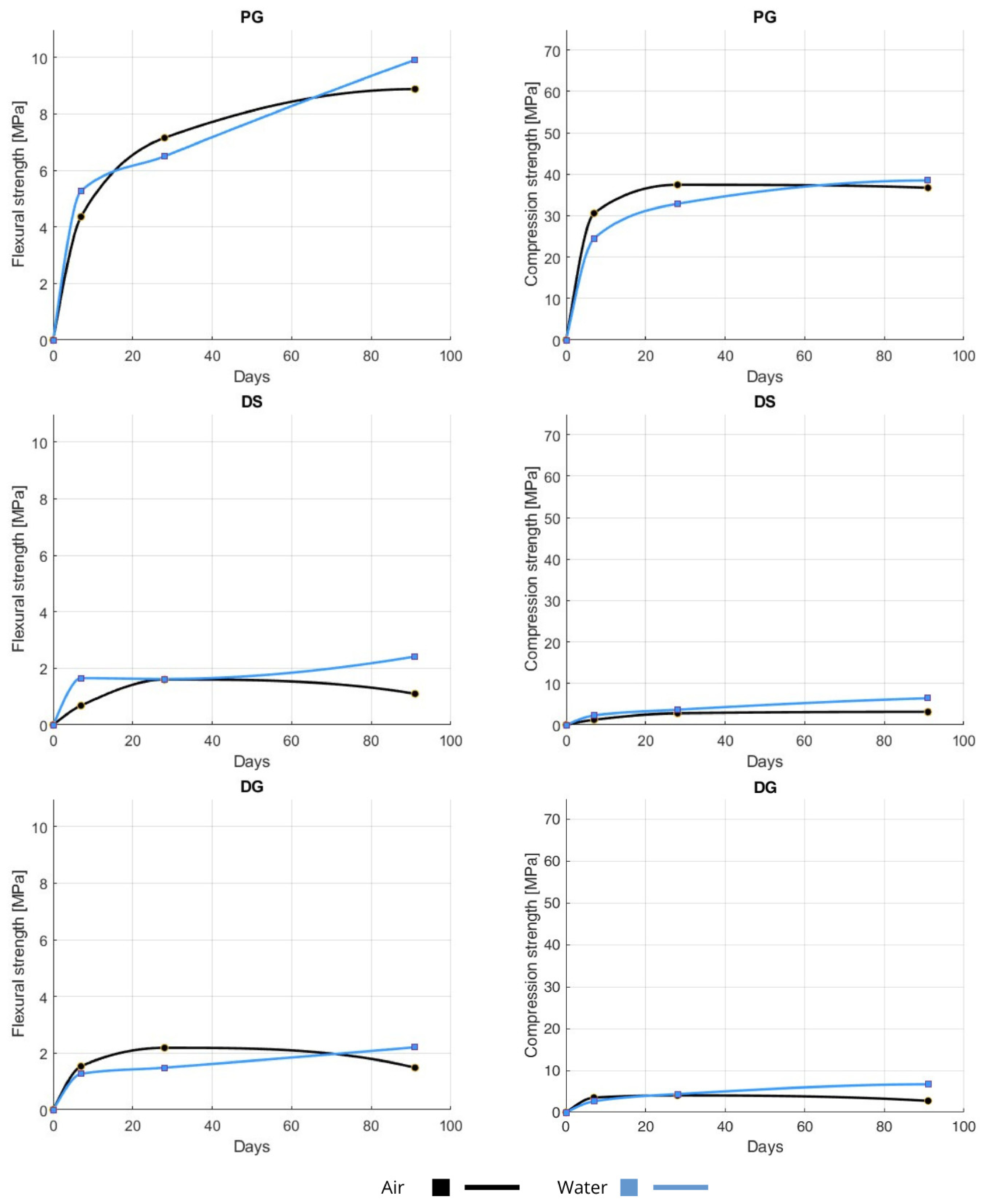
Below, in Figure 7, the same results previously shown in Table 7 and Table 8 are presented in graphical form. This visual representation provides a more immediate and intuitive overview of the mechanical behavior of the different blends under both compression and flexion. The use of graphs highlights performance differences more clearly among the tested samples, allowing for a direct comparison between the various formulations and contributing to a deeper understanding of how each material affects the overall structural response.

3.3. Results of the LCA Analysis of the Mixtures and 3D Printing Methods

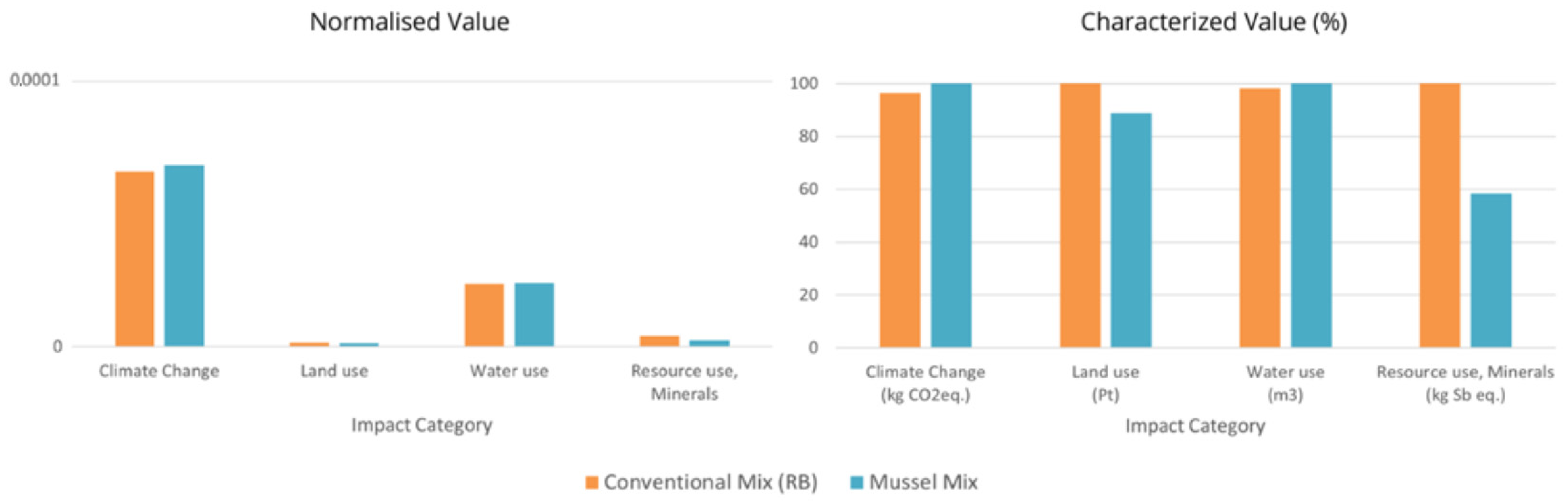
As a first step, the LCA results shown in Figure 8 and Table 9 compare the environmental performance of the mussel shell-based mixture (“Mussel Mix”) with the conventional reference mix (RB), using the Environmental Footprint (EF) method. The results are presented in both characterization (with absolute values in Table 9 and percentage values in Figure 8 with the related unit of measurement) and normalization (as dimensionless scores for comparison). It is important to visualise both characterisation and normalisation because the former quantifies the actual impact for each environmental category, while the latter allows, in a more intuitive and simple way, to contextualise and compare these impacts with each other.
All results reflect a laboratory-scale system. The overall environmental impacts are therefore relatively small in absolute terms due to the limited quantities of material and energy involved in small-scale experimental production.
The Mussel Mix performs slightly better in two key impact categories: land use and mineral resource use, where it shows measurable reductions compared to the conventional mix. These benefits are largely due to the replacement of virgin raw materials, such as quarried limestone sand in the RB mix, with recycled mussel shells, avoiding the environmental burdens of extraction and primary processing. However, for climate change and water use, the Mussel Mix registers marginally higher values than RB. These differences remain very small in absolute terms, but they reflect the additional energy and water demands associated with shell pre-treatment processes, including washing, drying, and grinding.
For the purposes of this analysis, all mussel-based formulations were grouped into a single representative mix (“Mussel Mix”), as they share the same percentage composition of cement, filler, and shells. Although the origin of the shells (Mediterranean or Atlantic) may affect their physicochemical properties, it does not lead to meaningful differences in life cycle impacts and was therefore not considered as a distinguishing factor in the LCA.
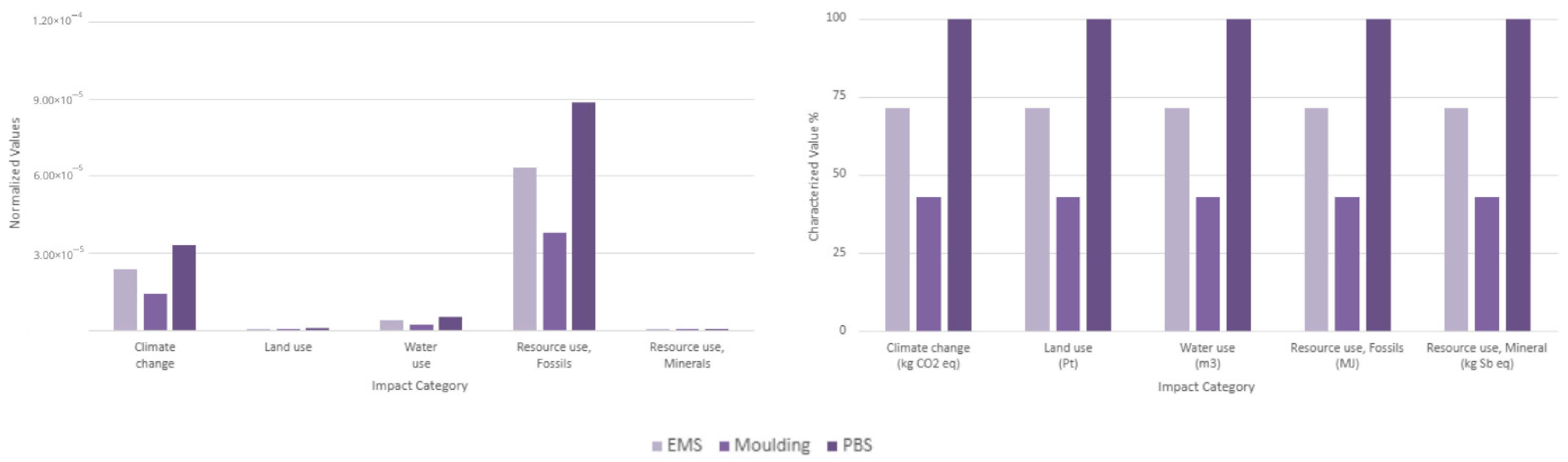
As part of the second step of the analysis, the focus shifted from the comparison of material compositions to the comparison of the production techniques adopted for the shell-based mixtures (Table 10). In this case, the LCA evaluates the environmental impacts associated with the three fabrication methods investigated: conventional moulding, EMS (extrusion-based 3D printing), and PBS (powder-based 3D printing). Among these techniques, conventional moulding showed the lowest environmental impacts, followed by EMS, while PBS presented the highest impacts (Figure 9).

4. Discussion

The physicochemical properties of the mussel shell aggregates “S” and “G”, originating, respectively, from the Central Mediterranean and the European Atlantic coasts, reveal some noteworthy differences that may influence their behavior when used as aggregates in cement mortar. While both aggregates exhibit high CaCO3 purity, the organic matter content varies substantially, with sample “S” reaching 6.10% compared to 3.00% in “G”. This variation could be attributed not only to environmental and biological factors affecting shell formation in different marine habitats, but also to differences in the pre-treatment procedures adopted by the respective shell suppliers, particularly regarding the thoroughness of mussel flesh removal.
These evaluations are essential as a first step toward the standardization of shell-based aggregates, particularly considering the influence of organic residues on the mechanical performance of composites, such as flexural and compressive strength. This aspect is particularly relevant from a recycling perspective, as waste-stream variability directly affects the reproducibility and industrial applicability of secondary raw materials.
The mechanical tests conducted under different curing conditions and at different curing times reveal clear differences in performance among the mixtures, strongly influenced by both the printing technique and the aggregate used.
As expected, the conventional mix (RB) consistently shows the highest strength in both compression and flexion, serving as the reference benchmark. Among the shell-based alternatives, mixtures containing aggregate “G” (from the Atlantic coast) generally outperform those with aggregate “S”, suggesting a possible correlation with the lower organic content observed in the physicochemical analysis.
Interestingly, freshwater curing leads to a consistent increase in strength across all shell-based mixtures over time, with the sole exception of the reference mix (RB), whose performance remains stable or slightly declines. This suggests a synergistic effect between the type IIIB cement and the presence of mussel shells, potentially enhancing long-term hydration and densification of the composite, a particularly positive outcome for this case study. One possible explanation is the higher porosity of the shell-based mortars, which may promote continued cement hydration during prolonged water exposure. It will also be interesting in the future to study the evolution of the strength of mortars in samples immersed in seawater. If the strength increases, as is expected based on previous investigations of mortars made with the same cement, this would allow the ARs to be immersed shortly after construction, following 7 days of curing, when they already have sufficient strength for transport and deployment.
The powder-based printing technique (PBS) delivers less competitive strength results compared to EMS extrusion printing, likely due to the lack of prior mixing, an intrinsic limitation of the method. Nevertheless, PBS remains a valid option due to its ability to fabricate large and geometrically complex structures. Therefore, its potential applications should be evaluated on a case-by-case basis.
Extrusion printing showed very promising results for the PG mixture containing Atlantic shells, while it was not possible to complete the analysis for the PS mixture, as the samples failed immediately after printing. This behavior may be related to the rheological requirements of the extrusion process, particularly the viscosity of the fresh mix, which could in turn be influenced by the presence and amount of organic material in the shells. Further investigation would be needed to clarify this potential relationship.
Finally, the Moulding technique proves to be a consistently effective approach, capable of delivering high mechanical performance regardless of the shell type used, making it a robust and versatile solution among the tested methods. Its limitation lies in the inability to produce complex geometries, as it requires molds or negative forms to be filled. As such, it is more suitable for serial production rather than for unique or custom-made elements.
With the exception of the PS and DS mixtures, which showed limited or inadequate mechanical performance, all other combinations delivered encouraging results, particularly in terms of compressive strength, where several formulations reached values approaching those of conventional materials. These findings confirm the technical feasibility of using mussel shell waste in structural applications, especially when coupled with suitable printing techniques.
Although developed for marine habitat restoration, the proposed bio-cementitious mixture and 3D printing approach highlight the broader potential of integrating bio-based resources and circular economy principles into sustainable construction. The use of mussel shell waste as a calcium-rich aggregate represents a scalable innovation for low-carbon binder systems, offering a model for alternative materials in eco-efficient infrastructure and nature-inspired design. From a waste recycling perspective, this approach also demonstrates an effective pathway for the valorization and resource recovery of aquaculture by-products.
A noteworthy outcome of the Life Cycle Assessment is that the mussel shell-based mixture demonstrates competitive environmental performance compared to the conventional mix (RB), particularly in terms of land use and mineral resource use, where it shows clear advantages. These results are relevant considering that mussel shells, although requiring additional treatment steps, such as washing, drying, and grinding, still lead to lower impacts in some categories due to the avoided extraction of virgin raw materials. However, in other categories such as climate change and water consumption, the Mussel Mix registers slightly higher impacts, largely attributable to the energy and water inputs required for shell processing. In summary, the Mussel Mix demonstrates encouraging environmental performance in certain impact categories and performs comparably in others, confirming its potential as a sustainable alternative to conventional mixtures, while acknowledging the specific energy inputs required for shell treatment.
From a broader recycling and industrial implementation perspective, the scalability of shell treatment, pre-treatment standardization, and transport logistics remain key aspects for future large-scale applications.
In addition, the large-scale application of mussel shell-based mixtures may be limited by the regional availability of shell waste, seasonal variability in supply, and the logistics associated with collection, cleaning, drying, and grinding processes. For this reason, the proposed material is currently more suitable for specialized and regenerative value chains, such as the fabrication of artificial reefs, where the environmental benefits of waste valorization can outweigh logistical and processing constraints. These benefits are also linked to the avoidance of landfill disposal costs and waste transport requirements associated with shell waste management. From a logistical perspective, future large-scale implementation should rely on strategic industrial symbiosis frameworks, in which mussel farming waste streams are geographically connected to cement plants and aggregate-processing facilities in order to reduce transport-related impacts and improve resource efficiency.
From a technological standpoint, the EMS system presents an interesting case as a 3D printing approach: its environmental footprint remains relatively low, making it a promising solution for automated and material-efficient construction. As expected, the Moulding technique, which involves minimal energy consumption and relies on passive shaping through negative molds, results in the lowest overall environmental impacts among the printing methods tested. Together, these findings support the potential of mussel shell-based composites not only as a structurally viable alternative, but also as an effective waste recycling and resource recovery pathway for the valorization of aquaculture by-products, fully aligned with circular economy principles and sustainable construction goals.

5. Conclusions

This study demonstrated the feasibility of producing bio-cementitious mixtures containing 60 wt.% recycled mussel shell aggregates for additive manufacturing applications in marine habitat restoration. The developed mixtures achieved promising mechanical performance, with compressive strengths up to 46.01 MPa and flexural strengths up to 9.91 MPa after 91 days of freshwater curing, confirming their suitability for submerged applications. Mixtures containing Atlantic mussel shells generally outperformed Mediterranean-shell mixtures, likely due to their lower organic matter content (3.00% compared with 6.10%). The results also highlighted the beneficial effect of water curing on long-term mechanical performance, suggesting a positive interaction between shell aggregates and the CEM III/B cement matrix under marine conditions. Among the investigated fabrication methods, the EMS extrusion-based technique provided the best balance between printability and mechanical performance, while PBS printing enabled the production of more geometrically complex structures despite lower strength values. From an environmental perspective, the LCA results showed reduced impacts in land use (1.107 Pt compared with 1.248 Pt for the reference mix) and mineral resource use (1.5 × 10⁻⁷ kg Sb eq compared with 2.57 × 10⁻⁷ kg Sb eq), supporting the environmental potential of mussel shell valorization within circular economy strategies, despite slightly higher impacts associated with shell pre-treatment processes.
This study explored the feasibility of integrating mussel shell waste into bio-cementitious mixtures for use in 3D-printed artificial reefs, combining circular economy principles with digital fabrication. Beyond confirming the mechanical and environmental viability of the proposed formulations, the findings reveal how marine-derived waste can actively contribute to the development of low-impact construction strategies.
The compatibility of mussel shells with various manufacturing techniques, especially extrusion and moulding, demonstrates that bio-waste can be adapted to existing digital fabrication processes, although formulation-process matching remains critical. Notably, the interaction between type IIIB cement and shell aggregates in water-curing conditions resulted in enhanced mechanical performance, offering an unexpected advantage for submerged structures.
Environmental analyses further support the approach: while mussel shell reuse involves additional processing steps, the resulting mixtures demonstrated lower or comparable impacts in several key categories. Benefits were particularly clear in land use and mineral resource depletion, although trade-offs were observed in climate change and water consumption due to the energy and water demands of shell treatment. These results highlight both the potential and the limitations of waste valorization, while reinforcing the high environmental cost of virgin aggregate extraction.
Taken together, the results support a vision of material innovation grounded in local waste streams, tailored manufacturing, and ecological restoration. This preliminary study, with promising results from both technical and environmental perspectives, lays the groundwork for the next phases of artificial reef development. The bio-based cementitious mixture presented here was specifically formulated with the restoration of the European flat oyster (Ostrea edulis) in mind, and the outcomes achieved so far support its continued advancement.
Nevertheless, some limitations remain, particularly regarding shell-source variability, organic residue content, and the reproducibility of mechanical performance across different waste streams. These aspects are especially relevant in view of future scale-up and industrial implementation.
Building on these findings, future research will move toward full-scale reef production and deployment, enabling further, more systemic evaluations not only in terms of structural and environmental performance, but also in relation to economic viability and biological effectiveness. Real-world testing of printed reef modules will provide crucial insights into long-term durability, colonization dynamics, and overall suitability of this approach for marine habitat restoration within a circular economy framework, including the environmental implications of industrial-scale shell recycling processes.

Author Contributions

Conceptualization, L.C., C.C., and E.B.-F.; methodology, E.B.-F. and C.C.; investigation, L.C., A.I.Y.-N., and E.C.-A.; formal analysis, L.C.; writing—original draft preparation, L.C.; writing—review and editing, C.C., E.B.-F., E.C.-A., A.I.Y.-N., and A.B.; supervision, A.B., C.C., and E.B.-F.; funding acquisition, C.C. All authors have read and agreed to the published version of the manuscript.

Funding

This research received no external funding.

Data Availability Statement

The original contributions presented in this study are included in the article. Further inquiries can be directed to the corresponding author.

Acknowledgments

The authors would like to thank Cooperativa Mitilicoltori Spezzini for their valuable support and for providing the mussel shells from La Spezia (Italy), and Ecocelta for supplying the shells from Galicia (Spain). Special thanks also go to Cementos Portland Valderrivas (Spain) for providing the Cem IIIB cement, BASF for supplying the concrete admixture (superplasticizer), and CANDESA (Spain) for providing the limestone filler. Their support and collaboration were essential to the development of this research.

Conflicts of Interest

The authors declare no conflicts of interest.

References

  1. European Commission. A New Circular Economy Action Plan—For a Cleaner and More Competitive Europe. 2020. Available online: https://circular-cities-and-regions.ec.europa.eu/support-materials/eu-regulations-legislation/new-circular-economy-action-plan-cleaner-and-more (accessed on 15 July 2025).
  2. UNECE. United Nations Resource Management System (UNRMS): Framework for Sustainable Resource Management; UNECE: Geneva, Switzerland, 2020. [Google Scholar]
  3. Sverdrup, H.U.; Olafsdottir, A.H. Dynamical Modelling of the Global Cement Production and Supply System, Assessing Climate Impacts of Different Future Scenarios. Water Air Soil Pollut. 2023, 234, 191. [Google Scholar] [CrossRef]
  4. Mohamad, N.; Muthusamy, K.; Embong, R.; Kusbiantoro, A.; Hashim, M.H. Environmental impact of cement production and Solutions: A review. Mater. Today Proc. 2022, 48, 741–746. [Google Scholar] [CrossRef]
  5. Madlool, N.A.; Saidur, R.; Hossain, M.S.; Rahim, N.A. A critical review on energy use and savings in the cement industries. Renew. Sustain. Energy Rev. 2011, 15, 2042–2060. [Google Scholar] [CrossRef]
  6. Firoozi, A.A.; Firoozi, A.A.; Oyejobi, D.O.; Avudaiappan, S.; Flores, E.S. Emerging trends in sustainable building materials: Technological innovations, enhanced performance, and future directions. Results Eng. 2024, 24, 103521. [Google Scholar] [CrossRef]
  7. Norouzi, M.; Chàfer, M.; Cabeza, L.F.; Jiménez, L.; Boer, D. Circular economy in the building and construction sector: A scientific evolution analysis. J. Build. Eng. 2021, 44, 102704. [Google Scholar] [CrossRef]
  8. Arruda, E.H.; Melatto, R.A.P.B.; Levy, W.; de Melo Conti, D. Circular economy: A brief literature review (2015–2020). Sustain. Oper. Comput. 2021, 2, 79–86. [Google Scholar] [CrossRef]
  9. Martínez-García, C.; González-Fonteboa, B.; Martínez-Abella, F.; Carro-López, D. Performance of mussel shell as aggregate in plain concrete. Constr. Build. Mater. 2017, 139, 570–583. [Google Scholar] [CrossRef]
  10. Marinković, S.; Carević, V. Comparative studies of the life cycle analysis between conventional and recycled aggregate concrete. In New Trends in Eco-Efficient and Recycled Concrete; Elsevier: Amsterdam, The Netherlands, 2019; pp. 257–291. [Google Scholar] [CrossRef]
  11. Boscaro, F.; Palacios, M.; Flatt, R.J. Formulation of low clinker blended cements and concrete with enhanced fresh and hardened properties. Cem. Concr. Res. 2021, 150, 106605. [Google Scholar] [CrossRef]
  12. Black, L. Low clinker cement as a sustainable construction material. In Sustainability of Construction Materials; Elsevier: Amsterdam, The Netherlands, 2016; pp. 415–457. [Google Scholar] [CrossRef]
  13. European Commission. Critical Raw Materials Act. 2023. Available online: https://single-market-economy.ec.europa.eu/sectors/raw-materials/areas-specific-interest/critical-raw-materials/critical-raw-materials-act_en (accessed on 15 September 2025).
  14. Wan, C.; Hou, P.; Zhou, L.; Golewski, G.L.; Zheng, Y.; Zhang, T. The fracture performance of modified recycled concrete: Influence of recycled aggregate and recycled powder. Eng. Fract. Mech. 2026, 331, 111709. [Google Scholar] [CrossRef]
  15. Mejić, L.; Šovljanski, O.; Pezo, M.; Pezo, L.; Milović, T.; Tomić, A. Ready-to-Use or Ready-to-Adapt: Can the Self-Healing Potential of Bacillus licheniformis Be Modified? Bioengineering 2026, 13, 495. [Google Scholar] [CrossRef]
  16. Zhu, J.-X.; Zhang, Z.-L.; Liu, W.-H.; Xu, L.-Y.; Weng, K.-F.; Han, S.-W.; Zhang, Y.-X.; Huang, B.-T. Rate-dependent flaw effect and cracking behavior of Ultra-High-Strength Engineered Cementitious Composites (UHS-ECC) with seawater and sea-sand. Cem. Concr. Compos. 2026, 170, 106585. [Google Scholar] [CrossRef]
  17. Chen, B.; Peng, L.; Zhong, H.; Zhao, Y.; Meng, T.; Zhang, B. Synergetic recycling of recycled concrete aggregate and waste mussel shell in concrete: Mechanical properties, durability and microstructure. Constr. Build. Mater. 2023, 371, 130825. [Google Scholar] [CrossRef]
  18. Morris, J.P.; Backeljau, T.; Chapelle, G. Shells from aquaculture: A valuable biomaterial, not a nuisance waste product. Rev. Aquac. 2019, 11, 42–57. [Google Scholar] [CrossRef]
  19. Currey, J.D. The design of mineralised hard tissues for their mechanical functions. J. Exp. Biol. 1999, 202, 3285–3294. [Google Scholar] [CrossRef]
  20. Directorate-General for Maritime Affairs and Fisheries (European Commission); EUMOFA. The EU Fish Market; EU: Brussels, Belgium, 2024. [Google Scholar] [CrossRef]
  21. FAO. The State of World Fisheries and Aquaculture 2024; FAO: Rome, Italy, 2024. [Google Scholar] [CrossRef]
  22. Topić Popović, N.; Lorencin, V.; Strunjak-Perović, I.; Čož-Rakovac, R. Shell Waste Management and Utilization: Mitigating Organic Pollution and Enhancing Sustainability. Appl. Sci. 2023, 13, 623. [Google Scholar] [CrossRef]
  23. Martini, A.; Calì, M.; Capoccioni, F.; Martinoli, M.; Pulcini, D.; Buttazzoni, L.; Moranduzzo, T.; Pirlo, G. Environmental performance and shell formation-related carbon flows for mussel farming systems. Sci. Total Environ. 2022, 831, 154891. [Google Scholar] [CrossRef] [PubMed]
  24. Caroscio, L.; Chiavetta, C.; Bonoli, A. Evaluation of Environmental Hotspots and improvements for sustainable mussel production: An LCA approach on the case study of La Spezia (Italy). Clean. Environ. Syst. 2025, 19, 100352. [Google Scholar] [CrossRef]
  25. Summa, D.; Lanzoni, M.; Castaldelli, G.; Fano, E.; Tamburini, E. Trends and Opportunities of Bivalve Shells’ Waste Valorization in a Prospect of Circular Blue Bioeconomy. Resources 2022, 11, 48. [Google Scholar] [CrossRef]
  26. Bin Wan Mohammad, W.A.S.; Othman, N.H.; Wan Ibrahim, M.H.; Rahim, M.A.; Shahidan, S.; Rahman, R.A. A review on seashells ash as partial cement replacement. IOP Conf. Ser. Mater. Sci. Eng. 2017, 271, 012059. [Google Scholar] [CrossRef]
  27. Eziefula, U.G.; Ezeh, J.C.; Eziefula, B.I. Properties of seashell aggregate concrete: A review. Constr. Build. Mater. 2018, 192, 287–300. [Google Scholar] [CrossRef]
  28. Yang, E.-I.; Kim, M.-Y.; Park, H.-G.; Yi, S.-T. Effect of partial replacement of sand with dry oyster shell on the long-term performance of concrete. Constr. Build. Mater. 2010, 24, 758–765. [Google Scholar] [CrossRef]
  29. Regulation (EC) No 1069. Regulation on Animal By-Products and Derived Products Not Intended for Human Consumption. 2009. Available online: https://www.legislation.gov.uk/eur/2009/1069/contents (accessed on 9 May 2026).
  30. Caroscio, L.; De Pascale, B.; Tataranni, P.; Chiavetta, C.; Lantieri, C.; Bonoli, A. Preliminary study on the application of waste bivalve shells as biofiller for the production of asphalt concrete. Clean. Eng. Technol. 2024, 20, 100743. [Google Scholar] [CrossRef]
  31. Bao, H.; Nikolaeva, A.; Xia, J.; Ma, F. Evolution Trends and Future Prospects in Artificial Marine Reef Research: A 28-Year Bibliometric Analysis. Sustainability 2024, 17, 184. [Google Scholar] [CrossRef]
  32. Vivier, B.; Dauvin, J.-C.; Navon, M.; Rusig, A.-M.; Mussio, I.; Orvain, F.; Boutouil, M.; Claquin, P. Marine artificial reefs, a meta-analysis of their design, objectives and effectiveness. Glob. Ecol. Conserv. 2021, 27, e01538. [Google Scholar] [CrossRef]
  33. Claudet, J.; Fraschetti, S. Human-driven impacts on marine habitats: A regional meta-analysis in the Mediterranean Sea. Biol. Conserv. 2010, 143, 2195–2206. [Google Scholar] [CrossRef]
  34. Corbau, C.; Nardin, W.; Vaccaro, C.; Vona, I.; Simeoni, U. Experimental design and field deployment of an artificial bio-reef produced by mollusk shell recycling. Mar. Environ. Res. 2023, 183, 105833. [Google Scholar] [CrossRef]
  35. Thurstan, R.H.; McCormick, H.; Preston, J.; Ashton, E.C.; Bennema, F.P.; Cetinić, A.B.; Brown, J.H.; Cameron, T.C.; da Costa, F.; Donnan, D.W.; et al. Records reveal the vast historical extent of European oyster reef ecosystems. Nat. Sustain. 2024, 7, 1719–1729. [Google Scholar] [CrossRef]
  36. Sempere-Valverde, J.; Ostalé-Valriberas, E.; Farfán, G.M.; Espinosa, F. Substratum type affects recruitment and development of marine assemblages over artificial substrata: A case study in the Alboran Sea. Estuar. Coast. Shelf Sci. 2018, 204, 56–65. [Google Scholar] [CrossRef]
  37. Pascoe, K.H.; Fukunaga, A.; Kosaki, R.K.; Burns, J.H.R. 3D assessment of a coral reef at Lalo Atoll reveals varying responses of habitat metrics following a catastrophic hurricane. Sci. Rep. 2021, 11, 12050. [Google Scholar] [CrossRef]
  38. Ly, O.; Yoris-Nobile, A.I.; Sebaibi, N.; Blanco-Fernandez, E.; Boutouil, M.; Castro-Fresno, D.; Hall, A.E.; Herbert, R.J.H.; Deboucha, W.; Reis, B.; et al. Optimisation of 3D printed concrete for artificial reefs: Biofouling and mechanical analysis. Constr. Build. Mater. 2021, 272, 121649. [Google Scholar] [CrossRef]
  39. Levy, N.; Berman, O.; Yuval, M.; Loya, Y.; Treibitz, T.; Tarazi, E.; Levy, O. Emerging 3D technologies for future reformation of coral reefs: Enhancing biodiversity using biomimetic structures based on designs by nature. Sci. Total Environ. 2022, 830, 154749. [Google Scholar] [CrossRef] [PubMed]
  40. Labonnote, N.; Rønnquist, A.; Manum, B.; Rüther, P. Additive construction: State-of-the-art, challenges and opportunities. Autom. Constr. 2016, 72, 347–366. [Google Scholar] [CrossRef]
  41. Yoris-Nobile, A.I.; Slebi-Acevedo, C.J.; Lizasoain-Arteaga, E.; Indacoechea-Vega, I.; Blanco-Fernandez, E.; Castro-Fresno, D.; Alonso-Estebanez, A.; Alonso-Cañon, S.; Real-Gutierrez, C.; Boukhelf, F.; et al. Artificial reefs built by 3D printing: Systematisation in the design, material selection and fabrication. Constr. Build. Mater. 2023, 362, 129766. [Google Scholar] [CrossRef]
  42. Sherman, R.L.; Spieler, R.E. Tires: Unstable materials for artificial reef construction. In Environmental Problems in Coastal Regions VI; WIT Press: Southampton, UK, 2006; pp. 215–223. [Google Scholar] [CrossRef]
  43. Riera, E.; Mauroy, B.; Francour, P.; Hubas, C. Establishing complexity targets to enhance artificial reef designs. Sci. Rep. 2024, 14, 22060. [Google Scholar] [CrossRef]
  44. Liu, J.; Haikola, P.; Fox, K.; Tran, P. 3D printing of cementitious composites with seashell particles: Mechanical and microstructural analysis. Constr. Build. Mater. 2024, 438, 136939. [Google Scholar] [CrossRef]
  45. thinkstep-anz. LCA of New Zealand Mussels & Oysters on Behalf of Aquaculture New Zealand and the Ministry for Primary Industries. Available online: www.thinkstep-anz.com (accessed on 1 April 2026).
  46. European Commission. Nature Restoration Law. 2024. Available online: https://environment.ec.europa.eu/topics/nature-and-biodiversity/nature-restoration-law_en (accessed on 4 February 2025).
  47. Puleo, S.; Di Monaco, R.; Langellotti, A.L.; Masi, P. The origin of mussels (Mytilus galloprovincialis): NIRS explanatory identification and the effect on consumers. Food Chem. X 2022, 16, 100497. [Google Scholar] [CrossRef]
  48. Durastanti, C.; Moretti, L. Assessing the climate effects of clinker production: A statistical analysis to reduce its environmental impacts. Clean. Environ. Syst. 2024, 14, 100204. [Google Scholar] [CrossRef]
  49. Müller, A.; Harpprecht, C.; Sacchi, R.; Maes, B.; van Sluisveld, M.; Daioglou, V.; Šavija, B.; Steubing, B. Decarbonizing the cement industry: Findings from coupling prospective life cycle assessment of clinker with integrated assessment model scenarios. J. Clean. Prod. 2024, 450, 141884. [Google Scholar] [CrossRef]
  50. EN 12620; Aggregates for Concrete. European Committee for Standardization: Brussels, Belgium, 2008.
  51. ASTM D2974; Standard Test Methods for Moisture, Ash, and Organic Matter of Peat and Other Organic Soils. ASTM International: West Conshohocken, PA, USA, 2020.
  52. EN 1097-5; Tests for Mechanical and Physical Properties of Aggregates—Part 5: Determination of the Water Content by Drying in a Ventilated Oven. European Committee for Standardization: Brussels, Belgium, 2008.
  53. EN 196-2; Methods of Testing Cement—Part 2: Chemical Analysis of Cement. European Committee for Standardization: Brussels, Belgium, 2013.
  54. EN 196-1; Methods of Testing Cement—Part 1: Determination of Strength. European Committee for Standardization: Brussels, Belgium, 2016.
  55. El-Sayegh, S.; Romdhane, L.; Manjikian, S. A critical review of 3D printing in construction: Benefits, challenges, and risks. Arch. Civ. Mech. Eng. 2020, 20, 34. [Google Scholar] [CrossRef]
  56. Berman, O.; Weizman, M.; Oren, A.; Neri, R.; Parnas, H.; Shashar, N.; Tarazi, E. Design and application of a novel 3D printing method for bio-inspired artificial reefs. Ecol. Eng. 2023, 188, 106892. [Google Scholar] [CrossRef]
  57. Tu, H.; Wei, Z.; Bahrami, A.; Kahla, N.B.; Ahmad, A.; Özkılıç, Y.O. Recent advancements and future trends in 3D concrete printing using waste materials. Dev. Built Environ. 2023, 16, 100187. [Google Scholar] [CrossRef]
  58. ISO 14040; Environmental Management—Life Cycle Assessment—Principles and Framework. ISO: Geneva, Switzerland, 2006.
  59. ISO 14044; Environmental Management—Life Cycle Assessment—Requirements and Guidelines. ISO: Geneva, Switzerland, 2006.
  60. Joint Research Centre. International Reference Life Cycle Data System (ILCD) Handbook General Guide for Life Cycle Assessment: Detailed Guidance; Publications Office of the European Union: Luxembourg, 2010. [Google Scholar]
  61. Frischknecht, R.; Jungbluth, N.; Althaus, H.-J.; Doka, G.; Dones, R.; Heck, T.; Hellweg, S.; Hischier, R.; Nemecek, T.; Rebitzer, G.; et al. The ecoinvent Database: Overview and Methodological Framework (7 pp). Int. J. Life Cycle Assess. 2005, 10, 3–9. [Google Scholar] [CrossRef]
  62. Biagetti, E.; Gislon, G.; Martella, A.; Zucali, M.; Bava, L.; Franco, S.; Sandrucci, A. Comparison of the use of life cycle assessment and ecological footprint methods for evaluating environmental performances in dairy production. Sci. Total Environ. 2023, 905, 166845. [Google Scholar] [CrossRef] [PubMed]
Figure 1. Processing steps transforming mussel shells from waste into a secondary raw material.
Recycling 11 00095 g001
Figure 2. Fabrication methods for the specimens: (a) 3D printing via Powder-Based Systems (PBS); (b) 3D printing via Extruded Material Systems (EMS); (c) traditional moulding.
Recycling 11 00095 g002
Figure 3. Printability tests of EMS mortars.
Recycling 11 00095 g003
Figure 5. Particle size distribution curves of the two mussel shell samples (Aggregate “S” and Aggregate “G”) and the reference limestone sand obtained through sieve analysis according to the UNE-EN 933-1 standard [50].
Recycling 11 00095 g005
Figure 6. Representative photographs of the experimental mechanical tests performed on the developed bio-cementitious mixtures: (a1) flexural strength test setup, (a2) flexural specimen after failure, (b1) compressive strength test setup, and (b2) specimen after compressive failure.
Recycling 11 00095 g006
Figure 7. Mechanical behavior of the mixtures analyzed: flexural behavior is shown on the left, and compressive behavior on the right. Each graph highlights the response under standard conditions (black curve) and in the presence of water (blue curve).
Recycling 11 00095 g007aRecycling 11 00095 g007b
Figure 8. Results of the Life Cycle Assessment comparing the Mussel Mix and the Conventional Mix (RB), evaluated using the Environmental Footprint (EF) method. The graph displays normalized values on the left and characterized results on the right.
Recycling 11 00095 g008
Figure 9. Results of the Life Cycle Assessment comparing the EMS, Moulding, and PBS techniques, evaluated using the Environmental Footprint (EF) method. The graph displays normalized values on the left and characterized results on the right.
Recycling 11 00095 g009
Table 1. Quantities in percentage of the dry components used for the different mixtures.
MIXMediterranean Mussel ShellsAtlantic Ocean Mussel ShellsLimestone SandLimestone FillerCement
MS
PS
DS
60--1030
MG
PG
DG
-60-1030
RB--601030
Table 3. Life Cycle Inventory (LCI) used for the LCA analysis, based on the defined functional unit of 1 kg of cement mortar mixture.
Inventory Step
INPUTTraditional Mix (RB)Mussel Mix (MS, PS, DS, MG, PG, DG)Unit
Cement, CEM III/B (blast furnace)0.470.47kg
Limestone filler0.160.16kg
Limestone sand (natural aggregate)1-kg
Sand, limestone (extracted, crushed)1.160.16kg
Mussel shells-1kg
Water (for mixing)0.240.24kg
Water (for mussel shell washing)-0.20kg
Superplasticizer0.010.01kg
Electricity (EU mix)- Moulding0.300.30kWh
Electricity-shell drying (120 °C)-0.05kWh
Electricity-grinding (Los Angeles mill)-0.10kWh
Inventory Step 2
INPUTMouldingPBSEMSUnit
Electricity0.30.70.5kWh
Table 4. Calcium Carbonate Content (%) of the two different Mussel Shell Samples.
SampleCaCO3 (%)
S90.30
G92.10
Table 5. Water Content (%) of the two different Mussel Shell Samples.
SampleWater Content (%)
S0.60
G0.39
Table 6. Organic matter (%) of the two different Mussel Shell Samples.
SampleOrganic Material (%)
S6.10
G3.00
Table 7. Compressive strength values of prismatic specimens at different curing times and conditions (air curing and water immersion).
COMPRESSIONAIR [MPa]WATER [MPa]
MIX7 Days28 Days91 Days7 Days28 Days91 Days
RB60.0968.4168.3867.2968.4167.80
MS0.722.033.735.7814.6525.69
MG32.1137.2937.1331.7243.4446.01
PS------
PG30.5937.4536.7324.4732.8338.50
DS1.242.793.112.283.636.46
DG3.544.062.752.644.396.69
Table 8. Flexural strength values of prismatic specimens at different curing times and conditions (air curing and water immersion).
FLEXIONAIR [MPa]WATER [MPa]
MIX7 Days28 Days91 Days7 Days28 Days91 Days
RB6.549.0010.209.459.566.89
MS0.391.342.012.504.635.32
MG6.117.527.526.417.097.84
PS------
PG4.367.158.885.276.509.91
DS0.681.601.101.651.622.42
DG1.542.191.491.271.492.21
Table 9. Life Cycle Assessment results for the Mussel Mix and the Conventional Mix (RB), calculated using the Environmental Footprint (EF) method. The table presents both normalized and characterized values.
NormalisationCharacterisation
Impact CategoryConven. Mix (RB)Mussel MixConven. Mix (RB)Mussel MixUnit
Climate Change6.59 × 10−56.83 × 10−50.5330.553kg CO2eq
Land use1.52 × 10−61.35 × 10−61.2481.107Pt
Water use2.37 × 10−52.41 × 10−50.2710.276m3
Resource use, Mineral4.04 × 10−62.36 × 10−62.57 × 10−71.5 × 10⁻⁷kg Sb eq
Table 10. Life Cycle Assessment results for the EMS, Moulding, and PBS techniques, calculated using the Environmental Footprint (EF) method. The table presents both normalized and characterized values.
NormalisationCharacterisation
Impact CategoryEMSMOULDINGPBSEMSMOULDINGPBSUnit
Climate Change2.4 × 10−51.4 × 10−53.3 × 10−51.9 × 10−11.2 × 10−12.7 × 10⁻¹kg CO2eq
Land use6.3 × 10−73.8 × 10−78.8 × 10−75.1 × 10−13.1 × 10−17.2 × 10⁻¹Pt
Water use3.9 × 10−62.3 × 10−65.4 × 10−64.4 × 10−22.7 × 10−26.2 × 10⁻²m3
Resource use, Mineral1.6 × 10−79.9 × 10−82.3 × 10−71.0 × 10−86.3 × 10−91.5 × 10⁻⁸kg Sb eq
Disclaimer/Publisher’s Note: The statements, opinions and data contained in all publications are solely those of the individual author(s) and contributor(s) and not of MDPI and/or the editor(s). MDPI and/or the editor(s) disclaim responsibility for any injury to people or property resulting from any ideas, methods, instructions or products referred to in the content.