
Article

Multistage Recycling of Aluminum Casting Slags: Metal Extraction and Salt Flux Regeneration
1
Laboratory of X-Ray Research and Analysis Methods, Siberian Federal University, 660041 Krasnoyarsk, Russia
2
School of Non-Ferrous Metals, Siberian Federal University, 660041 Krasnoyarsk, Russia
3
Department of Wagons and Wagon Economy, Tashkent State Transport University, Tashkent 100067, Uzbekistan
4
Research Institute of Powder Metallurgy, Central South University, Changsha 410083, China
*
Author to whom correspondence should be addressed.
Recycling 2026, 11(3), 52; https://doi.org/10.3390/recycling11030052
Submission received: 5 February 2026 / Revised: 2 March 2026 / Accepted: 3 March 2026 / Published: 4 March 2026
(This article belongs to the Topic Converting and Recycling of Waste Materials)

Abstract

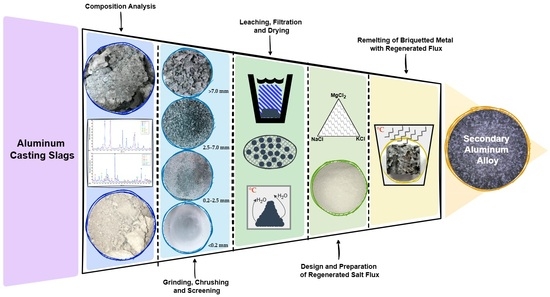
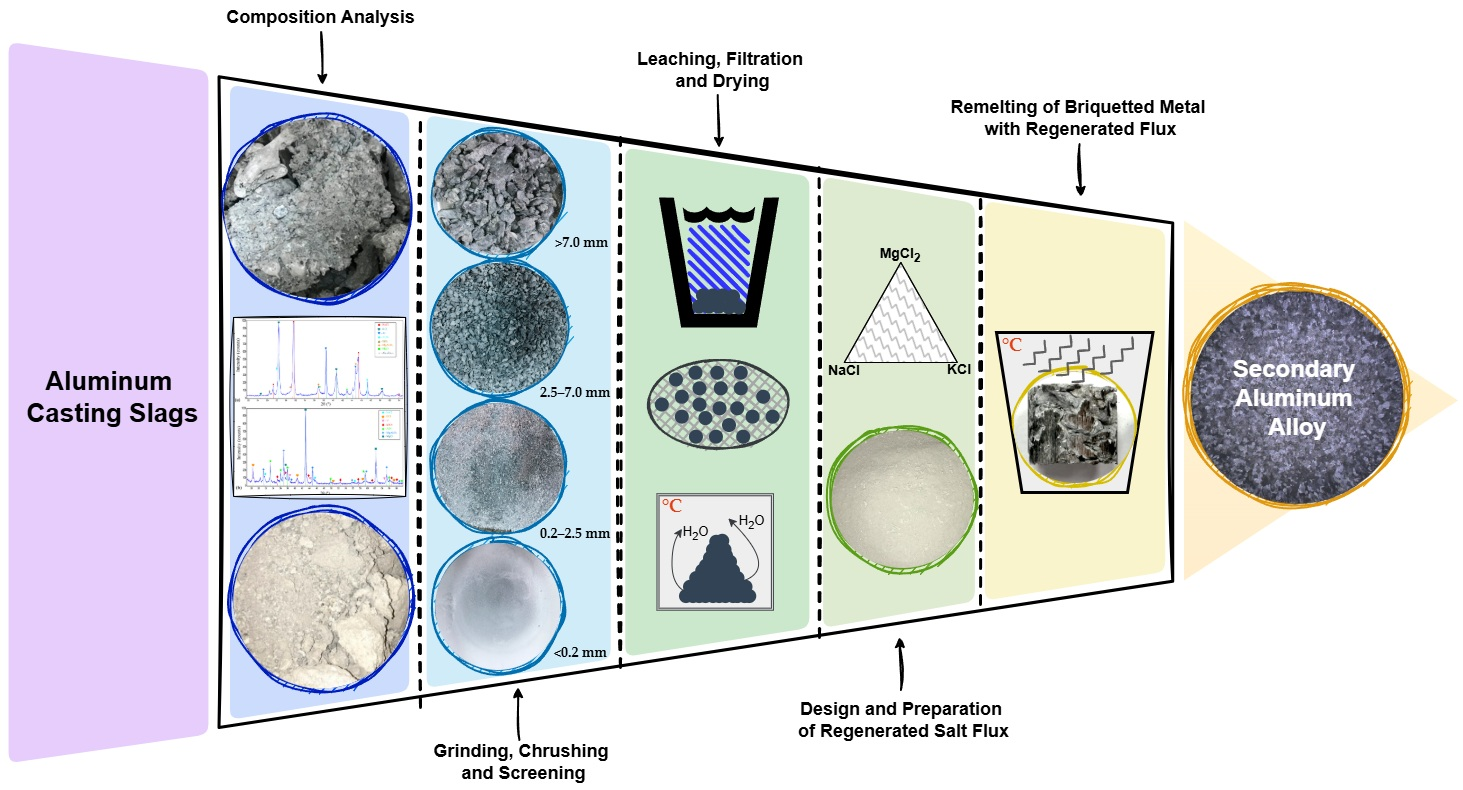
The depletion of natural resources remains an acute global problem, highlighting the importance of developing sustainable technologies that enable the simultaneous extraction of metals and recycling of waste. This paper describes a study of a technology for recycling aluminum slag from foundries to produce secondary aluminum alloy and regenerated flux. Research and processing methods include X-ray phase and spectral analysis of slag composition, multi-stage grinding in a jaw crusher and planetary mill, screening for fraction separation, and selective dissolution of the oxide–salt phase in water or hydrochloric acid followed by filtration and evaporation; obtaining regenerated flux based on phase diagrams of chloride systems; and briquetting and remelting of the extracted aluminum. The technology ensures the extraction of up to 85% of the metallic aluminum from slag and the production of regenerated flux based on the NaCl–KCl–MgCl2 system with a low melting point.

Graphical Abstract

1. Introduction

The modern global economy, based on intensive industrial production, faces a complex set of fundamental environmental problems. Three interrelated processes are key factors in the ongoing destabilization: the critical accumulation of solid industrial waste [1,2], significant emissions of gaseous pollutants into the atmosphere [3,4], and the predatory consumption of non-renewable natural resources [5,6]. Together, these phenomena are forming long-term negative trends, manifested in the irreversible disruption of the natural balance, accelerated climate change, and the accumulation of toxic compounds in the food chains of ecosystems. As a result, the degradation of the biosphere is turning from an environmental problem into a direct threat to human health [7,8].
The metallurgical sector is one of the leading contributors to man-made environmental pollution. A specific feature of this industry is the enormous energy intensity of its technological processes (up to 10% of global energy consumption), which inevitably leads to the generation of significant amounts of greenhouse gases. According to current data, metallurgy is one of the largest carbon emitters in the industrial sector: by various estimates it accounts for 7% to 9% of all global anthropogenic emissions [9,10]. An analysis of the structure of greenhouse gas emissions within the industry reveals significant disparities due to production volumes and technological characteristics. The dominant source of pollution is the ferrous metallurgy industry, with iron and steel production accounting for about 70–75% of total greenhouse gas emissions from the production of metals. The non-ferrous metallurgy sector also has a significant impact. Aluminum production generates about 10–12% of the industry’s total emissions [9,11]. The contribution of other metal production is less significant in terms of scale but substantial at the local level: copper accounts for 1.6% of emissions, gold and titanium account for 1.2% each, nickel for 1.0%, zinc for 1.1%, and magnesium, chromium, and lead for less than 1% in each case [12,13,14].
However, the impact of metallurgy is not limited to atmospheric emissions. Production cycles in the aluminum industry are accompanied by the formation of solid waste (slag, sludge, gas cleaning dust, spent lining), which is characterized by a complex chemical and granulometric composition and is not subject to biological decomposition [15,16]. The storage of such waste requires the alienation of significant territories, which are subsequently transformed into man-made wastelands. The toxic components contained in the dumps have a high migration potential, penetrating into groundwater and soil. These factors lead to a systematic decline in the quality of land and water resources, as well as to the impoverishment of the biological diversity of adjacent areas [17,18,19].
On the other hand, aluminum and its alloys, which are increasingly widely used, are materials that can be recycled multiple times, with about 75% of all aluminum produced (almost a billion tons) continuing to be used. The process of electrolytic reduction of aluminum from oxide is characterized by energy consumption of approximately 45 kWh/kg and associated emissions of 12 kg CO2/kg [19,20,21]. In contrast, remelting of secondary metal requires approximately 2.8 kWh/kg and generates emissions of around 0.6 kg CO2/kg, making recycling significantly less carbon-intensive and contributing to more environmentally friendly production [22,23,24,25,26]. This is another argument in favor of replacing steel and cast iron with high-strength aluminum alloys in the manufacture of metal-intensive products. For example, in the automotive industry, the switch to lightweight aluminum components has a secondary effect of reducing emissions from vehicle operation due to lower hydrocarbon fuel consumption [27,28,29].
It should be noted, however, that during production 100 kg of molten aluminum generates an average of 2.5–15% aluminum slag, depending on the contamination of the raw materials [30,31]. Such slag is usually a complex conglomerate comprising metal oxides (e.g., Al2O3, MgO, FeO, CaO), nitrides (AlN), chlorides (e.g., AlCl3, NaCl, KCl), fluorides (e.g., CaF2, NaF, AlF3, Na3AlF6), carbides (Al4C3), sulfides (Al2S3), phosphides (AlP), dirt, and impurities [32].
In the production of aluminum alloys, slag is formed mainly as a result of the interaction of molten metal with oxygen, moisture, nitrogen in the air, and flux, i.e., a specially selected chemically active substance or multicomponent mixture added to the melt to remove impurities. Without the use of fluxes, it is practically impossible to obtain high-quality aluminum alloys, since aluminum and its alloys are highly chemically active: they oxidize intensively in air to form a dense Al2O3 film, actively absorb hydrogen from a humid atmosphere [33,34,35] or from contaminated charge materials, and also capture non-metallic inclusions (oxides, nitrides, salts) [36,37]. The effectiveness of a flux depends on a combination of its physical and chemical characteristics, including melting point; density of both the liquid flux itself and the slag formed on its basis; ability to wet non-metallic inclusions (oxides, carbides, borides, and others); and level of hygroscopicity.
Industrial salt fluxes applied in aluminum foundry practice are typically multicomponent systems composed mainly of alkali and alkaline–earth metal halides. Their formulation commonly includes chloride salts (NaCl, KCl, MgCl2, AlCl3) together with selected fluorides such as AlF3, NaF, CaF2, MgF2, Na2SiF6, Na3AlF6, and K2SiF6. The specific balance between these constituents determines the technological role of the flux during melting. From a functional standpoint, fluxes may serve different purposes: they can create a protective barrier over the melt surface, assist in separating oxide inclusions and reducing metallic losses in slag, or enhance melt purification through degassing and transfer of non-metallic phases into the slag layer [38,39,40,41,42]. Alkali chlorides, particularly NaCl and KCl, are widely used as base components. Individually, these salts exhibit limited chemical interaction with molten aluminum; however, when combined in approximately equimolar proportions, they form a low-melting eutectic system. Such NaCl–KCl mixtures are characterized by good fluidity and the ability to spread over the melt surface, thereby limiting oxidation and hydrogen pickup [39,42,43]. To modify rheological behavior and enhance refining efficiency, additional components are often introduced. Small additions (typically up to 5 wt.%) of MgCl2 or fluoride salts such as NaF, KF, CaF2, or Na2SiF6 are used to adjust viscosity, improve inclusion capture, and intensify slag separation. In the context of aluminum slag recycling, salt flux selection is particularly important because the chemical nature of the oxide–salt phase determines both aluminum recovery efficiency and the possibility of flux regeneration.
Unfortunately, regardless of the perfection of the foundry production line and the quality of the charge and related materials, the problem of slag accumulation remains. In countries where there is no established culture of recycling and/or effective technological solutions, most foundry slag is transported to special isolated locations, where toxic oxide–salt components eventually migrate into the soil and groundwater. This once again highlights the need for a strategic approach to environmental management in metallurgical production and requires the introduction of closed-loop technologies to minimize man-made damage to the biosphere [44,45,46]. Although there are currently many technical solutions for processing aluminum scrap, research on the reuse of foundry slag requires significant investment for full implementation [47,48,49,50].
Based on the above, the authors of this paper aim to examine the possibility of low-waste processing of aluminum slag from foundry production. Particular attention is paid to the maximum separation of metallic aluminum and the oxide–salt phase of the slag, which will allow further processing without the loss of valuable components to obtain products suitable for use in the aluminum industry and beyond. A comprehensive approach to slag processing can significantly reduce the loss of metallic aluminum and lower the environmental impact in regions where the aluminum industry is present. The data presented highlights the need for further research in this scientific field.

2. Results and Discussion

Slag recycling is a multi-stage technological chain that includes a series of interrelated and strictly sequential operations aimed at extracting valuable components. The technological process is based on the effective separation of the oxide–salt phase of the slag and metallic aluminum. In accordance with this concept, the results for each specific stage of the raw material processing will be presented in more detail below.

2.1. Composition Analysis of Slags

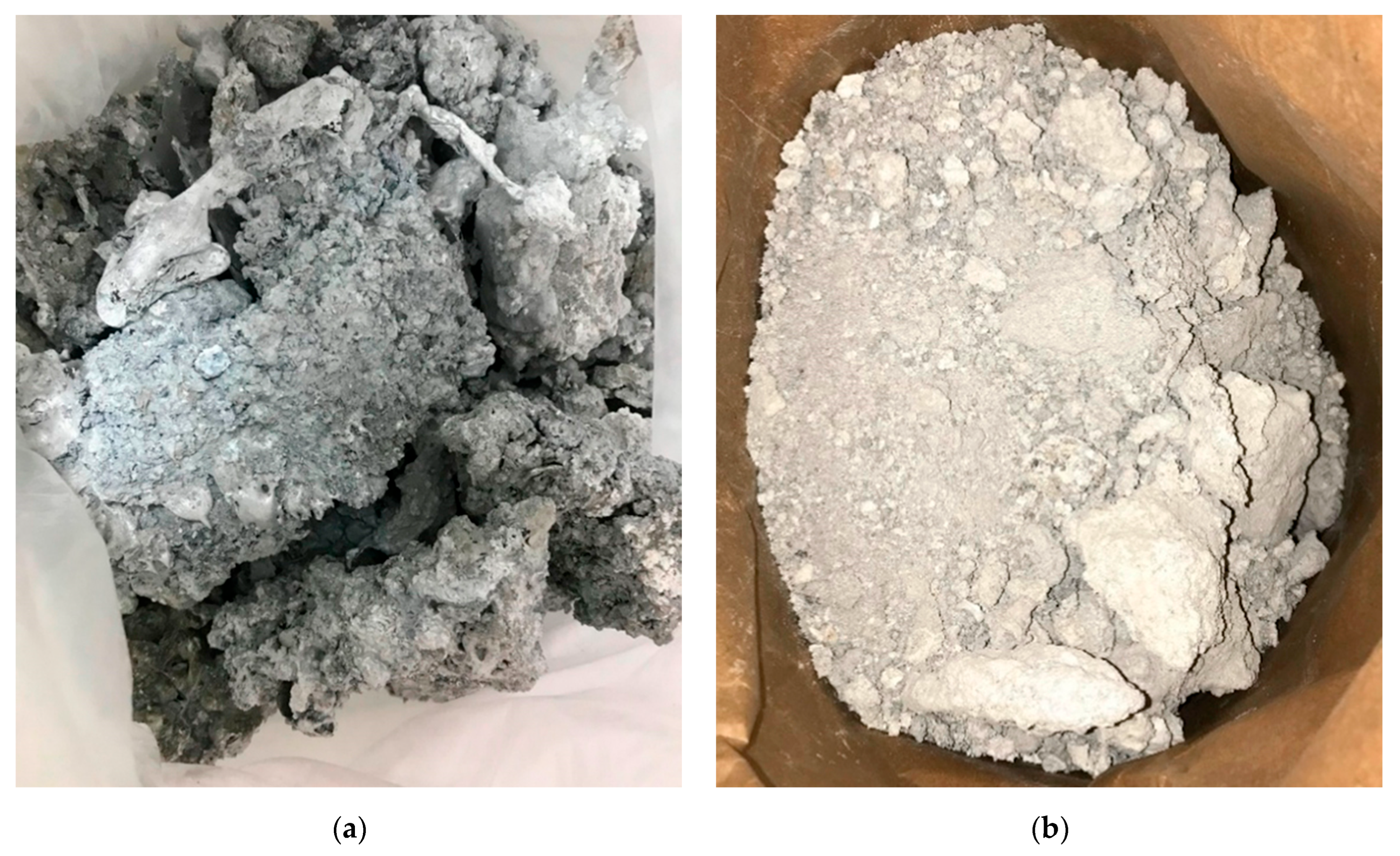
Figure 1 shows a general view of the slag obtained directly from industrial aggregates. These materials were used for further research and debugging of the proposed technological chain. The slag consists mainly of large pieces (>10 mm) and a fine fraction (<0.2 mm). The photo also shows large pieces of metallic aluminum. The slag had a strong smell of ammonia, which may be caused by the hydrolysis of the unstable aluminum nitride it contains [51].
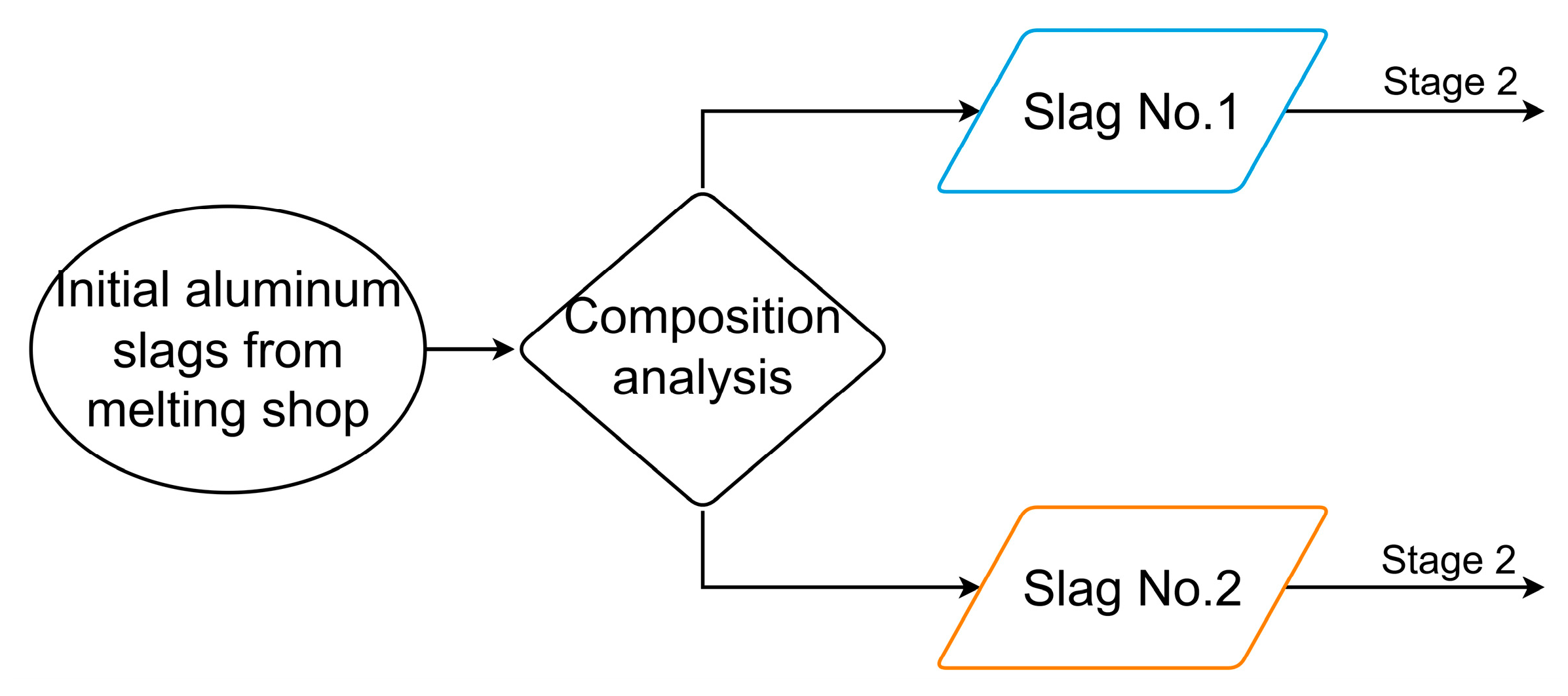
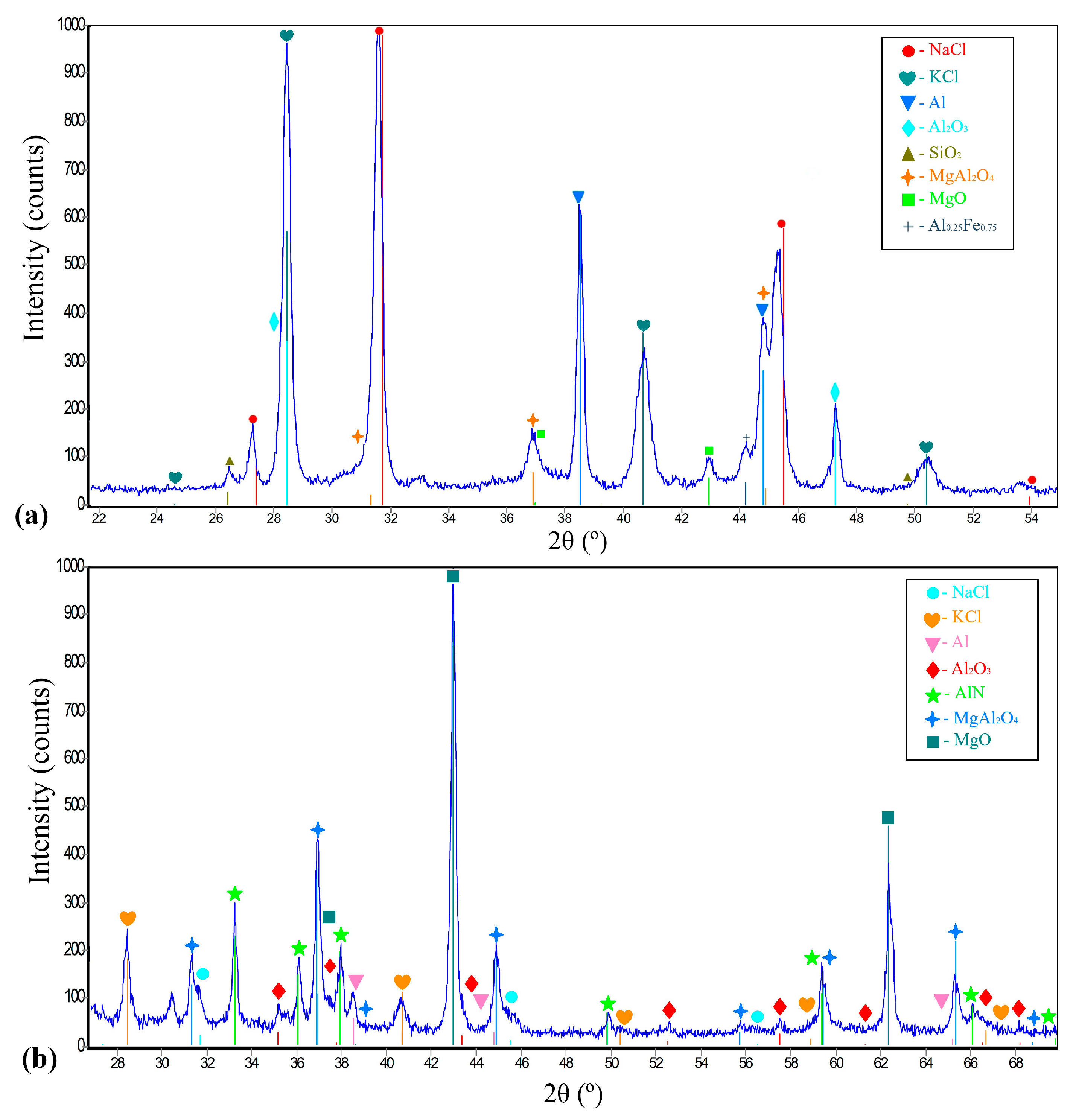
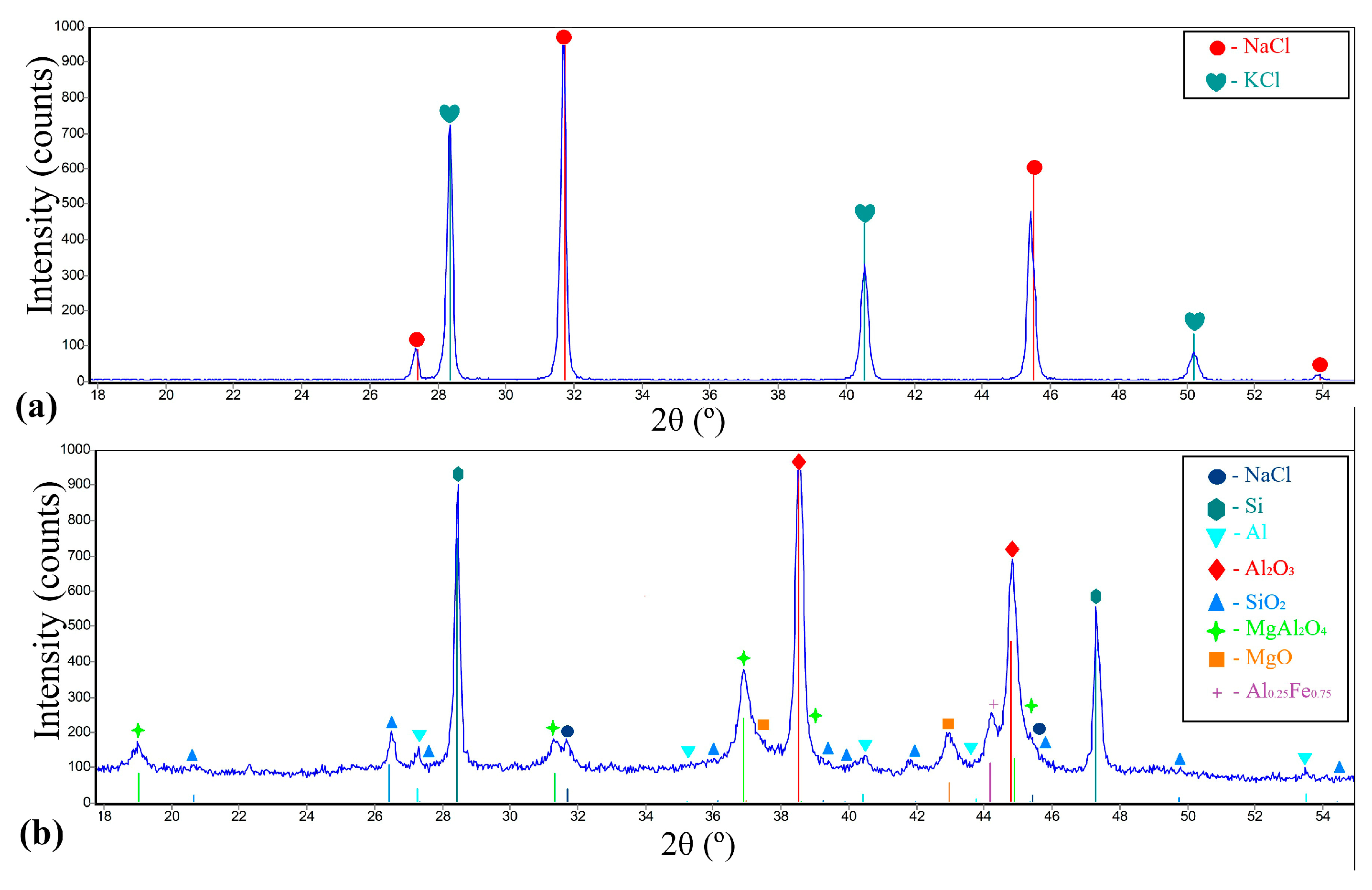
Since the processing of slags, specifically the oxide–salt phase, is determined by their chemical composition and the physicochemical properties of individual components, it is first necessary to determine the origins of the material being processed (Figure 2). Three samples taken consecutively from the same slag batch were analyzed to assess compositional consistency. Phase identification was carried out by X-ray diffraction, with the resulting diffractograms presented in Figure 3. The calculated composition is summarized in Table 1.
Based on the analysis of the chemical composition of Slag No.1, it can be concluded that the slag was obtained as a result of treating the melt with an NaCl–KCl-based flux and consists mainly of alkali and alkaline–earth metal salts, as well as metallic aluminum with a low oxide phase content. Slag No.2 is represented mainly by the oxide phase (Al2O3, MgO, etc.), which indicates its formation during the treatment of the melt with MgCl2-based flux. The main properties of the detected phases of investigated slags are listed in Table 2. Therefore, chemical analysis of slag composition at the preliminary stage plays a key role, as it allows determining the predominant phases (salt and oxide), identifying the used flux, and thus confirming the mechanism of the melt treatment process, which is necessary for the successful implementation of the processing technology.

2.2. Crushing and Grinding

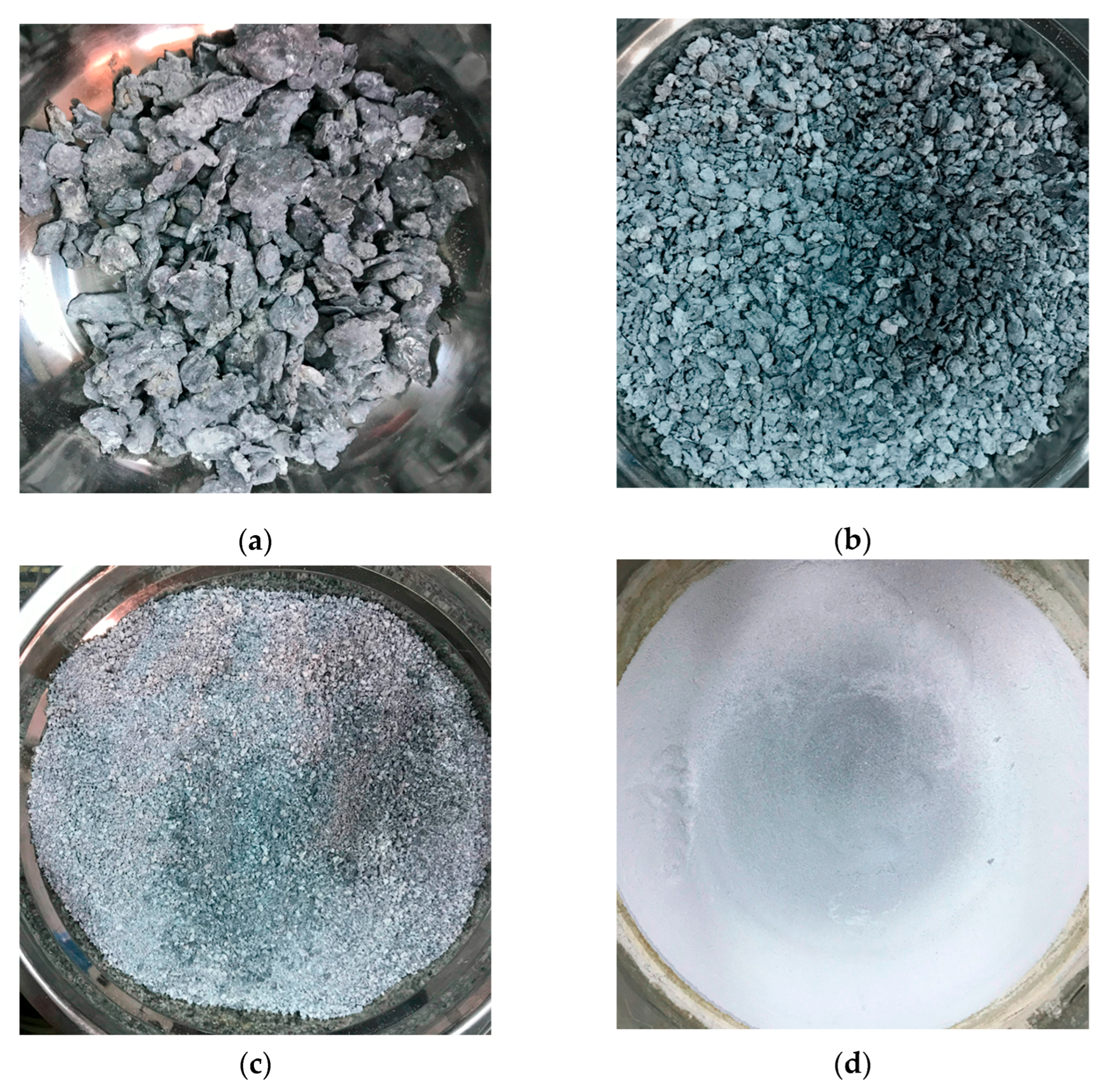
A comprehensive approach to slag recycling is necessitated by the complex composition of slags and the need to extract metallic aluminum for subsequent processing and reuse of alkali and alkaline–earth metal salts. All operations at this stage were performed separately for each slag (Figure 4). Large pieces of slag were crushed using a jaw crusher with a crushing gap width of 50 mm (distance between working elements). The crushed slag was separated into fractions by screening on a sieve calibrator with mesh sizes of 7, 2.5, and 0.2 mm. As a result of screening, four fractions were obtained, the general view of which is shown in Figure 5. Grinding of the sample on a jaw crusher followed by classification ensured the separation of the oxide–salt phase from metallic aluminum with an efficiency of about 80 ± 5%.
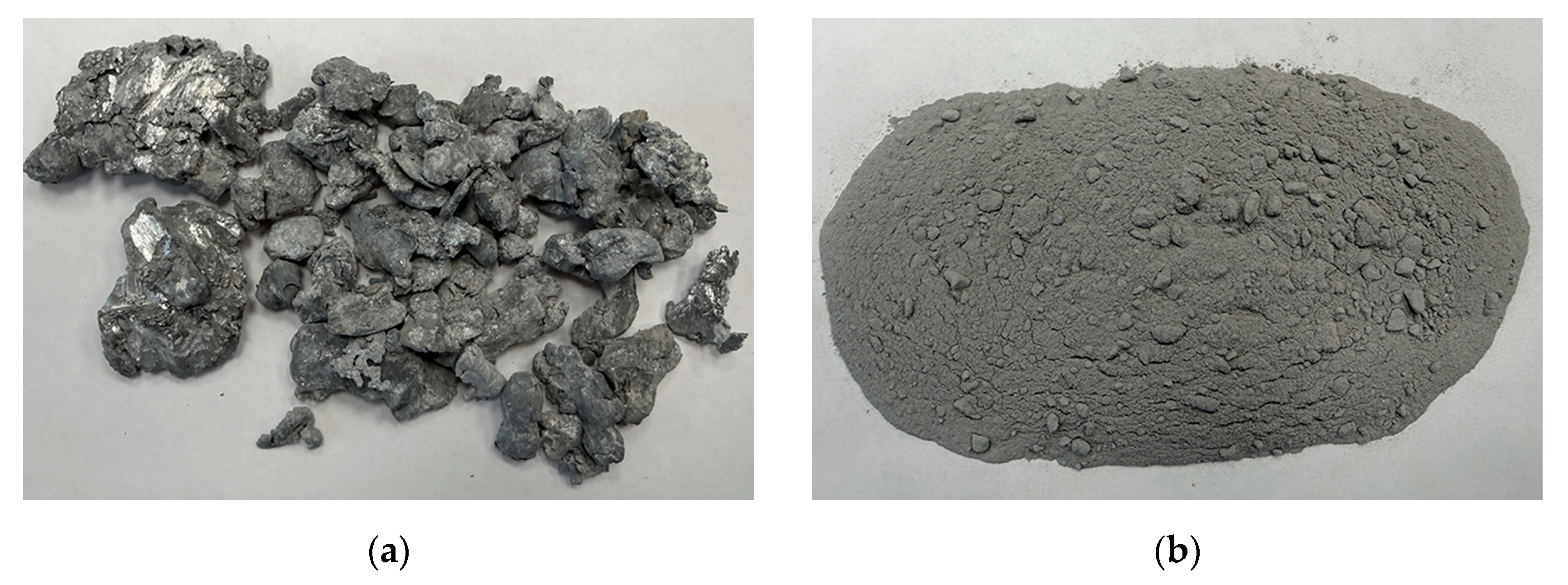
Since the primary task of crushing is to separate as much metallic aluminum as possible from the oxide–salt phase of the slag, the fraction (>7.0 mm) was further ground in a jaw crusher with a discharge gap width of 20 mm. At the same time, the leaching process requires high reactivity of the oxide–salt phase of the slag, so a planetary mill was used for further grinding. In this apparatus, the grinding bodies are steel balls, ranging in number from 2 to 40. The experiment used two containers with a load of no more than 200 g and 18 grinding balls in each container. After grinding in a planetary mill, the material was sieved through a 1.6 mm mesh sieve to separate the powdery oxide–salt phase (<1.6 mm) and aluminum pellets (>1.6 mm). The sieving result is shown in Figure 6.
The operations performed made it possible to separate the metallic aluminum and the oxide–salt phase as completely as possible for further processing. This separation allows the slag to be recycled without losing valuable components.

2.3. Leaching of Slags

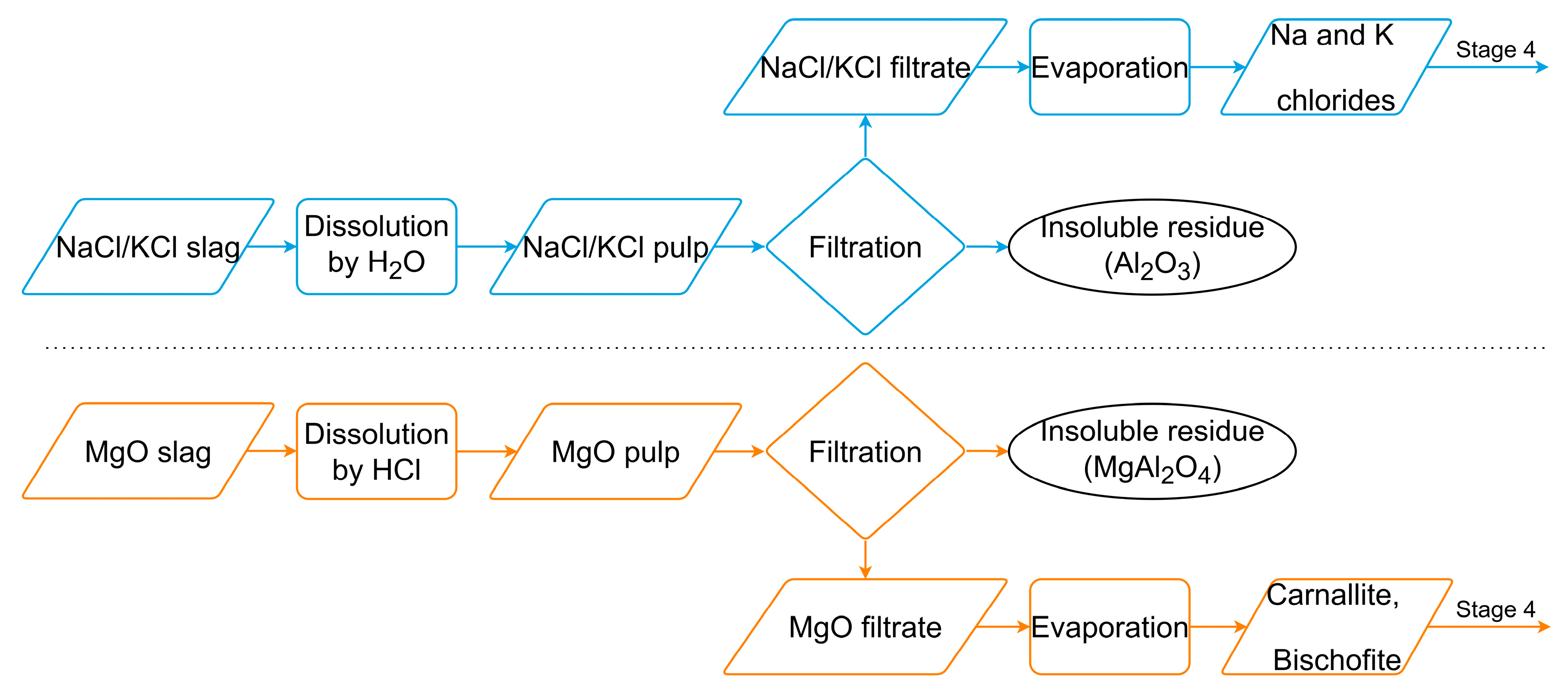
This stage (Figure 7) is based on the difference in the solubility of compounds and is aimed at the selective separation of components with the possibility of their subsequent involvement in production cycles or utilization as secondary raw materials. This approach contributes to the improvement of resource efficiency and the formation of low-waste (waste-free) technological systems.

2.3.1. Dissolution of Oxide–Salt Phase of Slag No.1 in Water

Analyzing the chemical composition of Slag No.1, obtained as a result of treating molten aluminum with a NaCl–KCl-based flux (see Table 1), we can conclude that in this case, the most effective method of separating salts and insoluble oxides is dissolution in water. NaCl and KCl dissolve well in water at room temperature (35 g per 100 mL of liquid), and at increased temperatures the solubility of these salts increases significantly (40 g per 100 mL of liquid). To improve the reactivity and efficiency of dissolution, the process is carried out with constant stirring (the impeller rotation speed is 200 rpm). Based on the properties of the salts, the parameters of the leaching process are as follows: temperature 80 ± 5 °C, duration 1 h [42,52,53]. At the beginning of the process, a vigorous reaction accompanied by gas emissions and hissing was observed, which gradually subsided, indicating that the reaction had been completed. The resulting suspension was filtered using a Buchner funnel connected to a vacuum line through a desulfurized filter.
The filtrate, containing mainly NaCl and KCl salts, was sent for evaporation to obtain the base for the future regenerated flux. Process parameters: temperature 90 °C, duration until complete evaporation of the liquid. The insoluble residue was dried to remove excess moisture at a temperature of 200 °C for 2 h. Figure 8 shows X-ray diffraction patterns of the products obtained as a result of evaporation of the filtrate and also the insoluble residue. The molecular compositions of the filtrate and insoluble residue are presented in Table 3.
Based on the phase composition data, it can be concluded that the proposed method of dissolving the oxide–salt phase, consisting mainly of NaCl and KCl, in water is technologically simple. At the same time, the selective separation of target components reaches 95% efficiency.

2.3.2. Dissolution of Oxide–Salt Phase of Slag No.2 in Hydrochloric Acid

According to the analysis of the chemical composition of Slag No.2 obtained as a result of treating the melt with MgCl2-based flux (see Table 1), it can be concluded that as a result of using this type of flux, there are practically no chlorides in the oxide–salt phase of the slag. During the treatment of aluminum melt with MgCl2-based flux, magnesium oxide (MgO) appears in the slag for several main reasons related to the chemical interactions of the flux with impurities in the melt. MgCl2 is a hygroscopic substance, i.e., it actively absorbs moisture from the air, which leads to its partial hydrolysis even before it is introduced into the melt or during the process, according to Reactions (1)–(4) [40,42]:
MgCl2 + H2O → MgO + 2HCl↑
2MgCl2 + 2H2 + O2 → 2MgO + 4HCl↑
MgCl2 + Al2O3 + 0.5O2 → MgAl2O4 + Cl2
3MgCl2 + Al2O3 → 3MgO + 2AlCl3
Hydrochloric acid was used to treat the oxide–salt phase of this composition in order to transform magnesium and aluminum oxides into chlorides. This operation is necessary to maximize the extraction of useful products from the slag for reuse [53,54,55,56]. The dissolution of the oxide–salt phase of slag in hydrochloric acid proceeds according to the following Reactions (5) and (6):
2MgO + 4HCl → 2MgCl2 + 2H2O
Al2O3 + 6HCl → 2AlCl3 + 3H2O
Since the interactions take place in an aqueous solution of hydrogen chloride, magnesium chloride is hydrated to form bischofite (magnesium chloride hexahydrate) due to Reaction (7):
MgCl2 + 6H2O → MgCl2·6H2O
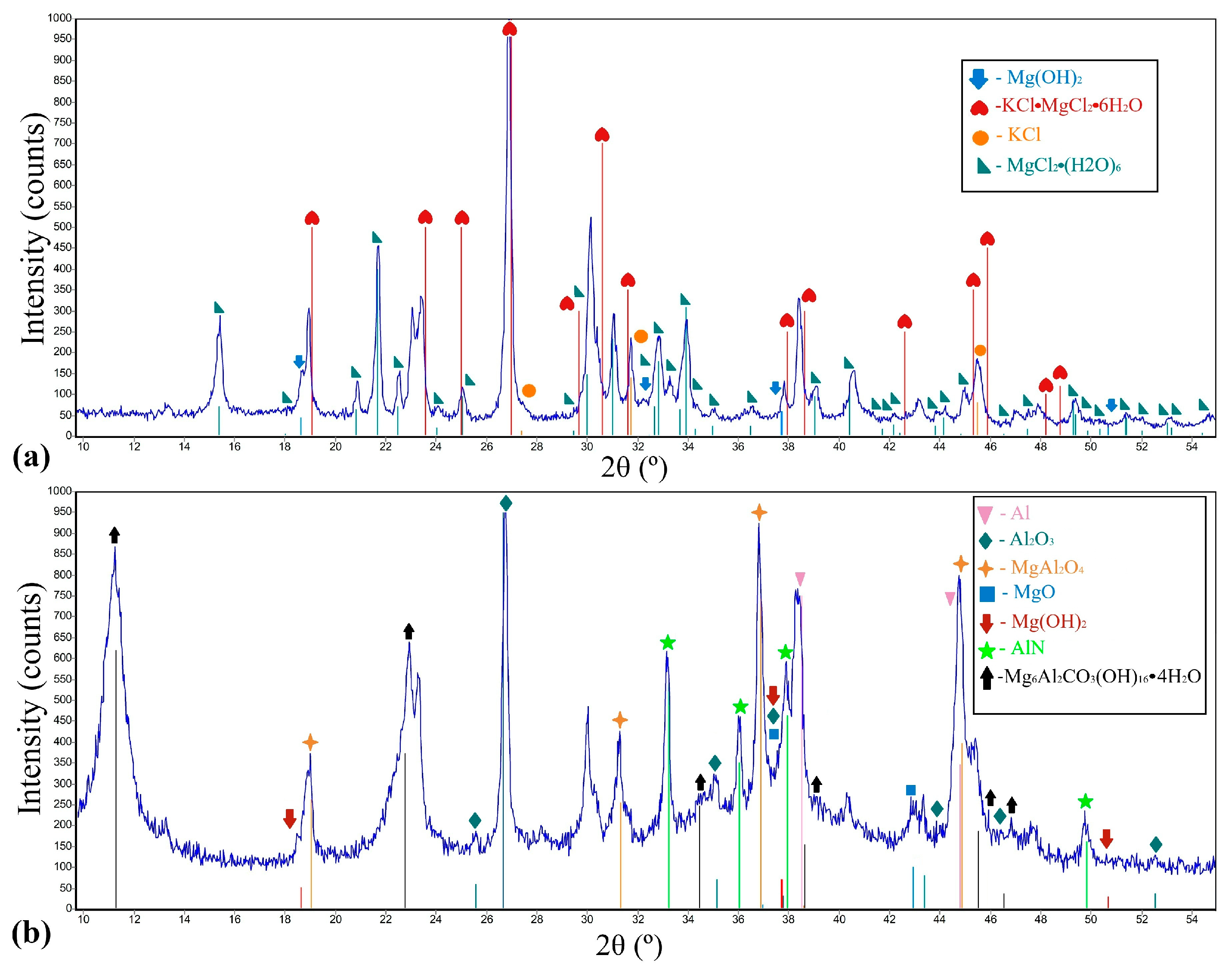
During the experiment, 35 g of Slag No.2 was added in portions of 5 g to 100 mL of a 35% HCl solution. As a result of the interaction and subsequent filtration, two products were obtained: an undissolved precipitate and a filtrate. The precipitate was sent for drying in an oven at a temperature of 400 °C to remove residual moisture. The filtrate was evaporated at a temperature of 90 °C. Figure 9 shows the X-ray diffraction patterns of the products obtained by evaporating the filtrate and the insoluble residue; their molecular composition is presented in Table 4 and Table 5, respectively.
Based on the results of phase analysis, it can be concluded that the proposed method of treating the oxide–salt phase, containing mainly MgO, in hydrochloric acid is an important step in the technology of obtaining regenerated flux. The implementation of this process ensures the effective production of the required components. As a result of leaching, carnallite (KCl·MgCl2·6H2O) and bischofite (MgCl2·6H2O) are obtained, which are used as the basis for MgCl2-based fluxes.

2.4. Preparation of Regenerated Flux

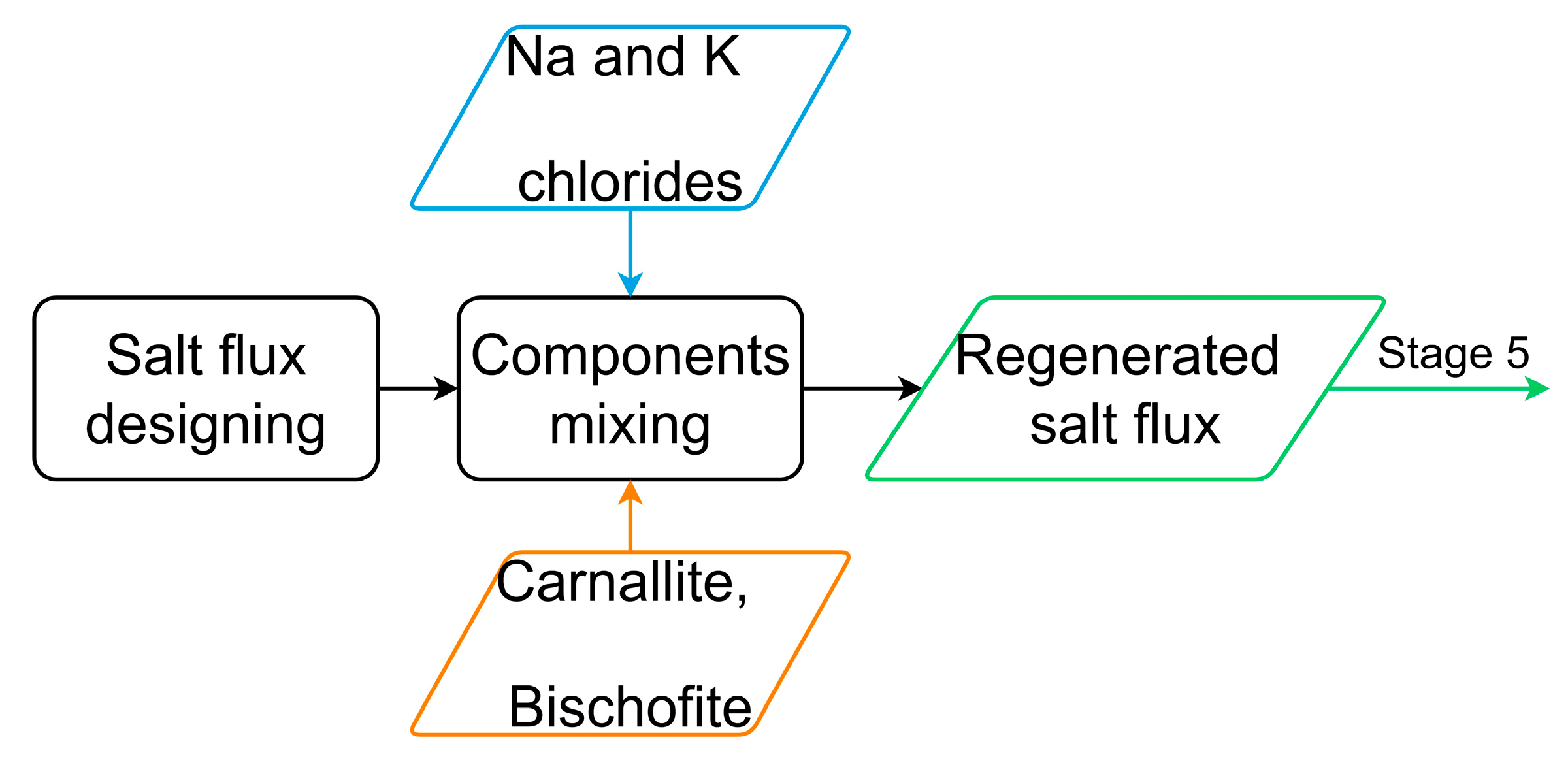
The composition of the salt fraction recovered from Slag No.1 (Table 3) indicates a predominance of NaCl and KCl. Such chloride systems are commonly employed as protective layer in aluminum melting due to their low melting temperature and good spreading ability over the metal surface, which limits oxidation and hydrogen absorption [41,57,58]. In contrast, the evaporated solution derived from Slag No.2 (Table 4) contains a significant amount of MgCl2. Magnesium chloride is widely used in refining-type fluxes, where it contributes to impurity removal and melt purification. Compared with traditional chlorine gas treatment, solid MgCl2-containing mixtures represent a safer and more controllable approach for refining operations, avoiding the handling of hazardous gaseous reagents [40,52,59]. The presence of these chloride components confirms the feasibility of reconstructing industrially relevant flux compositions directly from slag-derived salt fractions, without relying entirely on primary raw materials (Figure 10).
As is well known, ternary NaCl–KCl–MgCl2 mixtures are widely used in industrial applications for refining aluminum alloys, particularly for removing alkali and alkaline earth metals. The main advantages of such salt fluxes are the low cost of raw materials for their production; relatively low technological costs, since the melting point of the flux is low and there is no excessive overheating of the molten metal; and high refining efficiency without accumulation of introduced sodium [39,60].
Based on the above, the composition of the regenerated flux was designed according to methods tested in previous studies [40,42], using phase diagrams [60] and the thermodynamic properties of molten salts at different temperatures [61,62]. Using these data, it is possible to design a flux with a predetermined melting point, viscosity, and density, i.e., the properties required for a specific industrial application. As a result, a salt flux with a composition of 45.1% NaCl + 33.7% KCl + 21.2% MgCl2 is obtained, with the following calculated characteristics: melting point of about 650 °C, viscosity of 0.00195 Pa·s, and density of 1.592 g/cm3. Subsequently, the mixture was prepared from components obtained in the previous stages of the recycling technology under consideration, with insignificant additions of raw materials.

2.5. Processing of Aluminum Extracted from Slag

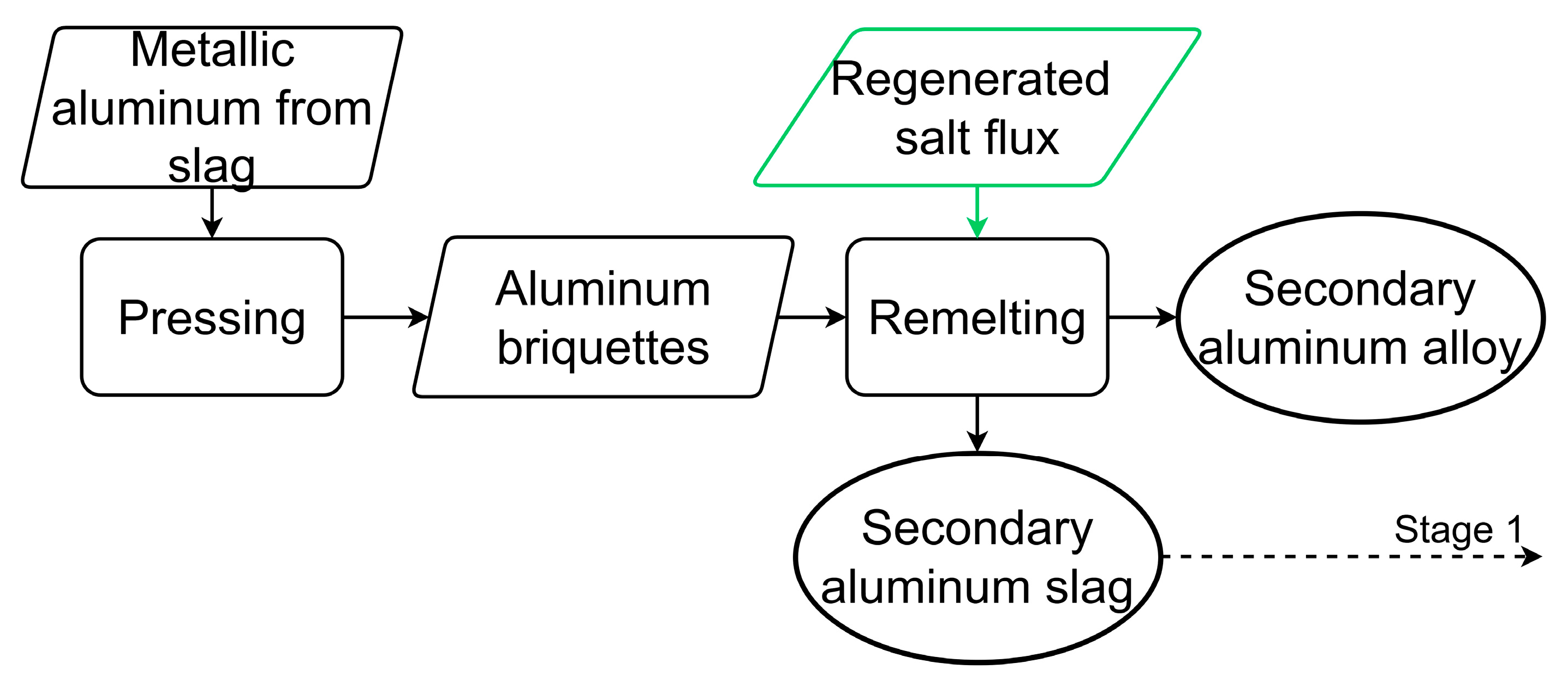
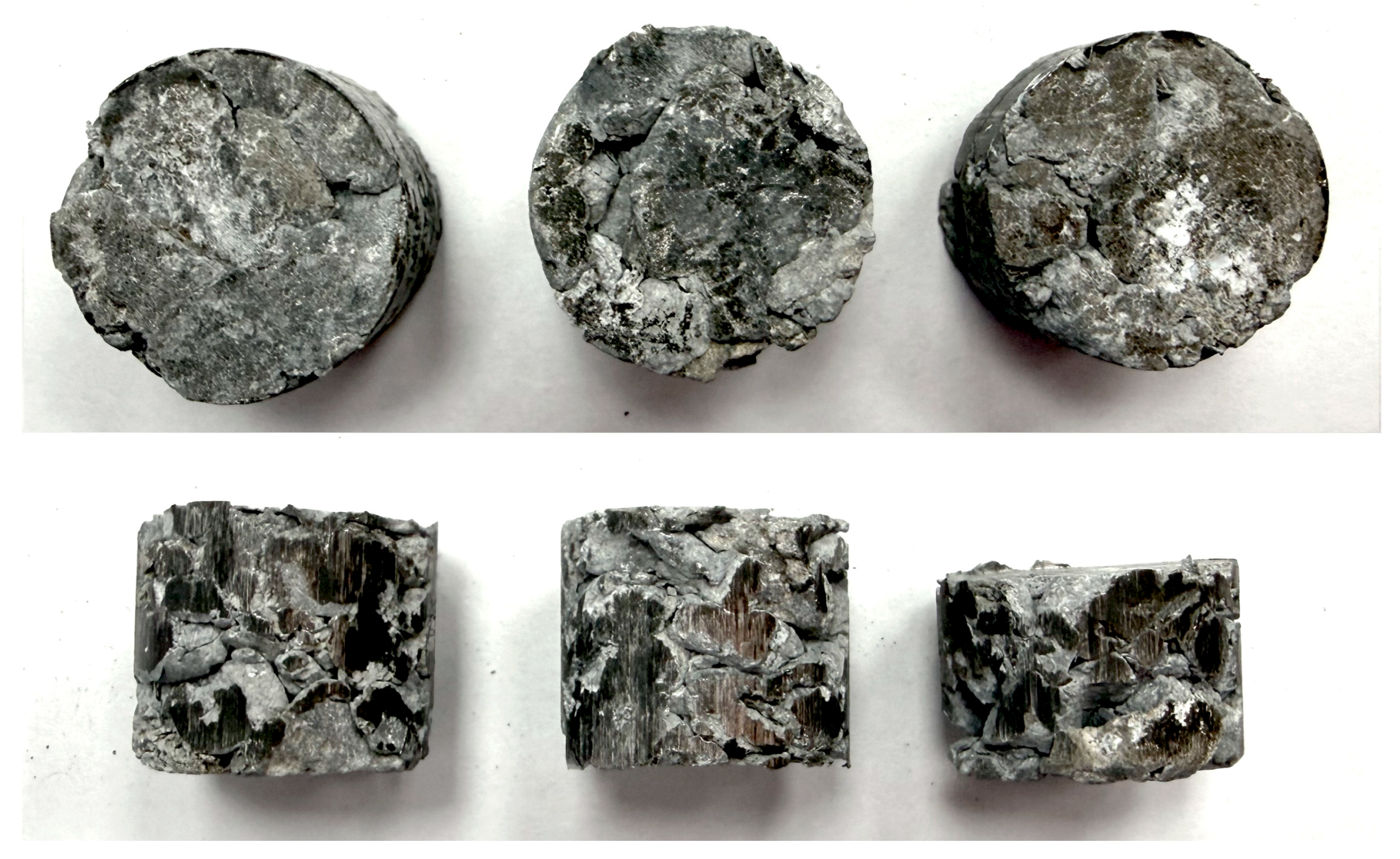
At the slag crushing and grinding stage, as a result of the sieving operation, the most valuable slag fraction consists of pieces of metallic aluminum, which are subsequently remelted and used as a commercial product (see Figure 4). The yield of metallic aluminum was 370 g per 1 kg of initial slag. The aluminum extracted from the slag is in the form of large fragments and beads. The bead fraction of aluminum is briquetted by pressing on a hydraulic press. Figure 11 illustrates the sequence of operations at this stage, and Figure 12 shows the aluminum briquettes obtained by pressing.
Briquettes with a total mass of 500 g were sent for remelting. After melting and overheating the melt to a temperature of 740 °C, 22 g of regenerated flux with 5 wt.% NaF was added to the melt, which contributed to the formation of low-melting eutectic mixtures and a corresponding increase in flux fluidity, as well as additional prevention of melt oxidation. The holding time after the flux was added was 10 min with periodic stirring every 3 min. As a result of the smelting, a cast sample weighing 470 g was obtained. The results of the spectral analysis of the obtained secondary alloy sample are given in Table 6.
As can be seen, analysis of the chemical composition showed a relatively high magnesium content, which is due to its presence in the initial melt as an alloying element introduced to increase strength characteristics while maintaining sufficient plasticity and corrosion resistance of the material. Based on the data obtained, the alloy can be classified as 5XXX (Al–Mg). In terms of the total content of magnesium and accompanying impurities, it is most similar to the standard alloy EN AW-5754 (AlMg3) [63], which is characterized by a magnesium content range of approximately 2.60–3.60 wt.%, manganese up to 0.50 wt.%, iron and silicon up to 0.40 wt.% each, copper up to 0.10 wt.%, chromium up to 0.30 wt.%, zinc up to 0.20 wt.%, and titanium up to 0.15 wt.%.
This alloy is widely used in the automotive and shipbuilding industries for the manufacture of parts by sheet stamping due to its favorable combination of moderate strength, high corrosion resistance in atmospheric and marine conditions, good weldability, and processability during pressure treatment. However, it should be noted that AW-5754 (AlMg3) scrap is in most cases recycled, but with each cycle the number of impurities (Si, Fe) increases, reducing its performance characteristics [64,65]. As a result, each subsequent recycling cycle using this technology will require increasingly large amounts of pure components. This is a limiting factor for most alloy recycling technologies.
Furthermore, an analysis of the current state of aluminum slag processing shows that the 85% Al recovery rate achieved in this study is comparable to existing technologies, which have recovery rates ranging from 35% to 97% [32,66,67,68]. However, it is important to emphasize that the output of each technology is primarily determined by the initial raw material (aluminum content in the initial slag), the presence of pre-treatment operations, the type of main process, and resource costs. Table 7 provides a brief comparison of the technology proposed by the authors with available data.

2.6. Possibilities for Processing Insoluble Residue

When considering the processing options for insoluble residues, which are mainly metal oxides, we find that the oxide phase, consisting mainly of spinel (Table 5), is difficult to process due to its low reactivity. This material is inert to atmospheric precipitation and the environment, so it can be sent to a landfill. On the other hand, the oxide phase, consisting mainly of alumina (Table 3), is suitable for processing and can be used in various industries. Scientific research is currently being conducted on this issue [31,73,74].
Aluminum oxides can be processed by electrolysis, but this is difficult because oxides in the slag are formed in the alpha modification during the preparation of aluminum alloy. Aluminum electrolysis requires γ-alumina (gamma modification of Al2O3), which is characterized by high reactivity, a porous structure, and the ability to dissolve quickly in cryolite. Other modifications, such as α-alumina, are unsuitable due to their low solubility and dense crystalline structure. Gamma alumina is obtained by calcining aluminum hydroxide (Al(OH)3) or boehmite (AlOOH) at temperatures of 500–800 °C in the Bayer process [75].
Another approach involves converting oxides into fluorides. This approach has potential, as alkali metal fluorides are actively used in the design of flux additives and in aluminum electrolysis. However, this method is toxic and not environmentally friendly, so the search is on for a more optimal use of oxides. It is worth noting the complexity of the chemical composition of oxides, which complicates separation and processing using this method [76].
Oxide can also be used as a filler in the production of refractories, which has certain potential due to its high refractoriness and chemical inertness. They are mainly used in aluminate and magnesia-alumina refractories for lining furnaces and crucibles [77,78]. It is equally possible to synthesize calcium aluminate cement with a high Al2O3 content, which demonstrates the possibility of replacing natural limestone and alumina with aluminum production waste without significantly compromising product performance [79]. However, in some cases, thorough processing of slag is necessary to remove impurities and stabilize the composition, as well as to carry out operations at elevated temperatures, which leads to resource costs.
There are known results demonstrating the positive effect of secondary materials on the quality of refractory ceramic molds in lost wax casting and the surface cleanliness of aluminum experimental castings. Secondary materials were made from casting slag with a high content of free and alumina-bound oxides in combination with aqueous silica sols. Its use increases the strength of refractory ceramic molds by 9 times compared to molds made of quartz sand, as well as increasing gas permeability by 15 and 33% compared to molds made of electro corundum and quartz sand, respectively [80].

3. Materials and Methods

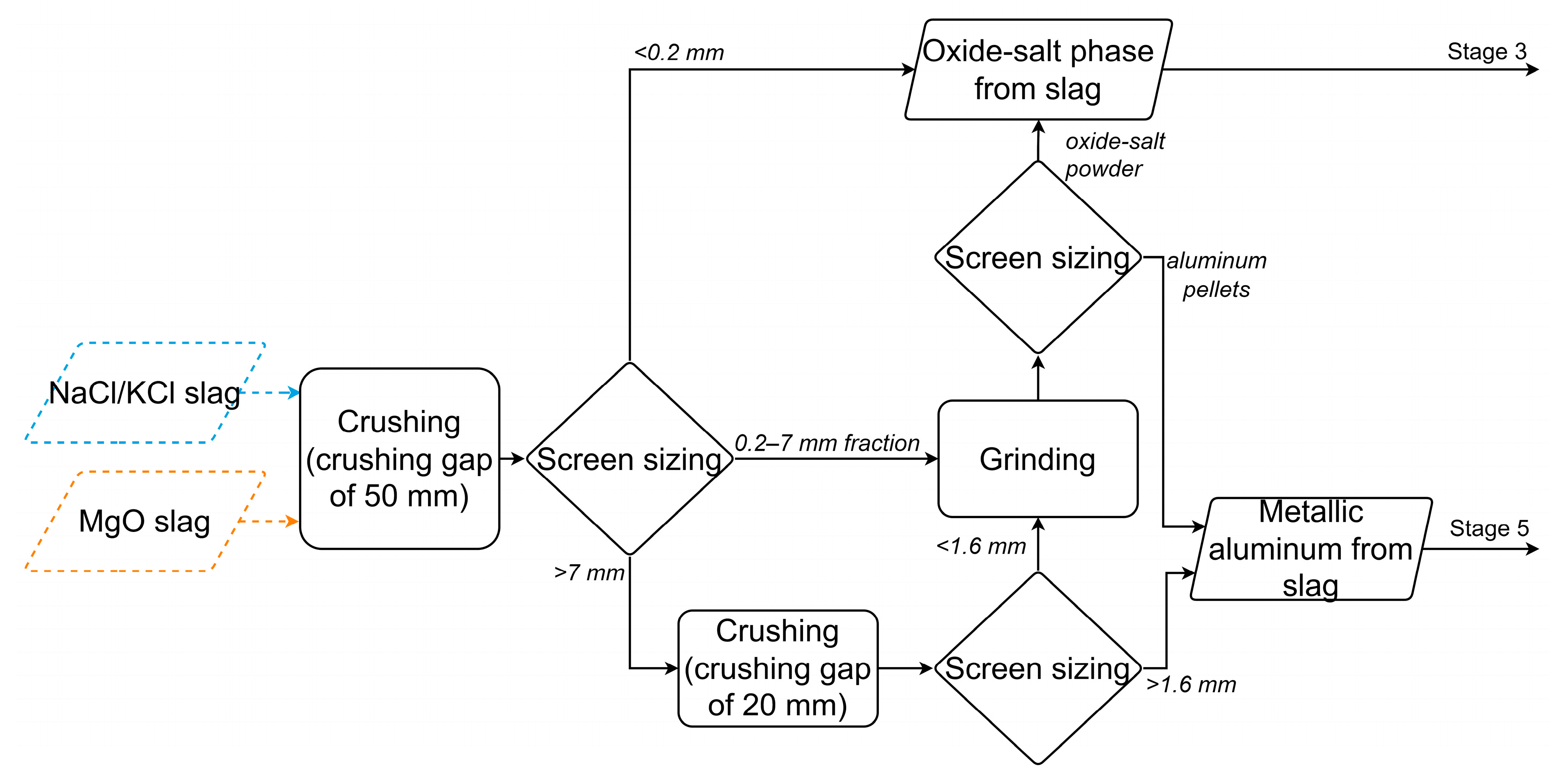
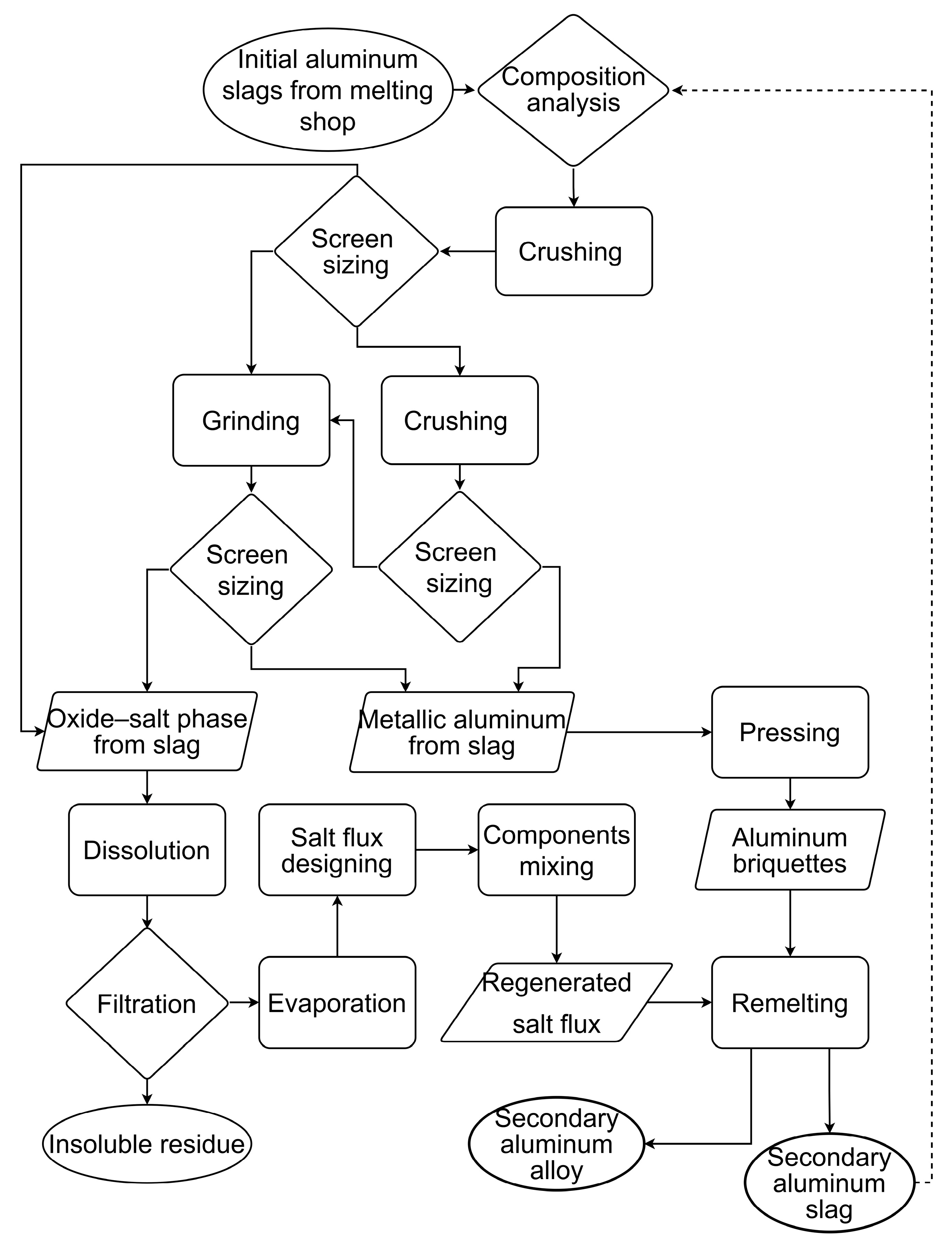
Figure 13 shows a generalized process flow diagram of the multi-stage processing of aluminum casting slag, which was used in this study.
First of all, phase characterization of the slag samples was performed using X-ray diffractometer XRD-7000 (Shimadzu, Kyoto, Japan) with Cu–Kα radiation. Finely ground powders were pressed into quartz holders, and diffraction patterns were recorded within a 2θ range of 5–70° using a step of 0.03° and a scanning rate of 1.5°/min. The XRD methodology comprised several consecutive procedures [81,82]. First, qualitative phase identification was carried out for each sample through selection of the most appropriate reference standards ICDD database [83] and construction of model diffraction patterns corresponding to the experimental data. After that, characteristic analytical reflections were selected for the identified phases, and the optimal corundum number values were determined. The obtained quantitative results were compared with the X-ray spectral analysis data collected using the XRF-1800 device (Shimadzu, Kyoto, Japan) to verify the calculation values. The final quantitative phase analysis was performed using the model spectral curves and optimized corundum number values for each phase.
The technological scheme provides for working with crushed material, so the slag was crushed to a size of <3 mm. Crushing was performed using a laboratory jaw crusher ShD 10 (Vibrotechnik, St. Petersburg, Russia). The main principle of operation is based on crushing and compressing the material between two jaws (one fixed, the other swinging). The jaw crusher was chosen because of its ability to easily adjust the width of the output gap (2.5–50 mm). Metallic aluminum is soft and malleable, and its size does not decrease during crushing and grinding, while other slag components are soft and brittle. Consequently, large metal aluminum can be easily extracted by crushing and screening, while smaller metal aluminum can be extracted by fine grinding and screening. The key task of this technological stage is the mechanical destruction of the slag product, which includes two parallel processes:
  • Destruction and crushing of the oxide–salt phase of the slag for subsequent separation and increase in its reactivity;
  • Plastic deformation and crushing of metallic aluminum inclusions in order to separate them from the brittle slag phase and give them a shape convenient for further separation.
For sieving, an A30 vibrating sieve calibrator (Vibrotechnik, St. Petersburg, Russia) was used, which provided sieve vibration with an amplitude of 0.1–1.0 mm and a frequency of 50 oscillations/s, using sieves with sizes of 7, 2.5, and 0.2 mm. These mesh sizes were selected empirically and allowed for the most accurate separation of the materials.
A PM400 planetary mill (Retsch, Setzingen, Germany) with a grinding disc speed of 30–400 rpm and a drive power of 1.5 kW was used in the case of low metallic aluminum content (<5 wt.%) in the overgrind product. It is not suitable to process products with a high aluminum content using this equipment, as the metallic aluminum will turn into powder, which is unacceptable for this technology. The grinding method includes preparatory stages such as weighing the material, preparing containers, etc., and the grinding process itself, carried out under the following parameters: speed 300 rpm, process time 2–2.5 min. Additional screening allowed for maximum extraction of metallic aluminum and grinding of the oxide–salt phase to increase reactivity in subsequent dissolution.
The leaching process is based on the high solubility of certain components, namely the chloride salts of alkali and alkaline earth metals. This process allows the oxide part of the slag to be separated from the salt part [52,53,54,55]. The dissolution of the oxide–salt phase of the slag was carried out in laboratory conditions under a fume hood at elevated temperature. Distilled water or a 1M solution of hydrochloric acid was used as a solvent, depending on the chemical composition of the oxide–salt phase of the slag. To determine the course of the reaction, the acidity of the medium was monitored using an indicator (methyl orange) and litmus paper.
Dissolution was carried out with constant stirring, using an MV-6D laboratory stirrer with top drive (Stegler, Moscow, Russia) and an impeller rotation speed of 100–2500 rpm to increase the wettability and reactivity of the material. During the process, the mixture was heated to a temperature of 80 ± 5 °C, which increased the solubility of the necessary compounds. The oxide–salt phase was added in small portions (5 g) to the hydrochloric acid solution. To determine whether the reaction was complete, methyl orange indicator was added to the solution, which turned red. At the end of the reaction, the solution became colorless. The process was carried out with constant stirring (250 rpm). The process duration was 30 min.
The pulp obtained during the dissolution process was sent for vacuum filtration. The vacuum filtration unit includes a vacuum pump, a large-capacity (up to 500 mL) porcelain Buchner funnel, a flask, and ash-free filter paper. To maximize the separation of the solid and liquid phases, the procedure was repeated up to 5 times.
To remove solvent vapors and ensure safe working conditions, evaporation was carried out in a fume hood. To prevent premature crystallization and obtain larger, cleaner crystals, the saturated solution was maintained at a temperature close to the boiling point, but boiling was not permitted.
The salts obtained as a result of evaporating the filtrate are not the finished flux but only components for the mixture. Next, the flux components were mixed according to the calculated formula, which ensured that the melting point of the flux was at least 80 °C lower than the melting point of the aluminum alloy. The flux recipe was determined based on the ternary diagram NaCl–KCl–MgCl2 [60].
Metallic aluminum was briquetted on a COMBIPRESS 300 T press (Mario di Maio, Genoa, Italy) with a force of 10 MPa to reduce burn-off [31]. The pressing process was carried out in several stages. To maximize the filling of voids, two pre-pressings were performed with forces of 2 and 4 MPa, respectively.
The aluminum briquettes were remelted in a K240-3 laboratory induction furnace (Induction Setups, Novosibirsk, Russia). In each experiment, 500 g of aluminum extracted from slag was loaded into the graphite crucible. After the aluminum was completely melted, 22 g of regenerated flux was added to the crucible at a temperature of 740 °C, with an additional 5 wt.% of NaF added to composition for destroy the oxide film on the metal surface. The melt was held under the salt flux for 10 min, with stirring every 3 min to intensify mass transfer and equalize the chemical composition throughout the volume. After the holding time, the molten alloy was poured into a metal mold. The composition of the cast alloy was evaluated by optical emission spectrometry employing a FOUNDRY-MASTER LAB system (Hitachi High-Tech Analytical Science, Abingdon, UK).

4. Conclusions

Accumulated aluminum slags, which are a heterogeneous mixture of metallic aluminum, aluminum oxide, salts, and impurities, are one of the main types of solid waste in casting production that are not subject to biological decomposition. During this study, a technology for processing such slag was developed and successfully tested on a laboratory scale.
Preliminary X-ray phase analysis allows for the most accurate determination of the origin of the processed materials, selection of the appropriate mechanism for dissolving the oxide–salt phase, and estimation of the yield of regeneration products. The slag formed during the treatment of the melt with NaCl–KCl-based flux consists mainly of aluminum oxide (Al2O3), oxides of alloying elements (SiO2), as well as alkali chlorides (NaCl, KCl) and alkaline earth metals (MgO). Slag obtained using MgCl2-based flux, on the other hand, consists almost entirely of aluminum oxide (Al2O3) and magnesium oxide (MgO).
The implemented mechanical concentration and separation scheme, including multi-stage crushing, ensured the grinding of the brittle oxide–salt matrix while maintaining the plasticity of the metal phase (aluminum flakes). Subsequent classification (sieve screening) allowed for a high degree of component release (up to 85%) and maximum extraction of metallic aluminum.
As a result of selective dissolution of water-soluble salts followed by crystallization of the filtrate by evaporation and subsequent calcination, salt concentrates of NaCl, KCl, MgCl2, and KMgCl3 were obtained. Based on these, using phase diagram analysis of multicomponent systems, a regenerated salt flux was synthesized with the following composition: 45.1% NaCl + 33.7% KCl + 21.2% MgCl2. The resulting mixture has the following calculated characteristics: melting point of about 650 °C, viscosity of 0.00195 Pa*s, and density of 1.592 g/cm3.
The extracted aluminum scrap was briquetted to reduce combustion losses. A reference smelting of briquettes was carried out under a protective layer of regenerated flux. Spectral analysis of the resulting secondary alloy confirmed its compliance with the standards for the chemical composition of deformable aluminum alloys of the 5XXX series.
In conclusion, it should be noted that the results obtained confirm that, despite the heterogeneity of the raw materials and the multi-stage nature of the processing, the integration of the developed closed-loop technology into production chains opens up additional prospects for improving the sustainability of the aluminum industry. Further research should be aimed at optimizing the energy intensity of the processes considered and introducing possible automation to create a continuous processing line for aluminum slag.

Author Contributions

Conceptualization, B.K. and Y.M.; methodology, B.K. and Y.M.; validation, B.K., A.K., E.P. and N.S.; formal analysis, B.K., N.D., A.K., E.P., P.Y., N.S. and Y.B.; investigation, N.D., A.K., E.P., P.Y., N.S., Y.B., A.D., R.B. and M.B.; resources, P.Y., A.D., R.B. and M.B.; data curation, N.D., E.P., Y.B. and M.B.; writing—original draft preparation, N.D., A.K. and E.P.; writing—review and editing, B.K., N.D., A.K. and E.P.; visualization, N.D., A.K. and A.D.; supervision, B.K. and Y.M.; project administration, P.Y., N.S. and R.B.; funding acquisition, P.Y. and N.S. All authors have read and agreed to the published version of the manuscript.

Funding

This research is performed as a part of the state assignment for the Science of Siberian Federal University, which was funded by the Ministry of Education and Science of Russia, grant number FSRZ-2020-0013.

Data Availability Statement

The data presented in this study are available on reasonable request from the corresponding author. The data are not publicly available due to privacy.

Conflicts of Interest

The authors declare no conflicts of interest.

References

  1. Salman, S.; Bhattacharjee, P.; Rahman, M.; Nur, S.A.; Sindhwani, R.; Ali, S.M. Pathways to advancing sustainable practices in industrial solid waste management: Unveiling obstacles and implications. Next Res. 2024, 2, 100124. [Google Scholar] [CrossRef]
  2. Chiang, P.F.; Zhang, T.; Claire, M.J.; Maurice, N.J.; Ahmed, J.; Giwa, A.S. Assessment of Solid Waste Management and Decarbonization Strategies. Processes 2024, 12, 1473. [Google Scholar] [CrossRef]
  3. Tong, Y.; Guo, X.; Guo, F.; Yue, T. Advances in Primary Air Pollutant Emissions of Industrial Boilers in China: Emission Characteristics, Emission Inventories, and Mitigation Potentials. Sustainability 2025, 17, 1987. [Google Scholar] [CrossRef]
  4. Zolotova, E.; Ivanova, N.; Ayan, S. Monitoring of Air Pollution from the Iron and Steel Industry: A Global Bibliometric Review. Atmosphere 2025, 16, 992. [Google Scholar] [CrossRef]
  5. Huo, J.; Peng, C. Depletion of natural resources and environmental quality: Prospects of energy use, energy imports, and economic growth hindrances. Resour. Policy 2023, 86, 104049. [Google Scholar] [CrossRef]
  6. Zaidi, S.A.H.; Ashraf, R.U.; Khan, I.; Li, M. Impact of natural resource depletion on energy intensity: Moderating role of globalization, financial inclusion and trade. Resour. Policy 2024, 94, 105112. [Google Scholar] [CrossRef]
  7. Yeshiwas, A.G.; Bayeh, G.M.; Tsega, T.D.; Tsega, S.S.; Gebeyehu, A.A.; Asmare, Z.A.; Anteneh, R.M.; Ejigu, A.G.; Ahmed, A.F.; Yigzaw, Z.A.; et al. Scoping Review on Mitigating the silent Threat of toxic Industrial waste: Eco-Rituals Strategies for Remediation and Ecosystem Restoration. Environ. Health Insights 2025, 19, 11786302251329795. [Google Scholar] [CrossRef]
  8. Shoaib, M.; Pechuho, T.; Safdar, M.; Islam, R.; Durrani, F.; Rashid, S.; Khan, K.N.; Chohan, A.A. Air Pollution and Climate Change: A Dual Threat to Ecosystems and Human Health. J. Med. Health Sci. Rev. 2025, 2. [Google Scholar] [CrossRef]
  9. Raabe, D. The Materials Science behind Sustainable Metals and Alloys. Chem. Rev. 2023, 123, 2436–2608. [Google Scholar] [CrossRef]
  10. Qian, Y.; Li, Y.; Hao, Y.; Yu, T.; Hu, H. Greenhouse gas control in steel manufacturing: Inventory, assurance, and strategic reduction review. Carbon Res. 2024, 3, 27. [Google Scholar] [CrossRef]
  11. Norgate, T.; Haque, N. Energy and greenhouse gas impacts of mining and mineral processing operations. J. Clean. Prod. 2009, 18, 266–274. [Google Scholar] [CrossRef]
  12. Norgate, T.E.; Jahanshahi, S.; Rankin, W.J. Assessing the environmental impact of metal production processes. J. Clean. Prod. 2006, 15, 838–848. [Google Scholar] [CrossRef]
  13. Nuss, P.; Eckelman, M.J. Life cycle Assessment of Metals: A scientific synthesis. PLoS ONE 2014, 9, e101298. [Google Scholar] [CrossRef] [PubMed]
  14. Harpprecht, C.; Xicotencatl, B.M.; Van Nielen, S.; Van Der Meide, M.; Li, C.; Li, Z.; Tukker, A.; Steubing, B. Future environmental impacts of metals: A systematic review of impact trends, modelling approaches, and challenges. Resour. Conserv. Recycl. 2024, 205, 107572. [Google Scholar] [CrossRef]
  15. Mahinroosta, M.; Allahverdi, A. Hazardous aluminum dross characterization and recycling strategies: A critical review. J. Environ. Manag. 2018, 223, 452–468. [Google Scholar] [CrossRef]
  16. Harmaji, A.; Jafari, R.; Simard, G. Valorization of Residue from Aluminum Industries: A Review. Materials 2024, 17, 5152. [Google Scholar] [CrossRef]
  17. Yang, J.; Liu, X.; Cui, K.; Lyu, J.; Liu, H.; Qiu, J. Hazards and Dealkalization Technology of Red Mud—A Critical Review. Minerals 2025, 15, 343. [Google Scholar] [CrossRef]
  18. Yan, J.; Li, X.; Pan, Z.; Lin, X.; Zuo, Q.; Zhou, J.; Zhou, S.; Sui, F.; Zhang, L.; Fischel, M.H.H. Red mud causes dynamic changes in the soil microbial community and cadmium fractions in a slightly cadmium-contaminated paddy soil. J. Hazard. Mater. 2025, 493, 138349. [Google Scholar] [CrossRef]
  19. Li, Q.; Dai, T.; Gao, T.; Zhong, W.; Wen, B.; Li, T.; Zhou, Y. Aluminum material flow analysis for production, consumption, and trade in China from 2008 to 2017. J. Clean. Prod. 2021, 296, 126444. [Google Scholar] [CrossRef]
  20. Gutowski, T.G.; Sahni, S.; Allwood, J.M.; Ashby, M.F.; Worrell, E. The energy required to produce materials: Constraints on energy-intensity improvements, parameters of demand. Philos. Trans. A Math. Phys. Eng. Sci. 2013, 371, 20120003. [Google Scholar] [CrossRef]
  21. International Aluminium Institute. Statistics—International Aluminium Institute. Available online: https://international-aluminium.org/statistics-overview (accessed on 2 February 2026).
  22. Das, S.K.; Green, J.A.S.; Kaufman, J.G.; Emadi, D.; Mahfoud, M. Aluminum recycling—An integrated, industrywide approach. JOM 2010, 62, 23–26. [Google Scholar] [CrossRef]
  23. Capuzzi, S.; Timelli, G. Preparation and melting of scrap in Aluminum Recycling: A review. Metals 2018, 8, 249. [Google Scholar] [CrossRef]
  24. Nikitin, V.I.; Nikitin, K.V.; Timoshkin, I.Y.; Biktimirov, R.M. Synthesis of Aluminum Alloys from Dispersed Waste Based on Aluminum. Russ. J. Non-Ferr. Met. 2020, 61, 632–640. [Google Scholar] [CrossRef]
  25. Nunes, H.; Emadinia, O.; Soares, R.; Vieira, M.F.; Reis, A. Adding Value to Secondary Aluminum Casting Alloys: A review on Trends and Achievements. Materials 2023, 16, 895. [Google Scholar] [CrossRef] [PubMed]
  26. Penya, A.F.; Bazhin, V.Y.; Makushin, D.V. Valuable aluminum alloys obtained from secondary metallized raw materials. iPolytech J. 2025, 28, 647–656. [Google Scholar] [CrossRef]
  27. Kelly, J.C.; Sullivan, J.L.; Burnham, A.; Elgowainy, A. Impacts of vehicle weight reduction via material substitution on Life-Cycle greenhouse gas emissions. Environ. Sci. Technol. 2015, 49, 12535–12542. [Google Scholar] [CrossRef]
  28. Kawajiri, K.; Kobayashi, M.; Sakamoto, K. Lightweight materials equal lightweight greenhouse gas emissions?: A historical analysis of greenhouse gases of vehicle material substitution. J. Clean. Prod. 2019, 253, 119805. [Google Scholar] [CrossRef]
  29. Rombach, G. Raw material supply by aluminium recycling—Efficiency evaluation and long-term availability. Acta Mater. 2013, 61, 1012–1020. [Google Scholar] [CrossRef]
  30. Meshram, A.; Singh, K.K. Recovery of valuable products from hazardous aluminum dross: A review. Resour. Conserv. Recycl. 2017, 130, 95–108. [Google Scholar] [CrossRef]
  31. Tribushevskiy, L.V.; Tribushevskiy, V.L.; Nemenenok, B.M.; Rumyantseva, G.A. Innovative Technologies for Processing Oxidized Aluminum Waste; Belarusian National Technical University: Minsk, Belarus, 2023; ISBN 978-985-583-909-6. [Google Scholar]
  32. Wang, C.; Li, S.; Guo, Y.; He, Y.; Liu, J.; Liu, H. Comprehensive treatments of aluminum dross in China: A critical review. J. Environ. Manag. 2023, 345, 118575. [Google Scholar] [CrossRef]
  33. Belyaev, S.V.; Partyko, E.G.; Kosovich, A.A.; Baranov, V.N.; Bezrukikh, A.I.; Gubanov, I.Y.; Gorokhov, Y.V.; Koptseva, N.P.; Kirko, V.I.; Lesiv, E.M.; et al. Analysis of plain aluminium saturation with hydrogen while adding different components. ARPN J. Eng. Appl. Sci. 2018, 13, 3251–3256. [Google Scholar]
  34. Partyko, E.G.; Gubanova, M.I.; Tolkachyova, D.V.; Deev, V.B. Influence of the shape of hydrogen-containing inclusions on the intergranular corrosion process of the Al–Si alloy system. Non-Ferr. Met. 2018, 2, 16–21. [Google Scholar] [CrossRef]
  35. Baranov, V.N.; Kulikov, B.P.; Partyko, E.G.; Kosovich, A.A. Effect of alloying, modifying and fluxing agents on aluminum hydrogen saturation. Tsvetnye Met. 2021, 7, 45–51. [Google Scholar] [CrossRef]
  36. Campbell, J.; Tiryakioğlu, M. Fatigue failure in engineered components and how it can be eliminated: Case studies on the influence of bifilms. Metals 2022, 12, 1320. [Google Scholar] [CrossRef]
  37. Campbell, J. The Mechanisms of Metallurgical Failure; Butterworth–Heinemann: Oxford, UK, 2020; ISBN 978-0-12-822411-3. [Google Scholar] [CrossRef]
  38. Gyarmati, G.; Vincze, F.; Fegyverneki, G.; Kéri, Z.; Mende, T.; Molnár, D. The Effect of Rotary Degassing Treatments with Different Purging Gases on the Double Oxide- and Nitride Film Content of Liquid Aluminum Alloys. Metall. Mater. Trans. B 2022, 53, 1244–1257. [Google Scholar] [CrossRef]
  39. Milani, V.; Timelli, G. Solid salt fluxes for Molten Aluminum Processing—A review. Metals 2023, 13, 832. [Google Scholar] [CrossRef]
  40. Kulikov, B.P.; Baranov, V.N.; Partyko, E.G.; Kostin, I.V.; Yurev, P.O.; Yanov, V.V. Comparative Studies into Composition and Properties of FPR-23 and Biomag Covering and Degassing Fluxes. Metallurgist 2022, 66, 290–298. [Google Scholar] [CrossRef]
  41. Utigard, T.A. The properties and uses of fluxes in molten aluminum processing. JOM 1998, 50, 38–43. [Google Scholar] [CrossRef]
  42. Kulikov, B.; Partyko, E.; Kosovich, A.; Yuryev, P.; Mansurov, Y.; Stepanenko, N.; Baykovskiy, Y.; Bozhko, D.; Durnopyanov, A.; Dombrovskiy, N.; et al. Analysis of composition, properties, and usage efficiency of different commercial salt fluxes for aluminum alloy refining. Metals 2025, 15, 448. [Google Scholar] [CrossRef]
  43. Piękoś, M.; Smorawiński, Z. Introduction of powder fluxes in rotary degassing system towards intensifying refining process of aluminium alloys. Arch. Foundry Eng. 2024, 24, 89. [Google Scholar] [CrossRef]
  44. David, E.; Kopac, J. The assessment of the recycling process of aluminum hazardous waste and a new route of development. Mater. Today Proc. 2019, 10, 340–347. [Google Scholar] [CrossRef]
  45. Hu, K.; Reed, D.; Robshaw, T.J.; Smith, R.M.; Ogden, M.D. Characterisation of aluminium black dross before and after stepwise salt-phase dissolution in non-aqueous solvents. J. Hazard. Mater. 2020, 401, 123351. [Google Scholar] [CrossRef] [PubMed]
  46. Padilla, I.; Romero, M.; López-Andrés, S.; López-Delgado, A. Sustainable management of salt slag. Sustainability 2022, 14, 4887. [Google Scholar] [CrossRef]
  47. Wang, J.-H.; Zhong, Y.-Q.; Tong, Y.; Xu, X.-L.; Lin, G.-Y. Removal of AlN from secondary aluminum dross by pyrometallurgical treatment. J. Cent. South Univ. 2021, 28, 386–397. [Google Scholar] [CrossRef]
  48. Rojas-Díaz, L.M.; Verano-Jiménez, L.E.; Muñoz-García, E.; Esguerra-Arce, J.; Esguerra-Arce, A. Production and characterization of aluminum powder derived from mechanical saw chips and its processing through powder metallurgy. Powder Technol. 2019, 360, 301–311. [Google Scholar] [CrossRef]
  49. Enginsoy, H.M.; Bayraktar, E.; Katundi, D.; Gatamorta, F.; Miskioglu, I. Comprehensive analysis and manufacture of recycled aluminum based hybrid metal matrix composites through the combined method; sintering and sintering + forging. Compos. B Eng. 2020, 194, 108040. [Google Scholar] [CrossRef]
  50. Al-Alimi, S.; Yusuf, N.K.; Ghaleb, A.M.; Lajis, M.A.; Shamsudin, S.; Zhou, W.; Altharan, Y.M.; Abdulwahab, H.S.; Saif, Y.; Didane, D.H.; et al. Recycling aluminium for sustainable development: A review of different processing technologies in green manufacturing. Results Eng. 2024, 23, 102566. [Google Scholar] [CrossRef]
  51. David, E.; Kopac, J. Toxic compounds generated by metalworking fluids and aluminum slag landfill and their effects on environment and people. Environ. Eng. Manag. J. 2018, 17, 739–748. [Google Scholar] [CrossRef]
  52. Tsakiridis, P.E. Aluminium salt slag characterization and utilization—A review. J. Hazard. Mater. 2012, 217–218, 1–10. [Google Scholar] [CrossRef]
  53. Tsakiridis, P.E.; Oustadakis, P.; Agatzini-Leonardou, S. Aluminium recovery during black dross hydrothermal treatment. J. Environ. Chem. Eng. 2013, 1, 23–32. [Google Scholar] [CrossRef]
  54. Law, J.; Rennie, R. (Eds.) A Dictionary of Chemistry, 8th ed.; Oxford University Press: Oxford, UK, 2020; ISBN 9780198841227. [Google Scholar] [CrossRef]
  55. Teixeira, A.B.; Ambrós, W.M.; Sampaio, C.H.; Raposo, F.L.Q.; De Brum, I.A.S.; Moncunill, J.O. Optimization of Water Leaching of Chlorides from Aluminum Salt Slag. Minerals 2022, 12, 1141. [Google Scholar] [CrossRef]
  56. Liu, G.; Ren, Y.; Ma, W.; Morita, K.; Lei, Y.; Zhan, S.; Lv, G.; Li, S.; Wang, Z.; Li, R. Recent advances and future trend of aluminum alloy melt purification: A review. J. Mater. Res. Technol. 2024, 28, 4647–4662. [Google Scholar] [CrossRef]
  57. Liu, C.; Hu, Z.L.; Zeng, J.M. Removal of impurities in aluminum by uses of fluxes. Adv. Mater. Res. 2012, 509, 152–155. [Google Scholar] [CrossRef]
  58. Utigard, T.A.; Roy, R.R.; Friesen, K. The roles of molten salts in the treatment of aluminum. Can. Metall. Q. 2001, 40, 327–334. [Google Scholar] [CrossRef]
  59. Zhao, L.; Pan, Y.; Liao, H.; Wang, Q. Degassing of aluminum alloys during re-melting. Mater. Lett. 2011, 66, 328–331. [Google Scholar] [CrossRef]
  60. Tremblay, S.; Desrosiers, L.; Levesque, D. Use of a Tertiary Salt Flux of NaCl, KCl, and MgCl2 for the Purification of Aluminium or Aluminium Alloys, and Method Thereof. U.S. Patent 2012/0017726, 26 January 2012. [Google Scholar]
  61. Janz, G.J. Thermodynamic and Transport Properties for Molten Salts: Correlated Equations for Critically Evaluated Density, Surface Tension, Electrical Conductance, and Viscosity Data. J. Phys. Chem. Ref. Data 1988, 17, 311. [Google Scholar]
  62. Wang, X.; Del Rincon, J.; Li, P.; Zhao, Y.; Vidal, J. Thermophysical properties Experimentally tested for NaCl-KCl-MgCl2 eutectic molten salt as a Next-Generation High-Temperature heat transfer fluids in concentrated solar power systems. J. Sol. Energy Eng. 2020, 143, 41005. [Google Scholar] [CrossRef]
  63. DIN EN 573-3:2024; Aluminium and Aluminium Alloys—Chemical Composition and Form of Wrought Products—Part 3: Chemical Composition and Form of Products. German Institute for Standardization: Berlin, Germany, 2024.
  64. Vicent Fanconi, M.M.; Gil Fernández-Marcote, I.; Ruiz-Bustinza, Í. The Challenge of Impurities (Fe, Si) to Recycling in the Rolled Aluminum Industry in the Coming Years in Relation to Their Influence on Ultimate Tensile Strength. Metals 2023, 13, 2014. [Google Scholar] [CrossRef]
  65. da Silva, M.; Pujante, J.; Hrabia-Wiśnios, J.; Augustyn, B.; Kapinos, D.; Węgrzyn, M.; Boczkal, S. Analysis of Inclusions and Impurities Present in Typical HPDC, Stamping and Extrusion Alloys Produced with Different Scrap Levels. Metals 2024, 14, 626. [Google Scholar] [CrossRef]
  66. Modalavalasa, K.; Ayyagari, K.P.R. Aluminum dross: Aluminum metal recovery and emerging applications. J. Mater. Cycles Waste Manag. 2024, 26, 1874–1894. [Google Scholar] [CrossRef]
  67. Wang, M.; Zhang, S.; Du, S.; Wang, J.; Liu, B. A review of the upcycling of aluminum scrap and dross using molten salt electrolysis. Resour. Conserv. Recycl. 2025, 220, 108352. [Google Scholar] [CrossRef]
  68. Liu, Y.; Chen, X.; Zhao, S.; Wang, G. Secondary Aluminum Dross: A review on sustainable treatment strategies, material valorization, and environmental considerations. J. Sustain. Metall. 2026. [Google Scholar] [CrossRef]
  69. Zuo, Z.; Lv, H.; Li, R.; Liu, F.; Zhao, H. A new approach to recover the valuable elements in black aluminum dross. Resour. Conserv. Recycl. 2021, 174, 105768. [Google Scholar] [CrossRef]
  70. Kudyba, A.; Akhtar, S.; Johansen, I.; Safarian, J. Aluminum Recovery from White Aluminum Dross by a Mechanically Activated Phase Separation and Remelting Process. JOM 2021, 73, 2625–2634. [Google Scholar] [CrossRef]
  71. Srivastava, A.; Shukla, S.; Meshram, A. Hydrometallurgical Recycling of White Aluminum Dross to Synthesize tris(8-Hydroxyquinoline)Aluminum(III). J. Sustain. Metall. 2025, 11, 4322–4333. [Google Scholar] [CrossRef]
  72. Wibner, S.; Antrekowitsch, H.; Meisel, T.C. Studies on the Formation and Processing of Aluminium Dross with Particular Focus on Special Metals. Metals 2021, 11, 1108. [Google Scholar] [CrossRef]
  73. Liu, J.; Zhang, S.; Shen, H.; Lou, B.; Zhang, B. Recycling of secondary aluminum dross to make alumina by hydrometallurgy: A review. J. Mater. Res. Technol. 2024, 32, 4234–4245. [Google Scholar] [CrossRef]
  74. Lin, W.-C.; Tsai, C.-H.; Zhang, D.-N.; Syu, S.-S.; Kuo, Y.-M. Recycling of aluminum dross for producing calcinated alumina by microwave plasma. Sustain. Environ. Res. 2022, 32, 50. [Google Scholar] [CrossRef]
  75. Yang, Y.; Gao, B.; Wang, Z.; Shi, Z.; Hu, X. Effect of physiochemical properties and bath chemistry on alumina dissolution rate in cryolite electrolyte. JOM 2015, 67, 973–983. [Google Scholar] [CrossRef]
  76. Tenorio, J.A.S.; Carboni, M.C.; Espinosa, D.C.R. Recycling of aluminum—Effect of fluoride additions on the salt viscosity and on the alumina dissolution. J. Light Met. 2001, 1, 195–198. [Google Scholar] [CrossRef]
  77. Yoshimura, H.N.; Abreu, A.P.; Molisani, A.L.; De Camargo, A.C.; Portela, J.C.S.; Narita, N.E. Evaluation of aluminum dross waste as raw material for refractories. Ceram. Int. 2007, 34, 581–591. [Google Scholar] [CrossRef]
  78. Ramaswamy, P.; Gomes, S.A.; Ravichander, N.P. Utilization of aluminum dross: Refractories from industrial waste. IOP Conf. Ser. Mater. Sci. Eng. 2019, 577, 012101. [Google Scholar] [CrossRef]
  79. Ewais, E.M.M.; Khalil, N.M.; Amin, M.S.; Ahmed, Y.M.Z.; Barakat, M.A. Utilization of aluminum sludge and aluminum slag (dross) for the manufacture of calcium aluminate cement. Ceram. Int. 2009, 3, 3381–3388. [Google Scholar] [CrossRef]
  80. Nikitin, K.V.; Sokolov, A.V.; Nikitin, V.I.; Dyachkov, N.V. The Use of Aluminum Slag Recycling Products in Investment Casting Technologies. Izvestiya Non-Ferr. Metall. 2018, 6, 58–71. [Google Scholar] [CrossRef]
  81. Yakimov, I.S.; Dubinin, P.S.; Piksina, O.E. Method of regularized multipeak reference intensity ratio for quantitative X-ray phase analysis of polycrystalline materials. Inorg. Mater. 2011, 47, 1681–1686. [Google Scholar] [CrossRef]
  82. Yakimov, I.S.; Dubinin, P.S.; Zaloga, A.N.; Piksina, O.E.; Yakimov, Y.I. Regularization of methods of a standardless X-ray phase analysis. J. Struct. Chem. 2011, 52, 319–325. [Google Scholar] [CrossRef]
  83. The International Centre for Diffraction Data. Powder Diffraction File Search. Available online: https://www.icdd.com/pdfsearch (accessed on 28 February 2026).
Figure 1. The general view of the initial aluminum slags: (a) Slag No.1; (b) Slag No.2.
Recycling 11 00052 g001
Figure 2. The first stage of slag processing technology in this study.
Recycling 11 00052 g002
Figure 3. XRD patterns of the investigated slags: (a) Slag No.1; (b) Slag No.2.
Recycling 11 00052 g003
Figure 4. The second stage of slag processing technology in this study.
Recycling 11 00052 g004
Figure 5. The general view of the crushed and ground slags after screening represented various fraction size: (a) >7.0 mm; (b) 2.5–7.0 mm; (c) 0.2–2.5 mm; (d) <0.2 mm.
Recycling 11 00052 g005
Figure 6. The general view of regrinding and screening products: (a) aluminum pieces; (b) oxide–salt phase of slag.
Recycling 11 00052 g006
Figure 7. The third stage of slag processing technology in this study.
Recycling 11 00052 g007
Figure 8. XRD patterns leaching products obtained after dissolving Slag No.1 in water followed by evaporation: (a) Filtrate 1; (b) Insoluble residue 1.
Recycling 11 00052 g008
Figure 9. XRD patterns leaching products obtained after dissolving Slag No.2 in hydrochloric acid followed by evaporation: (a) Filtrate 2; (b) Insoluble residue 2.
Recycling 11 00052 g009
Figure 10. The fourth stage of slag processing technology in this study.
Recycling 11 00052 g010
Figure 11. The fifth stage of slag processing technology in this study.
Recycling 11 00052 g011
Figure 12. The briquetted bead fraction of aluminum from slag.
Recycling 11 00052 g012
Figure 13. Technological scheme of multi-stage recycling of aluminum casting slag.
Recycling 11 00052 g013
Table 1. Molecular composition of the slag samples (wt.%).
SampleAlAl2O3NaClKClAlNMgOMgAl2O4SiO2SiOther
Slag No.114.4015.0035.9016.707.246.931.601.001.23
Slag No.219.3317.961.955.5110.3215.7527.401.78
Table 2. Characterization of the investigated slag components. Data collected from [41,52,53,54].
Chemical
Formula
Chemical Composition (wt.%)Melting Point (°C)Solid Density (g/cm3)Liquid Density (g/cm3)Comment
KClK52.447701.9841.527Hygroscopic salt. Increases fluidity. Acts as a covering component. Component regeneration is possible.
Cl47.56
NaClNa39.348012.1651.556Increases fluidity. Acts as a covering component. Component regeneration is possible.
Cl60.66
Al2O3Al52.936602.703Heat-resistant oxide. Acts as a refractory component in the lining.
O47.07
SiO2Si46.7016502.260Acts as a refractory component in the lining.
O53.30
AlNAl65.8322003.050Non-metallic inclusion, lining residues.
N34.17
MgOMg60.3028003.580Oxide produced by the oxidation of magnesium, which is part of the alloy.
O39.70
MgAl2O4Mg17.0721353.640A complex inert oxide. Acts as a refractory component in the lining.
Al37.93
O45.00
AlAl1006602.7032.375The basis of secondary alloys. The most valuable component of slag.
Table 3. Molecular composition of the leaching products from Slag No.1 (wt.%).
ProductNaClKClAl2O3MgAl3O4MgOAlSiO3SiOther
Filtrate 164.5035.50
Insoluble residue 13.291.7038.3022.105.014.757.4816.101.27
Table 4. Molecular composition of the Filtrate 2 resulting from leaching Slag No.2 (wt.%).
NaClMg(OH)2MgCl2∙6H2OKCl∙MgCl2∙6H2OOther
2.011.7928.467.60.20
Table 5. Molecular composition of the Insoluble residue 2 resulting from leaching Slag No.2 (wt.%).
NaClMg6Al2CO3(OH)16∙4H2OMgAl2O4MgOAl2O3AlNAlKClMg3(OH)4Cl2
0.4310.2833.6016.107.4224.101.301.195.58
Table 6. Chemical composition of secondary alloy resulting from remelting aluminum extracted from slag treated with regenerated salt flux (wt.%).
AlSiFeCuMnMgCrZnOther
95.5000.2450.2050.0460.4563.4300.0170.0750.030
Table 7. Comparative overview of various aluminum slag recycling methods.
InputPre-TreatmentMain ProcessesOutputAl Recovery Rate, %CommentRef.
Lean slagComposition analysis; mechanical treatment; screen sizingHydrometallurgical treatment; induction remeltingRegenerated salt flux; secondary alloy; residue for refractory; slag85Focus on complete extraction of valuable components. Regenerated salt flux can be used for remelting of extracted aluminum or in another process.This study
Lean slagScreen sizing; catalytic hydrolysis; low-temperature calcinationElectrometallurgical treatmentMetallic Al97Electrolysis in cryolite requires a high-temperature, energy-intensive operation that produces fluoride waste.[69]
Rich slagMechanical treatment; screen sizing; induction remelting Remelted Al; slag96Focus on mechanical phase separation followed by remelting. Recovery of other products is not considered.[70]
Rich slagHydrometallurgical treatmentTris(8-hydroxyquinolinato)aluminum (Alq3)80Focus on direct synthesis of functional material from slag. Laboratory-scale testing of low-temperature processes.[71]
MixGuillotine cuttingPyrometallurgical treatmentRemelted Al; slag75.7Focus on remelting of large amounts of slag. Fuel gas and primary flux material are consumed during remelting.[72]
Disclaimer/Publisher’s Note: The statements, opinions and data contained in all publications are solely those of the individual author(s) and contributor(s) and not of MDPI and/or the editor(s). MDPI and/or the editor(s) disclaim responsibility for any injury to people or property resulting from any ideas, methods, instructions or products referred to in the content.