
Apple Pruning-Derived Activated Biochar and Hydrochar for Efficient Dye Adsorption: Response Surface Methodology-Guided Optimization, Kinetic Analysis, and Mechanistic Modelling



Abstract
1. Introduction
2. Results and Discussion
2.1. Characterization of Adsorbents
2.1.1. Proximate and Ultimate Analysis
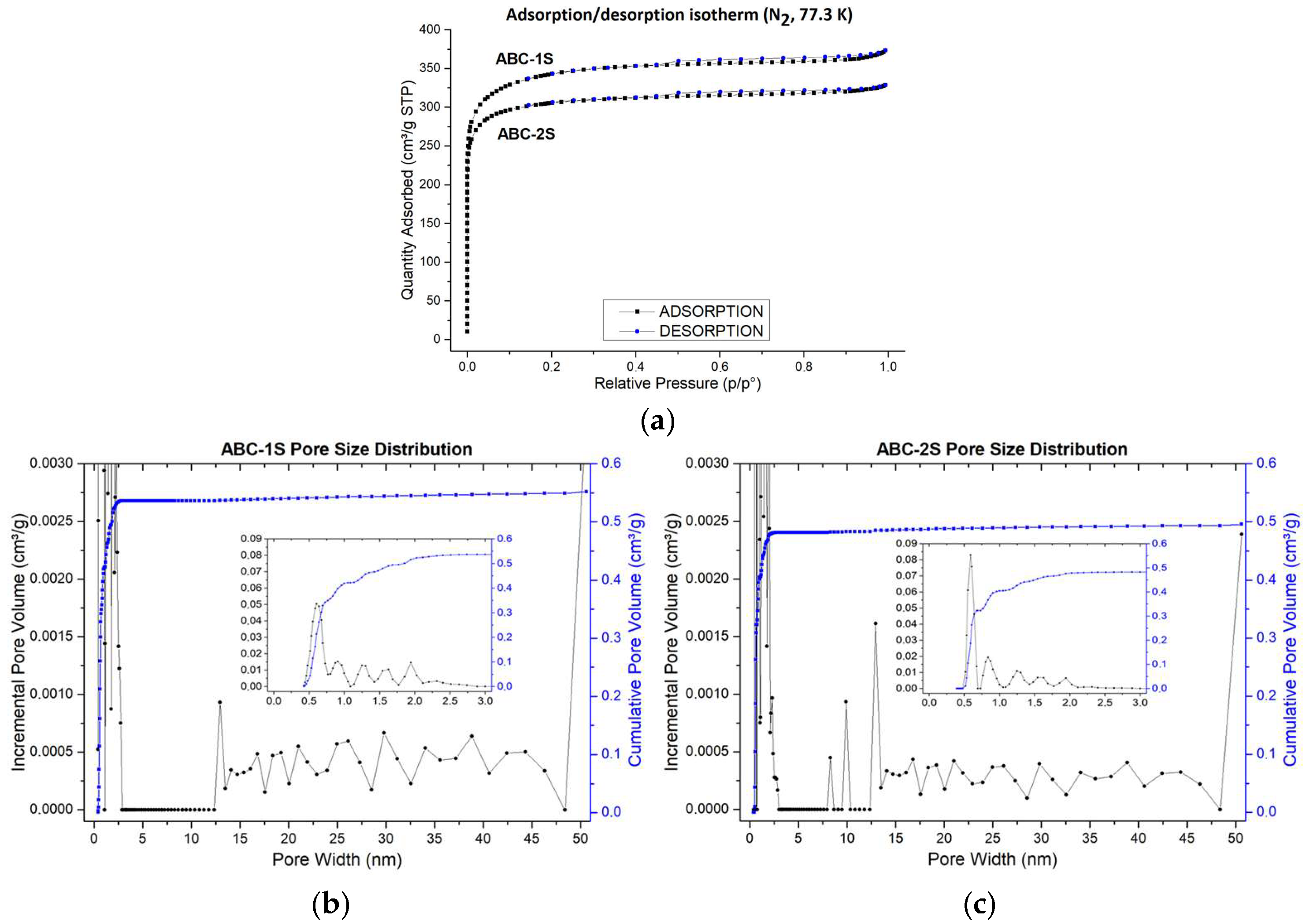
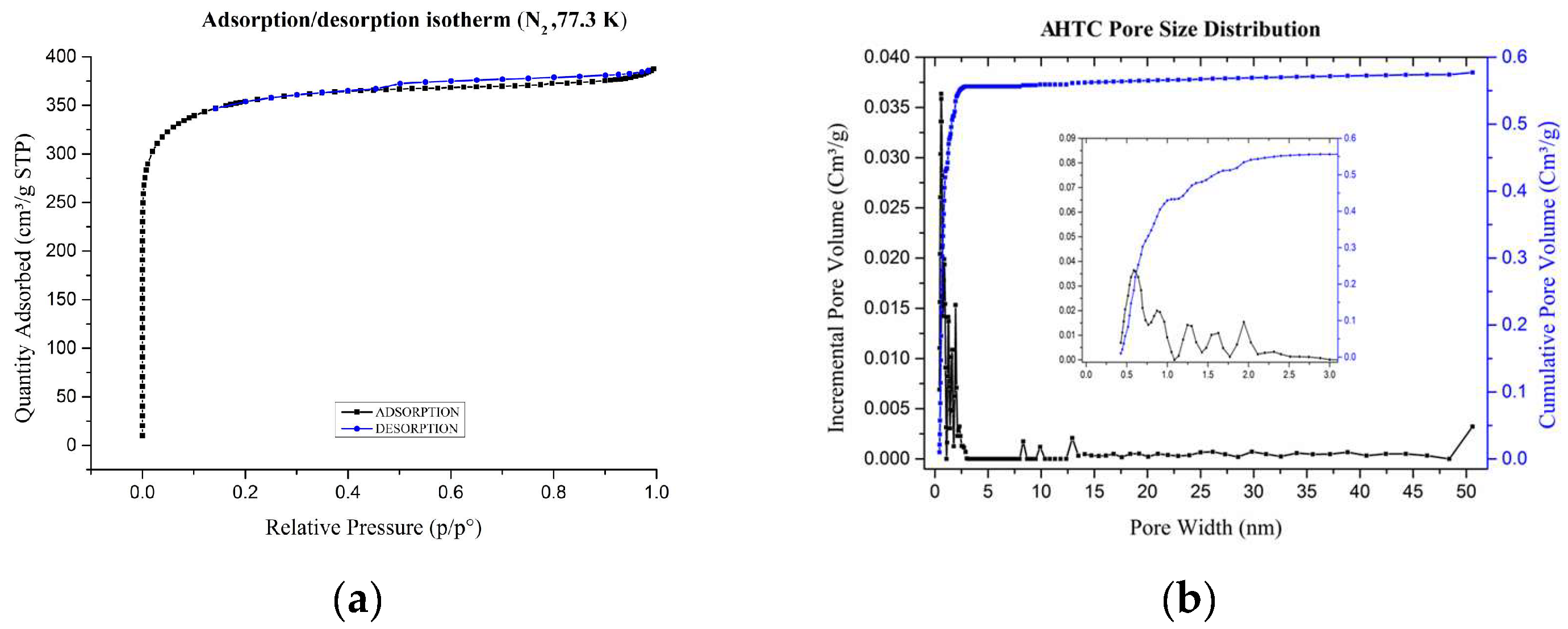
2.1.2. Pore Structure of the Adsorbents
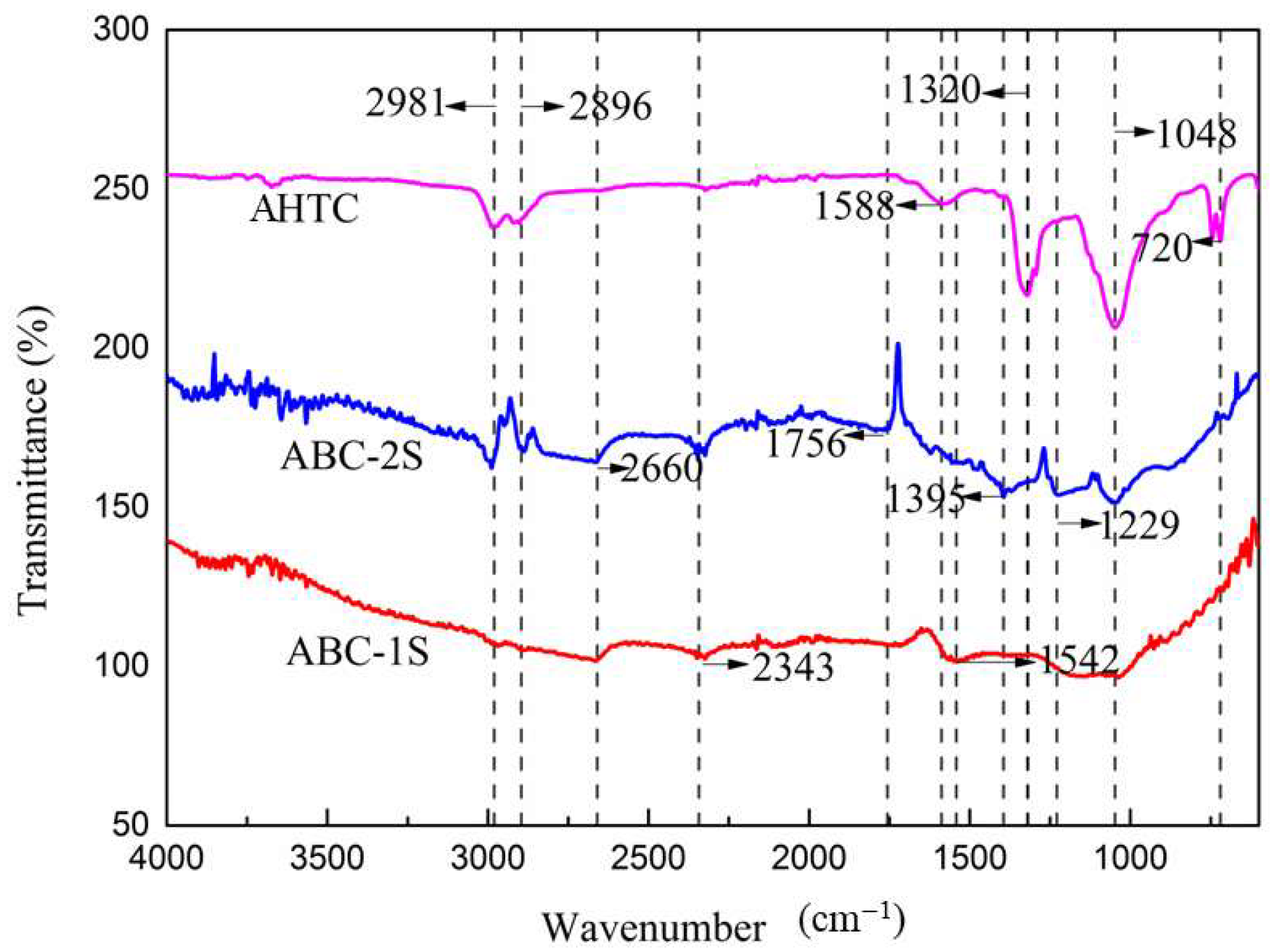
2.1.3. ATR-FTIR Analysis
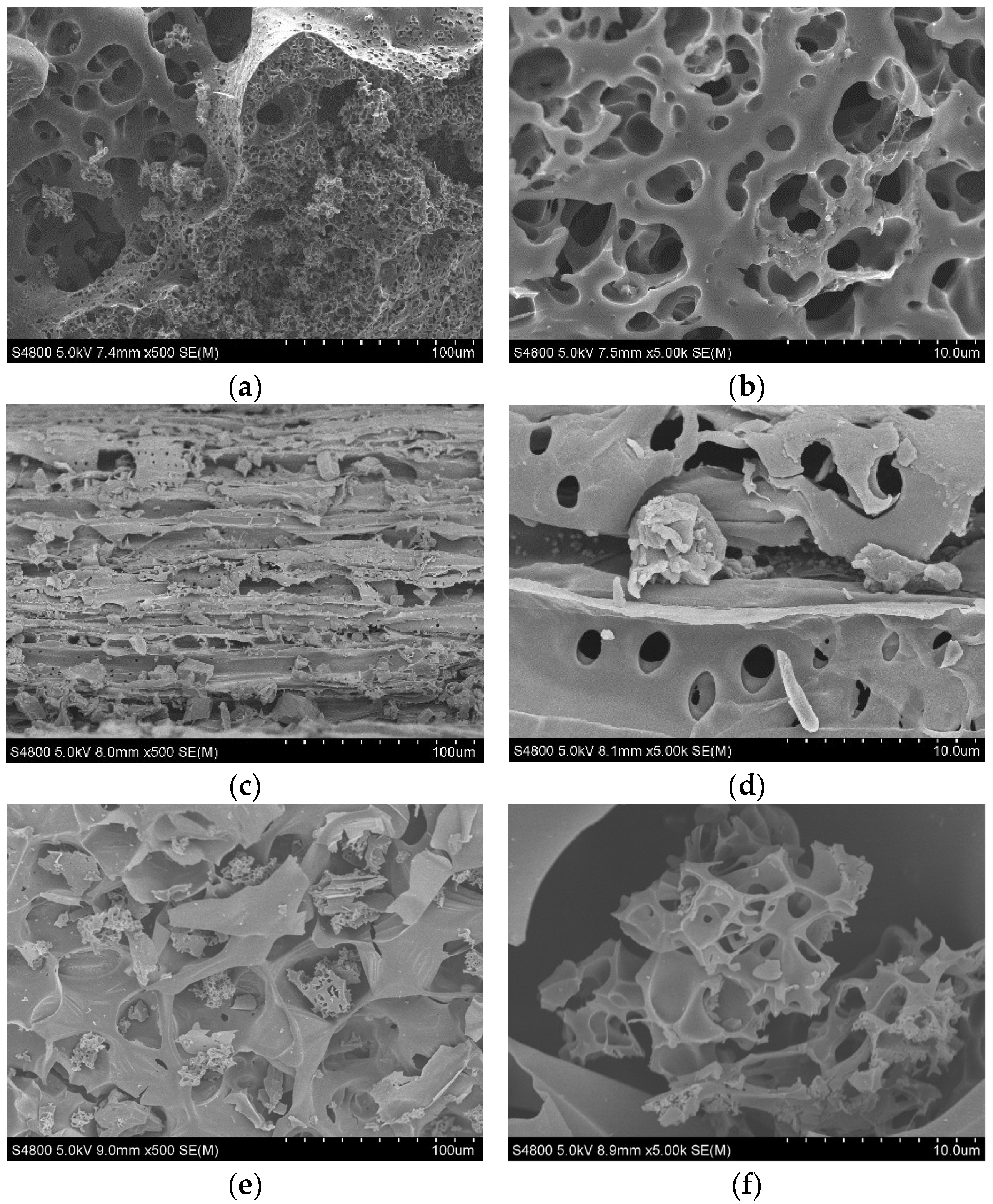
2.1.4. Scanning Electron Microscopy (SEM)
2.2. Adsorption Studies
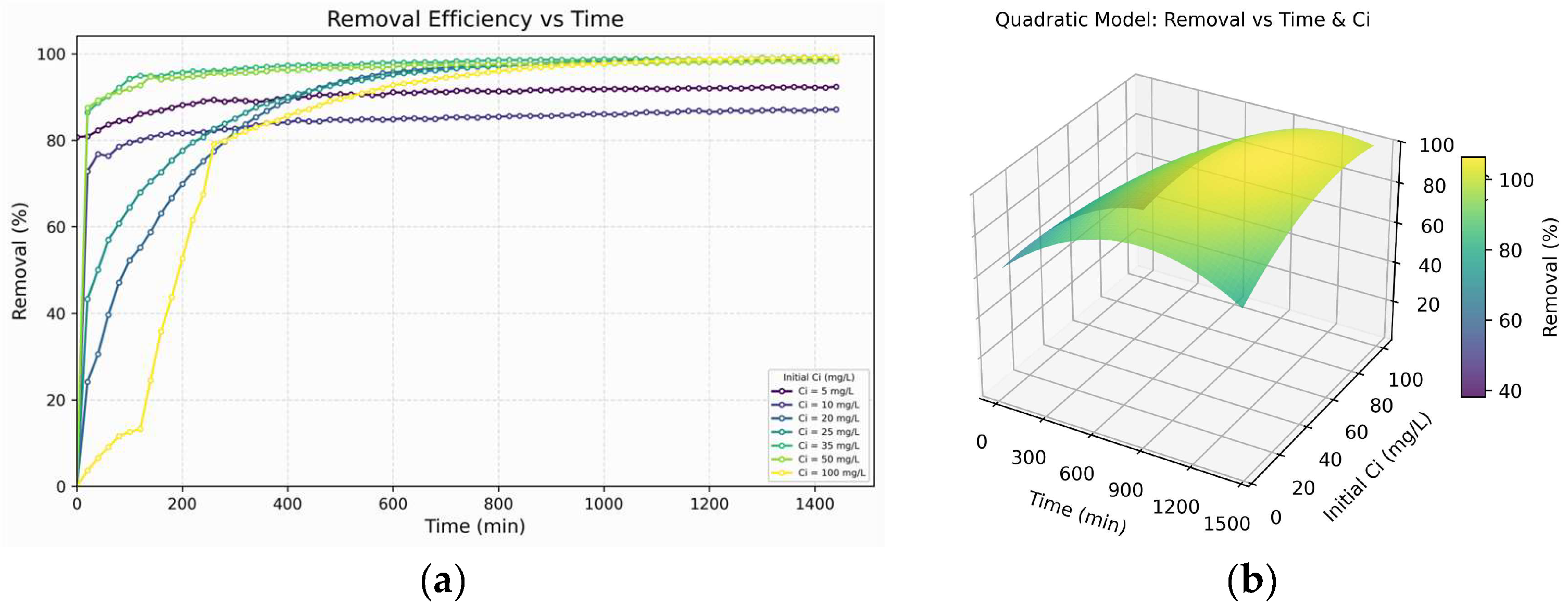
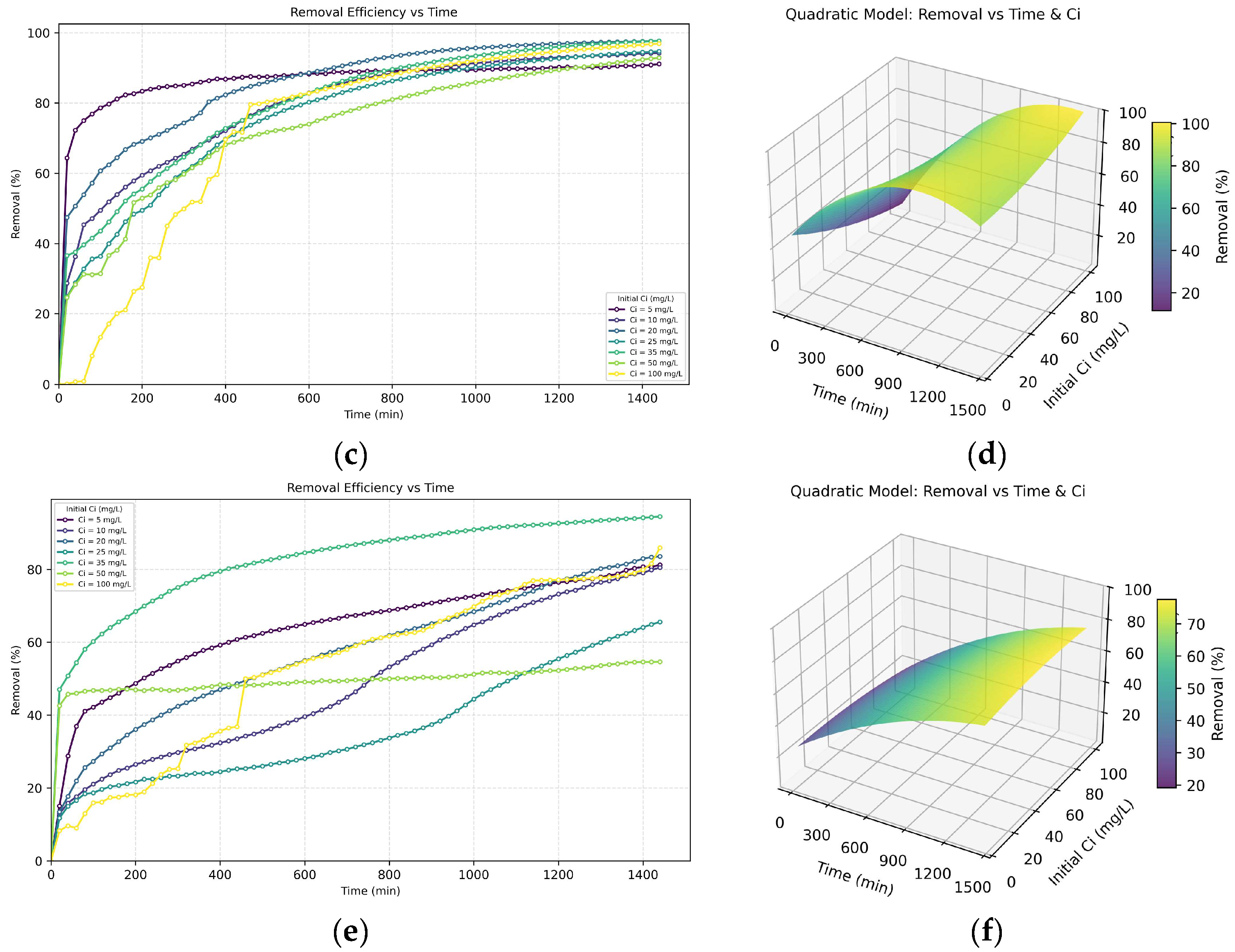
2.2.1. 3D Response Surface for MB Removal
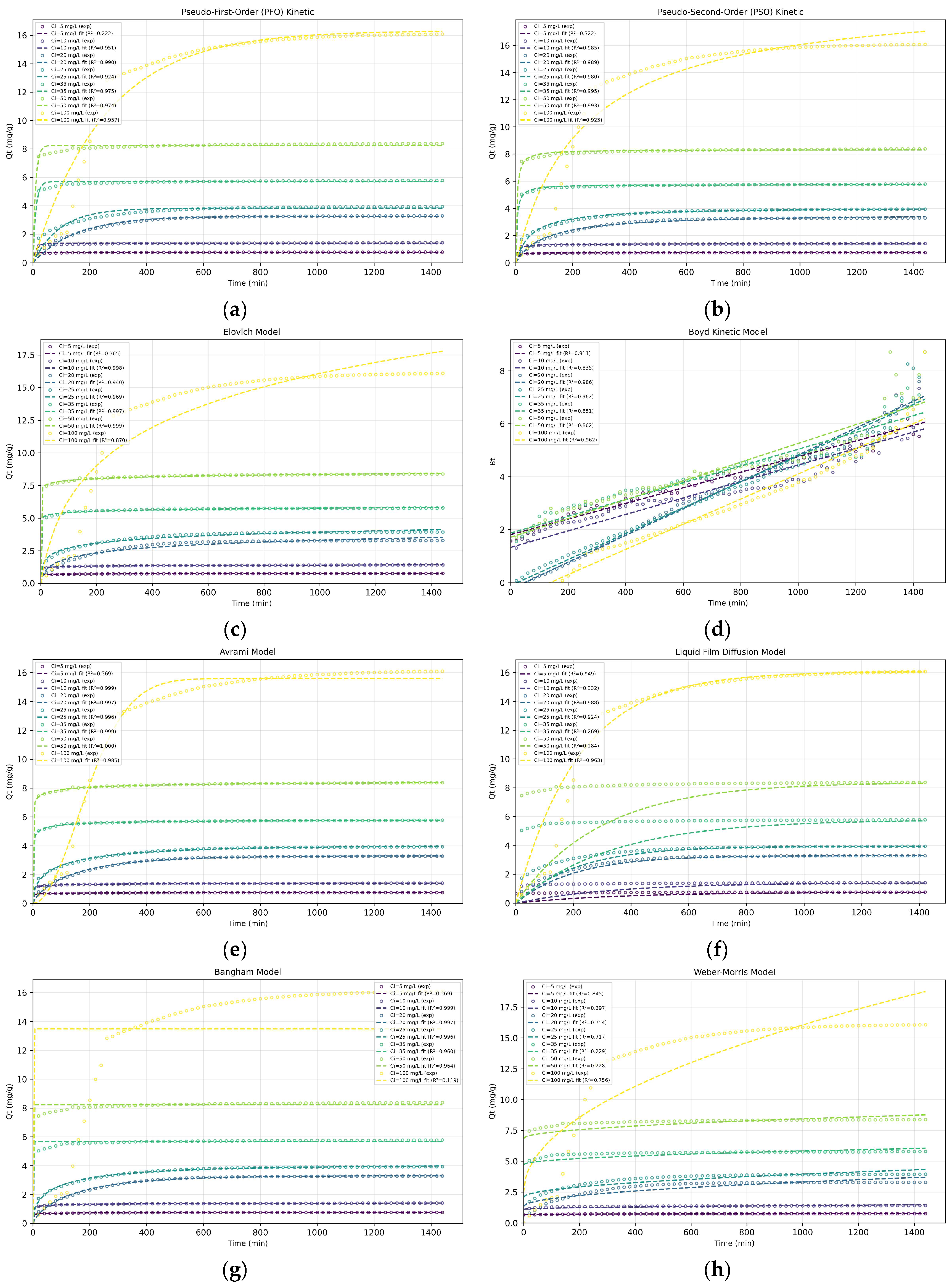
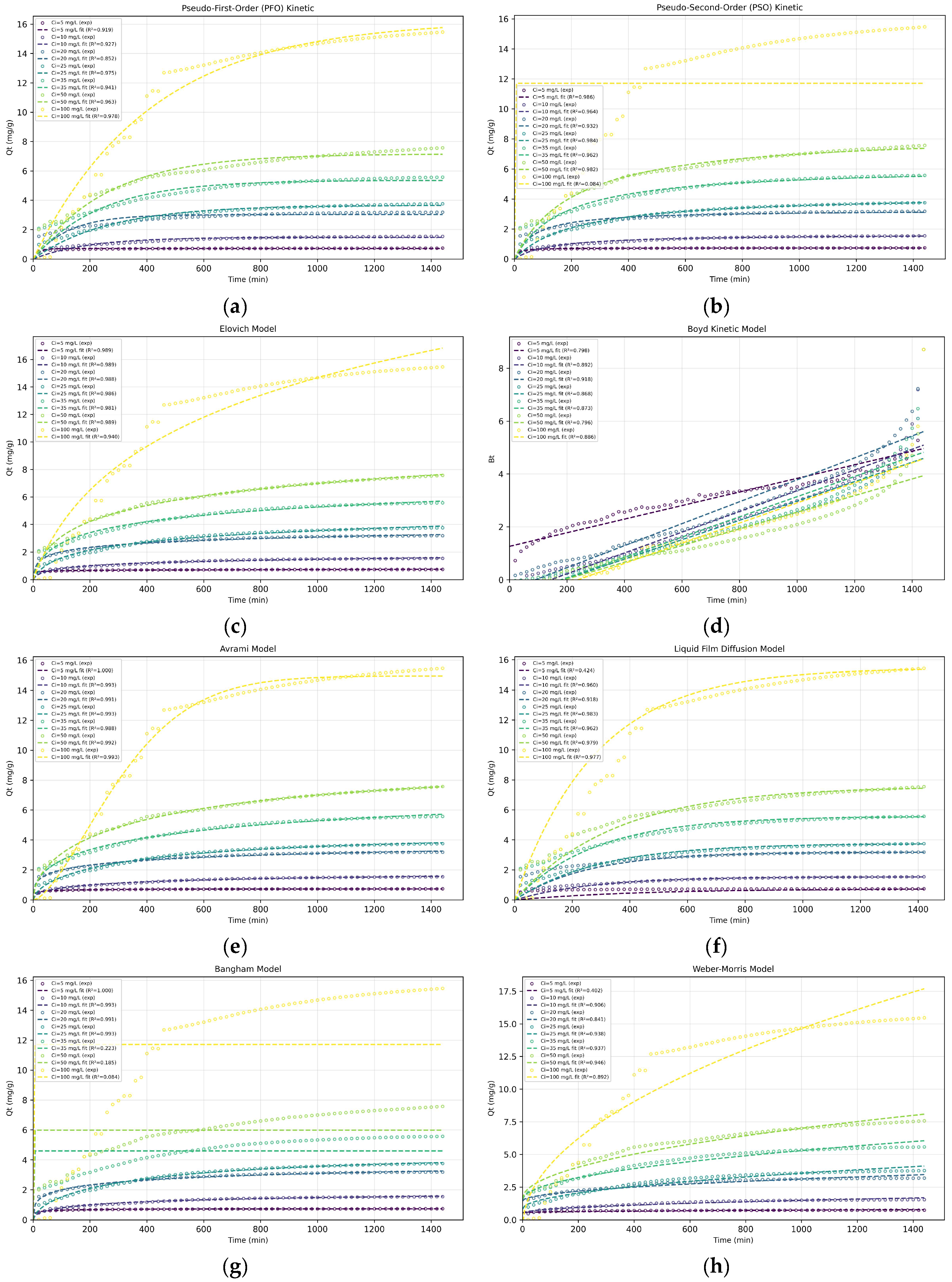
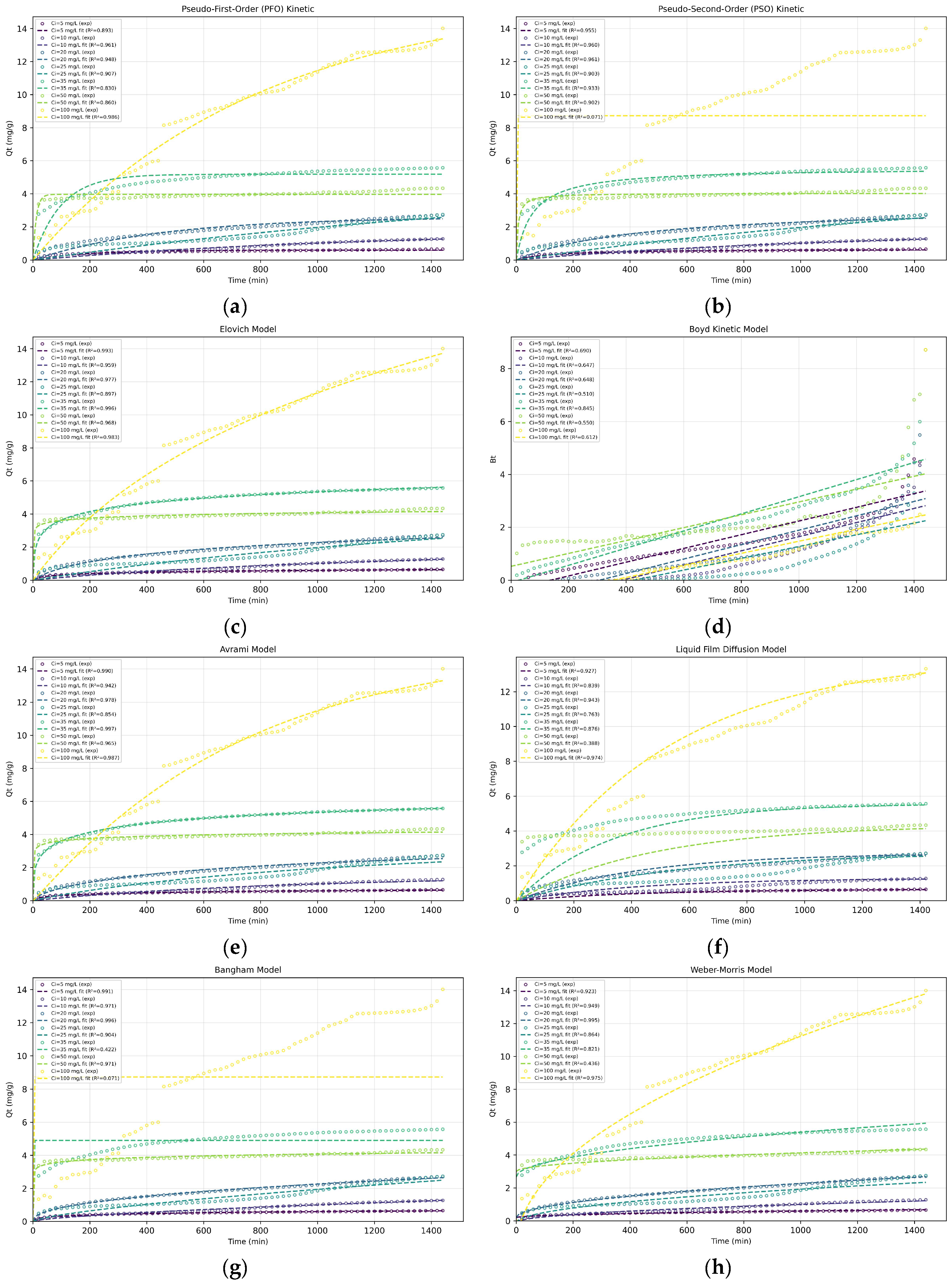
2.2.2. Kinetic Study
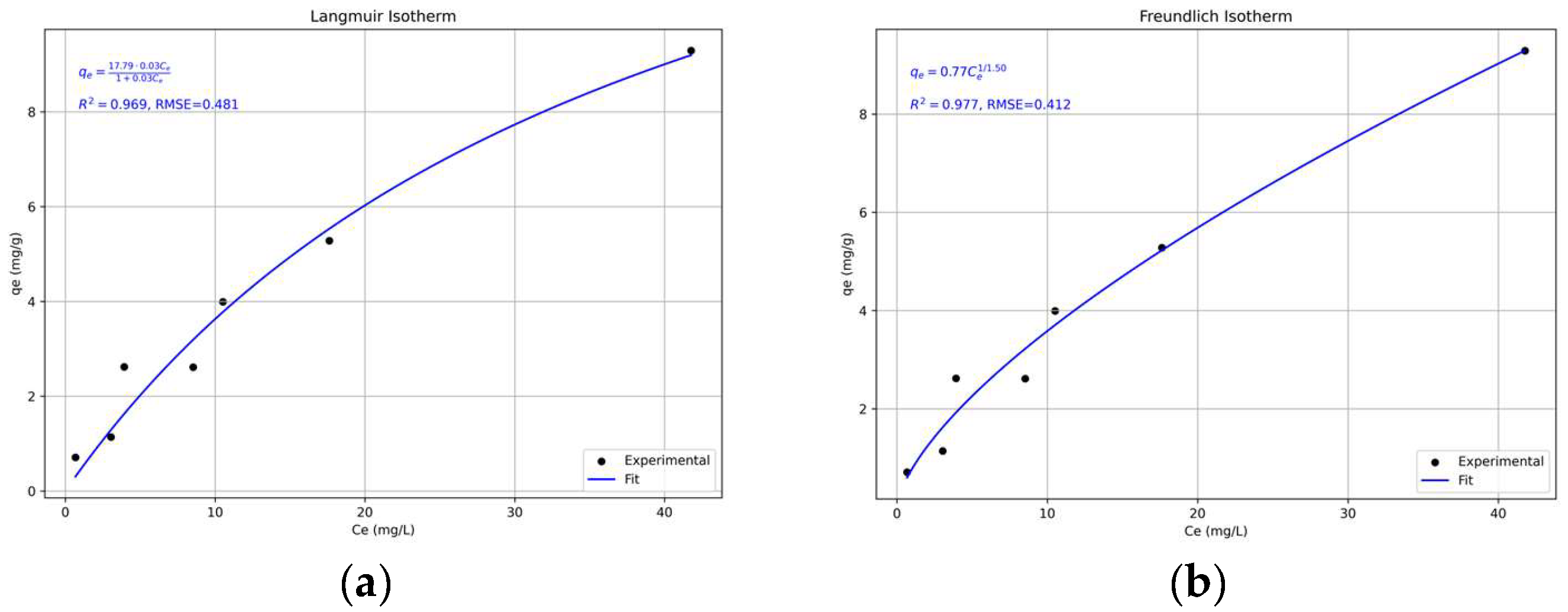
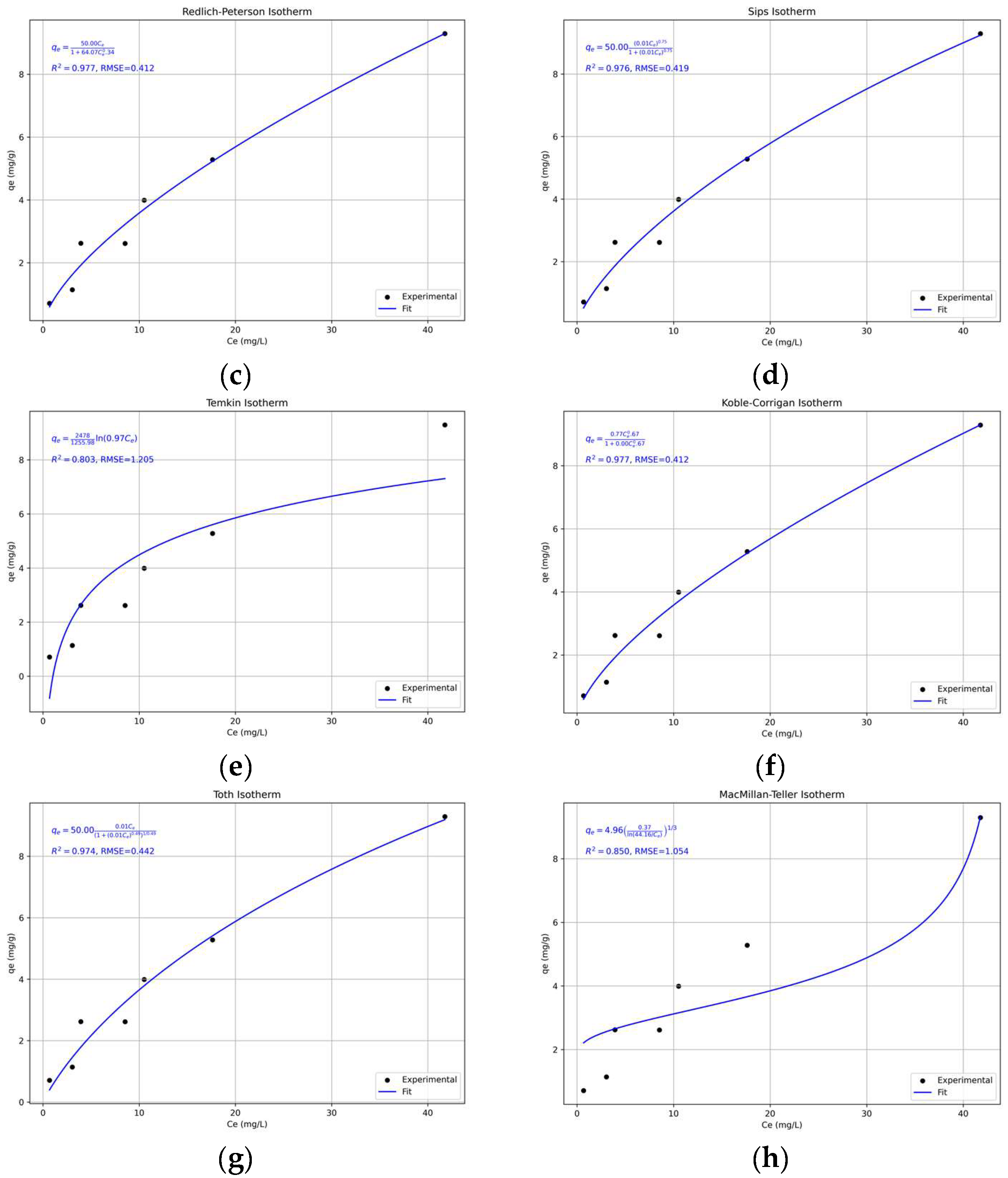
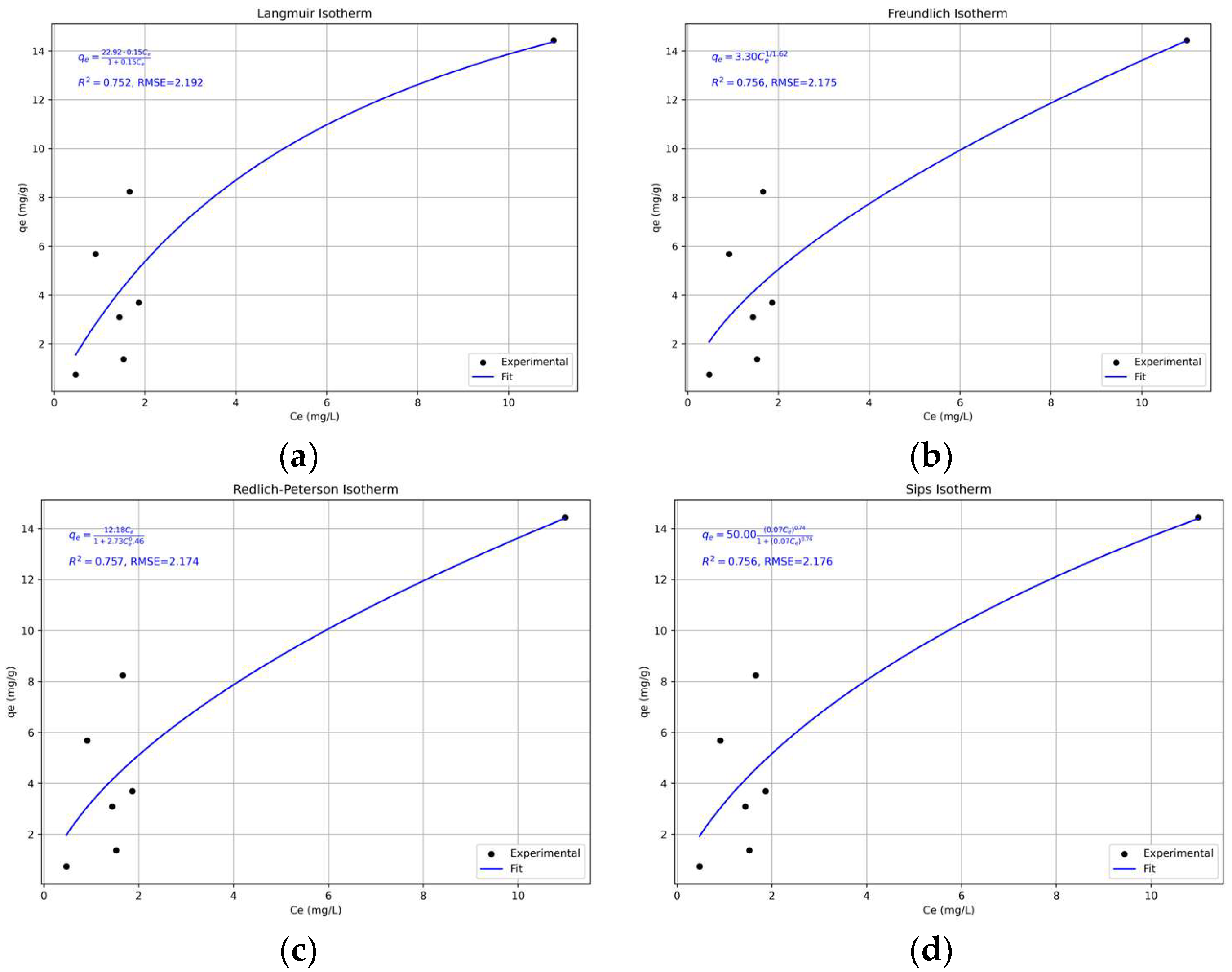
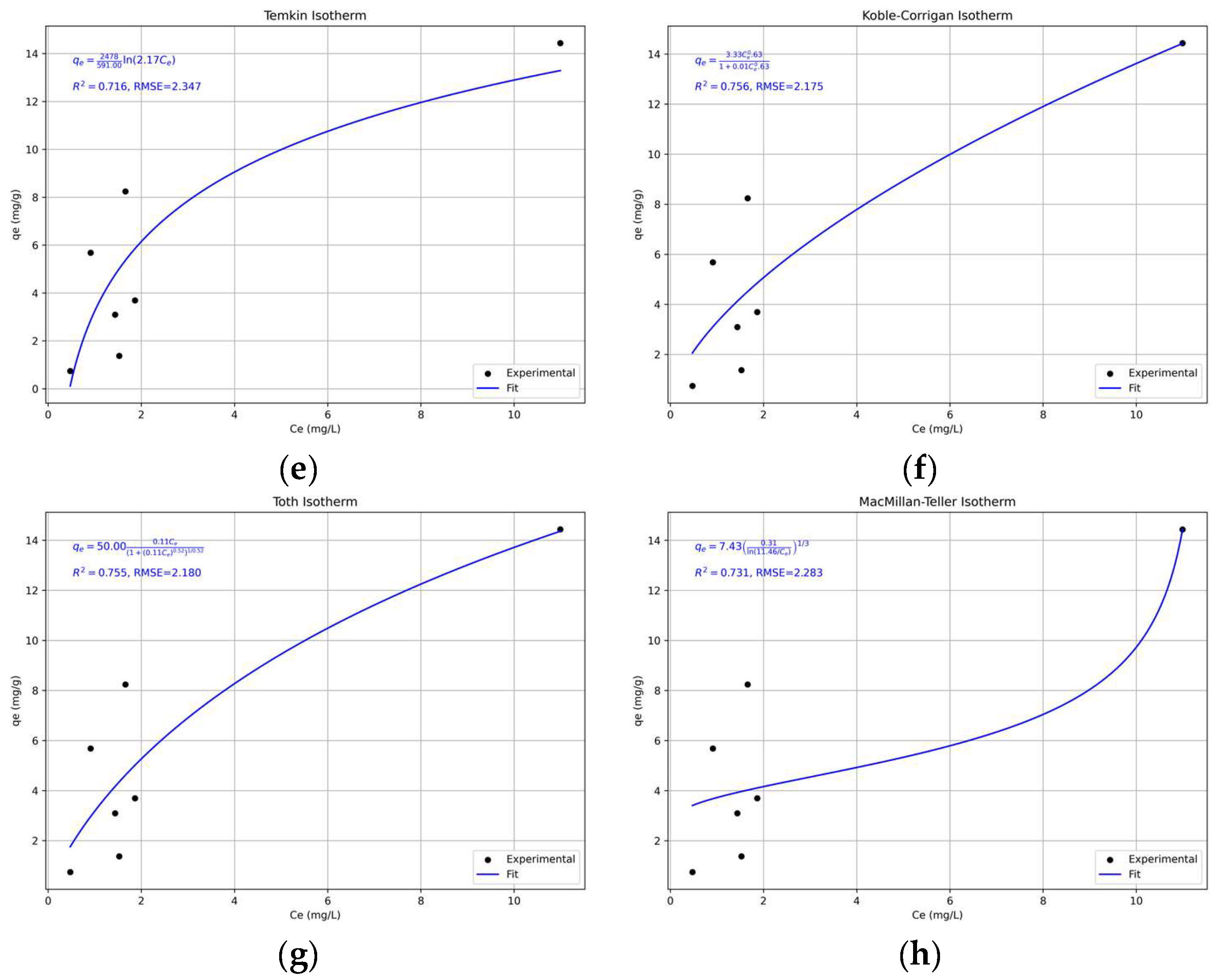
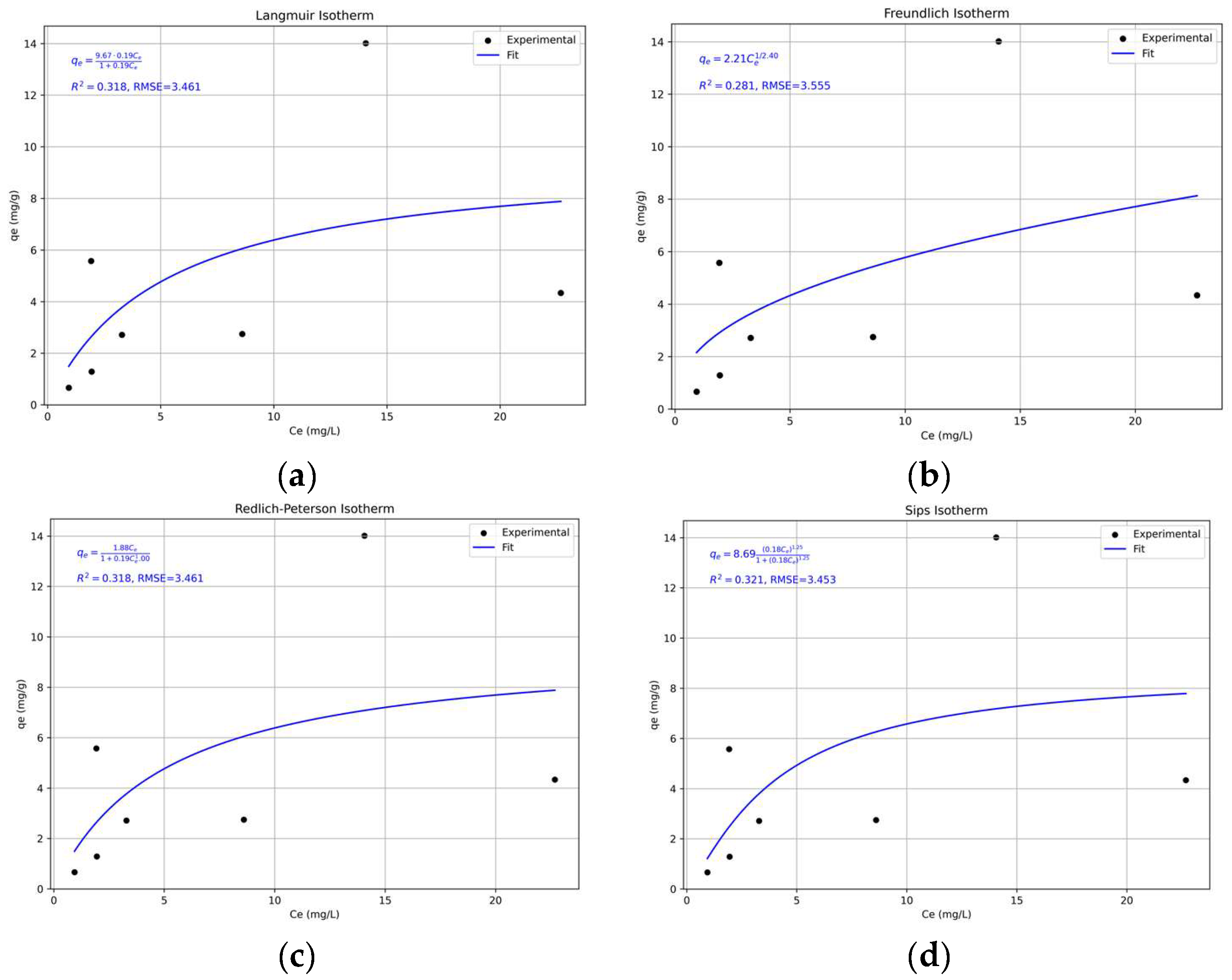
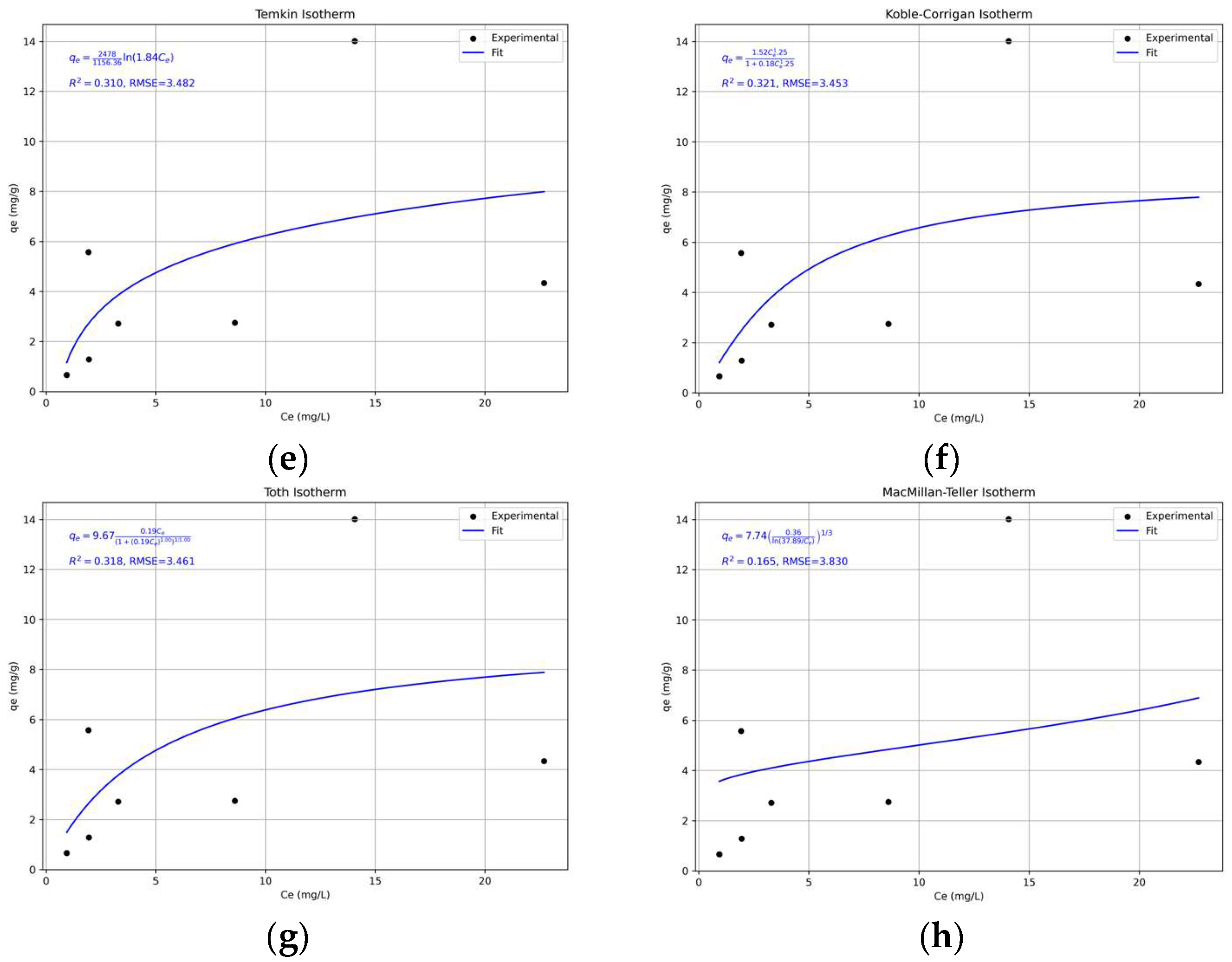
2.2.3. Isotherms Studies
2.2.4. Influence of Wastewater Matrix Complexity
2.3. Potential for Recovery or Recycling of Adsorbents
3. Materials and Methods
3.1. Synthesis and Surface Activation of Carbonaceous Adsorbents
3.2. Characterization of Biochar and Hydrochar
3.3. Batch Adsorption Experiments
3.4. Adsorption Modelling
3.4.1. Response Surface Methodology (RSM) Framework
3.4.2. Adsorption Kinetics
3.4.3. MB Adsorption Isotherms
4. Conclusions
Author Contributions
Funding
Data Availability Statement
Conflicts of Interest
Abbreviations
| ABC-1S | Activated Biochar 1-step |
| ABC-2S | Activated Biochar 2-step |
| ABCs | Activated biochars |
| AHTC | Activated hydrochar |
| AIC | Akaike Information Criterion |
| ATR-FTIR | Attenuated Total Reflectance Fourier-Transform Infrared Spectroscopy |
| AP | Apple Pruning |
| BC | Biochar |
| BET | Brunauer-Emmett-Teller |
| BIC | Bayesian Information Criterion |
| CCD | Central Composite Design |
| D–R | Dubinin–Radushkevich |
| HTC | Hydrochar |
| LFD | Liquid film diffusion |
| MB | Methylene blue |
| NLDFT | Non-Local Density Functional Theory |
| PFO | Pseudo First order |
| PSO | Pseudo Second order |
| RMSE | Root Mean Square Error |
| RSM | Response Surface Methodology |
| SEM | Scanning Electron Microscopy |
| UV–Vis | Ultraviolet-Visible |
| W-C | Weber-Moris |
References
- Islam, M.M.; Aidid, A.R.; Mohshin, J.N.; Mondal, H.; Ganguli, S.; Chakraborty, A.K. A critical review on textile dye-containing wastewater: Ecotoxicity, health risks, and remediation strategies for environmental safety. Clean. Chem. Eng. 2025, 11, 100165. [Google Scholar] [CrossRef]
- Gurtner, D.; Kresta, M.; Hupfauf, B.; Götz, P.; Nussbaumer, R.; Hofmann, A.; Pfeifer, C. Mechanical strength characterisation of pyrolysis biochar from woody biomass. Energy 2023, 285, 129366. [Google Scholar] [CrossRef]
- Dutta, S.; Adhikary, S.; Bhattacharya, S.; Roy, D.; Chatterjee, S.; Chakraborty, A.; Banerjee, D.; Ganguly, A.; Nanda, S.; Rajak, P. Contamination of textile dyes in aquatic environment: Adverse impacts on aquatic ecosystem and human health, and its management using bioremediation. J. Environ. Manag. 2024, 353, 120103. [Google Scholar] [CrossRef] [PubMed]
- Kavitha, G.; Govindhan, M.; Premkumar, S. Dye pollution and its implications for human health, aquatic ecosystems, and sustainable wastewater treatment: A comprehensive review. J. Water Process Eng. 2025, 80, 109071. [Google Scholar] [CrossRef]
- Kusumlata; Ambade, B.; Kumar, A.; Gautam, S. Sustainable Solutions: Reviewing the Future of Textile Dye Contaminant Removal with Emerging Biological Treatments. Limnol. Rev. 2024, 24, 126–149. [Google Scholar] [CrossRef]
- Al-Tohamy, R.; Ali, S.S.; Li, F.; Okasha, K.M.; Mahmoud, Y.A.-G.; Elsamahy, T.; Jiao, H.; Fu, Y.; Sun, J. A critical review on the treatment of dye-containing wastewater: Ecotoxicological and health concerns of textile dyes and possible remediation approaches for environmental safety. Ecotoxicol. Environ. Saf. 2022, 231, 113160. [Google Scholar] [CrossRef]
- Kumar, M.; Singh, V.P.; Bhat, S.B.; Kumar, R. Environmental risks of textile dyes and photocatalytic materials for sustainable treatment: Current status and future directions. Discov. Environ. 2025, 3, 132. [Google Scholar] [CrossRef]
- Bi, F.; Zhang, B.; Liu, X.; Ma, M.; Hu, Q.; Wang, M.; Wang, L.; Qu, J.; Zhang, Y. Synthesis of polyvinyl chloride modified magnetic hydrochar for effective removal of Pb(II) and bisphenol A from aqueous phase: Performance and mechanism exploration. Carbon Res. 2025, 4, 13. [Google Scholar] [CrossRef]
- Zhang, X.; Chen, F.; Liu, S.; Lou, J.; Liu, W.; Rousseau, D.P.L.; Van Hulle, S. Synthesis, characterization, and methylene blue adsorption isotherms of hydrochars derived from forestry waste and agro-residues. Biomass Convers. Biorefinery 2024, 14, 1809–1824. [Google Scholar] [CrossRef]
- Kundu, S.; Khandaker, T.; Anik, M.A.-A.M.; Hasan, M.K.; Dhar, P.K.; Dutta, S.K.; Latif, M.A.; Hossain, M.S. A comprehensive review of enhanced CO2 capture using activated carbon derived from biomass feedstock. RSC Adv. 2024, 14, 29693–29736. [Google Scholar] [CrossRef]
- Kasemodel, M.C.; de Aguiar, L.G.; Rodrigues, V.G.S.; Romão, É.L. The investigation of the adsorption of methylene blue from water by torrefied biomass. Colorants 2025, 4, 21. [Google Scholar] [CrossRef]
- Singh, R.; Goyal, A.; Sinha, S. Global insights into biochar: Production, sustainable applications, and market dynamics. Biomass Bioenergy 2025, 194, 107663. [Google Scholar] [CrossRef]
- Fan, X.; Wang, S.; Zhang, Y.; Zhao, M.; Zhou, N.; Fan, S. Effect of citric acid modification on the properties of hydrochar and pyrochar and their adsorption performance toward methylene blue: Crucial roles of minerals and oxygen functional groups. Environ. Monit. Assess. 2024, 196, 664. [Google Scholar] [CrossRef] [PubMed]
- Tran, T.H.; Le, A.H.; Pham, T.H.; Duong, L.D.; Nguyen, X.C.; Nadda, A.K.; Chang, S.W.; Chung, W.J.; Nguyen, D.D.; Nguyen, D.T. A sustainable, low-cost carbonaceous hydrochar adsorbent for methylene blue adsorption derived from corncobs. Environ. Res. 2022, 212, 113178. [Google Scholar] [CrossRef] [PubMed]
- Kohzadi, S.; Marzban, N.; Godini, K.; Amini, N.; Maleki, A. Effect of hydrochar modification on the adsorption of methylene blue from aqueous solution: An experimental study followed by intelligent modeling. Water 2023, 15, 3220. [Google Scholar] [CrossRef]
- Li, X.; Bonjour, E.; Jame, P.; Kuzhir, P.; Hurel, C. Production of hydrochar from biomass waste as economical adsorbents for methylene blue—Insight into occurring adsorption phenomena. Biomass Convers. Biorefinery 2024, 14, 19723–19737. [Google Scholar] [CrossRef]
- Antxustegi, M.; Corro, E.; Baloch, M.; Volpe, R.; Gonzalez Alriols, M. Production of activated bio-chars for wastewater treatment: Characterization, activation and evaluation of the adsorption capacity. Chem. Eng. Trans. 2022, 92, 547–552. [Google Scholar] [CrossRef]
- Munzeiwa, W.A.; Tsekoa, P.; Kammies, L.R.D.; Chelechele, K.; Oluwalana-Sanusi, A.E.; Chaukura, N. Influence of biomass baseline potential on biochar properties and performance for targeted applications. Discov. Water 2025, 5, 77. [Google Scholar] [CrossRef]
- Tablas Estadísticas: Producción Agrícola de La C.A. de Euskadi Por Tipo de Cultivo Según Territorio Histórico. 2024. Available online: https://www.eustat.eus/elementos/tbl0012208_c.html (accessed on 17 November 2025).
- Su, Y.; Fu, W.; Zhang, X.; Wang, X.; Bai, X. Study on the preparation of biochar from Xinjiang biomass pyrolysis and its adsorption characteristics for water pollutants. Water Air Soil Pollut. 2025, 236, 320. [Google Scholar] [CrossRef]
- Ge, Q.; Li, P.; Liu, M.; Xiao, G.-m.; Xiao, Z.-q.; Mao, J.-w.; Gai, X.-k. Removal of methylene blue by porous biochar obtained by KOH activation from bamboo biochar. Bioresour. Bioprocess. 2023, 10, 51. [Google Scholar] [CrossRef]
- Chahal, M.; Kumari, S.; Bhattacharya, A.; Garg, M.C. Evaluating sustainable agricultural waste biomass for methylene blue adsorption in wastewater treatment: A state-of-the-art review. Bioresour. Technol. Rep. 2024, 28, 101983. [Google Scholar] [CrossRef]
- Santos, D.C.B.D.; Evaristo, R.B.W.; Dutra, R.C.; Suarez, P.A.Z.; Silveira, E.A.; Ghesti, G.F. Advancing biochar applications: A review of production processes, analytical methods, decision criteria, and pathways for scalability and certification. Sustainability 2025, 17, 2685. [Google Scholar] [CrossRef]
- Leng, L.; Xu, S.; Liu, R.; Yu, T.; Zhuo, X.; Leng, S.; Xiong, Q.; Huang, H. Nitrogen containing functional groups of biochar: An overview. Bioresour. Technol. 2020, 298, 122286. [Google Scholar] [CrossRef] [PubMed]
- Cai, F.; Li, C.; Yang, C.; Wang, Y.; Zhou, H.; Yang, S.; Tang, J.; Wang, L.; Liu, Y. Preparation of nitrogen-doped bagasse-derived biochar with outstanding methylene blue adsorption performance. Ind. Crops Prod. 2024, 120, 120415. [Google Scholar] [CrossRef]
- Ahmed, M.M.M.; Liao, C.-H.; Venkatesan, S.; Liu, Y.-T.; Tzou, Y.-M.; Jien, S.-H.; Lin, M.-C.; Hsieh, Y.-C.; Osman, A.I. Sulfur-functionalized sawdust biochar for enhanced cadmium adsorption and environmental remediation: A multidisciplinary approach and density functional theory insights. J. Environ. Manag. 2025, 373, 123586. [Google Scholar] [CrossRef]
- Zang, Z.; Chou, S.; Zhao, Q.; Nie, Y.; Xin, M.; Li, Z.; Tian, J.; Li, B. A review of the production and application of mesoporous carbon and its potential as an excellent carrier for the adsorptive delivery of compounds. Biochar 2025, 7, 44. [Google Scholar] [CrossRef]
- Chen, J.; Zhang, L.; Yang, G.; Wang, Q.; Li, R.; Lucia, L.A. Preparation and characterization of activated carbon from hydrochar by phosphoric acid activation and its adsorption performance in prehydrolysis liquor. BioResources 2017, 12, 5928–5941. [Google Scholar] [CrossRef]
- Wang, B.; Zhao, C.; Guo, C. Effect of modifiers on Cr(VI) adsorption performance of modified hydrochars. Desalination Water Treat. 2024, 320, 100900. [Google Scholar] [CrossRef]
- Zhou, F.; Li, K.; Hang, F.; Zhang, Z.; Chen, P.; Wei, L.; Xie, C. Efficient removal of methylene blue by activated hydrochar prepared by hydrothermal carbonization and NaOH activation of sugarcane bagasse. RSC Adv. 2022, 12, 1885–1896. [Google Scholar] [CrossRef]
- Scherdel, C.; Reichenauer, G.; Wiener, M. Relationship between Pore Volumes and Surface Areas Derived from the Evaluation of N2-Sorption Data by DR-, BET- and t-Plot. Microporous Mesoporous Mater. 2010, 132, 572–575. [Google Scholar] [CrossRef]
- Jagiello, J.; Jaroniec, M. 2D-NLDFT Adsorption Models for Porous Oxides with Corrugated Cylindrical Pores. J. Colloid Interface Sci. 2018, 532, 588–597. [Google Scholar] [CrossRef]
- Park, J.H.; Ok, Y.S.; Kim, S.H.; Kang, S.W.; Cho, J.S.; Heo, J.S.; Delaune, R.D.; Seo, D.C. Characteristics of biochars derived from fruit tree pruning wastes and their effects on lead adsorption. J. Korean Soc. Appl. Biol. Chem. 2015, 58, 751–760. [Google Scholar] [CrossRef]
- Mahmood, U.; Alkorbi, A.S.; Hussain, T.; Nazir, A.; Qadir, M.B.; Khaliq, Z.; Faheem, S.; Jalalah, M. Adsorption of lead ions from wastewater using electrospun zeolite/MWCNT nanofibers: Kinetics, thermodynamics and modeling study. RSC Adv. 2024, 14, 5959–5974. [Google Scholar] [CrossRef] [PubMed]
- Elhassan, M.; Kooh, M.R.R.; Chou Chau, Y.-F.; Abdullah, R. Hydrochar from Shorea spp.: Sustainable biofuel and methylene blue adsorbent. Biomass Convers. Biorefinery 2025, 15, 5779–5793. [Google Scholar] [CrossRef]
- El-Hendawy, A.N.A. Variation in the FTIR spectra of a biomass under impregnation, carbonization and oxidation conditions. J. Anal. Appl. Pyrolysis 2006, 75, 159–166. [Google Scholar] [CrossRef]
- Liu, X.; Zhou, F.; Shi, C.; Ramirez, J.; Liu, Z.; Hang, F.; Xie, C. Efficient adsorption of methylene blue by polyaminocarboxylated modified hydrochar derived from sugarcane bagasse. Molecules 2025, 30, 1536. [Google Scholar] [CrossRef]
- Wang, T.; Quan, X.; Sun, Z.; Sun, Z. Sustainable biochar synthesis via synergistic H2O2–KOH modification for enhanced CO2 physisorption. Carbon Capture Sci. Technol. 2025, 15, 100438. [Google Scholar] [CrossRef]
- Ray, A. Characterization of biochars from agricultural byproducts using FTIR spectroscopy and SEM. Int. J. Agric. Environ. Biotechnol. 2020, 13, 423–430. [Google Scholar] [CrossRef]
- Petrović, J.; Mihajlović, M.; Simić, M.; Kalderis, D.; Koprivica, M.; Milojković, J.; Radulović, D. Novel Mg-doped pyro-hydrochars as methylene blue adsorbents: Adsorption behavior and mechanism. J. Mol. Liq. 2023, 376, 121424. [Google Scholar] [CrossRef]
- McCall, M.A.; Watson, J.S.; Tan, J.S.W.; Sephton, M.A. Biochar stability revealed by FTIR and machine learning. ACS Sustain. Resour. Manag. 2025, 2, 842–852. [Google Scholar] [CrossRef]
- Osuna, F.J.; Pavón, E.; Alba, M.D. A technological approach based on engineered nanoclay composites for cesium and iodine retention. Chemosphere 2023, 341, 140128. [Google Scholar] [CrossRef] [PubMed]
- Wu, T.; Lei, J.; Lin, L.; Wang, Q.; Farooq, T.H.; Wang, G.; Wang, J.; Yan, W. MOF-based Ca-alginate/PAA granulate beads for efficient heavy metal removal from water: Synthesis, performance, and mechanism. Environ. Technol. Innov. 2023, 32, 103428. [Google Scholar] [CrossRef]
- Adabala, S.; Dutta, D.P. A review on recent advances in metal chalcogenide-based photocatalysts for CO2 reduction. J. Environ. Chem. Eng. 2022, 10, 107763. [Google Scholar] [CrossRef]
- Liu, P.; Gerometta, M.; Pizzi, A.; Fierro, V. KOH activation mechanism in the preparation of brewer’s spent grain-based activated carbons. Catalysts 2024, 14, 814. [Google Scholar] [CrossRef]
- Nandi, R.; Jha, M.K.; Guchhait, S.K.; Sutradhar, D.; Yadav, S. Impact of KOH activation on rice husk derived porous activated carbon for carbon capture at flue-gas-alike temperatures with high CO2/N2 selectivity. ACS Omega 2023, 8, 4802–4812. [Google Scholar] [CrossRef] [PubMed]
- Jedynak, K.; Charmas, B. Adsorption properties of biochars obtained by KOH activation. Adsorption 2023, 1, 167–183. [Google Scholar] [CrossRef]
- Xu, Z.; Huang, X.; Xu, Y.; Zhang, L.; Cheng, X.; Guo, Q.; He, Y.; Zhang, F. Hierarchically ordered carbon tube-sheet superstructure via template-directed self-assembly of polyimide. Chem. Eng. J. 2019, 364, 201–207. [Google Scholar] [CrossRef]
- de Araujo, L.G.; Martins, G.F.; Campera, A.A.A.; Marumo, J.T.; Guilhen, S.N. Biosorption of methylene blue by bone meal: Experimental and machine learning modeling. Front. Environ. Chem. 2024, 5, 1451051. [Google Scholar] [CrossRef]
- Wang, Y.; Song, X.; Xia, S.; Wu, T.; Huang, M.; Karatum, O.; Pidko, E. Guideline for modeling solid-liquid adsorption: Kinetics, isotherm, fixed bed, and thermodynamics. Chemosphere 2024, 349, 140736. [Google Scholar] [CrossRef]
- Allouss, D.; Essamlali, Y.; Amadine, O.; Chakir, A.; Zahouily, M. Response surface methodology for optimization of methylene blue adsorption onto carboxymethyl-cellulose-based hydrogel beads. RSC Adv. 2019, 9, 37858–37869. [Google Scholar] [CrossRef]
- Habibu, S.; Ladan, M.; Safana, A.A.; Dandalma, Z.A.; Saleh, I.; Abdullahi, S.R. Optimization of methylene blue adsorption onto activated carbon derived from pineapple peel waste using response surface methodology. UMYU Sci. 2023, 2, 45–55. [Google Scholar] [CrossRef]
- Wei, F.; Jin, S.; Yao, C.; Wang, T.; Zhu, S.; Ma, Y.; Qiao, H.; Shan, L.; Wang, R.; Lian, X.; et al. Revealing the Combined Effect of Active Sites and Intra-Particle Diffusion on Adsorption Mechanism of Methylene Blue on Activated Red-Pulp Pomelo Peel Biochar. Molecules 2023, 28. [Google Scholar] [CrossRef] [PubMed]
- Senapati, S.; Giri, J.; Mallick, L.; Singha, D.; Bastia, T.K.; Rath, P.; Rana, M.K.; Panda, A.K. Rapid adsorption of industrial cationic dye pollutant using base-activated rice straw biochar: Performance, isotherm, kinetic and thermodynamic evaluation. Discov. Sustain. 2025, 6, 46. [Google Scholar] [CrossRef]
- Gonçalves dos Santos, M.; Destefani Paquini, L.; Leite Quintela, P.H.; Roberto Profeti, L.P.; Guimarães, D. Insights into kinetics and thermodynamics for adsorption methylene blue using ecofriendly zeolites materials. ACS Omega 2025, 10, 20326–20340. [Google Scholar] [CrossRef]
- Tran, T.H.; Le, A.H.; Pham, T.H.; Duong, L.D.; Nguyen, X.C.; Nadda, A.K.; Chang, S.W.; Chung, W.J.; Nguyen, D.D.; Nguyen, D.T. Adsorption isotherms and kinetic modeling of methylene blue dye onto a carbonaceous hydrochar adsorbent derived from coffee husk waste. Sci. Total Environ. 2020, 725, 138325. [Google Scholar] [CrossRef]
- Pieczykolan, B. Investigation of adsorption kinetics and isotherms of synthetic dyes on biochar derived from post-coagulation sludge. Int. J. Mol. Sci. 2025, 26, 7912. [Google Scholar] [CrossRef]
- Ben Ali, M.; Flayou, M.; Boutarba, Y.; El Youssfi, M.; Bakhtaoui, Y.; El Hazzat, M.; Sifou, A.; Dahhou, M.; Kacimi, M.; Benzaouak, A.; et al. Conversion of Urban Sludge into KOH-Activated Biochar for Methylene Blue Adsorption. Moroc. J. Chem. 2024, 12, 1852–1869. [Google Scholar] [CrossRef]
- Wang, L.; Zhou, Z.; Li, X.; Zeng, L.; Xu, W.; Ma, Y.; Cai, J. Enhanced removal of methylene blue from water by mesopore-dominant biochar from kelp: Kinetic, equilibrium and thermodynamic studies. Colloids Surf. A Physicochem. Eng. Asp. 2024, 688, 133652. [Google Scholar] [CrossRef]
- Fito, J.; Abewaa, M.; Mengistu, A.; Angassa, K.; Ambaye, A.D.; Moyo, W.; Nkambule, T. Adsorption of methylene blue from textile industrial wastewater using activated carbon developed from Rumex abyssinicus plant. Sci. Rep. 2023, 13, 5427. [Google Scholar] [CrossRef]
- Kalam, S.; Abu-Khamsin, S.A.; Kamal, M.S.; Patil, S. Surfactant adsorption isotherms: A review. ACS Omega 2021, 6, 32342–32360. [Google Scholar] [CrossRef]
- Danso-Boateng, E.; Fitzsimmons, M.; Ross, A.B.; Mariner, T. Response Surface Modelling of Methylene Blue Adsorption onto Seaweed, Coconut Shell and Oak Wood Hydrochars. Water 2023, 15, 977. [Google Scholar] [CrossRef]
- Wang, S.; Zheng, Q.; Liu, Y.; Ze, Y.; Wang, Y.; Wu, Y.; Qi, J.; Qu, J.; Zhang, Y. Co-Incorporation of Nitrogen and Boron into Microscale Zero-Valent Iron via Mechanochemical Ball-Milling Method Improved Cr(VI) Elimination: Performance and Mechanism Investigation. Chem. Eng. J. 2025, 506, 160050. [Google Scholar] [CrossRef]
- Salahshoori, I.; Wang, Q.; Nobre, M.A.L.; Mohammadi, A.H.; Dawi, E.A.; Khonakdar, H.A. Molecular Simulation-Based Insights into Dye Pollutant Adsorption: A Perspective Review. Adv. Colloid Interface Sci. 2024, 333, 103281. [Google Scholar] [CrossRef] [PubMed]
- Menya, E.; Olupot, P.W.; Storz, H.; Lubwama, M.; Kiros, Y. Production and performance of activated carbon from rice husks for removal of natural organic matter from water: A review. Chem. Eng. Res. Des. 2018, 129, 271–296. [Google Scholar] [CrossRef]
- Shadangi, K.P.; Sarangi, P.K.; Behera, A.K. Characterization techniques of biomass: Physico-chemical, elemental, and biological. In Bioenergy Engineering: Fundamentals, Methods, Modelling, and Applications; Elsevier: Amsterdam, The Netherlands, 2023; pp. 51–66. [Google Scholar] [CrossRef]
- Mayerhöfer, T.G.; Pahlow, S.; Popp, J. The Bouguer–Beer–Lambert law: Shining light on the obscure. ChemPhysChem 2020, 21, 2029–2046. [Google Scholar] [CrossRef]
- Li, H.; Budarin, V.L.; Clark, J.H.; North, M.; Wu, X. Rapid and efficient adsorption of methylene blue dye from aqueous solution by hierarchically porous, activated starbons®: Mechanism and porosity dependence. J. Hazard. Mater. 2022, 436, 129174. [Google Scholar] [CrossRef]
- Halici, Z.; Demirhan, E. Response surface methodology for optimizing adsorption process parameters for tadalafil removal by raw eggshell. Biomass Convers. Biorefinery 2025, 15, 6027–6036. [Google Scholar] [CrossRef]
- Nagarajan, T.; Krithiga, A.; Abdulrahman, N.; Alhaji, A.; Olisa, M.; Akomolafe, S.; Busari, I. Adsorption parameters optimization of spent coffee ground biochar for methylene blue removal using response surface methodology. Chemosphere 2024, 364, 143242. [Google Scholar] [CrossRef]
- Mohan, C.; Bashir, M.; Annachhatre, A.; Dikshit, A.K. Response surface modelling and optimization for copper removal using oxidized pine-needle biochar. AQUA Water Infrastruct. Ecosyst. Soc. 2024, 73, 1698–1724. [Google Scholar] [CrossRef]
- Nouaa, S.; Aziam, R.; Benhiti, R.; Carja, G.; Zerbet, M.; Chiban, M. Exploiting RSM and ANN modeling methods to optimize phosphate ions removal using LDH/alginate composite beads. J. Water Process Eng. 2024, 68, 106333. [Google Scholar] [CrossRef]
- Obayomi, K.S.; Oni, A.O.; Adeyi, A.O.; Adekola, F.A.; Fanida, J.A.; Alabi, A.O. A response surface methodology approach for the removal of methylene blue dye from wastewater using sustainable and cost-effective adsorbent. Process Saf. Environ. Prot. 2024, 184, 129–150. [Google Scholar] [CrossRef]
- Hassaan, M.A.; Yılmaz, M.; Helal, M.; El-Nemr, M.A.; Ragab, S.; El Nemr, A. Isotherm and kinetic investigations of sawdust-based biochar modified by ammonia to remove methylene blue from water. Sci. Rep. 2023, 13, 39971. [Google Scholar] [CrossRef]
- Consiglio Kasemodel, M.; Romão, É.L.; Papa, T.B.R. Adsorption of methylene blue on Orbignya speciosa (babassu) mesocarp commercial biochar. Int. J. Environ. Sci. Technol. 2024, 21, 1671–1682. [Google Scholar] [CrossRef]
- Gole, P.; Raut, K.; Kandasubramanian, B. Polymer-based biochar materials for environmental remediation: A review. Hybrid Adv. 2024, 6, 100267. [Google Scholar] [CrossRef]
- Benjelloun, M.; Miyah, Y.; Akdemir Evrendilek, G.; Zerrouq, F.; Lairini, S. Recent advances in adsorption kinetic models: Their application to dye types. Arab. J. Chem. 2021, 14, 103031. [Google Scholar] [CrossRef]
- Oguanobi, N.C.; Onu, C.E.; Onukwuli, O.D.; Anike, E.N.; Ude, C.N. Modeling and kinetics investigation of adsorptive properties and regeneration of modified clay on azo dyes removal from aqueous solution using artificial intelligence (ANN, ANFIS) and RSM. Nat. Sci. 2025, 43, 316–339. [Google Scholar] [CrossRef]
- Tsiotsias, A.I.; Georgiadis, A.G.; Charisiou, N.D.; Goula, M.A. CO2 physisorption over an industrial molecular sieve zeolite: An experimental and theoretical approach. Materials 2023, 16, 6656. [Google Scholar] [CrossRef]
- Vitek, R.; Masini, J.C. Nonlinear regression for treating adsorption isotherm data to characterize new sorbents: Advantages over linearization demonstrated with simulated and experimental data. Heliyon 2023, 9, e15128. [Google Scholar] [CrossRef]
- Mosoarca, G.; Vancea, C.; Popa, S.; Dan, M.; Boran, S. Modelling and optimization of methylene blue adsorption process on Leonurus cardiaca L. biomass powder. Processes 2023, 11, 3385. [Google Scholar] [CrossRef]
- El Nemr, A.; El-Sikaily, A.; Khaled, A. Modeling of adsorption isotherms of Methylene Blue onto rice husk activated carbon EJAR. Egypt. J. Aquat. Res. 2010, 36, 403–425. [Google Scholar]



| Analysis | Parameter | AP | ABC-1S | ABC-2S | AHTC |
|---|---|---|---|---|---|
| Proximate analysis (wt.%) | Fixed carbon (%) | 14.86 | - | - | - |
| Volatile matter (%) | 79.69 | - | - | - | |
| Inorganic matter (%) | 5.45 | - | - | - | |
| Moisture (%) | 8.68 | - | - | - | |
| Ultimate analysis (wt.%, ash free) | C (%) | 45.04 | 85.05 | 74.87 | 76.67 |
| H (%) | 5.71 | - | - | 0.38 | |
| N (%) | 0.73 | 0.40 | - | 0.56 | |
| S (%) | 0.72 | 0.11 | 0.48 | 2.60 | |
| O (%) | 42.35 | 14.44 | 24.65 | 19.79 | |
| O/C | 0.94 | 0.17 | 0.33 | 0.26 | |
| H/C | 0.13 | - | - | 0.005 |
| Sample | SBET (m2/g) | Stot (m2/g) | Smicro (m2/g) | Smeso (m2/g) | Vtot (cm3/g) | Vmicro (cm3/g) | Vmeso (cm3/g) | Average Pore Width (nm) |
|---|---|---|---|---|---|---|---|---|
| ABC-1S | 1297.2 | 1480.1 | 1425.5 | 54.61 | 0.5523 | 0.5066 | 0.0457 | 1.753 |
| ABC-2S | 1176.2 | 1401.5 | 1305.6 | 95.93 | 0.4960 | 0.4640 | 0.0320 | 1.709 |
| AHTC | 1342.8 | 1528.6 | 1453.6 | 75.00 | 0.5771 | 0.5166 | 0.0605 | 1.761 |
| Coefficient | ABC-1S | ABC-2S | AHTC |
|---|---|---|---|
| 62.38 | 50.12 | 25.39 | |
| 0.19 | −0.60 | 0.04 | |
| 0.07 | 0.1 | 0.0563 | |
| 0.0004 | 0.0004 | 0.0001 | |
| −0.0046 | 0.0019 | −0.0011 | |
| −4.24 × 10⁻⁵ | −5.077 × 10⁻⁵ | −1.607 × 10⁻⁵ |
| Sample | AIC | BIC | ||
|---|---|---|---|---|
| ABC-1S | 0.5611 | 0.5568 | 3928.83 | 3954 |
| ABC-2S | 0.8677 | 0.8664 | 3524.29 | 3550 |
| AHTC | 0.4987 | 0.4937 | 4254.68 | 4279 |
| Model | Parameter | Initial MB Concentration (mg/L) | ||||||
|---|---|---|---|---|---|---|---|---|
| 5 | 10 | 20 | 25 | 35 | 50 | 100 | ||
| PFO | 0.7418 | 1.3738 | 3.2584 | 3.8280 | 5.6923 | 8.244 | 16.3257 | |
| 0.1022 | 0.0877 | 0.0066 | 0.0104 | 0.0986 | 0.1089 | 0.0040 | ||
| 0.222 | 0.951 | 0.990 | 0.924 | 0.975 | 0.974 | 0.957 | ||
| PSO | 0.7503 | 1.3928 | 3.6139 | 4.0953 | 5.7506 | 8.3218 | 19.7912 | |
| 0.3178 | 0.1358 | 0.0027 | 0.0045 | 0.0448 | 0.0346 | 0.0002 | ||
| 0.322 | 0.985 | 0.989 | 0.980 | 0.995 | 0.993 | 0.923 | ||
| Elovich | 45.72 | 20.5665 | 1.6382 | 1.8890 | 6.9530 | 4.9641 | 0.2096 | |
| 1.99 × 10¹⁰ | 1.513 × 10⁸ | 0.1372 | 0.8932 | 3.68 × 10¹³ | 2.01 × 10¹⁴ | 0.1341 | ||
| 0.365 | 0.998 | 0.940 | 0.969 | 0.997 | 0.999 | 0.870 | ||
| Avrami | 0.7906 | 1.4904 | 3.3159 | 4.0516 | 5.8368 | 8.5919 | 15.5990 | |
| 2.8930 | 1.2111 | 0.0067 | 0.0111 | 1.4595 | 4.7658 | 0.0043 | ||
| 0.1390 | 0.1437 | 0.7875 | 0.5038 | 0.1988 | 0.1489 | 1.9390 | ||
| 0.369 | 0.999 | 0.997 | 0.996 | 0.999 | 1.000 | 0.985 | ||
| Boyd | 0.0029 | 0.0031 | 0.0051 | 0.0049 | 0.0032 | 0.0035 | 0.0048 | |
| 0.7574 | 1.4126 | 3.2898 | 3.9394 | 5.7851 | 8.3797 | 16.0797 | ||
| intercept | 1.8100 | 1.3277 | −0.2440 | −0.1061 | 1.8689 | 1.7097 | −0.6479 | |
| 0.911 | 0.835 | 0.986 | 0.962 | 0.851 | 0.862 | 0.962 | ||
| LFD | 0.0028 | 0.0029 | 0.0049 | 0.0047 | 0.0030 | 0.0034 | 0.0046 | |
| 0.7574 | 1.4126 | 3.2898 | 3.9394 | 5.7851 | 8.3797 | 16.0797 | ||
| 0.949 | 0.332 | 0.988 | 0.924 | 0.269 | 0.284 | 0.963 | ||
| Bangham | 1.1594 | 1.0279 | 0.0195 | 0.1037 | 5.7851 | 8.3797 | 16.0797 | |
| 0.1392 | 0.1437 | 0.7875 | 0.5038 | 0.5000 | 0.5000 | 0.5000 | ||
| 0.369 | 0.999 | 0.997 | 0.996 | 0.960 | 0.964 | 0.119 | ||
| W-M | 0.0022 | 0.0098 | 0.0624 | 0.0592 | 0.0350 | 0.0500 | 0.4290 | |
| C | 0.6841 | 1.1050 | 1.3385 | 2.0783 | 4.7211 | 6.8448 | 2.4890 | |
| 0.845 | 0.297 | 0.754 | 0.717 | 0.229 | 0.228 | 0.756 | ||
| Model | Parameter | Initial MB Concentration (mg/L) | ||||||
|---|---|---|---|---|---|---|---|---|
| 5 | 10 | 20 | 25 | 35 | 50 | 100 | ||
| PFO | 0.7198 | 1.4795 | 3.0210 | 3.6558 | 5.3603 | 7.1606 | 16.2642 | |
| 0.0493 | 0.0052 | 0.0082 | 0.0037 | 0.0043 | 0.0038 | 0.0024 | ||
| 0.919 | 0.927 | 0.852 | 0.975 | 0.941 | 0.963 | 0.978 | ||
| PSO | 0.7375 | 1.6628 | 3.2723 | 4.3240 | 6.1742 | 8.4646 | 11.7082 | |
| 0.1247 | 0.0047 | 0.0043 | 0.0010 | 0.0009 | 0.0005 | −76,039.33 | ||
| 0.986 | 0.964 | 0.932 | 0.984 | 0.962 | 0.982 | 0.084 | ||
| Elovich | 24.6600 | 3.3659 | 2.1347 | 1.0789 | 0.8370 | 0.5513 | 0.1543 | |
| 3264.027 | 0.0430 | 0.3420 | 0.0418 | 0.0970 | 0.0832 | 0.0559 | ||
| 0.989 | 0.989 | 0.988 | 0.986 | 0.981 | 0.989 | 0.940 | ||
| Avrami | 0.7532 | 1.8654 | 4.0930 | 4.2362 | 7.6073 | 8.9098 | 14.9615 | |
| 0.1033 | 0.0027 | 0.0028 | 0.0026 | 0.0014 | 0.0021 | 0.0028 | ||
| 0.2845 | 0.4529 | 0.3242 | 0.6168 | 0.4442 | 0.5593 | 1.5560 | ||
| 1.000 | 0.993 | 0.991 | 0.993 | 0.988 | 0.992 | 0.993 | ||
| Boyd | 0.0026 | 0.0039 | 0.0042 | 0.0037 | 0.0038 | 0.0031 | 0.0038 | |
| 0.7467 | 1.5444 | 3.1842 | 3.7578 | 5.5725 | 7.5693 | 15.4630 | ||
| intercept | 1.2615 | −0.5570 | −0.3725 | −0.6849 | −0.6824 | −0.5975 | −0.9023 | |
| 0.798 | 0.892 | 0.918 | 0.868 | 0.873 | 0.796 | 0.886 | ||
| LFD | 0.0023 | 0.0037 | 0.0039 | 0.0034 | 0.0035 | 0.0028 | 0.0035 | |
| 0.7467 | 1.5444 | 3.1842 | 3.7578 | 5.5725 | 7.5693 | 15.463 | ||
| 0.424 | 0.960 | 0.918 | 0.983 | 0.962 | 0.979 | 0.977 | ||
| Bangham | 0.5243 | 0.0694 | 0.1502 | 0.0259 | 5.5725 | 7.5692 | 15.463 | |
| 0.2845 | 0.4529 | 0.3242 | 0.6168 | 0.5000 | 0.5000 | 0.5000 | ||
| 1.000 | 0.993 | 0.991 | 0.993 | 0.223 | 0.185 | 0.084 | ||
| W-M | 0.0063 | 0.0300 | 0.0530 | 0.0868 | 0.1189 | 0.1706 | 0.4819 | |
| C | 0.5465 | 0.5122 | 0.0530 | 0.8152 | 1.5365 | 1.6052 | −0.5945 | |
| 0.402 | 0.906 | 0.841 | 0.938 | 0.937 | 0.946 | 0.892 | ||
| Model | Parameter | Initial MB Concentration (mg L−1) | ||||||
|---|---|---|---|---|---|---|---|---|
| 5 | 10 | 20 | 25 | 35 | 50 | 100 | ||
| PFO | 0.5920 | 1.8047 | 2.5866 | 5.1410 | 5.1801 | 3.9640 | 15.9514 | |
| 0.0054 | 0.0008 | 0.0022 | 0.0004 | 0.0102 | 0.0875 | 0.0012 | ||
| 0.893 | 0.961 | 0.948 | 0.907 | 0.830 | 0.860 | 0.986 | ||
| PSO | 0.6678 | 2.7665 | 3.2797 | 7.9558 | 5.5682 | 4.0299 | 8.7255 | |
| 0.0118 | 0.0002 | 0.0007 | 0.00004 | 0.0031 | 0.0397 | −90,723.56 | ||
| 0.955 | 0.960 | 0.961 | 0.903 | 0.933 | 0.902 | 0.071 | ||
| Elovich | 8.1943 | 1.0136 | 1.1777 | 0.3541 | 1.3454 | 4.9797 | 0.1175 | |
| 0.0161 | 0.0018 | 0.0115 | 0.0028 | 0.9773 | 128,334 | 0.0237 | ||
| 0.993 | 0.959 | 0.977 | 0.897 | 0.996 | 0.968 | 0.983 | ||
| Avrami | 0.7946 | 1.5415 | 3.2520 | 3.2978 | 6.6887 | 5.2039 | 15.310 | |
| 0.0021 | 0.0010 | 0.0013 | 0.0008 | 0.0044 | 0.0477 | 0.0013 | ||
| 0.4305 | 0.9521 | 0.6513 | 0.9012 | 0.3170 | 0.1087 | 1.0456 | ||
| 0.990 | 0.942 | 0.978 | 0.854 | 0.997 | 0.965 | 0.987 | ||
| Boyd | 0.0026 | 0.0027 | 0.0027 | 0.0022 | 0.0032 | 0.0024 | 0.0023 | |
| 0.6622 | 1.2846 | 2.7100 | 2.7481 | 5.5739 | 4.3366 | 14.0123 | ||
| intercept | −0.3542 | −1.0256 | −0.8317 | −0.9445 | −0.0862 | 0.5245 | −0.7994 | |
| 0.690 | 0.647 | 0.648 | 0.510 | 0.845 | 0.550 | 0.612 | ||
| LFD | 0.0022 | 0.0023 | 0.0024 | −0.9445 | 0.003 | 0.0021 | 0.0019 | |
| 0.6622 | 1.2846 | 2.7100 | 2.7481 | 5.5739 | 4.3366 | 14.0123 | ||
| 0.927 | 0.839 | 0.943 | 0.763 | 0.876 | 0.388 | 0.974 | ||
| Bangham | 0.0739 | 0.0010 | 0.0010 | 0.0010 | 5.5739 | 0.0001 | 14.0123 | |
| 0.3763 | 0.6573 | 0.4331 | 0.6884 | 0.5000 | 0.0538 | 0.5000 | ||
| 0.991 | 0.971 | 0.996 | 0.904 | 0.422 | 0.971 | 0.071 | ||
| W-M | 0.0127 | 0.0349 | 0.0656 | 0.0652 | 0.0861 | 0.0359 | 0.4082 | |
| C | 0.1978 | −0.1016 | 0.1913 | −0.1393 | 2.6613 | 2.9926 | −1.6810 | |
| 0.923 | 0.949 | 0.995 | 0.864 | 0.821 | 0.436 | 0.975 | ||
| Model | Parameter | ABC 1-S | ABC-2S | AHTC |
|---|---|---|---|---|
| Langmuir | 22.915 | 17.789 | 9.6704 | |
| 0.1532 | 0.0256 | 0.1944 | ||
| 0.752 | 0.969 | 0.318 | ||
| RMSE | 2.192 | 0.481 | 3.461 | |
| Freundlich | 3.295 | 0.7709 | 2.2113 | |
| n | 1.6236 | 1.499 | 2.3974 | |
| 0.756 | 0.977 | 0.281 | ||
| RMSE | 2.175 | 0.412 | 3.555 | |
| Redlich Peterson | 12.177 | 50 | 1.8797 | |
| 2.7281 | 64.07 | 0.1944 | ||
| g | 0.4637 | 0.335 | 1 | |
| 0.757 | 0.977 | 0.318 | ||
| RMSE | 2.174 | 0.412 | 3.461 | |
| Sips | 50 | 50 | 8.6869 | |
| 0.0691 | 0.0139 | 0.1755 | ||
| n | 0.7365 | 0.7471 | 1.2493 | |
| 0.756 | 0.976 | 0.321 | ||
| RMSE | 2.176 | 0.419 | 3.453 | |
| Temkin | 2.1657 | 0.9722 | 1.8360 | |
| 591.004 | 1255.98 | 1156.35 | ||
| 0.716 | 0.803 | 0.310 | ||
| RMSE | 2.347 | 1.205 | 3.482 | |
| Toth | 50 | 50 | 9.6703 | |
| 0.1061 | 0.0142 | 0.1944 | ||
| t | 0.5239 | 0.4897 | 1 | |
| 0.755 | 0.974 | 0.318 | ||
| RMSE | 2.180 | 0.442 | 3.461 | |
| Koble Corrigan | A | 3.3253 | 0.7709 | 1.5250 |
| B | 0.0119 | 0.001 | 0.1755 | |
| n | 0.634 | 0.6671 | 1.2492 | |
| 0.756 | 0.977 | 0.321 | ||
| RMSE | 2.175 | 0.412 | 3.453 | |
| MacMillan-Teller | Qs | 7.426 | 4.9591 | 7.7361 |
| k | 0.3066 | 0.3695 | 0.3629 | |
| Cs | 11.460 | 44.15 | 37.8935 | |
| 0.731 | 0.850 | 0.165 | ||
| RMSE | 2.283 | 1.054 | 3.830 |
| Fresh ABC | 1st Cycle | 2nd Cycle | 3rd Cycle | |||||||||
|---|---|---|---|---|---|---|---|---|---|---|---|---|
| 1S | 2S | AHTC | 1S | 2S | AHTC | 1S | 2S | AHTC | 1S | 2S | AHTC | |
| MBremoval (%) | 99.8 ± 0.1 | 99.3 ± 0.2 | 99.8 ± 0.1 | 99.8 ± 0.1 | 99.3 ± 0.1 | 99.6 ± 0.1 | 99.7 ± 0.1 | 99.2 ± 0.2 | 99.7 ± 0.2 | 99.7 ± 0.3 | 99.3 ± 0.1 | 99.6 ± 0.2 |
| Qe | 5.81 ± 0.03 | 5.78 ± 0.02 | 5.80 ± 0.01 | 5.81 ± 0.03 | 5.78 ± 0.02 | 5.76 ± 0.01 | 5.80 ± 0.02 | 5.77 ± 0.03 | 5.74 ± 0.01 | 5.80 ± 0.02 | 5.78 ± 0.03 | 5.74 ± 0.01 |
| Model | Equation | Parameter | Mechanism | Reference for the Equation |
|---|---|---|---|---|
| Pseudo first order | : adsorption capacity at time t (mg/g) : adsorption capacity at equilibrium (mg/g) : pseudo–first–order rate constant (min−1) = contact time (min) | Adsorption is known to occur through a physisorption mechanism, whereby the rate of occupation of adsorption sites is directly proportional to the number of unoccupied sites [74]. | [75] | |
| Pseudo Second Order | : adsorption capacity at time t (mg/g) : adsorption capacity at equilibrium (mg/g) : pseudo second order rate constant (min−1) | Each adsorption event occupies one site, consistent with monolayer formation on a finite set of homogeneous sites. Chemisorption is the rate-determining step [21]. | [75] | |
| Elovich | : the quantity of sites available for absorption initial adsorption rate (mg/g min) | Adsorption occurs on a highly heterogeneous surface, where the activation energy decreases exponentially with increasing surface coverage [76]. | [53] | |
| Avrami | Avrami theoretical value of the amount of the adsorption (mg/g) : Avrami constant rate Avrami order model | The reaction is located on the surface sites of the solid that are active [77]. | [77] | |
| Boyd | Boyd constant : adsorption capacity at time t (mg/g) | Provides insight into how adsorbates stick. The model can be used to identify the slow step in the process, which is known as the rate-determining step in the adsorbent [78]. | [78] | |
| Bangham | ) | Rate constant of adsorption process : Constant | Investigates the phase of slow diffusion in the pores of the adsorption process [77]. | [79] |
| Liquid film diffusion | t | : adsorption capacity at time t (mg/g) Liquid film Diffusion constant | Adsorption involves the movement of dye ions from the bulk solution to the liquid film surface, influenced by diffusion impediments and determined by external and internal diffusion factors [78]. | [78] |
| Weber-Morris | : the intra-particle diffusion rate constant (mg/g min−1/2) C: intercept | Intraparticle diffusion is the internal pore-diffusion phase that frequently dictates adsorption kinetics [34]. | [40] |
| Model | Equation | Parameter | Mechanism | Reference for the Equation |
|---|---|---|---|---|
| Langmuir | : adsorption capacity at equilibrium (mg/g) : Maximum monolayer coverage capacities (mg/g) : Langmuir isotherm constant (L/mg) Equilibrium concentration (mg/L) | There is a fixed number of energetically identical adsorption sites, reversible monolayer adsorption with no further uptake once a site is filled, and no interactions between adsorbed species [80]. | [80] | |
| Freundlich | : adsorption capacity at equilibrium (mg/g) : Freundlich isotherm constant (mg/g) (L/g) n: Adsorption intensity | Site density decreases exponentially with increasing adsorption heat due to adsorption occurring on sites with varying energy but uniform entropy [77]. | [77] | |
| Redlich Peterson | Redlich–Peterson isotherm constant (L/mg) Equilibrium concentration (mg/L) g: Redlich–Peterson isotherm exponent Redlich–Peterson isotherm constant | describes adsorption equilibrium across a wide concentration range in both homogeneous and heterogeneous systems [77]. | [77] | |
| Sips | maximum adsorption capacity (mg/g) Equilibrium concentration (mg/L) : Sips isotherm model constant (L/g) n: Sips isotherm model exponent | A hybrid of Langmuir and Freundlich isotherms, describes adsorption on heterogeneous surfaces, reducing limitations at high concentrations [77]. | [81] | |
| Temkin | Temkin isotherm equilibrium binding constant Temkin isotherm constant Equilibrium concentration (mg/L) R: universal gas constant (8.314 J mol−1 K−1) T: temperature (K) | As the coverage of the adsorbent surface increases, with adsorption characterized by a uniform distribution of binding energies, the heat of adsorption for all molecules drops linearly to the highest bond energy [77]. | [77] | |
| Toth | : Toth maximum adsorption capacity (mg/g) Equilibrium concentration (mg/L) : Toth isotherm constant (mg/g) t: Toth model exponent | Derived from the Langmuir framework, better fits experimental data by accounting for lateral interactions, surface heterogeneity, and other non-ideal behaviours [77]. | [81,82] | |
| Koble Corrigan | A: Koble–Corrigan isotherm constant (Lnmg1-n g−1) B: Koble–Corrigan isotherm constant (L/mg) Adsorption intensity Equilibrium concentration (mg/L) | A three-parameter model integrating Langmuir and Freundlich isotherms is applied to heterogeneous adsorption surfaces [77]. | [77] | |
| MacMillan-Teller | K: MacMillan–Teller isotherm constant : theoretical isotherm saturation capacity (mg/g) Equilibrium concentration (mg/L) Adsorbate monolayer saturation concentration (mg/L) | The isothermal model has been enhanced by incorporating the effects of surface tension into the Brunauer-Emmett-Teller isotherm [77]. | [77] |
Disclaimer/Publisher’s Note: The statements, opinions and data contained in all publications are solely those of the individual author(s) and contributor(s) and not of MDPI and/or the editor(s). MDPI and/or the editor(s) disclaim responsibility for any injury to people or property resulting from any ideas, methods, instructions or products referred to in the content. |
© 2026 by the authors. Licensee MDPI, Basel, Switzerland. This article is an open access article distributed under the terms and conditions of the Creative Commons Attribution (CC BY) license.
Share and Cite
Ben Salah, A.; Antxustegi, M.M.; Corro, E.; González Alriols, M. Apple Pruning-Derived Activated Biochar and Hydrochar for Efficient Dye Adsorption: Response Surface Methodology-Guided Optimization, Kinetic Analysis, and Mechanistic Modelling. Recycling 2026, 11, 50. https://doi.org/10.3390/recycling11030050
Ben Salah A, Antxustegi MM, Corro E, González Alriols M. Apple Pruning-Derived Activated Biochar and Hydrochar for Efficient Dye Adsorption: Response Surface Methodology-Guided Optimization, Kinetic Analysis, and Mechanistic Modelling. Recycling. 2026; 11(3):50. https://doi.org/10.3390/recycling11030050
Chicago/Turabian StyleBen Salah, Ameni, M. Mirari Antxustegi, Eriz Corro, and María González Alriols. 2026. "Apple Pruning-Derived Activated Biochar and Hydrochar for Efficient Dye Adsorption: Response Surface Methodology-Guided Optimization, Kinetic Analysis, and Mechanistic Modelling" Recycling 11, no. 3: 50. https://doi.org/10.3390/recycling11030050
APA StyleBen Salah, A., Antxustegi, M. M., Corro, E., & González Alriols, M. (2026). Apple Pruning-Derived Activated Biochar and Hydrochar for Efficient Dye Adsorption: Response Surface Methodology-Guided Optimization, Kinetic Analysis, and Mechanistic Modelling. Recycling, 11(3), 50. https://doi.org/10.3390/recycling11030050