
Article

Synthesis of Phosphoanhydrite Binders Based on Phosphogypsum from Various Industrial Sources
1
Building Materials Science, Products and Structures Department, Belgorod State Technological University Named After V.G. Shukhov, 46 Kostyukova Str., 308012 Belgorod, Russia
2
Laboratory of Advanced Materials and Technologies, Belgorod National Research University, 85 Pobedy Str., 308015 Belgorod, Russia
3
Department of Material Science and Material Technology, Belgorod State Technological University Named After V.G. Shukhov, 46 Kostyukova Str., 308012 Belgorod, Russia
4
Engineering Center, Belgorod National Research University, 2a/712, Koroleva Str., 308012 Belgorod, Russia
5
Department of Road Construction Materials and Chemical Technologies, Moscow Automobile and Road Construction State Technical University, Leningradsky Prospekt, 125319 Moscow, Russia
*
Author to whom correspondence should be addressed.
Recycling 2026, 11(3), 46; https://doi.org/10.3390/recycling11030046
Submission received: 27 January 2026 / Revised: 21 February 2026 / Accepted: 23 February 2026 / Published: 2 March 2026

Abstract

Phosphogypsum is one of the most widely produced gypsum-containing wastes. Therefore, researchers worldwide are exploring ways to recycle them. It is most often considered as an alternative to natural gypsum in the production of calcium sulfate hemihydrate. There are also isolated studies aimed at producing insoluble anhydrite (CaSO4 II) from phosphogypsum. Compared to hemihydrate, anhydrite is characterized by greater strength and water resistance, and compared to Portland cement, it demonstrates lower energy consumption and CO2 emissions during production. This study examined the possibility of phosphoanhydrite binder (CaSO4 II) synthesis by calcination at 600, 800, and 1000 °C of phosphogypsum from four different industrial plants. Phosphoanhydrite binders capable of self-hardening, without the use of special additives, were synthesized. Their maximum strength at 28 days reached 57 MPa, and 69 MPa at 90 days. New data have been obtained regarding the influence of initial phosphogypsum characteristics and calcination temperature on the properties of CaSO4 II and the hardened phosphoanhydrite paste.

1. Introduction

The annual increase in the volume of various solid waste generated, including from industrial production, represents one of the most pressing environmental issues today and is of global significance. The increasing environmental footprint, the natural resource exhaustion, and the tightening of environmental requirements by regulatory bodies explain the need to transition from the linear “extraction-production-disposal” model to a “circular economy” model based on reuse and recycling of waste [1,2,3,4].
In this regard, a significant amount of scientific research is devoted to finding rational, technologically efficient, and environmentally safe ways to utilize industrial waste. Particular attention is being paid to develop methods for integrating this waste into the production cycles of various industries, primarily the construction industry, which has a high material intensity and the potential for large-scale utilization of technogenic resources [2,5,6,7,8]. It should be noted that the application of various industrial wastes in building materials may be of great importance not only for reducing the environmental impact but also for expanding the raw material base of regions lacking the necessary natural resources.
An example of such waste is gypsum-bearing waste (GBW) from various industrial enterprises, the accumulation and disposal problem of which is acute worldwide [9,10,11,12,13]. Due to the fact that GBWs mainly consist of CaSO4 2H2O, they can act as an alternative to natural gypsum [9] in the production of single-component binders (β-CaSO4 0.5H2O, α-CaSO4 0.5H2O, anhydrite II) [14,15,16,17], multi-component binders [18,19,20,21,22], or setting retarders [23,24,25,26].
One of the largest-tonnage GBWs is phosphogypsum (PG) [9,10,27]. According to statistics, 200–280 million tons of PG are produced annually worldwide. Of this, approximately 58% is stored, 28% is discharged into coastal waters, and only 14% is utilized [28,29]. Nowadays, approximately 3 billion tons (and according to some literary sources, 8 billion tons) are accumulated in waste heaps [30,31,32,33,34].
PG is most often considered as a raw material for the production of calcium sulfate hemihydrate (β-CaSO4 0.5H2O and α-CaSO4 0.5H2O). However, the amount of research aimed at obtaining insoluble anhydrite (CaSO4 II) from phosphogypsum (phosphoanhydrite-based binder (PAB)) is extremely limited. A probable reason for such limited interest lies in the specifics of the synthesis and consolidation of PAB. β-hemihydrate is obtained at relatively low temperatures—100–180 °C. However, CaSO4 II synthesis requires high-temperature calcination in the range of 600–1100 °C, which makes the process more energy-intensive and less economically attractive compared to traditional methods of gypsum binder synthesis [35]. In addition, PG-based insoluble anhydrite is not always capable of self-hardening, and its activation requires the use of sulfates (Na2SO4, NaHSO4, K2SO4, etc.) and alkaline (lime, dolomite, basic ashes, basic blast-furnace slags, etc.) hardening activators.
At the same time, anhydrite-based binders (PABs) have significant advantages. For example, PAB does not expand during consolidation and is characterized by high strength and water resistance, unlike β-CaSO4 0.5H2O [35,36,37]. Compared to Portland cement (PC), PAB synthesized even at 1000 °C has lower energy costs for synthesis: 0.52 × 10³ kcal of energy is spent on 1 kg of anhydrite, while the synthesis of 1 kg of PC requires 1.93 × 10³ kcal of energy [36]. Another advantage of anhydrite is that its production process does not release carbon dioxide associated with limestone decarbonation vs. PC production. Consequently, CaSO4 II synthesis has a significantly lower carbon footprint, making it a more environmentally friendly alternative in the context of the transition to low-carbon technologies.
The few studies devoted to the production of insoluble anhydrite from PG primarily focus on the effect of calcination temperature and the use of various chemical activators on the properties of the final binder. However, these studies focus on PG from only one source (for example, in [35,36,37]). This approach does not allow for an assessment of the combined effect of PG characteristics and calcination regimes on the PAB properties.
At the same time, the authors previously studied PGs from four different plants [15,16]. It has been shown that, depending on the initial phosphate rock and the production process, PGs vary significantly in chemical and particle size composition, morphostructural characteristics, and impurity content, which directly impacts the properties of the resulting β-hemihydrate. According to the authors, identifying the nature of changes in PAB properties depending on the initial PG characteristics and calcination temperature is an important task for future studies, allowing for the prediction of PAB properties, the selection of the most efficient production technologies, and methods for improving their characteristics, which is the main scientific novelty of this study.
Based on this, the objective of the manuscript was to study the effect of PG characteristics from four different plants and calcination temperatures (600 °C, 800 °C, and 1000 °C) on the PAB properties (color, particle size distribution, morphostructural characteristics, chemical composition, pH, normal consistency, compressive strength, and average strength) and the energy consumption of their synthesis.

2. Results and Discussion

2.1. The Effect of Temperature Calcination on the PAB Color

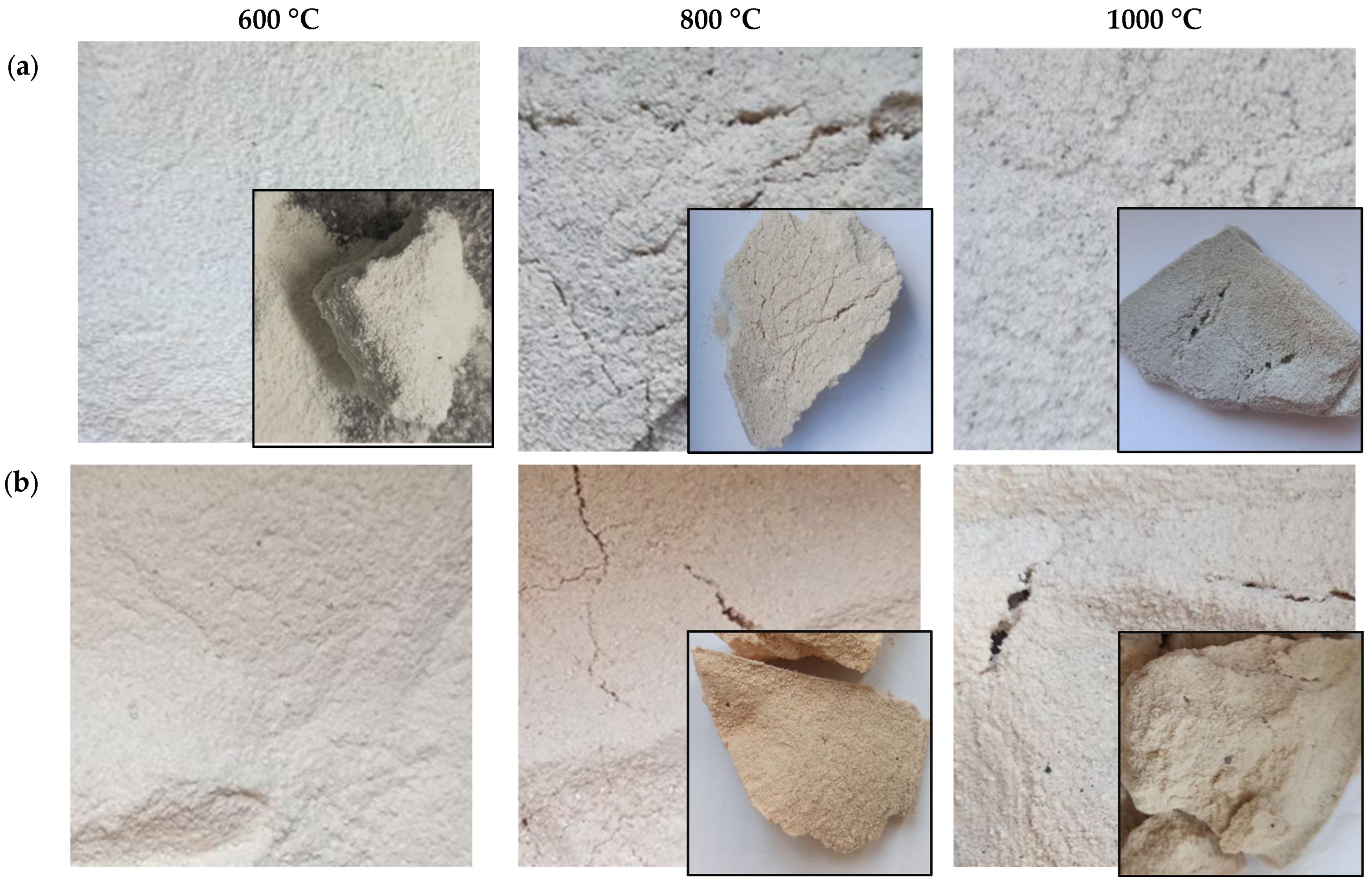
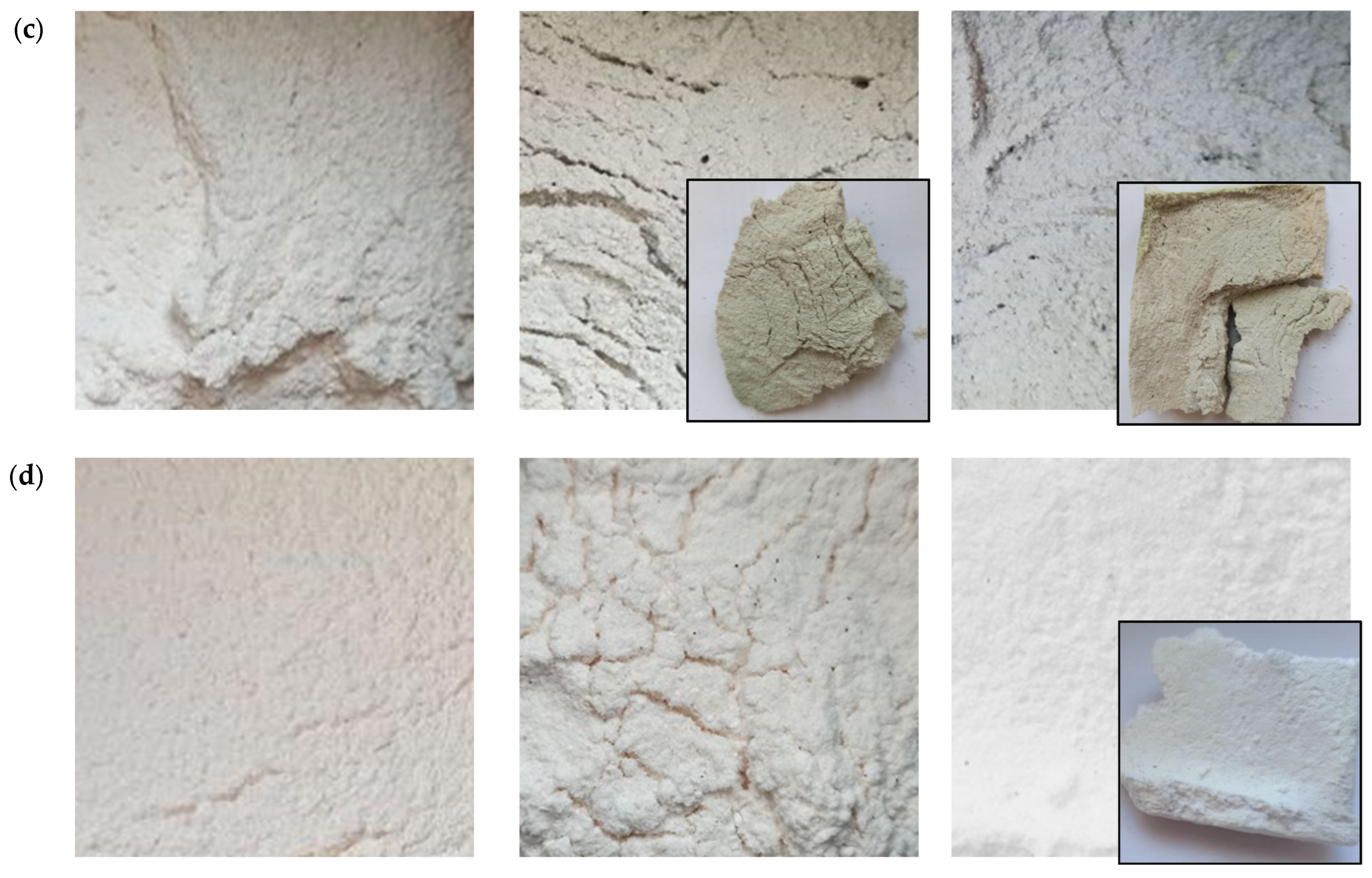
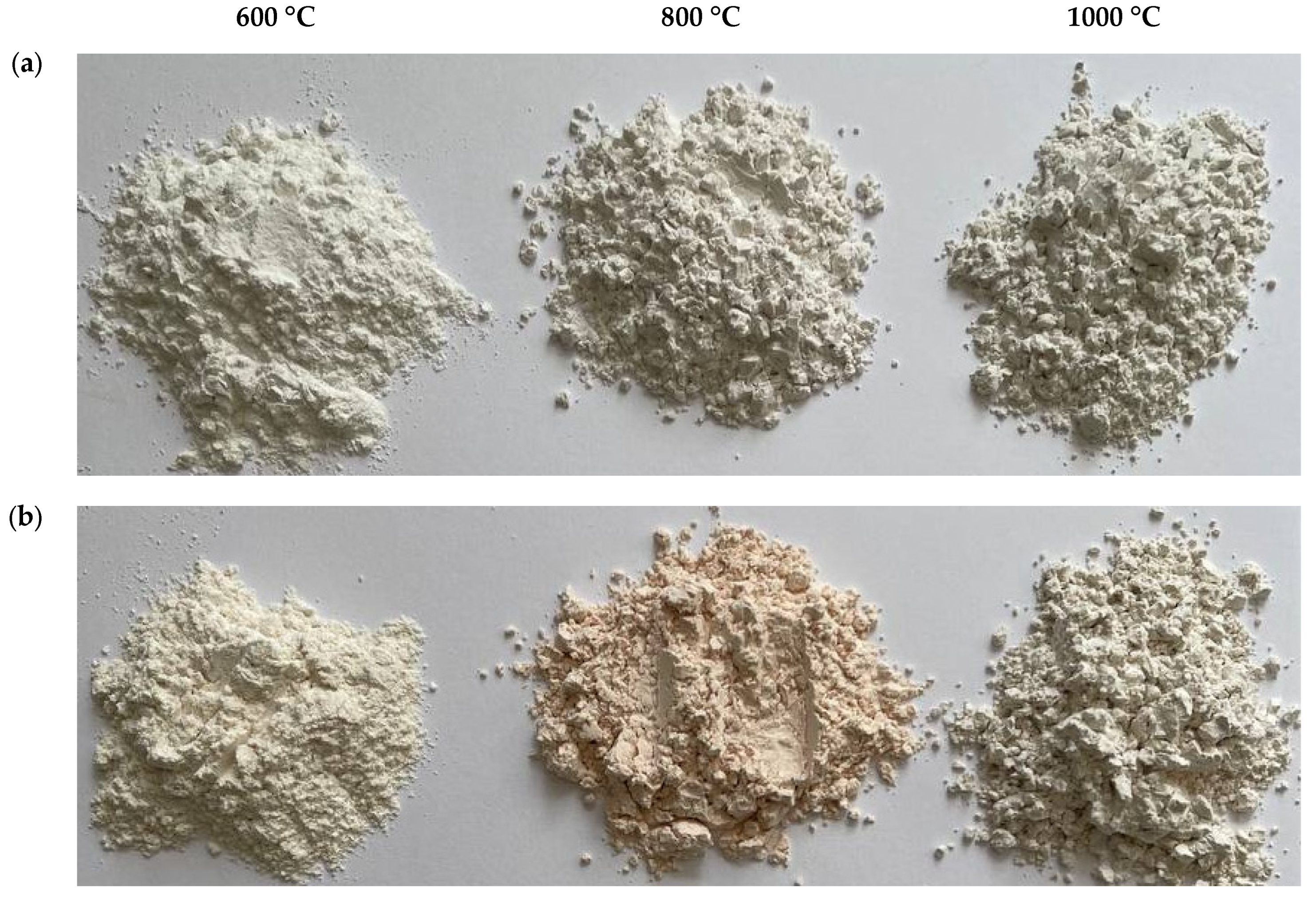
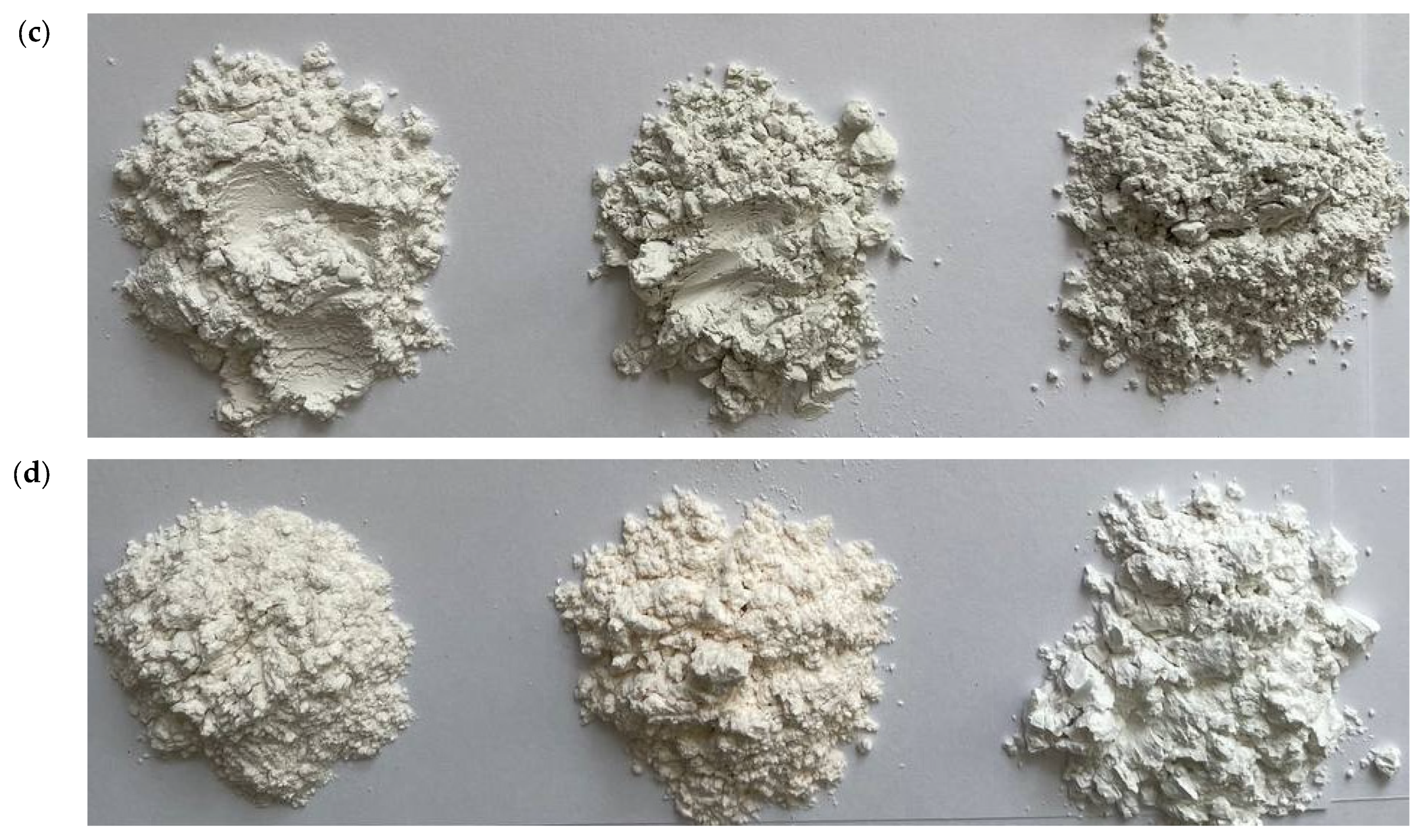
In the first stage of the study, visual assessments of PAB were performed immediately after calcination, before grinding (Figure 1), and after PAB grinding (Figure 2). This revealed that PAB color changes depending on the calcination temperature and initial PG type. Thus, after PG2 calcination, which is initially characterized by a fairly high degree of whiteness, a color change from light cream to light brown was observed with an increase in the calcination temperature. PAB synthesized at 800 °C had the highest color intensity (Figure 2b). This color change is associated with the presence of iron in PG2, which oxidizes at high temperatures to Fe2O3, which is consistent with data obtained in previous studies [35]. Although chemical analysis of PG1 and PG2 (according to [15]) showed approximately equal iron content, PAB1 had a less intense color and a dirtier tint vs. PAB1, which may indicate different organic impurity contents in PG1 and PG2 (Figure 2a) [35].
PAB4, synthesized at 600 °C, had a soft pink color, with a slight increase in color intensity after calcination at 800 °C and a transition to white during calcination at 1000 °C. These data further confirm previously made assumptions regarding differences in the amount and type of impurities in the studied PGs (Figure 2d).
Calcination also leads to particle sintering and sintered mass formation (Figure 1). PG1 exhibits the lowest particle sintering temperature, with partial sintered mass formation observed after calcination at 600 °C (Figure 1a). PG4 exhibits the highest particle sintering temperature (at 1000 °C) (Figure 1d). For PG2 and PG3, sintered masses formed after calcination at 800 °C and 1000 °C, respectively (Figure 1b,c). However, the sintered masses were not very strong and were easily destroyed by minor external impacts. The calcination temperature increased, the strength of the sintered mass increased, which may indicate an increase in the degree of particle sintering.
As is known, the characteristics of initial powdered materials significantly influence the processes occurring at high temperatures. Studies show that increasing the fineness of the material accelerates the sintering process. The smaller the particles and the greater their total surface area, the greater the surface energy reserve, which facilitates the process intensification. The density of contacts between particles and the presence of certain oxides can also significantly influence sintering processes [38,39].
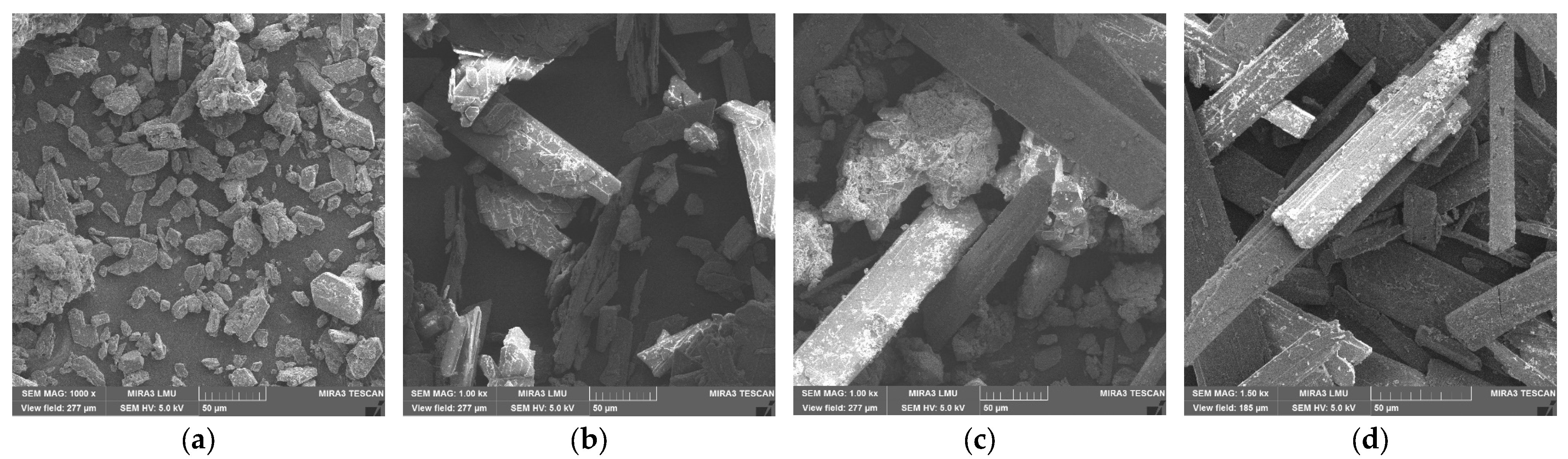
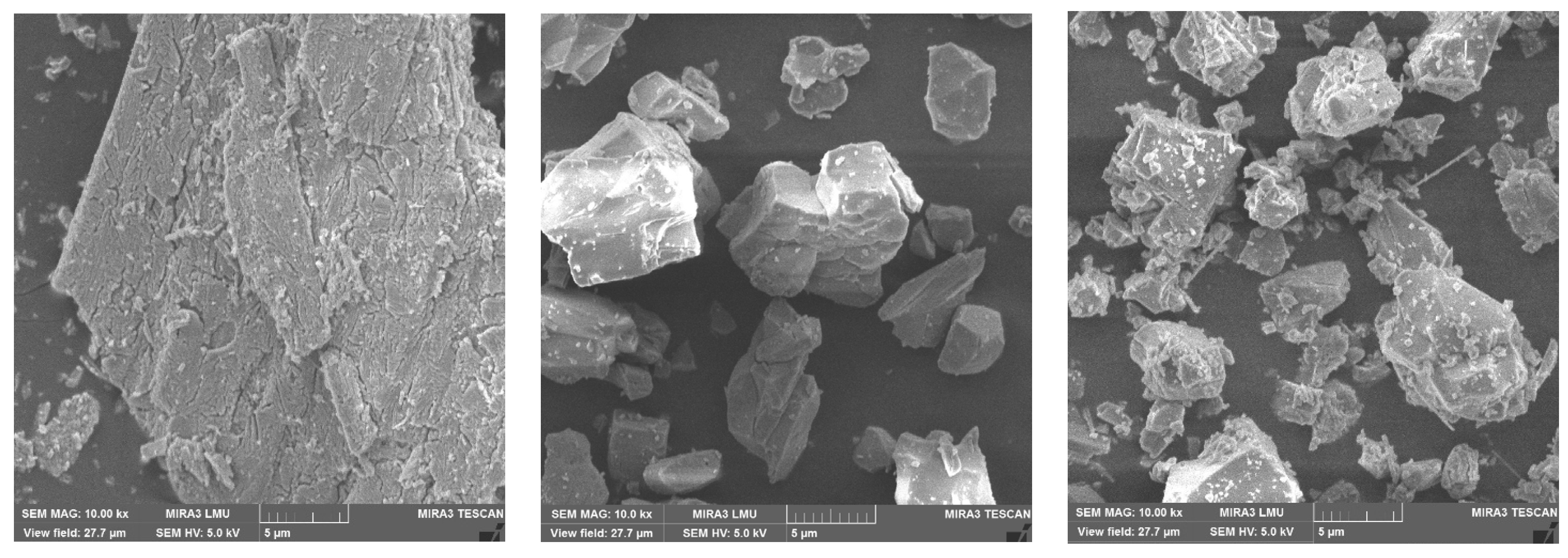
Of the four PGs considered, PG1 had the finest particles and their agglomerates (Figure 3a) [15,16].
This is most likely the main reason why particle sintering and sintered mass formation in PAB1 are observed after calcination at 600 °C. At the same time, despite the fact that PG2 particles belong to the same morphological type as PG1, their size is larger, while the number of particle agglomerates is significantly lower. This predetermines that sintered mass formation for PG2 is observed at a higher temperature—800 °C.
PG4 is distinguished by its maximum particle size (Figure 3d) with a minimum particle size distribution range [15], which causes a higher sintering temperature of PG4 particles—1000 °C. PG3, like PG4, is represented by rhombic particles (Figure 3c), but it also contains stone-shaped grains with a highly developed surface, which most likely reduces the sintering temperature of the particles to 800 °C.
Studies of calcination temperature effect on the specific surface showed (Table 1) that in all cases, calcination at 600 °C contributed to an increase in the specific surface area of PAB vs. the specific surface area of the original PG before calcination, which is due to the processes occurring at this temperature such as destruction of individual conglomerates and mechanical dispersion of particles by water vapor. The greatest increase in specific surface area was observed for P A B 4 600 (+72.1%). At the same time, for P A B 1 600 , P A B 2 600 , and P A B 3 600 , the increase in specific surface area was significantly smaller: up to 38.1, 32.0 and 31.1%, respectively. This is due to the significantly larger particle size of PG4 vs. other PGs. The specific surface area of P A B 2 800 is 22.3% lower vs. original PG2. For P A B 1 800 and P A B 3 800 , these values are significantly higher, amounting to 79.1 and 77.4%, respectively. At the same time, calcination at 1000 °C contributed to a decrease in the specific surface area of PG2, PG1, and PG3 by 91.8%, 84.9, and 82.3%, respectively.
It should be noted, the calcination at 800 °C resulted in a decrease in the specific surface area of P A B 4 800 vs. P A B 4 600 . However, this specific surface area is 49.0% higher vs. original PG4, and after calcination at 1000 °C, the decrease in specific surface area relative to the original PG was up to 2.5%, despite the fact that sintered mass formation was observed (Table 1).
In addition to specific surface area, calcination temperature predictably affects the grinding speed of PAB to achieve a required specific surface area of 300–400 m2/kg. Analysis of the obtained results (Table 1) showed, the grinding time consistently increases with increasing calcination temperature. This is due to the increased degree of particle sintering, resulting in a decrease in specific surface area.
Among PABs synthesized at 800 and 600 °C, PAB1 has the highest grinding costs, which is due to the initially lower specific surface area of PG1 and likely the greater degree of sintering of the particles in the conglomerates. However, when PAB is synthesized at 1000 °C, the grinding costs of P A B 1 1000 become comparable to those of P A B 2 1000 and lower than those of P A B 3 1000 , which is likely due to the greater brittleness of the P A B 1 1000 particles.
It should also be noted that calcination at 1000 °C significantly increases the grinding time of P A B 2 1000 and P A B 3 1000 vs. P A B 2 800 and P A B 3 800 by 22 min and 26 min, respectively, while for PAB1 this increase is 13 min.
The obtained results allow us to conclude, the key factors influencing the energy consumption of PAB synthesis are the structural and morphological features of the initial PGs, which directly affect their specific surface area, as well as the type and amount of impurities, which can influence particle behavior under high-temperature conditions.
In general, increasing the PG calcination temperature from 600 to 1000 °C will increase the energy consumption of PAB synthesis. This increase will be driven by the increased energy consumption required to maintain the required temperature and also by the energy consumption required for PAB grinding. From this perspective, P A B 3 1000 synthesis will have the highest energy consumption.

2.2. XRD Analysis of PABs

As is known, the main phase formed during calcination of GBWs in the temperature range of 400–600 °C is soluble anhydrite (CaSO4 III). At the temperature above 600–1100 °C, insoluble anhydrite (CaSO4 II) forms. Soluble anhydrite in open air quickly transforms to CaSO4 0.5H2O, and after interaction with water, it transforms to CaSO4 2H2O. However, insoluble anhydrite can exist stably in open air and, after interaction with water, increases strength slowly.
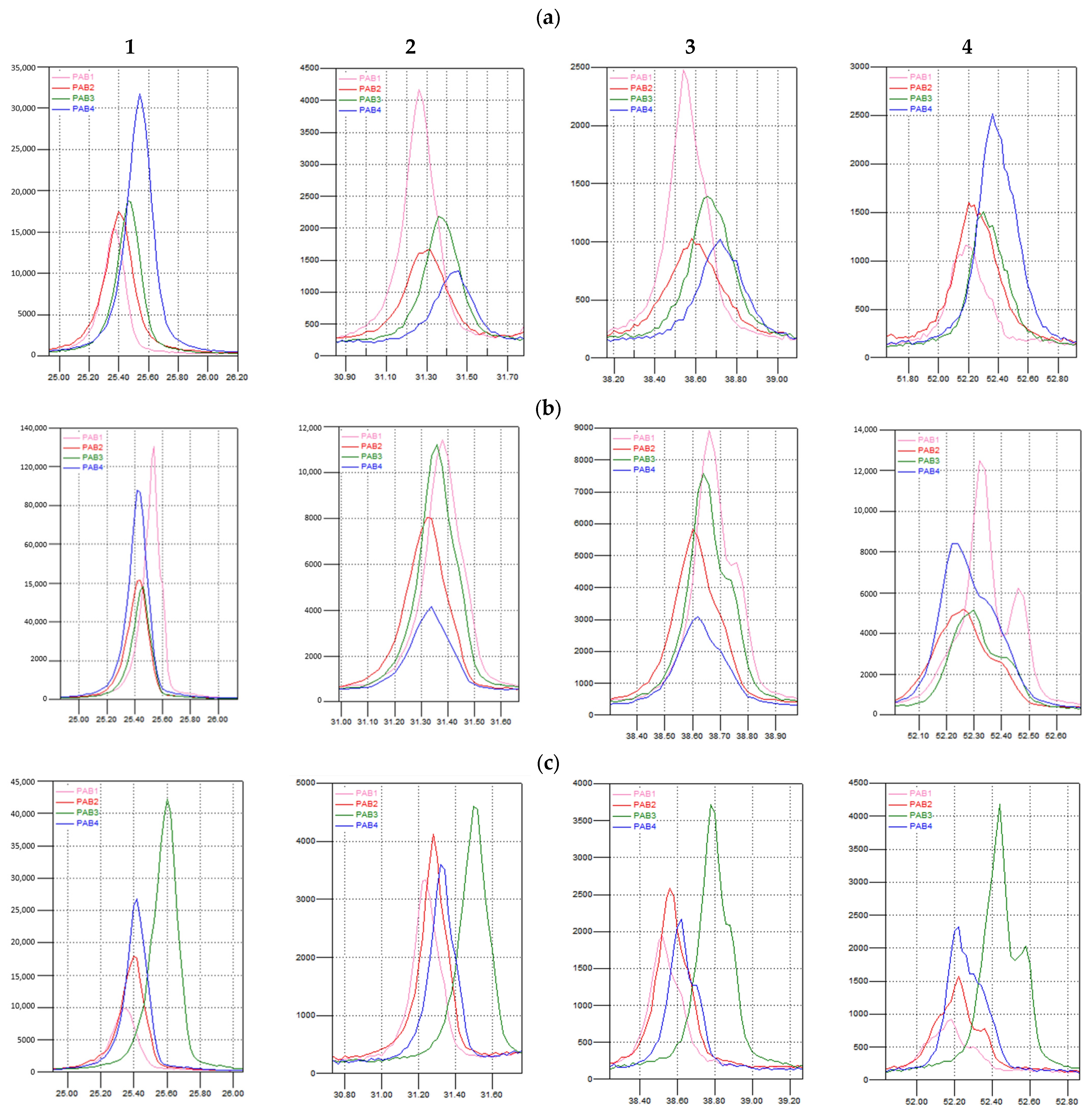
XRD profiles of PABs were compared at each temperature, using four main reflection peaks of CaSO4 phase. Analysis of the XRD profiles of PABs (Figure 4) revealed that, regardless of the initial PG type and calcination temperature, peak №1 (d ≈ 3.50 Å) has the highest intensity, while the peaks with the second and third-highest intensities vary. It should be noted that the intensity and width of the main peaks of CaSO4 vary for each individual PAB and for each calcination temperature. However, regardless of the initial PG type, the highest intensity of the main peak (№1) is characteristic of PABs synthesized at 800 °C.

2.3. Morphology of PAB Particles

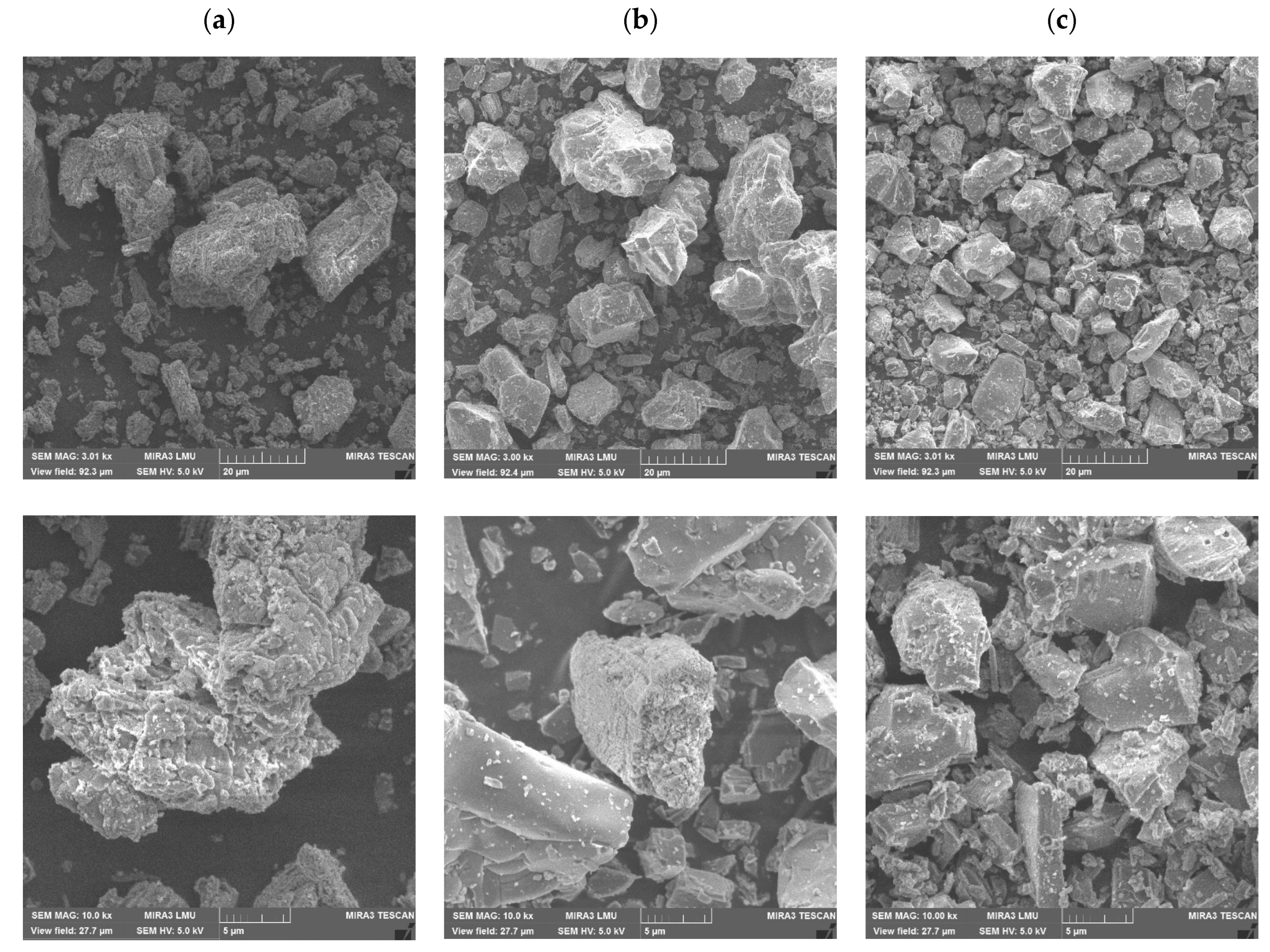
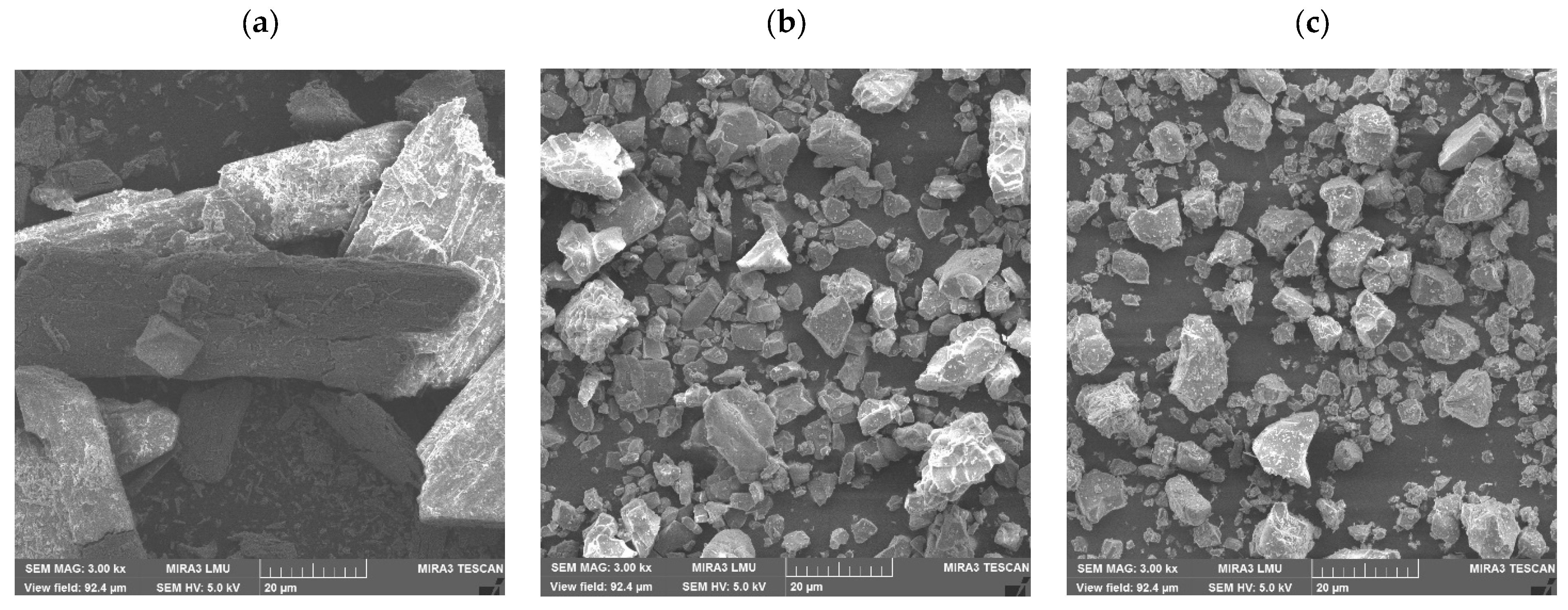
Previously obtained results [15,16] demonstrated that the particles for different PGs belong to different morphological groups. When PG-based binders (hemihydrates) synthesize by calcination at 175 °C, an increase in particle porosity was observed during various distraction processes. It is logical to assume that calcination at higher temperatures will also affect the surface morphology of PAB particles. The morphology of PAB particles ground to a specific surface area of 300–400 m2/kg was studied using scanning electron microscopy (Figure 5, Figure 6, Figure 7 and Figure 8).
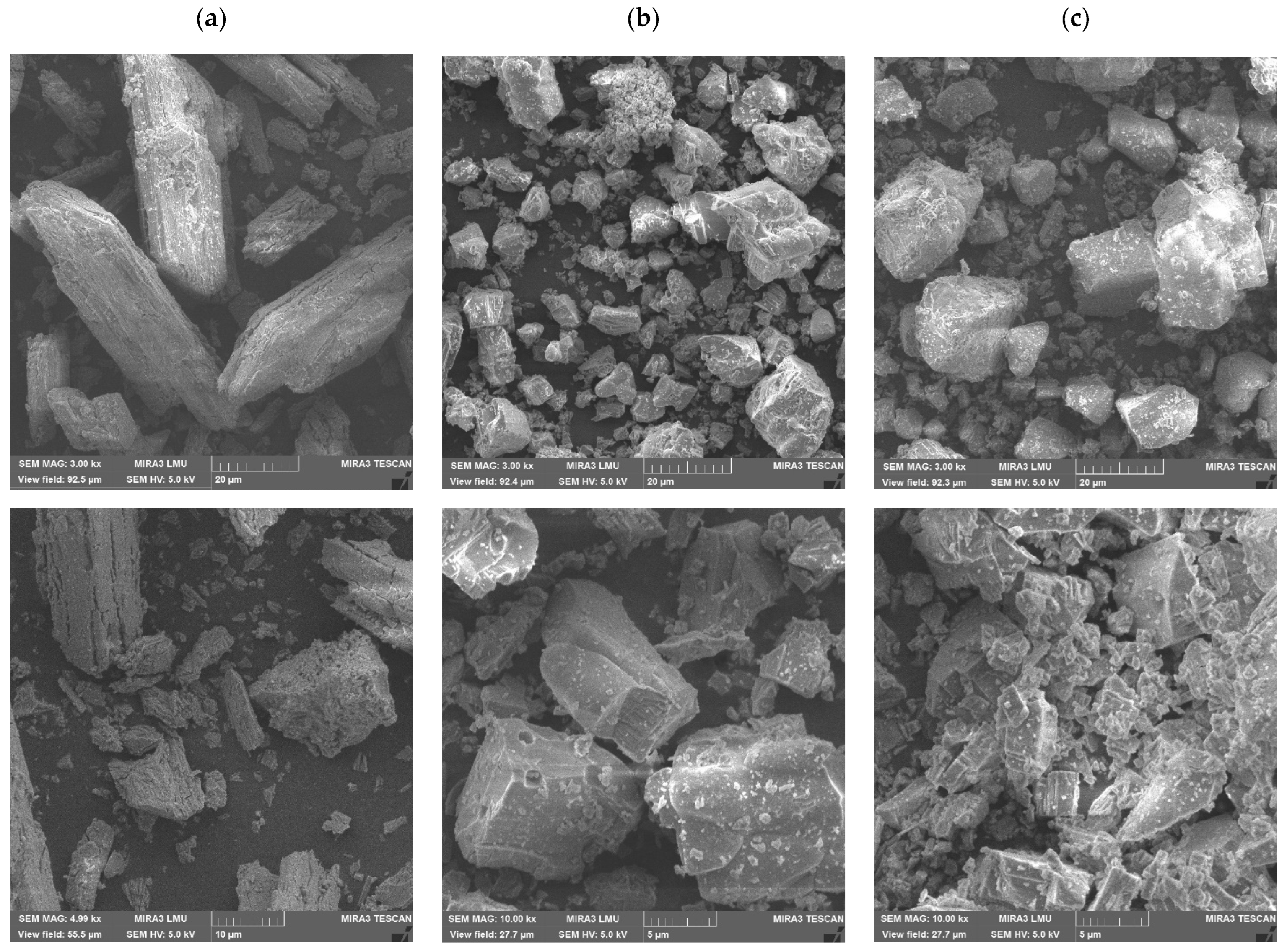
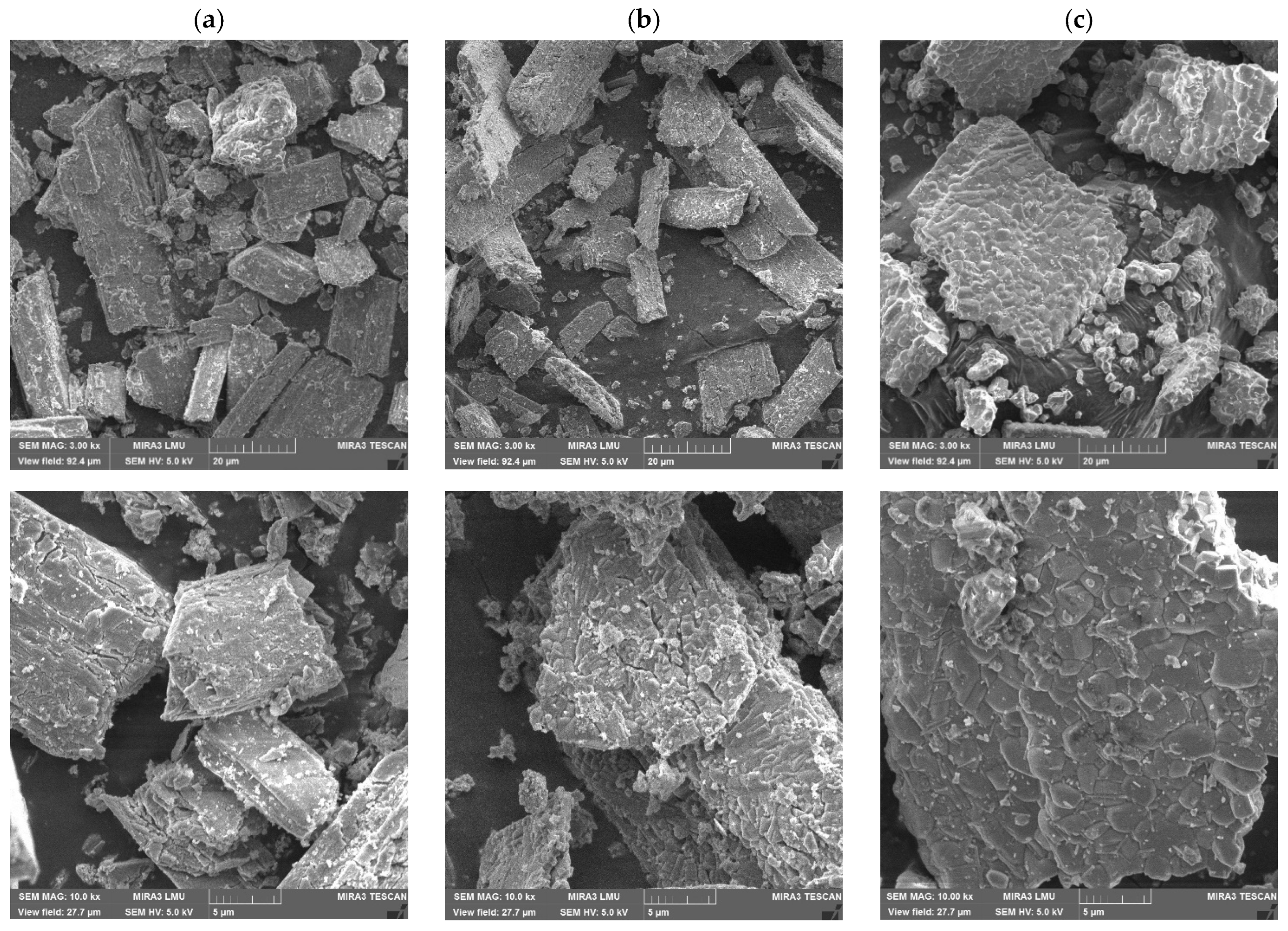
Analysis of the results showed that, regardless of the PG source, particles of PAB synthesized at 600 °C are characterized by greater looseness and a developed surface area vs. original PG and PG-based binders synthesized at 175 °C. However, the shape of PAB particles is similar to that of PG particles (it is possible to determine the morphological type of the particles). In particular, P A B 3 600 (Figure 6) has distinguishable particles of both the rhombic type (Group 1) and the aggregate short-needle type (Group 4). P A B 4 600 , like PG4, is represented by crystals belonging to Group 1 (Figure 7a), while P G B 2 600 has crystals belonging to Group 2 (fine-rhombic type).
It should be noted that calcination at 600 °C and, likely, subsequent grinding, facilitated the destruction of particle conglomerates initially present in PG2 (Figure 3b) and, to a lesser extent, in PAB2 (Figure 6a).
Calcination at 600 °C has the greatest impact on the morphology of P A B 1 600 particles (Figure 5a): surface development and friability increased significantly compared to other PABs and the original PG1 (Figure 3a). However, the degree of particle surface degradation is significantly higher vs. other PABs, preventing the classification of P A B 1 600 particles into a specific morphological type. At the same time, despite high-temperature effect and subsequent grinding, this PAB still contains large conglomerates (Figure 5a), the presence of which was revealed by particle morphology analysis of FG1 (Figure 3a) and PAB1. This may indicate a high adhesion degree between the individual particles that form these conglomerates.
Calcination at 800 and 1000 °C provides a greater impact on the PAB particles’ morphology. The changes occurred differently, depending on the initial PG type. The surface of the P A B 1 800 (Figure 5b) and P A B 1 1000 (Figure 5c) particles became denser and smoother. These PABs are completely free of individual conglomerates; the particles have an angular shape with numerous fractures. In P A B 1 800 , against a background of large particles ranging in size from 10 to 30 μm, particles of significantly smaller size are visible, as well as large particles with a fairly loose surface. At the same time, the particle size distribution of P A B 1 1000   is more uniform. The size of the largest particles does not exceed 20 μm, and particles with a loose surface are completely absent. P A B 2 800 (Figure 6b) and P A B 2 1000 (Figure 6c) particles lack the characteristic features of morphological groups inherent in the initial PG2 (Figure 3b) and P A B 2 600 (Figure 6a) particles. The particles of these PABs have an angular shape, with clear edges and a compacted surface. The surface of P A B 2 800 particles is characterized by a greater number of uneven and conchoidal fractures vs. the surface of P A B 2 1000 particles. As in the case of PAB1, P A B 2 1000   is characterized by a more uniform particle size distribution, with a smaller size range than P A B 2 800 . This may indicate a higher brittleness of P A B 1 1000 and P A B 2 1000 particles, which ensures their more uniform destruction during grinding.
The surface of P A B 3 800 (Figure 7b) and P A B 3 1000 (Figure 7c) particles became denser and smoother. However, P A B 3 800 (Figure 7b) contains a small number of particles with the morphological characteristics of Group 4, as well as with a loose and highly developed surface. Compared to particles of other PABs, these particles have a more rounded shape and a smaller difference in particle size distribution between P A B 3 800 and P A B 3 1000 .
The shape and surface character of the PABs indicate melting of the PG particles during calcination at 800 and 1000 °C, which leads to surface compaction of the particles, contributes to an increase in their hardness and, consequently, an increase in grinding time (see Table 1).
Calcination has the least effect on the morphology of P A B 4 600 (Figure 8a) and P A B 4 800 (Figure 8b) particles. As the calcination temperature increases, the particle surface degrades, increasing looseness and porosity. Slight surface compaction is observed after calcination at 1000 °C. As noted earlier, at this temperature, a sintered mass forms in these PABs, indicating the onset of melting. Importantly, regardless of the calcination temperature, PAB4 particles exhibit morphological features similar to those of initial FG4 particles (Figure 3d). As the calcination temperature increases, the crystal length decreases, due to increased brittleness and a change in the fracture mechanism during grinding.

2.4. Granulometric Characteristics of PABs

The results of the specific surface area (SSA) analysis, as well as the pore volume and character, using the bulk gas adsorption (BET) method (Table 2) are fully consistent with the data obtained by SEM for the morphology of PAB particles. Thus, despite the fact that PABs, compared with the initial PGs, had higher SSA according to the air permeability method (Blaine method) (320–400 m2/kg), calcination at high temperature contributes to a decrease in the SSA of PAB particles, leading to a decrease in their total pore volume and average diameter (Table 2). Moreover, PABs synthesized at 800 °C have the lowest SSA and total pore volume, determined by both the BET and BJH methods, and PABs synthesized at 600 °C have the highest values. The exception is PAB4, where the lowest values of the controlled parameters are provided by calcination at 1000 °C. At this temperature, the surface of the PAB4 particles begins to melt, reducing their porosity (Figure 7b).
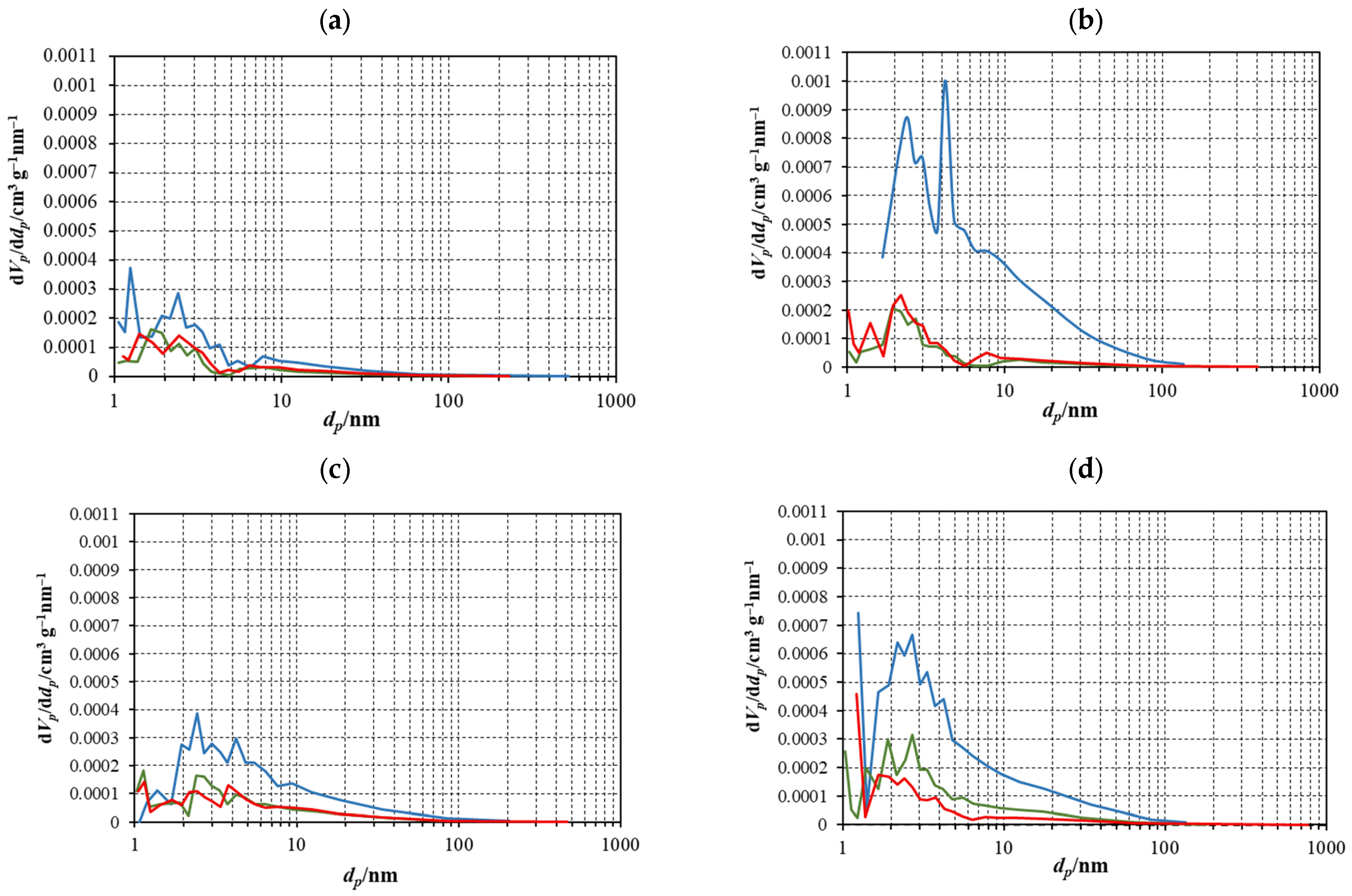
While calcination at 1000 °C, as noted earlier, contributes to a decrease in the controlled parameters for P A B 4 1000 vs. P A B 4 800 , a slight increase in the SSA and pore volume is observed for P A B 1 1000 , P A B 2 1000 , and P A B 3 1000 compared to P A B 1 800 , P A B 2 800 and P A B 3 800 . This can be explained by the slight difference in the SSA (Blaine method) to which these PABs were ground, the destructive processes occurring at 1000 °C, and the difference in granulometry established during particle morphology studies. It should also be noted that calcination has a significant effect on the distribution of pores by volume, which is confirmed by a decrease in intensity and a change in the nature of the curves reflecting the pore volumes corresponding to a specific diameter (Figure 9).
P A B 2 600 deserves special mention in this case, as it exhibits the highest total pore volume, which is 10 times higher vs. other PABs. It is also worth noting that P A B 2 600 has a lower SSA, determined by the Blaine, BET, and BJH methods, compared to P A B 4 600 . This is due to the high porosity of P A B 2 600 particles. At this stage, it is worth assuming that this will negatively impact the water demand and strength of P A B 2 600 .
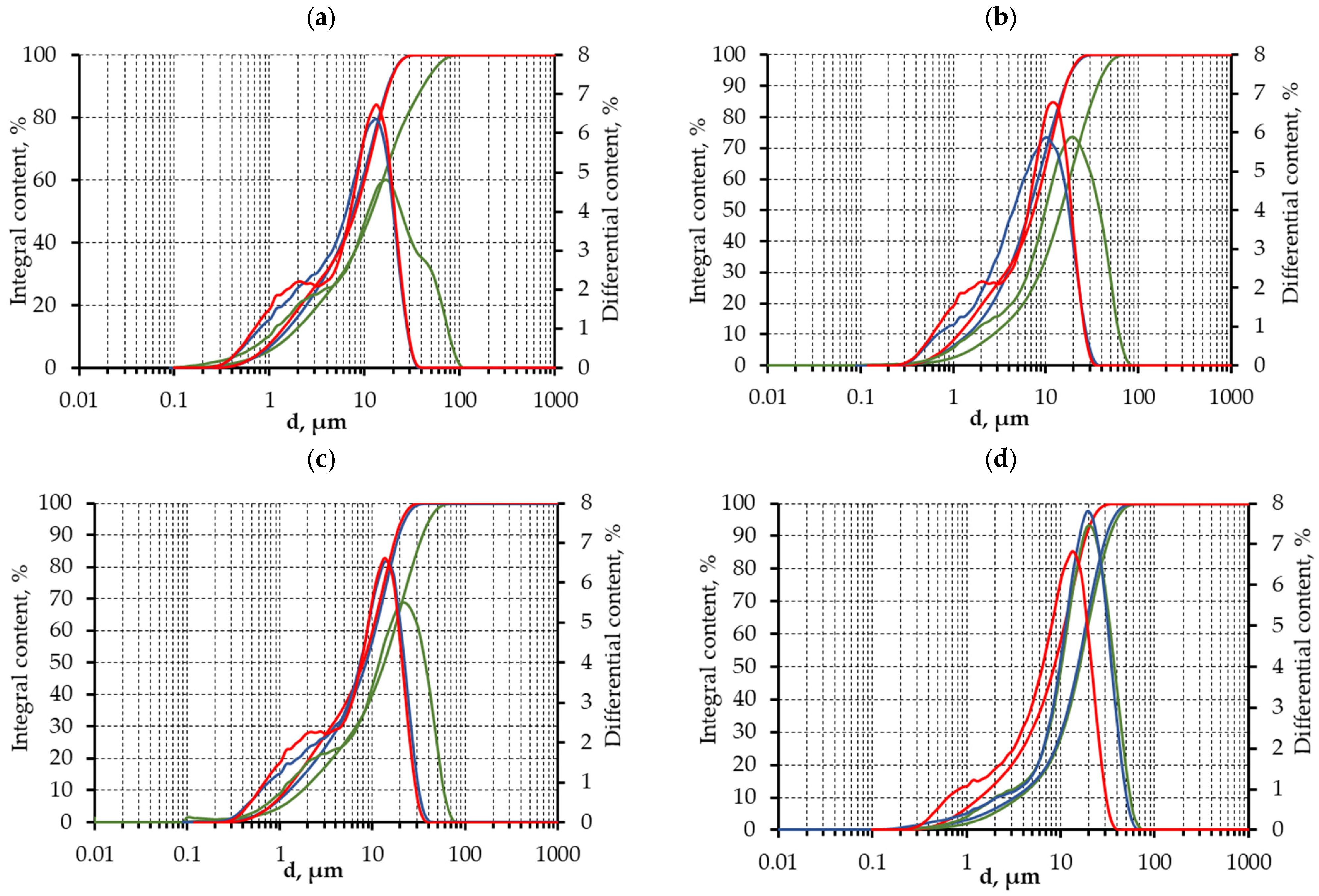
An analysis of the calcination temperature effect on the particle size distribution characteristics of PABs, obtained using an ANALYSETTE 22 NanoTec plus laser particle size analyzer, showed that the highest modal particle diameter values, regardless of the initial PG type, are characteristic of PABs synthesized at 600 °C (Table 3, Figure 10). With increasing calcination temperature, a decrease in the modal particle diameter is observed, and PABs synthesized at 800 and 1000 °C exhibit similar values for this parameter. The SSA of PABs also increases with increasing calcination temperature. The highest SSA values are observed for PABs synthesized at 1000 °C.
All PABs are characterized by a unimodal particle distribution. However, with increasing calcination temperature, the main peak shifts toward smaller sizes (Figure 10). For PAB1000, a “bulge” in the curve is observed in the 1–2 µm size range. Regardless of the PG type, the PAB1000 curves are similar.
An analysis of the particle distribution by percentile (Table 4) depending on the calcination temperature showed that with an increase in calcination temperature from 600 to 800 °C, the difference between D90 and D10 for all PABs except PAB4 decreases by almost 1.8–2.4 times. This indicates a narrowing of the particle size distribution range, most likely due to sintering of the particles and an increase in their hardness. The D90–D10 values for PAB1000 are not significantly higher than for PAB800. This is probably due to the increase in crystal lattice defects with increasing temperature, which is reflected in the nature of particle destruction during grinding.
Overall, the different principles of change in particle morphology, porosity, and SSA indicate different destructive processes under high temperatures. This may be due to differences in the crystal lattice and the amount and type of impurities, which can either increase or decrease the temperature at which particle surface melting and sintering begin. Among the four PGs considered from this perspective, PG4 exhibits the greatest difference. Even at 1000 °C, PAB4 particles still exhibit a relatively high surface area and porosity, which is higher than that of PABs synthesized from other PGs at 800 °C. These parameters also influence the D90–D10 indices, which are observed only after calcination at 1000 °C (Table 4).
The significant difference in the behavior of FG4 particles under high temperatures compared to other PGs is likely due to their morphostructural properties. FG4 is initially characterized by a significantly larger particle size and the absence of agglomerates, which necessitates greater energy consumption for recrystallization processes.
According to data presented in [36], the morphology of PAB particles and their porosity are among the factors that influence the structure formation and strength of hardened PABs. From this perspective, PABs synthesized at 600 °C from PG1, PG2, PG3, and PG4 will demonstrate significant water demand and, consequently, low compressive strength.

2.5. pH Value of PABs

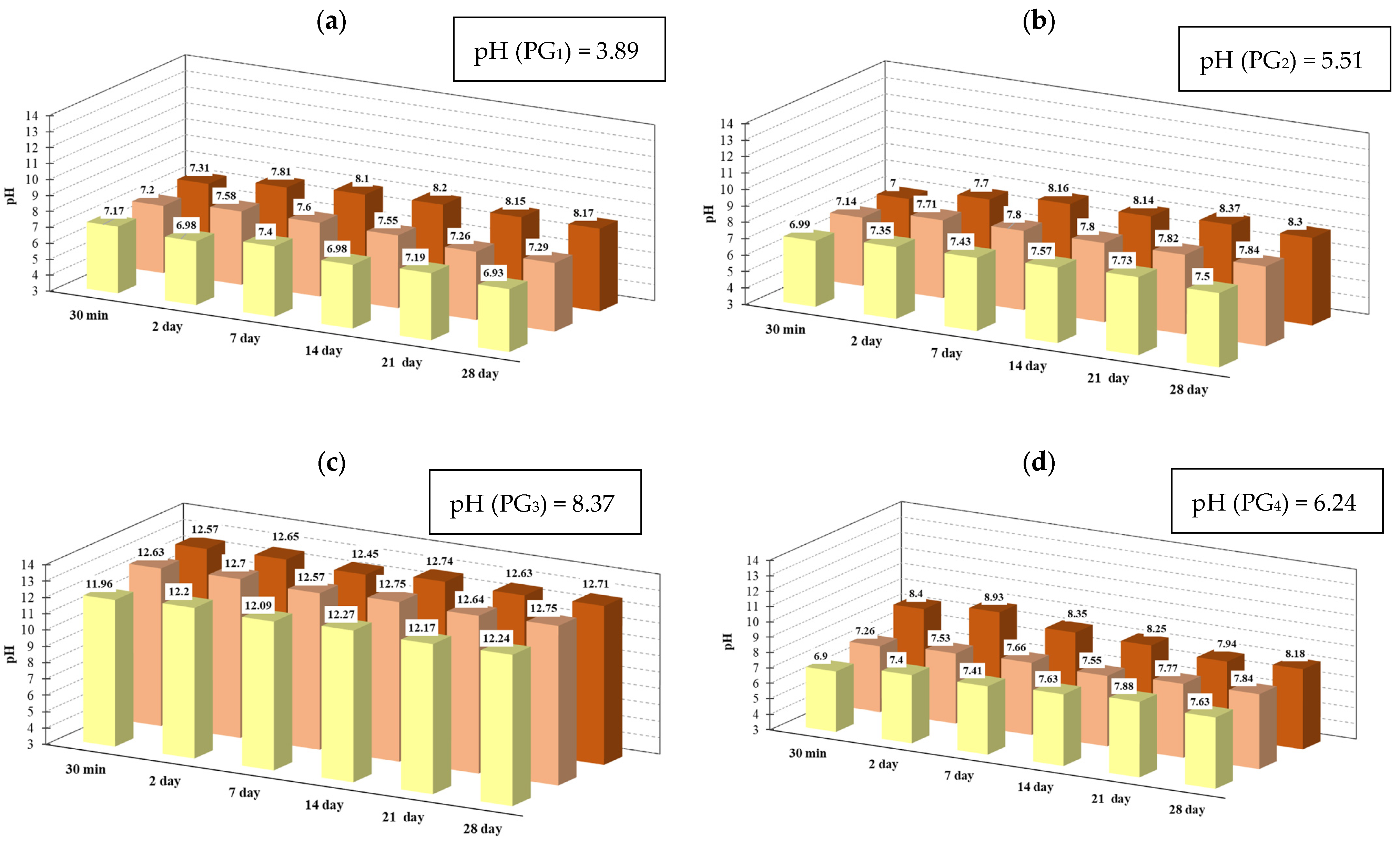
Since CaSO4 II hydrates in solution, the pH of the environment is more significant for it than for hemihydrate. As the calcination temperature of natural and technogenic gypsum raw materials increases, the pH of the products increases: in the first case, from slightly acidic and neutral to strongly alkaline; in the second, typically from strongly acidic to slightly alkaline (depending on the degree of washing and the genesis of the original phosphate rock). An alkaline environment either does not affect the solubility of CaSO4 II or decreases it, which slows hydration and reduces the strength of the PAB paste [40]. At the same time, an acidic environment promotes the formation of highly soluble salts, thereby increasing the dissolution rate of CaSO4 II and increasing its strength. A pH analysis of PABs showed that calcination at 600 °C, 800 °C, and 1000 °C (Figure 11) promoted an increase in pH, and all PABs exhibited significantly higher pH values vs. initial PGs.
For example, the pH of PG1 after calcination increased from strongly acidic (3.89) to slightly above neutral (7.17–7.31) (Figure 11a). The pH of PG2 after calcination at 600 °C also increased from slightly acidic (5/51) to neutral (6.99), and after calcination at 800 °C and 1000 °C, it became slightly basic: 7.17 and 8.07, respectively (Figure 11b).
The most significant increase in pH compared to the initial PG was observed for PAB3, from weakly basic (8.37) to strongly basic. This is most likely due to the fact that during the PAB3 synthesis, in addition to the removal of residual phosphoric acid and the rearrangement of the crystal lattice, the decomposition of CaCO3 present in the initial PG occurs. CaCO3 decomposes with the formation of calcium oxide and, when mixed with water, is converted into Ca(OH)2, increasing the pH, which is consistent with the previous results [19]. The maximum pH values (12.63) are observed for P A B 3 800 , while calcination at 1000 °C contributes to an insignificant decrease in pH to 12.57, which is most likely due to the rearrangement of the crystal lattice (Figure 11c).
The pH of FG4 also increases after calcination, from slightly acidic (6.24) to neutral (6.9) at 600 °C, and then becomes weakly basic at 800 °C (7.26) and 1000 °C (8.4) (Figure 11d).
It should be noted that the pH of PABs changes slightly over time: generally, there is an increase, but also a decrease in some cases.

2.6. Physical and Mechanical Characteristics of PABs at Different Calcination Temperatures

To determine the effect of calcination temperature on the physical and mechanical properties of PABs, 2 × 2 × 2 cm cubes were molded and the average density and compressive strength were measured at 2, 14, 28, and 90 days (Table 5). The cubes were molded to a uniform PAB paste consistency. The water content required to achieve the desired consistency was adjusted using a Vicat apparatus. The samples were demolded after 24 h and placed in a water bath for further consolidation. Before determining the physical and mechanical properties of the cured PABs, they were dried in the laboratory for 24 h. The results showed that, regardless of the initial PG type, normal consistency (NC) decreased with increasing calcination temperature. While PABs synthesized at 800 °C and 1000 °C had similar values, the NC of PABs synthesized at 600 °C was two or more times higher. P A B 2 600 and P A B 4 600 demonstrated the highest NC value, which is quite natural, since these two PABs had the highest particle SSA and total pore volume (Table 5).
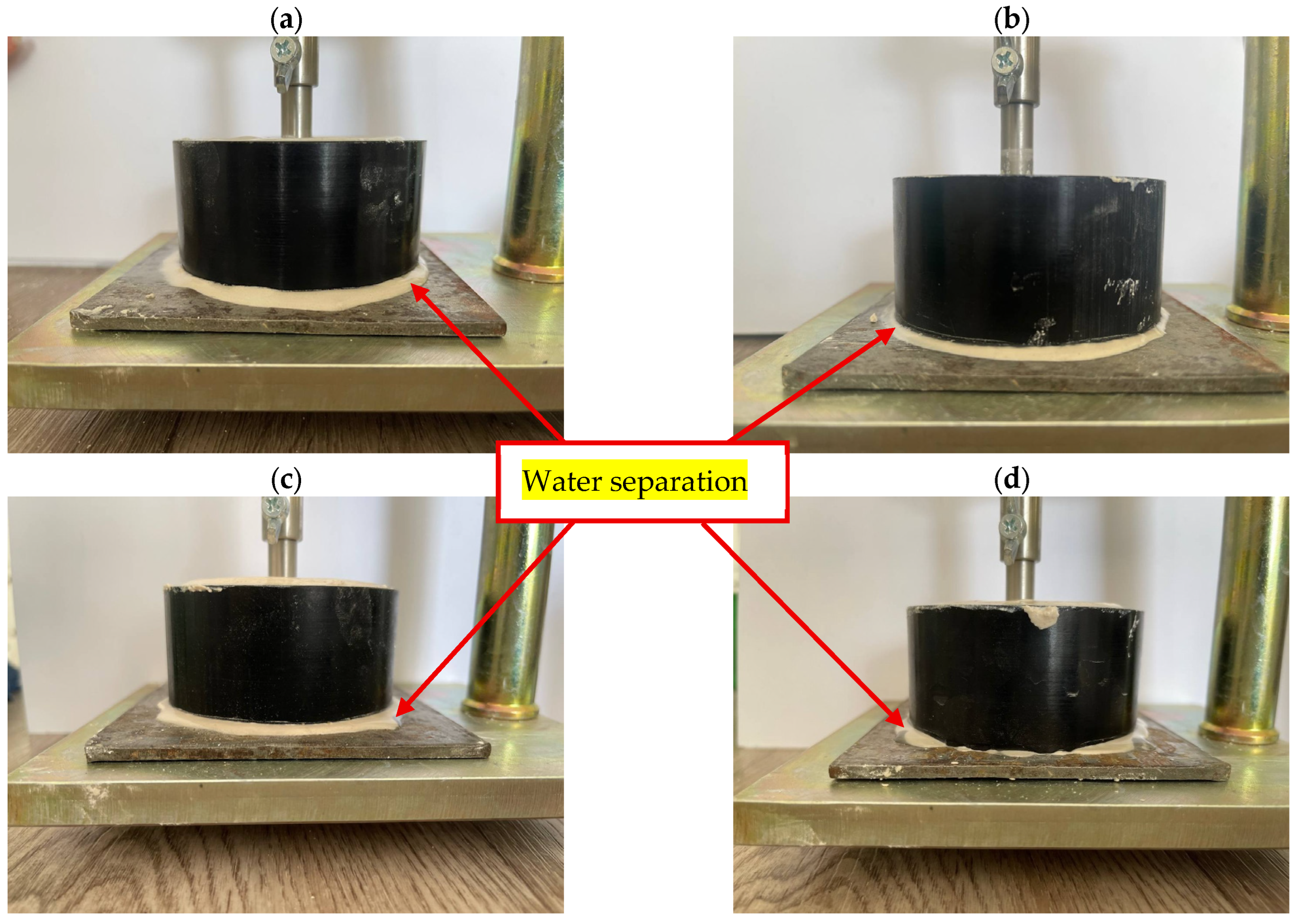
Also, when determining NC for P A B 2 600 , P A B 3 600 , P A B 4 600 , P A B 4 800 , increased water separation under the ring was identified at the moment of lowering the pestle of the Vicat device (Figure 12), which is due to the large porosity of the particles of these PABs and their water demand.
Analysis of the physical and mechanical properties of PABs demonstrated that, regardless of the initial PG type, an increase in the average density of PABs is observed with increasing calcination temperature. This is primarily due to a decrease in the amount of mixing water. For PAB1 and PAB3, the average density increases over time, regardless of the synthesis temperature. The largest increase (7–11%) is observed in the period from 2 to 14 days. For PAB2, similar trends in average density are observed only for PABs synthesized at 800 and 1000 °C. At the same time, for P A B 2 600 , P A B 4 600 , P A B 4 800 and P A B 4 1000 , the average density after 14 days changes insignificantly, which is likely due to slow structure formation. These PABs, while maintaining the shape of the samples, have zero strength and are destructured under insignificant loads. At 2 days, PAB synthesized at 1000 °C exhibits the highest compressive strength. However, at 14 days and beyond, its strength begins to decline compared to PAB synthesized at 800 °C. This is likely due to the higher water demand of PAB800, which is offset by structure formation processes over time.
In addition to the general trend of increasing strength for PABs, differences in strength were identified depending on the initial PG type and calcination temperature. For example, for P A B 1 600 and P A B 1 800 , the greatest increase in strength is observed between 2 and 14 days, and the difference between strengths at 14 and 28 days is insignificant, while P A B 1 1000 is characterized by a more gradual structure formation and strength gain over time.
P A B 2 800 has zero strength at 2 days. However, at 14 days, the strength of these PABs reaches 39.91 MPa and increases to 45.65 MPa at 28 days. This extreme increase in strength at 14 days may be due to the presence of impurities in these PABs, which can adsorb on the surface of the PAB grains, affecting initial structure formation. However, over time, their negative impact may diminish, leading to an extreme increase in strength.
The strength of P A B 2 1000   at 2 days is 2.93 MPa and increases to 12.55 MPa at 14 days, indicating that the calcination at 1000 °C removes impurities that negatively affect initial structure formation. The maximum strength gain for P A B 2 1000 is observed between 14 and 28 days, when strength increases by more than fourfold.
P A B 3 800 and P A B 3 1000   achieve their primary strength at 14 days, while P A B 3 600 has a longer curing process: the maximum strength gain (3.2 times) is observed between 14 and 28 days.
Regardless of the PG type, PABs synthesized at 800 °C exhibit the highest compressive strength at 14 days. Among the PABs studied, at each temperature, PABs synthesized from PG1 exhibit the highest compressive strength, followed by PG2 and PG3. PABs synthesized from PG4 exhibit zero compressive strength, regardless of the calcination temperature. At 28 days, the trends for PAB2 change: the strength of P A B 2 1000 begins to exceed that of P A B 2 800 .
A study of the physical and mechanical properties of PAB at 90 days showed that structure formation continues, as evidenced by a further increase in the average density and strength of the samples. Specifically, the average density increased by 12.9%, 6.1%, and 4.5%, while the compressive strength was 2.37 MPa, 5.13 MPa, and 14.09 MPa for P A B 4 600 , P A B 4 800 and P A B 4 1000 , respectively.
PAB1, PAB2, and PAB3 showed a slight increase in average density (less than 1%), while strength changed significantly in some cases. For example, for PAB1, the greatest increase in strength (44.46%) was observed in PABs synthesized at 1000 °C. The compressive strength of P A B 1 800 remained unchanged, while that of P A B 1 600 increased by 28.4%.
For PAB2, as with PAB1, the greatest increase in strength (22.04%) was observed in PABs synthesized at 1000 °C. P A B 2 600   also had zero strength, while that of P A B 2 800 increased by 17.7%. The constant average density and zero strength during the curing period studied for P A B 2 600 can indicate a lack of structure formation. A likely cause for this behavior is the relatively high total pore volume for P A B 2 600 (Table 2). It is reasonable to assume that secondary CaSO4·2H2O crystals primarily form within the pores formed during dehydration, rather than in the spaces between the parent particles. This prevents the new crystals from coalescing and forming a dense structure, which, when combined with the high water content, negatively impacts the physical and mechanical properties of the anhydrite paste. The use of curing activators and additional measures to reduce particle porosity and water demand for these PABs can likely improve their properties, but this requires further study. PAB3 also exhibits an increase in strength at 90 days. In this case, the greatest increase in strength (27.10%) is observed for P A B 3 800 , the smallest (18.00%) is observed for P A B 3 600 , and the increase in strength for P A B 3 1000 is 23%.

3. Materials and Methods

3.1. Materials

  • PG of Uralchem JSC, Voskresensk Mineral Fertilizers Branch (Voskresensk city, Russian Federation)—PG1; PG1-based phosphoanhydrite binder—PAB1.
  • PG of PhosAgro AG CJSC (Balakovo city, Russian Federation)—PG2; PG2-based phosphoanhydrite binder—PAB2.
  • PG of Phosphorit PG LLC (EuroChem Group of Companies) (Kingisepp city, Russian Federation)—PG3; PG3-based phosphoanhydrite binder—PAB3.
  • PG of EuroChem-Belorechenskie Mineral Fertilizers LLC (EuroChem Group of Companies) (Belorechensk city, Russian Federation)—PG4; PG4-based phosphoanhydrite binder—PAB4.
These PGs differ in particle morphology (Figure 3) and other characteristics, which are presented in detail in previously published works [15,16].

3.2. PAB Preparation

PABs were prepared by calcination in a muffle furnace at 600 °C, 800 °C, and 1000 °C using PGs pre-sifted through a 1.25 mesh sieve. The exposure time in the muffle furnace after reaching the required temperature was 60 min. The PABs were then removed from the muffle furnace after complete cooling. Then, the PABs were ground in a 0.5 L ceramic ball mill with metal balls, each with an equal mass, until an SSA of ≈320–400 m2/kg was achieved.

3.3. Methods

The selection of research methods and equipment was based on previous studies [35,36,37] focused on PG-based PAB synthesis, as well as a basic understanding of the processes occurring during high-temperature exposure of gypsum-bearing raw materials. These processes significantly influence the qualitative characteristics of PAB particles (color, morphology, particle porosity, granulometry, pH), and, consequently, the water demand and physical and mechanical properties of hardened PABs.
Scanning electron microscopy (SEM) was used to identify the microstructural features of the newly formed particles in consolidated PABs. A Mira 3 FesSem scanning electron microscope (Tescan, Kohoutovice, Czech Republic) was used, operating in high vacuum mode (InBeam) with a high-brightness Schottky cathode. The samples were sputter-coated with chromium.
Particle SSA was measured using a PSKh-12 (SP) multi-functional measuring instrument (Russia).
SSA/pore size distribution was measured using a BELSORP miniX automatic instrument (MicrotracBEL Corp., Osaka, Japan). The particle size distribution of PABs was determined using an Analysette 22 NanoTec plus laser diffraction particle size analyzer (OOO Frinch, Germany).
The pH value was determined using a pH-150M pH meter (RUE “Gomel Plant of Measuring Instruments”, Gomel city, Belarus).
The NC for PABs was determined using a Vicat pestle. Physical and mechanical properties were studied on 2 × 2 × 2 cm cubic samples for 2, 14, and 28 days. Three samples were prepared for each test point. Samples were stored in a water bath at a constant temperature of 23 ± 1 °C and a relative humidity of 80 ± 5%. Before testing, the samples were dried in ambient laboratory conditions for 24 h.
The strength testing of the PAB samples was carried out using a laboratory press with a load of 10 tons.

4. Conclusions

Based on the results of a comprehensive analysis of PABs synthesized from PGs of four different industrial plants, the following conclusions are proposed:
  • Differences in the initial characteristics of the studied PGs from four different sources, as well as the calcination temperature, determine the differences between PG-based PABs, which subsequently influences their properties and those of the hardened PAB paste.
  • Visual assessment of the PABs after calcination revealed that their color varies from white to light brown, depending on the calcination temperature and PG type. PABs synthesized at 800 °C exhibited the most saturated color; calcination at 1000 °C reduces the color intensity. It was also found that calcination promotes particle sintering and the formation of a sintered mass, the strength of which increases slightly, but depends on the calcination temperature.
  • It was found that with an increase in calcination temperature from 600 to 1000 °C, the SSA of the PABs decreases and the hardness of the particles increases, which in-creases the time required to grind the PABs to the required SSA. In general, increasing the calcination temperature during PAB synthesis will increase the energy costs of their production, which is made up of the energy costs of maintaining the set temper-ature and the energy costs of PAB grinding. From this perspective, P A B 3 1000 synthesis will have the highest energy consumption. The most favorable calcination temperature is 800 °C, based on the rational balance between energy costs for binder synthesis and grinding, as well as the physical and mechanical properties of the hardened PABs.
  • It was found that the particles of PAB synthesized at 600 °C have a looser and more developed surface compared to the initial PG particles. Particles with morphological characteristics of the initial PG can be identified in P A B 2 600 , P A B 3 600 , and P A B 4 600 . Increasing the calcination temperature (800 °C and 1000 °C) promotes particle melting, compaction of their surface, and, as a result, a decrease in porosity and SSA for PG1, PG2, and PG3. Particles of PAB4 synthesized at 1000 °C retain the morphological characteristics of the initial PG4. Here, the particle surface partially melts but remains loose and highly developed.
  • It was found that PABs from PG1 and PG2 exhibit the highest compressive strength at 28 days at 800 and 1000 °C, with a strength of 45–57 MPa. At 90 days, the strength of these PABs achieves 56–69 MPa. The strength of PABs from PG3 is 2–4.5 times lower; PABs from PG4 have zero strength up to 90 days.
  • It was shown that the probable causes of slow strength growth or zero strength for some PABs may be the high porosity of their particles, which predetermines the high water demand of these PABs and slow structure formation. For these PABs, future plans should consider the use of hardening activators and measures to reduce water demand.

Author Contributions

Conceptualization, N.A., K.L. and I.N.; methodology, N.A., K.L., I.N., N.K. and M.L.; validation, N.A., K.L., I.N., N.K. and M.L.; formal analysis, N.A., K.L., I.N. and M.L.; investigation, N.A., K.L., I.N., N.K. and M.L.; resources, N.A., K.L. and I.N.; data curation, N.A., K.L., I.N., N.K. and M.L.; writing—original draft preparation, N.A., K.L., N.K. and M.L.; writing—review and editing, N.A. and N.K.; supervision, N.A., K.L., I.N., N.K. and M.L.; project administration, N.A., K.L. and I.N.; funding acquisition, N.A., K.L., N.K. and I.N. All authors have read and agreed to the published version of the manuscript.

Funding

The work was completed due to support received from the State Assignment for the creation of new laboratories in 2021, under the guidance of young promising researchers of the national project “Science and Universities”. The research title is “Elaboration and development of scientific and technological foundations for creating an integrated technology for processing gypsum-containing waste from various industrial enterprises and searching of new ways to use processed products”, FZWG-2024-0001. The work was achieved using equipment from the High Technology Center at BSTU named after V.G. Shukhov.

Data Availability Statement

The original contributions presented in this study are included in the article. Further inquiries can be directed to the corresponding author.

Acknowledgments

The work was realized under administrative support of the world-class scientific and educational center “Innovative Solutions in the Agricultural Sector” (Belgorod).

Conflicts of Interest

The authors declare no conflicts of interest.

References

  1. Geisendorf, S.; Pietrulla, F. The circular economy and circular economic concepts—A literature analysis and redefinition. Thunderbird Int. Bus. Rev. 2018, 60, 771–782. [Google Scholar] [CrossRef]
  2. Nia, S.B.; Shafei, B. Carbon footprint reduction through repurposing solid wastes into sustainable construction materials: A state-of-the-art review. Clean. Responsible Consum. 2025, 18, 100310. [Google Scholar] [CrossRef]
  3. Klyuev, A.V.; Kashapov, N.F.; Klyuev, S.V.; Zolotareva, S.V.; Shchekina, N.A.; Shorstova, E.S.; Lesovik, R.V.; Ayubov, N.A. Experimental studies of the processes of structure formation of composite mixtures with technogenic mechanoactivated silica component. Constr. Mater. Prod. 2023, 6, 5–18. [Google Scholar] [CrossRef]
  4. Pagona, E.; Kalaitzidou, K.; Zaspalis, V.; Zouboulis, A.; Mitrakas, M. Effects of MgO and Fe2O3 Addition for Upgrading the Refractory Characteristics of Magnesite Ore Mining Waste/By-Products. Clean Technol. 2022, 4, 1103–1126. [Google Scholar] [CrossRef]
  5. Klyuev, S.V.; Slobodchikova, N.A.; Saidumov, M.S.; Abumuslimov, A.S.; Mezhidov, D.A.; Khezhev, T.A. Application of ash and slag waste from coal combustion in the construction of the earth bed of roads. Constr. Mater. Prod. 2024, 7, 3. [Google Scholar] [CrossRef]
  6. Wang, Y.; Mu, X.; Hu, G.; Wang, L. Forecasting the Production of Construction Waste and Evaluating the Economic Value of Resource Utilization. Buildings 2026, 16, 13. [Google Scholar] [CrossRef]
  7. Lara, J.C.F.; El-Fadel, M.; Rauf, A.; Khalfan, M.M.A. Insights and innovations in construction and demolition waste management: Strategic framework for circular market development. Resour. Conserv. Recycl. Adv. 2025, 28, 200288. [Google Scholar] [CrossRef]
  8. Klyuev, S.V.; Ayubov, N.A.; Fomina, E.V.; Ageeva, M.S.; Klyuev, A.V.; Nedoseko, I.V. Influence of carbon black additives and finely ground waste from stone wool production on characteristics of cement systems. Constr. Mater. Prod. 2025, 8, 8. [Google Scholar] [CrossRef]
  9. Jiang, Z.-Y.; Sun, X.-P.; Luo, Y.-Q.; Fu, X.-L.; Xu, A.; Bi, Y.-Z. Recycling, reusing and environmental safety of industrial by-product gypsum in construction and building materials. Constr. Build. Mater. 2024, 432, 136609. [Google Scholar] [CrossRef]
  10. Alfimova, N.I. Summary analysis of the features of formation and prospects of using gypsum-containing waste as an alternative to natural gypsum raw materials. Bull. Belgorod State Technol. Univ. Named After V.G. Shukhov 2025, 11, 20–35. [Google Scholar] [CrossRef]
  11. Wu, C.; Xu, W.; Song, Z.; Ma, Q.; Guan, Q.; Qi, X.; Li, X.; Yang, C.; Tang, H. Purification of Synthetic Gypsum: Techniques and Mechanisms. Molecules 2026, 31, 484. [Google Scholar] [CrossRef] [PubMed]
  12. Petropavlovskaya, V.B.; Novichenkova, T.B.; Petropavlovskii, K.S.; Motylev, R.V.; Shipilova, N.A.; Klyuev, S.V. Sustainable gypsum composites reinforced with basalt technogenic nanofiber. Constr. Mater. Prod. 2025, 8, 2. [Google Scholar] [CrossRef]
  13. Khatib, J.M.; Mangat, P.S.; Wright, L. Mechanical and physical properties of concrete containing FGD waste. Mag. Concr. Res. 2015, 68, 550–560. [Google Scholar] [CrossRef]
  14. Pang, D.; Mao, Y.; Huang, Y.; Wang, W.; Wang, X.; Li, J. Coordinated dis-posal of FGD gypsum and power plant concentrated brine via preparation of α-hemihydrate gypsum. Mater. Today Sustain. 2024, 25, 100644. [Google Scholar] [CrossRef]
  15. Levickaya, K.; Alfimova, N.; Nikulin, I.; Kozhukhova, N.; Buryanov, A. The Use of Phosphogypsum as a Source of Raw Materials for Gypsum-Based Materials. Resources 2024, 13, 69. [Google Scholar] [CrossRef]
  16. Alfimova, N.; Levickaya, K.; Buhtiyarov, I.; Nikulin, I.; Kozhukhova, M.; Strokova, V. Effect of Phosphogypsum Characteristics on the Properties of Phosphogypsum-Based Binders. J. Compos. Sci. 2025, 9, 413. [Google Scholar] [CrossRef]
  17. Wang, H.; Zhang, W.; Dong, G.; Zhang, J. Influence of impurities on hydration, hardening and morphology of flue gas desulphurization gypsum plaster. Procedia Eng. 2012, 27, 384–393. [Google Scholar] [CrossRef][Green Version]
  18. Kuldeyev, E.; Begentayev, M.; Sarsenbayev, B.; Kolesnikov, A.; Syrlybekkyzy, S.; Agabekova, A.; Bayamirova, R.; Togasheva, A.; Zholbassarova, A.; Koishina, A.; et al. Investigation of the Possibility of Utilizing Man-Made Waste to Produce Composite Binders. J. Compos. Sci. 2025, 9, 531. [Google Scholar] [CrossRef]
  19. Ouyang, G.; Li, Z.; Sun, T.; Ye, Z.; Deng, Y.; Li, W. Greener phosphogypsum-based all-solid-waste cementitious binder with steel slag activation: Hydration, mechanical properties and durability. J. Clean. Prod. 2024, 443, 140996. [Google Scholar] [CrossRef]
  20. Alfimova, N.; Levickaya, K.; Nikulin, I.; Elistratkin, M.; Kozhukhova, N.; Anosov, N. Effect of Phosphogypsum Origin and Calcination Temperature on Characteristics of Supersulfated Cements. J. Compos. Sci. 2025, 9, 146. [Google Scholar] [CrossRef]
  21. Liu, B.; Zhang, Q.; Wang, D.; Feng, Y.; Chen, Q.; Li, M. Investigation of red mud and phosphogypsum mass ratios on mechanical properties and contaminants solidification performance of cemented paste backfill. J. Environ. Chem. Eng. 2025, 13, 120209. [Google Scholar] [CrossRef]
  22. Glazkov, R.A.; Kozhukhova, N.I.; Botsman, L.N.; Zhernovskaya, I.V. Characteristics of slag cement with complex activator with gypsum-bearing waste. Bull. Belgorod State Technol. Univ. Named After V.G. Shukhov 2026, 1, 9–19. [Google Scholar] [CrossRef]
  23. Sina, A.T.; Brahim, J.A.; Ali, B.B.; Achiou, B.; Haneklaus, N.; Beniazza, R. Securing gypsum demand in cement industry by gypsum by-products: Current challenges and prospects. Mater. Today Sustain. 2024, 28, 101034. [Google Scholar] [CrossRef]
  24. Elbeyli, İ.Y.; Derun, M.E.; Gülen, J.; Pişkin, S. Thermal analysis of borogypsum and its effects on the physical properties of Portland cement. Cem. Concr. Res. 2003, 33, 1729–1735. [Google Scholar] [CrossRef]
  25. Ozkul, M.H. Utilization of citro- and desulphogypsum as set retarders in Portland cement. Cem. Concr. Res. 2000, 30, 1755–1758. [Google Scholar] [CrossRef]
  26. Bensted, J. Early hydration behaviour of portland cement containing boro-, citro- and desulphogypsum. Cem. Concr. Res. 1980, 10, 165–171. [Google Scholar] [CrossRef]
  27. Rashad, A.M. Phosphogypsum as a construction material. J. Clean. Prod. 2017, 166, 732–743. [Google Scholar] [CrossRef]
  28. Dvorkin, L.; Lushnikova, N.; Sonebi, M.; Khatib, J. Properties of modified phosphogypsum binder. Acad. J. Civ. Eng. 2017, 35, 96–102. [Google Scholar] [CrossRef]
  29. Bilal, E.; Bellefqih, H.; Bourgier, V.; Mazouz, H.; Dumitraş, D.-G.; Bard, F.; Laborde, M.; Caspar, J.P.; Guilhot, B.; Iatan, E.-L.; et al. Phosphogypsum circular economy considerations: A critical review from more than 65 storage sites worldwide. J. Clean. Prod. 2023, 414, 137561. [Google Scholar] [CrossRef]
  30. Maina, L.; Kiegiel, K.; Zakrzewska-Kołtuniewicz, G. Challenges and Strategies for the Sustainable Environmental Management of Phosphogypsum. Sustainability 2025, 17, 3473. [Google Scholar] [CrossRef]
  31. Chernysh, Y.; Yakhnenko, O.; Chubur, V.; Roubík, H. Phosphogypsum Recycling: A Review of Environmental Issues, Current Trends, and Prospects. Appl. Sci. 2021, 11, 1575. [Google Scholar] [CrossRef]
  32. Hermann, L.; Kraus, F.; Hermann, R. Phosphorus Processing—Potentials for Higher Efficiency. Sustainability 2018, 10, 1482. [Google Scholar] [CrossRef]
  33. Shi, X.; Zeng, A.; Duan, H.; Zhang, H.; Yang, J. Status and development trends of phosphogypsum utilization in China. Circ. Econ. 2024, 3, 100116. [Google Scholar] [CrossRef]
  34. Akfas, F.; Elghali, A.; Aboulaich, A.; Munoz, M.; Benzaazoua, M.; Bodinier, J.-L. Exploring the potential reuse of phosphogypsum: A waste or a resource? Sci. Total Environ. 2024, 908, 168196. [Google Scholar] [CrossRef] [PubMed]
  35. Hua, Y.; Qian, J.; Li, Z.; Liu, Y.; Dai, F.; Yuan, L.; Jia, X. Preparation and properties of II-anhydrite calcined from phosphogypsum. Constr. Build. Mater. 2024, 412, 134742. [Google Scholar] [CrossRef]
  36. Singh, M.; Garg, M. Making of anhydrite cement from waste gypsum. Cem. Concr. Res. 2000, 30, 571–577. [Google Scholar] [CrossRef]
  37. Cesniene, J. Influence of phosphatic impurities on the anhydrite binding material of phosphogypsum. Ceram. Silik. 2007, 51, 153–159. [Google Scholar]
  38. Ou, H.; Sahli, M.; Gelin, J.-C.; Barrière, T. Experimental analysis and finite element simulation of the co-sintering of bi-material components. Powder Technol. 2014, 268, 269–278. [Google Scholar] [CrossRef]
  39. Jiang, R.; Torresani, E.; Olevsky, E.A. A review of microstructure evolution and performance improvements in emerging sintering processes under controlled energy input. J. Mater. Res. Technol. 2025, 39, 368–391. [Google Scholar] [CrossRef]
  40. Klimenko, V.G.; Pavlenko, V.I.; Gasanov, S.K. Evaluation of pH of mixing liquids on the strength properties of gypsum binders. Bull. Belgorod State Technol. Univ. Named After V.G. Shukhov 2014, 5, 16–20. [Google Scholar]
Figure 1. Appearance of PABs synthesized at different calcination temperatures before grinding: PAB1 (a), PAB2 (b), PAB3 (c), PAB4 (d).
Recycling 11 00046 g001aRecycling 11 00046 g001b
Figure 2. Appearance of PABs synthesized at different calcination temperatures after grinding: PAB1 (a), PAB2 (b), PAB3 (c), PAB4 (d).
Recycling 11 00046 g002aRecycling 11 00046 g002b
Figure 3. Particle morphology of PG1 (a), PG2 (b), PG3 (c), PG4 (d).
Recycling 11 00046 g003
Figure 4. Main reflection peaks corresponding to CaSO4 in XRD profiles of PABs at different PG types: PAB1; PAB2; PAB3; PAB4. Calcination temperature: (a)—600 °C, (b)—800 °C, (c)—800 °C.
Recycling 11 00046 g004
Figure 5. Morphology of PAB1 particles synthesized at different calcination temperatures: (a)—600 °C; (b)—800 °C; (c)—1000 °C.
Recycling 11 00046 g005
Figure 6. Morphology of PAB2 particles synthesized at different calcination temperatures: (a)—600 °C; (b)—800 °C; (c)—1000 °C.
Recycling 11 00046 g006aRecycling 11 00046 g006b
Figure 7. Morphology of PAB3 particles synthesized at different calcination temperatures: (a)—600 °C; (b)—800 °C; (c)—1000 °C.
Recycling 11 00046 g007
Figure 8. Morphology of PAB4 particles synthesized at different calcination temperatures: (a)—600 °C; (b)—800 °C; (c)—1000 °C.
Recycling 11 00046 g008
Figure 9. Pore volumes corresponding to a specific diameter: PAB1 (a), PAB2 (b), PAB3 (c), PAB4 (d). Where 600 °C, 800 °C, 1000 °C.
Recycling 11 00046 g009
Figure 10. Granulometry of PAB1 (a), PAB2 (b), PAB3 (c), PAB4 (d) at different calcination temperature: 600 °C, 800 °C, 1000 °C.
Recycling 11 00046 g010
Figure 11. pH of PAB1 (a), PAB2 (b), PAB3 (c), PAB4 (d) at different ages and calcination temperatures: 600 °C, 800 °C, 1000 °C.
Recycling 11 00046 g011
Figure 12. Water separation in PAB paste during NC test: (a)— P A B 2 600 , (b)— P A B 3 600 , (c)— P A B 4 600 , (d)— P A B 4 800 .
Recycling 11 00046 g012
Table 1. Dependence of the specific surface area of PAB and grinding time on the calcination temperature (T) and PG type.
PG TypeT, °CSpecific Surface Area Before Calcination, m2/kgSpecific Surface Area After Calcination, m2/kgGrinding Time,
min:s
(Increase vs. Previous Value)
Specific Surface Area After Grinding,
m2/kg
PG160013418503:30336
8002825:30 (+22 min)330
10001438:30 (+13 min)322
PG260018424300:30346
80014315:00 (+14.5 min)325
10001537:00 (+22 min)358
PG360016421501:00320
8003723:00 (+22 min)331
10002949:00 (+26 min)342
PG460020435100:10387
80030400:20 (+10 s)373
100019912:00 (+11 min 40 s)339
Table 2. SSA and pore size distribution of PAB at different calcination temperatures.
ParameterPAB1PAB2PAB3PAB4
Temperature, °C
6008001000600800100060080010006008001000
Blaine method
SSA, m2/kg335.6329.8321.5345.6314.8347.8319.8330.2341.8399.8373.2327
BET method
SSA, m2/kg1532.2591.1765.25752.7567.1880.92563.6872.2906.24172.11427.3658.1
Total pore volume (p/p0 = 0.9823), cm3/g0.00280.00110.00150.01360.00120.00190.00550.00190.00220.00840.00290.0016
Average pore diameter, nm6.99937.44387.60649.44398.7017.80258.63558.26419.0378.01727.92539.9306
BJH method
SSA, m2/kg1322.7594.8727.25482.5709.41005.72156889.3881.638901518.3856.2
Total pore volume, cm3/g0.00260.00100.00140.01290.00120.00170.00520.00170.00200.00780.00270.0018
Average pore diameter, nm7.78116.78527.44859.3836.65416.77329.72947.53459.09778.05717.11818.1705
Median pore diameter, nm1.23911.65541.41094.19841.93532.17792.41521.13421.15071.24592.70921.2168
Table 3. Particle size distribution characteristics of PABs, measured with an ANALYSETTE 22 Na-noTec plus laser particle size analyzer.
PAB TypeT, °CParameter
Modal Diameter (μm)SSA (cm2/cm3)Size Range
(d90–d10)/d50
D [3,4]
(μm)
PAB160015.7216.3573.3216.7
80011.7418.2192.138.5
100012.5218.8272.088.8
PAB260018.4910.7522.3117.4
8009.6617.9042.227.9
100011.3619.5282.038.1
PAB360020.3917.3152.4615.9
80013.3618.1002.129.5
100012.9419.3462.138.8
PAB460019.1086891.8517.5
80019.1010.3851.7916.3
100012.5216.8712.019.4
Table 4. Particle diameter (µm) by percentile (%) for different PABs and calcination temperature.
Percentile, %PAB Type
PAB1PAB2PAB3PAB4
Temperature, °C
6008001000600800100060080010006008001000
50.920.840.811.530.870.781.010.790.781.931.550.82
101.591.31.182.731.441.151.731.271.153.623.231.4
254.333.122.857.263.272.84.973.342.739.138.753.94
5011.827.538.0414.556.637.4713.38.547.9615.9415.128.56
752312.6213.1924.7311.3212.0923.7114.1713.3624.2422.5313.73
9040.8917.3817.9436.3516.2216.3834.519.3718.1733.2630.3818.63
9552.2620.2820.7343.4719.2318.8941.1122.5220.9638.9435.3721.65
9971.1925.425.985624.8923.7153.1428.226.3649.7144.7627.65
D90–D1039.316.0816.7633.6214.7815.2332.7718.117.023027.1517.23
Table 5. Physical and mechanical properties of PAB for different PG types and calcination temperatures (at normal consistency of PAB paste).
PAB TypeT, °CNCAverage Density, kg/m3
(±Deviation in %)
Compressive Strength, MPa
(±Deviation in %)
Hardening Time, Days
21428902142890
PAB160030.451735 ± 1.51869 ± 1.91887 ± 0.91905 ± 1.13.85 ± 2.033.80 ± 2.135.56 ± 3.445.79 ± 3.1
80024.001891 ± 1.72082 ± 1.32109 ± 1.62131 ± 1.410.66 ± 2.555.32 ± 3.657.26 ± 2.657.50 ± 2.9
100021.501947 ± 1.52119 ± 2.92163 ± 2.22215 ± 1.912.75 ± 2.729.33 ± 1.747.93 ± 2.969.24 ± 2.2
PAB260060.001183 ± 2.41162 ± 2.71214 ± 1.91200 ± 0.9
80023.001836 ± 2.32027 ± 1.52135 ± 2.02144 ± 1.339.91 ± 2.745.65 ± 3.056.07 ± 2.5
100021.501880 ± 1.82014 ± 3.12110 ± 2.92152 ± 2.12.93 ± 2.712.55 ± 3.552.31 ± 2.063.84 ± 2.6
PAB360050.501290 ± 1.31403 ± 0.91496 ± 1.61540 ± 0.80.49 ± 2.93.98 ± 2.712.74 ± 3.415.03 ± 3.1
80028.251666 ± 1.21847 ± 1.11869 ± 2.71885 ± 1.40.98 ± 2.820.76 ± 3.023.78 ± 2.430.22 ± 2.2
100026.751796 ± 0.81820 ± 1.51843 ± 1.01877 ± 1.13.59 ± 3.216.38 ± 2.918.85 ± 2.822.78 ± 2.2
PAB460062.501177 ± 1.91185 ± 1.91179 ± 2.21331 ± 2.72.37 ± 2.9
80050.001275 ± 0.81285 ± 1.91434 ± 1.11521 ± 0.45.13 ± 3.2
100028.501795 ± 1.01800 ± 1.51840 ± 1.91923 ± 1114.09 ± 3.3
Disclaimer/Publisher’s Note: The statements, opinions and data contained in all publications are solely those of the individual author(s) and contributor(s) and not of MDPI and/or the editor(s). MDPI and/or the editor(s) disclaim responsibility for any injury to people or property resulting from any ideas, methods, instructions or products referred to in the content.