Article

Recovery of Secondary Metals and Concrete Modification from Recycled PC Electronic Waste

1
Priority Department Centre “Veritas” D. Serikbayev, East Kazakhstan Technical University, 19 Serikbayev Str., Ust-Kamenogorsk 070000, Kazakhstan
2
Faculty of Engineering, NJSC Toraighyrov University, Lomov Street, 64, Pavlodar 140008, Kazakhstan
3
Department of Ecology and Conservation Biology, Texas A&M University, College Station, TX 77843, USA
4
Zagreb Faculty of Mechanical Engineering and Naval Architecture, University of Zagreb, Ivana Lučića 5, 10002 Zagreb, Croatia
*
Author to whom correspondence should be addressed.
Recycling 2026, 11(2), 39; https://doi.org/10.3390/recycling11020039
Submission received: 1 January 2026 / Revised: 27 January 2026 / Accepted: 4 February 2026 / Published: 6 February 2026

Abstract

This article discusses possible approaches to recycling electronic waste, with a focus on the main components of a personal computer (PC) system unit (SU). The study makes a significant contribution to solving the problem of natural resource depletion and environmental pollution. The article evaluates the possibility of commercial extraction of valuable metals without the use of reagents, complex processes, and equipment, as well as the utilization of plastic electronic waste (e-waste) in the construction industry. The proposed scheme for recycling the main components of printed circuit boards (PCBs) allows aluminum and copper alloys to be extracted from metal elements. Recycled PCBs provide raw materials containing more than 35.5% copper and other valuable metals. The plastic used in the production of control printed circuit boards is proposed to be used as an additive for construction concrete. When 40–50% of plastic is added to the mass of sand, concrete samples of grades M250–M200 can be obtained. And with a plastic content of 10–20% of the sand mass, concrete grades M350–M300 are obtained, which can be used for foundations and monolithic construction of low-rise buildings. A preliminary assessment of the toxicity of concrete has shown that it is safe. A preliminary assessment of the concrete’s toxicity revealed that it is safe. An initial evaluation of the commercial feasibility of processing the main components of the SU PC revealed the possibility of obtaining funds of approximately $3183.7 per 1000 SUs, without the use of complex processing schemes. The use of secondary metals will significantly reduce CO2 emissions. The need for this study is driven by the high relevance of the issue of electronic waste disposal. Despite numerous studies in this area, the amount of waste worldwide is growing, which indicates the low effectiveness of existing methods.

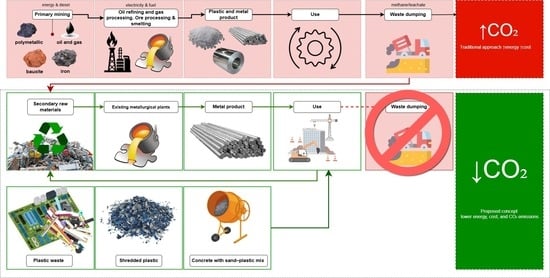
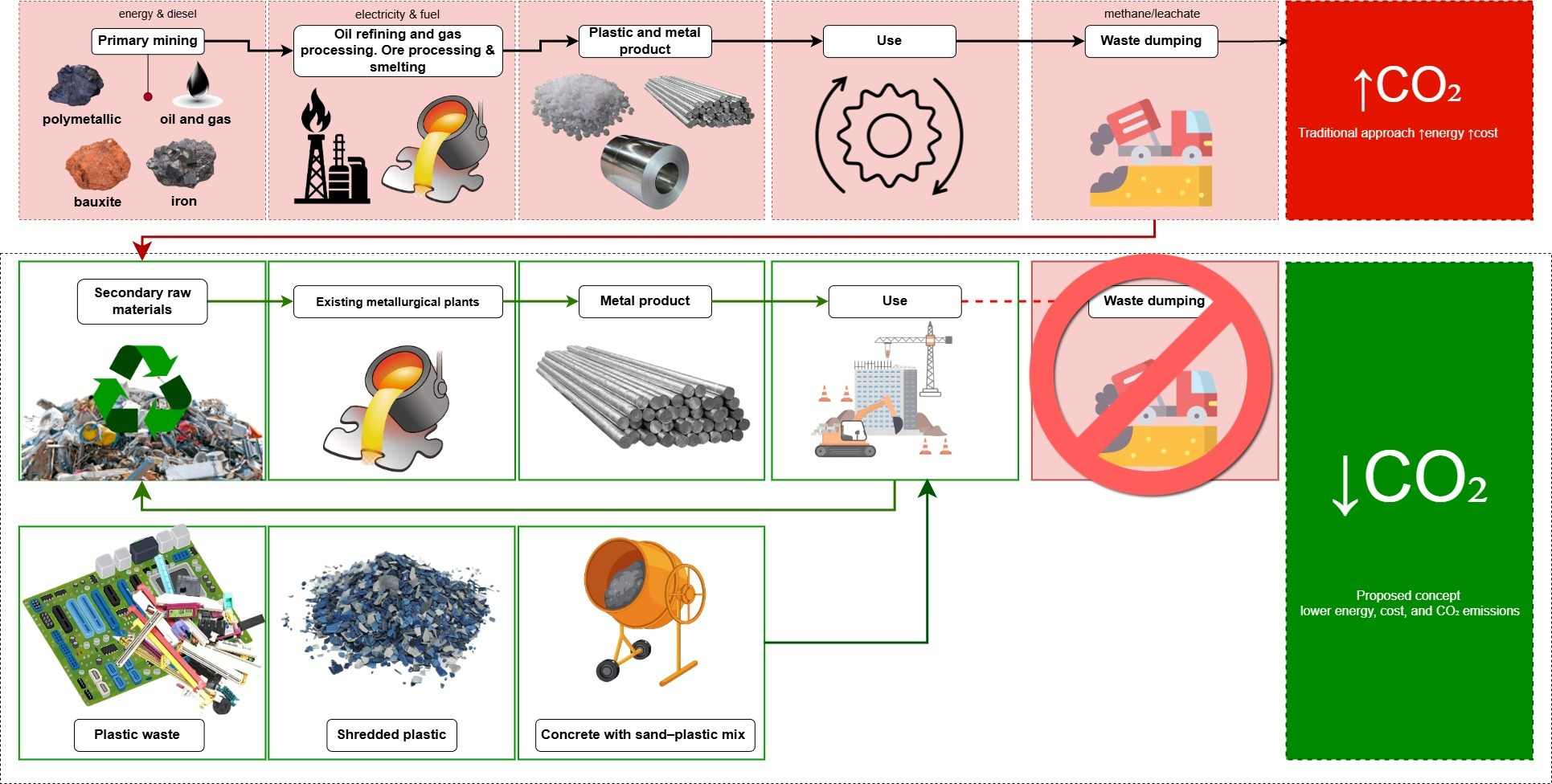
Graphical Abstract

1. Introduction

The growing population of our planet, combined with digital transformation and radical technological change, is leading to an increase in the number of electronic devices (EDs). Most people use several EDs, and the number of settlements remotely connected to the Internet is increasing. The growth in e-waste leads to an increase in the amount of obsolete and discarded electronic waste. The volume of e-waste in 2022 amounted to 62 million tons. Of this amount of e-waste, only 22.25% was officially recycled, and 22.6% was buried in landfills without recycling. Given the upward trend, by 2030, the amount could be 32.25% higher than in 2022 [1]. The low volume of official recycling (10% in some countries) [2] and disposal in landfills indirectly indicates the lack of economically attractive technologies for recycling electronic equipment. Analysis of this problem has shown that one of the reasons for this is the multi-component nature of electronic equipment. For example, the body of a computer system unit is a sheet steel box covered with paint, with plastic inserts. The casing of a smartphone or laptop also consists of metal and plastic parts. Control printed circuit boards made of fiberglass with conductive copper foil and electronic components mounted on the board by soldering are located inside the casing of EDs.
In terms of material composition, e-waste can be defined as a mixture of various metals, in particular copper, aluminum, and steel, attached to, coated with, or mixed with various types of plastic and ceramics [3]. In this regard, the disposal of e-waste is a rather complex process. It is precisely the multi-component nature of e-waste that is one of the main problems in choosing a technology for its processing. Each type of e-waste is characterized by its qualitative and quantitative composition, so the choice of the optimal method for its disposal depends on the type of e-waste. E-waste contains about 60 different metals: copper, gold, silver, palladium, aluminum, iron, other valuable metals, and plastic [4]. Most of the most valuable metals are found in waste printed circuit boards (WPCBs) from electronic equipment. One ton of WPCBs typically contains 100–143 kg of copper, 0.11–0.56 kg of gold, 740.8 kg of iron, 12.0–29.5 kg of lead, 2.0 kg of tin, 8.5–18.1 kg of nickel, and 10.0 kg of other metals [5,6]. Heavy metals and other toxic materials in WPCBs, when disposed of in landfills and through informal channels, enter the Earth’s biosphere and create a significant burden on the environment and human health [7]. In addition, the removal of WPCBs from the production cycle due to the lack of recycling contributes to the irrational use of mineral resources and global warming. Consequently, the development of economically efficient green technologies will help solve the problem of the rational use of mineral resources and reduce environmental risks in the recycling of used and manufacturing of new EDs. Since 40% of all industrial greenhouse gas emissions, 10% of global energy consumption, and several billion tons of waste are attributable to metal production [8], and e-waste consists of more than 60% metals [9], in this context, it would be most rational to study the processes and develop cost-effective methods for recycling metals from electronic equipment. Metal-containing components of electronic equipment are a resource that can be reused or recycled, reducing the extraction of metals from raw mineral materials [10]. The use of secondary metals from e-waste will significantly reduce energy consumption and greenhouse gas emissions by eliminating energy-intensive technological stages of obtaining primary metals from raw mineral materials, where the content of the target component is less than 1% [11]. For example, the cost of obtaining copper and gold from e-waste is 13 times less than the cost of obtaining them from raw mineral materials [12]. Today, only about one-third of all metals produced are obtained from the processing of various types of scrap, while the remaining two-thirds are produced from natural raw mineral materials. Considering this fact and the trend toward a twofold increase in demand for metals by 2060, the use of secondary metals from e-waste is becoming even more relevant [13]. Among the methods for extracting metals from e-waste, hydrometallurgical methods are distinguished, in which metals are converted into solution using various solvents (acids, alkalis) at relatively low temperatures and then extracted from the solution [14]. There are also pyrometallurgical methods, which are based on the processes of metal reduction from e-waste at high temperatures [15]. Some approaches to e-waste processing combine pyrometallurgical and hydrometallurgical methods [16]. Before processing, e-waste is separated into metals and non-metals, and printed circuit boards with electronic components (ECs). All operations involve a large proportion of manual labor. These methods are official or laboratory methods. Unofficial methods, which are used to process most e-waste, also involve pyrometallurgical and hydrometallurgical processing stages. Often, the main interest in recycling for economic reasons are the precious metals contained, for example, in the central processing unit (CPU) or random access memory (RAM). Due to the high costs of the processing stages involved in separation and classification, WPCBs are separated using a simple coal-heated sieve and hand tools. The separation stage can be skipped, and WPCBs can go straight to the acid washing or open burning stages. Precious metals dissolved in a productive solution are precipitated and evaporated. All these processes involve the release of toxic gases [17]. The economic attractiveness of the process can be increased, and as a result, the involvement of e-waste in official processing can be achieved by involving less valuable metals (iron, copper, aluminum, tin) and non-metallic parts of e-waste—various types of plastic—in the processing. Structural plastic and fiberglass are also of considerable value [18]. Without recycling the non-metallic part of the e-waste, it is impossible to ensure a fully “green” approach to e-waste recycling. An analysis of literary sources shows that e-waste plastic is proposed to be used as a raw material for composites [19], fillers for building materials [20], fuel [21], and lubricants [22]. It is known that recycling after the third cycle reduces the properties of plastic [23] and makes it difficult to use as parts for EDs. And the production of fuels and lubricants does not correspond to the concept of a complete return to the production cycle. Consequently, the recycling of plastic waste into building materials has great potential and can be successful in mass construction [24]. Thus, the key to an optimal “green” approach to recycling electrical equipment is the concept of a complete return to the production cycle of all metals and non-metallic parts without exception, which is economically justified.
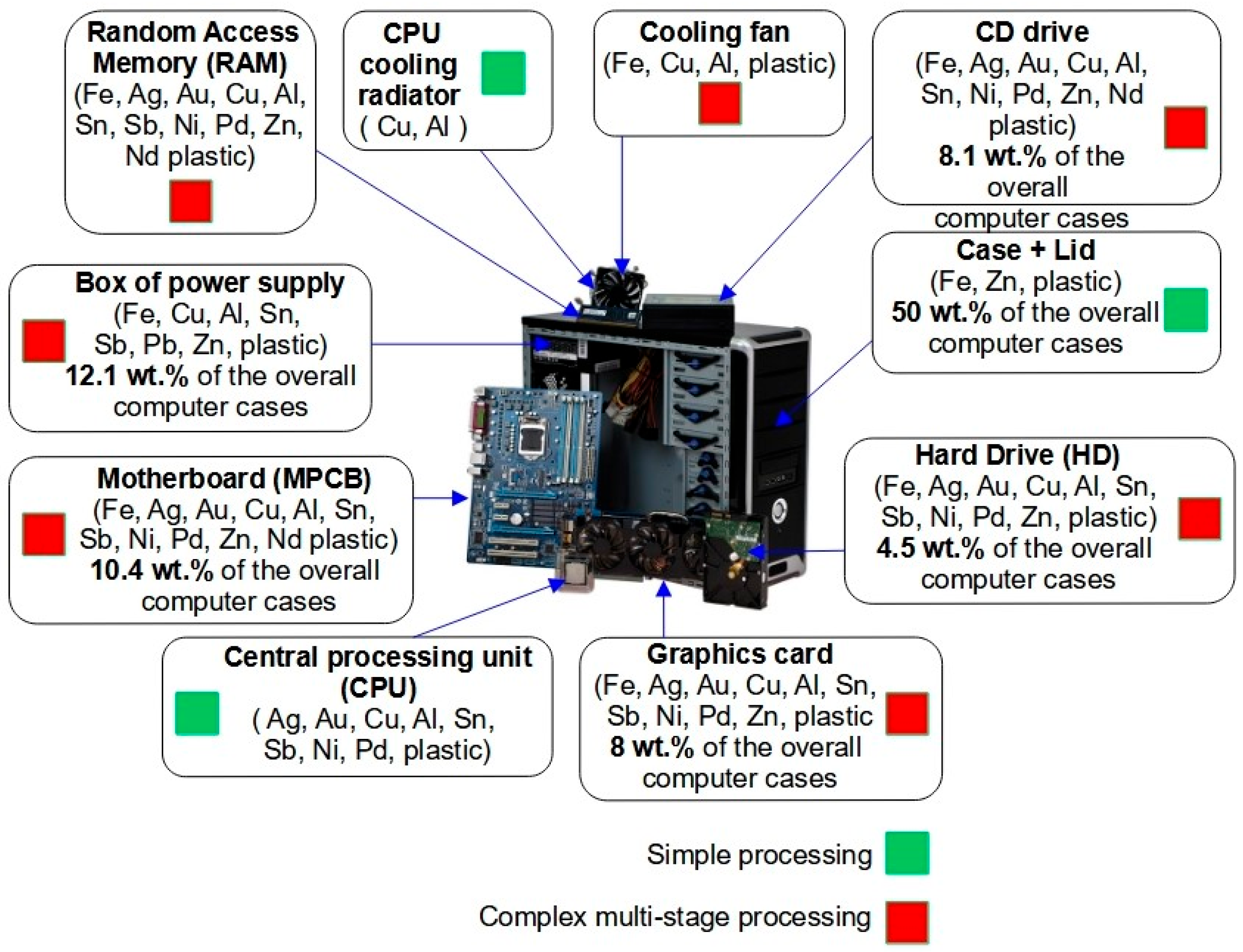
Using the example of a personal computer (PC) system unit (SU), let us examine the composition and level of complexity of recycling its main components. As shown in a study by Kohl, with an average PC system unit weight of 10.5 kg, the weight of the empty case with the cover is approximately 50% of the weight of the computer case with the components installed. The weight of the motherboard is ≈10.4%, the power supply unit is ≈12.1%, the hard drive is ≈4.5%, and the CD drive is ≈8.1% (Figure 1) [25]. The motherboard and the CPU located on it, the graphics card, and the RAM card contain the highest amount of valuable metals. Reuse (the most acceptable approach) of the main components in new or refurbished computers is possible for the case (marked in green) and the graphics card, if it is not soldered to the motherboard. Recycling the casing and cover is also relatively straightforward, as the casing is easy to remove, can be recycled, and is valuable as a liquid secondary material (plastic and steel). The graphics card (shown in red) is also easy to disassemble (by heating) and separate the copper cooling radiators and ECs containing precious metals. However, the WPCBs remaining after dismantling the components are often sent for disposal due to the complexity of recycling [26]. Recycling CPUs using traditional methods (marked in green) is not difficult. Reusing PC CPUs is possible, but unlikely. The inability to reuse PC components and the need to recycle them is due to the fact that modern devices are designed to become obsolete and cannot be upgraded. During recycling, the most valuable components are extracted and the WPCBs are sent to landfills, because despite significant efforts, effective and environmentally safe recycling of WPCBs remains a problem [27].
Therefore, the remaining PC components (HD, power supply box, RAM, CD drive, cooling fan) are marked in red because they contain PCBs. The recycling of PC SU components separately, and in particular the motherboard as the most valuable in terms of precious metal content, is described in various works [28]. However, works describing the recycling of PC SUs, from the casing and all control boards to plastic components, with economic calculations and completely ready for commercial use, are practically non-existent due to their exclusivity and inefficiency [29].
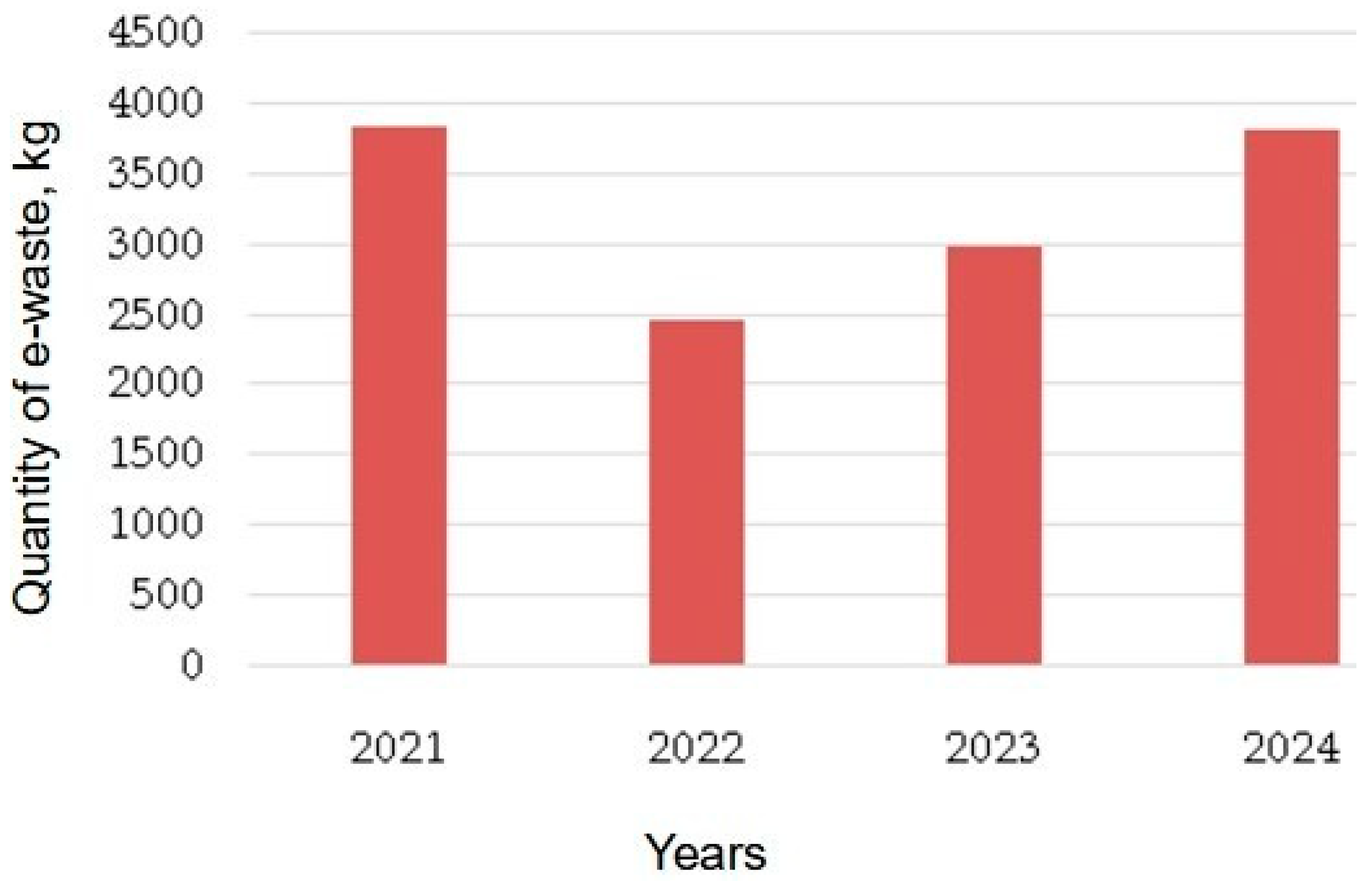
Considering all of the above, work devoted to the comprehensive recycling of PC SUs, where both metal and non-metal parts are recycled, supported by economic calculations, appears to be extremely relevant. This is especially important for countries such as Kazakhstan, where more than 130,000 tons of electronic waste are generated annually, and there are only 19 specialized enterprises for its collection and recycling [30]. At the same time, the processing of electronic waste at existing enterprises is mainly limited to preliminary disassembly, sorting, and subsequent export of valuable fractions abroad, which reduces the efficiency of domestic processing and does not contribute to the formation of a closed circular economy. One of the main sources of e-waste are higher education institutions, such as universities. Computers, printers, copiers, and other information and communication technology equipment are the most frequently used and replaced EDs in universities [31] and require a proper approach [32]. In this article, we present the results of research obtained from the processing of e-waste generated at the Daulet Serikbayev East Kazakhstan Technical University (D. Serikbayev EKTU) over the past four years. During this period, the university generated a total of 993 units of e-waste (monitors, system units, computers, copiers, laptops, scanners, printers, tablets, servers) with a total weight of 13,045 kg (Figure 2). This amount of e-waste does not include household electrical appliances such as televisions, refrigerators, and microwave ovens that were used in dormitories, at internship sites, and some laboratory equipment. Computers account for 55% of all e-waste. In our study, we focused on the recycling of system units from personal computers. From the casing and all control boards to plastic elements with economic calculations and fully ready for commercial use.
The purpose of this work is to assess the actual economic efficiency of the e-waste recycling process using the example of recycling SU PCs to obtain finished products in the form of:
-
Ferrous metals prepared for remelting in the form of finished charge (from housings and other parts);
-
Non-ferrous metal ingots (from aluminum radiators and copper wires), copper concentrate (from recycled WPCBs);
-
Components with high liquidity due to the presence of rare earth elements (REEs) and noble elements (CPUs, microchips, capacitors, neodymium magnets, etc.);
-
Building materials based on concrete and plastic e-waste.
As part of this study, part of the work on recycling the plastic of the SU casing to obtain a new composite material has already been published in the article Kulenova et al. [33].
The scientific novelty and contribution of this work lies in a comprehensive approach to recycling the SU of a used PC, which completely eliminates the possibility of materials ending up in landfills. The work proves the economic and environmental appeal of recycling the system unit of a used PC through the use of simple approaches that do not require complex equipment or reagents.

2. Results

The results obtained were divided into the following parts.

2.1. Separation of SU Components

After the SUs were dismantled, their steel shells, weighing a total of 46,680 g, were crushed in a press and are now ready for use as charge for steelmaking. The plastic casing covers (ABS), weighing a total of 11,040 g, were used to produce composite material [33]. Below is a list of components extracted from the SUs and a brief description of their constituent parts.
Motherboard (MPCB). Table 1 shows the components obtained from the manual disassembly of 15 MPCBs and their weight.
The frame socket holders and metal casings of the network connectors have a composition similar to that of stainless steel.
303 SS, % (mass): 71.56–72.20 Fe; 17.23–18.34 Ni; 1.41–1.65 Mn; 0.7–0.9 Si; 0.14–0.15 S, etc. Metal casings of other electronic components (analog audio connectors, ports USB and etc.), is a triple alloy (tin–nickel–iron) % (mass): 54.35–57.05 Fe; 23.18–24.83 Ni; 16.45–17.77 Sn. Aluminum cooling radiators have the following average composition, % (by mass): 98.81 Al; 0.78 Mg; 0.24 Si; 0.15 Fe; 0.02 Zn. The coolers contain plastic cooler parts and copper drive wire, with a total weight of 720 g and 210 g respectively.
Hard disk (HD). Table 2 shows the components obtained from manually disassembling 15 HDs and their weight.
Aluminum HD casings have an average composition of % (mass): 94.5 Al; 4 Cu; 1.5 Zn. Aluminum disks with Ni coating have an average composition of % (mass): 91.4 Al; 4.4 Mg; 0.1 Fe; 4.1 Ni.
Power supply unit (PSU). Table 3 shows the components obtained from the manual disassembly of 15 PSUs and their mass.
Aluminum cooling radiators have an average composition, % (by mass): 98.81 Al; 0.78 Mg; 0.24 Si; 0.15 Fe; 0.02 Zn.
Disk drive (DVD-ROM). Table 4 shows the components obtained from the manual disassembly of 15 DVD-ROMs and their mass.
Table 5 shows the components obtained from manually disassembling 15 VC units and their weights.
Aluminum cooling radiators have an average composition, % (by mass): 98.81 Al; 0.78 Mg; 0.24 Si; 0.15 Fe; 0.02 Zn.

2.2. Classification of Separated Components from 15 SUs, Preparation for Melting, and Melting of Elements Containing Al and Cu

(a)
Steel-containing components. After SU separation, all steel-containing components were prepared as charge for further processing into steel, a finished commercial product. Total weight—17,672 g. Neodymium magnets with a total weight of 648 g were prepared separately and used as raw materials containing rare earth metals.
(b)
Aluminum-containing components.
-
Radiators containing aluminum, ≈98.81% Al = 7137 g;
-
HD cases containing aluminum, ≈84% Al = 3555 g;
-
HDs containing aluminum, ≈91.4% Al = 750 g.
After separation, the components containing aluminum were separated from the total mass and melted in a muffle furnace. The radiators were remelted without preliminary preparation. The HD housings were pre-cleaned. Dust was removed by washing in a 10% Na2CO3 solution followed by ultrasonic cleaning. The coating was removed using a muffle furnace at a temperature of 400 °C for 15 min [34], as the coating significantly reduces the quality of the resulting alloy.
HDs with a high Ni content of ≈4.1% were sorted separately without alloying.
This resulted in aluminum ingots weighing 7112 g (composition, % by mass: 98.86 Al; 0.74 Mg; 0.25 Si; 0.14 Fe; 0.01 Zn) from cooling radiators and 3412 g (composition, % by mass: 84 Al; 4 Cu; 9 Si; 1.5 Zn; 0.7 Fe; 0.3 Mn; 0.1 Mg; 0.1 Ni and others) from the HD case.
After further refining, the resulting ingots can be used to produce high-purity aluminum, which is used in the manufacture of granules, wire for cables, powder, foil, etc. As is well-known, the technology for producing aluminum from raw mineral materials is energy-intensive and generates large amounts of waste [35]. Recycling will significantly reduce the environmental impact on nature and reduce energy and resource consumption.
(c)
Copper-containing components: copper wires—total weight 3699 g.
After separation, the copper-containing components were separated from the total mass and melted in an induction furnace. The weight of the resulting ingots was 3682 g with a composition of % (by mass): 99.96 Cu and others.
(d)
ECs. Various types of microchips, transistors, resistors, etc., total weight 2355 g. ECs are commercial products containing precious metals.
(e)
Plastic-containing components.
-
plastic covers of the SU case (ABS) and DVD-ROM plastic case (ABS) with a total weight of 13,095 g;
-
plastic parts from the surface of WPBs with a total weight of 1283 g will be used as filler for construction concrete;
-
plastic cooler parts (PP)—total weight 1365 g.
(f)
WPCBs. The total weight of WPCBs from MPCBs, HD, PSU, DVD-ROM, and VC was 9246 g.
(g)
CPUs with a total weight of 492 g are commercial products containing precious metals.

2.3. Results of Motherboard Recycling After Manual Disassembly

Considering the mass of shredded boards after manual disassembly (9246 g) and the volume of the heating furnace, 14 heat treatments were performed. The mass of the initial batch of crushed material for each heating operation was 660 g. The total mass of the product obtained after heat treatment was 7007 g. The total yield was 75.79%. Table 6 shows the distribution of metals in crushed WPCBs after heat treatment by size class.
Given that the copper content in classes 1 < S, 0.5 < S < 1, and 0.315 < S < 0.5 is quite high, at 61.18%, 79.54%, and 89.22%, respectively, these classes were combined during subsequent processing. The combined product (weight 2571 g) had the following composition, % (by weight): 71.16 Cu; 9.26 Zn; 6.90 Al; 4.69 Sn; 2.98 Fe; 1.47 Pb; 0.46 Ni; 0.026 In; 381.95 g/t Ag; 4.48 g/t Au. This product can be sent to the smelting section of a copper plant.
The product with the largest mass (4436 g) had particle sizes of S < 0.315 mm. However, it has a lower copper content (14.75%) and a higher gold content (8.21 g/t).
If the crushed WPCBs are not separated into size classes after heat treatment, the product obtained contains the following percentages (by mass): 35.50Cu; 4.65 Zn; 6.06 Al; 5.30 Sn; 7.71 Fe; 1.30 Pb; 0.34 Ni; 0.025 In; 410.54 g/t Ag; 6.82 g/t Au. It can be combined with copper concentrate processing. Copper deposits are much less common than iron and aluminum deposits. Therefore, in order to meet the demand for copper, it is necessary to involve ores containing 0.5 to 1% (by mass) of copper in the process [36]. Consequently, the use of copper-containing elements from SUs and WPCBs after manual dismantling will allow for a rational approach to the use of mineral resources and significantly reduce the environmental impact on nature. It will also save natural resources that are used in the production of alloys.
Thus, during the study, the following were obtained:
-
Steel charge—17,672 g. Converted to 1000 SU = 1778 kg.
-
Aluminum ingots weighing 7112 g (Al 98.86%) and 3412 g (Al 84%). Converted to 1000 SU = 474 kg.
-
Copper ingots weighing 3682 g (Cu 99.96%). Converted to 1000 SU = 245 kg.
-
Raw materials for copper production from recycled WPCBs (7007 g) with the following valuable component content: % (by mass): 35.50 Cu; 4.65 Zn; 6.06 Al; 5.30 Sn; 7.71 Fe; 1.30 Pb; 0.34 Ni; 0.025 In; 410.54 g/t Ag; 6.82 g/t Au.
The total value of metal materials obtained by simple methods without the use of complex equipment and reagents is estimated at $6368.7/1000 SU. With more intensive processing, the price increases by approximately $1439.33.
The following components were prepared for sale as liquid commercial products:
-
Neodymium magnets ≈ 648 g;
-
HDs with 91.4% Al and 4.1% Ni (750 g);
-
ECs ≈ 2355 g;
-
CPUs ≈ 492 g.

2.4. Results of Research on the Use of Plastic in the Synthesis of Experimental Concrete Samples

2.4.1. Study of the Composition of Plastic Parts from the Surface of WPCBs Used to Make Concrete Samples

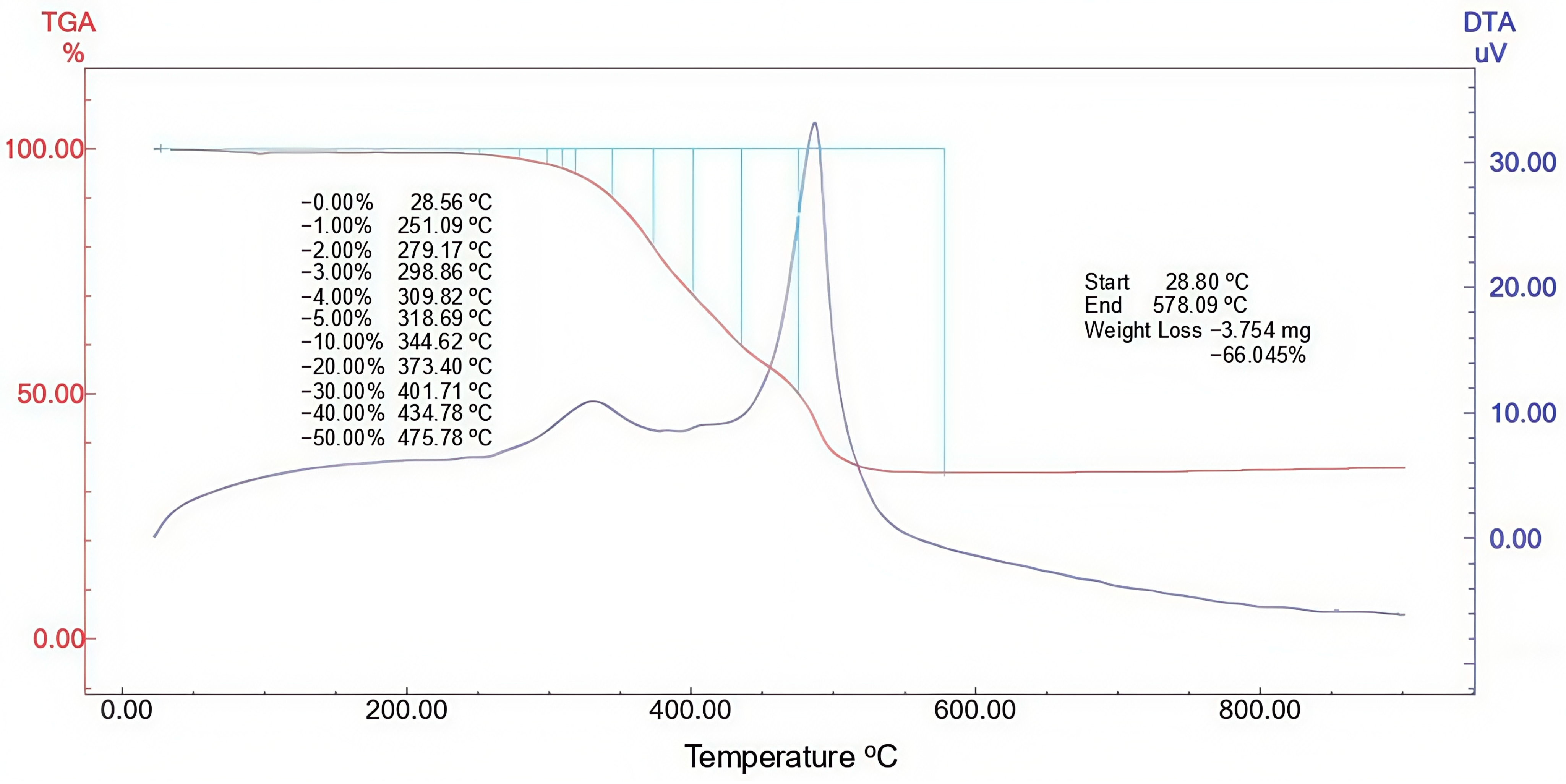
Plastic parts from the surface of WPCBs were crushed and prepared for addition as a filler in construction concrete. Judging by the available literature, the use of plastic has great prospects, given the annually increasing amount of e-waste. Adding plastic to concrete is an environmentally friendly way to dispose of it [37]. It has been proven that the use of e-waste plastic as a fine-grained filler in concrete production gives optimal results in terms of compressive strength [38]. Unfortunately, however, there is little literature available that provides data on experiments with the separate use of WPCBs plastic for the production of building materials. There is conflicting information in the literature about the composition of plastic on motherboards. A sample of crushed plastic from the surface of WPCBs was subjected to simultaneous thermogravimetric and differential thermal analysis to obtain information about the organic and inorganic content of this material. As can be seen in Figure 3, when heated to 900 °C, the sample undergoes destruction, the rate of which can be judged by the dependence of mass loss on temperature. Intense destruction begins at a temperature of about 300 °C. It is clearly visible that 66% of the initial mass of the sample burns out. The residue is an inorganic filler. The residue was obtained in a crucible in the form of a finely dispersed powder and examined using scanning electron microscopy (SEM).
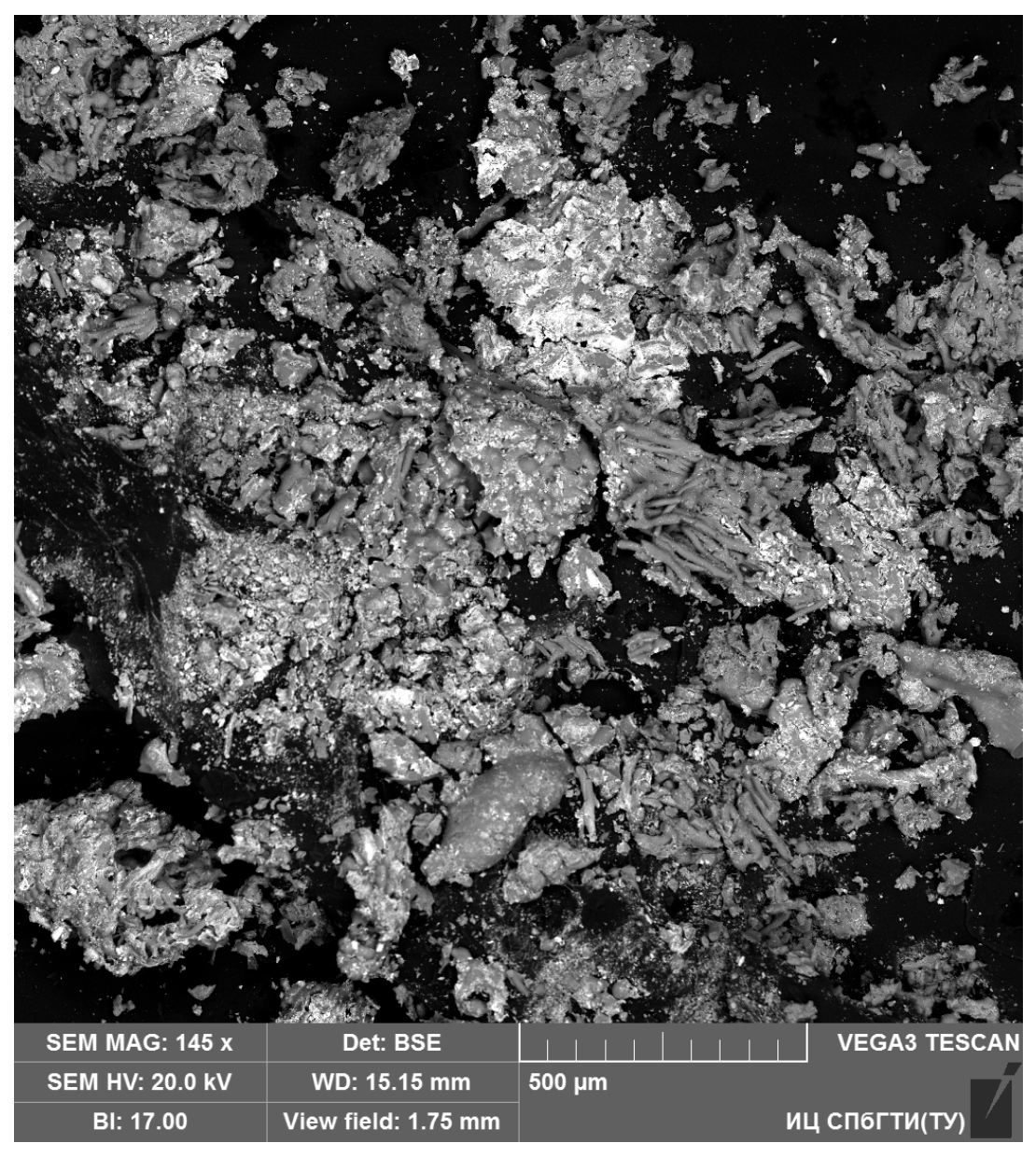
The SEM image of the inorganic part of the sample obtained by heating to 900 °C is shown in Figure 4. Elemental analysis performed at various points on the particles shown in the image revealed that, on average, the residue consists of Si, Ca, Fe, Al, and Mg oxides. This is, with a high degree of probability, a broad set of fairly typical polymer additives—silica, chalk, aluminum oxide and hydroxide, and kaolin. However, they are never used together. From this, we can conclude that the sources of the material provided are heterogeneous. As for Fe, its oxide was used as a pigment. In further attempts to extract the soluble part from the sample, it always gave the solutions a characteristic red color. One of the spectra showed a high content of antimony.
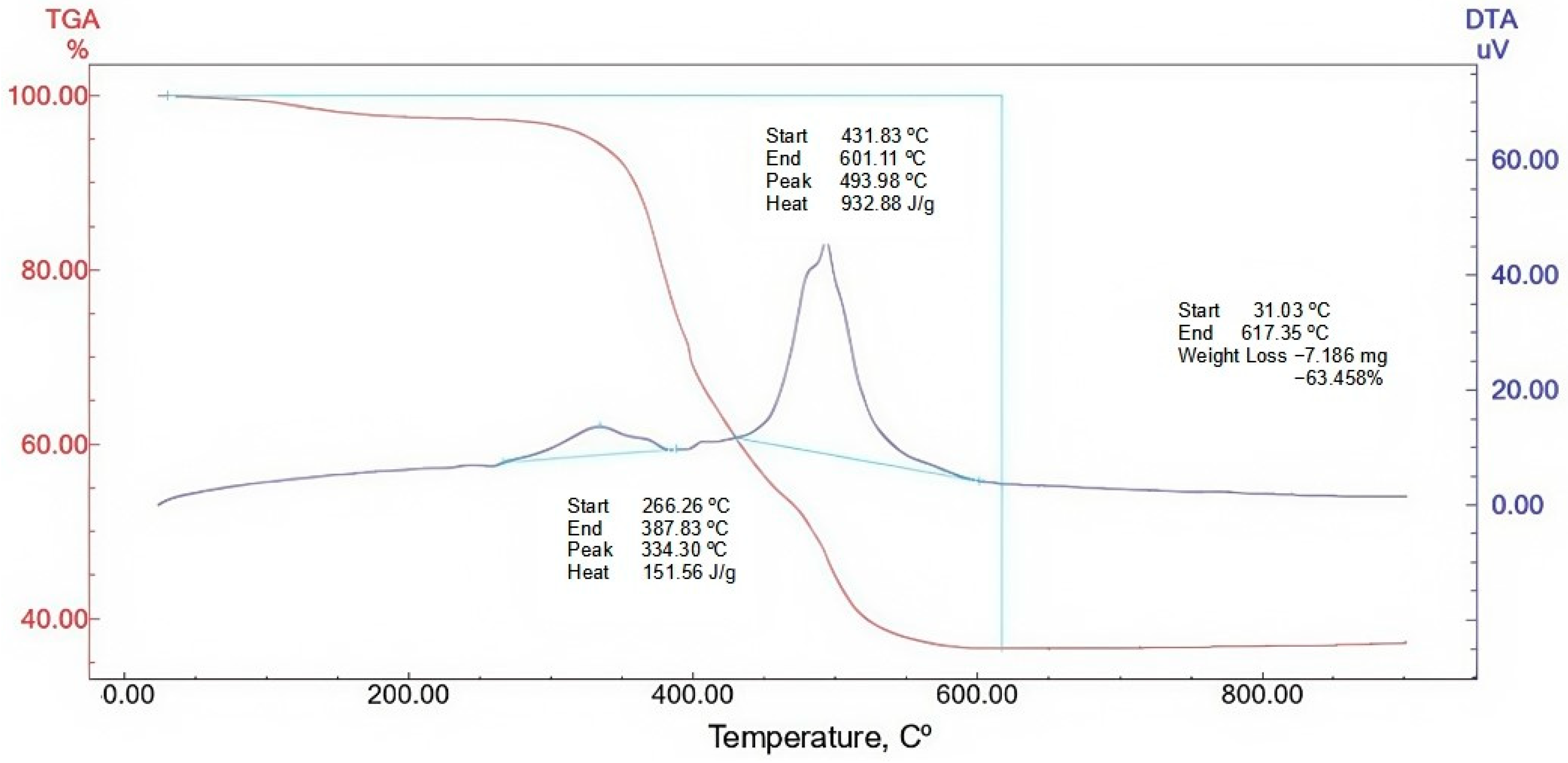
It is well-known that Sb compounds are effective flame retardants that make polymers fire-resistant. The SEM image also indicates the complex morphology of the inorganic residue. Even fibrous elements (possibly remnants of reinforcing glass fibers) can be discerned in it. According to derivatography data (Figure 5), the inorganic content in the sample is 34%.
The next step in the study was an attempt to isolate the organic part by extraction with solvents in order to study it separately from the inorganic part. The solubility of the organic part of the sample was investigated. The organic part could not be dissolved in typical solvents: chloroform, DMFA, DMSO, acetone, dioxane. Extraction was only successful with hot tetrahydrofuran (THF). After the evaporation of the THF, a red powder was obtained that did not form a film and was highly electrically charged. After three extractions of the soluble part, the residue was again tested for organic content using thermographic analysis (Figure 5). It can be seen that the organic content decreased from 66 to 63.5%, i.e., very insignificantly.
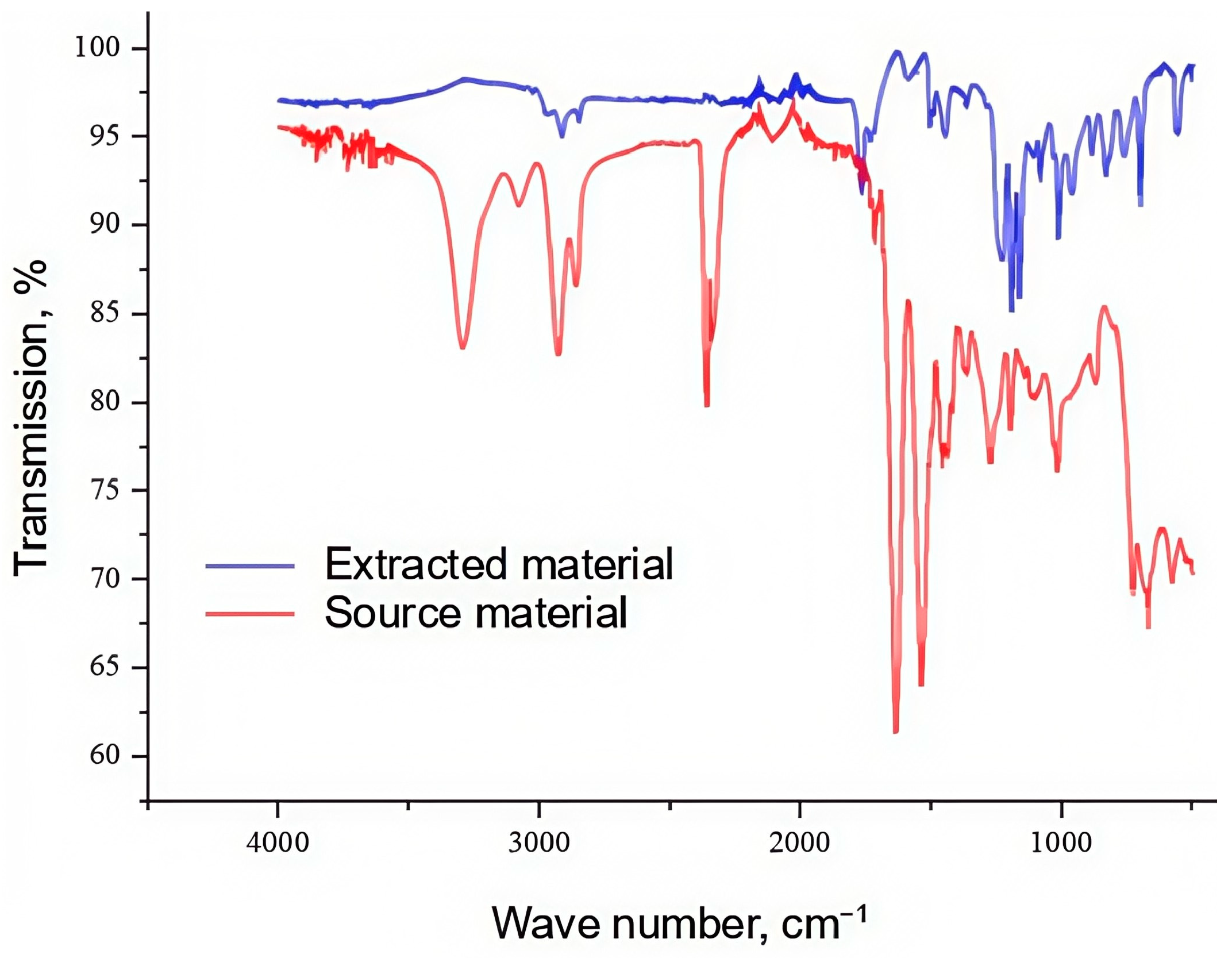
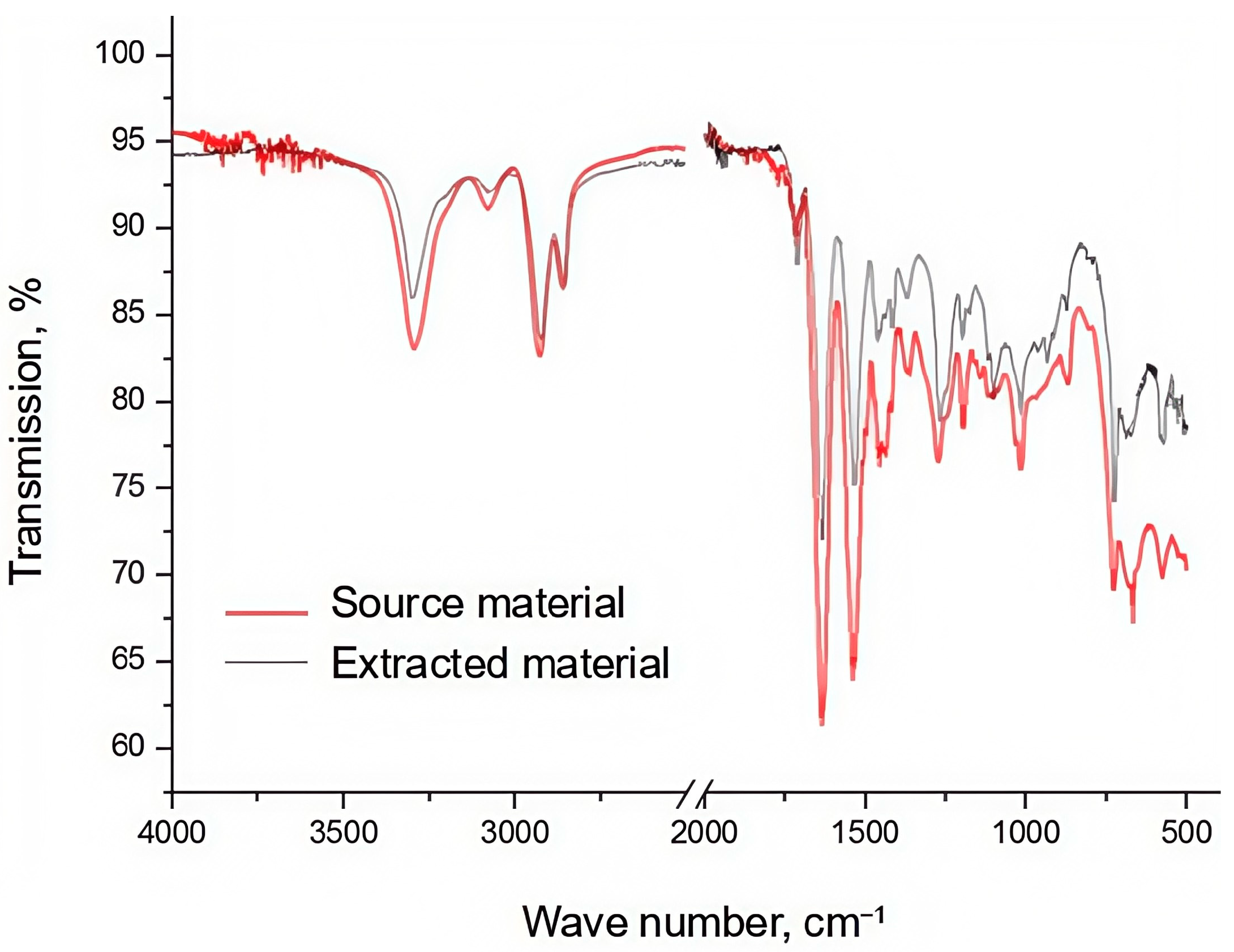
Analysis of the soluble fraction. The next step involved infrared (IR) spectrometry. The IR spectra of the soluble fraction and the starting material are shown in Figure 6.
It can be seen that the spectra of the original sample and the extracted part, i.e., the soluble material, differ significantly. When comparing the absorption bands in the extract spectrum with the reference spectrum of styrene, acrylonitrile, and butadiene copolymer (ABS plastic), it can be concluded that the obtained spectrum basically confirms the nature of the dissolved polymer. Therefore, it can be assumed that the soluble part is ABS plastic, but its content in the original sample is only 2.5% compared to 66% of the organic part as a whole. A comparison of the IR spectra of the original sample and the sample after extraction of the soluble part was performed (Figure 7).
The spectrum changed insignificantly. But what is striking is how well these spectra match the reference spectrum for nylon.
This seems all the more plausible given that nylon is insoluble in virtually all organic solvents and therefore could not have been extracted in this case.
The molecular weight characteristics of the THF-soluble part of the sample were also determined by gel permeation chromatography (Table 7).
Thus, based on the results of this part of the work, it can be concluded that the composition of the provided MPCBs plastic sample is as follows:
-
63.5 wt% nylon;
-
2.5 wt% polymer soluble in THF, presumably ABS plastic with average molecular weights Mn = 28,500 and Mw = 57,300;
-
34% mineral fillers and modifiers typical for plastics: Si, Ca, Fe, Al, Mg, Ti oxides, kaolin, chalk, quartz sand, red pigment, titanium dioxide.

2.4.2. Study of the Grain Composition of Aggregates in the Synthesis of Experimental Concrete Samples

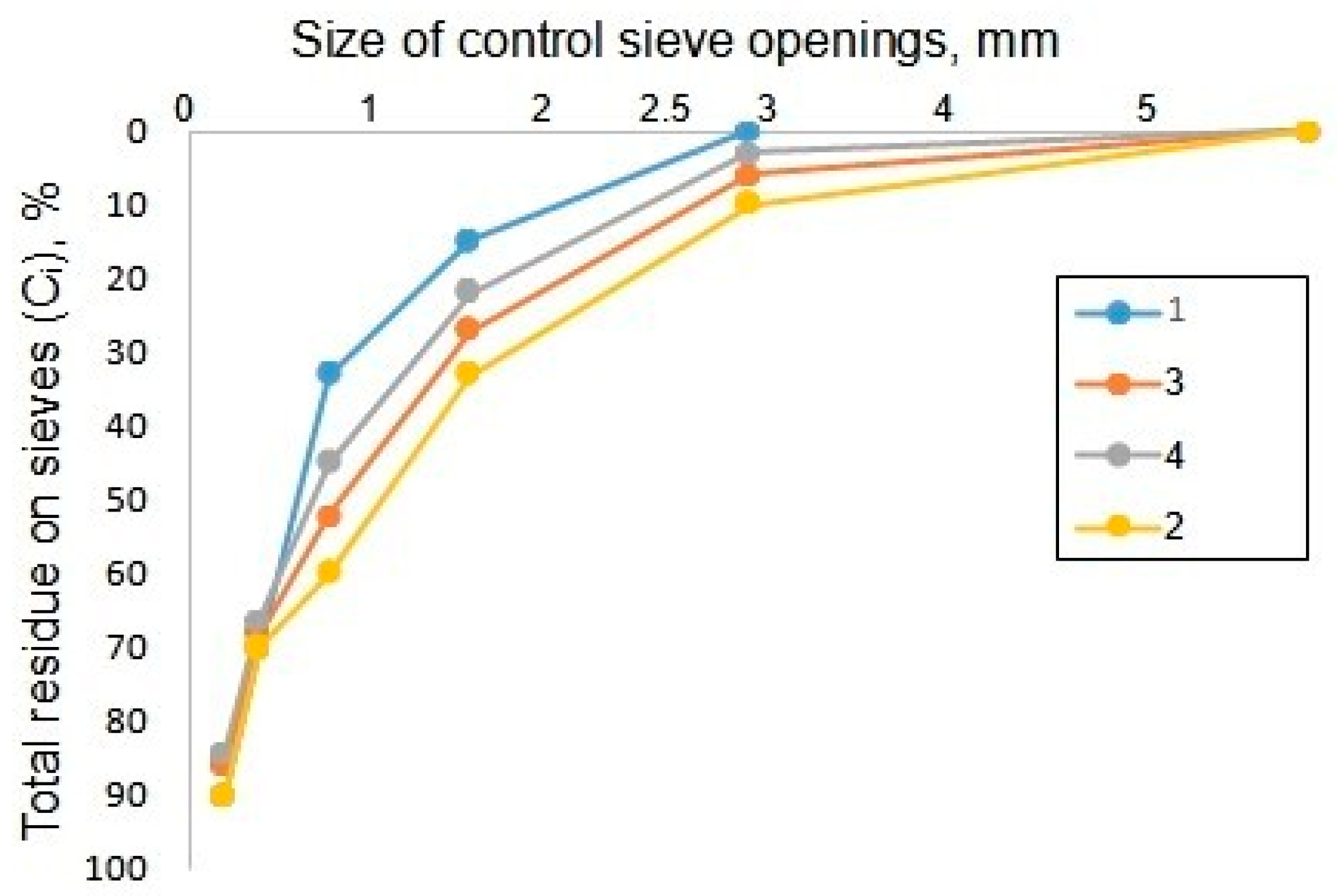
The grain composition of aggregates plays an important role in concrete synthesis. There are certain requirements for aggregate size. To obtain concrete of class B25 and above, a certain aggregate size is recommended [39] (Figure 8, Graphs 1 and 2). For sand and crushed plastic used in the synthesis of experimental concrete samples, total residues (Ci), % (equal to the sum of partial residues on the sieve) were determined. Graphs 3 and 4 were constructed based on the data obtained (Figure 8).
The area between graphs 1 and 2 is the most preferable when selecting the grain composition of fillers. The grain size modulus of sand and plastic used in the experiment are 2.75 and 2.74, respectively. The graph in Figure 8 shows that the grain composition of the fillers falls within the preferred range.

2.4.3. Study of the Properties of Experimental Concrete Samples

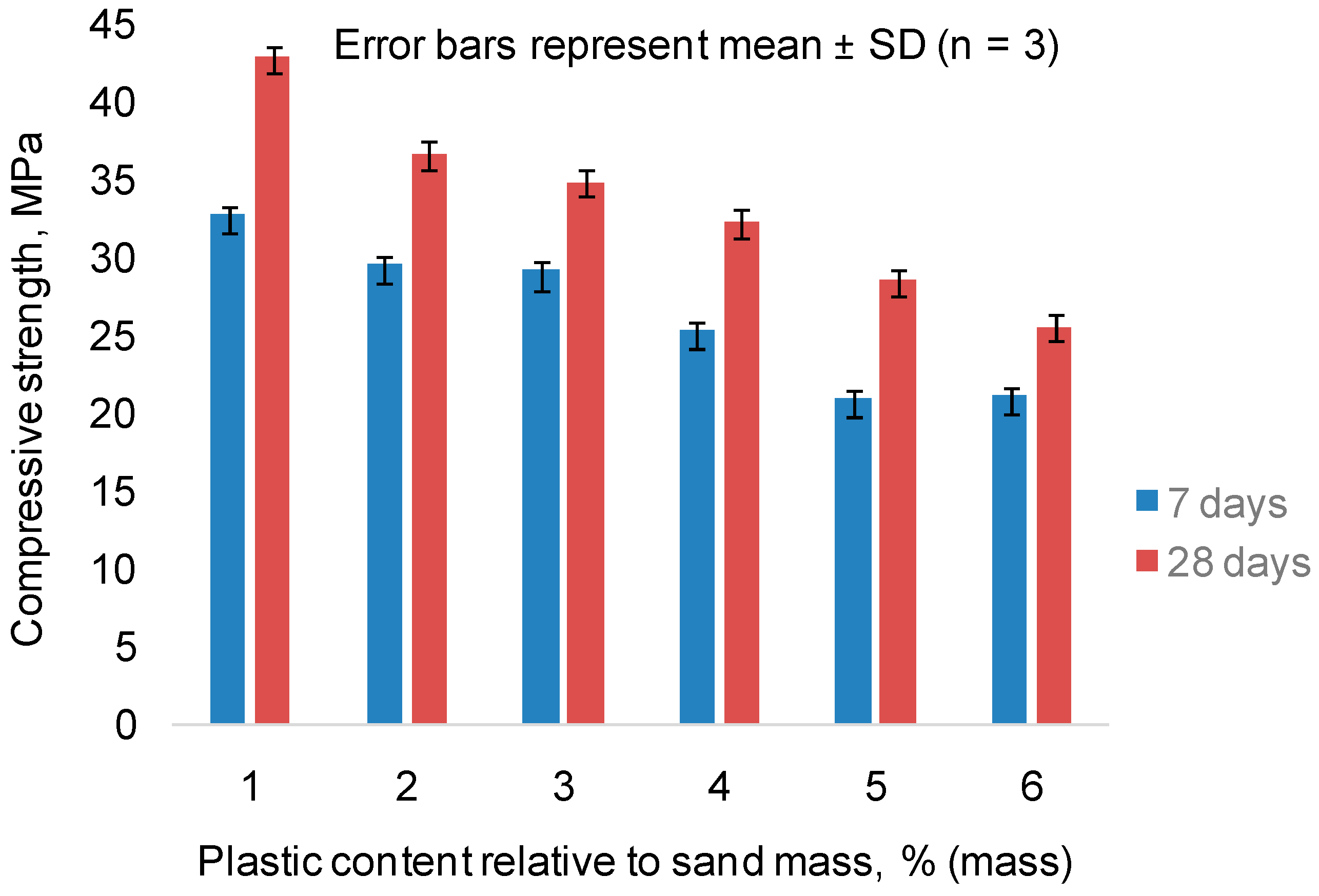
Table 8 and Figure 9 present data obtained from the study of experimental concrete samples with various plastic additives.
As can be seen from Table 8, adding plastic to concrete can affect its frost resistance by changing the pore structure and water absorption: open porosity increases and the interphase zone between cement and aggregate weakens, leading to a decrease in frost resistance. Microcracks can form around plastic particles, leading to microcracks during freeze–thaw cycles. The control concrete sample (without plastic additive) demonstrates the highest frost resistance due to its denser structure and better adhesion of the aggregate to the cement paste.
Experimental research data shows that even with the addition of 40–50% plastic relative to the mass of sand, concrete samples of grades M250–M200 are obtained. Concrete of these grades can be used for the manufacture of curbs, pavements, paths, and concrete floors. And with a plastic content of 10–20% relative to the mass of sand, concrete grades M350-M300 are obtained, which can be used for foundations and monolithic construction of low-rise buildings.

2.5. Results of Tests to Determine the Toxicity of Concrete Containing Plastic from MPCB

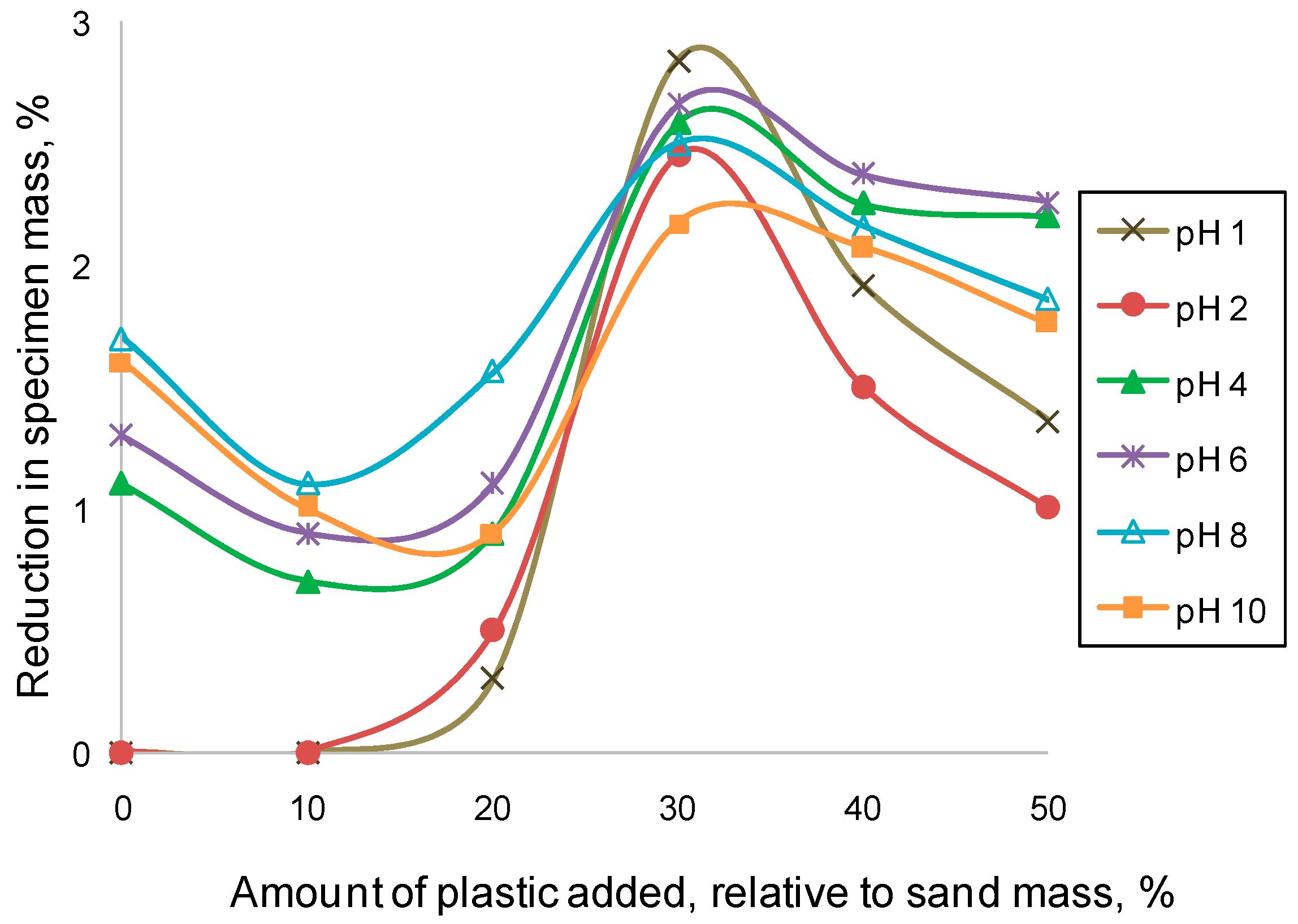
The presence of plastic in concrete can alter its chemical composition and permeability, making it more susceptible to leaching and potentially releasing pollutants into the environment. To this end, tests were conducted to determine the toxicity of experimental concrete samples, the results of which are shown in Figure 10 and Table 9. In this study, six metals (Ca, Al, Fe, Zn, Pb, and Sb (Table 9)) were analyzed in the solutions after leaching the experimental concrete samples with various plastic additives. Table 9 does not indicate the Cd content, since the Cd content in all solutions after leaching was less than 1 μg/L. It should be noted that in all solutions after leaching of experimental concrete samples with various plastic additives, the final pH varied between 12.0 and 12.8.
A decrease in mass was observed in all experimental samples, including the control sample (which did not contain plastic). It should be noted that a 30% plastic content in the experimental concrete samples showed the greatest decrease in mass at all pH values. With a plastic content of more than 30% in the experimental samples, a decrease in sample mass was also observed, but not as significant. Apparently, a further increase in the proportion of plastic in the experimental concrete samples does not have a significant effect on the decrease in sample mass. The amount of Ca that passed into the solution from the experimental concrete samples after leaching in various environments varied from 36.677 to 131.6 mg/L, depending on the pH of the initial solution and the amount of plastic added.
It should be noted that at a pH of 1 in the initial solution, there is an increased content of Al, Fe, and Zn. This indicates that higher concentrations of sulfate ions in the initial solutions contribute to more intensive destruction of the experimental concrete samples. The Pb and Sb content in the solutions after leaching was less than 5 mg/L in all samples.

2.6. Preliminary Assessment of the Commercial Viability of Materials Obtained from Recycling Personal Computer Motherboards

A preliminary estimate of the commercial value of processing metal-containing elements of a SU PC is given in Table 10. As can be seen, the sale of metal-containing elements of 15 SU PC would yield USD 47.755. Processing 1000 pieces of SU PC would yield an average of USD 3183.7. Applying more intensive metallurgical processing, taking into account that PCB (467.13 kg/1000 SU) also contains precious metals—410.54 g/t Ag (1213 $/g); 6.82 g/t Au ($107.239/g) and other non-ferrous metals, but in large quantities: 5.3% Sn ($32.947/kg); 4.65% Zn ($3048/kg). The cost of 1000 processed SU PCs, taking into account the Ag content of 191.7 g; Au 3.18 g; Sn 24.76 kg; Zn 21.72 kg increases by $1439.33. All prices are as of 17 August 2025 [40].
Given the high content of precious metals in CPUs, ECs, and the value of magnets containing rare earth metals, the economic appeal of recycling metal-containing elements from e-waste SU PCs is increasing.
The cost side will be related to labor and electricity costs. Thus, to process 1000 SU PC, a small enterprise with four employees will need 14 shifts of 8 h each. Electricity costs (crusher, hair dryer, lighting, power tools) will amount to 3083.33 kWh, which at a rate of $0.06 will amount to $189. The labor costs for four workers for 14 days will be $931. The total is $1120. As can be seen, processing SU PC, even without the use of deep processing and complex equipment, is economically attractive.
Plastic elements of e-waste SU PCs are also of interest. Only the costs of materials used to produce concrete were included in the calculation: cement M500—0.128 $/kg; sand—0.016 $/kg; crushed stone—0.011 $/kg; plasticizer—1.03 $/kg; water—0.0021 $/kg.
Table 11 shows the cost of 1 m3 of concrete with different plastic content in concrete relative to the weight of sand, excluding and including the cost of plastic. The approximate cost of preparing plastic (manual dismantling and grinding) is $0.04/kg.
Given that Kazakhstan will soon begin the construction of a hydroelectric power plant and a nuclear power plant, there will be an increased demand for various types of concrete and, consequently, sand. However, considering the volume of concrete production, this becomes profitable from both an economic and environmental point of view.

3. Discussion

The results obtained in this study demonstrate that a significant proportion of valuable secondary resources can be extracted from the main components of a PC SU using relatively simple mechanical and physical separation methods, without the use of complex equipment and chemical reagents.
This approach is in line with current trends in electronic waste recycling, where there is a growing focus on integrated and low-cost recycling schemes based on the principles of circular economy and reducing the technological complexity of processes [41].
The extraction of ferrous and non-ferrous metals is one of the key results of the proposed processing scheme. Conversion of the experimentally obtained masses to 1000 pieces of scrap metal shows the possibility of obtaining about 1778 kg of secondary steel, which allows for reducing CO2 emissions by approximately 2.744 tons when replacing primary raw materials [42]. Similar values for the environmental impact of replacing primary metals with secondary metals are given in [43], which notes a significant reduction in emissions when using recycled copper and aluminum from electronic waste. The extraction of approximately 474 kg of aluminum per 1000 SUs with a purity of up to 98.86% also confirms its high resource value. Recycling aluminum from e-waste reduces the carbon footprint by 7.01 t of CO2 per 1000 SUs [44]. High efficiency has also been demonstrated in copper extraction: approximately 245 kg of copper with a purity of 99.96% per 1000 SUs. Comparable copper extraction rates from e-waste, including computer equipment, are given in [20], where e-waste is considered a strategically important source of copper against the backdrop of the depletion of traditional ore deposits. It is noted that the use of simple physical and mechanical methods in the early stages of processing can significantly reduce the energy consumption of subsequent processes. The use of secondary copper will reduce emissions by 0.982 t of CO2 per 1000 SUs [45].
The results for WPCB recycling are of particular interest. The concentrate obtained, containing more than 35.5 wt% Cu, as well as Zn, Al, Sn, Fe, Pb, Ni, and trace amounts of Ag, Au, and In, confirms the conclusions of a number of recent studies in which WPCBs are considered to be the most metal-rich and economically significant fraction of electronic waste [46].
The proposed reagent-free technology for processing e-waste has a number of significant economic advantages over the traditional method of extracting copper from primary ores.
Copper ores typically contain only 0.4–1.2 wt% Cu, which requires the processing of significant volumes of raw materials and involves energy-intensive stages of extraction, crushing, grinding, flotation, and smelting. In contrast, copper-containing products obtained from the processing of WPCBs from SUs have a significantly higher copper content (30–70 wt% Cu) and are formed exclusively by mechanical separation methods without the use of chemical reagents.
The high concentration of copper leads to a sharp reduction in material consumption and energy costs per unit of metal extracted. The absence of mining, flotation reagents, and tailings storage facilities further reduces operational and environmental costs. Another significant economic factor is that e-waste is often a low-cost or virtually free raw material, the processing of which simultaneously solves waste management problems.
From an economic point of view, the total cost of metal materials obtained by simple methods without the use of complex equipment and reagents is estimated at approximately US$3183.7 per 1000 SUs. An additional economic effect is achieved by preparing individual components (neodymium magnets, hard drives, electronic boards, and processors) for direct sale, which is also noted in recent studies on the reuse of ECs [47].
The use of plastic fractions from e-waste in building materials is considered a promising direction for their disposal. A number of studies in recent years show that replacing natural sand with plastic fillers can lead to a slight reduction in the cost of concrete while maintaining the required strength characteristics for certain classes of building structures [48,49]. The results obtained in this work are consistent with these data and confirm the possibility of practical application of plastic from e-waste in concrete compositions.
Despite the positive results, the literature emphasizes that the performance characteristics of building materials with e-waste plastic additives significantly depend on the particle size distribution and the degree of purification of non-metallic fractions [50]. In this regard, future research should focus on the development and optimization of industrial processing methods aimed at reducing energy and material costs, as well as on conducting long-term tests of building materials under real operating conditions. The addition of plastic to concrete can affect its frost resistance by changing its pore structure and water absorption: open porosity increases and the cement-aggregate interphase zone weakens, which leads to a decrease in frost resistance. Microcracks may form around plastic particles, leading to microcracks during freeze–thaw cycles. The control concrete sample (without plastic additive) demonstrates the highest frost resistance due to its denser structure and better adhesion of the aggregate to the cement stone.
Overall, the results of this study are consistent with current scientific data and confirm that the proposed reagent-free concept for processing e-waste is an environmentally safe and resource-saving alternative to traditional processing technologies. It ensures the simultaneous extraction of metal and polymer components, reduces dependence on chemical reagents, and minimizes environmental risks.
The implementation of this approach will contribute to the development of circular economy principles and reduce the economic and environmental burden characteristic of traditional metallurgical industries.
The results obtained confirm the promise of creating local, including university, processing sites as part of a sustainable electronic waste management system and justify the feasibility of further scaling and technical and economic evaluation of reagent-free e-waste processing technologies.

4. Materials and Methods

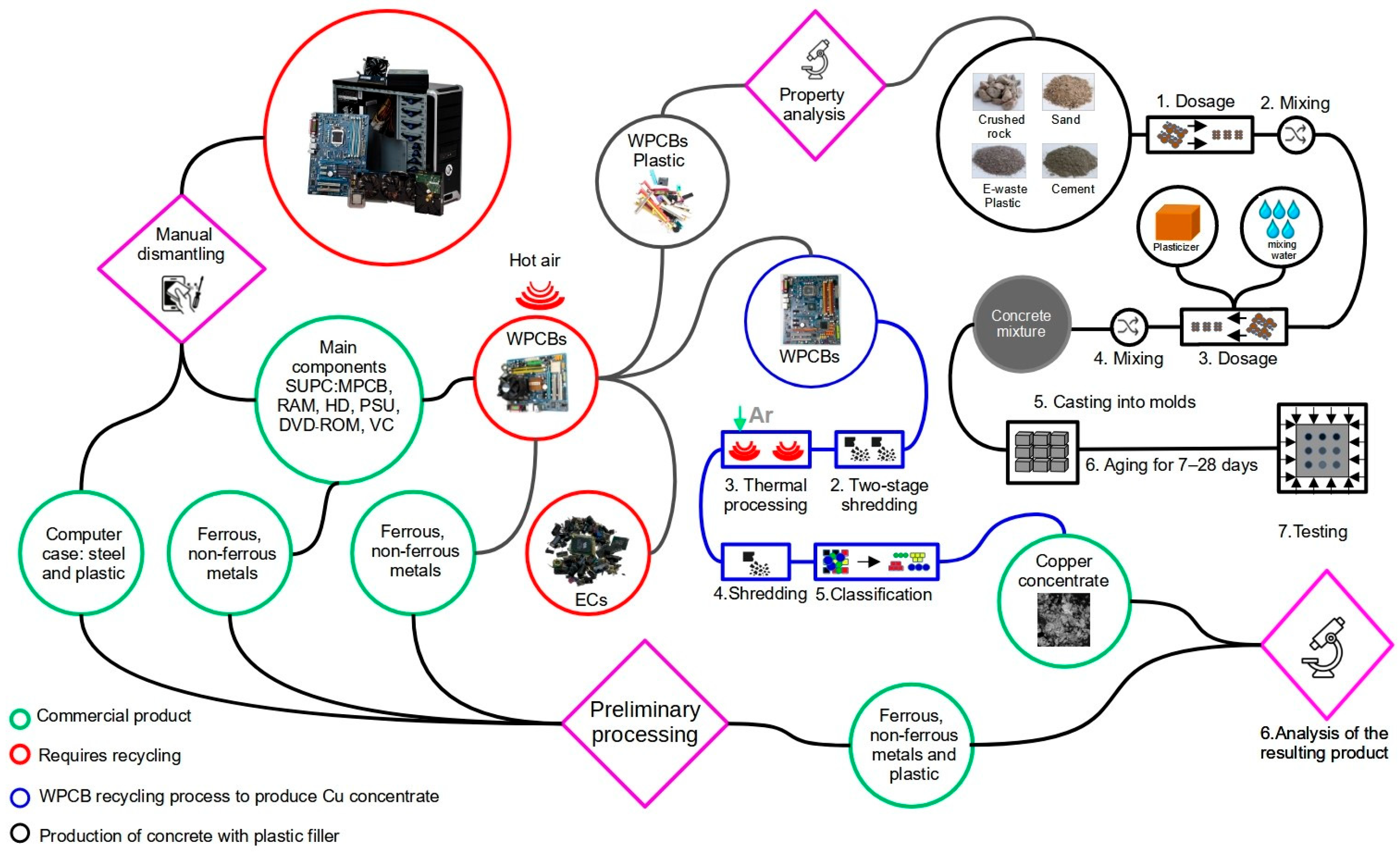
All experiments were carried out in D. Serikbayev” https://www.ektu.kz/ (accessed on 19 October 2025). The EO processing laboratory at the D. Serikbayev Technical University has semi-industrial significance and is designed for conducting scientific research and obtaining commercial products. The general scheme of the experiment is shown in Figure 11. The study used 15 system units (SUs) from damaged and obsolete desktop computer (PC) models used at the Daulet Serikbayev East Kazakhstan Technical University (D. Serikbayev EKTU). The following methods were used to study the composition of WPCBs:
-
IR spectroscopy (using an IRTracer-100 instrument (Shimadzu Corporation, Kyoto, Japan) equipped with a diamond crystal attenuated total internal reflection (ATR) attachment. Spectra were recorded in the range 4000–400 cm−1 with a resolution of 2 cm−1 and averaged over 32 scans).
-
Differential scanning calorimetry (DSC) (using a Shimadzu DSC-60 Plus device Shimadzu Corporation: Kyoto, Japan.). Analysis conditions: crucible material: Al, gas flow: nitrogen 100 mL/min, sample weight: 4–6 mg; heating at a rate of 10 or 20 °C/min from 100 °C to 200 °C. An Al2O3 sample placed in an aluminum crucible with a mass approximately twice that of the sample was used as a reference.
-
Thermogravimetric analysis (using a Shimadzu DTG-60 device; Shimadzu Corporation: Kyoto, Japan). Data processing was performed using TA Acquisition Status Version 2.21 software. Analysis conditions: crucible material: Al, gas flow: air 100 mL/min, sample weight: 8–12 mg. Temperature program: heating at a rate of 10 °C/min from room temperature to 900 °C.
An ICP-MS 7500cx mass spectrometer from Agilent Technologies Inc.: Santa Clara, CA, USA. and an X’Pert PRO X-ray diffractometer from PANalitical (PANalytical B.V., Almelo, The Netherlands) were used to study the chemical and phase composition of the materials.

4.1. Case Study

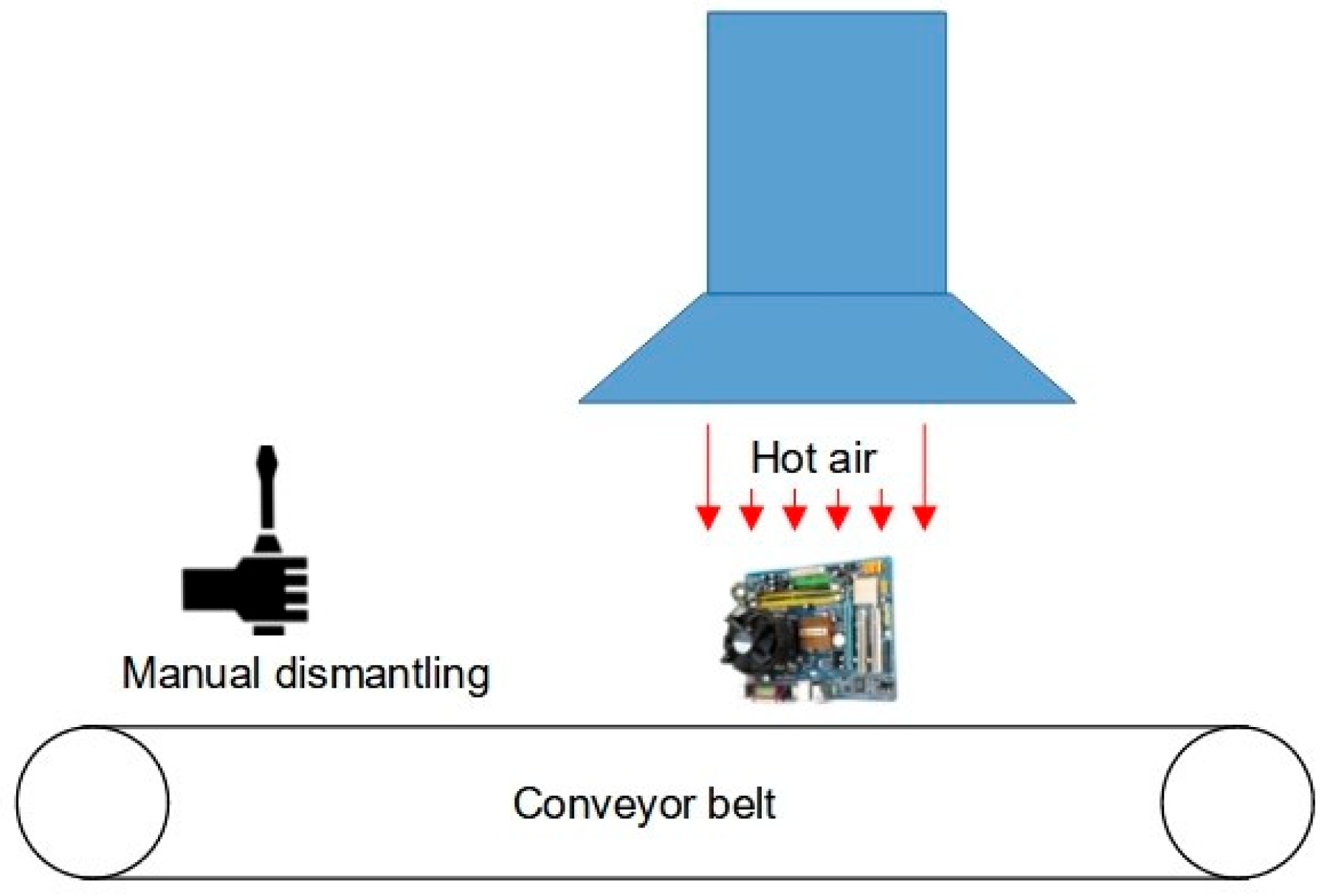
During manual disassembly, the main components were separated from the SU cases: motherboards (MPCBs) with a total weight of 13.568 kg (15 pcs.), RAM with a total weight of 0.407 kg (15 pcs.), video cards (VCs) with a total weight of 2.895 kg (15 pcs.), hard drives (HDs) with a total weight of 6.827 kg (15 pcs.), power supply units (PSUs) with a total weight of 17.5 kg (15 units), DVD drives (DVD-ROM) with a total weight of 8.25 kg (15 units), and CPUs with a total weight of 0.492 kg (15 units). Next, the HD, box of power supply (PSU), and DVD-ROM cases were disassembled, separating the plastic, metal parts, and WPCBs. Next, plastic, EC—microcircuits, etc., elements containing aluminum (cooling system, radiators), metal components, and batteries were removed from the surface of the MPCBs, RAM, HD, PSU, DVD-ROM, and VC printed circuit boards by manual disassembly. Manual disassembly was performed by heating the WPCBs to a temperature of 220–250 °C, at which point their main components began to separate, and dismantling the electronic components from the WPCBs on a conveyor table (Figure 12).
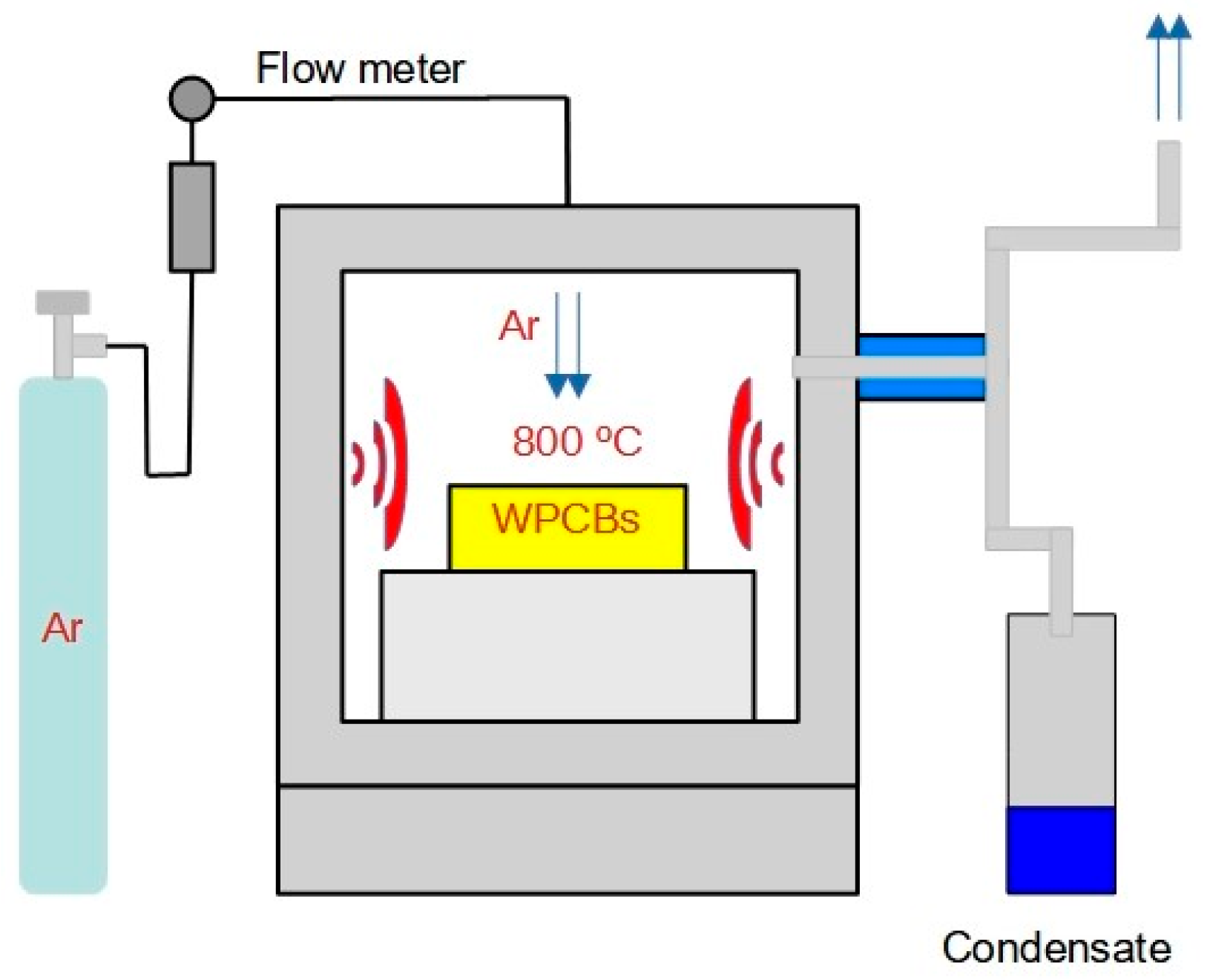
Contact time depends on the boards. Maximum for the MPCBs is 4–5 min. Other PCBs: 2–3 min. The conveyor rotates in manual mode. Average air temperature is 250 °C. After manual separation of the SU elements, the steel parts were prepared as charge for use in steel smelting, while the parts containing copper and aluminum were remelted into ingots. The WPCBs were processed into copper concentrate by grinding and subsequent heat treatment for 30 min at a temperature of 800 °C in an Ar atmosphere, as shown in Figure 13. The furnace was preheated to 800 °C. Ar consumption was 1.5 L/min. The pyrolysis products were removed through a cooled tube and condensed in a special container.
Plastic from the surface of MPCBs, RAM, HDs, PSUs, DVD-ROM, and VC printed circuit boards was crushed in a PC-600×500 Drum Crusher; Zhangjiagang City Xinrong Machinery Co., Ltd.: Suzhou, China and used as a filler for construction concrete. CPUs, neodymium magnets, ECs, and lithium batteries were collected and prepared as commercial products.

4.1.1. Obtaining Copper Concentrate from WPBs and Aluminum and Copper Ingots from Elements Containing Aluminum and Copper

After manual disassembly, the WPCBs were sent for two-stage crushing in a shredder. After that, the WPCBs (MB, HD, PSU, VC, DVD-ROM) were subjected to heat treatment in an Ar atmosphere at a temperature of 800 °C for 30 min. The furnace was preheated. Ar consumption was 1.5 L/min. After heat treatment, the product was further crushed in a ball mill and subjected to particle size analysis. The steel cases of the SBs were compressed, weighed, and prepared for sale as smelting charge. Aluminum and copper parts were remelted into ingots. A SNOL 6.7/1300 laboratory electric furnace was used to remelt the aluminum parts, and a SIBTEKHLIT induction furnace was used to melt the copper parts. After melting, the metal was poured into steel molds. Scrap requiring further processing was sorted and prepared for sale as commercial products.

4.1.2. Obtaining Construction Concrete with Plastic Additive

The following materials were used to produce concrete:
-
M500 cement (manufactured by Bukhtarma Cement Company LLP: Oktyabrsky Village, Altai District, East Kazakhstan Region, Kazakhstan). The chemical composition and some physical and mechanical parameters of Cement M500 as provided by the manufacturer (Table 12).
-
Crushed stone—(manufacturer: Non-metallic Materials Plant LLP, Ust-Kamenogorsk, Kazakhstan). Crushed stone and quartz sand (bulk density 1787 kg/m3) complies with ASTM C33/C33M “Standard Specification for Concrete Aggregates”.
-
Master Rheobuild 1000 plasticizer is a homogeneous dark brown liquid with a density of 1.204 g/cm3. The plasticizing additive was added in the form of a solution together with water, in an amount of 1.5% of the cement mass.
-
Crushed MPCBs plastic was used as a partial replacement for sand in concrete. Various volume fractions of sand, amounting to 0, 10, 20, 30, 40, and 50%, were replaced with crushed plastic (Table 13). Table 13 shows the data on material consumption in the synthesis of experimental concrete samples.
In accordance with the experiment design, crushed plastic and cement were weighed in specific quantities, loaded into a hand mixer 1, and mixed for 5 min. Preliminary mixing of cement and crushed plastic was carried out to ensure their uniform distribution and prevent the plastic from floating in the concrete mixture. Coarse and fine aggregates (crushed stone and sand) were weighed and also mixed separately in hand mixer 2. The mixture from the first mixer was added to the second mixer and mixed for 5 min. After that, water was added in an amount equal to 70% of the calculated amount and thoroughly mixed for 3 min. The remaining calculated amount of water was then added together with the plasticizer. After thoroughly mixing the concrete mixture for 5 min, experimental samples (100 × 100 × 100 mm) were cast. After 24 h, the samples were removed from the molds and kept in a special chamber for 7 and 28 days at a temperature of 20 °C and a relative humidity of 100% [51].
A total of 36 experimental samples (6 for each composition) were prepared, containing various volume fractions of fillers, including a control sample without plastic additive. The sample size was 100 × 100 × 100 mm. Tests were carried out on samples aged 7 and 28 days.
The compressive strength of the experimental batch of concrete was determined using a PGM-100MG 4 hydraulic press (Zapadpribor, Lviv, Ukraine) with a certificate according to the method presented in EN 12390-3:2019 [52]. The measurements were carried out in accordance with the method presented in ASTM C1693 [53]. The density of the concrete was determined by directly weighing the cubes, taking into account the imperfection of the shape (on average, 3 measurements) [54]. The thermal conductivity of the concrete was measured using an ITP-MG4 thermal conductivity meter (Stroypribor, Moscow, Russia). The measurements were carried out in accordance with the method described in ASTM C150/C150M [55].
The frost resistance of the samples was tested using a special measuring complex for determining the frost resistance of concrete—“Beton-Frost” (manufacturer Interpribor, Almaty, Kazakhstan). Operating conditions: ambient air temperature: electronic unit—from plus 10 to plus 35 °C; measuring chamber—from minus 20 to plus 35 °C; relative air humidity at plus 35 °C and below without moisture condensation up to 75%, atmospheric pressure 84 ÷ 106.7 kPa [56].
The methodology for determining the toxicity of concrete containing plastic from personal computer motherboards was as follows.
Concrete samples containing varying amounts of plastic from motherboards were crushed to a powdery state after undergoing compression strength testing. Samples weighing 10 g each were placed in conical flasks, mixed with 200 mL of extraction liquid with a pH of 1 to 10, and stirred at a temperature of 25 °C in a special LAB-PU-01 device for 24 h. To prepare the extraction liquid with different pH values, sulfuric acid (98% purity) compliant with EN 899:2022 [57] and a NaOH solution with a concentration of 1 mol/L were used. Present experiment is a comparative accelerated screening method rather than a normative regulated test.
At the end of the process, the resulting mass was filtered. The pH was measured in the filtrate and the concentration of metals was determined.

Author Contributions

Conceptualization: N.K., M.S., R.S. and S.B.; methodology: N.K., M.S. and R.S.; validation, N.K., M.S. and S.B.; formal analysis—O.R., N.B., M.Y. and N.K.; investigation, N.K., M.S., R.S. and Z.S.; resources, N.K., M.S., R.S., Z.S., M.Y. and O.R.; data curation, N.K., M.S., R.S. and Z.S.; writing—original draft preparation, N.K. and R.S.; writing—review and editing, N.K. and R.S.; visualization: R.S. and N.B.; supervision: N.K.; project administration, N.K.; funding acquisition, N.K. All authors have read and agreed to the published version of the manuscript.

Funding

This research is funded by the Committee of Science of the Ministry of Science and Higher Education of the Republic of Kazakhstan (Grant No. AP23488821 “Development of a reagentless energy and resource saving technology for the extraction of non-ferrous metals from electronic waste”).

Data Availability Statement

The original contributions presented in this study are included in the article. Further inquiries can be directed to the corresponding author.

Conflicts of Interest

The authors declare no conflicts of interest.

References

  1. Baldé, C.P.; Kuehr, R.; Yamamoto, T.; McDonald, A.; D’Angelo, E.; Althaf, S.; Bel, G.; Deubzer, O.; Fernandez-Cubillo, E.; Forti, V.; et al. The Global E-Waste Monitor; ITU, UNITAR: Geneva, Switzerland, 2024; 148p. [Google Scholar]
  2. Nandan, A.; Suresh, A.C.; Saole, P.; Jeevanasai, S.A.; Chandrasekaran, R.; Meili, L.; Wan Azelee, N.I.; Sevasembian, R. An integrated approach for electronic waste management. Sustainability 2023, 15, 16946. [Google Scholar] [CrossRef]
  3. Hagelüken, C. Improving metal returns and eco-efficiency in electronics recycling. In Proceedings of the 2006 IEEE International Symposium on Electronics and the Environment, Scottsdale, AZ, USA, 8–11 May 2006; pp. 218–223. [Google Scholar] [CrossRef]
  4. Chaudhary, K.; Vrat, P. Case study analysis of e-waste management systems in Germany, Switzerland, Japan and India: A RADAR chart approach. Benchmarking Int. J. 2018, 25, 3519–3540. [Google Scholar] [CrossRef]
  5. Ghimire, H.; Ariya, P.A. E-Wastes: Bridging the Knowledge Gaps in Global Production Budgets, Composition, Recycling and Sustainability Implications. Sustain. Chem. 2020, 1, 154–182. [Google Scholar] [CrossRef]
  6. Liu, K.; Tan, Q.; Yu, J.; Wang, M. A global perspective on e-waste recycling. Circ. Econ. 2023, 2, 100028. [Google Scholar] [CrossRef]
  7. Gaur, T.S.; Yadav, V.V.; Sameer, M.; Sharma, M.K. A systematic review on sustainable e-waste management. Manag. Environ. Qual. 2024, 35, 858–884. [Google Scholar] [CrossRef]
  8. Raabe, D. The materials science behind sustainable metals and alloys. Chem. Rev. 2023. [Google Scholar] [CrossRef]
  9. Li, B.; Liu, D.; Zhang, L.; Wu, Y.; Ding, X.; Zeng, X. Challenges of e-waste dismantling in China. Toxics 2024, 12, 867. [Google Scholar] [CrossRef]
  10. Das, J.; Ghosh, A. Recycling practices of e-waste and associated challenges. Nat. Environ. Pollut. Technol. 2023, 22, 1169–1182. [Google Scholar] [CrossRef]
  11. He, Y.; Hosseinzadeh-Bandbafha, H.; Peng, W.; Tabatabaei, M.; Aghbashlo, M. Environmental footprint analysis of gold recycling from electronic waste. J. Clean. Prod. 2023, 432, 139675. [Google Scholar] [CrossRef]
  12. Zeng, X.; Mathews, J.; Li, J. Urban mining of e-waste is becoming more cost-effective than virgin mining. Environ. Sci. Technol. 2018, 52, 4835–4841. [Google Scholar] [CrossRef]
  13. Raabe, D.; Tasan, C.C.; Olivetti, E.A. Strategies for improving the sustainability of structural metals. Nature 2019, 575, 64–74. [Google Scholar] [CrossRef]
  14. Kaya, M.; Hussaini, S. Hydrometallurgical Processing of Electronic Waste. In Electronic Waste Management; Kumar, S., Kumar, V., Eds.; Wiley: Hoboken, NJ, USA, 2023. [Google Scholar] [CrossRef]
  15. Harvey, J.-P.; Khalil, M.; Chaouki, J. Pyrometallurgical Processes for Recycling WEEE. In Electronic Waste; Holuszko, M.E., Kumar, A., Espinosa, D.C.R., Eds.; Wiley: Hoboken, NJ, USA, 2022. [Google Scholar] [CrossRef]
  16. Dutta, D.; Rautela, R.; Gujjala, L.K.S.; Kundu, D.; Sharma, P.; Tembhare, M.; Kumar, S. A review on recovery processes of metals from e-waste. Sci. Total Environ. 2023, 859, 160391. [Google Scholar] [CrossRef] [PubMed]
  17. Wu, C.; Awasthi, A.K.; Qin, W.; Liu, W.; Yang, C. Recycling value materials from waste PCBs. J. Environ. Chem. Eng. 2022, 10, 108516. [Google Scholar] [CrossRef]
  18. Kaya, M. Recovery of metals and nonmetals from electronic waste. Waste Manag. 2016, 57, 64–90. [Google Scholar] [CrossRef]
  19. Nuruzzaman, M.; Shathi, A.S.; Yousuf, A.; Islam, J.; Rana, S.; Alam, S.; Biswas, P.K.; Rahman, A.; Mondal, I.H. Composite materials from waste plastics. Polym. Polym. Compos. 2025, 33, 09673911251318542. [Google Scholar] [CrossRef]
  20. Vishnu Priyan, M.; Ravella, D.P.; Alaneme, G.U. Transforming electronic waste into sustainable building materials. Discov. Mater. 2024, 4, 100. [Google Scholar] [CrossRef]
  21. Fahim, I.; Mohsen, O.; ElKayaly, D. Production of fuel from plastic waste. Polymers 2021, 13, 915. [Google Scholar] [CrossRef]
  22. Cappello, V.; Sun, P.; Zang, G.; Kumar, S.; Hackler, R.; Hernan, E.; Elgowainy, A.; Delferro, M.; Krause, T. Conversion of plastic waste into high-value lubricants. Green Chem. 2022, 24, 6306–6318. [Google Scholar] [CrossRef]
  23. Hanitio, E.W.; Lutfhyansyah, N.R.; Efendi, B.M.; Mardiyati, Y.; Steven, S. From electronic waste to 3D-printed product. Materials 2023, 16, 3412. [Google Scholar] [CrossRef]
  24. Kaur, G.; Pavia, S. Physical properties of plastic aggregate mortars. J. Build. Eng. 2020, 31, 101341. [Google Scholar] [CrossRef]
  25. Kohl, C.A.; Gomes, L.P. Physical and chemical characterization of desktop computer waste. J. Clean. Prod. 2018, 184, 1041–1051. [Google Scholar] [CrossRef]
  26. Mir, S.; Dhawan, N. Recycling of discarded printed circuit boards. Resour. Conserv. Recycl. 2022, 178, 106027. [Google Scholar] [CrossRef]
  27. Chen, Z.; Yang, M.; Shi, Q.; Kuang, X.; Qi, H.J.; Wang, T. Recycling waste circuit board efficiently and environmentally friendly through small-molecule assisted dissolution. Sci. Rep. 2019, 9, 17902. [Google Scholar] [CrossRef]
  28. Malhotra, P.; Jain, A. Chapter 9—Chemical methods for the treatment of e-waste. In Waste Management and Resource Recycling in the Developing World; Singh, P., Verma, P., Singh, R., Ahamad, A., Batalhão, A.C.S., Eds.; Elsevier: Amsterdam, The Netherlands, 2023; pp. 181–204. [Google Scholar] [CrossRef]
  29. Abdelbasir, S.M.; El-Sheltawy, C.T.; Abdo, D.M. Green processes for electronic waste recycling: A review. J. Sustain. Metall. 2018, 4, 295–311. [Google Scholar] [CrossRef]
  30. Baldé, C.P.; Yumashev, D.; Vermeersch, E.; Kuehr, R.; Tokmurzayev, S.; Sadvakasova, D.; Gabdurashit, S.; Mukhin, P.; Mukhin, R.; Zaitsev, I.; et al. National E-Waste Monitor 2023—Kazakhstan; UNITAR: Bonn, Germany; Astana, Kazakhstan; Almaty, Kazakhstan, 2023. [Google Scholar]
  31. Saldaña-Durán, C.; Messina-Fernández, S. E-waste recycling assessment at university campus. Environ. Dev. Sustain. 2020, 23, 2493–2502. [Google Scholar] [CrossRef]
  32. Agamuthu, P.; Kasapo, P.; Nordin, N. E-waste flow among institutions of higher learning. Resour. Conserv. Recycl. 2015, 105, 177–185. [Google Scholar] [CrossRef]
  33. Kulenova, N.; Sapinov, R.; Sadenova, M.; Shoshay, Z. Preparation of Composite Materials Based on Acrylonitrile–Butadiene–Styrene Flame-Retardant Plastic Obtained from Electronic Waste and Fly Ash Microspheres, with Thermogravimetric/Differential Scanning Calorimetry Analysis and a Study of the Mechanical Characteristics of the Obtained Material. Processes 2025, 13, 1045. [Google Scholar]
  34. Yan, G.; Xue, M.; Xu, Z. Disposal of waste computer HDDs. Waste Manag. Res. 2013, 31, 559–567. [Google Scholar] [CrossRef]
  35. Rossi, F.; De Bernardi, C.; Frey, M.; Niero, M. LCA approaches in the aluminum industry. Waste Manag. 2025, 204, 114900. [Google Scholar] [CrossRef]
  36. Henckens, M.L.C.M.; Worrell, E. Availability of copper and nickel. J. Clean. Prod. 2020, 264, 121460. [Google Scholar] [CrossRef]
  37. Mondal, M.; Bose, B.; Bansal, P. Recycling waste thermoplastic. J. Environ. Manag. 2019, 240, 119–125. [Google Scholar] [CrossRef]
  38. Butturi, M.A.; Marinelli, S.; Gamberini, R.; Rimini, B. Ecotoxicity of plastics from informal Waste Electric and Electronic Treatment and Recycling. Toxics 2020, 8, 99. [Google Scholar] [CrossRef] [PubMed]
  39. ACI 211.1; Standard Practice for Selecting Proportions for Normal, Heavyweight, and Mass Concrete. ACI: St Leonards, NSW, Australia, 1991.
  40. London Metal Exchange (LME). 2025. Available online: https://www.lme.com/ (accessed on 17 August 2025).
  41. Priyan, M.V.; Annadurai, R.; Giri, N.C.; Olaiya, B.C.; Ravella, D.P.; Pradeepkumar, S. A study on waste PCB fibres reinforced concrete with and without silica fume made from electronic waste. Sci. Rep. 2023, 13, 50312. [Google Scholar] [CrossRef]
  42. Energytracker. Carbon Footprint of Steel. 2025. Available online: https://energytracker.asia/carbon-footprint-of-steel/ (accessed on 28 August 2025).
  43. Shamsabadi, E.A.; Salehpour, M.; Zandifaez, P.; Dias-da-Costa, D. Data-driven multicollinearity-aware multi-objective optimisation of green concrete mixes. J. Clean. Prod. 2023, 390, 136103. [Google Scholar] [CrossRef]
  44. International Aluminium Institute (IAI). Global Aluminium GHG Emissions. 2025. Available online: https://international-aluminium.org/global-aluminium-industry-greenhouse-gas-emissions-intensity-reduction-continues-with-total-emissions-below-2020-peak/ (accessed on 28 August 2025).
  45. Carbonchain. Understand Your Copper Emissions. 2025. Available online: https://www.carbonchain.com/blog/understand-your-copper-emissions (accessed on 28 August 2025).
  46. Chen, Y.; Liu, J.; Zhang, M.; Feng, B.; Wang, L.; Wei, J.; Fu, W.; Tan, X. Effects of waste printed circuit board powder on strength, durability and microstructure of cement-based materials. J. Build. Eng. 2022, 61, 105255. [Google Scholar] [CrossRef]
  47. Hamzat, A.K.; Murad, M.S.; Subeshan, B.; Asmatulu, R.; Asmatulu, E. Rare earth element recycling: A review on sustainable solutions and impacts on semiconductor and chip industries. J. Mater. Cycles Waste Manag. 2025, 27, 3009–3032. [Google Scholar] [CrossRef]
  48. Zulkernain, N.H.; Gani, P.; Chuan, N.C.; Uvarajan, T. Utilisation of plastic waste as aggregate. Constr. Build. Mater. 2021, 296, 123669. [Google Scholar] [CrossRef]
  49. Lasiyal, N.; Pawar, L.; Dixit, M. Effect of plastic waste as partial replacement of fine aggregate in concrete and cost analysis. Int. J. Eng. Res. Technol. 2016, 4. [Google Scholar] [CrossRef]
  50. Kumar, G.; Bansal, T.; Haq, M.; Sharma, U.; Kumar, A.; Jha, P.; Sharma, D.; Kamyab, H.; Valencia, E.A.V. Utilizing e-waste as a sustainable aggregate in concrete production: A review. Buildings 2024, 14, 2495. [Google Scholar] [CrossRef]
  51. EN 12390-2:2019; Testing Hardened Concrete—Part 2: Making and Curing Specimens for Strength Tests. The European Committee for Standardization (CEN): Brussels, Belgium, 2019.
  52. EN 12390-3:2019; Testing Hardened Concrete—Part 3: Compressive Strength of Test Specimens. The European Committee for Standardization (CEN): Brussels, Belgium, 2019.
  53. ASTM C1693-11(2017); Standard Specification for Autoclaved Aerated Concrete (AAC). ASTM: West Conshohocken, PA, USA, 2017.
  54. EN 12390-6:2023; Testing Hardened Concrete—Part 6: Tensile Splitting Strength of Test Specimens. The European Committee for Standardization (CEN): Brussels, Belgium, 2019.
  55. ASTM C150/C150M; Standard Specification for Portland Cement. ASTM: West Conshohocken, PA, USA, 2024.
  56. ASTM C666/C666M; Standard Test Method for Resistance of Concrete to Rapid Freezing and Thawing. ASTM: West Conshohocken, PA, USA, 2015.
  57. EN 899:2022; Chemicals Used for Treatment of Water Intended for Human Consumption—Sulfuric Acid. European Committee for Standardization (CEN): Brussels, Belgium, 2022.
Figure 1. Composition of a PC SU and the level of complexity of processing its components.
Recycling 11 00039 g001
Figure 2. Amount of e-waste generated at the university from 2021 to 2024.
Recycling 11 00039 g002
Figure 3. Thermogravimetric and differential thermal analysis of PCB connector plastic.
Recycling 11 00039 g003
Figure 4. SEM image of the inorganic part of the sample obtained by heating to 900 °C.
Recycling 11 00039 g004
Figure 5. The derivatogram of the initial sample after triple extraction of the soluble fraction with hot THF.
Recycling 11 00039 g005
Figure 6. IR spectra of the starting material and extracted using THF.
Recycling 11 00039 g006
Figure 7. IR spectra of the original sample and the sample after extraction of the soluble fraction using THF.
Recycling 11 00039 g007
Figure 8. Graph showing the grain composition of fillers. 1—Recommended lower limit of grain size (grain size modulus—2.1); 2—recommended upper limit of grain size (grain size modulus—3.25); 3 and 4—graphs showing the grain size of sand and plastic, respectively.
Recycling 11 00039 g008
Figure 9. Dependence of compressive strength on plastic content in experimental concrete samples and curing time. Error bars represent mean ± SD (n = 3).
Recycling 11 00039 g009
Figure 10. The change in the mass of experimental concrete samples depending on the pH of the extracting solution.
Recycling 11 00039 g010
Figure 11. The general outline of the experiment to investigate the possibility of comprehensive recycling of a PC SU.
Recycling 11 00039 g011
Figure 12. General installation diagram for separating ECs by heating.
Recycling 11 00039 g012
Figure 13. Oven for heat treatment of WPCBs in an Ar atmosphere.
Recycling 11 00039 g013
Table 1. Data on the mass of components obtained during manual disassembly of 15 MPCB units.
Component NameMass, gComponents of a Disassembled MPCB
Metal brackets (socket holder frame) and electronic component casings845Recycling 11 00039 i001
(a) Steel parts, (b) plastic parts, (c) cooler, (d) Al radiator, (e) battery, (f) Al CPU cooling radiator, (g) ECs, (h) CPU, (i) WPCBs, (j) RAM.
Plastic parts750
Coolers930
Cooling radiators1302
Lithium battery50
CPU cooling radiators1680
ECs1140
CPU492
WMPCBs7129
WPCBs (RAM)332
Table 2. Data on component weights obtained from manual disassembly of 15 HD units.
Component NameMass, gComponents of a Disassembled HD
Al alloy housing3555Recycling 11 00039 i002
(a) Al alloy casing, (b) is the Ni-coated Al disk, (c) is the WPCBs, (d) is the steel cover and fasteners, (e) are the ECs, (f) is the motor, (g) is the plastic parts, and (h) are the neodymium magnets.
Coated aluminum disk750
WPCBs165
Steel housing cover and fasteners1017
ECs90
Motor steel115
Copper motor wire43
Plastic parts105
Neodymium magnets648
Table 3. Data on component weights obtained from manual disassembly of 15 PSUs.
Component NameMass, gComponents of a Disassembled PSU
Steel housing cover and fasteners7020Recycling 11 00039 i003
(a) Steel cover, (b) WPCBs, (c) transformer coils, (d) cooler, (e) Cu wires, (f) Al radiator, (g) ECs, (h) plastic parts.
WPCBs780
Coil steel2250
Copper coil wires450
Plastic cooler558
Copper wires of the cooler motor270
Steel cooler parts87
Copper wires2685
Cooling radiators2475
ECs780
Plastic parts195
Table 4. Data on component weights obtained by manually disassembling 15 DVD-ROMs.
Component NameMass, gComponents of Disassembled DVD-ROM Parts
Plastic housing2055Recycling 11 00039 i004
(a) Plastic casing, (b) WPCBs, (c) steel casing, (d) ECs; (e) plastic parts.
WPCBs255
Steel cover and fasteners5535
Steel motor housing214
Copper motor wires41
ECs90
Plastic parts36
Table 5. Data on component weights obtained from manual disassembly of 15 units VC.
Component NameMass, gComponents of Disassembled VC Parts
Metal brackets300Recycling 11 00039 i005
(a) Metal brackets, (b) WPCBs, (c) aluminum cooling radiators,
(d) ECs, (e) plastic parts.
WPCBs585
Aluminum cooling radiators1676
ECs255
Plastic parts97
Table 6. Distribution of base metals by size class.
Size of Screen Holes, mmQuantity %Content, % (Mass)
CuFeNiSnZnPbAlAu, г/тAg,
г/т
1 < S19.5061.1805.3200.6397.11210.1082.2726.3324.62432.6
0.5 < S < 112.0079.5400.3960.3051.41211.5820.3659.2573.74447.30
0.315 < S < 0.55.2089.2200.1840.1553.1620.7471.0373.5785.65410.19
S < 0.31563.1014.75210.4800.2805.6861.9781.2175.5978.21427.20
Table 7. Characteristics of the THF-soluble part of the sample by gel permeation chromatography.
PeakMnMwMw/Mn
128,50057,3002.01
2440050001.12
Mn—average molecular weight, Mw—average molecular weight, Mw/Mn—polydispersity.
Table 8. Strength characteristics and some physical properties of experimental concrete samples with various plastic additives.
Plastic Content Relative to Sand Mass (% by Mass)Compressive Strength—CS (Cube) (MPa)Density—D (kg/m3)Thermal Conductivity— λ , W/(m·K) Frost ResistanceConcrete Grade
Curing time 28 days
042.8123921.962F157M450
1036.6124091.953F108M400
2034.8423472.036F139M350
3032.3023072.013F89M350
4028.4823082.013F88M300
5025.5622912.006F77M250
Table 9. The content of certain metals in the solution obtained by leaching experimental concrete samples at different pH values.
Plastic ContentMetalMetal Content in Solution After Leaching, mg/LStandard Deviation
Limits (Min–Max)
1246810
0% Ca131.60065.89097.740100.800105.100106.8000.733–1.757
Al124.3000.9251.1290.9441.2010.7990.065–1.741
Fe132.7000.4640.2010.1920.2000.2030.041–1.950
Zn1.5280.0940.0760.1310.0670.0790.018–0.159
Pb0.0490.0040.0060.0850.0030.0040.002–0.018
Sb0.0050.0010.0130.0020.0020.0020.001–0.002
10% Ca128.80064.08077.16059.14076.97083.1503.415–12.250
Al198.1001.8400.7501.0401.4801.4300.095–12.182
Fe220.300.9100.1500.1200.1600.1500.020–19.930
Zn3.3300.3200.1100.0700.0700.0900.020–0.883
Pb0.3180.0240.0030.0010.0020.0030.006–0.06
Sb1.0210.0120.0950.1140.1110.1110.016–0.801
20% Ca88.47047.58058.72064.53073.16065.0402.159–4.386
Al159.7001.4901.1991.1151.1321.5480.084–5.109
Fe161.3000.8340.1900.1430.1300.5840.0161–3.903
Zn6.1860.2700.2250.1240.1820.1690.014–0.301
Pb0.1280.0120.0050.0090.2030.0280.0035–0.0291
Sb2.7610.0390.1500.2270.2640.2890.0326–0.283
30% Ca62.74825.55337.55538.56316.89136.6771.219–2.241
Al188.7603.3321.2810.1612.2831.99700.122–0.749
Fe254.1001.1010.2190.1610.1481.9970.0193–2.301
Zn6.1700.1190.1120.0960.1010.0760.0098–0.320
Pb0.3430.0050.0010.0020.0800.0030.001–0.0223
Sb2.8600.0690.3040.2870.3000.3360.069–2.860
40% Ca82.00835.42438.21041.49427.75649.1180.563–2.633
Al219.8302.4521.5801.8821.7901.7710.031–2.079
Fe232.4001.1160.2190.1130.2080.1680.0078–2.794
Zn7.2450.1310.1080.1140.0690.1000.0061–0.3103
Pb0.1780.0070.0020.0030.0010.0040.001–0.0152
Sb4.1030.1040.3400.4000.4010.2800.0089–0.176
50% Ca87.55233.48742.35033.79738.90236.6770.6221–0.9138
Al193.3103.2812.0312.1241.7302.3660.027–0.705
Fe119.9002.3820.1720.1130.2080.1680.0051–0.7957
Zn10.5200.6550.0840.0900.0940.0940.0064–0.5325
Pb0.1080.0310.3660.0330.0030.0110.0015–0.0221
Sb2.0270.1650.5220.6400.4960.5390.0089–0.176
Table 10. Preliminary assessment of the economic potential of processing metal-containing elements of SU PC (15 pcs).
Metal-Containing Waste Generated During the Processing of 15 SU PCs.Base Metal/Alloy Price on the London Metal Exchange, USD/tonScrap Metal PricesRevenue from Sales, USD
Name of WasteMass, gMetalBase Metal Content, % (Mass)
Cooling radiators7112Al98.8127031351.59.495
HD cases3412Al843.87
HD drives750Al91.41
Steel alloy17,672Fe 371.5185.753.28
Copper wires3682Cu99.989765.54882.752.97
PCBs7007Cu35.59765.54882.7512.15
Total 47.755
Table 11. Data on the cost of 1 m3 of concrete without and with the cost of plastic processing included.
Cost of 1 m3 of Concrete, $
NamePlastic Content in Concrete Relative to Sand Mass, % (Mass)
01020304050
Cost of 1 m3 of concrete, excluding the cost of plastic recycling, $64.1062.3660.6258.8757.1355.39
Cost of 1 m3 of concrete, including the cost of plastic recycling, $64.1063.5763.0362.5061.9661.43
Table 12. Average chemical and phase composition of the cement with M500 brand (Bukhtarma Cement Company, Kazakhstan).
Name of
Product
Content of Oxides (Mass. %)Compressive Strength, MPaDensity, kg/m3
SiO2Al2O3Fe2O3CaOMgOSO3Na2O + K2OOthers
Cement M50022.403.272.4067.511.260.521.860.78481300
Table 13. Material consumption during the synthesis of experimental concrete samples with different plastic content per 1 m3 of concrete mix.
Name of MaterialsPlastic Content in Concrete, %
01020304050
Cement, kg/m3253253253253253253
Water, kg/m3159159159159159159
Crushed stone, kg/m3929929929929929929
Sand, kg/m31079971863755647539
Plastic, kg/m30306091121151
Plasticizer, L3.83.83.83.83.83.8
Disclaimer/Publisher’s Note: The statements, opinions and data contained in all publications are solely those of the individual author(s) and contributor(s) and not of MDPI and/or the editor(s). MDPI and/or the editor(s) disclaim responsibility for any injury to people or property resulting from any ideas, methods, instructions or products referred to in the content.