
Analysis of Liquid Cooling Performance of Honeycomb-Structured Automotive Power Batteries and Research on Machine Learning Algorithm Predictions


Abstract
1. Introduction
- (1)
- Deficiencies in bionic flow channel design: most studies only imitate biological geometric structures without introducing mass transfer optimization physical laws into channel design, which easily causes uneven coolant distribution and poor local heat dissipation effect.
- (2)
- Incomplete multi-physics coupling mechanism: electrochemical heat generation and fluid flow are modeled independently, ignoring the feedback effect of temperature on battery internal resistance, and cannot accurately predict nonlinear characteristics such as thermal saturation.
- (3)
- Contradiction between heat dissipation performance and energy consumption. Single-objective optimization fails to balance temperature uniformity and pump power loss, resulting in increased energy consumption with limited cooling improvement effect.
- (4)
- Imperfect data-driven prediction system. Existing prediction models suffer from overfitting, insufficient physical mechanism fusion, incomplete working condition samples, and lack of horizontal algorithm comparison, leading to poor generalization and low prediction accuracy under extreme conditions.
2. Battery Pack Model and Liquid Cooling Plate Structure Design
2.1. Basic Parameters of the Battery Pack for the Battery Liquid Cooling System
2.2. Battery Pack Model
2.3. Design of Serpentine Liquid Cooling Plate
3. CFD Analysis of Liquid Cooling for Battery Pack
3.1. Simulation Software Selection
3.2. Grid Division
3.3. Determination of Physical Property Parameters of Lithium-Ion Batteries
3.3.1. Battery Heat Generation Rate
3.3.2. Calculation of the Specific Heat Capacity of Lithium Batteries
3.3.3. Calculation of Lithium-Ion Battery Density
3.3.4. Calculation of Thermal Conductivity of Lithium-Ion Batteries
3.4. Theoretical Model of CFD Analysis
3.5. Boundary Conditions and Solution Parameter Settings
- (1)
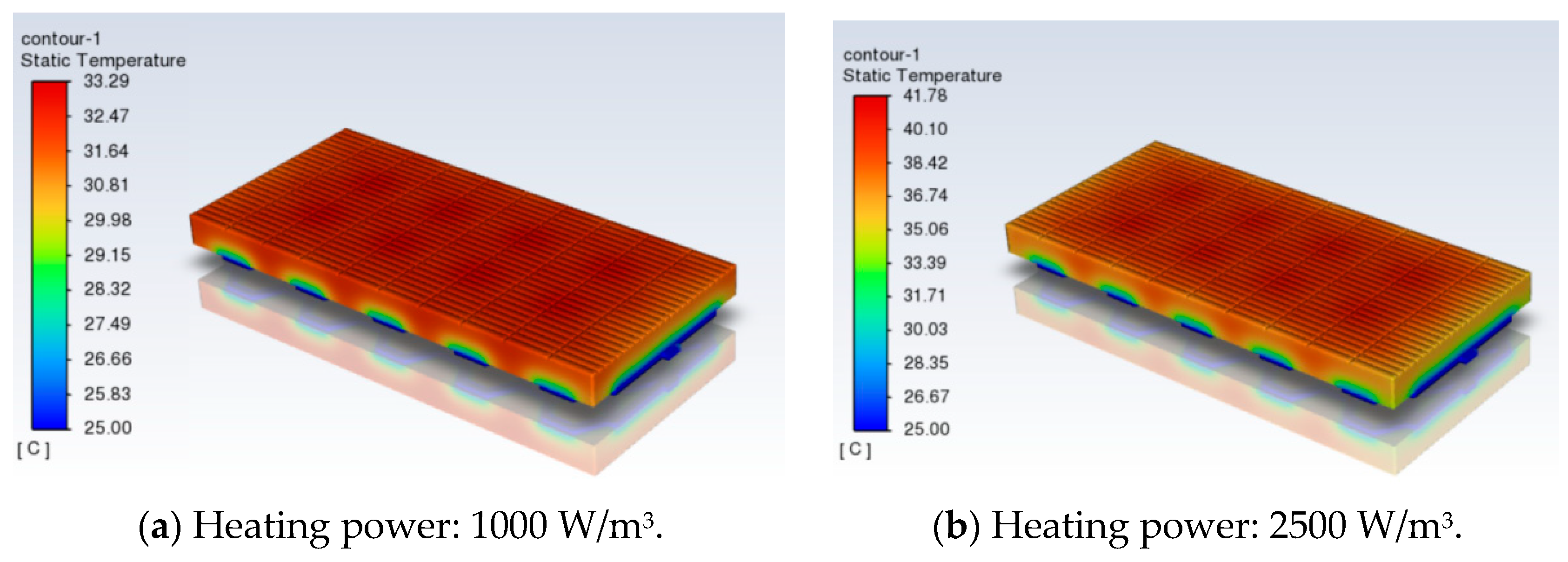
- The heat source boundary employs a “constant heat generation rate,” uniformly distributing the cell’s heat generation power at the 0.5 C and 1 C rates specified in Section 3.3.1 across the cell domain to simulate heat generation characteristics under stable discharge conditions.
- (2)
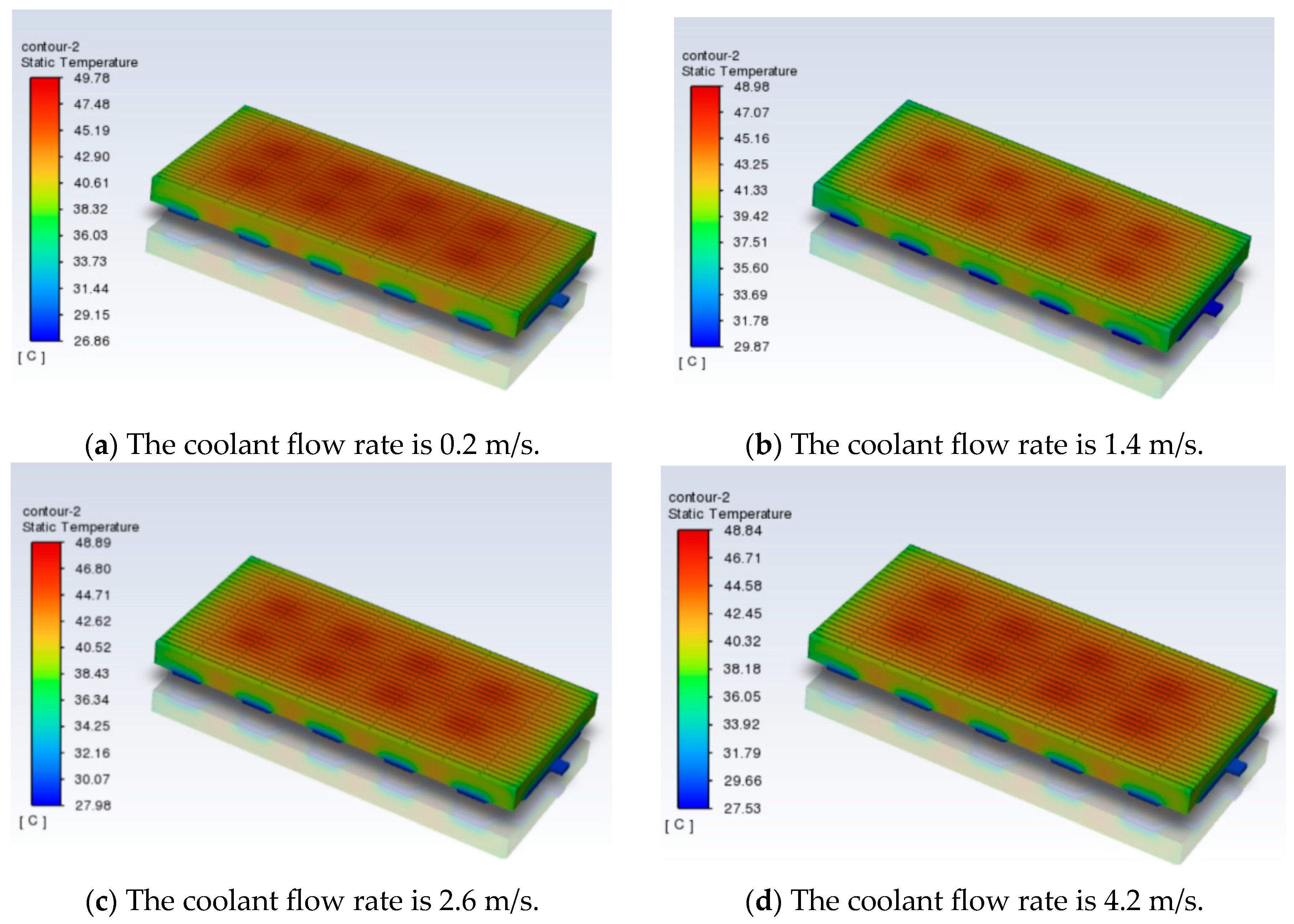
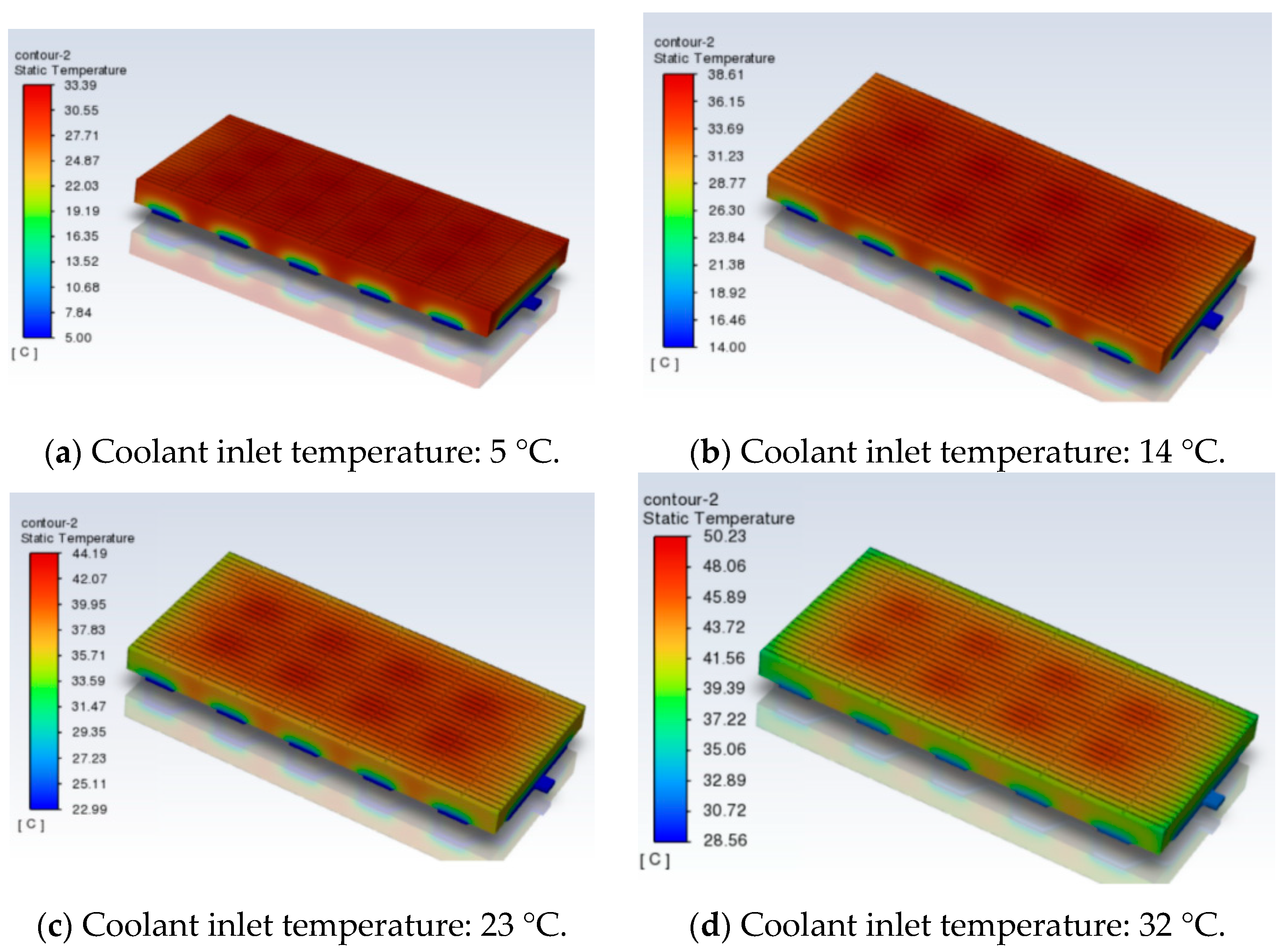
- The coolant boundary is configured as “velocity inlet–pressure outlet,” with the inlet velocity ranging from 0.2 to 4.2 m/s (corresponding to different cooling intensities). The inlet temperature is adjusted according to the simulation conditions, while the outlet is set at atmospheric pressure (0 Pa gauge pressure) to ensure stable flow field.
- (3)
- For wall boundary treatment, the upper, lower, and side surfaces of the battery pack are defined as wall boundaries. Given that surface thermal radiation accounts for less than 5% of the total heat dissipation (at an ambient temperature of 25 °C), the radiation model is temporarily disabled. The wall surfaces are treated solely as natural convection boundaries, with a uniform convective heat transfer coefficient of 5 W/(m2·K) to account for convective heat exchange with the surrounding environment.
- (4)
- The fluid–solid interface (cell–liquid cooling plate, liquid cooling plate–shell) adheres to the no-slip boundary condition and employs a “coupled wall” approach to ensure efficient heat transfer between the fluid and solid, with interface thermal resistance neglected (corrected using thermal grease layer parameters).
4. Design and Result Analysis of the Simulation Experiment for Liquid Cooling Effect of the Honeycomb Structure Liquid Cooling Plate
4.1. Simulation Experiment on the Performance of Honeycomb Structure Liquid Cooling Plates
4.2. Numerical Results and Discussion
5. Simulation Experiment and Result Analysis of Heat Transfer Characteristics of the Honeycomb Structure Liquid Cooling Plate System
5.1. Comparison of Performance of Honeycomb Structure Liquid Cooling Plates at Different Coolant Inlet Temperatures
5.1.1. Design of the Simulation Experiment Process
5.1.2. Simulation Result Analysis
5.1.3. Flow Rate–Maximum Temperature Variation Pattern
- (1)
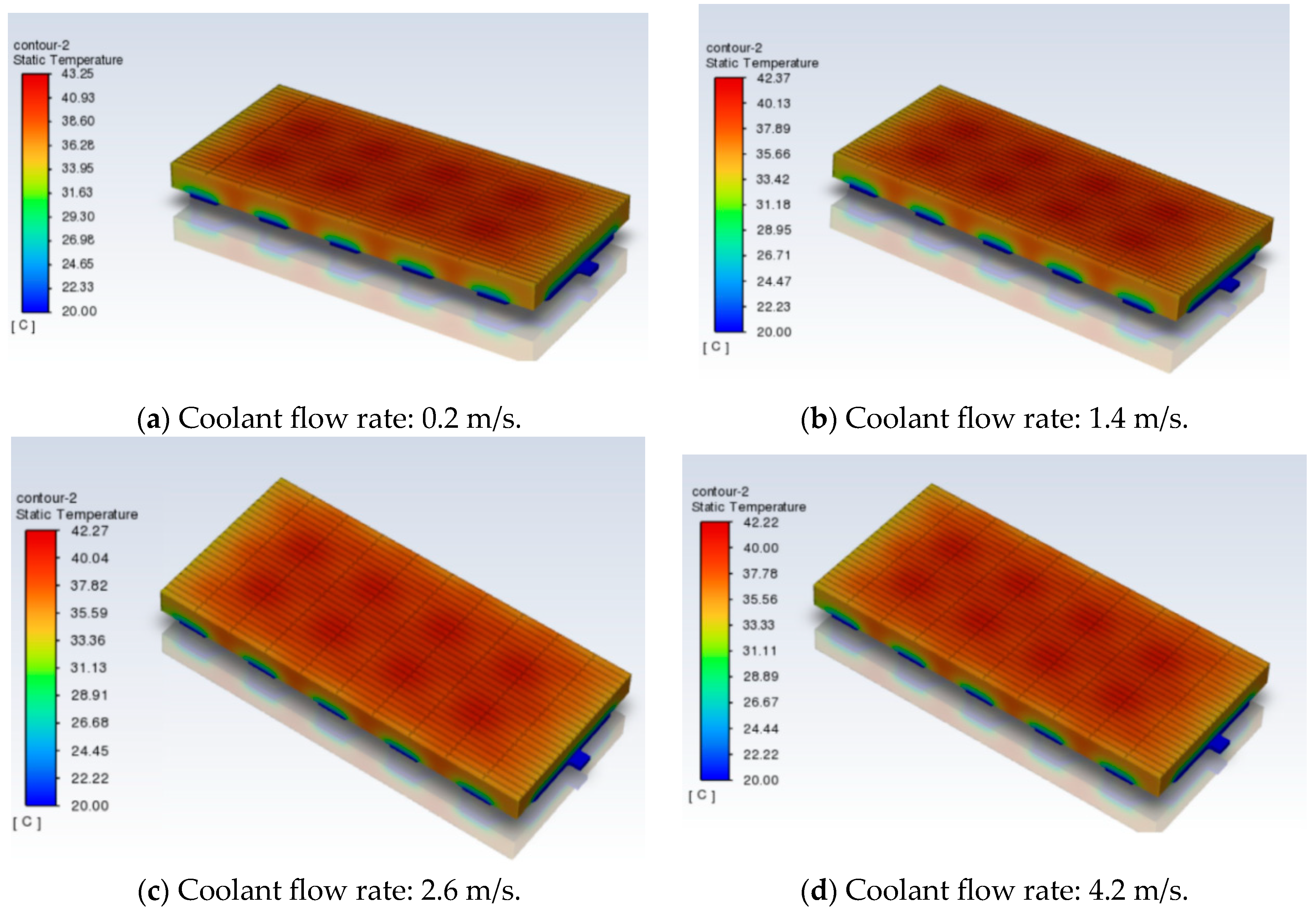
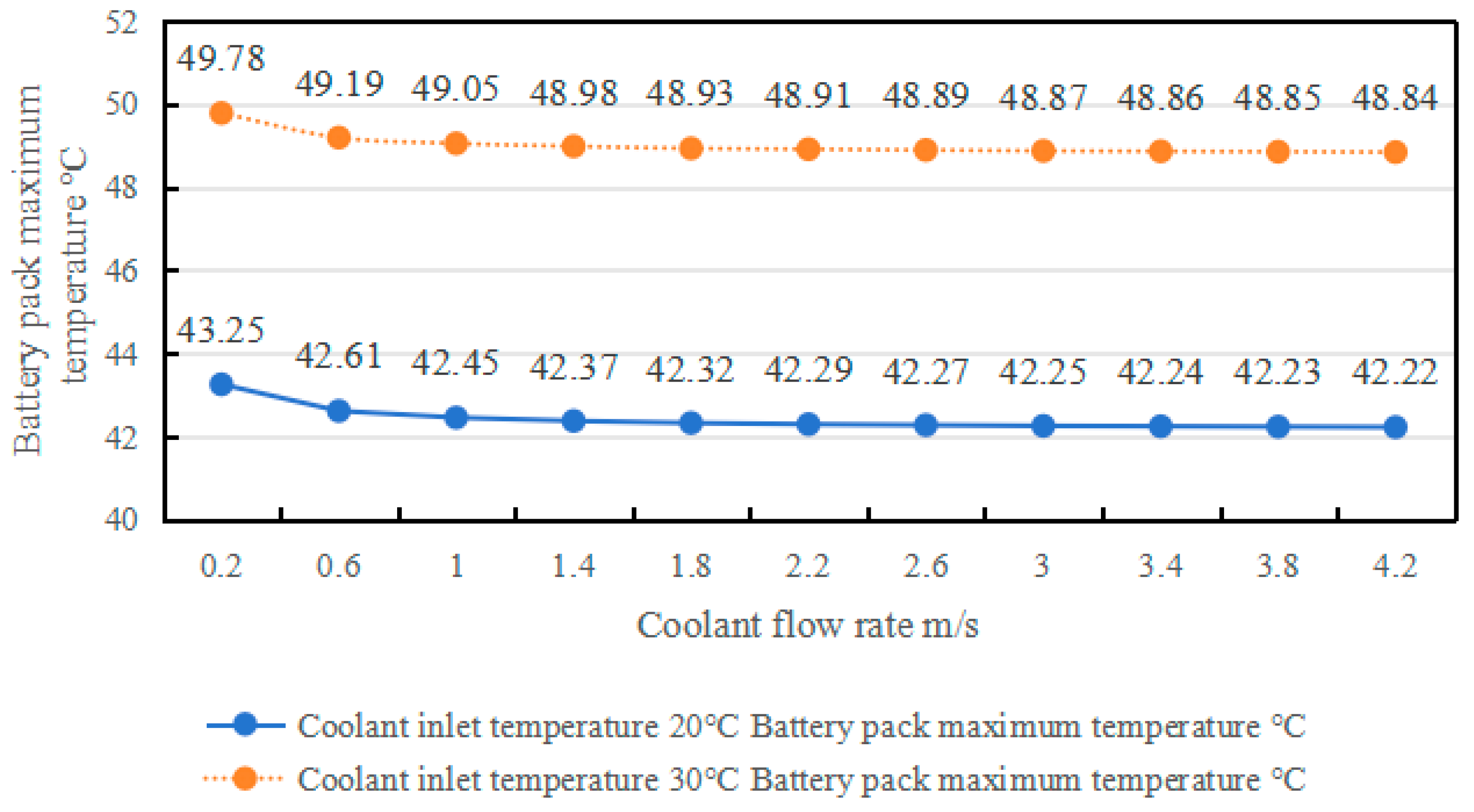
- Diminishing marginal effect: At both inlet temperatures, the maximum battery pack temperature exhibits a “rapid decline followed by gradual stabilization” trend as flow velocity increases. At an inlet temperature of 20 °C, increasing the flow velocity from 0.2 m/s to 1.4 m/s reduces the maximum temperature by 0.29 °C (42.61 °C → 42.32 °C); further increase to 3.8 m/s results in only a 0.10 °C decrease (42.32 °C → 42.22 °C). At 30 °C inlet temperature, the corresponding temperature reductions are 0.28 °C (49.19 °C → 48.91 °C) and 0.07 °C (48.91 °C → 48.84 °C). This indicates that 1.4 m/s approaches the optimal flow velocity; further increases yield minimal temperature reduction benefits but elevate pump power losses.
- (2)
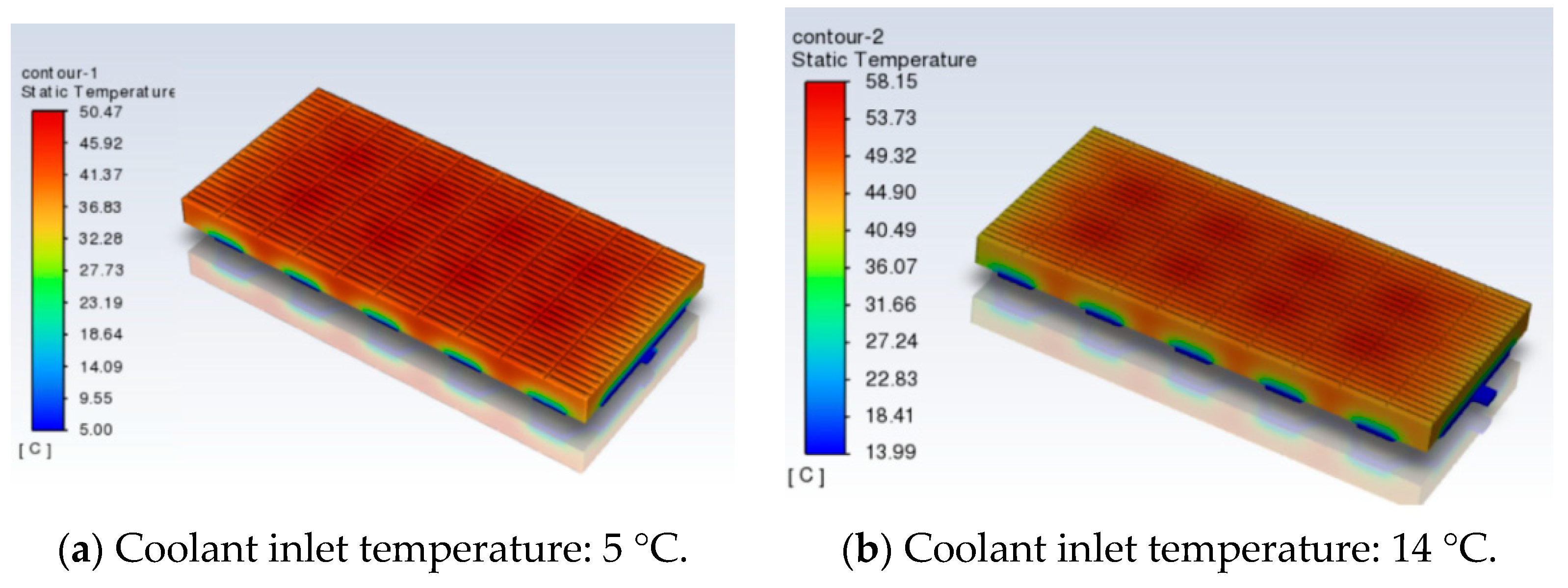
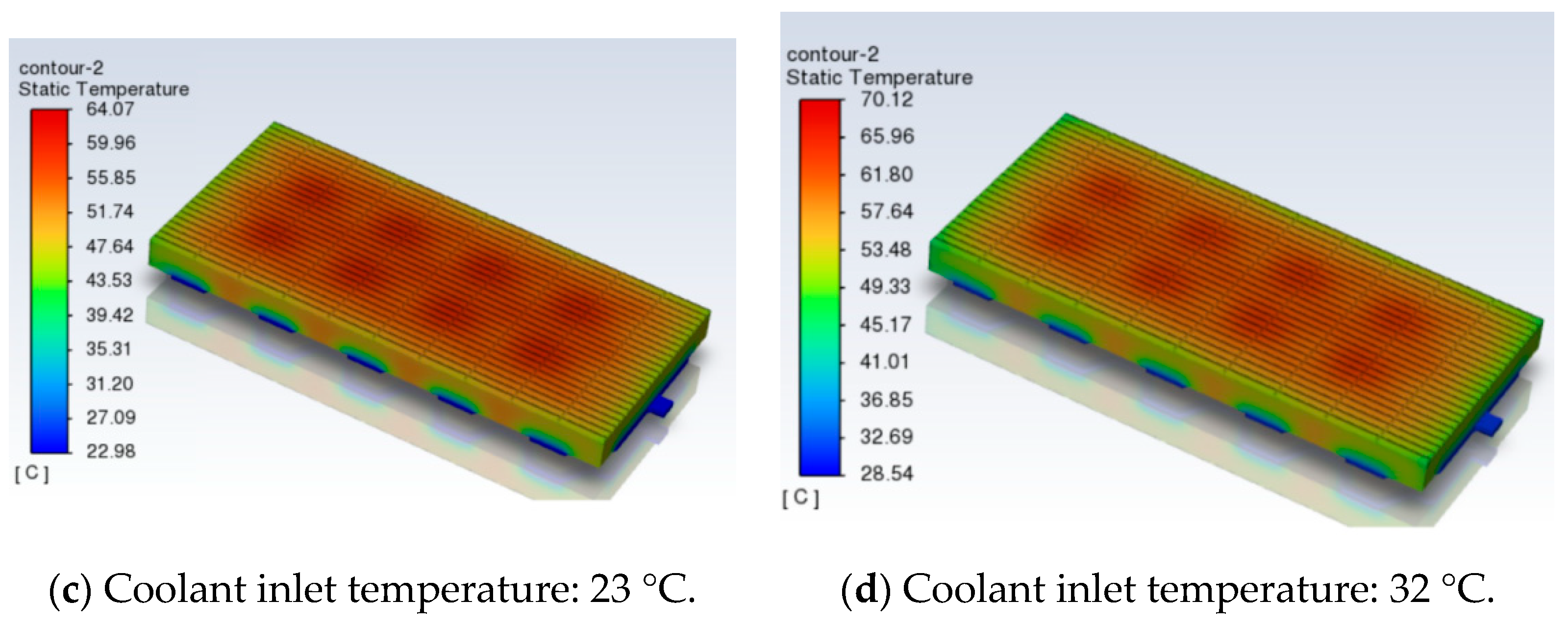
- Dominance of inlet temperature: At the same flow rate, the maximum temperature under a 30 °C inlet condition is approximately 6.6 °C higher than that under a 20 °C condition (e.g., 48.91 °C vs. 42.32 °C at a flow rate of 1.4 m/s). This indicates that reducing the inlet temperature is the primary means of controlling battery temperature, while flow rate serves only an auxiliary regulatory role.
5.2. Comparison of Performance of Honeycomb Structure Liquid Cooling Plates at Different Coolant Flow Rates
5.2.1. Simulation Experiment Process Design
5.2.2. Simulation Result Analysis
5.2.3. Variation Pattern of Coolant Inlet Temperature Versus Maximum Temperature
- (1)
- Linear regulation pattern of inlet temperature
- (2)
- Amplification effect of thermal power
- (3)
- Operating condition compatibility and implications for system thermal management
5.3. Comparison of the Performance of Honeycomb Structure Liquid Cooling Plates at Different Environmental Temperatures
5.3.1. Simulation Experiment Process Design
5.3.2. Simulation Result Analysis
5.3.3. Variation Patterns of Maximum Battery Pack Temperature Under Different Ambient Temperatures
- (1)
- The linear dominant effect of ambient temperature
- (2)
- Operating condition compatibility and safe operation limits
- (3)
- The advantage of temperature uniformity in honeycomb structures
5.4. Comparison of Thermal Power Emission and Honeycomb Structure Liquid Cooling Plate Performance Across Different Battery Packs
5.4.1. Simulation Experiment Process Design
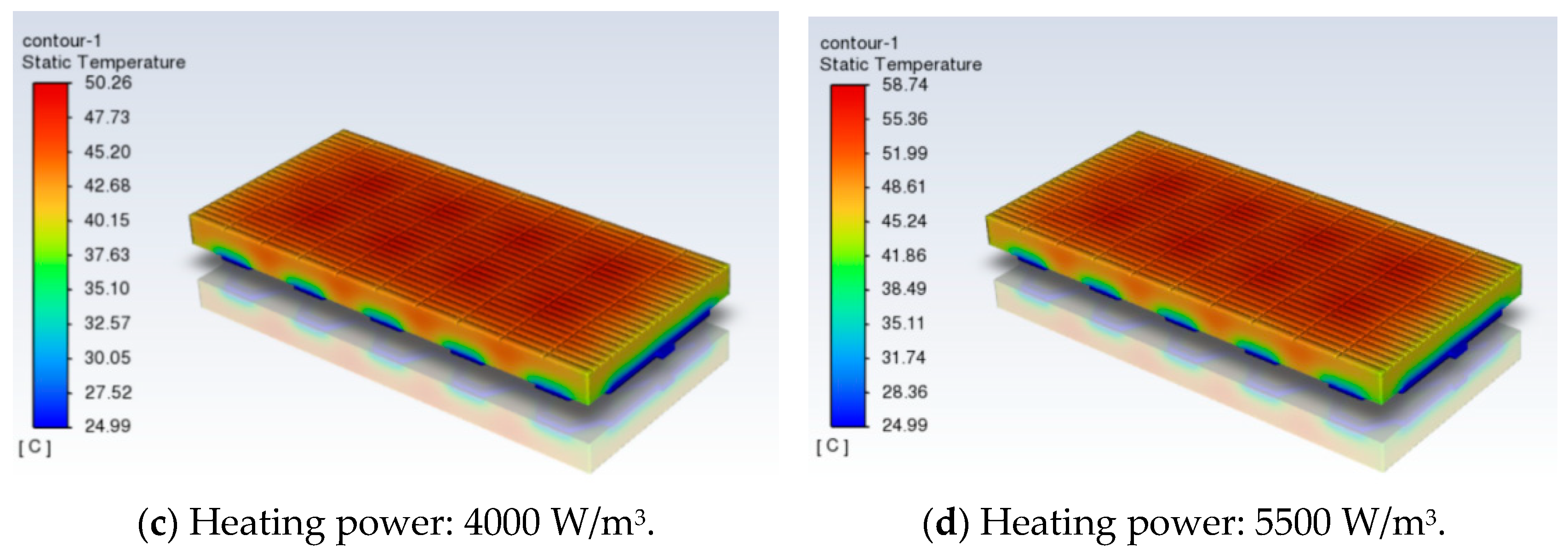
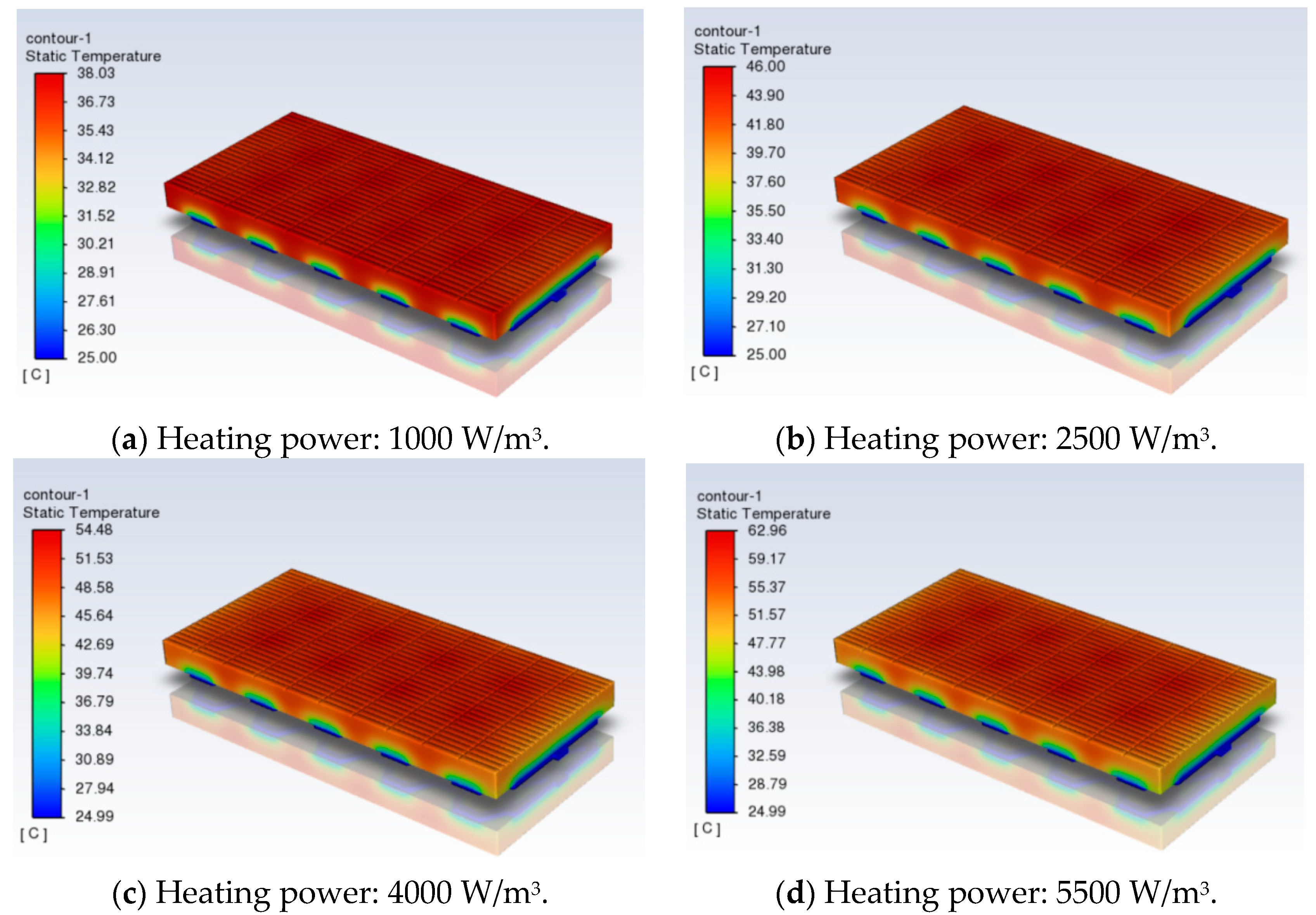
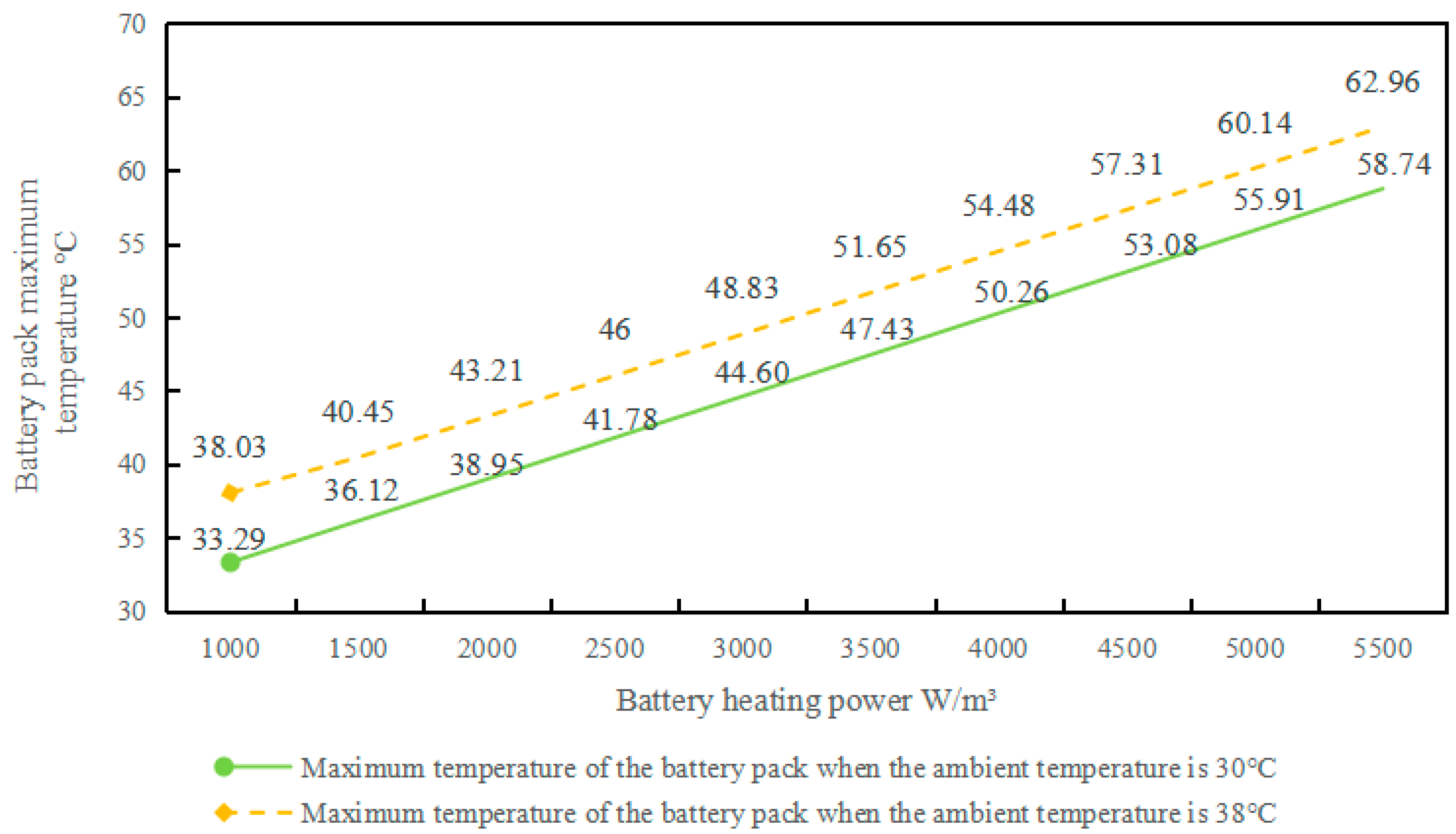
5.4.2. Simulation Result Analysis
5.4.3. Heat Generation Power of Different Battery Packs—Relationship Between Maximum Battery Pack Temperature and Heat Generation Power
- (1)
- The linear dominant effect of heating power
- (2)
- Operating Condition Compatibility and Safe Operation Limits
- (3)
- The load-adaptive advantage of the honeycomb structure
5.5. Comprehensive Analysis and Safe Operating Range Summary of Multi-Parameter Coupling Conditions
6. Prediction of the Maximum Temperature of Battery Packs Based on Machine Learning
6.1. Data Acquisition and Preprocessing
6.2. Performance Comparison of Machine Learning Algorithms for Maximum Temperature Prediction of Battery Packs
6.2.1. Prediction Based on Traditional Machine Learning Models
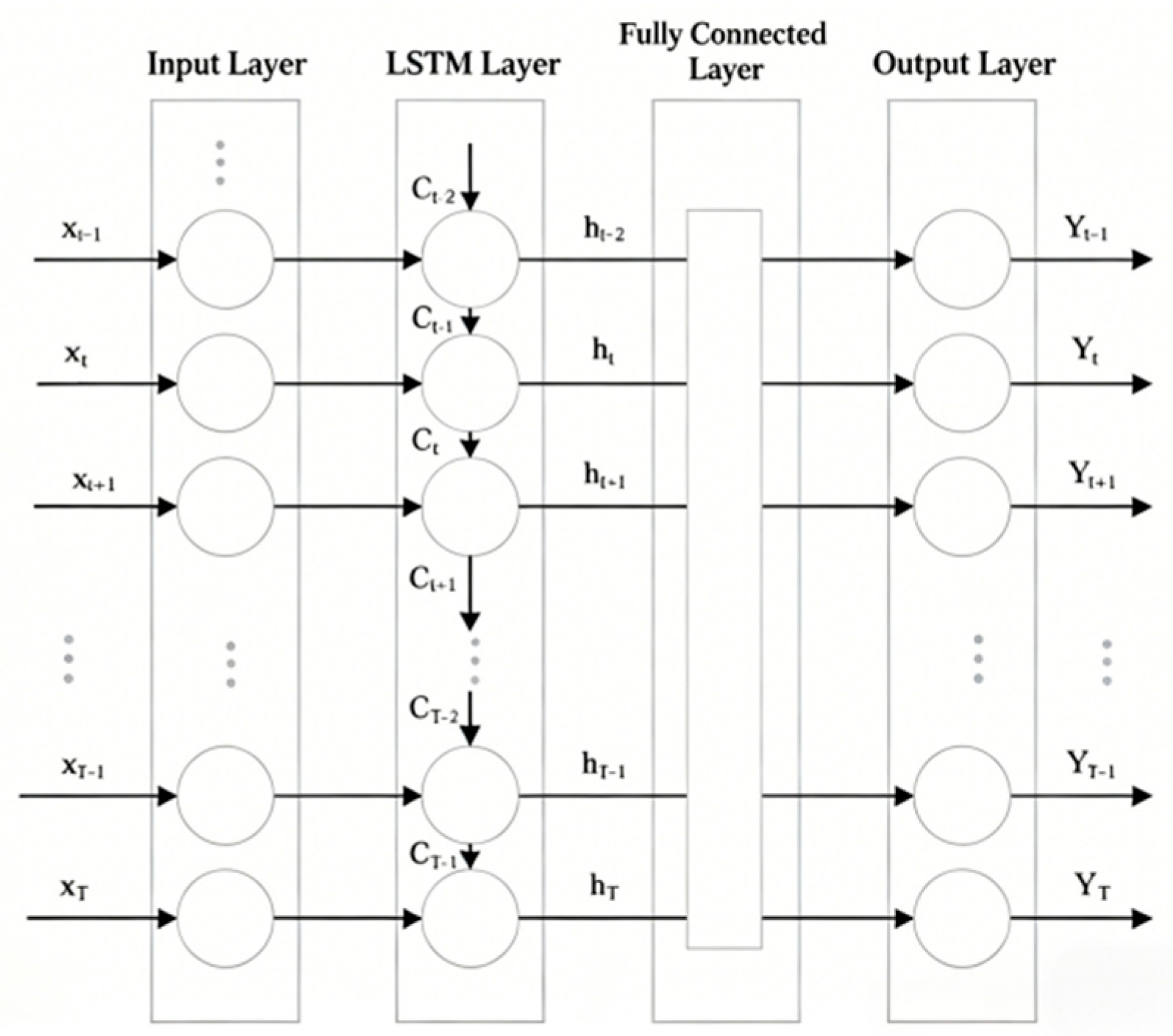
6.2.2. LSTM-Based Prediction
- (1)
- Data preprocessing
- (2)
- Time-series data reconstruction
- (3)
- Model structure and gate mechanism
- (4)
- Model Training and Prediction
6.3. Comparison of Prediction Results
7. Conclusions
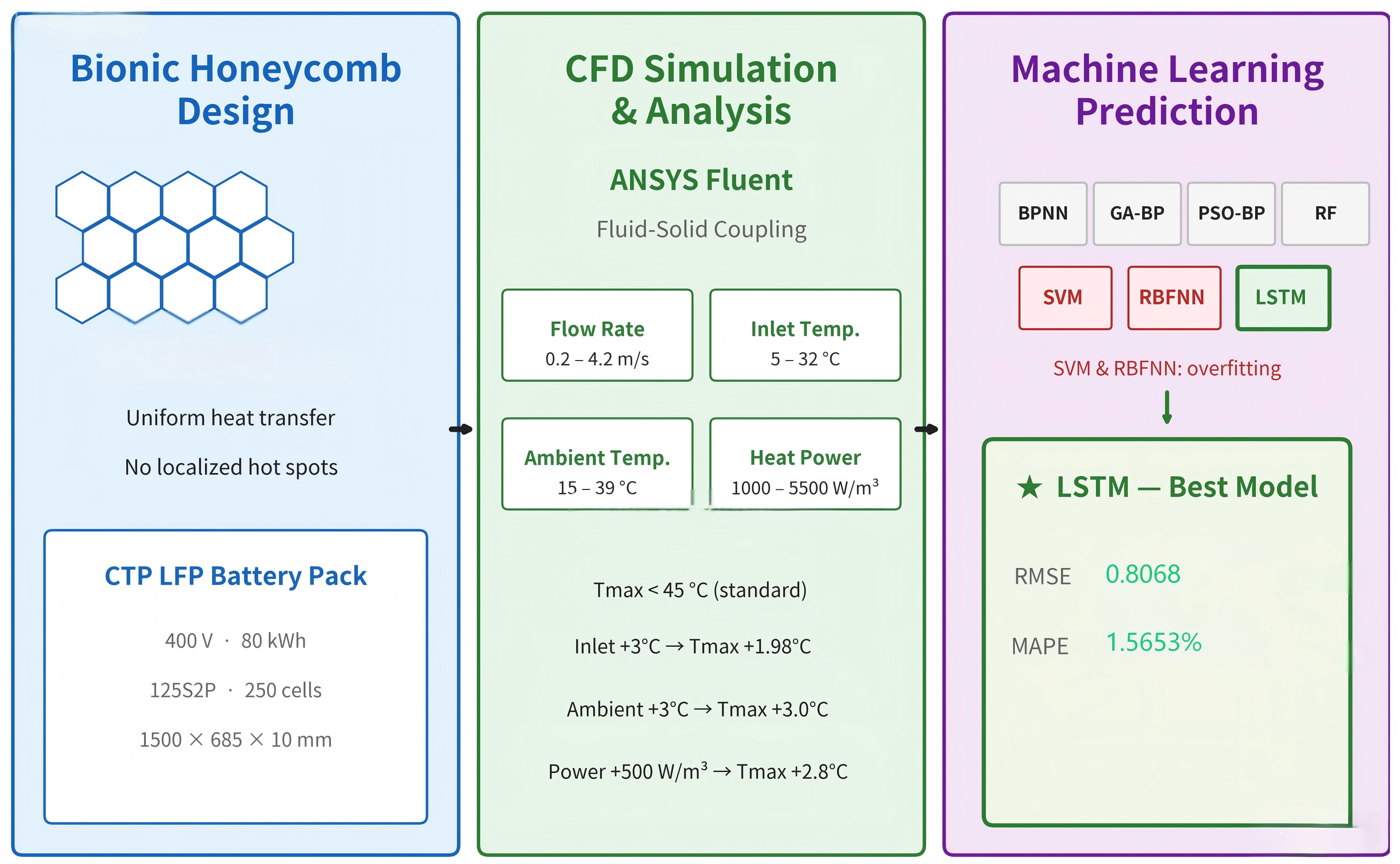
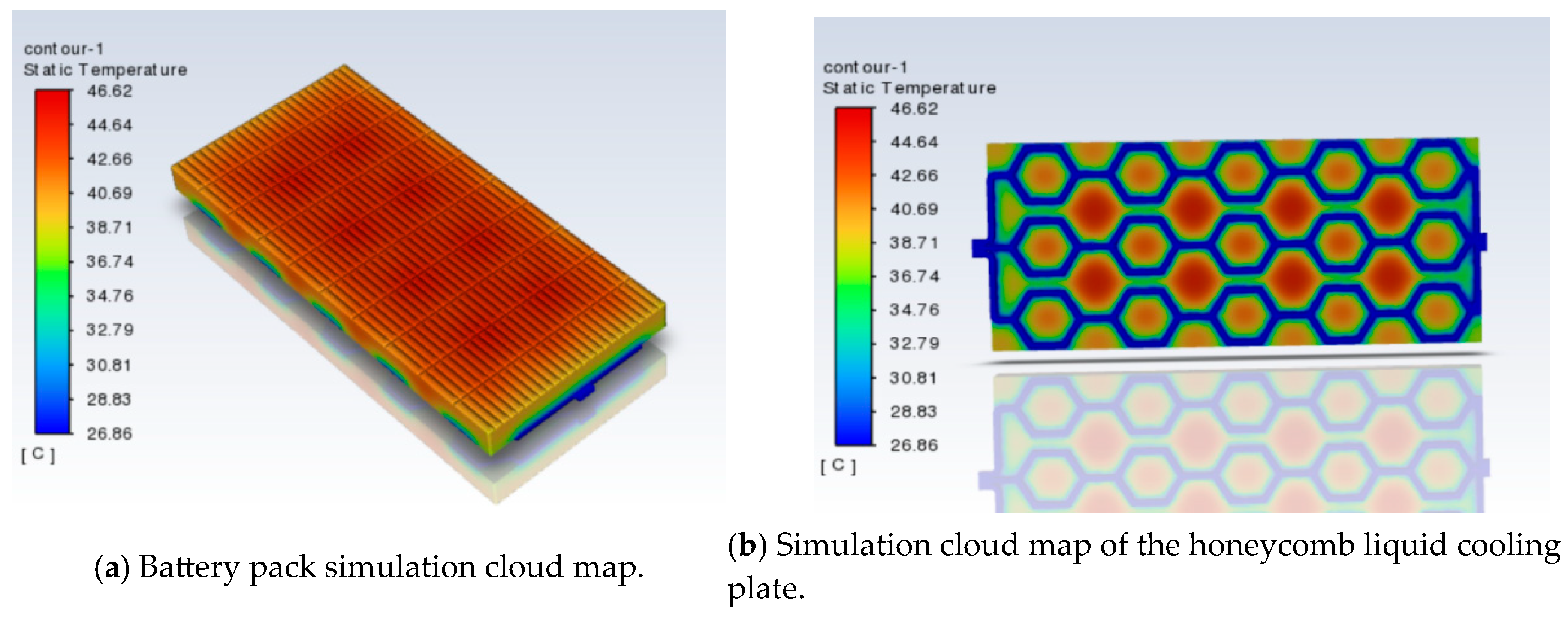
- The honeycomb liquid cooling plate achieves excellent heat dissipation and temperature uniformity. Compared with traditional rectangular and serpentine channels, hexagonal honeycomb channels realize uniform flow distribution with low flow resistance, which effectively eliminates flow dead zones and local heat accumulation. Under conventional conditions, no obvious hot spots appear inside the battery pack, and the overall maximum temperature difference is controlled within 5 °C. It can steadily keep the battery temperature within the optimal range of 25–45 °C, showing better comprehensive thermal performance than traditional cooling structures.
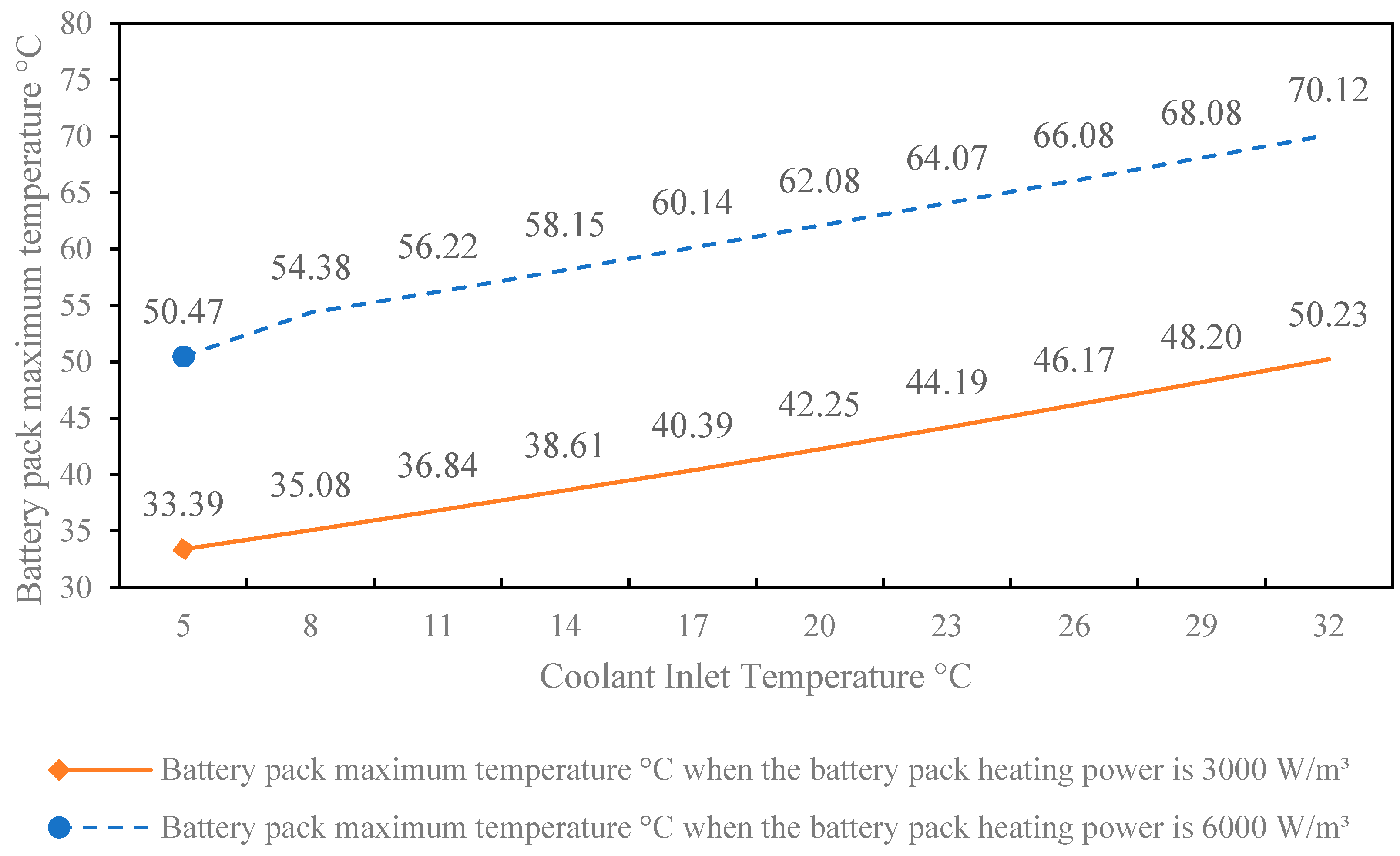
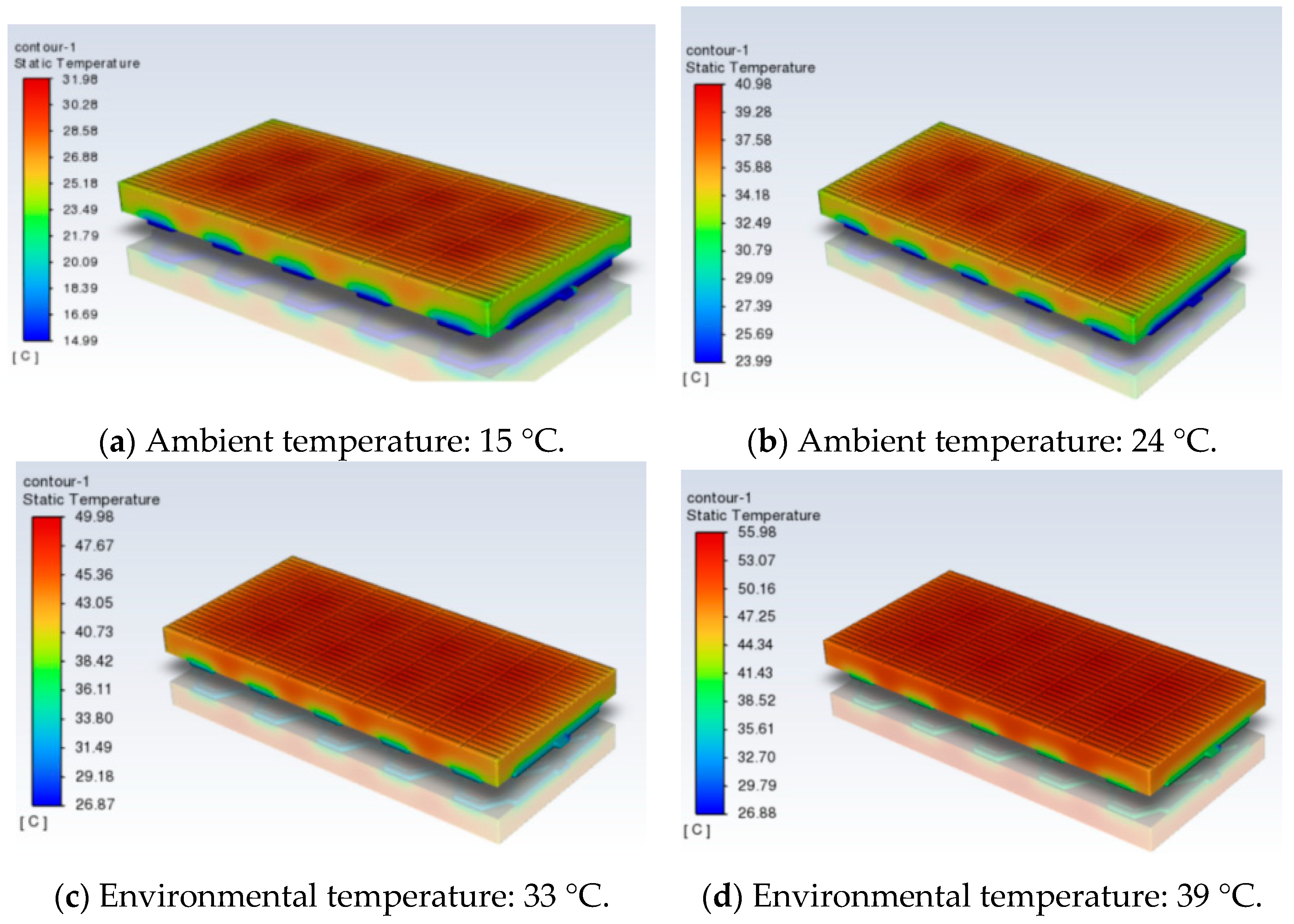
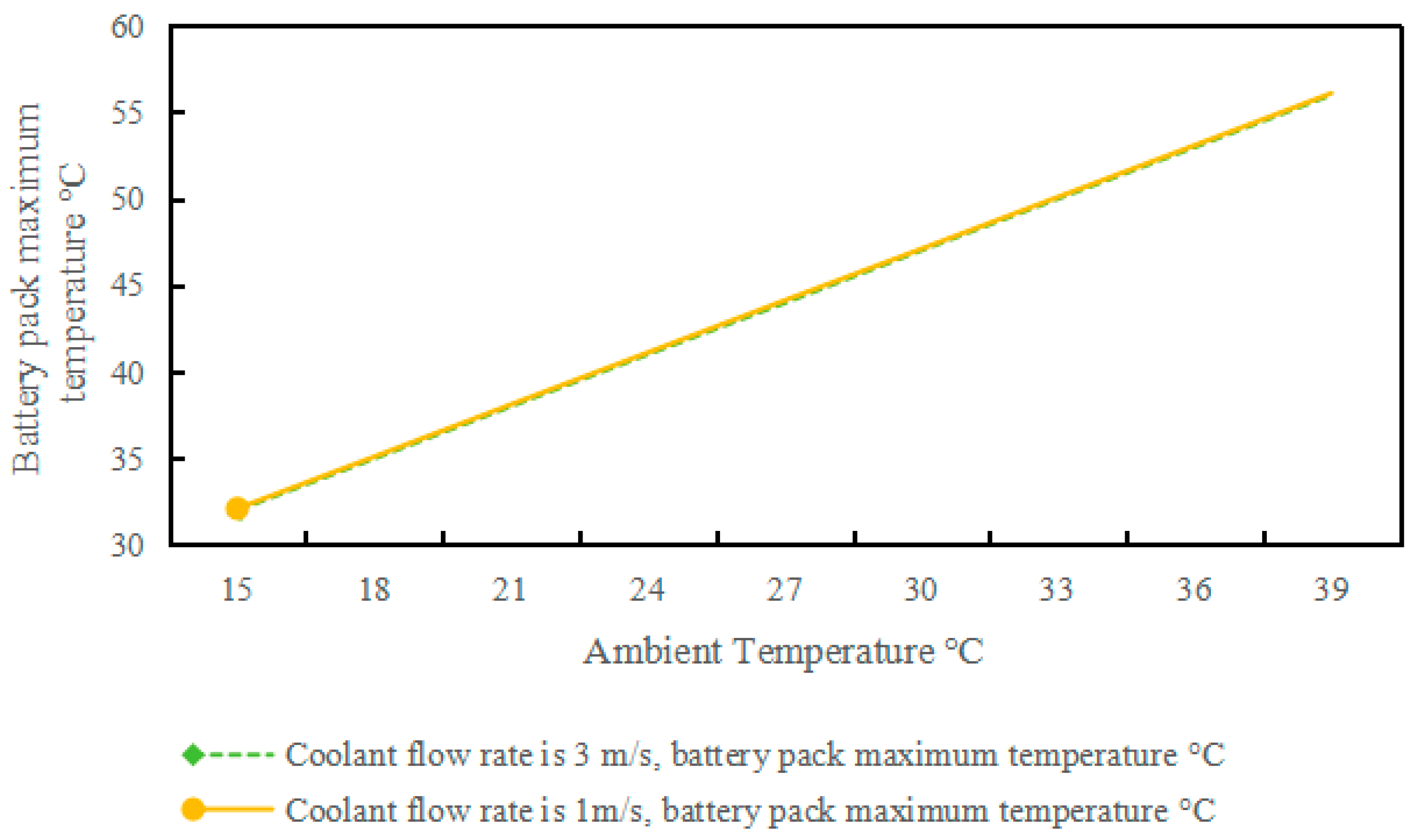
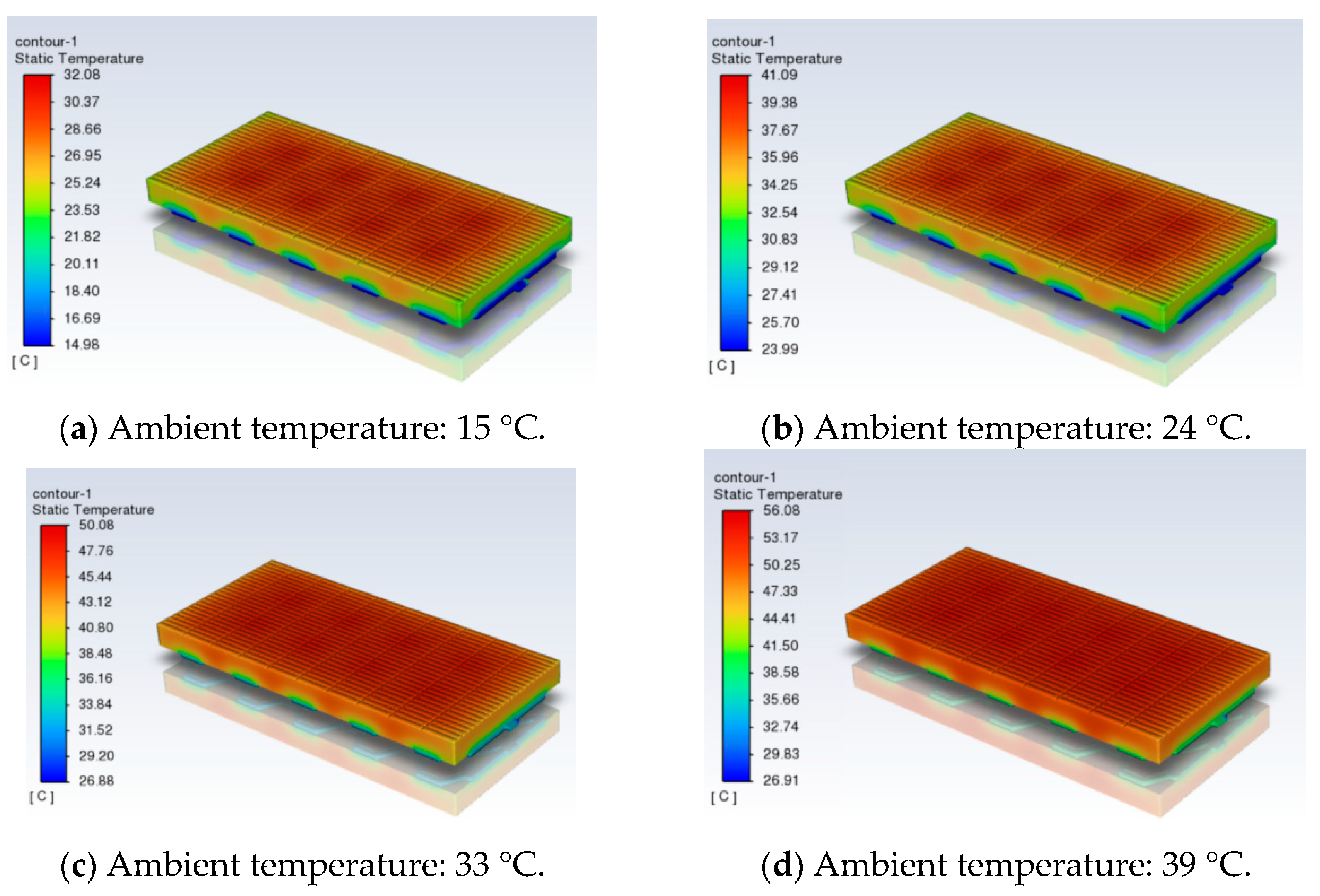
- The quantitative variation rules and safe operating thresholds of key thermal management parameters are clarified. The cooling effect gradually weakens with the rise in flow velocity, and the optimal flow velocity is confirmed as 1.4 m/s. Further increasing the flow velocity brings little temperature drop but greatly raises energy consumption. Battery temperature is approximately linearly positively correlated with coolant inlet temperature, ambient temperature, and heat generation power. Under the conventional heat generation of 3000 W/m3, the battery can work safely when the coolant inlet temperature is below 23 °C and the ambient temperature is below 27 °C. Multi-parameter cooperative regulation is required under high heat generation and high ambient temperature conditions.
- The coupling mechanism of multiple parameters and working condition adaptability are summarized. Coolant inlet temperature and ambient temperature are the dominant temperature control factors, flow velocity plays only an auxiliary role, and battery heat generation power is the core internal factor causing temperature rise. High heat generation conditions present obvious thermal amplification effect with higher temperature rise. The honeycomb structure is applicable to a wide range of working conditions and maintains favorable temperature uniformity under diverse environments and loads.
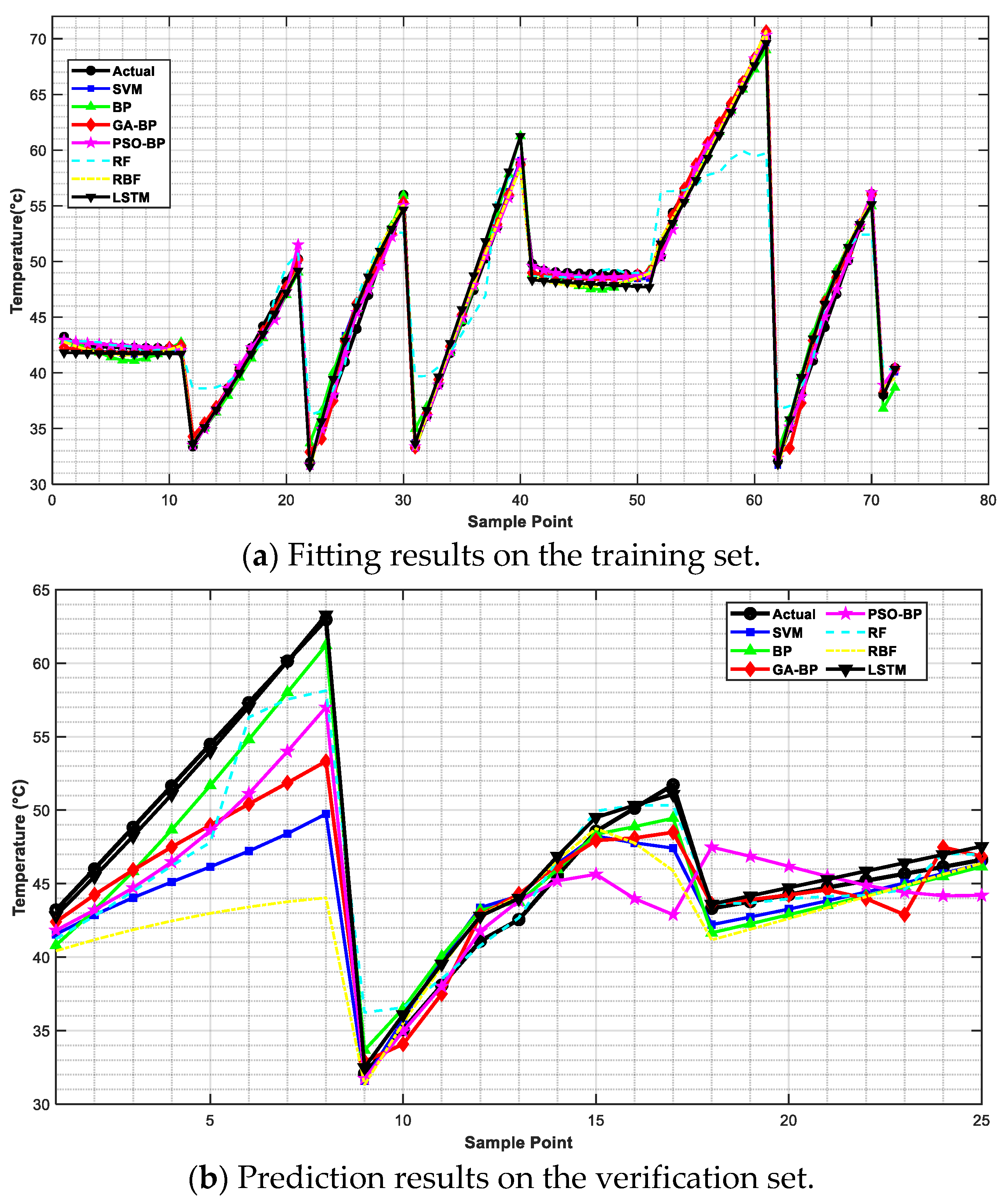
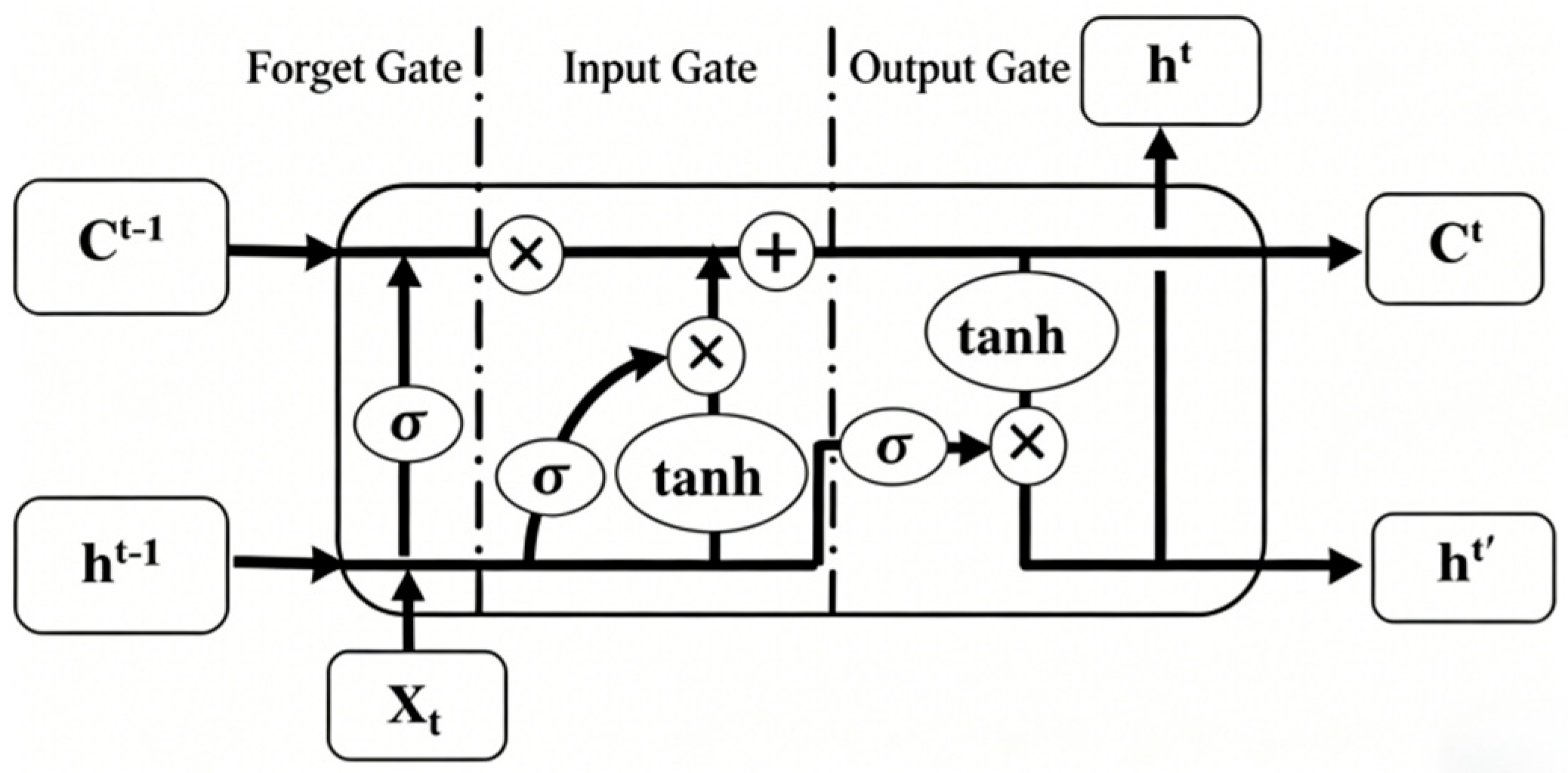
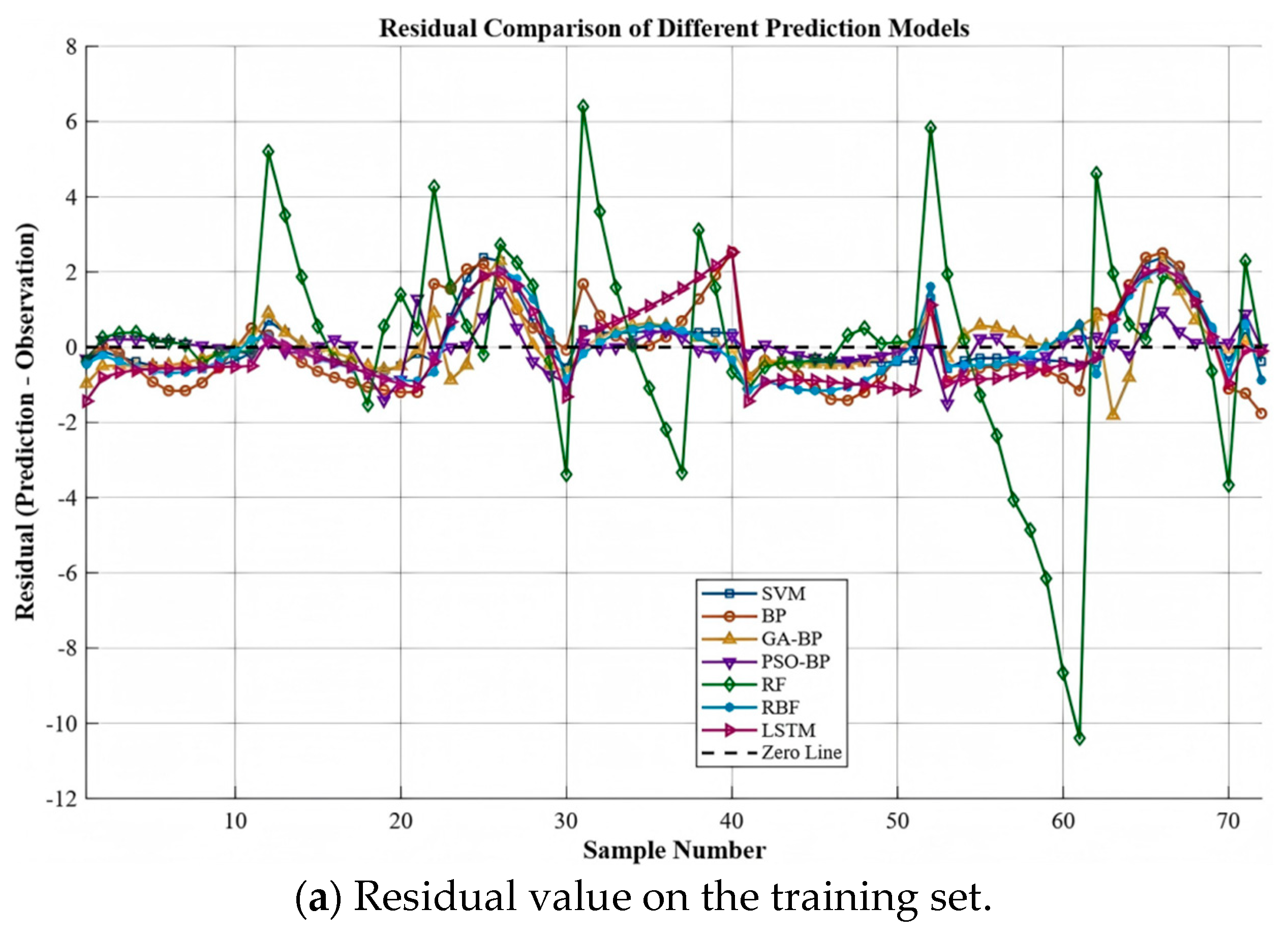
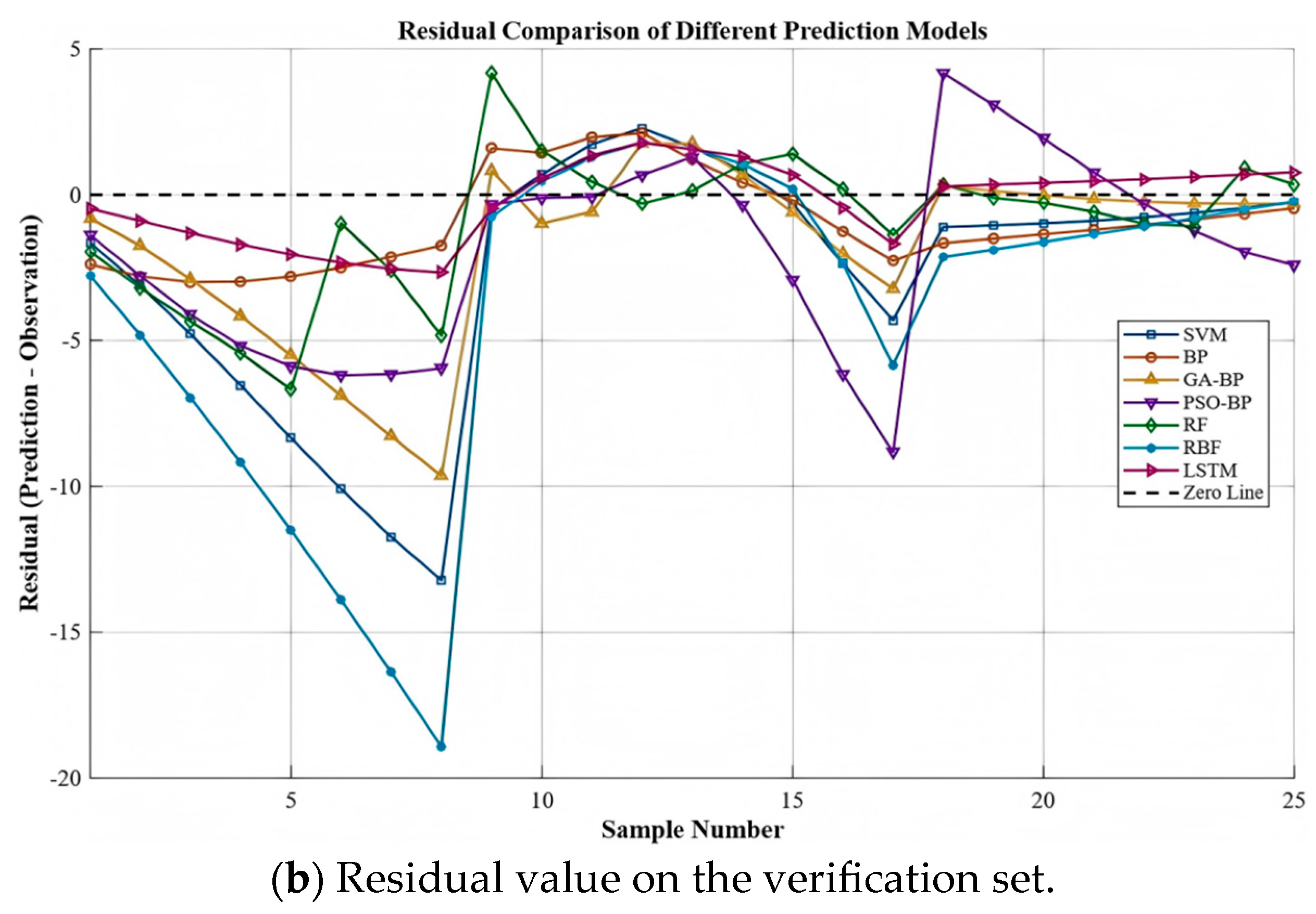
- LSTM is selected as the optimal model for predicting the maximum battery temperature. Verified by simulation data, PSO-BPNN and GA-BPNN are prone to overfitting with poor practical prediction performance. The LSTM model can accurately capture the nonlinear and time-varying characteristics of battery temperature, and possesses higher prediction accuracy and stronger generalization ability than other algorithms, which is more suitable for real-time engineering temperature prediction.
- An integrated battery thermal management scheme is constructed. Combined with bionic cooling structure, quantified temperature control thresholds, and high-precision intelligent prediction model, this scheme realizes high-efficiency heat dissipation, low energy consumption, and reliable thermal safety operation of CTP battery packs. It can provide theoretical basis and technical support for battery thermal management design, parameter matching, and intelligent early warning of electric vehicles under fast charging, high-rate discharge and high-temperature operating scenarios.
- The simulation model is properly simplified without considering battery thermal expansion and gas–liquid two-phase flow of coolant, leading to minor temperature deviations under extreme working conditions.
- All research results are obtained based on numerical simulation without prototype tests. Key conclusions such as optimal flow velocity and safe temperature control boundaries need further verification through bench experiments.
- The machine learning models are mainly trained using steady-state data, and their prediction accuracy needs to be optimized under transient fast charging and dynamic variable load conditions.
- The model neglects the electro-thermal coupling characteristics inside the battery, adopts the equivalent volume method and the assumption of constant heat source, and fails to reflect the dynamic feedback of temperature on battery internal resistance and heat generation rate, which may introduce simulation errors under working conditions such as high rate and large temperature difference.
- Establish an electro-thermal-fluid-structure multi-field coupling model to analyze the influence of battery deformation and thermal expansion on heat dissipation performance.
- Combine nanofluids and phase change materials with honeycomb channels to further improve heat dissipation capacity under high heat generation conditions.
- Integrate LSTM with reinforcement learning to develop adaptive cooperative control strategies for coolant flow velocity and temperature.
- Adopt temperature-dependent thermophysical parameters to improve prediction accuracy in both high- and low-temperature environments.
Author Contributions
Funding
Data Availability Statement
Acknowledgments
Conflicts of Interest
References
- Shao, D.; Hu, L.Y.; Hu, R.Q.; Huang, H.N.; Zhang, R.L.; Zhang, G.Q.; Wen, Y.L. Advanced low-temperature preheating strategies for power lithium-ion batteries applied in electric vehicles: A review. Int. J. Electrochem. Sci. 2024, 19, 100817. [Google Scholar] [CrossRef]
- Zhang, J.Y.; Huang, H.N.; Zhang, G.Q.; Dai, Z.T.; Wen, Y.L.; Jiang, L.Q. Cycle life studies of lithium-ion power batteries for electric vehicles: A review. J. Energy Storage 2024, 93, 112231. [Google Scholar] [CrossRef]
- Chen, Q.W.; Lai, X.; Chen, J.J.; Huang, Y.F.; Guo, Y.; Wang, Y.N.; Han, X.B.; Lu, L.G.; Sun, Y.D.; Ouyang, M.G.; et al. critical comparison of LCA calculation models for the power lithium-ion battery in electric vehicles during use-phase. Energy 2024, 296, 131175. [Google Scholar] [CrossRef]
- Sun, X.M.; Sun, P.; Dong, Y.J.; Zheng, B. Zero-spreading of thermal runaway in lithium-ion battery modules using composite phase change firewalls. Int. Commun. Heat Mass Transf. 2026, 170, 110036. [Google Scholar] [CrossRef]
- Hou, C.H.; Hu, P.; Chai, X.B.; Guan, C.X. Study on the effect of active heating duration on thermal runaway in aviation power lithium-ion batteries. Case Stud. Therm. Eng. 2025, 73, 106569. [Google Scholar] [CrossRef]
- Cao, Y.D.; Xu, X.K.; Wen, G.D.; Yuan, S.; Lei, S.L.; Han, C.; Li, Z.H. Efficient recycling of spent lithium iron phosphate batteries by chlorination roasting with CaCl2. J. Environ. Chem. Eng. 2025, 13, 120230. [Google Scholar] [CrossRef]
- Zhang, M.; Li, K.N.; Wei, Y.X.; Liu, B.; Xie, Y.; Feng, F.; Liu, B.; Pang, Y.; Li, W.Y. Modeling and control strategy optimization of battery thermal management system with liquid cooling considering state of charge balancing. J. Energy Storage 2026, 147, 120261. [Google Scholar] [CrossRef]
- Zhan, S.; Shi, X.; Liu, Y.; Qin, D.; Xu, C. Topology optimization of a new leaf-vein type bionic channel liquid-cooling plate for lithium batteries. Int. J. Heat Fluid Flow 2025, 116, 109932. [Google Scholar] [CrossRef]
- Gu, Z.Y.; Zhang, B.; Zhou, L.B.; Chen, Z.F.; Zhao, D.P.; Lou, A.D. Topology optimization on heat dissipation of liquid cooling plates for lithium-ion batteries. Case Stud. Therm. Eng. 2026, 77, 107505. [Google Scholar] [CrossRef]
- Fan, X.C.; Wang, Z.T.; Wang, J.; Lin, Q.Y.; Hu, J.; Wang, L.Q.; Wang, J.F. Rib-enhanced thermal management of lithium-ion batteries in serpentine channel: Flow and multi-parameter optimization. Appl. Therm. Eng. 2025, 280, 128500. [Google Scholar] [CrossRef]
- Liu, S.X.; Xu, L.P.; Zhang, J.X.; Zeng, G.; Li, H.Y. Optimized design of dual-circuit dynamic coordinated control for liquid cooling in large-capacity energy storage lithium battery packs. J. Energy Storage 2025, 135, 118311. [Google Scholar] [CrossRef]
- Yu, N.; Lu, S. A new design of liquid cold plate for the lithium-ion battery thermal management system with symmetrical serpentine oscillating channel. Int. J. Therm. Sci. 2026, 225, 110778. [Google Scholar] [CrossRef]
- Fu, L.X.; Zhang, Z.D.; Sheng, L.; Kuang, Z.W.; Zhu, Z.H.; Bi, Q. Pouch lithium-ion battery thermal management by using a new liquid-cooling plate with honeycomb-like fins. Case Stud. Therm. Eng. 2025, 69, 105945. [Google Scholar] [CrossRef]
- Bidwaik, A.S.; Bhusnoor, S.S.; Nikam, S.R. Energy-optimized microchannel liquid cooling for 21700 lithium-ion battery packs. Therm. Sci. Eng. Prog. 2026, 73, 104638. [Google Scholar] [CrossRef]
- Khan, R.; Agarwal, P.K.; Acharya, S. Temperature mitigation in a lithium-ion prismatic cell using parallel/counter/Z-type surface channels: A numerical investigation. J. Energy Storage 2025, 136, 118226. [Google Scholar] [CrossRef]
- Kwon, H.J.; Son, Y.W.; Yun, S.T.; Kim, J. Topology optimization of air-cooled battery thermal management systems for uniform temperature distribution in lithium-ion battery modules. J. Energy Storage 2026, 152, 120756. [Google Scholar] [CrossRef]
- Fan, X.C.; Wang, Z.T.; Zhou, H.F.; Wu, H.; Wang, J.; Huo, Y.; Lin, Q.Y.; Hu, J.; Wang, J.F. Multi-objective optimization of a novel finned liquid-cooled plate for lithium-ion batteries based on a hybrid surrogate model and NSGA-II algorithm. Appl. Therm. Eng. 2026, 289, 129828. [Google Scholar] [CrossRef]
- Liu, Z.W.; Ji, S.T.; Cao, F.; Li, P. Design and optimization of a dendritic channel cold plate with corrugated walls in battery thermal management system. J. Energy Storage 2025, 139, 118776. [Google Scholar] [CrossRef]
- Yang, X.L.; Lu, S.D.; Li, Z.B.; Li, W.K.; Su, C.; Dai, W.Z.; Wang, X.; Yu, N.; Liu, X.N.; Liu, J. Model-based and data-driven approaches for PEMFC bionic spider web channel cold plate structure design and liquid cooling performance optimization study. Renew. Energy 2026, 256, 123957. [Google Scholar] [CrossRef]
- Xia, H.X.; Wang, J.; Shen, Y.; Fang, K. A liquid-cooled plate based on bionic flow channels evolved from the shape of leaf veins and tree roots. Int. J. Therm. Sci. 2025, 208, 109468. [Google Scholar] [CrossRef]
- Yan, R.; Zhao, Q.; Zhang, C.; Tang, Q.; Li, H. Research on liquid-cooling structure for lithium-ion battery with bionic leaf-vein liquid channels. Int. J. Heat Fluid Flow 2025, 112, 109743. [Google Scholar] [CrossRef]
- Zhou, L.; Zhang, S.; Jain, A.; Li, X.F. Recent advances in indirect liquid cooling of lithium-ion batteries. J. Energy Storage 2025, 132, 117750. [Google Scholar] [CrossRef]
- Du, K.; Chen, G.P.; Zhang, Y.H.; Li, S.; Shi, B.Q.; Zhang, T.Z.; Liu, J.H.; Chen, F.X.; Xie, S.Z.; Guo, Z.G. Comprehensive review of thermal management strategies for lithium-ion batteries: From heat generation mechanism to advanced cooling solutions. Energy Storage Mater. 2025, 82, 104597. [Google Scholar] [CrossRef]
- Zhao, Y.Z.; Zhang, X.L.; Yang, B.; Cai, S.W. A review of battery thermal management systems using liquid cooling and PCM. J. Energy Storage 2024, 76, 109836. [Google Scholar] [CrossRef]
- Dai, H.; Tian, W.B.; Hou, M.; Liu, S.; Zhang, C.Z.; Wei, Z.B.; Dong, Z.K.; Chin, C.S. Enhancing thermal management in electric commercial vehicles: A novel liquid-cooled Multiple Parallel-Serpentine channels. J. Energy Storage 2025, 107, 114708. [Google Scholar] [CrossRef]
- Tang, Z.G.; Li, X.H.; Zheng, W.W.; Cheng, J.P. Artificial neural network optimization of a hybrid battery thermal management system with delayed liquid cooling and honeycomb-packaged composite phase change material cooling. Int. J. Heat Mass Transf. 2026, 264, 128715. [Google Scholar] [CrossRef]
- Selimefendigil, F.; Oztop, H.F. Compact magnetohydrodynamic-enhanced cooling for dual photovoltaic-thermoelectric units: A finite element-proper orthogonal decomposition based modeling approach. Energy Convers. Manag. 2026, 354, 121279. [Google Scholar] [CrossRef]
- Zuo, H.Y.; Liang, J.W.; Zhang, B.; Wei, K.X.; Zhu, H.; Tan, J.Q. Intelligent estimation on state of health of lithium-ion power batteries based on failure feature extraction. Energy 2023, 282, 128794. [Google Scholar] [CrossRef]
- Azim, M.I.; Razzaghi, R. Connection capacity-constrained energy management for solar- and battery-powered electric bus depots. J. Energy Storage 2025, 139, 118895. [Google Scholar] [CrossRef]
- Heydarian Ardakani, A.; Abdollahi, F. A fast balance optimization approach for charging enhancement of lithium-ion battery packs through deep reinforcement learning. J. Energy Storage 2024, 89, 111755. [Google Scholar] [CrossRef]
- Wu, X.Y.; Dou, W.W.; Yan, C.; Li, Y.; Wang, L.B.; Xi, C.Y.; Ren, Z.W.; Gao, G.H.; Zhang, Q.S.; Wang, J.P.; et al. Physics-informed temporal graph neural network for lithium-ion battery state of health estimation. J. Energy Storage 2026, 153, 121059. [Google Scholar] [CrossRef]
- Wang, G.; Li, C.L.; Cui, Z.R.; Yuan, H.T.; Cui, N.X. A practical state of health estimation method for lithium-ion batteries using charging duration in different voltage segments. J. Energy Storage 2025, 132, 117712. [Google Scholar] [CrossRef]
- Tang, H.H.; Li, X.B.; Meng, L.; Zhang, Z.F.; Chen, S.H. Process modeling and optimization in laser drilling of bulk metallic glasses based on GABPNN and machine vision. Opt. Laser Technol. 2024, 172, 110502. [Google Scholar] [CrossRef]
- Sun, A.R.; Tang, X.G.; Liao, H.Y.; Gong, J.H. Predicting ignitability classification of thermally thick solids using hybrid GA-BPNN and PSO-BPNN algorithms. Fuel 2025, 381, 133474. [Google Scholar] [CrossRef]
- Qi, X.; Hong, C.F.; Ye, T.; Gu, L.J.; Wu, W.X. Frequency reconstruction oriented EMD-LSTM-AM based surface temperature prediction for lithium-ion battery. J. Energy Storage 2024, 84, 111001. [Google Scholar] [CrossRef]
- Khan, W.; Aziz, A.; Yousaf, M.Z.; Feng, R.H.; Mao, Y.S.; Latif, M.W.; Wu, T.H.; Khan, B.; Mabunda, N.E.; Ali, A. Hybrid XGBoost–LSTM model for state-of-health prediction of lithium-ion batteries under different thermal conditions. Int. J. Electrochem. Sci. 2026, 21, 101218. [Google Scholar] [CrossRef]
- Miao, Y.H.; Li, M.; Li, X.B.; Wang, J.; Qin, Z.R.; Tang, X.W. A reconfigurable dual-core R290 vehicular thermal management system featuring a variable area thermal unit: Experimental evaluation and thermodynamic analysis. Energy Convers. Manag. 2026, 357, 121452. [Google Scholar] [CrossRef]
- Miao, Y.H.; Li, M.; Li, X.B.; Wang, J.; Qin, Z.R.; Tang, X.W. Performance evaluation of a dual-core heating R290 heat pump system based on RSM and NSGA-II. Int. J. Refrig. 2026, 187, 106957. [Google Scholar] [CrossRef]
- Tian, L.Y.; Dong, C.Y.; Qi, H.Q.; Fu, G.Y.; Jia, H.J. Live-stream infrared perception for lithium-ion battery thermal diagnosis. iScience 2025, 28, 113774. [Google Scholar] [CrossRef] [PubMed]
- Bernardi, D.; Pawlikowski, E.; Newman, J. A general energy balance for battery systems. J. Electrochem. Soc. 1985, 132, 5–12. [Google Scholar] [CrossRef]
- Launder, B.E.; Spalding, D.B. The numerical computation of turbulent flows. Comput. Methods Appl. Mech. Eng. 1974, 3, 269–289. [Google Scholar] [CrossRef]
- Zhang, L.; Gao, T.; Cai, G.; Hai, K.L. Research on electric vehicle charging safety warning model based on back propagation neural network optimized by improved gray wolf algorithm. J. Energy Storage 2022, 49, 104092. [Google Scholar] [CrossRef]
- Wu, X.H.; Zuo, W.M.; Lin, L.; Jia, W.; Zhang, D. F-SVM: Combination of Feature Transformation and SVM Learning via Convex Relaxation. IEEE Trans. Neural Netw. Learn. Syst. 2018, 29, 5185–5199. [Google Scholar] [CrossRef] [PubMed]
- Wang, Q.; Wang, G.; Liang, Y.-C. RBFNN-Enabled Distributed Estimation Over Complex Networks in Intricate Environments. IEEE Signal Process. Lett. 2025, 32, 2299–2303. [Google Scholar] [CrossRef]
- Dong, L.F.; Du, H.Q.; Mao, F.J.; Han, N.; Li, X.J.; Zhou, G.M. Very High Resolution Remote Sensing Imagery Classification Using a Fusion of Random Forest and Deep Learning Technique—Subtropical Area for Example. IEEE J. Sel. Top. Appl. Earth Obs. Remote Sens. 2019, 13, 113–128. [Google Scholar] [CrossRef]










| Parameter Category | Core Performance Metrics | Parameter Declaration |
|---|---|---|
| Battery pack type | CTP modular lithium iron phosphate battery pack | 400 V platform, with the sedan chassis-embedded |
| Cell specifications | 120 Ah square LFP cell, 3.2 V per cell | Dimensions: 25 mm × 148 mm × 100 mm |
| Serial–parallel configuration | 125S2P, totaling 250 sections | Rated voltage: 400 V; rated capacity: 240 Ah |
| Core performance | Rated energy: 80 kWh; energy density ≥145 Wh/kg | The temperature difference between cell electrodes is ≤5 °C, with bottom liquid cooling compatibility. |
| Magnification | 0.5 C | 1 C |
|---|---|---|
| Heat generating power W/m3 | 2600 | 6000 |
| Time/s | 7200 | 5143 |
| Model | RMSE | MAE | MAPE(%) | R2 |
|---|---|---|---|---|
| SVM | 0.8215 | 0.6135 | 1.3852 | 0.9907 |
| BP | 1.1241 | 0.9326 | 2.0868 | 0.9825 |
| GA-BP | 0.7318 | 0.5363 | 1.2302 | 0.9926 |
| PSO-BP | 0.4787 | 0.3238 | 0.6903 | 0.9968 |
| RF | 2.7495 | 1.7786 | 3.8093 | 0.8953 |
| RBF | 0.8776 | 0.7129 | 1.5763 | 0.9893 |
| LSTM | 1.0661 | 0.9133 | 1.9536 | 0.9843 |
| Model | RMSE | MAE | MAPE(%) | R2 |
|---|---|---|---|---|
| SVM | 4.9137 | 3.2088 | 6.1244 | 0.4998 |
| BP | 1.8474 | 1.6624 | 3.5765 | 0.9293 |
| GA-BP | 3.4836 | 2.3424 | 4.5110 | 0.7486 |
| PSO-BP | 3.8410 | 2.9706 | 5.8779 | 0.6943 |
| RF | 2.5820 | 1.8098 | 3.7935 | 0.8619 |
| RBF | 6.8672 | 4.3751 | 8.2828 | 0.0230 |
| LSTM | 0.8068 | 0.6891 | 1.5653 | 0.9865 |
Disclaimer/Publisher’s Note: The statements, opinions and data contained in all publications are solely those of the individual author(s) and contributor(s) and not of MDPI and/or the editor(s). MDPI and/or the editor(s) disclaim responsibility for any injury to people or property resulting from any ideas, methods, instructions or products referred to in the content. |
© 2026 by the authors. Licensee MDPI, Basel, Switzerland. This article is an open access article distributed under the terms and conditions of the Creative Commons Attribution (CC BY) license.
Share and Cite
Tian, H.; Yang, M.; Zhang, S. Analysis of Liquid Cooling Performance of Honeycomb-Structured Automotive Power Batteries and Research on Machine Learning Algorithm Predictions. Batteries 2026, 12, 207. https://doi.org/10.3390/batteries12060207
Tian H, Yang M, Zhang S. Analysis of Liquid Cooling Performance of Honeycomb-Structured Automotive Power Batteries and Research on Machine Learning Algorithm Predictions. Batteries. 2026; 12(6):207. https://doi.org/10.3390/batteries12060207
Chicago/Turabian StyleTian, Han, Mingfei Yang, and Shanhua Zhang. 2026. "Analysis of Liquid Cooling Performance of Honeycomb-Structured Automotive Power Batteries and Research on Machine Learning Algorithm Predictions" Batteries 12, no. 6: 207. https://doi.org/10.3390/batteries12060207
APA StyleTian, H., Yang, M., & Zhang, S. (2026). Analysis of Liquid Cooling Performance of Honeycomb-Structured Automotive Power Batteries and Research on Machine Learning Algorithm Predictions. Batteries, 12(6), 207. https://doi.org/10.3390/batteries12060207