


Abstract
Lithium-ion batteries (LIBs) may experience thermal runaway (TR) under thermal abuse conditions, posing significant safety risks to energy storage systems, electric vehicles, and portable electronics. To ensure the safety of LIB-powered applications, developing an effective TR early warning method is crucial. This study employs polyimide-coated femtosecond fiber Bragg grating (FBG) sensors to investigate TR characteristics in 18,650 LIBs (LiNi1/3Mn1/3Co1/3O2/graphite), including TR onset temperature determination and the evolution of temperature and radial strain at different states of charge (SOCs). Compared with existing studies, the polyimide-coated femtosecond FBGs employed here offer superior breakage resistance and high-temperature tolerance, enabling more precise temperature and strain measurements. For radial strain monitoring obtained during high-temperature-induced LIBs thermal runaway experiments, temperature compensation was achieved using polyimide-coated femtosecond FBG temperature sensors, yielding higher-accuracy strain evolution profiles. Experimental results demonstrate that the higher-SOC LIBs exhibit more severe TR eruptions, with 1.76× higher peak temperatures and 1.3× greater mass loss than low-SOC LIBs. The proposed scheme pioneers an new approach to effective active safety warning of LIBs thermal runaway.
1. Introduction
The depletion of non-renewable resources and escalating environmental concerns have accelerated the search for sustainable and eco-friendly energy alternatives. With the rapid growth of portable electronics, electric vehicles, and smart grids, demand has surged for high-density energy storage systems with reliable electrochemical performance. Lithium-ion batteries (LIBs) dominate energy storage technology due to their high voltage, lightweight design, superior energy density, fast charging/discharging capability, and low environmental impact [1]. However, safety concerns persist because their high energy density and flammable organic electrolytes increase explosion risks [2]. The United Nations Global Technical Regulation No. 20 mandates that electric vehicles provide early warning ≥5 min before serious accidents. Yet, traditional battery management systems (BMSs)—relying solely on voltage and temperature sensors—often fail to deliver timely safety alerts. Thus, understanding LIB thermal runaway (TR) mechanisms and developing advanced monitoring technologies are critical for safeguarding next-generation LIB applications [3,4].
Great efforts have been devoted to developing thermal runaway warning system for lithium-ion batteries (LIBs). However, current detection methods primarily rely on voltage drops caused by internal short circuits—a lagging indicator, as irreversible LIBs damage has already occurred by the time such drops manifest [5,6,7,8]. Since thermal runaway is invariably accompanied by rapid temperature increases, temperature-based TR early warning offers a more reliable approach. Conventional thermocouple, though widely used, suffer from limitations such as bulky size, slow response rate and inconvenient layout [9,10,11,12,13,14]. In contrast, fiber Bragg grating (FBG) sensors fabricated via femtosecond lasers enables real-time, non-destructive monitoring of LIB surface temperature and radial strain under high-temperature conditions, providing critical advance warnings of LIBs thermal runaway [15,16,17]. Unlike commercial thermocouples, FBG sensors detect minute temperature fluctuations (both internally and externally) with minimal hysteresis. This study investigates TR onset temperatures, the evolution of surface temperature and radial strain of 18,650/20P LIBs using FBG sensing technology [18,19,20,21,22]. Building upon prior research findings and experimental data from high-temperature induced TR tests of LIBs at various states of charge (SOC), we define thermal runaway onset temperature as the point where the surface temperature ramp rate first exceeds 3 °C/s, corresponding to the initial inflection preceding the peak-temperature phase in monitoring curves [23,24,25,26,27,28].
This study aims to demonstrate a novel approach for thermal runaway (TR) early warning in lithium-ion batteries (LIBs) at various states of charge (SOCs) using femtosecond fiber Bragg grating (FBG) sensors. By providing high-precision monitoring of TR characteristics, this research offers critical technical insights that enhance our understanding of TR mechanisms, ultimately improving the safety and reliability of future LIB applications.
Fiber Bragg grating (FBG) is a periodic modulation of the refractive index along the fiber core, functioning as a wavelength-selective reflector, and it has been widely used in communication and sensing fields. Due to this unique property, FBGs have found widespread applications in both communication and sensing fields. The sensing principle relies on detecting shifts in the FBG’s resonant wavelength, which varies with external environmental parameters including temperature, strain, refractive index, and acceleration. The FBG resonant wavelength satisfies the Bragg condition:
where Λ is the grating period of FBG and neff is the effective refractive index of the fiber core. From Equation (1), the FBG resonant wavelength depends on the FBG period Λ and the fiber core refractive index neff. FBG sensing is based on demodulating the resonant wavelength of FBG, i.e., the reflected light of FBG, which linearly relates to the value of environmental parameters, therefore realize the monitoring of certain environmental parameters. Specifically, the operating principle of FBG temperature/strain sensing relies on detecting the temperature/strain determined shifts in FBG resonant wavelength.
This paper investigates the evolution of surface temperature and radial strain during lithium-ion battery (LIB) thermal runaway using a fiber Bragg grating (FBG) sensing system. The study aims to validate the feasibility and reliability of FBG-based early warning technology for thermal runaway. Specifically, temperature responses and thermal runaway (TR) phenomena were observed by heating the lithium-ion batteries (LIBs) in a custom-designed sealed stainless steel chamber. The remainder of this paper is structured as follows: Section 2 details the experimental setup and procedures. Section 3 analyzes and discusses the experimental results, including variations in internal chamber pressure, LIB mass loss rate, and the evolution of temperature and radial strain during TR. Section 4 summarizes the study’s conclusions and contributions.
2. Experiments and Procedure
The lithium-ion battery sample used in this experiment was a commercially available cylindrical 18,650/20P cylindrical cell (electrode material: LiNi1/3Mn1/3Co1/3O2/graphite) with the following specifications: Rated capacity: 2 Ah (7.2 Wh); Rated voltage: 3.6 V; Rated mass: 45 g; Operating temperature range: −20 to 60 °C; Charge/discharge cutoff voltages: 4.2 V/2.5 V. For surface temperature and radial strain monitoring, a polyimide-coated femtosecond fiber Bragg grating (FBG) was employed with the following parameters: grating length: 10 mm; reflectivity: 70%; 3 dB bandwidth: 0.3 nm; sideband suppression ratio: 15 dB; temperature sensitivity: ~10 pm/°C; strain sensitivity: ~1.2 pm/με. Prior to experimentation, the FBG sensors were calibrated using thermocouples (temperature) and strain gauges (strain) to ensure measurement accuracy.
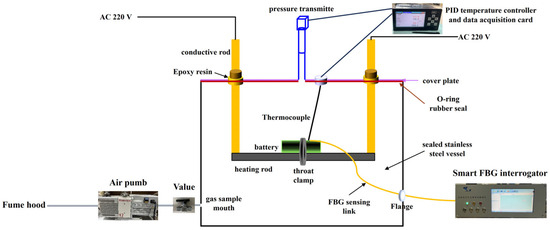
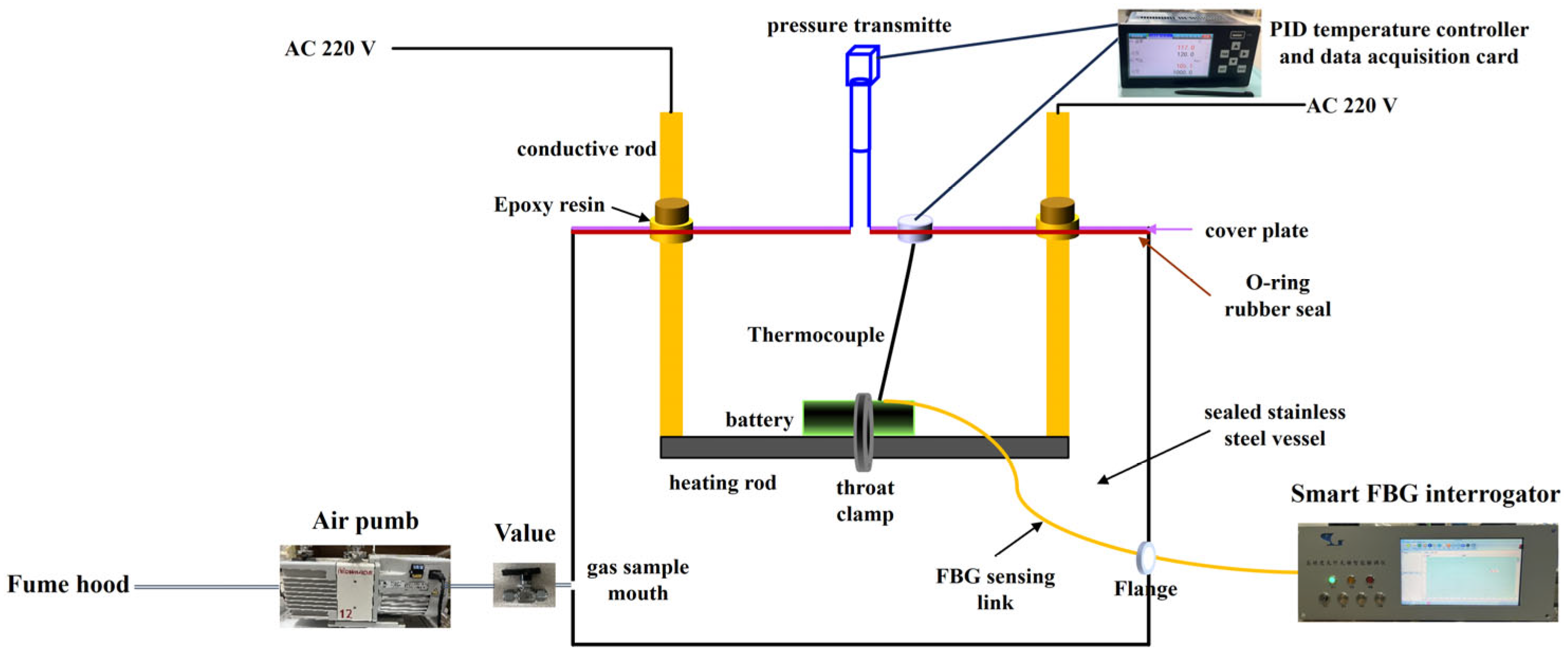
The experimental setup of the active safety warning system of high-temperature induced LIBs thermal runaway is shown in Figure 1. The system consists of a sealed pressure-resistant container, a lithium-ion battery, a heating rod, three polyimide-coated femtosecond fiber Bragg grating sensing links, an intelligent FBG demodulator, an intelligent proportional–derivative–integral (PID) temperature controller and paperless recorder, a solid-state relay, a type K thermocouple transmitter, and a pressure transmitter. All components were interconnected via fiber optic links and electrical wiring. To ensure safety during LIB thermal runaway experiments, tests were conducted in a sealed stainless steel pressure vessel filled with synthetic air (1 atm). A PID intelligent temperature controller was used for stable heating of the LIB surface. The LIBs’ surface temperature was monitored via two approaches: FBG sensing system and thermocouple transmitter with paperless recorder.
Figure 1.
Schematic diagram of the active safety warning system of high-temperature induced LIBs thermal runaway based on FBG sensing.
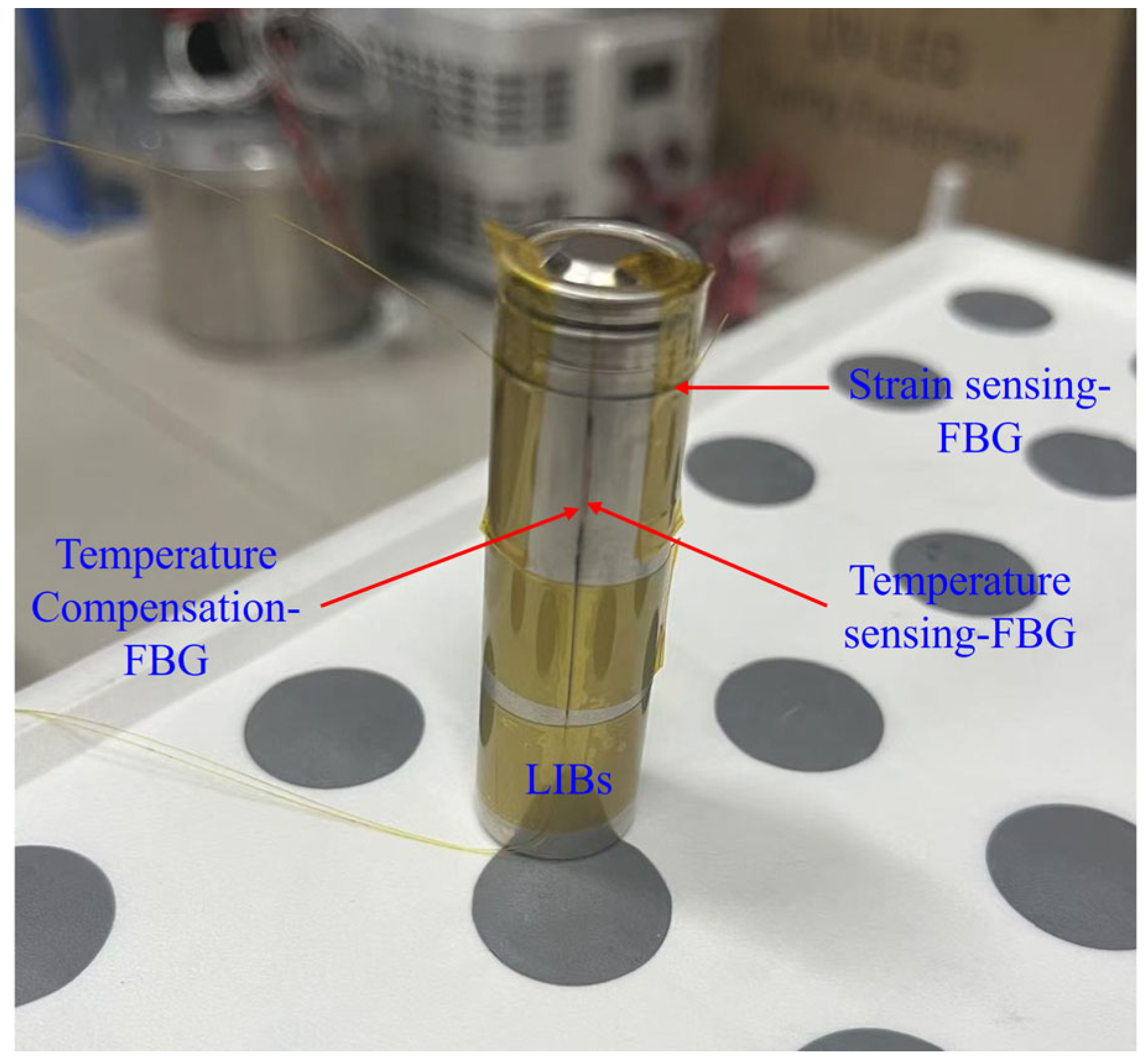
Before conducting experiments, the LIBs were charged to 25%, 50%, 75%, and 100% state of charge (SOC) using a battery cycler in preparation for high-temperature-induced thermal runaway test. Two polyimide-coated femtosecond FBG temperature sensors were attached to the LIBs surface with the following configurations:
FBG Sensor Mounting: 1. Secured with high-temperature-resistant tape; 2. Ensured direct contact between FBG area and LIB surface; 3. One grating end fixed, the other free (to prevent strain-induced measurement errors).
FBG Sensor Functions: Primary FBG: Monitored LIBs surface temperature; Secondary FBG: Provided temperature compensation for radial strain measurements of FBG strain sensing.
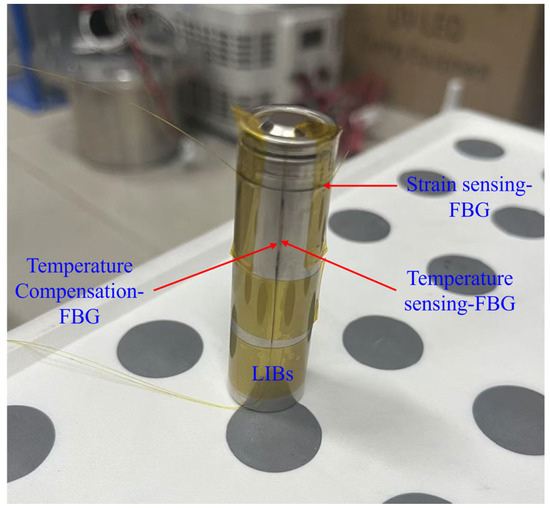
The polyimide coating provided high-temperature resistance, enabling accurate measurement of extreme surface temperatures and radial strain during thermal runaway. For strain measurement, a strain FBG sensor was mounted circumferentially around the LIB, the both ends of strain sensor were slightly tensioned to sensitively detect radial strain from thermal expansion during TR. Figure 2 illustrates the mounting configuration of the FBG sensors on the LIB surface.
Figure 2.
A schematic diagram of femtosecond FBG sensors fixed on 18,650 battery.
In the experiment, three fiber-optic links passed through three small holes (2 mm in diameter) on the container flange to connect the internal femtosecond FBG and external FBG analyzer. UV adhesive was used to seal fiber-hole gaps, securing the airtightness of the experimental container. The redundant FBG sensing links within the container were fixed to the sidewall of container using high-temperature-resistant tape, therefore avoiding being melted by the ejected high-temperature particles during LIB thermal runaway.
The FBG sensing system and the thermocouple transmitter sensing system were calibrated to operational standards and all experiment equipment parameters were set correctly. The experimental container cavity and cover were fixed and sealed with bolts and O-rings, and the airtightness was verified via pressure-drop testing. After container leak detection, the container was evacuated to a vacuum state and then filled with synthetic air. The two operations were repeated for 3 cycles, thus achieving a gas atmosphere inside the container of synthetic air at standard atmospheric pressure.
The LIBs in the high-temperature-induced thermal runaway experiments were set in four different states of charge (25% SOC, 50% SOC, 75% SOC, and 100% SOC). The experimental procedure is briefly described as follows: A heating rod, an intelligent PID temperature controller, and a solid-state relay were used to control the induced gradient temperature of the LIBs’ outer surface. The gradient temperatures were set as 60 °C, 80 °C, 100 °C, 120 °C, 140 °C, 160 °C, and 170 °C, and each induced temperature, that is, the environmental temperature of LIBs’ surface, was maintained for 20 min (to make sure the chemical reaction inside the LIBs was fully completed at each induction temperature), until LIB thermal runaway occurs (i.e., the LIBs’ surface temperature increased sharply). The entire heating procedure is as shown in Table 1.
Table 1.
The parameters of induced temperature and heating time for the TR experiment.
The study involved conducting high-temperature-induced thermal runaway experiments on LIBs at four different SOC levels, with each experimental group replicated ≥3 times to ensure the reliability of the research findings and data.
3. Experimental Results and Discussion
Upon thermal runaway initiation in the lithium-ion batteries (LIBs), the high-temperature induction procedure was automatically terminated by the PID temperature controller, i.e., the PID temperature-controller cut power to the heating rod via a solid-state relay. Key experimental parameters were recorded, such as the TR onset temperature, peak temperature, air pressure inside sealed experimental containers, and mass loss rate (MLR) of LIBs at different SOC levels, which are compiled in Table 2.
Table 2.
Statistics on relevant parameters during thermal runaway of 18,650 batteries with different SOCs.
The experimental results demonstrate a clear correlation between state of charge (SOC) and thermal runaway (TR) characteristics, as summarized in Table 2. It was determined that 25% SOC LIBs exhibited the lowest-onset temperature (120 °C), while 50%/75%/100% SOC LIBs showed consistent onset near 170 °C. In addition, as the SOC of the LIBs increased, the TR phenomenon became more severe. The TR peak temperature of LIBs at 100% SOC was approximately 400 °C higher than that of LIBs with 25% SOC. When thermal runaway of LIBs at 100% SOC occurred, the temperature surged from 173 °C to 640 °C in 5 s, accompanied by a dull explosion in the sealed experimental container. Subsequently, the LIBs’ surface temperature rapidly declined to 152 °C in 8 s (electrode/electrolyte reaction completion). After that, the LIBs’ surface temperature slowly decreased, and the temperature inside the experimental container gradually returned to ambient temperature over a period of ≈50 min. During the thermal runaway of the LIBs at 100% SOC, the container pressure spiked to 0.6 MPa instantly (in a few seconds) and then collapsed to 0.13 MPa within 2 s.
As shown in Table 2, the cavity pressure for TR of LIBs at 100% SOC was much higher than that for the other SOC levels. Because LIBs at 100% SOC store more chemical energy than those at the other SOC levels, the electrochemical reactions between electrolyte and electrode materials become more thorough and intense during the heating procedure, generating larger volumes of gaseous products inside the LIBs, resulting in a greater explosive gas flow when the pressure relief ring ruptured due to high gas pressure, and a stronger gas impact on the pressure transducer; that is, leading to a higher measured gas pressure.
From Table 2, as the SOC of LIBs increases, the mass loss rate (MLR) of LIBs caused by TR gradually rises, which is attributed to the higher chemical energy storage of LIBs with a higher SOC level, and drives complete electrolyte–electrode reactions, resulting in a more intense production ejection (including the LIB container (copper foil) and chemical reaction production (solid powder and gas)) and a greater LIB mass loss rate [9]. Specifically, in this study, the mass loss rate of LIBs with 25% SOC was 16.74%; that of the LIBs with 75% SOC was about 20%; and that of the LIBs with 100% SOC was as high as 38.56%.
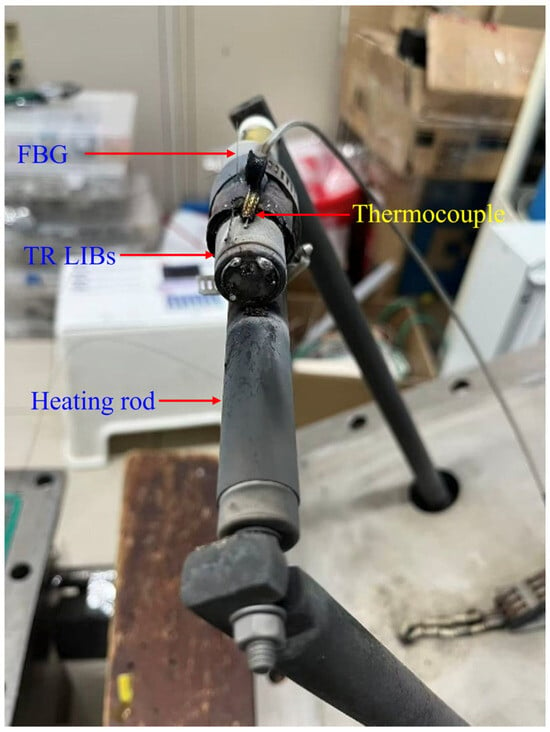
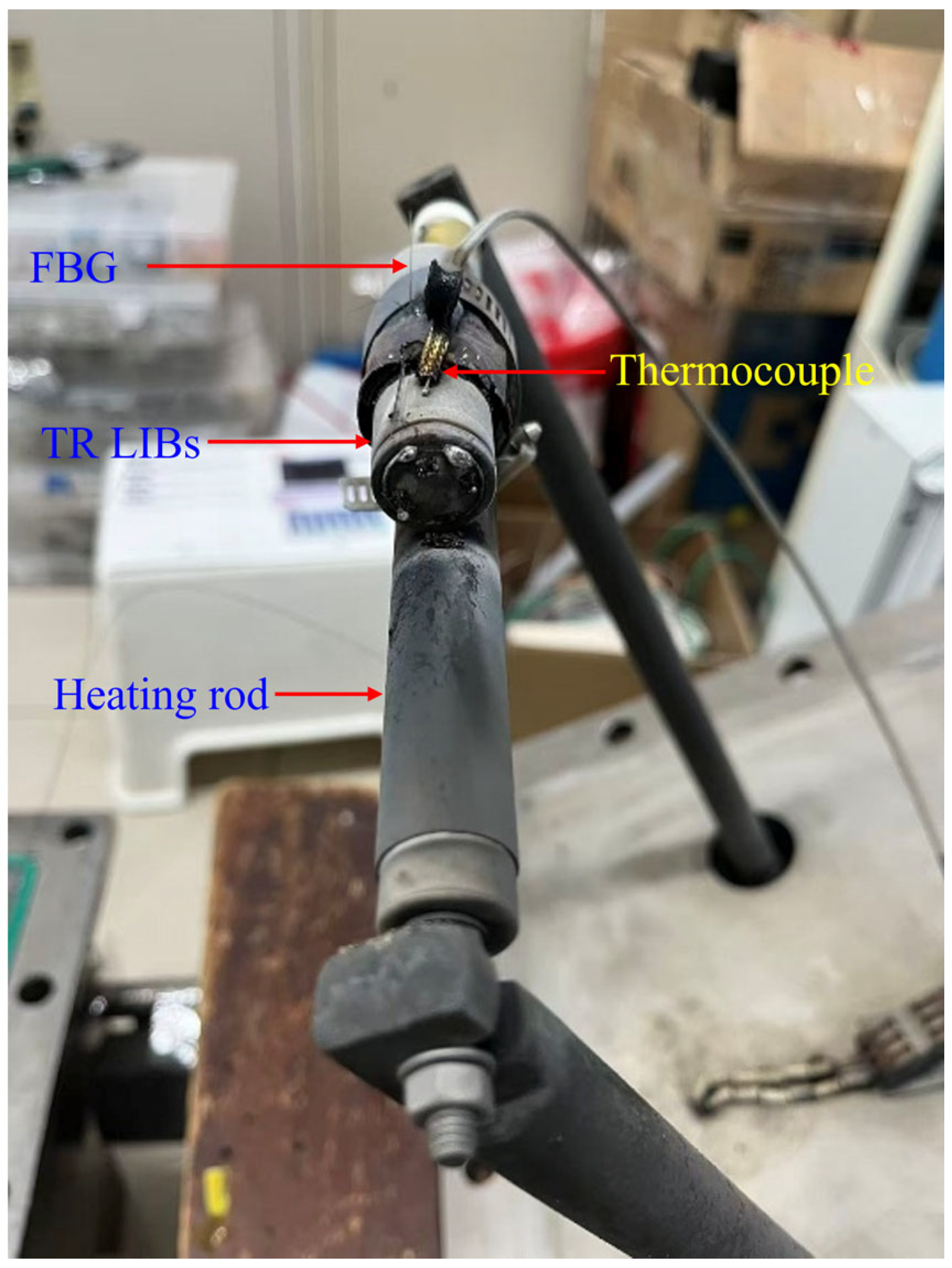
Figure 3 illustrates the state of the LIB unit following thermal runaway. The positive electrode exhibits solidified leaked electrolyte and black carbonized residues. The battery’s external surface is covered with gray powder ejected during thermal runaway.
Figure 3.
The lithium-ion batteries (LIBs) after thermal runaway.
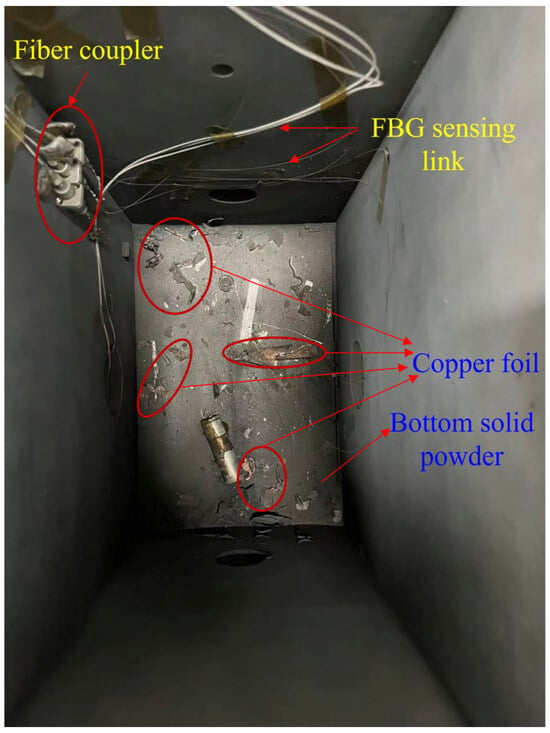
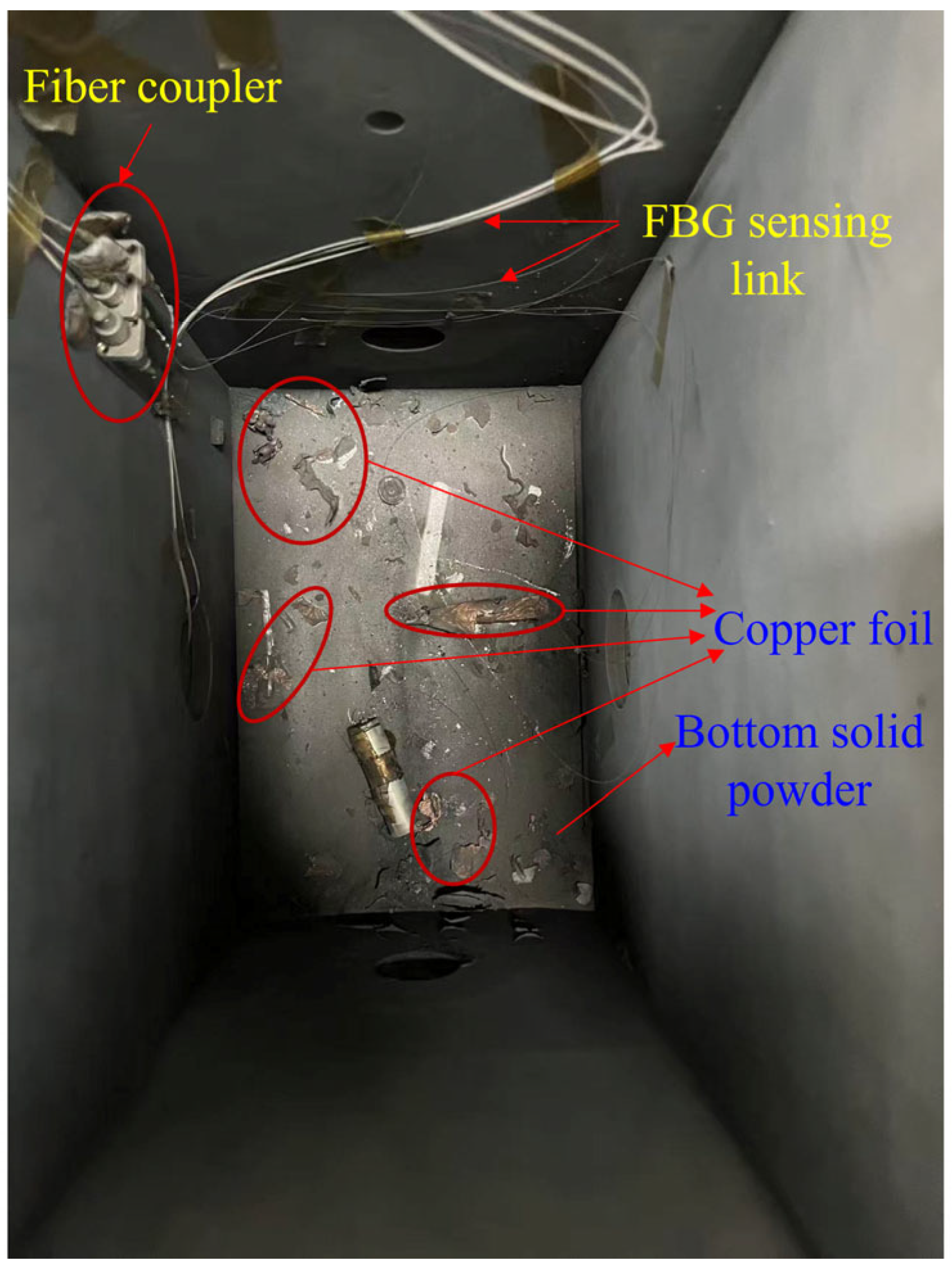
Figure 4 shows the ejected materials from LIBs during thermal runaway, deposited on the bottom of the experimental container. These materials include internal LIB components (notably copper foil) and gray reaction products formed from electrolyte-electrode interactions.
Figure 4.
The ejected material deposited at the container bottom during thermal runaway (TR), including LIBs components (copper foil) and chemical reaction products (solid powder).
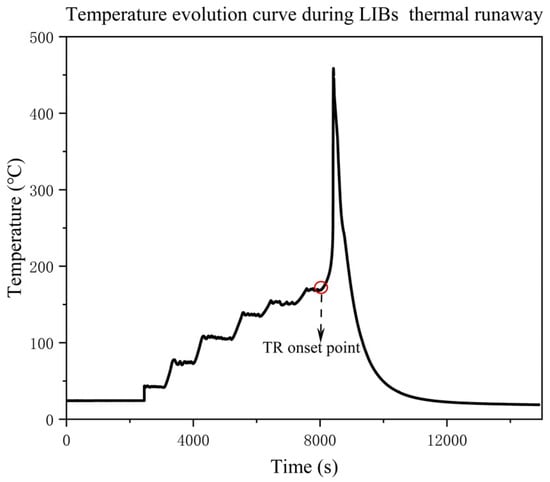
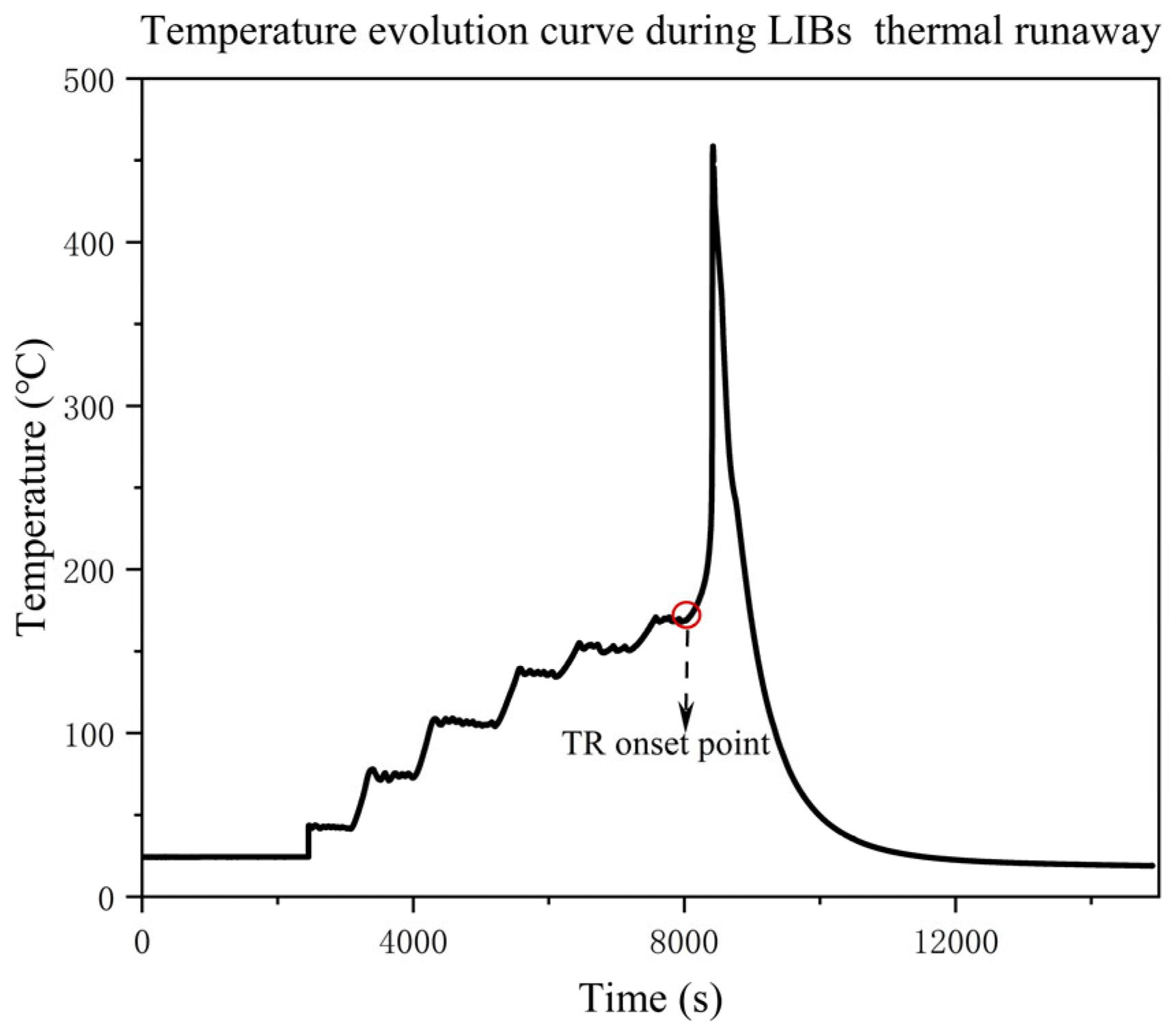
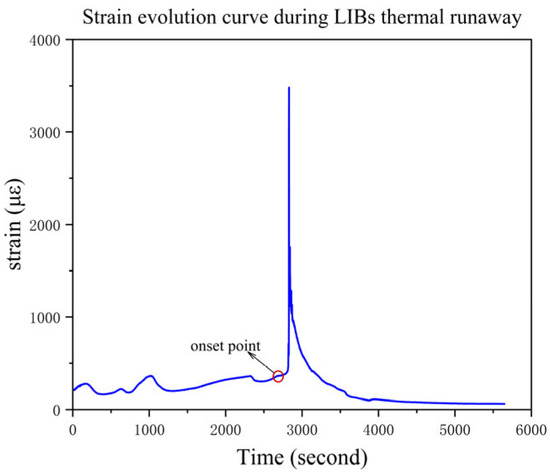
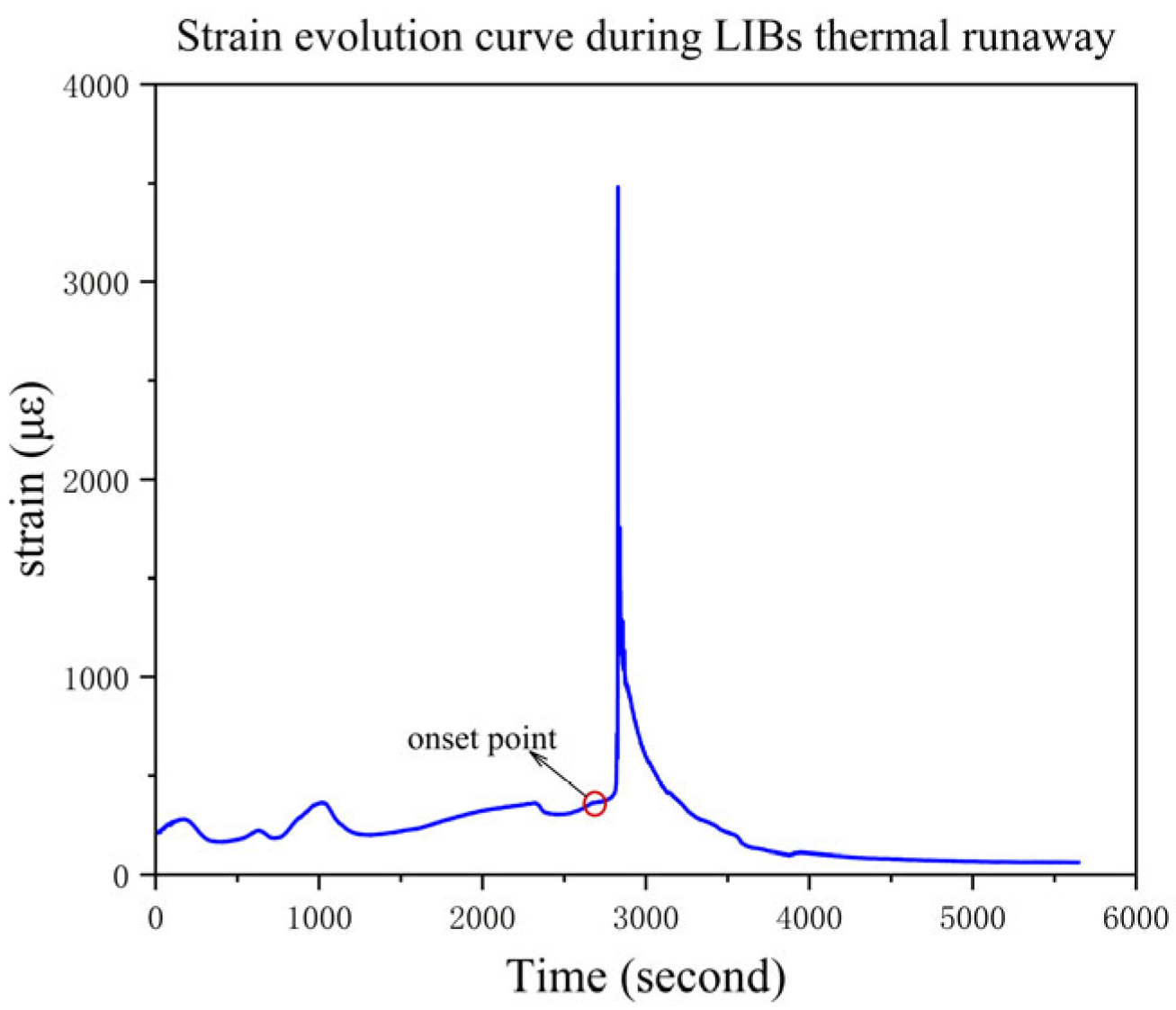
Figure 5 and Figure 6 present the evolution of surface temperature and radial strain in lithium-ion batteries (LIBs), respectively, measured using polyimide-coated femtosecond FBG sensors during thermal runaway (TR). As shown in Figure 5, the TR onset temperature for an 18,650 NCM battery (50% SOC) reaches approximately 170°C. The subsequent exothermic reactions rapidly elevate the surface temperature to ~470°C within seconds. Following electrolyte depletion, the temperature exhibits a steep initial decline, followed by a slower cooling phase.
Figure 5.
Temperature evolution of LIBs measured by femtosecond FBG sensor during TR.
Figure 6.
The radial strain evolution of LIBs measured by femtosecond FBG during TR.
Figure 5 demonstrates excellent agreement between the surface temperature profiles of the lithium-ion battery (LIB) measured by two independent methods: polyimide-coated femtosecond FBG sensors and K-type thermocouples. Both measurement techniques accurately track the thermal runaway (TR) temperature evolution, validating the reliability of FBG-based early warning systems for LIB thermal runaway. Compared with thermocouples, FBG sensors exhibit superior performance characteristics, including: (1) compact size, (2) broadband frequency response, (3) high measurement accuracy, and (4) flexible deployment options.
The radial strain increases steadily with rising LIB surface temperature until thermal runaway (TR) initiation. At the TR onset temperature, the strain exhibits an abrupt surge, reaching its peak value within seconds and forming a distinct sharp peak in the data curve. This strain peak corresponds precisely with the simultaneous temperature peak measured by the FBG sensor, demonstrating excellent measurement consistency between the two physical parameters.
4. Conclusions
This study investigates the thermal runaway (TR) characteristics of 18,650 lithium-ion batteries (LiNi1/3Co1/3Mn1/3O2/graphite) using polyimide-coated femtosecond fiber Bragg gratings (FBGs). Specifically, we determine (1) the TR onset temperature, (2) surface temperature evolution, and (3) radial strain development during TR events. Additionally, we analyze the relationships between SOC and both TR temperatures (onset/peak) and mass loss rate.
- A new active safety warning method for LIBs thermal runaway based on polyimide-coated femtosecond FBGs has been proposed. Based on real-time measuring of LIBs’ surface temperature and radial strain using FBG sensing system, a few sets of experiments and analyses have been conducted to verify the feasibility and reliability of the proposed scheme.
- The onset temperature, peak temperature and the thermal runaway ejection of LIBs are closely related to the states of charge of LIBs. The higher the SOC of LIBs, the more severe the thermal runaway phenomenon, the higher peak temperature of TR, and the greater mass loss rate of LIBs. The experimental results show that elevated SOC intensifies TR severity and safety risks.
This study provides technical verification and case support for the FBG temperature/strain sensing-based active safety warning of LIB thermal runaway, contributing to safer LIB designs and more reliable energy storage applications.
Author Contributions
Conceptualization, Z.D., Y.M. and X.T.; methodology, C.L. and Z.Q.; software, Z.D. and Y.M.; validation, Z.D., L.S. and Z.Q.; formal analysis, Z.D., J.L. and X.L.; investigation, Z.D.; resources, Z.D.; data curation, Z.D., C.L., L.S., Z.Q. and X.L.; writing—original draft preparation, Z.D. and Y.M.; writing—review and editing, Z.D. and Z.Q.; visualization, Z.D., J.L. and X.L.; supervision, Z.D., Y.M., X.T., J.L., L.S. and Z.Q.; project administration, Y.M. and Z.Q.; funding acquisition, Z.Q. and Y.M. All authors have read and agreed to the published version of the manuscript.
Funding
This research was funded by the Science and Technology Project of State Grid Jiangsu Electric Power Co., Ltd. grant number J2024214.
Data Availability Statement
The original contributions presented in this study are included in the article. Further inquiries can be directed to the corresponding authors.
Conflicts of Interest
The authors declare that they have no known competing financial interests or personal relationships that could have appeared to influence the work reported in this paper. Yanli Miao, Xiao Tan, Chenying Li, Jianjun Liu, Ling Sa and Xiaohan Li are employees of State Grid Jiangsu Electric Power Research Institute, Jiangsu Electric Power Co., Ltd., which provided funding and technical support for the work. The funder had no role in the design of the study; in the collection, analysis, or interpretation of data, in the writing of the manuscript; or in the decision to publish the results.
References
- Ouyang, D.; Chen, M.; Weng, J.; Wang, K.; Wang, J.; Wang, Z. Exploring the thermal stability of lithium-ion cells via accelerating rate calorimetry: A review. J. Energy Chem. 2023, 81, 543–573. [Google Scholar] [CrossRef] [Scilit]
- Feng, X.; Ouyang, M.; Liu, X.; Lu, L.; Xia, Y.; He, X. Thermal runaway mechanism of lithium ion battery for electric vehicles: A review. Energy Storage Mater. 2018, 10, 246–267. [Google Scholar] [CrossRef] [Scilit]
- Wang, Z.; Zhu, L.; Liu, J.; Wang, J.; Yan, W. Gas Sensing Technology for the Detection and Early Warning of Battery Thermal Runaway: A Review. Energy Fuels 2022, 36, 6038–6057. [Google Scholar] [CrossRef] [Scilit]
- Sun, Y.; Chen, X.; Wang, H.; Xu, C.; Feng, X.; He, F.; Huang, L.; Li, Y.; Zhang, Y.; Deng, J. Internal pressure variation during the thermal runaway of LIBs at different state-of-charge. Appl. Therm. Eng. 2025, 271, 126299. [Google Scholar] [CrossRef] [Scilit]
- Zhu, X.; Wang, H.; Allu, S.; Gao, Y.; Cakmak, E.; Hopkins, E.J.; Veith, G.M.; Wang, Z. Investigation on capacity loss mechanisms of lithium-ion pouch cells under mechanical indentation conditions. J. Power Sources 2020, 465, 228314. [Google Scholar] [CrossRef] [Scilit]
- Ren, D.; Hsu, H.; Li, R.; Feng, X.; Guo, D.; Han, X.; Lu, L.; He, X.; Gao, S.; Hou, J.; et al. A comparative investigation of aging effects on thermal runaway behavior of LIBs. eTransportation 2019, 2, 100034. [Google Scholar] [CrossRef] [Scilit]
- Ouyang, D.; Wang, K.; Yang, Y.; Wang, Z. Fluoroethylene carbonate as co-solvent for Li(Ni0.8Mn0.1Co0.1)O2 lithium-ion cells with enhanced high-voltage and safety performance. J. Power Sources 2022, 542, 231780. [Google Scholar] [CrossRef] [Scilit]
- Ren, D.; Feng, X.; Liu, L.; Hsu, H.; Lu, L.; Wang, L.; He, X.; Ouyang, M. Investigating the relationship between internal short circuit and thermal runaway of LIBs under thermal abuse condition. Energy Storage Mater. 2021, 34, 563–573. [Google Scholar] [CrossRef] [Scilit]
- Zhou, G.; Yang, S.; Liu, Y.; Zhang, Q.; Niu, C.; Lu, H.; Wei, Z.; Huang, Q. Influence of internal and external factors on thermal runaway characteristics of LIBs induced by dual heat sources: An experimental research. Appl. Therm. Eng. 2025, 261, 125072. [Google Scholar] [CrossRef] [Scilit]
- Feng, X.; Fang, M.; He, X.; Ouyang, M.; Lu, L.; Wang, H.; Zhang, M. Thermal runaway features of large format prismatic lithium ion battery using extended volume accelerating rate calorimetry. J. Power Sources 2014, 255, 294–301. [Google Scholar] [CrossRef] [Scilit]
- Yao, L.; Wang, Z.; Ma, J. Fault detection of the connection of lithium-ion power batteries based on entropy for electric vehicles. J. Power Sources 2015, 293, 548–561. [Google Scholar] [CrossRef] [Scilit]
- Zhu, X.; Sun, Z.; Wang, Z.; Wang, H.; Lin, N.; Shan, C. Thermal runaway in commercial lithium-ion cells under overheating condition and the safety assessment method: Effects of SoCs, cathode materials and packaging forms. J. Energy Storage 2023, 68, 107768. [Google Scholar] [CrossRef] [Scilit]
- Feng, X.; Zheng, S.; Ren, D.; He, X.; Wang, L.; Cui, H.; Liu, X.; Jin, C.; Zhang, F.; Xu, C.; et al. Investigating the thermal runaway mechanisms of LIBs based on thermal analysis database. Appl. Energy 2019, 246, 53–64. [Google Scholar] [CrossRef] [Scilit]
- Liu, X.; Ren, D.; Hsu, H.; Feng, X.; Xu, G.-L.; Zhuang, M.; Gao, H.; Lu, L.; Han, X.; Chu, Z.; et al. Thermal Runaway of LIBs without Internal Short Circuit. Joule 2018, 2, 2047–2064. [Google Scholar] [CrossRef] [Scilit]
- Sampath, U.; Kim, D.; Kim, H.; Song, M. Polymer-coated FBG sensor for simultaneous temperature and strain monitoring in composite materials under cryogenic conditions. Appl. Opt. 2018, 57, 492–497. [Google Scholar] [CrossRef] [Scilit]
- Ding, Z.; Tan, Z.; Wang, Y. High-speed wavelength interrogation system based on crossed HiBi-FLMs for array FBGs. Opt. Fiber Technol. 2022, 74, 103138. [Google Scholar] [CrossRef] [Scilit]
- Feng, X.; Zhang, Z.; Cui, X.; Jin, G.; Zheng, W.; Liu, H. Additive manufactured closed-cell aluminum alloy foams via laser melting deposition process. Mater. Lett. 2018, 233, 126–129. [Google Scholar] [CrossRef] [Scilit]
- Shi, Y.; Zhang, Q.; Zhang, Y.; Jia, L.; Xu, X. Promising and Reversible Electrolyte with Thermal Switching Behavior for Safer Electrochemical Storage Devices. ACS Appl. Mater. Interfaces 2018, 10, 7171–7179. [Google Scholar] [CrossRef] [Scilit]
- Li, Y.; Liu, X.; Wang, L.; Feng, X.; Ren, D.; Wu, Y.; Xu, G.; Lu, L.; Hou, J.; Zhang, W.; et al. Thermal runaway mechanism of lithium-ion battery with LiNi0.8Mn0.1Co0.1O2 cathode materials. Nano Energy 2021, 85, 105878. [Google Scholar] [CrossRef] [Scilit]
- Liu, K.; Liu, Y.; Lin, D.; Pei, A.; Cui, Y. Materials for lithium-ion battery safety. Sci. Adv. 2018, 4, eaas9820. [Google Scholar] [CrossRef] [Scilit]
- Kim, J.; Bae, D.; Park, C.; Park, H. Pre-detection of thermal runaway in Li-ion 18650 batteries via temperature and voltage: The importance of temperature measurement location. Appl. Therm. Eng. 2025, 269, 125991. [Google Scholar] [CrossRef] [Scilit]
- García, A.; Monsalve-Serrano, J.; Sari, R.L.; Martinez-Boggio, S. An optical investigation of thermal runaway phenomenon under thermal abuse conditions. Energy Convers. Manag. 2021, 246, 114663. [Google Scholar] [CrossRef] [Scilit]
- Xu, B.; Lee, J.; Kwon, D.; Kong, L.; Pecht, M. Mitigation strategies for Li-ion battery thermal runaway: A review. Renew. Sustain. Energy Rev. 2021, 150, 111437. [Google Scholar] [CrossRef] [Scilit]
- Zhang, L.; Duan, Q.; Meng, X.; Jin, K.; Xu, J.; Sun, J.; Wang, Q. Experimental investigation on intermittent spray cooling and toxic hazards of lithium-ion battery thermal runaway. Energy Convers. Manag. 2022, 252, 115091. [Google Scholar] [CrossRef] [Scilit]
- Zou, K.; Chen, X.; Ding, Z.; Gu, J.; Lu, S. Jet behavior of prismatic LIBs during thermal runaway. Appl. Therm. Eng. 2020, 179, 115745. [Google Scholar] [CrossRef] [Scilit]
- Wang, Q.; Ping, P.; Zhao, X.; Chu, G.; Sun, J.; Chen, C. Thermal runaway caused fire and explosion of lithium ion battery. J. Power Sources 2012, 208, 210–224. [Google Scholar] [CrossRef] [Scilit]
- Tang, Z.; Wang, Z.; Xu, H.; Xiao, Y.; Lu, H.; Zhao, K. Burning behavior of hydrogen jet flame inhibited by a wire mesh screen. Process Saf. Environ. Prot. 2024, 189, 802–812. [Google Scholar] [CrossRef] [Scilit]
- Sebbagh, T.; Manfo, T.A.; Şahin, M.E. Advances in Battery Technologies for Next-Generation Energy Storage Systems. Electronics 2026, 15, 690. [Google Scholar] [CrossRef] [Scilit]

Disclaimer/Publisher’s Note: The statements, opinions and data contained in all publications are solely those of the individual author(s) and contributor(s) and not of MDPI and/or the editor(s). MDPI and/or the editor(s) disclaim responsibility for any injury to people or property resulting from any ideas, methods, instructions or products referred to in the content. |
© 2026 by the authors. Licensee MDPI, Basel, Switzerland. This article is an open access article distributed under the terms and conditions of the Creative Commons Attribution (CC BY) license.