
Why Magnetic Nanoparticles Still Struggle to Translate: A Systematic Analysis of Structural Gaps in Nanobiotechnology

 ,
,  and
and
Abstract
1. Introduction
2. Methods Overview and Study Design
3. Results and Discussion
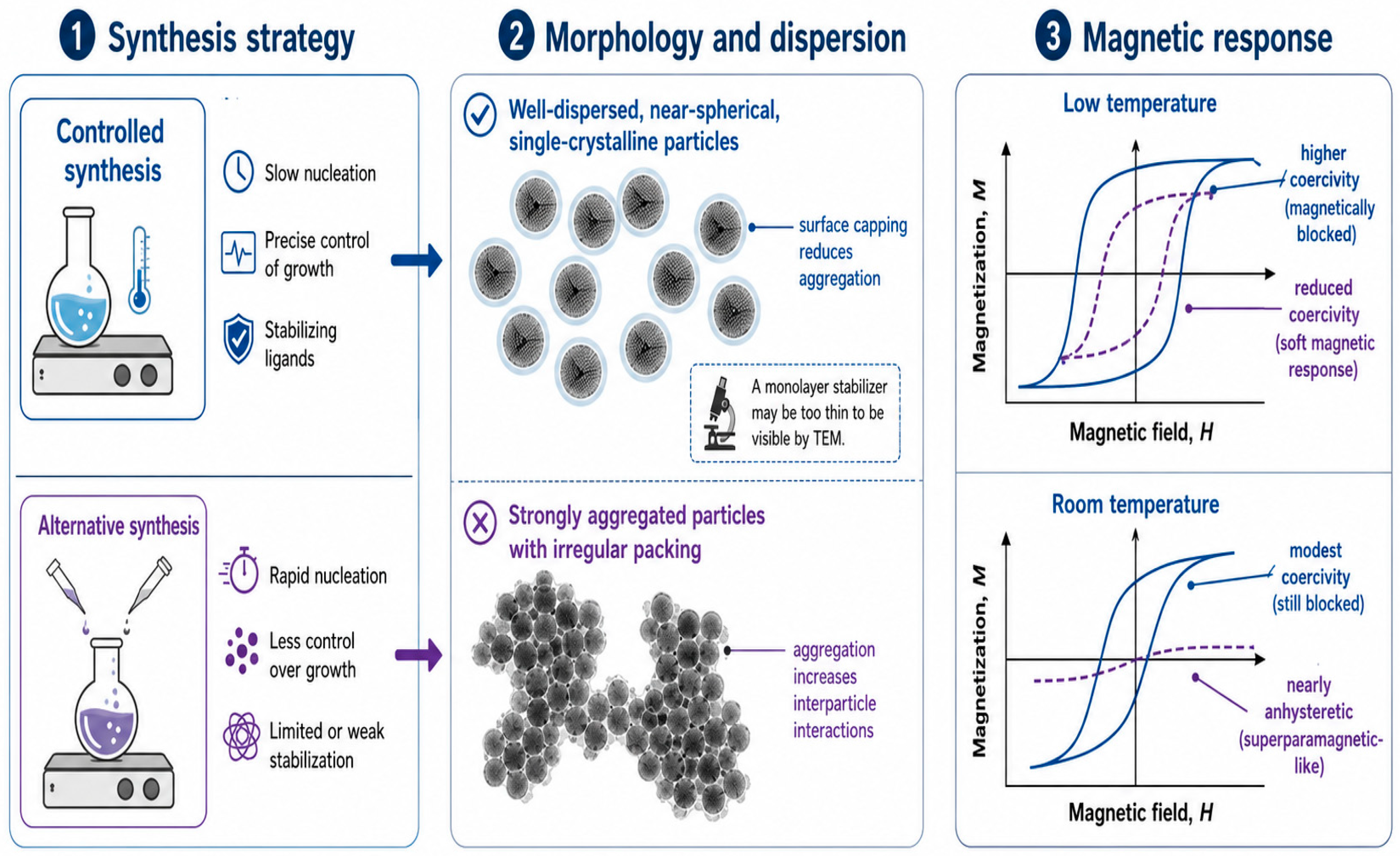
3.1. Stability of Magnetic Nanoparticles
3.2. Discrepancy Between Laboratory Findings and Industrial/Clinical Practice
Biodistribution, Clearance, and Long-Term Biological Fate of Magnetic Nanoparticles
- Physiological relevance: There is a need for more physiologically relevant systems, such as 3D organoids, humanized mouse models, and microfluidic “organ-on-chip” platforms, to represent the combined dynamics of protein corona evolution, MPS activity, and tissue-specific barriers [121].
3.3. Methods and Techniques That Are Insufficient, Inadequate or Missing
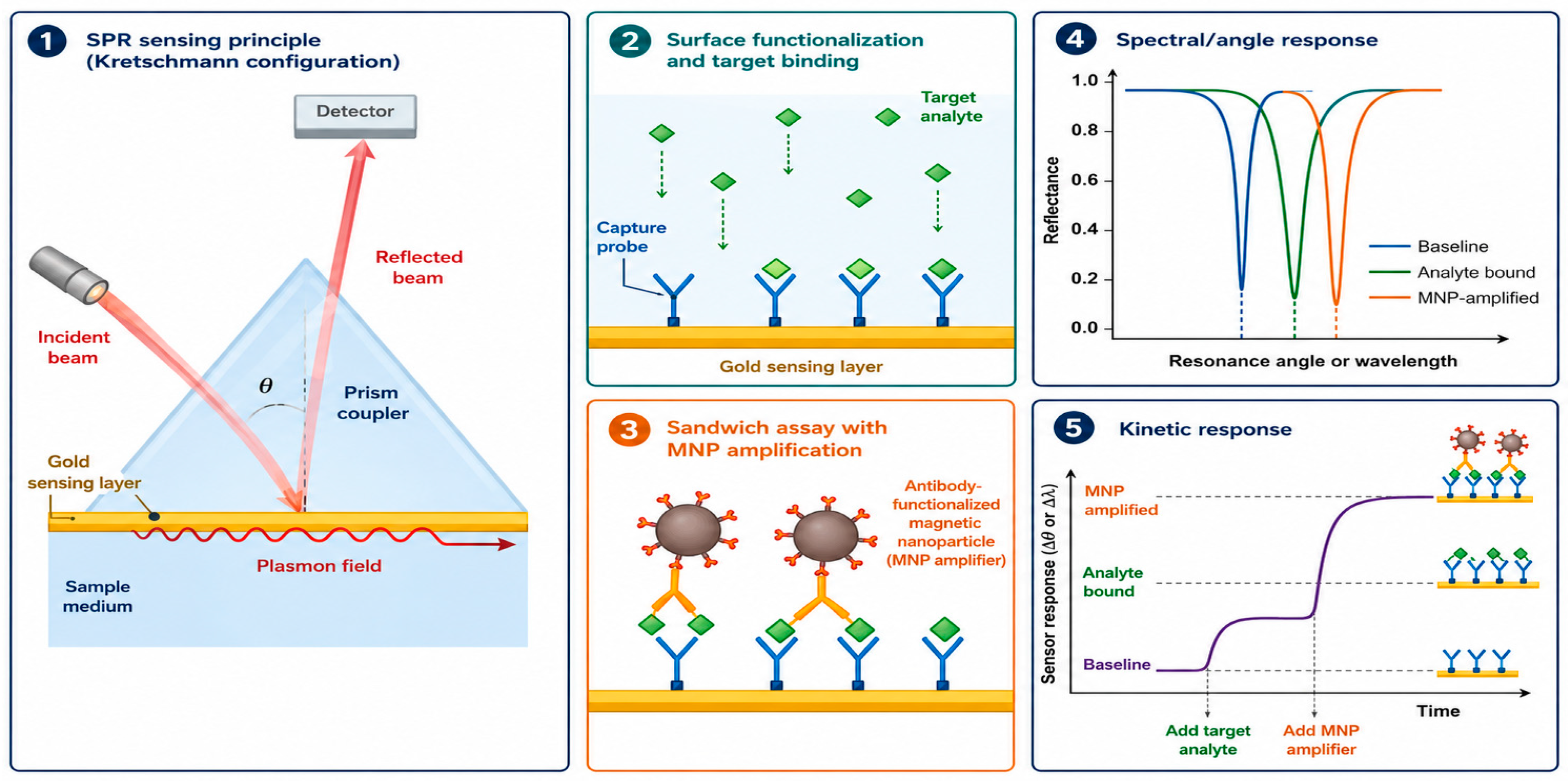
3.4. Underexplored Combinations of Methods
3.5. Lack of Experimental Validation of the Proposed Mechanisms
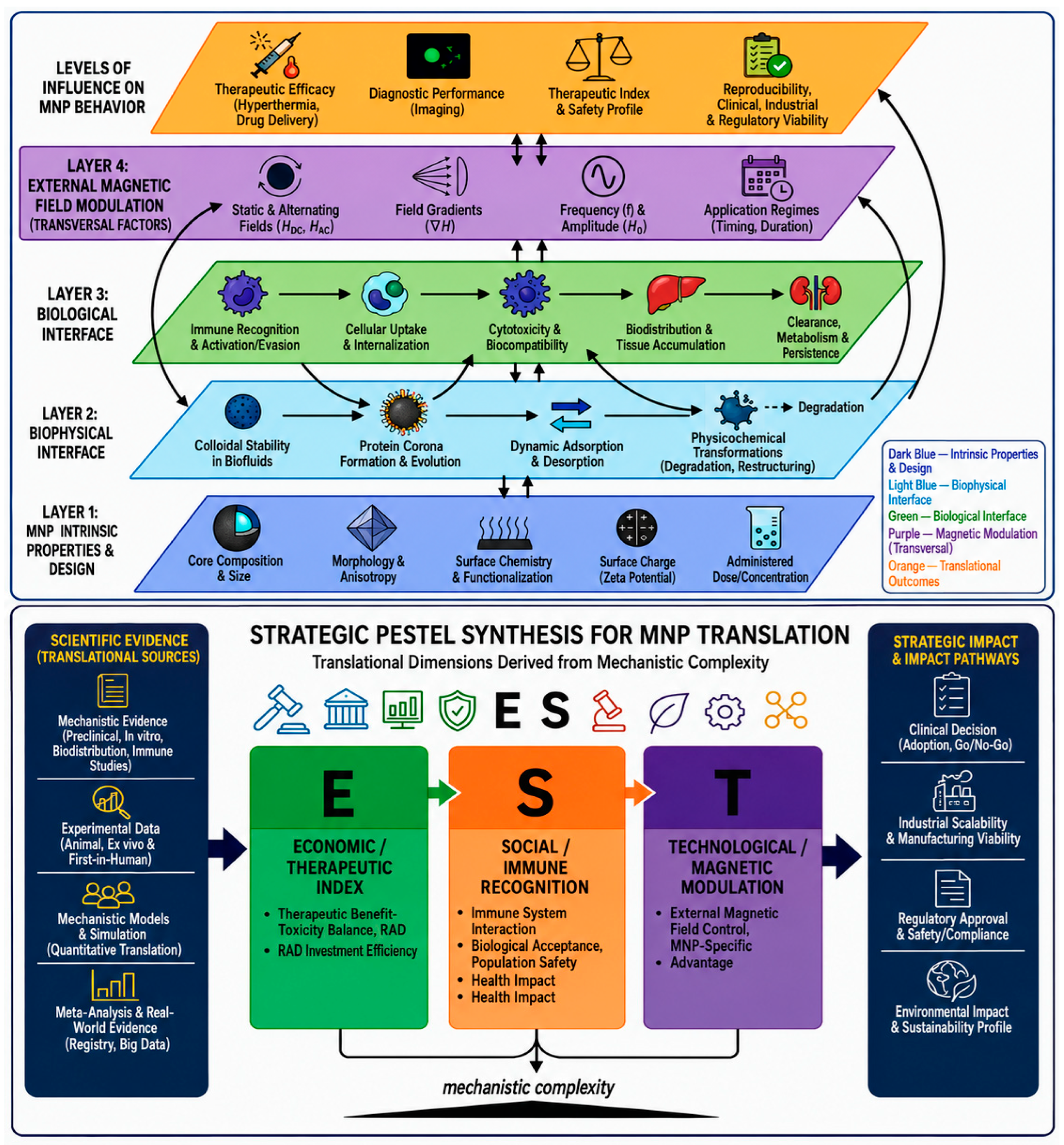
3.6. Gap in Unifying Conceptual Models
3.7. Underrepresentation of Populations, Organisms, and Geographic Regions
3.8. Structural Limitations and Systemic Gaps in Magnetic Nanoparticle Research
3.9. Public Policy Proposal for the Translational Advancement of Magnetic Nanoparticles
- Mandatory adoption of minimum information guidelines: We propose that all funded projects and scientific publications formally adopt MNPs’ minimum information reporting standards, which should at a minimum require disclosure of the following key physicochemical parameters: hydrodynamic size distribution by DLS, morphology and dispersion by TEM, zeta potential and crystallinity and phase composition by XRD. This is because such requirements are critical for interlaboratory comparability and batch-level traceability.
- Integration of dynamic magnetic characterization: Funding calls should explicitly encourage and incentivize the use of advanced magnetic characterization methods as a standard practice, such as magnetic particle spectroscopy (MPS) and AC susceptometry (ACS), because these methods can provide valuable information about Néel/Brownian relaxation dynamics, hydrodynamic mobility, and surface-mediated interactions, which cannot be reasonably probed by static measurements such as vibrating sample magnetometry (VSM).
- Promotion of integrated, multitechnique workflows: The funding policy should preferentially support research programs that include, in a combined and contemporaneous fashion, controlled synthesis, high-resolution physicochemical characterization (e.g., TEM, AFM, and appropriate spectroscopic methods), and functional biological assessment, and such an integrated approach should replace segmented or strictly serial approaches that preclude thorough structure–function correlation.
- Early incorporation of scalability criteria: Projects funded under this FOA must provide, from the outset, a plan that clearly describes how scalable, reproducible, GMP-compliant material and process designs will be integrated into material and process development, and examples of the type of information that would be required in an application include a plan for how the scale-up will be achieved, statistically powered process controls and acceptance criteria, batch-to-batch variability and quality attributes, as well as a plan for how the synthesis, purification, and formulation steps will be integrated and documented with GMP-ready documentation and validation protocols.
- Support for advanced manufacturing strategies: Targeted funding should be directed to continuous manufacturing paradigms, implementation of Quality-by-Design (QbD) frameworks, and the deployment of digital twins for real-time process monitoring and control, because these paradigms in concert are required to reduce batch-to-batch variability, increase process robustness, and enhance industrial reliability.
- Comprehensive and longitudinal toxicological assessment: We advocate for policy to dictate the obligatory and systematic toxicological profiling across in vitro, ex vivo, and in vivo models (e.g., biodistribution, clearance kinetics, long-term accumulation, immunogenicity, and toxicity of degradation products) of nanomaterials under clinically relevant dosing regimens and exposure periods, and such studies should be rigorously protocolized with the inclusion of standardized endpoints, dose–response characterization, and longitudinal follow-up to achieve translational relevance and regulatory readiness.
- Requirement for robust experimental validation: Experimental validation programmes of commensurate scope and depth to the theoretical and computational models should be proposed, and validation should be performed under physiologically relevant conditions, such as in protein-rich media, whole blood, or tumour interstitial fluid, because this will capture dynamic phenomena, including protein corona formation and evolution, adsorption–desorption kinetics, and matrix-dependent changes in colloidal stability and functional performance.
- Prioritization of unifying conceptual frameworks: Funding mechanisms should be put in place to encourage the development of integrated conceptual frameworks that couple in a mechanistic fashion colloidal stability, protein corona formation and evolution, degradation pathways, immune recognition and response, tissue-scale transport, and modulation by static and dynamic magnetic fields, because these models are necessary for the predictive, mechanism-informed, and rational design of magnetic nanoplatforms.
- Elevation of sustainability to a core policy pillar: While scalability, GMP compliance, and Quality-by-Design are well embedded in the current policy landscape, sustainability and eco-design remain at the periphery because environmental responsibility should be clearly recognized as a third pillar of public policy influencing the development of magnetic nanoparticles.
- Mandatory integration of eco-design principles: Funding mechanisms should require eco-design and sustainable-by-design, so that environmental consideration is integrated into the development of materials and processes from the outset.
- Life-cycle assessment (LCA): Projects should require projects to conduct a full life cycle assessment to evaluate environmental impact across the full value chain of magnetic nanomaterials, including synthesis, processing, use-phase performance, and end-of-life management.
- Adoption of low-impact synthesis routes: Particular emphasis should be placed on biogenic, green or other low-energy synthetic routes that minimize the use of hazardous reagents and minimize waste generation.
- Systematic evaluation of environmental safety: Policy should require detailed assessment of environmental toxicity, persistence, degradation pathways, and post-use fate of magnetic nanoparticles to limit long-term ecological risks.
- Alignment with global sustainability agendas: The combination of safe-by-design and sustainable-by-design approaches will ensure that the developed magnetic nanotechnologies are not only applicable for clinical and industrial purposes, but also sustainable for the environment in all stages of the product life cycle, and the developed concepts will be in line with the major global initiatives, such as EU Green Deal, ESG frameworks and Horizon Europe priorities.
- Support for decentralized international collaborations: Funding programs should emphasize the formation of consortia that include substantial participation of institutions and investigators from historically underrepresented regions of the world, such as Africa, Latin America, and the Global South more broadly, because this will ensure equitable knowledge exchange, sustainable infrastructure development, and the growth of local scientific leadership.
- Expansion of biological and environmental representativeness: Research agendas must mandate the use of diverse and representative sampling schemes that encompass heterogeneous human populations, multiple model organisms, different biomes, and diverse environmental conditions, because the diversity of sampling is necessary to prevent the development of technologies that are inappropriate for local epidemiological profiles, environmental conditions, and socio-economic realities. This will enhance external validity, equity, and real-world applicability.
3.10. Translational Fragmentation and Structural Limitations in Magnetic Nanobiotechnology
4. Conclusions
Supplementary Materials
Author Contributions
Funding
Institutional Review Board Statement
Informed Consent Statement
Data Availability Statement
Acknowledgments
Conflicts of Interest
References
- Rezaei, B.; Yari, P.; Sanders, S.M.; Wang, H.; Chugh, V.K.; Liang, S.; Mostufa, S.; Xu, K.; Wang, J.-P.; Gómez-Pastora, J.; et al. Magnetic Nanoparticles: A Review on Synthesis, Characterization, Functionalization, and Biomedical Applications. Small 2024, 20, 2304848. [Google Scholar] [CrossRef] [Scilit]
- Reddy, L.H.; Arias, J.L.; Nicolas, J.; Couvreur, P. Magnetic Nanoparticles: Design and Characterization, Toxicity and Biocompatibility, Pharmaceutical and Biomedical Applications. Chem. Rev. 2012, 112, 5818–5878. [Google Scholar] [CrossRef] [Scilit]
- Maheshwari, S.; Singh, A.; Verma, A.; Shariq, M.; Akhtar, J.; Alsaidan, O.A.; Prajapati, B.G. Superparamagnetic Iron Oxide Nanoparticles (SPIONs) in Targeting Brain Tumors: Advances and Challenges. Med. Oncol. 2025, 42, 338. [Google Scholar] [CrossRef] [Scilit]
- Baki, A.; Wiekhorst, F.; Bleul, R.; Baki, A.; Wiekhorst, F.; Bleul, R. Advances in Magnetic Nanoparticles Engineering for Biomedical Applications—A Review. Bioengineering 2021, 8, 134. [Google Scholar] [CrossRef] [Scilit]
- Ali, A.; Shah, T.; Ullah, R.; Zhou, P.; Guo, M.; Ovais, M.; Tan, Z.; Rui, Y. Review on Recent Progress in Magnetic Nanoparticles: Synthesis, Characterization, and Diverse Applications. Front. Chem. 2021, 9, 629054. [Google Scholar] [CrossRef] [Scilit] [PubMed]
- Chand, K.; Vasquez-Guardado, E.S. Magnetic Nanoparticles: Synthesis and Applications in Life Sciences. ChemistryOpen 2025, 14, e202500214. [Google Scholar] [CrossRef] [Scilit] [PubMed]
- Tran, N.; Webster, T.J. Magnetic Nanoparticles: Biomedical Applications and Challenges. J. Mater. Chem. 2010, 20, 8760–8767. [Google Scholar] [CrossRef] [Scilit]
- Materón, E.M.; Miyazaki, C.M.; Carr, O.; Joshi, N.; Picciani, P.H.S.; Dalmaschio, C.J.; Davis, F.; Shimizu, F.M. Magnetic Nanoparticles in Biomedical Applications: A Review. Appl. Surf. Sci. Adv. 2021, 6, 100163. [Google Scholar] [CrossRef] [Scilit]
- Guo, Z.; Liu, D.; Zhang, H.; Yu, W.; Li, Y.; Gu, N. Superparamagnetic Iron Oxide Nanoparticles in Clinical Applications: Current Status and Future Perspectives. eBioMedicine 2025, 122, 106054. [Google Scholar] [CrossRef] [Scilit]
- Aboushoushah, S.F.O. Iron Oxide Nanoparticles Enhancing Magnetic Resonance Imaging: A Review of the Latest Advancements. J. Sci. Adv. Mater. Devices 2025, 10, 100875. [Google Scholar] [CrossRef] [Scilit]
- Baldea, I.; Iacoviță, C.; Gurgu, R.A.; Vizitiu, A.S.; Râzniceanu, V.; Mitrea, D.R.; Baldea, I.; Iacoviță, C.; Gurgu, R.A.; Vizitiu, A.S.; et al. Magnetic Hyperthermia with Iron Oxide Nanoparticles: From Toxicity Challenges to Cancer Applications. Nanomaterials 2025, 15, 1519. [Google Scholar] [CrossRef] [Scilit] [PubMed]
- Ghazi, R.; Ibrahim, T.K.; Nasir, J.A.; Gai, S.; Ali, G.; Boukhris, I.; Rehman, Z. Iron Oxide Based Magnetic Nanoparticles for Hyperthermia, MRI and Drug Delivery Applications: A Review. RSC Adv. 2025, 15, 11587–11616. [Google Scholar] [CrossRef] [Scilit]
- Zimina, T.M.; Sitkov, N.O.; Gareev, K.G.; Fedorov, V.; Grouzdev, D.; Koziaeva, V.; Gao, H.; Combs, S.E.; Shevtsov, M.; Zimina, T.M.; et al. Biosensors and Drug Delivery in Oncotheranostics Using Inorganic Synthetic and Biogenic Magnetic Nanoparticles. Biosensors 2022, 12, 789. [Google Scholar] [CrossRef] [Scilit]
- Das, A.; Sengupta, P.; Khanam, J.; Augustine, R.; Thakor, A.S.; Thomas, S.; Roy, S.; Ghosal, K. Magnetic Nanoparticle as a New Cutting-Edge Drug Delivery and Diagnostic Platform: A Review on Its Properties, Synthesis, Surface Modification and Applications. Carbohydr. Polym. Technol. Appl. 2025, 11, 100905. [Google Scholar] [CrossRef] [Scilit]
- Anderson, S.D.; Gwenin, V.V.; Gwenin, C.D. Magnetic Functionalized Nanoparticles for Biomedical, Drug Delivery and Imaging Applications. Nanoscale Res. Lett. 2019, 14, 188. [Google Scholar] [CrossRef] [Scilit] [PubMed]
- Takahashi, M.; Le, T.S.; Maenosono, S. Modern Biomedical Applications of Magnetic Nanoparticles. In Modern Biomedical Applications of Magnetic Nanoparticles; Takahashi, M., Le, T.S., Maenosono, S., Eds.; Springer Nature: Singapore, 2023; pp. 25–91. [Google Scholar]
- Rarokar, N.; Yadav, S.; Saoji, S.; Bramhe, P.; Agade, R.; Gurav, S.; Khedekar, P.; Subramaniyan, V.; Wong, L.S.; Kumarasamy, V. Magnetic Nanosystem a Tool for Targeted Delivery and Diagnostic Application: Current Challenges and Recent Advancement. Int. J. Pharm. X 2024, 7, 100231. [Google Scholar] [CrossRef] [Scilit]
- Nowak-Jary, J.; Machnicka, B.; Nowak-Jary, J.; Machnicka, B. Toxicity of Magnetic Nanoparticles in Medicine: Contributing Factors and Modern Assessment Methods. Int. J. Mol. Sci. 2025, 26, 8586. [Google Scholar] [CrossRef] [Scilit]
- Soares, G.A.; Faria, J.V.C.; Pinto, L.A.; Prospero, A.G.; Pereira, G.M.; Stoppa, E.G.; Buranello, L.P.; Bakuzis, A.F.; Baffa, O.; Miranda, J.R.A.; et al. Long-Term Clearance and Biodistribution of Magnetic Nanoparticles Assessed by AC Biosusceptometry. Materials 2022, 15, 2121. [Google Scholar] [CrossRef] [Scilit]
- Sindhwani, S.; Chan, W.C.W. Nanotechnology for Modern Medicine: Next Step towards Clinical Translation. J. Intern. Med. 2021, 290, 486–498. [Google Scholar] [CrossRef] [Scilit]
- Yallapu, M.M.; Chauhan, N.; Othman, S.F.; Khalilzad-Sharghi, V.; Ebeling, M.C.; Khan, S.; Jaggi, M.; Chauhan, S.C. Implications of Protein Corona on Physico-Chemical and Biological Properties of Magnetic Nanoparticles. Biomaterials 2015, 46, 1–12. [Google Scholar] [CrossRef] [Scilit]
- Sun, Y.; Zhou, Y.; Rehman, M.; Wang, Y.-F.; Guo, S. Protein Corona of Nanoparticles: Isolation and Analysis. Chem. Bio. Eng. 2024, 1, 757–772. [Google Scholar] [CrossRef] [Scilit]
- Chakraborty, D.; Ethiraj, K.R.; Mukherjee, A. Understanding the Relevance of Protein Corona in Nanoparticle-Based Therapeutics and Diagnostics. RSC Adv. 2020, 10, 27161–27172. [Google Scholar] [CrossRef] [Scilit]
- Miles, D.A. A Taxonomy of Research Gaps: Identifying and Defining the Seven Research Gaps. J. Res. Methods Strateg. 2017, 1, 1–10. [Google Scholar]
- Chigbu, U.E.; Atiku, S.O.; Plessis, C.C.D.; Chigbu, U.E.; Atiku, S.O.; Plessis, C.C.D. The Science of Literature Reviews: Searching, Identifying, Selecting, and Synthesising. Publications 2023, 11, 2. [Google Scholar] [CrossRef] [Scilit]
- Askarizad, R.; Lamíquiz Daudén, P.J.; Garau, C. The Application of Space Syntax to Enhance Sociability in Public Urban Spaces: A Systematic Review. ISPRS Int. J. Geo-Inf. 2024, 13, 227. [Google Scholar] [CrossRef] [Scilit]
- Flores-Rojas, G.G.; López-Saucedo, F.; Vera-Graziano, R.; Mendizabal, E.; Bucio, E.; Flores-Rojas, G.G.; López-Saucedo, F.; Vera-Graziano, R.; Mendizabal, E.; Bucio, E. Magnetic Nanoparticles for Medical Applications: Updated Review. Macromol 2022, 2, 374–390. [Google Scholar] [CrossRef] [Scilit]
- Anik, M.I.; Hossain, M.K.; Hossain, I.; Mahfuz, A.M.U.B.; Rahman, M.T.; Ahmed, I. Recent Progress of Magnetic Nanoparticles in Biomedical Applications: A Review. Nano Sel. 2021, 2, 1146–1186. [Google Scholar] [CrossRef] [Scilit]
- Yang, X.; Kubican, S.E.; Yi, Z.; Tong, S. Advances in Magnetic Nanoparticles for Molecular Medicine. Chem. Commun. 2025, 61, 3093–3108. [Google Scholar] [CrossRef] [Scilit]
- Metselaar, J.M.; Lammers, T. Challenges in Nanomedicine Clinical Translation. Drug Deliv. Transl. Res. 2020, 10, 721–725. [Google Scholar] [CrossRef] [Scilit] [PubMed]
- Zheng, C.; Li, M.; Ding, J. Challenges and Opportunities of Nanomedicines in Clinical Translation. BIO Integr. 2021, 2, 57–60. [Google Scholar] [CrossRef] [Scilit]
- Ezealigo, U.S.; Ezealigo, B.N.; Aisida, S.O.; Ezema, F.I. Iron Oxide Nanoparticles in Biological Systems: Antibacterial and Toxicology Perspective. JCIS Open 2021, 4, 100027. [Google Scholar] [CrossRef] [Scilit]
- Arias, L.S.; Pessan, J.P.; Vieira, A.P.M.; de Lima, T.M.T.; Delbem, A.C.B.; Monteiro, D.R. Iron Oxide Nanoparticles for Biomedical Applications: A Perspective on Synthesis, Drugs, Antimicrobial Activity, and Toxicity. Antibiotics 2018, 7, 46. [Google Scholar] [CrossRef] [Scilit]
- Nosrati, H.; Salehiabar, M.; Fridoni, M.; Abdollahifar, M.-A.; Kheiri Manjili, H.; Davaran, S.; Danafar, H. New Insight about Biocompatibility and Biodegradability of Iron Oxide Magnetic Nanoparticles: Stereological and In Vivo MRI Monitor. Sci. Rep. 2019, 9, 7173. [Google Scholar] [CrossRef] [Scilit]
- Böhmert, L.; Voß, L.; Stock, V.; Braeuning, A.; Lampen, A.; Sieg, H. Isolation Methods for Particle Protein Corona Complexes from Protein-Rich Matrices. Nanoscale Adv. 2020, 2, 563–582. [Google Scholar] [CrossRef] [Scilit]
- Zhang, C.; Liu, T.; Gao, J.; Su, Y.; Shi, C. Recent Development and Application of Magnetic Nanoparticles for Cell Labeling and Imaging. Mini Rev. Med. Chem. 2010, 10, 193–202. [Google Scholar] [CrossRef] [Scilit] [PubMed]
- Fatmawati, T.; Shiddiq, M.; Armynah, B.; Tahir, D. Synthesis Methods of Fe3O4 Nanoparticles for Biomedical Applications. Chem. Eng. Technol. 2023, 46, 2356–2366. [Google Scholar] [CrossRef] [Scilit]
- Mamani, J.B.; Gamarra, L.F.; de Souza Brito, G.E. Synthesis and Characterization of Fe3O4 Nanoparticles with Perspectives in Biomedical Applications. Mater. Res. 2014, 17, 542–549. [Google Scholar] [CrossRef] [Scilit]
- Akbarzadeh, A.; Samiei, M.; Davaran, S. Magnetic Nanoparticles: Preparation, Physical Properties, and Applications in Biomedicine. Nanoscale Res. Lett. 2012, 7, 144. [Google Scholar] [CrossRef] [Scilit]
- Srivastava, M.; Singh, J.; Yashpal, M.; Gupta, D.K.; Mishra, R.K.; Tripathi, S.; Ojha, A.K. Synthesis of Superparamagnetic Bare Fe3O4 Nanostructures and Core/Shell (Fe3O4/Alginate) Nanocomposites. Carbohydr. Polym. 2012, 89, 821–829. [Google Scholar] [CrossRef] [Scilit]
- Pachouri, C. Recent Trends in Nanoparticles Based Drug Delivery for Tuberculosis Treatment. Int. J. Med. Nano Res. 2021, 8, 035. [Google Scholar] [CrossRef] [Scilit]
- Nabi, B.; Rehman, S.; Aggarwal, S.; Baboota, S.; Ali, J. Nano-Based Anti-Tubercular Drug Delivery: An Emerging Paradigm for Improved Therapeutic Intervention. Drug Deliv. Transl. Res. 2020, 10, 1111–1121. [Google Scholar] [CrossRef] [Scilit]
- Banerjee, R.; Katsenovich, Y.; Lagos, L.; McIintosh, M.; Zhang, X.; Li, C.-Z. Nanomedicine: Magnetic Nanoparticles and Their Biomedical Applications. Curr. Med. Chem. 2010, 17, 3120–3141. [Google Scholar] [CrossRef] [Scilit]
- Ghazanfari, M.R.; Kashefi, M.; Shams, S.F.; Jaafari, M.R. Perspective of Fe3O4 Nanoparticles Role in Biomedical Applications. Biochem. Res. Int. 2016, 2016, 7840161. [Google Scholar] [CrossRef] [Scilit]
- Shabatina, T.I.; Vernaya, O.I.; Shabatin, V.P.; Melnikov, M.Y.; Shabatina, T.I.; Vernaya, O.I.; Shabatin, V.P.; Melnikov, M.Y. Magnetic Nanoparticles for Biomedical Purposes: Modern Trends and Prospects. Magnetochemistry 2020, 6, 30. [Google Scholar] [CrossRef] [Scilit]
- Ural, M.S.; Joseph, J.M.; Wien, F.; Li, X.; Tran, M.-A.; Taverna, M.; Smadja, C.; Gref, R. A Comprehensive Investigation of the Interactions of Human Serum Albumin with Polymeric and Hybrid Nanoparticles. Drug Deliv. Transl. Res. 2024, 14, 2188–2202. [Google Scholar] [CrossRef] [Scilit]
- Mbeh, D.A.; Javanbakht, T.; Tabet, L.; Merhi, Y.; Maghni, K.; Sacher, E.; Yahia, L.H. Protein Corona Formation on Magnetite Nanoparticles: Effects of Culture Medium Composition, and Its Consequences on Superparamagnetic Nanoparticle Cytotoxicity. J. Biomed. Nanotechnol. 2015, 11, 828–840. [Google Scholar] [CrossRef] [Scilit]
- Khatun, R.; Mamun, M.S.A.; Islam, S.; Khatun, N.; Hakim, M.; Hossain, M.S.; Dhar, P.K.; Barai, H.R.; Khatun, R.; Mamun, M.S.A.; et al. Phytochemical-Assisted Synthesis of Fe3O4 Nanoparticles and Evaluation of Their Catalytic Activity. Micromachines 2022, 13, 2077. [Google Scholar] [CrossRef] [Scilit] [PubMed]
- Piro, N.S.; Hamad, S.M.; Mohammed, A.S.; Barzinjy, A.A. Green Synthesis Magnetite (Fe3O4) Nanoparticles from Rhus Coriaria Extract: A Characteristic Comparison with a Conventional Chemical Method. IEEE Trans. Nanobiosci. 2023, 22, 308–317. [Google Scholar] [CrossRef] [Scilit]
- Haji, A.A.; Abduljabar, R.S.; Yasin, S.A.; Omar, Z.A.; Ahmed, H.A.; Assiri, M.A.; Ali, G.A.M.; Haji, A.A.; Abduljabar, R.S.; Yasin, S.A.; et al. Green Synthesis of Magnetite Nanoparticles Mediated Fumaria officinalis L. Plant as Sustainable and Renewable Adsorbing Materials. Separations 2023, 10, 518. [Google Scholar] [CrossRef] [Scilit]
- Kabiru, H.D.; Ahmad, K.B.; Bello, N.M.; Chiegero, C.E. Biogenic Silver Nanoparticles from Stereospermum kunthianum Cham Stem Bark Extract: Synthesis, Characterization, In Vitro Antimicrobial Study and Cytotoxicity Effects Against Brine Shrimp Artemia. Int. J. Sci. Glob. Sustain. 2022, 8, 82. [Google Scholar] [CrossRef] [Scilit]
- Nasseri, M.; Behravesh, S.; Allahresani, A.; Kazemnejadi, M. Green Synthesis of Silver and Magnetite Nanoparticles Using Cleome heratensis (Capparaceae) Plant Extract. Org. Chem. Res. 2019, 5, 190–201. [Google Scholar] [CrossRef] [Scilit]
- Kona, N.; Islam, B.; Alam, J.; Mohammad Hridoy, H.; Hossain, P.; Khanam, A.; Uzzaman Chouduri, A.; Mosaddik, A.; Hasan, I. Antiproliferative, Pharmacological and Antibacterial Activities of Synthesized Silver Nanoparticles from the Combined Extract of Pandanus foetidus and Alangium salvifolium. Results Chem. 2024, 7, 101547. [Google Scholar] [CrossRef] [Scilit]
- Gahl, T.J.; Kunze, A. Force-Mediating Magnetic Nanoparticles to Engineer Neuronal Cell Function. Front. Neurosci. 2018, 12, 299. [Google Scholar] [CrossRef] [Scilit] [PubMed]
- Reiss, G.; Brueckl, H.; Huetten, A.; Schotter, J.; Brzeska, M.; Panhorst, M.; Sudfeld, D.; Becker, A.; Kamp, P.B.; Puehler, A.; et al. Magnetoresistive Sensors and Magnetic Nanoparticles for Biotechnology. J. Mater. Res. 2005, 20, 3294–3302. [Google Scholar] [CrossRef] [Scilit]
- Haun, J.B.; Yoon, T.-J.; Lee, H.; Weissleder, R. Magnetic Nanoparticle Biosensors. WIREs Nanomed. Nanobiotechnol 2010, 2, 291–304. [Google Scholar] [CrossRef] [Scilit]
- Akintelu, S.A.; Oyebamiji, A.K.; Olugbeko, S.C.; Folorunso, A.S. Green Synthesis of Iron Oxide Nanoparticles for Biomedical Application and Environmental Remediation: A Review. Eclética Quím. 2021, 46, 17–37. [Google Scholar] [CrossRef] [Scilit]
- Samanta, B.; Patra, D.; Subramani, C.; Ofir, Y.; Yesilbag, G.; Sanyal, A.; Rotello, V.M. Stable Magnetic Colloidosomes via Click-Mediated Crosslinking of Nanoparticles at Water–Oil Interfaces. Small 2009, 5, 685–688. [Google Scholar] [CrossRef] [Scilit]
- Xu, L.; Chen, M.; Hao, J. Ferrofluids of Thermotropic Liquid Crystals by DNA–Lipid Hybrids. J. Phys. Chem. B 2017, 121, 420–425. [Google Scholar] [CrossRef] [Scilit]
- Nordmeyer, D.; Stumpf, P.; Gröger, D.; Hofmann, A.; Enders, S.; Riese, S.B.; Dernedde, J.; Taupitz, M.; Rauch, U.; Haag, R.; et al. Iron Oxide Nanoparticles Stabilized with Dendritic Polyglycerols as Selective MRI Contrast Agents. Nanoscale 2014, 6, 9646–9654. [Google Scholar] [CrossRef] [Scilit]
- Zhu, N.; Ji, H.; Yu, P.; Niu, J.; Farooq, M.U.; Akram, M.W.; Udego, I.O.; Li, H.; Niu, X.; Zhu, N.; et al. Surface Modification of Magnetic Iron Oxide Nanoparticles. Nanomaterials 2018, 8, 810. [Google Scholar] [CrossRef] [Scilit]
- Loos, C.; Syrovets, T.; Musyanovych, A.; Mailänder, V.; Landfester, K.; Nienhaus, G.U.; Simmet, T. Functionalized Polystyrene Nanoparticles as a Platform for Studying Bio–Nano Interactions. Beilstein J. Nanotechnol. 2014, 5, 2403–2412. [Google Scholar] [CrossRef] [Scilit]
- Qu, J.; Cheah, P.; Adams, D.; Collen, C.; Zhao, Y. The Influence of the Polyol Solvents on the Continuous Growth of Water-Dispersible Iron Oxide Nanoparticles. J. Mater. Res. 2024, 39, 165–175. [Google Scholar] [CrossRef] [Scilit]
- Falahati, M.; Attar, F.; Sharifi, M.; Haertlé, T.; Berret, J.-F.; Khan, R.H.; Saboury, A.A. A Health Concern Regarding the Protein Corona, Aggregation and Disaggregation. Biochim. Biophys. Acta Gen. Subj. 2019, 1863, 971–991. [Google Scholar] [CrossRef] [Scilit]
- Safi, M.; Courtois, J.; Seigneuret, M.; Conjeaud, H.; Berret, J.-F. The Effects of Aggregation and Protein Corona on the Cellular Internalization of Iron Oxide Nanoparticles. Biomaterials 2011, 32, 9353–9363. [Google Scholar] [CrossRef] [Scilit]
- Jacinto, C.; Javed, Y.; Lavorato, G.; Tarraga, W.A.; Conde, B.I.C.; Manuel Orozco, J.; S. Picco, A.; Garcia, J.; Baraldi Dias, C.S.; Malik, S.; et al. Biotransformation and Biological Fate of Magnetic Iron Oxide Nanoparticles for Biomedical Research and Clinical Applications. Nanoscale Adv. 2025, 7, 2818–2886. [Google Scholar] [CrossRef] [Scilit]
- Ly, P.-D.; Ly, K.-N.; Phan, H.-L.; Nguyen, H.H.T.; Duong, V.-A.; Nguyen, H.V. Recent Advances in Surface Decoration of Nanoparticles in Drug Delivery. Front. Nanotechnol. 2024, 6, 1456939. [Google Scholar] [CrossRef] [Scilit]
- Wiogo, H.T.R.; Lim, M.; Bulmus, V.; Yun, J.; Amal, R. Stabilization of Magnetic Iron Oxide Nanoparticles in Biological Media by Fetal Bovine Serum (FBS). Langmuir 2011, 27, 843–850. [Google Scholar] [CrossRef] [Scilit]
- Wilhelm, S.; Tavares, A.J.; Dai, Q.; Ohta, S.; Audet, J.; Dvorak, H.F.; Chan, W.C.W. Analysis of Nanoparticle Delivery to Tumours. Nat. Rev. Mater. 2016, 1, 16014. [Google Scholar] [CrossRef] [Scilit]
- Bohara, R.A.; Leporatti, S.; Bohara, R.A.; Leporatti, S. Translational Hurdles with Magnetic Nanoparticles and Current Clinical Scenario in Hyperthermia Applications. Magnetochemistry 2022, 8, 123. [Google Scholar] [CrossRef] [Scilit]
- Park, K. Drug Delivery of the Future: Chasing the Invisible Gorilla. J. Control. Release 2016, 240, 2–8. [Google Scholar] [CrossRef] [Scilit]
- Anchordoquy, T.J.; Simberg, D. Watching the Gorilla and Questioning Delivery Dogma. J. Control. Release 2017, 262, 87–90. [Google Scholar] [CrossRef] [Scilit]
- Hua, S.; de Matos, M.B.C.; Metselaar, J.M.; Storm, G. Current Trends and Challenges in the Clinical Translation of Nanoparticulate Nanomedicines: Pathways for Translational Development and Commercialization. Front. Pharmacol. 2018, 9, 790. [Google Scholar] [CrossRef] [Scilit]
- Đorđević, S.; Gonzalez, M.M.; Conejos-Sánchez, I.; Carreira, B.; Pozzi, S.; Acúrcio, R.C.; Satchi-Fainaro, R.; Florindo, H.F.; Vicent, M.J. Current Hurdles to the Translation of Nanomedicines from Bench to the Clinic. Drug Deliv. Transl. Res. 2022, 12, 500–525. [Google Scholar] [CrossRef] [Scilit] [PubMed]
- Singh, D.; McMillan, J.M.; Kabanov, A.V.; Sokolsky-Papkov, M.; Gendelman, H.E. Bench-To-Bedside Translation of Magnetic Nanoparticles. Nanomedicine 2014, 9, 501–516. [Google Scholar] [CrossRef] [Scilit] [PubMed]
- Liu, G.; Li, R.-W.; Chen, Y.; Wu, Y.; Yang, X.; Yi, X.; Liu, Y. Magnetic Nanoparticle for Biomedicine Applications. Nanotechnol. Nanomed. Nanobiotechnol. 2015, 2, 003. [Google Scholar] [CrossRef] [Scilit]
- Koksharov, Y.A.; Gubin, S.P.; Taranov, I.V.; Khomutov, G.B.; Gulyaev, Y.V. Magnetic Nanoparticles in Medicine: Progress, Problems, and Advances. J. Commun. Technol. Electron. 2022, 67, 101–116. [Google Scholar] [CrossRef] [Scilit]
- Hassan, S.; Prakash, G.; Ozturk, A.; Saghazadeh, S.; Sohail, M.F.; Seo, J.; Dockmeci, M.; Zhang, Y.S.; Khademhosseini, A. Evolution and Clinical Translation of Drug Delivery Nanomaterials. Nano Today 2017, 15, 91–106. [Google Scholar] [CrossRef] [Scilit]
- Li, Y.; Barmin, R.A.; Zhang, R.; Kiessling, F.; Lammers, T.; Pallares, R.M. Clinical Translation and Landscape of Superparamagnetic Iron Oxide Nanoparticles. Adv. Drug Deliv. Rev. 2026, 229, 115756. [Google Scholar] [CrossRef] [Scilit]
- Schleich, N.; Danhier, F.; Préat, V. Iron Oxide-Loaded Nanotheranostics: Major Obstacles to in Vivo Studies and Clinical Translation. J. Control. Release 2015, 198, 35–54. [Google Scholar] [CrossRef] [Scilit]
- Jijo, H.; A, S.; Abraham, A.; A, F.X.P.; Chahal, S.; Numan, A.; Simon, S.M. Harnessing the Potential of Iron Oxide Nanoparticles: A Comprehensive Review on Their Synthesis, Functionalization and Pharmaceutical Innovations. Next Nanotechnol. 2025, 8, 100270. [Google Scholar] [CrossRef] [Scilit]
- Bigall, N.C.; Rodio, M.; Avugadda, S.; Leal, M.P.; Di Corato, R.; Conteh, J.S.; Intartaglia, R.; Pellegrino, T. Scaling Up Magnetic Nanobead Synthesis with Improved Stability for Biomedical Applications. J. Phys. Chem. A 2022, 126, 9605–9617. [Google Scholar] [CrossRef] [Scilit] [PubMed]
- Göpfert, L.; Schoenen, M.; Reisen, O.; Buhl, E.M.; Mues, B.; Schmitz-Rode, T.; Slabu, I. Enabling Continuous Flow Manufacturing of Magnetic Nanoparticles with a Millifluidic System. J. Magn. Magn. Mater. 2022, 563, 169985. [Google Scholar] [CrossRef] [Scilit]
- Zimbitas, G.; Norfolk, L.; Sefcik, J.; Staniland, S. Enhanced Control and Production Rates for a Green Continuous Flow Synthesis of Magnetite Nanoparticles: A Comparative Study of Ethylenediamine Additives. Nanoscale Adv. 2025, 7, 7798–7810. [Google Scholar] [CrossRef] [Scilit]
- Stepien, G.; Moros, M.; Pérez-Hernández, M.; Monge, M.; Gutiérrez, L.; Fratila, R.M.; Las Heras, M.; Menao Guillén, S.; Puente Lanzarote, J.J.; Solans, C.; et al. Effect of Surface Chemistry and Associated Protein Corona on the Long-Term Biodegradation of Iron Oxide Nanoparticles In Vivo. ACS Appl. Mater. Interfaces 2018, 10, 4548–4560. [Google Scholar] [CrossRef] [Scilit]
- Türeli, N.G.; Türeli, A.E. Good Manufacturing Practices (GMP) of Magnetic Nanoparticles. In Clinical Applications of Magnetic Nanoparticles; CRC Press: Boca Raton, FL, USA, 2018. [Google Scholar]
- Herdiana, Y. Bridging the Gap: The Role of Advanced Formulation Strategies in the Clinical Translation of Nanoparticle-Based Drug Delivery Systems. Int. J. Nanomed. 2025, 20, 13039–13053. [Google Scholar] [CrossRef] [Scilit] [PubMed]
- Joyce, P.; Allen, C.J.; Alonso, M.J.; Ashford, M.; Bradbury, M.S.; Germain, M.; Kavallaris, M.; Langer, R.; Lammers, T.; Peracchia, M.T.; et al. A Translational Framework to DELIVER Nanomedicines to the Clinic. Nat. Nanotechnol. 2024, 19, 1597–1611. [Google Scholar] [CrossRef] [Scilit]
- de Souza Cardoso Delfino, C.; de Paula Pereira, M.C.; dos Santos Oliveira, M.; de Carvalho Favareto, I.; Valladão, V.S.; de Oliveira Mota, M.; Costa, M.V.B.; Sousa-Batista, A.J.; Balbino, T.A. Scaling Nanopharmaceutical Production for Personalized Medicine: Challenges and Strategies. J. Nanopart. Res. 2025, 27, 108. [Google Scholar] [CrossRef] [Scilit]
- VandenBerg, M.A.; Dong, X.; Smith, W.C.; Tian, G.; Stephens, O.; O’Connor, T.F.; Xu, X. Learning from the Future: Towards Continuous Manufacturing of Nanomaterials. AAPS Open 2025, 11, 7. [Google Scholar] [CrossRef] [Scilit]
- Kudr, J.; Haddad, Y.; Richtera, L.; Heger, Z.; Cernak, M.; Adam, V.; Zitka, O.; Kudr, J.; Haddad, Y.; Richtera, L.; et al. Magnetic Nanoparticles: From Design and Synthesis to Real World Applications. Nanomaterials 2017, 7, 243. [Google Scholar] [CrossRef] [Scilit]
- Gujjar, S.; Kukal, S.; Jayabal, P.; Balaji, N.; Sainger, S.; Roy, S.; Rallapalli, S.; Mahadevappa, R.; Minocha, S.; Kumar, S.; et al. Nanomaterials for Biomedical Applications: Addressing Regulatory Hurdles and Strategic Solutions. Nano Trends 2025, 11, 100127. [Google Scholar] [CrossRef] [Scilit]
- Dahiya, P.; Bhatia, A.; Chandra, A. Safety and Regulatory Considerations: Navigating the Use of Multifunctional Magnetic Nanoparticles; Royal Society of Chemistry: London, UK, 2025. [Google Scholar]
- Sammasagi, S.S.; Sutar, K.P.; Hooli, S. Scale-Up and Quality Control Challenges in the Industrial Manufacturing of Nanoformulations: Current Trends and Future Perspectives. Int. J. Sci. Technol. 2025, 16, 1–27. [Google Scholar] [CrossRef] [Scilit]
- Sarkar, S.; Das, S. Magneto-Thermo-Bioconvection of a Chemically Sensitive Cross Nanofluid with an Infusion of Gyrotactic Microorganisms over a Lubricious Cylindrical Surface: Statistical Analysis. Int. J. Model. Simul. 2023, 43, 980–1001. [Google Scholar] [CrossRef] [Scilit]
- Sarkar, S.; Das, S. Gyrotactic Microorganisms Swimming in Magneto-Sutterby-Nanofluid over a Sliding Cylinder Set in a Darcy-Forchheimer Porous Space with Arrhenius Kinetics. Int. J. Ambient. Energy 2024, 45, 2258896. [Google Scholar] [CrossRef] [Scilit]
- Hussain, Z.; Khan, W.A.; Ali, M.; Saleem, S.; Azees, N.A. Significance of Gyrotactic Microorganism’s Analysis for Magnetized Convectively Heat 3D Sisko Fluid Flow with Bioconvection Phenomenon. J. Radiat. Res. Appl. Sci. 2024, 17, 101140. [Google Scholar] [CrossRef] [Scilit]
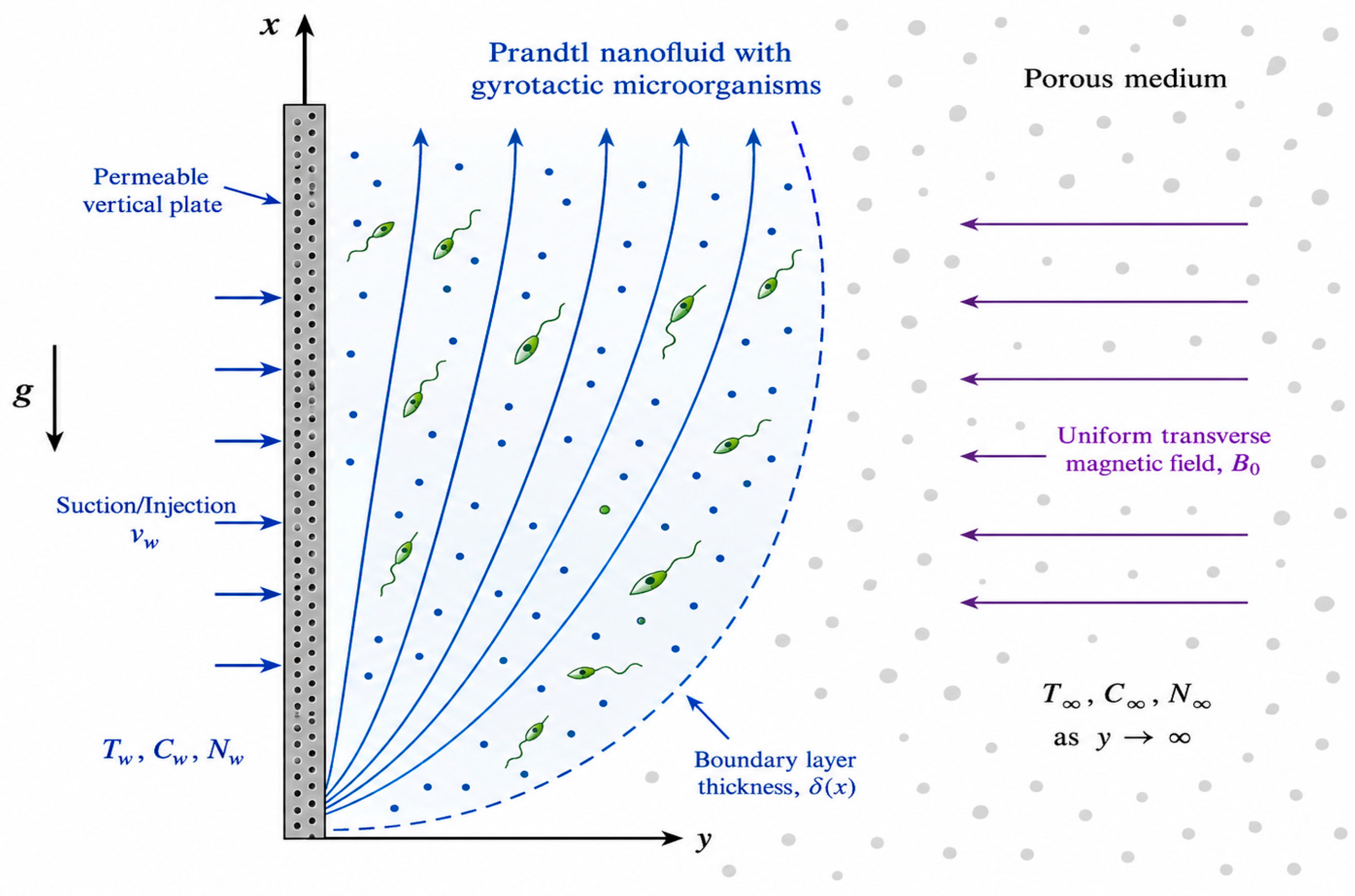
- Mekheimer, K.S.; Ramadan, S.F. New Insight into Gyrotactic Microorganisms for Bio-Thermal Convection of Prandtl Nanofluid over a Stretching/Shrinking Permeable Sheet. SN Appl. Sci. 2020, 2, 450. [Google Scholar] [CrossRef] [Scilit]
- Umavathi, J.C.; Bég, O.A.; Khan, U.F.; Bég, T.A.; Kadir, A. Computation of Swirling Hydromagnetic Nanofluid Flow Containing Gyrotactic Microorganisms from a Spinning Disk to a Porous Medium with Hall Current and Anisotropic Slip Effects. ZAMM-J. Appl. Math. Mech. 2023, 103, e202100575. [Google Scholar] [CrossRef] [Scilit]
- Ntolia, A.; Chatzigiannakou, T.; Michailidis, N.; Aggeli, A.; Ntolia, A.; Chatzigiannakou, T.; Michailidis, N.; Aggeli, A. A Comprehensive Physicochemical Characterization of Silver Nanoparticles as a Prerequisite for Their Successful Biomedical Applications. Inorganics 2025, 13, 341. [Google Scholar] [CrossRef] [Scilit]
- Xu, C.; Lei, C.; Yu, C. Mesoporous Silica Nanoparticles for Protein Protection and Delivery. Front. Chem. 2019, 7, 290. [Google Scholar] [CrossRef] [Scilit]
- Lin, P.-C.; Lin, S.; Wang, P.C.; Sridhar, R. Techniques for Physicochemical Characterization of Nanomaterials. Biotechnol. Adv. 2014, 32, 711–726. [Google Scholar] [CrossRef] [Scilit]
- Mulvaney, P.; Parak, W.J.; Caruso, F.; Weiss, P.S. Standardizing Nanomaterials. ACS Nano 2016, 10, 9763–9764. [Google Scholar] [CrossRef] [Scilit]
- Aublant, J.-M.; Clifford, C.A.; Frejafon, E.; Fujimoto, T.; Hackley, V.A.; Herrmann, J.; Hight Walker, A.R.; Kaiser, D.L.; Koltsov, D.K.; Michael, D.J.; et al. Response to ACS Nano Editorial “Standardizing Nanomaterials”. ACS Nano 2020, 14, 14255–14257. [Google Scholar] [CrossRef] [Scilit] [PubMed]
- Sharifi, S.; Mahmoud, N.N.; Voke, E.; Landry, M.P.; Mahmoudi, M. Importance of Standardizing Analytical Characterization Methodology for Improved Reliability of the Nanomedicine Literature. Nano-Micro Lett. 2022, 14, 172. [Google Scholar] [CrossRef] [Scilit]
- Wu, K.; Su, D.; Saha, R.; Liu, J.; Chugh, V.K.; Wang, J.-P. Magnetic Particle Spectroscopy: A Short Review of Applications Using Magnetic Nanoparticles. ACS Appl. Nano Mater. 2020, 3, 4972–4989. [Google Scholar] [CrossRef] [Scilit]
- Yari, P.; Rezaei, B.; Dey, C.; Chugh, V.K.; Veerla, N.V.R.K.; Wang, J.-P.; Wu, K.; Yari, P.; Rezaei, B.; Dey, C.; et al. Magnetic Particle Spectroscopy for Point-of-Care: A Review on Recent Advances. Sensors 2023, 23, 4411. [Google Scholar] [CrossRef] [Scilit]
- Krause, H.-J.; Engelmann, U.M. Fundamentals and Applications of Dual-Frequency Magnetic Particle Spectroscopy: Review for Biomedicine and Materials Characterization. Adv. Sci. 2025, 12, 2416838. [Google Scholar] [CrossRef] [Scilit]
- Vogel, P.; Rückert, M.A.; Friedrich, B.; Tietze, R.; Lyer, S.; Kampf, T.; Hennig, T.; Dölken, L.; Alexiou, C.; Behr, V.C. Critical Offset Magnetic PArticle SpectroScopy for Rapid and Highly Sensitive Medical Point-of-Care Diagnostics. Nat. Commun. 2022, 13, 7230. [Google Scholar] [CrossRef] [Scilit]
- Kaman, O.; Kubániová, D.; Kubíčková, L.; Herynek, V.; Veverka, P.; Jirák, Z.; Pashchenko, M.; Kmječ, T.; Veverka, M.; Štorkán, M.; et al. Magnetic Particle Spectroscopy and Magnetic Particle Imaging of Zinc and Cobalt Ferrite Nanoparticles: Distinct Relaxation Mechanisms. J. Alloys Compd. 2024, 978, 173022. [Google Scholar] [CrossRef] [Scilit]
- Chetwynd, A.J.; Wheeler, K.E.; Lynch, I. Best Practice in Reporting Corona Studies: Minimum Information about Nanomaterial Biocorona Experiments (MINBE). Nano Today 2019, 28, 100758. [Google Scholar] [CrossRef] [Scilit] [PubMed]
- Stiufiuc, G.F.; Stiufiuc, R.I.; Stiufiuc, G.F.; Stiufiuc, R.I. Magnetic Nanoparticles: Synthesis, Characterization, and Their Use in Biomedical Field. Appl. Sci. 2024, 14, 1623. [Google Scholar] [CrossRef] [Scilit]
- Pansieri, J.; Gerstenmayer, M.; Lux, F.; Mériaux, S.; Tillement, O.; Forge, V.; Larrat, B.; Marquette, C.; Pansieri, J.; Gerstenmayer, M.; et al. Magnetic Nanoparticles Applications for Amyloidosis Study and Detection: A Review. Nanomaterials 2018, 8, 740. [Google Scholar] [CrossRef] [Scilit] [PubMed]
- Chmelyuk, N.S.; Nikitin, A.A.; Vadekhina, V.V.; Mitkevich, V.A.; Abakumov, M.A.; Chmelyuk, N.S.; Nikitin, A.A.; Vadekhina, V.V.; Mitkevich, V.A.; Abakumov, M.A. Targeted Magnetic Nanoparticles for Beta-Amyloid Detection. Pharmaceutics 2024, 16, 1395. [Google Scholar] [CrossRef] [Scilit]
- Júnior, A.A.d.T.; Ladeira, Y.F.X.; França, A.d.S.; Souza, R.O.M.A.d.; Moraes, A.H.; Wojcieszak, R.; Itabaiana, I.; Miranda, A.S.d. Multicatalytic Hybrid Materials for Biocatalytic and Chemoenzymatic Cascades—Strategies for Multicatalyst (Enzyme) Co-Immobilization. Catalysts 2021, 11, 936. [Google Scholar] [CrossRef] [Scilit]
- Fernandez-Lafuente, R. Multienzymatic Catalysis and Enzyme Co-Immobilization. Catalysts 2023, 13, 1488. [Google Scholar] [CrossRef] [Scilit]
- Lau, E.C.; Cowan, R.M.; Dodds, K.C.; McKenna, C.; Ganin, A.Y.; Campopiano, D.J.; Yiu, H.H. Development of Heterogeneous Enzymatic Cascades with a Case Study for a Separable and Recyclable System Using a Combination of Magnetic and Nonmagnetic Supports. J. Chem. Technol. Biotechnol. 2024, 99, 759–768. [Google Scholar] [CrossRef] [Scilit]
- Ganjali, F.; Kashtiaray, A.; Zarei-Shokat, S.; Taheri-Ledari, R.; Maleki, A. Functionalized Hybrid Magnetic Catalytic Systems on Micro- and Nanoscale Utilized in Organic Synthesis and Degradation of Dyes. Nanoscale Adv. 2022, 4, 1263–1307. [Google Scholar] [CrossRef] [Scilit] [PubMed]
- Raouf, I.; Khalid, S.; Khan, A.; Lee, J.; Kim, H.S.; Kim, M.-H. A Review on Numerical Modeling for Magnetic Nanoparticle Hyperthermia: Progress and Challenges. J. Therm. Biol. 2020, 91, 102644. [Google Scholar] [CrossRef] [Scilit]
- Rodrigues, H.F.; Capistrano, G.; Bakuzis, A.F. In Vivo Magnetic Nanoparticle Hyperthermia: A Review on Preclinical Studies, Low-Field Nano-Heaters, Noninvasive Thermometry and Computer Simulations for Treatment Planning. Int. J. Hyperth. 2020, 37, 76–99. [Google Scholar] [CrossRef] [Scilit]
- Liu, Y.; Zhang, Y.; Li, H.; Hu, T.Y. Recent Advances in the Bench-to-Bedside Translation of Cancer Nanomedicines. Acta Pharm. Sin. B 2025, 15, 97–122. [Google Scholar] [CrossRef] [Scilit] [PubMed]
- Huang, M.; Wang, X.; Liu, J. Synthesis and Characterization of Bifunctional Fe3O4/CdSe/CdS Fluorescent Magnetic Nanocomposites. Acta Chim. Sin. 2010, 68, 1623–1628. [Google Scholar]
- Sun, P.; Zhang, H.; Liu, C.; Fang, J.; Wang, M.; Chen, J.; Zhang, J.; Mao, C.; Xu, S. Preparation and Characterization of Fe3O4/CdTe Magnetic/Fluorescent Nanocomposites and Their Applications in Immuno-Labeling and Fluorescent Imaging of Cancer Cells. Langmuir ACS J. Surf. Colloids 2010, 26, 1278–1284. [Google Scholar] [CrossRef] [Scilit]
- Soeiro, J.F.; Sousa, F.L.; Monteiro, M.V.; Gaspar, V.M.; Silva, N.J.O.; Mano, J.F. Advances in Screening Hyperthermic Nanomedicines in 3D Tumor Models. Nanoscale Horiz. 2024, 9, 334–364. [Google Scholar] [CrossRef] [Scilit] [PubMed]
- Ahmad Nor, Y.; Niu, Y.; Karmakar, S.; Zhou, L.; Xu, C.; Zhang, J.; Zhang, H.; Yu, M.; Mahony, D.; Mitter, N.; et al. Shaping Nanoparticles with Hydrophilic Compositions and Hydrophobic Properties as Nanocarriers for Antibiotic Delivery. ACS Cent. Sci. 2015, 1, 328–334. [Google Scholar] [CrossRef] [Scilit]
- Walton, N.I.; Brozek, E.M.; Gwinn, C.C.; Zharov, I.; Walton, N.I.; Brozek, E.M.; Gwinn, C.C.; Zharov, I. The Synthesis and Reactivity of Mesoporous and Surface-Rough Vinyl-Containing ORMOSIL Nanoparticles. Colloids Interfaces 2024, 8, 18. [Google Scholar] [CrossRef] [Scilit]
- Hanoglu, S.B.; Man, E.; Harmanci, D.; Ruzgar, S.T.; Sanli, S.; Keles, N.A.; Ayden, A.; Tuna, B.G.; Duzgun, O.; Ozkan, O.F.; et al. Magnetic Nanoparticle-Based Electrochemical Sensing Platform Using Ferrocene-Labelled Peptide Nucleic Acid for the Early Diagnosis of Colorectal Cancer. Biosensors 2022, 12, 736. [Google Scholar] [CrossRef] [Scilit]
- Wen, X.; Zhang, C.; Tian, Y.; Miao, Y.; Liu, S.; Xu, J.-J.; Ye, D.; He, J. Smart Molecular Imaging and Theranostic Probes by Enzymatic Molecular In Situ Self-Assembly. JACS Au 2024, 4, 2426–2450. [Google Scholar] [CrossRef] [Scilit] [PubMed]
- Digiacomo, L.; Pozzi, D.; Palchetti, S.; Zingoni, A.; Caracciolo, G. Impact of the Protein Corona on Nanomaterial Immune Response and Targeting Ability. Wiley Interdiscip. Rev. Nanomed. Nanobiotechnol. 2020, 12, e1615. [Google Scholar] [CrossRef] [Scilit]
- Giulimondi, F.; Digiacomo, L.; Pozzi, D.; Palchetti, S.; Vulpis, E.; Capriotti, A.L.; Chiozzi, R.Z.; Laganà, A.; Amenitsch, H.; Masuelli, L.; et al. Interplay of Protein Corona and Immune Cells Controls Blood Residency of Liposomes. Nat. Commun. 2019, 10, 3686. [Google Scholar] [CrossRef] [Scilit]
- Rampado, R.; Crotti, S.; Caliceti, P.; Pucciarelli, S.; Agostini, M. Recent Advances in Understanding the Protein Corona of Nanoparticles and in the Formulation of “Stealthy” Nanomaterials. Front. Bioeng. Biotechnol. 2020, 8, 166. [Google Scholar] [CrossRef] [Scilit]
- Navarro-Marchal, S.A.; Martín-Contreras, M.; Castro-Santiago, D.; del Castillo-Santaella, T.; Graván, P.; Jódar-Reyes, A.B.; Marchal, J.A.; Peula-García, J.M.; Navarro-Marchal, S.A.; Martín-Contreras, M.; et al. Effect of the Protein Corona Formation on Antibody Functionalized Liquid Lipid Nanocarriers. Int. J. Mol. Sci. 2023, 24, 16759. [Google Scholar] [CrossRef] [Scilit]
- Debnath, G.; Vasu, B.; Gorla, R.S.R. Current State-of-the-Art in Multi-Scale Modeling in Nano-Cancer Drug Delivery: Role of AI and Machine Learning. Cancer Nanotechnol. 2025, 16, 45. [Google Scholar] [CrossRef] [Scilit]
- Moradi Kashkooli, F.; Bhandari, A.; Gu, B.; Kolios, M.C.; Kohandel, M.; Zhan, W. Multiphysics Modelling Enhanced by Imaging and Artificial Intelligence for Personalised Cancer Nanomedicine: Foundations for Clinical Digital Twins. J. Control. Release 2025, 386, 114138. [Google Scholar] [CrossRef] [Scilit] [PubMed]
- Liu, S.; Fu, S.; Wen, Z.; Wang, X.; Jiang, T.; Liu, H. Efficient Harvesting of Green Microalgae Cells by Magnetic Flocculated Fe3O4 Nanoparticles Combined with Chitosan. Int. J. Agric. Biol. Eng. 2023, 16, 215–221. [Google Scholar] [CrossRef] [Scilit]
- Ewii, U.E.; Attama, A.A.; Olorunsola, E.O.; Onugwu, A.L.; Nwakpa, F.U.; Anyiam, C.; Chijioke, C.; Ogbulie, T. Nanoparticles for Drug Delivery: Insight into In Vitro and In Vivo Drug Release from Nanomedicines. Nano TransMed 2025, 4, 100083. [Google Scholar] [CrossRef] [Scilit]
- Hare, J.I.; Lammers, T.; Ashford, M.B.; Puri, S.; Storm, G.; Barry, S.T. Challenges and Strategies in Anti-Cancer Nanomedicine Development: An Industry Perspective. Adv. Drug Deliv. Rev. 2017, 108, 25–38. [Google Scholar] [CrossRef] [Scilit]
- Cicha, I.; Chauvierre, C.; Texier, I.; Cabella, C.; Metselaar, J.M.; Szebeni, J.; Dézsi, L.; Alexiou, C.; Rouzet, F.; Storm, G.; et al. From Design to the Clinic: Practical Guidelines for Translating Cardiovascular Nanomedicine. Cardiovasc. Res. 2018, 114, 1714–1727. [Google Scholar] [CrossRef] [Scilit]
- Leong, S.S.; Ahmad, Z.; Low, S.C.; Camacho, J.; Faraudo, J.; Lim, J. Unified View of Magnetic Nanoparticle Separation under Magnetophoresis. Langmuir 2020, 36, 8033–8055. [Google Scholar] [CrossRef] [Scilit]
- Rouse, I.; Power, D.; Subbotina, J.; Lobaskin, V. NPCoronaPredict: A Computational Pipeline for the Prediction of the Nanoparticle–Biomolecule Corona. J. Chem. Inf. Model. 2024, 64, 7525–7543. [Google Scholar] [CrossRef] [Scilit]
- Kumah, E.A.; Fopa, R.D.; Harati, S.; Boadu, P.; Zohoori, F.V.; Pak, T. Human and Environmental Impacts of Nanoparticles: A Scoping Review of the Current Literature. BMC Public Health 2023, 23, 1059. [Google Scholar] [CrossRef] [Scilit] [PubMed]
- Gunnarsson, J.S.; Castillo, L.E. Ecotoxicology in Tropical Regions. Environ. Sci. Pollut. Res. 2018, 25, 13203–13206. [Google Scholar] [CrossRef] [Scilit]
- Naidu, S.; Singh, I.K.; Singh, A. Microbial Synthesis of Magnetic Nanoparticles for Plant Science and Agriculture. Plant Nano Biol. 2023, 4, 100036. [Google Scholar] [CrossRef] [Scilit]
- Cardoso, V.F.; Francesko, A.; Ribeiro, C.; Bañobre-López, M.; Martins, P.; Lanceros-Mendez, S. Advances in Magnetic Nanoparticles for Biomedical Applications. Adv. Healthc. Mater. 2018, 7, 1700845. [Google Scholar] [CrossRef] [Scilit]
- Dadfar, S.M.; Roemhild, K.; Drude, N.I.; von Stillfried, S.; Knüchel, R.; Kiessling, F.; Lammers, T. Iron Oxide Nanoparticles: Diagnostic, Therapeutic and Theranostic Applications. Adv. Drug Deliv. Rev. 2019, 138, 302–325. [Google Scholar] [CrossRef] [Scilit]
- Akhtar, M.J.; Ahamed, M.; Alhadlaq, H.A. Challenges Facing Nanotoxicology and Nanomedicine Due to Cellular Diversity. Clin. Chim. Acta Int. J. Clin. Chem. 2018, 487, 186–196. [Google Scholar] [CrossRef] [Scilit]
- Malhotra, N.; Lee, J.-S.; Liman, R.A.D.; Ruallo, J.M.S.; Villaflores, O.B.; Ger, T.-R.; Hsiao, C.-D.; Malhotra, N.; Lee, J.-S.; Liman, R.A.D.; et al. Potential Toxicity of Iron Oxide Magnetic Nanoparticles: A Review. Molecules 2020, 25, 3159. [Google Scholar] [CrossRef] [Scilit] [PubMed]
- Nowak-Jary, J.; Machnicka, B. In Vivo Biodistribution and Clearance of Magnetic Iron Oxide Nanoparticles for Medical Applications. Int. J. Nanomed. 2023, 18, 4067–4100. [Google Scholar] [CrossRef] [Scilit]
- Lorenzato, C.; Cernicanu, A.; Meyre, M.-E.; Germain, M.; Pottier, A.; Levy, L.; de Senneville, B.D.; Bos, C.; Moonen, C.; Smirnov, P. MRI Contrast Variation of Thermosensitive Magnetoliposomes Triggered by Focused Ultrasound: A Tool for Image-Guided Local Drug Delivery. Contrast Media Mol. Imaging 2013, 8, 185–192. [Google Scholar] [CrossRef] [Scilit]
- Sumathi, Y.; Kumar, P.; Singhania, R.R.; Chen, C.-W.; Gurunathan, B.; Dong, C.-D.; Patel, A.K. Harnessing Fe3O4 Nanoparticles for Sustainable Harvesting of Astaxanthin-Producing Microalgae: Advancing Industrial-Scale Biorefinery. Sep. Purif. Technol. 2025, 353, 128408. [Google Scholar] [CrossRef] [Scilit]
- Guillén, A.; Ardila, Y.; Noguera, M.J.; Campaña, A.L.; Bejarano, M.; Akle, V.; Osma, J.F. Toxicity of Modified Magnetite-Based Nanocomposites Used for Wastewater Treatment and Evaluated on Zebrafish (Danio Rerio) Model. Nanomaterials 2022, 12, 489. [Google Scholar] [CrossRef] [Scilit] [PubMed]
- Vijayalakshmi, S.; Govindarajan, M.; Al-Mulahim, N.; Ahmed, Z.; Mahboob, S. Cellulase Immobilized Magnetic Nanoparticles for Green Energy Production from Allamanda schottii L: Sustainability Research in Waste Recycling. Saudi J. Biol. Sci. 2021, 28, 901–910. [Google Scholar] [CrossRef] [Scilit]
- Jarhad, K.V.R.; Pawanoji, A.A.; Parab, P.S.; Pawar, A.S. Green Synthesis of Multifunctional CdS Nanoparticles from Cinnamon (Cinnamomum verum) Extract-Functionalized for In Vitro Biomedical, Photocatalytic Degradation and Photoelectrochemical Applications. BioNanoScience 2024, 15, 155. [Google Scholar] [CrossRef] [Scilit]
- Zhu, L.-D.; Hiltunen, E.; Li, Z. Using Magnetic Materials to Harvest Microalgal Biomass: Evaluation of Harvesting and Detachment Efficiency. Environ. Technol. 2019, 40, 1006–1012. [Google Scholar] [CrossRef] [Scilit] [PubMed]
- Bié, J.; Sepodes, B.; Fernandes, P.C.B.; Ribeiro, M.H.L. Enzyme Immobilization and Co-Immobilization: Main Framework, Advances and Some Applications. Processes 2022, 10, 494. [Google Scholar] [CrossRef] [Scilit]
- Liang, L.; Xu, S.-S.; Jiang, Y.-J. Ergothioneine Biosynthesis: The Present State and Future Prospect. Synth. Syst. Biotechnol. 2025, 10, 314–325. [Google Scholar] [CrossRef] [Scilit] [PubMed]
- Sheen Kumar, N.; Rajesh, P.; Shajin, F.H. Development and Optimisation of Fe3O4/PEG Magnetic Nanomaterials for Nano-Biocatalysis Systems Using the MSNN–BOA Approach. Biocatal. Biotransform. 2026, 44, 75–86. [Google Scholar] [CrossRef] [Scilit]
- Rawat, S.; Tauseef, S.M.; Sharma, M.; Rautela, A.; Gurav, R.G. A Comprehensive Review on Emerging Nanoparticle-Based Sustainable Water Treatments: Synthesis, Characterisation, and Treatment Efficiency. Desalin. Water Treat. 2026, 326, 101724. [Google Scholar] [CrossRef] [Scilit]
- Zeinali, B.; Mojra, A.; Vafai, K. A Genetically Optimized Physics-Informed Neural Network for Multiphysics Modeling of Magnetic Hyperthermia in Brain Cancer. Comput. Biol. Med. 2026, 206, 111621. [Google Scholar] [CrossRef] [Scilit]
- Sampath, B.; Charles, J. Theranostic Magnetic Hydrogels for Treatment, Recurrence Prevention, Tumour Modelling and Emerging Applications in Breast Cancer Management: A Review. Int. J. Biol. Macromol. 2026, 359, 151874. [Google Scholar] [CrossRef] [Scilit]
- Tiwari, A.; Widodo; Krisnawati, D.I.; Chen, C.-Y.; Kuo, T.-R. AI-Driven Nanomedicine for Cancer Theranostics. Mol. Cancer 2026, 25, 78. [Google Scholar] [CrossRef] [Scilit]
- Chen, J.P.; Shu, X.; Hong, Y.; Jiang, F.Q.; Gong, W.Z.; Zhang, Y.; Wu, Y.C. Preparation and Fluorescent Composite Modification of Micronano-Fe3O4 Magnetic Powders. China Powder Sci. Technol. 2020, 26. [Google Scholar] [CrossRef]
- Belew, A.A.; Assege, M.A. Solvothermal Synthesis of Metal Oxide Nanoparticles: A Review of Applications, Challenges, and Future Perspectives. Results Chem. 2025, 16, 102438. [Google Scholar] [CrossRef] [Scilit]
- Javan, M.; Zareian, D.A.; Mojarad-Jabali, S. Deep Tumor Penetration Using Nanoparticle Delivery Systems: Programmed Design Strategies and Emerging Evaluation Platforms. Int. J. Nanomed. 2026, 21, 563233. [Google Scholar] [CrossRef] [Scilit]
- Cheng, D.; Gu, Y.; Yu, C. Interfacial Chemistry-Tailored Silica&Metal-Based Heterostructures: From Rational Design to Antibacterial Applications. Small 2026, 22, e00038. [Google Scholar] [CrossRef] [Scilit] [PubMed]
- Hosseini, M.; Jafari, R. Hierarchical Cotton Surface Engineering via Mesoporous Silica Integration and In Situ Copper Stearate Growth for Durable Superhydrophobicity and Enhanced Antibacterial Activity. Chem. Eng. J. 2026, 539, 177042. [Google Scholar] [CrossRef] [Scilit]
- Sarac, B.; Adıgüzel, B.; Yücer, S.; Karabag, D.G.O.; Sahin, B.G.; Ciftci, F. Nanocomposite Biosensors for Cancer Biomarker Detection: From Sensing Mechanisms to Prognostic Applications. Nano-Struct. Nano-Objects 2026, 46, 101657. [Google Scholar] [CrossRef] [Scilit]
- Hasan, M.S.; Seu, M.-S.; Lee, J.; Gothwal, S.; Dhasaiyan, P.; Ryu, J.-H. Self-Assembled Nanomaterials for ER-Targeted Cancer Therapy: From Molecular Design to Therapeutic Applications. Biomacromolecules 2026, 27, 2430–2448. [Google Scholar] [CrossRef] [Scilit] [PubMed]
- Sayad, U.; Rahman, S.U.; Khalil, A.A.K.; Ullah, A.; Ullah, S.; Büyüker, S.M. Nanorobotic Approaches Against Multidrug-Resistant Infections: Design, Principle, Mechanistic Innovation, Translational Challenges and Biomedical Applications. Molecules 2026, 31, 1268. [Google Scholar] [CrossRef] [Scilit] [PubMed]
- Anwar, M.Z.; Kathuria, H.; Er, J.X.; Wang, Y.; Chiu, G.N.C. Hybrid Hydrogels for Biomedical Applications: Addressing Challenges in Drug Delivery through Advanced Crosslinking and Nanocarrier Integration. J. Control. Release 2026, 392, 114719. [Google Scholar] [CrossRef] [Scilit]
- Saini, A.; Li, S.; Wang, Z.; Plebanski, M.; Ju, Y. Navigating the Biomolecular Corona: Biological Interactions and Therapeutic Implications of RNA–Lipid Nanoparticles. ACS Nano 2026. [Google Scholar] [CrossRef] [Scilit]
- Pancaro, A.; Mailänder, V.; Landfester, K.; Ethirajan, A. Tuning the Functional Properties of Nanocarriers Using Tunable Nano-Biointerfaces. Adv. Funct. Mater. 2026, 36, 2508121. [Google Scholar] [CrossRef] [Scilit]
- Yang, C.-W.; Fang, H.-M.; Gong, X.-Y.; Wang, J.; Zou, T. Nanoparticles for Colorectal Cancer Therapy: A Review. Biomater. Adv. 2026, 184, 214926. [Google Scholar] [CrossRef] [Scilit]
- Bai, L.; Su, J. Artificial Intelligence Virtual Organoids (AIVOs). Bioact. Mater. 2026, 59, 45–68. [Google Scholar] [CrossRef] [Scilit]
- Michael, M.; Vanness, V.; Henry, H.; Tjandra, T.M.; Kristian, K.; Nasution, J.A.; Masytha, M.; Sidabutar, R.; Trisakti, B.; Irvan, I.; et al. Microalgae for Sustainable Biodiesel and Omega-3: A Comprehensive Review of Production, Processing, and Implementation. Renew. Sustain. Energy Rev. 2026, 226, 116327. [Google Scholar] [CrossRef] [Scilit]
- Perfeito, F.G.; Oliveira, M.B.; Mano, J.F. Shaping Function: Polymeric 3D Systems with Unconventional Geometries for Biomedical Applications. Small 2026, e14666. [Google Scholar] [CrossRef] [Scilit] [PubMed]
- Jiang, X.; Chen, Y.; Gao, Y.; Rong, R.; Lai, Y.; Zhu, Z.; Xu, Z. Stimuli-Activatable Protein Degraders for Targeted Cancer Therapy: From Prodrug Design to Nanoplatform Applications. Adv. Drug Deliv. Rev. 2026, 232, 115808. [Google Scholar] [CrossRef] [Scilit]
- Ma, Y.; Lan, Z.; Zhong, L.; Zhao, M.; Luo, Y.; Xiang, T.; Zhou, S. Application of Nanomaterials in the Treatment of Diabetes and Its Complications: As Nanocarriers or with Inherent Therapeutic Functions. Biomater. Adv. 2026, 183, 214783. [Google Scholar] [CrossRef] [Scilit] [PubMed]
- Kushwaha, N.; Patel, A.; Akarte, K.; Patel, S.; Panjwani, D.; Yadav, M.R.; Kesarla, R. Process and Purification Synergies with Data Analytics Driving Clinical Translation in Nanomedicine. Nanomedicine 2026, 21, 1195–1222. [Google Scholar] [CrossRef] [Scilit]
- Song, X.; Liu, P.; Zhang, X.; Zhou, Y.; Qian, H.; Yang, K.; Zhang, X.; Gao, X.; Zheng, J.-J.; Shi, X.; et al. In Silico Methods, Simulations, and Design of Drug-Delivery Nanocarriers. Adv. Funct. Mater. 2026, 36, e23068. [Google Scholar] [CrossRef] [Scilit]
- Kirubakaran, D.; Wahid, J.B.A.; Karmegam, N.; Jeevika, R.; Sellapillai, L.; Rajkumar, M.; SenthilKumar, K.J. A Comprehensive Review on the Green Synthesis of Nanoparticles: Advancements in Biomedical and Environmental Applications. Biomed. Mater. Devices 2026, 4, 388–413. [Google Scholar] [CrossRef] [Scilit]
- Nguyen, T.-D.; Huang, Y.-C.; Pham, T.L.; Le, V.A.; Tran, V.Q.; Dao, T.-S.; Arias, M.; Zhang, Q.; Liu, Y.; Luo, Q.-M.; et al. Beyond Insects: High Sensitivity of the Water Fleas to Insecticides and Implications for Ecotoxicological Assessment. Environ. Toxicol. Pharmacol. 2026, 124, 104993. [Google Scholar] [CrossRef] [Scilit]
- Atanda, S.A.; Shaibu, R.O.; Agunbiade, F.O. Nanoparticles in Agriculture: Balancing Food Security and Environmental Sustainability. Discov. Agric. 2025, 3, 26. [Google Scholar] [CrossRef] [Scilit]
- Wu, D.; Chen, Q.; Chen, X.; Han, F.; Chen, Z.; Wang, Y. The Blood–Brain Barrier: Structure, Regulation and Drug Delivery. Signal Transduct. Target. Ther. 2023, 8, 217. [Google Scholar] [CrossRef] [Scilit]
- Ding, Q.; Li, W.; Mei, L.; Luo, S.; Tao, J.; Shi, C.; Yang, H.; Feng, W.; Chen, Y.; Chen, Y.; et al. Tailoring Advanced Metal-Based Nanomedicines for Adaptable Nanodynamic Disease Therapies and Theranostics. Adv. Mater. 2026, 38, e13609. [Google Scholar] [CrossRef] [Scilit]
- Santos, N.; Alarcon, J.F.; Ahumada, M. Understanding the Toxicity of Metal-Based Nanomaterials: Current Insights, Challenges, and Future Directions. ACS Mater. Lett. 2025, 7, 2547–2564. [Google Scholar] [CrossRef] [Scilit]
- Wang, Y.; Fu, J.; Zou, M.; Xia, P.; Zheng, X.; Huang, X.; Liu, Y.; Yang, P.; Liu, X.; Zhang, D.; et al. Programming the Beating Heart with Polymer Catalysis: A Therapeutic Microenvironment Revolution. J. Nanobiotechnol. 2026, 24, 516. [Google Scholar] [CrossRef] [Scilit]
- Singaravelu, S.; Motsoene, F. Green-Synthesized Metal Nanoparticles: A Promising Approach for Accelerated Wound Healing. Front. Bioeng. Biotechnol. 2025, 13, 1637589. [Google Scholar] [CrossRef] [Scilit]
- Estelrich, J.; Escribano, E.; Queralt, J.; Busquets, M.A. Iron Oxide Nanoparticles for Magnetically-Guided and Magnetically-Responsive Drug Delivery. Int. J. Mol. Sci. 2015, 16, 8070–8101. [Google Scholar] [CrossRef] [Scilit]
- Fu, Y.; Zhang, Q.; Tan, Z.; Yu, S.; Zhang, Y. Predicting Harvesting Efficiency of Microalgae with Magnetic Nanoparticles Using Machine Learning Models. J. Environ. Chem. Eng. 2025, 13, 115406. [Google Scholar] [CrossRef] [Scilit]
- Prochaska, C.; Tzitzios, V.; Basina, G. Clay-Supported Fe3O4 Magnetic Nanocomposites as Adsorbents for Heavy Metal Removal from Water and Wastewater: A Mini Review on Trends and Future Perspectives. Sustainability 2026, 18, 1745. [Google Scholar] [CrossRef] [Scilit]
- Sulman, A.M.; Matveeva, V.G.; Bronstein, L.M. Cellulase Immobilization on Nanostructured Supports for Biomass Waste Processing. Nanomaterials 2022, 12, 3796. [Google Scholar] [CrossRef] [Scilit]
- Al-Hadid, K.J.; Salhieh, W.; Abdallah, H.; Sharbaji, R.; Ahmad, R.M.; Alshaer, W.; Alqudah, D.A.; AlQuaissi, B.; Hamadneh, I.; Araj, S.-E.; et al. Green Synthesized Silver-Doped Cadmium Sulfide Nanoparticles: Molecular Docking, Antimicrobial & Insecticidal Activities. Nano-Struct. Nano-Objects 2026, 46, 101633. [Google Scholar] [CrossRef] [Scilit]
- Kumar, P.; Singhania, R.R.; Kedves, A.; Kónya, Z.; Patel, A.K. Smart Nanomaterials for Efficient Microalgae Harvesting: Bridging Laboratory Innovation and Sustainable Biorefinery. Environ. Technol. Innov. 2026, 41, 104813. [Google Scholar] [CrossRef] [Scilit]
- Vera Moreno, F.S.; Ormaza Hugo, R.M.; Coello Cabezas, J.R.; Yanchapanta Bastidas, V.N.; Gusqui Macas, S.E. Application of a Completely Randomized Experimental Design to Determine Size Variability in the Synthesis of Magnetic Iron Nanoparticles. Cienc. Digit. 2018, 2, 140–153. [Google Scholar] [CrossRef] [Scilit]
- Sun, J.; Zhang, Y.; Chen, Z.; Zhou, J.; Gu, N. Fibrous Aggregation of Magnetite Nanoparticles Induced by a Time-Varied Magnetic Field. Angew. Chem. Int. Ed. 2007, 46, 4767–4770. [Google Scholar] [CrossRef] [Scilit] [PubMed]
- Koo, K.N.; Ismail, A.F.; Othman, M.H.D.; Bidin, N.; A Rahman, M. Preparation and Characterization of Superparamagnetic Magnetite (Fe3O4) Nanoparticles: A Short Review. Malays. J. Fundam. Appl. Sci. 2019, 15, 23–31. [Google Scholar] [CrossRef] [Scilit]
- Modan, E.M.; Cursaru, L.M.; Piticescu, R.M.; Negrea, D.A.; Moga, S.G.; Ducu, C.M. Synthesis and Characterization of Magnetite Nanoparticles. Smart Energy Sustain. Environ. 2023, 26, 5–12. [Google Scholar] [CrossRef] [Scilit]
- Pul’kova, N.V.; Tonevitskaya, S.A.; Gerasimov, V.M.; Rudakovskaya, P.G.; Mazhuga, A.G.; Sakharov, D.A. Synthesis and Optimization of Methods for the Production of Magnetite Nanoparticles with Different Sizes and Morphology for Biological Application. Nanotechnol. Russ. 2015, 10, 570–575. [Google Scholar] [CrossRef] [Scilit]
- Yazdani, S.; Shirvani, A.; Heidarpoor, P. A Model for the Taxonomy of Research Studies: A Practical Guide to Knowledge Production and Knowledge Management. Arch. Pediatr. Infect. Dis. 2021, 9, e112456. [Google Scholar] [CrossRef] [Scilit]
- Hendrawan, M.R.; Mat Isa, A.; Samsudin, A.Z.H. Evolving Taxonomies: Fifty Years of Taxonomy Development in Library and Information Science. J. Librariansh. Inf. Sci. 2026, 58, 597–618. [Google Scholar] [CrossRef] [Scilit]
- Murtagh, F.; Orlov, M.; Mirkin, B. Qualitative Judgement of Research Impact: Domain Taxonomy as a Fundamental Framework for Judgement of the Quality of Research. arXiv 2016, arXiv:1607.03200. [Google Scholar] [CrossRef] [Scilit]
- Julianti, J.; Fitrisia, A.; Fatimah, S. Taxonomy of Science: Science Consists of Diverse Specializations and Interdisciplinary Disciplines. CENDEKIA J. Ilmu Pengetah. 2024, 4, 623–632. [Google Scholar] [CrossRef] [Scilit]
- Ioachimescu, O.C.; Shaker, R. Translational Science and Related Disciplines. J. Investig. Med. 2025, 73, 3–26. [Google Scholar] [CrossRef] [Scilit] [PubMed]




Disclaimer/Publisher’s Note: The statements, opinions and data contained in all publications are solely those of the individual author(s) and contributor(s) and not of MDPI and/or the editor(s). MDPI and/or the editor(s) disclaim responsibility for any injury to people or property resulting from any ideas, methods, instructions or products referred to in the content. |
© 2026 by the authors. Licensee MDPI, Basel, Switzerland. This article is an open access article distributed under the terms and conditions of the Creative Commons Attribution (CC BY) license.
Share and Cite
de Souza, F.G., Jr.; de Souza Cardoso Delfino, C.; Camargo, Y.R.d.M. Why Magnetic Nanoparticles Still Struggle to Translate: A Systematic Analysis of Structural Gaps in Nanobiotechnology. Magnetochemistry 2026, 12, 65. https://doi.org/10.3390/magnetochemistry12060065
de Souza FG Jr., de Souza Cardoso Delfino C, Camargo YRdM. Why Magnetic Nanoparticles Still Struggle to Translate: A Systematic Analysis of Structural Gaps in Nanobiotechnology. Magnetochemistry. 2026; 12(6):65. https://doi.org/10.3390/magnetochemistry12060065
Chicago/Turabian Stylede Souza, Fernando Gomes, Jr., Carolina de Souza Cardoso Delfino, and Yuri Ranieri de Medeiros Camargo. 2026. "Why Magnetic Nanoparticles Still Struggle to Translate: A Systematic Analysis of Structural Gaps in Nanobiotechnology" Magnetochemistry 12, no. 6: 65. https://doi.org/10.3390/magnetochemistry12060065
APA Stylede Souza, F. G., Jr., de Souza Cardoso Delfino, C., & Camargo, Y. R. d. M. (2026). Why Magnetic Nanoparticles Still Struggle to Translate: A Systematic Analysis of Structural Gaps in Nanobiotechnology. Magnetochemistry, 12(6), 65. https://doi.org/10.3390/magnetochemistry12060065