Article

Properties Comparison of Fe3O4 Particles with Different Morphologies as Mimetic Enzyme

1
AVIC Chengdu Aircraft Industrial (Group) Co., Ltd., Chengdu 610092, China
2
Beijing Baimtec Material Co., Ltd., Beijing 100094, China
*
Author to whom correspondence should be addressed.
Magnetochemistry 2026, 12(2), 18; https://doi.org/10.3390/magnetochemistry12020018
Submission received: 4 December 2025 / Revised: 12 January 2026 / Accepted: 12 January 2026 / Published: 2 February 2026

Abstract

In this work, four different magnetic Fe3O4 nanoparticles are prepared via solvothermal method. According to the morphology, the products can be divided into flower-like Fe3O4 (F-Fe3O4), solid spherical Fe3O4 (S-Fe3O4), hollow spherical Fe3O4 (HO-Fe3O4), and hexahedral Fe3O4 (HE-Fe3O4). A set of measurements is performed to confirm the structure, composition, and pore properties of the obtained materials. The catalytic activities of the prepared materials are examined and compared. The results prove that the four materials have an intrinsic catalytic property. HO-Fe3O4 ranks first in the catalytic activity mainly due to its large surface area and reasonable element composition. The maximum specific saturation magnetization and specific surface area of HO-Fe3O4 are 72.94 emu/g and 42.60 m2/g. Fe2+/Fe3+ in HO-Fe3O4 is 51.5%. It is found that HO-Fe3O4 possesses fantastic stability and perfect reproducibility as it is used as a catalyst several times without significant loss in its activity.

1. Introduction

Natural enzymes have perfect properties such as high substrate specificity and high catalytic efficiency under mild conditions. So, they can be widely applied in the field of catalytic reactions. But unfortunately, environmental conditions, including acidity, temperature, and inhibitors, can easily affect their catalytic activity. In other words, their stability and activity decreased in tough environmental changes such as pH, temperature, and proteases. Moreover, their production, purification, and storage are costly. As a result, their application became constrained. That is why great attention has been paid recently to designing new materials that can play the same role as natural enzymes without previous flaws [1]. Compared with natural enzymes, nanomaterials possess high stability against the tough environmental changes, low preparation and storage costs, elasticity in structure design, and they have abnormal catalytic activities [2]. So, they represent promising candidates for mimetic enzymes. Nanoparticles (NPs), which have the same catalytic properties as natural enzymes, are called mimic enzymes (nanozymes). It was reported that Fe3O4 NPs, MnO2 nanosheets, CeO2 NPs, V2O5 nanowires, BiFeO3 NPs, positively charged gold NPs, and NiO2 NPs possessed peroxidase-like activity [3,4,5]. There are other enzyme mimetics such as hemin, hematin, porphyrin, etc. It is well-known that hydrogen peroxide (H2O2) is a reactive molecule that has a basic role in several applications, including chemical, biological, and environmental [6,7]. But the previous studies reported that long-term exposure to H2O2 is very dangerous as it causes serious harm to a person’s health, such as respiratory inflammation, poisoning, Parkinson’s disease, Alzheimer’s disease, and cancer [8,9]. So, it was urgent to develop sensitive methods for the detection of H2O2. For this aim, there are numerous methods such as electrochemistry, chemiluminescence, spectrometry, high-performance liquid chromatography (HPLC), and colorimetric assays [10,11,12]. In spite of HPLC, chemiluminescence and electrochemistry methods are very sensitive and their processes are very complex. Spectrometry is very simple and cheap, but its sensitivity is much lower, so it was rarely used. On the other hand, besides the simplicity of colorimetric methods, it displayed abnormal sensitivity. Furthermore, its results can be noticed by the naked eye without using any instruments.
The colorimetric assay mainly depended on horseradish peroxidase (HRP) as a catalyst, but as a natural enzyme, it cannot be used due to the mentioned reasons above. So, recently, most of the research has focused on developing an artificial enzyme that mimics this natural enzyme, such as Fe3O4. Fe3O4 NPs have an intrinsic enzyme mimetic activity similar to that of natural peroxidases such as horseradish peroxidase (HRP) [13]. The most remarkable features of Fe3O4 NPs are simplicity and the feasibility of their preparation, as they can be separated easily and rapidly from the solution by using an external magnetic field [14,15,16]. Also, its synthesis is non-toxic, and it has economical and efficient properties. Due to these advantages, it can be used for potential applications and fundamental research [17,18]. Decreasing the particle sizes of Fe3O4 NPs leads to an increase in their peroxidase-like activity, where Fe3O4 NPs with different sizes showed an increasing activity in the order of 300 nm < 150 nm < 30 nm. Many methods can be used for the design of nanostructured magnetic materials, including hydrothermal synthesis, thermal decomposition of organometallic compounds, co-precipitation, sol–gel method, etc. [19,20,21].
In light of the above, it was reported that Fe3O4 NPs have an intrinsic enzyme mimetic activity similar to that of a natural enzyme. Moreover, its preparation is simple and nontoxic. Therefore, in this work, flower-like Fe3O4 (F-Fe3O4), solid spherical Fe3O4 (S-Fe3O4), hollow spherical Fe3O4 (HO-Fe3O4), and hexahedral Fe3O4 (HE-Fe3O4) are prepared via the solvothermal method. The structure, composition, morphology, and pore properties of the above four types of Fe3O4 NPs are characterized systematically. The catalytic activity of the obtained Fe3O4 NPs is compared. The main factors affecting the catalytic performance of the materials have been revealed.

2. Materials and Methods

2.1. Materials

Hydrated iron chloride (FeCl3·6H2O), ferrous sulfate (FeSO4·7H2O), urea (CH4N2O), H2O2 (30%), and ethylene glycol (EG) were bought from Sinopharm Chemical Reagent Co., Ltd., Shanghai, China. Sodium polyacrylate (PAAs), polyethylene glycol 400 (PEG-400), tetrabutylammonium bromide (TBAB), hydrazine hydrate (N2H4·H2O), and o-phenylenediamine (OPD) were obtained from Adamas Reagent Co., Ltd., Shanghai, China. Sodium ethanoate trihydrate (CH3COONa·3H2O) and trisodium citrate dihydrate (C6H5Na3O7·2H2O) were purchased from Tianjin Dongli Industry and Trade Co., Ltd., Tianjin, China. The pure water used was deionized.

2.2. Preparation of Fe3O4 Particles

Four different Fe3O4 magnetic nanoparticles (MNPs) were synthesized through the solvothermal method as follows [22,23].
F-Fe3O4: Typically, 0.5 g of FeCl3·6H2O, 4.2 g of TBAB, and 1.75 g of CH4N2O were completely dissolved into 75 mL EG. The above solution was transferred to a 100 mL Teflon-lined stainless-steel autoclave. The synthesis process was carried out at 180 °C for 1 h. The product was then collected and washed with pure water. The obtained NPs were dried and calcined in a mixed atmosphere of 5% H2/Ar at 300 °C for 1 h. The product was F-Fe3O4.
S-Fe3O4: In total, 2.70 g of FeCl3·6H2O, 7.26 g of CH3COONa·3H2O, and 4 mL of PEG-400 were dissolved in 72 mL of ethylene glycol (EG) by magnetic stirring. The obtained solution was transferred into a 100 mL Teflon-lined stainless-steel autoclave and treated at 200 °C for 10 h. The black suspension was separated and washed with water several times under a magnetic field. After freeze-drying, solid Fe3O4 was obtained and marked as S-Fe3O4.
HO-Fe3O4: In total, 6.76 g of FeCl3·6H2O, 5 g of urea, 16.2 g of C6H5Na3O7·2H2O, and 3 g of PAAs were dissolved in 400 mL of water by magnetic stirring at 90 °C. The obtained solution was cooled and transferred into a 500 mL Teflon-lined stainless-steel autoclave and treated at 200 °C for 10 h. The black suspension was separated with a magnet. The products were washed with water several times and freeze-dried. The prepared magnetic nanoparticles showed hollow morphology and were marked as HO-Fe3O4.
HE-Fe3O4: In total, 1.5 g of Fe2(SO4)3·7H2O was dissolved in 45 mL of H2O. Then, 0.6 g of NaOH and 20 mL of N2H4·H2O were added to the solution under vigorous stirring in turn. Then, the solution was transferred into a 100 mL Teflon-lined stainless-steel autoclave. The reaction was maintained at 180 °C for 12 h. After washing with pure water three times and freeze-drying, HE-Fe3O4 was obtained.

2.3. Catalytic Activity Studies

The catalytic properties of the obtained MNPs were examined through the following colorimetric assay [24]. Four 10 mL EP tubes were chosen as the reactor. A total of 1 mL of aqueous solution of OPD (80 mg/L) was poured into 1 mL of 0.4 M H2O2 plus 2 mL of purified water. Then, 1 mL of Ho-Fe3O4 (1 mg/mL), which was well dispersed in purified water under ultrasonic treatment, was transferred to the first tube. The same dosage of S-Fe3O4, F-Fe3O4, and HE-Fe3O4 was added to the other three tubes. The mixture of all samples was incubated at 30 °C for one hour and separated by centrifugation to isolate the magnetic nanoparticles. The supernatant for each sample was determined by UV/vis absorption, with the wavelength ranging from 300 nm to 600 nm or at 425 nm.

2.4. Characterization

To verify the successful preparation of these four MNPs, a series of measurements was used involving a scanning electron microscope (SEM, JEOL JSM-6700F, Tokyo, Japan) and transmission electron microscope (TEM, JEOL JEM-3010, Tokyo, Japan) to describe the morphology of the products, and powder X-ray diffraction (XRD, Shimadzu XRD-6000, Kyoto, Japan) to determine their crystal structures. The surface chemical compositions of the samples were evaluated by X-ray photoelectron spectroscopy (XPS, Thermo Fisher ESCALAB 250Xi, Waltham, MA, USA). Fourier transform infrared (FTIR, Bruker TENSOR27, Bremen, Germany) spectroscopy enabled us to identify the different functional groups in our samples. A nitrogen adsorption–desorption isotherm experiment was conducted to study the porous features of the prepared samples using a N2 adsorption instrument (Tristar3020, Micromeritics, Norcross, GA, USA) and BET (Brunauer–Emmet–Teller method). The ultraviolet spectrum (UV, BlueStar, LabTech, Beijing, China) was used to determine the catalytic activity of our products. A vibrating sample magnetometer (VSM, Lake Shore 7307, Westerville, OH, USA) was used for characterizing the magnetic properties of MNPs.

3. Results and Discussion

3.1. Component Analysis

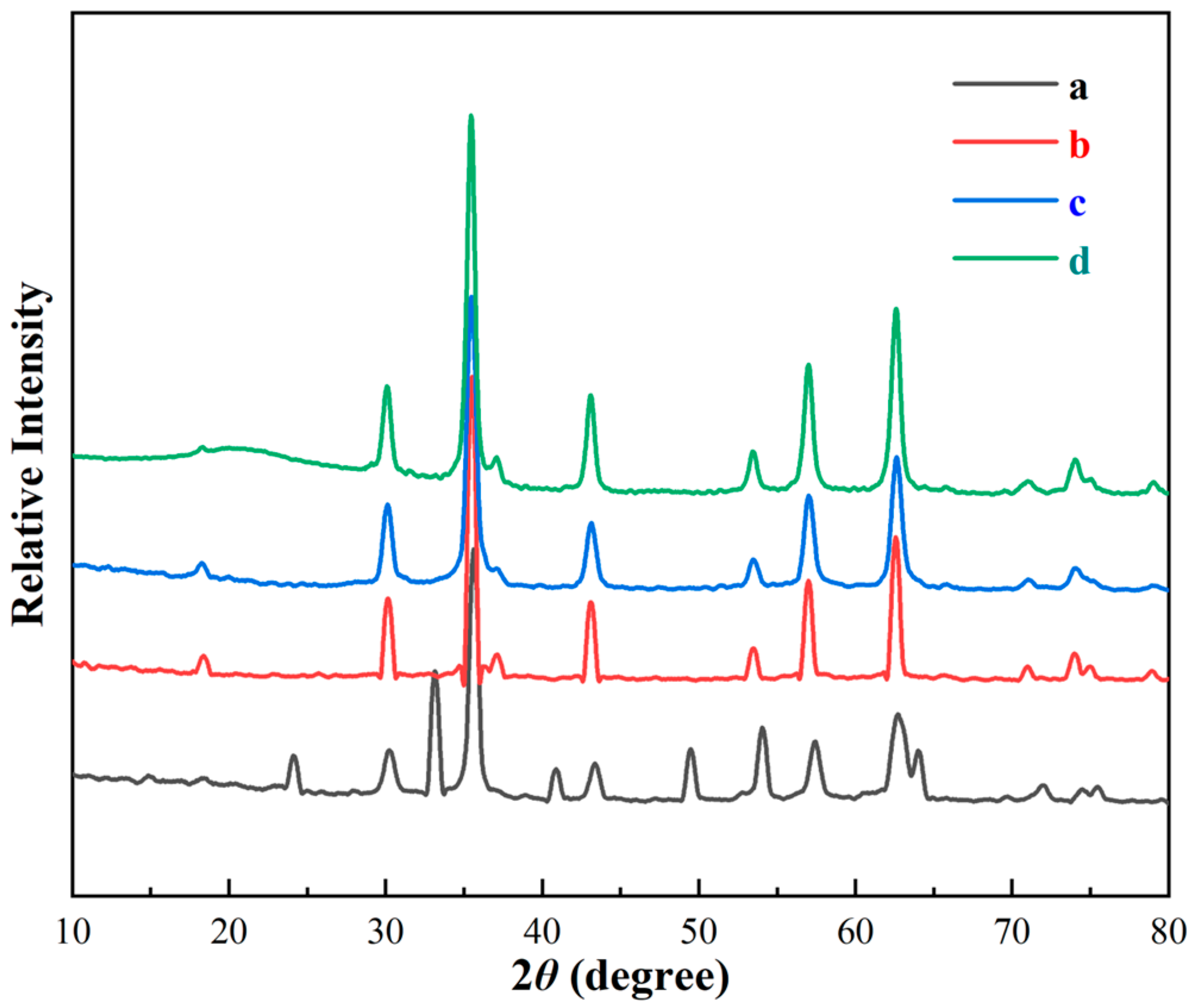
The crystalline structures of the four prepared MNPs (F-Fe3O4, S-Fe3O4, HO-Fe3O4, and HE-Fe3O4) were examined by X-ray diffraction (XRD) measurements. As shown in XRD patterns in Figure 1, the main observed diffraction peaks for the synthesized materials occur at 2θ = 30.14°, 35.5°, 43.06°, 53.56°, 57.08°, 62.52°, and 74.08°, which were assigned to (220), (311), (400), (422), (511), (440), and (533) crystal planes, respectively. The resulting diffraction peaks agree with the reported phase of Fe3O4 (JCPDS 75-1609) [25]. The above results indicated that all four morphologies of metal oxides prepared were Fe3O4.

3.2. Morphologies of Fe3O4 Particles

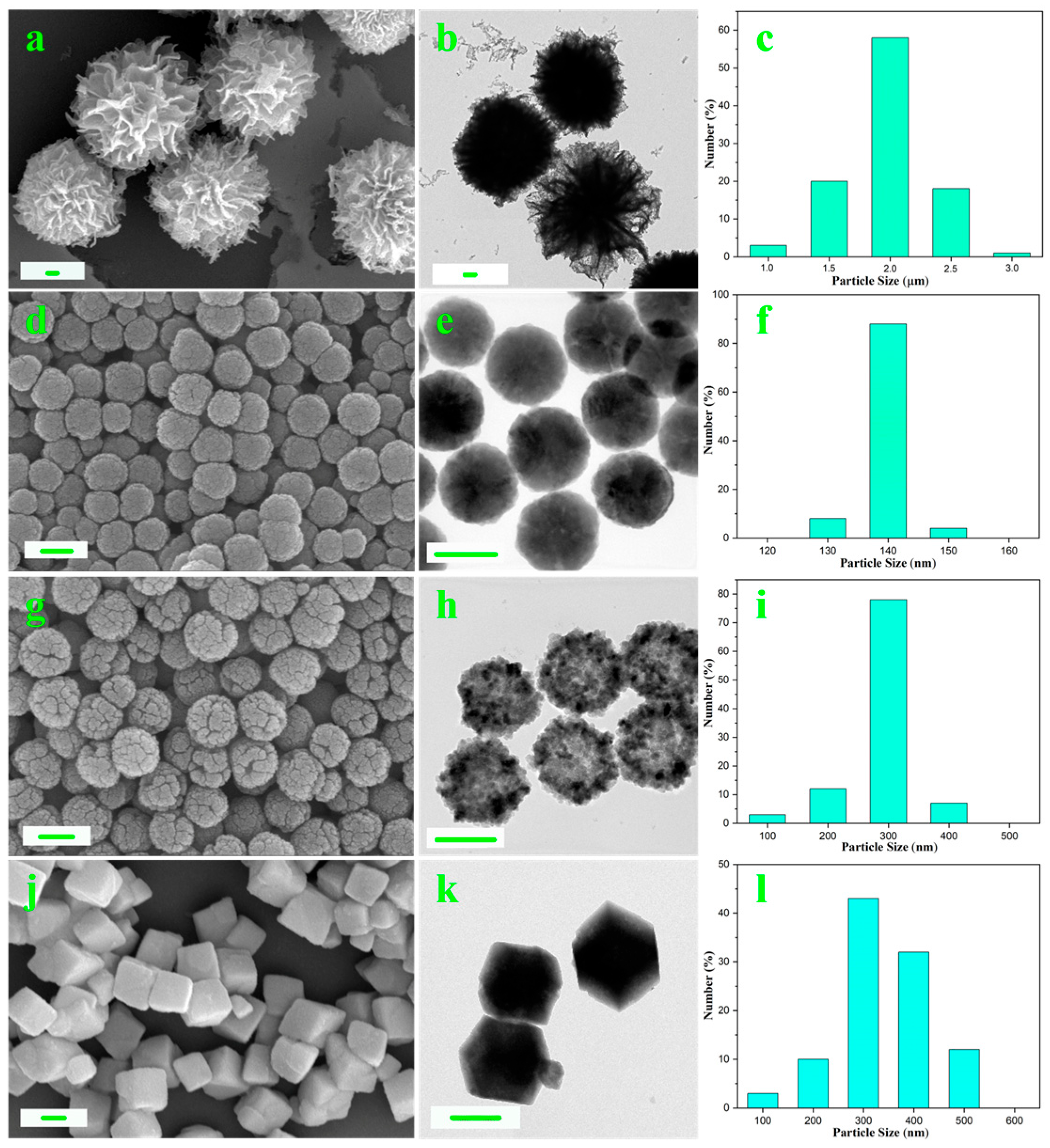
SEM and TEM were used to characterize the morphology of the obtained materials. The results showed that F-Fe3O4 NPs had a flower shape with an average size of 1.9 μm, as shown in Figure 1a–c. The particles were made up of stacked layers. The layers present a radial pattern, forming relatively large pores. S-Fe3O4 NPs showed a spherical shape (Figure 2d), and the uniform mass thickness contrast reflected their solid structure (Figure 2e). The average particle size of S-Fe3O4 NPs was 156 nm (Figure 2f). For HO-Fe3O4 NPs, as Figure 2g–i presents, it possesses a hollow structure. The microspheres were composed of small nanocrystals. The average size of HO-Fe3O4 NPs was 327 nm. In addition, the results shown in Figure 2j–l proved that HE-Fe3O4 consisted of a hexagonal shape with a mean size of 200 nm. The particles exhibited a solid and regular structure. The differences in the morphology of these materials can be ascribed to the different metal source and preparation processes. Compared with the reported Fe3O4 NPs, our results show diversified morphologies and potential functionalities.

3.3. Magnetic Property Characterization

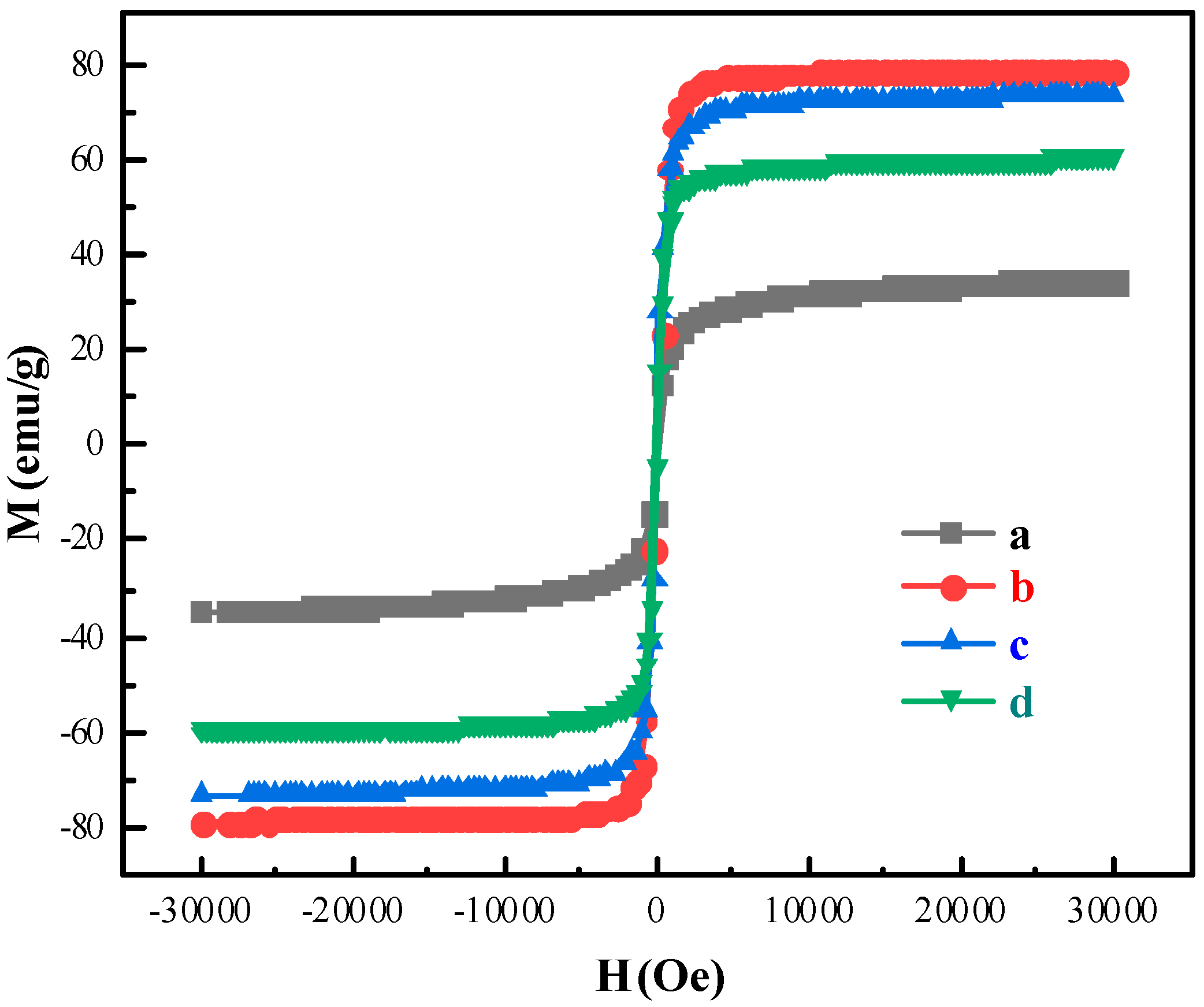
The hysteresis curves of the Fe3O4 products were examined with a vibrating sample magnetometer (VSM), as shown in Figure 3. The magnetism of ferromagnetic materials can be characterized mainly by three important parameters: the saturation magnetization (Ms), the remanent magnetization (Mr), and the coercivity (Hc). The results showed that S-Fe3O4 has the highest saturation magnetization value of 78.53 emu/g (Figure 3b), followed by a value of 72.94 emu/g, corresponding to HO-Fe3O4 (Figure 3c). Then HE-Fe3O4 has a value of 59.96 emu/g (Figure 3d). Finally, F-Fe3O4 possessed the lowest saturation magnetization value of 34.53 emu/g as shown in Figure 3a. The saturation magnetization value relies on the spin numbers of Fe2+/Fe3+ ions, especially since the orbital moments of Fe2+ ions give the main contribution to the magnetization. S-Fe3O4 possesses the largest Fe2+/Fe3+ ratio (see the XPS results), which means S-Fe3O4 probably shows the largest orbital contribution; therefore, it has the highest saturation magnetization value. The order of the magnetization values for other Fe3O4 NPs also follow the Fe2+/Fe3+ ratio order (see below), which is comparable with the reported results. These products can be easily separated with an external magnetic field without using centrifugation methods. Due to these excellent magnetic properties of the synthesized materials, they have great applicability to reclamation and recycling.

3.4. Surface Performances of Fe3O4 Particles

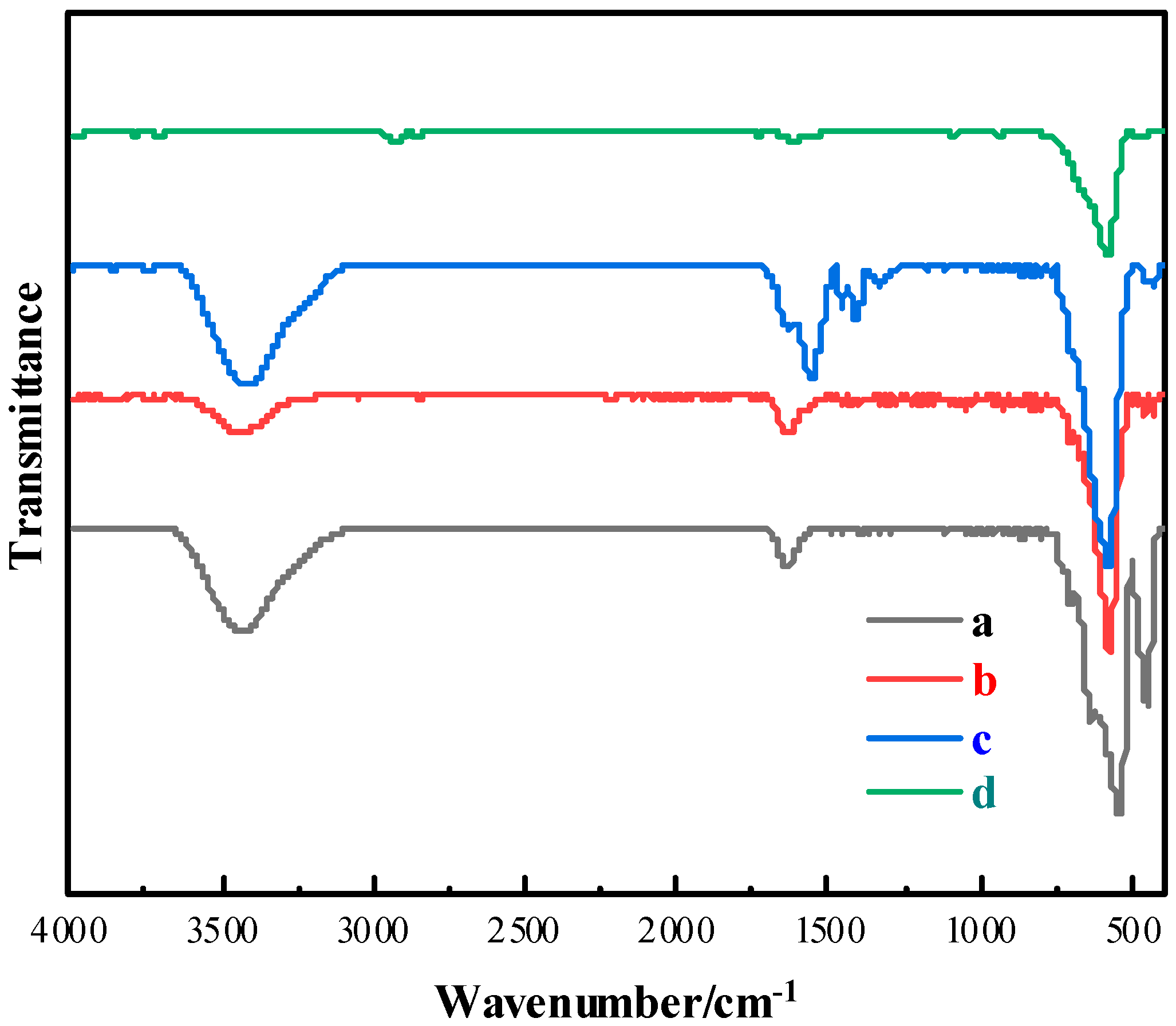
To characterize the structure and the components of the prepared products, FT-IR analysis was conducted, and the results were displayed in Figure 4. In the spectrum of F-Fe3O4 (Figure 4a), the observed peaks at 3427 cm−1 and 1637 cm−1 indicated the existence of OH and C=O groups, respectively. In addition, the peak at 578.6 cm−1 proved the existence of Fe-o in Fe3O4. Similar peaks appeared in S-Fe3O4 (Figure 4b) and HO-Fe3O4 (Figure 4c), which indicates that they have the same functional groups. On the other hand, HE-Fe3O4 (Figure 4d) only has one clear peak, which appeared at 578.6 cm−1, related to Fe-o from the structure of Fe3O4. The absence of clear peaks in the HE-Fe3O4 spectrum referred to the increase in biological and organic matter [26].
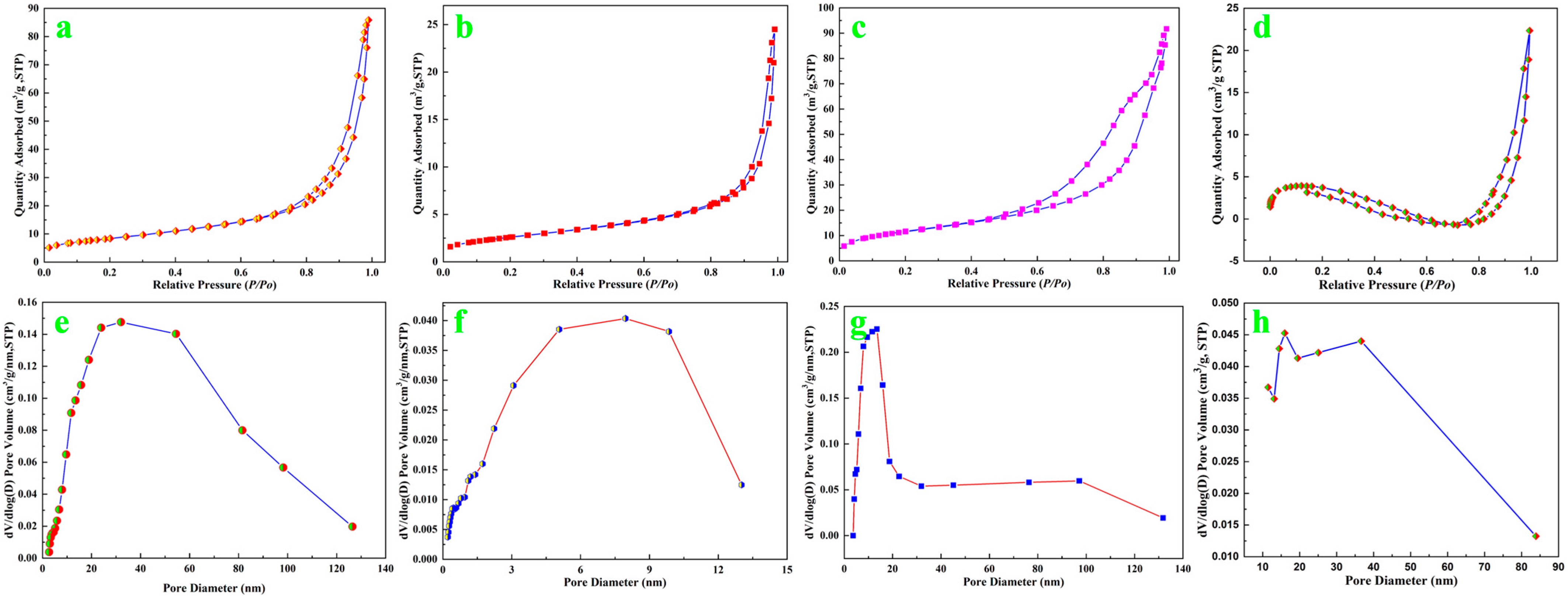
A nitrogen adsorption–desorption isotherm experiment was conducted to study the porous features of the prepared samples. As shown in Figure 5, the adsorption–desorption isotherms of the obtained products belonged to type IV with small hysteresis loops noticed at a relative pressure of 0.8–1.0, which confirms that the prepared samples had a mesoporous and macroporous structure, as seen in Figure 5. Table 1 shows the BET surface area and pore volume for the synthesized materials. The surface area and pore volume are 30.19, 9.53, 42.60, 12.52 m2/g and 18.16, 17.44, 11.16, 26.26 nm for F-Fe3O4, S-Fe3O4, HO-Fe3O4, and HE-Fe3O4, respectively, which are comparable with the reported results [27]. These results were calculated based on the Barrett–Joyner–Halenda (BJH) method. The extra peak that appeared in Figure 5h is due to the hollow structure of HO-Fe3O4 nanoparticles. That is why it had the largest specific area, about 42.60 m2/g.

3.5. X-Ray Photoelectron Spectroscopy

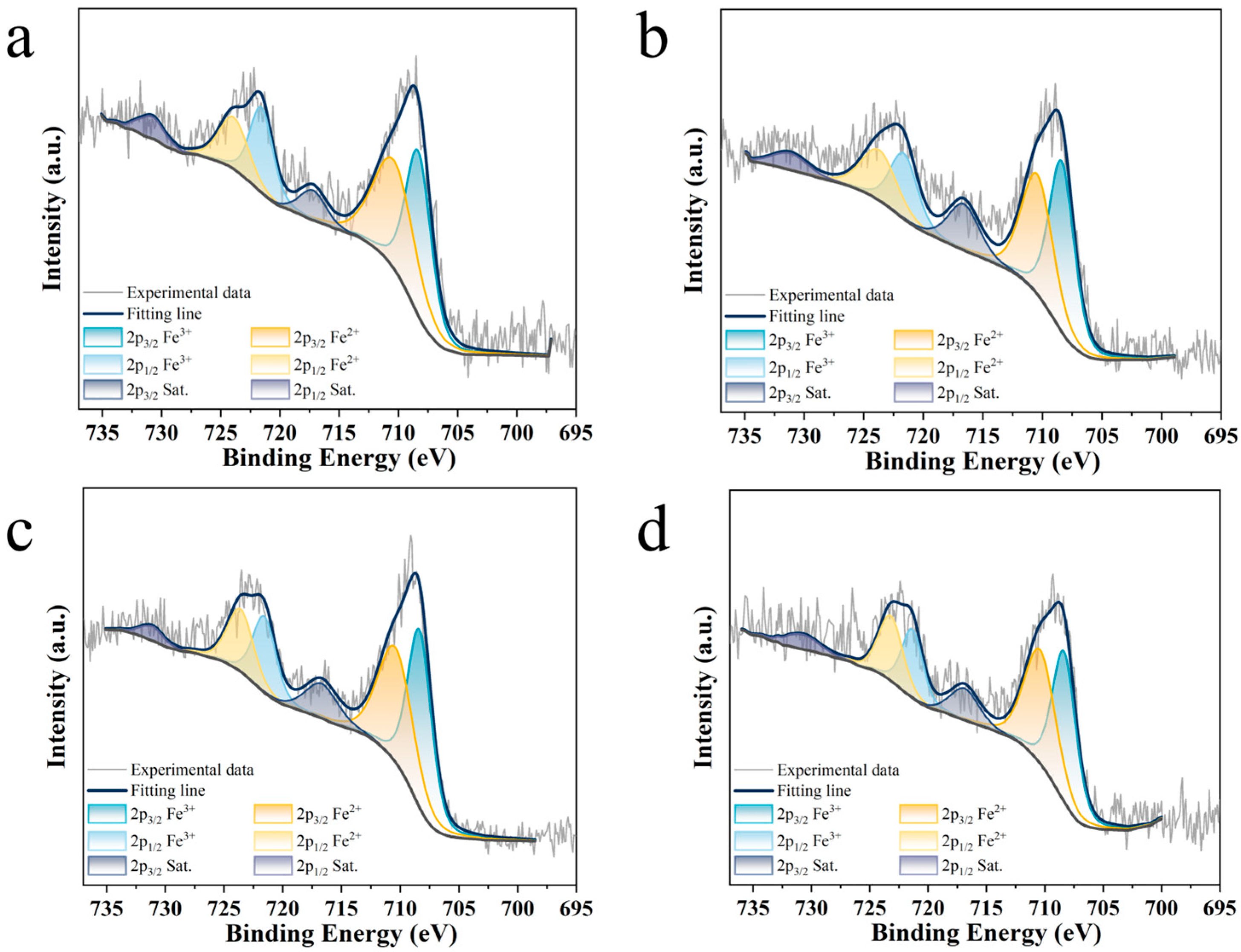
The composition and surface oxidation states of Fe were explored with X-ray photoelectron spectroscopy (XPS) measurements. The survey spectra (Figure 6) indicate the presence of Fe components in the as-prepared materials. To further confirm the oxidation ratio of these materials, high-resolution Fe 2p(F) XPS spectra were compared as shown in Figure 6a–d. The two types of Fe species are fitted. Two peaks centered at 724.6 and 711.4 eV can be assigned to 2p3/2 and 2p1/2 for Fe2+, and two peaks centered at 721.6 and 708.5 eV can be assigned to 2p3/2 and 2p1/2 for Fe3+, indicating the oxidation state of Fe3O4 [28] and further conforming that the nanoparticles were Fe3O4 NPs. The calculated Fe2+/Fe3+ ratio of as-prepared samples from the XPS spectra follows the order of S-Fe3O4 > HO-Fe3O4 > HE-Fe3O4 > F-Fe3O4 (Table 2), which is in good agreement with the VSM results (vide supra).

3.6. Comparison of Catalytic Activity

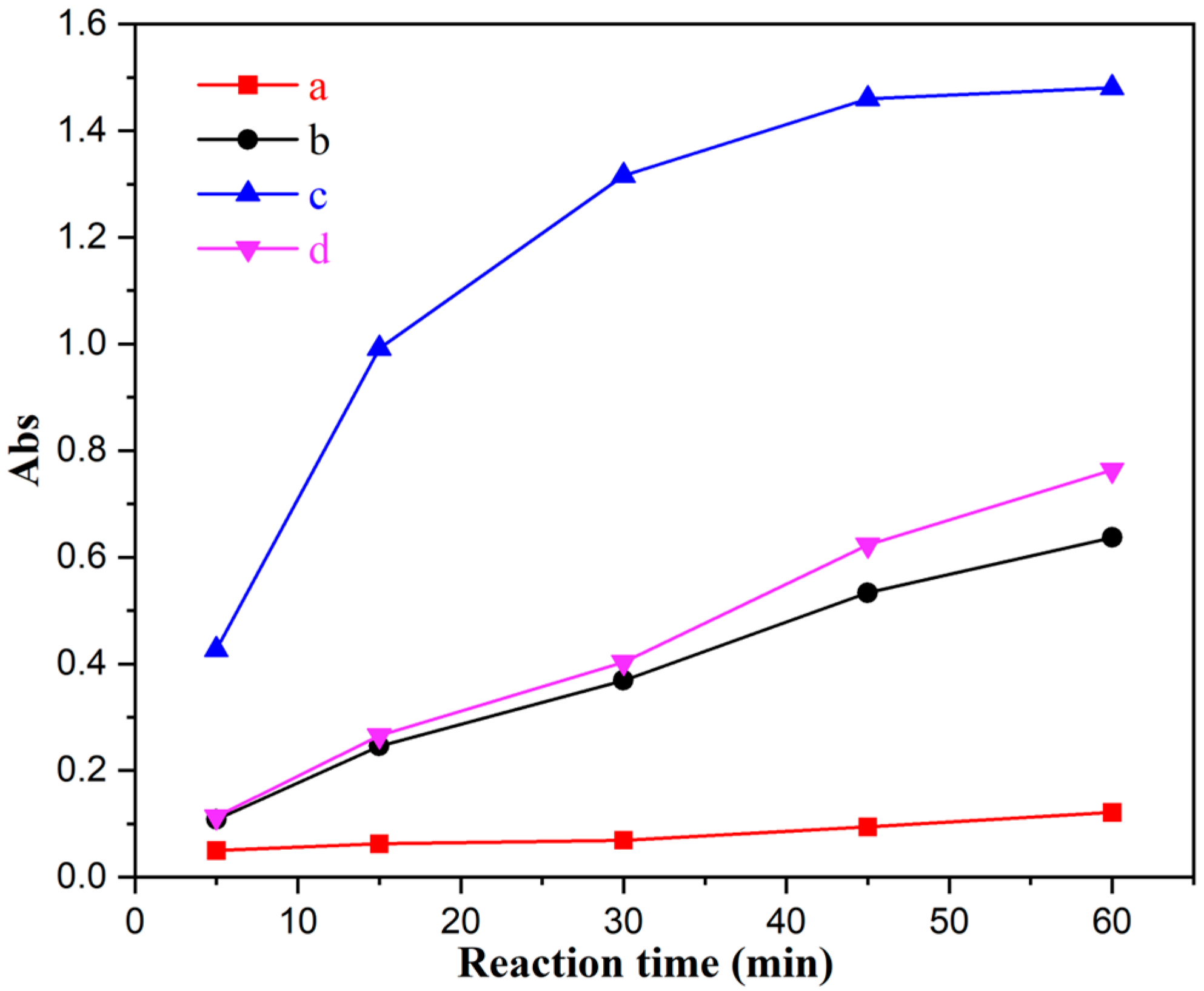
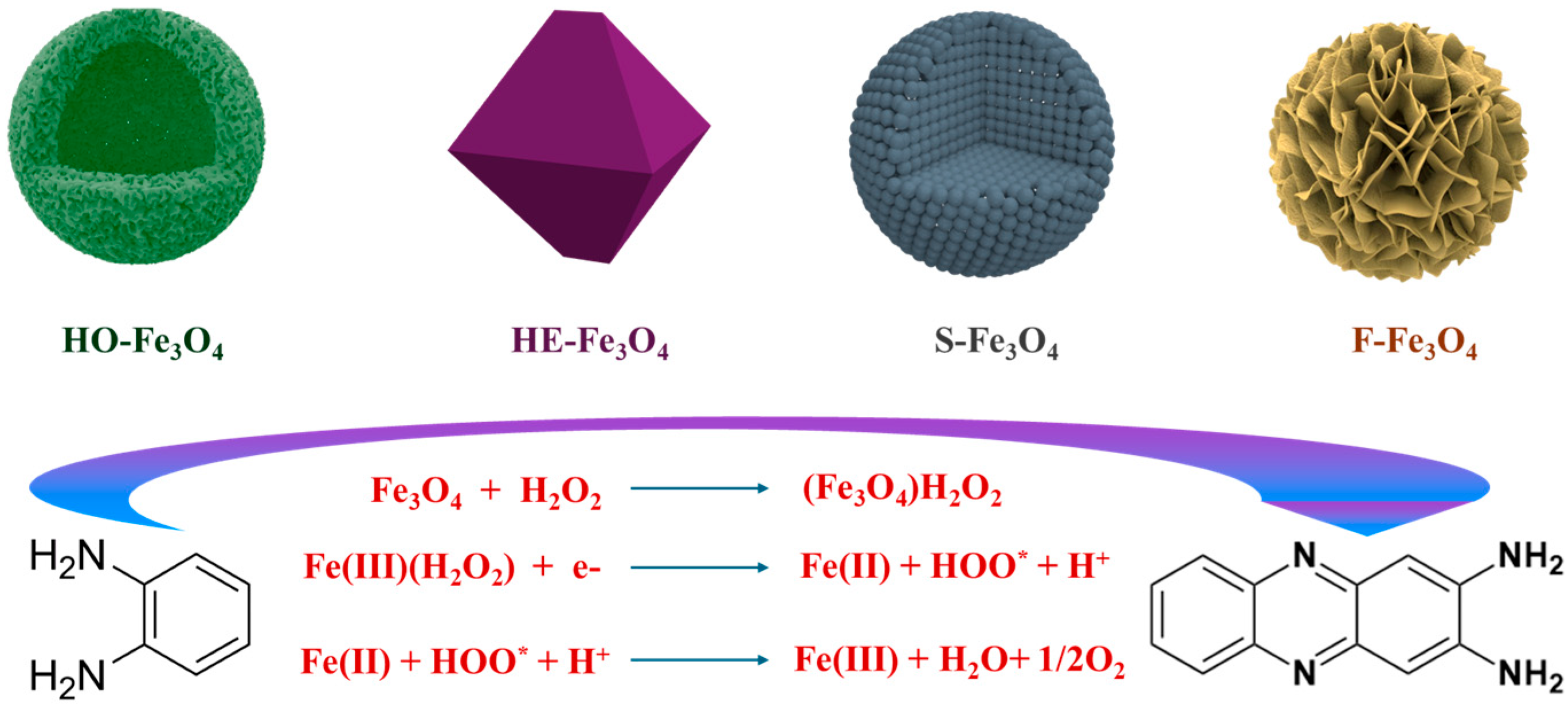
The prepared magnetic nanomaterials had an intrinsic peroxidase-like activity due to the presence of ferrous ions at their surfaces. These catalytic properties were tested through the colorimetric assay in the presence of OPD and H2O2 as substrates. The four kinds of as-obtained nanoparticles were used for catalytic reaction as the mimetic peroxidase. The role of these nanomaterials was to catalyze the decomposition of H2O2 to produce a reactive oxygen atom [O], which could oxidize o-Phenylenediamine (OPD). The results showed that the darkest color was seen when HO-Fe3O4 was used as a catalyst, which indicated its possession of the highest catalytic properties compared with other materials. HO-Fe3O4 had the fastest catalytic reaction rate as shown in Figure 7c. The other materials had lower catalytic properties, where HE-Fe3O4> S-Fe3O4> F-Fe3O4 as shown in Figure 7. The catalysis mechanism is illustrated in Figure 8. The reaction could be dominated by three stages on the Fe3O4 NPs surface. The oxidation–reduction process between Fe(III) and Fe(II) is the essence of simulating enzyme catalysis.

3.7. Catalytic Properties of HO-Fe3O4 Particles

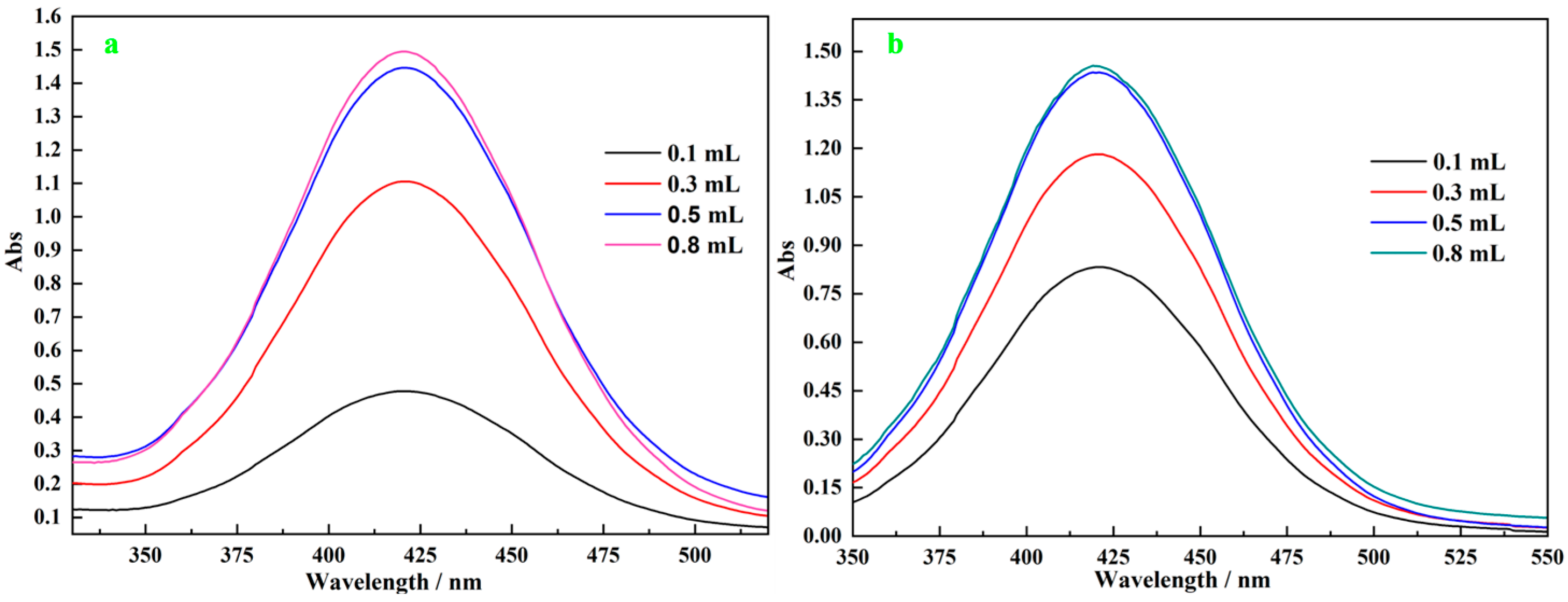
According to the material’s structure, the materials that have a large surface area possess a lot of active sites, so their absorbance increases. As a result, a wide variety of structures, such as hollow, porous, and foamed, were investigated to obtain high-performance absorption units. It was found that the hollow structure possesses abnormal catalytic properties due to its large surface area. In the present study, HO-Fe3O4 possessed a hollow structure, so it was used to oxidize OPD in the colorimetric assay in the presence of H2O2. The UV results showed that the catalytic activity of the reaction system depends on the amount of the nanocatalyst (HO-Fe3O4).
As shown in Figure 9a, the catalytic activity increased with the increase in HO-Fe3O4 concentration, and this increase was drastic when a concentration of 0.1 mL to 0.6 mL was used. After 0.6 mL, the increase became very slow. Also, the amount of H2O2 affected the catalytic properties of the reaction system, as the dosage of H2O2 led to an increase in the catalytic activity, as seen in Figure 9b. From 0.1 mL to 0.5 mL dosages, the increase was very clear, while at amounts more than 0.5 mL, no considerable change in the absorbance value was observed. So, the optimal added amounts of H2O2 and HO-Fe3O4 nanoparticles were 0.8 mL and 0.6 mL, respectively. For H2O2 and HO-Fe3O4, the maximum absorbance was observed at 425 nm.
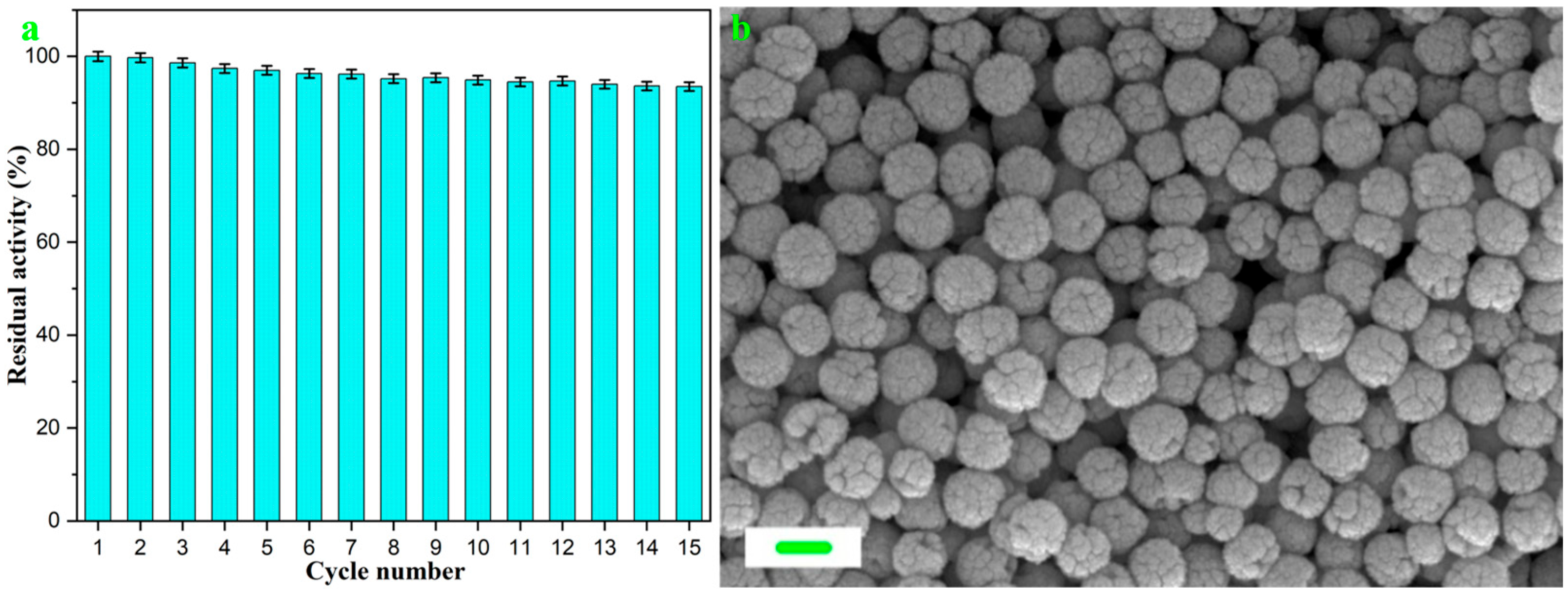
Reusability and reproducibility are very important for the assessment of materials’ catalytic properties. So, they were tested by performing the experiment 15 times. After each time the HO-Fe3O4 was separated using a magnetic field, then washed with ethanol and water. The results proved that a slight loss of activity was noticed even after 15 cycles, as shown in Figure 10a. SEM was tested for HO-Fe3O4 as displayed in Figure 10b. After 15 cycles, the result showed little loss and no change in its shape, which demonstrated the abnormal stability of HO-Fe3O4 and its perfect reproducibility.

4. Conclusions

In this study, four different magnetic Fe3O4 nanoparticles were synthesized by the solvothermal method. To verify the successful preparation of the obtained MNPs, a series of measurements was carried out. A nitrogen adsorption–desorption isotherm experiment was conducted to obtain the surface area and pore-size distribution of the obtained materials. The catalytic properties of the synthesized materials were tested through the colorimetric assay in the presence of OPD and H2O2. It was found that HO-Fe3O4 had the highest catalytic activity as it gave the maximum absorbance in UV spectra compared with other materials. Meanwhile, the results showed that the catalytic activity of the reaction system depended mainly on the HO-Fe3O4 and H2O2 amounts, as the optimal added amounts of them were 0.8 mL and 0.6 mL. The maximum absorbance was obtained at 425 nm. Reusability and reproducibility were tested by conducting the experiment 15 times. The results clearly showed that HO-Fe3O4 had abnormal stability and perfect reproducibility as it was used as a catalyst 15 times without a great loss in the activity.

Author Contributions

Conceptualization, X.L. and H.J.; methodology, X.L.; software, L.W.; validation, X.L., L.L. and J.S.; formal analysis, S.L.; investigation, X.L.; resources, S.L.; data curation, X.L.; writing—original draft preparation, X.L.; writing—review and editing, X.L. and H.J.; visualization, J.S.; supervision, H.J.; project administration, H.J.; funding acquisition, H.J. All authors have read and agreed to the published version of the manuscript.

Funding

This research received no external funding.

Data Availability Statement

The original contributions presented in this study are included in the article. Further inquiries can be directed to the corresponding author.

Acknowledgments

The authors acknowledge the Analysis and Testing Center of Beijing Baimtec Material Co., Ltd. for the special assistance to the research work.

Conflicts of Interest

Author Xiaoying Li, Li Wei, Lianqi Li, Junying Suo and Shuai Li, were employed by the company AVIC Chengdu Aircraft Industrial (group). Author Honggang Jiang, was employed by the company Beijing Baimtec Material.

References

  1. Zhang, R.; Jiang, B.; Fan, K.; Gao, L.; Yan, X. Designing nanozymes for in vivo applications. Nat. Rev. Bioeng. 2024, 2, 849–868. [Google Scholar] [CrossRef]
  2. Zhang, J.; Dou, T.; Shen, Y.; Wang, W.; Wang, L.; Wu, X.; Zhang, M.; Wang, D.; Yu, P. Application of nanozymes in problematic biofilm control: Progress, challenges and prospects. Front. Environ. Sci. Eng. 2024, 18, 136. [Google Scholar] [CrossRef]
  3. Luo, W.; Yuan, R.; Sun, J.; Zhou, L.; Luo, X.; Luo, Y. Metal-Organic Framework-Based Nanozymes for Clinical Applications. Prog. Chem. 2023, 35, 1389–1398. [Google Scholar] [CrossRef]
  4. Li, S.; Zhang, Y.; Wang, Q.; Lin, A.; Wei, H. Nanozyme-Enabled Analytical Chemistry. Anal. Chem. 2022, 94, 312–323. [Google Scholar] [CrossRef]
  5. Liu, Q.; Zhang, A.; Wang, R.; Zhang, Q.; Cui, D. A Review on Metal- and Metal Oxide-Based Nanozymes: Properties, Mechanisms, and Applications. Nano-Micro Lett. 2021, 13, 154. [Google Scholar] [CrossRef] [PubMed]
  6. He, H.; Long, M.; Duan, Y.; Gu, N. Prussian blue nanozymes: Progress, challenges, and opportunities. Nanoscale 2023, 15, 12818–12839. [Google Scholar] [CrossRef] [PubMed]
  7. Zhang, X.; Li, G.; Wu, D.; Li, X.; Hu, N.; Chen, J.; Chen, G.; Wu, Y. Recent progress in the design fabrication of metal-organic frameworks-based nanozymes and their applications to sensing and cancer therapy. Biosens. Bioelectron. 2019, 137, 178–198. [Google Scholar] [CrossRef]
  8. Zhang, R.; Yan, X.; Gao, L.; Fan, K. Nanozymes expanding the boundaries of biocatalysis. Nat. Commun. 2025, 16, 6817. [Google Scholar] [CrossRef]
  9. Zhang, X.; Li, G.; Wu, D.; Zhang, B.; Hu, N.; Wang, H.; Liu, J.; Wu, Y. Recent advances in the construction of functionalized covalent organic frameworks and their applications to sensing. Biosens. Bioelectron. 2019, 145, 111699. [Google Scholar] [CrossRef]
  10. Wang, Z.; Hu, N.; Yang, L.; Wang, Q.; Liu, C.; Duan, W.; Lin, J.; Zhang, J.; Yu, X.; Huang, C.; et al. Immunotherapy strategy for treating inflammatory bowel disease based on a nanozyme/total glucosides of paeony hybrid materials. Adv. Compos. Hybrid Mater. 2025, 8, 160. [Google Scholar] [CrossRef]
  11. Ma, L.; Zheng, J.-J.; Zhou, N.; Zhang, R.; Fang, L.; Yang, Y.; Gao, X.; Chen, C.; Yan, X.; Fan, K. A natural biogenic nanozyme for scavenging superoxide radicals. Nat. Commun. 2024, 15, 233. [Google Scholar] [CrossRef]
  12. Sharma, M.V.; Ibeyaima, A.; Sharmah, B.; Afzal, N.U.; Manna, P. Natural Enzymes and Nanozymes: A Comparative Review of Structure, Mechanism and Kinetics. Top. Catal. 2025. [Google Scholar] [CrossRef]
  13. Yang, L.; Dong, S.; Gai, S.; Yang, D.; Ding, H.; Feng, L.; Yang, G.; Rehman, Z.; Yang, P. Deep Insight of Design, Mechanism, and Cancer Theranostic Strategy of Nanozymes. Nano-Micro Lett. 2023, 16, 28. [Google Scholar] [CrossRef]
  14. Wu, F.; Wan, L.; Wang, T.; Tariq, M.R.; Shah, T.; Liu, P.; Zhang, Q.; Zhang, B. Construction of binary assembled MOF-derived nanocages with dual-band microwave absorbing properties. J. Mater. Sci. Technol. 2022, 117, 36–48. [Google Scholar] [CrossRef]
  15. Wei, M.; Liu, K.; Wang, Y.; Zhang, G.; Liu, Q.; Zhang, Q.; Zhang, B. Hierarchical Magnetic Carbon Nanoflowers for Ultra-Efficient Electromagnetic Wave Absorption. Small 2024, 20, 2402632. [Google Scholar] [CrossRef]
  16. Rudravarapu, K.; Yarramuthi, V.; Munagapati, V.S.; Gutha, Y.; Wen, J.-C.; Prasad, C.; Pilla, V.A.R.; Gumma, L.; Won, J.S.; Choi, H.Y. Recent progresses in the development of magnetic Fe3O4 nanoparticles supported cellulose-based composites: A review. Inorg. Chem. Commun. 2025, 182, 115588. [Google Scholar] [CrossRef]
  17. Cui, Y.; Yang, K.; Wang, J.; Shah, T.; Zhang, Q.; Zhang, B. Preparation of pleated RGO/MXene/Fe3O4 microsphere and its absorption properties for electromagnetic wave. Carbon 2021, 172, 1–14. [Google Scholar] [CrossRef]
  18. Ahmadi, Y.; Ramazani, A.; Mousavi, S.M. Recent advances in Fe3O4@MOF magnetic framework composites: Preparation methods and catalytic performance. J. Organomet. Chem. 2025, 1038, 123753. [Google Scholar] [CrossRef]
  19. Ahmad, M.; Al-Anazi, M.; Tariq, M.R.; Khan, I.; Zhang, B. Gold recovery through synergetic adsorption and reduction using acid–base additive-reinforced tubular carbon nanofibers. AlChE J. 2024, 70, e18581. [Google Scholar] [CrossRef]
  20. Almulaiky, Y.Q.; Al-Harbi, S.A. Innovative immobilization of β-glucosidase on amidoximated acrylic fabric integrated with magnetite Fe3O4 nanoparticles. Int. J. Biol. Macromol. 2025, 306, 141172. [Google Scholar] [CrossRef] [PubMed]
  21. Shah, S.I.A.; Ahmad, W.; Anwar, M.; Shah, R.; Khan, J.A.; Shah, N.S.; Al-Anazi, A.; Han, C. Synthesis, properties, and applications of Fe3O4 and Fe3O4-based nanocomposites: A review. Appl. Catal. O Open 2025, 203, 207049. [Google Scholar] [CrossRef]
  22. Wang, Q.; Chen, D.; Chen, J.; Lai, C.; Li, L.; Wang, C. Facile synthesis and electrochemical properties of Fe3O4 hexahedra for Li-ion battery anode. Mater. Lett. 2015, 141, 319–322. [Google Scholar] [CrossRef]
  23. Zeng, X.; Jiang, G.; Zhu, L.; Wang, C.; Chen, M.; Yu, R. Fe3O4 Nanoflower-Carbon Nanotube Composites for Microwave Shielding. ACS Appl. Nano Mater. 2019, 2, 5475–5482. [Google Scholar] [CrossRef]
  24. Wei, H.; Wang, E. Fe3O4 Magnetic Nanoparticles as Peroxidase Mimetics and Their Applications in H2O2 and Glucose Detection. Anal. Chem. 2008, 80, 2250–2254. [Google Scholar] [CrossRef]
  25. Zhang, B.; Zhang, H.; Tian, L.; Li, X.; Li, W.; Fan, X.; Ali, N.; Zhang, Q. Magnetic microcapsules with inner asymmetric structure: Controlled preparation, mechanism, and application to drug release. Chem. Eng. J. 2015, 275, 235–244. [Google Scholar] [CrossRef]
  26. He, H.Y.; Xin, X.D.; Qiu, W.; Li, D.; Liu, Z.C.; Ma, J. Role of nano-Fe3O4 particle on improving membrane bioreactor (MBR) performance: Alleviating membrane fouling and microbial mechanism. Water Res. 2022, 209, 117897. [Google Scholar] [CrossRef]
  27. Li, H.Y.; Li, X.X.; Wang, Y.; Zheng, D.M.; Tang, J. Adsorption of heavy metal ions from water by Fe3O4 nano-particles. Green Process. Synth. 2025, 14, 20250082. [Google Scholar] [CrossRef]
  28. Wang, Q.; Zhang, X.; Huang, L.; Zhang, Z.; Dong, S. One-Pot Synthesis of Fe3O4 Nanoparticle Loaded 3D Porous Graphene Nanocomposites with Enhanced Nanozyme Activity for Glucose Detection. ACS Appl. Mat. Interfaces 2017, 9, 7465–7471. [Google Scholar] [CrossRef]
Figure 1. XRD patterns of F-Fe3O4 (a), S-Fe3O4 (b), HO-Fe3O4 (c), HE-Fe3O4 (d).
Magnetochemistry 12 00018 g001
Figure 2. SEM and TEM images, and particle size distribution of Fe3O4 particles: F-Fe3O4 (ac), S-Fe3O4 (df), HO-Fe3O4 (gi), HE-Fe3O4 (jl). The scale bar in the SEM and TEM images was 200 nm.
Magnetochemistry 12 00018 g002
Figure 3. VSM curves of F-Fe3O4 (a), S-Fe3O4 (b), HO-Fe3O4 (c), HE-Fe3O4 (d).
Magnetochemistry 12 00018 g003
Figure 4. FTIR spectra of F-Fe3O4 (a); S-Fe3O4 (b); HO-Fe3O4 (c); HE-Fe3O4 (d).
Magnetochemistry 12 00018 g004
Figure 5. BET curves (ad) and pore size distribution curves (eh) of F-Fe3O4 (a,e), S-Fe3O4 (b,f), HO-Fe3O4 (c,g), HE-Fe3O4 (d,h).
Magnetochemistry 12 00018 g005
Figure 6. The XPS spectra of F-Fe3O4 (a), S-Fe3O4 (b), HO-Fe3O4 (c), HE-Fe3O4 (d).
Magnetochemistry 12 00018 g006
Figure 7. The relationship between reaction time and product absorbance of F-Fe3O4 (a), S-Fe3O4 (b), HO-Fe3O4 (c), HE-Fe3O4 (d).
Magnetochemistry 12 00018 g007
Figure 8. The reaction of H2O2 and OPD catalyzed by Fe3O4 NPs. HOO* represents a HOO active species.
Magnetochemistry 12 00018 g008
Figure 9. UV spectra of the products prepared by different dosages of HO-Fe3O4 particles (a) and H2O2 (b). The reaction time was 45 min.
Magnetochemistry 12 00018 g009
Figure 10. Reusability of HO-Fe3O4 (a); SEM image of HO-Fe3O4 after 15 cycles (b). The scale bar in SEM was 200 nm.
Magnetochemistry 12 00018 g010
Table 1. Pore performance data of the obtained products.
SamplesBET (m2/g)Average Pore Size (nm)Pore Volume (cm3/g)
F-Fe3O430.1918.160.1367
S-Fe3O49.5317.440.0387
HO-Fe3O442.6011.160.1553
HE-Fe3O412.5226.260.0346
Table 2. Calculated Fe2+/Fe3+ ratio of as-prepared samples from the XPS spectra.
Sample InformationF-Fe3O4S-Fe3O4HO-Fe3O4HE-Fe3O4
Fe2+/Fe3+46.2%52.3%51.5%50.1%
Disclaimer/Publisher’s Note: The statements, opinions and data contained in all publications are solely those of the individual author(s) and contributor(s) and not of MDPI and/or the editor(s). MDPI and/or the editor(s) disclaim responsibility for any injury to people or property resulting from any ideas, methods, instructions or products referred to in the content.