Article

Efficiency of Reductive Soil Disinfestation Affected by Soil Water Content and Organic Amendment Rate
1
State Key Laboratory of Soil and Sustainable Agriculture, Institute of Soil Science, Chinese Academy of Sciences, Nanjing 210008, China
2
University of Chinese Academy of Sciences, Beijing 100049, China
3
School of Geography, Nanjing Normal University, Nanjing 210023, China
4
Jiangsu Engineering Research Center for Soil Utilization & Sustainable Agriculture, Nanjing Normal University, Nanjing 210023, China
5
Jiangsu Center for Collaborative Innovation in Geographical Information Resource Development and Application, Nanjing 210023, China
6
Zhongke Clean Soil (Guangzhou) Technology Service Co., Ltd., Guangzhou 510000, China
*
Author to whom correspondence should be addressed.
Horticulturae 2021, 7(12), 559; https://doi.org/10.3390/horticulturae7120559

Submission received: 26 October 2021 / Revised: 1 December 2021 / Accepted: 6 December 2021 / Published: 7 December 2021

Abstract

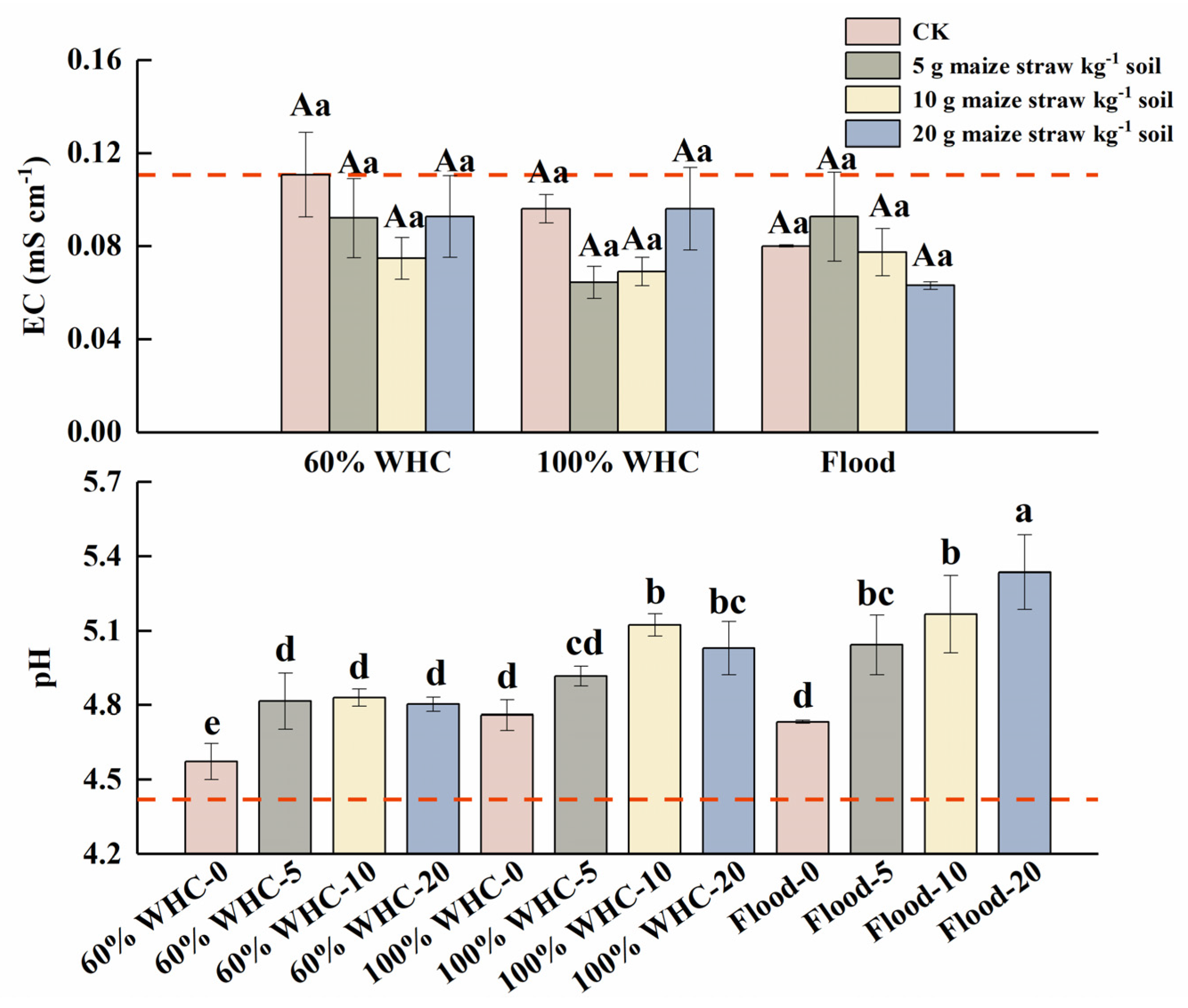
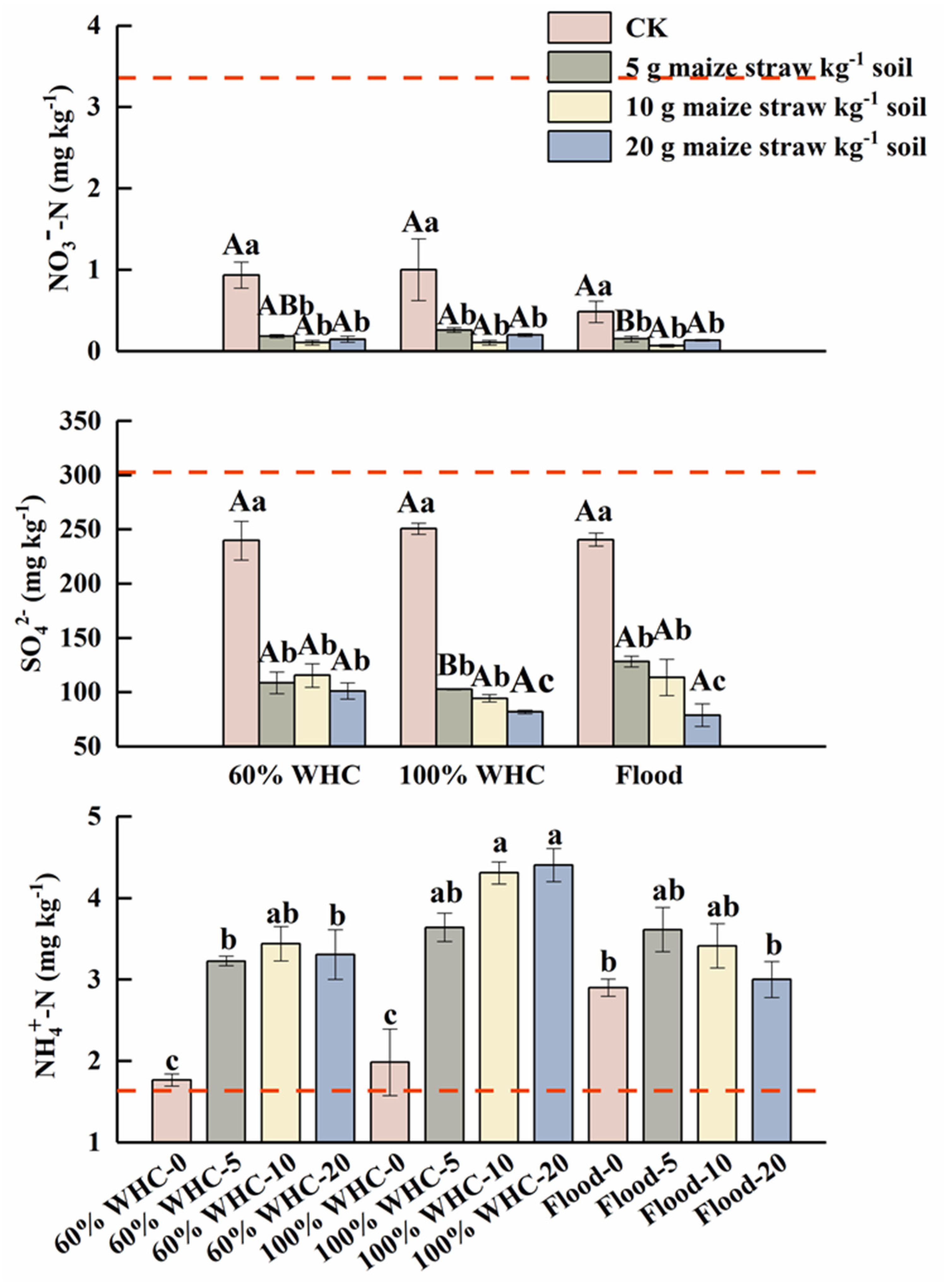
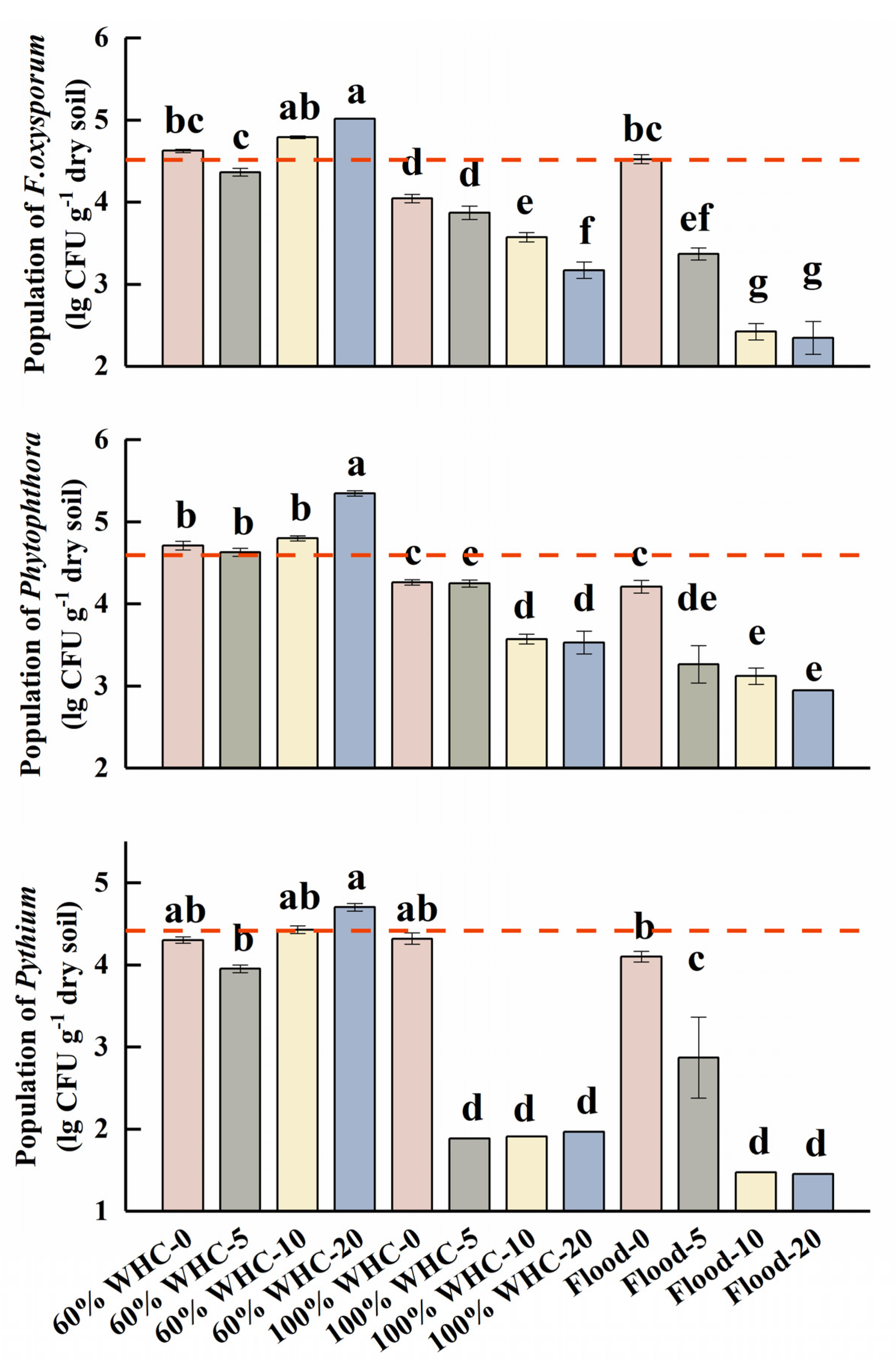
Reductive Soil Disinfestation (RSD) is a good method which can restore degraded greenhouse soil and effectively inactivate soil-borne pathogens. However, the approach needs to be optimized in order to facilitate its practical application in various regions. In the present work, we investigated the effect of soil water content (60% water holding capacity (WHC), 100% WHC and continuous flooding) and maize straw application rates (0, 5, 10, and 20 g kg1 soil) on the improvement of soil properties and suppression of soil-borne pathogens (Fusarium oxysporum, Pythium and Phytophthora). The results showed that increasing the soil water content and maize straw application rate accelerated the removal of excess sulfate and nitrate in the soil and elevated the soil pH. Elevating the water content and maize straw application rate also produced much more organic acids, which could strongly inhibit soil-borne pathogens. Soil properties were improved significantly after RSD treatment with a maize straw amendment rate of more than 5 g kg−1, regardless of the water content. However, RSD treatments with 60% WHC could not effectively inactivate soil-borne pathogens and even stimulated their growth by increasing the maize application rate. RSD treatments of both 100% WHC and continuous flooding could inactivate soil-borne pathogens and increase the pathogens mortality indicated by cultural cells relatively effectively. The inhibited pathogens were significantly increased with the increasing maize application rate from 5 g kg−1 to 10 g kg−1, but were not further increased from 10 g kg−1 to 20 g kg−1. A further increased mortality of F. oxysporum, indicated by gene copies, was also observed when the soil water content and maize straw application rate were increased. Therefore, RSD treatment with 60% WHC could improve soil properties significantly, whereas irrigation with 100% WHC or continuous flooding was a necessity for effective soil-borne pathogens suppression. Holding 100% WHC and applicating maize straw at 10 g kg−1 soil were optimum conditions for RSD field operation to restore degraded greenhouse soil.
Keywords: application rate; nitrate; organic acid; soil-borne pathogens; soil pH; sulfate application rate; nitrate; organic acid; soil-borne pathogens; soil pH; sulfate