1. Introduction
The cultivation of red pitahaya (
Hylocereus undatus Britton & Rose) has expanded considerably in tropical and subtropical regions due to the fruit’s commercial value, exotic appearance and nutritional properties [
1,
2,
3,
4]. In Ecuador, pitahaya production has traditionally been concentrated in coastal provinces; however, the Ecuadorian Amazon is emerging as a strategic region for the diversification of red pitahaya cultivation due to its favourable climatic conditions and productive potential [
5,
6,
7,
8]. Despite this expansion, information regarding red pitahaya’s phenological development and fruit quality at harvest under Amazonian production conditions remain limited.
Among the factors influencing pitahaya development, climate plays a central role in regulating phenology, flowering and fruit maturation. Variations in temperature, radiation and microclimatic conditions can alter reproductive timing and fruit growth and harvest dynamics, leading to differences in harvest periods and fruit quality [
9,
10,
11,
12,
13,
14]. Previous studies conducted under contrasting environmental conditions have shown that the period from floral bud emergence to harvest may vary substantially depending on temperature regimes and orchard management. In Brazil, the period from flower bud formation to harvest ranges from 50 to 60 days under temperatures of 11–29 °C [
11], from 52 to 66 days under an average temperature of 22 °C [
12] and from 30 to 32 days under conditions ranging from 15 to 35 °C [
13]. Similarly, in Mexico, physiological ripening occurs 25–31 days after anthesis under temperatures of 22–25 °C, whereas maturation may extend to 40–50 days in temperate environments [
14].
Under tropical environments, particularly in the Ecuadorian Amazon, high radiation loads and temperatures exceeding 38 °C may induce physiological stress, reducing plant performance, flowering stability and fruit development [
15]. Such conditions may cause cladode yellowing, reduced photosynthetic activity and lower flowering intensity [
16]. To mitigate these effects, producers frequently use artificial shading systems or live stakes capable of generating partial shade and improving microclimatic conditions [
17,
18]. However, excessive shading may negatively affect flowering and productivity due to excessive cladode elongation and reduced light interception [
17].
In this context, the use of live stakes has emerged as a sustainable alternative for pitahaya production systems in the Ecuadorian Amazon. Species such as
Spondias mombin L. and
Erythrina sp. can be used as live supports because they reduce implementation costs, provide structural support and generate moderate shade conditions that resemble the natural semi-shaded habitat of pitahaya [
19,
20]. In addition to their structural function, live stakes may contribute to microclimate regulation, improve moisture conservation and reduce thermal stress within the production system [
9,
21,
22,
23]. Furthermore, live stakes represent functional agroforestry-based production systems capable of contributing to ecological functionality through biomass inputs, nutrient cycling and improved system resilience under tropical conditions [
10,
23]. However, the magnitude of these effects may depend on the species used as a live stake because differences in canopy architecture can generate contrasting levels of shade and modify the light environment surrounding the crop. These differences may influence physiological processes associated with phenological development, fruit growth and ripening.
Erythrina sp. is a fast-growing leguminous species commonly used in agroforestry systems, with recognized potential for biological nitrogen fixation and improvement of soil physical properties [
1]. In contrast,
S. mombin is a non-leguminous species characterized by vigorous vegetative growth and rapid canopy regeneration after pruning [
24]. Both species tolerate frequent pruning and can provide structural support for mature pitahaya plants [
24].
Several studies have reported that live stakes and moderate shading conditions may improve pitahaya fruit development and harvest quality through microclimatic regulation [
11,
17,
18]. Moderate shade levels have been associated with improvements in fruit firmness, pulp development and commercial quality traits [
11,
17,
25]. In addition, shaded production systems may contribute to more stable harvest periods under tropical conditions. However, it remains unclear whether these microclimatic differences modify reproductive timing or primarily affect fruit growth and quality. Previous studies have mainly focused on productivity or descriptive phenology, whereas the combined effects of live and inert stake systems on phenological stability and harvest fruit quality under humid tropical environments remain poorly understood.
Fruit quality is a multidimensional attribute involving physical, chemical and sensory characteristics that are strongly influenced by fruit maturation and environmental conditions [
23]. Commercial fruit quality attributes such as soluble solids, firmness, fruit size, pH and titratable acidity determine harvest suitability for export and local markets [
14,
25]. Although several studies indicate that shading does not markedly affect physicochemical quality in pitahaya fruits [
26], others report improvements in specific commercial traits under moderate shade conditions [
11,
17,
18]. Understanding how stake systems influence these quality attributes is essential for improving harvest management and market competitiveness under Amazonian production conditions.
Despite the reported benefits of live stakes, scientific evidence regarding their influence on phenological stability and harvest fruit quality under humid tropical conditions remains limited. Most previous studies have focused on yield responses or descriptive phenological scales, while integrative evaluations linking phenological stability, fruit development and harvest quality under contrasting stake systems are still scarce. Moreover, the extent to which canopy shade and differences in soil fertility associated with live-stake systems influence the duration of phenological development has received little attention.
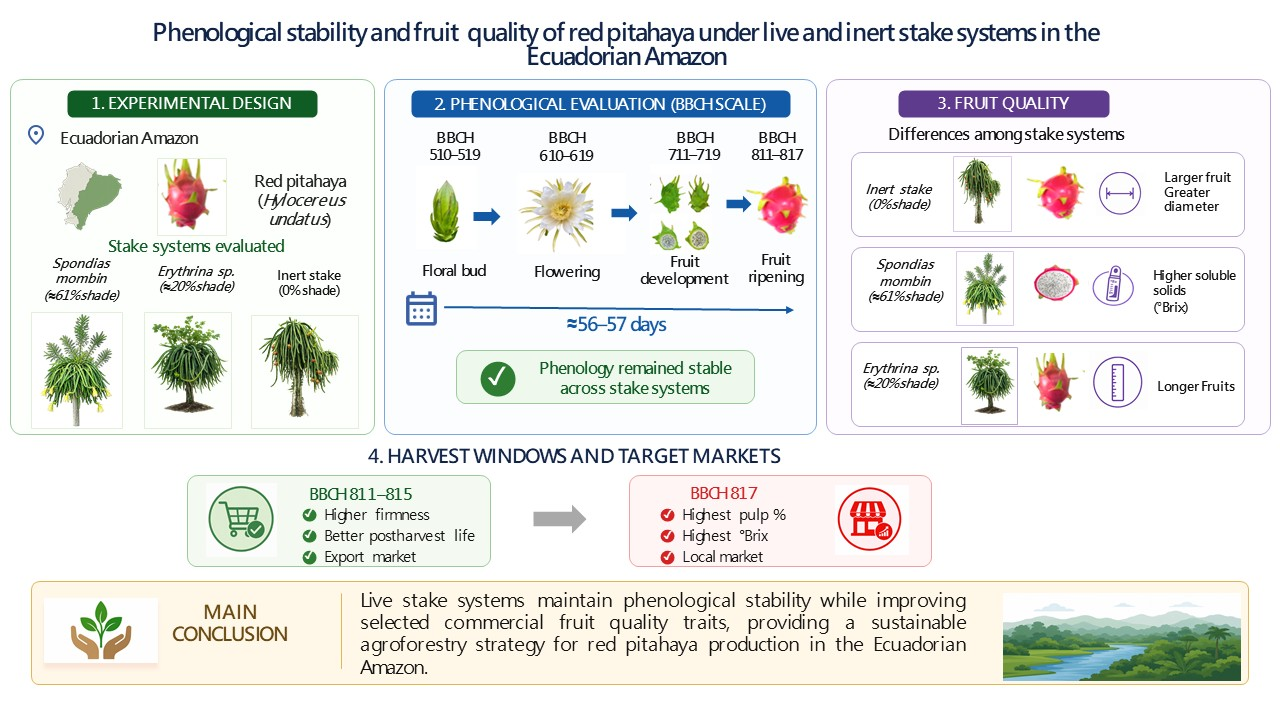
Therefore, this study aimed to evaluate the phenological stability and commercial fruit quality at harvest of red pitahaya cultivated under live and inert stake systems in the Ecuadorian Amazon. Additionally, the study evaluated whether canopy shade and soil fertility influenced the duration of the principal phenological phases. We hypothesised that the shade provided by live stakes modifies the light environment surrounding the plants and that the greater nutrient inputs derived from live-stake pruning residues improve soil fertility, thereby influencing fruit quality at harvest while having little or no effect on the duration of the principal phenological stages.
2. Materials and Methods
2.1. Study Site
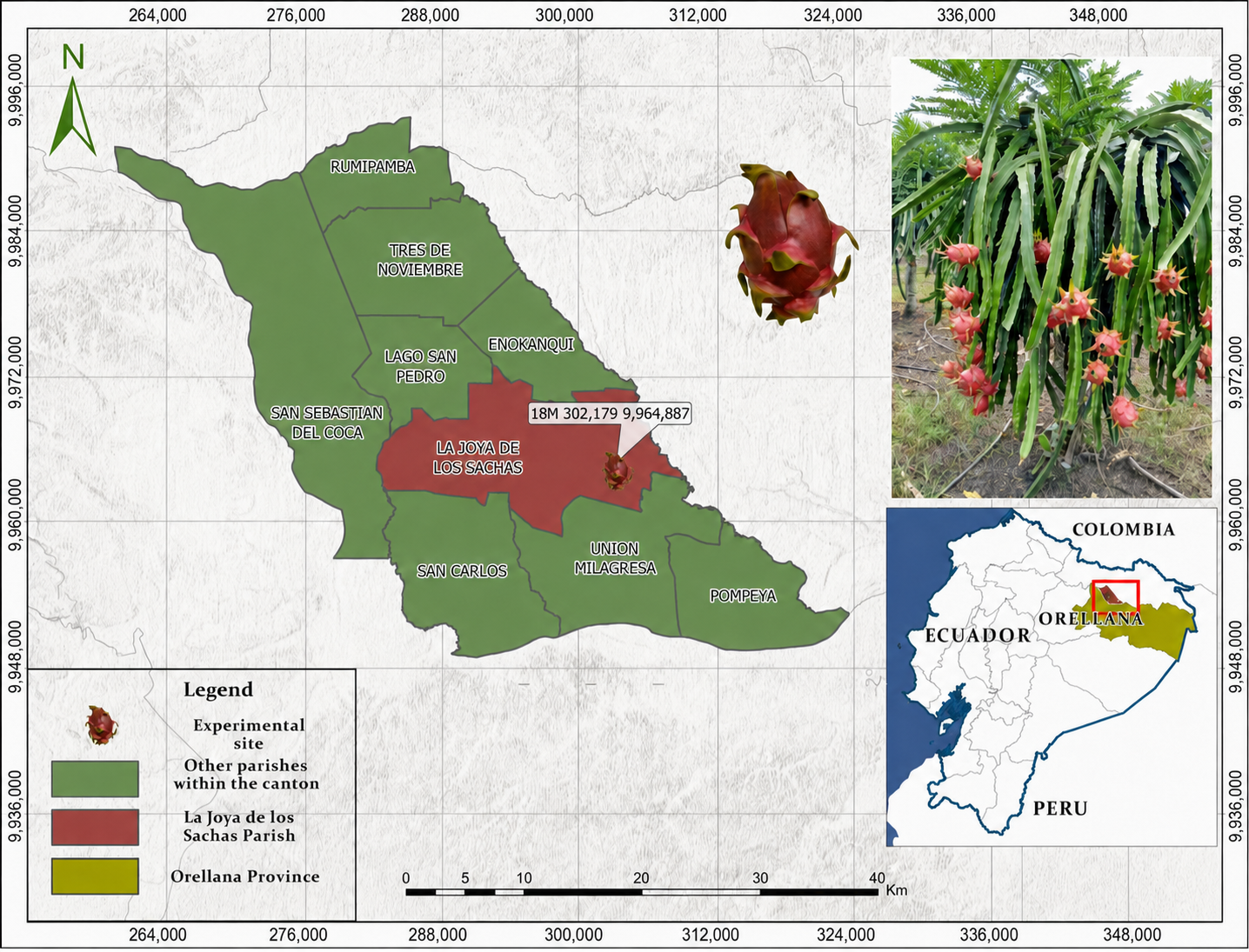
The experiment was conducted at the PitaCastro farm in La Joya de los Sachas Parish, La Joya de los Sachas Canton, Orellana Province (0.317° S, 76.778° W; 310 m.a.s.l., WGS84) (
Figure 1).
According to Köppen’s climatic classification, this region is a tropical rainforest [
27], with average temperatures ranging from 18 to 33 °C, an average annual rainfall of 3200–3900 mm, average relative humidity of 95%, mean annual evapotranspiration of 3598.3 mm and solar radiation of 1628 KWh/m
2. The climatic conditions recorded during the sampling seasons are presented in
Supplementary Figure S1. Cumulative rainfall ranged from 111.3 to 507.1 mm, whereas mean temperature (25.1–26.3 °C) and relative humidity (87.7–92.0%) remained relatively stable throughout the study. The study was conducted during the 2023 and 2024 production seasons.
2.2. Plant Material and Treatments
The phenological evaluations reported in the present study were conducted during the 2023 and 2024 production years. At the beginning of the evaluations in 2023, the H. undatus plants were approximately five years old. Plants were established at a spacing of 4 × 4 m and trained on live or inert stakes 1.50 m in height. The experiment followed a randomised complete block design (RCBD) with three replications. Three stake systems were evaluated: Spondias mombin L. live stakes, Erythrina sp. live stakes, and inert concrete stakes. Each experimental plot comprised 25 plants, resulting in nine experimental units (three stake systems × three blocks). Within each plot, nine plants were randomly selected for measurements.
The three stake systems were selected to represent the principal support strategies currently used in commercial red pitahaya production in the Ecuadorian Amazon and to provide contrasting light environments. Concrete stakes represented the conventional inert support, providing structural stability without canopy development or shade. In contrast, the live stakes
S. mombin and
Erythrina sp. were selected because they are widely used in the region, establish rapidly, tolerate repeated pruning and provide reliable structural support for mature pitahaya plants [
28].
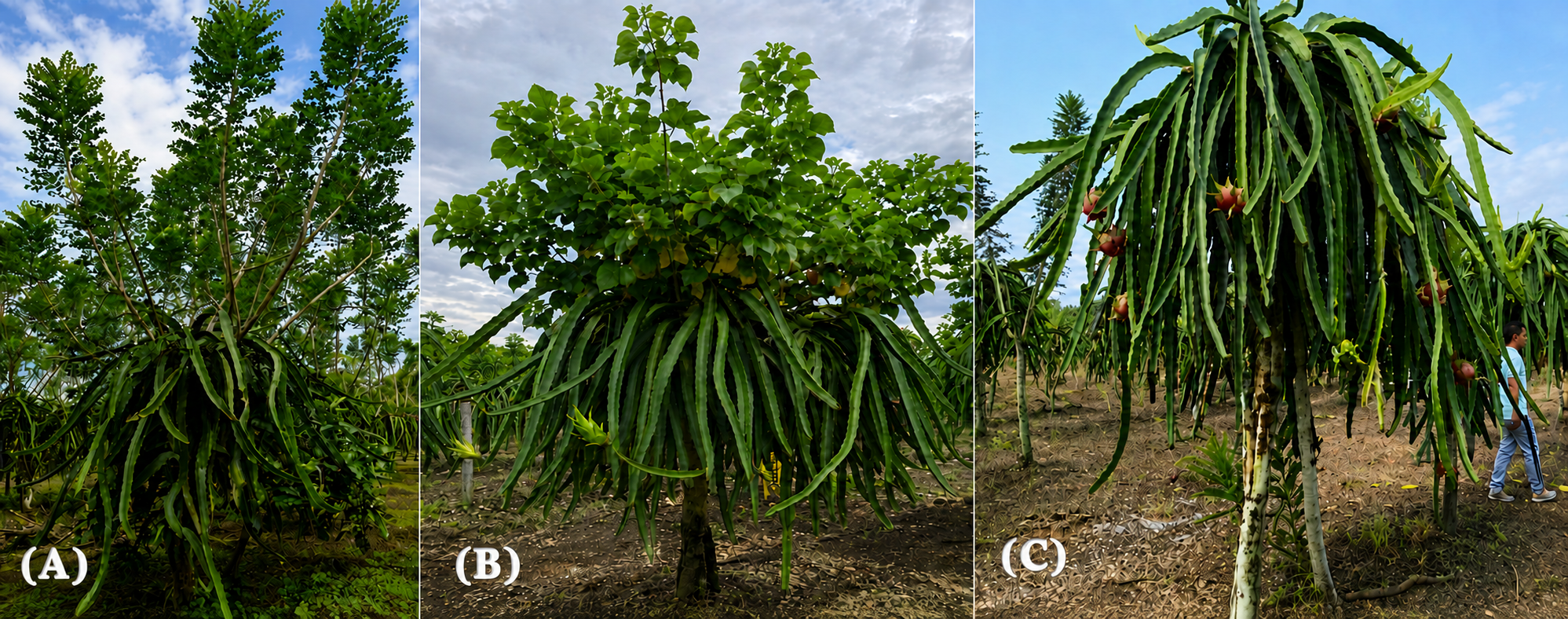
The three stake systems showed marked differences in canopy architecture and shading conditions (
Figure 2). Under the conditions of the present study,
S. mombin developed a denser and more extensive canopy above the pitahaya plants, with an average shade level of approximately 61%, whereas
Erythrina sp. developed a more open canopy, with approximately 20% shade. The inert concrete stakes lacked tree canopy cover and therefore provided no shade [
24]. During the simultaneous monitoring period, mean temperature was similar under
S. mombin and
Erythrina sp. (26.69 and 26.72 °C, respectively), whereas mean relative humidity was higher under
S. mombin (93.43%) than under
Erythrina sp. (87.92%). For the inert stake system, records from the nearby weather station indicated a mean temperature of 25.95 °C and a mean relative humidity of 89.79% during the corresponding sampling periods (
Figure S1). Thus, the two live-stake systems were associated with contrasting microclimatic conditions, mainly reflected in differences in canopy cover, shade and relative humidity, despite their similar mean temperatures. Canopy shade (%) was subsequently included as a continuous covariate in the statistical analysis of phenological phase duration.
2.3. Specific Management of the Experiment
The live stakes (
S. mombin and
Erythrina sp.) were pruned every 90 days, corresponding to four pruning events per year. Pruning was conducted as part of the routine management of the live stakes to control canopy development and was not performed to maintain predetermined shade levels. Therefore, the approximately 61% and 20% shade observed under
S. mombin and
Erythrina sp., respectively, represented the canopy conditions associated with each species rather than experimentally imposed shade levels. Canopy shade (%) was evaluated four times per year, in February, May, July and November, prior to pruning of the live stakes. Measurements were taken at four points within the shaded area using a spherical densiometer, following the procedure previously described by Vargas-Tierras et al. [
24].
All pruning residues were chopped and uniformly distributed on the soil surface around the pitahaya plants as part of the standard agronomic management of the orchard, following local recommendations [
1]. Previous work conducted in the same experimental orchard demonstrated that the two live stake species differed in pruning biomass production and nutrient return to the soil. On average,
S. mombin produced 14.1 Mg ha
−1 of fresh biomass and 3.09 Mg ha
−1 of dry biomass, whereas
Erythrina sp. produced 7.82 Mg ha
−1 and 2.14 Mg ha
−1. Likewise,
S. mombin returned greater amounts of carbon, phosphorus magnesium and sulfur to the soil than
Erythrina sp. [
24]. These pruning residues remained on the soil surface throughout the study period, representing an organic matter input associated with the management of the live-stake systems.
General orchard management was applied uniformly across the three stake systems. Nutrient management followed the procedure described by Vargas-Tierras et al., [
24] with no differential fertilization among stake systems. The crop relied exclusively on natural rainfall throughout the production cycle, with no supplementary irrigation. Phytosanitary management consisted of preventive practices and targeted curative measures when pest or disease incidence was detected and was applied similarly across treatments. Sanitary pruning of
H. undatus was carried out annually in May and September, during periods of low or no fruit production, by removing unproductive branches, diseased stems and interlaced branches.
Soil moisture was not monitored during the present study. Consequently, potential differences in soil water availability associated with canopy shading, surface pruning residues, or competition for water between pitahaya plants and live stakes could not be directly evaluated.
2.4. Soil Chemical Analyses
To characterise soil fertility throughout the study, soil samples were collected at the beginning of each evaluation year, prior to establishing the annual fertilisation recommendation. Soil sampling was therefore not associated with a specific phenological stage of pitahaya. One soil sample was collected from each replicate at a depth of 0–20 cm, resulting in three soil samples per stake system per year. Samples were transported to the Soil and Water Laboratory of the Central Amazon Experimental Station for chemical analyses. The evaluated soil properties included ammonium (NH
4), available phosphorus (P), potassium (K), calcium (Ca), magnesium (Mg), sulfur (S), zinc (Zn), copper (Cu), iron (Fe), manganese (Mn), boron (B) and soil organic matter (OM), following the analytical procedures previously described by Vargas-Tierras et al. [
24]. The soil chemical properties obtained from these samples are presented in
Supplementary Table S1. Soil OM was selected as the soil fertility indicator and included as a continuous covariate in the ANCOVA models together with canopy shade (%). Because soil sampling was conducted once at the beginning of each evaluation year, the corresponding annual OM value for each replicate and stake system was used for the three reproductive periods evaluated within that year (February, July and November).
2.5. Data Collection in Reproductive Development
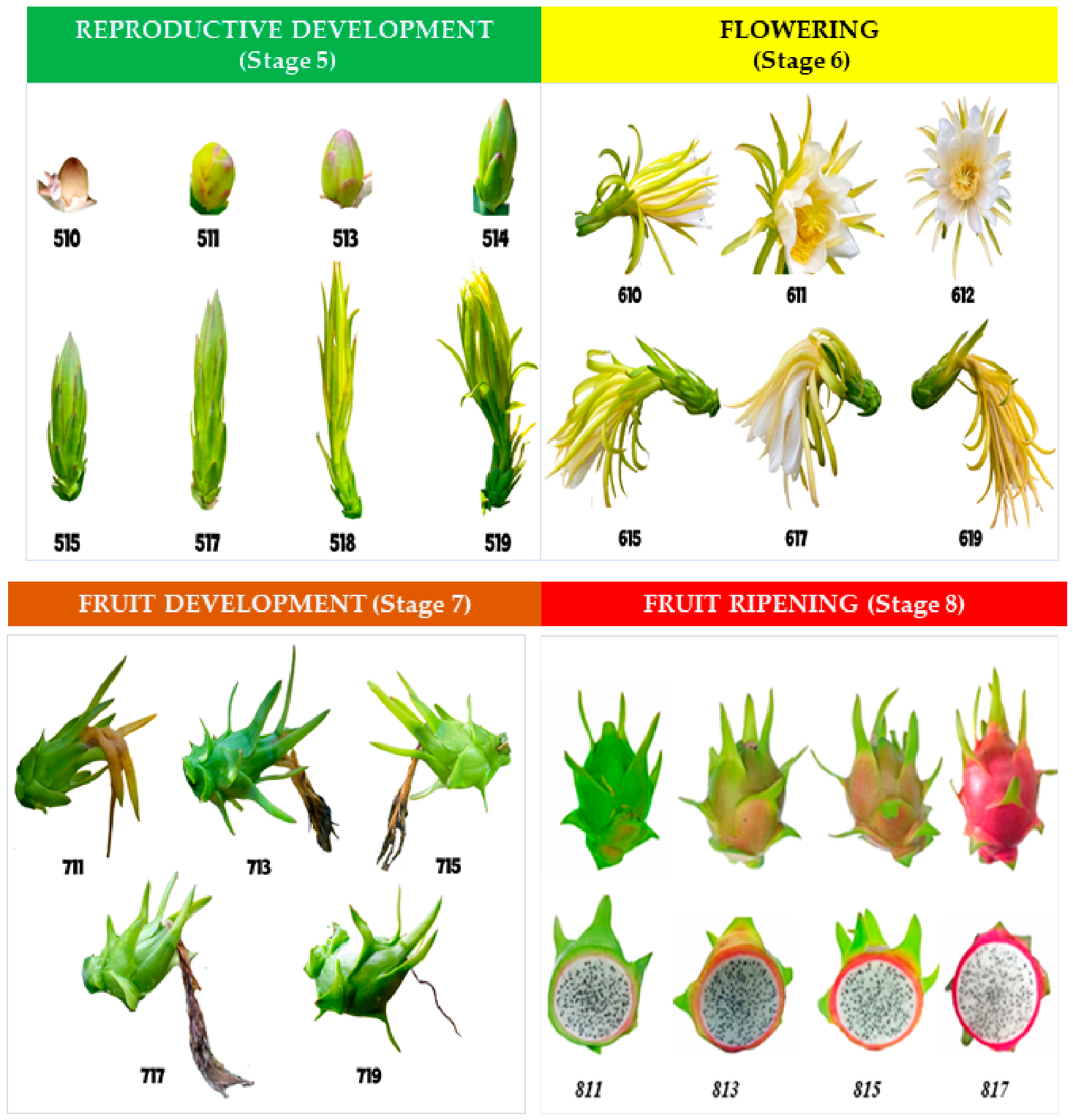
The phenological stages (5, 6, 7 and 8) of
H. undatus were studied using the basic Biologische Bundesanstalt, Bundessortenamt und Chemische Industrie (BBCH) scale with its uniform coding and description system, as suggested by Kishore [
29]. For the phenological study, eighteen reproductive structures per stake system were included in the final monitoring dataset for each reproductive period (6 reproductive structures × 3 replicates). To ensure the required number of reproductive structures throughout the phenological cycle, additional buds were initially tagged in each replicate to compensate for potential bud or flower abortion. No artificial or manual pollination was performed, and fruit set occurred under the natural pollination conditions of the commercial orchard. A total of 162 reproductive structures were evaluated per production year (6 reproductive structures × 3 replicates × 3 stake systems × 3 reproductive periods), resulting in 324 reproductive structures across the two years of evaluation. Phenological evaluations were conducted during two consecutive production years (2023 and 2024), comprising three reproductive periods per year (February, July and November) under Amazonian field conditions. Phenological monitoring was initiated following the appearance of reproductive buds (BBCH 510) during each reproductive period; therefore, the calendar date of reproductive bud emergence was not recorded as a response variable for comparison among stake systems. The phenological assessment focused on the progression and duration of the BBCH stages from BBCH 510 onwards. Reproductive structures were monitored sequentially throughout each reproductive period, and evaluations were performed every two days during the active reproductive phase.
The reproductive development of
H. undatus was characterised according to four principal BBCH stages: reproductive development (stage 5), flowering (stage 6), fruit development (stage 7), and fruit ripening (stage 8). The BBCH codification and morphological criteria used to identify the corresponding sub-stages are summarized in
Table 1.
2.6. Determination of Physical and Chemical Analyses
Fruit growth and ripening dynamics were evaluated across selected BBCH sub-stages. In stages 5, 7 and 8, fruit diameter and length were evaluated directly in the field using a digital calliper (model CD-6” CS, Mitutoyo, Takatsu-ku, Japan). Measurements were performed every two days to determine the duration of individual BBCH sub-stages and principal phenological phases, as well as to monitor the progressive growth of reproductive and fruit structures. The evaluated stages were photographed sequentially to assemble a visual collage of the phenological development process.
For physical and chemical fruit quality analyses, four fruits per replicate (12 fruits per stake system) were collected at each BBCH ripening sub-stage (811, 813, 815 and 817). Physical attributes included fruit weight, peel weight, pulp weight, pulp percentage and firmness, whereas chemical attributes included pH, titratable acidity and soluble solids. Analyses were performed in triplicate. First, the whole fruit was weighed using a digital balance (SP2001, OHAUS, Pine Brook, NJ, USA), after which the peel and pulp were manually separated and weighed individually. Fruit weight values were recorded in grams (g) and pulp yield was calculated as a percentage of the total fruit weight.
For chemical analyses, each pulp sample was crushed and homogenised at a 1:10 ratio (10 g of pulp diluted in 100 mL of distilled water). Measurements of pH and soluble solids were performed on the homogenised sample. Fruit pH was measured using a digital potentiometer (PT-380, BOECO, Hamburg, Germany). Titratable acidity was determined by titrating 20 mL of the homogenised sample with 0.1 N NaOH solution until a pH of 8.2 was achieved. The results were expressed as percentages of malic acid.
Soluble solids content was determined using a digital refractometer (PAL-1 model, ATAGO, Tokyo, Japan) and the results were expressed as °Brix. Fruit firmness was evaluated at the equatorial region of the fruit using a semi-manual penetrometer (FT 327 model, Santiago, Chile) equipped with an 8-mm tip and the results were expressed in Newtons (N).
2.7. Statistical Analysis
All statistical analyses were performed using R software version 4.6.0 [
30]. Prior to analysis, normality and homogeneity of variances were verified using the Shapiro–Wilk and Levene tests, respectively. Data were analysed according to the experimental design corresponding to each evaluated variable. For phenological, physical and chemical variables, the analyses considered the effects of stake system, BBCH sub-stage and their interaction.
An analysis of variance (ANOVA) was conducted using linear models. The differences between treatment means were evaluated using Tukey’s Honest Significant Difference (HSD) test at a significance level of
p ≤ 0.05 [
31]. The duration of the principal BBCH phenological phases (510–519, 610–619, 711–719, 811–819 and the complete reproductive cycle 510–819) was calculated as the number of days between the initial and final BBCH sub-stages of each phase and analysed by ANOVA to evaluate the effect of the stake system.
To account for temporal variation between production years and sampling periods and to determine whether canopy shade (%) and soil fertility contributed to variation in phenological duration, ANCOVA models were fitted for the BBCH 510–519, 610–619 and 711–719 phases and for the complete reproductive cycle (510–819). Production year, sampling period and stake system were included as fixed factors, whereas canopy shade (%) and soil OM, used as an indicator of soil fertility, were included as continuous covariates. For the phenological evaluations conducted in February, July and November, canopy shade values corresponded to measurements obtained in the same month, prior to pruning of the live stakes. Soil OM values corresponded to the annual soil sampling conducted at the beginning of each production year, prior to establishing the fertilisation recommendation, and the corresponding annual value was used for all reproductive periods evaluated within that year. The BBCH 811–819 phase was excluded from the ANCOVA because its duration was constant (5 days) across all observations. Type III tests were used to evaluate the significance of each factor and covariate in the models.
For variables evaluated across phenological stages, comparisons were performed both among BBCH sub-stages and among stake systems. Interactions between stake system and BBCH sub-stage, as well as between stake system and sampling period, were also evaluated for fruit physical and chemical quality attributes. The effects of production year and sampling period were additionally evaluated for these fruit quality attributes to examine temporal variation across the two production years and the three reproductive periods. When significant interactions were detected, means for the corresponding factor combinations were compared using Tukey’s HSD test (
p ≤ 0.05). These interaction analyses were used to examine whether the response associated with the stake system varied across ripening sub-stages or sampling periods, and the corresponding interaction means are reported in the
Tables S1–S7.
The reported values correspond to means averaged across two consecutive production years and the three sampling periods, unless otherwise indicated. Production year and sampling season were explicitly included in the phenological ANCOVA models to account for temporal variation before evaluating the effects of stake system, canopy shade and soil OM.
Figures were generated to illustrate phenological progression, fruit growth dynamics and changes in fruit quality attributes during ripening.
4. Discussion
4.1. Phenological Development of H. undatus
The reproductive phenology observed in this study was generally consistent with previous descriptions of the species, although some variation in the duration of individual developmental phases was evident among studies. The duration of reproductive bud development observed under humid Amazonian conditions was slightly longer than the 13–15 days reported by Shah et al. and was comparable with the 19–21 days reported for red pitahaya under Brazilian conditions [
32]. Such differences among studies may reflect variation in temperature, radiation, genotype and crop management, all of which can influence the rate of reproductive development.
Despite the contrasting canopy environments associated with the stake systems, phenological timing remained highly stable. The absence of significant effects of canopy shade and soil OM on most phenological phases indicates that the differences among the evaluated stake systems were not accompanied by substantial changes in the duration of reproductive development. Thus, although
S. mombin,
Erythrina sp. and inert concrete stakes represented contrasting canopy and soil-management conditions, these differences did not translate into consistent changes in reproductive timing. This response contrasts with the stronger phenological shifts reported across regions under different temperature regimes [
10,
14], suggesting that broader climatic conditions may exert greater control over developmental timing than the within-site differences evaluated here.
During the reproductive period, the emergence of new floral shoots generated overlapping cohorts of flowers and fruits, resulting in the simultaneous presence of reproductive structures at different developmental stages on the same plant. This overlapping reproductive behaviour is consistent with the multiple flowering and production cycles reported for pitahaya under tropical conditions [
32,
33] and may contribute to extended harvest periods under humid tropical environments.
Fruit development during BBCH stage 7 represented the principal period of fruit expansion. The rapid increase in fruit dimensions during this phase is consistent with previous reports describing active cell enlargement and water accumulation during pitahaya fruit development [
34,
35]. Similar developmental patterns have been reported in other pitahaya studies, supporting the interpretation that the temporal progression of fruit expansion is strongly regulated by intrinsic developmental processes, whereas environmental conditions may exert a greater influence on the magnitude of fruit growth than on its duration [
36,
37].
The stability of reproductive timing across the contrasting stake systems suggests a degree of phenological buffering under the humid Amazonian conditions evaluated. In contrast, studies conducted under more stressful environments have shown that extreme temperatures and high radiation can disrupt reproductive processes, including floral induction, flowering and fruit set [
38,
39]. However, the interpretation of the mechanisms underlying the stability observed in the present study is limited by the environmental variables monitored. Although canopy shade and soil OM were included in the analyses and general climatic conditions during the evaluation periods were characterised using meteorological data presented in
Supplementary Figure S1, soil moisture, incident radiation and continuous microclimatic conditions within each stake system were not simultaneously monitored throughout reproductive development. These variables could have helped explain some of the temporal and stake-system-associated variation observed in fruit development. Therefore, the absence of marked differences in phenological duration should not be interpreted as evidence that the microenvironment associated with the stake systems had no influence on plant performance.
Finally, the phenological sequence observed supports the applicability of the BBCH framework for describing reproductive development of
H. undatus under humid tropical conditions [
40]. The consistent progression of developmental stages across the evaluated stake systems provides a common basis for comparing reproductive development under contrasting orchard-management conditions.
4.2. Fruit Growth Dynamics
The rapid fruit expansion observed during BBCH sub-stages 711–719 is consistent with previous reports for pitahaya, in which fruit growth is characterised by marked increases in diameter and length over a relatively short developmental period [
34,
35]. This pattern reflects the active expansion of fruit tissues, driven primarily by cell enlargement and water accumulation, processes that are characteristic of developing fleshy fruits [
14]. The progressive reduction in relative growth as fruits approached BBCH 719 further suggests that the most intensive expansion occurred during the earlier part of stage 7, followed by a gradual slowdown as fruits approached their final size.
Although fruit dimensions differed significantly among stake systems, the magnitude of these differences was small, while the duration of fruit development remained highly consistent. This indicates that differences among support systems were associated with subtle variation in fruit dimensions rather than with shifts in developmental timing. Similar responses have been reported in pitahaya, where environmental and management conditions can modify fruit size and quality without necessarily altering the sequence or duration of reproductive development [
29,
40].
The contrasting responses of fruit diameter and length among stake systems could be associated with differences in the growing environment, including light exposure, humidity and canopy architecture. However, because canopy shade and soil OM did not significantly explain variation in the duration of fruit development, their contribution to the observed differences in fruit dimensions cannot be established from the present analysis. The observed differences in fruit dimensions should therefore be interpreted as stake-system-associated responses rather than as direct effects of canopy shade or soil OM.
These findings highlight an important distinction between the temporal regulation of fruit development and the expression of fruit growth. While developmental timing remained stable across stake systems, fruit dimensions showed modest plasticity, suggesting fruit dimensions may be more variable than phenological duration across the growing conditions evaluated. This relative stability in developmental timing may be particularly relevant under humid tropical conditions, where environmental conditions remain generally favourable for continuous reproductive development [
14,
29,
38,
39,
40].
From an agronomic perspective, the consistency of BBCH stage 7 across stake systems supports the use of phenological benchmarks for monitoring fruit development under local production conditions. A predictable developmental sequence may facilitate field evaluations and crop management, while differences in fruit dimensions can be considered separately when comparing commercial fruit characteristics among support systems.
4.3. Fruit Quality During Ripening
Fruit quality was primarily determined by ripening stage, whereas the effects associated with stake system were smaller and trait-specific. This predominance of maturity is consistent with the physiological and biochemical changes that accompany pitahaya ripening, during which changes in fruit growth, tissue softening, soluble solids accumulation and organic acid metabolism progressively determine commercial quality [
2,
41,
42]. The comparatively smaller differences among stake systems indicate that selected fruit traits varied among the contrasting production environments without fundamentally altering the overall ripening pattern.
The marked decline in firmness toward commercial maturity is consistent with the progressive softening of fruit tissues during ripening, which is generally associated with modifications of cell-wall components and loss of tissue structural integrity. In parallel, the increase in soluble solids reflects the accumulation of soluble carbohydrates during fruit maturation. Similar changes in firmness and soluble solids have been reported for pitahaya under different growing and ripening conditions [
2,
41,
42].
Titratable acidity showed a non-linear response, increasing during intermediate ripening stages before declining markedly at commercial maturity. This pattern suggests dynamic changes in organic-acid metabolism rather than a simple progressive decline throughout ripening. Organic acids contribute to respiratory metabolism and the sugar–acid balance of the fruit; therefore, their reduction at advanced maturity, together with the increase in soluble solids, contributes to the characteristic physicochemical profile of commercially mature pitahaya [
2,
41,
42].
The increase in pulp proportion toward commercial maturity is also agronomically relevant because pulp represents the edible fraction of the fruit [
14]. Its lack of significant differences among stake systems indicates that this commercial attribute remained comparatively stable across the support systems evaluated. Thus, the major changes in pulp proportion, firmness and the physicochemical characteristics of the fruit were more closely associated with ripening progression than with the type of stake used.
Although stake-system effects were limited, the differences detected in fruit dimensions and soluble solids indicate some plasticity in fruit quality across the production environments evaluated. Moderate shading has been reported to modify chlorophyll content, photosystem II efficiency and gas exchange in pitahaya [
25], while excessive radiation can induce sunburn, oxidative stress and tissue damage [
43]. These responses provide a plausible physiological basis for expecting canopy architecture to be associated with variation in selected fruit-quality attributes. However, the present results do not establish canopy shade as the direct cause of the observed differences among stake systems, and other treatment-associated factors may also have contributed.
Fruit physical attributes also exhibited temporal variation, as the interaction between stake system and sampling period was significant for fruit weight, diameter, peel weight and pulp weight (
Supplementary Table S6). The generally higher values observed in July, particularly under the inert stake system, indicate that the magnitude of stake-system differences was not constant across sampling periods. Under the continuous reproductive conditions of the humid tropics, these temporal responses may reflect variation in environmental conditions among production periods together with differences in management associated with each stake system. In the live-stake systems, periodic pruning and the subsequent deposition of pruning residues represented organic matter inputs that differed between
S. mombin and
Erythrina sp., as previously documented for this experimental orchard [
24]. These management differences provide relevant context for interpreting the temporal responses observed among stake systems; however, their individual contributions to fruit-quality variation cannot be established from the present experimental data.
Therefore, the significant stake system × sampling period interactions should be interpreted as evidence of temporally variable responses rather than as a direct causal effect of pruning biomass or soil organic matter on fruit quality.
Internal fruit quality showed a more limited temporal response. Soluble solids differed significantly among sampling periods, with higher values in July and February than in November, whereas pH and titratable acidity did not differ significantly among periods. Moreover, the absence of a significant sampling period × stake system interaction for soluble solids indicates that its temporal variation was broadly similar across stake systems. These results suggest that temporal variation was more evident for fruit physical attributes than for the internal quality traits evaluated.
This interpretation is particularly relevant for pitahaya because its crassulacean acid metabolism (CAM) makes carbon assimilation sensitive to environmental conditions. Environmental regulation of nocturnal CO
2 uptake and subsequent carbon metabolism may influence carbohydrate availability for developing fruits [
44]. Nevertheless, the relatively small differences in soluble solids among stake systems suggest that sugar accumulation remained comparatively similar across the contrasting production environments evaluated.
Taken together, these findings indicate that the principal changes in commercial fruit quality were associated with ripening stage, while differences among stake systems were secondary and trait-specific. Live stakes should therefore not be interpreted as uniformly improving fruit quality; rather, the contrasting support systems were associated with modest differences in specific attributes such as fruit dimensions and soluble solids. From a production perspective, this suggests that live stakes can be incorporated into pitahaya-based agroforestry systems without major alterations in the overall ripening pattern or commercial fruit quality, while their broader agronomic and ecological functions should be evaluated alongside fruit-quality responses.
5. Conclusions
Red pitahaya exhibited marked phenological stability across contrasting live- and inert-stake systems under humid tropical conditions. Reproductive timing remained consistent across support systems, whereas fruit growth showed comparatively modest variation. Fruit quality was determined predominantly by ripening stage, with differences among stake systems being limited and trait-specific.
The absence of major differences in reproductive timing and overall fruit-quality patterns indicates that live stakes can represent a viable agroforestry-based alternative to inert supports under the humid tropical conditions evaluated. Their value should therefore be considered not in terms of intrinsic superiority for fruit quality, but in their capacity to provide structural support while potentially contributing additional agronomic and ecological functions within the production system. Appropriate canopy management remains important to balance these functions with the light conditions required for fruit production.
Further research integrating canopy radiation, fruit and canopy temperature, vapour pressure deficit, physiological responses and long-term nutrient cycling is needed to clarify the mechanisms underlying fruit responses associated with different support systems and to establish canopy-management thresholds for optimising pitahaya production in humid tropical environments.



 ,
,