Article

Physiological and Transcriptomic Insights into Iron-Induced Anthocyanin Accumulation in Red-Fleshed Apples


1
Xuzhou Institute of Agricultural Sciences in Jiangsu Xuhuai District, Xuzhou 221131, China
2
Tongshan Test Station, Xuzhou Institute of Agricultural Sciences in Jiangsu Xuhuai District, Xuzhou 221121, China
3
College of Horticulture Science and Engineering, Shandong Agricultural University, Taian 271018, China
*
Authors to whom correspondence should be addressed.
These authors contributed equally to this work.
Horticulturae 2026, 12(7), 841; https://doi.org/10.3390/horticulturae12070841
Submission received: 10 June 2026 / Revised: 7 July 2026 / Accepted: 8 July 2026 / Published: 10 July 2026
(This article belongs to the Section Fruit Production Systems)

Highlights

  • Fe increased sugar and anthocyanin accumulation in red-fleshed apples.
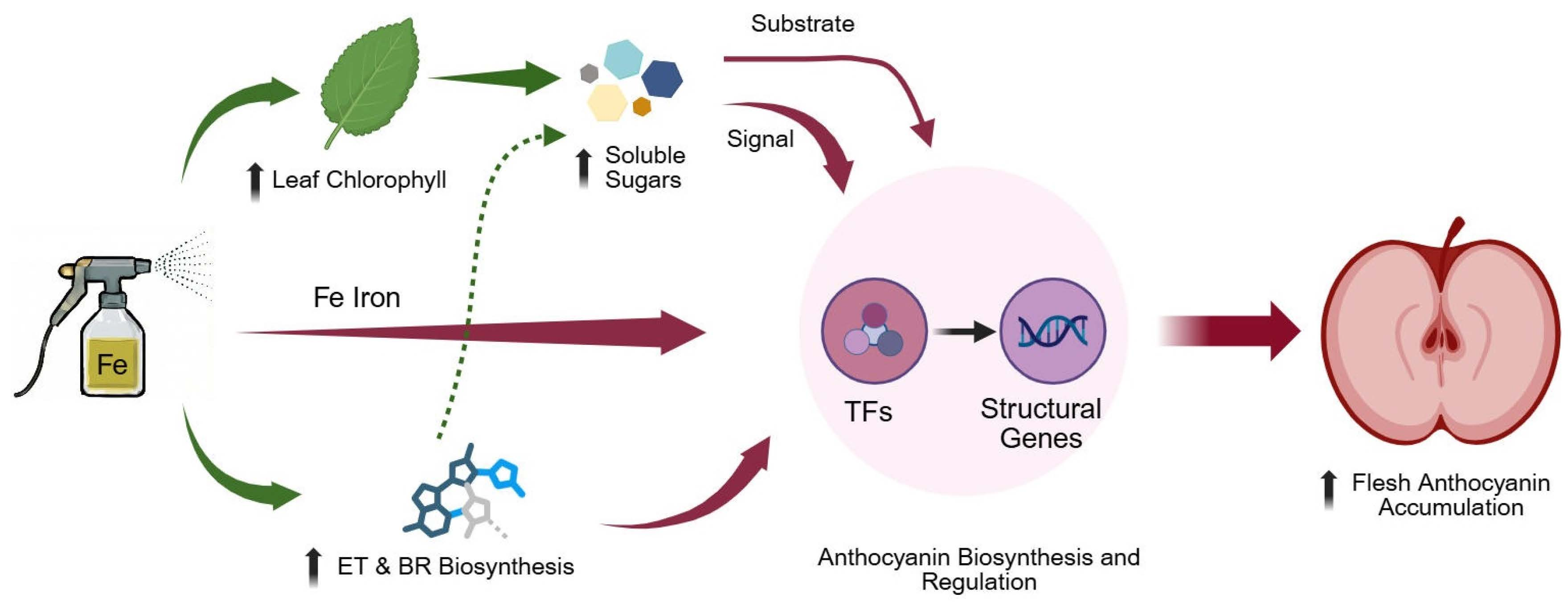
  • Fe increased sugar levels by enhancing chlorophyll content, thereby promoting anthocyanin synthesis.
  • Fe may increase anthocyanin content by stimulating ethylene and brassinosteroid synthesis.
  • Fe induced anthocyanin structural genes and related transcription factors.

Abstract
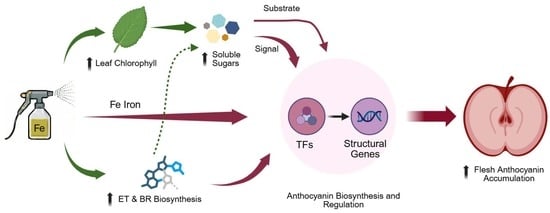
Anthocyanin is the primary determinant of visual quality in red-fleshed apples. Iron (Fe) contributes to alleviating chlorosis and improving fruit quality, including anthocyanin accumulation. However, the mechanism linking Fe nutrition to anthocyanin content remains unclear, particularly in red-fleshed cultivars. Here, we evaluated how foliar Fe application influenced anthocyanin and soluble sugar contents in apple flesh and investigated the associated transcriptional responses using RNA-seq. Fe increased leaf chlorophyll content and promoted the accumulation of soluble sugars and anthocyanins in fruits grown in calcareous soil. RNA-seq analysis identified 323 differentially expressed genes (DEGs) in response to Fe treatment. Specifically, multiple DEGs were associated with sugar biosynthesis and transport, anthocyanin biosynthesis, and phytohormone biosynthesis. Based on RNA-seq and physiological analyses, we proposed that Fe may promote anthocyanin accumulation through three putative mechanisms: (i) elevating sugar levels via increased leaf chlorophyll content, thereby providing substrates and signals; (ii) activating key anthocyanin structural genes and related transcription factors; and (iii) stimulating ethylene and brassinosteroid biosynthesis and signaling pathways involved in anthocyanin accumulation. This work provides new insight into the Fe-mediated regulatory network underlying anthocyanin accumulation, offering a practical basis to refine fertilization strategies for fruit quality improvement in red-fleshed apples.

Graphical Abstract

1. Introduction

Fruit color is an important determinant of consumer preference and is therefore an important target for breeding and cultivation practices. In recent years, red-fleshed apples have attracted increasing attention from both producers and consumers due to their attractive appearance and potential health benefits. Anthocyanins are the main pigments responsible for the red color in both apple skin and flesh, and their accumulation is strongly influenced by the environment [1]. In plants, anthocyanins play critical roles in mitigating oxidative damage and defending against biotic stress [2]. Furthermore, anthocyanins provide multiple health benefits for humans, including anticancer, antimicrobial, and cardioprotective effects [3]. Therefore, improving anthocyanin content in apples has become a primary focus of current research.
Anthocyanin biosynthesis proceeds through the phenylpropanoid and flavonoid pathways, catalyzed by a cascade of enzymes including phenylalanine ammonia-lyase (PAL), chalcone synthase (CHS), chalcone isomerase (CHI), flavanone 3-hydroxylase (F3H), dihydroflavonol 4-reductase (DFR), anthocyanidin synthase (ANS), and UDP-glucose:flavonoid 3-O-glucosyltransferase (UFGT) [4,5]. This process is governed by a network of transcription factors (TFs), primarily involving the MYB, bHLH, NAC, WRKY, and bZIP families [6,7,8,9]. Once synthesized, anthocyanins are transported into the vacuole for sequestration, a process largely mediated by transporters such as multidrug and toxic compound extrusion (MATE) proteins [10]. Additionally, anthocyanin biosynthesis is modulated by multiple factors, including mineral nutrients [11], sugars [12], light [13], temperature [14], and phytohormones [15].
As an essential micronutrient, iron (Fe) plays pivotal roles in chlorophyll biosynthesis, hormone synthesis, and photosynthesis [16]. Fe deficiency chlorosis (IDC) is a common physiological disorder in apple trees cultivated on calcareous soils. Research has demonstrated that IDC impairs photosynthesis and reduces carbohydrate accumulation, which may exert negative impacts on fruit quality, including anthocyanin accumulation [17]. Accordingly, exogenous Fe fertilization has become a primary strategy to improve Fe nutrition and fruit quality [18].
Fe can significantly influence fruit coloration and overall quality. Current evidence suggests that Fe-mediated changes in anthocyanin accumulation are closely associated with chlorophyll biosynthesis, sugar accumulation, metal chelation, and anthocyanin-related gene expression [19,20,21,22]. For example, Fe fertilization has been reported to enhance chlorophyll biosynthesis and photosynthesis in leaves, thereby increasing sugar and anthocyanin content in grapes [19]. In contrast, Fe deficiency or excessive Fe supply reduced anthocyanin accumulation in grape berries [23], suggesting that appropriate Fe status is important for maintaining fruit coloration. In strawberries, chelated Fe markedly upregulated anthocyanin structural genes, such as CHS, and increased anthocyanin content [24]. In addition to its physiological effects, Fe may also affect anthocyanin stability through metal chelation; for instance, the addition of Fe3+ to anthocyanin solutions improved their thermal stability by more than 70% in a thermal degradation assay [25]. However, Fe deficiency has also been reported to upregulate phenylpropanoid pathway genes and stimulate anthocyanin accumulation in grape leaves, indicating that the relationship between Fe status and flavonoid regulation may depend on tissue type and physiological context [26]. Taken together, these studies indicate that Fe may regulate anthocyanin accumulation through multiple physiological, biochemical, and transcriptional pathways [27]. Consistent with these findings, our previous work showed that foliar application of 0.2 g L−1 Fe-ethylenediamine di(o-hydroxyphenylacetic) acid (Fe-EDDHA) significantly increased flesh anthocyanin content in red-fleshed apples (unpublished data). However, most available evidence is derived from grapes, strawberries, model solution systems, or vegetative tissues, and the mechanism by which Fe influences anthocyanin accumulation in red-fleshed apple flesh remains unclear.
Therefore, we combined biochemical analysis and RNA sequencing (RNA-seq) to characterize the responses of Fe-treated red-fleshed apples. By integrating leaf regreening, fruit quality traits, and anthocyanin-related differentially expressed genes (DEGs), this paper aims to elucidate the underlying mechanisms of Fe-induced anthocyanin accumulation. Collectively, this study provides novel insights into Fe-mediated anthocyanin regulation and establishes a theoretical basis for improving fruit quality through optimized nutrient management.

2. Materials and Methods

2.1. Experimental Design

A field trial was carried out in 2024 at the orchard of the Xuzhou Institute of Agricultural Sciences in the Xuhuai District of Jiangsu Province (34°17′ N, 117°24′ E). Four-year-old trees of the red-fleshed apple cultivar ‘Penghong 1’, a hybrid between ‘Xiahongrou’ and ‘Gala’, were used in this study. At the young fruit stage, both the peel and flesh exhibited purplish-red coloration. At maturity, the peel turned red, while the flesh faded to light pink. The experiment consisted of two treatments and was conducted during the fruit expansion stage. Six trees with similar growth vigor and fruit load were selected from the same orchard block and randomly assigned to the CK and Fe treatments, with three trees per treatment and each tree serving as an independent biological replicate. At 15 and 30 days after full bloom (DAFB), trees in the Fe treatment group (Fe) were sprayed with a solution of 0.2 g L−1 Fe-EDDHA (Macklin, Shanghai, China) supplemented with 0.1% (v/v) Tween 20 (Macklin, Shanghai, China), while the control group (CK) received an equal volume of water containing 0.1% (v/v) Tween 20. Leaf samples were collected at 45 DAFB to determine chlorophyll content. Fruit samples were collected at 45 DAFB and at harvest (125 DAFB) to determine anthocyanin and sugar contents. RNA-Seq was performed only on samples collected at 45 DAFB. At each sampling time, 15 fruits collected from each replicate were pooled, homogenized into a composite sample, and then frozen at −80 °C until analysis.

2.2. Leaf Chlorophyll Content

Leaf chlorophyll content was determined spectrophotometrically. Briefly, 0.5 g of fresh leaf sample was cut into small pieces and extracted with 100 mL of a mixture of absolute ethanol and acetone (1:1, v/v) for 5 h. The absorbance of the extract was measured at 663 and 645 nm using a spectrophotometer (Shimadzu, Kyoto, Japan). Chlorophyll content was calculated and expressed as mg g−1 FW.

2.3. Flesh Fe Concentration

Fruit flesh samples were frozen in liquid nitrogen, vacuum freeze-dried, and ground into a fine powder. Approximately 0.5 g of sample powder was digested with 5 mL of HNO3 using a microwave digestion system. The Fe concentration was determined by inductively coupled plasma mass spectrometry (ICP-MS; SUPEC 7000, EXPEC Technology, Hangzhou, China). The values were reported in mg kg−1 DW.

2.4. Soluble Sugar Content

Soluble sugar content was determined using the anthrone colorimetric method [24]. Briefly, 5.0 g of sample powder was exhaustively extracted with 85% ethanol at 80 °C, and the final volume was adjusted to 100 mL. Anthrone solution was added to the extract, and the mixture was heated in boiling water for 10 min. The absorbance at 620 nm was recorded, and the result was quantified against the standard curve and reported in mg g−1 FW.

2.5. Anthocyanin Content in Apple Flesh

Total anthocyanin content in apple flesh was measured using the pH differential method [28]. Approximately 1.0 g of frozen flesh tissue was extracted with 1% (v/v) HCl-methanol at 4 °C. After centrifugation at 8500× g for 10 min, equal aliquots of the supernatant were separately diluted with buffers at pH 1.0 and pH 4.5. The absorbance was recorded at 510 and 700 nm. The total anthocyanin content was determined by the formula below: [(A510 − A700) pH 1.0 − (A510 − A700) pH 4.5] × 10 × 449.2 × 2 × 100/26,900. The values were reported in μg g−1 FW.

2.6. RNA-Seq Analysis

Following RNA extraction with TRIzol, libraries were prepared and sequenced using the Illumina NovaSeq 6000 platform (Illumina, San Diego, CA, USA). Reads were mapped to the reference genome (NCBI_ASM211411v1) using HISAT2 [29]. HTSeq was used to generate gene counts, and expression levels were expressed as FPKM. Transcripts showing an adjusted p-value < 0.05 and |log2 fold change| ≥ 1 in DESeq2 were defined as DEGs. Principal component analysis (PCA) was performed using R (v4.4.1) based on count data to assess biological reproducibility among samples. Gene Ontology (GO) and Kyoto Encyclopedia of Genes and Genomes (KEGG) enrichment analyses of DEGs were carried out by a hypergeometric test.

2.7. RT-qPCR Analysis

To validate the RNA-seq results, quantitative real-time PCR (RT-qPCR) was performed. Total RNA was extracted using the RNAprep Pure Plant Plus Kit (TianGen Biotech, Beijing, China). After verifying RNA concentration and purity, cDNA templates were prepared using the HiScript® II 1st Strand cDNA Synthesis Kit (Vazyme, Nanjing, China). The qPCR mixtures contained 10 μL of Hieff® qPCR SYBR® Green Master Mix (Yeasen Biotechnology, Shanghai, China), 7.2 μL of ddH2O, 2 μL of cDNA, and 0.4 μL each of the forward and reverse primers. Amplification was performed on an ABI QuantStudio 6 Flex System (Applied Biosystems, Carlsbad, CA, USA). Relative expression levels were computed through the 2−ΔΔCt formula, with all primer sequences detailed in Table S1.

2.8. Statistical Analysis

Differences among the treatments were tested using one-way analysis of variance (ANOVA) at p < 0.05 after checking for obvious deviations from ANOVA assumptions. Both data analysis and figure preparation were completed in R (4.5.2).

3. Results

3.1. Effect of Fe on Leaf Chlorophyll Content and Flesh Fe Concentration

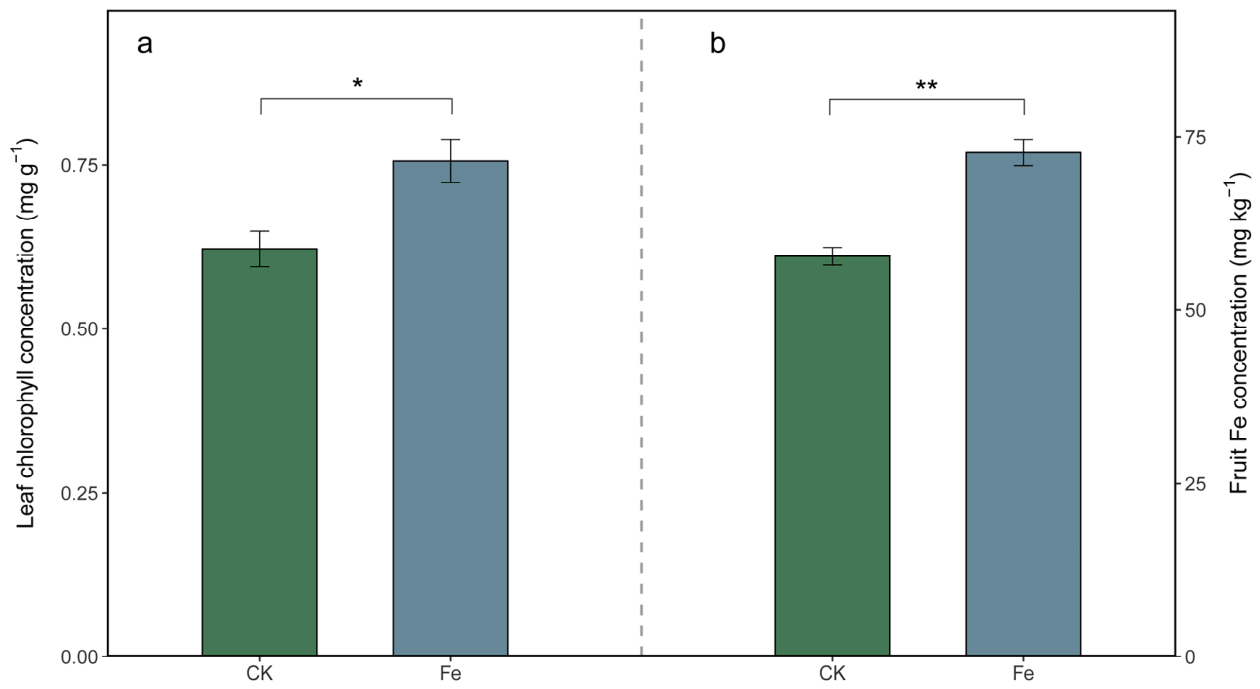
Fe application increased the chlorophyll content of functional leaves by an average of 22% compared to the CK (Figure 1a). Similarly, Fe application increased Fe concentration in apple flesh by 26% relative to the CK (Figure 1b).

3.2. Effect of Fe on Soluble Sugar and Anthocyanin Contents in Apple Flesh

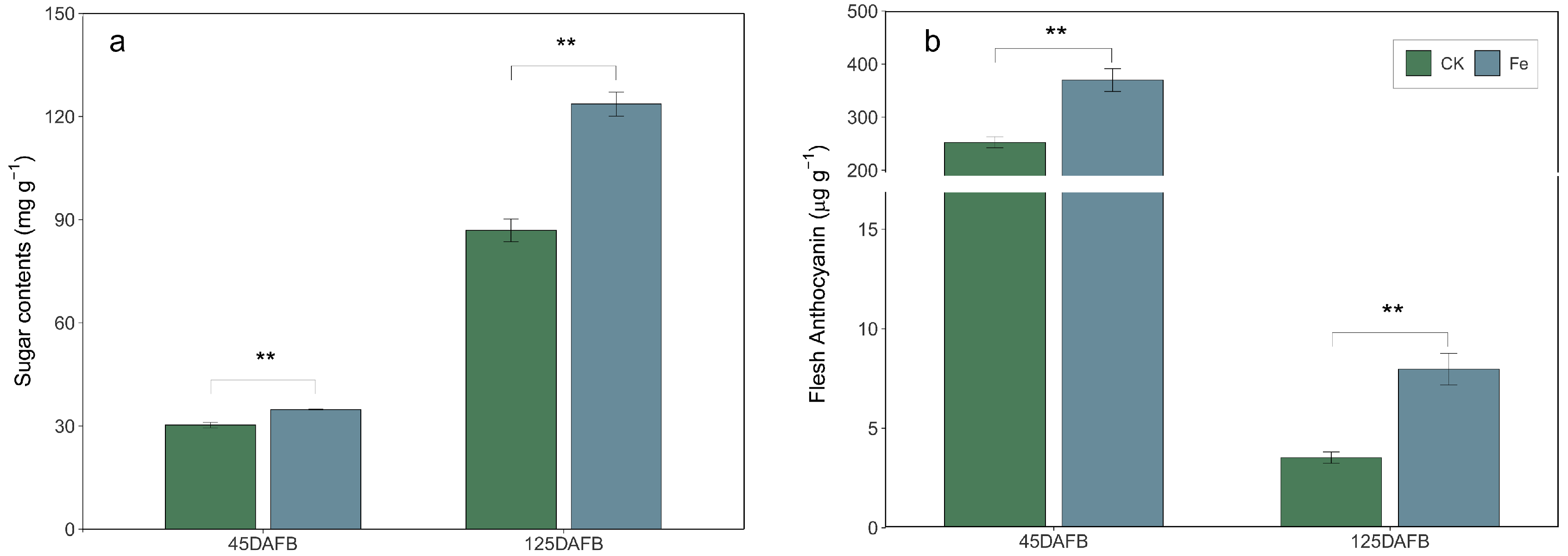
Fe application significantly increased anthocyanin and sugar contents in apple flesh (Figure 2). Compared with the CK, Fe treatment increased soluble sugar content by 15% and 42% at 45 and 125 DAFB, respectively. Similarly, anthocyanin concentration increased by 47% and 128% at the same stages.

3.3. Sequencing Quality Assessment

To characterize the transcriptional response to Fe treatment, six RNA-seq libraries, comprising three CK and three Fe-treated fruit flesh samples, were constructed and sequenced, generating 22.49–24.27 million raw paired-end reads per library (Table S2). After removal of adapters and low-quality sequences, 22.24–23.92 million clean read pairs were retained. The data exhibited high overall quality, with 98.07–99.19% valid bases, Q30 values of 96.37–97.14%, and a GC content of 46.62–46.80%. When mapped to the apple reference genome, the clean reads showed a total mapping rate of 94.79–95.07%, including 91.46–91.97% uniquely mapped and 3.10–3.37% multiple-mapped reads. The RNA-seq data showed sufficient quality for downstream differential expression and functional analyses.
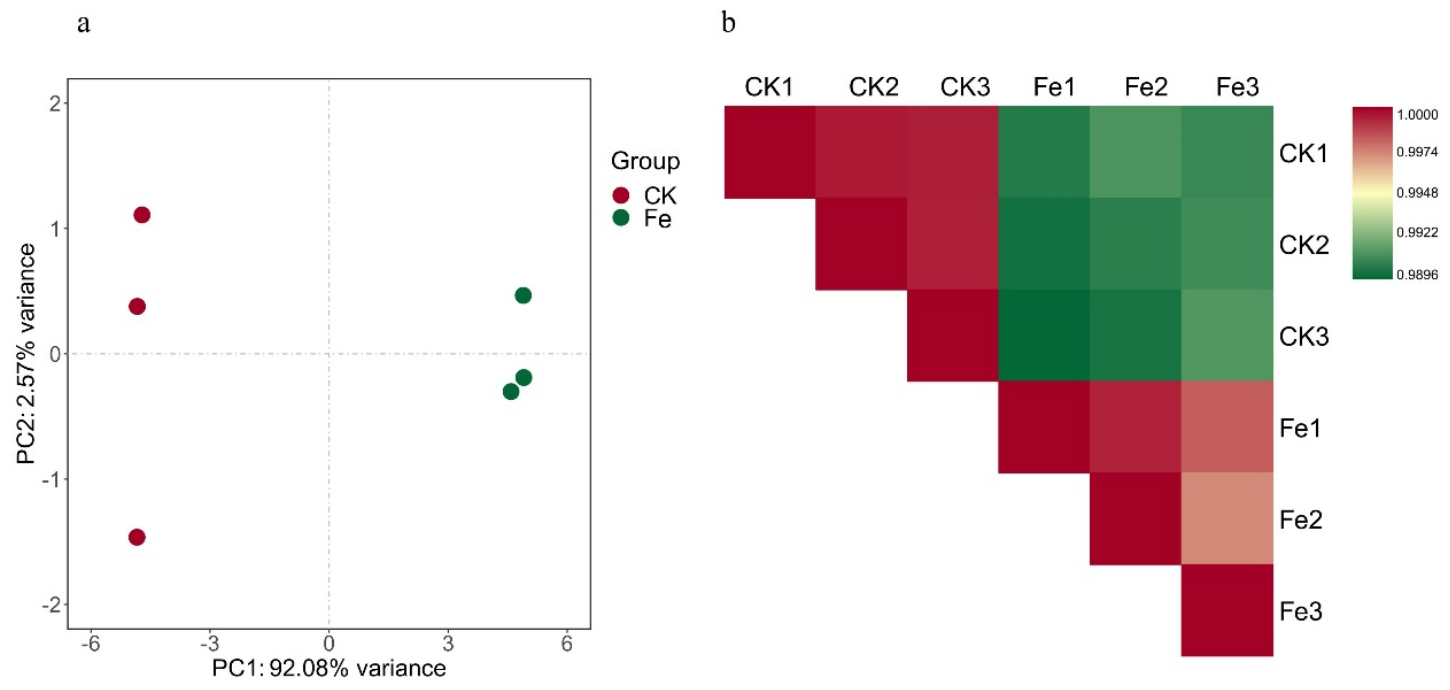
PCA showed clear separation between CK and Fe-treated samples (Figure 3a). Correlation analysis revealed high consistency among biological replicates within each group, confirming the reproducibility of the RNA-seq data (Figure 3b).

3.4. DEG Analysis

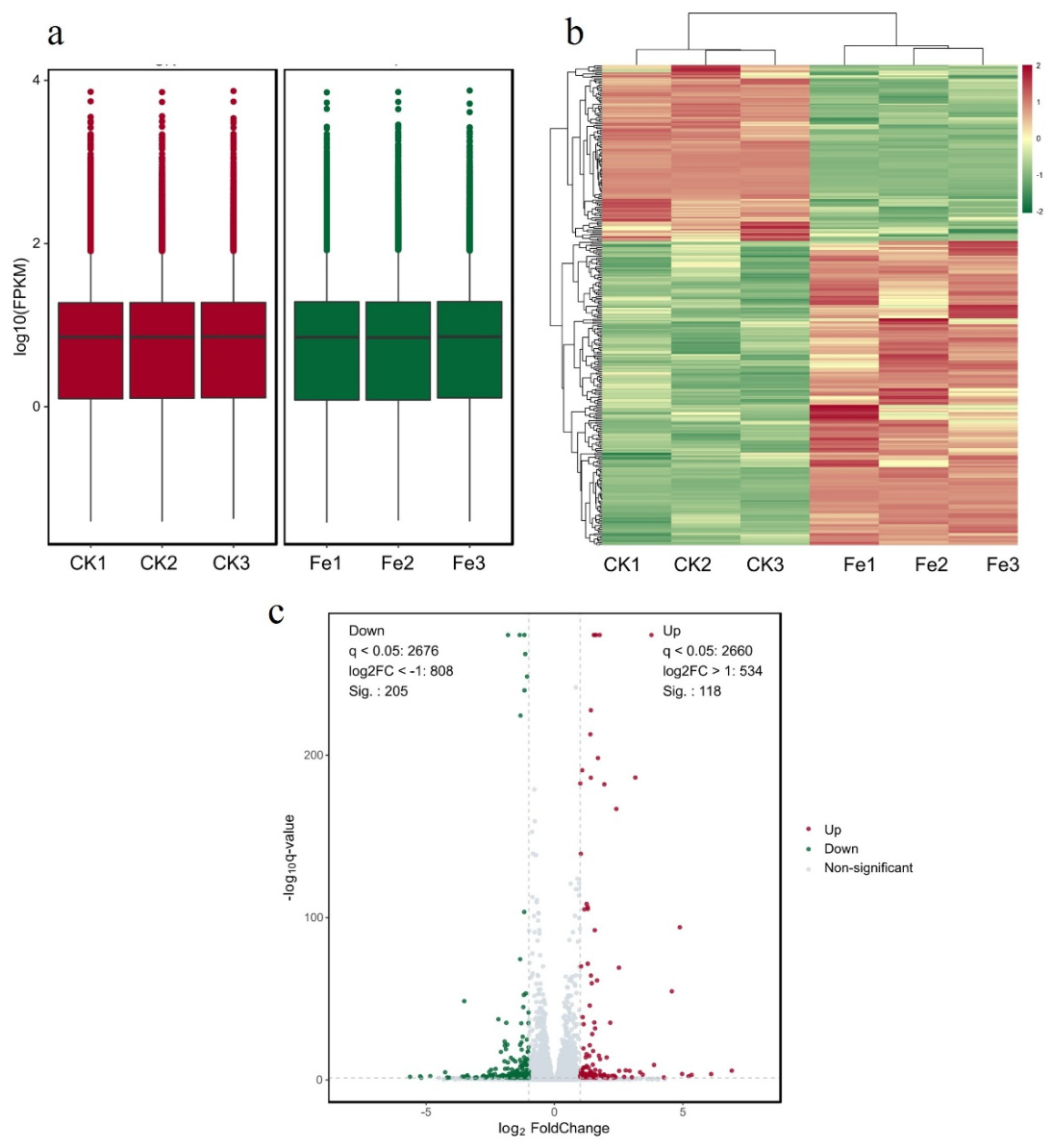
From the mapped reads, a total of 29,982 genes were detected, with log10 (FPKM) values ranging from −1.5 to 3.8 (Figure 4a). Among these, 323 DEGs were identified (Figure 4b). Compared to the CK, 118 DEGs were upregulated and 205 were downregulated under Fe treatment (Figure 4c).
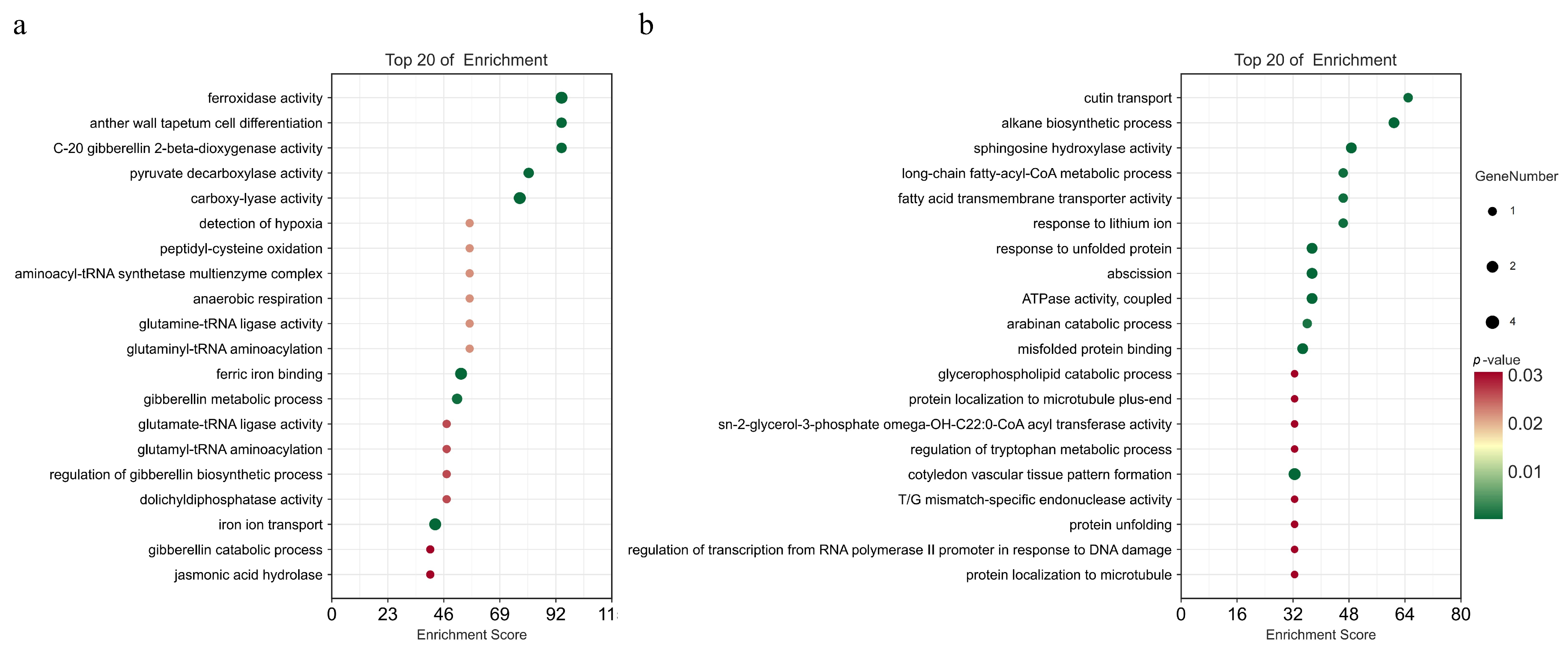
GO enrichment analysis identified 20 biological process terms and 22 molecular function terms (Figure 5). Within biological processes, “iron ion transport” and “arabinan catabolic process” were significantly enriched. Within molecular functions, “iron ion binding”, “ferroxidase activity”, and “ferric iron binding” were significantly enriched. Table S3 details the 20 most enriched KEGG pathways, including “plant–pathogen interaction”, “brassinosteroid biosynthesis”, “α-linolenic acid metabolism” (related to JA biosynthesis), and “glycolysis/gluconeogenesis”.

3.5. Analysis of DEGs Responsive to Fe Treatment

In response to fluctuations in Fe availability, plants modulate Fe uptake and transport to avoid toxicity or deficiency [30]. RNA-seq analysis identified 17 DEGs related to Fe binding (Table S4) and five upregulated DEGs related to Fe transport (Table 1).

3.6. Effect of Fe Treatment on Sugar Accumulation

Sugar content is one of the most important determinants of fruit quality and economic value. We identified eight sugar-related DEGs in apple flesh (Table 2), comprising three upregulated biosynthesis genes, two upregulated signaling genes, and three downregulated catabolic genes. Additionally, two highly expressed sugar transporter genes were upregulated (adjusted p < 0.001 and FC > 1.5).

3.7. Anthocyanin Biosynthesis and Regulation in Apple Flesh in Response to Fe Application

Transcriptomic analysis showed that six DEGs were associated with anthocyanin accumulation (Table 3), including four structural genes (4CL, CHI, F3H, and ANS), one methyltransferase gene involved in anthocyanin modification, and one MATE gene regulating anthocyanin transport, all of which were upregulated.
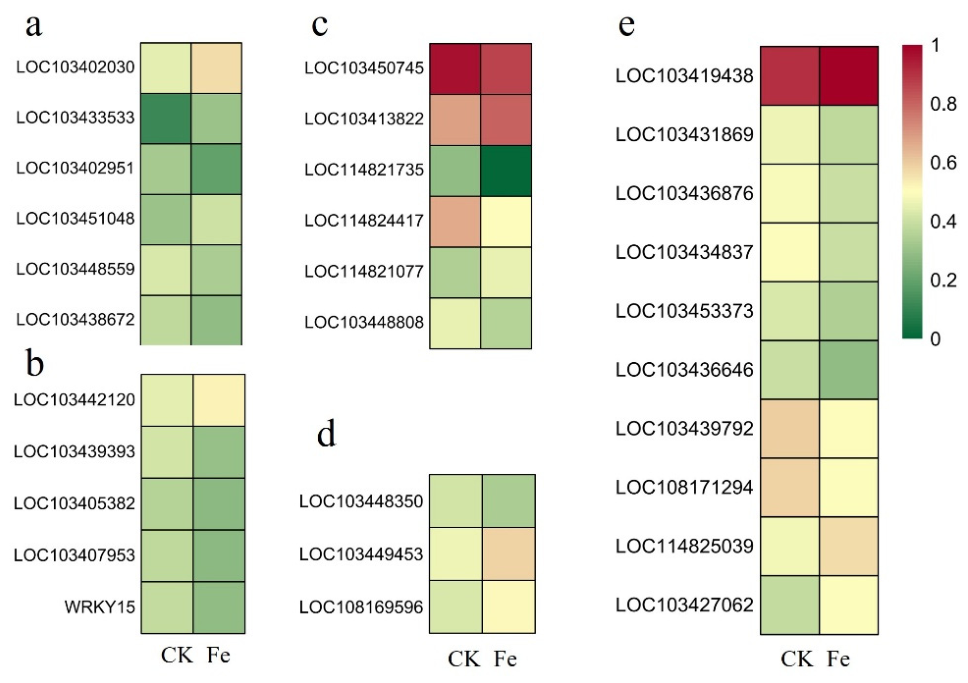
In this study, we identified 30 TFs responsive to Fe treatment (Figure 6 and Table S5), comprising six MYBs, three bZIPs, ten NACs, six bHLHs, and five WRKYs.

3.8. Effects of Fe Treatment on Phytohormone Biosynthesis and Signaling

In this study, 37 DEGs participating in the biosynthesis and signaling of plant hormones showed significant responses to Fe treatment (Table S6). Among them, eight DEGs encoding auxin (IAA)-responsive proteins were detected, including two upregulated and six downregulated genes. For ethylene (ET), two biosynthesis genes (ACO1 and UBA2A) were upregulated, and nine genes encoding ET-responsive proteins were detected in the signaling pathway (six upregulated and three downregulated). In the cytokinin (CTK) pathway, one zinc finger protein 5 (ZFP5) the involved in CTK signaling was upregulated. For gibberellin (GA) metabolism, three gibberellin 2-beta-dioxygenase (GA2OX) genes responsible for GA degradation were upregulated, while one NPF3.1 gene that mediates GA transport was downregulated. In addition, eight genes involved in abscisic acid (ABA) signaling responded to Fe treatment, including two upregulated and six downregulated genes. Regarding brassinosteroids (BRs), two cytochrome P450 90A1-like (CYP90A1) genes involved in BR biosynthesis were upregulated, whereas no DEGs were detected in the BR signaling pathway. In the jasmonic acid (JA) pathway, one upregulated jasmonate O-methyltransferase-like (JMT) gene and one downregulated linoleate 13S-lipoxygenase 2.1 (LOX2.1) gene involved in JA biosynthesis, as well as one TIFY5A-like (TIFY5A) gene modulating JA signaling, were detected.

3.9. Validation of DEGs Detected via RNA-Seq

Ten DEGs representing a range of expression levels were selected for RT-qPCR to verify the RNA-seq results. RNA-seq and RT-qPCR data were significantly correlated (R2 = 0.82, p < 0.001; Figure S1), supporting the reliability of the sequencing dataset.

4. Discussion

4.1. Fe Elevated Leaf Chlorophyll Content and Sugar Content in Fruit

Fe treatment significantly promoted chlorophyll accumulation (Figure 1a), consistent with the essential role of Fe in chloroplast function. Nearly 70% of cellular Fe is localized in chloroplasts [31], where it acts as a pivotal cofactor for key enzymes catalyzing chlorophyll biosynthesis [32]. Adequate Fe supply therefore promotes chlorophyll accumulation and is widely recognized to enhance photosynthetic capacity [33,34,35]. Consistent with this physiological role, it was observed that foliar Fe application increased chlorophyll levels by 34% and photosynthetic rate by 14% in apple leaves [36]. As is widely documented, leaves are the primary photosynthetic organs and thus the main source of photoassimilates supporting fruit sugar accumulation. Drawing on these findings, we hypothesized that the elevated chlorophyll levels in this study may promote photoassimilate production in leaves [37], thereby facilitating carbon allocation to developing fruits [38]. Accordingly, soluble sugar content in apple flesh was significantly higher in the Fe treatment (Figure 2a). Similar Fe-induced enhancements in sugar accumulation have also been confirmed in pomegranate [39], peach [40], and strawberry [41] following foliar Fe sprays, supporting a conserved role of Fe nutrition in regulating carbon assimilation and fruit sugar accumulation.

4.2. Fe Promotes Sugar Accumulation by Altering Sugar-Related Gene Expression

Sorbitol serves as the primary photoassimilate and the main form of carbon transport in apple, followed by sucrose [42,43,44]. Sugar transporters play central roles in the transmembrane allocation of photoassimilates. Previous studies have identified members of the Polyol/Monosaccharide Transporter (PLT) family as key transporters mediating sorbitol allocation in apple [45,46], particularly during phloem loading and unloading between source and sink tissues [47,48,49]. One PLT5 gene was upregulated in this study (Table 2). In Arabidopsis, AtPLT5 functions as a broad-spectrum H+ symporter that transports sorbitol [50]. We also observed significant upregulation of one ALS3 gene (Table 2). Although ALS3 has been suggested to participate in sucrose transport [51], its precise role remains unclear and requires further investigation.
After entering fruit parenchyma cells, nearly all sorbitol and approximately half of the sucrose are ultimately incorporated into the sucrose cycle after being transformed into fructose [52,53]. In our study, one fructokinase-1 (FRK1) gene was upregulated (Table 2). As a key gatekeeping enzyme, FRK1 phosphorylates fructose to fructose-6-phosphate (F6P) [54]. By accelerating this initial phosphorylation step, FRK1 commits fructose to downstream metabolic pathways and may alleviate feedback inhibition on upstream sugar transporters [55]. Consequently, increased FRK1 expression may help maintain the steep source–sink gradient required for fruit development, thereby reinforcing fruit sink strength and promoting sustained sugar influx [56,57]. In addition, two key sucrose-degrading genes, sucrose synthase (SUS2) and invertase (INV1), were significantly downregulated (Table 2). Reduced sucrose cleavage mediated by SUS2 and INV1 may limit carbon diversion toward structural biosynthesis and slow sucrose catabolism [58], thereby favoring source retention within the soluble sugar pool [56]. Collectively, enhanced sugar import (PLT5, ALS3), accelerated initial utilization (FRK1), and reduced catabolism (SUS2, INV1) reinforced a metabolic configuration that facilitated net soluble sugar accumulation in Fe-treated fruits [59].

4.3. Soluble Sugars May Promote Anthocyanin Accumulation Through Substrate Provision and/or Sugar Signaling

Fe application enhanced anthocyanin accumulation in apple flesh (Figure 2b), aligning with findings in grape [19,60], strawberry [26], and blueberry [61]. Sugars serve as precursors for anthocyanin biosynthesis and help stabilize anthocyanin molecules [62]. Numerous studies on apple have established a positive correlation between anthocyanin accumulation and sugar content [63,64]. Evidence from a 13C-labeling experiment further revealed that elevated endogenous sugar levels may regulate anthocyanin-related TFs through substrate supply and/or sugar signaling, thereby enhancing anthocyanin accumulation in apple fruit [65].
Consistent with this mechanism, two sugar-signaling genes (TPP4 and PFK3) were upregulated under Fe treatment in our RNA-seq dataset (Table 2). Additionally, several TFs implicated in anthocyanin regulation, including the MYB, bZIP, NAC, bHLH, and WRKY families, showed significant transcriptional responses (Figure 6). Previous studies in apple have suggested that the upregulation of TPP4 may relieve inhibition of sucrose synthesis and thereby benefit soluble sugar accumulation [66,67]. More importantly, PFK3 encodes a phosphofructokinase [68], which has been reported to enhance bHLH stability via phosphorylation, thereby promoting MYB-mediated activation of vacuolar membrane transporters involved in anthocyanin accumulation [69]. Taken together, we hypothesized that the Fe-induced increase in sugars may stimulate the anthocyanin biosynthetic network by serving as substrates and/or signals, thereby promoting anthocyanin accumulation.

4.4. Fe May Directly Regulate Structural Genes and TFs to Promote Anthocyanin Biosynthesis

Fe is an essential metal cofactor and structural component, playing a pivotal role in plant secondary metabolism. In this study, genes participating in Fe transport were upregulated (Table 1), and fruit Fe concentration was elevated (Figure 1b), which may reflect enhanced Fe translocation from leaves to fruit following foliar Fe application [70,71]. Furthermore, the structural genes F3H and ANS were upregulated (Table 3). F3H is a key enzyme in the early steps of anthocyanin biosynthesis and requires Fe as a cofactor to catalyze the conversion of flavanones to flavonols [61]. ANS is a 2-oxoglutarate Fe-dependent oxygenase that catalyzes the conversion of leucoanthocyanidins to colored anthocyanidins [72], and its catalytic activity depends on an Fe(II) center [73]. Therefore, increased Fe availability in fruit may support the catalytic functions of these enzymes, thereby facilitating anthocyanin biosynthesis.
Furthermore, our transcriptomic data revealed broad transcriptional responses in TF families related to anthocyanin accumulation (Figure 6 and Table S5). Specifically, six MYBs responded significantly to Fe treatment but differed from previously reported anthocyanin-related MYBs, highlighting the complexity and diversity of the regulatory network [74]. Notably, LOC103413822 may be functionally related to Fe, as its GO annotation included “iron ion binding” (Table S5). Therefore, further studies are required to investigate whether these MYBs participate in anthocyanin biosynthesis. Among the six identified bHLHs, LOC103433533 was directly annotated to the “anthocyanin-containing compound biosynthetic process”, while LOC103438672 showed high homology with AcbHLH42, a positive regulator of anthocyanin accumulation in kiwifruit [75]. Five WRKYs responded to Fe treatment, including WRKY75, which has been confirmed as a positive regulator of anthocyanin biosynthesis [76,77]. Ten NACs also responded significantly, and LOC103434837 was highly homologous to PpNAC.A59, an activator of the anthocyanin pathway in peach [78]. Three bZIPs were detected, among which ABI5 was upregulated. MdABI5 has been widely reported to positively regulate ABA-induced anthocyanin biosynthesis [79,80]. Collectively, we speculated that Fe may regulate anthocyanin biosynthesis by modulating structural genes and multiple candidate TFs, although further functional validation is required.

4.5. Phytohormones Play Positive Roles in Fe-Induced Anthocyanin Accumulation

In this study, ET and BRs may contribute to the Fe-induced increase in anthocyanin content in apple flesh. Transcriptome analysis revealed broad responses among genes associated with hormone biosynthesis and signaling under Fe treatment (Table S6). Notably, several key genes associated with ET and BR biosynthesis were significantly upregulated. Several researchers have found that pre-harvest application of ethephon enhanced both sugar and anthocyanin contents in apple [81,82]. Recent studies further revealed that elevated endogenous ET can promote anthocyanin accumulation in apples by directly regulating MYB [83] and bHLH [84] TFs. Similarly, 24-epibrassinolide has been reported to increase anthocyanin content by upregulating structural (MdANS), regulatory (MdMYBs, MdbHLHs), and transport (MdMATE) genes in apple [85]. Overall, our findings propose that Fe may stimulate ET and BR biosynthesis, which subsequently enhance anthocyanin accumulation through (i) increased endogenous sugar availability via modulation of sugar metabolism and (ii) activation of genes associated with anthocyanin biosynthesis.

4.6. Limitations

Although the present study combined physiological measurements with RNA-seq analysis, photosynthetic activity was not directly evaluated, and the profiles of individual sugars and anthocyanin compounds were not determined. Future studies integrating photosynthetic measurements with targeted sugar and anthocyanin profiling would help further validate the physiological and metabolic pathways suggested by the transcriptomic data.

5. Conclusions

This paper evaluated the effects of foliar Fe application on anthocyanin and sugar contents in apple flesh and performed a comprehensive transcriptome analysis. Based on our findings, we propose that Fe-induced anthocyanin accumulation may involve the following mechanisms: (i) foliar Fe application increases leaf chlorophyll content, which may favor soluble sugar accumulation in fruit. Elevated soluble sugars may act as substrates and/or signals to stimulate the expression of genes involved in anthocyanin biosynthesis, thereby promoting anthocyanin accumulation; (ii) Fe may enhance anthocyanin accumulation by modulating specific TFs and/or by functioning directly as a cofactor for key enzymes encoded by structural genes (e.g., F3H and ANS); and (iii) Fe may promote ET and BR biosynthesis, which could in turn facilitate anthocyanin accumulation by increasing sugar availability and/or inducing genes associated with anthocyanin biosynthesis. These findings expand our understanding of the regulatory network governing anthocyanin accumulation in apple. Although the specific biological functions of the DEGs identified here require further investigation, our results offer new insights into the potential for foliar Fe application to enhance fruit coloration and quality.

Supplementary Materials

The following supporting information can be downloaded at: https://www.mdpi.com/article/10.3390/horticulturae12070841/s1, Figure S1: Correlation between the RNA-Seq and qRT-PCR data; Table S1: Primer for qPCR; Table S2: Summary of sequencing data; Table S3: Enriched KEGG pathways; Table S4: DEGs associated with Fe binding; Table S5: TFs responsive to Fe treatment; Table S6: DEGs involved in plant hormone biosynthesis and signaling.

Author Contributions

Conceptualization, L.Z., T.Z. and J.Z.; methodology, L.Z., M.S., J.G. and M.W.; formal analysis, L.Z., W.Z. and J.G.; investigation, M.S., T.Z., M.W. and J.Z.; visualization, J.G.; funding acquisition, L.Z. and J.Z.; project administration, M.W.; writing—original draft preparation, W.Z.; writing—review and editing, W.Z., L.Z. and S.G. All authors have read and agreed to the published version of the manuscript.

Funding

This research was funded by the Scientific Research Foundation of Xuzhou Academy of Agricultural Sciences (Funder: Xuzhou Academy of Agricultural Sciences; Grant number: JC2024006) and the earmarked fund for China Agriculture Research System (Funder: Ministry of Agriculture and Rural Affairs of China; Grant number: CARS-27). The APC was funded by JC2024006.

Data Availability Statement

All RNA-Seq raw data files are uploaded to NGDC (National Genomics Data Center). The accession number is PRJCA068197.

Acknowledgments

The graphical abstract was created with BioRender.

Conflicts of Interest

The authors declare that they have no known competing financial interests or personal relationships that could have appeared to influence the work reported in this paper.

References

  1. Allan, A.C.; Hellens, R.P.; Laing, W.A. Myb Transcription Factors That Colour Our Fruit. Trends Plant Sci. 2008, 13, 99–102. [Google Scholar] [CrossRef] [PubMed]
  2. Rouholamin, S.; Zahedi, B.; Nazarian-Firouzabadi, F.; Saei, A. Expression Analysis of Anthocyanin Biosynthesis Key Regulatory Genes Involved in Pomegranate (Punica granatum L.). Sci. Hortic. 2015, 186, 84–88. [Google Scholar] [CrossRef]
  3. Li, D.; Wang, P.; Luo, Y.; Zhao, M.; Chen, F. Health Benefits of Anthocyanins and Molecular Mechanisms: Update from Recent Decade. Crit. Rev. Food Sci. Nutr. 2017, 57, 1729–1741. [Google Scholar] [CrossRef] [PubMed]
  4. Honda, C.; Kotoda, N.; Wada, M.; Kondo, S.; Kobayashi, S.; Soejima, J.; Zhang, Z.; Tsuda, T.; Moriguchi, T. Anthocyanin Biosynthetic Genes Are Coordinately Expressed During Red Coloration in Apple Skin. Plant Physiol. Biochem. 2002, 40, 955–962. [Google Scholar] [CrossRef]
  5. Telias, A.; Lin-Wang, K.; Stevenson, D.E.; Cooney, J.M.; Hellens, R.P.; Allan, A.C.; Hoover, E.E.; Bradeen, J.M. Apple Skin Patterning is Associated with Differential Expression of Myb10. BMC Plant Biol. 2011, 11, 93. [Google Scholar] [CrossRef] [PubMed]
  6. Takos, M.A.; Robinson, P.S.; Walker, R.A. Transcriptional Regulation of the Flavonoid Pathway in the Skin of Dark-Grown ‘Cripps’ Red’ apples in Response to Sunlight. J. Hortic. Sci. Biotechnol. 2006, 81, 735–744. [Google Scholar] [CrossRef]
  7. Sun, Q.; Jiang, S.; Zhang, T.; Xu, H.; Fang, H.; Zhang, J.; Su, M.; Wang, Y.; Zhang, Z.; Wang, N. Apple Nac Transcription Factor Mdnac52 Regulates Biosynthesis of Anthocyanin and Proanthocyanidin through Mdmyb9 and Mdmyb11. Plant Sci. 2019, 289, 110286. [Google Scholar] [CrossRef] [PubMed]
  8. Liu, W.; Wang, Y.; Yu, L.; Jiang, H.; Guo, Z.; Xu, H.; Jiang, S.; Fang, H.; Zhang, J.; Su, M. Mdwrky11 Participates in Anthocyanin Accumulation in Red-Fleshed Apples by Affecting Myb Transcription Factors and the Photoresponse Factor Mdhy5. J. Agric. Food Chem. 2019, 67, 8783–8793. [Google Scholar] [CrossRef] [PubMed]
  9. An, J.; Qu, F.; Yao, J.; Wang, X.; You, C.; Wang, X.; Hao, Y. The Bzip Transcription Factor Mdhy5 Regulates Anthocyanin Accumulation and Nitrate Assimilation in Apple. Hortic. Res. 2017, 4, 17023. [Google Scholar] [CrossRef] [PubMed]
  10. Gomez, C.; Terrier, N.; Torregrosa, L.; Vialet, S.; Fournier-Level, A.; Verries, C.; Souquet, J.-M.; Mazauric, J.-P.; Klein, M.; Cheynier, V. Grapevine Mate-Type Proteins Act as Vacuolar H+-Dependent Acylated Anthocyanin Transporters. Plant Physiol. 2009, 150, 402–415. [Google Scholar] [CrossRef] [PubMed]
  11. Ren, Y.; Zhao, Q.; Yang, Y.; Zhang, T.; Wang, X.; You, C.; Hao, Y. The Apple 14-3-3 Protein Mdgrf11 Interacts with the Btb Protein Mdbt2 to Regulate Nitrate Deficiency-Induced Anthocyanin Accumulation. Hortic. Res. 2021, 8, 22. [Google Scholar] [CrossRef] [PubMed]
  12. Liu, X.; An, X.; Liu, X.; Hu, D.; Wang, X.; You, C.; Hao, Y. Mdsnrk1. 1 Interacts with Mdjaz18 to Regulate Sucrose-Induced Anthocyanin and Proanthocyanidin Accumulation in Apple. J. Exp. Bot. 2017, 68, 2977–2990. [Google Scholar] [CrossRef] [PubMed]
  13. Vimolmangkang, S.; Zheng, D.; Han, Y.; Khan, M.A.; Soria-Guerra, R.E.; Korban, S.S. Transcriptome Analysis of the Exocarp of Apple Fruit Identifies Light-Induced Genes Involved in Red Color Pigmentation. Gene 2014, 534, 78–87. [Google Scholar] [CrossRef] [PubMed]
  14. Xie, X.; Li, S.; Zhang, R.; Zhao, J.; Chen, Y.; Zhao, Q.; Yao, Y.; You, C.; Zhang, X.; Hao, Y. The Bhlh Transcription Factor Mdbhlh3 Promotes Anthocyanin Accumulation and Fruit Colouration in Response to Low Temperature in Apples. Plant Cell Environ. 2012, 35, 1884–1897. [Google Scholar] [CrossRef] [PubMed]
  15. An, J.; Yao, J.; Xu, R.; You, C.; Wang, X.; Hao, Y. Apple Bzip Transcription Factor Mdbzip44 Regulates Abscisic Acid-Promoted Anthocyanin Accumulation. Plant Cell Environ. 2018, 41, 2678–2692. [Google Scholar] [CrossRef] [PubMed]
  16. Schmidt, W.; Thomine, S.; Buckhout, T.J. Editorial: Iron Nutrition and Interactions in Plants. Front. Plant Sci. 2020, 10, 1670. [Google Scholar] [CrossRef] [PubMed]
  17. Àlvarez-Fernàndez, A.; Abadía, J.; Abadía, A. Iron Deficiency, Fruit Yield and Fruit Quality. In Iron Nutrition in Plants and Rhizospheric Microorganisms; Barton, L.L., Abadia, J., Eds.; Springer: Dordrecht, The Netherlands, 2006; pp. 85–101. [Google Scholar]
  18. Fida, F.; Khan, I.A.; Gul, M.; Ahmad, S.; Ahmad, N.; Saleem, G.; Moaiz, A.; Alam, A.; Ali, S.; Rehman, A. Iron and Sulfur Foliar Application: The Key to Enhance Peach (Prunus persica L.) Fruit Yield and Quality. Sarhad J. Agric. 2025, 41, 1375–1386. [Google Scholar] [CrossRef]
  19. Wang, Y.; Ma, H.; Fu, X.; Wang, H.; Wang, R. Optimizing Grape Growth, Berry Quality and Phenolic Compounds with Foliar Co-Application of Iron and Calcium. S. Afr. J. Bot. 2024, 169, 146–154. [Google Scholar] [CrossRef]
  20. Chen, L.; Smith, B.R.; Cheng, L. Co2 Assimilation, Photosynthetic Enzymes, and Carbohydrates Ofconcord’grape Leaves in Response to Iron Supply. J. Am. Soc. Hortic. Sci. 2004, 129, 738–744. [Google Scholar] [CrossRef]
  21. Zheng, Y.; Tian, L.; Liu, H.; Pan, Q.; Zhan, J.; Huang, W. Sugars Induce Anthocyanin Accumulation and Flavanone 3-Hydroxylase Expression in Grape Berries. Plant Growth Regul. 2009, 58, 251–260. [Google Scholar] [CrossRef]
  22. Ahammed, G.J.; Yang, Y. Anthocyanin-mediated arsenic tolerance in plants. Environ. Pollut. 2022, 292, 118475. [Google Scholar] [CrossRef] [PubMed]
  23. Shi, P.; Song, C.; Chen, H.; Duan, B.; Zhang, Z.; Meng, J. Foliar Applications of Iron Promote Flavonoids Accumulation in Grape Berry of Vitis vinifera Cv. Merlot Grown in the Iron Deficiency Soil. Food Chem. 2018, 253, 164–170. [Google Scholar] [CrossRef] [PubMed]
  24. Loewus, F.A. Improvement in Anthrone Method for Determination of Carbohydrates. Anal. Chem. 1952, 24, 219. [Google Scholar] [CrossRef]
  25. Tachibana, N.; Kimura, Y.; Ohno, T. Examination of molecular mechanism for the enhanced thermal stability of anthocyanins by metal cations and polysaccharides. Food Chem. 2014, 143, 452–458. [Google Scholar] [CrossRef]
  26. Rezaei, S.; Amiri, M.; Bahari, A.; Razavi, F.; Soleimani Aghdam, M.; Beyrami, H. Effect of Foliar Iron Application on Anthocyanin Genes Expression During of Developmental Stages in Strawberry Fruit. J. Plant Res. (Iran. J. Biol.) 2022, 35, 728–744. [Google Scholar]
  27. Xia, P.; Chen, M.; Chen, L.; Yang, Y.; Ma, L.; Bi, P.; Tang, S.; Luo, Q.; Chen, J.; Chen, H.; et al. Deciphering the anthocyanin metabolism gene network in tea plant (Camellia sinensis) through structural equation modeling. BMC Genom. 2024, 25, 1093. [Google Scholar] [CrossRef] [PubMed]
  28. Taghavi, T.; Patel, H.; Rafie, R. Comparing Ph Differential and Methanol-Based Methods for Anthocyanin Assessments of Strawberries. Food Sci. Nutr. 2022, 10, 2123–2131. [Google Scholar] [CrossRef] [PubMed]
  29. Liu, X.; Zhao, J.; Xue, L.; Zhao, T.; Ding, W.; Han, Y.; Ye, H. A Comparison of Transcriptome Analysis Methods with Reference Genome. BMC Genom. 2022, 23, 232. [Google Scholar] [CrossRef] [PubMed]
  30. Jeong, J.; Guerinot, M.L. Homing in on Iron Homeostasis in Plants. Trends Plant Sci. 2009, 14, 280–285. [Google Scholar] [CrossRef] [PubMed]
  31. Zhang, J.; You, L.; Liu, H.; Luo, S.; Li, R.; Xue, S.; Lai, X.; Hu, H. Fe-Deficiency-Induced Chlorosis 1 is Essential for Chloroplast Iron Transport and Homeostasis under Continuous Light Conditions in Arabidopsis. Cell Rep. 2025, 44, 115942. [Google Scholar] [CrossRef] [PubMed]
  32. ASPB. Plant Nutrition 3: Micronutrients and Metals. Plant Cell 2015, 27, 1–20. [Google Scholar] [CrossRef]
  33. Chereskin, B.M.; Castelfranco, P.A. Effects of Iron and Oxygen on Chlorophyll Biosynthesis 1: Ii. Observations on the Biosynthetic Pathway in Isolated Etiochloroplasts. Plant Physiol. 1982, 69, 112–116. [Google Scholar] [CrossRef] [PubMed]
  34. Nishio, J.N.; Terry, N. Iron Nutrition-Mediated Chloroplast Development. Plant Physiol. 1983, 71, 688–691. [Google Scholar] [CrossRef] [PubMed]
  35. Gao, D.; Ran, C.; Zhang, Y.; Wang, X.; Lu, S.; Geng, Y.; Guo, L.; Shao, X. Effect of Different Concentrations of Foliar Iron Fertilizer on Chlorophyll Fluorescence Characteristics of Iron-Deficient Rice Seedlings under Saline Sodic Conditions. Plant Physiol. Biochem. 2022, 185, 112–122. [Google Scholar] [CrossRef] [PubMed]
  36. Lu, Y.; Cheng, Y.; Lan, G.; Liang, G.; Bian, Z.; Ma, Z.; Mao, J.; Chen, B. Foliar Application of Nano Zero-Valent Iron Improves the Fruit Quality of ‘Yanfu No.6’ Apple. BMC Plant Biol. 2025, 25, 424. [Google Scholar] [CrossRef] [PubMed]
  37. Liu, Y.; Qi, H.; Bai, C.; Qi, M.; Xu, C.; Hao, J.; Li, Y.; Li, T. Grafting Helps Improve Photosynthesis and Carbohydrate Metabolism in Leaves of Muskmelon. Int. J. Biol. Sci. 2011, 7, 1161. [Google Scholar] [CrossRef] [PubMed]
  38. Cutolo, E.A.; Guardini, Z.; Dall’Osto, L.; Bassi, R. A Paler Shade of Green: Engineering Cellular Chlorophyll Content to Enhance Photosynthesis in Crowded Environments. New Phytol. 2023, 239, 1567–1583. [Google Scholar] [CrossRef] [PubMed]
  39. Davarpanah, S.; Tehranifar, A.; Zarei, M.; Aran, M.; Davarynejad, G.; Abadía, J. Early Season Foliar Iron Fertilization Increases Fruit Yield and Quality in Pomegranate. Agronomy 2020, 10, 832. [Google Scholar] [CrossRef]
  40. Song, Z.; Ma, R.; Zhang, B.; Guo, S.; Yu, M.; Korir, N.K. Differential Expression of Iron–Sulfur Cluster Biosynthesis Genes During Peach Fruit Development and Ripening, and Their Response to Iron Compound Spraying. Sci. Hortic. 2016, 207, 73–81. [Google Scholar] [CrossRef]
  41. Duralijaa, B.; Hasanovića, A.; Lazarevića, B.; Babojelića, M.S.; Markovinovićb, A.B.; Putnikc, P.; Ercislid, S.; Kovačevićb, D.B. Foliar Iron Application Improves Fruit Quality in Soilless Cultivation of the Short-Day Strawberry Cultivar‘joly’. In Proceedings of the Book of Abstracts 4th International Strawberry Congress, Antwerp, Belgium, 21–24 September 2022; p. 128. [Google Scholar]
  42. Cheng, L.; Zhou, R.; Reidel, E.J.; Sharkey, T.D.; Dandekar, A.M. Antisense Inhibition of Sorbitol Synthesis Leads to up-Regulation of Starch Synthesis without Altering Co2 Assimilation in Apple Leaves. Planta 2005, 220, 767–776. [Google Scholar] [CrossRef] [PubMed]
  43. Li, M.; Li, P.; Ma, F.; Dandekar, A.M.; Cheng, L. Sugar Metabolism and Accumulation in the Fruit of Transgenic Apple Trees with Decreased Sorbitol Synthesis. Hortic. Res. 2018, 5, 60. [Google Scholar] [CrossRef] [PubMed]
  44. Escobar-Gutiérrez, A.J.; Gaudillère, J.P. Carbon Partitioning in Source Leaves of Peach, a Sorbitol-Synthesizing Species, is Modified by Photosynthetic Rate. Physiol. Plant. 1997, 100, 353–360. [Google Scholar] [CrossRef]
  45. Yang, F.; Luo, J.; Guo, W.; Zhang, Y.; Liu, Y.; Yu, Z.; Sun, Y.; Li, M.; Ma, F.; Zhao, T. Origin and Early Divergence of Tandem Duplicated Sorbitol Transporter Genes in Rosaceae: Insights from Evolutionary Analysis of the Sot Gene Family in Angiosperms. Plant J. 2024, 117, 856–872. [Google Scholar] [CrossRef] [PubMed]
  46. Slewinski, T.L. Diverse Functional Roles of Monosaccharide Transporters and Their Homologs in Vascular Plants: A Physiological Perspective. Mol. Plant 2011, 4, 641–662. [Google Scholar] [CrossRef] [PubMed]
  47. Reidel, E.J.; Rennie, E.A.; Amiard, V.; Cheng, L.; Turgeon, R. Phloem Loading Strategies in Three Plant Species That Transport Sugar Alcohols. Plant Physiol. 2009, 149, 1601–1608. [Google Scholar] [CrossRef] [PubMed]
  48. Yu, C.; Cheng, H.; Cheng, R.; Qi, K.; Gu, C.; Zhang, S. Expression Analysis of Sorbitol Transporters in Pear Tissues Reveals That Pbsot6/20 is Associated with Sorbitol Accumulation in Pear Fruits. Sci. Hortic. 2019, 243, 595–601. [Google Scholar] [CrossRef]
  49. Kong, W.; Sun, T.; Zhang, C.; Qiang, Y.; Li, Y. Micro-Evolution Analysis Reveals Diverged Patterns of Polyol Transporters in Seven Gramineae Crops. Front. Genet. 2020, 11, 565. [Google Scholar] [CrossRef] [PubMed]
  50. Klepek, Y.-S.; Geiger, D.; Stadler, R.; Klebl, F.; Landouar-Arsivaud, L.; Lemoine, R.m.; Hedrich, R.; Sauer, N. Arabidopsis Polyol Transporter5, a New Member of the Monosaccharide Transporter-Like Superfamily, Mediates H+-Symport of Numerous Substrates, Including Myo-Inositol, Glycerol, and Ribose. Plant Cell 2005, 17, 204–218. [Google Scholar] [CrossRef] [PubMed]
  51. Belal, R.; Tang, R.; Li, Y.; Mabrouk, Y.; Badr, E.; Luan, S. An Abc Transporter Complex Encoded by Aluminum Sensitive 3 and Nap3 is Required for Phosphate Deficiency Responses in Arabidopsis. Biochem. Biophys. Res. Commun. 2015, 463, 18–23. [Google Scholar] [CrossRef] [PubMed]
  52. Yamada, K.; Oura, Y.; Mori, H.; Yamaki, S. Cloning of Nad-Dependent Sorbitol Dehydrogenase from Apple Fruit and Gene Expression. Plant Cell Physiol. 1998, 39, 1375–1379. [Google Scholar] [CrossRef] [PubMed]
  53. Zhou, R.; Cheng, L.; Dandekar, A.M. Down-Regulation of Sorbitol Dehydrogenase and up-Regulation of Sucrose Synthase in Shoot Tips of the Transgenic Apple Trees with Decreased Sorbitol Synthesis. J. Exp. Bot. 2006, 57, 3647–3657. [Google Scholar] [CrossRef] [PubMed]
  54. Granot, D.; Kelly, G.; Stein, O.; David-Schwartz, R. Substantial Roles of Hexokinase and Fructokinase in the Effects of Sugars on Plant Physiology and Development. J. Exp. Bot. 2013, 65, 809–819. [Google Scholar] [CrossRef] [PubMed]
  55. Yang, J.; Zhu, L.; Cui, W.; Zhang, C.; Li, D.; Ma, B.; Cheng, L.; Ruan, Y.-L.; Ma, F.; Li, M. Increased Activity of Mdfrk2, a High-Affinity Fructokinase, Leads to Upregulation of Sorbitol Metabolism and Downregulation of Sucrose Metabolism in Apple Leaves. Hortic. Res. 2018, 5, 71. [Google Scholar] [CrossRef] [PubMed]
  56. Li, M.; Feng, F.; Cheng, L. Expression Patterns of Genes Involved in Sugar Metabolism and Accumulation During Apple Fruit Development. PLoS ONE 2012, 7, e33055. [Google Scholar] [CrossRef] [PubMed]
  57. Li, M.; Li, D.; Feng, F.; Zhang, S.; Ma, F.; Cheng, L. Proteomic Analysis Reveals Dynamic Regulation of Fruit Development and Sugar and Acid Accumulation in Apple. J. Exp. Bot. 2016, 67, 5145–5157. [Google Scholar] [CrossRef] [PubMed]
  58. Li, Y.; Liang, G.; Nai, G.; Lu, S.; Ma, W.; Ma, Z.; Mao, J.; Chen, B. Vasus2 Confers Cold Tolerance in Transgenic Tomato and Arabidopsis by Regulation of Sucrose Metabolism and Ros Homeostasis. Plant Cell Rep. 2023, 42, 505–520. [Google Scholar] [CrossRef] [PubMed]
  59. Tao, X.; Zhu, R.-X.; Gong, X.; Wu, L.; Zhang, S.-L.; Zhao, J.-R.; Zhang, H.-P. Fructokinase Gene Ppyfrk5 Plays an Important Role in Sucrose Accumulation of Pear Fruit. Acta Hortic. Sin. 2022, 49, 1429–1440. [Google Scholar] [CrossRef]
  60. Shi, P.; Li, B.; Chen, H.; Song, C.; Meng, J.; Xi, Z.; Zhang, Z. Iron Supply Affects Anthocyanin Content and Related Gene Expression in Berries of Vitis Vinifera Cv. Cabernet Sauvignon. Molecules 2017, 22, 283. [Google Scholar] [CrossRef] [PubMed]
  61. Michel, L.; Peña, Á.; Pastenes, C.; Berríos, P.; Rombolà, A.D.; Covarrubias, J.I. Sustainable Strategies to Prevent Iron Deficiency, Improve Yield and Berry Composition in Blueberry (Vaccinium spp.). Front. Plant Sci. 2019, 10, 255. [Google Scholar] [CrossRef] [PubMed]
  62. Smeekens, S. Sugar-Induced Signal Transduction. Annu. Rev. Plant Biol. 2000, 51, 49–81. [Google Scholar] [CrossRef] [PubMed]
  63. Li, X.; Hou, J.; Zhang, G.; Liu, R.; Yang, Y.; Hu, Y.; Lin, J. Comparison of Anthocyanin Accumulation and Morpho-Anatomical Features in Apple Skin During Color Formation at Two Habitats. Sci. Hortic. 2004, 99, 41–53. [Google Scholar] [CrossRef]
  64. Xu, H.; Zou, Q.; Yang, G.; Jiang, S.; Fang, H.; Wang, Y.; Zhang, J.; Zhang, Z.; Wang, N.; Chen, X. Mdmyb6 Regulates Anthocyanin Formation in Apple Both through Direct Inhibition of the Biosynthesis Pathway and through Substrate Removal. Hortic. Res. 2020, 7, 72. [Google Scholar] [CrossRef] [PubMed]
  65. Wang, F.; Sha, J.; Chen, Q.; Xu, X.; Zhu, Z.; Ge, S.; Jiang, Y. Exogenous Abscisic Acid Regulates Distribution of 13C and 15N and Anthocyanin Synthesis in ‘Red Fuji’ Apple Fruit under High Nitrogen Supply. Front. Plant Sci. 2020, 10, 1738. [Google Scholar] [CrossRef] [PubMed]
  66. Kerbler, S.M.-L.; Armijos-Jaramillo, V.; Lunn, J.E.; Vicente, R. The Trehalose 6-Phosphate Phosphatase Family in Plants. Physiol. Plant. 2023, 175, e14096. [Google Scholar] [CrossRef] [PubMed]
  67. Zhang, W.; Lunn, J.E.; Feil, R.; Wang, Y.; Zhao, J.; Tao, H.; Guo, Y.; Zhao, Z. Trehalose 6-Phosphate Signal is Closely Related to Sorbitol in Apple (Malus domestica Borkh. Cv. Gala). Biol. Open 2017, 6, 260–268. [Google Scholar] [CrossRef] [PubMed]
  68. Sur, I.; Lobo, Z.; Maitra, P. Analysis of Pfk3—A Gene Involved in Particulate Phosphofructokinase Synthesis Reveals Additional Functions of Tps2 in Saccharomyces Cerevisiae. Yeast 1994, 10, 199–209. [Google Scholar] [CrossRef] [PubMed]
  69. Zhu, B.; Guo, P.; Shen, M.; Zhang, Y.; He, F.; Yang, L.; Gao, X.; Hu, Y.; Xiao, J. Transcriptome and Metabolome Analyses Reveal Improvement in Blueberry Fruit Quality by Interspecific Grafting. Trees 2024, 38, 65–78. [Google Scholar] [CrossRef]
  70. Malhotra, H.; Pandey, R.; Sharma, S.; Bindraban, P.S. Foliar Fertilization: Possible Routes of Iron Transport from Leaf Surface to Cell Organelles. Arch. Agron. Soil Sci. 2020, 66, 279–300. [Google Scholar] [CrossRef]
  71. Fuentes, M.; Bacaicoa, E.; Rivero, M.; Zamarreño, Á.M.; García-Mina, J.M. Complementary Evaluation of Iron Deficiency Root Responses to Assess the Effectiveness of Different Iron Foliar Applications for Chlorosis Remediation. Front. Plant Sci. 2018, 9, 351. [Google Scholar] [CrossRef] [PubMed]
  72. Zhang, H.; Zhao, X.; Zhang, J.; Yang, B.; Yu, Y.; Liu, T.; Nie, B.; Song, B. Functional Analysis of an Anthocyanin Synthase Gene Stans in Potato. Sci. Hortic. 2020, 272, 109569. [Google Scholar] [CrossRef]
  73. Saito, K.; Kobayashi, M.; Gong, Z.; Tanaka, Y.; Yamazaki, M. Direct Evidence for Anthocyanidin Synthase as a 2-Oxoglutarate-Dependent Oxygenase: Molecular Cloning and Functional Expression of Cdna from a Red Forma of Perilla Frutescens. Plant J. 1999, 17, 181–189. [Google Scholar] [CrossRef] [PubMed]
  74. Caramanico, L.; Rustioni, L.; De Lorenzis, G. Iron Deficiency Stimulates Anthocyanin Accumulation in Grapevine Apical Leaves. Plant Physiol. Biochem. 2017, 119, 286–293. [Google Scholar] [CrossRef] [PubMed]
  75. Wang, L.; Tang, W.; Hu, Y.; Zhang, Y.; Sun, J.; Guo, X.; Lu, H.; Yang, Y.; Fang, C.; Niu, X.; et al. A Myb/Bhlh Complex Regulates Tissue-Specific Anthocyanin Biosynthesis in the Inner Pericarp of Red-Centered Kiwifruit Actinidia chinensis Cv. Hongyang. Plant J. 2019, 99, 359–378. [Google Scholar] [CrossRef] [PubMed]
  76. An, J.; Li, H.l.; Liu, Z.y.; Wang, D.; You, C.x.; Han, Y. The E3 Ubiquitin Ligase Sina1 and the Protein Kinase Bin2 Cooperatively Regulate Phr1 in Apple Anthocyanin Biosynthesis. J. Integr. Plant Biol. 2023, 65, 2175–2193. [Google Scholar] [CrossRef] [PubMed]
  77. Su, M.; Zuo, W.; Wang, Y.; Liu, W.; Zhang, Z.; Wang, N.; Chen, X. The Wkry Transcription Factor Mdwrky75 Regulates Anthocyanins Accumulation in Apples (Malus domestica). Funct. Plant Biol. 2022, 49, 799–809. [Google Scholar] [CrossRef] [PubMed]
  78. Zhang, L.; Zhang, J.; Wei, B.; Li, Y.; Fang, X.; Zhong, Y.; Wang, L. Transcription Factor Mdnac33 is Involved in Ala-Induced Anthocyanin Accumulation in Apples. Plant Sci. 2024, 339, 111949. [Google Scholar] [CrossRef] [PubMed]
  79. Deng, M.; Zhao, Q.; Pang, H.; Yu, F.; Miao, B.; Yan, J.; Wang, J.; Fu, J.; Song, X.; Ma, F.; et al. Abscisic Acid Insensitive 5 Confers Cold Tolerance by Regulating Mdcbf3 and Mdjaz1/3 in Apple. Plant Physiol. 2025, 200, kiaf612. [Google Scholar] [CrossRef] [PubMed]
  80. Shi, L.; Li, X.; Fu, Y.; Li, C. Environmental Stimuli and Phytohormones in Anthocyanin Biosynthesis: A Comprehensive Review. Int. J. Mol. Sci. 2023, 24, 16415. [Google Scholar] [CrossRef] [PubMed]
  81. Whale, S.K.; Singh, Z.; Behboudian, M.H.; Janes, J.; Dhaliwal, S.S. Fruit Quality in ‘Cripp’s Pink’ Apple, Especially Colour, as Affected by Preharvest Sprays of Aminoethoxyvinylglycine and Ethephon. Sci. Hortic. 2008, 115, 342–351. [Google Scholar] [CrossRef]
  82. An, J.; Wang, X.; Li, Y.; Song, L.; Zhao, L.; You, C.; Hao, Y. Ein3-Like1, Myb1, and Ethylene Response Factor3 Act in a Regulatory Loop That Synergistically Modulates Ethylene Biosynthesis and Anthocyanin Accumulation. Plant Physiol. 2018, 178, 808–823. [Google Scholar] [CrossRef] [PubMed]
  83. Wang, S.; Li, L.-X.; Zhang, Z.; Fang, Y.; Li, D.; Chen, X.-S.; Feng, S.-Q. Ethylene Precisely Regulates Anthocyanin Synthesis in Apple Via a Module Comprising Mdeil1, Mdmyb1, and Mdmyb17. Hortic. Res. 2022, 9, uhac034. [Google Scholar] [CrossRef] [PubMed]
  84. Hu, D.; Yu, J.; Han, P.; Xie, X.; Sun, C.; Zhang, Q.; Wang, J.; Hao, Y. The Regulatory Module Md Pub 29-Mdb Hlh 3 Connects Ethylene Biosynthesis with Fruit Quality in Apple. New Phytol. 2019, 221, 1966–1982. [Google Scholar] [CrossRef] [PubMed]
  85. Zheng, J.; An, Y.; Wang, L. 24-Epibrassinolide Enhances 5-Ala-Induced Anthocyanin and Flavonol Accumulation in Calli of ‘Fuji’ Apple Flesh. Plant Cell Tissue Organ Cult. (PCTOC) 2018, 134, 319–330. [Google Scholar] [CrossRef]
Figure 1. Leaf chlorophyll content and flesh Fe concentration under different treatments. (a): chlorophyll concentration; (b): Fe concentration. Data are presented as means ± SE. Significant differences are marked by * (p < 0.05) and ** (p < 0.01).
Horticulturae 12 00841 g001
Figure 2. Effect of Fe treatment on flesh anthocyanin and soluble sugar contents. (a): Sugar content; (b): anthocyanin content. Data are presented as means ± SE. Significant differences are marked by ** (p < 0.01).
Horticulturae 12 00841 g002
Figure 3. Similarity analysis of gene expression among samples. (a): PCA plot; (b): sample-to-sample correlation.
Horticulturae 12 00841 g003
Figure 4. Overview of gene expression profiles. (a): Boxplot of expression levels for all genes; (b): Hierarchical clustering and heatmap of DEGs; (c): Volcano plot of DEGs.
Horticulturae 12 00841 g004
Figure 5. GO enrichment analysis. (a): Upregulated genes; (b): Downregulated genes.
Horticulturae 12 00841 g005
Figure 6. Differential expression analysis of 30 TFs responsive to Fe treatment, including bHLH (a), WRKY (b), MYB (c), bZIP (d), and NAC (e). FPKM values were averaged across biological replicates, log10-transformed, and globally min–max normalized to a 0–1 scale for color mapping (green, low; yellow, intermediate; red, high).
Horticulturae 12 00841 g006
Table 1. List of DEGs associated with Fe transport.
Gene IDLog2FCAnnotation
LOC1034459901.450315439zinc transporter 1-like
LOC1034336851.690524585ferritin-4, chloroplastic-like
LOC1034506933.77374362ferritin-4, chloroplastic-like
LOC1034506954.878988729ferritin-4, chloroplastic-like
LOC1034195781.110153926receptor-like protein kinase FERONIA
Table 2. List of DEGs associated with sugar biosynthesis and metabolism.
Gene IDLog2FCAnnotation
LOC1148243311.135184179At2g31390, fructokinase-1, sugar biosynthesis
LOC1034214791.909351741sugar biosynthesis
LOC1034258181.580915402sugar biosynthesis
LOC1034398581.046135253TPP4, sugar signaling
LOC1148265151.533115953PFK3, sugar signaling
LOC103449473−1.054876411INV1, sugar metabolism
LOC103414597−1.014210775SUS2, sugar metabolism
LOC103430059−1.292270346VIT_06s0061g00120, sugar metabolism
LOC1034005050.781890413PLT5, sugar transporter
LOC1034137010.657707877ALS3, sugar transporter
Table 3. DEGs involved in the anthocyanin pathway.
Gene IDLog2FCAnnotation
LOC1034082241.94ANS
LOC1034369770.82F3H
LOC1034211130.59CHI
LOC1034255230.844CL
LOC1034381031.76Anthocyanin methyltransferase
LOC1034160281.37MATE
Note: F3H, CHI, and 4CL were significantly upregulated based on the thresholds of FC > 1.5 and adjusted p < 0.05.
Disclaimer/Publisher’s Note: The statements, opinions and data contained in all publications are solely those of the individual author(s) and contributor(s) and not of MDPI and/or the editor(s). MDPI and/or the editor(s) disclaim responsibility for any injury to people or property resulting from any ideas, methods, instructions or products referred to in the content.