
Article

Effect of Mulching on Soil Quality, Microbial Community, and Root Function in Apple Orchards

1
Key Lab of Fruit Quality Development and Regulation of Liaoning Province, College of Horticulture, Shenyang Agricultural University, Shenyang 110866, China
2
Research Institute of Pomology, Chinese Academy of Agricultural Sciences, Xingcheng 125100, China
*
Authors to whom correspondence should be addressed.
These authors contributed equally to this work.
Horticulturae 2026, 12(6), 757; https://doi.org/10.3390/horticulturae12060757
Submission received: 7 May 2026 / Revised: 11 June 2026 / Accepted: 17 June 2026 / Published: 22 June 2026

Abstract

Mulching is an agronomic practice that improves orchard soil and promotes root growth. To investigate the regulatory effects of different mulching materials on soil properties, microbial communities, and root function in apple orchards, eight treatments were established: clean tillage (CK), organic fertilizer mulching (OFM), chopped corn straw mulching (SM1), chopped and bundled corn straw mulching (SM2), intact corn stover mulching (SM3), composted apple branch mulching (BM), horticultural ground cover fabric mulching (FM), and weed mulching (WM). The results showed that OFM, BM, SM1, and SM3 exhibited effective cooling effects during summer. During the peak root-flush period, OFM, SM3, and BM significantly reduced soil bulk density, increased porosity, enhanced soil organic matter and available nutrient contents, and elevated the activities of soil sucrase, urease, and catalase. Moreover, these treatments promoted the accumulation of carbohydrates and the uptake of mineral nutrients in roots. OFM and SM3 significantly increased the Simpson index of both soil bacterial and fungal communities, while BM improved the beta diversity of bacterial and fungal communities. OFM, SM3, and BM can effectively improve soil physicochemical properties, optimize microbial community structure, and enhance root nutrient uptake. It is recommended as a mulching measure for soil in northern apple orchards. Among the eight treatments evaluated, OFM, SM3, and BM exhibited superior performance in improving soil physicochemical properties, promoting root function, and enhancing microbial community diversity. Therefore, the findings of this study provide an effective soil management strategy for apple orchards in the cold northern regions of China.

1. Introduction

Apple is an economically important fruit tree widely cultivated around the world. According to FAO statistics, in 2024, China’s apple cultivation area reached approximately 2.0897 million hectares, with a production of 5128.64 million tons, ranking first in the world in both area and yield. Among the major growing regions, the cold-region apple cultivation zone in Northeast China has developed into a distinctive apple-producing area, owing to its large diurnal temperature range and abundant sunlight. This region plays a crucial role in increasing farmers’ income and promoting regional economic development [1]. However, investigations have revealed that apple orchards in this region commonly suffer from extensive soil management practices, low organic matter content, and soil structure degradation. These issues lead to decreased stability of the soil environment, which in turn restricts root function and adversely affects tree growth, development, and fruit quality [2,3]. Therefore, soil quality is a key factor affecting crop growth [4]. As the core organ responsible for water and nutrient uptake and for sensing changes in the soil environment, the functional status of the root system directly determines the overall productivity and stress tolerance of the tree [5,6]. Particularly during the peak root-flush periods in spring, summer, and autumn (i.e., the periodic phases of active root growth in apple trees), the root system is extremely sensitive to changes in soil temperature, moisture, aeration, and nutrient supply. The root system is particularly sensitive to changes in soil temperature, moisture, aeration, and nutrient supply during the peak root-flush periods in spring, summer, and autumn. Therefore, investigating soil mulching practices is of great significance for improving the soil environment, regulating root physiological functions, and achieving sustainable soil management in apple orchards [7].
Mulching cultivation techniques generally refer to agricultural ground management practices that cover the soil surface with organic, inorganic, or specialized materials [8]. Appropriate application of soil mulching can maintain soil moisture, improve soil physicochemical properties, and enhance soil nutrient accumulation, thereby promoting plant growth and development [9,10,11]. Previous studies have shown that, compared with clean tillage, eight years of grass mulching significantly increased soil available nutrient contents and enhanced soil enzyme activities in citrus orchards [12]. Jiang et al. [13] found that both corn straw mulching and grass mulching effectively improved the capacity of the soil enzyme system to efficiently decompose and utilize substrates in apple orchards. Webber et al. [14] reported that two years of compost mulching in a ‘Gala’ apple orchard significantly increased soil carbon and nitrogen contents, with both increases exceeding 50%. In addition, straw mulching effectively suppressed approximately 90% of weeds and increased soil moisture by about 5%.
In arid and semi-arid regions of China, inorganic mulching materials are commonly used, including transparent plastic film, black plastic film, and biodegradable film [15]. These materials effectively reduce soil evaporation, and under common field cultivation practices (e.g., ridge–furrow planting), rainfall can infiltrate through the non-mulched areas (e.g., furrows) and subsequently supply water to the root zone, thereby enhancing water use efficiency [16]. Suo et al. [10] applied plastic film mulching in an apple orchard on the Loess Plateau and found that it effectively increased soil water content, soil temperature, fruit yield, and water use efficiency. However, transparent plastic film mulching can lead to excessively high soil temperatures, which may damage crop roots [17]. Moreover, the pollution caused by residual plastic film is becoming increasingly severe [18]. In contrast, organic mulching practices exhibit greater advantages in improving soil quality. For example, Wang et al. [3] reported that in a semi-arid apple orchard, organic mulching (e.g., inter-planted ryegrass and inter-row corn stalk mulching) had a more pronounced effect on comprehensively improving soil quality compared with inorganic mulching (e.g., black horticultural ground cloth), although both increased soil water content. In Northwest China, Spain, Switzerland, and other regions, gravel and sand are also used as specialized mulching materials, serving as surface barriers that reduce evaporation, protect the soil from erosion, thereby conserving soil and water, and provide temperature regulation and moisture retention. Despite these advantages, this method also has significant limitations. Long-term gravel or sand mulching may lead to soil compaction and is not conducive to routine management practices such as fertilization and tillage. Furthermore, as modern agriculture advances toward mechanization and intensification, the high labor costs and operational inconvenience associated with gravel mulching have become increasingly problematic. Consequently, this practice is gradually being replaced with the rapid development of modern agriculture [10,19].
Soil microorganisms, as the core drivers of soil ecosystems, play an irreplaceable role in material cycling and nutrient transformation [20]. They are not only involved in the metabolic processes of key elements such as carbon, nitrogen, and phosphorus but also facilitate mineral transformation, degrade toxic substances, and help maintain ecological balance by regulating soil faunal communities [21,22]. Studies have shown that plastic film mulching increases carbon metabolic activity by reducing the relative abundances of Proteobacteria and Actinobacteria while increasing those of Acidobacteria and Chloroflexi [23,24]. In contrast, organic mulching (e.g., straw or grass) significantly promotes beneficial bacterial groups such as Alphaproteobacteria and Betaproteobacteria [25]. Yang et al. [8] investigated the effects of different mulching practices on the bacterial community composition in a citrus orchard and found that reflective film mulching led to an increase in Chloroflexi, a functional bacterium associated with sugar and energy metabolism, thereby improving soil and fruit quality.
In summary, the effects of mulching practices on the orchard soil environment, root function, and microbial communities vary significantly depending on the type of mulching material, climatic conditions, regional environment, and management practices. However, the roles of different mulching materials in balancing warming and moisture conservation while improving soil environment in apple orchards in the cold northern regions of China remain unclear. Based on the above background, we proposed the following scientific hypotheses: organic mulching materials (organic fertilizer, corn straw, and composted apple branches) can more effectively improve soil physicochemical properties and orchard soil biodiversity, and promote orchard soil health, compared with inorganic mulching and clean tillage. Furthermore, the enhancement of soil quality and microbial functions will synergistically promote root carbohydrate accumulation and mineral nutrient absorption. To test these hypotheses, this study was conducted in a ‘Hanfu’ apple orchard in Shenyang, Liaoning Province, with eight mulching treatments established to systematically analyze the effects of different single-mulching patterns on soil physicochemical properties, microbial communities, and root function. The aim was to identify mulching practices that optimize the soil environment and enhance root function, thereby providing a theoretical basis and technical support for sustainable soil management measures suitable for the environment and apple industry in this region.

2. Materials and Methods

2.1. Study Site

This study was conducted at the apple experimental orchard of the Fruit Tree Cultivation and Physiological Ecology research team, Shenyang Agricultural University (41°82′ N, 123°56′ E). The soil at the experimental site is classified as brown loam. The initial soil properties were as follows: organic matter content, 21.22 g·kg−1; alkali-hydrolyzable nitrogen, 113.33 mg·kg−1; available phosphorus, 19.34 mg·kg−1; and available potassium, 211.44 mg·kg−1. The experimental site has a temperate semi-humid continental climate with four distinct seasons. The annual sunshine duration is 2481 h, and the frost-free period ranges from 150 to 180 days. The mean annual temperature in 2023 and 2024 was 9.7 °C and 9.6 °C, respectively, and the annual precipitation was 651.7 mm and 977.6 mm, respectively.

2.2. Experimental Design

The experimental plant material used in this study consisted of five-year-old ‘Hanfu’ apple trees (Malus domestica Borkh.) grafted onto M. hupehensis rootstock, planted at a spacing of 1.5 m within rows and 4 m between rows (row direction: north–south). The trees were planted in March 2023, and mulching treatments were applied in May 2023. Soil and root samples were collected during the peak root-flush periods in spring (16 April), summer (3 July), and autumn (25 October) of 2024. A total of eight treatments were established, as described below: CK (clean tillage): During the growing season, shallow tillage and weeding were performed multiple times to keep the tree plate (the soil surface around the trunk) free of weeds. OFM (organic fertilizer mulching): At the time of application, the aged (composted) sheep manure was dark brown in color, had an earthy odor, and was fully composted, with an estimated moisture content of approximately 30–40%. The mulch layer was 10 cm in thickness, and the mulched width along the tree row was 100 cm. SM1 (chopped corn straw mulching): Corn straw was crushed into segments of approximately 10–15 cm in length and applied as a mulch. The mulch layer was 15 cm thick, and the mulched width was 100 cm. SM2 (chopped and bundled corn straw mulching): Corn straw was chopped into approximately 1-m lengths and tied into bundles with a diameter of 15 cm. One bundle was placed on each side of the trunk, and the spaces between the bundles were covered with chopped straw segments. The mulch layer was 15 cm thick, and the mulched width was 100 cm. SM3 (intact corn straw mulching): Whole (uncut) corn straw was applied directly as a mulch. The mulch layer was 15 cm thick, and the mulched width was 100 cm. BM (composted apple branch mulching): Apple pruned branches were shredded into fragments of 1–2 cm using an agricultural branch chipper (model: GTS1300, WildGarden Machinery Co., Ltd., Rizhao, China), and the initial C/N ratio was determined to be 198.13:1. To promote microbial activity, accelerate the composting process, and improve compost quality, a portion of the shredded branches was piled into a rectangular windrow (length: 265 cm, width: 240 cm, height: 100 cm) in March 2023. Following the method of González-Hernández et al. [26], urea was added at a rate of 51.2 g·kg−1 (based on dry branch weight) to adjust the initial C/N ratio to 30:1. During the composting period, the pile was turned every 15 days and periodically watered to maintain a moisture content above 60%, ensuring adequate aeration and uniform decomposition. When the moisture content fell below 55%, water was added and mixed thoroughly. Fully matured compost was obtained in May 2023. The composted branch mulch layer was 15 cm thick, and the mulched width was 100 cm. WM (weed mulching): Naturally occurring native weeds, primarily Digitaria sanguinalis (Linn.) Scop. and Polygonum aviculare Linn., were mown and spread onto the tree plate to form a 15 cm thick mulch layer with a width of 100 cm. FM (horticultural ground cover fabric mulching): Black non-woven fabric (0.3 mm thickness, 100 cm width) was laid on the soil surface and fixed with ground staples.
The experiment was arranged in a randomized complete block design with three blocks. Each block consisted of eight treatments, including seven mulching treatments and one clean tillage control. Each treatment comprised a single row of 30 consecutive apple trees. Within each block, treatments were randomly assigned to different rows. Each treatment had three biological replicates (i.e., three rows per treatment, distributed across the three blocks), and five trees with uniform growth vigor were selected from the middle of each row as the experimental units (investigation trees) for measurement and sampling, while the remaining trees served as guard trees. All experimental trees received uniform routine orchard management, including pruning, fertilization, irrigation, and pest and disease control.

2.3. Soil Temperature Measurement

One right-angle earth thermometer was installed in each plot on the same side of the tree row, at a distance of 25 cm from the trunk, beneath the tree canopy projection area, to measure the soil temperature at a depth of 20 cm. Measurements were taken every 15 days on clear days, at 9:00, 11:00, 13:00, 15:00, 17:00, and 19:00. The daily soil temperature was calculated as the mean of these six readings. The measurement period was from April to September.

2.4. Determination of Soil Physicochemical Properties

Soil samples were collected from the 0–20 cm soil layer during the spring (16 April 2024), summer (3 July 2024), and autumn (25 October 2024) peak root-flush periods. In each plot, one soil sample was collected within the tree canopy projection area at a distance of 25 cm from the trunk from each of five investigation trees. Stones, root fragments, and other debris were carefully removed during sampling, and the soil samples were thoroughly mixed, with a portion obtained by the quartering method for analysis. The five subsamples were mixed in equal proportions to form a single composite sample. Each treatment had three biological replicates (three blocks). Soil water content, bulk density, and porosity were determined using the cutting ring method. Soil pH was measured using a portable pH meter. Before mulching, baseline soil samples were collected to determine the initial physicochemical properties. The activities of soil sucrase, urease, and catalase were determined following the method of Wang et al. [27]. Soil organic matter content, alkali-hydrolyzable nitrogen, available phosphorus, and available potassium were determined using the potassium dichromate heating method, alkaline diffusion method, sodium bicarbonate extraction–molybdenum antimony anti-colorimetric method, and ammonium acetate extraction-flame photometry method, respectively [28].

2.5. Soil Microbial Diversity Analysis

Soil microbial diversity was determined following the method described by Delgado-Baquerizo et al. [29]. In this study, molecular biology techniques were employed to analyze soil microbial community composition. Total soil DNA was extracted using the E.Z.N.A.® Soil DNA Kit (Omega Bio-Tek, Norcross, GA, USA), and its concentration and purity were measured using a NanoDrop 2000 spectrophotometer (Thermo Fisher Scientific, Wilmington, DE, USA). For bacterial community analysis, the V3-V4 hypervariable region of the 16S rRNA gene was amplified using primers 338 F (5′-ACTCCTACGGGAGGCAGCAG-3′) and 806 R (5′-GGACTACHVGGGTWTCTAAT-3′). For fungal community analysis, the ITS1 region was amplified using primers ITS1F (5′-CTTGGTCATTTAGAGGAAGTAA-3′) and ITS2R (5′-GCTGCGTTCTTCATCGATGC-3′). PCR amplifications were performed on an ABI GeneAmp® 9700 thermal cycler (Applied Biosystems, Foster City, CA, USA) under the following conditions: initial denaturation at 95 °C for 3 min, followed by 27 cycles of 95 °C for 30 s, 55 °C for 30 s, and 72 °C for 30 s, with a final extension at 72 °C for 10 min. The PCR reaction mixture contained TransStart FastPfu DNA polymerase, dNTPs, and specific primers. Each soil sample was amplified in triplicate. The amplified products were purified and subjected to high-throughput sequencing on an Illumina MiSeq platform. The obtained sequences were quality-filtered and clustered into operational taxonomic units (OTUs) at a 97% similarity threshold. Taxonomic assignment was performed using the RDP classifier algorithm against the Silva database. The functions of bacterial and fungal communities were predicted using the FAPROTAX and FUNGuild databases, respectively [30]. All sequencing and bioinformatics analyses were conducted by Shanghai Majorbio Bio-Pharm Technology Co., Ltd. (Shanghai, China).

2.6. Determination of Root Activity

Apple tree root samples were collected at a distance of 25 cm from the trunk, from the 0–20 cm soil layer. In each plot, roots were carefully excavated from three equidistant points around the trunk and pooled into a single composite sample. During sampling, apple tree roots were distinguished from weed roots based on morphological characteristics. The collected apple tree roots were gently washed with deionized water to remove adhering soil, blotted dry with filter paper, and immediately processed for analysis. Root activity was determined using the triphenyl tetrazolium chloride (TTC) method on root tips (approximately 0.5 cm in length), following the procedure described by Steponkus and Lanphear [31].

2.7. Determination of Nutrient Elements in Roots

For nitrogen determination, root samples were digested with H2SO4-H2O2, and the nitrogen content was measured using an automatic Kjeldahl apparatus. For phosphorus determination, root samples were digested with H2SO4-H2O2, and the phosphorus content was measured using the molybdenum-antimony-anti-colorimetric method. For potassium, calcium, and magnesium determination, root samples were digested with HNO3-HClO4, and the element contents were measured using atomic absorption flame photometry.

2.8. Determination of Total Soluble Sugar and Starch Contents in Roots

The contents of soluble sugars and starch in plant tissues were determined using the anthrone colorimetric method. Samples were extracted with 80% ethanol in a water bath at 80 °C for 30 min, followed by centrifugation at 6000 g for 10 min. The supernatant was collected, and the extraction was repeated once. The combined supernatants were mixed with anthrone reagent, incubated in a boiling water bath for 7 min, and the absorbance was measured at 620 nm using a spectrophotometer to determine the soluble sugar content. The remaining pellet was then extracted with perchloric acid, and the starch content was determined using the same method as for soluble sugars.

2.9. Determination of Sugar Components in Roots

The contents of sucrose, glucose, fructose, and sorbitol were determined following the method of Huang et al. [32]. Sugar analysis was performed using a high-performance liquid chromatography (HPLC) system (Agilent 1260, Agilent Technologies, Santa Clara, CA, USA) equipped with a refractive index detector (RID). Samples were subjected to a gradient extraction procedure using 80% ethanol: the sample was immersed in 80% ethanol (with the liquid level 1 cm above the sample surface), heated in a water bath at 80 °C for 1 h, and then cooled for storage. The extraction was repeated three times, and the combined extracts were diluted to a final volume of 25 mL. After concentration, the residue was redissolved in ultrapure water and filtered through a 0.45/0.22 μm membrane filter prior to HPLC analysis. The HPLC system (Waters 600E, Waters, Milford, MA, USA) was equipped with a carbohydrate analysis column (35 °C) and a Waters 2410 refractive index detector. The mobile phase consisted of acetonitrile–ultrapure water (75:25, v/v) at a flow rate of 1.2 mL/min. Data acquisition and processing were performed using Waters Millennium software (Version 3.05).

2.10. Statistical Analysis

All data were statistically analyzed using Statgraphics Centurion 16 (STN, St. Louis, MO, USA). The results are presented as mean ± standard deviation (SD). Different lowercase letters indicate significant differences among treatments at p < 0.05. After confirming that the data conformed to a normal distribution, one-way analysis of variance (ANOVA) was performed. Graphical visualization was carried out using Origin 2024.

3. Results

3.1. Effect of Mulching on Soil Temperature in the Apple Orchard

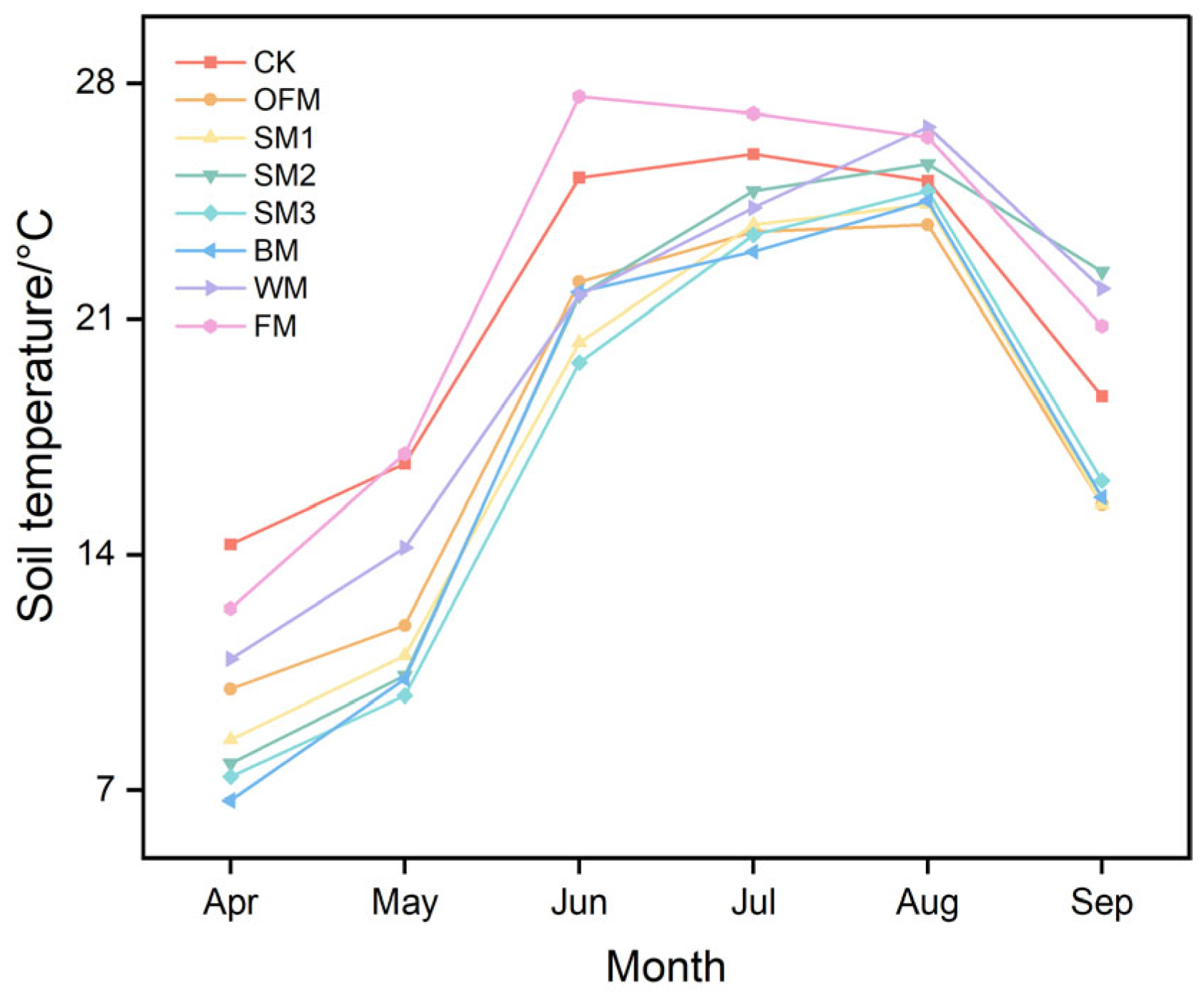
As shown in Figure 1, compared with CK, all mulching treatments significantly reduced soil temperature in April. However, in May, the FM treatment increased soil temperature, and FM continued to exhibit a significant warming effect from June to September. In contrast, SM3, OFM, and BM significantly reduced soil temperature from July to September.

3.2. Effect of Mulching on Soil Physicochemical Properties During Different Peak Root-Flush Periods in an Apple Orchard

As shown in Table S1, during different peak root-flush periods, mulching treatments significantly improved soil physical properties. OFM, SM2, SM3, and BM significantly increased soil water content and porosity while reducing soil bulk density. No significant differences in soil pH were observed among treatments during the spring root-flush period. During the summer and autumn root-flush periods, OFM and SM3 increased soil pH, whereas BM and WM showed a decreasing trend. Furthermore, mulching treatments significantly enhanced soil nutrient levels. Specifically, OFM, SM2, SM3, and BM significantly increased soil organic matter, alkali-hydrolyzable nitrogen, available phosphorus, and available potassium contents during the spring, summer, and autumn root-flush periods. SM1 primarily increased available phosphorus content.

3.3. Effect of Mulching on Soil Enzyme Activities in the Apple Orchard

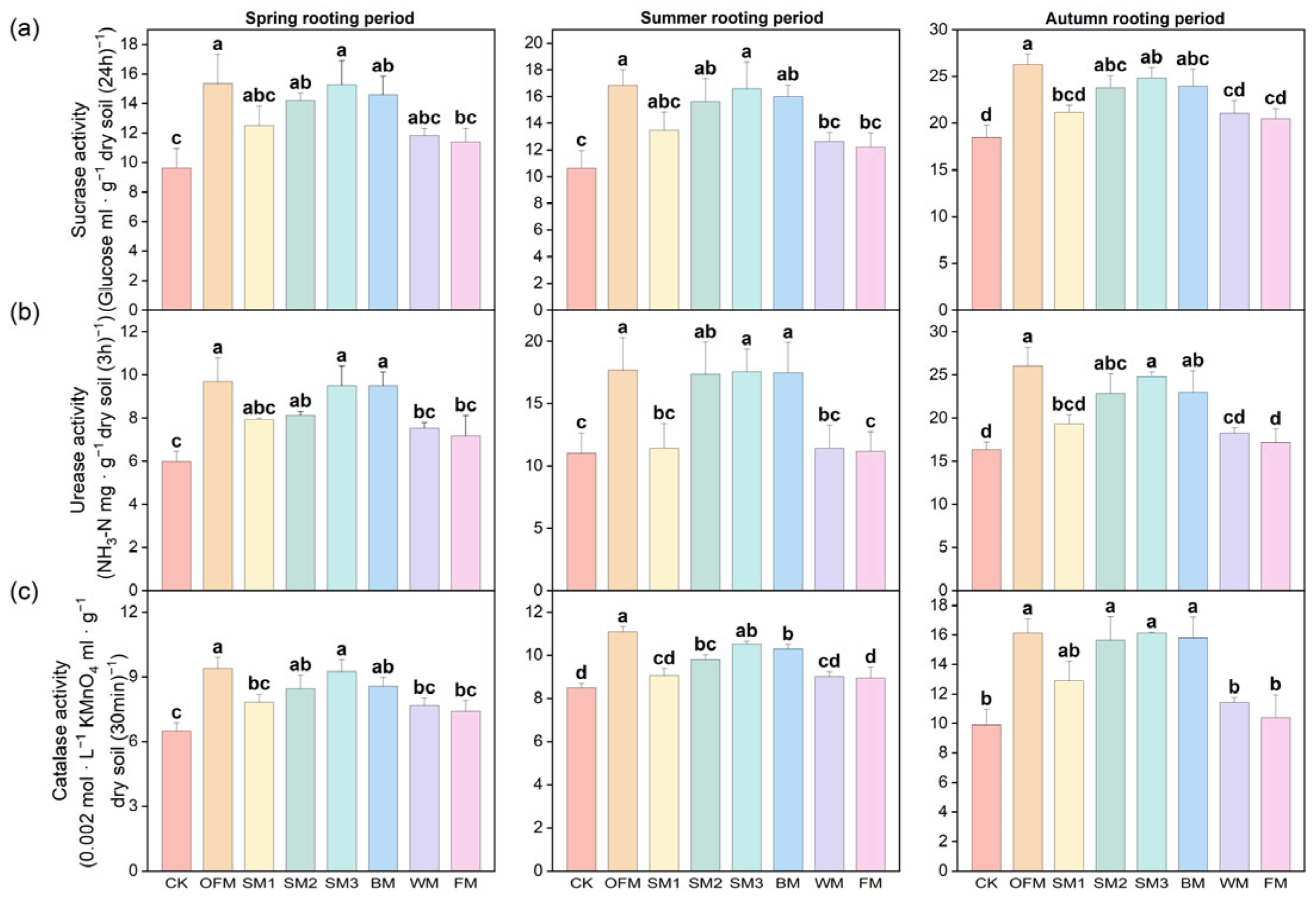
As shown in Figure 2, compared with CK, the OFM, SM3, BM, and SM2 significantly increased soil sucrase and urease activities during the spring, summer, and autumn peak root-flush periods. The increases were more pronounced in spring and summer, whereas the effect was relatively weaker in autumn. Regarding catalase activity, all mulching treatments exhibited a significant promoting effect, with the greatest increase observed in autumn; some treatments showed an increase of more than 50%.

3.4. Effect of Mulching on Soil Microbial Diversity During the Autumn Peak Root-Flush Period in an Apple Orchard

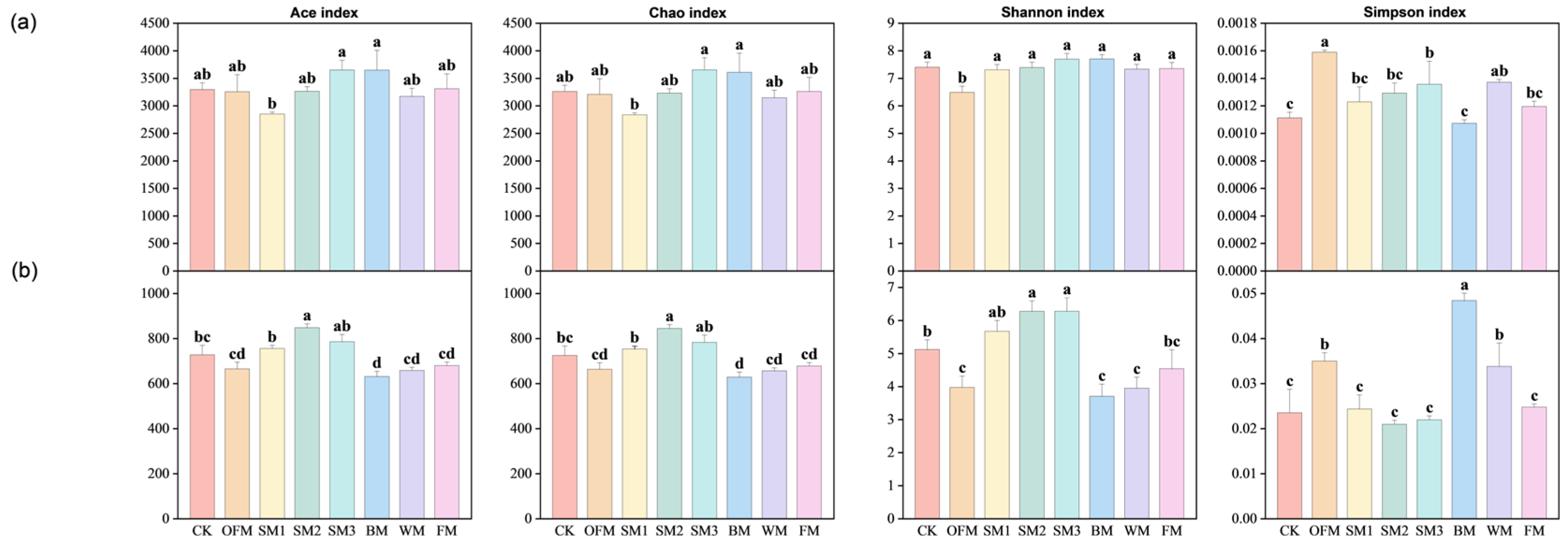
As shown in Figure 3, SM3 and BM showed a trend toward increased bacterial Ace, Chao, and Shannon indices, although the differences were not significant. OFM significantly increased the soil bacterial Simpson index and fungal Simpson index compared with CK. SM2 significantly increased the fungal Ace, Chao, and Shannon indices compared with CK. SM3 mulching significantly increased the bacterial Simpson index and the fungal Shannon index compared with CK. BM mulching significantly increased the fungal Simpson index compared with CK. Principal coordinate analysis (PCoA) showed that the bacterial and fungal communities in all treatment groups were clearly separated from those in CK. Notably, the changes in fungal communities were similar among SM1, SM2, and SM3 (Figure S1).
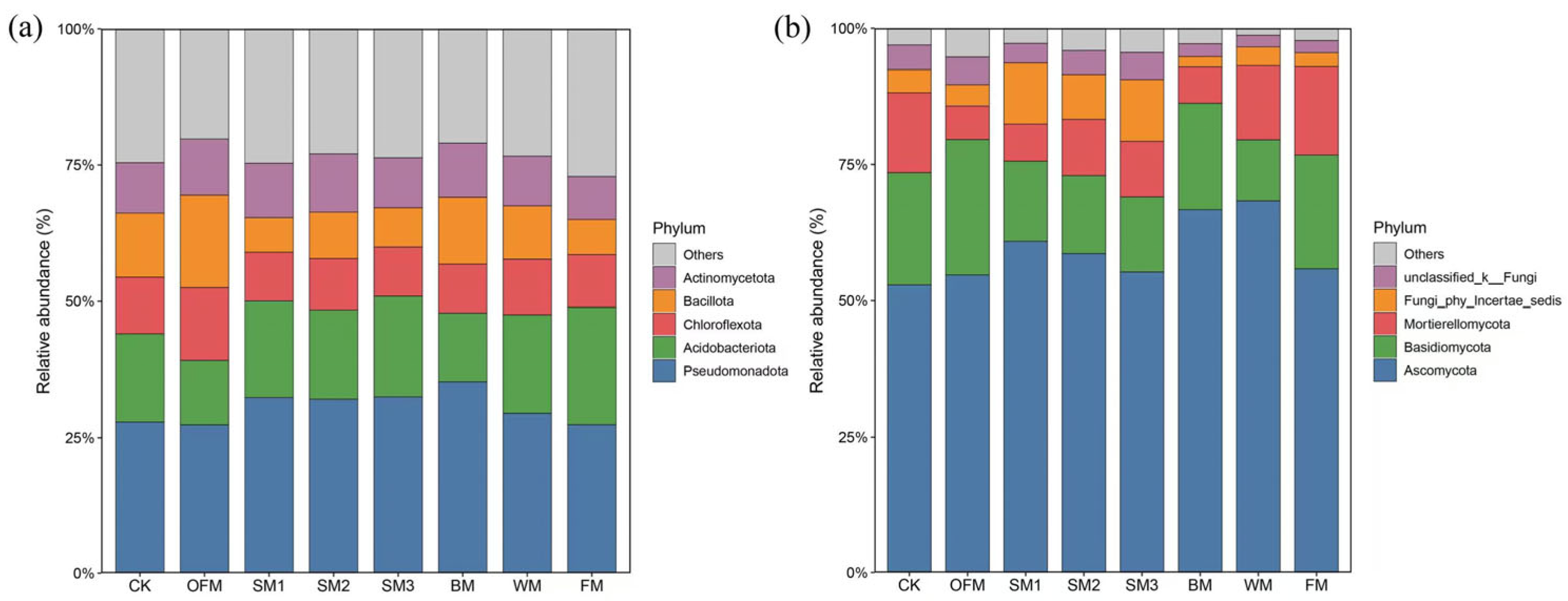
Analysis at the phylum level showed that the bacterial community was mainly composed of Pseudomonadota, Acidobacteriota, Chloroflexota, Bacillota, and Actinomycetota (Figure 4a), whereas the fungal community was dominated by Ascomycota and Basidiomycota (Figure 4b). In the bacterial community, compared with CK, the relative abundances of Pseudomonadota in SM1, SM2, SM3, and BM treatments were all increased. In the fungal community, the relative abundance of Ascomycota was higher in the BM and WM treatments, whereas the relative abundance of Basidiomycota was relatively higher in the CK and OFM treatments.
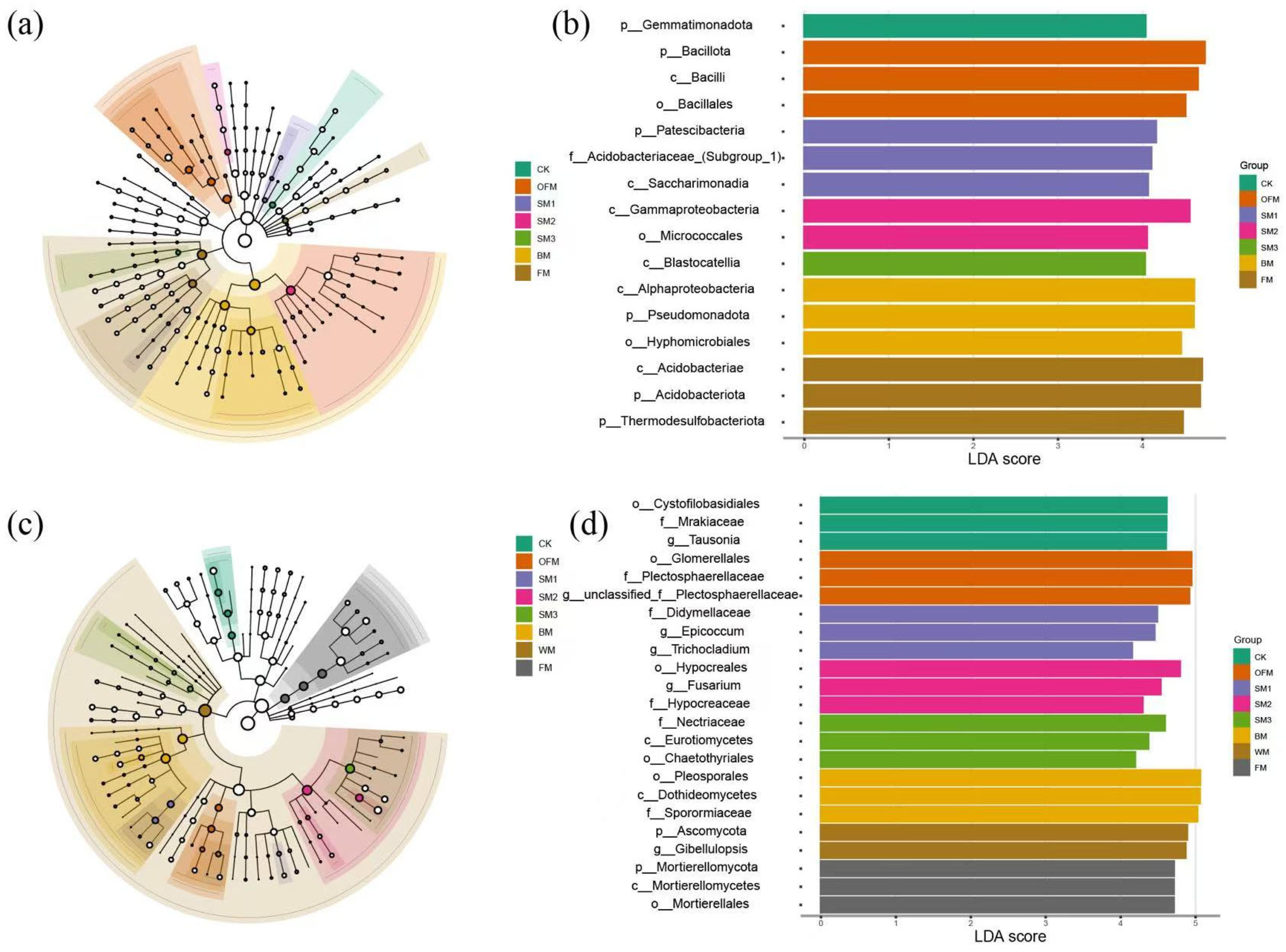
LEfSe analysis revealed that different treatments enriched specific bacterial and fungal indicator taxa. In the bacterial community, CK mainly enriched Gemmatimonadota; OFM mainly enriched Bacillota, Bacilli, and Bacillales; SM1 mainly enriched Patescibacteria, Acidobacteriaceae, and Saccharimonadia; SM2 mainly enriched Gammaproteobacteria and Micrococcales; SM3 mainly enriched Blastocatellia; BM mainly enriched Alphaproteobacteria, Pseudomonadota, and Hyphomicrobiales; and FM mainly enriched Acidobacteriae, Acidobacteriota, and Thermodesulfobacteriota (Figure 5a,b). In the fungal community, CK mainly enriched Cystofilobasidiales, Mrakiaceae, and Tausonia; OFM mainly enriched taxa related to Glomerellales and Plectosphaerellaceae; SM1 mainly enriched Didymellaceae, Epicoccum, and Trichocladium; SM2 mainly enriched Hypocreales, Fusarium, and Hypocreaceae; SM3 mainly enriched Nectriaceae, Eurotiomycetes, and Chaetothyriales; BM mainly enriched Pleosporales, Dothideomycetes, Sporormiaceae, and Ascomycota; WM mainly enriched Gibellulopsis; and FM mainly enriched taxa related to Mortierellomycota (Figure 5c,d).
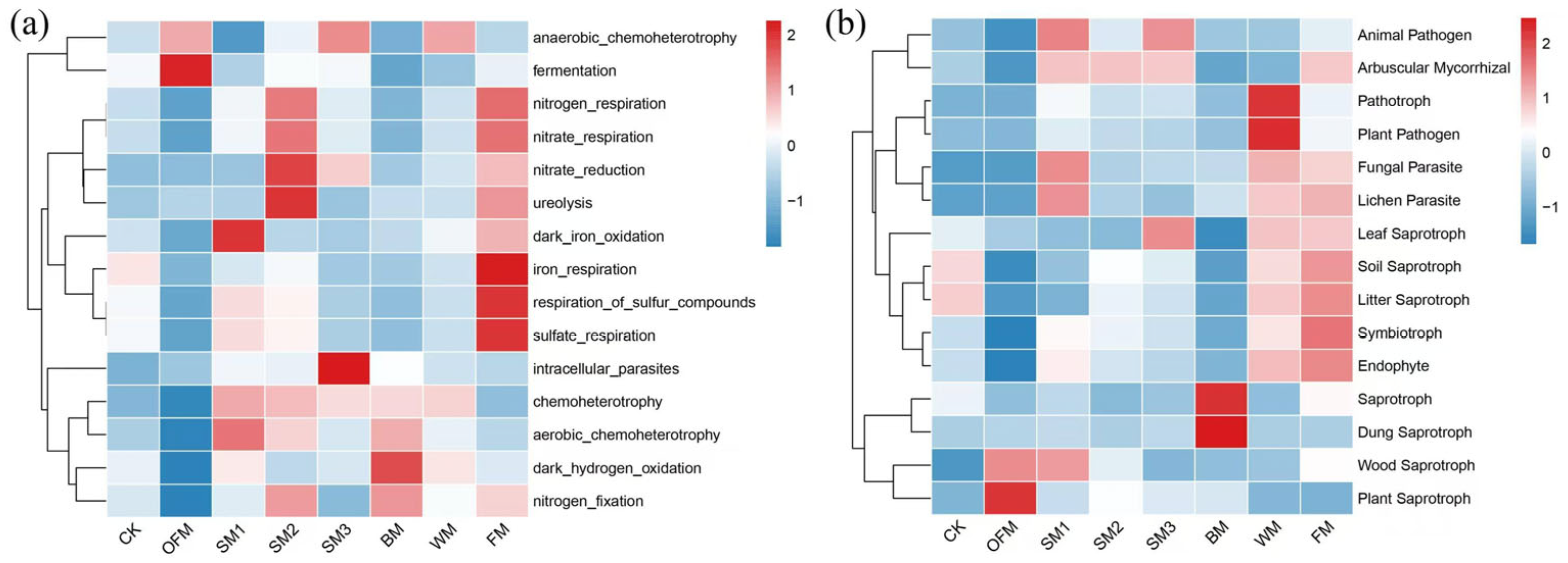
Functional prediction based on FAPROTAX showed that the OFM treatment exhibited an increased relative abundance only for the fermentation function, whereas most other functions showed a decreasing trend. The SM1 treatment mainly increased the dark_iron_oxidation function. The SM2 treatment had the most pronounced promoting effect on nitrogen cycling-related functions, as reflected by increased abundances of nitrogen_respiration and ureolysis. The SM3 treatment mainly increased the intracellular_parasites function. The BM treatment enhanced the nitrogen_fixation function. The FM treatment increased multiple functions related to reductive metabolism (Figure 6a). Functional prediction based on FUNGuild showed that the OFM treatment increased the relative abundance of the Plant Saprotroph functional group. The SM1 treatment enriched functional groups such as Fungal Parasite and Lichen Parasite. The SM3 treatment increased the Leaf Saprotroph function. The BM treatment mainly enriched the Saprotroph and Dung Saprotroph functional groups. The WM treatment increased functional groups such as Pathotroph. The FM treatment mainly enriched the Soil Saprotroph and Endophyte functional groups (Figure 6b).

3.5. Effect of Mulching on Apple Root Activity

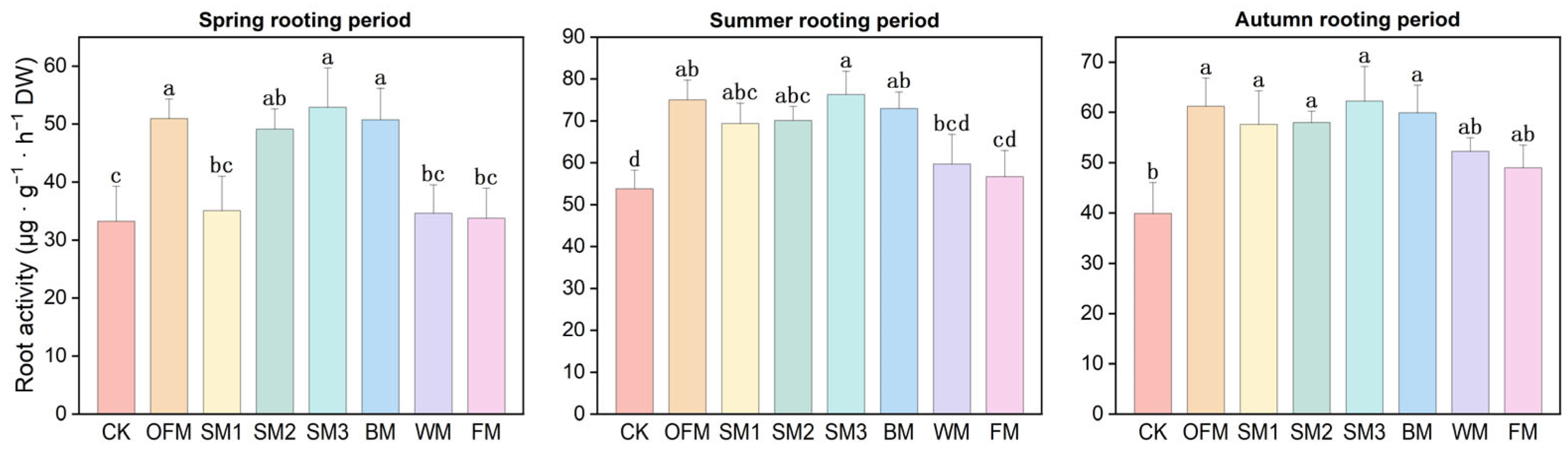
As shown in Figure 7, during the peak root-flush periods in different seasons, all mulching treatments significantly increased root activity. In spring, SM2, SM3, and BM had the most pronounced effects, with increases exceeding 52%. In summer, SM1, SM3, and BM were the main treatments, with increases ranging from 35.29% to 37.55%. In autumn, the promoting effects of all treatments were further enhanced; SM1, SM2, SM3, OFM, and BM significantly increased root activity, with increases ranging from 44.43% to 55.99%.

3.6. Effect of Mulching on Nutrient Element Contents in Apple Roots

As shown in Table S2, during the peak root-flush periods in different seasons, all mulching treatments significantly increased the contents of mineral elements in roots. In spring, SM2, SM3, OFM, and BM had the most pronounced effects, all significantly increasing root N and P contents, with the highest increase observed for P content (63.35–70.12%). Meanwhile, SM3, OFM, and BM markedly increased K content; SM2, SM3, and BM significantly increased Ca content; and SM2, OFM, and BM significantly increased Mg content. During the summer peak root-flush period, SM1, SM3, and SM2 significantly increased N content, while BM, OFM, and SM1 significantly increased P content. SM1, SM3, and BM markedly increased K content; SM3, OFM, and BM significantly increased Ca content; and SM1, SM2, SM3, and BM had the most prominent promoting effect on Mg content, with the highest increase reaching 72.11%. During the autumn peak root-flush period, SM1, SM2, SM3, OFM, and BM all significantly increased N content. SM3 and OFM had the most significant increase in P content. Meanwhile, SM2, SM3, OFM, and BM all significantly increased K and Ca contents, and showed the most pronounced promoting effect on Mg content (43.01–64.78%).

3.7. Effect of Mulching on Total Soluble Sugar and Starch Contents in Apple Roots

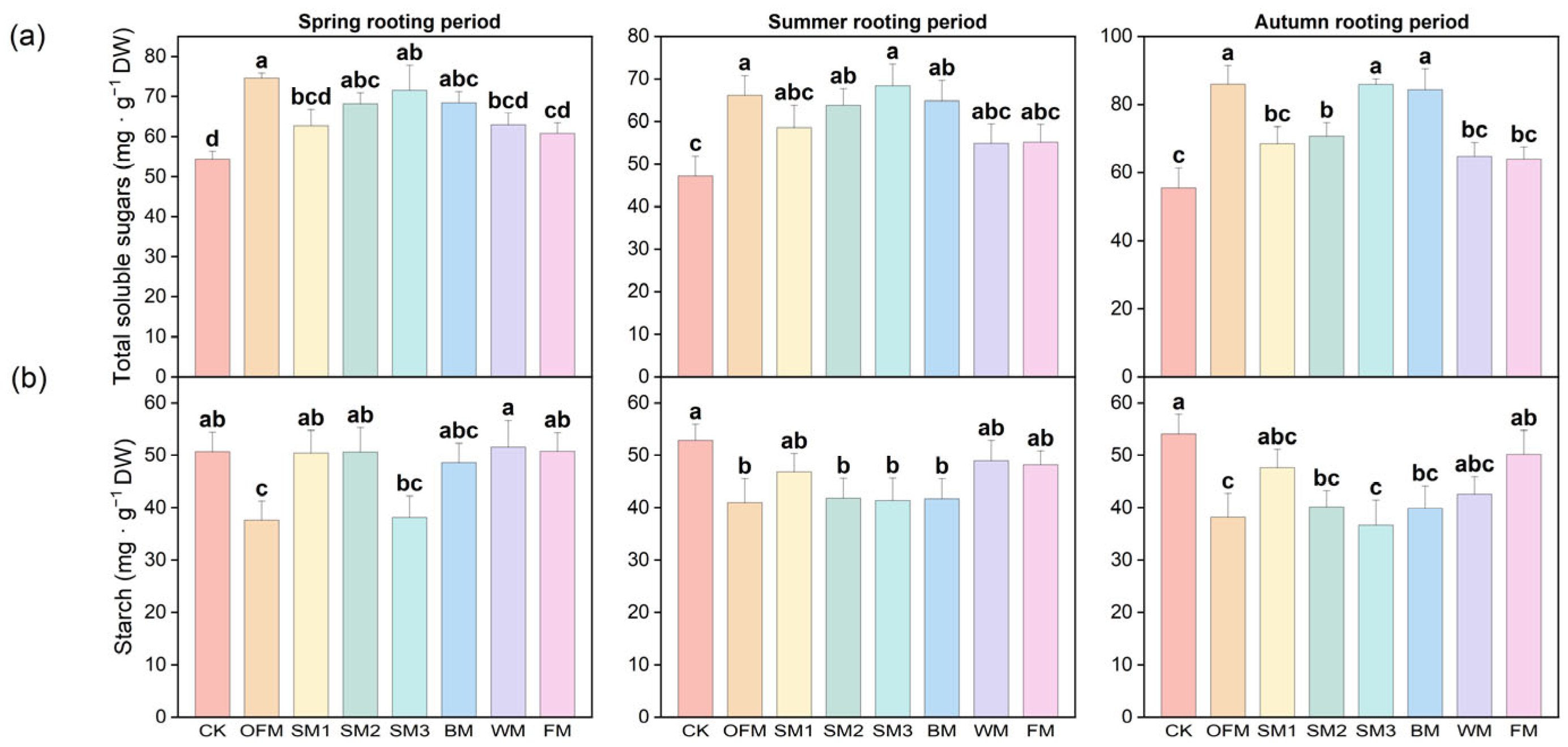
During the peak root-flush periods in different seasons, all mulching treatments significantly affected root carbohydrate contents. SM2, SM3, OFM, and BM significantly increased the total soluble sugar content in roots, with increases ranging from 25.45–37.22% in spring, 35.38–44.99% in summer, and 27.40–54.83% in autumn. In addition, only the OFM treatment significantly reduced root starch content in spring, with a decrease of 25.82%, whereas in summer and autumn, SM2, SM3, OFM, and BM all significantly reduced starch content; no significant differences were observed in the other treatments (Figure 8).
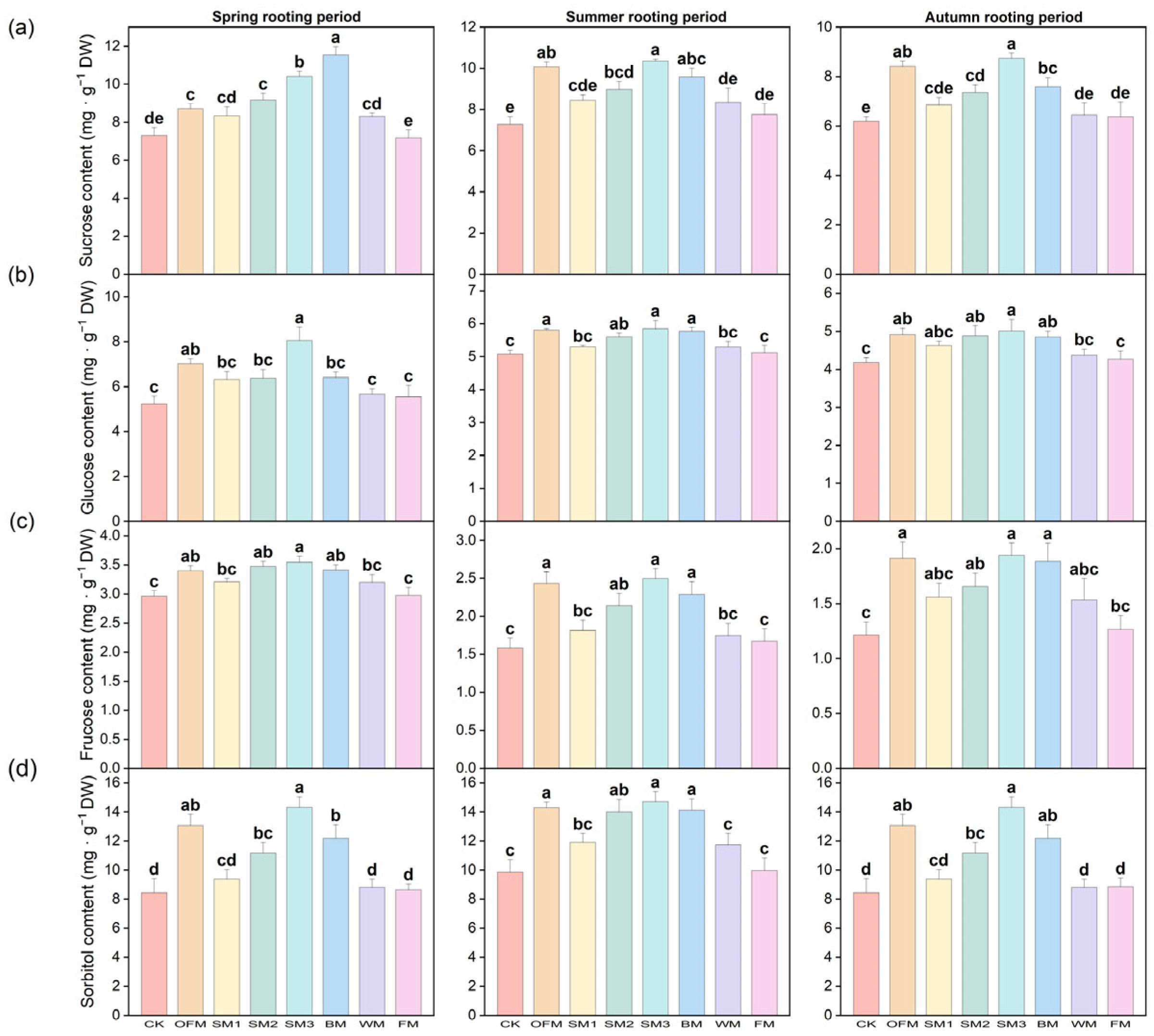
As shown in Figure 9a–d, during the peak root-flush periods in different seasons, all mulching treatments significantly increased the contents of sugar components in roots. SM2, SM3, OFM, and BM exhibited strong promoting effects in spring, summer, and autumn. Specifically, the contents of sucrose, glucose, and fructose were significantly higher than those in CK across all seasons, with the largest increases observed in spring. Among them, BM and SM3 significantly increased root sucrose content by 57.68% and 42.43%, respectively, compared with CK. Sorbitol content was also significantly increased under all mulching treatments. During the spring peak root-flush period, SM3 and BM significantly increased root sorbitol content by 42.57% and 39.41%, respectively, compared with CK, whereas no significant differences were observed in the other mulching treatments.

4. Discussion

4.1. Effects of Mulching Practices on Soil Physicochemical Properties and Enzyme Activities

In fruit tree production, mulching the soil surface around the tree trunk (tree plate mulching) is commonly used to suppress excessive weed growth between trees. This practice effectively improves canopy ventilation and light penetration, thereby enhancing fruit yield and quality. However, different mulching practices have distinct advantages and disadvantages. Therefore, this study systematically evaluated the effects of eight mulching treatments on soil physicochemical properties and enzyme activities. Soil physicochemical properties are important indicators for evaluating soil quality, and their status directly determines whether roots can grow normally and effectively fulfill their physiological functions [33,34]. The study found that in April, all mulching treatments reduced soil temperature, which we attribute to the high albedo of the mulches and their physical barrier effect on solar radiation. From May to September, the FM treatment exhibited a significant warming effect. This is because the black ground fabric has a low albedo, absorbs substantial shortwave radiation, and directly transfers heat to the soil. In contrast, SM3, OFM, and BM significantly reduced soil temperature from July to September. We hypothesize that intact corn straw has a hollow, tubular structure with extremely high thermal resistance; composted apple branches are coarse-textured with large pores, forming a well-aerated insulation layer; and organic fertilizer possesses a strong water-holding and evaporative cooling capacity. Consistent with our findings, Tang et al. reported that straw and branch mulching effectively reduced soil temperature during the growing season in a jujube orchard on the Loess Plateau of China [35]. Therefore, the modulation of soil temperature by different mulching treatments has complex, season-dependent effects on apple tree growth in this cold northern region. In spring, the cooling effect of organic mulches (OFM, SM3, BM) delayed soil warming, which could potentially slow down the onset of budbreak and early root activity. However, for apple production in northern China, spring frost is a major limiting factor. Delayed soil warming and consequently delayed budbreak can reduce the risk of frost damage to flower buds and other sensitive tissues. In summer, high-temperature stress becomes the dominant constraint on root function. The cooling effect of organic mulches effectively alleviated rhizosphere heat stress, maintained higher root activity, and facilitated nutrient and water uptake. In contrast, the warming effect of synthetic FM exacerbated rhizosphere heat stress during summer, which was detrimental to root function. In autumn, the moderate cooling effect of organic mulches helped delay root senescence, prolonged the duration of the autumn root-flush period, and promoted the accumulation of storage reserves, thereby laying a foundation for growth in the following season.
Previous studies have shown that soil mulching increases soil water content, with straw mulching being an effective practice [14,36]. In the present study, OFM, SM3, and BM significantly reduced soil bulk density and increased soil water content and porosity. We attribute this to the water-absorbing and evaporation-suppressing properties of the mulches. Moreover, compared with CK, the mulches suppressed weed growth, thereby reducing transpiration losses and further enhancing soil water content. Yang et al. [37] and Wang et al. [38] also reported that straw mulching increased soil moisture in apple orchards in the arid region of Northwest China. Collectively, these findings highlight the practical importance of mulching for fruit tree cultivation in the arid and semi-arid regions of northern China.
Different mulching practices have been shown to significantly improve soil nutrient levels in orchards [7]. Liu et al. [39] found that mulching a citrus orchard with Vulpia myuros significantly increased surface soil nutrients, including alkali-hydrolyzable nitrogen, available phosphorus, available potassium, and soil organic matter. Consistent with these findings, the present study showed that OFM, SM3, BM, and WM increased soil organic matter, alkali-hydrolyzable nitrogen, available potassium, and available phosphorus contents, corroborating previous reports [40,41]. We attribute this improvement to the fact that all four mulches are degradable organic materials. Their decomposition directly adds organic carbon to the soil while stimulating substantial microbial proliferation. During the decomposition of organic matter, microorganisms mineralize organic-bound nitrogen, phosphorus, and potassium into inorganic forms that plants can directly absorb, thereby simultaneously increasing the contents of alkali-hydrolyzable nitrogen and available nutrients.
Soil enzyme activities are important indicators for evaluating soil fertility and health. Among these enzymes, catalase decomposes hydrogen peroxide, thereby protecting crops from oxidative damage while also facilitating the transformation of soil organic matter. Urease provides a stable nitrogen supply for crops. Sucrase not only supplies nutrients to crops but also participates in the carbon cycle, helping to maintain soil ecological balance. In this study, OFM, SM3, BM, and SM2 treatments significantly increased soil sucrase and urease activities in spring, summer, and autumn, with greater increases observed in spring and summer and relatively weaker effects in autumn. We attribute this to the continuous input of organic carbon and organic nitrogen from the organic mulches into the soil, which provides abundant substrates for sucrase and urease, thereby inducing enhanced enzyme activities. In addition, the mulching treatments improved soil hydrothermal conditions, creating a favorable environment for microbial metabolism. Jiang et al. [13] found that corn straw mulching and long-term grass mulching significantly improved the ability of the soil enzyme system to efficiently decompose and utilize substrates in apple orchards. Similarly, Duanyuan et al. [42] reported that, compared with the CK, straw mulching significantly increased the activities of four soil enzymes—acid phosphatase, urease, cellulase, and peroxidase—in all soil layers.

4.2. Effects of Mulching Practices on Soil Microbial Community Structure and Function

Soil microorganisms are the core drivers of soil ecosystems, participating in important processes such as carbon and nitrogen cycling, organic matter decomposition, soil aggregation, and humus formation [43]. The composition and community structure of soil microorganisms are influenced by a range of soil factors, including climate, plant species, soil type, and soil management practices. Therefore, investigating the effects of different mulching practices on soil microbial community structure and function can help elucidate the potential for sustainable soil health development. In this study, we found that different mulching treatments had markedly distinct effects on the enhancement of soil bacterial and fungal diversity. OFM, being rich in humus and available nutrients, rapidly creates a stable microenvironment and simultaneously increases the Simpson index of both bacterial and fungal communities. SM3, with its hollow structure, provides a long-term, slow-release carbon source, which is conducive to the synergistic enhancement of the Simpson index of dominant bacterial populations and the evenness of fungal communities. BM, as an organic material, contained a relatively higher proportion of recalcitrant organic residues after composting, resulting in a relatively slow decomposition rate once applied as a mulch. This sustained release of carbon sources may have favored the establishment and maintenance of fungal communities, thereby significantly increasing the fungal Simpson index. In summary, organic mulches differentially regulate bacterial and fungal diversity by altering carbon source type, physical structure, and nutrient release patterns. Furthermore, the PCoA results showed that the bacterial and fungal communities under different mulching treatments were clearly separated from those under CK, indicating that changes in soil bacterial community structure and composition are associated with differences in organic matter input and soil physicochemical properties [2].
In this study, the dominant bacterial communities at the phylum level were mainly composed of Pseudomonadota, Acidobacteriota, Chloroflexota, Bacillota, and Actinomycetota, which is closely related to the changes in the soil microenvironment following organic mulch application. Pseudomonadota can solubilize phosphorus, fix nitrogen, and secrete growth hormones that stimulate root growth. Acidobacteriota can adapt to acidic soils and participate in the decomposition and transformation of organic carbon. Chloroflexota decomposes organic matter in the soil, promotes the cycling and release of nutrients such as carbon, nitrogen, and phosphorus, and provides available nutrients for other microorganisms and plants. Bacillota and Actinomycetota can regulate soil pH, accelerate the decomposition of soil organic matter, and facilitate the cycling of carbon, nitrogen, and other elements [8,44]. In soil ecosystems, organic mulching materials such as corn straw, composted branches, and weeds significantly increase the abundance of Pseudomonadota by creating a eutrophic environment, thereby promoting nutrient uptake by fruit tree roots. Although Actinomycetota and Bacillota accelerate the decomposition of carbon sources [45], their excessive proliferation may negatively affect long-term soil productivity. Li et al. [46] found that mulching in pear orchards effectively altered the soil microbial community structure, with Proteobacteria and Acidobacteria dominating the bacterial community, while Ascomycota was the predominant fungal phylum.
Functional prediction results further revealed that the OFM increased the relative abundances of the Plant Saprotroph and Wood Saprotroph functional groups. This is associated with the fact that organic fertilizer is rich in decomposed plant residues and lignocellulosic components, providing a direct carbon source for saprotrophic fungi specialized in decomposing plant tissues and lignin. The BM treatment mainly enriched the Saprotroph and Dung Saprotroph functional groups. This is attributed to the fermentation stage involved in the composting of apple branches, during which animal manure participates, leaving residual organic matter with substrate characteristics that adapt to dung-associated saprotrophic fungi. These results are beneficial for plant roots to obtain more nutrients from the rhizosphere microbial community to promote their own growth and development, while also further strengthening the network relationships within the plant–soil–microbe ecosystem [47]. Yang et al. [44] found that corn straw mulching increased the abundance of core microbial taxa in the soil, thereby enriching metabolic pathways such as hydroxypropionate cycle metabolism, organic acid degradation, and amino acid synthesis.

4.3. Effects of Mulching Practices on Root Activity and Nutrient Content

The root system is the core organ responsible for water and nutrient uptake and for sensing changes in the soil environment in fruit trees [5]. The results of this study showed that BM, SM3, SM2, OFM, and WM all enhanced root activity. Among them, OFM, BM, SM3, and WM increased root nitrogen (N), potassium (K), calcium (Ca), and magnesium (Mg) contents; SM2 increased root N and Mg contents; and SM3 significantly increased root N, Ca, and Mg contents. Organic mulching creates a more favorable micro-environment for root growth by improving soil water status, regulating soil temperature, increasing organic matter input, and stimulating microbial activity, thereby enhancing root metabolic activity and laying the physiological foundation for efficient nutrient uptake [48,49,50]. In addition, the study found that OFM, SM3, BM, WM, and CM mulching increased root soluble sugar content. Specifically, BM increased root sucrose, glucose, fructose, and sorbitol contents; OFM increased glucose, fructose, and sorbitol contents; SM3 increased glucose and fructose contents; SM1 increased sucrose and sorbitol contents; and SM2 and WM increased glucose, fructose, and sorbitol contents. Organic mulching increases the photosynthetic products available for allocation to roots by improving soil hydrothermal conditions and promoting photosynthesis [51,52]. Soluble carbon sources released during mulch decomposition can be directly absorbed by roots, contributing to the accumulation of the root soluble sugar pool. BM, being rich in lignin and cellulose, decomposes slowly and persistently, continuously releasing organic acids and active substances into the rhizosphere, promoting sustained enhancement of photosynthetic carbon fixation and sucrose synthesis, while also inducing the metabolic conversion of sucrose into glucose, fructose, and sorbitol. Consequently, BM significantly increased the contents of all four sugar components.

5. Conclusions

This study demonstrates that, in the ‘Hanfu’ apple orchard in the cold northern region of China, organic mulching treatments (OFM, SM3, and BM) exhibit superior performance in improving soil physicochemical properties, optimizing microbial community structure, and enhancing root function. These three organic mulching treatments significantly reduced soil bulk density, increased organic matter and available nutrient contents, enhanced soil enzyme activities, and promoted root activity and nutrient uptake. Notably, the physical form of mulching material substantially influenced its effectiveness—intact corn stover mulching (SM3) outperformed chopped straw in cooling and sustained nutrient release, while composted apple branch mulching (BM) promoted root sugar metabolism. Additionally, different organic mulches enriched the diversity of soil microbial communities. Collectively, OFM, SM3, and BM are recommended as efficient soil management practices suitable for promotion in this region.

Supplementary Materials

The following supporting information can be downloaded at: https://www.mdpi.com/article/10.3390/horticulturae12060757/s1, Table S1: Effects of soil mulching on soil physical and chemical properties of ‘Hanfu’ apple orchard at different rooting peaks; Table S2: Effects of soil mulching on nutrient elements in roots of ‘Hanfu’ apple during the peak root-flush period; Figure S1: Principal coordinate analysis (PCoA) of soil bacterial (a) and fungal (b) community structures under different mulching treatments. Each point represents a replicate sample, and different colors indicate different treatments. The values in parentheses on the axes represent the proportion of variance explained by the corresponding principal coordinate axis. The R and P values above the figure denote the statistic and significance level of the between-group difference test, respectively.

Author Contributions

Conceptualization, J.H. and G.X.; methodology, Y.L. and L.L.; software, Y.L. and L.L.; validation, Y.L., Z.Z. and L.L.; formal analysis, Y.L., Z.Z. and L.L.; investigation, Y.L., Z.Z. and L.L.; data curation, S.Q. and D.L.; writing—original draft preparation, Y.L. and L.L.; writing—review and editing, D.Z., C.C., G.X. and J.H.; visualization, Y.L. and L.L.; supervision, G.X. and J.H.; funding acquisition, D.L. and D.Z. All authors have read and agreed to the published version of the manuscript.

Funding

This work was supported by the Tibet Autonomous Region Science and Technology Agency (XZ202502ZY0016), the Liaoning Provincial Science and Technology Tackling Key Project (2023JH1/10400036), the China Agriculture Research System of MOF and MARA (CARS-27), and the National Natural Science Foundation of China (NSFC) (31972359).

Data Availability Statement

The original data supporting the findings of this study are included in the article/Supplementary Materials. Further inquiries can be directed to the corresponding authors.

Conflicts of Interest

The authors declare that they have no known competing financial interests or personal relationships that could have appeared to influence the work reported in this paper.

References

  1. Xu, G.; Yan, S.; He, M.; Ma, H.; Lyu, D.; Qin, S.; Cheng, C.; Zhao, D. Advances in the Research on Cold Resistance of Apple. Acta Hortic. Sin. 2025, 52, 2021–2045. [Google Scholar]
  2. Chen, Y.; Wen, X.; Sun, Y.; Zhang, J.; Wu, W.; Liao, Y. Mulching Practices Altered Soil Bacterial Community Structure and Improved Orchard Productivity and Apple Quality after Five Growing Seasons. Sci. Hortic. 2014, 172, 248–257. [Google Scholar] [CrossRef]
  3. Wang, Y.; Huang, Q.; Liu, C.; Ding, Y.; Liu, L.; Tian, Y.; Wu, X.; Li, H.; Awasthi, M.K.; Zhao, Z. Mulching Practices Alter Soil Microbial Functional Diversity and Benefit to Soil Quality in Orchards on the Loess Plateau. J. Environ. Manag. 2020, 271, 110985. [Google Scholar] [CrossRef] [PubMed]
  4. Tale, K.S.; Ingole, S. A Review on Role of Physico-Chemical Properties in Soil Quality. Chem. Sci. Rev. Lett. 2015, 4, 57–66. [Google Scholar]
  5. Hodge, A.; Berta, G.; Doussan, C.; Merchan, F.; Crespi, M. Plant Root Growth, Architecture and Function. Plant Soil 2009, 321, 153–187. [Google Scholar] [CrossRef]
  6. Guo, B.X.; Zhou, J.; Zhan, L.Q.; Wang, Z.Y.; Wu, W.; Liu, H.B. Spatial and Temporal Variability of Soil pH, Organic Matter and Available Nutrients (N, P and K) in Southwestern China. Agronomy 2024, 14, 1796. [Google Scholar] [CrossRef]
  7. Parmar, M.; Singh, D.; Maida, P.; Rai, R.K.; Tandon, K.; Kerketta, A. Impact of Mulching on Yield, Quality, and Nutrient Content in Fruit Crops: A Review. Appl. Fruit Sci. 2025, 67, 468. [Google Scholar] [CrossRef]
  8. Yang, L.; Wang, M.; Li, S.; Yu, J.; Chen, Y.; Yang, H.; Wang, W.; Chen, H.; Hong, L. Effect of Different Mulching Practices on Bacterial Community Composition and Fruit Quality in a Citrus Orchard. Agriculture 2023, 13, 1914. [Google Scholar] [CrossRef]
  9. Zheng, W.; Gong, Q.; Zhao, Z.; Liu, J.; Zhai, B.; Wang, Z.; Li, Z. Changes in the Soil Bacterial Community Structure and Enzyme Activities After Intercrop Mulch with Cover Crop for Eight Years in an Orchard. Eur. J. Soil Biol. 2018, 86, 34–41. [Google Scholar] [CrossRef]
  10. Suo, G.D.; Xie, Y.S.; Zhang, Y.; Luo, H. Long-Term Effects of Different Surface Mulching Techniques on Soil Water and Fruit Yield in an Apple Orchard on the Loess Plateau of China. Sci. Hortic. 2019, 246, 643–651. [Google Scholar] [CrossRef]
  11. Ananthakrishnan, S.; Sharma, J.C.; Sharma, N.; Kumar, S.; Shankar, S.V.; Ranjha, R.; Lalkhumliana, F.; Sharma, K.; Aravinthkumar, A. Mulching and Irrigation Strategies for Climate Resilient Apple Cultivation in High-Density Orchards. Sci. Rep. 2025, 15, 17125. [Google Scholar] [CrossRef] [PubMed]
  12. Wang, N.; Li, L.; Gou, M.; Jian, Z.; Hu, J.; Chen, H. Living Grass Mulching Improves Soil Enzyme Activities through Enhanced Available Nutrients in Citrus Orchards in Subtropical China. Front. Plant Sci. 2022, 13, 1053009. [Google Scholar] [CrossRef] [PubMed]
  13. Jiang, Y.; Li, H.; Liang, M.; Wu, Y.; Zhao, Z.; Li, Y.; Liu, G.; Xue, S. Kinetic Parameters of Soil Enzymes and Temperature Sensitivity under Different Mulching Practices in Apple Orchards. Agronomy 2025, 15, 617. [Google Scholar] [CrossRef]
  14. Webber, S.M.; Bailey, A.P.; Huxley, T.; Potts, S.G.; Lukac, M. Traditional and Cover Crop-Derived Mulches Enhance Soil Ecosystem Services in Apple Orchards. Appl. Soil Ecol. 2022, 178, 104569. [Google Scholar] [CrossRef]
  15. Li, C.X.; Li, Y.J.; Fu, G.Z.; Huang, M.; Ma, C.; Wang, H.Z.; Zhang, J. Cultivation and Mulching Materials Strategies to Enhance Soil Water Status, Net Ecosystem and Crop Water Productivity of Winter Wheat in Semi-Humid Regions. Agric. Water Manag. 2020, 239, 106240. [Google Scholar] [CrossRef]
  16. Sun, D.; Li, H.; Wang, E.; He, W.; Hao, W.; Yan, C.; Li, Y.; Mei, X.; Zhang, Y.; Sun, Z.; et al. An Overview of the Use of Plastic-Film Mulching in China to Increase Crop Yield and Water-Use Efficiency. Natl. Sci. Rev. 2020, 7, 1523–1526. [Google Scholar] [PubMed]
  17. He, G.; Wang, Z.; Hui, X.; Huang, T.; Luo, L. Black Film Mulching Can Replace Transparent Film Mulching in Crop Production. Field Crops Res. 2021, 261, 108026. [Google Scholar] [CrossRef]
  18. Liu, E.K.; He, W.Q.; Yan, C.R. ‘White Revolution’ to ‘White Pollution’—Agricultural Plastic Film Mulch in China. Environ. Res. Lett. 2014, 9, 091001. [Google Scholar] [CrossRef]
  19. Li, X.Y. Gravel–Sand Mulch for Soil and Water Conservation in the Semiarid Loess Region of Northwest China. Catena 2003, 52, 105–127. [Google Scholar] [CrossRef]
  20. Chen, Q.; Song, Y.; An, Y.; Lu, Y.; Zhong, G. Soil Microorganisms: Their Role in Enhancing Crop Nutrition and Health. Diversity 2024, 16, 734. [Google Scholar] [CrossRef]
  21. Xie, Z.; Yu, Z.; Li, Y.; Wang, G.; Liu, X.; Tang, C.; Lian, T.; Adams, J.; Liu, J.; Liu, J.; et al. Soil Microbial Metabolism on Carbon and Nitrogen Transformation Links the Crop-Residue Contribution to Soil Organic Carbon. npj Biofilms Microbiomes 2022, 8, 14. [Google Scholar] [CrossRef] [PubMed]
  22. Bhattacharjya, S.; Ghosh, A.; Sahu, A.; Agnihotri, R.; Pal, N.; Sharma, P.; Manna, M.C.; Sharma, M.P.; Singh, A.B. Utilizing Soil Metabolomics to Investigate the Untapped Metabolic Potential of Soil Microbial Communities and Their Role in Driving Soil Ecosystem Processes: A Review. Appl. Soil Ecol. 2024, 195, 105238. [Google Scholar] [CrossRef]
  23. Kang, P.; Pan, Y.; Hu, J.; Qu, X.; Ji, Q.; Zhuang, C.; Ren, Y.; Zhou, J.; Wei, T. Straw Mulch and Orchard Grass Mediate Soil Microbial Nutrient Acquisition and Microbial Community Composition in Ziziphus Jujuba Orchard. Plant Soil 2025, 512, 1203–1219. [Google Scholar] [CrossRef]
  24. Liu, M.; Zheng, J.; Li, Q.; Liang, F.; Mu, X.; Pei, D.; Jia, H.; Wang, Z. Effects of Film Mulching on Soil Microbial Diversity and Community Structure in the Maize Root Zone under Drip Irrigation in Northwest China. Agronomy 2024, 14, 1139. [Google Scholar] [CrossRef]
  25. Wang, X.; Huang, J.; Yang, L.; Li, Y.; Xia, B.; Li, H.; Deng, X. From Residue to Resource: A Physicochemical and Microbiological Analysis of Soil Microbial Communities through Film Mulch-Enhanced Rice Straw Return Strategies. Agronomy 2024, 14, 1001. [Google Scholar] [CrossRef]
  26. González-Hernández, A.I.; Pérez-Sánchez, R.; Plaza, J.; Morales-Corts, M.R. Compost Tea As a Sustainable Alternative to Promote Plant Growth and Resistance Against Rhizoctonia solani in Potato Plants. Sci. Hortic. 2022, 300, 111090. [Google Scholar] [CrossRef]
  27. Wang, H.; Wu, J.; Li, G.; Yan, L. Changes in Soil Carbon Fractions and Enzyme Activities under Different Vegetation Types of the Northern Loess Plateau. Ecol. Evol. 2020, 10, 12211–12223. [Google Scholar] [CrossRef] [PubMed]
  28. Blair, G.J.; Lefory, R.D.B.; Lise, L. Soil Carbon Fractions Based on their Degree of Oxidation, and the Development of a Carbon Management Index for Agricultural Systems. Aust. J. Agric. Resour. Econ. 1995, 46, 1459–1466. [Google Scholar] [CrossRef]
  29. Delgado-Baquerizo, M.; Oliverio, A.M.; Brewer, T.E.; Benavent-González, A.; Eldridge, D.J.; Bardgett, R.D.; Maestre, F.T.; Singh, B.K.; Fierer, N. A Global Atlas of the Dominant Bacteria Found in Soil. Science 2018, 359, 320–325. [Google Scholar] [CrossRef] [PubMed]
  30. Jiang, S.; Xing, Y.; Liu, G.; Hu, C.; Wang, X.; Yan, G.; Wang, Q. Changes in Soil Bacterial and Fungal Community Composition and Functional Groups During the Succession of Boreal Forests. Soil Biol. Biochem. 2021, 161, 108393. [Google Scholar] [CrossRef]
  31. Steponkus, P.L.; Lanphear, F.O. Refinement of the Triphenyl Tetrazolium Chloride Method of Determining Cold Injury. Plant Physiol. 1967, 42, 1423–1426. [Google Scholar] [CrossRef] [PubMed]
  32. Huang, Y.; Qin, S.; He, J.; Lyu, D. Integration of Cell Wall Fraction, Organic Matter Content, and Membrane to Understand Crispness Changes in Apples. Sci. Hortic. 2023, 321, 112309. [Google Scholar] [CrossRef]
  33. Usharani, K.V.; Roopashree, K.M.; Naik, D. Role of Soil Physical, Chemical and Biological Properties for Soil Health Improvement and Sustainable Agriculture. J. Pharmacogn. Phytochem. 2019, 8, 1256–1267. [Google Scholar]
  34. El-Beltagi, H.S.; Basit, A.; Mohamed, H.I.; Ali, I.; Ullah, S.; Kamel, E.A.R.; Shalaby, T.A.; Ramadan, K.M.A.; Alkhateeb, A.A.; Ghazzawy, H.S. Mulching as a Sustainable Water and Soil Saving Practice in Agriculture: A Review. Agronomy 2022, 12, 1881. [Google Scholar] [CrossRef]
  35. Tang, M.; Liu, R.; Li, H.; Gao, X.; Wu, P.; Zhang, C. Optimizing Soil Moisture Conservation and Temperature Regulation in Rainfed Jujube Orchards of China’s Loess Hilly Areas Using Straw and Branch Mulching. Agronomy 2023, 13, 2121. [Google Scholar] [CrossRef]
  36. Li, R.; Li, Q.; Pan, L. Review of Organic Mulching Effects on Soil and Water Loss. Arch. Agron. Soil Sci. 2021, 67, 136–151. [Google Scholar]
  37. Yang, Y.; Yin, M.; Guan, H. Responses of Soil Water, Temperature, and Yield of Apple Orchard to Straw Mulching and Supplemental Irrigation on China’s Loess Plateau. Agronomy 2024, 14, 1531. [Google Scholar] [CrossRef]
  38. Wang, X.; Wang, H.; Li, X.; Wang, D. Effects of Combined Drip Irrigation and Mulching Practices on the Soil Evaporation Characteristics in a Young Apple Orchard in Arid Northwestern China. Front. Agric. Sci. Eng. 2024, 11, 575–588. [Google Scholar] [CrossRef]
  39. Liu, Y.; Teng, Y.; Zheng, J.; Khan, A.; Li, X.; Cui, J.; Verma, K.K.; Guo, Q.; Zhu, K. The Impact of Long-Term Mulching Cultivation on Soil Quality, Microbial Community Structure, and Fruit Quality in “Wanzhou Red Mandarin” Citrus Orchard. Front. Microbiol. 2025, 16, 1616151. [Google Scholar] [CrossRef] [PubMed]
  40. Liao, C.; Tang, M.; Zhang, C.; Deng, M.; Li, Y.; Feng, S. Impacts of Various Straw Mulching Strategies on Soil Water, Nutrients, Thermal Regimes, and Yield in Wheat–Soybean Rotation Systems. Plants 2025, 14, 2233. [Google Scholar] [CrossRef] [PubMed]
  41. Pang, L.; Xia, B.; Girmanee, T.G.; Mumtaz, M.Z.; Hu, N.; Wang, X.; Wang, X.; Zheng, H.; Lu, J. Maize Straw Strip Mulching Mediated Transformation of Soil Organic Nitrogen Across Soil Depths in Wheat and Potato Cultivation. Agriculture 2026, 16, 674. [Google Scholar] [CrossRef]
  42. Duanyuan, H.; Zhou, T.; He, Z.; Peng, Y.; Lei, J.; Dong, J.; Wu, X.; Wang, J.; Yan, W. Effects of Straw Mulching on Soil Properties and Enzyme Activities of Camellia oleifera–Cassia Intercropping Agroforestry Systems. Plants 2023, 12, 3046. [Google Scholar] [CrossRef] [PubMed]
  43. Xu, D.; Ling, J.; Qiao, F.; Xi, P.; Zeng, Y.; Zhang, J.; Lan, C.; Jiang, Z.; Peng, A.; Li, P. Organic Mulch Can Suppress Litchi Downy Blight Through Modification of Soil Microbial Community Structure and Functional Potentials. BMC Microbiol. 2022, 22, 155. [Google Scholar] [CrossRef] [PubMed]
  44. Yang, L.; Wang, M.; Yu, J.; Li, S.; Tan, H.; Chen, Y.; Liu, J.; Ye, S.; He, J.; Hong, L. Materials and Duration of Mulching Mediate Soil and Fruit Quality in Citrus Orchard. Plant Soil 2025, 516, 395–419. [Google Scholar] [CrossRef]
  45. Mbuthia, L.W.; Acosta-Martínez, V.; DeBruyn, J.; Schaeffer, S.; Tyler, D.; Odoi, E.; Mpheshea, M.; Walker, F.; Eash, N. Long Term Tillage, Cover Crop, and Ertilization Effects on Microbial Community Structure, Activity: Implications for Soil Quality. Soil Biol. Biochem. 2015, 89, 24–34. [Google Scholar] [CrossRef]
  46. Li, H.; Li, P.; Cao, G.; Zhao, M.; Zhu, Z.; Ma, Y.; Wang, W.; Cao, S.; Xu, Y.; Dong, C. Mulching Influences Pear Yield and Quality by Changing Rhizosphere Microbial Community Structure in the Arid Region of Northwest China. Front. Plant Sci. 2025, 16, 1633540. [Google Scholar] [CrossRef] [PubMed]
  47. Yu, L.; Zhang, H.; Zhang, W.; Liu, K.; Liu, M.; Shao, X. Cooperation Between Arbuscular Mycorrhizal Fungi and Plant Growth-Promoting Bacteria and Their Effects on Plant Growth and Soil Quality. PeerJ 2022, 10, e13080. [Google Scholar] [CrossRef] [PubMed]
  48. Mulumba, L.N.; Lal, R. Mulching Effects on Selected Soil Physical Properties. Soil Tillage Res. 2008, 98, 106–111. [Google Scholar] [CrossRef]
  49. Liu, F.; Yang, J.; Zhang, Y.; Yang, S.; Zhang, Y.; Chen, Y.; Shao, Y.; Gao, D.; Yuan, Z.; Zhang, Y. Mulches Assist Degraded Soil Recovery Via Stimulating Biogeochemical Cycling: Metagenomic Analysis. Appl. Microbiol. Biotechnol. 2024, 108, 20. [Google Scholar] [PubMed]
  50. Guo, L.; Liu, S.; Zhang, P.; Hakeem, A.; Song, H.; Yu, M.; Wang, F. Effects of Different Mulching Practices on Soil Environment and Fruit Quality in Peach Orchards. Plants 2024, 13, 827. [Google Scholar] [CrossRef] [PubMed]
  51. Zhang, Y.; Wang, J.; Gong, S.; Xu, D.; Mo, Y. Straw Mulching Enhanced the Photosynthetic Capacity of Field Maize by Increasing the Leaf N use Efficiency. Agric. Water Manag. 2019, 218, 60–67. [Google Scholar] [CrossRef]
  52. Retamal-Salgado, J.; Loor, B.; Hirzel, J.; López, M.D.; Undurraga, P.; Zapata, N.; Vergara-Retamales, R.; Olivares-Soto, H. Chlorophyll Fluorescence and Fruit Quality Response of Blueberry to Different Mulches. Agronomy 2022, 12, 1702. [Google Scholar] [CrossRef]
Figure 1. Effect of soil mulching on soil temperature in ‘Hanfu’ apple orchard. CK: clean tillage; OFM: organic fertilizer mulching; SM1: chopped corn straw mulching; SM2: chopped and bundled corn straw mulching; SM3: intact corn stover mulching; BM: composted apple branch mulching; WM: weeds mulching; FM: horticultural ground cover fabric mulching. Soil temperature measured in the second year following mulching application.
Horticulturae 12 00757 g001
Figure 2. Effect of soil mulching on the activities of sucrase (a), urease (b), and catalase (c) in a ‘Hanfu’ apple orchard. Different letters indicate significant differences between treatments (p < 0.05).
Horticulturae 12 00757 g002
Figure 3. Effect of soil mulching on the diversity of soil bacterial (a) and fungal (b) communities in apple orchards. Different letters indicate significant differences between treatments (p < 0.05).
Horticulturae 12 00757 g003
Figure 4. Compositional characteristics of soil bacterial (a) and fungal (b) communities at the phylum level under different mulching treatments. In the bar chart, different colors represent the relative abundances of different microbial phyla, and the vertical axis indicates the percentage of relative abundance.
Horticulturae 12 00757 g004
Figure 5. LEfSe analysis of differentially abundant indicator taxa in soil bacterial (a,b) and fungal (c,d) communities under different mulching treatments. (a,c) are cladograms showing the phylogenetic distribution of differentially abundant taxa for bacteria and fungi, respectively. Different colors indicate taxa that are significantly enriched under the corresponding treatment. Colored nodes represent biomarker taxa with significant differences among treatments, while yellow nodes indicate taxa with no significant differences. The fan-shaped filled areas were set with moderate transparency to distinguish different treatment groups while avoiding obscuring the underlying evolutionary branches. (b,d) show the LDA score distribution of differentially abundant biomarker taxa for bacteria and fungi, respectively, displaying the taxa whose LDA scores exceed the set threshold.
Horticulturae 12 00757 g005
Figure 6. Cluster heatmap analysis of predicted functions of soil bacterial (a) and fungal (b) communities under different mulching treatments. (a) shows bacterial functional groups annotated based on FAPROTAX, and (b) shows fungal functional groups annotated based on FUNGuild. Different colors represent the relative abundance levels of each functional group under different treatments, with red indicating relatively high abundance and blue indicating relatively low abundance.
Horticulturae 12 00757 g006
Figure 7. Effect of soil mulching on root activity of ‘Hanfu’ apple. Different letters indicate significant differences between treatments (p < 0.05).
Horticulturae 12 00757 g007
Figure 8. Effect of soil mulching on soluble sugar (a) and starch (b) contents in roots of ‘Hanfu’ apple. Different letters indicate significant differences between treatments (p < 0.05).
Horticulturae 12 00757 g008
Figure 9. Effect of soil mulching on sucrose (a), glucose (b), fructose (c), and sorbitol (d) contents in roots of ‘Hanfu’ apple.. Different letters indicate significant differences between treatments (p < 0.05).
Horticulturae 12 00757 g009
Disclaimer/Publisher’s Note: The statements, opinions and data contained in all publications are solely those of the individual author(s) and contributor(s) and not of MDPI and/or the editor(s). MDPI and/or the editor(s) disclaim responsibility for any injury to people or property resulting from any ideas, methods, instructions or products referred to in the content.