Article

MdNAC17 Enhances Saline–Alkali Tolerance in Apple by Regulating Reactive Oxygen Species Removal

College of Horticulture, Gansu Agricultural University, Lanzhou 730070, China
*
Authors to whom correspondence should be addressed.
These authors contributed equally to this work.
Horticulturae 2026, 12(6), 755; https://doi.org/10.3390/horticulturae12060755 (registering DOI)
Submission received: 7 May 2026 / Revised: 13 June 2026 / Accepted: 18 June 2026 / Published: 21 June 2026
(This article belongs to the Section Biotic and Abiotic Stress)

Abstract

Saline–alkali stress is a widespread adversity that severely affects plant growth and productivity. Plant-specific NAC transcription factors (TFs) play a crucial role in various pathways associated with stress responses. However, the function of NAC proteins in conferring tolerance to abiotic stress, along with the underlying mechanisms in apple (Malus domestica), remains incompletely understood. In this study, we identified MdNAC17 from the transcriptome of apple leaves under saline–alkali stress. The overexpression of MdNAC17 in apple calli tissue and Malus hupehensis roots significantly improved resistance to saline–alkali stress by enhancing reactive oxygen species (ROS) scavenging. Transgenic apple plants exhibited higher photosynthetic capacity and antioxidant enzyme activity, as well as less membrane damage. In contrast, silencing MdNAC17 using virus-induced gene silencing (VIGS) technology resulted in the opposite phenotype. Furthermore, MdNAC17 is associated with changes in the transcriptional levels of genes involved in Na+/K+ homeostasis. Overall, our results demonstrate that MdNAC17 positively regulates saline–alkali tolerance in apple.

1. Introduction

Soil salinization can damage plant cell membranes, reduce enzyme functions, disrupt ion balance, leading to ion toxicity, osmotic stress and high pH damage [1,2,3]. For instance, under saline–alkali stress conditions, high concentrations of harmful ions (such as Na+, Cl and carbonate compounds) in the soil will inhibit the root system’s absorption of essential nutrients like K+, Ca2+ and Mg2+ [4]. This will lead to a decrease in the conductance of leaf stomata, thereby reducing the supply of CO2 to chloroplasts, resulting in a decline in photosynthetic activity and a decrease in the photochemical efficiency of PSII. Eventually, this will impede the growth and development of the crop [5]. To cope with the osmotic stress and ionic toxicity caused by saline–alkali soil, plants have evolved various adaptive strategies [6]. For instance, plants activate the ROS clearance system and regulate the expression of stress-related genes to deal with osmotic stress and ionic toxicity, thereby reducing ion accumulation and ensuring their survival and reproduction [7,8,9,10].
The regulation of stress response genes in plants is primarily mediated by transcription factors (TFs). By modulating gene expression, plants can adapt to or mitigate the impacts of stress conditions, thereby supporting crop development and enhancing yield [11]. NAC transcription factors (TFs) are a major plant-specific family defined by a conserved N-terminal DNA-binding domain, a nuclear localization signal, and a variable C-terminal transcriptional activation domain [12,13,14]. These factors play essential roles in regulating plant growth, senescence, and responses to abiotic stresses [15,16]. For example, in tomato (Solanum lycopersicum L.), SlNAC2 promotes melatonin accumulation and ROS clearance by partially counteracting the inhibitory effects on SlCOMT2 and SlSNAT. SlNAC63, on the other hand, enhances the regulation of SlAOS1 and SlSOD4 to promote jasmonic acid accumulation and ROS clearance. These two NAC genes jointly enhance the salt tolerance and alkaline resistance of tomato [17,18]. Under adverse stress conditions, the ABA signaling pathway is activated, which then regulates the expression of some NAC transcription factors to enhance the plant’s stress resistance. For instance, the expressions of ANAC072, ANAC055 and ANAC019 in Arabidopsis are induced by high salinity, drought, ABA and MeJA [19], while AtNAC016 enhances the drought resistance by inhibiting the negative regulatory factor AREB1 of the ABA signaling pathway [20]. These mechanisms collectively reveal the important regulatory role of NAC transcription factors in the response to saline–alkali stress. Although it is known that NAC transcription factors play a significant role in plant growth, development, and responses to non-biological stresses such as saline–alkali, the specific molecular regulatory mechanism of these factors under saline–alkali stress, especially in apples, still needs to be further elucidated.
Utilizing salt-tolerant rootstocks is an effective agricultural strategy to alleviate the adverse effects of soil salinization. Malus hupehensis serves as a valuable source for apple rootstocks. Despite being one of the most economically significant fruit trees globally, research on apple NAC TFs is relatively limited compared to the extensive investigations conducted on model plants such as Arabidopsis and rice. Among the NAC transcription factors identified in apples, certain members have been shown to participate in abiotic stress responses. For example, the overexpression of MdNAC029 was found to reduce drought resistance in apple plants [21], whereas the overexpression of MdNAC047 improved salt tolerance in apple calli tissues [22]. However, the functions of most of the NAC genes in apples remain unknown. The mechanism of action of MdNAC17 under saline–alkali stress has not yet been clarified. Only preliminary mentions have been found [23], and there is a lack of systematic functional verification. Therefore, this study aimed to explore the function of MdNAC17 in apple saline–alkali tolerance, thereby providing a theoretical basis for genetically improving saline–alkali resistance.

2. Materials and Methods

2.1. Plant Materials

Malus hupehensis (Pamp.) Rehd. var. pingyiensis Jiang, which has strong saline–alkali resistance, was selected for gene expression analysis and genetic transformation [24]. The process commenced with the selection of robust Malus hupehensis seeds, which were soaked in water for a full 24 h. Subsequently, the seeds were thoroughly mixed with clean river sand at a ratio of 1:3 and maintained in a low-temperature environment at 4 °C for approximately 45 days to undergo vernalization. Upon germination, the seeds were sown in plastic pots (20 cm × 30 cm), with matrix soil of organic substrate/perlite/vermiculite (3:1:1). They were placed in a culture environment at 25 °C, with a light–dark ratio of 16/8 and 80% humidity. Seedlings exhibiting 5–6 true leaves were selected for further experimentation to ensure uniformity in growth.
The ‘Orin’ apple calli were obtained from the laboratory of Wang Xiaofei’s at Shandong Agricultural University and are currently maintained in our laboratory. This calli tissue was cultivated in darkness on Murashige and Skoog (MS) (Coolaber Biotechnology Co., Ltd., Beijing, China) medium supplemented with 1.5 mg/L of 2,4-D (Coolaber Biotechnology Co., Ltd., Beijing, China) and 0.4 mg/L of 6-BA (Coolaber Biotechnology Co., Ltd., Beijing, China), and was incubated at a constant temperature of 25 °C, and subculturing was performed at 20-day intervals.

2.2. Saline–Alkali Stress Treatment of Malus hupehensis Seedlings

For gene expression analysis, fifty uniformly growing Malus hupehensis seedlings were pre-cultured in a 1/2 Hoagland nutrient solution (Qingdao Hope Bio-Technology Co., Ltd., Qingdao, China) for 15 days, with the nutrient solution replaced every five days. Upon the seedlings developing eight true leaves, they were treated with a nutrient solution containing 75 mM saline–alkali stress (NaCl (Sinopharm Chemical Reagent Co., Ltd., Shanghai, China): NaHCO3 (Tianjin Hengxing Chemical Preparation Co., Ltd., Tianjin, China) = 1:1, pH 8.0). Leaves and roots were harvested from the plants at 0, 12, 24, 48 and 72 h post-treatment. Each treatment group consisted of ten plants, and three biological replicates were conducted independently.

2.3. Bioinformatic Analysis of MdNAC17

The protein sequence of the MdNAC17 in apples was retrieved from the Phytozome apple genome database (v13) (https://phytozome-next.jgi.doe.gov/) (accessed on 25 September 2024). Subsequently, the ExPASy website (https://web.expasy.org/protparam) (accessed on 20 March 2025) was utilized to predict the fundamental physicochemical characteristics of the protein. Additionally, MEME (v5.5.9) (https://meme-suite.org/meme/) (accessed on 20 March 2025) and the SMART (v10) website (http://smart.embl-heidelberg.de/) (accessed on 20 March 2025) were employed to identify conserved motifs and domains [25]. Furthermore, by accessing the NCBI database (https://www.ncbi.nlm.nih.gov/) (accessed on 20 March 2025), we identified the homologous protein sequence of NAC17 across different species, conducted BLAST analysis using DNAMAN (v9) software (accessed on 20 March 2025), and constructed a phylogenetic tree using default parameters and the Neighbor-Joining (NJ) method in MEGAX (v11.0.13) (accessed on 20 March 2025). To analyze the cis-acting elements of the promoter, we employed PlantCARE (https://bioinformatics.psb.ugent.be/webtools/plantcare/html/) (accessed on 2 June 2025) [26]. The visualization and localization of the MdNAC17 gene were performed using TBtools (v2.420) software (accessed on 20 March 2025), which included an analysis of its systematic clustering, gene structure and conserved motifs [27].

2.4. Subcellular Localization Analysis

The CDS of MdNAC17 was cloned into the 35Se-GFP vector. The recombinant vector was introduced into the Agrobacterium GV3101 strain (Weidi Biotechnology, Shanghai, China). Positive strains were screened out, cultured, resuspended, and injected into tobacco leaves. After 48 h of cultivation, the leaves were harvested. MdHB7-mCherry was used as a nuclear localization marker [28]. The localization of GFP fluorescence signal was detected using a laser confocal scanning microscope (Zeiss LSM800, Carl Zeiss AG, Oberkochen, Germany).

2.5. Gene Cloning and Vector Construction

The CDS for MdNAC17 was obtained from the Apple Genome Database, and specific primers were designed as listed in Table S1. RNA was extracted from ‘Gala’ apple leaves using the SteadyPure Plant RNA Extraction Kit (Accurate Biotechnology, Changsha, Hunan, China). Subsequently, reverse transcription was performed using the Evo M-MLV RT for PCR Kit (Accurate Biotechnology, Hunan) to generate a cDNA library, followed by the amplification of a 1749 bp target gene, MdNAC17, using PCR. After purifying and recovering the target fragment, it was ligated with the expression vectors pRI101 and pK7WG2D.
Construction of the pRI101 vector with the target gene was amplified using cDNA as a template with 2 × Rapid Taq Master Mix (Nanjing Vazyme Biotech Co., Ltd., Nanjing, China). The reaction mixture comprised 2 μL each of the upstream and downstream primers, 3 μL of the cDNA template, 18 μL of ddH2O and 25 μL of the 2 × Rapid Taq Master Mix. The PCR amplification process consisted of an initial denaturation step at 95 °C for 5 min, followed by 30 cycles of denaturation at 95 °C for 30 s, annealing at 57 °C for 42 s, and extension at 72 °C for 100 s, concluding with a final extension at 72 °C for 10 min. Upon completion of PCR, DNA purification was performed using the Steady Pure Agarose Gel DNA Purification Kit (Accurate Biotechnology (Hunan) Co., Ltd.). The cloning vector pMD19-T was then ligated for sequencing purposes. Subsequently, transformation, sequencing and screening were carried out in Escherichia coli. The pRI101 expression vector was digested with the restriction endonucleases Sma I and Kpn I to isolate the correct MdNAC17 plasmid sequence. This sequence was ligated into the pRI101 overexpression vector and subsequently transformed into E. coli DH5α (Beijing Tsingke Biotech Co., Ltd., Beijing, China).
The construction of the vector for the Gateway system involved the development of specific primers (Table S1). The BP reaction was performed using a mixture of Gateway™BP/LR Clonase™II enzyme (Thermo Fisher Scientific Inc., Waltham, MA, USA) with the purified product and the pDonor222 vector. This reaction contained 2 μL of the purified product, 2 μL of the pDonor vector, and 1 μL of the BP enzyme, maintained at 25 °C for 4 h. Following ligation, E.coli DH5α was transformed, and positive colonies were screened. The recombinant plasmid was verified through sequencing and subsequently subjected to the LR reaction with the pK7WG2D vector. The reaction mixture included 2 μL of the purified product, 2 μL of the vector, and 1 μL of the LR enzyme, conducted at 25 °C for 5 h. Upon completion of the reaction, E.coli was transformed and sent for sequencing at an external facility. The recombinant plasmid was accurately extracted and confirmed through sequencing.

2.6. RNA Extraction and RT-qPCR

The fluorescent quantitative primers for real-time analysis were developed by Sangon Biotech (Shanghai, China) Co., Ltd. (Table S1). The process of synthesizing cDNA is analogous to gene cloning. The RT-qPCR reactions were conducted using the Archimed X4 and X6 Real-Time PCR System (Rocgene, Xuzhou, China). This system comprised 1 μL (10 µmol/L) of each upstream and downstream primer, 10 μL (10 µmol/L) of SYBR Green fluorescent dye (Accurate Biotechnology (Hunan) Co., Ltd.), 2 μL of cDNA, and 6 μL of ddH2O. The following reaction conditions were employed: a pre-denaturation step at 95 °C for 30 s, followed by denaturation at 95 °C for 5 s and annealing at 60 °C for 30 s, with a total of 50 cycles performed. Each sample underwent three biological replicates. The relative expression levels of the genes were determined using MDH and EF as internal reference genes, employing the 2−△△Ct methodology [29], with differences assessed through Duncan’s test within a one-way ANOVA framework (p < 0.05).

2.7. Agrobacterium Mediated Genetic Transformation of Apple Calli and Malus hupehensis Root System

The method described by Hu et al. (2012) was employed for the infection of apple calli tissue [30]. The overexpressed calli tissue was evenly spread on a medium containing 250 mg/L cephalosporin and 30 mg/L kanamycin, and this process was repeated 3 to 5 times to obtain stable, resistant calli tissue. Subsequently, both DNA and RNA were extracted, followed by RT-qPCR detection. Genetic transformation of the root system of Malus hupehensis was performed. The precursor sequence of MdNAC17 was inserted into the pK7WG2D vector to create an overexpression construct. This fusion vector was introduced into the Agrobacterium strain K599 (Weidi Biotechnology, Shanghai, China) and resuspended in an MES (Shanghai Macklin Biochemical Co., Ltd., Shanghai, China) buffer solution (10 mM MES-KOH, pH 5.2, 10 mM MgCl2 and 100 µM acetosyringone) until a density of OD600 = 1.0–1.5 was achieved. Roots of Malus hupehensis, which had been grown for 30 days, were excised, and a wound was made on the stem before immersing it in a suspension of K599 Agrobacterium containing various recombinant plasmids. Following a 15 min vacuum infiltration, the plants were transferred to a tray. Control plants were established using those infiltrated with the empty pK7WG2D vector. After approximately 45 days of growth, stable transgenic root materials were obtained. The seedlings exhibiting root development were analyzed using a laser confocal microscope (Zeiss LSM800, Carl Zeiss AG, Oberkochen, Germany), and DNA and RNA were extracted for subsequent RT-qPCR analysis.

2.8. Saline–Alkali Stress Treatment of Transgenic Apple Calli and Malus hupehensis

Following a 15-day period of standard growth in the apple calli medium, both wild-type (WT) and transgenic calli tissues were subsequently transferred to standard MS medium supplemented with 1.5 mg/L of 2,4-D and 0.4 mg/L of 6-BA, or to saline–alkali medium containing 60 mmol/L of a saline–alkali stress (NaCl:NaHCO3 = 1:1, pH 8.0) for an additional 20 days. Phenotypic observations were conducted, and relevant indicators were assessed. Rooted Malus hupehensis seedlings were then transferred into a 1/2 Hogland nutrient solution for a pre-cultivation period of two weeks, with the solution being changed every 4–5 days. Upon the development of new roots, consistently growing plants were selected and categorized into a control group (CK) and a treatment group (saline–alkaline stress), each containing 50 plants. Based on findings from the earlier preliminary experiment, the treatment group was subjected to a concentration of 75 mmol/L saline–alkali stress (NaCl: NaHCO3 = 1:1, pH 8.0) for a duration of 5–7 days, during which phenotypic traits were observed and various parameters were measured.

2.9. Instant Conversion of Apples

The method employed to silence the MdNAC17 via virus-induced gene silencing (VIGS) in apple plants was conducted according to the protocol established by Zhu et al. (2021) [31]. Initially, a 238 bp fragment of the MdNAC17 gene was isolated and subsequently inserted into the pTRV2 vector. This was followed by the transformation of GV3101 chemically competent cells. The bacterial solution was then resuspended in MES to achieve an OD600 = 1.0–1.2, after which, it was mixed in equal parts with pTRV1. Five to six true leaf seedlings of Malus hupehensis were selected and immersed in the mixed bacterial suspension. A vacuum pump was employed to facilitate infection for 15 min; after this period, the plants were placed in a substrate for 20 days of growth. Control plants consisted of those treated with empty pTRV carriers (pTRV1 + pTRV2). RNA and DNA were extracted to assess the efficiency of the transient transformation and to evaluate relevant parameters.

2.10. Measurement of Physiological Indicators

The parameters of chlorophyll fluorescence were assessed using a chlorophyll fluorescence imaging device (Image PAM, WALZ, Effeltrich, Germany) and were conducted in triplicate, employing WT plants as a control group. Following a 30 min dark treatment, eight metrics were evaluated: maximum fluorescence (Fm) of leaves, maximum photochemical quantum yield (Fv/Fm) of PSII, actual photochemical efficiency of PSII (Y(II)), non-regulatory energy dissipation (Y(NO)), quantum yield of non-photochemical quenching (Y(NPQ)), adjusted non-photochemical quenching value (NPQ/4), photochemical quenching coefficient (qP), and non-photochemical quenching coefficient (qN). To minimize the effects of external light intensity, all procedures were performed in a dark setting. Chlorophyll content was measured using a UV-1780 spectrophotometer (Shimadzu, Kyoto, Japan) following the extraction of leaf chlorophyll with 80% acetone, as outlined by Liu et al. (2021) [32]. The relative water content (RWC) and relative electrical conductivity (REC) were assessed according to the methodology described by Hu et al. (2013) [33]. Following the approach of Wang et al. (2024) [34], leaves were stained with 3,3′-diaminobenzidine (DAB) (Coolaber Biotechnology Co., Ltd., Beijing, China) and nitroblue tetrazolium (NBT) (Shanghai Yuanye Bio-Technology Co., Ltd., Shanghai, China). Proline (Pro) and malondialdehyde (MDA) levels, along with the activities of superoxide dismutase (SOD), peroxidase (POD) and catalase (CAT), were evaluated using a kit supplied by Beijing Solarbio Science and Technology Co., Ltd. Each treatment was replicated three times biologically.

2.11. Data Analysis

Statistical data were organized using Excel 2019, and data analysis was conducted using SPSS21.0. Visual representations were created with Origin 2021 Pro. The results of the one-way ANOVA are indicated by letters (p < 0.05), utilizing one-way ANOVA and Duncan’s multiple range test.

3. Results

3.1. Analysis of the MdNAC17

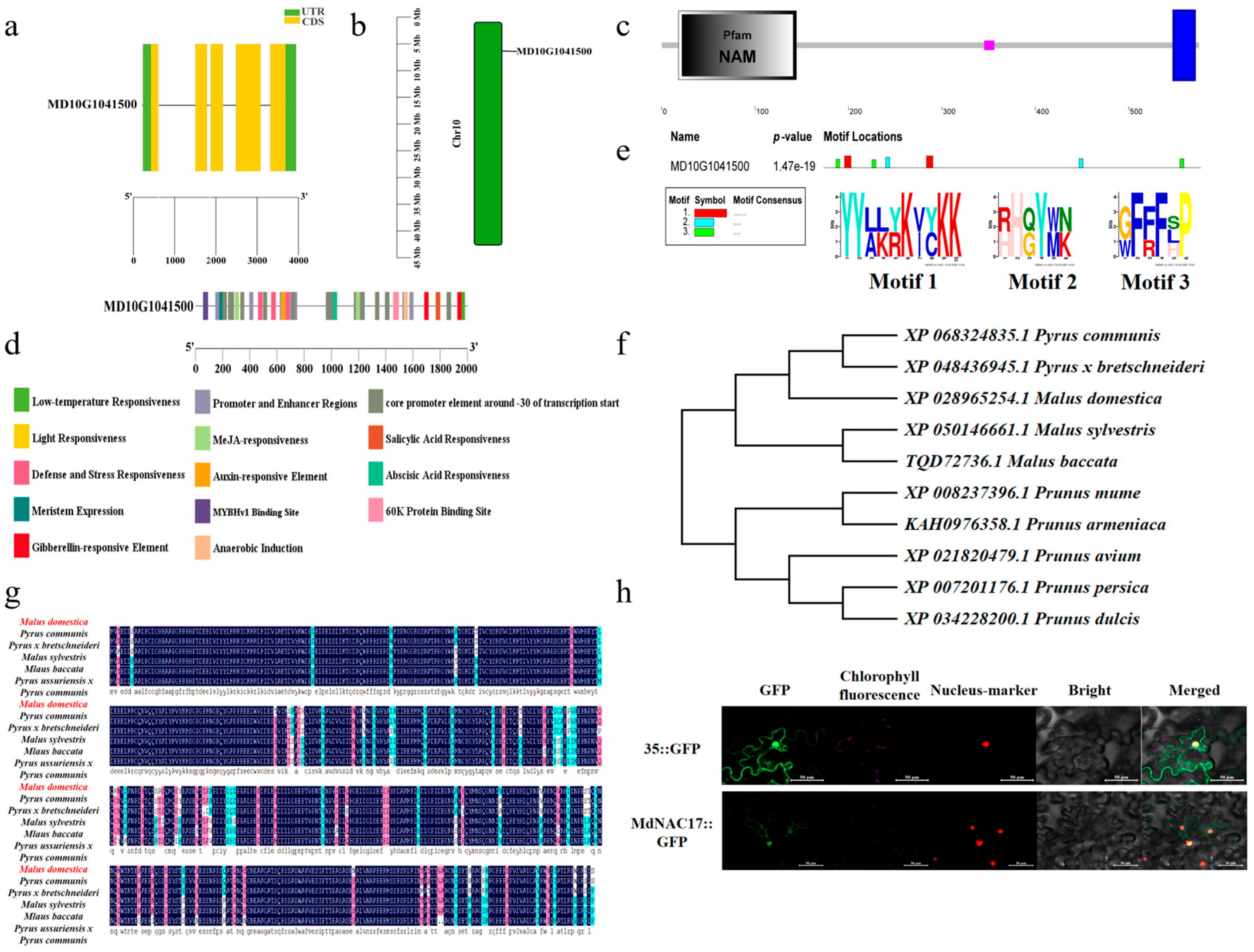
The full-length coding sequence (CDS) of MdNAC17 (MD10G1041500) is 1728 bp and encodes a protein with 575 amino acids. The molecular weight of this protein is 64.84 kDa, with a theoretical isoelectric point (pI) of 4.77. Physicochemical property analysis revealed that the protein is relatively unstable and hydrophobic (Table S2). The gene is located on chromosome 10 and consists of five exons and four introns (Figure 1a,b). Phylogenetic analysis indicated that MdNAC17 is most closely related to PcNAC17 from Pyrus communis (XP_068324835.1) and PbNAC17 from Pyrus x bretschneideri (XP_048436945.1) (Figure 1f). An analysis of the amino acid sequence and multiple sequence alignment revealed a highly conserved NAM domain at the N-terminus of MdNAC17, containing three conserved motifs (motif 1, motif 2, and motif 3), while the C-terminus domain exhibited greater diversity (Figure 1c,e,g). The analysis of the promoter region (1500 bp upstream) identified multiple cis-elements associated with responses to low temperature, defense and hormones (Figure 1d). Furthermore, subcellular localization analysis revealed that MdNAC17 is located in the nucleus (Figure 1h).

3.2. The Expression Pattern of MdNAC17 Under Saline–Alkali Stress

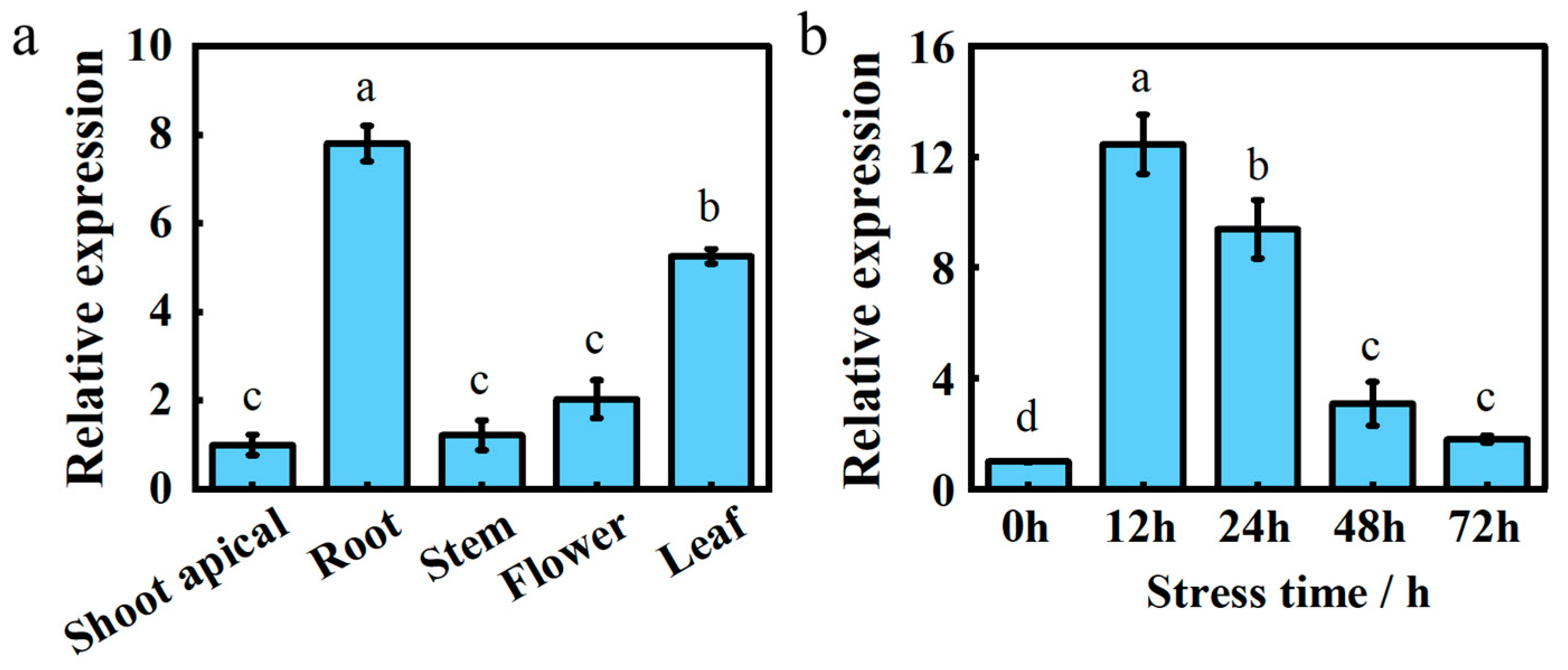
Tissue-specific expression analysis showed that MdNAC17 was expressed in all the tissues, with the highest level in roots, followed by leaves and flowers, and the lowest in shoot apical (Figure 2a). Reverse transcription-quantitative PCR (RT-qPCR) analysis revealed that the expression of MdNAC17 was significantly up-regulated under saline–alkali stress. After reaching a peak at 12 h, the expression of MdNAC17 subsequently reduced after saline–alkali stress for 24 h, but expression was still significantly higher than 0 h (Figure 2b). These results suggest that MdNAC17 functions as a positive regulator of saline–alkali tolerance in apple.

3.3. MdNAC17 Positively Regulates Saline–Alkali Tolerance in Apple Calli Tissue

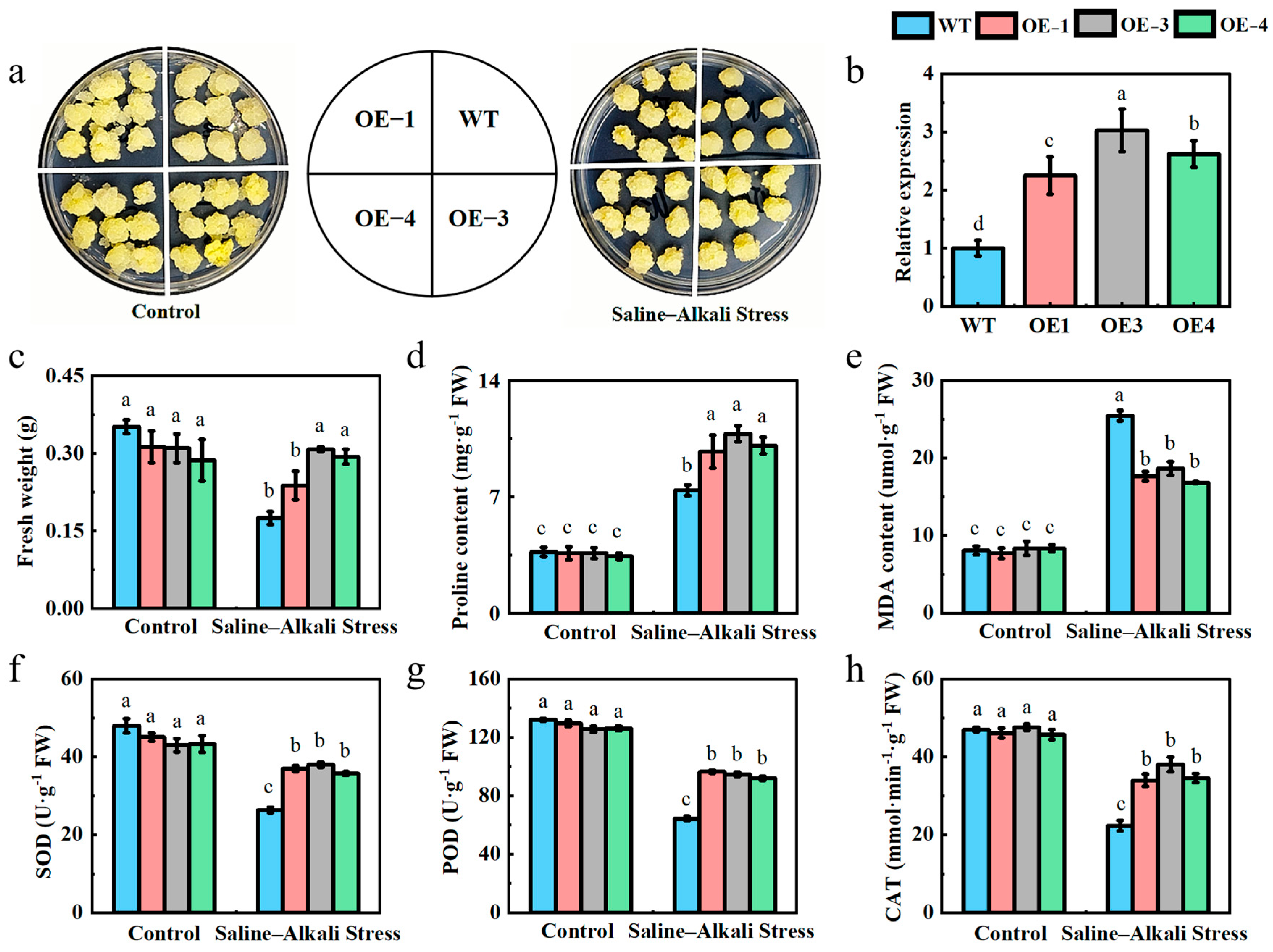
To assess the role of MdNAC17 in saline–alkali tolerance, three transgenic calli lines overexpressing (OE−1, OE−3, OE−4) were generated. RT-qPCR analysis indicated that MdNAC17 expression in three OE lines was significantly up-regulated, showing increases of 2.25-fold, 3.03-fold, and 2.62-fold compared with the WT, respectively (Figure 3b). Under normal conditions, no significant differences were observed between WT and transgenic seedlings in fresh weight, proline content, and the activities of SOD, POD and CAT (Figure 3). After 20 days saline–alkali stress, the growth of both WT and OE calli was significantly inhibited, while OE lines were less affected (Figure 3a). Saline–alkali resulted in a decrease in the fresh weight, SOD, POD, and CAT, and an increase proline content and MDA in all calli tissue. However, the values of fresh weight, proline and the activities of SOD, POD and CAT in the OE calli were significantly higher than in the WT calli (Figure 3c,d,f–h), while the MDA content were lower (Figure 3e). These results demonstrate that MdNAC17 plays a positive regulatory role in the saline-alkaline response of apple calli.

3.4. Overexpression of MdNAC17 Enhances ROS Scavenging in Apple Roots Under Saline–Alkali Stress

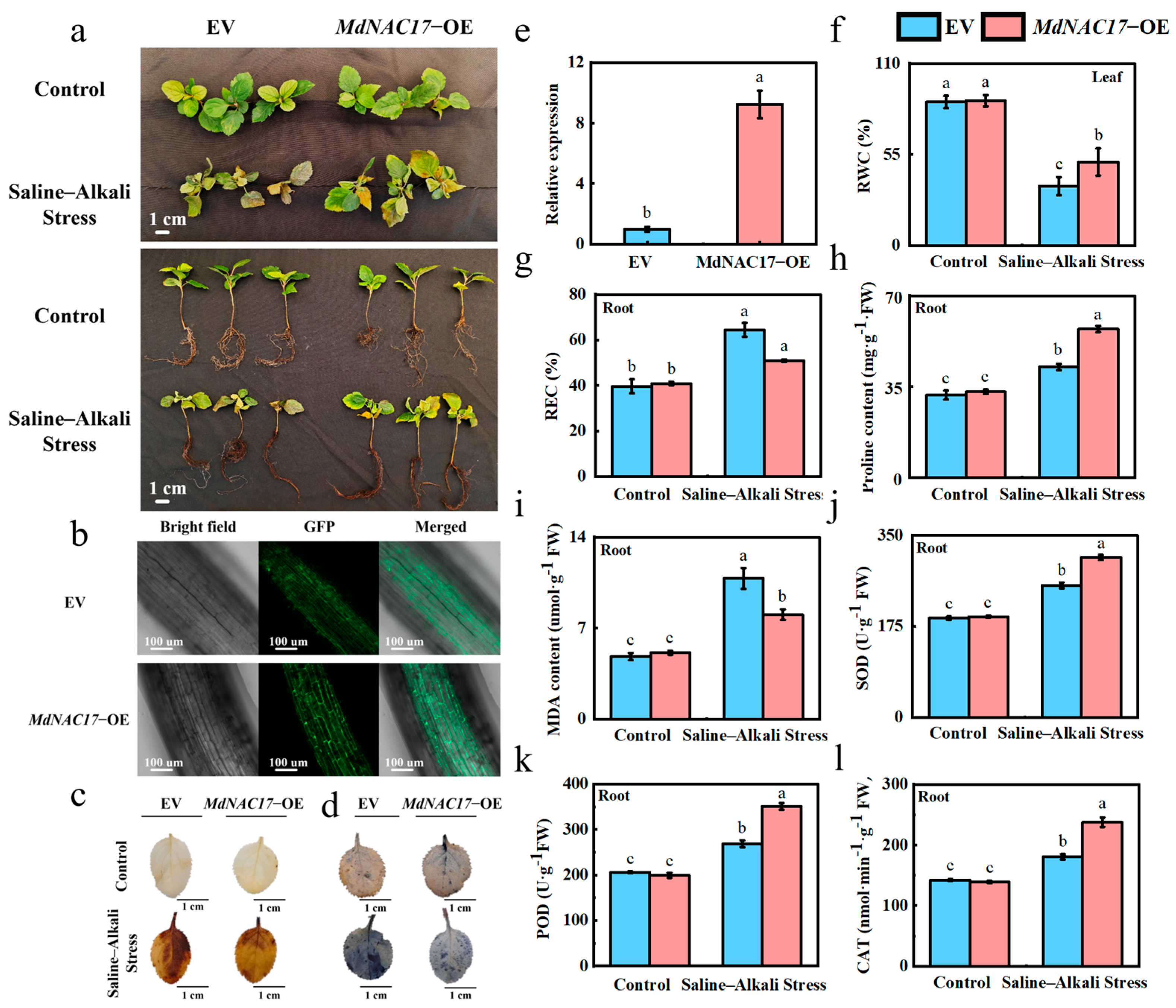
To further elucidate the role of MdNAC17 in the regulation of saline–alkali tolerance, transgenic apple roots overexpressing MdNAC17 (MdNAC17−OE) were generated via Agrobacterium rhizogenes-mediated transformation. Laser scanning confocal microscopy revealed the green fluorescence signal in MdNAC17−OE apple roots, with RT-qPCR analysis further confirming a 9.24-fold up-regulation in expression (Figure 4b,e). Under normal conditions, no significant differences were observed between MdNAC17−OE and empty vector (EV) plants (Figure 4). After 5 days of saline–alkali treatment, the MdNAC17−OE plants exhibited less severe damage than the EV plants (Figure 4a). The relative water content (RWC) of the non-transgenic leaves of MdNAC17−OE root transgenic plants was significantly higher than that of the EV plants, while the accumulation levels of hydrogen peroxide (H2O2) and superoxide anion (O2) were lower than those of the EV plants (Figure 4c,d,f). These results indicate that the overexpression of MdNAC17 in the roots can enhance the ROS scavenging capacity of the above-ground parts through systemic effects under saline–alkali stress conditions.
To determine the effect of MdNAC17 expression on the root system, root electrolyte leakage (REC) and root antioxidant enzyme activity were measured. Under normal conditions, no significant difference was observed between MdNAC17−OE and EV roots (Figure 4a,g–l). Saline–alkali resulted in an increase in the REC, proline content, MDA, SOD, POD, and CAT in all apple roots. Compared with EV roots, MdNAC17−OE roots exhibited significantly higher proline content and SOD, POD and CAT activities, with a corresponding increase of 34.3%, 21.2%, 30.5% and 31.5%, respectively (Figure 4h,j–l). Conversely, MDA content and REC were significantly lower in MdNAC17−OE roots, with a decrease of 25.8% and 21.0%, respectively (Figure 4g,i). These results indicate that MdNAC17 positively regulates saline–alkali tolerance by enhancing ROS scavenging capacity in apple root.

3.5. Overexpression of MdNAC17 Improves Photosynthetic Capacity in Apple Under Saline–Alkali Stress

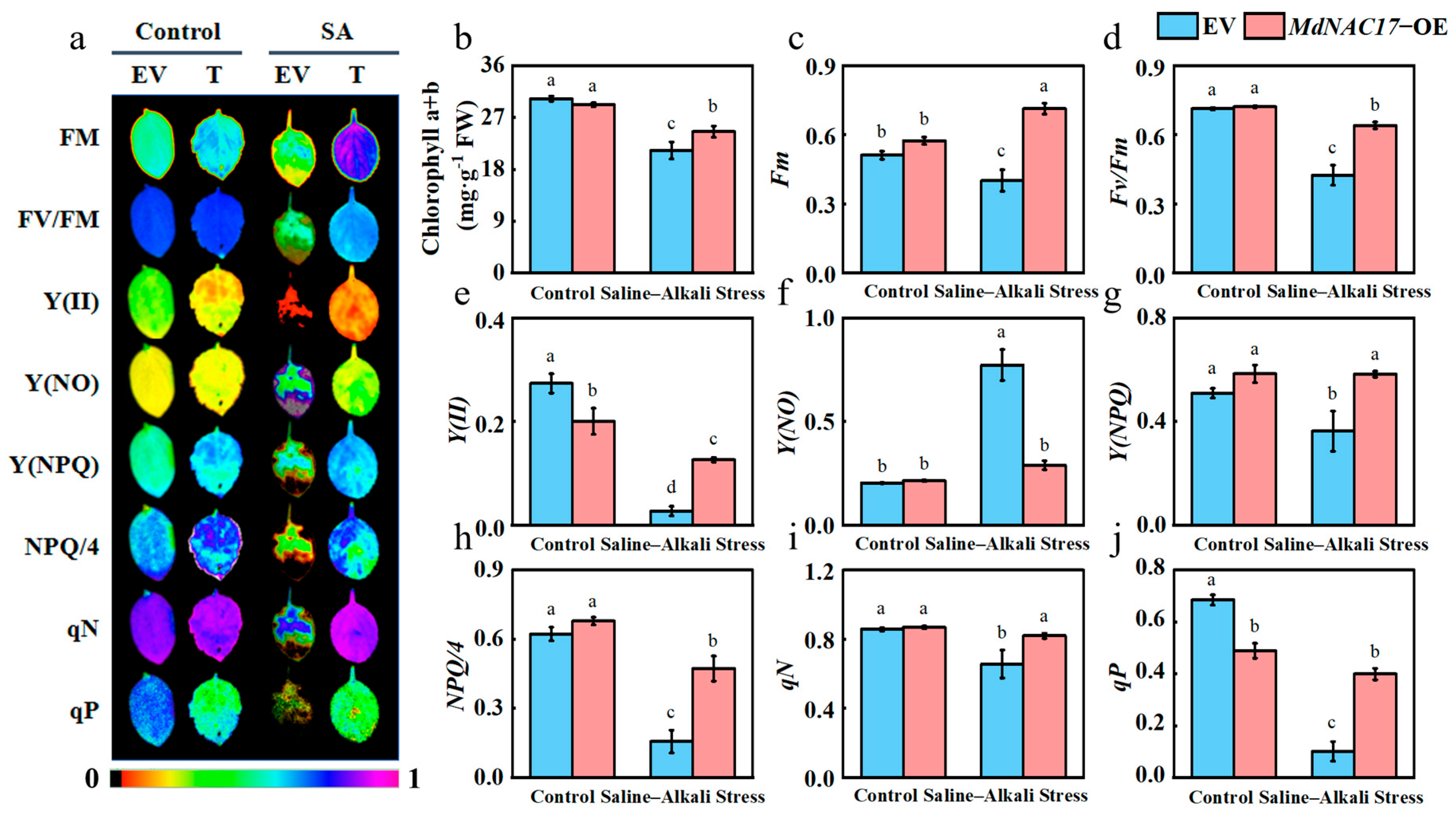
In order to assess the effect of MdNAC17−OE in the root on the photosynthesis of apple above-ground parts under saline–alkali stress, we analyzed the chlorophyll fluorescence parameters of non-transgenic leaves. Under normal conditions, no significant differences in the Chla+b, Fm, Fv/Fm, Y(NO), Y(NPQ), NPQ/4 and qN were observed between the non-genetically modified leaves on the upper part of the plant and EV plants (Figure 5). Under saline–alkali stress, the values of Chla+b, Fv/Fm, NPQ/4 decreased in all apple plants; however, these parameters remained significantly higher in the leaves of MdNAC17−OE plants than in EV plants (Figure 5b,d,h). The value of Y(NO) increased in all plants but remained significantly lower in the leaves of MdNAC17−OE than in EV plants, showing a decrease of 62.4% (Figure 5f). Notably, saline–alkali stress led to an increase in Fm in the leaves of MdNAC17−OE but a decrease in EV plants (Figure 5c). Obvious differences in the Y(II) and qP values were observed between the leaves of MdNAC17−OE and EV plants under normal conditions (Figure 5e,j). Saline–alkali treatment led to a decrease in Y(II) and qP in all apple plants; however, the values of the leaves of MdNAC17−OE remained significantly higher than those in EV plants. These results indicate that the overexpression of MdNAC17 in the roots can maintain the good photosynthetic performance of the above-ground parts under saline–alkali conditions through systemic effects, and there is a correlation with the enhancement of saline–alkali tolerance.

3.6. Overexpression of MdNAC17 Promoted the Expression of Several Stress-Related Genes in Apple Roots Under Saline–Alkali Stress

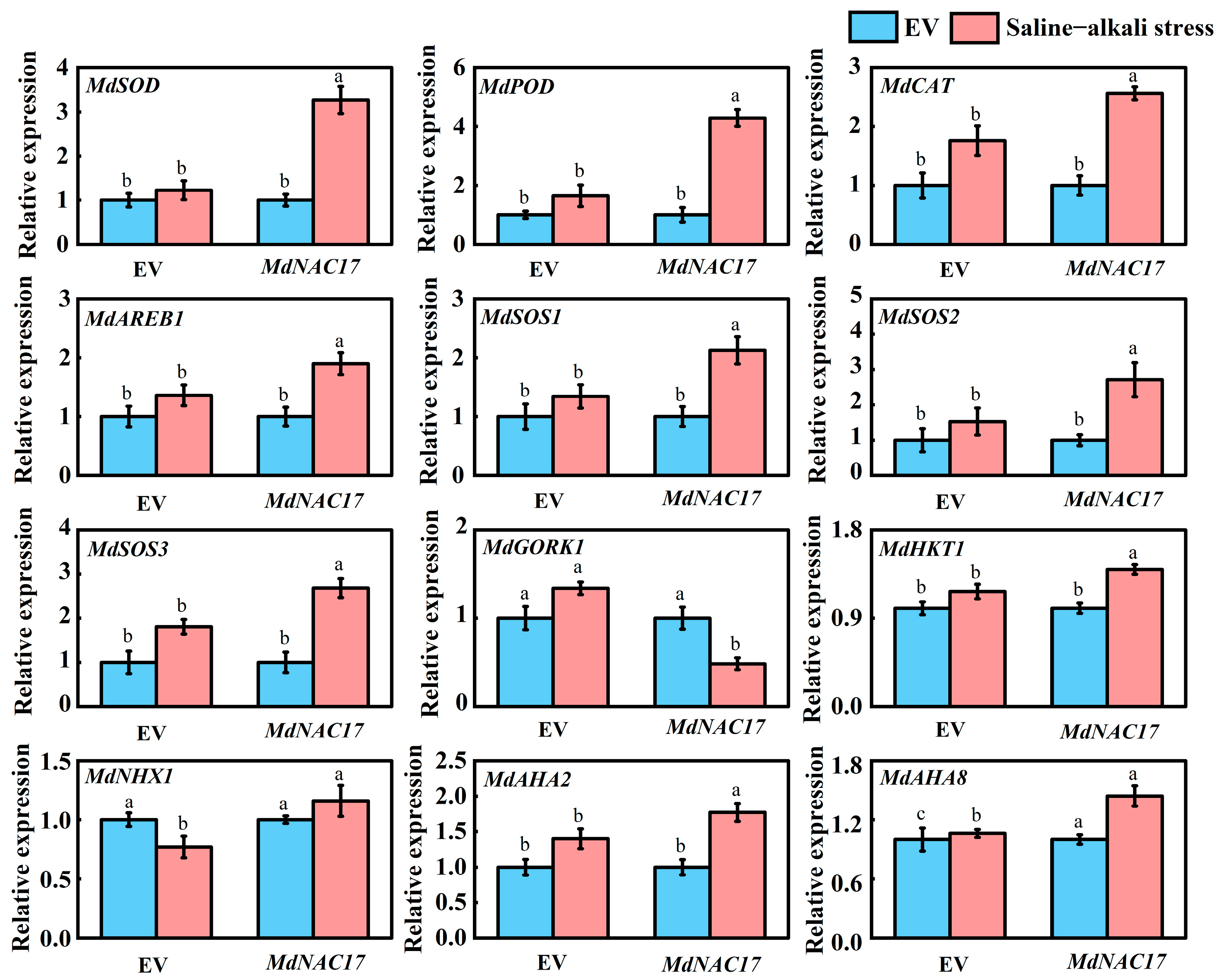
In order to further investigate the role of MdNAC17 in the regulation of apple root responses to saline–alkali stress, we used RT-qPCR to detect the expression levels of several stress-related genes. According to previous reports [35,36,37,38,39], the following genes were selected as candidate genes for saline–alkali stress responses. Under normal conditions, no significant differences were detected between MdNAC17−OE roots and EV roots (Figure 6). Following saline–alkali stress, MdNAC17−OE roots showed significant up-regulation of genes involved in antioxidant enzymes (MdSOD, MdPOD and MdCAT), H+-ATPase (MdAHA2 and MdAHA8), Na+ transporters (MdSOS1, MdNHX1 and MdHKT1), proteins involved in the SOS signaling pathway (MdSOS2 and MdSOS3), and ABA signaling pathway (MdAREB1) compared to EV roots. In contrast, the expression of the K+ transporter protein (MdGORK1) was significantly down-regulated. These results indicate that MdNAC17 may be associated with the regulation of ion homeostasis in apples, as it induces the expression of stress-related genes in the apples.

3.7. Silencing of MdNAC17 Reduced the ROS Scavenging Ability in Apple Roots Under Saline–Alkali Stress

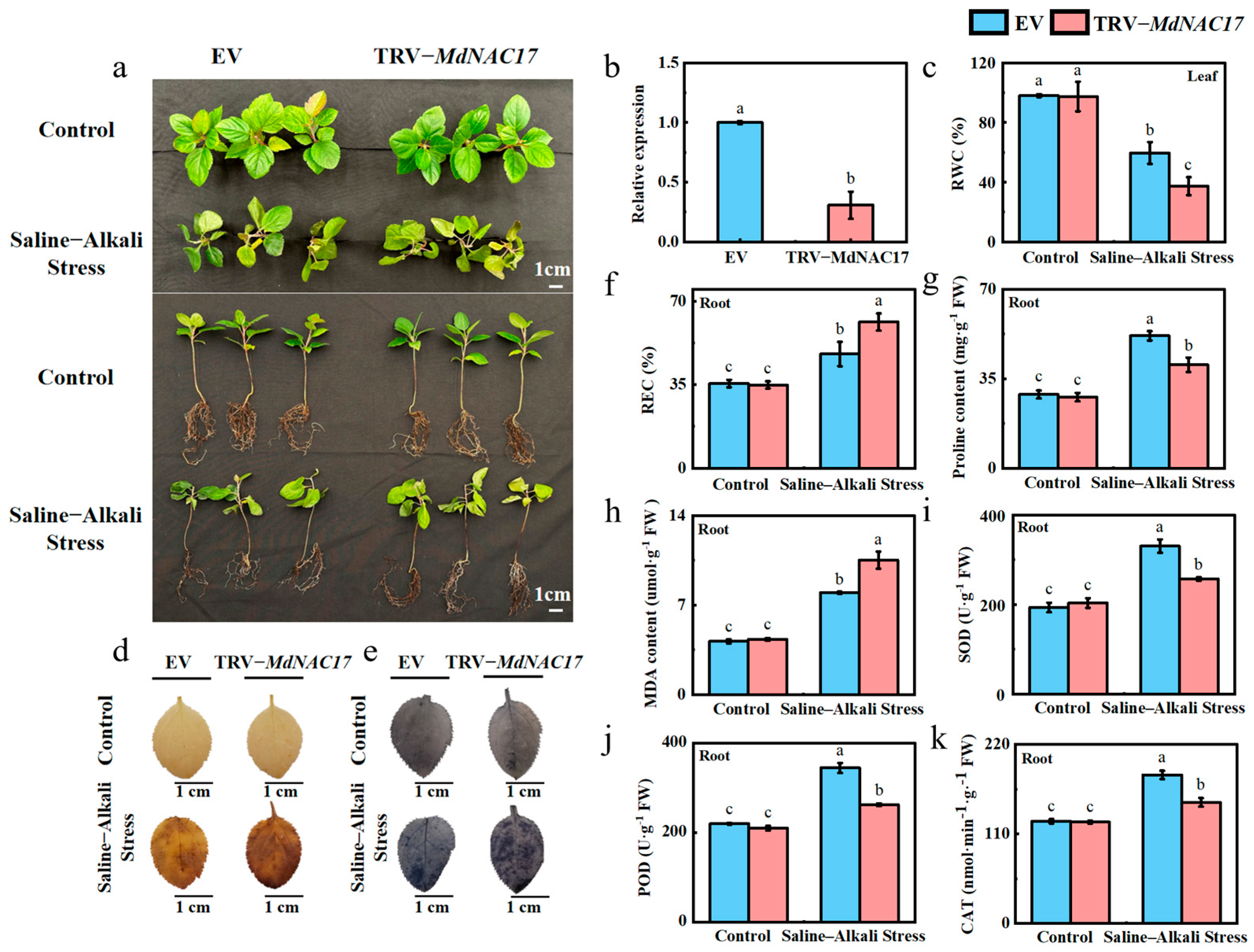
To verify the physiological function of MdNAC17 under saline–alkali stress, we generated MdNAC17−silenced plants using VIGS technology (Figure 7). RT-qPCR analysis indicated that MdNAC17 expression in TRV−MdNAC17 plants was decreased by 69.3% (Figure 7b). Under normal conditions, no significant differences were observed between TRV−MdNAC17 plants and EV plants. After 5 days of treatment with 75 mM saline–alkali, TRV−MdNAC17 plants exhibited severe leaf wilting and obvious yellowing symptoms, whereas EV plants were less affected (Figure 7a). The RWC of leaves was lower in TRV−MdNAC17 plants than in EV plants, whereas the accumulation of H2O2 and O2 was higher (Figure 7d,e), indicating that TRV−MdNAC17 plants suffered greater oxidative damage under saline–alkali stress. Moreover, saline–alkali resulted in an increase in the REC and the levels of proline content, MDA, SOD, POD, and CAT in all apple roots. However, proline content and the activities of SOD, POD and CAT were significantly lower in the TRV−MdNAC17 roots than in EV roots with a decrease of 21.9%, 22.2%, 23.9% and 18.5%, respectively (Figure 7g,i–k). Nonetheless, the content of MDA and REC was higher in the TRV−MdNAC17 roots than in EV roots (Figure 7h,f). These results suggest that the silencing of MdNAC17 attenuates saline–alkali tolerance by affecting the ROS scavenging ability of apple roots.

3.8. Silencing MdNAC17 Reduced Photosynthetic Capacity in Apple Under Saline–Alkali Stress

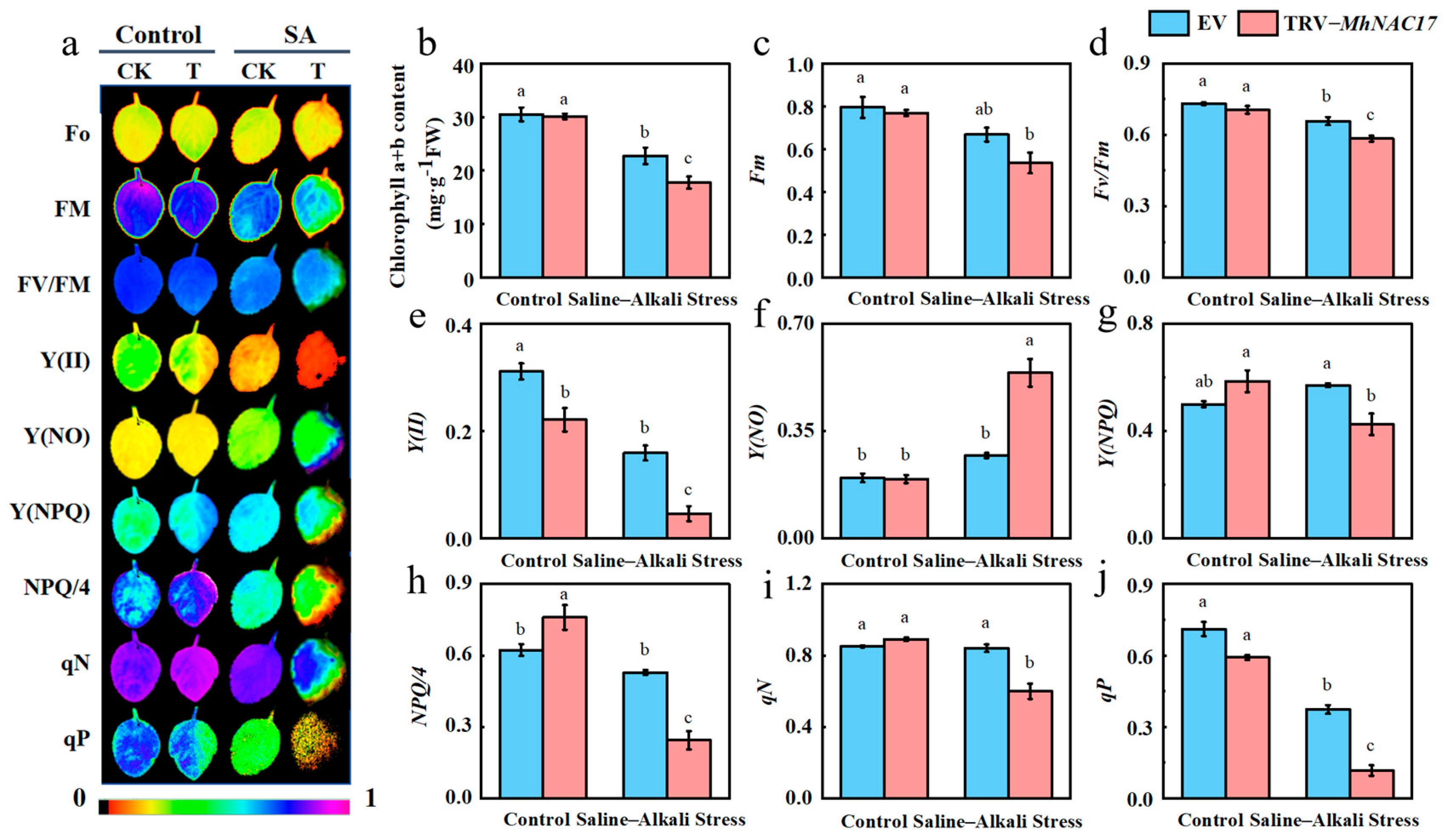
Under normal conditions, no significant differences were observed in Chla+b, Fm, Fv/Fm, Y(NO), Y(NPQ), qN and qP between TRV−MdNAC17 and EV plants (Figure 8). Under saline–alkali stress, the values of Chla + b, Fm, Fv/Fm, Y(NPQ), qN and qP decreased in all apple plants; however, these parameters remained significantly lower in TRV−MdNAC17 plants than in EV plants with a decrease of 21.9%, 19.7%, 11.3%, 25.6%, 28.7% and 68.8%, respectively (Figure 8b–d,g,i,j). Moreover, saline–alkali treatment led to an increase in Y(NO) in all plants, and the value in TRV−MdNAC17 plants was significantly higher than in EV plants (Figure 8f). Notably, significant differences in Y(II) and NPQ/4 values were observed between MdNAC17−OE and EV plants under normal conditions (Figure 8e,h). After saline–alkali treatment, YII and NPQ/4 decreased in all plants, but the values in TRV−MdNAC17 plants were lower than those in EV plants with a decrease of 71.3% and 53.9%, respectively. These results suggest that the silencing of MdNAC17 attenuates saline–alkali tolerance by affecting photosynthetic capacity in apple.

4. Discussion

Saline–alkali stress is a significant abiotic stress that restricts apple production [40,41]. As NAC transcription factors are key regulatory factor in stress responses [42,43], the mechanism by which they mediate apple’s tolerance to saline–alkali conditions deserves in-depth exploration. In fact, the NAC transcription factors have diverse functions in regulating plant stress tolerance. They even exhibit opposite effects in different species and under different stress conditions. For instance, in rice (Oryza sativa L.), the overexpression of OsNAC10 enhanced drought resistance [44]; while OsNAC2 inhibited stress-related genes (such as OsLEA3, OsSAPK1), it intensified oxidative and ionic damage, thereby reducing drought resistance and salt tolerance [45]. In soybeans (Glycine max), the overexpression of GmNAC06 can enhance leaf salt tolerance by eliminating ROS and regulating Na+/K+ transport, thereby maintaining ion and osmotic balance [46]. Similarly, in this study, it was found that apple MdNAC17 was significantly up-regulated under saline–alkali treatment (Figure 2). Its overexpression can enhance the saline–alkali tolerance of callus tissue and apple transgenic roots, while the TRV−MdNAC17 silenced plants showed greater sensitivity. This indicates that MdNAC17 is a positive regulatory factor for apple’s saline–alkali tolerance.
Chlorophyll is the main photosynthetic pigment, but it is prone to decomposition under stress conditions, thereby reducing photosynthetic efficiency [47,48]. This study found that the chlorophyll content in apple leaves under saline–alkali stress was generally decreased, but the chlorophyll content in MdNAC17−OE plants was significantly higher than that in TRV−MdNAC17 and EV plants (Figure 5b and Figure 8b), indicating that MdNAC17 maintains a higher photosynthetic efficiency by inhibiting chlorophyll degradation [49]. The subsequent results further support this hypothesis: the parameters related to photochemical efficiency (Fv/Fm, Y(II), Fm, qP) in the leaves of MdNAC17−OE plants, as well as the parameters related to energy dissipation (qN, YNPQ, NPQ/4), were significantly higher than those of the EV plants, while the TRV−MdNAC17 plants were significantly lower than the EV plants (Figure 5 and Figure 8). It is well known that qP reflects the proportion of light energy used for electron transfer in PSII [50], while NPQ and qN are used to dissipate excess light energy, thereby actively avoiding photoinhibition and oxidative damage in PSII [51]. These results indicate that the overexpression of MdNAC17 enhances the tolerance to saline–alkali by increasing the efficiency of photochemical electron transfer and reducing the thermal dissipation demand of excess energy. Given the high homology of the conserved domains in the NAC family, MdNAC17 may, as reported in cowpea (Vigna unguiculata (L.) Walp.) and Common Wheat (Triticum aestivum L.), protect the photosystem II from saline–alkali stress damage through similar mechanisms such as enhancing photosynthesis and membrane integrity [52,53]. However, this still requires direct experimental verification.
Under saline–alkali stress, excessive accumulation of ROS can lead to membrane lipid peroxidation (MDA) and increased membrane permeability (REC) [54,55]. In this study, MdNAC17−OE significantly reduced the levels of H2O2 and O2, while TRV−MdNAC17 resulted in significantly increased MDA and REC (Figure 4 and Figure 7), indicating that MdNAC17 alleviates oxidative membrane damage by reducing ROS accumulation. These results indicate that MdNAC17 plays a positive role in maintaining osmotic balance and mitigating membrane damage. To cope with oxidative damage, plants have developed a series of complex protective mechanisms, such as activating antioxidant enzymes to eliminate ROS [56]. In this study, under saline–alkali stress conditions, the expression levels of MdSOD, MdPOD, and MdCAT in apple MdNAC17−OE plants and their corresponding enzyme activities were significantly higher than those in the control group (Figure 4j–l and Figure 6), suggesting that MdNAC17 enhances the antioxidant defense system, promotes the metabolism of reactive oxygen species, and thereby improves the saline–alkali tolerance of plants [57], which is consistent with the research results of Wang L. et al. (2017) [58]. Similarly, Shao et al. (2019) reported that apple plants with overexpressed MpSnRK2.10 also exhibited lower ROS levels and higher SOD activity under salt stress, indicating that enhancing antioxidant capacity is a common mechanism for improving stress tolerance in apple genes [59]. In addition, our research indicated that saline–alkali stress significantly increased the accumulation of proline in apple seedlings, which is consistent with the recognized role of proline in plants responding to osmotic stress [60]. Under saline–alkali stress, proline accumulated to the highest level in the MdNAC17−OE strain, and the lowest level in the TRV−MdNAC17 strain. These results suggest that the overexpression of MdNAC17 in the roots may help maintain the osmotic balance of the above-ground non-transgenic leaves and alleviate membrane damage. Based on this, we speculate that MdNAC17 positively regulates the biosynthesis of root osmotic regulatory substances (such as proline), thereby enhancing the overall tolerance of the plant to saline–alkali stress. However, the specific system signaling pathway still requires further research. More importantly, this finding is consistent with the research results of other woody plants. Ait Hammou et al. (2023) reported that, under a 102.6 mmol/L NaCl treatment, proline and carbohydrate metabolites in the seeds of Argania spinosa increased significantly, thereby enhancing the salt tolerance of the seeds [61]. It is worth noting that this species naturally occurs in semi-arid environments, and its osmotic regulation mechanism may have evolved under the dual selection pressure of long-term drought and saline–alkali. Although the above findings were achieved in this study, there are still certain limitations, mainly manifested as the lack of experimental evidence for the direct binding of MdNAC17 to the promoter of downstream target genes, as well as the functional verification under field natural conditions. Nevertheless, our research results still support that the osmotic regulation ability is one of the key mechanisms for woody plants to tolerate saline–alkali stress.
The ionic toxicity caused by saline–alkali stress can inhibit plant growth [62,63]. This study found that, in the case of the overexpression of MdNAC17 or under stress conditions, the transcriptional levels of key genes in the SOS signaling pathway, Na+ excretion-related genes (MdNHX1, MdHKT1), and proton pump genes (MdAHA2, MdAHA8) all showed an upward trend [64,65,66]. This indicates that MdNAC17 may maintain ionic homeostasis by enhancing Na+ excretion and compartmentalization [67,68], but the above correlation results are not sufficient to prove a direct regulatory relationship. On the other hand, NAC transcription factors often participate in non-biological stress responses through the ABA pathway [69]. In this study, the promoter of MdNAC17 contains ABA response elements, and the key ABA signaling pathway gene MdAREB1 in the overexpression material was significantly up-regulated [70]. These associations suggest that MdNAC17 may be related to the ABA signaling pathway and may participate in coordinating ROS clearance and ionic homeostasis regulation, but whether it directly regulates MdAREB1 or other pathway-related genes still needs further verification.

5. Conclusions

In conclusion, our research has found that MdNAC17 is associated with the enzymatic antioxidant system and osmotic balance, and it may play a crucial role in apple’s response to saline–alkali stress. We isolated MdNAC17 and characterized its function through overexpression in apple calluses and roots as well as VIGS-mediated silencing in leaves. This study found that the overexpression of MdNAC17 in the roots enhanced the saline–alkali tolerance of the entire apple plant, suggesting that there is a certain systemic signal in the roots that regulates the stress response of the above-ground part. This enhanced saline–alkali tolerance was manifested in aspects such as increased photosynthetic efficiency, enhanced antioxidant capacity, improved osmotic regulation ability, and reduced accumulation of reactive oxygen species. These findings provide a potential theoretical basis for breeding apple rootstocks with high efficiency and saline–alkali tolerance.

Supplementary Materials

The following supporting information can be downloaded at: https://www.mdpi.com/article/10.3390/horticulturae12060755/s1, Table S1 The primers used in this study. Table S2 Basic information of MdNAC17 gene in apples.

Author Contributions

W.L.: Writing—original draft, Visualization, Investigation, Data curation. X.X.: Software, Data curation. Z.Z.: Methodology, Formal analysis. X.L.: Visualization. X.J.: Writing—review and editing, Supervision. Y.W.: Writing—review and editing, Supervision, Methodology, Conceptualization. All authors have read and agreed to the published version of the manuscript.

Funding

This work was supported by the National Natural Science Foundation of China (Grant Number 32502680 and 32160696 and 32460735), and the Science and Technology Innovation Fund of Gansu Agricultural University (GAU-KYQD-2024-33).

Data Availability Statement

All data presented in this research are available in the article and Supplementary Materials.

Conflicts of Interest

The authors declare no conflicts of interest.

References

  1. Sdouga, D.; Ben Amor, F.; Ghribi, S.; Kabtni, S.; Tebini, M.; Branca, F.; Trifi-Farah, N.; Marghali, S. An insight from tolerance to salinity stress in halophyte Portulaca oleracea L.: Physio-morphological, biochemical and molecular responses. Ecotoxicol. Environ. Saf. 2019, 172, 45–52. [Google Scholar] [CrossRef] [PubMed]
  2. Jia, Y.; Zhao, H.; Niu, Y.; Wang, Y. Long noncoding RNA from Betula platyphylla, BplncSIR1, confers salt tolerance by regulating BpNAC2 to mediate reactive oxygen species scavenging and stomatal movement. Plant Biotechnol. J. 2024, 22, 48–65. [Google Scholar] [CrossRef]
  3. Peng, Y.; Chen, Y.; Yuan, Y.; Liu, B.; Yu, P.; Song, S.; Yi, Y.; Teng, Z.; Yi, Z.; Zhang, J.; et al. Post-anthesis saline-alkali stress inhibits grain filling by promoting ethylene production and signal transduction. Food Energy Secur. 2022, 11, e384. [Google Scholar] [CrossRef]
  4. Chandran, A.E.; Finkler, A.; Hait, T.A.; Kiere, Y.; David, S.; Pasmanik-Chor, M.; Shkolnik, D. Calcium regulation of the Arabidopsis Na+/K+ transporter HKT1 improves seed germination under salt stress. Plant Physiol. 2024, 194, 1834–1852. [Google Scholar] [PubMed]
  5. Iqbal, N.; Umar, S.; Per, T.S.; Khan, N.A. Ethephon increases photosynthetic-nitrogen use efficiency, proline and antioxidant metabolism to alleviate decrease in photosynthesis under salinity stress in mustard. Plant Signal. Behav. 2017, 12, e1297000. [Google Scholar] [CrossRef] [PubMed]
  6. Ren, S.; Weeda, S.; Li, H.; Whitehead, B.; Guo, Y.; Atalay, A.; Parry, J. Salt tolerance in soybean WF-7 is partially regulated by ABA and ROS signaling and involves withholding toxic Cl ions from aerial tissues. Plant Cell Rep. 2012, 31, 1527–1533. [Google Scholar] [CrossRef] [PubMed]
  7. Wang, W.; Liu, D.; Chen, D.; Cheng, Y.; Zhang, X.; Song, L.; Shen, F. MicroRNA414c affects salt tolerance of cotton by regulating reactive oxygen species metabolism under salinity stress. RNA Biol. 2019, 16, 362–375. [Google Scholar] [CrossRef] [PubMed]
  8. Nadarajah, K.K. ROS homeostasis in abiotic stress tolerance in plants. Int. J. Mol. Sci. 2020, 21, 5208. [Google Scholar] [CrossRef] [PubMed]
  9. Jin, H.; Kim, H.R.; Plaha, P.; Liu, S.K.; Park, J.Y.; Piao, Y.Z.; Lim, Y.P. Expression profiling of the genes induced by Na2CO3 and NaCl stresses in leaves and roots of Leymus chinensis. Plant Sci. 2008, 175, 784–792. [Google Scholar] [CrossRef]
  10. Hu, W.; Ding, Z.; Tie, W.; Yan, Y.; Liu, Y.; Wu, C.; Jin, Z. Comparative physiological and transcriptomic analyses provide integrated insight into osmotic, cold, and salt stress tolerance mechanisms in banana. Sci. Rep. 2017, 7, 43007. [Google Scholar] [CrossRef] [PubMed]
  11. Wang, Q.; Guo, C.; Li, Z.; Sun, J.; Wang, D.; Xu, L.; Guo, Y. Identification and analysis of bZIP family genes in potato and their potential roles in stress responses. Front. Plant Sci. 2021, 12, 637343. [Google Scholar] [CrossRef] [PubMed]
  12. Duval, M.; Hsieh, T.F.; Kim, S.Y.; Thomas, T.L. Molecular characterization of AtNAM: A member of the Arabidopsis NAC domain superfamily. Plant Mol. Biol. 2002, 50, 237–248. [Google Scholar] [CrossRef] [PubMed]
  13. Olsen, A.N.; Ernst, H.A.; Leggio, L.L.; Skriver, K. NAC transcription factors: Structurally distinct, functionally diverse. Trends Plant Sci. 2005, 10, 79–87. [Google Scholar] [CrossRef] [PubMed]
  14. Hu, H.; Dai, M.; Yao, J.; Xiao, B.; Li, X.; Zhang, Q.; Xiong, L. Overexpressing a NAM, ATAF, and CUC (NAC) transcription factor enhances drought resistance and salt tolerance in rice. Proc. Natl. Acad. Sci. USA 2006, 103, 12987–12992. [Google Scholar] [CrossRef] [PubMed]
  15. Nuruzzaman, M.; Sharoni, A.M.; Kikuchi, S. Roles of NAC transcription factors in the regulation of biotic and abiotic stress responses in plants. Front. Microbiol. 2013, 4, 248. [Google Scholar] [CrossRef] [PubMed]
  16. Liu, H.; Zhou, Y.; Li, H.; Wang, T.; Zhang, J.; Ouyang, B.; Ye, Z. Molecular and functional characterization of ShNAC1, an NAC transcription factor from Solanum habrochaites. Plant Sci. 2018, 271, 9–19. [Google Scholar] [CrossRef] [PubMed]
  17. Lu, S.; Sun, Y.; Zhang, X.; Zhu, W.; Liu, X.; Wang, F.; Luan, S.; Wang, A.; Wang, H. Tomato NAC2-DREB2 module fine-tunes saline–alkali stress sensitivity via modulation of melatonin biosynthesis and ROS homeostasis. Hortic. Res. 2026, 13, uhag029. [Google Scholar] [CrossRef] [PubMed]
  18. Meng, X.; Kang, Z.; Liu, X.; Li, Q.; Li, Z.; Chu, Z.; Hu, S.; Zhang, Z.; Li, G.; Li, T.; et al. SINAC63-SIbHLH71 module enhances tomato’s saline–alkali tolerance via regulating JA biosynthesis and ROS scavenging. Theor. Appl. Genet. 2026, 139, 75. [Google Scholar] [CrossRef] [PubMed]
  19. Jia, D.; Jiang, Q.; van Nocker, S.; Gong, X.; Ma, F. An apple (Malus domestica) NAC transcription factor enhances drought tolerance in transgenic apple plants. Plant Physiol. Biochem. 2019, 139, 504–512. [Google Scholar] [CrossRef] [PubMed]
  20. Sakuraba, Y.; Kim, Y.S.; Han, S.H.; Lee, B.D.; Paek, N.C. The Arabidopsis transcription factor NAC016 promotes drought stress responses by repressing AREB1 transcription through a trifurcate feed-forward regulatory loop involving NAP. Plant Cell 2015, 27, 1771–1787. [Google Scholar] [CrossRef] [PubMed]
  21. Li, S.; Jing, X.; Tan, Q.; Wen, B.; Fu, X.; Li, D.; Li, L. The NAC transcription factor MdNAC29 negatively regulates drought tolerance in apple. Front. Plant Sci. 2023, 14, 1173107. [Google Scholar] [CrossRef] [PubMed]
  22. An, J.P.; Yao, J.F.; Xu, R.R.; You, C.X.; Wang, X.F.; Hao, Y.J. An apple NAC transcription factor enhances salt stress tolerance by modulating the ethylene response. Physiol. Plant. 2018, 164, 279–289. [Google Scholar] [CrossRef] [PubMed]
  23. Su, M.; Wang, S.; Liu, W.; Yang, M.; Zhang, Z.; Wang, N.; Chen, X. Interaction between MdWRKY55 and MdNAC17-L enhances salt tolerance in apple by activating MdNHX1 expression. Plant Sci. 2022, 320, 111282. [Google Scholar] [CrossRef] [PubMed]
  24. Li, H.; Zhang, W.; Han, M.; Song, J.; Ning, Y.; Yang, H. H2S Enhanced the Tolerance of Malus hupehensis to Alkaline Salt Stress through the Expression of Genes Related to Sulfur-Containing Compounds and the Cell Wall in Roots. Int. J. Mol. Sci. 2022, 23, 14848. [Google Scholar] [CrossRef] [PubMed]
  25. Liu, W.; Li, P.; Wang, X.; Zhang, Z.; Wang, Y. Functional identification of Malus halliana MhbZIP23 gene demonstrates that it enhances saline-alkali stress tolerance in Arabidopsis thaliana. Plants 2024, 13, 1803. [Google Scholar] [CrossRef] [PubMed]
  26. Lescot, M.; Déhais, P.; Thijs, G.; Marchal, K.; Moreau, Y.; Van de Peer, Y.; Rombauts, S. PlantCARE, a database of plant cis-acting regulatory elements and a portal to tools for in silico analysis of promoter sequences. Nucleic Acids Res. 2002, 30, 325–327. [Google Scholar] [CrossRef] [PubMed]
  27. Chen, C.; Chen, H.; Zhang, Y.; Thomas, H.R.; Frank, M.H.; He, Y.; Xia, R. TBtools: An integrative toolkit developed for interactive analyses of big biological data. Mol. Plant 2020, 13, 1194–1202. [Google Scholar] [CrossRef] [PubMed]
  28. Zhao, S.; Gao, H.B.; Jia, X.M.; Wang, H.B.; Mao, K.; Ma, F.W. The HD-Zip I transcription factor MdHB-7 regulates drought tolerance in transgenic apple (Malus domestica). Environ. Exp. Bot. 2020, 180, 104246. [Google Scholar] [CrossRef]
  29. Livak, K.J.; Schmittgen, T.D. Analysis of relative gene expression data using real-time quantitative PCR and the 2−ΔΔCT method. Methods 2001, 25, 402–408. [Google Scholar] [CrossRef] [PubMed]
  30. Hu, D.G.; Li, M.; Luo, H.; Dong, Q.L.; Yao, Y.X.; You, C.X.; Hao, Y.J. Molecular cloning and functional characterization of MdSOS2 reveals its involvement in salt tolerance in apple callus and Arabidopsis. Plant Cell Rep. 2012, 31, 713–722. [Google Scholar] [PubMed]
  31. Zhu, L.C.; Li, B.Y.; Wu, L.M.; Li, H.X.; Wang, Z.Y.; Wei, X.Y.; Ma, B.Q.; Zhang, Y.F.; Ma, F.W.; Ruan, Y.L.; et al. MdERDL6-mediated glucose efflux to the cytosol promotes sugar accumulation in the vacuole through up-regulating TSTs in apple and tomato. Proc. Natl. Acad. Sci. USA 2021, 118, e2022788118. [Google Scholar] [PubMed]
  32. Liu, X.; Jin, Y.; Tan, K.; Zheng, J.; Gao, T.; Zhang, Z.; Li, C. MdTyDc overexpression improves alkalinity tolerance in Malus domestica. Front. Plant Sci. 2021, 12, 625890. [Google Scholar] [CrossRef] [PubMed]
  33. Hu, W.; Huang, C.; Deng, X.; Zhou, S.; Chen, L.; Li, Y.; He, G. TaASR1, a transcription factor gene in wheat, confers drought stress tolerance in transgenic tobacco. Plant Cell Environ. 2013, 36, 1449–1464. [Google Scholar] [CrossRef] [PubMed]
  34. Wang, X.; Zhang, Z.X.; Wang, W.X.; Li, S.T.; Li, J.L.; Wang, Y.X. Functional identification of CCR1 gene in apple (Malus halliana) demonstrates that it enhances saline-alkali stress tolerance. Chem. Biol. Technol. Agric. 2024, 11, 45. [Google Scholar] [CrossRef]
  35. Chen, M.X.; Hu, T.H.; Xue, Y.; Zhu, F.Y.; Du, Z.Y.; Lo, C.; Chye, M.L. Arabidopsis acyl-coenzyme-A-binding protein ACBP1 interacts with AREB1 and mediates salt and osmotic signaling in seed germination and seedling growth. Environ. Exp. Bot. 2018, 156, 130–140. [Google Scholar] [CrossRef]
  36. Sun, Z.; Wang, T.; Li, J.; Zheng, X.; Ge, H.; Sha, G.; Tian, Y. Resveratrol enhances the tolerance of Malus hupehensis to potassium deficiency stress. Front. Plant Sci. 2024, 15, 1503463. [Google Scholar] [CrossRef] [PubMed]
  37. Fan, Z.; Zhu, Y.; Kuang, W.; Leng, J.; Wang, X.; Qiu, L.; Zhao, Q. The 14-3-3 protein GRF8 modulates salt stress tolerance in apple via the WRKY18-SOS pathway. Plant Physiol. 2024, 194, 1906–1922. [Google Scholar] [PubMed]
  38. Dong, Y.; Du, L.; Zhang, Z.; Cheng, J.; Gao, Y.; Wang, X.; Wang, Y. Molecular cloning and functional characterization in response to saline-alkali stress of the MhZEP gene in Arabidopsis thaliana. Physiol. Mol. Biol. Plants 2024, 30, 1551–1564. [Google Scholar] [CrossRef] [PubMed]
  39. Zhai, J.; Xian, X.; Zhang, Z.; Wang, Y. Nano-zinc oxide can enhance the tolerance of apple rootstock M9-T337 seedlings to saline alkali stress by initiating a variety of physiological and biochemical pathways. Plants 2025, 14, 233. [Google Scholar] [CrossRef] [PubMed]
  40. Chen, S.; Zhou, Q.; Feng, Y.; Dong, Y.; Zhang, Z.; Wang, Y.; Liu, W. Responsive mechanism of Hemerocallis citrina Baroni to complex saline-alkali stress revealed by photosynthetic characteristics and antioxidant regulation. Plant Cell Rep. 2024, 43, 176. [Google Scholar] [CrossRef] [PubMed]
  41. Guo, R.; Zhou, Z.; Cai, R.; Liu, L.; Wang, R.; Sun, Y.; Guo, C. Metabolomic and physiological analysis of alfalfa (Medicago sativa L.) in response to saline and alkaline stress. Plant Physiol. Biochem. 2024, 207, 108338. [Google Scholar] [CrossRef] [PubMed]
  42. Lu, P.L.; Chen, N.Z.; An, R.; Su, Z.; Qi, B.S.; Ren, F.; Wang, X.C. A novel drought-inducible gene, ATAF1, encodes a NAC family protein that negatively regulates the expression of stress-responsive genes in Arabidopsis. Plant Mol. Biol. 2007, 63, 289–305. [Google Scholar] [PubMed]
  43. Bu, Q.; Jiang, H.; Li, C.B.; Zhai, Q.; Zhang, J.; Wu, X.Y.; Li, C. Role of the Arabidopsis thaliana NAC transcription factors ANAC019 and ANAC055 in regulating jasmonic acid-signaled defense responses. Cell Res. 2008, 18, 756–767. [Google Scholar] [CrossRef] [PubMed]
  44. Jeong, J.S.; Kim, Y.S.; Baek, K.H.; Jung, H.; Ha, S.H.; Do Choi, Y.; Kim, J.K. Root-specific expression of OsNAC10 improves drought tolerance and grain yield in rice under field drought conditions. Plant Physiol. 2010, 153, 185–197. [Google Scholar] [CrossRef] [PubMed]
  45. Shen, J.; Lv, B.; Luo, L.; He, J.; Mao, C.; Xi, D.; Ming, F. The NAC-type transcription factor OsNAC2 regulates ABA-dependent genes and abiotic stress tolerance in rice. Sci. Rep. 2017, 7, 40641. [Google Scholar] [CrossRef] [PubMed]
  46. Li, M.; Chen, R.; Jiang, Q.; Sun, X.; Zhang, H.; Hu, Z. GmNAC06, a NAC domain transcription factor enhances salt stress tolerance in soybean. Plant Mol. Biol. 2021, 105, 333–345. [Google Scholar] [PubMed]
  47. Fan, J.; Hu, Z.; Xie, Y.; Chan, Z.; Chen, K.; Amombo, E.; Fu, J. Alleviation of cold damage to photosystem II and metabolisms by melatonin in Bermudagrass. Front. Plant Sci. 2015, 6, 925. [Google Scholar] [CrossRef] [PubMed]
  48. Wan, S.; Zhang, Y.; Liu, L.; Xiao, Y.; He, J.; Zhang, Y.; Yu, Y. Comparative effects of salt and alkali stress on photosynthesis and antioxidant system in tea plant (Camellia sinensis). Plant Growth Regul. 2024, 103, 565–579. [Google Scholar] [CrossRef]
  49. Dou, J.; Tang, Z.; Yu, J.; Wang, G.; An, W.; Zhang, Y.; Yang, Q. Effects of exogenous melatonin on the growth and photosynthetic characteristics of tomato seedlings under saline-alkali stress. Sci. Rep. 2025, 15, 5172. [Google Scholar] [CrossRef] [PubMed]
  50. Nie, R.; Wei, X.; Jin, N.; Su, S.; Chen, X. Response of photosynthetic pigments, gas exchange and chlorophyll fluorescence parameters to light quality in Phoebe bournei seedlings. Plant Growth Regul. 2024, 103, 675–687. [Google Scholar] [CrossRef]
  51. Jia, X.M.; Wang, H.; Svetla, S.; Zhu, Y.F.; Hu, Y.; Cheng, L.; Wang, Y.X. Comparative physiological responses and adaptive strategies of apple Malus halliana to salt, alkali and saline-alkali stress. Sci. Hortic. 2019, 245, 154–162. [Google Scholar] [CrossRef]
  52. Srivastava, R.; Kobayashi, Y.; Koyama, H.; Sahoo, L. Cowpea NAC1/NAC2 transcription factors improve growth and tolerance to drought and heat in transgenic cowpea through combined activation of photosynthetic and antioxidant mechanisms. J. Integr. Plant Biol. 2023, 65, 25–44. [Google Scholar] [PubMed]
  53. Lu, J.; Sun, L.; Jin, X.; Islam, M.A.; Guo, F.; Tang, X.; Zhao, K.; Hao, H.; Li, N.; Zhang, W.; et al. Analysis of Physiological and Transcriptomic Differences between a Premature Senescence Mutant (GSm) and Its Wild-Type in Common Wheat (Triticum aestivum L.). Biology 2022, 11, 904. [Google Scholar] [CrossRef] [PubMed]
  54. Jia, X.; Zhu, Y.; Zhang, R.; Zhu, Z.; Zhao, T.; Cheng, L.; Wang, Y. Ionomic and metabolomic analyses reveal the resistance response mechanism to saline-alkali stress in Malus halliana seedlings. Plant Physiol. Biochem. 2020, 147, 77–90. [Google Scholar] [CrossRef] [PubMed]
  55. Miller, G.; Suzuki, N.; Ciftci-Yilmaz, S.; Mittler, R. Reactive oxygen species homeostasis and signaling during drought and salinity stresses. Plant Cell Environ. 2010, 33, 453–467. [Google Scholar] [CrossRef] [PubMed]
  56. Xu, X.Y.; Yao, X.Z.; Lu, L.T.; Zhao, D.G. Overexpression of the transcription factor NtNAC2 confers drought tolerance in tobacco. Plant Mol. Biol. Rep. 2018, 36, 543–552. [Google Scholar] [CrossRef]
  57. El-Badri, A.M.; Batool, M.; Mohamed, I.A.; Khatab, A.; Sherif, A.; Wang, Z.; Zhou, G. Modulation of salinity impact on early seedling stage via nano-priming application of zinc oxide on rapeseed (Brassica napus L.). Plant Physiol. Biochem. 2021, 166, 376–392. [Google Scholar] [CrossRef] [PubMed]
  58. Wang, L.; Li, Z.; Lu, M.; Wang, Y. ThNAC13, a NAC transcription factor from Tamarix hispida, confers salt and osmotic stress tolerance to transgenic Tamarix and Arabidopsis. Front. Plant Sci. 2017, 8, 635. [Google Scholar] [CrossRef] [PubMed]
  59. Shao, Y.; Zhang, X.; van Nocker, S.; Gong, X.; Ma, F. Overexpression of a protein kinase gene MpSnRK2.10 from Malus prunifolia confers tolerance to drought stress in transgenic Arabidopsis thaliana and apple. Gene 2019, 692, 26–34. [Google Scholar] [CrossRef] [PubMed]
  60. Sun, J.; He, L.; Li, T. Response of seedling growth and physiology of Sorghum bicolor (L.) Moench to saline-alkali stress. PLoS ONE 2019, 14, e0220340. [Google Scholar] [CrossRef] [PubMed]
  61. Hammou, R.A.; El Caid, M.B.; Harrouni, C.; Daoud, S. Germination enhancement, antioxidant enzyme activity, and metabolite changes in late Argania spinosa kernels under salinity. J. Arid. Environ. 2023, 219, 105095. [Google Scholar] [CrossRef]
  62. Wang, P.; Xu, Z.; Zhang, Y.; Ma, Y.; Yang, J.; Zhou, F.; Hu, X. Over-expression of spermidine synthase 2 (SlSPDS2) in tomato plants improves saline-alkali stress tolerance by increasing endogenous polyamines content to regulate antioxidant enzyme system and ionic homeostasis. Plant Physiol. Biochem. 2022, 192, 172–185. [Google Scholar] [CrossRef] [PubMed]
  63. Ye, N.; Bian, J.S.; Zhou, B.H.; Yong, L.T.; Yang, T.; Wang, N.; Li, X.W. Soybean GmSNF4 confers salt-alkali stress tolerance in transgenic plants. Plants 2025, 14, 2218. [Google Scholar] [CrossRef] [PubMed]
  64. Lin, H.; Yang, Y.; Quan, R.; Mendoza, I.; Wu, Y.; Du, W.; Guo, Y. Phosphorylation of SOS3-LIKE CALCIUM BINDING PROTEIN8 by SOS2 protein kinase stabilizes their protein complex and regulates salt tolerance in Arabidopsis. Plant Cell 2009, 21, 1607–1619. [Google Scholar] [CrossRef] [PubMed]
  65. Zhao, Q.; Suo, J.; Chen, S.; Jin, Y.; Ma, X.; Yin, Z.; Dai, S. Na2CO3-responsive mechanisms in halophyte Puccinellia tenuiflora roots revealed by physiological and proteomic analyses. Sci. Rep. 2016, 6, 32717. [Google Scholar] [CrossRef] [PubMed]
  66. Yang, Y.; Wu, Y.; Ma, L.; Yang, Z.; Dong, Q.; Li, Q.; Guo, Y. The Ca2+ sensor SCaBP3/CBL7 modulates plasma membrane H+-ATPase activity and promotes alkali tolerance in Arabidopsis. Plant Cell 2019, 31, 1367–1384. [Google Scholar] [CrossRef] [PubMed]
  67. Su, Y.; Luo, W.; Lin, W.; Ma, L.; Kabir, M.H. Model of cation transportation mediated by high-affinity potassium transporters (HKTs) in higher plants. Biol. Proced. Online 2015, 17, 1. [Google Scholar] [CrossRef] [PubMed]
  68. Jadhav, A.A.; Mishra, A.K.; Kumar, K. Molecular insights into the role of plant transporters in salt stress response. Physiol. Plant. 2021, 173, 1481–1494. [Google Scholar] [CrossRef] [PubMed]
  69. Yoshida, T.; Fujita, Y.; Maruyama, K.; Mogami, J.; Todaka, D.; Shinozaki, K.; Yamaguchi-Shinozaki, K. Four Arabidopsis AREB/ABF transcription factors function predominantly in gene expression downstream of SnRK2 kinases in abscisic acid signalling in response to osmotic stress. Plant Cell Environ. 2015, 38, 35–49. [Google Scholar] [PubMed]
  70. Narusaka, Y.; Nakashima, K.; Shinwari, Z.K.; Sakuma, Y.; Furihata, T.; Abe, H.; Yamaguchi-Shinozaki, K. Interaction between two cis-acting elements, ABRE and DRE, in ABA-dependent expression of Arabidopsis rd29A gene in response to dehydration and high-salinity stresses. Plant J. 2003, 34, 137–148. [Google Scholar] [CrossRef] [PubMed]
Figure 1. Basic physicochemical properties of apple transcription factor MdNAC17. (a) introns and exons. (b) Chromosome localization. (c) Conservative structural domain. (d) Analysis of the cis-acting component of the promoter. (e) Conservative basis. (f) Phylogenetic analysis of apple MdNAC17 protein and other species. (g) Protein sequence alignment of multiple species MdNAC17. (h) Subcellular localization of MdNAC17, scale = 50 μm.
Horticulturae 12 00755 g001
Figure 2. Analysis of the expression pattern of MdNAC17, with MDH and EF as internal parameters. (a) Analysis of expression levels of MdNAC17 in shoot apical, root, stem, flower, and leaf apple tissues. (b) Expression analysis of MdNAC17 in Malus hupehensis leaves under saline–alkali stress. Note: the bars indicate mean ± SD (n = 3). Values with different letters are significantly different according to one-way ANOVA followed by Duncan’s test (p< 0.05).
Horticulturae 12 00755 g002
Figure 3. Overexpression of MdNAC17 improves the saline–alkali tolerance of apple calli tissue. (a) Phenotypes of MdNAC17−OE and WT apple calli. (b) MdNAC17 expression. (c) Fresh weight. (d) Pro content. (e) MDA content. (f) SOD activity. (g) POD activity. (h) CAT activity. Note: the bars indicate mean ± SD (n = 3). Values with different letters are significantly different according to one-way ANOVA followed by Duncan’s test (p < 0.05).
Horticulturae 12 00755 g003
Figure 4. Overexpression of MdNAC17 gene enhance the saline–alkali tolerance of Malus hupehensis. (a) Phenotypes of MdNAC17−OE and EV Malus hupehensis under normal conditions and saline–alkali stress conditions, scale = 1 cm. (b) Fluorescence identification of root systems of EV and MhNAC17−OE plants with roots, scale = 100 μm. (c) DAB staining, scale = 1 cm. (d) NBT staining, scale = 1 cm. (e) Analysis of the expression level of MdNAC17 in overexpressed apple plants. (f) Leaf RWC. (g) Root REC. (h) Root proline content. (i) Root MDA content. (j) Root SOD activity. (k) Root POD activity. (l) Root CAT activity. Note: the bars indicate mean ± SD (n = 3). Values with different letters are significantly different according to one-way ANOVA followed by Duncan’s test (p < 0.05).
Horticulturae 12 00755 g004
Figure 5. The effect of saline–alkali stress (SA) on chlorophyll fluorescence in empty vectors (EVs) and overexpressing MdNAC17 transgenic apple plants (T). (a) Chlorophyll fluorescence imaging. (b) Chlorophyll a+b content. (c) Fm. (d) Fv/Fm. (e) Y(II). (f) Y(NO). (g) Y(NPQ). (h) NPQ/4. (i) qN. (j) qP. Note: the bars indicate mean ± SD (n = 5). Values with different letters are significantly different according to one-way ANOVA followed by Duncan’s test (p < 0.05).
Horticulturae 12 00755 g005
Figure 6. The expression of stress responsive genes under normal conditions and saline–alkali stress conditions. Note: the bars indicate mean ± SD (n = 3). Values with different letters are significantly different according to one-way ANOVA followed by Duncan’s test (p < 0.05).
Horticulturae 12 00755 g006
Figure 7. The silencing of MdNAC17 gene reduces the saline–alkali tolerance of Malus hupehensis. (a) Phenotype of MdNAC17−silenced plants, scale = 1 cm. (b) MdNAC17 expression. (c) Leaf RWC. (d) DAB staining, scale = 1 cm. (e) NBT staining, scale = 1 cm. (f) Root REC. (g) Root proline content. (h) Root MDA content. (i) Root SOD activity. (j) Root POD activity. (k) Root CAT activity. Note: the bars indicate mean ± SD (n = 3). Values with different letters are significantly different according to one-way ANOVA followed by Duncan’s test (p < 0.05).
Horticulturae 12 00755 g007
Figure 8. Changes in chlorophyll fluorescence of MdNAC17−silenced plants under saline–alkali stress. (a) Chlorophyll fluorescence images. (b) Chlorophyll a+b content. (c) Fm. (d) Fv/Fm. (e) Y(II). (f) Y(NO). (g) Y(NPQ). (h) NPQ/4. (i) qN. (j) qP. Note: the bars indicate mean ± SD (n = 5). Values with different letters are significantly different according to one-way ANOVA followed by Duncan’s test (p < 0.05).
Horticulturae 12 00755 g008
Disclaimer/Publisher’s Note: The statements, opinions and data contained in all publications are solely those of the individual author(s) and contributor(s) and not of MDPI and/or the editor(s). MDPI and/or the editor(s) disclaim responsibility for any injury to people or property resulting from any ideas, methods, instructions or products referred to in the content.