Identification and Fungicide Control of Alternaria alternantherae Causing Leaf Spot on Celosia cristata and Alternanthera philoxeroides in China
Highlights
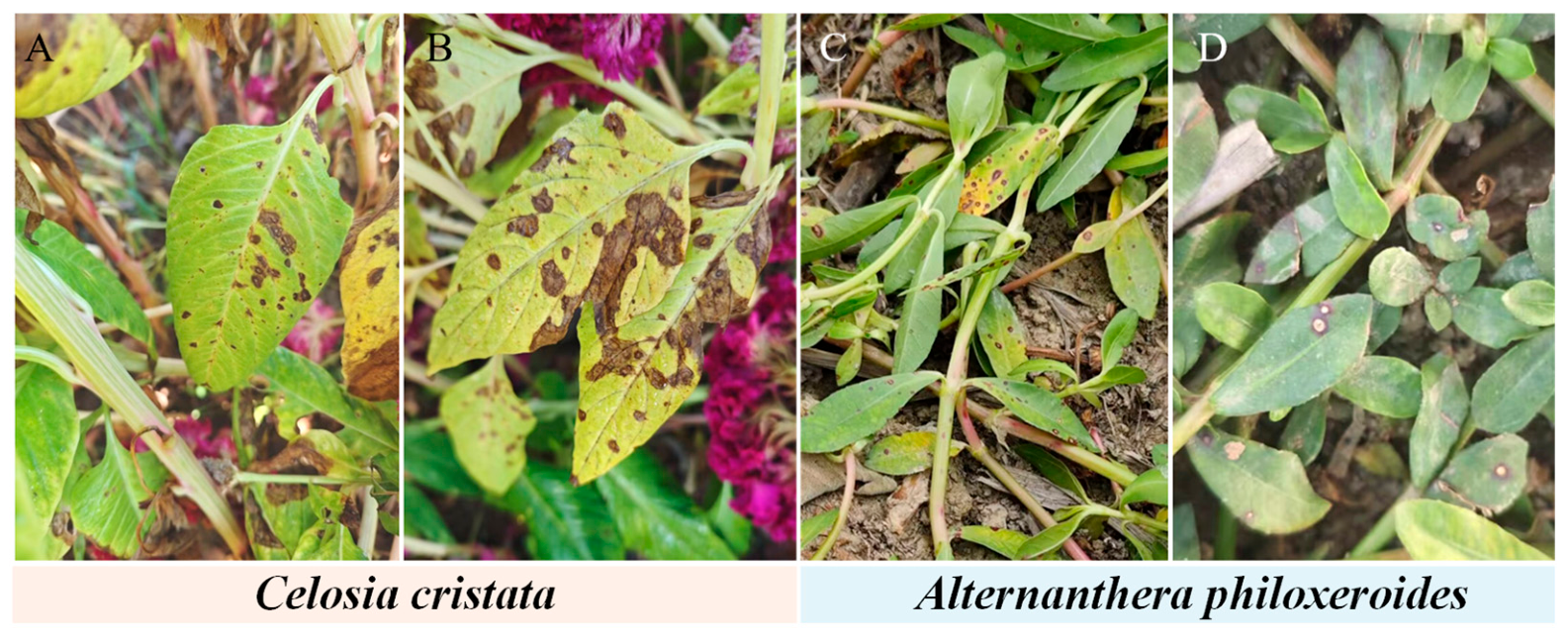
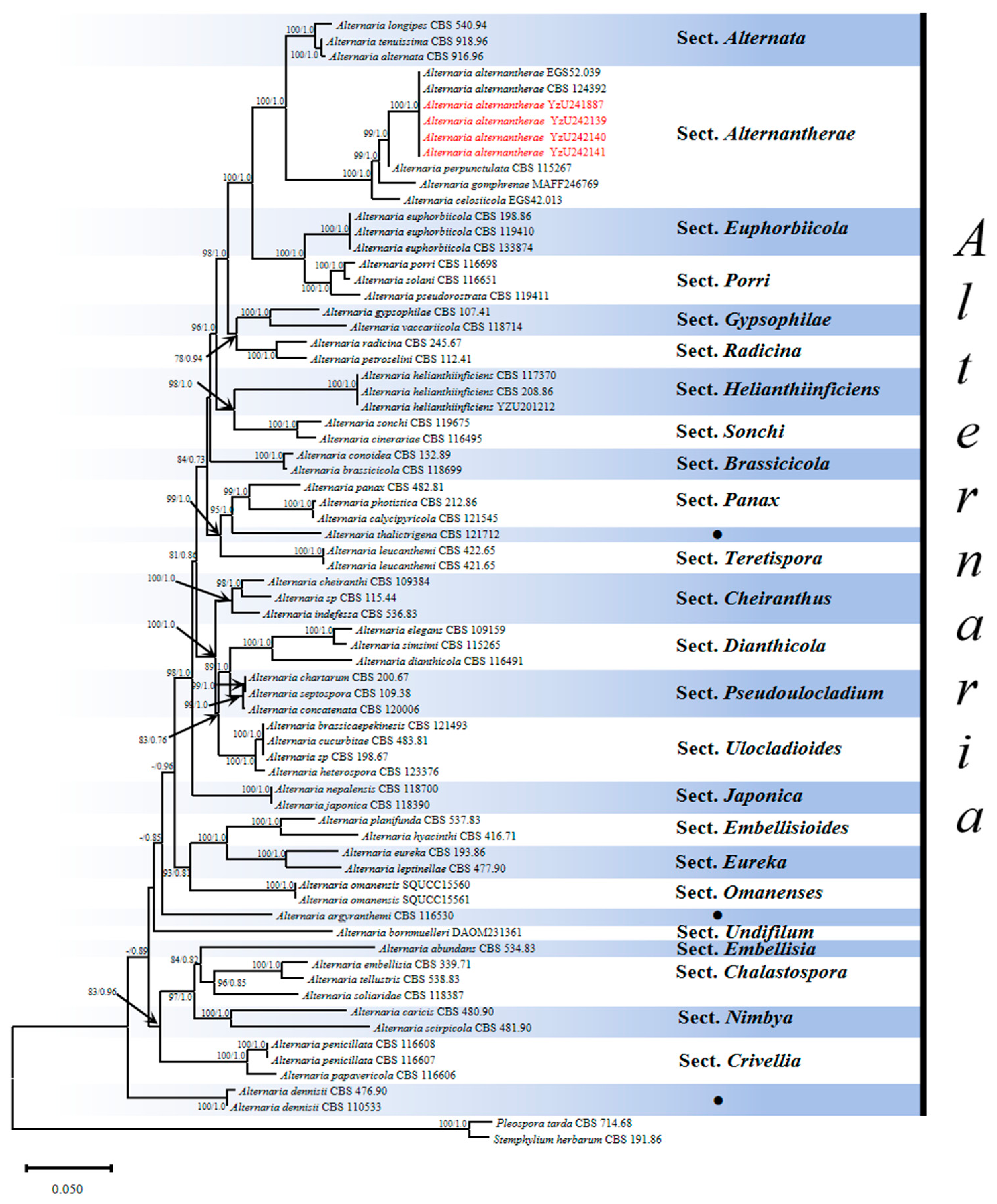
- We identified the fungal pathogen causing leaf spot on Celosia cristata and Alternanthera philoxeroides via morphological characteristics and multilocus phylogenetic analysis.
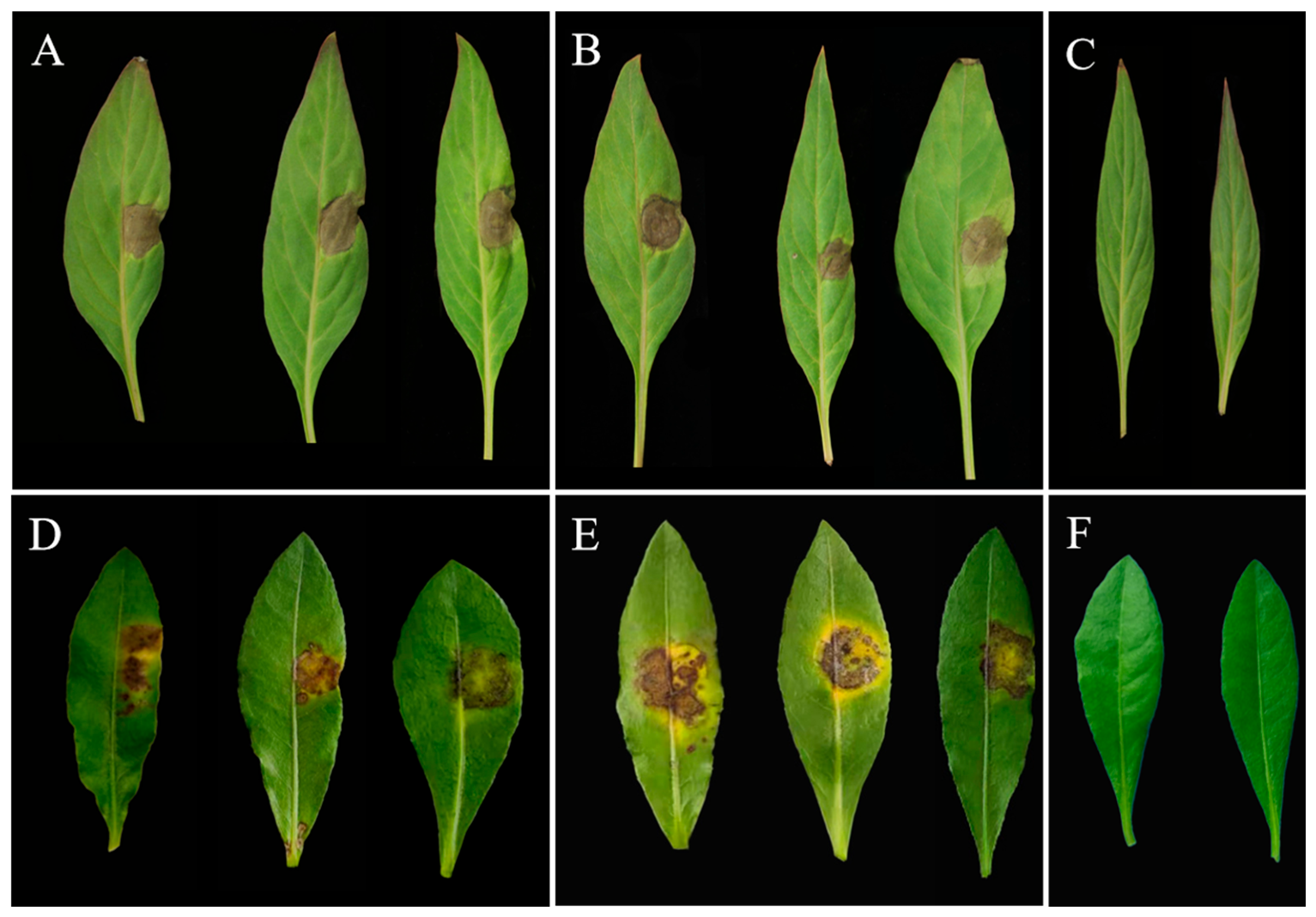
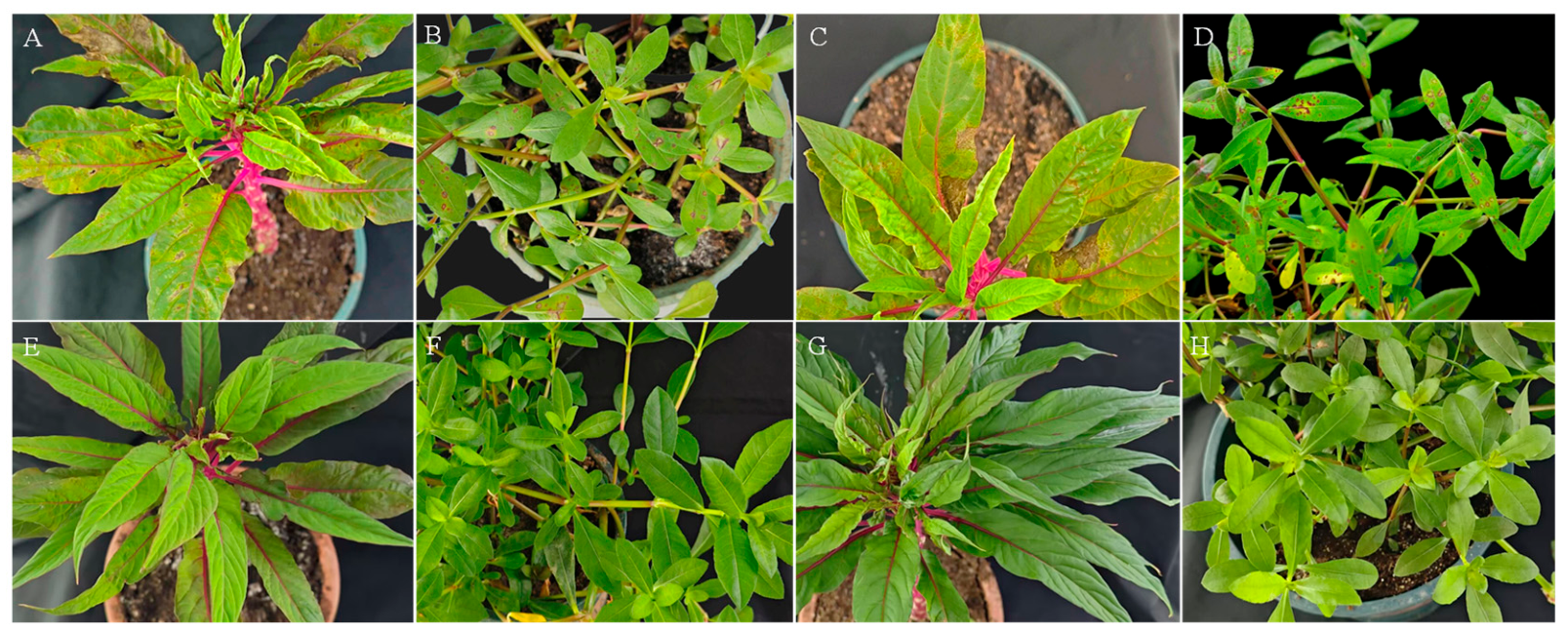
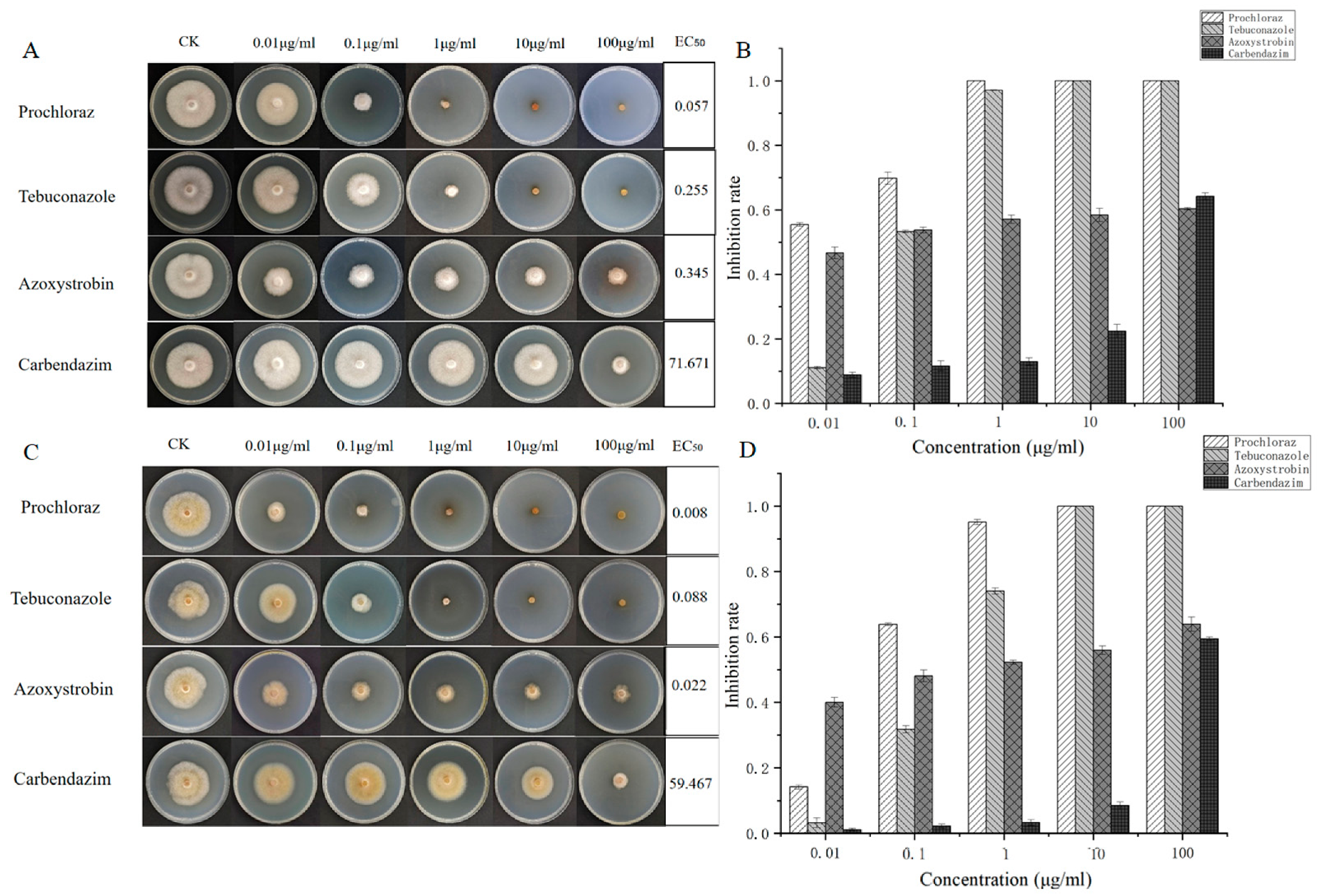
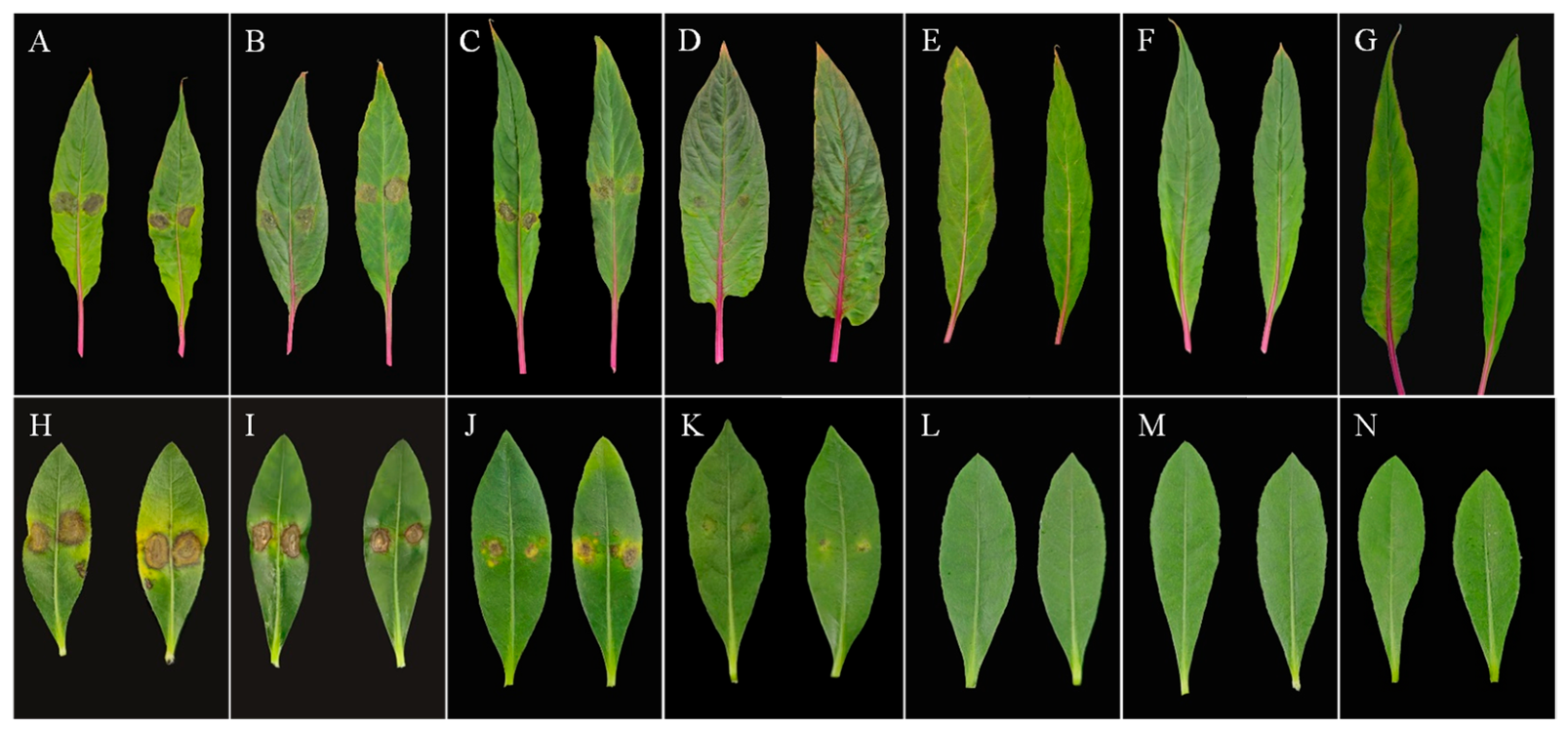
- We assessed the pathogenicity of the fungal strains on two host plants, as well as their sensitivity to four fungicides.
- This study reports Alternaria alternantherae as the causal pathogen of leaf spot on Celosia cristata and Alternanthera philoxeroides, and reveals differences between strains of the same species from the two different hosts.
- This study recommends effective fungicides to control leaf spot on C. cristata based on in vitro and in vivo fungicide sensitivity assays.
Abstract
1. Introduction
2. Materials and Methods
2.1. Sample Collection and Pathogen Isolation
2.2. Morphology
2.3. DNA Extraction and PCR Amplification
2.4. Phylogenetic Analysis
2.5. Pathogenicity Assays
2.6. Fungicide Sensitivity Assay
3. Results
3.1. Fungal Strains
3.2. Fungal Morphology

| Species | Strain | Conidia | Medium | Reference | ||
|---|---|---|---|---|---|---|
| Body (μm) | Septa | Beak (μm) | ||||
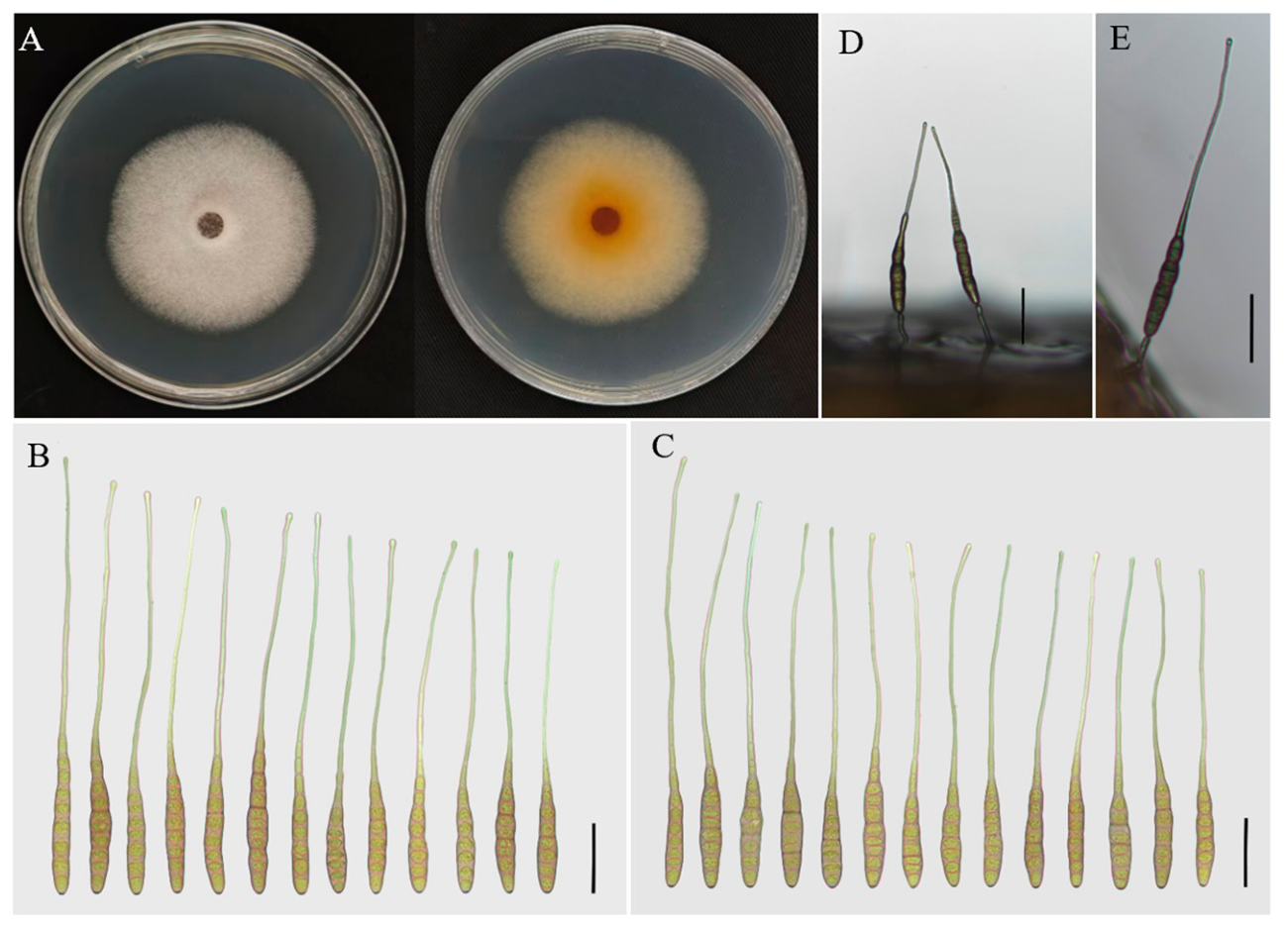
| A. alternantherae | CBS 124392 | (40–) 110 (–160) × (10–) 18 (–25) μm | 2–14 | 60–225 μm (–400 μm) × 3.5–5.5 μm | V8A | [27] |
| EGS 52-039 | 70–110 (–121.3) × 12–17 (–19.4) μm | 5–8 | 131–200 (–225) × 3–5 (–6) μm | PCA | [38] | |
| 61–100 (–107) × 11–19 μm | 4–8 | 125–205 (–236.4) × 4–6 (–3.7) μm | V8A | |||
| YzU241887 | 66–115 (−121.8) × 12.8–17.5 (−19.4) μm | 5–8 | 131–219 (−252.2) × 2.6–6 (−7) μm | PCA | This study | |
| 64–100 (−107) × 11.89–19.56 μm | 4–8 | 118.71–215 (−236.38) × 4–6 (−6.82) μm | V8A | |||
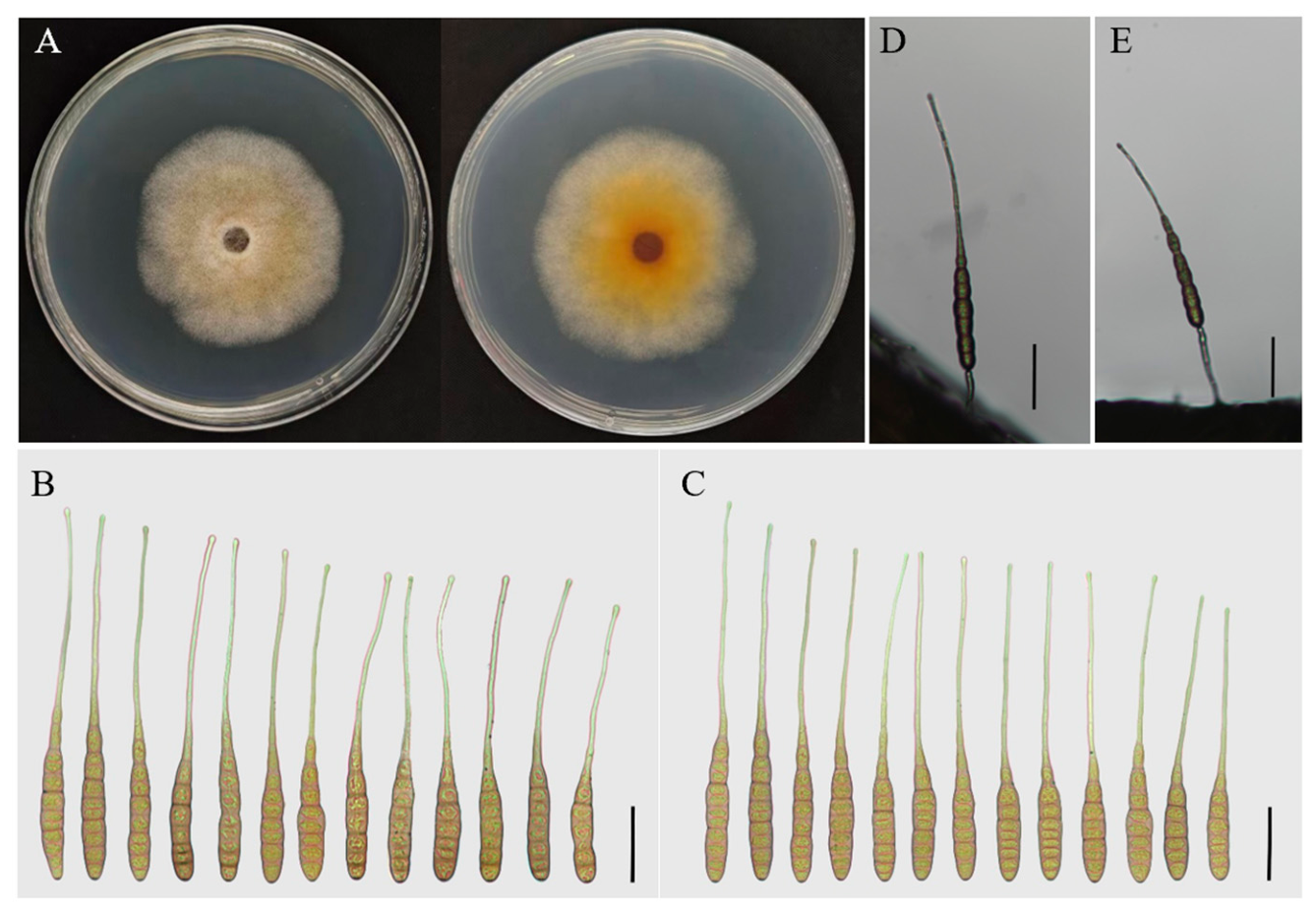
| YzU242141 | 63.45–104 (−127.03) × 13–18 μm | 5–7 | 56–160 (−214) × 3–7 μm | PCA | This study | |
| 65.8–105 (−113) × 14–19.2 μm | 5–8 | 90–150 (−163) × 3–6 μm | V8A | |||
| A. celosiicola | EGS 42-013 | 65–103 (–113) × 13–18 μm | 4–7 | 90–115 (–125) μm | PCA | [38] |
| 70–105 (–115) × 14–20 μm | 5–7 | 106–160 (–210) × 3–7 μm | V8A | |||
| A. perpunctulata | CBS 115267 | 80–100 × 10–14 μm | 6–9 | 100–210 × 2 µm | PCA | [27] |
| A. gomphrenae | MAFF 246769 | 35–77 × 10–17 μm | 3–9 | 13–216 × 2–4 μm | V8A | [30] |
3.3. Phylogeney
3.4. Pathogenicity Assay
3.5. Fungicide Sensitivity
4. Discussion
5. Conclusions
Supplementary Materials
Author Contributions
Funding
Data Availability Statement
Conflicts of Interest
References
- Luo, Y.; Xu, Y.; Zhang, H.; Zhang, J.; Qin, X.; Jin, S. Celosia cristata L.: A Review of Its Traditional Uses, Phytochemistry, Pharmacology, Toxicology, and Quality Control, along with Network Pharmacological Analysis of Its Components and Targets. J. Ethnopharmacol. 2024, 332, 118325. [Google Scholar] [CrossRef] [PubMed]
- Schliemann, W.; Cai, Y.; Degenkolb, T.; Schmidt, J.; Corke, H. Betalains of Celosia argentea. Phytochemistry 2001, 58, 159–165. [Google Scholar] [CrossRef] [PubMed]
- Tripathi, N.K.; Khan, N. Phytochemical and Pharmacological Overview on Celosia cristata Linn. J. Adv. Sci. Res. 2021, 12, 46–51. [Google Scholar] [CrossRef]
- Wang, Y.; Lou, Z.; Wu, Q.-B.; Guo, M.-L. A Novel Hepatoprotective Saponin from Celosia cristata L. Fitoterapia 2010, 81, 1246–1252. [Google Scholar] [CrossRef] [PubMed]
- Singh, S.; Mazumder, A.; Pentela, B. Phytochemical Evaluation and Pharmacological Potential of Celosia cristata L. Allelopath. J. 2024, 63, 19–30. [Google Scholar] [CrossRef]
- Sayeed, R.; Thakur, M.; Gani, A. Celosia cristata Linn. Flowers as a New Source of Nutraceuticals- A Study on Nutritional Composition, Chemical Characterization and in-Vitro Antioxidant Capacity. Heliyon 2020, 6, e05792. [Google Scholar] [CrossRef] [PubMed]
- Uprety, L.P.; Lee, C.-G.; Oh, K.-I.; Jeong, H.; Yeo, S.; Yong, Y.; Seong, J.K.; Kim, I.Y.; Go, H.; Park, E.; et al. Anti-Obesity Effects of Celosia cristata Flower Extract In Vitro and In Vivo. Biomed. Pharmacother. 2024, 176, 116799. [Google Scholar] [CrossRef] [PubMed]
- Wang, B.; Li, W.; Wang, J. Genetic Diversity of Alternanthera philoxeroides in China. Aquat. Bot. 2005, 81, 277–283. [Google Scholar] [CrossRef]
- Wu, H.; Carrillo, J.; Ding, J. Species Diversity and Environmental Determinants of Aquatic and Terrestrial Communities Invaded by Alternanthera philoxeroides. Sci. Total Environ. 2017, 581–582, 666–675. [Google Scholar] [CrossRef] [PubMed]
- Geng, Y.-P.; Pan, X.-Y.; Xu, C.-Y.; Zhang, W.-J.; Li, B.; Chen, J.-K.; Lu, B.-R.; Song, Z.-P. Phenotypic Plasticity Rather than Locally Adapted Ecotypes Allows the Invasive Alligator Weed to Colonize a Wide Range of Habitats. Biol. Invasions 2007, 9, 245–256. [Google Scholar] [CrossRef]
- Tanveer, A.; Ali, H.H.; Manalil, S.; Raza, A.; Chauhan, B.S. Eco-Biology and Management of Alligator Weed [Alternanthera philoxeroides) (Mart.) Griseb.]: A Review. Wetlands 2018, 38, 1067–1079. [Google Scholar] [CrossRef]
- Pan, X.-Y. Invasive Alternanthera philoxeroides: Biology, Ecology and Management. Acta Phytotaxon. Sin. 2007, 45, 884. [Google Scholar] [CrossRef]
- Gould, A.B. Diseases of Celosia. In Handbook of Florists’ Crops Diseases; McGovern, R.J., Elmer, W.H., Eds.; Handbook of Plant Disease Management; Springer International Publishing: Cham, Switzerland, 2018; pp. 379–417. [Google Scholar]
- Wellings, C.; Stovold, G. Seedling Blight of Celosia Caused by Pseudomonas syringae van Hall. Aust. Plant Pathol. 1977, 6, 57. [Google Scholar] [CrossRef]
- Rehman, A.; Imran, M.; Mehboob, S.; Khan, N.A.; Alam, W.; Riaz, K. Etiology, Pathogenicity and Management of Collar Rot in Cockscomb (Celosia argentea). Int. J. Agric. Biol. 2015, 17, 9–14. [Google Scholar]
- Caveness, F.E.; Wilson, G.F. Effect of Root-Knot Nematodes on Growth and Development of Celosia argentea L. Acta Hortic. 1977, 53, 71–74. [Google Scholar] [CrossRef]
- Ye, W.H.; Li, J.; Cao, H.L.; Ge, X.J. Genetic Uniformity of Alternanthera philoxeroides in South China. Weed Res. 2003, 43, 297–302. [Google Scholar] [CrossRef]
- Liu, H.F.; Liao, J.; Chen, X.Y.; Liu, Q.K.; Yu, Z.H.; Deng, J.X. A Novel Species and a New Record of Alternaria Isolated from Two Solanaceae Plants in China. Mycol. Prog. 2019, 18, 1005–1012. [Google Scholar] [CrossRef]
- Simmons, E.G. Alternaria: An Identification Manual: Fully Illustrated and with Catalogue Raisonné 1796–2007; CBS Biodiversity Series; Centraalbureau Voor Schimmelcultures: Utrecht, The Netherlands, 2007. [Google Scholar]
- Liu, H.-F.; Liu, F.-Y.; Ke, H.-Y.; Shi, Q.-X.; Deng, J.-X.; Sang, H. Three Novel Species of Alternaria (Pleosporales, Pleosporaceae) from Cereal Crops (Poaceae) in China. MycoKeys 2025, 116, 167–183. [Google Scholar] [CrossRef] [PubMed]
- Watanabe, M.; Lee, K.; Goto, K.; Kumagai, S.; Sugita-Konishi And, Y.; Hara-Kudo, Y. Rapid and Effective DNA Extraction Method with Bead Grinding for a Large Amount of Fungal DNA. J. Food Prot. 2010, 73, 1077–1084. [Google Scholar] [CrossRef] [PubMed]
- White, T.J.; Bruns, T.; Lee, S.; Taylor, J. Amplification and Direct Sequencing of Fungal Ribosomal RNA Genes for Phylogenetics. In PCR Protocols; Elsevier: Amsterdam, The Netherlands, 1990; pp. 315–322. [Google Scholar]
- Berbee, M.L.; Pirseyedi, M.; Hubbard, S. Cochliobolus Phylogenetics and the Origin of Known, Highly Virulent Pathogens, Inferred from ITS and Glyceraldehyde-3-Phosphate Dehydrogenase Gene Sequences. Mycologia 1999, 91, 964–977. [Google Scholar] [CrossRef]
- Carbone, I.; Kohn, L.M. A Method for Designing Primer Sets for Speciation Studies in Filamentous Ascomycetes. Mycologia 1999, 91, 553–556. [Google Scholar] [CrossRef]
- Liu, Y.J.; Whelen, S.; Hall, B.D. Phylogenetic Relationships among Ascomycetes: Evidence from an RNA Polymerse II Subunit. Mol. Biol. Evol. 1999, 16, 1799–1808. [Google Scholar] [CrossRef] [PubMed]
- Lawrence, D.P.; Park, M.S.; Pryor, B.M. Nimbya and Embellisia Revisited, with Nov. Comb for Alternaria celosiae and A. perpunctulata. Mycol. Prog. 2012, 11, 799–815. [Google Scholar] [CrossRef]
- Woudenberg, J.H.C.; Groenewald, J.Z.; Binder, M.; Crous, P.W. Alternaria Redefined. Stud. Mycol. 2013, 75, 171–212. [Google Scholar] [CrossRef] [PubMed]
- Hall, T.A. BioEdit: A User-Friendly Biological Sequence Alignment Editor and Analysis Program for Windows 95/98/NT. Nucleic Acids Symp. Ser. 1999, 41, 95–98. [Google Scholar]
- Woudenberg, J.H.C.; Truter, M.; Groenewald, J.Z.; Crous, P.W. Large-Spored Alternaria Pathogens in Section Porri Disentangled. Stud. Mycol. 2014, 79, 1–47. [Google Scholar] [CrossRef] [PubMed]
- Nishikawa, J.; Nakashima, C. Japanese Species of Alternaria and Their Species Boundaries Based on Host Range. Fungal Syst. Evol. 2020, 5, 197–282. [Google Scholar] [CrossRef] [PubMed]
- Zeng, X.; Tan, T.; Tian, F.; Wang, Y.; Wen, T. OFPT: A One-Stop Software for Fungal Phylogeny. Mycosphere 2023, 14, 1730–1741. [Google Scholar] [CrossRef]
- Katoh, K.; Standley, D.M. MAFFT Multiple Sequence Alignment Software Version 7: Improvements in Performance and Usability. Mol. Biol. Evol. 2013, 30, 772–780. [Google Scholar] [CrossRef] [PubMed]
- Capella-Gutiérrez, S.; Silla-Martínez, J.M.; Gabaldón, T. trimAl: A Tool for Automated Alignment Trimming in Large-Scale Phylogenetic Analyses. Bioinformatics 2009, 25, 1972–1973. [Google Scholar] [CrossRef] [PubMed]
- Kalyaanamoorthy, S.; Minh, B.Q.; Wong, T.K.F.; Von Haeseler, A.; Jermiin, L.S. ModelFinder: Fast Model Selection for Accurate Phylogenetic Estimates. Nat. Methods 2017, 14, 587–589. [Google Scholar] [CrossRef] [PubMed]
- Nguyen, L.-T.; Schmidt, H.A.; Von Haeseler, A.; Minh, B.Q. IQ-TREE: A Fast and Effective Stochastic Algorithm for Estimating Maximum-Likelihood Phylogenies. Mol. Biol. Evol. 2015, 32, 268–274. [Google Scholar] [CrossRef] [PubMed]
- Ronquist, F.; Teslenko, M.; Van Der Mark, P.; Ayres, D.L.; Darling, A.; Höhna, S.; Larget, B.; Liu, L.; Suchard, M.A.; Huelsenbeck, J.P. MrBayes 3.2: Efficient Bayesian Phylogenetic Inference and Model Choice Across a Large Model Space. Syst. Biol. 2012, 61, 539–542. [Google Scholar] [CrossRef] [PubMed]
- Thomma, B.P.H.J. Alternaria Spp.: From General Saprophyte to Specific Parasite. Mol. Plant Pathol. 2003, 4, 225–236. [Google Scholar] [CrossRef] [PubMed]
- Lawrence, D.P.; Gannibal, P.B.; Peever, T.L.; Pryor, B.M. The Sections of Alternaria: Formalizing Species-Group Concepts. Mycologia 2013, 105, 530–546. [Google Scholar] [CrossRef] [PubMed]
- DeMers, M. Alternaria alternata as Endophyte and Pathogen. Microbiology 2022, 168, 001153. [Google Scholar] [CrossRef] [PubMed]
- Wang, R.; Dai, C.; Xu, C.; Xue, B.; Li, Y.; Sun, L. First Report of Alternaria alternata Causing Leaf Spot on Cockscomb in Northeast China. Plant Dis. 2020, 104, 3255. [Google Scholar] [CrossRef]
- Zhang, T.Y. Flora Fungorum Sincorum (Vol 31): 26 Genera of Dematiaceous Dictyosporous Hyphomycetes Excluding Alternaria; Science Press: Beijing, China, 2009; Volume 31, p. 231. [Google Scholar]
- Holcomb, G.E.; Antonopoulos, A.A. Alternaria alternantherae: A New Species Found on Alligatorweed. Mycologia 1976, 68, 1125–1129. [Google Scholar] [CrossRef]
- Barreto, R.W.; Torres, A.N.L. Nimbya alternantherae and Cercospora alternantherae: Two New Records of Fungal Pathogens on Alternanthera philoxeroides (Alligatorweed) in Brazil. Aust. Plant Pathol. 1999, 28, 103. [Google Scholar] [CrossRef]
- Akhtar, K.P.; Sarwar, N.; Ul-Haq, I. Nimbya alternantherae Reported for the First Time to Cause Leaf and Stem Necrosis of Alternanthera philoxeroides (Alligatorweed) in Pakistan. Trop. Plant Pathol. 2012, 37, 428–430. [Google Scholar] [CrossRef][Green Version]
- Pomella, A.W.V.; Barreto, R.W.; Charudattan, R. Nimbya alternantherae a Potential Biocontrol Agent for Alligatorweed, Alternanthera philoxeroides. BioControl 2007, 52, 271–288. [Google Scholar] [CrossRef]
- Basak, P.; Dutta, W.; Basu, J.; Ghosh, M.; Chakraborty, A.; Ray, P. Phytopathogenic Fungi and Their Active Metabolites with Bioherbicidal Potential Against the Invasive Alligator Weed, Alternanthera Philoxeroides. J. Phytopathol. 2024, 172, e13406. [Google Scholar] [CrossRef]
- Demuner, A.J.; Barbosa, L.C.A.; Veiga, T.A.M.; Barreto, R.W.; King-Diaz, B.; Lotina-Hennsen, B. Phytotoxic Constituents from Nimbya alternantherae. Biochem. Syst. Ecol. 2006, 34, 790–795. [Google Scholar] [CrossRef]
- Li, J.; Ye, Y.; Wang, X.; Dong, L. Herbicidal Activity of Curvulinic Acid Isolated from Nimbya alternantherae. Nat. Prod. Commun. 2012, 7, 1934578X1200700118. [Google Scholar] [CrossRef]
- Xiang, M.; Chen, S.; Wang, L.; Dong, Z.; Huang, J.; Zhang, Y.; Strasser, R.J. Effect of Vulculic Acid Produced by Nimbya alternantherae on the Photosynthetic Apparatus of Alternanthera philoxeroides. Plant Physiol. Biochem. 2013, 65, 81–88. [Google Scholar] [CrossRef] [PubMed]
- Cimmino, A.; Masi, M.; Evidente, M.; Superchi, S.; Evidente, A. Fungal Phytotoxins with Potential Herbicidal Activity: Chemical and Biological Characterization. Nat. Prod. Rep. 2015, 32, 1629–1653. [Google Scholar] [CrossRef] [PubMed]


Disclaimer/Publisher’s Note: The statements, opinions and data contained in all publications are solely those of the individual author(s) and contributor(s) and not of MDPI and/or the editor(s). MDPI and/or the editor(s) disclaim responsibility for any injury to people or property resulting from any ideas, methods, instructions or products referred to in the content. |
© 2026 by the authors. Licensee MDPI, Basel, Switzerland. This article is an open access article distributed under the terms and conditions of the Creative Commons Attribution (CC BY) license.
Share and Cite
Xiang, Y.-X.; Zhou, J.; Li, Z.; Liu, H.-F.; Deng, J.-X. Identification and Fungicide Control of Alternaria alternantherae Causing Leaf Spot on Celosia cristata and Alternanthera philoxeroides in China. Horticulturae 2026, 12, 750. https://doi.org/10.3390/horticulturae12060750
Xiang Y-X, Zhou J, Li Z, Liu H-F, Deng J-X. Identification and Fungicide Control of Alternaria alternantherae Causing Leaf Spot on Celosia cristata and Alternanthera philoxeroides in China. Horticulturae. 2026; 12(6):750. https://doi.org/10.3390/horticulturae12060750
Chicago/Turabian StyleXiang, Ya-Xin, Jing Zhou, Zhi Li, Hai-Feng Liu, and Jian-Xin Deng. 2026. "Identification and Fungicide Control of Alternaria alternantherae Causing Leaf Spot on Celosia cristata and Alternanthera philoxeroides in China" Horticulturae 12, no. 6: 750. https://doi.org/10.3390/horticulturae12060750
APA StyleXiang, Y.-X., Zhou, J., Li, Z., Liu, H.-F., & Deng, J.-X. (2026). Identification and Fungicide Control of Alternaria alternantherae Causing Leaf Spot on Celosia cristata and Alternanthera philoxeroides in China. Horticulturae, 12(6), 750. https://doi.org/10.3390/horticulturae12060750