Article

Pre-Treated Gasification Biochar from Tomato Crop Residues as a Component of Soilless Seedling Substrates

1
Institute of Biotechnology, Gebze Technical University, Gebze 41400, Turkey
2
Department of Environmental Engineering, Gebze Technical University, Gebze 41400, Turkey
3
Engineering and Environment, Northumbria University, Newcastle NE1 8ST, UK
*
Author to whom correspondence should be addressed.
Horticulturae 2026, 12(6), 727; https://doi.org/10.3390/horticulturae12060727 (registering DOI)
Submission received: 30 April 2026 / Revised: 1 June 2026 / Accepted: 11 June 2026 / Published: 14 June 2026

Abstract

Tomato crop residues (TCR) from soilless greenhouses are treated as waste, causing greenhouse gas emissions and biomass loss. Within a circular economy framework, gasification converts TCR into renewable energy and biochar; however, its high pH and electrical conductivity (EC) limit its use as a substrate. This study evaluated whether pre-treatment could enable TCR biochar to act as a substrate component and nutrient source in tomato and pepper seedlings. Biochar was produced by gasification and pre-treated by water incubation plus nitric acid, reducing EC from 27 to 8.7 dS m−1 and pH from 10.4 to 8.2 while achieving nitrate loading without leaching. Pristine biochar severely restricted growth. Subsequent experiments evaluated pre-treated biochar mixed with perlite or cocopeat, with or without external N and K. The 15/85% (w/w) pre-treated biochar/cocopeat mixture (PTB/C) showed the best overall performance. In the absence of additional N/K, PTB/C produced shoot biomass and shoot N concentrations comparable to N-/K-supplemented cocopeat; shoot K was comparable in tomato and higher in pepper. With N and K supplementation, PTB/C exceeded supplemented cocopeat biomass by 1.41- and 1.95-fold in tomato and pepper, respectively. These results indicate that pre-treated TCR biochar can reduce dependence on imported cocopeat and external N/K supply.

1. Introduction

According to the United Nations, the global human population is projected to reach around 10.3 billion by 2080 [1], increasing pressure on food production while arable land declines and climate change intensifies environmental constraints [2,3,4]. In this context, controlled environment agriculture (CEA) offers a promising approach by enabling crop production under optimized and protected conditions, resulting in higher productivity and resource-use efficiency compared with conventional systems [5].
Tomato is one of the most important greenhouse crops globally because of its high demand, economic value, and suitability for intensive production systems [6,7]. However, large quantities of tomato crop residues (TCR), mainly stems and leaves, are generated during production. These residues are often treated as waste, resulting in greenhouse gas emissions and the loss of valuable resources [7,8]. Converting TCR into biochar through thermochemical processes, such as pyrolysis or gasification, represents a promising strategy to valorize this biomass within a circular economy framework [9,10].
Biochar has been widely investigated as a soil amendment and, more recently, as a component of soilless substrates. An analysis of the Web of Science Core Collection indicated that approximately 98% of the studies using biochar as a soil amendment or soilless substrate component focused on soil-based systems, whereas only approximately 2% addressed soilless substrates. This imbalance highlights the need for further research on biochar as a component of soilless seedling substrates. In this context, biochar can improve water retention, nutrient availability, and overall substrate performance [11,12,13]. However, biochar is typically characterized by high electrical conductivity (EC) and pH, which can limit its use in soilless systems unless appropriate pre-treatment strategies are applied [14,15,16]. Moreover, most studies have focused on pyrolysis-derived biochar, whereas gasification-derived biochar, produced at higher temperatures, may differ in physicochemical properties and contain fewer phytotoxic compounds such as tar and polycyclic aromatic hydrocarbons (PAHs) [17,18].
Commercial seedling production relies on soilless substrates that provide suitable physical, chemical, and biological conditions for early plant development. Substrate properties such as water-holding capacity, aeration, pH, EC, and cation exchange capacity (CEC) are critical determinants of seedling quality [19,20,21]. Cocopeat (also referred to as coir or coco coir in the literature; hereafter termed “cocopeat”) is widely used due to its favorable structure and buffering capacity, but its production is geographically limited, raising economic and environmental concerns about transport [19,22]. In contrast, perlite is a locally available inert material with good aeration properties, widely used as a substrate alone or in mixtures but with low nutrient retention capacity [23].
Although previous studies have evaluated biochar derived from TCR as a component of soilless substrates, these investigations have primarily addressed its use beyond the seedling stage, while its application during seed germination and early seedling development has not been adequately investigated (e.g., [14]). However, such studies predominantly involve pyrolysis-derived biochar, whereas gasification-derived biochar exhibits distinct physicochemical properties, including higher pH and EC, which may pose constraints during early plant development. However, its suitability for seed germination and early seedling establishment, particularly in nursery production systems, remains largely unexplored. In addition, the potential of pre-treatment strategies to mitigate these constraints while enhancing the nutrient contribution of gasification biochar (e.g., N and K availability) has not been addressed.
Studies on the use of gasification biochar as a soilless substrate component are limited, and their effects on the seedling performance of major vegetables have not been investigated. Here, from a circular bioeconomy perspective, soilless TCR was valorized by gasification, and the biochar obtained as a byproduct was characterized and subjected to a pre-treatment protocol before being used as a component in soilless substrate mixtures based on perlite or cocopeat. The pre-treatment process aimed to manage the hostile saline–alkaline nature of the biochar while enriching its mineral profile for plant nutrition. Using commercial cocopeat as a reference substrate, the effects of substrate mixtures containing pristine and pre-treated TCR biochar at different ratios on the viability, shoot growth, root morphological parameters, and plant nutritional status of tomato and pepper seedlings in a greenhouse setting under different fertigation regimes were studied. Therefore, this study aimed to evaluate the necessity of pre-treatment for gasification-derived TCR biochar, identify suitable biochar-based substrate mixtures, and determine whether pre-treated biochar could function as both a substrate component and a nutrient source for tomato and pepper seedlings under greenhouse conditions. The novel aspect of this approach is the combination of gasification-based valorization of soilless greenhouse-derived TCR with a functional pre-treatment strategy that mitigates saline–alkaline limitations while enabling nutrient loading.

2. Materials and Methods

2.1. Substrate Sourcing and Biochar Production

Expanded perlite (hereafter referred to as perlite) was sourced from Kale Maden (Can, Turkiye), with the raw material mined in Nevsehir, Turkiye, and cocopeat was sourced from Hateksan Tarim (İstanbul, Turkiye), which was imported from India.
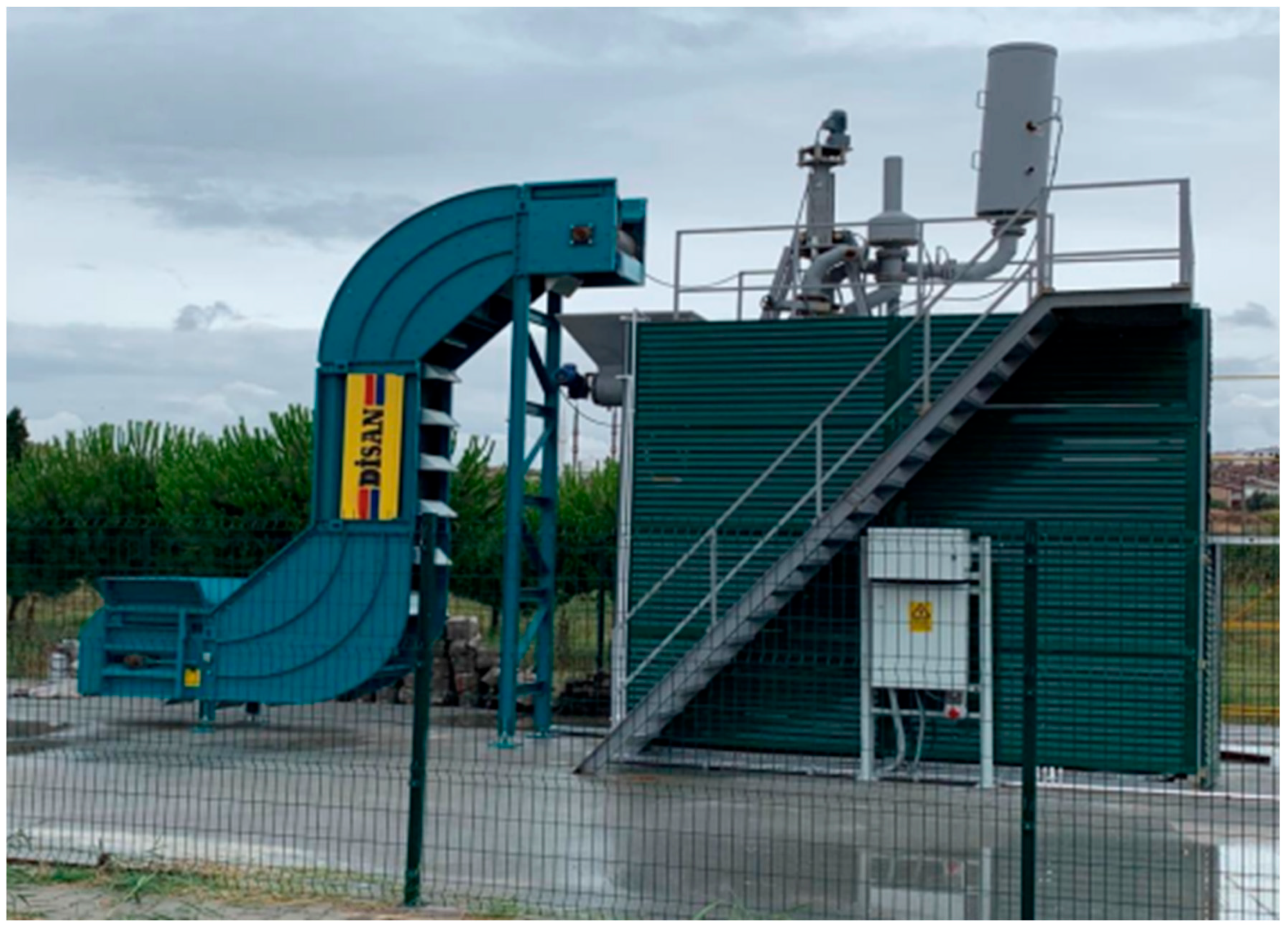
Tomato crop residues (TCR) were collected at the end of the growing season from a cocopeat-based soilless tomato production facility in Canakkale, Turkiye (Mavruz Tarim A.S.), and consisted mainly of semi-woody stems. The feedstock was cut into 10–30 cm pieces, air-dried, and gasified in a pilot-scale fixed-bed updraft reactor at the Department of Environmental Engineering, Gebze Technical University (Figure 1). The process operated at oxidation-zone temperatures of approximately 800–1000 °C with a feeding rate of about 40 kg h−1 and an average air supply of 70 kg h−1, yielding roughly 5 kg h−1 of biochar [24]. In this updraft configuration, air is introduced at the bottom of the reactor and flows upward through the biomass bed, creating sequential zones of drying, pyrolysis, oxidation, and reduction. As a result, the tomato crop residues were thermochemically converted into syngas and a carbon-rich solid residue (biochar), which was collected and used in the subsequent pre-treatment and substrate preparation experiments.

2.2. Pre-Treatment of Biochar

A two-step pre-treatment was developed for the saline–alkaline pristine biochar, for which a patent application has been filed and is pending. The pre-treatment was developed and optimized in this study based on EC and pH responses, with the additional aim of enabling nitrate loading without leaching. In the first step, 2 kg of biochar was placed in a water-filled bag and immersed in 50 L of water for 120 min. Subsamples were collected at 30 and 120 min to monitor EC and pH. Concentrated nitric acid (65% w/w HNO3, analytical grade, Merck KGAA, Darmstadt, Germany) was added and diluted with water to a volume equal to the biochar’s water-holding capacity to prevent leaching or overflow. Then, the biochar–acid mixture was thoroughly homogenized, and different application rates ranging from 100 to 1000 µmol HNO3 g−1 biochar were tested. Based on EC and pH optimization, 700 µmol HNO3 g−1 biochar was selected for subsequent plant experiments.

2.3. Physical and Chemical Characterization of the Substrates

The EC and pH were determined in a 1:10 (w/v) substrate-to-distilled water suspension, which was shaken at 200 rpm for 1 h, then filtered and measured. The bulk density (BD) was measured using a known-volume graduated cylinder, adapted from the laboratory BD approach used for soilless substrates, with minor modifications [25]. The water-holding capacity (WHC) was determined gravimetrically based on the mass-difference principle used in standard gravimetric moisture content procedures, with modifications for substrate samples [26]. Briefly, 10 g of air-dry substrate was placed in a container, and 10 mL of distilled water was added every 5 min until leaching occurred. After leaching started, the substrate was allowed to drain freely for an additional 5 min, then weighed to obtain the final mass. The WHC was expressed as the amount of water retained by the substrate (g water g−1 substrate or mL water g−1 substrate), calculated from the difference between the initial dry mass and the drained, wetted mass.
The cation exchange capacity (CEC) was determined according to the ISO 11260:2018 protocol, with a slight modification, using a barium chloride (Merck KGAA, Darmstadt, Germany) solution [27]. Instead of adding 2.5 g of the sample to 30 mL of solution as described in the standard method, 1 g of substrate was added to 20 mL of solution. The Mg concentration for CEC determination was measured using inductively coupled plasma optical emission spectrometry (ICP-OES; Agilent 5800 VDV, Agilent Technologies, Santa Clara, CA, USA).
Dried and finely ground TCR, non-treated biochar, and pre-treated biochar were digested in a closed-vessel microwave digestion system (Mars 6, CEM Corporation, Matthews, NC, USA) using a mixture of nitric acid and hydrogen peroxide (Merck KGAA, Darmstadt, Germany), following the procedure reported by Mutlu-Durak et al. [28]. The resulting digests were analyzed by ICP-OES to determine the concentration of essential macronutrients (K, Ca, Mg, P, and S), micronutrients (B, Cu, Fe, Mn, and Zn), and potentially toxic elements (PTEs: Al, Cd, Pb, Na). Extractable Ca, K, Mg, and Na were determined by ammonium acetate (Merck KGAA, Darmstadt, Germany) extraction. The procedure was adapted from Amery et al. [29], but a 1:10 (w/v) substrate-to-extractant ratio was used in the present study. Olsen-P (extractable P) was determined following the method described by Woldetsadik et al. [30], with slight modifications: ammonium bicarbonate was used instead of sodium bicarbonate (Sigma-Aldrich, St. Louis, MO, USA) at a 1:10 (w/v) ratio. Extractable Zn, Fe, Mn, Cu, and Ni were determined using the DTPA extraction method, with slight modifications, at a 1:10 (w/v) ratio [31]. The chemicals used for the DTPA extraction solution were obtained from Merck KGAA (Darmstadt, Germany). All extractions for extractable mineral analyses were performed by shaking the substrate–extractant mixtures for 30 min at 200 rpm, followed by filtration through blue band filter paper (MACHEREY-NAGEL GmbH & Co. KG, Dueren, Germany, Ø 125 mm) and ICP-OES analysis. Nitrate was determined using the Cataldo colorimetric method with salicylic acid (Merck KGaA, Darmstadt, Germany), after extracting 0.1 g of substrate with 10 mL of distilled water [32]. All physicochemical analyses were performed in four independent replicates.

2.4. Determination of Relative Water Content

Relative water content (RWC) was determined using 10 g of each substrate by a modified gravimetric method adapted from the substrate saturation procedure [33]. The substrates were first saturated to their water-holding capacity with water, and the corresponding weight was recorded and used as 100% relative water content. The water content was then measured at 24 and 48 h after saturation to monitor the decrease in relative water content over time. The substrates used in this experiment were cocopeat, pre-treated biochar/cocopeat (PTB/C), perlite, pre-treated biochar/perlite (PTB/P), and pre-treated biochar.

2.5. Plant Growth and Experimental Design

Three independent experiments were conducted in a climate-controlled Venlo-type glasshouse at Gebze Technical University, Gebze, Turkey (40°48′23″ N, 29°21′46″ E). The air temperature and relative humidity were recorded hourly, and mean values with standard deviations are reported below for each experiment. All experiments were performed using tomato (Ezgi-F1), an indeterminate cluster-type cultivar, and capia pepper (Toygar-F1), both selected for their commercial use in soilless greenhouse production and resistance to several viral diseases, with seeds supplied by Yuksel Tohum (Antalya, Turkiye). Seeds were kept in a slightly moist environment at room temperature for 48 h before sowing to promote uniform germination. Seeds were sown in seedling trays (Hateksan Tarim, Istanbul, Turkiye), with an approximate cell volume of 150 mL per cell. Each treatment consisted of four replicates, with six plants per replicate (Table 1). The plants were irrigated daily with 10 mL of water per seedling cell, and the experiment lasted for 3–4 weeks. This irrigation volume was applied to maintain substrate moisture while avoiding visible leaching during the experimental period.
In the first experiment, the substrates consisted of non-treated biochar/perlite and pre-treated biochar/perlite mixtures at ratios of 10/90, 15/85, 25/75, 50/50, 75/25, and 100/0% (w/w), as well as 100% cocopeat and 100% perlite, for both plant species (Table 1). The experiment was conducted in March 2025, when the average greenhouse relative humidity was 52 ± 8% during the day and 51 ± 8% at night, and the average air temperature was 22 ± 4 °C during the day and 21 ± 3 °C at night. At the end of the experiment, the roots were first used for morphological analysis and then dried together with the shoots to determine the shoot and root dry weight (DW).
The second experiment was carried out as a full factorial design with fertilizer regime (none, incomplete (−K/−N), and complete) (Table 1) and substrate (cocopeat, perlite, and 15/85% (w/w) pre-treated biochar/perlite) as factors. This experiment was conducted during July–August 2025, with an average relative humidity value of 82 ± 10% during the day and 81 ± 10% at night, and an average temperature of 26 ± 3 °C during the day and 27 ± 3 °C at night. At the end of the experiment, the shoot DW was measured.
The third experiment was also conducted as a full factorial design, with fertilizer regime (incomplete (−K/−N) and complete) (Table 1) and substrate (cocopeat, 15/85% (w/w) pre-treated biochar/cocopeat, and 15/85% (w/w) pre-treated biochar/perlite) as factors. This experiment was conducted in August 2025, when the average relative humidity was 87 ± 8% during the day and 88 ± 8% at night, and the average temperatures were 26 ± 3 °C during the day and 26 ± 2 °C at night. At the end of the experiment, shoot DW was measured, and the dried plant material was used for mineral analysis.
In the second and third experiments, the complete fertilizer treatment contained essential macro- and micronutrients, including N, P, K, Ca, Mg, S, B, Cu, Fe, Mn, Mo, and Zn, supplied as KNO3, FeEDDHA chelate, CaSO4, CaCl2, MgSO4, Ca3(PO4)2, ZnSO4, MnSO4, CuSO4, H3BO3, and (NH4)2MoO4 (Table 2). All chemicals were obtained from Merck KGAA (Darmstadt, Germany), except FeEDDHA chelate, which was supplied as Ferrostrene (Doktor Tarsa Tarım Sanayi ve Ticaret A.Ş., Antalya, Turkiye). The incomplete fertilizer treatment had the same composition but lacked KNO3 as the source of both K and N. At the beginning of the experiment, 15 mL of KNO3 solution and 15 mL of the incomplete nutrient solution (containing the other nutrients at the final concentrations specified in Table 2) were applied. The concentration and volume of KNO3 (74 mM, 15 mL per seedling cell) were specifically selected to provide a nitrate input comparable to the nitrate content present in the pre-treated biochar (about 70 mg NO3 per seedling cell) used as the substrate. Subsequently, only the incomplete nutrient solution (15 mL) was supplied every 5 days for a total of five applications, while KNO3 was applied only once at the beginning.

2.6. Root Morphological Analysis of Plant Root

Roots of tomato and pepper plants were washed with distilled water to remove particles from substrate. Washed roots were sampled at the end of the experiment (21 days after sowing) and scanned using an Epson Perfection V700 scanner (Seiko Epson Corporation, Nagano, Japan). The resulting images were analyzed using WinRHIZO STD4800 Pro software, version 2019 (Regent Instruments Inc., Quebec City, QC, Canada) to determine the root length, number of tips, and average root diameter. This analysis was conducted only in experiment 1. In experiments 2 and 3, root morphological analysis was not performed because dense root growth and strong root–substrate attachment could damage roots during plant removal, thereby biasing measurements.

2.7. Mineral Analysis of Plant Shoot

Dried and finely ground shoot tissues were digested using the previously described microwave-assisted acid digestion method. The resulting digests were analyzed by ICP-OES to determine the concentrations of essential macronutrients (K, Ca, Mg, P, and S), micronutrients (B, Cu, Fe, Mn, and Zn), and potentially toxic elements (PTEs: Al, Cd, Pb, and Na). The concentration of N in the dried and ground samples was determined using a LECO FP828 analyzer (Leco Corp., St. Joseph, MI, USA).

2.8. Statistics

All statistical analyses were performed using JMP 19.0.1. (JMP Statistical Discovery LLC, Cary, NC, USA). Table 1 summarizes the experimental designs, treatment combinations, and replication structure of the plant experiments. The substrate characterization analyses were performed in four replicates. Experiment 1 consisted of 14 substrate treatments with four replicates per treatment and six plants per replicate and was analyzed using one-way analysis of variance (ANOVA). Experiments 2 and 3 were conducted using a factorial design. Experiment 2 included three substrate treatments and three fertilization regimes (3 × 3 = 9 treatment combinations), whereas Experiment 3 included three substrate treatments and two fertilization regimes (3 × 2 = 6 treatment combinations). Substrate, fertilization regime, and their interaction were evaluated using two-way analysis of variance (ANOVA) for these factorial experiments. For experiments or parameters involving a single factor, such as substrate characterization, treatment effects were evaluated using one-way ANOVA. When complete plant mortality occurred or plant growth was insufficient to obtain reliable measurements, resulting in an unbalanced design, treatment effects were evaluated using one-way ANOVA. When significant effects were detected, the means were compared using Tukey’s protected HSD test at the 5% significance level.

3. Results

3.1. Optimization of Pre-Treatment and Characterization of Substrates

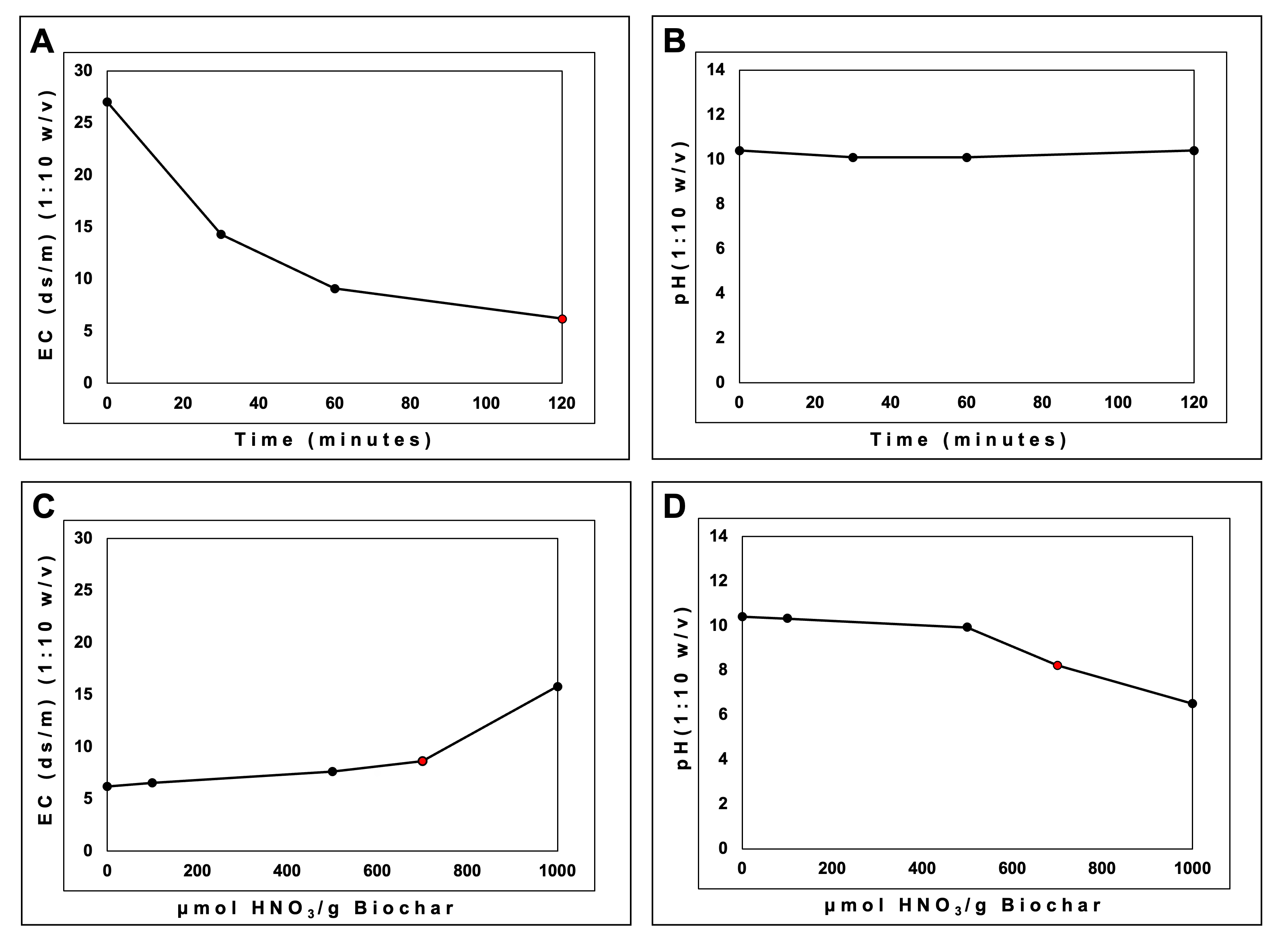
The pre-treatment process was designed to reduce the initially high EC and pH of the non-treated biochar before its use as a substrate component. Therefore, EC and pH changes were monitored during both the water incubation and nitric acid application steps to determine the most suitable pre-treatment conditions. Figure 2 shows the changes in EC and pH during the two-step pretreatment process.
The EC and pH of the non-treated biochar were 27 dS m−1 (1:10 w/v) and 10.4 (1:10 w/v), respectively. In the first step of pre-treatment, incubation of the biochar in water for 120 min decreased the EC of the biochar to 6.2 dS m−1 (1:10 w/v), while its pH remained unchanged at 10.4 (1:10 w/v) (Figure 2A,B). In the second step of pre-treatment, nitric acid at a concentration of 700 µmol HNO3 g−1 was applied to the biochar, resulting in an EC of 8.7 dS m−1 (1:10 w/v) and a pH of 8.2 (1:10 w/v) for the pre-treated biochar (Figure 2C,D).
After the pre-treatment process, the optimized pre-treated biochar was re-evaluated for EC and pH independently of the pre-treatment measurements, along with the other substrates (Table 3). The pre-treated biochar had a significantly higher EC than cocopeat and perlite. The pH of cocopeat and perlite was similar, whereas the pH of the pre-treated biochar was significantly higher than that of both substrates. The WHC and BD of cocopeat were significantly higher than those of perlite and pre-treated biochar, while perlite and pre-treated biochar exhibited similar values for both properties. In terms of CEC, cocopeat showed the highest value, followed by biochar and then perlite, with all differences being significant.
Except for P and Zn, all elements in the total mineral analysis decreased after pretreatment (Table 4). Substantial losses were observed during pre-treatment for most elements, including K (56%), Ca (36%), Mg (22%), S (73%), B (19%), Fe (63%), Mn (35%), Mo, and Ni (both completely removed). Following gasification, mineral concentrations in non-treated biochar were approximately 1.7–3.9 times higher than in TCR, indicating a concentration effect during the process. Notably, although Na was detected in all samples, its concentration (0.43–0.92 g kg−1) was markedly lower than that of K (50.5–143 g kg−1).
In terms of extractable mineral concentrations, pre-treated biochar contained substantially higher NO3-N, P, and K than both cocopeat and perlite (Table 5). Cocopeat had higher levels of extractable Ca, Mg, Cu, Fe, Mn, and Ni than both perlite and pre-treated biochar, whereas perlite generally showed the lowest concentrations of these nutrients. For the PTEs, Cd and Pb were not detected in the extractable mineral analysis of any substrate or in the total mineral analysis of TCR, non-treated biochar, and pre-treated biochar, with instrumental detection limits of 0.0078 mg kg−1 for Cd and 0.0625 mg kg−1 for Pb (Table 4 and Table 5).
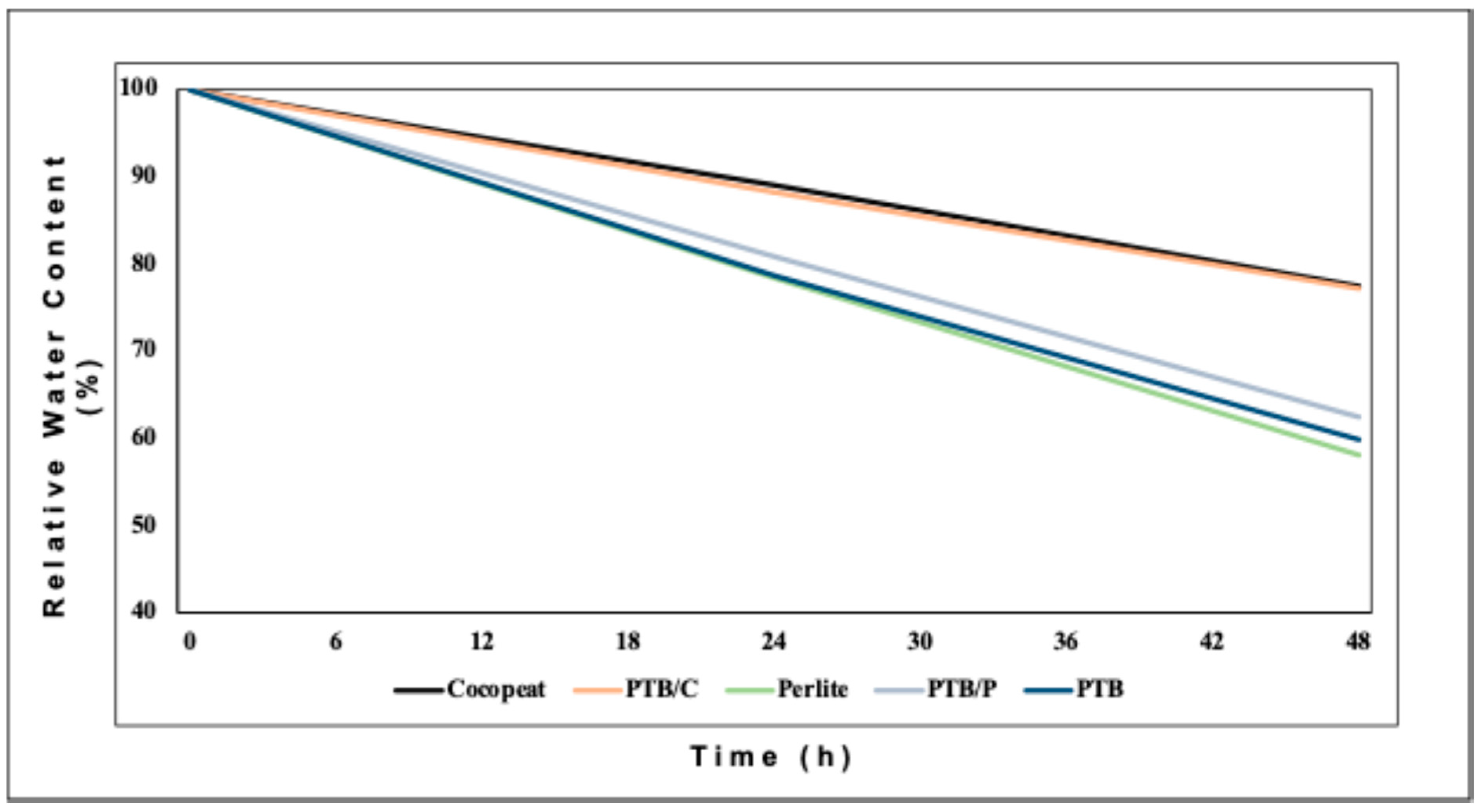
At 24 h, cocopeat and cocopeat/pre-treated biochar retained higher relative water content (~89%) than perlite- and biochar-based substrates (~78–81%) (Figure 3). This pattern was maintained at 48 h, with values decreasing to ~77% for cocopeat-based substrates and ~58–62% for the others.

3.2. Effects of Pristine and Pre-Treated Biochar on Seedling Growth and Selection of Optimal Mixture

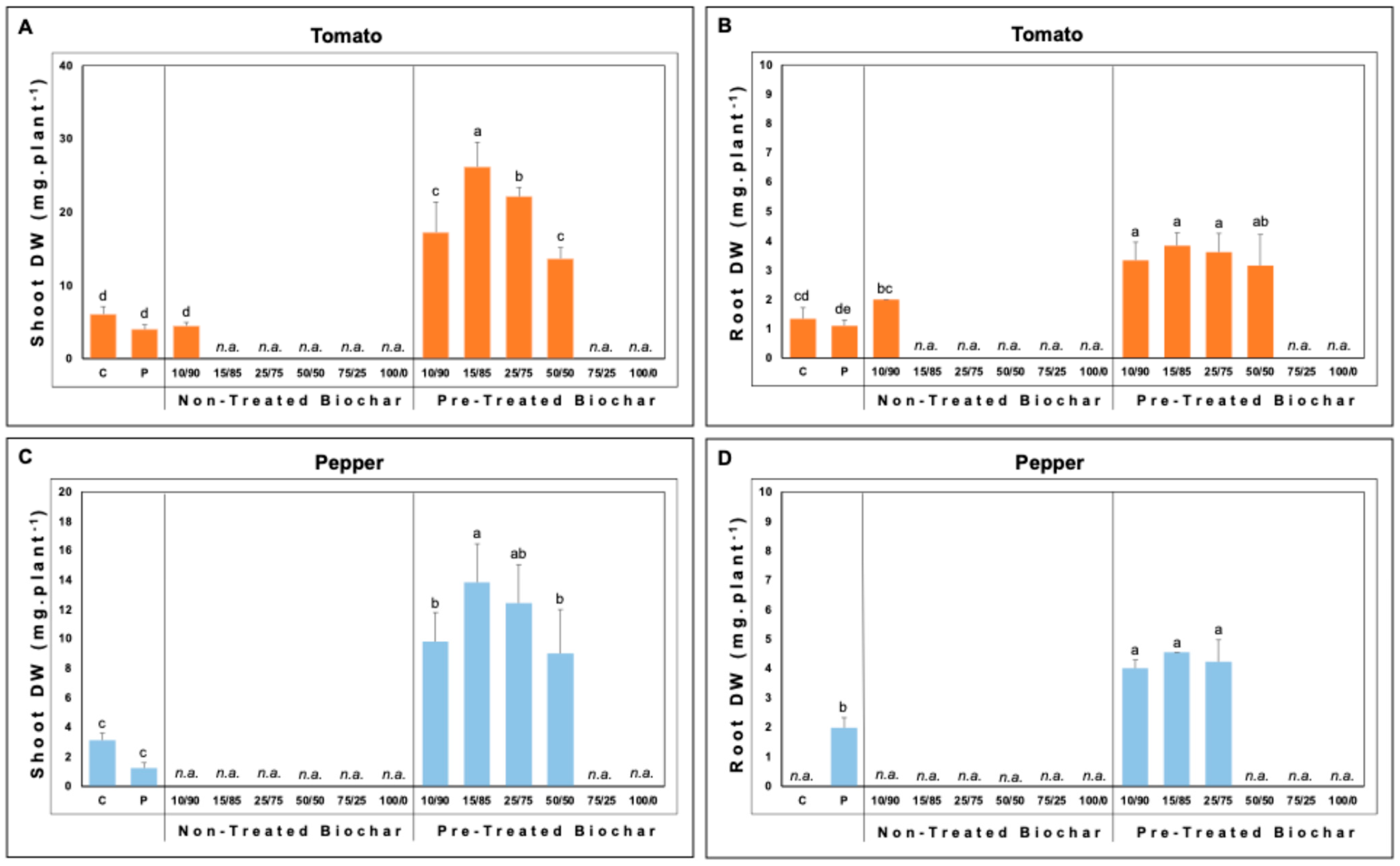
The highest shoot DW was observed in the 15/85% (w/w) pre-treated biochar/perlite mixture in both tomato and pepper (Figure 4A,C). This increase was significant in tomato, whereas it was comparable to that of the 25%/75% mixture in pepper. In contrast, non-treated biochar severely limited plant survival, with only tomato plants surviving in the 10/90% mixture and none in pepper. Root DW followed a similar trend, with all pre-treated biochar mixtures generally exceeding cocopeat and perlite (Figure 4B,D). Root morphological parameters were largely consistent with root DW, showing no clear differences among pre-treated substrates (Table 6). However, root development was severely restricted in some treatments, particularly in pepper, preventing reliable measurement of morphological parameters. Overall, both shoot and root responses indicated that the 15/85% (w/w) pre-treated biochar/perlite mixture provided the most favorable growth conditions and was therefore selected for subsequent experiments (Figure 4; Table 6).

3.3. Effects of Substrate and Fertilization on Seedling Growth

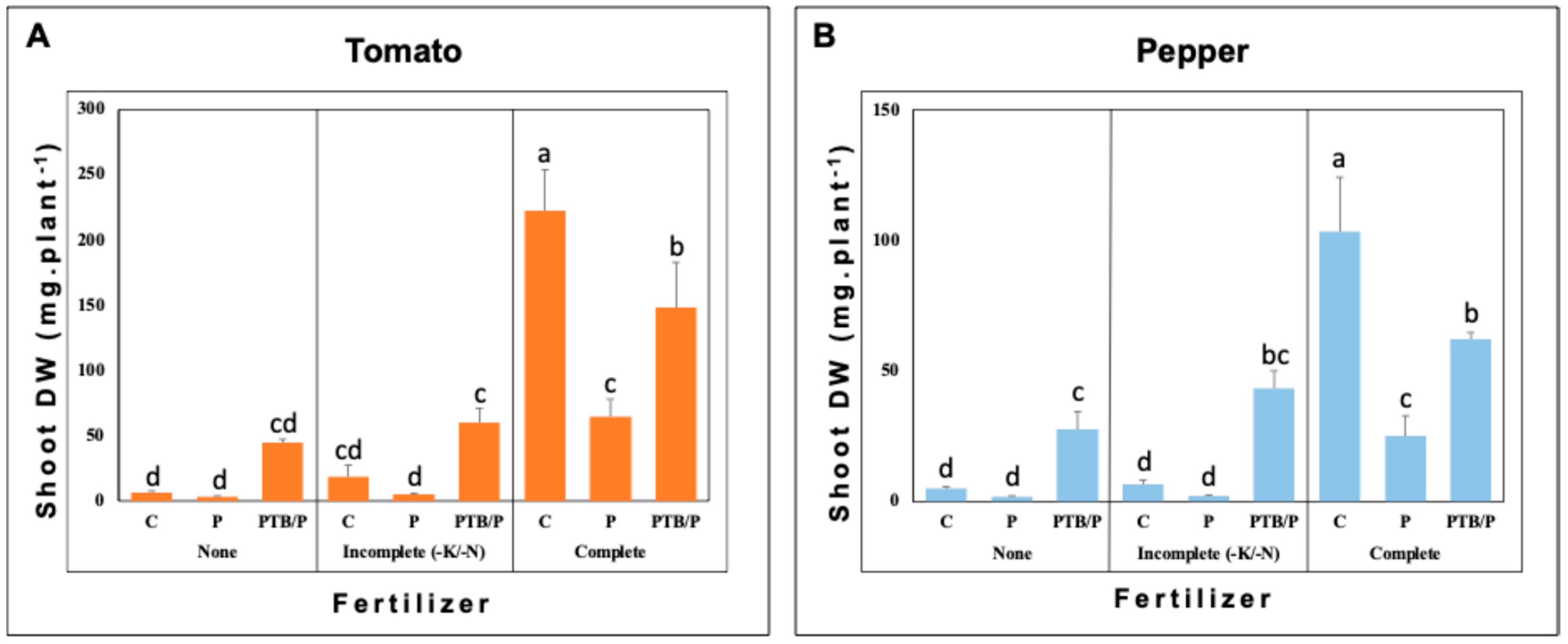
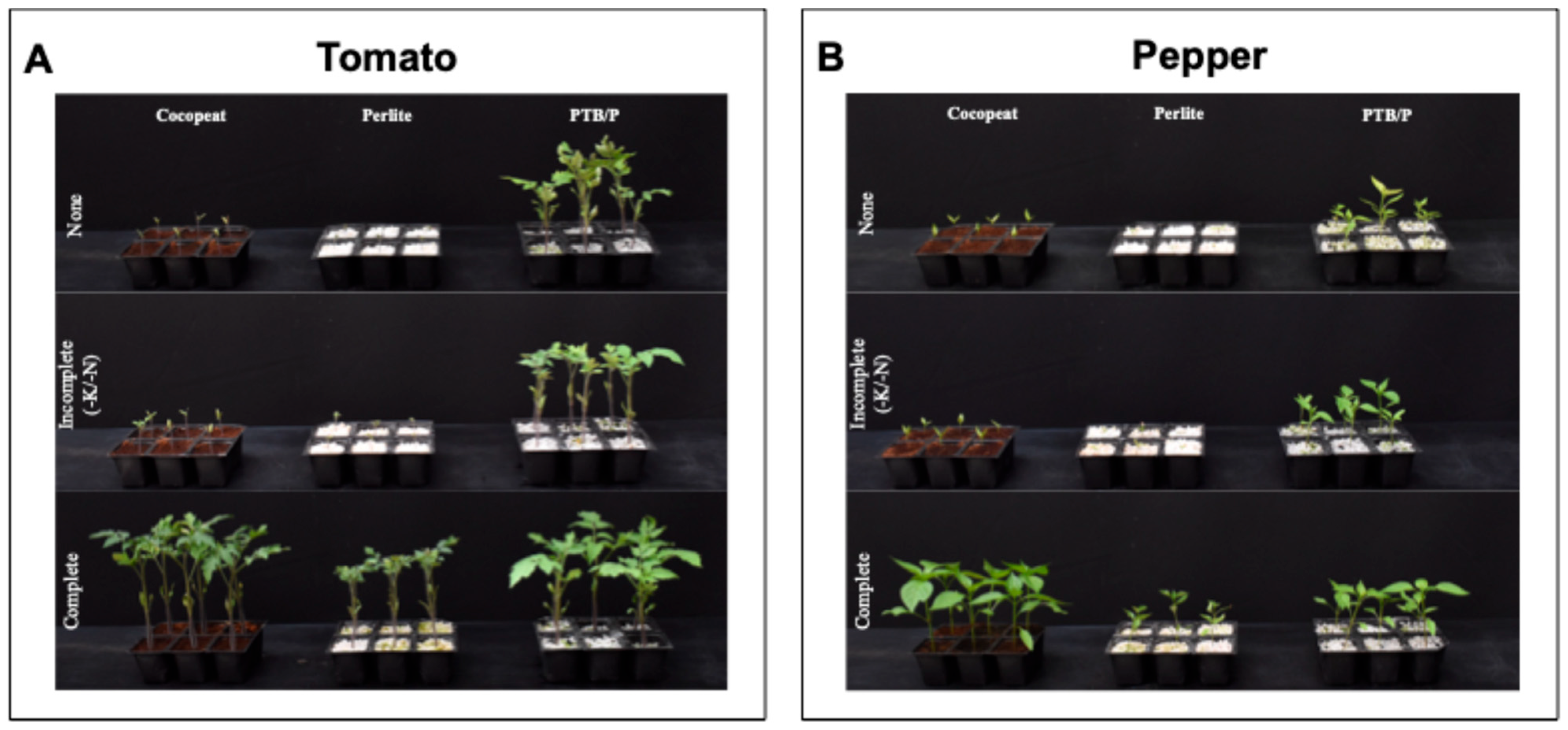
In the second experiment, shoot DW was highest in cocopeat, followed by pre-treated biochar/perlite and perlite in both tomato and pepper (Figure 5). Within substrates, incomplete fertilization (−K/−N) did not improve growth compared with no fertilization, whereas complete fertilization significantly increased shoot DW, particularly in cocopeat and perlite. Complete fertilization improved growth only in the pretreated biochar/perlite substrate compared with no fertilization (Figure 6).
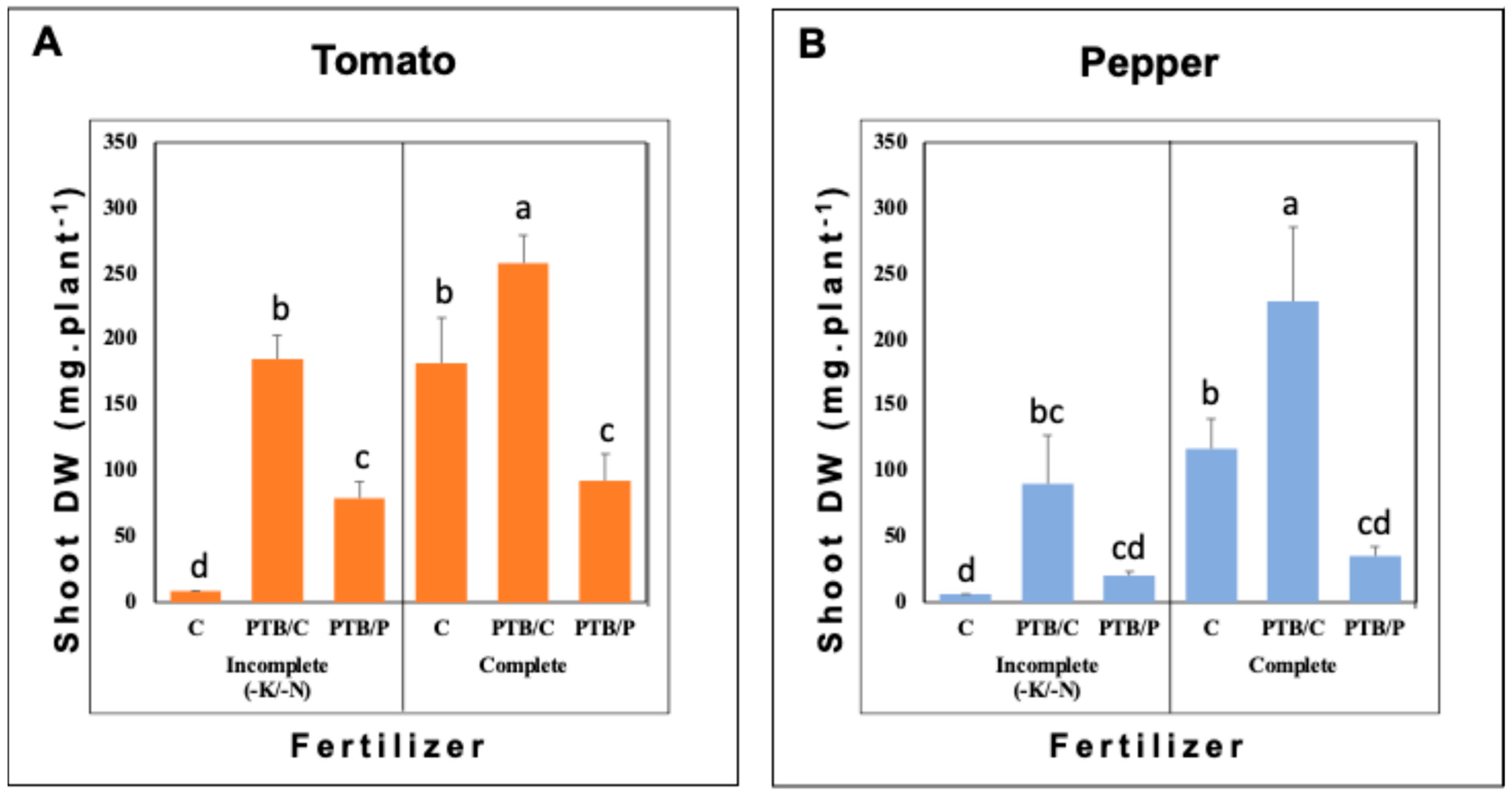
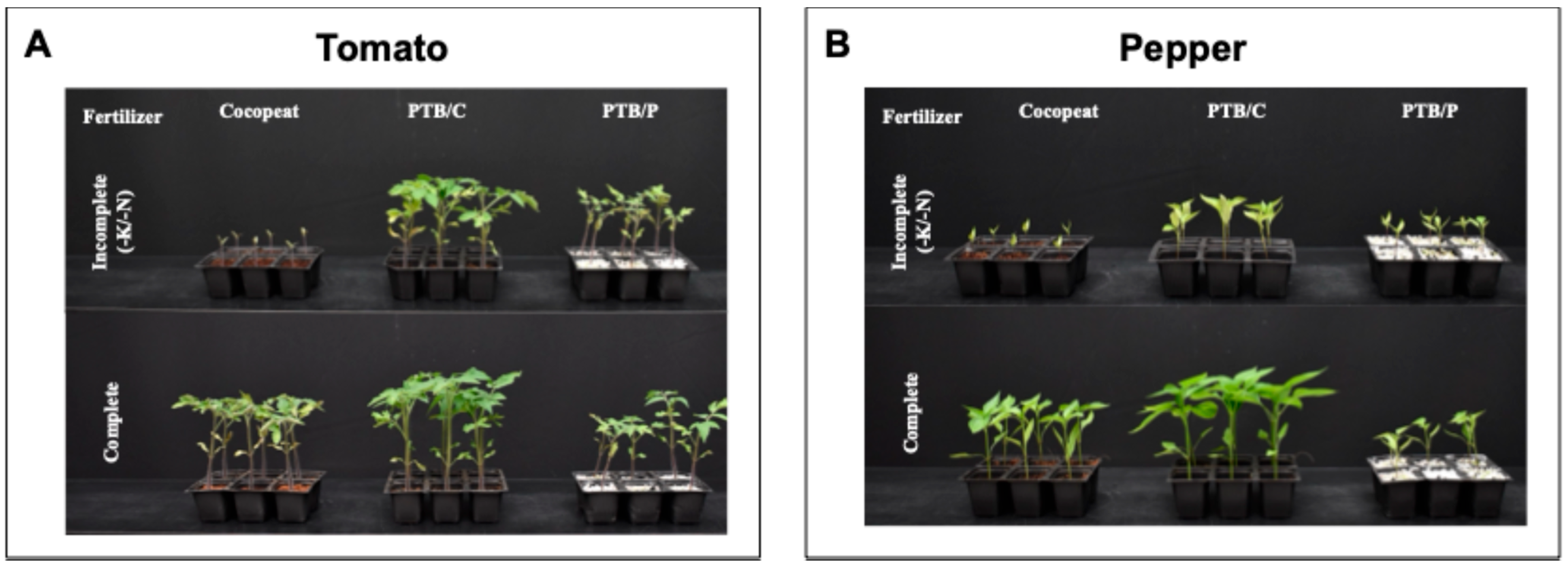
Based on these results, the same mixing ratio (15/85%, w/w) was used to prepare the pre-treated biochar/cocopeat substrate for the third experiment. In the third experiment, the addition of K and N had no significant effect on the pre-treated biochar/perlite substrate, whereas shoot DW in cocopeat and pre-treated biochar/cocopeat increased significantly under complete fertilization (Figure 7). Notably, the pre-treated biochar/cocopeat substrate without K and N yielded shoot DW comparable to that of fully fertilized cocopeat in both species. The highest shoot DW was observed in pre-treated biochar/cocopeat under complete fertilization, and the plant appearance followed these trends (Figure 8).

3.4. Effects of Substrate and Fertilization on Shoot Mineral Composition and Potentially Toxic Elements

Due to insufficient plant biomass, mineral analyses could not be performed for cocopeat under incomplete fertilization (−K/−N) in either species (Table 7, Table 8 and Table 9). Overall, substrate type strongly influenced nutrient concentrations, with the highest N and K consistently observed in the pre-treated biochar/cocopeat substrate under complete fertilization (Table 7). Phosphorus showed a minor substrate-dependent variation, whereas Ca concentrations were generally the highest in pretreated biochar/perlite, and Mg and S varied only slightly among substrates.
Micronutrient responses were more variable. Pre-treated biochar/perlite exhibited higher B concentrations, whereas pre-treated biochar/cocopeat generally showed lower B concentrations (Table 8). In contrast, Fe and Mn were typically higher in cocopeat-based substrates, particularly under complete fertilization, while Zn showed a similar tendency but with less consistent differences among treatments. Copper concentrations did not differ among substrates.
Among potentially toxic elements, Al showed limited variation across treatments, although higher values were observed in cocopeat under complete fertilization in tomato (Table 9). Pb and Cd were not detected in any plant samples. Sodium concentrations were highest in pre-treated biochar/cocopeat in both species, although they were comparable to those of cocopeat under complete fertilization in pepper.

3.5. Changes in Substrate EC and pH over the Growing Period

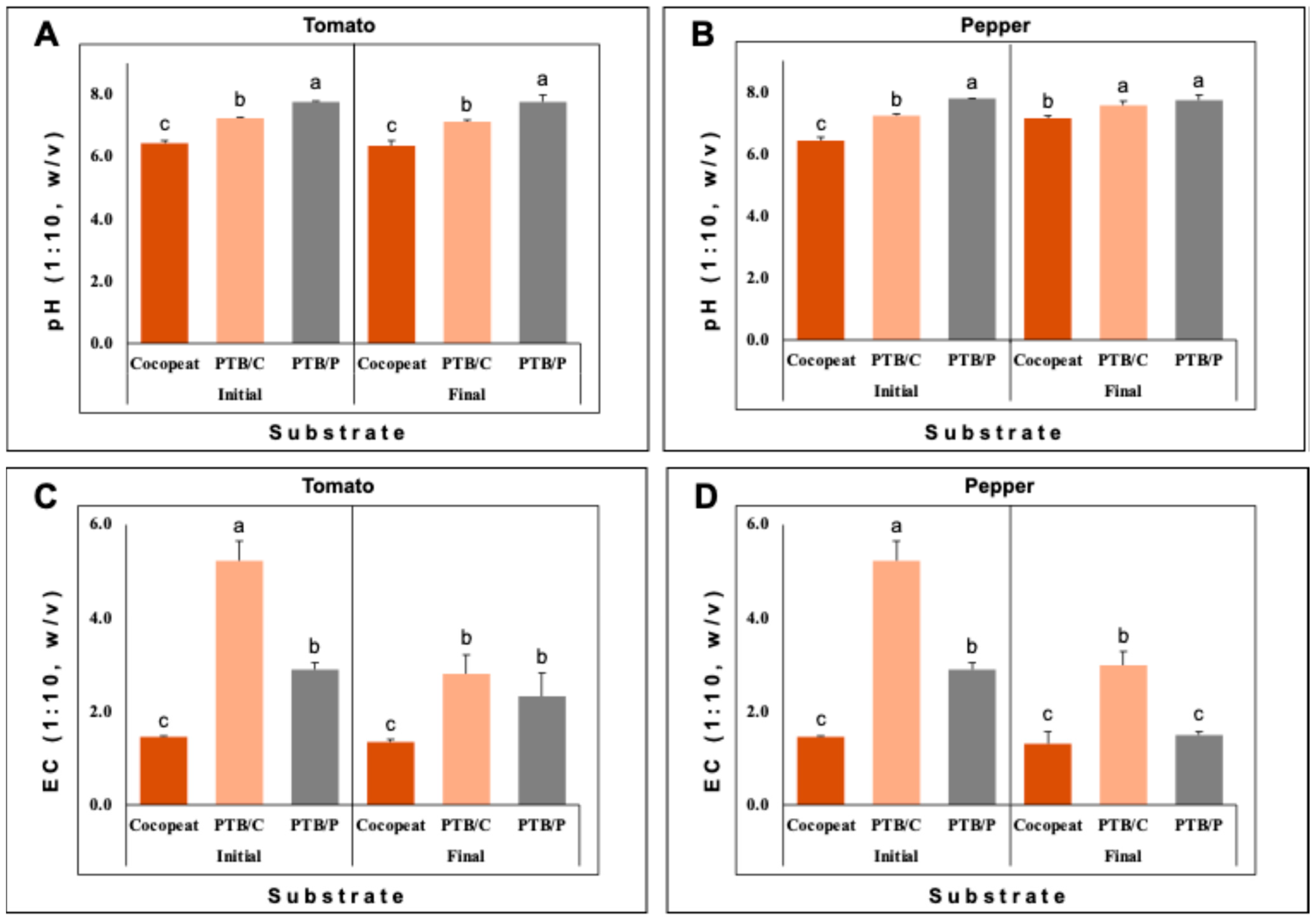
Figure 9 summarizes the substrate EC and pH at the beginning and end of the third experiment. In tomato, pH (1:10, w/v) remained unchanged over time within each substrate; however, at both sampling points, the pre-treated biochar/perlite mixture had the highest pH, followed by pre-treated biochar/cocopeat mixture, while the cocopeat mixture showed the lowest values.
In pepper, the pre-treated biochar/cocopeat mixture had a significantly lower initial pH than the corresponding biochar/perlite substrate. By the end of the experiment, the two pre-treated mixtures no longer differed, and cocopeat showed a significant increase in pH over time while remaining more acidic than both biochar-based substrates.
When each substrate was evaluated over time, EC (1:10, w/v) in cocopeat and pre-treated biochar/perlite did not change significantly in either tomato or pepper, whereas EC in pre-treated biochar/cocopeat decreased significantly during the growing period. Across substrates, EC was consistently highest in the pre-treated biochar/cocopeat mixture, intermediate in the pre-treated biochar/perlite substrate, and lowest in cocopeat at both sampling times.

4. Discussion

Various studies have examined biochar-based seedling substrates for nursery applications; however, in most cases, biochar has been produced by conventional pyrolysis rather than gasification [22,34]. Within a circular economy framework, gasification enables the valorization of plant residues by generating energy while producing biochar as a solid by-product. These results extend previous work on pyrolysis-derived biochar by demonstrating that gasification-derived TCR biochar can also be used as a component of soilless seedling substrates for nursery applications. Thus, greenhouse waste is valorized through gasification, providing an energy carrier while producing value-added biochar for horticultural use.
Depending on the feedstock, various types of biochar exhibit a saline–alkaline nature, which can limit their use in plant cultivation unless appropriate pre-treatments are applied. Practical strategies are therefore required to adjust EC and pH to levels suitable for seedling growth. Previous studies have proposed several approaches to reduce EC and pH in biochar or soilless substrates, including washing with water [14] and acidification using organic or mineral acids such as citric, nitric, or phosphoric acid [35,36,37]. In contrast, the alkaline nature of some biochar has been exploited as a liming agent in acidic soils or peat-based substrates [38,39]. However, such applications target acidic systems, whereas the present study focuses on peat-free soilless substrates, where the excessive salinity and alkalinity of gasification-derived biochar must be mitigated rather than utilized. In line with these findings, the present results show that pre-treatment effectively alleviates these limitations in soilless systems (Figure 2).
Beyond its saline–alkaline properties, the presence of contaminants such as tars, PAHs, and PTEs represents another potential limitation of biochar. Pyrolysis-derived biochar may contain elevated levels of PAHs and tar-like compounds, which can restrict its suitability for soilless substrates [17,40]. Similarly, PTEs such as Cd, Pb, Ni, Cr, and As are increasingly recognized as environmental concerns due to their potential accumulation during thermochemical conversion [41,42]. Consequently, careful characterization of feedstock and process conditions is essential.
In the present study, the TCR biomass used as feedstock originated from a modern soilless greenhouse system with precision fertigation using high-purity inputs, which minimizes the risks of contamination. Accordingly, Cd and Pb were not detected in TCR, non-treated biochar, or pre-treated biochar (Table 4), a result supported by extractable mineral (Table 5) and plant analyses (Table 9). Therefore, under the high-temperature gasification conditions applied here, PAHs, tar-like compounds, and PTEs are not expected to limit the horticultural use of the resulting biochar compared with conventional pyrolysis materials.
In addition to pH adjustment without leaching, nitric acid pre-treatment provided an important functional advantage by loading NO3-N into the biochar (Table 5). Cocopeat generally contains low levels of extractable nutrients but high levels of Na, and its composition varies widely depending on its origin [43]. In contrast, perlite is essentially inert and contains negligible nutrient levels [44]. Extractable Fe concentrations were substantially higher in cocopeat than in perlite and pre-treated biochar, which is relevant for micronutrient management (Table 5). In addition, biochar is often reported to contain appreciable amounts of K and P and to partially support plant growth without external fertilization [14,45], which is consistent with the composition of the pre-treated gasification biochar used in this study. However, high K levels may antagonize Mg uptake, particularly given the low Mg content of biochar (Table 5) [13,46]. Therefore, when K-rich biochar is used in soilless substrates, the Mg supply should be carefully managed to avoid potential deficiencies.
The CEC of cocopeat widely varies depending on its geographical origin. Previous studies reported substantially higher CEC values for cocopeat from Sri Lanka (94.1 cmolc kg−1) than from Mexico (39.5 cmolc kg−1), reflecting differences not only in origin but also in processing and cultivation practices [43]. In biochar, feedstock and process conditions strongly influence key properties such as BD, CEC, and WHC are strongly influenced by feedstock and process conditions, and reported CEC values range widely from about 5 to nearly 300 cmolc kg−1 [47,48,49]. BD is also an important parameter in soilless substrates: higher BD may improve container stability in outdoor systems, whereas lower BD is generally preferred in greenhouse production to maintain aeration under frequent fertigation [20]. Differences between studies also highlight the influence of the production conditions. For instance, Dunlop et al. [14] reported higher CEC and BD values for pyrolysis-derived TCR biochar compared with the pre-treated gasification biochar used here (Table 3), likely due to lower processing temperatures (550 °C vs. 800–1000 °C) and differences in feedstock origin. Increasing the temperature of process generally promotes more condensed aromatic structures, thereby reducing CEC [50]. Consistent with this, the non-treated gasification biochar in the present study showed relatively high EC (27 dS m−1, 1:10 w/v) (Figure 2), compared with the lower values reported by Dunlop et al. [14].
As expected for low-density substrate components, substrates containing biochar and perlite exhibited significantly lower BD than cocopeat (Table 3). Although biochar is often reported to have higher BD than perlite, the BD of perlite and pre-treated gasification biochar were comparable in this study, indicating that biochar with physical properties like those of conventional inert components used in soilless cultivation can be produced under specific gasification conditions and feedstock characteristics.
The seedling performance demonstrated that the use of non-treated biochar severely limits plant growth, whereas pre-treatment is essential for its successful application in soilless systems. Substrates containing non-treated biochar resulted in extremely poor growth and, in many cases, complete or near-complete plant loss, preventing reliable biomass and root measurements (Figure 4; Table 6). This growth inhibition can primarily be attributed to the saline–alkaline nature of non-treated biochar, as reported in previous studies [51,52]. In contrast, pre-treated biochar significantly improved plant performance, confirming earlier findings that appropriate conditioning is necessary to mitigate these limitations [35,36]. The 15/85% (w/w) pre-treated biochar/perlite substrate consistently provided the best overall growth response among the tested mixtures and was therefore selected for subsequent experiments (Figure 4; Table 6).
Plant growth across substrates was strongly limited by nutrient availability, particularly N and K. Both cocopeat and perlite have low levels of plant-available nutrients (Table 5), and seedlings under no or incomplete fertilization showed minimal growth responses. Although the pre-treated biochar supplied measurable amounts of NO3-N (Table 5), this was insufficient to sustain vigorous growth in the absence of external fertilization. Complete fertilization alone significantly increased shoot biomass, indicating that external nutrient supply—particularly N—remains a key driver of seedling development (Figure 5). These results concluded that while pre-treated biochar contributes nutrients, its primary role is complementary rather than fully substitutive under nutrient-limited conditions.
Differences among substrate combinations highlight the importance of physical and chemical interactions within the root zone. The addition of pre-treated biochar to perlite improved plant growth compared with that of perlite alone, but the strongest responses were observed when biochar was combined with cocopeat (Figure 7). These contrasting responses can be explained by differences in CEC and water-related properties, which influence nutrient retention and mass flow to the root surface (Figure 3 and Table 3). Cocopeat-based substrates likely promote more stable nutrient availability with higher water-holding and buffering capacities, whereas perlite-based systems are more dependent on external nutrient supply. Similar effects of substrate composition on water–air balance and root-zone processes have been reported in soilless systems [53].
Importantly, the combination of pre-treated biochar with cocopeat demonstrated a clear potential to reduce fertilizer requirements. The shoot biomass of the biochar/cocopeat mixture was comparable to that of cocopeat receiving external fertilization in the absence of additional N and K (Figure 7), indicating that biochar can partially substitute fertilizer inputs. This effect is consistent with previous reports that biochar can enhance the efficiency of nutrient use and reduce fertigation requirements [13,54]. Therefore, pretreated biochar may function as a nutrient source, particularly for N and K, contributing to more sustainable substrate formulations.
Nutrient analysis further revealed that substrate composition strongly influenced plant nutrient uptake, with the most pronounced differences observed for N. Under complete fertilization, plants grown in the pre-treated biochar/cocopeat substrate exhibited substantially higher shoot N concentrations than those grown in cocopeat or biochar/perlite mixtures (Table 7). This can be partly attributed to the NO3-N supplied by the pre-treated biochar (Table 5). However, despite identical biochar proportions and N inputs, plants in the biochar/cocopeat substrate accumulated more N than those in biochar/perlite mixtures (Table 7), indicating that factors beyond nutrient supply played a role. This difference is most likely related to the improved water retention and water-holding capacity in cocopeat-based substrates (Figure 3 and Table 3), which enhances the mass flow and diffusion of mobile nutrients such as NO3 toward the root system [55].
This interpretation is consistent with previous work showing that substrate composition can markedly alter root-zone physical and chemical conditions, thereby regulating nutrient availability and plant nutrient uptake. Studies in soilless culture have emphasized that the substrate should be evaluated not only as a structural support but also as a key determinant of water retention, ion-exchange properties, and nutrient supply to the plant [56,57]. Moreover, peat-, cocopeat-, and perlite-based substrates with different mixing ratios have been shown to differ strongly in physicochemical characteristics and leaf mineral composition, with perlite-rich media generally exhibiting lower inorganic nutrient contents and cocopeat-rich media supporting higher K accumulation in plant tissues [58]. In this context, the greater N accumulation observed in the PTB/cocopeat mixture than in the PTB/perlite, despite identical biochar proportions and N inputs, supports the notion that nutrient-loaded biochar is more effective when combined with a substrate matrix that improves water retention and overall nutrient buffering.
K uptake exhibited a similar but substrate-dependent response. Although cocopeat provides less K than biochar (Table 5), substrate CEC and nutrient-buffering capacity strongly influenced differences in shoot K concentrations under fertilized conditions (Table 3). However, the consistently higher K concentrations observed in the pre-treated biochar/cocopeat mixtures compared with cocopeat alone indicate a direct contribution of biochar-derived K. This is consistent with the well-established role of biochar as a K source in soilless systems [59,60,61]. At the same time, plant regulation of K uptake likely explains the absence of further increases under some conditions, as K uptake is down-regulated once sufficient internal levels are reached [62,63]. The observed differences between tomato and pepper suggest species-specific responses to substrate-mediated K availability.
In contrast to N and K, the uptake of Ca, Mg, and micronutrients was mainly controlled by pH-dependent availability and root-zone chemistry rather than by total nutrient inputs. Despite higher Ca levels in cocopeat (Table 5), shoot Ca concentrations were lower in cocopeat than in biochar-containing substrates, and a similar trend was observed for Mg (Table 7). These patterns indicate that chemical conditions in the root zone more strongly control nutrient availability than substrate composition alone [62]. Consistent with this, Fe uptake was generally higher in cocopeat-based substrates, which maintained lower pH values throughout the experiment (Figure 9). Because decreasing pH increases the solubility and availability of Fe and Mn, these results highlight the role of pH in regulating micronutrient dynamics. The partial substitution of cocopeat with pre-treated biochar likely reduced the availability of certain micronutrients by increasing the pH and sorption on biochar surfaces [64,65].

5. Conclusions

This study demonstrates that gasification of TCR can produce value-added biochar suitable for use in soilless seedling substrates when combined with an appropriate pretreatment strategy. The developed pre-treatment mitigated the saline–alkaline nature of pristine biochar while enabling nitrate loading, allowing the material to function as both a substrate component and a nutrient source.
Pristine biochar severely limited seedling growth, confirming that its use in soilless systems is not feasible. In contrast, pre-treated biochar significantly improved plant growth. The 15/85% (w/w) pre-treated biochar/cocopeat mixture showed the most promising performance. In the absence of additional N and K, this mixture produced seedling shoot DW and shoot N concentrations comparable to N/K-fertilized cocopeat; shoot K was comparable in tomato and higher in pepper. Under N/K fertilization, the same mixture produced 1.41- and 1.95-fold greater shoot biomass than the cocopeat in tomato and pepper, respectively. These results indicate its capacity to partially substitute both cocopeat and N/K fertilization.
These findings highlight the potential of pre-treated TCR biochar to reduce dependence on imported cocopeat and external N and K inputs. This approach provides a pathway for valorizing greenhouse residues into value-added inputs for soilless horticulture within a circular bioeconomy framework, improving resource-use efficiency and sustainability. Further research is needed to assess substitution potential beyond N and K and to evaluate long-term performance across crops and production systems.

6. Patents

A patent application covering the pre-treatment method for gasification-derived TCR biochar used in this study has been filed and is currently pending.

Author Contributions

Conceptualization, O.F.T. and U.B.K.; methodology, O.F.T., M.D. and B.Y.K.; formal analysis, O.F.T.; investigation, O.F.T. and E.C.; resources, M.D. and E.C.; data curation, O.F.T.; writing—original draft preparation, O.F.T.; writing—review and editing, B.Y.K. and U.B.K.; visualization, O.F.T.; supervision, B.Y.K. and U.B.K.; project administration, U.B.K.; funding acquisition, U.B.K. All authors have read and agreed to the published version of the manuscript.

Funding

This study was funded by the Council of Higher Education of Turkiye through the Research Support Program (YÖK–ADEP) under project number GTU-2023-A-113-05. Omer Faruk Tastan and Elif Celik were supported by the YOK 100/2000 scholarship program (Sustainable Agriculture). Omer Faruk Tastan was also supported by Kaleseramik, Dr. Ibrahim Bodur Education, Health and Social Aid Foundation (KSV), and the Scientific and Technological Research Council of Turkiye (TUBITAK 2211/A) scholarship programs.

Data Availability Statement

The original contributions presented in this study are included in the article. Further inquiries can be directed to the corresponding author.

Acknowledgments

The authors thank Mavruz Tarim for providing the tomato crop residues and Yuksel Tohum for supplying the seeds.

Conflicts of Interest

The authors declare no conflicts of interest. The funders had no role in the design of the study, in the collection, analysis, or interpretation of data, in the writing of the manuscript, or in the decision to publish the results.

Abbreviations

The following abbreviations are used in this manuscript:
TCRTomato Crop Residues
ECElectrical Conductivity
CECCation Exchange Capacity
WHCWater Holding Capacity
RWCRelative Water Content
BDBulk Density
DWDry Weight
ICP-OESInductively Coupled Plasma Optical Emission Spectrometry
PTEsPotentially toxic elements
CCocopeat
PPerlite
PTBPre-treated biochar
PTB/CPre-treated biochar/cocopeat
PTB/PPre-treated biochar/perlite
CEAControlled Environment Agriculture
PAHsPolycyclic Aromatic Hydrocarbons
ANOVAAnalysis of variance
HSDHonestly significant difference
HNO3Nitric Acid
NO3Nitrate
w/vWeight/volume
w/wWeight/weight

References

  1. United Nations. World Population Prospects 2024; United Nations: New York, NY, USA, 2024. [Google Scholar]
  2. Mirzabaev, A.; Kerr, R.B.; Hasegawa, T.; Pradhan, P.; Wreford, A.; Pahlen, M.C.T.; Gurney-Smith, H. Climate Change Risks to Food Security. Clim. Risk Manag. 2023, 39, 100473. [Google Scholar] [CrossRef]
  3. Smith, P.; Poch, R.M.; Lobb, D.A.; Bhattacharyya, R.; Alloush, G.; Eudoxie, G.D. Status of the world’s soils. Annu. Rev. Environ. Resour. 2024, 49, 73–104. [Google Scholar] [CrossRef]
  4. Fanzo, J.; Carducci, B.; Louis-Jean, J.; Herrero, M.; Karl, K.; Rosenzweig, C. Climate Change, Extreme Weather Events, Food Security, and Nutrition: Evolving Relationships and Critical Challenges. Annu. Rev. Nutr. 2025, 45, 335–360. [Google Scholar] [CrossRef] [PubMed]
  5. Appicciutoli, D.; Amici, A.S.; Bentivoglio, D.; Chiaraluce, G.; Staffolani, G.; Finco, A. Cultivating the Future: A Bibliometric Review of Emerging Trends in Soilless Farming. Horticulturae 2025, 11, 140. [Google Scholar] [CrossRef]
  6. Maureira, F.; Rajagopalan, K.; Stöckle, C.O. Evaluating Tomato Production Systems. J. Clean. Prod. 2022, 337, 130459. [Google Scholar] [CrossRef]
  7. D’Amico, A.; Boni, A.; Ottomano Palmisano, G.; Acciani, C.; Roma, R. Environmental Analysis of Soilless Tomato Produc-Tion in a High-Tech Greenhouse. Clean. Environ. Syst. 2023, 11, 100137. [Google Scholar] [CrossRef]
  8. Chang, J.M.; Joye, I.J. Improving Agricultural Sustainability—A Review of Strategies to Valorize Tomato Plant Residues. Waste Manag. 2024, 190, 88–101. [Google Scholar] [CrossRef] [PubMed]
  9. Lehmann, J.; Joseph, S. Biochar for Environmental Management, 2nd ed.; Routledge: London, UK, 2015. [Google Scholar]
  10. You, S.; Ok, Y.S.; Chen, S.S.; Tsang, D.C.; Kwon, E.E.; Lee, J.; Wang, C.H. Sustainable biochar system through gasification. Bio-Resour. Technol. 2017, 246, 242–253. [Google Scholar] [CrossRef]
  11. Lonardo, S.; Baronti, S.; Vaccari, F.P.; Albanese, L.; Battista, P.; Miglietta, F.; Bacci, L. Biochar-Based Nursery Substrates: The Effect of Peat Substitution on Reduced Salinity. Urban For. Urban Green. 2017, 23, 27–34. [Google Scholar] [CrossRef]
  12. Huang, L.; Gu, M. Effects of Biochar on Container Substrate Properties and Plant Growth. Horticulturae 2019, 5, 14. [Google Scholar] [CrossRef]
  13. Yu, P.; Qin, K.; Niu, G.; Gu, M. Biochar as a Container Substrate. Front. Plant Sci. 2023, 14, 1176646. [Google Scholar] [CrossRef]
  14. Dunlop, S.J.; Arbestain, M.C.; Bishop, P.A.; Wargent, J.J. Closing the Loop: Use of Biochar Produced from Tomato Crop Green Waste as a Substrate. HortScience 2015, 50, 1572–1581. [Google Scholar] [CrossRef]
  15. Fornes, F.; Belda, R.M. Acidification with Nitric Acid Improves Chemical Characteristics and Reduces Phytotoxicity of Alkaline Chars. J. Environ. Manag. 2017, 191, 237–243. [Google Scholar] [CrossRef] [PubMed]
  16. Batu, M.E.; Yilmaz, E. Sustainable Waste Utilization: Possibilities of Using Banana Waste as Substrate in Seedling Production for Environmental Improvement. J. Mater. Cycles Waste Manag. 2025, 27, 3677–3690. [Google Scholar] [CrossRef]
  17. Fryda, L.; Visser, R. Biochar for Soil Improvement: Evaluation of Biochar from Gasification and Slow Pyrolysis. Agriculture 2015, 5, 1076–1115. [Google Scholar] [CrossRef]
  18. Hansen, V.; Müller-Stöver, D.; Ahrenfeldt, J.; Holm, J.K.; Henriksen, U.B.; Hauggaard-Nielsen, H. Gasification Biochar as a Valuable By-Product. Biomass Bioenergy 2015, 72, 300–308. [Google Scholar] [CrossRef]
  19. Barrett, G.E.; Alexander, P.D.; Robinson, J.S.; Bragg, N.C. Achieving Environmentally Sustainable Growing Media for Soilless Plant Cultivation Systems—A Review. Sci. Hortic. 2016, 212, 220–234. [Google Scholar] [CrossRef]
  20. Wallach, R. Physical Characteristics of Soilless Media. In Soilless Culture: Theory and Practice; Elsevier: Amsterdam, The Netherlands, 2019; pp. 33–112. [Google Scholar]
  21. Silber, A. Chemical Characteristics of Soilless Media. In Soilless Culture: Theory and Practice; Elsevier: Amsterdam, The Netherlands, 2019; pp. 113–148. [Google Scholar]
  22. Gruda, N.S. Increasing Sustainability of Growing Media Constituents. Agronomy 2019, 9, 298. [Google Scholar] [CrossRef]
  23. Gül, A.; Eroğul, D.; Ongun, A.R. Comparison of Zeolite and Perlite as Substrate for Lettuce. Sci. Hortic. 2005, 106, 464–471. [Google Scholar] [CrossRef]
  24. Dogru, M.; Erdem, A. Autothermal Fixed Bed Updraft Gasification of Olive Pomace Biomass and Renewable Energy Generation via Organic Rankine Cycle Turbine: Green Energy Generation from Waste Biomass in the Mediterranean Region. Johns. Matthey Technol. Rev. 2020, 64, 119–134. [Google Scholar] [CrossRef]
  25. Blok, C.; Baumgarten, A.; Baas, R.; Wever, G.; Lohr, D. Analytical Methods Used with Soilless Substrates. In Soilless Culture: Theory and Practice; Elsevier: Amsterdam, The Netherlands, 2019; pp. 509–564. [Google Scholar]
  26. Food and Agriculture Organization of the United Nations. Standard Operating Procedure for Soil Moisture Content by Gravimetric Method; Food and Agriculture Organization of the United Nations: Rome, Italy, 2023. [Google Scholar]
  27. ISO 11260:2018; Soil Quality—Determination of Effective Cation Exchange Capacity and Base Saturation Level Using Barium Chloride Solution. ISO: Geneva, Switzerland, 2018.
  28. Mutlu-Durak, H.; Arikan-Algul, Y.; Bayram, E.; Haznedaroglu, B.Z.; Kutman, U.B.; Kutman, B.Y. Brown Seaweed Extracts as Biostimulants. Physiol. Plant 2024, 176, 14503. [Google Scholar]
  29. Amery, F.; Debode, J.; Ommeslag, S.; Visser, R.; Tender, C.; Vandecasteele, B. Biochar for Circular Horticulture: Feedstock Related Effects in Soilless Cultivation. Agronomy 2021, 11, 629. [Google Scholar] [CrossRef]
  30. Woldetsadik, D.; Drechsel, P.; Marschner, B.; Itanna, F.; Gebrekidan, H. Biochar Effects on Lettuce Yield. Environ. Syst. Res. 2017, 6, 2. [Google Scholar] [CrossRef]
  31. Lindsay, W.L.; Norvell, W.A. Development of a DTPA soil test. Soil Sci. Soc. Am. J. 1978, 42, 421–428. [Google Scholar] [CrossRef]
  32. Cataldo, D.A.; Maroon, M.; Schrader, L.E.; Youngs, V.L. Rapid Colorimetric Determination of Nitrate in Plant Tissue by Nitra-Tion of Salicylic Acid. Commun. Soil. Sci. Plant Anal. 1975, 6, 71–80. [Google Scholar] [CrossRef]
  33. Yafuso, E.J.; Fisher, P.R.; Bohórquez, A.C.; Altland, J.E. Water and Air Relations in Propagation Substrates. HortScience 2019, 54, 2024–2030. [Google Scholar] [CrossRef]
  34. Nocentini, M.; Panettieri, M.; Castro Barragán, J.M.G.; Mastrolonardo, G.; Knicker, H. Recycling Pyrolyzed Organic Waste as Peat Substitute. J. Environ. Manag. 2021, 277, 111436. [Google Scholar] [CrossRef]
  35. Vaughn, S.F.; Eller, F.J.; Evangelista, R.L.; Moser, B.R.; Lee, E.; Wagner, R.E.; Peterson, S.C. Biochar mixtures in potting media. Ind. Crop. Prod. 2015, 65, 467–471. [Google Scholar] [CrossRef]
  36. Fornes, F.; Belda, R.M. Use of Raw and Acidified Biochars as Constituents of Growth Media. New For. 2019, 50, 1063–1086. [Google Scholar] [CrossRef]
  37. Xia, X.; Wang, X.; Riaz, M.; Babar, S.; El-Desouki, Z.; Wang, J. Nitric acid-modified biochar. Plant Physiol. Biochem. 2025, 111, 110722. [Google Scholar] [CrossRef] [PubMed]
  38. Blok, C.; Salm, C.; Hofland-Zijlstra, J.; Streminska, M.; Eveleens, B.; Regelink, I.; Visser, R. Biochar for Horticultural Rooting Media Improvement: Evaluation of Biochar from Gasification and Slow Pyrolysis. Agronomy 2017, 7, 6. [Google Scholar] [CrossRef]
  39. Nocentini, M.; Mastrolonardo, G.; Michelozzi, M.; Cencetti, G.; Lenzi, A.; Panettieri, M. Effects of Biochar and Compost in Substrates. J. Sci. Food Agric. 2024, 104, 1609–1620. [Google Scholar] [CrossRef]
  40. Jose, M.; Sánchez-Martín, Á.M.; Campos, P.; Miller, A.Z. Effect of Pyrolysis Conditions on PAHs in Biochar. Sci. Total Environ. 2019, 667, 578–585. [Google Scholar]
  41. Xiang, L.; Liu, S.; Ye, S.; Yang, H.; Song, B.; Qin, F. Potential hazards of biochar. J. Hazard. Mater. 2021, 420, 126611. [Google Scholar] [CrossRef]
  42. Liu, T.; Liu, B.; Zhang, W. Nutrients and Heavy Metals in Biochar. Pol. J. Environ. Stud. 2014, 23, 271–275. [Google Scholar]
  43. Abad, M.; Noguera, P.; Puchades, R.; Maquieira, A.; Noguera, V. Physico-Chemical and Chemical Properties of Some Coconut Coir Dusts for Use as a Peat Substitute for Containerised Ornamental Plants. Bioresour. Technol. 2002, 82, 241–245. [Google Scholar] [CrossRef]
  44. Silber, A.; Bar-Yosef, B.; Levkovitch, I.; Suryano, S. pH-dependent surface properties of perlite. Geoderma 2010, 158, 275–281. [Google Scholar] [CrossRef]
  45. Altland, J.E.; Locke, J.C. Effect of Biochar Type on Macronutrient Retention and Release from Soilless Substrate. HortScience 2013, 48, 1397–1402. [Google Scholar] [CrossRef]
  46. Kabu, K.; Toop, E.W. Influence of Potassium-Magnesium Antagonism on Tomato Growth. Can. J. Plant Sci. 1970, 50, 711–715. [Google Scholar] [CrossRef]
  47. Gai, X.; Wang, H.; Liu, J.; Zhai, L.; Liu, S.; Ren, T.; Liu, H. Effects of Feedstock and Pyrolysis Temperature on Biochar Adsorption. PLoS ONE 2014, 9, 113888. [Google Scholar] [CrossRef] [PubMed]
  48. Zulfiqar, F.; Moosa, A.; Nazir, M.M.; Ferrante, A.; Ashraf, M.; Nafees, M. Biochar in Sustainable Horticulture. Front. Plant Sci. 2022, 13, 1018646. [Google Scholar]
  49. Ngo, D.N.G.; Chuang, X.Y.; Huang, C.P.; Hua, L.C.; Huang, C. Agricultural Waste Biochars Characterization. J. Environ. Chem. Eng. 2023, 11, 110003. [Google Scholar] [CrossRef]
  50. Domingues, R.R.; Sánchez-Monedero, M.A.; Spokas, K.A.; Melo, L.C.; Trugilho, P.F.; Valenciano, M.N.; Silva, C.A. Enhancing Cation Exchange Capacity of Weathered Soils Using Biochar. Agronomy 2020, 10, 824. [Google Scholar] [CrossRef]
  51. Vaughn, S.F.; Byars, J.A.; Jackson, M.A.; Peterson, S.C.; Eller, F.J. Tomato Seed Germination in Biochar Substrates. Sci. Hortic. 2021, 280, 109947. [Google Scholar] [CrossRef]
  52. Regmi, A.; Singh, S.; Moustaid-Moussa, N.; Coldren, C.; Simpson, C. Negative effects of high biochar rates. Plants 2022, 11, 491. [Google Scholar] [CrossRef]
  53. Dresbøll, D.B. Effect of Growing Media Composition, Compaction and Periods of Anoxia on the Quality of Potted Roses. Sci. Hortic. 2010, 126, 56–63. [Google Scholar] [CrossRef]
  54. Vandecasteele, B.; Hofkens, M.; Zaeytijd, J.; Visser, R.; Melis, P. Sustainable Growing Media for Strawberry. Agric. Water Manag. 2023, 284, 108361. [Google Scholar] [CrossRef]
  55. Plett, D.C.; Ranathunge, K.; Melino, V.J.; Kuya, N.; Uga, Y.; Kronzucker, H.J. Nitrogen Nutrition and Water Use. J. Exp. Bot. 2020, 71, 4452–4468. [Google Scholar] [CrossRef] [PubMed]
  56. Balliu, A.; Zheng, Y.; Sallaku, G.; Fernández, J.A.; Gruda, N.S.; Tuzel, Y. Environmental and Cultivation Factors Affect the Morphology, Architecture and Performance of Root Systems in Soilless Grown Plants. Horticulturae 2021, 7, 243. [Google Scholar] [CrossRef]
  57. Cannavo, P.; Recous, S.; Valé, M.; Bresch, S.; Paillat, L.; Benbrahim, M.; Guénon, R. Organic Fertilization of Growing Media: Response of N Mineralization to Temperature and Moisture. Horticulturae 2022, 8, 152. [Google Scholar] [CrossRef]
  58. Kim, S.K.; Yoo, Y.K. Mixing Ratio of Peat Moss, Coco Peat, and Perlite Affects the Physicochemical Properties of Media and Growth of Tetragonia Tetragonioides. Hortic. Sci. Technol. 2024, 42, 15–27. [Google Scholar] [CrossRef]
  59. Kunnen, K.; Ali, M.M.; Lataf, A.; Van Hees, M.; Nauts, R.; Horemans, N.; Vandamme, D.; Cuypers, A. From Crop Left-Overs to Nutrient Resource: Growth-Stimulating Potential of Biochar in Nutrient Solutions for Wheat Soilless Cultivation Systems. Front. Plant Sci. 2024, 15, 1414212. [Google Scholar] [CrossRef]
  60. Dispenza, V.; De Pasquale, C.; Fascella, G.; Mammano, M.M.; Alonzo, G. Use of Biochar as Peat Substitute for Growing Substrates of Euphorbia × Lomi Potted Plants. Span. J. Agric. Res. 2016, 14, e0908. [Google Scholar] [CrossRef]
  61. Zaccheo, P.; Crippa, L.; Bedussi, F. Biochar Can Enhance Potassium Availability during Cyclamen Cultivation. In Proceedings of the International Symposium on Growing Media, Soilless Cultivation, and Compost Utilization in Horticulture, Portland, OR, USA, 24–28 June 2019; pp. 35–42. [Google Scholar]
  62. Marschner, H. (Ed.) Marschner’s Mineral Nutrition of Higher Plants, 3rd ed.; Academic Press: London, UK, 2012. [Google Scholar]
  63. Ragel, P.; Raddatz, N.; Leidi, E.O.; Quintero, F.J.; Pardo, J.M. Regulation of K+ Nutrition in Plants. Front. Plant Sci. 2019, 10, 281. [Google Scholar] [CrossRef] [PubMed]
  64. Rodriguez-Vila, A.; Atuah, L.; Abubakari, A.H.; Atorqui, D.W.; Abdul-Karim, A.; Coole, S.; Sizmur, T. Biochar Effects on Micronutrients. Front. Sustain. Food Syst. 2022, 6, 821397. [Google Scholar]
  65. Xu, Q.; Xu, Q.; Zhu, H.; Li, H.; Yin, W.; Feng, K. Biochar and micronutrient dynamics. Chemosphere 2022, 290, 133349. [Google Scholar] [CrossRef] [PubMed]
Figure 1. Fixed-bed updraft gasification reactor. Photograph of the pilot-scale fixed-bed updraft reactor located at the Department of Environmental Engineering, Gebze Technical University, used for the gasification of tomato crop residues in this study.
Horticulturae 12 00727 g001
Figure 2. EC and pH measurements during the two-step pre-treatment of biochar. (A,B) show EC and pH, respectively, as a function of time during the first pre-treatment step (incubation of biochar in water, minutes). (C,D) show EC and pH, respectively, in response to increasing nitric acid dose in the second pre-treatment step (µmol HNO3 g−1 biochar). The red points indicate the EC and pH values selected as the optimized pre-treatment conditions for the subsequent experiments.
Horticulturae 12 00727 g002
Figure 3. Relative water content of the substrates during 48 h incubation. Before incubation, each substrate was fully submerged until it reached its water-holding capacity, and incubation was then started. Values are means and standard deviations of four replicates.
Horticulturae 12 00727 g003
Figure 4. Effect of non-treated and pre-treated biochar mixed with perlite on seedling shoot and root dry weight of plants. Shoot dry weights of (A) tomato seedlings and (C) pepper seedlings, and root dry weights of (B) tomato seedlings and (D) pepper seedlings are presented. C: cocopeat; P: perlite; 10/90, 15/85, 25/75, 50/50, 75/25, and 100/0 denote the ratios of biochar/perlite mixtures (w/w). Values are means ± standard deviations of four replicates. Different letters indicate significant differences among treatments according to Tukey’s protected HSD test (p < 0.05). n.a. indicates that plants did not survive or growth was insufficient to allow reliable measurements.
Horticulturae 12 00727 g004
Figure 5. Effect of different substrates on plant shoot dry weight under fertilizer regimes (no fertilizer, incomplete (−K/−N), and complete). (A) Tomato seedlings, (B) pepper seedlings. Substrate abbreviations: C: cocopeat, P: perlite, PTB/P: Pre-treated biochar/Perlite. Values are means and standard deviations of four replicates. Error bars show standard deviations; different letters indicate significant differences between means according to Tukey’s protected HSD test (p < 0.05).
Horticulturae 12 00727 g005
Figure 6. Photo of tomato and pepper grown on different substrates under fertilization regimes (no fertilizer, incomplete (−K/−N), and complete). (A) Tomato seedlings, (B) pepper seedlings. PTB/P: Pre-treated biochar/Perlite.
Horticulturae 12 00727 g006
Figure 7. Effect of different substrates on plant dry weight under fertilizer regimes (incomplete (−K/−N), complete). (A) Tomato seedlings, (B) pepper seedlings. Substrate abbreviations: C: Cocopeat, PTB/C: Pre-treated biochar/Cocopeat, PTB/P: Pre-treated biochar/Perlite. Values are means and standard deviations of four replicates. Error bars show standard deviations; different letters indicate significant differences between means according to Tukey’s protected HSD test (p < 0.05).
Horticulturae 12 00727 g007
Figure 8. Image of tomato and pepper grown on different substrates under incomplete (−K/−N) and complete fertilization. (A) Tomato seedlings, (B) pepper seedlings. Substrate abbreviations: PTB/C: Pre-treated biochar/Cocopeat, PTB/P: Pre-treated biochar/Perlite.
Horticulturae 12 00727 g008
Figure 9. Substrate pH and EC at initial (unplanted, fertilized (+K/+N)) and at the end (final) of the 3rd germination experiment for tomato and pepper. Panels (A,B) show substrate pH (1:10, w/v) for tomato and pepper, respectively, at t = 0 and at the end of the experiment, while panels (C,D) show EC (1:10, w/v). Different lowercase letters above bars indicate significant differences among substrates at each sampling time, according to Tukey’s protected HSD test (p < 0.05). Substrate abbreviations: PTB/C, pre-treated biochar/cocopeat; PTB/P, pre-treated biochar/perlite.
Horticulturae 12 00727 g009
Table 1. Summary of the experimental design, purpose, and measured parameters.
ExperimentExperimental PurposeMeasured ParametersSubstratesFertilizationTotal TreatmentsReplication
Experiment 1NTB */and PTB/perlite mixtures were compared with cocopeat and perlite to evaluate the necessity of biochar pre-treatment and to identify the most suitable mixture Root morphology analysis, measurement of shoot and root dry weight, and shoot mineral analysisCocopeat, Perlite; NTB/Perlite, and PTB/Perlite mixtures **No Fertilizer14All treatments: 4 replicates × 6 plants
Experiment 2The selected 15/85 PTB/perlite mixture was compared with cocopeat and perlite under different fertilization regimes to evaluate substrate and fertilizer effects.Measurement of shoot dry weight; shoot mineral analysisCocopeat, Perlite, and PTB/perlite ***No fertilizer, Incomplete fertilizer (-K/-N), and Complete fertilizer3 × 3 = 9
Experiment 3The 15/85 PTB/cocopeat mixture was included and compared with cocopeat and 15/85 PTB/perlite under incomplete and complete fertilization.Measurement of shoot dry weight; shoot mineral analysis; substrate EC and pH analysis at the initial **** and final stagesCocopeat, PTB/cocopeat and PTB/perliteIncomplete fertilizer (-K/-N), and Complete fertilizer3 × 2 = 6
* NTB: non-treated biochar; PTB: pre-treated biochar. ** All mixture ratios are given as w/w percentages. In experiment 1, NTB/perlite and PTB/perlite mixtures were prepared at 10/90, 15/85, 25/75, 50/50, 75/25, and 100/0 ratios, with 100% cocopeat and 100% perlite used as controls. *** PTB/perlite and PTB/cocopeat indicate 15/85% (w/w) mixtures of pre-treated biochar with perlite or cocopeat, respectively. **** Initial substrates refer to complete fertilized (+K/+N) substrates before plant cultivation, whereas final substrates refer to plant-grown substrates at the end of the experiment.
Table 2. Nutrient concentrations of the fertilizer solutions used in the experiments.
Concentration
NutrientIncompleteComplete
Macronutrients (mM) N -74
P0.40.4
K-74
Ca2.52.8
Mg1.31.3
S3.33.3
Micronutrients (μM)B5.05.0
Cu1.01.0
Fe1010
Mn3.03.0
Mo0.50.5
Zn2.02.0
Table 3. Physical and chemical properties of cocopeat, perlite, and pre-treated biochar (PTB).
PropertiesCocopeatPerlitePTB *
EC (dS/m) (1:10 w/v)0.38±0.00b0.03±0.00c8.65±0.55a
pH (1:10 w/v)7.01±0.09b7.08±0.08b8.23±0.02a
Bulk Density (kg/m3)97±6.5a70±2.5b79±1.2b
Water Holding Capacity (mL/g)8.2±0.1a5.3±0.2b5.6±0.1b
CEC (cmol(+)/kg)43±1.1a4.00±0.9c26±2.5b
* PTB: Pre-treated Biochar. Values are means and standard deviations of four replicates. Different letters indicate significant differences between means according to Tukey’s protected HSD test (p < 0.05).
Table 4. Total mineral concentrations of tomato crop residue, non-treated biochar, and pre-treated biochar.
ElementsTomato Crop ResidueNon-Treated BiocharPre-Treated Biochar
Macroelements (g.kg−1) P10.2±1.39c24.0±3.50b38.9±2.20a
K50.5±2.51c143±5.50a62.6±3.63b
Ca17.8±2.75c47.8±10.9a30.6±1.75b
Mg2.94±0.35c6.65±0.96a5.20±0.26b
S4.68±0.33b8.32±2.68a2.26±0.14b
Microelements (mg.kg−1)B22.9±2.10c57.3±2.71a46.7±2.43b
Cu21.3±1.91a50.5±3.35a49.6±3.26b
Fe638±179b1538±375a570±247b
Mn81.4±11.4c244±34.2a158±8.76b
Mo0.67±0.08b2.66±0.28an.d. 
Ni1.15±0.18b1.99±0.63an.d. 
Zn151±22.5b256±46.7a265±16.2a
PTEs (mg.kg−1)Cdn.d. * n.d. n.d. 
Pbn.d. n.d. n.d. 
Na434±40b915±111a849±241a
Values are means and standard deviations of four replicates. Different letters within the same row indicate significant differences among material types according to Tukey’s protected HSD test (p < 0.05). * n.d.: not detected.
Table 5. Extractable mineral concentrations of the cocopeat, perlite, and pre-treated biochar (PTB).
ElementsCocopeatPerlitePTB
Macroelements (g.kg−1) NO3-N0.05±0.03bn.d. *10±0.08a
P0.07±0.01b0.01±0.00c0.34±0.04a
K1.20±0.30b0.08±0.01b34±2.11a
Ca4.19±0.73a0.07±0.02c2.87±0.18b
Mg1.30±0.19a0.01±0.00b0.11±0.02b
Microelements (mg.kg−1)Cu2.32±0.10an.d.1.41±0.40b
Fe230±12.2a1.34±0.03b5.47±1.43b
Mn23±0.83a0.61±0.03c19±0.46b
Ni0.58±0.03a0.02±0.00b0.05±0.01b
Zn25±0.99b0.78±0.06c34±2.9a
PTEs (mg.kg−1)Cdn.d.n.d.n.d.
Pbn.d.n.d.n.d.
Na715±69.4a148±14.4b612±55.2a
Values are means and standard deviations of four replicates. Different letters indicate significant differences between means according to Tukey’s protected HSD test (p < 0.05). * n.d. indicates that the extractable element was not detected.
Table 6. Root morphological parameters of tomato and pepper measured by WinRHIZO.
PlantBiocharSubstrateLength (cm.Plant−1)Avg. Diameter (mm.Plant−1)Number of Tips.Plant−1
Tomato  Cocopeat26±6.1bc0.30±0.03c39±3.2bc
 Perlite11±1.3d0.43±0.01ab32±7.6c
Non-Treated Biochar10/90 *16±0.4cd0.39±0.03b30±3.6c
15/85n.a. ** n.a. n.a. 
25/75n.a. n.a. n.a. 
50/50n.a. n.a. n.a. 
75/25n.a. n.a. n.a. 
100/0n.a. n.a. n.a. 
Pre-Treated Biochar10/9034±5.6ab0.43±0.04ab83±19ab
15/8534±3.6ab0.45±0.03ab81±17ab
25/7540±3.5A0.43±0.03ab104±27a
50/5030±6.9ab0.50±0.04a69±27abc
75/25n.a. n.a. n.a. 
100/0n.a. n.a. n.a. 
Pepper Cocopeatn.a. n.a. n.a. 
 Perlite10±1.4b0.58±0.02a25±4.6b
Non-Treated Biochar10/90n.a. n.a. n.a. 
15/85n.a. n.a. n.a. 
25/75n.a. n.a. n.a. 
50/50n.a. n.a. n.a. 
75/25n.a. n.a. n.a. 
100/0n.a. n.a. n.a. 
Pre-Treated Biochar10/9020±2.8a0.58±0.03a42±6.4ab
15/8521±7.7a0.62±0.06a55±12a
25/7519±5.2ab0.68±0.08a51±17a
50/50n.a. n.a. n.a. 
75/25n.a. n.a. n.a. 
100/0n.a. n.a. n.a. 
Values are means ± standard deviations of four replicates. Different letters indicate significant differences among treatments according to Tukey’s protected HSD test (p < 0.05). * The ratios 10/90, 15/85, 25/75, 50/50, 75/25, and 100/0 denote pre-treated biochar/perlite mixtures (w/w). ** n.a. indicates that plants did not survive or growth was insufficient to allow reliable measurements.
Table 7. Macroelement concentrations of tomato and pepper plants grown on different substrates under incomplete (−K/−N) and complete fertilizer applications.
Macroelement Concentrations (g.kg−1)
PlantFertilizer
Application
SubstrateN P K Ca Mg S
Tomato Incomplete (-K/-N) Cn.a. * n.a. n.a. n.a. n.a. n.a. 
PTB/C26±3.01b6.73±0.44a76±0.32ab3.26±0.32b3.58±0.26bc2.96±0.19bc
PTB/P16±1.95c4.30±0.08b50±1.89c8.47±1.89a4.71±0.11a3.73±0.23ab
CompleteC20±3.30bc1.77±0.20d58±6.02bc3.88±0.59b3.74±0.20bc2.54±0.14c
PTB/C38±3.46a6.11±0.21a86±4.77a3.17±0.18b3.49±0.42c2.66±0.15c
PTB/P21±2.77bc3.52±0.43c58±12bc7.65±1.81a4.12±0.27b3.90±0.60a
PepperIncomplete (-K/-N)Cn.a. n.a. n.a. n.a. n.a. n.a. 
PTB/C19±3.71b5.35±0.35a79±2.34b2.61±0.21b3.52±0.27a1.74±0.26bc
PTB/P16±2.12b5.36±1.17a51±10c5.39±0.45a3.99±0.54a1.95±0.10bc
CompleteC17±1.77b1.96±0.19b60±1.80c2.42±0.24b2.45±0.07b1.61±0.08c
PTB/C38±3.44a3.88±0.26a91±4.48a2.73±0.04b4.08±0.17a2.63±0.12a
PTB/P18±2.43b5.01±1.14a56±5.40c5.75±1.45a3.85±0.12a1.97±0.07b
Values are means and standard deviations of four replicates. Different letters indicate significant differences among treatments according to Tukey’s protected HSD test (p < 0.05). * n.a. indicates that plant biomass was insufficient to allow reliable nutrient analysis.
Table 8. Micronutrient concentrations of tomato and pepper plants grown on different substrates under incomplete (−K/−N) and complete fertilizer applications.
Microelement Concentrations (mg.kg−1)
PlantFertilizer ApplicationSubstrateB CuFe Mn Mo Zn
Tomato Incomplete
(-K/-N)
Cn.a. * n.a.n.a. n.a. n.a. n.a. 
PTB/C16.0±0.76c3.88±0.2787.8±10.0bc17.8±0.51b0.15±0.02b40.2±4.13a
PTB/P28.4±2.65a4.61±2.0769.7±7.32c18.5±0.95b2.25±0.31a27.6±3.96b
CompleteC20.7±0.93b4.18±0.44136±12.7a29.2±1.79a0.56±0.06b48.1±2.42a
PTB/C15.7±0.87c3.22±0.2384.2±9.64bc16.4±1.39b0.09±0.03b30.2±2.87b
PTB/P27.0±0.74a4.26±0.6391.6±7.12b16.7±1.42b2.35±0.32a27.4±4.33b
PepperIncomplete
(-K/-N)
Cn.a. n.a.n.a. n.a. n.a. n.a. 
PTB/C23.2±1.41a2.57±0.2041.8±4.18b24.7±5.70a0.11±0.04b41.9±4.92b
PTB/P24.4±3.34a4.34±3.1335.7±10.5b16.4±4.00ab0.96±0.13a16.9±4.81d
CompleteC21.5±0.50ab2.58±0.2770.1±2.08a17.4±4.26ab0.14±0.01b52.3±1.44a
PTB/C18.8±0.30b2.75±0.7664.5±5.15a19.1±4.62ab0.14±0.05b30.5±2.68c
PTB/P23.8±2.26a2.93±0.7748.1±9.98b14.8±3.15b1.09±0.07a15.0±2.24d
Values are means and standard deviations of four replicates. Different letters indicate significant differences among treatments according to Tukey’s protected HSD test (p < 0.05). For Cu, no significant differences were detected among treatments (p > 0.05). * n.a. indicates that plant biomass was insufficient to allow reliable nutrient analysis.
Table 9. Potentially toxic element concentrations of tomato and pepper plants grown on different substrates under incomplete (−K/−N) and complete fertilizer applications.
Potentially Toxic Element Concentrations (mg.kg−1)
PlantFertilizer ApplicationSubstrateAlCdPbNa
Tomato Incomplete (-K/-N)Cn.a. * n.a.n.a.n.a. 
PTB/C41±7.2bcn.d. **n.d.1429±77a
PTB/P25±7.3cn.d.n.d.861±71c
CompleteC65±10an.d.n.d.1118±118b
PTB/C37±4.9bcn.d.n.d.1573±84a
PTB/P44±3.3bn.d.n.d.984±132bc
PepperIncomplete (-K/-N)Cn.a. n.a.n.a.n.a. 
PTB/C12±1.5abn.d.n.d.457±122ab
PTB/P6.1±2.7bn.d.n.d.251±31b
CompleteC13±2.9abn.d.n.d.343±75b
PTB/C16±3.4an.d.n.d.624±130a
PTB/P9.7±4.9abn.d.n.d.254±113b
Values are means and standard deviations of four replicates. Different letters indicate significant differences among treatments according to Tukey’s protected HSD test (p < 0.05). * n.a. indicates that plant biomass was insufficient to allow reliable nutrient analysis, ** n.d. indicates that the element was not detected.
Disclaimer/Publisher’s Note: The statements, opinions and data contained in all publications are solely those of the individual author(s) and contributor(s) and not of MDPI and/or the editor(s). MDPI and/or the editor(s) disclaim responsibility for any injury to people or property resulting from any ideas, methods, instructions or products referred to in the content.