1. Introduction
The integration of vegetation into indoor environments has gained increasing attention in recent decades due to its multiple environmental, aesthetic, and psychological benefits [
1,
2]. This trend is closely linked to the principles of biophilic design, which emphasize the integration of nature into the built environment in order to enhance human well-being, productivity, and comfort [
3,
4]. Biophilic design strategies aim to reconnect building users with natural elements through direct and indirect interactions, including the use of indoor plants, green walls, and natural materials [
5]. As a result, vegetation has become an integral component of contemporary architecture and interior design.
Within this framework, indoor living wall systems have emerged as a prominent biophilic design element, offering a space-efficient solution that enables vertical plant growth while maximizing visual impact. These systems are particularly suitable for offices, commercial buildings, and residential interior spaces [
6]. Beyond their aesthetic value, indoor living walls have been associated with improved perceived air quality, enhanced acoustic comfort, and positive psychological responses among occupants [
7].
Unlike outdoor green walls, indoor living wall systems operate under highly controlled environmental conditions. In such systems, light availability is often the most limiting factor for plant growth, particularly in fully enclosed spaces with no access to natural daylight [
8]. Insufficient or inappropriate lighting can negatively affect plant growth, physiological performance, and ornamental quality, ultimately undermining both plant survival and the intended biophilic benefits of the installation. Therefore, optimizing artificial lighting conditions is essential for ensuring the functional and aesthetic success of indoor living walls [
9,
10].
Achieving effective artificial lighting for indoor living walls requires careful consideration of light quality, intensity, and photoperiod [
11]. In recent years, light-emitting diode (LED) technology has become the dominant lighting option for indoor plant cultivation due to its high energy efficiency, long lifespan, high luminous efficacy, low radiant heat output, and flexibility in spectral design according to plant requirements [
12,
13]. Light quality, commonly expressed through spectral distribution, plays a crucial role in regulating plant morphology, physiology, and flowering [
14]. Blue wavelengths, among other responses, play an important role in leaf anatomy and photomorphogenesis, while also contributing significantly to photosynthetic processes. Red wavelengths are highly efficient in supporting photosynthesis and are strongly involved in the regulation of flowering and plant development. The balance between these spectral regions can therefore strongly influence plant form and performance [
15,
16]. Horticultural LEDs with tailored red–blue spectra are widely used in controlled-environment agriculture targeting specific absorption peaks of chlorophyll to optimize plant growth and flowering of ornamental plants. However, monochromatic or narrowly defined spectral treatments are rarely suitable for indoor living wall systems. In such applications, the primary goal is not the maximization of plant productivity but the delivery of lighting conditions that maintain plant health while presenting a visually natural and aesthetically pleasing appearance to human observers [
17]. In addition, narrow-spectrum lighting may pose challenges related to visual comfort and aesthetic acceptance in interior environments due to poor color rendering [
18].
Consequently, economically priced, commercially available white LEDs are more commonly used in architectural and residential contexts to illuminate indoor living walls [
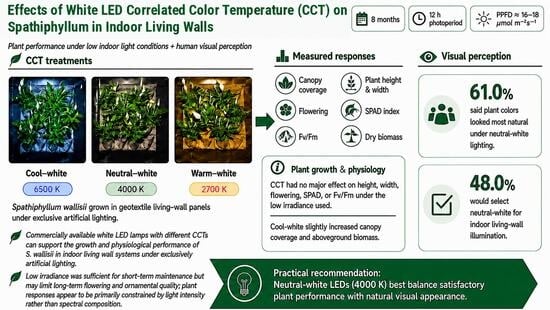
11]. These lamps are typically categorized by their correlated color temperature (CCT), expressed in Kelvin degrees (K), which describes the perceived color appearance of the emitted light. Warm-white LEDs (approximately 2700 K) emit a higher proportion of wavelengths in the yellow–red region, creating a visually comfortable atmosphere but providing reduced blue light. In contrast, cool-white LEDs (approximately 6500 K) are characterized by increased blue-light emission, while neutral-white LEDs (approximately 4000 K) represent an intermediate spectral composition often perceived as closer to daylight.
Previous studies examining the effects of LED lighting on ornamental plants have largely focused on light intensity, red-to-blue ratios, or narrow-band spectra under controlled experimental conditions [
19,
20,
21]. However, comparatively limited attention has been given to the effects of broad-spectrum white LEDs differing in correlated color temperature (CCT), particularly within vertical greenery systems. Indoor living walls differ from conventional potted plant systems in terms of root confinement, water distribution, and vertical light gradients, factors that may interact with lighting quality to influence plant responses. Moreover, limited information is available regarding how different CCTs affect not only plant growth and flowering but also human visual perception, which is a critical consideration for indoor green installations intended primarily for aesthetic and biophilic purposes.
Ornamental foliage plants used in interior environments are generally shade-tolerant species adapted to low light conditions.
Spathiphyllum wallisii Regel (family Araceae), commonly known as ‘peace lily’, is a widely used indoor ornamental species valued for its glossy foliage and long-lasting white inflorescences [
22]. These characteristics, together with its reported ability to contribute to indoor air pollutant removal, make it particularly suitable for indoor living wall applications [
23]. Nevertheless, information regarding its long-term growth, flowering behavior, and physiological responses to different white LED CCTs in indoor vertical systems has not been thoroughly investigated.
The objective of the present study was to evaluate the effects of LED lamp correlated color temperature on the growth, flowering, physiological performance, and ornamental quality of S. wallisii cultivated in indoor living wall systems under exclusively artificial lighting. Specifically, the study compared warm-white (2700 K), neutral-white (4000 K), and cool-white (6500 K) LED lighting. In addition, a questionnaire-based survey was conducted to assess human visual preferences related to plant appearance under different lighting conditions. By combining plant performance metrics with user perception, this study aims to provide practical guidance for the selection of LED lighting in indoor living wall installations that balance plant health, ornamental quality, and human visual comfort.
2. Materials and Methods
2.1. Experimental Setup
The study was conducted in a fully enclosed indoor space without access to natural light at the facilities of the Laboratory of Floriculture and Landscape Architecture, Agricultural University of Athens, Greece. The experiment was carried out for eight months, from 4 November 2020 to 30 June 2021, and aimed to assess the effects of LED lamp correlated color temperature (CCT) on the growth and flowering of S. wallisii cultivated in indoor living wall systems.
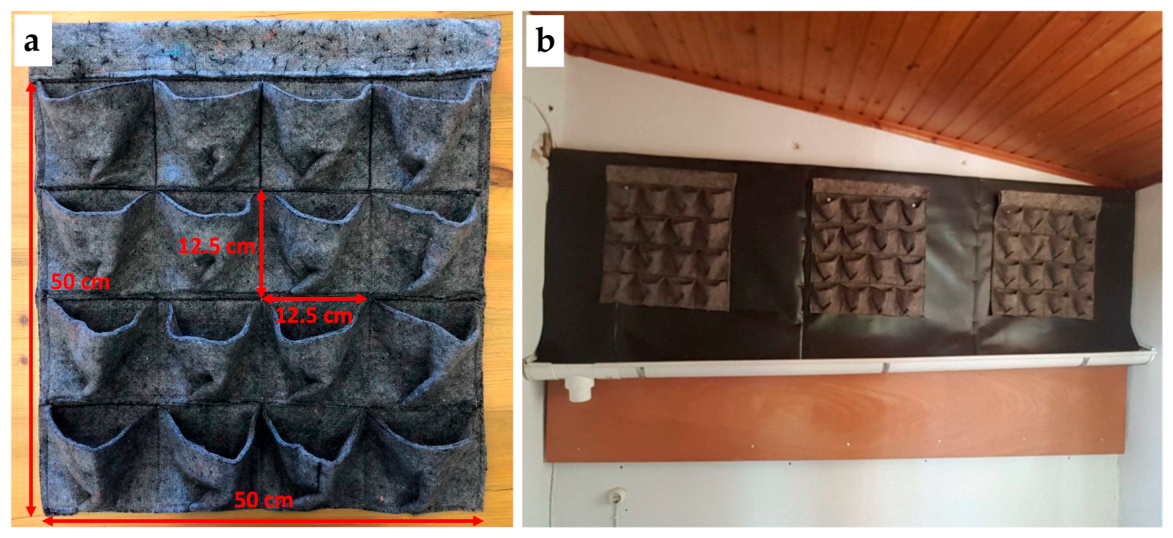
Three experimental living wall panels (0.50 × 0.50 m) were constructed using a synthetic polypropylene geotextile felt (VLS-500; Diadem, Landco Ltd., Athens, Greece) with a thickness of 4 mm and a mass of 0.50 kg m−2. The material is chemically and biologically inert and exhibits high mechanical strength and water holding capacity of 3.6 L m−2.
Two layers of the geotextile were stitched together, forming square planting pockets (12.5 × 12.5 cm) on the outer layer arranged in a 4 × 4 grid, resulting in 16 pockets per panel (
Figure 1a). The panels were mounted on a wall-supported wooden frame and backed with marine plywood, which was waterproofed using a polyethylene root-barrier membrane (FLW 400; Diadem, Landco Ltd.) with a thickness of 0.4 mm (
Figure 1b).
Irrigation was provided through a closed-loop recirculating system to minimize water consumption. A polyethylene pipe of 20 mm diameter was installed at the upper section of the panels between the two felt layers and equipped with ten pressure-compensated emitters (24 L h−1; Corona PC, Eurodrip SA, Viotia, Greece) spaced at 5 cm intervals across the width of each living wall.
Drainage water was collected via a PVC gutter (12 cm diameter) positioned at the base of the living walls and returned to a polyethylene storage tank (64 × 64 × 42 cm). Water recirculation was achieved using a centrifugal electric pump (DAB Jet 62 M; Dab Pumps S.p.A., Mestrino, Italy). Irrigation was scheduled once daily at 12:00 for a duration of 1 min using a digital timer (Evology EMT700; ADEO Services, Ronchin, France). The irrigation tank was periodically refilled with tap water to compensate for evaporation and plant water uptake during the experiment.
2.2. Plant Material and Establishment
Uniform plants of
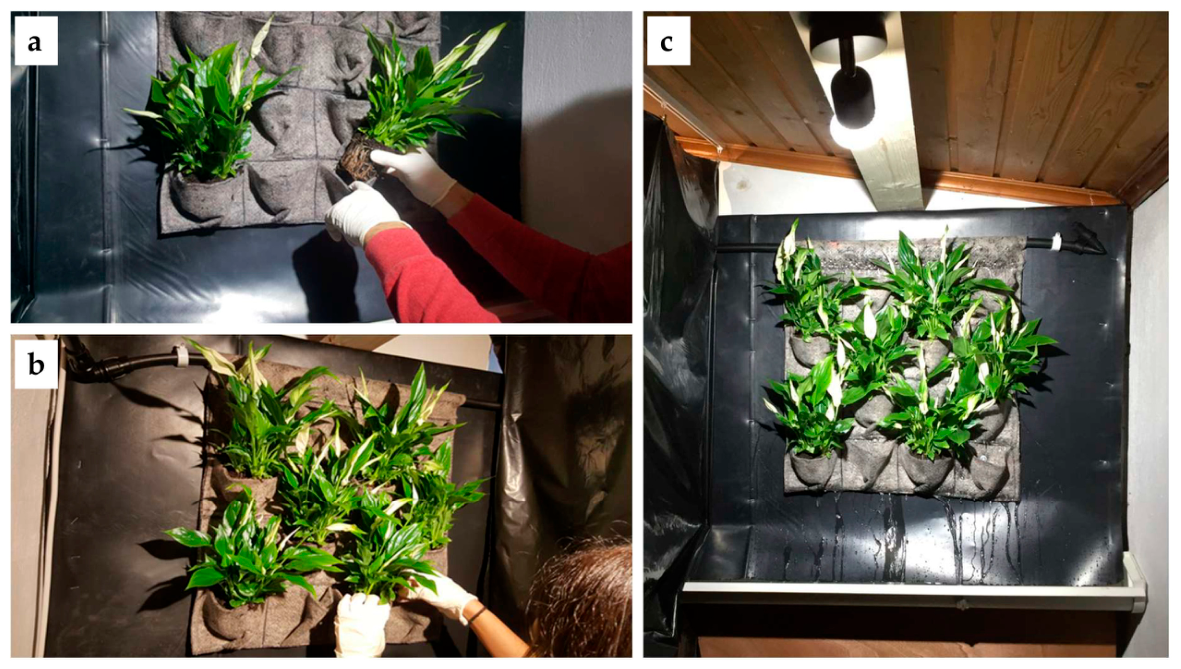
S. wallisii were obtained from a single commercial nursery and selected for similar size and flowering status. Plants were supplied in 9 cm diameter pots. On 4 November 2020, 18 plants were installed, with six plants assigned to each living wall panel. Plants were positioned in predefined planting pockets by inserting the intact root ball into the felt structure (
Figure 2a,b).
S. wallisii was selected due to its widespread use in indoor living wall systems and its suitability for evaluating both vegetative growth and flowering performance under artificial lighting.
2.3. LED Lighting Setup and Light Measurements
During the study
S. wallisii plants received exclusively artificial light. Three economically priced (under 5 € each) commercially available GU10 LED lamps (Eurolamp, Oreokastro, Thessaloniki, Greece) were used. The lamps were identical in physical and electrical specifications (10 W power, luminous flux 1000 lm, beam angle 38°, CRI > 80) and differed only in correlated color temperature (CCT). Specifically, they emitted: (a) warm-white at 2700 K (Eurolamp 147-77842), (b) neutral-white at 4000 K (Eurolamp 147-77841), and (c) cool-white at 6500 K (Eurolamp 147-77840). One lamp was positioned centrally in the upper front of each living wall panel at a distance of 1 m, aimed at the center of the panel (
Figure 2c). Opaque black polyethylene sheets were utilized as curtains and installed between living walls to prevent light contamination among treatments. A 12 h light/12 h dark photoperiod was applied to all types of lighting throughout the experiment.
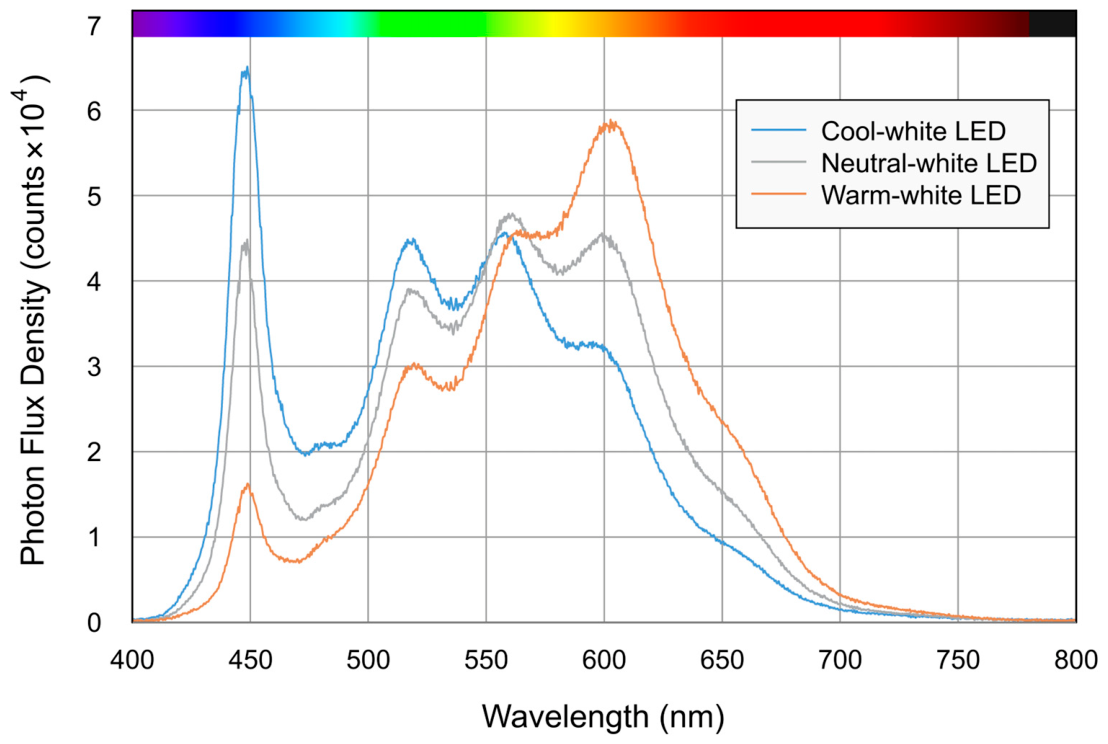
Light spectral composition was measured using a single channel, CCD array spectrometer (USB2000+, Ocean Optics Inc., Dunedin, FL, USA). The spectral emission profiles of the three LED lamps differed markedly in their wavelength composition (
Figure 3). The cool-white LED exhibited a pronounced emission peak in the blue region (approximately 440–460 nm), followed by a broader emission band extending into the green and yellow wavelengths, with comparatively lower intensity in the red region. In contrast, the warm-white LED showed reduced blue-light emission and a dominant broad peak in the orange–red region (approximately 580–620 nm). The neutral-white LED displayed an intermediate spectral profile, combining a moderate blue peak with a broad emission across the green-to-red wavelengths.
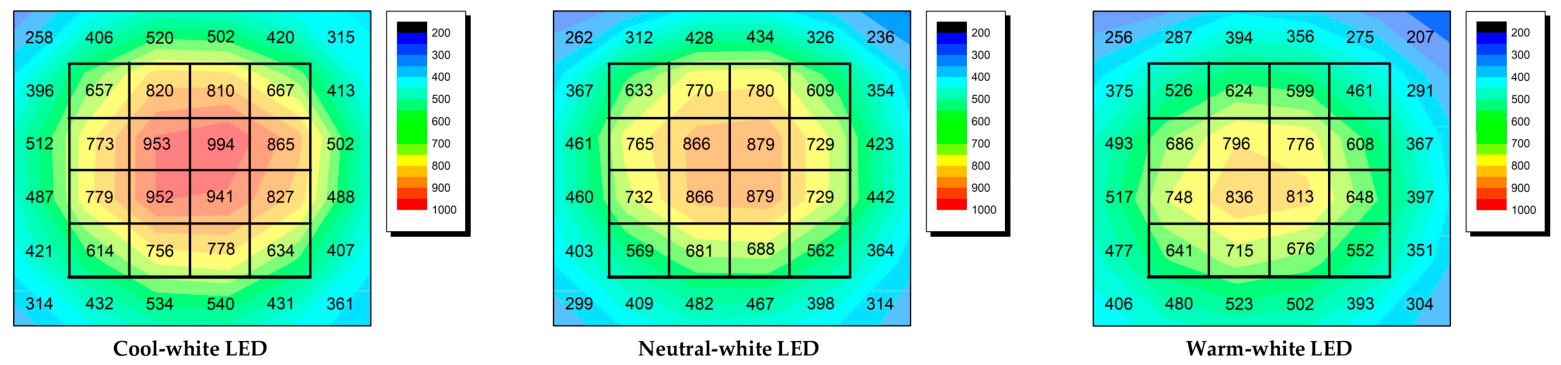
Illuminance (lx) was recorded at multiple points across each living wall panel and in the surrounding area using a digital light meter (YF-170; TOR Applied Technologies Ltd., Earl Shilton, Leicester, UK) (
Figure 4). Under cool-white LED lighting, illuminance at the center of the panel ranged from 941 to 994 lx, decreasing toward the panel edges (614–865 lx) and further in the surrounding area (258–540 lx). For the neutral-white lighting treatment, central illuminance values ranged from 866 to 879 lx, with values of 562–765 lx at the panel edges and 236–482 lx in the surrounding area. Under warm-white LED lighting, illuminance at the center of the panel ranged from 776 to 836 lx, while corresponding values at the edges and surrounding area ranged from 461 to 748 lx and from 207 to 523 lx, respectively. Because light distribution varied spatially across the living wall surface, plant positions were kept consistent among light treatments to minimize positional effects and maintain comparable exposure patterns among living wall panels.
Photosynthetic photon flux density (PPFD; μmol m
−2 s
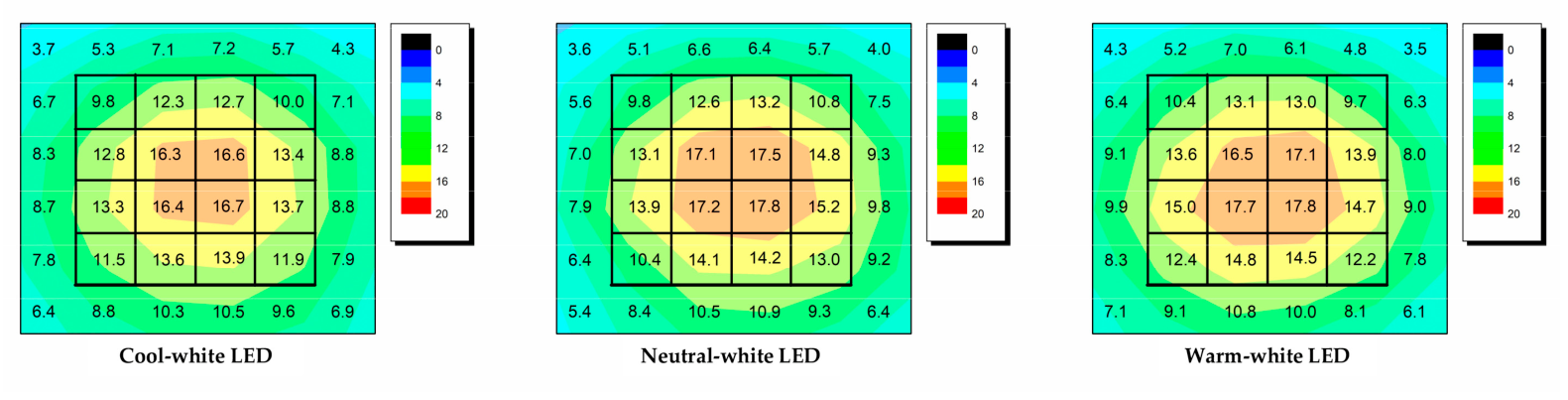
−1) was measured at the same positions as illuminance using a quantum sensor (LI-188B; LI-COR Inc., Lincoln, NE, USA) (
Figure 5). Under cool-white LED lighting, PPFD at the center of the living wall panel ranged from 16.3 to 16.7 μmol m
−2 s
−1, decreasing toward the panel edges (9.8–13.9 μmol m
−2 s
−1) and further in the surrounding area (3.7–10.5 μmol m
−2 s
−1). For the neutral-white lighting treatment, central PPFD values ranged from 17.1 to 17.8 μmol m
−2 s
−1, with values of 9.8–15.2 μmol m
−2 s
−1 at the panel edges and 3.6–10.9 μmol m
−2 s
−1 in the surrounding area. Under warm-white LED lighting, PPFD at the center of the panel ranged from 16.5 to 17.8 μmol m
−2 s
−1, while corresponding values at the edges and surrounding area ranged from 9.7 to 15.0 μmol m
−2 s
−1 and from 3.5 to 10.8 μmol m
−2 s
−1, respectively. The relatively low PPFD levels applied in the study were selected to simulate realistic indoor conditions typical of residential and commercial environments, where lighting is primarily designed for human use rather than plant production.
2.4. Measurements
Every 14 days, plant height, measured from the base of the plant to the highest leaf point excluding flowers, plant width, measured as the maximum horizontal canopy spread, and number of flowers per plant were recorded. Leaf chlorophyll concentration was assessed using a SPAD-502 chlorophyll meter (Spectrum Technologies Inc., Aurora, IL, USA), with six leaves measured per plant and averaged.
At the same intervals, digital images of each living wall panel were captured using a compact camera (Canon IXUS 100 IS; Canon Europe Ltd., UK) under constant settings. Images were processed to remove background areas, and plant coverage was quantified using ImageJ 1.52a software [
24]. Maximum quantum efficiency of photosystem II (F
v/F
m) was measured biweekly on dark-adapted leaves using a MINI-PAM Photosynthesis Yield Analyzer (Heinz Walz GmbH, Effeltrich, Germany). Leaf greenness and photosynthetic efficiency measurements were performed on fully expanded, healthy mature leaves of similar developmental stage and exposure. The same leaf selection criteria were used throughout the experiment, although the exact same individual leaves were not necessarily measured at each sampling date because of leaf development and changes in canopy structure over time.
At the end of the experiment, shoots were harvested and separated into leaves and flowers. Leaf area and length-to-width ratio were measured using scanned images analyzed with ImageJ. Plant components were then oven-dried at 75 °C for 72 h to determine dry weight. The root ball was removed from the felt planting pockets, the roots were washed to remove substrate, and root dry mass was determined after oven-drying at 75 °C for 72 h.
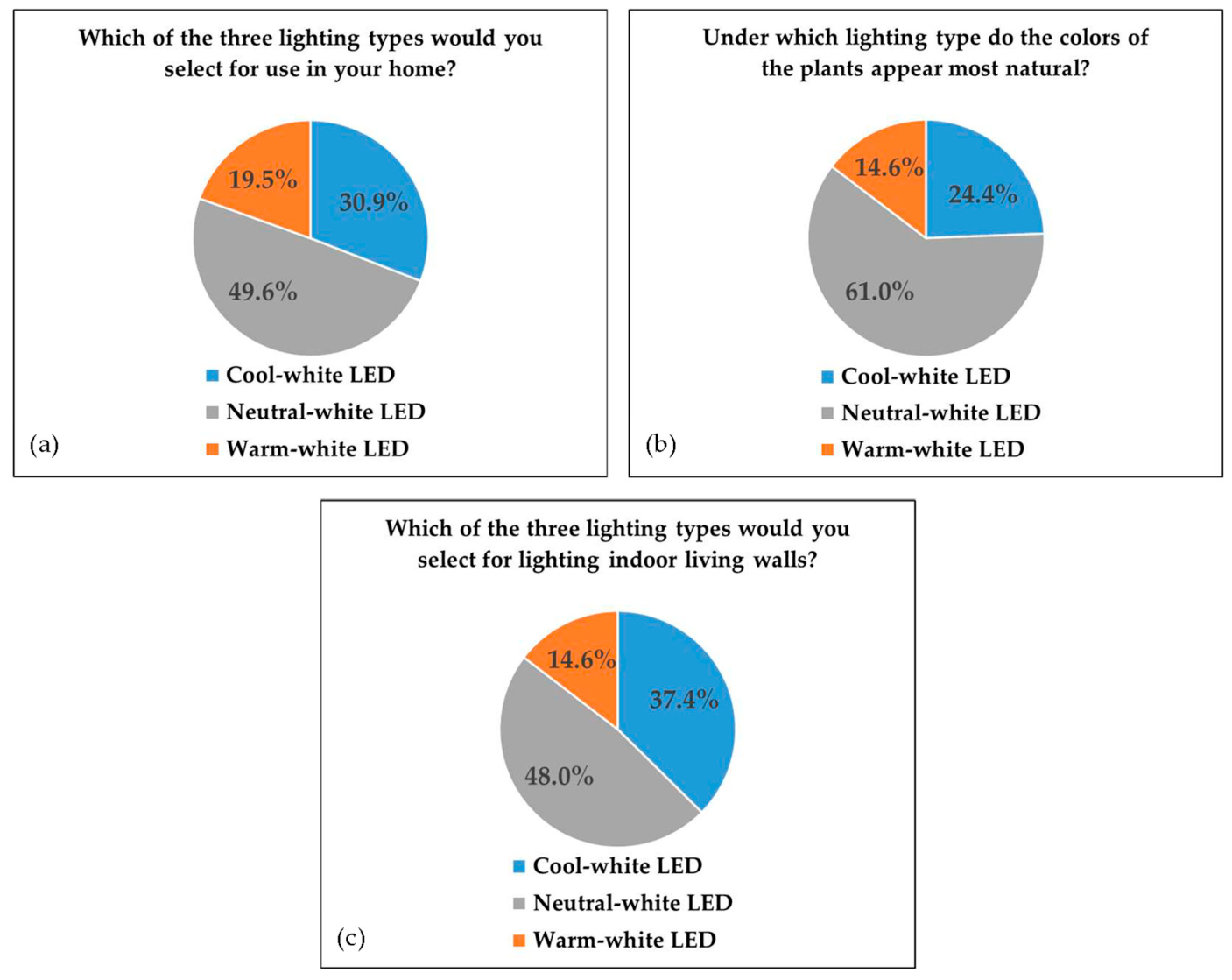
In addition, during the second and third month of the experimental period, a questionnaire survey was conducted to assess visual preferences related to the appearance of the living wall plants under the different LED color temperature treatments. A total of 123 participants were asked to evaluate foliage color and overall visual appearance of the plants grown under warm-, neutral-, and cool-white lighting conditions. Responses were summarized and presented as percentages.
2.5. Indoor Climate Control
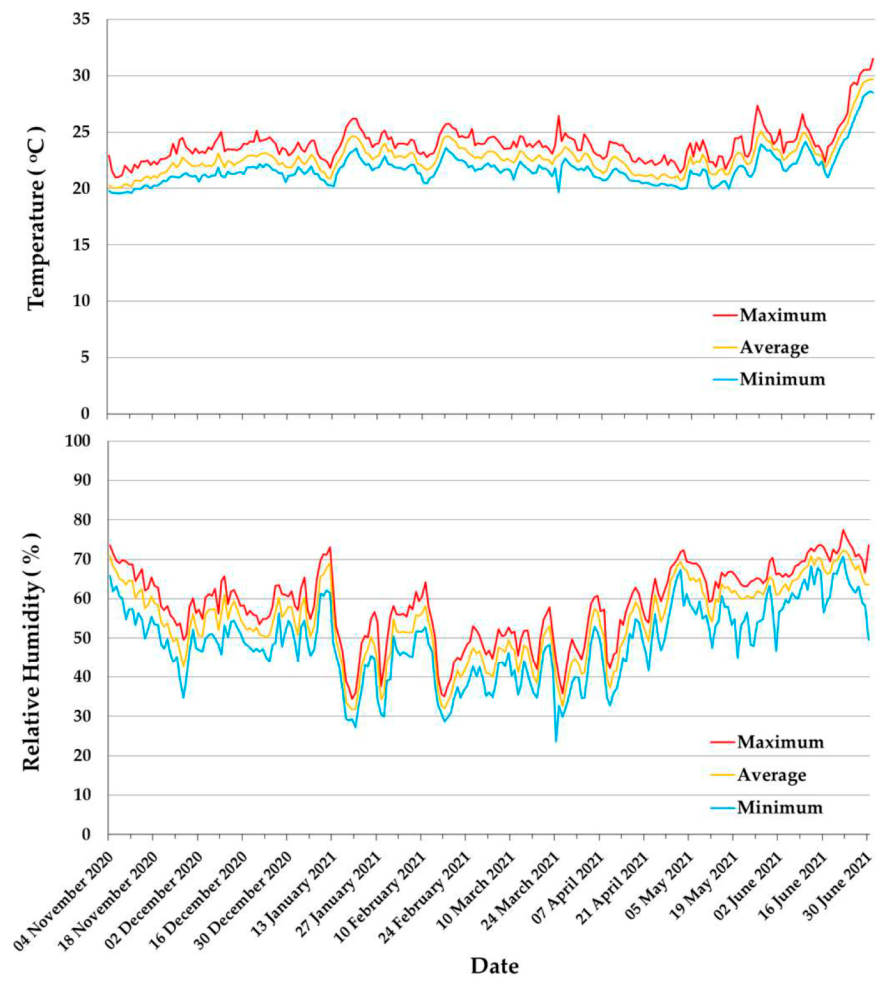
Throughout the experiment, air temperature was maintained above 21 °C using an oil-filled electric radiator (De’Longhi TRRS1225; De’Longhi Appliances S.r.l., Treviso, Italy) regulated by a digital thermostat (BS-824; Olympia Electronics S.A., Eginio, Pieria, Greece). Temperature and relative humidity (
Figure 6) were continuously recorded using a HOBO Pro v2 data logger (Onset Computer Corporation, Bourne, MA, USA) installed near the experimental setup. Mean air temperature and relative humidity during the study were 21.7 ± 1.45 °C and 48.7 ± 9.9%, respectively. The relatively high variability in relative humidity is attributed to the non-insulated nature of the experimental space, which allowed indoor conditions to be influenced by fluctuations in outdoor humidity, in combination with heating during colder periods and plant transpiration.
2.6. Statistical Analysis
The experimental design consisted of three lighting treatments applied to independent living wall panels, with each panel representing one experimental unit. Within each panel, six S. wallisii plants were measured and considered as subsamples. Plant growth and physiological variables were recorded repeatedly over time. Data were analyzed using repeated measures analysis of variance, with lighting treatment as the between-subject factor and time as the within-subject factor. Because individual plants were nested within each living wall panel and not fully independent, plant-level measurements were treated as subsamples within each experimental unit, and results are interpreted at the panel level. However, because only one living wall panel was used per lighting treatment, the absence of panel-level replication limits the ability to fully separate treatment effects from possible panel-specific effects. For biomass and endpoint measurements, one-way ANOVA was performed to evaluate differences among lighting treatments. When significant effects were detected, means were separated using Fisher’s least significant difference (LSD) test at a significance level of p ≤ 0.05. All statistical analyses were conducted using JMP® statistical software (version 11; SAS Institute Inc., Cary, NC, USA).
4. Discussion
The present study evaluated the effects of LED lamp CCT on plant growth, flowering, physiological performance, and human visual perception of S. wallisii cultivated in indoor living wall systems under exclusively artificial lighting. Overall, the results indicate that plants maintained normal growth and physiological performance under all three lighting treatments (2700 K, 4000 K, and 6500 K). Although minor differences were observed in biomass accumulation and plant coverage, most vegetative and physiological parameters were not significantly affected by LED CCT. These results suggest that broad-spectrum white LEDs with different color temperatures can adequately support short-term growth of shade-tolerant ornamental plants in indoor vertical greenery systems under the conditions tested. However, longer-term responses may differ, and potential effects of spectral composition on plant performance over extended cultivation periods or under varying growing conditions (e.g., nutrient availability, plant density, or irrigation regime) cannot be excluded. Clear differences in human visual preferences further highlight the importance of considering both plant physiological responses and user perception when designing lighting strategies for indoor greenery systems.
4.1. Plant Growth, Canopy Development and Biomass Responses
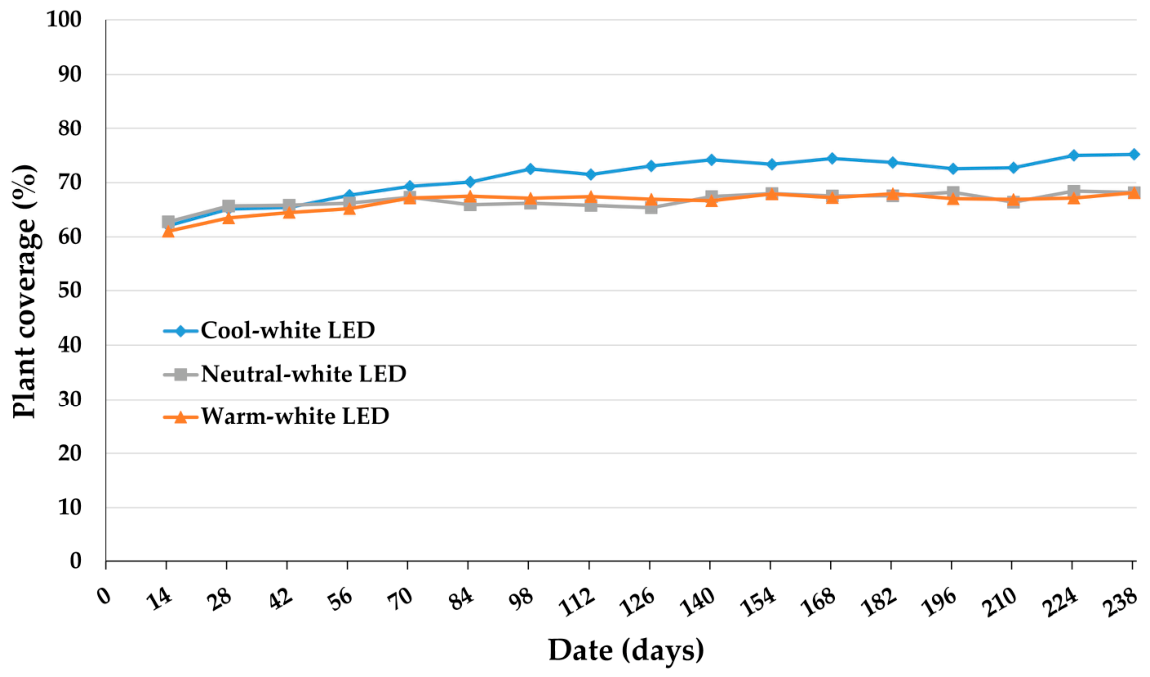
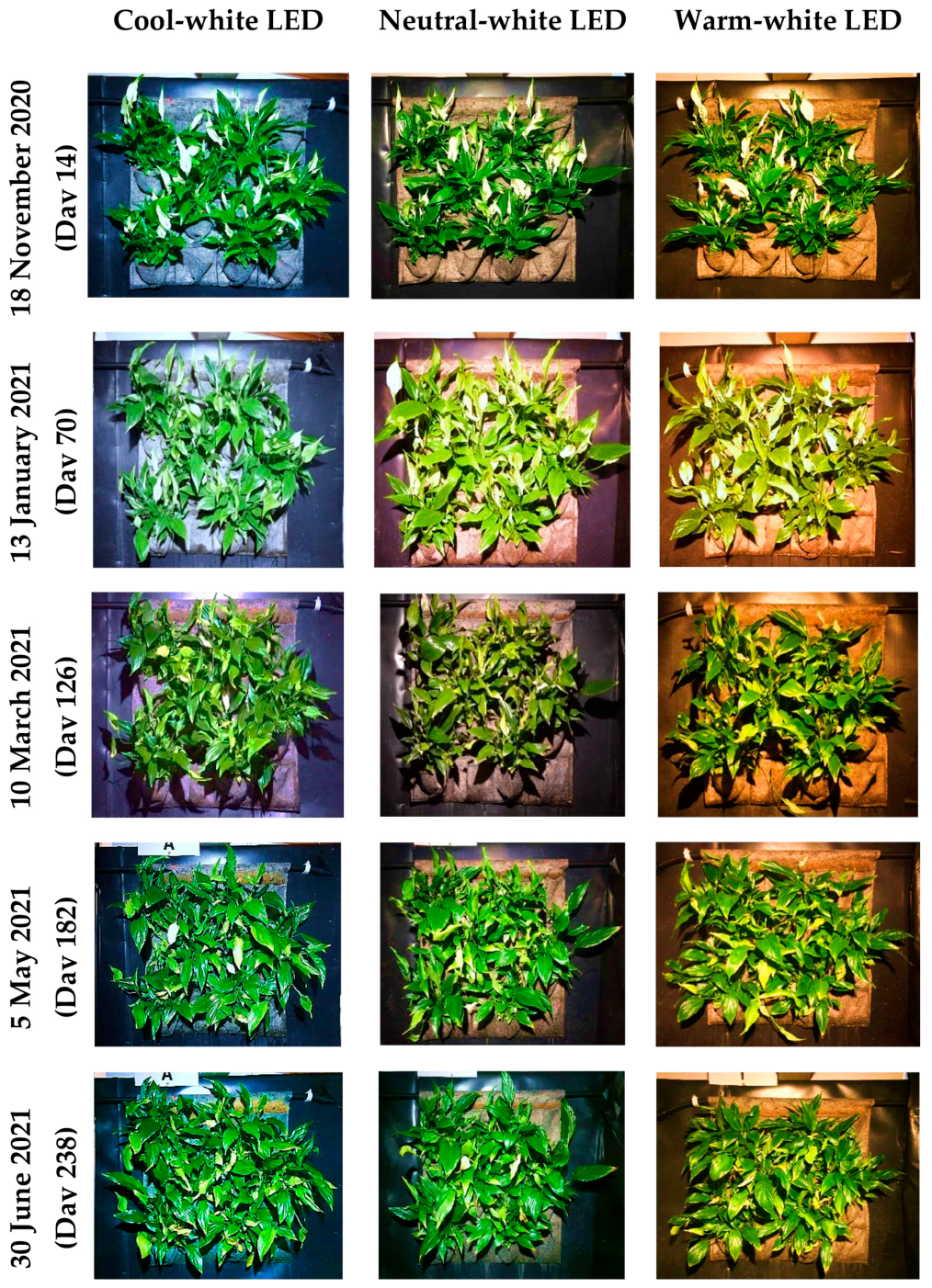
Plant coverage of the living wall panels increased steadily throughout the experimental period under all lighting treatments, indicating successful establishment and adaptation of
S. wallisii to the indoor living wall environment. The ability of plants to maintain growth across all three LED CCTs reflects the shade-tolerant nature of the species, which is adapted to low-light conditions and efficiently utilizes limited light resources [
25,
26].
The relatively low PPFD values recorded in this study (approximately 16–18 μmol m
−2 s
−1 at the panel center) indicate that plants were grown under severely light-limited conditions. These levels are considerably lower than those reported for
Spathiphyllum photoacclimation, where plants have been shown to adjust across a range of approximately 40 to 420 μmol m
−2 s
−1, with those grown under low irradiance exhibiting reduced light requirements for photosystem saturation [
26]. This suggests that, under the present experimental conditions, plants were operating well below their photosynthetic saturation point. Although these levels are substantially lower than those recommended for commercial production of low-light indoor plants, they fall within the range reported for survival and slow growth of interiorscape species [
27]. Under such low irradiance, plant growth is primarily constrained by light quantity rather than spectral quality, which likely explains the limited differences observed among lighting treatments [
14,
16]. The spatial variability in illuminance within each living wall panel also suggests that local light availability may have contributed to individual plant responses, despite the standardized plant arrangement among treatments. This within-panel illuminance variability represents an inherent characteristic of lighting systems in indoor living walls, as also reported in previous studies evaluating artificial lighting for living wall applications [
11,
17].
The use of broad-spectrum white LEDs in all treatments ensured the presence of both blue and red wavelengths required for normal plant development. Previous studies have shown that white LEDs can adequately support plant growth when essential spectral regions are present, even if their relative proportions differ [
11,
28].
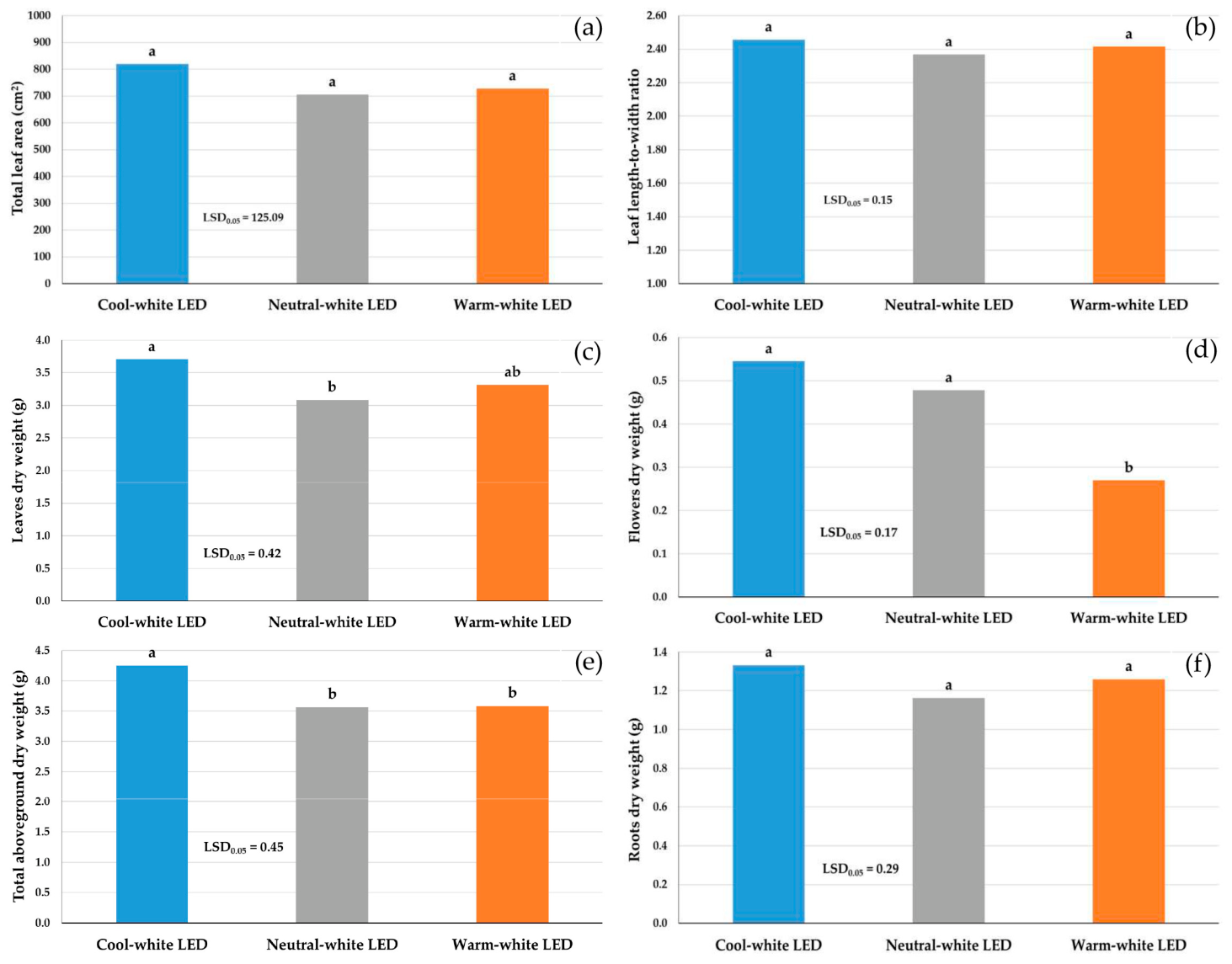
Despite the overall similarity in growth trends, plants grown under cool-white LED lighting tended to exhibit slightly higher canopy coverage and aboveground biomass compared with those grown under neutral- and warm-white lighting. This may be related to the higher proportion of blue wavelengths in cool-white LEDs, which are known to influence plant morphology, stomatal regulation, and photosynthetic processes [
16]. Blue light has been found to enhance leaf thickness, chloroplast development, and biomass accumulation [
29,
30], which may partly explain the observed differences in canopy development and dry weight. However, these effects were relatively small, reinforcing that under light-limited conditions, spectral influences play a secondary role compared with overall light availability.
It should also be noted that minor differences in illuminance were recorded among treatments, with marginally higher values under cool-white lighting. Although these differences were relatively small, they may have contributed, at least partially, to the increased biomass observed under this treatment, as even modest differences in incident light quantity under strongly light-limited conditions may influence cumulative carbon assimilation over extended cultivation periods. Therefore, the observed biomass responses cannot be attributed exclusively to spectral differences, highlighting the inherent interaction between light quantity and spectral composition when interpreting CCT effects. [
14,
28].
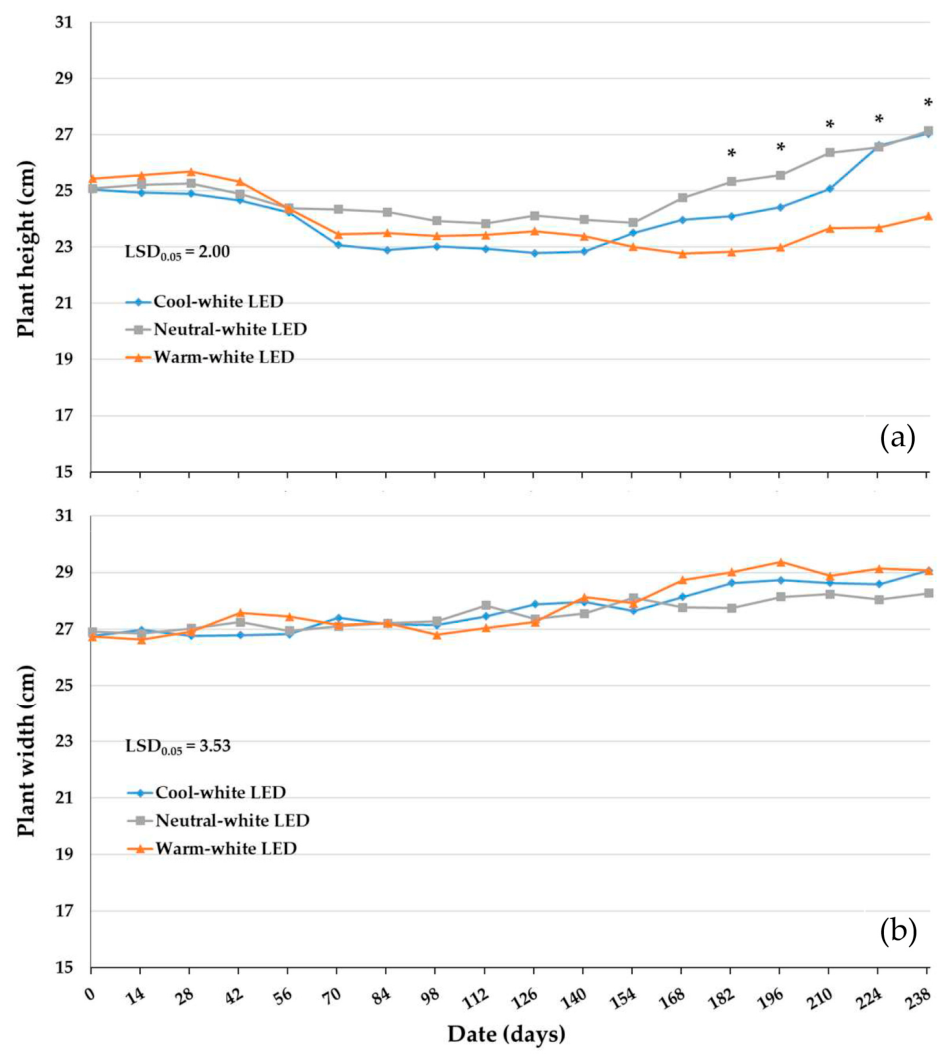
Plant height and width were not affected by lighting treatment, indicating that morphological traits were relatively stable across the tested CCTs. Similar findings have been reported for ornamental foliage plants grown under white LEDs, where moderate spectral differences resulted in limited morphological responses when light intensity remained low [
11,
17]. However, temporal changes in plant height suggest that dynamic morphological responses occurred during plant development under low light conditions. The initial reduction in plant height observed during the first half of the experiment may be associated with adaptive responses to limited irradiance. Under low light,
Spathiphyllum has been shown to adjust leaf orientation to maximize light interception, positioning leaves more perpendicular to incident radiation [
26]. Such responses may promote a more horizontal canopy structure, reducing apparent plant height. As canopy density increased over time, self-shading likely became more pronounced, further limiting light availability within the canopy. Under these conditions, the slightly lower height observed under warm-white lighting during the final stages of the experiment may reflect less favorable light conditions for sustained vertical growth.
4.2. Flowering Responses
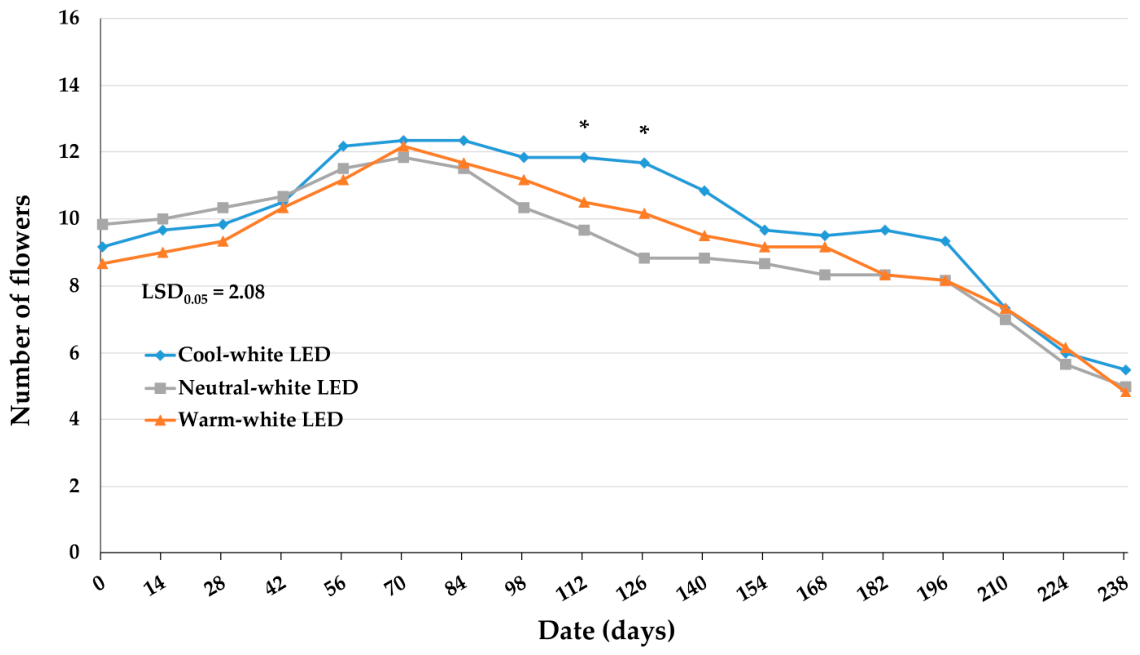
Flower number followed a similar temporal pattern across all lighting treatments, with an initial increase followed by a gradual decline toward the end of the experimental period. It should be noted that flower number was used as an overall indicator of flowering performance, but individual flower longevity was not recorded. Because plants were already flowering at the beginning of the experiment and Spathiphyllum inflorescences can remain decorative for several weeks, changes in flower number may reflect both differences in new flower formation and differences in flower persistence.
The lack of consistent differences among treatments indicates that LED CCT had a limited effect on flowering in
S. wallisii. This is consistent with the fact that
Spathiphyllum is generally considered a day-neutral species, in which flowering is not strictly controlled by photoperiod but is instead influenced by a combination of environmental and physiological factors, such as light intensity, temperature, plant age, and cultivar-specific responses [
31,
32,
33]. Light quality can influence flowering through phytochrome-mediated pathways, particularly via red and far-red wavelengths, although this effect is more pronounced in photoperiodic species [
14,
34]. Because all treatments used broad-spectrum white LEDs, it is likely that the essential spectral components required to support floral development were present in all treatments, thereby reducing the potential for pronounced differences in flowering responses among CCTs. Nevertheless, the lower flower dry weight observed at the end of the experiment under warm-white lighting may indicate that this spectrum was less favorable for sustaining floral biomass accumulation under the low irradiance conditions of the present study. Warm-white LEDs contained a lower proportion of blue wavelengths compared with cool- and neutral-white LEDs, which may have influenced assimilate availability or flower development, although these parameters were not directly investigated in the present study.
The observed decline in flower number over time across all lighting treatments may be associated primarily with the relatively low light intensity provided during the experiment. Under persistently low irradiance, carbon assimilation may become insufficient to sustain reproductive development, leading to a gradual reduction in flowering capacity. Similar reductions in flowering under low irradiance have been reported for
Anthurium andraeanum in a similar experimental living wall setup, where the decline in flower number was attributed primarily to insufficient light intensity rather than to spectral differences [
35].
In addition, the gradual increase in temperature toward the end of the experimental period (
Figure 6), with values approaching or exceeding 29–30 °C, likely further reduced plant performance, as previous studies have shown that growth rates in
Spathiphyllum decline at temperatures above this range [
36]. Reduced growth under elevated temperatures may reduce the availability of assimilates required to sustain flowering. Moreover, the absence of supplemental fertilization throughout the study may have led to progressive nutrient depletion, particularly affecting nitrogen availability, which is essential for maintaining plant vigor and flowering capacity in
Spathiphyllum [
37,
38].
In addition to flowering responses, an important observation of the present study was the gradual transition of spathe color from white to green across all treatments after approximately one month of cultivation, with newly formed inflorescences remaining green thereafter. Previous studies have shown that this transition occurs as the inflorescence develops, although its timing and intensity may vary depending on environmental conditions [
39]. In the present study, however, spathe greening occurred relatively early in newly formed inflorescences, suggesting that the experimental conditions, particularly low irradiance, may have accelerated this response.
In
S. wallisii, the spathe represents a modified leaf (bract), and its greening under low light conditions reflects a functional shift toward enhanced chloroplast development and photosynthetic activity [
40]. Similar responses have been observed in other plant organs containing chromoplasts, where reduced light availability promotes chlorophyll accumulation and enhanced chloroplast function [
41]. This indicates that spathe greening is part of an adaptive response aimed at enhancing carbon gain under low-light conditions. From an ornamental perspective, however, this transition may negatively affect the aesthetic value of
S. wallisii, as the white spathe is a key decorative feature. This highlights an important trade-off between plant adaptation to low-light conditions and the maintenance of ornamental quality in indoor environments.
4.3. Leaf Greenness and Photosynthetic Performance
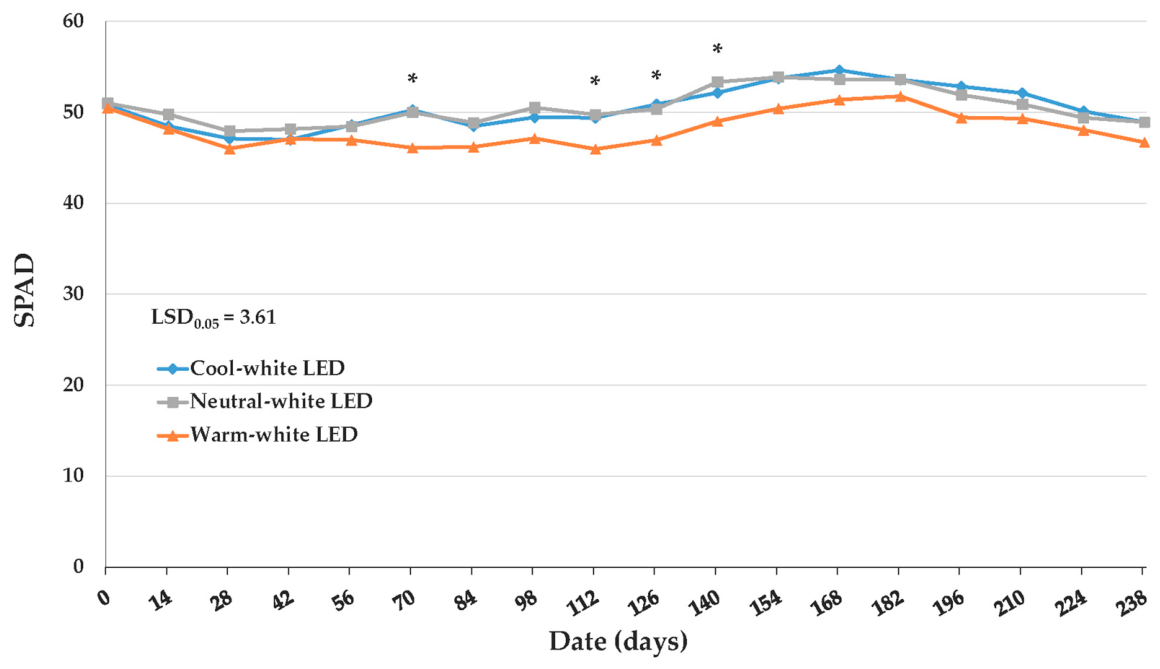
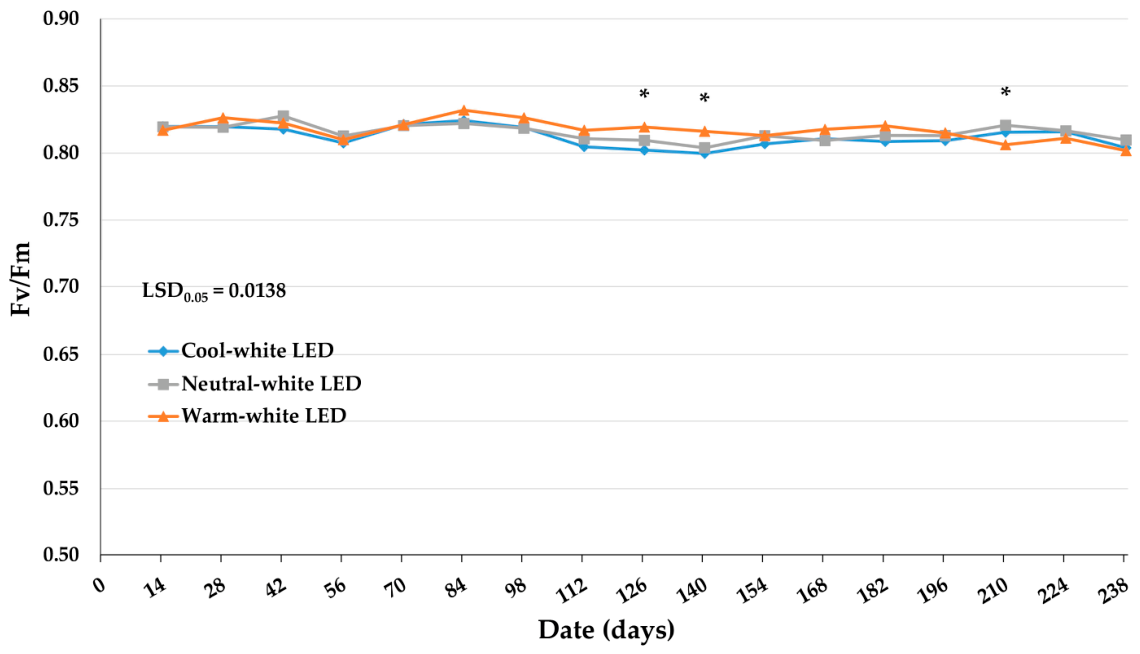
Leaf chlorophyll status and photosynthetic efficiency remained stable across lighting treatments throughout the experiment, indicating that plants were not subjected to significant physiological stress. F
v/F
m values within the range of 0.80–0.83 are typical of healthy, non-stressed plants [
42,
43]. However, stable photochemical efficiency does not necessarily indicate sufficient carbon assimilation. The observed decline in flowering and spathe greening indicates that, despite the absence of photoinhibitory stress, carbon availability may have been limited under low irradiance. This highlights the difference between photochemical efficiency and whole-plant carbon balance under light-limited conditions.
The lack of differences among treatments further supports that broad-spectrum white LEDs, regardless of CCT, can maintain photosynthetic performance in
S. wallisii under indoor conditions. This response reflects the shade tolerance of the species and its adaptation to low-light environments [
44]. Park et al. [
25] reported that
S. wallisii exhibits a high apparent quantum yield under low light intensities (0–100 μmol m
−2 s
−1), indicating an efficient utilization of limited light resources.
Interestingly, leaf greenness, as indicated by SPAD values, tended to be higher under cool- and neutral-white lighting compared with warm-white lighting for a considerable part of the experimental period, despite the slightly higher PPFD values recorded under warm-white LEDs. This trend may be associated with differences in spectral composition, particularly the relatively higher proportion of blue light in cool- and neutral-white LEDs, which promotes chlorophyll synthesis and leaf functional acclimation under low-light conditions [
29]. A similar variability in SPAD values under different lighting conditions has been reported by Kaltsidi et al. [
11] in
S. wallisii grown in indoor living walls, where chlorophyll content remained relatively high across treatments despite differences in light intensity and distribution.
4.4. Human Visual Perception and Lighting Preference
In contrast to plant responses, human perception was strongly influenced by LED CCT. Neutral-white lighting was consistently preferred across all survey criteria, including general indoor use, perceived naturalness of plant color, and suitability for illuminating living walls. This preference is likely related to the balanced spectral appearance of neutral-white LED lighting, which has been associated with improved color rendering and visual quality in indoor environments [
45,
46].
Warm-white lighting, characterized by a higher proportion of longer wavelengths, may alter the perceived color of objects, resulting in a less natural appearance [
47]. This effect may be particularly relevant for ornamental plants, where vivid green foliage is commonly associated with plant health, while yellowish tones may be perceived as indicative of reduced quality or stress. Conversely, cool-white lighting, with its higher blue-light content, may produce a visually colder and less comfortable environment for occupants [
48,
49]. These perceptual differences are particularly important in indoor living wall applications, where aesthetic quality and user experience are key design considerations.
Similar findings have been reported in previous studies. In a comparable indoor living wall experiment with
A. andraeanum, neutral-white lighting was also the most preferred option among participants for both plant appearance and as an artificial lighting source for indoor living walls [
35]. In addition, Zielińska-Dąbkowska et al. [
50], who investigated the effect of LED CCT on the perceived naturalness and visual appeal of ornamental plants in indoor spaces, reported that lighting at approximately 4000 K provided the most natural and visually appealing illumination, while warm-white lighting was consistently the least preferred.
5. Conclusions
This study demonstrated that commercially available white LED lamps with different CCTs can maintain acceptable growth and physiological performance of S. wallisii in indoor living wall systems under exclusively artificial lighting. Most vegetative and physiological parameters were not markedly affected by CCT, indicating that this shade-tolerant species can perform across a range of white light spectra under low-irradiance conditions.
However, the low light levels applied in this study, while sufficient for short-term maintenance, may not support long-term growth, flowering, or ornamental quality. In addition, plant responses under such conditions may depend on other cultivation factors, such as nutrient availability, suggesting that different management practices may influence long-term outcomes and potentially mitigate some of the observed declines, such as reduced flowering.
Although cool-white lighting resulted in slightly greater biomass and canopy development, these differences were relatively small, suggesting that under these conditions, plant responses appear to be primarily constrained by light intensity rather than spectral composition. In contrast, human visual perception was strongly influenced by CCT, with neutral-white lighting highly preferred for its more natural appearance.
From a practical perspective, these findings highlight that lighting design for indoor living walls should consider both plant performance and user perception. Neutral-white LEDs appear to provide a practical balance between maintaining adequate plant growth and enhancing the visual quality of indoor greenery installations.
Several limitations should be acknowledged, including the use of a single plant species, a single light intensity level, and one living wall panel per treatment. These factors limit the generalization of the results and reduce the ability to fully separate treatment effects from possible panel-specific influences or spectral–intensity interactions. Future research using replicated living wall panels should investigate a wider range of light intensities, spectral compositions, photoperiod regimes, and plant species to further optimize lighting strategies for indoor biophilic applications.




 ,
,