Article

Straw Modulates Fungal Network and Functional Guilds While Maintaining Community Structure and Diversity in the Tea Plantation Soils


1
Henan Key Laboratory for Synergistic Prevention of Water and Soil Environmental Pollution, School of Geographic Sciences, Xinyang Normal University, Xinyang 464000, China
2
College of Plant Protection, Shandong Agricultural University, Tai’an 271001, China
3
North-South Transitional Zone Typical Vegetation Phenology Observation and Research Station of Henan Province, Xinyang Normal University, Xinyang 464000, China
*
Author to whom correspondence should be addressed.
Horticulturae 2026, 12(6), 669; https://doi.org/10.3390/horticulturae12060669
Submission received: 28 April 2026 / Revised: 23 May 2026 / Accepted: 26 May 2026 / Published: 28 May 2026
(This article belongs to the Special Issue Sustainable Soil Management for Tea Plantations)

Abstract

Background: Soil degradation in intensive tea plantations necessitates sustainable management. Straw application (S) is a promising practice, yet its integrated effects on soil fungal communities in acidic tea soils require comprehensive evaluation. Methods: High-throughput sequencing based on the primers of fungal ITS1F-ITS2 was conducted on soils from tea plantations with/without straw application (S and CK, respectively). Analyses encompassed community structure, α- and β-diversity, differential taxa, co-occurrence networks, the main drivers by soil properties, and functional prediction. Results: The core fungal community structure except for Basidiomycota, and diversity remained stable under S. However, 17 ASVs responded as significant biomarkers, including fine-scale shifts within the genus Sebacina. S modified the complexity of the fungal co-occurrence network with enhancing its modularity and integration and increasing keystone connectors, while overall network cohesion was maintained. Soil available phosphorus (AP), soil organic matter (SOM) and nitrate nitrogen (NO3-N) were the dominant drivers of fungal amplicon sequence variants (ASVs), with water content (WC) the main driver of fungal keystones. Functionally, S selectively affects the richness of Symbiotrophs (including endophytes) without altering the relative abundance structure of major trophic guilds. Conclusions: S acts as a modulator, refining fungal network architecture and interactions within the resilience threshold of the community, offering a viable practice for sustainable tea soil management.

1. Introduction

Tea (Camellia sinensis (L.) Kuntze) is a globally significant non-alcoholic beverage, prized for its unique flavor and health benefits, thereby underpinning a substantial economic industry [1,2]. However, intensive management practices, including long-term monoculture and conventional fertilization, compromise the sustainability of tea production by driving soil degradation [3,4]. This often manifests as severe soil acidification, which mobilizes toxic aluminum (Al) [5], depletes organic matter [6], and disrupts nutrient cycling [7], ultimately compromising plant growth, yield, and quality [8]. In response, the application of organic amendments like straw application (S) has gained prominence as a sustainable strategy to counteract acidification, by raising the soil pH, which directly lowers the level of harmful Al, boosting soil organic carbon, and improve soil structure [9,10], altering the makeup and function of microbial communities that drive critical nutrient cycles [11]. The efficacy of S on modifying soil pH, boosting soil organic carbon, and improving soil structure is intrinsically mediated by soil microorganisms. Fungi play a particularly pivotal role in this process due to their unique enzymatic capacity to decompose recalcitrant straw components like lignin and cellulose [12]. As indispensable drivers of ecosystem functioning, fungi influence nutrient acquisition via symbiosis [13], suppress soil-borne pathogens [14], and drive the decomposition of organic inputs [12,15]. Therefore, understanding how management practices like S reshape the soil fungal community is fundamental to developing sustainable tea production systems.
Research in various agroecosystems has begun to map the response of soil fungi to S. Effects on fungal community composition and diversity are context-dependent, often mediated by shifts in soil properties like pH [16]. In tea soils, fungal communities are typically dominated by Ascomycota and Basidiomycota, with saprotrophs as a key functional group, and are sensitive to fertilization regimes [17,18,19,20,21]. Specific studies in tea ecosystems have shown that fungal diversity and community structure are influenced by multiple factors. For instance, fungal diversity is higher in ancient tea gardens than that in modern plantations [22], and can be significantly altered by heavy metal pollution like lead [23], and exhibits a dynamic response to land-use change [24]. Furthermore, planting ages and land-use patterns can shift the relative abundance of specific classes like Eurotiomycetes [15], while long-term organic fertilization and soil moisture significantly affect the diversity and abundance of dominant phyla such as Ascomycota [25,26].
In ecological theory, community stability is often characterized by resistance (the ability to withstand disturbance) and resilience (the capacity to return to an equilibrium state) [27]. However, many agricultural interventions do not necessarily destroy or reset the system; instead, they may act as ‘modulators’ [25], which were defined as the agents that induce fine-scale topological and functional restructuring [28,29] (e.g., network modularity, keystone shifts) while operating strictly within the system’s functional carrying capacity and resilience threshold. Unlike a disruptor that breaks down resistance [30], a modulator fine-tunes the existing architecture to adapt to new resource inputs (e.g., straw carbon) without compromising the core taxonomic backbone. While existing studies offer valuable taxonomic insights, they largely overlook the interactive architecture of the fungal community. Crucially, a holistic understanding of how S integrates the soil mycobiome, specifically through co-occurrence network analysis, remains to be developed. And it remains theoretically ambiguous whether straw acts as a major disruptive force or a subtle modulator that fine-tunes a stable community. Furthermore, network-based approaches are essential to disentangle the interplay between straw amendment and the inherent, strong environmental filters of tea soils, moving beyond simple correlations to reveal the mechanistic underpinnings of community.
Based on prior investigations into the effects of S on arbuscular mycorrhizal (AM) fungal communities using 18S rRNA gene primers [29], it’s hypothesized that S functions as a precision modulator rather than a disruptive force on fungal community, by selectively fine-tuning the fungal community through stoichiometric shifts (e.g., pH, SOM). To test this hypothesis, this study comprehensively evaluates the impact of S on soil fungal communities by: (1) assessing the macro-scale stability of community structure and α-/β-diversity based on ITS gene primers; (2) identifying the micro-scale responsive biomarkers and keystone taxa; (3) characterizing topological shifts in co-occurrence networks and identifying the keystones; (4) determining the dominant soil drivers of these patterns; and (5) predicting shifts in functional guilds. By elucidating how S selectively reshapes fungal interactions and functions through specific geochemical drivers, these findings aim to provide a mechanistic basis for optimizing S as a precision practice to enhance tea soil health and sustainability.

2. Materials and Methods

2.1. Study Sites and Sampling

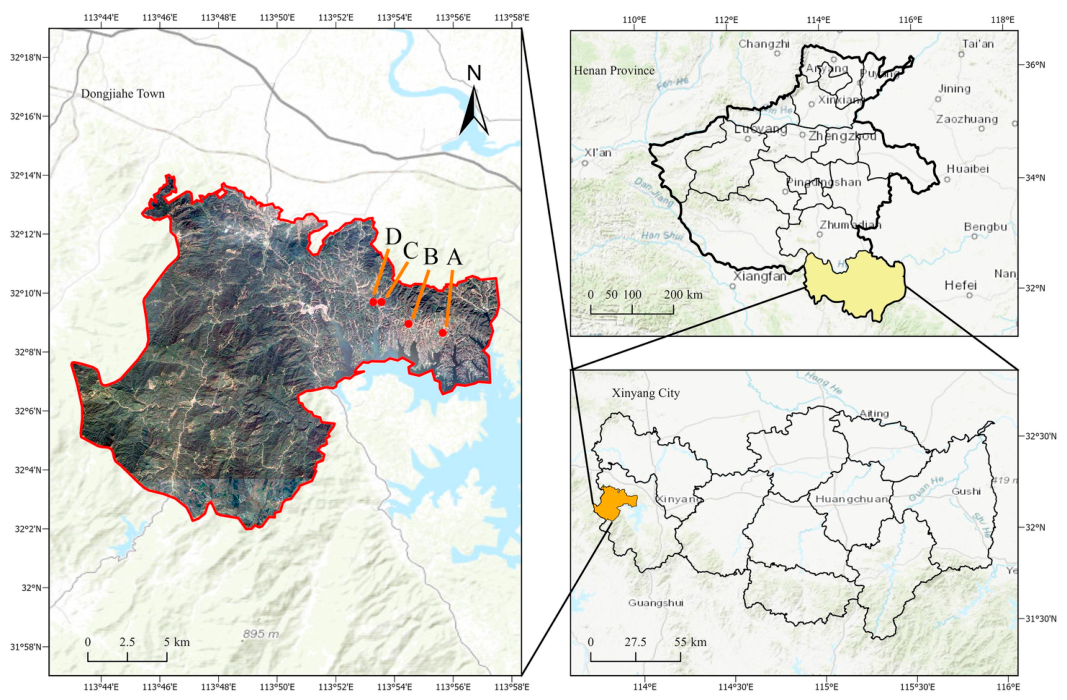
The investigation was carried out in Dongjiahe Town, Shihe District, Xinyang City, Henan Province, China (32°02′21″–32°23′23″ N, 113°45′28″–114°13′09″ E), a key production zone for the prestigious Camellia sinensis, Xinyang Maojian (Figure 1). The study area lies within a transitional climatic belt, influenced by both the northern subtropical and warm temperate monsoon systems, resulting in pronounced seasonal variations in temperature and precipitation [31]. Meteorological records (2018) indicate an average annual temperature of 16.6 °C, annual precipitation of 992 mm, and a mean relative humidity of 74.7% (Table S1). The topography is characterized by eroded hills and low mountainous terrain, with elevations ranging from 100 to 800 m above sea level. The prevailing soil type is yellow–brown earth, classified as Haplic Luvisols (FAO), with a light to sandy loam texture and a pH between 4.7 and 6.5 [32]. Local agronomic practices involve a standardized fertilization regimen: a basal application of calcium superphosphate (between 375 and 750 kg ha−1) and potassium sulfate (225–375 kg ha−1) in October-November, followed by two topdressings of ammonium sulfate (37–125 kg ha−1 each) in February and after the spring harvest. Pruning is routinely conducted post-spring harvest to remove aged branches and foliage, a practice aimed at resource conservation within the plant and the stimulation of robust new shoot growth for subsequent harvests.
Soil samples were collected on 25 April 2018 from four distinct tea plantations (designated A, B, C, and D) located in Dongjiahe Town (Figure 1), following the completion of the spring tea harvest. This timing was chosen to coincide with a period of relatively stable rainfall, which is representative of the typical soil moisture conditions observed annually in the region [33]. The experimental setup comprised two different straw mulching treatments: wheat straw (WT) in A and B, and rice straw (RT) in C and D (Table S2). Although RT and WT shared a broadly similar chemical composition and both exhibited high C/N ratios, RT was characterized by a higher nitrogen content. The straw was cut into segments approximately 15–20 cm in length, and then applied in the tea plantation via surface mulching, with no incorporation into the soil. Within each plantation, two long-term management plots were established: (1) control plots (CK) that had received no S for 10 years, and (2) straw-amended plots (S) that had received an annual S of 15,000 kg·ha−1 (fresh weight) for 10 consecutive years.
To account for spatial heterogeneity, a stratified random sampling approach was implemented. For each treatment within every plantation, three replicated plots (10 m × 10 m) were established. Within each plot, surface litter and the top 0–5 cm soil layer were first removed to minimize the surface influences. Subsequently, five soil subsamples were collected diagonally from a depth of 5–20 cm through a stainless-steel soil auger (5 cm inner diameter). The five soil subsamples from the same plot were then thoroughly mixed to form a single, representative bulk sample. Each final soil sample (approximately 1 kg fresh weight) was placed in a sealed plastic bag. All samples were immediately transported on ice to the laboratory (Henan Key Laboratory for Synergistic Prevention of Water and Soil Environmental Pollution, Xinyang Normal University, Xinyang, China) for physicochemical characterization and molecular microbial analysis. A total of 24 composite soil samples were obtained (4 plantations × 2 treatments × 3 replicates). Each composite sample was processed as follows: approximately 300 g of fresh soil was stored at 4 °C for determining soil water content; another portion (approx. 50 g) was stored at –80 °C for subsequent DNA extraction and molecular biological analyses. The remaining soil was air-dried at room temperature, after which visible stones and root fragments were removed by sieving through a 2-mm mesh. The sieved, air-dried soil was then used for routine physicochemical analyses.

2.2. Soil Physicochemical Characterization Analysis

Soil physicochemical analyses were conducted following standard protocols. Gravimetric soil water content (WC) was determined by oven-drying fresh soil at 105 °C until constant weight was achieved [34]. Soil pH and electrical conductivity (EC) were measured in soil suspensions with deionized water (boiled) at soil-to-water ratios of 1:2.5 (w/v) and 1:5 (w/v), respectively, after 30 min of equilibration [34]. Available phosphorus (AP) was extracted using the Bray-I solution (0.03 M NH4F and 0.025 M HCl) and quantified by the molybdenum–antimony colorimetric method [35]. Soil organic matter (SOM) content was assessed via the potassium dichromate oxidation technique [36]. Inorganic nitrogen forms (NH4+-N and NO3-N) were extracted with 2 M KCl and their concentrations were determined using a Continuous Flow Analytical System (Skalar San++, Delft, the Netherlands) [37]. Ca and Al were extracted by alkali fusion, and their concentrations were measured by inductively coupled plasma–atomic emission spectrometry (ICP-AES) [38]. A summary of all measured soil properties is provided in Table S3.

2.3. DNA Extraction and Sequencing

Genomic DNA extraction was performed on 0.5 g of soil with the FastDNA SPIN Kit for Soil (MP Biomedicals, Irvine, CA, USA) in accordance with the manufacturer’s instructions. The concentration and purity of the extracted DNA were verified with a NanoDrop ND-1000 spectrophotometer (Thermo Scientific, Waltham, MA, USA), and the DNA samples were stored at −20 °C until further processing.
PCR amplification of the fungal-specific ITS gene region was performed using the primer pair ITS1F (5′-CTTGGTCATTTAGAGGAAGTAA-3′) and ITS2 (5′-GCTGCGTTCTTCATCGATGC-3′) [39]. Each 50 μL reaction mixture consisted of approximately 50 ng of genomic DNA, 2 μL of each primer (10 μM), 4 μL of dNTP mix (2.5 mM each), 5 μL of 10× PCR buffer, 0.4 μL of Taq DNA polymerase (2 U, TaKaRa, Kusatsu, Japan), and nuclease-free water to adjust the final volume. The thermal cycling protocol comprised an initial denaturation at 95 °C for 5 min; followed by 35 cycles of denaturation at 95 °C for 45 s, annealing at 54 °C for 45 s, and extension at 72 °C for 1 min; with a final extension at 72 °C for 7 min, carried out in a TP600 Thermal Cycler (TaKaRa, Kusatsu, Japan).
To mitigate potential reaction-level bias, three independent PCRs were performed for each of the 24 DNA extracts. The resulting amplicons from the technical replicates were amalgamated per sample. The pooled products were then cleaned up using the QIAquick PCR Purification Kit (QIAGEN GmbH, Hilden, North Rhine-Westphalia, Germany) and the concentrations were measured with a NanoDrop spectrophotometer (Thermo Fisher Scientific, Waltham, MA, USA). An equimolar pool comprising the purified amplicons from all samples was constructed to generate the sequencing library. Finally, paired-end sequencing was carried out on an Illumina HiSeq Ten platform (Illumina, Inc., San Diego, CA, USA) following the manufacturer’s standard operating procedures.

2.4. Data Analysis

Bioinformatic processing of the fungal ITS sequencing data was performed within the Quantitative Insights into Microbial Ecology 2 platform (QIIME2, version 2024.10). Primer sequences (ITS1F and ITS2) were trimmed using cutadapt [40]. Sequence quality was assessed via Interactive Quality Plots to guide subsequent filtering and trimming steps. Denoising, paired-read merging, and chimera removal were conducted with the DADA2 algorithm to derive amplicon sequence variants (ASVs) [41], with the truncation parameters (truncLen) set to 222 and 230 bp for forward and reverse reads, respectively. Sequencing depth was evaluated by rarefaction curves, and the coverage for all samples exceeded 99.85% (Good’s coverage). ASVs were taxonomically classified against the UNITE database (v10.0, https://github.com/colinbrislawn/unite-train, accessed on 19 February 2025) [42], and a phylogenetic tree was constructed for downstream analyses. For further statistical analysis, QIIME2 artifacts were imported into R (v4.5.0) as phyloseq objects using the qiime2R package (v0.99.6, https://github.com/jbisanz/qiime2R.git; accessed on 17 December 2024). α-diversity indices (Simpson, Faith’s phylogenetic diversity (PD), Pielou and Shannon) were calculated, with PD computed using the picante package. As the data deviated from a normal distribution (Shapiro–Wilk test), differences in alpha diversity were assessed using the Wilcoxon rank-sum test [43]. β-diversity was visualized via non-metric multidimensional scaling (NMDS) using vegan package(version 2.7-3, https://github.com/vegandevs/vegan/issues, accessed on 4 March 2026), which reflects the dissimilarity in fungal community composition among samples, and the significance of community composition differences was tested with permutational multivariate analysis of variance (PERMANOVA), which remains the most robust tool for testing β-diversity differences in ecological datasets [44]. The relative abundance of dominant fungal taxa, compiled from ASV data, was visualized, and differences were evaluated using the Mann–Whitney U test. The compositional results are summarized in Table S4a.
To identify differentially abundant fungal taxa, DESeq2 was conducted by the microeco package (version 1.14.0, accessed on 28 March 2025), which fits a negative binomial generalized linear model (GLM). Significance was assessed using the Wald test, followed by adjustment of p-values for multiple testing via the Benjamini–Hochberg false discovery rate (FDR) procedure [45]. Biomarkers were defined as those with a log2fold change threshold (|log2FC| > 1; p < 0.05) and an adjusted p-value < 0.05 (Table S5).
Fungal co-occurrence networks were inferred using the Meinshausen–Bühlmann neighborhood selection algorithm in SpiecEasi [46,47], as it offers superior performance in reducing false positive rates in sparse, high-dimensional ecological datasets. Correlation matrices were computed with the Hmisc package (version 5.2-5, https://hbiostat.org/R/Hmisc/; accessed on 9 January 2026). Network stability and the optimal sparsity parameter were determined using the Stability Approach to Regularization Selection (StARS) with 50 subsamples. Based on established within-module (Zi) and among-module (Zi) connectivity thresholds, Topological keystone nodes were identified via the ggClusterNet package and categorized as module hubs (Zi > 2.5, Pi < 0.62), connectors (Zi < 2.5, Pi > 0.62), or network hubs (Zi > 2.5, Pi > 0.62) [48,49]. Community cohesion was calculated from the ASV correlation matrix and relative abundances [50]. Results for Zi and Pi of key taxa are provided in Table S6.
To evaluate the relationships between soil properties and fungal community metrics, Mantel’s tests and environmental association analyses were conducted using the linkET package (version 0.1.0, accessed on 25 May 2025) [51], and the data was list in Table S7. The identification and quantification of key environmental drivers involved a two-step procedure. First, distance-based redundancy analysis (dbRDA) was performed via the vegan package to identify significant factors, as its linear model is particularly suited for analyzing the relationships between complex soil physicochemical gradients and microbial taxa in the acidic, nutrient-defined environment of tea plantation soils [52]. Subsequently, the relative contribution of each significant driver was quantified using hierarchical partitioning variance analysis (HP) implemented in the rdacca.hp package [53]. The statistical significance of all models was assessed via 999 permutation tests. Results of the permutation tests examining the effects of soil properties on fungal ASVs and keystone taxa are detailed in Table S8. Fungal functional guilds were assessed using FUNGuild [54]. Fungal functional guilds are classified into three primary categories based on their nutritional modes: Pathotrophs, which include clavicipitaceous endophytes, parasites (such as fungal, lichen, and bryophyte parasites), and pathogens (including insect, animal, plant, and fungal pathogens); Saprotrophs, comprising organism saprotrophs (e.g., wood, dung, pollen, fungal, leaf, and plant saprotrophs) and soil saprotrophs; and Symbiotrophs, consisting of endophytes, mycorrhizal fungi (covering ectomycorrhizal, ericoid, and arbuscular mycorrhizal types), and other symbiotrophs (including epiphytes and lichenized fungi). This structured grouping organizes fungal ecological roles according to their strategies for resource acquisition and symbiotic relationships.
As in this experiment, treatment plots are inherently nested within specific tea plantations, with straw treatment composed with WT and RT, linear mixed models (LMMs) were employed in SPSS 22.0 for its superior capability to handle hierarchical data structures and can explicitly account for the nested structure of the experimental design [55]. LMMs were used to analyze the fungal response variables, including community composition (phylum and genus levels), α- and β-diversity, community cohesion, and fungal guilds. In these models, ‘tea plantation’ (A, B, C, D) was incorporated as a random effect to effectively partition and control for site-specific variability, thereby mitigating the risk of pseudo-replication and enhancing the precision of the fixed effect estimates. The fixed effects were specified as straw treatment (CK vs. S) and straw type (WT vs. RT), enabling a rigorous assessment of the main effect of S and its potential interaction with straw type, while adjusting for the intrinsic heterogeneity across plantations. The full results of this analysis are presented in Tables S4b–d, S9a–c, S10a–c and S11a–c.

3. Results

3.1. Fungal Community Composition in Tea Plantations

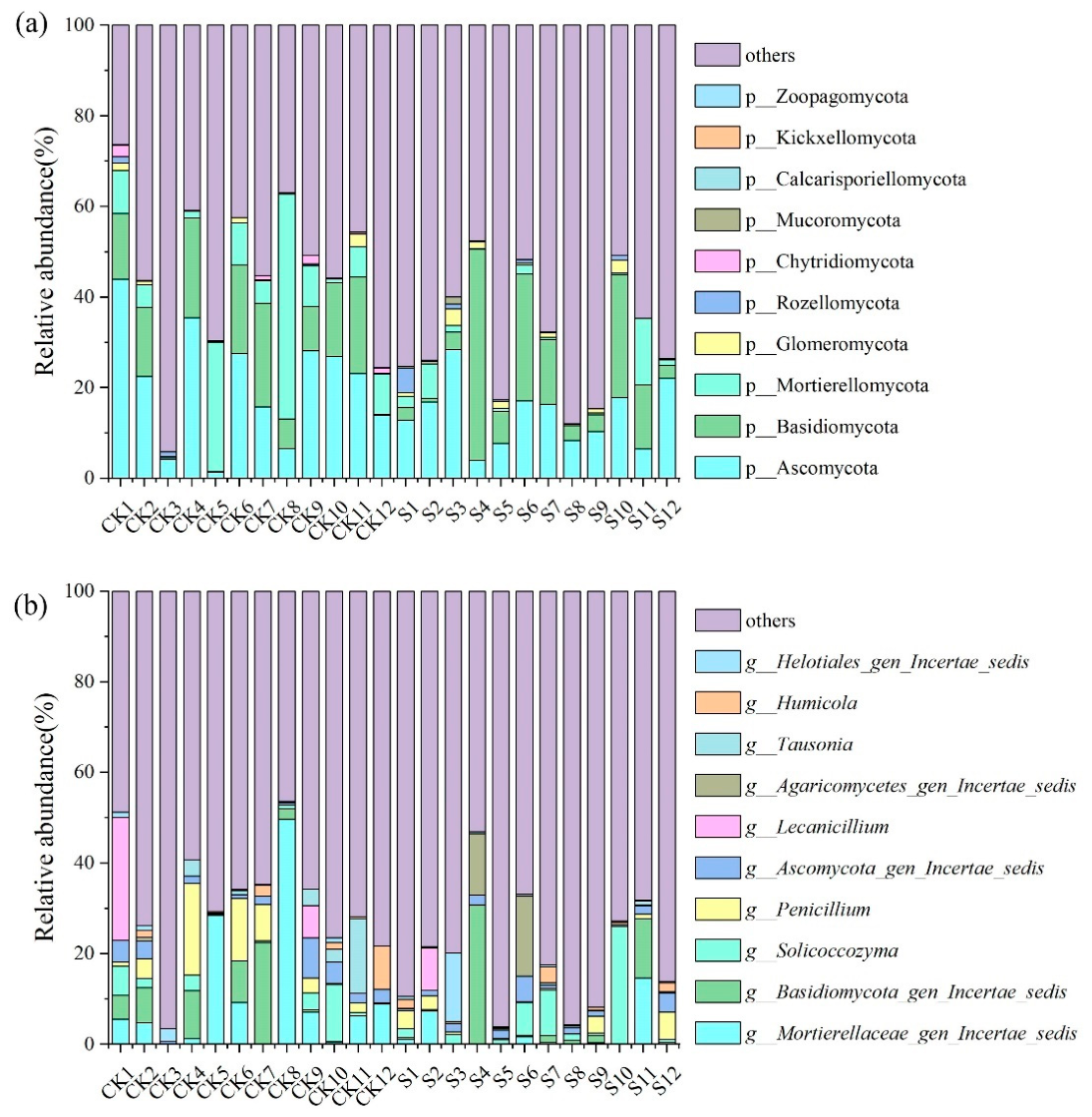
A total of 319,128 high-quality fungal sequences were obtained using high-throughput sequencing (HTS) from the soil samples across all tea plantations. These sequences were clustered into 1156 ASVs. The composition of the dominant fungal taxa, defined as the top 10 in terms of relative abundance, is provided in detail in Figure 2 and Table S4a.
At the phylum level (Figure 2a), the fungal community was predominantly composed of Ascomycota, Basidiomycota, Mortierellomycota, Glomeromycota, and Rozellomycota, which collectively formed the core microbiota across all treatment groups. In contrast, other phyla, including Chytridiomycota, Mucoromycota, Calcarisporiellomycota, Kickxellomycota, and Zoopagomycota, were detected only in specific tea plantations and were not universally present. Statistical analysis revealed that the relative abundances of all phyla were not significantly different among the treatments (p > 0.05) except for Basidiomycota. Analysis at the genus level (Figure 2b) showed that the dominant fungal genera (relative abundance > 1%), present in all sampled plantations, were primarily Mortierellaceae_gen_Incertae_sedis, Basidiomycota_gen_Incertae_sedis, Solicoccozyma, Penicillium, Ascomycota_gen_Incertae_sedis, Lecanicillium, Agaricomycetes_gen_Incertae_sedis, Tausonia, Humicola, and Helotiales_gen_Incertae_sedis. Similar to the phylum-level results, no significant statistical shifts were observed in the relative abundance of these dominant genera across different treatments (p > 0.05), which was confirmed again by the LMM results of fungal community results at the phylum and genus taxonomic level in Table S4b–d. These findings collectively demonstrate that the soil fungal community structure, across both phylum, except for Basidiomycota, and genus taxonomic hierarchies, exhibited a notable stability and remained largely unchanged in response to S. It indicates that SP acts as a fine-tuner rather than a disruptor, preserving the taxonomic backbone of the fungal community while permitting specific shifts in key lineages like Basidiomycota.

3.2. Fungal α- and β-Diversity in Tea Plantations

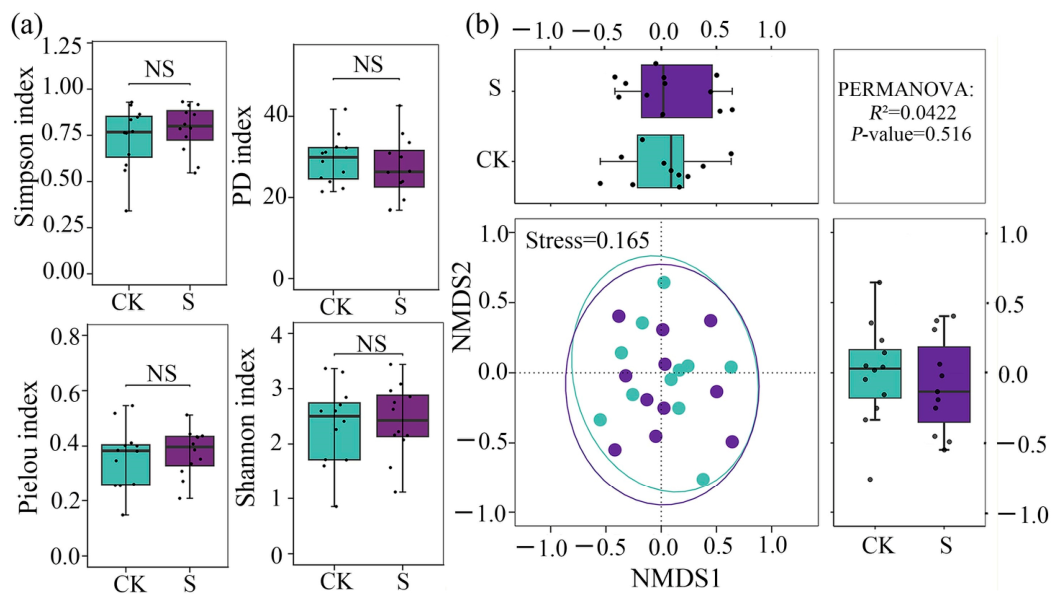
Fungal α-diversity, as assessed by Simpson, PD, Pielou and Shannon, did not exhibit significant differences between CK and S treatments (p > 0.05; Figure 3a). This indicates that S did not markedly alter the within-sample diversity of the soil fungal communities.
NMDS result, representation of β diversity, was displayed in Figure 3b. The first two principal coordinates collectively explained 43.7% of the total variance (NMDS1: 29.1%; NMDS2: 14.6%), with a fair goodness-of-fit (Stress value 0.165). As visualized in Figure 3b, the samples from the CK and S treatments did not form distinct clusters along both coordinate axes. This visual interpretation was supported by a PERMANOVA test, which further confirmed the absence of a significant difference in fungal community composition between the two treatments (R2 = 0.0422, p = 0.516).
The LMM results were consistent with the above findings. As detailed in Table S9a–c, neither α- nor β-diversity metrics showed a significant response to S (p > 0.05). Furthermore, the random effect of ‘tea plantation’ was not significant (p > 0.05), suggesting that the inherent variability among different plantation sites did not substantially influence the overall fungal diversity patterns. Similarly, the type of straw applied did not yield a significant effect on the fungal community diversity (p > 0.05). This observed resilience in α- and β-diversity again confirms the fine-tuner role of S rather than a disruptive force, maintaining the foundational diversity and compositional structure of the fungal community in tea plantations.

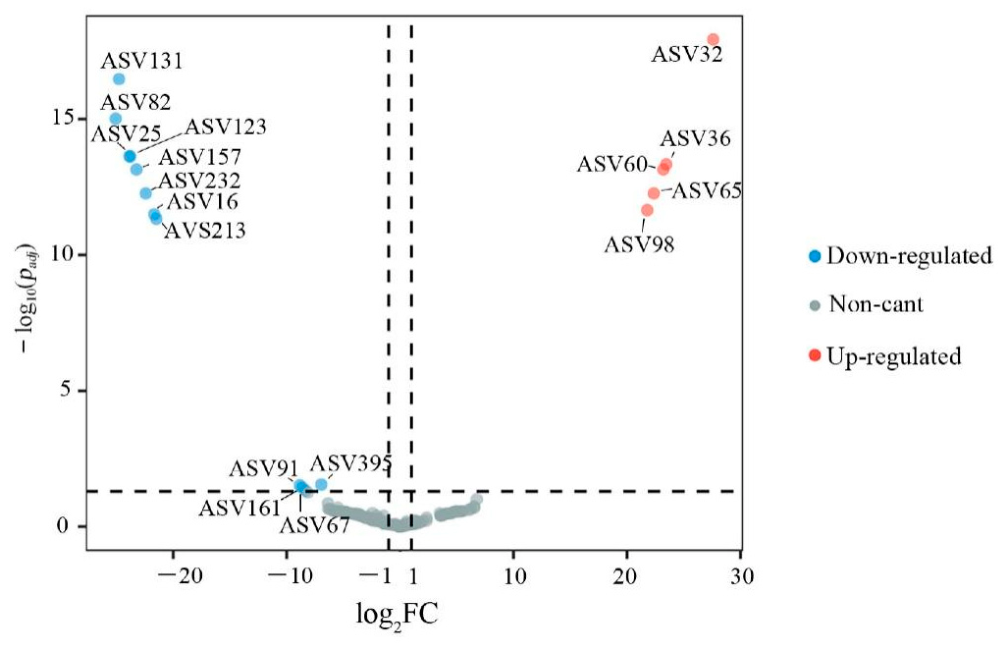
3.3. Differential Fungal Taxa Analysis in Tea Plantations

To identify specific fungal taxa responding to S, differential fungal abundance analysis was performed using DESeq2. The analysis revealed 17 ASVs with significant differential abundance between CK and S, based on a threshold of |log2FC)| > 1 and adjusted p-value < 0.05 (Figure 4 and Table S5). Among these, 5 ASVs were significantly upregulated (p < 0.05), while 12 were downregulated in S compared to CK (p < 0.05). Notable biomarkers that were significantly enriched in the CK group (p < 0.05) predominantly belonged to the phylum Ascomycota, including ASV16, ASV25, ASV82, ASV91, ASV131, ASV161, ASV213, and ASV232. Additionally, ASV123 (Rozellomycota) and ASV395 (Basidiomycota) were also more abundant in CK. Conversely, the S treatment led to a marked enrichment of several taxa. Specifically, ASV32 (annotated as Helotiales sp.), ASV60 (annotated as Sebacina sp.), ASV36, ASV98, and ASV165 (the latter three annotated at the kingdom level as Fungi) were significantly upregulated (p < 0.05). A particularly interesting pattern was observed within the genus Sebacina. While ASV60 (annotated as Sebacina) was strongly enriched in S (log2FC = 23.2, p < 0.05), ASV395 (also annotated as Sebacina) was significantly suppressed under S (log2FC = −6.9, p < 0.05). This contrast suggests that S induces genus-specific shifts in fungal taxa, highlighting the differential responsiveness that can exist even among closely related groups within the soil fungal community, and functions as a selective modulator without disrupting the broader community structure.

3.4. Fungal Co-Occurrence Network Analysis in Tea Plantations

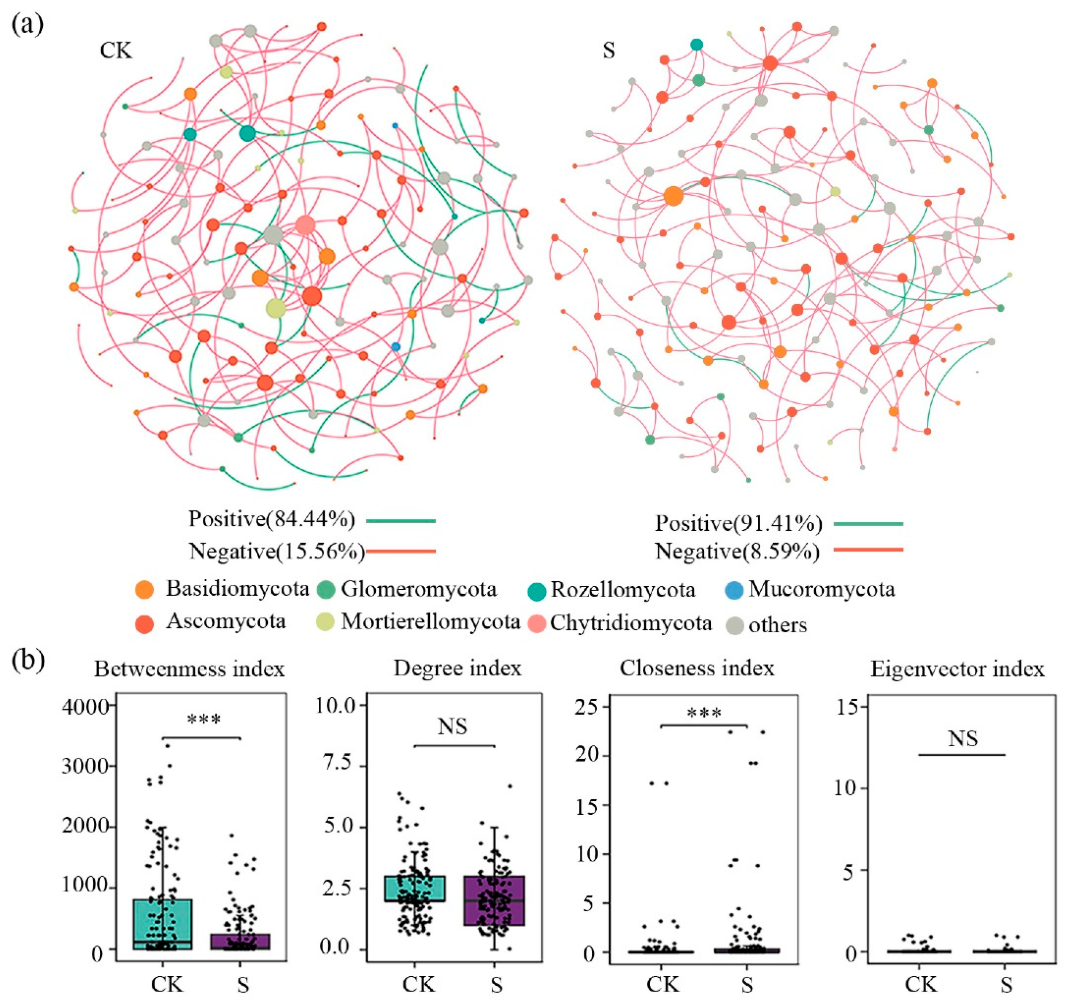
The soil fungal co-occurrence networks in response to S were analyzed and presented in Table 1 and Table 2, and Figure 5, Figure 6 and Figure 7. Both CK and S networks exhibited typical modular structures, as indicated by high modularity indices (0.888 for CK, 0.910 for S) and clustering coefficients (0.207 for CK vs. 0.264 for S) (Figure 5a and Table 1). Topological feature analysis further revealed that S significantly increased the Closeness index while reducing the Betweenness index (Figure 5b, p < 0.05). Although the dominant phyla remained consistent between treatments, their relative abundances shifted: Ascomycota decreased slightly (42.0% in CK; 38.0% in S), whereas Basidiomycota increased (12.0% in CK; 18.0% in S), followed by Mortierellomycota (7.3% in CK; 2.7% in S) and Glomeromycota (3.3% in CK; 4.0% in S) (Table 2).
Comparative analysis demonstrated that S restructured the network topology into a less complex but more efficient architecture. This was evidenced by a 9.4% reduction in edges, a 9.6% decrease in average degree, a 41.2% contraction in network diameter, and a 6.3% decline in graph density (Table 1). Notably, positive interactions predominated in both networks, increasing from 84.4% in CK to 91.4% in S (Figure 5a), indicating a prevalence of cooperative associations. The specific reduction in negative edges under S by 44.9% implies a substantial mitigation of competitive and antagonistic interactions. Collectively, these topological refinements demonstrate that S acts as a network architect, fostering a more streamlined and cooperative fungal community. The increased modularity coupled with the shift toward positive interactions suggests that S enhances systemic resilience, enabling the ecosystem to maintain functional stability through optimized internal partnerships rather than structural complexity.
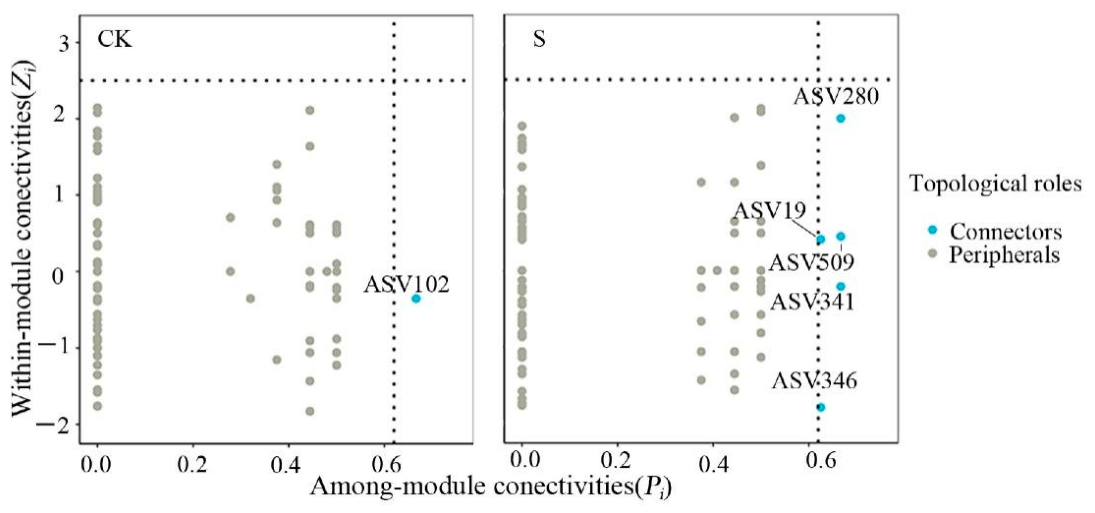
Keystone species analysis, assessed via Zi and Pi, showed distinct shifts between CK and S, revealing a clear structural reorganization in the co-occurrence network under S (Figure 6, Table S6). The CK network featured only a single connector taxon, Capnodiales_gen_Incertae_sedisc sp. (Zi < 2.5, Pi > 0.62). In contrast, the S network harbored five connector taxa spanning diverse taxonomic groups, including Pseudopestalotiopsis sp. and Hirsutella thompsonii (Ascomycota), Clavariaceae_gen_Incertae_sedis sp. and Apiotrichum scarabaeorum (Basidiomycota), alongside Fungi_gen_Incertae_sedis sp. Consistent with the increase in connector numbers, the average topological metrics of keystone species also changed. Following S, the average Zi increased from −0.35 in CK to 0.17, while Pi remained stably high, transitioning from 0.63 to 0.67. This pattern suggests that under S, fungal keystone taxa exhibited stronger intramodular connections while maintaining stable, high-level connectivity between different modules, indicating a restructuring of fungal interactions towards a more integrated yet modular architecture. These findings underscore that SP transforms the network’s architectural backbone by cultivating a diverse suite of connectors, thereby acting as a refiner of network integration. This strategic redistribution of keystone taxa reinforces the modular yet cooperative nature of the soil microbiome.
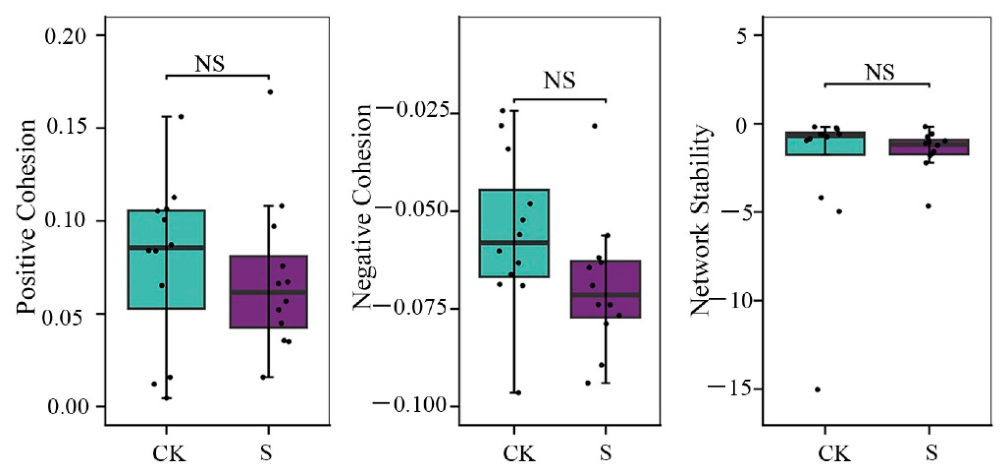
The structural cohesion of the fungal community networks, quantified from co-occurrence matrices and relative abundance data, showed no significant response to S (Figure 7). Both positive and negative cohesion indices of soil fungi remained statistically unchanged between CK and S (p > 0.05), indicating that S preserved the fundamental stability of the fungal association network despite alterations in topology and keystone taxa. LMM analysis further supported this finding, revealing that neither S nor site-specific factors (plantation, straw type) significantly impacted network stability (Table S10a–c). Thus, the CK vs. S contrast remains the primary explanatory variable. These results confirm that S operates strictly within the ecosystem’s resilience threshold. By decoupling internal topological restructuring from overall cohesion, S functions as a precision modulator, enhancing functional potential without jeopardizing the foundational stability of the tea plantation soil microbiome.

3.5. Soil Factors Influencing Fungal Communities in Tea Plantations

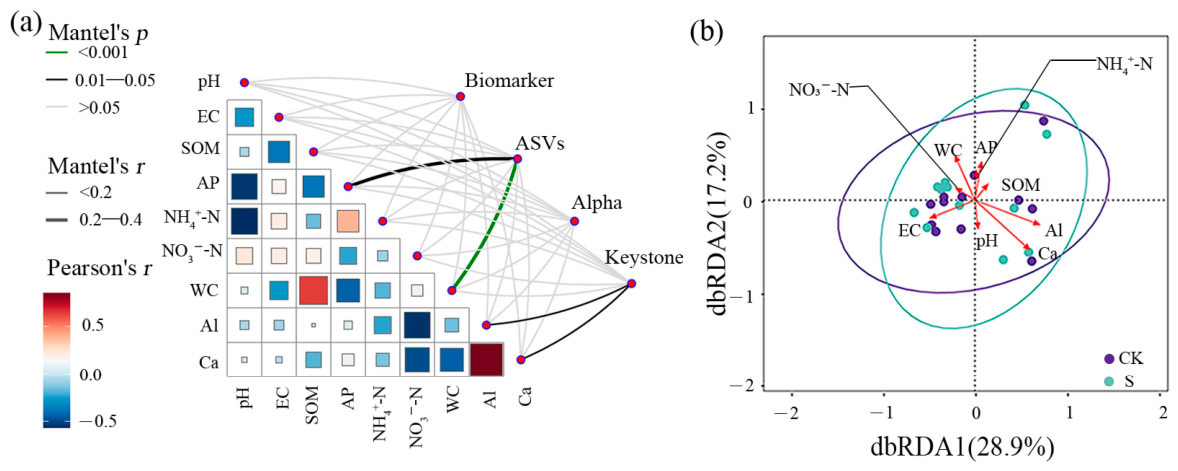
Mantel’s tests revealed the correlations results between soil properties and fungal indicators (Biomarker, ASVs and α-diversity) in tea plantation soils (Figure 8 and Table S7). Only ASVs were significantly positively associated with AP (r= 0.345, p < 0.05), and WC (r= 0.360, p < 0.001).
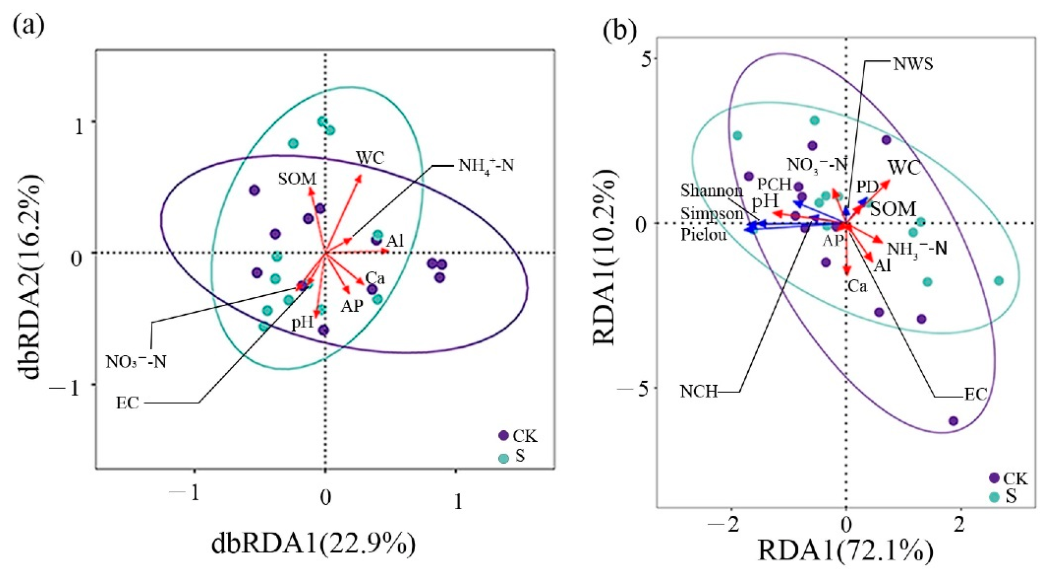
dbRDA of fungal ASVs revealed that soil factors explained 46.1% of the total variance in fungal community structure (dbRDA1: 28.9%; dbRDA2: 17.2%; Figure 9a). Although Al (16.5%) and Ca (14.0%) showed high individual explanatory power, HP identified AP, SOM, and NO3-N, with individual contributions of 10.9%, 9.9%, and 9.9%, respectively, as the dominant drivers based on permutation tests (R2AP = 0.37, p < 0.05; R2SOM = 0.39, p < 0.05; R2NO3-N = 0.39, p < 0.05; Table 3 and Table S10). For keystone taxa, dbRDA showed that soil physicochemical factors explained 39.1% of the variance (dbRDA1: 22.9%; dbRDA2: 16.2%; Figure 9b), with HP highlighting WC as the primary contributor (13.0%; R2WC = 0.36, p < 0.01). For α-diversity and cohesion, there was no significant effects revealed by the permutation test. These findings confirm that S modulates the stoichiometric environment (AP, SOM, WC, NO3-N), which serves as the primary filter governing fungal assembly and network architecture.

3.6. Functional Guild Analysis of Fungi in Tea Plantations

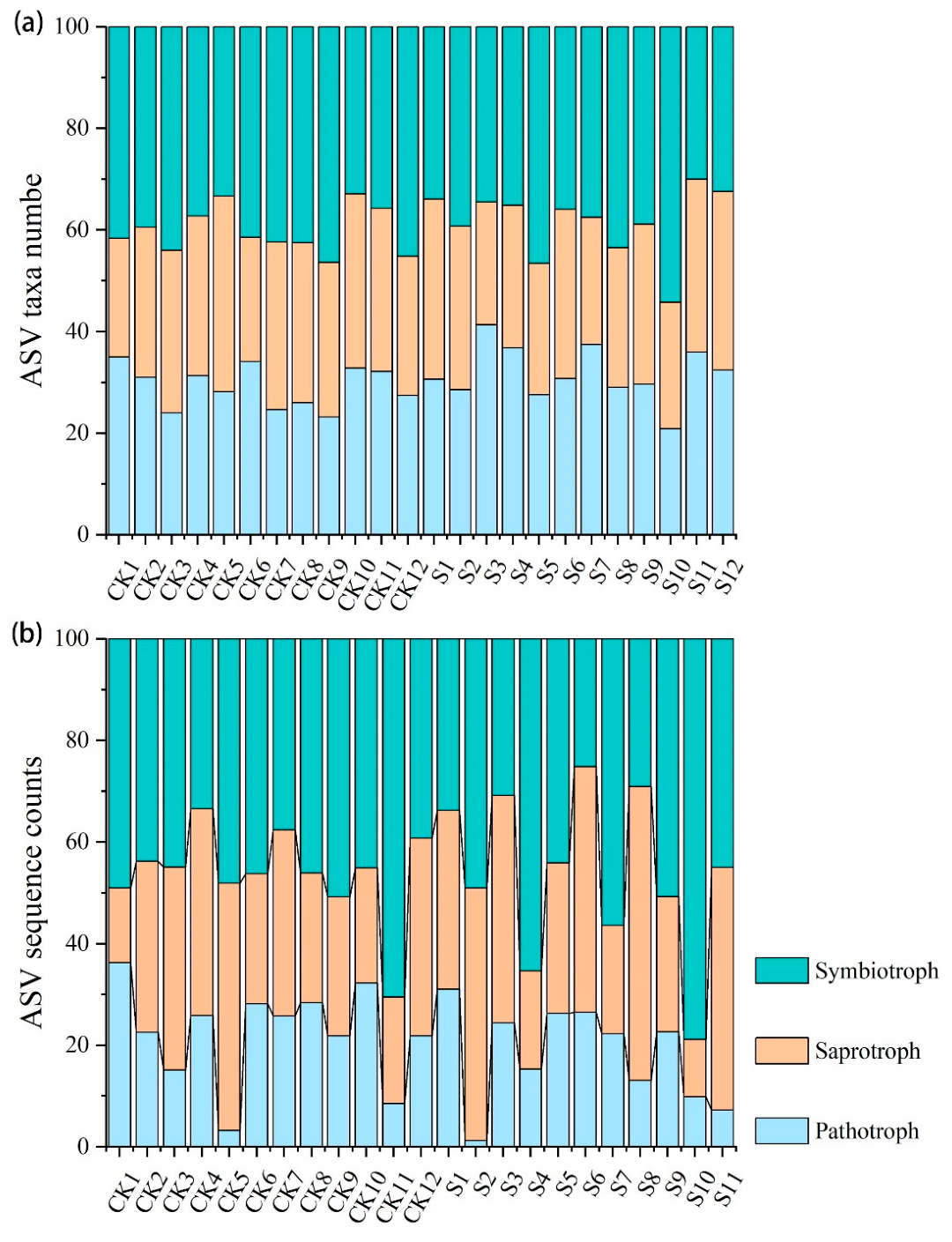
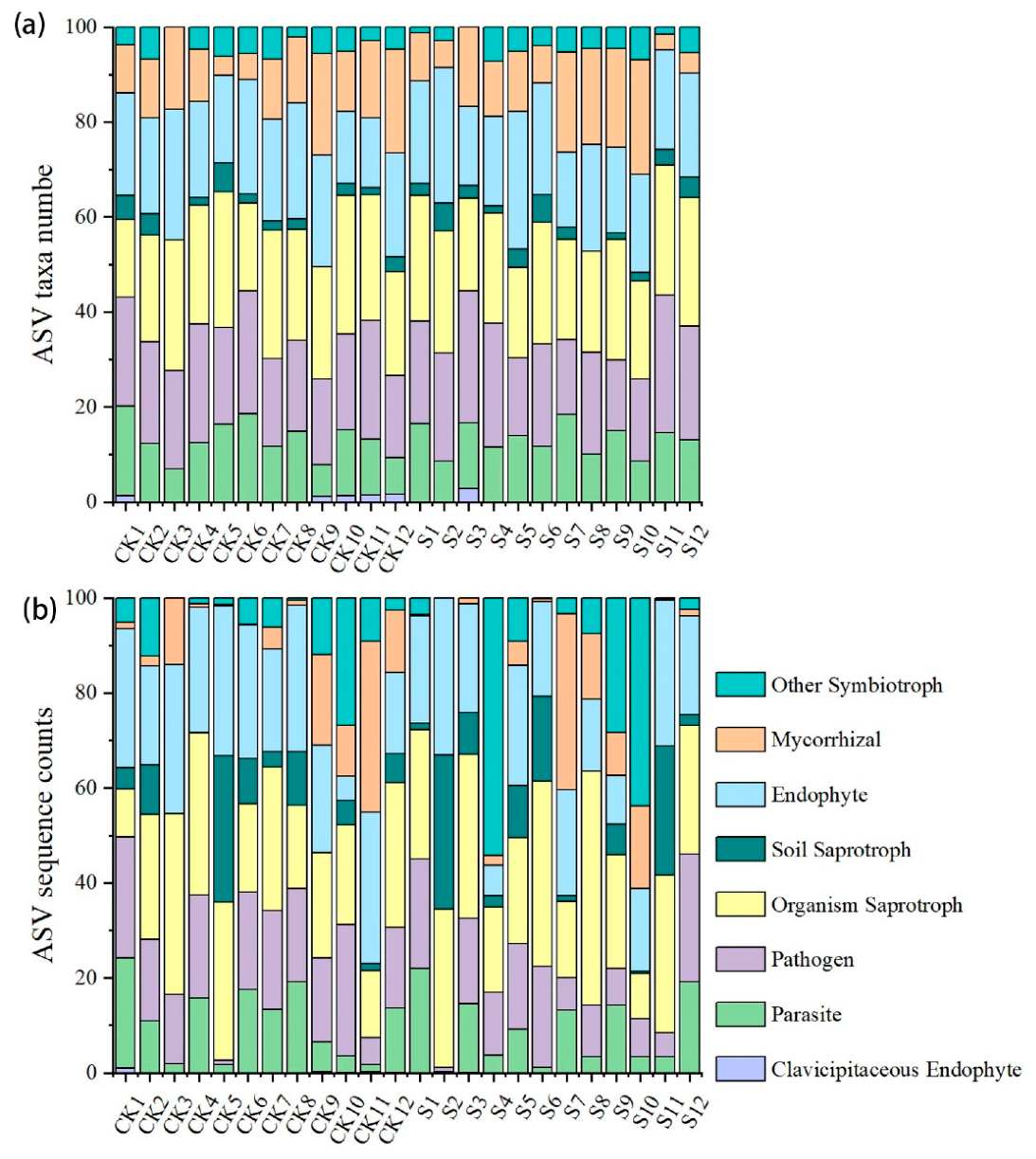
Fungal functional predictions were predicted using FUNGuild based on the obtained ASVs, and 502 ASVs (approximately 43.4%) were successfully assigned to specific functional guilds. The remaining 654 ASVs (56.6%) remained unassigned, likely representing taxa with unresolved ecological functions or those not yet covered by the database. Consequently, the following functional analysis focuses on the annotated fraction, while acknowledging that the unassigned majority may introduce a degree of bias regarding the full functional potential of the community. The relative abundances of different trophic modes, based on the numbers of ASV taxa, are shown in Figure 10a and Figure 11a. The soil fungal community was predominated by three main trophic guilds. Symbiotrophs constituted the highest proportion (39.3% ± 5.7%), followed by Saprotrophs (30.2% ± 4.1%) and Pathotrophs (30.5% ± 4.9%). Within these guilds, endophytes (21.3% ± 3.9%) and mycorrhizal fungi (13.2% ± 6.3%) dominated the Symbiotrophs, while organism saprotrophs (23.9% ± 3.5%) and pathogens (21.4% ± 3.8%) were prevalent in other groups. LMM analysis indicated that straw type significantly affected endophyte richness (p < 0.05), whereas both S treatment and straw type significantly influenced total Symbiotrophs richness (p < 0.05), with no other guilds showing significant responses (Table S11).
Similarly, analysis based on sequence counts (Figure 10b and Figure 11b) confirmed this trophic structure, with Symbiotrophs remaining the most abundant (45.5% ± 13.0%), followed by Saprotrophs (33.4% ± 12.3%) and Pathotrophs (21.0% ± 9.7%). Here, LMM results showed no significant effects of S treatment, straw type, or plantation site on the relative abundance of any guild. These results demonstrate that S selectively affects Symbiotroph richness, particularly endophytes, without disrupting the overall relative abundance structure. This targeted functional refinement confirms S’s role as a precision modulator, enhancing beneficial plant-fungal interactions while maintaining the ecosystem’s functional equilibrium.

4. Discussion

This study elucidates the mechanistic pathway by which S modulates soil fungal communities in the tea plantations of Southeast Henan, China. While rooted in a local context, the insights regarding straw-induced network modularity and stoichiometric filtering possess significant global relevance [56]. Indeed, as tea cultivation expands across diverse climatic zones, from the acidic soils of Assam, India, to the high-altitude farms of Kenya [1], the need for sustainable management strategies becomes universal. The finding that S acts as a ‘precision modulator’ rather than a disruptor suggests a universal strategy for managing soil health in perennial agroecosystems. Specifically, the shift toward cooperative network architectures and the enrichment of specific saprotrophic taxa (e.g., Helotiales) [57], provide a microbial ecological blueprint for optimizing organic amendments globally, regardless of regional edaphic differences. Methodologically, this study adopts a hierarchical approach: beginning with the macro-stability of taxonomic structure and diversity, progressing to micro-scale taxonomic shifts, and subsequently elucidating the resulting topological restructuring of co-occurrence networks and keystone taxa. By linking these biological patterns to specific environmental drivers (stoichiometric and moisture filters) and evaluating the functional implications, it’s revealed that S functions as a nuanced modulator, enhancing ecosystem functionality without compromising core stability.
The soil fungal community in the tea plantations, characterized by a core microbiota dominated by Ascomycota, Basidiomycota, Mortierellomycota, Glomeromycota, and Rozellomycota at the phylum level and a consistent suite of dominant genera, exhibited remarkable structural stability, with the exception of Basidiomycota, in response to S. This taxonomic composition aligns with findings from other tea and agricultural ecosystems, where dominant phyla like Ascomycota, key players in organic matter decomposition [21], remain stable across varying conditions [17,18,19,20], suggesting a high adaptation to local edaphic conditions. While genus-level patterns revealed more site-specific distributions influenced by environmental and management factors [17,18], the overall resilience at both phylum and genus levels indicates that S acted as a modulator with minor disturbances within the community’s functional carrying capacity [19,20]. This macro-stability was further corroborated by diversity analyses, which revealed no significant differences in α-diversity (Shannon, Simpson, Pielou, PD) or β-diversity (NMDS, PERMANOVA) between CK and S. Unlike studies in other cropping systems where straw return drastically reshapes community assembly [18,19,20,58,59,60,61], the fungal diversity here exhibited substantial inertia to single-factor organic amendments [62]. The non-significant effects of both straw type and the random factor ‘tea plantation’ underscore that this stability transcends small-scale spatial variability, highlighting the context-dependent nature of straw management effects [61,63] and the inherent resilience threshold of the tea plantation mycobiome. Meanwhile, subtle yet specific shifts within Glomeromycota warrant attention; drawing parallels with our previous findings on arbuscular mycorrhizal (AM) fungi [29], we observe that S significantly reduced the proportion of Claroideoglomus (from 32.2% to 10.5%) and Glomus (from 51.01% to 46.7%), while enriching genera such as Paraglomus and Acaulospora. Biogeochemical literature suggests that this taxonomic turnover is driven by S-induced increases in pH and AP, as genera like Paraglomus are often associated with nutrient-rich or disturbed environments, whereas Glomus dominates in nutrient-poor soils [64,65]. Importantly, consistent with the overall fungal community, S did not alter the α-diversity of these AM fungi, reinforcing the concept that S acts as a selective filter rather than a diversity enhancer, fine-tuning symbiotic associations to match the improved stoichiometric conditions.
While the broad structure remained stable, the identification of 17 ASVs as significant biomarkers reveals that S drives precise, species-specific responses. The enrichment of multiple Ascomycota ASVs in CK, contrasted with the upregulation of Helotiales sp. (ASV32) and Sebacina sp. (ASV60) under S, suggests a selective pressure exerted by the organic amendment [66]. Since members of Heliales are frequently reported as root-associated endophytes or saprotrophs, their enrichment likely reflects altered rhizosphere carbon dynamics or the active decomposition of straw polymers [67]. Furthermore, Ascomycota and Basidiomycota are well-documented as key phyla facilitating the decomposition of complex organic matter [21]. A particularly intriguing finding is the contrasting response within the genus Sebacina, where ASV60 was strongly enriched while ASV395 was suppressed under S. This pattern may highlight a fine-scale, species-specific selection within a single genus, mirroring phenomena observed in arbuscular mycorrhizal fungi in tea plantations [29]. It underscores that agricultural practices act as precise environmental filters, driving functional diversification even among closely related fungal lineages [60,68]. Consequently, this differential responsiveness emphasizes the necessity of ASV-level analysis to detect subtle yet ecologically significant shifts within soil microbial communities [69,70]. Besides, certain ASVs exhibited extremely high log2FC values (e.g., ASV60, log2FC = 23.2), reflecting a near-absence in one treatment group. This stark contrast primarily stems from the technical detection limits rather than a biologically moderate shift, resulting in the massive S/CK relative abundance ratios.
The transition to fungal co-occurrence networks revealed that S induced a clear topological restructuring. While the total number of edges and the average degree decreased only slightly, the network exhibited a reduced diameter coupled with an increased clustering coefficient, indicating a shift towards a more modular and compact association structure. Regarding other studies reporting increased network complexity or network stability [59,71,72,73,74], it suggests that the straw effect may be system-specific and dependent on soil type [75], and management strategies [61,73,76]. The shifts coupled with increased closeness and decreased betweenness indices, suggests a shift from reliance on central hubs to tighter intra-modular connections, potentially enhancing local robustness [77]. Meanwhile, the observed shift towards a cooperative network architecture, characterized by a 44.9% reduction in negative edges and 91.4% positive interactions, can be mechanistically linked to the alleviation of nutrient limitation. S introduces labile carbon and increases AP and SOM. According to resource-ratio theory, such enrichment reduces the intensity of competition for scarce resources, allowing co-occurring taxa to occupy distinct niches (niche partitioning) rather than competing directly. This is further supported by the increased Q index, which suggests a shift towards functional compartmentalization rather than mere fragmentation. In ecological terms, higher modularity indicates that the fungal community is organized into distinct sub-modules where intense interactions occur internally. The topological shift indicates that restructuring of the co-occurrence network by S serves as a mechanism for the community to maintain core functions while accommodating specific taxonomic shifts. And the structural cohesion of the community remained unchanged, also indicating that the fundamental stability and robustness of the fungal interaction network under S were preserved. This resilience suggests that the fungal community may possesses a degree of functional redundancy and adaptive capacity that buffers against perturbations induced by organic amendments [78,79].
Complementing this architectural shift, keystone analysis revealed a significant reorganization in network hubs. The increase from one to five connector taxa under S, spanning Ascomycota and Basidiomycota, indicates a shift towards a more distributed and potentially resilient network architecture. This was supported by increased within-module connectivity (Zi) alongside stable high between-module connectivity (Pi) [59,73,80], suggesting that S fostered stronger local associations without compromising global integration [74]. Crucially, the preservation of overall network cohesion despite these topological refinements implies that the community’s functional backbone remains intact [29,59,78,79]. This resilience underscores a system buffered against perturbations by functional redundancy, effectively decoupling structural reorganization from systemic instability.
Mantel’s test and dbRDA analyses identified the primary environmental filters reshaping the fungal community in the tea plantations. While Al and Ca exert strong selective pressure due to soil acidity [81,82] in the tea plantations, they were not the statistically dominant drivers in this study. Instead, nutrient-related factors, AP, SOM, and NO3-N, were identified as the key drivers of fungal ASVs, which was consistent with the functions of Ascomycota and Basidiomycota [21], and confirmed S’s role as a stoichiometric modulator that reconfigures the nutrient landscape. Notably, WC emerged as the dominant driver for keystone taxa, suggesting that S modifies the soil micro-environment (moisture and nutrient cycling) to redefine ecological niches for functionally important taxa [25,26,83,84,85]. By selecting for specific keystone taxa, this environmental filtering ultimately induces the restructuring of the fungal interaction network. Therefore, the fungal community response to S is not a wholesale restructuring but a nuanced recalibration by the prevailing soil moisture and nutrient condition. Understanding these drivers is crucial for linking the observed network restructuring to the final functional outcomes of the fungal guilds.
Functional predictions revealed a tripartite structure dominated by Symbiotrophs, Saprotrophs, and Pathotrophs [54,82]. Crucially, while S and straw type significantly affected the richness of Symbiotrophs, the relative abundance structure of the guilds remained unchanged. Despite sharing similarly high C/N ratios, RT and WT exhibited distinct functional predictions, with shifts observed exclusively in endophytes and Symbiotrophs, a pattern likely attributable to the relatively higher nitrogen content of RT [86] The high relative abundance of symbiotrophs, particularly endophytes and mycorrhizal fungi, underscores their crucial role in plant health and nutrient acquisition in tea soils, a pattern consistent with other studies [23,87,88,89]. This decoupling of richness from relative abundance suggests that S may enhance beneficial plant-fungal interactions, such as nutrient acquisition via endophytes, without overhauling the entire functional structure [73,90]. This nuanced effect maintains ecosystem processes critical for sustainability [79], as the high relative abundance of Saprotrophs ensures continued decomposition [91], while the stable Pathotrophs proportion reflects the resilience of the disease-suppressive potential in this monoculture system [92].
In summary, this study establishes S as a nuanced modulator of the tea plantation mycobiome. While the fungal community exhibited remarkable stability in both taxonomic structure (at phylum and genus levels) and diversity, underscoring its inherent resilience and functional redundancy [17], S concurrently induced a significant topological restructuring. This reorganization resulted in a simplified yet more modular and integrated architecture, driven by stoichiometric and moisture filters (AP, SOM, NO3-N, and WC), and facilitated by a strategic shift in keystone taxa [56,62]. Collectively, these findings advance the mechanistic understanding of how organic amendments interact with inherent soil filters in perennial agroecosystems. By fine-tuning microbial interactions, especially the beneficial plant-fungal interactions, and reinforcing network architecture without compromising core stability, S enhances soil ecosystem functionality. This provides a robust rationale for S as a sustainable management practice [20]. It is important to note that sampling was confined to a single timepoint (post-harvest, April 2018). Given that tea soil fungal communities are known to exhibit pronounced seasonal dynamics [15], longitudinal studies are essential to disentangle the stable, long-term legacy of S from transient seasonal fluctuations. Furthermore, the inherent limitations of ITS amplicon sequencing, such as primer bias and varying genomic copy numbers [93], may skew absolute abundance estimates, particularly when comparing phyla like Basidiomycota and Ascomycota. Similarly, while FUNGuild provides putative ecological roles, it reflects predicted functions rather than direct enzymatic activity [53]. Future investigations integrating multi-omics approaches [94] and long-term monitoring [3,6] will be crucial to validate metabolic pathways and establish causal links between straw decomposition and network restructuring.

5. Conclusions

The investigation study demonstrates that S functions as a modulator rather than a disruptor of the soil fungal community in tea plantations. In macro-scale, the overall taxonomic structure (except for Basidiomycota) and diversity of the community exhibited remarkable stability, indicating a high degree of inherent resilience. As for the micro-scale, the response to S was taxon-specific, as evidenced by 17 ASVs identified as significant biomarkers, 5 upregulated and 12 downregulated. This included genus-level shifts, such as in Sebacina, against a stable community background. In parallel, S modified the topological complexity of the fungal co-occurrence network while enhancing its modularity and integration, accompanied by a strategic reorganization of keystone taxa. Importantly, this recalibration occurred within an environmental filter framework dominated by inherent soil WC and nutrient properties, such as AP, SOM, NO3-N, as key modulating factors. Functionally, S selectively modified the richness of beneficial guilds such as Symbiotrophs, including endophytes, without substantially altering the relative abundance structure of other major trophic modes. Collectively, our results indicate that in these acidic tea soils, S may modify the ecosystem functionality by refining microbial network architecture and interactions though the keystones taxon, with significant shifts of Symbiotrophs, while operating within the resilience threshold of the resident fungal community, thereby offering a viable practice for sustainable soil management in tea plantations.

Supplementary Materials

The following supporting information can be downloaded at: https://www.mdpi.com/article/10.3390/horticulturae12060669/s1, Table S1: The meteorological figures of Xinyang City in 2017–2018; Table S2: The characteristics of straw application in the tea plantations; Table S3: The characteristics of the soils in different tea plantations; Table S4: (a) The fungal dominant community composition; (b) The type III tests of fixed effects on fungal community composition in the study; (c) The estimates of fixed effects on fungal community composition in the study; (d) The estimates of covariance parameters about the random effects on fungal community composition in the study; Table S5: (a) The biomarker results based on the log2Fold Chang (log2FC) threshold; (b) The count data of ASV60 and ASV395 in different tea plantations; Table S6: The within/among-module connectivity results of the fungal topological keystones; Table S7: Mantel’s test about the effects of soil physicochemical characteristics on the fungal biomarkers, amplicon sequence variants (ASVs), and α-diversity; Table S8: Permutation results of the dbRDA analysis about the effects of soil physicochemical characteristics on the fungal ASVs and keystones; Table S9: (a) The type III tests of fixed effects on fungal α- and β- diversity in the study; (b) The estimates of fixed effects on fungal α- and β- diversity in the study; (c) The estimates of covariance parameters about the random effects on fungal α- and β- diversity in the study; Table S10: (a) The type III tests of fixed effects on fungal network stability in the study; (b) The estimates of fixed effects on fungal network stability in the study; (c) The estimates of covariance parameters about the random effects on fungal network stability in the study; Table S11: (a) The type III tests of fixed effects on fungal trophic guilds in the study; (b) The estimates of fixed effects on fungal trophic guilds in the study; (c) The estimates of covariance parameters about the random effects on fungal trophic guilds in the study.

Author Contributions

Conceptualization, X.C. and Y.Z.; methodology, X.C., J.W. and D.X.; software, J.W., Y.Z. and D.X.; validation, X.C., J.W. and Y.Z.; formal analysis, J.W. and X.C.; investigation, X.C. and S.H.; resources, W.W., G.M., M.L. and J.Y.; data curation, X.C., D.X. and S.H.; writing—original draft preparation, J.W.; writing—review and editing, X.C.; visualization, J.W.; supervision, X.C. and Y.Z.; project administration, X.C.; funding acquisition, X.C. and J.Y. All authors have read and agreed to the published version of the manuscript.

Funding

This research was funded by the National Natural Science Foundation of China (No. 41807038), the Natural Science Foundation of Henan (No. 252300421842), and the Henan Province Soft Science Research Program (No. 252400411087).

Data Availability Statement

The fungal sequencing data have been deposited in the Genome Sequence Archive (GSA) at the National Genomics Data Center (NGDC), the China National Center for Bioinformation/Beijing Institute of Genomics, the Chinese Academy of Sciences, under accession number CRA041575 (https://download.cncb.ac.cn/gsa6/CRA041575/, accessed on 1 May 2026); other data are contained within this article.

Acknowledgments

We are grateful to Rui Wang for the technical support.

Conflicts of Interest

The authors declare no conflicts of interest.

Abbreviations

The following abbreviations are used in this manuscript:
AMArbuscular mycorhizal
APAvailable phosphorus
ASVsAmplicon sequence variants
CKControl without straw application
dbRDADistance-based redundancy analysis
ECElectrical conductivity
FDRFalse discovery rate
GLMGeneralized linear model
HPHierarchical partitioning
HTSHigh-throughput sequencing
LMMLinear mixed model
NMDSNon-metric multidimensional scaling
PDPhylogenetic diversity
PERMANOVAPermutational multivariate analysis of variance
PiAmong-module connectivity
QModularity index
QIIME2Quantitative Insights into Microbial Ecology 2
SStraw- amended treatment
SOMSoil organic matter
SStraw application
WCWater content
ZiWithin-module connectivity

References

  1. Food and Agriculture Organization of the United Nations (FAO). Crops and Livestock Products; FAO: Rome, Italy, 2025. Available online: https://www.fao.org/faostat/en/#data/QCL/visualize (accessed on 31 December 2025).
  2. Liu, Z.H.; Huang, J.A.; Gong, Y.S.; Zhang, S.; Li, Q.; Xiong, L.G.; Cai, S.X.; Lin, Y.; Zhu, M.Z.; Liu, C.W. New progress in health benefits of functional components of tea. Chin. Tea 2021, 43, 11–16. (In Chinese) [Google Scholar]
  3. Jiang, Y.; Arafat, Y.; Letuma, P.; Ali, L.; Tayyab, M.; Waqas, M.; Li, Y.; Lin, W.; Lin, S.; Lin, W. Restoration of long-term monoculture degraded tea orchard by green and goat manures applications system. Sustainability 2019, 11, 1011. [Google Scholar] [CrossRef]
  4. Mjanja, B.E.; Shitindi, M.J.; Massawe, B.H.; Mulashani, G.R. Driving sustainability in tea farming: Insights on organo-mineral fertilizers. Front. Soil Sci. 2025, 5, 1629846. [Google Scholar] [CrossRef]
  5. Song, H.; Shi, J.; Wang, R.; Jin, T.; Peng, Y. Interaction of soil pH, organic matter, exchangeable acidity, and cation exchange capacity in a managed tea farm. PeerJ 2025, 13, e20341. [Google Scholar] [CrossRef]
  6. Jahan, I.; Shopan, J.; Rahman, M.M.; Sarkar, A.; Baset, M.A.; Zhang, Z.; Li, X.; Ahammed, G.J.; Hasan, M.K. Long-term traditional fertilization alters tea garden soil properties and tea leaf quality in Bangladesh. Agronomy 2022, 12, 2128. [Google Scholar] [CrossRef]
  7. Lin, S.; Liu, Z.; Wang, Y.; Li, J.; Wang, G.; Ye, J.; Wang, H.; He, H. Soil metagenomic analysis on changes of functional genes and microorganisms involved in nitrogen-cycle processes of acidified tea soils. Front. Plant Sci. 2022, 13, 998178. [Google Scholar] [CrossRef]
  8. Yan, P.; Shen, C.; Fan, L.; Li, X.; Zhang, L.; Zhang, L.; Han, W. Tea planting affects soil acidification and nitrogen and phosphorus distribution in soil. Agric. Ecosyst. Environ. 2018, 254, 20–25. [Google Scholar] [CrossRef]
  9. Ahmed, I.; Huang, J.; Li, J.; Daba, N.A.; Shen, Z.; Tadesse, K.A.; Abdelaziz, M.; Alam, M.A.; Khan, M.N.; Singbah, P.T.; et al. Long-term fertilization with crop residue management enhances soil structure and the yield of sweet potato by optimizing soil organic carbon and acidity. Pedosphere, 2025; in press. [CrossRef]
  10. Han, Z.; Li, S.; Degré, A.; Gao, H.; Zheng, F.; Song, X.; Jia, A.; Wu, X. Conservation tillage and wheat straw managements improve soil organic carbon sequestration via calcium-mediated microbial communities and aggregate stability in Calcaric Cambisols. J. Environ. Manag. 2025, 396, 128182. [Google Scholar] [CrossRef] [PubMed]
  11. Zhou, J.; Guo, P.; Huang, S.; Liu, C.; Wang, Y.; Li, F.; Chen, W.; Zhang, Q.; Shi, L.; Yang, H. Long-term diverse straw management influences arbuscular mycorrhizal fungal community structure and plant growth in a rice-rotated wheat cropping system. J. Environ. Manag. 2025, 374, 124227. [Google Scholar] [CrossRef]
  12. Navarro, D.; Rosso, M.-N.; Haon, M.; Olivé, C.; Bonnin, E.; Lesage-Meessen, L.; Chevret, D.; Coutinho, P.M.; Henrissat, B.; Berrin, J.-G. Fast solubilization of recalcitrant cellulosic biomass by the basidiomycete fungus Laetisaria arvalis involves successive secretion of oxidative and hydrolytic enzymes. Biotechnol. Biofuels 2014, 7, 143. [Google Scholar] [CrossRef] [PubMed]
  13. Shao, Y.-D.; Zhang, D.-J.; Hu, X.-C.; Wu, Q.-S.; Jiang, C.-J.; Xia, T.-J.; Gao, X.-B.; Kuca, K. Mycorrhiza-induced changes in root growth and nutrient absorption of tea plants. Plant Soil Environ. 2018, 64, 283–289. [Google Scholar] [CrossRef]
  14. Morang, P.; Dutta, B.K.; Kumar, B.S.D.; Kashyap, M.P. Growth promotion and bi-control approaches of brown root rot disease of tea by Pseudomonas aeruginosa (PM 105). J. Plant Pathol. Microbiol. 2012, 3, 1000129. [Google Scholar] [CrossRef]
  15. Luo, Y.; Zhang, S.; Hu, Q.; Huang, F.; Bao, D.; Li, X.; Dong, C.; Zhu, S.; Fu, J.; Yan, P. Long-term agricultural management alters soil fungal communities and soil carbon and nitrogen contents in tea plantations. Agronomy 2024, 14, 2779. [Google Scholar] [CrossRef]
  16. Ning, Q.; Chen, L.; Jia, Z.; Zhang, C.; Ma, D.; Li, F.; Zhang, J.; Li, D.; Han, X.; Cai, Z.; et al. Multiple long-term observations reveal a strategy for soil pH-dependent fertilization and fungal communities in support of agricultural production. Agric. Ecosyst. Environ. 2020, 293, 106837. [Google Scholar] [CrossRef]
  17. Wang, L.-M.; Huang, D.-F.; Fang, Y.; Wang, F.; Li, F.-L.; Liao, M. Soil fungal communities in tea plantation after 10 years of chemical vs. integrated fertilization. Chil. J. Agric. Res. 2017, 77, 355–364. [Google Scholar] [CrossRef]
  18. Ma, X.; Ou, X.; Chen, D.; Li, Y.; McMillan, C.; Ge, T.; Liu, J.; Xue, M.; Wang, C.; Shen, W. Shifts in fungal communities and potential functions under masson pine forest-to-tea plantation conversion in subtropical China. Microorganisms 2025, 13, 1614. [Google Scholar] [CrossRef]
  19. Yin, Y.; Yuan, Y.; Zhang, X.; Huhe; Cheng, Y.; Borjigin, S. Comparison of the responses of soil fungal community to straw, inorganic fertilizer, and compost in a farmland in the Loess Plateau. Microbiol. Spectr. 2022, 10, e02230-21. [Google Scholar] [CrossRef]
  20. Zhang, C.; Lin, Z.; Que, Y.; Fallah, N.; Tayyab, M.; Li, S.; Luo, J.; Zhang, Z.; Abubakar, A.Y.; Zhang, H. Straw retention efficiently improves fungal communities and functions in the fallow ecosystem. BMC Microbiol. 2021, 21, 52. [Google Scholar] [CrossRef] [PubMed]
  21. Xiao, D.; He, X.; Wang, G.; Xu, X.; Hu, Y.; Chen, X.; Zhang, W.; Su, Y.; Wang, K.; Soromotin, A.V. Network analysis reveals bacterial and fungal keystone taxa involved in straw and soil organic matter mineralization. Appl. Soil Ecol. 2022, 173, 104395. [Google Scholar] [CrossRef]
  22. Yang, G.; Zhou, D.; Wan, R.; Wang, C.; Xie, J.; Ma, C.; Li, Y. HPLC and high-throughput sequencing revealed higher tea-leaves quality, soil fertility and microbial community diversity in ancient tea plantations: Compared with modern tea plantations. BMC Plant Biol. 2022, 22, 239. [Google Scholar] [CrossRef]
  23. Zhang, Z.; Deng, Q.; Ye, H.; Ge, G. Bacterial and fungal diversities examined through high-throughput sequencing in response to lead contamination of tea garden soil. Front. Microbiol. 2023, 14, 1121199. [Google Scholar] [CrossRef]
  24. Wang, F.; Chen, Y.; Yu, X.; Yu, W.; You, Z.; Yang, Z. Response of the soil fungal community and its function during the conversion of forestland to tea plantations: A case study in southeast China. Forests 2023, 14, 209. [Google Scholar] [CrossRef]
  25. Chen, L.; Zhang, J.; Zhao, B.; Yan, P.; Zhou, G.; Xin, X. Effects of straw amendment and moisture on microbial communities in Chinese fluvo-aquic soil. J. Soils Sediments 2014, 14, 1829–1840. [Google Scholar] [CrossRef]
  26. Chen, L.; Zhang, J.-B.; Zhao, B.-Z.; Xin, X.-L.; Zhou, G.-X.; Tan, J.-F.; Zhao, J.-H. Carbon mineralization and microbial attributes in straw-amended soils as affected by moisture levels. Pedosphere 2014, 24, 167–177. [Google Scholar] [CrossRef]
  27. Holling, C.S. Resilience and stability of ecological systems. Annu. Rev. Ecol. Syst. 1973, 4, 1–23. [Google Scholar] [CrossRef]
  28. Shi, Q.; Liu, Y.; Shi, A.; Cai, Z.; Nian, H.; Hartmann, M.; Lian, T. Rhizosphere soil fungal communities of aluminum-tolerant and -sensitive soybean genotypes respond differently to aluminum stress in an acid soil. Front. Microbiol. 2020, 11, 1177. [Google Scholar] [CrossRef] [PubMed]
  29. Cui, X.; Xu, D.; Wang, J.; Zhang, Y.; Huang, S.; Wei, W.; Ma, G.; Li, M.; Yan, J. Straw-mediated restructure of arbuscular mycorrhizal fungal community by selectively shifting edaphic biogeochemistry in tea plantations of south Henan, China. J. Fungi 2026, 12, 271. [Google Scholar] [CrossRef]
  30. Zhao, H.; Lu, Z.; Cheng, M.; Wei, S.; Fang, J.; Cao, W.; Shi, H.; Zhang, W.; Zhang, X.; Qu, Y. How straw returning impacts microbial-interaction-network-mediated improvements in soil multifunctionality. Front. Microbiol. 2025, 16, 1710232. [Google Scholar] [CrossRef]
  31. Zhang, Q.P.; Zhang, Y.T.; Nie, S.W.; Li, T.K.; Kou, C.L.; Zou, Q.P.; Lu, L.Z. Study on soil organic matter available S and Mg in tea garden soil of Xinyangmaojian. Chin. J. Soil Sci. 2015, 46, 153–156. (In Chinese) [Google Scholar]
  32. Gong, X.; Yuan, J.; Dong, Y. The ecological environment of tea cultivation in Xinyang tea production region. Areal Res. Dev. 1998, 17, 94–96. (In Chinese) [Google Scholar]
  33. Liu, S.; Mao, X.; Mo, X.; Zhao, W.; Lin, Z. Analysis of spatial variability of soil moisture and its driving force factors in the Shaanxi—Henan region along the Yellow River. Clim. Environ. Res. 2008, 13, 645–657. (In Chinese) [Google Scholar]
  34. Lu, R. Analytical Methods for Soil and Agricultural Chemistry, 3rd ed.; China Agricultural Science and Technology Press: Beijing, China, 1999; pp. 289–290. (In Chinese)
  35. Bray, R.H.; Kurtz, L.T. Determination of total, organic, and available forms of phosphorus in soils. Soil Sci. Soc. Am. J. 1945, 59, 39–46. [Google Scholar] [CrossRef]
  36. Mebius, L.J. A rapid method for the determination of organic carbon in soil. Anal. Chim. Acta 1960, 22, 120–124. [Google Scholar] [CrossRef]
  37. Meisinger, J.J.; Bandel, V.A.; Angle, J.S.; O’Keefe, B.E.; Reynolds, C.M. Presidedress soil nitrate test evaluation in maryland. Soil Sci. Soc. Am. J. 1992, 56, 575–578. [Google Scholar] [CrossRef]
  38. Silva, J.C.J.; Baccan, N.; Nóbrega, J.A. Analytical performance of an inductively coupled plasma optical emission spectrometry with dual view configuration. J. Braz. Chem. Soc. 2003, 14, 310–315. [Google Scholar] [CrossRef]
  39. White, J.R.; Maddox, C.; White, O.; Angiuoli, S.V.; Fricke, W.F. CloVR-ITS: Automated internal transcribed spacer amplicon sequence analysis pipeline for the characterization of fungal microbiota. Microbiome 2013, 1, 6. [Google Scholar] [CrossRef]
  40. Martin, M. Cutadapt removes adapter sequences from high-throughput sequencing reads. EMBnet J. 2011, 17, 10–12. [Google Scholar] [CrossRef]
  41. Callahan, B.J.; McMurdie, P.J.; Rosen, M.J.; Han, A.W.; Johnson, A.J.; Holmes, S.P. DADA2: High resolution sample inference from Illumina amplicon data. Nat. Methods 2016, 13, 581–583. [Google Scholar] [CrossRef] [PubMed]
  42. Abarenkov, K.; Nilsson, R.H.; Larsson, K.H.; Taylor, A.F.S.; May, T.W.; Frøslev, T.G.; Pawlowska, J.; Lindahl, B.; Põldmaa, K.; Truong, C.; et al. The UNITE database for molecular identification and taxonomic communication of fungi and other eukaryotes: Sequences, taxa and classifications reconsidered. Nucleic Acids Res. 2024, 52, D791–D797. [Google Scholar] [CrossRef]
  43. Kembel, S.W.; Cowan, P.D.; Helmus, M.R.; Cornwell, W.K.; Morlon, H.; Ackerly, D.D.; Blomberg, S.P.; Webb, C.O. Picante: R tools for integrating phylogenies and ecology. Bioinformatics 2010, 26, 1463–1464. [Google Scholar] [CrossRef]
  44. Hoffmann, S.; Schmitt, T.M.; Chiarucci, A.; Irl, S.D.H.; Rocchini, D.; Vetaas, O.R.; Tanase, M.A.; Mermoz, S.; Bouvet, A.; Beierkuhnlein, C. Remote sensing of β-diversity: Evidence from plant communities in a semi-natural system. Appl. Veg. Sci. 2019, 22, 13–26. [Google Scholar] [CrossRef]
  45. Love, M.I.; Huber, W.; Anders, S. Moderated estimation of fold change and dispersion for RNA-seq data with DESeq2. Genome Biol. 2014, 15, 550. [Google Scholar] [CrossRef]
  46. Kurtz, Z.; Müller, C.; Miraldi, E.; Bonneau, R. SpiecEasi: Sparse Inverse Covariance for Ecological Statistical Inference. R Package Version 1.99.3. 2025. Available online: https://bioconductor.org/packages/SpiecEasi (accessed on 30 October 2025).
  47. Kurtz, Z.D.; Müller, C.L.; Miraldi, E.R.; Littman, D.R.; Blaser, M.J.; Bonneau, R.A. Sparse and compositionally robust inference of microbial ecological networks. PLoS Comput. Biol. 2015, 11, e1004226. [Google Scholar] [CrossRef]
  48. Wen, T.; Xie, P.; Yang, S.; Niu, G.; Liu, X.; Ding, Z.; Xue, C.; Liu, Y.X.; Shen, Q.; Yuan, J. ggClusterNet: An R package for microbiome network analysis and modularity-based multiple network layouts. iMeta 2022, 1, e32. [Google Scholar] [CrossRef]
  49. Wang, F.; Liu, H.; Yao, H.; Zhang, B.; Li, Y.; Jin, S.; Cao, H. Reducing application of nitrogen fertilizer increases soil bacterial diversity and drives co-occurrence networks. Microorganisms 2024, 12, 1434. [Google Scholar] [CrossRef] [PubMed]
  50. Herren, C.M.; McMahon, K.D. Cohesion: A method for quantifying the connectivity of microbial communities. ISME J. 2017, 11, 2426–2438. [Google Scholar] [CrossRef] [PubMed]
  51. Huang, H. linkET: Everything is Linkable. R Package Version 0.0.3. 2021. Available online: https://github.com/Hy4m/linkET (accessed on 25 May 2025).
  52. Oksanen, J.; Simpson, G.; Blanchet, F.; Kindt, R.; Legendre, P.; Minchin, P.; O’Hara, R.; Solymos, P.; Stevens, M.; Szoecs, E.; et al. Vegan: Community Ecology Package. R Package Version 2.5-5. 2019. Available online: https://cran.r-project.org/web/packages/vegan/index.html (accessed on 12 May 2019).
  53. Lai, J.; Zou, Y.; Zhang, J.; Peres-Neto, P.R. Generalizing hierarchical and variation partitioning in multiple regression and canonical analyses using the rdacca.hp R package. Methods Ecol. Evol. 2022, 13, 782–788. [Google Scholar] [CrossRef]
  54. Nguyen, N.H.; Song, Z.; Bates, S.T.; Branco, S.; Tedersoo, L.; Menke, J.; Schilling, J.S.; Kennedy, P.G. FUNGuild: An open annotation tool for parsing fungal community datasets by ecological guild. Fungal Ecol. 2016, 20, 241–248. [Google Scholar] [CrossRef]
  55. Shek, D.T.L.; Ma, C.M.S. Longitudinal data analyses using linear mixed models in SPSS: Concepts, procedures and illustrations. Sci. World J. 2011, 11, 42–76. [Google Scholar] [CrossRef] [PubMed]
  56. Lori, M.; Symnaczik, S.; Mäder, P.; De Deyn, G.B. Organic farming enhances soil microbial abundance and activity—A meta-analysis and meta-regression. PLoS ONE 2017, 12, e0180442. [Google Scholar] [CrossRef]
  57. Martino, E.; Morin, E.; Gwen-Aëlle, G.; Kuo, A.; Perotto, S. Comparative genomics and transcriptomics depict ericoid mycorrhizal fungi as versatile saprotrophs and plant mutualists. New Phytol. 2018, 217, 1213–1229. [Google Scholar] [CrossRef]
  58. Muneer, M.A.; Huang, X.; Hou, W.; Zhang, Y.; Cai, Y.; Munir, M.Z.; Wu, L.; Zheng, C. Response of fungal diversity, community composition, and functions to nutrients management in red soil. J. Fungi 2021, 7, 554. [Google Scholar] [CrossRef] [PubMed]
  59. Wang, P.; Dong, J.; Xia, L.; He, J.; Kuang, S.; Xu, Y.; Cong, P. Effects of straw carbon types on fungal community characteristics of soil aggregates. Acta Pedol. Sin. 2024, 61, 1714–1728. (In Chinese) [Google Scholar] [CrossRef]
  60. Ma, L.; Li, Y.; Wei, J.-L.; Li, Z.-S.; Zhou, X.-L.; Zheng, F.-L.; Wu, X.-B.; Wang, L.; Liu, Z.-H.; Tan, D.-S. Effects of long-term straw returning on fungal community, enzyme activity and wheat yield in fluvo-aquic soil. Environ. Sci. 2022, 43, 4755–4764. (In Chinese) [Google Scholar]
  61. Zhang, Y.; Wang, Y.; Sun, Z. Varying effects of straw-returning methods on soil microbial diversity and community composition in northeast China. Microorganisms 2025, 13, 1749. [Google Scholar] [CrossRef]
  62. Wang, F.; Chen, Y.W.; You, Z.Y.; Yu, W.; Yu, X.; Yang, Z. Effects of organic management mode on soil fungal community structure and functions in tea gardens. J. Tea Sci. 2022, 42, 672–688. (In Chinese) [Google Scholar]
  63. Wang, N.; Yu, J.; Chang, Z.; Huang, H.; Gu, K.; Zhang, Z. Responses of fungal community diversity and composition in paddy soils to straw return. Soils 2017, 49, 1115–1120. (In Chinese) [Google Scholar] [CrossRef]
  64. Zhang, S.; Luo, P.; Yang, J.; Irfan, M.; Dai, J.; An, N.; Li, N.; Han, X. Responses of arbuscular mycorrhizal fungi diversity and community to 41-year rotation fertilization in brown soil region of Northeast China. Front. Microbiol. 2021, 12, 742651. [Google Scholar] [CrossRef] [PubMed]
  65. Qiu, Y.; Guo, L.; Xu, X.; Zhang, L.; Zhang, K.; Chen, M.; Zhao, Y.; Burkey, K.O.; Shew, H.D.; Zobel, R.W.; et al. Warming and elevated ozone induce tradeoffs between fine roots and mycorrhizal fungi and stimulate organic carbon decomposition. Sci. Adv. 2021, 7, Eabe9256. [Google Scholar] [CrossRef]
  66. Tayyab, M.; Islam, W.; Lee, C.G.; Pang, Z.; Khalil, F.; Lin, S.; Lin, W.; Zhang, H. Short-term effects of different organic amendments on soil fungal composition. Sustainability 2019, 11, 198. [Google Scholar] [CrossRef]
  67. Nakamura, N.; Hosoya, T.; Tanaka, C.; Takeuchi-Kaneko, Y. Detection of a root-associated group of Hyaloscyphaceae (Helotiales) species that commonly colonizes Fagaceae roots and description of three new species in genus Glutinomyces. Mycoscience 2018, 59, 397–408. [Google Scholar] [CrossRef]
  68. Chen, Z.; Gao, S.; Chen, Y.; He, P.; He, Q.; Qiu, Q.; Li, J. Effects of short-term fertilization on soil fungal community structure and functional group in Eucalyptus artificial forest. Acta Ecol. Sin. 2020, 40, 3813–3821. (In Chinese) [Google Scholar]
  69. Fu, X.; Fu, Q.; Zhu, X.; Yang, X.; Chen, H.; Li, S. Microdiversity sustains the distribution of rhizosphere-associated bacterial species from the root surface to the bulk soil region in maize crop fields. Front. Plant Sci. 2023, 14, 1266218. [Google Scholar] [CrossRef]
  70. Kyaschenko, J.; Tångrot, J.; Dahlberg, A.; Lindahl, B.D.; Rosling, A. Consistent species richness patterns but not richness estimates based on both ASV and OTU inference methods on ITS2-based soil fungal communities. Environ. DNA 2026, 8, e70246. [Google Scholar] [CrossRef]
  71. Yan, P.; Shen, C.; Zou, Z.; Fan, L.; Li, X.; Zhang, L.; Zhang, L.; Dong, C.; Fu, J.; Han, W.; et al. Increased soil fertility in tea gardens leads to declines in fungal diversity and complexity in subsoils. Agronomy 2022, 12, 1751. [Google Scholar] [CrossRef]
  72. Xu, Z.; Sun, R.; He, T.; Sun, Y.; Wu, M.; Xue, Y.; Meng, F.; Wang, J. Disentangling the impact of straw incorporation on soil microbial communities: Enhanced network complexity and ecological stochasticity. Sci. Total Environ. 2023, 863, 160918. [Google Scholar] [CrossRef]
  73. Shi, Q.H.; Zhang, Y.J.; Zhou, G.X.; Zhang, J.B.; Zhang, C.Z.; Lu, S.B.; Jia, C.H.; Liu, M.F. Effects of long-term straw return on soil arbuscular mycorrhizal fungi and their ecological network. Acta Pedol. Sin. 2025, 62, 1523–1534. (In Chinese) [Google Scholar] [CrossRef]
  74. Yu, Y.; Guo, Q.; Zhang, S.; Guan, Y.; Jiang, N.; Zhang, Y.; Mao, R.; Bai, K.; Buriyev, S.; Samatov, N.; et al. Maize residue retention shapes soil microbial communities and co-occurrence networks upon freeze-thawing cycles. PeerJ 2024, 12, e17543. [Google Scholar] [CrossRef]
  75. Qiu, L.; Li, D.; Zhang, J.; Zhao, B. Effects of keystone microbe based on co-occurrence networks on wheat yield in the soils with straw returning. Acta Pedol. Sin. 2023, 60, 491–502. (In Chinese) [Google Scholar]
  76. Li, G.; Zhu, S.; Long, J.; Mao, H.; Dong, Y.; Hou, Y. Differences in microbial community structure and metabolic activity among tea plantation soils under different management strategies. Front. Microbiol. 2023, 14, 1219491. [Google Scholar] [CrossRef]
  77. Costa, A.; Martín González, A.M.; Guizien, K.; Doglioli, A.M.; Gómez, J.M.; Petrenko, A.A.; Allesina, S. Ecological networks: Pursuing the shortest path, however narrow and crooked. Sci. Rep. 2019, 9, 17826. [Google Scholar] [CrossRef] [PubMed]
  78. Shi, L.; Li, M.; He, P.; Sui, Y.; Hao, X.; Zhang, Z.; Li, L. Effects of long-term straw return on soil bacterial community functionality and complexity. Chin. J. Eco-Agric. 2026, 34, 475–484. (In Chinese) [Google Scholar] [CrossRef]
  79. Xu, Z.; Guo, X.; Allen, W.J.; Hu, Y.; Wang, J.; Li, M.; Wu, L.; Guo, W. Soil fungi influence the relationship between plant diversity and ecosystem multifunctionality. Nat. Commun. 2025, 16, 5521. [Google Scholar] [CrossRef] [PubMed]
  80. Hu, M.; Zeng, Q.; Zhou, Q.; Zhou, L. Study on the coupling mechanism between soil bacterial community diversity and ecosystem multifunctionality in intensive citrus cultivation systems. Acta Pedol. Sin. 2025, 62, 1197–1209. (In Chinese) [Google Scholar] [CrossRef]
  81. Ngo, T.T.C.; Nguyen, T.M.L.; Phung, T.N.M.; Dao, V.H. Ability to tolerate acidity, resist and absorb aluminum of fungi isolated from tea soils in Tan Cuong, Thai Nguyen, Vietnam. VNU J. Sci. Earth Environ. Sci. 2018, 34, 4319. [Google Scholar] [CrossRef]
  82. Li, Y.; Li, Z.; Arafat, Y.; Lin, W. Studies on fungal communities and functional guilds shift in tea continuous cropping soils by high-throughput sequencing. Ann. Microbiol. 2020, 70, 7. [Google Scholar] [CrossRef]
  83. Wan, R.; Ma, H.; Jiang, B.; Yang, L.; Zhou, D.; He, M.; Yang, G. The fungi community structure and influencing factors in tea gardens soil. Chin. Agric. Sci. Bull. 2021, 37, 88–97. (In Chinese) [Google Scholar]
  84. Hou, N.; Jin, Q.; Liu, X.; Li, X.; Lin, S.; Zhang, Y.; Wang, W. Community characteristics of soil fungi in tea plantations under different management modes and prediction on their functions. J. Plant Resour. Environ. 2024, 33, 77–86. (In Chinese) [Google Scholar]
  85. Gan, G.; Liu, B.; Chen, G.; Feng, F.; Li, J. Effects of coupling of straw and water on microbial community composition in paddy field. J. Trop. Subtrop. Bot. 2024, 33, 523–532. (In Chinese) [Google Scholar]
  86. Wu, Y.; Kwak, J.H.; Karst, J.; Ni, M.; Chang, S.X. Long-term nitrogen and sulfur deposition increased root-associated pathogen diversity and changed mutualistic fungal diversity in a boreal forest. Soil Biol. Biochem. 2021, 155, 108163. [Google Scholar] [CrossRef]
  87. Zheng, X.; Wu, Y.; Xu, A.; Lin, C.; Wang, H.; Yu, J.; Ding, H.; Zhang, Y. Response of soil microbial communities and functions to long-term tea (Camellia sinensis L.) planting in a subtropical region. Forests 2023, 14, 1288. [Google Scholar] [CrossRef]
  88. Zhang, Y.; Zhang, B.; Wang, Q.; Liu, J.; Xun, W.; Lv, Y.; Song, F.; Yu, H. Arbuscular mycorrhizal and Trichoderma longibrachiatum enhance soil quality and improve microbial community structure in albic soil under straw return. J. Fungi 2025, 11, 747. [Google Scholar] [CrossRef] [PubMed]
  89. Wu, X.L.; Hao, Y.; Lu, W.; Liu, C.Y.; He, J.D. Arbuscular mycorrhizal fungi enhance nitrogen assimilation and drought adaptability in tea plants by promoting amino acid accumulation. Front. Plant Sci. 2024, 15, 1434988. [Google Scholar] [CrossRef] [PubMed]
  90. Yang, K.; Du, Y.; Zhang, X.; Wang, M.; Li, Y.; Zhu, J. Effects of different organic materials combined with chemical fertilizers on soil fungal community structure and ecological function. Soils 2024, 56, 56–65. (In Chinese) [Google Scholar]
  91. Cao, T.; Fang, Y.; Chen, Y.; Kong, X.; Yang, J.; Alharbi, H.; Kuzyakov, Y.; Tian, X. Synergy of saprotrophs with mycorrhiza for litter decomposition and hotspot formation depends on nutrient availability in the rhizosphere. Geoderma 2022, 410, 115662. [Google Scholar] [CrossRef]
  92. Yao, J.; Yuan, M.; Fan, L.; Xu, X.; Wu, C.; Zhang, F.; Liu, Z.; Yao, Y. Effect of long term-consecutive monoculture on fungal community structure and function in the rhizosphere of Chinese yam. Anton. Leeuw. J. Microbiol. 2025, 118, 169. [Google Scholar] [CrossRef]
  93. Beeck, M.O.D.; Lievens, B.; Busschaert, P.; Stéphan, D.; Vangronsveld, J.; Colpaert, J.V. Comparison and validation of some ITS primer pairs useful for fungal metabarcoding studies. PLoS ONE 2014, 9, E97629. [Google Scholar] [CrossRef]
  94. Li, N.; Li, G.; Huang, X.; Ma, L.; Wang, D.; Luo, Y.; Cao, X.; Zhu, Y.; Mu, J.; An, R.; et al. Large-scale multi-omics unveils host–microbiome interactions driving root development and nitrogen acquisition. Nat. Plants 2026, 12, 319–336. [Google Scholar] [CrossRef]
Figure 1. Location of the study site within Dongjiahe Town, Xinyang City, China, with panels A–D indicating the specific soil sampling locations in Tea Plantations A, B, C, and D, respectively.
Horticulturae 12 00669 g001
Figure 2. (a) The fungal relative abundance at the phylum level in the tea plantations of CK and S. (b) The fungal relative abundance at the genus level in the tea plantations of CK and S. CK, control without straw application; S, straw-amended treatment.
Horticulturae 12 00669 g002
Figure 3. (a) The fungal α-diversity index comparisons of Simpson, phylogenetic diversity (PD), Pielou and Shannon between CK and S. (b) The non-metric multidimensional scaling (NMDS) of fungi at the ASV level. CK, control without straw application; S, straw-amended treatment. PERMANOVA, permutational multivariate analysis of variance. NS, no difference between CK and S with the significance level of 0.05. The NMDS achieved a stress value of 0.165, indicating a fair goodness-of-fit. Thus, the clustering patterns should be interpreted with caution.
Horticulturae 12 00669 g003
Figure 4. The fungal differential taxa result between CK and S by log2FC based on the fungal abundance. FC, fold change. The vertical dashed lines denote |log2FC| thresholds of 1, while the horizontal dashed line indicates the threshold for statistical significance (padj = 0.05).
Horticulturae 12 00669 g004
Figure 5. (a) The fungal co-occurrence network analysis of CK and S; (b) the topological parameters comparisons of fungal co-occurrence networks between CK and S. CK, control without straw application; S, straw-amended treatment. Different node colors mean the fungal genus in different phyla; Different edge colors mean positive (green edge) or negative (red edge) association between nodes; Betweenness, node’s role as a bridge; Closeness, node’s average proximity to all other nodes; Degree, number of direct edges around a node; Eigenvector, node’s influence weighted by neighbors’ importance. ***, significant difference between CK and S with the significance level 0.001; NS, no difference between CK and S with the significance level of 0.05.
Horticulturae 12 00669 g005
Figure 6. The topological keystone nodes results of the fungal co-occurrence network. CK, control without straw application; S, straw-amended treatment. The gray nodes represent peripherals (Zi < 2.5; Pi < 0.62); The blue nodes represent connectors (Zi < 2.5; Pi > 0.62). The dotted line on the Pi axis means Pi = 0.62, and the dotted line on the Zi axis means Zi = 2.5. The vertical dashed line denotes Pi = 0.62, while the horizontal dashed line corresponds to Zi = 2.5.
Horticulturae 12 00669 g006
Figure 7. The fungal comparison results of positive and negative cohesion and network stability between CK and S. CK, control without straw application; S, straw-amended treatment. NS, no difference between CK and S with the significance level of 0.05.
Horticulturae 12 00669 g007
Figure 8. (a)The Mantel’s tests of biomarker, ASVs and α-diversity of soil fungi with soil properties. (b) The distance-based redundancy analysis (dbRDA) results of fungal ASVs with the soil physicochemical properties. Biomarker, soil fungal biomarker species; ASVs, fungal amplicon sequence variants. Alpha, α-diversity of fungal community. Keystone, keystone ASVs. pH, soil pH; EC, soil electrical conductivity; SOM, soil organic matter; AP, available phosphorus; NH4+-N, ammonium nitrogen; NO3-N, nitrate nitrogen; WC, water content; Al, aluminum; Ca, calcium.
Horticulturae 12 00669 g008
Figure 9. (a) The distance-based redundancy analysis (dbRDA) results of fungal keystones with the soil physicochemical properties; (b) The RDA results of fungal α-diversity and network cohesion with the soil physicochemical properties. CK, control without straw application; S, straw-amended treatment. PCH: positive cohesion; NCH: negative cohesion; NWS: network stability. pH, soil pH; EC, soil electrical conductivity; SOM, soil organic matter; AP, available phosphorus; NH4+-N, ammonium nitrogen; NO3-N, nitrate nitrogen; WC, water content; Al, aluminum; Ca, calcium.
Horticulturae 12 00669 g009
Figure 10. (a) The fungal trophic modes based on ASV taxa numbers; (b) The fungal trophic modes based on ASV sequence counts.
Horticulturae 12 00669 g010
Figure 11. (a) The fungal trophic guilds based on ASV taxa numbers; (b) The fungal trophic guilds based on ASV sequence counts.
Horticulturae 12 00669 g011
Table 1. The co-occurrence network topological parameters of the fungi in tea plantation soil with different treatments.
ParametersCKSS/CK Ratio Variation
Node1501500.0%
Edge180163−9.4%
Average degree2.402.17−9.6%
Network diameter3420−41.2%
Graph density0.0160.015−6.3%
Modularity index (Q)0.8880.9102.5%
Clustering coefficient (C)0.2070.26427.5%
Positive edges84.4%91.4%8.3%
Negative edges15.6%8.6%−44.9%
Node, a fundamental unit in the network, usually corresponding to a microbial taxon; Edge, a connection linking two nodes, indicating a statistically significant correlation; Average degree, the mean number of links per node across the network; Network diameter, the greatest shortest path length between any pair of nodes in the network; Graph density, the proportion of existing edges relative to the total possible edges; Modularity index (Q), quantifies the extent to which the network is subdivided into distinct modules; Clustering coefficient (C), reflects the tendency of nodes to form tightly connected groups; Positive edges, connections that denote a positive correlation between nodes; Negative edges, connections that indicate a negative correlation, such as mutual exclusion. CK, control without straw application; S, straw-amended treatment.
Table 2. The proportion of nodes in the soil fungal co-occurrence network at the phylum level.
GenusCKS
Ascomycota42.0%38.0%
Others28.6%36.0%
Basidiomycota12.0%18.0%
Mortierellomycota7.3%2.7%
Glomeromycota3.3%4.0%
Rozellomycota3.3%0.7%
Chytridiomycota2.0%0.7%
Mucoromycota1.3%-
CK, control without straw application; S, straw-amended treatment.
Table 3. The hierarchical partitioning (HP) results of the distance-based redundancy analysis (dbRDA) and RDA of soil fungi in tea plantations.
GroupSoil Physicochemical PropertiesUnique ContributionAverage Share
Contribution
Individual
Contribution
Individual Percentage (%)
dbRDA of fungal ASVspH0.02910.00110.03028.3
EC0.0475−0.00150.04612.6
SOM0.03150.00460.03619.9
AP0.03480.00480.039610.9
NH4+-N0.0319−0.00750.02446.7
NO3-N0.0444−0.00840.0369.9
WC0.03890.00240.041311.3
Al0.05610.0040.060116.5
Ca0.03310.01790.05114.0
dbRDA of fungal keystones pH0.0529−0.00810.044811.55
EC0.0344−0.00530.02917.5
SOM0.0493−0.00490.044411.44
AP0.0393−0.00080.03859.92
NH4+-N0.0482−0.01220.0369.28
NO3-N0.0552−0.0040.051213.2
WC0.0539−0.00330.050613.04
Al0.04260.00670.049312.71
Ca0.03530.0090.044311.42
RDA of fungal α-diversity and network cohesionpH0.0529−0.00810.044811.55
EC0.0344−0.00530.02917.5
SOM0.0493−0.00490.044411.44
AP0.0393−0.00080.03859.92
NH4+-N0.0482−0.01220.0369.28
NO3-N0.0552−0.0040.051213.2
WC0.0539−0.00330.050613.04
Al0.04260.00670.049312.71
Ca0.03530.0090.044311.42
pH, soil pH; EC, soil electrical conductivity; SOM, soil organic matter; AP, available phosphorus; NH4+-N, ammonium nitrogen; NO3-N, nitrate nitrogen; WC, water content; Al, aluminum; Ca, calcium.
Disclaimer/Publisher’s Note: The statements, opinions and data contained in all publications are solely those of the individual author(s) and contributor(s) and not of MDPI and/or the editor(s). MDPI and/or the editor(s) disclaim responsibility for any injury to people or property resulting from any ideas, methods, instructions or products referred to in the content.