Article

VvNF-YA3-VvSKIP34 Module Activates VvIQD8 Expression to Regulate the Fruit Shape and Size

1
College of Horticulture, Nanjing Agricultural University, Nanjing 210095, China
2
Institute of Fruit and Vegetable Sciences, Xinjiang Academy of Agricultural Science, Urumqi 830001, China
*
Author to whom correspondence should be addressed.
Horticulturae 2026, 12(6), 668; https://doi.org/10.3390/horticulturae12060668
Submission received: 22 April 2026 / Revised: 21 May 2026 / Accepted: 24 May 2026 / Published: 27 May 2026
(This article belongs to the Section Viticulture)

Abstract

The shape and size of grape are critical external quality traits that directly determine their commercial value. Although NF-Y family members are known to regulate fruit shape, their specific roles in grapes remain poorly understood. Here, we identified 31 NF-Y family genes in grape. Systematic analysis of their phylogeny, gene structures, and conserved motifs highlighted the evolutionary conservation of this family. Phylogenetic comparison of the NF-YA subfamily across Arabidopsis, rice, tomato, and grape revealed that VvNF-YA3 and VvNF-YA5 are orthologs of SlNF-YA8. Expression profiling showed that VvNF-YA3 expression peaks at anthesis and three days after anthesis. Heterologous overexpression of VvNF-YA3 in K326 tobacco significantly reduced leaf length, leaf shape index, corolla tube length, and pod dimensions. Moreover, its overexpression in Nicotiana benthamiana resulted in larger but fewer leaf cells, accompanied by the downregulation of cell cycle genes responsible for cell division. Mechanistically, we identified VvSKIP34 as a VvNF-YA3-interacting protein and VvIQD8 as its downstream target gene. Overexpression of VvIQD8 in K326 tobacco yielded narrower leaves and pods, while significantly increasing corolla tube length, pod length, and fruit shape index. Collectively, these findings identify a VvNF-YA3-VvSKIP34-VvIQD8 module that controls cell division and fruit shape in tobacco, providing a functional link between VvNF-YA3 and VvIQD8 and suggesting a potential regulatory mechanism for fruit morphogenesis in grape.

1. Introduction

Grape is a widely cultivated fruit crop with high economic value. The shape and size of the fruit, as important external quality traits, directly determine the commercial value and market competitiveness of table grapes [1]. In the Chinese consumer market, oval-shaped fruits are very popular among consumers [2], and the shape and size of fruit are key factors in selecting new varieties during the breeding process [3]. Fruit shape is a quantitative trait regulated by environmental factors and multiple genes [4]. In recent years, studies on fruit shape have been conducted in tomato [5], cucumber [6], peach [7], watermelon [8], pepper [9], and rice [10].
Many genes that regulate fruit morphology have already been characterized from tomato, such as Sun [5], Ovate [11], Fs8.1 [12], Lc [13], and Fas [14]. QTLs for fruit weight and size have also been studied in grapes [15,16]. Sun encodes members of the IQ67 domain (IQD) family, whose protein sequences all contain the IQ67 domain. These proteins are engaged in Ca2+ signaling and cellular transport via their interactions with calmodulins (CaMs) and dynein light chain-related proteins [17]. IQD proteins can also form complexes with actin-binding proteins (NET3C) and kinesin light chain-related proteins (KLCR), participating in endoplasmic reticulum–plasma membrane interactions and the establishment of cytoskeletal structures, thereby influencing plant cell morphology [18]. In addition, IQD26 interacts with MAP65 to modulate the orientation of cell division within tomato fruits, consequently influencing fruit morphogenetic development [19].
Recent studies have revealed that NF-Y genes are also implicated in the modulation of fruit shape and size [20,21]. Nuclear factor Y is a category of transcription factors ubiquitously distributed across eukaryotic organisms [22]. It was first discovered in yeast [23] and was referred to as the heme activator protein (HAP). It can specifically bind to the CCAAT element, and is therefore also called the CCAAT-binding factor (CBF). In recent decades, the NF-Y family has been extensively studied in many species, including rice [24], maize [25], Arabidopsis [26], tomato [27], soybean [28], apple [29], and peach [30]. NF-Y family genes in plants have multiple functions, involving regulating embryo and seed development [26,31,32], plant flowering [33,34,35], root elongation and nodule formation [36,37,38,39], participation in photomorphogenesis and chlorophyll synthesis [40,41], involvement in stress response [42,43], and fruit shape and grain size [44,45]. In rice, knocking out OsNF-YC1 resulted in slender grains [46,47]. OsNF-YB1 can directly activate the transcription of the key gene OsYUC11 for auxin synthesis, affecting rice grain filling, thereby influencing grain width and grain weight [31,48]. Overexpression of ZmNF-YA13 significantly inhibits endosperm cell division, leading to smaller grains and reduced grain weight [43]. In tomato, knocking out SlNF-YC9 resulted in a pronounced tip protrusion in tomato fruits [45]. Knocking out SlNF-YA8, the weight, longitudinal and transverse diameters, and overall morphology of tomato fruits changed significantly, with fruit shape transforming from oval to obovate [21].
The mechanism by which NF-Y regulates grape fruit morphology is still unknown, as well as whether NF-YA acts through the IQD effector. Here, we hypothesize that VvNF-YA3 regulates fruit morphogenesis by directly binding to the promoter of VvIQD8 and activating its expression. And this study aimed to: (1) conduct a comprehensive identification of the NF-Y gene family in grape; (2) screen for candidate VvNF-YA genes involved in fruit development; (3) screen and validate the interacting protein VvSKIP34 of VvNF-YA3 and the downstream target gene VvIQD8; (4) validate the function of this regulatory module in tobacco to gain insight into its potential role in grape fruit morphogenesis.

2. Materials and Methods

2.1. Plant Materials and Growth Conditions

Long-shaped grape ‘GoldFinger’ (GF), oval-shaped grape ‘Shine-Muscat’ (SM), and round grape ‘Kourgan Rose’ (HH) were used as experimental materials, which were sourced from the Grape Experimental Base of Nanjing Agricultural University. The plants were spaced at 3.0 m × 6.0 m and grown under a flat-type trellis with rain shelter cultivation management. Inflorescences or fruits were collected one week before anthesis (1 WBA), three days before anthesis (3 DBA), at anthesis, three days after anthesis (3 DAA), one week after anthesis (1 WAA), and two weeks after anthesis (2 WAA), having been immediately snap-frozen in liquid nitrogen and stored at −80 °C in an ultra-low temperature freezer until further analysis. Tobacco plants were grown at 25 °C under a 16 h light/8 h dark photoperiod at 60% relative humidity.

2.2. Identification and Analysis of the VvNF-Y Family

A total of 36 AtNF-Y protein sequences were retrieved from the TAIR (https://www.arabidopsis.org/) and underwent a local BLAST (TBtools, v2.420) comparison based on the AtNF-Y proteins. At the same time, we obtained grape protein sequences and whole-genome data from Ensembl Plants (https://plants.ensembl.org/index.html, accessed on 3 September 2025), and also downloaded the hidden Markov models (HMM) for NF-Y domains (PF00808 and PF02045) from InterPro [22]. We used HMMER3.1 software to search (E-value ≤ 10−5). Combining the results from both approaches, we submited them to the NCBI Batch CDD database for conserved domain analysis and removed sequences with missing or incomplete domains. We used the Protein Parameter Caic function in TBtools software (v2.420) to analyze the physicochemical properties of NF-Y family proteins [49].

2.3. Phylogenetic and Synteny Analysis

Protein sequences of AtNF-Y were retrieved from the TAIR (https://www.arabidopsis.org/), while those of rice and tomato NF-Y proteins were acquired from the Ensembl Plants (https://plants.ensembl.org/index.html, accessed on 3 September 2025). We used ClustalW in MEGA6.0 software to perform multiple sequence alignment [50]; the phylogenetic tree was then constructed via the neighbor-joining (NJ) approach, with bootstrap replicates set to 1000, keeping other parameters as default. Furthermore, we used the online visualization platform iTOL (https://itol.embl.de/, accessed on 13 September 2025) to enhance the appearance of the phylogenetic tree. We analyzed the collinearity of NF-Y genes between Arabidopsis and grape with the MCScanX Super Fast function in TBtools software [49,51].

2.4. Chromosome Mapping and Gene Structure Analysis

The grape NF-Y genes were named according to their chromosomal locations. Gene density files for grape NF-Y genes were generated utilizing the gene density profile module of TBtools. The chromosomal distribution of the grape NF-Y gene family was further visualized via the gene location visualization function from GFF3 within TBtools. Conserved motifs of the grape NF-Y gene family were analyzed using the online MEME tool, with the maximum number of identified motifs set to 10 and all other parameters kept at default values. Conserved domains of NF-Y proteins were further predicted via the NCBI Batch CDD database [52,53]. Phylogenetic relationships, conserved motifs, conserved domains, and gene structures were comprehensively integrated and visualized with TBtools software.

2.5. qRT-PCR Analysis

Total RNA was extracted from grape fruits and transgenic tobacco using a plant total RNA extraction kit (FOREGENE, Beijing China), followed by reverse transcription. Gene expression levels were measured using a Q5 real-time PCR instrument (Bio-Rad, Hercules, CA, USA). VvActin (LOC100232866) from grape and NtTub1 (LOC107781181) from tobacco were selected as internal reference genes for the corresponding species. The primer sequences for VvActin and NtTub1 are listed in Table S2. Three biological replicates were analyzed for each sample, each with three technical replicates. Data analysis was performed using the 2−ΔΔCt method [54]. The qRT-PCR data were visualized using GraphPad Prism 7 software.

2.6. Overexpression of VvNF-YA3 in Tobacco

Specific primers were designed for amplifying the complete CDS sequence of the VvNF-YA3 gene. The cloned product was recombined with the overexpression vector pCAMBIA1301, and the constructed pCAMBIA1301-VvNF-YA3 overexpression vector was transformed into Agrobacterium GV3101, followed by transformation into wild-type tobacco K326 and Nicotiana benthamiana. The leaf shape index was calculated by measuring the length and width of the second leaf from the top downward in one-month-old tobacco plants. The cell area and number of the third leaf of one-month-old N. benthamiana were observed under a stereomicroscope (40×), and the length and width of mature tobacco capsules were measured with a vernier caliper. All phenotype statistics included three biological replicates. All phenotypic measurements included three biological replicates, each with at least five plants per line.

2.7. Yeast One-Hybrid Assay (Y1H)

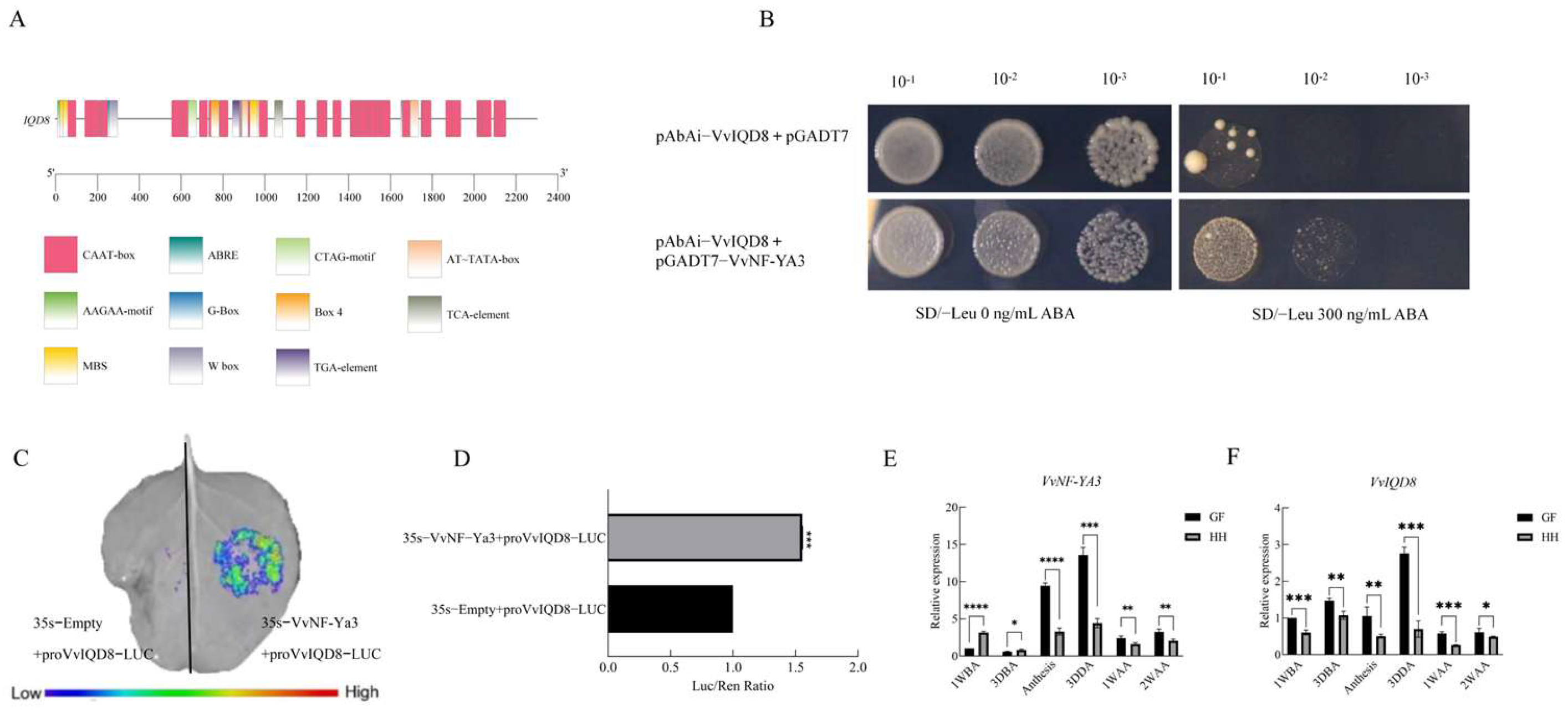
The CDS of VvNF-YA3 was cloned into the pGADT7 vector, the pAbAi-proVvIQD8 vector was transformed into Y1H Gold, plated on SD/-Ura medium. The pGADT7-VvNF-YA3 plasmid (5 µg) was transformed into the Y1H Gold [pAbAi-proVvIQD8] strain. Single colonies were picked and grown on SD/-Leu and SD/-Leu/AbA (300 ng/mL AbA) media at 28 °C for 48–72 h to observe colony growth. Each interaction was confirmed by at least three independent colonies.

2.8. Dual Luciferase Assay

The pGreenII 0800-LUC-ProVvIQD8 reporter vector and the pCAMBIA1300-35S-EGFP-VvNF-YA3 effector vector were constructed, and both were transformed into Agrobacterium GV3101 (psoup). The Nicotiana benthamiana injected with Agrobacterium was placed for 24 h under dark conditions and observed after 4 h under light conditions. D-luciferin potassium salt was sprayed on the infiltrated leaf surfaces in the dark, and fluorescence expression was observed using a plant in vivo imaging system (Berthold LB 985). Luciferase activity was analyzed using a Dual Luciferase Reporter Assay Kit (YEASEN, Shanghai, China) and a microplate reader (Molecular Devices, San Jose, CA, USA). To ensure data reliability, the experiment was repeated three times. The primer for the VvIQD8 promoter was listed in Table S2. All experiments were independently repeated three times with consistent results.

2.9. Subcellular Localization Assay

The pro35S::VvIQD8-GFP and pro35S::VvNF-YA3-GFP vectors were constructed. The successfully constructed overexpression vectors and the pCAMBIA1300 empty vector were transformed into Agrobacterium GV3101. About 35-day-old of N. benthamiana leaves were selected for transient injection. After injection, the leaves were cultured in the dark for 24 h, and then cultured in the light for 48 h. Then, the samples were taken from the injection site and observed using a super-resolution laser confocal microscope (LSM900, Carl Zeiss, Oberkochen, Germany) to detect GFP green fluorescence. All experiments were independently repeated three times with consistent results.

2.10. Overexpression of VvIQD8 in Tobacco

Primers were designed to clone the CDS sequence of the VvIQD8 gene. The cloned product was recombined with the overexpression vector pCAMBIA1301, and the constructed overexpression vector was transformed into Agrobacterium GV3101, followed by transformation into wild-type tobacco K326. The leaf shape index was calculated by measuring the length and width of the second leaf from the top downward in one-month-old tobacco plants, and the length and width of mature tobacco capsules were measured with a vernier caliper. All phenotype statistics included three biological replicates. All phenotypic measurements included three biological replicates, each with at least five plants per line.

2.11. Yeast Two-Hybrid Assay (Y2H)

The pGBKT7-VvNF-YA3 plasmid was constructed. The pGBKT7-VvNF-YA3 plasmid and the library plasmid were co-transformed into Y2H yeast competent cells, and coated on SD/-Leu/-Trp and SD/-Leu/-Trp/-His/-Ade media. Single colonies were selected for PCR verification and sequencing. The constructed pGBKT7-VvNF-YA3 plasmid and pGADT7-VvSKIP34 plasmid were co-transformed into Y2H yeast competent cells and spread on SD/-Leu/-Trp medium. Cultured at 28 °C for 48–72 h, single colonies were picked for PCR verification. The verified colonies were then transferred to SD/-Ade/-His/-Leu/-Trp/X-α-gal medium. After 3–5 days of culture at 28 °C, the colony growth was observed. The primer for the VvSKIP34 was listed in Table S2. Each interaction was confirmed by at least three independent colonies.

2.12. Bimolecular Fluorescence Complementarity Assay

The CDS of VvNF-YA3 and VvSKIP34 were constructed into the BiFC vectors pSPYNE-35S and pSPYCE-35S. The constructed vectors were transformed into Agrobacterium GV3101 for storage. The fluorescence results of N. benthamiana leaves after injection were observed using a super-resolution laser confocal microscope (Zeiss, Oberkochen, Germany). All experiments were independently repeated three times with consistent results.

3. Results

3.1. Identification of the Grape NF-Y Gene Family Members and Construction of a Phylogenetic Tree

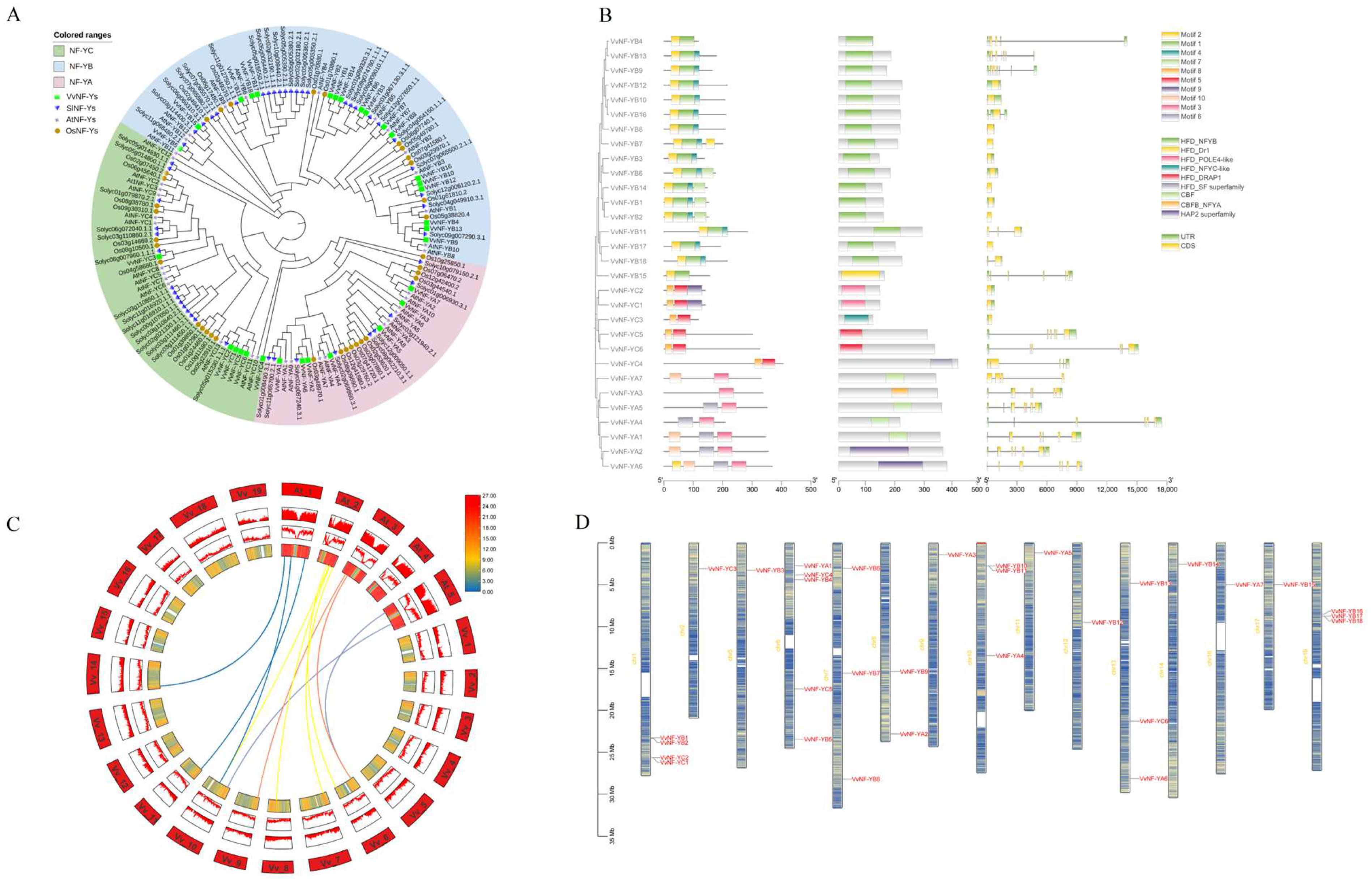
Based on the grape genome data, a total of 31 grape NF-Y family members were identified. By constructing phylogenetic trees with Arabidopsis, rice, and tomato (Figure 1A), the 31 VvNF-Y proteins were classified into three distinct subfamilies, namely the NF-YA subfamily (7), NF-YB subfamily (18), and NF-YC subfamily (6). Among them, the NF-YB subfamily is the subfamily with the greatest number of members. Almost all family members of VvNF-YA, VvNF-YB, or VvNF-YC are concentrated in the same subclade.

3.2. Physicochemical Property Analysis of the Grape NF-Y Gene Family Proteins

A total of 31 NF-Y family members were identified from the grape genome. An analysis of the physicochemical properties of their encoded proteins showed that the number of amino acids ranged from 146 to 405, molecular weights ranged from 12.75 to 45.45 kD, and theoretical isoelectric points ranged from 4.62 to 9.65 (Table S1). Instability index analysis indicated that most proteins are unstable (instability index > 40), whereas some members of the NF-YB family (such as VvNF-YB1, YB2, YB3, YB8, YB9, YB10, YB14, YB16) and VvNF-YA7 of the NF-YA family are stable proteins (instability index < 40). Members of the VvNF-Y family are all hydrophilic proteins.

3.3. Analysis of Motifs, Domains, and Gene Structures of the VvNF-Y Family Members

To further study the characteristics of the grape NF-Y family, a phylogenetic tree of grape NF-Y was constructed (Figure 1B), and the conserved motifs of the grape NF-Ys gene family were analyzed using the MEME (Figure 1B). A total of 10 motifs were identified, and the results showed significant differences in the conserved protein motifs of grape NF-Y among different subfamilies. Motif 1, Motif 2, Motif 4, and Motif 7 were only present in the NF-YB subfamily; Motif 5, Motif 8, and Motif 9 were detected only in the NF-YC subfamily; and Motif 3, Motif 6, and Motif 10 were only found in the NF-YA subfamily. The analysis of the conserved domains of the NF-Y gene family revealed that members within the same subfamily had almost identical conserved domains (Figure 1B), but there were significant differences between different subfamilies. The analysis of the grape NF-Y gene structure indicated that all members of the VvNF-YC subfamily contained introns (Figure 1B). In the VvNF-YA and VvNF-YB subfamilies, except for VvNF-YA6, VvNF-YA7, VvNF-YB2, VvNF-YB7, VvNF-YB14, and VvNF-YB17, all other members contained introns. Among them, VvNF-YA5 had four introns, VvNF-YA2, VvNF-YA3, and VvNF-YB16 had 3 introns, and the remaining members contained one or two introns.

3.4. Chromosomal Localization and Intermediate Collinearity Analysis of the Grape NF-Y Family Members

Chromosomal localization analysis of VvNF-Y based on whole-genome annotation information indicated that the 31 VvNF-Y members are randomly scattered across 19 chromosomes (Figure 1D), with the highest number of members located on chromosome 6, totaling five, followed by chromosome 1 with four members, while chromosomes 3, 4, 15, and 18 did not contain any VvNF-Y genes. Analysis of chromosomal gene density showed that members of the VvNF-Y gene family are mainly distributed in regions with high gene density. Collinearity analysis revealed 11 pairs of syntenic genes between grape and Arabidopsis (Figure 1C).

3.5. Overexpression of VvNF-YA3 Alters the Morphology of Tobacco Leaves and Pods

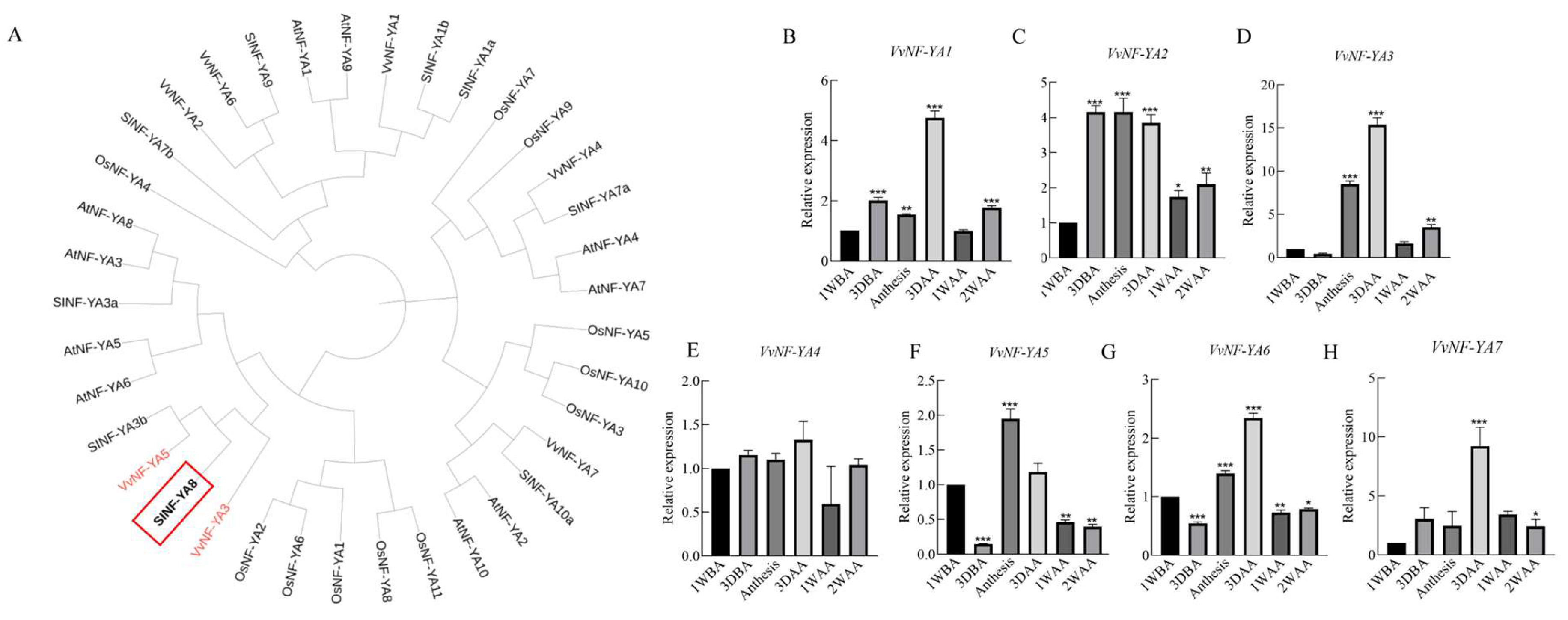
To further elucidate the regulatory mechanism of NF-YA underlying fruit morphology and size development, we compared NF-YAs in grapes with those in Arabidopsis, rice, and tomato and constructed a phylogenetic tree (Figure 2A). The results showed that VvNF-YA3 and VvNF-YA5 are closely related to SlNF-YA8, which has been proven to regulate tomato fruit shape. Furthermore, we used the elongated grape variety ‘GoldFinger’ as the material and analyzed the expression patterns of seven VvNF-YA genes at one week before anthesis, three days before anthesis, at anthesis, three days after anthesis, one week after anthesis, and two weeks after anthesis. The results indicate that VvNF-YA3 had the highest expression during key stages of fruit development, gradually increasing at anthesis and three days after anthesis, with peak expression at 3 DAA (Figure 2D). This result suggests that VvNF-YA3 may play an important role in fruit development, and therefore VvNF-YA3 was selected as the target for subsequent phenotypic studies.
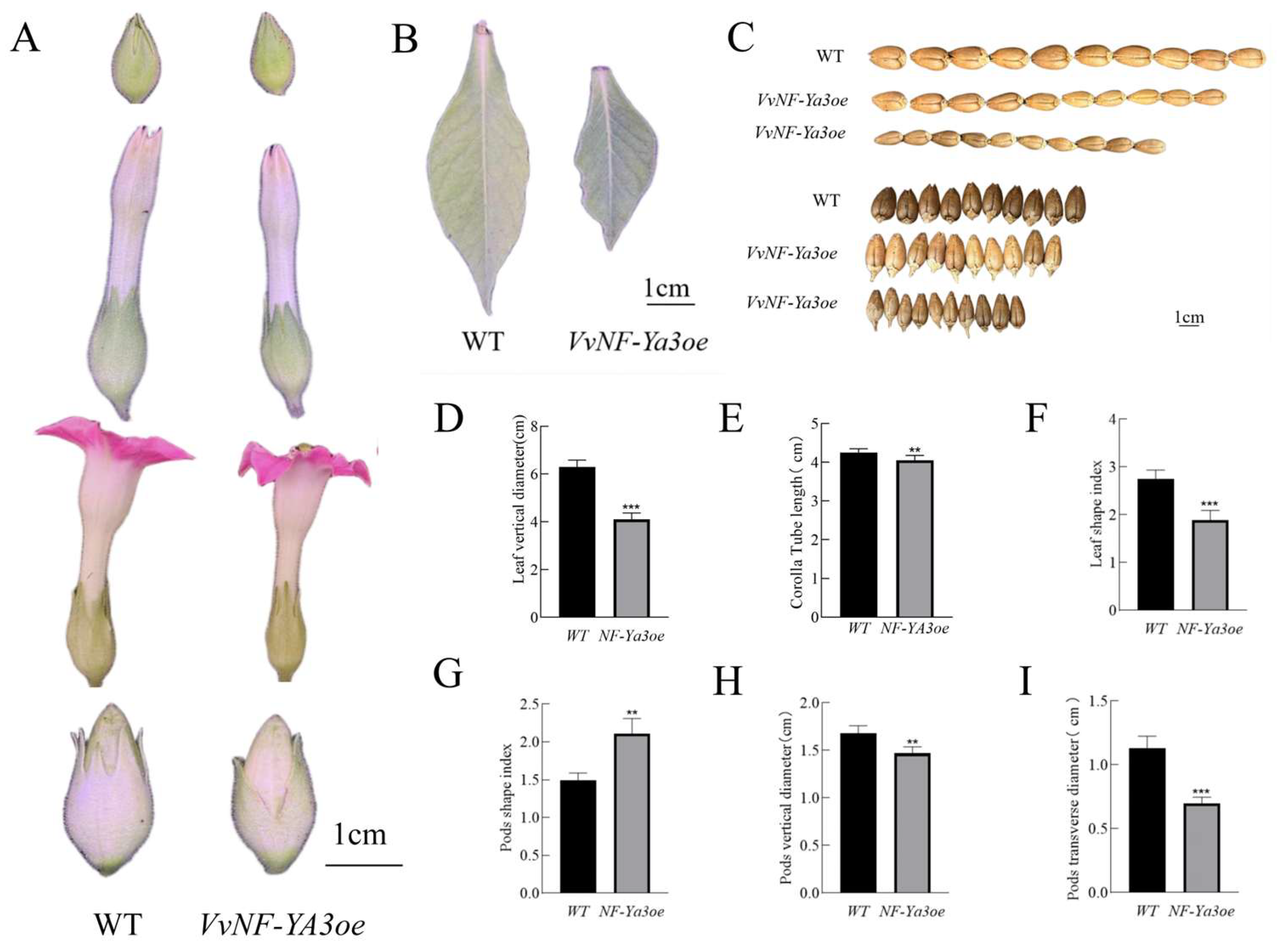
To investigate the regulatory role of VvNF-YA3 in fruit development, the VvNF-YA3 gene was overexpressed in K326 tobacco, resulting in six transgenic lines (Figure S1). Compared with wild-type plants, the VvNF-YA3 overexpression (VvNF-YA3oe) lines showed significantly reduced leaf length and leaf shape index (Figure 3B,D,F). Further observation of the phenotypes of flower buds, flowers, corolla tube, and pods of transgenic and wild-type tobacco plants revealed that in VvNF-YA3 overexpression tobacco lines (Figure 3A–C), compared with wild-type tobacco, the corolla tube length, the pod length, and width of VvNF-YA3 overexpressing tobacco were significantly reduced (Figure 3E,H,I), and the pod shape index significantly increased (Figure 3G).
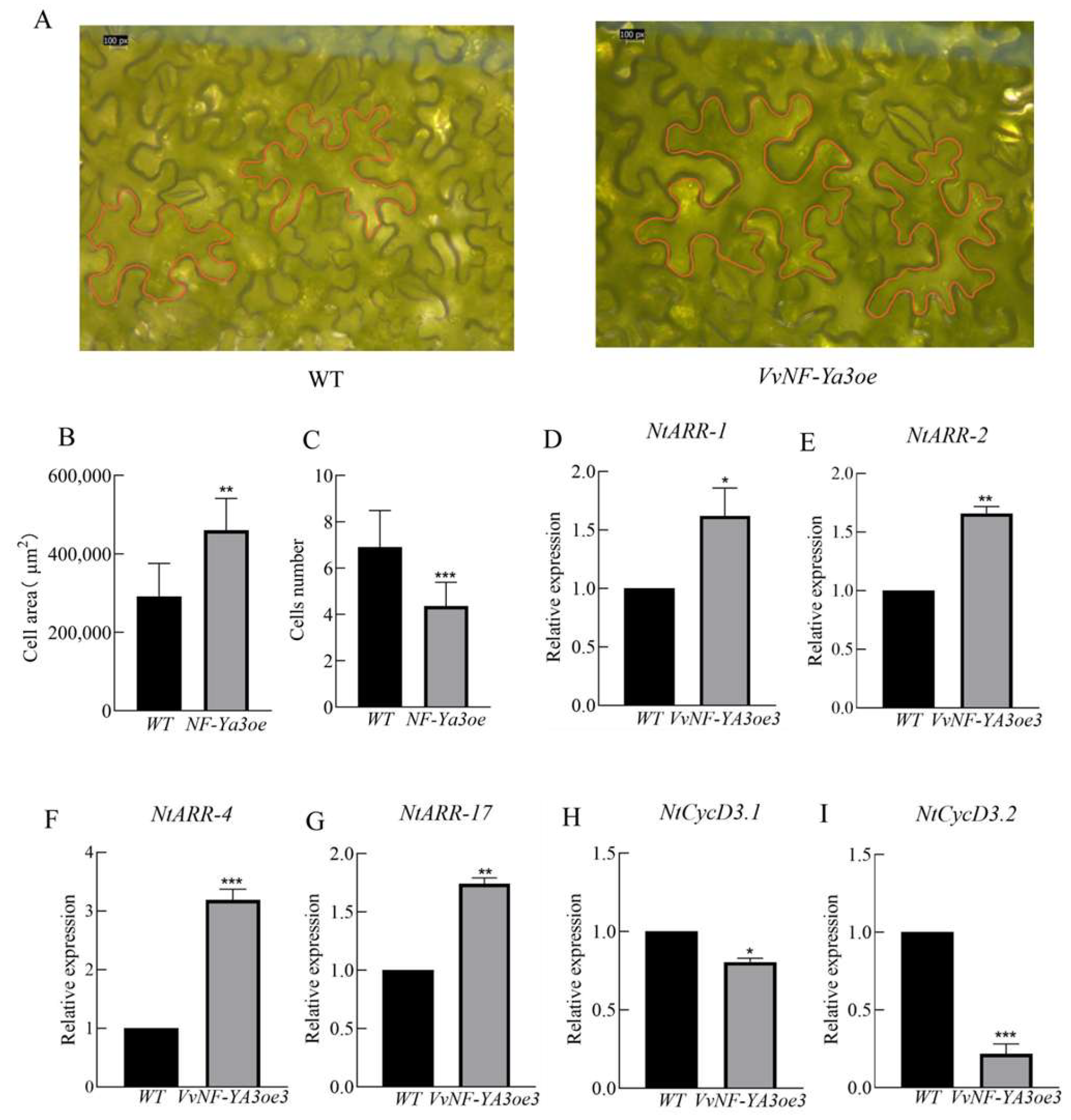
To explore the potential reasons for this morphological change, we also overexpressed VvNF-YA3 in transgenic Nicotiana benthamiana, resulting in six transgenic lines (Figure S2), and the cell area and cell number of the third leaf of one-month-old plants were observed under a microscope (Figure 4A). The results indicated that the cell area of the VvNF-YA3 overexpression lines significantly increased, while the cell number significantly decreased (Figure 4B,C). Meanwhile, qRT-PCR analysis revealed that genes negatively regulating cell division (ARR/1/2/4/17) were expressed at significantly higher levels, while CycD3.1 and CycD3.2 were significantly reduced in the VvNF-YA3 overexpression lines (Figure 4D–I). These results indicate that the overexpression of VvNF-YA3 in tobacco can negatively regulate fruit size by affecting cell size and cell division, providing a potential regulatory mechanism for fruit morphogenesis in grape.

3.6. VvNF-YA3 Directly Binds to the Promoter of VvIQD8 and Promote Its Expression

The IQD protein family has been extensively documented to function as key regulators of fruit shape and size. To study the regulatory network of VvNF-YA3, we conducted a cis-element analysis of VvIQD8 genes and found a CCAAT-binding element in the promoter region of VvIQD8 (Figure 5A). A yeast one-hybrid (Y1H) assay was performed by transforming the pAbAi-proVvIQD8 and pGADT7-VvNF-YA3 plasmids into the Y1H Gold yeast strain. We found that the yeast strain can grow on SD/-Leu medium containing 300 ng/mL AbA, whereas the negative control cannot, indicating that VvNF-YA3 can bind to the VvIQD8 promoter (Figure 5B). The effect of VvNF-YA3 on VvIQD8 transcriptional activity was further validated using a dual luciferase reporter assay. The results showed that, compared to the empty vector control, VvNF-YA3 significantly induced luciferase (LUC) activity. A strong luminescence signal was detected in the 0800-proVvIQD8 and 35S::VvNF-YA3 injection sites, while a weak signal was observed in the negative control 0800-proVvIQD8 and 35S site (Figure 5C). In addition, the LUC/REN values in the 0800-proVvIQD8 and 35S::VvNF-YA3 treatment group were significantly higher than those in the negative control, demonstrating that VvNF-YA3 can bind to the VvIQD8 promoter and enhance its transcriptional activity (Figure 5D). At the same time, qRT-PCR analysis revealed that the expression levels of VvNF-YA3 and VvIQD8 in long-shape grape ‘GoldFinger’ were significantly higher than those in round-shape grape ‘Kourgan Rose’, with both genes reaching peak expression 3 days after anthesis and then decreasing (Figure 5E,F).

3.7. Overexpression of VvIQD8 Promotes the Elongation of Tobacco Pods

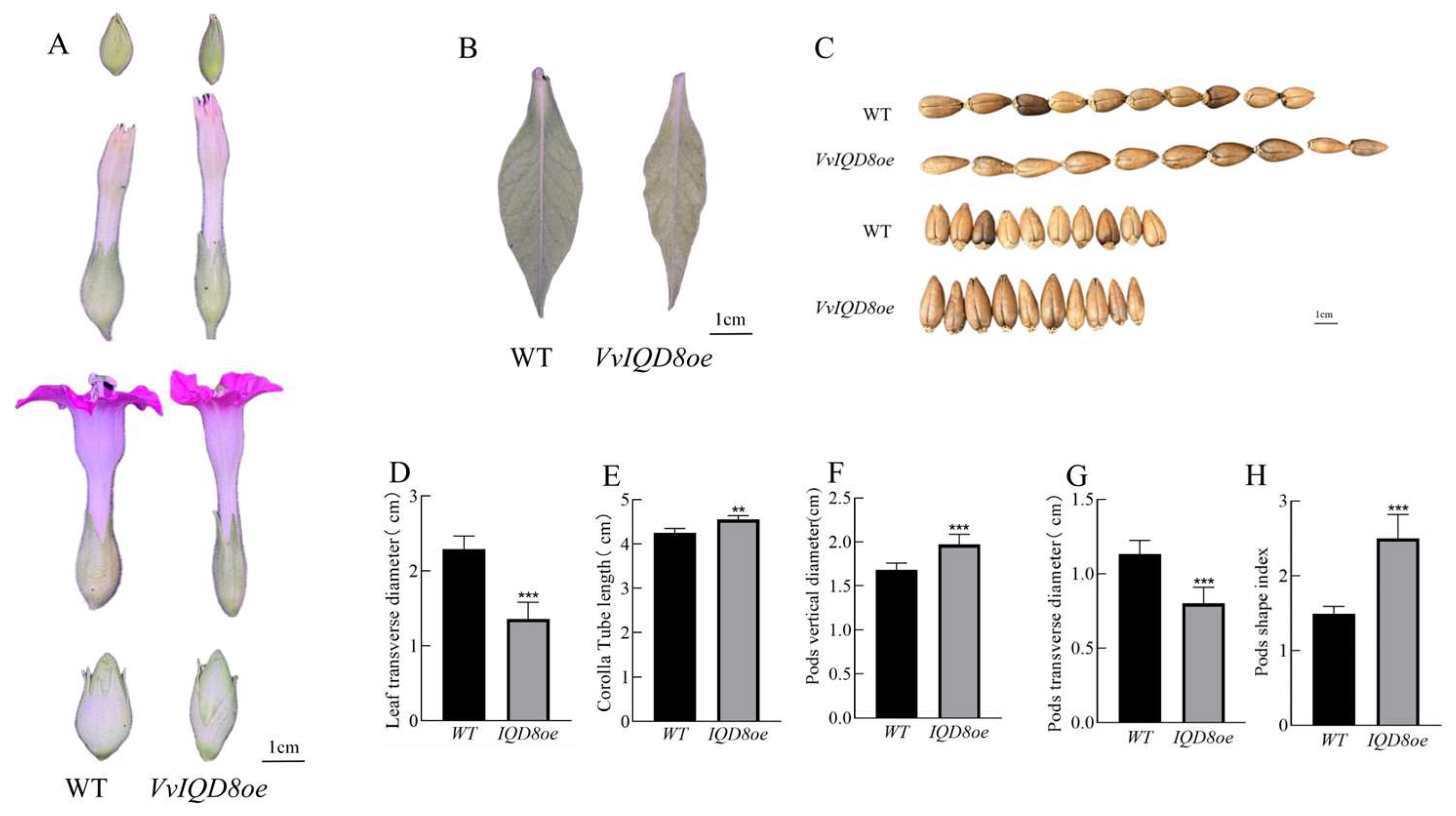
Phenotypic observations were performed on the second apical leaf of 30-day-old tobacco plants, compared with wild-type tobacco, the leaves of VvIQD8 overexpression lines were narrower (Figure 6B). Measuring the longitudinal and transverse diameters of tobacco leaves showed that the transverse diameter of the VvIQD8 overexpression tobacco lines was significantly reduced (Figure 6D). Further calculation of the leaf shape index of the second leaf of one-month-old tobacco showed that the leaf shape index of VvIQD8 overexpression tobacco leaves was significantly increased compared to that of the wild-type. Further observation of the phenotypes of flower buds, flowers, corolla tubes, and pods of transgenic and wild-type tobacco plants revealed that in VvIQD8 overexpression tobacco lines (Figure 6A), the corolla tube length, pod vertical diameter, and pod shape index were significantly increased, while the pod transverse diameter was significantly reduced (Figure 6E–H).

3.8. VvNF-YA3 and VvIQD8 Are Localized in the Nucleus and the Cell Membrane

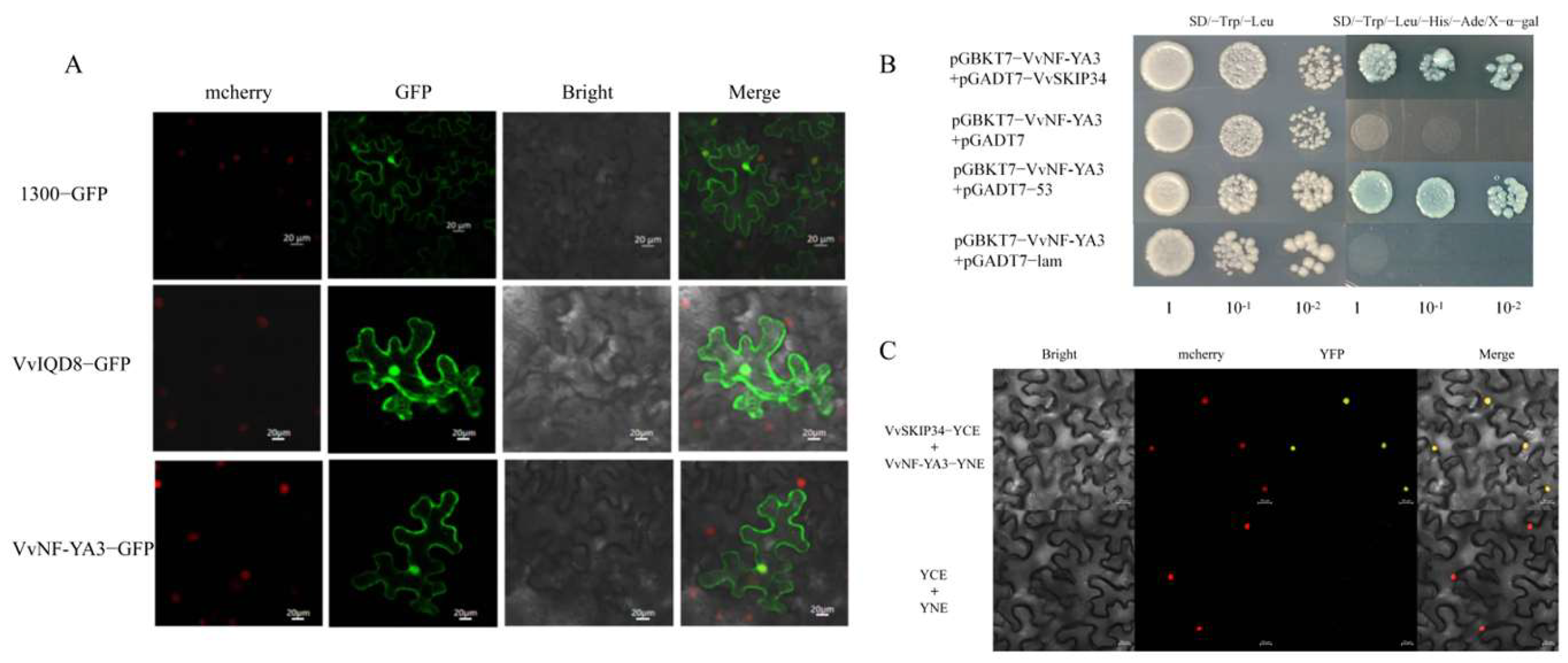
After constructing the 35S∷VvNF-YA3-GFP and 35S∷VvIQD8-GFP fusion vectors, one-month-old Nicotiana benthamiana plants were treated using mediated transient transformation, with the empty vector 1300 used as a control. The results showed that the VvNF-YA3-GFP and VvIQD8-GFP fusion proteins exhibited specific fluorescent signals in the nucleus and cell membrane regions, indicating that the VvNF-YA3 and VvIQD8 proteins are primarily localized in the nucleus and cell membrane (Figure 7A).

3.9. VvNF-YA3 Protein Interacts with VvSKIP34

To study the regulatory network of VvNF-YA3, VvSKIP34 was screened through a yeast two-hybrid library. The yeast two-hybrid assay showed that the experimental group (co-transformed with pGBKT7-VvNF-YA3 and pGADT7-VvSKIP34 plasmids) displayed normal colony growth on SD/-Trp/-Leu and SD/-Ade/-His/-Leu/-Trp/X-α-gal media, whereas the control group showed no colony growth on SD/-Ade/-His/-Leu/-Trp/X-α-gal medium, indicating that the VvNF-YA3 protein interacts with VvSKIP34 in yeast (Figure 7B).
To further confirm this interaction, BiFC assay was performed. Observation of YFP fluorescence signals revealed no fluorescence in the control group, whereas yellow fluorescence was detected in the nuclei of tobacco leaf cells co-transformed with recombinant plasmids pSPYNE-35S-VvNF-YA3 and pSPYCE-35S-VvSKIP34, co-localizing with nuclear staining, indicating that VvNF-YA3 and VvSKIP34 can interact in plants (Figure 7C).

4. Discussion

NF-Y is a heterotrimer, usually functioning as a complex, composed of three subunits: NF-YA (CBF-B/HAP2), NF-YB (CBF-A/HAP3), and NF-YC (CBF-C/HAP5) [20]. Based on a cross-species phylogenetic tree, they were classified into seven NF-YA subfamilies, 18 NF-YB subfamilies, and six NF-YC subfamilies (Figure 1A), with NF-YB subfamily members being the most numerous. This distribution feature is consistent with the subfamily distribution patterns in Arabidopsis (10 NF-YA, 13 NF-YB, 13 NF-YC), rice (11 NF-YA, 12 NF-YB, 7 NF-YC), and tomato (10 NF-YA, 29 NF-YB, 20 NF-YC) [27,55,56], indicating that the NF-Y family has a highly conserved subfamily division pattern in higher plants. By constructing a phylogenetic tree using NF-Y proteins from Arabidopsis, tomato, and rice along with grape NF-Y proteins, the results showed that NF-Y proteins from these four species are widely distributed and form a common mixed cluster. The analysis of the physicochemical properties of the family revealed that all VvNF-Y members are hydrophilic proteins, and most are unstable proteins (Table S1). Hydrophilicity facilitates their interaction with DNA or other proteins in the nucleus, while instability may allow them to achieve temporal transcription regulation through rapid degradation [57]. Research has found that the three subfamilies of VvNF-Y each possess highly conserved motifs (Figure 1B). For example, Motif 1 and Motif 2 are only found in VvNF-YB and VvNF-Y members within the same subfamily shared highly similar exon–intron architectures, while a subset of VvNF-Y genes were intronless, a pattern consistent with previous observations in chickpea [58]. Chromosomal localization shows that VvNF-Y genes are mainly concentrated in high gene density regions on chromosomes 6 and 1, and collinearity analysis identified 11 pairs of syntenic NF-Y genes between grape and Arabidopsis (Figure 1C,D). This suggests that the family may have expanded through segmental or whole-genome duplication events, and some members have retained ancestral functions during evolution [59].
VvNF-YA3 is highly expressed during the grape anthesis and three days after anthesis (Figure 2D), which closely coincides with the key stages of fruit development [19]. These two stages correspond to the maturation of floral organs, fertilization, and the initial enlargement of the fruit, suggesting that VvNF-YA3 may be involved in the core regulatory network of fruit development. Three days after anthesis is a critical stage for cell proliferation [1], and the high expression at this stage further indicates that VvNF-YA3 may influence fruit size by regulating cell proliferation. Recent studies have demonstrated that the SlNF-YA8 gene regulates fruit shape [21], and the NF-YA1 gene in maize affects maize kernel size by regulating cell division [43]. In this study, heterologous overexpression of VvNF-YA3 in tobacco led to a significant decrease in leaf shape index and a significant reduction in corolla tube length, pod length and width (Figure 3). These results only conducted a functional analysis of the VvNF-YA3 gene in tobacco, which has certain limitations. In the future, stable transformation in grape needs to be performed to verify its function. Cell-level analysis showed that the transgenic strain had larger cell sizes but fewer cells. Meanwhile, qRT-PCR analysis revealed that the expression of genes regulating cell division (ARR1/2/4/17) were significantly increased, while CycD3.1 and CycD3.2 were significantly reduced in the transgenic strain. These results suggest that VvNF-YA3 influences tobacco organ size by affecting cell expansion and cell division (Figure 4).
In this study, VvNF-YA3 was found to directly bind to the VvIQD8 promoter and promote its transcription (Figure 5). IQD family members are key regulators of plant cytoskeletal organization and hormone signaling, and AtIQD5 affects fruit shape by regulating microtubule arrangement [60]. VvIQD8, as a homologous gene of the tomato SUN gene, was overexpressed in tobacco, and it was found that in transgenic plants the corolla tube length, pod vertical diameter, and fruit shape index significantly increased, suggesting that VvIQD8 promotes organ elongation in tobacco.
By subcellular localization of VvNF-YA3 and VvIQD8, it was found that VvNF-YA3 and VvIQD8 protein were localized to the nucleus and cytoplasm. NF-YA is a protein core region composed of 53 amino acids, which has two conserved α helix domains A1 and A2; A1 is responsible for binding to NF-YB and NF-YC subunits, and A2 can specifically recognize and bind to CCAAT elements [61,62]. The NF-YB and NF-YC subunits contain highly conserved histone fold motifs (HFDs) [61,62]. After the formation of NF-YB/YC heterodimers, they migrate from the cytoplasm to the nucleus, and then bind to the NF-YA subunit to form a complete trimeric complex, which in turn regulates downstream target genes [61,63].
SKIP is a conserved protein in eukaryotes that functions both as a splicing factor and as a transcriptional regulatory factor, regulating gene expression at both the transcriptional and post-transcriptional levels [64,65]. Some SKIP family proteins (such as SKIP1 and SKIP17) act as F-box proteins, participating in forming the SCF (SKP1-CUL1-F-box protein) complex, which mediates protein degradation [66]. In Arabidopsis, downregulation of AtSKIP expression leads to growth arrest, delayed flowering, and downregulation of many flowering-related genes [67]. SUD3 encodes a SKIP protein and affects cell size and organ development by regulating nuclear replication, overexpressing SKIP can increase leaf area and leaf cell size [68]. We confirmed the interaction between the VvNF-YA3 protein and the VvSKIP34 protein through yeast two-hybrid and BiFC experiments. The biological significance of the VvNF-YA3-VvSKIP34 interaction remains unclear and warrants further functional validation in grape in future studies.
Fruit shape and size in grape are decisive appearance quality traits largely determining the market competitiveness of table grapes. Elongated or uniformly sized berries are more favored by consumers and greatly improve commodity value [69]. The candidate genes identified in this study provide promising molecular targets for genetic improvement and molecular-marker-assisted breeding of table grape varieties with ideal grape shape and size.

5. Conclusions

In summary, this study provides a comprehensive bioinformatic analysis of the NF-Y gene family in grape and identifies VvNF-YA3 as a candidate regulator of fruit development. We demonstrated that VvNF-YA3 directly binds to the promoter of VvIQD8 and activates its expression. Furthermore, we showed that VvNF-YA3 interacts with VvSKIP34. Heterologous overexpression of VvNF-YA3 and VvIQD8 in tobacco alters fruit size and shape, suggesting that this module may have a conserved function in morphogenesis. Our findings established a strong foundation for future functional studies aimed at manipulating fruit shape and size in grape breeding programs.

Supplementary Materials

The following supporting information can be downloaded at: https://www.mdpi.com/article/10.3390/horticulturae12060668/s1, Figure S1: Relative expression levels of overexpression lines in K326; Figure S2: Relative expression levels of overexpression lines in Nicotiana benthamiana; Table S1: Physicochemical properties of proteins encoded by the VvNF-Y gene family; Table S2: The sequence of primers.

Author Contributions

Y.Z. and J.T.: data curation and project administration. L.H., Y.Y. and Y.Z.: investigation, methodology, and writing—original draft. C.S., L.R., K.D., W.Z. and H.Z.: review and editing. All authors have read and agreed to the published version of the manuscript.

Funding

This research was supported by Achievement Transformation Fund project of China Agriculture Research System of MOF and MARA (CARS-29), Key R&D Technology Commissioner Projects in Hainan Province (ZDYF2024KJTPY008), Tianshan Innovation of Team Xinjiang China (2022D14014), Special Project of Science and Technology Special Commissioner Groups Serving Key Industrial Chains (2024N0068), Fuan Grape Science and Technology Backyard, Jiangsu Province (Pukou) Grape Science and Technology Backyard, Fuan Grape Industry Science and Technology Research Institute of Nanjing Agricultural University, Priority Academic Program Development of Jiangsu Higher Education Institutions, National Natural Science Foundation of China (Grant No. 31972384).

Data Availability Statement

All data generated during this study are included in this published article. Raw data used for gene family analysis in this study can all be obtained from NCBI (https://www.ncbi.nlm.nih.gov/sra, accessed on 3 September 2025), TAIR (https://www.arabidopsis.org/, accessed on 3 September 2025), and Ensembl Plants (https://plants.ensembl.org/index.html, accessed on 3 September 2025).

Acknowledgments

Thanks to all the researchers for their contributions to this study.

Conflicts of Interest

The authors declare no conflict of interest.

References

  1. Wycislo, A.P.; Clark, J.R.; Karcher, D.E. Fruit shape analysis of Vitis using digital photography. HortScience 2008, 43, 677–680. [Google Scholar] [CrossRef]
  2. Zhou, J.; Cao, L.; Chen, S.; Perl, A.; Ma, H. Consumer-assisted selection: The preference for new tablegrape cultivars in China. Aust. J. Grape Wine Res. 2015, 21, 351–360. [Google Scholar] [CrossRef]
  3. Cirilli, M.; Baccichet, I.; Chiozzotto, R.; Silvestri, C.; Rossini, L.; Bassi, D. Genetic and phenotypic analyses reveal major quantitative loci associated to fruit size and shape traits in a non-flat peach collection (P. persica L. Batsch). Hortic. Res. 2021, 8, 232. [Google Scholar] [CrossRef]
  4. Dong, Y.; Huang, L.Y.; Liu, J.; Nong, H.L.; Li, H.R.; Zhang, W.; Zheng, H.; Tao, J.M. Genome-wide identified VvOFP genes family and VvOFP4 functional characterization provide insight into fruit shape in grape. Int. J. Biol. Macromol. 2024, 276, 133880. [Google Scholar] [CrossRef]
  5. Wu, S.; Xiao, H.; Cabrera, A.; Meulia, T.; van der Knaap, E. Regulates Vegetative and Reproductive Organ Shape by Changing Cell Division Patterns. Plant Physiol. 2011, 157, 1175–1186. [Google Scholar] [CrossRef]
  6. Zhang, T.T.; Li, X.Z.; Yang, Y.T.; Guo, X.; Feng, Q.; Dong, X.Y.; Chen, S.X. Genetic analysis and QTL mapping of fruit length and diameter in a cucumber (Cucumber sativus L.) recombinant inbred line (RIL) population. Sci. Hortic. 2019, 250, 214–222. [Google Scholar] [CrossRef]
  7. Guo, J.; Cao, K.; Deng, C.C.L.; Li, Y.; Zhu, G.R.; Fang, W.C.; Chen, C.W.; Wang, X.W.; Wu, J.L.; Guan, L.P.; et al. An integrated peach genome structural variation map uncovers genes associated with fruit traits. Genome Biol. 2020, 21, 258. [Google Scholar] [CrossRef]
  8. Dou, J.L.; Zhao, S.J.; Lu, X.Q.; He, N.; Zhang, L.; Ali, A.; Kuang, H.H.; Liu, W.G. Genetic mapping reveals a candidate gene (ClFS1) for fruit shape in watermelon (Citrullus lanatus L.). Theor. Appl. Genet. 2018, 131, 947–958. [Google Scholar] [CrossRef]
  9. Borovsky, Y.; Paran, I. Characterization of fs10.1, a major QTL controlling fruit elongation in Capsicum. Theor. Appl. Genet. 2011, 123, 657–665. [Google Scholar] [CrossRef]
  10. Wang, S.K.; Wu, K.; Yuan, Q.B.; Liu, X.Y.; Liu, Z.B.; Lin, X.Y.; Zeng, R.Z.; Zhu, H.T.; Dong, G.J.; Qian, Q.; et al. Control of grain size, shape and quality by OsSPL16 in rice. Nat. Genet. 2012, 44, 950–954. [Google Scholar] [CrossRef]
  11. Zhang, B.Y.; Li, Q.; Keyhaninejad, N.; Taitano, N.; Sapkota, M.; Snouffer, A.; van der Knaap, E. A combinatorial TRM-OFP module bilaterally fine-tunes tomato fruit shape. New Phytol. 2023, 238, 2393–2409. [Google Scholar] [CrossRef]
  12. Ku, H.M.; Grandillo, S.; Tanksley, S.D. fs8.1, a major QTL, sets the pattern of tomato carpel shape well before anthesis. Theor. Appl. Genet. 2000, 101, 873–878. [Google Scholar] [CrossRef]
  13. Liu, X.G.; Kim, Y.J.; Müller, R.; Yumul, R.E.; Liu, C.Y.; Pan, Y.Y.; Cao, X.F.; Goodrich, J.; Chen, X.M. AGAMOUS terminates floral stem cell maintenance in Arabidopsis by directly repressing WUSCHEL through recruitment of Polycomb Group proteins. Plant Cell 2011, 23, 3654–3670. [Google Scholar] [CrossRef]
  14. Mayer, K.F.X.; Schoof, H.; Haecker, A.; Lenhard, M.; Jürgens, G.; Laux, T. Role of WUSCHEL in regulating stem cell fate in the Arabidopsis shoot meristem. Cell 1998, 95, 805–815. [Google Scholar] [CrossRef]
  15. Wang, H.L.; Yan, A.L.; Sun, L.; Zhang, G.J.; Wang, X.Y.; Ren, J.C.; Xu, H.Y. Novel stable QTLs identification for berry quality traits based on high-density genetic linkage map construction in table grape. BMC Plant Biol. 2020, 20, 411. [Google Scholar] [CrossRef]
  16. Doligez, A.; Bertrand, Y.; Farnos, M.; Grolier, M.; Romieu, C.; Esnault, F.; Dias, S.; Berger, G.; François, P.; Pons, T.; et al. New stable QTLs for berry weight do not colocalize with QTLs for seed traits in cultivated grapevine (Vitis vinifera L.). BMC Plant Biol. 2013, 13, 217. [Google Scholar] [CrossRef]
  17. Clevenger, J.P.; Van Houten, J.; Blackwood, M.; Rodríguez, G.R.; Jikumaru, Y.; Kamiya, Y.; Kusano, M.; Saito, K.; Visa, S.; van der Knaap, E. Network analyses reveal shifts in transcript profiles and metabolites that accompany the expression of SUN and an elongated tomato fruit. Plant Physiol. 2015, 168, 1164–1178. [Google Scholar] [CrossRef]
  18. Zang, J.Z.; Klemm, S.; Pain, C.; Duckney, P.; Bao, Z.R.; Stamm, G.; Kriechbaumer, V.; Bürstenbinder, K.; Hussey, P.J.; Wang, P.W. A novel plant actin-microtubule bridging complex regulates cytoskeletal and ER structure at ER-PM contact sites. Curr. Biol. 2021, 31, 1251–1260.e4. [Google Scholar] [CrossRef]
  19. Bao, Z.R.; Guo, Y.; Meng, X.X.; Shi, C.M.; Ouyang, B.; Qu, X.L.; Wang, P.W. Microtubule-associated proteins MAP65-1 and SUN18/IQD26 coordinately regulate tomato fruit shape by affecting cell division. Plant Physiol. 2024, 194, 629–633. [Google Scholar] [CrossRef]
  20. Gao, C.; Wei, P.Y.; Xie, Z.S.; Zhang, P.; Tahir, M.M.; Toktonazarovich, T.K.; Shen, Y.W.; Zuo, X.Y.; Mao, J.P.; Zhang, D.; et al. Genomic identification of the NF-Y gene family in apple and functional analysis of MdNF-YB18 involved in flowering transition. Mol. Breed. 2024, 45, 4. [Google Scholar] [CrossRef]
  21. Petrou, N.; Tsigarida, N.; Hilioti, Z. Genome Editing of the NF-YA8 Gene Modifies Tomato Plant Architecture and Fruit Traits. Plants 2025, 14, 1826. [Google Scholar] [CrossRef]
  22. Stephenson, T.J.; McIntyre, C.L.; Collet, C.; Xue, G.P. Genome-wide identification and expression analysis of the NF-Y family of transcription factors in Triticum aestivum. Plant Mol. Biol. 2007, 65, 77–92. [Google Scholar] [CrossRef]
  23. McNabb, D.S.; Tseng, K.A.-S.; Guarente, L. The Saccharomyces cerevisiae Hap5p homolog from fission yeast reveals two conserved domains that are essential for assembly of heterotetrameric CCAAT-binding factor. Mol. Cell. Biol. 1997, 17, 7008–7018. [Google Scholar] [CrossRef]
  24. Yan, X.; Han, M.T.; Li, S.; Liang, Z.Y.; Ouyang, J.X.; Wang, X.; Liao, P.F. A member of NF-Y family, OsNF-YC5 negatively regulates salt tolerance in rice. Gene 2024, 892, 147869. [Google Scholar] [CrossRef]
  25. Cao, L.R.; Ma, C.C.; Ye, F.Y.; Pang, Y.Y.; Wang, G.R.; Fahim, A.M.; Lu, X.M. Genome-wide identification of NF-Y gene family in maize (Zea mays L.) and the positive role of ZmNF-YC12 in drought resistance and recovery ability. Front. Plant Sci. 2023, 14, 1159955. [Google Scholar] [CrossRef]
  26. Mu, J.Y.; Tan, H.L.; Hong, S.L.; Liang, Y.; Zuo, J.R. Arabidopsis transcription factor genes NF-YA1, 5, 6, and 9 play redundant roles in male gametogenesis, embryogenesis, and seed development. Mol. Plant 2013, 6, 188–201. [Google Scholar] [CrossRef]
  27. Li, S.; Li, K.; Ju, Z.; Cao, D.Y.; Fu, D.Q.; Zhu, H.L.; Zhu, B.Z.; Luo, Y.B. Genome-wide analysis of tomato NF-Y factors and their role in fruit ripening. BMC Genom. 2016, 17, 36. [Google Scholar] [CrossRef]
  28. Rípodas, C.; Castaingts, M.; Clúa, J.; Villafañe, J.; Blanco, F.A.; Zanetti, M.E. The PvNF-YA1 and PvNF-YB7 subunits of the heterotrimeric NF-Y transcription factor influence strain preference in the Phaseolus vulgarisRhizobium etli symbiosis. Front. Plant Sci. 2019, 10, 221. [Google Scholar] [CrossRef]
  29. Qu, Y.J.; Wang, Y.P.; Zhu, J.; Zhang, Y.G.; Hou, H.M. Genomic Organization, Phylogenetic Comparison, and Differential Expression of the Nuclear Factor-Y Gene Family in Apple (Malus domestica). Plants 2021, 10, 16. [Google Scholar] [CrossRef]
  30. Li, M.; Li, G.X.; Liu, W.; Dong, X.M.; Zhang, A.N. Genome-wide analysis of the NF-Y gene family in peach (Prunus persica L.). BMC Genom. 2019, 20, 612. [Google Scholar] [CrossRef]
  31. Xu, J.J.; Zhang, X.F.; Xue, H.W. Rice aleurone layer specific OsNF-YB1 regulates grain filling and endosperm development by interacting with an ERF transcription factor. J. Exp. Bot. 2016, 67, 6399–6411. [Google Scholar] [CrossRef]
  32. Niu, B.X.; Zhang, Z.Y.; Zhang, J.; Zhou, Y.; Chen, C. The rice LEC1-like transcription factor OsNF-YB9 interacts with SPK, an endosperm-specific sucrose synthase protein kinase, and functions in seed development. Plant J. 2021, 106, 1233–1246. [Google Scholar] [CrossRef]
  33. Kumimoto, R.W.; Zhang, Y.; Siefers, N.; Holt, B.F. NF–YC3, NF–YC4 and NF–YC9 are required for CONSTANS-mediated, photoperiod-dependent flowering in Arabidopsis thaliana. Plant J. 2010, 63, 379–391. [Google Scholar] [CrossRef]
  34. Hou, X.L.; Zhou, J.N.; Liu, C.; Liu, L.; Shen, L.S.; Yu, H. Nuclear factor Y-mediated H3K27me3 demethylation of the SOC1 locus orchestrates flowering responses of Arabidopsis. Nat. Commun. 2014, 5, 4601. [Google Scholar] [CrossRef]
  35. Kim, S.K.; Park, H.Y.; Jang, Y.H.; Lee, K.C.; Chung, Y.S.; Lee, J.H.; Kim, J.K. OsNF-YC2 and OsNF-YC4 proteins inhibit flowering under long-day conditions in rice. Planta 2016, 243, 563–576. [Google Scholar] [CrossRef]
  36. Ballif, J.; Endo, S.; Kotani, M.; MacAdam, J.; Wu, Y.J. Over-expression of HAP3b enhances primary root elongation in Arabidopsis. Plant Physiol. Biochem. 2011, 49, 579–583. [Google Scholar] [CrossRef]
  37. Xu, W.F.; Jia, L.G.; Shi, W.M.; Liang, J.S.; Zhou, F.; Li, Q.F.; Zhang, J.H. Abscisic acid accumulation modulates auxin transport in the root tip to enhance proton secretion for maintaining root growth under moderate water stress. New Phytol. 2013, 197, 139–150. [Google Scholar] [CrossRef]
  38. Laporte, P.; Lepage, A.; Fournier, J.; Catrice, O.; Moreau, S.; Jardinaud, M.F.; Mun, J.H.; Larrainzar, E.; Cook, D.R.; Gamas, P.; et al. The CCAAT box-binding transcription factor NF-YA1 controls rhizobial infection. J. Exp. Bot. 2014, 65, 481–494. [Google Scholar] [CrossRef]
  39. Zanetti, M.E.; Rípodas, C.; Niebel, A. Plant NF-Y transcription factors: Key players in plant-microbe interactions, root development and adaptation to stress. BBA-Gene Regul. Mech. 2017, 1860, 645–654. [Google Scholar] [CrossRef]
  40. Stephenson, T.J.; McIntyre, C.L.; Collet, C.; Xue, G.P. TaNF-YB3 is involved in the regulation of photosynthesis genes in Triticum aestivum. Funct. Integr. Genom. 2011, 11, 327–340. [Google Scholar] [CrossRef]
  41. Myers, Z.A.; Kumimoto, R.W.; Siriwardana, C.L.; Gayler, K.K.; Risinger, J.R.; Pezzetta, D.; Holt, B.F., III. NUCLEAR FACTOR Y, subunit C (NF-YC) transcription factors are positive regulators of photomorphogenesis in Arabidopsis thaliana. PLoS Genet. 2016, 12, e1006333. [Google Scholar] [CrossRef]
  42. Shi, H.; Ye, T.; Zhong, B.; Liu, X.; Jin, R.; Chan, Z. AtHAP5A modulates freezing stress resistance in Arabidopsis through binding to CCAAT motif of AtXTH21. New Phytol. 2014, 203, 554–567. [Google Scholar] [CrossRef]
  43. Zhang, M.; Zheng, H.Y.; Jin, L.; Xing, L.J.; Zou, J.J.; Zhang, L.; Liu, C.M.; Chu, J.F.; Xu, M.Y.; Wang, L. miR169o and ZmNF-YA13 act in concert to coordinate the expression of ZmYUC1 that determines seed size and weight in maize kernels. New Phytol. 2022, 235, 2270–2284. [Google Scholar] [CrossRef]
  44. Xiong, Y.F.; Ren, Y.; Li, W.; Wu, F.S.; Yang, W.J.; Huang, X.L.; Yao, J.L. NF-YC12 is a key multi-functional regulator of accumulation of seed storage substances in rice. J. Exp. Bot. 2019, 70, 3765–3780. [Google Scholar] [CrossRef]
  45. Gao, Z.H.; Long, T.; Guo, P.Y.; Luo, J.J.; Nie, X.Q.; Xie, Q.L.; Chen, G.P.; Hu, Z.L. The Nuclear Transcription Factor SlNF-YC9 Regulates the Protrusion of Tomato Fruit Tip. Int. J. Mol. Sci. 2025, 26, 6511. [Google Scholar] [CrossRef]
  46. Bello, B.K.; Hou, Y.X.; Zhao, J.; Jiao, G.A.; Wu, Y.W.; Li, Z.Y.; Wang, Y.F.; Tong, X.H.; Wang, W.; Yuan, W.Y.; et al. NF-YB1-YC12-bHLH144 complex directly activates Wx to regulate grain quality in rice (Oryza sativa L.). Plant Biotechnol. J. 2019, 17, 1222–1235. [Google Scholar] [CrossRef]
  47. Cui, Z.B.; Wang, X.W.; Dai, Y.D.; Li, Y.Y.; Ban, Y.J.; Tian, W.J.; Zhang, X.B.; Feng, X.Y.; Zhang, X.F.; Jia, L.Q.; et al. Transcription factor OsNF-YC1 regulates grain size by coordinating the transcriptional activation of OsMADS1 in Oryza sativa L. Plant J. 2024, 119, 1465–1480. [Google Scholar] [CrossRef]
  48. Xu, X.Y.; Zhiguo, E.; Zhang, D.P.; Yun, Q.B.; Zhou, Y.; Niu, B.X.; Chen, C. OsYUC11-mediated auxin biosynthesis is essential for endosperm development of rice. Plant Physiol. 2021, 185, 934–950. [Google Scholar] [CrossRef]
  49. Chen, C.J.; Chen, H.; Zhang, Y.; Thomas, H.R.; Frank, M.H.; He, Y.H.; Xia, R. TBtools: An Integrative Toolkit Developed for Interactive Analyses of Big Biological Data. Mol. Plant 2020, 13, 1194–1202. [Google Scholar] [CrossRef]
  50. Kumar, S.; Stecher, G.; Li, M.; Knyaz, C.; Tamura, K. MEGA X: Molecular Evolutionary Genetics Analysis across Computing Platforms. Mol. Biol. Evol. 2018, 35, 1547–1549. [Google Scholar] [CrossRef]
  51. Wang, Y.P.; Tang, H.B.; DeBarry, J.D.; Tan, X.; Li, J.P.; Wang, X.Y.; Lee, T.H.; Jin, H.Z.; Marler, B.; Guo, H.; et al. MCScanX: A toolkit for detection and evolutionary analysis of gene synteny and collinearity. Nucleic Acids Res. 2012, 40, e49. [Google Scholar] [CrossRef]
  52. Marchler-Bauer, A.; Bo, Y.; Han, L.Y.; He, J.E.; Lanczycki, C.J.; Lu, S.N.; Chitsaz, F.; Derbyshire, M.K.; Geer, R.C.; Gonzales, N.R.; et al. CDD/SPARCLE: Functional classification of proteins via subfamily domain architectures. Nucleic Acids Res. 2017, 45, D200–D203. [Google Scholar] [CrossRef]
  53. Letunic, I.; Doerks, T.; Bork, P. SMART: Recent updates, new developments and status in 2015. Nucleic Acids Res. 2015, 43, D257–D260. [Google Scholar] [CrossRef]
  54. Livak, K.J.; Schmittgen, T.D. Analysis of relative gene expression data using real-time quantitative PCR and the 2−ΔΔCT method. Methods 2001, 25, 402–408. [Google Scholar] [CrossRef]
  55. Siefers, N.; Dang, K.K.; Kumimoto, R.W.; Bynum, W.E.; Tayrose, G.; Holt, B.F. Tissue-Specific Expression Patterns of Arabidopsis NF-Y Transcription Factors Suggest Potential for Extensive Combinatorial Complexity. Plant Physiol. 2009, 149, 625–641. [Google Scholar] [CrossRef]
  56. Tian, Y.; Song, K.; Li, B.; Song, Y.; Zhang, X.; Li, H.; Yang, L.J.S.R. Genome-wide identification and expression analysis of NF-Y gene family in tobacco (Nicotiana tabacum L.). Sci. Rep. 2024, 14, 5257. [Google Scholar] [CrossRef]
  57. Liu, J.G.; Perumal, N.B.; Oldfield, C.J.; Su, E.W.; Uversky, V.N.; Dunker, A.K. Intrinsic disorder in transcription factors. Biochemistry 2006, 45, 6873–6888. [Google Scholar] [CrossRef]
  58. Chu, H.D.; Nguyen, K.H.; Watanabe, Y.; Le, D.T.; Pham, T.L.T.; Mochida, K.; Tran, L.S.P. Identification, Structural Characterization and Gene Expression Analysis of Members of the Nuclear Factor-Y Family in Chickpea (Cicer arietinum L.) under Dehydration and Abscisic Acid Treatments. Int. J. Mol. Sci. 2018, 19, 3290. [Google Scholar] [CrossRef]
  59. Luo, K.; Li, M.; Liu, M.; Jia, X.; Li, Z.; Zhao, X.; Chen, J.; Gu, X.; He, J.; Chen, C.J.H.R. Large-Scale Comparative Analysis of the Nuclear Factor-Y transcription Factors Across 320 Horticultural and Other Plants. Hortic. Res. 2025, 13, uhaf304. [Google Scholar] [CrossRef]
  60. Liang, H.; Zhang, Y.; Martinez, P.; Rasmussen, C.G.; Xu, T.D.; Yang, Z.B. The Microtubule-Associated Protein IQ67 DOMAIN5 Modulates Microtubule Dynamics and Pavement Cell Shape. Plant Physiol. 2018, 177, 1555–1568. [Google Scholar] [CrossRef]
  61. Nardini, M.; Gnesutta, N.; Donati, G.; Gatta, R.; Forni, C.; Fossati, A.; Vonrhein, C.; Moras, D.; Romier, C.; Bolognesi, M.J.C. Sequence-specific transcription factor NF-Y displays histone-like DNA binding and H2B-like ubiquitination. Cell 2013, 152, 132–143. [Google Scholar] [CrossRef]
  62. Petroni, K.; Kumimoto, R.W.; Gnesutta, N.; Calvenzani, V.; Fornari, M.; Tonelli, C.; Holt, B.F., III; Mantovani, R.J.T.P.C. The promiscuous life of plant NUCLEAR FACTOR Y transcription factors. Plant Cell 2012, 24, 4777–4792. [Google Scholar] [CrossRef]
  63. Kahle, J.; Baake, M.; Doenecke, D.; Albig, W. Subunits of the heterotrimeric transcription factor NF-Y are imported into the nucleus by distinct pathways involving importin β and importin 13. Mol. Cell. Biol. 2005, 25, 5339–5354. [Google Scholar] [CrossRef]
  64. Li, R.Q.; Wei, Z.F.; Li, Y.; Shang, X.D.; Cao, Y.; Duan, L.S.; Ma, L.G. SKI-INTERACTING PROTEIN interacts with SHOOT MERISTEMLESS to regulate shoot apical meristem formation. Plant Physiol. 2022, 189, 2193–2209. [Google Scholar] [CrossRef]
  65. Zhang, Q.; Zhang, W.; Wei, J.B.; Gao, Z.X.; Guan, J.N.; Cui, Z.B.; Wang, X.X. SKIP Regulates ABA Signaling through Alternative Splicing in Arabidopsis. Plant Cell Physiol. 2022, 63, 494–507. [Google Scholar] [CrossRef]
  66. Risseeuw, E.P.; Daskalchuk, T.E.; Banks, T.W.; Liu, E.; Cotelesage, J.; Hellmann, H.; Estelle, M.; Somers, D.E.; Crosby, W.L. Protein interaction analysis of SCF ubiquitin E3 ligase subunits from Arabidopsis. Plant J. 2003, 34, 753–767. [Google Scholar] [CrossRef]
  67. Zhang, Y.W.; Zhao, L.; Li, H.Y.; Gao, Y.; Li, Y.G.; Wu, X.X.; Teng, W.L.; Han, Y.P.; Zhao, X.; Li, W.B. GmGBP1, a homolog of human ski interacting protein in soybean, regulates flowering and stress tolerance in Arabidopsis. Bmc Plant Biol. 2013, 13, 21. [Google Scholar] [CrossRef]
  68. Jiang, S.; Meng, B.L.; Zhang, Y.L.; Li, N.; Zhou, L.X.; Zhang, X.; Xu, R.; Guo, S.Y.; Song, C.P.; Li, Y.H. An SNW/SKI-INTERACTING PROTEIN influences endoreduplication and cell growth in Arabidopsis. Plant Physiol. 2022, 190, 2217–2228. [Google Scholar] [CrossRef]
  69. Ferrara, G.; Gallotta, A.; Pacucci, C.; Matarrese, A.M.S.; Mazzeo, A.; Giancaspro, A.; Gadaleta, A.; Piazzolla, F.; Colelli, G. The table grape ‘Victoria’ with a long shaped berry: A potential mutation with attractive characteristics for consumers. J. Sci. Food Agric. 2017, 97, 5398–5405. [Google Scholar] [CrossRef]
Figure 1. Phylogenetic tree, protein motifs, genomic DNA structure, chromosomal localization, and collinearity analysis of the NF-Y family. (A) Phylogenetic tree of the NF-Y family in grape, Arabidopsis, rice, and tomato. Green squares represent VvNF-Ys, blue triangles represent SlNF-Ys, purple stars represent AtNF-Ys, and brown circles represent OsNF-Ys; (B) protein motifs and genomic DNA structure of the NF-Y gene family in grape; (C) collinearity analysis of NF-Y genes between grape and Arabidopsis; (D) chromosomal localization of NF-Y genes.
Horticulturae 12 00668 g001
Figure 2. Expression levels of VvNF-YA family members in ‘GF’. (A) Phylogenetic tree of the NF-YA subfamily in Arabidopsis, rice, tomato, and grape; (BH) Expression levels of VvNF-YA family members at different developmental stages. The Y-axis represents the relative expression level of the genes, and the X-axis represents different stages of fruit development. Bar graphs and error bars denote the mean ± standard error (SE) of three independent biological replicates (*** p < 0.001, ** p < 0.01, * p < 0.05, t-test).
Horticulturae 12 00668 g002
Figure 3. Phenotypic observation of VvNF-YA3 transgenic lines. (A) Observation of reproductive organ phenotypes in transgenic tobacco; (B) morphological observation of the second leaf from the top downward of one-month-old wild-type and VvNF-YA3 overexpressing tobacco plants; (C) pod shape of wild-type and VvNF-YA3 overexpressing tobacco; (D) leaf length; (E) corolla tube length; (F) leaf shape index; (G) pod shape index; (H) pod length; (I) pod width. bar graphs and error bars denote the mean ± standard error (SE) of three independent biological replicates (*** p < 0.001, ** p < 0.01, t-test).
Horticulturae 12 00668 g003
Figure 4. Phenotypic observation of VvNF-YA3 transgenic lines in Nicotiana benthamiana. (A) Cell area and cell number of the third leaf of one-month-old Nicotiana benthamiana; (B) cell area; (C) cell number; (DI) relative expression level of cell-division-related genes in VvNF-YA3oe. Bar graphs and error bars denote the mean ± standard error (SE) of three independent biological replicates (*** p < 0.001, ** p < 0.01, * p < 0.05, t-test).
Horticulturae 12 00668 g004
Figure 5. VvNF-YA3 promotes the expression of VvIQD8. (A) VvIQD8 promoter cis-acting element analysis; (B) yeast one-hybrid assay showing that VvNF-YA3 binds to the VvIQD8 promoter; (C,D) dual luciferase assay indicating that VvNF-YA3 promotes VvIQD8 expression; (E,F) expression levels of VvNF-YA3 and VvIQD8 in ‘Shine-Muscat’ and ‘Kourgan Rose’. Bar graphs and error bars denote the mean ± standard error (SE) of three independent biological replicates (**** p < 0.0001, *** p < 0.001, ** p < 0.01, * p < 0.05, t-test).
Horticulturae 12 00668 g005
Figure 6. Phenotypic observation of VvIQD8 transgenic lines. (A) Observation of reproductive organ phenotypes in transgenic tobacco; (B) morphological observation of the second leaf from the top downward of one-month-old wild-type and VvIQD8 overexpressing tobacco plants; (C) pod shape of wild-type and VvIQD8 overexpressing tobacco; (D) leaf width; (E) corolla tube length; (F) pod length; (G) pod width; (H) pod shape index. Bar graphs and error bars denote the mean ± standard error (SE) of three independent biological replicates (*** p < 0.001, ** p < 0.01, t-test).
Horticulturae 12 00668 g006
Figure 7. Validation of VvNF-YA3 interacting protein. (A) Subcellular localization of VvNF-YA3 and VvIQD8; (B) Yeast two-hybrid assay demonstrating the interaction between VvNF-YA3 and VvSKIP34; (C) BiFC assay showing that VvNF-YA3 interacts with VvSKIP34 in the nucleus.
Horticulturae 12 00668 g007
Disclaimer/Publisher’s Note: The statements, opinions and data contained in all publications are solely those of the individual author(s) and contributor(s) and not of MDPI and/or the editor(s). MDPI and/or the editor(s) disclaim responsibility for any injury to people or property resulting from any ideas, methods, instructions or products referred to in the content.