Article

Red Light Irradiation Modulates Reactive Oxygen Species Homeostasis and Redox Signaling in Different Parts of Mango Fruit During Postharvest Ripening

1
Guangxi Subtropical Crops Research Institute (Guangxi Institute of Subtropical Agricultural Products Processing), Nanning 530001, China
2
Guangxi Subtropical Fruits Processing Research Center of Engineering Technology, Nanning 530001, China
3
Academy of Agricultural Planning and Engineering, Ministry of Agriculture and Rural Affairs, Beijing 100125, China
4
Key Laboratory of Agro-Products Primary Processing, Ministry of Agriculture and Rural Affairs of China, Beijing 100125, China
5
School of Food Science and Engineering, Guiyang University, Guiyang 550005, China
6
School of Life Sciences and Food Engineering, Hebei University of Engineering, Handan 056107, China
*
Authors to whom correspondence should be addressed.
Horticulturae 2026, 12(5), 615; https://doi.org/10.3390/horticulturae12050615 (registering DOI)
Submission received: 21 March 2026 / Revised: 7 May 2026 / Accepted: 13 May 2026 / Published: 15 May 2026

Abstract

To investigate the differences in reactive oxygen species (ROS) metabolism and signal transduction between the illuminated and non-illuminated surfaces of mangoes exposed to red light, this study used “Tainong No.1” mangoes as the test material, setting up three groups: mango exposed to red light, mango without red light and mango in darkness. The study measured maturity physiological indicators, ROS content, antioxidant enzyme activity, non-enzymatic substances, and combinations with DIA proteomics analysis. The results showed that red light exposure promoted the overall ripening of mangoes, and there was almost no difference in ripening between mango exposed to red light and mango without red light. Red light mainly induced rapid accumulation of hydrogen peroxide in the peel of the irradiated area and stimulated the synthesis of superoxide anion in the pulp. The antioxidant capacity of both the irradiated and non-irradiated areas was enhanced. Key proteins in the ROS signaling pathways such as Rab11, LRK-RLK, and PIN3 were significantly upregulated. In summary, red light promotes synchronous ripening of mango fruits by coordinately regulating the ROS homeostasis of the tissue, and provides new insights into the use of light signals for regulating fruit metabolism.

1. Introduction

Postharvest fruits are facing physiological pressures such as senescence, disease and quality deterioration. Developing non-chemical and sustainable postharvest control methods has become an important direction for global agricultural product preservation [1]. Although traditional chemical fungicides can inhibit diseases, they tend to cause residues, damage the micro-ecosystem and induce pathogen resistance. In contrast, green strategies such as physical induction and the use of bioactive substances can achieve safe and efficient preservation by regulating reactive oxygen metabolism and activating the fruit’s own defense system. Light is not only an environmental factor but also a factor that can regulate the growth and maturation of plants. In recent years, as a preservation technology, light has been increasingly applied in the research on the regulation of post-harvest ripening and senescence of fruits and vegetables [2]. At present, the commonly used light sources in post-harvest storage and preservation of fruits and vegetables, as well as in post-ripening regulation, include ultraviolet light, fluorescent lamps, pulsed light and light-emitting diodes (LEDs) [3]. Different fruits and vegetables will exhibit accelerated or delayed post-ripening aging after being exposed to LED light of different wavelengths. During the initial research process, the author team discovered that different fruits and vegetables would exhibit accelerated or delayed post-ripening aging after being exposed to LED light of different wavelengths: six-wavelength LED light treatment on bananas revealed that blue-violet light effectively inhibited post-ripening, red-orange light promoted it, and yellow-green light disrupted the process [4]. Reactive oxygen species (ROS) metabolism may be the main reason for the different post-ripening characteristics of fruits and vegetables subjected to different LED light treatments. Xin et al. [5] conducted experiments using a 655 nm red LED light source to irradiate mangoes. They found that red light could induce the early degradation of chlorophyll, activate the activities of eight-hydroxy carotene synthase and eight-hydroxy carotene dehydrogenase in advance to initiate the β-carotene biosynthesis pathway, promote the accumulation of carotenoids (β-carotene, myricitrin), and thereby accelerate the coloration of the fruit peel after mango harvest. This indicates that the induction of mango ripening by red light has achieved a certain level of technological development. However, in the study by Xin et al. [5], only the changes in key pigments and the patterns of related maturation hormone synthesis were identified, but no explanation was given as to how red light activates the entire maturation process in all parts of mangoes. It is well known that visible light is not a penetrating wave. In all the aforementioned studies, it was pointed out that red light exposure promotes the complete maturation of all parts of mangoes and bananas. Clearly, this requires the generation of certain substances within the mango cells to play a role in signal transmission. And ROS often acts as a signal transduction factor in multiple metabolic pathways when plants are subjected to environmental stress.
The study by Liu et al. [6] indicates that after bananas are subjected to light stress, they produce a large amount of reactive oxygen species (ROS) in their bodies, such as superoxide anion ( O 2 ), hydrogen peroxide (H2O2), and hydroxyl radicals. Excessive ROS can cause toxic effects on fruit and vegetable cells, disrupt the cell membrane structure, and affect the normal physiological metabolic activities of fruits and vegetables. In order to ensure the normal and orderly physiological metabolic activities of fruits and vegetables, they will employ a complex antioxidant defense system to resist stress [7]. Guo et al. [8] demonstrated that LED green light treatment on cabbage can effectively enhance the activities of antioxidant enzymes such as superoxide dismutase (SOD), peroxidase (POD), and catalase (CAT) in its leaves, maintaining high levels of ascorbic acid and total phenolic content, reducing the generation rate of ROS such as H2O2 and O 2 , thereby effectively maintaining the good quality and high antioxidant capacity of cabbage, and prolonging its storage period. Mamat et al. [9] found in their study on the influence of light on Korla fragrant pears that under the influence of light, flavonoid compounds can remove excessive ROS, while the remaining ones can act as signaling molecules to induce the differentiation of parenchymal cells around the fruit peel, thereby maintaining the normal development of pear fruits. Moreover, fruits and vegetables can also resist the increasing irradiation stimuli in the environment by increasing the content of substances such as flavonoids in the cells.
ROS are important regulators of fruit ripening and senescence, with their content exhibiting dynamic changes during these stages [10]. During ripening, these species primarily function in signal reception, initiation, and transduction. Gong et al. [11] pointed out that changes in ROS content are mainly associated with alterations in chloroplasts, mitochondria, and the endoplasmic reticulum. The activity of the fruit’s ROS-scavenging system during ripening is rather complex. On the one hand, maintaining a relatively low antioxidant capacity facilitates the formation of an ROS peak; on the other hand, an increase in these molecules exerts a positive feedback effect on the fruit. Consequently, ROS metabolism during ripening is usually in a dynamic equilibrium [12]. Across different fruits, the relationship between these oxidants and physiological ripening indicators also varies. In sweet oranges and strawberries, ROS production is negatively correlated with ripening [11,13], whereas it is positively correlated with ripening in apricot fruits [12]. Furthermore, studies have shown that under environmental or biological stress, the intensity of ROS production and clearance systems differs among fruit tissues. Yuan et al. [14] found in jujube fruits infected by Alternaria that a red and green antibacterial zone appeared, accompanied by differences in ROS accumulation and the activities of related scavenging enzymes.
The LED visible light is not a penetrating physical wave. Therefore, during the use of LED lighting, there are differences in the treatment of the irradiated surfaces and the non-irradiated surfaces. For example, light cannot penetrate the peel, causing the pulp to become part of the tissue that has not received light [15]; for instance, some areas that are blocked are also the tissues that have not been directly exposed to light [16]. In some studies on LED preservation, it was found that the irradiated and non-irradiated surfaces of fruits and vegetables would show similar post-ripening aging processes after being treated by LED, but currently, no research has clarified the reason for this phenomenon caused by the lighting treatment [17]. Mango is a fruit with significant post-harvest ripening changes, and previous studies have found that LED red light treatment can effectively promote post-ripening in both the irradiated and non-irradiated surfaces of mangoes [18]. However, the association between red light irradiation and the regulation of mango post-ripening and ROS metabolism has not been studied. Therefore, this article intends to conduct detailed detection and analysis of post-ripening quality and ROS metabolism in the peel and pulp tissues of mangoes on the irradiated and non-irradiated surfaces, in order to further clarify the key role of ROS in the post-ripening process of mangoes under red light irradiation. This will provide a basis for the future application of red light irradiation in post-harvest storage and preservation of mangoes and other fruits.

2. Materials and Methods

2.1. Experimental Materials

Based on the principle of no selection and no differential sampling for the ‘Tainong No.1’ mango (Mangifera indica L.), only the diseased, damaged, and rotten mangoes and those with significant color and maturity differences were excluded from the selection process. The mangoes were sprayed with a 0.1% hypochlorite sodium solution on their surfaces and then left to dry naturally before being used.

2.2. Treatment Methods and Storage Conditions

Three experimental groups were set up based on different treatment methods. The treatment conditions are as follows.
Mango in darkness: Mangoes were placed flat in the RGLC-P400-DZ LED overhead light artificial climate chamber (Hefei Dasact Biotechnology Co., Ltd., Hefei, China). The environmental humidity inside the chamber was set at 75.0 ± 5.0%, and the temperature was set at 20.0 ± 0.1 °C. The storage experiment was conducted. During the storage period, no additional light was provided to the chamber, and external light pollution was avoided by using shading cloth (Zhengzhou Zhanyi Intelligent Control Technology Co., Ltd., Zhengzhou, China).
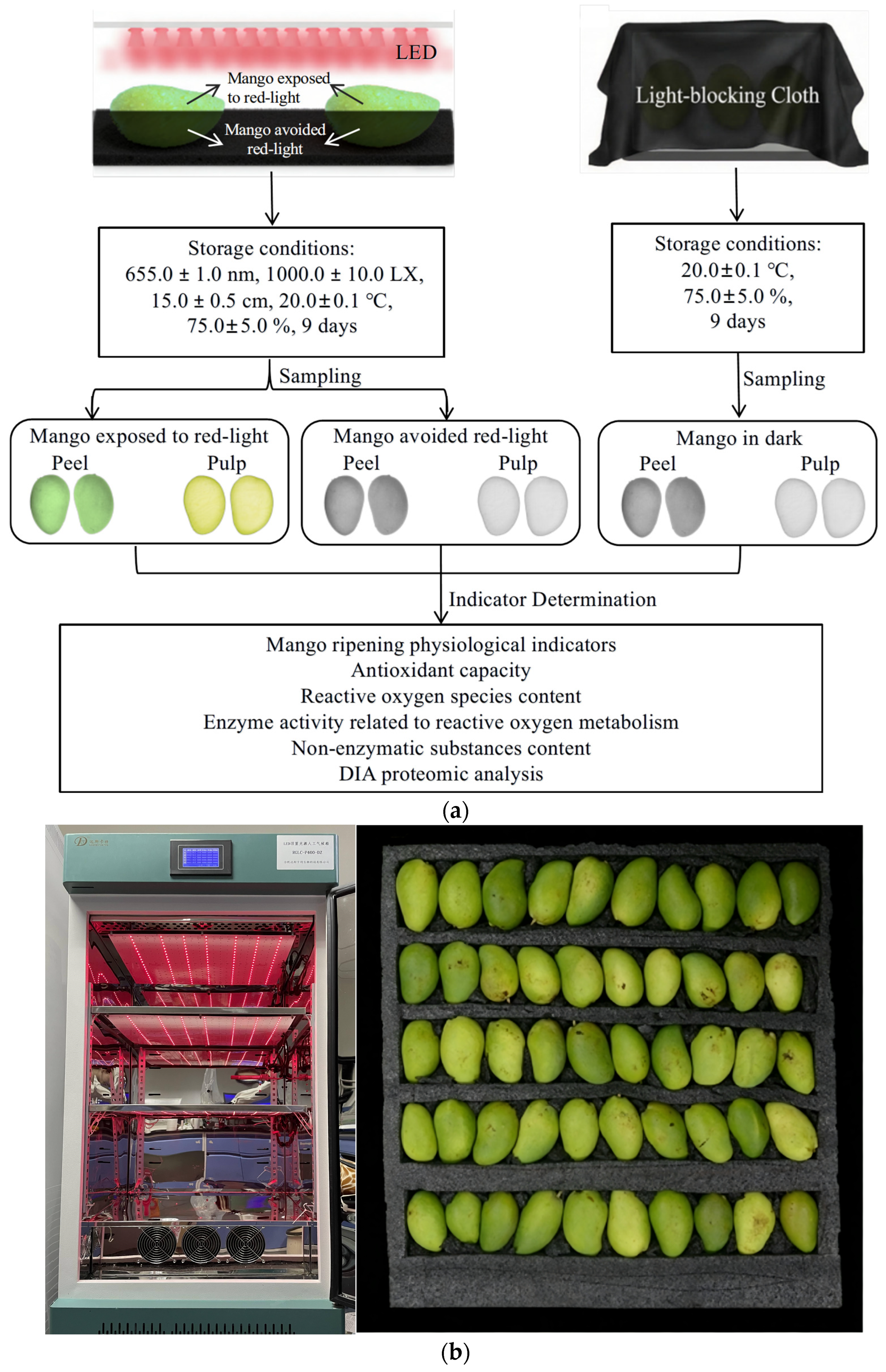
Mango exposed to red light and mango without red light: mangoes were laid flat and inlaid in black storage and transportation foam boards with holes punched according to the size of Tainong mangoes (with ventilation holes to prevent carbon dioxide damage during storage). After spreading the mangoes flat, the gaps between the fruits and the foam were filled with foam debris to effectively expose the upper part of the mangoes to the red light irradiation, which is the red light treatment irradiation surface. The lower part was completely shielded from light, that is, the non-irradiated surface of red light treatment.
After the foam board preparation was completed, the foam board with mangoes was placed in the artificial climate chamber. The chamber conditions were set as follows: humidity 75.0 ± 5.0%, temperature 20.0 ± 0.1 °C, light wavelength 655.0 ± 1.0 nm, light intensity 1000.0 ± 10.0 LX, and height between the LED lamp tube and the fruit 15.0 ± 0.5 cm. The chamber was continuously illuminated for 24 h during the experiment, and the outside of the chamber was sealed with shading cloth to avoid interference from external light sources.
A total of 324 mango fruits were selected for this experiment and randomly divided into two groups: mango in darkness and mango exposed to red light/mango without red light. Each group consisted of 162 fruits. Three independent experiments were conducted simultaneously, each consisting of 108 fruits, with 54 fruits in each of the dark group and the light group. On day 0, day 1, day 3, day 5, day 7, and day 9 after treatment, samples were collected at regular intervals. At each time point, 9 fruits were taken from each group. After sampling, the peel and pulp tissues of each group (mango in dark, mango exposed to red light, and mango without red light) were collected. The corresponding tissues from 9 fruits in the same treatment group at the same time point and within the same replicate were mixed, frozen in liquid nitrogen, ground into a uniform powder, and stored at −80 °C for subsequent index measurements (Figure 1).

2.3. Determination of Indicators Related to Mango Ripening

2.3.1. Determination of Hardness

The hardness measurement was based on the method of Liu et al. [19], with minor modifications. Fruit sections with a thickness of 1 cm near the equator of each fruit were selected. The hardness of the mango pulp in the dark control group, the red light treatment area, and the red light treatment non-irradiated area was measured using the Rapid-TA texture analyzer (Shanghai Tengba Instrument Technology Co., Ltd., Shanghai, China). The measurement conditions were as follows: the probe model was a P/10 cylindrical probe, the mode was TPA, 9 fruits were measured in each group, the hardness unit was N, and the average value of the measurement results was taken.

2.3.2. Determination of Total Color Difference

The color measurement was based on the method of Yang et al. [20] with minor modifications. The CHROMA METER SC-10 precision colorimeter (from Konica Minolta Sensing Co., Ltd., Tokyo, Japan) was used to measure the L*, a*, and b* values of the mango peel and pulp, where L 0 * ,   a 0 * ,   b 0 * represent the value of 0 days, and the total color difference (ΔE) was calculated. The calculation formula is as follows:
Δ E = ( L * L 0 * ) 2 + ( a * a 0 * ) 2 + ( b * b 0 * ) 2

2.3.3. Determination of Total Soluble Solids and Titratable Acid

Based on the method proposed by Xin et al. [21], with minor modifications, three groups of frozen samples were weighed separately at 5 g each and then ground thoroughly in a mortar. The entire fruit homogenate was transferred to a 100 mL volumetric flask and brought up to the mark with distilled water. The mixture was shaken, left to stand for 30 min, and then filtered. A 600 µL measure of the filtrate was measured using the PAL-BX ACID F5 digital refractometer (manufactured by ATAGO Company, Tokyo, Japan). The titratable acid (TA) content conversion coefficient was determined based on malic acid (%), and the total soluble solids (TSS) content conversion coefficient was determined based on soluble sugar (%). The measurement was repeated three times.

2.3.4. Determination of Respiratory Intensity and Ethylene Release

Following the method of Zhou et al. [22] with minor modifications, the F-950 portable ethylene analyzer (produced by Felix Company, San Jose City, CA, USA) was used to measure the ethylene release rate and respiratory intensity of mangoes over a certain period of time. Each group of experiments was repeated three times. Mango in darkness, mango exposed to red light and mango without red light were measured. Before the measurement, the mangoes were cut along the center line. In each measurement group, three cut mangoes were placed in a gas cylinder and sealed for 30 min. When the carbon dioxide and ethylene production of the fruit reached a certain concentration (within the detection limit), the ethylene release and respiration intensity of the fruit were detected by an ethylene analyzer. The unit of ethylene release is mg·kg−1·h−1, and the unit of respiratory intensity is mg·kg−1·h−1. The calculation formula is as follows:
R e s p i r a t o r y   i n t e n s i t y ( m g · k g 1 · h 1 ) = C a r b o n   D i o x i d e   P r o d u c t i o n × ( G a s   t a n k   v o l u m e F r u i t   v o l u m e ) F r u i t   q u a l i t y × A i r t i g h t   t i m e
E t h y l e n e   r e l e a s e ( m g · k g 1 · h 1 ) = E t h y l e n e   p r o d u c t i o n × ( G a s   t a n k   v o l u m e F r u i t   v o l u m e ) F r u i t   q u a l i t y × A i r t i g h t   t i m e

2.4. Determination of 1,1-Dipheny1-2-Picrylhydrazyl Radical Scavenging Capacity and Total Antioxidant Capacity

The free radical scavenging capacity of 1,1-dipheny1-2-picrylhydrazyl (DPPH) was determined according to the method proposed by Wei et al. [23] with a slight modification. Take 1 g of the frozen sample and put it into a test tube. Add 9 mL of 0.3 mmol/L DPPH ethanol solution, mix well, and place it in a 30 °C water bath for 1 h. Immediately cool to terminate the reaction. Use spectrophotometry and colorimetry (UV-2100UNICO ultraviolet-visible spectrophotometer, Shanghai Chemical Experiment Instrument Factory) to measure the absorbance at 517 nm. DPPH was calculated as the standard equivalent using Trolox. The DPPH free radical scavenging ability was expressed in μg Trolox/g.
The total antioxidant capacity (T-AOC) of the fruits was determined using the kit provided by Nanjing Jiancheng Biotechnology Research Institute [24]. One gram of the frozen sample was weighed and placed in a 10 mL centrifuge tube. Nine milliliters of 0.9% physiological saline was added and mixed well. The tube was then centrifuged at 12,000 r/min for 5 min to collect the supernatant. The corresponding reagents were added according to the steps in the kit manual. After mixing the samples, the absorbance was measured at a wavelength of 405 nm. The T-AOC was calculated based on Trolox as the standard equivalent, with the unit expressed as μmoL Trolox/g.

2.5. Determination of Hydrogen Peroxide and Superoxide Anion Content

The determination of H2O2 content was carried out according to the method of Xin et al. [21], with some modifications. Then grams of mango tissue was homogenized in 5 mL of cold acetone and then centrifuged at 10,000 r/min and 4 °C for 30 min. Approximately 1 mL of the supernatant was mixed with 0.1 mL of 22 mmoL/g titanium sulfate solution and 0.2 mL of ammonia solution, and then centrifuged at 10,000 r/min and 4 °C (TGL-16 gR high-speed refrigerated centrifuge, Shanghai Yitian Scientific Instrument Co., Ltd.) for 15 min. Subsequently, the precipitate was dissolved in 3 mL of 1 mol/L sulfuric acid and centrifuged at 10,000 r/min for 15 min, and its absorbance was measured at a wavelength of 405 nm. The unit of H2O2 content is mmoL/g.
Using the method of Xin et al. [25], the content of O 2 _ was determined and slightly modified. We weighed 2 g of mango tissue and placed it in a 10 mL centrifuge tube, then added 5 mL of 0.05 mol/L pH 7.8 phosphate-buffer solution (containing 0.001 mol/L ethylenediaminetetraacetic acid, 0.3% Triton X-100, 2% polyvinylpyrrolidone) and mixed. A centrifuge (4 °C, 10,000 r/min, 20 min) was used to collect the supernatant. The content of O 2 _ was determined using the Nanjing Jiancheng kit (Nanjing Jiancheng Biotechnology Institute, Nanjing, China). A total of 0.8 mL of the supernatant was mixed with an equal volume of Tris-HCl buffer solution (50 mmol/L, pH 8.2). The mixture was left to stand at 25 °C for 15 min, then 0.4 mL of 1.5 mmol/L gallic acid was added and thoroughly mixed. The absorbance value of the mixture at 550 nm was measured every 30 s (UV1800P ultraviolet-visible spectrophotometer, Mespada Instrument Co., Ltd., Shanghai, China) for 5 min. The unit of O 2 _ content is μmol/g.

2.6. Determination of the Activity of Ascorbate Peroxidase, Peroxidase, Superoxide Dismutase, and Catalase

The activities of SOD, CAT, ascorbate peroxidase (APX) and POD in the fruits were detected using the kit developed in Nanjing. One gram of the sample was weighed and placed in a 10 mL centrifuge tube. Five milliliters of 0.1 mol/L pH 7.5 phosphate-buffer solution (containing 0.005 mol/L dithiothreitol and 5% polyvinylpyrrolidone by mass fraction) was added and mixed well. Then, the tube was centrifuged (4 °C, 10,000 r/min) for 30 min, and the supernatant was collected for the determination of the activity of enzymes related to ROS metabolism. One unit of each enzyme activity was defined as the increase in absorbance per minute for 1 g of fresh mango fruit sample. All the enzyme activity units were U/g and were measured based on the wet mass of the sample.

2.7. Determination of Total Phenols, Total Flavonoids and Ascorbic Acid Content

The determination of total phenols (TP), total flavonoids (TF) and ascorbic acid (AsA) content in fruits was carried out using the method, with minor modifications [19]. One gram of the sample was weighed and placed in a 10 mL centrifuge tube. Five milliliters of 0.1 mol/L pH 7.5 phosphoric acid buffer solution (containing 0.005 mol/L dithiothreitol and 5% polyvinylpyrrolidone by mass fraction) was added and mixed well. The tube was then centrifuged (4 °C, 10,000 r/min) for 30 min, and the supernatant was collected for the determination of TP, TF and AsA content. The content of TP is expressed in μmoL/g, the content of TF is expressed in mg/g, and the content of AsA is expressed in μg/g.

2.8. Proteomics Analysis

High-throughput data-independent acquisition (DIA) proteomic analysis of mango exposed to red light and mango without red light was conducted by Majorbio Bio-Pharm Technology Co., Ltd. (Shanghai, China). Frozen mango pulp was lysed in 8 M urea + 1% sodium dodecyl sulfate buffer with protease inhibitor cocktail, followed by grinding, low-temperature sonication, and centrifugation at 14,000 r/min for 15 min at 8 °C. Protein concentration in the supernatant was determined via the Bicinchoninic Acid (BCA) method. A 100 μg aliquot of protein was reduced with Tris(2-carboxyethyl)phosphine, alkylated with Iodoacetamide, acetone-precipitated, and digested overnight at 37 °C with trypsin at a 1:50 enzyme-to-protein ratio. The digested peptides were desalted, quantified, and separated by high-performance liquid chromatography, and data were acquired in DIA mode on an Orbitrap Astral mass spectrometer (Shanghai Baiqu Biotechnology Co., Ltd., Shanghai, China). Raw data were processed in Spectronaut 19 against the Uniprot mango database, with the following core parameters: trypsin/P digestion, max 2 missed cleavages, fixed cysteine carbamidomethylation, variable methionine oxidation and protein N-terminal acetylation, and FDR ≤ 0.01 at protein and peptide levels.

2.9. Statistical Analysis

All experiments were performed with three independent biological and technical replicates (n = 3). The original data were sorted using Microsoft Excel 2019 software, and the average values and standard deviations were calculated. One-way analysis of variance (ANOVA) was conducted using SPSS 26.0 software. Post hoc multiple comparisons were performed using the least significant difference method (LSD), with p < 0.05 considered statistically significant. The significant differences were marked with lowercase letters in the charts. Graphs were drawn using Origin 2025 software.
All proteomics analyses were performed on the Majorbio Cloud Platform. Differentially expressed proteins (DEPs) were screened via Student’s t-test (p < 0.05, |FC| ≥ 1.2), followed by post hoc multiple comparison using Tukey’s HSD test. Subsequently, GO annotation, KEGG enrichment, and STRING protein–protein interaction analysis were conducted.

3. Results

3.1. Effects of Red Light Irradiation on Total Soluble Solids Content, Titratable Acid Content, Respiratory Intensity, Ethylene Release, Hardness and Total Color Difference in Mangoes

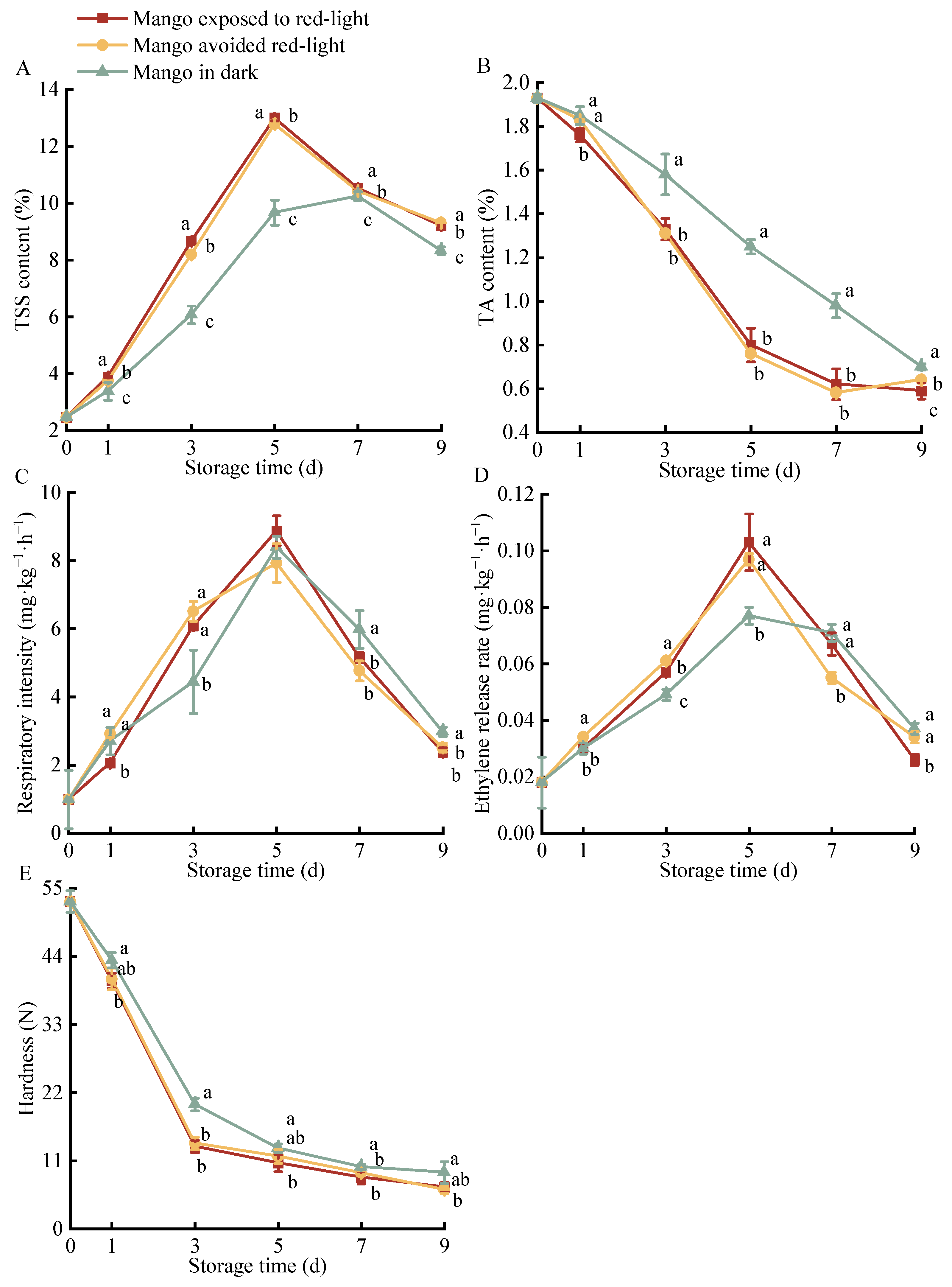
Mango exposed to red light, mango without red light and mango in darkness showed a trend of first increasing and then decreasing (Figure 2A). The peak contents of TSS for mango exposed to red light and mango without red light were 13% and 12.88%, respectively, which were significantly higher than those of mango in darkness (p < 0.05). Moreover, the content of TSS for mango exposed to red light was not significantly higher than that for mango without red light. The TA levels in the three different treatment groups all showed a continuous downward trend (Figure 2B). The TA content of both mango exposed to red light and mango without red light was significantly lower than that of mango in darkness (p < 0.05), and the TA content of mango exposed to red light was not significantly (p > 0.05) higher or lower than that mango without red light. The results show that the red light irradiation can significantly promote the accumulation of TSS during the ripening process of mango fruits, and the promoting effect is more pronounced for mango exposed to red light. It also has a significant promoting effect on the degradation of TA during the ripening process of mangoes. This is contrary to the research conclusion found by Jiang et al. [26] that blue light irradiation treatment can effectively inhibit the accumulation of TSS in lychees. This may be due to the different effects of different light treatments on different fruits. The respiratory rates (Figure 2C) and ethylene release amounts (Figure 2D) of mango exposed to red light, mango without red light and mango in darkness all showed an upward trend followed by a downward trend, and all reached their peak on the 5th day. The respiratory rates of mango exposed to red light and mango without red light were significantly higher than those of mango in darkness on the 3rd day (p < 0.05). Meanwhile, the ethylene release amounts of mango exposed to red light and mango without red light were significantly higher than those of mango in darkness from the 3rd to the 5th day. The peak value of mango exposed to red light reached 0.103 mg·kg−1·h−1, while mango in darkness only had 0.077 mg·kg−1·h−1. It can be seen that the exposure to red light has a significant impact on the peak increase in the respiratory rate and ethylene release of mangoes. This is consistent with the results of Zhang et al. [27], who conducted an irradiation experiment with red light on tomatoes, which promoted the increase in respiratory intensity during the fruit ripening process and accelerated the ripening process of the fruits. The fruit hardness of mango exposed to red light, mango without red light and mango in darkness all showed a continuous downward trend (Figure 2E). The hardness of both mango exposed to red light and mango without red light was lower than that of mango in dark, and the hardness of mango exposed to red light was significantly lower than that of mango in darkness (p < 0.05). This further indicates that red light irradiation treatment can promote the post-ripening of fruit ripening.
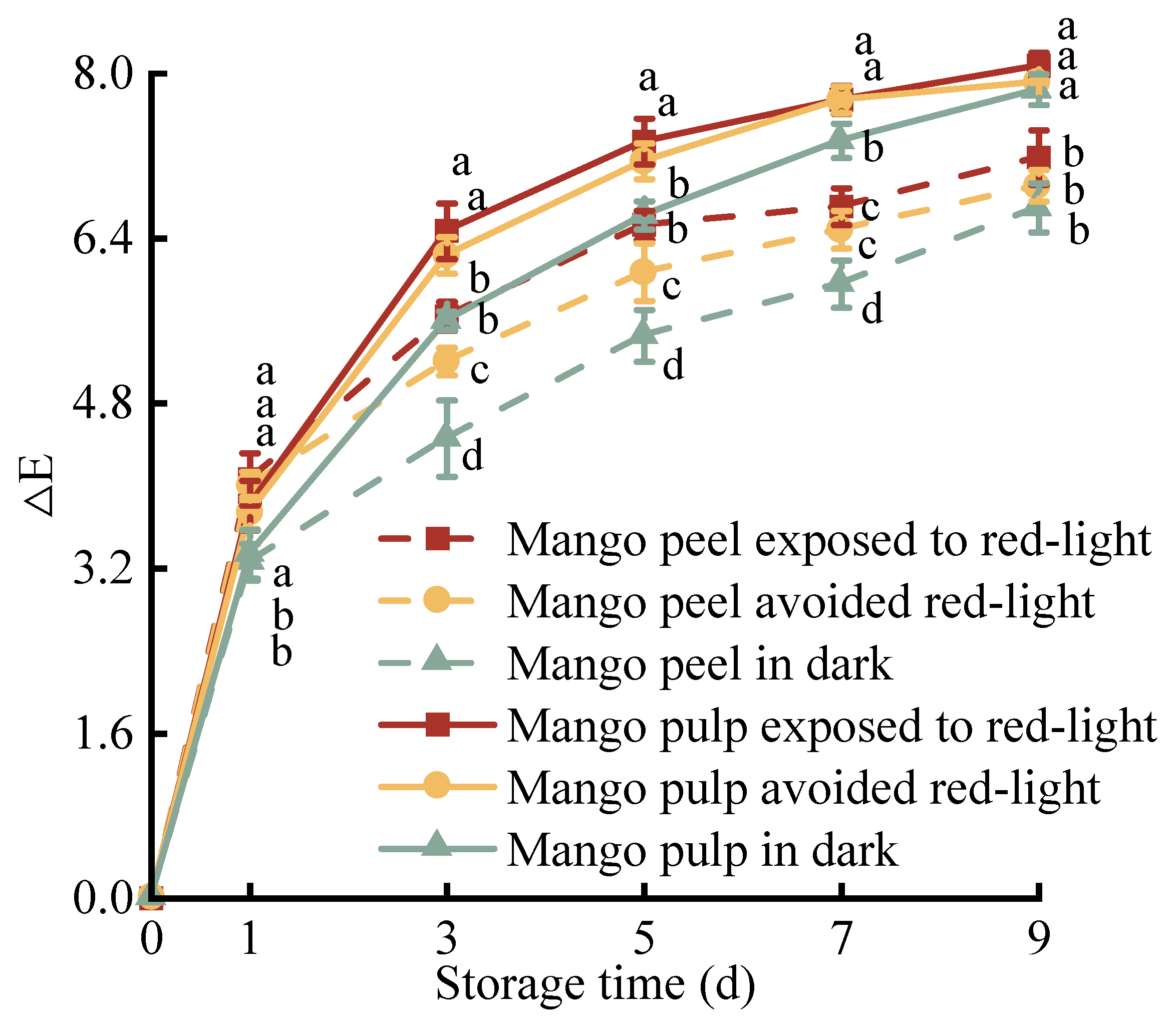
The total color differences (ΔE) of the mango peels and pulps in all treatment groups showed a continuous upward trend (Figure 3). The color change in the peels of mango exposed to red light after red light irradiation was more significant compared to mango without red light and mango in darkness (p < 0.05), while there was no significant difference in the total color differences in the pulps between mango exposed to red light and mango without red light. Both were significantly higher than those of mango in darkness (p < 0.05).

3.2. Effects of Red Light Irradiation on 1,1-Dipheny1-2-Picrylhydrazyl Radical Scavenging Capacity and Total Antioxidant Capacity of Mango

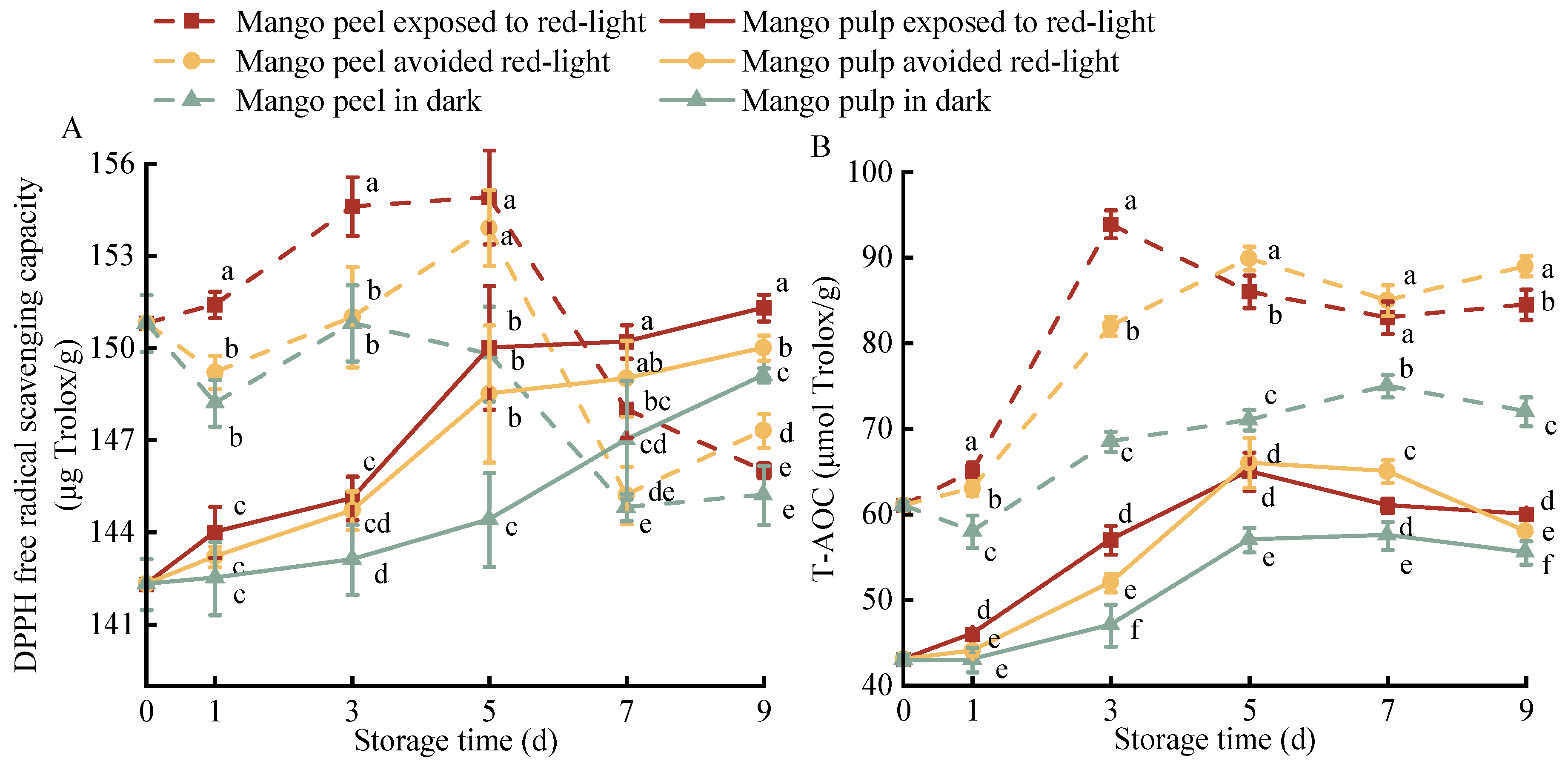
There were significant differences in the DPPH radical scavenging ability of mango peel and pulp after red light irradiation treatment (p < 0.05). The DPPH radical scavenging ability of mango peel reached the peak value of 154.9 μg Trolox/g on the 5th day after irradiation treatment, and the peak time was significantly later compared with mango in darkness (Figure 4A). On the 5th day, there was a significant difference between mango exposed to red light and mango without red light and mango in darkness in the mango peel (p < 0.05). The DPPH radical scavenging ability of mango exposed to red light, mango without red light and mango in darkness of mango peel all showed a continuous upward trend. And after the 3rd day, there were significant differences between mango exposed to red light and mango without red light and mango in darkness. The DPPH radical scavenging ability of mango pulp exposed to red light was 5.6 μg Trolox/g higher than that of mango pulp in darkness. From the above results, it can be concluded that the red light irradiation treatment can stimulate mango peel exposed to red light, first activating the DPPH free radical scavenging ability of the fruit peel, causing the peak date to shift later, and then transmitting to the pulp, resulting in a continuous increase in the DPPH free radical scavenging ability of the pulp; there was no significant difference in the DPPH free radical scavenging ability between mango exposed to red light and mango without red light during the red light irradiation treatment. This might be because the red light treatment accelerated the ripening of mangoes, resulting in oxidative damage to the mango peel. The peak shift might be due to the replenishment of phenolic substances that were degraded during storage due to environmental factors [28]. The total antioxidant capacity (T-AOC) of both the mango peel and pulp showed an upward trend followed by a downward trend after red light treatment. However, the T-AOC of the peel was much higher than that of the pulp (Figure 4B). The peak values of T-AOC in mangoes affected by red light exposure were all advanced to varying degrees. The T-AOC of mango peel exposed to red light reached its peak on the 3rd day, relative to the mango peel in darkness, 4 days earlier. The T-AOC of mango peel without red light reached its peak on the 5th day, relative to mango peel in darkness, 2 days earlier. After the 5th day, the T-AOC of mango peel without red light began to exceed that of mango peel exposed to red light. From the above results, it can be concluded that red light irradiation promoted the earlier peak of T-AOC in mangoes and mainly affected the fruit peel of mangoes. The T-AOC of the fruits under red light irradiation treatment was increased. It is speculated that the reason might be that the light treatment promoted the accumulation of antioxidant substances such as phenols and flavonoids in mangoes, thereby significantly increasing the antioxidant activity of the mangoes under red light irradiation treatment and thereby enhancing the overall antioxidant capacity of the mangoes.

3.3. Effects of Red Light Irradiation on Hydrogen Peroxide and Superoxide Anion Content in Mango

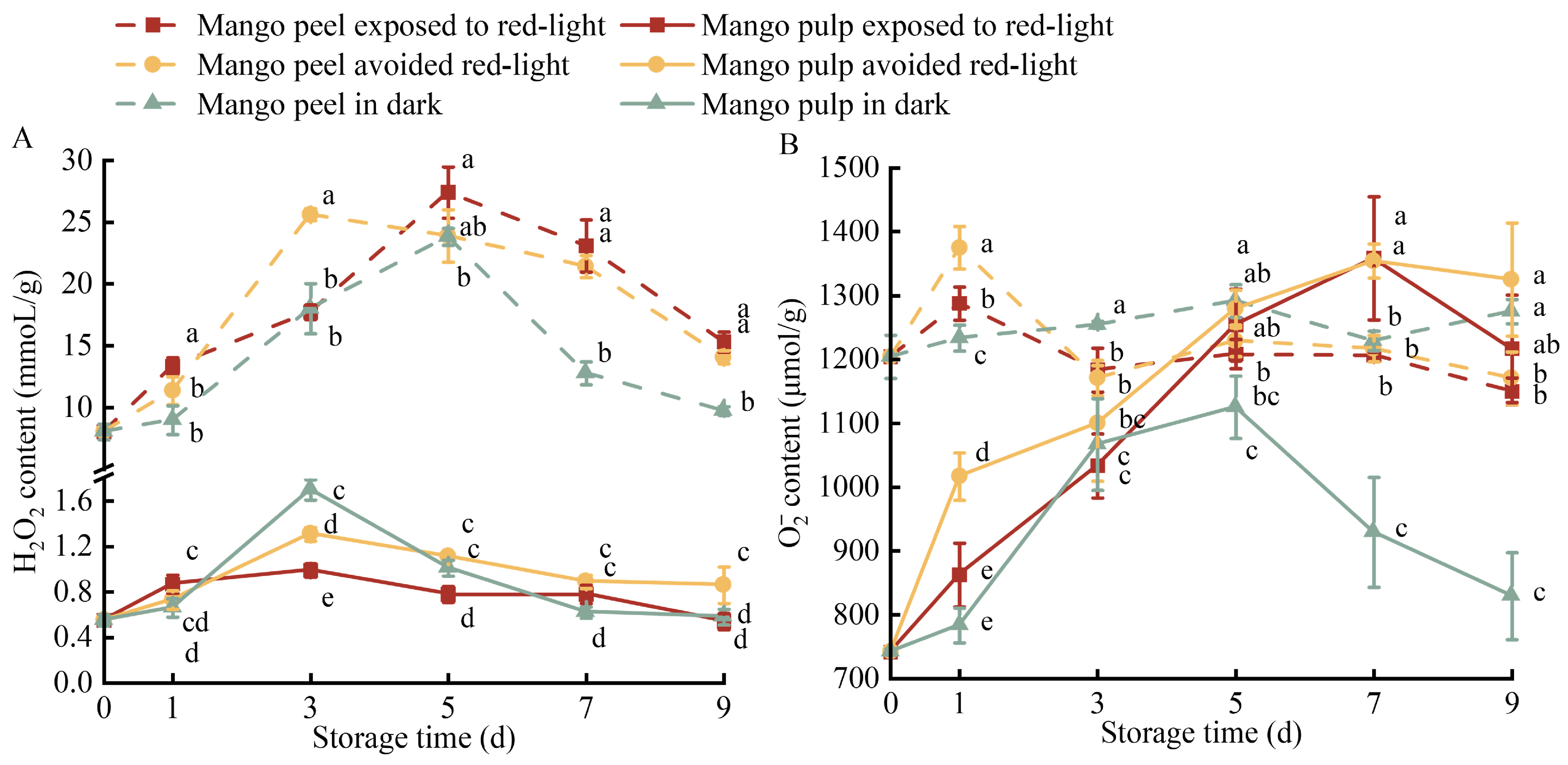
There was a significant difference in the H2O2 content (Figure 5A) of mango peel exposed to red light (p < 0.05), and it was higher than that of mango peel and pulp in darkness. Red light irradiation mainly stimulated the accumulation of H2O2 in the mango peel and promoted the peak accumulation of H2O2 of mango without red light to 25.6 mmoL/g. On the first day, the H2O2 content in mango peel exposed to red light was significantly higher than that of mango peel without red light and mango peel in darkness (p < 0.05). There was only a significant difference in H2O2 content between mango peel exposed to red light and mango peel without red light on the 3rd day (p < 0.05), with the content of mango peel without red light being 7.9 mmoL/g higher than that mango peel exposed to red light. The H2O2 content of mango pulp in darkness reached 1.7 mmoL/g on the 3rd day, which was significantly higher than that of mango pulp exposed to red light and mango pulp without red light (p < 0.05).
As shown in Figure 5B, on the 1st day of red light treatment, the content of O 2 of mango peel exposed to red light and mango peel without red light was significantly higher than that of mango peel in darkness (p < 0.05). On the 3rd day, there was no significant difference in the content of O 2 of mango pulp exposed to red light, mango pulp without red light and mango pulp in darkness (p > 0.05). However, after the 3rd day of red light exposure treatment, the O 2 content of mango pulp exposed to red light and mango pulp without red light was higher than that of mango pulp in darkness by 129.2 μmol/g and 154.5 μmol/g, respectively, showing a significant difference (p < 0.05). There were no significant differences in the O 2 content of mango pulp exposed to red light and mango peel and pulp without red light on the 5th day (p > 0.05). Red light exposure mainly stimulated the synthesis and accumulation rate of O 2 of mango pulp and surpassed the content of O 2 of the mango peel after the 5th day. From the above results, it can be concluded that the H2O2 content of mango peel exposed to red light is mainly affected. The red light irradiation causes a significant increase in the accumulation of H2O2 in mango peel exposed to red light. The red light treatment also significantly enhances the content of O 2 in the fruit pulp and causes certain damage to the fruit pulp. H2O2 and O 2 are not only toxic by-products in the ROS metabolism of plants but also important signaling factors regulating plant metabolic functions [29]. The mangoes treated with red light had relatively high levels of H2O2 and O 2 content in the later stage of storage, and these values fluctuated greatly. This might be because the red light irradiation treatment induced the fruit to produce a large amount of ROS, thereby causing the fruit to undergo oxidative stress response, and subsequently activating other stimulating metabolic pathways within the mango. On one hand, H2O2- and O 2 -mediated signaling pathways would activate the synthesis of antioxidant substances within the fruit, enhancing the activity of antioxidant enzymes, thereby oxidizing and decomposing a portion of H2O2 [30]; on the other hand, the ROS signaling pathways and rates under different stimulation intensities are different, so the mangoes under red light irradiation treatment showed different rates of decline in the middle and later stages of storage [31]. The experimental results show that the H2O2 and O 2 content in mangoes after red light irradiation rose for a period of time and then decreased in the later stages of fruit ripening. This might be due to the fact that the red light irradiation treatment triggered special physiological and biochemical reactions in the fruits, enabling the fruits to better adapt to the stress response caused by red light irradiation.

3.4. Effects of Red Light Irradiation on the Activity of Ascorbate Peroxidase, Peroxidase, Superoxide Dismutase and Catalase in Mango

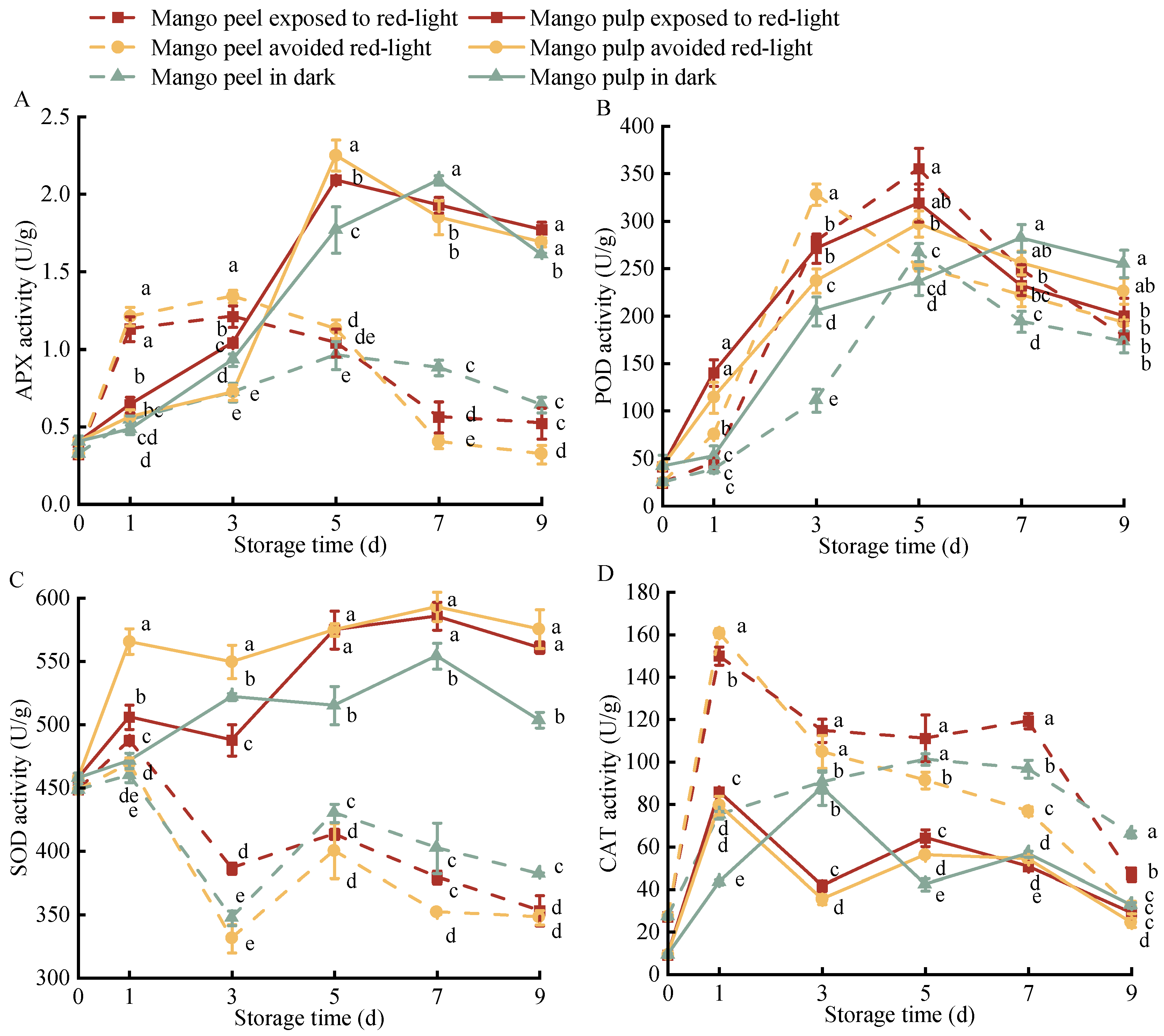
Figure 6 shows the effects of red light irradiation treatment on the activities of the main enzymes (APX, POD, SOD, CAT) involved in ROS metabolism in the peel and pulp of mangoes. Antioxidant enzymes can participate in the ROS cycling pathway to delay or avoid cell damage to the fruit caused by light exposure and act on the signal transduction process [32]. There were significant differences in the effects of red light irradiation treatment on the APX activity of the mango peel and pulp (p < 0.05). Light mainly stimulated the APX activity in the early storage stage of the mango peel and promoted the earlier occurrence of the peak of APX activity in the mango peel and pulp (Figure 6A). The APX activity of the fruit peels of mango exposed to red light, mango without red light and mango in darkness also showed a trend of increasing first and then decreasing over time. Before the 5th day, there was no significant difference in APX activity between mango peel exposed to red light and mango peel without red light (p < 0.05). Mango peel exposed to red light and mango peel without red light were significantly higher than that of mango peel in darkness (p < 0.05). However, after the 5th day, the APX activity of mango peel exposed to red light and mango peel without red light was respectively lower than that of mango peel in darkness by 0.08 U/g and 0.17 U/g. During the treatment period of the fruit pulp, on the 7th day, there was no significant difference in APX activity between mango pulp exposed to red light and mango pulp without red light (p > 0.05), while the peak of APX activity of mango pulp in darkness was on the 7th day, reaching 2.09 U/g, and the APX activity was much higher than that of mango pulp exposed to red light and mango pulp without red light. After the red light treatment of the fruit, the APX activity of the fruit pulp significantly (p < 0.05) increased after the 5th day compared to the APX activity of the fruit peel, indicating that the red light treatment caused an increase in the H2O2 content in the fruit pulp. There was no significant difference in the effect of red light irradiation treatment on the POD activity (Figure 6B) of mango pulp and peel (p < 0.05). Except for the 1st day and 9th day, there were significant differences among the POD activity of mango exposed to red light, mango without red light and mango in darkness (p < 0.05). The POD activity of mango peel without red light reached the peak of 328 U/g on the 3rd day, while that of mango peel exposed to red light and mango peel in darkness reached the peak of 355 U/g and 267 U/g on the 5th day. During the red light irradiation treatment, except for the POD activity between mango pulp exposed to red light and mango pulp without red light on the 3rd day being without significant difference (p > 0.05), the peak of 282 U/g of mango pulp in darkness was on the 7th day, which was different from the peaks of 319 U/g and 297 U/g of mango pulp exposed to red light and mango pulp without red light on the 5th day. After red light irradiation treatment of the fruits, the POD activity of the pulp was lower than that of mango pulp in darkness on the 7th day, indicating that the red light irradiation treatment led to a decrease in the ability of the pulp to remove O 2 free radicals, resulting in O 2 accumulation and damage to the pulp. As shown in Figure 6C, there was a significant difference in the effect of red light irradiation treatment on the SOD activity of the mango peel and pulp (p < 0.05), and light mainly stimulated the SOD activity of the mango pulp during storage. After red light irradiation treatment, there were significant differences in SOD activity between mango peel exposed to red light and mango peel without red light and mango peel in darkness before the 5th day (p < 0.05). There was no significant difference in SOD activity between mango peel without red light and mango peel in darkness (p > 0.05). After the 5th day, mango peel exposed to red light and mango peel without red light only differed by 27.6 U/g on the 7th day, showing significant differences (p < 0.05). Under the red light treatment, there were significant differences in the SOD activity of mango pulp exposed to red light and mango pulp without red light and mango pulp in darkness before the 5th day (p < 0.05). The SOD activity of mango pulp without red light was significantly higher than that of mango pulp exposed to red light (p < 0.05). After the 5th day, there were no significant differences between mango pulp exposed to red light and mango pulp without red light (p > 0.05). Both of them showed significant differences from mango pulp in darkness (p < 0.05). It can be seen that red light irradiation treatment led to significant ROS damage in the pulp of mangoes. However, at the later stage of storage, the damage difference between mango pulp exposed to red light and mango pulp without red light was extremely small, indicating a decline in the ability to remove O 2 free radicals, resulting in O 2 accumulation and causing damage; however, red light irradiation treatment did not cause significant ROS damage to the peel during the ripening period. From Figure 6D, it can be seen that there is a significant difference in the effect of red light irradiation on the CAT activity of mango peel and pulp (p < 0.05). The light mainly stimulated the CAT activity of mango peel in the storage later stage and promoted the earlier appearance of the peak of CAT activity in both mango peel and pulp. The CAT activity of mango peel exposed to red light and mango peel without red light before the 7th day was significantly higher than that of mango peel in darkness (p < 0.05). Except for the 3rd and 7th days, the CAT activity of mango pulp exposed to red light and mango pulp without red light was significantly higher than that of mango pulp in darkness (p < 0.05). It can be seen that the red light irradiation treatment inhibits the ability of the peel to remove H2O2 free radicals and has basically no significant effect on the ability of the pulp to remove H2O2 free radicals during storage. However, red light irradiation leads to a decrease in the ability of the pulp to remove H2O2 free radicals. POD is the key enzyme responsible for color variation during the ripening process of mangoes. In the early storage stage, the activity of POD in mangoes increases. This may be because it acts as an inhibitor of H2O2, accelerating the browning reaction catalyzed by POD and causing changes in fruit color, while also reducing the oxidation rate of phenolic compounds. The activity of mango pulp POD significantly decreased in the later stage compared to the control group, suggesting that the POD activity in the early stage was mainly for antioxidation, while in the later stage, POD mainly participated in catalytic reactions, accelerating the occurrence of fruit browning. Red light treatment enables mangoes to maintain high antioxidant enzyme (APX, POD and SOD) activity during storage, effectively reducing the accumulation of H2O2 in mangoes. POD and CAT can reduce the damage of H2O2 to the cell membranes of mangoes, and red light irradiation may stimulate the enzyme system in plants for removing hydrogen peroxide, protecting tissues from oxidative stress and cell damage.

3.5. Effects of Red Light Irradiation on the Contents of Total Phenols, Total Flavonoids and Ascorbic Acid in Mango

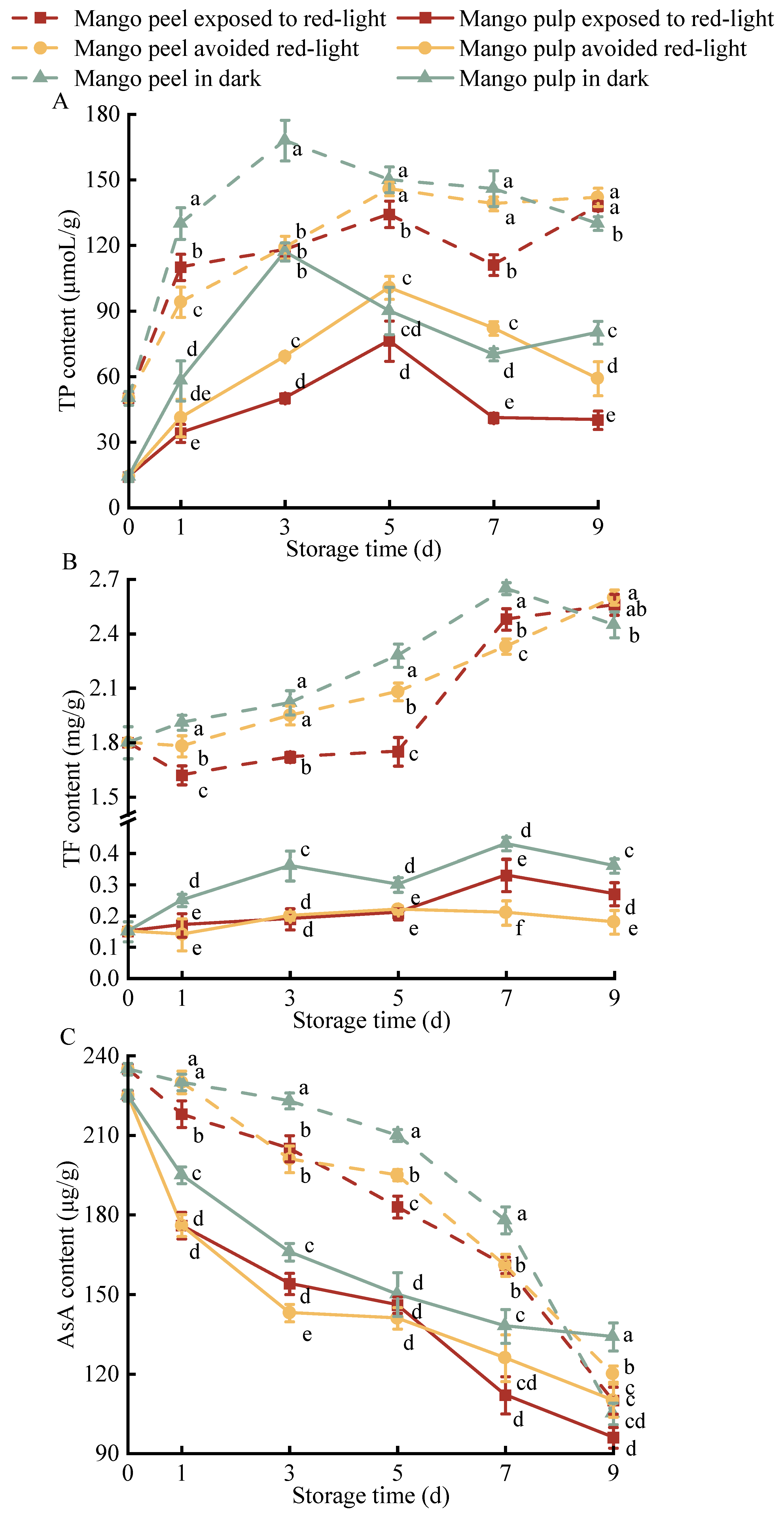
When the fruit is in an oxidative stress state, it will activate the enzyme and non-enzyme defense systems to remove the excessive ROS produced, thereby avoiding oxidative damage. The total phenols (TP), total flavonoids (TF), and ascorbic acid (AsA) are the main substances for non-enzymatic removal of ROS [33,34]. As shown in Figure 7A, the TP content in the mango peel after red light irradiation treatment was significantly higher than that in the mango pulp (p < 0.05), and the cumulative peak of TP synthesis in the peel and pulp was delayed compared to mango in darkness. Under light treatment, mango peel exposed to red light and mango peel without red light reached their peak values of 134.2 μmoL/g and 145.8 μmoL/g on the 5th day, respectively, which was 2 days later than mango peel in darkness. There was no significant difference between mango peel exposed to red light and mango peel without red light. In the mango pulp as well, mango pulp exposed to red light and mango pulp without red light reached their peak values of 76.2 μmoL/g and 100.6 μmoL/g on the 5th day, respectively, which was also 2 days later than mango pulp in darkness. However, neither exceeded the peak value of mango pulp in darkness. There were significant differences in the content of TF (Figure 7B) between the mango peel and pulp after red light irradiation treatment (p < 0.05). The red light treatment mainly stimulated the accumulation of TF in the peel. Mango peel exposed to red light and mango peel without red light both showed a continuous upward trend, while mango peel in darkness showed an initial increase followed by a decrease. Before the 7th day, the TF content of mango peel exposed to red light and mango peel without red light was significantly lower than that of mango peel in darkness (p < 0.05). Before the 5th day, there was no significant difference in the TF content between mango pulp exposed to red light and mango pulp without red light (p > 0.05), and it was significantly lower than that of mango pulp in darkness during the storage period of red light treatment (p < 0.05). As shown in Figure 7C, red light treatment led to a continuous decline in the AsA content of both the peel and pulp of mangoes over time. There was no significant difference between mango peel exposed to red light and mango peel without red light (p > 0.05), but the AsA content of mango peel exposed to red light and mango peel without red light was significantly lower than that of mango peel in darkness (p < 0.05). Similarly, there was no significant difference between mango pulp exposed to red light and mango pulp without red light (p > 0.05), but the AsA content of them was significantly lower than that of mango pulp in darkness (p < 0.05). From the above results, it can be seen that the TP content of mango exposed to red light decreased compared to mango in darkness, and mango pulp exposed to red light decreased more significantly. The red light treatment had a significant effect on the TP content in the pulp and peel of the fruits during the early storage period (p < 0.05). The phenolic compounds in the fruits may participate in the activities of scavenging ROS free radicals and reducing damage. The red light treatment caused the fruits to consume the TF and AsA in the pulp and peel to eliminate ROS free radicals and reduce damage as much as possible. This is consistent with the role of the natural antioxidant substances in the by-products of mango in responding to environmental stress [35]. It is possible that the reason is that phenolic substances are closely related to the color and flavor of the fruits, and the flavonoids are one of the important factors determining the color of fruits and vegetables. After mangoes were exposed to red light, a large amount of ROS was produced in the pulp, and some phenolic substances were completely oxidized into quinone substances. This indicates that the total phenolic content of mangoes will decrease after being exposed to red light, which delays the generation of ROS and slows down the enzymatic browning process. In addition, the antioxidant substances AsA and TP content of the fruits in the red light treatment decreased during storage, in order to maintain a higher DPPH free radical scavenging ability and reduce the production rate of O 2 substances in the fruits.

3.6. DIA Proteomics Analysis of the Effects of Red Light Irradiation on Mango

The DIA proteomics technology has significant advantages in revealing the molecular mechanism of red-light-induced ripening of mangoes, providing comprehensive and quantitative proteomics data to deeply analyze the biochemical process of post-harvest ripening of mangoes regulated by red light [5,36]. DIA proteomics detection was not performed on the CK group, as its proteomic changes only reflect the natural ripening state of mangoes and are of limited significance for screening key proteins involved in light-induced ROS signal transduction. Through DIA protein group analysis of “mango exposed to red light” and “mango without red light”, 10 key proteins involved in ROS signal transduction were screened out: P-glycoprotein 1 (P-gp1), auxin efflux carrier component (PIN3), 14-3-3 protein (Pro 14-3-3), Ras-related protein (Rab11), small GTP-binding protein (Rab5), guanine nucleotide dissociation inhibitor (GDI), serine/threonine kinase (STK), LRK-type receptor protein kinase (LRK-RLK), ubiquitin 10 (UBQ10), and reduced nicotinamide adenine dinucleotide phosphate (NADPH).
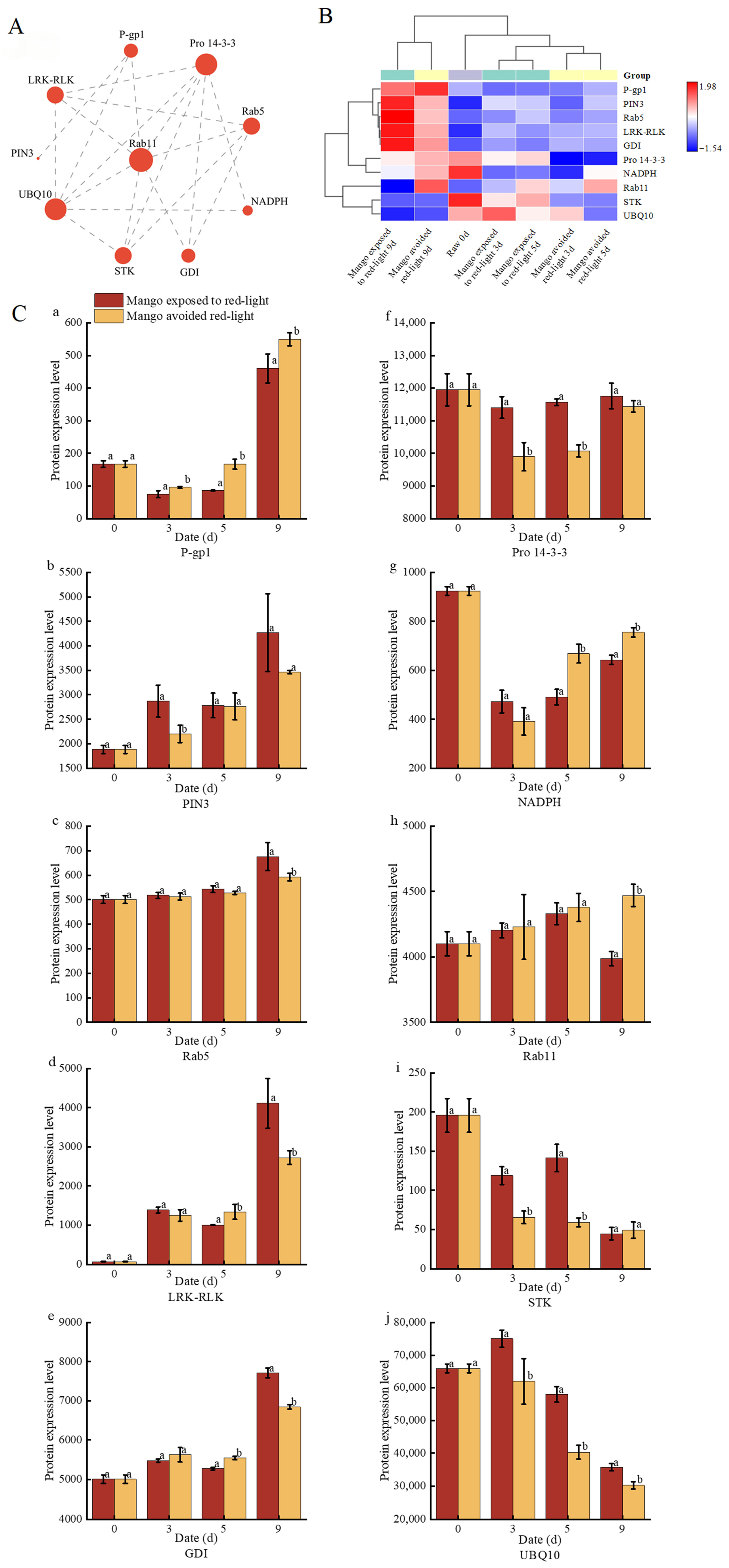
Protein interaction network analysis revealed that Rab-11, as the core switch of ROS signaling, can regulate all the key proteins except PIN3 and NADPH; Pro-14-3-3, a core receptor protein of ROS signaling, plays a crucial role in the network (Figure 8A). Among these, the membrane receptor kinase LRK-RLK directly interacts with the core hub Rab11. Under red light induction, it activates and rapidly transmits local signals; Pro-14-3-3 strongly interacts with Rab11, receiving and amplifying upstream signals, thereby strengthening the local induction effect of red light.
Figure 8B shows that the expressions of P-gp1, PIN3, Rab5, LRK-RLK, and GDI did not show any differences until 9th days after the experiment began. However, Pro-14-3-3, NADPH, Rab11, STK, and UBQ10 exhibited significant differences as early as the 3rd day and 5th day before the red light treatment. Rab11, Rab5, GDI, 14-3-3, and UBQ10 are constitutively highly expressed proteins. Their overall expression is higher at each time point compared to the control group. Among them, Rab11 begins to increase its expression when mango is exposed to red light for a 3rd day, and its expression level is higher than that of mango that avoids red light. The core differentially expressed proteins are LRK-RLK, STK, PIN3, and P-gp1. They show highly significant responses to treatment and time gradients. The heat map shows alternating red and blue colors. LRK-RLK expression increases at the 9th days, and mango exposed to red light has a higher expression level than mango without red light.
Figure 8C shows the dynamic changes in the expression levels of each protein. The expression of LRK-RLK changed the most dramatically (Figure 8(Cd)). The expression level at day 0 was only 69.88. After the 3rd day of red light treatment, it significantly increased. At the 9th day, the abundance of mango exposed to red light was 1399.83, which was slightly higher than that of mango without red light. The expression level of mango exposed to red light reached a peak of 4110.55 at the 9th day, which was 58.82 times higher than that at 0 days, and was significantly higher than that of mango without red light (p < 0.05). PIN3 began to increase in mango exposed to red light for a 3rd day (Figure 8(Cb)), with an abundance of 2869.19, which was significantly higher than that of mango without red light (p < 0.05). The abundance of mango exposed to red light remained high throughout the subsequent period. STK continuously decreased over time (Figure 8(Ci)), with a lower decrease in mango exposed to red light compared to mango without red light. The abundance of mango exposed to red light was significantly higher than that of mango without red light on the 3rd day and 5th day (p < 0.05). P-gp1 showed significant differences starting from the 3rd day (Figure 8(Ca)). The overall abundance on the irradiated surface was lower than that on the non-irradiated surface, and red light inhibited its expression. The NADPH concentration showed a trend of first decreasing and then increasing (Figure 8(Cg)). On the third day, the concentration in the irradiated area was 1.95 times lower than that in the non-irradiated area at day 0 and 2.36 times lower. On the fifth and ninth days, the concentration recovered. Rab11, the largest node in Figure 8A,(Ch), showed a stable and continuously high expression throughout the experiment, except on the 9th day, and it regulated the entire signaling network. Pro 14-3-3 (Figure 8(Cf)), UBQ10 (Figure 8(Cj)), Rab5 (Figure 8(Cc)), and GDI (Figure 8(Ce)) were all highly expressed throughout the entire period. The former two showed significant differences on the 3rd day, and their abundances on the irradiated side were higher than those on the non-irradiated side throughout the entire period. The latter two had higher abundances on the irradiated side than on the non-irradiated side only on the 9th day.

4. Discussion

This study utilized a self-made light-blocking device to effectively distinguish the irradiated and non-irradiated parts of mangoes that had been exposed to red light. The study systematically compared the differences between the two in terms of post-ripening physiology and ROS metabolism. The results showed that red light irradiation not only effectively promoted the changes in physiological indicators related to fruit ripening (such as color transformation and hardness softening) and ROS accumulation in the irradiated part of the mango peel and pulp, but more importantly, mango without red light also exhibited significant accumulation of ROS synthesis and post-ripening physiological changes. Further time-dependent analysis indicated that the accumulation rate of ROS synthesis in mango exposed to red light was slightly faster than that in mango without red light within the storage period of 0 to 3 days, suggesting that there is a time gradient for the regulation of ROS metabolism by light signals, from the irradiated area to the non-irradiated area. At the proteomics level, this study utilized DIA proteomic analysis to further reveal the molecular basis of this differential response. The results show that red light achieves its regulatory effect by specifically inducing the differential expression of key proteins in the mango exposed to red light in the ROS signaling pathway. Specifically, on the third day, the cumulative effect of the expression levels of red light ROS-related proteins in mango exposed to red light was significantly better than that in mango without red light, fully verifying the efficient activation effect of red light treatment on the directly exposed area. Mechanistically, the extremely significant upregulation of LRK-RLK in mango without red light was initiated by the Rab11 core hub, triggering an intracellular signal cascade, achieving signal amplification through Pro-14-3-3, and precisely regulating and maintaining the signal and homeostasis through PIN3 and STK. Furthermore, constitutively highly expressed proteins such as Rab11, Rab5, and GDI provide the structural support for the efficient and stable conduction of red light-induced redox signals. The expression patterns of these key proteins fully demonstrate that red light can effectively activate the intracellular redox signal regulatory network of the irradiated area.
Regarding the regulation of fruit and vegetable ripening and aging by light, previous studies have shown that the regulatory effect of LED light on the post-harvest quality of fruits and vegetables is closely related to ROS metabolism [37]. Light, as an environmental stress factor, can induce the synthesis of ROS and the response of the antioxidant system in fruits. In dragon fruit, red light exposure during the early stage of storage can enhance glycolysis, the tricarboxylic acid cycle, and the activity of antioxidant enzymes, resulting in a decrease in H2O2 content, while in the later stage of storage, it induces the production of a large number of resistance-related metabolites and enzyme activities [37]. Furthermore, the redox proteomics study of ROS during the ripening process of tomato fruits also revealed that the oxidation level of proteins in the later stage of ripening was generally higher than that in the earlier stage. ROS may regulate fruit ripening by targeting key enzymes (such as PG2A involved in cell wall degradation and E8 involved in ethylene synthesis) through oxidative post-translational modifications [38].
Regarding the signaling function of ROS within plant cells, numerous studies have provided ample evidence. In basic plant research, ROS is regarded as a systemic signal that can achieve self-propagation through a “ROS-induced ROS release” positive feedback loop. Fichman et al. [39] conducted research in Arabidopsis thaliana and directly confirmed that local light stress can trigger the systematic propagation of ROS waves, and this process depends on the participation of intercellular connection proteins. The research by Jiang et al. [40] further demonstrated that light perception not only triggers responses in the illuminated leaves but also can move through the HY5 protein as a systemic signal from the illuminated leaves to the non-illuminated leaves, coordinating the photoprotective responses of the distal tissues.
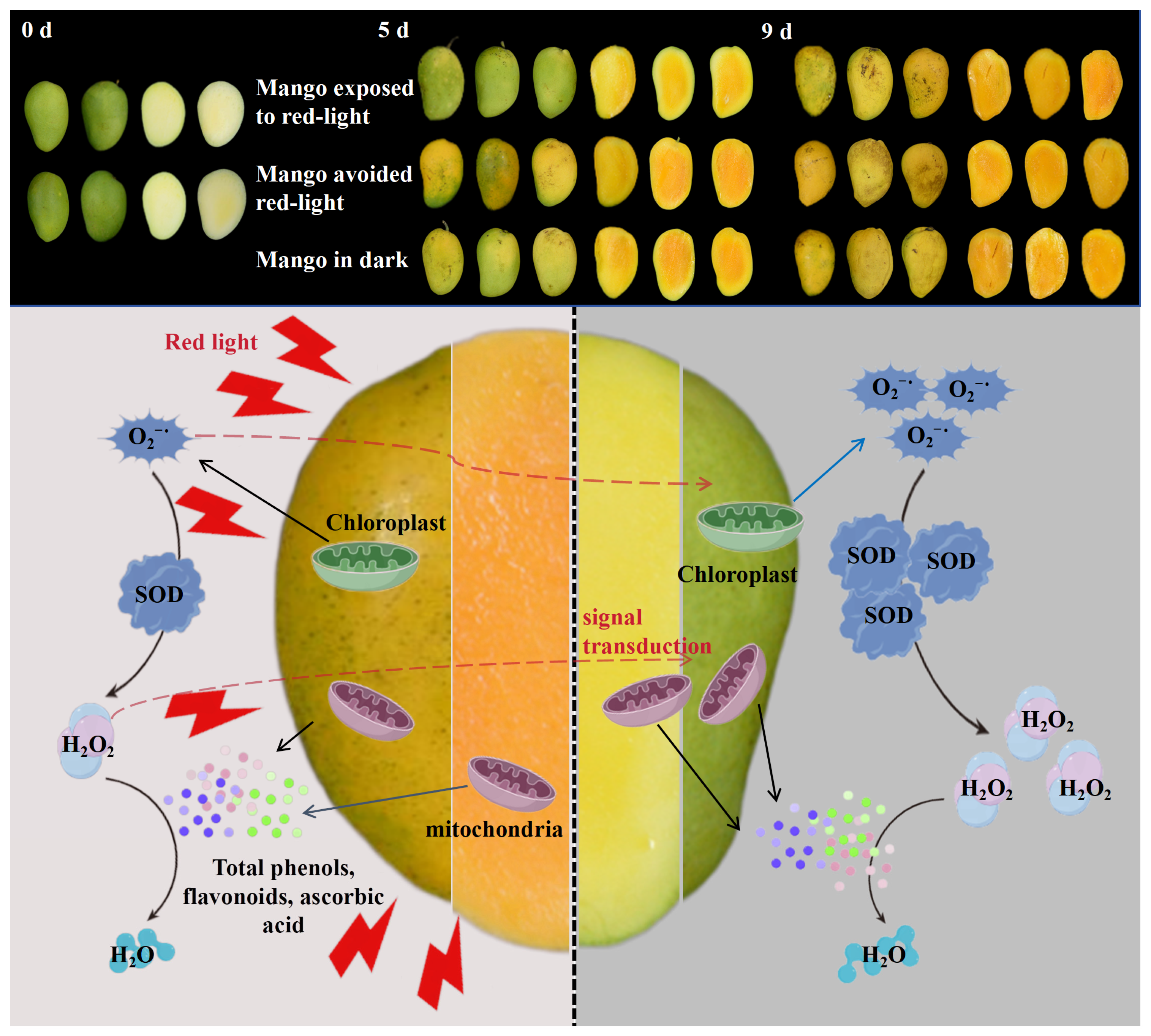
Finally, regarding the cross-tissue conduction of ROS from the illuminated surface to the non-illuminated surface, similar phenomena have been reported in previous studies. Light exposure can cause a significant increase in the ROS production level in the chloroplasts of the illuminated leaves, thereby activating the oxidative stress response of fruits and vegetables; at the same time, the mitochondria in the pulp will also initiate the production process of H2O2. After H2O2 combines with TP, TF, AsA and other substances released by the mitochondria, a complete ROS defense system is completed. During this process, the additional ROS and their metabolic intermediates can act as signaling molecules to induce effects on the unirradiated side, activating the complete ROS defense system in the distal tissues [41]. This cross-organ ROS signal transduction is not limited to leaves; it also exists in fruits. Post-harvest light treatment of mangoes can significantly induce the upregulation of light signals and pigment metabolism-related genes (such as MiHY5, MiMYB1, etc.) on the illuminated surface. These light signal pathway factors (especially HY5) have been confirmed to have long-distance movement and systemic signal transduction functions [40,42]. Furthermore, the explanation of this systemic conduction solely based on the diffusion of ROS is insufficient, as the half-life of ROS (especially O 2 and hydroxyl radical) is short and its diffusion distance is limited. In fact, the systemic signal transmission within the plant body is a complex network mediated by multiple signaling molecules. Existing studies have shown that the systematic propagation of ROS waves is often closely coupled with long-distance signaling pathways of electrical signals and plant hormones (such as ethylene, abscisic acid, salicylic acid, and jasmonic acid) [43]. The electrical signals induced by local stimulation can cause significant changes in hormone levels in distant tissues, and the hormone signals in turn can regulate the production and clearance of ROS [44]. Therefore, in this study, the ROS co-accumulation and post-ripening physiological changes observed in the mango without red light were not solely due to direct diffusion transmission of H2O2 as a signaling molecule. It is likely that it also involves systemic signal transduction pathways mediated by hormones such as ethylene. However, more results related to hormone synthesis are needed to support this conclusion in the future.
In the comprehensive study on the regulation of fruit quality by LED light, red light treatment can affect the overall ripening process of fruits by regulating the level of ROS metabolism. Based on the results of this study and the evidence from the aforementioned literature, we propose the following inference: red light exposure may synergistically regulate the ROS metabolism in all parts of mango through the “local induction—systemic transmission” dual pathways, thereby promoting the synchronous advancement of the overall ripening process of the fruit (Figure 9).

5. Conclusions

In this study, a self-made light-blocking device was used to systematically compare the differences and synergistic responses in post-ripening physiology and ROS metabolism between the illuminated and non-illuminated surfaces of mango tissues. The main conclusions obtained are as follows: (1) red light irradiation promoted the overall ripening of mangoes, and the difference in post-ripening between mango exposed to red light and mango without red light was extremely small. Although red light cannot directly penetrate the shielding cover, it can effectively promote the overall ripening of mango tissues on both the illuminated and non-illuminated surfaces, manifested as a decrease in the titratable acid content of the fruit as a whole, an increase in the soluble solids content, accelerated color change, and softening. (2) The red light had a rapid induction effect on the ROS metabolism of the irradiated surface, and the non-irradiated surface shows a synergistic response. The content of H2O2 and O 2 in mango exposed to red light was significantly activated within 1 day after red light treatment. The DPPH free radical scavenging ability and T-AOC of the peel and pulp significantly improved; the activities of APX, POD, CAT and SOD increased; and the accumulation of TP, TF, and AsA decreased. This indicates that red light effectively activated the ROS defense system of the irradiated surface and inhibited the ROS oxidative damage during ripening. It is noteworthy that the mango tissues of mango without red light also showed significant accumulation of ROS synthesis, enhanced antioxidant enzyme activity, and physiological changes during ripening, with the change trends being basically the same as those of the irradiated surface, except that the rate of ROS accumulation was slightly slower than that of the irradiated surface within 0–3 days, with a slight time lag. (3) The DIA proteomics analysis revealed the molecular basis of red light regulation of the ROS signaling pathway. Red light-specific induction caused differential expression of key proteins in the ROS signaling pathway on the irradiated surface. The cumulative effect of the expression levels of related proteins on the irradiated surface on the third day was significantly better than that on the non-irradiated surface. The extremely significantly upregulated LRK-RLK, including Rab11, Pro-14-3-3, PIN3, STK, Rab11, Rab5, and GDI, provides a framework support for the efficient and stable conduction of redox signals.
Based on the above results, this study proposes a possible pathway by which red light collaboratively regulates the ROS metabolism of mango through the “local induction—systemic conduction” dual pathways. Future research should further delve into the following aspects. First, shorten the sampling time interval to accurately capture the dynamic process and time window of the ROS signal transmission from the irradiated side to the non-irradiated side; second, combine metabolomics and transcriptomics to conduct multi-level comparative analysis of the dynamic changes in the synthesis and decomposition of key substances in the ROS metabolism pathway and the omics data, further analyzing the complete molecular regulatory network of “local induction—systemic conduction”; third, explore the effects of different light qualities, light intensities, and irradiation durations on the regulatory effects of these dual pathways, providing more precise parameter guidance for optimizing the post-harvest light treatment scheme of mango.

Author Contributions

Conceptualization: Y.T., N.J. and B.L.; Methodology: T.R.; Investigation: Y.T., L.J. and J.S.; Validation: Y.T., M.Z., R.W. and N.J.; Formal analysis: X.L.; Data curation: Q.L., X.L. and L.W.; Resources: C.F.; Writing—original draft: Y.T., M.Z., Q.L., X.L., C.F., L.W. and L.J.; Writing—review and editing: T.R., R.W., N.J., B.L. and J.S.; Project administration: B.L.; Funding acquisition: J.S. All authors have read and agreed to the published version of the manuscript.

Funding

This research was funded by Guangxi Department of Agriculture and Rural Affairs, grant number GKN AB2506910030; Academy of Agricultural Planning and Engineering, MARA, grant number SH202403.

Data Availability Statement

The original contributions presented in this study are included in the article. Further inquiries can be directed to the corresponding authors.

Acknowledgments

During the process of writing this manuscript, the author used the Bohrium version 1.23.1 (from Beijing Shenshi Technology Co., Ltd., Beijing, China) to create the diagrams. The author reviewed and edited the generated results and assumes full responsibility for the content of this publication.

Conflicts of Interest

The authors declare no conflicts of interest.

Abbreviations

The following abbreviations are used in this manuscript:
LEDLight-emitting diode
ROSReactive oxygen species
TSSTotal soluble solids
TATitratable acidity
∆ETotal color difference
DPPH1,1-dipheny1-2-picrylhydrazyl
T-AOCTotal antioxidant capacity
H2O2Hydrogen peroxide
O 2 Superoxide anion
APXAscorbate peroxidase
SODSuperoxide dismutase
PODPeroxidase
CATCatalase
TFTotal flavonoids
TPTotal phenols
AsAAscorbic acid

References

  1. Ben El Caid, M.; Singab, A.N.B.; El Asri, O.; Ait Hammou, R.; Ait Haddou, M.; Ramteke, V.; Menaa, F. Natural bioactive compounds for sustainable crop disease control. Eur. J. Plant Pathol. 2026, 1–21. [Google Scholar] [CrossRef]
  2. Qi, L.; Shi, Y.; Terzaghi, W.; Yang, S.; Li, J. Integration of light and temperature signaling pathways in plants. J. Integr. Plant Biol. 2022, 64, 393–411. [Google Scholar] [CrossRef] [PubMed]
  3. Yao, J.; Chen, W.; Fan, K. Recent advances in light irradiation for improving the preservation of fruits and vegetables: A review. Food Biosci. 2023, 56, 103206. [Google Scholar] [CrossRef]
  4. Liu, B.; Zhang, Y.; Ke, Z.; Sun, J.; Zhou, X.; Sun, J. Effects of LED light on the ripening regulation of green mature banana during storage and transportation. Trans. Chin. Soc. Agric. Eng. 2021, 37, 295–302. (In Chinese) [Google Scholar] [CrossRef]
  5. Xin, Q.; Sun, J.; Cheng, J.; Wang, R.; Ji, N.; Zeng, X.; Guo, S.; Li, J.; Jiang, L.; Zhou, X.; et al. Regulation of carotenoid synthesis and chlorophyll degradation in mangoes by red visible light irradiation during storage. LWT 2025, 239, 118883. [Google Scholar] [CrossRef]
  6. Liu, C.; Chen, C.; Jiang, A.; Sun, X.; Guan, Q.; Hu, W. Effects of plasma-activated water on microbial growth and storage quality of fresh-cut apple. Innov. Food Sci. Emerg. Technol. 2020, 59, 102256. [Google Scholar] [CrossRef]
  7. Dahal, K.; Vanlerberghe, G.C. Alternative oxidase respiration maintains both mitochondrial and chloroplast function during drought. New Phytol. 2017, 213, 560–571. [Google Scholar] [CrossRef]
  8. Guo, F.; Sun, Y.; An, R.; Luo, S.; Li, P. Effects of green light-emitting diode light treatment on the quality and antioxidant capacity of postharvest green cabbage (Brassica oleracea var. capitata L.). Jiangsu J. Agric. Sci. 2023, 39, 489–497. (In Chinese) [Google Scholar] [CrossRef]
  9. Mamat, A.; Tusong, K.; Xu, J. Identification of metabolic pathways related to rough-skinned fruit formation in Korla pear. Sci. Hortic. 2021, 288, 110414. [Google Scholar] [CrossRef]
  10. Muñoz, P.; Munné-Bosch, S. Photo-oxidative stress during leaf, flower and fruit development. Plant Physiol. 2018, 176, 1004–1014. [Google Scholar] [CrossRef] [PubMed]
  11. Gong, J.; Zhang, H.; Zeng, Y.; Cheng, Y.; Sun, X.; Wang, P. Combining BN-PAGE and microscopy techniques to investigate pigment-protein complexes and plastid transitions in citrus fruit. Plant Methods 2022, 18, 124. [Google Scholar] [CrossRef] [PubMed]
  12. Liu, B.; Fan, X.; Shu, C.; Wang, X.; Cao, J.; Jiang, W. Effect of Near Freezing Temperature Storage on the Shelf Quality of Apricots after Long Time Cold Storage. Food Sci. 2020, 41, 223–230. (In Chinese) [Google Scholar] [CrossRef]
  13. Huang, H.; Gu, L.; Li, M.; Zheng, Y.; Jin, P. Effect of Postharvest Melatonin Treatment on Quality and Reactive Oxygen Species Metabolism in Strawberry. Food Sci. 2021, 42, 187–193. (In Chinese) [Google Scholar] [CrossRef]
  14. Yuan, S.; Yan, J.; Wang, M.; Ding, X.; Zhang, Y.; Li, W.; Cao, J.; Jiang, W. Transcriptomic and metabolic profiling reveals ‘Green Ring’ and ‘Red Ring’ on jujube fruit upon postharvest Alternaria alternata infection. Plant Cell Physiol. 2019, 60, 844–861. [Google Scholar] [CrossRef] [PubMed]
  15. Zhou, T.; Hu, D.; Qiu, D.; Yu, S.; Huang, Y.; Sun, Z.; Sun, X.; Zhou, G.; Sun, T.; Peng, H. Analysis of Light Penetration Depth in Apple Tissues by Depth-Resolved Spatial-Frequency Domain Imaging. Foods 2023, 12, 1783. [Google Scholar] [CrossRef]
  16. Li, P.; Cheng, L. The shaded side of apple fruit becomes more sensitive to photoinhibition with fruit development. Physiol. Plant. 2008, 134, 282–292. [Google Scholar] [CrossRef]
  17. Yang, C.; Zhang, Y.; Yang, C.; Chen, J.; Yang, X.; Chen, C.; Kai, W.; Zeng, J.; Chen, M.; Gan, Z. Blue light inhibited postharvest softening of kiwifruit by modulating the reactive oxygen species scavenging system. Plant Physiol. Biochem. 2025, 227, 110182. [Google Scholar] [CrossRef]
  18. Xin, Q.; Liu, B.; Sun, J.; Feng, X.; Hao, G.; Tong, Y. Effect of LED red light irradiation on afterripening of four fruits. Storage Process 2022, 22, 20–28. (In Chinese) [Google Scholar] [CrossRef]
  19. Liu, B.; Zhao, H.; Fan, X.; Jiao, W.; Cao, J.; Jiang, W. Near freezing point temperature storage inhibits chilling injury and enhances the shelf life quality of apricots following long-time cold storage. J. Food Process. Preserv. 2019, 43, e13958. [Google Scholar] [CrossRef]
  20. Yang, L.; Cheng, J.; Cui, K.; Shen, X.; Liu, J.; Zhou, X.; Sun, J.; Guo, S.; Chen, Q.; Zhu, X.; et al. Inhibition of Enzymatic Browning in Freeze-thawed Apricot Fruit by Combined Chlorogenic Acid and Osmotic Dehydration Treatments. LWT 2024, 198, 116066. [Google Scholar] [CrossRef]
  21. Xin, Q.; Zhou, X.; Jiang, W.; Zhang, M.; Sun, J.; Cui, K.; Liu, Y.; Jiao, W.; Zhao, H.; Liu, B. Effects of Reactive Oxygen Levels on Chilling Injury and Storability in 21 Apricot Varieties from Different Production Areas in China. Foods 2023, 12, 2378. [Google Scholar] [CrossRef]
  22. Zhou, X.; Cheng, J.; Sun, J.; Guo, S.; Guo, X.; Chen, Q.; Wang, X.; Zhu, X.; Liu, B. Effect of red visible lighting on postharvest ripening of bananas via the regulation of energy metabolism. Horticulturae 2023, 9, 840. [Google Scholar] [CrossRef]
  23. Wei, X.; Liu, B.; Zhang, M.; Jiang, L.; Zhou, X.; Sun, J.; Zhao, S.; Hao, G. Effects of combined dehydration treatmentwith different biological-source cryoprotectants on the freeze-thawed quality of blueberries. Trans. Chin. Soc. Agric. Eng. (Trans. CSAE) 2024, 40, 271–279. (In Chinese) [Google Scholar] [CrossRef]
  24. Wang, L.; Liu, B.; Zhang, M.; Sun, J.; Zhou, X.; Cheng, J.; Guo, X.; Zeng, X.; Jiang, L. Effect of food-borne antagonistic bacteria-chitosan coating on reactive oxygen metabolism and pathogenesis during the shelf life of postharvest mango. Trans. Chin. Soc. Agric. Eng. (Trans. CSAE) 2024, 40, 250–260. (In Chinese) [Google Scholar] [CrossRef]
  25. Xin, Q.; Liu, B.; Sun, J.; Fan, X.; Li, X.; Jiang, L.; Hao, G.; Zhou, X. Heat shock treatment promoted callus formation on postharvest sweet potato by adjusting active oxygen and phenylpropanoid metabolism. Agriculture 2022, 12, 1351. [Google Scholar] [CrossRef]
  26. Jiang, H.; Chen, Y.; Chen, F.; Zhou, Z.; Zhang, J.; Luo, Z. Effects of Postharvest Quality of Different Litchi Varieties treated with Blue LED Light Combined with Modified Atmosphere Packaging. Mod. Food Sci. Technol. 2023, 39, 103. (In Chinese) [Google Scholar] [CrossRef]
  27. Zhang, J.; Zhang, Y.; Song, S.; Su, W.; Hao, Y.; Liu, H. Supplementary red light results in the earlier ripening of tomato fruit depending on ethylene production. Environ. Exp. Bot. 2020, 175, 104044. [Google Scholar] [CrossRef]
  28. Gumus, S.; Demirci, A.S. Survivability of probiotic strains, Lactobacillus fermentum CECT 5716 and Lactobacillus acidophilus DSM 20079 in grape juice and physico-chemical properties of the juice during refrigerated storage. Food Sci. Technol. 2022, 42, e08122. [Google Scholar] [CrossRef]
  29. Foyer, C.H. Reactive oxygen species, oxidative signaling and the regulation of photosynthesis. Environ. Exp. Bot. 2018, 154, 134–142. [Google Scholar] [CrossRef]
  30. Zhang, X.; Tang, X.; Wang, M.; Zhang, W.; Zhou, B.; Wang, Y. ROS and calcium signaling mediated pathways involved in stress responses of the marine microalgae Dunaliella salina to enhanced UV-B radiation. J. Photochem. Photobiol. B Biol. 2017, 173, 360–367. [Google Scholar] [CrossRef]
  31. Kang, C.H.; Yoon, E.K.; Muthusamy, M.; Kim, J.A.; Jeong, M.J.; Lee, S.I. Blue LED light irradiation enhances L-ascorbic acid content while reducing reactive oxygen species accumulation in Chinese cabbage seedlings. Sci. Hortic. 2020, 261, 108924. [Google Scholar] [CrossRef]
  32. Nimse, S.B.; Pal, D. Free radicals, natural antioxidants, and their reaction mechanisms. RSC Adv. 2015, 5, 27986–28006. [Google Scholar] [CrossRef]
  33. Vanoli, M.; Rizzolo, A.; Lovati, F.; Spinelli, L.; Levoni, P.; Torricelli, A.; Cortellino, G. Non-Destructive Prediction of Carotenoids, Ascorbic Acid, and Total Phenols Contents in ‘Tommy Atkins’ Mangoes Using Absorption and Scattering Properties Measured by Time-Resolved Reflectance Spectroscopy. Agriculture 2024, 14, 1902. [Google Scholar] [CrossRef]
  34. Liu, B.; Wang, Q.; Merino, D.; Ezati, P.; Pandi, A.; Goksen, G.; Tosif Mansuri, M.; Zhang, W.; Xia, G. Circular bioeconomy in packaging: Banana by-products as multifunctional food packaging film components. Trends Food Sci. Technol. 2025, 167, 105452. [Google Scholar] [CrossRef]
  35. Fang, G.; Liu, B.; Guo, J.; Goksen, G.; Tosif, M.M.; Jafarzade, S.; Ezati, P.; Pandi, A. Valorization of mango byproducts for sustainable active packaging: Advances in functionalized biopolymer films. Food Chem. X 2025, 30, 102961. [Google Scholar] [CrossRef]
  36. Li, F.; Tahir, M.M.; Yang, C.; Weng, Z.; Zhu, W.; Zhang, Y.; Zhou, K.; Deng, Q.; Qian, M.; Wu, H. Postharvest UV-A treatment promotes mango fruit pigmentation and ripening in a dose-dependent manner. Postharvest Biol. Technol. 2025, 230, 113836. [Google Scholar] [CrossRef]
  37. Wu, Q.; Gao, H.; Zhang, Z.; Li, T.; Qu, H.; Jiang, Y.; Yun, Z. Deciphering the Metabolic Pathways of Pitaya Peel after Postharvest Red Light Irradiation. Metabolites 2020, 10, 108. [Google Scholar] [CrossRef] [PubMed]
  38. Wang, P.; Li, X.; Wang, Y.; Wang, W.; Tian, S.; Qin, G. Redox proteomic analysis reveals the involvement of oxidative post-translational modification in tomato fruit ripening. Postharvest Biol. Technol. 2021, 178, 111556. [Google Scholar] [CrossRef]
  39. Fichman, Y.; Myers, R.J., Jr.; Grant, D.G.; Mittler, R. Plasmodesmata-localized proteins and ROS orchestrate light-induced rapid systemic signaling in Arabidopsis. Sci. Signal. 2021, 14, eabf0322. [Google Scholar] [CrossRef] [PubMed]
  40. Jiang, X.; Xu, J.; Lin, R.; Song, J.; Shao, S.; Yu, J.; Zhou, Y. Light-induced HY5 Functions as a Systemic Signal to Coordinate the Photoprotective Response to Light Fluctuation. Plant Physiol. 2020, 184, 1181–1193. [Google Scholar] [CrossRef]
  41. Peláez-Vico, M.Á.; Fichman, Y.; Zandalinas, S.I.; Van Breusegem, F.; Karpiński, S.M.; Mittler, R. ROS and redox regulation of cell-to-cell and systemic signaling in plants during stress. Free Radic. Biol. Med. 2022, 193, 354–362. [Google Scholar] [CrossRef] [PubMed]
  42. Zhu, W.; Wu, H.; Yang, C.; Shi, B.; Zheng, B.; Ma, X.; Zhou, K.; Qian, M. Postharvest light-induced flavonoids accumulation in mango (Mangifera indica L.) peel is associated with the up-regulation of flavonoids-related and light signal pathway genes. Front. Plant Sci. 2023, 14, 1136281. [Google Scholar] [CrossRef] [PubMed]
  43. Ladeynova, M.; Kuznetsova, D.; Mudrilov, M.; Vodeneev, V. Integration of Electrical Signals and Phytohormones in the Control of Systemic Response. Int. J. Mol. Sci. 2023, 24, 847. [Google Scholar] [CrossRef] [PubMed]
  44. Devireddy, A.R.; Tschaplinski, T.J.; Tuskan, G.A.; Muchero, W.; Chen, J.-G. Role of Reactive Oxygen Species and Hormones in Plant Responses to Temperature Changes. Int. J. Mol. Sci. 2021, 22, 8843. [Google Scholar] [CrossRef]
Figure 1. Schematic illustration of mango exposed to red light/mango without red light treatment (a) and physical picture (b). (a) Schematic diagram of red light irradiation treatment and sampling of different parts of mangoes; (b) physical picture of self-made light-shielding treatment in the light box.
Horticulturae 12 00615 g001
Figure 2. Effects of red light irradiation on mango TSS (A), TA (B), respiratory rate (C), ethylene release (D) and hardness (E). Data are the mean ± SE (n = 3). Different letters indicate statistically significant differences (p < 0.05).
Horticulturae 12 00615 g002
Figure 3. Effects of red light irradiation on mango. Data are the mean ± SE (n = 3). Different letters indicate statistically significant differences (p < 0.05). Note: ΔE: Total color difference.
Horticulturae 12 00615 g003
Figure 4. Effects of red light irradiation on mango DPPH free radical scavenging capacity (A) and T-AOC (B). Data are the mean ± SE (n = 3). Different letters indicate statistically significant differences (p < 0.05).
Horticulturae 12 00615 g004
Figure 5. Effects of red light irradiation on the content of H2O2 (A) and O 2 (B) in mango. Data are the mean ± SE (n = 3). Different letters indicate statistically significant differences (p < 0.05).
Horticulturae 12 00615 g005
Figure 6. Effects of red light irradiation on mango APX activity (A), POD activity (B), SOD activity (C) and CAT activity (D). Data are the mean ± SE (n = 3). Different letters indicate statistically significant differences (p < 0.05).
Horticulturae 12 00615 g006
Figure 7. Effects of red light irradiation on the content of TP (A), TF (B), and AsA (C) in mango. Data are the mean ± SE (n = 3). Different letters indicate statistically significant differences (p < 0.05).
Horticulturae 12 00615 g007
Figure 8. The interaction network of differential proteins (A), the expression heat map (B), and the expression levels of key differential proteins in the ROS signaling pathway (C) in mango exposed to red light and mango without red light. Note: (A) Protein–protein interaction network diagram of differentially expressed proteins; dashed lines indicate interactions between proteins, and node size represents the degree of connection; (B) clustered heatmap of differential protein expression levels, where red indicates high expression, blue indicates low expression, rows represent proteins, columns represent different treatment groups; the colored bars at the top of the heat map are the sample grouping markers. Cyan represents mango exposed to red light (3, 5, 9 days), light yellow represents mango without red light (3, 5, 9 days), and gray represents the initial control group (0 days). (C) bar chart of expression levels of key differentially expressed proteins involved in the ROS signaling pathway. (a) P-gp1; (b) PIN3; (c) Rab5; (d) LRK-RLK; (e) GDI; (f) Pro 14-3-3; (g) NADPH; (h) Rab11; (i) STK; (j) UBQ10; Data are the mean ± SE (n = 3). Different letters indicate statistically significant differences (p < 0.05).
Horticulturae 12 00615 g008
Figure 9. Derivation of the hypothesis of mango ROS signaling by red light irradiation treatment. Note: The black arrows indicate the direction of substance generation or transformation. The vertical dashed line divides the model into mango exposed to red light (left) and mango without red light (right). The horizontal dashed lines represent the intercellular signal transmission. The colored dots represent antioxidant metabolites, including total phenolic substances, flavonoids, and ascorbic acid. The chloroplasts and mitochondria are shown as the main sites of reactive oxygen production.
Horticulturae 12 00615 g009
Disclaimer/Publisher’s Note: The statements, opinions and data contained in all publications are solely those of the individual author(s) and contributor(s) and not of MDPI and/or the editor(s). MDPI and/or the editor(s) disclaim responsibility for any injury to people or property resulting from any ideas, methods, instructions or products referred to in the content.