Article

From Genetic Diversity to Economic Valorization: The Case of the ‘Zidi’ Fig Cultivar (Ficus carica L.) in the Region of Kesra, North-West Tunisia

by
Amine Guesmi
1,2,†,
Michele Antonio Savoia
3,†,
Faten Zaouay
2,
Sameh Rahmani Mnasri
1,4,
Francesco Luigi Aurelio
3,
Aziz Akkak
5,
Cinzia Montemurro
3,6,
Messaoud Mars
2,
Monica Marilena Miazzi
3,* and
Olfa Saddoud Debbabi
1,4
1
Banque Nationale de Gènes, Boulevard du Leader Yesser Arafet, Charguia 1, Tunis 1080, Tunisia
2
R.L. Agrobiodiversité & Ecotoxicologie (LR21AGR02), Institut Supérieur Agronomique de Chott-Mariem, IRESA-University of Sousse, B.P. 47, Chott-Mariem 4042, Tunisia
3
Department of Soil, Plant and Food Sciences (DISSPA), University of Bari Aldo Moro, Via Amendola 165/A, 70126 Bari, Italy
4
Laboratoire Production Oléicole Intégrée LR16 IO 03, Institut de l’Olivier, University of Sfax, Sfax 3029, Tunisia
5
Department of the Science of Agriculture, Food and Environment, University of Foggia, Via Napoli 25, 71122 Foggia, Italy
6
SINAGRI S.r.l.—Spin Off of the University of Bari Aldo Moro, Via Giovanni Amendola 65/a, 70126 Bari, Italy
*
Author to whom correspondence should be addressed.
These authors contributed equally to this work.
Horticulturae 2026, 12(5), 538; https://doi.org/10.3390/horticulturae12050538
Submission received: 17 March 2026 / Revised: 22 April 2026 / Accepted: 23 April 2026 / Published: 29 April 2026
(This article belongs to the Section Genetics, Genomics, Breeding, and Biotechnology (G2B2))

Abstract

The use of fresh and dried figs has increased markedly in Tunisia in recent years, leading to a rise in public subsidies to support the further development of fig cultivation, especially in well-adapted production areas and with the adoption of innovative agronomic practices. This study aimed to carry out a comprehensive morphological and genetic characterization of fig germplasm from the Kesra region in north-western Tunisia, which is widely recognized for its long-standing tradition of fig production, in particular of the ‘Zidi’ cultivar. Field surveys and prospections enabled the identification of 26 distinct local fig cultivars, which were morphologically characterized and genotyped using 12 microsatellite (SSR) markers. All cultivars showed a specific allelic profile, including ‘Zidi’. The results provided valuable information for the conservation and management of Tunisian fig genetic resources. Moreover, the data will support the valorization of local fig production in the area through the establishment of the Protected Designation of Origin (PDO) ‘Fig of Kesra’, thereby contributing to the sustainable development of traditional orchards and the preservation of local agrobiodiversity.

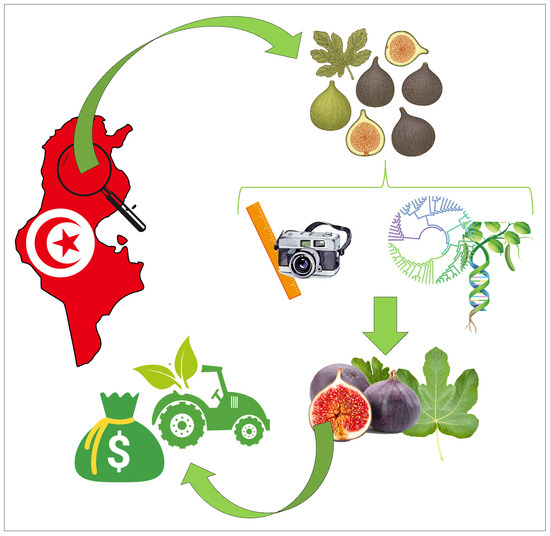
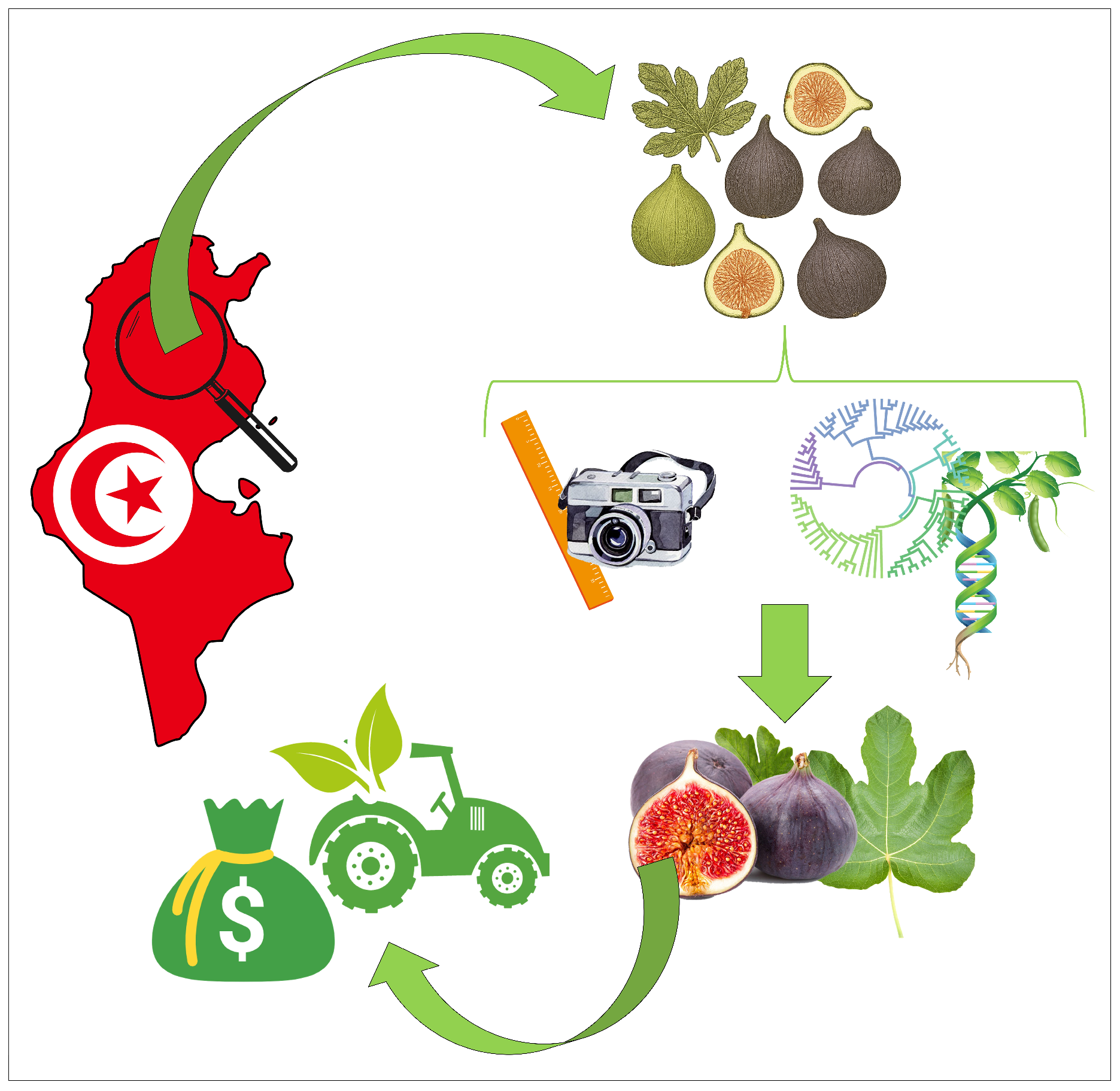
Graphical Abstract

1. Introduction

The fig tree (Ficus carica L.) (2n = 26) belongs to the mulberry family (Moraceae) within the genus Ficus, which includes more than 800 species [1]. The geographical origin of the fig remains debated: while [2] considered it native to the southwestern Mediterranean region, [3] identified Transcaucasia as the centre of origin and diversity, based on the presence of numerous transitional forms between wild and cultivated figs in the southern Caucasus. Botanically, fig is a gynodioecious species. In female trees, fruit set typically depends on pollination (caprification) by the wasp Blastophaga psenes L., which transfers pollen from male fig trees (caprifigs). Caprification has been practiced for centuries and traditionally involves placing male figs containing pollinating wasps onto female trees. Based on their reproductive system, fig cultivars are classified into four main types: Smyrna, San Pedro, common fig, and caprifig [4]. Smyrna figs require caprification and produce large, sweet fruits, whereas common figs set fruit without pollination. San Pedro figs produce two crops per year: the breba crop develops without pollination, while the main crop requires pollination. Their fruits are typically large and juicy, and have thin skin. Caprifigs do not produce edible fruits but play a crucial role as hosts for pollinating wasps. Their fruits are small and firm, contain numerous seeds, and are commonly grown near Smyrna or San Pedro figs to ensure effective pollination.
The fig tree is highly adaptable, thriving in hot, dry conditions, prolonged drought and poor soils, while preferring full sun and well-drained substrates. Long-lived and often centuries old, figs grow wild across the Mediterranean basin and play a key ecological role in maintaining ecosystem stability in semi-arid and arid environments [5].
Currently, Turkey, Egypt, Morocco, and Algeria are the leading fig-producing countries in the Mediterranean region [6]. However, Spain, Syria, Afghanistan, Brazil, and the United States also contribute substantially to global fig production. In Tunisia, fig cultivation covers approximately 37,774 ha under diverse environmental conditions, with an average annual production of 27,350 t reported in 2018. In particular, the mountainous Kesra El Olia region, located in the Tunisian Dorsal at approximately 1100 m above sea level, are renowned for both fig diversity and fruit quality. The Kesra region is well-defined, characterized by steep slopes, highly diversified soils, and a continental climate with cold winters and hot summers. Bioclimatic conditions range from subhumid to semi-arid, with average annual rainfall of 400–500 mm and relative humidity varying from approximately 40% during dry periods to 80% in wetter seasons. Despite these constraints, the region benefits from abundant water resources which support orchard irrigation, and allows a highly diversified polyculture system comprising fruit trees (olive, plum, pear, apple, cherry), vegetables, and horticultural crops. More than 20 locally named fig cultivars have been identified in the area, reflecting effective in situ conservation of local genetic resources. Among them, the cultivar ‘Zidi’ is the most widespread and highly appreciated, showing strong potential for commercial exploitation and representing a promising candidate for a future Protected Designation of Origin (PDO), ‘Fig of Kesra.’ PDO certification requires that products be produced, processed, and prepared entirely within a defined geographical area using recognized traditional know-how, with a demonstrated link between product quality and the local environment, and strict compliance with an approved production specification. However, the effective valorization of local germplasm requires more in-depth knowledge of fig genetic resources, overcoming current limitations in varietal identification, which still relies largely on morphological descriptors and only sporadically on molecular markers [7,8,9,10]. Simple sequence repeats (SSRs) are widely recognized as effective tools for crop true-to-type identification and traceability [11,12,13] and could play a key role in supporting the sustainable conservation and utilization of fig genetic resources [14,15,16,17,18,19].
The aim of this research was to characterize both morphologically and genetically the local fig cultivars of the Kesra region to support their preservation for sustainable use, with particular emphasis on the most widespread and valued ‘Zidi’ cultivar.

2. Materials and Methods

2.1. Plant Material

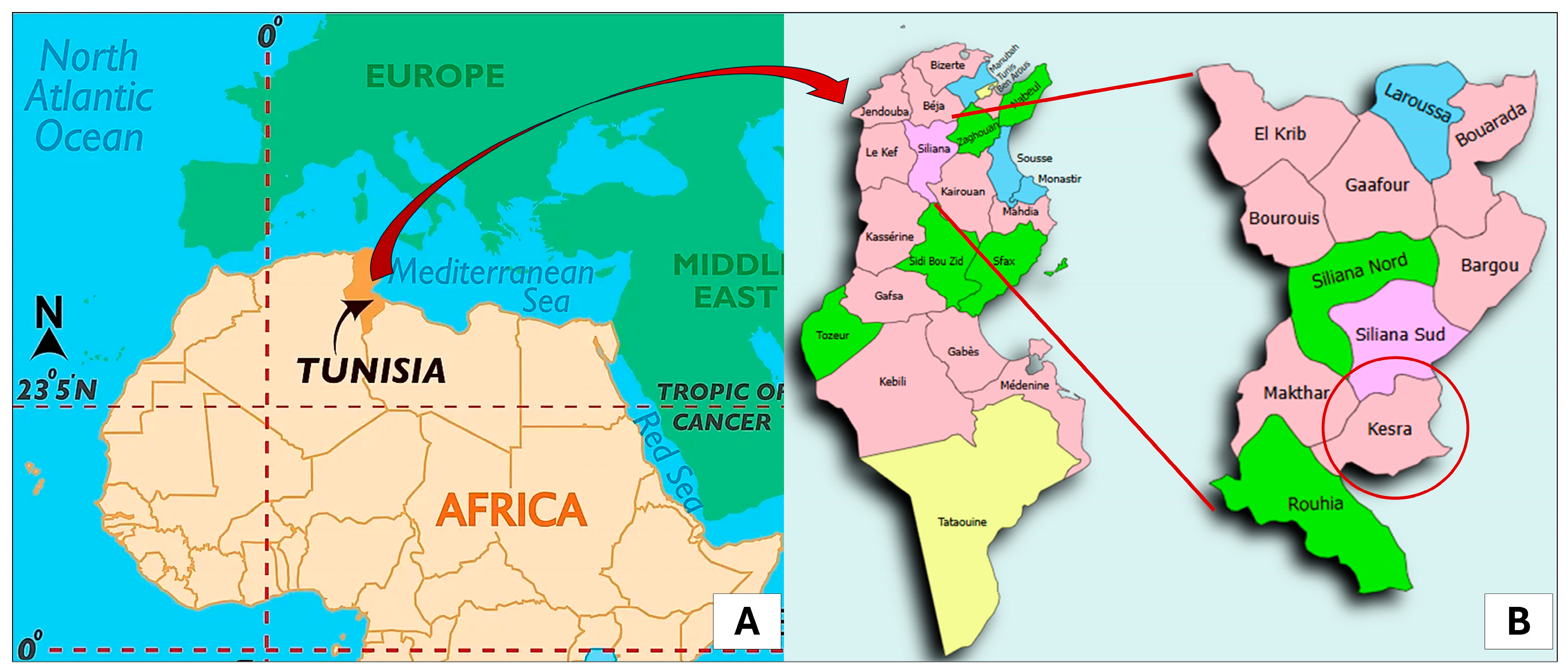
With the support of the local authorities, a comprehensive field prospection was carried out in 2022 in the Kesra region in the governorate of Siliana, north-west Tunisia, at an altitude of 1100 m above sea level (Figure 1). Farms involved in fig tree cultivation were identified and interviews with farmers were conducted to gather information on orchard management practices, cultivated varieties, production levels, and uses of fig fruits. Following the field survey, a total of 26 samples representative of the different types and cultivars grown in the area were collected (Table 1). Sampling was designed to capture the diversity present in the area while ensuring that each accession corresponded to a distinct, locally recognized cultivar.

2.2. Morphological Characterization

For morphological characterization, 20 fully developed leaves per sample were collected in late spring, while 26 fully ripened fruits were harvested between August and September. A total of seven descriptors—five quantitative and two qualitative—were assessed in accordance with the standardized descriptors established by the IPGRI-CIHEAM catalogue, including ‘leaf shape’ and ‘fruit shape’ (Supplementary Figures S1 and S2) [20]. Quantitative traits were measured in millimetres or grams and subsequently converted into categorical classes to facilitate comparison and analysis (Table 2).

2.3. Molecular Characterization

For genomic DNA extraction, young leaves were collected from each cultivar, immediately frozen and maintained at −20 °C until processing. Samples were lyophilized and finely ground using a TissueLyser (Thermo Fisher Scientific, Waltham, MA, USA), and DNA was extracted following the protocol described by [21]. DNA quality and concentration were assessed by electrophoresis on 0.8% agarose gel and by spectrophotometric analysis using a NanoDrop TM ND2000c (Thermo Fisher Scientific) spectrophotometer. DNA concentrations were standardized to 50 ng/μL using 0.1 X TE buffer (10 mM Tris–HCl pH 8.0 and 1 mM EDTA), and samples were stored at −20 °C until further use. Genotyping of the 26 samples was performed using a set of 12 SSR markers selected for their high informativeness in assessing fig genetic variability and for their ability to produce polymorphic, clear, and reproducible amplification profiles [22] (Supplementary Table S1). PCR reactions were performed in a final volume of 12.5 µL, containing 1× Dream Taq buffer, 0.15 mM dNTP, 0.25 μM primer mix, 0.3 U Dream Taq, and 50 ng genomic DNA. All PCR reagents were provided by Thermo Fisher Scientific. PCR products were prepared as described in [7] and separated using a SeqStudio Flex Genetic Analyzer (Applied Biosystems, Foster City, CA, USA) with GeneScan 600 LIZ as an internal size standard (Applied Biosystems). Alleles sizes were determined using GeneMapper v.5.0 software (Applied Biosystems).

2.4. Genetic Diversity

SSR markers exhibiting clear and distinct molecular patterns were used to estimate genetic diversity parameters using GenAlEx v.6.5 software [23]. The following indices were calculated: number of alleles (Na), effective number of alleles (Ne), Shannon’s information index (I), observed (Ho) and expected (He) heterozygosity, and fixation index (F). GenAlEx v. 6.5 was also used to perform Lynch and Ritland pairwise relatedness (LRM) analysis [24] in order to evaluate allelic similarity among genotypes and to identify potential cases of synonymy within the collection. Following [25], an identification key (Id) for unambiguous identification of the cultivar ‘Zidi’ was developed, and the parameters ‘confusion probability’ (Cj) and ‘discriminating power’ (Dj = 1 − Cj) were estimated for each SSR locus, based on the frequencies of SSR allele patterns observed across the fig collection.

2.5. Genetic Relationships of Tunisian Samples with International Varieties

To investigate the genetic relationships between Tunisian fig cultivars and other Mediterranean germplasms, SSR profiles of 44 varieties—including Apulian genotypes and Italian reference varieties retrieved from the UNIFG database—were analysed (Supplementary Table S2). Principal coordinate analysis (PCoA) was performed with GenAlEx based on Nei’s pairwise unbiased genetic distance matrix. In addition, an unweighted neighbour-joining tree was constructed with DARWIN v. 6.0.010 software (http://darwin.cirad.fr, accessed on 22 April 2026) [26] and the robustness of the branches was evaluated by bootstrap analysis with 1000 replicates [27]. The resulting dendrogram was visualized using FigTree software -v1.4.3 (http://tree.bio.ed.ac.uk/software/figtree/, accessed on 22 April 2026).
Population genetic structure was inferred using the Bayesian clustering approach implemented in STRUCTURE v. 2.3.4 software [28]. This method assigned accessions to a predefined number of populations (K) using a Markov Chain Monte Carlo (MCMC) algorithm. Ten independent runs were performed for each K value ranging from 1 to 10, with 100,000 MCMC iterations and 10,000 burn-in periods. The most likely number of clusters was determined using Structure Harvester software [29] based on the ad hoc statistic ΔK test [30]. Accessions with a membership coefficient (qi) greater than 0.5 were assigned to defined populations, whereas those with lower values were considered to have admixed ancestry [31].

3. Results

3.1. Morphological Diversity of Kesra Fig Accessions

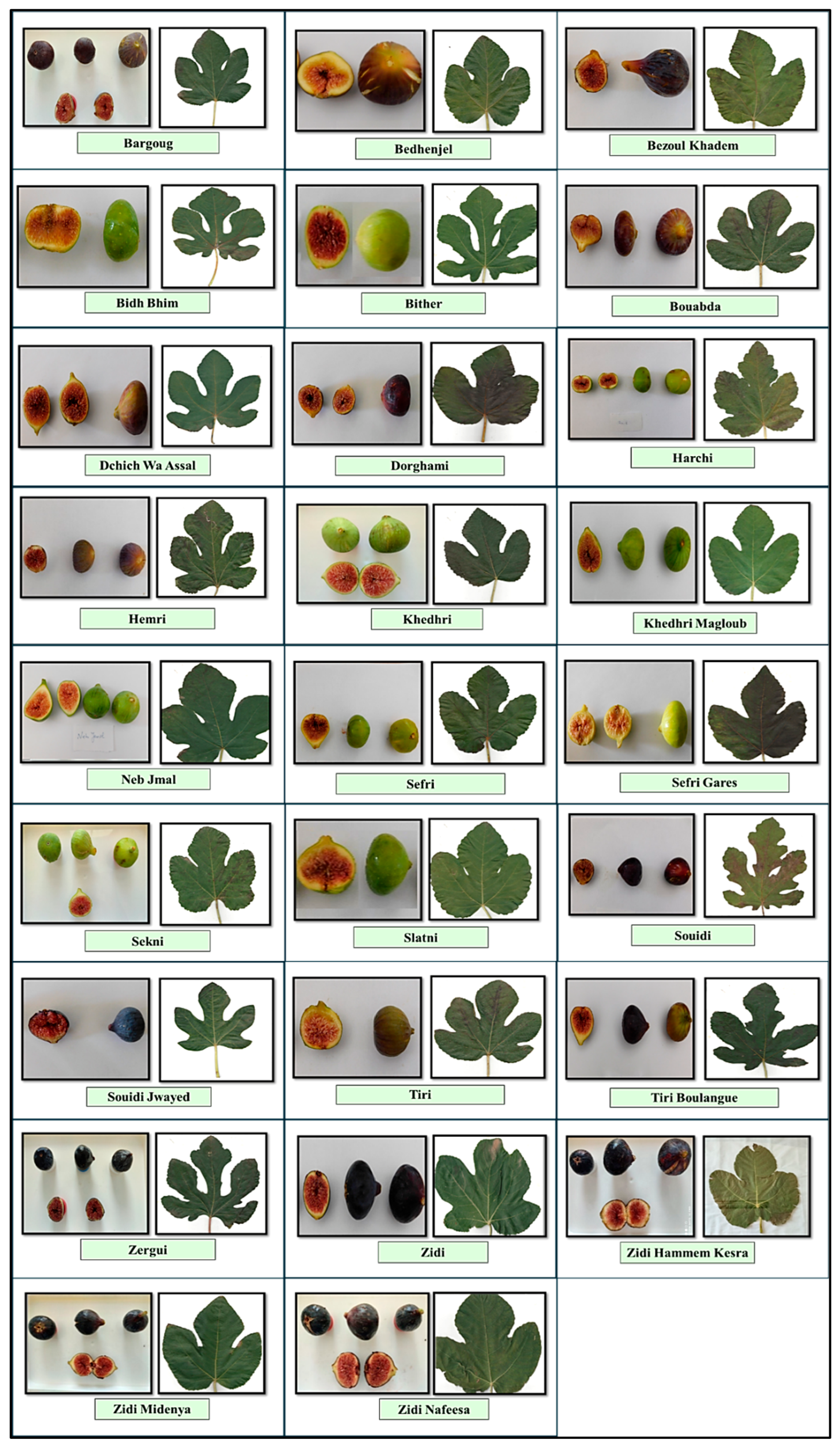
The fig accessions exhibited considerable variation in leaf and fruit morphological traits (Table 3, Figure 2). Leaves were distributed in four out of the eight different classes (Table 3A, Figure 2 and Figure S1). Type A, characterized by a calcarate base and linear lobe, included the accessions ‘Bidh Bhim’, ‘Bither’, ‘Souidi’, ‘Tiri Boulanegue’ and ‘Zergui’; Type B, defined by a cordate base and spatulate lobes, comprised the accessions ‘Bargoug’, ‘Bouabda’, ‘Dchich Wa Assal’, ‘Hemri’, ‘Neb Jmal’, ‘Souidi Jwayed’ and ‘Tiri’. Type C, characterized by a calcarate base and lyrate lobes, was represented by the single accession ‘Harchi’. Type E, defined by a cordate base and three lobes, included most of the accessions, including ‘Zidi’, ‘Zidi Hammem Kesra, ‘Zidi’ Midenya’ and ‘Zidi Nafessa’.
Fruits were diverse in colour, ranging from violet/black shades (30.8%) to yellow with a red flush (23.1%) and uniform yellow (15.4%) (Table 3B). They were predominantly oblate and lightweight (57.7%), with a medium to large diameter. Pulp colour varied from brown (15.4%) to red (7.7%), dark purple (3.8%), and light green (3.8%). Most fruits had medium skin thickness with generally absent cracking (61.5%), while the ostiole was mostly very large in diameter (65.4%) but semi-closed (57.7%). ‘Zidi’ varieties were overall different, being characterized by large, violet-black fruits with thick skin and large opened ostioles. Only Bither, Bouabda and Hemri had an open ostiole, a trait shared with the four ‘Zidi’ accessions.

3.2. Genetic Diversity of Kesra Fig Accessions

The SSR markers generated clear and reproducible PCR banding patterns across all samples, enabling reliable discrimination between homozygous (single allele) and heterozygous (two alleles) genotypes (Table 4). Overall, 303 alleles were detected, with the number of alleles per locus (Na) ranging from two (at loci UFFc5, UFFc8 and UFFc10) to six (at loci UFFc1 and UFFc9). The effective number of alleles (Ne) varies from 1.16 at locus UFFc10 to 4.56 at UFFc9.
Locus UFFc10 exhibited the lowest polymorphic information content (PIC) (0.13), which indicates a reduced discriminatory capacity among the analysed genotypes. In contrast, loci UFFc1, UFFc2, and UFFc9 showed PIC values higher than 0.5, a threshold generally considered indicative of highly informative markers, resulting in a strong ability to distinguish the analysed individuals [32]. The collection expressed a mean Shannon’s information index (I) of 0.86, and an average observed heterozygosity (Ho) of 0.54, slightly higher than the average expected heterozygosity (He = 0.49). The resulting fixation index (F), close to zero (Table 4), indicated a minor deviation from Hardy–Weinberg equilibrium, suggesting possible hybridization or migration events generating variation that was subsequently selected and maintained by farmers.
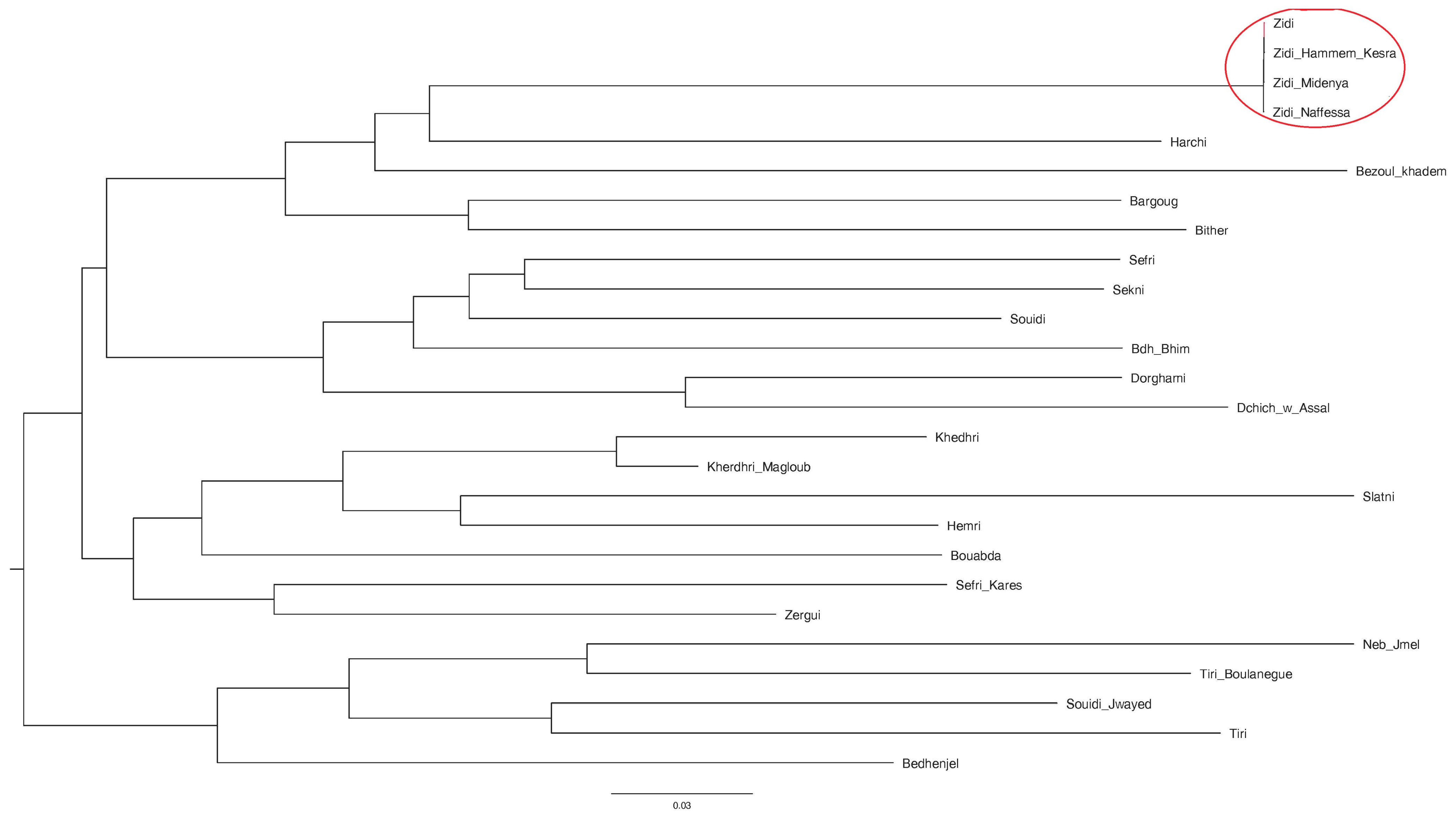
All the accessions displayed distinct genetic profiles, with the exception of the four ‘Zidi’ samples collected from different locations within the Kesra region, which were genetically identical (LRM = 0.50) (Supplementary Table S3), and the accessions ‘Khedhri’ and ‘Khedhri Magloub’ which showed a high degree of genetic similarity (LRM = 0.44). These results were confirmed by the neighbour-joining dendrogram, in which the ‘Zidi’ cultivar clustered with the accessions ‘Bither’, ‘Bargoug’, ‘Harchi’, ‘Bargoug’ and ‘Bidh bhim’ within Cluster A, comprising the majority of the Kesra varieties. In contrast, the varieties ‘Tiri’, ‘Tiri Boulanegue’, ‘Souidi Yaied’, ‘Neb Jmal’ and ‘Bedhenjel’ formed a distinct Cluster B (Figure 3).
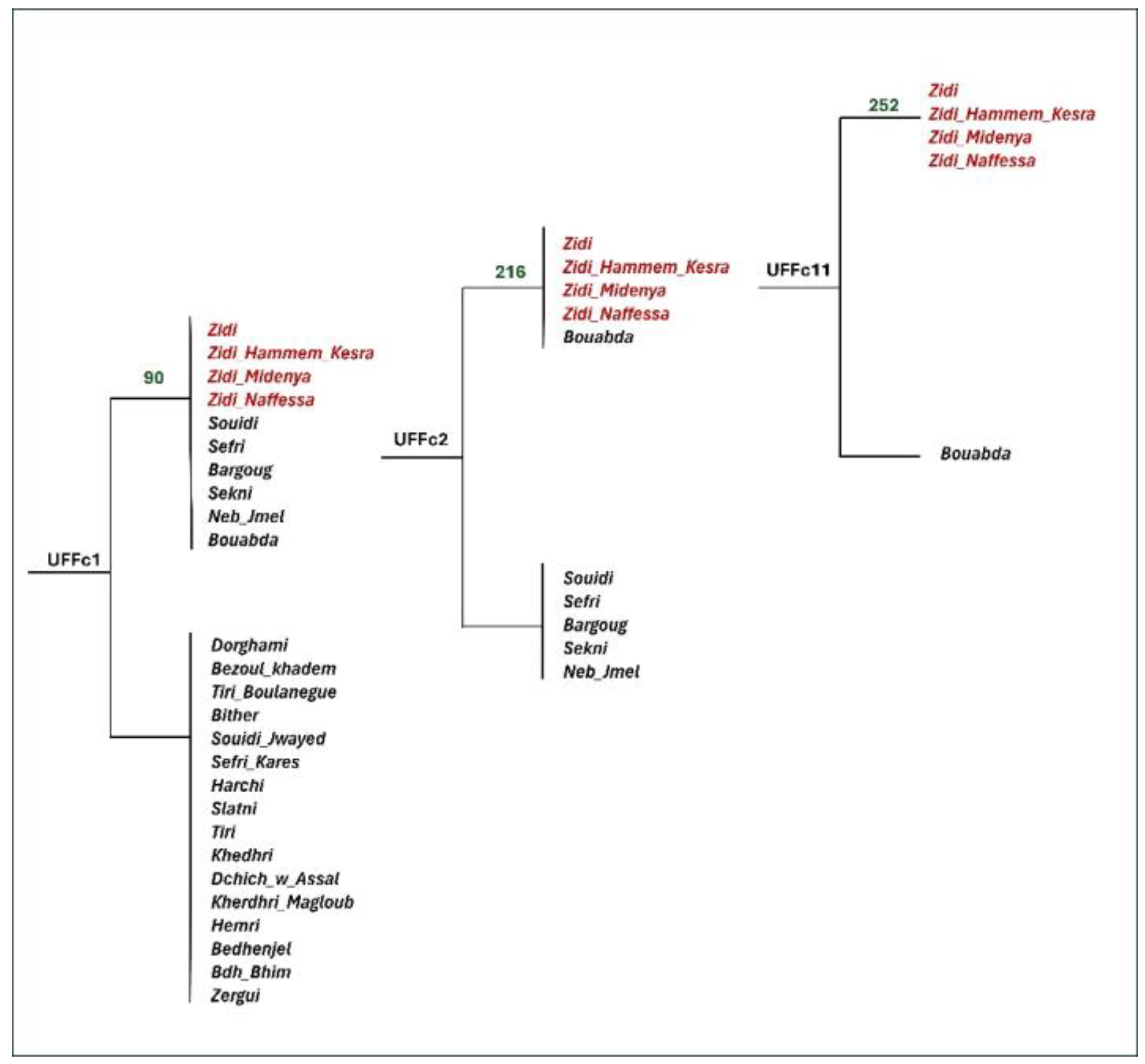
To facilitate the discrimination of the ‘Zidi’ cultivar from other local accessions, three highly informative SSR loci with high discrimination power (Dj)—UFFc1, UFFc2, and UFFc11—were selected, allowing the development of a molecular identification key specific to the ‘Zidi’ (Figure 4).

3.3. Genetic Relationships with Italian Varieties

A comparative genetic analysis was subsequently performed including the Kesra fig accessions and 44 Italian genotypes, among which the reference cultivars ‘Marangiana bianca’, ‘Morettina’, ‘Patona’, ‘Nero di Terlizzi’, and ‘Dottato’ were included. This analysis confirmed the genetic uniqueness of Kesra accessions (LRM < 0.50) and revealed several cases of synonymy among Italian accessions, namely ‘Processotto pinto’/’Processotto’; ‘Columone bianco’/’Fiorone verde’; ‘Zingarello nero Boci’/’Zingarello grigio’; and ‘Nero di Terlizzi’/’Terlizzi grosso’. A very high level of genetic similarity was also observed between the Tunisian cultivar ‘Slatni’ and the Italian cultivar ‘Sanbenedetto’ (LRM = 0.45). The Tunisian and Italian collections exhibited numbers of effective alleles of 3.8 and 5.1, respectively, and the Shannon information index (I) values were 0.955 for the Tunisian collection and 1.073 for the Italian collection (Table 5). The fixation index (F) was close to zero in both collections, which also displayed the presence of private alleles, reflecting germplasm-specific genetic signatures, in particular in the Italian varieties (Table 5).
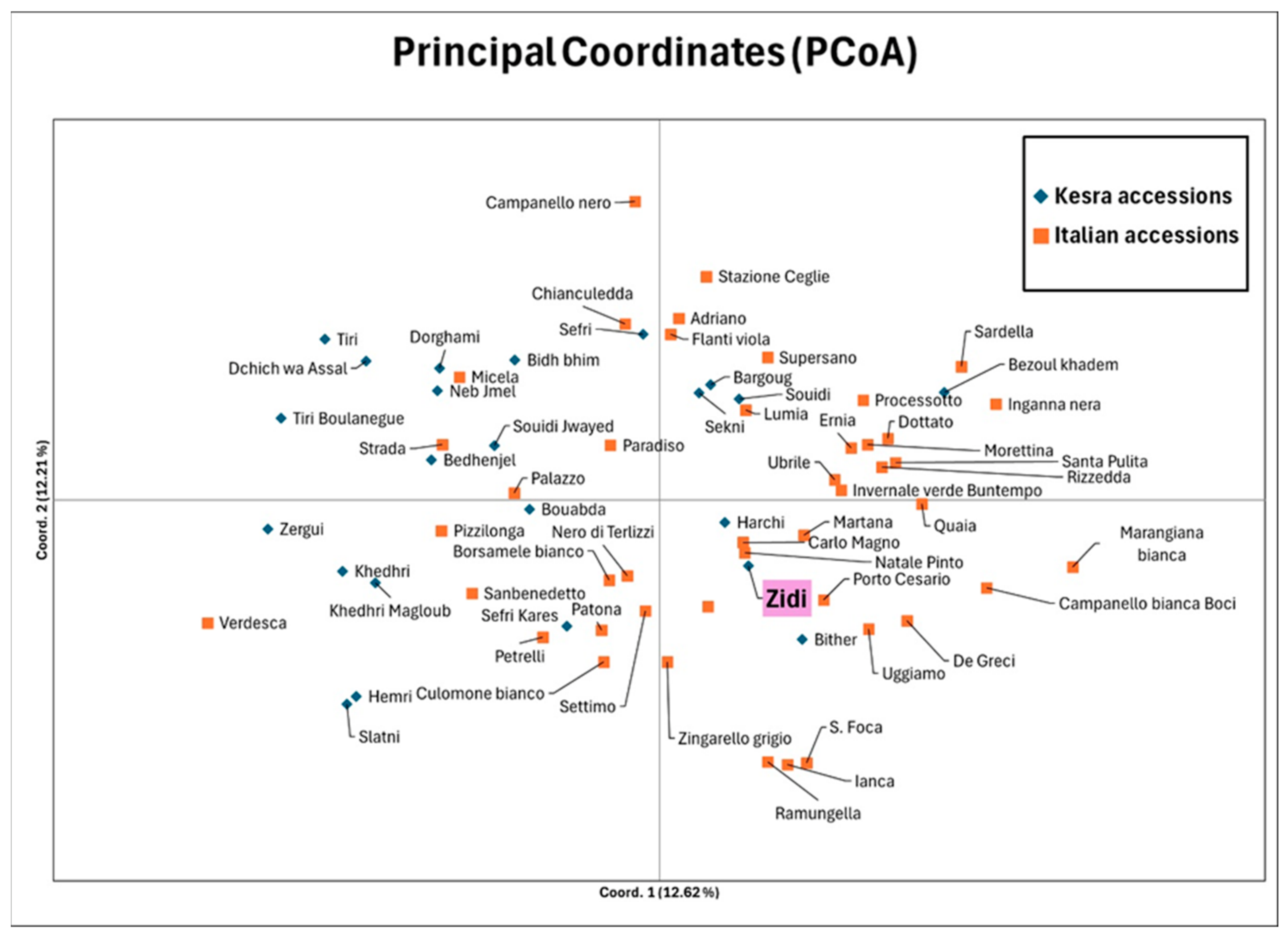
Principal coordinate analysis (PCoA) revealed a partial separation between Tunisian and Italian accessions, with Tunisian genotypes mainly distributed in the third and fourth quadrants, whereas Italian cultivars were more broadly dispersed across all four quadrants (Figure 5). The first two principal components explained 25% of the total genetic variability. Several Tunisian accessions, namely ‘Bargoug’, ‘Souidi’, ‘Sekni’, ‘Bither’, ‘Harchi’, ‘Bezhoul Khadem’, ‘Sefri’ and ‘Sefri Kares’, including ‘Zidi’, were interspersed among Italian genotypes, suggesting a shared genetic background or historical germplasm exchange between the two gene pools. Notably, ‘Zidi’ exhibited a strong genetic relatedness with the Italian cultivar ‘Carlo Magno’.
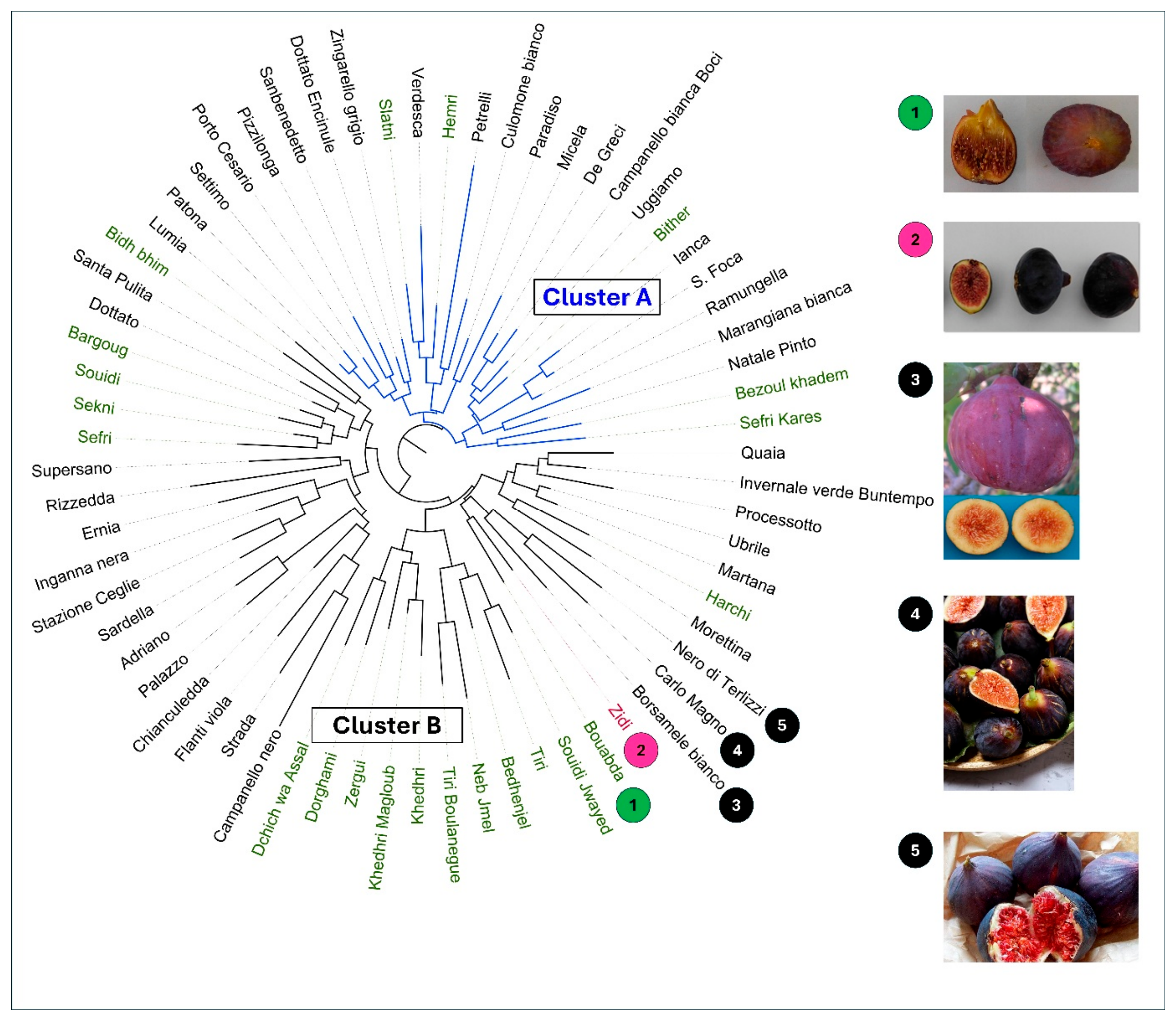
These results were supported by the unweighted neighbour-joining dendrogram (Figure 6). Cluster A comprises mainly Italian varieties together with the Tunisian accessions Hemri, Slatni, Bither, Bezhoul Khadem, and Sefri Kares, whereas the majority of Tunisian accessions, including ‘Zidi’, were grouped in Cluster B, in close proximity to the Italian cultivars Terlizzi Grosso, Nero di Terlizzi, Borsamele Bianco, and Carlomagno.
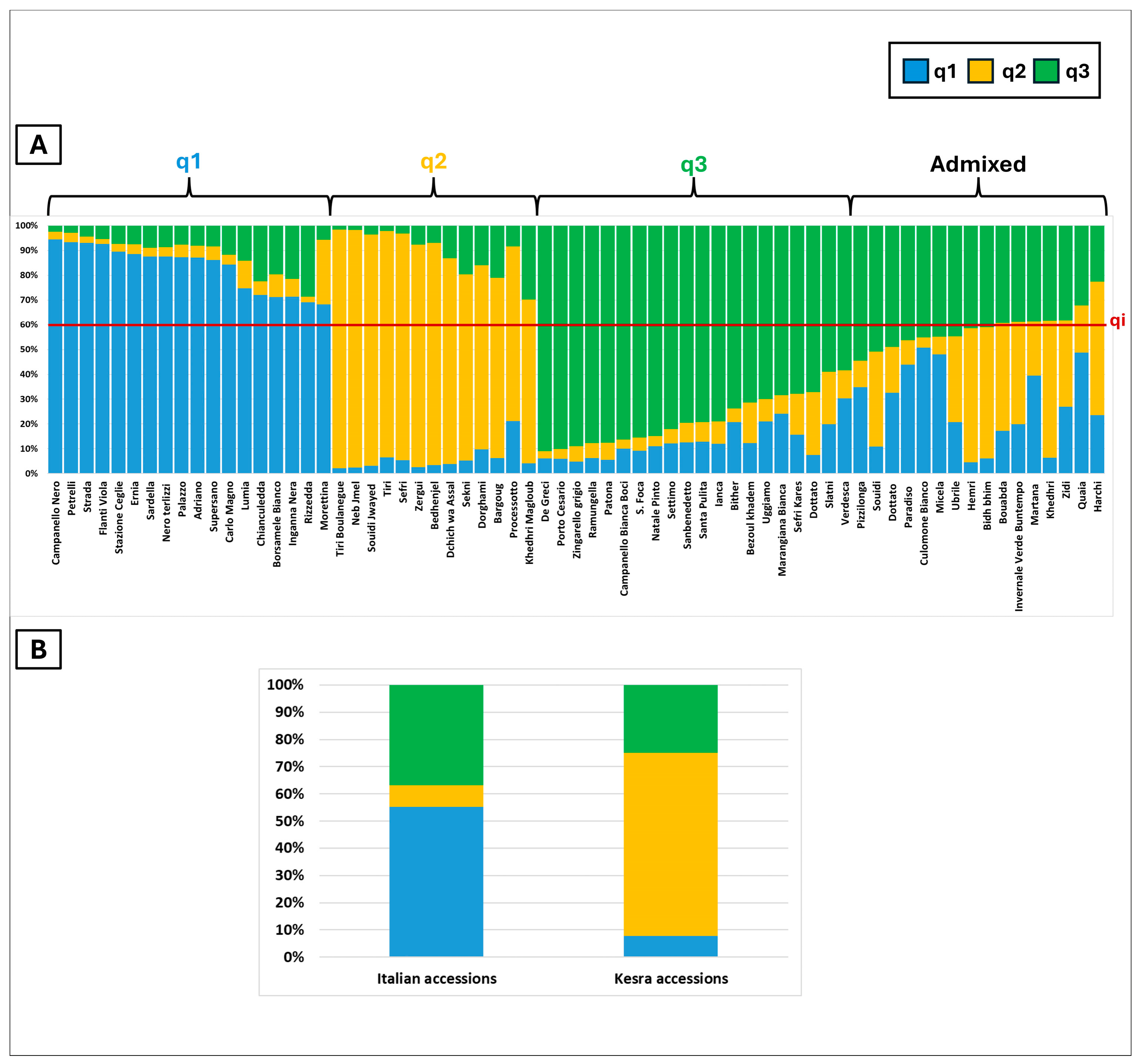
Structure analysis through the Evanno method [30] assigned individuals to the same genetic cluster when the inferred membership coefficient exceeded 0.60 and showed that the best number of K was three, allowing the identification of three ancestral lineages (Figure 7A). Cluster q1 included 18 Italian accessions, Cluster q2 included 12 Tunisian varieties and the Italian cultivar ‘Processotto’, and Cluster q3 encompassed both Italian accessions and Tunisian ‘Bither’, ‘Bezoul Khadem’ and ‘Sefri Kares’ and ‘Slatni’. ‘Zidi’ showed an admixed genetic profile, together with ‘Souidi’, ‘Hemri’, ‘Bhid Bhim’, ‘Bouabda’, ‘Khedhri’ and ‘Harchi’. When the two collections were analysed separately, contrasting patterns of genetic structure emerged, with the three ancestral components contributing differently to the genetic structure in genotypes from each country (Figure 7B). Specifically, the Tunisian collection was characterized by a predominance of ancestry q2, whereas the Italian collection displayed prevalent contributions from the ancestries q1 and q3.

4. Discussion

The fig is a perennial species whose fruits are consumed fresh, dried or processed into various products for the food, health, and cosmetic industries. Despite centuries of cultivation, the species has received limited breeding inputs. Most varieties originate from the selection of seed-derived plants and have been maintained by vegetative propagation across different agroecological environments, forming groups of locally adapted genotypes shaped by both natural and human selection [33].
In Tunisia, fig is a traditional crop which represents a promising resource for the sustainable development of marginal rural areas, particularly in the context of increasing drought frequency, rising temperatures, and growing competition from imported food products [12,18]. Key priorities for local producers include large-scale valorization of local varieties, expansion of cultivated areas, yield improvement, rejuvenation of ageing orchards, and enhancement of fruit quality to develop competitive products suitable for export. In the Kesra region, fig cultivation is a major economic asset, with the predominant cultivar being ‘‘Zidi’, a highly valued and attractive cultivar known for its large size, intense colour, sweetness, and richness in magnesium, calcium, zinc and phenolic compounds with strong antioxidant activity, supporting its potential use in the food, cosmetic, and pharmaceutical sectors [34,35]. To support fig cultivation in the Kesra region and preserve its sustainable use, a program of characterization of fig germplasm in the area was carried out, with particular emphasis on the ‘Zidi’ cultivar.
Although morphological traits are strongly influenced by environmental conditions, phenotypic characterization remains a fundamental step in valorization programs [36,37], as fruit attributes such as taste, colour, and weight are key determinants of market success [38,39,40]. Morphological characterization of Kesra accessions revealed substantial biological diversity, with a wide range of well-differentiated high-quality fig types shaped by genetic and environmental factors. Leaf morphology was distributed among four classes, with the ‘Zidi’ accession exhibiting a distinctive large trilobate leaf with deep sinuses, a trait shared with accessions ‘Bezoul Khadem’, ‘Bedhenjel’, ‘Dorghami’, ‘Khedhri’, ‘Sefri’, ‘Sefri Gares’,‘Sekni’, and’ Slatni’. ‘Zidi’ also exhibited distinct fruit traits, producing large, heavy, oblate violet-black fruits with thick skin and wide opened ostioles. In contrast, Kesra accessions generally yielded smaller and lighter oblate fruits. Moreover, the four ‘Zidi’ samples collected from different locations were genetically identical, confirming the genetic stability of this cultivar. Altogether, these findings highlight the strong commercial potential of ‘Zidi’, as larger fruits are typically preferred by consumers and are often associated with superior flavour quality, whereas smaller fruits are usually destined for processing or canning [41,42]. Tunisian varieties displayed additional favourable commercial traits, including the absence of skin cracking, observed in 61.5% of the samples, and the presence of a semi-closed ostiole, observed in 65.4% of the accessions. An open ostiole was detected in ‘Zidi’, ‘Bither’, ‘Bouabda’ and ‘Hemri’. A small or closed ostiole is generally preferred for commercial fig production, since it limits the entry of rainwater, insects, and pathogens, thereby reducing fruit rot and disease incidence and improving overall fruit quality [43]. However, a wide opening facilitates the entry of the fig wasp required for pollination and fruit development and thus is considered a good trait in Smyrna and San Pedro fig types which are not self-fertile [44].
The distinctive phenotype of ‘Zidi’, along with its wide distribution and strong association with the Kesra territory, makes it a suitable candidate for protection under a Protected Designation of Origin (PDO) scheme. This would enable producers to achieve higher market prices and greater economic returns [45]. Although not in the EU, Tunisia is currently eligible to participate in EU quality certification schemes by submitting applications directly to the European Commission [46].
Within this framework, genetic characterization of figs from Kesra was undertaken as a key step in the certification process using 12 SSR markers, which are widely recognized for their efficiency in varietal authentication and traceability studies [11,37]. In vegetatively propagated fruit tree crops such as fig, the exchange of clonal material across regions—often under different local names—frequently leads to cases of synonymy and misnaming. This represents a major constraint for accurate genetic identification within quality schemes such as PDO [37].
Genetic analysis assigned distinct genetic profiles to each accession, with no cases of synonymy detected among the Kesra cultivars. Among the loci analysed, UFFc1, UFFc2, and UFFc9 proved to be highly informative, displaying high polymorphism and strong discriminatory power, making them particularly effective tools for fig genotyping. The ‘Zidi’ cultivar exhibited a unique and consistent genetic profile shared among samples collected from different locations, indicating low intra-varietal diversity and suggesting the cultivar is a single clonal lineage, likely resulting from extensive vegetative propagation driven by its desirable traits. Within the Kesra germplasm, the combined analysis of morphological and molecular data clearly distinguished ‘Zidi’, with only a partial genetic similarity observed with the varieties ‘Harchi’, ‘Bargoug’, ‘Bither’ and’ Bidh Bhim’. The genetic and morphological distinctiveness of these Tunisian accessions constitutes a key element for varietal traceability and the protection of geographical origin, central elements to PDO regulations. In other fruit species, apple, grapevine, and olive genetic fingerprinting is already integrated into PDO/PGI protection processes [47]. Accordingly, ‘Zidi’ appears to be well-defined and easily identifiable using the highly discriminant SSR loci UFFc1, UFFc2, and UFFc11. This approach provides an effective tool for the identification of the cultivar and is fundamental for registration and certification processes, as well as for its long-term conservation and valorization.
The comparison of Kesra fig accessions and Italian genotypes, including Italian references ‘Dottato’, ‘Morettina’ and ‘Nero di Terlizzi’, provided insights into the genetic relationships between the two germplasms. Both germplasms displayed private alleles, suggesting that they experienced some level of independent selection pressures. Nevertheless, the phylogenetic analysis also revealed a significant intermixing between the Tunisian and Italian varieties. Specifically, the Tunisian accessions ‘Hemri’, ‘Slatni’, ‘Bither’, ‘Bezhoul Khadem’, and’ Sefri Kares’ clustered with several Apulian fig varieties, whereas ‘Bargoug’, ‘Souidi’, ‘Sekni’ and ‘Bidh Bhin’ were closely associated with the Italian reference cultivar ‘Dottato’, one of the most valued and widely grown cultivars in Italy, particularly in Calabria (Fichi di Cosenza PDO) and in Cilento (Fico Bianco del Cilento PDO). These results were further supported by PCoA, which showed that the first two principal components explained 25% of the total genetic variability, a value slightly higher than those reported in previous studies on Mediterranean fig germplasm [27,43]. Both the phylogenetic analysis and PCoA thus highlighted a pronounced intermixing between Tunisian and Italian varieties, consistently indicating a close relationship of the Tunisian varieties ‘Zidi’ and ‘Bouabda’ and the Italian cultivars ‘Nero di Terlizzi’, ‘Borsamele bianco’, and, in particular, ‘Carlomagno’, all known for their large fruit size and high sweetness. This pattern likely reflects the historical exchange of fig germplasm across the Mediterranean basin through the maritime routes that connected North Africa and Southern Europe over centuries. Such exchanges likely promoted the dissemination of elite plant material selected for desirable agronomic traits. Following their introduction into new environments, genotypes derived from the same ancestral variety may have accumulated somatic mutations, which were subsequently maintained through vegetative propagation and recognized as distinct local cultivars [33]. Similar findings have been reported in other studies which underlined the key role of human-mediated dispersal, vegetative propagation, and regional selection in shaping fig diversity [19].
Structure analysis based on the Evanno method identified K = 3 as the most likely number of ancestries, each contributing differently to the genetic structure of Italian and Tunisian genotypes. In the Tunisian collection, ancestry q2 was predominant, whereas the Italian accessions displayed contributions from ancestries q1 and q3, with the latter representing a secondary component that was consistently shared with admixed Tunisian accessions. These results are in agreement with previous studies reporting complex patterns of ancestry and gene flow among Mediterranean fig populations [31,48,49]. In particular, according to [33], in the Mediterranean fig germplasm it is possible to identify three main genetic pools, one for the Western Mediterranean (Spain/Tunisia/Italy) and another for the Eastern Mediterranean (Turkey/Caucasus), while the third gene pool would originate from the regions of Anatolia or Turkmenistan. Further and large-scale genetic studies on the genetic variability of F. carica across the Mediterranean region are needed for greatly enhancing our knowledge on domestication pathways and diversification of this iconic Mediterranean species.

5. Conclusions

Microsatellite markers are reliable tools for varietal authentication, the safeguarding of traditional cultivars, and the support of certification systems aimed at the valorization of local varieties [50]. They also represent instruments for sustainable germplasm management, thus preventing genetic erosion. In this study, microsatellite markers were used both to highlight the high richness and diversity of fig germplasm in the Kesra region and for the valorization of the ‘Zidi’ cultivar. This highly appreciated cultivar represents an excellent candidate for valorization through a PDO label, a recognition that could enhance its market value and provide a concrete economic incentive for local producers. The obtained results should raise awareness of the need to preserve the full spectrum of genetic resources, avoiding narrowing of the crop genetic base which may ultimately lead to genetic erosion [51]. Such an approach would contribute to sustainable rural development in the region and reinforce the importance of conserving these genetic resources which reflect a long history of local farmer-driven selection as part of the country’s cultural heritage. Although this study presents some limitations, including morphological characterization based on a single year and location and the lack of fruit-related genetic and biochemical analyses, it provides a valuable foundation for future research, encouraging closer collaboration among stakeholders.

Supplementary Materials

The following supporting information can be downloaded at https://www.mdpi.com/article/10.3390/horticulturae12050538/s1. Legend to Supplementary Materials: Supplementary Table S1. List of primers used for the genetic analysis of Tunisian fig accessions. Supplementary Table S2. List of 44 Italian fig genotypes used for the comparison with Tunisian fig accessions. Supplementary Table S3. Pairwise Relatedness Summary obtained for the Kesra fig accessions. Supplementary Figure S1. Morphological classification of fig leaves according to the IPGRI catalogue [14]. Supplementary Figure S2. Morphological traits of fig fruits according to the IPGRI catalogue [14].

Author Contributions

Conceptualization, M.M.M., C.M. and O.S.D.; methodology, M.A.S., F.L.A., A.G., S.R.M. and F.Z.; software, M.A.S. and F.L.A.; validation, M.M. and M.M.M.; resources, A.A., M.A.S., F.L.A., A.G., M.M.M., C.M. and O.S.D.; writing—original draft preparation, M.M.M., M.A.S., O.S.D. and A.G.; writing—review and editing, A.G., M.A.S., F.Z., S.R.M., F.L.A., A.A., C.M., M.M., M.M.M. and O.S.D.; supervision, C.M. and O.S.D.; funding acquisition, C.M. All authors have read and agreed to the published version of the manuscript.

Funding

This research was supported by: the Ministry of Higher education and Scientific Research (Tunisia), Fellowship program 2023–2025 for the PhD student Amine Guesmi; Apulia Region, PSR Puglia 2014–2020 REGEFRUP 2.1 project, (CUP B17H22003530009); Misura 10-Pagamenti agro-climatico-ambientali; Sottomisura 10.2-Sostegno per la conservazione, l’uso e lo sviluppo sostenibili delle risorse genetiche in agricoltura; Operazione 10.2.1-Progetti per la conservazione e valorizzazione; and Agritech National Research Center—Next-Generation EU (Piano Nazionale Di Ripresa E Resilienza 6 (PNRR)—Missione 4 Componente 2, Investimento 1.4—D.D. 1032 17/06/2022, CN00000022).

Data Availability Statement

The original contributions presented in this study are included in the article/Supplementary Material. Further inquiries can be directed to the corresponding author.

Acknowledgments

We would like t to thank Pasquale Venerito from the CRSFA of Locorotondo (BA) for his valuable support in in the collection of Italian fig accessions.

Conflicts of Interest

The co-author Cinzia Montemurro is affiliated with the company “SINAGRI S.r.l.—Spin Off of the University of Bari Aldo Moro”. The remaining authors declare that the research was conducted in the absence of any commercial or financial relationships that could be construed as a potential conflict of interest.

References

  1. Clement, W.L.; Bruun-Lund, S.; Cohen, A.; Kjellberg, F.; Weiblen, G.D.; Rønsted, N. Evolution and classification of figs (Ficus, Moraceae) and their close relatives (Castilleae) united by involucral bracts. Bot. J. Linn. Soc. 2020, 193, 316–339. [Google Scholar] [CrossRef] [Scilit]
  2. Dueñas, M.; Pérez-Alonso, J.J.; Santos-Buelga, C.; Escribano-Bailón, T. Anthocyanin composition in fig (Ficus carica L.). J. Food Compos. Anal. 2008, 21, 107–115. [Google Scholar] [CrossRef] [Scilit]
  3. Vavilov, N.I. The Origin, Variation, Immunity and Breeding of Cultivated Plants. In Chronica Botanica; Chronica Botanica Co.: Waltham, MA, USA, 1951; Volume 13. [Google Scholar]
  4. Ferrara, G.; Mazzeo, A.; Pacucci, C.; Matarrese, A.M.S.; Tarantino, A.; Crisosto, C.; Incerti, O.; Marcotuli, I.; Nigro, D.; Blanco, A.; et al. Characterization of edible fig germplasm from Puglia, southeastern Italy: Is the distinction of three fig types (Smyrna, San Pedro and Common) still valid? Sci. Hortic. 2016, 205, 52–58. [Google Scholar] [CrossRef] [Scilit]
  5. Mellal, M.K.; Khelifa, R.; Chelli, A.; Djouadi, N.; Madani, K. Combined Effects of Climate and Pests on Fig (Ficus carica L.) Yield in a Mediterranean Region: Implications for Sustainable Agricultural Strategies. Sustainability 2023, 15, 5820. [Google Scholar] [CrossRef] [Scilit]
  6. Ferraz, R.A.; Leonel, S.; Souza, J.M.A.; Ferreira, R.B.; Modesto, J.H.; Arruda, L.L. Phenology, vegetative growth, and yield performance of fig in Southeastern Brazil. Pesq. Agropec. Bras. 2020, 55, e01192. [Google Scholar] [CrossRef] [Scilit]
  7. Saddoud, O.; Salhi-Hannachi, A.; Chatti, K.; Mars, M.; Rhouma, A.; Marrakchi, M.; Trifi, M. Tunisian fig (Ficus carica L.) genetic diversity and cultivar characterization using microsatellite markers. Fruits 2005, 60, 143–153. [Google Scholar] [CrossRef] [Scilit]
  8. Saddoud, O.; Baraket, G.; Chatti, K.; Trifi, M.; Marrakchi, M.; Salhi-Hannachi, A.; Mars, M. Using morphological characters and simple sequence repeat (SSR) markers to characterize Tunisian fig (Ficus carica L.) cultivars. Acta Biol. Cracov. Bot. 2011, 53, 7–14. [Google Scholar] [CrossRef] [Scilit]
  9. Baraket, G.; Ben Abdelkrim, A.; Chatti, K.; Saddoud, O.; Mars, M.; Trifi, M.; Salhi-Hannachi, A. Molecular evolution of chloroplast DNA in fig (Ficus carica L.): Footprints of sweep selection and recent expansion. Biochem. Syst. Ecol. 2010, 38, 563–575. [Google Scholar] [CrossRef] [Scilit]
  10. Baraket, G.; Saddoud, O.; Ben Abdelkrim, A.; Chatti, K.; Mars, M.; Marrakchi, M.; Trifi, M.; Salhi-Hannachi, A. Molecular polymorphism of cytoplasmic DNA in Ficus carica L.: Insights from non- coding regions of chloroplast DNA. Sci. Hortic. 2010, 125, 512–517. [Google Scholar] [CrossRef] [Scilit]
  11. Sabetta, W.; Miazzi, M.M.; Di Rienzo, V.; Fanelli, V.; Pasqualone, A.; Montemurro, C. Development and application of protocols to certify the authenticity and traceability of Apulian typical products in olive sector. Riv. Ital. Delle Sostanze Grasse 2017, 94, 37–43. [Google Scholar]
  12. Sion, S.; Taranto, F.; Montemurro, C.; Mangini, G.; Camposeo, S.; Falco, V.; Gallo, A.; Mita, G.; Debbabi, O.S.; Amar, F.B.; et al. Genetic characterization of apulian olive germplasm as potential source in new breeding programs. Plants 2019, 8, 268. [Google Scholar] [CrossRef] [Scilit] [PubMed]
  13. Savoia, M.A.; Mascio, I.; Miazzi, M.M.; De Giovanni, C.; Grillo Spina, F.; Carpino, S.; Fanelli, V.; Montemurro, C. Molecular Traceability Approach to Assess the Geographical Origin of Commercial Extra Virgin Olive Oil. Foods 2024, 13, 2240. [Google Scholar] [CrossRef] [Scilit]
  14. Caliskan, O.; Polat, A.A.; Celikkol, P.; Bakir, M. Molecular characterization of autochthonous Turkish fig accessions Caracterización molecular de accesiones autóctonas de higo de Turquía. Span. J. Agric. Res. 2012, 10, 130–140. [Google Scholar] [CrossRef] [Scilit]
  15. Perez-Jiménez, M.; López, B.; Dorado, G.; Pujadas-Salvá, A.; Guzmán, G.; Hernandez, P. Analysis of genetic diversity of southern Spain fig tree (Ficus carica L.) and reference materials as a tool for breeding and conservation. Hereditas 2012, 149, 108–113. [Google Scholar] [CrossRef] [Scilit]
  16. Ganopoulos, I.; Aravanopoulos, F.; Argiriou, A.; Kalivas, A.; Tsaftaris, A. Mediterranean basin Ficus carica L.: From genetic diversity and structure to authentication of a Protected Designation of Origin cultivar using microsatellite markers. Trees 2015, 29, 1959–1971. [Google Scholar] [CrossRef] [Scilit]
  17. Saddoud, O.; Baraket, G.; Chatti, K.; Salhi-Hannachi, A. Genetic diversity and structure of Tunisian fig (Ficus carica L.) germplasm revealed by SSR markers. Genet. Resour. Crop Evol. 2022, 69, 1761–1776. [Google Scholar] [CrossRef] [Scilit]
  18. Sclavounos, A.; Roussos, P.; Milla, S.; Kostas, P.; Samaras, Y.; Pozzi, C.; Chitikineni, A.; Varshney, R.K.; Voloudakis, A. Genetic diversity of fig (Ficus carica L.) germplasm from the Mediterranean basin as revealed by SSR markers. Genet. Resour. Crop Evol. 2023, 70, 1395–1406. [Google Scholar] [CrossRef] [Scilit]
  19. Radunić, M.; Baruca Arbeiter, A.; Čarija, M.; Hančević, K.; Poljuha, D.; Čizmović, M.; Strikić, F.; Bandelj, D. Genetic diversity of cultivated figs (Ficus carica L.) from the Eastern Adriatic Coast screened by SSR markers. Genet. Resour. Crop Evol. 2025, 72, 9029–9041. [Google Scholar] [CrossRef] [Scilit]
  20. IPGRI; CIHEAM. Descriptors for Fig (Ficus carica L.); International Plant Genetic Resources Institute (IPGRRI): Rome, Italy; International Center for Advanced Mediterranean Agronomic Studies (CIHEAM): Paris, France, 2003. [Google Scholar]
  21. Sion, S.; Savoia, M.A.; Gadaleta, S.; Piarulli, L.; Mascio, I.; Fanelli, V.; Miazzi, M.M. How to choose a good marker to analyze the olive germplasm (Olea europaea L.) and derived products. Genes 2021, 12, 1474. [Google Scholar] [CrossRef] [Scilit]
  22. Akkak, A.; Tarantino, A.; Ciarmiello, L.; D’Hallewin, G.; Ferrara, G.; Bruno, M. Isolamento, caratterizzazione di nuovi marcatori in fico (Ficus carica L.) e prospettive sulla costruzione della prima banca dati Nazionale. In Proceedings of the Atti Convegno XI Biodiversità ed intensificazione ecosostenibile, Matera, Italy, 9–10 June 2016. [Google Scholar]
  23. Peakall, R. GENALEX 6: Genetic analysis in Excel. Population genetic software for teaching and research. Mol. Ecol. Notes 2006, 6, 288–295. [Google Scholar] [CrossRef] [Scilit]
  24. Lynch, M.; Ritland, K. Estimation of pairwise relatedness with molecular markers. Genetics 1999, 152, 1753–1766. [Google Scholar] [CrossRef] [Scilit]
  25. Tessier, C.; David, J.; This, P.; Boursiquot, J.M.; Charrier, A. Optimization of the choice of molecular markers for varietal identification in Vitis vinifera L. Theor. Appl. Genet. 1999, 98, 171–177. [Google Scholar] [CrossRef] [Scilit]
  26. Saitou, N.; Nei, M. The neighbor-joining method: A new method for reconstructing phylogenetic trees. Mol. Biol. Evol. 1987, 4, 406–425. [Google Scholar] [CrossRef] [Scilit]
  27. Felsenstein, J. Confidence limits on phylogenies: An approach using the bootstrap. Evolution 1985, 39, 783–791. [Google Scholar] [CrossRef] [Scilit] [PubMed]
  28. Pritchard, J.K.; Stephens, M.; Donnelly, P. Inference of population structure using multilocus genotype data. Genetics 2000, 155, 945–959. [Google Scholar] [CrossRef] [Scilit] [PubMed]
  29. Earl, D.A.; Vonholdt, B. Structure Harverest: A website and program for visualizing STRUCTURE output and implementing the Evanno method. Conserv. Genet. Res. 2012, 4, 359–361. [Google Scholar] [CrossRef] [Scilit]
  30. Evanno, G.; Regnaut, S.; Goudet, J. Detecting the number of clusters of individuals using the software structure: A simulation study. Mol. Ecol. 2005, 14, 2611–2620. [Google Scholar] [CrossRef] [Scilit]
  31. İkten, H.; Gülşen, O.; Mutlu, N.; Polat, I.; Aksoy, U. Genetic Diversity, Population Structure, and Association Analysis of Female and Male Fig Genotypes (Ficus carica L.). Erwerbs-Obstbau 2023, 65, 1603–1616. [Google Scholar] [CrossRef] [Scilit]
  32. Botstein, D.; White, R.L.; Skolnick, M.; Davis, R.W. Construction of a genetic linkage map in man using restriction fragment length polymorphisms. Am. J. Hum. Genet. 1980, 32, 314–331. [Google Scholar]
  33. Castellacci, M.; Usai, G.; Vangelisti, A.; Simoni, S.; Natali, L.; Mascagni, F.; Cavallini, A.; Lopez-Corrales, M.; Domínguez, M.G.; Baraket, G.; et al. Exploring the genetic diversity of Mediterranean fig trees highlights genes associated with fruit traits. Front. Plant Sci. 2026, 17, 1750632. [Google Scholar] [CrossRef] [Scilit]
  34. Aljane, F.; Toumi, I.; Ferchichi, A. HPLC determination of sugars and Atomic Absorption analysis of mineral elements in fresh figs of Tunisian cultivars. Afr. J. Biotechnol. 2007, 6, 599–602. [Google Scholar]
  35. Aljane, F.; Ferchichi, A. Morphological, chemical and sensory characterization of Tunisian fig (Ficus carica L.) cultivars based on dried fruits. Acta Hortic. 2007, 741, 81–85. [Google Scholar] [CrossRef] [Scilit]
  36. Fanelli, V.; Roseti, V.; Savoia, M.A.; Miazzi, M.M.; Venerito, P.; Savino, V.N.; Pirolo, C.; La Notte, P.; Falbo, M.; Petrillo, F.; et al. New insight into the identity of Italian grapevine varieties: The case study of Calabrian germplasm. Agronomy 2021, 11, 1538. [Google Scholar] [CrossRef] [Scilit]
  37. Karioti, A.; Skalisounis, A.L.; Halabalaki, M. Phytochemical and genetic diversity of wild Greek figs. Biochem. Syst. Ecol. 2021, 96, 104264. [Google Scholar]
  38. Trad, M.; Gaaliche, B.; Renard, M.G.C.; Mars, M. Inter and intra-tree variability in quality of figs. Influence of altitude, leaf area and fruit position in the canopy. Sci. Hortic. 2013, 162, 49–54. [Google Scholar] [CrossRef] [Scilit]
  39. Bianco, R.L.; Pire, R. Phenotypic plasticity of fig (Ficus carica L.) fruit traits under different environmental conditions. Sci. Hortic. 2015, 193, 132–139. [Google Scholar]
  40. Shabbir, S.; Shoaib Amjad, M. Ethnomedicinal appraisal of traditionally used wild edible plants of District Bagh, Azad Jammu and Kashmir, Pakistan. In Medicinal Plants; IntechOpen: London, UK, 2022. [Google Scholar] [CrossRef] [Scilit]
  41. Khadari, B.; Oukabli, A.; Ater, M.; Mamouni, A.; Roger, J.P.; Kjellberg, F. Molecular characterization of Moroccan fig germplasm using intersimple sequence repeat and simple sequence repeat markers to establish a reference collection. HortScience 2005, 40, 29–32. [Google Scholar] [CrossRef] [Scilit]
  42. Boudchicha, H.; Oukabli, A.; Gaboun, F.; Khadari, B. Morphological and pomological diversity of fig (Ficus carica L.) cultivars in northern Morocco. Acta Hortic. 2018, 1210, 85–92. [Google Scholar] [CrossRef] [Scilit]
  43. Segar, S.T.; Boutsi, S.; Souto-Vilarós, D.; Volf, M.; Dunn, D.W.; Cruaud, A.; Pereira, R.A.S.; Rasplus, J.-Y.; Kjellberg, F. The diversity of Ficus. Ann. Bot. 2025, 135, mcaf280. [Google Scholar] [CrossRef] [Scilit] [PubMed]
  44. Castro-Cárdenas, N.; Vázquez-Santana, S.; Teixeira, S.P.; Ibarra-Manríquez, G. The roles of the ostiole in the fig-fig wasp mutualism from a morpho-anatomical perspective. J. Plant Res. 2022, 135, 739–755. [Google Scholar] [CrossRef] [Scilit]
  45. Danezis, G.P.; Tsagkaris, A.S.; Brusic, V.; Georgiou, C.A. Food authentication: State of the art and prospects. Curr. Opin. Food Sci. 2016, 10, 22–31. [Google Scholar] [CrossRef] [Scilit]
  46. Dias, C.; Mendes, L. Protected designation of origin (PDO), protected geographical indication (PGI) and traditional specialty guaranteed (TSG): A bibliometric analysis. Food Res. Int. 2018, 103, 492–508. [Google Scholar] [CrossRef] [Scilit]
  47. Guyon, F.; Vaillant, F.; Montet, D. Traceability of fruits and vegetables. Phytochemistry 2020, 173, 112291. [Google Scholar] [CrossRef] [Scilit]
  48. Bazakos, C.; Michailidis, M.; Tourvas, N.; Alexiou, K.G.; Mellidou, I.; Polychroniadou, C.; Boutsika, A.; Xanthopoulou, A.; Moysiadis, T.; Skodra, C.; et al. Genetic mosaic of the Mediterranean fig: Comprehensive genomic insights from a gene bank collection. Physiol. Plant. 2024, 176, e14482. [Google Scholar] [CrossRef] [Scilit] [PubMed]
  49. Aradhya, M.K.; Stover, E.; Velasco, D.; Koehmstedt, A. Genetic structure and differentiation in cultivated fig (Ficus carica L.). Genetica 2010, 138, 681–694. [Google Scholar] [CrossRef] [Scilit]
  50. Saddoud Debbabi, O.; Rahmani Mnasri, S.; Ben Amar, F.; Ben Naceur, M.B.; Montemurro, C.; Miazzi, M.M. Applications of microsatellite markers for the characterization of olive genetic resources of Tunisia. Genes 2021, 12, 286. [Google Scholar] [CrossRef] [Scilit]
  51. Rabadán, A.; Álvarez-Ortí, M.; Tello, J.; Pardo, J.E. Tradition vs. Eco-Innovation: The Constraining Effect of Protected Designations of Origin (PDO) on the Implementation of Sustainability Measures in the Olive Oil Sector. Agronomy 2021, 11, 447. [Google Scholar] [CrossRef] [Scilit]
Figure 1. Geographical sampling location of Tunisian figs. (A) Map of Tunisia; (B) detailed view of the Kesra region located in the Siliana Governorate, where the 26 fig accessions analysed in this study were collected.
Horticulturae 12 00538 g001
Figure 2. Morphological variations of leaves and fruits observed in the 26 analysed Tunisian fig accessions.
Horticulturae 12 00538 g002
Figure 3. Dendrogram of Tunisian accessions obtained by neighbour-joining analysis. Red circle indicate the grouping of the four ‘Zidi’accessions.
Horticulturae 12 00538 g003
Figure 4. Molecular identification key for unambiguously distinguishing the ‘Zidi’ cultivar from other Kesra accessions, by using the loci UFFc1, Uffc2 and UFFc11.
Horticulturae 12 00538 g004
Figure 5. Principal coordinate analysis (PCoA) plot showing the projection of the first two axes, showing the genetic relationships of Kesra fig samples and Italian varieties.
Horticulturae 12 00538 g005
Figure 6. Neighbour-joining dendrogram obtained for Tunisian and Italian fig genotypes analysed by 8 SSR markers. In detail, a graphic illustration has been added for the ‘Zidi’ cultivar and closely related genotypes.
Horticulturae 12 00538 g006
Figure 7. (A) Population structure analysis at K = 3 showing the inferred genetic clusters based on 8 microsatellite loci in the fig collection including Tunisian and Italian accessions. (B) Stacked bar plots showing the estimated membership coefficient (qi) relative to the accessions originating from the Kesra region and Italy.
Horticulturae 12 00538 g007
Table 1. List of fig accessions from Kesra region (Tunisia) under investigation.
CultivarType
BargougSmyrna
BedhenjelSmyrna
Bezoul khademSmyrna
Bidh bhimSmyrna
BitherSan Pedro
BouabdaSmyrna
Dchich wa AssalSmyrna
DorghamiSmyrna
HarchiSmyrna
HemriCommon
KhedhriCommon
Khedhri MagloubSmyrna
Neb JmelSmyrna
SefriSmyrna
Sefri KaresSmyrna
SekniSmyrna
SlatniSmyrna
SouidiCommon
Souidi JwayedSmyrna
TiriSmyrna
Tiri BoulanegueSmyrna
ZerguiCommon
ZidiSmyrna
Zidi Hamam KesraSmyrna
Zidi MidenyaSmyrna
Zidi NafessaSmyrna
Table 2. List of morphological traits of leaves and fruit observed in Kesra fig accessions. * Blade shape classified from A to H according to IPGRI catalogue.
OrgansTrait Trait CodeDescriptor No.Description
0123456789101112
LeafBlade shape BSIPGRI 7.3.2From A to H
Lobe numbersNLIPGRI 7.3.3AbsentThreeFiveSevenMore than seven
Petiole length [mm]PLIPGRI 7.3.18 Short (<50)Medium (50–80)Long (>80)
Petiole diameter [mm]PD- Narrow (1–5)Medium (6–10)Large (11–15)Very large (>15)
Lobe length [mm]LL- Short (<200)Medium (200–350)Long (>350)
Lobe width [mm]WL - Narrow (<200)Medium (200–300)Long (>300)
FruitFruit shape [I = width/length]FSIPGRI 7.4.1 Oblong (I < 0.9)Globose (I =0.9–1.1)Oblate (I > 1.1)
Skin Colour fruitCFIPGRI 7.4.2 Violet-blackLight greenYellowYellow with red flushRedPurpleDark purpleReddish purpleVioletBrownBlackGreen with red flush
Fruit weight [g]FWIPGRI 7.4.5 Very light (10–30)Light (30–50)Medium (50–70)Heavy (70–90)Very heavy (>90)
Fruit diameter [mm]FDIPGRI 7.4.6 Narrow (1–20)Medium (20–40)Large (40–60)Very large (>60)
Fruit length [mm]FLIPGRI 7.4.7 Short (29–46)Medium (29–54)Long (54–75)Very long (>75)
Ostiole formOFIPGRI 7.4.10 ClosedSemi-closedOpened
Ostiole diameter [mm]ODIPGRI 7.4.11 Narrow (<1)Medium (1–3)Large (4–5)Very large (> 5)
Skin cracksSCrIPGRI 7.4.21 ThroughoutManyFewWithout
Skin thickness [mm]STIPGRI 7.4.23 Very thin (<0.5)Thin (0.5–1)Medium (1–1.5)Thick (>1.5)
Table 3. Morphological traits data observed in the Kesra fig accessions. (A) Leaf trait; (B) fruit traits. For blade shape, see Supplementary Figure S1.
(A) LEAF(B) FRUIT
AccessionBlade Shape Lobe Numbers Lobe Lenght [mm]Llobe Widht [mm]Petiole Length [mm]Petiole Diameter [mm]Fruit Shape Skin ColorWeight [g]Length [mm]Diameter [mm]Ostiole Diameter [mm]Skin Thickness [mm]Skin CracksOstiole Form
MeanSDMeanSDMeanSDMeanSDMeanSD
BargougB4.90.9204.830.9190.624.682.719.54.71.0OblateYellowLightShortLargeLargeMediumFewSemi-closed
BedhenjelE3.50.8165.726.2160.616.567.530.84.50.4OblateYellow with red flushMediumShortLargeVery largeMediumFewSemi-closed
Bezoul KhademE3.10.4237.660.7202.933.397.416.34.90.8OblateBrownMediumShortLargeVery largeMediumWithoutSemi-closed
Bidh BhimA5.31.5219.729.7208.029.7104.822.06.911.0OblateRedLightShortLargeVery largeMediumFewSemi-closed
BitherA5.21.0214.631.5193.822.970.411.84.80.5OblateBrownLightShortMediumVery largeMediumWithoutOpened
BouabdaB4.60.8179.321.5169.121.877.014.74.40.8OblateYellow with red flushLightShortLargeVery largeMediumWithoutOpened
Dchich W AssalB4.01.0214.822.3187.121.691.514.53.50.5OblateYellow with red flushLightShortLargeVery largeMediumFewSemi-closed
DorghamiE3.60.9245.823.8230.720.782.46.85.50.6OblateYellow with red flushLightShortLargeLargeMediumFewSemi-closed
HarchiC4.90.8201.724.4179.114.289.319.65.76.6OblateBrownLightShortMediumLargeMediumWithoutSemi-closed
HemriB4.60.8214.623.0206.328.8114.021.15.15.6OblateYellow with red flushLightShortLargeVery largeMediumWithoutOpened
KhedhriE3.10.3191.917.1176.214.786.19.34.60.9OblateVioletLightShortMediumVery largeMediumWithoutSemi-closed
Khedhri MagloubE4.11.2210.920.9191.129.887.521.35.40.7OblateVioletLightShortMediumVery largeMediumWithoutSemi-closed
Neb JmalB4.70.8270.945.6229.538.6182.2230.06.21.3OblateVioletVery lightShortMediumVery largeMediumWithoutSemi-closed
SefriE3.90.9217.130.0203.329.277.213.34.91.0OblateVioletLightShortMediumVery largeMediumWithoutSemi-closed
Sefri GaresE3.61.0254.631.8204.921.679.511.04.70.6OblateDark purpleLightShortMediumLargeMediumFewSemi-closed
SekniE4.10.8205.520.6193.219.492.321.14.40.7OblateBrownMediumShortLargeVery largeMediumFewSemi-closed
SlatniE3.31.1218.823.5190.221.177.218.75.40.7OblateVioletLightShortLargeVery largeMediumWithoutSemi-closed
SouidiB4.80.6203.224.3186.227.892.413.33.20.9OblateLight greenVery lightShortMediumLargeThinWithoutSemi-closed
Souidi JwayedA4.80.5177.817.4202.0132.083.524.94.40.5OblateViolet-blackVery lightShortMediumLargeThickFewClosed
TiriB4.70.7236.025.1206.217.7119.514.64.90.8OblateYellow with red flushLightShortLargeVery largeMediumWithoutSemi-closed
Tiri BoulanegueA5.20.8226.824.6200.831.1123.525.84.00.6OblateRedVery lightShortMediumVery largeMediumWithoutSemi-closed
ZerguiA5.00.0215.119.7197.720.872.317.24.50.8OblateViolet-blackLightShortMediumLargeMediumWithoutSemi-closed
ZidiE4.20.9306.150.6281.439.6110.815.87.23.1OblateViolet-blackMediumLongLargeVery largeMediumWithoutOpened
Zidi HamemE3.91.2267.943.3245.558.388.115.06.31.2OblateViolet-blackHeavyShortLargeVery largeMediumFewOpened
Zidi MidenyaE3.31.6225.738.0201.228.474.316.214.74.1OblateViolet-blackMediumShortLargeVery largeMediumWithoutOpened
Zidi NafesaE3.61.1267.628.9250.922.587.615.36.61.7OblateViolet-black MediumShortLargeVery largeMediumFewOpened
Table 4. Genetic diversity indices revealed in the 26 Tunisian fig accessions analysed with 12 SSR markers: number of samples (N), allele range, number of alleles (Na), effective number of alleles (Ne), Shannon’s diversity index (I), observed heterozygosity (Ho), expected heterozygosity (He), fixation index (F), and PIC values.
LocusNAllele RangeNaNeIHoHeFPIC
UFFc12690–11263.101.3940.8100.686−0.1780.640
UFFc226212–22032.280.9500.6100.561−0.0960.500
UFFc324172–18052.060.9640.5800.516−0.1310.460
UFFc424210–21432.080.7800.5000.520.0380.410
UFFc525108–12421.850.6530.5600.461−0.2150.410
UFFc726282–29232.150.8290.5400.536−0.0060.430
UFFc826124–13021.300.3950.2700.233−0.1560.210
UFFc923170–20264.561.6190.9500.781−0.2250.770
UFFc1026128–14021.160.2710.1500.142−0.0830.130
UFFc1125244–25231.920.8260.4000.4790.1650.420
UFFc1226174–18232.170.8960.5800.541−0.0670.470
UFFc142684–10231.860.7500.5000.462−0.0820.390
Total303
Mean 25.25 3.422.220.8600.5400.49−0.090.440
Table 5. Genetic diversity indices Na, Ne, I, Ho, He, F and private alleles obtained for Tunisian and Italian fig genotypes obtained with SSR markers.
AccessionsLocusNNaNeIHoHeFPrivate Alleles
Tunisian LocusAlleleFreq
Mean233.82.50.9550.5840.523−0.109UFFc31700.024
SE 0.60.40.1740.0910.0760.022UFFc42140.548
UFFc91700.167
Italian UFFc11000.045
UFFc21990.012
UFFc22060.023
UFFc31520.011
UFFc31600.011
Mean445.12.61.0730.5620.5640.026UFFc31740.011
SE 0.50.40.1470.0910.0670.075UFFc42080.068
UFFc51090.045
UFFc51300.011
UFFc81080.012
UFFc81680.012
UFFc81740.012
UFFc91800.080
Disclaimer/Publisher’s Note: The statements, opinions and data contained in all publications are solely those of the individual author(s) and contributor(s) and not of MDPI and/or the editor(s). MDPI and/or the editor(s) disclaim responsibility for any injury to people or property resulting from any ideas, methods, instructions or products referred to in the content.