1. Introduction
Anthocyanins are flavonoid-derived pigments responsible for red, purple, and blue coloration in many plant organs. In addition to their visual effects, they contribute to photoprotection, antioxidant capacity, and adaptation to environmental stress [
1,
2,
3]. In plants, anthocyanin biosynthesis proceeds through the phenylpropanoid and flavonoid pathways. Early biosynthetic genes (EBGs), such as
PAL,
C4H,
4CL,
CHS,
CHI, and
F3H, generate shared intermediates for multiple branches of secondary metabolism, whereas late biosynthetic genes (LBGs), including
DFR,
ANS/
LDOX, and
UFGT, direct metabolic flux toward anthocyanin formation [
4,
5,
6]. After synthesis, anthocyanins are stabilized by glycosylation and then transported into the vacuole, a process frequently associated with glutathione S-transferase (GST)-type transport factors [
7,
8]. The transcriptional regulation of anthocyanin biosynthesis is mainly controlled by the conserved MYB–bHLH–WD40 (MBW) complex [
9]. In this complex, R2R3-MYB transcription factors generally provide tissue specificity and are often regarded as the major determinants of pigmentation differences among organs, developmental stages, and genotypes [
10,
11]. In
Arabidopsis, subgroup 6 MYB factors, including
MYB75/
PAP1,
MYB90/
PAP2,
MYB113, and
MYB114, activate anthocyanin biosynthesis through interaction with bHLH partners such as
TT8,
GL3, and
EGL3, together with the WD40 factor
TTG1 [
12,
13]. Similar regulatory frameworks have been reported in many crops, where MYB activation is closely associated with purple leaves, colored fruits, or tissue-specific pigmentation [
14,
15,
16].
In addition to this core regulatory module, anthocyanin accumulation is influenced by various factors. Environmental factors, such as light, temperature, and sugar availability, together with phytohormone signaling and epigenetic regulation, can strongly affect anthocyanin biosynthesis [
17,
18,
19,
20]. Hormone-related pathways, especially those involving jasmonate and abscisic acid, have been implicated in anthocyanin regulation in multiple species, while DNA methylation or transposon-associated variation in MYB loci can affect pigmentation intensity or stability [
21,
22,
23]. Recently, research on the temporal patterning of anthocyanin accumulation has aroused great interest. Temporal regulation has mainly been studied in the context of developmental stages as well as stress-induced and ripening-associated pigmentation [
24,
25]. Moreover, anthocyanin accumulation exhibited distinct spatial patterns. In some species, anthocyanins preferentially accumulate in fruit skin, petal epidermis, veins, or organ margins [
26,
27,
28]. Nevertheless, the molecular basis underlying spatial regulation remains poorly understood, and relevant mechanistic insights are still largely lacking.
Brassica juncea (L.) Czern. is an important allotetraploid
Brassica crop (AABB, 2n = 36) with substantial variation in leaf morphology and pigmentation [
29]. Previous studies in Brassica crops have shown that purple traits are often associated with altered expression or structural variation in a few key regulators, especially MYB genes homologous to
PAP1/
PAP2/
MYB113, together with changes in late anthocyanin biosynthetic genes [
30,
31,
32]. In
B. juncea, recent studies have demonstrated that purple leaf variation is closely related to anthocyanin accumulation and that
BjPur is an important candidate regulator of purple pigmentation [
33,
34,
35]. However, these studies have mainly focused on whole-leaf purple phenotypes or on comparisons between entirely purple and entirely green genotypes, with little attention paid to the regulatory mechanisms governing the temporal and spatial patterning of anthocyanin accumulation in leaves.
In this study, we focused on a more specific question: how anthocyanin accumulation becomes spatially restricted within a single mustard leaf. Using accession ZD30, which displays a stable purple-margin/green-interior phenotype, we combined anthocyanin quantification, comparative transcriptome analysis of leaf margin (LM) and leaf interior (LI) tissues, and transient overexpression analysis of BjMYB113. A uniformly green accession and a uniformly purple accession were used as controls. The novelty of this study lies in resolving the molecular basis of anthocyanin spatial patterning within a single mustard leaf, rather than simply examining anthocyanin accumulation at the whole-leaf level. Our aim was to identify the structural and regulatory genes associated with margin-restricted anthocyanin accumulation and to provide a transcriptional framework for spatial pigmentation in B. juncea.
2. Materials and Methods
2.1. Plant Materials and Growth Conditions
Three Brassica juncea accessions with distinct pigmentation patterns were used for the comparative analysis: ZJK169, a uniformly green accession; ZD30, a bicolored accession with purple leaf margins and green leaf interiors; and JCS53, a uniformly purple accession. All materials were provided by the Zhejiang Academy of Agricultural Sciences.
Seeds were surface-sterilized and sown in a nutrient substrate and then grown in a controlled growth chamber under the following conditions: 25 ± 1 °C, 60–70% relative humidity, a 16 h light/8 h dark photoperiod, 300 μmol·m−2·s−1 photosynthetic photon flux density, and approximately 500 μmol·mol−1 CO2. Plants were watered regularly to maintain uniform growth.
For anthocyanin measurement, RNA sequencing, and qRT-PCR validation of spatial expression, tissues were collected at the vegetative stage from fully expanded leaves with stable pigmentation patterns. For spatial sampling, the leaf margin (LM) was defined as the outermost 5 mm wide band of the lamina along the leaf edge, excluding the major veins. The leaf interior (LI) was defined as the lamina region extending 5 mm outward from the midrib on each side, while avoiding the major lateral veins and the visible margin area. The intermediate lamina region between LM and LI was not sampled. LM and LI tissues were excised separately using sterile blades to minimize cross-contamination. The same positional sampling criteria were applied to ZJK169 and JCS53 for comparative consistency. All collected samples were immediately frozen in liquid nitrogen and stored at −80 °C until use. Three biological replicates were collected for each tissue type.
2.2. Determination of Anthocyanin Content
Anthocyanin content was determined using an acidic ethanol extraction method combined with spectrophotometric quantification, with minor modifications from previously reported protocols [
36,
37]. Briefly, approximately 0.2 g of fresh tissue was ground into powder in liquid nitrogen and extracted with 5 mL acidic ethanol solution (1% HCl in absolute ethanol,
v/
v) at 4 °C in darkness for 4 h. After centrifugation at 13,000 rpm for 20 min at 4 °C, the absorbance of the supernatant was measured at 530 nm and 657 nm using a UV–Vis spectrophotometer (Saibole Instrument Co., Ltd., Beijing, China). Anthocyanin content was calculated using the following formula:
where (
A530) and (
A657) represent absorbance at 530 and 657 nm, respectively; (
V) is the total extraction volume (mL); and (
W) is the fresh weight of the sample (g). Three biological replicates were analyzed for each sample.
2.3. RNA Extraction, Library Construction, and Transcriptome Sequencing
Total RNA was extracted from LM and LI tissues of ZJK169, ZD30, and JCS53 using TRIzol reagent (Invitrogen, Carlsbad, CA, USA) according to the manufacturer’s instructions. RNA concentration and purity were evaluated using a NanoDrop 2000 spectrophotometer (Thermo Fisher Scientific, Wilmington, DE, USA), and RNA integrity was assessed using an Agilent 2100 Bioanalyzer (Agilent Technologies, Santa Clara, CA, USA). Only high-quality RNA samples were used for library construction [
38,
39].
cDNA libraries were prepared using the Illumina TruSeq RNA Sample Preparation Kit (Illumina, San Diego, CA, USA) and sequenced on an Illumina platform to generate 150 bp paired-end reads [
40]. After adapter trimming and removal of low-quality reads, clean reads were obtained for downstream analyses. The clean reads were aligned to the
Brassica juncea var.
tumida V2.0 reference genome (
http://brassicadb.cn, accessed on 14 April 2025) using HISAT2 (v2.2.1). The reference genome is a chromosome-scale assembly of 909.1 Mb with a contig N50 of 4.17 Mb and a BUSCO completeness score of 99.7% [
29,
34]. Detailed sequencing and alignment statistics are provided in
Table S1.
Gene expression levels were quantified as FPKM (fragments per kilobase of transcript per million mapped reads) for expression visualization and comparative analysis.
2.4. Differential Expression and Functional Enrichment Analyses
Principal component analysis (PCA) was performed to evaluate the overall relationships among samples. Differentially expressed genes (DEGs) were identified using the DESeq2 package in R (v4.3.1) based on raw count data. To control for multiple testing, Benjamini–Hochberg false discovery rate (FDR) correction was applied. Genes with an adjusted p-value (FDR) ≤ 0.01 and an absolute |log2 fold change| ≥ 2 were considered significantly differentially expressed.
Functional annotation was conducted using public databases, including NR, Swiss-Prot, and Brassica Database (BRAD). Gene Ontology (GO) enrichment and Kyoto Encyclopedia of Genes and Genomes (KEGG) pathway enrichment analyses were performed using the clusterProfiler package [
41]. Expression patterns of anthocyanin biosynthesis-related genes and candidate transcription factors were visualized using heatmaps generated in TBtools-II (v2.4).
2.5. Cloning and Transient Overexpression of BjMYB113
To further evaluate the role of BjMYB113 in anthocyanin accumulation, its coding sequence was cloned from purple leaf tissue of B. juncea. Total RNA was extracted from purple leaf tissue of accession JCS53, and first-strand cDNA was synthesized using the PrimeScriptTM 1st Strand cDNA Synthesis Kit (Takara Bio Inc., Shiga, Japan). The full coding sequence of BjMYB113 was amplified using gene-specific primers designed based on the B. juncea reference genome. The PCR product was purified, sequenced for verification, and used for vector construction.
For transient overexpression, the verified BjMYB113 coding sequence was inserted into the plant expression vector pMDC83 under the control of the constitutive promoter to generate the overexpression construct. The recombinant plasmid was introduced into Agrobacterium tumefaciens strain GV3101.
Agrobacterium cells carrying the overexpression vector or empty vector control were grown to OD600 = 0.6–0.8, collected by centrifugation, and resuspended in infiltration buffer containing 10 mM MgCl2, 10 mM MES (pH 5.6), and 100 μM acetosyringone. After incubation in the dark at room temperature for 4 h, the suspension was infiltrated into the abaxial side of young leaves of B. juncea using a needleless syringe. Plants were maintained under normal growth conditions after infiltration, and infiltrated leaf areas were photographed 7 days later. The treated tissues were then collected for anthocyanin measurement and qRT-PCR analysis. At least three biological replicates were included for each treatment.
2.6. qRT-PCR Analysis
To validate the RNA-seq data and assess the expression of key anthocyanin-related genes, qRT-PCR was performed using LM and LI tissues of B. juncea. Total RNA was extracted using the Spin Column Plant Total RNA Purification Kit (Sangon Biotech Co., Ltd., Shanghai, China) according to the manufacturer’s protocol. First-strand cDNA was synthesized from the extracted RNA using the PrimeScriptTM 1st Strand cDNA Synthesis Kit (Takara Bio Inc., Shiga, Japan). Quantitative real-time PCR was performed on a Roche LightCycler® 96 system (Roche Diagnostics, Basel, Switzerland) using SYBR Green chemistry.
qRT-PCR was performed on a Roche LightCycler
® 96 system using SYBR Green chemistry. Gene-specific primers were designed using Primer3 (v0.4.0) to distinguish the corresponding
B. juncea paralogue [
42].
Actin was used as the internal reference gene. Relative expression levels were calculated using the 2
−ΔΔCT method [
43]. Each reaction included three biological replicates and three technical replicates. Primer sequences are listed in
Supplementary Table S2.
2.7. Statistical Analysis
Gene expression data used for heatmap visualization were log
2-transformed before plotting. Heatmaps were generated using TBtools-II (v2.4). All quantitative data were analyzed using GraphPad Prism (v9.5) and are presented as the mean ± standard deviation (SD) of three biological replicates. Differences among samples were analyzed using one-way analysis of variance (ANOVA) followed by Duncan’s multiple range test, with
p < 0.05 considered statistically significant [
44]. For pairwise comparisons, Student’s
t-test was used where appropriate.
3. Results
3.1. Phenotypic Characterization and Anthocyanin Distribution in Mustard Leaves
To investigate the molecular basis of anthocyanin spatial distribution in mustard leaves, three
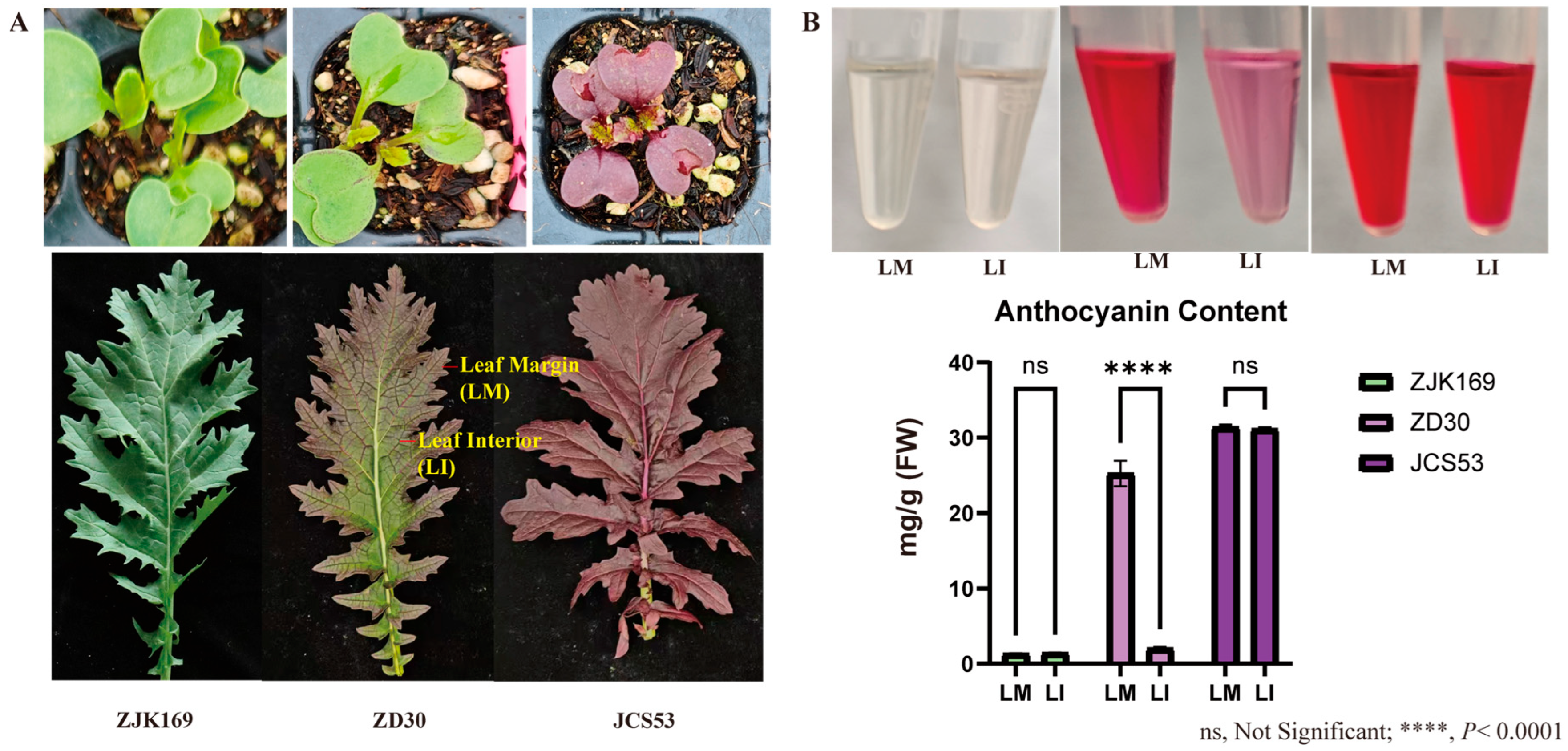
Brassica juncea accessions with distinct pigmentation patterns were analyzed: ZJK169 (uniformly green), ZD30 (purple margin and green interior), and JCS53 (uniformly purple). Phenotypic observations at the seedling and vegetative stages showed clear differences in both pigmentation intensity and distribution pattern among the three accessions (
Figure 1A). ZJK169 remained green throughout leaf development. In contrast, ZD30 displayed a stable bicolored phenotype, with purple pigmentation largely restricted to the leaf margin, whereas the inner lamina remained green. JCS53 showed strong purple pigmentation across both the leaf margin and the leaf interior.
To verify whether these visible differences were associated with anthocyanin accumulation, anthocyanin contents were measured separately in leaf margin (LM) and leaf interior (LI) tissues (
Figure 1B). In ZJK169, anthocyanin content was very low in both LM and LI, consistent with its green phenotype. In ZD30, anthocyanin content in the purple LM was significantly higher than that in the green LI, confirming that the margin-restricted purple coloration reflects localized pigment accumulation. In JCS53, both LM and LI contained relatively high anthocyanin levels, consistent with its uniformly purple phenotype. These results demonstrate that the visible color differences among the three accessions are closely associated with the amount and spatial distribution of anthocyanins.
Because ZD30 displays a clear within-leaf contrast between pigmented and non-pigmented tissues, it provides a suitable system for dissecting the transcriptional regulation underlying spatial anthocyanin patterning. The contrasting phenotypes of ZJK169 and JCS53 further served as green and fully pigmented references, respectively, for subsequent transcriptomic comparisons.
3.2. Identification of Differentially Expressed Genes (DEGs)
To elucidate the gene expression patterns underlying tissue-specific pigmentation differences, we performed comparative transcriptome analysis using LM and LI tissues from ZD30 and JCS53. A total of 18 RNA-seq libraries were constructed and sequenced. After adapter trimming and removal of low-quality reads, high-quality clean reads were obtained for all samples. On average, each library generated approximately 8.26 G clean bases, with Q30 values above 97%, and the GC content ranged from 47.07% to 47.86%. The clean reads were mapped to the
Brassica juncea var.
tumida V2.0 reference genome using HISAT2, with mapping rates ranging from 91.97% to 93.79% across samples, indicating that the sequencing data were of high quality and suitable for downstream analysis (
Table S1).
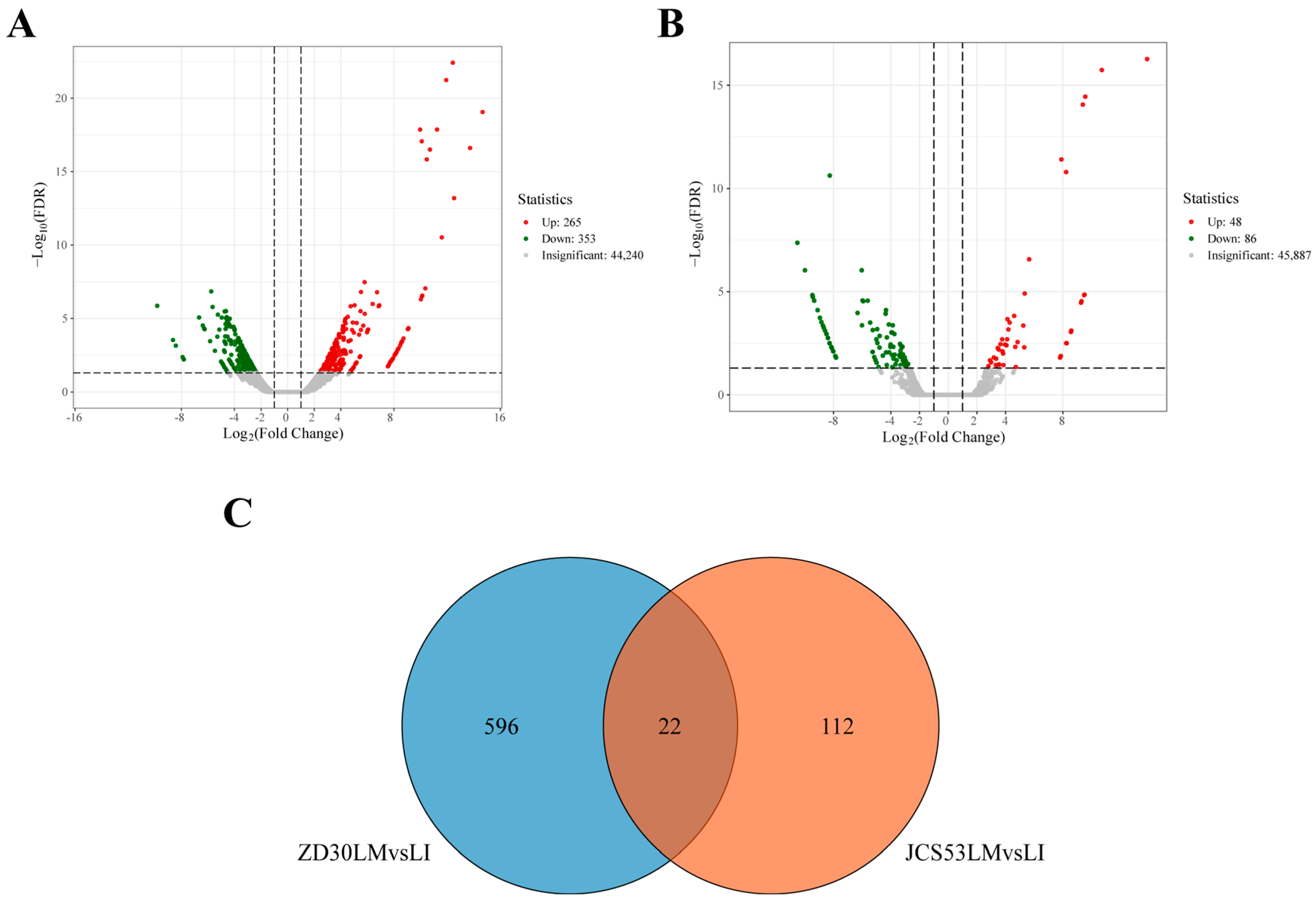
Differential expression analysis revealed a marked contrast between the bicolored accession ZD30 and the uniformly purple accession JCS53. In ZD30, a total of 618 differentially expressed genes (DEGs) were identified between LM and LI, including 265 upregulated and 353 downregulated genes in LM relative to LI (
Figure 2A). In contrast, only 134 DEGs were detected between the corresponding tissues of JCS53, including 48 upregulated and 86 downregulated genes (
Figure 2B). This difference is consistent with the contrasting phenotypes of the two accessions: ZD30 exhibits a clear purple-margin/green-interior pattern, whereas JCS53 shows more uniform pigmentation across the leaf, indicating that tissue-specific transcriptional reprogramming is more pronounced in ZD30.
To further distinguish genes potentially related to the purple-margin trait from those reflecting general tissue differences, we compared the DEG sets from ZD30 and JCS53. Only 22 DEGs were shared between the two comparisons, whereas the remaining 596 DEGs were specific to the ZD30 LM-versus-LI comparison (
Figure 2C). These ZD30-specific DEGs were therefore considered strong candidates for subsequent enrichment and expression analyses.
3.3. GO Enrichment Analysis of DEGs in ZD30
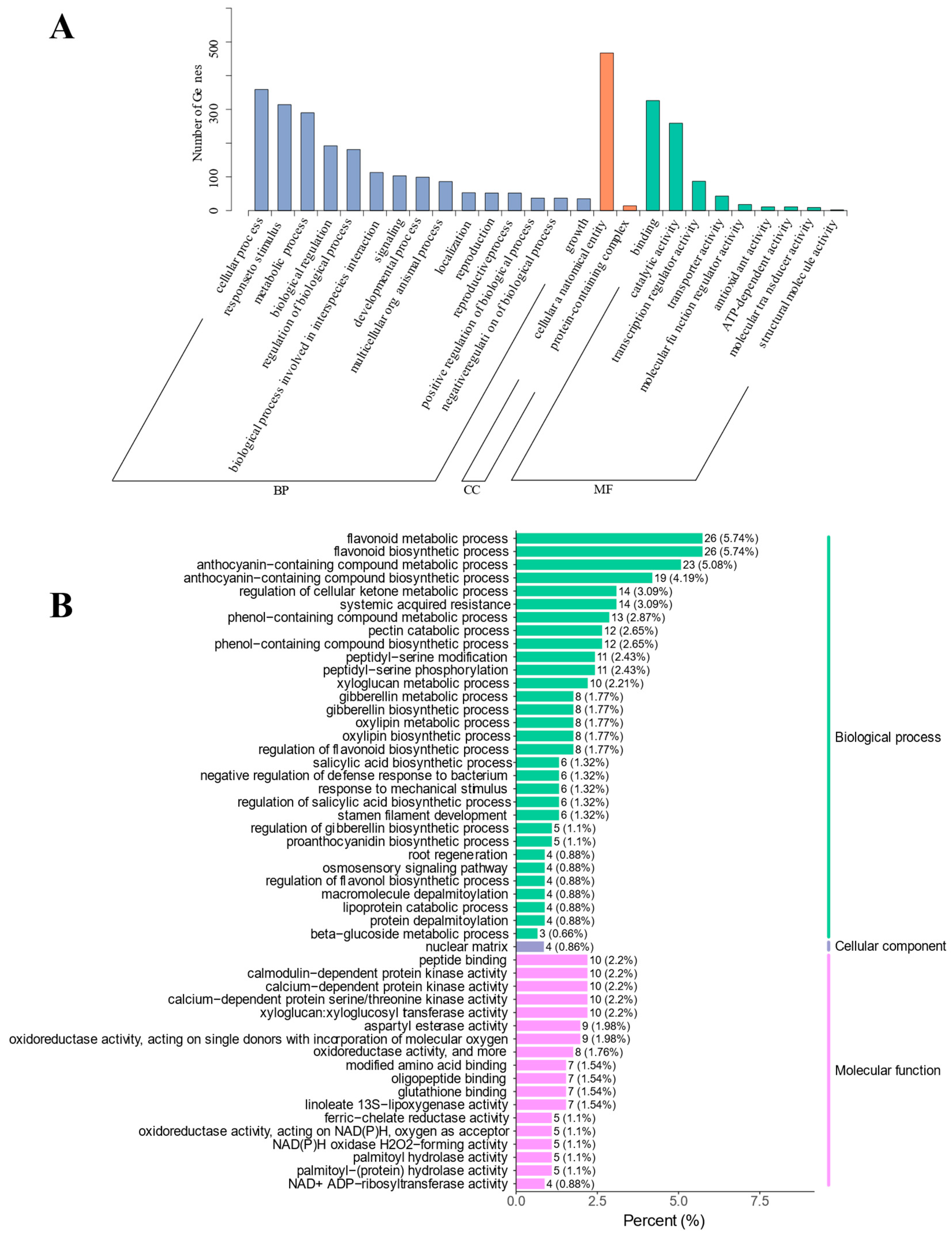
To gain insight into the biological functions associated with the purple-margin phenotype, Gene Ontology (GO) enrichment analysis was performed for the DEGs identified between the leaf margin (LM) and leaf interior (LI) of ZD30. These DEGs were classified into the three main GO categories: Biological Process (BP), Cellular Component (CC), and Molecular Function (MF) (
Figure 3A).
At the global level, the enriched GO terms suggest that the LM–LI transcriptional divergence in ZD30 involves both regulatory responsiveness and metabolic reprogramming. Within the BP category, the most highly represented terms were cellular process, response to stimulus, and metabolic process, followed by biological regulation and regulation of biological process. Other BP terms, including signaling, developmental process, and multicellular organismal process, were represented at lower levels. Within the CC category, the cellular anatomical entity was the dominant term, whereas the protein-containing complex was represented at a much lower level. In the MF category, binding and catalytic activity were the most represented terms, followed by transcription regulator activity and transporter activity.
To better define the processes most closely associated with pigmentation, significantly enriched GO terms were further examined (
Figure 3B). The strongest enrichment signals were directly related to flavonoid and anthocyanin metabolism, including flavonoid metabolic process (26 genes, 5.74%), flavonoid biosynthetic process (26 genes, 5.74%), anthocyanin-containing compound metabolic process (23 genes, 5.08%), and anthocyanin-containing compound biosynthetic process (19 genes, 4.19%). In addition to these pigment-related pathways, broader phenol-containing compound metabolic and biosynthetic processes were also enriched, indicating that the purple margin is associated with changes in a wider phenolic metabolic network rather than in anthocyanin production alone.
Notably, several enriched terms may represent upstream or parallel processes contributing to this metabolic shift. These included regulation of cellular ketone metabolic processes (14 genes, 3.09%), systemic acquired resistance (14 genes, 3.09%), and, in the MF category, calmodulin-dependent protein kinase activity, calcium-dependent protein kinase activity, and calcium-dependent protein serine/threonine kinase activity (each with 10 genes, 2.20%). Together with the enrichment of binding and transcription regulator activity, these results suggest that signaling- and regulation-related functions may act upstream of the observed flavonoid and anthocyanin metabolic differences.
Overall, the GO enrichment analysis indicates that the purple leaf margin of B. juncea is associated with a coordinated transcriptional program involving upstream regulatory and stimulus-responsive functions together with selective activation of flavonoid, anthocyanin, and broader phenolic metabolism, highlighting that margin-specific pigmentation in this species reflects localized remodeling of secondary metabolism rather than activation of a single pigment pathway alone.
3.4. KEGG Enrichment Analysis of DEGs in ZD30
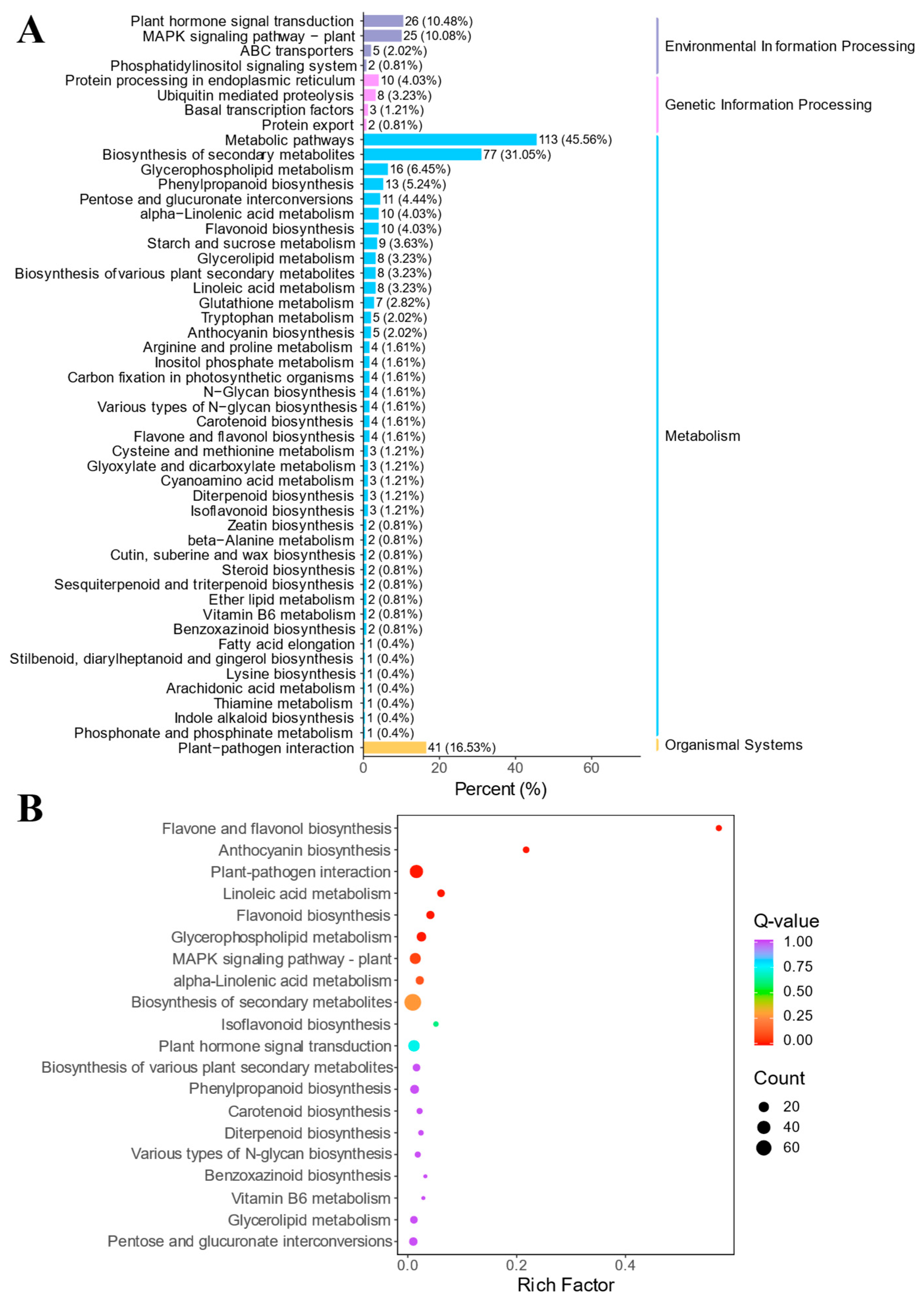
To further characterize the metabolic and regulatory pathways associated with margin-specific pigmentation, KEGG pathway enrichment analysis was performed for the DEGs identified between ZD30-LM and ZD30-LI. The results showed that the majority of DEGs were assigned to the broad metabolism category, indicating that the transcriptional difference between pigmented and non-pigmented tissues is primarily associated with metabolic reprogramming (
Figure 4A).
Within the metabolism category, the largest subclasses were metabolic pathways (113 genes, 45.56%) and biosynthesis of secondary metabolites (77 genes, 31.05%), followed by glycerophospholipid metabolism (16 genes, 6.45%) and phenylpropanoid biosynthesis (13 genes, 5.24%). These results indicate that the purple-margin phenotype is embedded in a broad metabolic shift, with a particularly strong emphasis on secondary metabolism related to phenolic compounds and pigments.
Among the enriched pathways, those most directly relevant to pigment accumulation were flavone and flavonol biosynthesis, anthocyanin biosynthesis, and flavonoid biosynthesis (
Figure 4B). The high enrichment of these pathways suggests that the purple margin is associated with coordinated activation of both upstream flavonoid branches and the anthocyanin-specific downstream branch, consistent with enhanced metabolic flux toward pigment formation.
In addition to metabolic pathways, several signaling-related pathways were also enriched. Within environmental information processing, the two most represented pathways were plant hormone signal transduction (26 genes, 10.48%) and MAPK signaling pathway—plant (25 genes, 10.08%). Other enriched categories included protein processing in the endoplasmic reticulum (10 genes, 4.03%), ubiquitin-mediated proteolysis (8 genes, 3.23%), and plant–pathogen interaction (41 genes, 16.53%). These pathways may represent upstream or parallel regulatory processes associated with the transcriptional divergence between LM and LI. However, because this study did not directly test hormone signaling activity or MAPK function, these pathways should be interpreted as candidate regulatory contexts rather than demonstrated mechanisms.
Overall, the KEGG enrichment analysis shows that the purple leaf margin of Brassica juncea is associated with coordinated activation of flavonoid, anthocyanin, and broader secondary metabolic pathways, together with enrichment of signaling-related processes, highlighting a species-relevant pattern of localized secondary metabolic remodeling underlying margin-specific pigmentation.
3.5. KEGG Pathway Mapping and Expression Patterns of Genes Associated with Anthocyanin and Flavone/Flavonol Biosynthesis
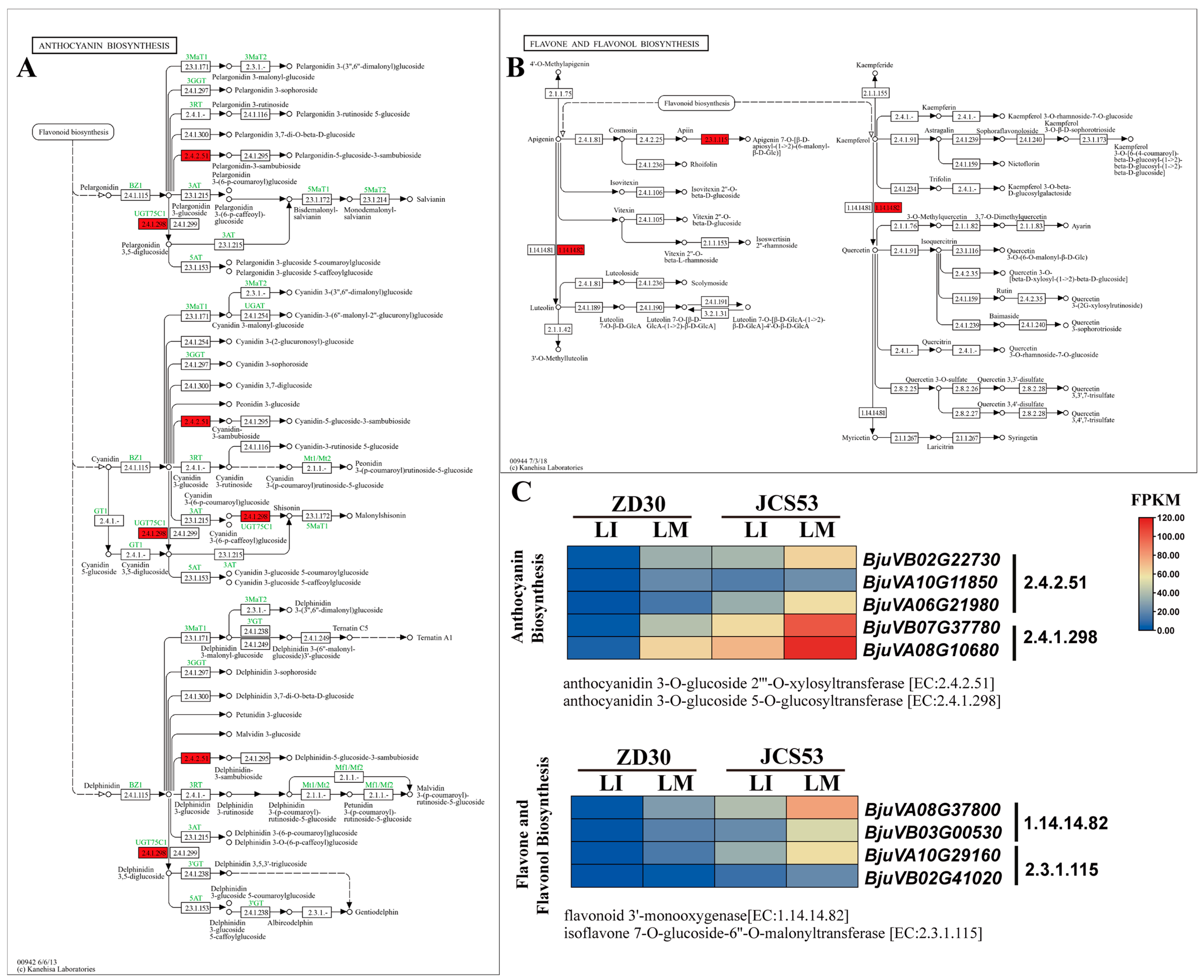
As shown by the KEGG enrichment analysis, flavone and flavonol biosynthesis and anthocyanin biosynthesis were the two most strongly enriched pigment-related pathways in the LM-versus-LI comparison of ZD30. To further resolve the transcriptional features underlying these enrichments, DEGs were mapped onto these two pathways using KEGG annotation (
Figure 5A,B), and the expression of the corresponding genes was compared across ZD30-LI, ZD30-LM, JCS53-LI, and JCS53-LM (
Figure 5C). This combined analysis linked pathway enrichment with the expression behavior of specific candidate genes and allowed a more detailed examination of the flavonoid branches associated with pigment accumulation.
In the anthocyanin biosynthesis pathway (
Figure 5A), the significantly upregulated steps were mainly associated with two glycosyltransferase-related nodes, corresponding to anthocyanidin 3-O-glucoside 2′′′-O-xylosyltransferase (EC 2.4.2.51) and anthocyanidin 3-O-glucoside 5-O-glucosyltransferase (EC 2.4.1.298). The EC 2.4.2.51 node included
BjuVB02G22730,
BjuVA10G11850, and
BjuVA06G21980 and was annotated as catalyzing the conversion of pelargonidin, cyanidin, and delphinidin into their corresponding 3-sambubiosides. The EC 2.4.1.298 node included
BjuVB07G37780 and
BjuVA08G10680, corresponding to UGT75C1, which catalyzes the formation of the corresponding 3,5-diglucosides. These reactions represent late glycosylation steps required for the formation of stable anthocyanin derivatives.
In the flavone and flavonol biosynthesis pathway (
Figure 5B), the significantly upregulated steps were associated with flavonoid 3′-monooxygenase (EC 1.14.14.82) and isoflavone 7-O-glucoside-6″-O-malonyltransferase (EC 2.3.1.115). The EC 1.14.14.82 node included
BjuVA08G37800 and
BjuVB03G00530 and was associated with a flavonoid hydroxylation step contributing to flavone/flavonol modification. The EC 2.3.1.115 node included
BjuVA10G29160 and
BjuVB02G41020 and was associated with pathway branches leading to the conversions of kaempferol to quercetin and apigenin to luteolin. These results indicate that, in addition to anthocyanin formation, selected branches of flavone/flavonol metabolism are also transcriptionally enhanced in pigmented tissues.
The heatmap of these nine genes (
Figure 5C) revealed a consistent expression gradient across samples. Overall, transcript abundance was lowest in ZD30-LI, increased in ZD30-LM and JCS53-LI, and was highest in JCS53-LM. Thus, the strongest activation was observed in the most intensely pigmented tissue, whereas the weakest expression occurred in the non-pigmented tissue. This gradient was evident for genes associated with both the anthocyanin pathway and the flavone/flavonol pathway.
Overall, these results show that the pigmented tissues of Brassica juncea are characterized by coordinated enhancement of late anthocyanin glycosylation steps together with increased activity of selected flavone/flavonol pathway branches, highlighting a pattern in Brassica juncea in which margin-associated pigmentation is linked to localized remodeling of interconnected flavonoid pathways.
3.6. Expression Profiles of Structural Genes Involved in Anthocyanin Biosynthesis
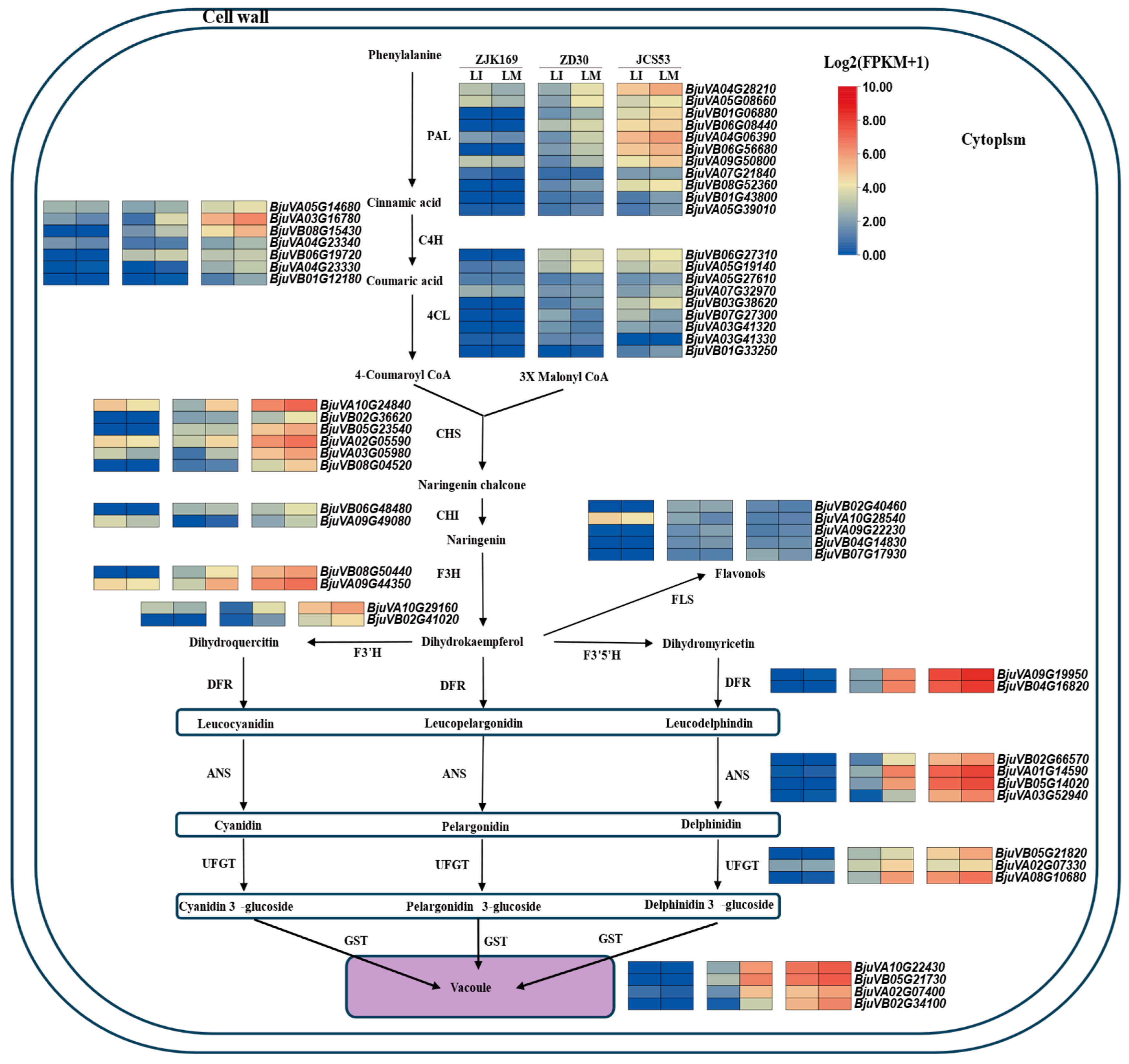
To identify the structural basis of tissue-specific pigmentation, we compared the expression patterns of anthocyanin biosynthesis-related genes among LM and LI tissues of ZJK169, ZD30, and JCS53 (
Figure 6). The results revealed a clear distinction between the expression behavior of early biosynthetic genes (EBGs) and late biosynthetic genes (LBGs).
Overall, these data indicate that spatial anthocyanin accumulation in ZD30 is mainly associated with localized activation of late biosynthetic and transport genes, whereas the upstream phenylpropanoid framework remains more broadly active across tissues.
Genes functioning in the upstream phenylpropanoid and early flavonoid pathway, including PAL, C4H, 4CL, CHS, CHI, and F3H, were expressed in both green and purple tissues, with only moderate differences among tissues and accessions. This broadly distributed expression pattern is consistent with their role in providing shared precursors for multiple branches of secondary metabolism, rather than specifically determining anthocyanin accumulation.
By contrast, genes associated with the anthocyanin-specific late branch showed much stronger tissue specificity. The late biosynthetic genes BjDFR, BjANS, and BjUFGT exhibited low expression in the green LI of ZD30 and in ZJK169 but higher expression in the pigmented LM of ZD30 and in both tissues of the uniformly purple accession JCS53. Among the pigmented tissues, expression was generally strongest in JCS53 and clearly elevated in ZD30-LM relative to ZD30-LI. This pattern indicates that visible pigmentation is primarily associated with the activation of the late anthocyanin branch rather than with uniform enhancement of the entire flavonoid pathway.
In addition to biosynthesis, anthocyanin accumulation requires efficient intracellular transport and sequestration. Consistent with this requirement, the transporter-related gene BjGSTF showed an expression pattern similar to that of the late biosynthetic genes. It was weakly expressed in green tissues but clearly elevated in pigmented tissues, supporting coordinated activation of anthocyanin synthesis and transport.
Interestingly, the competing branch gene FLS tended to show relatively higher expression in green tissues, particularly in ZJK169 and the LI of ZD30. Because FLS diverts dihydroflavonol substrates toward flavonol production, this pattern is consistent with the possibility that metabolic flux in non-pigmented tissues is preferentially directed toward non-anthocyanin flavonoid branches.
3.7. Expression Profiles of Anthocyanin-Related Transcription Factor Genes
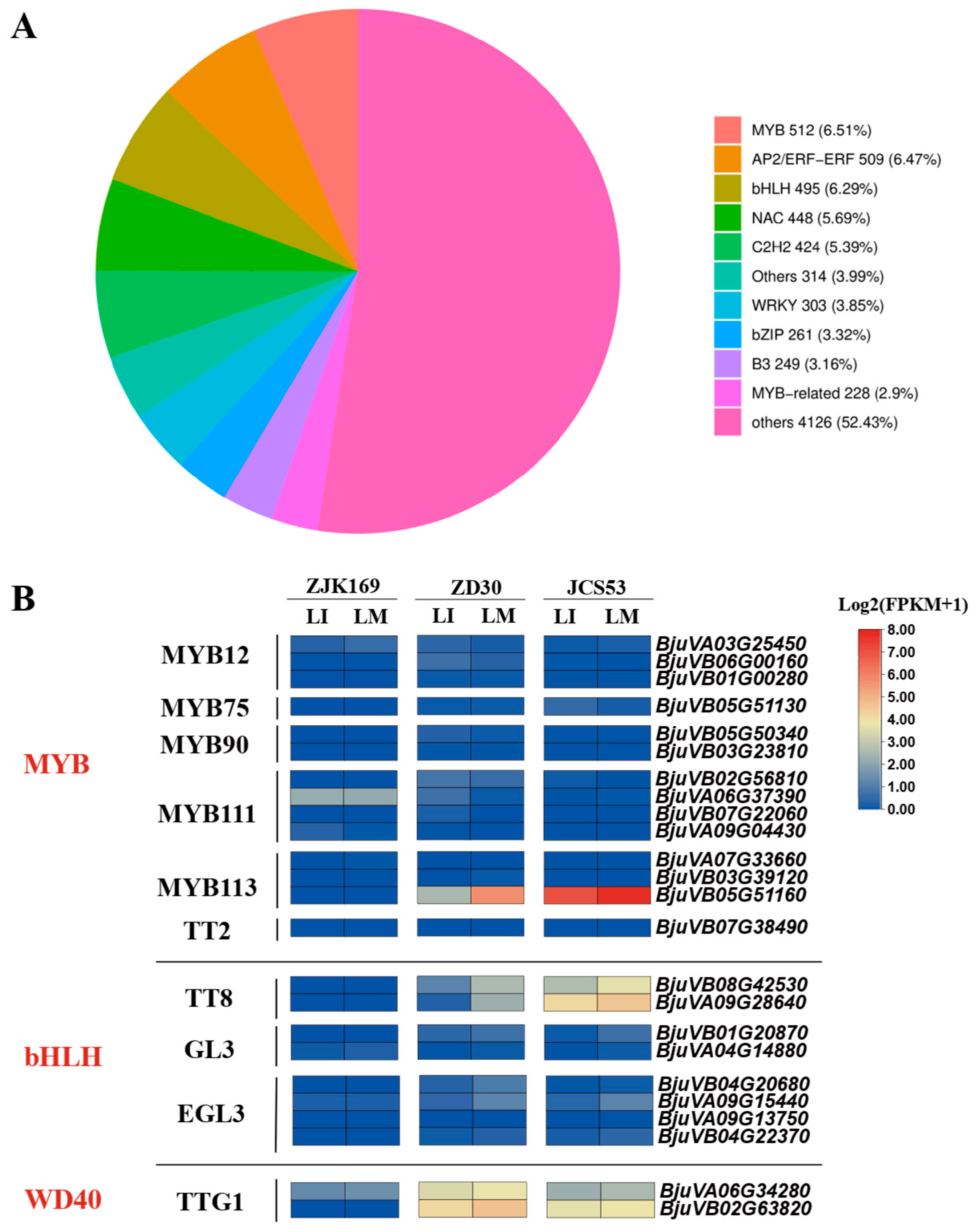
Transcriptomic analysis identified numerous transcription factors potentially involved in the regulatory network. The most abundantly represented families included MYB (512 members, 6.51%), AP2/ERF (509, 6.47%), bHLH (495, 6.29%), and NAC (448, 5.69%) (
Figure 7A). Given that leaf pigmentation patterns in
Brassicaceae are frequently driven by the MBW (MYB-bHLH-WD40) complex, we focused subsequent analyses on this module. Within the DEGs identified between the LM and LI of ZD30, we successfully screened a subset of candidate regulators, including 15
MYBs, 8
bHLHs, and 2
WD40s. To identify potential master regulators of the marginal purple trait, we examined their expression patterns across tissues (
Figure 7B). Among the R2R3-MYB family, several well-characterized anthocyanin regulators, including
MYB75 (
PAP1),
MYB90 (
PAP2),
MYB111, and
MYB12, showed no significant expression difference between purple and green tissues, suggesting that they are unlikely to be drivers of this phenotype. In contrast, a specific isoform of
BjMYB113 (
BjuVB05G51160) was exclusively and significantly upregulated in the purple tissues (ZD30-LM and JCS53), suggesting that
BjMYB113 might be the key spatial regulator.
A similar pattern was observed for the bHLH partners. While GL3 and EGL3 were expressed comparably across all tissues, two BjTT8 genes (BjuVA09G28640 and BjuVB08G42530) exhibited a strict correlation with anthocyanin accumulation, being highly expressed only in pigmented regions. Regarding the WD40 component, two BjTTG1 genes (BjuVA06G34280 and BjuVB02G63820) were expressed in both LM and LI of ZD30 and JCS53, albeit at higher levels in the ZD30 margin. The constitutive expression of TTG1, contrasted with the spatially restricted expression of MYB113 and TT8, supports a regulatory model in which the tissue specificity of the MBW complex is primarily determined by the transcriptional activation of the MYB and bHLH partners rather than the WD40 scaffold.
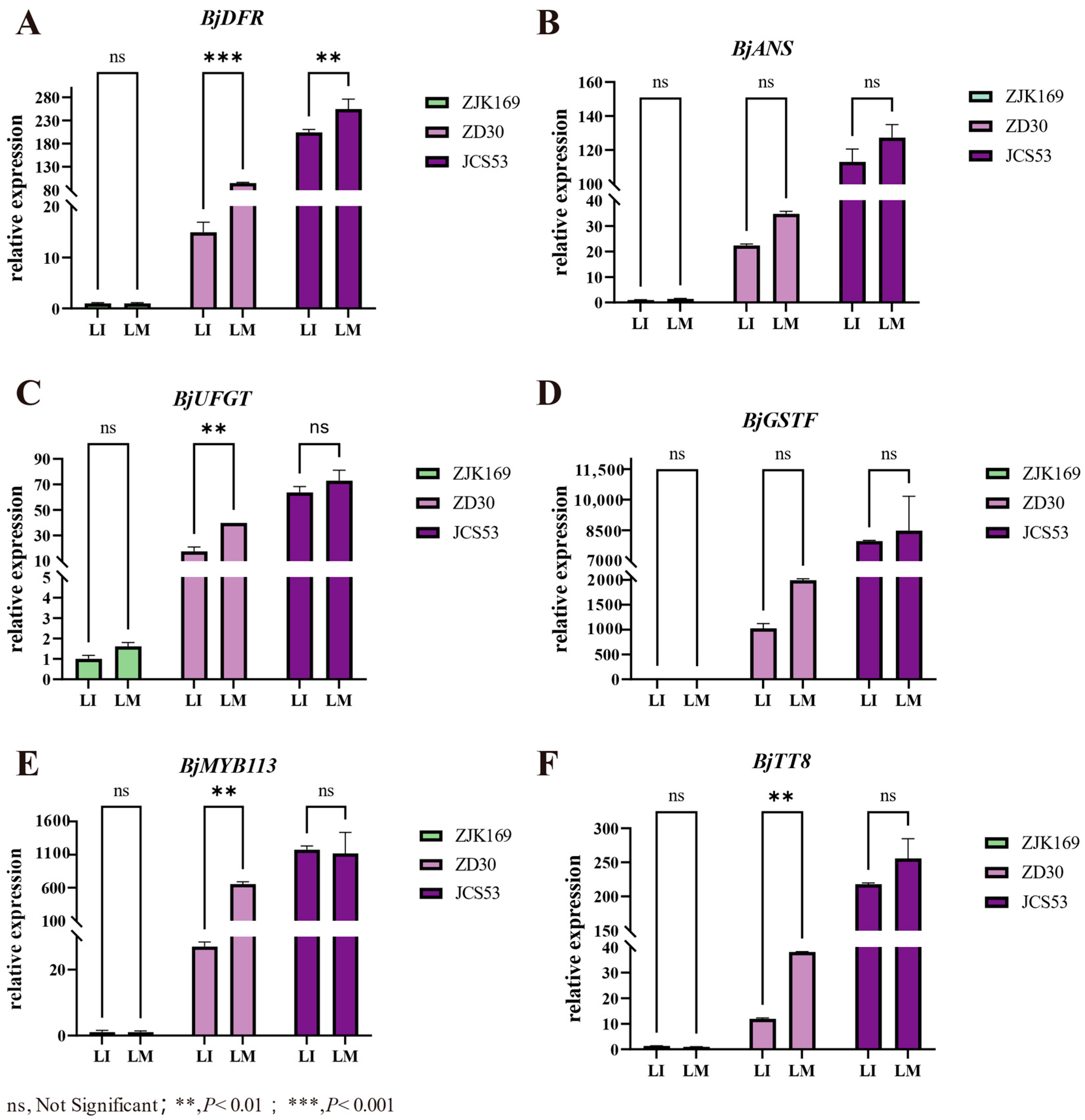
3.8. Validation of Gene Expression by qRT-PCR
To validate the RNA-seq results, qRT-PCR was performed to examine the expression of key anthocyanin-related genes in LM and LI tissues of the three
B. juncea accessions (
Figure 8). The tested genes included three late biosynthetic genes (
BjDFR,
BjANS, and
BjUFGT), one transporter-related gene (
BjGSTF), and two candidate regulatory genes (
BjMYB113 and
BjTT8).
Overall, the qRT-PCR results were broadly consistent with the transcriptome data and with the observed pigmentation patterns among tissues. In the bicolored accession ZD30, BjDFR, BjUFGT, and BjMYB113 showed significantly higher expression in LM than in LI, consistent with the preferential accumulation of anthocyanins in the purple leaf margin. By contrast, BjANS, BjGSTF, and BjTT8 showed the same directional trend, with higher expression in LM than in LI, although these differences were not always statistically significant. In the uniformly green accession ZJK169, expression levels of these genes remained generally low in both tissues, whereas in the uniformly purple accession JCS53, several genes were expressed in both LM and LI, consistent with its broad pigmentation pattern.
Although the magnitude of statistical support varied among individual genes, the overall expression trends supported the transcriptomic conclusion that margin-specific pigmentation in ZD30 is associated with the coordinated upregulation of anthocyanin-related structural and regulatory genes. In particular, the higher expression of BjMYB113 in the pigmented margin further supports its association with anthocyanin accumulation in mustard leaves.
3.9. Transient Overexpression of BjMYB113 Promotes Anthocyanin Accumulation
To further assess the role of
BjMYB113 in anthocyanin accumulation, its coding sequence was cloned from purple leaf tissue of
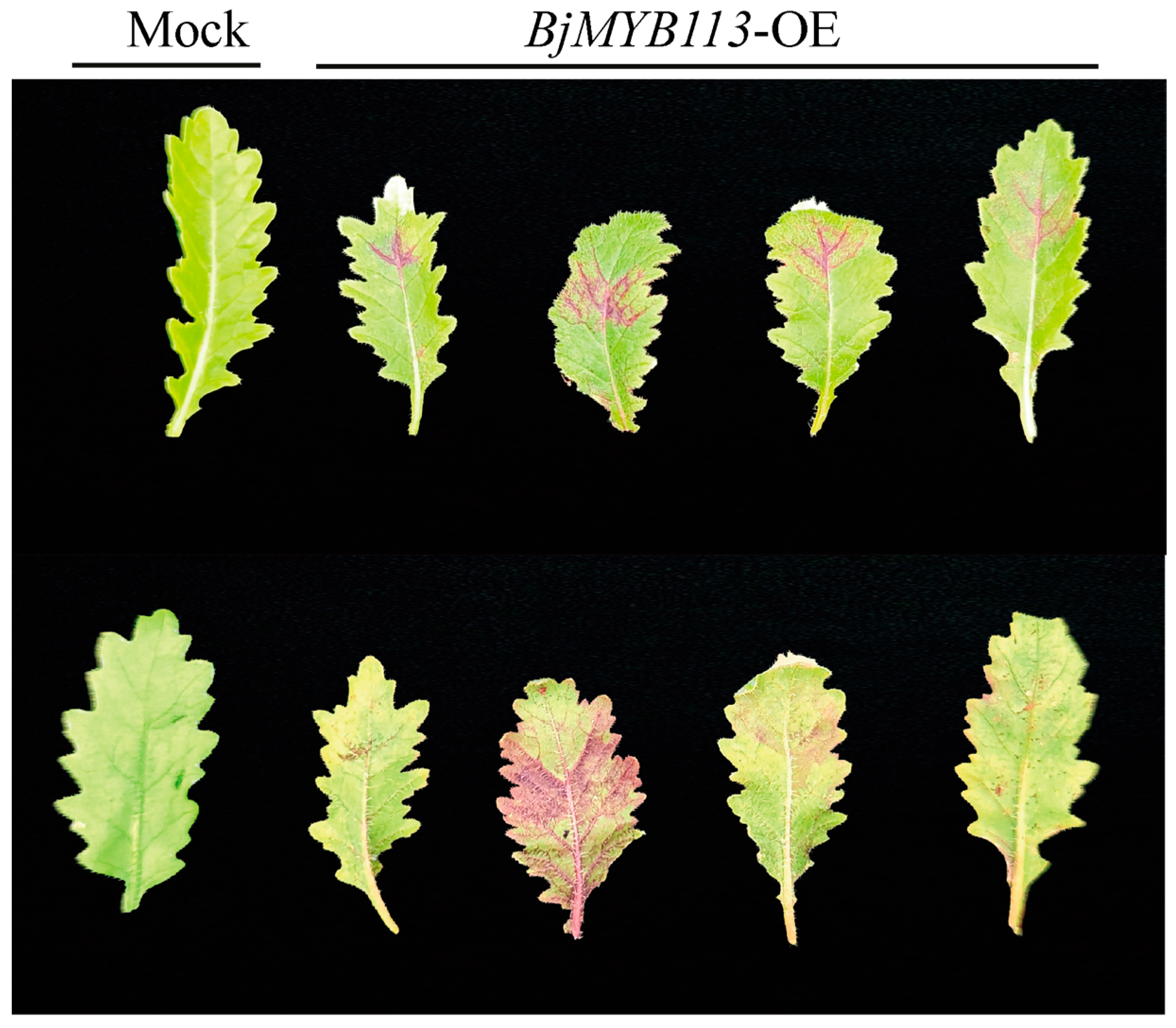
B. juncea, and a transient overexpression assay was performed in the green accession ZJK169. Compared with the empty vector control, leaves infiltrated with the
BjMYB113 overexpression construct developed visible purple pigmentation in the infiltrated region (
Figure 9), indicating that ectopic expression of
BjMYB113 is sufficient to induce pigment formation in otherwise green tissue.
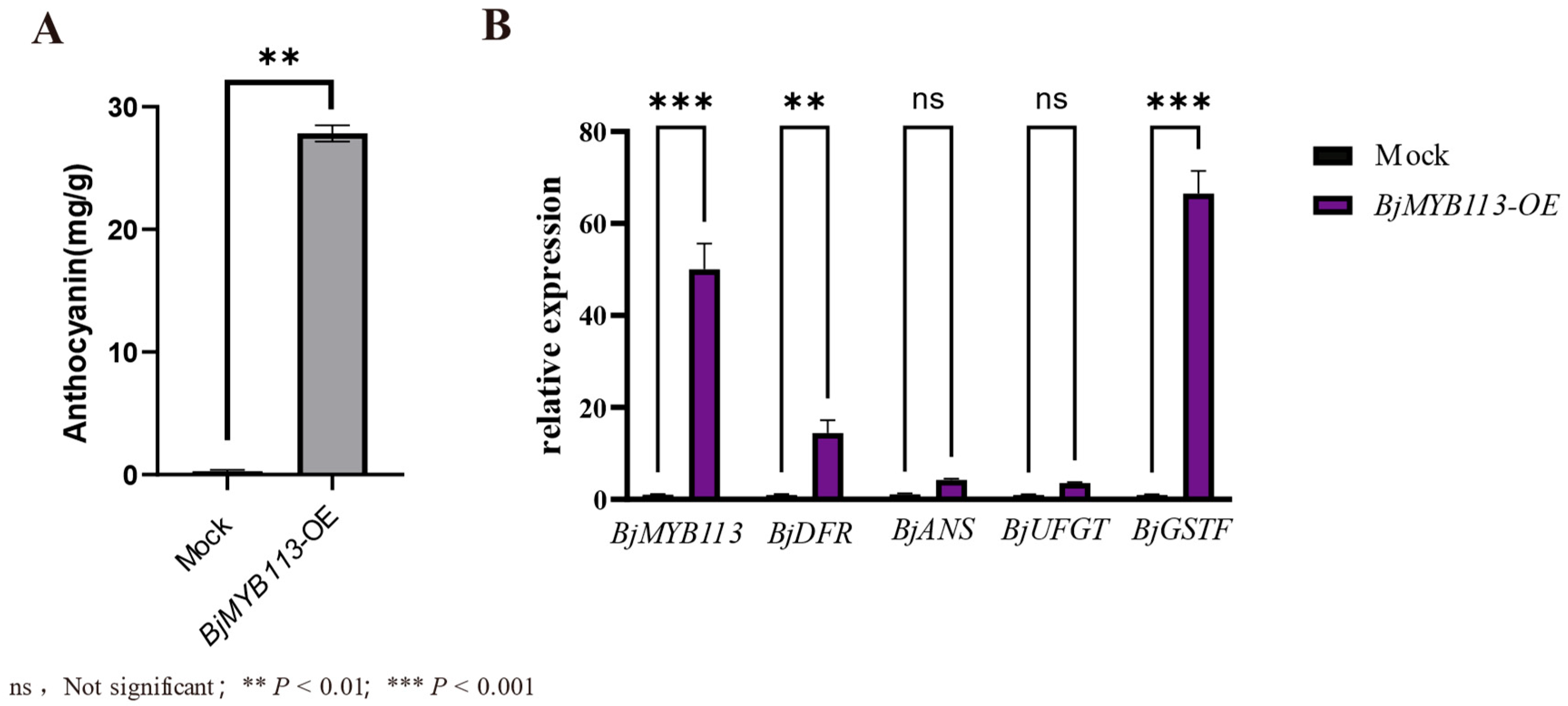
Anthocyanin quantification further showed that the overexpression treatment significantly increased anthocyanin content relative to the control (
p < 0.01) (
Figure 10A). To determine whether this phenotypic change was accompanied by transcriptional activation of anthocyanin-related genes, qRT-PCR was performed on infiltrated tissues. As expected,
BjMYB113 expression was significantly elevated in the overexpression samples (
p < 0.001). In addition, the late biosynthetic gene
BjDFR and the transporter-related gene
BjGSTF were significantly upregulated (
p < 0.01 and
p < 0.001, respectively), whereas
BjANS and
BjUFGT showed increasing trends but did not differ significantly from the control (
Figure 10B).
Together, these results indicate that BjMYB113 acts as a positive regulator of anthocyanin accumulation in B. juncea and can promote visible pigmentation when transiently expressed in green mustard leaves.
4. Discussion
Most previous studies of anthocyanin regulation in Brassica and other species have focused on whole-organ or whole-genotype color differences, such as purple versus green leaves or colored versus non-colored fruits [
26,
27,
28]. By contrast, this study addresses a more specific question: how anthocyanins become spatially restricted within a single mustard leaf. This distinction is important because the purple-margin/green-interior phenotype of ZD30 reflects not simply a difference in total pigment level but localized activation of pigment-related metabolism within one organ. Thus, compared with previous Brassica studies centered on whole-leaf purple traits, the main contribution of this work is the identification of transcriptional features associated with within-leaf anthocyanin spatial patterning in
Brassica juncea.
A major finding of this study is that margin-specific pigmentation in mustard is associated primarily with the localized activation of the late anthocyanin branch. The early biosynthetic genes (
PAL,
C4H,
4CL,
CHS,
CHI, and
F3H) were expressed in both green and purple tissues, indicating that the upstream phenylpropanoid framework is broadly active across tissues. In contrast, the late biosynthetic genes
BjDFR,
BjANS, and
BjUFGT, together with the transporter-related gene
BjGSTF, were much more closely associated with pigmented tissues. This pattern is consistent with studies in other species showing that visible anthocyanin accumulation is often determined more directly by late biosynthetic and transport steps than by uniform changes in the entire upstream pathway [
45,
46,
47]. Our results therefore support a model in which the purple margin of ZD30 is formed by local commitment of metabolic flux to anthocyanin synthesis and sequestration.
Another notable feature of our dataset is that the purple-margin phenotype was associated not only with anthocyanin- and flavonoid-related pathways but also with broader phenol-containing compound metabolic and biosynthetic processes. This suggests that the pigmented margin is not simply a site of anthocyanin accumulation alone but part of a broader local reprogramming of phenolic secondary metabolism. Because anthocyanins, flavonols, and other phenolic compounds share common upstream precursors, such coordinated remodeling is biologically plausible [
24,
48]. Therefore, one distinctive aspect of this study is that it places anthocyanin spatial distribution in mustard within a broader phenolic metabolic context.
At the regulatory level, our data identify
BjMYB113 as the strongest factor associated with anthocyanin accumulation in mustard. Its expression was preferentially detected in pigmented tissues, and transient overexpression of
BjMYB113 in green leaves induced visible purple pigmentation, increased anthocyanin content, and significantly upregulated
BjDFR and
BjGSTF. These results provide functional support that
BjMYB113 acts as a positive regulator of anthocyanin accumulation in
B. juncea. Previous studies in mustard and other Brassica species have also implicated
MYB113/
PAP-type regulators in purple pigmentation [
35,
49], but our results extend these findings by linking
BjMYB113 to localized pigment accumulation within a single leaf, rather than only to whole-leaf purple phenotypes. In addition to
BjMYB113, the bHLH factor
BjTT8 showed an expression pattern broadly consistent with anthocyanin accumulation and with the expression of late biosynthetic genes. This agrees with the established MBW regulatory framework, in which MYB and bHLH components often contribute more directly to tissue specificity, whereas WD40 proteins act more constitutively [
10,
50]. However, unlike
BjMYB113, the role of
BjTT8 in margin-specific pigmentation was inferred mainly from expression association and has not yet been functionally tested in this study. It should therefore be regarded as a strong candidate partner, rather than a confirmed regulator.
KEGG enrichment also highlighted plant hormone signal transduction and the plant MAPK signaling pathway among the pathways associated with LM–LI transcriptional divergence. Similar pathways have been implicated in anthocyanin regulation in other systems [
51,
52]. However, because this study does not include direct hormone quantification or signaling assays, these pathways should be interpreted as candidate upstream regulatory routes rather than demonstrated mechanisms. Future work should test whether such pathways influence the spatial expression of anthocyanin regulators in ZD30 and how they may interact with the
BjMYB113-centered regulatory module.
In summary, this study provides a transcriptional framework for understanding anthocyanin spatial distribution in Brassica juncea. Compared with previous studies centered on anthocyanin accumulation at the whole-leaf level, our work highlights how localized activation of BjMYB113, candidate MBW components, and late biosynthetic/transport genes is associated with the establishment of a purple-margin phenotype. These findings directly address the topic and objective of this study and provide a basis for future functional analysis of spatial pigment regulation in mustard.






 ,
,