


Abstract
Sechium edule (Cucurbitaceae), commonly known as chayote, which is a cucurbit of economic relevance, has experienced higher incidence of wilting from Phytophthora capsici in Mexican commercial fields during heavy rainfall. The infection process of this oomycete on chayote stems at the anatomical level had not been documented. This study characterized histological changes in chayote stems infected with P. capsici. Plants were inoculated at the stem base with P. capsici mycelial plugs, while controls received sterile plugs. Stem samples collected at 8, 12, 16, 22, and 30 days post-inoculation were processed and stained using safranin O–fast green. Microscopic observations showed progressive anatomical alterations. At 8 dpi, hyphae appeared in cortical parenchyma and epidermis, with phenolic compound accumulation. By 12 dpi, stromata and sporangia were visible in vascular and cortical tissues, with tyloses formation. At 16 dpi, cell wall collapse and xylem colonization became evident. These effects intensified at 22 and 30 dpi, with tissue degradation and an abundance of hyphae. Control stems maintained intact structures. Macroscopically, plants remained asymptomatic until 12 dpi, when brown lesions appeared. By 22 dpi, leaf yellowing and stem necrosis were observed, leading to plant death by 30 dpi. The results demonstrate the rapid colonization of chayote tissues by P. capsici, and its impact on vascular integrity. This study provides knowledge for future research on host resistance and disease management in chayote crops.
1. Introduction
Phytophthora capsici is an oomycete with a broad host range and a high dispersivity capacity that can promote the wilting and plant death of several species, including agriculturally important crops in the Solanaceae and Cucurbitaceae families [1]. Histological studies have demonstrated the rapid colonization of host tissues by P. capsici. For example, in chili pepper (Capsicum annuum) roots, following initial infection of epidermal cells, the pathogen invades the cortical and vascular tissues, causing structural disorganization through cell wall degradation mediated by pathogen-secreted enzymes. In contrast, in resistant cultivars, the pathogen remains confined to the epidermal surface due to the presence of exudates (proteins and polysaccharides) from the root, in addition to penetration being limited by thickened middle lamellae and cell wall appositions in resistant tissue [2].
Chayote [Sechium edule (Jacq.) Sw.] is a vegetable originally grown in backyard gardens that has evolved into an export-oriented crop. Mexico is the leading producer, followed by Costa Rica and the Dominican Republic in the Caribbean, and, more recently, some Mediterranean countries in Europe. Its commercial success has expanded cultivated areas, and various pest organisms have been identified affecting different plant organs, thus impacting profitability, plant health, and food safety [3]. Lack of accurate knowledge about plant damage often results in misdiagnoses and increased management costs, including the use of ineffective pesticides or incorrect dosages. Therefore, it is essential to identify the main pathogens affecting each organ of the chayote plant to ensure timely, appropriate, and socially and environmentally responsible management strategies that sustain productivity and fruit quality [4,5,6]. Under cultivation, chayote productivity can reach up to 130 t ha−1 per year with a planting density of 100 plants ha−1. In the state of Veracruz, Mexico, more than 2600 ha are cultivated [7].
Understanding the host tissue’s response and the timing of infection by P. capsici helps reveal resistance mechanisms in affected varieties or species. In the case of chayote, a vegetable of growing international market importance, damage has been reported in commercial plantations of the var. virens levis, with symptoms of wilt caused by root rot from P. capsici being most prevalent during months of high rainfall [7]. However, the infection process and host tissue response in chayote remain poorly understood. Therefore, the objective of this study was to document the anatomical alterations in chayote plants infected with P. capsici through histological analysis of stem tissue.
2. Results
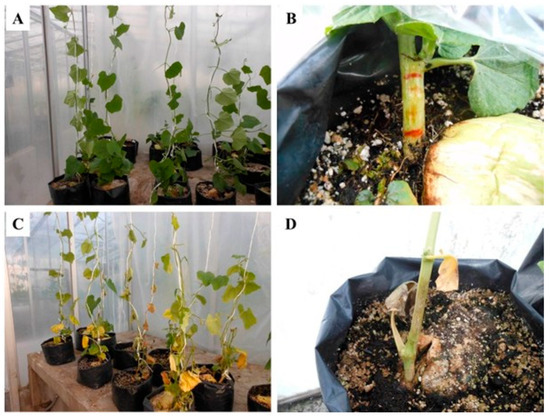
Inoculated chayote plants showed no symptoms of yellowing or wilting at 12 dpi (Figure 1A); however, two irregular light brown lesions developed at the inoculation site (Figure 1B). By 22 dpi, foliar yellowing was observed, initially appearing in the basal leaves of inoculated plants (Figure 1C). At the stem base, apparent necrosis was noted, progressing from the base toward the apical region (Figure 1D). Symptoms continued to progress, leading to plant death due to wilting by 30 dpi.
Figure 1.
S. edule var. virens levis plants artificially inoculated with P. capsici under greenhouse conditions. (A) Control plants (non-inoculated). (B) Stem base showing irregular light brown lesions at 12 days post-inoculation (dpi). (C) Chlorosis in inoculated plants at 22 dpi. (D) Progression of necrosis at the stem at 22 dpi.
2.1. Analysis of S. edule var. virens levis Plants Inoculated with P. capsici After 8 Days Post-Inoculation (dpi)
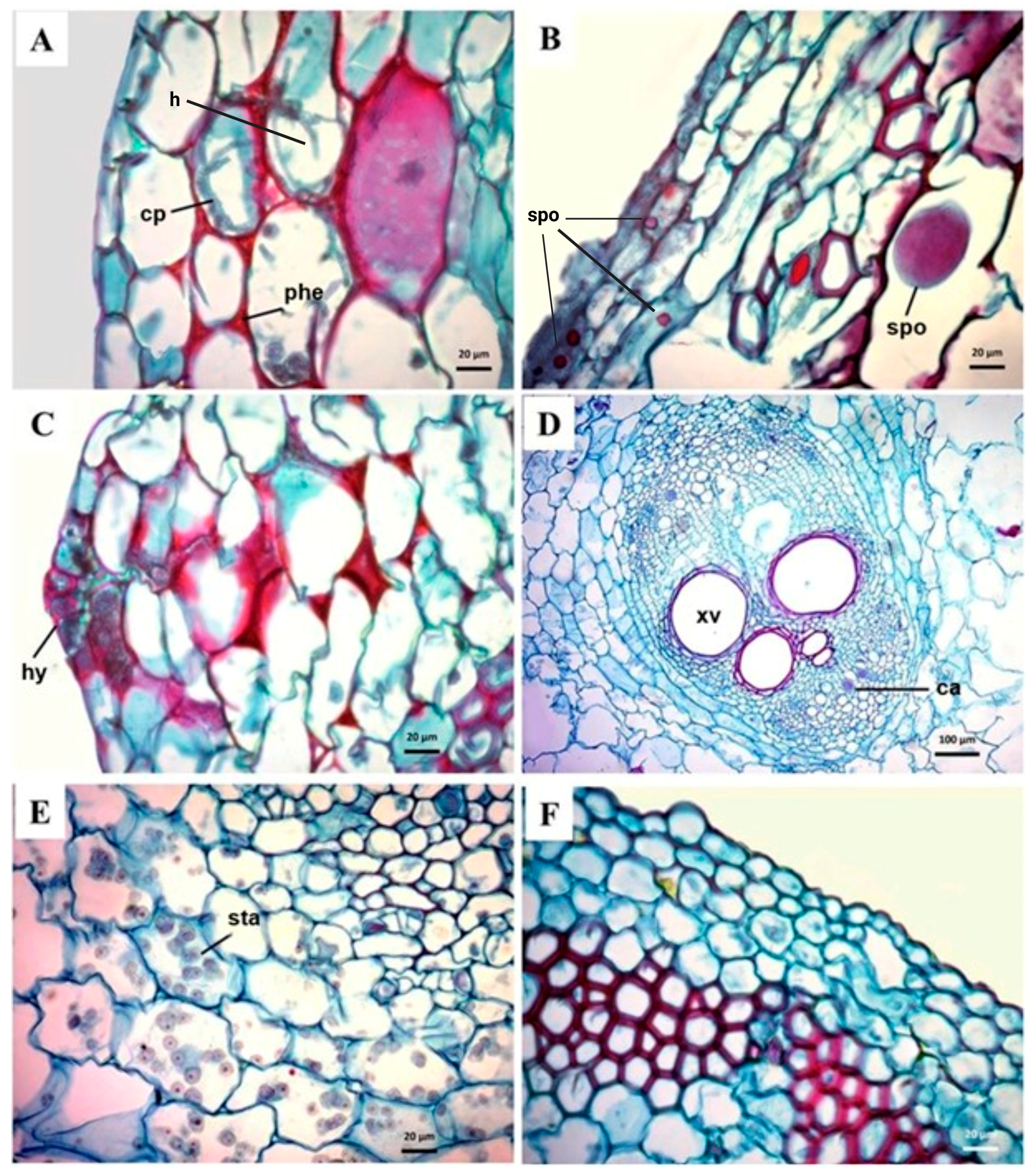
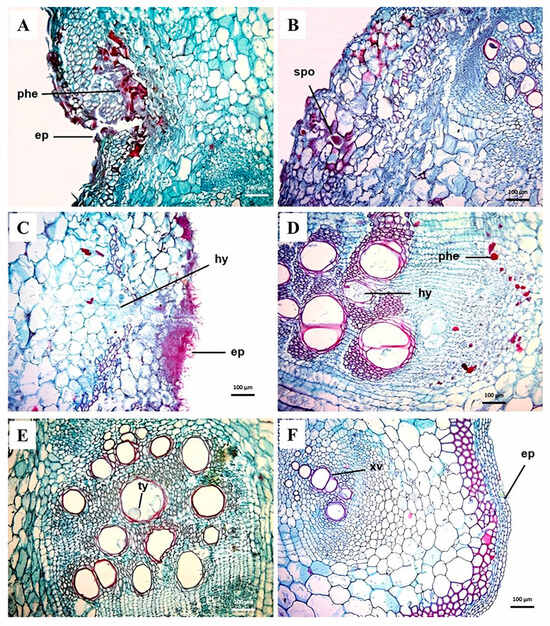
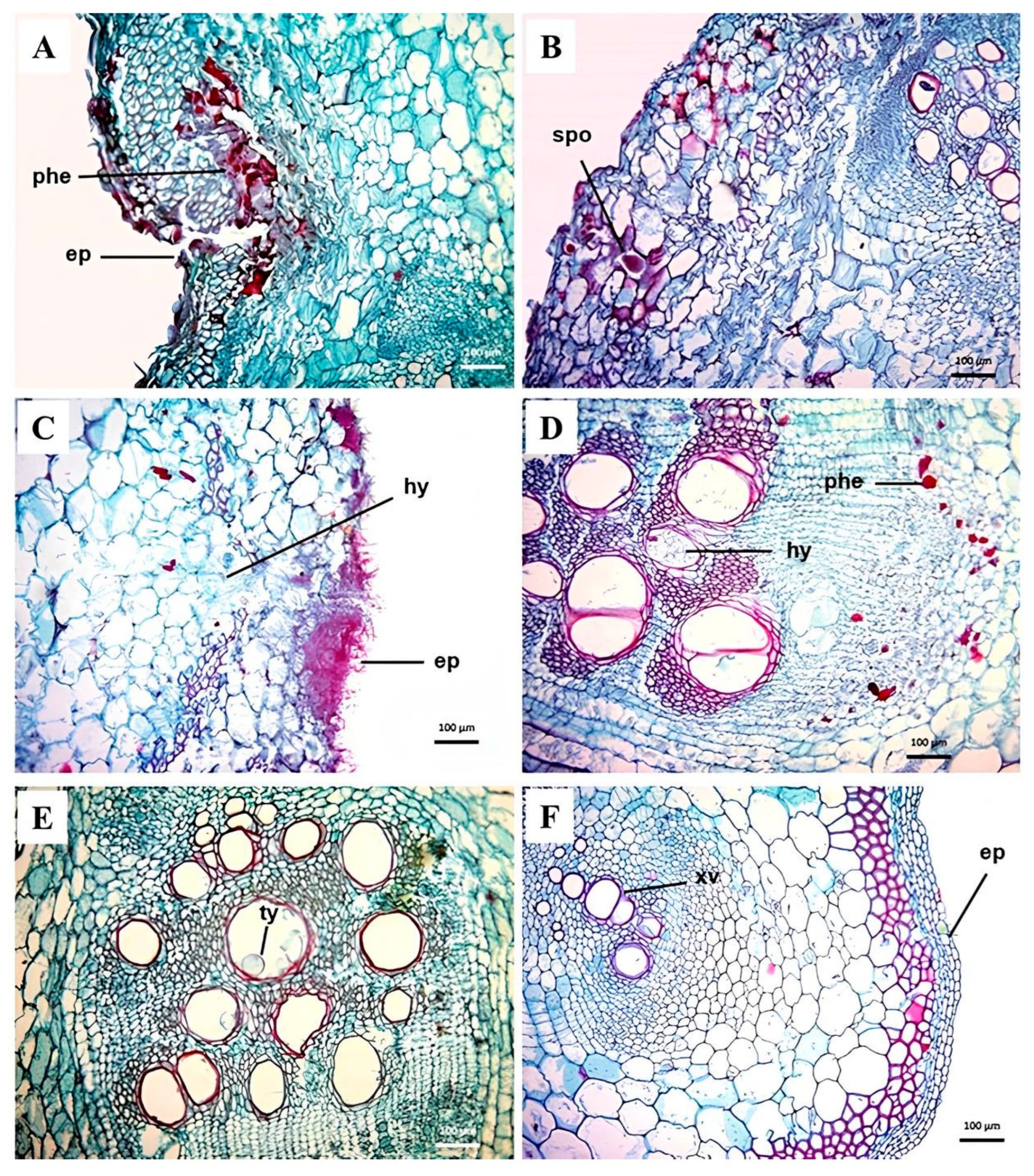
The accumulation of compounds of apparent phenolic nature was observed in the intercellular spaces of the cortical parenchyma (Figure 2A), indicating an early defense response. Simultaneously, P. capsici mycelium was detected in the epidermal and cortical parenchyma cells (Figure 2B). As colonization progressed, cellular hypertrophy and transverse divisions were evident in the epidermis and the superficial layers of the cortex at the inoculation site.
Figure 2.
Photomicrographs of transverse sections of S. edule var. virens levis stems at 8 days post-inoculation with P. capsici. (A–E) Inoculated stem sections showing hyphae (hy) in cortical parenchyma (cp) and epidermis (hy), identified by their filamentous, coenocytic morphology and intense safranin affinity; sporangium (spo), recognized by its characteristic globose to ovoid morphology; phenolic compounds (phe), observed as reddish deposits in intercellular spaces and cell walls consistent with phenolic/lignified material; xylem vessel (xv); callose (ca), detected as amorphous occlusions within vascular tissues based on their location in phloem-associated regions and staining characteristics; and starch grains (sta), identified by their rounded to oval morphology within parenchyma cells and typical intracellular distribution. (F) Transverse section of a non-inoculated control stem showing intact epidermal and cortical tissues, heterogeneous distribution of starch grains within parenchyma cells, and absence of hyphae or structural damage. Scale bars are indicated in each panel.
Disrupted and collapsed cells were identified, along with the formation of sporangia and coenocytic hyphae in both tissues. The affected cells exhibited reddish staining in the intercellular spaces, likely attributable to lignification processes. Additionally, deposits of callose and phenolic compounds were observed in the vascular bundles, with no evidence of tyloses or mycelial fragments in the xylem. Starch granules were detected in the parenchyma and interfascicular tissue. In contrast, control plants displayed abundant starch and callose reserves, with no signs of damage in either the epidermis or the cortical parenchyma (Figure 2F).
2.2. Analysis of S. edule var. virens levis Plants Inoculated with P. capsici upon 12 dpi
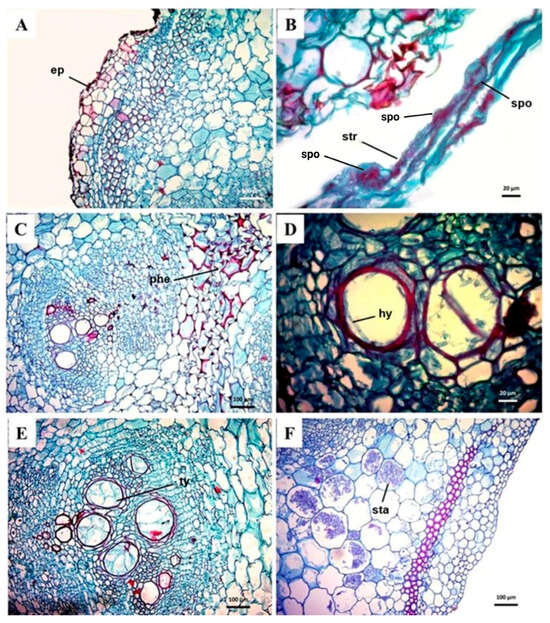
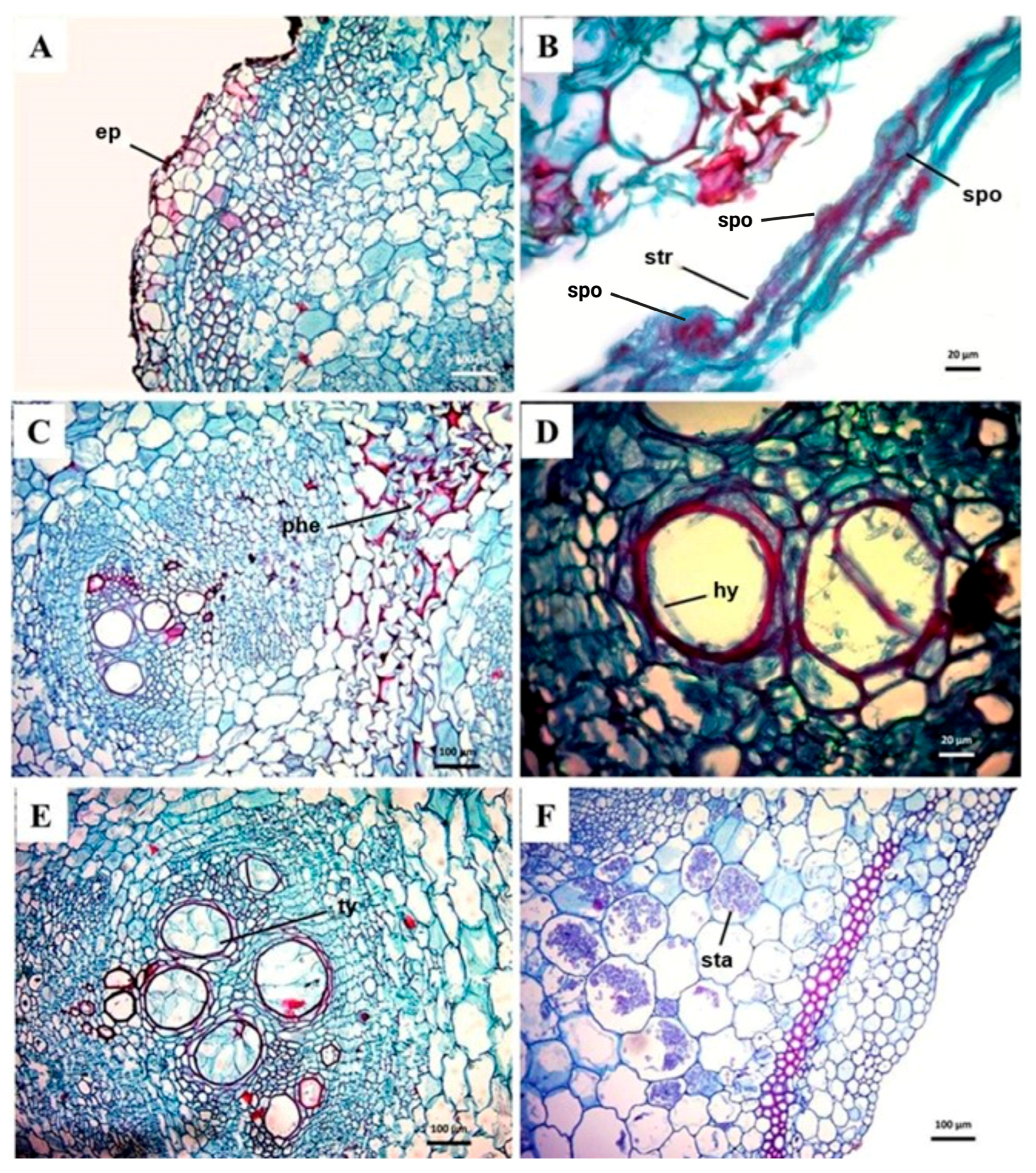
At 12 dpi, histological sections revealed epidermal disruption and cellular collapse, along with hypertrophied, reddish-stained cells. Sporangia of P. capsici embedded in the stroma were observed (Figure 3A–E), without evidence of hyphae or reproductive structures in the cortical parenchyma. However, deposits of callose and phenolic compounds persisted in the vascular bundles. Occasionally, mycelial fragments were detected in the xylem, and tyloses were consistently present. No starch was observed in the interfascicular tissue. Meanwhile, control plants exhibited intact cortical tissues, with abundant starch granules and callose deposits in the vascular bundles (Figure 3F).
Figure 3.
Photomicrographs of transverse sections of S. edule var. virens levis stems at 12 days post-inoculation with P. capsici. (A–E) Inoculated stem sections showing epidermis (ep) with cellular disruption and hypertrophy; stroma (str) and sporangium (spo), identified by their characteristic morphology and intense safranin affinity; phenolic compounds (phe), visualized as reddish deposits in cell walls and intercellular spaces, indicative of phenolic accumulation and lignification; hyphae in xylem (hy), recognized by filamentous, coenocytic structures within vessel lumina; and tylosis (ty), observed as balloon-like protrusions of adjacent parenchyma cells occluding xylem vessels. The presence of or reduction in starch (sta) was determined by the identification of rounded intracellular granules within parenchyma cells. (F) Transverse section of a non-inoculated control stem showing intact vascular bundles, well-organized cortical parenchyma, and abundant starch grains (sta), consistent with active carbohydrate storage and absence of pathogen structures.
2.3. Analysis of S. edule var. virens levis Plants Inoculated with P. capsici upon 16 dpi
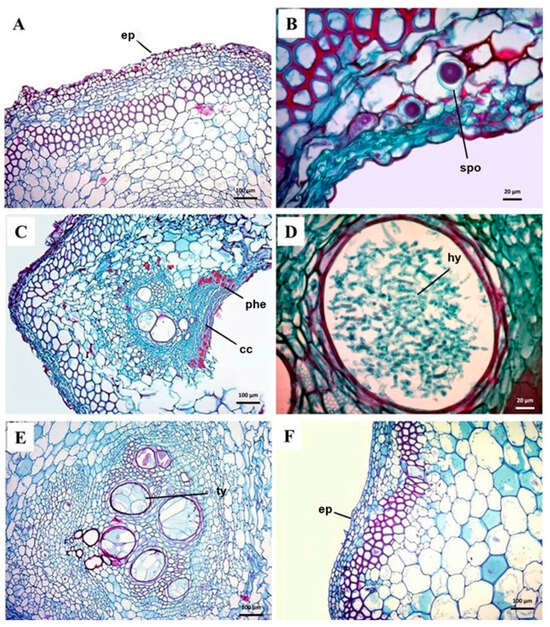
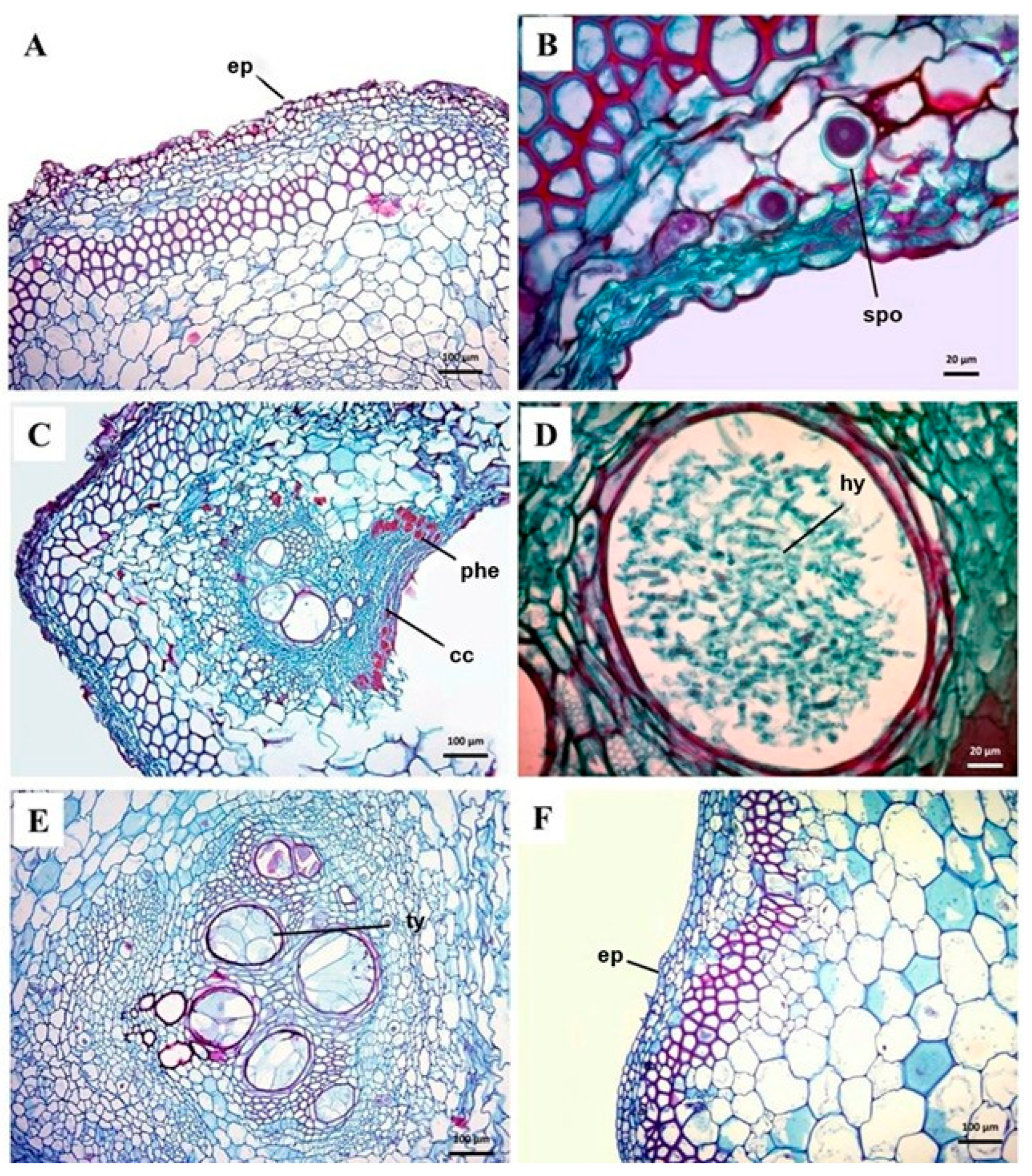
At 16 dpi, the epidermis showed cellular disintegration and reddish staining, with sporangia still being present. The cortical parenchyma exhibited no hyphal development, and starch presence was reduced. Phenolic and callose deposits were recorded in the phloem, cambium, and vascular bundles, leading to cellular collapse. Mycelial fragments and tyloses were occasionally observed in the xylem vessels (Figure 4A–E). In contrast, control plants retain intact parenchyma cells, with no callose deposition in vascular bundles or starch in interfascicular tissue (Figure 4F).
Figure 4.
Photomicrographs of transverse sections of S. edule var. virens levis stems at 16 days post-inoculation with P. capsici. (A–E) Inoculated stem sections showing epidermis (ep) with marked cellular disintegration and intense reddish staining; sporangium (spo), identified by its globose to ovoid morphology; phenolic compounds (phe), visualized as red-stained deposits in cell walls and intercellular spaces consistent with phenolic accumulation and lignification; cell collapse (cc), evidenced by loss of cellular integrity and wall deformation; hyphae in xylem (hy), recognized as filamentous, coenocytic structures within vessel lumina; and tylosis (ty), observed as sac-like intrusions from adjacent parenchyma cells partially or completely occluding xylem vessels. (F) Transverse section of a non-inoculated control stem showing a well-defined vascular bundle, compact and organized parenchyma cells, and absence of wall collapse, necrosis, or pathogen structures.
2.4. Analysis of S. edule var. virens levis Plants Inoculated with P. capsici upon 22 dpi
At 22 dpi, the epidermis displayed the most severe damage, with reddish intercellular staining, extensive cell disintegration, and collapse. P. capsici sporangia and widespread hyphal colonization of cortical tissue were detected. Although starch granules were present, mycelial fragments were also observed in the xylem, along with tylose formation, vascular collapse, and the accumulation of phenolic compounds and callose (Figure 5A–E). In contrast, control plant tissues showed only mild reddish staining, likely due to mechanical damage, along with starch granules in interfascicular tissue and callose deposits in the phloem and cambium (Figure 5F).
Figure 5.
Photomicrographs of transverse sections of S. edule var. virens levis stems at 22 days after inoculation with P. capsici. (A–E) Inoculated stem sections showing epidermis (ep) with severe cellular disintegration and intense reddish intercellular staining; phenolic compounds (phe), observed as dense red deposits in cell walls and intercellular spaces indicative of sustained phenolic accumulation and lignification; sporangium (spo), identified by its characteristic globose morphology; hyphae (hy) in cortical tissue and within xylem vessels, recognized as filamentous, coenocytic structures with strong safranin affinity; and tylosis (ty), visualized as balloon-like protrusions of parenchyma cells occluding xylem lumina. Starch grains, when present, were identified by their rounded intracellular morphology within parenchyma cells. (F) Transverse section of a non-inoculated control stem showing xylem vessel (xv) and epidermis with intact, thick-walled xylem elements consistent with normal lignification and functional vascular differentiation, as well as parenchymatous ground tissue composed of large, thin-walled, isodiametric cells, without evidence of pathogen structures or tissue collapse.
2.5. Analysis of S. edule var. virens levis Plants Inoculated with P. capsici upon 30 dpi
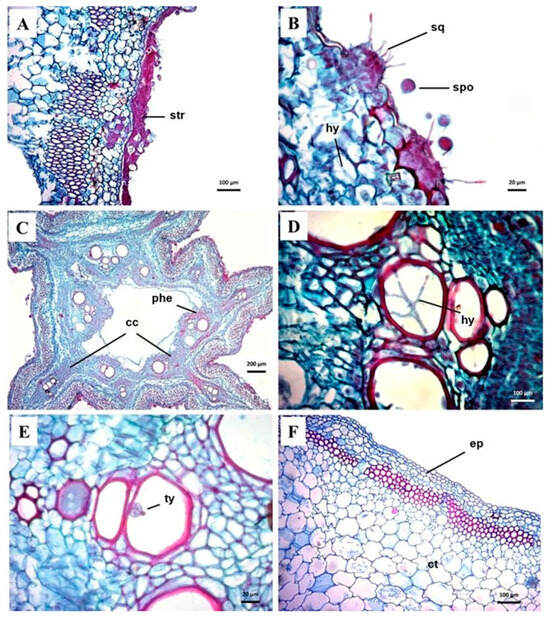
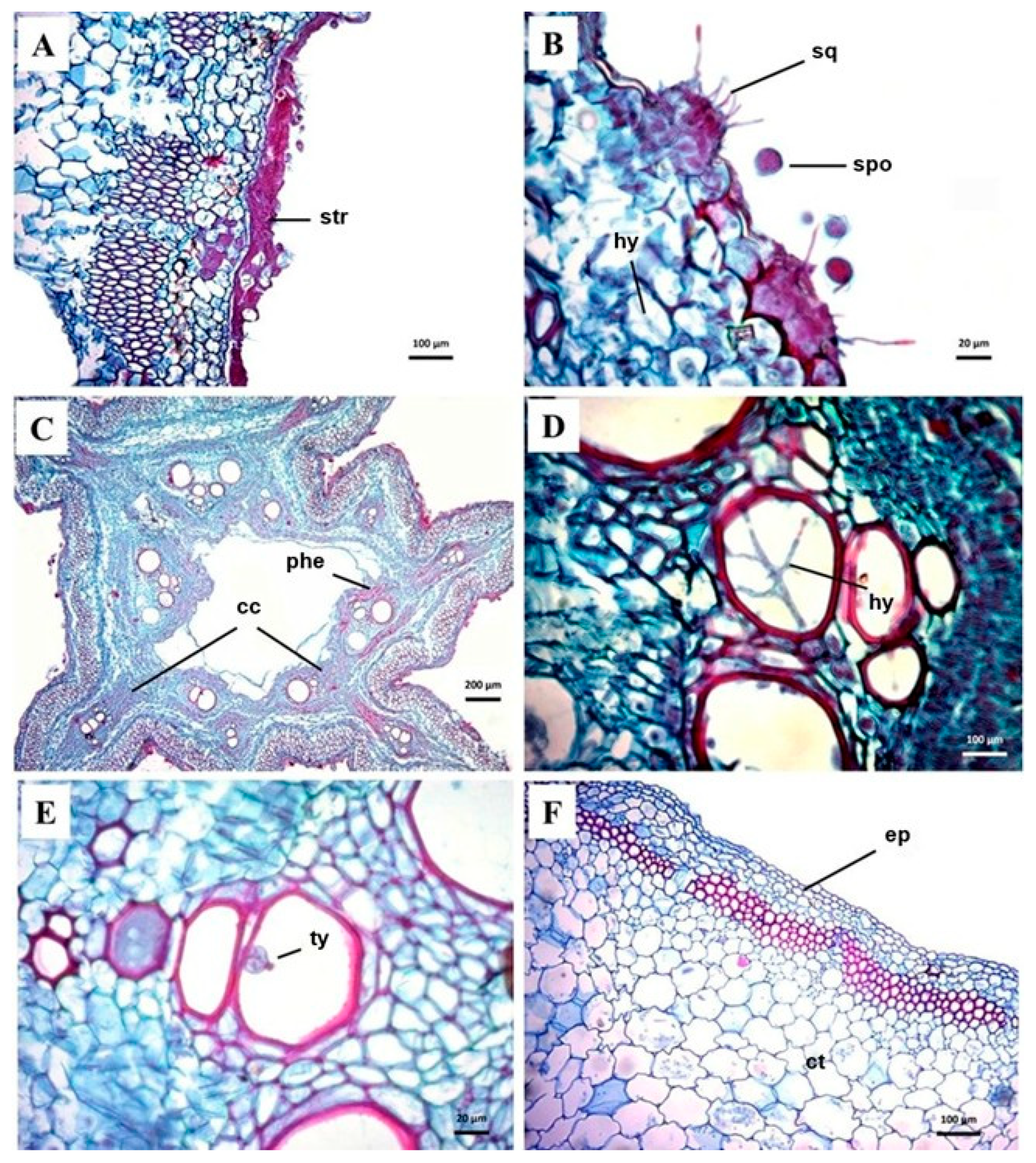
At 30 dpi, epidermal disintegration and reddish staining were evident. Sporangia of the oomycete were observed on stromatic material over the epidermis, and starch was present in cortical and interfascicular parenchyma, accompanied by collapsed areas. Vascular bundles showed phenolic and callose accumulation in the phloem and cambium, while coenocytic P. capsici mycelium and tyloses were detected in the xylem (Figure 6A–E). In contrast, control plant sections maintained abundant starch granules and callose deposits, with no damage to epidermal cells (Figure 6F).
Figure 6.
Photomicrographs of transverse sections of S. edule var. virens levis stems at 30 days post-inoculation with P. capsici. (A–E) Inoculated stem sections showing stroma (str) on the epidermal surface; hyphae in cortical tissue (hy), identified by their filamentous, coenocytic morphology; sporangium (spo) and sporangiophore (sq), recognized by their characteristic reproductive structures and intense safranin affinity; cell collapse (cc), evidenced by distortion and disintegration of parenchyma cells; phenolic compounds (phe), observed as dense reddish deposits in cell walls and intercellular spaces consistent with sustained phenolic accumulation and lignification; hyphae in xylem (hy); and tylosis (ty), visualized as sac-like protrusions from adjacent parenchyma cells occluding vessel lumina. Starch grains, when present, were identified by their rounded intracellular morphology within cortical and interfascicular parenchyma. (F) Transverse section of a non-inoculated control stem showing intact cortical tissue (ct) and epidermis (ep), characterized by a continuous, compact outer layer and well-organized parenchymatous cells, without evidence of pathogen structures, vascular occlusion, or cellular collapse.
3. Discussion
Histological analyses of P. capsici infection are characterized by hyphal penetration, colonization of vascular tissues, formation of reproductive structures, and host cell death. These events have been predominantly documented in C. annuum and in other species of the family Cucurbitaceae [8]. In species of the family Cucurbitaceae, infection by P. capsici in Cucumis sativus L. causes rapidly developing dark green and water-soaked lesions [9]. Comparably, the infection by P. capsici among Cucumis melo and Citrullus lanatus has been observed to cause rapid, total fruit decay, especially under warm and humid conditions in states of the United States of America (e.g., Florida, Georgia, and Michigan) [10] and Mexico (e.g., Sinaloa, Michoacan, and Veracruz) [11].
Although Phytophthora spp. has been extensively studied in several horticultural systems, with well-documented descriptions of symptom development and vascular impairment in major crops, the infection process in chayote (S. edule) remains insufficiently characterized at histological and cellular levels. Existing studies have primarily emphasized field symptomatology and disease severity assessments [12], while providing limited insight into the temporal dynamics of pathogen penetration, tissue colonization, and host structural responses. In particular, the sequence of anatomical alterations—such as vascular occlusion, phenolic compound accumulation, callose deposition, and progressive tissue disorganization—has not been systematically described in this host. As a result, the mechanistic relationship between internal tissue modifications and external symptom expression in chayote remains unclear. Addressing this knowledge gap is essential to elucidate the host–pathogen interaction in greater detail and to establish a stronger anatomical and pathological basis for improved disease diagnosis and management in this crop [13].
Here, it was noted that P. capsici exhibits high variability in the colonization time, which was affected by several factors, including environmental conditions such as humidity and temperature [14], the genetic susceptibility of the host [15], and the type of plant tissue [16]. Additionally, it has been documented that resistant plants can limit pathogen progression through the activation of structural and biochemical defense mechanisms [17]. Previously, our research group demonstrated that, after three days of inoculation with P. capsici, chayote plants exhibited 50% of withered leaves with 2.3 cm of necrosis at the zone of transition from the stem to the roots of plants [18]. In the same study, our research group revealed that symptomatology caused by P. capsici increased in a time-dependent manner, with the important note that, after 7 days of inoculation, infection resulted in 100% plant wilting and 3.0 cm of necrosis. In that case, both events were related to the degradation of the cell wall and middle lamella of the parenchymal tissue of the vascular system [18]. In the same regard, it is noteworthy that, prior to the histopathological study, our research group developed a severity scale to assess the damage caused by P. capsici infection.
The sequence of histopathological events observed in our study revealed a dynamic interaction between P. capsici and chayote tissues, especially during the early, transition, and late phases where it was noted, for the first time, phytopathological phenomena before visible wilting and extensive colonization that lead to significant histological aberrations that can be associated with previous studies from our research group. The retrieved observation during sequenced histopathological events suggests the activation of structural and biochemical defense responses by the host, although not entirely effective in halting pathogen progression. In this regard, Saltos et al. (2021) reported that in resistant C. annuum cultivars, symptoms may take more than 10 days to appear due to an active plant defense response that slows the colonization rate of the pathogen [19]. Conversely, in C. annuum var. Tres Lomos, pathogen structures have been reported as early as three days post-inoculation, while in C. annuum cv. Charliston Bagcisin, the first signs of infection also appear early, between 3 and 5 days [20]. This early pattern is characteristic of susceptible cultivars, in which visible symptoms can appear between 4 and 7 dpi [21].
Here, an early accumulation of phenolic compounds was observed at 8 dpi in the intercellular spaces, which is consistent with induced defense responses commonly associated with resistance mechanisms in plants [22,23]. These compounds not only serve as chemical barriers against fungal and oomycete colonization but also function as signals in defense cascades mediated by salicylic acid and jasmonic acid [24]. This phenomenon was also reported by Ozgonen et al. in C. annuum cv. Charliston Bagcisin, where phenolic compound accumulation coincided with reduced pathogen progression [20]. Similarly, Van Volpin et al. documented the production of phenolic compounds and hydrolytic enzymes such as chitinases and β-glucanases in infected alfalfa roots, indicating an active defensive response against pathogens [25].
Together with phenolic accumulation, a lignification event was observed in infected cells, as evidenced by reddish staining, which is a typical phenomenon in response to hemibiotrophic pathogens such as P. capsici, and has been described as a mechanism to strengthen cell walls and limit pathogen expansion [26]. Likewise, the formation of tyloses and callose deposition in xylem vessels suggests an active vascular occlusion response, mechanically reinforcing cell walls to restrict systemic pathogen spread [27]. In our study, the accumulation of these compounds was sustained up to 16 dpi, suggesting a persistent defense response induced by the continued presence of the oomycete. In this regard, it has been suggested that callose accumulation is a resistance/defense mechanism against infection by P. capsici [28].
Regarding the presence of sporangia, here it was noted that the intermittent presence of sporangia and mycelial fragments at various time points indicated a progressive but discontinuous colonization, possibly modulated by the plant’s ability to activate localized defense responses. In species such as C. annuum and Cucurbita pepo, a correlation has been documented between the intensity of vascular colonization by P. capsici and the host’s susceptibility level [16]. Tyloses are intrusive, sac-like expansions of living xylem parenchyma cells that grow through pit membranes into the lumen of adjacent xylem vessels. In tissues affected by P. capsici, tyloses originate primarily from axial or ray parenchyma cells bordering metaxylem and secondary xylem vessels.
As sporangia, tylose formation can be determined by employing light microscopy as well as histochemical and cytological analyses. Here, it was observed that tylosis formation was absent in the early days but was frequently observed from 12 dpi onward, which is a well-documented anatomical response in the xylem of resistant plants, associated with mechanical restriction of fungal and oomycete colonization [27]. However, the detection of coenocytic mycelium in the xylem, even at 30 dpi, suggests that P. capsici was only partially able to overcome these barriers, indicating limited tolerance. The scarce presence of starch in infected tissues compared to control plants suggests the depletion of metabolic reserves as part of the defensive response or due to infection-induced stress [29]. This phenomenon has also been observed in other plant–pathogen interactions, where carbohydrate redistribution favors the production of defensive compounds such as lignin and phenolics.
As presented in Figure S1, under controlled growth chamber conditions, P. capsici exhibited high virulence in chayote, with no significant differences among inoculum levels of 1 × 10⁵, 3 × 10⁵, and 6 × 10⁵ zoospores per plant, indicating that even the lowest dose was sufficient to induce severe disease. Disease progression was rapid and consistent across treatments: at 3 days after inoculation (dpi), plants showed 50% leaf wilting and 2.3–3.0 cm of necrosis in the stem–root transition zone; by 5 dpi, necrosis increased to 2.5–3.15 cm with 80% wilted leaves; and at 7 dpi, necrosis reached 2.67–3.3 cm accompanied by 100% leaf wilting and plant death. The disease severity scale is presented in Table S1. The retrieved information demonstrates an aggressive infection dynamic, with complete plant collapse within one week, confirming the high epidemic potential of P. capsici in S. edule under high-moisture conditions.
4. Materials and Methods
4.1. Pathogen Isolation and Inoculum Preparation
P. capsici was isolated as previously published. For the inoculation procedure, the oomycete was grown on V8 agar plates, and after this, a 5 mm fragment of mycelium was excised and transferred to a 200 µL microcentrifuge tube containing 30 µL of a lysis solution. The tube was then incubated at 95 °C for 5 min, followed by centrifugation at 5000× g for 10 min. Subsequently, 5 µL of the resulting supernatant was used as template DNA for PCR amplification of the internal transcribed spacer (ITS) regions. Morphologically, colonies on V8 agar exhibited abundant aerial hyphae that were long, cottony, weakly radiated, and compact. The identification process was previously reported in studies by our research group [19].
4.2. Experimental Design and Plant Inoculation
A completely randomized design was employed. Plants were divided into two groups: inoculated and non-inoculated. For inoculation, the pathogen inoculum was applied to the stem base of 30 plants with two mycelial plugs (12-day-old) of P. capsici, previously grown on V8 culture medium. For non-inoculated plants, two sterile plugs (without mycelial growth) were placed at the base of the stem of 10 plants. All 40 plants were maintained under greenhouse conditions with temperatures ranging from 25 to 35 °C and relative humidity above 90% for 30 days. Plants were placed in black polyethylene bags filled with a mixture of agrolite and peat moss (1:1).
4.3. Histological Analysis
4.3.1. Sample Collection and Fixation
For histological analysis ten symptomatic samples from fruits and ten from the stem–root transition zone was collected from two commercial orchards; each sample was sectioned into six fragments (~5 mm), yielding 60 sections in total. The corresponding segments were cut into 0.5 cm fragments. Samples were collected at 8, 12, 16, 22, and 30 days post-inoculation (dpi) and fixed for 24 h in a mixture of formaldehyde, glacial acetic acid, absolute ethanol, and water.
4.3.2. Dehydration and Embedding
Following fixation, the samples were rinsed under running water for 10 min and dehydrated in a graded ethanol series (30, 50, 70, 80, 90, and 100%) for 4 h. After this, samples were then transferred to a 1:1 solution of xylene and absolute ethanol, followed by immersion in 100% xylene for 3 h. Samples were embedded in Paraplast (Sigma, St. Louis, MO, USA) at 60 °C for three days [10]. Transverse sections (15 µm thick) were cut using a Spencer 820 rotary microtome (American Optical, Buffalo, N.Y., USA). The sections were deparaffinized for 20 min in an oven at 60 °C and through three changes of 100% xylene (3 min each). The samples were rehydrated in 96% ethanol and stained following the double staining protocol with safranin O–fast green FCF (Sigma, St. Louis, MO, USA) as published [11].
4.3.3. Microscopy Analysis
Slides were mounted in synthetic resin and observed under a compound microscope (Velab, Tlalpan, Ciudad de Mexico, Mexico) equipped with an integrated digital camera (Pax Cam 3). The considered time intervals for sampling were defined according to published studies [18].
5. Conclusions
In conclusion, this study provides the first comprehensive histological characterization of Phytophthora capsici infection in Sechium edule stems, thereby contributing novel anatomical insights into a pathosystem that had previously been described mainly at the symptomatic level. The sequential documentation of early cortical penetration, phenolic accumulation, lignification, callose deposition, and subsequent tylosis formation—followed by progressive vascular colonization and tissue collapse—establishes a clear temporal framework linking internal structural disruption with external wilt expression. Although chayote activates typical structural and biochemical defense responses, these are insufficient to prevent sustained xylem invasion and plant death under conducive conditions. By elucidating the ordered progression of tissue alterations during infection, this work strengthens the mechanistic understanding of the S. edule–P. capsici interaction and provides an anatomical foundation for future studies on resistance screening, molecular defense pathways, and targeted disease management strategies in chayote production systems.
Supplementary Materials
The following supporting information can be downloaded at: https://www.mdpi.com/article/10.3390/horticulturae12040448/s1, Figure S1. Disease parameters upon infection with P. capsici on S. edule var. virens levis [16]; Table S1. Severity scale of the infection with P. capsici on S. edule var. virens levis [16].
Author Contributions
Conceptualization, G.O.-H. and J.C.-I.; methodology, G.O.-H. and M.d.L.A.-G.; software, D.A.C.-Z. and J.F.A.-M.; validation, J.D.C.-Z., J.M.T.-P. and M.I.A.-L.; formal analysis, G.O.-H. and D.A.C.-Z.; investigation, G.O.-H. and J.C.-I.; resources, M.d.L.A.-G.; data curation, J.C.-I.; writing—original draft preparation, J.C.-I. and J.L.M.-M.; writing—review and editing, J.D.C.-Z., J.M.T.-P. and J.L.M.-M. All authors have read and agreed to the published version of the manuscript.
Funding
This research received no external funding.
Data Availability Statement
The original contributions presented in this study are included in the article/Supplementary Material. Further inquiries can be directed to the corresponding author.
Conflicts of Interest
The authors declare no conflicts of interest.
References
- Saltos, L.A.; Monteros-Altamirano, Á.; Reis, A.; Garcés-Fiallos, F.R. Phytophthora capsici: The Diseases It Causes and Management Strategies to Produce Healthier Vegetable Crops. Hortic. Bras. 2022, 40, 5–17. [Google Scholar] [CrossRef] [Scilit]
- Jo, S.-J.; Shim, S.-A.; Jang, K.S.; Choi, Y.H.; Kim, J.-C.; Choi, G.J. Resistance of Chili Pepper Cultivars to Isolates of Phytophthora capsici. HST 2014, 32, 66–76. [Google Scholar] [CrossRef] [Scilit]
- Hernández, G.O.; Ponce, G.V.; Íñiguez, J.C.; de Hidalgo, S. Etiología de La Marchitez de Plantas de Chayote (Sechium edule) En El Estado de Veracruz. Rev. Mex. De Fitopatol. 2013, 31, 161–169. [Google Scholar]
- Ramírez-Rodas, Y.C.; Arévalo-Galarza, M.d.L.; Cadena-Iñiguez, J.; Soto-Hernández, R.M.; Peña-Valdivia, C.B.; Guerrero-Analco, J.A. Chayote Fruit (Sechium edule Var. Virens Levis) Development and the Effect of Growth Regulators on Seed Germination. Plants 2023, 12, 108. [Google Scholar] [CrossRef] [Scilit]
- Iñiguez-Luna, M.I.; Cadena-Iñiguez, J.; Soto-Hernández, R.M.; Morales-Flores, F.J.; Cortes-Cruz, M.; Watanabe, K.N.; Machida-Hirano, R.; Cadena-Zamudio, J.D. Bioprospecting of Sechium spp. Varieties for the Selection of Characters with Pharmacological Activity. Sci. Rep. 2021, 11, 6185. [Google Scholar] [CrossRef] [Scilit]
- Barrera-Guzmán, L.Á.; Legaria-Solano, J.P.; Cadena-Iñiguez, J.; Sahagún-Castellanos, J.; Ramírez-Ojeda, G. Potential distribution models of Sechium tacaco (Pittier) C. Jeffrey in Costa Rica. Agro Product. 2021. [Google Scholar] [CrossRef] [Scilit]
- Olguín Hernández, G.; Valdovinos Ponce, G.; Cadena Íñiguez, J.; Arévalo Galarza, M.d.L. Etiology of Chayote (Sechium edule) Wilting Plants in the State of Veracruz. Rev. Mex. De Fitopatol. 2013, 31, 161–169. [Google Scholar]
- Addo, J.; Wang, D. Soil Management Strategies for Controlling Phytophthora capsici in Cucurbita spp.: Current Practices and Future Directions. J. Hortic. Sci. Biotechnol. 2025, 1–10. [Google Scholar] [CrossRef] [Scilit]
- Lin, Y.-C.; Mansfeld, B.N.; Tang, X.; Colle, M.; Chen, F.; Weng, Y.; Fei, Z.; Grumet, R. Identification of QTL Associated with Resistance to Phytophthora Fruit Rot in Cucumber (Cucumis sativus L.). Front. Plant Sci. 2023, 14, 1281755. [Google Scholar] [CrossRef] [Scilit]
- Kaur, S.; Thakur, S.; Sabharwal, P.; Meru, G. Breeding for Disease Resistance in Cucumber: Current Status, Genetic Insights, and Genomic Resources. Horticulturae 2025, 11, 1440. [Google Scholar] [CrossRef] [Scilit]
- Pawełkowicz, M.; Głuchowska, A.; Mirzwa-Mróz, E.; Zieniuk, B.; Yin, Z.; Zamorski, C.; Przybysz, A. Molecular Insights into Powdery Mildew Pathogenesis and Resistance in Cucurbitaceous Crops. Agriculture 2025, 15, 1743. [Google Scholar] [CrossRef] [Scilit]
- Soto-Contreras, A.; Caamal-Chan, M.G.; Ramírez-Mosqueda, M.A.; Murguía-González, J.; Núñez-Pastrana, R. Morphological and Molecular Identification of Phytophthora capsici Isolates with Differential Pathogenicity in Sechium edule. Plants 2024, 13, 1602. [Google Scholar] [CrossRef] [Scilit] [PubMed]
- Arroyo-Axol, J.R.; Miranda-Solares, A.K.; Zúñiga-Aguilar, J.J.; Solano-Báez, A.R.; Llarena-Hernández, R.C.; Rojas-Avelizapa, L.I.; Núñez-Pastrana, R. Chitosan Mitigates Phytophthora Blight in Chayote (Sechium edule) by Direct Pathogen Inhibition and Systemic Resistance Induction. Int. J. Plant Biol. 2025, 16, 96. [Google Scholar] [CrossRef] [Scilit]
- Baysal, O.; Turgut, C.; Mao, G. Acibenzolar-S-Methyl Induced Resistance to Phytophthora capsici in Pepper Leaves. Biol. Plant 2005, 49, 599–604. [Google Scholar] [CrossRef] [Scilit]
- Parada-Rojas, C.H.; Quesada-Ocampo, L.M. Phytophthora capsici Populations Are Structured by Host, Geography, and Fluopicolide Sensitivity. Phytopathology 2022, 112, 1559–1567. [Google Scholar] [CrossRef] [Scilit]
- Lamour, K.H.; Stam, R.; Jupe, J.; Huitema, E. The Oomycete Broad-Host-Range Pathogen Phytophthora capsici. Mol. Plant Pathol. 2012, 13, 329–337. [Google Scholar] [CrossRef] [Scilit]
- Chen, H.; Mao, J.; Fang, Y.; Raza, W.; Li, Z.; Zhang, C.; Zhu, Y.; Wang, Y.; Dong, S. Bioluminescent Imaging of an Oomycete Pathogen Empowers Chemical Selections and Rational Fungicide Applications. Plant Methods 2025, 21, 57. [Google Scholar] [CrossRef] [Scilit]
- Andrade-Luna, M.I.; Espinosa-Victoria, D.; Gómez-Rodríguez, O.; Cadena-Iñiguez, J.; Arévalo-Galarza, M.d.L.; Trejo-Téllez, L.I.; Delgadillo-Martínez, J.; Andrade-Luna, M.I.; Espinosa-Victoria, D.; Gómez-Rodríguez, O.; et al. Severity of a Phytophthora capsici Isolate in Chayote Sechium edule Plants at Growth Chamber Level. Rev. Mex. De Fitopatol. 2017, 35, 40–57. [Google Scholar] [CrossRef] [Scilit]
- Saltos, L.A.; Corozo-Quiñones, L.; Pacheco-Coello, R.; Santos-Ordóñez, E.; Monteros-Altamirano, Á.; Garcés-Fiallos, F.R. Tissue Specific Colonization of Phytophthora capsici in Capsicum spp.: Molecular Insights over Plant-Pathogen Interaction. Phytoparasitica 2021, 49, 113–122. [Google Scholar] [CrossRef] [Scilit]
- Ozgonen, H.; Yardimci, N.; Kilic, H.C. Induction of Phenolic Compounds and Pathogenesis-Related Proteins by Mycorrhizal Fungal Inoculations against Phytophthora capsici Leonian in Pepper. Pak. J. Biol. Sci. 2009, 12, 1181–1187. [Google Scholar] [CrossRef] [Scilit]
- Babadoost, M. Oomycete Diseases of Cucurbits: History, Significance, and Management. In Horticultural Reviews; John Wiley & Sons, Ltd.: Hoboken, NJ, USA, 2016; Volume 44, pp. 279–314. ISBN 978-1-119-28126-9. [Google Scholar]
- Lattanzio, V.; Lattanzino, V.M.T.; Cardinali, A. Role of Phenolics in the Resistance Mechanisms of Plants against Fungal Pathogens and Insects. Phytochem. Adv. Res. 2006, 661, 23–67. [Google Scholar]
- Nicholson, R.L.; Hammerschmidt, R. Phenolic Compounds and Their Role in Disease Resistance. Annu. Rev. Phytopathol. 1992, 30, 369–389. [Google Scholar] [CrossRef]
- Glazebrook, J. Contrasting Mechanisms of Defense Against Biotrophic and Necrotrophic Pathogens. Annu. Rev. Phytopathol. 2005, 43, 205–227. [Google Scholar] [CrossRef] [Scilit]
- Volpin, H.; Phillips, D.A.; Okon, Y.; Kapulnik, Y. Suppression of an Isoflavonoid Phytoalexin Defense Response in Mycorrhizal Alfalfa Roots. Plant Physiol. 1995, 108, 1449–1454. [Google Scholar] [CrossRef] [Scilit]
- Underwood, W. The Plant Cell Wall: A Dynamic Barrier Against Pathogen Invasion. Front. Plant Sci. 2012, 3, 85. [Google Scholar] [CrossRef] [Scilit]
- Yadeta, K.; Thomma, B. The Xylem as Battleground for Plant Hosts and Vascular Wilt Pathogens. Front. Plant Sci. 2013, 4, 97. [Google Scholar] [CrossRef] [Scilit]
- Piccini, C.; Parrotta, L.; Faleri, C.; Romi, M.; Del Duca, S.; Cai, G. Histomolecular Responses in Susceptible and Resistant Phenotypes of Capsicum annuum L. Infected with Phytophthora capsici. Sci. Hortic. 2019, 244, 122–133. [Google Scholar] [CrossRef] [Scilit]
- Berger, S.; Sinha, A.K.; Roitsch, T. Plant Physiology Meets Phytopathology: Plant Primary Metabolism and Plant–Pathogen Interactions. J. Exp. Bot. 2007, 58, 4019–4026. [Google Scholar] [CrossRef] [Scilit] [PubMed]
Disclaimer/Publisher’s Note: The statements, opinions and data contained in all publications are solely those of the individual author(s) and contributor(s) and not of MDPI and/or the editor(s). MDPI and/or the editor(s) disclaim responsibility for any injury to people or property resulting from any ideas, methods, instructions or products referred to in the content. |
© 2026 by the authors. Licensee MDPI, Basel, Switzerland. This article is an open access article distributed under the terms and conditions of the Creative Commons Attribution (CC BY) license.