Article

CRISPR/Cas9-Mediated Mutagenesis in Tomato Targeting the DE-ETIOLATED1 Gene

1
Institute of Sciences of Food Production, Unit of Lecce, National Research Council (C.N.R.), 73100 Lecce, Italy
2
Council for Agricultural Research and Economics, Research Centre for Genomics and Bioinformatics (CREA-GB), 00178 Rome, Italy
3
Department of Agriculture and Forest Sciences, University of Tuscia, Via S.C. de Lellis snc, 01100 Viterbo, Italy
4
Department of Biology, University of Florence, Sesto Fiorentino, 50019 Florence, Italy
*
Author to whom correspondence should be addressed.
Horticulturae 2026, 12(4), 428; https://doi.org/10.3390/horticulturae12040428
Submission received: 18 February 2026 / Revised: 20 March 2026 / Accepted: 30 March 2026 / Published: 1 April 2026
(This article belongs to the Special Issue Genetic Breeding and Quality Improvement of Vegetable Crops)

Abstract

Tomato high pigment-2 (hp-2dg, hp-2, and hp-2j) mutant lines are characterized by mutations in the DE-ETIOLATED1 (SlDET1; Solyc01g056340) gene. SlDET1 is responsible for encoding a nuclear protein that acts as a negative regulator involved in light signaling, repressing photomorphogenesis. These tomato mutant lines are known for increased levels of antioxidant pigments in fruits, such as flavonoids and carotenoids, compared to the wild-type fruits. In this study, CRISPR/Cas9, followed by the non-homologous end joining mechanism of repair (NHEJ), was used to target the SlDET1 gene and investigate whether the effects of these mutations could mimic the effects of hp-2 mutant lines, improving the nutritional features of tomato fruits. Our results indicated that mutations generated by CRISPR/Cas9 NHEJ in the hp-2 and hp-2j regions (exon 11) resulted in significant changes in the SlDET1 coding and protein sequences. These mutations caused a low survival rate of edited sprouts and regenerated plants with a very compromised capacity of allelic heritability of these mutations for the following generations. However, regenerated plants containing these site-specific mutations in the SlDET1 gene showed higher levels of phytochemicals in ripe fruits. Furthermore, these edited plants also showed an upregulation of structural genes involved in the synthesis of these biocompounds. Although the SlDET1 gene could be considered an interesting target gene for the nutritional improvement of tomato fruits, our results showed that mutations within its exon 11 are quite critical and can induce severe perturbations in plant physiology, with a compromised possibility to develop new stable edited lines.

1. Introduction

Tomato fruit yield and nutritional quality have been, for years, the goal of many studies for the selection of agronomic traits and genetic improvement by metabolic engineering approaches [1,2]. Significant health benefits have been associated with the carotenoids and flavonoids present in fresh and ripe tomato fruits, linked to their antioxidant and anti-inflammatory activities or the antitumoral potential [3,4]. Several structural or regulatory genes have been identified to apply metabolic engineering in tomato to induce the accumulation of such phytonutrients [1,5,6,7,8,9].
Among the candidate genes that could be employed for genetic engineering, SlDET1 was suggested for metabolic engineering in tomato, especially for the reported increase in fruit pigmentation [10]. The tomato SlDET1 gene is the tomato orthologue of the nuclear protein DE-ETIOLATED 1 (light-mediated development protein 1; AtDET1; At4g10180) gene of Arabidopsis thaliana, an essential chromatin-associated protein that is key for photomorphogenesis repression in darkness by promoting the degradation of transcription factors such as ELONGATED HYPOCOTYL 5 (HY5) [11]. The SlDET1 gene encodes a protein that acts as a negative regulator of phytochrome signal transduction, and its dysfunction can lead to constitutive photomorphogenic development, global upregulation of photosynthesis-related genes, and typical plant growth in a light environment, even in the absence of light [12]. AtDET1 and SlDET1 proteins have the typical Det1 (PF09737, IPR019138, ubiquitination-related) domain in the central region and C-terminal portion, and the six-hairpin glycosidase-like (IPR008928, glycoside hydrolase-related) domain in the central region. Furthermore, the SlDET1 protein is 517 to 523 amino acids long (S. lycopersicum ITAG2.4 and ITAG4.0 genome assembly versions for tomato cv. Heinz 1706, respectively) and has a well-defined nuclear localization signal (NLS) in the C-terminal region (amino acids 464 to 494), while the AtDET1 protein is 544 amino acids long and has the NLS located in the N-terminal (amino acids 20 to 56). Mutations in the SlDET1 gene have been found in tomato high pigment (hp) mutant lines [13], specifically, synonymous or non-synonymous mutations of natural occurrence, such as an “A-to-T” transversion causing the alternative splicing of intron 10 and exon 11 (hp-2), leading to a nine-base deletion in exon 11, and of the first three amino acids (Gly, Pro, and Glu) encoded by this exon, which are within of the NLS that can result in mislocalization of the SlDET1 protein [14], a “C-to-T” transition in exon 11 (hp-2j) leading to a non-synonymous substitution of a conserved proline for a serine residue in the C-terminal region of the protein [14], or an single “A-to-T” base transversion in exon 2 (hp-2dg) leading to a non-synonymous substitution of a conserved asparagine for a isoleucine residue in the N-terminal region of the protein [15]. The phenotypes of hp-2 mutants display dwarfism, darker roots due to anthocyanin accumulation, and darker fruits compared to wild-type ones, due to the overproduction of many plastid-accumulating metabolites, several of which are known for their strong antioxidant or photoprotective properties. Such properties are displayed by hp-2, hp-2dg, and hp2j mutant lines in response to stress caused by light [16,17]. In hp-2 mutant lines, several genes related to chloroplast biogenesis and structural genes involved in phytonutrient biosynthesis (e.g., carotenoids and flavonoids) are upregulated during fruit ripening [17]. SlDET1 gene manipulation by RNA interference or by TILLING-induced point mutations has confirmed elevated levels of phenylpropanoids and carotenoid phytonutrients in tomato ripe fruits [16,18], and more recently, Target-AID (Target activation-induced cytidine deaminase) technology [19] has been applied to generate new allelic variations in multiple genes, including SlDET1, resulting in enhanced phytonutrient accumulation [12].
The CRISPR/Cas9 system, which is based on the Cas9 endonuclease responsible for double-strand DNA breaks (DSBs) in specific target regions guided by single guide RNA (sgRNA), has been used successfully to insert site-specific mutations into genes of interest [20]. In particular, these DSBs can be repaired by non-homologous end joining (NHEJ) or homology-directed repair (HDR) pathways. The NHEJ is an error-prone repair pathway that can lead to insertions or deletions (indels) of nucleotides or large deletions, resulting in a shift in the protein reading frame, emergence of a premature stop codon, and gene knockout [21]. Meanwhile, the HDR pathway allows the introduction of desired DNA fragments within the target site by using a free donor DNA template flanked by homology arms [22]. Therefore, rapid advances have been made using CRISPR/Cas9 in plants for the modification of important traits. CRISPR/Cas9-driven genetic modification has emerged as a powerful biotechnological tool to improve and develop important qualitative traits in crops, such as β-carotene-enriched banana [23], composition of flaxseed oil in Camelina sativa (high oleic and low polyunsaturated fatty acids [24]), reduced zein protein in maize [25], and significant change in the α-tocopherol content in Brassica napus [26]. Therefore, CRISPR/Cas9 can enable rapid functional genomic studies to determine the gene function or the system efficiency at the tissue level [27]. In this way, some transient expression assays can be employed for these purposes, such as hairy root transformation using Agrobacterium rhizogenes, which represent rapid and reliable tools to study the putative editing mediated by CRISPR/Cas9 [28,29,30,31]. One issue due to the use of CRISPR/Cas9 is the possible off-targeting of similar DNA sequences. This is particularly true for homologues in polyploid crops [32]. Strategies aiming at selecting strong homology between the guide sequence and the target region near the protospacer adjacent motif (PAM) site have been finalized to improve specificity and backcrossing of mutants to parents, as well as the use of promoter selection for driving sgRNA and Cas9 [33]. Therefore, CRISPR/Cas9 NHEJ allows the generation of site-specific mutations in genes of interest, such as SlDET1, aiming to mimic the effect of hp-2 mutants. Furthermore, new SlDET1 mutant lines that mimic hp-2 mutants can be tomato lines with less yield/growth penalty and fruits with a significant increase in antioxidant content.
In this study, targeted mutations in the SlDET1 gene were generated by CRISPR/Cas9 NHEJ in an attempt to mimic hp-2 and hp-2j mutations. After the assessment of sgRNA efficiency by the transient expression of CRISPR/Cas9 NHEJ in transgenic hairy roots, we sought to generate in planta new allelic variants of SlDET1. The CRISPR/Cas9 was designed to target the hp-2 region (exon 11), with the final aim to induce an increase in phytonutrients in tomato fruits. Furthermore, the viability and the transgenerational heritability of mutations generated in SlDET1 were verified, exactly as happens in the hp-2 mutant lines.

2. Materials and Methods

2.1. CRISPR/Cas9 NHEJ Binary Vector

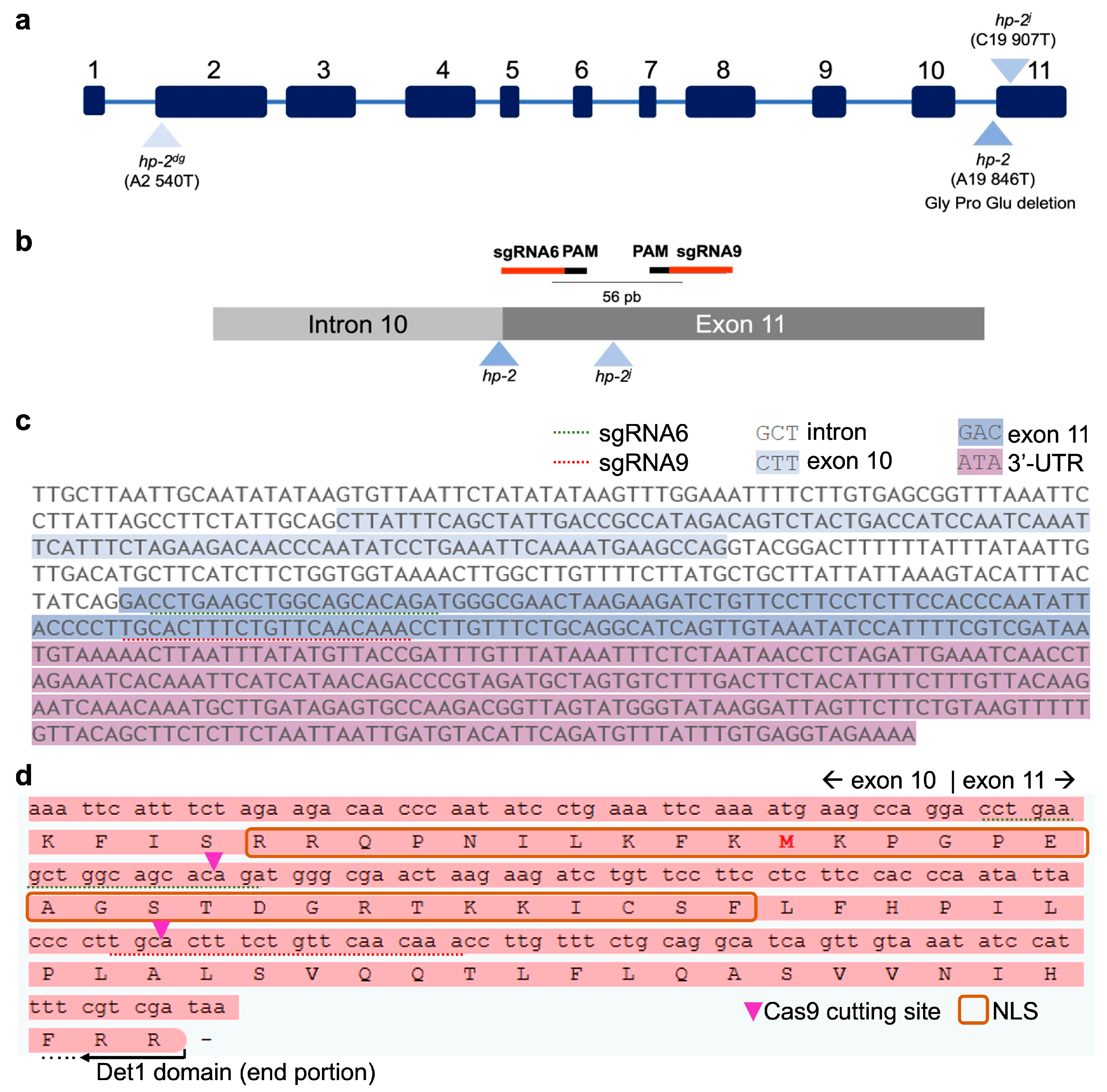
Two sgRNAs were designed to target exon 11 of the SlDET1 gene (Solyc01g056340, S. lycopersicum ITAG2.4) and named sgRNA6 (spacer sequence: 5′-CCTGAAGCTGGCAGCACAGA-3′) and sgRNA9 (spacer sequence: 5′-TTTGTTGAACAGAAAGTGCA-3′) (Figure 1). They were chosen because they are highly specific for the SlDET1 gene sequence, with a low probability of off-target editing occurring (Table S1). These sgRNAs were amplified by PCR and specific primers. PCR products were purified by using a QIAquick Gel Extraction kit (Qiagen, Hilden, Germany). sgRNAs were cloned under the control of an AtU6-III promoter and upstream of the sgRNA scaffold (Addgene plasmid #46966 [34]) into the GoldenGate Level 1 acceptor vectors (pICH47732 and pICH47742). Subsequently, this transcriptional unit was assembled in a destination binary vector containing the Cas9-expression cassette (35S promoter::Cas9 gene::TNOS terminator) (Addgene plasmid #49771 [28]), the kanamycin-resistance-expression cassette (Nopaline synthase promoter::nptII gene::OCS terminator), and the backbone of the pICSL4723-P1 vector. The final SlDET1-CRISPR/Cas9 NHEJ binary vector was used for hairy root transformation and stable genetic transformation of tomato.

2.2. Hairy Root Transformation Mediated by Agrobacterium Rhizogenes

The sgRNA efficiency was tested by hairy root transformation mediated by A. rhizogenes (ATCC15834). Tomato cv. Moneymaker seeds were surface-sterilized in 70% (v/v) ethanol for 5 min, followed by 50% (v/v) commercial bleach for 20 min, and three washes with sterile deionized water. Seeds were plated on Murashige and Skoog (MS) medium containing 7 g/L agar in the absence of sucrose and placed in a 23 °C grow chamber with a 16 h light and 8 h darkness photoperiod for 10 days until cotyledons were fully expanded. A. rhizogenes transformation followed the previously reported protocol [29]. A. rhizogenes electrocompetent cells were transformed by electroporation with the SlDET1-CRISPR/Cas9 NHEJ binary vector, plated on MG/L medium containing 100 mg/L kanamycin, and incubated for 2 to 4 days at 28 °C. A transformed colony of A. rhizogenes was inoculated into liquid MG/L medium containing 100 mg/L kanamycin and grown overnight at 28 °C with 150 rpm shaking. The A. rhizogenes culture was then used to agrotransform tomato cotyledons cv. Moneymaker, inoculating a bacterial suspension at an OD600 nm of 0.4 for 20 min; then blotted on sterile Whatman filter paper; and transferred to Petri plates containing solid MS medium without antibiotics. After 2 to 3 days of co-inoculation at 25 °C in the dark, the cotyledons were transferred to Petri plates containing solid MS medium supplemented with 200 mg/L cefotaxime and 100 mg/L kanamycin and returned to 25 °C in the dark. After 15 days, kanamycin-resistant roots were transferred to Petri plates containing fresh selection medium with the same antibiotic concentration for further molecular analysis.

2.3. Stable Genetic Transformation of Tomato

Agrobacterium tumefaciens strain AGL1 containing the SlDET1-CRISPR/Cas9 NHEJ binary vector was used for stable genetic transformation of cotyledon tissues collected from tomato cv. Micro-Tom germinated under in vitro culture, as described by Fillatti et al. [35]. Cotyledonary explants were agro-inoculated for 20 min, co-cultivated for 2 days, and transferred to Petri plates containing selective medium for the induction of kanamycin-resistant transgenic shoots. Genetic transformation of tomato was also conducted using the hypocotyl of tomato cv. Moneymaker as the inoculation tissue and kanamycin 50 mg/L as the selection agent, as described by Frary and Earle et al. [36] and Fani et al. [37]. Plates were incubated in a growth chamber at 25 °C under a 16 h light and 8 h dark photoperiod at 100–150 μmol m−2 s−1 fluorescent light illumination. Regenerating shoots were transferred to elongation medium and then to rooting medium under kanamycin selection. Rooted plants were acclimated in pots containing sterile commercial substrate and kept in a greenhouse at 23–25 °C under a 16 h light and 8 h dark photoperiod. Transgenic and edited lines and non-transgenic control plants were managed uniformly until the production of ripe fruits.

2.4. Genotypic Analysis of Transgenic Hairy Roots and Stable Plants

Genomic DNA was isolated from the finely ground powder of hairy roots or leaf tissues using the DNeasy Plant Mini kit (Qiagen, Hilden, Germany). The regenerated transgenic lines were screened for the presence of T-DNA by PCR-mediated amplification of the Cas9 gene and for editing events by using the primers flanking the sgRNA target sequences (Table S2). The amplification conditions were an initial denaturation step at 95 °C for 2 min, followed by 30 cycles of 15 s at 95 °C, 1 min at 58 °C, and 1 min at 68 °C. The PCR reaction system contained a total of 50 µL of reaction, with 5 µL of 10X AccuPrime™ Pfx Reaction Mix (Thermo Fisher Scientific, Waltham, MA, USA), 0.8 µL of AccuPrime™ Pfx DNA Polymerase (Thermo Fisher Scientific), 1.5 µL of primer mix (10 μM each primer), and 100 ng of DNA template. PCR amplicons were subjected to electrophoresis, purified by QIAquick Gel Extraction Kit (Qiagen, Hilden, Germany), and analyzed by Sanger sequencing. In the presence of chimeric tissues or heterozygous edited plants, the amplified PCR fragments were purified and subcloned into the pICH47732 vector and subsequently transformed into the Escherichia coli strain DH5α. Approximately 50 colonies for each T0 and T1 edited plant were picked using blue/white selection and confirmed by PCR amplification of the target fragment from each colony. The insert sequences were then determined by Sanger sequencing using target-specific primers (Table S1).

2.5. Extraction and Quantification of Flavonoids in Tomato Fruits

At least five ripe fruits from the T0 mutant lines were individually cut and frozen in liquid nitrogen, freeze-dried, and finely ground. The finely ground fruits were pooled in three biological replicates for each tomato line and analyzed in technical triplicates. Flavonoid compounds were extracted by homogenizing 200 mg of powdered freeze-dried samples with an 80:20 (v/v) methanol: water solution at room temperature under continuous shaking. The mixture was then centrifuged at 4000 g for 10 min to collect the supernatant. The remaining pellet was subjected to a second extraction under the same conditions, and the supernatants were pooled, filtered through a 0.22 µm filter, and stored at −20 °C. Flavonoids were quantified in a chromatograph RP-HPLC DAD (Agilent 1100 HPLC system, Agilent Technologies Inc., Santa Clara, CA, USA) at 320 nm. Separation was performed on a C18 column (5 UltraSphere, 80 Å pore, 25 mm), with a linear gradient from 20 to 60% acetonitrile in 55 min, with a flow of 1 mL/min at 25 °C. Concentrations were obtained by referring to calibration curves, and results are expressed in mg/g of dry matter [38].

2.6. Extraction and Quantification of Carotenoids in Tomato Fruits

Fifty mg of freeze-dried ripe fruit powder was added to 5 mL n-hexane containing 0.05% butylhydroxytoluol (BHT). The mixture was vortexed for 2 min, followed by centrifugation at 3000 g for 10 min at 2 °C. The supernatant was collected, and the extraction process was repeated four times. All supernatants were combined, evaporated under N2 flow, and stored at −20 °C until analysis. Before HPLC injection, samples were resuspended in 1 mL ethyl acetate. Carotenoids were quantified using a chromatograph RP-HPLC DAD (Agilent 1100 HPLC system, Agilent Technologies Inc., Santa Clara, CA, USA), as previously described by Blando et al. [39]. Concentrations were obtained by referring to calibration curves, and results were expressed in µg/g of dry matter. Samples were analyzed in three biological replicates for each tomato line and in technical triplicate.

2.7. Determination of the Antioxidant Activity

The 2,2′-azinobis (3-ethylbenzothiazoline-6-sulfonic acid) diammonium salt (ABTS, Sigma-Aldrich, St. Louis, MO, USA) radical cation was prepared by mixing an aqueous solution of 2.45 mM potassium persulfate (final concentration) and an aqueous solution of 7 mM ABTS (final concentration) and incubated in the dark at room temperature for 12–16 h before use. The ABTS radical solution was diluted in PBS (pH 7.4) to obtain an absorbance of 0.40 at 734 nm. Trolox was used as an antioxidant standard to prepare the calibration curve (0–16 µmol/L). For the hydrophilic fractions (i.e., methanolic extracts obtained following the flavonoid extractions), 200 µL ABTS was added to 10 µL Trolox standard or extract diluted in PBS, and the absorbance was measured at 734 nm at 6 min after initial mixing using a plate reader Infinite 200 PRO (Tecan, Männedorf, Switzerland). The same procedure was followed for the lipophilic fraction (obtained following the carotenoid extractions) by diluting in ethanol, ABTS, Trolox standard, and extracts. The inhibition percentage was determined at 734 nm, and values were plotted as a function of Trolox concentration, with the Trolox Equivalents Antioxidant Capacity (TEAC) value expressed as Trolox equivalents (μmol TE) using Magellan v7.2 software [40]. All samples were analyzed in three biological replicates for each tomato line and in technical triplicate.

2.8. RNA Extraction and Real-Time RT-PCR

Total RNA was isolated from frozen tissues using the spin or vacuum-assisted (SV) Total RNA Isolation System (Promega Corporation, Madison, WI, USA). One µg of total RNA was used to synthesize cDNA with the SensiFAST cDNA Synthesis kit (Labgene Scientific, Châtel-Saint-Denis, Switzerland). Real-time RT-PCR was performed on a StepOne™ Real-Time PCR System (Applied Biosystem, Warrington, UK). All reactions were performed in a final volume of 20 µL, containing 2X iTaq Universal SYBR Green Supermix (Bio-Rad, Hercules, CA, USA), 5 µL cDNA diluted 1:10 (v:v), and 0.5 µM of each primer (Table S2). The amplification conditions were an initial denaturation step at 95 °C for 2 min, followed by 40 cycles of 15 s at 95 °C and 1 min at 60 °C. Specificity of the PCR amplification was confirmed by dissociation curve analyses. The PCR efficiency of each primer pair was calculated from linear regressions of the standard curves. The relative expression was calculated by using the 2−ΔΔCt method [41] and Ubiquitin (SlUBI, Solyc01g056940) as an internal reference gene [6]. Student’s t-test was used to determine the significant difference in the relative expression of individual genes among tomato fruits collected from edited and wild-type plants. The results were based on at least three replicates (derived from different pools of tissues collected from the same plant), in three independent experiments.

2.9. Statistical Analysis

Values were expressed as mean ± Standard Error of the Mean (SEM) of three independent experiments (n = 3 biological replicates for each tomato line) based on at least three technical replicates. Unless specifically described, two-tailed Student’s t-tests were used to compare group differences throughout this study.

3. Results

3.1. Target Site Selection for Mutations on the SlDET1 Gene

The original hp-2 mutation consists of an A-to-T substitution located at the junction of intron 10 and exon 11, inducing alternative splicing of the mRNA and leading to the deletion of three amino acids (Gly, Pro, and Glu). In contrast, the hp-2j mutation consists of a C-to-T substitution located within exon 11 (Figure 1a), leading to a substitution of a proline for a serine residue in the C-terminal region of the protein. In our study, the sgRNA design was projected for the region closest to these hp-2 and hp-2j mutations to obtain new allelic versions of the SlDET1 gene. Since the CRISPR/Cas9 NHEJ could not replicate exactly these mutations, the two sgRNAs closest to the hp-2 and hp-2j regions were chosen, expecting to reproduce a small/medium deletion within the exon 11 (Figure 1b–d) and identify some possible non-lethal new allelic variants of the SlDET1 gene.

3.2. Hairy Root Transformation and sgRNA Validation by CRISPR/Cas9 NHEJ

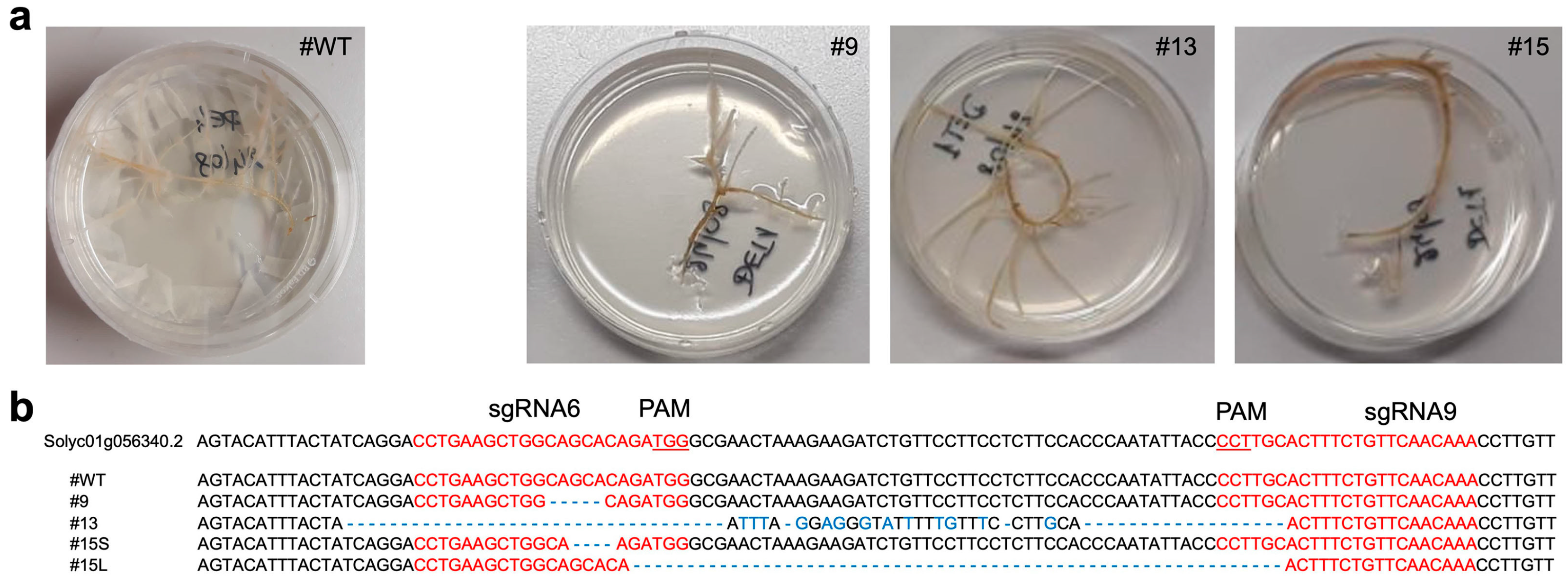
To assess the ability of two sgRNAs and the CRISPR/Cas9 NHEJ to induce site-specific mutations in the SlDET1 gene, hairy root transformation was carried out in tomato using the SlDET1-CRISPR/Cas9 NHEJ binary vector. Genomic DNA was collected from independent hairy roots grown on selection plates, and integration of T-DNA was confirmed in all root samples by PCR of the Cas9 gene. Transgenic hairy roots showed a slightly pigmented phenotype compared to the non-transgenic hairy roots (Figure 2a). Sanger sequencing of the fragments obtained by PCR with specific primers to the SlDET1 gene revealed the presence of mutations at the target site of two sgRNAs. Seven percent of the samples showed a precise deletion of a 56 bp fragment between the two target sites, whereas other types of deletions were also detected in other samples (Figure 2b). Therefore, these results showed a high efficiency of both sgRNA6 and sgRNA9 in editing the SlDET1 gene.

3.3. Targeted Mutations in the SlDET1 Gene of T0 Transgenic Lines

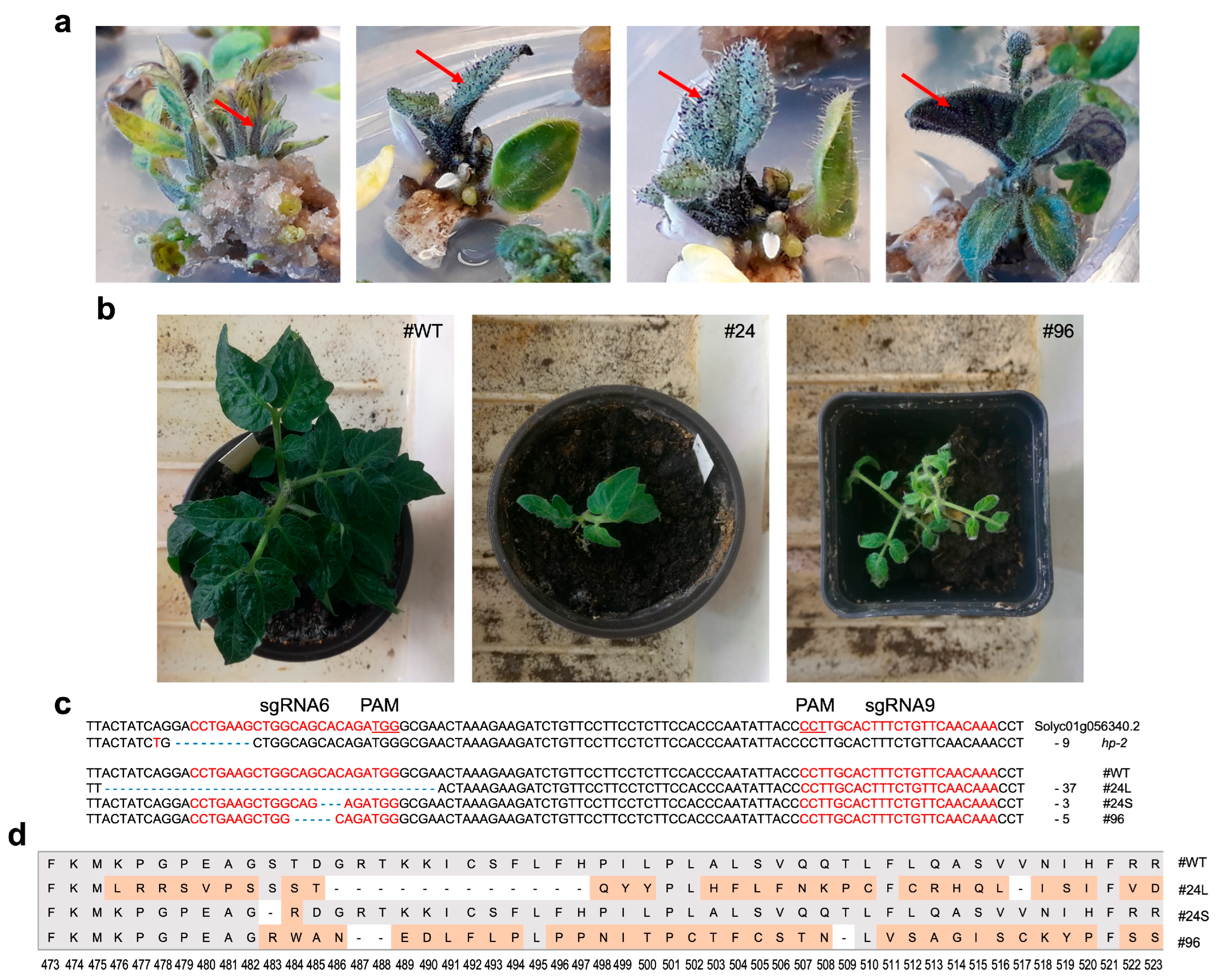
The stable genetic transformation mediated by A. tumefaciens showed about 20% efficiency of callus and shoot induction from infected explants. Unfortunately, a low survival rate of the shoots was recorded, with several prominent calli showing a dark-pigmented phenotype but without the ability to elongate shoots or regenerate viable plants (Figure 3a). Furthermore, most edited transgenic lines showed a dwarf phenotype with severely impaired growth capacity. Even so, three surviving Cas9-positive T0 plants showed a chimeric or heterozygous edition status (#24 and #96 edited transgenic lines) or no editing (#26 transgenic line) on the SlDET1 gene. The #24 transgenic line showed a dwarf phenotype with darker leaves and produced few parthenocarpic fruits, except one of them, which had dark seeds with null germination capacity. These results suggest a potentially lethal effect of these mutations and the difficulty in obtaining a T1 generation from this #24 transgenic line. Meanwhile, the #96 transgenic line showed a dwarf phenotype, but its leaves, stems, and fruits did not show a significantly darker epidermal color and were similar to the wild-type control plants (Figure 3b). The Sanger sequencing of the T0 #24 transgenic line showed one allele with a 37 bp deletion (indicated as #24L) and one allele with a 3 bp deletion (indicated as #24S), in addition to the wild-type allele (Figure 3c and Figure S1). In turn, the #96 transgenic line showed one wild-type allele and one allele with a 5 bp deletion (Figure 3c and Figure S1). Predictive translation analyses showed that these mutations severely affected the final SlDET1 transcript in these two edited transgenic lines, resulting in aberrant amino acid sequences caused by the different deletions in the coding DNA sequence (Figure 3d). Indeed, the DNA deletion in the #24 transgenic line, starting from the nucleotide 20,248, resulted in a truncated protein with an aberrant C-terminal sequence, while the 3 bp deletion resulted in the deletion of a Ser amino acid and an Arg-to-Thr substitution. In the #96 transgenic line, the 5 bp deletion, which started from the nucleotide 20,266, resulted in an aberrant C-terminal sequence (Figure 3d). Unfortunately, from these T0 edited transgenic lines, the T1 generations showed no further editing and heritability of these mutations, as well as segregation of mutant alleles.

3.4. SlDET1-Edited Transgenic Lines Showed Increased Flavonoids and Carotenoids

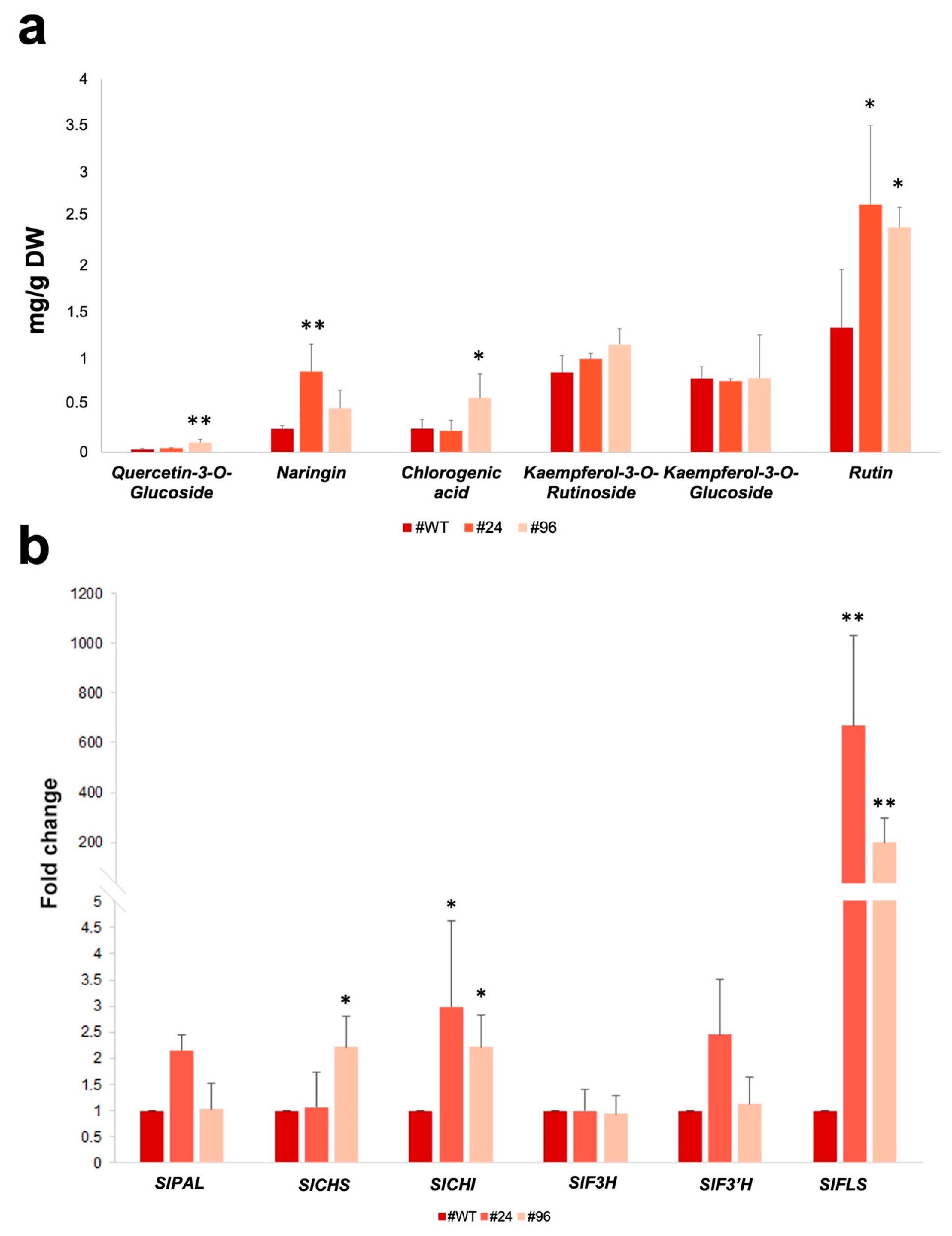
To assess the effects of the SlDET1 gene editing on the secondary metabolism of tomato fruit, we evaluated the levels of flavonoids and carotenoids in ripe fruits of edited transgenic plants compared with non-transgenic plants. Ripe fruits were collected from the #24 and #96 edited transgenic lines, and flavonoids were extracted and quantified by RP-HPLC. These results revealed that rutin levels were significantly higher and almost doubled in the fruits of the #24 and #96 edited transgenic lines compared to the fruits collected from the wild-type plants, ranging from 2.6 and 2.4 mg/g dry weight in the #24 and #96 edited transgenic lines compared to 1.4 mg/g dry weight in the wild-type plants (Figure 4a). In addition, kaempferol-3-O-rutinoside also showed a slight but non-significant increase in the fruits of the #24 and #96 edited transgenic lines compared to the fruits collected from the wild-type plants (Figure 4a). Furthermore, the naringin content was significantly higher in the fruits collected from the #24 transgenic line compared to the fruits collected from the #96 edited transgenic line and wild-type plants (Figure 4a). Quercetin-3-O-glucoside and chlorogenic acid contents were significantly higher in fruits collected from the #96 transgenic line compared to fruits collected from the other two lines (Figure 4a). Next, the expression levels of the main structural genes involved in the phenylpropanoid pathway were monitored by real-time RT-PCR. The gene expression results indicated a significant upregulation of both the chalcone synthase (SlCHS) and chalcone isomerase (SlCHI) genes in edited transgenic lines (Figure 4b). These genes encode the enzymes involved in flavonoid biosynthesis, such as naringenin chalcone production and isomerization. These two enzymes play pivotal roles in boosting the synthesis of flavonoids located downstream in the flavonoid biosynthesis pathway. Also, significant upregulation was observed for the flavonol synthase (SlFLS) gene expression (Figure 4b), correlating with the higher content of rutin and quercetin-3-O-glucoside observed in edited transgenic lines (Figure 4a). The expression level of the phenylalanine ammonia lyase (SlPAL), flavonoid 3-hydroxylase (SlF3′H), and flavanone-3-hydroxylase (SlF3H) genes was also monitored in these edited transgenic lines but showed no significant differences compared to the wild-type control (Figure 4b).
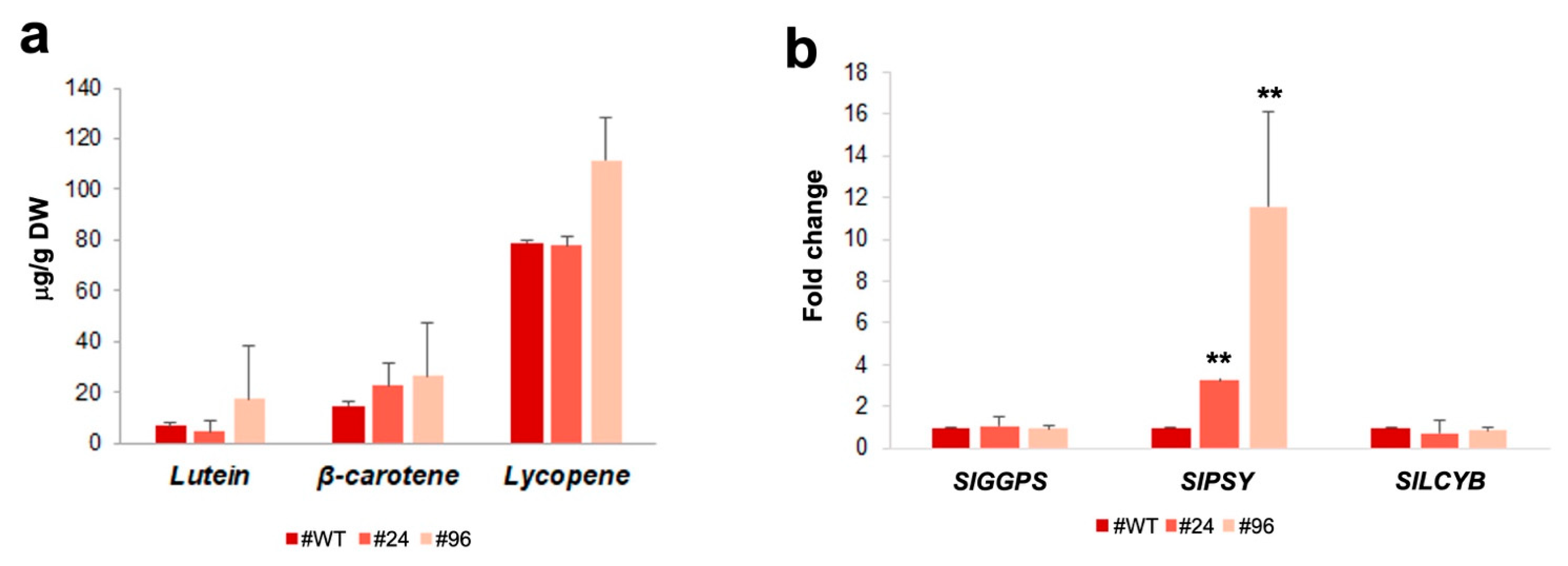
Concerning carotenoid content, the differences between fruits collected from the edited transgenic lines and wild-type plants were more limited. Both the edited transgenic lines showed a slight increase in β-carotene and an increase in lutein and lycopene in the #96 transgenic line (Figure 5a). The expression levels of phytoene synthase (SlPSY), geranylgeranylpyrophospate synthase (SlGGPS), and lycopene-β-cyclase (SlLCYB), the main structural genes of the carotenoid biosynthesis pathway, revealed that the SlPSY gene was significantly upregulated in both the #24 and #96 edited transgenic lines compared to the wild-type plants. Meanwhile, the SlGGPS and SlLCYB genes showed no significant differences (Figure 5b).
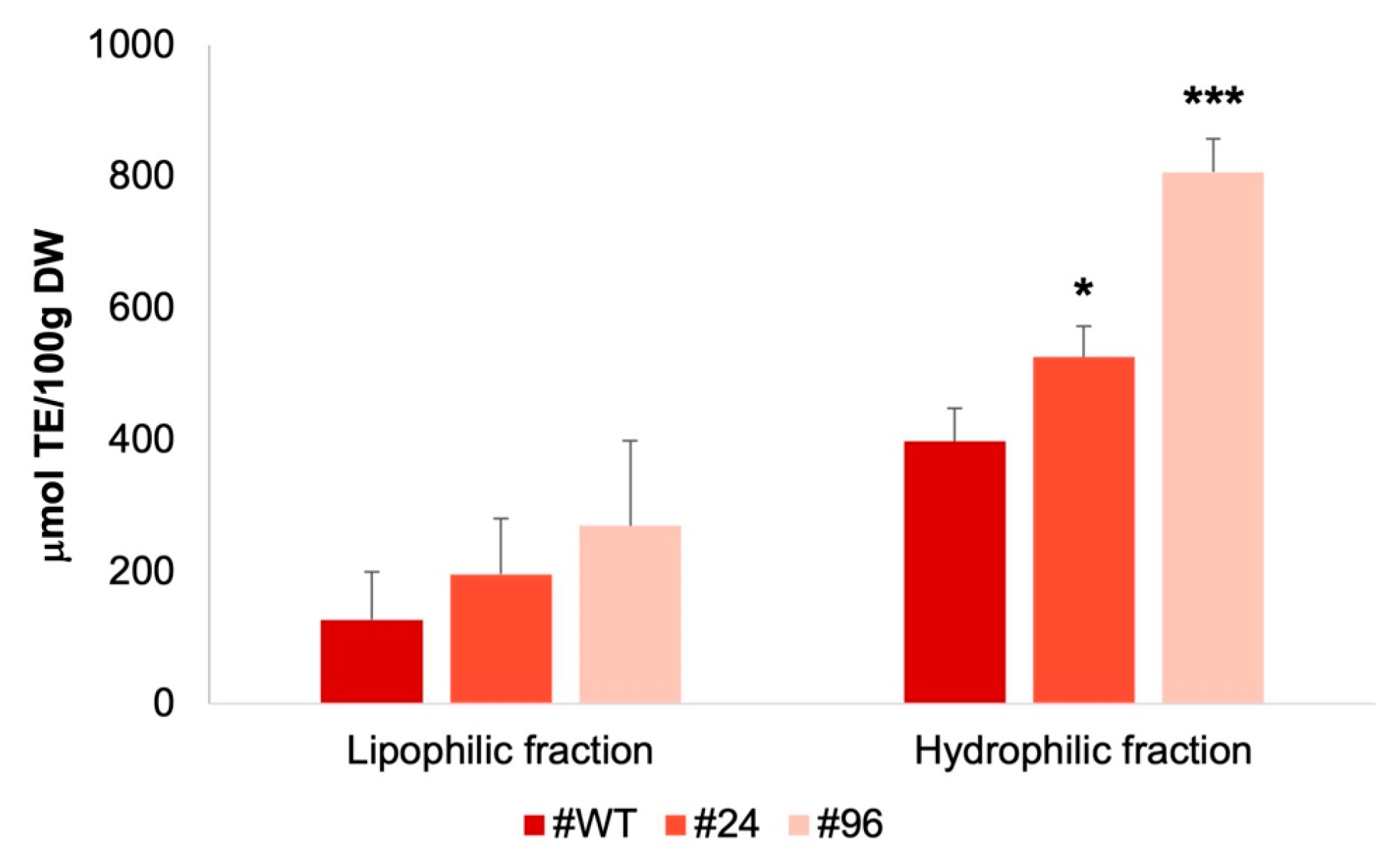
The antioxidant capacity of the hydrophilic and lipophilic fractions extracted from fruits collected from the edited transgenic lines and wild-type plants was measured by the TEAC assay. Results showed that the antioxidant capability and, therefore, the ability to scavenge free radicals related to the hydrophilic fraction were significantly higher in fruits collected from the edited transgenic lines. These values ranged from about 500 and 800 µmol TE/g dry weight in the #24 and #96 edited transgenic lines, respectively, compared to about 400 µmol TE/g dry weight in the wild-type plants (Figure 6). Concerning the lipophilic fraction, a similar trend was observed in fruits collected from the edited transgenic lines and wild-type plants. A slight increase in the antioxidant capability was recorded in both the edited transgenic lines, ranging from about 200 and 270 µmol TE/g dry weight in the #24 and #96 edited transgenic lines, respectively, compared to 130 µmol TE/g dry weight in the wild-type plants (Figure 6). Overall, these data might be associated with the presence of higher levels of polyphenols with antioxidant properties, which play a role in preventing oxidation processes triggered by free radicals.

4. Discussion

CRISPR/Cas9 is one of the most popular genome editing technologies, successfully applied in many plant species [20]. Fruit biofortification for carotenoids has been targeted by several CRISPR-based genome editing approaches, showing how this technology can be considered a rapid, DNA/transgene-free, and multi-targeted genetic modification method for the creation of ‘golden’ staple crops [26]. Several indels in the protein-coding sequence of lycopene epsilon-cyclase enzyme were responsible for significant enhancement of β-carotene content and reduction in lutein and alpha-carotene in the fruit pulp of edited transgenic lines [23]. These data suggest how CRISPR/Cas9-driven genomic edits can allow metabolic reprogramming of carotenoid pathways [23].
CRISPR/Cas9 allows us to specifically target a site of interest by inducing indels; nonsynonymous substitutions; and, in some cases, inversions or sequence replacement/insertions [21,22]. Among the bottlenecks that can occur during the application of genome editing in plants, the efficiency of genetic transformation, the regeneration capacity of the explants, and the formation of viable plants are critical issues [42].
Previous studies have reported that site-specific mutations in the SlDET1 gene resulted in higher levels of flavonoids and carotenoids in ripe fruits [43,44,45]. Further attempts to edit the SlDET1 gene have been reported using a Target-AID tool on the hp-2 region, and these resulting mutations produced non-lethal modifications [19].
In this study, the induction of site-specific mutations mediated by CRISPR/Cas9 NHEJ was planned in exon 11 of the SlDET1 gene, a position between the mutations already known as hp-2 and hp-2j, which can disrupt the Det1 domain and affect the NLS. Hairy root transformation mediated by A. rhizogenes was successfully performed to verify the efficiency of the SlDET1-CRISPR/Cas9 NHEJ binary vector and two sgRNAs (sgRNA6 and sgRNA9) designed to target the SlDET1 gene.
Subsequently, the stable genetic transformation of cotyledonary and hypocotyl tissues mediated by A. tumefaciens was performed with the SlDET1-CRISPR/Cas9 NHEJ binary vector to obtain transgenic and edited tomato plants. Several rounds of genetic transformation were conducted, and numerous promising shoots were obtained, but a low survival rate of elongated shoots and rooted plants was observed. Several of these shoots and regenerated plants selected under kanamycin were confirmed as transgenic by PCR, and some of these were also confirmed to be edited in the SlDET1 gene. However, several of these promising regenerants did not progress in regeneration and formation of viable plants, showing a severe penalty phenotype. This phenotype could indicate that these induced mutations in the SlDET1 gene were too drastic at the transcript and protein levels, compromising the molecular functions of this protein. These phenotypic data corroborate previous studies that showed the complexity of mutations in the SlDET1 gene, such as those previously described regarding the hp-2dg, hp-2, and hp-2j mutants [13,14]. These mutants consist of point mutations that do not induce a total knockout of the SlDET1 gene, thus avoiding lethal effects in the homozygous condition [14,15,16]. Even though it was reported that the hp-2 mutation leads to a change in alternative splicing of the SlDET1 transcript, inducing a deletion of three amino acids and resulting in a truncated SlDET1 protein, this mutation has been described as an incomplete knockout that results in approximately 10% of the SlDET1 mRNA being correctly spliced [14]. This could explain the non-lethal effects of this hp-2 mutation and confirms the importance of the presence of a full-length mRNA for encoding a functional SlDET1 protein [14]. In this study, as DNA deletions of different lengths occurred only in heterozygous or chimeric conditions, the potential deleterious effects of the truncated protein or a null knockout of the SlDET1 gene were confirmed. Therefore, this could explain the very low survival rate of edited transgenic shoots and plants observed in this study, since the SlDET1-null homozygous condition is likely to be lethal [19]. The lethality of the SlDET1-null homozygous lines could also partially explain the absence of heritability of edited alleles from the T0 to T1 generation in the #96 edited transgenic line. In the case of larger deletions, only the transgenic lines carrying at least one wild-type SlDET1 allele will most likely survive, thus demonstrating the essential role of the functional SlDET1 protein. The dwarf phenotype observed in the edited transgenic lines further confirmed that the SlDET1 protein function is very important for the normal development and fitness of the plant.
Despite these imminent difficulties, the #24 and #96 edited transgenic lines were successfully obtained and acclimated in a greenhouse, and ripe fruits were biochemically analyzed. These analyses revealed that these fruits had greater flavonoid and carotenoid content and higher antioxidant capacity. In our experimental conditions, ripe fruits collected from these edited transgenic lines also showed a general upregulation of the main genes involved in the flavonoid and carotenoid biosynthesis pathways, confirming previous reports on hp-2 mutants [46]. More specifically, the upregulation of the SlCHS1, SlCHI, and SlFLS genes in ripe fruits collected from the #24 and #96 edited transgenic lines indicates that the phenylpropanoid pathway was indirectly influenced by disturbance in SlDET1 function and was probably upregulated by a stress response due to the hyperresponsiveness to light. Similarly, the SlPSY gene was also upregulated in ripe fruits collected from the #24 and #96 edited transgenic lines, which goes in the same direction and confirms the pivotal role of the SlDET1 protein also in carotenoid and isoprenoid biosynthesis [17].
Therefore, our results indicated a positive correlation between the accumulation of flavonoids, carotenoids, and antioxidant activity with the gene expression in ripe fruits collected from the edited transgenic lines, such as rutin, chlorogenic acid, and quercetin-3-O-glucoside. These results are in agreement with those observed for hp-2 mutants or SlDET1-mutant lines obtained by Target-AID base-editing technology [12,43,46]. The overaccumulation of flavonoids and carotenoids is a well-known response to light and other stress conditions and plays an important protective role against the harmful effects of excessive light and UV radiation [47,48]. Thus, the edited plants containing mutations in the SlDET1 gene could be characterized by a hyperresponsiveness to light with a consequent chronic stress condition, and overaccumulation of protective pigments, which also contribute to overall antioxidant capacity.

5. Conclusions

This study sought to mimic the hp-2 and hp-2j mutations and reported the impact of site-specific mutations introduced by CRISPR/Cas9 NHEJ within the exon 11 of the SlDET1 gene in terms of shoot regeneration, plant survival, and mutation heritability across generations. The lethality of these mutations in the SlDET1 gene was clearly witnessed by the few surviving T0 edited transgenic lines and their drastic phenotypes. Furthermore, these findings are in agreement with previous studies that report the pivotal role of the SlDET1 protein in orchestrating the response of plant cells to environmental stimuli. These collective results indicated that the CRISPR/Cas9 NHEJ system should be addressed by applying more specific targeting approaches, resulting in allelic sublethal variants. The SlDET1 gene does not tolerate certain mutations in exon 11, suggesting that the CRISPR/Cas9 HDR using a free donor DNA fragment with homology arms designed to generate punctual and very site-specific mutations or repairs may be recommended.

Supplementary Materials

The following supporting information can be downloaded at https://www.mdpi.com/article/10.3390/horticulturae12040428/s1, Figure S1: Sanger sequencing analysis of colony PCR products from individual E. coli clones generated by subcloning of purified PCR amplicons from #24 and #96 transgenic lines; Table S1: Prediction of SlDET1 off-target sites for the design of the sgRNA6 (a) and sgRNA (b) chosen and used in this study; Table S2: Oligonucleotides used in plant genotyping and gene expression by real-time RT-PCR.

Author Contributions

Conceptualization, A.S. (Aurelia Scarano), F.D., G.D., M.F.B., B.F., A.M., F.M., A.S. (Angelo Santino); methodology, A.S. (Aurelia Scarano), F.D., G.D., M.F.B., B.F.; formal analysis, A.S. (Aurelia Scarano), F.D., G.D., M.F.B., B.F.; investigation, A.S. (Aurelia Scarano), F.D., G.D., M.F.B., B.F.; resources, A.M., F.M., A.S. (Angelo Santino); data curation, A.S. (Aurelia Scarano), F.D., G.D., M.F.B., B.F., A.M., F.M., A.S. (Angelo Santino); writing—original draft preparation, A.S. (Aurelia Scarano), F.D., M.F.B., A.M., F.M., A.S. (Angelo Santino); writing—review and editing, A.S. (Aurelia Scarano), F.D., M.F.B., A.M., F.M., A.S. (Angelo Santino); visualization, A.S. (Aurelia Scarano), F.D., M.F.B., A.M., F.M., A.S. (Angelo Santino); supervision, A.S. (Aurelia Scarano), F.D., M.F.B., A.M., F.M., A.S. (Angelo Santino); project administration, F.D., A.M., F.M., A.S. (Angelo Santino). All authors have read and agreed to the published version of the manuscript.

Funding

This work was supported in part by the Agritech National Research Center and received funding from the European Union Next-Generation EU (PIANO NAZIONALE DI RIPRESA E RESILIENZA (PNRR)–MISSIONE 4 COMPONENTE 2, INVESTIMENTO 1.4–D.D. 1032 17 June 2022, CN00000022). A. Santino and A. Scarano also acknowledge support from the CNR-DiSBA project NutrAge nr. 7022.

Data Availability Statement

The original contributions presented in this study are included in the article/Supplementary Material. Further inquiries can be directed to the corresponding author.

Conflicts of Interest

The authors declare no conflicts of interest.

References

  1. Li, J.; Scarano, A.; Mora Gonzalez, N.; D’Orso, F.; Yue, Y.; Nemeth, K.; Saalbach, G.; de Oliveira Martins, C.; Moran, R.; Santino, A.; et al. Biofortified tomatoes provide a new route to vitamin D sufficiency. Nat. Plants 2022, 8, 611–616. [Google Scholar] [CrossRef]
  2. Ortega-Salazar, I.; Ozminkowsky, R.H., Jr.; Adaskaveg, J.A.; Sbodio, A.O.; Blanco-Ulate, B. Genetic basis of fruit quality traits in processing tomatoes. J. Agric. Food Res. 2025, 22, 102096. [Google Scholar] [CrossRef]
  3. Koch, W. Dietary Polyphenols—Important Non-Nutrients in the Prevention of Chronic Noncommunicable Diseases. A Systematic Review. Nutrients 2019, 11, 1039. [Google Scholar] [CrossRef]
  4. Crupi, P.; Faienza, M.F.; Naeem, M.Y.; Corbo, F.; Clodoveo, M.L.; Muraglia, M. Overview of the Potential Beneficial Effects of Carotenoids on Consumer Health and Well-Being. Antioxidants 2023, 12, 1069. [Google Scholar] [CrossRef] [PubMed]
  5. Luo, J.; Butelli, E.; Hill, L.; Parr, A.; Niggeweg, R.; Bailey, P.; Weisshaar, B.; Martin, C. AtMYB12 regulates caffeoyl quinic acid and flavonol synthesis in tomato: Expression in fruit results in very high levels of both types of polyphenols. Plant J. 2008, 56, 316–326. [Google Scholar] [CrossRef] [PubMed]
  6. Zhang, Y.; Butelli, E.; Alseekh, S.; Tohge, T.; Rallapalli, G.; Luo, J.; Kawar, P.G.; Hill, L.; Santino, A.; Fernie, A.R.; et al. Multi-level engineering facilitates the production of phenylpropanoid compounds in tomato. Nat. Commun. 2015, 6, 8635. [Google Scholar] [CrossRef]
  7. Deng, L.; Wang, H.; Sun, C.; Li, Q.; Jian, H.; Minmin, D.; Li, C.-B.; Li, C. Efficient generation of pink-fruited tomatoes using CRISPR/Cas9 system. J. Gen. Genom. 2017, 45, 51. [Google Scholar] [CrossRef] [PubMed]
  8. Li, X.; Wang, Y.; Chen, S.; Tian, H.; Fu, D.; Zhu, B.; Luo, Y.; Zhu, H. Lycopene is enriched in tomato fruit by CRISPR/Cas9-mediated multiplex genome editing. Front. Plant Sci. 2018, 9, 559. [Google Scholar] [CrossRef]
  9. D’Ambrosio, C.; Stigliani, A.L.; Giorio, G. CRISPR/Cas9 editing of carotenoid genes in tomato. Transgenic Res. 2018, 27, 367–378. [Google Scholar] [CrossRef]
  10. Liu, L.; Shao, Z.; Zhang, M.; Wang, Q. Regulation of carotenoid metabolism in tomato. Mol. Plant 2015, 8, 28–39. [Google Scholar] [CrossRef]
  11. Chory, J.; Peto, C.; Feinbaum, R.; Pratt, L.; Ausubel, F. Arabidopsis thaliana mutant that develops as a light-grown plant in the absence of light. Cell 1989, 58, 991–999. [Google Scholar] [CrossRef]
  12. Hunziker, J.; Nishida, K.; Kondo, A.; Ariizumi, T.; Ezura, H. Phenotypic characterization of high carotenoid tomato mutants generated by the Target-AID base-editing technology. Front. Plant Sci. 2022, 13, 848560. [Google Scholar] [CrossRef] [PubMed]
  13. Adamse, P.; Peters, J.L.; Jaspers, P.A.P.M.; Tuinen, A.V.; Koornneef, M.; Kendrick, R.E. Photocontrol of anthocyanin synthesis in tomato seedlings: A genetic approach. Photochem. Photobiol. 1989, 50, 107–111. [Google Scholar] [CrossRef]
  14. Mustilli, A.M.; Fenzi, F.; Ciliento, R.; Alfano, F.; Bowler, C. Phenotype of the tomato high pigment-2 mutant is caused by a mutation in the tomato homolog of DEETIOLATED1. Plant Cell 1999, 11, 145–157. [Google Scholar] [CrossRef]
  15. Levin, I.; Frankel, P.; Gilboa, N.; Tanny, S.; Lalazar, A. The tomato dark green mutation is a novel allele of the tomato homolog of the DEETIOLATED1 gene. Theor. Appl. Genet. 2003, 106, 454–460. [Google Scholar] [CrossRef]
  16. Davuluri, G.R.; van Tuinen, A.; Mustilli, A.C.; Manfredonia, A.; Newman, R.; Burgess, D.; Brummell, D.A.; King, S.R.; Palys, J.; Uhlig, J.; et al. Manipulation of DET1 expression in tomato results in photomorphogenic phenotypes caused by post-transcriptional gene silencing. Plant J. 2004, 40, 344–354. [Google Scholar] [CrossRef]
  17. Kolotilin, I.; Koltai, H.; Tadmor, Y.; Bar-Or, C.; Reuveni, M.; Meir, A.; Nahon, S.; Shlomo, H.; Chen, L.; Levin, I. Transcriptional profiling of high pigment-2dg tomato mutant links early fruit plastid biogenesis with its overproduction of phytonutrients. Plant Physiol. 2007, 145, 389–401. [Google Scholar] [CrossRef] [PubMed]
  18. Jones, M.O.; Piron-Prunier, F.; Marcel, F.; Piednoir-Barbeau, E.; Alsadon, A.A.; Wahb-Allah, M.A.; Al-Doss, A.A.; Bowler, C.; Bramley, P.M.; Fraser, P.D.; et al. Characterisation of alleles of tomato light signalling genes generated by TILLING. Phytochemistry 2012, 79, 78–86. [Google Scholar] [CrossRef]
  19. Hunziker, J.; Nishida, K.; Kondo, A.; Kishimoto, S.; Ariizumi, T.; Ezura, H. Multiple gene substitution by Target-AID base-editing technology in tomato. Sci. Rep. 2020, 10, 20471. [Google Scholar] [CrossRef]
  20. Doudna, J.A.; Charpentier, E. Genome editing. The new frontier of genome engineering with CRISPR-Cas9. Science 2014, 346, 1258096. [Google Scholar] [CrossRef]
  21. Basso, M.F.; Duarte, K.E.; Santiago, T.R.; de Souza, W.R.; Garcia, B.O.; da Cunha, B.D.B.; Kobayashi, A.K.; Molinari, H.B.C. Efficient genome editing and gene knockout in Setaria viridis with CRISPR/Cas9 directed gene editing by the non-homologous end-joining pathway. Plant Biotechnol. 2021, 38, 227–238. [Google Scholar] [CrossRef]
  22. Sánchez-Rebato, M.H.; Schubert, V.; White, C.I. Meiotic double-strand break repair DNA synthesis tracts in Arabidopsis thaliana. PLoS Genet. 2024, 20, e1011197. [Google Scholar] [CrossRef]
  23. Kaur, N.; Alok, A.; Shivani; Kumar, P.; Kaur, N.; Awasthi, P.; Chaturvedi, S.; Pandey, P.; Pandey, A.; Pandey, A.; et al. CRISPR/Cas9 directed editing of lycopene epsilon- cyclase modulates metabolic flux for β-carotene biosynthesis in banana fruit. Metab. Eng. 2020, 59, 76–86. [Google Scholar] [CrossRef] [PubMed]
  24. Jiang, W.Z.; Henry, I.M.; Lynagh, P.G.; Comai, L.; Cahoon, E.B.; Weeks, D.P. Significant Enhancement of Fatty Acid Composition in Seeds of the Allohexaploid, Camelina sativa, Using CRISPR/Cas9 Gene Editing. Plant Biotechnol. J. 2017, 15, 648–657. [Google Scholar] [CrossRef]
  25. Qi, W.; Zhu, T.; Tian, Z.; Li, C.; Zhang, W.; Song, R. High Efficiency CRISPR/Cas9 Multiplex Gene Editing Using the Glycine tRNA-Processing System-Based Strategy in Maize. BMC Biotechnol. 2016, 16, 58. [Google Scholar] [CrossRef]
  26. Zheng, X.; Kuijer, H.N.; Al-Babili, S. Carotenoid biofortification of crops in the CRISPR Era. Trends Biotechnol. 2021, 39, 857–860. [Google Scholar] [CrossRef] [PubMed]
  27. Basso, M.F.; Arraes, F.B.M.; Grossi-de-Sa, M.; Moreira, V.J.V.; Alves-Ferreira, M.; Grossi-de-Sa, M.F. Insights into genetic and molecular elements for transgenic crop development. Front. Plant Sci. 2020, 11, 509. [Google Scholar] [CrossRef]
  28. Belhaj, K.; Chaparro-Garcia, A.; Kamoun, S.; Nekrasov, V. Plant genome editing made easy: Targeted mutagenesis in model and crop plants using the CRISPR/Cas system. Plant Methods 2013, 9, 39. [Google Scholar] [CrossRef]
  29. Ron, M.; Kajala, K.; Pauluzzi, G.; Wang, D.; Reynoso, M.A.; Zumstein, K.; Garcha, J.; Winte, S.; Masson, H.; Inagaki, S.; et al. Hairy root transformation using Agrobacterium rhizogenes as a tool for exploring cell type-specific gene expression and function using tomato as a model. Plant Physiol. 2014, 166, 455–469. [Google Scholar] [CrossRef]
  30. Freitas-Alves, N.S.; Moreira-Pinto, C.E.; Arraes, F.B.M.; Costa, L.S.L.; de Abreu, R.A.; Moreira, V.J.V.; Lourenço-Tessutti, I.T.; Pinheiro, D.H.; Lisei-de-Sa, M.E.; Paes-de-Melo, B.; et al. An ex vitro hairy root system from petioles of detached soybean leaves for in planta screening of target genes an CRISPR strategies associated with nematode bioassays. Planta 2023, 259, 23. [Google Scholar] [CrossRef] [PubMed]
  31. D’Orso, F.; Forte, V.; Baima, S.; Possenti, M.; Palma, D.; Morelli, G. Methods and Techniques to select efficient guides for CRISPR-mediated genome editing in plants. In A Roadmap for Plant Genome Editing; Ricroch, A., Eriksson, D., Miladinović, D., Sweet, J., Van Laere, K., Woźniak-Gientka, E., Eds.; Springer: Cham, Switzerland, 2024; pp. 89–117. [Google Scholar] [CrossRef]
  32. Andersson, M.; Turesson, H.; Nicolia, A.; Fält, A.-S.; Samuelsson, M.; Hofvander, P. Efficient targeted multiallelic in tetraploid potato (Solanum tuberosum) by transient CRISPR-Cas9 expression in protoplasts. Plant Cell Rep. 2017, 36, 117–128. [Google Scholar] [CrossRef]
  33. Murugan, K.; Babu, K.; Sundaresan, R.; Rajan, R.; Sashital, D.G. The revolution continues: Newly discovered systems expand the CRISPR-Cas toolkit. Mol. Cell 2017, 68, 15–25. [Google Scholar] [CrossRef]
  34. Nekrasov, V.; Staskawicz, B.; Weigel, D.; Jones, J.D.; Kamoun, S. Targeted mutagenesis in the model plant Nicotiana benthamiana using Cas9 RNA-guided endonuclease. Nat. Biotechnol. 2013, 31, 691–693. [Google Scholar] [CrossRef]
  35. Fillatti, J.J.; Kiser, J.; Rose, R.; Comai, L. Efficient transfer of a glyphosate tolerance gene into tomato using a binary agrobacterium tumefaciens vector. Nat. Biotechnol. 1987, 5, 726–730. [Google Scholar] [CrossRef]
  36. Frary, A.; Earle, E.D. An examination of factors affecting the efficiency of Agrobacterium-mediated transformation of tomato. Plant Cell Rep. 1996, 16, 235–240. [Google Scholar] [CrossRef]
  37. Fani, M.O.; Versiani, A.F.; Dias, A.C.F.; Xisto, M.F.; Otoni, W.C.; de Oliveira, L.L.; Silva, C.C.; Silva, E.M.; Paula, S.O. Analysis of the inhibitory concentration of ammonium glufosinate in cotyledons explants of tomato plants (Solanum lycopersicun). Biotechnology 2012, 11, 184–188. [Google Scholar] [CrossRef]
  38. Scarano, A.; Gerardi, C.; Sommella, E.; Campiglia, P.; Chieppa, M.; Butelli, E.; Santino, A. Engineering the polyphenolic biosynthetic pathway stimulates metabolic and molecular changes during fruit ripening in “Bronze” tomato. Hortic. Res. 2022, 9, uhac097. [Google Scholar] [CrossRef]
  39. Blando, F.; Marchello, S.; Maiorano, G.; Durante, M.; Signore, A.; Laus, M.N.; Soccio, M.; Mita, G. Bioactive Compounds and Antioxidant Capacity in Anthocyanin-Rich Carrots: A Comparison between the Black Carrot and the Apulian Landrace “Polignano” Carrot. Plants 2021, 10, 564. [Google Scholar] [CrossRef]
  40. Scarano, A.; Olivieri, F.; Gerardi, C.; Liso, M.; Chiesa, M.; Chieppa, M.; Frusciante, L.; Barone, A.; Santino, A.; Rigano, M.M. Selection of tomato landraces with high fruit yield and nutritional quality under elevated temperatures. J. Sci. Food Agric. 2020, 100, 2791–2799. [Google Scholar] [CrossRef]
  41. Pfaffl, M.W.; Horgan, G.W.; Dempfle, L. Relative expression software tool (REST) for group-wise comparison and statistical analysis of relative expression results in real-time PCR. Nucleic Acids Res. 2002, 30, e36. [Google Scholar] [CrossRef]
  42. Cardi, T.; Murovec, J.; Bakhsh, A.; Boniecka, J.; Bruegmann, T.; Bull, S.E.; Eeckhaut, T.; Fladung, M.; Galovic, V.; Linkiewicz, A.; et al. CRISPR/Cas-mediated plant genome editing: Outstanding challenges a decade after implementation. Trends Plant Sci. 2023, 28, 1144–1165. [Google Scholar] [CrossRef]
  43. Bino, R.J.; Ric de Vos, C.H.; Lieberman, M.; Hall, R.D.; Bovy, A.; Jonker, H.H.; Tikunov, Y.; Lommen, A.; Moco, S.; Levin, I. The light-hyperresponsive high pigment-2dg mutation of tomato: Alterations in the fruit metabolome. New Phytol. 2005, 166, 427–438. [Google Scholar] [CrossRef]
  44. Gonzali, S.; Menconi, J.; Perata, P. Transcriptional survey of the light-induced anthocyanin pathway in non-GM purple tomatoes. Front. Plant Physiol. 2025, 2, 1507833. [Google Scholar] [CrossRef]
  45. Menconi, J.; La Monaca, N.; Cataldo, I.; Niccolini, P.M.; Perata, P.; Gonzali, S. Loss of DET1 in High Pigment2 tomato prevents high temperature repression of anthocyanin biosynthesis in fruit through HY5 stabilization. Plant Cell Environ. 2025, 1–20. [Google Scholar] [CrossRef]
  46. Enfissi, E.M.A.; Barneche, F.; Ahmed, I.; Lichtlé, C.; Gerrish, C.; McQuinn, R.P.; Giovannoni, J.J.; Lopez-Juez, E.; Bowler, C.; Bramley, P.M.; et al. Integrative transcript and metabolite analysis of nutritionally enhanced DE-ETIOLATED1 downregulated tomato fruit. Plant Cell 2010, 22, 1190–1215. [Google Scholar] [CrossRef]
  47. Tohge, T.; Fernie, A.R. Leveraging Natural Variance towards Enhanced Understanding of Phytochemical Sunscreens. Trends Plant Sci. 2017, 22, 308–315. [Google Scholar] [CrossRef]
  48. Sandam, G. Antioxidant protection from UV- and Light-stress related to carotenoid structures. Antioxidants 2019, 8, 219. [Google Scholar] [CrossRef]
Figure 1. SlDET1 gene structure and sgRNA design. (a) Schematic representation of the SlDET1 target gene, with the previously described hp-2dg, hp-2, and hp-2j mutations. Blue boxes represent the exons, and the light blue lines represent the introns (not reproduced in scale). (b) Representation of the two sgRNAs (sgRNA6 and sgRNA9) targeted within the exon 11, around the hp-2 and hp-2j mutation sites. (c) DNA sequences of exons 10 and 11 of the SlDET1 gene (Solyc01g056340.4.1, S. lycopersicum ITAG2.4) and target positions of sgRNA6 and sgRNA9. (d) Translated protein-coding sequence of the SlDET1 gene and the Cas9 cleavage sites guided by sgRNA6 and sgRNA9. SlDET1 protein is 523 amino acids long with the nuclear localization signal (NLS) in the C-terminal region (amino acids 464 to 494) and Det1 domain from the central to C-terminal regions (amino acids 121 to 523).
Horticulturae 12 00428 g001
Figure 2. SlDET1 gene editing in transgenic hairy roots. (a) Representative images of wild-type (WT) non-transgenic roots and edited hairy roots after A. rhizogenes-mediated genetic transformation with the SlDET1-CRISPR/Cas9 NHEJ binary vector (#9, #13, and #15 edited transgenic lines). (b) Sanger sequencing analysis of the SlDET1 gene of edited hairy roots showing the presence of mutations around the protospacer adjacent motif (PAM) regions of the designed sgRNAs, with some large (#13 and #15L edited transgenic lines) or short deletions (#9 and #15S edited transgenic lines).
Horticulturae 12 00428 g002
Figure 3. Phenotype of regenerated and edited shoots and plants. (a) Purple pigmentation (pointed by the red arrows) observed during the regeneration process following the stable genetic transformation of tomato explants mediated by A. tumefaciens with the SlDET1-CRISPR/Cas9 NHEJ binary vector. (b) Regenerated, Cas9-positive, and edited shoots (#24 and #96 edited transgenic lines) showing dwarf phenotypes. (c) Alignment of SlDET1 sequences found in the #24 and #96 edited transgenic lines compared to the wild-type (WT) control plant. The positions of the sgRNAs are shown in red, with their respective protospacer adjacent motif (PAM) sequences, and the changes in length (deletions) are shown to the right. Nomenclature of #24 transgenic line: #24L transgenic line corresponds to a large deletion found in the SlDET1 gene; #24S transgenic line corresponds to a short deletion found in the SlDET1 gene. (d) Predicted changes at the SlDET1 protein sequence in edited transgenic lines compared to the SlDET1 protein sequence of wild-type plants. The numbers indicate the sequence position from five amino acids before the hp-2 site until the C-terminus.
Horticulturae 12 00428 g003
Figure 4. Flavonoid content and expression of genes involved in their biosynthetic pathway. (a) Content of the main flavonoids in extracts from ripe fruits measured by HPLC analysis. (b) Expression profiling of genes involved in the flavonoid pathway measured by real-time RT-PCR in ripe fruit samples from SlDET1-edited transgenic lines (n = 3) and wild-type (WT) plants. SlPAL: phenylalanine ammonia lyase; SlCHS: chalcone synthase; SlCHI: chalcone isomerase; SlF3H: flavanone-3-hydroxylase; SlF3′H: flavonoid 3-hydroxylase; and SlFLS: flavonol synthase. Significance assumed at * p-value < 0.05 and ** p-value < 0.01. DW: dry weight.
Horticulturae 12 00428 g004
Figure 5. Carotenoid content and expression of genes involved in their biosynthetic pathway. (a) Content of the main carotenoids in extracts from ripe fruits measured by HPLC analysis. (b) Expression profiling of genes involved in the carotenoid pathway measured by real-time RT-PCR in whole fruits collected from SlDET1-edited transgenic lines (n = 3) and wild-type (WT) plants. SlGGPS: geranyl-geranyl pyrophosphate synthase; SlPSY1: phytoene synthase 1; and SlLCYB: β-lycopene cyclase 1. Significance assumed at ** p-value < 0.01. DW: dry weight.
Horticulturae 12 00428 g005
Figure 6. Antioxidant capacity of fruit extracts (hydrophilic and lipophilic fractions, derived from the flavonoid and carotenoid extractions, respectively) measured by TEAC assay from ripe fruits collected from the #24 and #96 edited transgenic lines and wild-type (WT) plants. Significance differences are assumed at * p-value < 0.05, and *** p-value < 0.001. DW: dry weight.
Horticulturae 12 00428 g006
Disclaimer/Publisher’s Note: The statements, opinions and data contained in all publications are solely those of the individual author(s) and contributor(s) and not of MDPI and/or the editor(s). MDPI and/or the editor(s) disclaim responsibility for any injury to people or property resulting from any ideas, methods, instructions or products referred to in the content.