Article

Bioinformatics Analysis and Functional Verification of PlDGAT2 Gene Associated with Triacylglycerol Biosynthesis in Paeonia lactiflora Pall.

College of Horticulture and Landscape Architecture, Yangzhou University, Yangzhou 225009, China
*
Author to whom correspondence should be addressed.
Horticulturae 2026, 12(4), 410; https://doi.org/10.3390/horticulturae12040410
Submission received: 10 February 2026 / Revised: 21 March 2026 / Accepted: 23 March 2026 / Published: 25 March 2026
(This article belongs to the Section Genetics, Genomics, Breeding, and Biotechnology (G2B2))

Abstract

Seeds of Paeonia lactiflora Pall. ‘Hangshao’ contain over 20% oil, of which more than 90% are unsaturated fatty acids, showing its high potential as an oil crop. Triacylglycerol (TAG) is the main storage form of fatty acids, and diacylglycerol acyltransferase 2 (DGAT2) is a key enzyme in TAG biosynthesis. In this study, the full-length cDNA of PlDGAT2 (326 amino acids) was cloned. Subcellular localization assays further indicated that it localized in the endoplasmic reticulum. Functional verification showed that silencing PlDGAT2 in herbaceous peony decreased the level of total fatty acids, palmitic acid (C16:0, PA) and α-linolenic acid (C18:3, ALA), but increased linoleic acid (C18:2, LA) in leaves. Overexpressing PlDGAT2 in tobacco elevated the content of total fatty acids, PA, and ALA in seeds, while also enlarging the seed sizes, but it reduced the LA content in tobacco seeds. This study suggests that PlDGAT2 contributes to the accumulation of ALA and total fatty acids, offering a potential gene target for improving the oil quality of herbaceous peony seeds.

1. Introduction

Vegetable oils contain essential fatty acids (FAs) required for human health and thus serve as an indispensable component of the human diet. Given that different FA components vary in nutritional value, the FA composition determines both the nutritional value and quality of edible vegetable oils. In general, FAs are classified into three categories based on their saturation levels: saturated fatty acids (SFAs), monounsaturated fatty acids (MUFAs), and polyunsaturated fatty acids (PUFAs). Among these, PUFAs represent the primary focus and core of research and development targeting functional fatty acids [1]. FAs are synthesized via the addition of two carbons by fatty acid synthase (FAS) in the plastid, and are ultimately transferred to glycerol-3-phosphate (G3P) in the endoplasmic reticulum (ER) to form triacylglycerol (TAG) [2]. TAG is synthesized via the esterification of three FA molecules with one molecule of G3P, and the process is catalyzed by a suite of enzymes. Different combinations and arrangements of fatty acid chains give rise to diverse TAG species. Specifically, TAG molecules carrying three identical fatty acid chains are defined as simple triacylglycerols, whereas those with heterogeneous fatty acid chains are termed mixed triacylglycerols [3,4]. At present, it is known that there are two common pathways for the assembly of TAG in plant cells, namely the lipid acyl-CoA-dependent pathway [5] and the lipid acyl-CoA-independent pathway [6]. The lipid acyl-COA-dependent pathway is also known as the Kennedy pathway. In this pathway, under the catalysis of glycerol-3-phosphoacyltransferase (GPAT), the fatty acid carbon chain on the acyl-COA molecule is transferred to the sn-1 position of glycerol-3-phosphate to form lysophosphatidic acid. Then, through the catalytic action of lysophosphatidic acid acyltransferase (LPAAT), the FA carbon chain on the acyl-COA molecule of lysophosphatidic acid is bound to the sn-2 site to generate phosphatidic acid. Phosphatidic acid is further converted into diglycerol (DAG) under the catalysis of phosphatidic acid phosphohydrolase. Finally, under the catalytic action of diacylglycerol acyltransferase (DGAT), the FA carbon chain on the acyl-COA molecule binds to the sn-3 site of DAG to form TAG [7].
In the Kennedy pathway, DGAT is the transferase responsible for catalyzing the final step in the synthesis of TAG from DAG, and serves a key rate-limiting enzyme [8]. To date, four types of DGAT genes have been identified, namely DGAT1, DGAT2, DGAT3 and WSD/DGAT [9,10,11]. These genes exhibit plant- and tissue-specific expression patterns, playing distinct roles in lipid synthesis and accumulation. DGAT1 and DGAT2 are distinct membrane-bound acyltransferases; their subcellular localization and substrate specificity directly influence TAG synthesis and fatty acid composition. The soluble DGAT3 protein lacks transmembrane domains and signal peptide sequences, sharing relatively low sequence homology with members of the DGAT1 and DGAT2 families. WS/DGAT belongs to the membrane-bound O-acyltransferase (MBOAT) protein family, containing a single transmembrane region. It functions as a wax synthase and possesses DGAT activity for lipid synthesis [12,13,14]. The DGAT2 enzyme family, first identified in the oleaginous fungus Mortierella ramanniana (Möller) Linnem [15], comprises endoplasmic reticulum (ER) membrane-bound proteins that possess one or two transmembrane domains [16]. To date, DGAT2 genes and their encoded proteins have been characterized in a broad range of plant species, including the model plant Arabidopsis thaliana [17], and oilseed plants such as Ricinus communis [18], Vernicia fordii [19], Olea europaea [20], Idesia polycarpa [21], Elaeis guineensis [22], and Jatropha curcas [23]. Notably, several DGAT2 enzymes in plants, exemplified by those from Ricinus communis [18], Vernicia fordii [19], and Jatropha curcas [23], exhibit the unique capability of incorporating unusual FAs (such as hydroxy FAs) into TAG. Additionally, overexpression of DGATs has been shown to enhance oil content, and these enzymes exhibit a relative preference for unsaturated FAs during the catalysis of TAG biosynthesis from DAG. For instance, AtDGAT2 displays a preference for linolenoyl-CoA (C18:3-CoA) or oleoyl-CoA (C18:1-CoA) relative to linoleoyl-CoA (C18:2-CoA) [17]; overexpression of PfDGAT2 not only significantly elevated seed oil content, but also increased α-linolenic acid (ALA, C18:3) levels, while concurrently reducing the content of stearic acid (SA, C18:0) and linoleic acid (LA, C18:2) [24].
The herbaceous peony (Paeonia lactiflora Pall.) boasts a cultivation history exceeding 4000 years, having been initially cultivated for its medicinal value. Currently, three principal production bases for this medicinal herbaceous peony variety exist in China, specifically Hangzhou (Zhejiang Province), Bozhou (Anhui Province) and Zhongjiang (Sichuan Province). Of these, the cultivated herbaceous peony native to Hangzhou, Zhejiang, is referred to as the ‘Hangshao’ cultivar and is characterized by single-petaled flowers, a high seed yield, and strong heat resistance. Prior studies conducted by our group demonstrated that the oil content in herbaceous peony ‘Hangshao’ seeds surpasses 20%, and that unsaturated fatty acids (UFAs) account for more than 90% of the total FA composition [25]. Using transcriptome sequencing, we verified that the key genes regulating UFA enrichment and oil accumulation in herbaceous peony seeds include malonyl-CoA-acyl carrier protein transacylase (MCAT), 3-oxoacyl-ACP synthase III (KAS III), fatty acyl-ACP thioesterase A (FATA), stearoyl-ACP desaturase (SAD), fatty acid desaturase (FAD2), fatty acid desaturase 3 (FAD3), DGAT, and oleosin (OLE) [26]. Moreover, via full-length transcriptome analysis, five non-redundant members of the DGAT family were identified [27]. However, the specific fatty acid substrates used by these DGAT members for TAG biosynthesis remain unclear. Accordingly, this study aimed to characterize the function of PlDGAT2, which will help reveal the mechanism underlying high UFA accumulation in ‘Hangshao’ seeds and provide a theoretical basis for breeding high-oil herbaceous peony varieties.

2. Materials and Methods

2.1. Plant Materials

Seeds were collected from 5-year-old herbaceous peony ‘Hangshao’ (Paeonia lactiflora Pall. ‘Hangshao’) plants grown in the germplasm repository of the College of Horticulture and Landscape Architecture, Yangzhou University (32°23′31′ N, 119°24′50′ E). Based on our previous experimental results, seeds harvested at 30, 45, 60, 70 and 90 days after flowering (DAF) were used for RNA extraction and expression analysis. Plant materials intended for virus-induced gene silencing (VIGS) were transplanted into pots and cultured in a long-day incubator under conditions of 25 °C with a 16 h light/8 h dark photoperiod. Three biological replicates were set for each time point, and all plant samples were immediately frozen in liquid nitrogen and then stored at −80 °C for subsequent use. In this study, total RNA was extracted from all samples using a MiniBEST Plant RNA Extraction Kit (TaKaRa, Shiga, Japan), and the extracted RNA was stored at −80 °C for follow-up experiments.

2.2. Bioinformatics Analysis and Gene Cloning

Gene sequences were aligned using DNAMAN 5.2.2 software, and the physicochemical properties of amino acids encoded by these genes were analyzed via the online tool ProtParam. The online SignalP 6.0 Server was employed to predict and analyze the protein signal peptides, while the online TMHMM 2.0 Server was used for predictive analysis of protein transmembrane structure. The primers used in this study are listed in Supplementary Table S1. The primers and cDNA of PlDGAT2 were prepared as described in previous research. The vector pBWA(V)HS-osgfp was digested at the SacI restriction site, and the digested product was cultured on LB medium supplemented with kanamycin (Kana). The resulting bacterial colonies were identified by PCR. Positive binary plasmids were sent to a company for sequencing, and the sequencing results were aligned using DNAMAN5.2.2 software.

2.3. Quantitative Real-Time Polymerase Chain Reaction (RT-qPCR) Analysis

RT-qPCR was performed to determine the expression level of the PlDGAT2 gene at five developmental stages. PlActin (JN105299) was used as the internal reference gene. Specific primers of PlDGAT2 genes were designed using Primer 5 software and synthesized by Nanjing Qingke Biotechnology Co., Ltd., (Nanjing, China) with their sequences listed in Supplementary Table S1. First-strand cDNA was synthesized from the extracted total RNA using the Hifair III 1st Strand cDNA Synthesis SuperMix for qPCR Kit (Yeasen, Shanghai, China). Subsequent RT-qPCR analysis was conducted on a BIO-RAD CFX96RT-q PCR Detection System (Bio-Rad, Hercules, CA, USA). The 2−∆∆Ct comparative threshold cycle (Ct) method was used for the calculation of relative expression levels [28].

2.4. Subcellular Localization

To investigate the subcellular localization of PlDGAT2, Nicotiana benthamiana was used as the host material. The recombinant vector pCAMBIA2300-PlDGAT2-eGFP and the empty vector (carrying only the eGFP sequence) were separately transferred into Agrobacterium tumefaciens strain GV3101 (harboring the pSoup-p19 helper plasmid, Shanghai Wedi Biotechnology Co., Ltd., Shanghai, China). Meanwhile, Agrobacterium tumefaciens GV3101 (pSoup-p19) carrying the pCAMBIA1300-mCherry vector (with an endoplasmic reticulum marker, corresponding to the RFP signal) was prepared as the localization reference. Agrobacterium cultures harboring the target vectors (pCAMBIA2300-PlDGAT2-eGFP and empty eGFP vector) and the marker vector (pCAMBIA1300-mCherry) were individually cultured overnight until the OD600 value reached 0.5. The bacterial cells were collected by means of high-speed centrifugation and resuspended properly, and then the Agrobacterium carrying PlDGAT2-eGFP or empty eGFP was mixed with the Agrobacterium carrying the endoplasmic reticulum marker vector. The mixed bacterial suspensions were incubated in the dark for 1 h before infiltration. Subsequently, approximately 2–3 mL of each mixed bacterial suspension was injected into the abaxial surface of N. benthamiana leaves using a disposable syringe. After injection, the tobacco plants were cultured under appropriate conditions for 3 days. The expression of eGFP (target protein signal) and RFP (endoplasmic reticulum marker signal) in the leaf tissues was observed using a confocal laser scanning microscope (Nikon C2-ER, Tokyo, Japan), with eGFP excited at a wavelength of 488 nm and autofluorescence detected at 640 nm.

2.5. Virus-Induced Gene Silencing of PlDGAT2

The virus-induced gene silencing (VIGS) approach using pTRV vectors was employed to transiently silence the PlDGAT2 gene in herbaceous peony plants. In the TRV-based VIGS system, pTRV1 and pTRV2 are the two core viral vector components, each with distinct functions that cooperate to achieve gene silencing. Specially, pTRV2 is responsible for targeting and silencing specific genes, while pTRV1 mediates plasmid replication and systemic spread within the plant. A non-conserved fragment of PlDGAT2 (nucleotide positions 20–338 bp) was cloned into the pTRV2 vector using gene-specific primers. Then, 100 ng of each vector (pTRV2-PlDGAT2, empty pTRV2, or pTRV1) was individually transformed into Agrobacterium tumefaciens. The Agrobacterium cultures were incubated overnight in a shaking incubator at 28 °C until reaching an optical density (OD600) of 0.8. The resuspended Agrobacterium suspensions, containing mixtures of pTRV2-PlDGAT2 with pTRV1, or empty pTRV2 with pTRV1, were incubated in the dark for 1 h. Dormant herbaceous peony plants with 2–3 buds were used as infection materials. After pruning to create wounds on the plants, the roots were rinsed 2–3 times with deionized water. Subsequently, the roots were immersed in the aforementioned Agrobacterium mixtures, and a vacuum desiccator was used to apply negative pressure for 30 min to facilitate the bacterial suspension’s penetration into plant tissues. Following two additional rinses with deionized water, the plants were repotted into potting soil. After 30–45 days of cultivation, the plants reached the leaf expansion stage. Fresh samples were collected for immediate determination of relevant parameters, while frozen samples were stored at −80 °C for subsequent analysis. The gene-specific primers used in this experiment are listed in Supplementary Table S1.

2.6. Overexpression of PlDGAT2 in Nicotiana tabacum

The tobacco (Nicotiana tabacum) cultivar ‘K326’ was used as the experimental material for genetic transformation. The PlDGAT2 gene was cloned into the pCAMBIA1301 vector, and the recombinant vector was then cultured in YEB medium. Leaves of tobacco seedlings were cut into segments and subjected to Agrobacterium-mediated infection. Subsequently, the infected leaf segments were transferred to the co-cultivation medium and incubated in the dark for approximately 3 days. After co-cultivation, the leaf segments were transferred to a selective differentiation medium for resistant bud screening and differentiation until buds emerged. When the adventitious buds grew to an appropriate height, they were excised with a sterile scalpel and transferred to a rooting medium. After cleaning the roots of the tobacco plantlets, transgenic tobacco plants were obtained by transplanting them into soil. Seeds from wild-type tobacco and PlDGAT2-transgenic tobacco were collected for genomic DNA extraction using the TaKaRa Mini BEST Plant Genomic DNA Extraction Kit, following the manufacturer’s instructions. The tobacco NtActin gene (GenBank accession No. AB158612) was used as the internal reference, with the forward primer 5′-TCCTCATGCAATTCTTCG-3′ and reverse primer 5′-ACCTGCCCATCTGGTAAC-3′. Detection primers were designed based on the overexpression vector for PCR amplification verification. The expression level of PlDGAT2 in tobacco was determined by quantitative real-time PCR (q-PCR). Total RNA extraction and cDNA synthesis were performed following the same protocol as described above. The specific primers used for q-PCR are listed in Supplementary Table S1.

2.7. Analysis of Fatty Acid Composition and Content

Prior to fatty acid composition and content analysis, fresh leaves of herbaceous peony and seeds of N. tabacum were processed according to our previous research protocols [29]. Briefly, fresh herbaceous peony leaves and tobacco seeds were first subjected to heat inactivation at 105 °C for 5 min, followed by oven-drying at a consistent temperature of 50 °C until fully desiccated. To quantify the FA content and composition, 50 mg of dried herbaceous peony leaves or 10 mg of dried tobacco seeds was used per biological replicate. FA extraction was performed as described previously with slight modifications [30]. Specifically, the samples were placed in a 10 mL glass test tube and then 4 mL of 2.5% sulfuric acid methanol solution was added. This was followed by vigorous shaking for 1 min, and then the methyl esterification reaction was performed in a water bath at 80 °C for 2 h. After the reaction, the test tube was placed in the dark and allowed to cool to room temperature. To terminate the reaction, 1 mL of 0.9% NaCl solution was added. Subsequently, 1 mL of n-hexane was added and mixed thoroughly, and then centrifugation was performed at 4000 rpm for 10 min. The supernatant was filtered through a 0.22 μm organic filter membrane and transferred to a gas chromatography vial for analysis. FA analysis was performed using a Trace GC DSQII gas chromatograph-mass spectrometer (GC-MS; Thermo Finnigan, San Jose, CA, USA) equipped with a DB-WAX capillary column (30 m × 0.25 mm, 0.25 μm; Agilent Technologies, Waldbronn, Germany), with 37 fatty acid methyl ester (FAME) mixed standards of varying concentrations (GLC NESTLE 37 MIX, Solarbio, Beijing, China) used for quantification.

2.8. Measurement of the Length, Width and Thousand-Grain Weight of Tobacco Seeds

The length and width of the fresh tobacco seeds were measured using ImageJ 1.8.0 software after microscopic photography. The 1000-seed fresh weight was measured with an electronic balance (Sartorius, BSA224S, Göttingen, German).

2.9. Statistical Analysis

All data are presented as the mean ± standard deviation (SD) of three independent replicates. Prior to statistical analysis, data were tested for normality and homogeneity of variance. One-way analysis of variance (ANOVA) was used for data with normal distributions and homogeneous variances. For non-normally distributed or heteroscedastic data, the Kruskal–Wallis non-parametric test was performed [31]. Multiple comparisons among treatments were conducted using Tukey’s HSD test, and comparisons between two groups were performed using Student’s t-test, with a significance level of p < 0.05. All statistical analyses were carried out using SPSS 29.0 software (SPSS Inc., Chicago, IL, USA).

3. Results

3.1. Isolation and Sequence Analysis of PlDGAT2

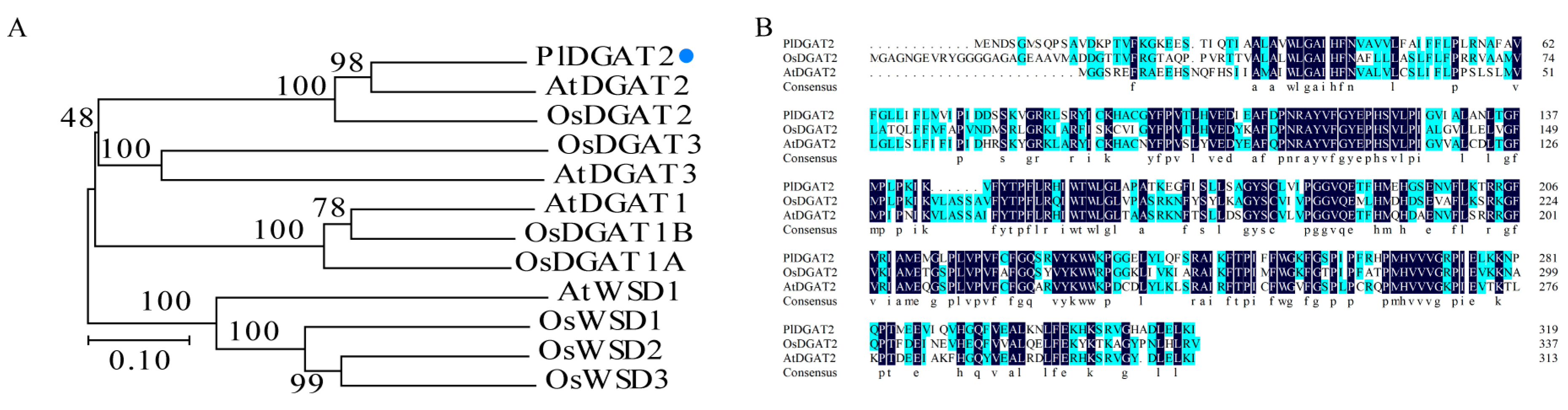
Previous transcriptomic studies have shown that PlDGATs serve as key genes governing the accumulation of unsaturated fatty acids and lipids [26]. Five PlDGAT genes (PlDGAT1, PlDGAT2, PlDGAT3, PlWSD1, and PlWSD2) were identified via full-length transcriptomic analysis [27], among which PlDGAT2 exhibited sustained high expression throughout seed development. Thus, in this study, we aimed to investigate the function of PlDGAT2. Firstly, we isolated its full-length sequence via PCR. The full-length sequence of PlDGAT2 is 1308 bp, containing an open reading frame (ORF) of 981 bp that encodes 326 amino acids. Subsequent bioinformatics analysis showed that the encoded protein has a molecular weight of 36.67 kDa, a molecular formula of C1720H2635N433O430S13 and a theoretical isoelectric point of 9.28, indicating that it is a basic protein with a total of 5231 atoms. To elucidate the evolutionary relationship between PlDGAT2 and its homologs, we downloaded eight DGAT protein sequences from the NCBI database and performed phylogenetic tree analysis to determine their evolutionary relationships with PlDGAT2. Figure 1A shows that PlDGAT2 clustered with AtDGAT2 from Arabidopsis thaliana, sharing 98% homology with it. Multiple sequence alignment revealed high sequence similarity between PlDGAT2 and other DGAT2 family members (Figure 1B).

3.2. Expression of PlDGAT2 in Developing Seeds of Herbaceous Peony

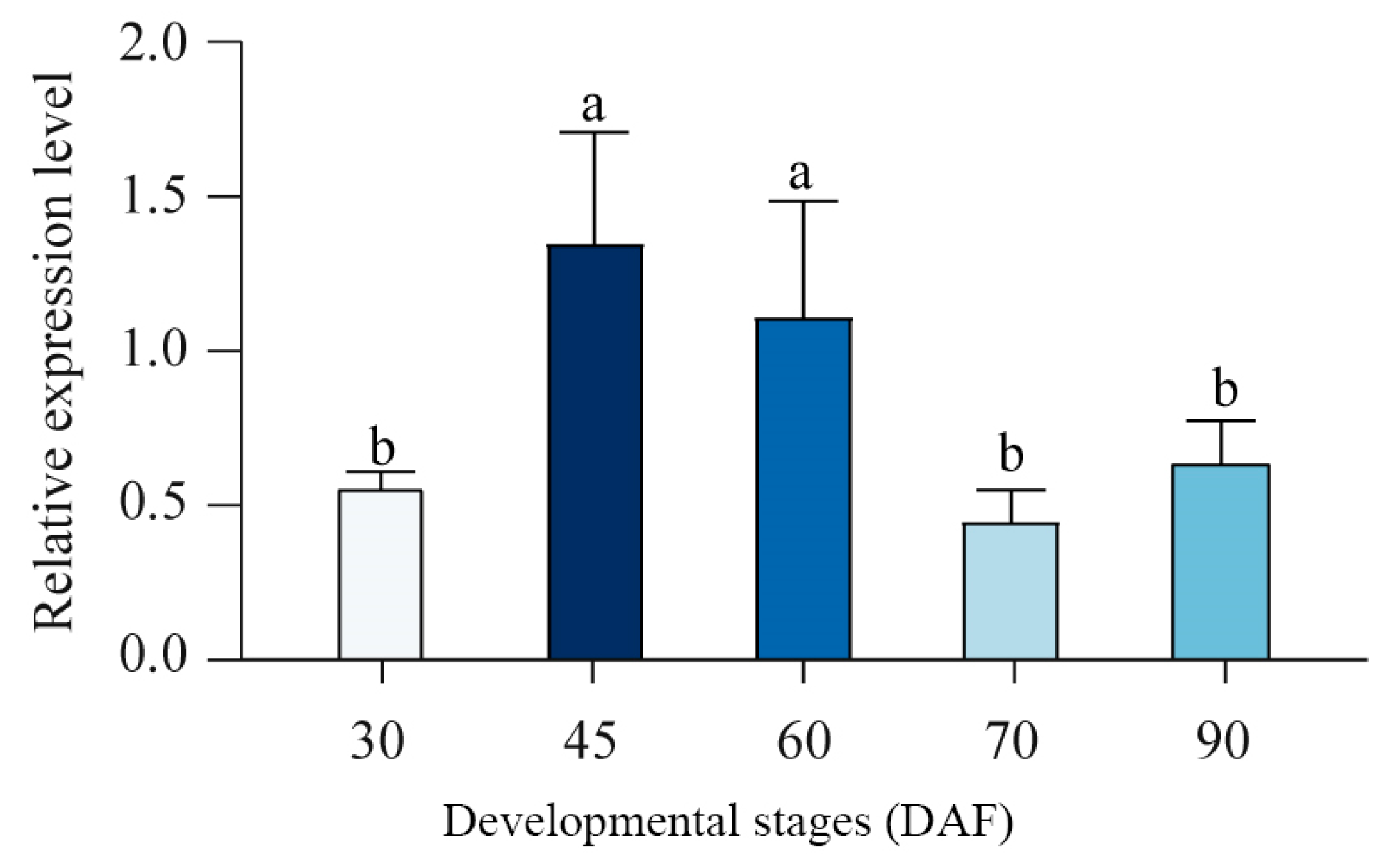
RT-qPCR was performed to determine the expression of PlDGAT2 in herbaceous peony seeds at different developmental stages. Figure 2 shows that the expression level of PlDGAT2 exhibited an initial increase followed by a decrease throughout seed development, peaking at 45 days after flowering (DAF).

3.3. Subcellular Localization of the PlDGAT2 Protein

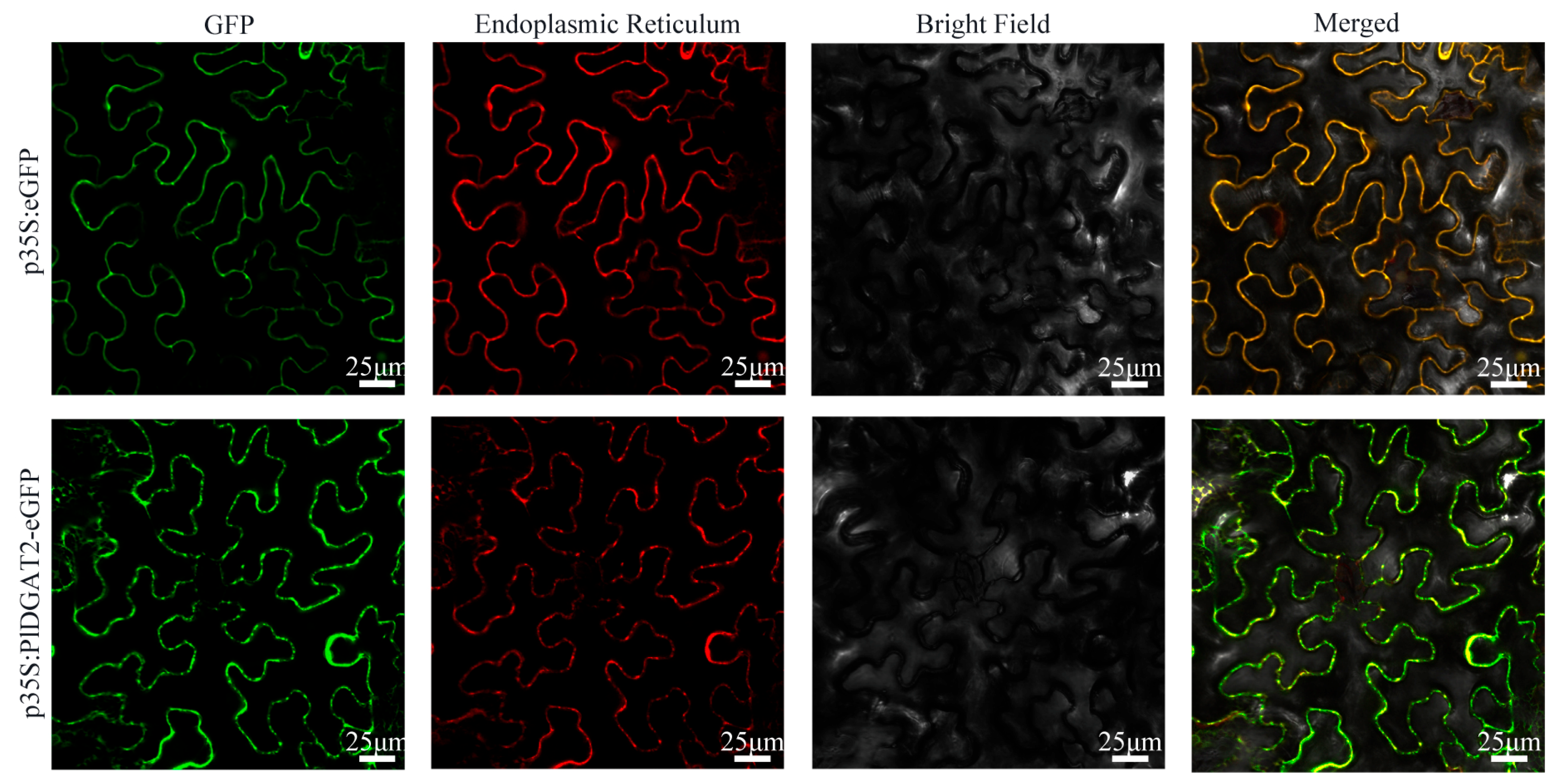
To further determine the subcellular localization of the PlDGAT2 protein, the expression vector pCAMBIA2300-PlDGAT2-eGFP was constructed and transiently expressed in N. benthamiana via Agrobacterium-mediated infiltration, with the p35S:eGFP empty vector as a control. Figure 3 shows that PlDGAT2-GFP localized to the endoplasmic reticulum (ER) of tobacco leaf cells, overlapping with the localization of the ER-tagged RFP (from the ER marker vector). This is consistent with the expected ER localization pattern, indicating that PlDGAT2 exerts its function in the ER. These results also support the positional basis that PlDGAT2 performs its acyltransferase activity in the ER.

3.4. Silencing PlDGAT2 Reduced the Content of Total Fatty Acid and α-Linolenic Acid in Herbaceous Peony Leaves

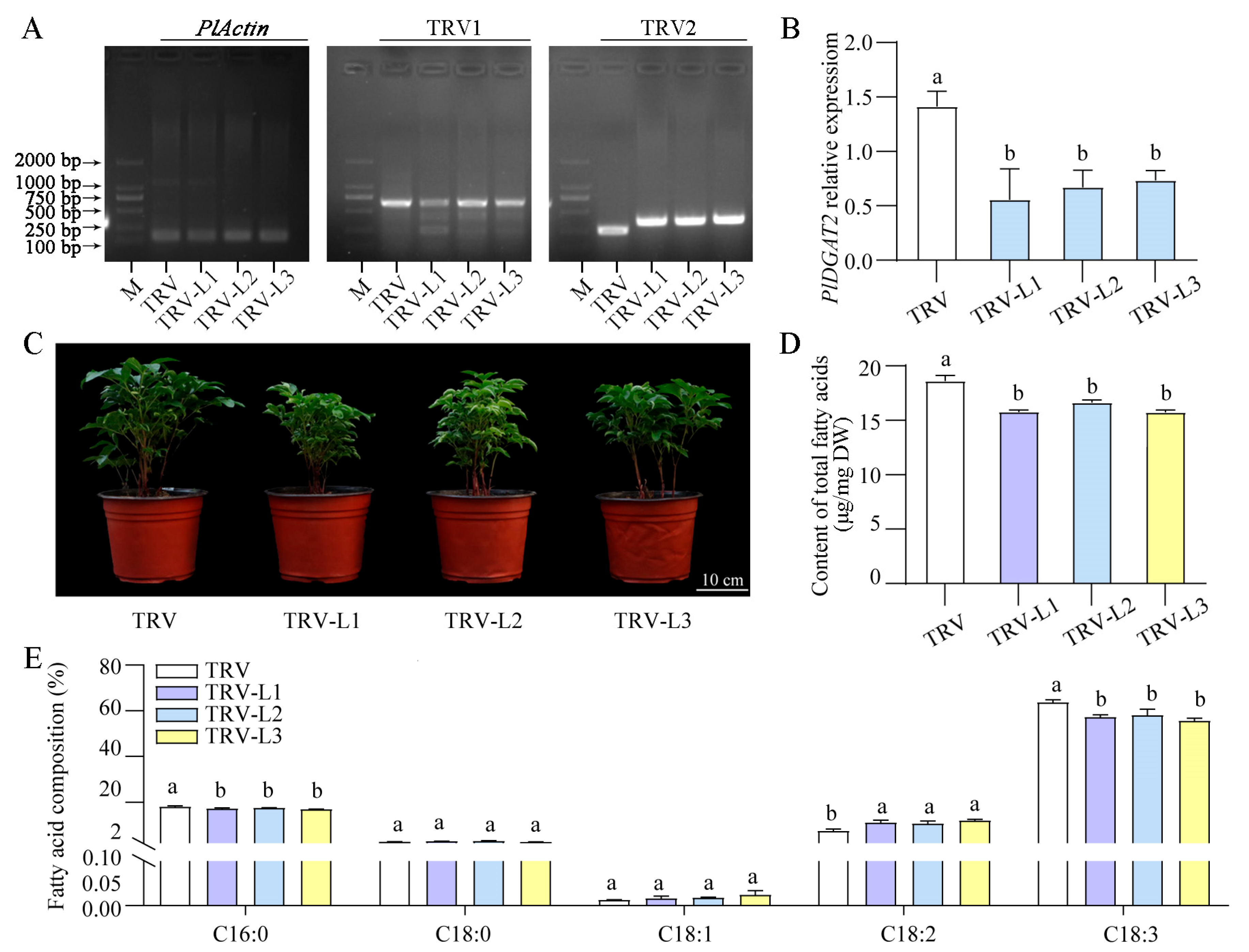
VIGS was performed to suppress PlDGAT2 expression in herbaceous peony. PCR amplification of DNA isolated from PlDGAT2-silenced lines and control plants demonstrated that both produced bands of a consistent size matching that of TRV1. Conversely, TRV2 amplification exhibited significant differences in the band profiles of the silenced lines and control plants (Figure 4A). RT-qPCR analysis of leaf tissues indicated that PlDGAT2 transcript levels were downregulated by an average of approximately 53.6% in the silenced lines relative to the TRV-empty vector plants (Figure 4B). Collectively, these data validated the successful silencing of PlDGAT2 in herbaceous peony. Phenotypic documentation and sample collection were conducted at 40 days after the initiation of gene silencing (Figure 4C). Examination of the total fatty acid content extracted from leaf tissues revealed that the PlDGAT2-silenced plants exhibited significantly lower fatty acid levels relative to the TRV-empty vector control plants, representing an average decrease of approximately 13.7% (Figure 4D). Upon further investigation of the fatty acid profiles in the PlDGAT2-silenced plants, we found that the levels of palmitic acid (PA, C16:0) and ALA (C18:3) were significantly decreased by an average of approximately 5.0% and 10.6%, respectively, relative to the TRV-empty vector control plants. Conversely, LA (C18:2) content exhibited a significant increase of approximately 51.6% on average in the PlDGAT2-silenced plants. Meanwhile, the levels of SA (C18:0) and OA (C18:1) did not differ significantly between the PlDGAT2-silenced and TRV-empty vector control plants (Figure 4E).

3.5. Heterologous Overexpression of PlDGAT2 Significantly Enhanced the Contents of Fatty Acids and ALA in N. tabacum Seeds

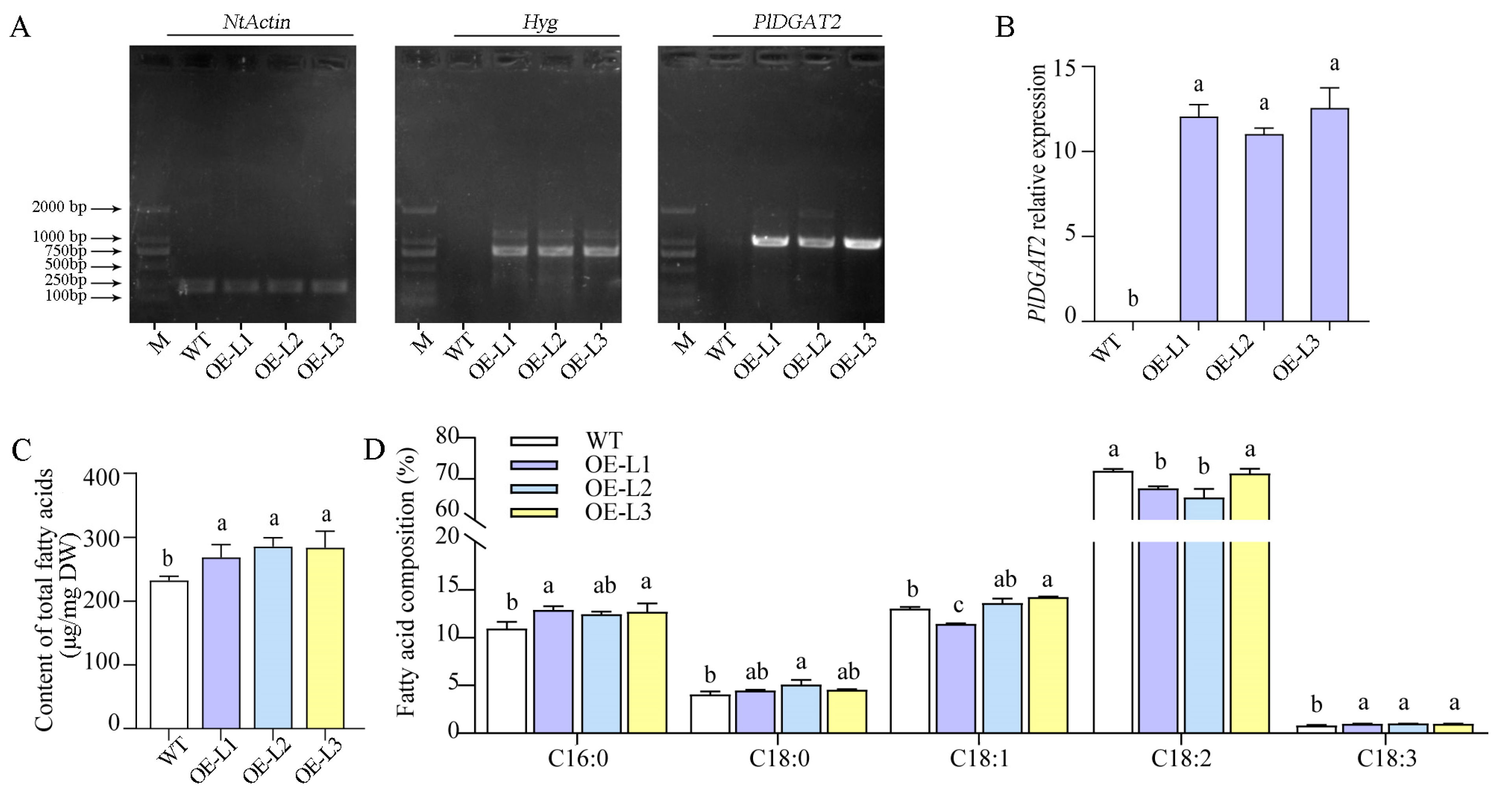
PlDGAT2 was heterologously overexpressed in N. tabacum to validate its regulatory role in TAG biosynthesis. Hygromycin B (Hyg) resistance was only detected in the transgenic lines overexpressing PlDGAT2 (Figure 5A). Furthermore, the relative expression level of PlDGAT2 was barely detectable in the wild-type (WT) tobacco plants, but was significantly higher in the overexpressing plants (Figure 5B). Fatty acid extraction was performed on seeds from the PlDGAT2-overexpressing and WT tobacco plants, followed by GC-MS analysis for qualitative and quantitative determination of the extracted fatty acids. Compared with the WT, the total fatty acid content in PlDGAT2-overexpressing tobacco seeds was elevated by approximately 20% (Figure 5C), indicating that PlDGAT2 overexpression can effectively enhance the fatty acid content in tobacco seeds. Further analysis of the fatty acid composition in transgenic and WT tobacco seeds revealed that the content of LA (C18:2) was decreased. In contrast, the levels of PA (C16:0) and ALA (C18:3) were significantly higher in transgenic tobacco seeds than in WT tobacco seeds, with increases of approximately 15.8% and 25.9%, respectively (Figure 5D). This indicates that the PlDGAT2 gene exerts a strong regulatory effect on the fatty acid composition of tobacco seeds, particularly in promoting the accumulation of ALA (C18:3).

3.6. Heterologous Overexpression of PlDGAT2 Promoted Seed Development in N. tabacum

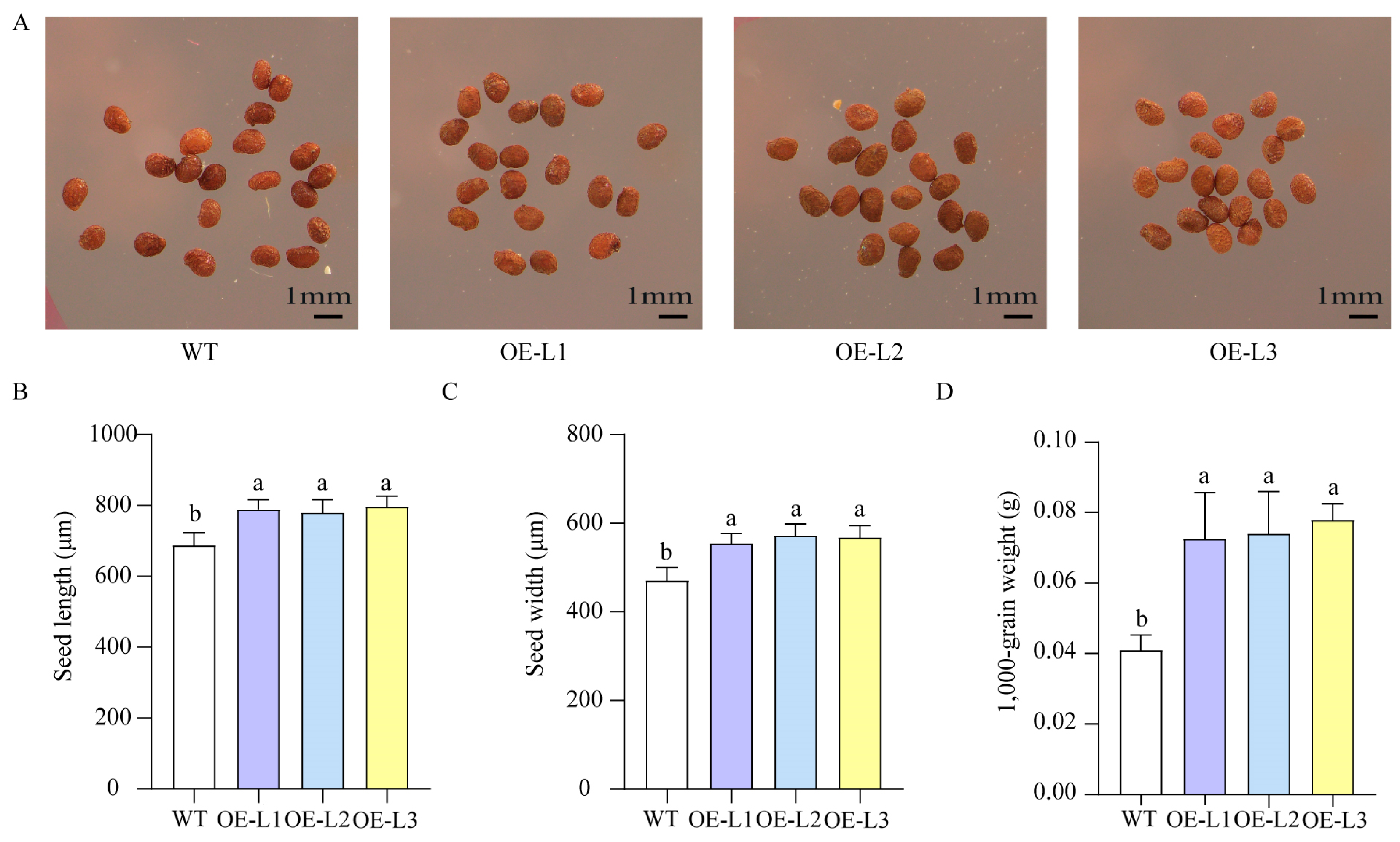
PlDGAT2-transgenic tobacco seeds were collected and dried, and their length and width were measured. It was observed that PlDGAT2-transgenic tobacco seeds were fuller than WT tobacco seeds (Figure 6A). Concurrent measurements of their length and width showed that both parameters were significantly greater in transgenic tobacco seeds than in WT seeds, with increases of 16.1% and 20.5%, respectively (Figure 6B,C). We calculated the 1000-seed weight, and the results are shown in Figure 6D. The 1000-seed weight of the overexpressing plants was significantly higher than that of the controls, with an increase of approximately 80.4%. In summary, PlDGAT2 overexpression promotes tobacco seed development and increases seed weight.

4. Discussion

As abundant reservoirs of polyunsaturated fatty acids (PUFAs) and dietary energy, vegetable oils also function as crucial resources for human consumption, animal forage, and bioenergy production [32]. Triacylglycerols (TAGs), which consist of three fatty acids (FAs) esterified to a glycerol backbone, represent the primary constituent of vegetable oils. As a crucial energy source for plants, TAGs play an essential role in seed germination and seedling establishment. Depending on the FA composition of TAGs, vegetable oils can be utilized as edible oils or as industrial raw materials for the production of cosmetics, soap, and lubricants. With the global surge in demand for vegetable oils, it is necessary to either modify the type of FAs or enhance the total oil content in various plant species [2]. Metabolic engineering strategies for boosting seed oil content in plants can be broadly categorized into three approaches: those enhancing FA biosynthesis (the ‘Push’ approach), those facilitating TAG assembly (the ‘Pull’ approach), and those promoting the storage of TAGs storage and reducing their catabolism (the ‘Accumulation’ approach) [33]. In plants, TAG assembly predominantly occurs in the ER, and DGAT is the vital and sole rate-limiting enzyme catalyzing the final committed step of TAG biosynthesis [8,34]. DGAT enzymes are categorized into four types based on their subcellular localization and structural characteristics: DGAT1, DGAT2, DGAT3 and WS/DGAT (wax ester synthase/acyl-CoA: diacylglycerol acyltransferase) [9,10,11]. Among them, DGAT2 selectively accumulates unsaturated fatty acids in TAGs [34].
In our previous work, we identified DGAT as a critical gene governing lipid accumulation in herbaceous peony seeds and characterized five members of the DGAT gene family. Of these, DGAT2 showed constitutively high expression across all stages of seed development. Consequently, we performed detailed molecular characterization analysis and functional verification of PlDGAT2 in this study. We first isolated and cloned PlDGAT2 from herbaceous peony; its full-length sequence was found to be 1308 bp, including a 981 bp ORF encoding 326 amino acids (Figure 1). These features are similar to those of IpDGAT2, which has a full-length sequence of 1293 bp with a 984 bp ORF encoding 327 amino acids [21]. We further examined the relative expression profile of PlDGAT2 across seed development (Figure 2), revealing that its transcript abundance increased early and then declined, which was in line with the expression pattern observed for PfDGAT2 [35]. In addition, subcellular localization analysis showed that the PlDGAT2 protein was targeted to the ER (Figure 3), which was consistent with the localization of PfDGAT2 [35] and PvDGAT2-2 [36].
To further characterize the function of PlDGAT2 in TAG biosynthesis, we employed VIGS to silence PlDGAT2 in herbaceous peony and induced heterologous overexpression of this gene in tobacco; we then performed quantification of the changes in total FA content and the composition of five main FAs. In most crops, the FA composition consists of five common FAs: PA (C16:0), SA (C18:0), OA (C18:1), LA (C18:2), and ALA (C18:3) [2]. In the leaves of PlDGAT2-silenced herbaceous peony, the total FA content decreased by 13.7%, with the ALA content being significantly reduced by 10.6% and the LA content significantly increased by 51.6% compared with the control (Figure 4). In tobacco seeds heterologously overexpressing PlDGAT2, the total FA content increased by approximately 20% and the ALA content by 25.9%, whereas the LA content showed a slight decrease relative to WT seeds (Figure 5). Collectively, our results demonstrate that PlDGAT2 significantly affects total fatty acid accumulation and fatty acid composition, with a notable substrate preference for ALA, suggesting its important role in TAG biosynthesis. This is consistent with previous reports that DGAT2 generally plays a dominant role in mediating the selective enrichment of PUFAs or unusual FAs in the seed oil of various plant species [19,22,23,37,38,39]. Specifically, VfDGAT2 showed a strong preference for synthesizing trieleostearin, the main constituent of tung oil [19]; heterologous seed-specific expression of EgDGAT2 in Arabidopsis enhanced the esterification of LA and ALA (C18:2 and C18:3) into seed TAGs [22]; JcDGAT2 overexpression markedly elevated the C18:2 (LA) proportion in TAGs [23]; RcDGAT2 significantly boosted ricinoleate accumulation in Ricinus communis seed oil [37]; BaDGAT2 preferentially channeled large amounts of PUFAs into TAGs [38]; and CeDGAT2-2 exhibited a high catalytic efficiency toward TAG assembly and a strong substrate specificity for OA(C18:1)-containing acyl donors [39]. Evidently, the preferred substrates for TAG biosynthesis catalyzed by DGAT2 vary among different plant species. Together with previous reports, our findings indicate that an alternative strategy to enhancing total fatty acid content, especially the ALA content in herbaceous peony seeds, could be upregulating PlDGAT2 expression.
Seed weight and oil content are two critical determinants of the yield and quality of oilseed crops, and they are often closely correlated with each other [40]. In general, seed weight is positively associated with oil accumulation [41,42]. As a key enzyme involved in TAG biosynthesis, DGAT plays important roles in modulating both oil quantity and quality [43]. In this study, we observed that the total fatty acid content was 20% higher in PlDGAT2 transgenic tobacco seeds than in the control group. Meanwhile, the 1000-seed weight of the PlDGAT2 transgenic lines increased by more than 80% compared with wild-type plants. Previous studies have demonstrated that overexpression of AtDGAT1 increased the maximum seed weight by 25% and elevated the oil content by up to 8.3% in transgenic seeds compared with wild-type seeds [43]; overexpression of LuWRI1a increased the seed size, weight, and oil content of Arabidopsis [42]. Furthermore, overexpression of AtDGAT1 raised the total fatty acid content by up to 12%, with the most prominent increase observed in regard to ALA, accompanied by reduced levels of OA and LA [43]. However, overexpression of LuWRI1a in flax improved the seed oil content and seed weight without changing the fatty acid composition [42]. By contrast, in this study, overexpression of PlDGAT2 not only elevated the total fatty acid content and seed weight, but also significantly modified the fatty acid composition, increasing the proportion of ALA while decreasing that of LA. Taking together, these results indicate that the function of PlDGAT2 is similar to that of AtDGAT1 but is slightly different from that of LuWRI1a.

5. Conclusions

In the present study, we cloned the full-length cDNA sequence of PlDGAT2, which encodes a polypeptide consisting of 326 amino acids. During seed development, the expression level of PlDGAT2 exhibited a trend of first increasing and then decreasing, with the highest level observed at 45 DAF. Subcellular localization assays further indicated that PlDGAT2 is mainly distributed in the ER. Functional analyses suggested that PlDGAT2 silencing and overexpression may affect the FA composition and seed-related traits. Specifically, silencing of PlDGAT2 in herbaceous peony leaves was accompanied by reduced total FA, PA(C16:0), and ALA (C18:3) levels, but an increased content of LA (C18:2). In contrast, overexpression of PlDGAT2 in N. tabacum seeds was associated with elevated total FA, PA, and ALA levels, together with decreased LA content. In addition, overexpression of PlDGAT2 tended to increase the 1000-seed weight, seed width, and seed length of N. tabacum.

Supplementary Materials

The following supporting information can be downloaded at https://www.mdpi.com/article/10.3390/horticulturae12040410/s1, Table S1: Primers used in this study.

Author Contributions

J.M. and H.X. designed this project. D.M. and H.X. performed the experiment. J.M., D.M., H.X. and Z.Q. participated in data analysis and graphic drawing. J.M. and D.M. wrote the draft manuscript. D.Z. revised the manuscript. J.T., the corresponding author, supervised the entire experimental process. All authors have read and agreed to the published version of the manuscript.

Funding

This research was funded by the National Natural Science Foundation of China, grant number 32071813.

Data Availability Statement

Data are contained within the article.

Conflicts of Interest

The authors declare no conflicts of interest.

Abbreviations

The following abbreviations are used in this manuscript:
FAFatty Acid
TAGTriacylglycerol
DGATDiacylglycerol Acyltransferase
PAPalmitic Acid
ALAα-Linolenic Acid
LALinoleic Acid
SFASaturated Fatty Acid
MUFAMonounsaturated Fatty Acid
PUFAPolyunsaturated Fatty Acid
EREndoplasmic Reticulum
DAFDays After Flowering
VIGSVirus-Induced Gene Silencing
RT-qPCRQuantitative Real-Time Polymerase Chain Reaction
SAStearic Acid
OAOleic Acid
WTWild Type

References

  1. Gutierres, D.; Pacheco, R.; Reis, C.P. The role of omega-3 and omega-6 polyunsaturated fatty acid supplementation in human health. Foods 2025, 14, 3299. [Google Scholar] [CrossRef]
  2. Park, M.E.; Kim, K.U. Applications and prospects of genome editing in plant fatty acid and triacylglycerol biosynthesis. Front. Plant Sci. 2022, 13, 969844. [Google Scholar] [CrossRef]
  3. Wei, W.; Sun, C.; Jiang, W.D.; Zhang, X.H.; Hong, Y.; Jin, Q.Z.; Tao, G.J.; Wang, X.G.; Yang, Z.N. Triacylglycerols fingerprint of edible vegetable oils by ultra-performance liquid chromatography-Q-ToF-MS. LWT-Food Sci. Technol. 2019, 112, 108261. [Google Scholar] [CrossRef]
  4. Duan, B.B.; Tin, H.S.; Mao, C.W.; Tong, X.; Wu, X.H. A comparative study on the characteristics of different types of camellia oils based on triacylglycerol species, bioactive components, volatile compounds, and antioxidant activity. Foods 2024, 13, 2894. [Google Scholar] [CrossRef] [PubMed]
  5. Kennedy, E.P. Metabolism of lipides. Annu. Rev. Biochem. 1957, 26, 119–148. [Google Scholar] [CrossRef] [PubMed]
  6. Dahlqvist, A.; Ståhl, U.; Lenman, M.; Banas, A.; Lee, M.; Sandager, L.; Ronne, H.; Stymne, S. Phospholipid: Diacylglycerol acyltransferase: An enzyme that catalyzes the acyl-CoA-independent formation of triacylglycerol in yeast and plants. Proc. Natl. Acad. Sci. USA 2000, 97, 6487–6492. [Google Scholar] [CrossRef]
  7. Yang, Y.Z.; Kong, Q.; Lim, A.R.Q.; Lu, S.P.; Zhao, H.; Guo, L.; Yuan, L.; Ma, W. Transcriptional regulation of oil biosynthesis in seed plants: Current understanding, applications, and perspectives. Plant Commun. 2022, 3, 100328. [Google Scholar] [CrossRef]
  8. Settlage, S.B.; Kwanyuen, P.; Wilson, R.F. Relation between diacylglycerol acyltransferase activity and oil concentration in soybean. J. Am. Oil Chem. Soc. 1998, 75, 775–781. [Google Scholar] [CrossRef]
  9. Hernández, M.L.; Whitehead, L.; He, Z.; Gazda, V.; Gilday, A.; Kozhevnikova, E.; Vaistij, F.; Larson, T.R.; Graham, I.A. A cytosolic acyltransferase contributes to triacylglycerol synthesis in sucrose–rescued Arabidopsis seed oil catabolism mutants. Plant Physiol. 2012, 160, 215–225. [Google Scholar] [CrossRef]
  10. Kalscheuer, R.; Steinbüchel, A. A novel bifunctional wax ester synthase/acyl–CoA: Diacylglycerol acyltransferase mediates wax ester and triacylglycerol biosynthesis in Acinetobacter calcoaceticus ADP1. J. Biol. Chem. 2003, 278, 8075–8082. [Google Scholar] [CrossRef] [PubMed]
  11. Jin, H.H.; Jiang, J.G. Phosphatidic acid phosphatase and diacylglycerol acyltransferase: Potential targets for metabolic engineering of microorganism oil. J. Agric. Food Chem. 2015, 63, 3067–3077. [Google Scholar] [CrossRef]
  12. Bhatt-Wessel, B.; Jordan, T.W.; Miller, J.H.; Peng, L.F. Role of DGAT enzymes in triacylglycerol metabolism. Arch. Biochem. Biophys. 2018, 655, 1–11. [Google Scholar] [CrossRef]
  13. Xu, Y.; Caldo, K.M.P.; Pal-Nath, D.; Ozga, J.; Lemieux, M.J.; Weselake, R.J.; Chen, G.Q. Properties and biotechnological applications of acyl-CoA: Diacylglycerol acyltransferase and phospholipid: Diacylglycerol acyltransferase from terrestrial plants and microalgae. Lipids 2018, 25, 12081. [Google Scholar] [CrossRef]
  14. Chen, G.Q.; Harwood, H.L.; Lemieux, M.J.; Stone, S.J.; Weselake, R.J. Acyl-CoA: Diacylglycerol acyltransferase: Properties, physiological roles, metabolic engineering and intentional control. Prog. Lipid Res. 2022, 88, 101181. [Google Scholar] [CrossRef]
  15. Lardizabal, K.D.; Mai, J.T.; Wagner, N.W.; Wyrick, A.; Voelker, T.; Hawkins, D.J. DGAT2 is a new diacylglycerol acyltransferase gene family: Purification, cloning, and expression in insect cells of two polypeptides from Mortierella ramanniana with diacylglycerol acyltransferase activity. J. Biol. Chem. 2001, 27, 38862–38869. [Google Scholar] [CrossRef]
  16. Guo, H.H.; Wang, T.T.; Li, Q.Q.; Zhao, N.; Zhang, Y.; Liu, D.; Hu, Q.; Li, F.L. Two novel diacylglycerol acyltransferase genes from Xanthoceras sorbifolia are responsible for its seed oil content. Gene 2013, 527, 266–274. [Google Scholar] [CrossRef] [PubMed]
  17. Zhou, X.R.; Shrestha, P.; Yin, F.; Petrie, J.R.; Singh, S.P. AtDGAT2 is a functional acyl-CoA: Diacylglycerol acyltransferase and displays different acyl-CoA substrate preferences than AtDGAT1. FEBS Lett. 2013, 587, 2371–2376. [Google Scholar] [CrossRef] [PubMed]
  18. Kroon, J.T.; Wei, W.; Simon, W.J.; Slabas, A.R. Identification and functional expression of a type 2 acyl-CoA: Diacylglycerol acyltransferase (DGAT2) in developing castor bean seeds which has high homology to the major triglyceride biosynthetic enzyme of fungi and animals. Phytochemistry 2006, 67, 2541–2549. [Google Scholar] [CrossRef]
  19. Shockey, J.M.; Gidda, S.K.; Chapital, D.C.; Kuan, J.C.; Dhanoa, P.K.; Bland, J.M.; Rothstein, S.J.; Mullen, R.T.; Dyer, J.M. Tung tree DGAT1 and DGAT2 have nonredundant functions in triacylglycerol biosynthesis and are localized to different subdomains of the endoplasmic reticulum. Plant Cell 2006, 18, 2294–2313. [Google Scholar] [CrossRef] [PubMed]
  20. Banilas, G.; Karampelias, M.; Makariti, I.; Kourti, A.; Hatzopoulos, P. The olive DGAT2 gene is developmentally regulated and shares overlapping but distinct expression patterns with DGAT1. J. Exp. Bot. 2011, 62, 521–532. [Google Scholar] [CrossRef]
  21. Fan, R.S.; Cai, G.; Zhou, X.Y.; Qiao, Y.X.; Wang, J.B.; Zhong, H.M.; Bo, J.X.; Miao, F.; Tu, W.; Long, F.Y.; et al. Characterization of diacylglycerol acyltransferase 2 from Idesia polycarpa and function analysis. Chem. Phys. Lipids 2021, 234, 105023. [Google Scholar] [CrossRef]
  22. Jin, Y.H.; Yuan, Y.J.; Gao, L.C.; Sun, R.H.; Chen, L.Z.; Li, D.D.; Zheng, Y.S. Characterization and functional analysis of a type 2 diacylglycerol acyltransferase (DGAT2) gene from oil palm (Elaeis guineensis Jacq.) mesocarp in Saccharomyces cerevisiae and transgenic Arabidopsis thaliana. Front. Plant Sci. 2017, 8, 1791. [Google Scholar] [CrossRef]
  23. Zhang, T.T.; He, H.Y.; Xu, C.J.; Fu, Q.T.; Tao, Y.B.; Xu, R.H.; Xu, Z.F. Overexpression of type 1 and 2 diacylglycerol acyltransferase Genes (JcDGAT1 and JcDGAT2) enhances oil production in the woody perennial biofuel plant Jatropha curcas. Plants 2021, 10, 699. [Google Scholar] [CrossRef]
  24. Xu, H.X.; Li, D.; Hao, Y.J.; Guo, X.; Lu, J.X.; Zhang, T. Genome-wide analysis of DGAT gene family in Perilla frutescens and functional characterization of PfDGAT2-2 and PfDGAT3-1 in Arabidopsis. Plant Sci. 2022, 324, 111426. [Google Scholar] [CrossRef] [PubMed]
  25. Ning, C.L.; Jiang, Y.; Tao, J. Herbaceous peony seed oil: A rich source of unsaturated fatty acids and γ-tocopherol. Eur. J. Lipid Sci. Technol. 2015, 117, 532–542. [Google Scholar] [CrossRef]
  26. Meng, J.S.; Tang, Y.H.; Sun, J.; Zhao, D.Q.; Zhang, K.L.; Tao, J. Identification of genes associated with the biosynthesis of unsaturated fatty acid and oil accumulation in herbaceous peony ‘Hangshao’ (Paeonia lactiflora ‘Hangshao’) seeds based on transcriptome analysis. BMC Genom. 2021, 22, 94. [Google Scholar] [CrossRef]
  27. Xu, H.J.; Li, M.; Ma, D.; Gao, J.J.; Tao, J.; Meng, J.S. Identification of key genes for triacylglycerol biosynthesis and storage in herbaceous peony (Paeonia lactifolra Pall.) seeds based on full-length transcriptome. BMC Genom. 2024, 25, 601. [Google Scholar] [CrossRef]
  28. Schmittgen, T.D.; Livak, K.J. Analyzing real-time PCR data by comparative CT method. Nat. Protoc. 2008, 3, 1101–1108. [Google Scholar] [CrossRef]
  29. Hu, Z.A.; Qian, Y.; Tao, J.; Zhao, D.Q. PlFabG improves high-temperature resistance in herbaceous peony by increasing saturated fatty acids. Sci. Hortic. 2024, 338, 113778. [Google Scholar] [CrossRef]
  30. Yang, W.Z.; Hu, J.Y.; Beher, J.R.; Kilaru, A.; Yuan, Y.P.; Zhai, Y.H.; Xu, Y.F.; Xie, L.H.; Zhang, Y.L.; Zhang, Q.Y.; et al. A tree peony trihelix transcription factor PrASIL1 represses seed oil accumulation. Front. Plant Sci. 2021, 12, 796181. [Google Scholar] [CrossRef] [PubMed]
  31. Yin, Y.H.; Zuo, S.Q.; Zhao, M.H.; Tao, J.; Zhao, D.Q.; Tang, Y.H. PlLAC15 facilitates syringyl lignin deposition to enhance stem strength in herbaceous peony. Agriculture 2025, 16, 1609. [Google Scholar] [CrossRef]
  32. Liu, H.; Chen, R.H.; Zhu, J.T.; Yang, Y.H.; Li, J.S.; Fernie, A.R.; Yan, J.B. Multi-omics-driven advances in the understanding of triacylglycerol biosynthesis in oil seeds. Plant J. 2024, 117, 999–1017. [Google Scholar] [CrossRef]
  33. Vanhercke, T.; El Tahchy, A.; Shrestha, P.; Zhou, X.R.; Singh, S.P.; Petrie, J.R. Synergistic effect of WRI1 and DGAT1 coexpression on triacylglycerol biosynthesis in plants. FEBS Lett. 2013, 587, 364–369. [Google Scholar] [CrossRef]
  34. Bai, X.; Yang, Y.Y.; Xie, L.; Li, Q.Q.; Xiong, B. Genome-wide identification and analysis of the DGAT gene family in Lindera glauca and expression analysis during fruit development stages. Forests 2023, 14, 1633. [Google Scholar] [CrossRef]
  35. Zhou, Y.L.; Huang, X.S.; Sun, Y.; Chai, X.D.; Wen, J.; Yang, Z.; Xue, J.N.; Zhang, X.Y.; Jia, X.Y.; Wang, J.P.; et al. Three distinctive diacylglycerol acyltransferases (DGAT1, DGAT2, and DGAT3) from Perilla frutescens and their potential in metabolic engineering for designed oil production. J. Agric. Food Chem. 2025, 73, 20254−20272. [Google Scholar] [CrossRef]
  36. Yang, T.Q.; Niu, Q.; Dai, H.; Tian, X.L.; Ma, J.C.; Pritchard, H.W.; Lin, L.; Yang, X.Y. The transcription factor MYB1 activates DGAT2 transcription to promote triacylglycerol accumulation in sacha inchi (Plukenetia volubilis L.) leaves under heat stress. Plant Physiol. Biochem. 2024, 208, 108517. [Google Scholar] [CrossRef]
  37. Burgal, J.; Shockey, J.; Lu, C.; Dyer, J.; Larson, T.; Graham, I.; Browse, J. Metabolic engineering of hydroxy fatty acid production in plants: RcDGAT2 drives dramatic increases in ricinoleate levels in seed oil. Plant Biotechnol. J. 2008, 6, 819–831. [Google Scholar] [CrossRef]
  38. Parchuri, P.; Pappanoor, A.; Naeem, A.; Durrett, T.P.; Welti, R.; Sreedhar, R.V. Lipidome analysis and characterization of Buglossoides arvensis acyltransferases that incorporate polyunsaturated fatty acids into triacylglycerols. Plant Sci. 2022, 324, 111445. [Google Scholar] [CrossRef] [PubMed]
  39. Gao, Y.; Sun, Y.; Gao, H.L.; Chen, Y.; Wang, X.Q.; Xue, J.N.; Jia, X.Y.; Li, R.Z. Ectopic overexpression of a type-II DGAT (CeDGAT2-2) derived from oil-rich tuber of Cyperus esculentus enhances accumulation of oil and oleic acid in tobacco leaves. Biotechnol. Biofuels 2021, 14, 76. [Google Scholar] [CrossRef] [PubMed]
  40. Goettel, W.; Zhang, H.Y.; Li, Y.; Qiao, Z.Z.; Jiang, H.; Hou, D.Y.; Song, Q.J.; Pantalone, V.R.; Song, B.H.; Yu, D.Y.; et al. POWR1 is a domestication gene pleiotropically regulating seed quality and yield in soybean. Nat. Commun. 2022, 13, 3051. [Google Scholar] [CrossRef]
  41. Yuan, X.B.; Jiang, X.Y.; Zhang, M.Z.; Wang, L.F.; Jiao, W.; Chen, H.T.; Mao, J.R.; Ye, W.X.; Song, Q.X. Integrative omics analysis elucidates the genetic basis underlying seed weight and oil content in soybean. Plant Cell 2024, 36, 2160–2175. [Google Scholar] [CrossRef]
  42. Li, W.J.; Wang, L.M.; Qi, Y.N.; Xie, Y.P.; Zhao, W.; Dang, Z.; Zhang, J.P. Overexpression of WRINKLED1 improves the weight and oil content in seeds of flax (Linum usitatissimum L.). Front. Plant Sci. 2022, 13, 1003758. [Google Scholar] [CrossRef] [PubMed]
  43. Savadi, S.; Naresh, V.; Kumar, V.; Bhat, S.R. Seed-specific overexpression of Arabidopsis DGAT1 in Indian mustard (Brassica juncea) increases seed oil content and seed weight. Botany 2016, 94, 177–184. [Google Scholar] [CrossRef]
Figure 1. Phylogenetic analysis and bioinformatics analysis of PlDGAT2. (A) Phylogenetic tree analysis of PlDGAT2 and DGAT homologs from Arabidopsis thaliana and Oryza sativa. The neighbor-joining consensus tree was constructed in MEGA 7.0 using the Neighbor-Joining Method. DGAT protein sequences were from the National Center for Biotechnology Information. PlDGAT2 is indicated with a blue dot. The corresponding IDs are listed below: AtDGAT1(AT2G19450.1), AtDGAT2(AT3G51520.1), AtDGAT3(AT1G48300.1), AtWSD1(AT5G37300.4), OsDGAT1A(LOC_Os05g10810.1), OsDGAT1B(LOC_Os06g36800.1), OsDGAT2(LOC_Os02g48350.1), OsDGAT3(LOC_Os05g04620.1), OsWSD1(LOC_Os01g56360.1), OsWSD2(LOC_Os05g48260.1), OsWSD3(LOC_Os01g48874.1). (B) Multiple sequence alignment analysis of PlDGAT2. Residues identical in all three sequences are shaded in dark blue, residues conserved in two sequences are shaded in light blue, and non-conserved residues are unshaded.
Horticulturae 12 00410 g001
Figure 2. The expression levels of PlDGAT2 in developmental seeds of herbaceous peony by RT-qPCR. DAF, days after flowering. Data are represented by the mean ± SD of three replicates, and letters indicate significant differences (p < 0.05) by one-way ANOVA.
Horticulturae 12 00410 g002
Figure 3. Subcellular localization of PlDGAT2. GFP: green fluorescent protein; Bright: bright field; Merged: merged image of GFP and Bright. AtCNX1-mCherry was used as an endoplasmic reticulum marker.
Horticulturae 12 00410 g003
Figure 4. Identification, phenotypic observation and fatty acid profile of PlDGAT2-silenced herbaceous peony. (A) PCR validation of PlDGAT2. (B) RT-qPCR analysis of PlDGAT2. (C) Phenotype of TRV and silencing lines. (D) Total fatty acid content in herbaceous peony leaves of TRV and silencing lines. (E) Five main fatty acid contents in herbaceous peony leaves of TRV and silencing lines. C16:0, palmitic acid (PA); C18:0, stearic acid (SA); C18:1, oleic acid (OA); C18:2, linoleic acid (LA); C18:3, α-linolenic acid (ALA). Data are represented by the mean ± SD of three replicates, and letters indicate significant differences (p < 0.05) by one-way ANOVA.
Horticulturae 12 00410 g004
Figure 5. Identification and fatty acid profile of WT and PlDGAT2-overexpressing lines. (A) PCR validation of PlDGAT2. (B) RT-qPCR analysis of PlDGAT2. (C) Total fatty acid content in tobacco seeds of WT and PlDGAT2-overexpressing lines. (D) Five main fatty acid contents in tobacco seeds of WT and PlDGAT2-overexpressing lines. C16:0, palmitic acid (PA); C18:0, stearic acid (SA); C18:1, oleic acid (OA); C18:2, linoleic acid (LA); C18:3, α-linolenic acid (ALA). Data are represented by the mean ± SD of three replicates, and letters indicate significant differences (p < 0.05) by one-way ANOVA.
Horticulturae 12 00410 g005
Figure 6. Morphological observation in tobacco seeds of WT and PlDGAT2-overexpressing lines. (A) Phenotypes of WT and PlDGAT2-overexpressing lines tobacco seeds. (B) Seed length. (C) Seed width. (D) 1000-seed weight. Data are represented by the mean ± SD of three replicates, and letters indicate significant differences (p < 0.05) by one-way ANOVA.
Horticulturae 12 00410 g006
Disclaimer/Publisher’s Note: The statements, opinions and data contained in all publications are solely those of the individual author(s) and contributor(s) and not of MDPI and/or the editor(s). MDPI and/or the editor(s) disclaim responsibility for any injury to people or property resulting from any ideas, methods, instructions or products referred to in the content.