
Article

Effects of Different LED Light Qualities and L-Glutamic Acid Application on Growth and Quality of Red Japanese Mustard Spinach (Brassica rapa var. perviridis) Under Plant Factory Conditions

1
Interdisciplinary Program in Smart Agriculture, Kangwon National University, Chuncheon 24341, Republic of Korea
2
Agriculture and Life Science Research Institute, Kangwon National University, Chuncheon 24341, Republic of Korea
3
Department of Horticulture, Kangwon National University, Chuncheon 24341, Republic of Korea
4
Cheorwon Plasma Research Institute, Cherwon 24062, Republic of Korea
5
FutureGreen Co., Ltd., Yongin 17095, Republic of Korea
6
Smart Farm Research Center, KIST Gangneung, Institute of National Products, 679 Saimdang-ro, Gangneung 25451, Republic of Korea
7
Gangwon State Agricultural Research & Extension Services Wild Vegetable Research Institute, Pyeongchang 25300, Republic of Korea
*
Author to whom correspondence should be addressed.
Horticulturae 2026, 12(4), 411; https://doi.org/10.3390/horticulturae12040411
Submission received: 30 January 2026 / Revised: 22 March 2026 / Accepted: 24 March 2026 / Published: 26 March 2026

Abstract

This study investigated the effects of four LED light qualities, red+blue+far-red (WRS-LED), blue+red (BR-LED), blue (B-LED), and red (R-LED), and exogenous L-glutamic acid at 10 ppm on the growth and quality of red mustard spinach (Brassica rapa var. perviridis) cultivated in a plant factory using a recirculating deep-flow hydroponic system. Plants were exposed to four LED light quality treatments at 180 ± 10 μmol·m−2·s−1 PPFD for 28 days after transplanting. L-glutamic acid at 10 ppm was applied once to the recirculating nutrient solution 15 days after transplanting, resulting in 13 days of exposure prior to final harvest on day 28. All growth and quality parameters were measured at the final harvest after 28 days of cultivation. WRS-LED promoted the greatest biomass production. Additionally, vitamin C content, DPPH radical scavenging activity, and total phenolic content were highest under BR-LED and B-LED conditions. Notably, under B-LED, L-glutamic acid treatment increased total phenolic content to approximately twice that of the control. Leaf redness, expressed as Hunter a* values, was observed exclusively under BR-LED. Principal component analysis revealed that LED light quality was the primary determinant of treatment responses, with growth-related traits associated with WRS-LED and R-LED, and quality-related traits with B-LED and BR-LED. Overall, BR-LED combined with L-glutamic acid represents the most suitable treatment for red mustard spinach cultivation in plant factories, achieving a favorable balance between growth and nutritional quality.

1. Introduction

Red mustard spinach (Brassica rapa L. var. perviridis L.H.Bailey) is a leafy vegetable in the Brassicaceae family. Like other Brassica crops, it is rich in bioactive compounds, including vitamin C, phenolic compounds, folate, and carotenoids, highlighting its value as a functional vegetable [1,2]. As the global demand for year-round vegetable production rises, controlled environment agriculture has gained attention for its ability to ensure stable crop production and consistent quality, regardless of seasonal or climatic changes [3]. Notably, plant factories equipped with artificial lighting have emerged as a promising solution [3].
Among the various artificial light sources used in plant cultivation, light-emitting diodes (LEDs) are favored in facilities growing horticultural crops due to their high luminous efficiency and low power consumption [4]. Artificial light can enhance plant growth and photomorphogenesis, thereby improving crop yield and quality in controlled environments [5]. The optimal LED wavelengths vary depending on the crop species and growth stage, and they can have different effects on growth and quality [6,7]. Research indicates that the spectral composition of LED light significantly influences the growth and quality of Brassica crops. For instance, a combination of red and blue light has been shown to improve growth and productivity in pak choi, emphasizing the importance of light quality combinations in plant factory environments [8]. Variations in light quality have been shown to notably affect color development in pak choi, with enhanced accumulation of antioxidant pigments observed particularly under blue light spectra [9]. Additionally, mixed LED light conditions have been reported to regulate metabolic pathways in Brassica rapa, impacting the accumulation of functional secondary metabolites [10]. LED light quality has been shown to influence a wide range of growth and quality parameters in leafy vegetables, including plant height, fresh weight, leaf number, and dry mass content, as well as quality-related traits, such as chlorophyll content, leaf coloration, NDVI, vitamin C, total phenolic content, and antioxidant capacity [4,6,7]. In Brassica crops specifically, blue light promotes the accumulation of secondary metabolites, including phenolic compounds and ascorbic acid, while red light primarily drives photosynthesis and biomass accumulation [9,11]. Far-red light, through phytochrome-mediated shade avoidance responses, further modulates plant architecture and growth [12]. In parallel, L-glutamic acid, as a central metabolite in the GS/GOGAT nitrogen assimilation cycle, has been reported to enhance plant growth, chlorophyll biosynthesis, and antioxidant capacity, including total phenolic content and vitamin C levels in various crops [13,14,15,16].
Glutamate (Glu) is a key metabolic product of nitrogen assimilation and serves as a precursor for various amino acids and antioxidants, including γ-aminobutyric acid (GABA) and glutathione [17]. Glu plays a crucial role in nitrogen metabolism; absorbed amino acids facilitate nitrogen assimilation and contribute to protein structure and nucleic acid synthesis, ultimately enhancing protein synthesis in plant tissues [18]. Exogenous glutamate has been shown to promote nitrogen assimilation in rice [13]. Furthermore, Glu has been shown to increase plant dry weight and yield [14], and enhance antioxidant capacity, including total phenolic content and ascorbic acid levels [15,16]. However, research on the interactive effects of LED light quality and exogenous L-glutamic acid on the growth and accumulation of bioactive compounds in Brassica crops remains limited. It was hypothesized that LED light qualities enriched with blue wavelengths would enhance antioxidant-related compounds, such as vitamin C and total phenolic content, whereas light spectra containing red and far-red wavelengths would promote plant growth in red mustard spinach. Furthermore, it was expected that the application of L-glutamic acid would enhance antioxidant accumulation, particularly under blue light conditions. Therefore, the aim of this study was to evaluate the effects of different LED light qualities on the growth and quality characteristics of red mustard spinach and to determine the potential synergistic effects of exogenous L-glutamic acid under different light conditions.

2. Materials and Methods

2.1. Cultivation Conditions

This study was conducted in a closed-type plant factory at Kangwon National University, using red mustard spinach (Brassica rapa var. perviridis), ‘Red Fine’ (Asia Seed Co., Ltd., Seoul, Republic of Korea), as the plant material. Seeds were sown in hydroponic sponges and grown under white LED lighting at a photosynthetic photon flux density (PPFD) of 200 μmol m−2 s−1, with a photoperiod of 16/8 h (light/dark). The first true leaf appeared approximately 5 days after sowing, and seedlings were cultivated for an additional 5 days based on this stage. During both the seedling and cultivation periods, environmental conditions were maintained at 22 ± 2 °C and 70 ± 5% relative humidity. Once the first true leaf emerged, seedlings were transplanted (10 plants per light treatment) and grown for 28 days using a recirculating deep-flow technique (DFT) hydroponic system. A commercial leafy vegetable nutrient solution (N–P–K–Ca–Mg = 13–3–8–4–2 me L−1) was supplied, with the initial pH adjusted to 6.5 ± 0.5 and electrical conductivity (EC) set at 0.3 dS·m−1 at the time of transplanting. Subsequently, the EC was increased stepwise by 0.1 dS·m−1 every 3 days until reaching a final EC of 1.2 dS·m−1.

2.2. LED Light Quality and L-Glutamic Acid Treatment

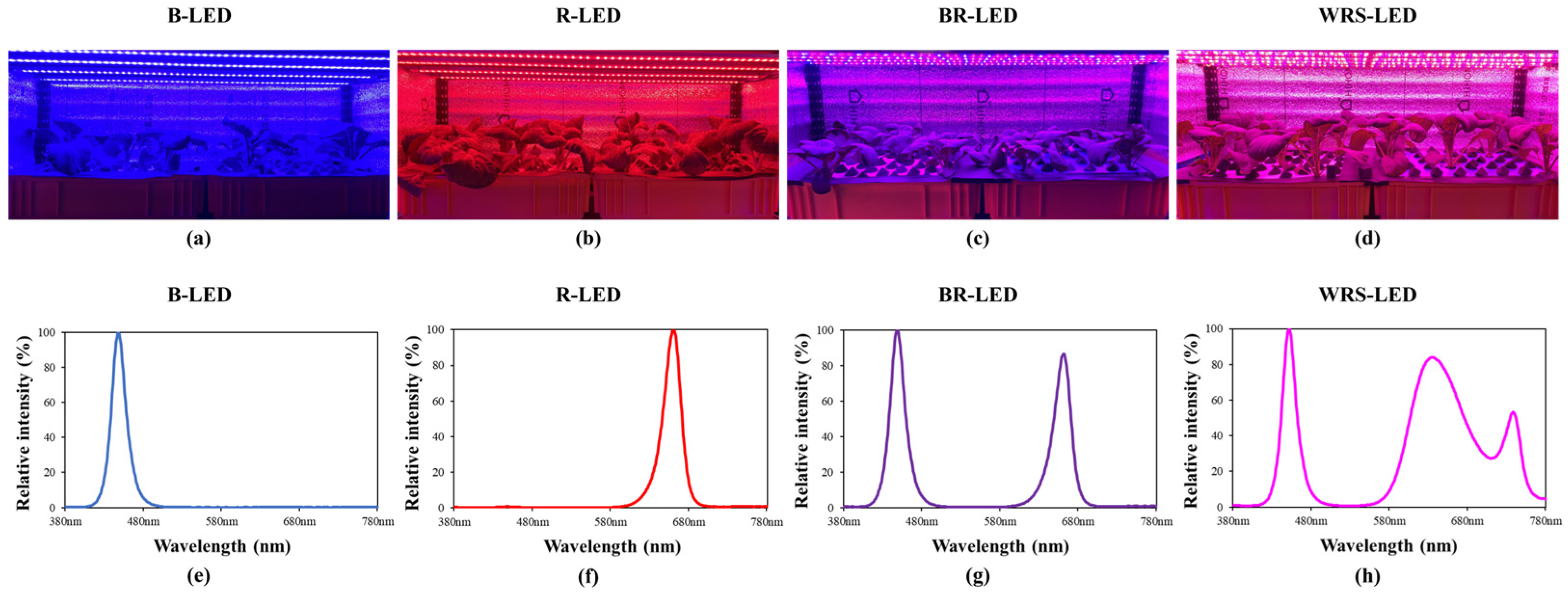
The LED light treatments used in this study included single-wavelength blue light (B-LED) and red light (R-LED), as well as mixed light treatments (WRS-LED), which combined red, blue, and far-red light, and BR-LED, where the ratio of red to blue light was 1:2 (Figure 1). Different LED light qualities were applied starting 6 days after the appearance of the first true leaf and maintained for 28 days during the cultivation period. The photosynthetic photon flux density (PPFD) was set at 180 ± 10 μmol m−2 s−1. The PPFD of each treatment was adjusted using an LED dimmer and measured at the canopy level using a quantum sensor (LP471PAR, Delta OHM, Veneto, Italy). The photoperiod was maintained at 16/8 h (light/dark). L-glutamic acid was added to the 50 L recirculating deep-flow technique (DFT) nutrient solution tank 15 days after transplanting, when root length and density were sufficiently developed. The treatment was applied once at a concentration of 10 ppm, following concentrations reported in previous studies investigating the physiological responses of Brassica crops to exogenous glutamic acid application [19].

2.3. External Quality

After 28 days of cultivation, five uniform plants were selected from each light treatment for growth measurements. The parameters evaluated included plant height, leaf length, leaf width, fresh mass of the shoot and root, and dry mass content. Leaf length and width were measured using the largest leaf of each plant, and the number of leaves was counted for those longer than 5 cm. Dry mass was determined by drying the samples in a forced-air oven (OF-21E, JEO TECH Co., Ltd., Daejeon, Republic of Korea) at 80 °C for 72 h, and dry mass content (DMC) was calculated as the ratio of dry mass to fresh mass, expressed as a percentage, according to Equation (1) [20].
D M C   ( % ) = D r y   m a s s   ( g ) F r e s h   m a s s   ( g ) × 100
Leaf color was measured with a colorimeter (CR-400, Konica Minolta Sensing, Inc., Osaka, Japan), avoiding the main vein, and Hunter L*, a*, and b* values were recorded with ten replications per leaf. Hunter L*, a*, and b* values were recorded, where L* represents lightness, with 0 indicating black and 100 indicating white; a* represents the red-green axis, with positive values indicating redness and negative values indicating greenness; and b* represents the yellow–blue axis, with positive values indicating yellowness and negative values indicating blueness, with ten replications per leaf.

2.4. Internal Quality

Non-destructive optical measurements were performed on the largest fully expanded leaf of each plant. Chlorophyll content was estimated using a chlorophyll meter (SPAD-502 Plus, Konica Minolta, Osaka, Japan), and the normalized difference vegetation index (NDVI) was measured using a portable spectroradiometer (Polypen RP 410 UVIS; Photon Systems Instruments Ltd., Drásov, Czech Republic).
For biochemical analyses, fresh leaf tissue was collected from the largest fully expanded leaf of each plant at final harvest. Vitamin C content was assessed according to the method of Arvanitoyannis et al. [21]. Briefly, 2 g of fresh leaf tissue was homogenized with 18 mL of distilled water and analyzed using a multiparameter water quality analyzer (RQ flex plus; Merck, Darmstadt, Germany).
2,2-diphenyl-1-picrylhydrazyl (DPPH) radical scavenging activity was determined following the method of Oboh et al. [22]. A fresh leaf sample (0.5 g) was homogenized with 20 mL of methanol and mixed with a 0.4 mM of DPPH methanolic solution, then incubated in the dark for 30 min. Absorbance was measured at 516 nm using a spectrophotometer (Biomate 3S, Thermo Scientific, Waltham, MA, USA), and DPPH radical scavenging activity was calculated according to Equation (2).
D P P H   r a d i c a l   s c a v e n g i n g   a b i l i t y   ( % ) = [ 1 (   S a m p l e   A 516 n m _ B l a n k   A 516 n m _ ) ] × 100
Total phenolic content (TPC) was measured using the Folin–Denis method [23]. A 100 μL aliquot of fresh leaf extract was mixed with 900 μL of distilled water and 100 μL of Folin–Ciocalteu’s phenol reagent and allowed to react at room temperature for 5 min. Subsequently, 300 μL of a 7% Na2CO3 solution and distilled water were added to achieve a final volume of 2 mL, and the mixture was incubated at room temperature for 2 h. Absorbance was measured at 760 nm using the spectrophotometer described above (Biomate 3S, Thermo Scientific, Waltham, MA, USA), and TPC was expressed as mg gallic acid equivalents (GAE) per gram of fresh mass, based on a calibration curve prepared with gallic acid.
The results of vitamin C content, DPPH radical scavenging activity, and total phenolic content were additionally visualized using radar charts, in which each axis represents one quality parameter normalized to its maximum observed value, allowing for simultaneous comparison of multiple quality traits across treatments.

2.5. Statistical Analysis

The data were analyzed using Microsoft Excel (Microsoft Corp., Redmond, WA, USA) to calculate the mean, standard deviation, and standard error. Statistical analyses were performed using the SPSS software (IBM SPSS Statistics 26, IBM Corp., Armonk, NY, USA). A two-way analysis of variance (ANOVA) was conducted using LED light quality (four levels: B-LED, R-LED, BR-LED, and WRS-LED) and L-glutamic acid treatment (two levels: 0 ppm and 10 ppm) as fixed factors to evaluate their main effects and interactions. In addition, a one-way ANOVA was performed to compare all treatment combinations, and Duncan’s Multiple Range Test was applied to identify significant differences among treatments at p < 0.05, 0.01, and 0.001. Principal component analysis (PCA) and visualization were performed using the ‘FactoMineR’ and ‘factoextra’ packages in R (R Foundation for Statistical Computing, Vienna, Austria) [24,25]. All 13 measured variables were included to provide a comprehensive overview of treatment responses, encompassing growth-related traits, such as plant height, leaf length, leaf width, leaf number, shoot fresh weight, root fresh weight, and dry mass content of shoots and roots, as well as quality-related traits, including Hunter L*, a*, and b*; SPAD; NDVI; vitamin C; DPPH radical scavenging activity; and total phenolic content.

3. Results

3.1. Growth of Red Japanese Mustard Spinach Under Different LED Light Qualities and L-Glutamic Acid Treatment

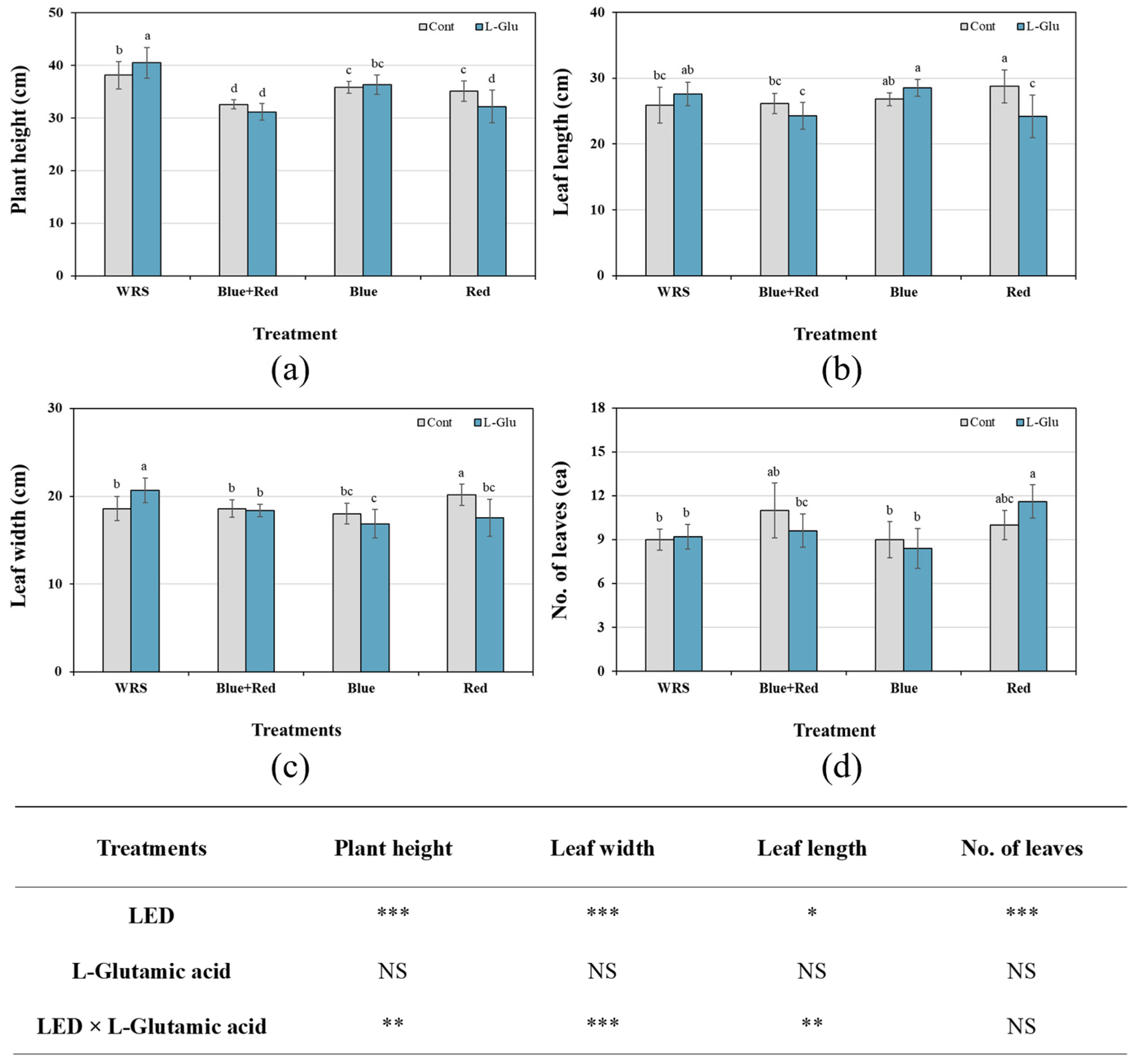
All growth parameters exhibited significant differences under the various LED light treatments. The main effect of L-glutamic acid was significant only for shoot dry mass content. Two-way ANOVA indicated that LED × L-glutamic acid interactions were significant for some traits, whereas leaf number, root fresh weight, and dry mass content did not show significant interaction effects (Figure 2). Among red mustard spinach hydroponically cultivated for 28 days under different light qualities and L-glutamic acid treatments, plant height at the end of the cultivation period was highest under WRS-LED. Additionally, L-glutamic acid treatment under WRS-LED increased plant height by approximately 6% compared to the non-treated control (Figure 2). In contrast, plant height was relatively lower under R-LED and BR-LED, and under these light conditions, L-glutamic acid treatment tended to decrease plant height compared to the non-treated control. For leaf length, the non-treated control showed the greatest measurement under R-LED at 28.8 cm, followed by B-LED at 26.8 cm. Under L-glutamic acid treatment, leaf length increased under WRS-LED and B-LED but decreased under R-LED and BR-LED. Leaf width was greatest under WRS-LED at 20.7 cm among L-glutamic acid-treated plants, whereas in the non-treated control, R-LED showed the greatest width at 20.2 cm compared to the other light treatments. B-LED exhibited the narrowest leaf width regardless of L-glutamic acid treatment. The highest leaf number was observed under R-LED at 11.6 leaves in the L-glutamic acid-treated group; conversely, in the non-treated control, the highest leaf number was recorded under BR-LED at 11 leaves.
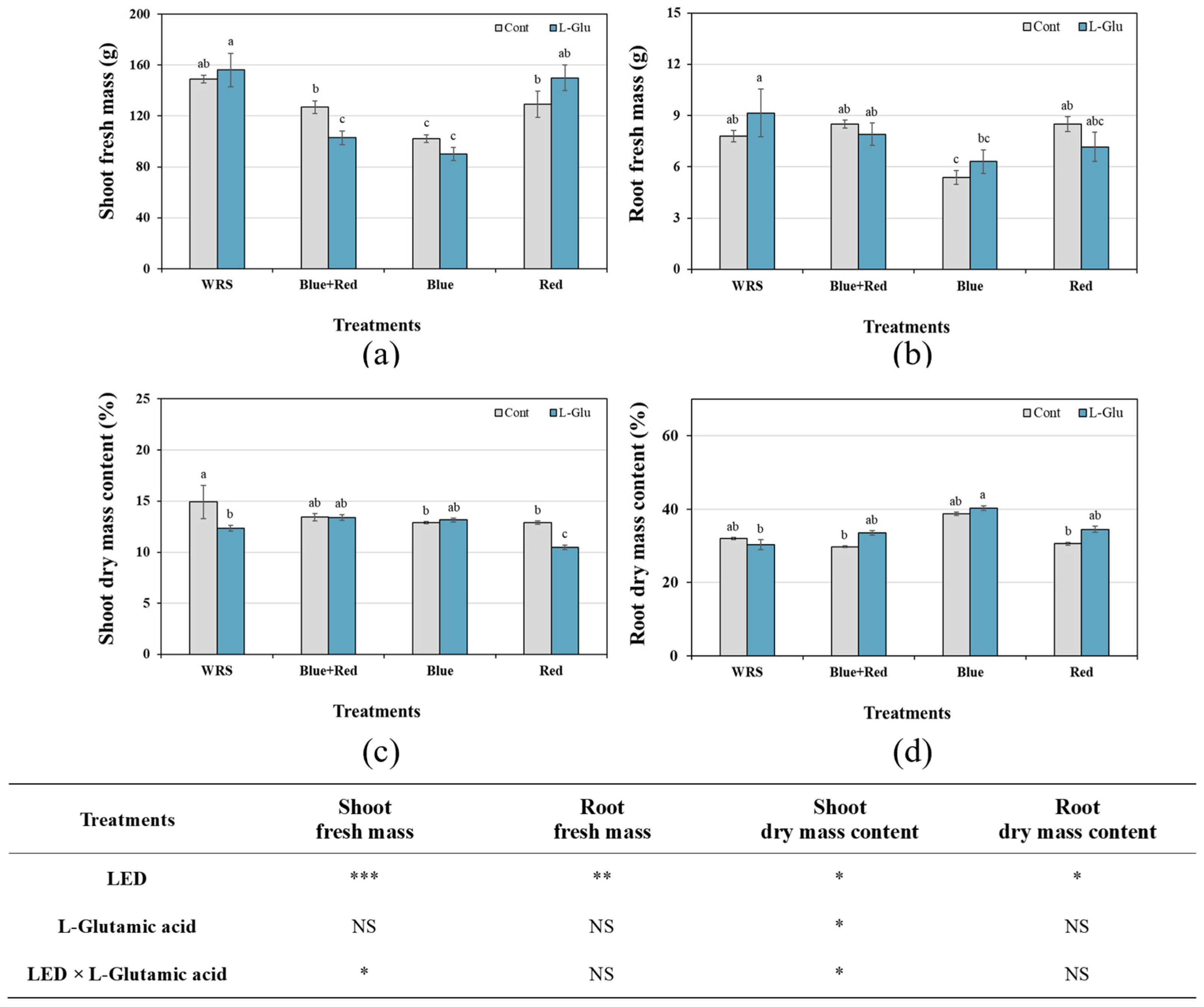
Shoot fresh mass was highest under WRS-LED in both the non-treated and L-glutamic acid-treated groups, while it was lowest under B-LED (Figure 3). Root fresh mass reached its peak at 9.1 g under WRS-LED in the L-glutamic acid-treated group, and the lowest was recorded at 5.4 g under B-LED in the non-treated control. Shoot dry mass was highest under WRS-LED in the non-treated control, whereas root dry mass was highest under B-LED regardless of treatment.
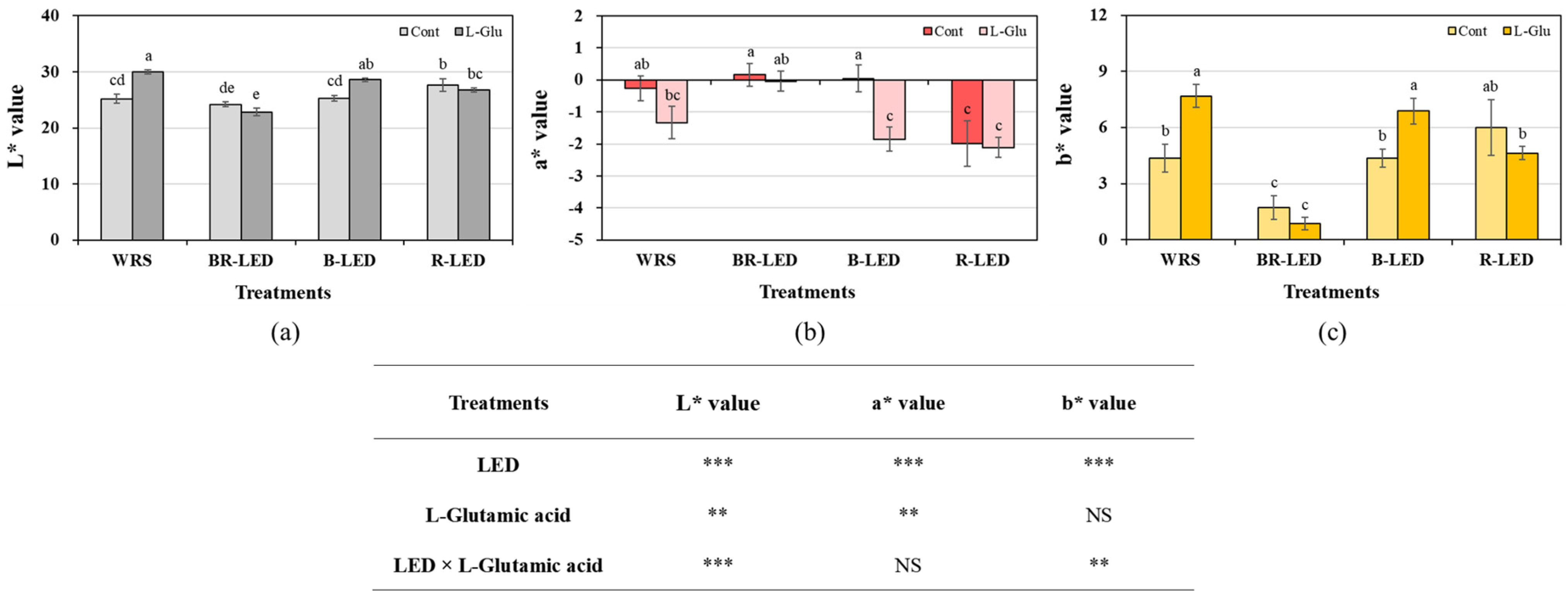
The L*, a*, and b* values all demonstrated significant differences under the LED light treatments. In contrast, the effect of L-glutamic acid treatment was not significant for the b* value, and the interaction between light quality and L-glutamic acid treatment did not significantly affect the a* value. The L* value, which represents lightness, was highest under WRS-LED among the L-glutamic acid-treated plants (Figure 4).
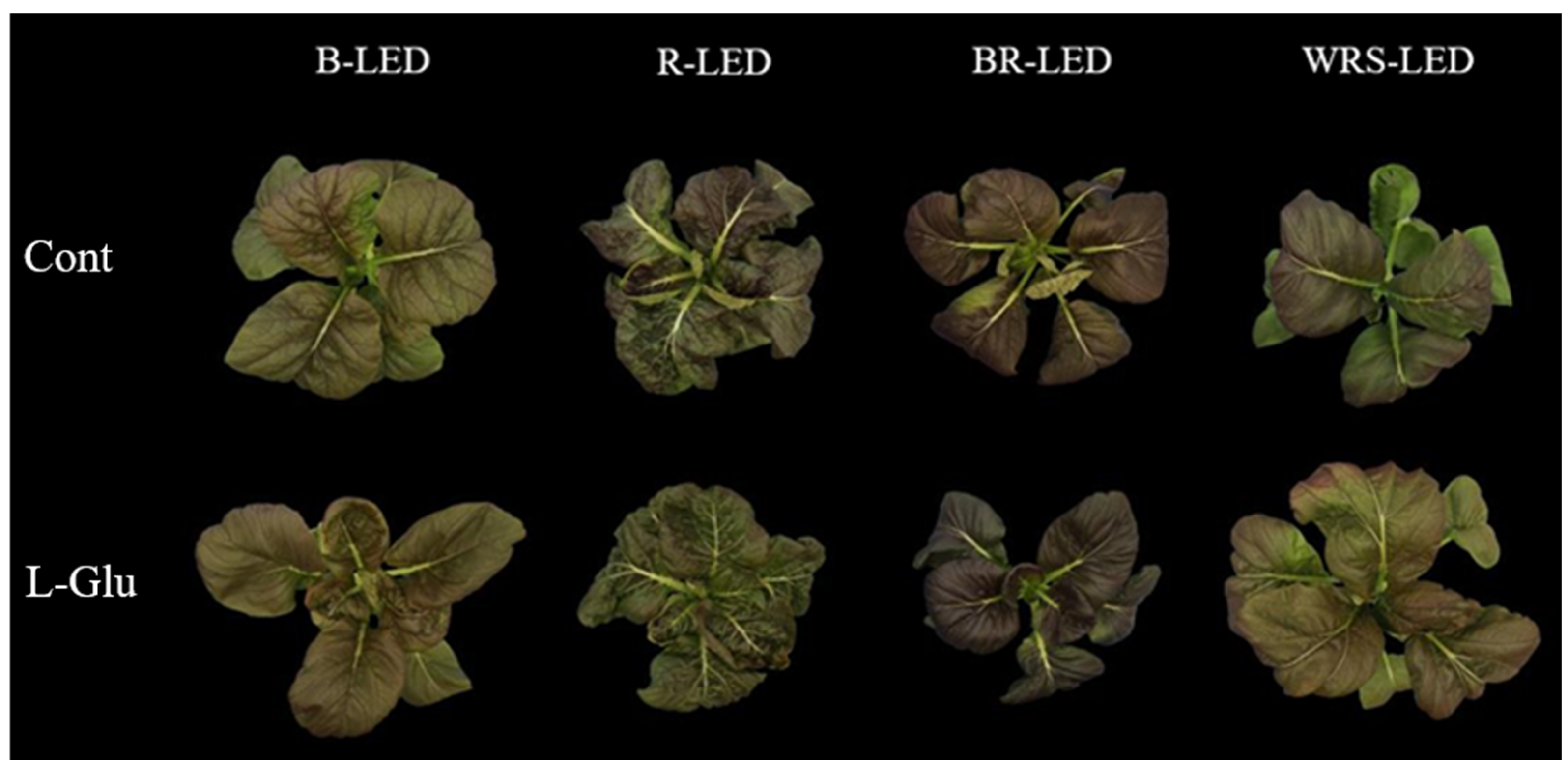
The a* value exhibited positive values only under BR-LED regardless of L-glutamic acid treatment, while the b* value was lowest under BR-LED. Actual color development was most distinct under BR-LED, where the a* value was high and the b* value was low (Figure 5).

3.2. Internal Quality and Antioxidant Characteristics of Red Japanese Mustard Spinach Under Different LED Light Qualities and L-Glutamic Acid Treatment

All quality parameters showed significant differences under the LED light treatments, while the effects of L-glutamic acid treatment and the interaction between light quality and L-glutamic acid were significant for only some parameters. The SPAD value, which indirectly indicates chlorophyll content, was highest under WRS-LED in the non-treated control compared to the other light treatments (Table 1). However, under L-glutamic acid treatment, SPAD values increased with BR-LED and R-LED, while they decreased with WRS-LED and B-LED. Among the L-glutamic acid-treated plants, NDVI values tended to be higher under B-LED and BR-LED conditions.
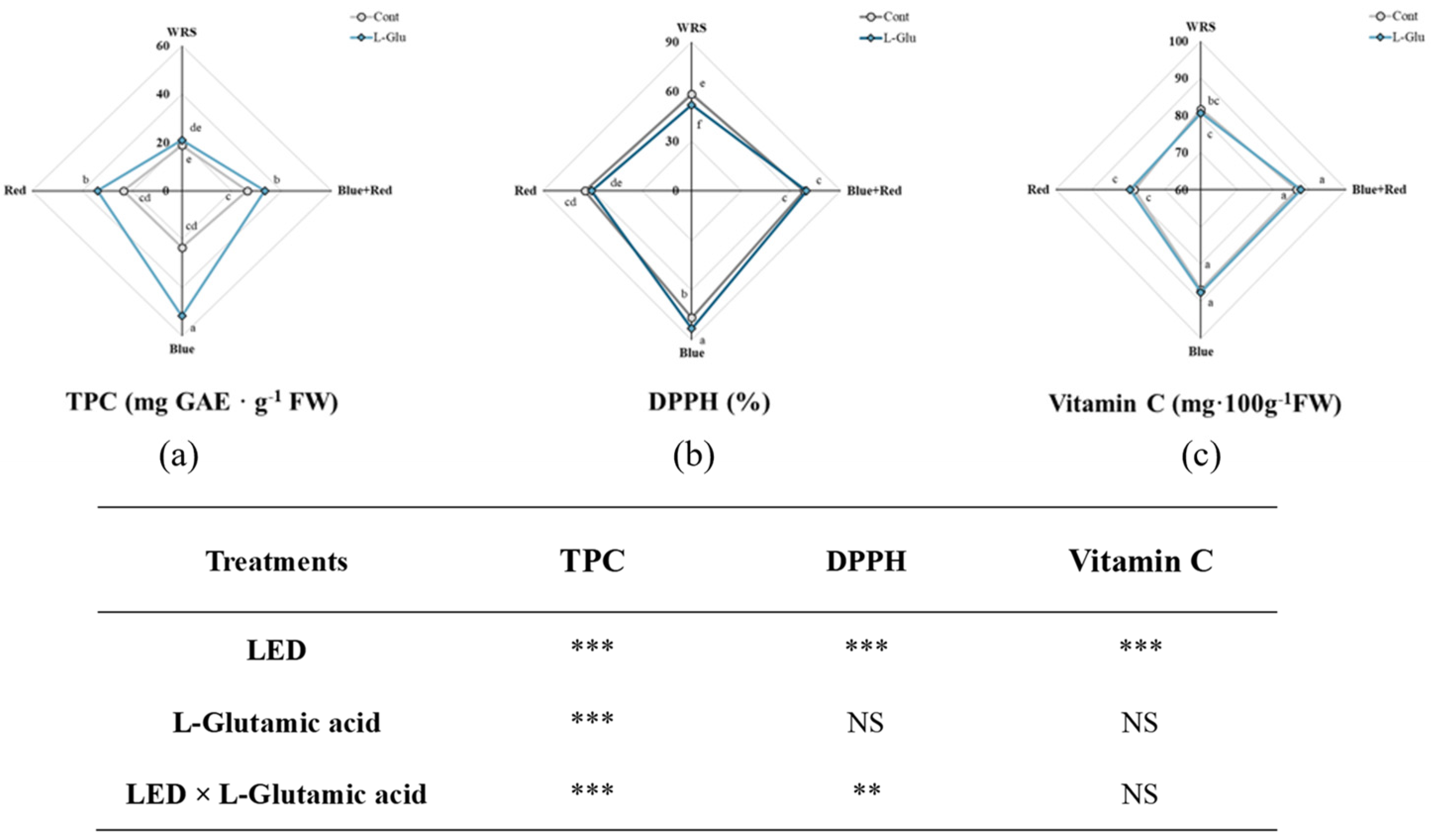
Vitamin C content was highest under B-LED and BR-LED. The L-glutamic acid-treated group tended to show higher values than the non-treated control under these light conditions. (Figure 6). DPPH radical scavenging activity peaked under B-LED, increasing by approximately 8.5% with L-glutamic acid treatment compared to the non-treated control. Total phenolic content reached its highest at 26.2 mg GAE·g−1 under BR-LED in the non-treated control; however, with L-glutamic acid treatment, the highest value was observed under B-LED at 51.8 mg GAE·g−1, more than twofold higher than that of the non-treated B-LED.

3.3. Principal Component Analysis of Red Japanese Mustard Spinach Under Different LED Light Qualities and L-Glutamic Acid Treatment

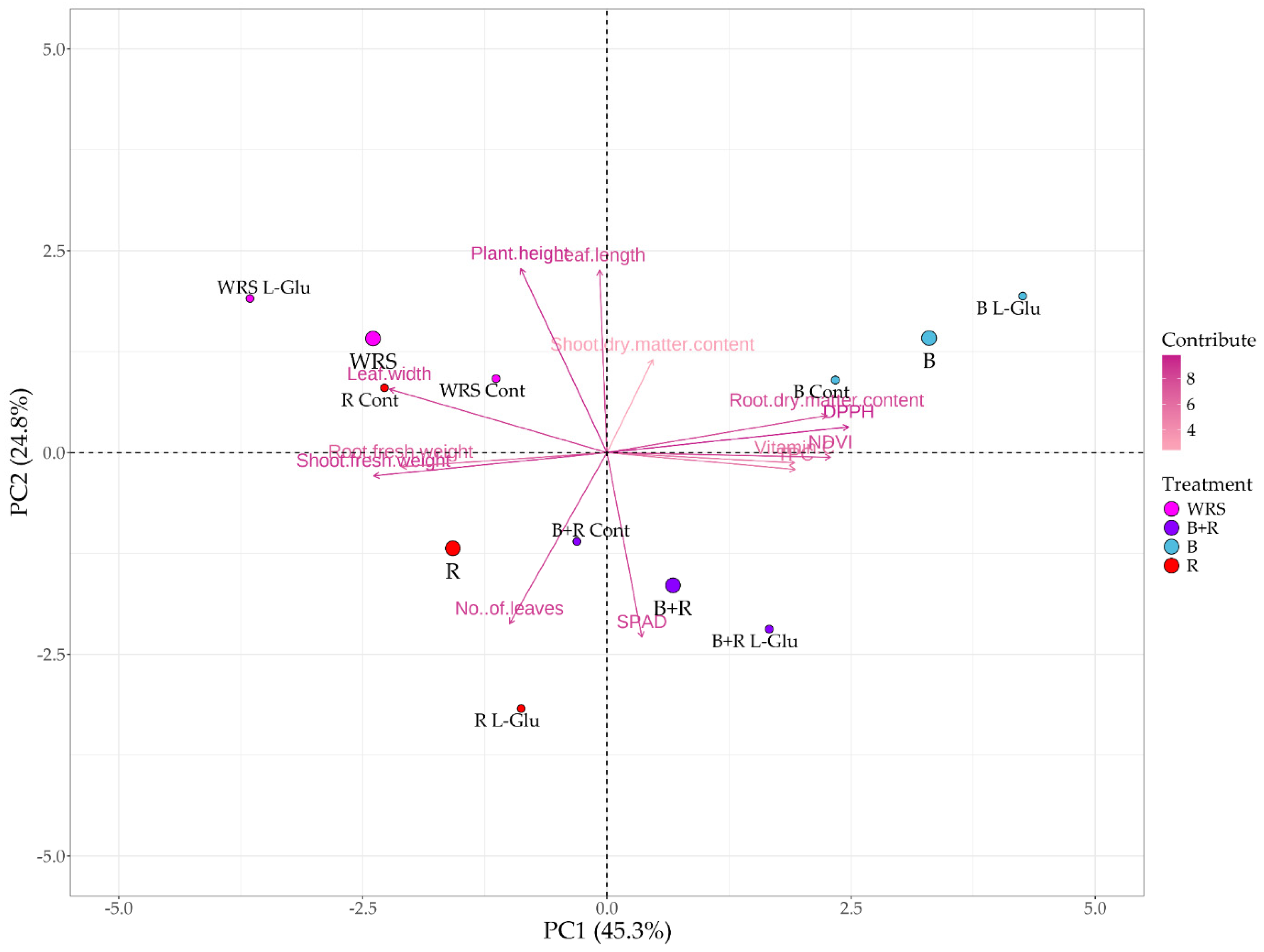
Principal component analysis (PCA) was conducted to identify the overall patterns and relationships among the 13 variables measured across the eight treatment combinations. The first three principal components (PCs) accounted for 83.2% of the total variance: PC1 explained 45.3%, PC2 explained 24.8%, and PC3 explained 13.1% (Figure 7). In PC1, five variables had loading values greater than 0.5, with root dry mass content, NDVI, total phenolic content, DPPH radical scavenging activity, and vitamin C exhibiting loadings greater than 0.7. In PC2, plant height and leaf length also showed loadings greater than 0.7. In PC3, only shoot dry mass content had a loading greater than 0.7. The PCA biplot demonstrated clear separation among treatments along PC1, which was positively correlated with antioxidant-related variables and negatively correlated with growth-related variables. The L-glutamic acid-treated B-LED and BR-LED were positioned on the positive side of PC1, indicating their association with enhanced quality parameters. In contrast, WRS-LED and R-LED were located on the negative side, suggesting an association with increased biomass production. The PCA results indicate that LED light quality was the primary factor influencing plant responses, while the effects of L-glutamic acid treatment were more evident under B-LED and BR-LED conditions.

4. Discussion

4.1. Growth of Red Japanese Mustard Spinach Under Different LED Light Qualities and L-Glutamic Acid Treatment

The increased plant height and leaf length observed under WRS-LED compared to other light treatments can be attributed to the presence of far-red light in this spectrum. Previous research [12] has shown that far-red light induces phytochrome-mediated shade avoidance syndrome, promoting stem elongation. Our findings are consistent with this prior research. Far-red light influences plant development primarily through photomorphogenesis, a process mediated by the phytochrome photoreceptor system. Phytochromes exist in two interconvertible forms: the red-absorbing form (Pr) and the far-red-absorbing form (Pfr), with the Pfr form representing the biologically active state that regulates gene expression associated with cell elongation, leaf expansion, and resource allocation [12]. The highest shoot fresh weight observed under WRS-LED is likely linked to the beneficial effects of far-red light, which has been shown to increase biomass in sunflowers [26], a trend mirrored in our study. The effect of L-glutamic acid on plant growth was not consistent across light treatments, suggesting a bi-directional response that depends on the light quality background. The differential responses to exogenous L-glutamic acid observed under different LED light qualities may also involve glutamate receptor-like (GLR) signaling in plants. GLRs are homologs of animal ionotropic glutamate receptors and function as ligand-gated cation channels that can mediate Ca2+ influx and downstream signaling processes [27]. Previous studies have reported that light conditions can influence the expression of several GLR genes, with both red and blue light shown to stimulate the expression of selected Arabidopsis GLRs [28]. Under WRS-LED, L-glutamic acid treatment increased plant height by approximately 6% compared with the non-treated control, which is consistent with previous reports suggesting that exogenous Glu may promote plant growth [29]. In contrast, under R-LED and BR-LED, L-glutamic acid treatment did not increase plant height and showed slightly lower values than the non-treated control. This pattern suggests that the physiological role of exogenous L-glutamic acid may vary depending on the spectral environment. However, the precise mechanisms underlying this light quality-dependent response were not directly examined in the present study and therefore warrant further investigation. Conversely, the lowest shoot fresh mass recorded under B-LED is consistent with the observation that biomass decreases as blue light intensity increases [30]. Blue light is known to promote the accumulation of secondary metabolites [11]. When carbon and energy are limited, they are preferentially allocated to defense- and quality-related metabolic pathways, which reduces the resources available for growth and subsequently suppresses it [31]. Leaf color analysis revealed lower L* and b* values alongside relatively higher a* values under BR-LED, indicating enhanced expression of red and purple pigments, particularly anthocyanins. This finding is consistent with previous reports indicating that BR-LED promotes color development and anthocyanin accumulation in purple basil [32].

4.2. Internal Quality and Antioxidant Characteristics of Red Japanese Mustard Spinach Under Different LED Light Qualities and L-Glutamic Acid Treatment

Chlorophyll content, as estimated by SPAD values, was highest under WRS-LED in plants without L-glutamic acid treatment, suggesting that the broad spectral composition of WRS-LED, including far-red wavelengths, effectively supports chlorophyll synthesis and maintenance. However, following L-glutamic acid treatment, SPAD values decreased under WRS-LED and B-LED while increasing under BR-LED and R-LED. This differential response suggests that the effect of exogenous glutamate on chlorophyll metabolism is modulated by light quality. Glutamate serves as a direct precursor for 5-aminolevulinic acid (ALA), a key intermediate in chlorophyll biosynthesis [17]; however, its utilization may be redirected toward other metabolic pathways depending on the photoreceptor signals activated by different light spectra. NDVI values were highest under B-LED and BR-LED following L-glutamic acid treatment, consistent with previous reports that blue light enhances leaf optical properties related to chlorophyll distribution and canopy structure [33].
The increased vitamin C content under B-LED and BR-LED is consistent with previous studies suggesting that blue light may stimulate ascorbate biosynthesis and recycling pathways [34,35]. Based on prior reports, it has been proposed that blue light could promote ascorbate metabolism through the L-galactose biosynthetic pathway and ascorbate recycling system; however, gene expression or enzymatic activity was not measured in the present study, and this interpretation remains speculative. Furthermore, it has been suggested in the literature that L-glutamic acid may enhance vitamin C accumulation possibly through increased glutathione availability and dehydroascorbate reductase (DHAR)-mediated ascorbate regeneration [17]; whether this mechanism operated under our experimental conditions could not be confirmed from the current data. This synergistic effect may explain why the influence of L-glutamic acid on vitamin C was most pronounced under blue-enriched LED conditions [36]. DPPH radical scavenging activity and total phenolic content were highest under B-LED and BR-LED, and were further enhanced by L-glutamic acid treatment. Blue light has been reported to elevate reactive oxygen species (ROS) production in chloroplasts and mitochondria, thereby stimulating the biosynthesis of antioxidant compounds as a protective response [36]. This ROS-mediated signaling may activate the phenylpropanoid pathway, a key secondary metabolic route responsible for phenolic compound biosynthesis. The significant increase in total phenolic content under B-LED with L-glutamic acid treatment suggests that exogenous glutamate further activated this pathway, consistent with previous reports of glutamate-induced increases in total phenolic content [15]. Taken together, these results indicate that blue-enriched LED conditions create a metabolic environment that is particularly responsive to exogenous glutamate supplementation, resulting in enhanced antioxidant capacity in red mustard spinach.

4.3. Principal Component Analysis of Red Japanese Mustard Spinach Under Different LED Light Qualities and L-Glutamic Acid Treatment

The multivariate analysis revealed a clear growth–quality trade-off among the LED treatments, which reflects well-established physiological responses to light quality in leafy vegetables. Blue-enriched light has been reported to stimulate the accumulation of antioxidant-related secondary metabolites, including phenolic compounds and ascorbic acid, partly through the activation of phenylpropanoid metabolism [11,30]. In contrast, red and far-red wavelengths are commonly associated with enhanced leaf expansion, cell elongation, and biomass accumulation through phytochrome-mediated light signaling [12,30]. These contrasting physiological responses may explain the different growth and quality patterns observed between B-LED and WRS-LED in the present study. WRS-LED, which contains red and far-red wavelengths, promoted superior shoot biomass and leaf expansion, consistent with previous reports describing the growth-promoting effects of red-enriched light spectra [12,26]. However, this growth advantage was accompanied by reduced accumulation of phenolic compounds, lower DPPH radical scavenging activity, and weaker red coloration. Conversely, B-LED enhanced antioxidant capacity and total phenolic content but resulted in relatively lower biomass production, which may be related to the more compact plant morphology commonly induced by blue light [11,30]. BR-LED achieved a more balanced physiological response by combining the growth-promoting effects of red light with the secondary metabolite-stimulating effects of blue light. Such spectral combinations have been widely reported to support both photosynthetic productivity and antioxidant-related metabolite accumulation [11,30,31]. From a horticultural perspective, BR-LED may represent a practical lighting strategy for red mustard spinach cultivation in plant factories, as it provides a compromise between biomass production and functional quality. The effect of L-glutamic acid also varied, depending on the light environment. Under B-LED and BR-LED conditions, L-glutamic acid application enhanced antioxidant capacity and total phenolic content, suggesting that its physiological effects may be more pronounced under blue-enriched spectral conditions. In contrast, under WRS-LED conditions, L-glutamic acid appeared to be more closely associated with growth-related responses, such as plant height. These results indicate that the physiological responses induced by exogenous L-glutamic acid are influenced by the surrounding light environment.

5. Conclusions

This study evaluated the effects of different LED light qualities and L-glutamic acid treatment on the growth and quality of red mustard spinach in a plant factory environment. We hypothesized that blue-enriched LED light would preferentially stimulate antioxidant-related secondary metabolite accumulation, whereas red-enriched light would favor vegetative growth and biomass production. The results support this hypothesis. Growth-related parameters were highest under WRS-LED, whereas antioxidant-related quality traits, including total phenolic content, vitamin C content, and DPPH radical scavenging activity, were enhanced under B-LED and BR-LED conditions. Although WRS-LED promoted vigorous biomass production, it resulted in relatively lower quality attributes, including weaker red coloration and reduced antioxidant-related compounds. Conversely, B-LED enhanced antioxidant accumulation but limited overall plant growth. In contrast, BR-LED provided a more balanced response, maintaining relatively high antioxidant-related quality while sustaining acceptable biomass production. The effect of L-glutamic acid varied depending on light quality, with more pronounced improvements in antioxidant-related traits under blue-enriched light conditions. These results suggest that the physiological responses induced by L-glutamic acid are influenced by the surrounding light environment. However, this study evaluated only a single concentration (10 ppm) and application timing; therefore, further studies examining multiple concentrations and application schedules are required to determine the optimal application strategy under different light environments. Overall, the combination of BR-LED and L-glutamic acid may provide a favorable balance between plant growth and antioxidant-related quality traits. These findings suggest that spectrally optimized LED lighting can serve as a useful strategy for improving both productivity and nutritional quality in plant factory cultivation of red mustard spinach.

Author Contributions

Conceptualization, Y.J.K. and H.-M.K.; methodology, Y.J.K.; software, Y.J.K.; validation, S.-H.K., I.-L.C. and H.S.Y.; formal analysis, Y.J.K.; investigation, Y.J.K., A.Y.S., J.E.S., and J.H.L.; resources, K.P. and H.-M.K.; data curation, Y.J.K.; writing—original draft preparation, Y.J.K.; writing—review and editing, Y.B.K.; visualization, Y.J.K.; supervision, H.-M.K.; project administration, H.-M.K.; funding acquisition, Y.K., J.K. and H.-M.K. All authors have read and agreed to the published version of the manuscript.

Funding

This work was supported by the Korea Institute of Planning and Evaluation for Technology in Food, Agriculture, and Forestry (IPET) through the Technology Commercialization Support Program, funded by the Ministry of Agriculture, Food, and Rural Affairs (MAFRA) (122056-3), and the Basic Science Research Program through the National Research Foundation of Korea (NRF), which is funded by the Ministry of Education (RS-2021-NR060130).

Data Availability Statement

The original contributions presented in this study are included in the article. Further inquiries can be directed to the corresponding author.

Acknowledgments

The authors sincerely thank the reviewers and editors for their valuable feedback and efforts. They also appreciate the support of the laboratory members, whose contributions were essential to this research.

Conflicts of Interest

Author Jidong Kim was employed by the company FutureGreen Co., Ltd., Yongin 17095, Republic of Korea. The remaining authors declare that this research was conducted in the absence of any commercial or financial relationships that could be construed as a potential conflict of interest.

References

  1. Zhang, X.; Jia, Q.; Jia, X.; Li, J.; Sun, X.; Min, L.; Liu, Z.; Ma, W.; Zhao, J. Brassica vegetables—An undervalued nutritional goldmine. Hortic. Res. 2024, 12, uhae302. [Google Scholar] [CrossRef]
  2. Acikgoz, F.E.; Altintas, S. Seasonal variations in vitamin C and mineral contents and some yield and quality parameters in komatsuna (Brassica rapa var. pervidis). J. Food Agric. Environ. 2011, 9, 289–291. [Google Scholar]
  3. Luna-Maldonado, A.I.; Vidales-Contreras, J.A.; Rodríguez-Fuentes, H. Advances and trends in development of plant factories. Front. Plant Sci. 2016, 7, 1848. [Google Scholar] [CrossRef]
  4. Ma, Y.; Xu, A.; Cheng, Z.M. Effects of light emitting diode lights on plant growth, development and traits: A meta-analysis. Hortic. Plant J. 2021, 7, 552–564. [Google Scholar] [CrossRef]
  5. Gulandaz, M.A.; Ali, M.; Kiraga, S.; Chung, S.O.; Hong, S.J. LED illumination intelligent control system in plant factory: A review. Precis. Agric. Sci. Technol. 2022, 4, 1–21. [Google Scholar] [CrossRef]
  6. Singh, D.; Basu, C.; Meinhardt-Wollweber, M.; Roth, B. LEDs for energy efficient greenhouse lighting. Renew. Sustain. Energy Rev. 2015, 49, 139–147. [Google Scholar] [CrossRef]
  7. Nicole, C.C.S.; Charalambous, F.; Martinakos, S.; Van de Voort, S.; Li, Z.; Verhoog, M.; Krijn, M.P.C.M. Lettuce growth and quality optimization in a plant factory. In VIII International Symposium on Light in Horticulture 1134; International Society for Horticultural Science: Leuven, Belgium, 2016; pp. 231–238. [Google Scholar] [CrossRef]
  8. Wijaya, I.M.A.S.; Sigmarawan, G.T.; Budisanjaya, I.P.G. LED (light emitting diode) light provides positive effects on growth and productivity of pakcoy mustard (Brassica rapa L.). In IOP Conference Series: Earth and Environmental Science; IOP Publishing: Bristol, UK, 2019; Volume 355, p. 012082. [Google Scholar] [CrossRef]
  9. Frede, K.; Schreiner, M.; Baldermann, S. Light quality-induced changes of carotenoid composition in pak choi (Brassica rapa ssp. chinensis). J. Photochem. Photobiol. B Biol. 2019, 193, 18–30. [Google Scholar] [CrossRef] [PubMed]
  10. Moon, J.; Jeong, M.J.; Lee, S.I.; Lee, J.G.; Hwang, H.; Yu, J.; Kim, J.A. Effect of LED mixed light conditions on the glucosinolate pathway in Brassica rapa. J. Plant Biotechnol. 2015, 42, 245–256. [Google Scholar] [CrossRef]
  11. Landi, M.; Zivcak, M.; Sytar, O.; Brestic, M.; Allakhverdiev, S.I. Plasticity of photosynthetic processes and the accumulation of secondary metabolites in plants in response to monochromatic light environments: A review. Biochim. Biophys. Acta (BBA)—Bioenerg. 2020, 1861, 148131. [Google Scholar] [CrossRef]
  12. Larsen, D.H.; Woltering, E.J.; Nicole, C.C.S.; Marcelis, L.F.M. Response of basil growth and morphology to light intensity and spectrum in a vertical farm. Front. Plant Sci. 2020, 11, 597906. [Google Scholar] [CrossRef]
  13. Asgher, M.; Sehar, Z.; Rehaman, A.; Rashid, S.; Ahmed, S.; Per, T.S.; Alyemeni, M.N.; Khan, N.A. Exogenously applied L-glutamic acid protects photosynthetic functions and enhances arsenic tolerance through increased nitrogen assimilation and antioxidant capacity in rice (Oryza sativa L.). Environ. Pollut. 2022, 301, 119008. [Google Scholar] [CrossRef]
  14. Kwon, Y.B.; Lee, J.H.; Kim, M.J.; Lee, D.Y.; Choi, I.L.; Yoon, H.S.; Kang, H.M. Effects of exogenous L-glutamic acid and supplemental LED lighting on the growth and yield of paprika. Hortic. Environ. Biotechnol. 2025, 66, 1327–1345. [Google Scholar] [CrossRef]
  15. Orabi, S.A.; Hussein, M.M.; Abd El-Motty, E.Z.; El-Faham, S.Y. Effect of alpha-tocopherol and glutamic acid on total phenols, antioxidant activity, yield and fruit properties of mango trees. Middle East J. Appl. Sci. 2018, 8, 1229–1239. [Google Scholar]
  16. Rosa, R.; Hajko, L.; Franczuk, J.; Zaniewicz-Bajkowska, A.; Andrejiová, A.; Mezeyová, I. Effect of L-tryptophan and L-glutamic acid on carrot yield and its quality. Agronomy 2023, 13, 562. [Google Scholar] [CrossRef]
  17. Qiu, X.-M.; Sun, Y.-Y.; Li, Z.-G. Signaling role of glutamate in plants. Front. Plant Sci. 2020, 10, 1743. [Google Scholar] [CrossRef]
  18. Bafeel, S.O.; Alerwy, A.S.; Al-Toukhy, A. Effect of chemical, organic and biological fertilizers on protein concentration and protein electrophoretic profiles of wheat plants irrigated with seawater. Glob. J. Agric. Res. 2016, 4, 29–46. [Google Scholar]
  19. Lee, J.H.; Lee, H.J.; Wi, S.H.; Jang, Y.A.; An, S.W.; Chun, H.; Lee, H.S.; Lee, S.G. Changes in growth and physiological responses of kimchi cabbages by glutamic acid and calcium foliar application as exposed to heat stress. Hortic. Sci. 2019, 37, 101. [Google Scholar]
  20. Lee, J.H.; Kwon, Y.B.; Roh, Y.H.; Choi, I.L.; Kim, J.; Kim, Y.; Kang, H.M. Effect of various LED light qualities, including wide red spectrum-LED, on the growth and quality of mini red romaine lettuce (Lactuca sativa L. cv. Breen). Plants 2023, 12, 2056. [Google Scholar] [CrossRef]
  21. Arvanitoyannis, I.S.; Khah, E.M.; Christakou, E.C.; Bletsos, F.A. Effect of grafting and modified atmosphere packaging on eggplant quality parameters during storage. Int. J. Food Sci. Technol. 2005, 40, 311–322. [Google Scholar] [CrossRef]
  22. Oboh, G. Effect of blanching on the antioxidant properties of some tropical green leafy vegetables. LWT—Food Sci. Technol. 2005, 38, 513–517. [Google Scholar] [CrossRef]
  23. Zhang, Q.; Zhang, J.; Shen, J.; Silva, A.; Dennis, D.A.; Barrow, C.J. A simple 96-well microplate method for estimation of total polyphenol content in seaweeds. J. Appl. Phycol. 2006, 18, 445–450. [Google Scholar] [CrossRef]
  24. Lê, S.; Josse, J.; Husson, F. FactoMineR: An R package for multivariate analysis. J. Stat. Softw. 2008, 25, 1–18. [Google Scholar] [CrossRef]
  25. Kassambara, A. Factoextra: Extract and Visualize the Results of Multivariate Data Analyses; Ed. 1.0.7; CRAN: Vienna, Austria, 2016. [Google Scholar] [CrossRef]
  26. Kurepin, L.V.; Emery, R.J.N.; Pharis, R.P.; Reid, D.M. Uncoupling light quality from light irradiance effects in Helianthus annuus shoots: Putative roles for plant hormones in leaf and internode growth. J. Exp. Bot. 2007, 58, 2145–2157. [Google Scholar] [CrossRef]
  27. Grenzi, M.; Bonza, M.C.; Costa, A. Signaling by plant glutamate receptor-like channels: What else! Curr. Opin. Plant Biol. 2022, 68, 102253. [Google Scholar] [CrossRef]
  28. Hebda, A.; Liszka, A.; Lewandowska, A.; Lyczakowski, J.J.; Gabryś, H.; Krzeszowiec, W. Upregulation of GLRs expression by light in Arabidopsis leaves. BMC Plant Biol. 2022, 22, 197. [Google Scholar] [CrossRef]
  29. Saleem, M.H.; Zafar, S.; Javed, S.; Anas, M.; Ahmed, T.; Ali, S.; Ahmad, A. Modulatory effects of glutamic acid on growth, photosynthetic pigments, and stress responses in olive plants subjected to cadmium stress. J. King Saud Univ. Sci. 2024, 36, 103540. [Google Scholar] [CrossRef]
  30. Son, K.H.; Oh, M.M. Leaf shape, growth, and antioxidant phenolic compounds of two lettuce cultivars grown under various combinations of blue and red light-emitting diodes. HortScience 2013, 48, 988–995. [Google Scholar] [CrossRef]
  31. Erb, M.; Kliebenstein, D.K. Plant secondary metabolites as defenses, regulators, and primary metabolites. Plant Physiol. 2020, 184, 39–52. [Google Scholar] [CrossRef]
  32. Lee, D.Y.; Kim, M.J.; Choi, I.-L.; Kim, Y.; Kim, J.; Kang, H.-M. Effect of LED light quality on the growth and photomorphogenesis of basil in closed-type plant factory. Not. Bot. Horti Agrobot. Cluj-Napoca 2025, 53, 14409. [Google Scholar] [CrossRef]
  33. Rihan, H.Z.; Aljafer, N.; Jbara, M.; McCallum, L.; Lengger, S.; Fuller, M.P. The impact of LED lighting spectra in a plant factory on the growth, physiological traits and essential oil content of lemon balm (Melissa officinalis). Plants 2022, 11, 342. [Google Scholar] [CrossRef]
  34. Bartoli, C.G.; Yu, J.; Gómez, F.; Fernández, L.; McIntosh, L.; Foyer, C.H. Inter-relationships between light and respiration in the control of ascorbic acid synthesis and accumulation in Arabidopsis thaliana leaves. J. Exp. Bot. 2006, 57, 1621–1631. [Google Scholar] [CrossRef]
  35. Kang, C.H.; Yoon, E.K.; Muthusamy, M.; Kim, J.A.; Jeong, M.J.; Lee, S.I. Blue LED light irradiation enhances L-ascorbic acid content while reducing reactive oxygen species accumulation in Chinese cabbage seedlings. Sci. Hortic. 2020, 261, 108924. [Google Scholar] [CrossRef]
  36. Banaś, A.K.; Aggarwal, C.; Łabuz, J.; Sztatelman, O.; Gabryś, H. Blue light signalling in chloroplast movements. J. Exp. Bot. 2012, 63, 1559–1574. [Google Scholar] [CrossRef] [PubMed]
Figure 1. Spectral distribution of the four LED light treatments used in this experiment. (ad) Photographs of plants grown under B-LED, R-LED, BR-LED, and WRS-LED conditions. (eh) Relative spectral intensity (%) of each LED treatment as a function of wavelength (nm).
Horticulturae 12 00411 g001
Figure 2. (a) Plant height, (b) leaf length, (c) leaf width, and (d) leaf number of red Japanese mustard spinach grown hydroponically for 28 days under four LED light qualities (B-LED, R-LED, BR-LED, and WRS-LED) with or without L-glutamic acid treatment (10 ppm). Vertical bars represent ± SD (n = 8). Different lowercase letters indicate significant differences among treatment combinations (LED light quality × L-glutamic acid treatment) based on one-way ANOVA followed by Duncan’s multiple range test (p < 0.05). The asterisks indicate statistically significant differences between treatments (* p < 0.05, ** p < 0.01, and *** p < 0.001), and NS indicates not significant. Cont indicates the treatment without L-glutamic acid application (control). B-LED, blue LED; R-LED, red LED; BR-LED, blue + red LED; WRS-LED, red + blue + far-red LED.
Horticulturae 12 00411 g002
Figure 3. (a) Shoot fresh mass, (b) root fresh mass, (c) shoot dry mass content, and (d) root dry mass content of red Japanese mustard spinach grown hydroponically for 28 days under four LED light qualities (B-LED, R-LED, BR-LED, and WRS-LED) with or without L-glutamic acid treatment (10 ppm). Vertical bars represent ± SEM (n = 5). Different lowercase letters indicate significant differences among treatment combinations (LED light quality × L-glutamic acid treatment) based on one-way ANOVA followed by Duncan’s multiple range test (p < 0.05). The asterisks indicate statistically significant differences between treatments (* p < 0.05, ** p < 0.01, and *** p < 0.001), and NS indicates not significant. Cont indicates the treatment without L-glutamic acid application (control). B-LED, blue LED; R-LED, red LED; BR-LED, blue + red LED; WRS-LED, red + blue + far-red LED.
Horticulturae 12 00411 g003
Figure 4. (a) Hunter L* value, (b) Hunter a* value, and (c) Hunter b* value of leaves of red Japanese mustard spinach grown hydroponically for 28 days under four LED light qualities (B-LED, R-LED, BR-LED, and WRS-LED) with or without L-glutamic acid treatment (10 ppm). Vertical bars represent ± SD (n = 10). Different lowercase letters indicate significant differences among treatment combinations (LED light quality × L-glutamic acid treatment) based on one-way ANOVA followed by Duncan’s multiple range test (p < 0.05). The asterisks indicate statistically significant differences between treatments (** p < 0.01, and *** p < 0.001), and NS indicates not significant. Cont indicates the treatment without L-glutamic acid application (control). B-LED, blue LED; R-LED, red LED; BR-LED, blue + red LED; WRS-LED, red + blue + far-red LED.
Horticulturae 12 00411 g004
Figure 5. Top-view images of red Japanese mustard spinach at the end of the experiment after 28 days of hydroponic cultivation in a plant factory under five different LED light qualities with or without L-glutamic acid treatment.
Horticulturae 12 00411 g005
Figure 6. (a) Total phenolic content, (b) DPPH radical scavenging activity, and (c) vitamin C content of leaves of red Japanese mustard spinach grown hydroponically for 28 days under four LED light qualities (B-LED, R-LED, BR-LED, and WRS-LED) with or without L-glutamic acid treatment (10 ppm). Vertical bars represent ± SEM (n = 5). Different lowercase letters indicate significant differences among treatment combinations (LED light quality × L-glutamic acid treatment) based on one-way ANOVA followed by Duncan’s multiple range test (p < 0.05). The asterisks indicate statistically significant differences between treatments (** p < 0.01, and *** p < 0.001), and NS indicates not significant. Cont indicates the treatment without L-glutamic acid application (control). B-LED, blue LED; R-LED, red LED; BR-LED, blue + red LED; WRS-LED, red + blue + far-red LED.
Horticulturae 12 00411 g006
Figure 7. Principal component analysis (PCA) showing the effects of LED light quality (B-LED, R-LED, BR-LED, and WRS-LED) and L-glutamic acid treatment (Cont and 10 ppm) on red Japanese mustard spinach. Cont indicates the treatment without L-glutamic acid application (control). The principal components accounted for 45.3% (PC1) and 24.8% (PC2) of the total variance, respectively. Darker violet arrows represent variables that contribute more significantly to the first two principal components, whereas lighter violet arrows indicate variables with smaller contributions. The size of the symbols indicates the type of factor, where larger symbols represent light treatments and smaller symbols represent L-glutamic acid treatments.
Horticulturae 12 00411 g007
Table 1. Chlorophyll-related characteristics, including SPAD and NDVI, of leaves of red Japanese mustard spinach grown hydroponically for 28 days under four LED light qualities (B-LED, R-LED, BR-LED, and WRS-LED) with or without L-glutamic acid treatment (10 ppm). Values represent the mean ± SD (n = 7). Different lowercase letters indicate significant differences among treatment combinations (LED light quality × L-glutamic acid treatment) based on one-way ANOVA followed by Duncan’s multiple range test (p < 0.05). The asterisks indicate statistically significant differences between treatments (** p < 0.01, and *** p < 0.001), and NS indicates not significant. Cont indicates the treatment without L-glutamic acid application (control). B-LED, blue LED; R-LED, red LED; BR-LED, blue + red LED; WRS-LED, red + blue + far-red LED.
TreatmentsSPADNDVI
LEDL-Glutamic Acid
WRSCont37.1 ± 0.48 c0.55 ± 0.02 ab
L-Glutamic acid31.8 ± 0.45 d0.51 ± 0.04 c
Blue+RedCont36.9 ± 0.43 c0.54 ± 0.01 ab
L-Glutamic acid46.1 ± 0.90 a0.57 ± 0.01 a
BlueCont35.7 ± 0.59 c0.55 ± 0.02 ab
L-Glutamic acid32.8 ± 0.35 d0.57 ± 0.02 a
RedCont36.1 ± 0.63 c0.51 ± 0.03 bc
L-Glutamic acid41.4 ± 2.96 b0.52 ± 0.03 bc
LED******
L-Glutamic acid***NS
LED × L-Glutamic acid*****
Disclaimer/Publisher’s Note: The statements, opinions and data contained in all publications are solely those of the individual author(s) and contributor(s) and not of MDPI and/or the editor(s). MDPI and/or the editor(s) disclaim responsibility for any injury to people or property resulting from any ideas, methods, instructions or products referred to in the content.