Article

Genome-Wide Identification of the Tomato PDC Gene Family and Functional Analysis of SlPDC8 in Waterlogging Tolerance


College of Horticulture, Gansu Agricultural University, Lanzhou 730070, China
*
Author to whom correspondence should be addressed.
Horticulturae 2026, 12(3), 349; https://doi.org/10.3390/horticulturae12030349
Submission received: 24 January 2026 / Revised: 5 March 2026 / Accepted: 10 March 2026 / Published: 13 March 2026

Abstract

Pyruvate decarboxylase (PDC) is an intracellular non-oxidizing enzyme that relies on thiamine pyrophosphate (TPP), which is important for plant survival under anaerobic conditions and increasingly recognized for its role in broader stress reaction. However, the PDC gene family of tomato (Solanum lycopersicum), an important waterlogging-sensitive agricultural product, has not yet been discovered. In this study, eight SlPDC genes were discovered within the tomato genome. Gene structure analysis revealed that SlPDC members exhibited varying intron–exon configurations, with SlPDC8 possessing the most complex structure containing seven introns. Promoter analysis revealed a multitude of cis-acting elements responsive to light, hormones, and various stresses. Particularly, the promoter of SlPDC8 contains both ABRE and TGACG/CGTCA-motif. Tissue-specific expression profiles showed that SlPDC8 was mainly highly expressed in the roots. Expression profiling demonstrated that SlPDC genes respond divergently to different abiotic stresses, including salt, hydrogen peroxide (H2O2), drought, waterlogging, cold, heat, darkness, and UV radiation stresses. Notably, SlPDC1, SlPDC7, and SlPDC8 were significantly upregulated by waterlogging, with SlPDC8 showing the most robust induction. Functional validation through VIGS proved that SlPDC8-silenced plants exhibited significantly impaired growth, decreased photosynthetic pigment content, severe leaf wilting, and poor root development under waterlogging conditions compared to control plants. Furthermore, silencing SlPDC8 led to increased malondialdehyde (MDA) levels and decreased antioxidant enzyme activities, indicating heightened oxidative damage under waterlogging stress. We conclusively demonstrate that SlPDC8 plays a critical positive regulatory role in waterlogging tolerance by maintaining cellular homeostasis and enhancing antioxidant capacity.

1. Introduction

Globally, waterlogging ranks among the primary abiotic stresses that impose constraints on agricultural production [1,2,3]. This is especially true for economic crops like tomato (Solanum lycopersicum) that have high oxygen demand in their root systems. Soil waterlogging leads to root hypoxia, seriously disrupting the normal energy metabolism, ion balance, and reactive oxygen homeostasis of plants [4]. This ultimately results in stunted plant growth and development, leading to substantial losses in yield and economic value. Therefore, in-depth analysis of the mechanisms underlying tomato reaction to waterlogging stress is crucial for breeding new waterlogging-tolerant tomato varieties and ensuring sustainable agricultural production.
Pyruvate decarboxylase (PDC) is an intracellular non-oxidizing enzyme that relies on thiamine pyrophosphate (TPP) [5]. The enzyme undertakes the task of catalyzing the non-oxidative decarboxylation of pyruvate, resulting in the production of acetaldehyde, with the aid of magnesium ions (Mg2+) and thiamine pyrophosphate (TPP) as necessary cofactors [5,6]. While NADH undergoes oxidation, alcohol dehydrogenase (ADH) facilitates the conversion of acetaldehyde into ethanol [7]. PDC belongs to a small multigene family, which has been discovered among diverse plants, including strawberry (Fragaria × ananassa), Arabidopsis thaliana, and rubber tree (Hevea brasiliensis) [8,9,10]. PDC has been found to take part in various plant growth processes. For instance, in petunia (Petunia hybrida), PnPDC2 exhibits strong and selective expression in anthers and pollen, and investigations into the PnPDC2 mutant phenotype suggest that PnPDC2 is integral to the elongation of pollen tubes [11]. Research on the PDC gene family of strawberry has found that the PDC gene is crucial for the formation of flavor during the ripening process of strawberry [9]. Moreover, PDC is crucial for plants to resist various abiotic stresses, including hypoxia, low temperatures, and salinity [12]. For instance, overexpression of AtPDC1 in A. thaliana can heighten the cold sweetening tolerance of transgenic potato (Solanum tuberosum) [13,14]. In A. thaliana, the expressions of AtPDC1 and AtPDC2 were significantly induced under hypoxic and anaerobic conditions [8]. Furthermore, it has also been reported that AtPDC1 in A. thaliana only responds to anaerobic pressure [15]. Collectively, these studies demonstrate that PDC genes are essential for both normal plant development and stress adaptation. However, while PDC families have been characterized in several species, including strawberry, A. thaliana, and rubber tree, the tomato PDC gene family has not been systematically investigated.
When grown in poorly aerated soil, heavy clay soil, or flooded soil due to waterlogging, plants may suffer from hypoxic stress, which makes it difficult for the roots to obtain sufficient oxygen. In some special tissues of plants, such as potato tubers, they may undergo brief anaerobic respiration locally even in an aerobic environment due to their dense structure [16]. Efficient energy production in aerobic organisms depends critically on the presence of oxygen. When oxygen availability becomes limited, severe physiological responses may be stimulated in plants [17]. In response to hypoxic stress, plants have evolved an important metabolic adaptation mechanism, namely anaerobic fermentation. Within this process, PDC is the key initiating and rate-limiting enzyme. Studies have shown that the rapid induction of PDC activity and the upregulation of its gene expression are common and crucial features as a reaction to the hypoxic stress experienced by the majority of plants [18]. For instance, in kiwifruit (Actinidia chinensis), the transcriptional level of AdPDC1 significantly strengthens under waterlogging stress [19]. Further functional verification indicated that heterologous overexpression of AdPDC1 in A. thaliana could significantly enhance the waterlogging resistance of the plants [19]. In rice (Oryza sativa), the expressions of OsPDC1 and OsPDC2 were also significantly upregulated during waterlogging, which enhanced the tolerance to anaerobic conditions [20]. Although there has been extensive research on the function of the PDC gene in many plants, a comprehensive characterization of the PDC gene family in tomatoes, an economic crop highly sensitive to waterlogging, remains lacking. In particular, the specific members involved in the response to tomato waterlogging and their mechanism of action have not yet been clarified. This suggests that PDC genes may participate in cross-tolerance to multiple stresses beyond hypoxia, a feature with potential implications for breeding programs aimed at improving broad-spectrum stress resistance.
Based on the above findings, we characterized all the members of the tomato SlPDC gene family, examining their physicochemical properties, chromosome locations, conserved motifs, gene structures, domains, phylogenetic links, cis-acting elements, and collinearity analysis. We also analyzed the transcriptional levels of the SlPDC family across different tissues, exogenous phytohormones, and abiotic stress treatments. Subsequently, the function of the waterlogging response gene SlPDC8 was verified by virus-induced gene silencing technology. Our results indicate that SlPDC8 is important for maintaining the growth, photosynthetic capacity and antioxidant homeostasis of tomato under waterlogging stress. This research will help us acquire a more complete comprehending of the role of the SlPDC family in anaerobic metabolism under waterlogging conditions and will also facilitate the targeted selection or improvement of specific SlPDC genes, thereby facilitating the breeding of tomato varieties with enhanced waterlogging tolerance.

2. Materials and Methods

2.1. Identification of SlPDC Gene Family in Tomato

From the Phytozome v13 database (Phytozome, https://phytozome-next.jgi.doe.gov/, accessed on 9 September 2024), we downloaded the tomato genome sequence and annotation file (ITG4.0) [21]. The coding sequences (CDSs) of tomato were gained by using the “GXF Sequence Extract” function in TBtools (v2.210). Gene IDs were simplified using the “ID Simplify” tool, and the simplified CDS was translated into protein via the “Batch Translate CDS to Protein” function. Then, from the TAIR database (TAIR–Arabidopsis, https://www.arabidopsis.org/, accessed on 9 September 2024), we download AtPDC protein sequences. The “Two Sequence Files” function in TBtools (v2.210) was used to process BLASTP (E-value = 1 × 10⁻⁵, NumofAligns: 500) aligning between the tomato protein sequences and the A. thaliana PDC protein sequences. To ensure reliability, bidirectional BLAST verification between tomato and A. thaliana was subsequently conducted in the NCBI database (https://www.ncbi.nlm.nih.gov/). Based on the BLAST results, the Pfam domain PF00205 was acquired from InterPro (InterPro, https://www.ebi.ac.uk/interpro/, accessed on 9 September 2024). Subsequently, the “Simple HMM Search” tool in TBtools (v2.210) was employed to scan the tomato protein sequences using the “Hidden Markov Model (HMM)” profile. Candidate PDC genes identified through both BLAST and HMM methods were further validated by the SMART (SMART: Main page, default parameters, https://smart.embl.de/smart/change_mode.cgi, accessed on 10 September 2024) and NCBI Conserved Domain Database (CDD; Conserved Domains Database (CDD) and Resources, https://www.ncbi.nlm.nih.gov/Structure/cdd/cdd.shtml, accessed on 10 September 2024) to confirm the presence of conserved domains (E-value threshold of <0.01 was applied in CDD searches) [22]. Based on strict screening of domain integrity, identification of the tomato SlPDC gene family members was completed.

2.2. Analysis of Chromosomal Distribution and Physicochemical Characteristics

Based on the obtained tomato genome annotation files and related gene IDs, we conducted chromosome location visualization analysis using the “gene Location Visualization from GTF/GFF” module [23]. Based on the chromosomal position information of the SlPDC gene family members in tomatoes, systematic renaming was carried out according to their distribution characteristics on chromosomes [24].
We used Expasy (Expasy—SIB Swiss Institute of Bioinformatics, https://www.expasy.org/, accessed on 18 October 2024) to analyze the tomato SlPDC protein members regarding protein length, the aliphatic index, molecular weight, isoelectric point, the coefficient of instability and hydrophilicity. Finally, using the WoLF PSORT website (WoLF PSORT, https://wolfpsort.hgc.jp/, accessed on 18 October 2024), we performed subcellular localization prediction for each SlPDC protein [25].

2.3. Analysis of Gene Structures, Conserved Motifs, and Conserved Structural Domains in Tomato SlPDCs

Based on the previously downloaded GTF/GFF3 files, we utilized the “Visualize Gene Structure” function in TBtools (v2.210) to visualize the gene structure of SlPDCs [26]. Next, we used MEME (MEME—submission form, https://meme-suite.org/meme/tools/meme, accessed on 11 September 2024) to examine the distribution of conserved motifs in protein sequences. Subsequently, the “Gene Structure View (Advanced)” function in TBtools (v2.210) was utilized to conduct a visual analysis of the conserved motifs in tomato SlPDC proteins. Finally, using InterPro (InterPro, https://www.ebi.ac.uk/interpro/, accessed on 27 October 2025), we analyzed the conservative SlPDC protein domain, and the conserved domains of SlPDC members were visualized through the “Simple Pfam View (InterProScan)” function in the TBtools (v2.210) software. All the aforementioned analyses were systematically integrated with the phylogenetic tree (MEGA7, 7.0.26) information of tomato SlPDC members to ensure a comprehensive understanding of their evolutionary relationships and functional divergence.

2.4. Predictive Analysis of the Secondary and Tertiary Structure of SlPDC Proteins in Tomato

The secondary structures of SlPDC proteins were predicted using the online platform NPS@SOPMA (NPS@: Welcome to Network Protein Sequence @nalysis at IBCP, FRANCE, https://npsa-prabi.ibcp.fr/cgi-bin/npsa_automat.pl?page=/NPSA/npsa_server.html, accessed on 19 December 2024) [27]. Subsequently, exported datasets and graphical outputs revealed three distinct conformational components: α-helices, random coils, and extended strands. Tertiary structure prediction for each SlPDC protein was performed via SWISS-MODEL (SWISS-MODEL Interactive Workspace, https://swissmodel.expasy.org/interactive, accessed on 19 December 2024) with automated homology modeling.

2.5. Phylogenetic Analysis of SlPDC Proteins in Tomato

The protein sequences of PDC that are from A. thaliana, tomato, rice, cucumber (Cucumis sativus), strawberry, and potato were downloaded from the databases TAIR (TAIR–Arabidopsis, https://www.arabidopsis.org/, accessed on 13 November 2024) and Phytozome v13 (Phytozome, https://phytozome-next.jgi.doe.gov/, accessed on 13 November 2024). The strawberry PDC protein sequences were retrieved and downloaded from the Fragaria × ananassa “Camarosa” genome database (GDR, https://www.rosaceae.org/, accessed on 13 November 2024). In MEGA7 (version 7.0.26), “Bootstrap Replications” was set to 1000 times, and we used “Neighbor-Joining” to construct the phylogenetic tree (Model/Method was p-distance, Partial deletion, and Site Coverage Cutoff set as 50%; other parameters were kept as default) [28]. Subsequently, the phylogenetic tree was beautified using the EvolView platform (Evolview:Tree View, http://www.evolgenius.info/evolview/#/treeview, accessed on 14 November 2024).

2.6. Collinearity Analysis of SlPDC Genes in Tomato

We aimed to conduct collinearity analysis on rice, potato and tomato. The genome files and GFF3 annotation files of them were downloaded by us from Phytozome v13 (Phytozome, https://phytozome-next.jgi.doe.gov/, accessed on 4 March 2025). Using the “One Step MCScanX” function within TBtools (v2.210), we analyzed the gene annotation files of three species to determine collinear regions. Collinearity analysis files were then merged using the “File Merge For MCScanX” tool [23].

2.7. Compositional Analysis of Cis-Acting Elements Within SlPDC Promoters

To analyze the promoter regions of SlPDC genes in tomato, we extracted the −2000 upstream sequences of SlPDCs using the “Gtf/Gff3 Sequences Extract” and “Fasta Extract” functions in TBtools (v2.210) [29]. The cis-regulating elements were analyzed through the PlantCARE database (PlantCARE, a database of plant promoters and their cis-acting regulatory elements, https://bioinformatics.psb.ugent.be/webtools/plantcare/html/, accessed on 26 January 2025). Then, we used TBtools (v2.210) to visualize the results.

2.8. Tissue Expression Analysis of SlPDC Genes in Tomato

We used the eFP online website (ePlant, https://bar.utoronto.ca/eplant_tomato/, accessed on 11 October 2024) and obtained SlPDC members through searching SlPDC gene ID expression levels in different tissues. Subsequently, heatmaps of the transcriptional levels of SlPDCs in different tissues of tomatoes were drawn using TBtools (v2.210).

2.9. Conditions for Plant Cultivation and Experimental Setup

In this research, the “Micro-Tom” (Randolph, WI, USA) tomato variety was chosen due to its characteristics as a model plant, including its small stature, brief growth cycle, diminutive fruit size, and elevated self-pollination rate, making it a valuable asset in scientific investigations [30]. Seeds of uniform size were sterilized by surface exposure to 1% sodium hypochlorite (NaClO) for 10 min in 50 mL centrifuge tubes. Subsequently, the sterilized seeds were transferred into conical flasks containing ultrapure water and allowed to germinate for three days on a HYG-C shaker set at 25 °C and 180 rotations per minute, with the water being replaced each day. After germination, the seeds were placed in a Petri dish filled with nutrient-rich soil, and the light intensity was set to 250 μmol m−2s−1. The daytime and nighttime temperatures were 26 ± 2 °C and 20 ± 2 °C, respectively, and the relative humidity was 65%. The seeds were exposed to light for 16 h and to dark for 8 h. After a fortnight, the seedlings were cultured hydroponically in a 1/2 Hoagland nutrient solution until they reached 21 d of age. For the stress treatments, uniformly grown seedlings were subjected to various conditions: abscisic acid (ABA) at 100 μM, methyl jasmonate (MeJA) at 100 μM, salt stress (200 mM NaCl), drought stress using 20% w/v PEG6000, heat or cold stress at 4 °C or 40 °C, and H2O2 at 10% w/v (2.94 M). For the UV treatment, the selected seedlings were transferred to a growth chamber equipped with 253.7 nm UV-C radiation (Philips, Warsaw, Poland). During the dark treatment, the seedlings were moved into a dark growth chamber with the same growth conditions as mentioned above. And for the waterlogging treatment, the Hoagland nutrient solution was used to completely submerge the roots up to 1–2 cm of the stem. In contrast, control plants were maintained in untreated 1/2 Hoagland solution under the same environmental parameters. Whole tomato seedlings were collected at 0 h (untreated control), 6 h, 12 h and 24 h after treatment. The samples at the same time point were mixed and quickly frozen in liquid nitrogen and then transferred to a −80 °C refrigerator for storage. Three biological replicates, each comprising eight seedlings, were set up for every treatment and time point. All plants were at the same developmental stage to ensure physiological consistency. Control and experimental samples were processed in the same manner to reduce experimental variability.

2.10. Expression Determination of SlPDCs Under Different Abiotic Stresses and Plant Hormone Treatments

Total RNA was extracted from plant samples using TRIzol reagent (Invitrogen, Carlsbad, CA, USA) [31]. The extracted RNA was analyzed for purity and concentration using a P100+ ultramicro spectrophotometer (Wuzhou Dongfang, Beijing, China). RNA samples with a ratio of A260/A280 ranging from 2.0 to 2.1 were selected for cDNA reverse transcription. Reverse transcription was performed to generate cDNA from the purified RNA using a “FasQuant First-strand cDNA Synthesis Kit (Tiangen Biotechnology, Beijing, China)” at 37 °C for 15 min, with reverse transcriptase inactivated by incubation at 85 °C for 5 s. Quantitative RT-PCR (qRT-PCR) was executed on a “LightCycler 480 Real-Time PCR System” (Roche Applied Science, Penzberg, Germany) utilizing the “SYBR Green Premix Pro Taq HS kit”. Each reaction mixture, totaling 20 μL, comprised 10 μL of 2× SYBR Green Pro Taq HS Premix, 0.4 μL of each gene-specific primer, 2 μL of cDNA template, and 7.2 μL of deionized water. The primers were designed with Primer 5.0 (Premier Biosoft, San Francisco, CA, USA), using SlActin (NCBI accession: NC_015447.3) as the internal control (Table S1). Gene expression was quantified relative to controls using the 2−ΔΔCT method.

2.11. Virus-Induced Gene Silencing (VIGS) Vector Construction and Instantaneous Silence

Based on our preliminary transcriptome data and qRT-PCR validation, SlPDC8 (Solyc10g076510.2.1) was identified as the most significantly waterlogging-responsive member within the tomato PDC gene family, showing a marked and rapid induction upon waterlogging stress. Therefore, SlPDC8 was selected as the target for functional validation. A specific silencing fragment of 300 bp was successfully obtained by PCR amplification using the cDNA of the SlPDC8 gene as the template [32]. To ensure silencing specificity and minimize off-target effects, the selected 300 bp fragment was subjected to BLAST analysis against the NCBI non-redundant (nr) database (BLAST: Basic Local Alignment Search Tool, https://blast.ncbi.nlm.nih.gov/Blast.cgi, accessed on 19 January 2026) prior to vector construction. The analysis confirmed that this fragment shares less than 80% sequence identity with other SlPDC family members (SlPDC1-SlPDC7) and contains no contiguous 21-nucleotide perfect matches with any other genomic regions, thereby minimizing the risk of unintended silencing of non-target genes. The constructed plasmid TRV2: SlPDC8, along with the helper plasmid TRV1, was transformed into Agrobacterium tumefaciens strain GV3101. Positive clones were cultured, harvested, and resuspended in induction buffer (10 mM MES, 4 mM AS, and 10 mM MgCl2) to a final OD600 of 0.8. After 2 h of incubation, the agrobacterium suspensions carrying TRV1 and TRV2: SlPDC8 were mixed in a 1:1 ratio. Whereafter, we used needle-free syringes to infiltrate the mixture into the underside of the leaves of 12-day-old tomato seedlings (two cotyledons and one true leaf).
Three days after infiltration, the plants were transferred to a hydroponic system. After a two-day acclimation period in water, we used half-strength Hoagland nutrient solution. Leaf samples at a uniform developmental stage were collected 21 d after sowing for reverse transcription–quantitative PCR (RT-qPCR) to assess silencing efficiency. Plants with a silencing efficiency of 60% to 80% were selected for waterlogging stress treatment (Figure S1, Table S2). To ensure that other PDC family members were not silenced, we continued to detect the relative expression levels of SlPDC1-SlPDC7 by RT-qPCR (Figure S2). Tomato seedlings that exhibited uniform growth characteristics were segregated into two groups: one group was cultivated in standard Hoagland solution (non-stress control) and maintained in a normal hydroponic ventilation state. For the Waterlogging treatment, the Hoagland’s nutrient solution was used to completely submerge the roots up to 1–2 cm of the stem. Phenotypic observation and index measurement were conducted after 8 d of treatment. Both groups contained wild-type (WT), TRV:00 (empty vector), and TRV: SlPDC8 (gene silencing) plants. Under water immersion treatment, wild-type and TRV:00 plants were used as non-silent controls.

2.12. Phenotypic and Physiological Analyses

Immediately after 8 d of waterlogging treatment, the following phenotypes and physiological parameters were evaluated: First, eight-day-old tomato seedlings were uniformly arranged on a dark background cloth, and the plants were photographed using a mobile phone. Plant height was measured with a digital vernier caliper, defined as the vertical distance from the stem base to the apical point of tomato seedlings. Stem diameter data were obtained by measuring the transverse diameter at the bottom of the tomato seedling stem using an electronic numerical caliper. For determining fresh weight, we selected intact tomato seedlings, blotted the surface moisture from the roots using filter paper, and then weighed them. They were subsequently placed in a drying oven for drying treatment to determine the dry weight. The third fully expanded leaf of the tomato seedling was used as experimental material for leaf area measurement. Both leaf area and root length were measured by acquiring images on the scanning platform of an STD4800 root scanner (Regent Instruments Inc., Quebec, QC, Canada). The WinRHIZO 5.0 leaf analysis system was employed to quantitatively measure the total leaf area of each plant.
Photosynthetic pigments and related indicators: Chlorophyll a, chlorophyll b, and chlorophyll a + b content were extracted from fresh leaf tissue using 80% acetone and quantified spectrophotometrically according to the method of Lichtenthaler [33]. A CIRAS-2 portable photosynthesis instrument was used to assess key parameters in tomato seedling leaves, such as the net photosynthetic rate (Pn), intercellular CO2 concentration (Ci), and the transpiration rate (Tr). The determination of malondialdehyde (MDA) content was carried out by thiobarbituric acid (TBA) reaction to evaluate membrane lipid peroxidation [34]. The titanium sulfate spectrophotometric method was employed to quantify the concentration of H2O2 [35].
The root vitality was measured by the triphenyltetrazolium chloride (TTC) method [36]. This method quantifies root vitality by measuring the amount of TTC reduced to red, insoluble triphenylformazan (TTF).
To determine antioxidant enzyme levels, 0.5 g of leaf tissue was mixed with 4 mL of frozen 50 mM phosphate buffer (pH 7.8) that included 1% (w/v) polyvinylpyrrolidone (PVP). This mixture was then centrifuged at 12,000× g for 15 min at a temperature of 4 °C. The resulting supernatant served as the crude enzyme extract for further experiments. The superoxide dismutase (SOD) activity was assessed by assessing the suppression rate of the photochemical reduction of nitroblue tetrazolium (NBT) [37]. Peroxidase (POD) activity was measured by observing the oxidation of guaiacol at a wavelength of 470 nm [38]. Meanwhile, the catalytic activity of catalase (CAT) was determined through the observation of hydrogen peroxide (H2O2) decomposition at 240 nm [38]. Lastly, ascorbic acid peroxidase (APX) activity was assessed by monitoring the oxidation of ascorbic acid at 290 nm [39].

2.13. Statistical Analysis

The physiological indicators measured were all analyzed using GraphPad Prism (9.5.0 (730)) software. The data were expressed as the average ±SD of three independent biological replicates (n = 3). The evaluation of differences between groups was conducted using bidirectional analysis of variance, multiple comparisons, and comparison columns in each row. The statistical hypothesis testing method adopted was Tukey’s test. In the figure, significant differences are indicated by different numbers of asterisks (*) above the columns (* p < 0.05, ** p < 0.01, *** p < 0.001, and **** p < 0.0001).

3. Results

3.1. Genome-Wide Discovery and Chromosomal Mapping of SlPDC Genes

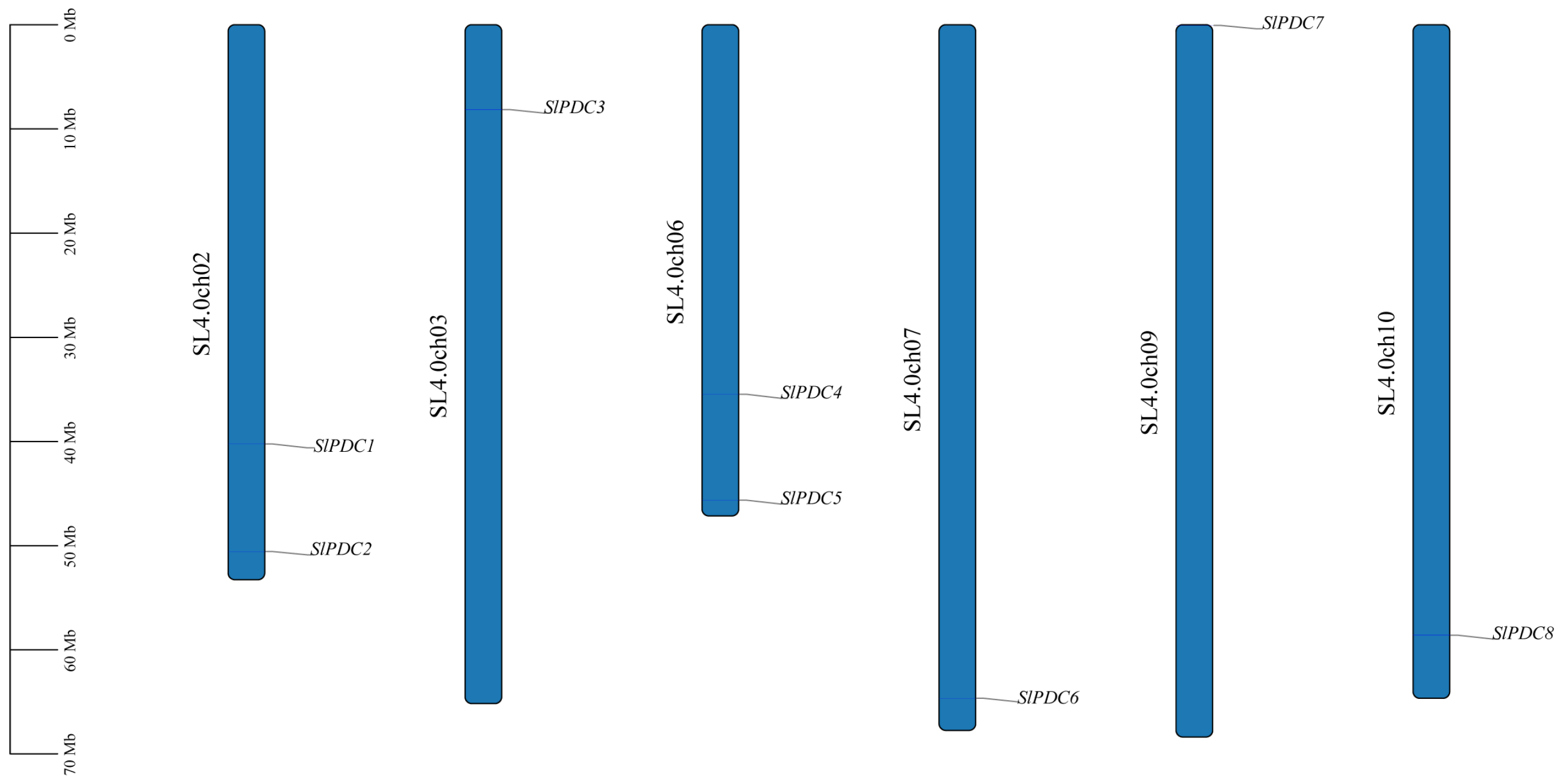
Eight PDC genes were identified through BlastP and HMM comparative searches; according to their positions on chromosomes and gene homology, they are named SlPDC1-SlPDC8 (Table 1). We found that the eight SlPDC genes of tomato were unevenly distributed on six chromosomes (Figure 1). The ExPASy online tool was employed to analyze the physicochemical properties of the proteins, which discovered that the amino acid lengths of tomato PDC proteins span from 574 to 659 amino acids. Additionally, the corresponding relative molecular weights vary between 61,633.85 and 71,912.52 Da; SlPDC2 showed the lowest quantity of amino acids and the lowest relative molecular mass, while SlPDC3 had the highest (Table 1). In addition, the isoelectric point range of SlPDCs is from 5.66 to 7.99. Additionally, SlPDC4 (PI: 7.99) and SlPDC6 (PI: 7.09) are alkaline proteins (PI > 7), while the rest of the SlPDCs are acidic proteins (PI < 7). The instability coefficient of the SlPDCs proteins ranges from 27.59 to 43.82. Among them, SlPDC3, SlPDC4 and SlPDC6 can be regarded as unstable proteins. The aliphatic coefficients are between 85.41 and 92.71. By predicting the hydrophilicity of the SlPDC proteins in tomato, we found that SlPDC1, SlPDC7, and SlPDC8 are hydrophobic proteins, while the rest proteins are hygroscopic proteins. Prediction of subcellular localization indicated that every member of the SlPDC family is situated in chloroplasts.

3.2. Analysis of the Gene Structure of SlPDCs and the Conserved Motifs and Conserved Domains of the SlPDC Proteins

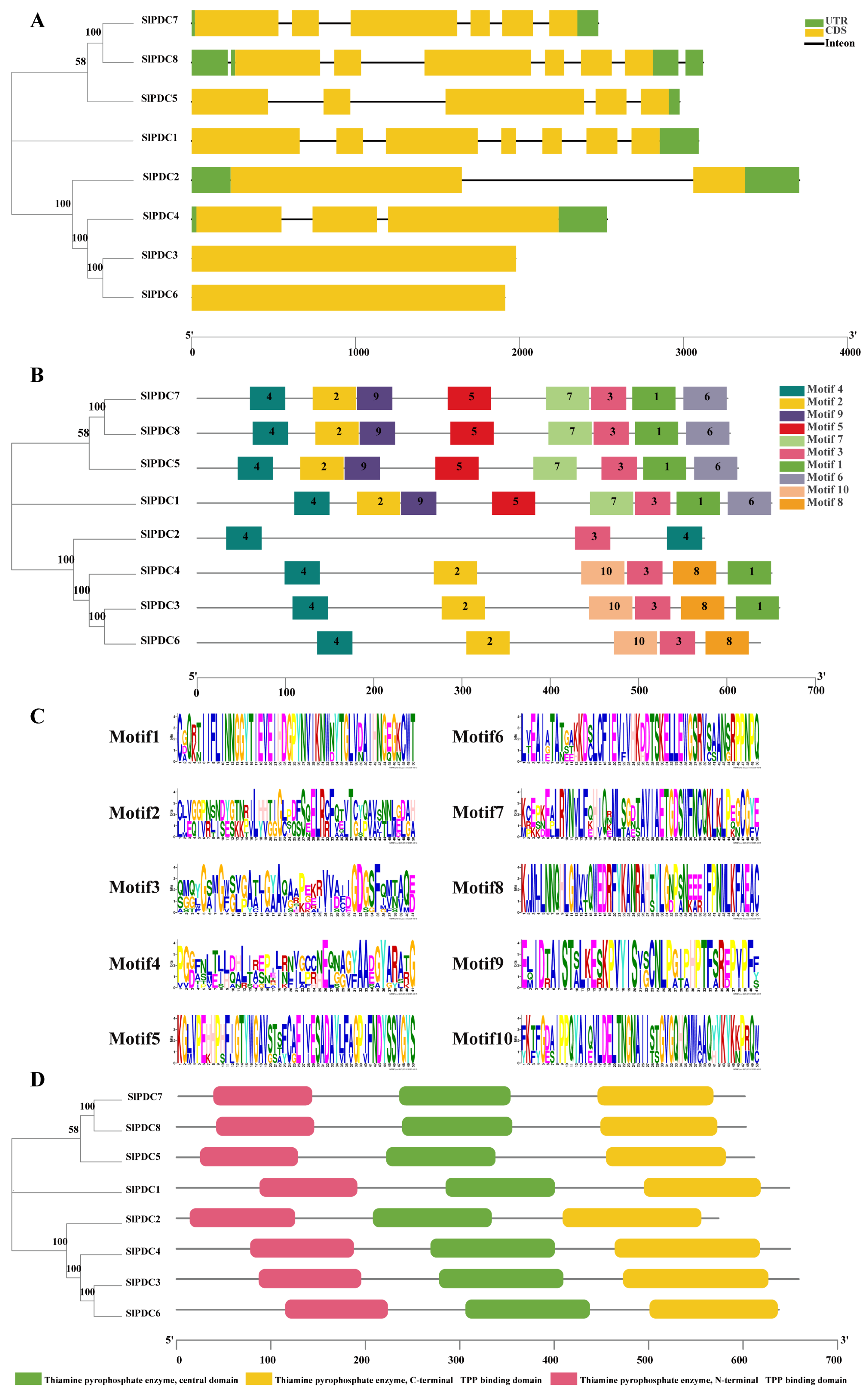
By employing TBtools (v2.210), a visual analysis was conducted on the structure, conserved motifs, and conserved domains of the SlPDC genes in tomatoes. The gene structure reveals that SlPDC family genes contain zero to seven introns and contain one to seven exons (Figure 2A). Moreover, a total of 10 conserved motifs (motif 1~motif 10) were identified in SlPDCs (Figure 2B, Table 2), and the distinct motif sequences are shown in Figure 2C. In detail, SlPDC1, SlPDC5, SlPDC7, and SlPDC8 contain the same motifs. Motif8 and Motif10 are only found in SlPDC3, SlPDC4, and SlPDC6. Additionally, SlPDC2 only contains motif 3 and motif 4. The lengths of motif 3, motif 4, and motif 9 are 41 aa, and the lengths of other motifs are 50aa (Table 2). Simultaneously, we downloaded the tomato SlPDC conserved domain data using the InterPro database and visualized it with TBtools (v2.210), and we found that all the SlPDC proteins have three identical domains (Figure 2D).

3.3. Predicting the Secondary and Tertiary Structures of SlPDC Proteins in Tomato

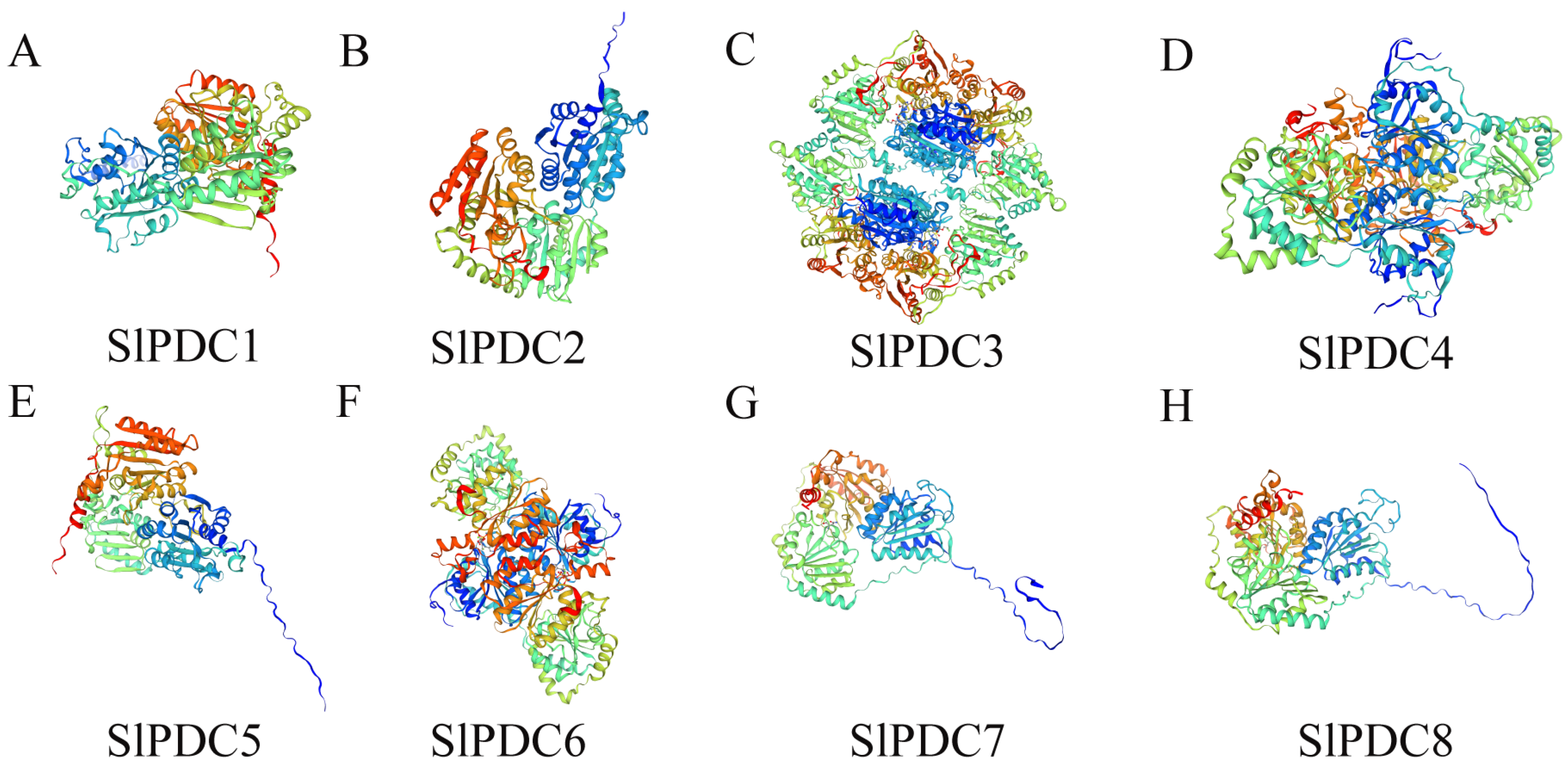
We found that there were three protein structures in the SlPDC proteins of tomato, including α-helix (30.88–36.93%), extended strand (15.26–17.93%), and random coil (46.34–53.11%) (Table 3). Among them, the most abundant protein secondary structure is random coil. The prediction of the tertiary structure is consistent with that of the secondary structure (Figure 3).

3.4. Phylogenetic and Collinearity Analysis of the SlPDCs

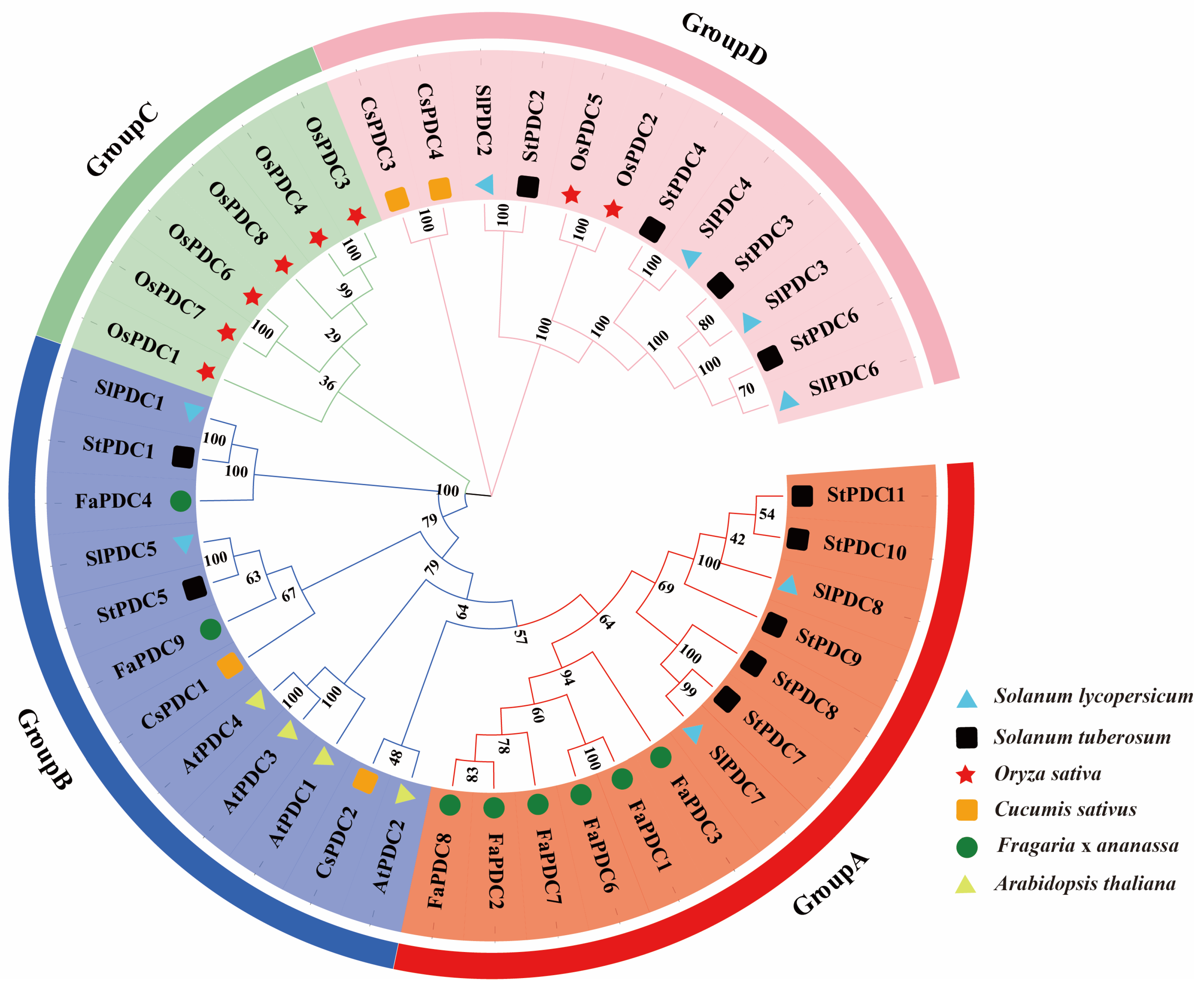
We jointly constructed a phylogenetic tree through the sequences of 43 PDC proteins in A. thaliana, rice, potato, strawberry, cucumber and tomato (Figure 4). Based on homology, the PDC proteins of these plants can be classified into four subclasses. Group A consists of nine members, including SlPDC7 and SlPDC8. Group B consists of 12 members, including SlPDC1 and SlPDC5. Group C consists of six members. Group D consists of 12 members, including SlPDC2, SlPDC3, SlPDC4, and SlPDC6. In Group A, the homology between SlPDC7 and StPDC7 reaches 99%. In Group B, the homologous similarity between SlPDC1 and StPDC1, as well as between SlPDC5 and StPDC5, reaches 100%. In Group C, all the proteins belong to the rice OsPDCs. In Group D, SlPDC2 and StPDC2, as well as SlPDC4 and StPDC4, show the highest homologous similarity. Thus, the homologous similarity between SlPDCs and the potato StPDCs are very high.
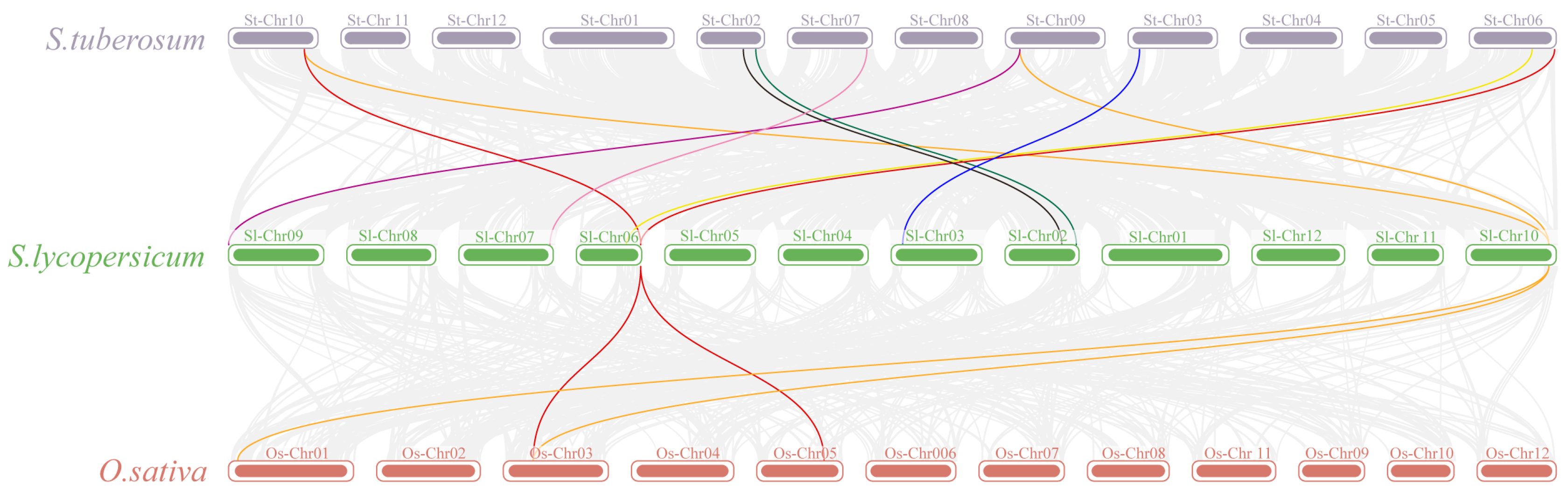
In addition, based on the evolutionary relationships among different species, we conducted a collinearity analysis of the tomato SlPDCs with the genes of potato and rice (Figure 5). Through collinearity analysis, we found that the eight SlPDC genes of tomato were collinear with the seven genes of potato and the three genes of rice. Tomato SlPDCs and potato have nine pairs of orthologous genes, while tomato and rice have four pairs of orthologous genes. Among them, SlPDC5 and SlPDC8 have collinear relationships with two genes in potatoes and rice, respectively.

3.5. Analysis of Cis-Acting Elements of the Tomato SlPDCs

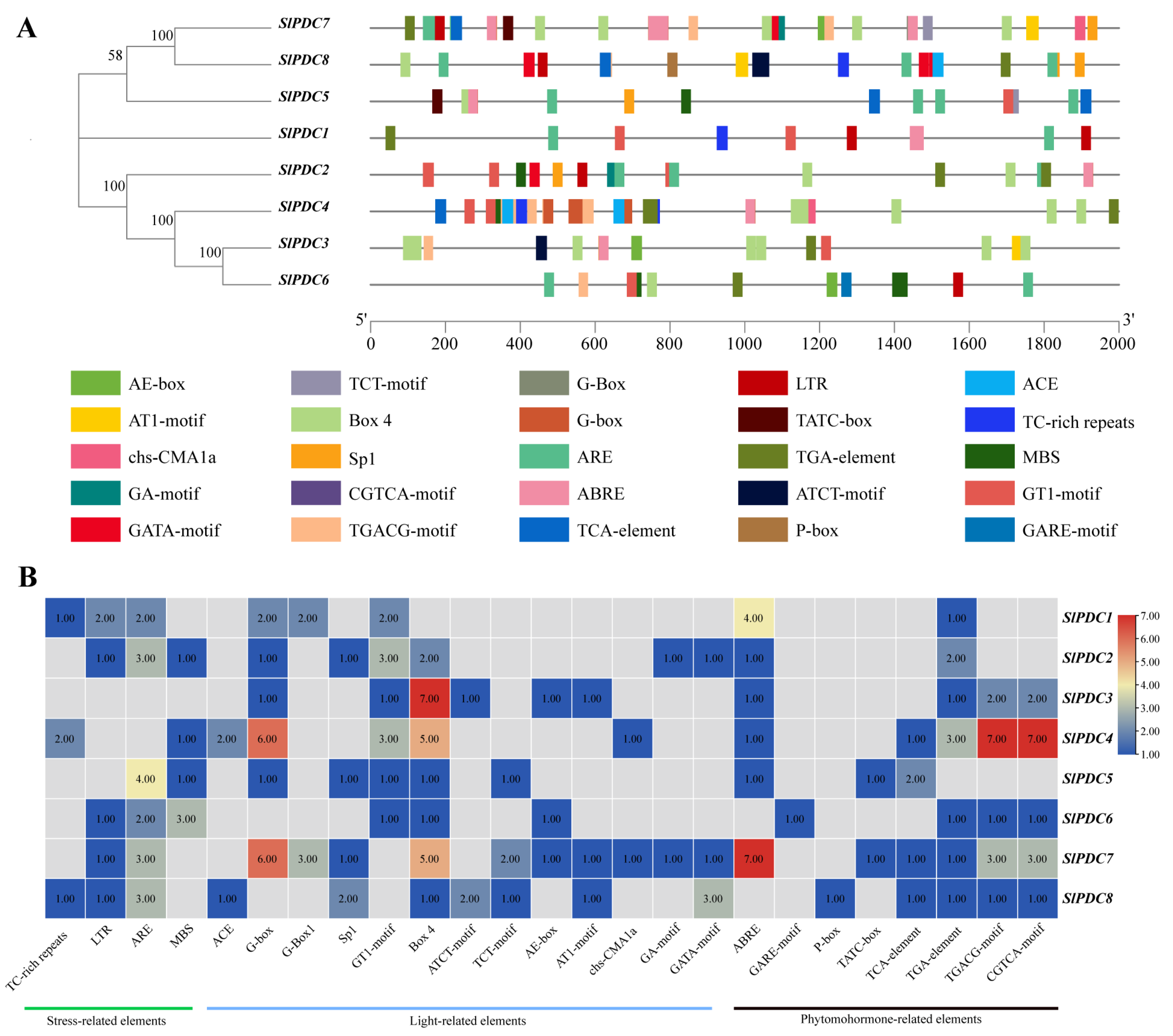
To identify the cis-acting elements associated with the SlPDC family, we examined the promoter sequences of eight SlPDC genes, spanning from −2000 bp to −1 bp (Figure 6A). Our analysis revealed that the SlPDC genes in tomato plants contain a total of 25 cis-acting elements (Table 4). The cis-acting elements identified in the SlPDC promoter sequence fall into three categories: those responsive to light, stress, and hormones (Figure 6B). Among these, 13 elements (ACE, G-box, G-box1, Sp1, GT1-motif, Box 4, ATCT-motif, TCT-motif, AE-box, AT1-motif, chs-CMA1a, GA-motif, and GATA-motif) are linked to light responses, while four elements (TC-rich repeats, LTR, ARE, and MBS) relate to stress responses. Additionally, there are eight elements (ABRE, GARE-motif, P-box, TATC-box, TCA-element, TGA-element, TGACG-motif, and CGTCA-motif) that are associated with hormonal action. The Box4 element is present in all tomato SlPDC promoters, excluding SlPDC1. Moreover, the G-box element is found in all tomato SlPDCs except for SlPDC6 and SlPDC8, with its highest abundance observed in SlPDC4 and SlPDC7. TC-rich repeats are exclusively located in SlPDC1, SlPDC4, and SlPDC8. The TGA-element appears in every SlPDC of tomato except for SlPDC5. Lastly, the CGTCA/TGACG-motif elements are found in all other SlPDC members, apart from SlPDC1, SlPDC2, and SlPDC5.
Figure 6. Analysis of cis-regulatory elements (A) and statistics of their quantity (B) in tomato SlPDCs. (A) Rectangles of different colors represent different cis elements, and their lengths are set to 20bp. (B) The color range in the grid is from blue to red, and the numbers indicate the number of different cis-regulatory elements found in the SlPDC genes.
Horticulturae 12 00349 g006
Table 4. The function of cis-acting elements in tomato SlPDCs.
ElementSequenceNumber of GenesDescriptionPotential Role Under Waterlogging Stress
TC-rich repeatsATTCTCTAAC4cis-acting element involved in defense and stress responsivenessParticipate in the defensive response, potentially functioning when waterlogging triggers oxidative stress and increased risk of pathogen infection.
LTRCCGAAA6cis-acting element involved in low-temperature responsivenessNone.
ABREACGTG15cis-acting element involved in abscisic acid responsivenessSlPDC8 contains ABRE and is significantly upregulated at 24 h post-ABA treatment (Figure 7A), suggesting ABA may further enhance SlPDC8 expression through ABRE at the late stage of waterlogging to strengthen fermentative capacity.
TGACG-motifTGACG14cis-acting regulatory element involved in the MeJA responsivenessMeJA and ABA often exhibit antagonistic interactions. Most SlPDC genes are suppressed at 6–12 h under MeJA treatment (Figure 7B), suggesting that JA signaling may inhibit SlPDC expression through TGACG/CGTCA-motifs at the early stage of waterlogging to balance energy metabolism and defense responses.
CGTCA-motifCGTCA14cis-acting regulatory element involved in the MeJA responsiveness
MBSCAACTG6MYB binding site involved in drought inducibilityNone.
ACEGCGACGTACC3cis-acting element involved in light responsivenessNone.
G-boxCACGTG17cis-acting regulatory element involved in light responsivenessNone.
G-BoxCACGTGAAA5cis-acting regulatory element involved in light responsivenessNone.
Sp1GGGCGG5light-responsive elementNone.
GT1-motifGGTTAA11light-responsive elementNone.
Box 4ATTAAT22part of a conserved DNA module involved in light responsivenessNone.
ATCT-motifAATCTAATCC3part of a conserved DNA module involved in light responsivenessNone.
TCT-motifTCTTAC4part of a light-responsive elementNone.
AE-boxAGAAACAA3part of a module for light responseNone.
AT1-motifAATTATTTTTTATT3part of a light-responsive moduleNone.
chs-CMA1aTTACTTAA2part of a light-responsive elementNone.
GA-motifATAGATAA2part of a light-responsive elementNone.
GATA-motifAAGGATAAGG5part of a light-responsive elementNone.
GARE-motifTCTGTTG1gibberellin-responsive elementNone.
P-boxCCTTTTG1gibberellin-responsive elementNone.
TATC-boxTATCCCA2cis-acting element involved in gibberellin responsivenessNone.
TCA-elementTCTTAC5part of a light-responsive elementNone.
TGA-elementAACGAC10auxin-responsive elementNone.
AREAAACCA17cis-acting regulatory element essential for the anaerobic inductionARE is a key factor mediating hypoxia responses. Genes containing ARE were significantly upregulated under waterlogging stress (Figure 8H), indicating that these genes may be directly activated by hypoxia signals through the ARE-dependent pathway, initiating ethanol fermentation and maintaining energy supply.
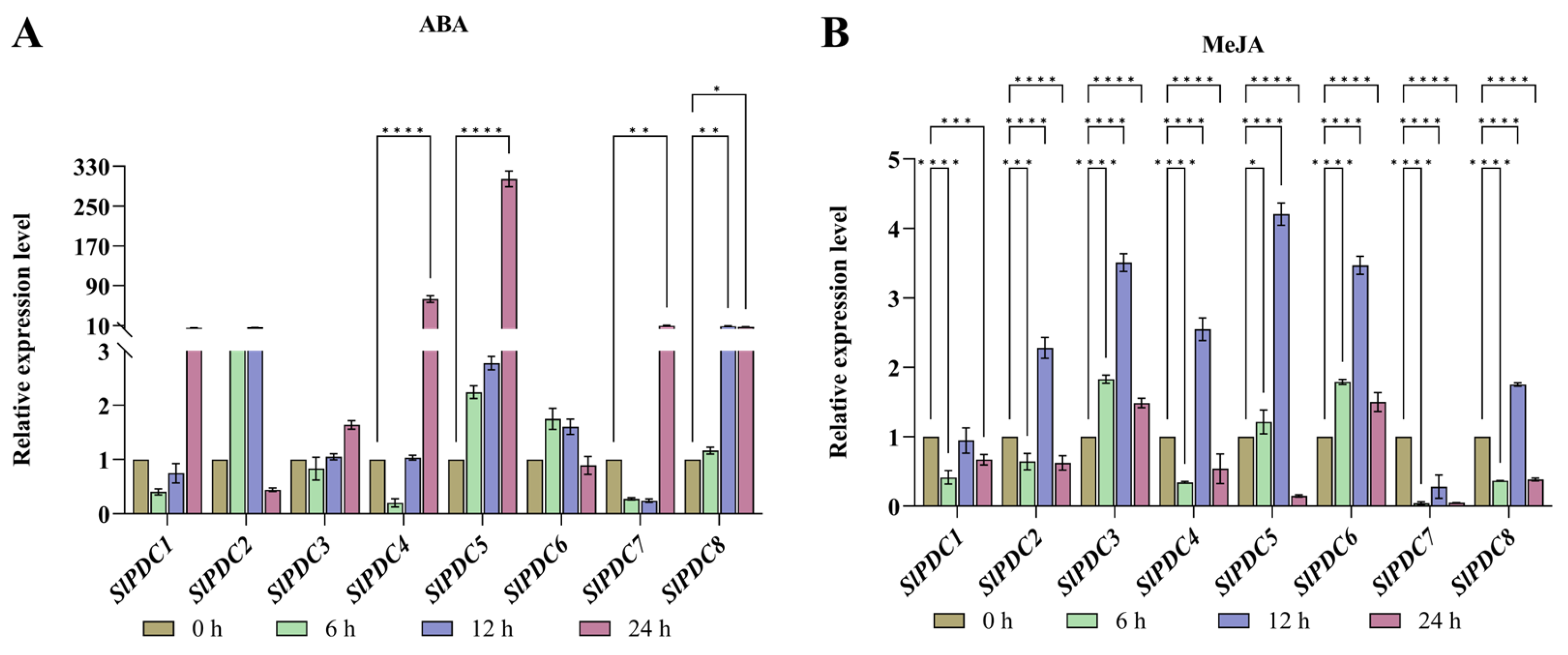
Figure 7. The expression levels of the SlPDC genes in reaction to (A) ABA and (B) MeJA treatments. Statistical significance is denoted by asterisks when compared to the relevant untreated control at 0 h (* p < 0.05, ** p < 0.01, *** p < 0.001, and **** p < 0.0001; two-way ANOVA, Tukey’s test).
Horticulturae 12 00349 g007
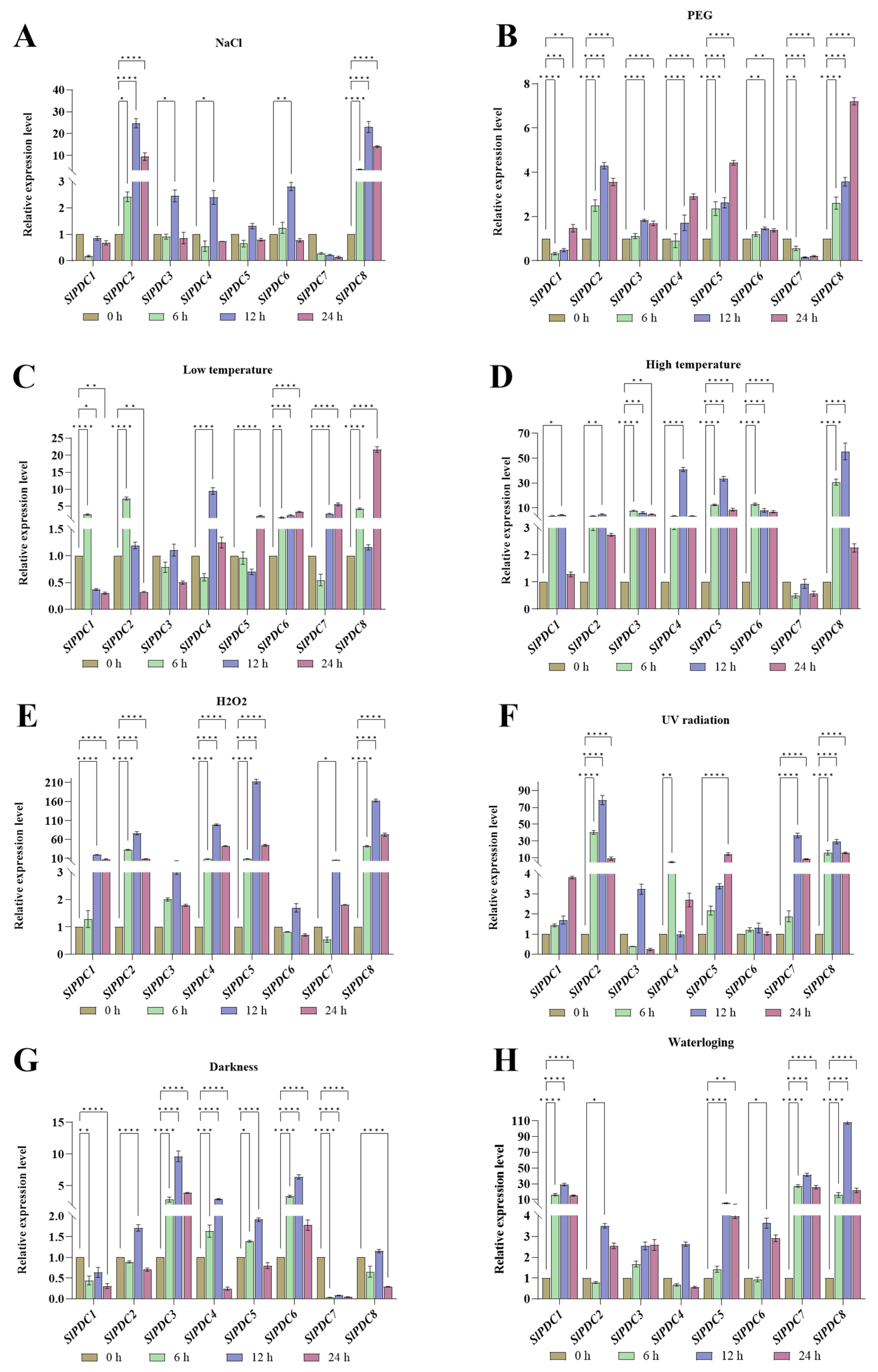
Figure 8. Expression patterns of the SlPDC genes in response to various abiotic stresses: (A) NaCl, (B) PEG, (C) low temperature, (D) high temperature, (E) H2O2, (F) UV radiation, (G) darkness, and (H) waterlogging period extension. Asterisks denote significant differences relative to the 0 h control (* p < 0.05, ** p < 0.01, *** p < 0.001, and **** p < 0.0001; two-way ANOVA, Tukey’s test).
Horticulturae 12 00349 g008

3.6. Expression Analysis of SlPDC Across Tomato Tissues

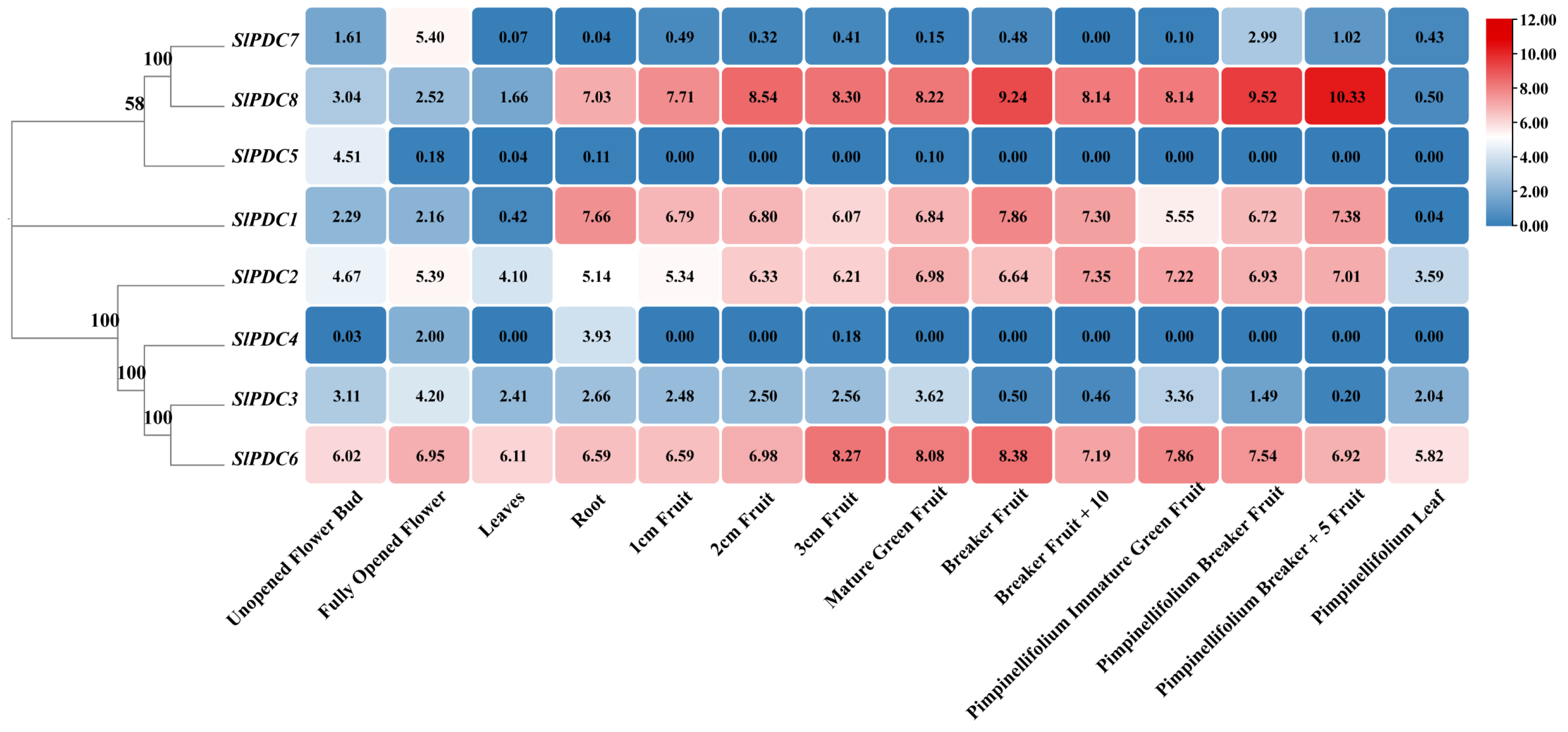
Expression data for SlPDC genes were obtained from the eFP database, encompassing 14 tomato tissues, to investigate their tissue-specific functions across developmental stages (Figure 9). Notably, SlPDC2 and SlPDC6 showed high levels of statement in all the analyzed cellular structures. In addition, the expression level of SlPDC8 was generally high in fruits, while SlPDC1 exhibited its greatest expression in the roots. SlPDC6 also demonstrated high transcript levels in the unopened flower bud, fully opened flower, and leaves. The transcripts for SlPDC3 and SlPDC7 were most abundant in the fully opened flower. In addition, SlPDC1, SlPDC6, and SlPDC8 all have relatively high transcriptional levels in the roots.

3.7. Profiling SlPDC Genes Expression Under Phytohormone and Abiotic Stress Treatments

To assess the effect of how SlPDC genes are expressed under hormonal influences, we analyzed the transcript abundance of eight SlPDC genes following treatments with 100 μM ABA and 50 μM MeJA (see Figure 7A,B). During the 6 and 24 h following ABA treatment, the transcription levels of SlPDC1, SlPDC3, SlPDC4, and SlPDC7 were reduced in contrast to the control group. However, after 24 h of ABA exposure, the transcription levels of SlPDC4, SlPDC5, and SlPDC6 showed significant increases, whereas SlPDC2 expression was notably decreased. In the case of MeJA treatment lasting 6 and 24 h, the expression levels of SlPDC1, SlPDC2, SlPDC4, SlPDC7, and SlPDC8 experienced significant suppression. Moreover, at 12 h of treatment, SlPDC3, SlPDC4, SlPDC5, and SlPDC6 exhibited high expression levels.
We also examined the expression levels of SlPDC genes subjected to various treatments, including 200 mM NaCl, PEG, low temperature (4 °C), high temperature (40 °C), H2O2, 253.7 nm UV exposure, darkness, and waterlogging (Figure 8). During the 6 and 24 h following NaCl treatment, transcription levels of SlPDC2 and SlPDC8 were markedly upregulated, while those of SlPDC1 and SlPDC7 experienced significant suppression within the same timeframe. In the context of PEG treatment lasting 6 to 24 h, a notable decrease in the transcription level of SlPDC7 was observed. Conversely, after 12 h of PEG exposure, SlPDC2’s transcription level was significantly enhanced. After 24 h of this treatment, the expression levels of SlPDC1, SlPDC4, SlPDC5, and SlPDC8 increased. Following 6 h of low-temperature exposure, significant upregulation in the transcription levels of SlPDC1, SlPDC2, SlPDC6, and SlPDC8 was noted, while the other members exhibited reduced expression in comparison to controls. A prominent increase in SlPDC4 expression was recorded at 12 h. At the 24 h mark of low-temperature treatment, substantial upregulation of SlPDC5 and SlPDC8 transcription levels was noted, whereas the expression levels of SlPDC6 and SlPDC7 showed minimal change. The maximum expression for SlPDC8 was reached at 24 h. During high-temperature treatment, the expression of SlPDC7 was inhibited from 6 to 24 h, while the other members showed increased expression from 6 to 12 h. After 24 h of high-temperature exposure, a significant decrease in the expression levels of all members occurred. Under treatment with H2O2, the expression levels of the genes SlPDC4, SlPDC5, and SlPDC8 exhibited a significant increase at the 6 h mark. However, the expression of SlPDC6 and SlPDC7 was notably suppressed during the same time period. By the 12 h time point following H2O2 treatment, all gene members, except for SlPDC3 and SlPDC6, showed substantial upregulation in their transcriptional levels. Conversely, at the 24 h mark, there was a marked downregulation in the expression levels of all gene members studied. Similarly, after 6 h of exposure to ultraviolet (UV) radiation, the expression levels of SlPDC2, SlPDC4, and SlPDC8 significantly increased. In contrast, by the 24 h time point, the transcript abundance of other genes was inhibited, with the exception of SlPDC1, SlPDC4, and SlPDC5, which maintained elevated levels. In the context of extended darkness treatment, the expression levels of SlPDC3, SlPDC4, SlPDC5, and SlPDC6 were markedly upregulated after both 6 h and 24 h. On the other hand, the expression levels of SlPDC1, SlPDC7, and SlPDC8 experienced a significant decrease during the same periods. Furthermore, the waterlogging treatment induced a marked increase in the expression of SlPDC1, SlPDC7, and SlPDC8 at both the 6 h and 12 h intervals. Additionally, the expression levels of SlPDC2, SlPDC5, and SlPDC6 increased following 12 and 24 h of waterlogging treatment, with SlPDC8 reaching its peak expression level at the 12 h mark.

3.8. The Effect of SlPDC8 on the Growth of Tomato Seedlings Under Waterlogging Stress

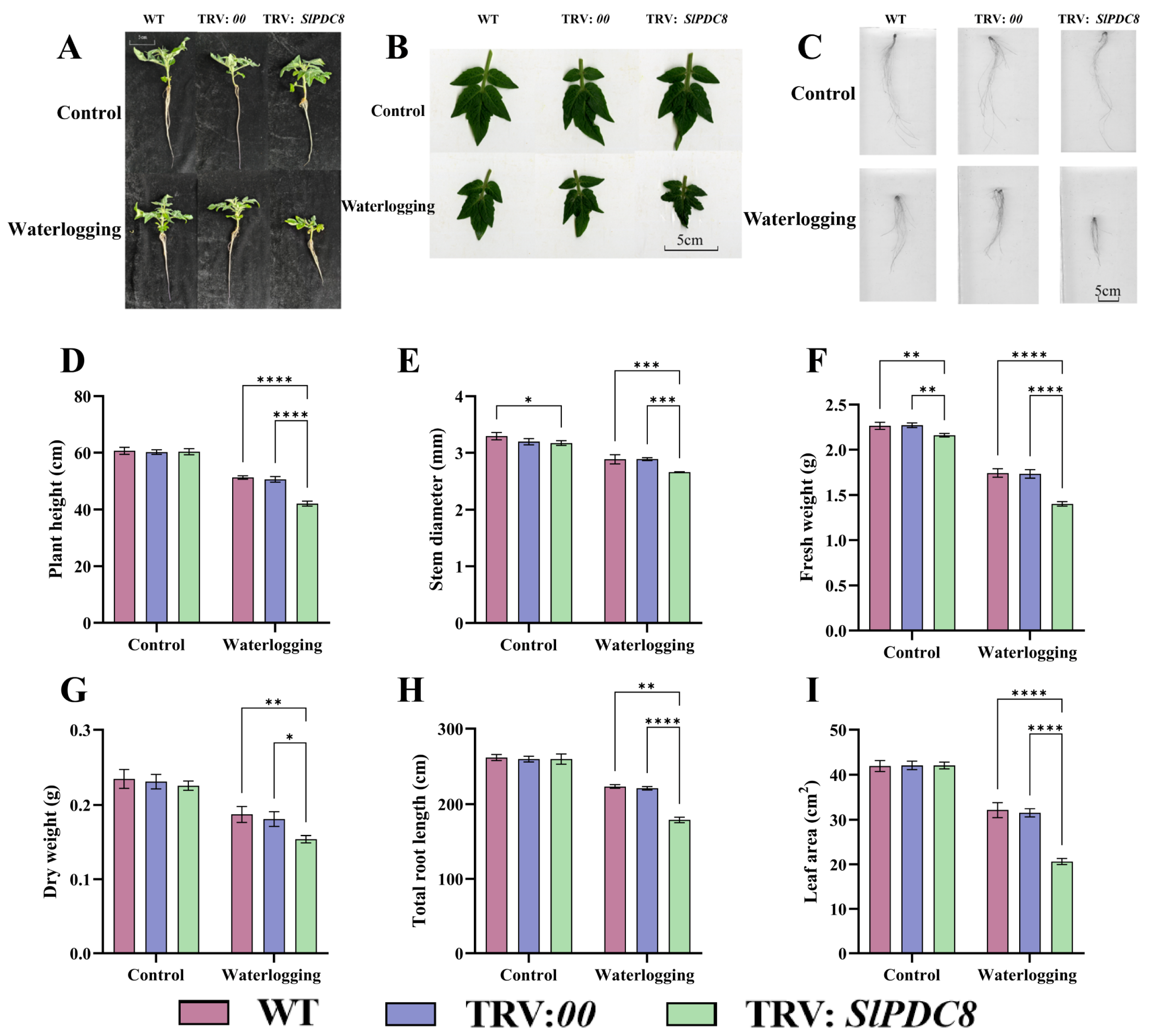
As the expression of SlPDC8 was obviously altered by waterlogging stress, the Agrobacterium-mediated gene silencing technology induced by a virus was used to construct SlPDC8 silenced plants to further explore the role of the SlPDC8 gene in waterlogging tolerance. We found that the WT, TRV:00, and TRV: SlPDC8 lines in the control group showed the same growth trend under non-waterlogged stress. However, under waterlogging stress, the growth of WT and TRV:00 lines were similar, while the TRV: SlPDC8 line exhibited a slower growth rate contrasted with the WT and TRV:00 plants (Figure 10A). Compared with TRV:00, TRV: SlPDC8 showed a growth trend of smaller leaves and shorter root systems under waterlogging stress (Figure 10B,C). In addition, compared with TRV:00, the height and stem diameter of the TRV: SlPDC8 line were significantly reduced. The plant height and stem thickness of the TRV: SlPDC8 line also decreased obviously compared with the TRV:00. Under waterlogging stress, fresh and dry biomass of the TRV: SlPDC8 line decreased by 19.0% and 14.8%, respectively, compared with the TRV:00 plants (Figure 10F,G). Under waterlogging stress, the root length and leaf area of the TRV: SlPDC8 line decreased by 19.0% and 34.4%, respectively, compared with TRV:00 (Figure 10H,I).

3.9. The Effect of Instantaneous Silencing of SlPDC8 on Photosynthetic Pigments in Tomato Seedlings Under Waterlogging Stress

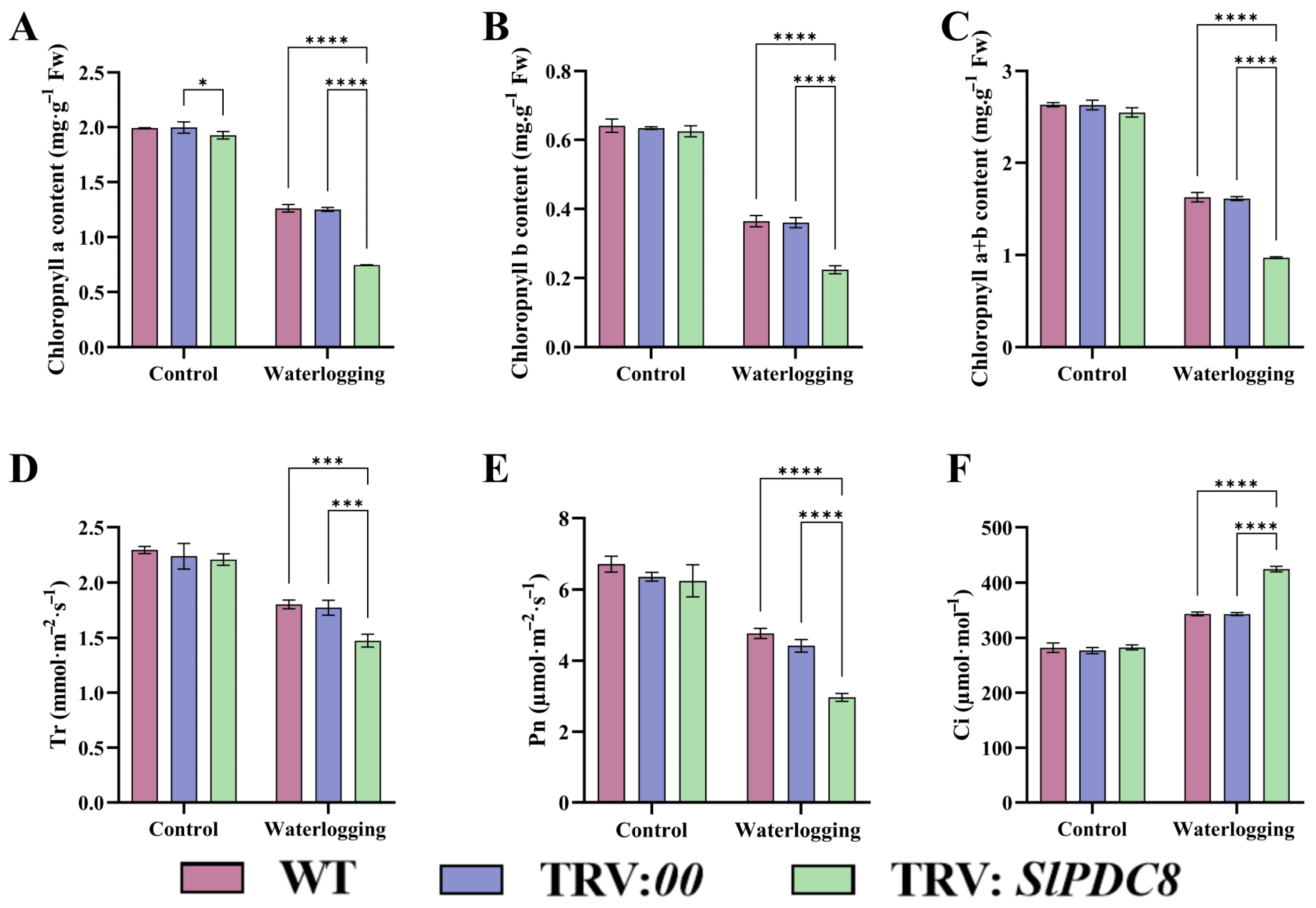
Through the determination of chloroplast content in tomato leaves, it was found that after instantaneous silencing, compared with TRV:00, the contents of chlorophyll a, chlorophyll b, and chlorophyll a + b in the TRV: SlPDC8 line were significantly reduced (Figure 11A–C). To verify the effect of SlPDC8 on photosynthetic efficiency, the photosynthetic capacity of the TRV: SlPDC8 line was further measured (Figure 11D–F). Under waterlogging stress, the transpiration rate and net photosynthetic rate of the TRV: SlPDC8 line decreased by 16.9% and 32.9%, respectively, while the intercellular CO2 concentration increased by 23.8% compared with the TRV:00 line.

3.10. The Effect of Instantaneous Silencing of SlPDC8 on Oxidative Damage of Tomato Seedlings Under Waterlogging Stress

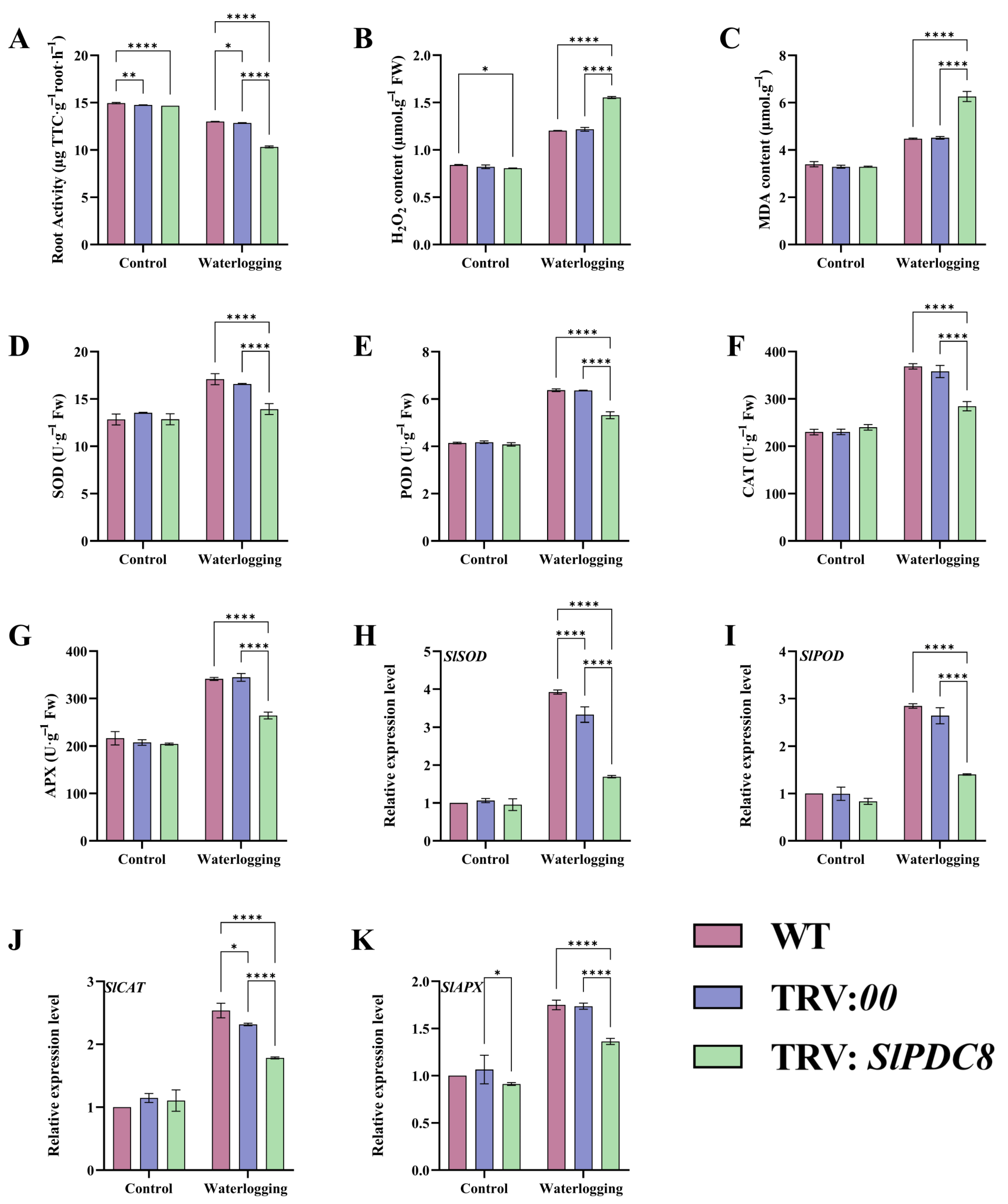
To determine the effect of SlPDC8 on roots under waterlogging stress, we used the TTC method to measure root viability. It was found that under waterlogging stress, the root activity of TRV: SlPDC8 was lower than TRV:00 by 19.6% (Figure 12A). In addition, it was found that under waterlogging conditions, the content of H2O2 and MDA of the TRV: SlPDC8 line increased by 27.6% and 38.8%, respectively, compared to the TRV:00 line (Figure 12B,C). Moreover, the activities of SOD, POD, CAT, and APX in the treated samples were significantly increased in comparison with the untreated group under waterlogging stress (Figure 12D–G). However, these enzymatic activities were reduced by the silencing of SlPDC8. Simultaneously, under waterlogging stress, the transcript abundance of SlSOD, SlCAT, SlPOD, and SlAPX in the TRV: SlPDC8 line were significantly lower than those in the TRV:00 line (Figure 12H–K).

4. Discussion

With the in-depth research on plant genomics, the PDC gene family, as core components participating in plant hypoxia response, has been extensively studied in many plants such as A. thaliana and rice [40,41]. Nonetheless, systematic examinations of this gene family in tomato remain comparatively limited. In this study, a total of eight SlPDC genes were identified (Table 1), a number comparable to that in strawberry (eight members) but more than that in A. thaliana (four members) [9,41]. Variations in PDC family size across species likely reflect divergent evolutionary paths [42]. This difference may reflect lineage-specific gene replication and subsequent neofunctionalization, which is a common evolutionary trajectory for stress-response metabolic gene families [43,44]. Subcellular localization prediction shows that they are all located in chloroplasts, which is consistent with the strawberry PDC gene family [9]. It is worth noting that when plants respond to hypoxia stress, PDC-mediated ethanol fermentation is the core pathway for maintaining cellular energy homeostasis, and this process mainly occurs in the cytoplasm [43,45]. The distribution of PDC within plant cells can differ depending on the tissue type and developmental stage. Further studies are necessary to fully understand the organ-specific localization of SlPDCs. In addition, all the SlPDC proteins contain the conserved TPP-binding domain that is crucial for decarboxylase activity (Figure 2), suggesting a conserved structure within these members in tomato. This domain conservation is consistent with findings in A. thaliana [41], rubber tree [10], and strawberry [9], indicating that the core catalytic function of PDC enzymes is highly conserved across the plant kingdom. Examining exons and introns is essential for comprehending the variations in gene structure and function [46]. Analysis of gene structure showed notable variations in the intron–exon configurations among the various members of SlPDCs. Notably, SlPDC8 exhibits the most intricate gene structure, which includes seven introns (Figure 2). This structural complexity is usually associated with fine transcriptional regulation under different environmental inductions. It is indicated that SlPDC8 may be subject to complex regulatory mechanisms when responding to different environmental stresses, which requires further in-depth verification.
Intrinsic disordered regions (IDRs) are ubiquitous in stress response proteins and signal transduction proteins [47,48]. They endow proteins with conformational flexibility, enabling them to interact dynamically and conditionally with multiple regulatory factors, thereby playing a more flexible regulatory role in complex stress-response networks [49]. Here, the prediction of the secondary structure of SlPDC proteins shows that they are rich in random coils and α-helices, suggesting the possible existence of IDRs (Table 2). This requires further discovery. Phylogenetic analysis reveals that the SlPDC proteins show the highest sequence identity with potato homologous proteins (for example, SlPDC1/StPDC1 and SlPDC2/StPDC4 have 100% identity), highlighting the strong evolutionary conservation within the Solanaceae families (Figure 4). This difference may be closely related to their respective ecological niches, the long-term hypoxic environmental stress they have faced, and their unique metabolic regulation strategies [43]. For instance, as an aquatic plant, the PDC gene family of rice may be more specialized in anaerobic metabolism under long-term waterlogging conditions [50]. Gene collinearity analysis revealed that SlPDC8 was homologous to two pairs of genes in rice and potato, suggesting that the SlPDC8 gene might have been inherited from earlier plants (Figure 5).
Promoter sequence analysis indicates that the SlPDC gene family is potentially controlled by a complex transcriptional regulatory network. We found that the promoter regions of multiple members (such as SlPDC1, SlPDC7, and SlPDC8) were predicted to contain anaerobic response elements (AREs) (Figure 6). ARE is a core cis-element in response to hypoxic stress and was first identified in the promoter of the maize ethanol dehydrogenase gene (Adh1). Its function depends on two subregions, among which subregion II is crucial for anaerobic induction [51]. In model plants such as A. thaliana, ARE has been confirmed to be a core cis-acting element mediating the expression of genes such as hypoxia-induced PDCs [52], and this promoter has also been found in other SlPDC genes. Moreover, the expressions of SlPDC1, SlPDC7, and SlPDC8 were significantly induced under waterlogging stress (Figure 8H). Similarly, the transcript abundance of AtPDC1/2 in A. thaliana was also upregulated under waterlogged stress [8]. It is worth noting that the expression abundance of SlPDC8 at 12 h was higher than that of other members. These findings collectively indicate that plant PDC members can respond to waterlogging stress at the transcriptional level. However, SlPDC8 may play a more dominant role in waterlogging response. Notably, the SlPDC promoters also contain a wealth of chemical messenger response elements, including ABA elements (ABRE), MEJA elements (TGACG/CGTCA-motif), GA elements (GARE-motif, TATC-box), and IAA elements (TGA-element) (Figure 6, Table 4). Particularly, the promoter of SlPDC8 contains both ABRE and TGACG/CGTCA-motif. The high frequency of these hormone-responsive cis-elements indicates that various phytohormone signaling pathways likely influence the transcription of SlPDC genes. This diverse combination of components further demonstrates the potential ability of SlPDC8 to participate in complex adverse responses. In our investigation, we observed that the transcript abundance of the majority of SlPDC genes was suppressed at 6 h and 12 h following ABA treatment. However, at 24 h of ABA treatment, the transcription levels of these genes were increased (Figure 7A). This suggests that SlPDCs could be modulated by ABA throughout the developmental stage of tomato seedlings. Furthermore, in kiwifruit plants, ABA may suppress AdPDC1 expression in waterlogged plants as part of the stress response [19]. Thus, there may also be a certain relationship between tomato SlPDCs and the hypoxia stress response as well as ABA signals, which needs to be uncovered in the future. Combined with promoter analysis, it was found that the SlPDC gene family contains cis-acting elements (ABRE, LTR, and MBS) related to osmotic and low-temperature stress responses. Similarly, after being treated with salt, drought, and low-temperature stress, our expression analysis also detected a significantly upregulated expression of SlPDC8 (Figure 8). For instance, the CrPDC1 gene from Carex rigescens enhanced the salt tolerance of transgenic A. thaliana seedlings through heterologous expression [53]. SlPDC2 was significantly upregulated under salt, low temperature and UV conditions. Similarly, overexpression of AtPDC1 in A. thaliana can heighten the cold sweetening tolerance of transgenic potato (Solanum tuberosum) [13,14]. SlPDC3 and SlPDC6 showed no significant response under most stresses but were upregulated under dark treatment, suggesting that they might be involved in some related basal metabolism. These analysis results collectively indicate that the expression regulation of PDC may have potential responses to various stresses. However, further research is needed on the functional analysis of the SlPDC family under different stresses.
Analysis of the organ-specific expression patterns revealed distinct functional specializations among the SlPDC members (Figure 9). We found that SlPDC2 and SlPDC6 both exhibited relatively stable and high levels of expression in all organs. The extensive expression pattern may suggest a broad “housekeeping” function of them in cells [54]. Over the course of the plant life cycle, roots are the primary organs that sense soil waterlogging, and organ-specific induction of PDC in species such as rice is associated with enhanced fermentation capacity and waterlogging survival [55]. Fruits are organs known to undergo natural hypoxia during ripening [56,57]. We found that the transcripts of SlPDC8 accumulate significantly in fruits and roots. This pattern could be linked to the hypoxic environments often encountered by fruits and roots during growth and development. Thus, SlPDC8 may be functionally adapted to respond to developmental hypoxia or related metabolic changes. However, its specific function remains to be further verified.
Under the stress of waterlogging, the blocking of mitochondrial oxidative phosphorylation can lead to insufficient cellular energy [58]. To cope with this, the ethanol fermentation pathway is rapidly activated [59]. This process is initiated by the swift induction of key enzymes such as pyruvate decarboxylase, which redirects pyruvate flow from mitochondrial oxidation to fermentation [60]. By regenerating NAD+ through ethanol production, this pathway sustains the flux of glycolysis, which in turn maintains substrate-level ATP production and basic cellular redox homeostasis [45,60]. In this study, we found that silencing SlPDC8 significantly exacerbated tomato’s sensitivity to waterlogging stress (Figure 10). This phenotype was highly similar to the growth defects in A. thaliana PDC mutants and rice PDC RNAi lines under hypoxia [61,62]. In A. thaliana, the AtPDC1 mutant exhibits significant growth inhibition under hypoxic conditions, with a marked reduction in seedling survival rate, impaired ethanol fermentation capacity, and an inability to effectively maintain energy metabolism [45]. In rice, the lines silenced with OsPDC1 and OsPDC2 by RNAi technology exhibited similar defects to the tomato SlPDC8 silenced plants under waterlogging stress—stunted plants, wilted leaves, and reduced biomass accumulation [62]. This is similar to our research. This confirms that SlPDC8 plays a role in the adaptation of tomato to waterlogging stress. In-depth physiological and molecular mechanism analysis revealed that the absence of SlPDC8 triggered a series of linked metabolic disorders. Plant fermentation metabolism provides ATP and reducing capacity to maintain the linear electron flow in chloroplasts [43]. The decline in photosynthetic pigment content and the net photosynthetic rate in TRV: SlPDC8 leaves indicates that waterlogging stress destroyed the photosynthetic system of tomato seedlings. When plants experience abiotic stress, they tend to gather increased levels of reactive oxygen species (ROS), potentially leading to oxidative harm to their biomolecules [63]. In our results, the accumulation of H2O2 and MDA in the silenced plants significantly increased, indicating that silencing SlPDC8 under waterlogging stress led to an intensification of oxidative damage (Figure 11). Correspondingly, SlPDC8-silenced plants exhibited markedly reduced activities of key antioxidant enzymes (SOD, POD, CAT, and APX). These findings point to a central role for SlPDC8 in maintaining cellular redox homeostasis under waterlogging stress, and the underlying molecular mechanisms warrant further discussion. The expression of the genes encoding these enzymes was also significantly suppressed (Figure 12). Furthermore, the root vitality of the TRV: SlPDC8 plants decreased significantly, indicating that waterlogging stress caused more severe damage to root health in SlPDC8 silenced plants (Figure 12). In A. thaliana PDC overexpression enhanced the development of roots in transgenic strains [45]. The decline in root vitality is an important indicator for judging plant stress and growth conditions, and it affects various physiological processes of plant survival and productivity [64]. Hence, these results indicate that SlPDC8 is of great significance for tomato seedlings to cope with waterlogging environments by inhibiting the accumulation of ROS.

5. Conclusions

In this study, eight SlPDC members were identified, all of which possessed the conserved TPP-binding domain and localized in the chloroplast. Phylogenetic analysis revealed high homology of SlPDCs with potato StPDCs, indicating evolutionary conservation within the Solanaceae family. Promoter analysis identified numerous cis-acting elements related to hormonal (ABA and MeJA), anaerobic, and other abiotic stress responses. Expression profiling showed that SlPDC8 was highly expressed in roots and fruits and was significantly induced by waterlogging, drought, salt, UV radiation, and H2O2 stresses. Additionally, silencing of SlPDC8 significantly compromised tomato’s tolerance to waterlogging, as evidenced by severe wilting, reduced photosynthetic pigment content, a lower net photosynthetic rate, decreased root vitality, and higher levels of H2O2 and MDA. This was correlated with a significant reduction in the activities and transcript levels of key antioxidant enzymes, including SOD, POD, CAT, and APX. Collectively, this study provides the first systematic characterization of the tomato SlPDC gene family and reveals that SlPDC8 plays a critical role in waterlogging tolerance by maintaining reactive oxygen species homeostasis and photosynthetic capacity. These findings offer new insights into plant hypoxic adaptation mechanisms and provide a valuable candidate gene for molecular breeding of waterlogging-tolerant tomato varieties.

Supplementary Materials

The following supporting information can be downloaded at https://www.mdpi.com/article/10.3390/horticulturae12030349/s1, Table S1: qRT-PCR primers for the analysis of SlPDC family genes and antioxidant expression in tomato; Table S2: Primers used for vector construction in the virus-induced gene silencing (VIGS) assay; Figure S1: The efficiency of VIGS infecting SlPDC8. Differences among different lowercase letter columns are statistically significant by Duncan’s multi-range test (p < 0.05, one-way ANOVA followed by Duncan’s multiple range test); Figure S2: The efficiency of VIGS infecting SlPDC1-SlPDC7. Differences among different lowercase letter columns are statistically significant by Duncan’s multi-range test (p < 0.05, one-way ANOVA followed by Duncan’s multiple range test).

Author Contributions

All authors contributed to the conceptualization and design of the study. Conceptualization, C.W.; Fund Acquisition, Q.L. and C.W.; Original Writing, C.W. and Q.L.; Copy Editing, Q.L., Z.L., R.C. and C.W.; Character Creation and Adaptation, Q.L. and C.W. All authors have read and agreed to the published version of the manuscript.

Funding

This work was supported by the Supporting Funds for Youth Mentor of Gansu Agricultural University (GAU-QDFC-2024-15); the College Students’ Innovation and Entrepreneurship Training Program of Gansu Province (S202410733057); the National Natural Science Foundation of China (32460753); and the Key Project of Gansu Provincial Natural Science Foundation, China (No. 23JRRA1406).

Data Availability Statement

The original contributions presented in this study are included in the article/Supplementary Materials. Further inquiries can be directed to the corresponding author.

Conflicts of Interest

The authors declare no conflicts of interest.

References

  1. Geng, R.; Xu, M.; Xu, L.; Yan, G.; Cai, G. Biological Mechanisms of Waterlogging Tolerance in Plants. Plant Cell Environ. 2025, 49, 685–699. [Google Scholar] [CrossRef] [PubMed]
  2. Xu, Z.; Ye, L.; Shen, Q.; Zhang, G. Advances in the study of waterlogging tolerance in plants. J. Integr. Agric. 2024, 23, 2877–2897. [Google Scholar] [CrossRef]
  3. Yang, L.; Li, N.; Liu, Y.; Miao, P.; Liu, J.; Wang, Z. Updates and Prospects: Morphological, Physiological, and Molecular Regulation in Crop Response to Waterlogging Stress. Agronomy 2023, 13, 2599. [Google Scholar] [CrossRef]
  4. Tamaru, S.; Goto, K.; Sakagami, J.I. Spatial O2 Profile in Coix lacryma-jobi and Sorghum bicolor along the Gas Diffusion Pathway under Waterlogging Conditions. Plants 2023, 13, 3. [Google Scholar] [CrossRef]
  5. Eram, M.S.; Ma, K. Decarboxylation of pyruvate to acetaldehyde for ethanol production by hyperthermophiles. Biomolecules 2013, 3, 578–596. [Google Scholar] [CrossRef]
  6. Meyer, D.; Neumann, P.; Parthier, C.; Friedemann, R.; Nemeria, N.; Jordan, F.; Tittmann, K. Double duty for a conserved glutamate in pyruvate decarboxylase: Evidence of the participation in stereoelectronically controlled decarboxylation and in protonation of the nascent carbanion/enamine intermediate. Biochemistry 2010, 49, 8197–8212. [Google Scholar] [CrossRef]
  7. Tran, V.G.; Mishra, S.; Bhagwat, S.S.; Shafaei, S.; Shen, Y.; Allen, J.L.; Crosly, B.A.; Tan, S.I.; Fatma, Z.; Rabinowitz, J.D.; et al. An end-to-end pipeline for succinic acid production at an industrially relevant scale using Issatchenkia orientalis. Nat. Commun. 2023, 14, 6152. [Google Scholar] [CrossRef]
  8. Mithran, M.; Paparelli, E.; Novi, G.; Perata, P.; Loreti, E. Analysis of the role of the pyruvate decarboxylase gene family in Arabidopsis thaliana under low-oxygen conditions. Plant Biol. 2014, 16, 28–34. [Google Scholar] [CrossRef]
  9. Hormazábal-Abarza, F.; Bustos, D.; Rodríguez-Arriaza, F.; Sáez, D.; Urra, G.; Parra-Palma, C.; Méndez-Yáñez, Á.; Ramos, P.; Morales-Quintana, L. Structural and transcriptional characterization of pyruvate decarboxylase (PDC) gene family during strawberry fruit ripening process. Plant Physiol. Biochem. 2024, 207, 108417. [Google Scholar] [CrossRef]
  10. Long, X.; He, B.; Wang, C.; Fang, Y.; Qi, J.; Tang, C. Molecular identification and characterization of the pyruvate decarboxylase gene family associated with latex regeneration and stress response in rubber tree. Plant Physiol. Biochem. 2015, 87, 35–44. [Google Scholar] [CrossRef]
  11. Gass, N.; Glagotskaia, T.; Mellema, S.; Stuurman, J.; Barone, M.; Mandel, T.; Roessner-Tunali, U.; Kuhlemeier, C. Pyruvate decarboxylase provides growing pollen tubes with a competitive advantage in petunia. Plant Cell 2005, 17, 2355–2368. [Google Scholar] [CrossRef] [PubMed]
  12. Ren, J.; Wang, Q.; Zuo, J.; Jiang, S. Study of thermotolerant mechanism of Stropharia rugosoannulata under high temperature stress based on the transcriptome sequencing. Mycoscience 2021, 62, 95–105. [Google Scholar] [CrossRef]
  13. Pinhero, R.G.; Copp, L.J.; Amaya, C.-L.; Marangoni, A.G.; Yada, R.Y. Roles of alcohol dehydrogenase, lactate dehydrogenase and pyruvate decarboxylase in low-temperature sweetening in tolerant and susceptible varieties of potato (Solanum tuberosum). Physiol. Plant. 2007, 130, 230–239. [Google Scholar] [CrossRef]
  14. Pinhero, R.; Pazhekattu, R.; Marangoni, A.G.; Liu, Q.; Yada, R.Y. Alleviation of low temperature sweetening in potato by expressing Arabidopsis pyruvate decarboxylase gene and stress-inducible rd29A: A preliminary study. Physiol. Mol. Biol. Plants 2011, 17, 105–114. [Google Scholar] [CrossRef] [PubMed]
  15. Kürsteiner, O.; Dupuis, I.; Kuhlemeier, C. The pyruvate decarboxylase1 gene of Arabidopsis is required during anoxia but not other environmental stresses. Plant Physiol. 2003, 132, 968–978. [Google Scholar] [CrossRef] [PubMed]
  16. Geigenberger, P.; Fernie, A.R.; Gibon, Y.; Christ, M.; Stitt, M. Metabolic activity decreases as an adaptive response to low internal oxygen in growing potato tubers. Biol. Chem. 2000, 381, 723–740. [Google Scholar] [CrossRef]
  17. Loreti, E.; Perata, P. The Many Facets of Hypoxia in Plants. Plants 2020, 9, 745. [Google Scholar] [CrossRef]
  18. Gao, M.; Gai, C.; Li, X.; Feng, X.; Lai, R.; Song, Y.; Zeng, R.; Chen, D.; Chen, Y. Waterlogging Tolerance of Actinidia valvata Dunn Is Associated with High Activities of Pyruvate Decarboxylase, Alcohol Dehydrogenase and Antioxidant Enzymes. Plants 2023, 12, 2872. [Google Scholar] [CrossRef]
  19. Zhang, J.Y.; Huang, S.N.; Wang, G.; Xuan, J.P.; Guo, Z.R. Overexpression of Actinidia deliciosa pyruvate decarboxylase 1 gene enhances waterlogging stress in transgenic Arabidopsis thaliana. Plant Physiol. Biochem. 2016, 106, 244–252. [Google Scholar] [CrossRef]
  20. Agarwal, S.; Kapoor, A.; Lakshmi, O.S.; Grover, A. Production and phenotypic analysis of rice transgenics with altered levels of pyruvate decarboxylase and alcohol dehydrogenase proteins. Plant Physiol. Biochem. 2007, 45, 637–646. [Google Scholar] [CrossRef]
  21. Goodstein, D.M.; Shu, S.; Howson, R.; Neupane, R.; Hayes, R.D.; Fazo, J.; Mitros, T.; Dirks, W.; Hellsten, U.; Putnam, N.; et al. Phytozome: A comparative platform for green plant genomics. Nucleic Acids Res. 2012, 40, D1178–D1186. [Google Scholar] [CrossRef] [PubMed]
  22. Wang, W.; Shao, A.; Amombo, E.; Fan, S.; Xu, X.; Fu, J. Transcriptome-wide identification of MAPKKK genes in bermudagrass (Cynodon dactylon L.) and their potential roles in low temperature stress responses. PeerJ 2020, 8, e10159. [Google Scholar] [CrossRef] [PubMed]
  23. Chen, C.; Chen, H.; Zhang, Y.; Thomas, H.R.; Frank, M.H.; He, Y.; Xia, R. TBtools: An Integrative Toolkit Developed for Interactive Analyses of Big Biological Data. Mol. Plant 2020, 13, 1194–1202. [Google Scholar] [CrossRef] [PubMed]
  24. Li, L.; Liu, Z.; Pan, X.; Yao, K.; Wang, Y.; Yang, T.; Huang, G.; Liao, W.; Wang, C. Genome-Wide Identification and Characterization of Tomato Fatty Acid β-Oxidase Family Genes KAT and MFP. Int. J. Mol. Sci. 2024, 25, 2273. [Google Scholar] [CrossRef]
  25. Chen, J.; Huang, X.Y.; Salt, D.E.; Zhao, F.J. Mutation in OsCADT1 enhances cadmium tolerance and enriches selenium in rice grain. New Phytol. 2020, 226, 838–850. [Google Scholar] [CrossRef]
  26. Lu, S.; Qiao, Y.; Pan, X.; Chen, X.; Su, W.; Li, A.; Li, X.; Liao, W. Genome-Wide identification and expression analysis of CsABF/AREB gene family in cucumber (Cucumis sativus L.) and in response to phytohormonal and abiotic stresses. Sci. Rep. 2025, 15, 15757. [Google Scholar] [CrossRef]
  27. Liu, W.; Ni, J.; Shah, F.A.; Ye, K.; Hu, H.; Wang, Q.; Wang, D.; Yao, Y.; Huang, S.; Hou, J.; et al. Genome-wide identification, characterization and expression pattern analysis of APYRASE family members in response to abiotic and biotic stresses in wheat. PeerJ 2019, 7, e7622. [Google Scholar] [CrossRef]
  28. Kumar, S.; Stecher, G.; Tamura, K. MEGA7: Molecular Evolutionary Genetics Analysis Version 7.0 for Bigger Datasets. Mol. Biol. Evol. 2016, 33, 1870–1874. [Google Scholar] [CrossRef]
  29. Yao, K.; Yao, Y.; Ding, Z.; Pan, X.; Zheng, Y.; Huang, Y.; Zhang, Z.; Li, A.; Wang, C.; Li, C.; et al. Characterization of the FLA Gene Family in Tomato (Solanum lycopersicum L.) and the Expression Analysis of SlFLAs in Response to Hormone and Abiotic Stresses. Int. J. Mol. Sci. 2023, 24, 16063. [Google Scholar] [CrossRef]
  30. Martí, E.; Gisbert, C.; Bishop, G.J.; Dixon, M.S.; García-Martínez, J.L. Genetic and physiological characterization of tomato cv. Micro-Tom. J. Exp. Bot. 2006, 57, 2037–2047. [Google Scholar] [CrossRef]
  31. Liu, Z.; Pan, X.; Wang, C.; Yun, F.; Huang, D.; Yao, Y.; Gao, R.; Ye, F.; Liu, X.; Liao, W. Genome-wide identification and expression analysis of serine hydroxymethyltransferase (SHMT) gene family in tomato (Solanum lycopersicum). PeerJ 2022, 10, e12943. [Google Scholar] [CrossRef]
  32. Yang, Y.; Guang, Y.; Wang, F.; Chen, Y.; Yang, W.; Xiao, X.; Luo, S.; Zhou, Y. Characterization of Phytochrome-Interacting Factor Genes in Pepper and Functional Analysis of CaPIF8 in Cold and Salt Stress. Front. Plant Sci. 2021, 12, 746517. [Google Scholar]
  33. Lichtenthaler, H.K. Chlorophylls and carotenoids: Pigments of photosynthetic biomembranes. Method. Enzymol. 1987, 148C, 350–382. [Google Scholar]
  34. Dhindsa, R.S.; Pamela, P.D.; Thorpe, T.A. Leaf Senescence: Correlated with Increased Levels of Membrane Permeability and Lipid Peroxidation, and Decreased Levels of Superoxide Dismutase and Catalase. J. Exp. Bot. 1981, 32, 93–101. [Google Scholar] [CrossRef]
  35. Mena, I.F.; Diaz, E.; Rodriguez, J.J.; Mohedano, A.F. CWPO of bisphenol A with iron catalysts supported on microporous carbons from grape seeds activation. Chem. Eng. J. 2017, 318, 153–160. [Google Scholar] [CrossRef]
  36. Muhammad, T.; Zhang, J.; Ma, Y.; Li, Y.; Zhang, F.; Zhang, Y.; Liang, Y. Overexpression of a Mitogen-Activated Protein Kinase SlMAPK3 Positively Regulates Tomato Tolerance to Cadmium and Drought Stress. Molecules 2019, 24, 556. [Google Scholar] [CrossRef] [PubMed]
  37. Beauchamp, C.; Fridovich, I. Superoxide dismutase: Improved assays and an assay applicable to acrylamide gels. Anal. Biochem. 1971, 44, 276–287. [Google Scholar] [CrossRef]
  38. Maehly, A.C.; Chance, B. The assay of catalases and peroxidases. Methods Biochem. Anal. 1954, 1, 357–424. [Google Scholar]
  39. Mano, J.; Ohno, C.; Domae, Y.; Asada, K. Chloroplastic ascorbate peroxidase is the primary target of methylviologen-induced photooxidative stress in spinach leaves: Its relevance to monodehydroascorbate radical detected with in vivo ESR. Biochim. Biophys. Acta 2001, 1504, 275–287. [Google Scholar] [CrossRef]
  40. Hossain, M.A.; Huq, E.; Grover, A.; Dennis, E.S.; Peacock, W.J.; Hodges, T.K. Characterization of pyruvate decarboxylase genes from rice. Plant Mol. Biol. 1996, 31, 761–770. [Google Scholar] [CrossRef]
  41. Ye, S. Identification of Pyruvate Decarboxylase/Indole Pyruvate Decarboxylase Gene Family Members from Arabidopsis thaliana. Ph.D. Thesis, The University of Minnesota, Minneapolis, MN, USA, 2009. [Google Scholar]
  42. Hanada, K.; Kuromori, T.; Myouga, F.; Toyoda, T.; Li, W.H.; Shinozaki, K. Evolutionary persistence of functional compensation by duplicate genes in Arabidopsis. Genome Biol. Evol. 2009, 1, 409–414. [Google Scholar] [CrossRef] [PubMed]
  43. Bui, L.T.; Novi, G.; Lombardi, L.; Iannuzzi, C.; Rossi, J.; Santaniello, A.; Mensuali, A.; Corbineau, F.; Giuntoli, B.; Perata, P.; et al. Conservation of ethanol fermentation and its regulation in land plants. J. Exp. Bot. 2019, 70, 1815–1827. [Google Scholar] [CrossRef] [PubMed]
  44. Hanada, K.; Zou, C.; Lehti-Shiu, M.D.; Shinozaki, K.; Shiu, S.H. Importance of lineage-specific expansion of plant tandem duplicates in the adaptive response to environmental stimuli. Plant Physiol. 2008, 148, 993–1003. [Google Scholar] [CrossRef] [PubMed]
  45. Drew, M.C. Oxygen deficiency and root metabolism: Injury and acclimation under hypoxia and anoxia. Annu. Rev. Plant Biol. 1997, 48, 223–250. [Google Scholar] [CrossRef]
  46. Jacchieri, S.G. Foldability and the amino acid compositions of exons and introns. J. Proteome Res. 2002, 1, 515–519. [Google Scholar] [CrossRef]
  47. Wright, P.E.; Dyson, H.J. Intrinsically disordered proteins in cellular signalling and regulation. Nat. Rev. Mol. Cell Biol. 2015, 16, 18–29. [Google Scholar] [CrossRef]
  48. Sun, X.; Rikkerink, E.H.; Jones, W.T.; Uversky, V.N. Multifarious roles of intrinsic disorder in proteins illustrate its broad impact on plant biology. Plant Cell 2013, 25, 38–55. [Google Scholar] [CrossRef]
  49. Uversky, V.N. Intrinsically disordered proteins and their environment: Effects of strong denaturants, temperature, pH, counter ions, membranes, binding partners, osmolytes, and macromolecular crowding. Protein J. 2009, 28, 305–325. [Google Scholar] [CrossRef]
  50. Bailey-Serres, J.; Lee, S.C.; Brinton, E. Waterproofing crops: Effective flooding survival strategies. Plant Physiol. 2012, 160, 1698–1709. [Google Scholar] [CrossRef]
  51. Olive, M.R.; Walker, J.C.; Singh, K.; Dennis, E.S.; Peacock, W.J. Functional properties of the anaerobic responsive element of the maize Adh1 gene. Plant Mol. Biol. 1990, 15, 593–604. [Google Scholar] [CrossRef]
  52. Dolferus, R.; Jacobs, M.; Peacock, W.J.; Dennis, E.S. Differential interactions of promoter elements in stress responses of the Arabidopsis Adh gene. Plant Physiol. 1994, 105, 1075–1087. [Google Scholar] [CrossRef] [PubMed]
  53. Cui, H.; Ma, C.; Wang, L.; Li, M.; Zhang, K.; Li, Y.; Hu, Q.; Sun, Y. Heterologous expression of Carex rigescens PDC1 enhances salt tolerance in transgenic Arabidopsis thaliana seedlings. Plant Sci. 2026, 362, 112810. [Google Scholar] [CrossRef] [PubMed]
  54. Gho, Y.S.; Choi, H.; Moon, S.; Song, M.Y.; Park, H.E.; Kim, D.H.; Ha, S.H.; Jung, K.H. Phosphate-Starvation-Inducible S-Like RNase Genes in Rice Are Involved in Phosphate Source Recycling by RNA Decay. Front. Plant Sci. 2020, 11, 585561. [Google Scholar] [CrossRef] [PubMed]
  55. Xu, K.; Xu, X.; Fukao, T.; Canlas, P.; Maghirang-Rodriguez, R.; Heuer, S.; Ismail, A.M.; Bailey-Serres, J.; Ronald, P.C.; Mackill, D.J. Sub1A is an ethylene-response-factor-like gene that confers submergence tolerance to rice. Nature 2006, 442, 705–708. [Google Scholar] [CrossRef]
  56. Ho, Q.T.; Verboven, P.; Verlinden, B.E.; Herremans, E.; Wevers, M.; Carmeliet, J.; Nicolaï, B.M. A three-dimensional multiscale model for gas exchange in fruit. Plant Physiol. 2011, 155, 1158–1168. [Google Scholar] [CrossRef]
  57. Lara, M.V.; Budde, C.O.; Porrini, L.; Borsani, J.; Murray, R.; Andreo, C.S.; Drincovich, M.F. Peach (Prunus persica) fruit response to anoxia: Reversible ripening delay and biochemical changes. Plant Cell Physiol. 2011, 52, 392–403. [Google Scholar] [CrossRef]
  58. Bailey-Serres, J.; Voesenek, L.A. Flooding stress: Acclimations and genetic diversity. Annu. Rev. Plant Biol. 2008, 59, 313–339. [Google Scholar] [CrossRef]
  59. Licausi, F.; Perata, P. Low oxygen signaling and tolerance in plants. Adv. Bot. Res. 2009, 50, 139–198. [Google Scholar]
  60. Zabalza, A.; van Dongen, J.T.; Froehlich, A.; Oliver, S.N.; Faix, B.; Gupta, K.J.; Schmälzlin, E.; Igal, M.; Orcaray, L.; Royuela, M.; et al. Regulation of respiration and fermentation to control the plant internal oxygen concentration. Plant Physiol. 2009, 149, 1087–1098. [Google Scholar] [CrossRef]
  61. Ismond, K.P.; Dolferus, R.; de Pauw, M.; Dennis, E.S.; Good, A.G. Enhanced low oxygen survival in Arabidopsis through increased metabolic flux in the fermentative pathway. Plant Physiol. 2003, 132, 1292–1302. [Google Scholar] [CrossRef]
  62. Narsai, R.; Edwards, J.M.; Roberts, T.H.; Whelan, J.; Joss, G.H.; Atwell, B.J. Mechanisms of growth and patterns of gene expression in oxygen-deprived rice coleoptiles. Plant J. 2015, 82, 25–40. [Google Scholar] [CrossRef]
  63. Mittler, R. Oxidative stress, antioxidants and stress tolerance. Trends Plant Sci. 2002, 7, 405–410. [Google Scholar] [CrossRef]
  64. Voesenek, L.; Bailey-Serres, J. Flood adaptive traits and processes: An overview. New Phytol. 2015, 206, 57–73. [Google Scholar] [CrossRef]
Figure 1. Chromosomal localization of tomato SlPDCs.
Horticulturae 12 00349 g001
Figure 2. The structure of the tomato SlPDC genes, identification of conserved motifs, and analysis of the conservative domain are presented here. (A) The SlPDC gene structure in tomatoes illustrated using TBtools software (v2.210). In this representation, the green thick box indicates the untranslated region (UTR), while the yellow thick box signifies the coding sequence (CDS), and the black line denotes the intron. (B) Conserved motifs in tomato SlPDC proteins were identified using the MEME online tool (maximum motifs set to 10). Various colors are utilized to denote different conserved motifs. (C) Identification of conservative motifs. (D) The conserved domains of SlPDC proteins in tomatoes include the domains for the thiamine pyrophosphate enzyme, the central domain, the C-terminal TPP binding domain, and the N-terminal TPP binding domain of the thiamine pyrophosphate enzyme. The green squares represent the thiamine pyrophosphatase domain (TPP enzyme, PF02775), the blue squares represent the N-terminal domain of the TPP enzyme (TPP enzyme N, PF02776), and the pink squares represent the C-terminal domain of the TPP enzyme (TPP enzyme C, PF00224). The gray squares represent the central domain.
Horticulturae 12 00349 g002
Figure 3. Prediction of the tertiary structures of tomato SlPDC proteins. (A) Predicted tertiary structure of SlPDC1. (B) Predicted tertiary structure of SlPDC2. (C) Predicted tertiary structure of SlPDC3. (D) Predicted tertiary structure of SlPDC4. (E) Predicted tertiary structure of SlPDC5. (F) Predicted tertiary structure of SlPDC6. (G) Predicted tertiary structure of SlPDC7. (H) Predicted tertiary structure of SlPDC8. The tertiary structure models of the proteins in the figure are all from the N-terminus (blue) to the C-terminus (red) of the protein sequence, with different colors representing the same helix or fold.
Horticulturae 12 00349 g003
Figure 4. Phylogenetic trees of PDC gene families in tomato (Sl: 8 proteins), potato (St: 11 proteins), rice (Os: 8 proteins), cucumber (Cs: 4 proteins), strawberry (Fa: 8 proteins), and Arabidopsis thaliana (At: 4 proteins). The evolutionary tree was divided into four groups using different colors based on homology (Group A–Group D). Six different combinations of colors and shapes represent the PDC proteins of six species. The blue triangles are tomato, the black squares are potato, the red five-pointed stars are rice, the orange squares are cucumbers, the green circles are strawberry, and the yellow triangles are A. thaliana. Model/Method was p-distance, Partial deletion, and Site Coverage Cutoff set as 50%, and other parameters were kept as default Each node displays 1000 repeated Bootstrap values. Group A consists of SlPDC7 and SlPDC8. Group B includes SlPDC1 and SlPDC5. Group D consists of four SlPDC members (SlPDC2, SlPDC3, SlPDC4, and SlPDC6).
Horticulturae 12 00349 g004
Figure 5. Collinearity analysis of PDC gene families in tomato, potato and rice. In the figure, the eight SlPDC genes are represented by lines of different colors: SlPDC1 (black), SlPDC2 (green), SlPDC3 (blue), SlPDC4 (yellow), SlPDC5 (red), SlPDC6 (pink), SlPDC7 (purple), and SlPDC8 (orange). The gray lines in the background represent collinear blocks in the genes of tomato, potato and rice.
Horticulturae 12 00349 g005
Figure 9. Expression patterns of tomato SlPDCs across various tissues. The color intensity represents the crease change in the data after log2 transformation. Different values indicate the level of transcription. Transcript levels are represented in heatmaps with a blue, white, and red gradient, with the color transition representing an increase from low to high expression.
Horticulturae 12 00349 g009
Figure 10. The effects of instantaneous silencing on the growth status of SlPDC8. Tomato seedlings (21-day-old) of wild-type (WT), empty vector control (TRV:00), and SlPDC8-silenced (TRV: SlPDC8) lines were subjected to waterlogging stress for 8 days by maintaining the water level 1–2 cm above the soil surface. Control plants were grown under normal conditions without waterlogging. (A) Growth phenotype, (B) leaf area, (C) total root length, (D) plant height, (E) stem thickness, (F) fresh weight, (G) dry weight, (H) leaf area, and (I) total root length. Data are presented as mean ± SD from three independent biological replicates (n = 3), each consisting of eight pooled seedlings. Asterisks indicate significant differences among the columns in each row (* p < 0.05, ** p < 0.01, *** p < 0.001, and **** p < 0.0001; two-factor analysis of variance, Tukey’s test).
Horticulturae 12 00349 g010
Figure 11. Effect of instantaneous silencing of SlPDC8 on photosynthetic pigment content in tomato. Tomato seedlings (21-day-old) of wild-type (WT), empty vector control (TRV:00), and SlPDC8-silenced (TRV: SlPDC8) lines were subjected to waterlogging stress for 8 days by maintaining the water level 1–2 cm above the soil surface. Control plants were grown under normal conditions without waterlogging. (A) Chlorophyll a content; (B) chlorophyll b content; (C) total chlorophyll (a + b) content; (D) transpiration rate (Tr); (E) net photosynthetic rate (Pn); (F) intercellular CO2 concentration (Ci). Data are presented as mean ± SD from three independent biological replicates (n = 3), each consisting of eight pooled seedlings. Asterisks indicate significant differences among the columns in each row (* p < 0.05, *** p < 0.001, and **** p < 0.0001; two-factor analysis of variance, Tukey’s test).
Horticulturae 12 00349 g011
Figure 12. Effect of instantaneous silencing of SlPDC8 in tomato seedlings. Tomato seedlings (21-day-old) of wild-type (WT), empty vector control (TRV:00), and SlPDC8-silenced (TRV: SlPDC8) lines were subjected to waterlogging stress for 8 days by maintaining the water level 1–2 cm above the soil surface. Control plants were grown under normal conditions without waterlogging. (A) Root activity (determined by TTC method); (B) malondialdehyde (MDA) content; (C) hydrogen peroxide (H2O2) content; (D) superoxide dismutase (SOD) activity; (E) peroxidase (POD) activity; (F) catalase (CAT) activity; (G) ascorbate peroxidase (APX) activity, (H) SlSOD, (I) SlPOD, (J) SlCAT, and (K) SlAPX. Data are presented as mean ± SD from three independent biological replicates (n = 3), each consisting of eight pooled seedlings. Asterisks indicate significant differences among the columns in each row (* p < 0.05, ** p < 0.01, and **** p < 0.0001; two-factor analysis of variance, Tukey’s test).
Horticulturae 12 00349 g012
Table 1. Genomic information of the SlPDC members in tomato.
GeneGene IDChr. No.Protein
Length (aa)
Molecular Weight (Da)PIInstability
Index
Aliphatic IndexGrand Average of
Hydropathicity
Subcellular
Localization
SlPDC1Solyc02g077240.4.1264970,380.536.4430.4492.710.025Chloroplast
SlPDC2Solyc02g091100.3.1257461,633.856.0630.5192.25−0.01Chloroplast
SlPDC3Solyc03g044330.1.1365971,912.526.1643.8290.27−0.108Chloroplast
SlPDC4Solyc06g059880.3.1665071,442.387.9941.0890.05−0.105Chloroplast
SlPDC5Solyc06g082130.3.1661266,780.065.8733.4685.41−0.101Chloroplast
SlPDC6Solyc07g061940.4.1763869,940.247.0941.4888.65−0.11Chloroplast
SlPDC7Solyc09g005110.3.1860065,196.525.6627.5990.530.004Chloroplast
SlPDC8Solyc10g076510.2.11060365,338.785.8129.3289.60.02Chloroplast
Table 2. Detailed information of 10 conserved motifs of SlPDC proteins.
MotifWidth (aa)Motif Sequence
Motif 150CGQKTIIFLINNGGYTIEVEIHDGPYNVIKNWNYTGLVDAIHNGEGKCWT
Motif 250CJVGGPNSNDYGTNPILHHTIGLPDFSQELRCFQTVTCYQAVSNNLEDAH
Motif 341QMQYGSIGWGLGATJGYAQAAPEKRVVAIIGDGSFQMTAQE
Motif 441PGGFNLTJLDHLTAEPEJRNIGCCNELNAGYAADGYARATG
Motif 550KGLVPEHHPHFIGTYWGAVSTSFCAEIVESADAYLFAGPIFNDYSSVGYS
Motif 650LVEAIATATGAKKDSLCFIEVIVHKDDTSKELLEWGSRVSAANSRPPNPQ
Motif 750KCEPKEALRVNVLFQHIQKMLSGDTAVIAETGDSWFNCQKLKLPEGCGYE
Motif 850KIMLLNNQHLGMVVQWEDRFYKANRAHTYLGNPSNEEEIFPNMLKFAEAC
Motif 941ELIDTAISTALKESKPVYISIGCNLPGIPHPTFSREPVPF
Motif 1050FKTFGDAIPPQYAIQVLDELTNGNAIISTGVGQHQMWAAQYYKYKKPRQW
Table 3. Secondary structure of SlPDC proteins in tomato.
ProteinAlpha Helix (%)Extended Strand (%)Beta Turn (%)Random Coil (%)Proportions of Secondary Structure Components
SlPDC131.7416.330.0051.93Horticulturae 12 00349 i001
SlPDC236.9316.720.0046.34Horticulturae 12 00349 i002
SlPDC330.9615.930.0053.11Horticulturae 12 00349 i003
SlPDC433.3817.230.0049.38Horticulturae 12 00349 i004
SlPDC534.1516.180.0049.67Horticulturae 12 00349 i005
SlPDC630.8816.300.0052.82Horticulturae 12 00349 i006
SlPDC733.8315.670.0050.50Horticulturae 12 00349 i007
SlPDC833.8315.260.0050.91Horticulturae 12 00349 i008
Notes: The blue graph represents the alpha helix, the purple graph represents the extended strand, and the yellow graph represents the random coil.
Disclaimer/Publisher’s Note: The statements, opinions and data contained in all publications are solely those of the individual author(s) and contributor(s) and not of MDPI and/or the editor(s). MDPI and/or the editor(s) disclaim responsibility for any injury to people or property resulting from any ideas, methods, instructions or products referred to in the content.