Article

AMF Inoculation Modulates Plant Physiology, Rhizosphere Processes, and Uranium Uptake in Sunflower Under Uranium Stress


1
Innovation Team for Crop Growth and Stress Adaptation, Research Team for Crop Micronutrient Metabolism and Stress Resistance, College of Food and Biology, Jingchu University of Technology, Jingmen 448000, China
2
Bureau of Natural Resources and Planning of Huangmei County, Huanggang 434025, China
*
Author to whom correspondence should be addressed.
Horticulturae 2026, 12(6), 720; https://doi.org/10.3390/horticulturae12060720 (registering DOI)
Submission received: 17 April 2026 / Revised: 4 June 2026 / Accepted: 9 June 2026 / Published: 11 June 2026

Abstract

Sunflower (Helianthus annuus) can potentially be used for uranium (U) phytoremediation. However, the influence of arbuscular mycorrhizal fungi (AMF) on key rhizosphere processes and plant U uptake remains insufficiently researched. We hypothesized that AMF inoculation could enhance sunflower tolerance to U stress by improving plant physiological performance and modifying rhizosphere properties. To test this hypothesis, this study examined the effects of AMF (Funneliformis mosseae, Glomus etunicatum, and their co-inoculation) on sunflowers under U stress, encompassing plant growth and physiological traits, rhizosphere properties, enzyme activities in the rhizosphere soil, uranium speciation in the rhizosphere soil, and the accumulation and distribution of uranium within the plant. Results showed that AMF successfully colonized the roots, enhancing plant growth, biomass, and gas exchange, while improving photosynthetic efficiency and reducing non-photochemical quenching. In the rhizosphere, AMF elevated soil respiration, organic matter, dissolved organic carbon, and microbial biomass carbon; improved phosphatases, urease, catalase, and sucrase activities; also reshaped U speciation, increasing exchangeable and carbonate-bound fractions while decreasing those bound to organic matter, Fe/Mn oxides, and residual phases. Moreover, AMF reduced U concentration in leaves and stems, promoted U retention in belowground tissues, and significantly lowered the U translocation factor. These findings demonstrate that AMF inoculation improves sunflower tolerance to U stress by enhancing physiological performance, modifying rhizosphere properties, and immobilizing U in roots, supporting its potential use in phytoremediation strategies for U-contaminated environments.

1. Introduction

Uranium (U), a heavy metal element, has garnered increasing global attention due to the expansion of the nuclear industry. Its chemotoxicity and radiotoxicity make it a dangerous environmental pollutant [1]. The extraction and utilization of U resources are major sources of soil contamination, particularly in areas surrounding U tailings [2]. Through natural processes such as rainfall and leaching, these tailings generate U-containing leachate, which can infiltrate the soil profile and migrate via surface water systems, thereby spreading U contamination [3]. Soil pollution by U leads to a decline in agricultural soil fertility, which can inhibit plant growth, cause reproductive disorders, and induce genetic mutations in flora and fauna [4]. Moreover, due to biomagnification within the food chain, the accumulation of U in organisms poses a potential threat to human health [5]. Consequently, U contamination derived from tailings represents a persistent environmental challenge, posing severe threats to both ecosystem integrity and human well-being [6].
The development of efficient and environmentally friendly remediation technologies for uranium-contaminated sites is of critical importance. To date, various remediation technologies have been developed, including adsorption, electrokinetic remediation, and soil washing, to eliminate toxic metals from soils [3]. Nevertheless, these techniques often face limitations in large-scale applications, such as high cost, operational complexity, potential secondary pollution, and limited suitability for in situ remediation [7]. Conversely, phytoremediation, which uses plants to absorb pollutants containing heavy metals from soil, has emerged as a promising in situ strategy for treating soils contaminated with heavy metals, owing to its cost-effectiveness and environmental benefits [3,8]. Among the plants suitable for phytoremediation, sunflower (Helianthus annuus L.) has emerged as a promising candidate. Numerous studies have confirmed its high metal bioconcentration factor (particularly for elements such as U and cadmium (Cd)), considerable translocation factor, and strong stress tolerance [9,10,11]. Additional advantages, including ease of cultivation, short growth cycle, high biomass production, and aesthetic value, further support its potential. However, during the remediation process, at elevated soil uranium concentrations, sunflowers exhibit symptoms such as growth inhibition, reduced biomass, and limited capacity for uranium uptake and immobilization, which ultimately lowers the overall remediation efficiency [12,13,14]. Therefore, relying solely on phytoremediation presents considerable limitations. To enhance its efficacy, strategies should focus on improving plant tolerance to uranium, intensifying the activation of uranium in the rhizosphere, and enhancing uranium uptake and immobilization.
Arbuscular mycorrhizal fungi (AMF) establish symbiotic relationships with the roots of many terrestrial plants, enhancing the root absorption area through their extensive extraradical mycelial networks [15]. This enhances plant acquisition of water and nutrients and improves resistance to abiotic stresses, including heavy metal toxicity [16,17]. Furthermore, growing evidence suggests that AMF not only promotes plant growth and biomass production but also modulates the speciation and bioavailability of heavy metals by altering the rhizosphere microenvironment, including changes in pH, enzyme activities, and root exudate composition [18]. While AMF has been shown to enhance uranium tolerance in some plant species (e.g., Pteris vittata L. [19], Trifolium subterraneum L. [20], and Lolium perenne L. [21]) and to improve sunflower resilience under general heavy metal stress [22], its specific role in mediating uranium accumulation, speciation, and translocation in sunflowers remains poorly researched. Thus, further investigation is needed to clarify the mechanisms by which AMF influence uranium behavior in the rhizosphere and its subsequent uptake and distribution within sunflower plants.
The rhizosphere constitutes a critical zone where plant roots interact with soil microbiota, and its biochemical conditions directly influence nutrient availability, metal behavior, and overall ecosystem functioning [23]. In the rhizosphere, soil respiration rate (SRR) measures the metabolic activity of roots and microorganisms, serving as a direct indicator of overall biological activity [24]. Soil organic matter (SOM) serves as the primary reservoir of carbon and nutrients, forming the foundation for soil structure and long-term fertility [25]. Dissolved organic carbon (DOC), a readily available fraction of SOM, acts as a crucial energy source that fuels immediate microbial metabolism and drives nutrient cycling processes [26]. Finally, soil microbial biomass carbon (SMBC) quantifies the living microbial component, linking carbon availability (SOM and DOC) and metabolic output (SRR) to represent the active, functionally engaged microbial community, which is essential for soil ecosystem services [27]. Collectively, these indicators provide a robust framework for evaluating the intricate interactions within the rhizosphere, which are vital for maintaining plant health and enhancing soil fertility.
We hypothesized that AMF inoculation alleviates uranium toxicity in sunflowers by enhancing plant physiological performance, modifying rhizosphere properties, and promoting uranium immobilization in roots, thereby reducing uranium translocation to shoots. To test this hypothesis, this study investigated the effects of inoculation with different AMF species (Funneliformis mosseae, Glomus etunicatum, and their co-inoculation) on plant growth and physiological traits, rhizosphere properties, rhizosphere soil enzyme activities, uranium speciation in the rhizosphere soil, as well as the accumulation and translocation of uranium within plants under uranium stress. The research aims to elucidate the potential mechanisms by which AMF mitigate uranium toxicity to plants and enhance phytoremediation efficiency from the perspective of rhizosphere processes. The findings are expected to provide a theoretical basis for the future application of AMF-assisted phytoremediation in the rehabilitation of uranium-contaminated soils.

2. Materials and Methods

2.1. Experimental Materials

Seeds of edible sunflower (H. annuus L. cv. TY007) were purchased from Hebei Jinsheng Yupin Agricultural Science and Technology Company Ltd. (China). Healthy and uniform seeds were selected, surface-sterilized with 75% ethanol for 30 s and 10% NaClO for 10 min, followed by three rinses with ultrapure water, and then soaked for 6 h. They were then evenly distributed on germination trays and incubated at 25 °C in a lighted growth chamber until radicles reached 2~3 cm in length.
The soil used in the experiment was a sandy loam with the following basic biochemical properties: organic matter 8.4 g kg−1, total N 0.85 g kg−1, total P 0.52 g kg−1, U 1.25 mg kg−1, and pH 7.03. To achieve uranium contamination, uranyl nitrate [UO2(NO3)2·6H2O] was applied as a 238U source to reach a nominal concentration of 200 mg kg−1 [28]. Prior to use, the highly contaminated soil was pre-aged for at least 6 months and then diluted with uncontaminated soil to attain the target uranium level. Each plastic pot was filled with 10 kg of the prepared soil. The moisture content was adjusted to the maximum water-holding capacity, and the pots were allowed to equilibrate for two weeks before planting. After the experiment, the liquid waste containing uranium was neutralized and treated with sodium hydroxide, which resulted in the precipitation of uranyl hydroxide [29]. Concurrently, all contaminated soil and plant residues were collected and designated as solid radioactive waste. These materials were securely sealed in labeled containers and subsequently transferred to the institutional radioactive waste management facility for proper disposal.
The arbuscular mycorrhizal fungi (AMF) species used in this experiment were F. mosseae and G. etunicatum, both provided by the Microbiology Laboratory of the Beijing Academy of Agriculture and Forestry Sciences. The fungi were propagated using alfalfa as a host plant, grown in sand-based substrates within 5 L plastic pots (25 cm diameter × 20 cm height). The plants were maintained in a greenhouse under a controlled environment, with a 16/8 h light/dark photoperiod, day/night temperatures of 25 °C/20 °C, and relative humidity levels of 60–70%. The plants were watered daily to achieve 70% of field capacity. After 12 weeks of growth, the aboveground parts were removed, and the colonized root fragments along with the substrate were harvested as the inoculum. The resulting inoculum contained root fragments, spores, and growth substrate, at a spore density of 50 spores/g, and was stored at 4 °C for no longer than 4 weeks to maintain its inoculation potential.

2.2. Experimental Design and Treatments

The experiment included four treatments, all conducted in soil with 200 mg kg−1 U: non-inoculated control (U−AMF), inoculation with F. mosseae (U+FM), inoculation with G. etunicatum (U+GE), and mixed inoculation with both F. mosseae and G. etunicatum in a 1:1 ratio (w/w) (U+FM+GE).
For the AMF treatments, a two-layer inoculation method was applied. Specifically, 25 g of inoculum was placed at the bottom of each pot (3 L, 18 cm diameter × 15 cm height), covered with 350 g of sterilized soil, followed by another 25 g of inoculum. Then, 3 pre-germinated sunflower seeds were placed on the surface and covered with 100 g of sterilized soil. For the non-AMF control, the same procedure was followed using 50 g of sterilized inoculum. To standardize the non-mycorrhizal microbial community across treatments, a filtrate was generated from the AMF inoculum. Briefly, 50 g of fresh inoculum was suspended in 500 mL of sterile distilled water, shaken vigorously for 30 min, and filtered through Whatman No. 1 filter paper (11 μm pore size) to exclude AMF spores and hyphae. Each control pot received 50 mL of this filtrate, whereas each AMF treatment pot received an equivalent volume of sterile distilled water to maintain consistent soil moisture.
Each treatment included 5 pots for each replicate, and the experiment was performed with three biological replicates, resulting in a total of 60 pots. When seedlings reached approximately 10 cm in height, they were thinned to one plant per pot. Plant and soil parameters were measured after 40 d of growth.

2.3. Determination of Root Mycorrhizal Colonization

Fresh root samples were cleaned for evaluation of mycorrhizal colonization. The extent of AMF colonization was quantified using a modified trypan blue staining protocol based on the method of Koske and Gemma [30]. In brief, roots were sectioned into 2 cm segments and cleared in 10% (w/v) KOH at 90 °C for 30 min. Following multiple rinses with distilled water, the segments were acidified in 1% HCl for 20 min and subsequently stained with 0.05% trypan blue overnight. Excess stain was removed by destaining in lactoglycerol, and samples were stored at 4 °C. Colonization was assessed by examining stained roots under a biological light microscope at 100× magnification, and images of mycorrhizal structures were captured. The root colonization rate was calculated as follows:
Root colonization (%) = (Total length of colonized root segments/Total observed root length) × 100

2.4. Plant Growth Assessment

At harvest, plant height, stem diameter, the fresh weights of leaves, stems, and roots, as well as total dry weight, were measured following the methods described by Yan et al. [31]. The plants were then dissected into leaf, stem, and root fractions, immediately frozen in liquid nitrogen, and stored at −80 °C for further analysis.

2.5. Determination of Gas Exchange Parameters and Chlorophyll Fluorescence Parameters

Gas exchange parameters were determined on the day of harvest. Three healthy, fully expanded leaves (the 3rd to 5th from the shoot apex) per plant were selected. Parallel determinations were performed between 9:00 and 11:00 a.m. using a Yaxin-1102 portable photosynthesis system (Beijing Yaxin Liyi Technology Co., Ltd., Beijing, China) to record stomatal conductance (Gs), net photosynthetic rate (Pn), intercellular CO2 concentration (Ci), and transpiration rate (Tr).
Subsequently, the same leaves were dark-adapted for 30 min, after which chlorophyll fluorescence parameters, including the maximum quantum yield of PSII (Fv/Fm), photochemical quenching coefficient (qP), effective quantum yield of PSII (ΦPSII), and non-photochemical quenching coefficient (qN), were measured using a PAM-2500 portable modulated chlorophyll fluorometer (Walz, Effeltrich, Germany).

2.6. Rhizosphere Soil Sample Collection

Rhizosphere soil samples were collected at harvest employing a combined shaking and brushing method. Soil loosely attached to the roots, obtained by gentle shaking, was considered bulk soil. The remaining soil firmly attached to the root surface was meticulously collected by gentle brushing to obtain the rhizosphere soil fraction. All collected soil samples were promptly sealed in bags and transported to the laboratory. Some of the moist soil samples were stored at −20 °C for use in enzyme activity and soil respiration rate (SRR) analyses. The remaining samples were air-dried, sieved through a 0.15 mm mesh, and placed in polyethylene plastic bags for analysis of soil biochemical properties.

2.7. Biochemical Properties of Rhizosphere Soil

The SRR of rhizosphere soil was quantified according to the method of Haney et al. [32]. Briefly, 10 g of a fresh soil sample was moistened to 60% of water-holding capacity and pre-incubated at 25 °C for one week to activate and stabilize the soil microbiota. The prepared soil was then sealed in an incubation chamber equipped with a vial containing 10 mL of 0.5 M NaOH solution to absorb emitted CO2. Following a 24 h dark incubation at 25 °C, the amount of CO2 trapped in the NaOH was measured. This was done by precipitating the carbonates with an excess of BaCl2 and then titrating the unreacted NaOH with 0.5 M HCl. SRR was calculated using the following formula:
S R R = ( V b l a n k V s a m p l e ) × C × M C O 2 × 1000 W × t
where V blank is the volume of HCl consumed for the titration of the blank sample, V sample is the volume of HCl consumed for the titration of the experimental sample, C is the concentration of HCl (0.5 mol·L−1), M CO 2 is the molar mass of CO2, W represents the fresh weight of the soil sample, and t is the incubation time in days. SRR was expressed as mg CO2 m −2 d−1 based on soil fresh weight.
Soil organic matter (SOM) content was measured following the potassium dichromate oxidation method [33]. About 0.5 g of air-dried soil was incubated with 5 mL of concentrated H2SO4 and 5 mL of K2Cr2O7 solution. After thorough mixing, the mixture was incubated in a paraffin oil bath at 150 °C for 10 min. Subsequently, the residual potassium dichromate was titrated with a standard ammonium ferrous sulfate solution. SOM content was calculated based on the amount of dichromate consumed during organic carbon oxidation, with results expressed as g kg−1.
Dissolved organic carbon (DOC) was extracted by adding 40 mL of deionized water to fresh soil corresponding to 10 g dry weight (1:5 w/v soil-to-water ratio). The suspension was shaken horizontally at 180 rpm for 20 min at 28 °C [34]. DOC content in the extract was then measured with a multi N/C 2100 total organic carbon analyzer (Analytik, Jena, Germany), and the results were expressed as mg kg−1.
Soil microbial biomass carbon (SMBC) was assessed by chloroform fumigation-extraction [35], wherein paired (fumigated/non-fumigated) soil samples were extracted with 0.5 M K2SO4 (1:10 w/v, 30 min shaking), and SMBC was calculated from the difference in extractable organic carbon using a kEC factor of 0.45, expressed as mg kg−1.

2.8. Rhizosphere Soil Enzyme Activities

Soil acid phosphatase (S-ACP), alkaline phosphatase (S-ALP), neutral phosphatase (S-NP), urease (S-UE), catalase (S-CAT), and sucrase (S-SC) activities were analyzed using Enzyme Activity Kit (Solarbio, Beijing, China).

2.9. Determination of Rhizosphere Uranium Fractions

Soil uranium was sequentially fractionated into five chemical forms: exchangeable, carbonate-bound, Fe/Mn oxide-bound, organic-matter-bound, and residual, following the extraction procedure described by Tessier et al. [36]. Briefly, 2.0 g of air-dried rhizosphere soil was accurately weighed into a 50 mL polycarbonate centrifuge tube and subjected to the following sequential extractions:
Exchangeable fraction: The soil was extracted with 8 mL of 1.0 mol L−1 MgCl2 solution by shaking for 1 h. Following centrifugation at 3500× g for 20 min, the supernatant was recovered. The remaining solid residue was rinsed with deionized water and recentrifuged before proceeding.
Carbonate-bound fraction: The washed residue from the previous step was treated with 8 mL of 1.0 mol L−1 sodium acetate buffer (CH3COONa–CH3COOH, pH 5.0) and agitated for 5 h. The extract was separated by centrifugation under the same conditions as above.
Fe/Mn oxide-bound fraction: The resulting solid was then reacted with 20 mL of 0.04 mol L−1 hydroxylamine hydrochloride (NH2OH·HCl) dissolved in 25% (v/v) acetic acid. The mixture was incubated in a water bath at 96 °C for 6 h with periodic manual mixing. After cooling to room temperature, the extract was obtained by centrifugation.
Organic matter-bound fraction: The residue from step 3 was treated first with 3 mL of 0.02 mol L−1 HNO3 and 5 mL of 30% H2O2, then heated at 85 °C for 1 h. Subsequently, a second 3 mL aliquot of H2O2 was added, and heating continued for another 3 h. After cooling, 5 mL of 1.2 mol L−1 CH3COONH4 in 20% HNO3 was added, followed by dilution to 20 mL with deionized water and shaking for 30 min, before final centrifugation.
Residual fraction: The final residue was digested with a mixture of concentrated HF, HClO4, and HNO3 on a hotplate until complete dissolution.
All supernatants from steps 1~4 and the digestion solution from step 5 were filtered (0.22 µm), appropriately diluted, and analyzed for uranium concentration using inductively coupled plasma mass spectrometry. The uranium content in each fraction was expressed as mg kg−1 dry soil. The sum of all five fractions was taken as the total recoverable uranium.

2.10. Determination of Uranium Accumulation in Plant Tissues and Translocation Factor

The uranium content in plant tissues was determined following the acid digestion method described by Chang et al. [37]. Specifically, approximately 0.2 g of each powdered sample was accurately weighed into a digestion vessel. The samples were digested with 10 mL of concentrated HNO3 on a hotplate at 180 °C until dense brown fumes ceased. After cooling, a ternary acid mixture (HNO3:H2SO4:HClO4, 10:1:4, v/v/v) was added, and heating continued at 180~200 °C until the digest became clear. The digest was cooled, filtered through quantitative filter paper, and diluted to 50 mL with deionized water. A reagent blank was processed simultaneously throughout the digestion procedure. U concentration in the diluted digests was measured using ICP-MS (Agilent 7900, Santa Clara, CA, USA). The uranium content in each tissue was expressed as mg kg−1 dry weight (DW).
The bioconcentration factor (BCF), indicating the plant’s ability to accumulate uranium from the soil, was calculated as
BCF = U concentration in plant/U concentration in soil
The translocation factor (TF), representing the efficiency of uranium transfer from roots to aboveground tissues, was calculated as follows:
TF = U concentration in shoots (stems + leaves)/U concentration in roots

2.11. Data Analysis

All data are presented as the mean of three independent biological replicates. Statistical analyses were conducted using SPSS (version 19.0, IBM Corp., Armonk, NY, USA), while graphs were generated with GraphPad Prism (version 9.0, Dotmatics, Boston, MA, USA) and Origin (version 2024, OriginLab Corporation, Northampton, MA, USA) software. Significant differences among treatments were determined by two-way ANOVA followed by Duncan’s multiple range test at p < 0.05, while Levene’s test was used to confirm the homogeneity of variances (p > 0.05). Pearson’s correlation coefficients were calculated to evaluate the relationships between selected parameters. For these correlation analyses, the normality of all continuous variables was also confirmed via the Shapiro–Wilk test (p > 0.05), thereby meeting the assumptions necessary for Pearson’s correlation analysis.

3. Results

3.1. Mycorrhizal Colonization of Roots

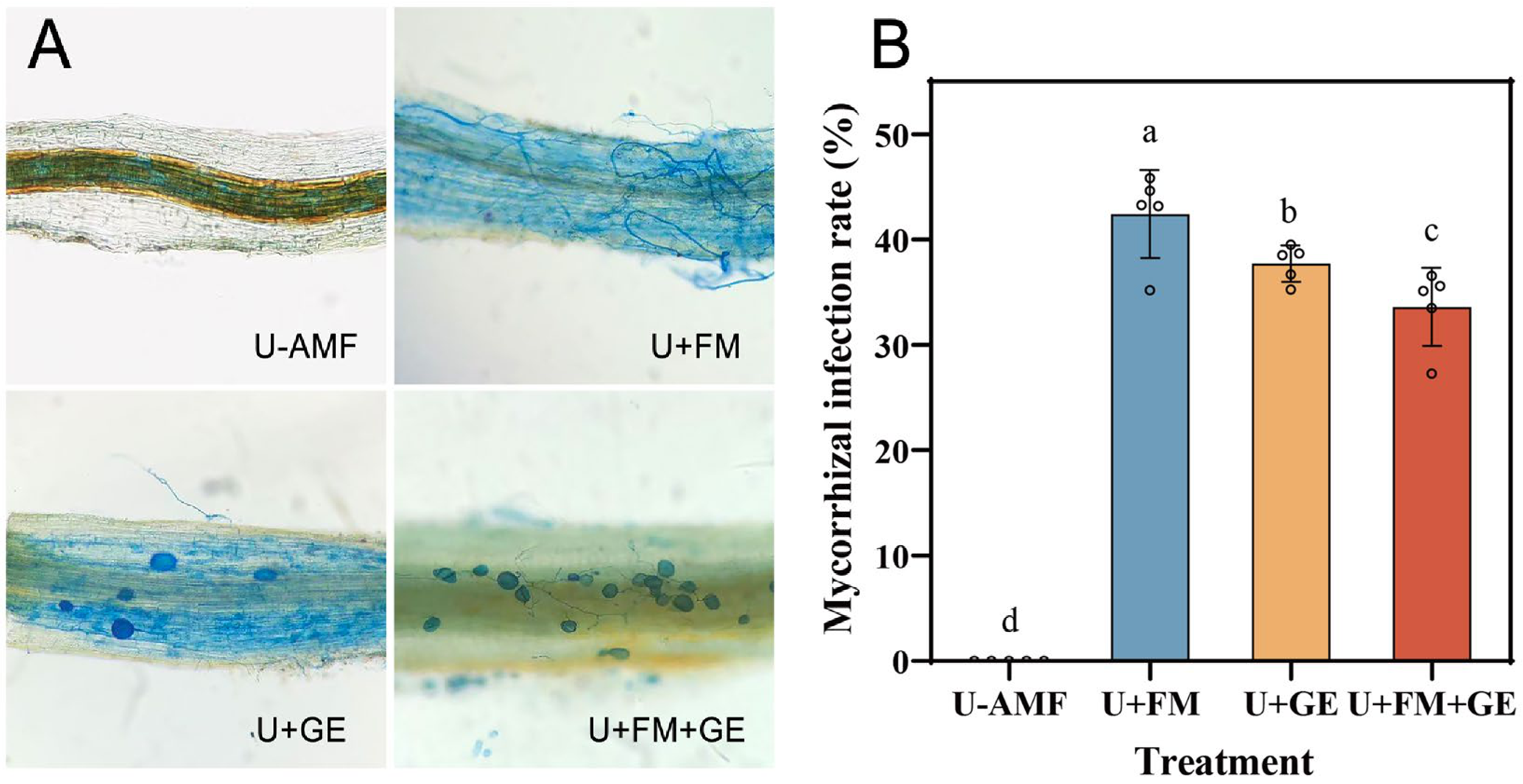
As shown in Figure 1A, mycorrhizal fungi successfully established symbiotic associations with sunflower roots under uranium contamination. The root colonization rates were 42.4%, 37.7%, and 33.6% in seedlings inoculated with F. mosseae, G. etunicatum, and a mixture of both F. mosseae and G. etunicatum, respectively, while no colonization was observed in the non-inoculated controls (Figure 1B).

3.2. Effects of AMF Inoculation on Plant Growth

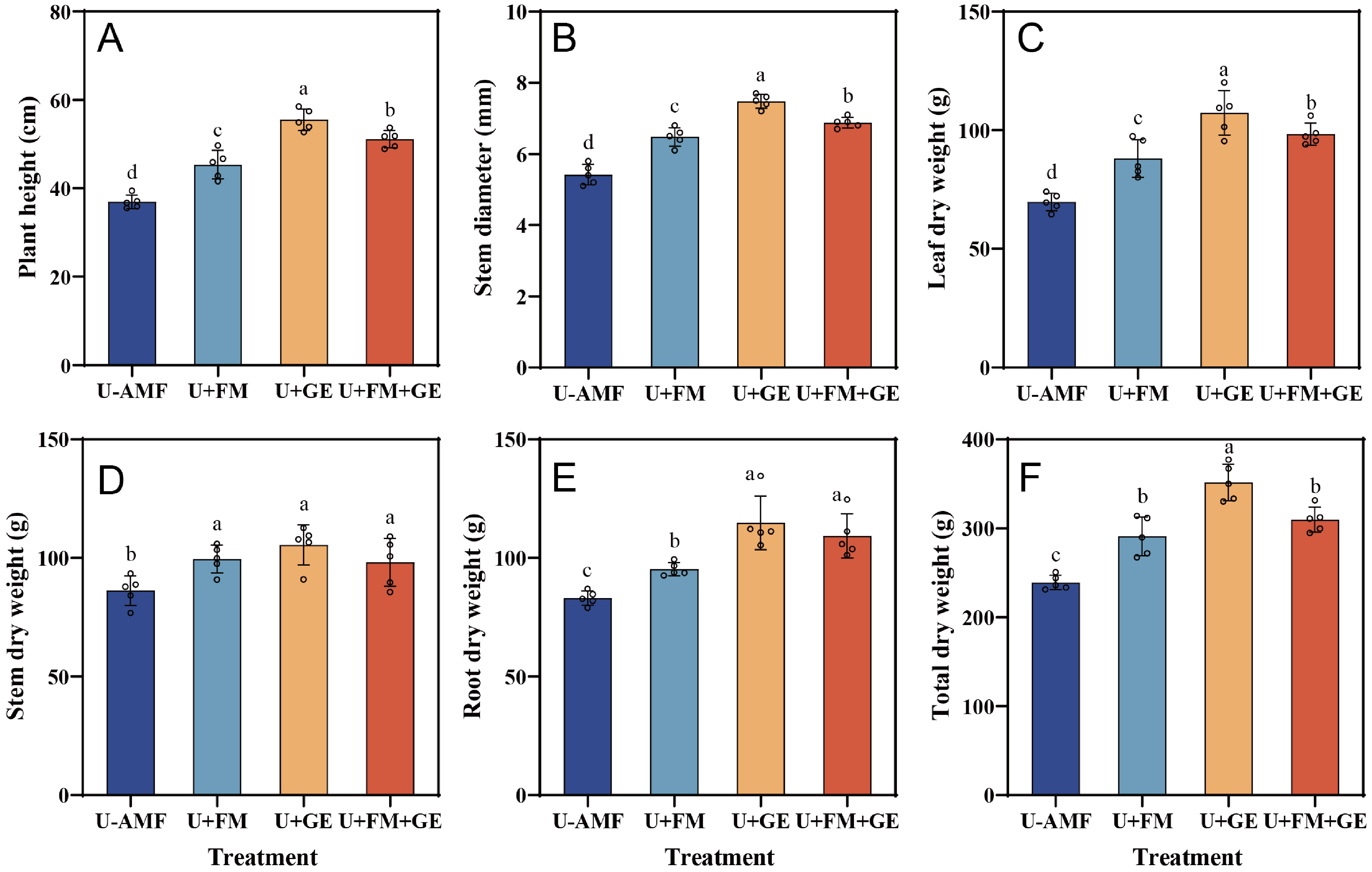
The growth parameters of sunflower seedlings under uranium contamination were significantly influenced by the AMF inoculation treatments (Figure 2). Compared to the non-inoculated control (U−AMF), the U+FM, U+GE, and U+FM+GE treatments promoted plant height by 22.8%, 50.3%, and 38.5%, and enhanced stem diameter by 19.6%, 38.0%, and 26.9%, respectively. Furthermore, these treatments substantially increased biomass accumulation. Specifically, leaf dry weight rose by 26.4%, 53.9%, and 41.1%; stem dry weight by 15.5%, 22.3%, and 13.8%; root dry weight by 14.6%, 38.1%, and 31.6%; and total plant biomass by 21.7%, 47.1%, and 29.6%, respectively. These results demonstrate that AMF inoculation effectively promotes sunflower growth in uranium-contaminated soil, with G. etunicatum (GE) performing better than F. mosseae (FM) or their combination (FM+GE).

3.3. Effects of AMF Inoculation on Gas Exchange Parameters

AMF inoculation significantly influenced gas exchange parameters in sunflower seedlings under uranium contamination (Table 1). Compared to the non-inoculated control (U−AMF), the U+FM, U+GE, and U+FM+GE treatments markedly enhanced photosynthetic performance: the Pn increased by 31.0%, 50.2%, and 44.5%; Gs increased by 11.1%, 27.8%, and 36.1%; Ci decreased by 4.7%, 13.5%, and 7.7%; and Tr increased by 21.9%, 42.6%, and 25.8%, respectively.

3.4. Effects of AMF Inoculation on Chlorophyll Fluorescence Parameters

AMF inoculation also significantly affected the chlorophyll fluorescence parameters of sunflower seedlings under uranium contamination (Table 2). The U+FM, U+GE, and U+FM+GE treatments significantly improved photosynthetic efficiency, increasing the Fv/Fm by 33.9%, 53.0%, and 41.7%; qP by 26.7%, 51.1%, and 28.1%; and ΦPSII by 84.4%, 134.4%, and 193.8%, respectively, compared to the non-inoculated control (U−AMF). Inoculation also significantly influenced the qN of sunflower seedlings. Compared to non-mycorrhizal seedlings, the U+FM, U+GE, and U+FM+GE treatments significantly reduced qN by13.0%, 33.3%, and 19.9% under uranium contamination.

3.5. Effects of AMF Inoculation on Biochemical Properties of Rhizosphere Soil

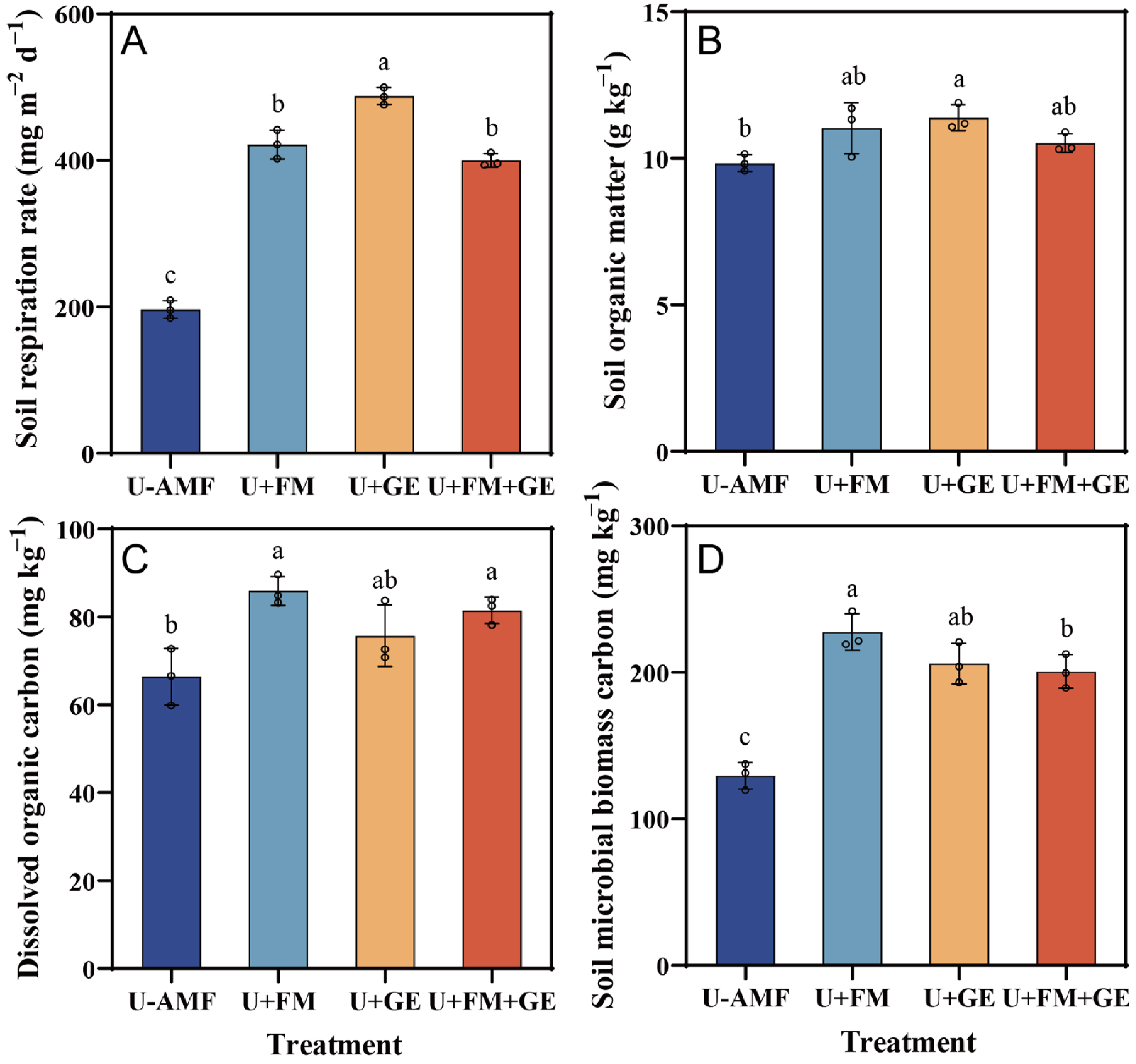
AMF inoculation significantly influenced several key biochemical properties in the rhizosphere soil of sunflowers under uranium contamination (Figure 3). Compared to the non-inoculated control (U−AMF), all AMF treatments significantly enhanced the SRR. The U+FM, U+GE, and U+FM+GE treatments increased SRR by 114.2%, 147.7%, and 103.3%, respectively (Figure 3A). Similarly, SOM content was notably increased by AMF inoculation. Relative to the U-AMF control, SOM rose by 12.2%, 15.6%, and 6.9% under U+FM, U+GE, and U+FM+GE treatments, respectively (Figure 3B). DOC content also responded positively to AMF inoculation. The U+FM, U+GE, and U+FM+GE treatments elevated DOC by 29.5%, 14.1%, and 22.8%, respectively, indicating a marked increase in labile carbon availability within the rhizosphere (Figure 3C). Furthermore, SMBC was significantly enhanced across all inoculation treatments. Increases of 75.6%, 59.0%, and 54.9% were observed for U+FM, U+GE, and U+FM+GE, respectively (Figure 3D).

3.6. Effects of AMF Inoculation on Rhizosphere Soil Enzyme Activities

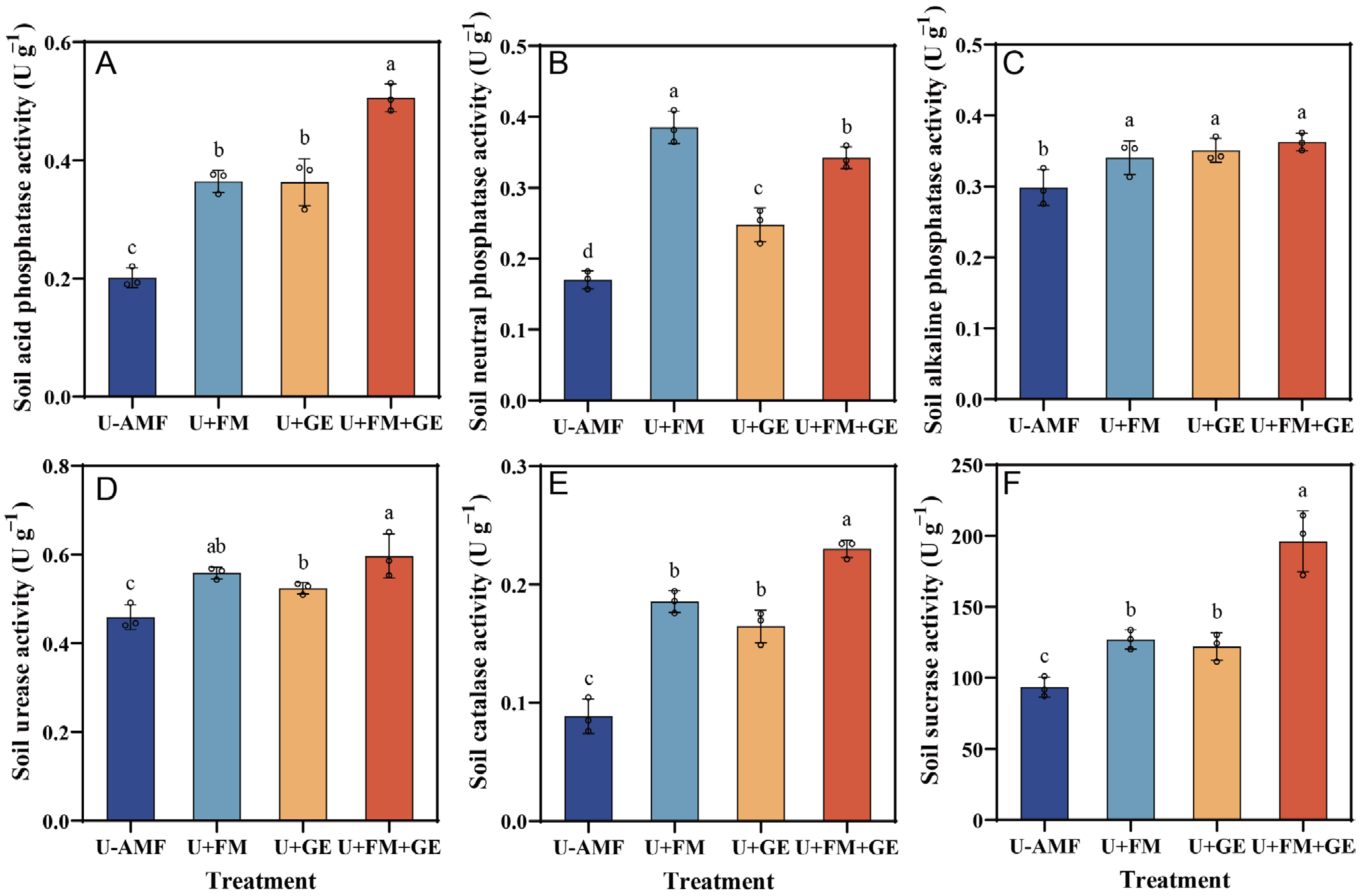
AMF treatment significantly influenced rhizosphere soil enzyme activities of sunflowers under uranium contamination (Figure 4).
The S-ACP activity was also strongly affected by AMF inoculation (Figure 4A). The U+FM, U+GE, and U+FM+GE treatments increased their activity by 81.1%, 80.3%, and 151.4%, respectively, relative to the U−AMF control, indicating a clear synergistic enhancement under co-inoculation.
The S-NP activity was significantly promoted by AMF inoculation, with the degree of improvement varying among treatments (Figure 4B). The U+FM treatment showed the most pronounced effect, increasing neutral phosphatase activity by 126.3% compared to the control.
As shown in Figure 4C, S-ALP activity was significantly enhanced by AMF inoculation. Compared to the control, the U+FM, U+GE, and U+FM+GE treatments increased alkaline phosphatase activity by 14.0%, 17.5%, and 21.4%, respectively, though no significant differences were observed among the different AMF treatments.
In addition, AMF inoculation increased S-UE activity (Figure 4D). The U+FM, U+GE, and U+FM+GE treatments enhanced urease activity by 21.7%, 14.2%, and 30.1%, respectively, compared to the control.
The S-CAT and S-SC activities exhibited a consistent response to AMF inoculation (Figure 4E,F). All inoculated treatments (U+FM, U+GE, and U+FM+GE) significantly enhanced the activities of both enzymes, with the U+FM+GE co-inoculation yielding the highest values. Specifically, the U+FM+GE treatment increased catalase activity by 160.1% and elevated sucrase activity by 110.5% compared to the non-inoculated control.

3.7. Effects of AMF Inoculation on Uranium Speciation in the Sunflower Rhizosphere

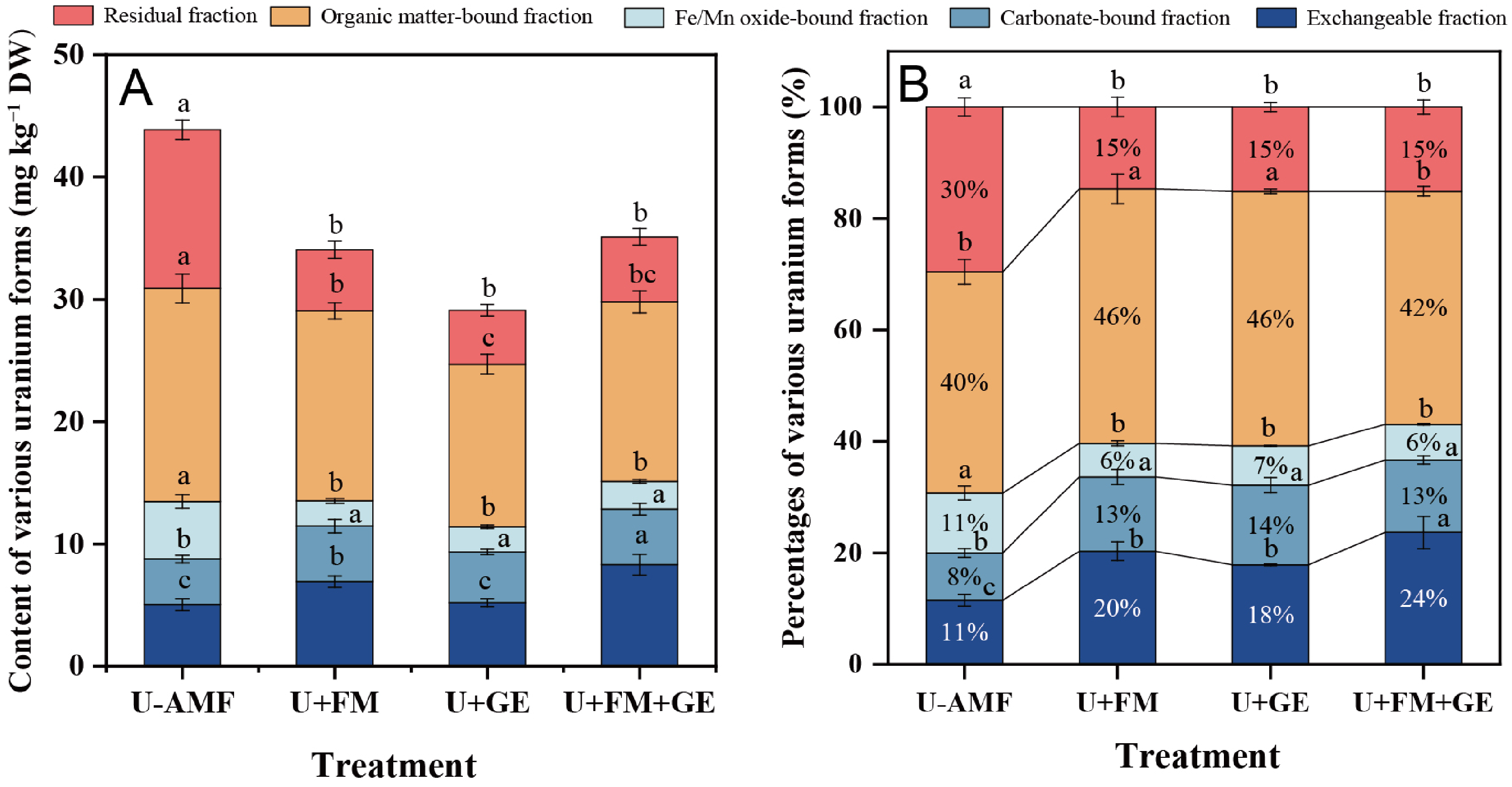
As shown in Figure 5A, AMF inoculation significantly reduced the total U content in the rhizosphere soil of sunflowers. Compared to the non-inoculated control (U−AMF), the U+FM, U+GE, and U+FM+GE treatments decreased U content by 22.3%, 33.7%, and 19.9%, respectively. In addition, AMF inoculation significantly altered the distribution of U fractions in the rhizosphere soil of sunflowers (Figure 5A). Compared to the non-inoculated control (U−AMF), all AMF treatments significantly increased the contents of exchangeable U and carbonate-bound U, with the U+FM+GE treatment showing the most pronounced effect. Specifically, the U+FM treatment increased these two fractions by 37.0% and 22.1%, respectively; the U+GE treatment increased them by 3.1% and 11.5%; and the U+FM+GE treatment increased them by 64.5% and 22.5%.
In addition, AMF inoculation significantly decreased the contents of crystalline Fe/Mn oxide-bound U, organic matter-bound U, and residual U, with no significant differences observed among the various inoculation treatments. Compared to the U−AMF control, the U+FM treatment reduced these three fractions by 34.52%, 31.15%, and 32.50%, respectively; the U+GE treatment reduced them by 4.52%, 7.86%, and 9.50%; and the U+FM+GE treatment reduced them by 14.52%, 13.56%, and 12.50% (Figure 5B).

3.8. Effects of AMF Inoculation on Uranium Accumulation in Sunflower Tissues and Translocation Factor

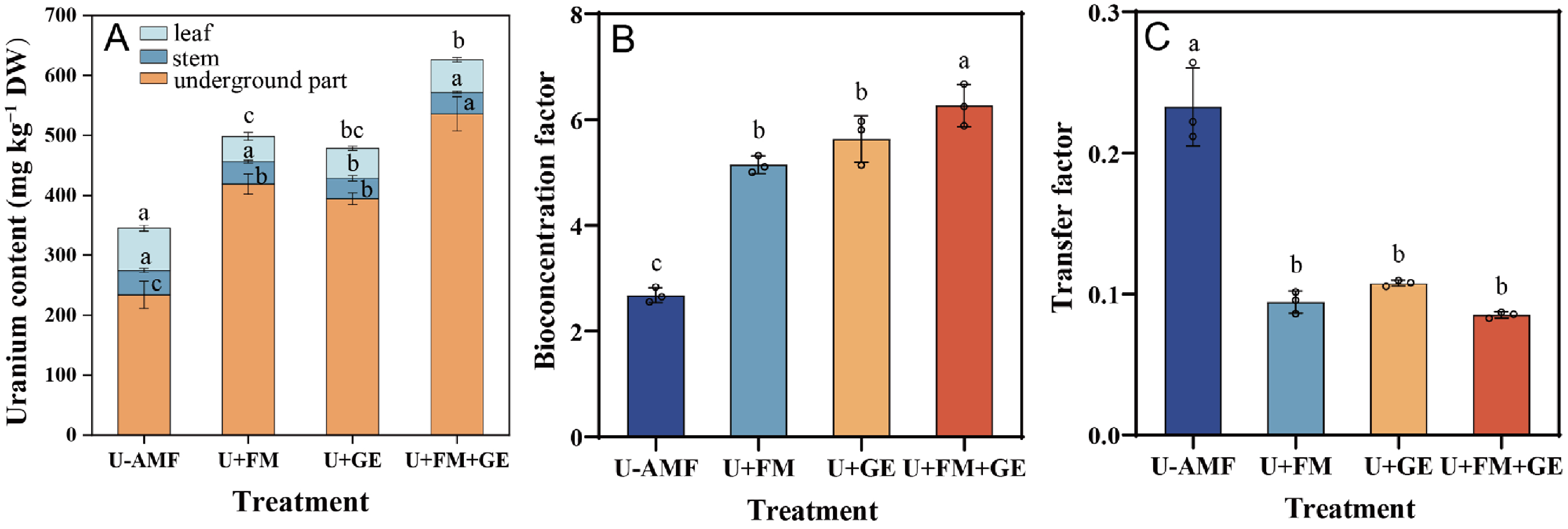
As shown in Figure 6A, AMF inoculation significantly reduced U concentration in sunflower leaves. The leaf U concentration in the U+FM treatment was 41.94 mg kg−1 DW, which was significantly lower than in all other treatments. Compared to the control, the U+FM, U+GE, and U+FM+GE treatments decreased leaf U concentration by 40.4%, 29.0%, and 23.1%, respectively.
As shown in Figure 6A, AMF inoculation also reduced U concentration in stems. Compared to the U−AMF control, the U+FM, U+GE, and U+FM+GE treatments decreased U concentration by 7.5%, 15.3%, and 11.0%, respectively.
In addition, U accumulation in belowground plant parts was markedly enhanced by AMF inoculation (Figure 6A). Both single-inoculation treatments significantly increased belowground U content, with U+FM and U+GE raising it by 79.0% and 68.4%, respectively, relative to the control, and no significant difference was observed between these two treatments. Notably, the U+FM+GE co-inoculation resulted in the highest belowground U accumulation, reaching 535.7 mg kg−1 DW, which was 129% higher than that of the U−AMF control.
The bioconcentration factor (BCF) of uranium in the sunflower plant was significantly increased by AMF inoculation (Figure 6B). Compared to the U−AMF control, the U+FM, U+GE, and U+FM+GE treatments increased TF by 92.1%, 110.3%, and 133.9%, respectively.
The translocation factor (TF) of uranium from belowground to aboveground tissues was significantly reduced by AMF inoculation (Figure 6C). Compared to the U−AMF control, the U+FM, U+GE, and U+FM+GE treatments decreased TF by 59.5%, 53.7%, and 63.4%, respectively. No significant differences in TF were detected among the three inoculation treatments.

3.9. Correlation and Principal Component Analyses

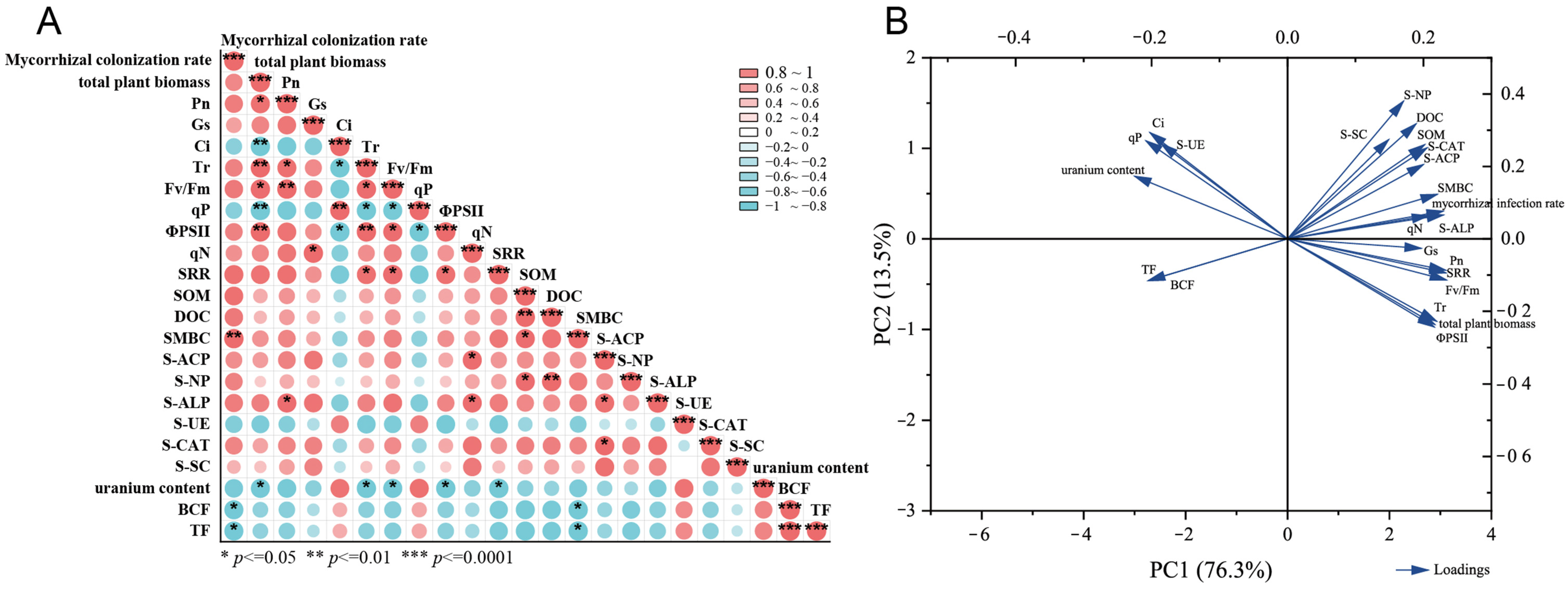
The correlations among multiple parameters, such as mycorrhizal infection rate, total plant biomass, Pn, Gs, Ci, Tr, Fv/Fm, qP, ΦPSII, qN, SRR, SOM content, DOC content, SMBC content, S-ACP activity, S-NP activity, S-ALP activity, S-UE activity, S-CAT activity, S-SC activity, uranium content in the rhizosphere soil, BCF, TF, were evaluated and presented as a correlation heatmap (Figure 7A). After AMF inoculation treatment, total plant biomass showed a significant negative correlation with Ci and qP (p < 0.01), and was significantly positively correlated with Tr and ΦPSII (p < 0.01). Moreover, Ci was significantly negatively correlated with Tr and ΦPSII (p < 0.05) and positively correlated with qP (p < 0.01). The mycorrhizal colonization rate showed a significant positive correlation with SMBC content (all p < 0.01). SOM content and S-NP activity each exhibited a significant positive correlation with DOC content (p < 0.01). Similarly, BCF was strongly positively correlated with TF (p < 0.001).
Principal component analysis (Figure 7B) revealed that the first two principal components collectively accounted for 89.8% of the total variance across treatment groups, with PC1 contributing 76.3% and PC2 contributing 13.5%. The loading plot further indicated that Fv/FM, SRR, Pn, S-ALP activity, and mycorrhizal colonization rate exhibited strong loadings on PC1, while S-NP activity, Ci, and DOC content were predominantly associated with PC2. Therefore, these parameters serve as key indicators reflecting the integrated effects of AMF inoculation on enhancing sunflower adaptation to uranium stress through improved physiological performance and rhizosphere functioning.

4. Discussion

4.1. AMF Inoculation Promotes Sunflower Growth and Photosynthetic Performance

Phytoremediation of U-contaminated soil has attracted attention due to its environmental friendliness and cost-effectiveness [21,38,39]. However, the practical application of sole plant-based remediation often faces multiple limitations, particularly under high uranium stress, where plants commonly exhibit growth inhibition, reduced biomass, and limited efficiency in uranium uptake and immobilization, which severely restricts remediation efficiency [40,41]. To overcome these bottlenecks, the introduction of exogenous enhancement measures has become a key strategy for improving remediation performance [42,43]. Among these, AMF, which are widely present in the root systems of terrestrial plants, can significantly enhance plant adaptability to environmental stress, and are considered a promising biology-based assisted strategy [44,45]. Previous research has demonstrated that AMF can promote the growth of various plants under heavy metal stress. For example, in plants such as Solanum lycopersicum [46], Ricinus communis [47], and Zea mays [48,49], AMF inoculation has been shown to improve plant biomass and enhance tolerance to heavy metal stress. Our present study confirms that both F. mosseae and G. etunicatum could successfully colonize sunflower roots under U stress (Figure 1) and significantly alleviate U-induced growth inhibition. AMF inoculation notably improved plant height, biomass accumulation, and stem diameter compared to non-inoculated plants. These results demonstrate that the tested AMF strains are tolerant of U stress and effectively enhance sunflower growth under U contamination, thereby improving the plant’s potential for phytoremediation applications.
The maintenance of photosynthetic function is significant for plant growth and stress tolerance [50]. Photosynthetic gas parameters are direct measures of a plant’s stress tolerance, biosynthetic potential, and light-use efficiency [50]. Heavy metal toxicity, including that of uranium, commonly impairs photosynthesis by inducing stomatal closure, which limits CO2 uptake and reduces the net photosynthetic rate [51,52]. However, AMF can alleviate these adverse effects, thereby improving both gas exchange and photochemical efficiency [53]. For instance, Bidens parviflora inoculated with AMF exhibited higher Pn, Gs, and Tr, while showing a lower Ci compared to non-mycorrhizal plants under lead (Pb) treatment [44]. Similarly, AMF inoculation significantly increased Pn and alleviated the negative effects of molybdenum (Mo) stress in maize plants [48]. Ju et al. [54] also reported that AMF reduced Ci under Cd stress in S. nigrum L., helping to alleviate non-stomatal limitations induced by Cd. Consistently, our results demonstrated that the Pn, Tr, and Gs of AMF-inoculated sunflowers were significantly higher than those of non-inoculated plants, while Ci was significantly lower. These findings indicated that AMF colonization substantially improved leaf gas exchange capacity and overall photosynthetic efficiency. Thus, AMF inoculation appears to mitigate uranium stress in plants by positively modulating stomatal behavior and photosynthetic gas exchange dynamics.
Chlorophyll fluorescence parameters offer valuable information on light energy capture, transfer, utilization, and distribution within the photosynthetic apparatus, reflecting the intrinsic photochemical activity of leaves [55]. Furthermore, these parameters can also elucidate the details of ATP synthesis, CO2 fixation, and electron transfer, serving as a crucial basis for evaluating plant physiological status under stress conditions [56]. Typically, heavy metal stress leads to a decline in parameters reflecting PSII efficiency, such as Fv/Fm, PSII, and qP, which indicates damage to the PSII apparatus and inhibition of electron transfer. Concurrently, an increase in qN reflects enhanced thermal dissipation, a protective mechanism to dissipate excess excitation energy and mitigate photodamage [57]. By improving the photochemical activity of PSII reaction centers and optimizing energy dissipation, AMF inoculation has been shown to reduce the damage to photosynthetic centers caused by various abiotic stressors, thereby alleviating the inhibition of photosynthetic electron transport. For example, Yuan et al. [58] demonstrated that AMF inoculation improved Fv/Fm, ΦPSII, and qP, while decreasing qN in Cannabis sativa L. under combined salt and drought stress, underscoring its role in protecting the photosynthetic apparatus.
In the present study, AMF-inoculated plants exhibited significant increases in Fv/Fm, ΦPSII, and qP under uranium stress. In the PCA analysis, Fv/Fm had a large loading value on PC1. The elevation in Fv/Fm and ΦPSII indicates improved integrity and photochemical efficiency of PSII, while the rise in qP suggests a greater proportion of absorbed light energy was utilized for photochemistry rather than dissipated. Concurrently, the observed decrease in qN implies a reduced need for protective thermal dissipation [59]. This collective response suggests that although uranium stress likely imposes photoinhibitory damage, AMF symbiosis effectively alleviates the disorganization of chloroplast structure and the inhibition of photosynthetic electron transport, thereby enhancing the overall photochemical performance and light-use efficiency of PSII. In summary, by mitigating uranium-induced photoinhibition and optimizing stomatal behavior, AMF play a vital role in sustaining the photosynthetic capacity of sunflowers, which directly contributes to the observed biomass accumulation and overall growth promotion under uranium stress.

4.2. AMF Improves Rhizosphere Biochemical Properties and Key Enzyme Functions

Rhizosphere properties such as SRR, SOM, DOC, and SMBC are critical indicators of soil biological activity and carbon cycling. In this study, AMF inoculation significantly improved several key rhizosphere properties under uranium stress, including SRR and the contents of SOM, DOC, and SMBC. These improvements collectively reflect stimulated microbial metabolism and enhanced carbon cycling in the contaminated soil. This result aligns with previous findings demonstrating that AMF can enhance microbial biomass and accelerate carbon dynamics in stressed soils. For instance, Li et al. [60] showed that in soils with low organic carbon content, AMF symbiosis improved soil microbial biomass carbon and enhanced the chemical composition of soil organic carbon. An et al. [61] found that the inoculation with AMF could increase SOM content in alfalfa soil and improve soil fertility. This is largely attributed to the substantial plant-derived carbon transported by AMF hyphae, which serves as a key substrate for soil organisms, a precursor for SOM formation, and a driver of microbial community dynamics [62]. Furthermore, the extraradical hyphal network contributes to the storage, stabilization, and reorganization of SOM [63]. Therefore, through increased root exudation and hyphal-mediated carbon input, AMF effectively enhance microbial activity and organic matter turnover, thereby revitalizing the rhizosphere environment under uranium stress.
This AMF-induced improvement in the rhizosphere’s physical and nutritional base likely created favorable conditions for the changes in enzyme activities observed in this study. Soil enzymes are direct catalysts of nutrient cycling and stress responses, and their activity is closely linked to microbial biomass and substrate availability [64]. In our study, AMF inoculation notably enhanced rhizosphere soil phosphatase activities, with the most pronounced increases observed in acid phosphatase (S-ACP) and neutral phosphatase (S-NP). These findings are consistent with previous reports; for instance, An et al. [61] suggested that the inoculation with AMF could increase the phosphatase activity in alfalfa rhizosphere soil. Ngosong et al. [65] also reported that inoculation with AMF modulated rhizosphere S-ACP and nodulation activities, and enhanced the productivity of soybean (Glycine max). The significant upregulation of S-ACP, which is frequently secreted by AMF hyphae to mineralize organic phosphorus, correlates well with the elevated SMBC. The mineralization of organic phosphorus by S-ACP releases bioavailable phosphate, which supports microbial growth and consequently increases SMBC. Conversely, the larger and more active microbial community reflected by higher SMBC contributes additional phosphatases to the rhizosphere, further enhancing S-ACP activity. Therefore, the marked increase in S-ACP results from both direct fungal exudation and stimulated microbial production [66]. Concurrently, alkaline phosphatase (S-ALP) activity also rose substantially, reflecting its important role in phosphorus acquisition under near-neutral pH conditions, likely through contributions from both plant roots and rhizosphere-associated bacteria [67]. The more moderate yet significant increase in S-ALP activity indicated a broad, coordinated stimulation of the phosphorus-mobilizing enzymatic machinery in the rhizosphere.
Soil urease (S-UE) plays a crucial role in soil nitrogen cycling by catalyzing the hydrolysis of urea into ammonium, a key step in nitrogen mineralization and plant nutrition [68]. In metal-contaminated environments, S-UE activity is often suppressed due to the toxicity to microbes [69]. For example, Wang et al. [70] reported that AMF inoculation increased S-UE activity and the growth of Z. mays and Elsholtzia splendens in soils contaminated with Cd, Pb, Zn, and Cu. It was also demonstrated by Shi et al. [71] that Rhizophagus intraradices and F. mosseae significantly elevated soil enzyme activities (including S-UE), resulting in an increase in rice yield. In line with these reports, our study observed that AMF inoculation significantly increased S-UE activity under uranium stress. This enhancement likely reflects an adaptive strategy, as the plant-AMF symbiosis promotes nitrogen mineralization, thereby improving nitrogen availability to support host metabolism and biomass production. Ultimately, such adjustments may enhance overall tolerance and remediation capacity in uranium-contaminated soils.
Soil catalase (S-CAT) and sucrase (S-SC) are key enzymes mediating distinct biochemical processes in rhizosphere soil. S-CAT is a key enzyme in soil that decomposes hydrogen peroxide into water and oxygen, mitigating oxidative stress in the rhizosphere environment [72]. S-SC is a fundamental enzyme in soil carbon cycling, catalyzing the hydrolysis of sucrose into monosaccharides that serve as readily available energy sources for rhizosphere microorganisms [73]. In metal-stressed soils, S-CAT and S-SC activities were commonly suppressed due to the toxic impact on soil microorganisms and root cells [74]. Notably, AMF symbiosis has been reported to stimulate S-CAT and S-SC activities. Research has shown that AMF significantly heightened S-SC activity in the rhizosphere soil of peanuts at different growth stages, with a notable rise in S-CAT activity observed during maturity [75]. Similarly, our results demonstrated a significant increase in rhizosphere S-CAT and S-SC activities following AMF inoculation under uranium stress. These findings collectively suggest that AMF inoculation enhances key rhizosphere enzyme functions, likely contributing to improved stress mitigation and nutrient cycling in uranium-contaminated soil.
In summary, AMF inoculation fostered a more favorable rhizosphere microenvironment by coordinately enhancing soil biochemical properties and enzyme activities. The increased SRR, SOM, DOC, and SMBC supplied essential material and energy to support microbial processes and nutrient cycling. Concurrently, the upregulation of key enzymes, including phosphatases (phosphorus acquisition), S-CAT (antioxidative defense), S-SC (carbon metabolism), and S-UE (nitrogen mineralization), further reinforced rhizosphere functions related to stress alleviation and metabolic efficiency. Collectively, this optimized rhizosphere environment not only mitigated uranium toxicity directly but also provided critical support for plant growth and uranium immobilization under contamination.

4.3. AMF Modulates Uranium Speciation and Promotes Root-Sequestered Phytostabilization

The effectiveness of phytostabilization is fundamentally constrained by the low bioavailability of uranium in soil, where it predominantly exists in stable, non-labile forms [76]. The chemical speciation of uranium not only influences its total concentration but also significantly impacts its mobility, potential for plant uptake, and overall environmental risk [77,78,79]. AMF have been shown to enhance uranium removal from soil. For example, Ren et al. [80] reported a higher uranium removal rate in soil inoculated with AMF when grown with Sesbania rostrata compared to plants grown without mycorrhizal associations. Moreover, AMF can secrete acid phosphatase enzymes as well as organic acids (e.g., oxalic and citric acids) from their extraradical hyphae, which are capable of mobilizing heavy metals from stable soil pools [80,81]. Our findings indicated that AMF treatments effectively increase the exchangeable and carbonate-bound fractions of uranium, which are more accessible for plant uptake. This enhancement likely boosts the phytostabilization potential of sunflowers in uranium-contaminated soils, allowing for greater access to these mobilized uranium forms. Furthermore, the observed reductions in organic matter-bound, crystalline Fe/Mn oxide-bound, and residual uranium fractions suggest that AMF play an important role in altering the speciation and distribution of uranium within the rhizosphere, thereby mitigating its toxicity. Therefore, AMF facilitate the transformation of uranium into more mobile states, enhancing uranium uptake by plants, which may lead to immobilization within root tissues and a reduction of uranium’s environmental mobility and potential ecological risks. However, further investigation is warranted to determine whether AMF-induced changes in uranium speciation are primarily driven by shifts in microbial community composition or by direct fungal exudation of organic chelators.
Although AMF increased U bioavailability in the rhizosphere, this did not lead to higher accumulation in the shoot. Instead, the mobilized U was effectively retained within the roots, highlighting the key role of AMF in root U sequestration. This process likely limits U translocation to more vulnerable leaves and stems, reducing oxidative damage [82,83]. Underlying mechanisms may involve AMF-mediated immobilization in cell walls, compartmentalization in hyphae or vesicles, and chelation by fungal exudates [16]. Functionally, AMF could serve as a biological barrier that enhances apoplastic binding in roots and restricts xylem loading, thereby curbing metal transfer to shoots, as highlighted by Xu et al. [84]. Consistent with this, Zhan et al. [85] showed that F. mosseae and Diversispora spurcum promoted root retention of Pb, Zn, Cd, and As while restricting their transfer to maize shoots. Similarly, Salari et al. [86] found that AMF reduced shoot arsenic concentration and translocation factor, while enhancing root arsenic accumulation and total arsenic uptake per plant. In line with these results, our study observed a reduction in the U translocation factor (TF) and an increase in the uranium bioconcentration factor (BCF) of sunflower plants under AMF inoculation. Collectively, these results confirm that the remediation strategy at work is phytostabilization, not phytoextraction, achieved predominantly by AMF enhancing U sequestration in roots, thereby mitigating phytotoxicity and supporting plant adaptation to U-contaminated environments.

4.4. Dynamic Competitive and Complementary Effects in AMF Co-Inoculation

In addition, in this study, co-inoculation with F. mosseae and G. etunicatum (U+FM+GE) did not consistently outperform single-strain inoculations across all evaluated parameters, despite showing synergistic effects for certain traits. Specifically, co-inoculation exhibited the highest belowground U accumulation, and achieved the greatest increases in S-ACP, S-CAT, and S-SC activities. However, for other parameters, single inoculation with G. etunicatum (U+GE) performed better, including plant height, total biomass, net photosynthetic rate, and qP. Similarly, for rhizosphere properties such as SRR, SOM, and SMBC, the U+GE treatment also showed superior or comparable effects to co-inoculation. These observations suggested that interactions between AMF strains were not merely additive but might involve complex competitive or complementary dynamics that influenced host plant performance through functional complementarity or physiological conflicts. For instance, Malicka et al. [87] reported that inoculation with single AMF species (F. caledonium, Diversispora varaderana, or Claroideoglomus walkeri) positively affected the growth of L. perenne, regardless of the level of contamination, whereas inoculation with a mixture of these three AMF species had no effect or even decreased plant height and biomass. Thonar et al. [88] also demonstrated a dynamic interplay among three AMF species (C. claroideum, R. irregularis, and Gigaspora margarita) in a pairwise combination inoculation system, where the interaction properties shifted according to the specific strains and their ratios. While C. claroideum and R. irregularis appeared to compete for colonization space within root tissues, their complementary functionalities allowed host plants to achieve enhanced growth and phosphorus accumulation. Conversely, despite mutual facilitation observed between G. margarita and R. irregularis in terms of colonization, this relationship paradoxically resulted in reduced plant growth.
Importantly, neither of the AMF strains employed in this study had been pre-adapted to uranium stress. AMF strains that are propagated under conditions similar to those in uranium-contaminated soils may develop specific adaptations, leading to more effective root colonization, improved nutrient uptake, and enhanced plant tolerance to heavy metals [89]. The absence of prior adaptation might have constrained the overall performance of both single and mixed inoculations, particularly for parameters related to fungal activity under stress conditions. In summary, for future phytoremediation applications, it is imperative to select uranium-adapted AMF strains and to carefully assess strain compatibility when designing co-inoculation strategies aimed at mitigating competitive interference. This tailored approach has the potential to substantially enhance the efficacy of AMF-assisted phytoremediation in uranium-contaminated environments.

5. Conclusions

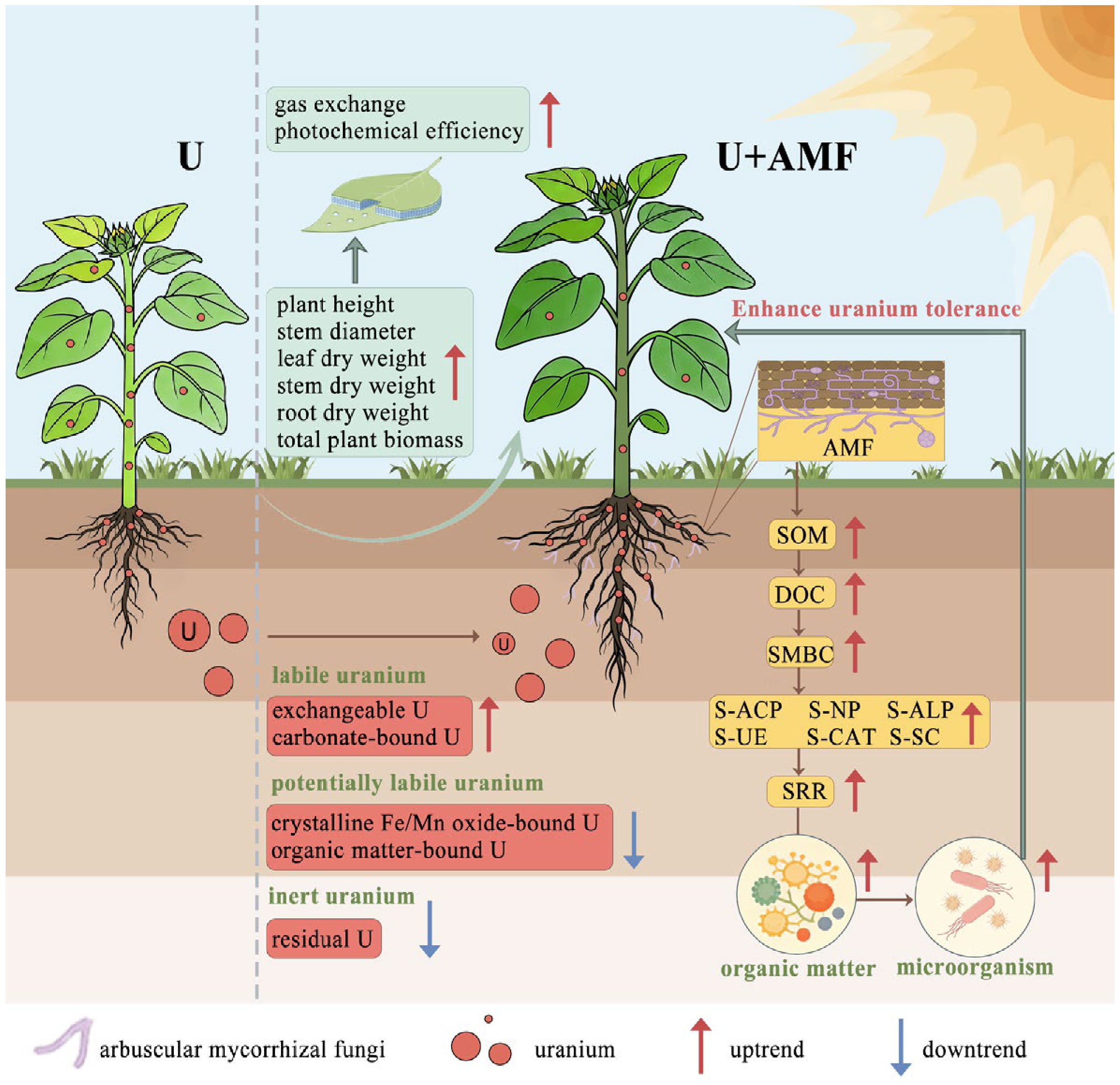
In summary, this study demonstrated that AMF inoculation significantly enhances the potential of sunflowers for U phytostabilization (Figure 8). First, AMF colonization promoted plant growth and physiological performance under U stress by improving photosynthesis, biomass accumulation, and gas exchange. Second, in the rhizosphere, AMF positively influenced key soil properties by increasing respiration rates, enhancing organic matter content, boosting dissolved organic carbon levels, and promoting microbial biomass. Third, AMF also altered U speciation by increasing the more labile exchangeable and carbonate-bound fractions while decreasing the stable residual forms. While these labile fractions are typically considered more mobile, their increase in the rhizosphere did not lead to elevated shoot accumulation. Instead, this shift was coupled with a significant reduction in U translocation to the shoots and enhanced U retention in the roots, indicating that AMF facilitate U immobilization within the root zone. This combination of rhizosphere activation and root sequestration confirms phytostabilization as the primary remediation strategy. In conclusion, these findings are significant for the use of AMF in phytostabilization, particularly in areas with high U levels. By enhancing plant resilience and restricting U translocation to aboveground tissues, AMF can play a key role in effective phytostabilization strategies, offering a sustainable solution for managing heavy metal contamination while minimizing ecological risks associated with shoot accumulation.

Author Contributions

L.Z.: writing—original draft, data curation. X.H.: data curation, methodology. X.T.: writing—review and editing, funding acquisition. J.W.: software, investigation. H.H.: resources, methodology. Y.L.: methodology, writing—review and editing. R.H.: validation, project administration. All authors have read and agreed to the published version of the manuscript.

Funding

This work was supported by the Young and Middle-aged Leading Science and Technology Innovation Team by the Education Department of Hubei Province (T2023032) and the Hubei Provincial Natural Science Foundation of China (Innovation Development Joint Fund of Jingmen, 2026AFC0743).

Data Availability Statement

The original contributions presented in this study are included in the article. Further inquiries can be directed to the corresponding author.

Conflicts of Interest

The authors declare no conflicts of interest.

References

  1. Chen, L.; Liu, J.R.; Wang, H.Y.; Zhao, Y.X.; Lu, Y.H.; Li, Y.F.; Zhang, H. Environmental and health risk assessment of potentially toxic trace elements in soils near uranium (U) mines: A global meta-analysis. Sci. Total. Environ. 2022, 816, 151556. [Google Scholar] [CrossRef]
  2. Chen, L.; Yang, J.Y.; Wang, D. Phytoremediation of uranium and cadmium contaminated soils by sunflower (Helianthus annuus L.) enhanced with biodegradable chelating agents. J. Clean. Prod. 2020, 263, 121491. [Google Scholar] [CrossRef]
  3. Kumar, A.; Ali, M.; Kumar, R.; Kumar, M.; Smita, K.; Kumar, S.; Pandey, B.D. A comprehensive review of Uranium in the terrestrial and aquatic environment: Bioavailability, immobilization, tolerance and remediation approaches. Plant Soil 2023, 490, 31–65. [Google Scholar] [CrossRef]
  4. Kaur Guron, B.; Kalkal, S.; Mehra, R. The impact of uranium contamination in groundwater on human health: A toxicological risk assessment. Int. J. Environ. Anal. Chem. 2025, 105, 3058–3072. [Google Scholar] [CrossRef]
  5. Abolli, S.; Gupta, A.; Nayak, A. Understanding uranium distribution: A systematic review and meta-analysis in the context of drinking water resources. Results Eng. 2024, 22, 102152. [Google Scholar] [CrossRef]
  6. Bjørklund, G.; Christophersen, O.A.; Chirumbolo, S.; Selinus, O.; Aaseth, J. Recent aspects of uranium toxicology in medical geology. Environ. Res. 2017, 156, 526–533. [Google Scholar] [CrossRef] [PubMed]
  7. Xin, J.; Zhang, Y.; Li, S.; Zhang, L.; Wang, Y. A comprehensive review of radioactive pollution treatment of uranium mill tailings. Environ. Sci. Pollut. Res. 2023, 30, 102104–102128. [Google Scholar] [CrossRef]
  8. Awa, S.H.; Hadibarata, T. Removal of heavy metals in contaminated soil by phytoremediation mechanism: A review. Water Air Soil Pollut. 2020, 231, 47. [Google Scholar] [CrossRef]
  9. Alsabbagh, A.H.; Abuqudaira, T.M. Phytoremediation of jordanian uranium-rich soil using sunflower. Water Air Soil Pollut. 2017, 228, 219. [Google Scholar] [CrossRef]
  10. Laurette, J.; Larue, C.; Mariet, C.; Brisset, F.; Khodja, H.; Bourguignon, J.; Carrière, M. Influence of uranium speciation on its accumulation and translocation in three plant species: Oilseed rape, sunflower and wheat. Environ. Exp. Bot. 2012, 77, 96–107. [Google Scholar] [CrossRef]
  11. Lee, M.; Yang, M. Rhizofiltration using sunflower (Helianthus annuus L.) and bean (Phaseolus vulgaris L. var. vulgaris) to remediate uranium contaminated groundwater. J. Hazard. Mater. 2010, 173, 589–596. [Google Scholar] [CrossRef] [PubMed]
  12. Aghababaei, F.; Raiesi, F.; Hosseinpur, A. The combined effects of earthworms and arbuscular mycorrhizal fungi on microbial biomass and enzyme activities in a calcareous soil spiked with cadmium. Appl. Soil Ecol. 2014, 75, 33–42. [Google Scholar] [CrossRef]
  13. Jagetiya, B.L.; Purohit, P. Effects of various concentrations of uranium tailings on certain growth and biochemical parameters in sunflower. Biologia 2006, 61, 103–107. [Google Scholar] [CrossRef][Green Version]
  14. Mihalík, J.; Tlustoš, P.; Szaková, J. Comparison of willow and sunflower for uranium phytoextraction induced by citric acid. J. Radioanal. Nucl. Chem. 2010, 285, 279–285. [Google Scholar] [CrossRef]
  15. Khan, Y.; Shah, S.; Tian, H. The roles of arbuscular mycorrhizal fungi in influencing plant nutrients, photosynthesis, and metabolites of cereal crops—A review. Agriculture 2022, 12, 2191. [Google Scholar] [CrossRef]
  16. Dhalaria, R.; Kumar, D.; Kumar, H.; Nepovimova, E.; Kuca, K.; Torequl Islam, M.; Verma, R. Arbuscular mycorrhizal fungi as potential agents in ameliorating heavy metal stress in plants. Agronomy 2020, 10, 815. [Google Scholar] [CrossRef]
  17. Yang, Y.; Liang, Y.; Ghosh, A.; Song, Y.; Chen, H.; Tang, M. The Combined Effects of arbuscular mycorrhizal fungi (AMF) and lead (Pb) stress on Pb accumulation, plant growth parameters, photosynthesis, and antioxidant enzymes in Robinia pseudoacacia L. PLoS ONE 2015, 10, e0145726. [Google Scholar] [CrossRef]
  18. Zhu, S.; Sun, S.; Zhao, W.; Sheng, L.; Mao, H.; Yang, X. Arbuscular mycorrhizal fungi alleviated the effects of Cd stress on Passiflora edulis growth by regulating the rhizosphere microenvironment and microbial community structure at the seedling stage. Sci. Hortic. 2024, 328, 112879. [Google Scholar] [CrossRef]
  19. Chen, B.D.; Zhu, Y.G.; Smith, F.A. Effects of arbuscular mycorrhizal inoculation on uranium and arsenic accumulation by Chinese brake fern (Pteris vittata L.) from a uranium mining-impacted soil. Chemosphere 2006, 62, 1464–1473. [Google Scholar] [CrossRef] [PubMed]
  20. Rufyikiri, G.; Huysmans, L.; Wannijn, J.; Van Hees, M.; Leyval, C.; Jakobsen, I. Arbuscular mycorrhizal fungi can decrease the uptake of uranium by subterranean clover grown at high levels of uranium in soil. Environ. Pollut. 2004, 130, 427–436. [Google Scholar] [CrossRef]
  21. Rong, L.; Wang, Z.; Chen, L.; Liu, W. Phytoremediation of uranium-contaminated soil by perennial ryegrass (Lolium perenne L.) enhanced with citric acid application. Environ. Sci. Pollut. Res. 2022, 29, 33002–33012. [Google Scholar] [CrossRef]
  22. Zhang, Y.; Hu, J.; Bai, J.; Wang, J.; Yin, R.; Wang, J.; Lin, X. Arbuscular mycorrhizal fungi alleviate the heavy metal toxicity on sunflower (Helianthus annuus L.) plants cultivated on a heavily contaminated field soil at a WEEE-recycling site. Sci. Total Environ. 2018, 628, 282–290. [Google Scholar] [CrossRef]
  23. Mu, M.; Li, Z.; Wu, Q.; Yang, Y.; Liu, Y.; Wang, L. Physiological characteristics, rhizosphere soil properties, and root-related microbial communities of Trifolium repens L. in response to Pb toxicity. Sci. Total Environ. 2024, 907, 167871. [Google Scholar] [CrossRef]
  24. Zhang, B.; Li, S.; Chen, S.; Liang, C.; Zhou, X. Arbuscular mycorrhizal fungi regulate soil respiration and its response to precipitation change in a semiarid steppe. Sci. Rep. 2016, 6, 19990. [Google Scholar] [CrossRef] [PubMed]
  25. Angst, G.; Kögel-Knabner, I.; Kirfel, K.; Hertel, D.; Mueller, C.W. Spatial distribution and chemical composition of soil organic matter fractions in rhizosphere and non-rhizosphere soil under European beech (Fagus sylvatica L.). Geoderma 2016, 264, 179–187. [Google Scholar] [CrossRef]
  26. Li, X.M.; Chen, Q.L.; He, C.; Shi, Q.; Chen, S.C.; Reid, B.J.; Zhu, Y.G.; Sun, G.X. Organic carbon amendments affect the chemodiversity of soil dissolved organic matter and its associations with soil microbial communities. Environ. Sci. Technol. 2018, 53, 50–59. [Google Scholar] [CrossRef]
  27. Ding, W.; Li, X.; Zhu, M.; Li, H.; Luo, Y. Responses of soil organic carbon, microbial biomass carbon, and microbial quotient to ground cover management practices in Chinese orchards: A data synthesis. Plant Soil 2025, 511, 601–615. [Google Scholar] [CrossRef]
  28. Wang, L.; Liang, Y.; Liu, S.; Chen, F.; Ye, Y.; Chen, Y.; Wang, J.; Paterson, D.J.; Kopittke, P.M.; Wang, Y.; et al. Effect of silicon on the distribution and speciation of uranium in sunflower (Helianthus annuus). J. Hazard. Mater. 2024, 478, 135433. [Google Scholar]
  29. Katsoyiannis, I.A.; Zouboulis, A.I. Removal of uranium from contaminated drinking water: A mini review of available treatment methods. Desalination Water Treat. 2013, 51, 2915–2925. [Google Scholar] [CrossRef]
  30. Koske, R.; Gemma, J. A modified procedure for staining roots to detect VA mycorrhizas. Mycol. Res. 1989, 92, 486–488. [Google Scholar] [CrossRef]
  31. Yan, K.X.; Huang, R.H.; Gao, X.B.; Hashem, A.; Abd Allah, E.F.; Wu, Q.S.; Guo, C. Entrophospora etunicata enhances manganese stress tolerance in tea plants by increasing antioxidant enzyme defense and modulating quality-related metabolism. Rhizosphere 2025, 36, 101226. [Google Scholar] [CrossRef]
  32. Haney, R.L.; Brinton, W.F.; Evans, E.R.I.C. Soil CO2 respiration: Comparison of chemical titration, CO2 IRGA analysis and the Solvita gel system. Renew. Agr. Food Syst. 2008, 23, 171–176. [Google Scholar]
  33. Li, X.; Li, Q.; Xu, X.; Su, Y.; Yue, Q.; Liu, B. Arbuscular mycorrhizal-like fungi and glomalin-related soil protein drive the distributions of carbon and nitrogen in a large scale. J. Soils Sediments 2020, 20, 963–972. [Google Scholar] [CrossRef]
  34. Ashraf, M.N.; Hu, C.; Wu, L.; Duan, Y.; Zhang, Y.; Aziz, T.; Cai, A.; Abrar, M.M.; Xu, M. Soil and microbial biomass stoichiometry regulate soil organic carbon and nitrogen mineralization in rice-wheat rotation subjected to long-term fertilization. J. Soils Sediments 2020, 20, 3103–3113. [Google Scholar] [CrossRef]
  35. Vance, E.D.; Brookes, P.C.; Jenkinson, D.S. An extraction method for measuring soil microbial biomass C. Soil Biol. Biochem. 1987, 19, 703–707. [Google Scholar] [CrossRef]
  36. Tessier, A.; Campbell, P.G.; Bisson, M.J. Sequential extraction procedure for the speciation of particulate trace metals. Anal. Chem. 1979, 51, 844–851. [Google Scholar] [CrossRef]
  37. Chang, P.; Kim, J.Y.; Kim, K.W. Uranium accumulation of crop plants enhanced by citric acid. Environ. Geochem. Health 2005, 27, 529–538. [Google Scholar] [CrossRef]
  38. Akash, S.; Sivaprakash, B.; Rajamohan, N.; Vo, D.V.N. Remediation techniques for uranium removal from polluted environment–Review on methods, mechanism and toxicology. Environ. Pollut. 2022, 302, 119068. [Google Scholar] [CrossRef]
  39. He, L.; Li, W.; Li, H.; Zhang, H.; Chen, K. Field tests of the phytoremediation of uranium tailings by Macleaya cordata (Willd.). R. Br. J. Radioanal. Nucl. Chem. 2021, 38, 654–661. [Google Scholar] [CrossRef]
  40. Priya, A.K.; Muruganandam, M.; Ali, S.S.; Kornaros, M. Clean-up of heavy metals from contaminated soil by phytoremediation: A multidisciplinary and eco-friendly approach. Toxics 2023, 11, 422. [Google Scholar] [CrossRef]
  41. Hosseini, S.G.; Rahimnejad, M.; Zokhtareh, R. Phytoremediation of uranium-contaminated soils by wheat and sunflower plants. Asian Biotechnol. Dev. Rev. 2023, 15, 57–76. [Google Scholar]
  42. Bartucca, M.L.; Cerri, M.; Del Buono, D.; Forni, C. Use of biostimulants as a new approach for the improvement of phytoremediation performance—A Review. Plants 2022, 11, 1946. [Google Scholar] [CrossRef]
  43. Wang, G.; Zhang, Q.; Du, W.; Ai, F.; Yin, Y.; Ji, R. Enhanced phytoremediation of uranium-contaminated soils by Indian mustard (Brassica juncea L.) using slow release citric acid. Environ. Sci. Pollut. Res. 2021, 28, 61061–61071. [Google Scholar] [CrossRef] [PubMed]
  44. Yang, Y.; Wang, Y.; Liu, J.; Zhang, L.; Guo, W.; Li, T. Heavy metal domestication enhances beneficial effects of arbuscular mycorrhizal fungi on lead (Pb) phytoremediation efficiency of Bidens parviflora through improving plant growth and root Pb accumulation. Environ. Sci. Pollut. Res. 2022, 29, 32988–33001. [Google Scholar] [CrossRef]
  45. Zhao, S.; Wang, F.; Zhang, Y.; Li, J.; Chen, X. Arbuscular mycorrhizal fungi-assisted phytoremediation: A promising strategy for cadmium-contaminated soils. Agronomy 2024, 13, 3289. [Google Scholar] [CrossRef]
  46. Zhang, L.; Li, L.; Pan, X.; Shi, W.; Zeng, P. A pseudomonas plant growth promoting rhizobacterium and arbuscular mycorrhiza differentially modulate the growth, photosynthetic performance, nutrients allocation, and stress response mechanisms triggered by a mild zinc and cadmium stress in tomato. Plant Sci. 2023, 337, 111873. [Google Scholar] [CrossRef] [PubMed]
  47. Wen, Y.; Wang, J.; Li, H.; Liu, Y.; Feng, Y.; Li, Z. AMF and biochar reshape the bacterial network in rhizosphere soil of Ricinus communis under chromium (Cr) stress and improve soil quality. J. Hazard. Mater. 2025, 492, 138122. [Google Scholar] [CrossRef]
  48. Zhang, M.; Wang, Y.; Li, R.; Chen, X.; Liu, Y. AMF inoculation alleviates molybdenum toxicity to maize by protecting leaf performance. J. Fungi 2023, 9, 479. [Google Scholar] [CrossRef] [PubMed]
  49. Yang, Q.; Zhang, L.; Liu, J.; Wang, S.; Li, H. AMF and UPB synergistically enhanced cadmium tolerance in maize via hormonal regulation, photosynthetic optimization, and antioxidant activation. Physiol. Plant 2025, 177, e70661. [Google Scholar] [CrossRef]
  50. Sharma, A.; Kumar, V.; Shahzad, B.; Ramakrishnan, M.; Sidhu, G.P.S.; Bali, A.S.; Handa, N.; Kapoor, D.; Yadav, P.; Khanna, K.; et al. Photosynthetic response of plants under different abiotic stresses: A review. J. Plant Growth Regul. 2020, 39, 509–531. [Google Scholar] [CrossRef]
  51. Riyazuddin, R.; Nisha, N.; Ejaz, B.; Khan, M.I.R.; Kumar, M.; Ramteke, P.W.; Gupta, R. A comprehensive review on the heavy metal toxicity and sequestration in plants. Biomolecules 2021, 12, 43. [Google Scholar] [CrossRef]
  52. Ali, B.; Gill, R.A. Heavy metal toxicity in plants: Recent insights on physiological and molecular aspects, volume II. Front. Plant. Sci. 2022, 13, 1016257. [Google Scholar] [CrossRef]
  53. Khaliq, A.; Perveen, S.; Alamer, K.H.; Zia Ul Haq, M.; Rafique, Z. Arbuscular mycorrhizal fungi symbiosis to enhance plant–soil interaction. Sustainability 2022, 14, 7840. [Google Scholar] [CrossRef]
  54. Ju, C.; Zhang, Z.; Chen, X.; Li, Y.; Wang, J.; Sun, Y. Enhancing the resistance of hyperaccumulator with arbuscular mycorrhizal fungi in cadmium-contaminated saline soil: A physiological and transcriptional mechanistic study. J. Clean. Prod. 2025, 501, 145330. [Google Scholar] [CrossRef]
  55. Roháček, K. Chlorophyll fluorescence parameters: The definitions, photosynthetic meaning, and mutual relationships. Photosynthetica 2002, 40, 13–29. [Google Scholar] [CrossRef]
  56. Jan, S.; Olaf, V.K. The use of chlorophyll fluorescence nomenclature in plant stress physiology. Photosynth. Res. 1990, 25, 147–150. [Google Scholar] [CrossRef]
  57. Liu, B.; An, C.; Jiao, S.; Jia, F.; Liu, R.; Wu, Q.; Dong, Z. Impacts of the inoculation of Piriformospora indica on photosynthesis, osmoregulatory substances, and antioxidant enzymes of alfalfa seedlings under cadmium stress. Agriculture 2022, 12, 1928. [Google Scholar] [CrossRef]
  58. Yuan, H.; Zeng, X.; Liu, Y.; Li, F.; Zhang, Y. Arbuscular mycorrhizal fungi-mediated modulation of physiological, biochemical, and secondary metabolite responses in hemp (Cannabis sativa L.) under salt and drought stress. J. Fungi 2024, 10, 283. [Google Scholar] [CrossRef]
  59. Oxborough, K.; Baker, N.R. Resolving chlorophyll a fluorescence images of photosynthetic efficiency into photochemical and non-photochemical components—Calculation of qP and Fv-/Fm-; without measuring Fo. Photosynth. Res. 1997, 54, 135–142. [Google Scholar] [CrossRef]
  60. Li, S.; Wang, J.; Zhang, Y.; Liu, G.; Chen, H. Effects of arbuscular mycorrhizal fungi on organic carbon allocation, sequestration, and decomposition in black soils. Can. J. Soil. Sci. 2024, 104, 456–468. [Google Scholar] [CrossRef]
  61. An, X.; Zhang, L.; Luo, X.; Li, X.; Feng, Y. Optimizing phosphorus application rate and the mixed inoculation of arbuscular mycorrhizal fungi and phosphate-solubilizing bacteria can improve the phosphatase activity and organic acid content in alfalfa soil. Agronomy 2022, 14, 11342. [Google Scholar] [CrossRef]
  62. Kakouridis, A.; Hagen, J.A.; Kan, M.P.; Mambelli, S.; Feldman, L.J.; Herman, D.J.; Weber, P.K.; Pett-Ridge, J.; Firestone, M.K. Arbuscular mycorrhiza convey significant plant carbon to a diverse hyphosphere microbial food web and mineral-associated organic matter. New Phytol. 2024, 242, 1661–1675. [Google Scholar] [CrossRef]
  63. Basiru, S.; Hijri, M. Trade-off between soil organic carbon sequestration and plant nutrient uptake in arbuscular mycorrhizal symbiosis. Fungal Biol. Rev. 2024, 49, 100381. [Google Scholar] [CrossRef]
  64. Caldwell, B.A. Enzyme activities as a component of soil biodiversity: A review. Pedobiologia 2005, 49, 637–644. [Google Scholar] [CrossRef]
  65. Ngosong, C.; Nkongho, R.N.; Tening, A.S.; Okolle, J.N. Inoculating plant growth-promoting bacteria and arbuscular mycorrhiza fungi modulates rhizosphere acid phosphatase and nodulation activities and enhance the productivity of soybean (Glycine max). Front. Plant Sci. 2022, 13, 934339. [Google Scholar] [CrossRef]
  66. Zheng, M.M.; Zhang, W.; Luo, Y.Q.; Song, X.Z.; Lu, Y.; Wang, L.Q. Changes of acid and alkaline phosphatase activities in long-term chemical fertilization are driven by the similar soil properties and associated microbial community composition in acidic soil. Eur. J. Soil Biol. 2021, 104, 103312. [Google Scholar] [CrossRef]
  67. Eivazi, F.; Tabatabai, M.A. Phosphatases in soils. Soil Biol. Biochem. 1977, 9, 167–172. [Google Scholar] [CrossRef]
  68. Zhang, J.; Li, H.; Zhou, Y.; Dou, L.; Cai, L.; Mo, L.; You, J. Distinction between Cr and other heavy–metal–resistant bacteria involved in C/N cycling in contaminated soils of copper producing sites. J. Hazard. Mater. 2021, 402, 123454. [Google Scholar] [CrossRef]
  69. Zhang, J.; Tang, S.; Wei, H.; Yao, L.; Chen, Z.; Han, H.; Ji, M.; Yang, J. Reducing Cd uptake by wheat through rhizosphere soil N-C cycling and bacterial community modulation by urease-producing bacteria and organo-Fe hydroxide coprecipitates. Microorganisms 2025, 13, 1412. [Google Scholar] [CrossRef]
  70. Wang, F.Y.; Lin, X.G.; Yin, R. Effects of arbuscular mycorrhizal inoculation on the growth of Elsholtzia splendens and Zea mays and the activities of phosphatase and urease in a multi-metal-contaminated soil under unsterilized conditions. Appl. Soil Ecol. 2006, 31, 110–119. [Google Scholar] [CrossRef]
  71. Shi, M.; Zhang, L.; Chen, J.; Wang, Y.; Li, T. Differential impacts of Funneliformis mosseae and Rhizophagus intraradices on the rice rhizosphere microbiome, nutrient availability, and yield in paddy fields. Mycorrhiza 2025, 35, 61. [Google Scholar] [CrossRef]
  72. Song, Y.; Sun, L.; Wang, H.; Zhang, S.; Fan, K.; Mao, Y.; Ding, Z.; Wang, Y. Enzymatic fermentation of rapeseed cake significantly improved the soil environment of tea rhizosphere. BMC Microbiol. 2023, 23, 250. [Google Scholar]
  73. Zhang, M.; Li, X.; Wang, X.; Feng, J.; Zhu, S. Potassium fulvic acid alleviates salt stress of citrus by regulating rhizosphere microbial community, osmotic substances and enzyme activities. Front. Plant Sci. 2023, 14, 1161469. [Google Scholar] [CrossRef]
  74. Gao, T.; Li, J.; Wang, H.; Zhang, Y.; Liu, X. Inoculation of exogenous complex bacteria to enhance resistance in alfalfa and combined remediation of heavy metal-contaminated soil. Curr. Microbiol. 2023, 80, 213. [Google Scholar] [CrossRef]
  75. Ci, D.W.; Qin, F.F.; Tang, Z.H.; Zhang, G.C.; Zhang, J.L.; Si, T.; Yang, J.S.; Xu, Y.; Yu, T.Y.; Xu, M.L.; et al. Arbuscular mycorrhizal fungi restored the saline–alkali soil and promoted the growth of peanut roots. Plants 2023, 12, 3426. [Google Scholar] [CrossRef]
  76. Yang, X.; Feng, Y.; He, Z.; Stoffella, P.J. Molecular mechanisms of heavy metal hyperaccumulation and phytoremediation. J. Trace Elem. Med. Biol. 2005, 18, 339–353. [Google Scholar] [CrossRef] [PubMed]
  77. Ebbs, S.D.; Brady, D.J.; Kochian, L.V. Role of uranium speciation in the uptake and translocation of uranium by plants. J. Exp. Bot. 1998, 49, 1183–1190. [Google Scholar] [CrossRef]
  78. Liu, Z.; Chen, H.; Li, X.; Wang, Y.; Zhang, C. Uranium contamination in groundwater: Sources, speciation, transformations, migration, and remediation strategies. ACS ES&T Water 2025, 5, 4301–4321. [Google Scholar] [CrossRef]
  79. Cui, Q.; Liu, G.; Liu, Y.; Yan, C.; Wang, X. A critical review of uranium in the soil-plant system: Distribution, bioavailability, toxicity, and bioremediation strategies. Crit. Rev. Environ. Sci. Technol. 2023, 53, 340–365. [Google Scholar] [CrossRef]
  80. Ren, C.G.; Kong, C.C.; Wang, S.X.; Xie, Z.H. Enhanced phytoremediation of uranium-contaminated soils by arbuscular mycorrhiza and rhizobium. Chemosphere 2019, 217, 773–779. [Google Scholar] [CrossRef]
  81. Dinsley, J.M.; Holden, A.J.; Jarvis, A.P. Arbuscular mycorrhizal fungi influence the speciation and subcellular abundance of uranium in plant roots. Environ. Sci. Process. Impacts 2025, 27, 2394–2409. [Google Scholar] [CrossRef]
  82. Sytar, O.; Kumar, A.; Latowski, D.; Kuczynska, P.; Strzalka, K.; Prasad, M.N.V. Heavy metal-induced oxidative damage, defense reactions, and detoxification mechanisms in plants. Acta Physiol. Plant 2013, 35, 985–999. [Google Scholar] [CrossRef]
  83. Millaleo, R.; Reyes-Díaz, M.; Ivanov, A.G.; Mora, M.L.; Alberdi, M. Manganese as essential and toxic element for plants: Transport, accumulation and resistance mechanisms. J. Soil Sci. Plant Nutr. 2010, 10, 470–481. [Google Scholar] [CrossRef]
  84. Xu, N.; Zhang, L.; Wang, J.; Li, H.; Chen, Y. Mechanism of arbuscular mycorrhizal fungi in enhancing lead stress resistance in poplar trees. Forests 2025, 16, 82. [Google Scholar] [CrossRef]
  85. Zhan, F.; Li, B.; Jiang, M.; Qin, L.; Wang, J.; He, Y.; Li, T. Arbuscular mycorrhizal fungi enhance antioxidant defense in the leaves and the retention of heavy metals in the roots of maize. Environ. Sci. Pollut. Res. 2018, 25, 24338–24347. [Google Scholar] [CrossRef]
  86. Salari, H.; Rostami, M.; Mirzaei, A.; Karimi, N. Impact of two arbuscular mycorrhizal fungi species on arsenic tolerance and accumulation in safflower (Carthamus tinctorius L.). BMC Plant Biol. 2024, 24, 1174. [Google Scholar] [CrossRef]
  87. Malicka, M.; Magurno, F.; Posta, K.; Chmura, D.; Piotrowska-Seget, Z. Differences in the effects of single and mixed species of AMF on the growth and oxidative stress defense in Lolium perenne exposed to hydrocarbons. Ecotoxicol. Environ. Saf. 2021, 217, 112252. [Google Scholar] [CrossRef] [PubMed]
  88. Thonar, C.; Frossard, E.; Šmilauer, P.; Jansa, J. Competition and facilitation in synthetic communities of arbuscular mycorrhizal fungi. Mol. Ecol. 2014, 23, 733–746. [Google Scholar] [CrossRef]
  89. Raklami, A.; Meddich, A.; Oufdou, K.; Baslam, M. Plants-Microorganisms-based bioremediation for heavy metal cleanup: Recent developments, phytoremediation techniques, regulation mechanisms, and molecular responses. Int. J. Mol. Sci. 2022, 23, 5031. [Google Scholar] [CrossRef]
Figure 1. Arbuscular mycorrhizal colonization of sunflower roots under uranium contamination. (A) Microphotographs of root colonization by Funneliformis mosseae and Glomus etunicatum. (B) Root colonization rates across different inoculation treatments. Different letters on the bars indicate significant (p < 0.05) differences among different treatments. Abbreviations: U−AMF, non-inoculated control; U+FM, inoculation with F. mosseae; U+GE, inoculation with G. etunicatum; U+FM+GE, mixed inoculation with both F. mosseae and G. etunicatum.
Horticulturae 12 00720 g001
Figure 2. Effect of AMF inoculation on plant growth of sunflower seedlings under uranium contamination. (A) Plant height. (B) Stem diameter. (C) Leaf dry weight. (D) Stem dry weight. (E) Root dry weight. (F) Total plant biomass. Different letters on the bars indicate significant (p < 0.05) differences among different treatments. The abbreviation is the same as that in Figure 1.
Horticulturae 12 00720 g002
Figure 3. Effect of AMF inoculation on rhizosphere soil biochemical properties of sunflower seedlings under uranium contamination. (A) Soil respiration rate. (B) Soil organic matter content (C) Soil dissolved organic carbon content. (D) Soil microbial biomass carbon content. Different letters on the bars indicate significant (p < 0.05) differences among different treatments. The abbreviation is the same as that in Figure 1.
Horticulturae 12 00720 g003
Figure 4. Effect of AMF inoculation on soil enzyme activities of sunflower seedlings under uranium contamination. (A) Acid phosphatase activity. (B) Neutral phosphatase activity. (C) Alkaline phosphatase activity. (D) Urease activity. (E) Catalase activity. (F) Sucrase activity. Different letters on the bars indicate significant (p < 0.05) differences among different treatments. The abbreviation is the same as that in Figure 1.
Horticulturae 12 00720 g004
Figure 5. Effects of AMF inoculation on uranium speciation in the sunflower rhizosphere. (A) Total uranium content in the rhizosphere soil. (B) Distribution of uranium among different chemical fractions. Different letters on the bars indicate significant (p < 0.05) differences among different treatments. The abbreviation is the same as that in Figure 1.
Horticulturae 12 00720 g005
Figure 6. Effects of AMF inoculation on uranium accumulation and translocation in sunflower seedlings under uranium contamination. (A) Uranium content in different plant tissues. (B) Bioconcentration factor of uranium in sunflower seedlings. (C) Translocation factor of uranium from belowground to aboveground tissues. Different letters on the bars indicate significant (p < 0.05) differences among different treatments. The abbreviation is the same as that in Figure 1.
Horticulturae 12 00720 g006
Figure 7. Correlation analysis and principal component analysis. (A) The heat map shows the correlation analysis between the observed parameters processed by AMF inoculation. (B) The score plot and loading plot show the PCA analysis of the observation parameters processed by AMF inoculation. *, ** and *** denote correlation coefficients that are significant at p < 0.05, 0.01 and 0.001 level, respectively.
Horticulturae 12 00720 g007
Figure 8. A model of AMF inoculation in improving sunflower tolerance to uranium stress.
Horticulturae 12 00720 g008
Table 1. Effect of AMF inoculation on gas exchange parameters of sunflower seedlings under uranium contamination.
TreatmentNet Photosynthetic Rate (μmol m−2 s−1)Stomatal Conductance (mol m−2 s−1)Intercellular CO2
Concentration (μmol mol−1)
Transpiration Rate (mmol m−2 s−1)
U−AMF10.13 ± 0.51 c0.12 ± 0.01 c192.57 ± 3.13 a1.54 ± 0.04 c
U+FM13.27 ± 0.51 b0.13 ± 0.01 b183.44 ± 3.42 b1.88 ± 0.03 b
U+GE15.22 ± 0.08 a0.15 ± 0.01 a166.66 ± 3.78 c2.2 ± 0.13 a
U+FM+GE14.65 ± 0.06 a0.16 ± 0.01 a177.84 ± 4.64 b1.94 ± 0.05 b
Different letters indicate significant (p < 0.05) differences among different treatments. The abbreviation is the same as that in Figure 1.
Table 2. Effect of AMF inoculation on chlorophyll fluorescence parameters of sunflower seedlings under uranium contamination.
TreatmentMaximum
Photochemical
Efficiency
Non-Photochemical Quenching CoefficientPhotochemical
Quenching Coefficient
Actual Optical
Quantum Efficiency
U−AMF0.56 ± 0.02 c0.87 ± 0.04 a0.45 ± 0.02 c0.21 ± 0.02 c
U+FM0.75 ± 0.03 b0.76 ± 0.02 a0.57 ± 0.03 b0.39 ± 0.02 b
U+GE0.86 ± 0.02 a0.58 ± 0.01 c0.68 ± 0.01 a0.5 ± 0.01 b
U+FM+GE0.79 ± 0.02 a0.7 ± 0.01 b0.58 ± 0.03 b0.63 ± 0.25 a
Different letters indicate significant (p < 0.05) differences among different treatments. The abbreviation is the same as that in Figure 1.
Disclaimer/Publisher’s Note: The statements, opinions and data contained in all publications are solely those of the individual author(s) and contributor(s) and not of MDPI and/or the editor(s). MDPI and/or the editor(s) disclaim responsibility for any injury to people or property resulting from any ideas, methods, instructions or products referred to in the content.