Article

Transcriptome-Wide Survey of LBD Transcription Factors in Actinidia valvata Under Waterlogging Stress and Functional Analysis of Two AvLBD41 Members


1
College of Life Science and Engineering, Henan University of Urban Construction, Pingdingshan 467036, China
2
Key Laboratory for Fruit Tree Growth, Development and Quality Control, Zhengzhou Fruit Research Institute, Chinese Academy of Agricultural Sciences, Zhengzhou 450009, China
3
Institute of Economic Crops, Henan Academy of Agricultural Sciences, Zhengzhou 450009, China
4
Luoyang Academy of Agricultural and Forestry Sciences, Luoyang 471022, China
*
Author to whom correspondence should be addressed.
Horticulturae 2025, 11(12), 1482; https://doi.org/10.3390/horticulturae11121482
Submission received: 5 October 2025 / Revised: 21 November 2025 / Accepted: 4 December 2025 / Published: 8 December 2025

Abstract

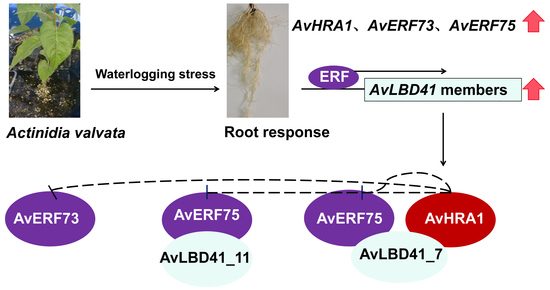
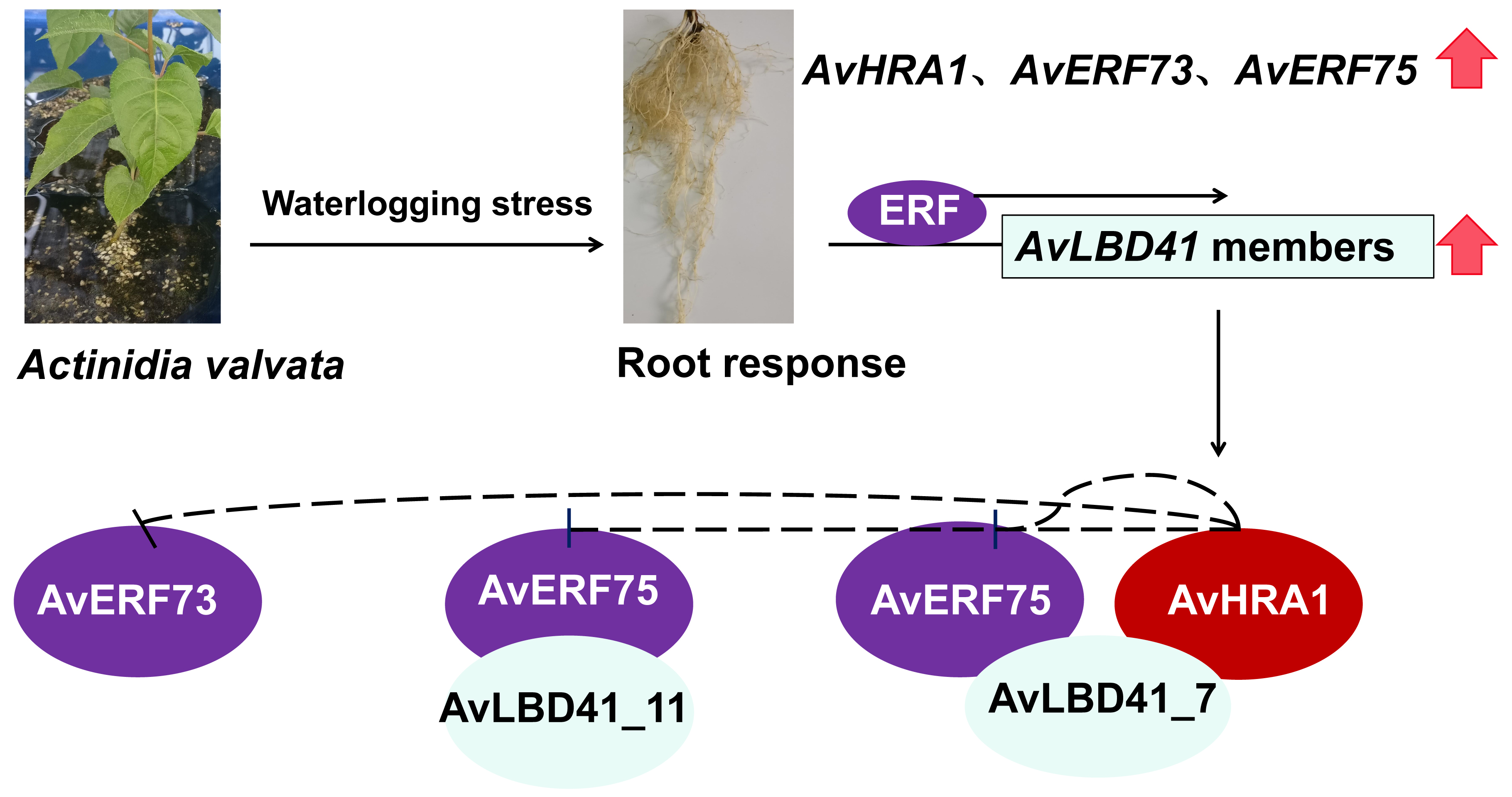
Actinidia valvata, a promising rootstock for kiwifruit cultivation, demonstrates superior waterlogging tolerance compared with commercial cultivars. Lateral organ boundaries domain (LBD) transcription factors (TFs) are known to be pivotal in plant responses to abiotic stress. Nevertheless, the characterization of the LBD family under waterlogging stress in A. valvata remains limited. In this study, 26 AvLBD genes were identified from a transcriptome dataset, with the majority classified into phylogenetic Class II. Under waterlogging stress, transcript accumulation of most AvLBD41 members, particularly AvLBD41_11 and AvLBD41_7, was markedly increased in roots. Bimolecular fluorescence complementation (BiFC) assays indicated that AvLBD41_7 heterodimerizes with both the AP2/ERF activator AvERF75 and the trihelix repressor AvHRA1, whereas AvLBD41_11 only interacts with AvERF75. Neither AvLBD41 isoform interacts with AvERF73, thereby defining distinct components of a waterlogging-responsive module. Yeast-based assays revealed an absence of transactivation activity for AvLBD41_7, and transient expression analyses confirmed its exclusive nuclear localization. The promoters of both AvLBD41_11 and AvLBD41_7 harbor numerous cis-elements responsive to hormones and abiotic stresses. An AvLBD41_7-derived PCR marker could be used to distinguish A. valvata from A. deliciosa accessions. Collectively, these findings provide a comprehensive functional annotation of the LBD gene family in A. valvata and establish AvLBD41_7 as a potential molecular target for future kiwifruit breeding programs aimed at waterlogging resilience.

Graphical Abstract

1. Introduction

Kiwifruit, also known as Chinese gooseberry, originated in China and is now prized worldwide for its unique flavor and high nutritional value [1]. As the global demand has grown, China has expanded kiwifruit plantings into diverse agro-climates, including high-humidity regions [2]. Climate change, however, has increased the frequency of extreme rainfall events that leave soils waterlogged and oxygen-deficient for days or even weeks [3]. Roughly 16% of the world’s cropland is afflicted by waterlogging, cutting yields by about one-fifth [4]. Waterlogging stress suppresses root function, reduces fruit quality and yield, and causes huge economic losses in kiwifruit production [5]. Hence, breeding tolerant cultivars is necessary for safeguarding the long-term sustainability of the kiwifruit industry.
Most commercial kiwifruit cultivars belong to A. chinensis var. deliciosa or A. chinensis var. chinensis. These cultivars are highly sensitive to waterlogging stress because the resultant hypoxia rapidly suppresses root aerobic respiration, triggering an acute cellular energy crisis that precedes root death [6]. Consequently, grafting elite but waterlogging-sensitive scions onto tolerant rootstocks has become a key strategy for mitigating yield losses imposed by transient soil saturation [7]. In current orchards, A. chinensis var. deliciosa seedlings are the most commonly used rootstocks; however, they remain sensitive to waterlogging stress [8]. By contrast, A. valvata develops a robust, woody, highly aerated root system and survives prolonged waterlogging far better than A. deliciosa [9,10]. Previous studies demonstrated that A. valvata maintains carbohydrate reserves and restricts oxidative damage in roots during prolonged waterlogging stress [11,12]. One adaptive morphology trait is the rapid development of adventitious roots, structures that enable internal oxygen diffusion under hypoxic conditions [12,13]. The superior waterlogging tolerance is maintained when A. valvata is used as a rootstock for commercial scions [9]. A. valvata rootstock can also boost scion vigor, fruit size and quality, highlighting its potential to raise yields [14]. As A. valvata rootstocks are increasingly adopted in kiwifruit orchards, a comprehensive dissection of the molecular mechanisms underlying their waterlogging tolerance becomes imperative.
In Arabidopsis thaliana, Group VII ERFs (ERF-VII) orchestrate the core hypoxia response by trans-activating genes such as ADH1, PDC1, and LBD41 via the hypoxia-responsive promoter element (HRPE) [15]. Transcriptome surveys in A. valvata implicate AP2/ERF, C3H, LBD, MYB, Trihelix, and WRKY TFs in the waterlogging response [16]. Among the TFs, the ERF-VIIs AvERF73 and AvERF75 were strongly up-regulated under waterlogging stress, and their overexpression improves kiwifruit survival [17,18]. Strikingly, several AvLBD41 unigenes are co-induced, physically interact with AvERF75 [18], and thus represent their immediate involvement in the ERF-VII pathway. Yet, the roles of LBD proteins during waterlogging stress remain largely uncharacterized in kiwifruit. Transcriptome-wide identification and functional screening of key LBD genes are helpful for elucidating the waterlogging-adaptive signaling in kiwifruit.
The LBD TFs are characterized by a conserved N-terminal lateral organ boundaries domain and a highly divergent C-terminal region [19]. It consists of a zinc finger-like motif (CX2CX6CX3C) responsible for DNA binding, a Gly-Ala-Ser stretch that stabilizes promoter interaction, and a leucine zipper-like repeat (LX6LX3LX6L) that mediates protein dimerization [20]. Based on structural features, LBD TFs are classified into two subfamilies: Class I, which retains all three domains, and Class II, which contains only the zinc finger-like motif [21,22]. Genome-wide analyses have identified LBD members in apple, grape, rice, tomato, and other crops, demonstrating extensive conservation that facilitates functional inference across taxa [23,24,25,26]. In kiwifruit, however, the LBD family remains not systematically characterized.
LBD proteins regulate a wide range of plant processes, including growth, development, and stress adaptation [27]. In Arabidopsis, AtLBD16 and AtLBD18 interact with auxin response factors to drive lateral root emergence [28]. In peach, LBD genes (PpBSBRLs) function as positive regulators of lateral and adventitious root initiation [29]. In rice, LBD12-1 protein is essential for adventitious root formation and was regulated by auxin signaling under submergence stress in coleoptiles [30]. Collectively, these data underscore the pivotal roles of the LBD family in regulating root system architecture. In Arabidopsis, transcript levels of LBD4, LBD37, LBD39, LBD40 and LBD41 were significantly altered under hypoxic stress [31]. Among them, AtLBD41 regulates the expression of AtHB1, a non-symbiotic hemoglobin gene, under hypoxia [32]. Nevertheless, the homozygous T-DNA insertional mutants of AtLBD41 (SALK_078678C) display no visible phenotype relative to Col-0 in low-oxygen assays [33]. Although constitutive over-expression of AtLBD41 alters floral architecture and root nitrogen metabolism [34,35], its influence on waterlogging tolerance remains essentially unexplored. In soybean and Populus deltoides, LBD41 and LBD1 are rapidly induced in leaves and roots under waterlogging stress, respectively [36,37]. Likewise, AcLBD was strongly up-regulated in leaves of the waterlogging-tolerant A. polygama genotype ‘Zhemizhen 1’, upon waterlogging stress [38]. LBD proteins can form functional complexes with diverse partners to coordinate plant growth and development [39,40]. Despite these findings, the functional roles and regulatory network of LBDs under waterlogging stress, particularly in kiwifruit, remain limited.
Because LBD genes control adventitious rooting and low-oxygen signaling across taxa, we hypothesized that AvLBD members are key players in the waterlogging tolerance of A. valvata. Therefore, a transcriptome-wide identification of the AvLBD gene family was conducted, and their expression dynamics under waterlogging stress were quantified. Two unigenes, AvLBD41_11 and AvLBD41_7, exhibited the strongest up-regulation after 12 h of waterlogging, and were subjected to detailed functional dissection, including subcellular localization, transactivation activity, protein–protein interaction (PPI), and promoter features. This study provides a comprehensive functional annotation of the AvLBD gene family and establishes AvLBD41_7 as a central regulator within a waterlogging-specific transcriptional module, thereby providing new insights into the molecular framework underlying waterlogging tolerance in kiwifruit. An AvLBD41_7-based PCR marker was used to accurately distinguish A. valvata from A. deliciosa across an initial panel of 11 accessions, underscoring a prime candidate gene target for genotyping and marker-assisted breeding of waterlogging-tolerant cultivars.

2. Materials and Methods

2.1. Identification of A. valvata LBD Genes

A chromosome-scale genome assembly with systematic annotation of A. valvata remains unavailable; consequently, full-length transcriptome sequencing can partially characterize the LBD gene family. The full-length transcriptomic dataset of A. valvata genotype KR5 (accession number PRJNA796628) was obtained from a previous study [41]. Putative LBD protein sequences were retrieved from annotation results and screened for the presence of the LOB domain (Pfam PF03159) using the ScanProsite online tool (accessed on 4 October 2025, https://prosite.expasy.org/scanprosite/) with default parameters. After removing duplicate (100% identity) and incomplete sequences (lacking a full open reading frame, pfam score < 15.0, or domain coverage < 83.0%), the final candidate sequences were validated with the NCBI Conserved Domain Search (CD Search v3.21, accessed on 4 October 2025, https://www.ncbi.nlm.nih.gov/Structure/cdd/wrpsb.cgi) with default parameters using an E value cut-off of 10 -2. The CD Search output was then imported into TBtools v2.363, and the conserved LOB domain was visualized using the ‘Visualize Domain Pattern’ command [42]. Fundamental properties of AvLBD proteins, including amino acid length, molecular weight (MW), and theoretical isoelectric point (pI), were calculated using ExPaSy-ProtParam (accessed on 5 October 2025, https://web.expasy.org/protparam/) with default parameters. Subcellular localization was predicted with Cell-PLoc 2.0 (accessed on 5 October 2025, http://www.csbio.sjtu.edu.cn/bioinf/Cell-PLoc-2/) using the web-server for Plant-mPLoc predictor with default parameters. Detailed information on the AvLBD proteins, including their ID, nucleotide sequence, and protein sequence, is provided in Supplementary Table S1.

2.2. Phylogenetic Tree Construction

LBD sequences from Arabidopsis and rice were retrieved from the Plant Transcription Factor Database (accessed on 5 October 2025, http://planttfdb.gao-lab.org/index.php), and their ID and protein sequence are provided in Supplementary Table S2. Multiple sequence alignment of all LBD proteins from A. valvata, Arabidopsis, and rice was conducted using ClustalW with default parameters (gap open penalty equal to 10.0, gap extend penalty equal to 0.10, and the Gonnet protein weight matrix). A phylogenetic tree was generated in MEGA 11.0 with the maximum likelihood (ML) method and 1000 bootstrap replicates. The Jones-Taylor-Thornton model was used as the amino acid substitution model, with 5 discrete gamma categories for rate variation among sites, and partial deletion was applied to handle gaps and missing data. The random seed and algorithm used for the bootstrap were set to the default values. The resulting unrooted evolutionary tree was visualized with iTOL (accessed on 5 October 2025, https://itol.embl.de/) [43]. The AvLBD genes were systematically renamed AvLBD1-AvLBD41 based on their homology with the corresponding LBD proteins of Arabidopsis.

2.3. Multiple Sequence Alignment and Conserved Motif Analysis

Conserved domains of multiple LBD protein sequences were aligned in DNAMAN 9.0 (Lynnon BioSoft) using the ClustalW algorithm (Feng-Doolittle and Thompson) for optimal alignment. Putative motifs were subsequently identified with the MEME online suite (accessed on 5 October 2025, http://meme-suite.org/tools/meme) under the following parameters: minimum width 6, maximum width 50, and a maximum of 10 motifs. The zero or one occurrence per sequence model was used to expect motif sites which are distributed in sequences. The MEME XML output was then imported into TBtools v2.363, and the motifs were visualized using the ’Visualize Motif Pattern’ command [42].

2.4. Transcriptomic Data Analysis of AvLBDs Under Waterlogging Stress

In a previous experiment, asexually propagated KR5 plants at the five-to-six leaf stage were subjected to waterlogging for 0, 12, 24 or 72 h. The 0 h treatment served as the non-waterlogged control. Two potted plants were immersed in each plastic tray (45 cm × 35 cm × 16 cm) and the water level was kept 2–3 cm above the soil surface. Every time point comprised four pots, and the experiment was replicated three times. Total RNA was isolated from root samples with the RNeasy Mini Kit (Qiagen, Germantown, MD, USA) and quantified for downstream library construction. Strand-specific libraries were prepared with the NEBNext® Ultra™ RNA Library Prep Kit (San Diego, CA, USA) following the manufacturer’s instructions. Paired-end sequencing (2 × 150 bp) was performed on an Illumina HiSeq 2000 (San Diego, CA, USA). Raw reads were quality-assessed with FastQC v0.11.9 and technical sequences were trimmed using Cutadapt (version 1.9.1, TU Dortmund University, TU Dortmund, Germany). RNA-seq raw reads have been deposited in the NCBI Sequence Read Archive under BioProject PRJNA792211 [41]. Clean reads were then aligned to the reference full-length transcriptome (accession number PRJNA796628) with HISAT2 v2.0.4, and transcript abundances were quantified with RSEM v1.2.12 [41]. The differential expression analysis was performed using DESeq2 v1.4.5 at a Q value ≤ 0.05. A heatmap of AvLBD expression was generated in TBtools v2.363 using log2-transformed Fragments Per Kilobase per Million mapped fragments (FPKM) values.

2.5. PPI Prediction Analysis

Homologous proteins from A. chinensis were employed to predict the PPI network of AvLBD and other waterlogging-induced proteins using the STRING online tool version 12 (https://string-db.org/) [44]. Default parameters were applied: full STRING network type with network edges representing evidence. Functional enrichment visualization of the STRING network displayed 10 terms in the Biological Process category (GO, Gene Ontology), with terms clustered at a similarity threshold of ≥0.8.

2.6. Transactivation Assay in Yeast Cells

The coding sequence of AvLBD41_7 (819 bp) was inserted into the pGBKT7 vector at the EcoRI/BamHI sites under control of the T7 promoter, and the resulting recombinant plasmid was employed to assess transcriptional activation. The BD empty vector and the BD-AvERF73 fusion plasmid served as negative and positive controls, respectively [45]. All plasmids were transformed into the yeast strain AH109 and cultured on SD/-Trp and SD/-Trp/-His/-Ade media for 3 days at 30 °C. Transcriptional activation activity was evaluated based on the growth status of yeast cells. Primers are provided in Supplementary Table S3.

2.7. Subcellular Localization Analysis

The AvLBD41_7 CDS was amplified with gene-specific primers (Table S3) using 2 × Phan-Q5 SuperMix (KERMEY, Zhengzhou, China) and ligated into pCAMBIA-super1300-GFP at the KpnI/SalI sites with the ClonExpress® II One-Step Cloning Kit (Vazyme Biotech, Nanjing, China). The resulting 35S::AvLBD41_7-GFP construct was introduced into Agrobacterium tumefaciens strain EHA105 by chemical transformation, and the bacteria were infiltrated into Nicotiana benthamiana leaves. After 3 days of greenhouse recovery, epidermal strips of leaves were mounted in water and imaged using a laser-scanning confocal microscope (Zeiss LSM 900, Jena, Germany).

2.8. BiFC Assay

The full-length CDSs of AvLBD41_7, AvLBD41_11, AvHRA1, AvERF73, and AvERF75 were cloned into the pCAMBIA1300-nYFP and pCAMBIA1300-YFPc vectors at the BamHI/SalI sites, generating AvLBD41_7-NY/YC, AvLBD41_11-NY/YC, AvHRA1-NY, AvERF73-YC, and AvERF75-YC. The recombinant plasmids were introduced into Agrobacterium tumefaciens strain EHA105, and all plasmid combinations were co-infiltrated into tobacco leaves for 48–72 h. Yellow fluorescence was subsequently visualized using a Leica TCS SP8 confocal laser-scanning microscope (Leica, Bensheim, Germany). The relevant primers are provided in Supplementary Table S3.

2.9. Promoter Cloning, Cis-Elements and Phylogenetic Analysis

By mining the genome database [46], AvLBD41_11 and AvLBD41_7 were found to share significant homology with Amadzw1x02g026630 and Amadzw1x03g047470, respectively, and primers were subsequently designed from these aligned sequences (Table S3). Fragments containing the promoter regions upstream of the initiation codons of AvLBD41_11 and AvLBD41_7 from A. valvata genomic DNA were amplified, respectively. The purified PCR products were cloned into the pMD18-T vector (TaKaRa, Dalian, China) and sequenced. Promoter analysis was performed with PlantCARE [47], and the results were visualized with TBtools v2.363 using the ‘Basic Biosequence View’ command [42]. Using the AvLBD41_7 promoter as the query, BLASTX 2.17.0+ searches against the 30 kiwifruit genome assemblies in the Kiwifruit Genome Database retrieved the most similar homologous promoters (Table S4). Promoter sequences were aligned with ClustalW, and a phylogenetic tree was built in MEGA 11.0 as described above.

2.10. Quantitative Real-Time PCR (qRT-PCR) Analysis of Transcript Levels

To validate the RNA-seq differential-expression results, we quantified six representative LBD genes by qRT-PCR using the same root samples collected at 0, 12, 24 and 72 h of waterlogging (RNA-seq BioProject PRJNA792211). First-strand cDNA was synthesized with the High-Capacity cDNA Reverse Transcription Kit (TOYOBO, Osaka, Japan). Actin primers were taken from a previous study [48]. Reactions were run with 2 × SYBR Green qPCR Premix Kit (KERMEY, Zhengzhou, China) and followed the procedure: initial denaturation at 95 °C for 30 s, followed by 40 cycles of 95 °C for 10 s and 60 °C for 30 s. For tissue-specific expression of AvLBD41_11 and AvLBD41_7, total RNA was isolated from leaf, petiole, stem and stem-end tissues with the RNAprep Pure Plant Plus Kit (TIANGEN, Beijing, China) and subjected to the same qRT-PCR protocol. The relative expression levels of the tested genes were calculated via the 2−ΔΔCt method. Primer sequences are provided in Supplemental Table S3. qRT-PCR was performed with three biological replicates and three technical replicates per sample, and each replicate comprised pooled material from eight plants. Expression differences across the four time points were evaluated by one-way ANOVA test (p < 0.05) using SPSS v19.0.

2.11. PCR Marker Development and Test

Polymorphic amplicons were predicted from the AvLBD41_7 DNA sequence and species-specific primers (Table S3) were designed with Primer Premier v5.00. The initial test includes 4 accessions of A. valvata and 7 accessions of A. deliciosa. Reactions were run with 2 × Mega PCR mix (KERMEY, Zhengzhou, China) and followed the procedure: initial denaturation of 3 min at 95 °C, followed by 35 cycles of 98 °C for 10 s, 58 °C for 30 s and 72 °C for 2 min, followed by a final 5 min elongation step. PCRs were conducted with a total reaction volume of 50 µL (1 × PCR mix, 0.25 µM of each primer, 50–100 ng of template DNA, and make up to 50 µL with nuclease-free water). Amplified products were separated on a 1.5% TAE/ethidium bromide agarose gel for 60 min at 85 V and imaged with UV transillumination.

3. Results

3.1. Transcriptome-Wide Identification of LBD Genes in A. valvata

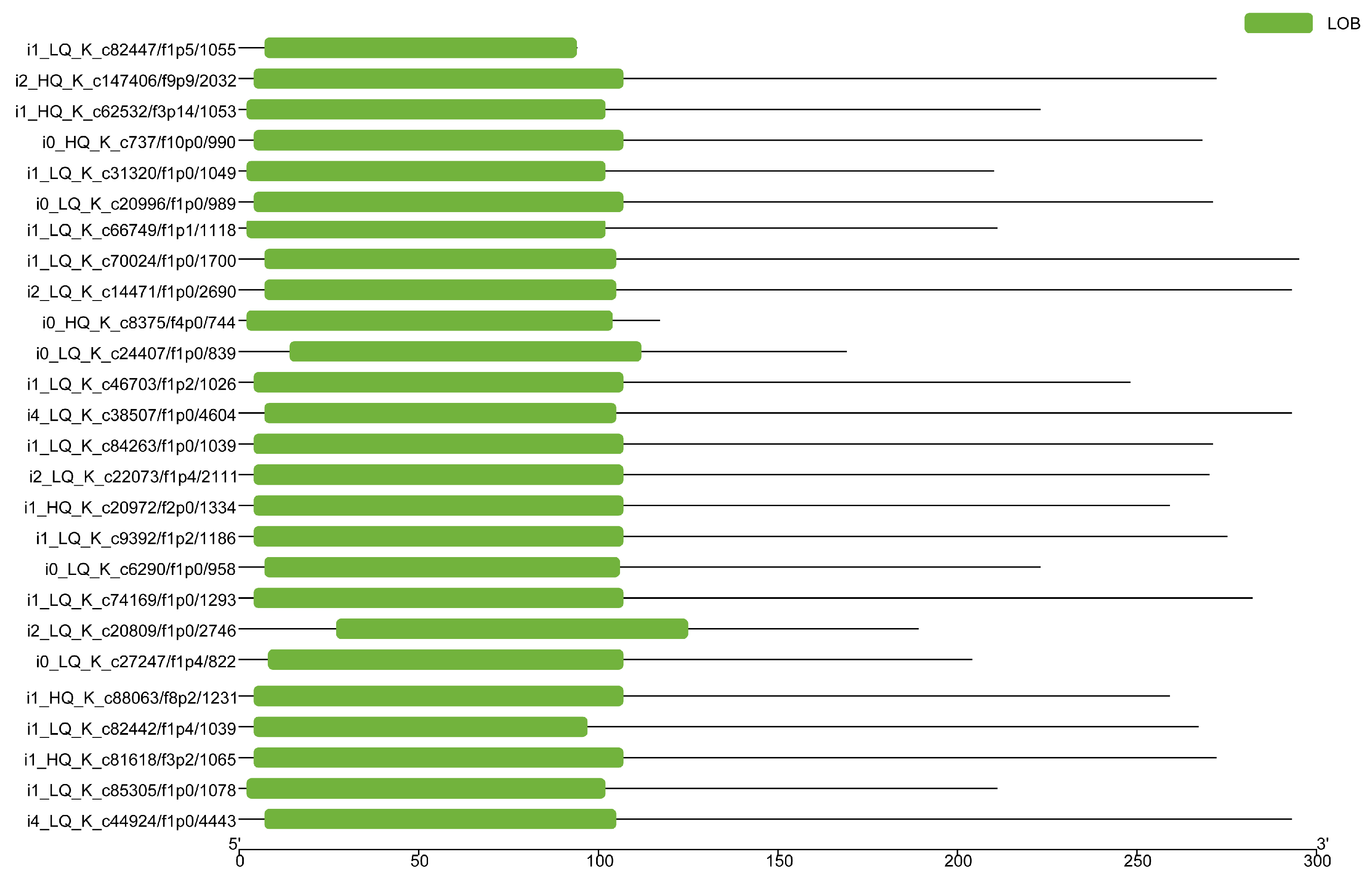
By analyzing the annotated sequences from the full-length transcriptome dataset, 48 putative LBD candidate genes were initially identified. After removing redundant and incomplete protein sequences lacking the conserved LOB domain (Pfam PF03195), a final set of 26 AvLBD family members was confirmed. All 26 AvLBD proteins possess a highly conserved LOB region at the N-terminus of approximately 100 amino acids, and the positions of the LOB domains were validated using the CD Search (Figure 1).
The amino acid length, MW, and pI of AvLBD proteins ranged from 94 to 295 amino acids, 10.16 to 32.86 kDa, and 5.44 to 9.33, respectively. Instability index analysis indicated that 25 of the 26 AvLBD proteins were unstable in vitro. The grand average of hydropathicity (GRAVY) values were negative for all 26 AvLBD proteins, suggesting that they are predominantly hydrophilic. Cell-PLoc subcellular localization predictions indicated that all AvLBD proteins are localized in the nucleus.

3.2. Phylogenetic Analysis of AvLBD Genes

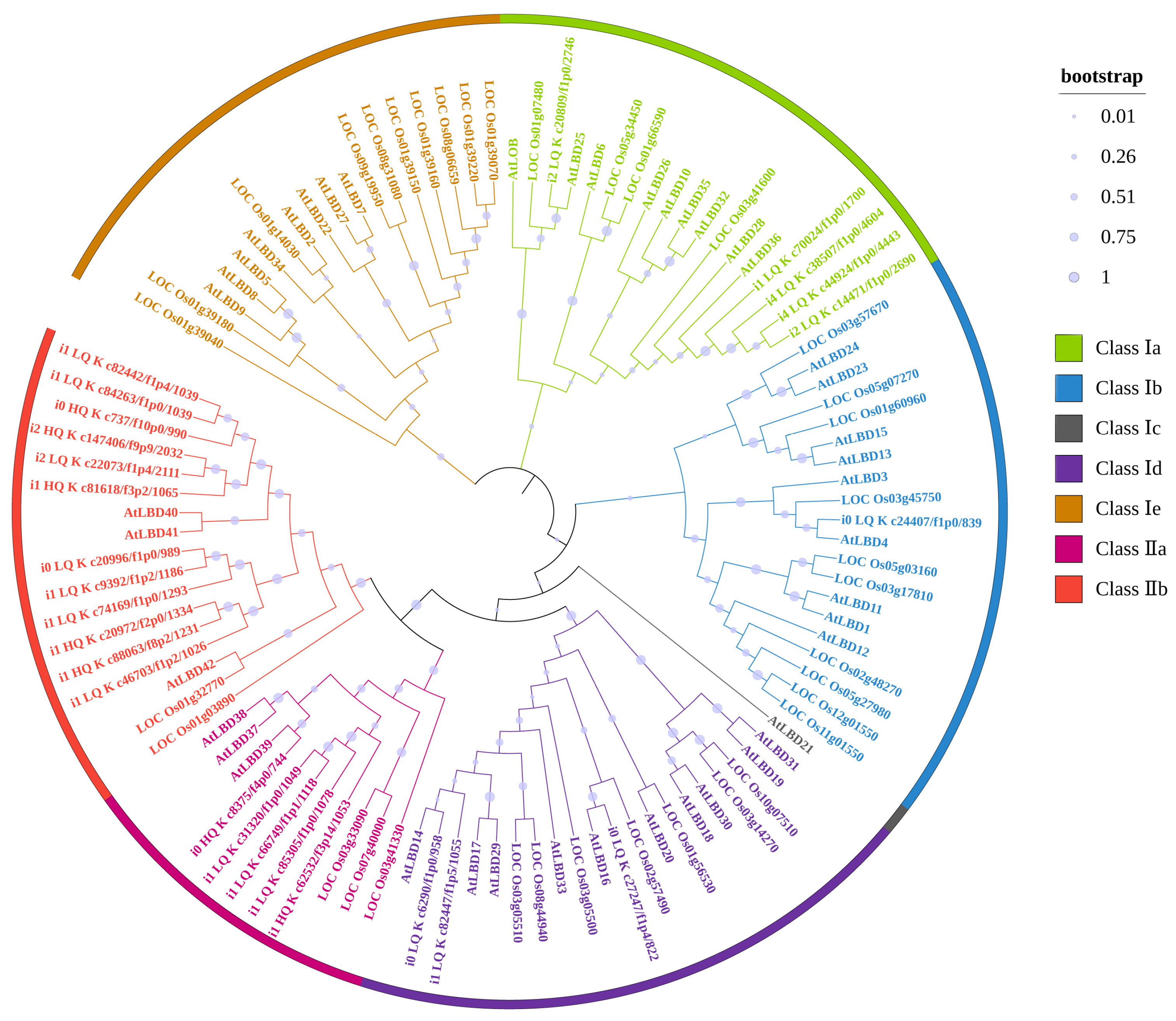
To investigate the evolutionary relationships between AvLBDs and LBDs from other species, the amino acid sequences of 26 A. valvata LBDs, 43 Arabidopsis LBDs, and 36 rice LBDs were used to construct an ML phylogenetic tree (Figure 2). Based on this analysis, a total of 105 LBD proteins from the three species were classified into seven subgroups: Class Ia, Ib, Ic, Id, Ie, IIa, and IIb. Seventeen of the 26 AvLBD proteins clustered within Class II, which was larger than Class I. Within Class I and Class II, the Ia and IIb subgroups contained the largest proportion of AvLBD members. The AvLBD genes were systematically renamed AvLBD1-AvLBD41 according to their homology with the corresponding LBD proteins of Arabidopsis (Table S1).

3.3. Multiple Sequence Alignment and Conserved Motif Analysis of AvLBD Genes

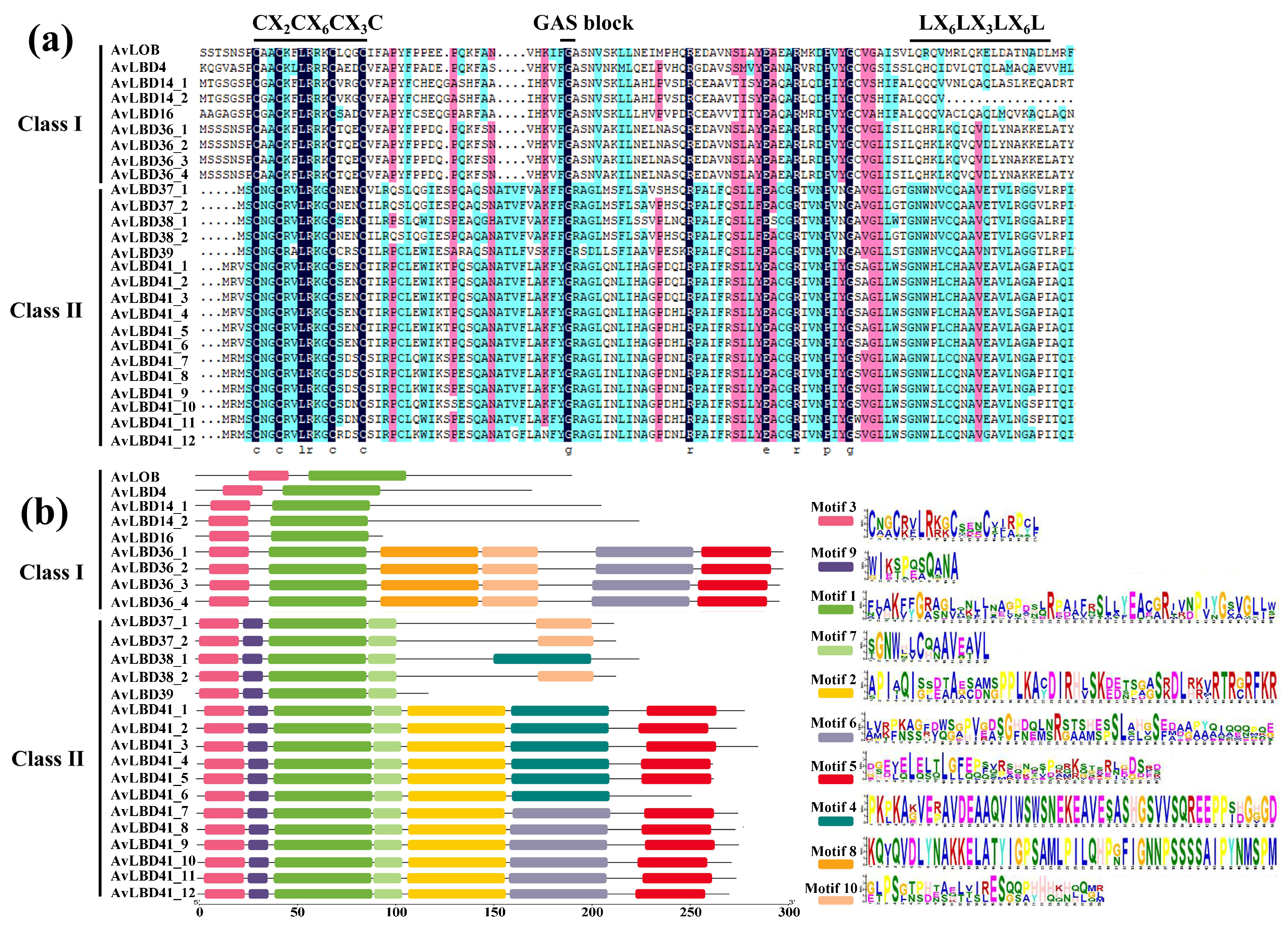
The conserved domains of 26 AvLBD proteins were examined through multiple sequence alignment using DNAMAN software. The analysis revealed that all AvLBD proteins contain the canonical CX2CX6CX3C zinc finger-like motif, whereas the GAS block and the LX6LX3LX6L leucine zipper-like domain were restricted to Class I members (Figure 3a). To further investigate the functional architecture of AvLBD proteins, conserved motifs were identified with the MEME tool. Ten conserved motifs, designated Motifs 1–10, were detected across the AvLBD proteins (Figure 3b). Motif 3 corresponded to the CX2CX6CX3C zinc finger-like signature of the LBD family and, consistent with the alignment results, was present in every AvLBD protein. Motif 8 was specific to Class I, while Motifs 2, 4, 7, and 9 were restricted to Class II.

3.4. Expression Patterns of AvLBDs in Waterlogged Roots

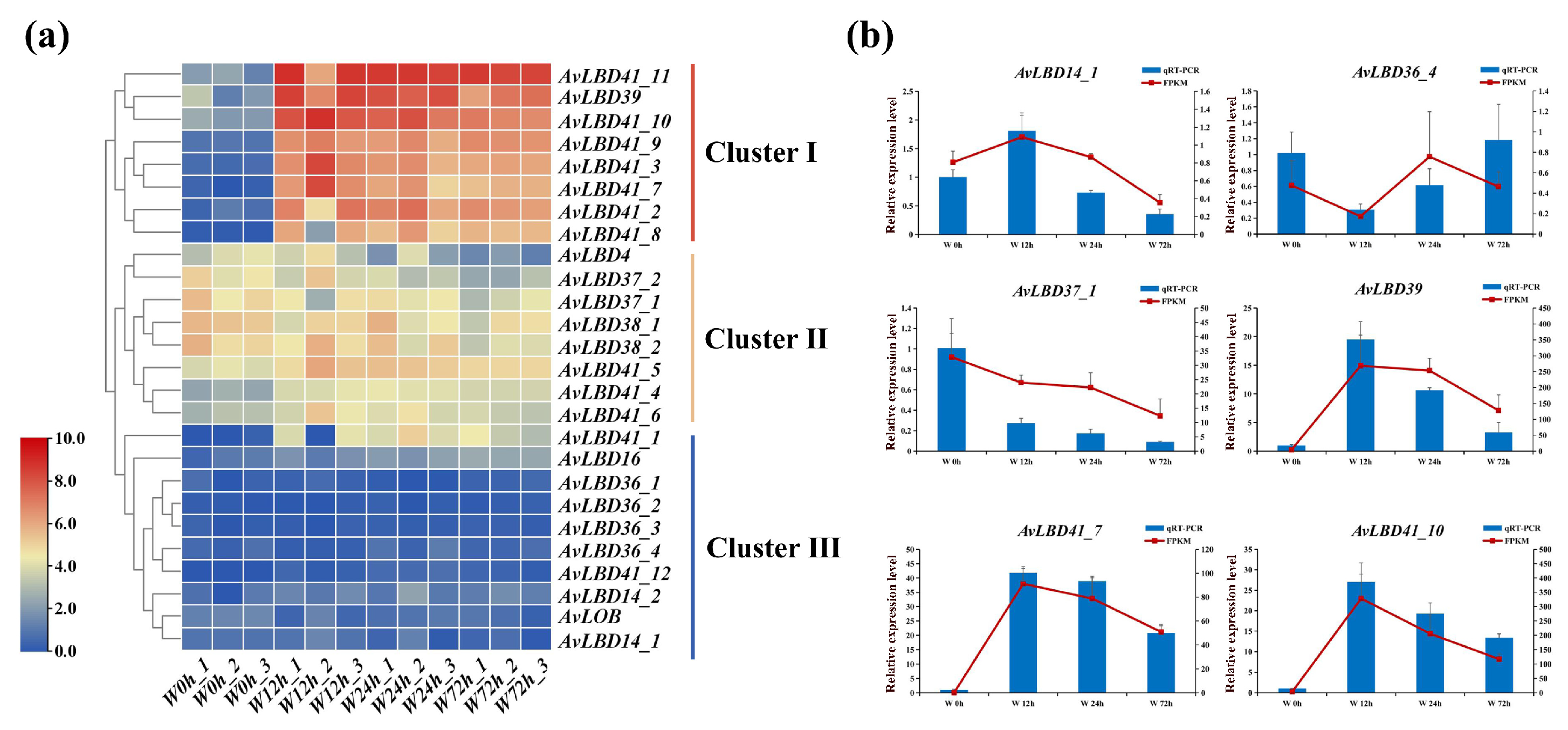
RNA-seq profiling of 26 AvLBDs in waterlogged roots revealed three distinct expression clusters (Figure 4a). Within Cluster I, seven members were orthologous to AtLBD41 and one to AtLBD39. All Cluster I AvLBDs were strongly up-regulated at 12, 24, and 72 h, indicating their involvement as early responders to waterlogging. Most Cluster II AvLBDs exhibited down-regulation under waterlogging, except for AvLBD41_4, AvLBD41_5, and AvLBD41_6, which were markedly induced. Cluster III AvLBDs were expressed at nearly undetectable levels, apart from AvLBD41_1 and AvLBD16, which displayed specific up-regulation at 24 and 72 h. To corroborate the RNA-seq findings, qRT-PCR analysis was conducted on six representative AvLBDs using the same root samples employed for transcriptome sequencing (Figure 4b). The qRT-PCR profiles closely paralleled the RNA-seq results, thereby confirming the robustness of the transcriptomic dataset. Collectively, these observations identified Cluster I AvLBDs as pivotal regulators of root acclimation to waterlogging stress in A. valvata.

3.5. PPI Prediction for Cluster I AvLBDs

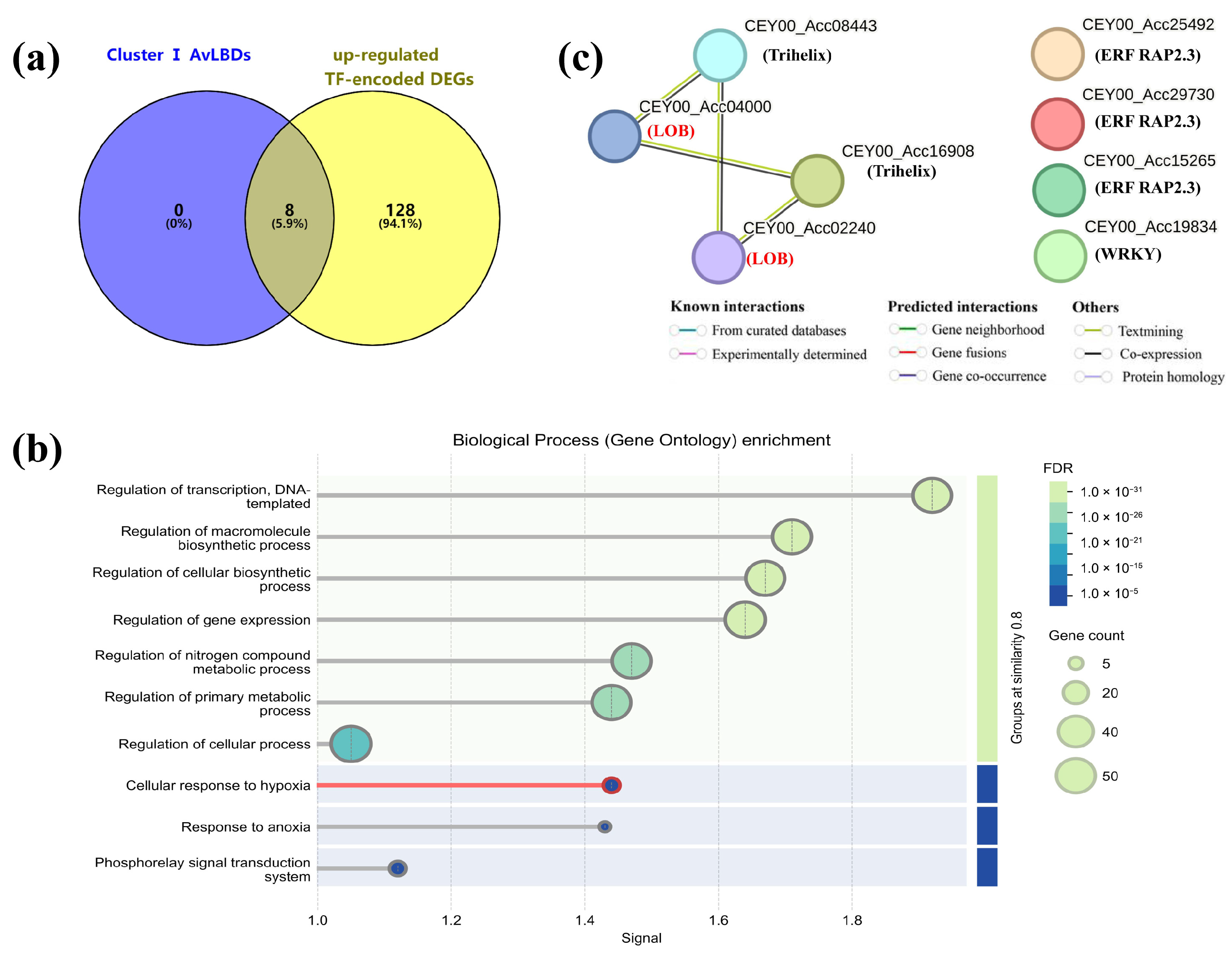
Previously, 143 waterlogging-induced co-expressed DEGs annotated as TFs were identified, among which 16 were assigned to the LBD family. Subsequent re-analysis revealed that seven of these 16 fragments lacked a complete LBD and were therefore excluded as authentic AvLBDs. A Venn comparison confirmed that all eight Cluster I AvLBDs were encompassed within the final set of 136 co-expressed TFs (Figure 5a). To elucidate potential interaction partners, PPIs among the 136 TFs were predicted by aligning them with A. chinensis proteins. Within Cluster I, AvLBD41_2 and AvLBD41_3 were found to be orthologous to A. chinensis Acc21845; AvLBD41_10 and AvLBD41_11 corresponded to Acc04000; AvLBD41_7, AvLBD41_8, and AvLBD41_9 matched Acc02240; whereas AvLBD39 was paired with Acc23802 (Figure S1). The predicted network indicated that Acc21845 co-occurred with an auxin-responsive protein, a trihelix TF GT-2-like, and a NAC domain-containing protein (Figure S1a). Putative orthologues of Acc04000 and Acc02240 have been reported to co-express with trihelix TFs in other plant species (Figure S1b). GO enrichment analysis of the STRING network demonstrated significant over-representation of ‘cellular response to hypoxia’, and ‘response to anoxia’ (FDR < 0.05, Figure 5b). Within these categories, eight proteins were identified, including two trihelix, three ethylene-responsive RAP2-3-like, and one WRKY TF, all predicted to interact with the two LBD proteins (Figure 5c).

3.6. AvLBD41_7 Interacts with AvERF75 but Not AvERF73

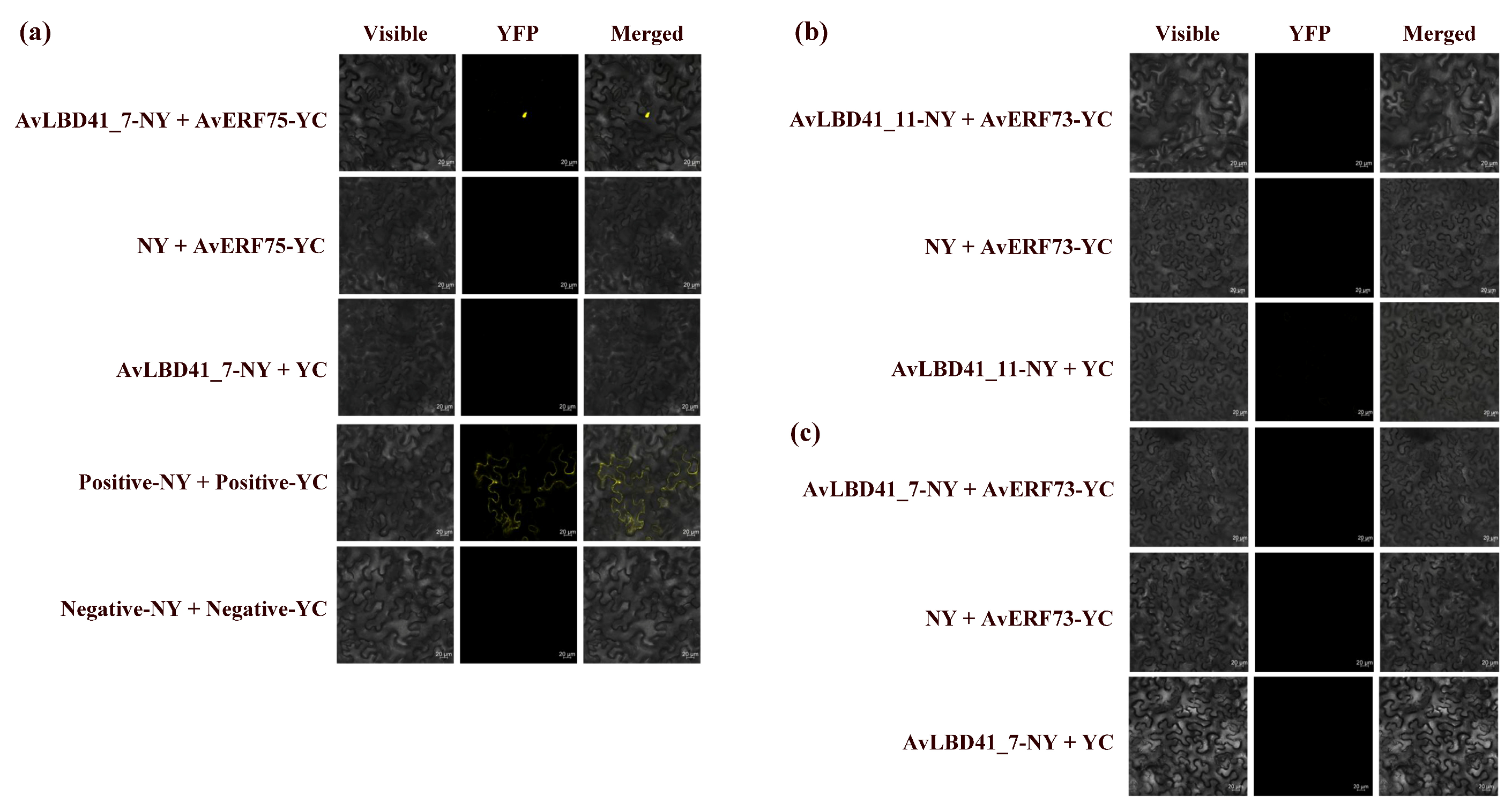
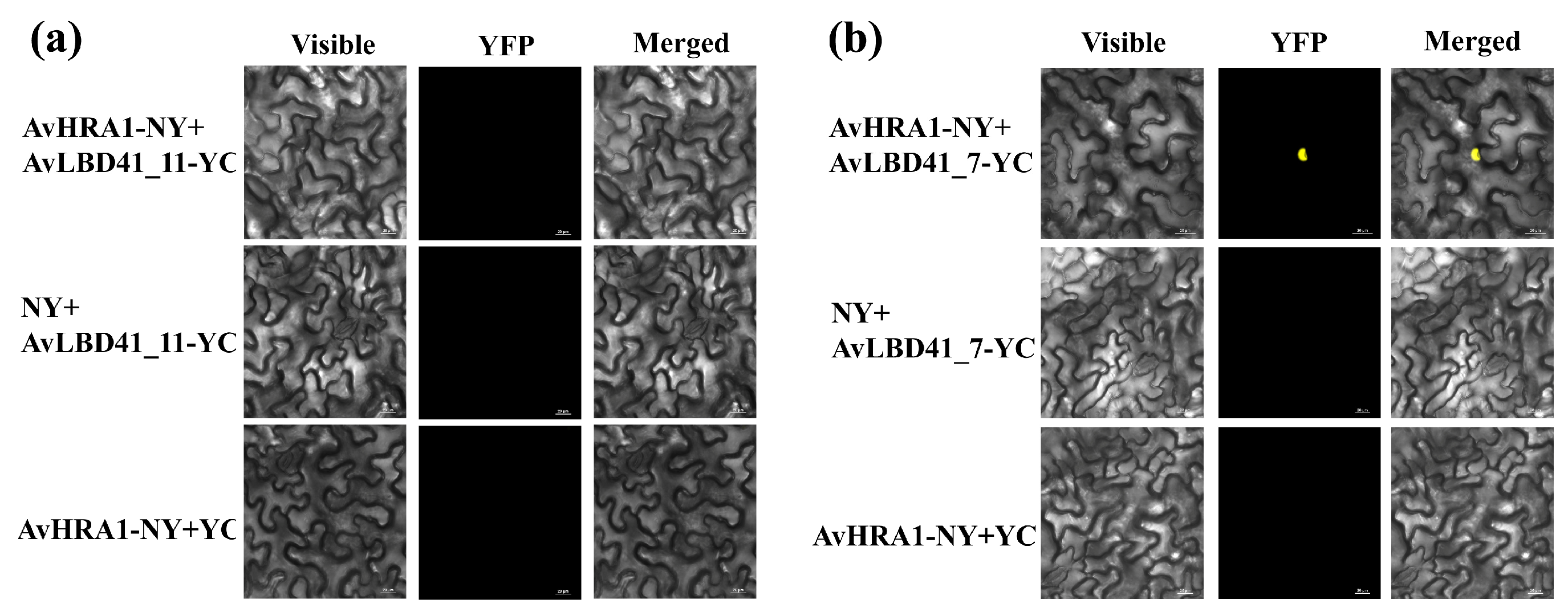
Among the AvLBD41 paralogues corresponding to Acc04000 and Acc02240, AvLBD41_11 and AvLBD41_7 exhibited the strongest up-regulation after 12 h of waterlogging, respectively (Figure S2). Therefore, the interaction partners of these two LBD proteins were further examined. It had been previously demonstrated that AvLBD41_11 interacts with AvERF75 (Acc29730). Therefore, BiFC assays were employed to determine whether AvLBD41_7 also interacts with AvERF75. A strong YFP signal was detected in tobacco leaves co-expressing AvLBD41_7-nYFP and AvERF75-cYFP, resembling the positive control, whereas all other combinations lacked fluorescence, confirming that AvLBD41_7 forms a heterodimer with AvERF75 (Figure 6a). In addition to AvERF75, AvERF73, another Acc29730 homolog, has also been implicated in the positive regulation of kiwifruit waterlogging tolerance. To assess whether AvERF73 interacts with AvLBD41s, BiFC assays were conducted. Moreover, no YFP fluorescence was detected in leaves co-expressing either AvLBD41_11-nYFP/AvERF73-cYFP or AvLBD41_7-nYFP/AvERF73-cYFP (Figure 6b,c), indicating that AvERF73 does not interact with these two AvLBD41 proteins. Collectively, these findings indicate that only specific AvLBD41-AvERFVII pairings participate in the waterlogging stress response of A. valvata.

3.7. AvLBD41_7, but Not AvLBD41_11, Interacts with AvHRA1

PPI prediction suggested potential interactions between LBD and trihelix TFs (Figure 5c). A previous weighted gene co-expression network analysis (WGCNA) of the waterlogging response identified the top 60 hub genes, including the trihelix TF i2_LQ_K_c82159/f1p6/2230 [41]. As its sequence contains a conserved Myb_DNA_bind_4 domain (Pfam 13837; Table S5) and clusters with AT3G10040.1 (AtHRA1) in the phylogenetic tree (Figure S3), it was designated AvHRA1. BiFC assays revealed a strong YFP signal exclusively when AvLBD41_7-cYFP was co-expressed with AvHRA1-nYFP, whereas AvLBD41_11-cYFP produced no fluorescence, indicating that AvLBD41_7, but not AvLBD41_11, forms a heterodimer with AvHRA1 (Figure 7). These findings demonstrate that AvLBD41_7 functions as a specific heterodimeric partner of the trihelix factor AvHRA1.

3.8. Transcriptional Activation Detection and Subcellular Localization of AvLBD41_7

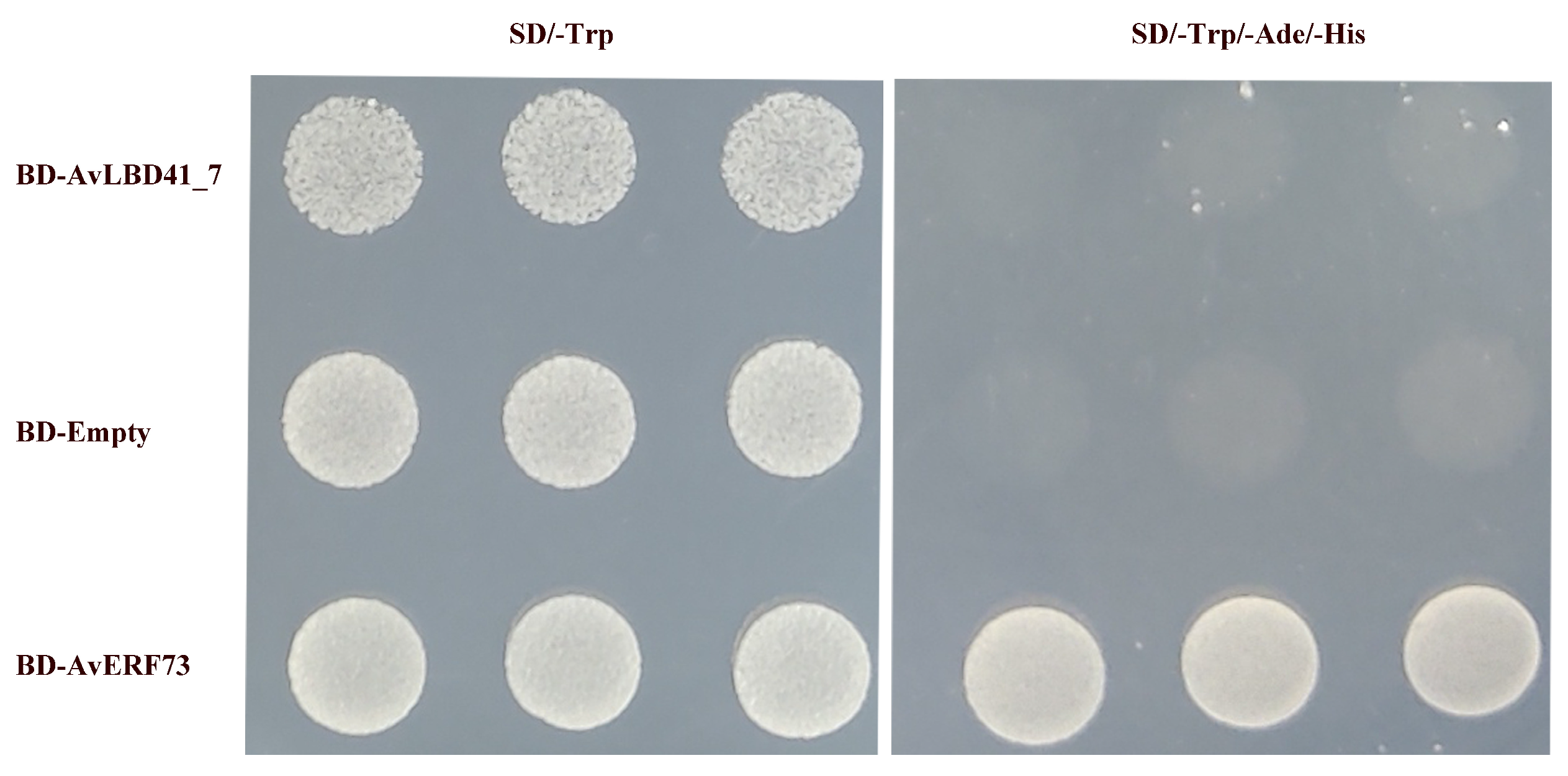
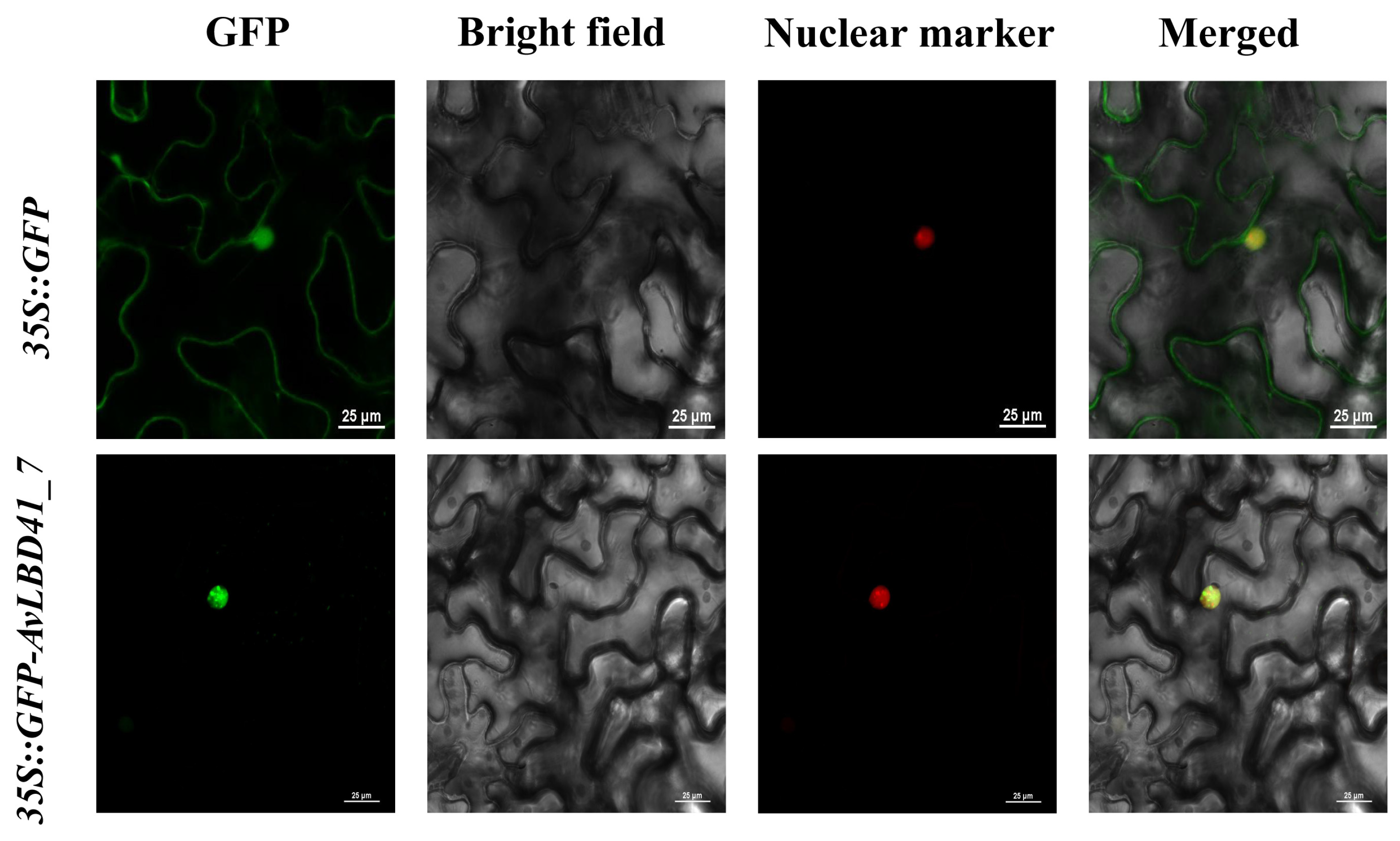
It had been previously verified that AvLBD41_11 lacks transactivation capacity. In this study, the transactivation potential of AvLBD41_7 was further examined using a yeast assay system. The coding sequence of AvLBD41_7 was fused to the GAL4 DNA-binding domain (BD-AvLBD41_7), with empty BD and BD-AvERF73 serving as negative and positive controls, respectively. All transformants grew normally on SD/-Trp medium. However, growth on SD/-Trp/-Ade/-His medium was observed only in AvERF73-expressing cells (Figure 8). BD-AvLBD41_7 failed to grow under these conditions, confirming that AvLBD41_7 lacks transactivation activity. Transient expression of AvLBD41_7-GFP in tobacco epidermal cells revealed exclusive nuclear localization, overlapping with the nuclear marker (Figure 9), consistent with the subcellular distribution previously reported for AvLBD41_11 [18].

3.9. Analysis of Cis-Elements in AvLBD41_11 and AvLBD41_7 Promoters

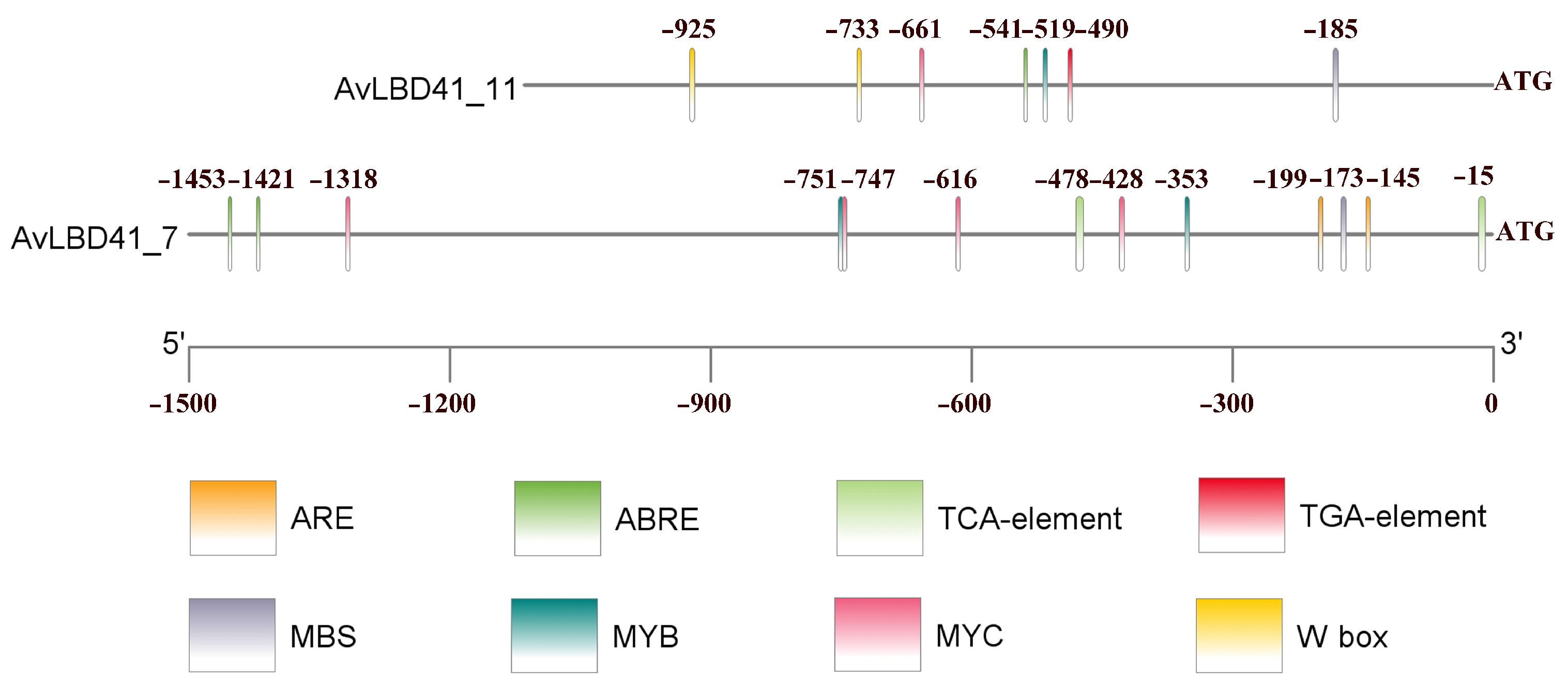
Promoter fragments of 1115 bp upstream of AvLBD41_11 and 1498 bp upstream of AvLBD41_7 (Table S6) were cloned by referring to the reference genome of kiwifruit and scanned for cis-acting elements using the PlantCARE web server. The analysis revealed that both AvLBD genes contained a diverse set of stress- and hormone-responsive cis-elements as well as multiple TF binding sites (Figure 10). AvLBD41_7 uniquely harbors the ARE motif essential for anaerobic induction, whereas both promoters contain drought-responsive MBS and ABA-responsive ABRE elements. The AvLBD41_11 promoter carries a TGA-element (auxin-responsive), while AvLBD41_7 possesses a TCA-element (salicylic acid-responsive). Furthermore, multiple TF-binding sites, including MYB, MYC, and the W-box (WRKY), were identified across both promoters.

3.10. Phylogenetic Analysis of the AvLBD41_7 Promoter and Its Homologs

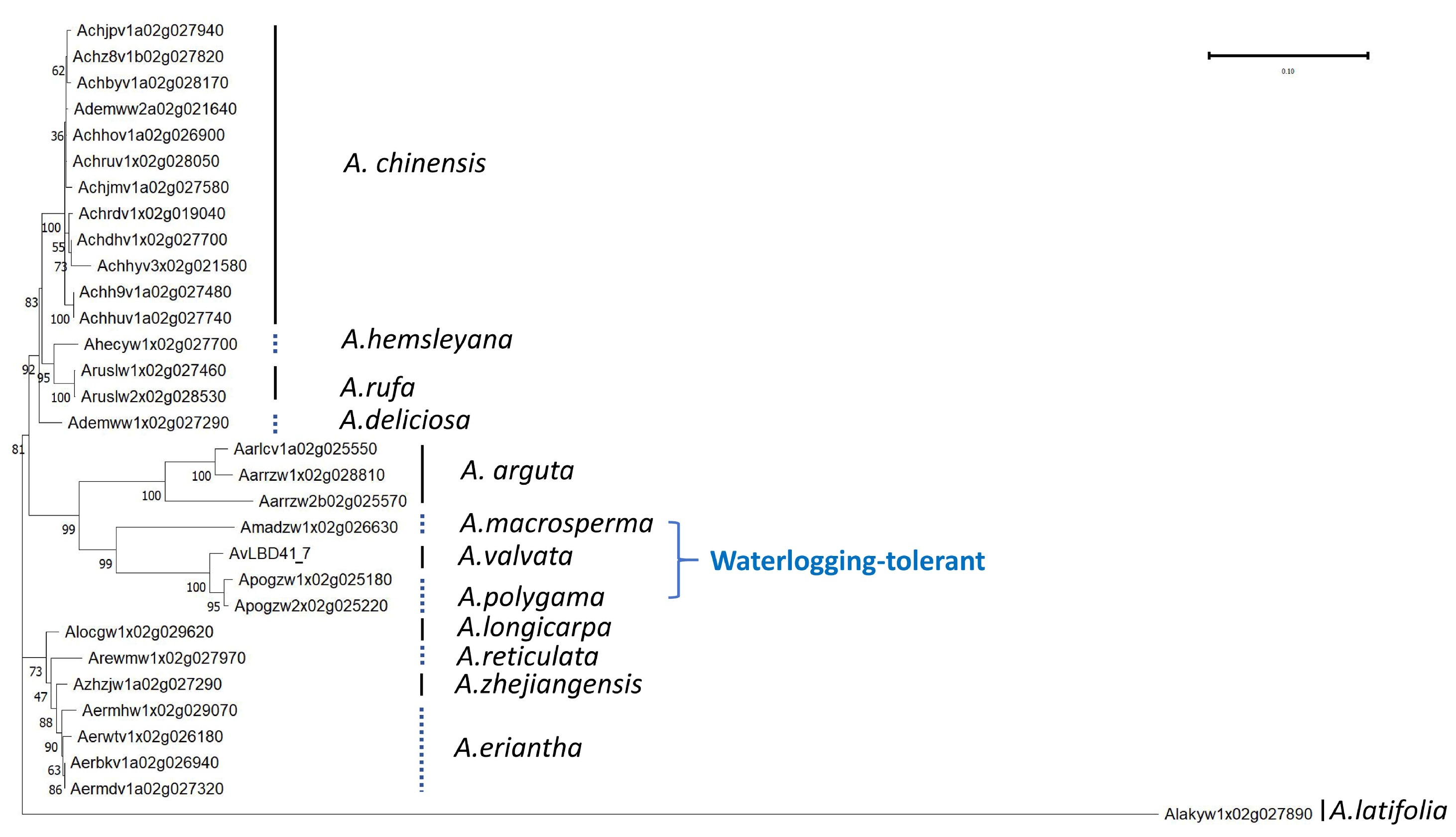
To explore the phylogenetic relationships between the AvLBD41_7 promoter and its homologs, promoter sequences from 30 different kiwifruit accessions were aligned with the AvLBD41_7 promoter and subjected to an ML analysis with MEGA 11.0 (Figure 11). Homologs were grouped strictly by species, and the AvLBD41_7 promoter formed a well-supported clade with A. macrosperma and A. polygama, two taxa that consistently display superior waterlogging tolerance. This phylogenetic signature positions the AvLBD41_7 promoter as a potential marker for rapidly discriminating waterlogging-tolerant from waterlogging-sensitive kiwifruit germplasm.

3.11. Development and Preliminary Test of a PCR Marker Based on the AvLBD41_7 DNA Sequence

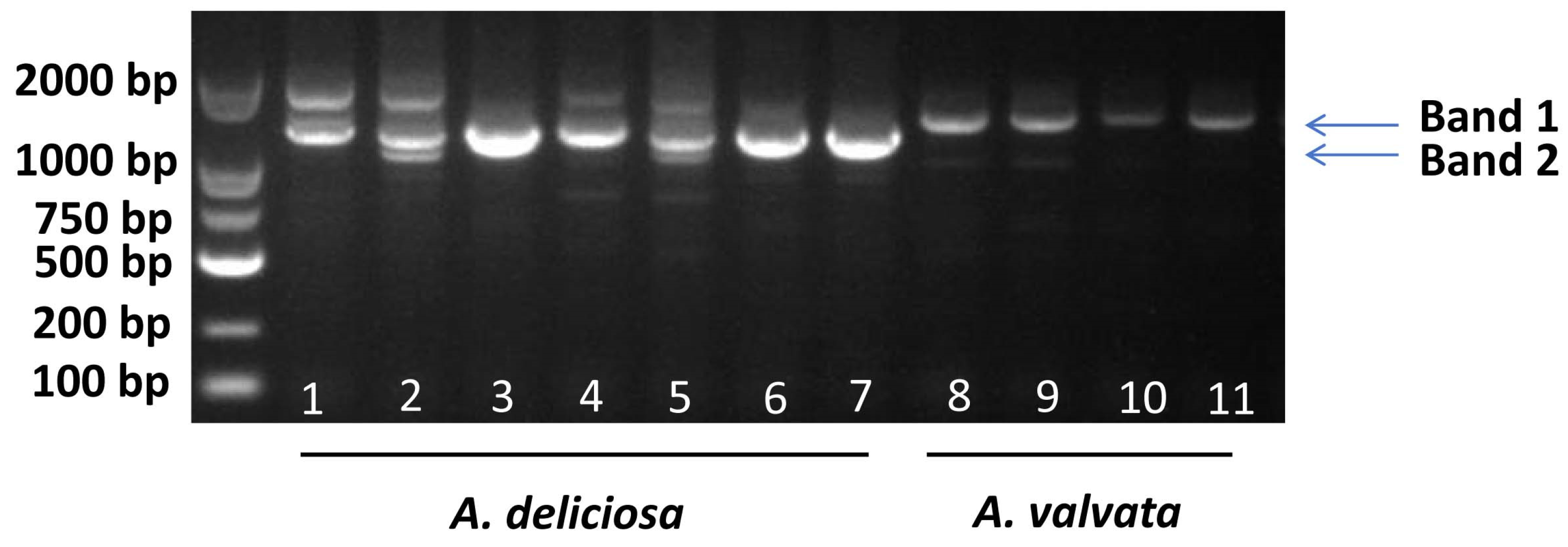
The polymorphic amplicons between A. valvata and A. deliciosa were predicted from the AvLBD41_7 DNA sequence and species-specific primers were designed. Agarose gel electrophoresis of PCR products showed that all 11 accessions generated products of 1000–2000 bp (Figure 12). 7 A. deliciosa samples consistently yielded Band 2, whereas 4 A. valvata samples generated only Band 1. Hence, this PCR marker can be used for the distinction of the two taxa.

3.12. Differential Expression of AvLBD41_11 and AvLBD41_7 Across Tissues During Waterlogging Stress

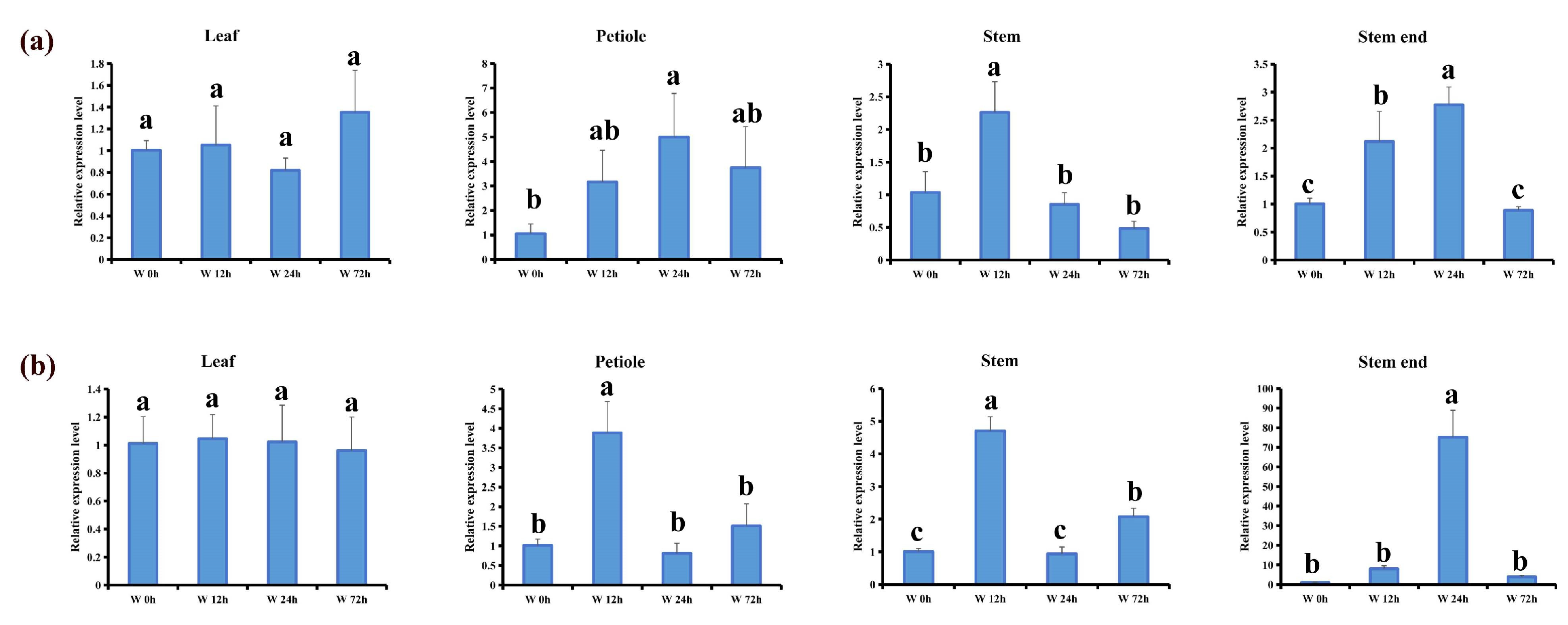
To assess organ-specific expression, AvLBD41_11 and AvLBD41_7 transcript levels were examined in leaf, petiole, stem, and the submerged stem base (stem end) under waterlogging (Figure 13). In leaves, both genes displayed comparable low-level expression that remained largely unaffected by waterlogging. In the petiole, AvLBD41_11 transcripts increased significantly at 24 h, whereas AvLBD41_7 was significantly induced at 12 h. In the stem, both AvLBD41_11 and AvLBD41_7 transcripts peaked sharply at 12 h before returning to baseline levels. In the stem end, both genes were significantly up-regulated at 24 h, but AvLBD41_7 accumulated to substantially higher levels than AvLBD41_11, suggesting a predominant role for AvLBD41_7 in waterlogging responses.

4. Discussion

A. valvata is a waterlogging-tolerant kiwifruit species valued for its vigorous root system, physiological resilience, and superior performance as a rootstock under waterlogging stress [12]. Although a chromosome-scale genome assembly with systematic annotation is not yet available, full-length transcriptome sequencing has enabled transcriptome-wide characterization of multiple gene families, including CIPK, ERF, and NAC [45,49,50]. By contrast, the LBD TF family, central to plant development and abiotic stress responses, has remained uncharacterized in A. valvata [27]. In this study, 26 AvLBD genes were identified in A. valvata (Figure 1), which were classified into two major classes and seven subclasses (Figure 2). Compared with Arabidopsis and rice, the AvLBD family comprises fewer genes and lacks Class Ie members, indicating interspecific divergence [21]. Another plausible explanation is that the LBD family is still incompletely annotated in A. valvata at the transcript level. Phylogenetic analysis facilitated functional annotation of several AvLBDs (Figure 2), while MEME motif analysis revealed conserved, class-specific protein architectures (Figure 3).
Transcriptome and qRT-PCR analyses revealed a pronounced and coordinated up-regulation of the AvLBD41 clade, orthologs of AtLBD41, in waterlogged kiwifruit roots (Figure 4), suggesting pivotal roles in waterlogging tolerance. In Arabidopsis, LBD41 functions as a core hypoxia-responsive gene together with PCO1/2, ADH1, PDC1, and ERF-VII factors, with RAP2.2/2.12 directly activating it via the HRPE cis-element [51]. Although the HRPE motif is absent from kiwifruit promoters, both AvLBD41_11 and AvLBD41_7 harbor multiple ERF-binding GCC-core and WRKY-binding W-boxes (Figure 10), indicating possible regulation by waterlogging-induced ERF and WRKY TFs [52]. Consistent with soybean [36], LBD41 is also induced under waterlogging stress in A. valvata roots.
Previous studies showed that multiple AvLBD41 unigenes were sharply up-regulated under waterlogging [18], pointing to their possible roles in A. valvata. However, the regulatory network of LBDs under waterlogging stress in kiwifruit remains limited. PPI analysis enables the prediction of functional protein interconnections and the pathways they collectively enrich [53]. In this study, LBD, ethylene-responsive RAP2-3-like, trihelix, and WRKY TFs were enriched in the ‘cellular response to hypoxia’ pathway, indicating a multi-TF regulatory network orchestrating the waterlogging response in kiwifruit (Figure 5). ERF-VIIs, such as AvERF73 and AvERF75, are key regulators of kiwifruit tolerance to waterlogging stress [17,18]. AvLOB41, renamed AvLBD41_11 in this study, was previously identified as an AvERF75 interactor [18], and here AvLBD41_7 was added as another AvERF75 partner (Figure 6). As AvERF75 enhances kiwifruit waterlogging tolerance, its LBD partners are likely co-regulators of the hypoxia response. By contrast, AvERF73, although implicated in waterlogging tolerance through the activation of AcNAC022 and AcHMGS1 [17], did not interact with either AvLBD41_11 or AvLBD41_7 in BiFC assays (Figure 6). AvERF73 and AvERF75 proteins share 84.53% amino acid identity. Sequence differences within their AP2 domain or adjacent motifs presumably specify their distinct interaction partners. Collectively, these findings suggest that only specific AvLBD41-AvERFVII heterodimers contribute to the regulation of waterlogging adaptation in kiwifruit. Trihelix TFs are plant-specific regulators known to play essential roles in abiotic stress responses [54,55]. Over-expression of the Salix matsudana GT-1 member TTF30 enhances submergence tolerance in Arabidopsis, and seven maize GT genes have been identified by RNA-seq as candidates for waterlogging tolerance [56,57]. In this study, AvLBD41_7 was shown to interact with both the trihelix factor AvHRA1 and AvERF75 (Figure 6 and Figure 7), revealing a three-TF regulatory module. Because Arabidopsis AtHRA1 attenuates hypoxia signaling by repressing RAP2.12 [58], it remains essential to determine whether AvHRA1 similarly regulates the kiwifruit homolog AvRAP2.3/AvERF75. How this AvLBD41_7-centered network contributes to waterlogging tolerance in kiwifruit needs to be further clarified. WRKY and ERF TFs are well-established determinants of waterlogging tolerance in Arabidopsis and sesame [59]. In kiwifruit, WRKYs have been identified as pivotal regulators of the waterlogging response [15,60]. Whether WRKYs physically associate with LBD proteins to co-regulate waterlogging responses in A. valvata remains to be investigated. Interestingly, AvLBD41_7, i1_LQ_K_c67155/f1p0/1459 (ADH1) and i1_LQ_K_c38965/f1p0/1342 (ADH2) all showed an abrupt peak at 12 h of waterlogging and declined thereafter [41], suggesting that AvLBD41_7 may act as a transcriptional rheostat that sustains rather than initiates ADH expression. Its lower induction amplitude may curb excessive ethanol fermentation, and this dosage-dependent hypothesis needs more direct functional testing.
Consistent with AvLBD41_11 [18], AvLBD41_7 displayed no transactivation activity in yeast assays. This observation aligns with previous findings in several Arabidopsis and rice LBDs [39,61], indicating that the LOB domain lacks intrinsic activation capacity and may require interacting partners. The exclusive nuclear localization of AvLBD41_7 (Figure 9) parallels that of its paralog AvLBD41_11 and conforms to the canonical expectation for LBD TFs [18,62,63]. Liquid–liquid phase separation is emerging as a key mechanism by which plants sense and respond to environmental stress [64]. In A. valvata, AvLBD41_7 formed protein condensates during subcellular-localization assays, implying that its response to waterlogging is possibly mediated by liquid–liquid driven compartmentalization.
PCR-based markers can help to identify and categorize genotypes resistant to abiotic stress [65]. Phylogenetic tree of AvLBD41_7 promoter mirrors species taxonomy (Figure 11). Based on its tight clade with waterlogging-tolerant A. macrosperma/A. polygama accessions, AvLBD41_7 promoter is a candidate marker for kiwifruit waterlogging resilience selection. Complementarily, an AvLBD41_7 PCR assay generates a single 1–2 kb amplicon, yet yields taxon-specific band patterns (Band 2 for A. deliciosa, Band 1 for A. valvata), allowing immediate discrimination between the two species (Figure 12). Together, AvLBD41_7 offers growers a molecular tool for predicting waterlogging-tolerant kiwifruit accessions or genotyping in practice.
The tissue-specific expression of a gene is closely associated with its functional characteristics. In this study, qRT-PCR revealed that both AvLBD41_11 and AvLBD41_7 were rapidly up-regulated at 12 h of waterlogging not only in roots but also in petiole, stem, and stem end, indicating that above-ground organs serve as additional response sites (Figure 13). Notably, AvLBD41_7 transcripts continued to accumulate in the stem end through 24 h of waterlogging stress (Figure 13). This region represents the primary site of adventitious root formation, which enables Actinidia to survive root-zone hypoxia [12]. Elevated LBD expression is correlated with increased adventitious root emergence in tolerant soybean [66]. Whether AvLBD41_7 mediates this anatomical remodeling thus requires functional validation. Similarly to Brassica napus, in which LBD41 is markedly more responsive in roots than in leaves after 24 h of submergence [67], both AvLBD41_11 and AvLBD41_7 were scarcely differentially regulated in leaves under waterlogging stress.
In this study, AvLBD41_7 was established as a master regulator of waterlogging tolerance in A. valvata. It physically links the hypoxia sensors AvHRA1 and AvERF75, revealing more about the waterlogging transcriptional network in kiwifruit. The AvLBD41_7 promoter and its PCR marker are helpful tools for molecular-assisted kiwifruit breeding. The main demerit is the lack of in vivo function validation. In the future, stable transgenic lines that over-express or silence AvLBD41_7 are required to prove if it directly affects waterlogging survival.

5. Conclusions

This study identified 26 AvLBD genes in A. valvata and classified them into seven phylogenetic subclasses. Through integrated analyses of conserved domains, stress-responsive expression profiles, transactivation capacity, subcellular localization, promoter cis-element composition, phylogenetic analysis and PCR marker development, a comprehensive functional overview was obtained. AvERF75 and AvHRA1 are the direct partners of AvLBD41_7, delineating a core transcriptional module underlying waterlogging stress adaptation. The AvLBD41_7 promoter and PCR-based markers can help to identify and categorize genotypes resistant to waterlogging stress. These findings advance the functional annotation of LBD genes in A. valvata and provide tools for the breeding of waterlogging-tolerant kiwifruit cultivars.

Supplementary Materials

The following supporting information can be downloaded at: https://www.mdpi.com/article/10.3390/horticulturae11121482/s1, Figure S1: PPIs among the 136 waterlogging-induced co-expressed TFs inferred from annotated A. chinensis proteins; Figure S2: Expression profiles of AvLBD41 genes in roots at 0 and 12 h of waterlogging stress based on FPKM values derived from the transcriptome dataset PRJNA792211; Figure S3: Conserved-domain architecture (a) and phylogenetic tree (b) of the A. valvata trihelix TF i2_LQ_K_c82159/f1p6/2230 and 34 Arabidopsis thaliana trihelix proteins; Table S1: 26 AvLBD genes and their corresponding protein sequences from KR5 based on the full-length transcriptome data; Table S2: The LBD protein sequences from Arabidopsis and rice; Table S3: Primer sequences used in this study; Table S4: Homologous promoter sequences of AvLBD41_7 across 30 kiwifruit accessions from the genome database; Table S5: Nucleotide and protein sequences of AvHRA1 (i2_LQ_K_c82159/f1p6/2230); Table S6: Promoter sequences of AvLBD41_11 and AvLBD41_7.

Author Contributions

Conceptualization, T.Z., J.F. and Z.L.; methodology, L.G. and X.W.; investigation, W.S. and H.F.; data curation, Y.Y., Y.Z. and F.M.; writing—original draft preparation, Z.L.; writing—review and editing, T.Z., Q.Z., X.J. and L.L.; funding acquisition, Z.L. and F.M. All authors have read and agreed to the published version of the manuscript.

Funding

This research was funded by the Natural Science Foundation of Henan Province (242300420461, 252300420651), and Henan Province Key Research Projects Plan for Higher Education Institutions (24B550001).

Data Availability Statement

The transcriptome data used in this study have been deposited in the NCBI Short Read Archive (SRA) under the accession number. All other relevant data were included in the paper and Supplementary Files.

Conflicts of Interest

The authors declare no conflicts of interest.

References

  1. Huang, H.; Wang, Y.; Zhang, Z.; Jiang, Z.; Wang, S. Actinidia germplasm resources and kiwifruit industry in China. HortScience 2004, 39, 1165–1172. [Google Scholar] [CrossRef]
  2. Li, D.; Huang, W.; Zhong, C. Current status of China’s kiwifruit industry and development recommendations for the “15th Five-Year Plan”. J. Fruit Sci. 2024, 41, 2149–2159. [Google Scholar] [CrossRef]
  3. Bardi, L. Early kiwifruit decline: A soil-borne disease syndrome or a climate change effect on plant–soil relations? Front. Agron. 2020, 2, 3. [Google Scholar] [CrossRef]
  4. Tian, L.; Zhang, Y.; Chen, P.; Zhang, F.; Li, J.; Yan, F.; Dong, Y.; Feng, B. How does the waterlogging regime affect crop yield? A global meta-analysis. Front. Plant Sci. 2021, 12, 634898. [Google Scholar] [CrossRef] [PubMed]
  5. Rajan, P.; Natraj, P.; Kim, M.; Lee, M.; Jang, Y.; Lee, Y.; Kim, S. Climate change impacts on and response strategies for kiwifruit production: A comprehensive review. Plants 2024, 13, 2354. [Google Scholar] [CrossRef]
  6. Smith, G.; Judd, M.; Miller, S.; Buwalda, J. Recovery of kiwifruit vines from transient waterlogging of the root system. New Phytol. 1990, 115, 325–333. [Google Scholar] [CrossRef]
  7. Mian, G.; Cipriani, G.; Saro, S.; Martini, M.; Ermacora, P. Potential of different Actinidia genotypes as resistant rootstocks for preventing kiwifruit vine decline syndrome. Horticulturae 2022, 8, 627. [Google Scholar] [CrossRef]
  8. Beppu, K.; Ogihara, Y.; Ohtani, M.; Kataoka, I. Comparison of waterlogging tolerance between Actinidia macrosperma and Actinidia deliciosa. Acta Hortic. 2021, 1332, 219–226. [Google Scholar] [CrossRef]
  9. Bai, D.; Li, Z.; Gu, S.; Li, Q.; Sun, L.; Qi, X.; Fang, J.; Zhong, Y.; Hu, C. Effects of kiwifruit rootstocks with opposite tolerance on physiological responses of grafting combinations under waterlogging stress. Plants 2022, 11, 2098. [Google Scholar] [CrossRef]
  10. Xu, Z.; He, C.; Wang, L.; Zhou, K.; Zhao, K.; Li, J.; Song, H.; Chen, D.; Jiang, G.; Wang, Z.; et al. Physiological response and corresponding transcriptome analysis highlight Actinidia valvata DJY-C-1 with the strongest tolerance to waterlogging stress. Sci. Hortic. 2025, 351, 114385. [Google Scholar] [CrossRef]
  11. Gao, M.; Gai, C.; Li, X.; Feng, X.; Lai, R.; Song, Y.; Zeng, R.; Chen, D.; Chen, Y. Waterlogging tolerance of Actinidia valvata Dunn is associated with high activities of pyruvate decarboxylase, alcohol dehydrogenase and antioxidant enzymes. Plants 2023, 12, 2872. [Google Scholar] [CrossRef] [PubMed]
  12. Li, Z.; Bai, D.; Zhong, Y.; Abid, M.; Qi, X.; Hu, C.; Fang, J. Physiological responses of two contrasting kiwifruit (Actinidia spp.) rootstocks against waterlogging stress. Plants 2021, 10, 2586. [Google Scholar] [CrossRef]
  13. Ashraf, M. Waterlogging stress in plants: A review. Afr. J. Agric. Res. 2012, 7, 1976–1981. [Google Scholar] [CrossRef]
  14. Zhang, P.; Lin, M.; De Mori, G.; Li, C.; Cipriani, G.; Li, S.; Zhang, Q.; Zhang, Z.; Li, Y.; Sun, L. Widely targeted metabolomics and physiological analyses reveal the impact of ‘Zhongmikangzhen No. 2’rootstock on Actinidia deliciosa. Sci. Hortic. 2025, 353, 114457. [Google Scholar] [CrossRef]
  15. Gibbs, D.; Lee, S.; Isa, M.; Gramuglia, S.; Fukao, T.; Bassel, G.; Correia, C.; Corbineau, F.; Theodoulou, F.; Bailey-Serres, J. Homeostatic response to hypoxia is regulated by the N-end rule pathway in plants. Nature 2011, 479, 415–418. [Google Scholar] [CrossRef] [PubMed]
  16. Gao, Y.; Jiang, Z.; Shi, M.; Zhou, Y.; Huo, L.; Li, X.; Xu, K. Comparative transcriptome provides insight into responding mechanism of waterlogging stress in Actinidia valvata Dunn. Gene 2022, 845, 146843. [Google Scholar] [CrossRef] [PubMed]
  17. Bai, D.; Zhong, Y.; Gu, S.; Qi, X.; Sun, L.; Lin, M.; Wang, R.; Li, Y.; Hu, C.; Fang, J. AvERF73 positively regulates waterlogging tolerance in kiwifruit by participating in hypoxia response and mevalonate pathway. Hortic. Plant J. 2025, 11, 162–174. [Google Scholar] [CrossRef]
  18. Bai, D.; Gu, S.; Qi, X.; Sun, L.; Lin, M.; Wang, R.; Hu, C.; Li, Y.; Zhong, Y.; Fang, J. The ERF-VII transcription factor AvERF75 positively regulates the waterlogging tolerance by interacting with AvLOB41 in kiwifruit (Actinidia valvata). Environ. Exp. Bot. 2023, 212, 105401. [Google Scholar] [CrossRef]
  19. Shuai, B.; Reynaga-Pena, C.; Springer, P. The lateral organ boundaries gene defines a novel, plant-specific gene family. Plant Physiol. 2002, 129, 747–761. [Google Scholar] [CrossRef]
  20. Majer, C.; Hochholdinger, F. Defining the boundaries: Structure and function of LOB domain proteins. Trends Plant Sci. 2011, 16, 47–52. [Google Scholar] [CrossRef]
  21. Matsumura, Y.; Iwakawa, H.; Machida, Y.; Machida, C. Characterization of genes in the ASYMMETRIC LEAVES2/LATERAL ORGAN BOUNDARIES (AS2/LOB) family in Arabidopsis thaliana, and functional and molecular comparisons between AS2 and other family members. Plant J. 2009, 58, 525–537. [Google Scholar] [CrossRef] [PubMed]
  22. Kong, Y.; Xu, P.; Jing, X.; Chen, L.; Li, L.; Li, X. Decipher the ancestry of the plant-specific LBD gene family. BMC Genom. 2017, 18 (Suppl. 1), 951. [Google Scholar] [CrossRef]
  23. Dong, L.; Manghwar, H. Genome-wide expression analysis of LBD genes in tomato (Solanum lycopersicum L.) under different light conditions. Plant Signal Behav. 2023, 18, 2290414. [Google Scholar] [CrossRef] [PubMed]
  24. Wang, X.; Zhang, S.; Su, L.; Liu, X.; Hao, Y. A genome-wide analysis of the LBD (LATERAL ORGAN BOUNDARIES domain) gene family in Malus domestica with a functional characterization of MdLBD11. PLoS ONE 2013, 8, e57044. [Google Scholar] [CrossRef]
  25. Zhao, D.; Chen, P.; Chen, Z.; Zhang, L.; Wang, Y.; Xu, L. Genome-wide analysis of the LBD family in rice: Gene functions, structure and evolution. Comput. Biol. Med. 2023, 153, 106452. [Google Scholar] [CrossRef]
  26. Cao, H.; Liu, C.; Liu, C.; Zhao, Y.; Xu, R. Genome wide analysis of the lateral organ boundaries domain gene family in Vitis vinifera. J. Genet. 2016, 95, 515–526. [Google Scholar] [CrossRef]
  27. Zhang, Y.; Li, Z.; Ma, B.; Hou, Q.; Wan, X. Phylogeny and functions of LOB domain proteins in plants. Int. J. Mol. Sci. 2020, 21, 2278. [Google Scholar] [CrossRef]
  28. Lee, H.; Kim, N.; Lee, D.; Kim, J. LBD18/ASL20 regulates lateral root formation in combination with LBD16/ASL18 downstream of ARF7 and ARF19 in Arabidopsis. Plant Physiol. 2009, 151, 1377–1389. [Google Scholar] [CrossRef]
  29. Zhang, L.; Gao, L.; Lu, H.; Liu, T.; Zhang, S.; Tan, B.; Zheng, X.; Ye, X.; Wang, W.; Zhang, H.; et al. PpBSBRL promotes adventitious root formation in peach via interaction and activation of PpSBRL. Tree Physiol. 2025, 45, tpaf105. [Google Scholar] [CrossRef]
  30. Wu, Y.; Yang, C. Comprehensive transcriptomic analysis of auxin responses in submerged rice coleoptile growth. Int. J. Mol. Sci. 2020, 21, 1292. [Google Scholar] [CrossRef] [PubMed]
  31. Liu, F.; VanToai, T.; Moy, L.P.; Bock, G.; Linford, L.D.; Quackenbush, J. Global transcription profiling reveals comprehensive insights into hypoxic response in Arabidopsis. Plant Physiol. 2005, 137, 1115–1129. [Google Scholar] [CrossRef]
  32. Licausi, F.; Weits, D.A.; Pant, B.D.; Scheible, W.R.; Geigenberger, P.; van Dongen, J.T. Hypoxia responsive gene expression is mediated by various subsets of transcription factors and miRNAs that are determined by the actual oxygen availability. New Phytol. 2011, 190, 442–456. [Google Scholar] [CrossRef] [PubMed]
  33. Song, L.; Hegie, A.; Suzuki, N.; Shulaev, E.; Luo, X.; Cenariu, D.; Ma, V.; Kao, S.; Lim, J.; Betul Gunay, M.; et al. Linking genes of unknown function with abiotic stress responses by high-throughput phenotype screening. Physiol. Plant. 2013, 148, 322–333. [Google Scholar] [CrossRef]
  34. Zhang, J.; He, B.; Wang, J.; Wang, Y.; Zhang, S.; Li, Y.; Zhu, S.; Su, W.; Chen, R.; Anwar, A. BcAMT1; 2 interacts with BcLBD41 and BcMAMYB transcription factors during nitrogen metabolism in flowering Chinese cabbage. Plant Physiol. Biochem. 2025, 220, 109419. [Google Scholar] [CrossRef]
  35. Meng, L.; Sun, X.; Li, F.; Liu, H.; Feng, Z.; Zhu, J. Modification of flowers and leaves in Cockscomb (Celosia cristata) ectopically expressing Arabidopsis ASYMMERTIC LEAVES2-LIKE38 (ASL38/LBD41) gene. Acta Physiol. Plant 2010, 32, 315–324. [Google Scholar] [CrossRef]
  36. Casarotto, G.; Kaspary, T.E.; Cutti, L.; Thomas, A.L.; Barbosa Neto, J.F. Expression of genes related to soil flooding tolerance in soybeans. Acta Sci. Agron. 2019, 41, e42709. [Google Scholar] [CrossRef]
  37. Gang, L.; Qiu, F.; Zhong, L.; Jia, Y.; Yong, L.; Feng, X.; Zhong, Z. Understanding physiological and molecular mechanisms of Populus deltoides ‘DanHongYang’ tolerance to waterlogging by comparative transcriptome analysis. Not. Bot. Horti Agrobot. 2020, 48, 1613–1636. [Google Scholar] [CrossRef]
  38. Xian, G.; Lian, X.; Ling, L.; Gen, S.; Ming, X.; Zhang, H. Characteristics of the response of Actinidia polygama to long-term waterlogging stress. J. Fruit Sci. 2019, 36, 327–337. [Google Scholar] [CrossRef]
  39. Husbands, A.; Bell, E.M.; Shuai, B.; Smith, H.M.S.; Springer, P.S. LATERAL ORGAN BOUNDARIES defines a new family of DNA-binding transcription factors and can interact with specific bHLH proteins. Nucleic Acids Res. 2007, 35, 6663–6671. [Google Scholar] [CrossRef]
  40. Guo, M.; Thomas, J.; Collins, G.; Timmermans, M. Direct repression of KNOX loci by the ASYMMETRIC LEAVES1 complex of Arabidopsis. Plant Cell 2008, 20, 48–58. [Google Scholar] [CrossRef]
  41. Li, Z.; Bai, D.; Zhong, Y.; Lin, M.; Sun, L.; Qi, X.; Hu, C.; Fang, J. Full-length transcriptome and RNA-seq analyses reveal the mechanisms underlying waterlogging tolerance in kiwifruit (Actinidia valvata). Int. J. Mol. Sci. 2022, 23, 3237. [Google Scholar] [CrossRef]
  42. Chen, C.; Wu, Y.; Li, J.; Wang, X.; Zeng, Z.; Xu, J.; Liu, Y.; Feng, J.; Chen, H.; He, Y.; et al. TBtools-II: A “one for all, all for one” bioinformatics platform for biological big-data mining. Mol. Plant 2023, 16, 1733–1742. [Google Scholar] [CrossRef] [PubMed]
  43. Letunic, I.; Bork, P. Interactive Tree of Life (iTOL) v6: Recent updates to the phylogenetic tree display and annotation tool. Nucleic Acids Res. 2024, 52, W78–W82. [Google Scholar] [CrossRef]
  44. Szklarczyk, D.; Kirsch, R.; Koutrouli, M.; Nastou, K.; Mehryary, F.; Hachilif, R.; Gable, A.L.; Fang, T.; Doncheva, N.T.; Pyysalo, S.; et al. The STRING database in 2023: Protein-protein association networks and functional enrichment analyses for any sequenced genome of interest. Nucleic Acids Res. 2023, 51, D638–D646. [Google Scholar] [CrossRef]
  45. Bai, D.; Li, Z.; Hu, C.; Zhang, Y.; Abid, M.; Zhong, Y.; Fang, J. Transcriptome-wide identification and expression analysis of ERF family genes in Actinidia valvata during waterlogging stress. Sci. Hortic. 2021, 281, 109994. [Google Scholar] [CrossRef]
  46. Li, B.; Li, X.; Wang, Y.; Liu, X.; Li, K.; Li, R.; Faiz, M.U.; Darlington, U.T.; Rao, Z.; Wu, Q.; et al. KPGD: A kiwifruit pangenome database for comprehensive mining of genetic diversity in the genus Actinidia. Plant Commun. 2025, 6, 101373. [Google Scholar] [CrossRef]
  47. Rombauts, S.; Déhais, P.; Van Montagu, M.; Rouzé, P. PlantCARE, a plant cis-acting regulatory element database. Nucleic Acids Res. 1999, 27, 295–296. [Google Scholar] [CrossRef]
  48. Yin, X.; Allan, A.C.; Xu, Q.; Burdon, J.; Dejnoprat, S.; Chen, K.; Ferguson, I.B. Differential expression of kiwifruit ERF genes in response to postharvest abiotic stress. Postharvest Biol. Tec. 2012, 66, 1–7. [Google Scholar] [CrossRef]
  49. Gu, S.; Abid, M.; Bai, D.; Chen, C.; Sun, L.; Qi, X.; Zhong, Y.; Fang, J. Transcriptome-wide identification and functional characterization of CIPK gene family members in Actinidia valvata under salt stress. Int. J. Mol. Sci. 2023, 24, 805. [Google Scholar] [CrossRef] [PubMed]
  50. Li, M.; Wu, Z.; Gu, H.; Cheng, D.; Guo, X.; Li, L.; Shi, C.; Xu, G.; Gu, S.; Abid, M.; et al. AvNAC030, a NAC domain transcription factor, enhances salt stress tolerance in kiwifruit. Int. J. Mol. Sci. 2021, 22, 11897. [Google Scholar] [CrossRef]
  51. Gasch, P.; Fundinger, M.; Müller, J.T.; Lee, T.; Bailey-Serres, J.; Mustroph, A. Redundant ERF-VII transcription factors bind to an evolutionarily conserved cis-motif to regulate hypoxia-responsive gene expression in Arabidopsis. Plant Cell 2016, 28, 160–180. [Google Scholar] [CrossRef]
  52. Meng, D.; Li, Y.; Bai, Y.; Li, M.; Cheng, L. Genome-wide identification and characterization of WRKY transcriptional factor family in apple and analysis of their responses to waterlogging and drought stress. Plant Physiol. Biochem. 2016, 103, 71–83. [Google Scholar] [CrossRef]
  53. Fox, A.D.; Hescott, B.J.; Blumer, A.C.; Slonim, D.K. Connectedness of PPI network neighborhoods identifies regulatory hub proteins. Bioinformatics 2011, 27, 1135–1142. [Google Scholar] [CrossRef] [PubMed]
  54. Kaplan-Levy, R.N.; Brewer, P.B.; Quon, T.; Smyth, D.R. The trihelix family of transcription factors-light, stress and development. Trends Plant Sci. 2012, 17, 163–171. [Google Scholar] [CrossRef]
  55. Nagano, Y.; Inaba, T.; Furuhashi, H.; Sasaki, Y. Trihelix DNA-binding protein with specificities for two distinct cis-elements: Both important for light down-regulated and dark-inducible gene expression in higher plants. J. Biol. Chem. 2001, 276, 22238–22243. [Google Scholar] [CrossRef]
  56. Chen, Y.; Deng, M.; Huang, Q.; Liu, G.; Zhang, J. SmDREB A1-10 is required for SmTTF30-mediated hypoxia stress tolerance in Salix matsudana. Plant Cell Environ. 2025, 48, 4415–4429. [Google Scholar] [CrossRef]
  57. Du, H.; Huang, M.; Liu, L. The genome wide analysis of GT transcription factors that respond to drought and waterlogging stresses in maize. Euphytica 2016, 208, 113–122. [Google Scholar] [CrossRef]
  58. Giuntoli, B.; Lee, S.C.; Licausi, F.; Kosmacz, M.; Oosumi, T.; van Dongen, J.T.; Bailey-Serres, J.; Perata, P. A trihelix DNA binding protein counterbalances hypoxia-responsive transcriptional activation in Arabidopsis. PLoS Biol. 2014, 12, e1001950. [Google Scholar] [CrossRef] [PubMed]
  59. Wang, L.; Dossa, K.; You, J.; Zhang, Y.; Li, D.; Zhou, R.; Yu, J.; Wei, X.; Zhu, X.; Jiang, S.; et al. High-resolution temporal transcriptome sequencing unravels ERF and WRKY as the master players in the regulatory networks underlying sesame responses to waterlogging and recovery. Genomics 2021, 113, 276–290. [Google Scholar] [CrossRef] [PubMed]
  60. Xing, M.; Wang, W.; Zhang, C.; Xi, D.; Wang, M.; Yin, X.; Liu, H.; Liu, X. Identification and functional analyses of the transcription factors AcWRKY117 and AcWRKY29 involved in waterlogging response in kiwifruit plant. Sci. Hortic. 2024, 324, 112568. [Google Scholar] [CrossRef]
  61. Zhu, X.; Wang, D.; Xie, L.; Zhou, T.; Zhao, J.; Zhang, Q.; Yang, M.; Wu, W.; Lian, X. Rice transcription factors OsLBD37/38/39 regulate nitrate uptake by repressing OsNRT2.1/2.2/2.3 under high-nitrogen conditions. Crop J. 2022, 10, 1623–1632. [Google Scholar] [CrossRef]
  62. Jia, R.; Li, C.; Wang, Y.; Qin, X.; Meng, L.; Sun, X. Genome-wide analysis of LBD transcription factor genes in Dendrobium catenatum. Int. J. Mol. Sci. 2022, 23, 2089. [Google Scholar] [CrossRef]
  63. Wu, M.; He, W.; Wang, L.; Zhang, X.; Wang, K.; Xiang, Y. PheLBD29, an LBD transcription factor from Moso bamboo, causes leaf curvature and enhances tolerance to drought stress in transgenic Arabidopsis. J. Plant Physiol. 2023, 280, 153865. [Google Scholar] [CrossRef] [PubMed]
  64. Liu, X.; Zhu, J.; Zhao, C. Liquid-liquid phase separation as a major mechanism of plant abiotic stress sensing and responses. Stress. Biol. 2023, 3, 56. [Google Scholar] [CrossRef] [PubMed]
  65. Younis, A.; Ramzan, F.; Ramzan, Y.; Zulfiqar, F.; Ahsan, M.; Lim, K.B. Molecular markers improve abiotic stress tolerance in crops: A review. Plants 2020, 9, 1374. [Google Scholar] [CrossRef] [PubMed]
  66. Valliyodan, B.; Van Toai, T.T.; Alves, J.D.; Goulart, P.d.F.P.; Lee, J.D.; Fritschi, F.B.; Rahman, M.A.; Islam, R.; Shannon, J.G.; Nguyen, H.T. Expression of root-related transcription factors associated with flooding tolerance of soybean (Glycine max). Int. J. Mol. Sci. 2014, 15, 17622–17643. [Google Scholar] [CrossRef]
  67. Ambros, S.; Kotewitsch, M.; Wittig, P.R.; Bammer, B.; Mustroph, A. Transcriptional response of two Brassica napus cultivars to short-term hypoxia in the root zone. Front. Plant Sci. 2022, 13, 897673. [Google Scholar] [CrossRef]
Figure 1. LOB domain and its position in each of the 26 LBD proteins of A. valvata. The CD Search was used to identify the positions of the LOB domains (Pfam PF03195).
Horticulturae 11 01482 g001
Figure 2. Phylogenetic tree of LBD proteins from A. valvata, Arabidopsis thaliana, and rice (Oryza sativa). Amino acid sequences were aligned with ClustalW, and a phylogenetic tree was constructed in MEGA 11.0 using the ML method with 1000 bootstrap replicates.
Horticulturae 11 01482 g002
Figure 3. Multiple sequence alignment (a) and conserved-domain architecture (b) of AvLBD proteins. (a) The CX2CX6CX3C zinc finger-like domain was identified in all 26 predicted AvLBD proteins. (b) Conserved motifs are shown as numbered, colored boxes (1–10).
Horticulturae 11 01482 g003
Figure 4. Expression profile (a) and qRT-PCR validation (b) of AvLBD genes in roots under waterlogging stress. (a) Heatmap generated from FPKM values derived from the transcriptome dataset PRJNA792211. (b) Relative expression of six representative AvLBD genes, with RNA-seq expression patterns corroborated by qRT-PCR. W, waterlogging. Error bars indicate the standard deviation of three biological replicates.
Horticulturae 11 01482 g004
Figure 5. PPI and GO maps of AvLBD proteins inferred from annotated A. chinensis proteins. (a) Venn diagram illustrating the overlap between the eight Cluster I AvLBDs and 136 waterlogging-induced up-regulated TF-encoding unigenes. (b) Top 10 significantly enriched GO biological process terms in the STRING network of the 136 TFs. (c) PPI network enriched in the pathways ‘cellular response to hypoxia’, and ‘response to anoxia’.
Horticulturae 11 01482 g005
Figure 6. Selective AvLBD41-AvERFVII interactions. (a) Interaction between AvLBD41_7 and AvERF75. (b) No interaction detected between AvLBD41_11 and AvERF73. (c) No interaction detected between AvLBD41_7 and AvERF73. Full-length CDSs of AvLBD41_7 and AvLBD41_11 were inserted into pCAMBIA1300-nYFP, whereas those of AvERF75 and AvERF73 were cloned into pCAMBIA1300-cYFP. Protoplasts co-transformed with the indicated constructs were examined for BiFC fluorescence. YFP, yellow fluorescent protein; bar = 20 µm.
Horticulturae 11 01482 g006
Figure 7. Interactions between two AvLBD41s and AvHRA1. (a) AvLBD41_11 showed no interaction with AvHRA1. (b) AvLBD41_7 interacts with AvHRA1. Bar = 20 µm.
Horticulturae 11 01482 g007
Figure 8. Transactivation activity assay of AvLBD41_7 in yeast cells. AvLBD41_7 was cloned into the GAL4-BD vector and introduced into yeast strain AH109. The empty BD vector and BD-AvERF73 were used as negative and positive controls, respectively. Transformants were streaked onto SD/-Trp and SD/-Trp/-His/-Ade media and incubated at 30 °C for 3 days. BD, pGBKT7-BD.
Horticulturae 11 01482 g008
Figure 9. Subcellular localization analysis of 35S::GFP-AvLBD41_7 in epidermal cells of tobacco leaves. Bar = 25 µm.
Horticulturae 11 01482 g009
Figure 10. cis-acting elements within the AvLBD41_11 and AvLBD41_7 promoters identified by using PlantCARE and visualized with TBtools.
Horticulturae 11 01482 g010
Figure 11. Phylogenetic tree of the AvLBD41_7 promoter and its homologs across 30 kiwifruit genome assemblies. Homologs were identified by BLAST searches that returned the highest similarity scores and promoter sequences were retrieved from the Kiwifruit Genome Database. Nucleotide sequences were aligned with ClustalW, and the tree was constructed in MEGA 11.0 using the ML method with 1000 bootstrap replicates.
Horticulturae 11 01482 g011
Figure 12. A test of an AvLBD41_7-based PCR marker for distinguishing A. deliciosa from A. valvata accessions. 7 A. deliciosa accessions consistently yielded Band 2, whereas 4 A. valvata accessions generated only Band 1. Numbers 1–11 correspond to Jinfu, Jinshuo, Jinmei, Jiazhen, Nongda Yuxiang, Hongmei, Zhongmi NO 2, KR1, KR3, KR5, and JS-1, respectively.
Horticulturae 11 01482 g012
Figure 13. qRT-PCR analysis of AvLBD41_11 (a) and AvLBD41_7 (b) in different tissues under waterlogging stress. The stem end denotes the submerged basal stem segment. W, waterlogging. Error bars represent the standard deviation of three biological replicates. Significant differences between time points at p < 0.05 are indicated by different letters over columns (Duncan’s test).
Horticulturae 11 01482 g013
Disclaimer/Publisher’s Note: The statements, opinions and data contained in all publications are solely those of the individual author(s) and contributor(s) and not of MDPI and/or the editor(s). MDPI and/or the editor(s) disclaim responsibility for any injury to people or property resulting from any ideas, methods, instructions or products referred to in the content.