Article

Evaluation of a Hybrid Fertilizer Based on Hydroxyapatite Nanoparticles Supported on Zeolite in a Tomato Crop


by
Estrella K. Hernández-Vázquez
1,
María de la L. Guerrero-González
1,
José M. Guzmán-Palomino
2,
María Fernanda Quintero-Castellanos
1,
Erika Padilla-Ortega
3,* and
Pablo Delgado-Sánchez
1,*
1
Laboratorio de Biotecnología, Facultad de Agronomía y Veterinaria, Universidad Autónoma de San Luis Potosí, Soledad de Graciano Sánchez 78439, SLP, Mexico
2
Department of Agronomy, Campus de Excelencia Internacional Agroalimentario, ceiA3, Almeria University, La Canada, 04120 Almeria, Spain
3
Centro de Investigación y Estudios de Posgrado, Facultad de Ciencias Químicas, Universidad Autónoma de San Luis Potosí, San Luis Potosí 78210, SLP, Mexico
*
Authors to whom correspondence should be addressed.
Horticulturae 2026, 12(3), 347; https://doi.org/10.3390/horticulturae12030347
Submission received: 8 February 2026 / Revised: 5 March 2026 / Accepted: 9 March 2026 / Published: 12 March 2026
(This article belongs to the Special Issue Nutrient Uptake and Efficiency of Horticultural Crops)

Abstract

In recent years, phosphorus (P) nanoparticles have emerged as promising alternatives to conventional fertilizers. This study evaluated zeolite-fixed hydroxyapatite nanoparticles (nHAP) for greenhouse tomato cultivation, comparing their efficiency with phosphate rock (positive P input) and quartz sand (negative P Carrier). Material characterization by X-ray diffraction (XRD), Fourier transform infrared spectroscopy (FT-IR), and zeta potential analysis revealed that zeolite was identified predominantly as clinoptilolite, phosphate rock as phosphate-bearing aluminosilicates, and quartz sand as crystalline quartz; in all cases, the materials exhibited negatively charged surfaces. Hybrid fertilizers were formed through electrostatic interactions between zeolite and nHAP, confirming the successful development of a zeolite-based carrier for nanohydroxyapatite delivery. Application of 0.01 g·L−1 nHAP increased the effective quantum yield of Photosystem II by 0.64 compared to the control at midday. Fruit firmness showed no significant differences among treatments. The highest sugar and soluble solids content was observed with 0.1 g·L−1 nHAP (6.84 °Brix), whereas the 1 g·L−1 treatment enhanced pigment concentrations, reaching 5.9 mg·g−1/g chlorophyll a, 2.92 mg·g−1 chlorophyll b, and 2.82 mg·g−1 carotenoids. The 0.01 g·L−1 dose of nHAP maintained quality characteristics and marginally increased yield; however, yield decreased at higher nHAP concentrations, opening new research opportunities to optimize this nanofertilizer.

1. Introduction

Currently, agricultural crop production constantly faces limitations such as water scarcity, extreme climates, poor soil quality, and high input costs [1]. The tomato (Solanum lycopersicum) is a crop used in various processed foods [2] and is one of the most studied vegetables, with high commercial demand and global importance. The tomato is native to Central and South America and is a dicotyledonous plant. Due to its organoleptic characteristics and high nutritional value, it has become part of the diet of various countries [3]. By 2023, global tomato production was 186.2 million tons, located on an area of 5,051,983 ha [4,5]. In Mexico, per capita tomato consumption is 13.4 kg [6]. Therefore, the demand for this crop, limited access to resources, and environmental change suggest that food security will depend on unconventional production systems and land [7]. Therefore, it is essential to implement strategies for efficient resource use, including proper irrigation and drainage management, to improve mineral bioavailability [8]. In this context, the use of emerging technologies such as nanotechnology in agriculture has garnered notable interest in recent years for its application to improve crops and increase production. Various nanoparticles of essential elements for plant germination and growth have been developed and evaluated. Improved plant responses have been obtained, and some of the most relevant factors for the applicability of these nanoparticles have been pH, ionic strength, and the type of macronutrients [9]. Furthermore, other characteristics sought in nanoparticles include slow and controlled release, greater solubility, catalytic reactivity, specific surface area, and particle size and shape, allowing them to contribute to traditional production systems to maximize agricultural productivity [2]. Recently, hydroxyapatite (HAP) has been used as an alternative phosphorus source for crops. Recent studies suggest that the use of HAP improves the bioavailability of phosphorus (P) in soil, allowing greater plant absorption efficiency, favoring higher yields and improved fruit quality, and reducing nutrient losses due to leaching [5].
Phosphorus (P) is an essential macronutrient for plants, as it is a structural component of phospholipid membranes, nucleic acids, and energy-transfer molecules such as ATP. Consequently, adequate P availability directly influences plant growth, tissue differentiation, flowering, fruit set, and overall yield [10,11]. However, only a small fraction of total soil phosphorus—approximately 0.1%—is readily available for plant uptake. Although phosphorus is highly mobile within plant tissues once absorbed, enabling its redistribution toward actively growing organs, its mobility in soil is severely limited [12]. Strong adsorption to soil minerals and precipitation reactions with calcium, iron, and aluminum lead to the formation of poorly soluble phosphate compounds. Additionally, the low diffusion rate of P in the soil solution further restricts its bioavailability in the rhizosphere [13]. As a result, the primary limitation for efficient phosphorus use is not its internal translocation within the plant, but its limited availability prior to root uptake.
Therefore, agronomic strategies must focus on improving phosphorus dynamics at the substrate–root interface. While mineral soils typically limit phosphorus availability through chemical fixation (Fe, Al, or Ca) [14], soilless substrates, such as coconut fiber slab, have a low nutrient buffering capacity, leading to significant phosphate leaching. Incorporating hybrid zeolite–nHAP fertilizers addresses both challenges by controlling P release, thereby improving sustainability in various cropping systems by reducing both soil fixation and leaching in inert media.
In this context, nanoparticle-based delivery systems have emerged as a promising technological approach capable of modifying P behavior by enhancing dissolution kinetics, increasing reactive surface area, promoting controlled release, and reducing fixation reactions. These properties contribute to maintaining higher concentrations of bioavailable phosphorus near the root zone, ultimately improving nutrient use efficiency [15].
When designing nanoparticle-based fertilizers, it is essential to consider not only the intrinsic physicochemical properties of the nanoparticles, but also the characteristics of the support matrix and application concentration. These factors determine the material’s stability, release profile, functional efficiency, and environmental compatibility.
Hydroxyapatite nanoparticles (nHAP) have been explored in agriculture as an alternative phosphorus carrier. Hydroxyapatite is a calcium phosphate compound and a major inorganic component of biological wastes such as bones and shells [16]. Due to its biocompatibility, bioactivity, and low toxicity, it has attracted attention in diverse fields, including biomedical and environmental applications [17]. Structurally, hydroxyapatite belongs to the apatite group and consists primarily of calcium phosphate phases; synthetic hydroxyapatite has been reported to exhibit greater solubility than naturally occurring geological apatite [18]. nHAP presents a hexagonal crystalline structure that enables ion exchange processes [19]. When reduced to the nanoscale, hydroxyapatite exhibits increased specific surface area and enhanced dissolution kinetics, which may improve phosphorus availability in soil compared to conventional phosphate fertilizers [20].
The use of zeolite as a support for agricultural mixtures has attracted attention due to its harmless, highly biocompatible, and biodegradable properties [21]. Zeolites are aluminosilicates that possess the union of TO4-type tetrahedra with a mesoporous microcrystalline structure with a large surface area, rapid diffusion, high porosity, and high mechanical strength [22]. The porous structure of zeolite provides the ability to perform a slow and controlled release, making it desirable for agricultural applications. Zeolites exhibit selective affinity toward cations with low ionic potential, such as NH4+, K+, Pb2+, and Ba2+, which can be retained within the framework and subsequently released under appropriate environmental conditions [23]. In agricultural applications, this ion-exchange behavior has been associated with improved nutrient retention in the root zone and reduced nutrient losses through leaching. Consequently, zeolite-based delivery systems have been proposed as a strategy to mitigate environmental impacts associated with conventional fertilization practices, contributing to more sustainable nutrient management [24].
The application of nHAP supported on zeolites in crop production remains limited. Most available studies report the direct incorporation of nHAP into substrates or nutrient solutions, evaluated in chamomile [25], corn [26], tomato [27,28], rice [29], wheat [30], lettuce [31], and broccoli [32]. However, independent nanoparticle application may present drawbacks such as aggregation, rapid dissolution, or uncontrolled dispersion, which can affect phosphorus availability and reduce the predictability of nutrient release. Additionally, without structural support, the interaction between nHAP and the growth medium may not sufficiently prevent fixation processes or nutrient losses.
In contrast, incorporating nHAP into a zeolitic matrix may provide structural stabilization and a more regulated release profile. The combined system leverages the complementary properties of both materials, enhancing nutrient retention within the root zone and modulating phosphorus dynamics through adsorption–desorption equilibria. This supported nano-delivery strategy is therefore expected to improve phosphorus availability and use efficiency under controlled cultivation conditions.
Therefore, the objective of this study was to evaluate the agronomic performance of nHAP supported on zeolite as a phosphorus source in greenhouse tomato cultivation grown in coconut fiber slab. The soilless system allowed assessment under controlled conditions, minimizing phosphorus fixation processes typical of mineral soils. Plant growth, yield, fruit quality, and selected physiological parameters were analyzed to determine whether the supported nano-formulation improves phosphorus availability and use efficiency.

2. Materials and Methods

2.1. Materials

Zeolite from a deposit in San Francisco (San Luis Potosí, Mexico), phosphate rock, and quartz sand were obtained from PROSERMART® (Tehuacán, PUE, Mexico) and SUCU SHOP® (San Luis Potosí, Mexico), respectively. All supports were washed with deionized water, dried at 80 °C, and ground to an average size of 75 µm. Nanohydroxyapatite (nHAP) was nanoMetic®(Almeria, Spain) synthesized and provided by NANOINTEC form Beyond Seeds Biotech Group (Almería, Spain). The characteristics of the substrate (coconut fiber slab) used for the evaluation of the tomato crop were a pH of 5.5–6.5, high-water retention, good electrical conductivity (0.8 mS/cm), approximately 10 ppm of phosphorus, and an optimized mixture of fiber and powder.

2.2. Preparation of Hybrid Fertilizers

Hybrid fertilizers were prepared by dispersing 100 g of zeolite in 80 mL of water under magnetic stirring (3 h). nHAP was then added to reach 0.01, 0.1, 1, or 2 g·L−1, and the suspension was stirred at 25 °C for 90 min. The mixture was centrifuged, and the recovered solid was dried at room temperature. Four fertilizers were thus obtained and labeled according to nHAP concentration (e.g., nHAP 0.01 g·L−1).

2.3. Characterization Techniques

The materials were characterized using: (i) X-ray powder diffraction (Bruker, AXS GmbH, Karlsruhe, Germany) a scanning range of 2–50° 2θ, a voltage of 36 kV, a scanning speed of 1.8° 2θ/min, and filament current with CuKα radiation source at λ = 0.154184 nm, (ii) Infrared spectra (ATR-FT-IR) were recorded using an attenuated total reflectance technique with a diamond crystal, in the range of 400–4000 cm−1 (Nicolet iS20, Thermo Fisher Scientific, Waltham, MA, USA), and (iii) Zetasizer (Malvern Instruments Ltd., Malvern, UK), was used for the ZP measurements it was used for ZP measurements where three instrumental readings (technical replicates) were obtained from the same prepared suspension.

2.4. Plant Material

Solanum lycopersicum var. Centered (Seminis®, St. Louis, MO, USA) Indeterminate seeds were germinated in a substrate containing a peat moss mixture (Sunshine #3). After 60 days, they were transplanted, and three plants were placed per coconut fiber slab with drip irrigation from November to February 2025. The formulated materials were placed 60 mg near the stem of the plant on a weekly frequency. Fertilizers were applied 120–140–260 (N-P2O5-K2O), the same for all treatments. Cypermethrin disease control, copper chloride (3 kg·ha−1) was applied once a month and Cypermethrin (250 mL·ha−1) was applied every three weeks, using foliar fertilizers to prevent crop pathogens and disease. The experimental design consisted of three blocks, each including three replicates per treatment. Assessments were performed at each harvest, and the total fruit number per treatment was quantified. A single tomato cultivar was selected for its widespread cultivation under greenhouse conditions and its commercial relevance at regional and national levels.

2.5. Measurement of Photosynthetic Efficiency

For the evaluation of photosynthetic efficiency in plants, nine plants from each of the treatments were sampled 105 days after transplant (dat), recording two sampling conditions: a measurement during the early morning (4:00 am), where the leaves were adapted to darkness and a second measurement during the middle of the day (12:00 pm) under ambient light conditions, the measurements were made with the MINI-PAM-II Photosynthesis Performance Analyzer (Armidale, NSW 2350, Australia) equipment equipped with a leaf clip probe.

2.6. Measurement of Chlorophyll (a, b) and Carotenoid Content in Tomato Leaves

For the extraction of chlorophyll, a, b, and carotenoids, the methodology modified [33] was used. Samples were taken from six plants for each treatment. Leaves from 105-day-old plants were collected overnight and stored on ice for transport. A quantity of 0.2 g of leaves was weighed, homogenized in 80% acetone, and incubated for 5 min in the dark at 4 °C. Subsequently, they were centrifuged at 13,000 rpm for 5 min at a temperature of 4 °C. The supernatant was collected and 200 µL of the supernatant was placed in 96-well microplates, and the reading was taken in an Epoch 2 plate reader (Bio Tek, Winooski, VT, USA). Readings were taken at wavelengths of 663 nm (Chlorophyll a), 646 nm (Chlorophyll b), and 470 nm (Carotenoids). The pigment content, chlorophyll a (Chl a), Chlorophyll b (Chl b), Chl a/b ratio, Carotenoids, and the Chl a + Chl b ratio of total Carotenoids (a + b)/(x + c) were estimated using the equations proposed [34].

2.7. Agronomic Evaluation in Tomato

Harvest yield was evaluated in tomatoes for each treatment with respect to the nHAP concentration (0.01, 0.1, 1, and 2 g·L−1). Each treatment was placed weekly directly at the base of the plant. Fruit diameter (mm) was classified by harvest (1st, 2nd, and 3rd) and maturity grade: 1 (ripe green), 2 (pink), and 3 (red). Brix degrees were also measured using a digital refractometer and fruit firmness using a GY-300 penetrometer (Proain, Celaya, Gto, Mexico). A completely randomized block design was established, with eight treatments with three replicates per treatment and nine plants per experimental unit. Statistical analysis was performed using a one-way ANOVA and Tukey’s means test with a significance level of p ≤ 0.05.

3. Results

3.1. Characterization

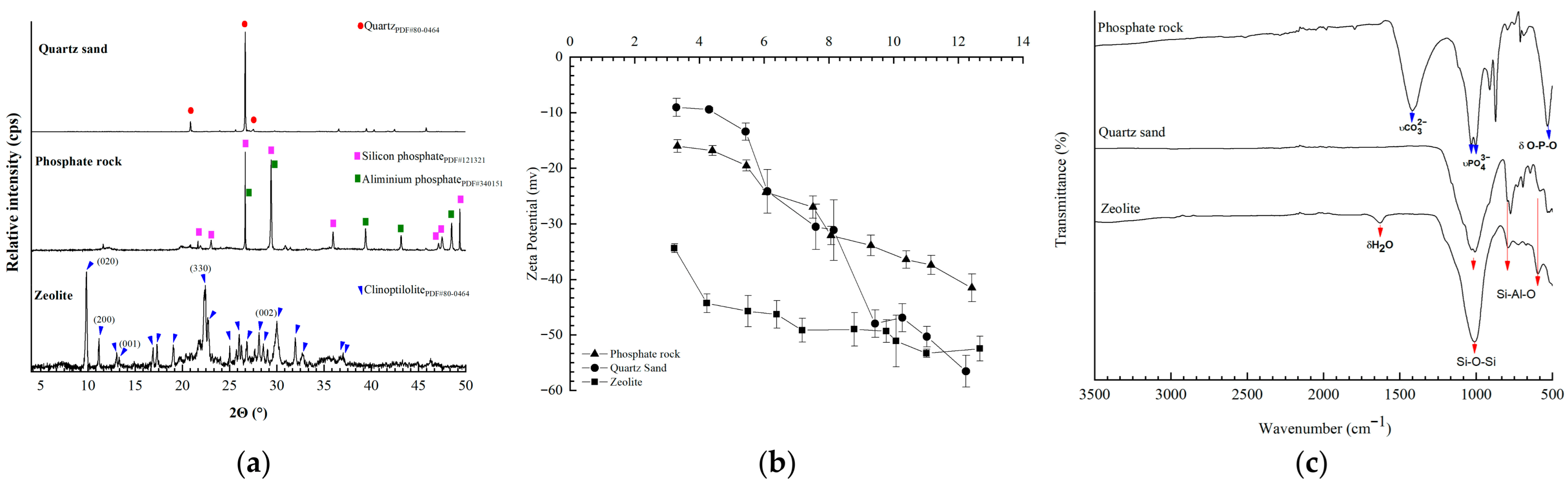
Initially, the three minerals were characterized. Figure 1 presents the XRD patterns, FT-IR spectra, and ZP distributions. According to the XRD diffractograms, the main crystalline phase of the zeolite was identified as clinoptilolite (PDF#80-0464), with its most intense diffraction peak located at 2θ = 9.89°, corresponding to the basal spacing d020 of 8.88 nm. In the case of phosphate rock, the crystalline phases of aluminum phosphate (PDF#34-0151) and silicon (PDF#12-1321) were identified, confirming its composition as aluminum silicates phosphate. Finally, quartz sand showed quartz as the predominant crystalline phase (PDF#80-0464).
The ZP distribution, indicative of the surface charge of the materials, showed that all three minerals exhibited negative surface charge densities across a wide pH range (3–12). Within the evaluated range, no isoelectric point (pIE) was detected.
The FT-IR spectra, where the characteristic functional groups of each mineral were identified, are shown in Figure 1. Phosphate rock exhibited characteristic bands primarily associated with phosphate phases, suggesting a possible partial substitution of PO43− within the crystal lattice. In the quartz sand spectrum, the observed bands were consistent with Si–O–Si stretching vibrations characteristic of quartz.
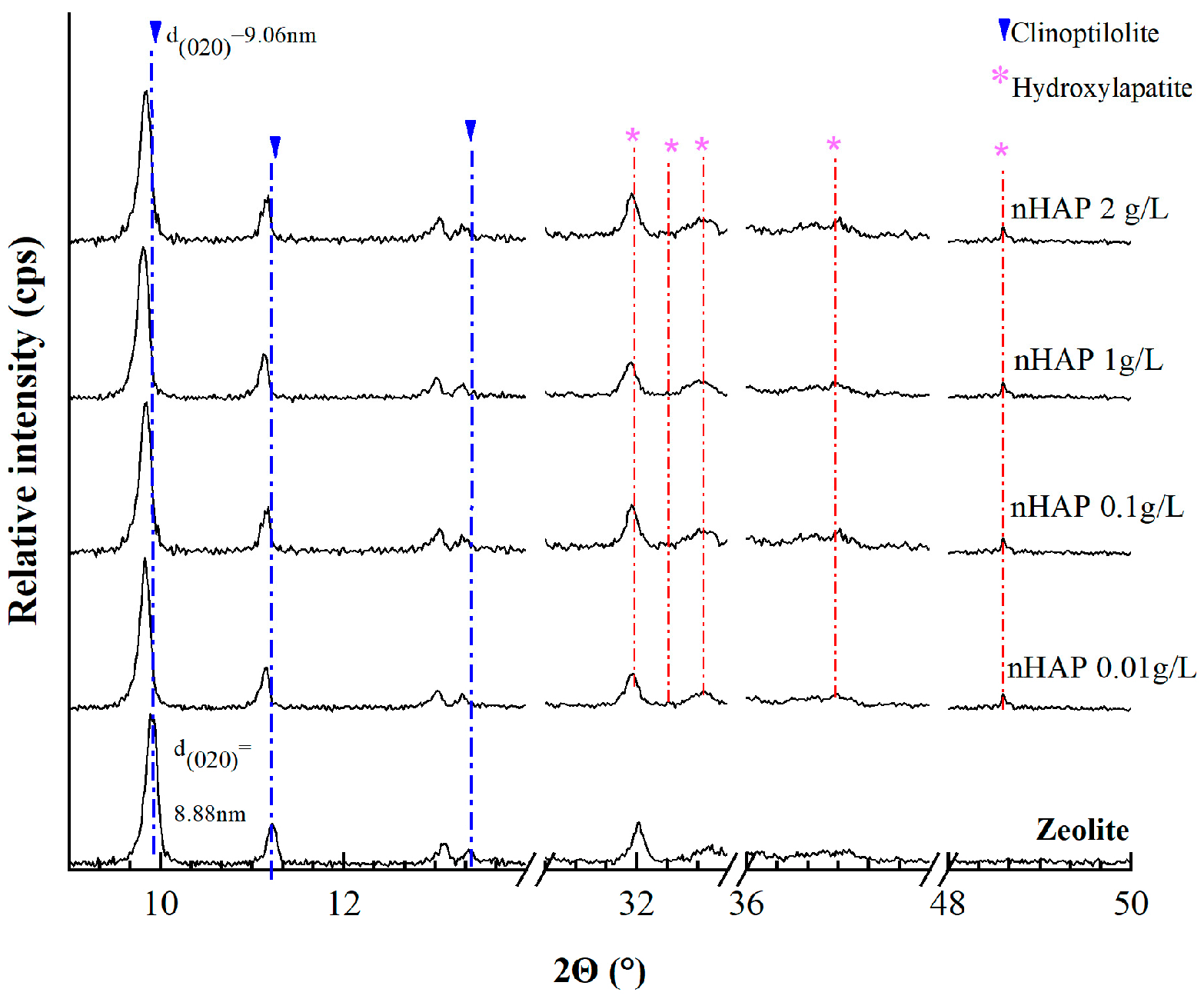
The hybrid fertilizers were further characterized by XRD, FT-IR, and zeta potential analysis to identify changes relative to the raw materials. According to the diffractograms shown in Figure 2, the nHAP–zeolite fertilizers exhibited diffraction planes corresponding to clinoptilolite, with a slight shift in the basal spacing to d020 = 9.06 nm compared to the original zeolite. In contrast, the characteristic planes of hydroxyapatite expected from the presence of nHAP were not clearly detected since several overlapped with those of clinoptilolite. However, a distinct peak at 2θ = 48.5° appeared in all hybrid fertilizers, which corresponds to hydroxyapatite and thus suggests the presence of nHAP within the zeolite structure at low concentrations. Moreover, the stability of the zeolite during the synthesis process was confirmed, as its crystalline framework remained intact, supporting its role as a carrier for nHAP.
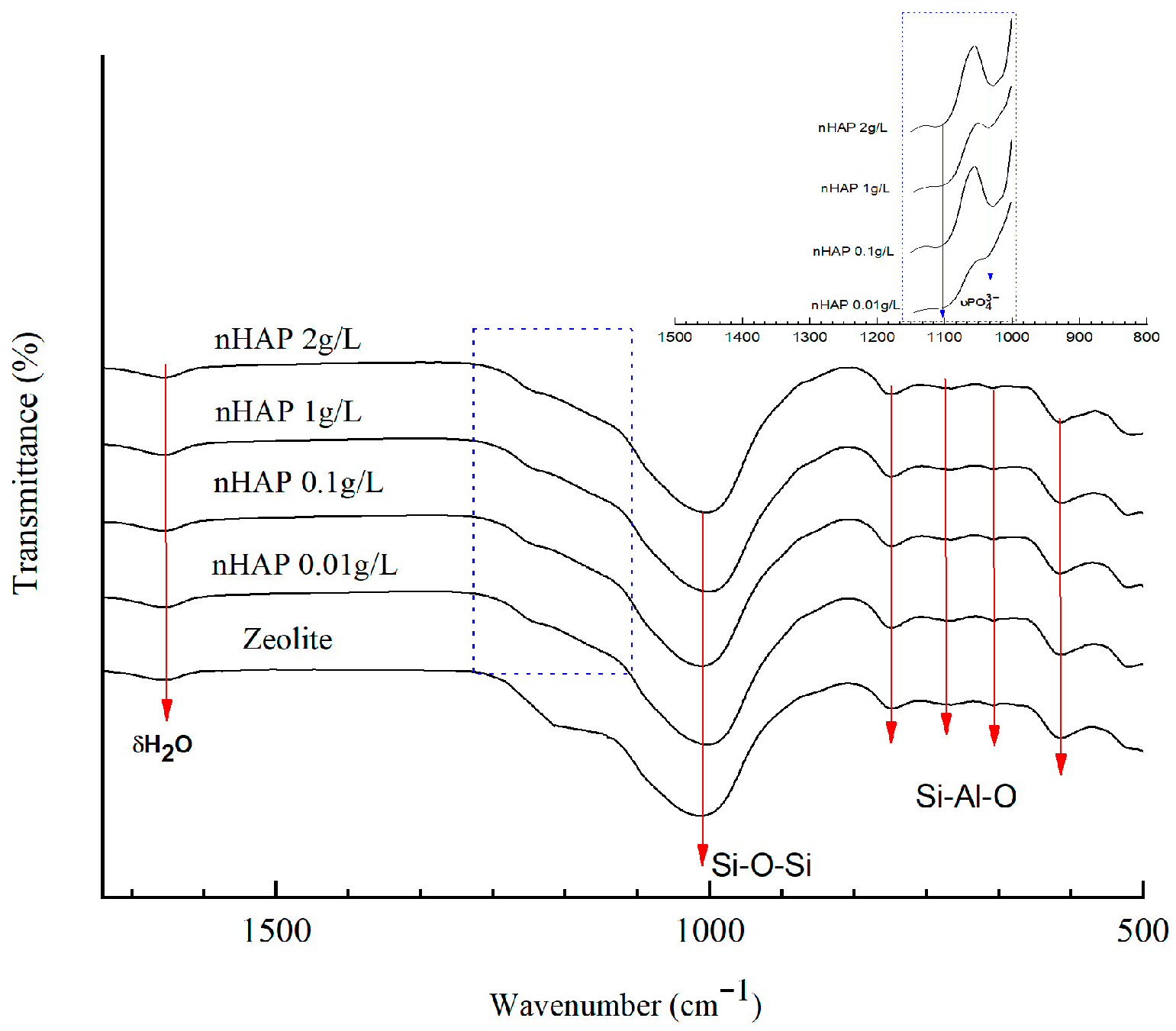
Figure 3 presents the FT-IR spectra, where zeolite bands were identified in all hybrid fertilizers. The overall spectra closely resembled that of pure zeolite, as Si–O vibrations overlapped with the expected PO43− signals from nHAP. To reduce this interference, the FT-IR spectra of the fertilizers were obtained using zeolite as the background. As illustrated in the inset, well-defined bands attributable to PO43− vibrations were detected at 1033 and 1103 cm−1, confirming the presence of nHAP in the hybrid structure. Interestingly, these bands were slightly shifted compared to pure nHAP (1022 and 1097 cm−1), indicating weak physical interactions between the zeolite surface and the phosphate groups of nHAP rather than the formation of chemical bonds.
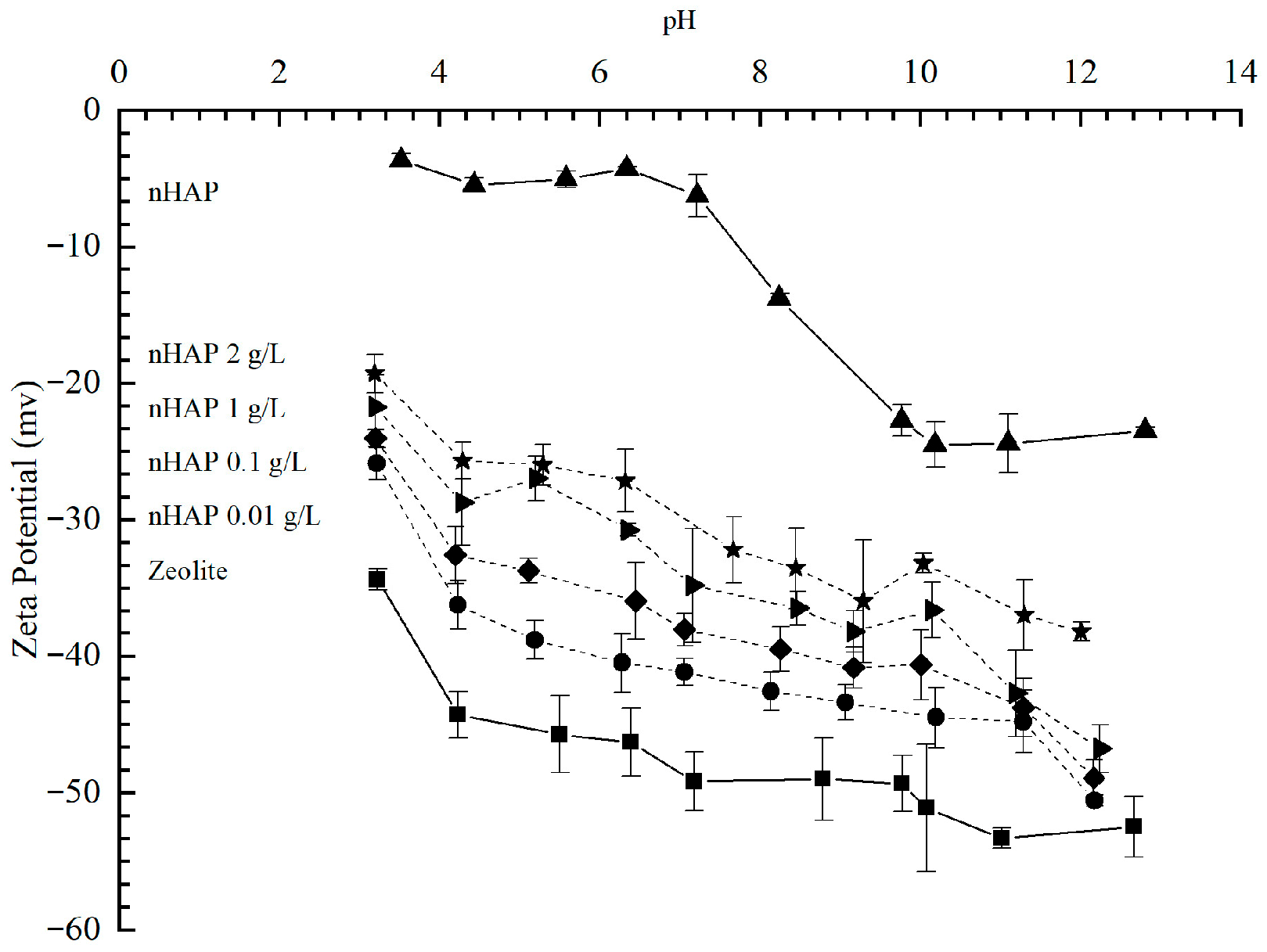
Since both zeolite and nHAP exhibit negatively charged surfaces, zeta potential analysis was conducted to assess possible electrostatic interactions (Figure 4). As the nHAP content increased, the surface charge of the hybrid fertilizers became less negative compared to the pristine zeolite. This result suggests that the few positive sites in the zeolite, associated with hydroxyl groups in its structure, were neutralized by the negatively charged nHAP, leading to an overall negative surface, albeit less negative than that of the original zeolite.
Altogether, these findings confirm the incorporation of nHAP into different hybrid fertilizers and their weak interactions with zeolite, representing a potential strategy to protect nHAP and enable its controlled release.

3.2. Evaluation of Hybrid Mixtures in Tomato

After the materials were characterized, they were applied and evaluated in tomato crops under greenhouse conditions. During the evaluation, four important variables were determined to characterize the effect of the treatments applied to the tomato crop: photosynthetic efficiency, leaf chlorophyll content at mid-production, total soluble solids content (°Brix), fruit firmness, and harvest yield. These variables allowed us to analyze both the physiological performance of the plants and the fruit quality obtained with the effect of the hybrid mixtures applied to the crop.
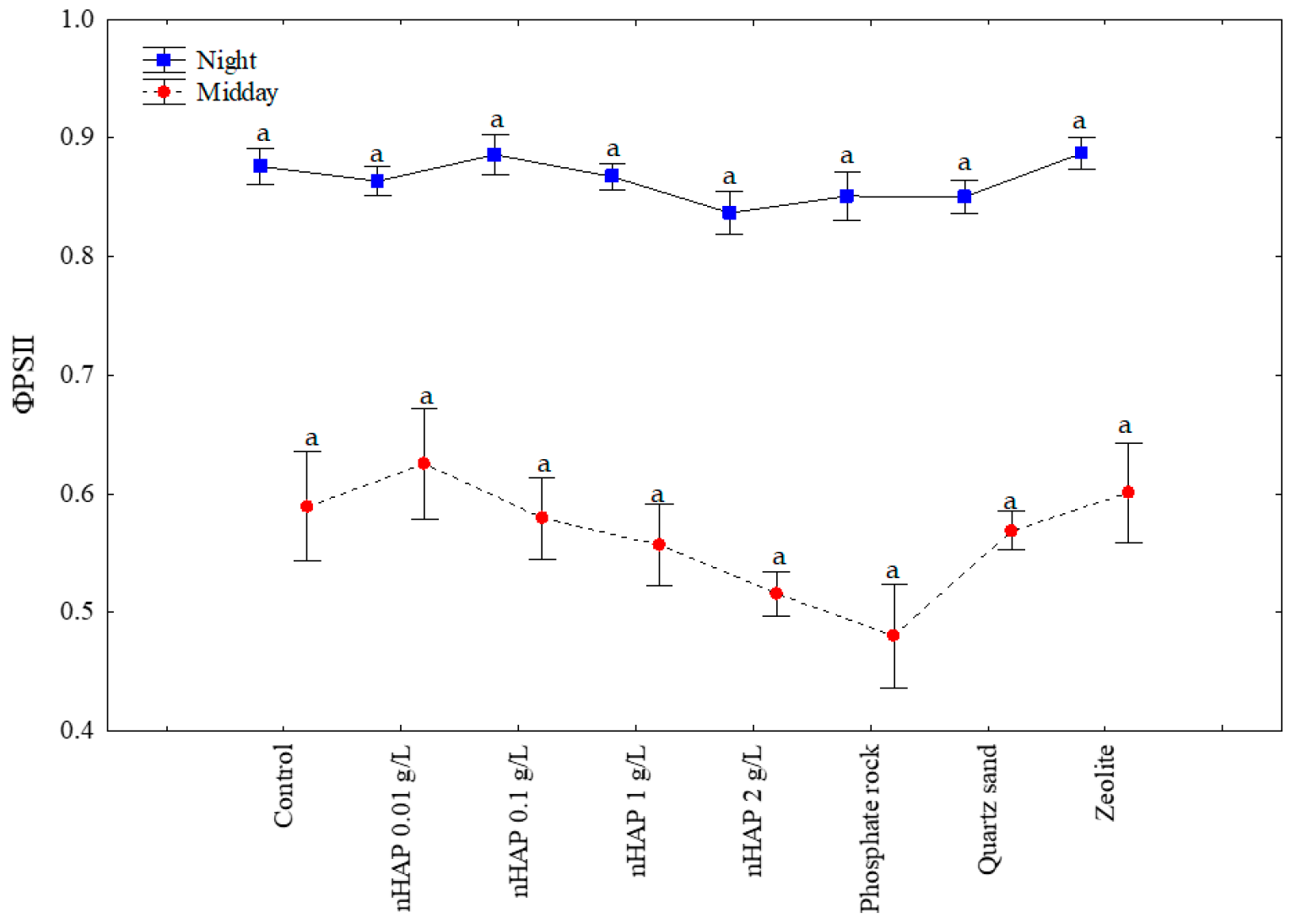
The results obtained from the evaluation of the effective quantum yield of photosystem II (ΦPSII) allowed us to identify the variations between treatments, showing the capacity of certain plant parts to harness light energy. The treatment with 0.01 g·L−1 nHAP recorded the highest values at midday (0.62), indicating greater photochemical efficiency under high radiation conditions. This was higher than the control (0.58), suggesting that the application of nHAP favored the photosynthetic performance of the crop. In contrast, the phosphate rock treatment presented the lowest values during the midday evaluation (0.48) (Figure 5). The nHAP treatments showed a decrease in values at higher nHAP levels (2 g·L−1), lowering the photosynthetic quantum yield to 0.51. During the night measurements, all treatments recovered significantly. These results with ΦPSII suggest that the use of nHAP at varying concentrations can influence the response of photosystem II.
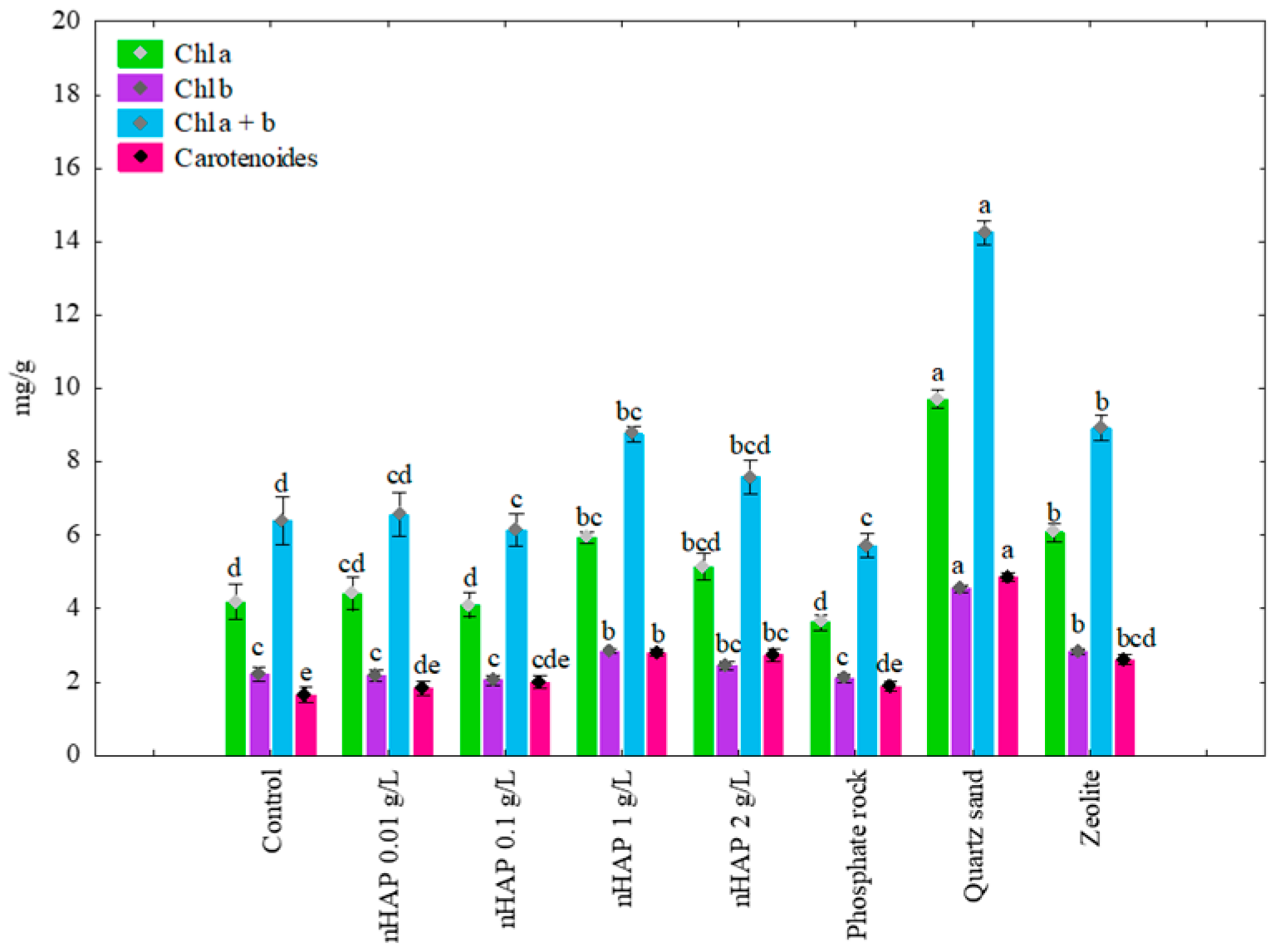
Chlorophyll content was measured during the second harvest and showed significant differences (p < 0.05) between the treatments evaluated. The evaluation of pigments in the crops allows for assessing the physiological status of the plants. Treatments with nHAP at 1 and 2 g·L−1 showed intermediate concentrations of pigments, for treatment 1 g·L−1 of nHAP presented a content of photosynthetic pigments with values of 5.9 mg·g−1 for Chl a and 2.92 mg·g−1. The blue dashed box highlights a magnified region between 1300 and 1000 cm−1 to facilitate band identification, while the red lines indicate bands attributed to clinoptilolite. for Chl b and 2.82 mg·g−1 of carotenoids, for the case of treatment with 2 g·L−1 of nHAP, 5.1 mg·g−1 for Chl a and 2.45 mg·g−1 for Chl b were obtained, and for carotenoids, 2.7 mg·g−1 was obtained. Both treatments presented Chl a, Chl b, and carotenoids higher than the control, which shows a positive effect of the application of nHAP on the synthesis of pigments. Interestingly, the quartz sand treatment showed the highest photosynthetic pigment content, with values of 9.71 mg·g−1 for Chl a, 4.55 mg·g−1 for Chl b, 14.25 mg·g−1 for total chlorophylls (Chl a + b), and 4.86 mg·g−1 for carotenoids.
In contrast, the phosphate rock treatment showed the lowest pigment values, with 3.63 mg·g−1 for Chl a and 5.72 mg·g−1 for Chl a + b. Similarly, the nHAP treatment (0.1 g·L−1) showed a reduced Chl b content (2.04 mg·g−1), whereas the control treatment recorded the lowest carotenoid content (1.65 mg·g−1). These comparisons confirm the positive effect of the nHAP and quartz sand treatments on pigment accumulation in the evaluated plants (Figure 6).
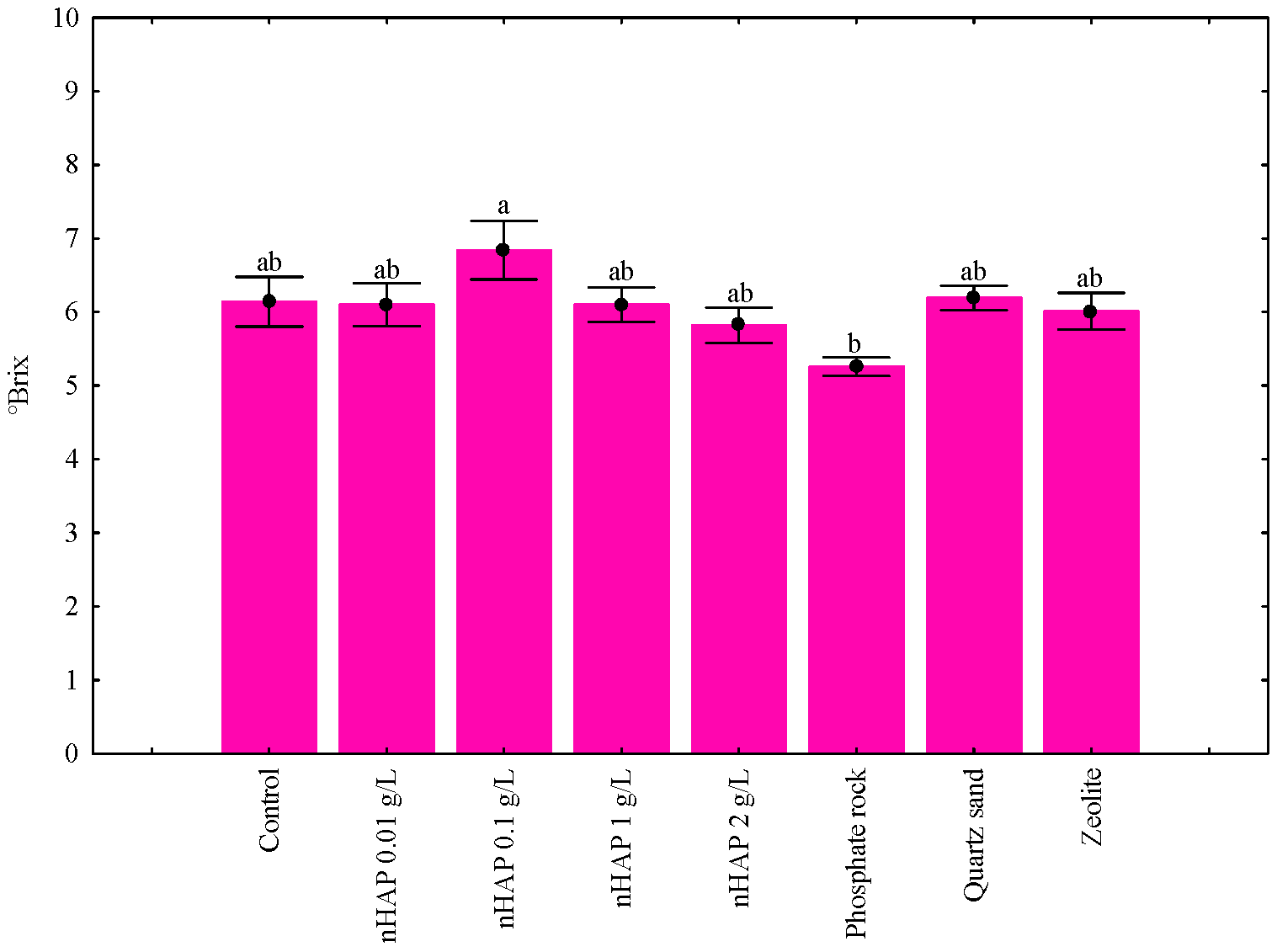
The °Brix shows the concentration of sugar and other soluble solids present in the fruits. In the case of tomato crop, the increase or presence of °Brix in the fruit is usually associated with a better organoleptic quality, presenting a sweeter flavor and being better accepted in the market. According to the comparison, significant statistical differences were obtained regarding the treatments. For the variable of total soluble solids content (°Brix), it was obtained that the nHAP 0.1 g·L−1 treatment presented 6.84 °Brix, which was higher than the treatment with phosphate rock, which presented 5.26 °Brix; however, there were no statistical differences with the rest of the treatments that remained at 5.82–6.19 °Brix (Figure 7).
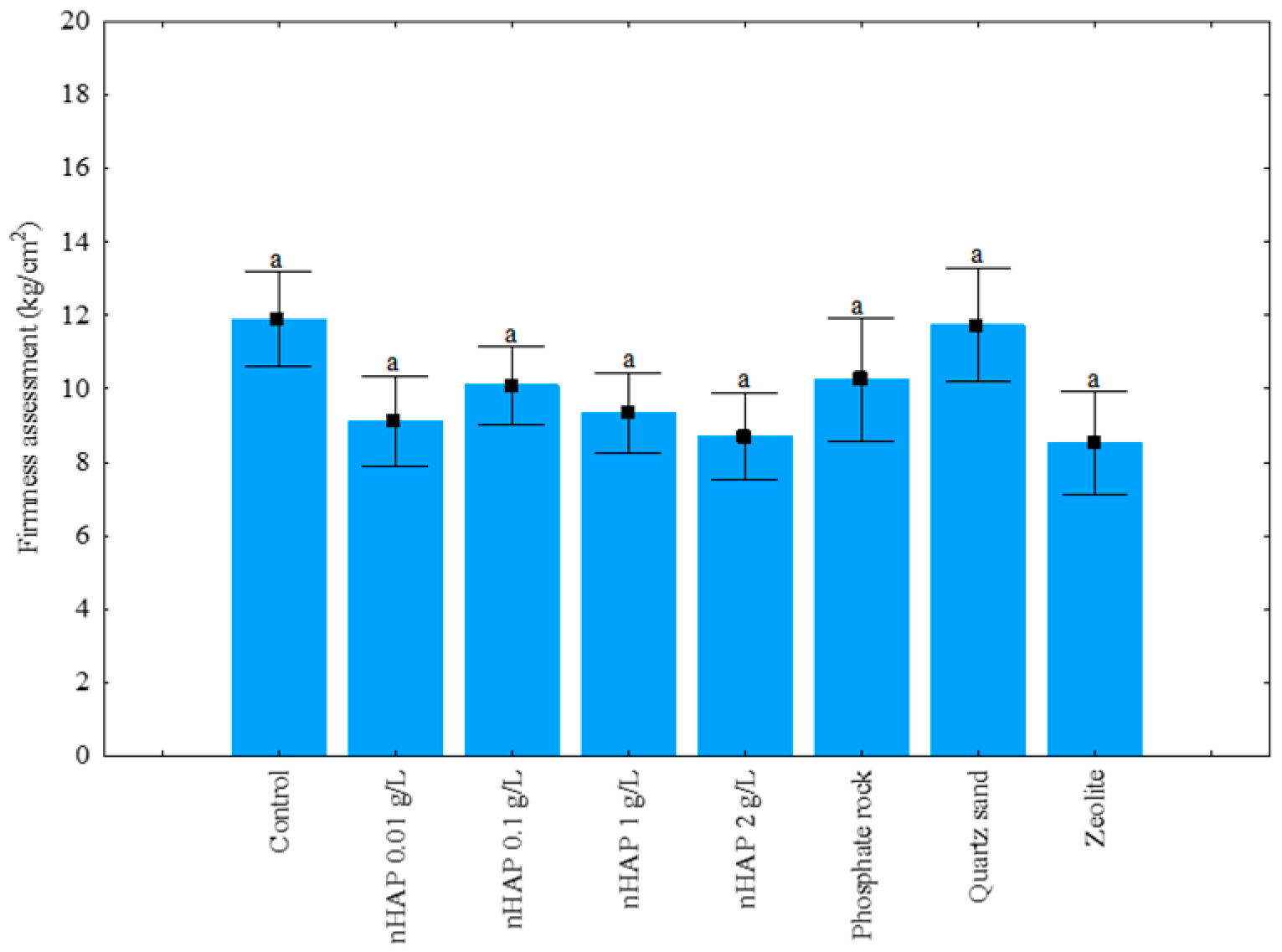
In this study, tomato firmness was evaluated from eight different treatments using a GY-03 penetrometer. Ten fruits from each harvest were selected from ripeness grade 2, and firmness was subsequently assessed. Statistical analysis revealed no significant differences among treatments (p < 0.05). The firmness of the fruits for each treatment was 11.73 kg/cm2 (quartz sand), 11.9 kg·cm−2 (control), 10.25 kg·cm−2 (phosphate rock), 10.1 kg·cm−2 (nHAP 0.1 g·L−1), 9.36 kg·cm−2 (nHAP 1.0 g·L−1), 9.12 kg·cm−2 (nHAP 0.01 g·L−1), 8.7 kg·cm−2 (nHAP 2 g·L−1), and 8.54 kg·cm−2 (zeolite). Since there were no statistical differences, this may be due to the time of selection of the fruits, since the selection was carried out at the same maturity (Figure 8), specifically at the pink ripening stage, within a study aimed at evaluating fruit quality at various stages of development. In this work, firmness sampling was conducted at a degree of ripeness equivalent to the pink ripening stage (PK) described by these authors.
To evaluate the average diameter of the fruits obtained from each treatment. It was found that, for the first harvest, the weight of the control treatment tomatoes had the lowest diameter, 33.99 mm, compared to the rest of the treatments (Table 1). However, in the remaining evaluations, no statistical differences were found between the treatments, with diameters smaller than 70.35 mm.
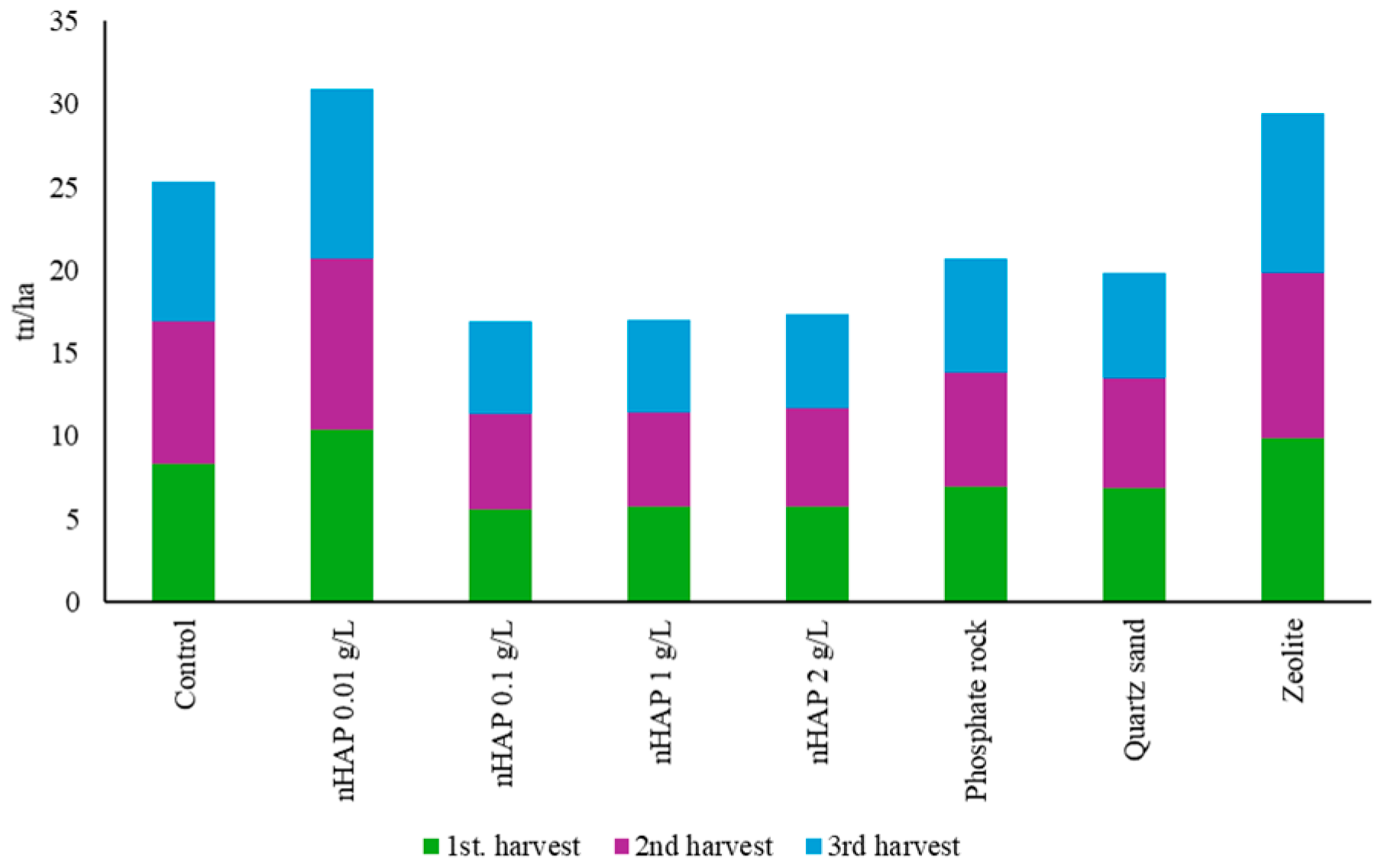
In the final yield per treatment obtained during three harvests (three bunches) the total yield was estimated. The marginal yield increase observed in the treatment with 0.01 g·L−1 of nHAP and zeolite (30 t·ha−1) compared to the treatment with zeolite alone (29.4 t·ha−1) suggests that the hybrid reaches its maximum biological efficiency at very low concentrations, improving the physiology and yield of the tomato crop. This indicates that nHAP has high bioactivity, where even a minimal dose is sufficient to optimize the nutrient-carrying capacity of the zeolite. The subsequent decrease in yield at higher doses, where the 0.1 g·L−1 nHAP treatment yielded a total of 16.9 t·ha−1, followed by the 1 g·L−1 nHAP treatment with a yield of 16.9 t·ha−1, and finally the 2 g·L−1 nHAP treatment with a yield of 17.3 t·ha−1. These results suggest that nanofertilizers should be tested at different concentrations to assess ionic toxicity or nutrient antagonism that may occur (Figure 9).
To our knowledge, this study represents the first application of zeolite-supported hydroxyapatite nanoparticles (nHAP) for greenhouse tomato (Solanum lycopersicum) cultivation. Our findings not only demonstrate the potential agronomic benefits of this nanofertilizer but also align with growing evidence that nHAP can serve as a sustainable source of phosphorus that preserves soil integrity. These properties underscore their suitability for agricultural applications without compromising soil structure or plant health. Therefore, the present research builds on a growing literature suggesting that nHAP constitutes a low-impact, efficient, and environmentally friendly alternative to conventional P fertilizers. Our study is the first to extend this concept to tomato cultivation using a zeolite delivery system, expanding the practical and sustainable uses of nano fertilizers in horticultural production.

4. Discussion

In this research, the use of a hybrid fertilizer was evaluated, with zeolite as a support and hydroxyapatite nanoparticles, and the yield of the tomato crop in coconut fiber was determined under greenhouse conditions. The characterization of the materials, the following were obtained for the zeolite, absorption bands at 591 and 796 cm−1 were assigned to the symmetric stretching of Si–O–Si [35], typical of the tetrahedral framework of clinoptilolite zeolites. The band at 1005 cm−1 corresponded to Si–O–Si stretching vibrations [35], while two additional bands at 1637 and 3482 cm−1 were attributed to –OH groups [36].
In the case of phosphate rock, the bands were found at 998 and 1025 cm−1 and were assigned to the asymmetric stretching of the phosphate ion (PO43−) [37], whereas those at 527 and 681 cm−1 corresponded to bending modes of the same group [38]. The bands observed at 870 and 1418 cm−1 indicated the presence of carbonate (CO32−) groups or P–OH deformation [39].
The quartz sand exhibited asymmetric Si–O stretching vibrations [40]. The Zeta Potential characterization of the zeolite showed a negative surface charge across the different pH ranges [41]. This negative charge is due to the substitution of Al34 for Si34 [41,42] within the tetrahedral network of the zeolite, breaking the siloxane group bonds. The zeolite material can be considered to have a permanent negative charge due to the isomorphic substitution it exhibits [41]. The reduction in the zeta potential between pH 6 and pH 10 is due to the adsorption of H3O+ in the negatively charged regions [42]. The zeta potential obtained for the phosphate rock was negative and decreased with increasing pH [43]. The quartz sand exhibited a negative charge as pH increased during evaluation of its characteristic zeta potential [18,44]. The XRD evaluation allowed us to confirm the structures of the zeolite, quartz sand, and phosphate rock materials, showing no differences from those reported by other authors [45].
The characterization of the hybrid fertilizer (zeolite and nHAP) successfully determined the presence of nHAP in the support. This was further confirmed by XRD, which showed a slight shift, as did the FTIR evaluation. The evaluation of nHAP in PZ showed a less negative charge than that of the zeolite, allowing hetero-interface interactions. This is due to the complementarity of charges. Zeolites, due to isomorphic substitution in their tetrahedral structure [46], possess a net negative surface charge. In contrast, nHAP have Ca2+ sites on their surfaces that act as positive charge centers, generating attraction and enabling nucleation between the two materials [47]. Cation exchange by the zeolite is very common; Na+ or K+ can be exchanged in an aqueous solution for the Ca2+ of the nHAP, allowing them not only to enter the pores but also to become adsorbed on the external surface, acting as chemical anchors. In photosynthetic efficiency at midday (ΦPSII), we observe similar behavior across treatments, suggesting good PSII functionality under high irradiance [48]. These ΦPSII results suggest that nHAPs, depending on their concentration, can influence the photosystem II response. Increasing the nHAP concentration was found to be associated with a transient regulation of photochemical efficiency under increased ion availability, rather than with irreversible damage to the photosynthetic apparatus [49].
It has been found that applying nHAP to tomato plants improves their response to abiotic stress [50]. The complete nighttime recovery suggests that PSII integrity was maintained, indicating that the midday depression could correspond to protective mechanisms of energy dissipation or reversible photoinhibition [51].
Interestingly, we observed that plants grown in quartz sand showed higher concentrations of photosynthetic pigments and more intensely green leaves than those in the other treatments fertilized with nHAP or zeolite. However, we observed that the plants under this treatment were smaller than those under the other treatments
It is worth noting that the carotenoid content obtained in the control treatment in this study exceeds the value of 1.22 mg·g−1 previously reported in tomato leaves [52]. The reported value for soluble solids in tomato fruits can be in a range of 4–6 °Brix [53]. The firmness of tomato skin is a relevant physiological characteristic of tomato fruit as it is related to postharvest handling resistance, shelf life, and transport durability [54]. The results obtained show that the firmness of our fruits was superior, which suggests differences attributable to factors such as crop management, environmental conditions, or varietal characteristics; an average firmness of 16.7 ± 2.5 N has been reported in greenhouse-grown tomatoes [55]. It has been determined that the maturity of the fruit is influenced by firmness [56]. Therefore, the values obtained in the treatments were within the marked range, maintaining fruit quality in all treatments evaluated. Previous research has shown that nHAP materials offer controlled release of phosphorus, resulting in significantly lower nutrient leaching compared to conventional soluble fertilizers such as triple superphosphate (TSP) [57]. Previous research reported that only a small fraction of the nHAP applied in two soil orders (5% in Andisol, <1% in Oxisol) filtered through the soil [58]. nHAP has been shown to be biocompatible and nontoxic, with no phytotoxic effects on tomato seedlings under hydroponic conditions and even stimulates root elongation [59]. The yield response observed was not linear with respect to nHAP concentration, a common characteristic of highly bioactive nanomaterials [60]. It is possible that nHAP acts as a highly efficient phosphorus source, optimizing the nutrient transport capacity of the zeolite carrier without affecting the rhizosphere’s ionic balance [61]. A narrow “optimum window” for nanofertilizers has been proposed [61]. Excess nHAP likely triggered nutrient antagonism or ionic stress. Therefore, the added value of the zeolite–nHAP hybrid is not defined by a linear increase in productivity, but rather by its ability to maintain high yields with a significant reduction in mineral inputs, in line with the principles of sustainable precision agriculture.

5. Conclusions

This study demonstrates that combining low concentrations of hydroxyapatite nanoparticles (nHAP) supported on zeolite can be a viable option for generating hybrid fertilizers. Structural characterization of the hybrid fertilizer confirmed the preservation of the zeolite’s crystalline integrity and the effective incorporation of nHAP. The agronomic evaluation revealed that, although some individual parameters were not significantly affected, tomato yield increased marginally with the use of 0.01 g·L−1 of nHAP and zeolite. Furthermore, the increase in chlorophyll content remained within optimal ranges, and fruit quality was maintained. The application of nHAP showed positive effects on physiological variables at low concentrations (0.01 g·L−1); however, higher doses did not appear to benefit the tomato crop, suggesting that further studies with different concentrations are needed to optimize its use. These results broaden the scope of nanoparticle-based technologies in agriculture, suggesting that the use of zeolite as a carrier for functional nanoparticles represents a promising and sustainable alternative for efficient plant nutrition management.

Author Contributions

Conceptualization, E.K.H.-V., E.P.-O., J.M.G.-P., and P.D.-S.; methodology, E.K.H.-V., M.d.l.L.G.-G. and M.F.Q.-C.; investigation, E.K.H.-V. and M.d.l.L.G.-G.; resources, J.M.G.-P., E.P.-O., and P.D.-S.; writing—original draft preparation, E.K.H.-V.; writing—review and editing, E.K.H.-V., E.P.-O., and P.D.-S.; funding acquisition, E.P.-O. and P.D.-S. All authors have read and agreed to the published version of the manuscript.

Funding

Estrella Karina Hernández Vázquez is a doctoral student from Programa de Doctorado en Ciencias Agropecuarias, Universidad Autónoma de San Luis Potosí (UASLP) and received fellowship (930646) from CONAHCYT-SECIHTI.

Data Availability Statement

The data presented in this study are available on request from the corresponding authors. The data are not publicly available due to privacy or ethical restrictions.

Acknowledgments

We thank Ma. Angelica Aguilar Aguilar for FT-IR analysis and Jesus Martínez for the support in the greenhouse.

Conflicts of Interest

The authors declare no conflict of interest.

Abbreviations

The following abbreviations are used in this manuscript:
ATPAdenosine Triphosphate
ChlChlorophyll
FT-IRFourier Transform Infrared Spectroscopy
HAPHydroxyapatite
nHAPnanohydroxyapatite
PPhosphorus
XRDX-ray diffraction
ZPZeta potential

References

  1. Plaza-Bonilla, D.; Arrúe, J.L.; Cantero-Martínez, C.; Fanlo, R.; Iglesias, A.; Álvaro-Fuentes, J. Carbon management in dryland agricultural systems. A review. Agron. Sustain. Dev. 2015, 35, 1319–1334. [Google Scholar] [CrossRef]
  2. Liu, W.; Liu, K.; Chen, D.; Zhang, Z.; Li, B.; El-Mogy, M.M.; Tian, S.; Chen, T. Solanum lycopersicum, a Model Plant for the Studies in Developmental Biology, Stress Biology and Food Science. Foods 2022, 11, 2402. [Google Scholar] [CrossRef]
  3. López-Yerena, A.; Domínguez-López, I.; Abuhabib, M.M.; Lamuela-Raventós, R.M.; Vallverdú-Queralt, A.; Pérez, M. Tomato wastes and by-products: Upcoming sources of polyphenols and carotenoids for food, nutraceutical, and pharma applications. Crit. Rev. Food Sci. Nutr. 2023, 64, 10546–10563. [Google Scholar] [CrossRef]
  4. Suazo-Castro, B.R.; Martínez, S.B.; Puig, M.L.; Maiale, S.J.; Garbi, M. Harvest period and production of tomato (Solanum lycopersicum L.) grafted and pruned to more than one stem, grown under greenhouse conditions. Chil. J. Agric. Anim. Sci. 2023, 39, 23–34. [Google Scholar] [CrossRef]
  5. Altimira, F.; Godoy, S.; Arias-Aravena, M.; Vargas, N.; González, E.; Dardón, E.; Montenegro, E.; Viteri, I.; Tapia, E. Reduced fertilization supplemented with Bacillus safensis RGM 2450 and Bacillus siamensis RGM 2529 promotes tomato production in a sustainable way. Front. Plant Sci. 2024, 15, 1451887. [Google Scholar] [CrossRef]
  6. SADER. México Referente Mundial en el Cultivo y Exportación de Jitomate. Available online: https://www.gob.mx/agricultura/prensa/mexico-referente-mundial-en-el-cultivo-y-exportacion-de-jitomate-agricultura (accessed on 13 November 2025).
  7. Wyngaard, S.R.; Kissinger, M. Tomatoes from the desert: Environmental footprints and sustainability potential in a changing world. Front. Sustain. Food Syst. 2022, 6, 994920. [Google Scholar] [CrossRef]
  8. Han, F.X.; Singer, A. Bioavailability of trace elements in arid zone soils. In Biogeochemistry of Trace Elements in Arid Environments; Springer: Dordrecht, The Netherlands, 2007; pp. 221–266. [Google Scholar]
  9. Santás-Miguel, V.; Arias-Estévez, M.; Rodríguez-Seijo, A.; Arenas-Lago, D. Use of metal nanoparticles in agriculture: A review on the effects on plant germination. Environ. Pollut. 2023, 334, 122222. [Google Scholar] [CrossRef]
  10. Shen, J.; Yuan, L.; Zhang, J.; Li, H.; Bai, Z.; Chen, X.; Zhang, W.; Zhang, F. Phosphorus dynamics: From soil to plant. Plant Physiol. 2011, 156, 997–1005. [Google Scholar] [CrossRef] [PubMed]
  11. Cao, N.; Zhi, M.; Zhao, W.; Pang, J.; Hu, W.; Zhou, Z.; Meng, Y. Straw retention combined with phosphorus fertilizer promotes soil phosphorus availability by enhancing soil P-related enzymes and the abundance of phoC and phoD genes. Soil Tillage Res. 2022, 220, 105390. [Google Scholar] [CrossRef]
  12. Malhotra, H.; Vandana; Sharma, S.; Pandey, R. Phosphorus nutrition: Plant growth in response to deficiency and excess. In Plant Nutrients and Abiotic Stress Tolerance; Hasanuzzaman, M., Fujita, M., Oku, H., Nahar, K., Hawrylak-Nowak, B., Eds.; Springer: Singapore, 2018; pp. 171–190. [Google Scholar] [CrossRef]
  13. Guo, F.; Yost, R.S.; Hue, N.V.; Evensen, C.I.; Silva, J.A. Changes in phosphorus fractions in soils under intensive plant growth. Soil Sci. Soc. Am. J. 2000, 64, 1681–1689. [Google Scholar] [CrossRef]
  14. Pang, F.; Li, Q.; Solanki, M.K.; Wang, Z.; Xing, Y.X.; Dong, D.F. Soil phosphorus transformation and plant uptake driven by phosphate-solubilizing microorganisms. Front. Microbiol. 2024, 15, 1383813. [Google Scholar] [CrossRef]
  15. Samal, D.K.; Sukla, L.B.; Bishoyi, A.K. Biosynthesis of phosphorus nanoparticles for sustainable agroecosystems: Next generation nanotechnology application for improved plant growth. ACS Omega 2025, 10, 14555–14565. [Google Scholar] [CrossRef]
  16. Zhou, F.; Liu, Q.; Liu, X.; Li, W.; Feng, J.; Chi, R. Surface electrical behaviors of apatite, dolomite, quartz, and phosphate ore. Front. Mater. 2020, 7, 35. [Google Scholar] [CrossRef]
  17. Pilotto, L.; Zuluaga, M.Y.A.; Scalera, F.; Piccirillo, C.; Marchiol, L.; Civilini, M.; Fellet, G. Sustainable crop fertilization by combining biogenic nano-hydroxyapatite and P solubilizing bacteria: Observations on barley. Plant Nano Biol. 2024, 9, 100091. [Google Scholar] [CrossRef]
  18. Kaya, A.; Yukselen, Y. Zeta potential of clay minerals and quartz contaminated by heavy metals. Can. Geotech. J. 2005, 42, 1280–1289. [Google Scholar] [CrossRef]
  19. Izzetti, R.; Gennai, S.; Nisi, M.; Gulia, F.; Miceli, M.; Giuca, M.R. Clinical applications of nano-hydroxyapatite in dentistry. Appl. Sci. 2022, 12, 10762. [Google Scholar] [CrossRef]
  20. Leroy, P.; Maineult, A.; Li, S.; Vinogradov, J. The zeta potential of quartz: Surface complexation modelling to elucidate high salinity measurements. Colloids Surf. A Physicochem. Eng. Asp. 2022, 650, 129507. [Google Scholar] [CrossRef]
  21. Bedi, R.S.; Chow, G.; Wang, J.; Zanello, L.; Yan, Y.S. Bioactive materials for regenerative medicine: Zeolite-hydroxyapatite bone mimetic coatings. Adv. Eng. Mater. 2012, 14, 200–206. [Google Scholar] [CrossRef]
  22. Iqbal, N.; Kadir, M.A.; Iqbal, S.; Abd Razak, S.I.; Rafique, M.S.; Bakhsheshi-Rad, H.R.; Hasbulla, I.M.; Khattak, M.A.; Raghavendran, H.; Abbas, A.A. Nano-hydroxyapatite reinforced zeolite ZSM composites: A comprehensive study on the structural and in vitro biological properties. Ceram. Int. 2016, 42, 7175–7182. [Google Scholar] [CrossRef]
  23. Díaz-Guzmán, D.; Trujillo-Villanueva, L.E.; Zamora-Hernández, S.V.; Pérez-González, N.K.; Chávez-Urbiola, E.A.; Reyes-Cruz, V.E.; Legorreta-García, F. Mineralogical characterization and agronomic evaluation of zeolite, phosphate rock, and perlite mixtures as substrates for lettuce cultivation. Pol. J. Environ. Stud. 2026, 35, e214089. [Google Scholar] [CrossRef]
  24. Li, Y.; Cai, Y.; Chen, T.; Bao, X. Zeolites: A series of promising biomaterials in bone tissue engineering. Front. Bioeng. Biotechnol. 2022, 10, 1066552. [Google Scholar] [CrossRef]
  25. Mikhak, A.; Sohrabi, A.; Kassaee, M.Z.; Feizian, M. Synthetic nanozeolite/nanohydroxyapatite as a phosphorus fertilizer for German chamomile (Matricaria chamomilla L.). Ind. Crops Prod. 2017, 95, 444–452. [Google Scholar] [CrossRef]
  26. Xiong, L.; Wang, P.; Hunter, M.N.; Kopittke, P.M. Bioavailability and movement of hydroxyapatite nanoparticles (HA-NPs) applied as a phosphorus fertilizer in soils. Environ. Sci. Nano 2018, 5, 2888–2898. [Google Scholar] [CrossRef]
  27. Marchiol, L.; Filippi, A.; Adamiano, A.; Degli Esposti, L.; Iafisco, M.; Mattiello, A.; Petrussa, E.; Braidot, E. Influence of Hydroxyapatite Nanoparticles on Germination and Plant Metabolism of Tomato (Solanum lycopersicum L.): Preliminary Evidence. Agronomy 2019, 9, 161. [Google Scholar] [CrossRef]
  28. Priyam, A.; Yadav, N.; Reddy, P.M.; Afonso, L.O.; Schultz, A.G.; Singh, P.P. Fertilizing benefits of biogenic phosphorous nanonutrients on Solanum lycopersicum in soils with variable pH. Heliyon 2022, 8, e09144. [Google Scholar] [CrossRef]
  29. Priyam, A.; Yadav, N.; Reddy, P.M.; Afonso, L.O.; Schultz, A.G.; Singh, P.P. Uptake and benefits of biogenic phosphorus nanomaterials applied via fertigation to Japonica Rice (Taipei 309) in low-and high-calcareous soil conditions. ACS Agric. Sci. Technol. 2022, 2, 462–476. [Google Scholar] [CrossRef]
  30. Kardes, T.A.; Gunes, A. Environmental and innovative fertilizer development strategies for wheat cultivation: Urea-doped hydroxyapatite, biochar-coated diammonium phosphate, and biochar-coated urea in basal and top dressing. J. Soil Sci. Plant Nutr. 2024, 24, 2064–2079. [Google Scholar] [CrossRef]
  31. Taşkın, M.B.; Şahin, Ö.; Taskin, H.; Atakol, O.; Inal, A.; Gunes, A. Effect of synthetic nano-hydroxyapatite as an alternative phosphorus source on growth and phosphorus nutrition of lettuce (Lactuca sativa L.). J. Plant Nutr. 2018, 41, 1148–1154. [Google Scholar] [CrossRef]
  32. Shams, A.S.; Abbas, M. Can hydroxyapatite and boron oxide nano-fertilizers substitute calcium superphosphate and boric acid for broccoli (Brassica oleracea var. italica) grown on a heavy clay soil? Egypt. J. Hortic. 2019, 46, 215–234. [Google Scholar] [CrossRef]
  33. Arias-Moreno, D.M.; Jiménez-Bremont, J.F.; Maruri-López, I.; Delgado-Sánchez, P. Effects of catalase on chloroplast arrangement in Opuntia streptacantha chlorenchyma cells under salt stress. Sci. Rep. 2017, 7, 8656. [Google Scholar] [CrossRef] [PubMed]
  34. Lichtenthaler, H.K.; Buschmann, C. Extraction of photosynthetic tissues: Chlorophylls and carotenoids. Curr. Protoc. Food Anal. Chem. 2001, 1, F4.2.1–F4.2.6. [Google Scholar]
  35. Almeida, J.N.; Song, L.; Askarli, S.; Chung, S.H.; Ruiz-Martínez, J. Zeolite–water chemistry: Characterization methods to unveil zeolite structure. Chem. Methods 2025, 5, e202400076. [Google Scholar] [CrossRef]
  36. Hamdy, M.S.; Alqahtani, F.A.; Shkir, M.; Fawy, K.F.; Benaissa, M.; Hamida, M.B.B.; Elboughdiri, N. Effect of different zeolite supports on the catalytic behavior of platinum nanoparticles in cyclohexene hydrogenation reaction. Catalysts 2022, 12, 1106. [Google Scholar] [CrossRef]
  37. Coulibaly, L.S.; Akpo, S.K.; Yvon, J.; Coulibaly, L. Fourier transform infra-red (FT-IR) spectroscopy investigation, dose effect, kinetics, and adsorption capacity of phosphate from aqueous solution onto laterite and sandstone. J. Environ. Manag. 2016, 183, 1032–1040. [Google Scholar] [CrossRef] [PubMed]
  38. Shah, S.; Joshi, R.; Rai, N.; Adhikari, R.; Pandit, R. Microstructural analysis of biowaste-derived hydroxyapatite-chitosan nanocomposites. Micro Nano Lett. 2022, 17, 369–376. [Google Scholar] [CrossRef]
  39. da Silva, O.G.; da Fonseca, M.G.; Arakaki, L.N. Silylated calcium phosphates and their new behavior for copper retention from aqueous solution. Colloids Surf. A Physicochem. Eng. Asp. 2007, 301, 376–381. [Google Scholar] [CrossRef]
  40. Anbalagan, G.; Prabakaran, A.R.; Gunasekaran, S. Spectroscopic characterization of Indian standard sand. Appl. Spectrosc. 2010, 77, 86–94. [Google Scholar] [CrossRef]
  41. Ersoy, B.X.; Çelik, M.S. Electrokinetic properties of clinoptilolite with mono- and multivalent electrolytes. Microporous Mesoporous Mater. 2002, 55, 305–312. [Google Scholar] [CrossRef]
  42. Uçar, M. Adsorption of chlorophenolic compounds on activated clinoptilolite. Adsorpt. Sci. Technol. 2019, 37, 664–679. [Google Scholar] [CrossRef]
  43. Coreño, J.; Martínez, A.; Bolarín, A.; Sánchez, F. Apatite nucleation on silica surface: A ζ potential approach. J. Biomed. Mater. Res. 2001, 57, 119–125. [Google Scholar] [CrossRef]
  44. Liu, C.; Min, F.; Liu, L.; Chen, J.; Du, J. Mechanism of hydrolyzable metal ions effect on the zeta potential of fine quartz particles. J. Dispersion Sci. Technol. 2018, 39, 298–304. [Google Scholar] [CrossRef]
  45. Wu, P.X.; Liao, Z.W. Study on structural characteristics of pillared clay modified phosphate fertilizers and its increase efficiency mechanism. J. Zhejiang Univ. Sci. B 2005, 6, 195–201. [Google Scholar] [CrossRef]
  46. Król, M.; Koleżyński, A.; Mozgawa, W. Vibrational spectra of zeolite Y as a function of ion exchange. Molecules 2021, 26, 342. [Google Scholar] [CrossRef]
  47. Balasooriya, I.L.; Chen, J.; Korale Gedara, S.M.; Han, Y.; Wickramaratne, M.N. Applications of nano-hydroxyapatite as adsorbents: A review. Nanomaterials 2022, 12, 2324. [Google Scholar] [CrossRef]
  48. Dorokhov, A.S.; Smirnov, A.A.; Semenova, N.A.; Akimova, S.V.; Kachan, S.A.; Chilingaryan, N.; Glinushkin, A.; Podkovyrov, I.Y. The effect of far-red light on the productivity and photosynthetic activity of tomatoes. IOP Conf. Ser. Earth Environ. Sci. 2021, 663, 012044. [Google Scholar] [CrossRef]
  49. Jiang, H.; Liu, J.K.; Wang, J.D.; Lu, Y.; Zhang, M.; Yang, X.H.; Hong, D.J. The biotoxicity of hydroxyapatite nanoparticles to plant growth. J. Hazard. Mater. 2014, 270, 71–81. [Google Scholar] [CrossRef] [PubMed]
  50. Nafchi, M.A.; Kachoie, M.A.; Ghodrati, L. Co-application of titanium dioxide and hydroxyapatite nanoparticles modulated chromium and salinity stress via modifying physio-biochemical attributes in Solidago canadensis L. Environ. Sci. Pollut. Res. 2024, 31, 50464–50477. [Google Scholar] [CrossRef]
  51. Venkatesan, J.; Kim, S.K. Nano-hydroxyapatite composite biomaterials for bone tissue engineering—A review. J. Biomed. Nanotechnol. 2014, 10, 3124–3140. [Google Scholar] [CrossRef]
  52. Silva-Beltrán, N.P.; Ruiz-Cruz, S.; Cira-Chávez, L.A.; Estrada-Alvarado, M.I.; Ornelas-Paz, J.J.; López-Mata, M.A.; Del-Toro-Sánchez, C.L.; Ayala-Zavala, J.F.; Márquez-Ríos, E. Total phenolic, flavonoid, tomatine, and tomatidine contents and antioxidant and antimicrobial activities of extracts of tomato plant. Int. J. Anal. Chem. 2015, 2015, 284071. [Google Scholar] [CrossRef]
  53. Tigist, M.; Workneh, T.S.; Woldetsadik, K. Effects of variety on the quality of tomato stored under ambient conditions. J. Food Sci. Technol. 2013, 50, 477–486. [Google Scholar] [CrossRef]
  54. Rahman, A.E.; El-Shiekh, T.M.; Hewedy, A.M. Effect of biofertilizers on yield, quality, and storability of tomatoes. J. Plant Prod. 2001, 26, 7165–7191. [Google Scholar] [CrossRef]
  55. Alenazi, M.M.; Shafiq, M.; Alsadon, A.A.; Alhelal, I.M.; Alhamdan, A.M.; Solieman, T.H.; Saad, M.A. Non-destructive assessment of flesh firmness and dietary antioxidants of greenhouse-grown tomato (Solanum lycopersicum L.) at different fruit maturity stages. Saudi J. Biol. Sci. 2020, 27, 2839–2846. [Google Scholar] [CrossRef] [PubMed]
  56. Pilotto, L.; Scalera, F.; Piccirillo, C.; Marchiol, L.; Zuluaga, M.Y.A.; Pii, Y.; Cesco, S.; Civilini, M.; Fellet, G. Phosphorus release from nano-hydroxyapatite derived from biowastes in the presence of phosphate-solubilizing bacteria: A soil column experiment. J. Agric. Food Chem. 2025, 73, 3918–3929. [Google Scholar] [CrossRef] [PubMed]
  57. Xiong, L.; Wang, P.; Kopittke, P.M. Tailoring hydroxyapatite nanoparticles to increase their efficiency as phosphorus fertilisers in soils. Geoderma 2018, 323, 116–125. [Google Scholar] [CrossRef]
  58. Montalvo, D.; McLaughlin, M.J.; Degryse, F. Efficacy of hydroxyapatite nanoparticles as phosphorus fertilizer in andisols and oxisols. Soil Sci. Soc. Am. J. 2015, 79, 551–558. [Google Scholar] [CrossRef]
  59. Erofeeva, E.A. Hormesis y nanomateriales: De la bioestimulación a la toxicidad. In Bioestimulación Vegetal con Nanomateriales; Springer: Singapore, 2025; pp. 1–19. [Google Scholar]
  60. Panpatte, D.G.; Jhala, Y.K.; Shelat, H.N.; Vyas, R.V. Nanoparticles: The next generation technology for sustainable agriculture. In Microbial Inoculants in Sustainable Agricultural Productivity, Volume 2: Functional Applications; Springer: New Delhi, India, 2016; pp. 289–300. [Google Scholar]
  61. Kah, M.; Kookana, R.S.; Gogos, A.; Bucheli, T.D. A critical evaluation of nanopesticides and nanofertilizers against their conventional analogues. Nat. Nanotechnol. 2018, 13, 677–684. [Google Scholar] [CrossRef]
Figure 1. Physicochemical characterization of the supports: (a) X-ray diffraction (XRD), (b) zeta potential (ZP) and (c) FT-IR spectra of zeolite, quartz sand, and phosphate rock. Blue lines indicate bands associated with phosphate groups in phosphate rock, while red lines correspond to silicate groups present in zeolite and quartz sand.
Horticulturae 12 00347 g001
Figure 2. X-ray diffraction (XRD) patterns of the mineral supports. Blue lines indicate the characteristic diffraction planes of cli-noptilolite, whereas red lines correspond to the diffraction planes attributed to hydroxyapatite.
Horticulturae 12 00347 g002
Figure 3. FT-IR spectrum in the different hybrid materials (zeolite + nHAP (0.01, 0.1, 1 and 2 g·L−1). The blue dashed box highlights a magnified region between 1300 and 1000 cm−1 to facilitate band identification, while the red lines indicate bands attributed to clinoptilolite.
Horticulturae 12 00347 g003
Figure 4. Evaluation of zeta potential in hybrid materials with respect to pH.
Horticulturae 12 00347 g004
Figure 5. Evaluation of the effective quantum yield of photosystem II (ΦPSII) between night and midday treatments. The bars represent the standard error (SE); lowercase letter represent statistical differences between treatments, p ≤ 0.05.
Horticulturae 12 00347 g005
Figure 6. Evaluation of Chl a, Chl b, Chl a + b, and carotenoid pigments with respect to the treatments used with different concentrations of nHAP. The bars represent the standard error (SE); different letters represent statistical differences between treatments, p ≤ 0.05.
Horticulturae 12 00347 g006
Figure 7. Concentration of sugars and other soluble solids present in tomato fruits with respect to the different treatments using nHAP at different concentrations (0.01, 0.1, 1, and 2 g·L−1). The bars represent the standard error (SE); different letters represent statistical differences between treatments, p ≤ 0.05, n = 10.
Horticulturae 12 00347 g007
Figure 8. Firmness assessment (kg/cm2) of tomato with respect to treatments. Bars represent standard error (SE); lowercase letter represent statistical differences between treatments, p ≤ 0.05, n = 10.
Horticulturae 12 00347 g008
Figure 9. Total tomato yield from three harvests (t/ha), with respect to treatments.
Horticulturae 12 00347 g009
Table 1. Average diameter of tomato fruits, classified according to their degree of ripeness (1, 2, 3), from three consecutive harvests, with respect to different treatments.
1st Harvest2nd Harvest3rd Harvest
Degree of Ripeness
1
(mm)
2
(mm)
3
(mm)
1
(mm)
2
(mm)
3
(mm)
1
(mm)
2
(mm)
3
(mm)
1Control33.99 b51.59 a45.80 a64.74 a68.35 a61.50 a59.39 a57.65 a42.84 a
2nHAP 0.01 g·L−154.39 ab48.76 a36.22 a52.25 a46.50 a52.67 a51.74 a55.20 a42.97 a
3nHAP 0.1 g·L−153.92 ab46.63 a37.19 a0.0053.21 a44.44 a42.06 a52.04 a50.51 a
4nHAP 1 g·L−147.99 ab46.15 a36.54 a56.99 a58.76 a55.56 a40.29 a46.34 a49.13 a
5nHAP 2 g·L−144.74 ab52.53 a42.56 a42.91 a55.04 a48.08 a54.39 a49.52 a41.25 a
6Phosphate rock50.86 ab52.37 a43.59 a42.81 a63.51 a60.12 a50.21 a49.19 a37.90 a
7Quartz sand55.76 a42.92 a41.16 a53.52 a55.36 a70.35 a44.53 a46.11 a42.72 a
8Zeolite46.22 ab50.96 a44.70 a53.74 a51.00 a59.21 a44.32 a52.20 a53.82 a
Different letters represent statistical differences between treatments at p < 0.05.
Disclaimer/Publisher’s Note: The statements, opinions and data contained in all publications are solely those of the individual author(s) and contributor(s) and not of MDPI and/or the editor(s). MDPI and/or the editor(s) disclaim responsibility for any injury to people or property resulting from any ideas, methods, instructions or products referred to in the content.