Article

Enological Potential of Autochthonous Red Spanish Grape Varieties as a Strategy to Address Climate Change

by
Inés Sampedro-Marigómez
1,
María Curiel-Fernández
1,
Enrique Barajas
2,
Alberto Martín-Baz
3,
José Antonio Rubio
2,
Marta Bueno-Herrera
1 and
Silvia Pérez-Magariño
1,*
1
Grupo de Enología, Instituto Tecnológico Agrario de Castilla y León, Ctra. Burgos Km 119, 47071 Valladolid, Spain
2
Grupo de Viticultura, Instituto Tecnológico Agrario de Castilla y León, Ctra. Burgos Km 119, 47071 Valladolid, Spain
3
Estación Enológica, Instituto Tecnológico Agrario de Castilla y León, C/ Santísimo Cristo, 16 Rueda, 47490 Valladolid, Spain
*
Author to whom correspondence should be addressed.
Horticulturae 2026, 12(3), 330; https://doi.org/10.3390/horticulturae12030330
Submission received: 30 December 2025 / Revised: 2 March 2026 / Accepted: 6 March 2026 / Published: 10 March 2026

Abstract

In the context of global climate change, exploring locally adapted grape varieties has become imperative for the future of the wine industry. Autochthonous red grape varieties from Castilla y León region (Spain) are being studied as a sustainable option due to their local adaptation. This study aimed to evaluate different agronomic variables of nine minority varieties over four years at each vineyard, and their enological potential in two later vintages. Enological parameters and phenolic composition were analyzed in grapes and in the resulting wines to assess quality and typicity. Most of the grape varieties were able the produced good quality wines with distinct enological profiles. Bruñal, Cenicienta and Tinto Jeromo had characteristics associated with more structured wines (>1500 mg/L of total polyphenols and total tannins), making them suitable for oak aging. Estaladiña showed similar features, together with a very high productivity. Mouraz and Negro Saurí showed characteristics suitable for rosé wine production. Gajo Arroba and Mandón exhibited high total acidity (>4 g/L of tartaric acid), indicating their potential use in coupage to improve wine acidity. Overall, these varieties represent a valuable resource to increase wine diversity and resilience under changing climates.

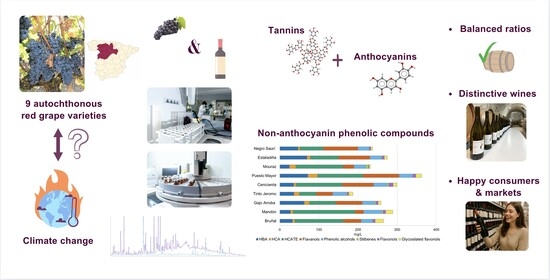
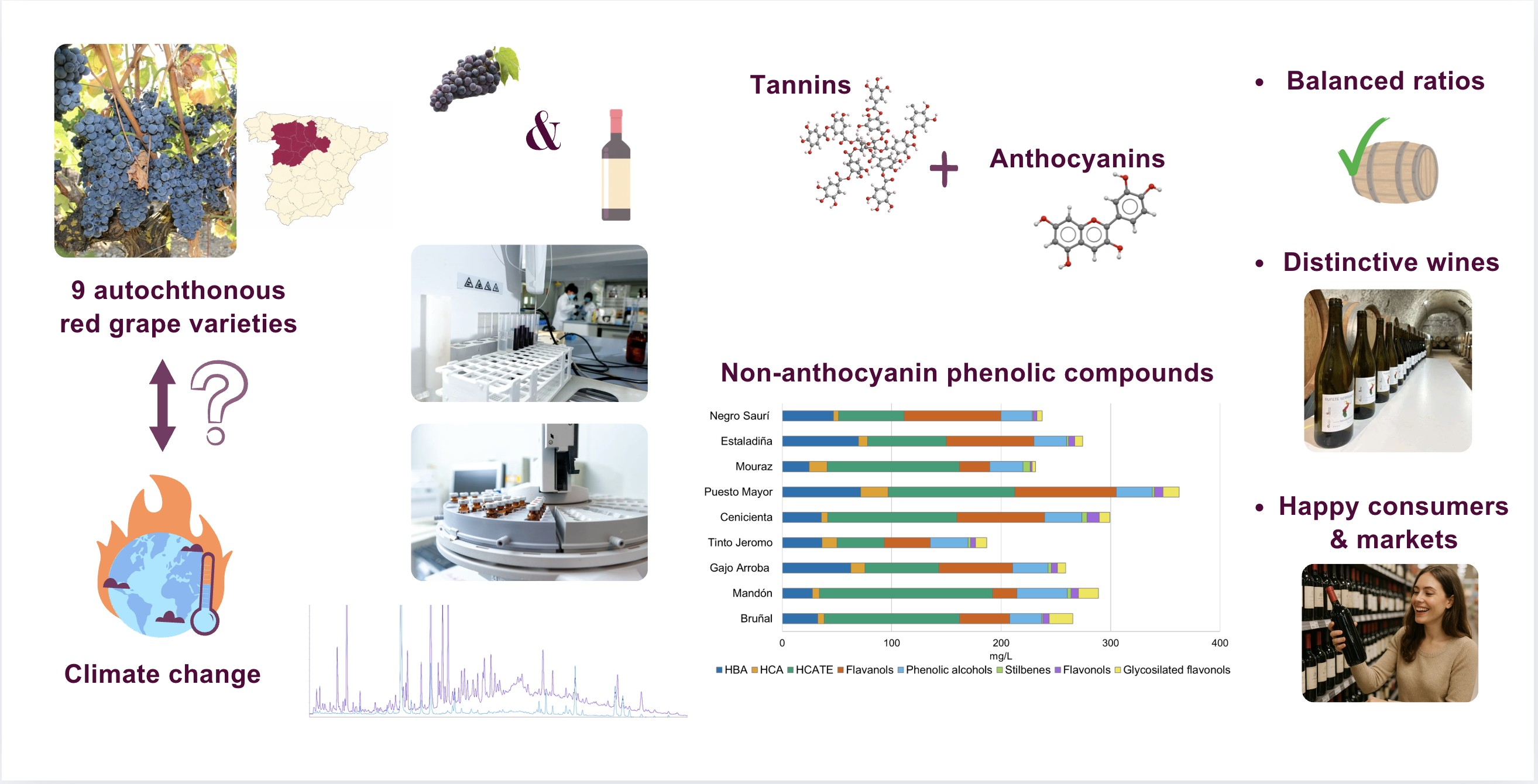
Graphical Abstract

1. Introduction

Climate change is already affecting many weather and climate extremes worldwide. Over the past 50 years, the global mean surface temperature has risen at a faster rate than during any previous period. If current trends continue, global warming is projected to reach 1.5 °C between 2030 and 2052. Furthermore, heatwaves and droughts are expected to become more frequent in the coming decades [1]. These climatic trends are particularly concerning for viticulture and enology, given their impact on grape composition, varietal expression and sensory characteristics of the final wines [2,3].
Previous studies have shown that temperature increment and, to a lesser extent, water scarcity are related with the advanced of the phenological stages of grape development, including budburst, flowering, and, in particular, veraison and ripening [4,5,6]. Ruml et al. [7] reported that up to 90% of the variation in grapevine phenology could be explained by temperature changes. Warmer temperatures and lower soil moisture levels lead to earlier maturation as measured in sugar content, resulting in earlier harvest dates and shorter growing cycles [8].
Consequently, wines may exhibit enological imbalances, such as lower total acidity, higher pH and greater sugar accumulation [9]. This increases the potential alcohol content and can alter wine typicity [10]. Climatic conditions influence the phenolic composition of grapes and wines, including phenolic acids, stilbenes and flavan-3-ols [11]. Additionally, anthocyanin levels are likely to decrease in certain varieties under warmer conditions, particularly when night-time temperatures are high, thereby hindering the development and stability of the red color of wine [9,12].
Several models have projected that southern wine-growing regions would be severely affected by climate change, facing a potential loss of suitability for grapevine cultivation. This could lead to a geographical shift of vineyards towards higher latitudes, altitudes or coastal areas [13,14,15,16]. In this context, Spain emerges as a particularly vulnerable region to temperature rises induced by climate change, with negative impacts likely to prevail and a high risk of losing the quality of key agricultural products such as grapes [17]. Due to the potential shift of wine grape cultivation towards higher latitudes, current wine-growing regions are challenged to adapt in order to maintain high-quality wine production. Harnessing phenological and genetic diversity as an agronomic adaptation to climate change represents a major opportunity to mitigate its negative impact on winegrowing [18,19,20].
Moreover, previous studies have highlighted the superior performance of different local varieties under future climate scenarios due to their unique characteristics providing a higher adaptive potential in their production context [21,22,23]. Muñoz-Organero et al. [24] reported that some minority grape varieties in Spain can withstand extreme climatic conditions while maintaining high yields, a good level of acidity and a late or intermediate ripening date. However, the enological potential of these varieties remains insufficiently explored, and further research is needed to be able to predict the quality and sensory profile of their wines.
In 2015, only five grape varieties accounted for 60% of the total vineyard area in Spain [25]. Castilla y León is an extensive region in northwestern Spain, where grape cultivation for winemaking is important from economic and social perspectives. It is the second largest winemaking region in Spain, with a total vineyard area exceeding 80,000 hectares. More than 90% of this area is included within the 17 Protected Designations of Origin (PDO). Consequently, in recent decades, considerable efforts have been made by Instituto Tecnológico Agrario de Castilla y León (ITACyL) to identify and recover minority grapevine varieties from Castilla y León. Studies have been performed to genetically and agronomically characterize cultivars found in areas such as Arribes (Salamanca), Bierzo (León), Tierra de Campos (Valladolid) and from the germplasm bank located in Zamadueñas (Valladolid) [26,27,28,29]. Preliminary studies have been carried out to assess their suitability for winemaking and promising and distinctive characteristics were observed [30].
Therefore, the main objectives of this study were to (1) characterize nine autochthonous grape varieties found in Castilla y León region (Spain) that are representative of their traditional growing areas, (2) determine the phenolic profile of the wines produced from these varieties, and (3) evaluate their enological potential to produce high-quality wines. The different agronomic variables were evaluated over a four-year period and the enological and technological characterization of grapes and wines in two later vintages.

2. Materials and Methods

2.1. Minority Grape Varieties and Characteristics of the Plots

Nine red Vitis vinifera L. grape varieties were studied. Each variety was sampled from plots representative of its traditional growing area. The edaphoclimatic and management conditions differed among the sites: Arribes region is characterized by poor granite soils and a dry Atlantic climate; Bierzo by fertile clay soils and a humid Atlantic climate; and Valladolid and Tierra de Campos by poor loamy-clay soils under a dry continental climate. Consequently, the characterization of these grape varieties reflects their performance and adaptive capacity within their respective production contexts. Varietal traits and site-specific conditions jointly contribute to the observed responses.
Table 1 shows the characteristics of the vineyard and the location of the minority grape varieties. The vineyards are more than 10 years old, except for Estaladiña variety. The younger plants compensate with greater vigor and productivity due to the clayey soil, which has a greater water retention capacity, and the humid climate of the Bierzo region. The Royat Cordon system was used to train the vines. All the cultivars were grafted onto 110 Richter rootstocks. The agronomic study was carried out over a period of four years.
To ensure consistent soil management across trials, all experimental plots received an application of 10 t/ha of organic fertilizer every two years. Plant protection was managed under ecological guidelines. Sulfur-based products were used against Oidium and copper-based products against Mildew, with adjuvants added to improve contact. Botrytis infection was not significant in any location. Controlled deficit irrigation at 20% of total evapotranspiration was applied weekly from the start of vegetative dormancy in July until harvest in the Arribes, Valladolid and Tierra de Campos regions. No irrigation was applied in the Bierzo region.
The varieties selected for this study are listed in the Spanish Registry of Commercial Varieties (RVC), which is managed by the Spanish Plant Variety Office (OEVV). Bruñal, Mandón, Gajo Arroba and Tinto Jeromo varieties were collected from the Arribes region (in the northwest of Salamanca and the southwest of Zamora). A previous ampelographic study enabled their identification [26,31]. These four grape varieties have already been authorized in the Arribes PDO.
Puesto Mayor and Cenicienta were found originally in vineyards in Rueda (Valladolid). Puesto Mayor was mentioned by García de los Salmones [32] as having been present in Valladolid since the beginning of the 20th century. Cenicienta, on the other hand, has a unique genotype that does not match with the SSRs markers of any other known variety [33]. Puesto Mayor and Cenicienta grapes for this study were collected in the experimental vineyards located at “Finca Zamadueñas” (ITACyL, Valladolid, Spain), as were Mouraz grapes. Cenicienta variety has recently been authorized in the Rueda PDO.
Mouraz was initially located in the Bierzo region, where it was also known as Negreda. Another variety from the Bierzo region is Estaladiña, which has a unique genotype despite the historical confusion that existed in the area with Merenzao variety. For this study, Estaladiña grapes were harvested in the Bierzo region. Negro Saurí grape variety was harvested in the Tierra de Campos region, but has also been found in other regions of northwestern Spain under different local names. These include Merenzao in Bierzo, and Bastardillo Chico in Arribes. These synonyms have been registered in the RVC [34]. Estaladiña and Merenzao varieties are authorized in the Bierzo PDO, Bastardillo Chico in the Arribes PDO and Negro Saurí variety in the León PDO for producing red wine.

2.2. Winemaking Process

The agronomic study was conducted over a four-year period, as indicated above, while the grapes used for winemaking and the enological and technological characterization were conducted in later years over two vintages: 2023 and 2024. The grapes for winemaking were harvested in their specific locations. Wines were produced at the experimental winery of the ITACyL Enological Station (Rueda, Valladolid, Spain) following the traditional red winemaking process. Grapes were destemmed, crushed and transferred to 150 L stainless steel tanks and sulphited (0.05 g/L). SO2 was added in the form of Sulphur 18 (Agrovin S.A., Alcázar de San Juan, Ciudad Real, Spain), which was prepared as an 18% solution in water. Spontaneous alcoholic fermentation was carried out using the indigenous yeasts of each region to maintain the regional specificity, at a controlled temperature between 24 and 28 °C with a daily stirring up. Alcoholic fermentation was monitored daily by determining the density. It was considered finished when the density was less than 0.999 and the reducing sugars were less than 4 g/L. Once fermentation was complete, the mass was pressed and the resulting wine was transferred to smaller tanks and maintained at 18–20 °C for spontaneous malolactic fermentation. Malolactic fermentation was also carried out using characteristic indigenous microbiota from each region and according to the traditional red wine production protocols for this region. Malic acid content was monitored weekly using an enzymatic method (OIV-MA-AS313-11) until the values fell below 0.15 g/L. At that point, the malolactic fermentation was considered finished. Next, the wines were racked off and 0.04 g/L of SO2 was added. The wines were stabilized by decantation at 10 °C for three months. Finally, prior to bottling, the free SO2 concentration was adjusted to 25–30 mg/L.

2.3. Analyses of the Composition of Vines, Grapes and Wines

2.3.1. Analyses of Agronomic Parameters

The following agronomic variables were recorded at each vineyard site for every variety during the four-year study period: (1) productivity-related variables, including yield (kilograms of grapes per hectare), single cluster weight (average weight measured in grams), and berry weight (average weight of 200 berries, measured in grams); and (2) vegetative development parameters, including pruning wood weight (kilograms of wood per hectare), mean weight of vine shoot (calculated in grams as average weight of 15 vines, repeated four times), and the Ravaz Index (kilograms of grape divided by kilograms of pruned wood) [35]. Productivity related variables were primarily measured at harvest, while vegetative development parameters were measured at pruning time.

2.3.2. Grape Composition Analyses

A representative sample of grapes from each variety was taken at harvest for two years. Approximately 300 berries were collected from various parts of the bunch and from across the vineyard. The standard enological parameters were determined for half of these berries according to the official analysis methods of the OIV [36]: °Brix, pH, titratable acidity (as g/L tartaric acid), malic acid (g/L) and tartaric acid (g/L).
The remaining berries were used to determine the parameters of phenolic maturity. The extractions conditions were determined by Iland et al. [37]. Briefly, the berries were homogenized at room temperature to produce a paste using an Ultra-Turrax T-25 (IKA, Staufen im Breisgau, Germany) at 4000 rpm. After that, one gram of the homogenized paste was extracted with 10 mL of a 50% v/v ethanol-water solution. The samples were stirred continuously at 150 rpm in an orbital shaker (Bühler KS-15 A, Edmund Bühler GmbH, Hechingen, Germany) for 1 h at room temperature. Finally, it was centrifuged and the supernatant was diluted to 20 mL with an ethanol–water solution (50% v/v) to ensure a constant final volume. The phenolic composition of these extracts was analyzed in triplicate. Total polyphenols and total anthocyanins were evaluated at 280 nm and 520 nm, respectively, in an HCl 1 N solution and were expressed in milligrams per gram of gallic acid and oenin chloride [37]. Total tannins were determined using the method developed by Sarneckis et al. [38], which is based on tannin precipitation with methyl cellulose and expressed in milligrams per gram of catechin.

2.3.3. Wine Composition Analyses

Wine standard enological parameters were determined according to the official analysis methods of the OIV [36]: pH, titratable acidity (as g/L tartaric acid), volatile acidity (as g/L acetic acid), alcohol degree (% vol: mL ethanol per 100 mL wine), and total SO2. The methods used are accredited by the ISO 17025 norm [39], and the uncertainty was calculated according to it.
Color parameters, color intensity and hue were evaluated using the Glories methodology [40]. Total phenolic composition was determined by the evaluation of different groups of phenolic compounds. Total polyphenols were evaluated by its reaction with the Folin–Ciocalteu reagent (expressed in mg/L of gallic acid) and total anthocyanins by pH changes (expressed in mg/L of malvidin-3-glucoside) [41]. Total tannins were analyzed as described by Ribéreau-Gayón and Stonestreet [42], based on their ability to transform into anthocyanidins upon heating under acidic conditions in the presence of oxygen (expressed in mg/L of cyanidin chloride). Polymeric, monomeric and copigmented anthocyanins were determined according to the method described by Levengood and Boulton [43] and expressed as a percentage. Finally, total flavonols (expressed in mg/L of quercetin) and total tartaric ester of hydroxycinnamic acids (expressed in mg/L of trans-caffeic acid) were analyzed according to Mazza et al. [44]. All of these analyses were performed in duplicate and evaluated using spectrophotometric methods with a UV/Vis Agilent Cary 60 spectrophotometer (Agilent, Santa Clara, CA, USA).
The individual non-anthocyanin phenolic compounds were analyzed by direct injection of wine samples (diluted 1:2) in a High-Performance Liquid Chromatography (1200 equipment, Agilent Technologies, Waldbronn, Germany) with a Diode Array Detector. The chromatographic conditions and the quantification of phenolic compounds were established by Pérez-Magariño et al. [45], and were expressed in mg/L of the corresponding phenolic standard. Twenty-nine compounds were identified and grouped as follows: hydroxybenzoic acids (HBA, sum of gallic acid, protocatechuic acid, vanillic acid, syringic acid, ellagic acid and ethyl gallate), hydroxycinnamic acids (HCA, sum of trans-caffeic acid and trans-p-coumaric acid), hydroxycinnamic acid tartaric esters (HCATE, sum of trans-caftaric acid, cis-coutaric acid, trans-coutaric acid, trans-fertaric acid and two hexose esters of trans-p-coumaric acid), phenolic alcohols (tyrosol and tryptophol), flavanols ((+)-catechin and (−)-epicatechin monomers), flavonol aglycones (sum of myricetin, quercetin, kaempferol and isorhamnetin), glycosilated flavonol (sum of two myricetin-3-glycosides, two quercetin-3-glycosides and syringetin-3-glucoside) and stilbenes (sum of trans-resveratrol-3-glucoside and trans-resveratrol).
The wines were analyzed six months after bottling.

2.4. Chemical Reagents and Standard Compounds

Chromatographic-grade reagents were provided by Riedel-de-Haën (Honeywell, Germany), and the analytical-quality reagents were supplied by Panreac (Madrid, Spain) and Sigma-Aldrich (Steinheim, Germany). Type I water was obtained using an Autwomatic Plus 1 + 2 GR system (Wasserlab, Barbatáin, Navarra, Spain).
Phenolic compound standards were purchased from Fluka (Buchs, Switzerland), Sigma-Aldrich (Steinheim, Germany), Alfa Aesar (Lancashire, UK), and Extrasynthèse (Genay, France).

2.5. Statistical Analyses

Statistical analyses were carried out using STATGRAPHICS Centurion 18. Data was evaluated by multivariate analysis of variance (MANOVA) and one-way analysis of variance (ANOVA) to assess the effect of the different factors under study and the difference between the grape varieties. When significant differences were detected, mean comparisons were conducted using Fisher’s least significant difference (LSD) test at a significance level of p < 0.05.

3. Results and Discussion

3.1. Agronomic Parameters

Table 2 shows the mean values for the main agronomic parameters over the four years of study under the site-specific conditions described. Yields ranged from intermediate, 4248 kg/ha in Puesto Mayor, to 11,361 kg/ha in Estaladiña. The considerably higher yield observed for Estaladiña can be attributed to the environmental conditions of the Bierzo region. This area receives approximately twice the annual rainfall recorded at the other sites (Table S1). Moreover, its clay-rich soils have a greater water-holding capacity [46], which improves water availability throughout the grapevine development. This is also consistent with its substantially greater cluster weight. Some researchers have found a positive correlation between the yield and the cluster weight [47]. In contrast, Puesto Mayor and Bruñal produced notably smaller clusters. Bruñal also showed the lowest berry weight, consistent with its reduced cluster mass. Meanwhile, the berries of Mouraz and Estaladiña were the largest ones.
Vegetative development parameters also varied considerably among cultivars. Estaladiña, Cenicienta, Puesto Mayor and Mouraz had higher pruning and shoot weights, indicating greater vine vigor, but lower productive efficiency. In contrast, Mandón, Gajo Arroba, Tinto Jeromo and Bruñal showed lower pruning and shoot weights, suggesting low-vigor plants. All these cultivars were harvested in the Arribes region, where the limiting granitic soil causes reduced vegetative development. However, the yields were satisfactory, and the Ravaz Index was high (between 4 and 10), which indicates that the vines are well balanced [48].
Yield and vigor may be affected by factors other than variety, such as annual meteorological conditions, soil quality, vine management, water availability and nitrogen uptake [49,50,51]. In this case, however, significant differences were observed between different varieties cultivated in the same location. This indicates that varietal traits contributed to the observed variability under those specific site conditions. Nevertheless, these responses should be considered within the edaphoclimatic context. Additionally, vintage can influence agronomic aspects. However, González-Fernández et al. [52] studied productivity and vigor indicators in different traditional varieties in Castilla y León and did not observe significant differences between years.

3.2. Grape Characterization

3.2.1. Enological Parameters of Musts

Table 3 summarizes the enological parameters of the must obtained from the harvested grapes of the different varieties across the two study vintages. Overall, the measured values fall within the expected ranges for producing quality wines.
The acidity values ranged from 3.6 to 7.7 and the °Brix from 20.7 to 24.8 for most of the musts. These values indicated that most of the grapes were harvested at the optimal ripening stage. However, some of the grapes were not harvested at their optimal stage of ripeness, as indicated by °Brix values that were slightly outside the desired range. This was the case for Gajo Arroba and Negro Saurí in 2023, and for Mouraz and Puesto Mayor in 2024. These deviations can be attributed to the specific phenological traits of each cultivar. Gajo Arroba and Mouraz have an exceptionally long phenological cycle and achieve full ripeness only in very warm vintages. Although cluster thinning prior to veraison was shown to advance ripening [53], it was not applied in this study to avoid introducing additional variability. Nevertheless, these cultivars may benefit from the projected increase in temperature and the extension of the growing season associated with climate change [20], as reflected in the climatic data (Table S1). These data show that temperatures are indeed rising in these regions. In contrast, Negro Saurí has a very short ripening period and was harvested slightly prematurely in 2023. Its fast ripening dynamic makes it challenging to handle, but such phenological diversity may be positive in some regions under future climate scenarios [19,23]. These deviations will result in wines with a lower or higher alcohol content than intended. However, these wines will not necessarily be unbalanced, as the technological maturity index falls within the ranges observed in other studies at ripe stage [54,55]. In addition, all values are under the maximum ratio of 6.5 determined by Galaz-Torres et al. [56] to produce fresh, well-balanced red wines.

3.2.2. Phenolic Maturity

First, a MANOVA was conducted to assess the impact of variety and vintage on the phenolic composition of the grapes (Table S2). Both factors, as well as their interaction, were found to have significant influences. Variety accounted for the largest proportion of variability, contributing to more than 75% of the variation under the studied conditions. This indicates that, within this experimental context, the phenolic profile of the grapes is largely associated with varietal characteristics. Among the phenolic parameters, total anthocyanin content exhibited the strongest cultivar dependence (86.2%), followed by tannin concentration (78.9%), and total polyphenol content (77.3%). Although the contribution of the year and the interaction variety x year is lower, they are still significant. This suggests that interannual climatic variability also modulates phenolic levels, which cannot be controlled [57], given the potential protective function of polyphenols to abiotic stress and its antioxidant capacity [58,59].
These findings are consistent with previous studies. Vilanova et al. [60] evaluated the effects of cultivar and environment on eighteen red and white grape varieties from Spain over seven years, and reported that cultivar contributed more strongly than vintage to the variation in grape phenolic composition, particularly in red grape varieties. Similarly, Lingua et al. [61] and Sikuten et al. [62] emphasized the predominant role of genotype in the overall phenolic profile of grapes. Díaz-Fernández et al. [55,63] studied the effects of variety and vintage on minority Galician varieties and demonstrated that variety was the dominant factor in determining phenolic composition. They highlighted the major contribution of variety to explain the variance of anthocyanins and non-anthocyanin phenols, which aligns closely with the results obtained in the present study.
Given that the variety accounted for a larger proportion of the explained variance within each production area, and was supported by the bibliographic review, subsequent analyses primarily focused on the varietal effect. However, the analyses also recognized the significant, though comparatively smaller, contribution of vintage effects. ANOVA results revealed statistically significant differences among varieties (Table 4). Under the studied conditions, total polyphenol content shows that the varieties differ greatly, ranging from 2.13 to 5.22 mg/g. The highest content was found in Estaladiña and Mandón grapes, followed by Bruñal and Gajo Arroba grapes. On the other hand, the lowest content was observed in Mouraz, Cenicienta and Tinto Jeromo berries. Regarding total anthocyanin content, the varieties ranged from 0.21 to 1.53 mg/g. Gajo Arroba showed the highest total anthocyanin content, followed by Bruñal, Mandón and Estaladiña. Conversely, Negro Saurí and Mouraz had the lowest content.
Tannin content also varied greatly among the different grape varieties under the site-specific conditions, ranging from 2.95 to 8.49 mg/g. Estaladiña had the highest tannin concentration, while Tinto Jeromo, Cenicienta and Mouraz had the lowest. To evaluate the potential of these grapes to produce well-balanced, age-worthy wines, the tannin-to-anthocyanin ratio can be assessed. As seen in Table 4, all varieties of grapes have a relatively low ratio, except for Negro Saurí and Mouraz. Generally, a lower tannin-to-anthocyanin ratio is preferable, because it makes the wine less prone to oxidation and color loss [64,65,66]. Therefore, these grapes have the potential to produce wines that can be aged, since they have a good balance of anthocyanins and tannins, which will help stabilize the color of wine. However, the winemaking process plays a key role in extracting these compounds into the wine [67]. Thus, this ratio will also be evaluated in the final product.

3.3. Wine Characterization

3.3.1. Enological Parameters of Wines

Table 5 presents the enological quality-control parameters for the red wines after malolactic fermentation for the two vintages under study. All values fell within the typical range reported for red wines. The final alcohol content of wine typically reflects the sugar concentration of the grapes at harvest and was therefore consistent with the levels previously observed in the musts. However, two samples (Estaladiña and Puesto Mayor in 2023) showed a weaker correspondence between grape sugar content and final alcohol level. This discrepancy may be related to the higher initial sugar concentration of these samples, which might not have been accurately evaluated during crushing. As expected, the wine produced from Puesto Mayor grapes in 2024 had the highest alcohol content, in line with the elevated must sugar levels. In contrast, wines from Gajo Arroba and Negro Saurí in 2023, as well as those from Mouraz in 2024, exhibited lower alcohol contents due to their lower must sugar concentrations. Therefore, these wines can be blended with higher-alcohol wines to reduce their alcohol content. The rest of the wines had an intermediate alcoholic degree.
The pH values fell within the usual range reported for red wines, ensuring microbiological and physicochemical stability [68]. Total acidity after malolactic fermentation ranged between 3.3 and 5.7 g/L expressed as tartaric acid. Mouraz wines showed the lowest acidity for both vintages, whereas Estaladiña in 2023 and Mandón in 2024 had the highest values. Therefore, Estaladiña and Mandón had good acidity, which could be used to increase the acidity of wines from other varieties. Volatile acidity values were low across all samples and within the expected limits for red wines.

3.3.2. Total Phenolic Compounds and Color Parameters

MANOVA was performed in order to evaluate the contribution of both variety and vintage to the phenolic profile and color of the produced wines. The winemaking process is known to be important for the concentration of phenolic compounds in the wine [66], to eliminate this effect all the monovarietal wines of study were elaborated in the same way. Significant effects were found for the variety, the vintage, as well as for the interaction. Under the studied conditions, variety accounted for the largest proportion of explained variance in all cases, exceeding 75% for all variables (Table S3). As observed in the grapes, variety in each production area strongly influenced the phenolic profile, which correlates with the phenolic compounds transferred to the wine [11,69]. Additionally, the composition and state of degradation of the grape cell wall is considered a key factor in polyphenols’ extraction. The composition is determined by the genotype of the cultivar, whereas ripeness by the time of harvest [61,70,71].
On the other hand, the contribution of the vintage to all the parameters studied was significant but relatively lower, which is consistent with the results obtained from the grape analyses. The color parameter, percentage of blue (which evaluates the blue and purple tones of wines), was the most influenced by variety x vintage interaction (21.5%), followed by the percentage of polymeric anthocyanins (18.8%). This can be explained by the various reactions that occur between anthocyanins and tannins during winemaking, which lead to the formation of polymeric compounds. Variations in the content of polymeric anthocyanins can result from differences in the fermentation and storage processes, as well as from other factors, such as pH, oxygen and the concentration of potential copigments, including some phenolic compounds, and other types of compounds, such as pyruvic acid, and acetaldehyde [43,44].
Table 6 includes the phenolic characterization of the elaborated wines. Within the evaluated context, Puesto Mayor wines exhibited the highest concentrations of total polyphenols and total tannins, followed by Bruñal and Estaladiña wines. In addition, Puesto Mayor, Bruñal and Mandón presented the highest content of total tartatic esters of HCA and total flavonols. Conversely, Mouraz wines had the lowest total polyphenol and total tannin content. Regarding total anthocyanins, Bruñal wine had the highest concentration (517 mg/L), and Negro Saurí and Mouraz wines the lowest, 64 and 96 mg/L, respectively. No correlations were found when comparing the phenolic data of grapes and wines. This effect may be explained by the influence of berry size on the extraction of phenolic compounds during winemaking. Under the studied conditions, Estaladiña grapes had the largest berry size and, despite showing the highest phenolic concentrations in the berries, their wines had only an intermediate content of total phenolic compounds. In contrast, wines made from Puesto Mayor and Bruñal grapes, which had small berries and intermediate phenolic concentrations in this production context, had the highest total phenolic contents. These results are consistent with those reported by Gil et al. [72], who demonstrated that smaller berries produce wines with more intense color, due to an increased dissolution of skin constituents because of a higher skin-to-berry ratio.
As observed with the grapes, the tannin-to-anthocyanin ratio is a key indicator of wine aging potential. Similar values to those of the grapes suggest adequate phenolic extraction during winemaking. Based on the TT/TA ratios reported in Table 6, wines produced from most of these minority varieties show favorable conditions for aging. Numerous copigmentation, cycloaddition, polymerization and oxidation reactions occur between anthocyanins and/or tannins during storage or aging. These reactions are responsible for forming more complex pigmented polymers that stabilize the color of red wine [73,74]. In addition, anthocyanins and flavanols can react with other compounds, known as copigments or cofactors, to form more stable pigments, such as pyranoanthocyanins and xanthylium derivatives. These copigments include pyruvic acid, vinylphenol, acetaldehyde and glyoxylic acid [75,76,77].
Low TT/TA ratio indicates a good balance of these phenolic compounds, which promote the formation of polymeric pigments, enhancing color stability and preventing the negative effects of oxidation [64,65,66]. Therefore, a certain concentration of tannins protects against oxidation and precipitation when higher concentrations of anthocyanins are present in the wine [78]. Wines from Bruñal, Tinto Jeromo, Cenicienta, Estaladiña and Gajo Arroba had TT/TA ratios below 6, indicating a good balance of phenolic compounds. These wines will have good aging potential also due to the alcohol content, except for Gajo Arroba, which has a low alcohol content. Conversely, a higher TT/TA ratio indicates an excess of tannins relative to the anthocyanin content. This accelerates the oxidation and polymerization reactions between anthocyanins and tannins. The result is a high percentage of polymeric anthocyanins at an earlier stage of the process, which can affect the color equilibrium [79]. Negro Saurí wines showed the highest TT/TA ratio, suggesting that it is better suited for producing young wines. Puesto Mayor and Mouraz wines also had a relatively high TT/TA ratio and high percentage of polymeric anthocyanins. An excess of tannins can promote oxidation reactions, that form yellow-brown pigments. In addition, it can cause tannin aggregation, resulting in a more astringent and bitter wine [80].
Additionally, wines produced from Mouraz and Negro Saurí grapes had significantly less intense colors, consistent with their low total anthocyanin content, which was already lower in the grapes. For Mouraz wines, the low anthocyanin content can also be attributed to a larger berry size. The color intensity of Mouraz and Negro Saurí wines was 2.11 and 1.38, respectively, much lower than that of the other studied varieties. The same is true for wine hue; both wines showed the highest values, related to wines with a less stable and more yellowish color, and also associated with a lower percentage of the blue component. On the other hand, Mandón wines had the highest color intensity and lowest hue (color intensity 12.9 and hue 0.53), indicating that is a wine with an intense purplish color similar to that of Estaladiña wine (color intensity 12.4 and hue 0.68). A positive correlation was found between the TT/TA ratio and the percentage of polymeric anthocyanins, and a negative correlation was found with anthocyanin content, color intensity, and blue component. This indicates that wines with a higher TT/TA ratio have a higher percentage of polymeric anthocyanins and a lower anthocyanin content. Our results support the findings of Fulcrand et al. [81], who proposed that the anthocyanin-to-tannin ratio plays an important role in the development of polymeric pigments, as both compounds are necessary for their formation. However, Merrel et al. [82] found no significant correlation between the TT/TA ratio and polymeric pigment formation, concluding instead that anthocyanin content was the best predictor of polymeric pigment formation over time. However, it should be noted that the wines studied by Merrel et al. [82] had substantially lower tannin concentrations than those analyzed in the present study, with TT/TA ratios below 2.9. Consequently, they found a weak correlation between the TT/TA ratio and the presence of polymeric anthocyanins.

3.3.3. Individual Non-Anthocyanin Phenolic Compounds

To evaluate the contribution of both variety and vintage to the non-anthocyanin phenolic compounds MANOVA was performed. These compounds were evaluated in groups as described in Section 2. Under the production context of study, both factors, as well as their interaction, significantly affect the concentration of the different phenolic families. Variety explained a substantial proportion of the variance for most compound groups, contributing over 60% (Table S4). However, these effects should be considered within the specific environmental and viticultural framework of the study. Vintage also contributed to the observed differences, particularly for phenolic alcohols, for which it explained a larger proportion of the variance (51.9%) than variety (24.8%). Eder et al. [11] demonstrated that genotype and geographical origin exerted a greater influence than vintage on the phenolic profile of red wines, a trend also observed in white wines by Baltazar et al. [59]. In the present study, variety within each production area explained a substantial proportion of the observed variance, while vintage-related climatic differences influenced these varietal traits. This can be observed by the contribution of the interaction variety × vintage with values between 20 and 30% in some groups of non-anthocyanin phenolic compounds. Therefore, the analysis was focused on the effect of variety exerted on the non-anthocyanin phenolic profile under the studied production conditions.
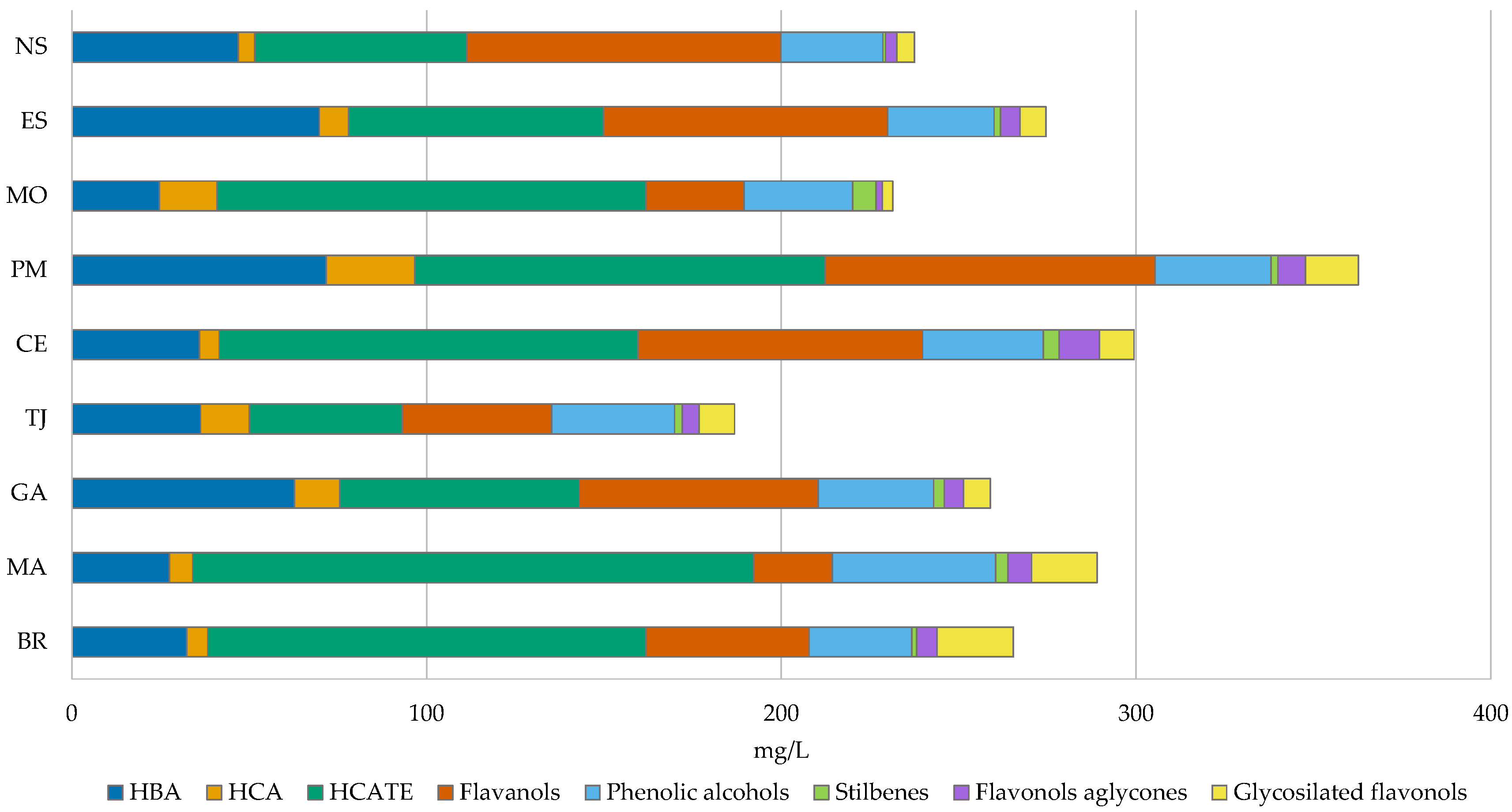
Figure 1 shows the phenolic profiles of wines from the different grape varieties. Consistent with the spectrophotometric results, Puesto Mayor wines exhibited the highest concentration of total phenolic compounds. The predominant phenolic group found in the varietal wines under study was the HCATE, followed by flavanols and HBA. Whereas the rest of the phenolic groups were present in lower concentrations. In addition, it can be observed in Figure 1 that Tinto Jeromo wines exhibited the lowest concentration of total phenolic compounds.
ANOVA was performed and showed significant differences in individual and all groups of non-anthocyanin phenolic compounds among the varietal wines (Table 7), except for tryptophol. As seen in Figure 1, the most abundant phenolic group in all wines was the HCATE, primarily due to the high concentration of trans-caftaric acid, in agreement with previous studies [59,83]. Mandón wines showed statistically higher trans-caftaric acid content than the other varieties, indicating a potential varietal tendency to accumulate this compound under the studied conditions. Several authors have proposed the trans-coutaric/trans-caftaric acid ratio as a variety descriptor [83,84]. In the present study, the grape variety accounted for 99% of the variance of this ratio under the environmental and management conditions evaluated (Table S4), supporting its usefulness for differentiating varieties; only Gajo Arroba, Tinto Jeromo and Estaladiña wines have no significantly different index values.
The next most abundant phenolic families were flavanols and HBA. Among flavanols, only catechin, in higher concentrations, and epicatechin, were detected in the wines. Due to their chemical structure, flavanols can participate in copigmentation reactions, contributing to color stabilization [85]. Puesto Mayor, Negro Saurí, Cenicienta and Estaladiña wines had the highest concentrations of flavanols, whereas Puesto Mayor and Estaladiña wines had the highest of HBA. Gallic acid was the predominant HBA compound in all wines. It is considered the most important phenolic compound because it is the precursor to hydrolysable tannins and part of condensed tannins [86].
As previously mentioned, phenolic alcohols are more influenced by the vintage. ANOVA revealed no significant differences among the varieties. However, there were significant differences between the vintages. The concentration of phenolic alcohols nearly doubled in 2024 compared to 2023. This can be explained by the yeast-mediated formation of phenolic alcohols, such as tyrosol and tryptophol, from tyrosine and tryptophan during alcoholic fermentation. The production of these compounds is influenced by factors including fermentation temperature, alcoholic content, and substrate availability, which are more related to interannual variability [87].
Regarding the HCA, Puesto Mayor wines had the highest concentration. Flavonols, mainly myricetin and quercetin, and their glycosylated derivates are present in low quantities in all wines. Cenicienta wines exhibited the highest concentration of flavonol aglycones, whereas Bruñal and Mandón wines showed the highest of the glycosylated derivatives. In grapes, flavonols occur exclusively in the form of glycosides; therefore, the presence of flavonol aglycones in wines is attributed to the hydrolysis of their corresponding glycosides during the alcoholic fermentation [88]. Myricetin, quercetin and kaempherol have been proposed for differentiation of varieties with high proportion of non-anthocyanin compounds [55], which is consistent with the varietal differences observed in this study. Flavonols are considered among the most effective copigments; however, their concentrations in grapes and wines are generally low. HCA and flavanols, particularly epicatechin, can also participate in copigmentation reactions and contribute to color stabilization during aging [85].
Finally, stilbenes are a minor category of phenolic compounds that also act as antioxidant and are widely known to have a positive effect on human health [83]. Only trans-resveratrol and trans-resveratrol-3-glucoside were found in the wines within this context. The highest contents of stilbenes were found in Mouraz wines due to their significantly higher trans-resveratrol-3-glucoside concentration. In general, the stilbene concentration of the wines studied is consistent with the concentrations reported by Eder et al. [11] in red wines from Austria.

4. Conclusions

Characterizing minority grapevine varieties is essential in order to broaden the range of plant material available to address the uncertainty associated with future climate change scenarios. This two-year study of nine red grapevine varieties traditionally grown in Castilla y León region revealed a significant diversity in their phenolic profiles under their respective local conditions, suggesting their potential relevance as valuable adaptive resources. From an agronomic perspective, the observed variability in phenological development among cultivars represents an advantage in these production contexts, as it may mitigate enological imbalances associated with rising temperatures and altered grape ripening dynamics. However, these responses are dependent on the specific environmental and management conditions under which the varieties are grown.
Overall, the studied varieties demonstrated their capacity to produce wines with good quality attributes, contributing to a greater enological diversity in the wine market. Estaladiña is an interesting variety due to its high productivity and good total acidity, as well as its good balance of tannins and anthocyanins, which makes it suitable for producing long-aged wines. Bruñal, Cenicienta and Tinto Jeromo are also optimal for producing structured wines that are ideal for aging in oak barrels. In particular, Mouraz and Negro Saurí may have a higher potential for rosé wine production, because of their limited color development. In contrast, Mandón and Gajo Arroba can be used in coupage to increase total acidity without altering the characteristics of the wine. Moreover, the lower alcohol content of Gajo Arroba may also be used in blending to reduce the alcohol degree of other wines, aligning with emerging consumer preferences. The present study indicates that varietal identity is responsible for a significant proportion of the variation in the phenolic composition of grapes and their wines, while vintage-related factors modulate certain traits under the conditions studied.
From an applied perspective, this study preliminarily characterizes these varieties within their traditional growing areas and specific production contexts. Therefore, the findings should be interpreted within the environmental and management conditions under which each plantation was evaluated. Further research under uniform cultivation conditions is needed to more precisely define the enological potential of these varieties. In addition, future studies should address their volatile composition and sensory identity, and the consistency of the observed attributes across successive vintages.

Supplementary Materials

The following supporting information can be downloaded at: https://www.mdpi.com/article/10.3390/horticulturae12030330/s1, Table S1: Climatic data from the sampling location of the varieties under study during the study period. Source: INFORIEGO; Table S2: MANOVA of the phenolic compounds of the grapes studied; Table S3: MANOVA of the total phenolic compounds and color parameters of the wines studied; Table S4: MANOVA of the groups of non-anthocyanin phenolic compounds of the wines studied.

Author Contributions

Conceptualization, S.P.-M.; methodology, S.P.-M., I.S.-M. and M.B.-H.; validation, I.S.-M. and S.P.-M.; formal analysis, I.S.-M. and S.P.-M.; investigation, I.S.-M., M.B.-H., E.B., A.M.-B. and J.A.R.; resources, A.M.-B., E.B., J.A.R. and S.P.-M.; data curation, I.S.-M., M.B.-H. and M.C.-F.; writing—original draft preparation, I.S.-M. and S.P.-M.; writing—review and editing, S.P.-M., I.S.-M., M.C.-F. and E.B.; visualization, I.S.-M., S.P.-M. and M.C.-F.; supervision, S.P.-M.; project administration, E.B.; funding acquisition, E.B. and J.A.R. All authors have read and agreed to the published version of the manuscript.

Funding

This research was funded by Interreg VI-A Spain-Portugal Programme (POCTEP) 2021–2027, 0039_MINORSENS_2_E, and co-financed by the European Union.

Data Availability Statement

The original contributions presented in this study are included in the article/Supplementary Material. Further inquiries can be directed to the corresponding author.

Conflicts of Interest

The authors declare no conflicts of interest.

Abbreviations

The following abbreviations are used in this manuscript:
ITACyLInstituto Tecnológico Agrario de Castilla y León
BRBruñal
MAMandón
GAGajo Arroba
TJTinto Jeromo
CECenicienta
PMPuesto Mayor
ESEstaladiña
MOMouraz
NSNegro Saurí
RVCSpanish Registry of Commercial Varieties
OEVVSpanish Plant Variety Office
PDOProtected Designation of Origin
ANOVAAnalysis of variance
MANOVAMultivariate analysis of variance
TTTotal tannins
TATotal anthocyanins
HBA Hydroxybenzoic acids
HCA Hydroxycinnamic acids
HCATE Hydroxycinnamic acid tartaric esters

References

  1. IPCC. IPCC, 2023: Summary for Policymakers. In Climate Change 2023: Synthesis Report. Contribution of Working Groups I, II and III to the Sixth Assessment Report of the Intergovernmental Panel on Climate Change; Core Writing Team, Lee, H., Romero, J., Eds.; IPCC: Geneva, Switzerland; pp. 1–34. [CrossRef]
  2. Van Leeuwen, C.; Friant, P.; Choné, X.; Tregoat, O.; Koundouras, S.; Dubourdie, D. Influence of climate, soil and cultivar on terroir. Am. J. Enol. Vitic. 2004, 55, 207–217. [Google Scholar] [CrossRef]
  3. Mira De Orduña, R. Climate change associated effects on grape and wine quality and production. Food Res. Int. 2010, 43, 1844–1855. [Google Scholar] [CrossRef]
  4. Petrie, P.R.; Sadras, V.O. Advancement of grapevine maturity in Australia between 1993 and 2006: Putative causes, magnitude of trends and viticultural consequences. Aust. J. Grape Wine Res. 2008, 14, 33–45. [Google Scholar] [CrossRef]
  5. Bock, A.; Sparks, T.; Estrella, N.; Menzel, A. Changes in the phenology and composition of wine from Franconia, Germany. Clim. Res. 2011, 50, 69–81. [Google Scholar] [CrossRef]
  6. Fraga, H.; García De Cortázar Atauri, I.; Malheiro, A.C.; Santos, J.A. Modelling climate change impacts on viticultural yield, phenology and stress conditions in Europe. Glob. Change Biol. 2016, 22, 3774–3788. [Google Scholar] [CrossRef]
  7. Ruml, M.; Korać, N.; Vujadinović, M.; Vuković, A.; Ivanišević, D. Response of grapevine phenology to recent temperature change and variability in the wine-producing area of Sremski Karlovci, Serbia. J. Agric. Sci. 2016, 154, 186–206. [Google Scholar] [CrossRef]
  8. Webb, L.B.; Whetton, P.H.; Bhend, J.; Darbyshire, R.; Briggs, P.R.; Barlow, E.W.R. Earlier wine-grape ripening driven by climatic warming and drying and management practices. Nature Clim. Change 2012, 2, 259–264. [Google Scholar] [CrossRef]
  9. Ramos, M.C.; Martínez De Toda, F. Variability in the potential effects of climate change on phenology and on grape composition of Tempranillo in three zones of the Rioja DOCa (Spain). Eur. J. Agron. 2020, 115, 126014. [Google Scholar] [CrossRef]
  10. Neethling, E.; Barbeau, G.; Bonnefoy, C.; Quénol, H. Change in climate and berry composition for grapevine varieties cultivated in the Loire Valley. Clim. Res. 2012, 53, 89–101. [Google Scholar] [CrossRef]
  11. Eder, R.; Pajović-Šćepanović, R.; Raičević, D.; Popović, T.; Korntheuer, K.; Wendelin, S.; Forneck, A.; Philipp, C. Study of the effects of climatic conditions on the phenolic content and antioxidant activity of Austrian and Montenegrin red wines. OENO One 2023, 57, 68–85. [Google Scholar] [CrossRef]
  12. Gaiotti, F.; Pastore, C.; Filippetti, I.; Lovat, L.; Belfiore, N.; Tomasi, D. Low night temperature at veraison enhances the accumulation of anthocyanins in Corvina grapes (Vitis vinifera L.). Sci. Rep. 2018, 8, 8719. [Google Scholar] [CrossRef]
  13. Malheiro, A.C.; Santos, J.A.; Fraga, H.; Pinto, J.G. Future scenarios for viticultural climatic zoning in Iberia. Acta Hortic. 2012, 931, 55–61. [Google Scholar] [CrossRef]
  14. Moriondo, M.; Jones, G.V.; Bois, B.; Dibari, C.; Ferrise, R.; Trombi, G.; Bindi, M. Projected shifts of wine regions in response to climate change. Clim. Change 2013, 119, 825–839. [Google Scholar] [CrossRef]
  15. Cardell, M.F.; Amengual, A.; Romero, R. Future effects of climate change on the suitability of wine grape production across Europe. Reg. Environ. Change 2019, 19, 2299–2310. [Google Scholar] [CrossRef]
  16. Deis, L.; Martínez, L.; Da Costa, B.S.; Vilanova, M. The influence of climatic conditions associated with altitude on the volatile composition of Cabernet Sauvignon wines from Argentina, Spain and Portugal. Horticulturae 2024, 10, 870. [Google Scholar] [CrossRef]
  17. Sanz, M.J.; Galán, E. Impactos y Riesgos Derivados del Cambio Climático en España; Oficina Española de Cambio Climático, Ministerio para la Transición Ecológica y el Reto Demográfico: Madrid, Spain, 2020. [Google Scholar]
  18. Duchêne, E. How can grapevine genetics contribute to the adaptation to climate change? OENO One 2016, 50, 113–124. [Google Scholar] [CrossRef]
  19. Wolkovich, E.M.; Burge, D.O.; Walker, M.A.; Nicholas, K.A. Phenological diversity provides opportunities for climate change adaptation in winegrapes. J. Ecol. 2017, 105, 905–912. [Google Scholar] [CrossRef]
  20. Clingeleffer, P.R.; Davis, H.P. Assessment of phenology, growth characteristics and berry composition in a hot Australian climate to identify wine cultivars adapted to climate change. Aust. J. Grape Wine Res. 2022, 28, 255–275. [Google Scholar] [CrossRef]
  21. Antolín, M.C.; Toledo, M.; Pascual, I.; Irigoyen, J.J.; Goicoechea, N. The exploitation of local Vitis vinifera L. biodiversity as a valuable tool to cope with climate change maintaining berry quality. Plants 2020, 10, 71. [Google Scholar] [CrossRef]
  22. Koufos, G.C.; Mavromatis, T.; Koundouras, S.; Jones, G.V. Adaptive capacity of winegrape varieties cultivated in Greece to climate change: Current trends and future projections. OENO One 2020, 4, 1201–1219. [Google Scholar] [CrossRef]
  23. Espinosa-Roldán, F.E.; García-Díaz, A.; Raboso, E.; Crespo, J.; Cabello, F.; Martínez De Toda, F.; Muñoz-Organero, G. Phenological evaluation of minority grape varieties in the wine region of Madrid as a strategy for adaptation to climate change. Horticulturae 2024, 10, 353. [Google Scholar] [CrossRef]
  24. Muñoz-Organero, G.; Espinosa, F.E.; Cabello, F.; Zamorano, J.P.; Urbanos, M.A.; Puertas, B.; Lara, M.; Domingo, C.; Puig-Pujol, A.; Valdés, M.E.; et al. Phenological study of 53 Spanish minority grape varieties to search for adaptation of vitiviniculture to climate change conditions. Horticulturae 2022, 8, 984. [Google Scholar] [CrossRef]
  25. International Organization of Vine and Wine-OIV. Distribution of the World’s Grapevine Varieties. 2017. Available online: https://www.oiv.int/public/medias/5336/infographie-focus-oiv-2017-new.pdf (accessed on 30 December 2025).
  26. Rubio, J.A.; Yuste, J.; Arranz, C.; Martín, J.P.; Ortiz, J.M. Variedades autóctonas de vid de Arribes del Duero: Descripción y sinonimias. Viticultura/Enología 2005, 99, 5–16. [Google Scholar]
  27. Yuste, J.; Martín, J.P.; Rubio, J.A.; Hidalgo, E.; Recio, P.; Santana, J.C.; Arranz, C.; Ortiz, J. Identification of autochthonous grapevine varieties in the germplasm collection at the ITA of “Castilla y León” in Zamadueñas Station, Valladolid, Spain. Span. J. Agric. Res. 2006, 4, 31–36. [Google Scholar] [CrossRef]
  28. Rubio, J.A.; Martín, A.; Andrés, M.I.; Bueno, M.; Cano, E.; Pérez-Magariño, S.; Barajas, E. Caracterización de 4 variedades tintas minoritarias de la DO Arribes. Eneo 2022, 314, 34–38. [Google Scholar]
  29. Barajas, E.; Martín, A.; Gómez, C.; Bueno, M.; Pérez-Magariño, S.; Rubio, J.A. Caracterización de las variedades tintas Estaladiña y Merenzao en la DO Bierzo. Vida Rural 2023, 536, 50–52. [Google Scholar]
  30. Pérez-Magariño, S.; Bueno-Herrera, M.; Curiel-Fernández, M.; Martín, E.; Barajas, E.; Rubio, J.A. Caracterización enológica de vinos tintos elaborados con variedades minoritarias de Castilla y León. Eneo 2024, 327, 68–71. [Google Scholar]
  31. Santana, J.C.; Heuertz, M.; Arranz, C.; Rubio, J.A.; Martínez-Zapater, J.M.; Hidalgo, E. Genetic structure, origins, and relationships of grapevine cultivars from the Castilian Plateau of Spain. Am. J. Enol. Vitic. 2010, 61, 214–224. [Google Scholar] [CrossRef]
  32. García de los Salmones, N. Memoria General de las Sesiones del Congreso y Ponencias Presentadas. Congreso Nacional de Viticultura, Pamplona. Imprenta Provincial. 1914; pp. 521–524. [Google Scholar]
  33. Santana, J.C. Identificación Genética, Estructura y Orígenes de las Variedades de Vid (Vitis vinifera L.) Cultivadas en Castilla y León. Ph.D. Thesis, Universidad de Valladolid, ETSIA Palencia, Palencia, Spain, 2011. Available online: https://dialnet.unirioja.es/servlet/tesis?codigo=194339 (accessed on 30 December 2025).
  34. Ministerio de Agricultura, Pesca y Alimentación. Orden APA/317/2024, de 9 de abril, por la que se dispone el cambio de denominación de variedades incluidas en el Registro de Variedades Comerciales. Boletín Of. Estado 2024, 91, 41230–41231. [Google Scholar]
  35. Ravaz, M.L. L’effeuillage de la vigne. Ann. L’ecole Natl. D’agriculture Montp. 1911, 11, 216–244. [Google Scholar]
  36. International Organisation of Vine and Wine (OIV). Compendium of International Methods of Wine and Must Analysis; International Organisation of Vine and Wine: Paris, France, 2016; Available online: https://www.oiv.int/public/medias/2624/compendium-2016-en-vol1.pdf?utm_source=chatgpt.com (accessed on 30 December 2025).
  37. Iland, P.; Bruer, N.; Wilkes, E.; Edward, G. Anthocyanins (colour) and total phenolics of grape berries. In Chemical Analysis of Grapes and Wine: Techniques and Concepts, 1st ed.; Winetitles: Broadview, Australia, 2004; pp. 44–48. [Google Scholar]
  38. Sarneckis, C.J.; Dambergs, R.G.; Jones, P.; Mercurio, M.; Herderich, M.J.; Smith, P.A. Quantification of condensed tannins by precipitation with methyl cellulose: Development and validation of an optimised tool for grape and wine analysis. Austr. J. Grape Wine Res. 2006, 12, 39–49. [Google Scholar] [CrossRef]
  39. ISO/IEC 17025:2017; General Requirements for the Competence of Testing and Calibration Laboratories. International Organization for Standardization (ISO) and the International Electrotechnical Commission (IEC): Geneva, Switzerland, 2017.
  40. Glories, Y. La couleur des vins rouges. 2e partie: Mesure, origine et interpretation. Conn. Vigne Vin 1984, 18, 253–271. [Google Scholar] [CrossRef]
  41. Paronetto, L. Polifenoli e Tecnica Enológica; Selepress: Milan, Italy, 1977. [Google Scholar]
  42. Ribéreau-Gayón, P.; Stonestreet, E. Le dosage des tannins du vin rouge et détermination de leur structure. Chim. Anal. 1966, 48, 188–196. [Google Scholar]
  43. Levengood, J.; Boulton, R. The variation in the color due to copigmentation in young Cabernet-Sauvignon wines. In Red Wine Color: Revealing the Mysteries; ACS Symposium Series; Waterhouse, A.L., Kennedy, J.A., Eds.; American Chemical Society: Washington, DC, USA, 2004; Volume 886, pp. 35–52. [Google Scholar] [CrossRef]
  44. Mazza, G.; Fukumoto, L.; Delaquis, P.; Girard, B.; Ewert, B. Anthocyanins, phenolics and color of Cabernet Franc, Merlot, and Pinot Noir wines from British Columbia. J. Agric. Food Chem. 1999, 47, 4009–4017. [Google Scholar] [CrossRef]
  45. Pérez-Magariño, S.; Ortega-Heras, M.; Cano-Mozo, E. Optimization of a solid-phase extraction method using copolymed sorbents for isolation of phenolic compounds in red wines and quantification by HPLC. J. Agric. Food. Chem. 2008, 56, 11560–11570. [Google Scholar] [CrossRef]
  46. Satyanaga, A.; Rahardjo, H.; Leong, E.C.; Wang, J.Y. Water characteristic curve of soil with bimodal grain-size distribution. Comput. Geotech. 2013, 48, 51–61. [Google Scholar] [CrossRef]
  47. Ohana-Levi, N.; Cohen, Y.; Munitz, S.; Michaelovsky, R.; Ferman Mintz, D.; Hagag, N.; Getz, Y.; Netzer, Y. The response of yield, number of clusters, and cluster weight to meteorological factors and irrigation practices in grapevines: A multi-experiment study. Sci. Hortic. 2024, 326, 112761. [Google Scholar] [CrossRef]
  48. Kliewer, W.M.; Dokoozlian, N.K. Leaf area/crop weight ratios of grapevines: Influence on fruit composition and wine quality. Am. J. Enol. Vitic. 2005, 56, 170–181. [Google Scholar] [CrossRef]
  49. Bramley, R.G.V.; Hamilton, R.P. Understanding variability in winegrape production systems: 1. within vineyard variation in yield over several vintages. Aus. J. Grape Wine Res. 2008, 10, 32–45. [Google Scholar] [CrossRef]
  50. Storchi, P.; Costantini, E.A.C.; Bucelli, P. The influence of climate and soil on viticultural and enological parameters of ’Sangiovese’ grapevines under non-irrigated conditions. Acta Hortic. 2005, 689, 333–340. [Google Scholar] [CrossRef]
  51. Ubalde, J.M.; Sort, X.; Poch, R.M.; Porta, M. Influence of edapho-climatic factors on grape quality in Conca de Barberà vineyards (Catalonia, Spain). J. Int. Sci. Vigne Vin 2007, 41, 33–41. [Google Scholar] [CrossRef]
  52. González-Fernández, A.B.; Marcelo, V.; Valenciano, J.B.; Rodríguez-Pérez, J.R. Relationship between physical and chemical parameters for four commercial grape varieties from the Bierzo region (Spain). Sci. Hortic. 2012, 147, 111–117. [Google Scholar] [CrossRef]
  53. Gil-Muñoz, R.; Vila-López, R.; Fernández-Fernández, J.I.; Martínez-Cutillas, A. Effects of cluster thinning on anthocyanin extractability and chromatic parameters of Syrah and Tempranillo grapes and wines. OENO One 2009, 43, 45–53. [Google Scholar] [CrossRef]
  54. Jediyi, H.; Naamani, K.; Ait Elkoch, A.; Dihazi, A.; El Alaoui El Fels, A.; Arkize, W. First study on technological maturity and phenols composition during the ripeness of five Vitis vinifera L grape varieties in Morocco. Sci. Hort. 2019, 246, 390–397. [Google Scholar] [CrossRef]
  55. Díaz-Fernández, A.; Díaz-Losada, E.; Vázquez-Arias, A.; Puig-Pujol, A.; Moreno-Cardona, D.; Valdés-Sánchez, M.E. Non-anthocyanin compounds in minority red grapevine varieties traditionally cultivated in Galicia (Northwest Iberian Peninsula), analysis of flavanols, flavonols, and phenolic acids. Plants 2023, 12, 4. [Google Scholar] [CrossRef]
  56. Galaz-Torres, C.; Vidal, J.; Vargas, S.; Zincker, J.; Brossard, N.; Bordeu, E.; Ricci, A.; Parpinello, G.P.; Versari, A. Influence of grape quality tier, harvest timing, and yeast strain on mannoprotein content, phenolic composition, and color modulation in young red wines. Food Res. Int. 2025, 205, 115956. [Google Scholar] [CrossRef]
  57. Minnaar, D.P.; van der Rijst, M.; Hunter, K. Grapevine row orientation, vintage and grape ripeness effect on anthocyanins, flavan-3-ols, flavonols and phenolic acids: I. Vitis vinifera L. cv. Syrah grapes. OENO One 2022, 56, 275–293. [Google Scholar] [CrossRef]
  58. Teixeira, A.; Eiras-Dias, J.; Castellarin, S.; Gerós, H. Berry phenolics of grapevine under challenging environments. Int. J. Mol. Sci. 2013, 14, 18711–18739. [Google Scholar] [CrossRef]
  59. Baltazar, M.; Monteiro, E.; Pereira, S.; Ferreira, H.; Silva, V.; Valente, J.; Alves, F.; Castro, I.; Gonçalves, B. Exploring the differences in phenolic content of white grape varieties (Vitis vinifera L.): A study on varietal and environmental influence. Food Biosci. 2025, 74, 107971. [Google Scholar] [CrossRef]
  60. Vilanova, M.; Santalla, M.; Masa, A. Environmental and genetic variation of phenolic compounds in grapes (Vitis vinifera) from northwest Spain. J. Agric. Sci. 2009, 147, 683–697. [Google Scholar] [CrossRef]
  61. Lingua, M.S.; Fabani, M.P.; Wunderlin, D.A.; Baroni, M.V. From grape to wine: Changes in phenolic composition and its influence on antioxidant activity. Food Chem. 2016, 208, 228–238. [Google Scholar] [CrossRef]
  62. Sikuten, I.; Stambuk, P.; Tomaz, I.; Marchal, C.; Kontic, J.K.; Lacombe, T.; Maletic, E.; Preiner, D. Discrimination of genetic and geographical groups of grape varieties (Vitis vinifera L.) Based on their polyphenolic profiles. J. Food Compos. Anal. 2021, 102, 104062. [Google Scholar] [CrossRef]
  63. Díaz-Fernández, A.; Díaz-Losada, E.; Moreno, D.; Valdés-Sánchez, M.E. Anthocyanin profile of Galician endangered varieties. A tool for varietal selection. Food Res. Int. 2022, 154, 110983. [Google Scholar] [CrossRef] [PubMed]
  64. Picariello, L.; Gambuti, A.; Picariello, B.; Moio, L. Evolution of pigments, tannins and acetaldehyde during forced oxidation of red wine: Effect of tannins addition. LWT-Food Sci. Technol. 2017, 77, 370–375. [Google Scholar] [CrossRef]
  65. Gambuti, A.; Siani, T.; Picariello, L.; Rinaldi, A.; Lisanti, M.T.; Ugliano, M.; Dieval, J.B.; Moio, L. Oxygen exposure of tannins-rich red wines during bottle aging. Influence on phenolics and color, astringency markers and sensory attributes. Eur. Food Res. Technol. 2017, 243, 669–680. [Google Scholar] [CrossRef]
  66. Gambuti, A.; Picariello, L.; Rinaldi, A.; Moio, L. Evolution of Sangiovese wines with varied tannin and anthocyanin ratios during oxidative aging. Front. Chem. 2018, 6, 63. [Google Scholar] [CrossRef]
  67. Pajovic Scepanovic, R.; Vuletic, D.; Christofi, S.; Kallithraka, S. Maceration duration and grape variety: Key factors in phenolic compound enrichment of montenegrin red wine. OENO One 2024, 58. [Google Scholar] [CrossRef]
  68. Forino, M.; Picariello, L.; Rinaldi, A.; Moio, L.; Gambuti, A. How must pH affects the level of red wine phenols. LWT-Food Sci. Technol. 2020, 129, 109546. [Google Scholar] [CrossRef]
  69. Fragoso, S.; Guasch, J.; Aceña, L.; Mestres, M.; Busto, O. Prediction of red wine colour and phenolic parameters from the analysis of its grape extract: Prediction of red wine phenolic parameters. Int. J. Food Sci. Technol. 2011, 46, 2569–2575. [Google Scholar] [CrossRef]
  70. García-Cabezón, C.; Gobbi Teixeira, G.; Dias, L.G.; Salvo-Comino, C.; García-Hernández, C.; Rodríguez-Méndez, M.L.; Martin-Pedrosa, F. Analysis of phenolic content in grape seeds and skins by means of a bio-electronic tongue. Sensors 2020, 20, 4176. [Google Scholar] [CrossRef]
  71. Boulet, J.C.; Abi-Habib, E.; Carrillo, S.; Roi, S.; Veran, F.; Verbaere, A.; Meudec, E.; Rattier, A.; Ducasse, M.-A.; Jørgensen, B.; et al. Focus on the relationships between the cell wall composition in the extraction of anthocyanins and tannins from grape berries. Food Chem. 2023, 406, 135023. [Google Scholar] [CrossRef] [PubMed]
  72. Gil, M.; Pascual, O.; Gómez-Alonso, S.; García-Romero, E.; Hermosín-Gutiérrez, I.; Zamora, F.; Canals, J. Influence of berry size on red wine colour and composition: Berry size and red wine colour and composition. Aus. J. Grape Wine Res. 2015, 21, 200–212. [Google Scholar] [CrossRef]
  73. Salas, E.; Atanasova, V.; Poncet-Legrand, C.; Meudec, E.; Mazauric, J.P.; Cheynier, V. Demonstration of the occurrence of flavanol–anthocyanin adducts in wine and in model solutions. Anal. Chim. Acta 2004, 513, 325–332. [Google Scholar] [CrossRef]
  74. Bakker, J.; Timberlake, C.F. Isolation, identification, and characterization of new color-stable anthocyanins occurring in some red wines. J. Agric. Food Chem. 1997, 45, 35–43. [Google Scholar] [CrossRef]
  75. Pérez-Magariño, S.; González-San José, M.L. Evolution of flavanols, anthocyanins, and their derivatives during the aging of red wines elaborated from grapes harvested at different stages of ripening. J Agric. Food Chem. 2004, 52, 1181–1189. [Google Scholar] [CrossRef]
  76. Es-Safi, N.E.; Le Guernevé, C.; Fulcrand, H.; Cheynier, V.; Moutounet, M. Xanthylium salts formation involved in wine colour changes. Int. J. Food Sci. Technol. 2000, 35, 63–74. [Google Scholar] [CrossRef]
  77. Mateus, N.; Silva, A.M.S.; Rivas-Gonzalo, J.C.; Santos-Buelga, C.; de Freitas, V. A new class of blue anthocyanins-derived pigments isolated from red wines. J. Agric. Food Chem. 2003, 51, 1919–1923. [Google Scholar] [CrossRef]
  78. Bautista-Ortín, A.B.; Fernández-Fernández, J.I.; López-Roca, J.M.; Gómez-Plaza, E. The effects of enological practices in anthocyanins, phenolic compounds and wine colour and their dependence on grape characteristics. J. Food Comp. Anal. 2007, 20, 546–552. [Google Scholar] [CrossRef]
  79. Boulton, R. The copigmentation of anthocyanins and its role in the color of red wine: A critical review. Am. J. Enol. Vitic. 2001, 52, 67–87. [Google Scholar] [CrossRef]
  80. McRae, J.M.; Kennedy, J.A. Wine and grape tannin interactions with salivary proteins and their impact on astringency: A review of current research. Molecules 2011, 16, 2348–2364. [Google Scholar] [CrossRef]
  81. Fulcrand, H.; Atanasova, V.; Salas, E.; Cheynier, V. The fate of anthocyanins in wine: Are there determining factors? In Red Wine Color: Revealing the Mysteries; Waterhouse, A.L., Kennedy, J.A., Eds.; American Chemical Society: Washington, DC, USA, 2004; pp. 68–87. [Google Scholar] [CrossRef]
  82. Merrell, C.P.; Larsen, R.C.; Harbertson, J.F. Effects of berry maturity and wine alcohol on phenolic content during winemaking and aging. Am. J. Enol. Vitic. 2018, 69, 1–11. [Google Scholar] [CrossRef]
  83. Martínez-Pinilla, O.; Martínez-Lapuente, L.; Guadalupe, Z.; Ayestarán, B. Sensory profiling and changes in colour and phenolic composition produced by malolactic fermentation in red minority varieties. Food Res. Int. 2012, 46, 286–293. [Google Scholar] [CrossRef]
  84. Ferrandino, A.; Guidoni, S. Anthocyanins, flavonols and hydroxycinnamates: An attempt to use them to discriminate Vitis vinifera V. cv ‘Barbera’ clones. Eur. Food Res. Technol. 2010, 230, 417–427. [Google Scholar] [CrossRef]
  85. Hermosín-Gutiérrez, I.; Sánchez-Palomo, E.; Vicario, A. Phenolic composition and magnitude of copigmentation in young and shortly aged red wines made from the cultivars, Cabernet Sauvignon, Cencibel, and Syrah. Food Chem. 2005, 92, 269–283. [Google Scholar] [CrossRef]
  86. Garrido, J.; Borges, F. Wine and grape polyphenols—A chemical perspective. Food Res. Int. 2013, 54, 1844–1858. [Google Scholar] [CrossRef]
  87. Bordiga, M.; Lorenzo, C.; Pardo, F.; Salinas, M.R.; Travaglia, F.; Arlorio, M.; Coïsson, J.; Garde-Cerdán, T. Factors influencing the formation of histaminol, hydroxytyrosol, tyrosol, and tryptophol in wine: Temperature, alcoholic degree, and amino acids concentration. Food Chem. 2016, 197, 1038–1045. [Google Scholar] [CrossRef]
  88. Castillo-Muñoz, N.; Gómez-Alonso, S.; García-Romero, E.; Hermosín-Gutiérrez, I. Flavonol profiles of Vitis vinífera red grapes and their single-cultivar wines. J. Agric. Food Chem. 2007, 55, 992–1002. [Google Scholar] [CrossRef] [PubMed]
Figure 1. Mean values of the concentration of the groups of non-anthocyanin phenolic compounds of varietal wines from the two vintages 2023 and 2024. Variety codes are defined in Table 1. HBA: Hydroxybenzoic acids; HCA: Hydroxycinnamic acids; HCATE: Hydroxycinnamic acid tartaric esters.
Horticulturae 12 00330 g001
Table 1. Vineyard characteristics and location of the minority grape varieties included in the study.
VarietyCodeSampling
Location
Plantation YearPlantation Density 1PruningPeriod of Study
BruñalBRArribes20052.5 × 1.516 buds/vine2014–2017
MandónMAArribes20052.5 × 1.516 buds/vine2014–2017
Gajo ArrobaGAArribes20052.5 × 1.516 buds/vine2014–2017
Tinto JeromoTJArribes20052.5 × 1.516 buds/vine2014–2017
CenicientaCEValladolid20092.8 × 0.910 buds/vine2014–2017
Puesto MayorPMValladolid20092.8 × 0.910 buds/vine2014–2017
MourazMOValladolid20092.8 × 0.910 buds/vine2014–2017
EstaladiñaESBierzo20132.5 × 1.216 buds/vine2017–2020
Negro SauríNSTierra de Campos20082.6 × 1.212 buds/vine2014–2017
1 m × m.
Table 2. Mean data for the agronomic parameters (yield and vegetative development variables) of the nine grape varieties in the four-year study period 1.
VarietyYield (kg/ha)Cluster Weight (g)Berry Weight (g)Pruning Wood
Weight (kg/ha)
Mean Shoot Weight (g)Ravaz
Index 2
Bruñal5119 ab94.2 ab1.02 a1069 a26.8 a4.83 bc
Mandón6154 abc143 cde1.63 b779 a21.7 a7.93 d
Gajo Arroba8113 c138 bcde1.48 ab813 a17.6 a10.8 e
Tinto Jeromo6073 abc101 abc1.67 bc997 a24.2 a6.46 cd
Cenicienta7486 bc158 e1.77 bc3396 c77.6 c2.04 a
Puesto Mayor4248 a68.4 a1.57 b3357 c69.4 c1.22 a
Mouraz6575 abc147 ed2.60 d3296 c81.7 c2.06 a
Estaladiña11,361 d231 f2.14 cd4544 d82.2 c2.26 a
Negro Saurí5951 abc103 abcd1.49 ab2189 b52.5 b2.72 ab
1 Values with different letters in each column indicate statistically significant differences at p value < 0.01. 2 kg of grape divided by kg of pruned wood.
Table 3. Mean value of the enological parameters (±uncertainty) of the musts.
VarietyVintageHarvest
Date
°BrixpHTitratable Acidity 1Technological
Maturity 2
Malic Acid (g/L)Tartaric Acid (g/L)
Bruñal202330-aug22.4 ± 0.103.41 ± 0.084.83 ± 0.194.641.36 ± 0.204.73 ± 0.50
Mandón202313-sep21.6 ± 0.103.31 ± 0.085.37 ± 0.214.020.59 ± 0.116.10 ± 0.50
Gajo Arroba202321-sep17.7 ± 0.103.63 ± 0.084.58 ± 0.183.861.00 ± 0.165.74 ± 0.50
Tinto Jeromo202321-sep21.0 ± 0.103.75 ± 0.084.88 ± 0.204.301.88 ± 0.274.56 ± 0.50
Cenicienta202304-sep22.7 ± 0.103.49 ± 0.084.34 ± 0.175.231.80 ± 0.263.49 ± 0.50
Puesto Mayor202329-aug24.2 ± 0.103.60 ± 0.084.95 ± 0.204.891.72 ± 0.254.82 ± 0.50
Mouraz202315-sep20.9 ± 0.103.66 ± 0.084.82 ± 0.194.342.17 ± 0.304.95 ± 0.50
Estaladiña202324-aug24.8 ± 0.103.29 ± 0.087.67 ± 0.313.232.76 ± 0.376.01 ± 0.50
Negro Saurí202304-sep18.2 ± 0.103.18 ± 0.086.64 ± 0.272.742.88 ± 0.394.51 ± 0.50
Bruñal202405-sep22.8 ± 0.103.66 ± 0.083.57 ± 0.146.391.58 ± 0.233.63 ± 0.50
Mandón202427-sep24.1 ± 0.103.35 ± 0.086.99 ± 0.283.452.31 ± 0.326.73 ± 0.50
Gajo Arroba202416-oct20.7 ± 0.103.62 ± 0.083.79 ± 0.155.460.68 ± 0.124.63 ± 0.50
Tinto Jeromo202420-sep23.2 ± 0.103.68 ± 0.084.09 ± 0.165.672.39 ± 0.334.06 ± 0.50
Cenicienta202420-sep22.0 ± 0.103.25 ± 0.085.73 ± 0.233.841.10 ± 0.176.83 ± 0.50
Puesto Mayor202416-sep28.3 ± 0.103.19 ± 0.085.62 ± 0.225.042.92 ± 0.394.02 ± 0.50
Mouraz202411-oct18.8 ± 0.103.57 ± 0.084.77 ± 0.193.942.09 ± 0.294.83 ± 0.50
Estaladiña202412-sep24.6 ± 0.103.46 ± 0.085.47 ± 0.224.502.51 ± 0.344.17 ± 0.50
Negro Saurí202418-sep22.0 ± 0.103.25 ± 0.086.75 ± 0.273.262.85 ± 0.384.51 ± 0.50
1 g/L tartaric acid. 2 Ratio between °Brix and titratable acidity.
Table 4. Mean values ± standard deviation (n = 6) of the different phenolic compounds present in the grapes. Data showed belong to two vintages, 2023 and 2024 1.
VarietyTotal Polyphenols (mg/g)Total Anthocyanins (mg/g)Total Tannins (mg/g)Ratio
TT/TA 2
Bruñal4.46 ± 0.30 d1.14 ± 0.10 d4.99 ± 1.88 b4.4
Mandón4.58 ± 0.33 de1.07 ± 0.27 cd7.21 ± 0.37 d6.7
Gajo Arroba4.46 ± 0.36 d1.53 ± 0.27 e5.04 ± 0.28 b3.3
Tinto Jeromo2.82 ± 0.13 abc0.74 ± 0.07 b2.95 ± 0.86 a4.0
Cenicienta2.54 ± 1.18 ab0.89 ± 0.19 bc3.23 ± 1.23 a3.6
Puesto Mayor3.12 ± 0.84 bc0.75 ± 0.02 b5.45 ± 0.67 bc7.3
Mouraz2.13 ± 0.77 a0.33 ± 0.03 a3.51 ± 0.82 a10.6
Estaladiña5.22 ± 0.41 e0.95 ± 0.20 cd8.49 ± 1.38 e8.9
Negro Saurí3.35 ± 0.17 c0.21 ± 0.11 a6.54 ± 0.35 cd30.6
1 Values with different letters in each column indicate statistically significant differences at p value < 0.001; 2 TT: Total tannins (mg/g); TA: Total anthocyanins (mg/g).
Table 5. Mean value of the enological parameters (±uncertainty) of the wines.
VarietyVintageAlcohol 1pHTitratable Acidity 2Volatile Acidity 3Total SO2 (mg/L)
Bruñal202313.45 ± 0.194.00 ± 0.083.46 ± 0.140.33 ± 0.0443 ± 5
Mandón202312.88 ± 0.193.49 ± 0.084.76 ± 0.190.30 ± 0.0471 ± 8
Gajo Arroba202310.39 ± 0.193.70 ± 0.083.79 ± 0.150.19 ± 0.0334 ± 4
Tinto Jeromo202312.18 ± 0.193.83 ± 0.083.76 ± 0.150.46 ± 0.0544 ± 5
Cenicienta202313.41 ± 0.193.57 ± 0.084.27 ± 0.170.21 ± 0.0329 ± 4
Puesto Mayor202315.29 ± 0.194.02 ± 0.083.62 ± 0.150.27 ± 0.0435 ± 4
Mouraz202312.13 ± 0.194.00 ± 0.083.32 ± 0.130.19 ± 0.0350 ± 6
Estaladiña202315.72 ± 0.193.63 ± 0.085.74 ± 0.230.41 ± 0.0541 ± 4
Negro Saurí202310.74 ± 0.193.24 ± 0.084.95 ± 0.190.31 ± 0.0454 ± 6
Bruñal202413.64 ± 0.193.81 ± 0.083.85 ± 0.150.28 ± 0.0440 ± 4
Mandón202414.14 ± 0.193.25 ± 0.085.53 ± 0.220.24 ± 0.0472 ± 8
Gajo Arroba202411.86 ± 0.193.57 ± 0.084.62 ± 0.180.28 ± 0.0448 ± 5
Tinto Jeromo202414.03 ± 0.193.86 ± 0.083.78 ± 0.150.33 ± 0.0447 ± 5
Cenicienta202413.02 ± 0.193.25 ± 0.085.44 ± 0.210.20 ± 0.0343 ± 5
Puesto Mayor202417.42 ± 0.194.13 ± 0.083.87 ± 0.150.72 ± 0.0752 ± 6
Mouraz202410.58 ± 0.193.70 ± 0.083.57 ± 0.140.15 ± 0.0368 ± 7
Estaladiña202414.45 ± 0.193.73 ± 0.084.81 ± 0.190.34 ± 0.0467 ± 7
Negro Saurí202413.46 ± 0.193.52 ± 0.084.86 ± 0.190.38 ± 0.0569 ± 8
1 % vol: mL ethanol/100 mL wine. 2 g/L of tartaric acid. 3 g/L of acetic acid.
Table 6. Mean values (n = 4) of total phenolic compounds (mg/L) and color parameters of the varietal wines from 2023 and 2024 vintages 1.
VarietyTotal
Polyphenols
Total
Tannins
Total
Anthocyanins
% Polymeric AnthocyaninsTotal Tartaric Esters of HCATotal
Flavonols
Ratio TT/TA 2Color
Intensity
Hue% Blue
Bruñal1822 ± 151 e2217 ± 267 e517 ± 29.3 d37.8 ± 0.65 b325 ± 0.39 d190 ± 0.01 e4.310.0 ± 0.12 c0.65 ± 0.00 bc13.9 ± 0.26 b
Mandón1597 ± 24.3 de1623 ± 55.1 cd254 ± 53.7 b50.6 ± 0.33 d326 ± 0.71 d186 ± 0.13 e6.412.9 ± 1.08 e0.53 ± 0.01 a13.1 ± 0.39 b
Gajo Arroba1281 ± 38.5 bc1323 ± 118 bc365 ± 44.9 c40.4 ± 1.63 b213 ± 3.84 b132 ± 0.09 c3.610.6 ± 0.62 cd0.66 ± 0.09 c13.5 ± 2.21 b
Tinto Jeromo1741 ± 474 e1507 ± 147 bc332 ± 71.6 c42.8 ± 0.19 bc216 ± 0.30 b140 ± 0.01 c4.57.34 ± 0.27 bc0.72 ± 0.01 c12.7 ± 0.20 b
Cenicienta1449 ± 47.9 cd1649 ± 174 cd315 ± 40.7 c31.1 ± 1.41 a280 ± 2.90 c157 ± 0.11 d5.28.69 ± 1.26 bc0.55 ± 0.05 ab9.89 ± 1.50 a
Puesto Mayor2321 ± 117 f2811 ± 242 f329 ± 18.9 c53.1 ± 1.37 d330 ± 5.62 d182 ± 0.02 e8.510.5 ± 1.75 cd0.72 ± 0.16 c12.5 ± 4.25 b
Mouraz733 ± 93.5 a670 ± 178 a95.9 ± 17.1 a49.0 ± 1.09 cd210 ± 2.49 b111 ± 0.01 b7.02.11 ± 0.31 a1.06 ± 0.09 d8.15 ± 1.40 a
Estaladiña1673 ± 241 de1887 ± 401 de327 ± 21.5 c42.3 ± 2.26 b258 ± 0.07 c157 ± 0.13 d5.812.4 ± 3.49 de0.68 ± 0.05 c13.7 ± 2.33 b
Negro Saurí1097 ± 124 b1208 ± 302 b63.9 ± 38.8 a51.4 ± 1.42 d126 ± 0.97 a59.7 ± 0.03 a18.91.38 ± 0.41 a0.96 ± 0.07 d8.45 ± 2.24 a
p-value0.0000.0000.0000.0010.0000.000-0.0000.0000.000
1 Values with different letters in each column indicate statistically significant differences at p value < 0.001; 2 TT: Total tannins (mg/L); TA: Total anthocyanins (mg/L).
Table 7. ANOVA of the concentration of the non-anthocyanin phenolic compounds (mg/L) by variety of the wines studied 1.
CompoundBruñalMandónGajo
Arroba
Tinto
Jeromo
CenicientaPuesto MayorMourazEstaladiñaNegro Sauríp-Value 2
Gallic acid14.9 ± 1.02 ab16.0 ± 1.15 ab18.4 ± 4.66 b16.3 ± 0.72 ab18.5 ± 2.37 b41.1 ± 13.87 d40.5 ± 11.86 d8.04 ± 0.98 a29.6 ± 1.58 c0.000
Protocatechiuc acid1.36 ± 0.33 a1.38 ± 0.24 a3.93 ± 1.04 b3.47 ± 1.08 b1.10 ± 0.08 a3.06 ± 0.51 b3.12 ± 0.37 b7.17 ± 0.68 c1.61 ± 1.11 a0.000
Vanillic acid3.24 ± 0.58 ab3.21 ± 0.56 ab6.12 ± 0.89 d3.80 ± 0.12 bc1.69 ± 0.33 a5.40 ± 2.79 cd5.49 ± 0.95 cd4.97 ± 0.72 cd2.48 ± 1.34 ab0.000
Syringic acid10.7 ± 0.81 e6.72 ± 0.44 bc11.5 ± 1.46 e9.71 ± 1.20 de7.02 ± 2.69 bc8.10 ± 2.76 cd5.67 ± 0.68 b3.20 ± 0.21 a3.43 ± 0.66 a0.000
Ellagic acid2.19 ± 0.04 d0.26 ± 0.29 a0.00 ± 0.00 a0.94 ± 0.25 b3.44 ± 0.30 f2.69 ± 0.47 e1.77 ± 0.25 c0.00 ± 0.00 a0.92 ± 0.07 b0.000
Ethyl gallate0.00 ± 0.00 a0.00 ± 0.00 a0.00 ± 0.00 a2.05 ± 2.36 ab4.28 ± 0.70 b11.3 ± 3.44 cd13.2 ± 6.74 d1.28 ± 1.47 ab8.93 ± 1.58 c0.000
HBA 332.4 ± 1.26 ab27.6 ± 2.56 a40.0 ± 7.87 ab36.3 ± 0.99 ab36.0 ± 4.37 ab71.7 ± 23.8 c24.7 ± 0.28 a69.8 ± 20.1 c46.9 ± 5.56 b0.000
trans-caffeic acid2.98 ± 0.61 a4.17 ± 0.33 ab5.20 ± 0.06 ab4.63 ± 1.95 ab2.38 ± 0.12 a17.4 ± 13.25 c4.65 ± 0.46 ab10.7 ± 0.68 b3.11 ± 2.27 a0.001
trans-p-coumaric acid2.95 ± 0.08 a2.33 ± 0.81 a8.60 ± 0.64 d9.09 ± 3.88 d3.15 ± 0.39 ab7.63 ± 2.65 cd3.62 ± 1.17 ab5.53 ± 0.21 bc1.47 ± 0.92 a0.000
HCA 45.92 ± 0.68 ab6.50 ± 1.13 ab13.8 ± 0.65 bc13.7 ± 5.83 bc5.52 ± 0.47 ab25.0 ± 15.9 d16.3 ± 0.49 c8.26 ± 1.62 abc4.57 ± 3.19 a0.000
trans-caftaric acid84.5 ± 7.21 cd125 ± 26.1 e24.5 ± 6.89 a31.5 ± 3.23 a68.8 ± 3.73 c75.9 ± 16.9 c49.5 ± 6.61 b100 ± 8.30 d37.0 ± 2.66 ab0.000
cis-coutaric acid3.07 ± 0.11 bcd3.73 ± 0.47 de1.41 ± 0.38 a2.14 ± 0.07 ab5.83 ± 0.10 f3.50 ± 1.61 cde2.63 ± 0.13 bc3.69 ± 1.35 cde4.33 ± 0.38 e0.000
trans-coutaric acid28.2 ± 4.16 e22.7 ± 5.27 d5.35 ± 1.92 a7.00 ± 0.38 ab36.4 ± 2.73 f27.7 ± 7.23 de11.9 ± 1.03 bc13.4 ± 2.99 c14.7 ± 1.50 c0.000
trans-fertaric acid2.02 ± 0.19 abc1.90 ± 0.22 abc1.59 ± 0.18 ab1.91 ± 0.58 abc2.97 ± 0.50 de2.58 ± 1.29 cde2.39 ± 0.34 bcd3.31 ± 0.85 e1.16 ± 0.08 a0.000
Hexose esters of
trans-p-coumaric acid
5.45 ± 1.35 e5.08 ± 0.75 de1.36 ± 0.09 ab0.40 ± 0.46 a3.58 ± 0.96 cd5.70 ± 2.02 e5.25 ± 1.36 e0.00 ± 0.00 a2.31 ± 0.61 bc0.000
HCATE 5123 ± 12.7 d158 ± 32.3 e34.2 ± 9.11 a43.0 ± 4.61 ab117 ± 7.04 d115 ± 26.5 d121 ± 11.8 d71.6 ± 6.53 c59.5 ± 4.01 bc0.000
Ratio t-cou/t-caf 60.33 ± 0.02 e0.18 ± 0.00 b0.21 ± 0.02 c0.22 ± 0.01 cd0.53 ± 0.01 h0.36 ± 0.01 f0.24 ± 0.01 d0.13 ± 0.02 a0.40 ± 0.01 g0.000
Catechin28.3 ± 6.81 b13.0 ± 1.45 a22.0 ± 7.83 ab24.0 ± 2.89 ab50.4 ± 5.59 cd63.1 ± 8.70 d47.6 ± 25.7 c16.2 ± 7.68 ab65.1 ± 3.46 d0.000
Epicatechin17.6 ± 9.75 ab9.06 ± 2.16 a10.9 ± 1.43 a18.0 ± 7.26 ab29.9 ± 6.03 c29.8 ± 11.4 c32.4 ± 5.85 c11.5 ± 1.92 a23.4 ± 6.96 bc0.000
Flavanols45.9 ± 16.5 b22.1 ± 1.61 a32.8 ± 9.16 ab42.1 ± 10.1 ab80.3 ± 1.06 c92.9 ± 20.0 c27.6 ± 5.76 ab80.0 ± 31.5 c88.5 ± 10.4 c0.000
Tyrosol25.3 ± 9.35 a40.7 ± 2.61 b22.4 ± 2.13 a25.6 ± 1.94 a26.6 ± 13.5 a26.9 ± 6.81 a24.1 ± 11.4 a18.2 ± 5.12 a24.5 ± 3.56 a0.027
Tryptophol3.65 ± 1.905.37 ± 1.183.60 ± 0.629.07 ± 0.887.48 ± 6.075.84 ± 3.315.99 ± 2.79 12.4 ± 10.2 4.21 ± 0.51 0.126
Phenolic alcohols29.0 ± 11.246.0 ± 3.5426.0 ± 2.7434.6 ± 2.8234.1 ± 19.632.7 ± 10.130.6 ± 15.330.1 ± 14.128.8 ± 3.180.386
trans-resveratrol-
3-glucoside
0.52 ± 0.02 a1.80 ± 0.13 e1.26 ± 0.96 bcd0.56 ± 0.05 ab1.39 ± 0.96 cd0.93 ± 0.47 abc0.72 ± 0.08 abc0.37 ± 0.43 a0.39 ± 0.06 a0.004
trans-resveratrol0.79 ± 0.50 ab1.75 ± 0.96 abc2.06 ± 0.82 bc1.65 ± 0.60 ab3.10 ± 1.70 c1.02 ± 0.41 ab1.05 ± 0.24 ab6.24 ± 1.90 d0.36 ± 0.08 a0.000
Stilbenes1.31 ± 0.52 a3.54 ± 1.03 bc3.31 ± 0.22 bc2.20 ± 0.63 ab4.49 ± 2.66 c1.95 ± 0.88 ab6.61 ± 2.33 d1.76 ± 0.16 ab0.75 ± 0.14 a0.000
Myricetin2.41 ± 0.43 bc2.14 ± 0.92 abc3.17 ± 1.56 cd3.99 ± 0.61 d5.73 ± 2.07 e2.58 ± 0.40 bcd3.19 ± 0.67 cd1.53 ± 0.15 ab0.85 ± 0.55 a0.000
Quercetin2.83 ± 1.20 cd3.40 ± 0.49 cde0.73 ± 0.34 ab0.47 ± 0.34 ab4.74 ± 0.76 e4.32 ± 2.06 de1.95 ± 2.03 bc0.17 ± 0.06 a2.05 ± 1.48 bc0.000
Kaempferol0.11 ± 0.13 a0.43 ± 0.03 bc0.00 ± 0.00 a0.00 ± 0.00 a0.55 ± 0.06 c0.45 ± 0.42 c0.18 ± 0.20 ab0.00 ± 0.00 a0.15 ± 0.17 a0.000
Isorhamnetin0.48 ± 0.17 d0.63 ± 0.22 d0.13 ± 0.01 ab0.23 ± 0.02 ab0.22 ± 0.09 ab0.44 ± 0.12 cd0.25 ± 0.24 bc0.03 ± 0.03 a0.18 ± 0.16 ab0.000
Flavonol aglycones5.82 ± 1.92 bcd6.60 ± 1.60 cd4.03 ± 1.90 abc4.68 ± 0.81 bc11.2 ± 2.86 e7.78 ± 3.00 d1.73 ± 0.24 a5.56 ± 1.80 bcd3.22 ± 3.44 ab0.000
Syringetin-3-glucoside6.63 ± 0.72 d7.64 ± 1.21 e4.79 ± 0.05 c5.12 ± 0.54 c2.83 ± 0.34 b3.26 ± 0.95 b1.78 ± 0.23 a1.06 ± 0.03 a1.01 ± 0.57 a0.000
Sum of glycosilated
derivatives of
myricetin
5.77 ± 2.09 d4.51 ± 1.60 cd0.97 ± 0.03 a1.44 ± 0.80 a1.76 ± 0.06 ab3.49 ± 2.79 bc1.82 ± 0.35 ab0.15 ± 0.10 a0.84 ± 0.34 a0.000
Sum of glycosylated
derivatives of
quercetin
9.14 ± 0.29 f6.34 ± 0.58 def0.52 ± 0.40 a3.54 ± 3.74 abcd5.24 ± 3.01 cde8.13 ± 3.58 ef3.70 ± 0.95 bcd1.78 ± 1.24 ab3.09 ± 1.54 abc0.000
Glycosilated
flavonols
21.5 ± 3.03 d18.5 ± 1.42 cd6.27 ± 0.40 ab10.1 ± 4.00 b9.82 ± 3.30 b14.9 ± 7.32 c2.98 ± 1.17 a7.30 ± 0.82 ab4.93 ± 1.78 a0.000
1 Values with different letters in each column indicate statistically significant differences. 2 Values in bold show significant differences in each compound and factor considered (p-values < 0.05). 3 Hydroxybenzoic acids. 4 Hydroxycinnamic acids. 5 Hydroxycinnamic acid tartaric esters. 6 Ratio between trans-coutaric and trans-caftaric acids.
Disclaimer/Publisher’s Note: The statements, opinions and data contained in all publications are solely those of the individual author(s) and contributor(s) and not of MDPI and/or the editor(s). MDPI and/or the editor(s) disclaim responsibility for any injury to people or property resulting from any ideas, methods, instructions or products referred to in the content.