Article

In Vitro Growth Optimization and Acclimatization Techniques for Cattleya cernua (Lindl.)

by
Nayra Yumi Tsutsumoto
1,
Glaucia Amorim Faria
2,
Douglas Garrio Carfane
3,
Aline Redondo Martins
3,
Martha Freire da Silva
3,
César Fabiano Fioriti
4,
Lucas Henrique Pereira Silva
5 and
Antonio Flávio Arruda Ferreira
3,*
1
Federal Institute of Education, Science and Technology of São Paulo (IFSP), Ilha Solteira 15385-000, Brazil
2
Laboratory of Applied Statistics, School of Engineering, São Paulo State University (UNESP), Ilha Solteira 15385-007, Brazil
3
Laboratory of Plant Tissue Culture, School of Engineering, São Paulo State University (UNESP), Ilha Solteira 15385-007, Brazil
4
School of Technology and Sciences, São Paulo State University (UNESP), Presidente Prudente 19060-900, Brazil
5
Federal Institute of Education, Science and Technology of São Paulo (IFSP), Presidente Epitacio 19477-170, Brazil
*
Author to whom correspondence should be addressed.
Horticulturae 2026, 12(3), 307; https://doi.org/10.3390/horticulturae12030307
Submission received: 9 December 2025 / Revised: 12 February 2026 / Accepted: 1 March 2026 / Published: 5 March 2026
(This article belongs to the Collection Application of Tissue Culture to Horticulture)

Abstract

Orchids exhibit remarkable diversity in terms of form, color, and fragrance, and are highly valued for their ornamental potential. In the Brazilian Cerrado, several native epiphytic species, including Cattleya cernua (Lindl.), are increasingly threatened by habitat loss and uncontrolled wild harvesting, leading to significant genetic erosion. In this context, conservation strategies and the development of optimized in vitro culture protocols are essential for preserving these species. This study optimized in vitro growth and established an acclimatization protocol for C. cernua by evaluating the effects of salt and sucrose concentrations, plant flour supplementation, and substrate types and fertilizer levels on acclimatization performance. Results indicated that the MS medium at 25% supplemented with 10 g L−1 sucrose promoted the greatest shoot growth, number of leaves, and pseudobulb formation. The addition of cashew nut flour at 10 g L−1 significantly enhanced both shoot and root development, increasing leaf and root numbers compared to other treatments. Data showed that coconut fiber, even without fertilization, supported high survival rates and robust plant growth. Collectively, these findings demonstrate that the in vitro growth of Cattleya cernua is most effectively achieved using MS medium at 25% strength supplemented with 10 g L−1 sucrose and 10 g L−1 cashew flour, followed by acclimatization in coconut fiber without additional fertilization. This protocol represents an efficient, sustainable strategy for propagating and conserving this native Cerrado orchid species.

1. Introduction

Orchids hold a prominent position in global floriculture, accounting for more than 10% of international trade in potted plants and showing an annual growth rate of 3.0% in cut-flower imports [1,2]. Their remarkable post-harvest longevity drives this commercial success—a characteristic that enhances their market appeal and solidifies their economic relevance across both segments [3,4].
With approximately 30,000 species, the Orchidaceae family is one of the largest and most diverse groups of flowering plants [5]. While orchids occur in various habitats, most are epiphytic and are mainly found attached to tree trunks in forests [6].
Among the many genera, the genus Cattleya Lindl. includes species with large, colorful flowers that captivate orchid enthusiasts. As a result, it ranks among the most commercially traded, collected, and studied genus [7].
Cattleya cernua (Lindl.) Van den Berg is an epiphytic orchid. Its inflorescences bear one or more than ten orange to yellowish-orange flowers. This native species is found in the Atlantic Forest, Cerrado, Caatinga, and Pampa biomes of Brazil. It also occurs in the states of Minas Gerais, Espírito Santo, São Paulo, Paraná, Goiás, and the Federal District in Brazil [8,9].
Due to the alarming decline in natural habitats and the loss of genetic material caused by unregulated extraction, conservation efforts and germplasm banks are essential for maintaining genetic variability. By addressing these threats, such initiatives support breeding programs and reintroductions into restoration areas, thereby helping to mitigate extinction risks [7,10,11,12].
Complementing these environmental pressures, slow growth rates, difficulties in regeneration, and low natural seed germination rates in orchids further exacerbate global concern for their conservation [13]. Consequently, in vitro micropropagation techniques have emerged as a vital alternative for the large-scale production and multiplication of these plants, offering the dual benefits of in vitro conservation and the preservation of threatened species [14].
To achieve successful tissue culture, the formulation of the culture medium is crucial, as it provides all essential nutrients for plant development. Because each species possesses specific physiological requirements, the medium’s composition must be optimized based on cultivation conditions, nutrient combinations, and, where necessary, the addition of growth regulators [15,16].
It is noteworthy that within the Cattleya genus, species exhibit distinct morphometric responses when subjected to varying concentrations of nutrients and carbohydrates. Such differential behavior has been documented in C. loddigesii [17], C. granulosa [18], C. violacea [19], C. intermedia [20], and more recently in C. cernua [8].
In this context, the Murashige and Skoog (MS) medium [21] remains the most widely utilized substrate for the in vitro propagation of Cattleya orchids [1,3,6,7,17]. Expanding on the importance of MS medium composition, sucrose serves as the primary carbohydrate source for ornamental plant multiplication, providing energy and carbon skeletons for the biosynthesis of essential structural components. Furthermore, some studies have explored the partial replacement of sucrose with organic additives, such as homogenized potato, banana, coconut water, or pineapple juice [3,7,8,14].
Once the in vitro micropropagation protocol is complete, the process advances to acclimatization, during which plants transition from in vitro to ex vitro conditions. At this stage, they experience hydric stress due to higher transpiration and photosynthetic activity. While nutrients are abundant in vitro, ex vitro plants must boost salt tolerance and are more prone to fungal and bacterial infections. Thus, acclimatization is critical, as substantial losses often occur [22,23].
A key factor during this ex vitro period is substrate selection. For example, sphagnum moss is a commonly used substrate for orchid acclimatization; however, several alternatives are also available. Substrates from plants such as pine bark, coconut fiber or powder, piassava fiber, and carbonized rice husk are viable options. In addition, mineral and synthetic choices—including vermiculite, charcoal, crushed brick and stone, expanded clay, polystyrene, and phenolic foam—expand the possibilities. Ultimately, the physical and chemical properties of the substrate, together with species-specific physiological needs, significantly influence plant development in acclimatization [22,24].
In addition to substrate selection, slow- or controlled-release fertilizers—fertilizers designed to release nutrients over an extended period—can be applied during acclimatization to meet plants’ initial nutritional requirements. These fertilizers come in several formulations and are composed mainly of macronutrients and micronutrients. Importantly, these soluble granules are coated with resins that degrade gradually, ensuring sustained nutrient availability throughout plant development [25,26].
In summary, building on the topics discussed—medium composition, carbohydrate sources, substrate, and fertilizer supplementation—the objective of this study was to determine an appropriate sucrose concentration relative to MS salt concentration, evaluate the feasibility of supplementing MS medium with plants flours, and identify the most suitable substrate in combination with levels of controlled-release fertilizer to optimize growth and acclimatization of Cattleya cernua, a native orchid of the Brazilian Cerrado.

2. Materials and Methods

Experiments were conducted at the Laboratory of Plant Tissue Culture (LCTV), and statistical analyses were conducted at the Laboratory of Applied Statistics (LEA), Faculty of Engineering, São Paulo State University (UNESP), Ilha Solteira, São Paulo, Brazil.
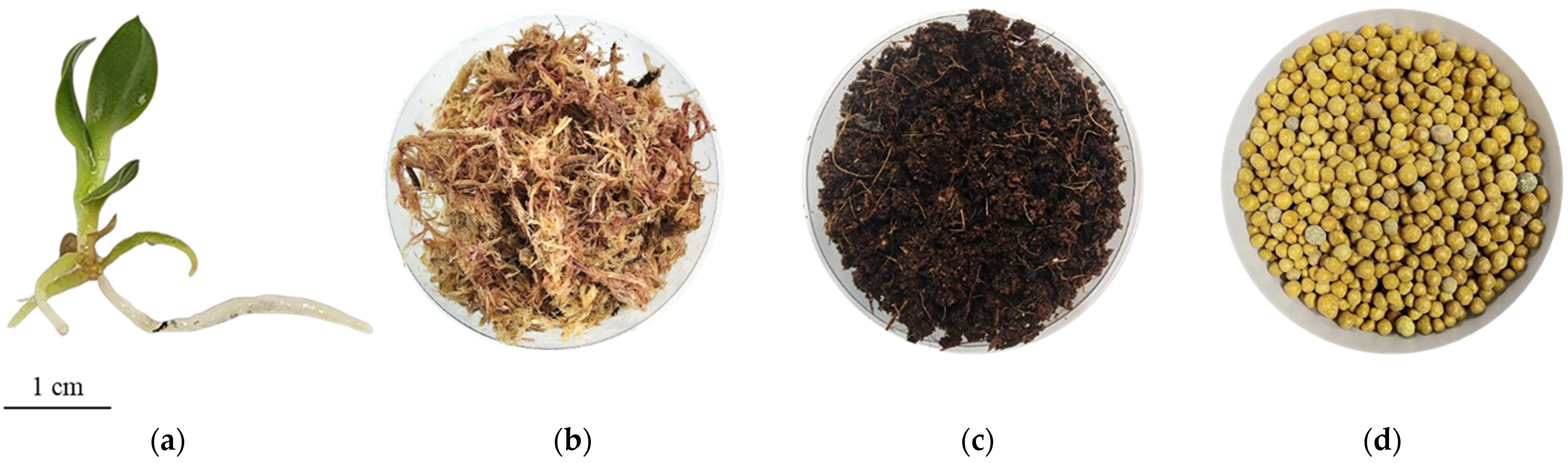
In vitro micropropagated plantlets of Cattleya cernua (Lindl.) Van den Berg (approx. 1.0 ± 0.5 cm) were obtained from the LCTV germplasm bank. C. cernua plants (Figure 1a) were multiplied in B&G® medium (Belas e Grandes Flores, Viçosa, Brazil) until there were enough propagules for experiments. B&G® medium composition (%, dry basis): N: 0.85; P2O5: 0.67; K2O: 2.93; S: 0.30; Ca: 0.46; Mg: 0.13; B: 0.0059; Fe: 0.0176; Zn: 0.0054; Cu: 0.0007; Mn: 0.0115; Mo: 0.0001.
One in vitro micropropagated plantlet was inoculated into each of 250 mL vessels containing 160 mL medium. Experiments I and II lasted 120 days. After this period, plant height (PH, cm), number of leaves (NL), number of pseudobulbs (NPB), number of roots (NR), and length of the longest root (LLR, cm) were measured.

2.1. Concentrations of MS Medium and Sucrose

A completely randomized design was employed in a 4 × 4 factorial arrangement (MS medium concentrations × sucrose concentrations), with ten replicates per treatment. Each replicate consisted of a single 250 mL culture vessel containing one inoculated plantlet. Murashige and Skoog (MS) (PhytoTech Labs, Lenexa, EUA) medium [11] was used at four salt concentrations (25%, 50%, 75%, 100%) and four sucrose levels (10, 20, 30, 40 g L−1). All media were supplemented with 2 g L−1 activated charcoal (Dinâmica, Indaiatuba, Brazil) solidified with 6 g L−1 agar (Mericlone, Holambra, Brazil), adjusted to pH 5.8, and autoclaved (Marconi, Piracicaba, Brazil) at 121 °C (1 kg cm−2) for 20 min. Each vessel received one plantlet and contained 50 mL of culture medium.

2.2. Plant Flours

A completely randomized design was used in a 3 × 5 factorial arrangement (flour type × dosage), with three types of commercial plant flours [baru nut (Dipteryx alata)–Empório do Cerrado® (Goiânia, Brazil), cashew nut–Bem Estar® (Ataliba. Brazil), and coconut–Bem Estar®] and five dosage levels (0, 10, 20, 30, 40 g L−1), resulting in 15 treatments. Each treatment had ten replicates, with one plantlet per 250 mL culture vessel. The basal medium was MS [11] at 25% salt concentration, supplemented with the respective flour and dose. All treatments also contained 10 g L−1 sucrose, 2 g L−1 activated charcoal, 6 g L−1 agar, pH adjusted to 5.8, and were autoclaved at 121 °C (1 kg cm−2) for 20 min. The chemical composition of the flours is presented in Table 1.

2.3. Substrates and Controlled-Release Fertilizer

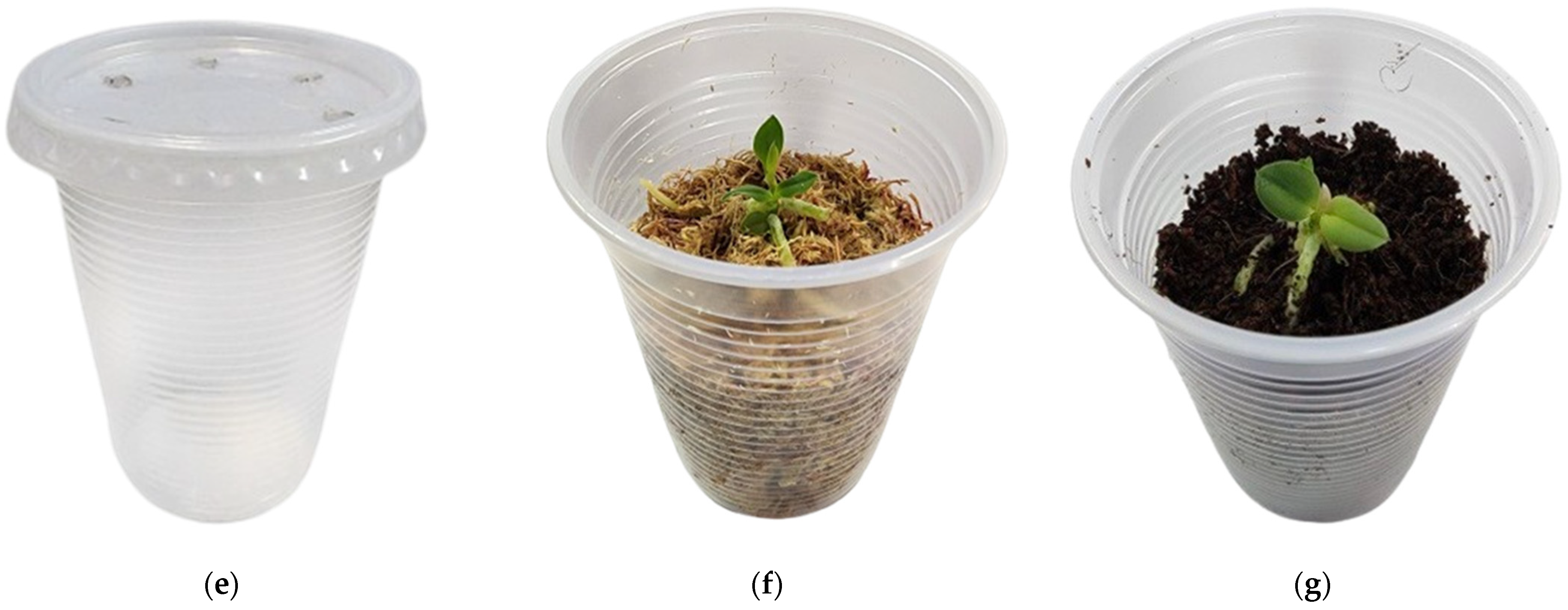
A completely randomized design using a 2 × 6 factorial arrangement (substrates × fertilizer levels). The substrates evaluated were sphagnum moss (±20 g) (Figure 1b) and coconut fiber (±40 g) (Figure 1c). The fertilizer levels consisted of 0, 0.5, 1.0, 1.5, 2.0, and 2.5 g of controlled-release fertilizer per plant (Figure 1d), resulting in 12 treatments. Each treatment had 9 replicates, with 1 plantlet per container (Figure 1a,f,g).
The substrates were previously autoclaved at 121 °C (1 kg cm−2) for 20 min. The controlled-release fertilizer used (Forthcote®—Cerquilho, Brazil) contained the following nutrient composition: nitrogen (15%), phosphorus (9%), potassium (12%), magnesium (1.3%), sulfur (6%), copper (0.05%), iron (0.46%), and molybdenum (0.02%).
A transparent plastic container with a lid (200 cm3) was used for substrate conditioning (Figure 1e). Six holes (0.5 cm in diameter) were drilled in the lid, initially sealed, and then gradually opened at 2-week intervals until the seal was removed entirely (over 105 days). During the experiment, plants were irrigated fortnightly with 20 mL of sterile, deionized water. At 120 days after transfer, the following variables were assessed: survival percentage (SP, %), number of leaves (NL), number of roots (NR), number of pseudobulbs (NPB), and fresh mass (FM, g).

2.4. Growth Conditions

Experiments were carried out in a growth room with a 16-h photoperiod, 24 ± 1 °C, and a photon flux density of 22 μmol m−2 s−1.

2.5. Statistical Analysis

Data were analyzed using SISVAR software (V. 5.8-Build: 92) [27]. The assumption of normality was verified using the Shapiro–Wilk test. Data was subjected to analysis of variance (ANOVA), and the F-test was applied to detect significant differences among treatments. When significant differences were detected for a given variable, regression analysis was performed. The best-fitting polynomial regression models were selected based on higher coefficients of determination (R2), provided they were significant according to the F-test. The lack-of-fit test (deviation from regression) was used to validate model adequacy; a non-significant deviation (p > 0.05) indicated that the model fit the data appropriately. For qualitative factors, means were compared using Tukey’s test at 5% probability level. All statistical analyses were conducted at a significant level of α = 0.05.

3. Results

3.1. Concentrations of MS Medium and Sucrose

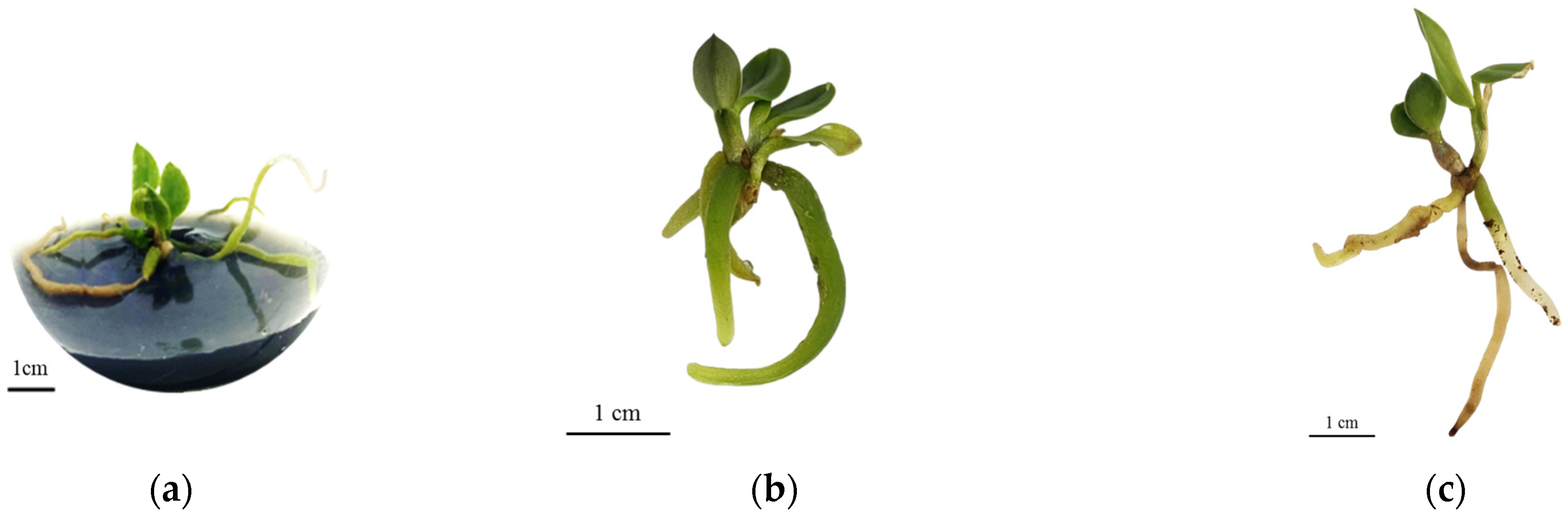
During the in vitro growth phase, the plantlets exhibited vigorous growth and satisfactory visual quality (Figure 6a), with no occurrence of vitrification (hyperhydricity)—a common disorder that compromises survival during acclimatization.
The variables plant height (PH), number of leaves (NL), number of pseudobulbs (NPB), and number of roots (NR) showed significance at 5% (p < 0.05) for the interaction between the factors medium (M) and sucrose (S). Regarding the variable longest root length (LLR), there was no significant interaction between the analyzed factors (Table 2).
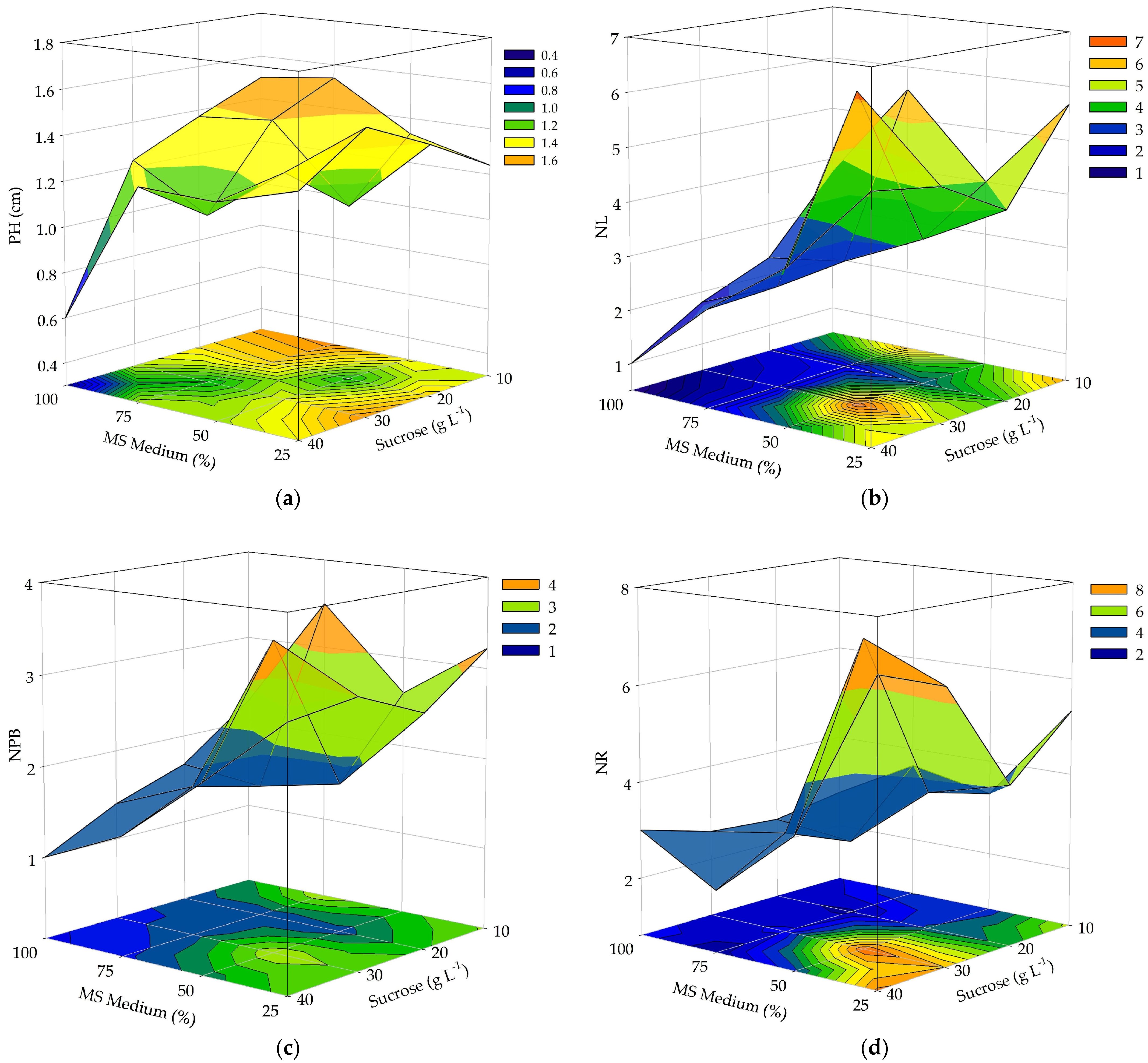
The values at reduced sucrose levels resulted in plants with greater plant height (PH) (Figure 2a). When analyzing sucrose concentrations only at the 25% medium concentration, the means at 10 (1.24), 20 (1.39), 30 (1.52), and 40 (1.32) g L−1 did not differ statistically from each other (Figure 2a). Additionally, it was noted that at the sucrose dose of 10 g L−1, the means at 25% (1.24), 50% (1.33), 75% (1.54), and 100% (1.50) MS medium also showed no significant differences.
For the variable number of leaves (NL) (Figure 2b), it was observed that at the sucrose dose of 10 g L−1, the highest number of leaves was obtained at the MS medium concentrations of 25 (5.67) and 75% (5.56), which did not differ statistically from each other, reinforcing the efficiency of lower sucrose concentrations and MS medium salt concentrations.
Regarding the number of pseudobulbs (NPB), the highest means were observed at a sucrose dose of 10 g L−1 in 25% (3.22) and 75% (3.50) MS medium (Figure 2c). At the 25% MS medium concentration, no differences were observed among the NPB means in relation to the tested.
Only for the variable number of roots (NR) (Figure 2d) did the sucrose concentration of 30 (6.40) and 40 (6.90) g L−1 result in greater increases, differing from the 10 (5.33) and 20 (4.11) g L−1 concentrations. However, when MS medium salt concentrations were analyzed at the 10 g L−1 sucrose dose, the 25% MS medium differed from the other treatments (Figure 2d).

3.2. Plant Flours

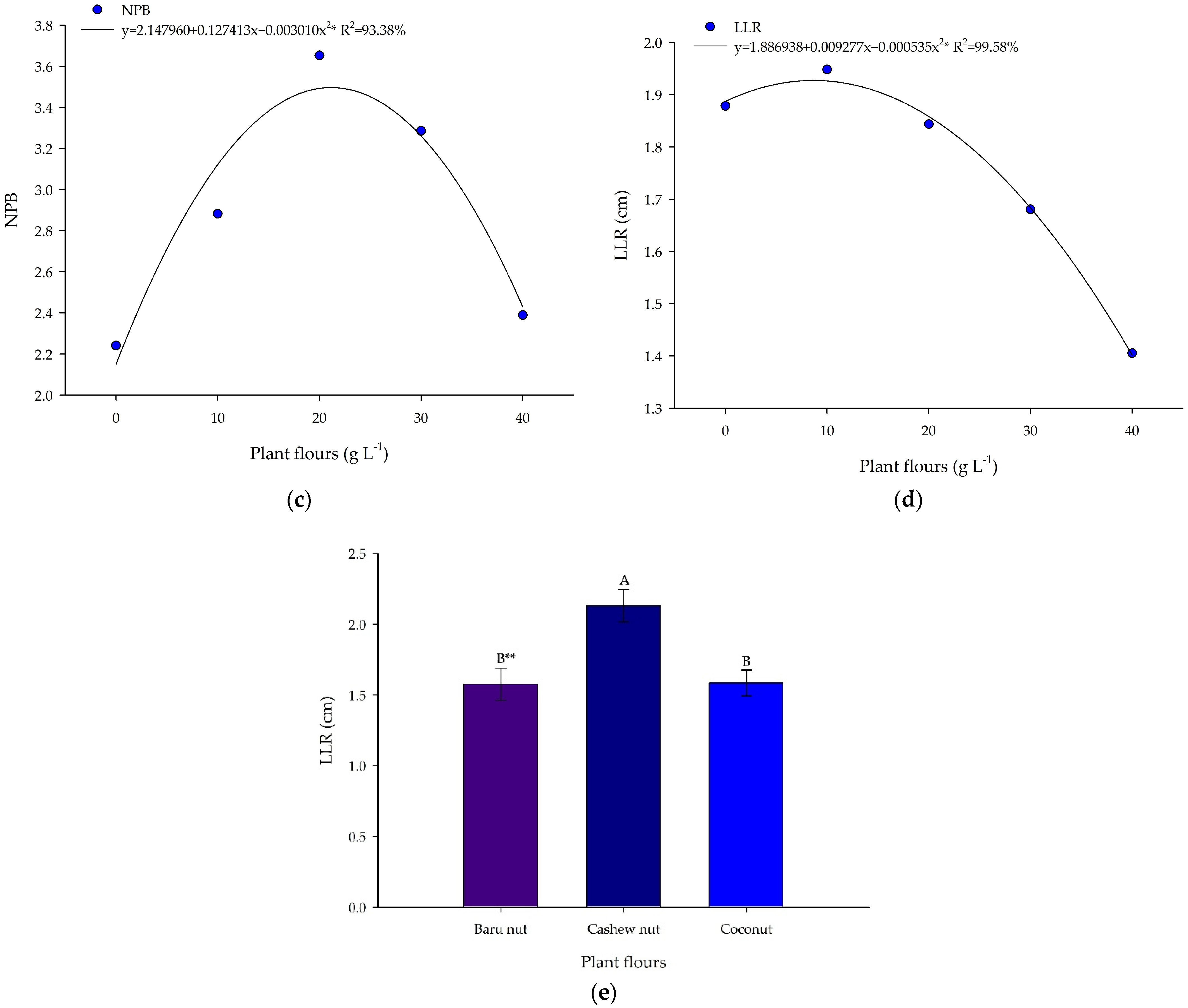
The variable plant height (PH) was significant for the interaction between the factors plant flours (F) and concentration (C). For the variables number of leaves (NL) and number of pseudobulbs (NPB), a significant difference was observed only for the isolated factor of flour concentrations. However, the variable longest root length (LLR) showed significance for the isolated factors, natural flours, and concentration. The number of roots was not significant, with an overall mean of 1.75 cm in the experiment (Table 3).
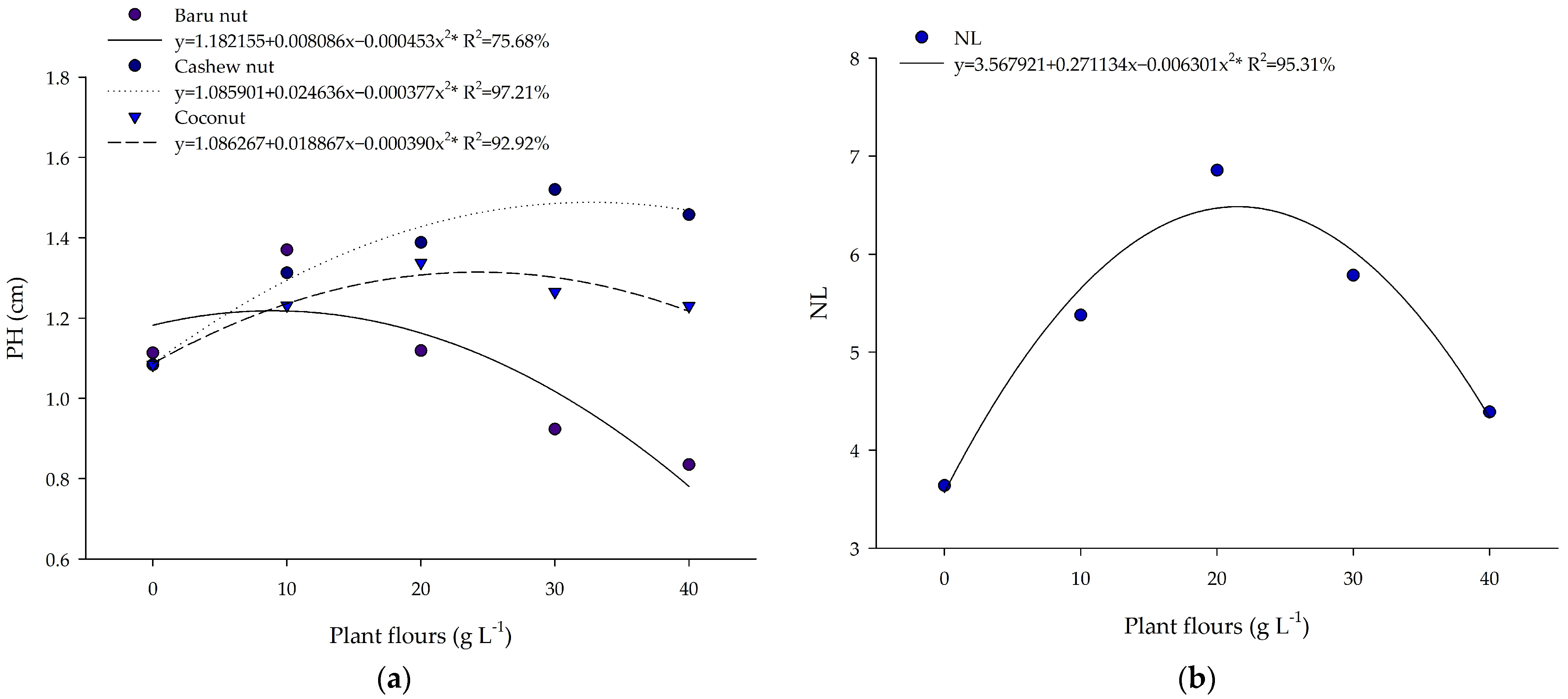
Considering the variable plant height (Figure 3a), in the regression analysis of the flour concentrations evaluated individually, a quadratic behavior was observed in the means, with the maximum of the equation at a dose of 8.93 g L−1 of baru flour, corresponding to a length of 1.22 cm. The maximum values were estimated from the regression model and do not correspond to the exact experimental doses. Therefore, for cashew flour, the maximum point was obtained at a dose of 32.67 g L−1, with a maximum length of 1.49 cm. The regression for coconut flour concentrations also showed a quadratic behavior, reaching a maximum length of 1.31 cm at the dose of 24.19 g L−1.
In the regression analysis of flour concentrations evaluated individually, a quadratic trend was observed in the means, with the maximum at 21.52 g L−1 and an average of 6.49 leaves (Figure 3b). The estimated values are based on the regression model.
The number of pseudobulbs for the isolated dose factor showed a quadratic regression, indicating that as flour concentration increased, the number of pseudobulbs decreased. The highest mean was observed at 21.16 g L−1, with plants presenting 3.50 pseudobulbs (Figure 3c).
Regarding the variable longest root length (Figure 3d), for the isolated factor flour type, an increase was observed with natural cashew flour (2.13 cm) in the culture medium. However, in the regression analysis of flour concentrations evaluated individually, the maximum point of the quadratic regression occurred at the dose of 8.67 g L−1, reaching 1.93 cm (Figure 3e).
This favorable growth resulted in morphologically well-structured plants suitable for acclimatization (Figure 6b)—a stage optimized with low-cost containers and readily available substrates, ensuring the technical and economic feasibility of the production process.

3.3. Substrates and Controlled-Release Fertilizer

The variables survival percentage (SP), number of leaves (NL), and fresh mass (FM) were significant for the isolated factors substrate (S) and fertilization levels (F). Regarding the variables number of roots (NR) and number of pseudobulbs (NPB), a significant interaction was observed between the factors substrate (S) and controlled-release fertilizer level (F) (Table 4).
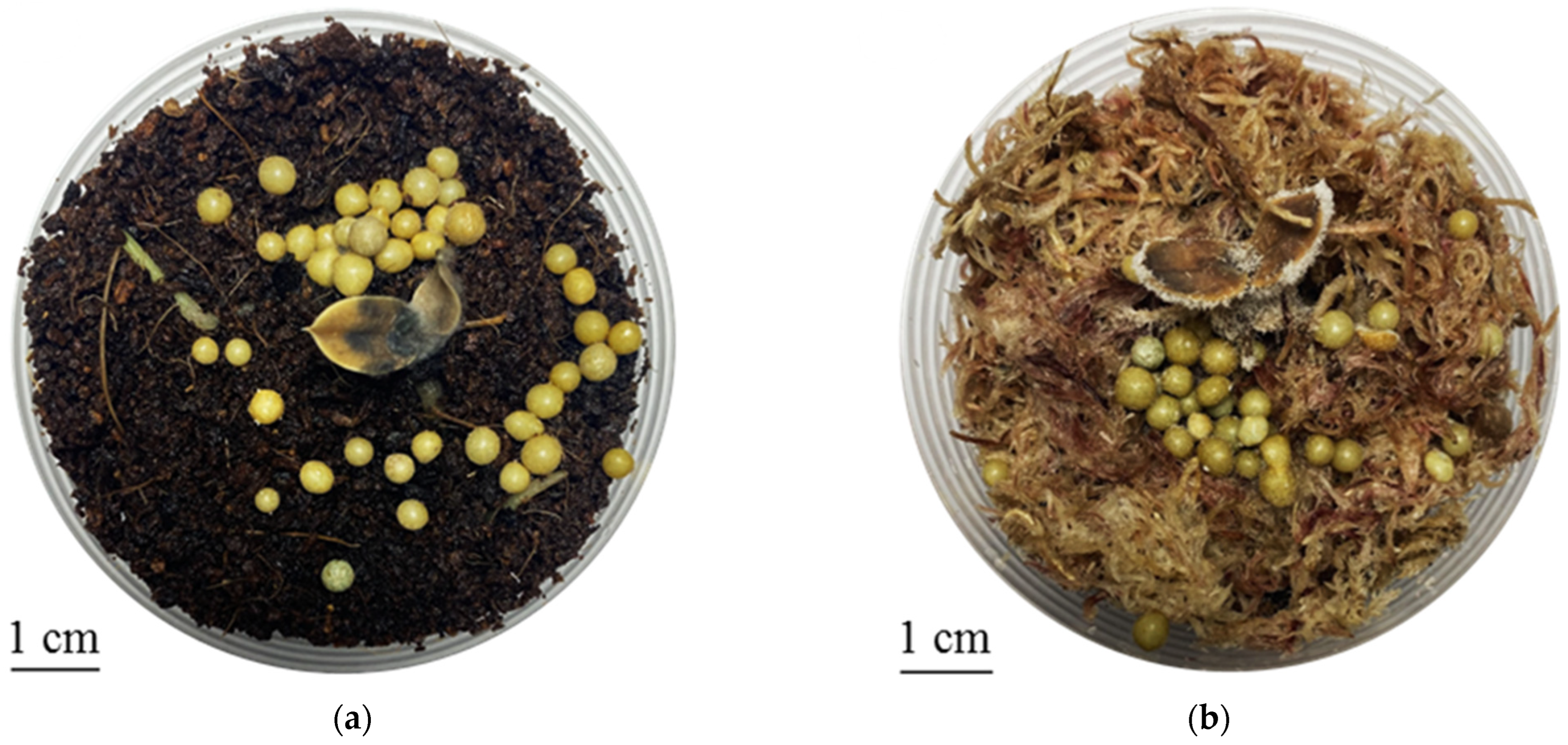
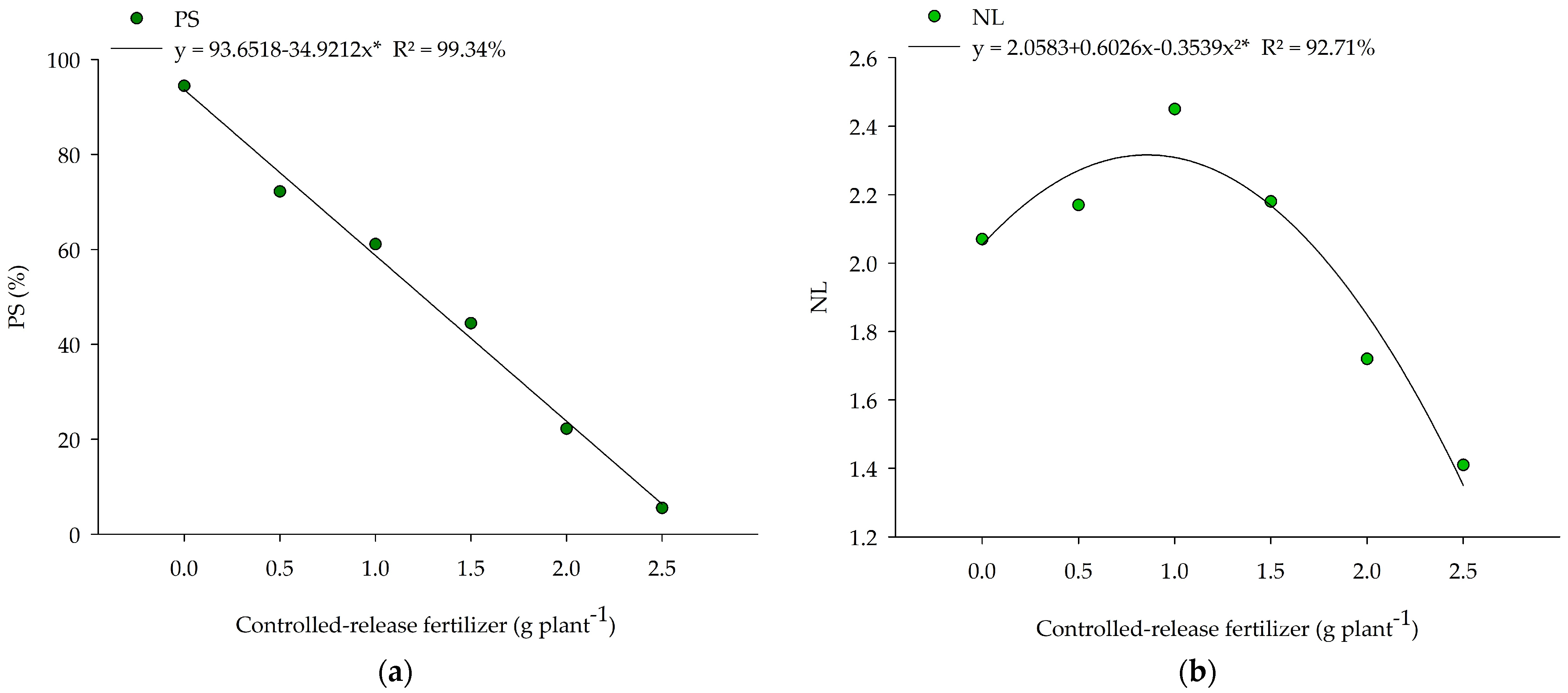
Thus, it is evident that plant survival was reduced by nutrient excess, resulting in necrosis and fungal infection (Figure 4a,b). For the variable survival percentage (SP) (Table 4), for the isolated factor substrate, an increase in this variable was observed when coconut fiber (61.11% survival) was used during acclimatization. In the regression analysis of controlled-release fertilizer levels, a decreasing linear trend was observed, indicating that survival percentage decreased as the fertilization dose increased, with the highest mean in the absence of fertilization at 94.45% (Figure 5a).
For the isolated substrate factor, an increase in the number of leaves (NL) (Table 4) was observed when coconut fiber (2.26) was used during acclimatization. Still, for the same variable, in the regression analysis of slow-release fertilizer levels, a quadratic relationship between the observed means was observed, with the maximum of the equation at 0.85 g plant−1, corresponding to an average of 2.31 leaves (Figure 5b). The estimated values are based on the regression model. Accordingly, the highest means were observed at fertilization levels of 0, 0.5, 1.0, and 1.5 g plant−1, with plants averaging 2.07, 2.17, 2.45, and 2.18 leaves, respectively (Table 4). However, it is important to emphasize that although the highest mean was observed at the 1.0 g plant−1 dose, higher fertilization levels reduced plant survival percentage (Figure 5a).
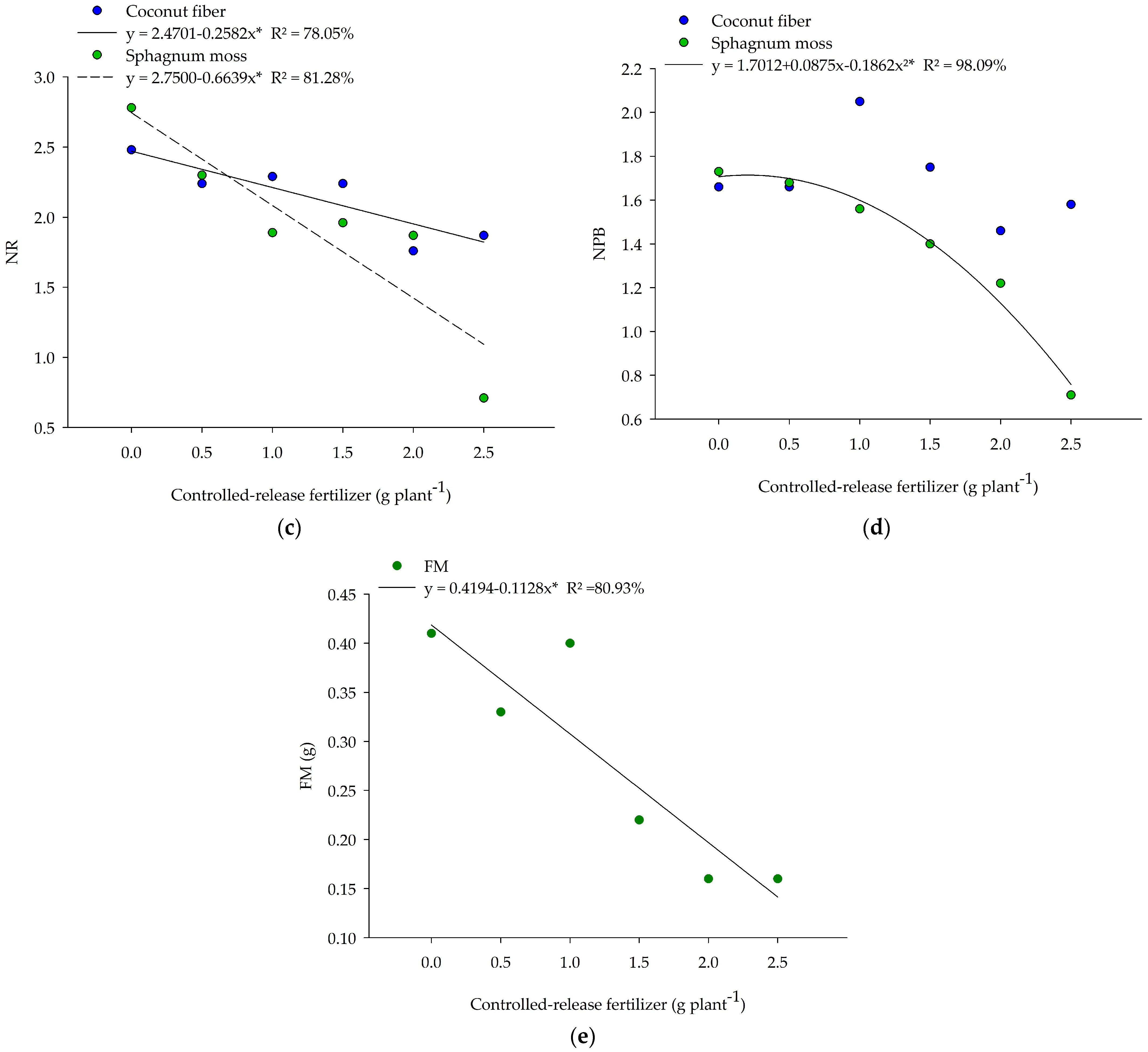
The regression analysis of the interaction between the evaluated factors and the variable number of roots (NR) showed that, when using coconut fiber and sphagnum moss as substrates, a decreasing linear trend was observed. As the levels of controlled-release fertilizer increased, the number of roots decreased, with the highest mean observed in the absence of fertilization, at 2.48 and 2.78 roots, respectively (Figure 5c).
For the number of pseudobulbs (NPB), no regression fit was observed for the interaction between the evaluated factors when coconut fiber was used. However, with sphagnum moss as the substrate, a quadratic relationship was observed in the means, with the maximum at 0.24 g plant−1 of controlled-release fertilizer, yielding a mean of 1.71 pseudobulbs (Figure 5d). The estimated values are based on the regression model.
For the variable fresh mass (FM) (Table 4), the isolated substrate factor increased when coconut fiber (0.38 g) was used for plant acclimatization. In the regression analysis for controlled-release fertilizer levels, a decreasing linear regression was detected; that is, as fertilization levels increased, plant fresh mass decreased, with the highest mean observed in the absence of fertilization (0.41 g) (Figure 5e).
Figure 6 illustrates the final morphological development and visual characteristics of Cattleya cernua seedlings subjected to different medium formulations and the acclimatization stage. Figure 6a shows the in vitro establishment of seedlings cultivated in the control treatment, which utilized MS medium with 25% salt concentration and 10 g L−1 sucrose. Figure 6b demonstrates the effects of supplementing the medium with cashew nut flour (10 g L−1), which produced a more robust root system, thicker roots, and a more intense green coloration, indicating improved pre-acclimatization vigor. Figure 6c presents the seedling’s vigor after transfer to the ex vitro environment, where it was established in a coconut fiber substrate without additional fertilization.

4. Discussion

4.1. Concentrations of MS Medium and Sucrose

The use of carbohydrates added to the culture medium, such as sucrose, is recommended to stimulate rooting in plants grown in vitro. The addition of sucrose is the primary carbon source, and it is not only important for growth and root formation but also for the formation of structural skeletons.
In the species Cattleya cernua, it was found that the shoot length was greater in MS medium with 100% macronutrient concentration combined with 30 or 60 g L−1 of sucrose; that is, higher concentrations of macronutrients and sucrose generally contribute to greater shoot height [8], which contrasts with what was observed in this study. Aquino et al. [6] recommend the use of sucrose at concentrations of 10 and 20 g L−1 for the in vitro propagation of similar hybrids of the genus Cattleya.
However, our research corroborates the study by Koene, Amano and Ribas [28], who found in Acianthera prolifera (Orchidaceae) that high sucrose concentrations in the culture medium can also be harmful to plants by impairing water and mineral uptake. Thus, media with higher water potential provide greater water availability and higher nutrient absorption rates, since high sucrose concentrations in the culture medium inhibit chlorophyll biosynthesis, reducing the photosynthetic capacity of the plants [29].
Moreover, in culture medium with higher water potential, accelerated and enhanced development rates can occur, along with greater nutrient absorption [29,30]. Sasamori, Endres Júnior and Droste [8], for the same orchid species studied in the present work, reported a possible alteration in the osmotic potential of the medium in treatments with 90 g L−1 of sucrose due to the occurrence of slightly dehydrated leaves in these treatments.
Sucrose, although a fundamental carbohydrate for seedling growth, can be harmful at high concentrations because it inhibits chlorophyll biosynthesis, thereby reducing photosynthetic capacity. Furthermore, high salt concentrations may generate antagonistic effects due to salinity [29,31].
It is worth noting that an adequate supply of carbohydrates promotes the accumulation of sucrose and starch reserves in leaves, which serve as energy storage organs. This stored energy will contribute to acclimatization and to the adaptive development and growth of new leaves in the ex vitro environment.
Considering that MS medium is one of the richest nutrient media, its use may have contributed to the favorable results observed in treatments with reduced nutrients for the in vitro culture of Cattleya cernua. In addition, the fact that this species has an epiphytic habit may also have contributed to this performance, since these plants are constantly exposed to nutritional stress and may therefore exhibit physiological adaptations to nutrient deficiency, responding better and requiring fewer mineral nutrients in culture medium [8,31,32].

4.2. Plant Flours Type

The limitation of autotrophy under in vitro conditions renders culture medium supplementation a critical stage for successful plant development [6,8,29,33]. Although sucrose is the conventional carbon source, the use of plant-based flours has emerged as a superior alternative by providing a comprehensive nutritional complex that includes amino acids, minerals, and growth regulators [3,6,7,14,15,34].
In contrast to high sucrose concentrations, which can trigger osmotic stress and compromise chlorophyll biosynthesis [34], plant flours promote a gradual release of nutrients [35]. This dynamic preserves water potential and enhances photosynthetic capacity, resulting in physiologically balanced plantlets better suited for ex vitro acclimatization, primarily due to the increased number of pseudobulbs in orchids [35,36].
The specific efficacy of cashew nut flour stems from its balanced chemical composition, which acts on both nutritional and protective fronts; it provides readily absorbable amino acids (nutritional role) and polyphenols that stabilize cell membranes against oxidative stress (protective role) [34,37].
As detailed in Table 1, the high nitrogen content in cashew nut flour (40.4 g kg−1) mitigates common metabolic disturbances found in strictly mineralized media. N-rich organic sources favor the gradual assimilation of this nutrient; unlike inorganic nitrogen, amino acids and organic compounds are more easily assimilated by plant tissues, as cells possess a higher capacity for the transport and uptake of organic nitrogen sources [12,34,38].
Furthermore, the vegetative vigor observed in plants produced with cashew nut flour (Figure 3a and Figure 6b) was significantly higher, reinforcing that N maintains photosynthetic activity as a central component in the synthesis of structural proteins, enzymes, and chlorophyll. This is essential for a successful transition to active photosynthesis [39,40], thereby increasing plant growth.
Complementarily, the profile of secondary macronutrients and essential minerals present in cashew nut flour [41] bolsters system stability. Table 1 reveals significant levels of phosphorus (4.7 g kg−1) and potassium (10.0 g kg−1), which are fundamental for energy metabolism (ATP) and osmotic regulation, respectively [42]. While potassium acts in enzymatic activation and photoassimilate transport, magnesium (2.9 g kg−1) and calcium (2.2 g kg−1) ensure chloroplast functionality and cell membrane integrity [42,43]. This integrated mineral supply explains the absence of hyperhydricity and the improved quality of plants destined for acclimatization, overcoming the limitations of traditional culture media when supplemented with cashew nut flour.
Regarding protection against oxidative stress, cashew nut flour provides vital micronutrients. The presence of iron (80 mg kg−1), zinc (58 mg kg−1), and manganese, as indicated in Table 1, is crucial, as these elements act as cofactors for antioxidant enzymes, such as superoxide dismutase (SOD) and catalase. Additionally, phenolic compounds and flavonoids present in cashew nuts act as reactive oxygen species (ROS) scavengers, preserving the cellular redox balance [37,41,44].
In summary, the transition to the ex vitro environment is facilitated by this nutritional synergism, which creates a metabolic environment more closely resembling natural conditions. This strategy not only optimizes the production of high-vigor plantlets but also establishes itself as a sustainable practice for conserving this species [45,46,47].
Consequently, cashew nut flour has the potential to partially or even totally replace MS medium salts in certain cultivation phases, due to its complete mineral composition and the added advantage of providing organic nitrogen and antioxidants [41]. However, literature suggests that success depends on the cultivated species and dose calibration to optimize vegetative vigor [39,48].

4.3. Substrates and Controlled-Release Fertilizer

Orchids of the genus Cattleya are predominantly epiphytic, adapted to tree trunks where roots have unobstructed access to air and light [49,50,51]. Consequently, substrates with a relatively coarse texture and free drainage are recommended, as they are analogous to natural habitats [49], such as coconut fiber.
Studies involving the Cattleya genus demonstrate that coconut fiber, whether used alone or in mixtures, frequently yields higher survival and plantlet development rates during the acclimatization phase, reaching 98% to 100% in Cattleya hybrids and Cattleya tigrina [51,52]. Stefano et al. [53] observed a higher survival percentage (90%) when using a mixture of coconut fiber and charcoal (2:1 v/v) as the substrate for acclimatizing Epidendrum nocturnum.
These high survival rates are attributed to the substrate’s high porosity and excellent water retention capacity without saturation, which promotes root aeration and prevents water and osmotic stress—factors often associated with substrates characterized by high salinity or poor drainage [54,55].
Coconut fiber proved beneficial for the acclimatization of C. cernua due to its physicochemical properties that mimic the species’ natural habitat. Its suitable texture facilitated gas exchange between the roots and the environment, a crucial factor in mitigating stress for plants transitioning from a moisture-saturated in vitro environment [36,51].
As a porous substrate, coconut fiber allowed for superior root anchorage and growth, facilitating the transition to autotrophic nutrition and ensuring success during acclimatization [36,56]. Furthermore, suitable substrates minimize nutritional risks; excessive mineral fertilization combined with inadequate substrates can induce chlorosis and necrosis, as observed when controlled-release fertilizers (CRF) were added (Figure 4a,b). Thus, free-draining capacity is vital for orchids transitioning from in vitro culture, as it prevents osmotic stress and root decay [49].
Epiphytic orchids are adapted to low-fertility environments, and coconut fiber maintains this equilibrium [57]. The roots of these orchids possess a specialized coating called the velamen, which assists in water and nutrient uptake and adheres firmly to porous substrates like coconut fiber [56,58]. Therefore, coconut fiber functions not only as physical support but as a physiological modulator. Providing a low electrical conductivity (EC) environment and high oxygenation, allows velamentous roots to perform their natural absorptive functions without the risk of anoxia. This resulted in plantlets with more robust pseudobulbs, which serve as water and energy storage organs [12,58], essential for the higher ex vitro survival rates observed in coconut fiber.
Regarding the use of controlled-release fertilizers (CRF), salinity resulting from excess nutrients in the substrate can exert an antagonistic effect through osmotic imbalance, negatively affecting water availability and root absorption. As a result of salinity stress, plant growth is reduced, as increased salt concentration decreases water potential, thereby compromising nutrient uptake [25,31].
Excessive fertilization can be toxic to plantlets; once fundamental nutritional requirements are met, increasing doses do not promote growth and may cause severe physiological damage, such as root deterioration and decay, as well as the inhibition of root growth on the substrate surface. This is frequently driven by an increase in electrical conductivity (EC), which triggers salt stress and damages fragile plantlets [59,60].
In media such as sphagnum moss, increased fertilizer concentrations can lead to a sharp decline in pH [60]. This occurs because cations from the fertilizer displace hydrogen ions in the substrate, releasing them and rendering the environment excessively acidic. This acidity, coupled with excess and readily available nutrients, may fail to stimulate root system expansion in search of resources, resulting in an underdeveloped support and absorption system [59], as observed in the experiment (Figure 5c). Such toxicity phenomena are particularly common in young, micropropagated plantlets, which have low nutritional requirements and are highly sensitive to chemical imbalances in the acclimatization environment [59,61].
These results corroborate findings in Brassavola tuberculata Hook. by Ribeiro et al. [62], where plant survival was higher in the absence of slow-release fertilizer. For Phalaenopsis sp., Paula, Santos, Silva and Faria et al. [25] evaluated the effect of Osmocote® levels in a pine bark and charcoal substrate (1:1 v/v) and found that 6 g pot−1 was detrimental to initial development due to increased EC; at 10 g pot−1, plant mortality occurred.
Therefore, the absence of CRF and the use of coconut fiber as a substrate significantly contribute to the survival of Cattleya cernua (Figure 6c). Enhanced development under these conditions is associated with higher values for root system length, leaf number, and pseudobulb count. Due to the root system’s absorptive capacity, survival can be improved by increasing the number and improving the development of roots. Additionally, reducing nutrient concentrations prior to acclimatization is recommended to promote root formation and enhance establishment [23,32,63].
In later stages, the number of leaves and roots remains critical, as a larger photosynthetic area and more efficient nutrient/water absorption increase survival rates [64]. Leaves are key organs for carbon assimilation; thus, an increase in leaf size benefits the acclimatization phase by improving photosynthetic efficiency [8,29,63]. The presence of developed pseudobulbs is equally essential, serving as reservoirs for nutrients and water while providing structural support for leaves and flowers [8,26,63,65].
The acclimatization stage represents the period of highest loss in in vitro cultivation and is considered a critical bottleneck. During this transition from an aseptic (in vitro) to a non-aseptic (ex vitro) environment, plants undergo significant stress and are highly susceptible to fungal and bacterial infections [22,23].
Therefore, the study of in vitro culture protocols for each orchid species, especially native ones, becomes increasingly necessary, as does understanding the most suitable nutritional requirements for each species, given orchids’ specificities and the demands of conservation [12,14,32].

5. Conclusions

The study established an efficient protocol for the growth of micropropagated plants and the acclimatization of the native orchid Cattleya cernua. The results demonstrated that it is possible to reduce the concentrations of salts and sucrose in the culture medium, and to employ alternative supplements and simple substrates without compromising plant development. Accordingly, the recommended protocol consists of using 25% MS salts supplemented with 10 g L−1 sucrose, with the optional addition of 10 g L−1 cashew flour to the medium, followed by acclimatization in coconut fiber as the sole substrate, thereby eliminating the need for additional fertilization to ensure higher seedling survival and growth.

Author Contributions

Conceptualization, N.Y.T., G.A.F. and A.F.A.F.; methodology, N.Y.T., G.A.F. and A.F.A.F.; software, A.F.A.F. and G.A.F.; validation, N.Y.T., G.A.F. and A.F.A.F.; formal analysis, G.A.F. and A.F.A.F.; investigation, N.Y.T.; resources, N.Y.T.; data curation, N.Y.T., G.A.F. and A.F.A.F.; writing—original draft preparation, N.Y.T., G.A.F. and A.F.A.F.; writing—review and editing, N.Y.T., G.A.F., D.G.C., A.R.M., M.F.d.S., C.F.F., L.H.P.S. and A.F.A.F.; visualization, N.Y.T. and A.F.A.F.; supervision, A.F.A.F. and G.A.F.; project administration, N.Y.T.; funding acquisition, A.F.A.F. All authors have read and agreed to the published version of the manuscript.

Funding

This study was financed in part by the Coordenação de Aperfeiçoamento de Pessoal de Nível Superior—Brasil (CAPES)—Finance Code 001.

Data Availability Statement

The raw data supporting the conclusions of this article will be made available by the authors on request.

Acknowledgments

This study was financed in part by the Coordenação de Aperfeiçoamento de Pessoal de Nível Superior—Brasil (CAPES)—Finance Code 001. The authors thank the Federal Institute of Education, Science and Technology of São Paulo (IFSP). We also extend our gratitude to the Plant Tissue Culture Laboratory (LCTV) and the Applied Statistics Laboratory (LEA) of São Paulo State University (UNESP), School of Engineering, Ilha Solteira campus, especially to team member Otavio Ananias Pereira da Silva Ribeiro.

Conflicts of Interest

The authors declare no conflicts of interest.

References

  1. Zhang, D.; Zhao, X.-W.; Li, Y.-Y.; Ke, S.-J.; Yin, W.-L.; Lan, S.; Liu, Z.-J. Advances and prospects of orchid research and industrialization. Hortic. Res. 2022, 9, uhac220. [Google Scholar] [CrossRef] [PubMed]
  2. Yuan, S.C.; Lekawatana, S.; Amore, T.D.; Chen, F.C.; Chin, S.W.; Vega, D.M.; Wang, Y.T. The global orchid market. In The Orchid Genome; Chen, F.C., Chin, S.W., Eds.; Springer: Cham, Switzerland, 2021; pp. 1–28. [Google Scholar] [CrossRef]
  3. Han, C.; Dong, F.; Qi, Y.; Wang, Y.; Zhu, J.; Li, B.; Zhang, L.; Lu, X.; Wang, J. The breeding, cultivation, and potential applications of ornamental orchids with a focus on Phalaenopsis—A brief review. Plants 2025, 14, 1689. [Google Scholar] [CrossRef] [PubMed]
  4. Iiyama, C.M.; Vilcherrez-Atoche, J.A.; Germanà, M.A.; Vendrame, W.A.; Cardoso, J.C. Breeding of ornamental orchids with focus on Phalaenopsis: Current approaches, tools, and challenges for this century. Heredity 2024, 132, 163–178. [Google Scholar] [CrossRef] [PubMed]
  5. World Flora Online. Orchidaceae Family. 2026. Available online: https://www.worldfloraonline.org (accessed on 3 January 2026).
  6. Aquino, E.L.; Couto, T.R.; Araújo, J.S.P. Banana pulp and sucrose on in vitro development of orchids. Rev. Agrar. Acad. 2021, 4, 70–77. [Google Scholar] [CrossRef]
  7. Nongdam, P.; Beleski, D.G.; Tikendra, L.; Dey, A.; Varte, V.; El Merzougui, S.; Pereira, V.M.; Barros, P.R.; Vendrame, W.A. Orchid micropropagation using conventional semi-solid and temporary immersion systems: A review. Plants 2023, 12, 1136. [Google Scholar] [CrossRef]
  8. Sasamori, M.H.; Endres Júnior, D.; sa, A. Optimal conditions for in vitro culture of Cattleya cernua, a small orchid native to the Atlantic Forest and Cerrado. Rodriguésia 2021, 72, e02059. [Google Scholar] [CrossRef]
  9. Van den Berg, C.  Cattleya. In Flora e Funga do Brasil; Jardim Botânico do Rio de Janeiro: Rio de Janeiro, Brazil, 2024. Available online: https://floradobrasil.jbrj.gov.br/FB582439 (accessed on 14 November 2024).
  10. Lemes, C.S.R.; Silva, R.R.; Silva, M.G.B.; Soares, D.A.; Teixeira, M.F.A.; Otoni, W.C. Initial in vitro establishment of the native Cerrado orchid Miltonia flavescens. Floresta Ambiente 2020, 27, e022118. [Google Scholar] [CrossRef]
  11. Nardelli, M.S.; Schmidt, G.M.; Santos, S.C.; Dias, G.C.; Braga, L.A.S.; Schultz, L.C.; Oliveira, S.A. Desenvolvimento de plântulas de Cattleya walkeriana Gardner em diferentes meios de cultura. J. Agron. Sci. 2020, 9, 61–72. Available online: http://siteadmin2.uem.br/pag/anteriores/06.pdf (accessed on 28 February 2026).
  12. Freitas, K.G.; Oliveira, P.V.; Souza, V.F.C.; Alvarenga, A.A.; Silva, C.G.; Silva, F.M.; Alves, G.B.; Castro, E.M.; Viana, A.P. In vitro growth of Cattleya nobilior Rchb. f.: Culture media, sealing systems and irradiance. Pesqui. Agropecu. Trop. 2021, 51, e67131. [Google Scholar] [CrossRef]
  13. Maharjan, S.; Shrestha, S.; Jha, P.K.; Rajbhandary, S.; Shrestha, K.K. In vitro propagation of the endangered orchid Dendrobium chryseum Rolfe from protocorm culture. Nepal J. Sci. Technol. 2020, 19, 39–47. [Google Scholar] [CrossRef]
  14. Mercado, S.A.S.; Delgado, E.A.B. Effect of the medium composition on the asymbiotic germination and in vitro development of the Laelia × Cattleya hybrid. S. Afr. J. Bot. 2020, 135, 80–86. [Google Scholar] [CrossRef]
  15. Utami, E.S.W.; Hariyanto, S. Organic compounds: Contents and their role in improving seed germination and protocorm development in orchids. Int. J. Agron. 2020, 2020, 1–12. [Google Scholar] [CrossRef]
  16. Dwiyani, R.; Fitriani, Y.; Mercuriani, I.S. The alternative media supporting the protocorm and plantlet growth of the Indonesian black orchid (Coelogyne pandurata Lindl.) grown in vitro. J. Sustain. Agric. 2022, 37, 152–160. [Google Scholar] [CrossRef]
  17. Rezende, J.C.; Ferreira, E.A.; Pasqual, M.; Villa, F.; Santos, F.C. Desenvolvimento in vitro de Cattleya loddigesii: Adição de reguladores de crescimento e sacarose. Agrarian 2009, 2, 99–114. Available online: https://ojs.ufgd.edu.br/agrarian/article/view/422 (accessed on 28 February 2026).
  18. Pinto, J.R.S.; Freitas, R.M.O.; Praxedes, S.C. Stimulation of in vitro development of Cattleya granulosa by sucrose. Gen. Appl. Plant Physiol. 2010, 36, 183–188. Available online: http://www.bio21.bas.bg/ippg/bg/wp-content/uploads/2011/06/GAPP_v36_3-4_183-188.pdf (accessed on 28 February 2026).
  19. Galdiano Júnior, R.F.; Mantovani, C.; Cassano, A.O.; Lemos, E.G.M. Desenvolvimento inicial e crescimento in vitro de Cattleya violacea (Kunth) Rolfe em diferentes concentrações de sacarose. Acta Amaz. 2013, 43, 127–134. [Google Scholar] [CrossRef]
  20. Sasamori, M.H.; Endres Júnior, D.; Droste, A. Asymbiotic culture of Cattleya intermedia Graham (Orchidaceae): The influence of macronutrient salts and sucrose concentrations on survival and development of plantlets. Acta Bot. Bras. 2015, 29, 292–298. [Google Scholar] [CrossRef]
  21. Murashige, T.; Skoog, F. A revised medium for rapid growth and bioassays with tobacco tissue cultures. Physiol. Plant. 1962, 15, 473–497. [Google Scholar] [CrossRef]
  22. Zandoná, A.P.; Schuch, M.W.; Peil, R.M.N. Alternative substrates to the sphagnum moss in the acclimatization of Arundina graminifolia “alba” (Orchidaceae). Rev. Bras. Hortic. Ornam. 2014, 20, 7–12. [Google Scholar] [CrossRef]
  23. Vicente, M.C.; Araujo, J.S.P. Propagação in vitro e aclimatização de Cattleya walkeriana Gardner (Orchidaceae). Rev. Agrar. Acad. 2020, 3, 262–273. [Google Scholar] [CrossRef]
  24. Rolon, E.M.; Silva, A.P.; Silva, J.S.; Smiderle, O.J. Avaliação do comportamento de Catasetum × altaflorestense em diferentes concentrações de anti-concepcional. Braz. J. Dev. 2021, 7, 31219–31229. [Google Scholar] [CrossRef]
  25. Paula, J.C.B.; Santos, J.G.D.; Silva, E.A.; Faria, R.T. Fertilizante de liberação controlada no crescimento inicial da orquídea Phalaenopsis sp. Cultura Agron. 2020, 29, 289–299. [Google Scholar] [CrossRef]
  26. Cunha, F.L.; Paim, L.P.; Araujo, M.M.; Watzlawick, L.F. Uso dos adubos de liberação lenta no setor florestal. Pesqui. Florest. Bras. 2021, 41, e201902063. [Google Scholar] [CrossRef]
  27. Ferreira, D.F. SISVAR: A computer statistical analysis system. Ciênc. Agrotec. 2011, 35, 1039–1042. [Google Scholar] [CrossRef]
  28. Koene, F.M.; Amano, É.; Ribas, L.L.F. Asymbiotic seed germination and in vitro seedling development of Acianthera prolifera (Orchidaceae). S. Afr. J. Bot. 2019, 121, 83–91. [Google Scholar] [CrossRef]
  29. Paulino, M.A.P.P.; Silva, L.G.B.; Souza, A.C.; Silva, F.M.; Souza, R.P. In vitro development of Cyrtopodium cachimboense L.C. Menezes at different levels of sucrose. Braz. J. Dev. 2021, 7, 18844–18860. [Google Scholar] [CrossRef]
  30. Buah, J.N.; Kawamitsu, Y.; Sato, S.; Murayama, S. Effects of different types and concentrations of gelling agents on the physical and chemical properties of media and the growth of banana (Musa spp.) in vitro. Plant Prod. Sci. 1999, 2, 138–145. [Google Scholar] [CrossRef]
  31. Assis, K.C.C.; Oliveira, S.A.; Santos, S.C.; Sousa, W.A.P.; Viana, J.S.; Melo, T.N.A.; Alves, S.S.; Melo, R. Growth in vitro of Schomburgkia crispa Lindl. with increased culture of Salvia hispanica L. Rev. Bras. Eng. Biossist. 2020, 14, 342–350. [Google Scholar] [CrossRef]
  32. Juras, M.C.R.; Souza, R.P.; Oliveira, S.C.; Ribeiro, S.P.; Nogueira, J.S. In vitro culture and acclimatization of Cattleya xanthina (Orchidaceae), an endangered orchid of the Brazilian Atlantic Rainforest. Rodriguésia 2019, 70, e00142017. [Google Scholar] [CrossRef]
  33. Caldas, L.S.; Haridasan, P.; Ferreira, M.E. Meios nutritivos. In Cultura de Tecidos e Transformação Genética de Plantas, 1st ed.; Torres, A.C., Caldas, L.S., Buso, J.A., Eds.; EMBRAPA-SPI/EMBRAPA-CNPH: Brasília, Brazil, 1998; Volume 1, pp. 87–132. [Google Scholar]
  34. Hamdeni, I.; Louhaichi, M.; Slim, S.; Boulila, A.; Bettaieb, T. Incorporation of organic growth additives to enhance in vitro tissue culture for producing genetically stable plants. Plants 2022, 11, 3087. [Google Scholar] [CrossRef]
  35. da Silva, J.P.; de Almeida, L.D.S.; da Silva Radons Prestes, Z.M.; da Costa de Figueiredo, A.M.; Ferreira, D.A.T.; Karsburg, I.V. Pré-aclimatação de orquídeas Catasetum sp. sob concentrações de composto orgânico. In Anais Sustentare WIPIS 2023; Even3: Recife, Brazil, 2023. [Google Scholar] [CrossRef]
  36. Nunes, G.P.; Sorgato, J.C.; Ramos, J.C.M.; Soares, J.S.; Rezende, R.K.S.; Peinado, R.B. Innovations in micropropagation of the orchid Cattleya nobilior: The effect of bioreactor and enriched culture media. Ciênc. Rural 2025, 55, e20240271. [Google Scholar] [CrossRef]
  37. Rao, M.J.; Zheng, B. The role of polyphenols in abiotic stress tolerance and their antioxidant properties to scavenge reactive oxygen species and free radicals. Antioxidants 2025, 14, 74. [Google Scholar] [CrossRef] [PubMed]
  38. Momtaj, S.; Sushma; Kaur, S. Role of organic growth supplement in vitro multiplication of orchid species—A review. J. Pharm. Res. Int. 2021, 33, 212–215. [Google Scholar] [CrossRef]
  39. Bao, J.; Gleeson, M.; Sommerville, K.D.; Mitter, N.; O’Brien, C.; Hayward, A. Response surface optimization of basal nutrients for in vitro conservation of endangered plants: A Gossia fragrantissima case study. Plant Cell Tissue Organ Cult. 2025, 163, 10. [Google Scholar] [CrossRef]
  40. Pinedo Panduro, M.; Alves Chagas, E.; de Freitas Luz, F.J.; Cardoso Chagas, P.; Panduro Tenazoa, N.M.; Bardales Lozano, R.; Abanto Rodríguez, C.; Paredes Dávila, E.; Collazos Saldaña, H. Efecto de las sales de los medios de cultivo Murashige & Skoog y Knudson sobre el establecimiento in vitro de Epidendrum schomburgkii Lindl. Cienc. Tecnol. Agropecu. 2022, 23, e2526. [Google Scholar] [CrossRef]
  41. Séverin, K.Y.; N’Guessan Patrick, A.; Diby Allah, L.; Mouho Guéi, D.R.; Bamba, S.; Koffi N’Dri, E. Determination of the content of polyphenols, flavonoids, tannins, mineral elements and antioxidant activity of almonds obtained from cashew nuts (Anacardium occidentale, Anacardiaceae) from Central Côte d’Ivoire. Asian J. Chem. Sci. 2024, 14, 1–9. [Google Scholar] [CrossRef]
  42. Wegner, L.H.; Pottosin, I.; Dreyer, I.; Shabala, S. Potassium homeostasis and signalling: From the whole plant to the subcellular level. Quant. Plant Biol. 2025, 6, e13. [Google Scholar] [CrossRef]
  43. Rios, C.V.; Souza, G.V.D.; de Brito, E.P.; Pagliosa, M.; da Silva, C.P. Efeito do cálcio, boro e potássio no crescimento inicial de hortelã-verde (Mentha spicata L.) em solução nutritiva. Cientific@ 2022, 9, 1–11. [Google Scholar] [CrossRef]
  44. Sruthi, P.; Roopavathi, C.; Madhava Naidu, M. Profiling of phenolics in cashew nut (Anacardium occidentale L.) testa and evaluation of their antioxidant and antimicrobial properties. Food Biosci. 2023, 51, 102246. [Google Scholar] [CrossRef]
  45. Khan, I.; Khan, M.A.; Shehzad, M.A.; Ali, A.; Mohammad, S.; Ali, H.; Alyemeni, M.N.; Ahmad, P. Micropropagation and production of health-promoting lignans in Linum usitatissimum. Plants 2020, 9, 728. [Google Scholar] [CrossRef]
  46. Cambaz, E.; Çördük, N. Micropropagation and acclimatization of Hypericum aucheri. Horticulturae 2025, 11, 1069. [Google Scholar] [CrossRef]
  47. Guru, G.R.; Ramteke, P.W.; Veres, C.; Vágvölgyi, C. Recent advances in the use of plant growth-promoting microorganisms for enhancing micropropagation efficiency. Front. Plant Sci. 2025, 16, 1–22. [Google Scholar] [CrossRef] [PubMed]
  48. de Oliveira, R.M.; da Cunha Neto, A.R.; Calvelli, J.V.B.; Ferreira, E.B.; de Andrade, M.D.; Mincato, R.L. Biosolids treated as a nutritional alternative for in vitro culture of Bowdichia virgilioides Kunth. Bull. Environ. Contam. Toxicol. 2024, 113, 28. [Google Scholar] [CrossRef] [PubMed]
  49. Arenas-de-Souza, M.D.; Karsburg, I.V. Desenvolvimento vegetativo de espécie e híbrido natural do gênero Catasetum L.C. Richard ex Kunth (Orchidaceae) micropropagadas. Rev. Biociênc. 2018, 23, 26–32. Available online: https://periodicos.unitau.br/biociencias/article/view/2465 (accessed on 28 February 2026).
  50. Kumara, P.U.; Herath, H.M.I.; Fonseka, D.L.C.K.; Kumara, K.A.; Atapattu, A.G.K.K.M.W.; Marikar, F.M.M.T. Low-cost tissue culture technology for orchid regeneration. Peruv. J. Agron. 2022, 6, 147–158. [Google Scholar] [CrossRef]
  51. Hussien, M.; Molkanova, O.I.; Raeva-Bogoslovskaya, E.N.; Sergeevich, M.S. Plant growth regulators and organic additives on the proliferation of protocorm-like bodies and plantlet regeneration of Cattleya gaskelliana (N.E.Br.) B.S.Williams. Ciênc. Agrotec. 2024, 48, e018223. [Google Scholar] [CrossRef]
  52. Rittirat, S.; Klaocheed, S.; Thammasiri, K. Asymbiotic seed germination, direct induction of protocorm-like bodies from protocorms, plantlet regeneration, and greenhouse acclimatization of yellow-flowered hybrid Cattleya (Orchidaceae). Acta Hortic. 2024, 1414, 51–60. [Google Scholar] [CrossRef]
  53. Stefano, D.; Pella, A.; Souza, R.P. In vitro micropropagation and acclimatization of an endangered native orchid using organic supplements. Am. J. Plant Sci. 2022, 13, 380–393. [Google Scholar] [CrossRef]
  54. Menezes-Sá, T.S.A.; Costa, A.S.D.; Arrigoni-Blank, M.D.F.; Blank, A.F.; Moura, G.M.S.; Soares, C.A. In vitro propagation and conservation of Cattleya tigrina A. Rich. Ciênc. Rural 2022, 52, e20200517. [Google Scholar] [CrossRef]
  55. Navarro, Q.R.; de Oliveira Corrêa, D.; Behling, A.; Noseda, M.D.; Ribas, L.L.F. Effect of microalga Desmodesmus subspicatus and plant growth regulators on the in vitro propagation of Cattleya warneri. Plant Cell Tissue Organ Cult. 2023, 153, 77–89. [Google Scholar] [CrossRef]
  56. Deb, C.R.; Pongener, A. Use of low-cost agar alternative for in vitro propagation of commercially viable orchids is an attractive way for commercialization. S. Afr. J. Bot. 2022, 150, 789–796. [Google Scholar] [CrossRef]
  57. Lone, A.B.; Barbosa, C.M.; Takahashi, L.S.A.; de Faria, R.T. Aclimatização de Cattleya (Orchidaceae) em substratos alternativos ao xaxim e ao esfagno. Acta Sci. Agron. 2008, 30, 465–469. [Google Scholar] [CrossRef][Green Version]
  58. Eisa, E.A.; Pasquel Davila, D.S.; Ördögh, M. Enhancing acclimatization conditions for Vriesea splendens ‘Fire’: A comparative analysis of substrate effects on growth and survival. Plants 2025, 14, 172. [Google Scholar] [CrossRef] [PubMed]
  59. Salgado-Pirata, M.; Correia, S.; Canhoto, J. Ex vitro simultaneous acclimatization and rooting of in vitro propagated tamarillo plants (Solanum betaceum Cav.): Effect of the substrate and mineral nutrition. Agronomy 2022, 12, 1082. [Google Scholar] [CrossRef]
  60. Ha, B.Y.; Kim, H.R.; Kim, D.H.; Woo, J.W.; Jo, Y.J. Growth effects of the application of new controlled-release fertilizers on Phalaenopsis spp. Appl. Biol. Chem. 2018, 61, 625–633. [Google Scholar] [CrossRef]
  61. Simão, M.J.; Cola, M.P.A.; da Silva, N.C.B. In vitro germination and controlled-release fertilizer effects on ex vitro development of Eugenia uniflora L. plantlets. JSFA Rep. 2022, 2, 398–404. [Google Scholar] [CrossRef]
  62. Ribeiro, I.S.; Silva, C.A.; Souza, E.H.; Souza, F.V.D. The Brazilian native orchid Brassavola tuberculata Hook.: Ornamental potential and reintroduction. Ornam. Hortic. 2024, 30, 1–7. [Google Scholar] [CrossRef]
  63. Soares, J.S.; Ribeiro, L.M.; Sorgato, J.C. Germinação e crescimento in vitro de Dendrobium nobile Lindl. sem subcultivo em meio de cultura alternativo. Braz. J. Biosyst. Eng. 2017, 11, 365–372. [Google Scholar] [CrossRef][Green Version]
  64. Ferreira, W.M.; Souza, R.P.; Oliveira, S.C.; Ribeiro, S.P.; Nogueira, J.S. Asymbiotic germination, initial development in vitro and acclimatization of Cyrtopodium paludicolum Hoehne, a Brazilian Savanna orchid species. Rodriguésia 2022, 73, 1–14. [Google Scholar] [CrossRef]
  65. Silva, M.F.F.; Silva, F.C.; Alves, S.S.; Sousa, W.A.P.; Melo, T.N.A.; Santos, S.C.; Oliveira, S.A. Development of Catasetum schmidtianum Miranda & Lacerda under different concentrations of pyroligneous extract from Enterolobium contortisiliquum. Braz. J. Dev. 2021, 7, 16070–16082. [Google Scholar] [CrossRef]
Figure 1. Cattleya cernua (a); sphagnum moss (b); coconut fiber (c); controlled-release fertilizer (d); acclimatization container (e); acclimatization on sphagnum moss substrate (f); and acclimatization on coconut fiber substrate (g).
Horticulturae 12 00307 g001aHorticulturae 12 00307 g001b
Figure 2. Plant height (PH) (a); number of leaves (NL) (b), pseudobulbs (NPB) (c), and roots (NR) (d) of Cattleya cernua plants under sucrose concentrations and MS medium concentrations.
Horticulturae 12 00307 g002
Figure 3. Plant height (a), number of leaves (b), number of pseudobulbs (c), and longest root length (d) in concentrations and longest root length (e) in types of plant flours for Cattleya cernua plants. * significant regression and ** equal uppercase letters do not differ from each other according to Tukey’s test at 5% probability.
Horticulturae 12 00307 g003aHorticulturae 12 00307 g003b
Figure 4. Cattleya cernua plants showing necrosis due to a high dose of controlled-release fertilizer (2.5 g plant−1) in coconut fiber substrate (a) and sphagnum moss (b).
Horticulturae 12 00307 g004
Figure 5. Survival percentage (SP) (a); number of leaves (NL) (b), roots (NR) (c), and pseudobulbs (NPB) (d); and fresh mass (FM) (e) of Cattleya cernua plants under levels of controlled-release fertilizer. * Significant regression.
Horticulturae 12 00307 g005aHorticulturae 12 00307 g005b
Figure 6. Cattleya cernua cultivated in vitro in MS medium with 25% salts supplemented with 10 g L−1 of sucrose (a); with the addition of cashew flour at a concentration of 10 g L−1 in the medium (b); and acclimatized in coconut husk fiber without supplemental fertilization (c).
Horticulturae 12 00307 g006
Table 1. Nutritional composition of baru, cashew, and coconut flours.
FloursNPKCaMgSBCuFeMnZn
------------------------------- g kg−1 ----------------------------------------------------- mg kg−1 ----------------------
Baru nut40.503.8010.005.201.801.3021.0045.0074.0087.0048.00
Cashew nut40.404.7010.002.202.901.107.0023.0080.0016.0058.00
Coconut32.404.7016.303.702.701.403.0044.0093.0045.0038.00
Source: Plant Nutrition Laboratory, Faculty of Engineering, São Paulo State University (UNESP).
Table 2. Analysis of variance for plant height (PH), number of leaves (NL), pseudobulbs (NPB), and roots (NR), and longest root length (LLR) of Cattleya cernua plants as a function of MS medium concentrations and sucrose concentrations.
Sources of VariationPHNLNPBNRLLR
Mean Square
MS Medium (M)0.18 ns35.59 *9.65 *70.60 *4.41 ns
Sucrose (S)0.24 ns22.74 *7.97 *20.30 *4.88 ns
Factor M × Factor S0.36 *8.74 *2.38 *9.65 *2.43 ns
Overall Mean1.293.802.374.062.28
CV (%)29.2541.5837.0944.2756.69
VariableMS Medium (%)Sucrose (g L−1)Equation
PH- 140y = 1.6311 − 0.0086x*   R2 = 70.54%
75- 2y = 1.6309 − 0.0131x*   R2 = 60.86%
100- 2y = 1.8836 − 0.0284x*   R2 = 84.52%
NL- 120y = 4.4378 − 0.0227x*   R2 = 94.45%
- 140y = 6.0667 − 0.0509x*   R2 = 99.39%
75- 2y = 9.3578 − 0.4679x + 0.0074x2*   R2 = 94.81%
100- 2y = 4.4167 − 0.0878x*   R2 = 95.99%
NPB- 120y = 2.7083 − 0.0127x*   R2 = 65.44%
- 140y = 3.4625 − 0.0257x*   R2 = 98.15%
75- 2y = 5.5589 − 0.2585x + 0.0040x2*   R2 = 87.79%
100- 2y = 2.5833 − 0.0402x*   R2 = 97.75%
NR- 110y = 5.6083 − 0.0297x*   R2= 74.00%
- 120y = 4.6944 − 0.0247x*   R2= 83.36%
- 140y = 12.5458 − 0.2683x + 0.0017x2*   R2= 99.95%
* significant at 5% and ns not significant, according to the F test; SV: source of variation; CV: coefficient of variation. 1 Concentrations evaluated at a constant sucrose concentration. 2 sucrose concentrations were evaluated at a constant MS medium concentration.
Table 3. Analysis of variance for plant height (PH), number of leaves (NL), pseudobulbs (NPB), and roots (NR), and length of the longest root (LLR) of Cattleya cernua plants as a function of flour types and flour concentrations.
Sources of VariationPHNLNPBNRLLR
Mean Square
Flours types (F)0.72 *9.46 ns3.62 ns3.69 ns2.80 *
Concentrations (C)0.19 *28.30 *6.34 *1.08 ns0.84 *
Factor F × Factor C0.13 *2.55 ns0.40 ns1.67 ns0.49 ns
CV (%)14.0441.4037.6746.8131.16
Overall Mean1.185.202.883.091.75
* e ns, significant at 5% and not significant, respectively, according to the F test.
Table 4. Analysis of variance for survival percentage (SP); number of leaves (NL), roots (NR), and pseudobulbs (NPB); and fresh mass (FM) of Cattleya cernua plants as a function of substrate types and levels of controlled-release fertilizer.
Sources of VariationSP (%)NL **NR **NPB **FM
Mean Square
Substrates (S)4444.67 *3.27 *0.46 ns1.26 *0.45 *
Controlled-release Fertilizer (F)6444.67 *1.22 *2.13 *0.64 *0.14 *
Factor S × Factor F296.44 ns0.68 ns0.66 *0.26 *0.06 ns
CV (%)40.0626.3916.4217.4577.25
SubstratesMeans
Sphagnum moss38.89 B 11.81 B2.061.45 B0.22 B
Coconut fiber61.11 A2.26 A2.231.73 A0.38 A
Controlled-release fertilizer
(g plant−1)
Means
0.094.45 A2.07 A2.62 A1.69 A0.41 A
0.572.22 B2.17 A2.27 B1.67 A0.33 A
1.061.11 B2.45 A2.15 B1.87 A0.40 A
1.544.45 C2.18 A2.13 B1.61 A0.22 B
2.022.22 D1.72 B1.82 C1.33 B0.16 B
2.55.56 D1.41 B1.29 D1.14 B0.16 B
Overall Mean50.002.052.151.600.31
Note: ** Square root of X + 0.5; * and ns, significant at 5% and not significant, respectively, according to the F test; 1 different uppercase letters within rows in the column differ statistically according to Tukey’s test at 5% probability; CV: coefficient of variation.
Disclaimer/Publisher’s Note: The statements, opinions and data contained in all publications are solely those of the individual author(s) and contributor(s) and not of MDPI and/or the editor(s). MDPI and/or the editor(s) disclaim responsibility for any injury to people or property resulting from any ideas, methods, instructions or products referred to in the content.