Article

Humic Substances Enhance Waterlogging Tolerance in Cabbage Seedling via Antioxidant Activation and Hormonal Reprogramming


1
Department of Horticulture, Faculty of Agriculture, Atatürk University, Erzurum 25200, Türkiye
2
Department of Agricultural Structures and Irrigation, Faculty of Agriculture, Atatürk University, Erzurum 25200, Türkiye
3
Department of Agricultural Trade and Management, Faculty of Economy and Administrative Sciences, Yeditepe University, Istanbul 34755, Türkiye
4
Department of Agricultural Biotechnology, Faculty of Agriculture, Atatürk University, Erzurum 25200, Türkiye
5
Humintech GmbH Am Pösenberg, 41517 Grevenbroich, Germany
*
Author to whom correspondence should be addressed.
Horticulturae 2026, 12(3), 310; https://doi.org/10.3390/horticulturae12030310
Submission received: 6 February 2026 / Revised: 26 February 2026 / Accepted: 3 March 2026 / Published: 5 March 2026
(This article belongs to the Section Biotic and Abiotic Stress)

Abstract

As climate change continues to alter rainfall patterns and precipitation regimes across the globe, waterlogging is emerging as a widespread and pressing issue that threatens agricultural productivity and food security. In this study, we investigated the potential of humic substances to mitigate waterlogging stress in cabbage (Brassica oleracea L.) seedlings. Specifically, humic acid and fulvic acid solutions were applied to the growth medium at weekly intervals both before and after a 10-day waterlogging period. The effects of humic acid and fulvic acid applications on waterlogging-induced stress were evaluated through various physiological and biochemical parameters, including shoot fresh weight, root fresh weight, shoot dry weight, root dry weight, plant height, stem diameter, chlorophyll a, chlorophyll b, total chlorophyll, proline, malondialdehyde, hydrogen peroxide, indole acetic acid, gibberellic acid, abscisic acid, and antioxidant enzyme activities including catalase, peroxidase, and superoxide dismutase. The results indicated that waterlogging stress significantly impaired plant growth parameters, but these adverse effects were mitigated by humic acid and fulvic acid applications. The humic substances contributed to stress tolerance by modulating key biochemical responses, including a shift in proline, hydrogen peroxide, malondialdehyde, abscisic acid, and antioxidant enzyme activity levels, which otherwise increased under stress conditions. Furthermore, the decline in indole acetic acid and gibberellic acid content due to waterlogging was alleviated by humic acid and fulvic acid treatments. Overall, the findings suggest that humic acid and fulvic acid can effectively reduce the detrimental effects of waterlogging stress in cabbage seedlings, demonstrating their potential as biostimulants with comparable protective effects.

1. Introduction

Plants require water throughout their life cycle; however, excessive water accumulation or flooding can be a major stressor. Waterlogging, triggered by heavy rainfall and poor soil drainage, represents a significant abiotic stressor that threatens global agricultural productivity. In recent years, the frequency and severity of waterlogging have increased due to climate change, leading to substantial yield reductions and economic losses. Waterlogging alters soil properties, including pH, redox potential, and oxygen availability, creating an environment of oxygen deficiency or complete anoxia that adversely affects plant growth and development [1,2,3]. In waterlogged soils, oxygen availability is severely limited, leading to a marked decline in both root respiration and overall root activity, culminating in an energy deficit for the plant [3,4]. This hypoxic environment disrupts critical physiological and biochemical processes by limiting gas diffusion, impeding oxygen exchange between cells, and compromising mitochondrial respiration [2,5,6]. As a consequence, plants shift from aerobic respiration to anaerobic fermentation, which is a less efficient pathway that not only reduces energy production but also leads to the excessive accumulation of toxic metabolites such as alcohols and aldehydes [2]. Furthermore, waterlogging results in decreased stomatal conductance, lower net photosynthetic rates, and reduced root hydraulic conductivity. These stress responses, including stomatal closure, chlorophyll degradation, and accelerated leaf senescence, further impair photosynthetic efficiency by limiting light absorption [1,2,4]. Plants growing in waterlogged environments exhibit oxidative damage induced by reactive oxygen species, leading to declines in net photosynthetic rates, increased cell death, and premature senescence [1,4,7]. Additionally, waterlogging causes deficiencies in essential nutrients such as nitrogen, magnesium, potassium, and calcium, thereby disrupting critical physiological and biochemical processes [1,8]. It has been well documented that waterlogging significantly impairs seed germination as well as vegetative and reproductive development [2,4]. Studies on various crops, including oilseed rapper (Brassica napus) [9], mung bean (Vigna radiata) [10], red chili pepper (Capsicum annuum) [11], tomato (Solanum lycopersicum) [12,13], maize (Zea mays) [14], cucumber (Cucumis sativus) [15], and onion (Allium cepa) [16], consistently demonstrate that waterlogging severely restricts plant growth and development.
Cabbage is a widely cultivated vegetable worldwide, requiring well-timed and appropriate cultural practices such as irrigation and fertilization to ensure optimal yield and quality. While cabbage exhibits moderate sensitivity to water stress, inadequate water availability negatively impacts its growth and overall quality [17,18]. Although cabbage roots can extend up to 0.5 m, they primarily develop within the upper 0.3 m of soil under proper irrigation conditions [17]. Similar to drought, waterlogging also induces stress in cabbage. The water requirement ranges from 380 to 500 mm. Excessive soil moisture, particularly during the seedling stage, can have detrimental effects on cabbage growth. Thus, well-drained soil is essential for healthy growth [19]. Casierra-Posada and Cutler [20] found that cabbage under waterlogging conditions exhibited a reduction in leaf area, dry weight, and chlorophyll content, along with impaired overall growth. They also observed that prolonged exposure led to leaf necrosis and reduced stress tolerance, as indicated by declines in chlorophyll fluorescence values. Huđ et al. [21] reported that while white cabbage is generally considered moderately tolerant to waterlogging, repeated episodes of excessive moisture induce stress symptoms in the plant.
Humic substances, generated through the chemical and biological transformation of plant and animal residues and microbial metabolism, serve as a primary source of organic carbon [22,23]. When applied as biostimulants in agricultural production, these compounds enhance nutrient utilization, improve fruit quality, bolster tolerance to abiotic stresses such as waterlogging, reduce disease incidence, and promote early growth and flowering, while also acting as carriers of carbon for beneficial microorganisms [22,24]. Distinct from the primary biomolecules found in plant and microbial tissues, humic substances are classified based on their solubility in alkaline solutions into three groups: humic acids (HA), which are soluble and precipitate at pH values below 2; fulvic acids (FA), which remain soluble at all pH levels; and humin, the insoluble residue [25,26].
Soil conditions that are excessively dry, waterlogged, or exhibit extreme pH values can severely limit the nutrient availability to plants. Humic acids function as effective soil conditioners by enhancing the physicochemical and biological properties of the soil, thereby facilitating nutrient uptake and improving crop yields [27]. In contrast, fulvic acids modulate the photosynthetic response by balancing the synthesis and degradation of reactive oxygen species (ROS), promoting growth and yield under both drought and well-watered conditions [28]. Moreover, fulvic acids have been shown to improve the physicochemical properties of soils with diverse textures, leading to enhanced nutrient uptake and increased crop production [29].
Environmental stresses significantly affect the crop yield, quality, and overall economic returns. With climate change contributing to increased rainfall intensity and erratic precipitation patterns, waterlogging events have become more frequent globally, posing a serious threat to many agricultural products. Although the specific impact of waterlogging on vegetable production remains less well defined compared to other stress factors, recent research has emphasized the development of stress-tolerant varieties and the application of exogenous agents to enhance plant resilience. While significant research has focused on waterlogging effects in staple crops such as rice (Oryza sativa), maize, and wheat (Triticum aestivum), studies on its impact on vegetable crops, including cabbage, remain scarce. Given cabbage’s moderate tolerance to waterlogging, understanding its physiological responses and exploring mitigation strategies, such as the application of humic substances, is crucial for improving its resilience and ensuring sustainable production. Investigating the potential to improve resilience in waterlogged conditions could offer valuable insights for sustainable vegetable production. However, few studies have focused on the effects of waterlogging on cabbage seedlings or investigated the potential of externally applied humic substances to mitigate this stress. Therefore, this study examines the impact of humic substances—specifically humic acid and fulvic acid—applied externally to cabbage seedlings under waterlogged conditions, intending to elucidate their role in alleviating waterlogging-induced stress.

2. Materials and Methods

The study was conducted in a controlled greenhouse environment using pots, with daytime temperatures maintained at 25 ± 2 °C, nighttime temperatures at 18 ± 2 °C, and humidity at 50 ± 5%. Cabbage (Brassica oleracea L. Yalova cv.) seeds were initially sown in a peat–perlite medium (2/1, v/v). After approximately 30 days, the seedlings were transplanted into 1.5 L pots containing a soil–peat–sand mixture (2/1/1, v/v/v). The potting medium had the following characteristics: pH 7.1; EC 161.1 µmhos cm−1; lime 3.6%; organic matter 1.9%; NH4–N 2.1 ppm; NO3–N 1.8 ppm; total N 0.001%; P 2.7 mg kg−1; K 220.4 mg kg−1; Ca 1738.3 mg kg−1; Mg 115.4 mg kg−1; Na 12.5 mg kg−1; B 0.005 mg kg−1; Cu 0.9 mg kg−1; Fe 1.8 mg kg−1; Zn 0.6 mg kg−1; Mn 0.3 mg kg−1. All chemicals used in this study were obtained from Sigma-Aldrich (St. Louis, MO, USA).
Before the waterlogging application, Powhumus as humic acid (HA) and Fulvital as fulvic acid (FA) (Humintech GmbH Am Pösenberg, Grevenbroich, Germany) were applied to the root zone of the plants in each pot at a rate of 10 kg/ha. Powhumus contains humic acid, K2O 10%, and organic matter 73%, and Fulvital contains fulvic acid 33%, Mg 5%, and organic substance 80%. Pots were placed in large plastic containers filled with water, so that the water level was maintained approximately 2–3 cm above the soil surface, ensuring continuous saturation and hypoxic conditions in the root zone. The water level was monitored daily and maintained for 10 days. Subsequently, the pots were removed from the water and placed on benches, where the HA and FA treatments continued at one-week intervals. The experiment terminated 50 days after transplanting.
At the end of the study, the following variables were measured: shoot fresh weight, root fresh weight, shoot dry weight, root dry weight, plant height, and stem diameter. The dry weight measurements were obtained by drying plant material at 70 °C for two days. Additionally, approximately 20 g of fresh leaves were frozen in liquid nitrogen and stored at −80 °C for the analysis of proline, hormones, malondialdehyde (MDA), hydrogen peroxide (H2O2), and antioxidant enzyme activity.
The concentrations of chlorophyll a (chl a), chlorophyll b (chl b), and total chlorophyll were quantified as milligrams per gram using the methodologies outlined by Arnon [30] and Wellburn [31].
Analyses of hydrogen peroxide (H2O2), proline, malondialdehyde (MDA), and antioxidant enzymes—including catalase (CAT), superoxide dismutase (SOD), and peroxidase (POD)—were performed on fresh leaf samples following the methods described by Angelini et al. [32], Abedi and Pakniyat [33], Gong et al. [34], Agarwal and Pandey [35], and Yordanova et al. [36].
The samples of leaves were dried for 48 h at 68 °C and ground. To determine the total nitrogen, the Kjeldahl method (Gerhardt, Konigswinter, Germany) was used. Macro-(P, K, Ca, Mg and S) and micro elements’ (Fe, Mn, Zn, Cu and B) determination was done by a coupled plasma spectrophotometer (Optima 2100 DV; Perkin-Elmer, Shelton, CT, USA) [37].
Hormone extraction and purification were carried out according to the protocols established by Kuraishi et al. [38] and Battal and Tileklioglu [39]. The concentrations of abscisic acid (ABA), indole-3-acetic acid (IAA), and gibberellic acid (GA) were then quantified using high-performance liquid chromatography (HPLC) with a Zorbax Eclipse-AAA C-18 column (Agilent 1200 HPLC) and a UV detector set (Agilent Technologies, Santa Clara, CA, USA) at 265 nm [40].
There were six treatments: C—control (no waterlogging, no HA and FA), FA—fulvic acid, HA—humic acid, WL—waterlogging, WL + FA—waterlogging + fulvic acid, and WL + HA—waterlogging + fulvic acid. The experiment followed a factorial randomized plot design (3 × 2), utilizing a total of 108 plants, with three replications and six plants per replicate. Data were analyzed using variance analysis in the SPSS statistical software (version 25.0, IBM Corp., Armonk, NY, USA), and the mean differences were assessed using Duncan’s multiple range test. The results are presented as the mean ± standard error (SE). Treatments sharing the same letter are not significantly different.

3. Results

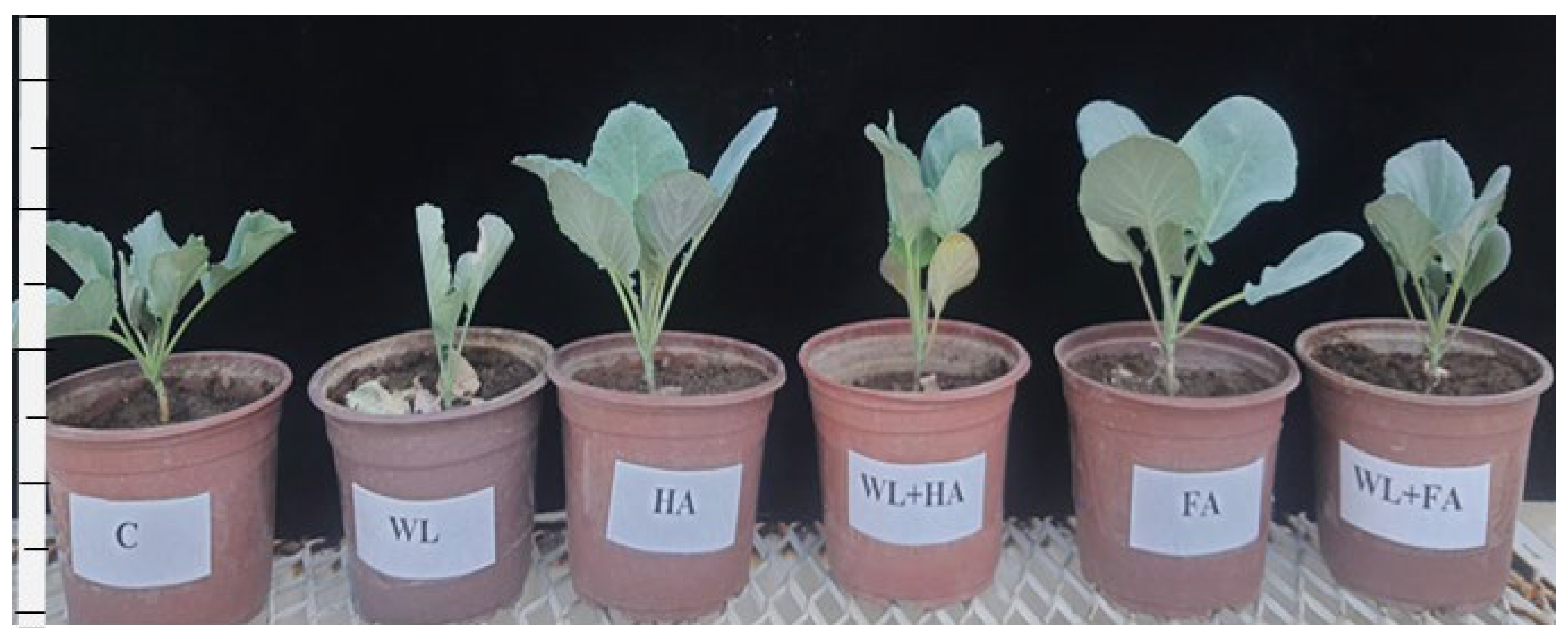
While waterlogging had negative effects on the growth of cabbage seedlings, HA and FA treatments ameliorated the negative effects of waterlogging on plant growth (Figure 1).
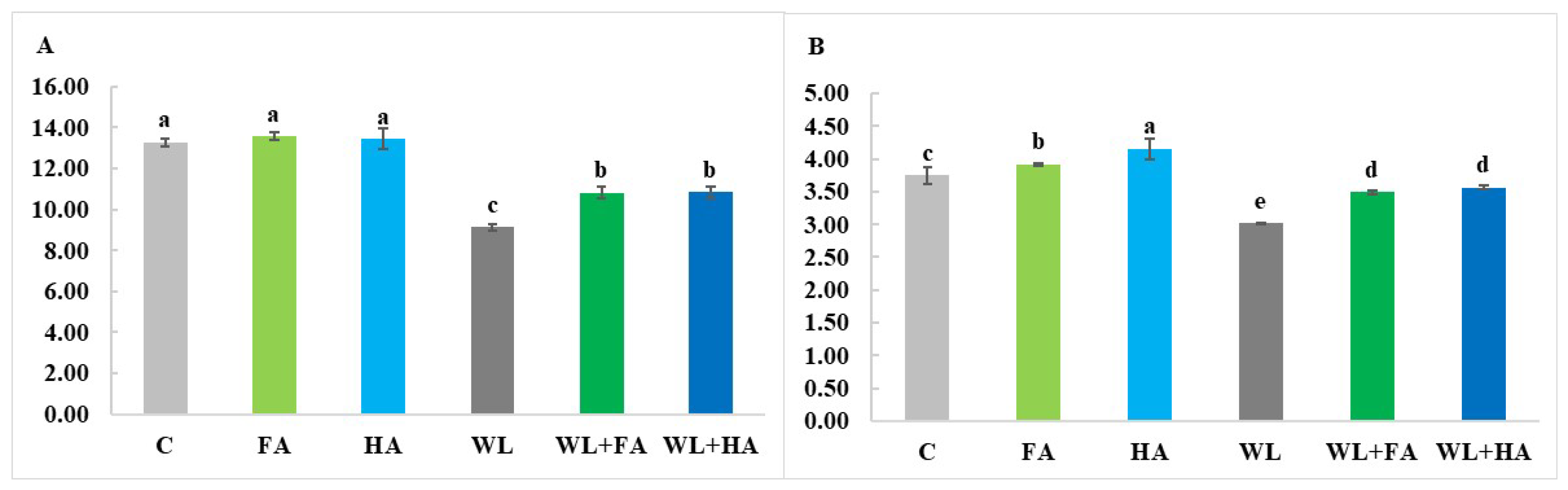
Waterlogging conditions decreased the plant height and stem diameter in cabbage seedlings, with reductions of 31% and 19%, respectively, as compared to the control group. However, the application of HA and FA treatments improved the plant height and stem diameter under both normal and waterlogging conditions as compared to the control. Under waterlogging stress, the reductions in plant height and stem diameter were less severe with HA (10–18%) and FA (7–5%) treatments as compared to the control (Figure 2).
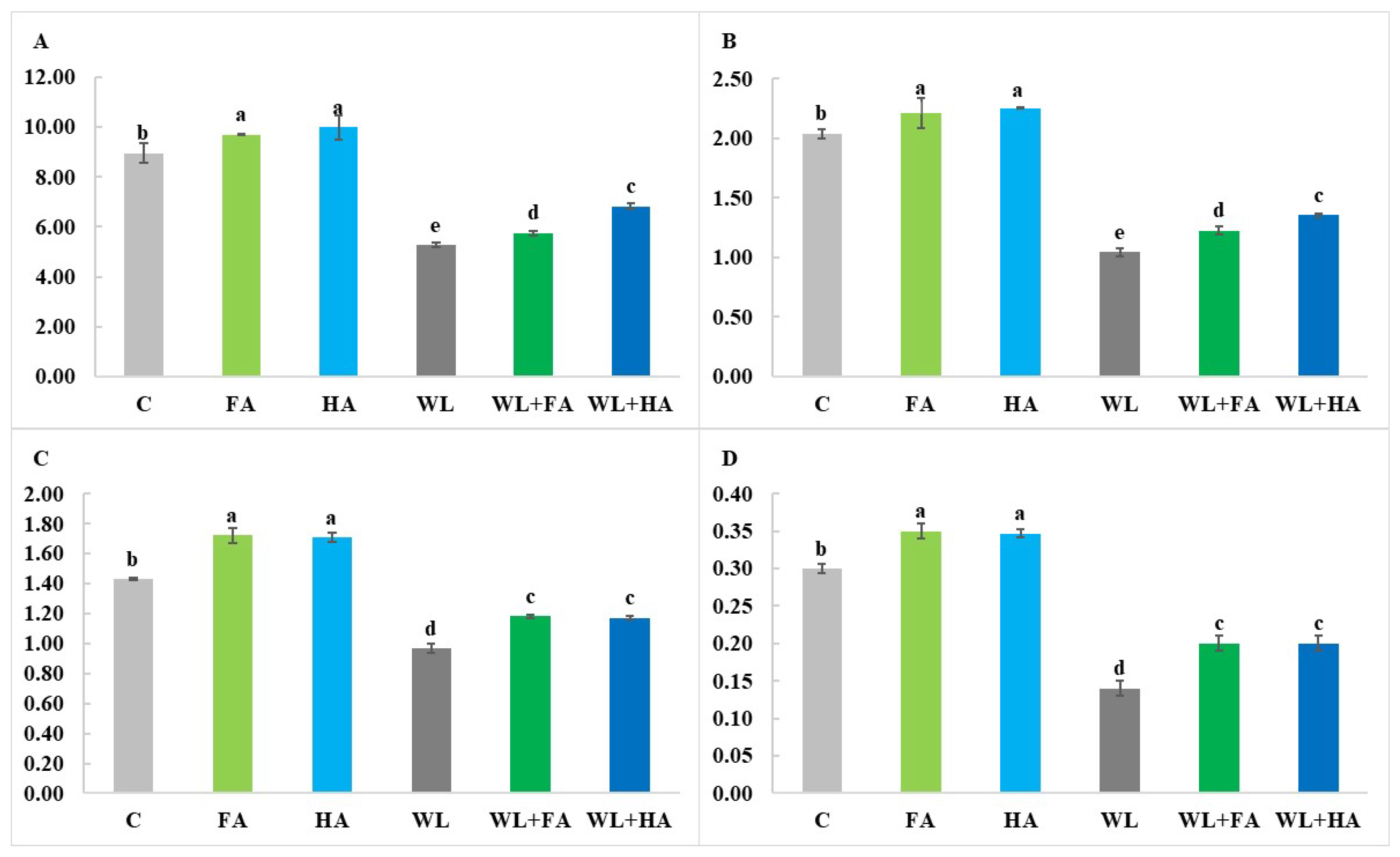
Waterlogging stressed plants had a lower fresh weight, root fresh weight, plant dry weight, and root dry weight than the non-treated ones. As compared to the control treatment, where no application was made, these reductions were 41%, 49%, 32%, and 53%, respectively. The application of HA and FA improved the plant fresh weight, root fresh weight, plant dry weight, and root dry weight under non-stressed conditions. Furthermore, these treatments alleviated the adverse effects of waterlogging on these parameters. Under waterlogging conditions, the reductions with HA and FA were 35–24% for the plant fresh weight, 39–33% for the root fresh weight, 17–18% for the plant dry weight, and 13–33% for the root dry weight, all of which were lower than those observed in the waterlogging (Figure 3).
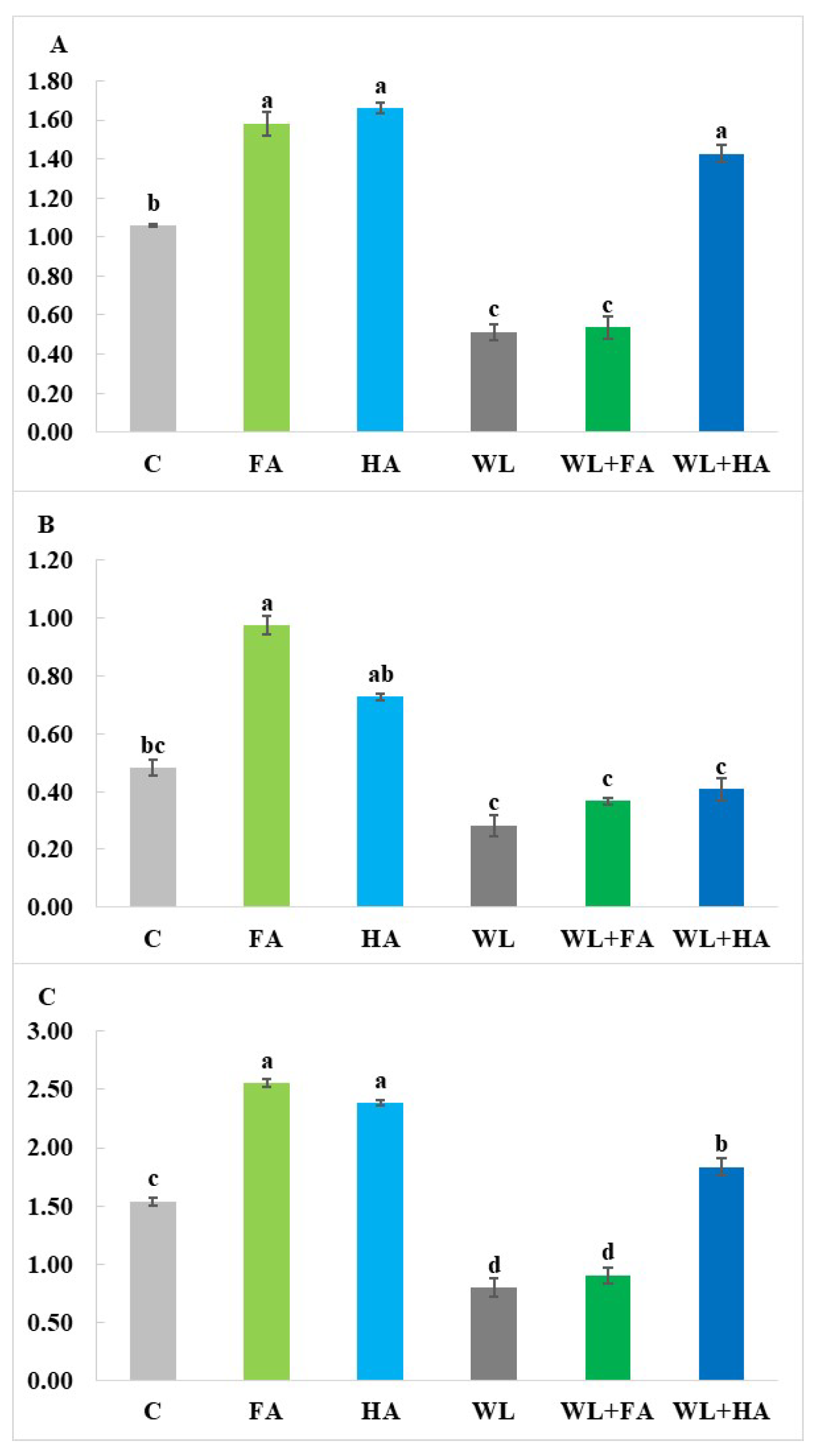
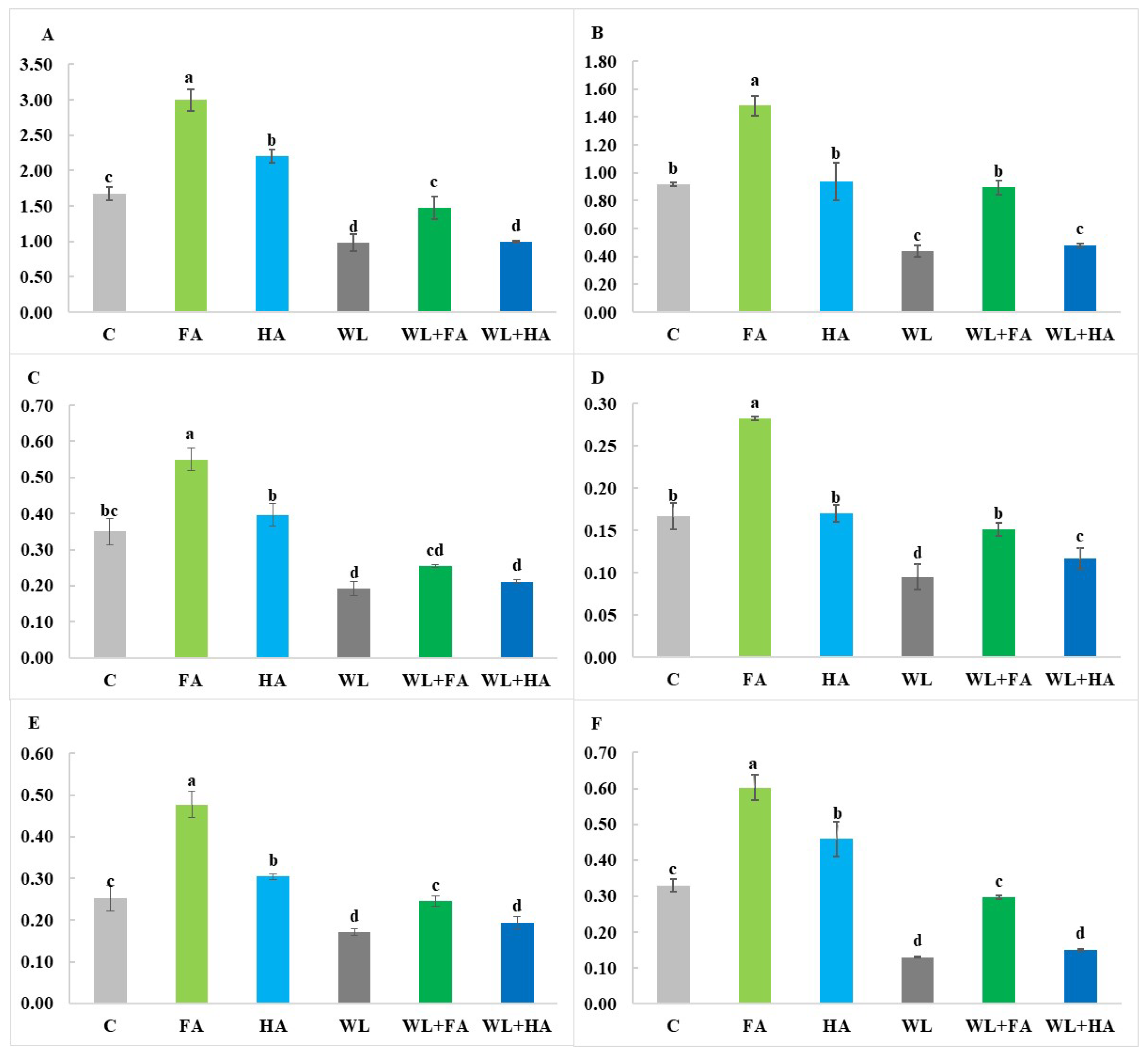
The leaf chlorophyll content decreased under waterlogging conditions. In the control group, chl a, chl b, and total chlorophyll levels were reduced by 52%, 42%, and 48%, respectively. Although the effects of HA and FA on leaf chlorophyll content varied, both treatments had a more positive impact under waterlogging conditions compared to the control. Notably, HA was more effective in preserving chlorophyll content under stress conditions (Figure 4).
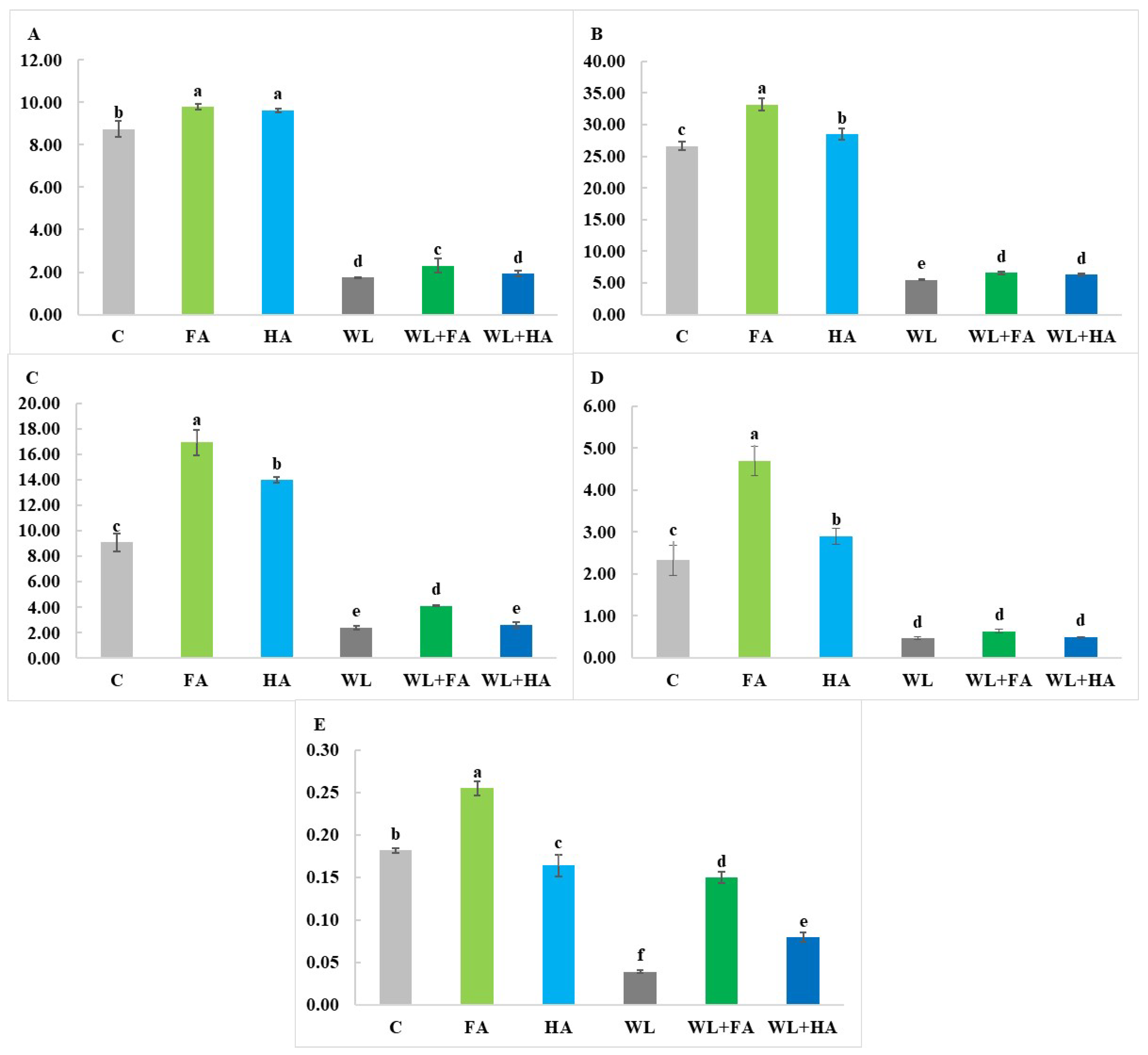
The leaf mineral content declined under waterlogging stress. As compared to the control treatment, the levels of N, P, K, Ca, Mg, S, Mn, Fe, Zn, B, and Cu decreased by 42%, 52%, 46%, 32%, 44%, 61%, 80%, 80%, 74%, 79%, and 78%, respectively, under waterlogging conditions. HA and FA applications significantly increased these nutrient levels compared to the control treatment. While some reduction in mineral content still occurred under waterlogging conditions with HA and FA applications, the decrease was considerably lower than in the control group. Of the two treatment methods, FA has proven to be more effective in reducing mineral loss under flood stress (Figure 5 and Figure 6).
H2O2, MDA, and proline contents, as well as CAT, POD, and SOD enzyme activities, which are important indicators in the plant’s response to stress conditions, increased with waterlogging. In addition, the increase in these parameters of waterlogged seedlings was higher in HA and FA applications (Table 1).
While the ABA content increased with stress, the IAA and GA contents decreased. In the control group, the ABA content increased by 1300%, while the IAA and GA contents decreased by 77% and 92%, respectively. Similar reactions occurred in HA and FA applications compared to the control. While there was a significant increase in the ABA content, the decrease in the IAA and GA contents of the plant in waterlogging was lower than in the control (Table 1).

4. Discussion

Although plant stress research has largely focused on drought and salinity, flooding also causes substantial yield and quality losses and significant economic damage worldwide. There are limited studies on the effects of flooding on cabbage, and they have not addressed the issue in detail or with a holistic approach. In this study, morphological changes in cabbage seedlings caused by waterlogging are evident. The plant height, stem diameter, plant fresh and dry weight, and root fresh and dry weight of cabbage seedlings significantly decreased under waterlogging conditions (Figure 2 and Figure 3). Similarly, earlier studies showed that waterlogging reduced the leaf area, dry weight, and growth of cabbage [20]. It has previously been determined that waterlogging in plants such as maize [41,42], barley (Hordeum vulgare L.) [43], tomato [44], and cucumber [15] impairs plant growth and development by altering morphological traits. Seedling establishment represents a critical developmental stage in the plant life cycle. Flood stress negatively affects plant performance by inducing oxygen deficiency and inhibiting growth. Waterlogging has a particularly negative impact on seedling growth and development [2]. Waterlogging primarily affects plant roots, and the resulting damage significantly impairs the shoot growth. Low oxygen in the rhizosphere increases anaerobic respiration and reduces ATP production, leading to an energy deficit at the root level, reduced hydraulic conductivity, and, consequently, impaired water and nutrient absorption [45,46,47]. With this damage to the roots, basic metabolic processes such as photosynthesis, respiration, and transpiration in the leaves are impaired, leading to reduced plant growth, leaf senescence or organ senescence, and, in more severe cases, death [45,46,48]. In the present study, HA and FA reduced waterlogging-induced declines in the plant height, stem diameter, and biomass (fresh and dry weights) of cabbage seedlings. Both HA and FA applications yielded similar results and alleviated stress-related effects. The beneficial effects of humic substances on plant growth are mainly due to their positive impact on root growth. Humic substances cause morphological and physiological changes in roots and shoots by altering the nutrient uptake, assimilation, and distribution [22]. The positive effect of the external application of humic substances on the plant height and fresh and dry weight was also determined in lettuce (Lactuca sativa) [49]. Humic substances are effective in reducing environmental stress in plants, alleviating the negative effects of drought, salinity, and temperature, and improving plant performance and productivity [50]. Although the effects of humic substances on waterlogging stress are not well understood, they may operate through mechanisms similar to those observed under other abiotic stresses. Yildirim et al. [51] determined that HA + FA protects plants against Cd stress by stabilizing Cd in the soil and preventing the transport of Cd from the roots to the shoots and leaves of the plant, and those humic substances alleviate the damage in fresh leaf, dry leaf, fresh root and dry root weights in Cd stress, which harms the growth of garden cress (Lepidium sativum). It was determined that humic acid in beans (Phaseolus vulgaris) provides tolerance to salinity stress by promoting plant root and shoot growth [52]. Both HA and FA were effective in reducing waterlogging stress, but they had different effects on the physiological and biochemical tests, indicating that they operate through different mechanisms. The higher molecular weight and greater aromaticity of HA lead to improved root development, membrane protection, and nutrient retention, resulting in increased antioxidant enzyme activity and defense against oxidative damage. The chemical structure of FA facilitates rapid nutrient uptake by plants through their roots, thanks to its low molecular weight and high solubility, enabling nutrients to move freely throughout plant tissues and support metabolic regulation. This property likely helps maintain nutrient availability and metabolic stability in low-oxygen conditions. HA may function as a protective agent through its hormone-like properties, which enable it to shield cells and signal stress, while FA may support metabolic regulation and ion transport. The combined physicochemical attributes of HA and FA contribute to stress mitigation through two distinct yet complementary mechanisms that protect against stress by supporting antioxidant defense, maintaining nutrient balance, and regulating hormonal control.
Reduced chlorophyll levels directly impair photosynthetic metabolism, a major limitation to cabbage seedling growth. Waterlogging causes stomata to close in leaves, chlorophyll to deteriorate, and the photosynthesis rate to decrease [3]. In another study on cabbage, the leaf area and chlorophyll content decreased due to waterlogging, and leaf necrosis was observed at high rates. There was a decrease in the values of Fv/Fm, ΦPSII, and qP related to chlorophyll fluorescence, and in line with these results, it was stated that cabbage plants have low tolerance to waterlogging [20]. In sorghum (Sorghum bicolor) under waterlogging, the photosynthetic enzyme activity and chlorophyll content were inhibited, and thus photosynthesis decreased, resulting in decreased plant biomass and grain yield [53]. In another study, 10 days of waterlogging stress in cucumber reduced the leaf number, leaf area, chlorophyll, and carotenoid content [54]. It was observed that the effect of waterlogging on the chlorophyll content was alleviated by externally applied HA and FA, resulting in a significant increase in the chlorophyll content. Both treatments produced comparable effects. With HA and FA, plant energy metabolism is enhanced, chlorophyll content in the leaves increases, and as the concentration increases, the oxygen uptake also increases [55]. Thus, they can help maintain the integrity of the photosynthetic apparatus by protecting chlorophyll molecules from oxidative damage caused by stress [56]. The effect of HA and FA application on chlorophyll content was determined in spinach (Spinacia oleracea) by [57]. Under stress conditions, humic substances confer stress tolerance in plants by the altering chlorophyll content. In another study, the negative effect of Cd stress on the chlorophyll mechanism in sunflower was reduced by HA [58].
Like other abiotic stressors, changes in plant mineral content due to waterlogging are important in the plant’s stress response. Waterlogging disrupts physiological and biochemical processes in plants by causing deficiencies in essential nutrients for plant growth [1]. Decreased oxygen in waterlogged soil causes roots to rot and reduces the nutrient absorption capacity. In addition, with waterlogging, water-soluble nutrients in the soil mix with groundwater and are removed from the soil, depriving plants of these nutrients [1,59]. In this study, the mineral content of cabbage seedlings decreased significantly under waterlogging stress. Similarly, Ekinci et al. [60] and Yildirim et al. [61] reported that salt and drought stress in cabbage seedlings decreased the leaf and root nutrient element content. Decreasing yields were observed simultaneously with decreasing N and other important nutrients in soybean (Glycine max) under waterlogging [62]. However, HA and FA applications to cabbage seedlings mitigated nutrient depletion under stress conditions through their biostimulator effects. They increased the nutrient uptake in cabbage seedlings under both normal and stress conditions compared to control plants. Humic substances can chelate essential nutrients such as iron, magnesium, and nitrogen, making them more readily available for plant uptake. They can improve the soil structure, increasing water and nutrient infiltration and retention, thereby further improving nutrient availability [63,64]. Humic substances promote the uptake of nutrients by plants through the induction of H+-ATPase activity and the activation of secondary ion transporters [22]. In other studies, it has been shown that HA and FA alleviate stress-induced damage by affecting nutrient uptake in salt-stressed wheat [65], drought-stressed wheat [66], heat-stressed tomato [67], and heavy metal-stressed cress [51]. Mechanisms may include enhanced nutrient availability and uptake, improved root development, membrane stabilization, increased antioxidant activity, improved soil aeration and water-holding capacity, and stimulation of beneficial soil microbial populations that support nutrient cycling [63,68,69,70,71].
In this study, the H2O2, MDA, and proline contents and CAT, POD, and SOD enzyme activities of cabbage seedlings increased with waterlogging. Waterlogging deprives plant roots of oxygen, disrupting cellular respiration and forcing them to switch to anaerobic respiration for energy production. In addition, the production of ROS, which are harmful cellular byproducts, increases during this process [72]. Waterlogging disrupts membrane lipid peroxidation and integrity, accelerates cell membrane disintegration and leaf senescence, and inhibits plant growth and development. Meanwhile, some antioxidant enzyme activities and some non-enzymatic components are activated in plants to regulate ROS levels and protect cells against waterlogging stress [41]. Studies have shown that waterlogging, such as in maize and tomato, caused increases in the amounts of O2, H2O2, and MDA, SOD, POD, and CAT activities, proline, and soluble protein content [41,73]. HA and FA applications showed different effects on H2O2, MDA, proline, CAT, POD, and SOD contents under stress conditions. Under stress conditions, the increases in H2O2, MDA, proline, and CAT contents were lower with humic substances, whereas the increases in POD and SOD enzyme activities were more pronounced. Thanks to their antioxidant capacity, humic substances reduce the levels of harmful molecules such as H2O2 and MDA, increase the activity of enzymatic antioxidants, promote proline accumulation, provide osmotic balance, and help plants adapt to stress conditions by protecting the cell membrane [74,75,76,77].
While the ABA increased in cabbage seedlings with waterlogging stress, the IAA and GA contents decreased. Abiotic stresses disrupt the balance of plant hormones, causing negative effects on growth and development. Under abiotic stress conditions, increased ABA reduces water loss and slows growth, activating the plant’s defense mechanisms [78,79]. It is known that stress slows cell division and halts growth by inhibiting IAA synthesis and transport. In addition, the decrease in GA levels under abiotic stress is a response mechanism that inhibits growth and enables the plant to adapt to stress conditions [79,80]. Previous studies reported that drought stress [81,82] and waterlogging [19] caused significant changes in plant hormonal content in cabbage. The impact of waterlogging on the hormone content in cabbage seedlings was mitigated by HA and FA, with a decline in ABA content and a less pronounced decrease in IAA and GA content compared with the control. Stress affects hormone levels in plants, while humic substances help maintain hormonal balance and enhance stress tolerance. Based on the present findings, a conceptual model can be proposed to show how cabbage seedlings acquire flooding tolerance through humic substance application, based on their physiological and biochemical study results. Flooding creates hypoxic conditions in the rhizosphere, leading to excessive ROS production, membrane lipid peroxidation, impaired nutrient uptake, and hormonal imbalance, resulting in increased ABA levels and decreased IAA and GA levels. The application of humic and fulvic acids appears to mitigate these stress effects through multiple coordinated mechanisms. First, humic substances enhance antioxidant defense by stimulating the production of three enzymatic antioxidants, which include CAT, POD, and SOD, to reduce the oxidative damage indicators, H2O2 and MDA, while preserving membrane integrity. The second function establishes osmotic regulation capabilities and cellular protection mechanisms by affecting proline levels. The third function of humic substances enables cells to maintain metabolic function during hypoxic conditions by enhancing nutrient absorption and root system performance. The system maintains hormone balance through two actions: stress-related ABA accumulation control and growth hormone restoration, enabling plants to grow during unfavorable conditions. The combined responses of these systems indicate that humic substances increase flooding tolerance by regulating oxidative stress defense mechanisms and hormonal signaling pathways. In maize, faba bean (Vicia faba), and soybean, humic substances affect stress tolerance by altering plant hormone levels under stress [83,84,85]. The positive effects of HA on plant growth are also due to its participation in mechanisms such as cell respiration, photosynthesis, protein synthesis, and enzymatic reactions, as well as its hormone-like activities [86]. Overall, the present findings suggest that the mitigating effects of humic substances on waterlogging stress in cabbage seedlings are mediated by the integrated metabolic mechanisms described above.

5. Conclusions

Among abiotic stresses, waterlogging has received particular attention in recent years due to its significant impact on agricultural production, resulting in substantial economic losses. This study aims to investigate the impact of waterlogging on cabbage seedlings and the efficacy of HA and FA applications in enhancing stress tolerance. The findings of this study suggest that cabbage seedlings exhibit sensitivity to waterlogging, a condition that has been observed to result in considerable damage to the morphology, physiology, and biochemistry of the plant. However, the study found that the application of HA and FA could mitigate the adverse effects of stress on cabbage seedlings, suggesting potential benefits in cultivating crops in areas affected by waterlogging.

Author Contributions

M.E.: writing—original draft, review and editing, investigation, methodology, analysis, data curation, and conceptualization. S.O.C.: review and editing, investigation, and conceptualization. E.Y. (Ertan Yildirim): review and editing, investigation, and conceptualization. M.T.: review and editing, data curation. M.A.: review and editing, visualization, data curation. E.Y. (Esma Yigider): review and editing, investigation, and conceptualization. A.C.: review and editing. All authors have read and agreed to the published version of the manuscript.

Funding

This study did not obtain targeted financial support from governmental, commercial, or nonprofit funding bodies.

Data Availability Statement

The raw data supporting the conclusions of this article will be made available by the authors on request.

Conflicts of Interest

Author Aslı Cangönül was employed by the company Humintech GmbH Am Pösenberg. The remaining authors declare that the research was conducted in the absence of any commercial or financial relationships that could be construed as a potential conflict of interest.

References

  1. Ashraf, M.A. Waterlogging stress in plants: A review. Afr. J. Agric. Res. 2012, 7, 1976–1981. [Google Scholar] [CrossRef]
  2. Zhou, W.; Chen, F.; Meng, Y.; Chandrasekaran, U.; Luo, X.; Yang, W.; Shu, K. Plant waterlogging/flooding stress responses: From seed germination to maturation. Plant Physiol. Biochem. 2020, 148, 228–236. [Google Scholar] [CrossRef]
  3. Yang, L.; Li, N.; Liu, Y.; Miao, P.; Liu, J.; Wang, Z. Updates and prospects: Morphological, physiological, and molecular regulation in crop response to waterlogging stress. Agronomy 2023, 13, 2599. [Google Scholar] [CrossRef]
  4. Pan, J.; Sharif, R.; Xu, X.; Chen, X. Mechanisms of waterlogging tolerance in plants: Research progress and prospects. Front. Plant Sci. 2021, 11, 627331. [Google Scholar] [CrossRef]
  5. Hasanuzzaman, M.; Al Mahmud, J.; Nahar, K.; Anee, T.I.; Inafuku, M.; Oku, H.; Fujita, M. Responses, adaptation, and ROS metabolism in plants exposed to waterlogging stress. In Reactive Oxygen Species and Antioxidant Systems in Plants: Role and Regulation Under Abiotic Stress; Springer: Singapore, 2017; pp. 257–281. [Google Scholar] [CrossRef]
  6. Singh, A.K.; Vijai, P.; Srivastava, J.P. Plants under waterlogged conditions: An overview. In Engineering Practices for Management of Soil Salinity; Apple Academic Press: Palm Bay, FL, USA, 2018; pp. 335–376. [Google Scholar]
  7. Manghwar, H.; Hussain, A.; Alam, I.; Khoso, M.A.; Ali, Q.; Liu, F. Waterlogging stress in plants: Unraveling the mechanisms and impacts on growth, development, and productivity. Environ. Exper. Bot. 2024, 224, 105824. [Google Scholar] [CrossRef]
  8. Zhang, Y.; Liu, G.; Dong, H.; Li, C. Waterlogging stress in cotton: Damage, adaptability, alleviation strategies, and mechanisms. Crop J. 2021, 9, 257–270. [Google Scholar] [CrossRef]
  9. Wollmer, A.C.; Pitann, B.; Mühling, K.H. Waterlogging events during stem elongation or flowering affect yield of oilseed rape (Brassica napus L.) but not seed quality. J. Agron. Crop Sci. 2018, 204, 165–174. [Google Scholar] [CrossRef]
  10. Ikram, S.; Bhattarai, S.; Walsh, K.B. Characterisation of selected mungbean genotypes for tolerance to waterlogging stress at pod filling stage. Agronomy 2022, 12, 1663. [Google Scholar] [CrossRef]
  11. Az-Azahra, R.C.; Siaga, E.; Herlina, H.; Meihana, M. Effectiveness of Biochar application on the growth of red chili plants during the vegetative stage under waterlogging. J. Suboptimal Lands 2024, 13, 152–159. [Google Scholar] [CrossRef]
  12. Shao, G.; Cheng, X.; Liu, N.; Zhang, Z. Effect of drought pretreatment before anthesis and post-anthesis waterlogging on water relation, photosynthesis, and growth of tomatoes. Arch. Agron. Soil Sci. 2016, 62, 935–946. [Google Scholar] [CrossRef]
  13. Ide, R.; Ichiki, A.; Suzuki, T.; Jitsuyama, Y. Analysis of yield reduction factors in processing tomatoes under waterlogging conditions. Sci. Hortic. 2022, 295, 110840. [Google Scholar] [CrossRef]
  14. Rahayuningsih, S.E.A.; Indradewa, D.; Sulistyaningsih, E.; Maas, A. The tolerance of photosynthesis of some maize cultivars (Zea mays L.) to waterlogging at different stages of growth. Int. J. Adv. Sci. Eng. Inf. Technol. 2017, 7, 1296–1301. [Google Scholar] [CrossRef][Green Version]
  15. Olorunwa, O.J.; Adhikari, B.; Brazel, S.; Popescu, S.C.; Popescu, G.V.; Barickman, T.C. Short waterlogging events differently affect morphology and photosynthesis of two cucumber (Cucumis sativus L.) cultivars. Front. Plant Sci. 2022, 13, 896244. [Google Scholar] [CrossRef]
  16. Ghodke, P.H.; Shirsat, D.V.; Thangasamy, A.; Mahajan, V.; Salunkhe, V.N.; Khade, Y.; Singh, M. Effect of water logging stress at specific growth stages in onion crop. Int. J. Curr. Microbiol. Appl. Sci. 2018, 7, 3438–3448. [Google Scholar] [CrossRef]
  17. Beshir, S. Review on estimation of crop water requirement, irrigation frequency and water use efficiency of cabbage production. J. Geosci. Environ. Protec. 2017, 5, 59. [Google Scholar] [CrossRef]
  18. Bute, A.; Iosob, G.A.; Antal-Tremurici, A.; Brezeanu, C.; Brezeanu, P.; Cristea, T.O.; Ambăruş, S. The most suitable irrigation methods in cabbage crops (Brassica oleracea L. var. capitata): A review. Sci. Pap. Ser. B Hortic. 2021, 65, 399–405. [Google Scholar]
  19. Buga, N.; Petek, M. Use of biostimulants to alleviate anoxic stress in waterlogged cabbage (Brassica oleracea var. capitata)—A Review. Agriculture 2023, 13, 2223. [Google Scholar] [CrossRef]
  20. Casierra-Posada, F.; Cutler, J. Photosystem II fluorescence and growth in cabbage plants (Brassica oleracea var. capitata) grown under waterlogging stress. Rev. UDCA Actual. Divulg. Científica 2017, 20, 321–328. [Google Scholar] [CrossRef]
  21. Huđ, A.; Šamec, D.; Senko, H.; Petek, M.; Brkljačić, L.; Pole, L.; Lazarević, B.; Rajnović, I.; Udiković-Kolić, N.; Mešić, A.; et al. Response of white cabbage (Brassica oleracea var. capitata) to single and repeated short-term waterlogging. Agronomy 2023, 13, 200. [Google Scholar] [CrossRef]
  22. Canellas, L.P.; Olivares, F.L.; Aguiar, N.O.; Jones, D.L.; Nebbioso, A.; Mazzei, P.; Piccolo, A. Humic and fulvic acids as biostimulants in horticulture. Sci. Hortic. 2015, 196, 15–27. [Google Scholar] [CrossRef]
  23. Olk, D.C.; Dinnes, D.L.; Rene Scoresby, J.; Callaway, C.R.; Darlington, J.W. Humic products in agriculture: Potential benefits and research challenges—A review. J. Soils Sed. 2018, 18, 2881–2891. [Google Scholar] [CrossRef]
  24. Islam, M.A.; Morton, D.W.; Johnson, B.B.; Angove, M.J. Adsorption of humic and fulvic acids onto a range of adsorbents in aqueous systems, and their effect on the adsorption of other species: A review. Sep. Purif. Technol. 2020, 247, 116949. [Google Scholar] [CrossRef]
  25. Zavarzina, A.G.; Danchenko, N.N.; Demin, V.V.; Artemyeva, Z.S.; Kogut, B.M. Humic substances: Hypotheses and reality (a review). Eurasian Soil. Sci. 2021, 54, 1826–1854. [Google Scholar] [CrossRef]
  26. Vikram, N.; Sagar, A.; Gangwar, C.; Husain, R.; Kewat, R.N. Properties of humic acid substances and their effect in soil quality and plant health. In Humus and Humic Substances-Recent Advances; IntechOpen: London, UK, 2022; p. 26. [Google Scholar] [CrossRef]
  27. Bhatt, P.; Singh, V.K. Effect of humic acid on soil properties and crop production–A review. Indian J. Agric. Sci. 2022, 92, 1423–1430. [Google Scholar] [CrossRef]
  28. Anjum, S.A.; Wang, L.; Farooq, M.; Xue, L.; Ali, S. Fulvic acid application improves the maize performance under well-watered and drought conditions. J. Agron. Crop Sci. 2011, 197, 409–417. [Google Scholar] [CrossRef]
  29. Kumar Sootahar, M.; Zeng, X.; Wang, Y.; Su, S.; Soothar, P.; Bai, L.; Kumar, M.; Zhang, Y.; Mustafa, A.; Ye, N. The short-term effects of mineral-and plant-derived fulvic acids on some selected soil properties: Improvement in the growth, yield, and mineral nutritional status of wheat (Triticum aestivum L.) under soils of contrasting textures. Plants 2020, 9, 205. [Google Scholar] [CrossRef] [PubMed]
  30. Arnon, D.I. Copper enzymes in isolated chloroplasts. Polyphenoloxidase in Beta vulgaris. Plant Physiol. 1949, 24, 1–15. [Google Scholar] [CrossRef]
  31. Wellburn, A.R. The spectral determination of chlorophylls a and b, as well as total carotenoids, using various solvents with spectrophotometers of different resolution. J. Plant Physiol. 1994, 144, 307–313. [Google Scholar] [CrossRef]
  32. Angelini, R.; Manes, F.; Federico, R. Spatial an functional correlation between daimine-oxsidase and peroxidase activities and their dependence upon deetilation and wounding in chick-pea. Planta 1990, 182, 89–96. [Google Scholar] [CrossRef]
  33. Abedi, T.; Pakniyat, H. Antioxidant enzyme changes in response to drought stress in ten cultivars of oilseed rape (Brassica napus L.). Czech J. Gen. Plant Breed. 2010, 46, 27–34. [Google Scholar] [CrossRef]
  34. Gong, Y.; Toivonen, P.; Wiersma, P.A.; Lu, C.; Lau, O.L. Effect of freezing on the activity of catalase in apple flesh tissue. J. Agric. Food Chem. 2000, 48, 5537–5542. [Google Scholar] [CrossRef]
  35. Agarwal, S.; Pandey, V. Antioxidant enzyme responses to NaCl stress in Cassia angustifolia. Biol. Plant. 2004, 48, 555–560. [Google Scholar] [CrossRef]
  36. Yordanova, R.Y.; Christov, K.N.; Popova, L.P. Antioxidative enzymes in barley plants subjected to soil flooding. Environ. Exper. Bot. 2004, 51, 93–101. [Google Scholar] [CrossRef]
  37. Helrich, K. Official Methods of Analysis of the Association of Official Analytical Chemists: 2. Food Composition; Additives; Natural Contaminants, 15th ed.; AOAC: Arlington, VA, USA, 1990; pp. 865–1298. [Google Scholar]
  38. Kuraishi, S.; Tasaki, K.; Sakurai, N.; Sadatoku, K. Changes in levels of cytokinins in etiolated squash seedlings after illumination. Plant Cell Physiol. 1991, 32, 585–591. [Google Scholar] [CrossRef]
  39. Battal, P.; Tileklioğlu, B. The effects of different mineral nutrients on the levels of cytokinins in maize (Zea mays L.). Turk. J. Bot. 2001, 25, 123–130. [Google Scholar]
  40. Ekinci, M.; Turan, M.; Yildirim, E.; Güneş, A.; Kotan, R.; Dursun, A. Effect of plant growth promoting rhizobacteria on growth, nutrient, organic acid, amino acid and hormone content of cauliflower (Brassica oleracea L. var. botrytis) transplants. Acta Sci. Pol. Hortorum Cultus 2014, 13, 71–85. [Google Scholar]
  41. Tian, L.; Li, J.; Bi, W.; Zuo, S.; Li, L.; Li, W.; Sun, L. Effects of waterlogging stress at different growth stages on the photosynthetic characteristics and grain yield of spring maize (Zea mays L.) under field conditions. Agric. Water Manag. 2019, 218, 250–258. [Google Scholar] [CrossRef]
  42. Huang, C.; Zhang, W.; Wang, H.; Gao, Y.; Ma, S.; Qin, A.; Zhao, B.; Ning, D.; Zheng, H.; Liu, Z. Effects of waterlogging at different stages on growth and ear quality of waxy maize. Agric. Water Manag. 2022, 266, 107603. [Google Scholar] [CrossRef]
  43. Luan, H.; Guo, B.; Pan, Y.; Lv, C.; Shen, H.; Xu, R. Morpho-anatomical and physiological responses to waterlogging stress in different barley (Hordeum vulgare L.) genotypes. Plant Growth Regul. 2018, 85, 399–409. [Google Scholar] [CrossRef]
  44. Singh, S.K.; Singh, A.K.; Dwivedi, P. Modulating effect of salicylic acid in tomato plants in response to waterlogging stress. Int. J. Agric. Environ. Biotechnol. 2017, 10, 31–37. [Google Scholar] [CrossRef]
  45. Malik, A.I.; Colmer, T.D.; Lambers, H.; Setter, T.L.; Schortemeyer, M. Short-term waterlogging has long-term effects on the growth and physiology of wheat. New Phytol. 2002, 153, 225–236. [Google Scholar] [CrossRef]
  46. Pais, I.P.; Moreira, R.; Semedo, J.N.; Ramalho, J.C.; Lidon, F.C.; Coutinho, J.; Maçãs, B.; Scotti-Campos, P. Wheat crop under waterlogging: Potential soil and plant effects. Plants 2022, 12, 149. [Google Scholar] [CrossRef]
  47. Majeed, J.A.; Mahmood, A.; Bibi, S.; Jabeen, A.; Javaid, M.M.; Ahmad, H.B.; Nargis, J. Waterlogging and Crop Productivity. In Climate-Resilient Agriculture, Volume 1: Crop Responses and Agroecological Perspectives; Springer International Publishing: Cham, Switzerland, 2023; pp. 237–256. [Google Scholar] [CrossRef]
  48. de San Celedonio, R.P.; Abeledo, L.G.; Miralles, D.J. Physiological traits associated with reductions in grain number in wheat and barley under waterlogging. Plant Soil. 2018, 429, 469–481. [Google Scholar] [CrossRef]
  49. Taha, A.; Omar, M.; Ghazy, M. Effect of humic and fulvic acids on growth and yield of lettuce plant. J. Soil Sci. Agric. Eng. 2016, 7, 517–522. [Google Scholar] [CrossRef]
  50. Hernández-Campos, R.; Robles, C.; Muñiz-Becerá, S.; Pérez-Álvarez, S.; Loera-Corral, O. Humic extract as a biostimulant in crops subjected to abiotic stress. Agrociencia 2023, 59, 7. [Google Scholar] [CrossRef]
  51. Yildirim, E.; Ekinci, M.; Turan, M.; Ağar, G.; Dursun, A.; Kul, R.; Alim, Z.; Argin, S. Humic + Fulvic acid mitigated Cd adverse effects on plant growth, physiology and biochemical properties of garden cress. Sci. Rep. 2021, 11, 8040. [Google Scholar] [CrossRef] [PubMed]
  52. Meganid, A.S.; Al-Zahrani, H.S.; El-Metwally, M.S. Effect of humic acid application on growth and chlorophyll contents of common bean plants (Phaseolus vulgaris L.) under salinity stress conditions. Int. J. Innov. Res. Sci. Eng. Technol. 2015, 4, 2651–2660. [Google Scholar] [CrossRef]
  53. Zhang, R.; Yue, Z.; Chen, X.; Huang, R.; Zhou, Y.; Cao, X. Effects of waterlogging at different growth stages on the photosynthetic characteristics and grain yield of sorghum (Sorghum bicolor L.). Sci. Rep. 2023, 13, 7212. [Google Scholar] [CrossRef]
  54. Barickman, T.C.; Simpson, C.R.; Sams, C.E. Waterlogging causes early modification in the physiological performance, carotenoids, chlorophylls, proline, and soluble sugars of cucumber plants. Plants 2019, 8, 160. [Google Scholar] [CrossRef]
  55. Pettit, R.E. Organic matter, humus, humate, humic acid, fulvic acid and humin. Wonderful World Humus Carbon 2006, 45–57. [Google Scholar]
  56. Shen, J.; Guo, M.J.; Wang, Y.G.; Yuan, X.Y.; Wen, Y.Y.; Song, X.E.; Dong, S.; Guo, P.Y. Humic acid improves the physiological and photosynthetic characteristics of millet seedlings under drought stress. Plant Signal Behav. 2020, 15, 1774212. [Google Scholar] [CrossRef]
  57. Turan, M.; Ekinci, M.; Kul, R.; Kocaman, A.; Argin, S.; Zhirkova, A.M.; Perminova, I.V.; Yildirim, E. Foliar Applications of humic substances together with Fe/nano Fe to increase the iron content and growth parameters of spinach (Spinacia oleracea L.). Agronomy 2022, 12, 2044. [Google Scholar] [CrossRef]
  58. Wang, X.; Zhang, J.; Shen, J.; Zhang, L.; Wei, P.; Liu, A.; Song, H. The alleviating effect on the growth, chlorophyll synthesis, and biochemical defense system in sunflowers under cadmium stress achieved through foliar application of humic acid. BMC Plant Biol. 2024, 24, 792. [Google Scholar] [CrossRef]
  59. Kaur, G.; Singh, G.; Motavalli, P.P.; Nelson, K.A.; Orlowski, J.M.; Golden, B.R. Impacts and management strategies for crop production in waterlogged or flooded soils: A review. Agron. J. 2020, 112, 1475–1501. [Google Scholar] [CrossRef]
  60. Ekinci, M.; Turan, M.; Yildirim, E. Biochar mitigates salt stress by regulating nutrient uptake and antioxidant activity, alleviating the oxidative stress and abscisic acid content in cabbage seedlings. Turk. J. Agric. For. 2022, 46, 28–37. [Google Scholar] [CrossRef]
  61. Yildirim, E.; Ekinci, M.; Turan, M. Impact of biochar in mitigating the negative effect of drought stress on cabbage seedlings. J. Soil Sci. Plant Nutr. 2021, 21, 2297–2309. [Google Scholar] [CrossRef]
  62. Board, J.E. Waterlogging effects on plant nutrient concentrations in soybean. J. Plant Nutr. 2008, 31, 828–838. [Google Scholar] [CrossRef]
  63. Khaled, H.; Fawy, H.A. Effect of different levels of humic acids on the nutrient content, plant growth, and soil properties under conditions of salinity. Soil Water Res. 2011, 6, 21. [Google Scholar] [CrossRef]
  64. Ampong, K.; Thilakaranthna, M.S.; Gorim, L.Y. Understanding the role of humic acids on crop performance and soil health. Front. Agron. 2022, 4, 848621. [Google Scholar] [CrossRef]
  65. Alsudays, I.M.; Alshammary, F.H.; Alabdallah, N.M.; Alatawi, A.; Alotaibi, M.M.; Alwutayd, K.M.; Alharbi, M.M.; Alghanem, S.M.S.; Alzuaibr, F.M.; Gharib, H.S.; et al. Applications of humic and fulvic acid under saline soil conditions to improve growth and yield in barley. BMC Plant Biol. 2024, 24, 191. [Google Scholar] [CrossRef] [PubMed]
  66. Pourmorad, M.; Malakouti, M.J.; Tehrani, M. Study on the effect of humic acid and fulvic acid on the wheat yield and water use efficiency under drought stress. Water Soil. 2018, 32, 977–985. [Google Scholar]
  67. Abdellatif, I.M.Y.; Abdel-Ati, Y.Y.; Abdel-Mageed, Y.T.; Hassan, M.A.M.M. Effect of humic acid on growth and productivity of tomato plants under heat stress. J. Hortic. Res. 2017, 25, 59–66. [Google Scholar] [CrossRef]
  68. Nardi, S.; Pizzeghello, D.; Muscolo, A.; Vianello, A. Physiological effects of humic substances on higher plants. Soil. Biol. Biochem. 2002, 34, 1527–1536. [Google Scholar] [CrossRef]
  69. Guo, X.X.; Liu, H.T.; Wu, S.B. Humic substances developed during organic waste composting: Formation mechanisms, structural properties, and agronomic functions. Sci. Total Environ. 2019, 662, 501–510. [Google Scholar] [CrossRef]
  70. Nardi, S.; Schiavon, M.; Francioso, O. Chemical structure and biological activity of humic substances define their role as plant growth promoters. Molecules 2021, 26, 2256. [Google Scholar] [CrossRef]
  71. Jin, Y.; Yuan, Y.; Liu, Z.; Gai, S.; Cheng, K.; Yang, F. Effect of humic substances on nitrogen cycling in soil-plant ecosystems: Advances, issues, and future perspectives. J. Environ. Manag. 2024, 351, 119738. [Google Scholar] [CrossRef]
  72. Lal, M.; Kumari, A.; Pooja Sheokand, S. Reactive oxygen species, reactive nitrogen species and oxidative metabolism under waterlogging stress. In Reactive Oxygen, Nitrogen and Sulfur Species in Plants: Production, Metabolism, Signaling and Defense Mechanisms; John Wiley & Sons: Hoboken, NJ, USA, 2019; pp. 777–812. [Google Scholar] [CrossRef]
  73. Niu, L.; Jiang, F.; Yin, J.; Wang, Y.; Li, Y.; Yu, X.; Song, X.; Ottosen, C.O.; Rosenqvist, E.; Mittler, R.; et al. ROS-mediated waterlogging memory, induced by priming, mitigates photosynthesis inhibition in tomato under waterlogging stress. Front. Plant Sci. 2023, 14, 1238108. [Google Scholar] [CrossRef]
  74. de Moura, O.V.T.; Berbara, R.L.L.; de Oliveira Torchia, D.F.; Da Silva, H.F.O.; de Castro, T.A.V.T.; Tavares, O.C.H.; Rodriguez, N.F.; Zonta, E.; Santos, L.A.; García, A.C. Humic foliar application as sustainable technology for improving the growth, yield, and abiotic stress protection of agricultural crops. A review. J. Saudi Soci. Agric. Sci. 2023, 22, 493–513. [Google Scholar] [CrossRef]
  75. Kutlu, I.; Gulmezoglu, N. Suitable humic acid application methods to maintain physiological and enzymatic properties of bean plants under salt stress. Gesunde Pflanz. 2023, 75, 1075–1086. [Google Scholar] [CrossRef]
  76. Li, S.; Zhang, K.; Tian, J.; Chang, K.; Yuan, S.; Zhou, Y.; Zhao, H.; Zhong, F. Fulvic acid mitigates cadmium toxicity-induced damage in cucumber seedlings through the coordinated interaction of antioxidant enzymes, organic acid, and amino acid. Environ. Sci. Pollut. Res. 2023, 30, 28780–28790. [Google Scholar] [CrossRef] [PubMed]
  77. Abu-Ria, M.E.; Elghareeb, E.M.; Shukry, W.M.; Abo-Hamed, S.A.; Ibraheem, F. Mitigation of drought stress in maize and sorghum by humic acid: Differential growth and physiological responses. BMC Plant Biol. 2024, 24, 514. [Google Scholar] [CrossRef] [PubMed]
  78. Sah, S.K.; Reddy, K.R.; Li, J. Abscisic acid and abiotic stress tolerance in crop plants. Front. Plant Sci. 2016, 7, 571. [Google Scholar] [CrossRef]
  79. El Sabagh, A.; Islam, M.S.; Hossain, A.; Iqbal, M.A.; Mubeen, M.; Waleed, M.; Reinato, M.; Battaglia, M.; Ahmed, S.; Rehman, A.; et al. Phytohormones as growth regulators during abiotic stress tolerance in plants. Front. Agron. 2022, 4, 765068. [Google Scholar] [CrossRef]
  80. Mearaji, H.S.; Ansari, A.; Igdelou, N.K.M.; Lajayer, B.A.; Pessarakli, M. Phytohormones and abiotic stresses: Roles of phytohormones in plants under abiotic stresses. In Handbook of Plant and Crop Physiology; CRC Press: Boca Raton, FL, USA, 2021; pp. 175–213. [Google Scholar]
  81. Samancioglu, A.; Yildirim, E.; Turan, M.; Kotan, R.; Sahin, U.; Kul, R. Amelioration of drought stress adverse effect and mediating biochemical content of cabbage seedlings by plant growth promoting rhizobacteria. Int. J. Agric. Biol. 2016, 18, 948–956. [Google Scholar] [CrossRef]
  82. Pavlović, I.; Petřík, I.; Tarkowská, D.; Lepeduš, H.; Vujčić Bok, V.; Radić Brkanac, S.; Novák, O.; Salopek-Sondi, B. Correlations between phytohormones and drought tolerance in selected Brassica crops: Chinese cabbage, white cabbage and kale. Int. J. Mol. Sci. 2018, 19, 2866. [Google Scholar] [CrossRef] [PubMed]
  83. Ali, O.A. Role of humic substances and compost tea in improvement of endogenous hormones content, flowering and yield and its components of faba bean (Vicia faba L.). Ann. Agric. Sci. Moshtohor 2015, 53, 373–384. [Google Scholar] [CrossRef]
  84. Dinler, B.S.; Gunduzer, E.; Tekinay, T. Pre-treatment of fulvic acid plays a stimulant role in protection of soybean (Glycine max L.) leaves against heat and salt stress. Acta Biol. Cracov. Bot. 2016, 58, 29–41. [Google Scholar] [CrossRef]
  85. Chen, Q.; Qu, Z.; Ma, G.; Wang, W.; Dai, J.; Zhang, M.; Wei, Z.; Liu, Z. Humic acid modulates growth, photosynthesis, hormone and osmolytes system of maize under drought conditions. Agric. Water Manag. 2022, 263, 107447. [Google Scholar] [CrossRef]
  86. Lotfi, R.; Gharavi-Kouchebagh, P.; Khoshvaghti, H. Biochemical and physiological responses of Brassica napus plants to humic acid under water stress. Russ. J. Plant Physiol. 2015, 62, 480–486. [Google Scholar] [CrossRef]
Figure 1. HA and FA effects on the plant growth of cabbage seedlings under waterlogging. C—control (no waterlogging, no HA and FA), FA—fulvic acid, HA—humic acid, WL—waterlogging, WL + FA—waterlogging + fulvic acid, and WL + HA—waterlogging + humic acid.
Horticulturae 12 00310 g001
Figure 2. HA and FA effects on plant height (cm) (A) and stem diameter (mm) (B) of cabbage seedlings under waterlogging. Different letters above bars indicate significant differences among treatments according to Duncan’s multiple range test (p ≤ 0.05). C—control (no waterlogging, no HA and FA), FA—fulvic acid, HA—humic acid, WL—waterlogging, WL + FA—waterlogging + fulvic acid, and WL + HA—waterlogging + humic acid. Different colors were used to clearly distinguish treatments. Light colors: non-stress treatments, dark colors: waterlogging stress treatments.
Horticulturae 12 00310 g002
Figure 3. HA and FA effects on plant fresh weight (g) (A), root fresh weight (g) (B), plant dry weight (g) (C) and root dry weight (g) (D) of cabbage seedlings under waterlogging. Different letters above bars indicate significant differences among treatments according to Duncan’s multiple range test (p ≤ 0.05). C—control (no waterlogging, no HA and FA), FA—fulvic acid, HA—humic acid, WL—waterlogging, WL + FA—waterlogging + fulvic acid, and WL + HA—waterlogging + humic acid. Different colors were used to clearly distinguish treatments. Light colors: non-stress treatments, dark colors: waterlogging stress treatments.
Horticulturae 12 00310 g003
Figure 4. HA and FA effects on chlorophyll a (mg/g) (A), chlorophyll b (mg/g) (B) and total chlorophyll (mg/g) (C) content of cabbage seedlings under waterlogging. Different letters above bars indicate significant differences among treatments according to Duncan’s multiple range test (p ≤ 0.05). C—control (no waterlogging, no HA and FA), FA—fulvic acid, HA—humic acid, WL—waterlogging, WL + FA—waterlogging + fulvic acid, and WL + HA—waterlogging + humic acid. Different colors were used to clearly distinguish treatments. Light colors: non-stress treatments, dark colors: waterlogging stress treatments.
Horticulturae 12 00310 g004
Figure 5. HA and FA effects on N content (%) (A), P content (%) (B), K content (%) (C), Mg content (%) (D), Ca content (%) (E), and S content (%) (F) of cabbage seedlings under waterlogging. Different letters above bars indicate significant differences among treatments according to Duncan’s multiple range test (p ≤ 0.05). C—control (no waterlogging, no HA and FA), FA—fulvic acid, HA—humic acid, WL—waterlogging, WL + FA—waterlogging + fulvic acid, and WL + HA—waterlogging + humic acid. Different colors were used to clearly distinguish treatments. Light colors: non-stress treatments, dark colors: waterlogging stress treatments.
Horticulturae 12 00310 g005
Figure 6. HA and FA effects on Mn content (mg/kg) (A), Fe content (mg/kg) (B), Zn content (mg/kg) (C), B content (mg/kg) (D) and Cu content (mg/kg) (E) of cabbage seedlings under waterlogging. Different letters above bars indicate significant differences among treatments according to Duncan’s multiple range test (p ≤ 0.05). C—control (no waterlogging, no HA and FA), FA—fulvic acid, HA—humic acid, WL—waterlogging, WL + FA—waterlogging + fulvic acid, and WL + HA—waterlogging + humic acid. Different colors were used to clearly distinguish treatments. Light colors: non-stress treatments, dark colors: waterlogging stress treatments.
Horticulturae 12 00310 g006
Table 1. HA and FA effects on H2O2, MDA, proline, CAT, POD, SOD, IAA, ABA, and GA contents of cabbage seedling under waterlogging.
H2O2
(mmol/kg)
MDA
(mmol/kg)
Proline
(%)
C 82.94 ± 8.75 d56.01 ± 0.02 d0.81 ± 0.14 d
FA 74.77 ± 7.87 d51.70 ± 4.68 d0.48 ± 0.03 d
HA 58.32 ± 4.58 d36.45 ± 2.37 d0.66 ± 0.01 d
WL 530.18 ± 26.16 a380.16 ± 6.02 a11.61 ± 0.11 a
WL + FA 441.54 ± 18.22 b314.40 ± 6.22 b3.39 ± 0.19 b
WL + HA 232.01 ± 3.24 c225.33 ± 6.32 c2.04 ± 0.10 c
CAT (eu/g)POD (eu/g)SOD (eu/g)
C 22.35 ± 0.35 d258.09 ± 4.40 e43.63 ± 5.71 e
FA 96.65 ± 2.48 c656.43 ± 25.98 de172.21 ± 6.36 d
HA 95.83 ± 1.01 c1050.58 ± 29.97 d187.94 ± 1.56 d
WL 177.01 ± 2.12 b3848.12 ± 100.07 b262.49 ± 1.97 c
WL + FA 186.51 ± 3.96 ab1870.18 ± 50.99 c366.99 ± 16.19 b
WL + HA 191.13 ± 6.72 a7553.67 ± 250.85 a1566.63 ± 24.08 a
IAA (ng/mg)ABA (ng/g)GA (ng/g)
C 3.17 ± 0.16 b20.11 ± 0.69 d4.36 ± 0.12 c
FA 3.48 ± 0.20 a19.38 ± 0.55 d5.83 ± 0.16 b
HA 3.33 ± 0.16 ab16.60 ± 0.84 d11.63 ± 0.15 a
WL 0.14 ± 002 e283.70 ± 11.69 a0.36 ± 0.01 f
WL + FA 1.20 ± 0.03 c207.68 ± 16.08 b1.37 ± 0.05 e
WL + HA 0.95 ± 0.01 d169.85 ± 14.95 c2.67 ± 0.13 d
Different letters in same column indicate significant differences among treatments according to Duncan’s multiple range test (p ≤ 0.05). C—control (no waterlogging, no HA and FA), FA—fulvic acid, HA—humic acid, WL—waterlogging, WL + FA—waterlogging + fulvic acid, and WL + HA—waterlogging + humic acid.
Disclaimer/Publisher’s Note: The statements, opinions and data contained in all publications are solely those of the individual author(s) and contributor(s) and not of MDPI and/or the editor(s). MDPI and/or the editor(s) disclaim responsibility for any injury to people or property resulting from any ideas, methods, instructions or products referred to in the content.