Article

Effect of Field Curing Duration on Physical–Mechanical Properties and Impact Damage of Potato Tubers at Harvest Maturity


1
College of Electromechanical Engineering, Inner Mongolia Agricultural University, Hohhot 010010, China
2
Vocational and Technical College, Inner Mongolia Agricultural University, Baotou 014109, China
3
Shandong Sidaier Agricultural Equipment Co., Ltd., Dezhou 253000, China
*
Author to whom correspondence should be addressed.
Horticulturae 2026, 12(3), 305; https://doi.org/10.3390/horticulturae12030305
Submission received: 14 January 2026 / Revised: 27 February 2026 / Accepted: 3 March 2026 / Published: 4 March 2026
(This article belongs to the Section Postharvest Biology, Quality, Safety, and Technology)

Abstract

Mechanical harvesting damage is a critical factor constraining potato quality and storage performance. Field curing is a commonly employed pre-treatment prior to mechanical picking of potatoes, which promotes skin suberization and reduces mechanical damage; however, the determination of optimal curing duration lacks a theoretical basis. This study investigated ‘Xisen No. 6’ potatoes at harvest maturity. Curing was performed by field sun-drying (open-air exposure) immediately after mechanical excavation, with five duration gradients (0, 1, 2, 3, and 4 h) established under the recorded meteorological conditions. Twenty-two physical–mechanical and damage parameters were measured, and principal component analysis (PCA) was employed for comprehensive evaluation. The results demonstrated that curing induced a transformation of tubers from “soft-elastic bodies” to “hard-brittle bodies”. This study first revealed the contradictory evolution pattern between skin abrasion damage and tissue impact damage, which exhibited a strong negative correlation (r = −0.89, p < 0.01). PCA indicated that a 3 h curing duration could effectively balance the control of both damage types. These findings provide a quantitative solution to the dilemma of reducing skin damage while controlling impact damage during mechanical potato harvesting, offering significant guidance for optimizing harvesting process parameters and reducing postharvest losses.

1. Introduction

Potato is the fourth largest food crop globally and serves as an important dual-purpose crop for both staple food and vegetable consumption in China, playing a significant role in ensuring food security and promoting rural revitalization [1,2,3,4]. According to the Food and Agriculture Organization of the United Nations (FAO), China ranks first in global potato production, with an output exceeding 93 million tons [5]. Fresh consumption dominates potato utilization in China, and staged harvesting with mechanized picking is widely adopted in production [6]. To enhance the damage resistance of potatoes during mechanized picking and reduce the occurrence of tissue impact damage and skin abrasion damage, excavated potato tubers require field curing treatment before mechanical picking operations [7,8].
Proper control of field curing duration is critical to potato harvest quality. If the curing period is too short, periderm suberization remains insufficient and the skin does not fully mature, resulting in weak adhesion between the skin and the underlying flesh. During mechanical picking operations, such immature tubers are prone to skinning and abrasion injuries, which provide entry points for pathogens, significantly increasing postharvest decay rates and shortening storage life [9,10,11]. Conversely, excessive curing duration leads to continued moisture loss, causing tuber dehydration and shriveling, reduced marketable yield, and deteriorated storage quality. Prolonged field exposure may also induce chlorophyll biosynthesis and skin greening, accompanied by the accumulation of toxic glycoalkaloids, rendering the tubers unfit for consumption [12,13]. According to potato production technical standards and the practical experience of growers in major producing regions, field curing is generally conducted at ambient temperatures above −1.7 °C, avoiding midday periods of high temperature and intense solar radiation, under moderately high relative humidity conditions. Mechanical picking following 2–4 h of field curing on the day of harvest is a widely adopted practice [14,15,16]. However, this time range is still primarily determined by empirical judgment. To date, systematic studies on the effects of different field curing durations on the physical and mechanical properties of potato tubers and the associated damage mechanisms remain largely absent, and there is a lack of scientific theoretical basis and quantitative guidance.
The objective of this study was to systematically investigate the effects of field curing duration on the physical and mechanical properties and impact damage of potato tubers at harvest maturity, and to determine the optimal curing duration that effectively minimizes both types of damage. This study hypothesized that moisture loss during field curing would induce systematic changes in the physical and mechanical properties of tubers, and that these changes would exert differential effects on skin frictional damage and tissue impact damage, with an optimal curing duration existing that balances the control of both damage types. To test this hypothesis, ‘Xisen No. 6’ potato cultivar was used as the experimental material, with five curing duration gradients (0–4 h) established. A total of 22 physical, mechanical, and damage-related parameters were systematically measured, and principal component analysis was employed for comprehensive evaluation. The findings of this study are expected to provide a theoretical basis for the scientific determination of field curing duration for harvest-mature potatoes and for mechanized low-damage harvesting operations.

2. Materials and Methods

2.1. Experimental Materials

The experiment was conducted on 3 October 2024, at 7:00 a.m. in Qitai Town, Shangdu County, Ulanqab City, Inner Mongolia Autonomous Region, China (41°34′ N, 113°35′ E, altitude approximately 1400 m). This region is characterized by a mid-temperate continental monsoon climate, with a mean annual temperature of 3.1 °C, a frost-free period of 105–120 days, an annual sunshine duration of 2970 h, large diurnal temperature variations, and abundant solar radiation. In 2024, the total precipitation across the city reached 623.1 mm, which was 72.9% above the long-term average and the highest on record since meteorological observations began. During the autumn harvest period (mid-late September to early October), the climatic conditions were characterized by average daytime highs of 12–18 °C, average nighttime lows ranging from −5 to 8 °C, and relative humidity fluctuating between 30% and 91% [17]. The predominant soil type for potato cultivation in this region is loamy sand. The experimental cultivar was ‘Xisen No. 6’, a potato variety well-suited for single-season cropping in northern China [18]. This cultivar is a medium–late maturing, dual-purpose variety for both fresh consumption and processing, with a growing period of approximately 91 days. The tubers are oblong in shape, with yellow skin and yellow flesh, and shallow eyes. The tuber dry matter content is 22.60%, starch content 15.10%, vitamin C content 14.80 mg/100 g fresh weight, crude protein content 1.78%, and reducing sugar content 0.14%. In this experiment, potatoes were planted in late April 2024 using a single-ridge double-row planting configuration, with a row spacing of 1000 mm and a plant spacing of 300 mm, resulting in a planting density of approximately 63,000 plants per hectare. Shallow-buried drip irrigation was employed without plastic film mulching. Due to unfavorable weather conditions, including persistent rainfall, the harvest was delayed until early October. On the day of the experiment, meteorological elements and environmental parameters were recorded in real time using an HM-QX16 Hengmei handheld intelligent agricultural meteorological environment monitoring instrument (Shandong Hengmei Electronic Technology Co., Ltd., Weifang, China) (Table 1), serving as the ambient environmental conditions for the field curing treatments.

2.2. Experimental Design

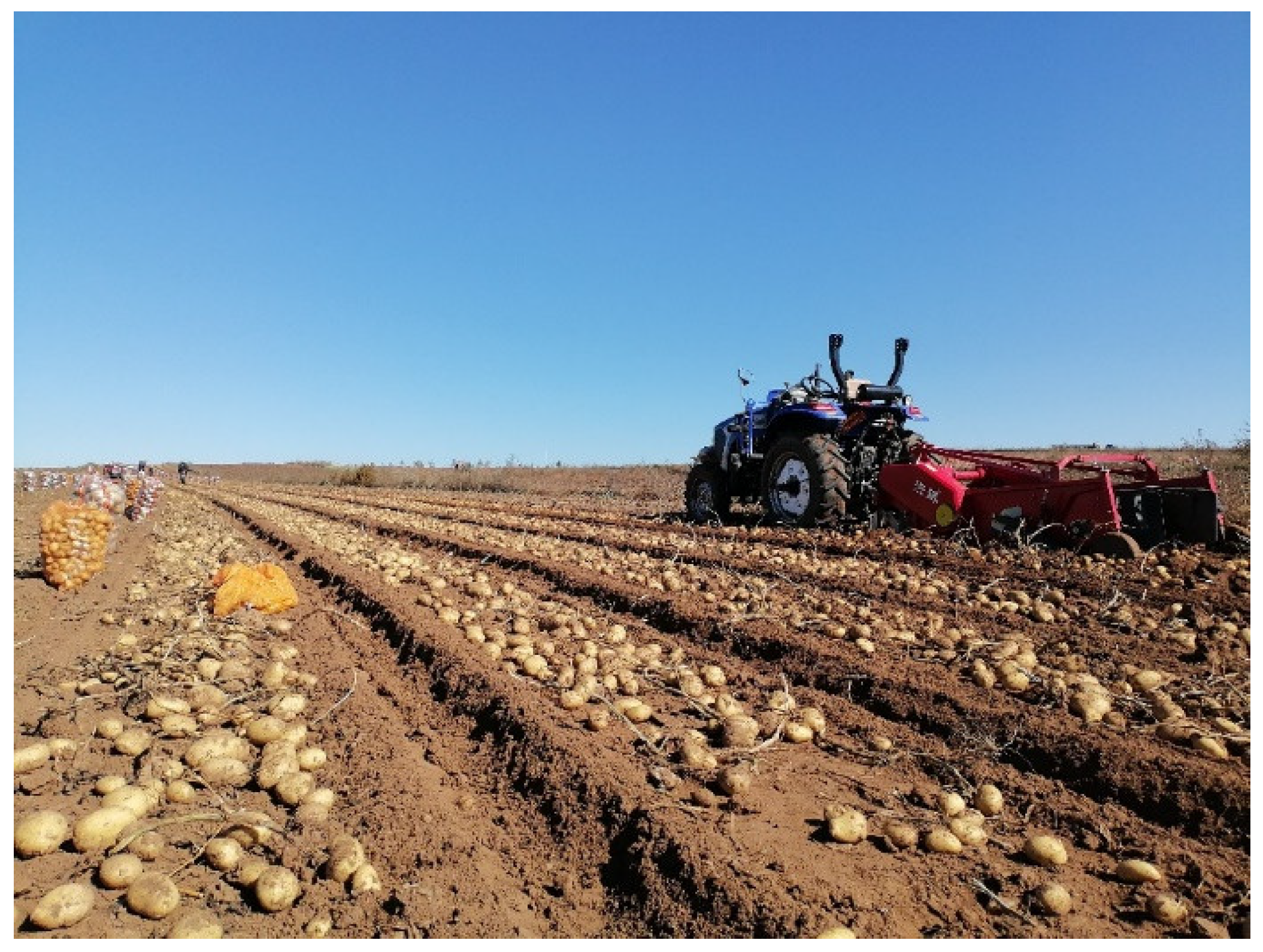
Two to three days prior to harvest, mechanical vine killing was performed on the potato plants using a Hongzhu 1JH-180 vine killer (Qingdao Hongzhu Agricultural Machinery Co., Ltd., Qingdao, China), leaving an average stubble height of less than 8 cm to minimize interference of stems and foliage with subsequent digging operations and to promote periderm maturation of the tubers. On the day of the experiment, a Hongzhu 4U-170B potato harvester (Qingdao Hongzhu Agricultural Machinery Co., Ltd., Qingdao, China) was used for digging operations (Figure 1), after which the potato tubers were deposited in windrows on the soil surface. A single-factor experimental design was adopted, with field curing duration as the experimental factor. Five treatment levels were established, 0 h (sampled immediately after digging), 1 h, 2 h, 3 h, and 4 h. The tubers deposited in windrows on the soil surface were subjected to field curing under natural ambient conditions. The entire experiment was completed within a single day, with samples collected sequentially according to the designated time intervals. Potato tubers in good condition, with similar shape and weight close to the population mean, were selected as experimental units [19]. Five replicates were set for each treatment. Since most measurement methods were destructive in nature, independent tuber samples were used for each test item under each treatment. Specifically, for each of the five curing duration treatments, separate sets of five tubers were allocated to: moisture content determination (5), density measurement (5), uniaxial compression testing (5), static and dynamic friction coefficient measurement against four contact materials (5 × 4 = 20), coefficient of restitution measurement against four contact materials (5 × 4 = 20), tissue impact damage testing (5), and skin abrasion damage testing (5). This resulted in 65 tubers per treatment and a total of 325 tubers (65 × 5 treatments) used throughout the entire experiment. All experimental measurements were completed in the laboratory within 1 h of sampling.

2.3. Experimental Methods

2.3.1. Determination of Physical and Mechanical Properties

The moisture content of tubers was determined using the oven-drying method [20]. Potato tuber slices were placed in an electrothermal constant-temperature drying oven and dried at 120 °C until a constant weight was achieved (the difference between two consecutive weighings was less than 0.02 g). The mass before and after drying was recorded, and the moisture content was calculated using Equation (1) as follows:
w = 100 ( m g m f ) m g
where w is the moisture content, %; mf is the mass of the potato tuber after drying, g; and mg is the mass of the potato tuber before drying, g.
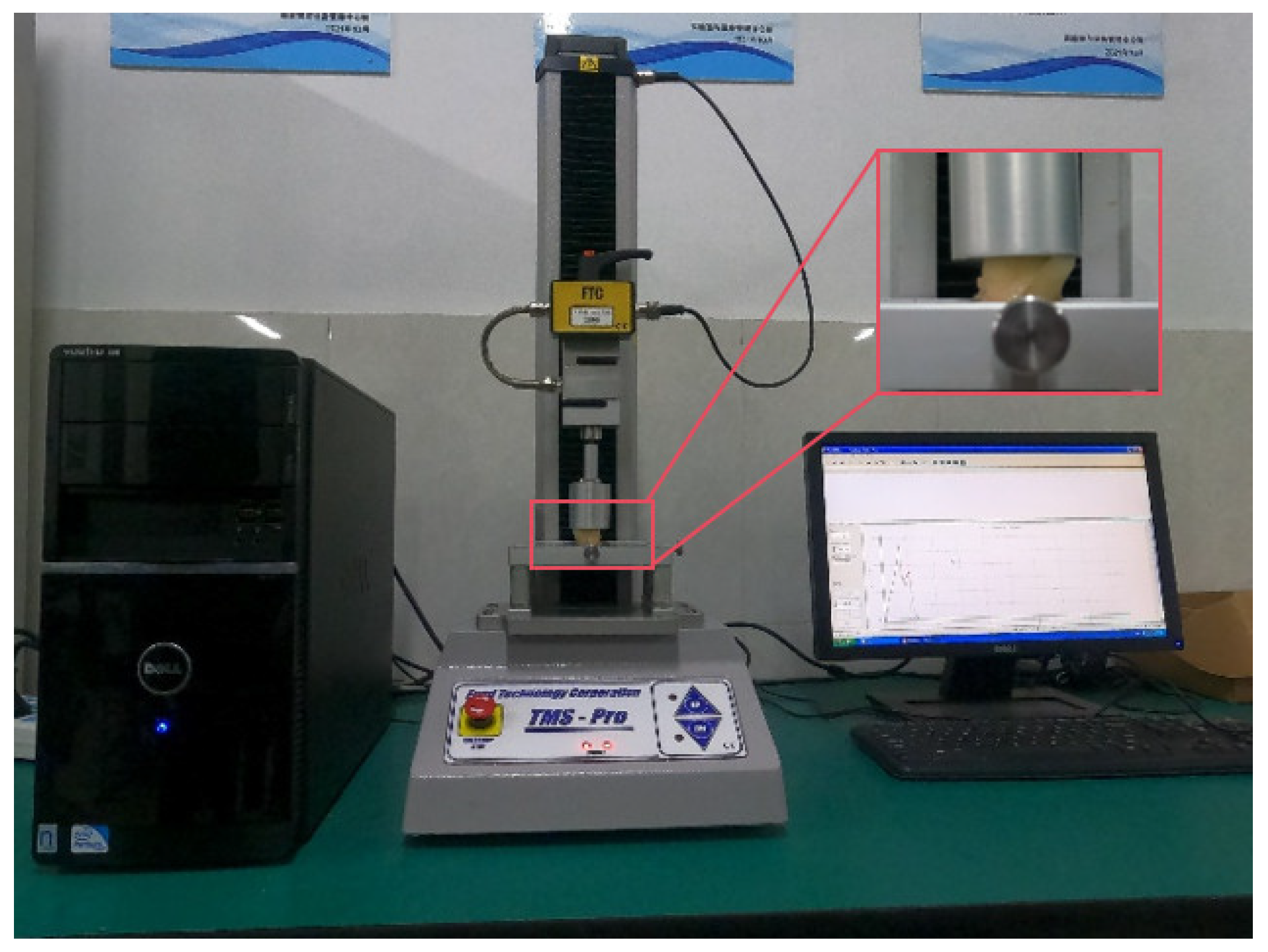
Tuber density was measured using a DahoMeter DH-300X densimeter (Shenzhen Dahometer Technology Co., Ltd., Shenzhen, China). Critical pressure was obtained using a Model 2500 texture analyzer manufactured (Food Technology Corporation, Sterling, VA, USA) (Figure 2). Cylindrical specimens (diameter 17.35 ± 0.05 mm, height 20.00 ± 0.05 mm) were prepared from potato tubers using a custom-made sampler. Uniaxial compression tests were performed on the specimens using a 25.4 mm diameter metal cylindrical probe at a loading rate of 10 mm/min, with the deformation ratio set at 40%. Compression was terminated upon specimen failure, and the force–deformation curve was recorded to obtain the critical pressure. The elastic modulus, Poisson’s ratio, and shear modulus were calculated using Equations (2)–(4) as follows [21,22,23,24,25]:
E = δ ε = F L Δ L A
υ = ε T ε L
G = E 2 ( 1 + υ )
where E is the elastic modulus of the test sample, MPa; δ is the stress of the test sample, MPa; ε is the longitudinal strain of the test sample; F is the critical pressure of the test sample, N; L is the height of the test sample before compression, mm; ΔL is the height change of the test sample after compression, mm; A is the cross-sectional area of the test sample, mm2; υ is the Poisson’s ratio of the test sample; εT is the transverse strain of the test sample; εL is the longitudinal strain of the test sample; and G is the shear modulus of the test sample, MPa.
The static and dynamic friction coefficients between potato tubers and tubers, soil, rubber, and 65Mn steel were all measured using an MXD-02 friction coefficient tester (Shanghai Le’ao Testing Instrument Co., Ltd., Shanghai, China) [26]. The coefficient of restitution was determined using the free-fall impact method [27,28,29]. A coordinate system was established using graph paper. Potato tubers (400 ± 5 g) were released from a vertical height of 350 mm above the base plate. The entire collision process was captured using a HiSpec 5 high-speed imaging acquisition system (Fastec Imaging Corporation, San Diego, CA, USA). The recorded videos were subsequently imported into TEMA 3.4-005 motion analysis software to analyze the complete free-fall collision process and determine the rebound height. The coefficient of restitution was calculated using Equation (5) as follows:
e = H H O
where e is the coefficient of restitution; H is the maximum rebound height after collision, mm; and HO is the drop height before collision, mm.

2.3.2. Determination of Damage Characteristics

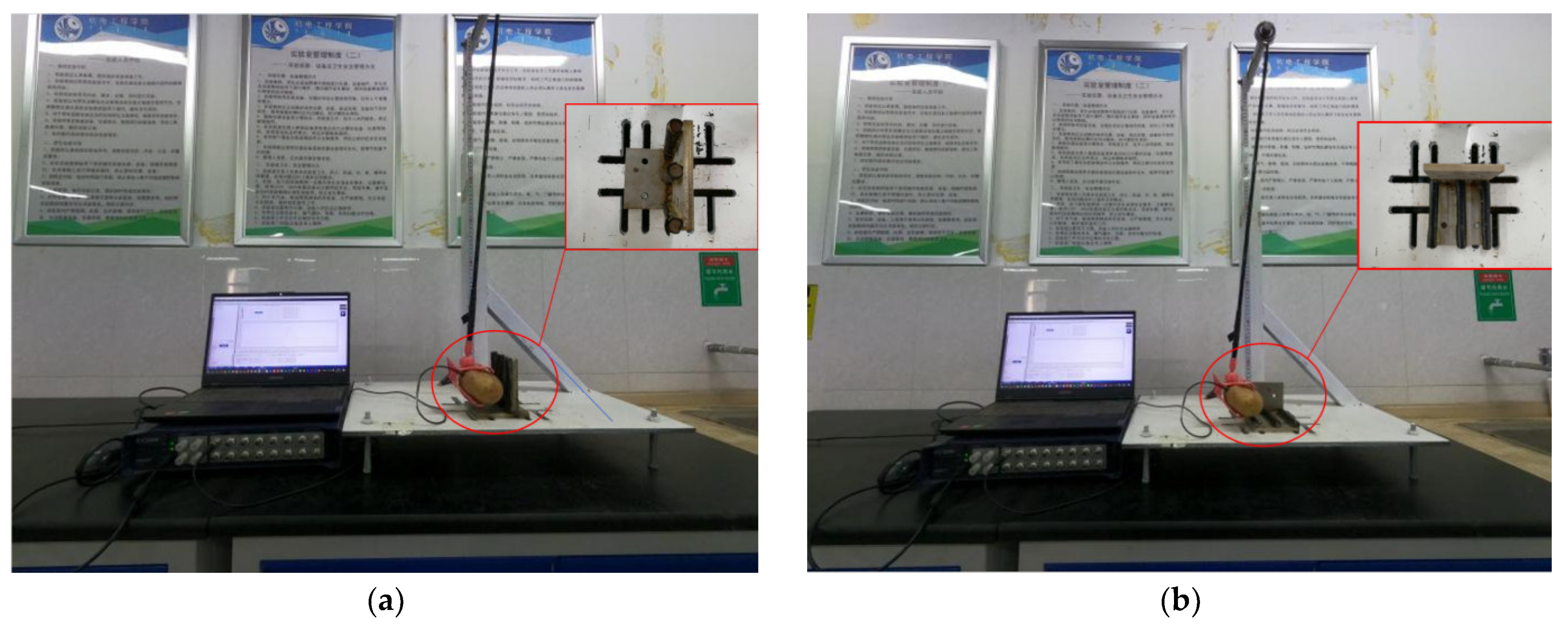
Tissue collision and epidermal friction are among the primary causes of potato tuber damage during mechanized picking operations [30,31,32]. Both the tissue collision damage acceleration and epidermal friction damage acceleration of potato tubers were measured using a custom-built pendulum-type collision test apparatus. A potato embedded with an acceleration collision sensor was released from a specified height [33,34,35] and allowed to collide with a vertically fixed rod. The collision data were recorded by a data acquisition analyzer (Figure 3a). Subsequently, the rod in the apparatus was repositioned horizontally, the potato was replaced, and the aforementioned procedure was repeated to collect epidermal friction damage acceleration data (Figure 3b).
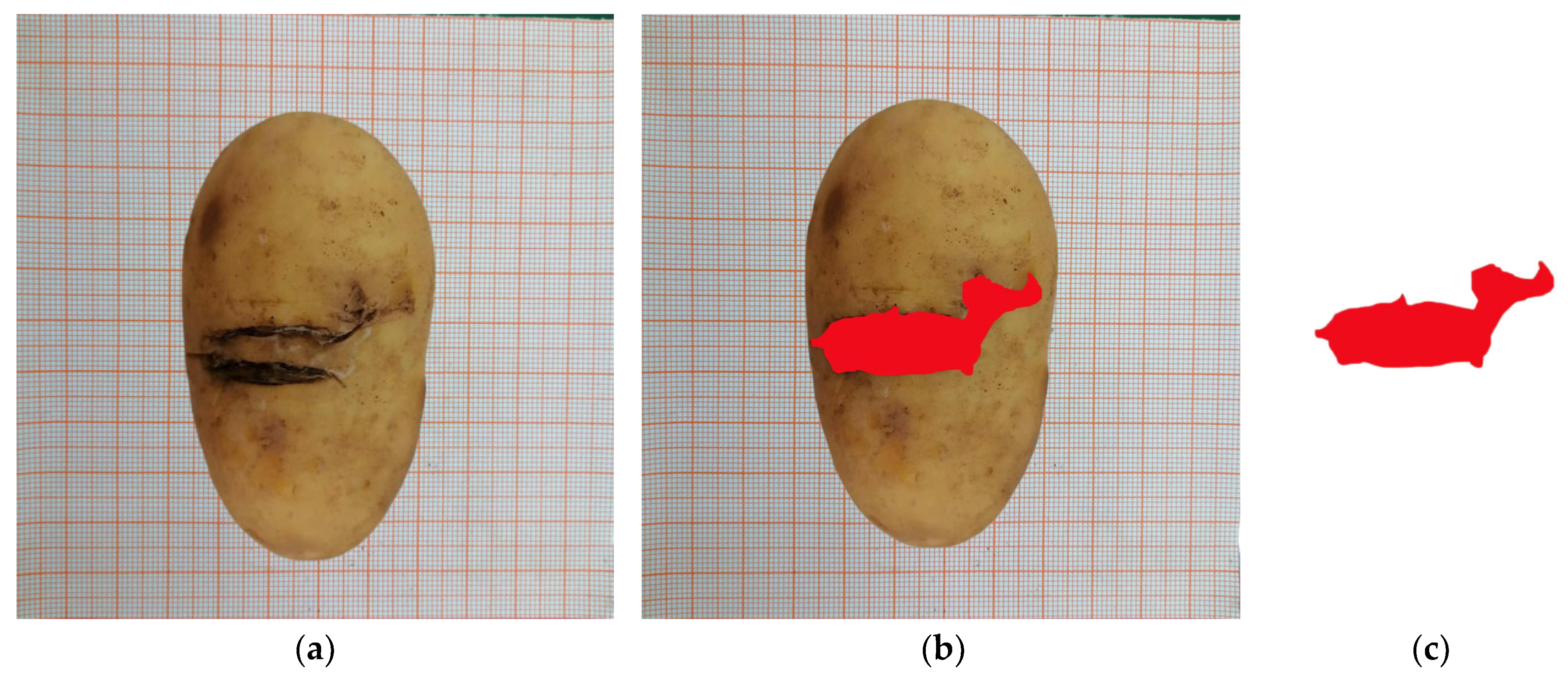
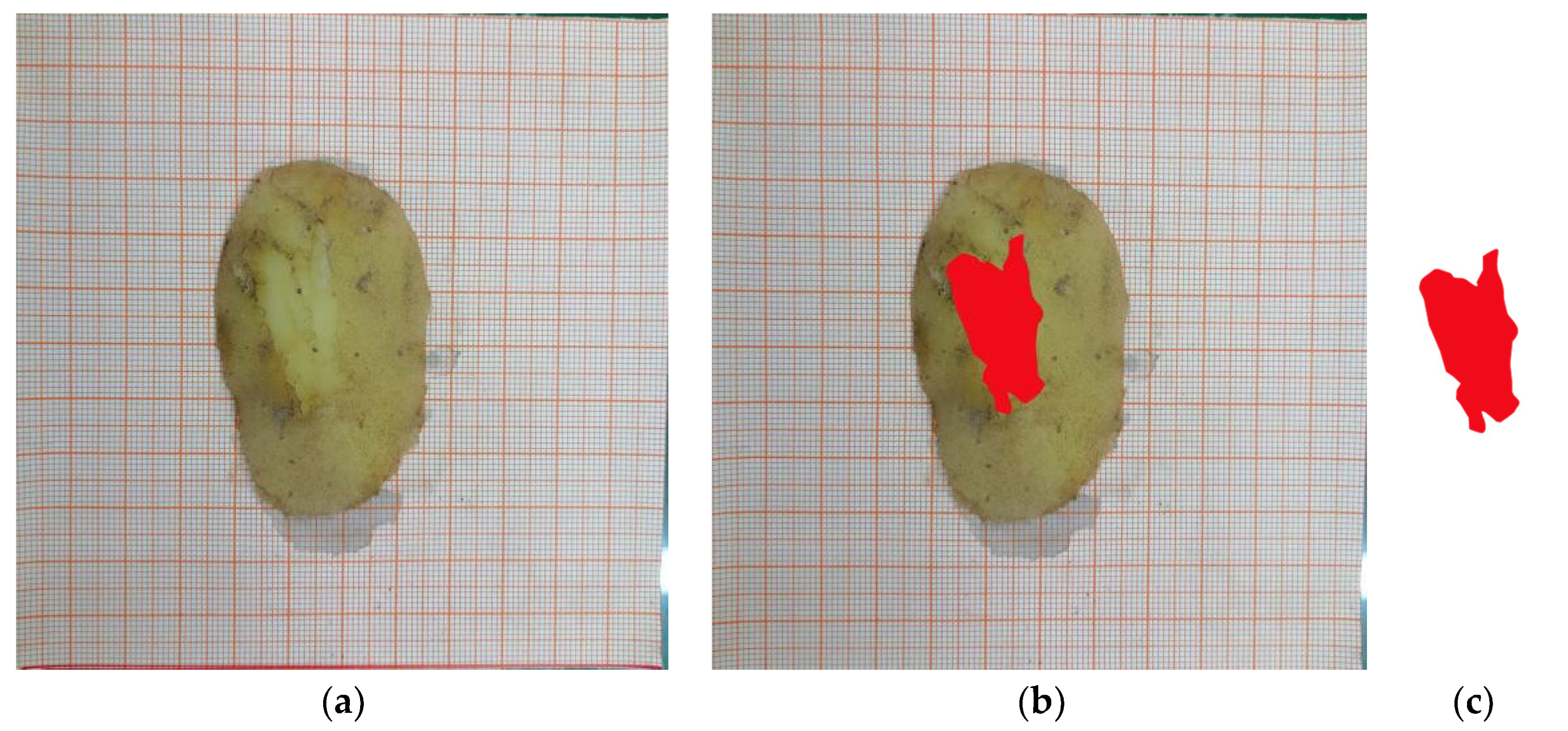
In accordance with the Quality Standards for Fresh Potato Grading (Trial), the extent of damage was quantitatively assessed using a binary image segmentation method [36,37]. The damaged area was photographed against a standard grid paper background (120 mm × 120 mm). Following image threshold segmentation processing, the damage index was characterized by the proportion of red pixel area (Figure 4 and Figure 5). The damage proportion was calculated using Equation (6) as follows:
η = 100 S S O
where η is the damage ratio, %; S is the number of pixels in the red area; and SO is the number of pixels in the frame.

2.3.3. Statistical Analysis Methods

To comprehensively investigate the effects of different field drying durations on the physical–mechanical properties and collision damage of harvest-ready potatoes, 22 indicators were selected for examination, including moisture content, density, critical pressure, elastic modulus, Poisson’s ratio, shear modulus, static friction coefficient, dynamic friction coefficient, coefficient of restitution, damage acceleration, and damage proportion. Principal component analysis (PCA) was employed for dimensionality reduction to obtain a comprehensive experimental index and establish an optimized model [38].

2.4. Data Processing

Data were organized using Excel 2024 (Microsoft Corporation, USA). One-way analysis of variance (ANOVA), correlation analysis, regression analysis, and principal component analysis (PCA) were performed using SPSS 27.0 (SPSS Institute Inc., USA). Regression fitting and graphical plotting were conducted using Origin 2024 (OriginLab Corporation, USA) software.

3. Results and Discussion

3.1. Effects of Different Field Drying Durations on the Physical–Mechanical Properties of Potato Tubers

Field curing of potato tubers deposited in windrows on the soil surface after digging essentially utilizes natural environmental conditions to promote moisture loss from the tuber surface and periderm suberization, with the primary objective of enhancing skin mechanical strength and reducing the risk of pathogen invasion. The curing effectiveness is governed by the combined influence of multiple environmental factors, including temperature, relative humidity, and wind speed. The freezing onset temperature of potato tubers is approximately −1.7 °C, below which intercellular water crystallization occurs, causing irreversible frost damage. In the present experiment, the measured temperature ranged from −1.4 to 8.6 °C (Table 1), and the minimum temperature at 7:00 a.m. (−1.4 °C) remained above the tuber freezing point, indicating that the tubers had not experienced sub-freezing exposure. As the temperature continued to rise thereafter, the risk of frost damage was considered negligible. Relative humidity determines the water vapor pressure deficit between the tuber surface and the surrounding environment, serving as a key driving factor for surface moisture evaporation [39]. During the experiment, relative humidity decreased progressively from 88% in the early morning to 42% (Table 1), exhibiting a sustained declining trend that was conducive to rapid evaporative moisture loss from the tuber surface. Meanwhile, wind speed increased gradually from 3.9 km/h to 12.2 km/h during the experimental period, further accelerating convective heat transfer and moisture evaporation from the tuber surface. Therefore, the prevailing conditions of temperature, relative humidity, and wind speed on the day of the experiment were suitable for postharvest field curing treatment.
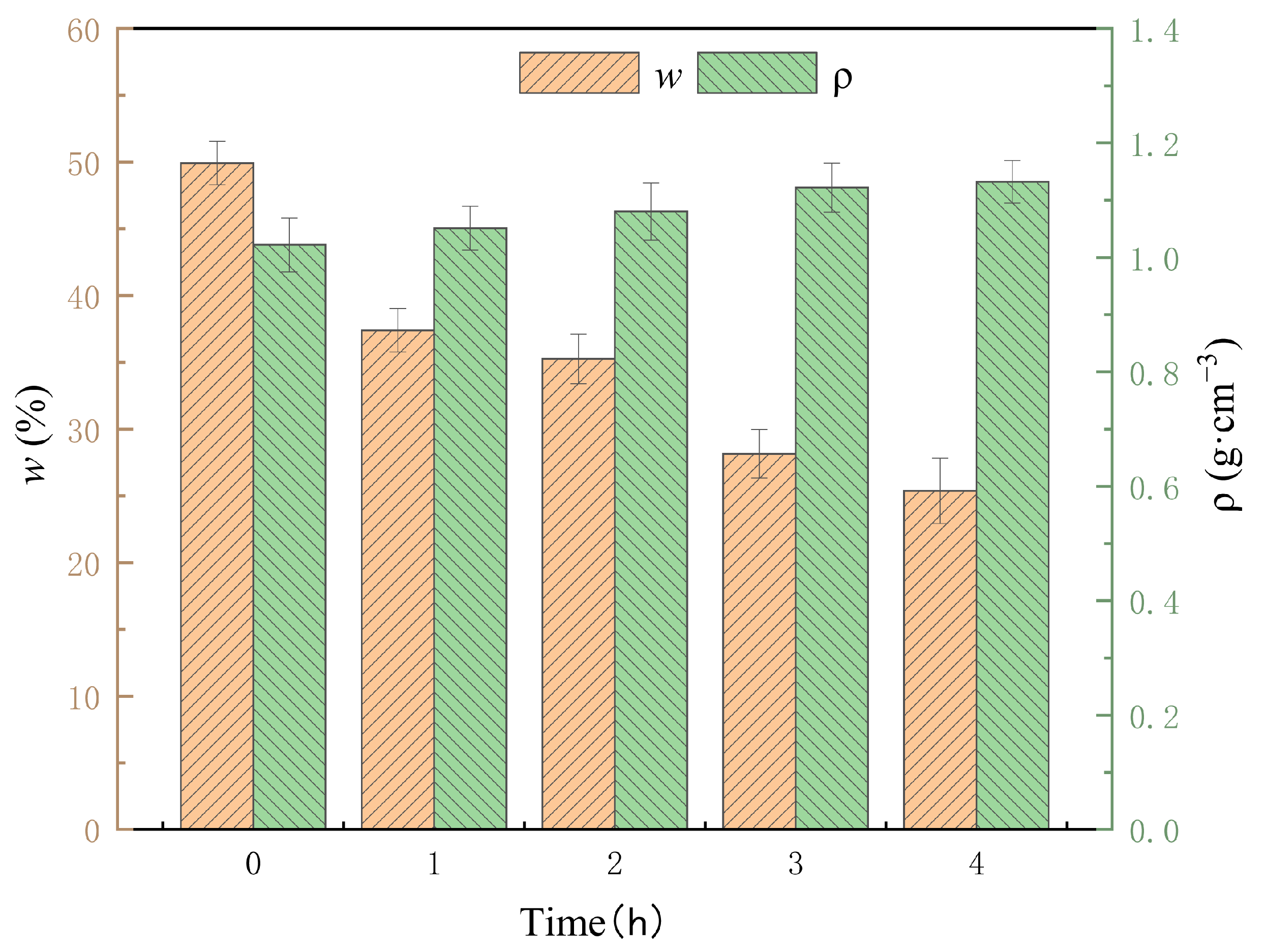
Field curing significantly altered the moisture status and tissue structure of potato tubers. As curing duration increased, tuber moisture content decreased from 48.09–51.94% to 22.73–28.48%, representing a reduction of approximately 49%. Concurrently, density increased from 0.96–1.07 g·cm−3 to 1.09–1.18 g·cm−3, an increase of approximately 12% (p < 0.01, Figure 6). One-way analysis of variance (ANOVA) results (Table 2) indicated that the effects of curing duration on both moisture content and density were highly significant. The inverse relationship between moisture content and density reflects a structural remodeling process within the tuber tissue. At harvest maturity, the periderm has not yet fully suberized, resulting in relatively low transpiration resistance [7,8]. Moisture is continuously lost through periderm transpiration, leading to a progressive decline in cell turgor pressure, reduction in intercellular spaces, and an increasingly compact tissue structure. These significant changes in physical properties provide the foundation for the subsequent alterations in mechanical properties and damage behavior.
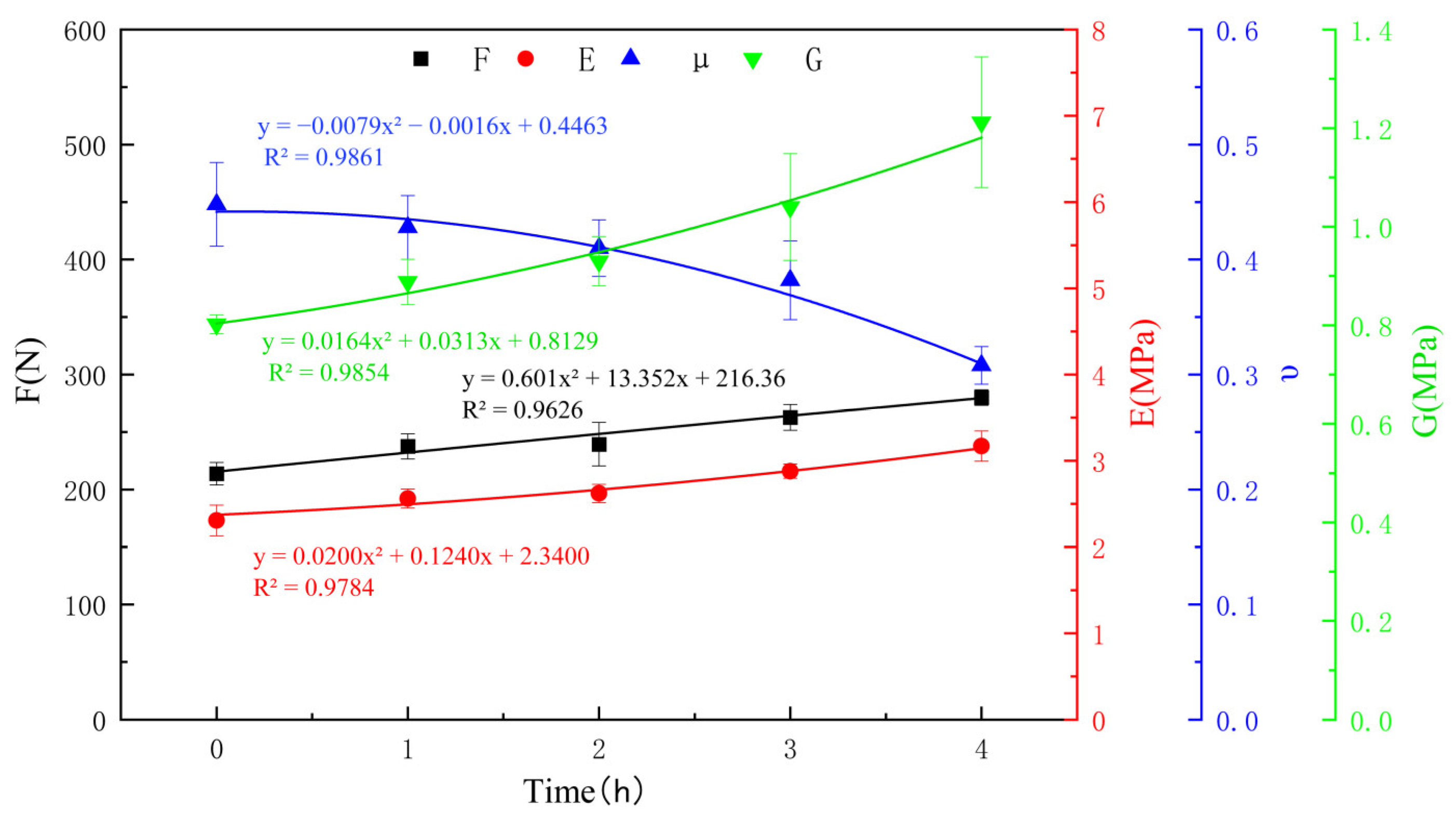
The tissue densification caused by moisture content reduction inevitably leads to alterations in mechanical properties, which was confirmed by the compression test results. As curing duration increased, the compressive mechanical behavior of tubers changed significantly (p < 0.01, Figure 7). ANOVA results (Table 3) revealed highly significant differences in critical pressure, elastic modulus, Poisson’s ratio, and shear modulus among the different curing duration treatments. Critical pressure increased from 197.54–223.53 N to 271.15–288.10 N, representing an increase of approximately 33%; elastic modulus increased from 2.12–2.59 MPa to 3.00–3.44 MPa, an increase of approximately 37%; and shear modulus increased from 0.77–0.82 MPa to 1.11–1.44 MPa, an increase of approximately 60%. The elevation of these parameters is likely associated with the reduction in cell turgor pressure resulting from moisture loss. Previous studies have demonstrated that as turgor pressure declines, the cell wall progressively becomes the primary load-bearing structure, leading to an increase in tissue stiffness [37]. Furthermore, during the curing process, periderm cell walls undergo progressive deposition of suberin and waxes, forming a hydrophobic barrier layer. This suberization process not only enhances the mechanical strength of the skin and its resistance to pathogen invasion but also alters the mechanical response characteristics of the surface tissue. Concurrently, the middle lamella between cells may contract due to dehydration, resulting in enhanced intercellular bonding forces, which macroscopically manifests as increases in elastic modulus and shear modulus [40]. The decrease in Poisson’s ratio from 0.40–0.48 to 0.29–0.33 indicates a reduced capacity for lateral deformation. Regression analysis of the experimental results showed that the fitting equations between the four parameters and curing duration all yielded R2 values greater than 0.95, indicating good fitting accuracy. Collectively, field curing induced a transition in tuber mechanical behavior from a “soft elastic body” to a “hard brittle body”. Although this transition enhances the load-bearing capacity under quasi-static compression conditions, the increased stiffness may intensify localized stress concentration during impact, rendering parenchyma cells more susceptible to brittle fracture [41], which may constitute one of the intrinsic causes for the subsequent aggravation of impact damage.
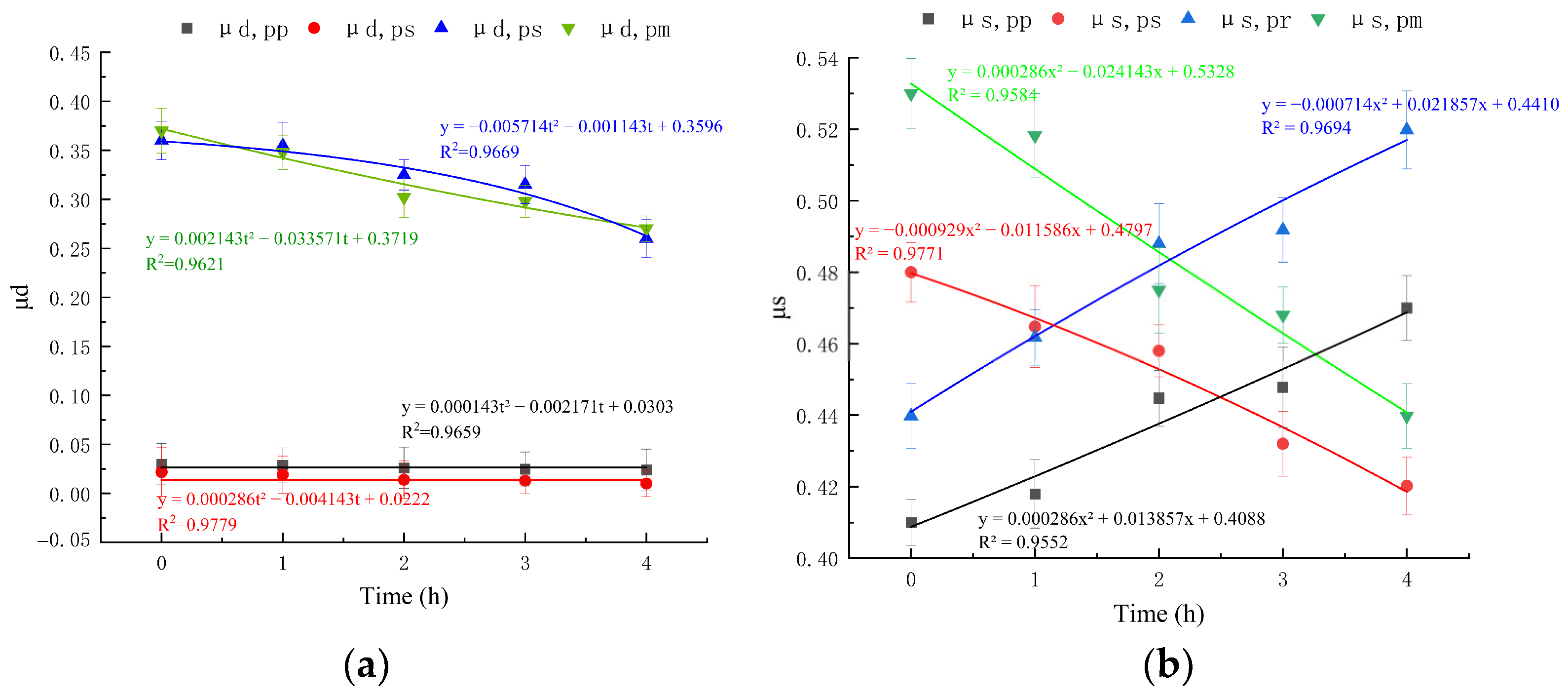
The alterations in mechanical properties also influenced the surface frictional behavior of tubers. The changes in friction coefficients exhibited significant material dependence (p < 0.01, Figure 8). ANOVA results (Table 4) indicated that all eight friction coefficient parameters showed highly significant differences among the different curing duration treatments. Dynamic friction coefficients generally decreased with increasing curing duration. Specifically, the tuber–soil dynamic friction coefficient decreased from 0.020–0.023 to 0.009–0.011, a reduction of approximately 52%; the tuber–65Mn steel dynamic friction coefficient decreased from 0.337–0.393 to 0.231–0.283, a reduction of approximately 30%; while the tuber–tuber and tuber–rubber dynamic friction coefficients showed no pronounced declining trends. This change is likely attributable to the weakening of capillary adhesion forces resulting from surface moisture loss during curing. Previous research has demonstrated that as the moisture content of agricultural materials decreases, the number of capillary bridges formed by surface water films diminishes, leading to a corresponding reduction in interfacial adhesion forces [42]. Concurrently, skin hardening may reduce microscopic deformation during the frictional process and decrease the real contact area. This pattern is consistent with the observations reported by Nyendu et al. [43], who found that the dynamic friction coefficient of DDGS against various materials decreased with declining moisture content. However, the variation patterns of static friction coefficients were more complex. An increasing trend was observed when in contact with rough porous materials (tubers and rubber), whereas a decreasing trend was noted when in contact with smooth hard materials (soil particles and 65Mn steel). This differentiated behavior may be related to surface morphological changes caused by skin shrinkage of tubers following curing. It is hypothesized that the mechanical interlocking effect between the shriveled skin and rough porous materials is enhanced, while the number of real contact points with smooth hard materials is reduced. However, this mechanism requires further verification through microscopic surface topography analysis. Regression analysis of the experimental results showed that the fitting equations for all eight parameters yielded R2 values greater than 0.90. This finding has practical implications for the design of mechanized harvesting equipment, suggesting that conveying components should preferably employ rough materials such as rubber to increase frictional forces and reduce skin abrasion caused by tuber slippage.
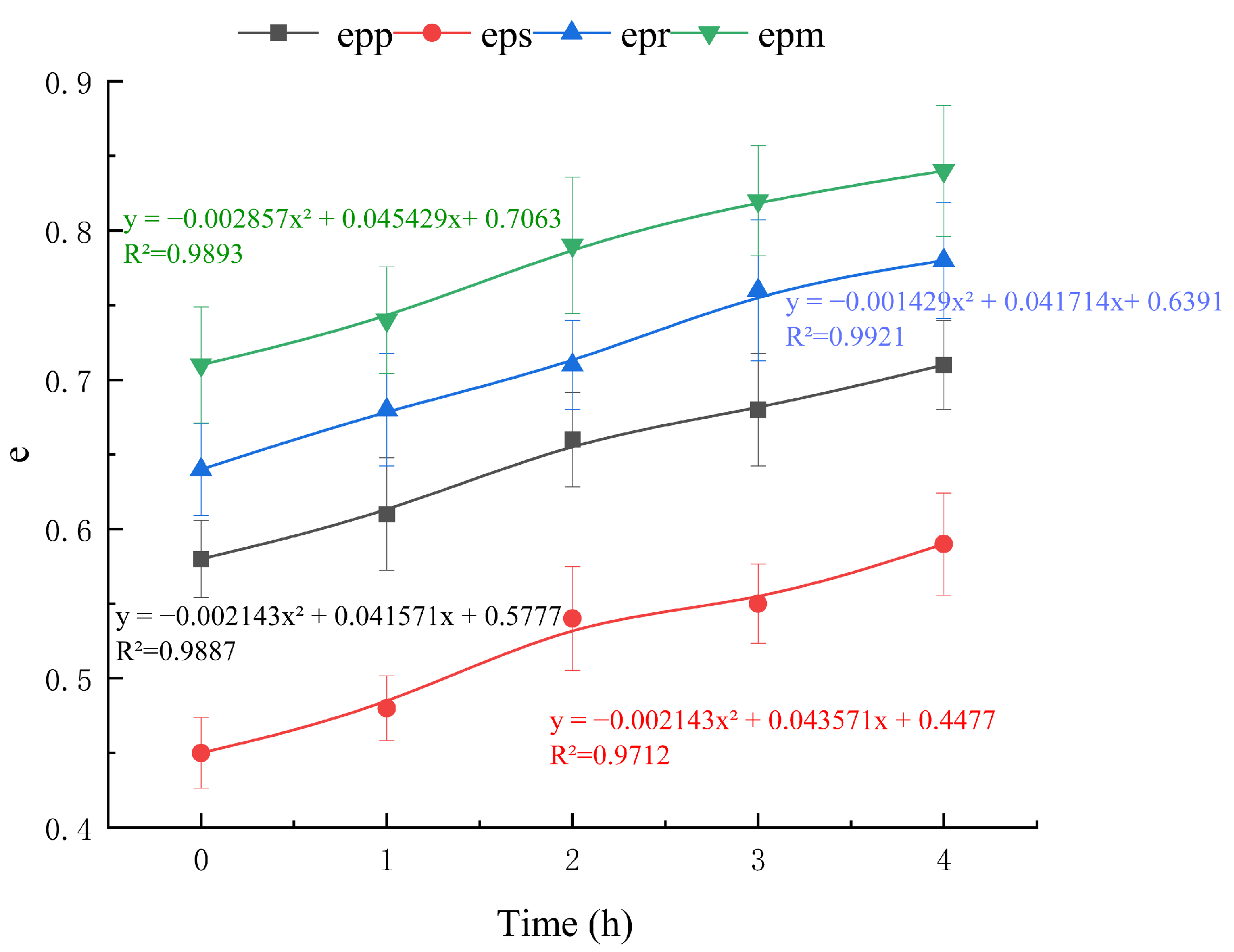
Friction characteristics reflect quasi-static contact behavior, whereas the coefficient of restitution characterizes the dynamic impact response. The experimental results demonstrated that the coefficient of restitution increased significantly with increasing curing duration (p < 0.01, Figure 9). ANOVA results (Table 5) revealed highly significant differences in the coefficients of restitution for all four contact materials among the different curing duration treatments. The tuber–65Mn steel coefficient of restitution increased from 0.654–0.749 to 0.777–0.884, an increase of approximately 19%; the tuber–tuber coefficient of restitution increased from 0.543–0.606 to 0.667–0.740, an increase of approximately 22%; and the tuber–rubber and tuber–soil coefficients of restitution exhibited similar upward trends. Regression analysis indicated that all four parameters exhibited good linear relationships with curing duration (R2 > 0.95). The increase in the coefficient of restitution implies reduced energy dissipation and enhanced elastic recovery capacity during impact. In conjunction with the compressive property analysis presented in Section 3.2, it can be inferred that field curing increases tuber stiffness, resulting in reduced deformation during impact and decreased energy consumption through plastic deformation, thereby leading to a higher coefficient of restitution. However, this does not indicate an enhancement of the tuber’s damage resistance. On the contrary, the increased stiffness leads to more severe stress concentration during impact; although macroscopic deformation is reduced, localized tissue is more susceptible to microscopic fracture. Feng et al. [29] observed a similar trend in their study on the coefficient of restitution of potatoes at harvest maturity, and the present study further elucidates the intrinsic relationship between this phenomenon and damage behavior.

3.2. Effects of Different Open-Air Curing Durations on Tissue Impact Damage and Skin Abrasion Damage Characteristics of Potato Tubers

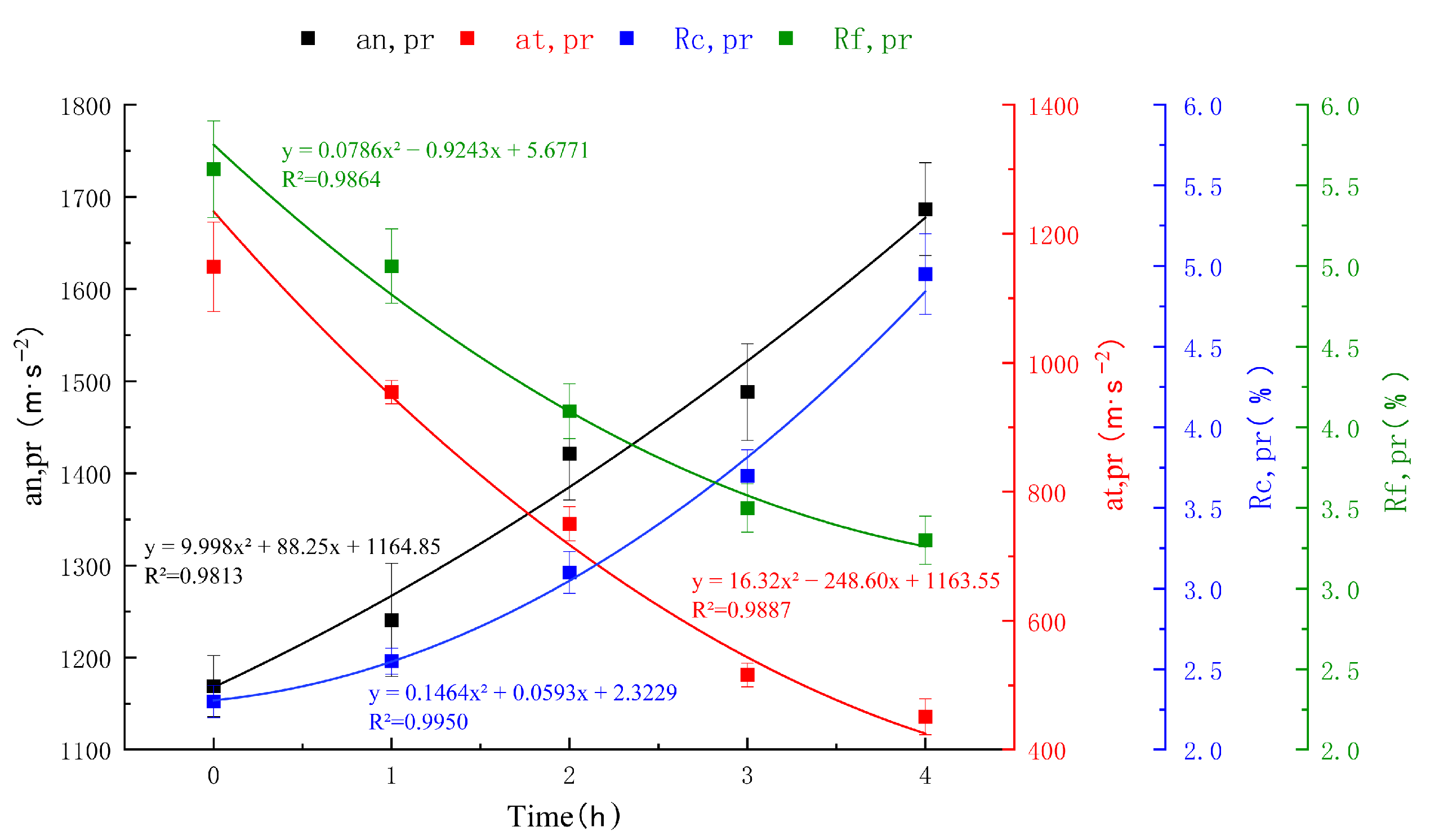
The systematic alterations in physical and mechanical properties described above are ultimately reflected in the damage behavior of tubers. The damage tests revealed opposing trends in the two types of damage with increasing curing duration, which constitutes the core finding of this study (p < 0.01, Figure 10). ANOVA results (Table 6) indicated that all four indicators of tissue impact damage and skin frictional damage showed highly significant differences among the different curing duration treatments. Regarding tissue impact damage, the impact acceleration increased from 1136.80–1218.98 m·s−2 to 1637.02–1768.91 m·s−2, an increase of approximately 45%; correspondingly, the proportion of tissue impact damage increased from 2.24–2.47% to 4.65–5.69%, an increase of 119%. Regarding skin frictional damage, the frictional acceleration decreased from 1001.74–1249.52 m·s−2 to 420.40–494.20 m·s−2, a reduction of approximately 59%; and the proportion of skin frictional damage decreased from 5.17–5.99% to 3.15–3.39%, a reduction of 41%. Regression analysis demonstrated that the fitting equations for all four parameters yielded R2 values greater than 0.96, indicating good fitting accuracy. The contradictory evolution of the two damage types originates from the differential modification effects of field curing on tuber tissues. For skin frictional damage, curing promotes periderm suberization, leading to thickened skin cell walls, enhanced intercellular bonding forces, and improved shear resistance, thereby reducing frictional damage. For tissue impact damage, curing causes moisture loss from tubers and a reduction in parenchyma cell turgor pressure; the middle lamella between cells undergoes dehydration-induced contraction, resulting in increased overall stiffness and enhanced brittleness. During impact, the cell walls lack hydraulic buffering capacity, internal peak stress increases, and parenchyma cells become more susceptible to brittle fracture, leading to aggravated impact damage [40]. Xie [31] and Zhao [32] investigated potato impact damage and skin frictional damage, respectively, but treated them as independent problems. The present study is the first to reveal the trade-off relationship between these two damage types during the field curing process, providing a new perspective for understanding the mechanisms of potato harvest damage. This contradictory relationship carries significant practical implications. The conventional view holds that extending curing duration enhances tuber damage resistance; however, the present study demonstrates that this understanding is incomplete. While curing indeed reduces skin damage, it does so at the cost of aggravating internal tissue damage. Therefore, the determination of optimal curing duration requires a balance between the two types of damage.

3.3. Evaluation Modeling of Treatment Effects Under Different Open-Air Curing Duration Gradients Based on Principal Component Analysis (PCA)

3.3.1. Correlation Analysis and Principal Component Analysis

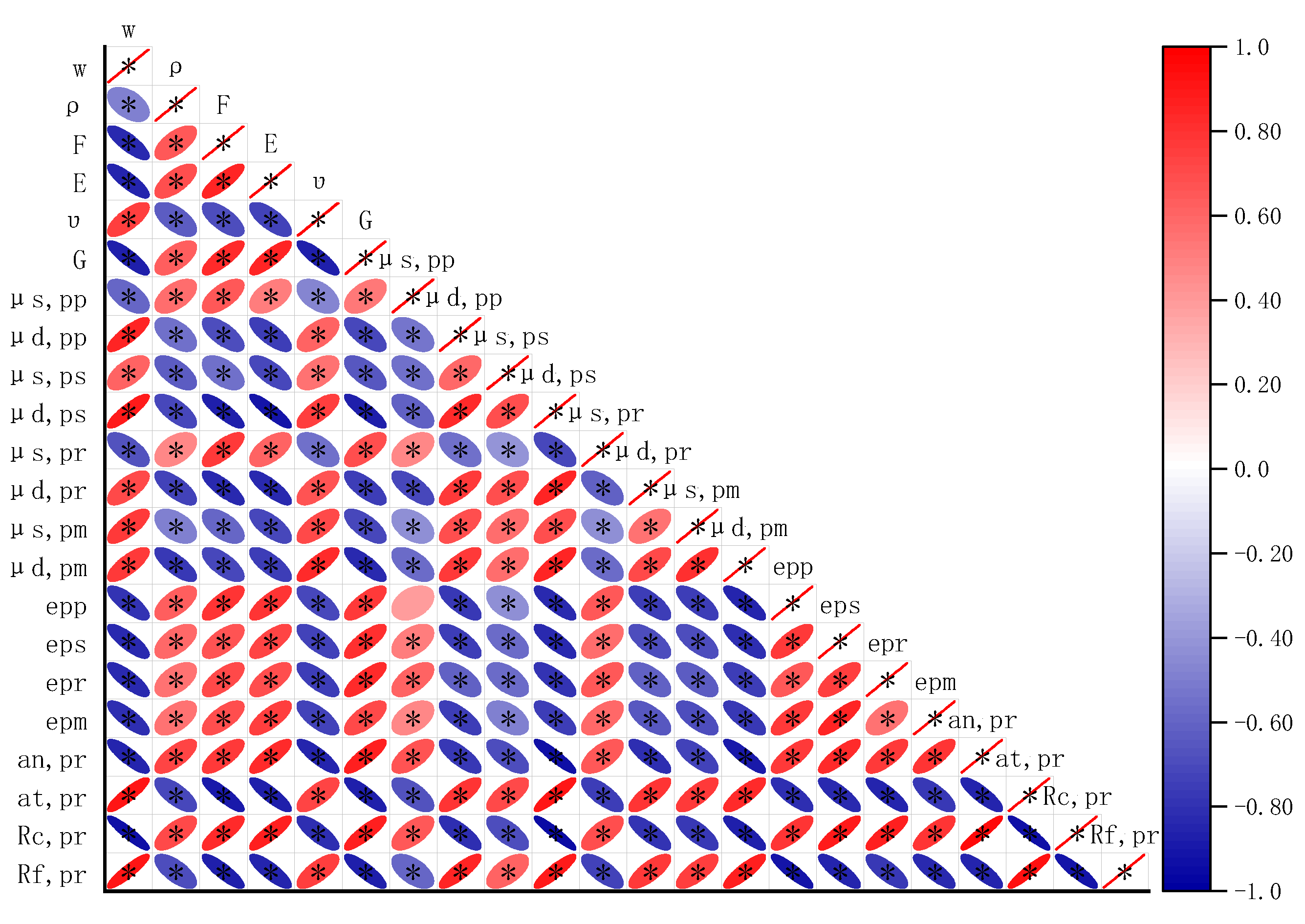
To comprehensively evaluate the integrated effects of different curing duration treatments, correlation analysis and principal component analysis were performed on 22 indicators. The Pearson correlation analysis results (Figure 11) revealed complex interrelationships among the indicators. Notably, the proportion of tissue impact damage exhibited a strong positive correlation with impact acceleration (r = 0.942), while the proportion of skin abrasion damage showed significant positive correlations with friction acceleration, moisture content, and tuber–soil dynamic friction coefficient. Importantly, the proportion of tissue impact damage demonstrated a strong negative correlation with the proportion of skin abrasion damage (r = −0.89, p < 0.01), statistically validating the antagonistic evolution pattern between these two damage types.
Given the significant correlations among indicators, principal component analysis was employed for dimensionality reduction (Table 7 and Table 8). Following the criterion of eigenvalues greater than 1, two principal components were extracted, accounting for a cumulative variance contribution of 76.83%. The first principal component captured 71.39% of the original information, with its loading distribution showing high positive loadings for tissue impact damage proportion and impact acceleration, and high negative loadings for skin abrasion damage proportion, friction acceleration, and moisture content. This indicates that the first principal component primarily reflects the trade-off relationship between the two damage types during the curing process: higher scores on the first principal component correspond to intensified tissue impact damage but reduced skin abrasion damage.

3.3.2. Comprehensive Evaluation

The experimental indicators were standardized, and the principal component coefficients corresponding to each indicator were obtained. Using these coefficients as weights, the calculation formulas for the two principal component scores were established as Equations (7) and (8):
F 1 = 0.233 X 1 + 0.186 X 2 + 0.222 X 3 + 0.231 X 4 0.217 X 5 + 0.223 X 6 + 0.164 X 7 0.132 X 8 0.174 X 9 0.221 X 10 + 0.189 X 11 0.216 X 12 0.199 X 13 0.230 X 14 + 0.217 X 15 + 0.220 X 16 + 0.203 X 17 + 0.205 X 18 + 0.237 X 19 0.245 X 20 + 0.238 X 21 0.242 X 22
F 2 = 0.066 X 1 + 0.208 X 2 + 0.044 X 3 0.045 X 4 0.062 X 5 0.037 X 6 + 0.489 X 7 + 0.541 X 8 0.253 X 9 + 0.065 X 10 0.004 X 11 0.197 X 12 + 0.118 X 13 + 0.034 X 14 0.246 X 15 0.136 X 16 + 0.312 X 17 0.303 X 18 + 0.053 X 19 0.004 X 20 + 0.071 X 21 + 0.101 X 22
where F1 and F2 denote the scores of the first and second principal components, respectively; X1X22 are the dimensionless values of the 22 experimental indicators after standardization. Specifically, X1 is the moisture content w, %; X2 is the density ρ, g·cm−3; X3 is the critical pressure F, N; X4 is the elastic modulus E, MPa; X5 is the Poisson’s ratio υ; X6 is the shear modulus G, MPa; X7 is the static friction coefficient between tuber and tuber μs, pp; X8 is the static friction coefficient between tuber and soil μs, ps; X9 is the static friction coefficient between tuber and rubber μs, pr; X10 is the static friction coefficient between tuber and 65Mn steel μs, pm; X11 is the dynamic friction coefficient between tuber and tuber μd, pp; X12 is the dynamic friction coefficient between tuber and soil μd, ps; X13 is the dynamic friction coefficient between tuber and rubber μd, pr; X14 is the dynamic friction coefficient between tuber and 65Mn steel μd, pm; X15 is the coefficient of restitution between tuber and tuber epp; X16 is the coefficient of restitution between tuber and soil eps; X17 is the coefficient of restitution between tuber and rubber epr; X18 is the coefficient of restitution between tuber and 65Mn steel epm; X19 is the tuber tissue impact damage acceleration an, pr, m·s−2; X20 is the skin frictional damage acceleration at, pr, m·s−2; X21 is the proportion of tuber tissue impact damage Rc, pr, %; and X22 is the proportion of skin frictional damage Rf, pr, %. Since all indicators were standardized, the above regression models are empirical equations with inconsistent dimensions.
Using the variance contribution rates of each principal component as weights, the comprehensive evaluation formula for curing experimental indicators was established as Equation (9):
F = 0.71386 F 1 + 0.05446 F 2
where F denotes the comprehensive evaluation score; F1 and F2 represent the scores of the first and second principal components, respectively; and 0.71386 and 0.05446 are the variance contribution rate weights corresponding to each principal component.
From the ranking of comprehensive scores (Table 9), longer curing durations corresponded to higher comprehensive scores. However, this ranking primarily reflects the unidirectional variation trend of physical–mechanical properties rather than the balanced control effect between the two damage types. Therefore, analysis from the perspective of damage control balance is more practically meaningful. As shown in Figure 11, a curing duration of 3 h achieved an optimal position in terms of comprehensive evaluation (comprehensive score: 0.457, ranked 2nd), effectively balancing the control effects of both damage types. This conclusion aligns with the 2–4 h curing duration range recommended by current technical standards, while further refining the determination of the optimal time point, thereby providing a more operationally practical reference for production practices. It should be noted that this study was conducted on a specific cultivar (Xisen No. 6), production region (Shangdu County, Inner Mongolia, China), and harvest season (October); thus, the generalizability of these conclusions requires validation across multiple cultivars and production regions. Additionally, the single-pendulum impact apparatus simulates single-impact events, whereas the cumulative effects of multiple compound impacts experienced by tubers during actual mechanized harvesting warrant further investigation.

4. Conclusions

This study utilized ‘Xisen No. 6’ potato at harvest maturity as the experimental material and established a comprehensive evaluation system encompassing 22 physical, mechanical, and damage-related parameters to systematically investigate the effects of 0–4 h field curing duration on tuber physical and mechanical properties and impact damage. The following main conclusions were drawn:
(1)
During field curing, moisture loss from tubers induced systematic changes in physical and mechanical properties. Moisture content and Poisson’s ratio decreased, while density, critical pressure, elastic modulus, shear modulus, and coefficient of restitution increased, indicating an overall mechanical behavior transition of tubers from a “soft elastic body” to a “hard brittle body”. The changes in frictional properties exhibited significant material dependence: dynamic friction coefficients generally decreased with curing duration, whereas static friction coefficients increased when in contact with rough porous materials and decreased when in contact with smooth hard materials. This finding can serve as a reference for the material selection of contact components in harvesting machinery.
(2)
The aforementioned mechanical behavior transition exerted opposing effects on the two types of mechanical damage. With increasing curing duration, the proportion of skin frictional damage decreased, while the proportion of tissue impact damage increased, with a strong negative correlation between the two (r = −0.89, p < 0.01). This result demonstrates that the conventional understanding that “extending curing duration enhances tuber damage resistance” is incomplete.
(3)
The optimal curing duration that balances the control of both damage types was determined to be 3 h. The two damage curves intersected at approximately 2–3 h of curing, and the comprehensive evaluation based on principal component analysis further confirmed this optimal point. It is recommended that in practical production, potato tubers deposited in windrows after digging undergo approximately 3 h of field curing before mechanical picking operations, with the specific duration subject to appropriate adjustment based on cultivar characteristics and seasonal climatic conditions. Future research will build upon the physical and mechanical analysis presented in this study by incorporating the determination of physiological and biochemical indicators such as starch and reducing sugar contents, as well as storage quality monitoring, to establish a more comprehensive evaluation system for postharvest field curing treatment.

Author Contributions

Conceptualization, L.W. and H.B.; methodology, L.W. and X.Z. (Xuan Zhao); software, L.W. and F.L.; validation, L.W. and X.K.; formal analysis, L.W. and X.Z. (Xuechuan Zhao); investigation, L.W. and X.L.; resources, L.W. and Y.L.; data curation, L.W. and Y.Z.; writing—original draft preparation, F.L. and L.W.; writing—review and editing, F.L. and L.W.; visualization, F.L. and L.W.; supervision, F.L. and L.W.; project administration, F.L. and L.W.; funding acquisition, F.L. and L.W. All authors have read and agreed to the published version of the manuscript.

Funding

This research was funded by the Inner Mongolia Autonomous Region Natural Science Foundation, grant number 2024QN05018. This research was funded by the Inner Mongolia Autonomous Region Science and Technology Key Project, grant number 2020GG0168.

Institutional Review Board Statement

Not applicable.

Data Availability Statement

The original contributions presented in this study are included in the article. Further inquiries can be directed to the corresponding author.

Acknowledgments

The authors are grateful to the editors for immediate processing and the anonymous reviewers for their valuable suggestions.

Conflicts of Interest

Author Xueqiang Li was employed by the company Shandong Sidaier Agricultural Equipment Co., Ltd. The remaining authors declare that the research was conducted in the absence of any commercial or financial relationships that could be construed as a potential conflict of interest.

References

  1. Liu, C.; Wu, F.; Gu, F.; Cao, M.; Yang, H.; Shi, L.; Wang, B.; Wang, B. Recent Research Progress on Key Technologies and Equipment for Mechanized Potato Harvesting. Agriculture 2025, 15, 675. [Google Scholar] [CrossRef]
  2. Zhu, Y.; Zhang, W.; Zhao, Y.; Chen, F.; Zhu, F.; Yang, J.; Ge, X.; Gong, W.; Cui, R.; Sheng, W. Foliar Application of Chitosan Accelerates Wound Periderm Formation with an Intensified Deposition of Suberin Polyphenolic and Lignin in the Wounds of Potato Tubers. Horticulturae 2023, 9, 663. [Google Scholar] [CrossRef]
  3. Zhou, F.; Wang, F.; Zhang, X.; Lu, Y.; Ren, B.; Yang, S.; Lu, L.; Li, L. Physiological and Metabolomics Analyses Revealed That Overexpression of CBL-Interacting Protein Kinase 23 Accelerate Tuber Sprouting in Potato. Horticulturae 2025, 11, 342. [Google Scholar] [CrossRef]
  4. Sapakhova, Z.; Abilda, Z.; Toishimanov, M.; Daurov, D.; Daurova, A.; Raissova, N.; Sidorik, A.; Kanat, R.; Zhambakin, K.; Shamekova, M. Early Generation Selection of Potato Breeding Lines. Horticulturae 2024, 10, 1121. [Google Scholar] [CrossRef]
  5. FAOSTAT. FAOSTAT Database Collections; Food and Agriculture Organization of the United Nations: Rome, Italy, 2024. [Google Scholar]
  6. Wang, H.; Zhao, W.; Sun, W.; Zhang, H.; Liu, X.; Li, H. Research Progress on Mechanized Potato Harvesting Technology and Equipment. Trans. Chin. Soc. Agric. Eng. 2023, 39, 1–22. [Google Scholar]
  7. Singh, B.; Bhardwaj, V.; Kaur, K.; Kukreja, S.; Goutam, U. Potato Periderm is the First Layer of Defence against Biotic and Abiotic Stresses: A Review. Potato Res. 2021, 64, 131–146. [Google Scholar] [CrossRef]
  8. Kumar, P.; Ginzberg, I. Potato Periderm Development and Tuber Skin Quality. Plants 2022, 11, 2099. [Google Scholar] [CrossRef] [PubMed]
  9. Wahrenburg, Z.; Benesch, E.; Lowe, C.; Jimenez, J.; Vulavala, V.K.R.; Lü, S.Y.; Hammerschmidt, R.; Douches, D.; Yim, W.C.; Santos, P.; et al. Transcriptional Regulation of Wound Suberin Deposition in Potato Cultivars with Differential Wound Healing Capacity. Plant J. 2021, 107, 77–99. [Google Scholar] [CrossRef]
  10. Serra, O.; Mähönen, A.P.; Hetherington, A.J.; Ragni, L. The making of plant armor: The periderm. Annu. Rev. Plant Biol. 2021, 73, 405–432. [Google Scholar] [CrossRef]
  11. Buckley, C.L.; Gonzalez-Tapia, F.; Navarre, D.A.; Blauer, J.M. Dynamic Field Assessment of Canopy Development and Periderm Maturation in Potato (Solanum tuberosum L.). Plants 2025, 14, 2780. [Google Scholar] [CrossRef]
  12. Dhalsamant, K.; Singh, C.B.; Lankapalli, R. A review on greening and glycoalkaloids in potato tubers: Potential solutions. J. Agric. Food Chem. 2022, 70, 13819–13831. [Google Scholar] [CrossRef]
  13. Manamela, J.; Satekge, T.; Mafeo, T.; Aliniaeifard, S. Effect of Edible Wax on Postharvest Greening of Potato Tubers during Light Exposure. Horticulturae 2024, 10, 922. [Google Scholar] [CrossRef]
  14. Zhang, J.; Yao, J.; Mao, L.; Li, Q.; Wang, L.; Lin, Q. Low temperature reduces potato wound formation by inhibiting phenylpropanoid metabolism and fatty acid biosynthesis. Front. Plant Sci. 2023, 13, 1109953. [Google Scholar] [CrossRef] [PubMed]
  15. Gross, K.C.; Wang, C.Y.; Saltveit, M. (Eds.) The Commercial Storage of Fruits, Vegetables, and Florist and Nursery Stocks; USDA Agriculture Handbook No. 66, Revised; U.S. Department of Agriculture, Agricultural Research Service: Washington, DC, USA, 2016.
  16. DB62/T 4709-2023; Potato Picking Machine Operating Quality Standard. Gansu Provincial Market Supervision Administration: Lanzhou, China, 2023.
  17. China Meteorological Administration. National Meteorological Science Data Center; China Meteorological Data Service Center: Beijing, China, 2024. Available online: https://data.cma.cn/ (accessed on 10 November 2024).
  18. Wang, Z.; Cui, C.; Sun, S.; Kong, H.; Li, X.; Hu, B. Study on the relationship between yield and planting density, and fertilizer application amount of potato Hessen 6. China Seed Ind. 2025, 1, 94–110. [Google Scholar] [CrossRef]
  19. Wang, L.; Liu, F.; Wang, Q.; Zhou, J.; Fan, X.; Li, J.; Zhao, X.; Xie, S. Design of a Spring-Finger Potato Picker and an Experimental Study of Its Picking Performance. Agriculture 2023, 13, 945. [Google Scholar] [CrossRef]
  20. Li, Y.; Hu, Z.; Gu, F.; Fan, J.; Wang, B.; Wu, F.; Yang, H. An experimental study on the physical mechanics and collision characteristics of potato tubers in different haulm removal times. Int. J. Food Prop. 2022, 25, 2009–2021. [Google Scholar] [CrossRef]
  21. Yusuf, M.; Miller, M.; Stefaniak, T.; Haagenson, D.; Endelman, J.; Thompson, A.; Shannon, L. Genomic prediction for potato (Solanum tuberosum) quality traits improved through image analysis. Plant Genome 2024, 17, e20507. [Google Scholar] [CrossRef]
  22. Gai, X.; Xie, S.; Deng, W.; Lu, K.; Ji, X. Construction and parameter calibration of potato double-layer flexible bonding model based on discrete-element method. J. Food Process. Eng. 2024, 47, e14602. [Google Scholar] [CrossRef]
  23. Wu, Q.; Yu, L.; Zheng, L.; Yan, J.; Zhang, J. Parameter calibration of discrete element simulation for Pseudostellaria heterophylla tubers at harvest maturity. J. Agric. Sci. Technol. 2025, 11, 1–12. [Google Scholar] [CrossRef]
  24. Zhao, P.; Xu, Q.B.; Zhao, Q.; Lu, Y.; Wang, X.J.; Zhang, H.Y. Experimental study on physical and mechanical properties of potato tubers. J. Chin. Agric. Mech. 2025, 46, 236–241. [Google Scholar] [CrossRef]
  25. Wu, Y.; Liu, X.; Yi, X.; Wang, D.; Wu, Y. Experimental study on material characteristics of walnut green husk. J. Chin. Agric. Mech. 2025, 46, 259–266. [Google Scholar] [CrossRef]
  26. Yang, Z.; Li, G.; Shi, L.; Wang, Z. Measurement of static friction coefficient of corn seeds and verification by discrete element method. J. Chin. Agric. Mech. 2023, 44, 12–16. [Google Scholar] [CrossRef]
  27. Xiong, C.; Huai, B.; Zhou, J.; Li, X.; Yu, H.; Miao, Z.; Wang, S. Measurement of coefficient of restitution between oil-tea camellia fruits and inverted umbrella-type collection device based on high-speed camera technology. J. Cent. South Univ. For. Technol. 2025, 45, 148–163. [Google Scholar] [CrossRef]
  28. He, X.; Peng, Q.; Li, G.; Wang, X.; Zhang, C.; Kang, J. Measurement of coefficient of restitution for peanut vine stem and root. J. Agric. Mach. 2024, 55, 156–164. [Google Scholar] [CrossRef]
  29. Feng, B.; Sun, W.; Shi, L.R.; Sun, B.G.; Wu, J.M. Measurement of coefficient of restitution for potato tubers at harvest period and analysis of influencing factors. J. Agric. Eng. 2017, 33, 50–57. [Google Scholar] [CrossRef]
  30. Sun, Y.; Zhao, P.; Xu, Q.; Wang, X.; Zhao, Q.; Guo, R. Analysis of freefall and oblique collision damage during potato harvesting process. Potato Res. 2025, 68, 3607–3629. [Google Scholar] [CrossRef]
  31. Xie, S.; Wang, C.; Deng, W. Experimental study on collision acceleration and damage characteristics of potato. J. Food Process. Eng. 2020, 43, e13457. [Google Scholar] [CrossRef]
  32. Zhao, Z.; Deng, W.; Hu, X.; Yu, H.; Li, Q. Investigation of Impact Contact Force Testing and Damage Analysis on Potatoes. Agriculture 2024, 14, 1740. [Google Scholar] [CrossRef]
  33. Meng, J.; Wang, L.; Yang, G.; Wang, K.; Zhao, X. Experimental study and analysis of potato drop impact mechanics. J. Agric. Mech. Res. 2024, 46, 186–191. [Google Scholar] [CrossRef]
  34. Xie, S.; Wang, C.; Deng, W. Experimental study on potato collision damage and analysis of collision acceleration characteristics. J. China Agric. Univ. 2020, 25, 163–169. [Google Scholar] [CrossRef]
  35. Li, X.; Wang, X.; Liu, Y.; Wang, F.; Wang, J. Design and experiment of annular loss-reduction potato collection and lifting device for potato combine harvester. J. Agric. Mach. 2023, 54, 109–120. [Google Scholar]
  36. GB/T 31784-2015; Code of Practice for Grading and Inspecting of Commercial Potatoes. Standardization Administration of China: Beijing, China, 2015.
  37. Guo, Y.; Xie, S.; Deng, W.; Li, J.; Shang, Z.; Lu, K.; Gai, X.; Ji, X. Experiment and Analysis on Friction Damage and Energy Loss Characteristics of Potatoes. Appl. Sci. 2023, 13, 3269. [Google Scholar] [CrossRef]
  38. Jiang, Y.; Chen, Q.; Wei, N. Determining the Impact Bruising of Goji Berry Using a Pendulum Method. Horticulturae 2025, 11, 14. [Google Scholar] [CrossRef]
  39. Grossiord, C.; Buckley, T.N.; Cernusak, L.A.; Novick, K.A.; Poulter, B.; Siegwolf, R.T.W.; Sperry, J.S.; McDowell, N.G. Plant Responses to Rising Vapor Pressure Deficit. New Phytol. 2020, 226, 1550–1566. [Google Scholar] [CrossRef]
  40. Tsugawa, S.; Yamasaki, Y.; Horiguchi, S.; Zhang, T.; Muto, T.; Nakaso, Y.; Ito, K.; Takebayashi, R.; Okano, K.; Akita, E.; et al. Elastic shell theory for plant cell wall stiffness reveals contributions of cell wall elasticity and turgor pressure in AFM measurement. Sci. Rep. 2022, 12, 13044. [Google Scholar] [CrossRef] [PubMed]
  41. Nikara, S.; Ahmadi, E.; Alavi Nia, A. Finite element simulation of the micromechanical changes of the tissue and cells of potato response to impact test during storage by scanning electron microscopy. Postharvest Biol. Technol. 2020, 164, 111153. [Google Scholar] [CrossRef]
  42. Kopeć-Jarosz, A.; Wójcik, A. The impact of moisture and number of contact points on the process of friction in plant granular materials. Processes 2021, 9, 215. [Google Scholar] [CrossRef]
  43. Nyendu, G.C.; Pflum, S.; Schumacher, P.; Bern, C.; Brumm, T. Friction coefficients for dried distillers grains on eight structural surfaces. Appl. Eng. Agric. 2014, 30, 673–678. [Google Scholar] [CrossRef][Green Version]
Figure 1. Potato sampling site.
Horticulturae 12 00305 g001
Figure 2. Texture Analyzer.
Horticulturae 12 00305 g002
Figure 3. Damage characteristics test: (a) collision damage test on potato tuber tissue; (b) potato tuber skin abrasion damage test.
Horticulturae 12 00305 g003
Figure 4. Process for Handling Contusion Damage in Potato Tuber Tissue: (a) acquisition of tuber tissue collision damage image; (b) automatic level adjustment and binarization processing; and (c) calculation of tuber tissue damage ratio.
Horticulturae 12 00305 g004
Figure 5. Process for Handling Friction Damage to Potato Tuber Skins: (a) acquisition of tuber skin friction damage image; (b) automatic level adjustment and binarization processing; and (c) calculation of tuber skin damage ratio.
Horticulturae 12 00305 g005
Figure 6. Changes in moisture content and density of potato tubers at harvest maturity under different outdoor sun-drying time periods.
Horticulturae 12 00305 g006
Figure 7. Changes in compression characteristics of potato tubers at harvest maturity under different outdoor sun-drying time periods.
Horticulturae 12 00305 g007
Figure 8. Changes in friction coefficients of potato tubers at harvest maturity under different curing duration gradients. (a) Dynamic friction coefficient; (b) static friction coefficient.
Horticulturae 12 00305 g008
Figure 9. Changes in the coefficient of restitution of potato tubers at harvest maturity under different curing duration gradients.
Horticulturae 12 00305 g009
Figure 10. Changes in tissue impact damage and skin abrasion damage of potato tubers at harvest maturity under different curing duration gradients.
Horticulturae 12 00305 g010
Figure 11. Pearson correlation analysis of experimental indicators. Note: * indicates significant correlation at the 0.05 level. w is the moisture content, ρ is the density, F is the critical stress, E is the elastic modulus, υ is the Poisson’s ratio, G is the shear modulus, μs, pp is the coefficient of static friction between potato and potato, μs, ps is the coefficient of static friction between potato and soil, μs, pr is the coefficient of static friction between potato and rubber, μs, pm is the coefficient of static friction between potato and 65Mn steel, μd, pp is the coefficient of dynamic friction between potato and potato, μd, ps is the coefficient of dynamic friction between potato and soil, μd, pr is the coefficient of dynamic friction between potato and rubber, μd, pm is the coefficient of dynamic friction between potato and 65Mn steel, epp is the coefficient of restitution between tuber and potato, eps is the coefficient of restitution between tuber and soil, epr is the coefficient of restitution between tuber and rubber, epm is coefficient of restitution between tuber and 65Mn steel, an, pr is the collision-induced damage acceleration of tuber tissue, at, pr is the friction-induced damage acceleration of tuber epidermis, Rc, pr is the proportion of collision-induced damage of tuber tissue, and Rf, pr is the proportion of friction-induced damage of tuber epidermis.
Horticulturae 12 00305 g011
Table 1. Environmental parameters and meteorological elements.
DateTime IntervalTemperature
(°C)
Barometric Pressure (hPa)Relative Humidity (%)Extreme Wind (km/h)Illumination (Lx)Soil Moisture (%)
October 3rd7:00−1.4857.988%3.9167.927.6
8:001.4858.179%6.761.124.3
9:005.3860.258%9.476.418.7
10:007.5860.447%11.9119.914.8
11:008.6860.342%12.2132.58.7
Note. Measurements were taken hourly beginning at 7:00 a.m. on 3 October 2024.
Table 2. Experimental data of the effects of different outdoor sun-drying time periods on the moisture content and density of potato tubers.
Analysis ObjectSourceSum of SquaresDegrees of FreedomMean SquareFpSignificance
w (%)Between Groups1838.49064459.6227127.3616<0.01**
Within Groups72.1760203.6088
ρ (g·cm−3)Between Groups0.043340.01085.7503<0.01**
Within Groups0.0377200.0019
Note. ** p < 0.01; w denotes moisture content, %; ρ denotes density, g·cm−3; “Between groups” refers to the variation among different field curing duration treatments (0, 1, 2, 3, and 4 h); and “Within groups” refers to the variation among replicate samples within the same curing duration treatment.
Table 3. Analysis of variance (ANOVA) for the effects of different outdoor sun-drying time periods on compression characteristics of potato tubers at harvest maturity.
Analysis ObjectSourceSum of SquaresDegrees of FreedomMean SquareFpSignificance
F (N)Between Groups12,919.9343229.9821.56<0.01**
Within Groups2995.7920149.79
E (MPa)Between Groups2.1640.5429.17<0.01**
Within Groups0.37200.02
υBetween Groups0.0640.0117.95<0.01**
Within Groups0.02200.001
G (MPa)Between Groups0.5040.1218.23<0.01**
Within Groups0.14200.01
Note. ** p < 0.01; F is the critical stress, N; E is the elastic modulus, MPa; v is the Poisson’s ratio; G is the shear modulus, MPa; “Between groups” refers to the variation among different field curing duration treatments (0, 1, 2, 3, and 4 h); and “Within groups” refers to the variation among replicate samples within the same curing duration treatment.
Table 4. Analysis of variance (ANOVA) for the effects of different outdoor sun-drying time periods on friction coefficients of potato tubers at harvest maturity.
Analysis ObjectSourceSum of SquaresDegrees of FreedomMean SquareFpSignificance
μs, ppBetween Groups0.011840.00294.49<0.01**
Within Groups0.0131200.0007
μs, psBetween Groups0.0001340.0000315.30<0.01**
Within Groups0.00004200.000002
μs, prBetween Groups0.012040.00304.57<0.01**
Within Groups0.0131200.0007
μs, pmBetween Groups0.0004540.00011120.57<0.01**
Within Groups0.00002200.000001
μd, ppBetween Groups0.018740.00476.14<0.01**
Within Groups0.0152200.0008
μd, psBetween Groups0.032040.008020.26<0.01**
Within Groups0.0079200.0004
μd, prBetween Groups0.027840.00698.19<0.01**
Within Groups0.0169200.0008
μd, pmBetween Groups0.032740.008224.35<0.01**
Within Groups0.0067200.0003
Note. ** p < 0.01; μs, pp is the coefficient of static friction between potato and potato; μs, ps is the coefficient of static friction between potato and soil; μs, pr is the coefficient of static friction between potato and rubber; μs, pm is the coefficient of static friction between potato and 65Mn steel; μd, pp is the coefficient of dynamic friction between potato and potato; μd, ps is the coefficient of dynamic friction between potato and soil; μd, pr is the coefficient of dynamic friction between potato and rubber; μd, pm is the coefficient of dynamic friction between potato and 65Mn steel; “Between groups” refers to the variation among different field curing duration treatments (0, 1, 2, 3, and 4 h); and “Within groups” refers to the variation among replicate samples within the same curing duration treatment.
Table 5. ANOVA of the coefficient of restitution of potato tubers at harvest maturity under different curing duration gradients.
Analysis ObjectSourceSum of SquaresDegrees of FreedomMean SquareFpSignificance
eppBetween Groups0.055540.013912.86<0.01**
Within Groups0.0216200.0011
epsBetween Groups0.063240.015819.19<0.01**
Within Groups0.0165200.0008
eprBetween Groups0.065540.016411.72<0.01**
Within Groups0.0280200.0014
epmBetween Groups0.058940.01479.04<0.01**
Within Groups0.0326200.0016
Note. ** p < 0.01; epp is the coefficient of restitution between tuber and potato; eps is the coefficient of restitution between tuber and soil; epr is the coefficient of restitution between tuber and rubber; epm is the coefficient of restitution between tuber and 65Mn steel; “Between groups” refers to the variation among different field curing duration treatments (0, 1, 2, 3, and 4 h); and “Within groups” refers to the variation among replicate samples within the same curing duration treatment.
Table 6. ANOVA of tissue impact damage and skin abrasion damage of potato tubers at harvest maturity under different curing duration gradients.
Analysis ObjectSourceSum of SquaresDegrees of FreedomMean SquareFpSignificance
an, pr
(m·s−2)
Between Groups845,296.8454211,324.21146.005<0.001**
Within Groups91,869.556204593.478
at, pr
(m·s−2)
Between Groups1,717,505.4674429,376.367216.433<0.001**
Within Groups39,677.454201983.873
Rc, pr
(%)
Between Groups22.42345.606167.064<0.001**
Within Groups0.671200.034
Rf, pr
(%)
Between Groups19.26044.81598.875<0.001**
Within Groups0.974200.049
Note. ** p < 0.01; an, pr is the collision-induced damage acceleration of tuber tissue, m·s−2; at, pr is the friction-induced damage acceleration of tuber epidermis, m·s−2; Rc, pr is the proportion of collision-induced damage of tuber tissue, %; Rf, pr is the proportion of friction-induced damage of tuber epidermis, %; “Between groups” refers to the variation among different field curing duration treatments (0, 1, 2, 3, and 4 h); and “Within groups” refers to the variation among replicate samples within the same curing duration treatment.
Table 7. Eigenvalues and cumulative variance contribution of principal components.
Principal
Components
EigenvalusContribution Rates/%Cumulative
Contribution Rates/%
115.70571.38671.386
21.1985.44676.832
Table 8. Factor loading matrix of experimental indicators on principal components.
Test IndicatorsPrincipal Component
12
w−0.9250.073
ρ0.7390.228
F0.8830.049
E0.914−0.05
υ−0.863−0.068
G0.884−0.041
μs, pp0.650.536
μs, ps−0.5270.593
μs, pr−0.69−0.278
μs, pm−0.8780.072
μd, pp0.749−0.004
μd, ps−0.856−0.216
μd, pr−0.790.13
μd, pm−0.9130.038
epp0.862−0.27
eps0.874−0.149
epr0.8060.342
epm0.816−0.332
an, pr0.9410.059
at, pr−0.971−0.004
Rc, pr0.9450.078
Rf, pr−0.9580.11
Table 9. Principal component scores and comprehensive evaluation rankings for different curing duration treatments.
Text GroupsPrincipal Component Score (PCS)Comprehensive
Core
Ranking
F1F2
0−1.3522380.031908−0.964 5
1−0.7220380.078908−0.511 4
20.020634−0.1745260.005 3
30.65103−0.134890.457 2
41.4026080.19861.012 1
Disclaimer/Publisher’s Note: The statements, opinions and data contained in all publications are solely those of the individual author(s) and contributor(s) and not of MDPI and/or the editor(s). MDPI and/or the editor(s) disclaim responsibility for any injury to people or property resulting from any ideas, methods, instructions or products referred to in the content.