Next Article in Journal
Transcriptome-Metabolome Integration Identifies AdOPR3 and AdCYP707A4 as Regulators of Opposing Jasmonic Acid and Abscisic Acid Dynamics in Ripening Kiwifruit
Previous Article in Journal
Establishment of an Effective Gene Editing System for ‘Baihuayushizi’ Pomegranate
Previous Article in Special Issue
Unraveling the Formation Mechanism of Wax Powder on Broccoli Curds: An Integrated Physiological, Transcriptomic and Targeted Metabolomic Approach
error_outline You can access the new MDPI.com website here. Explore and share your feedback with us.
 
 
Article

Transcription Factor CcbHLH68 Regulates Capsaicinoids Biosynthesis in Shuanla (Capsicum chinense)


1
Key Laboratory of Vegetable Biology of Yunnan Province, College of Landscape and Horticulture, Yunnan Agricultural University, Kunming 650201, China
2
College of Bioengineering, Chongqing University, Chongqing 400044, China
*
Authors to whom correspondence should be addressed.
These authors contributed equally to this work.
Horticulturae 2026, 12(1), 65; https://doi.org/10.3390/horticulturae12010065
Submission received: 19 November 2025 / Revised: 27 December 2025 / Accepted: 1 January 2026 / Published: 5 January 2026
(This article belongs to the Special Issue Genomics and Genetic Diversity in Vegetable Crops)

Abstract

The bHLH transcription factors play a crucial regulatory role in plant growth and development. In this study, the CcbHLH68 gene was cloned from the pepper cultivar ‘Shuanla’. Subsequent bioinformatics analysis, subcellular localization, expression pattern profiling, along with yeast one-hybrid and dual-luciferase reporter assays, were conducted to preliminarily elucidate its regulatory mechanism in capsaicinoid biosynthesis. The results revealed that the visualization of upstream cis-elements of CcbHLH68 suggests its potential regulation by hormones. Furthermore, subcellular localization experiments confirmed that the CcbHLH68 protein is localized in the nucleus. Expression analysis of CcbHLH68 across different tissues by qRT-PCR identified its predominant expression in the placenta at 30 days post-anthesis. Further experimental evidence from both gene silencing and transient overexpression assays demonstrated a positive correlation between CcbHLH68 and the expression of multiple capsaicinoid biosynthetic genes. When it was silenced or transiently overexpressed, the content of capsaicinoids decreased by 40.9% or increased by 113.7%, respectively. Yeast one-hybrid and dual-luciferase reporter assays confirmed that CcbHLH68 can directly bind to the CcCOMT promoter and activate its transcription. In summary, this study preliminarily reveals the molecular mechanism by which CcbHLH68 participates in capsaicinoid biosynthesis through regulating the expression of key genes in the biosynthetic pathway, thereby providing a theoretical foundation for enhancing capsaicinoid content via molecular breeding.

1. Introduction

Pepper (Capsicum chinense) is an annual or perennial herb or shrub species that is extensively cultivated across the globe. It constitutes an important vegetable crop and furthermore represents a vital resource for spices and medicinal applications [1,2]. The species produces fruits with morphologies that are highly variable, the most common of which are conical or oblong. The fruit color is characterized by a shift from green in the immature stage to red, green, or purple when ripe, with the red phenotype being notably the most widespread. Peppers are rich in various nutrients, such as vitamin C [3] and folate [4]. Moreover, capsaicinoids has been demonstrated to possess both anti-inflammatory [5] and analgesic properties [6].
During plant growth and development, transcription factors (TFs) help plants adapt to environmental changes by fine-tuning gene expression [7]. Prominent TF families, including NAC, bHLH, MYB, and AP2/EREBP, can specifically recognize and bind to cis-acting elements in the promoter regions of their target genes, thereby ensuring genes are expressed at precise levels [8]. The basic helix–loop–helix (bHLH) transcription factors, constituting the second-largest family of transcription factors in plants [9], play critical roles across multiple growth and developmental stages [10]. The bHLH motif is defined by two key components: a basic region conferring specificity for E-box elements, and a helix–loop–helix (HLH) domain, which is essential for facilitating protein dimerization [11].
Extensive research has established that bHLH transcription factors are broadly involved in the regulation of plant secondary metabolite biosynthesis and growth development [12]. In rice, OsbHLH38 enhances seedling tolerance to abiotic stress by modulating hormone transport and associated transcriptional networks [13]. Iron is an essential micronutrient for plant growth [14]. In tomatoes, SlbHLH152 participates in iron homeostasis regulation by activating the transcription of SlbHLH068 [15]. In chrysanthemum, the expression level of CmbHLH110 significantly influences flowering time. Its overexpression leads to early flowering, whereas its knockdown results in delayed flowering, providing a molecular basis for flowering time regulation [16]. Together, these results illustrate the pivotal role of the bHLH family in governing key plant processes. Consequently, research into the functions of bHLH transcription factors holds substantial implications.
Studies have shown that transient overexpression of CaMYB108 upregulates the expression of capsaicinoid biosynthetic genes and significantly increases capsaicinoid content of inbred line ‘59’ (Capsicum annuum) [17]. Through transcriptome sequencing combined with spatiotemporal expression analysis, the transcription factor CcERF2 was identified, and its involvement in regulating multiple structural genes in the capsaicinoid biosynthesis pathway was confirmed using virus-induced gene silencing [18]. Furthermore, silencing MYB31 leads to a significant reduction in the transcriptional levels of capsaicinoid biosynthesis genes and capsaicinoid content [19]. Another study based on RNA-seq and whole-genome analysis identified the transcription factor CcMYB4. Experimental including gene silencing, yeast one-hybrid assays, and dual-luciferase reporter systems confirmed that the repressor transcription factor CcMYB4-12 negatively regulates the expression of the CcPAL2, thereby modulating the capsaicin biosynthesis in Hainan huangdenglong pepper [20].
Although the core functions of bHLH transcription factors in pepper salt tolerance [21] and cold resistance [22] have been established, their role in the regulation of capsaicinoid biosynthesis remains largely unexplored. Combining transcriptomic and metabolomic datasets, we identified CcbHLH68, a gene implicated in capsaicinoid synthesis. Subsequent preliminary analysis of its sequence features, expression profile, and functional role serves as a foundation for deciphering the regulatory mechanism of CcbHLH68 in capsaicinoid biosynthesis.

2. Materials and Methods

2.1. Experimental Materials

This study used Shuanla and Nicotiana benthamiana seeds provided by the Tomato and Pepper Research Group of Yunnan Agricultural University. The pepper seeds were soaked to warm water and disinfected with 0.1% potassium permanganate solution, followed by germination in a constant temperature incubator at 30 °C until sprouting. Then, they were sown in seedling trays and applied potassium dihydrogen phosphate appropriately. After the seedlings developed 4–5 true leaves, they were transplanted into a greenhouse. After transplanting, hymexazol was applied via root drenching to control diseases, and pyriproxyfen was sprayed during the growth period to control pests. Samples were collected at 10-day intervals starting from the day of anthesis. At each sampling point, placental and flesh tissues were separately harvested from multiple fruits, pooled to create a composite sample for each tissue type, and immediately snap-frozen in liquid nitrogen for subsequent analysis.
Nicotiana benthamiana seeds were sown in seedling trays and placed on a culture shelf maintained at approximately 25 °C for cultivation. When the seedlings had developed 3–4 true leaves, they were transplanted into individual pots. To prevent disease, carbendazim powder was applied to the plants via foliar spraying.

2.2. Extraction of Total RNA and Reverse Transcription into cDNA from Shuanla Pepper

Total RNA was extracted from the frozen ‘Shuanla’ fruit tissues using the Trizol-based kit (Accurate Biology, Changsha, China). Subsequently, first-strand cDNA was synthesized from 1 μg of total RNA using the HiScript II 1st Strand cDNA Synthesis Kit (+gDNA wiper) (Vazyme, Changsha, China).

2.3. Cloning of the CcbHLH68 Gene from ‘Shuanla’ Pepper

The cloning primers for the CcbHLH68 gene, forward (5′-ATGGCTGGAAACCCTAGT-3′) and reverse (5′-TTATAAATATCCTCCTCCTAGAGCT-3′), were designed using Primer Premier 5 and synthesized by Tsingke Biotechnology Co., Ltd (Beijing, China). PCR amplification was performed using PrimeSTAR® Max DNA Polymerase Takara Biomedical Technology (Beijing) Co., Ltd. (Beijing, China) with cDNA as the template. Following amplification, the products were analyzed by 1% agarose gel electrophoresis. The band of the expected size was gel-purified and cloned into a T-vector. The constructed plasmid was sent to Sangon Biotech for sequencing. The confirmed correct plasmid was stored at −20 °C for subsequent experiments.

2.4. Expression Pattern Analysis of the CcbHLH68 Gene

Starting from the first day of anthesis, placenta and flesh of ‘Shuanla’ pepper fruits were sampled at 10-day intervals for a total of six time points. Using the tissues collected at 10 DPA as a control, the relative expression level of CcbHLH68 in each tissue was determined by qRT-PCR. The ACTIN gene was used as an internal reference, and all reactions were performed with three technical replicates. The primer sequences are listed in Table S1.

2.5. Sequence Analysis of CcbHLH68 and Phylogenetic Tree Construction

Prediction of upstream promoter cis-elements was performed using the NCBI database, PlantCARE, and TBtools-II. A phylogenetic tree was constructed with the NCBI database and the Neighbor-Joining method in MEGA7 software, and the Bootstrap value was set to 1000.

2.6. Subcellular Localization

Homologous recombination primers for CcbHLH68 were designed using SnapGene (8.2.1) and synthesized. The primer sequences are listed in Table S1. The gene fragment cloned in Section 2.3 was used as the template for amplification. The resulting PCR product was subsequently recombined with the pC1300S vector using One Step Cloning Kit from Nanjing Vazyme Biotech Co., Ltd. (Nanjing, China). The recombination product was then transformed into E. coli DH5α competent cells via the heat-shock method. Positive clones were screened by colony PCR. The confirmed pC1300S::CcbHLH68 plasmid was extracted and transformed into Agrobacterium tumefaciens GV3101 (pSoup) competent cells. Single colonies were selected for PCR verification, and the positive cultures were stored at −80 °C for future use.
The nuclear localization marker mCherry, the empty vector control pC1300S::00, and the recombinant plasmid pC1300S::CcbHLH68 were individually cultured in 20 mL of LB medium supplemented with kanamycin and rifampicin. The following day, bacterial cells were harvested by centrifugation and resuspended to a final OD600 of 0.5–0.8. The suspensions were then incubated in the dark at 28 °C for 3 h. After incubation, the pC1300S::00 and pC1300S::CcbHLH68 suspensions were, respectively, mixed with the mCherry suspension in a 1:1 ratio. The resulting mixtures were used to infiltrate the abaxial side of Nicotiana benthamiana leaves. Observations were conducted using a two-photon laser scanning microscope (Nikon, Tokyo, Japan, A1 MP+) three days post-infiltration.

2.7. Transcriptional Activity of CcbHLH68

The recombinant plasmid pGBKT7::CcbHLH68 was constructed via homologous recombination and transformed into the Y2H yeast strain. The transformants were sequentially selected on SD/Trp- plates and then on SD/His-Ade- plates containing X-α-gal. The transactivation activity was assessed based on yeast colony growth and blue color development.
Based on the aforementioned results, further validation was performed using a dual-luciferase reporter assay. The recombinant vector pGreenII 62-SK-BD::CcbHLH68 was transformed into Agrobacterium tumefaciens GV3101 (pSoup), which was then used to infiltrate Nicotiana benthamiana leaves. After 3 days of co-cultivation, chemiluminescence imaging was conducted to observe fluorescence, and the relative LUC activity was quantified. All primer sequences are listed in Table S1.

2.8. CcbHLH68 Silencing via Virus-Induced Gene Silencing (VIGS)

The specific fragment for CcbHLH68 silencing was identified using the SGN VIGS Tool online website. Homologous recombination primers were designed with SnapGene software. The fragment was then inserted into the pTRV2 vector via homologous recombination and the product was transformed into E. coli competent cells. After overnight culture, positive clones were screened by colony PCR. Amplified fragments of the correct size were sent for sequencing. Following sequence verification, the confirmed pTRV2::CcbHLH68 plasmid was transformed into Agrobacterium competent cells. Positive bacterial colonies identified by PCR were preserved as glycerol stocks.
Following 12–16 h culture in LB medium and OD600 adjustment to 0.5–0.8, Agrobacterium strains carrying pTRV1::00, pTRV2::00, or pTRV2::CcbHLH68 were dark-adapted for 3 h. The pTRV2 constructs were then mixed 1:1 with pTRV1::00 and infiltrated into ‘Shuanla’ pepper placenta. After 3 days of dark incubation and 7 days under a 16-h light/8-h dark photoperiod, placental tissues were analyzed by qRT-PCR for silencing verification and gene expression, and ACTIN gene was used as an internal reference. Furthermore, the capsaicinoid content was determined by High-Performance Liquid Chromatography (HPLC), with specific procedures conducted in accordance with the GB/T 21266-2007 (Determination of total capsaicinoid content and representation of pungency degree in capsicum and its products) [23]. The detection wavelength is 280 nm, the mobile phase consists of methanol and water at a ratio of 65:35, the injection volume is 10 μL, the flow rate is 1 mL/min, and the column temperature is maintained at 30 °C.

2.9. Transient Overexpression of the CcbHLH68 Gene

Following the method in Section 2.5, the pCambia1301::CcbHLH68 vector was constructed and infiltrated into fruits. The primer sequences are listed in Table S1. Positive fruits were screened, with subsequent analysis of related gene expression and capsaicinoids accumulation. In addition, placental tissues collected on the 10th day post-infiltration were subjected to GUS staining and subsequently decolorized with ethanol.

2.10. Yeast One-Hybrid Assay

Following the construction of pb42AD::CcbHLH68 and pLacZi::CcCOMT vectors per Section 2.5, they were co-transformed into yeast. After 3–5 days of growth, we collected the yeast, plated it on SD/-Ura-Trp+Gal+Raf+X-gal medium, and incubated it for another 2–3 days to check for the appearance of blue colonies. The primer sequences are listed in Table S1.

2.11. Dual-Luciferase Reporter Assay

The 62SK::CcbHLH68 and 0800-LUC::CcCOMT vectors were constructed following the method described in Section 2.5. The primer sequences are listed in Table S1. Both constructs were co-transfected into Nicotiana benthamiana leaves via Agrobacterium-mediated infiltration. The infiltrated plants were first kept in darkness for 24 h and then transferred to a 16-h light/8-h dark cycle for an additional 2 days. A portion of the infiltrated leaf tissues was then excised and photographed for luminescence signal documentation.

2.12. Statistical Analysis

Data were analyzed by Student’s t-test using SPSS 25.0 and are presented as mean ± SD, with a p-value < 0.05 was considered statistically significant.

3. Results

3.1. Expression Analysis of CcbHLH68

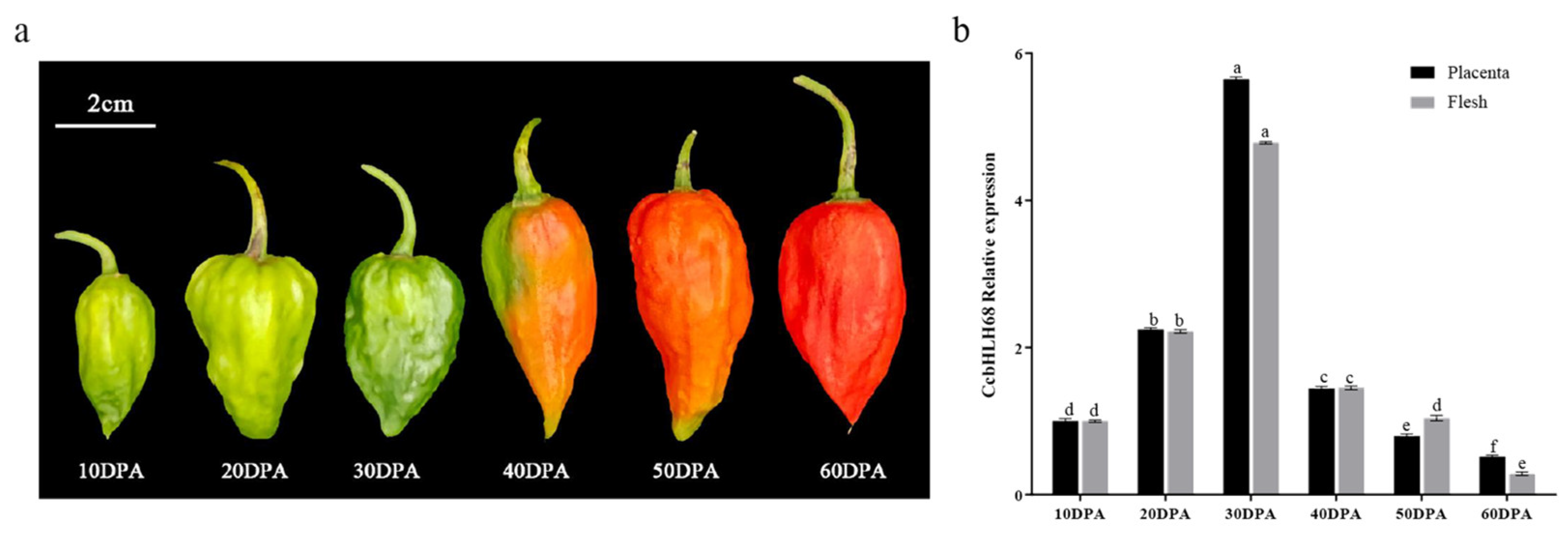
qRT-PCR analysis of six developmental stages showed that the expression of CcbHLH68 in the flesh and placenta increased first and then decreased. In the flesh, the expression of this gene peaked at 30 DPA, 378.5% that of 10 DPA, and then gradually declined. A similar pattern was observed in the placenta, peaking at 30 DPA, which increased by 464.8% compared to 10 DPA. The results suggest that CcbHLH68 may have played an important role in the critical period of fruit development or materials accumulation (Figure 1b).

3.2. Bioinformatics Analysis of CcbHLH68

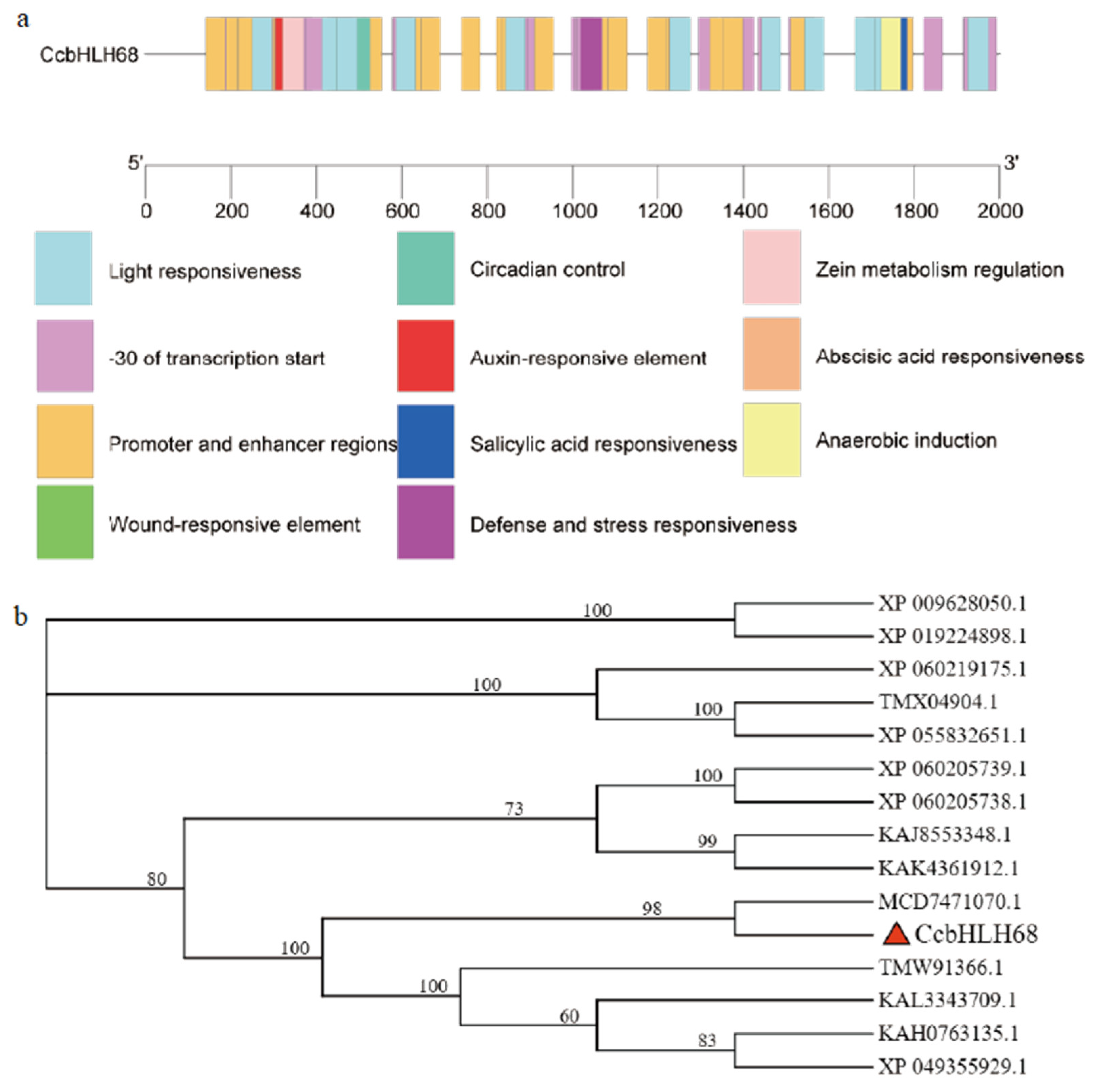
Visualization of the upstream cis-regulatory elements of the CcbHLH68 was performed using TBtools. The results revealed the presence of auxin (IAA), salicylic acid (SA), and abscisic acid (ABA) responsive elements (Figure 2a). This is highly consistent with the known function of the bHLH family as a regulator of hormone signaling, suggesting that the expression of CcbHLH68 may be regulated by these hormones. Furthermore, a phylogenetic tree was constructed using the NCBI database and MEGA software. Subsequent analysis indicated that CcbHLH68 shares the closest phylogenetic relationship with a homolog from Datura stramonium (MCD7471070.1) (Figure 2b).

3.3. Characterization of CcbHLH68

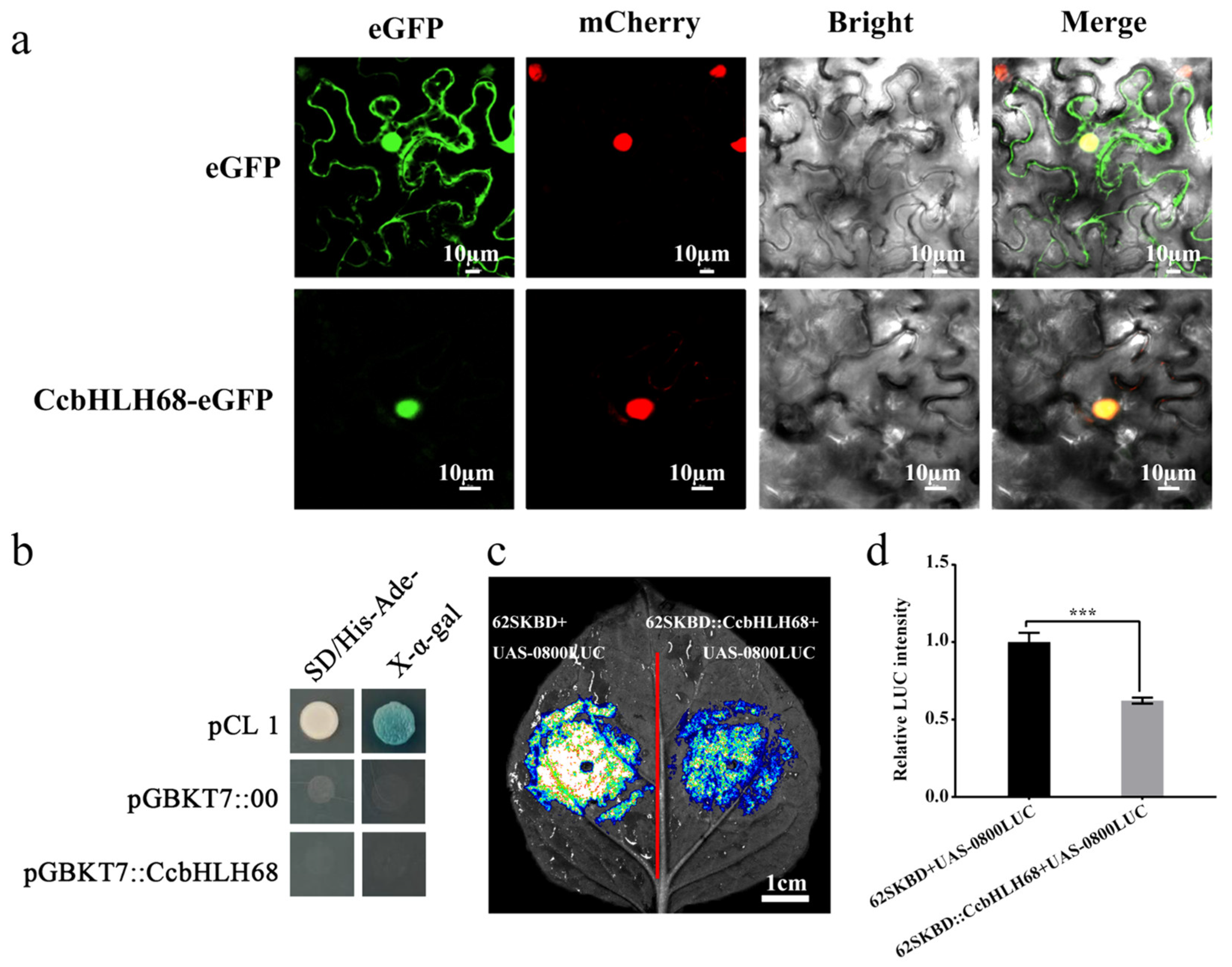
We investigated the subcellular localization of CcbHLH68 by constructing a pC1300S::CcbHLH68 fusion vector and performing infiltration. Using two-photon laser scanning microscopy, we observed that the empty vector (pC1300S::00) showed fluorescence in both the nucleus and cell membrane, indicating a normal system. While when pC1300S::CcbHLH68 was co-expressed with mCherry, its fluorescence was specifically localized in the nucleus (Figure 3a). This confirmed that CcbHLH68 is a nuclear protein.
The transcriptional properties of CcbHLH68 were analyzed using a yeast two-hybrid system and a dual-luciferase reporter assay. In the yeast assay, the positive control pCL1 grew and turned blue on SD/His-Ade-medium, whereas both pGBKT7::00 and pGBKT7::CcbHLH68 failed to grow and showed no color development (Figure 3b), indicating that CcbHLH68 lacks autoactivation activity. In the dual-luciferase assay, the co-transfection of pGreenII-35S-UAS-0800-LUC and pGreenII 62-SK-BD::CcbHLH68 resulted in a significant decrease in both fluorescence intensity and LUC activity compared to the control (Figure 3c,d), demonstrating that CcbHLH68 functions as a transcriptional repressor.

3.4. Identification of CcbHLH68 Silenced Fruits and Its Effect on Capsaicinoid Biosynthetic Structural Genes

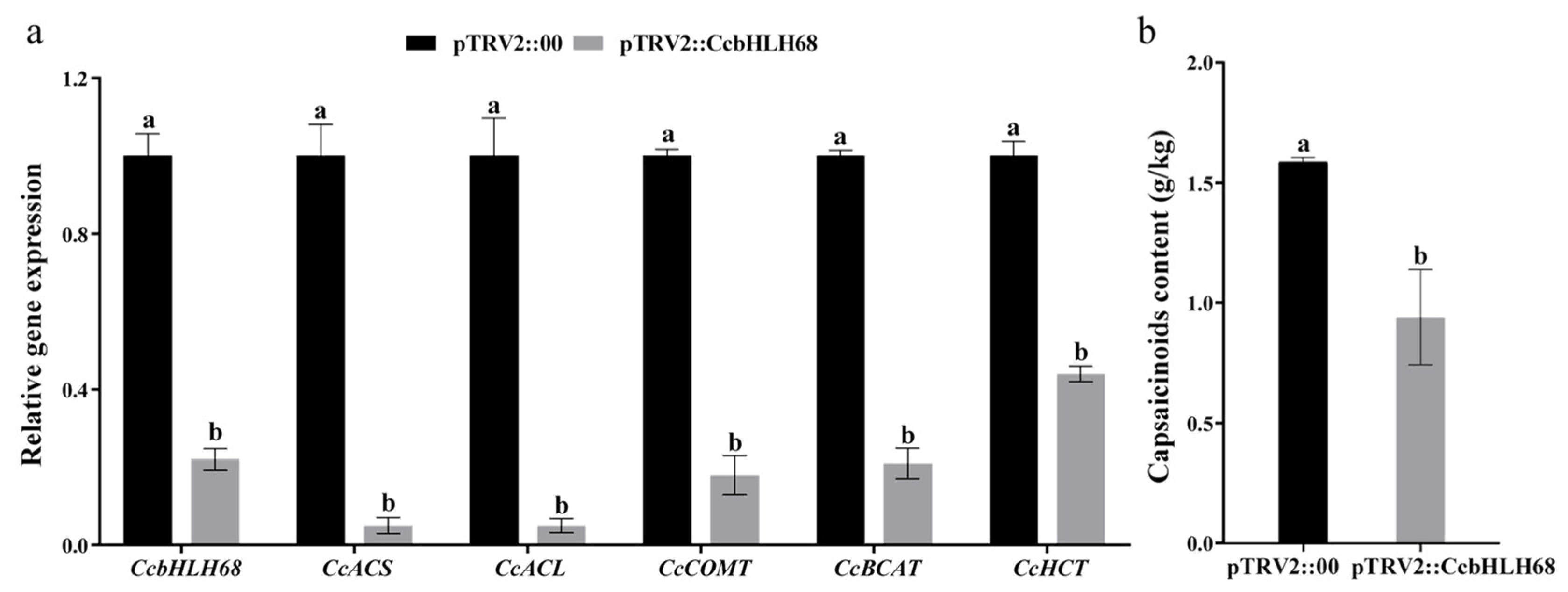
Following the silencing treatment, qRT-PCR analysis was performed on fruit samples. The results indicated that CcbHLH68 expression was significantly downregulated by 78% in the pTRV2::CcbHLH68 relative to the pTRV2::00 (Figure 4a), demonstrating effective gene silencing. Furthermore, expression analysis of key capsaicinoid biosynthetic genes in the positive fruits revealed that the levels of CcACS, CcACL, CcCOMT, CcBCAT, and CcHCT were all markedly down-regulated. The expression of CcACS showed the most pronounced downregulation, with a reduction of nearly 95%. (Figure 4a). The silencing of CcbHLH68 also led to a significant reduction in capsaicinoid content, with a reduction of 40.9% (Figure 4b).

3.5. Identification of CcbHLH68 Transient Overexpression Fruits and Its Impact on Capsaicinoid Biosynthetic Genes

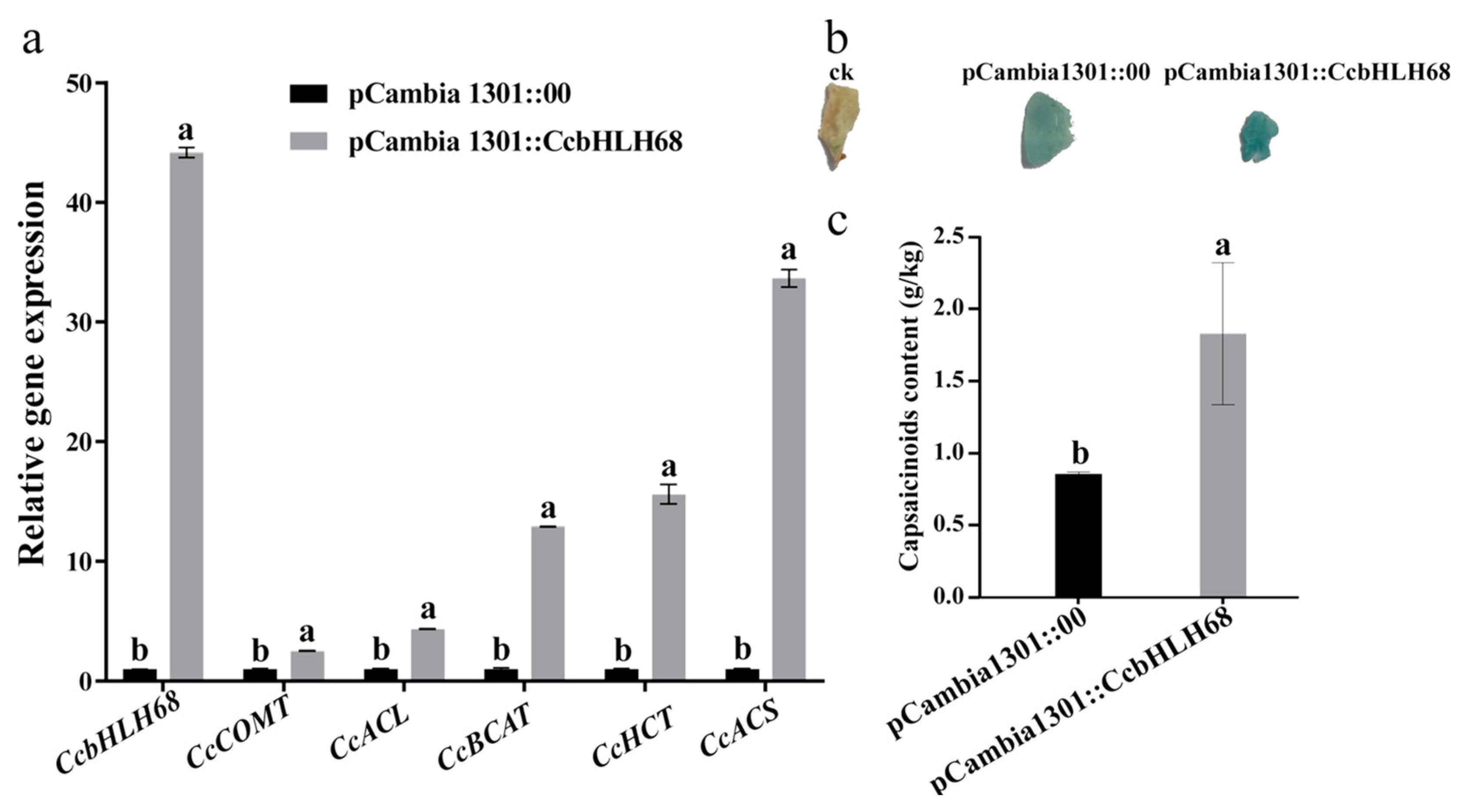
Placental tissues from fruits at 10 days post-infiltration were subjected to GUS staining. After decolorization with alcohol, both the pCambia1301::00 and pCambia1301::CcbHLH68 treatments showed blue coloration (Figure 5b), confirming the successful establishment of the infiltration system. Subsequently, qRT-PCR analysis revealed that the expression level of CcbHLH68 in the placenta of infiltrated ‘Shuanla’ peppers was significantly up-regulated compared to the empty vector control, with a 4316.1% increase (Figure 5a). Concurrently, the expression of multiple structural genes in the capsaicinoid biosynthesis pathway was also significantly elevated in the placental tissue, among which CcACS showed the most pronounced up-regulation-a 3262.7% increase (Figure 5a). The overexpression of CcbHLH68 promoted capsaicinoid biosynthesis, leading to its significant accumulation, which increased by 113.7% (Figure 5c).

3.6. Interaction Between CcbHLH68 and CcCOMT

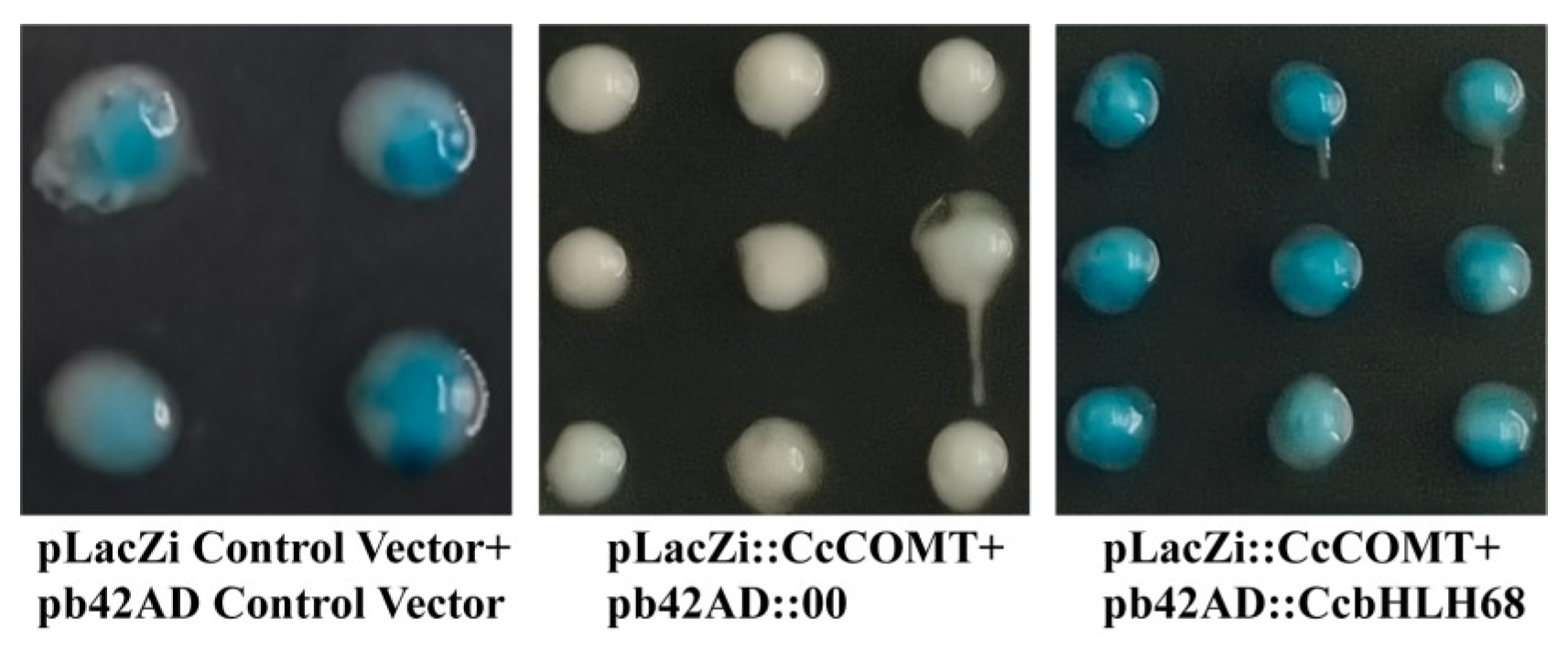
Yeast one-hybrid assay results showed that the positive control turned blue, indicating the normal function of the double-dropout medium system. The yeast colonies co-transformed with pB42AD::CcbHLH68 and pLacZi::CcCOMT also exhibited blue coloration (Figure 6), demonstrating that the CcbHLH68 protein can directly interact with the promoter region of the CcCOMT gene.
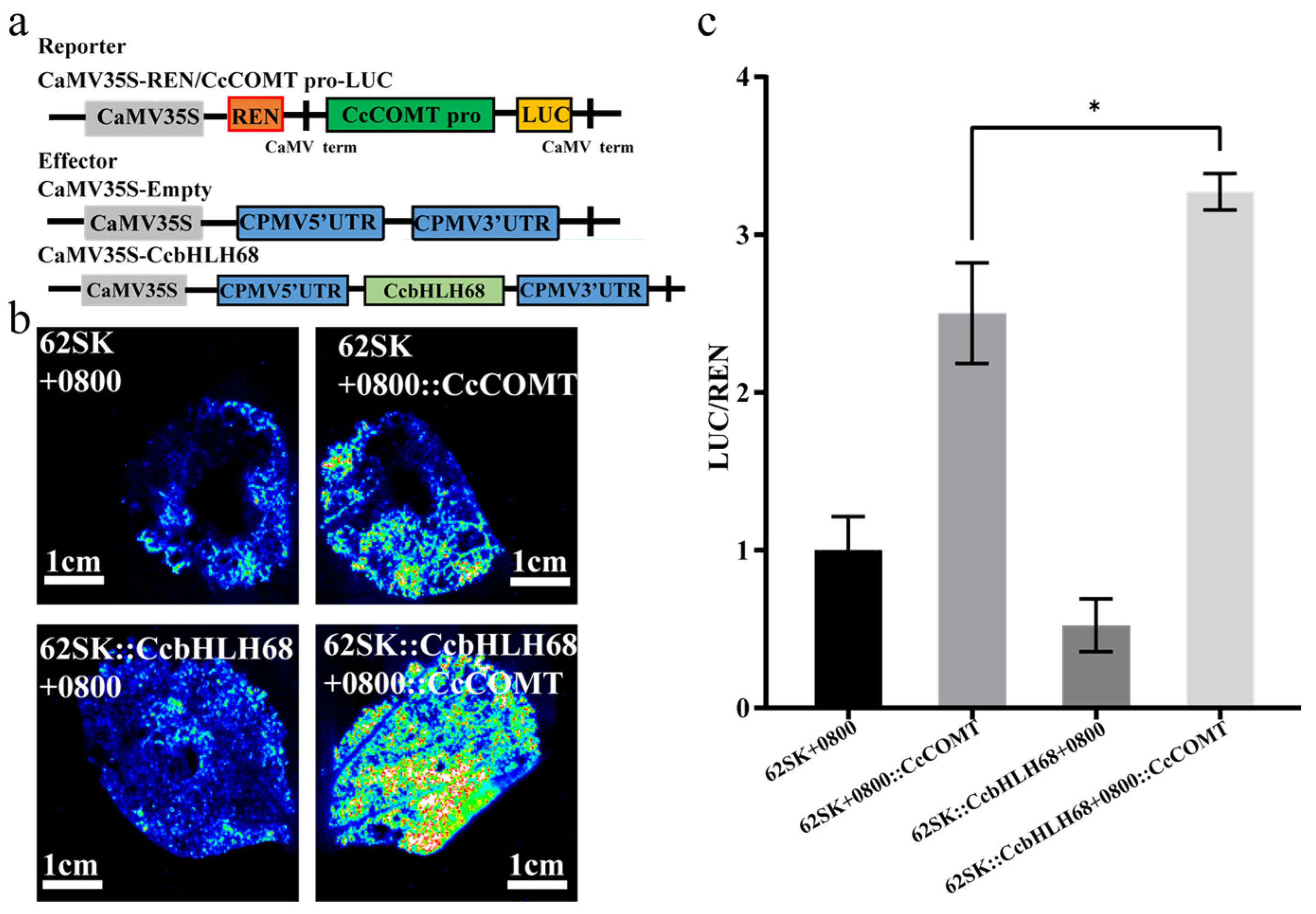
To further investigate the transcriptional regulation mechanism of CcCOMT by CcbHLH68, a dual-luciferase reporter assay was performed. The results showed that no fluorescence was detected in tobacco leaves co-infiltrated with 62SK::00 and 0800-LUC::00, confirming the reliability of the experimental system. However, the fluorescence intensity in tobacco tissues co-transformed with 62SK::CcbHLH68 and 0800-LUC::CcCOMT was significantly higher than that in the control group co-transformed with 0800-LUC::CcCOMT and 62SK::00 (Figure 7b), demonstrating that CcbHLH68 directly activates the expression of CcCOMT. Further quantitative analysis of dual-luciferase activity revealed that the measured LUC enzyme activity was consistent with the fluorescence imaging results described above (Figure 7c), collectively demonstrating that CcbHLH68 can specifically bind to and significantly activate the transcription of the CcCOMT promoter. These results suggest that CcbHLH68 promotes capsaicinoid biosynthesis by regulating the expression of CcCOMT, a key structural gene in the capsaicinoid biosynthetic pathway.

4. Discussion

Pepper is an herbaceous plant with significant economic and ornamental value. Furthermore, it serves as a food ingredient and condiment, leading to considerable market demand [24]. Transcription factors are proteins that bind to cis-elements of specific genes and thereby regulate gene expression [25]. The bHLH family constitutes an important group of transcription factors involved in plant growth, development, and secondary metabolism [26]. They play broad roles in various plant processes, ranging from salt tolerance [27] and anthocyanin synthesis [28] to pollen development [29] and light response [30]. However, the mechanism by which the bHLH family regulates capsaicinoid biosynthesis remains unclear. In this study, using ‘Shuanla’ pepper as the material, we cloned the CcbHLH68 gene. Analysis of its upstream cis-regulatory elements revealed that the promoter region of this gene contains multiple hormone-responsive elements, suggesting that the expression of CcbHLH68 may be regulated by various plant hormones. In soybean, jasmonic acid can induce the expression of GmbHLH3, which participates in root growth regulation by repressing specific genes, while antagonizing the JA-mediated leaf senescence process [31]. This finding provides insights for further investigation into the function of CcbHLH68 in hormone signaling pathways.
Subcellular localization experiments confirmed that CcbHLH68 is localized in the nucleus. Yeast two-hybrid and dual-luciferase reporter assays indicated that CcbHLH68 lacks auto-activation activity and exhibits transcriptional repression activity. However, in the capsaicinoid biosynthetic pathway, CcbHLH68 serves as a transcriptional activator. Song et al. demonstrated CaERF102 and CaERF111 interact with CaMYC2 through yeast two-hybrid and BiFC assays. These findings suggest a cooperative role for these ERF proteins with CaMYC2 in regulating capsaicinoid biosynthesis [32]. Studies have shown that the MYB-bHLH-WD40 (MBW) complex plays a crucial role in regulating plant secondary metabolism. SlMYB75 and SlMYB72 participate in the formation of the MBW complex and antagonistically regulate trichome development in tomato [33]. In blueberry, the expression patterns of MBW complex member genes were significantly and positively correlated with fruit anthocyanin accumulation and coloration [34]. Studies in rice have further demonstrated that members of the MBW complex can effectively activate the expression of key genes in the anthocyanin biosynthesis pathway [35]. Based on the aforementioned mechanism, it is hypothesized that CcbHLH68 may function similarly by interacting with other proteins or forming a complex with specific auxiliary proteins, such as MYB or WD40, thereby activating the transcription of target genes involved in capsaicinoid biosynthesis.
Expression pattern analysis revealed that CcbHLH68 showed an initial increase followed by a decrease in both placenta and flesh. Its expression peak closely overlapped with the key developmental stage of rapid capsaicinoid accumulation [36], suggesting that this gene may represent a critical node in capsaicinoid synthesis. Functional evidence from both gene silencing and overexpression experiments further confirmed the regulatory role of CcbHLH68 in capsaicinoid synthesis.
NOR-like1 positively regulates tomato fruit ripening by directly binding to and activating the promoters of multiple ripening-related genes [37]. MYB31 can bind to the AAACCA motif of AT3 to regulate capsaicin synthesis [38]. Our results show the direct binding and transcriptional activation of the CcCOMT promoter by CcbHLH68, based on yeast one-hybrid and dual-luciferase assays. Given that CcCOMT encodes a key enzyme catalyzing the methylation step in the capsaicinoid biosynthesis pathway and its expression level directly affects the final capsaicinoids yield, this finding indicates a crucial role for CcbHLH68 in regulating capsaicinoid synthesis.
In conclusion, this study demonstrates that CcbHLH68 influences the production of capsaicinoids by regulating genes in the capsaicinoid biosynthesis pathway. This research not only provides novel insights into the transcriptional regulatory network of capsaicinoid biosynthesis but also offers a potential target for genetically manipulating capsaicinoid content. This study provides a foundation for the molecular breeding of pepper flavor quality by enabling precise regulation of capsaicinoid synthesis through genetic engineering or molecular marker-assisted approaches. Future studies should focus on screening proteins that interact with CcbHLH68 and elucidating the molecular mechanisms by which this transcription factor is precisely regulated within different hormone signaling pathways. Future studies should focus on screening proteins that interact with CcbHLH68. Building on the strong correlations observed in transient assays, stable genetic transformation should be employed for further validation. This will help elucidate the precise molecular mechanisms through which this transcription factor is regulated within various hormonal signaling pathways.

5. Conclusions

This study demonstrates that CcbHLH68 is a pivotal transcription factor regulating capsaicinoid biosynthesis. It directly activates the transcription of CcCOMT, a key gene in the synthesis pathway, thereby modulating capsaicinoids production. Despite its intrinsic transcriptional repression activity, CcbHLH68 may function as an activator in the capsaicinoid biosynthesis pathway, potentially through forming complexes with other proteins. Our findings provide novel insights into the regulatory network of capsaicinoid biosynthesis and lay a solid foundation for developing high-capsaicinoid pepper varieties through genetic engineering.

Supplementary Materials

The following supporting information can be downloaded at: https://www.mdpi.com/article/10.3390/horticulturae12010065/s1, Table S1: Primers used in this study.

Author Contributions

H.C. and G.F. designed the experiments and wrote the manuscript. Y.B., M.L. and Z.L. contribute to material preparation and sampling. X.C. and Q.X. performed the majority of the experiments. M.D. and J.L. analyzed the data and wrote the manuscript. All authors have read and agreed to the published version of the manuscript.

Funding

This work was supported by Yunnan Fundamental Research Projects (202301BD070001-016), the National Natural Science Foundation of China (32360744), the Project of Yunnan Science and Technology Plan (202502AE090018, 202402AE090012, 202204BI090004, 202101BD070001-005), and the “Xingdian talent support plan” of Yunnan Province (yfgrc202424, XDYC-QNRC-2022-0713).

Institutional Review Board Statement

Not applicable.

Informed Consent Statement

Not applicable.

Data Availability Statement

All data supporting the findings of this study are available within the paper and its Supplementary Data published online.

Conflicts of Interest

The authors declare no conflicts of interest.

References

  1. Balsak, S.C. First molecular characterization of pepper chat fruit viroid infecting pepper crops in Turkey. J. Plant Dis. Prot. 2025, 132, 96. [Google Scholar] [CrossRef]
  2. Meghvansi, M.K.; Siddiqui, S.; Khan, M.H.; Gupta, V.K.; Vairale, M.G.; Gogoi, H.K.; Singh, L. Naga chilli: A potential source of capsaicinoids with broad-spectrum ethnopharmacological applications. J. Ethnopharmacol. 2010, 132, 1–14. [Google Scholar] [CrossRef]
  3. Austin, M.; Deepesh, K. The Role of Vitamin C in Human Immunity and Its Treatment Potential Against COVID-19: A Review Article. Cureus 2023, 15, e33740. [Google Scholar] [CrossRef]
  4. Delchier, N.; Herbig, A.L.; Rychlik, M.; Renard, C.M.G.C. Folates in Fruits and Vegetables: Contents, Processing, and Stability. Compr. Rev. Food Sci. Food Saf. 2016, 15, 506–528. [Google Scholar] [CrossRef] [PubMed]
  5. Shrikhande, P.V. Formulation and Evaluation of Polyherbal Topical Anti-Inflammatory Emulgel. Res. J. Pharm. Technol. 2013, 6, 118–122. [Google Scholar]
  6. Sana, S.R.G.L.; Lv, C.; Yu, S.; Deng, X.; Dong, Y. Epidural injection of varying doses of capsaicin alleviates inflammatory pain in rats via the TLR4/AKT/NF-κB pathway. Inflammopharmacology 2024, 33, 257–267. [Google Scholar] [CrossRef]
  7. Li, J.; Li, M.; Shen, T.; Guo, Q.; Zhang, R.; Chen, Y.; Zhang, Y.; Luo, K. Molecular and characterization of cassava zinc finger-homeodomain (ZF-HD) transcription factors reveals their role in disease resistance. Int. J. Biol. Macromol. 2024, 279, 134846. [Google Scholar] [CrossRef]
  8. Xie, W.; Ding, C.; Hu, H.; Dong, G.; Zhang, G.; Qian, Q.; Ren, D. Molecular Events of Rice AP2/ERF Transcription Factors. Int. J. Mol. Sci. 2022, 23, 12013. [Google Scholar] [CrossRef] [PubMed]
  9. Ali, A.; Khan, N.M.; Jiang, Y.; Zhou, G.; Wan, Y. Comprehensive Genome-Wide Identification and Expression Profiling of bHLH Transcription Factors in Areca catechu Under Abiotic Stress. Int. J. Mol. Sci. 2024, 25, 12936. [Google Scholar] [CrossRef]
  10. Zhang, X.; Nie, J.; Liang, S.; Wang, S.; Meng, Y.; Liu, Y.; Liu, Y. Genome-Wide Identification and Characterization of bHLH Transcription Factors in Zanthoxylum bungeanum and Their Expression Analysis in Response to Salt Stress. Plant Mol. Biol. Report. 2024, 43, 847–861. [Google Scholar] [CrossRef]
  11. Fu, N.; Wang, L.; Sun, Q.; Wang, Q.; Zhang, Y.; Han, X.; Yang, Q.; Ma, W.; Tong, Z.; Zhang, J. Genome-wide identification of the bHLH transcription factor family and the regulatory roles of PbbHLH74 in response to drought stress in Phoebe bournei. Int. J. Biol. Macromol. 2024, 283, 137760. [Google Scholar] [CrossRef]
  12. Muhammad, K.H.; Xuemei, F.; Huabo, W.; Nan, Y.; Longqing, C. Genome-Wide Identification and Expression Analysis of the bHLH Transcription Factor Family in Wintersweet (Chimonanthus praecox). Int. J. Mol. Sci. 2023, 24, 13462. [Google Scholar] [CrossRef]
  13. Du, F.; Wang, Y.; Wang, J.; Li, Y.; Zhang, Y.; Zhao, X.; Xu, J.; Li, Z.; Zhao, T.; Wang, W.; et al. The bHLH transcription factor gene, OsbHLH38, plays a key role in controlling rice salt tolerance. J. Integr. Plant Biol. 2023, 65, 1859–1873. [Google Scholar] [CrossRef]
  14. Ahmad, A.; Javad, S.; Iqbal, S.; Shahid, T.; Naz, S.; Shah, A.A.; Shaffique, S.; Gatasheh, M.K. Efficacy of soil drench and foliar application of iron nanoparticles on the growth and physiology of Solanum lycopersicum L. exposed to cadmium stress. Sci. Rep. 2024, 14, 27920. [Google Scholar] [CrossRef] [PubMed]
  15. Li, X.; Cao, H.; Yu, D.; Xu, K.; Zhang, Y.; Shangguan, X.; Zheng, X.; Yang, Z.; Li, C.; Pan, X.; et al. SlbHLH152, a bHLH transcription factor positively regulates iron homeostasis in tomato. Plant Sci. 2023, 335, 111821. [Google Scholar] [CrossRef] [PubMed]
  16. Huang, Y.; Xing, X.; Jin, J.; Tang, Y.; Ding, L.; Song, A.; Chen, S.; Chen, F.; Jiang, J.; Fang, W. CmbHLH110, a novel bHLH transcription factor, accelerates flowering in chrysanthemum. Hortic. Plant J. 2024, 10, 1437–1448. [Google Scholar] [CrossRef]
  17. Sun, B.; Zhu, Z.; Chen, C.; Chen, G.; Cao, B.; Chen, C.; Lei, J. Jasmonate-Inducible R2R3-MYB Transcription Factor Regulates Capsaicinoid Biosynthesis and Stamen Development in Capsicum. J. Agric. Food Chem. 2019, 67, 10891–10903. [Google Scholar] [CrossRef] [PubMed]
  18. Wen, J.; Lv, J.; Zhao, K.; Zhang, X.; Li, Z.; Zhang, H.; Huo, J.; Wan, H.; Wang, Z.; Zhu, H.; et al. Ethylene-Inducible AP2/ERF Transcription Factor Involved in the Capsaicinoid Biosynthesis in Capsicum. Front. Plant Sci. 2022, 13, 832669. [Google Scholar] [CrossRef]
  19. Sun, B.; Chen, C.; Song, J.; Zheng, P.; Wang, J.; Wei, J.; Cai, W.; Chen, S.; Cai, Y.; Yuan, Y.; et al. The Capsicum MYB31 regulates capsaicinoid biosynthesis in the pepper pericarp. Plant Physiol. Biochem. 2022, 176, 21–30. [Google Scholar] [CrossRef]
  20. Yu, S.; Zhang, W.; Zhang, L.; Wu, D.; Fu, G.; Yang, M.; Wu, K.; Wu, Z.; Deng, Q.; Zhu, J.; et al. Negative regulation of CcPAL2 gene expression by the repressor transcription factor CcMYB4-12 modulates lignin and capsaicin biosynthesis in Capsicum chinense fruits. Int. J. Biol. Macromol. 2024, 280, 135592. [Google Scholar] [CrossRef]
  21. Zhang, H.; Guo, J.; Chen, X.; Zhou, Y.; Pei, Y.; Chen, L.; Haq, S.U.; Lu, M.; Gong, H.; Chen, R. Pepper bHLH transcription factor CabHLH035 contributes to salt tolerance by modulating ion homeostasis and proline biosynthesis. Hortic. Res. 2022, 9, uhac203. [Google Scholar] [CrossRef]
  22. Zhang, H.; Guo, J.; Chen, X.; Zhou, Y.; Pei, Y.; Chen, L.; Haq, S.U.; Zhang, M.; Gong, H.; Chen, R. Transcription factor CabHLH035 promotes cold resistance and homeostasis of reactive oxygen species in pepper. Hortic. Plant J. 2024, 10, 823–836. [Google Scholar] [CrossRef]
  23. GB/T 21266-2007; Determination of Total Capsaicinoid Content and Representation of Pungency Degree in Capsicum and Its Products. State Administration for Market Regulation: Beijing, China, 2007.
  24. Zhu, X.; Tian, H.; Li, X.; Yan, H.; Yang, S.; He, G. Transcriptome analysis of cadmium accumulation characteristics and fruit response to cadmium stress in Zunla 1 chili pepper. Cogent Food Agric. 2024, 10, 2437136. [Google Scholar] [CrossRef]
  25. Ahmad, Y.; Haider, S.; Iqbal, J.; Naseer, S.; Attia, K.A.; Mohammed, A.A.; Fiaz, S.; Mahmood, T. In-silico analysis and transformation of OsMYB48 transcription factor driven by CaMV35S promoter in model plant-Nicotiana tabacum L. conferring abiotic stress tolerance. GM Crops Food 2024, 15, 130–149. [Google Scholar] [CrossRef]
  26. Zhang, C.; Jiang, L.; Qian, J.; Yu, G.; Qing, H.; Li, L.; Fu, J. Genome-wide analysis of basic helix-loop-helix (bHLH) transcription factors in petunia and identification of the putative candidate member involved in floral volatile benzenoids/phenylpropanoids metabolism. Gene 2025, 938, 149150. [Google Scholar] [CrossRef]
  27. Rai, N.; Rai, S.P.; Sarma, B.K. Chickpea defense against dual stresses of salt and Fusarium wilt is enhanced through selected bHLH transcription factors carrying the bHLH-MYCN domain. Plant Physiol. Biochem. 2025, 218, 109314. [Google Scholar] [CrossRef]
  28. Liu, Z.; Fu, X.; Xu, H.; Zhang, Y.; Shi, Z.; Zhou, G.; Bao, W. Comprehensive Analysis of bHLH Transcription Factors in Ipomoea aquatica and Its Response to Anthocyanin Biosynthesis. Int. J. Mol. Sci. 2023, 24, 5652. [Google Scholar] [CrossRef]
  29. Lai, Z.; Wang, J.; Fu, Y.; Wang, M.; Ma, H.; Peng, S.; Chang, F. Revealing the role of CCoAOMT1: Fine-tuning bHLH transcription factors for optimal anther development. Sci. China Life Sci. 2024, 67, 565–578. [Google Scholar] [CrossRef]
  30. Qin, M.; Wang, T.T.; Deng, D.; Zhang, Q.; Zhu, X.Q.; Jia, F.; Pei, D.; Han, S. Identification and analysis of the light-responsive characteristics of the bHLH transcription factor gene family in Chrysanthemum morifolium. S. Afr. J. Bot. 2024, 166, 60–68. [Google Scholar] [CrossRef]
  31. Wang, T.; Wang, S.; Wang, Y.; Li, J.; Yan, F.; Liu, Y.; Zhao, L.; Wang, Q. Jasmonic acid-induced inhibition of root growth and leaf senescence is reduced by GmbHLH3, a soybean bHLH transcription factor. Can. J. Plant Sci. 2020, 100, 477–487. [Google Scholar] [CrossRef]
  32. Song, J.; Liu, R.; Chen, G.; Lei, J.; Ning, Z.; Tang, X.; Xu, X.; Chen, M.; Cao, B.; Chen, C.; et al. Two APETALA2/ETHYLENE RESPONSE FACTORS coordinately with CaMYC2 positively regulate capsaicinoid biosynthesis in pepper (Capsicum annuum). Hortic. Plant J. 2023, 11, 275–289. [Google Scholar] [CrossRef]
  33. Qi, T.; Wu, M.; Wang, S.; Yuan, Y.; Xu, X.; Zhang, Q.; Jian, Y.; Qiu, D.; Cheng, Y.; Huang, B.; et al. SlMYB72 and SlMYB75 antagonistically regulate trichome formation via the MYB-bHLH-WD40 complex in tomato. J. Biol. Chem. 2025, 301, 108313. [Google Scholar] [CrossRef] [PubMed]
  34. Zhao, M.; Li, J.; Zhu, L.; Chang, P.; Li, L.; Zhang, L. Identification and Characterization of MYB-bHLH-WD40 Regulatory Complex Members Controlling Anthocyanidin Biosynthesis in Blueberry Fruits Development. Genes 2019, 10, 496. [Google Scholar] [CrossRef] [PubMed]
  35. Sun, X.; Zhang, Z.; Li, J.; Zhang, H.; Peng, Y.; Li, Z. Uncovering Hierarchical Regulation among MYB-bHLH-WD40 Proteins and Manipulating Anthocyanin Pigmentation in Rice. Int. J. Mol. Sci. 2022, 23, 8203. [Google Scholar] [CrossRef]
  36. Vázquez-Espinosa, M.; Fayos, O.; González-de-Peredo, A.V.; Espada-Bellido, E.; Ferreiro-González, M.; Palma, M.; Garcés-Claver, A.; Barbero, G.F. Changes in Capsiate Content in Four Chili Pepper Genotypes (Capsicum spp.) at Different Ripening Stages. Agronomy 2020, 10, 1337. [Google Scholar] [CrossRef]
  37. Gao, Y.; Wei, W.; Zhao, X.; Tan, X.; Fan, Z.; Zhang, Y.; Jing, Y.; Meng, L.; Zhu, B.; Zhu, H.; et al. A NAC transcription factor, NOR-like1, is a new positive regulator of tomato fruit ripening. Hortic. Res. 2018, 5, 75. [Google Scholar] [CrossRef]
  38. Zhu, Z.; Sun, B.; Cai, W.; Zhou, X.; Mao, Y.; Chen, C.; Wei, J.; Cao, B.; Chen, C.; Chen, G.; et al. Natural variations in the MYB transcription factor MYB31 determine the evolution of extremely pungent peppers. New Phytol. 2019, 223, 922–938. [Google Scholar] [CrossRef] [PubMed]
Figure 1. Expression analysis of CcbHLH68. (a) Morphology of ‘Shuanla’ pepper fruits at different developmental stages. (b) Relative expression levels of CcbHLH68 in ‘Shuanla’ pepper across various developmental periods and different letters indicate significant differences (p < 0.05).
Horticulturae 12 00065 g001
Figure 2. Bioinformatics analysis of CcbHLH68. (a) Prediction of upstream cis-regulatory elements in the CcbHLH68 gene. (b) Phylogenetic tree of bHLH68 proteins from different plant species. The GenBank accession numbers used in the figure are: NtbHLH68 (XP 009628050.1, Nicotiana tomentosiformis), NabHLH68 (XP 019224898.1, Nicotiana attenuata), LbbHLH68 (XP 060219175.1, Lycium barbarum), ScHLH68 (TMX04904.1, Solanum chilense), SdbHLH68 (XP 055832651.1, Solanum dulcamara), LbbHLH68 (XP 060205739.1, Lycium barbarum), LbbHLH68 (XP 060205738.1, Lycium barbarum), AabHLH68 (KAJ8553348.1, Anisodus acutangulus), AtbHLH68 (KAK4361912.1, Anisodus tanguticus), DsbHLH68 (MCD7471070.1, Datura stramonium), ScbHLH68 (TMX04904.1, Solanum chilense), SsbHLH68 (KAL3343709.1, Solanum stoloniferum), StbHLH68 (KAH0763135.1, Solanum tuberosum), SvbHLH68 (XP 049355929.1, Solanum verrucosum).
Horticulturae 12 00065 g002
Figure 3. Characterization of CcbHLH68. (a) Subcellular localization of CcbHLH68. (b) Autoactivation verification in the yeast two-hybrid system. (c) Autoactivation verification in the dual-luciferase reporter system. (d) Statistical analysis of relative luciferase activity (*** indicates p < 0.001).
Horticulturae 12 00065 g003
Figure 4. CcbHLH68 gene silencing. (a) Relative expression levels of CcbHLH68 and capsaicinoid biosynthetic genes in silenced ‘Shuanla’ fruits and different letters indicate significant differences. (b) Capsaicinoid content after CcbHLH68 silencing and different letters indicate significant differences (p < 0.05).
Horticulturae 12 00065 g004
Figure 5. Transient overexpression of the CcbHLH68. (a) Relative expression levels of CcbHLH68 and capsaicinoid biosynthetic genes in the ‘Shuanla’ overexpression fruits and different letters indicate significant differences. (b) GUS staining of placenta from the ‘Shuanla’ pepper fruits in the overexpression system. (c) Capsaicinoid content after CcbHLH68 overexpression and different letters indicate significant differences (p < 0.05).
Horticulturae 12 00065 g005
Figure 6. Yeast one-hybrid assay of CcbHLH68.
Horticulturae 12 00065 g006
Figure 7. Molecular mechanism of CcbHLH68 regulating its downstream target gene. (a) Schematic diagram of the 62SK::CcbHLH68 and 0800-LUC::CcCOMT vector constructs. (b) In vivo validation of CcbHLH68 regulating CcCOMT in a heterologous system. (c) Relative luciferase activity (LUC/REN ratio) (* indicates p < 0.05).
Horticulturae 12 00065 g007
Disclaimer/Publisher’s Note: The statements, opinions and data contained in all publications are solely those of the individual author(s) and contributor(s) and not of MDPI and/or the editor(s). MDPI and/or the editor(s) disclaim responsibility for any injury to people or property resulting from any ideas, methods, instructions or products referred to in the content.