Article

Identification and Pathogenicity of Fungal Pathogens Associated with Leaf Disease of Fallopia multiflora in China

1
Department of Plant Protection, College of Agriculture, Yangtze University, Jingzhou 434025, China
2
MARA Key Laboratory of Sustainable Crop Production in the Middle Reaches of the Yangtze River (Co-Construction by Ministry and Province), Yangtze University, Jingzhou 434025, China
3
State Key Laboratory of Mycology, Institute of Microbiology, Chinese Academy of Sciences, Beijing 100101, China
4
Laboratory of Mycology and Phytopathology, All-Russian Institute of Plant Protection, Shosse Podbelskogo 3, 196608 St. Petersburg, Russia
5
Institute of Special Wild Economic Animals and Plants, Chinese Academy of Agriculture Sciences, Changchun 130112, China
*
Authors to whom correspondence should be addressed.
These authors contributed equally to this work.
Horticulturae 2026, 12(2), 204; https://doi.org/10.3390/horticulturae12020204
Submission received: 30 December 2025 / Revised: 24 January 2026 / Accepted: 2 February 2026 / Published: 6 February 2026

Abstract

Fallopia multiflora (Thunb.) Harald is a valuable medicinal plant with substantial economic and therapeutic value, widely cultivated in southern China. In 2025, a leaf disease outbreak occurred in an F. multiflora plantation in Tongnan District, Chongqing, China. Diseased samples were collected for pathogen isolation, and seven representative strains were selected from 50 pure isolates via preliminary pathogenicity tests. Species identification was performed using a combination of morphological characterization and multi-locus phylogenetic analysis, targeting the Internal Transcribed Spacer (ITS), Translation Elongation Factor 1-alpha (TEF1), RNA Polymerase II Second Largest Subunit (RPB2), Beta-tubulin (β-TUB2), Heat Shock Protein 60 (HSP60), and Glyceraldehyde-3-Phosphate Dehydrogenase (G3PDH) gene regions. The isolates were identified as Alternaria alternata, Botrytis cinerea, Botrytis polygoni, Epicoccum mackenziei, and Lasiodiplodia citricola. Pathogenicity assays on living F. multiflora leaves confirmed that all identified species could induce disease symptoms, with distinct interspecific differences. This study verifies that multiple pathogenic fungi can infect F. multiflora, with potential co-infection. It improves our understanding of the pathogenic fungal community associated with this medicinal plant and lays a foundation for subsequent disease management in its cultivation.

1. Introduction

Fallopia multiflora (Thunb.) Moldenke. (Syn. Polygonum multiflorum Thunb.), commonly known as “He Shou Wu” or “Fo-Ti”, is a perennial twining vine belonging to the family Polygonaceae. The plant is characterized by its opposite leaves with ochreae at the nodes, small greenish flowers in axillary racemes, and laterally compressed achenes [1,2]. It thrives across a broad altitudinal range (200–2200 m), often climbing among shrubs or sprawling over rocks in mixed broadleaf forests, native to central and southern China. As a significant herbal medicine in Chinese tradition, it has been utilized for nearly a thousand years. Recent studies have demonstrated its tuberous root antioxidative properties [3,4], containing abundant anthraquinones possessing anti-cancer effects [5]. The leaves, rich in lecithin, derivatives, and flavonoids such as myricitrin, quercitrin, and afzelin, can inhibit cholesterol absorption, promote metabolism, lower blood lipid levels, prevent atherosclerosis, and offer significant antioxidant activity, making them ideal for use in health-promoting tea [6].
Fallopia multiflora holds long-standing cultural and medicinal significance, and its commercial value has grown steadily as a natural source of bioactive stilbenes and other secondary metabolites; recently developed genomic resources have further advanced molecular research to support disease diagnostics and future resistance-breeding initiatives [7,8]. Despite its considerable economic importance, published records documenting foliar and root diseases of F. multiflora remain sparse, with only a handful of case reports available to date. In 2012, Alternaria astragali was identified as the causal agent of leaf spot on F. multiflora in Kunming, China [9]. In 2014, Fusarium oxysporum, the pathogen responsible for Fusarium wilt, was isolated from greenhouse-cultivated F. multiflora in Yeongju-si, Korea [10]. These findings underscore the critical need for systematic surveys and comprehensive identification of causal pathogens in commercial F. multiflora plantations [11].
In the spring of 2025, severe leaf diseases with various symptoms were frequently encountered in a Fallopia multiflora plantation, located in Tongnan District, Chongqing, China. To discover their causal pathogens, samples were collected twice from the same plantation in February and April. A preliminary pathogenicity assay was performed on the fungi isolated from diseased leaves of F. multiflora, and six fungal species were ultimately confirmed as pathogenic fungi. Their phenotypic and molecular characteristics were further characterized through colony morphology observation and multi-gene phylogenetic analysis.

2. Materials and Methods

2.1. Sample Collection and Fungal Isolation

Diseased leaves of F. multiflora were randomly collected from a F. multiflora plantation in Tongnan District (30°12′51.26″ N, 105°44′01.74″ E, 249 m above sea level), Chongqing, China, in February and April of 2025. Leaf samples with different symptoms were collected from the plantation, totaling 46 samples (Figure 1). The collected samples were placed in sterile plastic bags and transported to the laboratory for fungal isolation. A typical lesion representing a kind of symptom was cut into a square (diameter: 1 cm) containing both diseased and health tissue; divided into several pieces (≥4) along with the central axis of the square’s center point; surface disinfected with 75% ethanol solution for 1 min, 2% sodium hypochlorite for 30 s, and rinsed with distilled water for 3 times; and then put onto Petri-dish with potato dextrose agar (PDA; Difco, Montreal, QC, Canada). Fungal hyphae from the edge of the upcoming colonies were collected and transferred to PDA Petri dishes. Meanwhile, the previously mentioned tissues containing both diseased and healthy parts were put onto two moist filter papers placed in a 90 mm Petri dish and incubated at 25 °C to promote sporulation. Individual conidia were carefully picked using sterile glass needles under a stereomicroscope and inoculated on PDA media. Purified single-spore cultures (n = 50) were preserved in test-tube slants at 4 °C and glycerol storks at −80 °C, and deposited in the Fungi Herbarium of Yangtze University (YzU), Jingzhou, Hubei Province, China.

2.2. Morphological Observations

The growth rate, color, and texture of colonies on PDA or Oatmeal agar (OA; Difco, Montreal, QC, Canada) were determined [12]. Mycelial plugs (6 mm in diameter) were taken from the edge of colonies and inoculated at 25 °C in darkness. The cultural characteristics were recorded after 7 days.
To observe the conidial morphology (sporulation patterns, color, shape, septa, size, etc.), the following culture conditions were used for different fungal genera:
  • Alternaria spp.: Mycelia were cultured on potato carrot agar (PCA) and V8 juice agar (V8A) at 22 °C under an 8 h light/16 h dark cycle. The conidia and sporulation patterns were determined after 7 days [13].
  • Botrytis spp.: Conidia and sporulation phenotypes were observed after 7 days of incubation on water agar (WA) [14] and Fallopia multiflora leaf tissue-amended water agar (FM-WA) at 25 °C under a 12 h light/dark photoperiod.
  • Lasiodiplodia spp. and Epicoccum spp.: Conidia, conidiomata, and pycnidia developed after 14 days grown on PDA at 25 °C with a 12 h light/12 h dark cycle were investigated [15,16].
All the structures were mounted in Lactophenol Picric Acid solution (LPA) or stained with Lactophenol Cotton Blue solution (LPCB) and photographed with a Nikon ECLIPSE Ni-U microscope (Nikon, Tokyo, Japan). It was measured and described for each characteristic (n = 30).

2.3. DNA Extraction and PCR Amplification

Genomic DNA was extracted from fresh mycelia collected from colonies grown on PDA using the CTAB method [17,18]. For PCR amplification, a 25 μL reaction mixture was prepared, consisting of 21 μL of 1.1 × Taq PCR Star Mix (TSINGKE, Beijing, China), 2 μL of template DNA, and 1 μL of each primer. It was conducted in a Bio-Rad T100 thermocycler (Hercules, CA, USA). The details for PCR primers and reaction conditions for ITS, TEF1, RPB2, β-TUB2, HSP60, and G3PDH gene regions are listed in Table 1. The resulting products are sent to the TSINGKE company for bidirectional sequencing.

2.4. Phylogenetic Analyses

The resulting sequences were analyzed using BioEdit v.7.0.9 [25] and assembled with PHYDIT3.2 [26]. The relevant sequences were retrieved from the NCBI (https://blast.ncbi.nlm.nih.gov/Blast.cgi, accessed on 10 March 2025) database based on BLAST search results (Table S1). The concatenated dataset of multiple loci (ITS, TEF1, RPB2, β-TUB2, HSP6dw0, and GAPDH) was aligned using MEGA v.11.0.11 and OFPT v.1.9.0 [27,28]. The phylogenetic analysis of each alignment was conducted using maximum likelihood (ML) and Bayesian inference (BI) methods. For the ML analysis, bootstrapping with 1000 replicates was performed based on the nucleotide substitution model selected by MrModeltest v.2.3 [29]. For the BI analysis, a Markov chain Monte Carlo (MCMC) algorithm was run with 1,000,000 generations using two independent chains initiated from random trees, with the best-fit nucleotide substitution model determined by MrModeltest v.2.3 according to the Akaike Information Criterion (AIC). Trees were sampled every 100 generations; the first 25% of samples were discarded as burn-in, and a 50% majority-rule consensus tree with corresponding posterior probability values was subsequently calculated. Finally, the phylogenetic trees were edited with FigTree v.1.3.1 [30], and branch supports for each clade (ML bootstrap value > 60% and Bayesian posterior probability > 0.6) were indicated in the phylograms.

2.5. Pathogenicity Tests

Pathogenicity assays were performed following the guidelines of Bhunjun et al. [12] to determine the pathogenicity of the obtained strains on leaves of Fallopia multiflora. Seven representative strains were used after preliminary determination of all strains’ pathogenicity. Plant samples collected from the plantation were taken and transplanted into pots and grown in a greenhouse (25 °C, 12 h light cycle) for two weeks. Mycelial discs (6 mm in diameter) from the edge of growing colonies on PDA or empty media (controls) were inoculated onto healthy leaves after surface sterilization with 70% ethanol solution. For each strain, three similar living leaves per plant (n = 3) were tested, and the experiment was performed in triplicate [31]. Disease progression was observed daily. Because of the primary medicinal and economic values of Fallopia multiflora tuberous root, it was also treated with all the previous strains. The fresh tubers were purchased from the local market; surface-sterilized by 70% ethanol solution for 2 min, 1% sodium hypochlorite for 3 min; rinsed with sterile distilled water three times; and air-dried in a clean bench [32]. Two holes (6 mm) per one tuberous root were inoculated with previously mentioned mycelial discs, and controls were treated with aseptic PDA discs. All the roots were transferred into moistened clean boxes kept in a dark condition at 25 °C and evaluated after 7 days. One strain was tested on two tubers, and the experiment was also performed three times [33,34].
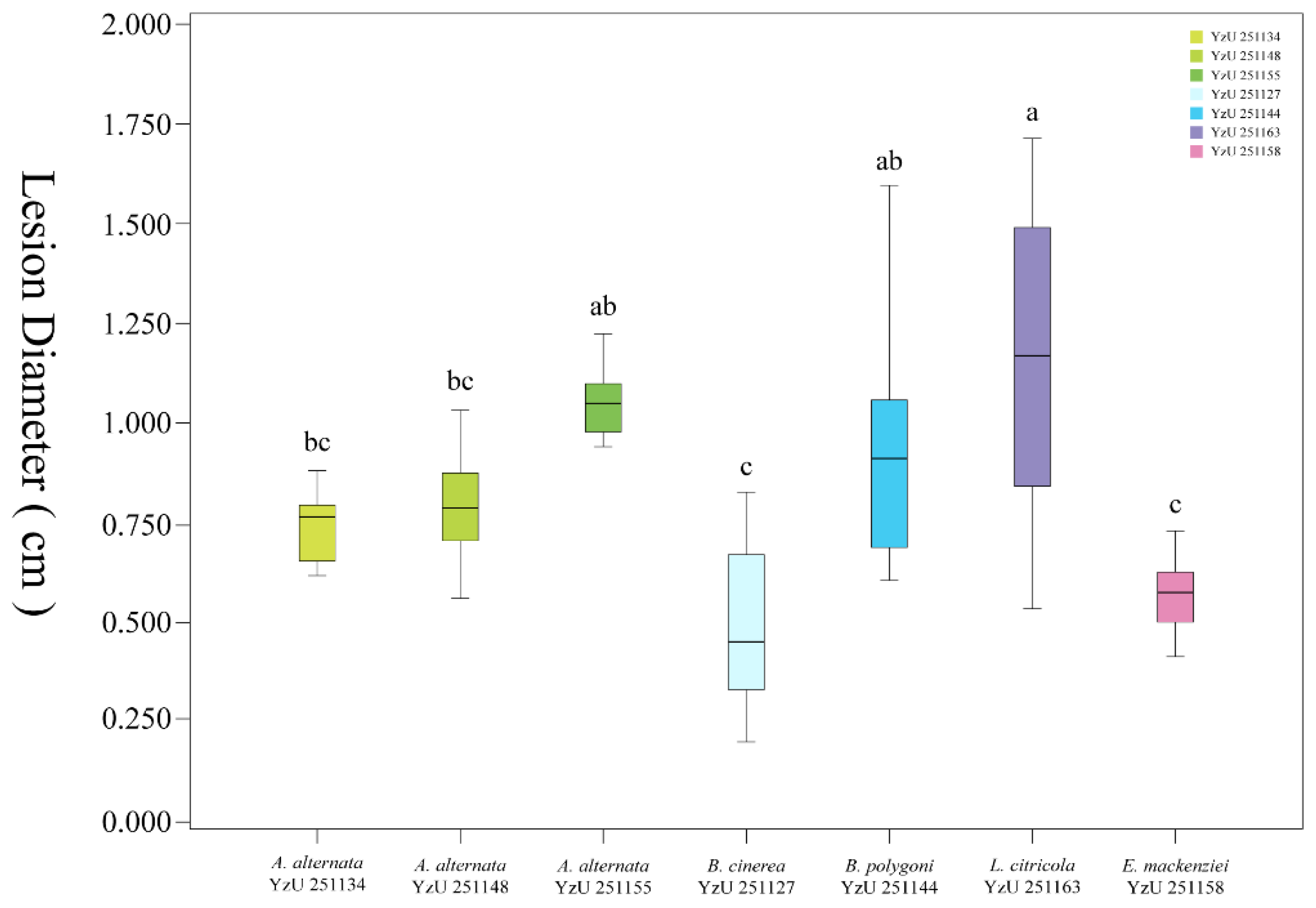
The disease severity was evaluated after 7 days. To fulfill Koch’s postulates, pathogens were re-isolated from symptomatic tissues and confirmed by morphology and RPB2 sequencing [35]. To determine the disease severity, lesion size (LS) is measured and analyzed using mean ± standard deviation (SD). Before intergroup comparisons, normality (Shapiro–Wilk test) and homogeneity of variance (Levene’s test) were assessed [36]. When these assumptions were satisfied, one-way analysis of variance (one-way ANOVA) was used to compare LS among strains, followed by Tukey’s HSD post hoc test for pairwise comparisons [37]. All tests were two-tailed with a significance level of p < 0.05, and statistical analyses were conducted using IBM SPSS Statistics 24.0.0 [38].

3. Results

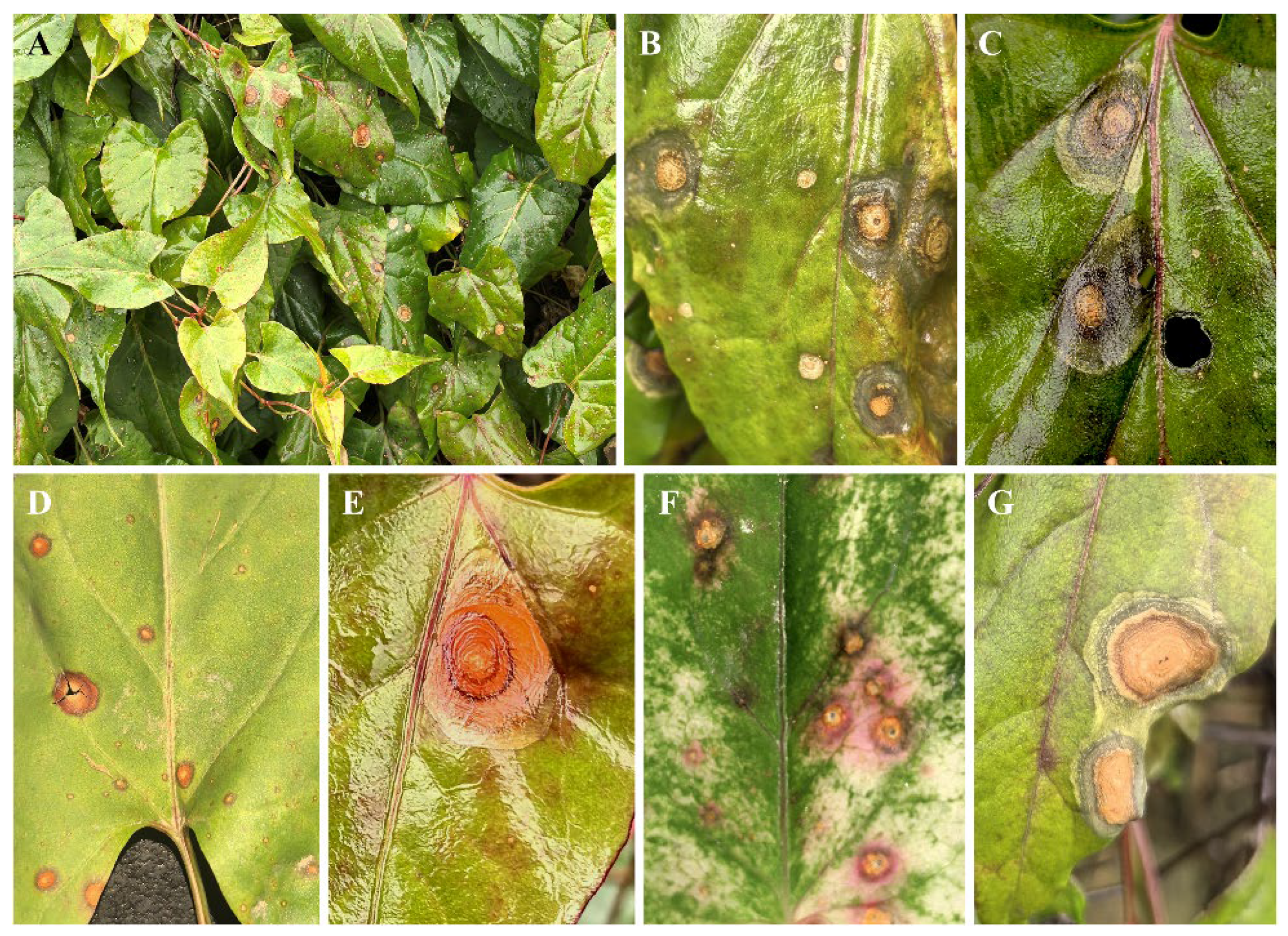
Based on morphological and multi-locus phylogenetic analyses, five fungal pathogenic species were identified from leaf symptoms of Fallopia multiflora, including Alternaria alternata (Figure 1B,C), Botrytis cinerea (Figure 1D,E), B. polygoni (Figure 1E), Epicoccum mackenziei (Figure 1F), and Lasiodiplodia citricola (Figure 1G). The morphology, phylogenetic position, and pathogenicity of each species were described and illustrated in this study.

3.1. Taxonomy

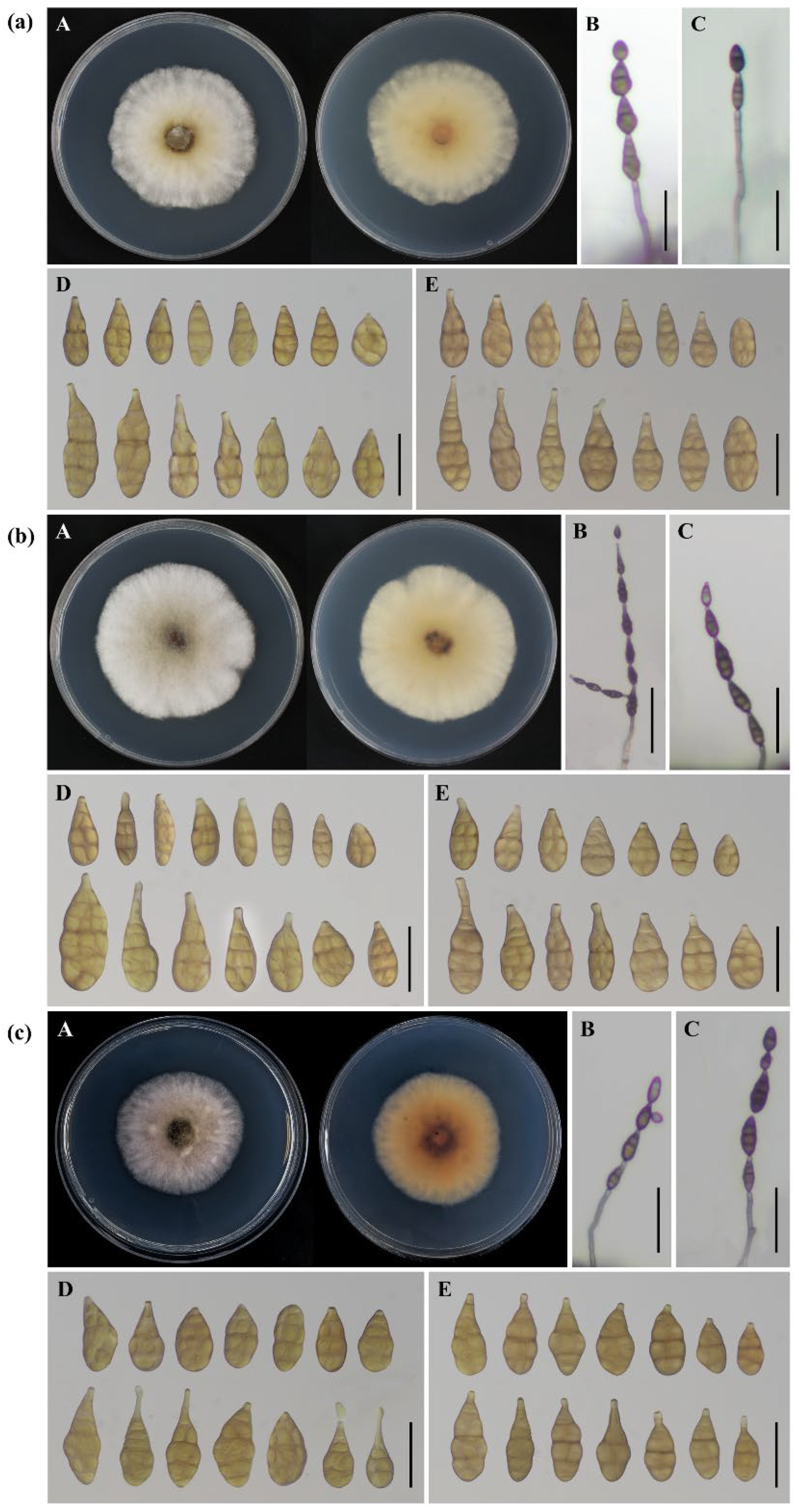
  • Alternaria alternata (Fr.) Keissl, Beih. Bot. Centralbl. 29: 434 (1912) (Table 2, Figure 2)
Figure 2. Morphology of three representative strains of Alternaria alternata. ((a), YzU 251134; (b), YzU 251148; (c), YzU251155); (A) Colony phenotype (on PDA for 7 days at 25 °C); (B,C) Sporulation patterns (on PCA and V8A at 22 °C); (D,E) Conidia (on PCA and V8A at 22 °C). Scale bars: (B,C) = 50 μm; (D,E) = 25 μm.
Horticulturae 12 00204 g002
Cultural characteristics (on PDA, 25 °C, 7 d)
YzU 251134 formed a 51 mm colony with radial dense velvety mycelia containing loose mycelial ring near the irregular margin, off-white to brown in color and reverse off-white to pale luteous (Figure 2a); YzU 251148 colonies were 51–54 mm circularly, diffuse dense in texture, cottony or fluffy, white to sulfur yellow (centrally), reverse white to straw yellow, with distinct wedge-shaped sectors at the periphery (Figure 2b); YzU 251155 produced fluffy aerial mycelia, dense in the center, then gradually turning to sparse, 47–49 mm in size, with regular margin, white to saffron, sienna to orange in reverse (Figure 2c).
Conidial morphology
On PCA (22 °C, 7 d): YzU 251134 produced conidia in chains of 2–5, yellow-brown to light olive-green, muriform, 19.1–37.3 × 6.7–9.4, with 2–7 transverse and 0–2 longitudinal septa; beak 2.3–5.9 (–15.3) × 2.4–4.0 μm; YzU 251148 conidia were normally 3–8 units per chain, yellow-brown to dark brown, variable (ovate, spindle, elliptic, obpyriform), 18–35.6 × 7.3–14.9 μm, 1–6 transverse and 0–3 longitudinal septa, beak 2–5 × 2–4 μm; YzU 251155 formed conidia 2–6 in a chain, yellow-brown to dark brown, ovate to spindle, (10.9–) 16.4–20.8(–26.3) × (2.6–)3.4–10.3 μm, 3–6 transverse and 0–2 longitudinal septa; beak 2–12.1(–19.2) × 2.3–3.9 μm (Figure 2B, 2D).
On V8A (22 °C, 7 d): YzU 251134 produced conidia 3–5 units in a chain, medium yellow-brown to isabelline, nearly smooth ellipsoid or ovoid, 14–41 × 8.4–8.9 μm, 0–6 transverse and 0–2 longitudinal septa, obtuse beak 2.5–10.8(–19.7) × 1.7–3.9 μm; YzU 251148 conidia were in chains of 3–5, brown to dark brown, ovate, elliptico or bpyriform, 18.5–42.1 × 9–16.4 μm, 0–6 transverse and 0–3 longitudinal septa; beak 2.2–5.1(–11) × 2.1–3.8 μm; YzU 251155 formed conidia 2–5 per chain, citrine yellow-brown, ovate-spindle or muriform/elliptic, 18.1–22.4 × 7.4–11.1 μm, 3–5 transverse and 0–3 longitudinal septa, beak 2.7–8.5(–14.4) × 2.2–4.1 μm (Figure 2C,E).
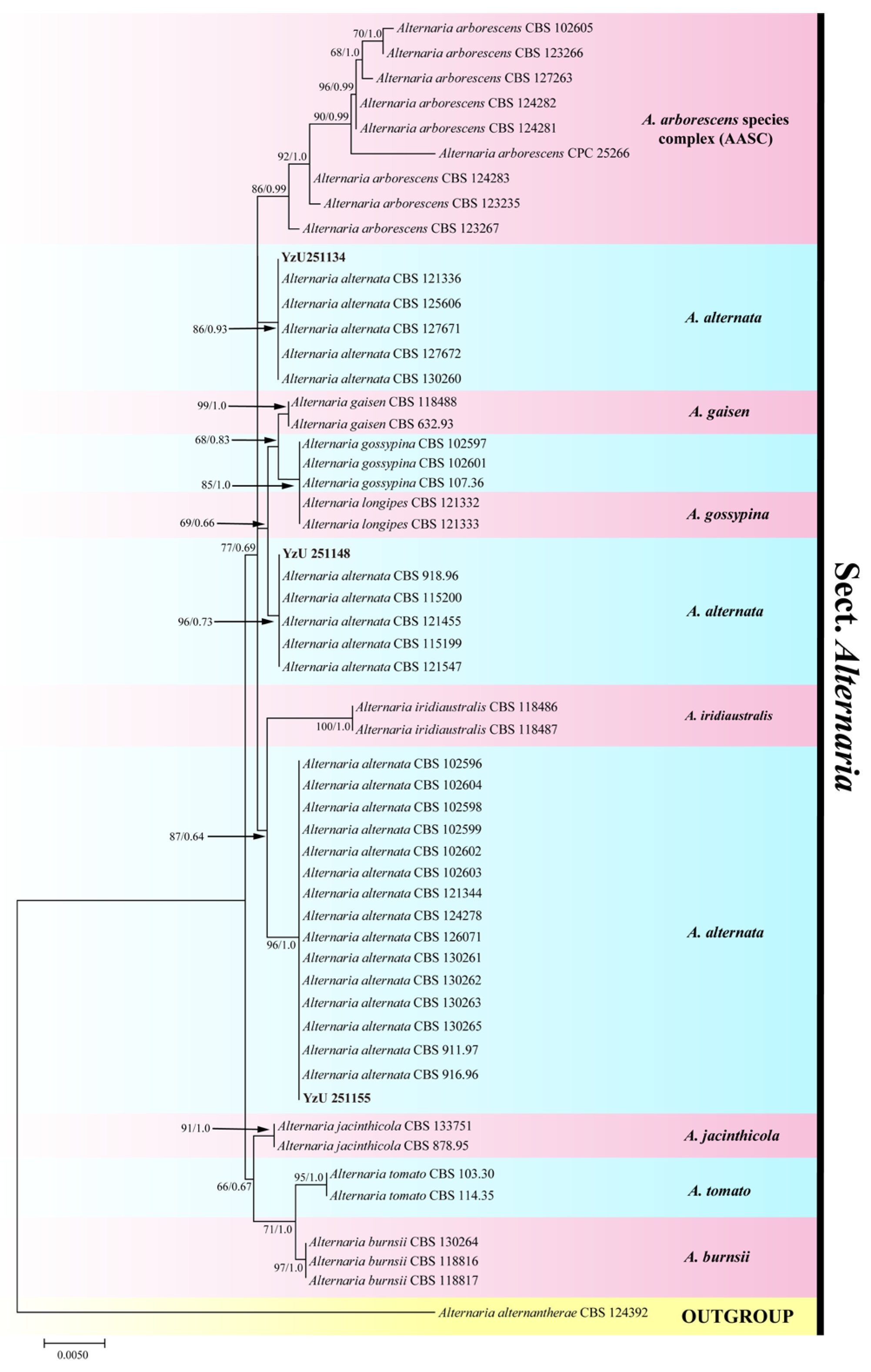
Note: The morphology of all three A. alternata strains matched the description of Simmons (2007), which also fell into section Alternata, phylogenetically (Woudenberg et al. 2015). YzU 251148 formed wider conidia in longer chains among the three strains (Table 2), while YzU 251134 and YzU 251148 produced conidia with longer bodies when compared with YzU 251155. The strain YzU 251134 grouped with the type strain CBS 127672 of morpho-species A. alternata (Astragalus bisulcatus), supported by high BS  (86%) and PP (0.93) values, YzU 251148 fell into a clade with representative strain CBS 918.96 of A. tenuissima (BS/PP =  96%/0.73), and YzU 251155 was with the type strain (CBS 916.96) of A. alternata (BS/PP =  96%/1.0) (Figure 3).
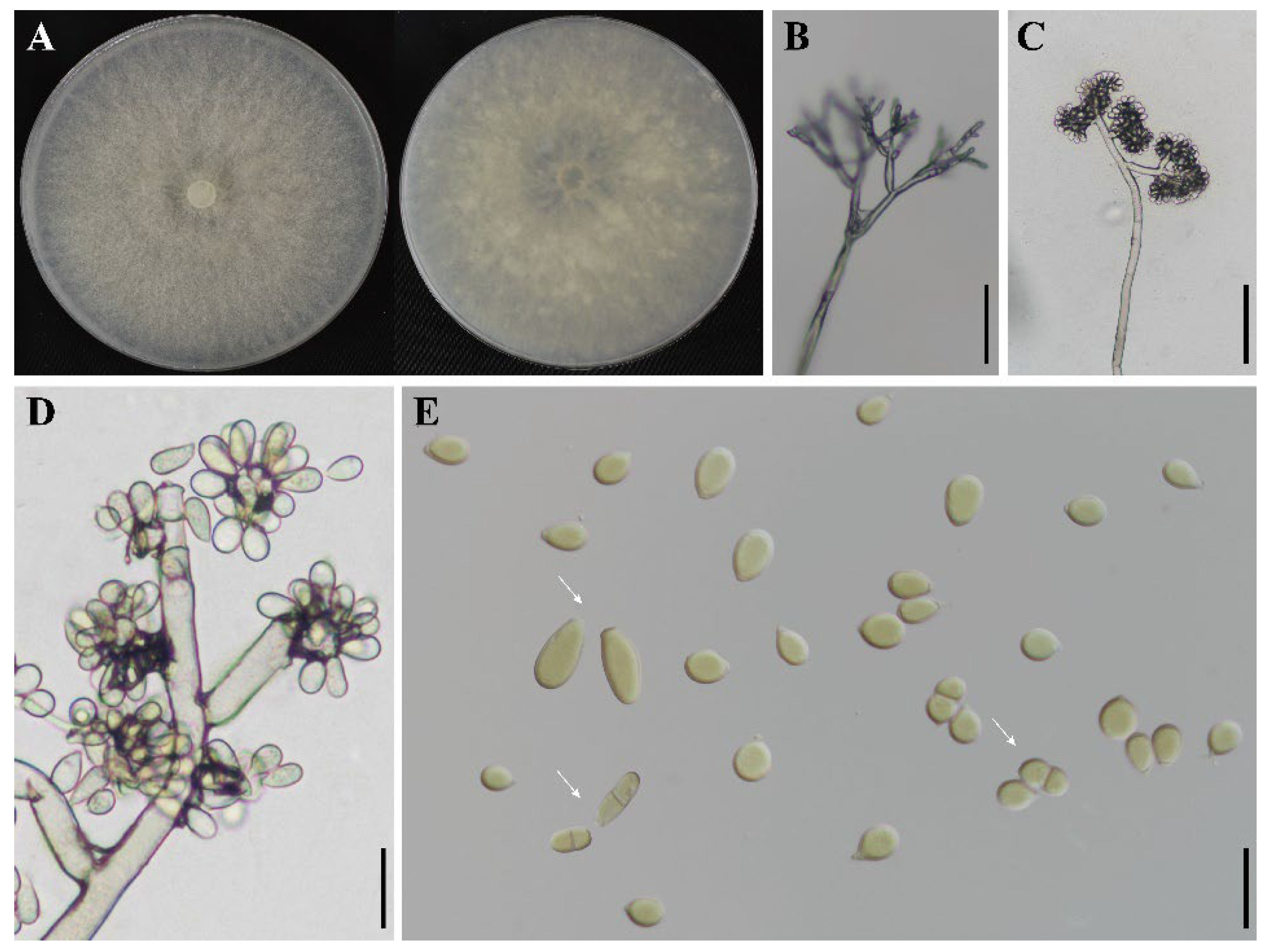
  • Botrytis cinerea Pers., Neues Magazin für die Botanik 1: 127 (1794). (Table 2, Figure 4)
Cultural Characteristics (on PDA, at 25 °C)
Colonies of YzU 251127 covered 90 mm plates on 6 days, radial growth, floccose, with a ring of abundant, elevated aerial mycelium present near the center, initially white to creamy, later turning gray to gray-brown, the reverse pale to gray-brown.
Conidial morphology (on WA, at 25 °C, 7 d)
The conidiophore is erect, arising singly from aerial hyphae, slender, and branched, hyaline with a smooth surface (Figure 4B). The conidia, hyaline to light brown, were often produced in clusters on short stalks or at conidiophore apices, ovate, ellipsoidal, pyriform, or globose, sometimes flat in one part, generally unicellular, sporadically septate, 8.3–12.9 × 6.1–8.9 μm in size (Figure 4E, Table 2). Seldom sclerotia were produced after 14-day inoculation.
Note: A multi-locus analysis (RPB2, HSP60, GAPDH) placed YzU 251127 in an individual clade with Botrytis cinerea (BS/PP =  100%/1.0) (Figure 4). In terms of morphology, the strain exhibits no significant differences from reported strains of Botrytis cinerea (Table 2).
  • Botrytis polygoni He, Wen, Bai, Jing, and Wang, Mycologia 113: 78–91 (2021). (Table 2, Figure 5)
Cultural Characteristics (on PDA, 25 °C, 7 d)
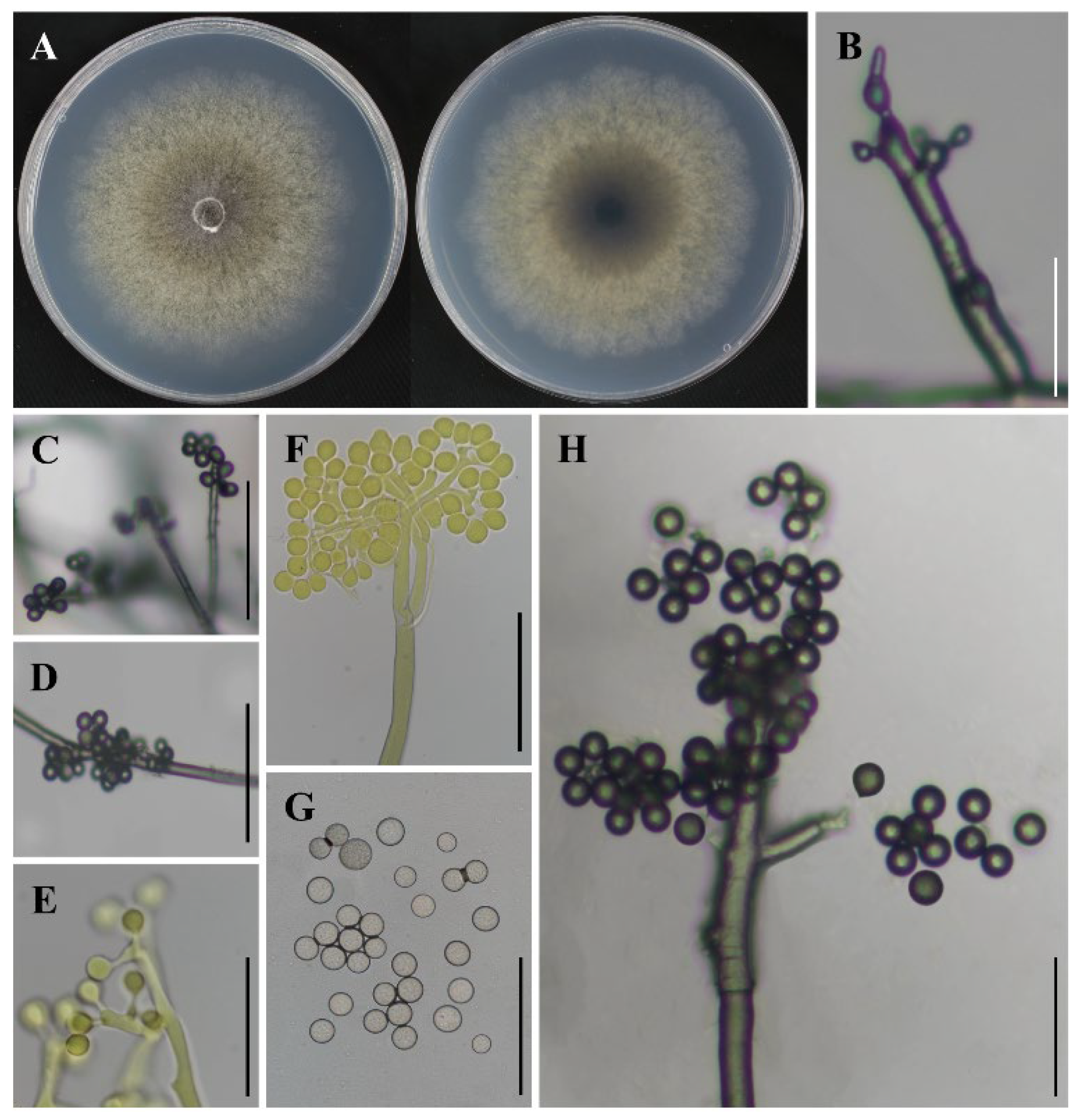
Colonies of YzU 251144 covered 65–66 mm, radially growing with sparse aerial mycelia, irregular margin, edge light yellow-green gradually to olivaceous in the center, and darker color in the same reverse areas (Figure 5A), showing with clear color rings.
Conidial morphology (on FM-WA, 25 °C for 7 d under a 12 h light/dark cycle)
Conidiophores were hyaline, solitary, and branched with little or undifferentiated hyphae at the end serving as the bearing structures of conidia, which aggregated to form viscous spore masses (Figure 5B–F). Sometimes, conidia are directly formed inside hyphae and pile up around the hyphae (Figure 5D). The conidia are hyaline, unicellular, spherical, and sub-spherical, 15.16–21.15 μm (av.: 17.68 ± 0.47 μm) (Figure 5G; Table 2). Sclerotia appeared after 14 days.
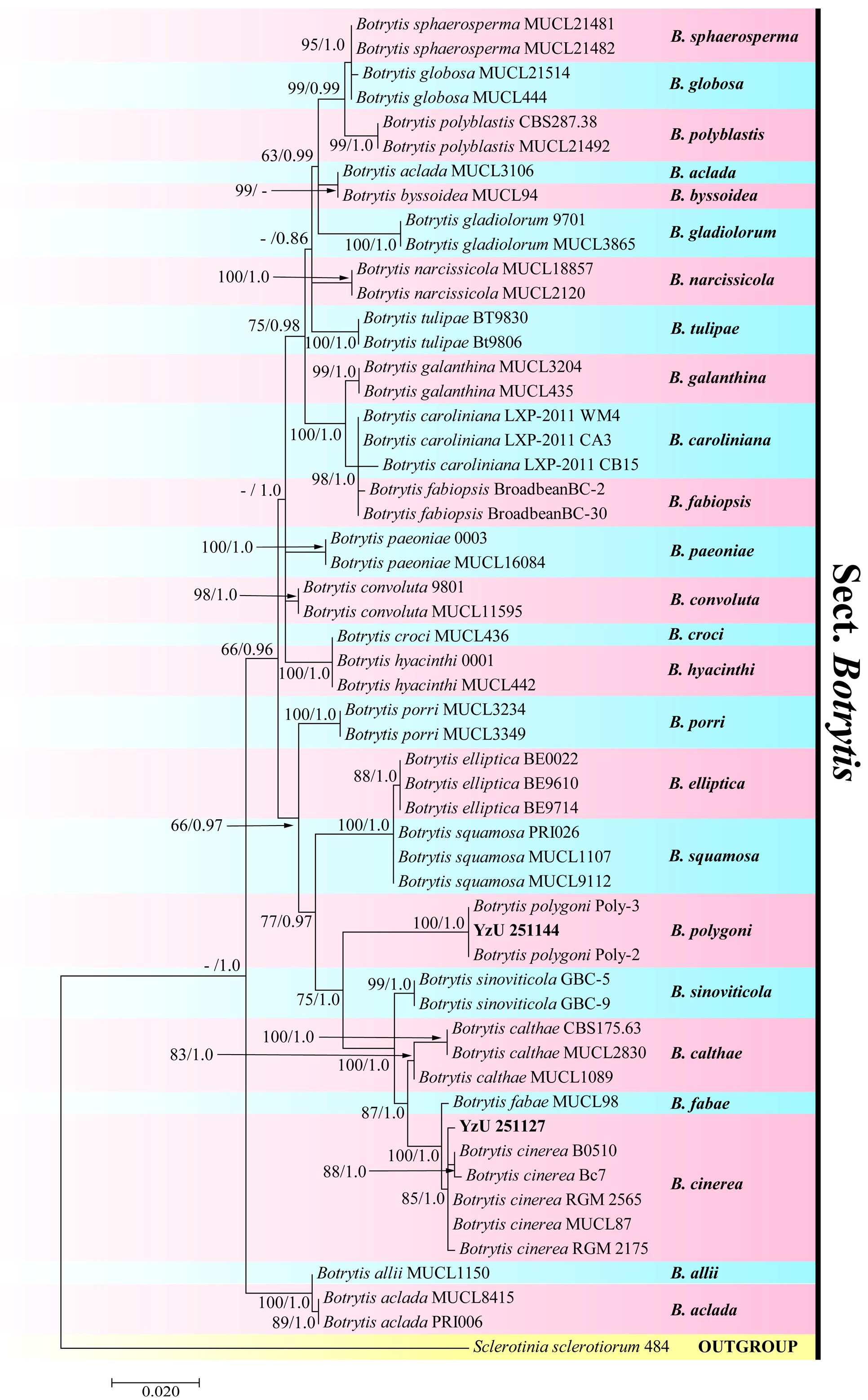
Note: Multi-locus phylogenetic analyses (GAPDH, HSP60, and RPB2) demonstrated that YzU 251144 and Botrytis polygoni formed an independent clade (BS/PP =  100%/1.0) (Figure 6). Morphologically, our strains show similar characteristics to the first report strains (Poly-2, Poly-3) collected from three plants in the Polygonaceae, in Gansu, China, but the microconidia were not observed [39] (Table 2). This study is the first record of the species from this plant in southwest China.
  • Epicoccum mackenziei Jayasiri, Camporesi, and K.D. Hyde, Mycosphere 8(8): 1093 (2017). (Table 2, Figure 7)
Cultural Characteristics (YzU 251158; on PDA and OA at 25 °C, 7 d):
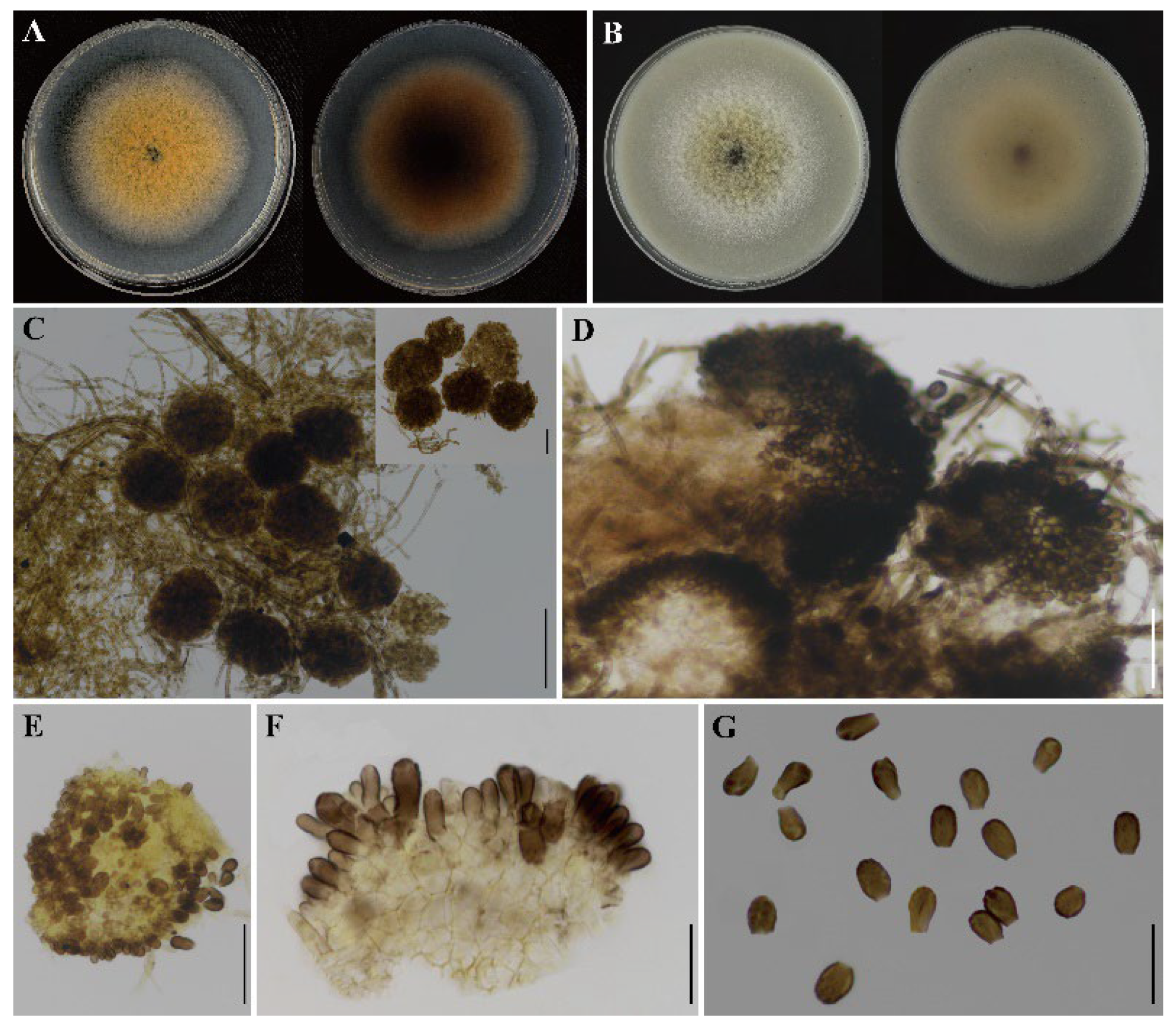
On PDA, colonies were loose and villous with a relatively smooth margin, 52–53 mm, buff to luteous, saffron to chestnut in reverse; On OA, colonies were 56–57 mm in size, sparse, fluffy, and woolly, white to amber on both sides.
Conidial morphology (On PDA at 25 °C, 12 h light/12 h dark cycle, 10 d):
Conidiomata comprised numerous short, colorless conidiophores or conidiogenous cell aggregates. It was surrounded by conidia, dark brown, later developed into spherical or subspherical clusters consistent with sporodochia, 15.68–83.30 × 20.40–36.30 μm (Figure 7C), which were mostly superficial on PDA and immersed on OA. For 14 days, solitary conidia apically produced from densely packed conidiophores, variable in shape—subglobose, broadly ellipsoid, or Cucurbitaceae seed-like—pale to dark brown, with finely granular to verrucose ornamentation, 3.93–9.43 × 2.36–5.40 μm (Figure 7G, Table 2).
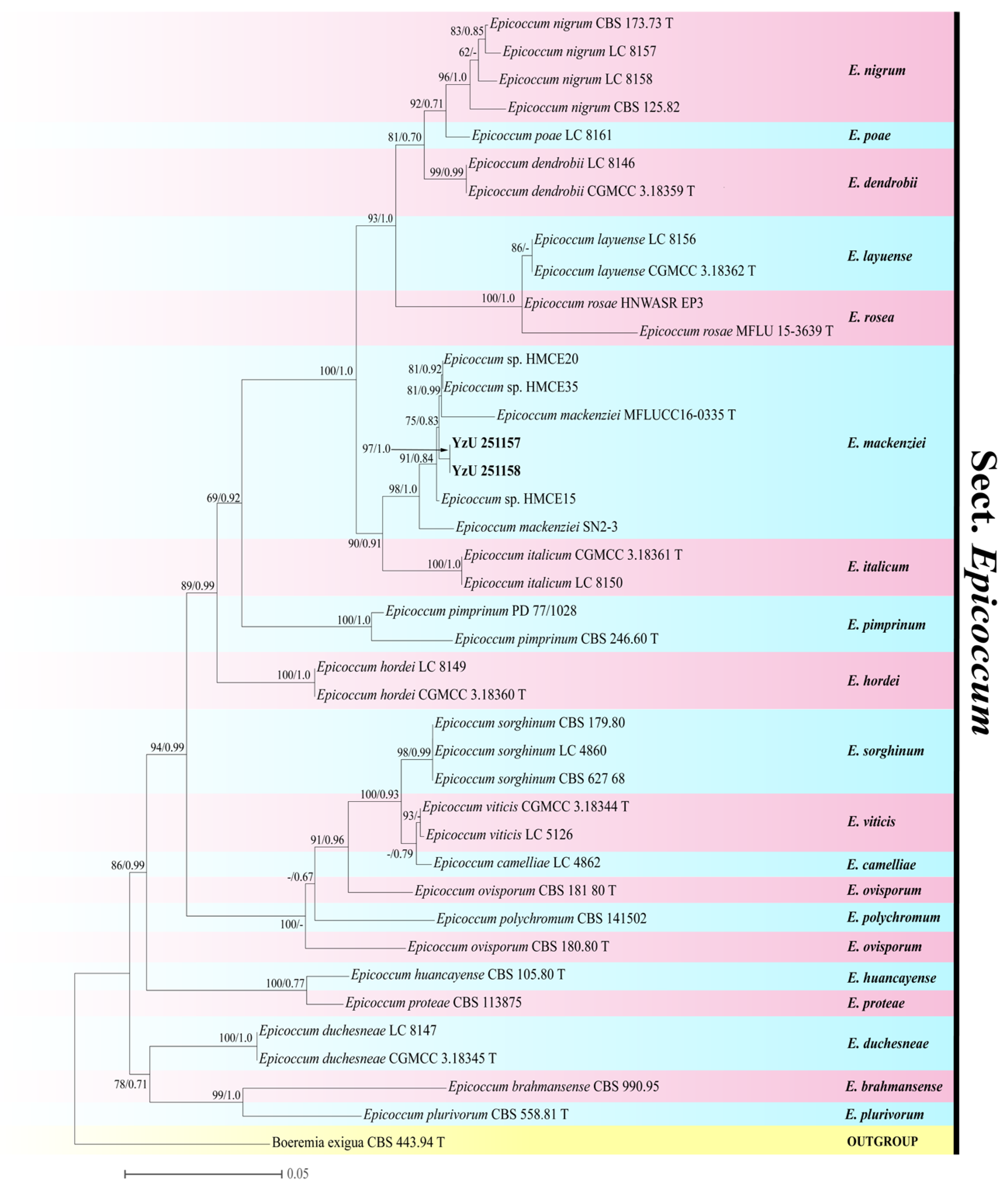
Note: Phylogenetic analysis of the ITS, RPB2, and β-TUB2 gene loci revealed that YzU 251158 fell into a clade of Epicoccum mackenziei containing the type strain MFLUCC 16-0335 (BS/PP =  98%/1.0) (Figure 8). Morphologically, it was firstly reported by producing ascocarps (teleomorph) with hyaline, 1–3-septate ascospores (21–25 × 2–6 μm) from the host, and documented its anamorph only forming shape-variable, irregular, unicellular or multicellular, intercalary or terminal, solitary or in chains, smooth, occasionally tuberculate, pale to dark brown, multicellular globose chlamydospores (9–16 × 7–15 μm) in culture [40]. Later, it was noted that Epicoccum spp. have hyphomycetous synanamorphs, characterized by dark conidiomata, branched conidiophores, and unicellular to multicellular hyaline conidiogenous cells that produce pigmented conidia, dictyoseptate, occasionally verruculose [41]. In this study, no dictyospores were observed.
  • Lasiodiplodia citricola Abdollahzadeh, Javadi and Phillips, Persoonia 25: 1 (2010) (Table 2, Figure 9)
Cultural characteristics (on PDA and OA at 25 °C, 7 d):
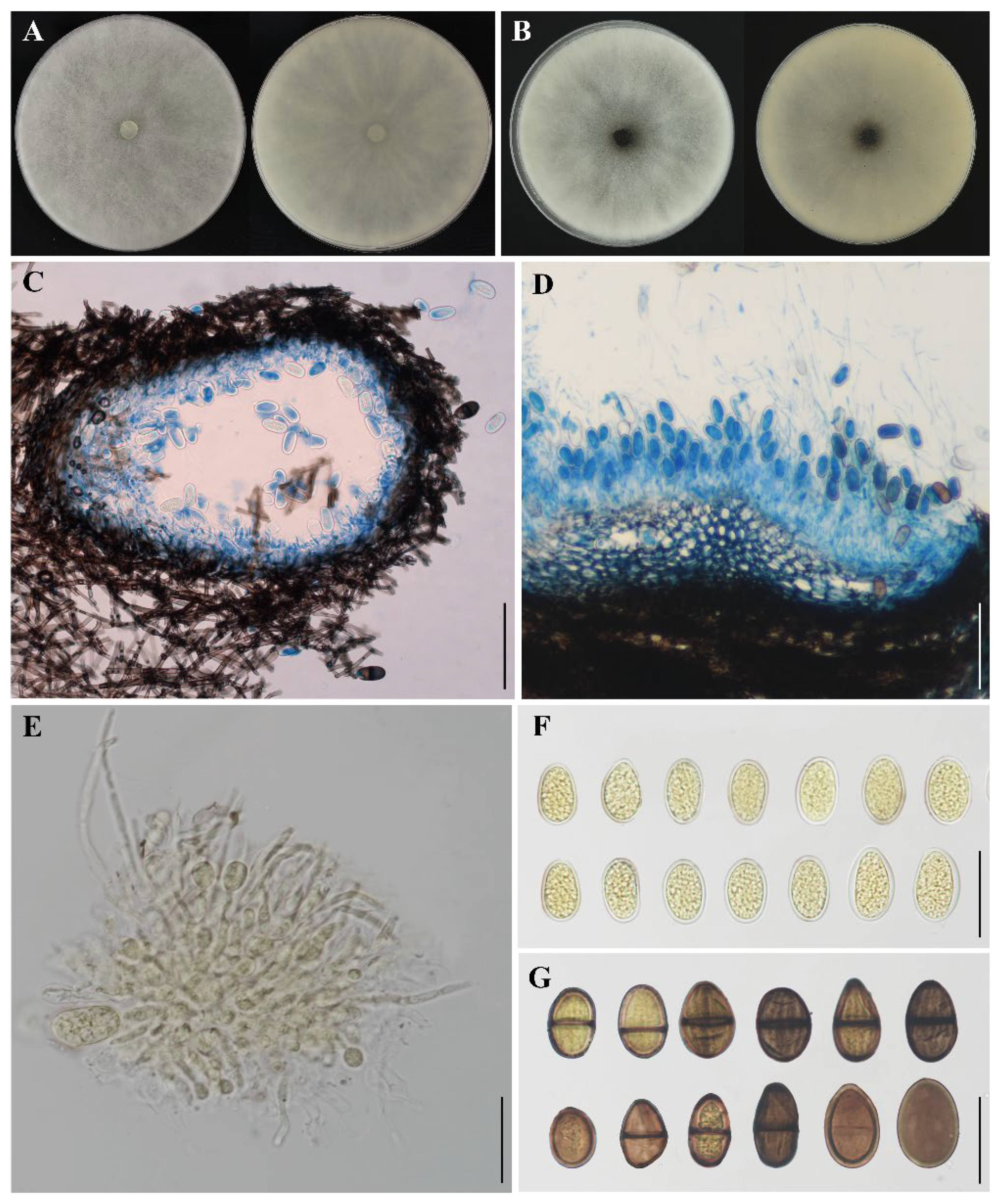
On PDA, colonies of YzU 251163 covered 90 mm plates in 5 days; woolly, convex, with abundant aerial mycelia, white to pale greenish-gray, gradually darkening to a grayish hue, reverse the same as surface. On OA, it reached 90 mm in 6 days; smooth surface, velvety, dense aerial hyphae, grayish-green to olive green, with consistent reverse (Figure 9A,B).
Conidial morphology (on PDA at 25 °C, 12 d):
Pycnidia were solitary, semi-immersed, uniloculate, globose to subglobose, appearing as black dots. Conidiogenous cells lining the pycnidial cavity—holoblastic, annellidic, hyaline, cylindrical (Figure 9D,E). Conidia displayed a sub-ovoid to ellipsoid shape, sometimes wider in the middle, pumpkin seed-shaped, occasionally verruculose, with a rounded apex that tapered to a truncated base, double-layered, and 1-septate with longitudinal striations, yellowish-brown to brown or coffee colored, 21.5–31.1 × 15.1–20.9 μm; immature conidia were lacking septa and were transparent after staining with LCBS (Figure 9D) and mounted by LPAS (Figure 9E,F), measuring 21.8–27.1 × 12.9–16.4 μm (Figure 9F,G, Table 2).
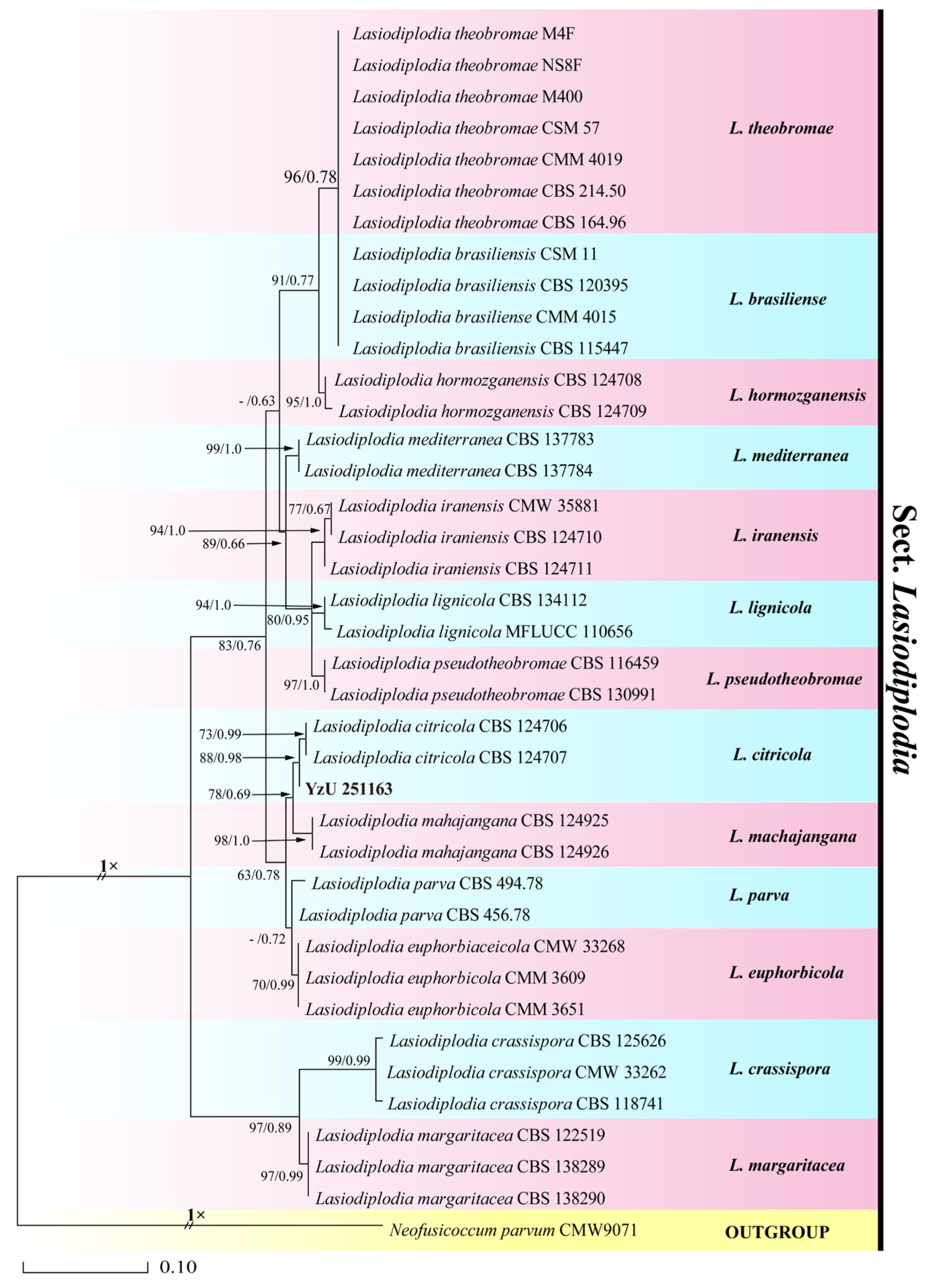
Note: Based on phylogenetic analysis of ITS, RBP2, and β-TUB2 gene regions, YzU 251163 clustered with two strains of L. citricola (CBS 124706 and CBS 124707), supported with high BS/PP values of 88%/0.98 (Figure 10). Morphologically, YzU 251163 exhibits typical morphological characteristics of Lasiodiplodia citricola: pumpkin seed-shaped, dark-brown, mature spores (Table 2).
Table 2. Morphological comparison of the present strains and their closely related species.
SpeciesStrainConidiaSporulation Pattern
(Conidia per Chain)
MediumReference
Body (μm)Septa
Alternaria alternataCBS 127672 T10–35 × 5–70–74–10 (unbranched)PCA[14]
YzU 25113419.1–37.3 × 6.7–9.42–72–5 (unbranched)PCAThis study
14.3–41 × 8.41–8.80–62–4(unbranched)V8A
CBS 918.96 T32–45 × 11–131–83–12 (branched)PCA[14]
YzU 25114818–35.6 × 7.3–14.91–63–8 (branched)PCAThis study
18.5–42.1 × 9–16.40–62–6(branched)V8A
CBS 916.96 T7–25(−40) × 5–124–71–7 (1–3 branched)PCA[14]
YzU 25115511–26.3 × 2.7–10.33–62–6 (few branched)PCAThis study
18.1–22.4 × 7.4–11.13–52–4 (few branched)V8A
Botrytis cinereaCOAD 34068–13 × 6–8PDA[42]
YzU 251127(3.6-)8.3–12.9(−21.3) (9.93 × 7.44)WAThis study
Botrytis polygoniPoly–110.2–18.36 (13.09 ± 1.75)PDA[39]
Poly–212.24–19.38 (14.62 ± 2.47)PDA
Poly–311.22–18.87 (15.34 ± 1.54)PDA
YzU 25114416.67–17.68 (17.18 ± 0.47)FM-WAThis study
Epicoccum mackenzieiYzU 25115818.81–7.87 × 10.8–4.73 (13.72–8.37)PDAThis study
Lasiodiplodia citricolaIRAN 1521C20–31 × 10.9–19 (24.5 × 15.4)WA[43]
YzU 25116321.5–31.1 × 15.1–20.9 (26.8–17.5)PDAThis study
Note: Full names and their corresponding abbreviations of all culture media used in this experiment. FM-WA—Fallopia multiflora leaf tissue-amended water agar; PDA—potato dextrose agar; PCA—potato carrot agar; OA—Oatmeal agar; V8A—V8 juice agar; WA—water agar.

3.2. Pathogenicity Assay

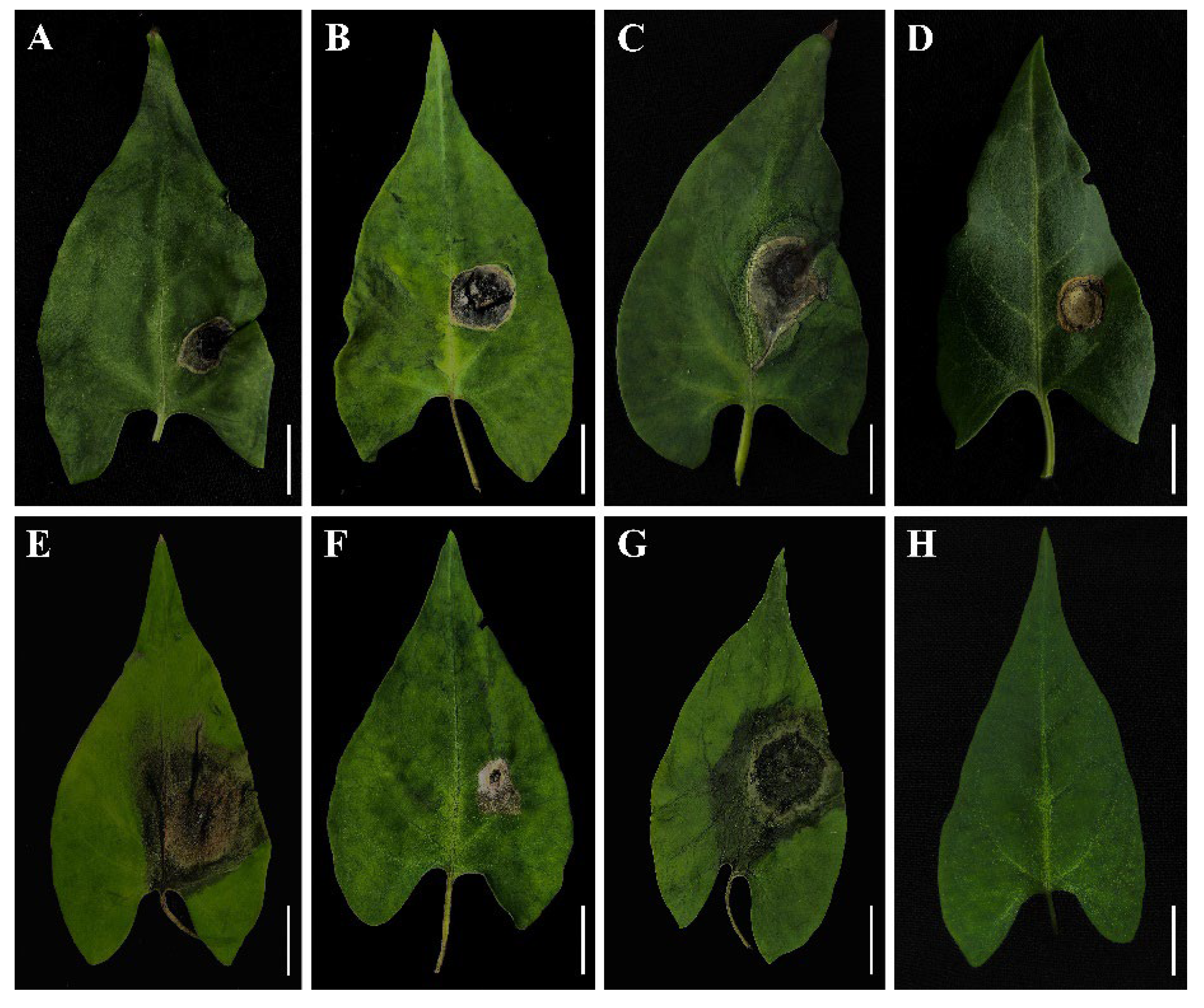
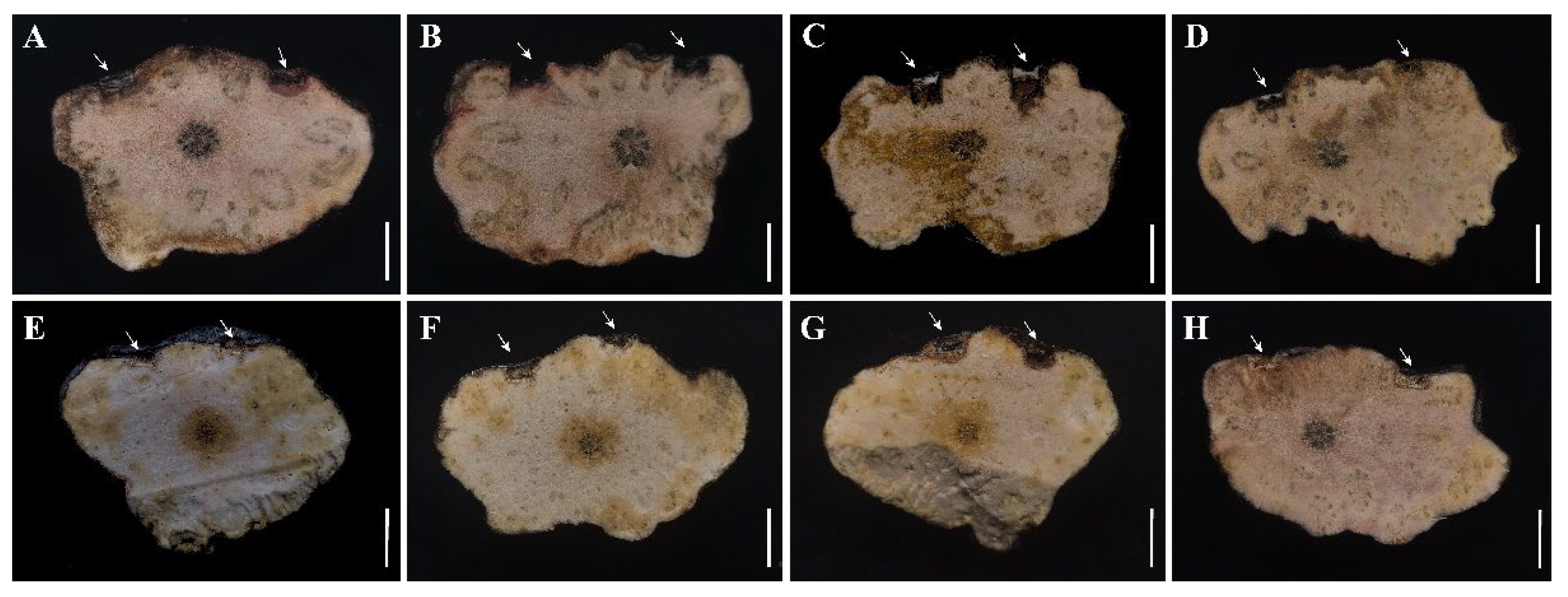
The representative strains were determined their pathogenicity on the living leaves and tuber roots of Fallopia multiflora (Figure 11 and Figure 12). Among them, Lasiodiplodia citricola was the most destructive foliar and tuberous root pathogen.

3.2.1. Pathogenicity on Leaves

The present fungal species induced various symptoms with different virulence on leaves (Figure 13). Alternaria alternata strains caused a similar symptom, which was a dark brown spot with a yellow circle at the edge. The strain YzU 251155 (in a clade with the type morpho-strain A. alternata CBS 916.96 was the most pathogenic strain among them (Figure 11A–C). Botrytis cinerea induced yellow-brown lesions (Figure 11D). B. polygoni showed strong pathogenicity, causing leaf blight with a reddish-brown area in the center for its reproduction (Figure 11E). Epicoccum mackenziei resulted in relatively weak pathogenicity with yellowish necrotic symptoms (Figure 11F). Lasiodiplodia citricola was the most pathogenic species, causing a blackish necrotic symptom, darker in the center surrounded by a yellowish circle and lighter outside of the circle (Figure 11G). The controls remained symptomless (Figure 11H).

3.2.2. Pathogenicity Test on Tuberous Root of Fallopia multiflora

Among these seven pathogens, Alternaria alternata strain YzU 251155 and Lasiodiplodia citricola showed the highest pathogenicity on the tuberous root of F. multiflora (Figure 13). By 7 days, A. alternata YzU 251155 induced an infection of 6.73 ± 1.74 mm in depth, followed by YzU 251134 (1.80 ± 1.31 mm). However, L. citricola reached 4.25 ± 1.11 mm necrotic symptoms in depth. The other strains showed no further infections, consistent with asymptomatic controls. By day 12, the mycelia of L. citricola covered the entire tuberous root, resulting in severe rotting.

4. Discussion

Fallopia multiflora (Polygonaceae), a high-value medicinal horticultural plant, is widely cultivated globally with well-established propagation techniques [44]. However, reports on its foliar diseases remain limited and often lack systematic etiological data, hindering the development of effective disease diagnosis and control strategies [45]. To date, only Alternaria astragali and Fusarium oxysporum have been documented as the causal agents of leaf spot and wilt diseases on F. multiflora, respectively [9,10]. Owing to the scarcity of prior research on these foliar diseases and insufficient sample sizes in existing studies, their impacts on plant survival and yield have long been overlooked. In the present survey, plant mortality caused by leaf diseases was observed in the F. multiflora plantations investigated by our team—a phenomenon linked to the lack of comprehensive and instructive research on this disease. Accordingly, this study performed a systematic identification of the causal pathogens via multilocus phylogenetic analysis, morphological characterization, and pathogenicity assays, leading to the identification and characterization of five fungal pathogens associated with F. multiflora foliar diseases: Alternaria alternata, Botrytis cinerea, B. polygoni, Epicoccum mackenziei, and Lasiodiplodia citricola. This constitutes the first global report of all five fungal species as pathogens of F. multiflora, and the first report of a foliar disease on this medicinal horticultural plant caused by multiple fungal pathogens in China, thus expanding the known pathogen spectrum of F. multiflora.
Alternaria species are ubiquitous and frequently isolated from a diverse range of plant hosts, functioning as saprophytes, endophytes, and pathogens [46]. To date, only Alternaria astragali has been reported to cause disease in F. multiflora. Alternaria alternata, one of the fungal pathogens identified herein, possesses an extremely broad host range, being capable of infecting nearly all plant species [47]. Its infection of F. multiflora leaves (Figure 1B,C) is therefore not unexpected. An interesting finding was additionally noted in the present study: the three Alternaria isolates identified exhibited significant intraspecific variation in pathogenicity. This further demonstrates pronounced intraspecific differentiation within the species [48], supporting its classification as a species complex [49].
Botrytis species have a worldwide distribution and a broad host range encompassing both cultivated and wild plants [50]. In this study, both B. polygoni (Figure 1D,E) and B. cinerea were isolated from rufous-brown, concentric ring lesions on F. multiflora (Figure 1E), and their co-infection under favorable environmental conditions may exacerbate disease severity. Botrytis species, particularly B. cinerea, are necrotrophic generalist pathogens that secrete a diverse arsenal of cell wall-degrading enzymes, toxins, and other virulence factors—molecules that enable them to colonize a wide range of host plants and their tissues [51]. Co-infection by multiple pathogens, including different Botrytis species or Botrytis in combination with other fungal pathogens, can alter disease progression and typically results in larger lesions or enhanced tissue maceration under permissive environmental conditions, due to additive or synergistic effects in suppressing host defense responses and degrading host tissues [52]. Given that Botrytis species vary in host range, pathogenic aggressiveness, and responses to disease management strategies, the concurrent isolation of B. polygoni and B. cinerea from the same lesion (Figuer 1E) may complicate epidemiological investigations of this disease. It should be taken into consideration when designing pathogenicity assays and formulating disease control measures [53].
Epicoccum is widely distributed in agricultural and natural ecosystems, commonly isolated from leaves, stems, fruits, soil, and decaying plant matter, where they act as an occasional opportunistic pathogen [54]. Epicoccum species frequently display a facultative endophytic or saprobic lifestyle. They are also noted for producing diverse secondary metabolites with antagonistic activity against other plant pathogens, which has led to their evaluation as biological-control agents in some systems [55,56]. Pathogenicity is highly species and strain-dependent: many Epicoccum isolates are weakly pathogenic or nonpathogenic on tested hosts, while others can cause distinct leaf-spot diseases under favorable conditions. For example, E. mackenziei has recently been reported causing dark-brown leaf spot on tea [57]. Although aggressiveness appears to vary among isolates and hosts (E. mackenziei caused syptoms on Fallopia multiflora, Figure 1G), so the pathogenicity of local isolates should be quantified experimentally [58].
Lasiodiplodia are normally distributed in tropical and subtropical regions and temperate areas, infecting cashew, coconut, mango, mulberry, grapevines, etc. [59]. Members of this genus commonly behave as endophytes or saprobes but readily switch to an opportunistic pathogenic lifestyle under host stress or wounding, causing gummosis, canker, dieback, fruit and root/tuber rots in many woody and fruit crops [16,60,61]. Reports of Lasiodiplodia on Polygonaceae are uncommon in the literature, so the isolation of Lasiodiplodia from severe foliar lesions on F. multiflora (Figure 1G) and its apparent association with tuberous root rot represents a noteworthy host expansion that should be confirmed with pathogenicity tests and monitored for epidemiological significance [62].

5. Conclusions

This study represents the first report of a leaf disease on Fallopia multiflora (a valuable medicinal horticultural plant) in China caused by multiple fungal pathogens. Morphological characterization, multilocus phylogenetic analysis, and pathogenicity assays collectively expand the known pathogen spectrum of this plant. Notably, Lasiodiplodia citricola, Botrytis polygoni, and Alternaria alternata exhibited strong pathogenicity to the leaves of F. multiflora under experimental conditions, among which A. alternata and L. citricola also displayed strong pathogenicity to the tuberous roots of this plant. The co-occurrence of these pathogens, coupled with the ability of certain isolates to infect tuberous roots, highlights the urgency of implementing integrated disease monitoring and management strategies and raises concerns about potential adverse impacts on the medicinal quality and safety of F. multiflora-derived products.
Future research should prioritize investigating interspecific pathogen interactions, the molecular mechanisms governing fungal virulence, and the accumulation of fungal secondary metabolites in infected host tissues. These efforts will lay a scientific foundation for developing targeted disease control measures, thereby safeguarding the quality and yield of F. multiflora in horticultural production.

Supplementary Materials

The following supporting information can be downloaded at: https://www.mdpi.com/article/10.3390/horticulturae12020204/s1, Table S1: Strains used in this study and their GenBank accession numbers.

Author Contributions

Conceptualization, J.D. and S.C.; methodology, S.C. and L.H.; software, S.C. and Q.S.; validation, S.C. and L.H.; formal analysis, L.H.; investigation, S.C.; resources, J.D.; data curation, S.C. and M.L.; writing—original draft preparation, S.C.; writing—review and editing, J.D. and P.B.G.; visualization, X.M.; supervision, J.D.; project administration, J.D. and L.H.; funding acquisition, J.D. All authors have read and agreed to the published version of the manuscript.

Funding

The financial support was given by the National Natural Science Foundation of China (No. 32270022).

Data Availability Statement

The original contributions presented in this study are included in the article/Supplementary Materials. Further inquiries can be directed to the corresponding authors.

Acknowledgments

Thanks to all members of the research team for their support of this project.

Conflicts of Interest

The authors declare no conflicts of interest.

References

  1. Li, A.-J.; Bao, B.; Grabovskaya-Borodina, A.E.; Hong, S.-P.; McNeill, J.; Mosyakin, S.L.; Ohba, H.; Park, C.-W. Polygonaceae in Flora of China; Wu, Z.-Y., Raven, P.H., Hong, D.-Y., Eds.; Science Press: Beijing, China; Missouri Botanical Garden Press: St. Louis, MO, USA, 2003; Volume 5 (Ulmaceae through Basellaceae), pp. 277–350. ISBN 7-03012295-X. [Google Scholar]
  2. Chang, H.T. Chinese Plant Monographs: Polygonaceae; Science Press: Beijing, China, 2010. [Google Scholar]
  3. Wang, C.Y.; Gu, J.M.; Liu, W.N.; Yang, W.; Zhang, L.T. Studies on pharmacokinetics and tissue distribution of stilbene glycoside in the hyperlipidemia model rats. Chin. J. Pharm. Anal. 2009, 29, 1073–1078. [Google Scholar]
  4. Tian, Y.-H.; Zhang, L.-Y.; Yang, Y.-Q.; Li, J.; Li, M.; Yu, Q.-L. Optimization of processing technologies for steamed Fallopia multiflora by colligation score. J. Guiyang Coll. Tradit. Chin. Med. 2007, 29, 15–17. [Google Scholar]
  5. Way, T.-D.; Huang, J.-T.; Chou, C.-H.; Huang, C.-H.; Yang, M.-H.; Ho, C.-T. Emodin represses TWIST1-induced epithelial-mesenchymal transitions in head and neck squamous cell carcinoma cells by inhibiting the β-catenin and Akt pathways. Eur. J. Cancer 2014, 50, 366–378. [Google Scholar] [CrossRef] [PubMed]
  6. Yang, F.; Wu, J.; Xie, C.-Q.; Chen, Y.-J.; Li, H.-L. Chemical Constituents of Fallopia multiflora Leaves. Chem. Nat. Compd. 2023, 59, 932–934. [Google Scholar] [CrossRef]
  7. Zhao, Y.; Yang, Z.; Zhang, Z.; Yin, M.; Chu, S.; Tong, Z.; Shan, T.; Peng, H.; Qin, Y.; Zha, L.; et al. The first chromosome-level Fallopia multiflora genome assembly provides insights into stilbene biosynthesis. Hortic. Res. 2023, 10, uhad047. [Google Scholar] [CrossRef]
  8. Bounda, G.-A.; Feng, Y. Review of clinical studies of Polygonum multiflorum Thunb. and its isolated bioactive compounds. Pharmacogn. Res. 2015, 7, 225–236. [Google Scholar] [CrossRef]
  9. Xiong, G.; Zhao, G.; Li, L.; Liu, Y.; Chen, J. First Report of Alternaria astragali as a Causative Agent of Leaf Spot Disease in Fallopia multiflora Thunb. Afr. J. Microbiol. Res. 2012, 6, 633–636. [Google Scholar] [CrossRef]
  10. Park, J.H.; Kim, J.Y.; Lee, S.H.; Kim, B.S.; Kim, H.T. First Report of Fusarium Wilt of Fallopia multiflora Caused by Fusarium oxysporum in Korea. Res. Plant Dis. 2015, 21, 281–285. [Google Scholar] [CrossRef]
  11. Bhunjun, C.S.; Phillips, A.J.L.; Jayawardena, R.S.; Promputtha, I.; Hyde, K.D. Importance of molecular data to identify fungal plant pathogens and guidelines for pathogenicity testing based on Koch’s postulates. Pathogens 2021, 10, 1096. [Google Scholar] [CrossRef]
  12. Deng, J.X.; Li, M.J.; Paul, N.C.; Oo, M.M.; Lee, H.B.; Oh, S.K.; Yu, S.H. Alternaria brassicifolii sp. nov. isolated from Brassica rapa subsp. pekinensis in Korea. Mycobiology 2018, 46, 172–176. [Google Scholar] [CrossRef]
  13. Simmons, E.G. Alternaria: An Identification Manual; CBS Biodiversity Series No. 6; CBS Fungal Biodiversity Centre: Utrecht, The Netherlands, 2007; 775p, ISBN 978-90-70351-68-7. [Google Scholar]
  14. Zhang, J.; Gelain, J.; Schnabel, G.; Mallawarachchi, S.; Wang, H.; Mulgaonkar, N.; Karthikeyan, R.; Fernando, S. Identification of Fungicide Combinations for Overcoming Plasmopara viticola and Botrytis cinerea Fungicide Resistance. Microorganisms 2023, 11, 2966. [Google Scholar] [CrossRef]
  15. Rosado, A.W.C.; Machado, A.R.; Freire, F.C.O.; Pereira, O.L. Phylogeny, identification, and pathogenicity of Lasiodiplodia associated with postharvest stem-end rot of coconut in Brazil. Plant Dis. 2016, 100, 561–568. [Google Scholar] [CrossRef] [PubMed]
  16. Xu, X.; Li, J.; Yang, X.; Zhang, L.; Wang, S.; Shen, G.; Hui, B.; Xiao, J.; Zhou, C.; Wang, X.; et al. Epicoccum spp. Causing maize leaf spot in Heilongjiang Province, China. Plant Dis. 2022, 106, 3050–3060. [Google Scholar] [CrossRef] [PubMed]
  17. Porebski, S.; Bailey, L.G.; Baum, B.R. Modification of a CTAB DNA Extraction Protocol for Plants Containing High Polysaccharide and Polyphenol Components. Plant Mol. Biol. Report. 1997, 15, 8–15. [Google Scholar] [CrossRef]
  18. Cenis, J.L. Rapid extraction of fungal DNA for PCR amplification. Nucleic Acids Res. 1992, 20, 2380. [Google Scholar] [CrossRef]
  19. White, T.J.; Bruns, T.D.; Lee, S.B.; Taylor, J.W. Amplification and direct sequencing of fungal ribosomal RNA genes for phylogenetics. In PCR Protocols: A Guide to Methods and Applications; Innis, M.A., Gelfand, D.H., Sninsky, J.J., White, T.J., Eds.; Academic Press: San Diego, CA, USA, 1990; pp. 315–322. [Google Scholar] [CrossRef]
  20. Sung, G.H.; Hywel-Jones, N.L.; Sung, J.M.; Luangsa-ard, J.J.; Shrestha, B.; Spatafora, J.W. Phylogenetic classification of Cordyceps and the clavicipitaceous fungi. Stud. Mycol. 2007, 57, 5–59. [Google Scholar] [CrossRef]
  21. Carbone, I.; Kohn, L.M. A method for designing primer sets for speciation studies in filamentous ascomycetes. Mycologia 1999, 91, 553–556. [Google Scholar] [CrossRef]
  22. Glass, N.L.; Donaldson, G.C. Development of primer sets designed for use with the PCR to amplify conserved genes from filamentous ascomycetes. Appl. Environ. Microbiol. 1995, 61, 1323–1330. [Google Scholar] [CrossRef]
  23. Staats, M.; van Baarlen, P.; van Kan, J.A.L. Molecular phylogeny of the plant pathogenic genus Botrytis and the evolution of host specificity. Mol. Biol. Evol. 2005, 22, 333–346. [Google Scholar] [CrossRef]
  24. Staats, M.; van Baarlen, P.; Schouten, A.; van Kan, J.A.L. Functional analysis of NLP genes from Botrytis elliptica. Mol. Plant Pathol. 2007, 8, 209–214. [Google Scholar] [CrossRef]
  25. Hall, T.A. BioEdit: A user-friendly biological sequence alignment editor and analysis program for Windows 95/98/NT. Nucleic Acids Symp. Ser. 1999, 41, 95–98. [Google Scholar] [CrossRef]
  26. Chun, J. Computer-Assisted Classification and Identification of Actinomycetes. Ph.D. Thesis, University of Newcastle, Newcastle upon Tyne, UK, 1995. Available online: http://theses.ncl.ac.uk/jspui/handle/10443/410 (accessed on 1 May 2022).
  27. Tamura, K.; Stecher, G.; Kumar, S. MEGA11: Molecular Evolutionary Genetics Analysis Version 11. Mol. Biol. Evol. 2021, 38, 3022–3027. [Google Scholar] [CrossRef] [PubMed]
  28. Zeng, X.-Y.; Tan, T.-J.; Tian, F.-H.; Wang, Y.; Wen, T.-C. OFPT: A One-Stop Software for Fungal Phylogeny. Mycosphere 2023, 14, 1730–1741. [Google Scholar] [CrossRef]
  29. Rannala, B.; Yang, Z. Probability Distribution of Molecular Evolutionary Trees: A New Method of Phylogenetic Inference. J. Mol. Evol. 1996, 43, 304–311. [Google Scholar] [CrossRef]
  30. Rambaut, A.; Drummond, A. FigTree v.1.3.1. Institute of Evolutionary Biology; University of Edinburgh: Edinburgh, UK, 2010. [Google Scholar]
  31. Agrios, G.N. Plant Pathology, 5th ed.; Academic Press (Elsevier): Burlington, MA, USA, 2005; 952p, ISBN 978-0-08-047378-9. [Google Scholar]
  32. Léger, G.; Novinscak, A.; Biessy, A.; Lamarre, S.; Filion, M. Biocontrol of Potato Late Blight by a Collection of Phenazine-1-Carboxylic Acid-Producing Pseudomonas spp. in Tuber. Microorganisms 2021, 9, 2525. [Google Scholar] [CrossRef]
  33. Park, J.; Kim, S.; Jo, M.; An, S.; Kim, Y.; Yoon, J.; Jeong, M.-H.; Kim, E.Y.; Choi, J.; Kim, Y.; et al. Isolation and Identification of Alternaria alternata from Potato Plants Affected by Leaf Spot Disease in Korea: Selection of Effective Fungicides. J. Fungi 2024, 10, 53. [Google Scholar] [CrossRef]
  34. Sahu, P.K.; Tilgam, J.; Mishra, S.; Hamid, S.; Gupta, A.; Jayalakshmi, K.; Verma, S.K.; Kharwar, R.N. Surface Sterilization for Isolation of Endophytes: Ensuring What (Not) to Grow. J. Basic Microbiol. 2022, 62, 647–668. [Google Scholar] [CrossRef]
  35. Liu, Y.-J.; Whelen, S.; Hall, B.D. Phylogenetic Relationships Among Ascomycetes: Evidence from an RNA Polymerase II Subunit. Mol. Biol. Evol. 1999, 16, 1799–1808. [Google Scholar] [CrossRef]
  36. Shapiro, S.S.; Wilk, M.B. An Analysis of Variance Test for Normality (Complete Samples). Biometrika 1965, 52, 591–611. [Google Scholar] [CrossRef]
  37. Levene, H. Robust Tests for Equality of Variances. In Contributions to Probability and Statistics; Olkin, I., Ed.; Stanford University Press: Palo Alto, CA, USA, 1960; pp. 278–292. [Google Scholar]
  38. George, D.; Mallery, P. IBM SPSS Statistics 26 Step by Step: A Simple Guide and Reference, 16th ed.; Routledge: Abingdon, UK, 2019. [Google Scholar] [CrossRef]
  39. He, S.Q.; Wen, Z.H.; Bai, B.; Jing, Z.Q.; Wang, X.W. Botrytis polygoni, a new species of the genus Botrytis infecting Polygonaceae in Gansu, China. Mycologia 2021, 113, 78–91. [Google Scholar] [CrossRef]
  40. Jayasiri, S.C.; Hyde, K.D.; Jones, E.B.G.; Jeewon, R.; Ariyawansa, H.A.; Bhat, J.D.; Camporesi, E.; Kang, J.C. Taxonomy and multigene phylogenetic evaluation of novel species in Boeremia and Epicoccum with new records of Ascochyta and Didymella (Didymellaceae). Mycosphere 2017, 8, 1080–1101. [Google Scholar] [CrossRef]
  41. Seifert, K.A.; Morgan-Jones, G.; Gams, W.; Kendrick, B. The Genera of Hyphomycetes; CBS-KNAW Fungal Biodiversity Centre: Utrecht, The Netherlands, 2011; 997p, ISBN 9789070351854. [Google Scholar]
  42. Freitas, E.F.S.; Pereira, O.L. First report of Botrytis cinerea causing basal leaf rot and defoliation on Maxillaria richii (Orchidaceae). Crop Prot. 2022, 159, 106034. [Google Scholar] [CrossRef]
  43. Abdollahzadeh, J.; Javadi, A.; Mohammadi Goltapeh, E.; Zare, R.; Phillips, A.J.L. Phylogeny and Morphology of Four New Species of Lasiodiplodia from Iran. Persoonia 2010, 25, 1–10. [Google Scholar] [CrossRef]
  44. Liu, Y.; Wang, W.; Sun, M.; Ma, B.; Pang, L.; Du, Y.; Dong, X.; Yin, X.; Ni, J. Polygonum multiflorum-Induced Liver Injury: Clinical Characteristics, Risk Factors, Material Basis, Action Mechanism and Current Challenges. Front. Pharmacol. 2019, 10, 1467. [Google Scholar] [CrossRef] [PubMed]
  45. Lin, L.-C.; Nalawade, S.M.; Mulabagal, V.; Yeh, M.-S.; Tsay, H.-S. Micropropagation of Polygonum multiflorum Thunb. and Quantitative Analysis of Anthraquinones Emodin and Physcion Formed in In Vitro Propagated Shoots and Plants. Biol. Pharm. Bull. 2003, 26, 1467–1470. [Google Scholar] [CrossRef] [PubMed]
  46. Thomma, B.P.H.J. Alternaria spp.: From general saprophyte to specific parasite. Mol. Plant Pathol. 2003, 4, 225–236. [Google Scholar] [CrossRef]
  47. DeMers, M. Alternaria alternata as endophyte and pathogen. Microbiology 2022, 168, 001153. [Google Scholar] [CrossRef]
  48. Meng, J.-W.; Zhu, W.; He, M.-H.; Wu, E.-J.; Duan, G.-H.; Xie, Y.-K.; Jin, Y.-J.; Yang, L.-N.; Shang, L.-P.; Zhan, J. Population genetic analysis reveals cryptic sex in the phytopathogenic fungus Alternaria alternata. Sci. Rep. 2015, 5, 18250. [Google Scholar] [CrossRef]
  49. Shaw, M.W.; Emmanuel, C.J.; Emilda, D.; Terhem, R.B.; Shafia, A.; Tsamaidi, D.; Emblow, M.; van Kan, J.A.L. Analysis of cryptic, systemic Botrytis infections in symptomless hosts. Front. Plant Sci. 2016, 7, 625. [Google Scholar] [CrossRef]
  50. Williamson, B.; Tudzynski, B.; Tudzynski, P.; van Kan, J.A.L. Botrytis cinerea: The cause of grey mould disease. Mol. Plant Pathol. 2007, 8, 561–580. [Google Scholar] [CrossRef]
  51. Cheung, N.; Tian, L.; Liu, X.; Li, X. The Destructive Fungal Pathogen Botrytis cinerea—Insights from Genes Studied with Mutant Analysis. Pathogens 2020, 9, 923. [Google Scholar] [CrossRef]
  52. Abdullah, A.S.; Moffat, C.S.; Lopez-Ruiz, F.J.; Gibberd, M.R.; Hamblin, J.; Zerihun, A. Host–Multi-Pathogen Warfare: Pathogen Interactions in Co-infected Plants. Front. Plant Sci. 2017, 8, 1806. [Google Scholar] [CrossRef] [PubMed]
  53. Brauna-Morževska, E.; Stoddard, F.L.; Bankina, B.; Kaņeps, J.; Bimšteine, G.; Petrova, I.; Neusa-Luca, I.; Roga, A.; Fridmanis, D. Evaluation of pathogenicity of Botrytis species isolated from different legumes. Front. Plant Sci. 2023, 14, 1069126. [Google Scholar] [CrossRef] [PubMed]
  54. Slippers, B.; Wingfield, M.J. Botryosphaeriaceae as endophytes and latent pathogens of woody plants: Diversity, ecology and impact. Fungal Biol. Rev. 2007, 21, 90–106. [Google Scholar] [CrossRef]
  55. Ogórek, R.; Przywara, K.; Piecuch, A.; Cal, M.; Lejman, A.; Matkowski, K. Plant–Fungal Interactions: A Case Study of Epicoccum nigrum Link. Plants 2020, 9, 1691. [Google Scholar] [CrossRef]
  56. Fávaro, L.C.L.; Sebastianes, F.L.S.; Araújo, W.L. Epicoccum nigrum P16, a Sugarcane Endophyte, Produces Antifungal Compounds and Induces Root Growth. PLoS ONE 2012, 7, e36826. [Google Scholar] [CrossRef]
  57. Zhang, J.; Yin, Q.X.; Jiang, S.L.; Li, D.X.; Tang, Q.; Zhang, Y.; Ma, Y.L.; Li, P.Y.; Wang, Y.; Wang, D.L.; et al. First Report of Epicoccum mackenziei Causing Dark Brown Spot of Tea Leaf in Guizhou Province, Southwestern China. Plant Dis. 2023, 107, 2247. [Google Scholar] [CrossRef]
  58. Xu, Z.; Xu, L.; Liu, J.; Chen, D.; Cui, H.; Xue, L.; Li, C. High Diversity of Epicoccum Species Associated with Leaf Spot on Italian Ryegrass in Southwestern China: Six New Records and Three New Species. Plant Dis. 2024, 108, 1308–1319. [Google Scholar] [CrossRef]
  59. Luo, L.; Zhang, J.; Ye, C.; Li, S.; Duan, S.; Wang, Z.; Huang, H.; Liu, Y.; Deng, W.; Mei, X.; et al. Foliar Pathogen Infection Manipulates Soil Health through Root Exudate-Modified Rhizosphere Microbiome. Microbiol. Spectr. 2022, 10, e0241822. [Google Scholar] [CrossRef]
  60. EFSA PLH Panel (EFSA Panel on Plant Health); Bragard, C.; Baptista, P.; Chatzivassiliou, E.; Di Serio, F.; Gonthier, P.; Jaques Miret, J.A.; Justesen, A.F.; MacLeod, A.F.; Magnusson, C.S.; et al. Pest categorisation of Lasiodiplodia pseudotheobromae. EFSA J. 2023, 21, 7737. [Google Scholar] [CrossRef]
  61. Monteiro, F.; Diniz, I.; Pena, A.R.; Baldé, A.; Catarino, L.; Batista, D. First Report of Three Lasiodiplodia Species (L. theobromae, L. pseudotheobromae, and L. caatinguensis) Causing Cashew Gummosis in Guinea-Bissau (West Africa). Plant Dis. 2020, 104, 2522. [Google Scholar] [CrossRef]
  62. Xie, H.-H.; Wei, J.-G.; Liu, F.; Pan, X.-H.; Yang, X.-B. First report of mulberry root rot caused by Lasiodiplodia theobromae in China. Plant Dis. 2014, 98, 1581. [Google Scholar] [CrossRef]
Figure 1. Various leaf symptoms on Fallopia multiflora in the field. (A) Overall disease situation; (BG) diverse lesion morphologies.
Horticulturae 12 00204 g001
Figure 3. Phylogenetic tree based on the combined gene sequences of ITS, TEF1, and RPB2 generated from Alternaria spp. on Fallopia multiflora. The maximum likelihood bootstrap values (BS > 60%) and Bayesian posterior probabilities (PP > 0.60) are provided for the nodes (PP/BS). The current strains are in bold.
Horticulturae 12 00204 g003
Figure 4. Morphological characteristics of Botrytis cinerea (YzU 251127); (A) colony phenotype (on PDA for 7 days at 25 °C); (BD) sporulation patterns; (E) conidia (elongated, septate, and microconidia). Scale bars: (B,C) = 50 μm; (D,E) = 20 μm. Arrows indicate spores of different morphotypes.
Horticulturae 12 00204 g004
Figure 5. Morphological characteristics of Botrytis polygoni (YzU 251144); (A) colony phenotype (on PDA for 7 days at 25 °C); (BD) sporulation patterns (on FM-WA at 25 °C); (E) bearing structures of conidia; (F,H) conidiophore with conidial clusters at the ends; (G) conidia of B. polygoni. Scale bars: (B,EH) = 50 μm, (C,D) = 75 μm.
Horticulturae 12 00204 g005
Figure 6. Maximum likelihood (ML) phylogram of Botrytis spp. from Fallopia multiflora based on a combined dataset of HSP60, GAPDH, and RPB2 gene sequences. The maximum likelihood bootstrap support values > 60% (ML) and Bayesian posterior probabilities > 0.60 (PP) are given at the nodes (ML/PP). The current strains are in bold.
Horticulturae 12 00204 g006
Figure 7. Morphology of Epicoccum makenziei (YzU 251158). (A) Colony phenotype (on PDA for 7 days at 25 °C); (B) colony phenotype (on OA for 7 days at 25 °C); (CE) conidiomata (on PDA at 25 °C); (F) conidia produced on conidiophores; (G) conidia (on PDA at 22 °C). Scale bars: (CG) = 50 µm.
Horticulturae 12 00204 g007
Figure 8. Maximum likelihood (ML) phylogram of Epicoccum mckenziei from the Fallopia multiflora based on a combined dataset of ITS, β-TUB2, and RPB2 gene sequences. The maximum likelihood bootstrap support values > 60% (ML) and Bayesian posterior probabilities > 0.60 (PP) are given at the nodes (ML/PP). The current strains are in bold.
Horticulturae 12 00204 g008
Figure 9. Morphological characteristics of Lasiodiplodia citricola (YzU 251163); (A) colony phenotype (on PDA for 7 days at 25 °C); (B) colony phenotype (on OA for 7 days at 25 °C); (C,D) vertical sections through pyconidia; (E) conidiogenous cells and paraphyses; (F) immature conidia; (G) mature conidia. Scale bars: (C,D) = 75 µm; (EG) = 25 µm.
Horticulturae 12 00204 g009
Figure 10. Phylogenetic tree constructed using the maximum likelihood method based on concatenated sequences of ITS, RPB2, and β-TUB2 sequences of Lasiodiplodia citricola, isolated from Fallopia multiflora. The bootstrap support (BS > 60%) and Bayesian posterior probability (PP > 0.6) are given at the nodes (BS/PP). The current strains are in bold.
Horticulturae 12 00204 g010
Figure 11. Pathogenicity on leaves of Fallopia multiflora. (A) Alternaria alternata YzU 251134; (B) A. alternata YzU 251148; (C) A. alternata YzU 251155; (D) Botrytis cinerea YzU 251127; (E) B. polygoni YzU 251144; (F) Epicoccum mackenziei YzU 251158; (G) Lasiodiplodia citricola YzU 251163; (H) control. Scale bar = 10 mm.
Horticulturae 12 00204 g011
Figure 12. Pathogenicity on the tuberous root of Fallopia multiflora. (A) Alternaria alternata YzU 251134; (B) A. alternata YzU 251148; (C) A. alternata YzU 251155; (D) Botrytis cinerea YzU 251127; (E) B. polygoni YzU 251144; (F) Epicoccum mackenziei YzU 251158; (G) Lasiodiplodia citricola YzU 251163; (H) control. Scale bar = 10 mm. The arrow indicates the site of pathogenic treatment.
Horticulturae 12 00204 g012
Figure 13. Box plot showing lesion size (cm) caused by the present strains on Fallopia multiflora. Different lowercase letters (a, b, c) indicate significant differences in pathogenicity among strains at p < 0.05 (one-way ANOVA followed by Tukey’s test).
Horticulturae 12 00204 g013
Table 1. PCR primer pairs used in the study and their related references.
Gene RegionPrimer PairSequence (5′-3′)Reference
ITSITS5GGAAGTAAAAGTCGTAACAAGGWhite et al. 1990 [19]
ITS4TCCTCCGCTTATTGATATGC
RPB2RPB2-5FGAYGAYMGWGATCAYTTYGGSung et al. 2007 [20]
RPB2-7CRCCCATRGCTTGTYYRCCCAT
TEF1EF1-728FCATCGAGAAGTTCGAGAAGGCarbone and Kohn et al. 1999 [21]
EF1-986RTACTTGAAGGAACCCTTACC
β-TUBBt2aGGTAACCAAATCGGTGCTGCTTTCGlass et al. 1995 [22]
Bt2bACCCTCAGTGTAGTGACCCTTGGC
GAPDHGAPDH-FGGTTCAACGGATTTAGGATGTTGGStaats M et al. 2005 [23]
GAPDH-RACCTTGTCACAACGCTTCAGACCA
HSP60HSP60-forCAACAATTGAGATTTGCCCACAAGStaats M et al. 2007 [24]
HSP60-revGATGGATCCAGTGGTACCGAGCAT
Disclaimer/Publisher’s Note: The statements, opinions and data contained in all publications are solely those of the individual author(s) and contributor(s) and not of MDPI and/or the editor(s). MDPI and/or the editor(s) disclaim responsibility for any injury to people or property resulting from any ideas, methods, instructions or products referred to in the content.