Article

Physiological and Biochemical Aspects in Physalis angulata L. Accessions Cultivated Under Water Deficit


by
Robson de Jesus Santos
1,*,
Marilza Neves do Nascimento
1,*,
Romeu da Silva Leite
2,
Gabriela Torres-Silva
3,
Uasley Caldas De Oliveira
1,
Aritana Alves da Silva
1,
Maryelle Vanilla de Abreu Cerqueira
1 and
Gabrielly dos Santos Lima Oliveira
1
1
Department of Biological Sciences, State University of Feira de Santana, Feira de Santana 44036-900, Brazil
2
Federal Institute of Education, Science, and Technology of Bahia, Xique-Xique 47400-000, Brazil
3
Federal Institute of Education, Science, and Technology of Bahia, Salvador 40301-015, Brazil
*
Authors to whom correspondence should be addressed.
Horticulturae 2026, 12(2), 172; https://doi.org/10.3390/horticulturae12020172
Submission received: 30 November 2025 / Revised: 22 December 2025 / Accepted: 8 January 2026 / Published: 30 January 2026

Abstract

Drought is the primary stress factor in semiarid environments. Consequently, selecting plant genetic resources capable of tolerating temporary periods of water scarcity, such as Physalis angulata, becomes essential. This study aimed to identify P. angulata accessions with potential for use under water deficit conditions by evaluating plant water status and physiological and biochemical responses. Five accessions, including two from Bahia (BA1 and BA2), Pará-PA, Rio de Janeiro-RJ, and Piauí-PI, were grown under well-watered and water deficit conditions. Relative water content, gas exchange parameters, and organic solute accumulation were assessed. All accessions exhibited changes in plant water status and reductions in CO2 assimilation, stomatal conductance, and leaf transpiration under water deficit. The accumulation of compatible solutes varied among accessions, with notable contrasts between Bahia accession 2 and Pará accession, particularly for total soluble sugars and reducing sugars. These findings highlight the complexity of the species and the distinct mechanisms underlying its response to limited water availability. Overall, gas exchange was the trait most sensitive to water restriction, followed by alterations in biochemical attributes. Therefore, the Physalis angulata accessions from Bahia accession 2 and Pará accession show potential for use under water-deficit conditions and could provide valuable insights, particularly through transcriptome analysis.

1. Introduction

When plants are subjected to drought, a series of responses are triggered to mitigate potential damage, resulting in physiological and biochemical changes [1] that may help plants overcome temporary periods of water deficit [2,3,4,5].
In semi-arid regions, the impact of drought on plant performance requires the adoption of strategies aimed at coexistence with the environmental reality. This scenario demands consistent responses from public authorities and research institutions, particularly regarding strategies to cope with these conditions without drastically compromising crop productivity.
Understanding how plants respond to stress conditions is crucial for the future of agriculture [6,7]. Thus, identifying species capable of tolerating temporary drought periods is a strategic approach [4,8,9], especially considering the implications of climate change [10,11,12], to reducing the vulnerability of agricultural systems [13].
Among the plant genetic resources with potential to thrive in semi-arid regions, Physalis angulata L. stands out. This species, classified as an unconventional food plant [14], presents several medicinal attributes [15,16,17,18].
Under temporary abiotic stress conditions, P. angulata plants exhibited, at the most severe stress levels, reduced CO2 assimilation associated with stomatal closure and decreased transpiration, followed by increased leaf temperature and enhanced water use efficiency [5,8]. Biochemical responses were mainly characterized by the accumulation of organic solutes, such as sugars and proteins, with osmoprotective functions [5,8,9]. Morphological changes have also been reported, including reductions in plant growth, leaf area, leaf number, and dry mass at the most severe stress levels [5,19].
However, contrasting responses may occur under different cultivation conditions due to genotype environment interactions and the specific plant material used. Based on these considerations, we hypothesized that Physalis angulata accessions collected from Brazilian states encompassing locations with distinct edaphoclimatic conditions, including sites characterized by low precipitation and high temperatures, such as Bahia and Piauí, and sites with higher rainfall indices, such as Pará and Rio de Janeiro, differ in their ability to tolerate water deficit, exhibiting contrasting physiological and biochemical responses under drought conditions.
Thus, identifying Physalis angulata accessions tolerant to water deficit represents an important step toward advancing research on this species. The aim of this study was to assess the performance of Physalis angulata accessions under water-deficit conditions, focusing on plant water status and key physiological and biochemical responses.

2. Materials and Methods

2.1. Study Area Characterization and Experimental Procedures

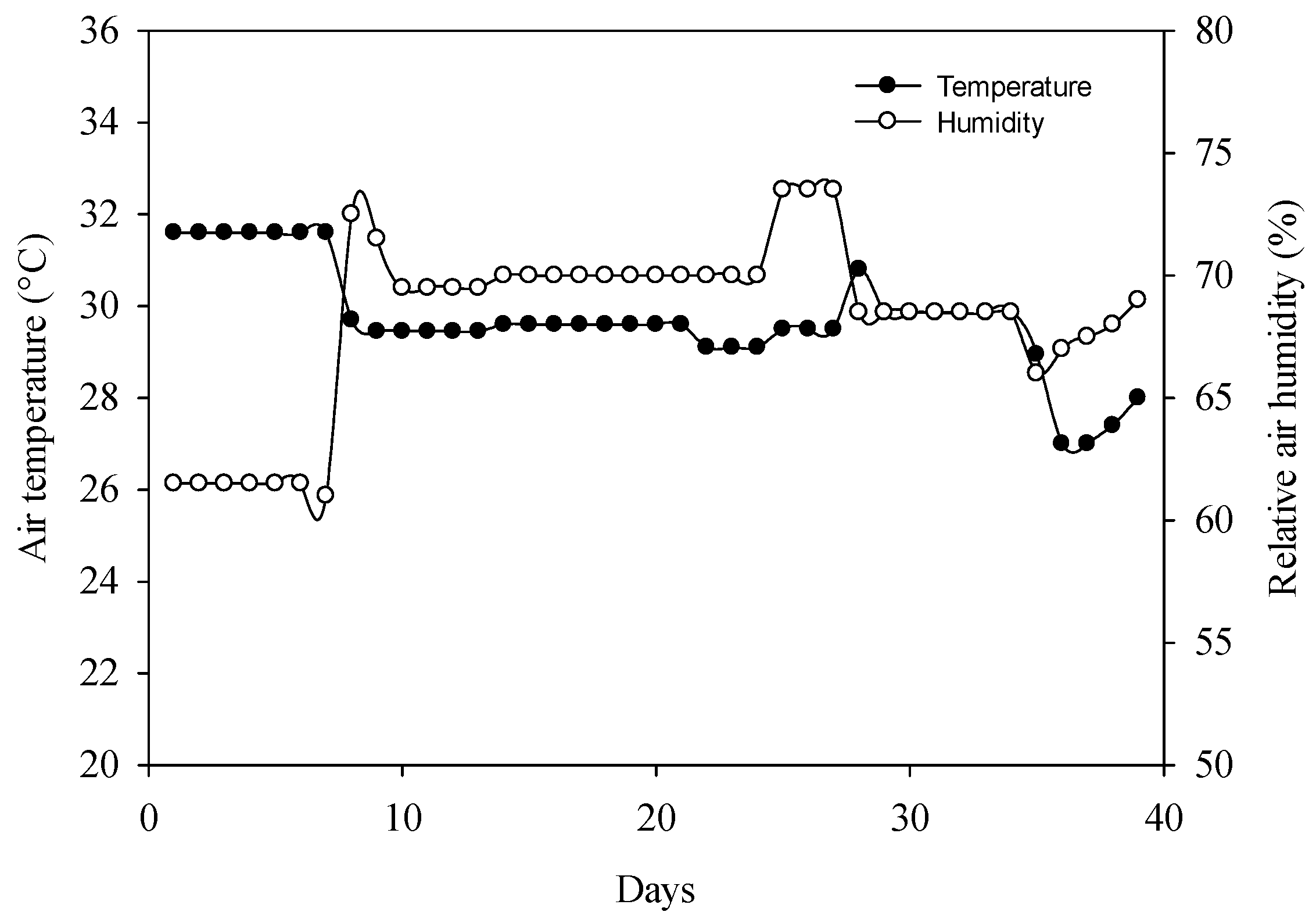
The experiment was conducted in a greenhouse covered with a 50% shade cloth, under natural photoperiod conditions. Microclimatic conditions inside the greenhouse were monitored using a thermo-hygrometer (Figure 1), positioned at plant canopy height, with daily records of air temperature and relative humidity.
A commercial substrate (Tropstrato®, Vida Verde, Mogi Mirim, Brazil) was used in the experiment. It was composed of pine bark, peat, and vermiculite, according to the manufacturer. The substrate had a pH of 5.8 ± 0.3 and electrical conductivity of 1.2 ± 0.3 mS/cm. The material was sun-dried for subsequent determination of the maximum water-holding capacity of the pot substrate. A 0.4 kg portion of dried substrate was placed in 0.8 L pots. The pots were saturated by capillarity and sealed at the top with polyvinyl chloride (PVC). After 24 h, they were weighed again, and the maximum water availability (WA) was determined by mass difference.
Different Physalis angulata accessions obtained from different Brazilian states: Bahia, Pará, Rio de Janeiro, and Piauí—were evaluated (Table 1). Seeds were collected from fruits 36 days after anthesis, when they reached physiological maturity, dried at room temperature on a laboratory bench for 72 h [20], and stored in paper bags inside a hermetically sealed container containing silica gel at 4 °C.
Sowing was carried out directly in the pots (three seeds per pot), and thinning was performed five days after seedling emergence. Irrigation occurred twice a day, in the early morning and late afternoon, using tap water for 26 days. After this period, plants were subjected to treatments corresponding to 20% and 80% of water availability (WA), representing water deficit (WD) and well-watered (WW) conditions, respectively. Four replicates were used for each treatment. The onset of the water deficit period was defined as the point at which plants subjected to the most restrictive treatment reached the predetermined threshold of 20% water availability (WA). All physiological, biochemical, and water status measurements were taken after five consecutive days under continuous water deficit, at the time of destructive sampling of plant material.

2.2. Analyzed Variables

2.2.1. Relative Water Content (RWC) Measurement

Relative water content (RWC) was evaluated in the third fully expanded leaf counted from the apex of the plant. Ten leaf discs (5 mm in diameter) were collected to determine fresh mass (FM, g), turgid mass (TM, g), and dry mass (DM, g), following the method proposed in [21]. Turgid mass was obtained by placing the discs in Petri dishes with distilled water for 5 h. Dry mass was determined by oven-drying the discs at 60 °C in a forced-air circulation oven until constant weight. RWC was calculated according to Equation (1):
R W C = [ ( F M D M ) ( T M D M ) ] × 100

2.2.2. Gas Exchange Analysis

Gas exchange was evaluated in the third fully expanded leaf counted from the apex of the plant using a portable infrared gas analyzer (IRGA; LI-6400XT, LI-COR Environmental, Lincoln, NE, USA) between 9:00 and 11:00 a.m., with a photon flux density of 1200 μmol m−2 s−1 and a cuvette temperature of 25 °C. Ten readings were taken per replicate at 10 s intervals. The following parameters were measured: CO2 assimilation rate, expressed as μmol CO2 m−2 s−1; stomatal conductance, in mol H2O m−2 s−1, and transpiration rate, in mmol H2O m−2 s−1. Water use efficiency (WUE), expressed in mmol CO2 mmol−1 H2O, was calculated from CO2 assimilation (A) and transpiration (E) according to Equation (2):
W U E = ( A / E )

2.2.3. Biochemical Determinations and Measurements

Biomolecules were quantified in triplicate for each replicate using extracts obtained from the maceration of 1 g of fresh leaf tissue collected from the third fully expanded leaf counted from the apex of the plant, using a mortar to which 15 mL of potassium phosphate buffer 0.1 M (pH 7.0) was added. The samples were subsequently centrifuged at 12,000 rpm for 15 min at 4 °C, and the supernatant was used for the analyses.
Amino acid content (μg g−1 FM) was determined based on the ninhydrin method [22]. Total soluble sugars (μg g−1 FM) were quantified by the anthrone method [23] and reducing sugars (μg g−1 FM) by the dinitrosalicylic acid (DNS) method [24].

2.3. Statistical Analysis

The experimental design was completely randomized, with each Physalis angulata accession grown under well-watered and water-deficit conditions. Results were compared using an independent samples t-test, adopting a significance level of 5%, performed in the R statistical software (version 4.5.2) [25]. Multivariate analysis was conducted using principal component analysis (PCA), considering only the two contrasting accessions identified based on their response to water deficit.

3. Results

3.1. Relative Water Content (RWC)

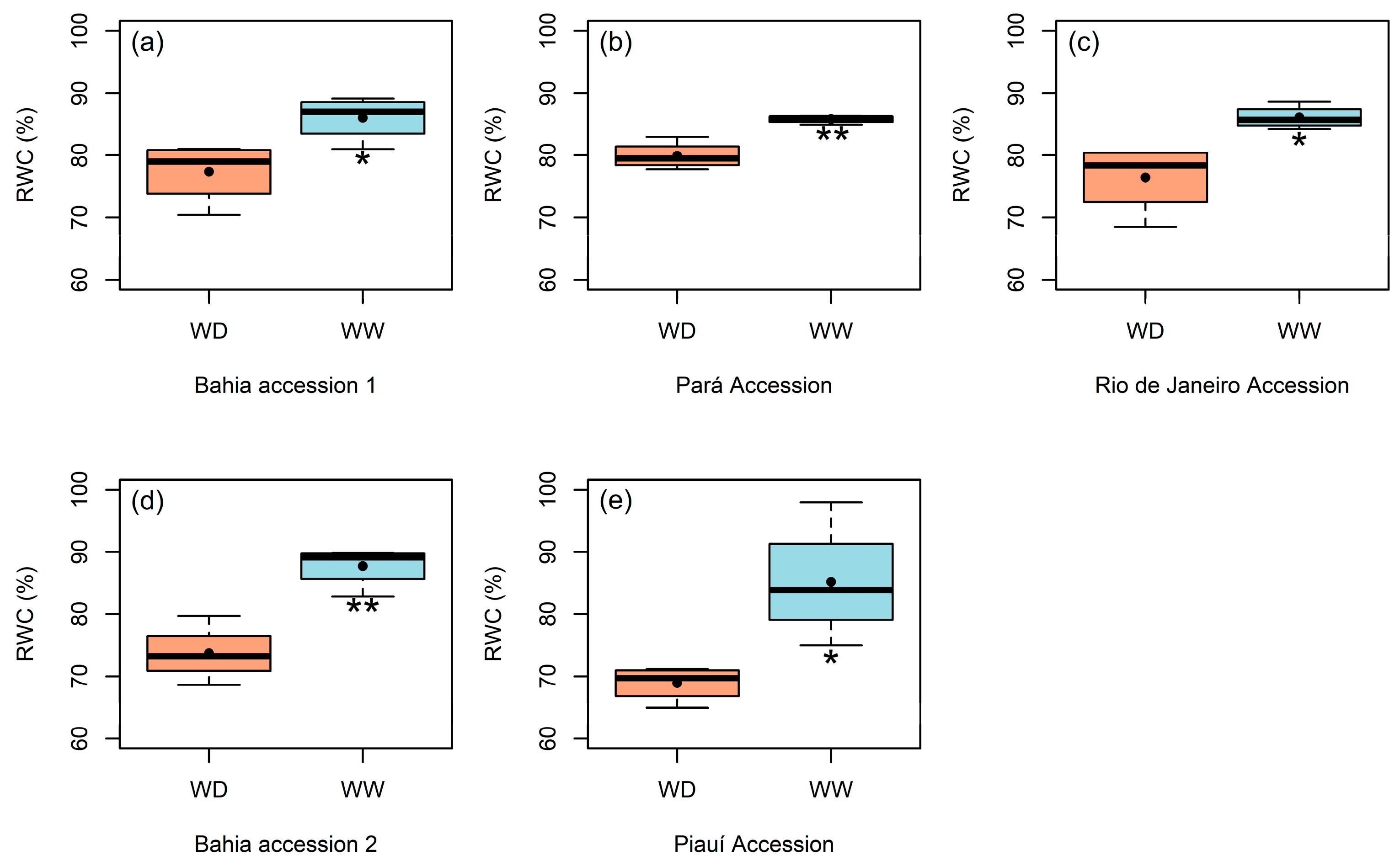
Significant changes in plant water status were observed among the Physalis angulata accessions grown under well-watered and water-deficit conditions (Figure 2). The relative water content (RWC) exhibited contrasting behavior among all studied accessions: Bahia accession 1 (Figure 2a), Pará accession (Figure 2b), Rio de Janeiro accession (Figure 2c), Bahia accession 2 (Figure 2d), and Piauí accession (Figure 2e). Higher RWC values were recorded in well-watered plants, as follows: BA1 86.03%, PA 85.75%, RJ 86.06%, BA2 87.70%, and PI 85.19%. In contrast, plants grown under water-deficit conditions showed lower RWC values: BA1 77.36%; PA 79.92%; RJ 76.43%; BA2 73.70%; PI 68.95%.

3.2. Gas Exchange

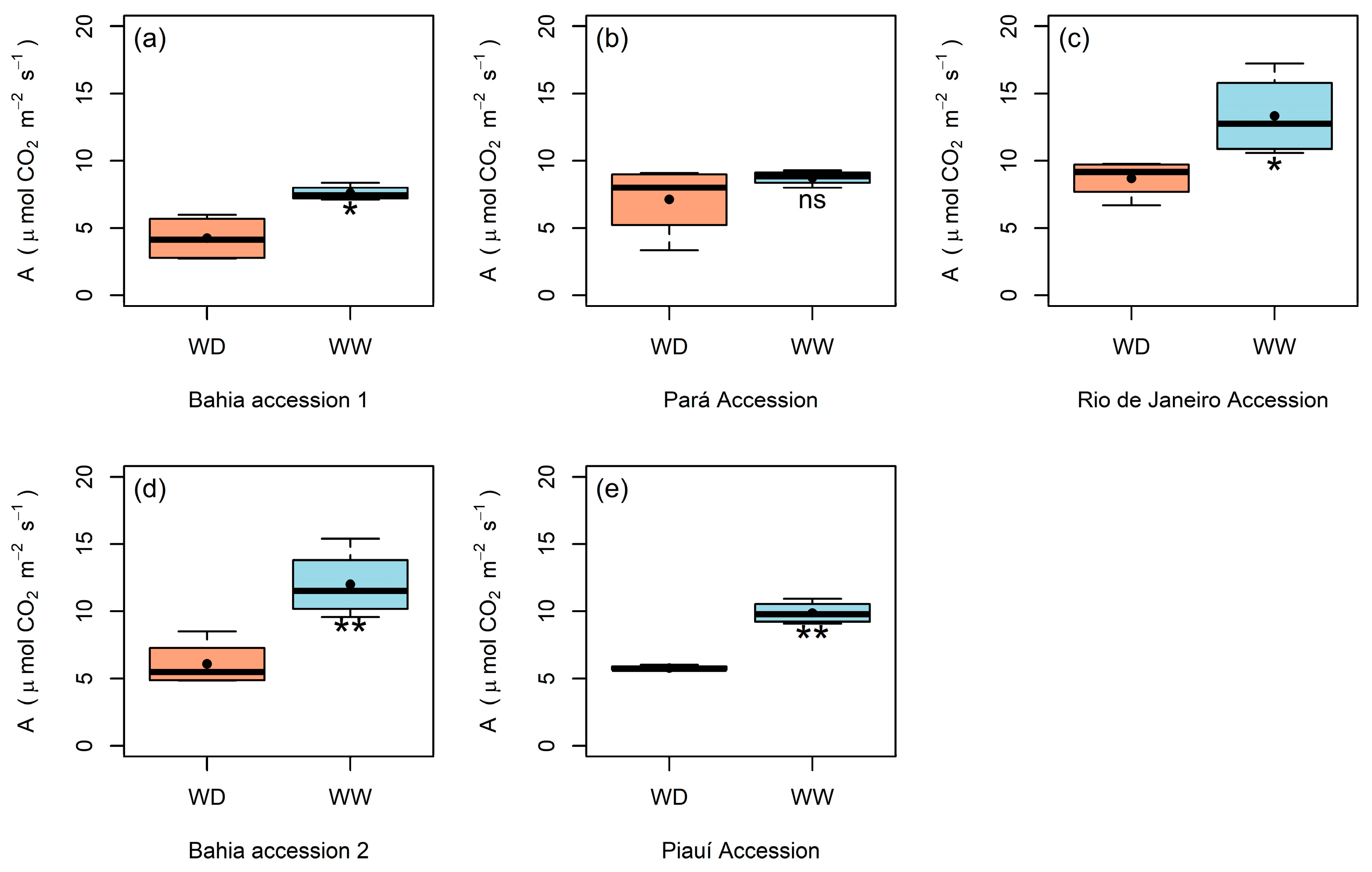
Within each accession, significant differences in gas exchange were observed in Physalis angulata grown under well-watered and water-deficit conditions. Regarding CO2 assimilation, notable contrasts were found for the accessions from Bahia accession 1 (Figure 3a), Rio de Janeiro accession (Figure 3c), Bahia accession 2 (Figure 3d), and Piauí accession (Figure 3e), all of which exhibited higher photosynthetic rates under well-watered conditions: BA1 7.582, RJ 13.318, BA2 12.001, and PI 9.885 μmol CO2 m−2 s−1. Under water-deficit conditions, these accessions showed a respective reduction in CO2 assimilation of BA1 44.10%, RJ 34.73%, BA2 49.30%, and PI 41.58%. In contrast, the Pará accession (Figure 3b) did not exhibit significant differences between treatments, although plants under well-watered conditions showed a slightly higher CO2 assimilation rate.
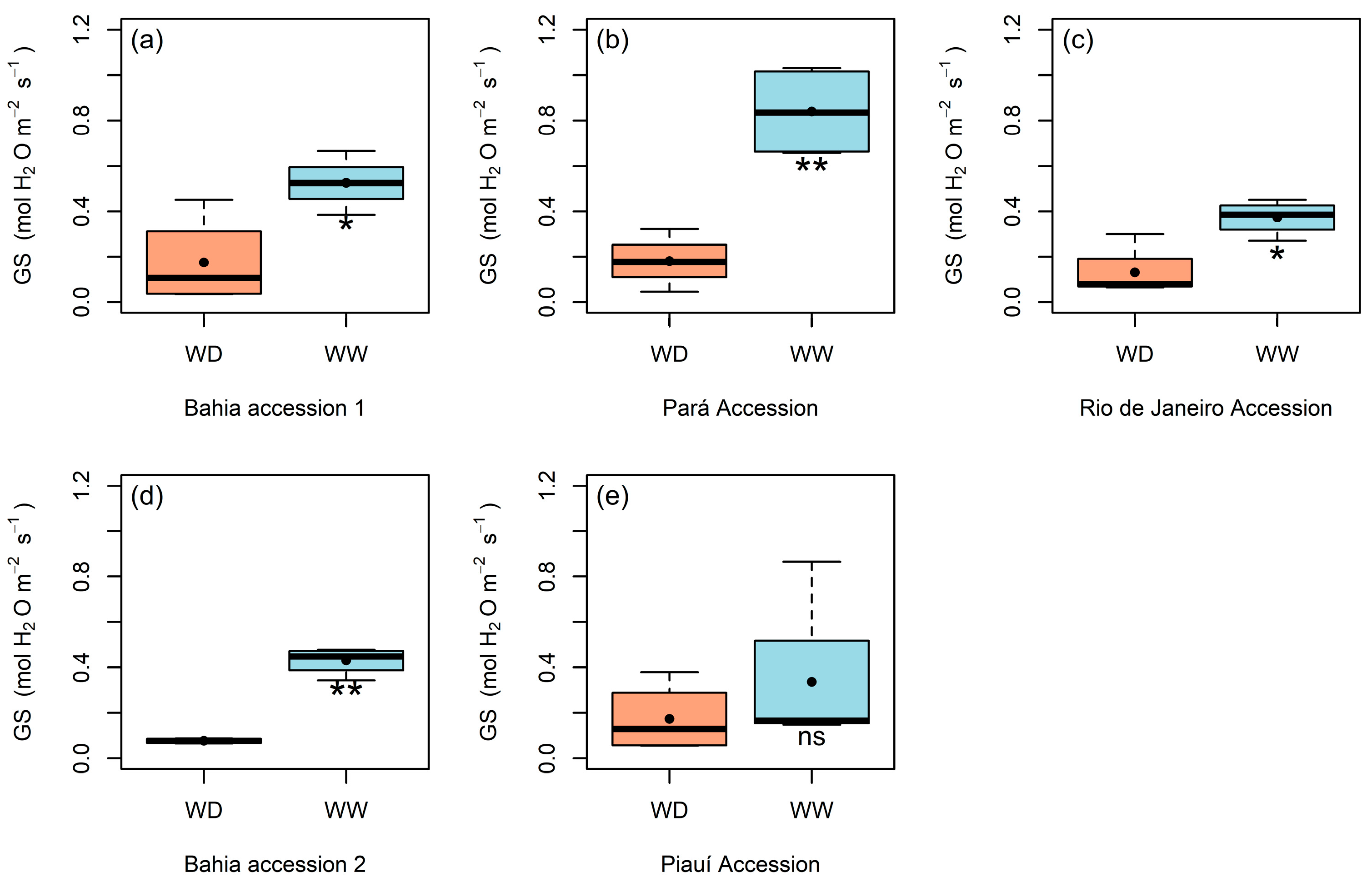
Stomatal conductance was significantly affected by the treatments. Bahia accession 1 (Figure 4a), Pará accession (Figure 4b), Rio de Janeiro accession (Figure 4c), and Bahia accession 2 (Figure 4d), exhibited higher stomatal conductance values under well-watered conditions, corresponding to BA1 0.524, PA 0.839, RJ 0.372, and BA2 0.430 mol H2O m−2 s−1. Plants grown under water-deficit conditions showed a reduction in stomatal conductance, corresponding to decreases of BA1 66.79%, PA 78.55%, RJ 65.05%, and BA2 82.09%. The Piauí accession (Figure 4e) did not show significant differences between treatments, although the highest mean stomatal conductance was observed in plants grown under well-watered conditions.
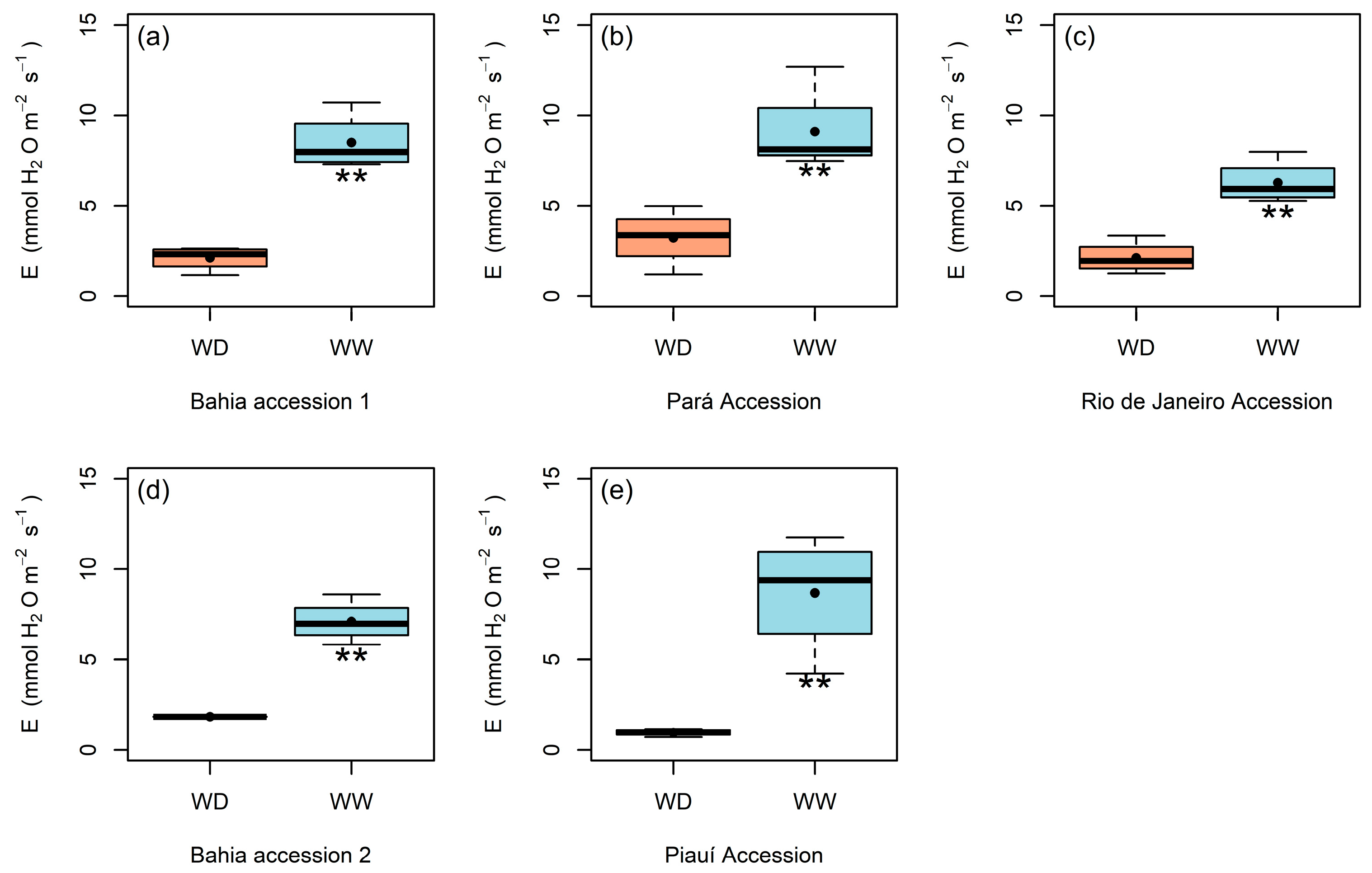
Significant differences in leaf transpiration were observed among P. angulata accessions, influenced by water availability treatments across all analyzed accessions: Bahia accession 1 (Figure 5a), Pará accession (Figure 5b), Rio de Janeiro accession (Figure 5c), Bahia accession 2 (Figure 5d), and Piauí accession (Figure 5e). Higher mean transpiration rates were recorded under well-watered conditions: BA1 8.487, PA 9.100, RJ 6.270, BA2 7.096, and PI 8.689 mmol H2O m−2 s−1. Correspondingly, transpiration decreased under water-deficit conditions by BA1 75.21%, PA 64.54%, RJ 66.19%, BA2 74.24%, and PI 89.04%.
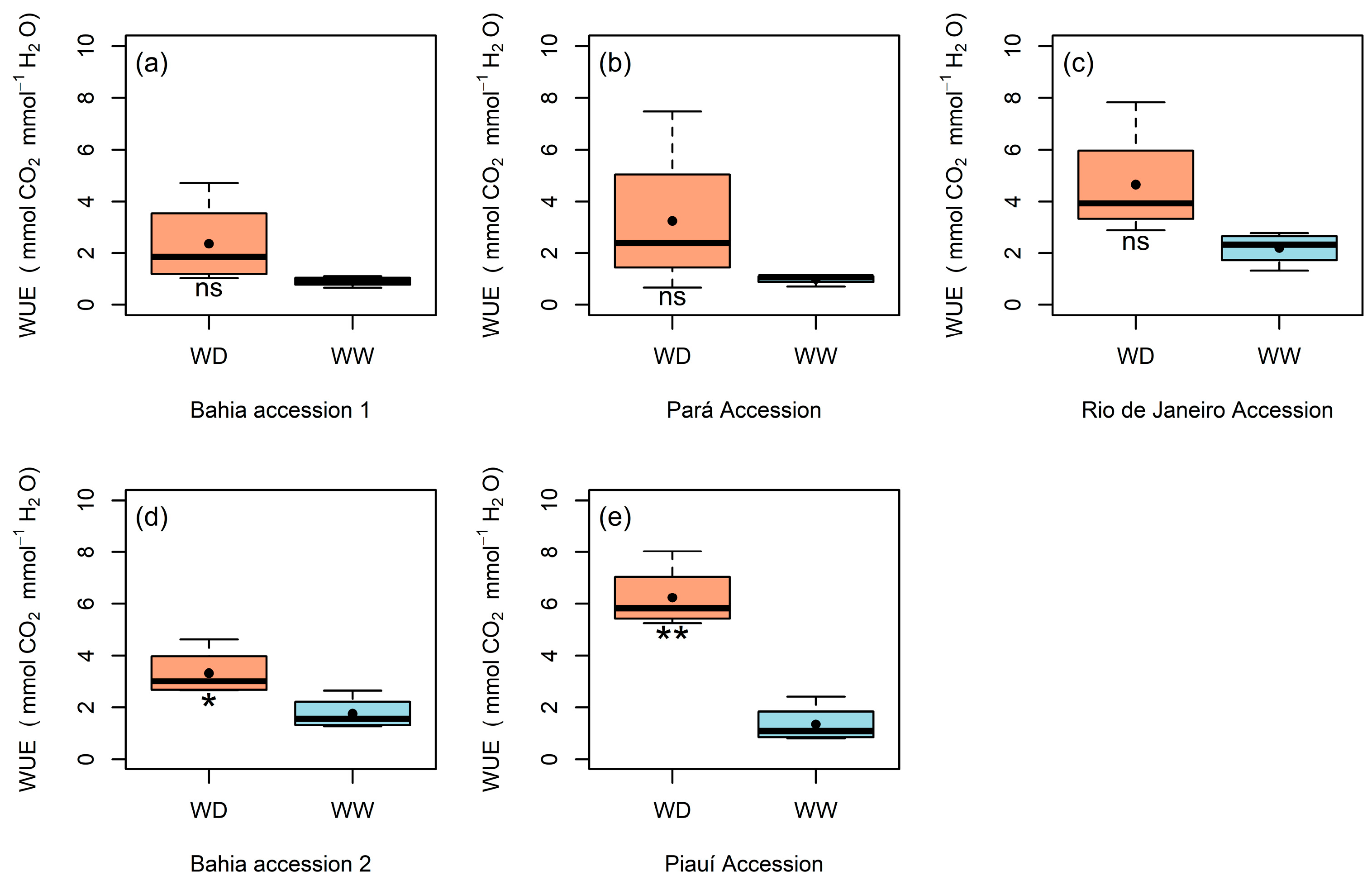
Analyzing water use efficiency, only Bahia accession 2 (Figure 6d) and Piauí accession (Figure 6e) showed significant differences, with higher mean values in plants grown under water-deficit conditions: BA2 2.270 and PI 6.234 mmol CO2 mmol−1 H2O. Decreases of 47.13% and 78.47% was observed in well-watered plants for BA2, and PI, respectively. The Bahia accession 1 (Figure 6a), Pará accession (Figure 6b), and Rio de Janeiro accession (Figure 6c) did not show significant differences, despite showing higher water use efficiency in plants grown under water-deficit conditions.

3.3. Biochemical Determinations

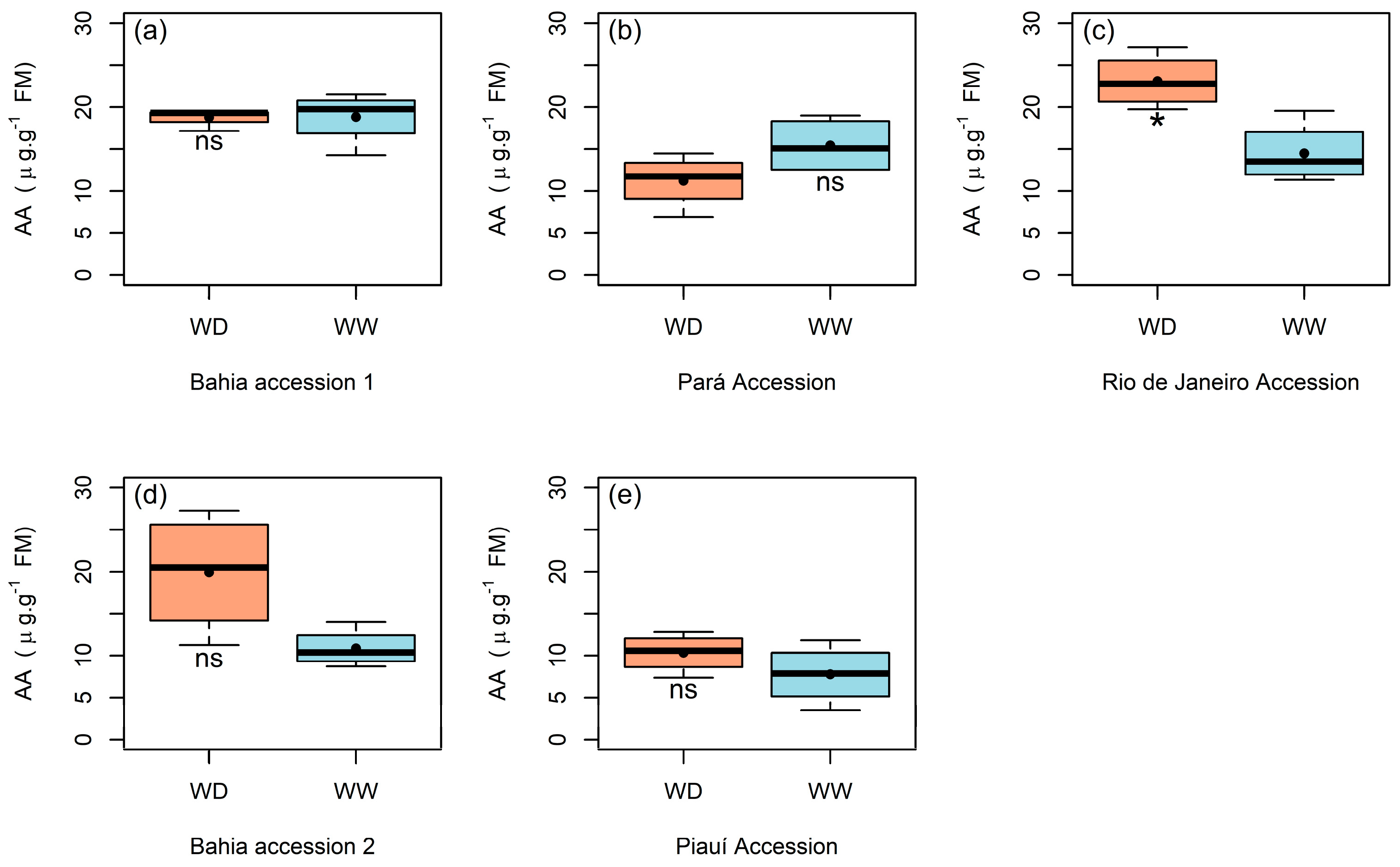
Changes were observed in the biochemical parameters of Physalis angulata accessions grown under well-watered and water-deficit conditions for total soluble sugars (Figure 7), reducing sugars (Figure 8), and amino acids (Figure 9).
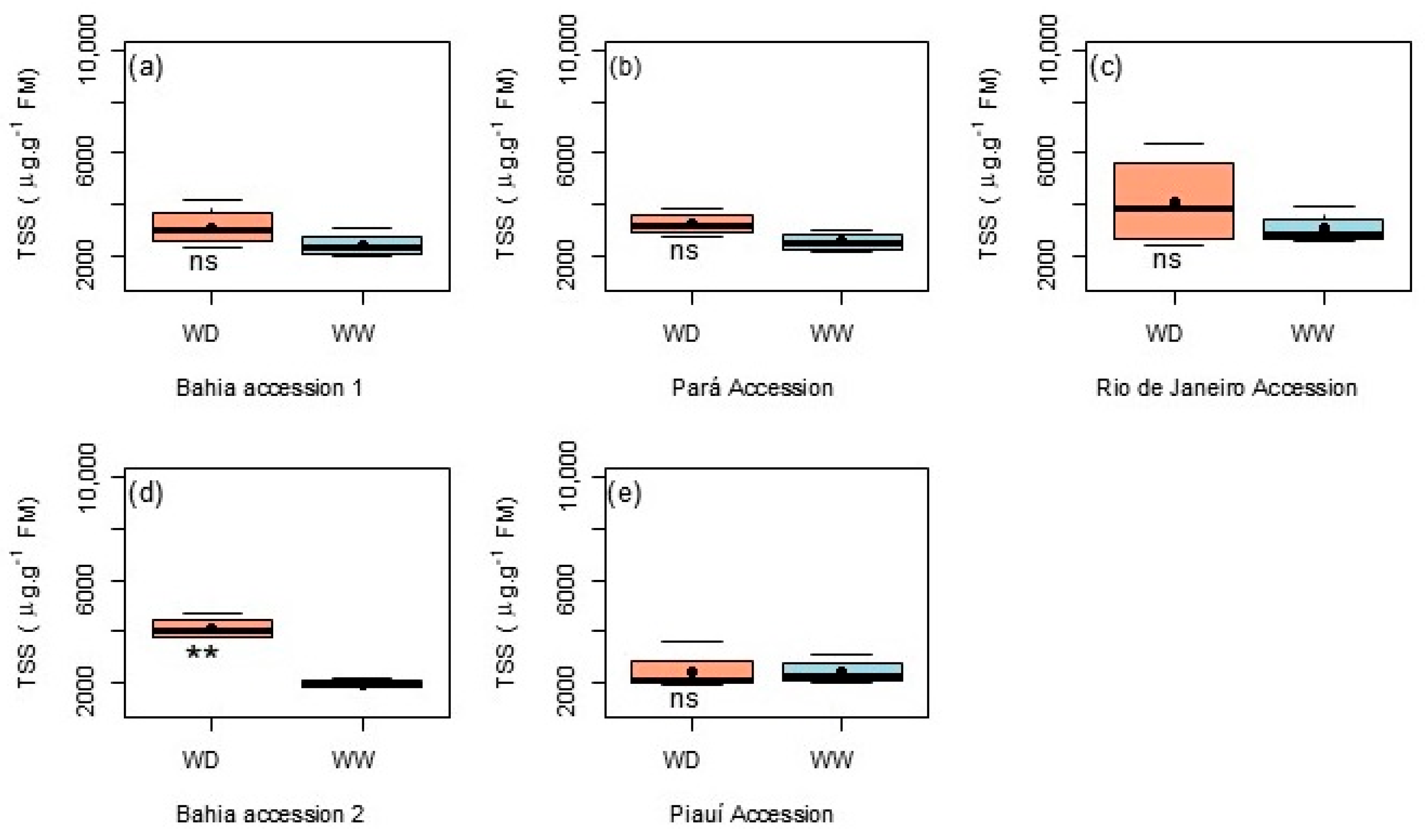
The total soluble sugar content was significantly higher in plants grown under water-deficit conditions in the Bahia accession 2 (Figure 7d) accession, which showed a mean value of 4130 μg g−1 FM. Soluble sugar accumulation in well-watered controls was 52.60% lower than in water-deficit plants. The accessions other studied did not show significant differences. However, it is noteworthy that the Piauí accession did not present an average increase in soluble sugar content under water-deficit conditions (Figure 7e).
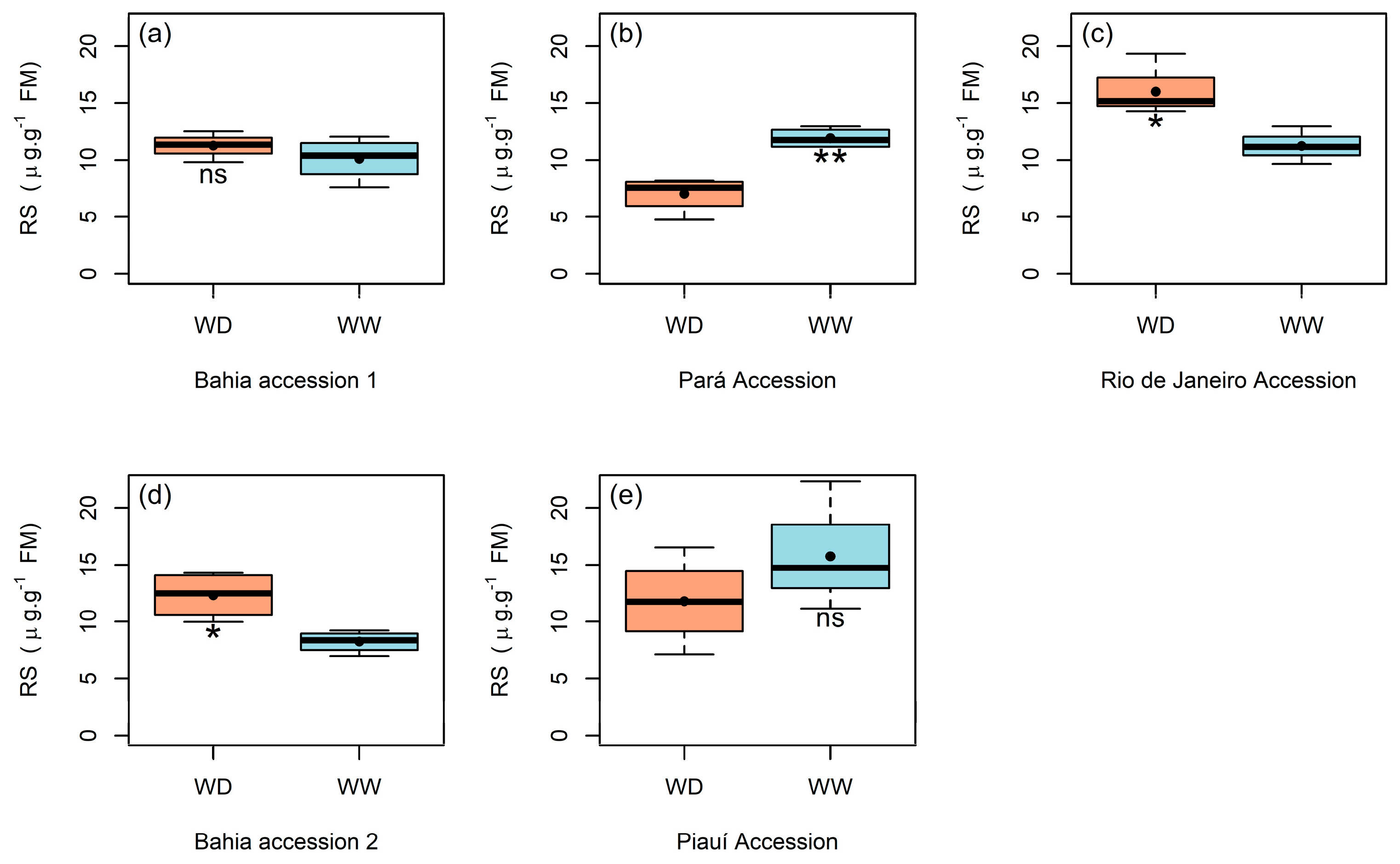
Considering the accumulation of reducing sugars, significant differences were observed between well-watered and water-deficit treatments. Higher accumulation was found in plants grown under water deficit from Rio de Janeiro accession (Figure 8c) and Bahia accession 2 (Figure 8d), corresponding to 15.997 and 12.314 μg g−1 FM, compared to water-deficit plants, well-watered controls exhibited 29.77% and 33.08% lower soluble sugar accumulation, respectively. The Pará accession (Figure 8b) also presented significant differences; however, in this case, well-watered plants exhibited higher reducing sugar content (11.904 μg g−1 FM).
The amino acid content differed between treatments only for the Rio de Janeiro accession (Figure 9c). Plants under water deficit showed an average of 23.109 μg g−1 FM, whereas well-watered plants exhibited 14.493 μg g−1 FM, compared to water-deficit plants, well-watered controls exhibited 37.28% lower soluble sugar accumulation. No significant increase between treatments was observed for the other accessions analyzed. It is noteworthy that the Bahia accession 1 (Figure 9a) and Pará accession (Figure 9b) did not show an average increase in amino acids in plants grown under water-deficit conditions compared with well-watered plants.
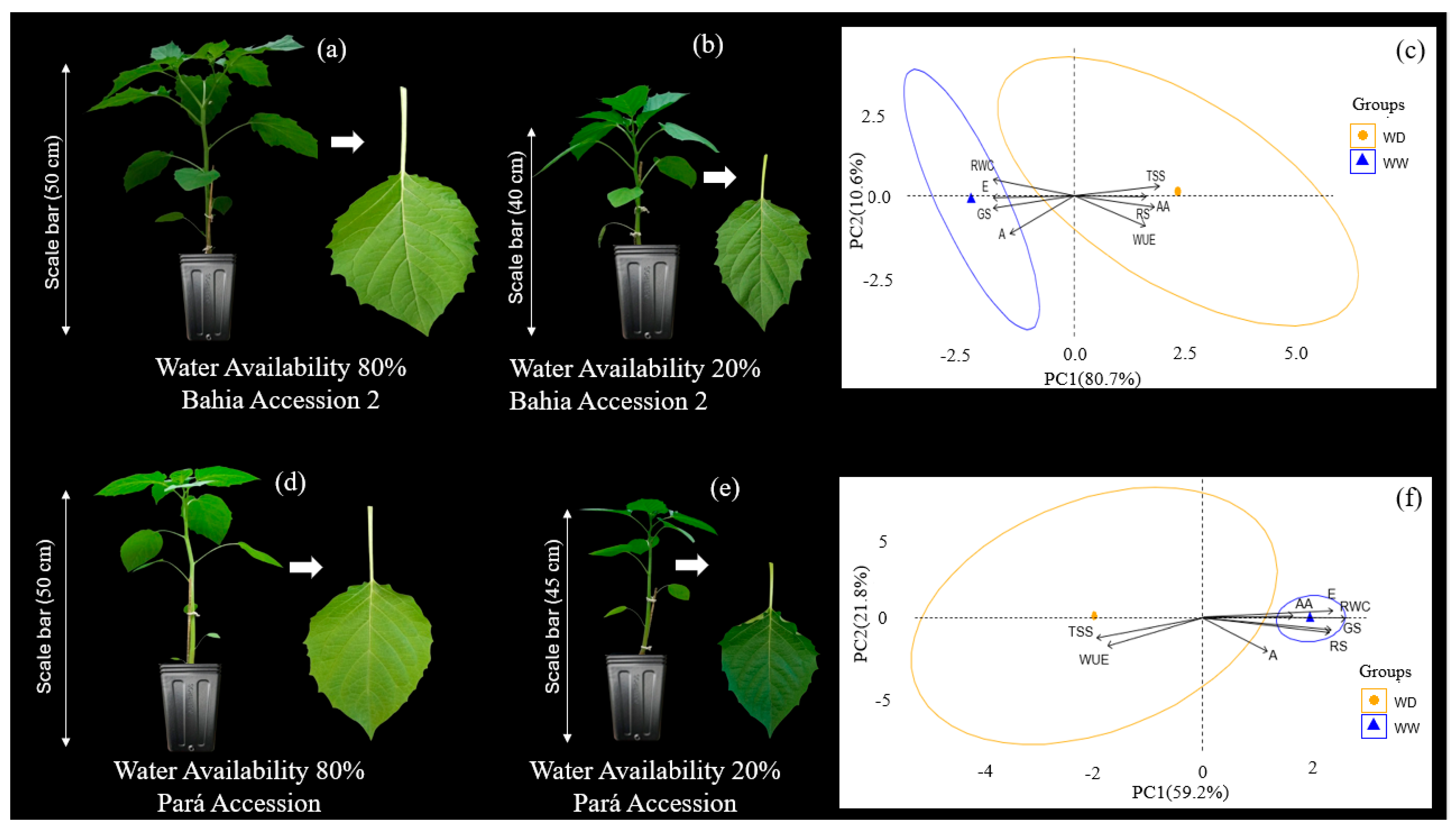
The results obtained in this experiment indicate physiological and biochemical adjustments in Physalis angulata accessions cultivated under well-watered and water-deficit conditions. Among these, the Bahia accession 2 accession stood out by exhibiting the highest number of adjustments across the analyzed variables, while the Pará accession showed fewer significant changes (Figure 10).
Key aspects were summarized based on the Bahia accession 2 (Figure 10a,b) under different water availability conditions, with principal component analysis (Figure 10c) accounting for 91.30% of the explained variance. In contrast, the Pará accession exhibited a distinct performance (Figure 10d–f), with the observed responses explaining 81.00% of the variation.

4. Discussion

Changes in relative water content (RWC) in Physalis angulata from Bahia accession 1, Pará accession, Rio de Janeiro accession, Bahia accession 2 and Piauí accession (Figure 2) demonstrate the species’ sensitivity to water deficit. Among these, the Bahia accession 2 (Figure 2d) exhibited the highest hydration level. RWC is a widely used parameter in drought stress studies and reflects the level of tissue hydration relative to its maximum storage capacity [26].
Plant species responses to drought events based on relative water content analysis are contrasting [2,4,27], highlighting the need for species-specific studies. These contrasts may be associated with factors related to species identity, duration and intensity of drought exposure, as well as the plant’s ecophysiological traits. In P. angulata grown under water-deficit conditions, significant changes between treatments with 80% and 20% water availability were reported [8], as well as improvements in water status through foliar application of exogenous stress-attenuating molecules [9].
Our data on relative water content (RWC) indicate a consistent pattern among the evaluated accessions. However, for accessions with higher RWC values, it was expected that they would also exhibit significant differences in CO2 assimilation (Figure 3), which did not occur for the Pará accession.
In Solanaceae, Ref. [28] reported that differential responses among potato cultivars are strongly influenced by genetic factors. In the present study, our results indicate that, in addition to genetic background, environmental conditions play a crucial role in plant establishment, particularly given the contrasting environmental conditions of the accessions’ regions of origin.
Water deficit also induces changes in gas exchange patterns, resulting in reductions in CO2 assimilation, stomatal conductance, and leaf transpiration [4]. This response was observed in CO2 assimilation in Physalis angulata from Bahia accession 1 (Figure 3a), Rio de Janeiro accession (Figure 3c), Bahia accession 2 (Figure 3d) and Piauí accession (Figure 3e). However, no significant contrast was found for the Pará accession, suggesting that changes in gas exchange patterns depend on the genotype-by-environment interaction. Changes in gas exchange patterns can reduce CO2 assimilation in plants, affecting carbon accumulation and photosynthetic efficiency, which may lead to decreased productivity [19].
According to Ref. [29], understanding how environmental factors affect plant performance is crucial for elucidating plant responses to climate change and for the development of effective mitigation strategies.
Stomatal conductance from Bahia accession 1 (Figure 4a), Pará accession (Figure 4b), Rio de Janeiro accession (Figure 4c), and Bahia accession 2 (Figure 4d), significantly decreased under water-deficit conditions, except for the Piauí accession (Figure 4e). Leaf transpiration was reduced across all accessions under water-deficit treatment (Figure 5). Under drought conditions, stomata progressively close [30], suggesting that the reduction in CO2 assimilation is driven by the dynamics of stomatal closure.
The CO2 assimilation in Physalis angulata under water-deficit conditions (Figure 3) was lower than in well-watered plants. Photosynthetic activity in stressed plants may be related to RuBisCO enzymatic activity [31] and accumulation of organic solutes [32]. The mechanisms involved in altering photosynthetic patterns can occur at both the photochemical and biochemical stages [33]. Abiotic factors such as water availability and salinity have been shown to influence CO2 assimilation, transpiration, and stomatal conductance in Physalis angulata [5,8].
Changes in water use efficiency are hallmark characteristics in studies involving water deficit. However, in our study, significant increases in efficiency were observed only in the Bahia accession 2 (Figure 6d), and Piauí accession (Figure 6e). This result emphasizes the complexity of cellular mechanisms involved in environmental change perception [34]. In this context, controlled water deficit may serve as an important strategy for irrigation management, particularly in light of projected climate change scenarios [35]. The efficiency of water use in plants grown under water deficit is enhanced by the properties of water, such as high specific heat, high latent heat of vaporization, and high thermal conductivity [4], allowing plants to withstand temporary periods of drought.
Regarding biochemical aspects (Figure 7, Figure 8 and Figure 9), it is noteworthy that under water-deficit treatment, the Bahia accession 2 (Figure 7d) exhibited significantly higher total soluble sugar content. Reducing sugars were also higher under drought conditions, with significant differences observed from Rio de Janeiro accession (Figure 8c), and Bahia accession 2 (Figure 8d). However, the Pará accession (Figure 9b) also showed significant differences, with higher reducing sugar content in well-watered plants. Regarding amino acids, only the Rio de Janeiro accession (Figure 9c) showed a significant increase under water-deficit conditions.
The accumulation of biomolecules such as proteins, amino acids, proline, and soluble and reducing sugars has been reported in various studies and is associated with osmotic adjustment, conferring tolerance to abiotic stress [4,8,36]. Plants grown under stress conditions may exhibit increased amino acid content due to protease activity [37], with amino acids being utilized in metabolic processes [38]. Sugars can contribute to maintaining tissue hydration by forming bonds with proteins, thereby preserving their structure and function [1]. In Solanaceae [13], significant differences were observed among three field capacity levels and two sweet potato cultivars, reflected in changes in metabolite accumulation.
The adjustments in plant metabolism observed in water-deficit conditions, compared with well-watered plants, exhibit a temporal dynamic. The impact of water restriction initially affects gas exchange, limiting carbon assimilation, and subsequently leads to adjustments in biochemical traits, which contribute to the temporary mitigation of water stress. The Bahia accession 2 and Rio de Janeiro accessions showed a greater number of significant variables, whereas the Bahia accession 1 and Pará accessions exhibited fewer significant responses.
The principal components summarize the contrasting results observed between the Bahia accession 2 (Figure 10a,b) and Pará accession (Figure 10d,e). The Bahia accession 2 accession exhibited a stronger association under well-watered conditions with variables related to plant water status and photosynthetic performance, such as CO2 assimilation, stomatal conductance, and transpiration (Figure 10c). In contrast, water use efficiency and the accumulation of organic solutes were more closely associated with water deficit conditions (Figure 10f). Notably, the Pará accession showed an association between water deficit, photosynthesis, and solute accumulation only for the variables water use efficiency and total soluble sugars, indicating that the genotype may influence the interpretation of the data and the selection of the most adapted accessions.

5. Conclusions

Physalis angulata accessions exhibit distinct performance when grown under well-watered and water-deficit conditions, showing changes in plant water status, gas exchange, and organic solute accumulation. Accessions from Pará and Bahia accession 2 show potential for use in studies aimed at the genetic improvement of the species.
The authors suggest that molecular studies of these accessions could provide valuable insights, particularly through transcriptome analysis under the specific conditions evaluated in this study.

Author Contributions

Conceptualization, R.d.J.S., M.N.d.N., G.T.-S., and R.d.S.L.; methodology, R.d.J.S., M.N.d.N., G.T.-S., R.d.S.L., and U.C.D.O.; software, R.d.J.S. and U.C.D.O.; validation, R.d.J.S., M.N.d.N., G.T.-S., R.d.S.L., and U.C.D.O.; formal analysis, R.d.J.S., U.C.D.O., M.V.d.A.C., A.A.d.S., and G.d.S.L.O.; resources, R.d.J.S., M.N.d.N., G.T.-S., and R.d.S.L.; data curation, R.d.J.S., M.N.d.N., G.T.-S., R.d.S.L., U.C.D.O., A.A.d.S., M.V.d.A.C., G.T.-S., and G.d.S.L.O.; writing—original draft preparation, R.d.J.S., M.N.d.N., G.T.-S., R.d.S.L., U.C.D.O., A.A.d.S., M.V.d.A.C., G.T.-S., and G.d.S.L.O.; writing—review and editing, all authors; supervision, R.d.J.S., M.N.d.N., G.T.-S., and R.d.S.L.; project administration, R.d.J.S. and M.N.d.N.; funding acquisition, R.d.J.S. All authors have read and agreed to the published version of the manuscript.

Funding

This work was supported by the Coordenação de Aperfeiçoamento de Pessoal de Nível Superior—Brazil (CAPES)—Finance Code 001, and by the Programa Interno de Auxílio Financeiro à Pesquisa, Desenvolvimento Tecnológico e Inovação (FINAPESQ) of Feira de Santana State University (Grant No. 066/2024).

Data Availability Statement

The data generated and analyzed in this study are available on request from the corresponding authors. Due to temporary storage limitations and the large volume of raw physiological and biochemical datasets, public deposition in an online repository is not feasible at this stage. However, all processed data supporting the findings of this manuscript can be promptly provided upon reasonable request.

Acknowledgments

The authors acknowledge the financial support from the Fundação de Amparo à Pesquisa do Estado da Bahia (FAPESB), Brazil.

Conflicts of Interest

The authors declare no potential conflicts of interest.

References

  1. Yang, X.; Lu, M.; Wang, Y.; Wang, Y.; Liu, Z.; Chen, S. Response mechanism of plants to drought stress. Horticulturae 2021, 7, 50. [Google Scholar] [CrossRef]
  2. González-Espíndola, L.A.; Pedroza-Sandoval, A.; Trejo-Calzada, R.; Jacobo-Salcedo, M.R.; Santos, G.G.; Quezada-Rivera, J.J. Relative water content, chlorophyll index, and photosynthetic pigments on Lotus corniculatus L. in response to water deficit. Plants 2024, 13, 961. [Google Scholar] [CrossRef]
  3. Lima, I.K.F.; Nascimento, M.N.; Guimarães, D.S.; Neto, F.S.; Gonçalves Neto, L.P. Morphological, physiological, and biochemical characteristics of Physalis peruviana L. plants under different water availabilities. Comun. Sci. 2024, 15, e3807. [Google Scholar] [CrossRef]
  4. Santos, R.J.; Nascimento, M.N.; Camilloto, G.P.; Oliveira, U.C.; Santos, F.S. Water restriction as a strategy for growing Talinum fruticosum (L.) Juss. (Talinaceae). Rev. Caatinga 2024, 37, e12183. [Google Scholar] [CrossRef]
  5. Silva, A.L.; Ribeiro, M.N.N.; Carneiro, V.J.; Neto, F.S.; Leite, R.S.; Tanan, T.T. Physiological and biochemical indicators of Physalis angulata L. plants submitted under salinity. Comun. Sci. 2021, 12, e3450. [Google Scholar]
  6. Li, C.; Wu, Y. Advances and future directions in biotic and abiotic stress responses of horticultural plants. Horticulturae 2025, 11, 1405. [Google Scholar] [CrossRef]
  7. Zhang, H.; Lang, Z.; Zhu, J.-K.; Wang, P. Tackling abiotic stress in plants: Recent insights and trends. Stress Biol. 2025, 5, 8. [Google Scholar] [CrossRef]
  8. Leite, R.S.; Nascimento, M.N.; Tanan, T.T.; Ramos, C.A.S.; Neto, L.P.G.; Guimarães, D.S. Physiological responses of Physalis angulata plants to water déficit. J. Agric. Sci. 2018, 10, 287–297. [Google Scholar] [CrossRef]
  9. Leite, R.S.; Nascimento, M.N.; Silva, A.L.; Santos, R.J. Chemical priming agents controlling drought stress in Physalis angulata plants. Sci. Hortic. 2021, 275, 109670. [Google Scholar] [CrossRef]
  10. Baris-Tuzemen, O.; Lyhagen, J. Revisiting the role of climate change on crop production: Evidence from mediterranean countries. Environ. Dev. Sustain. 2024, 26, 1–14. [Google Scholar] [CrossRef]
  11. Raoufi, H.; Jafari, H.; Sarhadi, W.A.; Salehi, E. Assessing the impact of climate change on agricultural production in central Afghanistan. Reg. Sustain. 2024, 5, 100156. [Google Scholar] [CrossRef]
  12. Yuan, X.; Sien, L.; Chen, J.; Yu, H.; Yang, T.; Wang, C.; Huang, S.; Chen, H.; Ao, X. Impacts of global climate change on agricultural production: A comprehensive review. Agronomy 2024, 14, 1360. [Google Scholar] [CrossRef]
  13. Makhubu, F.N.; Siviya, L.E.; Rauwane, M.E.; Laurie, S.M.; Madala, N.E.; Figlan, S. Biochemical Responses of Atacama and Blesbok Sweet Potato (Ipomoea batatas L.) Cultivars to Early Drought Stress. Plants 2025, 14, 3532. [Google Scholar] [CrossRef]
  14. Kinupp, V.F.; Lorenzi, H. Plantas Alimentícias não Convencionais (PANC) no Brasil: Guia de Identificação, Aspectos Nutricionais e Receitas Ilustradas, 1st ed.; Instituto Plantarum de Estudos da Flora: São Paulo, Brazil, 2014. [Google Scholar]
  15. Kardani, A.K.; Fitri, L.E.; Samsu, N.; Subandiyah, K. Protective effects of Physalis angulata on podocythopathies through b-cell-activating factor inhibition in doxorubicin-induced nephrotic syndrome rat model. Biomedicines 2025, 13, 719. [Google Scholar] [CrossRef] [PubMed]
  16. Riski, R.; Adnyana, I.K.; Nugraha, Y.P.; Rachmawati, H. Immunostimulatory effects of Physalis angulata L fruit extract: An in vitro and in vivo studies. J. Appl. Pharm. Sci. 2025, 15, 244–251. [Google Scholar] [CrossRef]
  17. Rivera, D.E.; Ocampo, Y.C.; Castro, J.P.; Barrios, L.; Diaz, F.; Franco, L.A. A screening of plants used in Colombian traditional medicine revealed the anti-inflammatory potential of Physalis angulata calyces. Saudi J. Biol. Sci. 2019, 26, 1758–1766. [Google Scholar] [CrossRef]
  18. Novitasari, A.; Rohmawaty, E.; Rosdianto, A.M. Physalis angulata Linn. as a medicinal plant (Review). Biomed Rep. 2024, 20, 47. [Google Scholar] [CrossRef] [PubMed]
  19. Leite, R.S.; Nascimento, M.N.; Trindade, D.B.; Silva, A.L.; Oliveira, U.C.; Lima, I.K.F. Nitric oxide improves gas exchange and growth in Physalis angulata plants under water deficit. Aust. J. Crop Sci. 2021, 15, 1238–1245. [Google Scholar] [CrossRef]
  20. Ramos, C.A.S.; Soares, T.L.; Barroso, N.S.; Pelacani, C.R. Influence of maturity stage on physical and chemical characteristics of fruit and physiological quality of seeds of Physalis angulata L. Sci. Hortic. 2021, 284, 110124. [Google Scholar] [CrossRef]
  21. Weatherley, P.E. Studies in the water relations of the cotton plant. I. The field measurement of water déficits in leaves. New Phytol. 1950, 49, 81–87. [Google Scholar] [CrossRef]
  22. Yemm, E.W.; Cocking, E.C. The determination of amino-acids with ninhydrin. Analyst 1955, 80, 209–213. [Google Scholar] [CrossRef]
  23. Yemm, E.W.; Willis, A.J. The estimation of carbohydrates in plant extracts by anthrone. Biochem. J. 1954, 57, 508–514. [Google Scholar] [CrossRef]
  24. Miller, G.L. Use of dinitrosalicylic acid reagent for determination of reducing sugar. Anal. Chem. 1959, 31, 426–428. [Google Scholar] [CrossRef]
  25. R Core Team. R: A Language and Environment for Statistical Computing; R Foundation for Statistical Computing: Vienna, Austria, 2024; Available online: https://www.R-project.org/ (accessed on 10 November 2025).
  26. Patanè, C.; Scordia, D.; Testa, G.; Cosentino, S.L. Physiological screening for drought tolerance in Mediterranean long-storage tomato. Plant Sci. 2016, 249, 25–34. [Google Scholar] [CrossRef]
  27. Patanè, C.; Cosentino, S.L.; Romano, D.; Toscano, S. Relative water content, proline, and antioxidant enzymes in leaves of long shelf-life tomatoes under drought stress and rewatering. Plants 2022, 11, 3045. [Google Scholar] [CrossRef] [PubMed]
  28. Soltys-Kalina, D.; Plich, J.; Strzelczyk-Żyta, D.; Śliwka, J.; Marczewski, W. The effect of drought stress on the leaf relative water content and tuber yield of a half-sib family of ‘Katahdin’-derived potato cultivars. Breed. Sci. 2016, 66, 328–331. [Google Scholar] [CrossRef] [PubMed]
  29. Napier, J.D.; Heckman, R.W.; Juenger, T.E. Gene-by-environment interactions in plants: Molecular mechanisms, environmental drivers, and adaptive plasticity. Plant Cell 2023, 35, 109–124. [Google Scholar] [CrossRef]
  30. Medrano, H.; Escalona, J.M.; Bota, J.; Gulías, J.; Flexas, J. Regulation of photosynthesis of C3 plants in response to progressive drought: Stomatal conductance as a reference parameter. Ann. Bot. 2002, 89, 895–905. [Google Scholar] [CrossRef]
  31. Batista, R.C.M.; Carvalho, J.S.B.; Coqueiro, D.R.; Aquino, P.G.V.; Alves, L.Z. Growth, gas exchange and essential oil production of Mentha spicata L. under water deficiency. Pesqui. Agropecu. Trop. 2023, 53, e76893. [Google Scholar] [CrossRef]
  32. Takaragawa, H.; Wakayama, M. Responses of leaf gas exchange and metabolites to drought stress in different organs of sugarcane and its closely related species Erianthus arundinaceus. Planta 2024, 260, 90. [Google Scholar] [CrossRef] [PubMed]
  33. Qiao, M.; Hong, C.; Jiao, Y.; Hou, S.; Gao, H. Impacts of drought on photosynthesis in major food crops and the related mechanisms of plant responses to drought. Plants 2024, 13, 1808. [Google Scholar] [CrossRef] [PubMed]
  34. Sandalio, L.M. Editorial: Insights in plant abiotic stress: 2021. Front. Plant Sci. 2022, 13, 1085150. [Google Scholar] [CrossRef]
  35. García-Tejero, I.F.; Durán-Zuazo, V.H. Plant water use efficiency for a sustainable agricultural development. Agronomy 2022, 12, 1806. [Google Scholar] [CrossRef]
  36. Ma, Q.-J.; Sun, M.-H.; Lu, J.; Liu, Y.-J.; Hu, D.-G.; Hao, Y.-J. Transcription factor AREB2 is involved in soluble sugar accumulation by activating sugar transporter and amylase genes. Plant Physiol. 2017, 174, 2348–2362. [Google Scholar] [CrossRef]
  37. Huang, T.; Jander, G. Abscisic acid-regulated protein degradation causes osmotic stressinduced accumulation of branched-chain amino acids in Arabidopsis thaliana. Planta 2017, 246, 737–747. [Google Scholar] [CrossRef] [PubMed]
  38. Hildebrandt, T.M.; Nesi, A.N.; Araujo, W.L.; Braun, H.-P. Amino acid catabolism in plants. Mol. Plant 2015, 8, 1563–1579. [Google Scholar] [CrossRef] [PubMed]
Figure 1. Microclimate inside the greenhouse: means air temperature and relative humidity.
Horticulturae 12 00172 g001
Figure 2. Relative Water Content (RWC) in leaves of Physalis angulata accessions grown under well-watered (WW) and water-deficit (WD) conditions: (a) Bahia accession 1; (b) Pará accession; (c) Rio de Janeiro accession; (d) Bahia accession 2; (e) Piauí accession. Horizontal bar in the boxplot = median; rhombus = mean. p < 0.05 (*), p < 0.01 (**), according to the t-test.
Horticulturae 12 00172 g002
Figure 3. CO2 assimilation rate (A) in Physalis angulata accessions grown under well-watered (WW) and water-deficit (WD) conditions: (a) Bahia accession 1; (b) Pará accession; (c) Rio de Janeiro accession; (d) Bahia accession 2; (e) Piauí accession. Horizontal bar in the boxplot = median; rhombus = mean. p < 0.05 (*), p < 0.01 (**), ns = not significant, according to the t-test.
Horticulturae 12 00172 g003
Figure 4. Stomatal conductance (GS) in Physalis angulata accessions grown under well-watered (WW) and water-deficit (WD) conditions: (a) Bahia accession 1; (b) Pará accession; (c) Rio de Janeiro accession; (d) Bahia accession 2; (e) Piauí accession. Horizontal bar in the boxplot = median; circle = rhombus. p < 0.05 (*), p < 0.01 (**), ns = not significant, according to the t-test.
Horticulturae 12 00172 g004
Figure 5. Leaf transpiration rate (E) in Physalis angulata accessions grown under well-watered (WW) and water-deficit (WD) conditions: (a) Bahia accession 1; (b) Pará accession; (c) Rio de Janeiro accession; (d) Bahia accession 2; (e) Piauí accession. Horizontal bar in the boxplot = median; circle = mean. p < 0.01 (**), according to the t-test.
Horticulturae 12 00172 g005
Figure 6. Water use efficiency (WUE) in Physalis angulata accessions grown under well-watered (WW) and water-deficit (WD) conditions: (a) Bahia accession 1; (b) Pará accession; (c) Rio de Janeiro accession; (d) Bahia accession 2; (e) Piauí accession. Horizontal bar in the boxplot = median; rhombus = mean. p < 0.05 (*), p < 0.01 (**), ns = not significant, according to the t-test.
Horticulturae 12 00172 g006
Figure 7. Total soluble sugars (TSS) in Physalis angulata accessions grown under well-watered (WW) and water-deficit (WD) conditions: (a) Bahia accession 1; (b) Pará accession; (c) Rio de Janeiro accession; (d) Bahia accession 2; (e) Piauí accession. Horizontal bar in the boxplot = median; rhombus = mean. p < 0.01 (**), ns = not significant, according to the t-test.
Horticulturae 12 00172 g007
Figure 8. Reducing sugars (RS) in Physalis angulata accessions grown under well-watered (WW) and water-deficit (WD) conditions: (a) Bahia accession 1; (b) Pará accession; (c) Rio de Janeiro accession; (d) Bahia accession 2; (e) Piauí accession. Horizontal bar in the boxplot = median; rhombus = mean. p < 0.05 (*), p < 0.01 (**), ns = not significant, according to the t-test.
Horticulturae 12 00172 g008
Figure 9. Amino acids in Physalis angulata accessions grown under well-watered (WW) and water-deficit (WD) conditions: (a) Bahia accession 1; (b) Pará accession; (c) Rio de Janeiro accession; (d) Bahia accession 2; (e) Piauí accession. Horizontal bar in the boxplot = median; rhombus = mean. p < 0.05 (*), ns = not significant, according to the t-test.
Horticulturae 12 00172 g009
Figure 10. Performance of Physalis angulata accessions from Bahia accession 2 and Pará under well-watered and water-deficit conditions. Well-watered plants (a,d) and water-deficit plants (b,e) for the respective accessions. The principal component analysis for Bahia accession 2 is shown in (c), and for Pará in (f). RWC = relative water content; A = CO2 assimilation rate; GS = stomatal conductance; E = transpiration rate; WUE = water use efficiency; TSS = total soluble sugars; RS = reducing sugars; AA = amino acids.
Horticulturae 12 00172 g010
Table 1. Identification of Physalis angulata accessions used in the study.
AccessionStateGeographic Coordinates
BA1Bahia12°16′24″ S, 38°57′20″ W
BA2Bahia12° 02′13″ S, 39°16′59″ W
PAPará01°22′21″ S, 48°22′32″ W
RJRio de Janeiro22°54′10″ S, 43°12′27″ W
PIPiauí05°05′21″ S, 42°48′06″ W
BA1 = Bahia accession 1; BA2 = Bahia accession 2; PA = Pará accession; RJ = Rio de Janeiro accession; PI = Piauí accession.
Disclaimer/Publisher’s Note: The statements, opinions and data contained in all publications are solely those of the individual author(s) and contributor(s) and not of MDPI and/or the editor(s). MDPI and/or the editor(s) disclaim responsibility for any injury to people or property resulting from any ideas, methods, instructions or products referred to in the content.