Article

Toward Sustainable Ready-to-Eat Salads: Integrating Substrate Management and Eco-Friendly Packaging in Wild Rocket Production
by
Rachida Rania Benaissa
1,
Perla A. Gómez
1,
Almudena Giménez
2,
Victor M. Gallegos-Cedillo
2,
Jesús Ochoa
1,2,
Juan A. Fernández
1,2,* and
Catalina Egea-Gilabert
1,2,*
1
Institute of Plant Biotechnology, Universidad Politécnica de Cartagena, 30202 Cartagena, Spain
2
Department of Agronomical Engineering, Universidad Politécnica de Cartagena, 30203 Cartagena, Spain
*
Authors to whom correspondence should be addressed.
Horticulturae 2026, 12(2), 149; https://doi.org/10.3390/horticulturae12020149
Submission received: 8 December 2025 / Revised: 15 January 2026 / Accepted: 24 January 2026 / Published: 28 January 2026

Abstract

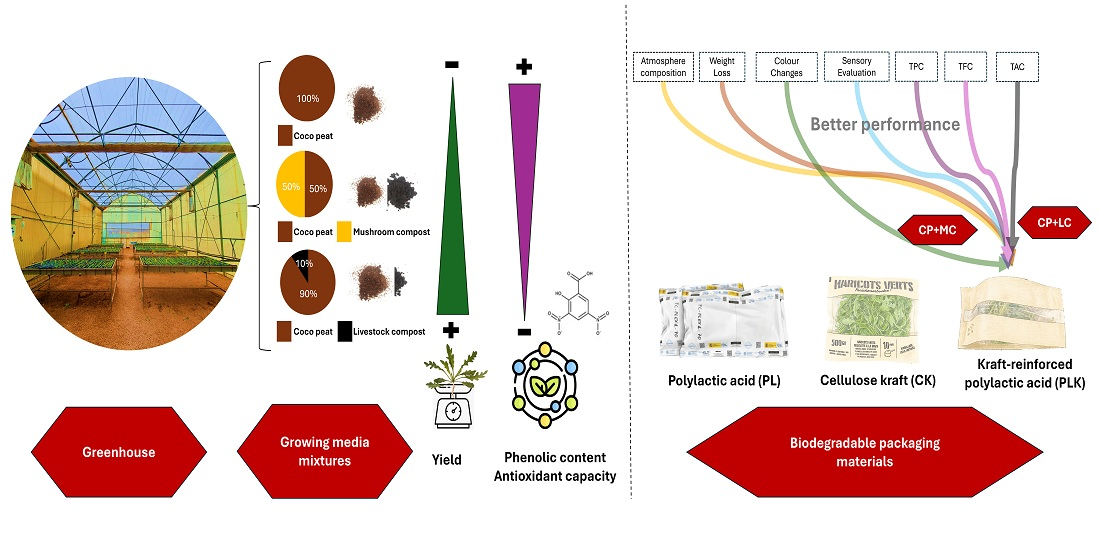
The demand for ready-to-eat salads made from leafy vegetables such as wild rocket (Diplotaxis tenuifolia L.) continues to increase, driven by consumer preference for convenience foods with high levels of bioactive compounds. However, reducing the environmental impact of wild rocket production requires both organically enriched growing substrates and sustainable alternatives to conventional plastic packaging. This study assessed the effects of three cultivation substrates and three biodegradable packaging materials (polylactic acid (PL), cellulose kraft (CK), and kraft-reinforced polylactic acid (PLK)) on the postharvest performance of wild rocket stored at 4 °C for 7 and 14 days. Plants were grown in coco peat (CP), coco peat supplemented with livestock compost (90:10; CP+LC), and coco peat mixed with mushroom compost (50:50; CP+MC). Yield and key pre- and postharvest quality attributes, including nitrate accumulation, phenolic content, antioxidant capacity, colour, and weight loss, were evaluated. The CP+LC substrate resulted in the highest harvest yield, whereas CP promoted higher phenolic content and antioxidant capacity. Among the packaging materials, PLK provided the most balanced internal atmosphere, effectively reducing dehydration and condensation while preserving superior sensory quality after 14 days of storage. Overall, the combination of organic compost amendments, particularly CP+LC, with PLK bio-based packaging represents a promising and sustainable strategy for maintaining postharvest quality and reduce the environmental footprint of minimally processed wild rocket within short food supply chains.

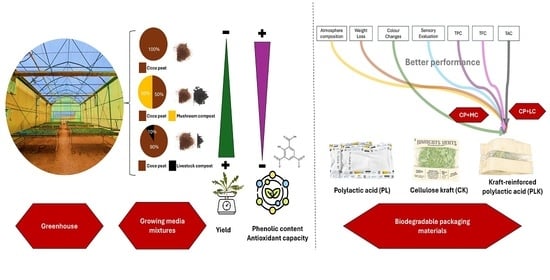
Graphical Abstract

1. Introduction

The increasing demand for fresh-cut leafy vegetables has drawn increasing attention to wild rocket (Diplotaxis tenuifolia L.) due to its distinctive flavour and high nutritional value [1]. This species is particularly rich in bioactive compounds, such as glucosinolates, phenolics, and vitamin C, which enhance its attractiveness both as a green salad and as a valuable ingredient in functional foods [2,3]. Climatic and soilless growing conditions appear to be the key driving factors influencing the shelf life of fresh-cut wild rocket salad leaves [4]. Thus, selecting an appropriate growing medium is a critical factor for achieving optimal plant performance in soilless systems, as it provides the root environment required for proper aeration, water retention, and nutrient availability [5]. The global expansion of soilless horticulture is driving a substantial increase in the demand for substrates, which is projected to rise by 250% by 2050, with coir (coco peat) emerging as one of the primary raw materials used [6]. This trend is attributed to coir’s favourable physicochemical properties (high porosity, low bulk density, and reduced cation exchange capacity), which, however, can vary both between and within sources and ways of preparation [7,8]. Nevertheless, in general, the natural nutrient content of coir is relatively low; therefore, supplemental nutrients are required to achieve optimal levels for plant growth. Incorporating organic amendments of animal origin could supply essential macro- and micronutrients, helping to overcome its natural nutrient limitations and support plant growth. In addition, bio-resources such as renewable materials are increasingly being explored as sustainable alternatives to conventional substrates in horticultural production. Consequently, composite substrates derived from bio-resources, such as spent mushroom compost, are gaining popularity due to their nutritional content, structural stability, and pathogen protection [9]. Integrating coir with these organic amendments offers a viable strategy to decrease dependency on coir while simultaneously promoting the recycling of organic waste and the valorisation of locally generated by-products [10]. There is evidence that the high respiration rate and delicate leaf structure of wild rocket contribute to its rapid postharvest deterioration, which leads to significant quality and nutritional losses during storage [11,12]. Traditional packaging methods, which commonly use polymers derived from petroleum, have performed well for maintaining food freshness for a longer period, but they are harmful for the environment due to their non-biodegradable nature and contribution to pollution [13,14]. As a result of these problems, biodegradable packaging materials, including polylactic acid (PLA) and cellulose-kraft composites (CK), have become more popular as eco-friendly options. PLA, derived from renewable resources like cornstarch, offers biocompatibility and transparency, making it suitable for food packaging applications [15,16]. However, its relatively high permeability for gases and moisture can limit its effectiveness [16]. To fix this, hybrid materials like PLA reinforced with kraft (PLK) have been created to improve barrier characteristics and minimize internal condensation, which are important for keeping high-moisture vegetables fresh [17,18].
Recent research has investigated the synergistic effects of incorporating compost-based substrates and biodegradable packaging. Gómez et al. [19] analysed the use of PLA packaging for storing wild rocket and sea fennel grown in a cascade cropping system, finding that compost leachates used during sea fennel cultivation enhanced its shelf life. Additionally, wild rocket leaves exhibited reduced dehydration and lower respiration rates when compost was used as the growing medium. Despite these findings, the combined effects of cultivation substrate and packaging material on the physiological quality of wild rocket during storage remain poorly understood.
Specifically, the behaviour of these materials under cold storage conditions (4 °C) over extended periods (7–14 days) and their impact on parameters such as weight loss, nitrate accumulation, phenolic retention, and antioxidant capacity require further investigation [19,20,21]. Furthermore, packaging materials with high vapor transmission rates may improve or limit postharvest quality depending on the water-holding qualities of the substrate employed during cultivation [22,23,24].
This study aimed to investigate the effects of cultivation substrate composition and biodegradable packaging on the postharvest quality and shelf life of wild rocket (Diplotaxis tenuifolia). Three growing substrates were evaluated in combination with three biodegradable packaging materials. Physiological and nutritional attributes were assessed at harvest and after 7 and 14 days of cold storage. The outcomes are expected to clarify how the integration of optimized substrate formulations with eco-friendly packaging can enhance postharvest performance while enhancing sustainability in leafy vegetable production systems.

2. Materials and Methods

2.1. Plant Material and Growing Conditions

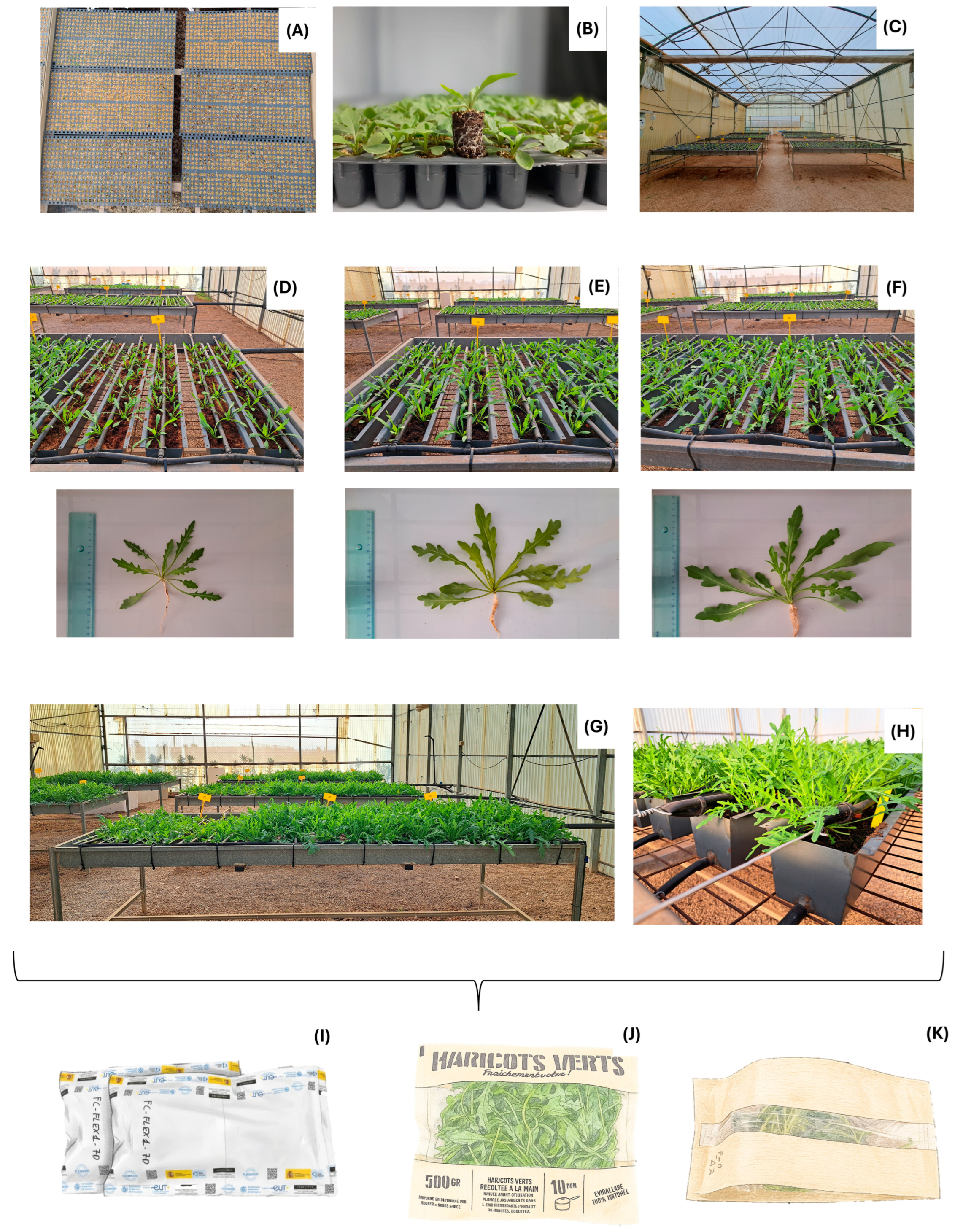
The experiment was conducted at the Agricultural Experimental Field Station of the Technical University of Cartagena (UPCT; lat. 37°41′ N; long. 0°57′ W) in an unheated greenhouse covered with thermal polyethylene (Figure 1C). Seeds of wild rocket [Diplotaxis tenuifolia (L.) DC.], cv. Tricia (Enza Zaden, Murcia, Spain) were sown on 21 December 2023, in cell plastic trays, using commercial peat 315 (blond/black 60/40 Turbas y Coco Mar Menor S.L., Murcia, Spain) as substrate (Figure 1A). On 1 February 2024, the seedlings, at the stage of fourth true leaves (Figure 1B), were transplanted in metal gutters [25]. Three distinct substrates were used (Table 1): (a) coco peat (CP; 100:0 w:w), (b) coco peat with livestock compost limited to 10%, owing to its high nutrient concentration (CP+LC; 90:10 w:w), and (c) coco peat with spent mushroom compost up to 50%, given its comparatively lower nutrient content (CP+MC; 50:50 w:w) (Figure 1D–F). Fertigation was applied daily through an automated system, using a nutrient solution as described by Signore et al. [26].
Five harvests were carried out between February and April of 2024, at 15, 36, 47, 63, and 76 days after transplanting (DAT), when rocket plants reached the commercial stage (seven to eight leaves) (Figure 1G,H). The fifth harvest was selected for evaluation, as it represents the final marketable product under the experimental conditions and enables assessment of the phenotypic and chemical “worst-case scenario” resulting from successive harvests, which ultimately affects sensory acceptability and postharvest shelf life.

2.2. Growth Analysis

For each of the six replicates (n = 6), a composite of ten plants was collected by cutting them with sterile scissors for the determination of harvest-related parameters. The leaves were weighted to determine yield. A sample of the fresh matter was used for dry weight (DW) determination by drying it in an oven at 60 °C until constant weight.

2.3. Processing, Packaging and Storage

After harvest, rocket plants were minimally processed in a disinfected cold room at 8 °C. Leaves free of defects were sanitised by immersion for 1 min in a solution of chlorinated water (150 ppm NaOCl, pH 6.5, 4 °C) and then rinsed for 1 min in tap water (4 °C) to ensure that the final chlorine residue was below 5 ppm. After draining in a perforated basket, leaf samples of approximately 100 g were each placed into 30 cm × 20 cm bags of polylactic acid 25 µm thick (PL), cellulose kraft 23.3 µm thick (CK), or polylactic acid kraft 20 µm thick (PLK) (Classpack-Nativia® NTSS, Barcelona, Spain) for passive modified atmosphere packaging (MAP). The PLK and CK bags featured an inner layer of PLA or cellulose, respectively. In both cases, 57.5% of the outer surface was laminated with an ecofriendly kraft paper layer. This configuration created a transparent window on the front panel, while the back panel and the remaining non-transparent areas were fully covered with the kraft paper. The transmission rates of O2 and CO2, measured at 23 °C and 0% relative humidity (according to data provided by the supplier), were 900, 500, and 1100 cm3 m−2 d−1 atm−1 for PL, CK, and PLK, respectively, with identical values for both gases. The corresponding water vapor transmission rates (WVTR) were 330, 25, and 440 g m−2 d−1 for PL, CK, and PLK, respectively. Bags were then thermally sealed on the top using a thermo-sealer (Lovero Bag Sealer-SK 410, Gimpo, Republic of Korea) and stored in darkness for 14 days at 4 °C.

2.4. Physicochemical Analysis

2.4.1. Atmosphere Composition

On each sampling day (0, 7, and 14 days), the atmospheric composition inside the packaging was measured using an O2/CO2 headspace analyser (PBI-Dansensor CheckPoint, Ringsted, Denmark). To prevent gas loss from the headspace, the analyser’s test needle was carefully inserted through a self-sealing adhesive silicon septum attached to each bag. Gas concentrations were expressed in kilopascals (kPa).

2.4.2. Weight Loss

To determine weight loss, each sample was weighed at the beginning of storage and again after 7 and 14 days. Weight loss was calculated as the difference between measurements and expressed as a percentage of the initial weight.

2.4.3. Colour

Colour was measured on the upper surface of 10 leaves per replicate, taking three readings on each leaf with a colorimeter (Minolta CR-400 Series, Ramsey, NJ, USA). The resulting CIE Lab tristimulus values (L*, a*, b*) were then used to calculate the hue angle (H):
H = a r c t a n b a

2.4.4. Microbial Analysis

Microbial growth (mesophilic and psychrophilic aerobic bacteria, enterobacteria, and yeasts and moulds) was determined using standard enumeration methods described by Gómez et al. [19]. All microbial counts were expressed as log colony-forming units per gram of product (log CFU g−1). Each of the three replicates was analysed in duplicate.

2.4.5. Sensory Evaluation

Sensory evaluation was performed by a trained panel following international standards (ASTM STP 913, 1986) [27]. A descriptive vocabulary was developed to assess visual appearance, colour, dehydration, aroma, flavour, and texture. Overall quality was defined as the product’s general acceptability, integrating visual, textural, and taste-related attributes. Samples were evaluated using a 9-point hedonic scale for colour, aroma, flavour, texture, visual appearance, and overall quality (9: excellent, 5: limit of marketability, 1: extremely poor) and for dehydration (9: excellent, 5: limit of marketability, 1: severe dehydrated). Evaluations were conducted on day 0, 7, and 14 of storage at 4 °C.

2.4.6. Total Phenolics and Total Flavonoids Content

The total phenolic content (TPC) and total flavonoid content (TFC) were analysed using the method outlined by Martínez-Zamora et al. [28]. To prepare the sample extract, 19 μL was combined with 29 μL of 1N Folin–Ciocalteu reagent and 192 μL of 0.4% Na2CO3 and 2% NaOH solution. After 1 h of incubation in darkness, absorbance at 750 nm was measured with a microplate reader (Tecan Infinite M200, Männedorf, Switzerland). Quantification was performed using a commercial gallic acid standard (Sigma, St. Louis, MO, USA) and expressed as equivalents of gallic acid (GA) in mg kg−1 on an FW basis. Each extract was tested in triplicate.
To perform TFC analysis, 30 μL of extract was combined with 80 μL of 20 g L−1 AlCl3. After shaking and 1 h incubation in darkness, absorbance was measured at 415 nm. Quantification was performed using a commercial rutin standard (Sigma, St. Louis, MO, USA) and expressed as equivalents of rutin in kg−1 on an FW basis. Each sample extract was analysed in triplicate.

2.4.7. Total Antioxidant Capacity

The measurement of total antioxidant capacity (TAC) was done by using the same extract from the total phenolic content (TPC) with the DPPH method outlined by Castillejo et al. [29]. Briefly, one gram of frozen wild rocket leaves was placed in plastic tubes and 10 mL methanol:H2O (80:20, v/v) was added. This mix was homogenized using an IKA A11 basic grinder (IKA, Staufen, Germany). The extraction was carried out in an orbital shaker (Stuart, Stone, UK) for 1 h at 200 rpm in darkness at 4 °C. The extracts were centrifuged at 3220× g for 10 min at 4 °C. The supernatant was collected and used as TAC extract. The assay was performed by adding 194 μL of DPPH solution to 21 μL of leaf extract in a 96-well plate. The mixture was incubated for 30 min at room temperature in darkness. The TAC was measured by changes in absorbance at 515 nm using a Tecan Infinite M200 reader (Männedorf, Switzerland). Quantification was performed using a commercial Trolox (6-hydroxy-2,5,7,8-tetramethylchroman-2-carboxylic acid) standard (Sigma, St. Louis, MO, USA) and expressed as equivalents of Trolox (TE) in mg kg−1 on an FW basis. Each sample extract was analysed in triplicate.

2.4.8. Nitrate Content

Samples for nitrate analysis were prepared by extracting 0.2 g of the same leaves used for DW determination with 50 mL of distilled water. The extracts were shaken at 110 rpm in an orbital shaker (Stuart SSL1, Stone, UK) at 50 °C for 45 min. Nitrate concentration was then quantified by ion chromatography using a Metrosep A SUPP 5 column (Metrohm AG, Zofingen, Switzerland) operating at a flow rate of 0.7 mL min−1, following the manufacturer’s specifications.

2.5. Statistical Analysis

The experiment was conducted using a completely randomized block design. Data were presented as the mean ± standard error (SE). At harvest (day 0), data were analysed by one-way analysis of variance (ANOVA) considering the growing substrate as the single factor. At postharvest, a two-way ANOVA was performed to evaluate the effects of growing substrate and packaging type, as well as their interaction, at 7 and 14 days of storage. When significant effects were detected, means comparison were performed using Tukey’s test at p ≤ 0.05. All statistical analysis was carried out using Statgraphics Centurion 19 software (Stat Point Technologies, Inc., Warrenton, VA, USA).

3. Results and Discussion

3.1. Substrate Characteristics and Yield

All substrates exhibited appropriated bulk density values (Table 1), in accordance with recommendations reported in the literature (BD < 0.4 g cm−3) [30]. Bulk density reflects the degree of substrate compaction and is inversely related to porosity. The incorporation of mushroom or livestock compost into cocopeat did not significantly affect its main physical properties, as all mixtures maintained high and adequate levels of total porosity and water holding capacity (WHC). The relatively low air-filled porosity observed, together with the high WHC of all mixtures, suggests that less frequent irrigation with smaller volumes may be sufficient to maintain optimal crop water status, representing an environmental advantage due to the reduced water consumption.
Electrical conductivity (EC) was markedly higher in the CP+MC substrate (10.2 mS cm−1), reflecting an increase in soluble salts consistent with the substantial rise in both cations and anions. The CP+LC substrate also exhibited elevated EC values, although to a lesser extent than CP+MC, suggesting that livestock compost contributes an intermediate degree of mineralization. Bernal et al. [31] reported that cation release is proportional to the degradation rate of organic matter in enriched composts. Phosphate (H3PO4) concentrations similarly increased in both enriched treatments, likely due to the greater P availability in materials at more advanced stages of decomposition [32]. In contrast, Fe displayed a distinct pattern, with high concentrations in CP and CP+LC but substantially lower levels in CP+MC.
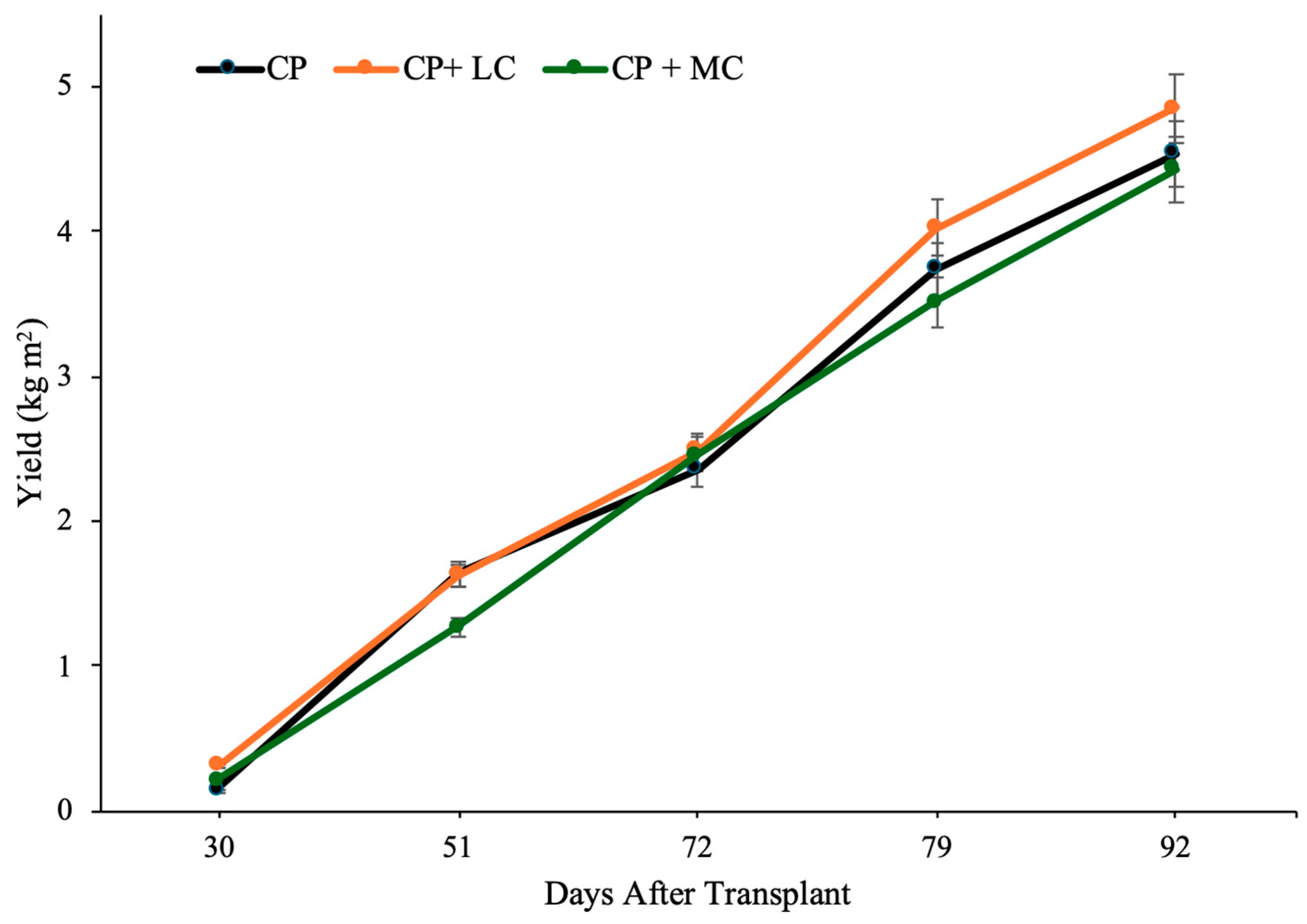
Production data revealed differences in crop performance among the different substrates (Figure 2). The cumulative yield was highest in the CP+LC substrate, which consistently outperformed the other formulations, reaching 4.85 kg m−2 compared with 4.54 kg m−2 in CP and 4.43 kg m−2 in CP+MC, corresponding to increases of 6.8% and 9.5%, respectively. At the first harvest, the substrate CP+LC and CP+MC achieved yields of 0.31 and 0.21 kg m−2, respectively, whereas CP produced only 0.14 kg m−2. These values represent increases of 114.6% and 48%, highlighting an early stimulation of plant growth in substrates enriched with organic amendments. These positive effects can be attributed to the more favourable pH balance and nutrient-enriched profile of CP+LC and CP+MC, as indicated by the physicochemical properties reported in Table 1. During the second harvest, both CP and CP+LC substrates produced equivalent yields (1.68 kg m−2), approximately 27.6% higher than that obtained with CP+MC. Although CP+MC initially exhibited intermediate productivity, its performance declined in subsequent harvests, ultimately resulting in the lowest cumulative yield. The decline in productivity associated with CP+MC can be explained by its initial elevated electrical conductivity, which was 35.8-fold and 4.4-fold higher than that of CP and CP+LC, respectively (Table 1). High substrate salinity is known to inhibit nutrient uptake and root development, leading to impaired plant performance. These findings are consistent with those of Rahman et al. [33], who identified spent mushroom substrate as a promising but salinity-limited component of growing media. Similarly, Johnson and Di Gioia [34] reported that partial substitution of peat moss with spent mushroom compost-maintained yields comparable to peat-based controls, whereas mixtures composed solely of spent mushrooms compost and perlite (1:1 v/v) resulted in markedly reduced biomass in basil (Ocimum basilicum).

3.2. Head Space Composition

The atmosphere composition inside the packages is presented in Table 2. The O2 and CO2 levels at equilibrium reflect the balance between leaves’ respiration and film permeability. Storage of rocket in all types of tested packages at 4 °C maintained aerobic condition throughout the storage period for all the treatments. However, leaves from plants grown in CP+MC and stored in PL bags for 14 days exhibited the highest CO2 concentrations (6.43 kPa) and the lowest O2 levels (12.86 kPa), indicating a higher respiration rate compared to the other treatments. Higher respiration rates are associated with a shorter shelf-life and a faster deterioration of quality parameters. The use of MAP as a postharvest preservation technology for wild rocket has been widely documented in the scientific literature. Optimal conditions for MAP have been consistently reported to include atmospheres with CO2 between 5 and 10 kPa and O2 also between 5 and 10 kPa [35,36]. These values are considered particularly suitable to preserve sensory properties, such as colour, texture, aroma, and microbiological quality, when compared to storage in normal air atmospheres. In the present study, although PL films generated a headspace atmosphere approaching the recommended gas composition, excessive condensation inside the packages compromised product quality. In contrast, PLK and CK films caused less pronounced modification of the internal atmosphere compared to PL, except in the PLK + CP+MC treatment, where the headspace gas composition closely approximated the optimal MAP conditions (14.8 kPa O2, 5.4 kPa CO2). With CK films, atmosphere modification was negligible irrespective of the substrate, and an additional drawback was detected (see Section 3.3): severe leaf dehydration due to moisture absorption by the packaging material. Overall, PLK films provided the most effective preservation of rocket leaf quality. Although, they did not induce substantial shifts in headspace composition, particularly in samples grown in CP and CP+LC substrates, as said, PLK created an atmosphere closer to the target gas balance, around 13 kPa O2 and 5 kPa CO2 in leaves cultivated in CP+MC. This characteristic highlights its potential as a viable and sustainable alternative to conventional petroleum-derived plastic packaging materials, offering functional advantages for product preservation while supporting broader environmental and circular economic objectives.

3.3. Weight Loss

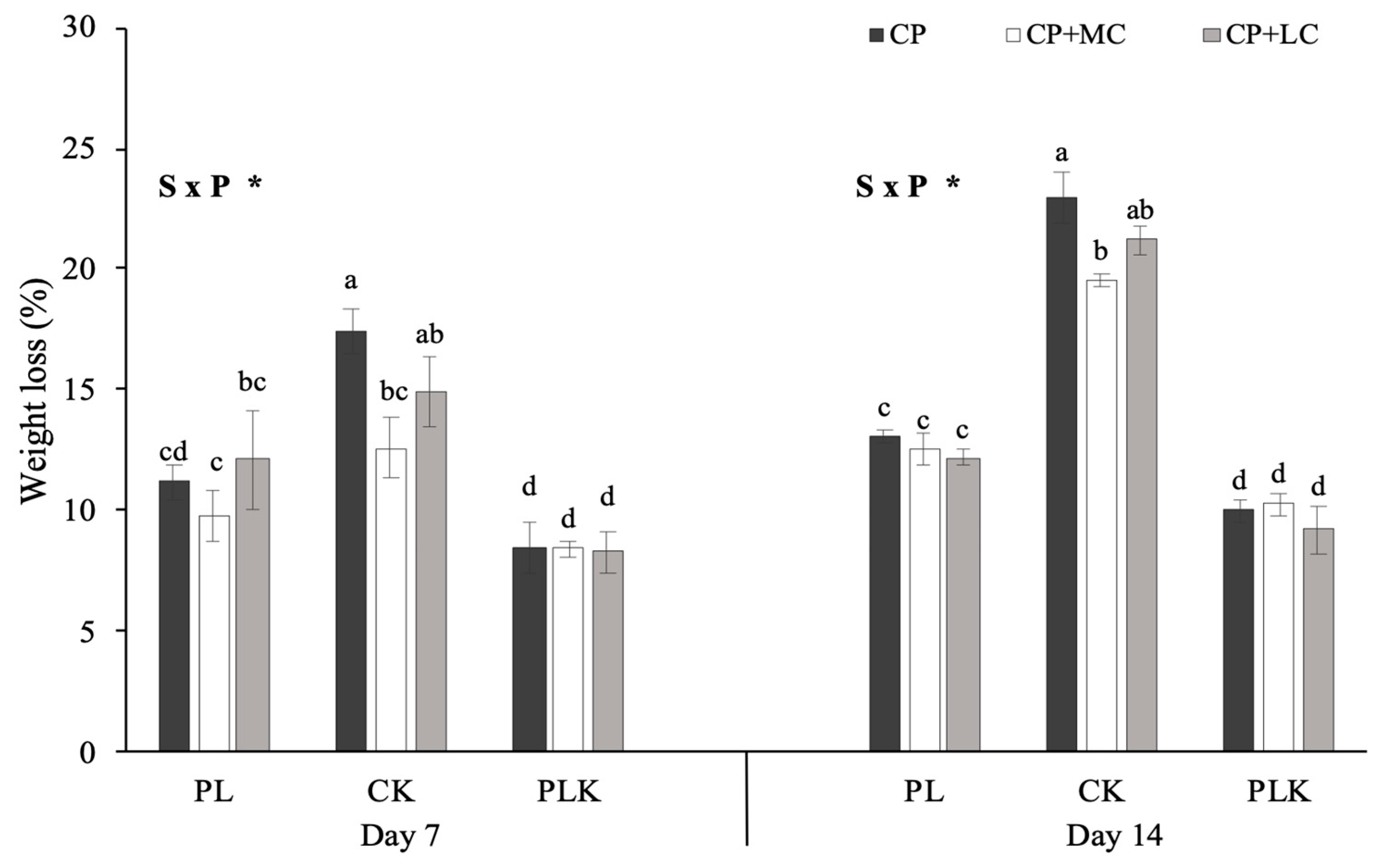
At 7 days of storage, dehydration was the highest in leaves of plants grown in CP and packaged in CK as well as those grown in CP+MC. After 14 days the dehydration was significantly higher in leaves packaged in CK respect to the types of packaging (Figure 3). CK bags had the lowest WVTR when compared to the other package materials. However, cellulose is a highly hygroscopic compound, meaning that it attracts and retains water molecules from the surrounding environment. This behaviour can be attributed to the numerous hydroxyl (–OH) groups in its structure, which readily form hydrogen bonds with water [37]. As a result, the CK packaging absorbed moisture from the rocket leaves, promoting their dehydration and the consequent loss of water and turgor. In contrast, the superior performance of the PLK packaging suggests that the combination of a polymeric layer with kraft reinforcement enables a more balanced regulation of water vapour transfer.
In leafy vegetables with a high surface-to-volume ratio, such as wild rocket, even slight reductions in internal relative humidity can lead to substantial transpirational water loss, resulting in loss of turgor and accelerated textural deterioration. Dehydration levels exceeding 5–6% have been reported to cause irreversible quality losses in baby leaf vegetables, regardless of colour preservation [35]. The values detected in this experiment were higher than those obtained by Kays and Paull [38] and Thompson et al. [39], which indicate a maximum permissible water loss (%) for lettuce, spinach, and watercress of 3 to 7%.

3.4. Colour Changes

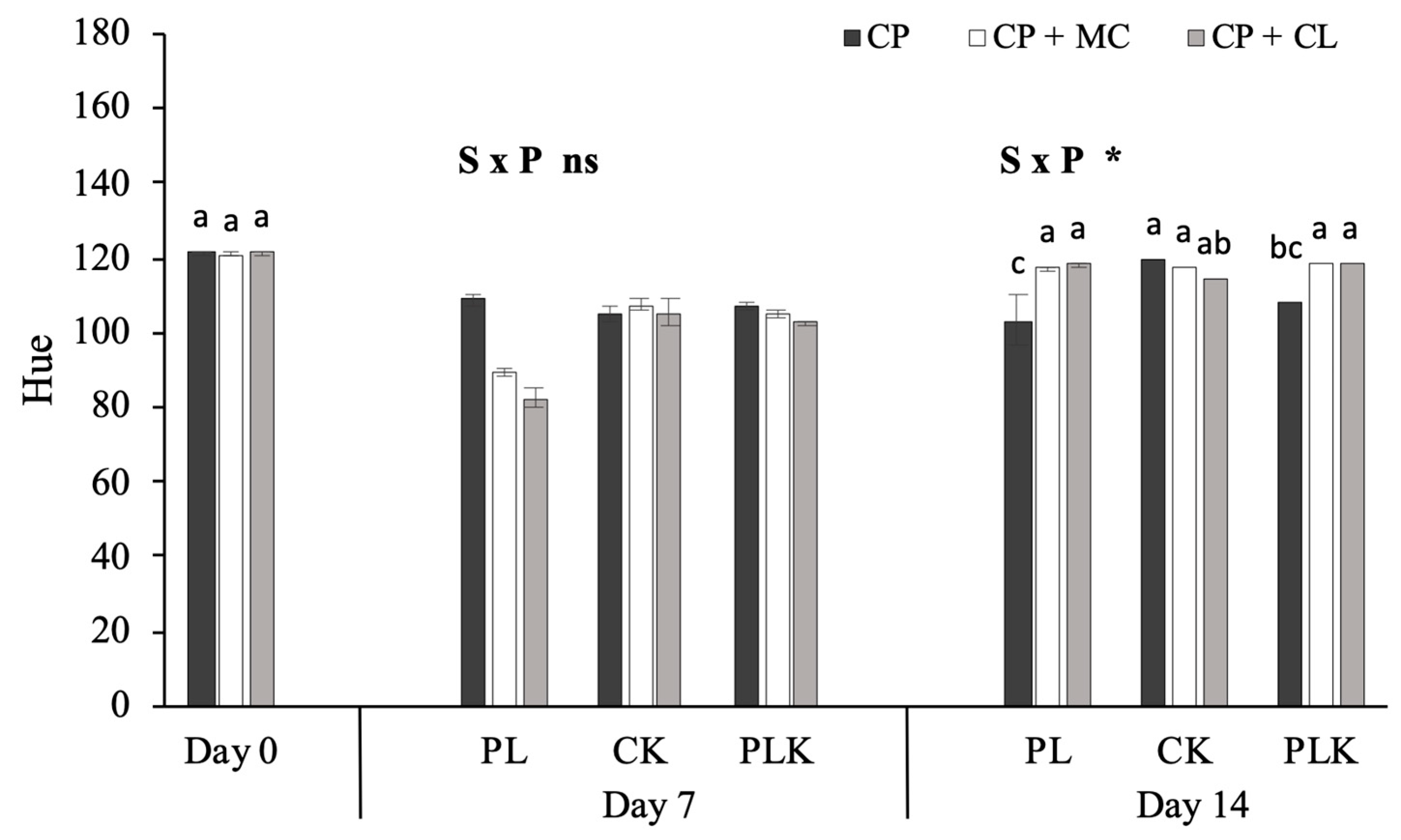
Non-relevant differences in leaf colour were observed among wild rocket cultivated in the different substrates and stored in the various packaging materials (Figure 4). However, a slight reduction in the hue angle, indicative of a moderate loss of green coloration and the onset of yellowing, was particularly evident in PL bags containing leaves of plants grown with CP substrate at 14 days of storage. This decreasing trend in hue angle is consistent with previous reports, as wild rocket with an intense green pigmentation tends to exhibit noticeable yellowing during storage [40].
The absence of anaerobic conditions, which are known to promote acidic degradation of chlorophyll, as well as the establishment of modified atmospheres distinct from normal air, helped to prevent the acceleration of senescence and the consequent loss of green coloration. This preservation of colour is especially relevant, as the green hue of wild rocket is widely recognized as a critical quality attribute at the point of purchase and a reliable indicator of freshness [41].
The packaging–substrate combination that achieved the most favourable and sustainable atmosphere composition (PLK + CP or PLK + MC) compared to the other treatments ensured the maintenance of leaf colour, preventing relevant alterations throughout storage. Under aerobic conditions within the optimal range, such as those achieved with PLK packaging, chlorophyll-degrading enzymatic activity remains limited, delaying senescence-related yellowing [40]. This finding highlights the suitability of PLK, not only for extending shelf life but also for preserving key sensory attributes that determine consumer acceptance.

3.5. Microbial Growth

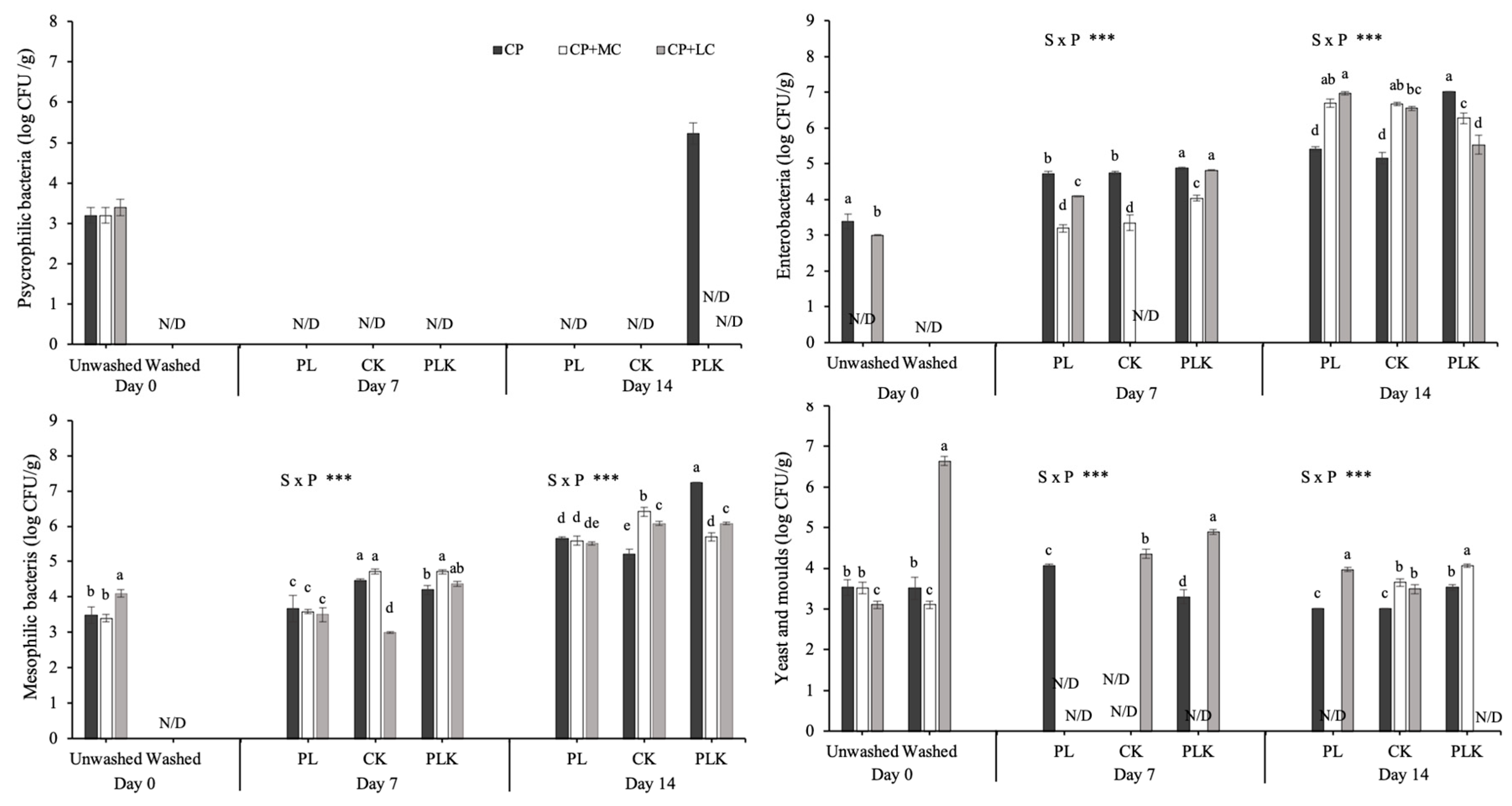
Samples from all treatments exhibited an initial microbial load of approximately 3.5 log CFU g−1 for total mesophilic aerobic bacteria, psychrotrophic bacteria, moulds, yeasts, and enterobacteria (Figure 5). This growth can be considered relatively low and within the expected range for leafy vegetables cultivated in substrates prior to disinfection [42]. Sodium hypochlorite (NaClO) disinfection proved to be highly effective in reducing microbial populations to undetectable levels, except for moulds and yeasts, which, although still present after treatment, remained within microbiologically acceptable limits for fresh produce [43].
As expected, microbial loads increased during storage, with slight variations among treatments, although none of these differences were particularly critical in terms of overall food safety. Nonetheless, a noteworthy finding was the proliferation of enterobacteria, particularly in leaves derived from plants cultivated in compost-based substrates. This observation is consistent with previous studies identifying compost as a potential reservoir of enterobacteriaceae and other spoilage or opportunistic microorganisms [44]. Furthermore, the preharvest microbial background has been shown to influence microbial dynamics during storage, even after effective sanitation, particularly under passive modified atmosphere conditions [44]. In such cases, it would be advisable to reinforce the disinfection protocol, either by optimizing NaClO concentration and contact time or by combining it with alternative or complementary sanitizing technologies (e.g., peracetic acid, electrolyzed water, or UV-C light). Moreover, strict control of NaClO solution pH is critical to ensure the predominance of hypochlorous acid, the most active antimicrobial species, thereby maximizing efficacy in the reduction of enterobacteria and extending product shelf life [43]. In addition, the use of packaging materials that limit surface condensation, such as PLK, is particularly relevant, as the presence of free water on leaf surfaces strongly promotes microbial proliferation. Integrated strategies combining optimized packaging with mild complementary sanitizing treatments have been shown to enhance microbial control without compromising product quality [42].

3.6. Sensory Evaluation

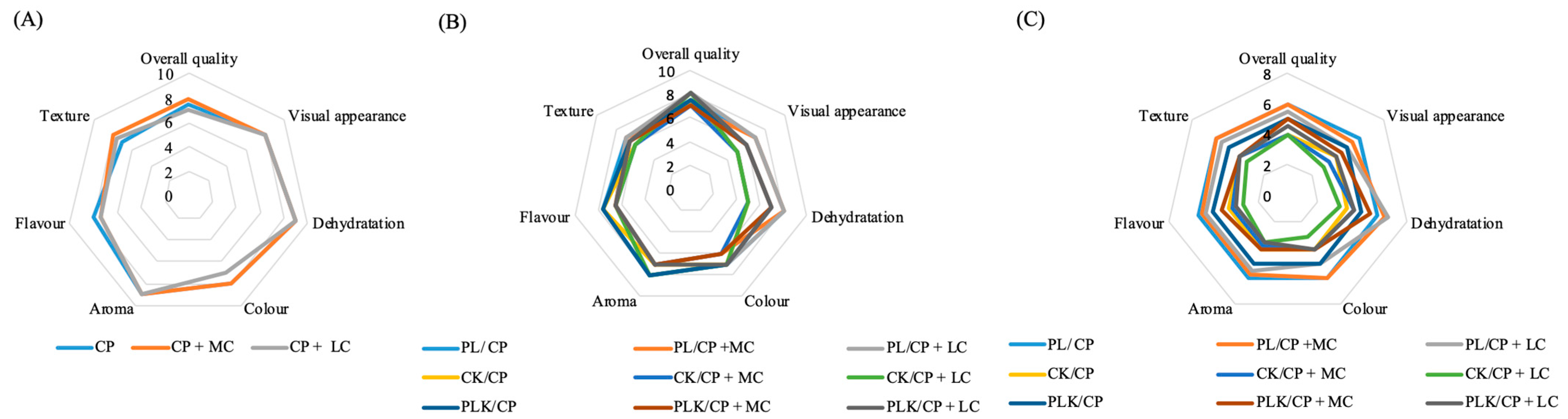
At harvest, the sensory attributes of wild rocket, including colour, aroma, visual appearance, and dehydration, were generally similar across treatments (Figure 6A). Nevertheless, leaves of plants cultivated in CP+MC displayed slightly superior sensory traits, with a more intense green coloration and greater leaf turgidity, suggesting that substrate composition may influence initial quality parameters. Such differences are in line with reports indicating that agronomic factors, including nutrient availability and organic matter, can modulate pigment accumulation and textural properties in leafy vegetables [45].
After 7 days of storage, rocket leaves from all treatments retained an acceptable sensory quality for consumption (Figure 6B). As indicated previously, instrumental colour analysis confirmed the absence of significant green colour losses, consistent with the general stability of chlorophyll under aerobic modified atmospheres within a satisfactory range for rocket. The only noticeable change was an increased dehydration in samples stored in CK bags, reflecting the higher water absorption capacity of this cellulosic material. Excessive moisture loss has been previously associated with textural deterioration and diminished consumer acceptability in leafy greens [46].
By day 14 of storage, clear differences emerged between treatments. Among the substrates, leaves grown in CP+MC continued to deliver the best overall quality, with leaves maintaining superior visual appearance and texture (Figure 6C). However, packaging type had a stronger influence than substrate at this stage. Leaves stored in CK bags exhibited the greatest dehydration, leading to a loss of crispness and a reduction in characteristic aroma. This revealed the dual role of packaging: while it can delay senescence and yellowing [47], inappropriate water vapor dynamics may accelerate quality losses when the material absorbs moisture from the product.
Conversely, PL bags resulted in excessive humidity accumulation within the package, leading to surface condensation on leaves. This condition adversely affected texture and promoted the development of off-odours and tissue degradation. Excess moisture accumulation is a well-documented drawback in sealed plastic films, often exacerbating microbial proliferation and compromising product integrity [48].
In contrast, PLK bags were more effective in preserving sensory quality. Leaves packaged in PLK retained their characteristic pungent flavour, green colour, and crisp texture throughout storage, confirming that this material provided a more balanced internal atmosphere and WVTR. Consumer acceptance of wild rocket depends not only on visual appearance and texture but also on flavour and pungency, attributes that are strongly associated with isothiocyanates and other sulphur-containing compounds [45]. However, the perception and acceptance of pungency are partially judge-dependent, as tolerance to bitter and spicy notes varies among consumers.
Taken together, these findings indicate that while cultivation substrate can confer minor differences in initial quality, packaging material plays a decisive role during storage. Excessive dehydration in CK-packaged samples negatively affected perceived freshness, even in the absence of marked colour changes, reinforcing the importance of leaf turgor as a key determinant of consumer acceptance [45].
Conversely, quality deterioration observed in PL-packaged samples was mainly associated with excessive moisture accumulation and surface condensation, which adversely affected texture and aroma. In contrast, PLK packaging provided a more balanced internal environment, in line with previous findings highlighting the importance of packaging solutions capable of simultaneously regulating gas exchange and water vapour transmission to preserve the sensory quality of leafy vegetables [46].
Overall, PLK packaging emerged as the most suitable option for preserving the sensory profile of wild rocket, achieving an effective compromise between minimizing dehydration and preventing excess humidity. This outcome is consistent with current efforts to develop biobased packaging materials that combine functional performance with sustainability, while maintaining product quality and consumer satisfaction [36].

3.7. Total Phenolics Content

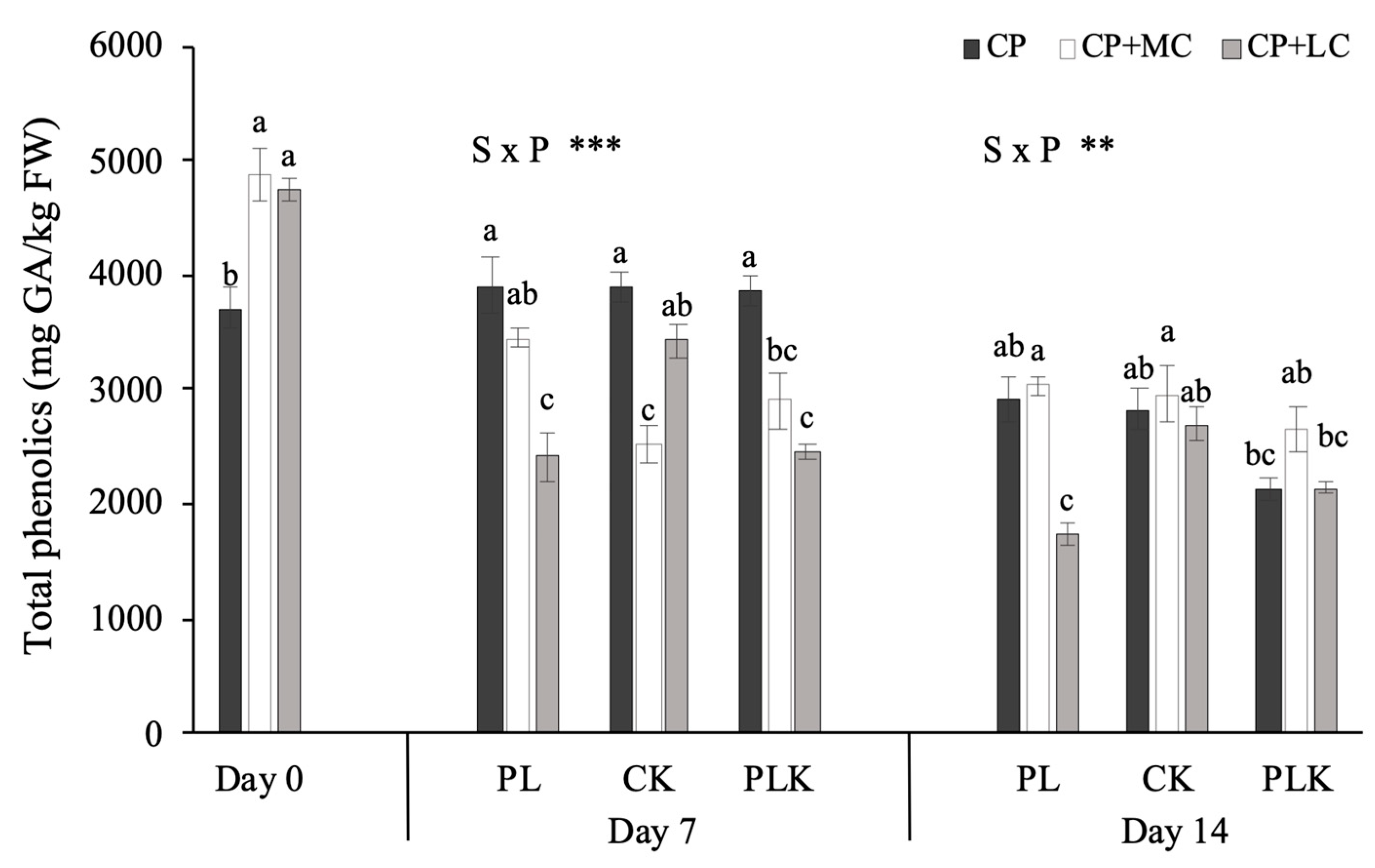
At harvest (D0), the TPC of the leaves was significantly higher in plants grown in media containing organic amendments (CP+MC and CP+LC), reaching 4889.27 and 4741.86 mg GA kg−1 FW, respectively (Figure 7). These values were higher than those reported by Gómez et al. [19] using compost as substrate. This difference suggests that the incorporation of MC and LC promoted a greater accumulation of phenolic compounds, possibly due to the nature of both amendments. The mushroom-based substrate is known to contain phenolic compounds with notable antioxidant capacity, which may stimulate secondary metabolic responses in plants [49]. In contrast, as reported by Younis et al. [50], CP is nutrient-poor and lacks biotic or abiotic stimuli, resulting in lower initial levels of phenolic compounds.
After 7 days of storage, significant reductions in TPC were observed in leaves of plants grown in organic substrates meanwhile those grown on CP maintained their content period in the three bags used (PL, CK, and PLK). On the other hand, wild rocket leaves grown in CP+LC and packaged in CK showed a significantly higher value compared to those packaged in PL and PLK bags.
An overall decreasing trend was observed after 14 days of storage for all treatments. The most pronounced reduction was in leaves of plants grown in CP+CL in the three packages, particularly in the PLK bags (1750.16 mg GA kg−1 FW) (Figure 7). This may be due to a more active metabolism, which in turn accelerates senescence and the oxidation of phenolic compounds. The plants grown in CP+MC substrate showed a more stable TPC levels, likely due to the mushroom-derived bioactive compounds, which have been reported to influence phenylpropanoid metabolism and phenolic turnover [9]. Leaves packaged in CK bags showed no significant differences in TPC among substrates, suggesting that CK packaging helped preserve phenolic compounds by limiting oxygen and light exposure, despite negatively affecting leaf water status [29]. Together, these findings indicate that both substrate composition and packaging type can synergistically influence phenolic stability during postharvest storage.

3.8. Total Flavonoids Content

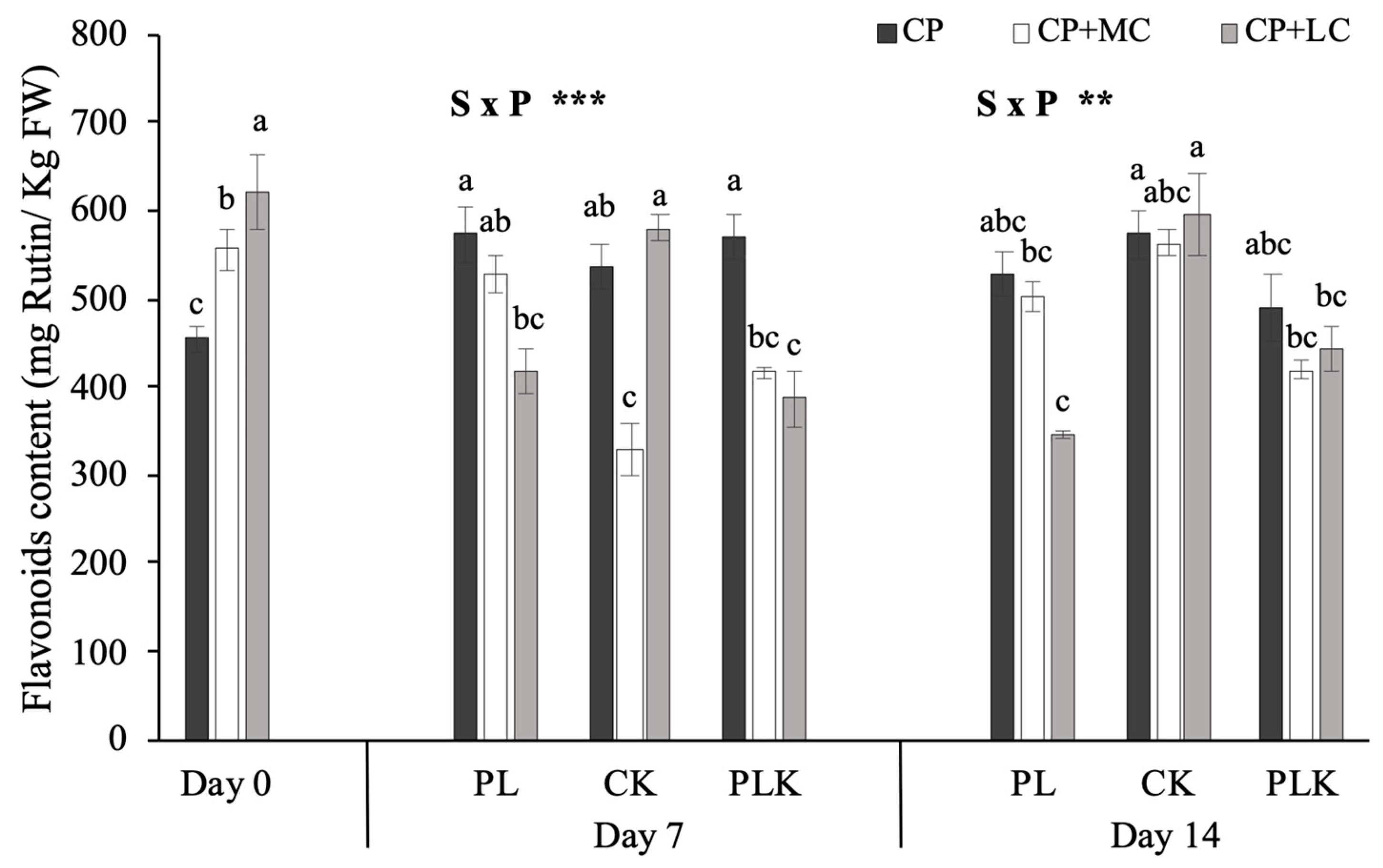
At harvest, leaves of wild rocket grown on compost-amended substrates (CP+LC and CP+HC) showed a significantly higher TFC, suggesting that compost may stimulate flavonoid biosynthesis (Figure 8). These findings contrast with those reported by Gómez et al. [19], who observed non-significant differences in TFC in wild rocket cultivated in agro-industrial compost by-products compared with peat-based substrates. However, the compost reported by those authors was composed of a mixture of tomato and pepper juice waste, leek waste, and vineyard residues, which markedly differs from the compost-enriched substrate reported here. Compost effects on postharvest quality depend on how substrate properties interact with plant nutrition and stress physiology during growth [51]. Composts that provide a moderate and sustained nutrient supply, particularly with slightly reduced nitrogen availability or mild osmotic constraints, may induce a controlled preharvest stress that stimulates flavonoid biosynthesis through activation of the phenylpropanoid pathway. In contrast, agro-industrial compost by-products with highly heterogeneous feedstocks and less predictable mineralization patterns may fail to elicit such metabolic responses, resulting in negligible effects on flavonoid content [52]. This may explain why compost application enhances quality attributes in some studies but not in others [53].
During storage, substantial variation in flavonoid levels was observed as a function of both packaging type and growth substrate (Figure 8), following a pattern similar to that of total phenolic content (Figure 7). After 7 days, flavonoid content increased significantly in plants grown in CP, whereas a significant decline was detected in those grown in PC+CM packaged in CK bags (328.99 mg rutin kg−1 FW). Conversely, after 14 days, plants cultivated in CP+MC and packaged in CK bags showed a pronounced rise in flavonoid concentration, while those grown in CP and CP+CL maintained stable levels.

3.9. Total Antioxidant Capacity

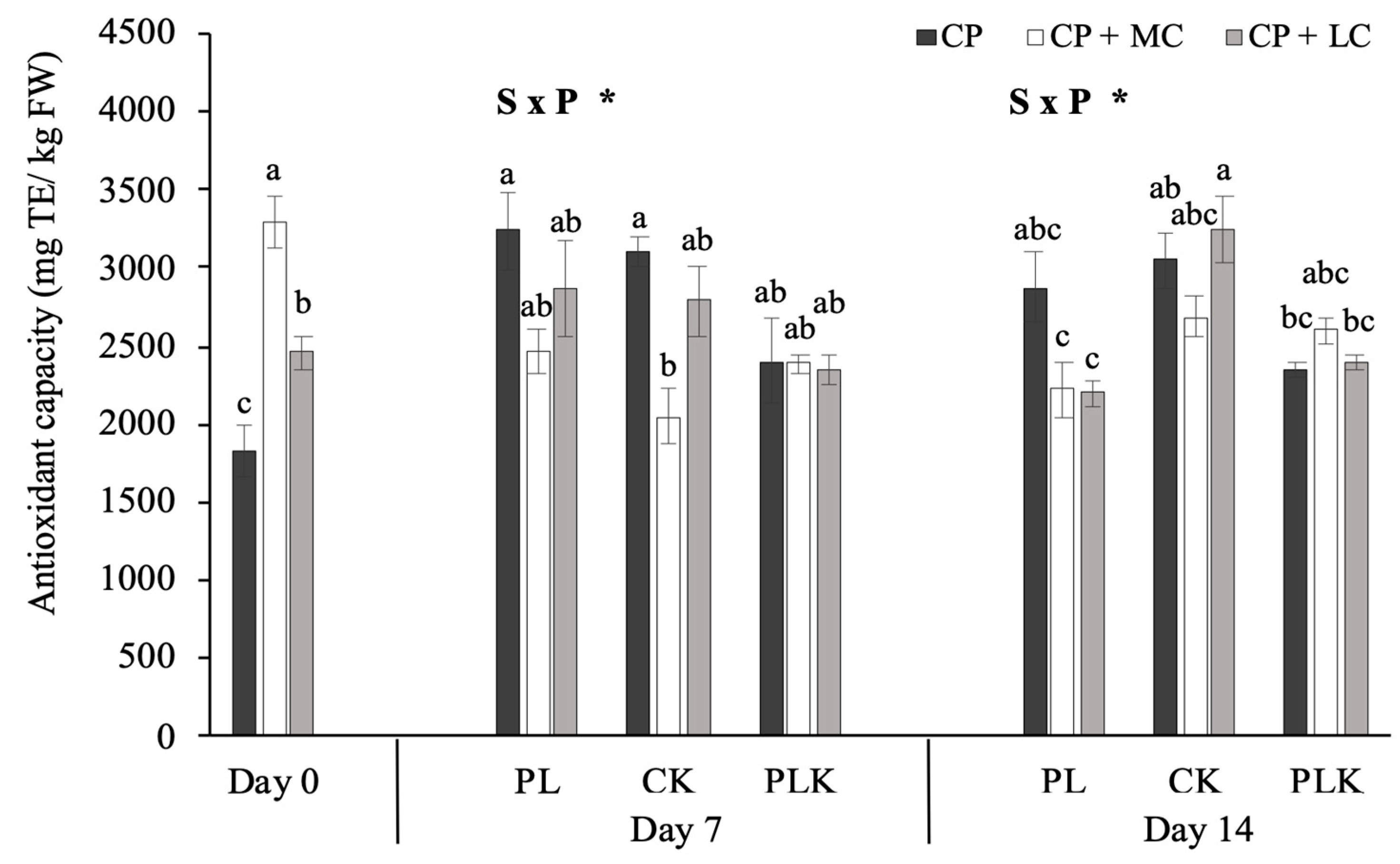
At harvest, the antioxidant capacity in leaves was significantly higher in the plants grown in the substrate with mushroom compost (CP+CM) (3298.20 mg TE kg−1 FW) (Figure 9). This finding is consistent with that of Pereira et al. [54], who confirmed that the incorporation of mushroom compost may improve the content of secondary metabolites in vegetables.
At 7 days of storage at 4 °C, the antioxidant capacity was significantly reduced in plants grown in CP+CM substrate, especially in the leaves packaged in CK bags as well as the content of phenols (Figure 7) and flavonoids (Figure 8), whereas in those grown in CP substrate the antioxidant capacity increased significantly in the three packages. In contrast, with CP+CL substrate the flavonoid content was more stable after storage. After 14 days, leaves stored in CK bags had the highest antioxidant capacity for each of the substrates, with values in CP+CL of 3244.67 mg TE kg−1 FW (Figure 9). This condition may be due to a progressive release of antioxidant compounds from the livestock compost during cultivation or to a preservative effect of the CK packaging which may have reduced exposure to oxygen or light, factors that degrade polyphenols [55].
The partial dissociation between total phenolic content and antioxidant capacity suggests that TAC reflects multiple bioactive compounds, including flavonoids and stress-induced metabolites. In CP leaves, the increase in TAC may result from moderate oxidative stress responses [51], whereas in CK-packaged samples, higher TAC after 14 days likely reflects concentration effects from dehydration rather than enhanced biosynthesis [38]. These findings highlight the combined influence of substrate and packaging on phenolic stability and antioxidant potential during postharvest storage.

3.10. Nitrate Content

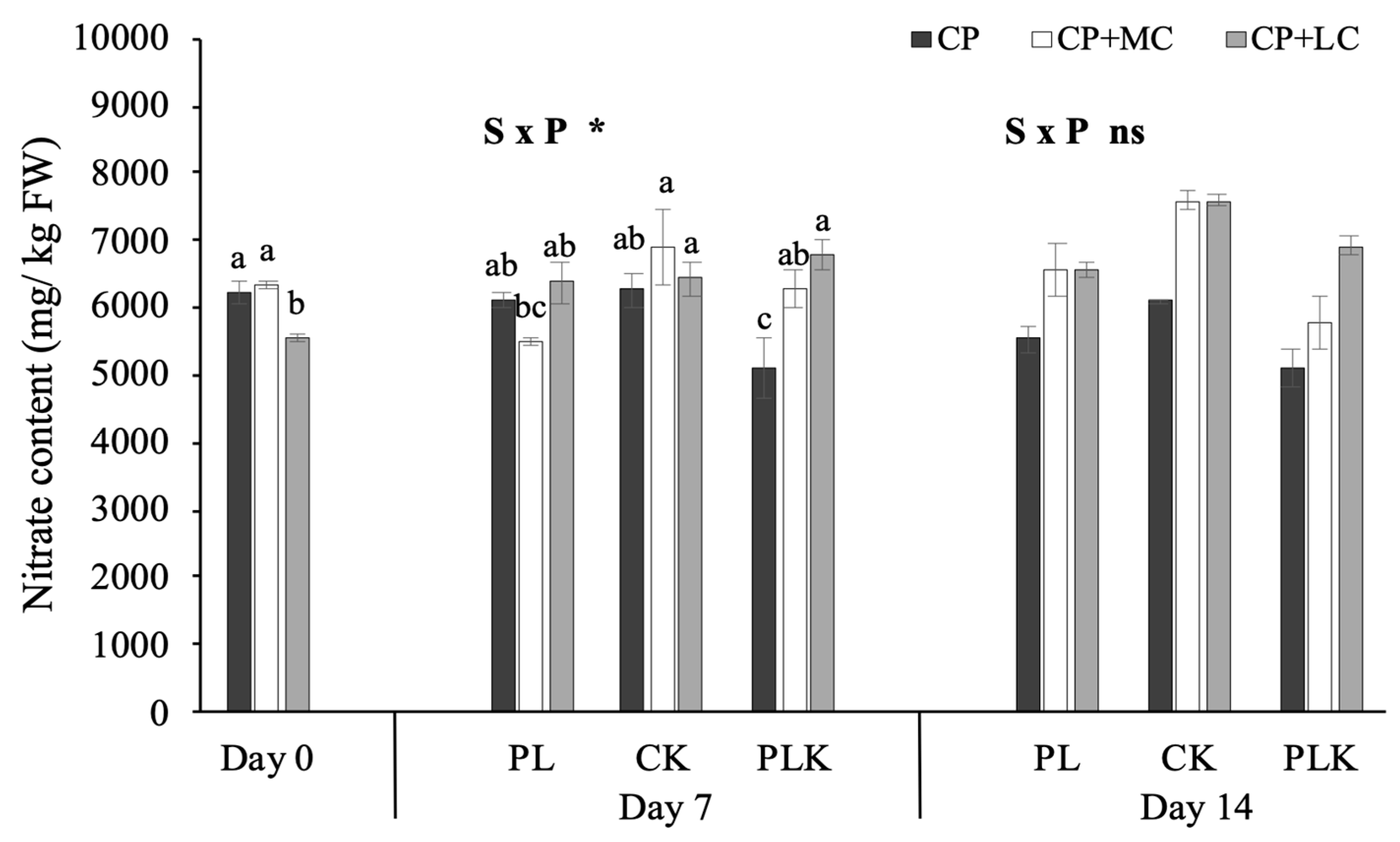
At harvest (D0), significant differences in nitrate concentration were observed in wild rocket leaves grown in CP and CP+CM compared with those cultivated in CP+LC (Figure 10). These results are consistent with those reported by Bonanomi et al. [56], who, using manure as an organic amendment, found that its application to the growing substrate led to slower nitrogen mineralization and reduced nitrate accumulation in rocket leaves. Although the CP+CM substrate initially contained a much higher nitrogen concentration than the CP and CP+LC substrates (Table 1), this initial N availability did not translate into higher leaf nitrate levels at D0. This is likely due to nutrient depletion in the substrates, considering that all assessments were done on the fifth harvest cycle. The nitrate concentrations measured were relatively high, confirming the natural tendency of wild rocket to accumulate more nitrates than other leafy vegetables [45]. Nonetheless, the values obtained fell within the limits established by the European Commission, which sets maximum levels of 6000–7000 mg NO3 kg−1 FW for wild rocket leaves.
After 7 days of storage (D7), packaging type had a significant impact on nitrate accumulation in the leaves. CK-packaged samples of leaves from plants grown in CP+MC and CP+LC substrates showed markedly higher nitrate concentrations, exceeding 7000 mg NO3 kg−1 FW after 14 days of storage (D14) (Figure 10). This accumulation appears to result from postharvest water stress associated with CK packaging, which likely reduces nitrate reductase activity and disrupts nitrate metabolism, as previously reported in wild rocket and spinach under dehydration during storage [24]. Low CO2 concentrations in CK bags (Table 2) may have further contributed to nitrate accumulation, consistent with the critical role of nitrate reductase under both pre- and postharvest conditions, particularly during darkness or limited CO2 availability [57,58]. Collectively, these findings indicate that CK packaging compromises the postharvest quality by reducing its preservation capacity and altering nitrate metabolism.

4. Conclusions

Cultivation substrate significantly affects the yield and postharvest quality of wild rocket. Compost-enriched substrates improve crop performance, with livestock compost increasing yield and early growth, and mushroom compost enhancing phenolic content and antioxidant activity at harvest.
While cultivation substrate can confer minor differences in initial quality, packaging material is the main factor determining quality during storage. PLK packaging maintains the most stable internal atmosphere, limiting dehydration and condensation and preserving colour, texture, and aroma. In contrast, CK packaging results in excessive water loss, while PL films favoured condensation and accelerated leaf deterioration.
Overall, the combination used compost-enriched substrates and PLK packaging represents an effective and sustainable strategy to optimize yield and maintain the postharvest quality of wild rocket.

Author Contributions

Conceptualization, J.A.F. and P.A.G.; methodology, R.R.B., A.G. and P.A.G.; formal analysis, A.G., V.M.G.-C. and J.O.; data curation, A.G. and C.E.-G.; writing—original draft preparation, C.E.-G.; writing—review and editing, C.E.-G., P.A.G. and J.A.F.; supervision, J.A.F. and P.A.G.; project administration, J.A.F.; funding acquisition, J.A.F. All authors have read and agreed to the published version of the manuscript.

Funding

The research was supported by Grant PID2020-114410RB-I00 funded by MCIN/AEI/10.13039/501100011033, and Grant AGROALNEX funded by Comunidad Autónoma de la Región de Murcia through Fundación Séneca—Agencia de Ciencia y Tecnología de la Región de Murcia and European Union NextGenerationEU.

Data Availability Statement

The original contributions presented in this study are included in the article. Further inquiries can be directed to the corresponding authors.

Conflicts of Interest

The authors declare no conflicts of interest. The funders had no role in the design of the study; in the collection, analyses, or interpretation of data; in the writing of the manuscript; or in the decision to publish the results.

References

  1. Ressurreição, S.; Salgueiro, L.; Figueirinha, A. Diplotaxis Genus: A Promising Source of Compounds with Nutritional and Biological Properties. Molecules 2024, 29, 2612. [Google Scholar] [CrossRef]
  2. Bonasia, A.; Lazziera, C.; Elia, A.; Conversa, G. Nutritional, biophysical and physiological characteristics of wild rocket genotypes as affected by soilless cultivation system, salinity level of nutrient solution and growing period. Front. Plant Sci. 2017, 8, 300. [Google Scholar] [CrossRef]
  3. Caruso, G.; Pascale, S.D.; Nicoletti, R.; Cozzolino, E.; Rouphael, Y. Productivity, nutritional and functional qualities of perennial wall-rocket: Effects of pre-harvest factors. Folia Hortic. 2019, 31, 71–80. [Google Scholar] [CrossRef]
  4. Bonasia, A.; Conversa, G.; Lazzizera, C.; Elia, A. Post-harvest performance of ready-to-eat wild rocket salad as affected by growing period, soilless cultivation system and genotype. Postharvest Biol. Technol. 2019, 156, 110909. [Google Scholar] [CrossRef]
  5. Gruda, N.S. Increasing Sustainability of Growing Media Constituents and Stand-Alone Substrates in Soilless Culture Systems. Agronomy 2019, 9, 298. [Google Scholar] [CrossRef]
  6. Nguyen, V.T.H.; Barbagli, T.; Blok, C.; Zheng, Z.; Mondaca-Duarte, F.; Vandecasteele, B. Growing Media Market by 2050: Demand and Availability of Raw Materials. In Proceedings of the II International Symposium on Growing Media, Compost Utilization and Substrate Analysis for Soilless Cultivation, Freising, Germany, 7–12 September 2025. [Google Scholar]
  7. Abad, M.; Noguera, P.; Puchades, R.; Maquieira, A.; Noguera, V. Physico-chemical and chemical properties of some coconut coir dusts for use as a peat substitute for containerised ornamental plants. Bioresour. Technol. 2002, 82, 241–245. [Google Scholar] [CrossRef] [PubMed]
  8. Maher, M.; Prasad, M.; Raviv, M. Organic soilless media components. In Soilless Culture: Theory and Practice; Raviv, M., Lieth, J.H., Eds.; Elsevier: Oxford, UK, 2008; pp. 459–504. [Google Scholar] [CrossRef]
  9. Khalil, S.; Panda, P.; Ghadamgahi, F.; Barreiro, A.; Rosberg, A.K.; Karlsson, M.; Vetukuri, R.R. Microbial potential of spent mushroom compost and oyster substrate in horticulture: Diversity, function, and sustainable plant growth solutions. J. Environ. Manag. 2024, 357, 120654. [Google Scholar] [CrossRef] [PubMed]
  10. Poudel, P.; Duenas Anela, E.K.; Di Gioia, F. Organic waste compost and spent mushroom compost as potential growing media components for the sustainable production of microgreens. Front. Plant Sci. 2023, 14, 1229157. [Google Scholar] [CrossRef] [PubMed]
  11. Nicoletti, R.; Raimo, F.; Miccio, G. Diplotaxis tenuifolia: Biology, Production and Properties. Eur. J. Plant Sci. Biotechnol. 2007, 1, 36–43. [Google Scholar]
  12. Siomos, A.S.; Koukounaras, A. Quality and postharvest physiology of rocket leaves. Fresh Prod. 2007, 1, 59–65. Available online: https://www.academia.edu/24613148/Quality_and_Postharvest_Physiology_of_Rocket_Leaves (accessed on 19 April 2007).
  13. Marsh, K.; Bugusu, B. Food packaging—Roles, materials, and environmental issues. J. Food Sci. 2007, 72, 39–55. [Google Scholar] [CrossRef]
  14. Siracusa, V.; Rocculi, P.; Romani, S.; Rosa, M.D. Biodegradable polymers for food packaging: A review. Trends Food Sci. Technol. 2008, 19, 634–643. [Google Scholar] [CrossRef]
  15. Tajeddin, B. Packaging Composite Materials from Renewable Resources. In Handbook of Composites from Renewable Materials; Wiley-Scrivener: Hoboken, NJ, USA, 2017; pp. 525–561. [Google Scholar] [CrossRef]
  16. Kathuria, A.; Zhang, S. Sustainable and Repulpable Barrier Coatings for Fiber-Based Materials for Food Packaging: A Review. Front. Mater. 2022, 9, 929501. [Google Scholar] [CrossRef]
  17. Marano, S.; Laudadio, E.; Minnelli, C.; Stipa, P. Tailoring the Barrier Properties of PLA: A State-of-the-Art Review for Food Packaging Applications. Polymers 2022, 14, 1626. [Google Scholar] [CrossRef]
  18. Yun, X.; Liu, L.; Hu, J.; Sun, T.; Zhang, J.; Dong, T. Mechanical and gas permeability properties of poly (L-lactic acid)–based films and their application in fresh produce preservation—Review. Packag. Technol. Sci. 2024, 37, 293–317. [Google Scholar] [CrossRef]
  19. Gómez, P.A.; Egea-Gilabert, C.; Giménez, A.; Benaissa, R.R.; Amoruso, F.; Signore, A.; Gallegos-Cedillo, V.M.; Ochoa, J.; Fernández, J.A. Biodegradable Food Packaging of Wild Rocket (Diplotaxis tenuifolia L. [DC.]) and Sea Fennel (Crithmum maritimum L.) Grown in a Cascade Cropping System for Short Food Supply Chain. Horticulturae 2023, 9, 621. [Google Scholar] [CrossRef]
  20. Zhan, L.; Bulgari, R.; Pignata, G.; Casale, M.; Nicola, S. The Mixing Ratio and Filling-Amount Affect the Tissue Browning and Antioxidant Properties of Fresh-Cut Baby Leaf Lettuce (Lactuca sativa L.) and Rocket (Eruca sativa Mill.) Grown in Floating Growing Systems. Foods 2022, 11, 3515. [Google Scholar] [CrossRef]
  21. Bonasia, A.; Lazzizera, C.; Elia, A.; Conversa, G. Pre-Harvest Strategy for Improving Harvest and Post-Harvest Performance of Kale and Chicory Baby Leaves. Plants 2025, 14, 863. [Google Scholar] [CrossRef]
  22. Maluin, F.N.; Hussein, M.Z.; Nik Ibrahim, N.N.L.; Wayayok, A.; Hashim, N. Some Emerging Opportunities of Nanotechnology Development for Soilless and Microgreen Farming. Agronomy 2021, 11, 1213. [Google Scholar] [CrossRef]
  23. Choi, S.; Colla, G.; Cardarelli, M.; Kim, H.J. Effects of Plant-Derived Protein Hydrolysates on Yield, Quality, and Nitrogen Use Efficiency of Greenhouse Grown Lettuce and Tomato. Agronomy 2022, 12, 1018. [Google Scholar] [CrossRef]
  24. Palumbo, M.; Bonelli, L.; Pace, B.; Montesano, F.F.; Serio, F.; Cefola, M. Reduced Fertilization to Improve Sustainable Use of Resources and Preserve Postharvest Quality of Fresh-Cut Wild Rocket (Diplotaxis tenuifolia L.) in Soil-Bound and Soilless Cultivation. Plants 2024, 13, 499. [Google Scholar] [CrossRef]
  25. Gimenez, A.; Gallegos-Cedillo, V.M.; Benaissa, R.R.; Egea-Gilabert, C.; Signore, A.; Ochoa, J.; Gruda, N.; Arnao, M.B.; Fernández, J.A. Enhancing the cultivation of Salicornia fruticosa with agroindustrial compost leachates in a cascade cropping system: Evaluating the impact of melatonin application. Front. Plant Sci. 2024, 15, 1441884. [Google Scholar] [CrossRef]
  26. Signore, A.; Amoruso, F.; Gallegos-Cedillo, V.M.; Gómez, P.A.; Ochoa, J.; Egea-Gilabert, C.; Costa-Pérez, A.; Domínguez-Perles, R.; Moreno, D.A.; Pascual, J.A.; et al. Agro-Industrial Compost in Soilless Cultivation Modulates the Vitamin C Content and Phytochemical Markers of Plant Stress in Rocket Salad (Diplotaxis tenuifolia (L.) DC.). Agronomy 2023, 13, 544. [Google Scholar] [CrossRef]
  27. ASTM STP 913; Physical Requirements: Guidelines for Sensory Evaluation Laboratories. ASTM International: Philadelphia, PA, USA, 1986.
  28. Martínez-Zamora, L.; Castillejo, N.; Artés-Hernández, F. Postharvest UV-B and photoperiod with blue + red LEDs as strategies to stimulate carotenogenesis in bell peppers. Appl. Sci. 2021, 11, 3736. [Google Scholar] [CrossRef]
  29. Castillejo, N.; Martínez-Zamora, L.; Gómez, P.A.; Pennisi, G.; Crepaldi, A.; Fernández, J.A.; Orsini, F.; Artés-Hernández, F. Postharvest LED Lighting: Effect of red, blue, and far red on quality of minimally processed broccoli sprouts. J. Sci. Food Agric. 2021, 101, 44–53. [Google Scholar] [CrossRef]
  30. Abad, M.; Noguera, P.; Burés, S. National inventory of organic wastes for use as growing media for ornamental potted plant production: Case study in Spain. Bioresour. Technol. 2001, 77, 197–200. [Google Scholar] [CrossRef]
  31. Bernal, M.P.; Alburquerque, J.A.; Moral, R. Composting of animal manures and chemical criteria for compost maturity assessment. Bioresour. Technol. 2009, 100, 5444–5453. [Google Scholar] [CrossRef]
  32. Hernández, T.; Chocano, C.; Moreno, J.L.; García, C. Towards a more sustainable fertilization: Combined use of compost and inorganic fertilization for tomato cultivation. Agric. Ecosys. Environ. 2016, 224, 265–272. [Google Scholar] [CrossRef]
  33. Rahman, N.A.; Adam, S.; Kassim, N.Q.B. Effects of Peat in Reducing the Salinity of Spent Mushroom Waste as Growing Medium. Malays. J. Soil Sci. 2024, 28, 147–152. [Google Scholar]
  34. Johnson, T.; Di Gioia, F. Spent mushroom compost as an alternative to peat-based soilless media for greenhouse potted basil production. Acta Hortic. 2025, 1426, 317–324. [Google Scholar] [CrossRef]
  35. Løkke, M.; Seefeldt, H.; Skov, T.; Edelenbos, M. Freshness and sensory quality of packaged wild rocket. Postharvest Biol. Technol. 2012, 73, 99–106. [Google Scholar] [CrossRef]
  36. Mastrandrea, L.; Amodio, M.L.; Pati, S.; Colelli, G. Effect of modified atmosphere packaging and temperature abuse on flavor related volatile compounds of rocket leaves (Diplotaxis tenuifolia L.). J. Food Sci. Technol. 2017, 54, 2433–2442. [Google Scholar] [CrossRef]
  37. Simon, M.; Fulchiron, R.; Gouanvé, F. Water Sorption and Mechanical Properties of Cellulosic Derivative Fibers. Polymers 2022, 14, 2836. [Google Scholar] [CrossRef]
  38. Kays, S.J.; Paull, R.E. Postharvest Biology; Exon Press: Athens, GA, USA, 2024. [Google Scholar]
  39. Thompson, J.F.; Mitchell, F.G.; Rumsey, T.R.; Kasmire, R.F.; Crisosto, C.H. Commercial Cooling of Fruits, Vegetables, and Flowers; University of California, Agriculture and Natural Resources: Davis, CA, USA, 2008. [Google Scholar]
  40. Kenigsbuch, D.; Ovadia, A.; Shahar-Ivanova, Y.; Chalupowicz, D.; Maurer, D. “Rock-Ad”, a new wild rocket (Diplotaxis tenuifolia) mutant with late flowering and delayed postharvest senescence. Sci. Hortic. 2014, 174, 17–23. [Google Scholar] [CrossRef]
  41. Qiu, Y.; Zhao, Y.; Liu, J.; Guo, Y. A statistical analysis of the freshness of postharvest leafy vegetables with application of water based on chlorophyll fluorescence measurement. Inf. Process. Agric. 2017, 4, 269–274. [Google Scholar] [CrossRef]
  42. Gutiérrez, D.; Rodríguez, S. Combined Effect of UV-C and Ozone on Bioactive Compounds and Microbiological Quality of Fresh-Cut Rocket Leaves. Am. J. Food Sci. Technol. 2019, 7, 71–78. [Google Scholar] [CrossRef][Green Version]
  43. Giménez, A.; Gómez, P.A.; Bustamante, M.Á.; Pérez-Murcia, M.D.; Martínez-Sabater, E.; Ros, M.; Pascual, J.A.; Egea-Gilabert, C.; Fernández, J.A. Effect of Compost Extract Addition to Different Types of Fertilizers on Quality at Harvest and Shelf Life of Spinach. Agronomy 2021, 11, 632. [Google Scholar] [CrossRef]
  44. Alegbeleye, O.O.; Singleton, I.; Sant’Ana, A.S. Sources and contamination routes of microbial pathogens to fresh produce during field cultivation: A review. Food Microbiol. 2018, 73, 177–208. [Google Scholar] [CrossRef]
  45. Bell, L.; Methven, L.; Signore, A.; Oruna-Concha, M.J.; Wagstaff, C. Rocket science: A review of phytochemical & sensory characteristics and consumer preferences for rocket (Eruca & Diplotaxis spp.). Food Rev. Int. 2017, 33, 623–645. [Google Scholar]
  46. Conte, A.; Scrocco, C.; Brescia, I.; Del Nobile, M.A. Packaging strategies to prolong the shelf life of minimally processed lettuce. J. Food Sci. Technol. 2015, 52, 3520–3529. [Google Scholar] [CrossRef]
  47. Ragaert, P.; Verbeke, W.; Devlieghere, F.; Debevere, J. Consumer perception and choice of minimally processed vegetables and packaged fruits. Food Qual. Prefer. 2007, 15, 259–270. [Google Scholar] [CrossRef]
  48. Gil, M.I.; Selma, M.V.; López-Gálvez, F.; Allende, A. Fresh-cut product sanitation and wash water disinfection: Problems and solutions. Int. J. Food Microbiol. 2015, 213, 11–22. [Google Scholar] [CrossRef] [PubMed]
  49. Baptista, F.; Campos, J.; Costa-Silva, V.; Pinto, A.R.; Saavedra, M.J.; Ferreira, L.M.; Rodrigues, M.; Barros, A.N. Nutraceutical Potential of Lentinula edodes’ Spent Mushroom Substrate: A Comprehensive Study on Phenolic Composition, Antioxidant Activity, and Antibacterial Effects. J. Fungi 2023, 9, 1200. [Google Scholar] [CrossRef]
  50. Younis, A.; Ahsan, M.; Akram, A.; Lim, K.B.; Zulfiqar, F.; Tariq, U. Use of Organic Substrates in Sustainable Horticulture. In Biostimulants for Crop Production and Sustainable Agriculture; CABI: Oxfordshire, UK, 2022; pp. 122–138. [Google Scholar] [CrossRef]
  51. Kyriacou, M.C.; El-Nakhel, C.; Pannico, A.; Graziani, G.; Soteriou, G.A.; Giordano, M.; Palladino, M.; Ritieni, A.; De Pascale, S.; Rouphael, Y. Phenolic Constitution, Phytochemical and Macronutrient Content in Three Species of Microgreens as Modulated by Natural Fiber and Synthetic Substrates. Antioxidants 2020, 9, 252. [Google Scholar] [CrossRef]
  52. Hata, F.T.; da Silva, D.C.; Yassunaka-Hata, N.N.; de Queiroz Cancian, M.A.; Sanches, I.A.; Poças, C.E.P.; Ventura, M.U.; Spinosa, W.A.; Macedo, R.B. Leafy Vegetables’ Agronomic Variables, Nitrate, and Bioactive Compounds Have Different Responses to Bokashi, Mineral Fertilization, and Boiled Chicken Manure. Horticulturae 2023, 9, 194. [Google Scholar] [CrossRef]
  53. Machado, R.M.A.; Alves-Pereira, I.; Alves, I.; Ferreira, R.M.A. Effects of Reusing Coir-based Substrates with Municipal Compost and Biochar on Growth and Phytochemical Accumulation in Lettuce. Acta Hortic. 2024, 1391, 613–620. [Google Scholar] [CrossRef]
  54. Pereira, E.; Barros, L.; Martins, A.; Ferreira, I.C.F.R. Towards chemical and nutritional inventory of Portuguese wild edible mushrooms in different habitats. Food Chem. 2012, 130, 394–403. [Google Scholar] [CrossRef]
  55. Deshmukh, R.K.; Gaikwad, K.K. Natural antimicrobial and antioxidant compounds for active food packaging applications. Biomass Conv. Bioref. 2024, 14, 4419–4440. [Google Scholar] [CrossRef]
  56. Bonanomi, G.; De Filippis, F.; Zotti, M.; Idbella, M.; Cesarano, G.; Al-Rowaily, S.; Abd-ElGawad, A. Repeated applications of organic amendments promote beneficial microbiota, improve soil fertility and increase crop yield. Appl. Soil Ecol. 2020, 156, 103714. [Google Scholar] [CrossRef]
  57. Ferrante, A.; Incrocci, L.; Maggini, R.; Tognoni, F.; Serra, G. Preharvest and postharvest strategies for reducing nitrate content in rocket (Eruca sativa). Acta Hortic. 2003, 628, 153–159. [Google Scholar] [CrossRef]
  58. Gulyás, Z.; Szalai, G.; Utasi, L.; Darko, E. Pre-harvest light modifications improve yield quality by modifying ascorbate and nitrate metabolism in Spinach Leaves. J. Plant Growth Regul. 2025. [Google Scholar] [CrossRef]
Figure 1. Experimental timeline and materials used for rocket (Diplotaxis tenuifolia L.) cultivation and packaging. (A) Nursery sowing; (B) seedlings at transplant stage; (C) greenhouse soilless cultivation system; growing media: (D) coco peat (CP), (E) coco peat with spent mushroom compost (50:50, CP+MC), and (F) coco peat with livestock compost (90:10, CP+LC); (G,H) rocket plants at the fifth harvest before postharvest analysis; biodegradable packaging materials: (I) polylactic acid (PLA), (J) cellulose kraft (CK), and (K) kraft-reinforced polylactic acid (PLK). Images (AH): Gallegos-Cedillo (private collection); (IK): Gómez (private collection).
Horticulturae 12 00149 g001
Figure 2. Accumulated yield (kg m−2) of fresh-cut wild rocket cultivated in different substrates during the crop cycle. CP: coco peat; CP+LC: coco peat with livestock compost; and CP+MC: coco peat with spent mushroom compost. Data represent the mean value ± SE (n = 6).
Horticulturae 12 00149 g002
Figure 3. Effects of the interaction between growing substrate (S) and packaging type (P) on weight loss of fresh-cut wild rocket cultivated in different substrates and packaged in PL, CK, or PLK bags during storage at 4 °C for 7 and 14 days. CP: coco peat; CP+LC: coco peat with livestock compost; CP+MC: coco peat with spent mushroom compost; PL: polylactic acid bags; CK: cellulose kraft bags; and PLK: polylactic acid kraft bags. Data represent the mean value ± SE (n = 3). Different letters within the same storage time indicate significant differences among substrate × packaging treatments (* p ≤ 0.05).
Horticulturae 12 00149 g003
Figure 4. Effects of the interaction between growing substrate (S) and packaging type (P) on changes in leaf colour (hue angle) of wild rocket cultivated in different substrates and packaged in PL, CK, or PLK bags at harvest (D0) and after 7 (D7) and 14 (D14) days of storage at 4 °C. CP: coco peat; CP+LC: coco peat with livestock compost; CP+MC: coco peat with spent mushroom compost; PL: polylactic acid bags; CK: cellulose kraft bags; and PLK: polylactic acid kraft bags. Data represent the mean value ± SE (n = 3). Different letters within the same sampling day indicate significant differences among substrate at D0 and among substrates × packaging treatments at D14 (* p ≤ 0.05) and at D7 ns = not significant.
Horticulturae 12 00149 g004
Figure 5. Effects of the interaction between growing substrate (S) and packaging type (P) on mesophilic bacteria, psychrophilic bacteria, enterobacteria, and yeast and mould counts (log CFU g−1) of fresh-cut wild rocket cultivated in different substrates and packaged in PL, CK, and PLK bags at harvest (D0) and after 7 (D7) and 14 (D14) days of storage at 4 °C. CP: coco peat; CP+LC: coco peat with livestock compost; CP+MC: coco peat with spent mushroom compost; PL: polylactic acid bags; CK: cellulose kraft bags; and PLK: polylactic acid kraft bags. Data represent the mean value ± SE (n = 3). Different letters within the same sampling day indicate significant differences among substrate at D0 and among substrates × packaging treatments at D7 and D14 (*** p ≤ 0.001). N/D: non-detected.
Horticulturae 12 00149 g005
Figure 6. Sensory quality of fresh-cut wild rocket cultivated in different substrates and packaged in PL, CK, and PLK bags (A) at harvest (D0) and (B) after 7 (D7) and (C) 14 (D14) days of storage at 4 °C. CP: coco peat; CP+LC: coco peat with livestock compost; CP+MC: coco peat with spent mushroom compost; PL: polylactic acid bags; CK: cellulose kraft bags; and PLK: polylactic acid kraft bags.
Horticulturae 12 00149 g006
Figure 7. Effects of the interaction between growing substrate (S) and packaging type (P) on total phenolics content of fresh-cut wild rocket cultivated in different substrates and packaged in PL, CK, and PLK bags at harvest (D0) and after 7 (D7) and 14 (D14) days of storage at 4 °C. CP: coco peat; CP+LC: coco peat with livestock compost; CP+MC: coco peat with spent mushroom compost; PL: polylactic acid bags; CK: cellulose kraft bags; and PLK: polylactic acid kraft bags. Data represent the mean value ± SE (n = 3). Different letters within the same sampling day indicate significant differences among substrate at D0 and among substrate × packaging treatments at D7 (*** p ≤ 0.001) and at D14 (** p ≤ 0.01).
Horticulturae 12 00149 g007
Figure 8. Effects of the interaction between growing substrate (S) and packaging type (P) on total flavonoids content of fresh-cut wild rocket cultivated in different substrates and packaged in PL, CK, and PLK bags at harvest (D0) and after 7 (D7) and 14 (D14) days of storage at 4 °C. CP: coco peat; CP+LC: coco peat with livestock compost; CP+MC: coco peat with spent mushroom compost; PL: polylactic acid bags; CK: cellulose kraft bags; and PLK: polylactic acid kraft bags. Data represent the mean value ± SE (n = 3). Different letters within the same sampling day indicate significant differences among substrate at D0 and among substrate × packaging treatments at D7 (*** p ≤ 0.001) and at D14 (** p ≤ 0.001).
Horticulturae 12 00149 g008
Figure 9. Effects of the interaction between growing substrate (S) and packaging type (P) on total antioxidant capacity of fresh-cut wild rocket cultivated in different substrates, packaged in PL, CK, and PLK bags at harvest (D0) and after 7 (D7) and 14 (D14) days of storage at 4 °C. CP: coco peat; CP+LC: coco peat with livestock compost; CP+MC: coco peat with spent mushroom compost; PL: polylactic acid bags; CK: cellulose kraft bags; and PLK: polylactic acid kraft bags. Data represent the mean value ± SE (n = 3). Different letters within the same sampling day indicate significant differences among substrate at D0 and among substrate × packaging treatments at D7 and D14 (* p ≤ 0.05).
Horticulturae 12 00149 g009
Figure 10. Effects of the interaction between growing substrate (S) and packaging type (P) on nitrate content (mg kg−1 FW) of fresh-cut wild rocket cultivated in different substrates, packaged in PL, CK, and PLK bags at harvest (D0) and after 7 (D7) and 14 (D14) days of storage at 4 °C. CP: coco peat; CP+LC: coco peat with livestock compost; CP+MC: coco peat with spent mushroom compost; PL: polylactic acid bags; CK: cellulose kraft bags; and PLK: polylactic acid kraft bags. Data represent the mean value ± SE (n = 3). Different letters within the same sampling day indicate significant differences among substrate at D0 and among substrate × packaging treatments atD7 (* p ≤ 0.05) and at D14 ns = not significant.
Horticulturae 12 00149 g010
Table 1. Physicochemical properties and nutrient composition of the three substrates used. CP: coco peat; CP+LC: coco peat with livestock compost, and CP+MC: coco peat with spent mushroom compost.
ParametersCPCP+MCCP+LC
Bulk density (g/cc)0.14 ± 0.10.30 ± 0.20.15 ± 0.1
Total porosity (%)84.9 ± 3.682.4 ± 3.984.9 ± 4.3
Water holding capacity (%)70.5 ± 2.067.9 ± 3.470.3 ± 3.3
Air filled porosity (%)14.4 ± 3.514.5 ± 3.615.0 ± 4.8
pH6.3 ± 0.207.0 ± 0.26.5 ± 0.2
EC (mS/cm)0.285 ± 0.010.2 ± 0.52.31 ± 0.1
Na+ (mg/L)23.1 ± 2.4305 ± 31.0122 ± 12.0
K+ (mg/L)62.6 ± 6.31770 ± 180.0423 ± 42.0
Ca2+ (mg/L)7.23 ± 0.72457 ± 46.052.6 ± 5.3
Mg2+ (mg/L)0146 ± 15.028.2 ± 2.8
Cl (mg/L)72 ± 11.0588 ± 88.0136 ± 20
SO42− (mg/L)15.2 ± 2.32220 ± 220.0714 ± 107.0
HCO3 (mg/L)48.8 ± 9.8232 ± 46.098 ± 20.0
NO3 (mg/L)16.9 ± 2.5783 ± 117.015.0 ± 2.3
NH4+ (mg/L)2.08 ± 0.47.7 ± 1.60.19 ± 0.0
H2PO4 (mg/L)9.0 ± 0.941.8 ± 4.232.2 ± 3.2
Mn2+ (µg/L)0108 ± 11.0301 ± 30.0
B (mg/L)0.20 ± 0.00.144 ± 0.00.136 ± 0.0
Fe (µg/L)1860 ± 190.0295 ± 30.01870 ± 190.0
Table 2. Effects of the interaction between growing substrate (S) and packaging type (P) on atmosphere composition inside PL, CK, and PLK bags of fresh-cut wild rocket cultivated on different substrates at 7 and 14 days of storage at 4 °C.
O2 (KPa)CO2 (KPa)
PLCKPLKPLCKPLK
Day 7CP12.60 ± 0.13 c19.06 ± 0.55 a18.90 ± 0.20 a4.86 ± 0.08 a0.96 ± 0.39 d1.73 ± 0.08 bcd
CP+MC14.30 ± 0.32 b17.86 ± 0.57 a18.36 ± 0.63 a5.66 ± 0.08 a1.80 ± 0.51 bcd2.33 ± 0.68 bc
CP+LC18.20 ± 0.51 a17.86 ± 0.28 a18.36 ± 0.12 a2.70 ± 0.45 b1.46 ± 0.28 cd1.33 ± 0.12 cd
Day 14CP9.10 ± 0.80 e18.23 ± 0.29 ab19.26 ± 0.12 a5.33 ± 0.29 b1.60 ± 0.15 de0.93 ± 0.08 e
CP+MC12.86 ± 0.40 d17.30 ± 0.56 b14.86 ± 0.46 c6.43 ± 0.37 a2.06 ± 0.53 d5.40 ± 0.28 b
CP+LC17.30 ± 0.20 b17.56 ± 0.23 b18.50 ± 0.25 ab3.40 ± 0.11 c1.70 ± 0.1 de1.50 ± 0.15 de
Data are expressed as mean value ± SE (n = 3). For O2, the S × P interaction was significant at D7 and D14 (p ≤ 0.001). For CO2, the S × P interaction was significant at D7 (p ≤ 0.05) and at D14 (p ≤ 0.001). Different letters for each gas within the same sampling day indicate significant differences among treatments. CP: coco peat; CP+LC: coco peat with livestock compost; CP+MC: coco peat with spent mushroom compost; PL: polylactic acid bags; CK: cellulose kraft bags; and PLK: polylactic acid kraft bags.
Disclaimer/Publisher’s Note: The statements, opinions and data contained in all publications are solely those of the individual author(s) and contributor(s) and not of MDPI and/or the editor(s). MDPI and/or the editor(s) disclaim responsibility for any injury to people or property resulting from any ideas, methods, instructions or products referred to in the content.