Review

The Role of Bio-Based Products in Plant Responses to Salt and Drought Stress

1
Department of Agriculture, Food and Environment, University of Catania, 95123 Catania, Italy
2
CREA Research Centre for Plant Protection and Certification, 90128 Palermo, Italy
3
Department of Agricultural, Forest and Food Sciences, University of Turin, 10124 Turin, Italy
*
Author to whom correspondence should be addressed.
Horticulturae 2026, 12(1), 95; https://doi.org/10.3390/horticulturae12010095
Submission received: 14 December 2025 / Revised: 10 January 2026 / Accepted: 14 January 2026 / Published: 16 January 2026

Abstract

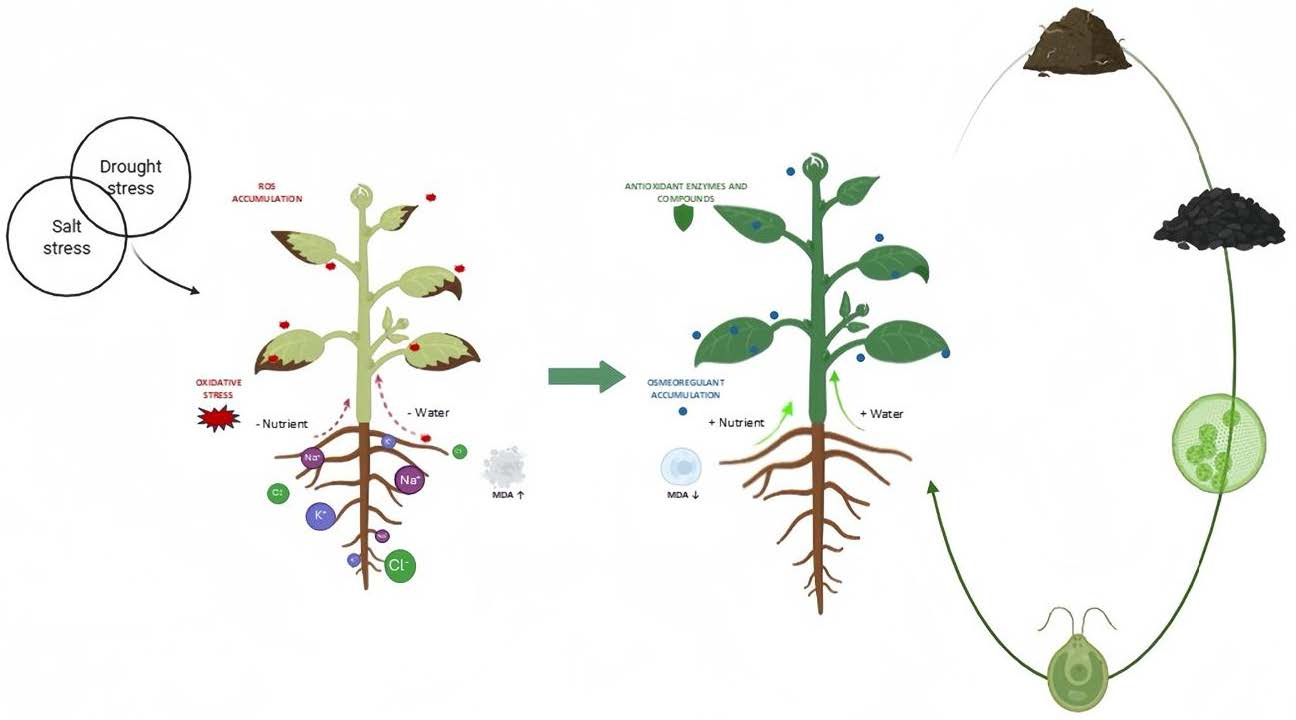
Agriculture faces increasing challenges in ensuring food security under a changing climate, where abiotic stresses such as salinity and drought represent major constraints to crop productivity. These stresses induce complex physiological and biochemical alterations in plants, including osmotic imbalance, oxidative damage, and disruption of metabolic pathways, ultimately impairing growth and yield. In this context, the application of biostimulants has emerged as a sustainable strategy to enhance plant resilience. While synthetic products are widely available, growing attention is being directed toward natural bio-based products, particularly those derived from renewable biomasses and organic wastes, in line with circular economy principles. This review critically examines the current literature on bio-based products with biostimulant properties, with particular emphasis on vermicompost-derived extracts, humic-like substances, and macro- and microalgae extracts, focusing on their role in mitigating salt and drought stress in plants. The reviewed studies consistently demonstrate that these bio-products enhance plant tolerance to abiotic stress by modulating key physiological and biochemical processes, including hormonal regulation, activation of antioxidant defence systems, accumulation of osmoprotectants, and regulation of secondary metabolism. Moreover, evidence indicates that these bio-based inputs can improve nutrient use efficiency, photosynthetic performance, and overall plant growth under stress conditions. Overall, this review highlights the potential of non-microbial bio-based biostimulants as effective and sustainable tools for climate-resilient agriculture, while also underlining the need for further research to standardize formulations, clarify mechanisms of action, and validate their performance under field conditions.

Graphical Abstract

1. Introduction

Abiotic stresses, such as salinity and drought, are related to environmental factors and agronomic practices. Agriculture has to deal with several challenges to guarantee food security for a growing population and in a climate-changing scenario [1,2,3].
These stresses induce a complex response, involving both physiological and biochemical alterations in plants, including osmotic imbalances, ion toxicities, oxidative damage, and disorders of metabolic pathways. In general, when plants are exposed to abiotic stress, their growth will be compromised, reducing photosynthetic efficiency and reproductive development, generating one of the most relevant agronomical aspects related to yield losses [1,4].
Due to the increasing impact of climate change on abiotic stress events, it is crucial to develop sustainable and resilient agricultural strategies. In this context, the integration of bio-products, which have biostimulant properties, could be an important and sustainable approach [5,6].
In the scientific literature and within the framework of international policies, “bio-based products” are defined as materials, chemicals, and goods manufactured either entirely or in part from renewable biological resources, such as biomasses and various forms of organic wastes. The European Commission defines bio-based materials as those derived from sources including urban bio-wastes, organic residues, and crops, as direct alternatives to fossil-based materials [7]. Similarly, the USDA (U.S. Department of Agriculture) classifies “bio-based products” as commercial or industrial goods (excluding food and feed) made from renewable domestic, agricultural, forestry, or marine materials. The importance of these products is related to their potential in reducing non-renewable resources and converting waste into valuable resources, hence contributing to a circular and sustainable economy [7].
The European Union regulation (2019/1009) defines plant biostimulants as “a product stimulating plant nutrition processes independently of the product’s nutrient content with the sole aim of improving one or more of the following characteristics of the plant or the plant rhizosphere: nutrient use efficiency, tolerance to abiotic stress, quality traits, availability of confined nutrients in soil or rhizosphere”. In other words, biostimulants are different substances or microorganisms that, when applied to plants, can improve physiological processes and nutrient uptake efficiency, increase stress tolerance, and enhance crop quality, regardless of their nutritional content [8,9]. In this context, biostimulants represent an important eco-friendly approach required to minimize the use of chemical inputs, such as fertilizers, and maintain productivity in abiotic stress conditions. In particular, these products represent an alternative to conventional synthetic agrochemicals, and, by enhancing nutrient use efficiency, directly align with the objectives of the “Farm to Fork” strategy (European Green Deal) [10,11].
Although microbial biostimulants such as arbuscular mycorrhizal fungi (AMF) and plant growth-promoting rhizobacteria (PGPR) play a well-established role in enhancing plant tolerance to abiotic stress, they have not been included in the present review. This choice was intentional and reflects the aim of focusing specifically on non-microbial, extract-based bio-products derived from renewable biomasses and organic wastes, such as vermicompost, humic-like substances, and macro- and microalgae. These bio-based products are characterized by complex mixtures of bioactive molecules whose effects are largely independent of microbial colonization and are more directly linked to the biochemical modulation of plant metabolism. Furthermore, compared to microbial inoculants, extract-based biostimulants often present greater formulation stability, easier handling and application, and higher compatibility with large-scale agricultural practices and circular economy approaches. Microbial biostimulants have already been extensively addressed in several dedicated reviews; therefore, they were considered to be beyond the scope of this work, which aims to highlight less-reviewed yet highly promising non-microbial bio-based solutions for mitigating salt and drought stress.
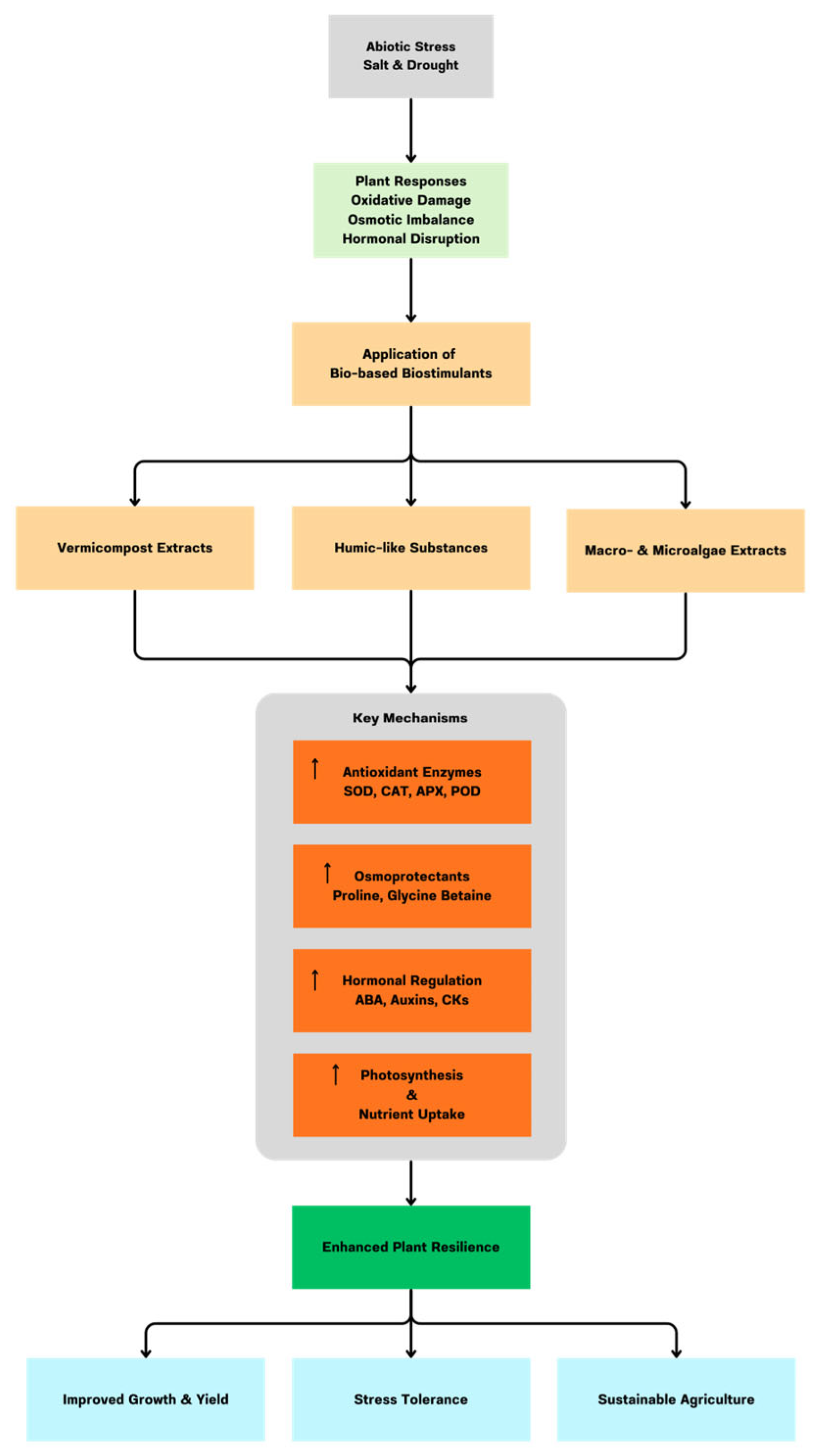
In this scenario, this review aims to analyze the current knowledge of bio-based products with biostimulant properties, focusing on their roles in modulating the biochemical and physiological responses of plants during abiotic stress. The flow chart of contents of the review is reported in Figure 1. Particular attention is given to extracts from vermicompost, organic waste, and macro- and microalgae due to their high abundance, renewable nature, and proven biostimulant potential. Vermicompost and organic waste are widely available by-products of agricultural and food systems, providing a sustainable source of nutrients, humic substances, and bioactive compounds that can enhance soil fertility and, consequently, plant growth. Microalgae, on the other hand, are rich in bioactive molecules, such as polysaccharides, phytohormones, and antioxidants, which can improve plant stress tolerance and productivity. By focusing on these sources, it is possible to analyze the bio-based products that have the most practical application in sustainable and eco-friendly agriculture.

2. Bio-Products and Their Biostimulant Effects

In recent years, a growing number of studies have explored the potential of bio-based materials as sustainable sources of plant biostimulants. Among these, extracts derived from vermicompost, humic-like substances, macroalgae, and microalgae have attracted particular attention due to their rich composition in bioactive compounds, such as humic substances, amino acids, phytohormones, and polysaccharides. These natural formulations have been shown to enhance plant growth, nutrient uptake, and stress tolerance, contributing to improved crop productivity and soil health. Table 1 summarizes the main biostimulant effects reported for these different types of bio-based extracts, highlighting their modes of action and the specific plant responses observed across various studies.

2.1. Vermicompost and Its Extracts

Vermicompost is an organic product obtained through a complex process involving the crucial role of earthworms (e.g., Eisenia foetida) and the activity of microorganisms. This technology can be applied to different matrices, such as waste or manure, to produce a fertilizer rich in humic substances, macro- and micronutrients, and plant growth regulators (such us auxins, cytokinins, and gibberellins) released during the vermicomposting process [3,12]. While the use of vermicompost added to the soil as a biofertilizer and biostimulant has been extensively studied, the literature specifically focused on vermicompost extracts and derivates remains somewhat limited compared to other well-established biostimulants or traditional compost. This may be due to the relatively recent interest in the liquid form of vermicompost, compared to the traditional research primarily addressing solid vermicompost applications. Therefore, the studies cited in this review represent the most significant contributions to date in the field, while acknowledging the need for further research to fully explore the potential of vermicompost extracts as biostimulants. The literature also reported the use of vermicompost extract, such as vermicompost tea, or vermicompost leachate, in order to obtain a spray product that can maintain many of these beneficial properties. In fact, spray products offer practical advantages over solid formulations, including simpler application, more homogeneous coverage, and the possibility of integrating with existing irrigation or spraying systems [13,14].
The quality of vermicompost and its extracts depends on the matrix, production, and storage conditions. Some characteristics are influenced by aeration during the process or by the dilution rate [3]. Several studies have investigated the effects of vermicompost and its extracts on soil properties, plant growth, and biochemical parameters, consistently reporting positive outcomes across a variety of crops and experimental conditions. For example, at soil level, Wu et al. [15] demonstrated that vermicompost, applied as an amendment, positively affects soil physicochemical properties and promotes urease activity. In Lactuca sativa L., several studies reported that their application on soil increases crop yield, fresh weight, plant size, and chlorophyll a and carotenoid contents [16,17].
As regards vermicompost derivates, Torres-García et al. [18] showed that vermicompost leachate improved the growth and yield of corn, cotton, peanuts, chard, and pepper, with results comparable to or exceeding those obtained with chemical fertilization. Similarly, Hamed et al. [19] observed that vermicompost tea enhanced growth, photosynthetic activity, and vitamin C and E contents in lettuce, while Koskey et al. [20] confirmed that liquid vermicompost extract increased shoot biomass in berseem clover (Trifolium alexandrinum L.) and sunflower (Helianthus annuus L.), also improving grain yield and oil concentration in sunflower. These studies collectively highlight the biostimulant potential of vermicompost and its derivatives across different plant species and agronomic contexts.

2.2. Humic-like Substances

Humic-like substances (HLSs) are a class of macromolecular (or supramolecular) organic materials extracted from different biomass matrices, particularly agro-industrial residues. These compounds are traditionally obtained from natural sources such as low-rank coal (e.g., lignite and leonardite), peat, and sediments of water bodies, but they can also be isolated from soils, composts, and agro-industrial residues [21,22]. Their biostimulant effect is related to their composition, generally characterized by bioactive compounds such as indole-3-acetic acid (IAA) and soluble phenols, which have been shown to directly influence plant metabolism, growth, and resilience to stress [21,23].
Several studies have demonstrated that the application of HLSs positively affects seed germination, plant growth, and physiological processes across a variety of crops. For instance, the HLS extracted from lignin enhanced germination in maize (Zea mays L.) and pak choi (Brassica chinensis L.) [24,25]. Savy et al. [24] studied the effect of an HLS isolated by alkaline oxidative hydrolysis from lignin-rich agro-industrial residues. They reported that these bio-products positively impact germination activity and stimulate enzymatic activities, including α-amylase, β-amylase, catalase, and protease. Moreover, their application promotes the elongation of the coleoptile, and enhances the formation of primary and lateral roots, effects attributed to their content of phenolic molecules. Similarly, Guilayn et al. [26] found that HLSs derived from digestate increased biomass accumulation in L. sativa, while Mondek et al. [27] observed that hydrochar-derived HLSs improved shoot height, dry biomass, chlorophyll content, and root length in tomato plants. More recently, Montoneri et al. [28,29] characterized bio-products obtained from digestate biowaste (BPs), demonstrating their multifunctional properties, including soil fertilization, stimulation of plant growth, and potential enhancement of tolerance to abiotic and biotic stresses. Moreover, they reported that BPs enhanced nitrogen metabolism and enzyme activities in leaves and roots of common bean (Phaseolus vulgaris), while in red pepper (Capsicum annuum), BPs improved both yield and chlorophyll content [29]. Likewise, Fragalà et al. [30] showed that the same BPs positively influenced growth, chlorophyll content, and key nitrogen metabolism enzymes in L. sativa L., with effects dependent on BP concentration and attributed to their humic-like substances content.
Collectively, these studies highlight the significant biostimulant potential of HLSs and related bio-products, which can enhance seed germination, plant growth, enzymatic activity, and stress resilience across diverse crops. Their multifunctional properties, including modulation of root architecture, photosynthetic efficiency, and nutrient metabolism, underscore their promising role as sustainable tools for improving crop productivity and resilience in modern agriculture.

2.3. Macroalgae and Microalgae Extracts

Macroalgae and microalgae are emerging as promising and sustainable resources for the extraction of their bio-compounds useful for the development of plant biostimulants. Macroalgae are a large group of photosynthetic organisms commonly known as seaweed. They are classified on the basis of their pigmentation into red, brown, and green algae [31,32]. Microalgae are photosynthetic single-cell microscopic organisms that live in freshwater, saltwater, and wastewater. They are classified by different characteristics, such as pigmentation, life cycle, and morphology. Based on their metabolic adaptation, they are classified in autotrophic, heterotrophic, and mixotrophic [32,33].
These photosynthetic organisms exhibit remarkable biochemical diversity, reflecting adaptations to different environmental conditions as well as ecological habitats. Consequently, macroalgae, microalgae, and their extracts possess complex mixtures of bioactive molecules with multiple functions relevant to plant growth and stress tolerance. Their biochemical composition typically includes plant growth regulators (such as auxins, cytokinins, and gibberellins), polysaccharides, amino acids, vitamins, polyunsaturated fatty acids, and antioxidants, all of which contribute to enhancing plant metabolism and resilience to stress [32,34]. The extraction and characterization of these bioactive compounds have gained increasing attention, as these extracts represent a natural and renewable source of molecules capable of promoting plant health while reducing the use of synthetic agrochemicals. Understanding the relationship between algal biochemical profiles and their biostimulant effects may be therefore essential for optimizing formulation strategies and improving agricultural sustainability.
Recent studies have highlighted the effectiveness of both macroalgae and microalgae extracts as plant biostimulants, demonstrating their potential to enhance seed germination, growth performance, and crop productivity. As regards macroalgae-based biostimulants, their role in promoting plant growth and yield has been extensively investigated [35,36]. Other studies have confirmed that macroalgae extracts can enhance nutrient uptake and nutrient accumulation in tissues. For instance, Melo et al. [37] found that the combined application of Kappaphycus alvarezii and Sargassum vulgare extracts to pepper plants (C. annuum L.) increased macronutrient concentrations in leaf tissues, root length, and fruit production. Spagnuolo et al. [34] investigated the effect of different macroalgae extracts (S. muticum, Ulva ohnoi, Furcellaria lumbricalis, Ascophyllum nodosum, and a commercial A. nodosum extract) on tomato plants and confirmed that the application of macroalgae extracts significantly affected fruit morphology and biochemical composition. The effect on °Brix, pH, and flavour resulted differently, depending on the species applied: for example, S. uticum resulted in the sweetest flavour, while A. nodosum made the fruits more aromatic, due to the proline content, but more acidic. Similarly, Villa and Vila et al. [38] reported that foliar and drench applications of A. nodosum extract improved plant height, leaf area and number, chlorophyll content, and fruit yield, both in terms of quantity and weight; additionally, this treatment enhanced soil fertility by increasing pH, macronutrient levels, and organic carbon content.
As regards microalgae-based biostimulants, particularly promising results in improving early plant development and physiological traits were observed. Kolli et al. [39] reported that seed treatment with a microalgae mixture improved germination and early growth; furthermore, the application of this extract to tomato plants enhanced plant height, leaf number, fresh and dry biomass, and chlorophyll content. Similarly, La Bella et al. [40] reported that the application of three microalgae biomasses, Chlorella vulgaris, Scenedesmus quadricauda, and Klebsormidium sp. K39, on lettuce seedlings improved growth by increasing fresh weight and chlorophyll, carotenoid, protein, and ash contents. Moreover, Puglisi et al. [41] observed that the application of a C. vulgaris extract, by foliar spray and root drenching, positively affected the growth of lettuce seedlings, increasing the dry matter, chlorophyll, carotenoid, and protein contents. Dineshkumar et al. [42] also demonstrated that extracts from C. vulgaris and Spirulina platensis significantly enhanced growth parameters in green gram (Vigna radiata L.), including shoot and root length, leaf number, and leaf area index. Moreover, treated plants showed increased levels of nitrogen (N), phosphorus (P), potassium (K), and phenolic compounds, indicating improved nutritional and metabolic profiles.
Due to the large volume of studies available on macro- and microalgae, a comprehensive list of all relevant works is beyond the scope of this review, also considering that other reviews [43,44,45] already address this topic in detail. Instead, we have selected key examples that illustrate the broad trends and main findings in this field. Overall, the literature confirms that both microalgae and macroalgae extracts can exert significant biostimulant effects, improving plant growth, physiological performance, and soil quality, while contributing to more sustainable agricultural practices.
Although all the bio-based products reviewed exhibit biostimulant activity, they differ in efficacy, mechanisms of action, and practical applicability. Vermicompost-derived extracts and humic-like substances primarily act by improving nutrient availability, root architecture, and redox homeostasis through humic components and hormone-like molecules, showing strong effects at low concentrations. Macro- and microalgae extracts, by contrast, are particularly rich in phytohormones, polysaccharides, and antioxidants, and often exert rapid effects on plant metabolism and stress signalling pathways. From an application perspective, extract-based products generally offer advantages in terms of formulation stability, ease of handling, and compatibility with foliar or fertigation systems, while their performance may vary depending on crop species, dose, and environmental conditions.

3. Biochemical Responses of Plants to Abiotic Stress

This section summarizes the main physiological and biochemical responses of plants to abiotic stress, not with the aim of providing an exhaustive review of stress physiology, but to establish a mechanistic framework for interpreting how bio-based biostimulants modulate these pathways under salinity and drought conditions.
Environmental stress conditions lead to the production of reactive oxygen species (ROS), including superoxide (O2), hydrogen peroxide (H2O2), and hydroxyl radicals (•OH). ROS are toxic, causing oxidative damage to lipids, proteins, and nucleic acids. Under oxidative stress conditions, ROS start the abstraction of hydrogen atoms from polyunsaturated fatty acids (PUFAs) in cellular membranes. This leads to the formation of lipid radicals (L•), which subsequently react with molecular oxygen to generate lipid peroxyl radicals (LOO•). These radicals propagate the chain reaction of lipid peroxidation, ultimately yielding unstable lipid hydroperoxides (LOOH). The decomposition of lipid hydroperoxides gives rise to a range of reactive aldehydes, among which malondialdehyde (MDA), 4-hydroxynonenal (4-HNE), and acrolein are the most biologically relevant. MDA, in particular, is widely used as a biomarker of oxidative stress and lipid peroxidation damage [46]. High MDA levels indicate severe oxidative stress and a low membrane integrity. On the other hand, a reduction in MDA levels indicates stress tolerance and protection of cellular membranes [47]. To mitigate this stress, plants activate defence mechanisms by enzymatic antioxidants (e.g., superoxide dismutase, catalase, and ascorbate peroxidase) and non-enzymatic antioxidants (e.g., ascorbate, glutathione, and phenolic compounds). Moreover, ROS signalling is interconnected with hormonal pathways and the production of different compounds that act as scavengers for toxic molecules, osmolytes, or signalling molecules [48,49,50].

3.1. Hormonal Regulation

Abscisic acid (ABA) is a crucial plant hormone that regulates various developmental processes and responses to abiotic stress. In particular, under drought stress, the rapid production and accumulation of ABA act as an alert signal, promoting physiological responses that mitigate water loss. One of the most important responses induced by ABA accumulation is stomatal closure, which reduces transpiration and helps maintain internal water balance [51,52]. ABA also enhances the accumulation and activity of antioxidant enzymes such as superoxide dismutase (SOD) and catalase (CAT), contributing to the establishment of defence mechanisms under environmental stress. Moreover, ABA interacts with other hormonal pathways, including auxin, gibberellins (GAs), cytokinins (CKs), and ethylene (ET), to regulate plant stress responses [51,53].
Auxins, primarily indole-3-acetic acid (IAA), are phytohormones that regulate plant growth and development, including cell elongation, division, and differentiation. Under stress conditions, auxins interact antagonistically with ABA through hormonal crosstalk, altering auxin localization and synthesis within plant tissues, and consequently affecting root architecture and shoot growth to support plant survival and recovery [54]. Beyond growth modulation, auxin–ABA crosstalk under stress also influences the production of ROS and the activation of antioxidant defence systems, including enzymes such as SOD and CAT [55]. Changes in auxin distribution under stress can affect ROS-mediated signalling, which serves as a secondary messenger to coordinate ABA signalling pathways and control the expression of stress-responsive genes. Furthermore, auxin and ABA interactions affect the expression of stress-responsive transcription factors, which coordinate osmotic adjustment, osmoprotectant accumulation, and cell wall remodelling. At the physiological level, this hormonal interplay regulates stomatal aperture, leaf senescence, and hydraulic conductance, optimizing water use efficiency and resource allocation during stress. Collectively, these integrated responses illustrate how auxin–ABA crosstalk not only modulates growth but also orchestrates a multilayered defence network that enhances plant resilience to environmental challenges [56].
Cytokinins (CKs) are hormones involved in cell division, shoot development, nutrient metabolism, and senescence. Under abiotic stress conditions, they play a key role in maintaining cellular homeostasis, enhancing plant resilience. Several studies demonstrated the relationship of CKs with other phytohormones, such as ABA and auxins. In particular, the antagonist interaction between CK and IAA enhances plant resilience to stress conditions such as drought and salt stress [57,58]. Recent evidence has expanded the understanding of how cytokinins contribute to plant adaptation under salt stress. Yu et al. [59] emphasized that salinity greatly alters CKs metabolism and signalling pathways, affecting not only their synthesis and degradation but also the spatial distribution and sensitivity of target tissues of the plant. These hormonal adjustments influence both key physiological responses, including the regulation of ion transporters and maintenance of photosynthetic efficiency, and the activation of antioxidant systems that limit oxidative damage caused by excess sodium and chloride ions. Moreover, CKs act as integrators of environmental and developmental signals, modulating gene expression networks that balance growth and stress tolerance. Their interaction with ABA, ethylene, and other hormones may determine whether plants need to activate the defence mechanisms or can continue growth under adverse conditions [59].
Ethylene (ET) is a gaseous phytohormone, also acting as stress hormone in the same way as ABA, induced by abiotic stress such as drought and salinity due to regulating stomatal closure, root growth, and leaf senescence. In fact, in response to abiotic stress, ET increases the plant’s tolerance through different mechanism to promote plant survival, such as promoting adventitious root formation and controlling stomatal opening [58,60]. Moreover, there is a complex interaction between ET and other phytohormones, such as ABA, that both improves the antioxidant defence and shelf-life of fruits [61,62]. Fatma et al. [63] described the multifaceted role of ET in plant adaptation to stressful environments, highlighting its function as both a growth regulator and a modulator of defence responses. Abiotic stresses, such as salinity, drought, heat, flooding, and heavy metals, influence ET biosynthesis by altering the activity of key enzymes, including 1-aminocyclopropane-1-carboxylic acid synthase and oxidase. Through its receptors and downstream transcription factors (EIN2, EIN3, and EIL1), ET signalling modifies gene expression to regulate ion homeostasis and the activation of antioxidant and detoxification mechanisms. Depending on its concentration, duration of exposure, and tissue specificity, ET can either promote stress tolerance or enhance growth inhibition and senescence. Moreover, it interacts with other phytohormones, such as ABA, auxins, jasmonates, and salicylic acid, coordinating growth and defence responses under adverse conditions [63].

3.2. Antioxidant Enzymes

Plants activate the production of antioxidant enzymes in order to detoxify cells from ROS. SOD represents the first line of defence against ROS and catalyzes the dismutation of superoxide anion (O2) into hydrogen peroxide (H2O2) and molecular oxygen (O2). These enzymes act in different cell compartments and can be classified into different isoforms, including manganese-SOD (Mn-SOD), copper/zinc-SOD (Cu/Zn-SOD), and iron-SOD (Fe-SOD) [64,65]. The produced H2O2 is subsequently removed by other enzymes acting in different parts of cells [63,66].
CAT is the fastest enzyme to convert H2O2 molecules into H2O and O2, and it is found in higher concentrations in peroxisomes, but it is also present in other parts of the cell, such as the mitochondria, cytosol, and chloroplast. CAT has a conserved structure but with different isoforms depending on the subcellular localization [67,68]. Its high catalytic rate makes CAT particularly important for removing the large peaks of H2O2 generated during intense metabolic activity or stress.
Ascorbate peroxidase (APX) scavenges H2O2 to water and monodehydroascorbate by the ascorbate–glutathione cycle, using ascorbate as an electron donator. It has a higher affinity for H2O2, making it more efficient than CAT at low peroxide concentrations. APX is categorized based on subcellular isoforms, such as cytosolic (cAPX), mitochondrial (mtAPX), or cloroplastic (chlAPX). APX provides precise regulation of H2O2 levels, particularly in chloroplasts, where ROS production is high during photosynthesis [64,69].
Glutathione peroxidase (GPX) is a marker of intracellular oxidative stress and scavenges H2O2 into H2O and lipid alcohols, using glutathione as a reducing substrate. GPX plays a role in maintaining membrane lipid stability catalyzing the reduction in lipid hydroperoxides produced in the membrane after reacting with O2 [70,71].
While APX and GPX directly catalyze H2O2 and lipid peroxides, the regeneration of the ascorbate–glutathione cycle is sustained by glutathione reductase (GR). GR is a flavoenzyme that plays a crucial role in catalyzing electron transfer, and it is located in different parts of cell, such as the chloroplast, mitochondria, cytosol, and peroxisomes. Specifically, GR uses NADPH as a reductant to convert inactive, oxidized-form, glutathione disulfide (GSSG), into the active, sulfhydryl form (GSH). This continuous activity is key for this cycle and detoxification by APX and GPX activity [72]. GR ensures a continuous supply of reduced glutathione, maintaining the efficiency of H2O2 scavenging under prolonged stress.
Another crucial enzyme involved in H2O2 scavenging is the peroxidases (POX). Similarly, to CAT, APX, and GPX, POX contribute to scavenging H2O2 by oxidation of phenolic compounds. The POX play a crucial and dual role in H2O2 homeostasis and plant defence, generating and detoxifying H2O2 in the apoplast. Moreover, they are involved in auxin metabolism and cell wall reinforcement (e.g., lignification and suberification). POX activity is therefore important not only for ROS detoxification but also for modulating cell wall properties and plant development under stress. They are mainly located in the extracellular space (apoplast) and the vacuole, but they can also be detected in the plasma membrane [73,74].
Overall, the coordinated action of SOD, CAT, APX, GPX, GR, and POX ensures efficient detoxification of ROS and maintenance of redox homeostasis in plant cells under abiotic stress. Each enzyme contributes in a compartment-specific and isoform-dependent manner, allowing plants to rapidly respond to oxidative stress while integrating ROS scavenging with signalling, metabolism, and structural processes. Consequently, the activities of these antioxidant enzymes are frequently monitored in experimental studies as key indicators of plant responses to abiotic stress. This intricate network highlights the essential role of antioxidant enzymes in plant adaptation, stress tolerance, and cellular protection.

3.3. Antioxidant Compounds

Plant defence against ROS involves a complex network of non-enzymatic antioxidants, including ascorbate, glutathione, carotenoids, flavonoids, and other polyphenolic compounds.
Ascorbate (AsA) is the major water-soluble, low-molecular-weight, non-enzymatic antioxidant involved in the plant abiotic stress responses. It is distributed across different cellular compartments, including the cytosol, chloroplasts, and apoplast, and exerts multiple roles as an antioxidant, enzymatic cofactor, and redox regulator. AsA reduces H2O2 to water and serves as the primary electron donor for APX in the ascorbate–glutathione cycle, contributing to membrane stability. Moreover, it acts as a cofactor for enzymes involved in the biosynthesis of phytohormones such as ABA. Finally, AsA functions as a redox sensor, coordinating signalling pathways under abiotic stress conditions [72,75].
Glutathione (GSH) is the most abundant non-protein thiol in plant cells, predominantly localized in chloroplasts. It plays a key role in cellular redox regulation. In particular, GSH acts directly and indirectly: scavenging ROS and acting as an electron donor in the ascorbate–glutathione cycle. Moreover, GSH has other functions, such as being a metabolic sink for sulphur and as a cofactor in xenobiotic detoxification. Finally, GSH influences phytohormone activity, such as ABA and salicylic acid, in order to modulate the stress response pathways [76,77].
Carotenoids are lipophilic isoprenoid pigments fundamental for both light harvesting and photoprotection. This photoprotective role is mediated by the xanthophyll cycle (violaxanthin–antheraxanthin–zeaxanthin), a mechanism that converts excess light energy into thermal dissipation to prevent photo-oxidative damage. In particular, this modification allows the release of excess light energy as heat, preventing ROS formation. Carotenoids are classified as membrane antioxidants because their structure is able to delay the radical propagation chain during lipid peroxidation. Moreover, carotenoid levels are modulated through cultivation, postharvest storage, and processing. Environmental factors, such as light intensity, temperature, and oxygen availability, influence carotenoid biosynthesis and stability, thereby enhancing plant stress resilience and the nutritional quality of plant-derived foods [78,79].
Flavonoids, including flavonols, flavones, anthocyanins, and isoflavones, are synthesized via the phenylpropanoid pathway. Predominantly localized in epidermal tissues and vacuoles, they exert antioxidant activity through three main mechanisms: ROS scavenging, metal chelation, and UV screening. Flavonoids neutralize ROS via hydrogen atom or single-electron transfer, chelate transition metals, such as Fe2+ and Cu2+, which catalyze hydroxyl radical (•OH) formation, and absorb UV radiation, thus preserving photosystem integrity. Under abiotic stress, flavonoid biosynthesis is regulated by phytohormones and reactive nitrogen species (RNS). Their synergistic action with carotenoids and ascorbate contributes to redox balance in chloroplasts and enhances plant resilience [80,81]. Similarly, polyphenols, such as phenolic acids, tannins, and lignin precursors, also deriving from the phenylpropanoid pathway, participate in antioxidant defence by scavenging radicals, chelating metals, and enhancing cell wall resistance. Their biosynthesis and accumulation are related to crosstalk with the redox status of cells and phytohormones. These compounds contribute to the detoxification of radical scavenging, metal chelation, and enhance cell wall resistance [82].

3.4. Osmoregulators

Osmoregulation is a crucial adaptive mechanism that enables plants to maintain cellular homeostasis under abiotic stress conditions such as drought and salinity. Plants accumulate compatible solutes, known as osmolytes or osmoregulators, to counteract osmotic imbalance, preserve cell turgor, and stabilize proteins and membranes. Among these, proline and glycine betaine (GB) are the most studied osmoprotectants.
Proline plays a key role as an organic osmolyte that accumulates to high concentrations in the cytoplasm of plants under abiotic conditions, particularly drought and salinity. Its primary functions include maintaining cell turgor and osmotic adjustment, protecting proteins and enzymes from denaturation, scavenging ROS, and stabilizing cell membranes [82]. Several studies have indicated that proline accumulation enhances plant tolerance by contributing to osmotic regulation and protecting macromolecular structures. Moreover, in abiotic stress conditions, proline can interact with proteins, forming a hydrophobic skeleton that preserves cell membrane integrity. This accumulation contributes to maintaining the osmotic balance between the cell and the external environment, improving water uptake and preventing cellular dehydration [83].
GB is a another major osmoprotectant that plays a crucial role in stabilizing macromolecular structures and maintaining osmotic homeostasis under stress conditions. The accumulation of GB is closely correlated with plant responses to abiotic stress, and it is produced to preserve the efficiency of the photosystem and the membrane’s stability. GB is synthesized and primarily accumulated in chloroplasts, where it protects proteins and enzymes by maintaining their native conformations. In fact, its accumulation maintains cell turgor and osmotic adjustment, through stabilization of the structure of macromolecules (proteins and enzymes). Moreover, GB interacts with antioxidant systems by modulating the activity of ROS-detoxifying enzymes, such as APX, CAT, and GR, as well as enhancing AsA levels, thereby reinforcing cellular protection mechanisms [84].
Plants can also accumulate a wide range of other compatible solutes that function as osmoprotectants to mitigate the detrimental effects of salinity and drought. Among these, non-reducing sugars, polyols, and amino acid derivatives play pivotal roles in maintaining osmotic balance, protecting cellular macromolecules, and stabilizing membranes under stress conditions. Trehalose, a non-reducing disaccharide, has been extensively reported to accumulate in plants subjected to abiotic stresses, where it enhances tolerance by stabilizing proteins and membranes, maintaining photosynthetic activity, and modulating ROS metabolism and hormone signalling pathways [85,86]. Polyols, such as mannitol and sorbitol, also function as key osmoprotectants in many plant species. These sugar alcohols accumulate in response to water deficit and drought stress, acting as osmotic buffers and ROS scavengers while preserving protein and lipid structure by enhancing cell turgor and photosynthetic stability [87]. In addition, amino acid derivatives, such as β-alanine betaine, γ-aminobutyric acid (GABA), and other quaternary ammonium compounds, have been identified as compatible solutes involved in osmoprotection and stress signalling. These compounds not only contribute to osmotic adjustment but also regulate the activity of stress-responsive genes and enzymes [88].

3.5. Phenolic Compounds and Phenylalanine Ammonia-Lyase

Phenolic compounds constitute one of the largest and most diverse classes of secondary metabolites in plants. They include a wide range of molecules, such as flavonoids, anthocyanins, phenolic acids, tannins, and lignins, all derived from the shikimate and phenylpropanoid pathways. These compounds are characterized by one or more aromatic rings bearing hydroxyl groups, which confer strong antioxidant properties. Beyond their direct radical-scavenging capacity, phenolics play multifaceted roles in plant physiology, contributing to the stabilization of cell structures, modulation of enzyme activities, and regulation of signalling pathways under stress conditions [89,90]. The antioxidant function of phenolic compounds primarily relies on their ability to donate hydrogen atoms or electrons to neutralize ROS and RNS, preventing oxidative damage of lipids, proteins, and nucleic acids. Furthermore, phenolic compounds may often act as modulators of antioxidant enzymes, influencing the activity of CAT, POX, and SOD, and thereby integrating non-enzymatic and enzymatic defence systems [89,90].
A pivotal role in the biosynthesis of phenolic compounds is played by phenylalanine ammonia-lyase (PAL), which catalyzes the deamination of L-phenylalanine to trans-cinnamic acid and represents a crucial enzyme in the phenylpropanoid pathway, through the shikimate pathway. As a result, PAL represents an early biochemical marker of plant stress responses and adaptive mechanisms [90]. Several studies have demonstrated that enhanced PAL activity correlates with increased accumulation of phenolic antioxidants under both biotic and abiotic stresses. This upregulation contributes to the reinforcement of plant cell walls through lignin deposition, the synthesis of phytoalexins with antimicrobial properties, and the accumulation of soluble phenolics that mitigate oxidative damage. Consequently, PAL is not only a key enzyme for understanding the metabolic flux towards phenolic biosynthesis but also a crucial indicator of the plant’s ability to maintain redox homeostasis and resilience under adverse environmental conditions [82,91,92,93,94]. The phenylpropanoid pathway represents a central node in plant secondary metabolism, integrating environmental signals with metabolic reprogramming aimed at enhancing antioxidant capacity, stress tolerance, and overall plant performance.

4. Types of Abiotic Stress and Plant Responses

Soil salinity, water deficit, and heat stress represent three of the most important abiotic stresses that reduce crop productivity. In response, plants have evolved physiological and biochemical adaptations to mitigate the damage caused by ionic imbalance, osmotic stress, and oxidative damage.

4.1. Salt Stress

Soil salinity stress represents a severe challenge for agriculture, significantly affecting crop development, yield, and overall productivity. High salinity levels in soils are caused by the accumulation of Na+ and Cl ions, and other salts, such as HCO3, Mg2−, SO42−, K+, Ca2+, and CO32− ions. These salts tend to accumulate in soils, due to high evaporation rates of water, the use of saline irrigation water, and inappropriate agricultural irrigation practices, particularly in arid and semi-arid regions [95].
Moreover, high salt concentrations cause osmotic stress, which reduces water uptake and creates drought-like conditions, and ionic toxicity from the accumulation of ions in plant tissues. This toxicity negatively affects seed germination, plant morphology, and stomatal behaviour, decreasing photosynthetic efficiency. Therefore, plants respond to salinity by modulating different biochemical traits that help maintain ion homeostasis and promote intracellular compartmentalization [96]. In addition, salinity stress influences soil properties by reducing hydraulic conductivity and nutrient availability, which limits soil fertility and thereby plant growth and productivity.
In the literature, many studies are available on the mitigation effect of bio-products. In the context of sustainable agriculture, bio-products, including vermicompost-derived extracts, humic-like substances, and microalgae formulations, have emerged as promising bioeffectors capable of modulating plant metabolism and improving resilience to salt stress. The following review aims to examine the current evidence regarding their role in mitigating salt stress through the regulation of antioxidant systems, metabolic reprogramming, and signalling pathways. Bziouech et al. [97] suggested vermicompost as an amendment (20% vermicompost + 80% organic soil) for reducing the negative effects produced by salt stress in tomato plants (S. lycopersicum L. var. Firenze); the results showed that the treatment increased the morpho-physiological parameters (shoot and root length, leaf number, and chlorophyll and carotenoid contents) and biochemical response (reduced MDA).
Similarly, Thimothy et al. [98] confirmed that different concentrations of vermicompost (from 5% to 100%) and, in particular, a 25% dose, applied as a soil amendment in Solanum melongena L., can improve plant growth and the activities of crucial antioxidant enzymes, such as CAT, POX, and SOD, enhancing the defence system through enzymatic antioxidant response. Several other studies demonstrated that aqueous and alkaline extracts of vermicompost significantly mitigate the adverse effects of salt stress. Alamer et al. [99] reported that the soil application of vermicompost (0, 5%, and 10%) and foliar application of sorghum water extract (0, 1%, and 2%) significantly impact maize seedlings, increasing the activity of key antioxidant enzymes, such as SOD, POD, and CAT. It also improved ionic balance, raising the potassium/sodium ratio and decreasing the levels of cellular damage indicators, such as MDA and H2O2 content.
Salehi et al. [100] investigated that the aqueous extract of vermicompost application in Arabidopsis (Arabidopsis thaliana L.) plants exerted significant biochemical and metabolic effects. The extract was obtained with distilled water in a 1:10 ratio and applied in a hydroponic growth system in non-stressed and salt-stressed conditions. In particular, the application of vermicompost extract significantly mitigated salt oxidative damage, reducing the MDA level, electrolyte leakage, and ribulosio-1,5-bifosfato (RuBP) accumulation. Furthermore, it improved the photosynthetic activity and antioxidant defence, such as GABA, flavonoids, alkaloids, and phenylpropanoids, in roots and decreased their concentration in leaves, suggesting a different tissue response. The glutathione ratio (GSH/GSGG) was increased. Interestingly, treatment with vermicompost extract appeared to redirect metabolic fluxes from the synthesis of stress-induced secondary metabolites toward primary metabolism, thereby supporting plant growth and enhancing resilience under stress conditions.
Chanthini et al. [35] observed that a liquid macroalgal extract of Chaetomorpha antennina, a green alga, enhanced the growth of tomato (S. lycopersicum) in salinity stress conditions. The seaweeds were boiled in sterile distilled water to obtain the extract at 100 g L−1 of concentration and used in experimental trials at 80%. The results showed a significant increase in the germination index and morphological traits such as root and shoot length, plant height, and leaf area. Treatments with macroalgal extract improved physiological resilience (relative water content and membrane stability index) and the biochemical response of plants (superoxide dismutase, lipoxygenase, and phenols compound contents). Furthermore, the positive effect of the treatment influenced fruit quality, improving nutraceutical quality and organoleptic characteristics (lycopene, carotenoids, ascorbic acid, firmness, and fresh weight).
Also, Francioso et al. [101] showed that a microalgae-based commercial preparation of various microalgae extracts (1 mL L−1), applied in fertirrigation, performed as priming agents in L. sativa L. var. Gentile Rossa: the treatment enhanced chlorophylls content, biomass, and seedling growth. Moreover, microalgae extract significantly increased the plant’s tolerance to salt stress through biochemical response and antioxidant defence. In particular, the treatment increased antioxidant enzymes such as ascorbate peroxidase and decreased lipid peroxidation.
Similarly, Jalalian et al. [9] reported a foliar spray application of Chlamydomonas sp. extract (0, 20, and 40 mL L−1) on strawberry (Fragaria ananassa Duch) under salinity stress. The results showed a tolerance to salinity, optimizing photosynthetic pigments and activating antioxidant enzymes (SOD, guaiacol peroxidase, and peroxidase), phenolics, and flavonoid compounds production.
A study conducted by Chen et al. [25] treated pak choi (B. chinensis) with humic-like substances from lignin. Lignin was treated with different concentrations of potassium hydroxide (0.05 g, 0.25 g, and 0.50 g) and potassium persulfate (2% p/v). The results showed that the application of these substances significantly improves the salt tolerance of pak choi, improving the activity of superoxide dismutase and catalase.
Table 2 summarizes the bio-based product types retrieved from the recent literature and the plant species tested, showing a salinity mitigation effect.

4.2. Drought Stress

Drought stress results from a lack of significant rainfall and the depletion of water reserves. It triggers various physiological and molecular responses in plants, including the accumulation of osmoprotectants, such as proline, and the activation of antioxidant enzymes to counteract the generated oxidative stress [66]. Drought stress negatively affects plant leaves by reducing the synthesis of photosynthetic pigments and minimizing stomatal water loss, which is directly related to plant biomass accumulation. Typical symptoms in water-stressed plants include leaf rolling, chlorosis, and permanent wilting [102,103]. Drought stress disrupts cellular homeostasis and limits CO2 assimilation due to stomatal closure, leading to an imbalance between light capture and energy utilization in chloroplasts. As a result, cells accumulate ROS, such as superoxide and hydrogen peroxide. These compounds can induce lipid peroxidation, which leads to chlorophyll degradation and impairs photosynthetic pigment synthesis [104]. Furthermore, a water deficit interferes with the transport and uptake of nutrients from the soil, compromising the metabolism and development of plants [105].
In recent years, the application of bio-products has emerged as an effective strategy to mitigate the detrimental effects of drought stress in plants. These products enhance plant tolerance by improving water use efficiency, maintaining photosynthetic activity, and stimulating antioxidant and osmoprotective mechanisms.
Mohammadi et al. [103] showed that the soil application of vermicompost (3% w/w) and mycorrhizal fungi (1:1:1 of Rhizophagus fasciculatus, Funneliformis mosseae, and Rhizophagus irregulari) enhanced antioxidant defences in buckwheat under drought stress by increasing the content of phenols, flavonoids, and rutin; moreover, the treatment improved the content of N, P, and K, chlorophyll levels, and osmolyte accumulation, supporting the role of bio-products in mitigating drought stress. Other studies demonstrated that the application of liquid vermicompost significantly influences biochemical responses. Ghaffari et al. [14] studied the effects of vermicompost tea on sugar beet (Beta vulgaris L.). The vermicompost tea was prepared at a 1:20 (w/v) ratio by soaking vermicompost with water for three days and was filtered to obtain an extract for foliar spray application. After the application of the extract, at concentrations of 0, 27, and 54 L ha−1, the results showed that its application enhanced relative water content, chlorophylls, and antioxidant enzymes, such as CAT, APX, and POD. Furthermore, the treatment alleviated oxidative stress by reducing hydrogen peroxide and malondialdehyde levels, which, in turn, led to significant improvements in both plant growth and sugar beet quality under drought conditions. Veobides-Amador et al. [106] investigated the effects of a humic vermicompost extract, obtained with a basic solution (KOH, Urea, and KH2PO4), on lettuce (L. sativa) under low water supply at levels of 25% and 50% of the maximum water-holding capacity. Foliar spray application was performed at three different concentrations: 1:40, 1:60, and 1:80 (v/v). The authors reported that the extract markedly enhanced biochemical responses in the plants, including increased proline accumulation and leaf protein content, although chlorophyll levels remained unaffected by the treatment. The study of Voko et al. [107] found that the application of vermicompost leachate (1:20 in water) positively influences the biochemical activity of cowpea plants during drought stress, which was simulated with two deficit regimes (watering twice and once a week). In particular, the analysis confirmed that the treatment increased the levels of photosynthetic pigments, soluble sugars, and proteins. Marques et al. [8] demonstrated that foliar spray application of Asterarcys quadricellularis significantly mitigates the effects of water stress on common bean (P. vulgaris) plants. The microalgae were atomized using the spray drying method, obtaining a fine powder; thereafter, it was diluted with distilled water in order to obtain a stock solution of 0.25 mL L−1 and applied to crops in 0.5 mL L−1 and 1.0 mL L−1 concentrations. Their application improved water use efficiency and gas exchange, important parameters for plants’ resilience to stress. Among bio-products, the application of microalgae and its derivates also alleviates damage due to drought stress. Kusvuran [108] demonstrated that the application of C. vulgaris methanolic extract on broccoli (Brassica oleracea var. italica) mitigated oxidative damage, increasing the activity of antioxidant enzymes such as SOD, APX, CAT, and GR. In particular, concentrations of 1%, 3%, and 5% were applied, but the highest concentration had the best response. Moreover, treated plants under drought stress enhanced nutrient uptake and phenolic compounds. Other studies suggest that the application of humic-like substances can mitigate the oxidative damage caused by water stress conditions. Fascella et al. [109] obtained HLSs from hydrolyzed biowaste (organic humid fraction and compost) and applied 100 mL plant−1. The results indicate that the drench application of this bio-product on Orange Jasmine (Murraya paniculata L. Jacq.) increased water use efficiency through increasing chlorophyll content and photosynthesis activity. Similarly, Fascella et al. [110,111] reported that bio-products obtained from urban and agricultural wastes (extracted as reported before) applied on different ornamental species with 100 mL plant−1 (Euphorbia × lomi Rauh, Lantana camara L., and L. sellowiana Link and Otto) can enhance plants’ water use efficiency and leaf gas exchanges.
Table 3 summarizes the bio-based product types retrieved from the recent literature and the plant species tested, showing a drought mitigation effect.

4.3. Current Limitations

Despite the scientific literature demonstrating the agronomic benefits of bio-based products used as biostimulants, such as seaweed extract and humic substances, several limitations make it difficult to use them on a large-scale application. The first limitation is their high context dependency, as the performance of bio-based products strongly depends on factors such as soil type, microbiome composition, crop genotype, and local climate. These variables often can determine non-reproducible field results. Another major challenge is the lack of standardized production and characterization methods. The absence of unique protocols for the production and chemical characterization of many formulations produces variability, making reproducibility difficult [112,113,114].
Moreover, a deeper understanding of the physiological and metabolic mechanisms underlying plant responses to these products is crucial for the rational design of formulations, dose optimization, and timing of application. These issues currently limit the practical implementation and standardization of bio-based biostimulants in large-scale production and distribution systems [7,115].

5. Future Perspective

Bio-based products, such as vermicompost-derived extracts, humic-like substances, and macro- and microalgae, represent promising tools for mitigating oxidative damage and enhancing plant resilience under abiotic stress conditions. Their effectiveness is mainly related to their ability to modulate plant biochemical and physiological processes, improve soil fertility, increase microbial biodiversity, and enhance water retention capacity. Despite these advantages, several aspects still limit their full exploitation and require further investigation.
While a substantial body of literature has focused on microbial biostimulants, such as plant growth-promoting rhizobacteria (PGPR) and arbuscular mycorrhizal fungi (AMF), comparatively fewer studies have addressed non-microbial bio-products, including vermicompost extracts and humic-like substances derived from organic wastes [116]. This imbalance highlights the need to strengthen research efforts on extract-based bio-products, particularly with respect to their chemical characterization, mode of action, and consistency of performance under different environmental conditions. Future studies should aim to establish standardized protocols for extraction, formulation, and application, in order to reduce variability and improve reproducibility of results.
Another important research direction concerns the combined or synergistic use of different bio-products. Evidence suggests that mixtures of bio-based inputs may exert enhanced effects compared to single applications, as reported for combinations of protein hydrolysates, plant extracts, and seaweed extracts [117]. Similarly, some studies have explored the combined use of microbial and non-microbial biostimulants [118,119]. However, the mechanisms underlying these interactions remain poorly understood. Future investigations should therefore focus on evaluating the synergistic or antagonistic effects of bio-product mixtures on soil fertility, microbial activity, and plant stress tolerance, as well as on identifying optimal combinations, concentrations, and application timings.
Despite promising laboratory and pot-scale results, most studies on bio-based biostimulants are still conducted under controlled conditions. Long-term experiments and open-field trials are urgently needed to assess the agronomic reliability, environmental impact, and economic sustainability of these products under realistic agricultural scenarios. In addition, future research should extend beyond plant responses to include soil biochemical indicators, such as the activity of enzymes involved in nutrient cycling (e.g., alkaline and acid phosphatases and fluorescein diacetate), in order to better understand the broader effects of bio-products on soil–plant systems.
In this context, artificial intelligence (AI) and machine learning (ML) approaches offer valuable opportunities to support the development and application of bio-based biostimulants. By integrating multi-source datasets, including soil properties, climatic variables, crop phenology, stress indicators, and plant biochemical traits, AI-driven models can help predict the optimal application timing, dosage, and formulation of bio-products. Such tools may reduce the variability commonly associated with biostimulant performance and support precision agriculture strategies, improving both the efficacy and sustainability of bio-product use. Moreover, AI-based predictive models could assist in tailoring biostimulant applications to specific crops, soils, and stress scenarios, thereby enhancing decision-making processes and minimizing resource inputs.
Overall, future research should move toward a more integrated and predictive framework, combining plant physiology, bio-product chemistry, soil science, and AI-based tools. This approach will be essential to optimize the use of bio-based products as sustainable alternatives to chemical fertilizers and to fully exploit their potential in improving crop productivity and resilience under abiotic stress conditions.

6. Conclusions

In conclusion, the application of bio-based biostimulants represents a promising strategy to enhance crop resilience under abiotic stress conditions, such as salinity and drought. Natural products derived from vermicompost, waste biomasses, and macro- and microalgae not only mitigate physiological and biochemical damage in plants but also offer a sustainable and eco-friendly alternative to synthetic substances. While considerable progress has been made in understanding their effects, further research is needed to optimize extraction methods, determine effective dosages, and assess their performance under diverse field conditions. Overall, integrating these bio-products into modern agricultural practices could contribute to increased productivity, reduced environmental impact, and the development of more resilient and sustainable cropping systems.

Author Contributions

A.B. and I.P. conceived and designed the review. R.S. performed the literature search, data analysis, interpretation, and wrote the original draft. A.B., I.P., and G.F. guided the manuscript outline and revision and participated in English writing and language editing. A.B., I.P., G.F., and E.M. provided critical revision suggestions. G.B. and E.S. also contributed to the overall outline, writing, and revision. All authors have read and agreed to the published version of the manuscript.

Funding

This work was supported by the LIFEEBP LIFE19 ENV/IT/000004 project funded by the European Commission under the LIFE 2019 programme.

Data Availability Statement

The original contributions presented in this study are included in the article. Further inquiries can be directed to the corresponding author.

Conflicts of Interest

The authors declare no conflicts of interest.

References

  1. Kumari, R.; Bhatnagar, S.; Deepali; Mehla, N.; Vashistha, A. Potential of Organic Amendments (AM Fungi, PGPR, Vermicompost and Seaweeds) in Combating Salt Stress … A Review. Plant Stress 2022, 6, 100111. [Google Scholar] [CrossRef]
  2. Atta, K.; Mondal, S.; Gorai, S.; Singh, A.P.; Kumari, A.; Ghosh, T.; Roy, A.; Hembram, S.; Gaikwad, D.J.; Mondal, S.; et al. Impacts of Salinity Stress on Crop Plants: Improving Salt Tolerance through Genetic and Molecular Dissection. Front. Plant Sci. 2023, 14, 1241736. [Google Scholar] [CrossRef] [PubMed]
  3. Vambe, M.; Coopoosamy, R.M.; Arthur, G.; Naidoo, K. Potential Role of Vermicompost and Its Extracts in Alleviating Climatic Impacts on Crop Production. J. Agric. Food Res. 2023, 12, 100585. [Google Scholar] [CrossRef]
  4. Morales, F.; Ancín, M.; Fakhet, D.; González-Torralba, J.; Gámez, A.L.; Seminario, A.; Soba, D.; Ben Mariem, S.; Garriga, M.; Aranjuelo, I. Photosynthetic Metabolism under Stressful Growth Conditions as a Bases for Crop Breeding and Yield Improvement. Plants 2020, 9, 88. [Google Scholar] [CrossRef]
  5. Nephali, L.; Piater, L.A.; Dubery, I.A.; Patterson, V.; Huyser, J.; Burgess, K.; Tugizimana, F. Biostimulants for Plant Growth and Mitigation of Abiotic Stresses: A Metabolomics Perspective. Metabolites 2020, 10, 505. [Google Scholar] [CrossRef]
  6. Ali, O.; Ramsubhag, A.; Jayaraman, J. Biostimulant Properties of Seaweed Extracts in Plants: Implications towards Sustainable Crop Production. Plants 2021, 10, 531. [Google Scholar] [CrossRef] [PubMed]
  7. Priya, A.K.; Alagumalai, A.; Balaji, D.; Song, H. Bio-Based Agricultural Products: A Sustainable Alternative to Agrochemicals for Promoting a Circular Economy. RSC Sustain. 2023, 1, 746–762. [Google Scholar] [CrossRef]
  8. Marques, H.M.C.; Mógor, Á.F.; Amatussi, J.O.; de Lara, G.B.; Mógor, G.; Sant’Anna-Santos, B.F. Use of Microalga Asterarcys quadricellularis in Common Bean. J. Appl. Phycol. 2023, 35, 2891–2905. [Google Scholar] [CrossRef]
  9. Jalalian, S.; Ebrahimzadeh, A.; Zahedi, S.M.; Becker, S.J.; Hayati, F.; Hassanpouraghdam, M.B.; Rasouli, F. Chlamydomonas Sp. Extract Meliorates the Growth and Physiological Responses of ‘Camarosa’ Strawberry (Fragaria × Ananassa Duch) under Salinity Stress. Sci. Rep. 2024, 14, 22436. [Google Scholar] [CrossRef]
  10. Buss, W.; Belt, K.; Hein, Z.; Putri, A.; Zhu, S.; Suwandari, H.; Bentley, A.R. Hurdles to Overcome to Achieve Biostimulant-Driven, Low Chemical Input Crop Production. Plants People Planet 2025, 1–9. [Google Scholar] [CrossRef]
  11. Farm to Fork Strategy—Food Safety—European Commission. Available online: https://food.ec.europa.eu/horizontal-topics/farm-fork-strategy_en (accessed on 5 November 2025).
  12. Kosem, H.; Kocak, M.Z.; Kaysim, M.G.; Celikcan, F.; Kulak, M. Liquid Leachate Produced from Vermicompost Effects on Some Agronomic Attributes and Secondary Metabolites of Sweet Basil (Ocimum basilicum L.) Exposed to Severe Water Stress Conditions. Horticulturae 2022, 8, 1190. [Google Scholar] [CrossRef]
  13. Aslam, Z.; Ahmad, A.; Bellitürk, K.; Kanwal, H.; Asif, M.; Ullah, E. Integrated Use of Simple Compost, Vermicompost, Vermi-Tea and Chemical Fertilizers NP on the Morpho-Physiological, Yield and Yield Related Traits of Tomato (Solanum lycopersicum L.). J. Innov. Sci. 2023, 9, 1–12. [Google Scholar] [CrossRef]
  14. Ghaffari, H.; Tadayon, M.R.; Bahador, M.; Razmjoo, J. Biochemical and Yield Response of Sugar Beet to Drought Stress and Foliar Application of Vermicompost Tea. Plant Stress 2022, 5, 100087. [Google Scholar] [CrossRef]
  15. Wu, Q.; Zhang, J.; Liu, X.; Chang, T.; Wang, Q.; Shaghaleh, H.; Hamoud, Y.A. Effects of Biochar and Vermicompost on Microorganisms and Enzymatic Activities in Greenhouse Soil. Front. Environ. Sci. 2023, 10, 1060277. [Google Scholar] [CrossRef]
  16. Yeşilyurt Adiloğlu, S.; Eryilmaz Acikgoz, F.; Solmaz, Y.; Çaktü, E.; Adiloğlu, A. Effect of Vermicompost on the Growth and Yield of Lettuce Plant (Lactuca sativa L. Var. Crispa). Int. J. Plant Soil Sci. 2018, 21, 1–5. [Google Scholar] [CrossRef]
  17. Laužikė, K.; Laužikas, V.; Jankauskienė, J. The Impact of Vermicompost on the Quality of Lettuce (Lactuca sativa) Seedlings and Plant Productivity. Bio. Life Sci. Forum 2025, 41, 7. [Google Scholar] [CrossRef]
  18. Torres-García, A.; Héctor-Ardisana, E.F.; León-Aguilar, R.; Zambrano-Gavilanes, F.E.; Téllez, O.A.F. Vermicompost Leachate-Based Biostimulant and Its Effects on Physiological Variables and Yield of Different Crops in Manabí, Ecuador. Cienc. Tecnol. Agropecu. 2024, 25. [Google Scholar] [CrossRef]
  19. Hamed, F.R.; Ismail, H.E.M.; Aboelmaati, M.; Desoky, E.M. Effect of Vermicompost-Tea and Plant Extracts on Growth, Physiological, and Biochemical Traits of Lettuce (Lactuca sativa L.). SABRAO J. Breed. Genet. 2022, 54, 1202–1215. [Google Scholar] [CrossRef]
  20. Koskey, G.; Avio, L.; Turrini, A.; Sbrana, C.; Bàrberi, P. Biostimulatory Effect of Vermicompost Extract Enhances Soil Mycorrhizal Activity and Selectively Improves Crop Productivity. Plant Soil 2023, 484, 183–199. [Google Scholar] [CrossRef]
  21. Bento, L.R.; Melo, C.A.; Ferreira, O.P.; Moreira, A.B.; Mounier, S.; Piccolo, A.; Spaccini, R.; Bisinoti, M.C. Humic Extracts of Hydrochar and Amazonian Dark Earth: Molecular Characteristics and Effects on Maize Seed Germination. Sci. Total Environ. 2020, 708, 135000. [Google Scholar] [CrossRef] [PubMed]
  22. Klavins, M.; Grandovska, S.; Obuka, V.; Ievinsh, G. Comparative Study of Biostimulant Properties of Industrially and Experimentally Produced Humic Substances. Agronomy 2021, 11, 1250. [Google Scholar] [CrossRef]
  23. Ertani, A.; Pizzeghello, D.; Baglieri, A.; Cadili, V.; Tambone, F.; Gennari, M.; Nardi, S. Humic-like Substances from Agro-Industrial Residues Affect Growth and Nitrogen Assimilation in Maize (Zea mays L.) Plantlets. J. Geochem. Explor. 2013, 129, 103–111. [Google Scholar] [CrossRef]
  24. Savy, D.; Brostaux, Y.; Cozzolino, V.; Delaplace, P.; du Jardin, P.; Piccolo, A. Quantitative Structure-Activity Relationship of Humic-Like Biostimulants Derived from Agro-Industrial Byproducts and Energy Crops. Front. Plant Sci. 2020, 11, 581. [Google Scholar] [CrossRef] [PubMed]
  25. Chen, X.; Qin, X.; Wang, A.; Li, Q. Alkali-Activated Persulfate Mediated the Depolymerization and Oxygenation of Lignin to Synthesize Humus-like Substances for Agricultural Applications. Biomass Convers. Biorefin. 2025, 15, 8553–8565. [Google Scholar] [CrossRef]
  26. Guilayn, F.; Benbrahim, M.; Rouez, M.; Crest, M.; Patureau, D.; Jimenez, J. Humic-like Substances Extracted from Different Digestates: First Trials of Lettuce Biostimulation in Hydroponic Culture. Waste Manag. 2020, 104, 239–245. [Google Scholar] [CrossRef]
  27. Mondek, S.A.; Constantino, I.C.; Ferreira, O.P.; Bisinoti, M.C.; Miguel, E.C.; Miguel, T.B.A.R.; Metzker, G.; Boscolo, M.; Moreira, A.B. Humic-like Substances Extracted from Hydrochar as an Additive for Foliar Fertilization in Tomato Plants. ACS Omega 2025, 10, 40133–40145. [Google Scholar] [CrossRef]
  28. Montoneri, E.; Fabbri, G.; Quagliotto, P.; Baglieri, A.; Padoan, E.; Boero, V.; Negre, M. High Molecular Weight Biosurfactants from Mild Chemical Reactions of Fermented Municipal Biowastes. ChemistrySelect 2020, 5, 2564–2576. [Google Scholar] [CrossRef]
  29. Montoneri, E.; Baglieri, A.; Fascella, G. Biostimulant Effects of Waste Derived Biobased Products in the Cultivation of Ornamental and Food Plants. Agriculture 2022, 12, 994. [Google Scholar] [CrossRef]
  30. Fragalà, F.; Salvagno, E.; La Bella, E.; Saccone, R.; Padoan, E.; Montoneri, E.; Miccichè, J.; Ferrarello, D.; Baglieri, A.; Puglisi, I. Enhancing Lettuce Yield through Innovative Foliar Spray of Biopolymers Derived from Municipal Biowastes. Plants 2024, 13, 1664. [Google Scholar] [CrossRef]
  31. Pereira, L. Macroalgae. Encyclopedia 2021, 1, 177–188. [Google Scholar] [CrossRef]
  32. Di Sario, L.; Boeri, P.; Matus, J.T.; Pizzio, G.A. Plant Biostimulants to Enhance Abiotic Stress Resilience in Crops. Int. J. Mol. Sci. 2025, 26, 1129. [Google Scholar] [CrossRef] [PubMed]
  33. La Bella, E.; Baglieri, A.; Fragalà, F.; Puglisi, I. Multipurpose Agricultural Reuse of Microalgae Biomasses Employed for the Treatment of Urban Wastewater. Agronomy 2022, 12, 234. [Google Scholar] [CrossRef]
  34. Spagnuolo, D.; Prisa, D.; Kundu, A.; De Michele, M.G.; Russo, V.; Genovese, G. Comparative Effects of Macroalgal Extracts on Tomato Plant Growth and Fruit Quality. Phycology 2025, 5, 22. [Google Scholar] [CrossRef]
  35. Chanthini, K.M.-P.; Senthil-Nathan, S.; Pavithra, G.-S.; Asahel, A.-S.; Malarvizhi, P.; Murugan, P.; Deva-Andrews, A.; Sivanesh, H.; Stanley-Raja, V.; Ramasubramanian, R.; et al. The Macroalgal Biostimulant Improves the Functional Quality of Tomato Fruits Produced from Plants Grown under Salt Stress. Agriculture 2023, 13, 6. [Google Scholar] [CrossRef]
  36. Prisa, D.; Fresco, R.; Jamal, A.; Saeed, M.F.; Spagnuolo, D. Exploring the Potential of Macroalgae for Sustainable Crop Production in Agriculture. Life 2024, 14, 1263. [Google Scholar] [CrossRef]
  37. Melo, P.; Abreu, C.; Bahcevandziev, K.; Araujo, G.; Pereira, L. Biostimulant Effect of Marine Macroalgae Bioextract on Pepper Grown in Greenhouse. Appl. Sci. 2020, 10, 4052. [Google Scholar] [CrossRef]
  38. Villa e Vila, V.; Rezende, R.; Marques, P.; Wenneck, G.; Nocchi, R.; Terassi, D.; Andrean, A.; Matumoto-Pintro, P. Seaweed Extract of Ascophyllum nodosum Applied in Tomato Crop as a Biostimulant for Improving Growth, Yield and Soil Fertility in Subtropical Condition. J. Appl. Phycol. 2023, 35, 2531–2541. [Google Scholar] [CrossRef]
  39. Kolli, S.; Behera, B.; Paramasivan, B. Efficacy of Microalgal Extracts as Biostimulants through Seed Treatment and Foliar Spray for Tomato Cultivation. Ind. Crop. Prod. 2020, 151, 112453. [Google Scholar] [CrossRef]
  40. La Bella, E.; Baglieri, A.; Rovetto, E.I.; Stevanato, P.; Puglisi, I. Foliar Spray Application of Chlorella Vulgaris Extract: Effect on the Growth of Lettuce Seedlings. Agronomy 2021, 11, 308. [Google Scholar] [CrossRef]
  41. Puglisi, I.; La Bella, E.; Rovetto, E.I.; Stevanato, P.; Fascella, G.; Baglieri, A. Morpho-biometric and biochemical responses in lettuce seedlings treated by different application methods of Chlorella vulgaris extract: Foliar spray or root drench? J. Appl. Phycol. 2022, 34, 889–901. [Google Scholar] [CrossRef]
  42. Dineshkumar, R.; Duraimurugan, M.; Sharmiladevi, N.; Lakshmi, L.P.; Rasheeq, A.A.; Arumugam, A.; Sampathkumar, P. Microalgal Liquid Biofertilizer and Biostimulant Effect on Green Gram (Vigna radiata L.) an Experimental Cultivation. Biomass Conv. Bioref. 2022, 12, 3007–3027. [Google Scholar] [CrossRef]
  43. Kholssi, R.; Lougraimzi, H.; Grina, F.; Lorentz, J.F.; Silva, I.; Castaño-Sánchez, O.; Marks, E.A.N. Green Agriculture: A Review of the Application of Micro- and Macroalgae and Their Impact on Crop Production on Soil Quality. J. Soil Sci. Plant Nutr. 2022, 22, 4627–4641. [Google Scholar] [CrossRef]
  44. Prisa, D.; Spagnuolo, D. Plant Production with Microalgal Biostimulants. Horticulturae 2023, 9, 829. [Google Scholar] [CrossRef]
  45. Miranda, A.M.; Hernandez-Tenorio, F.; Villalta, F.; Vargas, G.J.; Sáez, A.A. Advances in the Development of Biofertilizers and Biostimulants from Microalgae. Biology 2024, 13, 199. [Google Scholar] [CrossRef]
  46. Patanè, C.; Cosentino, S.L.; Romano, D.; Toscano, S. Relative Water Content, Proline, and Antioxidant Enzymes in Leaves of Long Shelf-Life Tomatoes under Drought Stress and Rewatering. Plants 2022, 11, 3045. [Google Scholar] [CrossRef] [PubMed]
  47. Toor, M.D.; Kizilkaya, R.; Ullah, I.; Koleva, L.; Basit, A.; Mohamed, H. Potential Role of Vermicompost in Abiotic Stress Tolerance of Crop Plants: A Review. J. Soil Sci. Plant Nutr. 2023, 23, 4765–4787. [Google Scholar] [CrossRef]
  48. Devireddy, A.R.; Tschaplinski, T.J.; Tuskan, G.A.; Muchero, W.; Chen, J.-G. Role of Reactive Oxygen Species and Hormones in Plant Responses to Temperature Changes. Int. J. Mol. Sci. 2021, 22, 8843. [Google Scholar] [CrossRef] [PubMed]
  49. Mansoor, S.; Ali Wani, O.; Lone, J.K.; Manhas, S.; Kour, N.; Alam, P.; Ahmad, A.; Ahmad, P. Reactive Oxygen Species in Plants: From Source to Sink. Antioxidants 2022, 11, 225. [Google Scholar] [CrossRef]
  50. Fedoreyeva, L.I. ROS as Signaling Molecules to Initiate the Process of Plant Acclimatization to Abiotic Stress. Int. J. Mol. Sci. 2024, 25, 11820. [Google Scholar] [CrossRef]
  51. Muhammad Aslam, M.; Waseem, M.; Jakada, B.H.; Okal, E.J.; Lei, Z.; Saqib, H.S.A.; Yuan, W.; Xu, W.; Zhang, Q. Mechanisms of Abscisic Acid-Mediated Drought Stress Responses in Plants. Int. J. Mol. Sci. 2022, 23, 1084. [Google Scholar] [CrossRef]
  52. Liu, S.; Zenda, T.; Tian, Z.; Huang, Z. Metabolic Pathways Engineering for Drought or/and Heat Tolerance in Cereals. Front. Plant Sci. 2023, 14, 1111875. [Google Scholar] [CrossRef]
  53. Li, S.; Liu, S.; Zhang, Q.; Cui, M.; Zhao, M.; Li, N.; Wang, S.; Wu, R.; Zhang, L.; Cao, Y.; et al. The Interaction of ABA and ROS in Plant Growth and Stress Resistances. Front. Plant Sci. 2022, 13, 1050132. [Google Scholar] [CrossRef]
  54. Jing, H.; Wilkinson, E.G.; Sageman-Furnas, K.; Strader, L.C. Auxin and Abiotic Stress Responses. J. Exp. Bot. 2023, 74, 7000–7014. [Google Scholar] [CrossRef] [PubMed]
  55. Singh, A.; Roychoudhury, A. Abscisic Acid in Plants under Abiotic Stress: Crosstalk with Major Phytohormones. Plant Cell Rep. 2023, 42, 961–974. [Google Scholar] [CrossRef]
  56. Das, S.; Shil, S.; Rime, J.; Alice, A.K.; Yumkhaibam, T.; Mounika, V.; Singh, A.P.; Kundu, M.; Lalhmangaihzuali, H.; Hazarika, T.K.; et al. Phytohormonal Signaling in Plant Resilience: Advances and Strategies for Enhancing Abiotic Stress Tolerance. Plant Growth Regul. 2025, 105, 329–360. [Google Scholar] [CrossRef]
  57. Li, S.-M.; Zheng, H.-X.; Zhang, X.-S.; Sui, N. Cytokinins as Central Regulators during Plant Growth and Stress Response. Plant Cell Rep. 2021, 40, 271–282. [Google Scholar] [CrossRef]
  58. Hano, C. Plant Hormones—Recent Advances, New Perspectives and Applications; IntechOpen: London, UK, 2022; ISBN 978-1-80355-028-2. [Google Scholar]
  59. Yu, Y.; Li, Y.; Yan, Z.; Duan, X. The Role of Cytokinins in Plant Under Salt Stress. J. Plant Growth Regul. 2022, 41, 2279–2291. [Google Scholar] [CrossRef]
  60. Chen, H.; Bullock, D.A.; Alonso, J.M.; Stepanova, A.N. To Fight or to Grow: The Balancing Role of Ethylene in Plant Abiotic Stress Responses. Plants 2022, 11, 33. [Google Scholar] [CrossRef]
  61. Bianchetti, R.; Ali, A.; Gururani, M. Abscisic Acid and Ethylene Coordinating Fruit Ripening under Abiotic Stress. Plant Sci. 2024, 349, 112243. [Google Scholar] [CrossRef]
  62. Tipu, M.M.H.; Sherif, S.M. Ethylene and Its Crosstalk with Hormonal Pathways in Fruit Ripening: Mechanisms, Modulation, and Commercial Exploitation. Front. Plant Sci. 2024, 15, 1475496. [Google Scholar] [CrossRef] [PubMed]
  63. Fatma, M.; Asgher, M.; Iqbal, N.; Rasheed, F.; Sehar, Z.; Sofo, A.; Khan, N.A. Ethylene Signaling under Stressful Environments: Analyzing Collaborative Knowledge. Plants 2022, 11, 2211. [Google Scholar] [CrossRef]
  64. Hasanuzzaman, M.; Bhuyan, M.H.M.B.; Zulfiqar, F.; Raza, A.; Mohsin, S.M.; Mahmud, J.A.; Fujita, M.; Fotopoulos, V. Reactive Oxygen Species and Antioxidant Defense in Plants under Abiotic Stress: Revisiting the Crucial Role of a Universal Defense Regulator. Antioxidants 2020, 9, 681. [Google Scholar] [CrossRef] [PubMed]
  65. Saed-Moucheshi, A.; Sohrabi, F.; Fasihfar, E.; Baniasadi, F.; Riasat, M.; Mozafari, A.A. Superoxide Dismutase (SOD) as a Selection Criterion for Triticale Grain Yield under Drought Stress: A Comprehensive Study on Genomics and Expression Profiling, Bioinformatics, Heritability, and Phenotypic Variability. BMC Plant Biol. 2021, 21, 148. [Google Scholar] [CrossRef]
  66. Khan, P.; Abdelbacki, A.M.M.; Albaqami, M.; Jan, R.; Kim, K.-M. Proline Promotes Drought Tolerance in Maize. Biology 2025, 14, 41. [Google Scholar] [CrossRef] [PubMed]
  67. Yang, Z.; Mhamdi, A.; Noctor, G. Analysis of Catalase Mutants Underscores the Essential Role of CATALASE2 for Plant Growth and Day Length-Dependent Oxidative Signalling. Plant Cell Environ. 2019, 42, 688–700. [Google Scholar] [CrossRef]
  68. Raza, A.; Su, W.; Gao, A.; Mehmood, S.S.; Hussain, M.A.; Nie, W.; Lv, Y.; Zou, X.; Zhang, X. Catalase (CAT) Gene Family in Rapeseed (Brassica napus L.): Genome-Wide Analysis, Identification, and Expression Pattern in Response to Multiple Hormones and Abiotic Stress Conditions. Int. J. Mol. Sci. 2021, 22, 4281. [Google Scholar] [CrossRef] [PubMed]
  69. Corpas, F.J.; González-Gordo, S.; Palma, J.M. Ascorbate Peroxidase in Fruits and Modulation of Its Activity by Reactive Species. J. Exp. Bot. 2024, 75, 2716–2732. [Google Scholar] [CrossRef]
  70. Madhu; Sharma, A.; Kaur, A.; Tyagi, S.; Upadhyay, S.K. Glutathione Peroxidases in Plants: Innumerable Role in Abiotic Stress Tolerance and Plant Development. J. Plant Growth Regul. 2023, 42, 598–613. [Google Scholar] [CrossRef]
  71. Imran, A.; Ghosh, A. Evolutionary Expansion, Functional Diversification, and Transcript Profiling of Plant Glutathione Peroxidases. Plant Sci. 2024, 341, 111991. [Google Scholar] [CrossRef]
  72. Mishra, N.; Jiang, C.; Chen, L.; Paul, A.; Chatterjee, A.; Shen, G. Achieving Abiotic Stress Tolerance in Plants through Antioxidative Defense Mechanisms. Front. Plant Sci. 2023, 14, 1110622. [Google Scholar] [CrossRef]
  73. Kidwai, M.; Ahmad, I.Z.; Chakrabarty, D. Class III Peroxidase: An Indispensable Enzyme for Biotic/Abiotic Stress Tolerance and a Potent Candidate for Crop Improvement. Plant Cell Rep. 2020, 39, 1381–1393. [Google Scholar] [CrossRef]
  74. Silva, R.M.; Olivares, F.L.; Peres, L.E.P.; Novotny, E.H.; Canellas, L.P. Humic Substances Promote the Activity of Enzymes Related to Plant Resistance. Agriculture 2025, 15, 1688. [Google Scholar] [CrossRef]
  75. Xiao, M.; Li, Z.; Zhu, L.; Wang, J.; Zhang, B.; Zheng, F.; Zhao, B.; Zhang, H.; Wang, Y.; Zhang, Z. The Multiple Roles of Ascorbate in the Abiotic Stress Response of Plants: Antioxidant, Cofactor, and Regulator. Front. Plant Sci. 2021, 12, 598173. [Google Scholar] [CrossRef]
  76. Rai, G.K.; Kumar, P.; Choudhary, S.M.; Singh, H.; Adab, K.; Kosser, R.; Magotra, I.; Kumar, R.R.; Singh, M.; Sharma, R.; et al. Antioxidant Potential of Glutathione and Crosstalk with Phytohormones in Enhancing Abiotic Stress Tolerance in Crop Plants. Plants 2023, 12, 1133. [Google Scholar] [CrossRef]
  77. Foyer, C.H.; Kunert, K. The Ascorbate-Glutathione Cycle Coming of Age. J. Exp. Bot. 2024, 75, 2682–2699. [Google Scholar] [CrossRef]
  78. Dewanjee, S.; Bhattacharjee, N.; Chakraborty, P.; Bhattacharjee, S. Carotenoids as Antioxidants. In Carotenoids: Structure and Function in the Human Body; Zia-Ul-Haq, M., Dewanjee, S., Riaz, M., Eds.; Springer International Publishing: Cham, Switzerland, 2021; pp. 447–473. ISBN 978-3-030-46459-2. [Google Scholar]
  79. Kloz, M.; Pillai, S.; Kodis, G.; Gust, D.; Moore, T.A.; Moore, A.L.; van Grondelle, R.; Kennis, J.T.M. Carotenoid Photoprotection in Artificial Photosynthetic Antennas. J. Am. Chem. Soc. 2011, 133, 7007–7015. [Google Scholar] [CrossRef] [PubMed]
  80. Kejík, Z.; Kaplánek, R.; Masařík, M.; Babula, P.; Matkowski, A.; Filipenský, P.; Veselá, K.; Gburek, J.; Sýkora, D.; Martásek, P.; et al. Iron Complexes of Flavonoids-Antioxidant Capacity and Beyond. Int. J. Mol. Sci. 2021, 22, 646. [Google Scholar] [CrossRef]
  81. Laoué, J.; Fernandez, C.; Ormeño, E. Plant Flavonoids in Mediterranean Species: A Focus on Flavonols as Protective Metabolites under Climate Stress. Plants 2022, 11, 172. [Google Scholar] [CrossRef] [PubMed]
  82. Zagoskina, N.V.; Zubova, M.Y.; Nechaeva, T.L.; Kazantseva, V.V.; Goncharuk, E.A.; Katanskaya, V.M.; Baranova, E.N.; Aksenova, M.A. Polyphenols in Plants: Structure, Biosynthesis, Abiotic Stress Regulation, and Practical Applications (Review). Int. J. Mol. Sci. 2023, 24, 13874. [Google Scholar] [CrossRef] [PubMed]
  83. Haciyev, E.; Mammadova, A.; Hajiyeva, S.; Karimova, A.; Allahverdiyev, E.; Aliyev, R.; Asadov, E.; Guvendiyev, V.; Babayeva, S.; Izzatullayeva, V.; et al. Effect of Drought and Salinity Stress on Proline Accumulation in Potato (Solanum tuberosum L.) Genotypes. Adv. Biol. Earth Sci. 2025, 10, 51–62. [Google Scholar] [CrossRef]
  84. Jarin, A.; Ghosh, U.K.; Hossain, M.S.; Mahmud, A.; Khan, M.A.R. Glycine Betaine in Plant Responses and Tolerance to Abiotic Stresses. Discov. Agric. 2024, 2, 127. [Google Scholar] [CrossRef]
  85. Ye, N.; Wang, Y.; Yu, H.; Qin, Z.; Zhang, J.; Duan, M.; Liu, L. Abscisic Acid Enhances Trehalose Content via OsTPP3 to Improve Salt Tolerance in Rice Seedlings. Plants 2023, 12, 2665. [Google Scholar] [CrossRef]
  86. Yang, Y.; Yao, Y.; Li, J.; Zhang, J.; Zhang, X.; Hu, L.; Ding, D.; Bakpa, E.P.; Xie, J. Trehalose Alleviated Salt Stress in Tomato by Regulating ROS Metabolism, Photosynthesis, Osmolyte Synthesis, and Trehalose Metabolic Pathways. Front. Plant Sci. 2022, 13, 772948. [Google Scholar] [CrossRef]
  87. Edmond, V.d.V.; Hong, Z.; Nelson, A.S. Sugar Alcohols in Plants: Implications for Enhancing Tree Seedlings Drought Tolerance and Production Strategies. BMC Plant Biol. 2025, 25, 891. [Google Scholar] [CrossRef]
  88. Singh, M.; Kumar, J.; Singh, S.; Singh, V.P.; Prasad, S.M. Roles of Osmoprotectants in Improving Salinity and Drought Tolerance in Plants: A Review. Rev. Environ. Sci. Biotechnol. 2015, 14, 407–426. [Google Scholar] [CrossRef]
  89. Fiorentino, S.; Bellani, L.; Santin, M.; Castagna, A.; Echeverria, M.C.; Giorgetti, L. Effects of Microalgae as Biostimulants on Plant Growth, Content of Antioxidant Molecules and Total Antioxidant Capacity in Chenopodium Quinoa Exposed to Salt Stress. Plants 2025, 14, 781. [Google Scholar] [CrossRef]
  90. Franzoni, G.; Cocetta, G.; Prinsi, B.; Ferrante, A.; Espen, L. Biostimulants on Crops: Their Impact under Abiotic Stress Conditions. Horticulturae 2022, 8, 189. [Google Scholar] [CrossRef]
  91. Hu, K.; Liang, M.; Jiang, L.; Zhou, C.; Xu, X. Genome-Wide Identification of PAL Family Genes and Their Response to Cold Stress in Poncirus trifoliata. Plant Biotechnol. Rep. 2025, 19, 777–787. [Google Scholar] [CrossRef]
  92. Shiragaki, K.; Nakamura, R.; Nomura, S.; He, H.; Yamada, T.; Marubashi, W.; Oda, M.; Tezuka, T. Phenylalanine Ammonia-Lyase and Phenolic Compounds Are Related to Hybrid Lethality in the Cross Nicotiana suaveolens× N. tabacum. Plant Biotechnol. 2020, 37, 327–333. [Google Scholar] [CrossRef]
  93. Šamec, D.; Karalija, E.; Šola, I.; Vujčić Bok, V.; Salopek-Sondi, B. The Role of Polyphenols in Abiotic Stress Response: The Influence of Molecular Structure. Plants 2021, 10, 118. [Google Scholar] [CrossRef] [PubMed]
  94. Kumar, K.; Debnath, P.; Singh, S.; Kumar, N. An Overview of Plant Phenolics and Their Involvement in Abiotic Stress Tolerance. Stresses 2023, 3, 570–585. [Google Scholar] [CrossRef]
  95. Rahim, H.U.; Ali, W.; Uddin, M.; Ahmad, S.; Khan, K.; Bibi, H.; Alatalo, J.M. Abiotic Stresses in Soils, Their Effects on Plants, and Mitigation Strategies: A Literature Review. Chem. Ecol. 2025, 41, 552–585. [Google Scholar] [CrossRef]
  96. Arif, Y.; Singh, P.; Siddiqui, H.; Bajguz, A.; Hayat, S. Salinity Induced Physiological and Biochemical Changes in Plants: An Omic Approach towards Salt Stress Tolerance. Plant Physiol. Biochem. 2020, 156, 64–77. [Google Scholar] [CrossRef]
  97. Bziouech, S.A.; Dhen, N.; Helaoui, S.; Ammar, I.B.; Dridi, B.A.M. Effect of Vermicompost Soil Additive on Growth Performance, Physiological and Biochemical Responses of Tomato Plants (Solanum lycopersicum L. Var. Firenze) to Salt Stress. Emir. J. Food Agric. 2022, 34, 316–328. [Google Scholar] [CrossRef]
  98. Thimothy, S.; Dikshit, D.; Venkatesan, A. Mitigation of Salinity Combined with Vermicompost on Growth, Antioxidant Enzymes and Macro Nutritional Changes in Solanum melongena L. Agric. Sci. Dig. 2024, 1–9. [Google Scholar] [CrossRef]
  99. Alamer, K.H.; Perveen, S.; Khaliq, A.; Zia Ul Haq, M.; Ibrahim, M.U.; Ijaz, B. Mitigation of Salinity Stress in Maize Seedlings by the Application of Vermicompost and Sorghum Water Extracts. Plants 2022, 11, 2548. [Google Scholar] [CrossRef]
  100. Salehi, H.; Del Vecchio, G.; Becchi, P.P.; Verrillo, M.; Cozzolino, V.; Fiorini, A.; Lucini, L. Distinct Vermicompost Fractions Improve Salt Stress Tolerance in Arabidopsis via Antioxidant Defense and Metabolic Reprogramming. J. Plant Growth Regul. 2025, 44, 5872–5890. [Google Scholar] [CrossRef]
  101. Francioso, O.; Schiavon, M.; Nardi, S.; Castellani, D.; Ferrari, E.; Estrada, M.T.R.; della Lucia, M.C.; Zuffi, V.; Ertani, A. Mitigation of Salt Stress in Lactuca sativa L. Var. Gentile Rossa Using Microalgae as Priming Agents. Plants 2024, 13, 3311. [Google Scholar] [CrossRef] [PubMed]
  102. Seleiman, M.F.; Al-Suhaibani, N.; Ali, N.; Akmal, M.; Alotaibi, M.; Refay, Y.; Dindaroglu, T.; Abdul-Wajid, H.H.; Battaglia, M.L. Drought Stress Impacts on Plants and Different Approaches to Alleviate Its Adverse Effects. Plants 2021, 10, 259. [Google Scholar] [CrossRef]
  103. Mohammadi, E.; Fattahi, M.; Barin, M.; Ashrafi-Saeidlou, S. Arbuscular Mycorrhiza and Vermicompost Alleviate Drought Stress and Enhance Yield, Total Flavonoid Concentration, Rutin Content, and Antioxidant Activity of Buckwheat (Fagopyrum esculentum Moench). S. Afr. J. Bot. 2022, 148, 588–600. [Google Scholar] [CrossRef]
  104. Putti, F.F.; de Queiroz Barcelos, J.P.; Goes, B.C.; Alves, R.F.; Neto, M.M.; da Silva, A.O.; Filho, L.R.A.G.; Zanetti, W.A.L.; de Souza, A.V. Effects of Water Deficit on Growth and Productivity in Tomato Crops Irrigated with Water Treated with Very Low-Frequency Electromagnetic Resonance Fields. Plants 2023, 12, 3721. [Google Scholar] [CrossRef]
  105. Qiao, M.; Hong, C.; Jiao, Y.; Hou, S.; Gao, H. Impacts of Drought on Photosynthesis in Major Food Crops and the Related Mechanisms of Plant Responses to Drought. Plants 2024, 13, 1808. [Google Scholar] [CrossRef]
  106. Veobides-Amador, H.; Guridi-Izquierdo, F.; Cartaya-Rubio, O.; Vázquez-Padrón, V.; Alarcón-Santos, O.A.; Martínez-Balmori, D. Efecto de un extracto de vermicompost en Lactuca sativa L. cultivada con bajos suministros hídricos. Cultiv. Trop. 2022, 43, e09. [Google Scholar]
  107. Voko, M.P.; Kulkarni, M.G.; Ngoroyemoto, N.; Gupta, S.; Finnie, J.F.; Staden, J. van Vermicompost Leachate, Seaweed Extract and Smoke-Water Alleviate Drought Stress in Cowpea by Influencing Phytochemicals, Compatible Solutes and Photosynthetic Pigments. Res. Sq. 2021, 97, 327–342. [Google Scholar] [CrossRef]
  108. Kusvuran, S. Microalgae (Chlorella vulgaris Beijerinck) Alleviates Drought Stress of Broccoli Plants by Improving Nutrient Uptake, Secondary Metabolites, and Antioxidative Defense System. Hortic. Plant J. 2021, 7, 221–231. [Google Scholar] [CrossRef]
  109. Fascella, G.; Montoneri, E.; Rouphael, Y. Biowaste-Derived Humic-like Substances Improve Growth and Quality of Orange Jasmine (Murraya paniculata L. Jacq.) Plants in Soilless Potted Culture. Resources 2021, 10, 80. [Google Scholar] [CrossRef]
  110. Fascella, G.; Montoneri, E.; Ginepro, M.; Francavilla, M. Effect of urban biowaste derived soluble substances on growth, photosynthesis and ornamental value of Euphorbia x lomi. Sci. Hortic. 2015, 197, 90–98. [Google Scholar] [CrossRef]
  111. Fascella, G.; Montoneri, E.; Francavilla, M. Biowaste versus fossil sourced auxiliaries for plant cultivation: The Lantana case study. J. Clean. Prod. 2018, 185, 322–330. [Google Scholar] [CrossRef]
  112. Rouphael, Y.; Colla, G. Toward a Sustainable Agriculture Through Plant Biostimulants: From Experimental Data to Practical Applications. Agronomy 2020, 10, 1461. [Google Scholar] [CrossRef]
  113. Vuković, A.; Velki, M.; Ečimović, S.; Vuković, R.; Štolfa Čamagajevac, I.; Lončarić, Z. Vermicomposting—Facts, Benefits and Knowledge Gaps. Agronomy 2021, 11, 1952. [Google Scholar] [CrossRef]
  114. Deolu-Ajayi, A.O.; van der Meer, I.M.; van der Werf, A.; Karlova, R. The Power of Seaweeds as Plant Biostimulants to Boost Crop Production under Abiotic Stress. Plant Cell Environ. 2022, 45, 2537–2553. [Google Scholar] [CrossRef]
  115. Wazeer, H.; Shridhar Gaonkar, S.; Doria, E.; Pagano, A.; Balestrazzi, A.; Macovei, A. Plant-Based Biostimulants for Seeds in the Context of Circular Economy and Sustainability. Plants 2024, 13, 1004. [Google Scholar] [CrossRef]
  116. Padoan, E.; Montoneri, E.; Bordiglia, G.; Boero, V.; Ginepro, M.; Evon, P.; Vaca-Garcia, C.; Fascella, G.; Negre, M. Waste biopolymers for eco-friendly agriculture and safe food production, and the waste based bioeconomy. Coatings 2022, 12, 239. [Google Scholar] [CrossRef]
  117. Colla, G.; Cardarelli, M.; Bonini, P.; Rouphael, Y. Foliar Applications of Protein Hydrolysate, Plant and Seaweed Extracts Increase Yield but Differentially Modulate Fruit Quality of Greenhouse Tomato. Hort. Sci. 2017, 52, 1214–1220. [Google Scholar] [CrossRef]
  118. Giordano, M.; El-Nakhel, C.; Caruso, G.; Cozzolino, E.; De Pascale, S.; Kyriacou, M.C.; Colla, G.; Rouphael, Y. Stand-Alone and Combinatorial Effects of Plant-Based Biostimulants on the Production and Leaf Quality of Perennial Wall Rocket. Plants 2020, 9, 922. [Google Scholar] [CrossRef] [PubMed]
  119. Benito, P.; Ligorio, D.; Bellón, J.; Yenush, L.; Mulet, J.M. A Fast Method to Evaluate in a Combinatorial Manner the Synergistic Effect of Different Biostimulants for Promoting Growth or Tolerance against Abiotic Stress. Plant Methods 2022, 18, 111. [Google Scholar] [CrossRef] [PubMed]
Figure 1. Graphical flow chart of review’s contents. Upward arrows (↑) indicate an increase in parameters.
Horticulturae 12 00095 g001
Table 1. Biostimulant effects of different bio-based products.
Bio-Based ProductPlant SpeciesEffectsReferences
VermicompostLactuca sativa
(lettuce)
Enhancing crop yield, fresh weight, diameter, and size of plants.[16]
Vermicompost LettuceIncreasing chlorophyll a, carotenoid, nitrogen, potassium, and phosphorus contents.[17]
Vermicompost leachate Zea mays (maize)
Gossypium hirsitum (cotton)
Arachis hypogaea (peanuts)
Beta vulgaris subsp. vulgaris (chard)
Capsicum annuum
(red pepper)
Increasing yield and chlorophyll.[18]
Vermicompost-teaLettuceImproving growth, content of vitamin C, vitamin E, photosynthetic activity, and relative water content.[19]
Vermicompost extractTrifolium alexandrinum (berseem clover)Improving shoot biomass.[20]
Vermicompost extractHelianthus annuus (sunflower)Increasing shoot biomass, grain yield, and oil concentration. Enhancing mycorrhizal inoculum potential and arbuscular mycorrhizal fungi root colonization.[20]
Humic-like substances from ligninMaizeImproving germination, stimulating α-amylase, β-amylase, catalase, protease, and enhancing primary and lateral roots. [24]
Humic-like substances from ligninB. chinensis (pak choi)Improving germination. [25]
Humic-like substances from digestateLettuceImproving biomass growth, such as fresh and dry biomass.[26]
Humic-like substances from hydrocharSolanum lycopersicum (tomato)Increase shoot length, dry biomass, chlorophyll content, and root length.[27]
Bio-products derived from municipal biowastesPhaseolus vulgaris
(common bean)
Enhancing nitrogen metabolism and enzyme activities (nitrate reductase, glutamine synthetase, and glutamate synthase) in leaves and roots.[29]
Bio-products derived from municipal biowastesRed pepperImproving yield and chlorophyll content.[29]
Bio-products derived from municipal biowastesLettuceImproving growth, fresh weight of edible part, chlorophyll content, and enzyme nitrogen metabolism.[30]
Microalgae mixTomatoImproving germination, early growth, height of the plant, leaf number, fresh and dry biomass, and chlorophyll content. [39]
C. vulgaris, Scenedesmus quadricauda, and Klebsormidium sp. K39Lettuce seedlingsImproving their growth by increasing weights, chlorophyll, carotenoid, and protein contents, and ashes.[40,41]
C. vulgaris and S. platensisVigna radiata
(green gram)
Increasing shoot and root length, number of leaves, leaf area index, and leaf chemical composition such as nitrogen, phosphorous, potassium, and phenols.[42]
MacroalgaeRed pepperIncreases the macronutrient content in leaf tissue, root fresh and dry mass, root length, fruit production, and dimensions.[37]
Macroalgae extractTomatoInfluencing fruit yield, morphology (axial and equatorial dimensions), and acidity. Increase the accumulation of proline[34]
Ascophyllum nodosumTomatoImproving plant height, leaf area and number, chlorophyll content, fruit quantity, weight, and size. Improving soil fertility, macronutrients, and organic carbon content[38]
Table 2. Mitigation effects of different bio-based product to salinity stress.
Bio-Based ProductExtractionApplicationDosePlant SpeciesEffectsRef.
VermicompostSolid formSoil amendmentFrom 10% to 20%S. lycopersicum var. Firenze (tomato)Increasing shoot and root length, leaf number, chlorophyll and carotenoid contents, and decreasing malondialdehyde level.[97]
VermicompostSolid formSoil amendmentFrom 5% to 100%S. melongena (eggplant)Improving plant growth and antioxidant enzymes, such as catalase, peroxidase, and superoxide dismutase.[98]
Vermicompost and sorghum extract1:10 (w/v) in waterSoil application for vermicompost; foliar application for sorghum extract Vermicompost: 0.5 and 10%;
sorghum extract: 0.1% and 0.2%
Maize seedlingsIncreasing biomass, ionic balance (K+/Na+), and K+ content. Decreasing malondialdehyde and H2O2 content, and enhancing antioxidant enzymes, such as peroxidase, superoxide dismutase, and catalase.[99]
Vermicompost aqueous extract1:10 (w/v) in waterHydroponic growth systemNot availableA. thaliana (Arabidopsis)Reducing malondialdehyde level, electrolyte leakage, and RuBP accumulation. Improving photosynthetic activity and antioxidant defence (such as GABA, flavonoids, alkaloids, and phenylpropanoids). Increasing glutathione ratio (GSH/GSSG). Shifting the metabolism from stress-induced secondary compounds to primary metabolites.[100]
C. antenninaBoiled in sterile distilled waterFertilization80% of stock solution (100 g L−1)TomatoEnhancing germination indexes, growth, morphological traits (root and shoot length, plant height, and leaf area), and physiological resilience, such as relative water content and membrane stability index. Improving superoxide dismutase, lipoxygenase, and phenols compounds. Increasing fruit quality, such as lycopene, carotenoids, ascorbic acid, firmness, and fresh weight.[35]
Microalgae extractCommercial extractFertilization1 mL L−1LettuceEnhancing photosynthetic efficiency and pigments, relative water content, biomass, seedling growth, and biochemical response (ascorbate peroxidase, guaiacol peroxidase, proline, and phenol content). Decreasing lipid peroxidation and improving K+/Na+ ratio in both leaves and roots.[101]
Chlamydomonas sp.Not availableFoliar spray application0, 20, and 40 mL L−1Fragaria ananassa (strawberry)Increasing leaf area, petiole length, and relative water content; decreasing electrolyte leakage, malondialdehyde content, and hydrogen peroxide. Optimizing photosynthetic pigments and antioxidant enzymes (superoxide dismutase, guaiacol peroxidase, and peroxidase). Increasing total antioxidants capacity, total phenolic compound, flavonoids, and anthocyanins.[9]
Humic-like substances from ligninKOH and potassium persulfateLiquid application25, 50, 100, and 200 mg L−1 Pak choi seedsImproving seed germination.[25]
Table 3. Mitigation effects of different bio-based product to drought stress.
Bio-Based ProductExtractionApplicationDosePlant SpeciesEffectsRef.
Vermicompost and mycorrhizal fungiSolid formSoil applicationVermicompost: 3% w/w;
mycorrhizal fungi: 60 g
Fagopyrum esculentum (buckwheat)Improving plant growth, yield, water-holding capacity, and cation exchange capacity. Increasing chlorophyll, total phenols, flavonoids, rutin, and glycine-betaine contents.[103]
Vermicompost tea1:20 (w/v)
in water
Foliar spray application 0, 27, and 54 L ha−1Beta vulgaris
(sugar beet)
Enhancing relative water content, chlorophylls, and antioxidant enzymes (superoxide dismutase, catalase, ascorbate peroxidase, and peroxidase). Increasing root yield and sugar yield. Reducing H2O2 and MDA levels.[14]
Vermicompost extractBasic solution (KOH, Urea, and KH2PO4),Foliar spray application1:40, 1:60, and 1:80 (v/v)LettuceIncreasing proline content and leaf protein.[106]
Vermicompost leachateLeachateLiquid application 1:20 in waterVigna unguiculata
(cowpea)
Increasing photosynthetic pigments, soluble sugars, total phenolics, and flavonoids.[107]
Asteracys quadricellularisFine powder diluted with distilled water (0.25 mL L−1) Foliar spray application0.5 mL L−1 and 1.0 mL L−1P. vulgaris
(common bean)
Improving chlorophylls, carotenoids, total free amino acids, peroxidase, catalase, and superoxide dismutase. Enhancing proteins and total soluble sugars.[8]
C. vulgaris extractMethanolic extractFoliar spray application1%, 3%, and 5%B. oleracea var. italica
(broccoli)
Enhancing relative water content, leaf water potential, and shoot and leaf area. Increasing antioxidant enzymes (superoxide dismutase, ascorbate peroxidase, catalase, and glutathione reductase), nutrient uptake, and total phenolic and flavonoid contents.[108]
Humic-like substances from bio-wastesHydrolizationRoot application100 mL plant−1Murraya paniculata
(Orange Jasmine)
Enhancing water use efficiency and net photosynthesis. Increasing SPAD index, nutrient uptake, and physiologic parameters (leaf, flower and fruit number, plant height, root length, and dry biomass).[109]
Humic-like substances from urban and agricultural wastesHydrolizationSpray and drench application100 mL plant−1Euphorbia × lomi, Lantana camara, and L. sellowiana Enhancing water use efficiency, leaf gas exchanges, and chlorophyll content.[110,111]
Disclaimer/Publisher’s Note: The statements, opinions and data contained in all publications are solely those of the individual author(s) and contributor(s) and not of MDPI and/or the editor(s). MDPI and/or the editor(s) disclaim responsibility for any injury to people or property resulting from any ideas, methods, instructions or products referred to in the content.