


Abstract
Cadmium (Cd) pollution is a global environmental issue that severely impacts crop growth and food safety. This study systematically investigates the accumulation characteristics and physiological responses of different varieties of non-heading Chinese cabbage under Cd stress. A Cd stress experiment was conducted using 79 non-heading Chinese cabbage varieties under nutrient film technique (NFT) cultivation, leading to the identification of 11 high-Cd accumulation varieties, 32 medium-Cd accumulation varieties, and 36 low-Cd accumulation varieties. The results showed that all varieties primarily accumulated Cd in the roots, with weak translocation of Cd to the aerial parts. To thoroughly analyze the physiological mechanisms of Cd accumulation, two extreme phenotypes, low accumulation (GX-61) and high accumulation (GX-05), were selected for subsequent comprehensive analysis. The low-accumulation variety (GX-61) exhibited higher sensitivity to Cd stress, with significant inhibition of leaf area, canopy area, and photosynthesis. In contrast, the high-accumulation variety (GX-05) maintained a more stable physiological state by enhancing photoprotective capacity and activating peroxidase (POD) to compensate for the functional loss of catalase (CAT). Cd stress inhibition of photosynthesis was initially limited by stomatal factors, later transitioning to non-stomatal limitations, and low concentrations of Cd induced a protective response that slightly promoted plant growth. This study, through high temporal resolution analysis at key growth stages, reveals the differential responses in growth, photosynthesis, and physiological metabolism between low- and high-Cd-accumulating non-heading Chinese cabbages, providing a theoretical basis for the selection of efficient phytoremediation materials and the safe production of non-heading Chinese cabbage.
1. Introduction
Heavy metal pollution is one of the major environmental challenges facing the world today, posing significant threats to ecosystem safety and human health. Among these pollutants, cadmium (Cd) is a toxic heavy metal with high mobility, persistence, and bioaccumulation properties, which seriously endangers plant growth and development as well as human health [1]. Both the World Health Organization (WHO) and the European Union (EU) have established Cd limits in agricultural soils as important standards to curb its entry into the food chain [2]. Cd accumulation affects plant physiological indicators, often manifesting as the inhibition or promotion of enzyme activities [3]. Recent studies have shown that in plants, Cd accumulation can induce the excessive production of reactive oxygen species (ROS), leading to oxidative stress. This, in turn, causes damage to biomacromolecules such as proteins and nucleic acids, as well as to cell membrane structures [4,5]. At the same time, it interferes with key physiological processes such as photosynthesis, cell wall synthesis, and energy metabolism, ultimately resulting in a decline in crop yield and quality [6]. In leafy vegetables, Cd has a strong accumulation capacity, and the Cd in edible parts can enter the human body through the food chain, closely linked to the onset of diseases such as osteoporosis, kidney damage, and lung cancer [7].
Non-heading Chinese cabbage (Brassica chinensis L.), also known as bok choy, chingensai, or oilseed cabbage, is an important vegetable crop in the Brassicaceae family. It is characterized by a short growth cycle, high biological yield, and wide cultivation range. It is widely cultivated in East Asia, especially in countries like China, Korea, and Japan. In recent years, this crop has been successfully introduced and promoted in several countries across Europe and North America, with its cultivation area expanding, making it an increasingly popular leafy vegetable in global markets [8].
In recent years, research into the effects of Cd stress on vegetable crops, particularly Brassicaceae vegetables, has deepened. As an important edible leafy vegetable, Brassicaceae vegetables generally exhibit strong heavy metal accumulation abilities [9]. Studies have compared the accumulation behavior of various vegetables under Cd stress, finding that leafy vegetables, in particular, tend to accumulate high levels of Cd in their aerial parts, posing a direct threat to food safety [10]. Previous studies have pointed out that in Brassica rapa, Brassica juncea, and other Brassicaceae plants, Cd accumulation and transport are regulated by various factors such as root absorption capacity, transport efficiency in aerial parts, cell wall binding capacity, and antioxidant system activity [11,12,13,14]. Moreover, Cd stress significantly affects the metabolism of reactive oxygen species, levels of osmotic regulators (e.g., proline, soluble sugars), and the expression patterns of metal transport protein genes (e.g., HMA, NRAMP families) in Brassicaceae vegetables [15].
However, current research on Cd stress in Brassicaceae vegetables remains insufficient. Most studies focus on model varieties or commercial varieties such as non-heading Chinese cabbage and oilseed rape, with a limited range of research materials, making it difficult to reveal the genetic differences in Cd accumulation capabilities between varieties [16]. Furthermore, many experiments use soil or pot systems, where environmental factors are difficult to strictly control. The availability of Cd and root zone responses may be interfered with, affecting the comparability of response results.
To address the above shortcomings and systematically explore the genetic potential and physiological mechanisms of non-heading cabbage under Cd stress, this study is based on the following core hypothesis: there is extensive genetic variation in the tolerance and accumulation ability of different germplasm resources to cadmium, and this variation is intrinsically related to unique phenotypic, physiological, and photosynthetic response patterns. Based on this hypothesis, we specifically predict that large-scale screening will identify germplasm with significant differences in cadmium accumulation phenotypes; under cadmium stress, high-accumulation germplasm will show more significant growth inhibition, but may simultaneously initiate more effective physiological detoxification strategies; comparative analysis of representative phenotypes will elucidate the key mechanisms behind differential cadmium accumulation and tolerance.
This study focuses on non-heading Chinese cabbage as the research object, using the nutrient film technique (NFT) to precisely control stress conditions and systematically clarify the dynamic effects of Cd stress on the phenotypic development, physiological and biochemical characteristics, and photosynthetic traits of non-heading Chinese cabbage. Additionally, the study uses 79 non-heading Chinese cabbage germplasm resources to examine Cd accumulation characteristics and applies heatmap clustering analysis to select representative high and low accumulation varieties. A systematic investigation of the phenotypic responses, physiological metabolism, and changes in photosynthetic fluorescence parameters under Cd stress in these high and low accumulation varieties will provide new theoretical insights into the toxicological mechanisms of Cd in non-heading Chinese cabbage, as well as practical guidance for assessing its food safety and ensuring safe production.
2. Materials and Methods
2.1. Experimental Materials and Cultivation System
2.1.1. Experimental Materials
This study uses 79 non-heading cabbage varieties, including breeding varieties from breeding institutions and commonly cultivated varieties in China, as experimental subjects (specific names and sources are listed in Appendix A). All experiments were conducted in the phenotypic experimental greenhouse of the Institute of Digital Agriculture, Fujian Academy of Agricultural Sciences.
2.1.2. Cultivation System
Two hydroponic systems were used in the experiment:
- (A)
- Tidal Seedling System: Used for seed germination and early seedling cultivation. This system consists of plug trays and liquid tanks, utilizing an automatic recirculating irrigation model. Water is supplied for 5 min starting at 8:00 AM each day, submerging the bottom of the plug trays by about 1–2 cm. After 10 min of flooding, the liquid in the tank is drained to ensure sufficient aeration of the roots.
- (B)
- Nutrient Film Technique (NFT) System: Used for late-stage seedling cultivation and cadmium stress treatment. To precisely control the stress conditions and eliminate soil factors, this study adopted the NFT system. The system consists of four independent units, each containing: (1) 14 custom-made hydroponic pipes with a plant spacing of 20 cm; (2) a 400-L nutrient solution reservoir; (3) a circulating pump (flow rate of 200 L/min). The system uses a timed irrigation strategy: each irrigation cycle lasts 5 min, followed by a 15-min pause to allow root aeration, with the process running in a continuous cycle throughout the day.
- (C)
- Nutrient Solution Management: Modified Hoagland nutrient solution was used throughout the experiment, with the electrical conductivity (EC) maintained at 1.5 ± 0.1 mS/cm. The nutrient solution in the reservoirs of both the tidal system and NFT system was completely replaced every Monday to ensure continuous nutrient supply and stability.
The tidal seedbed system is chosen as the primary environment for early-stage seedling growth because it provides an optimal root growth environment, especially during seed germination and early seedling development. The tidal system, through periodic irrigation, helps deliver sufficient oxygen and nutrients, promoting healthy root growth while effectively preventing waterlogging and hypoxia. Moreover, the nutrient solution used in the tidal seedbed system is identical to that used in the later-stage NFT system, ensuring that the nutrient conditions remain consistent when plants transition between the two systems. This consistency minimizes potential variations caused by differences in the nutrient solution.
2.2. Experimental Methods
The 79 non-heading cabbage germplasms were seeded on 14 October 2024, and transplanted in November of the same year. The growing medium was peat ash, and seedlings were raised using plug trays. A total of 64 plants were grown for each germplasm, amounting to 5056 plants in total. After the seeds developed two cotyledons, they were placed in the tidal seedling bed for irrigation with Hoagland nutrient solution for two weeks.
For cadmium stress treatment, the seedlings were transplanted from the plug trays into the NFT cultivation channels on 5 November and cultured with Hoagland nutrient solution for 3 days. On 9 November, cadmium chloride was added to the nutrient solution for the stress treatment. The Cd concentration was set based on the “Standards for Irrigation Water Quality in Agricultural Fields” (GB5084-2021) [17] and reference literature [18], with the total Cd limit value (0.01 mg/L) as the standard. The concentration was then multiplied by a factor to create the following treatment groups: 0 mg/L (control group, CK), 25 mg/L (T1), 50 mg/L (T2), and 100 mg/L (T3).
The first round of screening (79 non-heading cabbage varieties) involved sampling at 24, 96, and 192 h for Cd content measurement, covering the initial, rapid, and steady stages of Cd accumulation. For subsequent mechanism studies, an additional 48-h time point was added to further examine the dynamic changes between 24–192 h. Biomass, phenotypic parameters, photosynthetic performance, and physiological and biochemical indicators were measured.
2.3. Measurement Items and Methods
2.3.1. Measurement of Cd Accumulation and Growth Response Parameters
Each plant part was killed by steaming at 80 °C for 30 min, then oven-dried at 110 °C to a constant weight. After drying, the samples were ground and sieved through a 0.15 mm screen. A precise 0.5 g sample of powder was digested overnight with a nitric acid-perchloric acid mixture (3:1, v/v). The sample was then subjected to a gradient temperature digestion process (100 °C → 140 °C → 180 °C) using a graphite digestion instrument. After digestion, the solution was diluted, and the Cd content was measured using an atomic absorption spectrometer (PinAAcle 900F, PerkinElmer, Waltham, MA, USA) [19]. Based on the measured results, the Cd translocation factor (TF), which is the ratio of Cd content in the aerial parts to the underground parts of the plant, was calculated using Formula (1). Additionally, the coefficient of variation (CV) of Cd content between varieties was calculated using Formula (2).
In the formulas: Cp refers to the Cd content in the aerial parts of the non-heading Chinese cabbage, expressed in mg/kg. Cr refers to the Cd content in the underground parts of the non-heading Chinese cabbage, expressed in mg/kg. SD represents the standard deviation. Mean represents the mean (average) value.
2.3.2. Two-Dimensional and Three-Dimensional Phenotypic Parameters
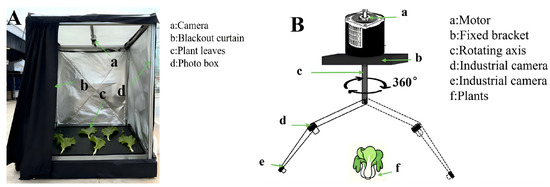
A phenotypic image acquisition device independently developed by the Fujian Academy of Agricultural Sciences (Figure 1A) was used to rapidly and batch-process the acquisition of two-dimensional parameters such as leaf area, leaf color, and leaf shape for non-heading cabbage. The acquisition platform primarily consists of a camera (HT-GE1000C-T-CL, 10 megapixels, HuaTeng Vision Co., Ltd., Shenzhen, China), shading curtains, and a photo box. Additionally, to analyze the three-dimensional structure of non-heading cabbage, a custom-built multi-angle image acquisition platform (Figure 1B) was used to capture images from different angles of the plant. The platform consists of a rotating stage, motors, and two industrial cameras (HT-GE1000C-T-CL, 10 megapixels). The non-heading cabbage plant (live plant) was first placed at the shooting point, with the camera rotating accordingly. Each camera captured 40 images, which were then used for three-dimensional reconstruction of the plant using Multi-View Stereo (MVS) and Structure from Motion (SFM) techniques. Through point cloud computation, phenotypic parameters such as canopy projection area, plant height, and leaf number of the non-heading cabbage were obtained.
Figure 1.
Schematic of the multi-dimensional phenotypic image acquisition platform for non-heading cabbage. (A) represents the two-dimensional photo box; (B) represents the multi-angle three-dimensional image acquisition platform.
2.3.3. Photosynthetic and Fluorescence Parameters
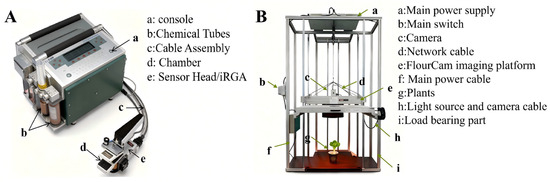
The photosynthetic parameters of non-heading Chinese cabbage were measured using the LI-6400 portable photosynthesis measurement system (LI-COR Biosciences, Lincoln, NE, USA) [20] (Figure 2A), which included net photosynthetic rate (Pn), stomatal conductance (Gs), intercellular CO2 concentration (Ci), and transpiration rate (Tr). Chlorophyll fluorescence parameters were measured using a chlorophyll fluorescence imaging system (FC800-D, Photon Systems Instruments (PSI), Brno, Czech Republic) [21] (Figure 2B). The plants to be measured (whole live plants) were first dark-adapted for 30 min. Then, in the Fluorcam10 system, the saturating pulse value was set to 5250 μmol/(m2·s), and the actinic light2 value was set to 422 μmol/(m2·s). The samples were then placed inside the instrument with the lens 30 cm from the sample, and fluorescence parameters such as maximum quantum efficiency (Fv/Fm), non-photochemical quenching coefficient (NPQ), and actual photochemical efficiency (ΦPSII) were determined.
Figure 2.
Schematic of the comprehensive photosynthetic physiology measurement platform for non-heading cabbage. (A) represents the photosynthesis measurement system; (B) represents the chlorophyll fluorescence imaging system.
2.3.4. Physiological and Biochemical Indicators
The chlorophyll content was extracted using a mixture of acetone and ethanol, and measured using a UV spectrophotometer (T2600, Shanghai Youke Instrument and Meter Co., Ltd., Shanghai, China) [22]. Superoxide dismutase (SOD) activity was determined using the nitroblue tetrazolium (NBT) photoreduction method [23]. Peroxidase (POD) activity was measured using the guaiacol method [24], while catalase (CAT) activity was determined using the sodium thiosulfate titration method [25]. Malondialdehyde (MDA) content was measured using the thiobarbituric acid (TBA) colorimetric method [26]. The 192-h stress time point was chosen as it represents the critical steady-state node where Cd toxicity and photosynthetic inhibition are fully manifested, although secondary stress has not yet escalated. Therefore, the 192-h time point was selected as the representative time for analyzing physiological and biochemical mechanisms.
2.4. Data Processing and Analysis
All experimental data were initially organized and calculated using Microsoft Excel 2021. Statistical analysis and graph plotting were performed using DPS 7.05, IBM SPSS Statistics 22, and Origin 2022 software. Chlorophyll fluorescence imaging parameters were processed using the analysis module provided by Fluorcam 7 software. The specific analytical methods are as shown below.
2.4.1. Descriptive Statistics
For all measured parameters (e.g., Cd content, transport coefficient), the minimum, maximum, mean, standard deviation, and coefficient of variation were calculated to describe the basic characteristics and variation degree of the data.
2.4.2. Analysis of Variance and Multiple Comparisons
Before conducting the analysis of variance, it is essential to first test whether the data meet the assumptions of normality and homogeneity of variance. Normality was assessed using the Shapiro–Wilk test, while homogeneity of variance was tested using Levene’s test.
To test the significant effects of different Cd treatment concentrations, different varieties (GX-61 vs. GX-05), and their interactions on each measured parameter, a two-way analysis of variance (ANOVA) was performed. When comparing multiple groups under a single factor (e.g., different Cd concentrations at the same time point), a one-way analysis of variance was used.
If the ANOVA results reached a significant level (p < 0.05), Duncan’s new multiple range test was used for post hoc multiple comparisons. Means labeled with different lowercase letters in the results indicate significant differences at the p < 0.05 level.
2.4.3. Repeated Measures Analysis of Variance
For parameters measured continuously at multiple time points (24 h, 48 h, 96 h, 192 h), a repeated measures ANOVA was conducted to examine the overall effect of “Cd treatment concentration” (between-subject factor), “stress duration” (within-subject factor), and their interaction on the dynamic changes in the parameters.
2.4.4. Cluster Analysis
Cluster analysis was performed based on the aboveground Cd content data of 79 germplasms at 192 h of stress. A hierarchical clustering method was used to categorize the samples, generating a cluster heatmap. The cluster heatmap is a method of displaying column hierarchical clustering on the basis of a heatmap, with the addition of a dendrogram, which facilitates viewing the clustering pattern of rows and columns [27].
2.4.5. Correlation and Trend Analysis
The correlation between indicators (e.g., the relationship between Ci changes and photosynthetic limitation types) and trends (e.g., the increase in MDA content with increasing stress concentration) were described based on visual analysis and statistical comparison results.
3. Results and Analysis
3.1. Comprehensive Evaluation of Cd Accumulation and Translocation Coefficient in 79 Non-Heading Chinese Cabbage Germplasm
This study systematically evaluated the Cd accumulation and translocation characteristics of 79 non-heading Chinese cabbage germplasms under different Cd stress conditions. As shown in Table 1, the Cd content in the underground parts (roots) of non-heading Chinese cabbage was significantly higher than that in the aerial parts, indicating that the roots are the main Cd accumulation organs. This is because the roots are directly in contact with the Cd solution in the hydroponic tanks and absorb Cd, resulting in relatively higher Cd content in the roots [28]. As the stress duration extended to 192 h, the average Cd content in the aerial parts continued to rise and reached a peak, and the coefficient of variation (CV) at this point was the lowest (24.42–40.72%), suggesting that the 192-h time point is the most appropriate for characterizing the differences in Cd accumulation among the germplasms.
Table 1.
Cd Content in the Aerial and Underground Parts of Non-heading Chinese Cabbage.
The translocation factor (TF), which is the ratio of Cd content in the aerial parts to that in the underground parts, is a key indicator for evaluating the ability of Cd to migrate from the roots to the edible aerial parts. As shown in Table 2, the average TF values under all treatments were much less than 1 (range: 0.0131–0.0825), which clearly indicates that the majority of the absorbed Cd is retained in the roots, with minimal translocation to the aerial parts. Moreover, the TF values showed a significant upward trend as the stress duration increased (e.g., under T1 treatment, the TF increased from 0.0148 at 24 h to 0.0825 at 192 h), suggesting that prolonged stress duration enhances the translocation of Cd from the roots to the aerial parts. Consistent with the changes in Cd content in the aerial parts, the TF variation coefficient was also at a low level at 192 h, further supporting this time point as the ideal stage for germplasm screening.
Table 2.
Cd Accumulation Coefficient of Non-heading Chinese Cabbage Under Different Treatments.
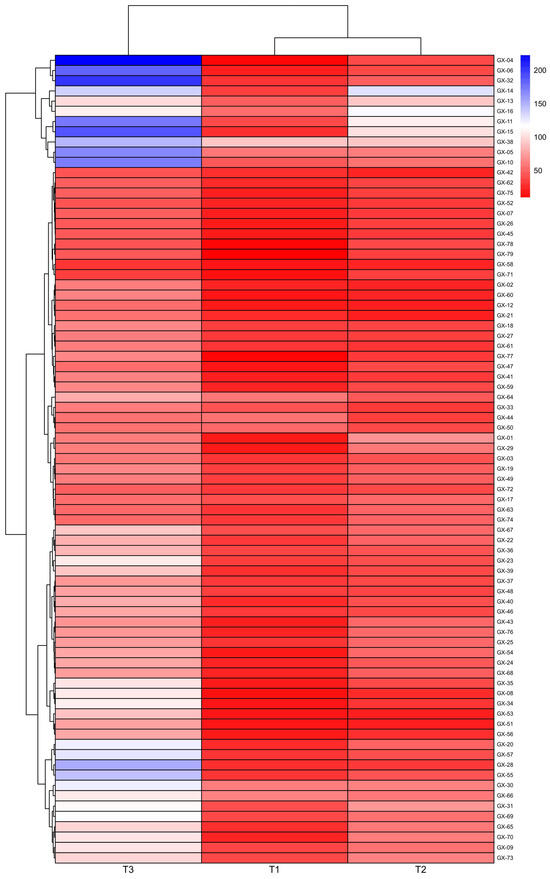
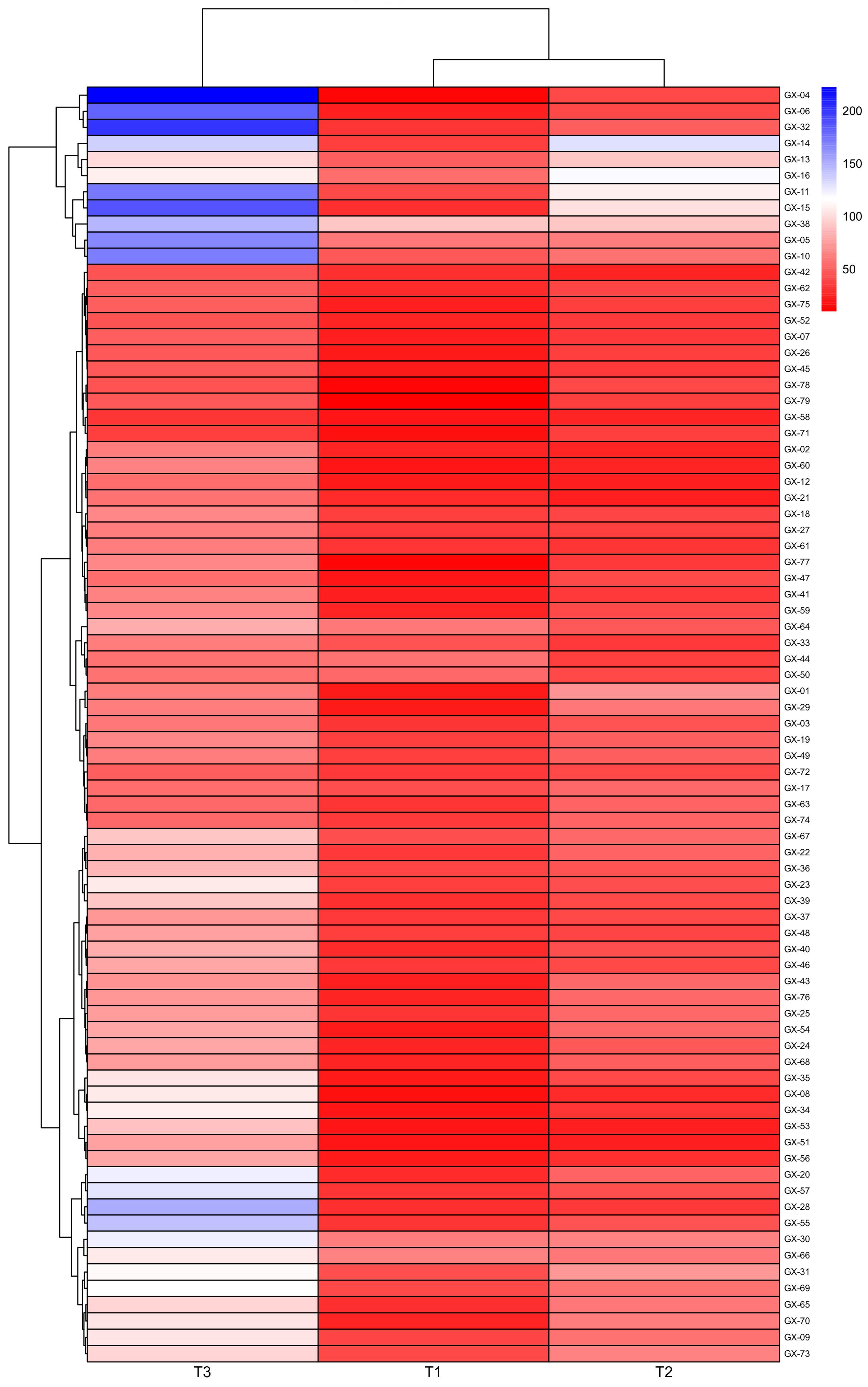
Based on the aboveground Cd content of each variety under 192 h of stress, cluster heatmap analysis (Figure 3) divided the 79 germplasms into three categories: high Cd accumulation type (11 varieties), medium-Cd accumulation type (32 varieties), and low-Cd accumulation type (36 varieties). The range of aboveground Cd content under different Cd stress concentrations (T1: 25 mg/L, T2: 50 mg/L, T3: 100 mg/L) varied among the categories:
Figure 3.
Cluster Heatmap of Cd Content in 79 Non-heading Chinese Cabbage Varieties. Blue indicates higher Cd content in the aerial parts of non-heading Chinese cabbage, while red indicates lower Cd content in the aerial parts. T1, T2, and T3 represent Cd stress concentrations of 25 mg/L, 50 mg/L, and 100 mg/L, respectively.
- High-accumulation-type germplasms had a Cd content range of T1: 50–100 mg/kg, T2: 75–150 mg/kg, T3: 150–200 mg/kg.
- Medium-accumulation-type germplasms had a Cd content range of T1: 25–75 mg/kg, T2: 50–100 mg/kg, T3: 100–150 mg/kg.
- Low-accumulation-type germplasms had a Cd content range of T1: 0–50 mg/kg, T2: 0–75 mg/kg, T3: 0–100 mg/kg.
Low-accumulation-type germplasms, due to their lowest efficiency in transferring Cd to edible parts, hold direct application value in safe production. In contrast, high accumulation type germplasms provide candidate materials for phytoremediation research.
To further analyze the physiological mechanisms, this study follows the strategy of “from population screening to extreme phenotype comparison.” Based on the three categories identified in the cluster results, the most representative extreme materials were selected: GX-61, with the lowest aboveground Cd content from the low accumulation type, and GX-05, with the highest aboveground Cd content from the high accumulation type. This comparison of extreme phenotypes, selected based on objective clustering, maximizes phenotypic differences and is beneficial for clearly elucidating the core physiological response differences related to Cd accumulation and tolerance. The subsequent analysis will focus on an in-depth comparison between GX-61 and GX-05.
3.2. The Effect of Cd Stress on Phenotypic Parameters
Plant phenotype is the expression of the plant under the combined influence of genetics and the environment, reflecting physical, physiological, and biochemical characteristics and traits during plant growth and development [29]. Cd enters the plant roots through the cell wall and cortex cells, and is absorbed and transported to the aerial parts via the apoplast and symplast, affecting leaf development [30,31]. As shown in Table 3, under the CK concentration, both GX-61 and GX-05 non-heading Chinese cabbage varieties showed a gradual increase in total leaf area over time. Under Cd stress at the T3 concentration, after 192 h, the leaf area of both non-heading Chinese cabbage varieties significantly decreased compared to the CK group. Specifically, the leaf area of GX-61 and GX-05 non-heading Chinese cabbage decreased by 65.61% and 45.54%, respectively. At this time, the leaf area of GX-05 was significantly larger than that of the typical low accumulation germplasm GX-61.
Table 3.
Effect of Cd Stress on the Leaf Area of Non-heading Chinese Cabbage.
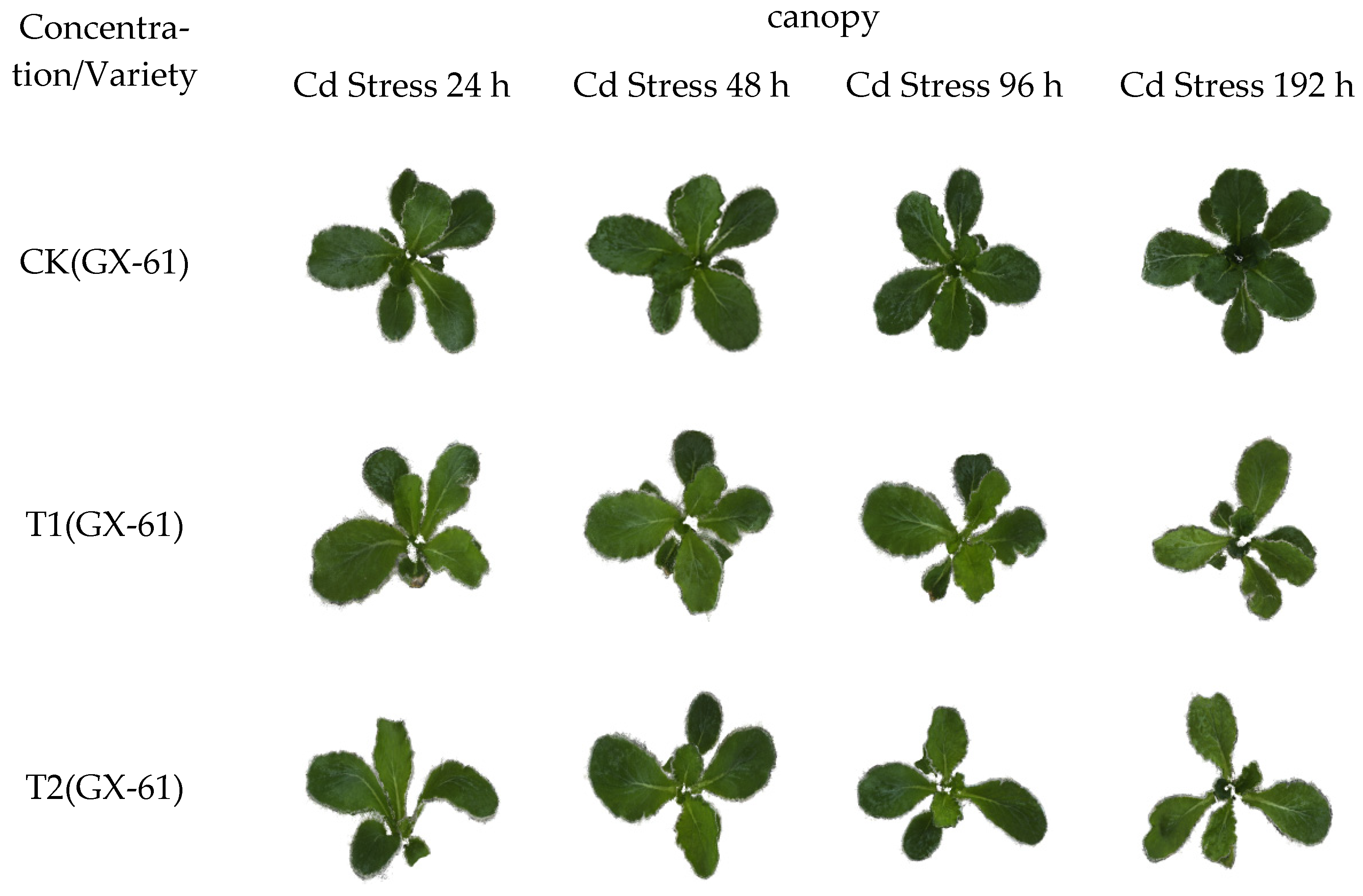
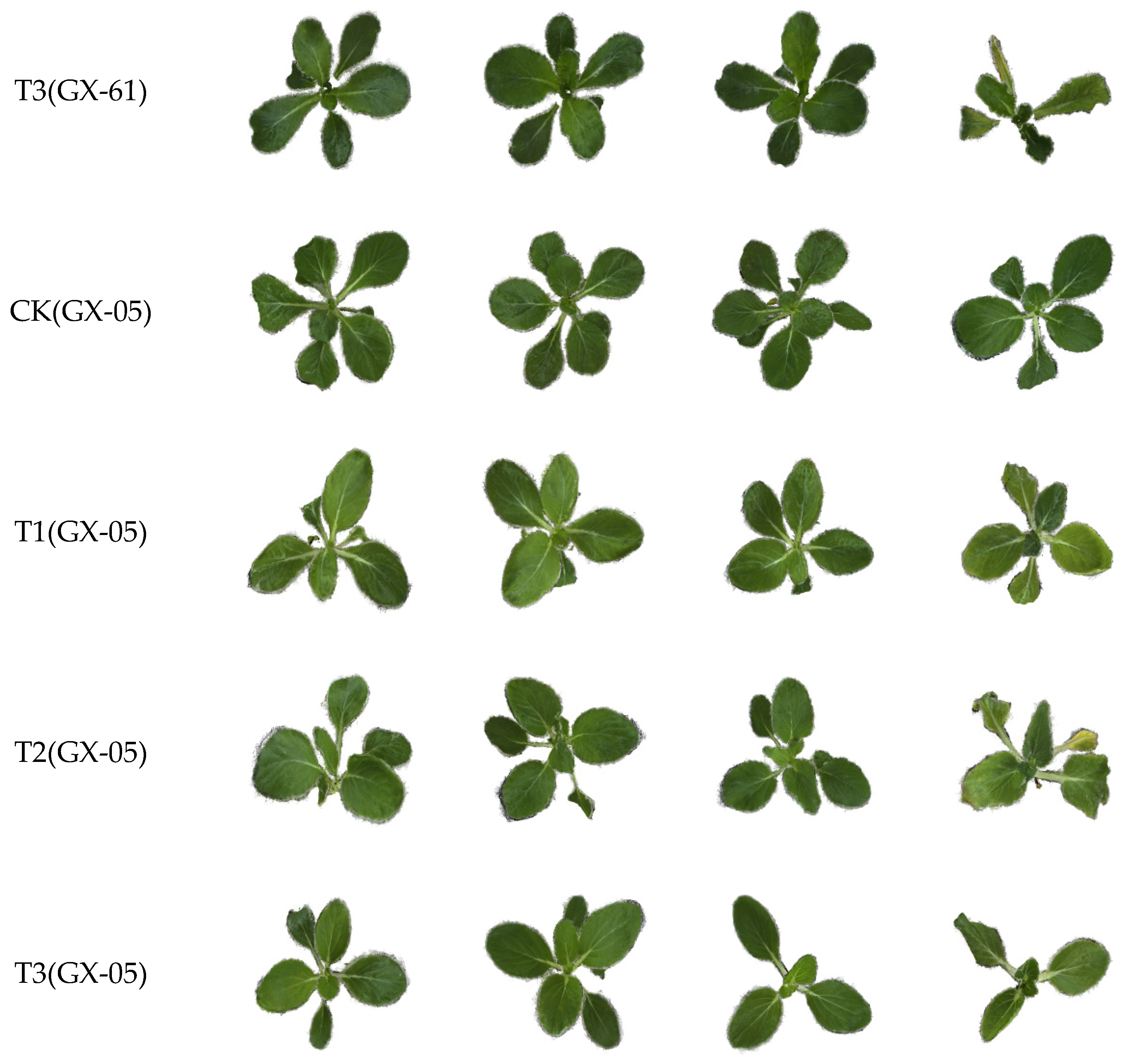
According to the data in Table 4, the canopy area of non-heading cabbage varieties GX-61 and GX-05 exhibited different response patterns under Cd stress. For GX-61, as the Cd concentration increased, the canopy area gradually decreased. At the T1 concentration, the canopy area of GX-61 was significantly lower than the control group (CK) at all time points, with reductions of 36.2%, 26.7%, 44.5%, and 36.8% at 24 h, 48 h, 96 h, and 192 h, respectively, indicating a strong sensitivity to low concentration Cd stress. At the T2 concentration, the reduction in canopy area was smaller but still significant, especially at 96 h and 192 h, where the canopy area decreased by 19.9% and 14.1%, respectively, suggesting that the impact of Cd stress on growth increased with concentration. At the T3 concentration, GX-61 showed a smaller decrease in canopy area at 24 h and 48 h, but at 96 h and 192 h, the canopy area decreased significantly, with reductions of 29.9% and 32.7%, respectively. This indicates that high-concentration Cd stress had a more significant impact on this variety, and the stress effect gradually intensified over time.
Table 4.
Effect of Cd Stress on the Canopy Area of Non-heading Chinese Cabbage.
In contrast, GX-05 exhibited a different trend in canopy area changes. At the T1 concentration, the canopy area of GX-05 increased slightly at 24 h and 48 h, suggesting that this variety may have some adaptability to low Cd concentrations. However, as the stress duration increased, especially at 96 h and 192 h, the canopy area gradually decreased, with a 17.5% reduction at 192 h. At the T2 concentration, GX-05 showed a more stable response, with small changes in canopy area, particularly at 96 h, where it only decreased by 4.5%, indicating a certain level of adaptability to medium Cd concentrations. At the T3 concentration, GX-05 experienced a smaller decrease in canopy area at the early time points (24 h and 48 h), but at 192 h, the canopy area decreased most significantly, with a 51.1% reduction, indicating that high-concentration Cd stress severely impacted its growth.
In summary, GX-61 and GX-05 exhibited significant differences in their responses to Cd stress. GX-61 showed a gradual decline in canopy area under high Cd concentrations, while GX-05 demonstrated some adaptability at lower concentrations, but its adaptability clearly weakened under prolonged high Cd stress.
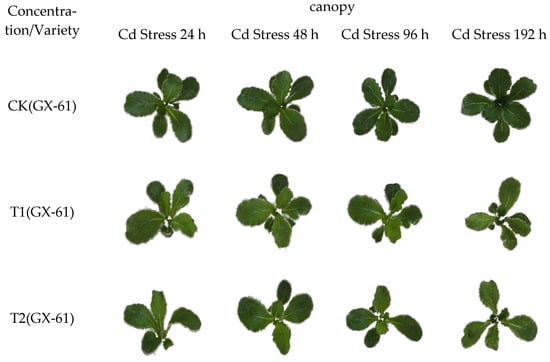
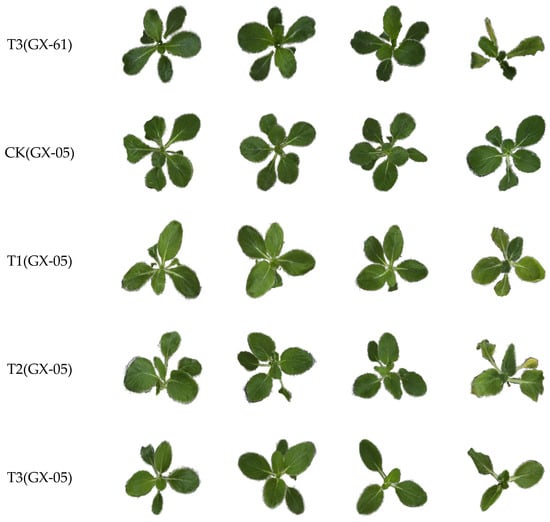
As shown in Figure 4, with the increase in Cd stress concentration and duration, the growth of non-heading cabbage was inhibited. The leaves showed signs of chlorosis and yellowing, and the canopy area decreased, while the leaves of the CK group remained green, thick, and glossy. As the stress concentration and duration increased, the plants exhibited a typical “low concentration promotion, high concentration inhibition” (low-promotion, high-inhibition) phenomenon.
Figure 4.
Effect of Cd Stress on the Canopy Area of Non-heading Chinese Cabbage.
3.3. The Effect of Cd Stress on the Photosynthetic Characteristics
The Effect of Cd Stress on Photosynthetic Pigment Content
Chlorophyll content is a key indicator of plant photosynthetic capacity and the extent of stress under adverse conditions. As shown in Table 5, under normal growth conditions, both varieties exhibited an inherent rhythm of increasing and then decreasing chlorophyll content. However, cadmium stress significantly disrupted and reshaped this pattern: under low concentration (T1) stress, the low accumulation variety GX-61 initially (24 h) showed a significant stimulatory effect, with its chlorophyll content even surpassing that of the control at the same time point. However, over time, this shifted to sustained inhibition. Under high concentration (T3) stress, both varieties showed a significant and monotonic decrease in chlorophyll content with increasing stress duration. Notably, by the end of high stress (192 h), the chlorophyll a content in the high accumulation variety GX-05 dropped to the lowest level among all treatments, indicating that its photosynthetic pigment system might be more sensitive to cadmium stress. This is consistent with its physiological trait of transferring more cadmium to the aboveground parts, suggesting that high accumulation characteristics may be associated with a more vulnerable photosynthetic apparatus.
Table 5.
The Effect of Cd Stress on the Chlorophyll a Content of Non-heading Chinese Cabbage.
The changes in chlorophyll b followed a pattern similar to that of chlorophyll a. As shown in Table 6, under no stress conditions, the two varieties exhibited different accumulation dynamics: GX-61 continued to accumulate chlorophyll b until 192 h, while GX-05 reached a peak at 96 h before decreasing, reflecting inherent physiological differences between the varieties. Cadmium stress significantly reshaped this pattern: under T3 stress, the chlorophyll b content in both varieties showed a significant and monotonic decrease with increasing stress duration, reaching the lowest levels at 192 h (e.g., GX-05 decreased from 0.251 to 0.115). Notably, similar to chlorophyll a, under T1 stress, the low accumulation variety GX-61 exhibited significantly higher chlorophyll b content (0.335) at 24 h compared to its own control (0.233), further supporting the observation that low concentration cadmium may produce an early stimulatory effect.
Table 6.
The Effect of Cd Stress on the Chlorophyll b Content of Non-heading Chinese Cabbage.
By comparing the numerical trends between different treatment groups, it can be seen that, at most corresponding stress time points, the chlorophyll b content of the high accumulation variety GX-05 tended to be lower than that of GX-61, especially in the later stages of stress (e.g., T3-192 h, GX-05: 0.115, GX-61: 0.140). This aligns with the pattern observed in chlorophyll a and collectively suggests that its photosynthetic pigment system may exhibit higher sensitivity to cadmium stress.
The mechanism of chlorophyll degradation caused by Cd stress may involve multiple pathways. On one hand, Cd may interfere with iron (Fe) metabolism, inhibiting the activity of key enzymes (e.g., Fe3+ reductase), leading to a deficiency of bioavailable iron (Fe2+) in the plant and thus hindering chlorophyll synthesis [32]. On the other hand, the burst of reactive oxygen species (ROS) induced by Cd stress may lead to the excessive accumulation of superoxide anions and hydrogen peroxide in chloroplasts, which then directly attack and degrade chlorophyll molecules [33]. The increase in membrane lipid peroxidation products (MDA) observed in this study provides evidence for ROS accumulation, supporting the possibility of the latter mechanism.
3.4. The Effect of Cd Stress on Chlorophyll Fluorescence Parameters
Chlorophyll fluorescence parameters are sensitive indicators of the functional state of the photosynthetic system [34]. This study focused on analyzing the response of maximum quantum efficiency (Fv/Fm), steady-state non-photochemical quenching (NPQ), and actual photochemical efficiency (ΦPSII) to Cd stress.
3.4.1. Damage to the Potential Activity of Photosystem II (PSII)
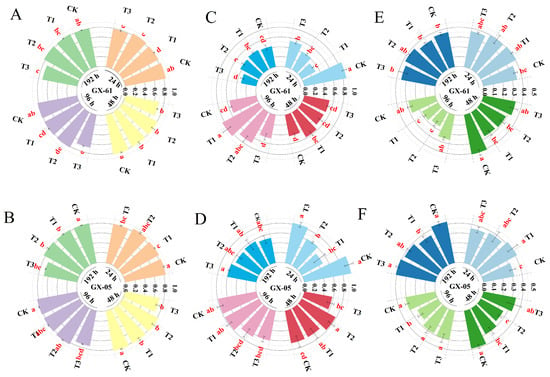
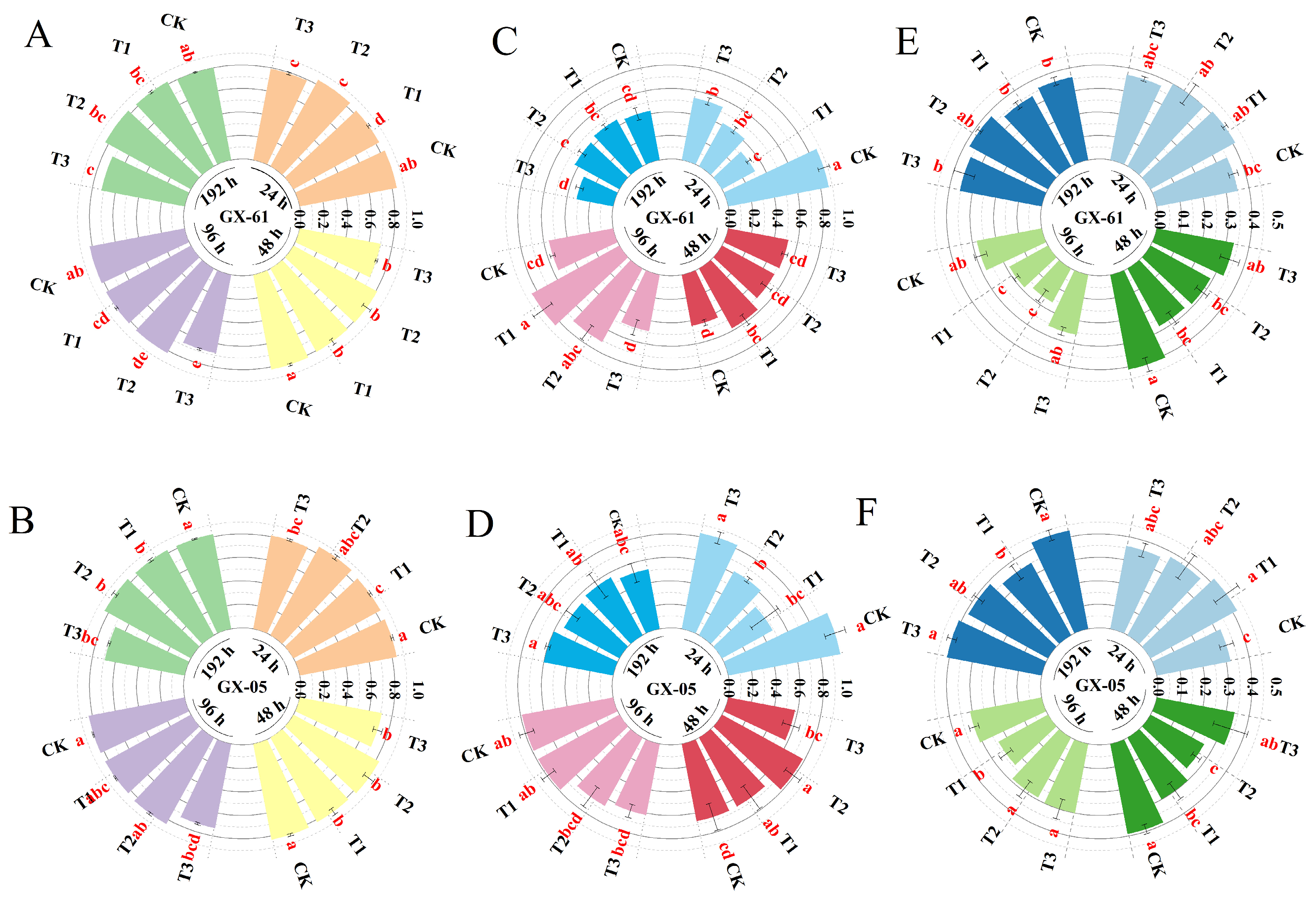
Fv/Fm represents the maximum light energy conversion efficiency of the PSII reaction center, which remains stable under non-stress conditions. Under stress, this parameter tends to decrease [35]. As shown in Figure 5A, taking the T2 concentration as an example, the Fv/Fm of GX-61 was significantly lower than that of the CK group starting from 24 h of stress, and it continued to decline with prolonged stress duration. By 192 h, it had decreased to 0.68, indicating severe light inhibition of its PSII. Throughout the stress period, the Fv/Fm value of GX-05 was significantly higher than that of GX-61 in most cases (Figure 5B), indicating that the core of PSII in GX-61 is more sensitive to Cd stress.
Figure 5.
The effect of Cd stress on the chlorophyll fluorescence parameters of non-heading cabbage. (A,B) show the impact of Cd stress on the maximum quantum efficiency of PSII (Fv/Fm) in non-heading cabbage. (C,D) show the effect of Cd stress on the steady-state non-photochemical quenching coefficient (NPQ) in non-heading cabbage. (E,F) show the effect of Cd stress on the actual quantum efficiency of photosystem II and the photochemical quenching coefficient (ΦPSII) in non-heading cabbage. Different lowercase letters in the figure indicate significant differences between treatments at the same sampling time (p < 0.05).
3.4.2. Activation and Collapse of Photoprotective Mechanisms
Steady-state non-photochemical quenching (NPQ) is an indicator of how plants dissipate excess light energy in the form of heat to protect the photosynthetic apparatus [36]. As shown in Figure 5C,D, during the later stages of stress (48–192 h), NPQ in both varieties showed a trend of initial activation followed by inhibition as Cd concentration increased. For GX-61, the NPQ peaked at the T1 concentration (Figure 5C), while for GX-05, the NPQ peak occurred at either the T1 or T2 concentration depending on the stress duration (Figure 5D). Notably, under the same stress conditions, the NPQ values of GX-05 were generally higher than those of GX-61. This suggests that in response to Cd stress, GX-05 may have activated a more efficient heat dissipation mechanism as a protective strategy. However, under the highest concentration (T3), NPQ in both varieties declined, indicating that extreme stress had led to the collapse of their photoprotective capacity, and the PSII reaction centers were at risk of irreversible damage.
3.4.3. Inhibition of Actual Photosynthetic Efficiency
ΦPSII reflects the linear electron transport efficiency of PSII under actual light conditions [37]. As shown in Figure 5E,F, both varieties showed significant suppression of ΦPSII with increasing Cd stress concentrations. Although there were occasional fluctuations at low concentrations, the overall trend, particularly at 96 h and 192 h, was a decrease in ΦPSII as the concentration increased. Under higher concentrations, such as T2, the decrease in ΦPSII for GX-61 (41.67% and 29.27% lower than the CK group) was greater than for GX-05 (22.58% and 33.33% lower than the CK group). Overall, under the same Cd stress concentration, the ΦPSII value for GX-61 was consistently lower than for GX-05, further confirming that its photosynthetic apparatus was more severely damaged at the operational level [38].
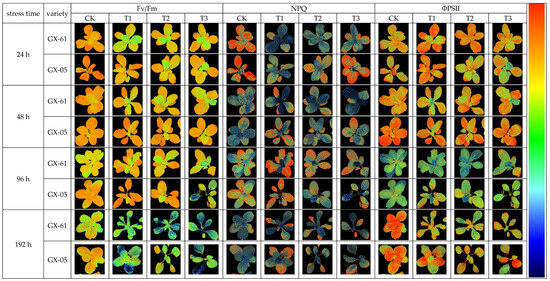
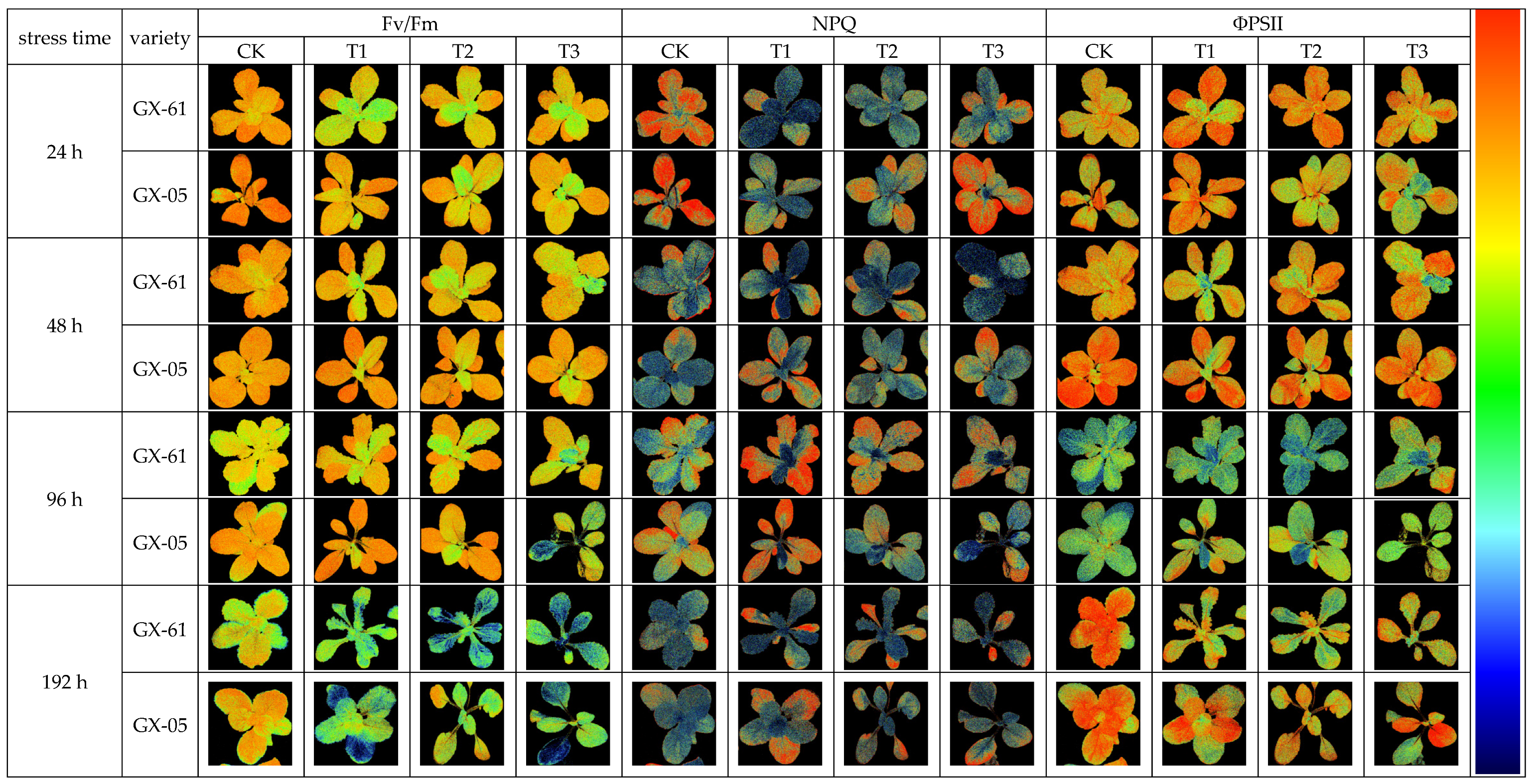
3.4.4. Chlorophyll Fluorescence Imaging Reveals the Spatial Patterns of Photosynthetic Damage and Protection
The trends in the above fluorescence parameters are visually confirmed through chlorophyll fluorescence imaging (Figure 6). For Fv/Fm, its decrease begins at the central region of the leaf canopy (T1 concentration), and as the stress concentration increases, the low-value areas gradually extend towards the periphery. At the T3 concentration, Fv/Fm is significantly reduced across the entire leaf. The NPQ imaging clearly demonstrates the spatial dynamics of the photoprotective mechanism: at T1 and T2 concentrations, GX-05 leaves show stronger and more widespread NPQ signals (indicating more intense heat dissipation) compared to GX-61, especially around the leaf veins and illuminated areas. However, at T3 concentration, NPQ signals in both varieties’ leaves are generally weakened, confirming the collapse of photoprotection under extreme stress. Additionally, the decrease in ΦPSII follows a similar trend to Fv/Fm, with its suppression also starting from the canopy center and spreading outward. This further illustrates the progressive process of Cd stress damage from the perspective of the actual photosynthetic efficiency. In summary, fluorescence imaging not only provides visual evidence for the quantitative results but also reveals that, compared to GX-61, GX-05 can activate a more effective heat dissipation mechanism during the mid-stress period, which may be key to maintaining higher photosynthetic performance.
Figure 6.
Chlorophyll Fluorescence Images of Non-heading Chinese Cabbage Under Cd Stress. In the fluorescence images, red represents the maximum value of fluorescence parameters, while blue represents the minimum value. The range of Fv/Fm is 0.6–0.9; NPQ ranges from 0.2 to 1.0; ΦPSII ranges from 0 to 0.5.
3.5. The Effect of Cd Stress on Gas Exchange Parameters
Gas exchange parameters directly reflect the overall performance of leaf photosynthesis and its limiting steps [39]. This study systematically assessed the impact of Cd stress on the photosynthetic carbon assimilation of non-heading Chinese cabbage by analyzing net photosynthetic rate (Pn), stomatal conductance (Gs), intercellular CO2 concentration (Ci), and transpiration rate (Tr) [40].
3.5.1. Inhibition of Net Photosynthetic Rate and Its Varietal Differences
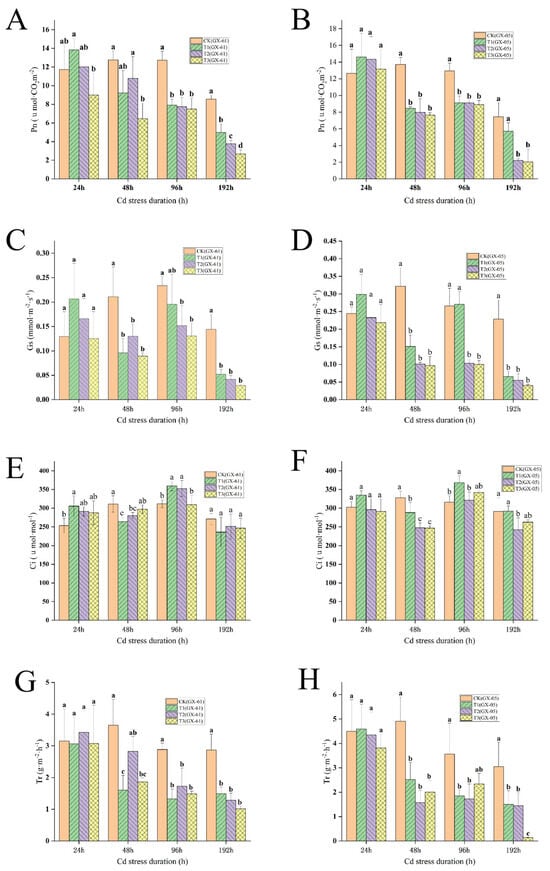
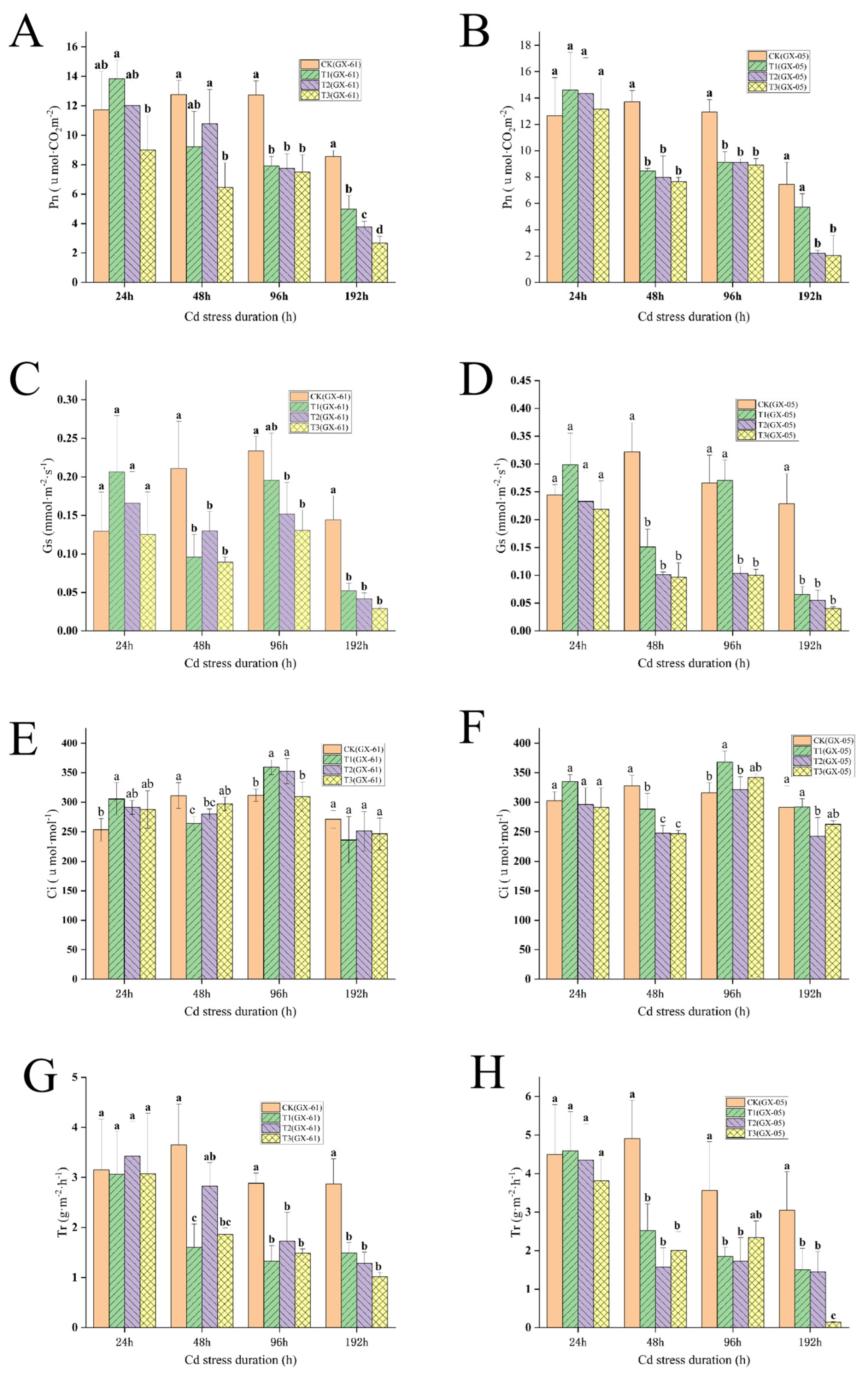
Net photosynthetic rate (Pn) is a comprehensive indicator of the strength of photosynthesis [41]. As shown in Figure 7A,B, during the early stage of stress (24 h), low concentrations of Cd (T1) had minimal effect on Pn in both varieties, even showing a slight promotive effect. However, as the stress concentration increased and the duration extended, Pn was significantly inhibited. Under the highest concentration (T3), the Pn of both varieties decreased to the lowest values at each time point. Specifically, the Pn values of GX-61 and GX-05 at 192 h of stress decreased by 68.79% and 72.42%, respectively, compared to the CK group. Overall, under the same Cd stress conditions, the Pn values of GX-61 were consistently lower than those of GX-05, indicating that its photosynthetic carbon assimilation process was more severely disrupted.
Figure 7.
The effect of Cd stress on the gas exchange parameters of non-heading cabbage. (A,B) show the impact of Cd stress on the net photosynthetic rate (Pn) in non-heading cabbage. (C,D) show the effect of Cd stress on stomatal conductance (Gs) in non-heading cabbage. (E,F) show the effect of Cd stress on intercellular CO2 concentration (Ci) in non-heading cabbage. (G,H) show the impact of Cd stress on transpiration rate (Tr) in non-heading cabbage. Different lowercase letters on the bars indicate significant differences in the response of non-heading cabbage to different Cd stress concentrations at the same stress duration (p < 0.05).
3.5.2. Photosynthetic Limiting Factors: Transition from Stomatal Limitation to Non-Stomatal Limitation
The decline in Pn may be caused by either stomatal limitation (reduced Gs leading to insufficient CO2 supply) or non-stomatal limitation (damage to the photosynthetic apparatus in mesophyll cells, reducing CO2 utilization capacity), and the intercellular CO2 concentration (Ci) is a key indicator to distinguish between the two [42].
Stomatal Limitation Dominates: During the early and mid-stages of high concentration (T3) stress (e.g., 24–48 h), both varieties exhibited a coordinated decrease in Pn, Gs, and Tr, while Ci also significantly decreased (Figure 7A–H). This suggests that the primary cause of the decline in Pn at this stage is insufficient CO2 supply due to stomatal closure [43].
Non-Stomatal Limitation Dominates: During long-term stress (96–192 h) and at medium to low concentrations (T1, T2), although Pn, Gs, and Tr also decreased, Ci values remained unchanged or significantly increased (Figure 7E,F). This typical increase in Ci clearly indicates that the inhibition of photosynthesis at this stage is mainly due to non-stomatal limitations [44]. The decline in PSII photochemical efficiency (such as reductions in Fv/Fm and ΦPSII) and the decrease in chlorophyll content (Section 2.4.1) together lead to the exhaustion of the mesophyll cells’ photosynthetic capacity, making it impossible to effectively utilize the intercellular CO2.
3.6. The Effect of Cd Stress on Physiological and Biochemical Indicators
To investigate the oxidative stress and cellular damage induced by Cd stress, this study measured the activity of antioxidant enzymes and membrane lipid peroxidation levels in the typical germplasms GX-61 and GX-05 after 192 h of stress.
3.6.1. Superoxide Dismutase (SOD) Activity Response
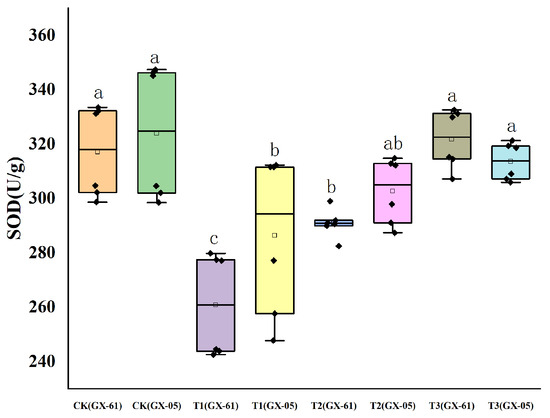
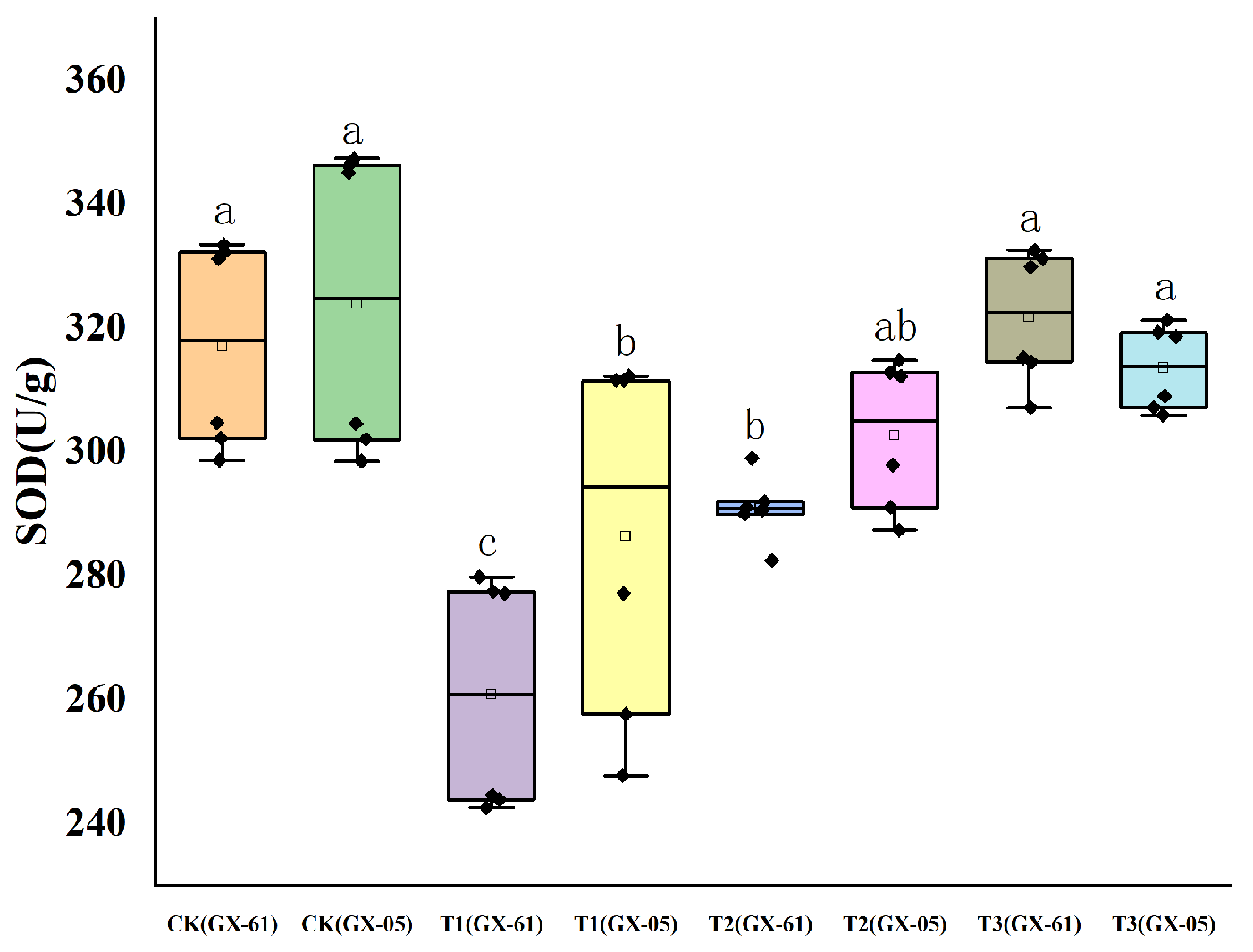
As shown in Figure 8, the SOD activity of both varieties exhibited different patterns of change with increasing Cd stress concentration. The SOD activity of GX-61 significantly decreased at T1 and T2 concentrations compared to the CK group (p < 0.05), with reductions of 17.74% and 8.30%, respectively. At the T3 concentration, no significant difference in SOD activity was observed between GX-61 and the CK group (p > 0.05). For GX-05, the SOD activity was only significantly lower than the CK group at T1 concentration (a decrease of 11.63%), while at T2 and T3 concentrations, no significant difference was observed compared to the CK group.
Figure 8.
The Effect of Cd Stress on SOD Activity in Non-heading Chinese Cabbage. Different lowercase letters above the treatments indicate significant differences in the responses of non-heading Chinese cabbage to different Cd stress concentrations (p < 0.05), whereas the same letters indicate no significant difference.
Under low to medium Cd concentrations, SOD activity was inhibited, which may be related to Cd directly acting on the enzyme protein or interfering with the metabolism of its metal cofactors (e.g., Cu/Zn) [45]. However, under high concentration stress, the burst of reactive oxygen species (ROS) likely triggered a compensatory response from the antioxidant system, leading to a recovery of SOD activity [46].
3.6.2. Response of Peroxidase (POD) and Catalase (CAT) Activity
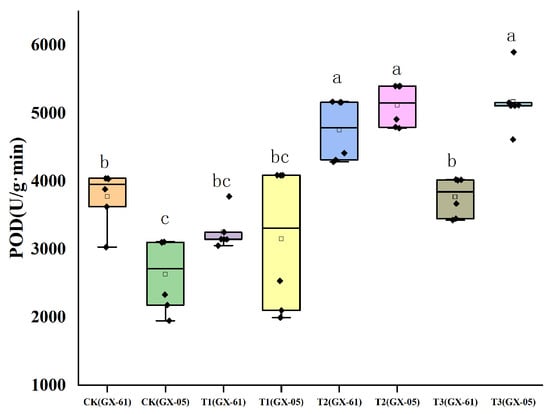
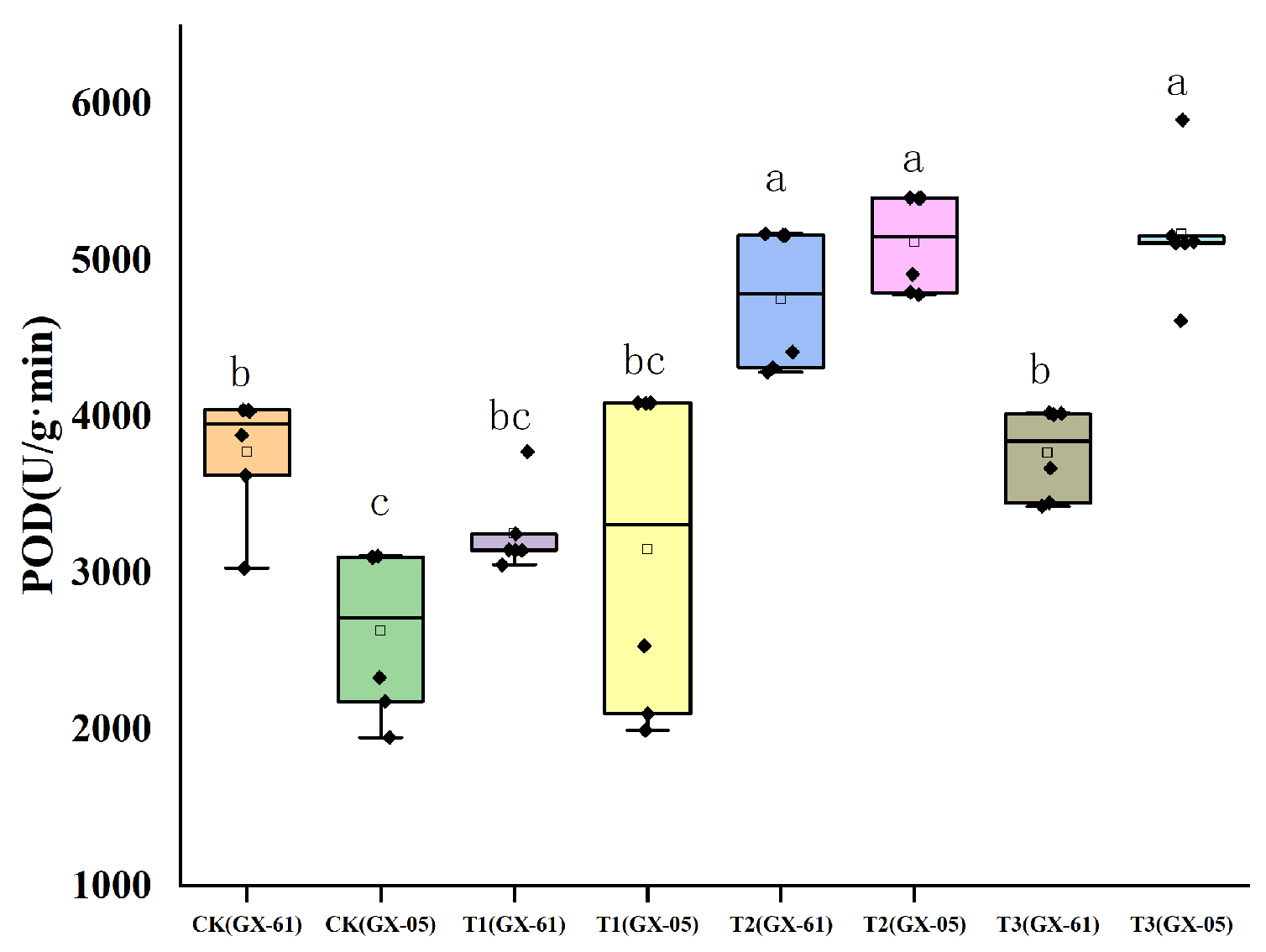
Peroxidase (POD) is one of the key enzymes involved in scavenging hydrogen peroxide (H2O2) in plants [47]. The results of this study show significant differences in the response patterns of POD activity to Cd stress between GX-61 and GX-05 after 192 h of Cd exposure (Figure 9). The POD activity in GX-61 showed an initial increase followed by a decrease as Cd concentration increased. It was significantly induced at the T2 concentration, where it increased by 25.80% compared to the CK group. In contrast, GX-05 showed a strong dose-dependent induction effect, with POD activity continuing to increase as Cd concentration increased, with significant increases of 94.50% and 96.56% at T2 and T3 concentrations, respectively.
Figure 9.
The Effect of Cd Stress on POD Activity in Non-heading Chinese Cabbage. Different lowercase letters above the treatments indicate significant differences in the responses of non-heading Chinese cabbage to different Cd stress concentrations (p < 0.05), whereas the same letters indicate no significant difference.
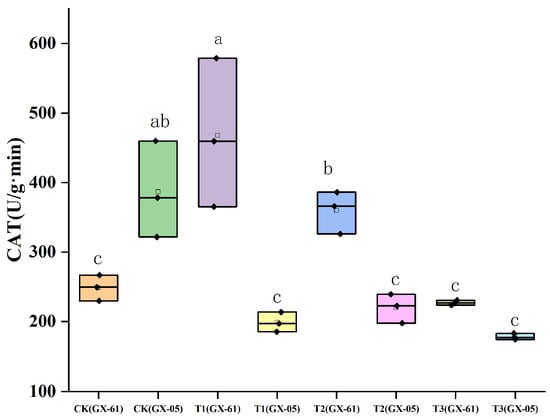
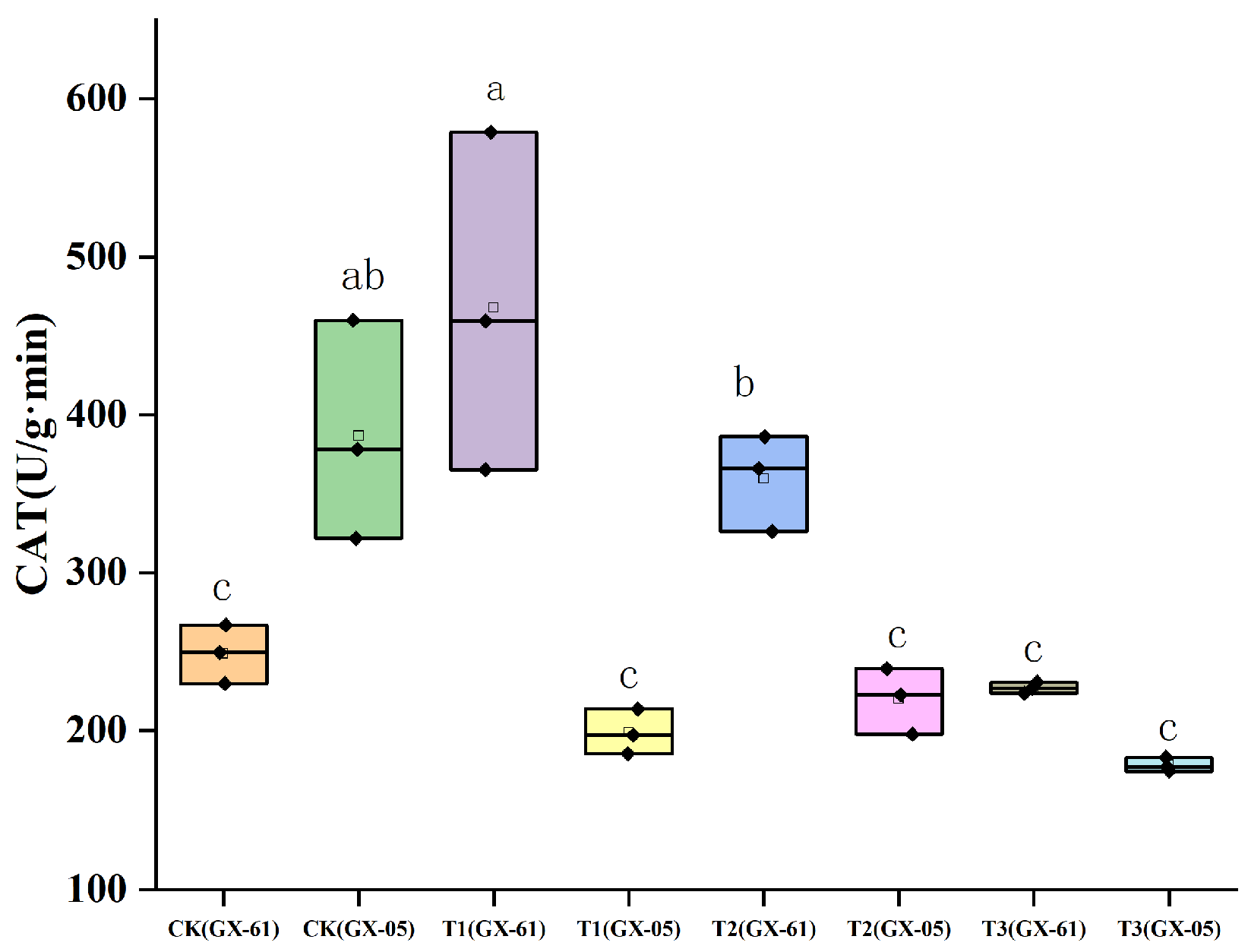
Catalase (CAT) is a key enzyme that directly catalyzes the decomposition of H2O2 [48]. As shown in Figure 10, the response of CAT activity to Cd stress was markedly different between the two varieties. The CAT activity in GX-61 was significantly activated at T1 and T2 concentrations, with increases of 88.06% and 44.52%, respectively, compared to the CK group. In sharp contrast, the CAT activity in GX-05 was significantly suppressed at all Cd stress concentrations, with reductions ranging from 43.10% to 53.90%. These results indicate that GX-61 and GX-05 employ different strategies in their antioxidant pathways for scavenging H2O2. In GX-61, the activities of POD and CAT showed a synergistic enhancement at specific stress concentrations (T2), which may represent a relatively balanced mechanism for H2O2 scavenging. For GX-05, the direct toxic effects of Cd may be one of the reasons for the continuous decrease in CAT activity, or the gene expression involved in CAT may be downregulated at the transcriptional level [49]. To compensate for the loss of CAT function, GX-05 may have activated an alternative scavenging pathway, with POD as the main enzyme, leading to an excessive induction of POD activity to maintain cellular redox homeostasis.
Figure 10.
The Effect of Cd Stress on CAT Activity in Non-heading Chinese Cabbage. Different lowercase letters above the treatments indicate significant differences in the responses of non-heading Chinese cabbage to different Cd stress concentrations (p < 0.05), whereas the same letters indicate no significant difference.
3.6.3. Membrane Lipid Peroxidation Level
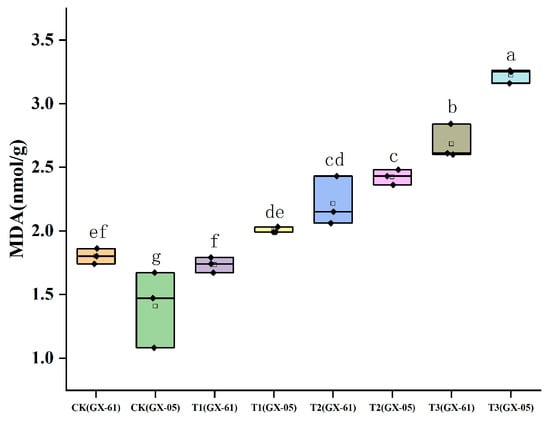
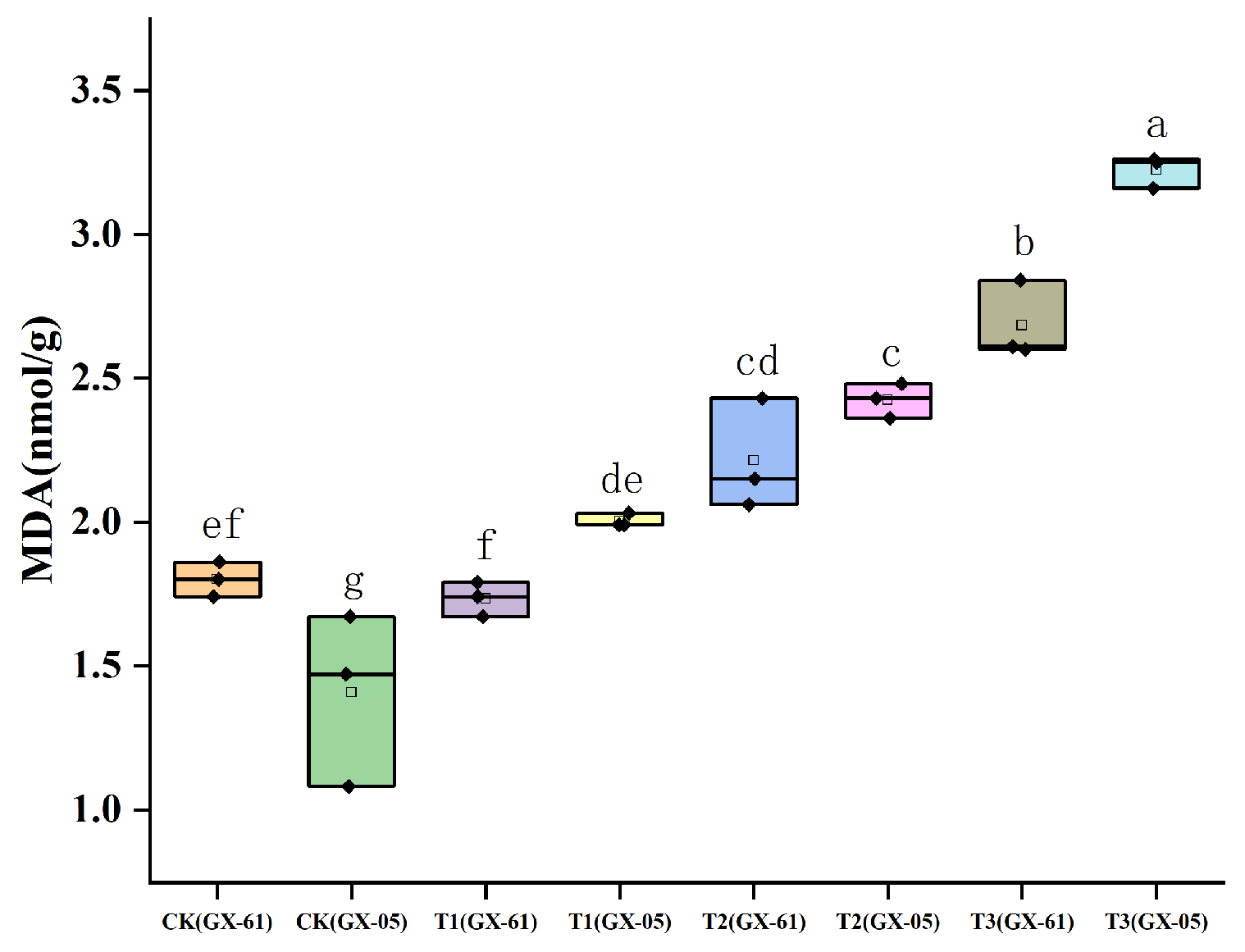
The degree of membrane lipid peroxidation was assessed by measuring the malondialdehyde (MDA) content [50]. As shown in Figure 11, the MDA content in both varieties gradually increased with increasing Cd stress concentration. The MDA accumulation in GX-05 was significantly higher than in GX-61 at all stress levels. At the T3 concentration, the MDA content in GX-05 increased by 128.77% compared to the CK group, which was approximately 2.6 times higher than GX-61 (which increased by 49.29%). The significant increase in MDA content is direct evidence of oxidative stress induced by Cd stress. The more severe membrane lipid peroxidation in GX-05 is strongly correlated with its imbalanced antioxidant enzyme system (with CAT being inhibited and SOD not significantly induced), suggesting that active oxygen species such as H2O2 in its cells may not have been effectively scavenged, leading to more intense attacks on the membrane system [51].
Figure 11.
The Effect of Cd Stress on MDA Activity in Non-heading Chinese Cabbage. Different lowercase letters above the treatments indicate significant differences in the responses of non-heading Chinese cabbage to different Cd stress concentrations (p < 0.05), whereas the same letters indicate no significant difference.
4. Discussion
With the rapid development of global industrialization and urbanization, heavy metal pollution has become increasingly severe. Cadmium (Cd), due to its high toxicity, environmental persistence, and high mobility in the natural environment, has been classified as a human carcinogen by the United Nations Environment Programme (UNEP). Excessive accumulation of Cd in plants can significantly inhibit root and overall plant growth [52], damage the structure and function of cell membranes [53], and suppress photosynthesis and respiration [54]. Additionally, Cd stress can lead to chloroplast swelling and deformation [55], reduce the activity of various enzymes, and induce oxidative stress. These physiological and metabolic disruptions ultimately result in abnormal plant growth and development, and even death. Several studies have further shown that Cd stress on plant root and stem elongation leads to a series of phenotypic changes, including dwarfism, slowed growth rate, leaf curling and deformation, yellowing, and a significant decrease in biomass [56].
As an important leafy vegetable crop, the Cd accumulation characteristics and response mechanisms of non-heading Chinese cabbage germplasms need to be systematically studied. This study hypothesizes that significant differences exist in the Cd accumulation and tolerance mechanisms among different varieties, and that the response strategies of different accumulator varieties are distinct. Through a systematic evaluation of 79 germplasm resources, the study revealed extensive genetic diversity in the Cd accumulation capacity of the non-heading cabbage population. Additionally, the typical germplasm GX-61 and GX-05 demonstrated drastically different physiological response strategies, providing new insights into understanding their Cd tolerance and accumulation mechanisms.
From the phenotypes of GX-61 and GX-05, a typical “low-promotion, high-inhibition” phenomenon can be observed. This may be due to low concentration Cd acting as a mild stressor, triggering the plant’s protective response mechanisms. However, when Cd concentration is too high, its toxic effects dominate, potentially disrupting nutrient absorption, inducing oxidative stress (supported by subsequent physiological indicators), and damaging the photosynthetic system, among other pathways. Ultimately, this leads to poor plant growth and a significant reduction in phenotypic parameters [57,58].
GX-61, which accumulates relatively low Cd in the aerial parts, exhibited higher sensitivity to Cd stress. Its leaf area and canopy growth were more significantly inhibited, and its photosynthetic system was severely damaged, as evidenced by a greater reduction in maximum quantum efficiency and actual photochemical efficiency. The “low accumulation” trait of GX-61 may not be due to active detoxification or exclusion mechanisms but rather because its overall physiological metabolism is more sensitive to Cd toxicity. This leads to more severe growth suppression, indirectly limiting further Cd uptake and translocation [59]. This finding provides important reference information for breeding and applying low-accumulation varieties: the stability of agronomic traits under polluted environments must also be considered.
In contrast, the high-accumulation germplasm GX-05, despite accumulating more Cd in the aerial parts, showed stronger physiological homeostasis. This tolerance is likely closely related to its more efficient photoprotective and antioxidant mechanisms. The data indicate that GX-05 effectively dissipates excess light energy by maintaining a higher non-photochemical quenching (NPQ) coefficient, protecting its photosynthetic apparatus. More importantly, its peroxidase (POD) activity was excessively induced, while catalase (CAT) activity was continuously suppressed. This response strongly suggests that GX-05 may have activated an alternative scavenging pathway, led by POD, to compensate for the loss of CAT function, thus effectively managing oxidative stress while maintaining a relatively stable physiological state.
Further analysis of gas exchange parameters clearly shows the dynamic transition of photosynthetic inhibition mechanisms as stress progresses. Initially, the decline in net photosynthetic rate (Pn) was mainly related to insufficient CO2 supply due to stomatal closure. As the stress duration increased, the exhaustion of mesophyll cell photosynthetic capacity became the dominant factor, reflected in the accumulation of intercellular CO2 and the decline in PSII efficiency. GX-61 entered this latter phase earlier and more profoundly.
Although this study confirmed that different varieties exhibit distinct physiological response mechanisms to Cd stress. However, there are still some limitations in the research that warrant further exploration in future studies. First, this study only selected 24, 48, 96, and 192 h as time points, which may not fully capture the long-term dynamic changes in plant growth under Cd stress. Future research could consider incorporating additional time points to more comprehensively understand the effects of Cd stress on different stages of plant growth. Second, although we revealed the differences between the two typical germplasms through phenotypic analysis, their molecular mechanisms still need further investigation. High-throughput techniques such as genomics, transcriptomics, and proteomics can be used to gain deeper insights into the molecular mechanisms of these two varieties in response to Cd stress, particularly the key genes and regulatory networks related to Cd accumulation and tolerance. Lastly, this study only conducted Cd stress experiments under greenhouse conditions, and future research should validate the ecological adaptability of the results in field environments and assess the performance of different varieties under natural conditions. Additionally, given the potential of non-heading cabbage in ecological remediation and safe production, future studies could explore its remediation effectiveness and application prospects under different pollution conditions.
In summary, this study provides important insights into the physiological mechanisms of non-heading cabbage in response to Cd stress and offers a theoretical basis for selecting resistant varieties in Cd-polluted environments in the future. Future research will continue to explore the molecular basis of differences in Cd accumulation and tolerance and examine their practical application potential to promote the ecological remediation and sustainable agricultural development of non-heading cabbage.
5. Conclusions
This study provides important insights into the physiological mechanisms by which non-heading cabbage responds to Cd stress, particularly the differences between low-accumulating and high-accumulating cultivars. By analyzing 79 germplasms, high-, medium-, and low-Cd accumulation types were identified. All germplasms exhibited the common characteristic of primarily retaining Cd in the roots. To reveal the underlying mechanisms in depth, two extreme phenotypes, low accumulation (GX-61) and high accumulation (GX-05), were selected for subsequent comprehensive analysis. The typical low-accumulation germplasm GX-61 exhibited a “high sensitivity–low accumulation” phenotype, showing a more intense response to Cd stress with significant growth inhibition and damage to the photosynthetic system. In contrast, the typical high-accumulation germplasm GX-05 demonstrated a “tolerant–high accumulation” phenotype, maintaining physiological homeostasis by enhancing photoprotective capacity and initiating alternative antioxidant pathways, allowing it to accumulate high concentrations of Cd while maintaining relatively stable physiological status. The study indicates that the Cd accumulation phenotype is closely related to physiological processes such as Cd absorption, transport, light energy utilization, and antioxidant responses in non-heading cabbage, with antioxidant strategies being key to the variation in resistance between varieties. The selected typical germplasms and their physiological mechanisms provide valuable genetic material and theoretical basis for the safe production and phytoremediation of non-heading cabbage.
Author Contributions
Conceptualization, methodology, investigation, formal analysis, data curation, validation, writing—original draft, and writing—review and editing P.C.; conceptualization, methodology, investigation, formal analysis, validation, writing—original draft, and validation, S.W. (Songliang Wang); methodology, writing—original draft, visualization, investigation, validation, and writing—review and editing, H.X.; methodology, investigation, writing—review and editing, and validation, Y.C.; conceptualization, resources, supervision, and writing—review and editing, S.W. (Shuijin Wu) and A.W. All authors have read and agreed to the published version of the manuscript.
Funding
The study was supported by Fujian Provincial Department of Science and Technology (Grant number: KJY24009XA).
Data Availability Statement
The original contributions presented in the study are included in the article. Further inquiries can be directed to the corresponding author.
Conflicts of Interest
The authors declare no conflicts of interest. The funders had no role in the design of the study, in the collection, analyses, or interpretation of data, in the writing of the manuscript, or in the decision to publish the results.
Appendix A
Table A1.
79 Non-heading Chinese Cabbage Germplasm Resources.
References
- Haider, F.U.; Liqun, C.; Coulter, J.A.; Cheema, S.A.; Wu, J.; Zhang, R.Z.; Wen, J.M.; Farooq, M. Cadmium toxicity in plants: Impacts and remediation strategies. Ecotoxicol. Environ. Saf. 2021, 211, 111887. [Google Scholar] [CrossRef] [Scilit]
- Ndlovu, S.; Pullabhotla, R.V.S.R.; Ntuli, N.R. Response of Corchorus olitorius leafy vegetable to cadmium in the soil. Plants 2020, 9, 1200. [Google Scholar] [CrossRef] [Scilit] [PubMed]
- Zhang, W.; Pan, X.; Zhao, Q.; Zhao, T. Plant growth, antioxidative enzyme, and cadmium tolerance responses to cadmium stress in Canna orchioides. Hortic. Plant J. 2021, 7, 256–266. [Google Scholar] [CrossRef] [Scilit]
- Fan, P.; Wu, L.; Wang, Q.; Wang, Y.; Luo, H.; Song, J.; Yang, M.; Yao, H.; Chen, S. Physiological and molecular mechanisms of medicinal plants in response to cadmium stress: Current status and future perspective. J. Hazard. Mater. 2023, 450, 131008. [Google Scholar] [CrossRef] [Scilit]
- Wang, W.; Man, Z.; Li, X.; Zhao, Y.; Chen, R.; Pan, T.; Wang, L.; Dai, X.; Xiao, H.; Liu, F. Multi-phenotype response and cadmium detection of rice stem under toxic cadmium exposure. Sci. Total Environ. 2024, 917, 170585. [Google Scholar] [CrossRef] [Scilit] [PubMed]
- Yang, Z.; Wang, J.; Wang, W.; Zhang, H.; Wu, Y.; Gao, X.; Gao, D.; Li, X. Physiological, cytological and multi-omics analysis revealed the molecular response of Fritillaria cirrhosa to Cd toxicity in Qinghai-Tibet Plateau. J. Hazard. Mater. 2024, 472, 134611. [Google Scholar] [CrossRef] [Scilit]
- Huang, Y.; He, C.; Shen, C.; Guo, J.; Mubeen, S.; Yuan, J.; Yang, Z. Toxicity of cadmium and its health risks from leafy vegetable consumption. Food Funct. 2017, 8, 1373–1401. [Google Scholar] [CrossRef] [Scilit] [PubMed]
- Xu, H.; Fu, L.; Li, J.; Lin, X.; Chen, L.; Zhong, F.; Hou, M. A Method for Analyzing the Phenotypes of Nonheading Chinese Cabbage Leaves Based on Deep Learning and OpenCV Phenotype Extraction. Agronomy 2024, 14, 699. [Google Scholar] [CrossRef] [Scilit]
- Li, L.; Guo, B.; Feng, C.; Liu, H.; Lin, D. Growth, physiological, and temperature characteristics in Chinese cabbage pakchoi as affected by Cd-stressed conditions and identifying its main controlling factors using PLS model. BMC Plant Biol. 2022, 22, 571. [Google Scholar] [CrossRef] [Scilit]
- Xiao, Q.; Wang, S.; Chi, Y. Accumulation and chemical forms of cadmium in tissues of different vegetable crops. Agronomy 2023, 13, 680. [Google Scholar] [CrossRef] [Scilit]
- Zhang, L.; Gao, P.P.; Sun, X.; Liu, X.; Wang, S.; Zhang, K.; Han, X.; Duan, Y.; Zhang, Y.; Liu, W.-J. BrNramp1 contributes to cadmium and manganese uptake in Brassica rapa. Plant Soil 2025, 513, 1159–1173. [Google Scholar] [CrossRef] [Scilit]
- Priya, J.; Pandurangam, V. Induction of antioxidant system in response to cadmium imparts tolerance to toxicity stress in Brassica. Plant Physiol. Rep. 2021, 26, 749–753. [Google Scholar] [CrossRef] [Scilit]
- Małecka, A.; Konkolewska, A.; Hanć, A.; Ciszewska, L.; Staszak, A.M.; Jarmuszkiewicz, W.; Ratajczak, E. Activation of antioxidative and detoxificative systems in Brassica juncea L. plants against the toxicity of heavy metals. Sci. Rep. 2021, 11, 22345. [Google Scholar] [CrossRef] [Scilit]
- Wang, Y.; Tan, P.; Chang, L.; Yue, Z.; Zeng, C.; Li, M.; Liu, Z.; Dong, X.; Yan, M. Exogenous proline mitigates toxic effects of cadmium via the decrease of cadmium accumulation and reestablishment of redox homeostasis in Brassica juncea. BMC Plant Biol. 2022, 22, 182. [Google Scholar] [CrossRef] [Scilit]
- Wang, H.; Liu, J.; Huang, J.; Xiao, Q.; Hayward, A.; Li, F.; Gong, Y.; Liu, Q.; Ma, M.; Fu, D.; et al. Mapping and identifying candidate genes enabling cadmium accumulation in Brassica napus revealed by combined BSA-seq and RNA-seq analysis. Int. J. Mol. Sci. 2023, 24, 10163. [Google Scholar] [CrossRef] [Scilit]
- Guo, J.; Tan, X.; Fu, H.L.; Chen, J.X.; Lin, X.X.; Ma, Y.; Yang, Z.Y. Selection for Cd pollution-safe cultivars of Chinese kale (Brassica alboglabra LH Bailey) and biochemical mechanisms of the cultivar-dependent Cd accumulation involving in Cd subcellular distribution. J. Agric. Food Chem. 2018, 66, 1923–1934. [Google Scholar] [CrossRef] [Scilit]
- GB 5084-2021; Irrigation Water Quality Standards for Farmland. China Environmental Publishing Group: Beijing, China, 2021.
- Jia, Y.; Han, Y.; Liu, J.; Gao, F.; Liang, Q.; Yu, P.; Liu, C.; Zhang, X.; Su, B. Physiological adaptations to cadmium stresses and cadmium accumulation in lettuce. J. Agro-Environ. Sci. 2018, 37, 1610–1618. [Google Scholar] [CrossRef]
- Bankaji, I.; Kouki, R.; Dridi, N.; Fferreira, R.; Hidouri, S.; Duarte, B.; Sleimi, N.; Cacador, I. Comparison of digestion methods using atomic absorption spectrometry for the determination of metal levels in plants. Separations 2023, 10, 40. [Google Scholar] [CrossRef] [Scilit]
- Zhang, L.; Zhang, S. The quantitative impact of different leaf temperature determination on computed values of stomatal conductance and internal CO2 concentrations. Agric. For. Meteorol. 2019, 279, 107700. [Google Scholar] [CrossRef] [Scilit]
- Ye, L.; Wang, T.; Wu, R.; Zheng, C.; Zhan, L.; Chen, J.; Guo, S.; Chen, Y. Evaluation of Cold Resistance at Seedling Stage for 70 Peanut Genotypes Based on Photosynthetic Fluorescence Characteristics. Agronomy 2024, 14, 1699. [Google Scholar] [CrossRef] [Scilit]
- Saini, A.; Singh, J.; Kant, R. Comparative study of estimation methods for efficient extraction of chlorophyll a and carotenoids using different solvents. Bull. Pure Appl. Sci.-Bot. 2022, 41, 79–86. [Google Scholar] [CrossRef] [Scilit]
- Qu, K.; Wang, J.; Cheng, Y.; Bai, B.; Xia, X.; Geng, H. Identification of quantitative trait loci and candidate genes for grain superoxide dismutase activity in wheat. BMC Plant Biol. 2024, 24, 716. [Google Scholar] [CrossRef] [Scilit]
- Wu, L.; Jiang, Q.; Zhang, Y.; Du, M.; Ma, L.; Ma, Y. Peroxidase activity in tomato leaf cells under salt stress based on micro-hyperspectral imaging technique. Horticulturae 2022, 8, 813. [Google Scholar] [CrossRef] [Scilit]
- Wang, X.K. Principles and Techniques of Plant Physiological and Biochemical Experiments; Higher Education Press: Beijing, China, 2006. [Google Scholar]
- Hao, J.; Li, X.; Xu, G.; Huo, Y.; Yang, H. Exogenous progesterone treatment alleviates chilling injury in postharvest banana fruit associated with induction of alternative oxidase and antioxidant defense. Food Chem. 2019, 286, 329–337. [Google Scholar] [CrossRef] [Scilit]
- Wilkinson, L.; Friendly, M. The History of the Cluster Heat Map. Am. Stat. 2009, 63, 179–184. [Google Scholar] [CrossRef] [Scilit]
- Wang, T.; Huang, Y.; Chen, Y.; Liao, S. Effects of cadmium stress on growth, physiological characteristics and cadmium enrichment and transport of lettuce. J. Northwest A&F Univ. (Nat. Sci. Ed.) 2024, 52, 115–124. [Google Scholar] [CrossRef]
- Yuan, P.; Xue, M.; Xiong, Y.; Zhai, Y.; Xu, H. Analysis and Application of High-throughput Plant Phenotypic Big Data Collected from Unmanned Aerial Vehicles. J. Agric. Big Data 2021, 3, 62–75. [Google Scholar]
- Du, Y.; Zhang, D.; Chen, H.; Wu, J.; Zhou, D.; Jin, D.; Yan, M. Effect of cadmium stress on the soil fungal communities of two oilseed rape species. Microbiol. China 2021, 48, 4030–4045. [Google Scholar]
- Liu, Y.; Lu, M.; Tao, Q.; Luo, J.; Li, J.; Guo, X.; Liang, Y.; Yang, X.; Li, T. A comparative study of root cadmium radial transport in seedlings of two wheat (Triticum aestivum L.) genotypes differing in grain cadmium accumulation. Environ. Pollut. 2020, 266, 115235. [Google Scholar] [CrossRef] [Scilit]
- McInturf, S.A.; Khan, M.A.; Gokul, A.; CastroGuerrero, N.A.; Hoehner, R.; Li, J.; MendozaCózatl, D.G. Cadmium interference with iron sensing reveals transcriptional programs sensitive and insensitive to reactive oxygen species. J. Exp. Bot. 2021, 73, 324–338. [Google Scholar] [CrossRef] [Scilit]
- Xiao, X.; Li, M.; Long, J.; Zhang, M.; Fan, S.; Wu, C. Relationship of Active Oxygen, Antioxidant Enzyme Activity and Autophagy under Cd Stress in Pakchoi. Acta Agric. Univ. Jiangxiensis 2019, 41, 873–880. [Google Scholar] [CrossRef]
- Zhuang, J.; Wang, Q. Estimating Leaf Chlorophyll Fluorescence Parameters Using Partial Least Squares Regression with Fractional-Order Derivative Spectra and Effective Feature Selection. Remote Sens. 2025, 17, 833. [Google Scholar] [CrossRef] [Scilit]
- Jat, M.; Ray, M.; Ahmad, M.A.; Prakash, P. Unravelling the photosynthetic dynamics and fluorescence parameters under ameliorative effects of 24-epibrassinolide in wheat (Triticum aestivum L.) grown under heat stress regime. Sci. Rep. 2024, 14, 79676. [Google Scholar] [CrossRef] [Scilit]
- Szymańska, R.; Ślesak, I.; Orzechowska, A.; Jerzy, K. Physiological and biochemical responses to high light and temperature stress in plants. Environ. Exp. Bot. 2017, 139, 165–177. [Google Scholar] [CrossRef] [Scilit]
- Ganguly, D.R.; Crisp, P.A.; Eichten, S.R.; Pogson, B.J. The Arabidopsis DNA Methylome Is Stable under Transgenerational Drought Stress. Plant Physiol. 2017, 175, 1893–1912. [Google Scholar] [CrossRef] [Scilit]
- Luo, H.; Fei, H.; Cao, G.; Chen, X.; Liu, L.; Ye, Y. Effect of low phosphorus and aluminum stress on photosynthesis and chlorophyll fluorescence characteristics of Chinese fir (Cunninghamia). Subtrop. Agric. Res. 2018, 14, 229–235. [Google Scholar]
- Busch, F.A.; Ainsworth, E.A.; Amtmann, A.; Cavanagh, A.P.; Driever, S.M.; Ferguson, J.N.; Kromdijk, J.; Lawson, T.; Leakey, A.D.B.; Matthews, J.S.A.; et al. A guide to photosynthetic gas exchange measurements: Fundamental principles, best practice and potential pitfalls. Plant Cell Environ. 2024, 47, 3344–3364. [Google Scholar]
- Hussain, S.B.; Stinziano, J.; Pierre, M.O.; Vincent, C. Accurate photosynthetic parameter estimation at low stomatal conductance: Effects of cuticular conductance and instrumental noise. Photosynth. Res. 2024, 160, 111–124. [Google Scholar] [CrossRef] [Scilit] [PubMed]
- Gao, P.; Lu, M.; Yang, Y.; Li, H.; Tian, S.; Hu, J. A predictive model of photosynthetic rates for eggplants: Integrating physiological and environmental parameters. Comput. Electron. Agric. 2025, 234, 110241. [Google Scholar] [CrossRef] [Scilit]
- Tominaga, J.; Shimada, H.; Kawamitsu, Y. Direct measurement of intercellular CO2 concentration in a gas-exchange system resolves overestimation using the standard method. J. Exp. Bot. 2018, 69, 1981–1991. [Google Scholar] [CrossRef] [Scilit]
- Zhou, X.; Huang, H.; Zhang, J.; Ma, B.; Lu, G.; Qi, J.; Zhang, T.; Zhu, Z. Effects of salt stress on photosynthetic characteristics of Gymnocarpos przewalskii seedlings. Acta Pratacult. Sin. 2023, 32, 75–83. [Google Scholar]
- Liang, T.; Liu, C.; Kang, J.; Jing, Z.; Lv, J. Effects of Sulfur on Cadmium Accumulation, Photosynthesis and Some Other Physiological Characteristics of Pakchoi (Brassica chinensis L.) Under Cadmium Stresses. J. Agro-Environ. Sci. 2015, 34, 1455–1463. [Google Scholar]
- Zhang, X.; Lu, X.; Dai, M.; Fan, Y.; Yang, Z.; Sun, Y.; Yu, X.; Song, R.; Zhang, M.; Lan, H.; et al. Citrate accumulation mediated through GhCS6 enhances antioxidant modulation under Cd2+ stress in cotton. Plant Physiol. Biochem. 2025, 228, 110226. [Google Scholar] [CrossRef] [Scilit]
- Dadhich, A.; Sharma, M.M. Remediation of cadmium-contaminated soil using Bacopa monnieri (L.) Wettst. Synergistic role of salicylic and jasmonic acids in Phytostabilisation and neuroprotective bacoside A biosynthesis. Curr. Res. Biotechnol. 2025, 10, 100347. [Google Scholar] [CrossRef] [Scilit]
- Qian, Y.; Hu, Z.; Cheng, Z.; Tao, J.; Zhao, D. PlPOD45 positively regulates high-temperature tolerance of herbaceous peony by scavenging reactive oxygen species. Physiol. Mol. Biol. Plants 2024, 30, 1581–1592. [Google Scholar] [CrossRef] [Scilit]
- González-Gordo, S.; Rodríguez-Ruiz, M.; Palma, J.M.; Corpas, F.J. Comparative analysis of catalase activity in plants: Spectrophotometry and native PAGE approaches. In ROS Signaling in Plants: Methods and Protocols; Springer: New York, NY, USA, 2024; pp. 213–221. [Google Scholar]
- Tao, L.; Wang, H.; Guo, Z.; Lu, Y.; Wu, J.; Liu, H.; Li, J.; Zhang, W.; Zhang, H.; Zhou, G.; et al. Cadmium-triggered degradation of auxin transporters inhibits root elongation in Arabidopsis. Plant Physiol. Biochem. 2025, 229, 110703. [Google Scholar] [CrossRef] [Scilit]
- Morales, M.; Munné-Bosch, S. Malondialdehyde assays in higher plants. In ROS Signaling in Plants: Methods and Protocols; Springer: New York, NY, USA, 2024; pp. 79–100. [Google Scholar]
- Pais, I.P.; Moreira, R.; Semedo, J.N.; Ramalho, J.C.; Lidon, F.C.; Coutinho, J.; Maçãs, B.; Scotti-Campos, P. Wheat Crop under Waterlogging: Potential Soil and Plant Effects. Plants 2022, 12, 149. [Google Scholar] [CrossRef] [Scilit]
- Ehsan, S.; Ali, S.; Noureen, S.; Mahmood, K.; Farid, M.; Ishaque, W.; Shakoor, M.B.; Rizwan, M. Citric acid assisted phytoremediation of cadmium by Brassica napus L. Ecotoxicol. Environ. Saf. 2014, 106, 164–172. [Google Scholar] [CrossRef] [Scilit]
- Zhou, M.; Zheng, S.; Liu, R.; Lu, J.; Lu, L.; Zhang, C.; Liu, Z.; Luo, C.; Zhang, L.; Wu, Y. Comparative analysis of root transcriptome profiles between low- and high-cadmium-accumulating genotypes of wheat in response to cadmium stress. Funct. Integr. Genom. 2018, 19, 281–294. [Google Scholar] [CrossRef] [Scilit]
- Rizwan, M.; Ali, S.; Adrees, M.; Rizvi, H.; Zia-ur-Rehman, M.; Hannan, F.; Qayyum, M.F.; Hafeez, F.; Ok, Y.S. Cadmium stress in rice: Toxic effects, tolerance mechanisms, and management: A critical review. Environ. Sci. Pollut. Res. 2016, 23, 17859–17879. [Google Scholar] [CrossRef] [Scilit] [PubMed]
- Cao, L.; Jiang, N.; Li, B.; Deng, J.; Duan, Y.; Zu, Y.; Li, Z. Characterization of Cd and As accumulation and subcellular distribution in different varieties of perennial ryegrasses. BMC Plant Biol. 2025, 25, 508. [Google Scholar] [CrossRef] [Scilit]
- Zhang, D.; Du, Y.; Wu, J.; Zhou, D.; Liu, L.; Liu, Z.; Yan, M. Effect of cadmium stress on plant growth and gene expression in Brassica napus seedlings. Chin. J. Oil Crop Sci. 2022, 42, 613–622. [Google Scholar] [CrossRef]
- Bo, W.; Wang, S.; Kang, H.; Wang, J.; Xue, X. Effects of lead stress on the growth and physio-biochemistry of Iris ensata. J. For. Environ. 2021, 41, 373–381. [Google Scholar]
- Zhang, P.; Yuan, P.; Wang, X.; Guo, Y.; Xue, L.; Feng, B.; Zhang, X. Effects of Cadmium on Growth and Resistance Physiological of Panicum miliaceum L. Seedlings. Mol. Plant Breed. 2023, 21, 1279–1286. [Google Scholar] [CrossRef]
- Lin, K.; Zeng, M.; Williams, D.V.; Hu, W.; Shabala, S.; Zhou, M.; Cao, F. Integration of Transcriptome and Metabolome Analyses Reveals the Mechanistic Basis for Cadmium Accumulation in Maize. iScience 2022, 25, 105484. [Google Scholar] [CrossRef] [Scilit] [PubMed]

Disclaimer/Publisher’s Note: The statements, opinions and data contained in all publications are solely those of the individual author(s) and contributor(s) and not of MDPI and/or the editor(s). MDPI and/or the editor(s) disclaim responsibility for any injury to people or property resulting from any ideas, methods, instructions or products referred to in the content. |
© 2026 by the authors. Licensee MDPI, Basel, Switzerland. This article is an open access article distributed under the terms and conditions of the Creative Commons Attribution (CC BY) license.