Review

Genome Editing and Integrative Breeding Strategies for Climate-Resilient Grapevines and Sustainable Viticulture


1
Department of Biotechnology, University of Verona, 37134 Verona, Italy
2
EdiVite s.r.l., Quartiere San Mauro 30, San Pietro Viminario, 35020 Padova, Italy
*
Author to whom correspondence should be addressed.
Horticulturae 2026, 12(1), 117; https://doi.org/10.3390/horticulturae12010117
Submission received: 22 December 2025 / Revised: 14 January 2026 / Accepted: 19 January 2026 / Published: 21 January 2026

Abstract

Climate change introduces a critical threat to global viticulture, compromising grape yield, quality, and the long-term sustainability of Vitis vinifera cultivation. Addressing these challenges requires innovative strategies to enhance grapevine resilience. The integration of multi-omics data, predictive breeding, and physiological insights into ripening and stress responses is refining our understanding of grapevine adaptation mechanisms. In parallel, recent advances in plant biotechnology have accelerated progress from marker-assisted and genomic selection to targeted genome editing, with CRISPR/Cas systems and other New Genomic Techniques (NGTs) offering advanced precision tools for sustainable improvement. This review synthesizes the major achievements in grapevine genetic improvement over time, tracing the evolution of strategies from traditional breeding to modern genome editing technologies. Overall, we highlight how combining genetics, biotechnology, and physiology is reshaping grapevine breeding towards more sustainable viticulture. The convergence of these disciplines establishes a new integrated framework for developing resilient, climate-adapted grapevines that maintain yield and quality while preserving varietal identity in the face of environmental change.

1. Introduction

Grapevine (Vitis vinifera L.) stands among the most widely cultivated fruit crops worldwide, primarily because of the central role that the wine industry plays in the economy of numerous countries, but its cultivation is highly diverse, encompassing grapes destined for winemaking, fresh consumption, and drying [1,2]. Recent estimates from the Food and Agriculture Organization of the United Nations (FAO) place grapevine as the 21st most produced crop globally, with a cultivated area of about 7.1 million hectares, predominantly in China, Italy, and France [1]. When considering fruit crops by production volume, grapes consistently rank among the top five fruits globally. In 2022, global production exceeded 75 million tons, underscoring not only the scale of grapevine cultivation but also its substantial economic importance. Climate change is profoundly reshaping the environmental conditions under which grapevines are cultivated [3,4]. Recent modeling studies highlight that, by the end of the century, large regions currently suitable for viticulture may become marginal or even unsuitable for V. vinifera cultivation [5,6]. Conversely, wild Vitis species and genotypes have demonstrated greater resilience to heat and water stress, offering potential genetic resources for breeding programs aimed at climate adaptation [7,8].
Consequently, varietal and genetic innovation have emerged as a fundamental lever for addressing the challenges posed by climate change. The development and adoption of improved genotypes, integrating resistance traits and greater stress tolerance, must proceed in synergy with enhanced agronomic practices and precision vineyard management, paving the way toward more resilient and environmentally responsible viticulture [9,10].

1.1. Scope and Novelty of This Review

This review goes beyond a descriptive overview of New Genomic Techniques (NGTs) applied to grapevine improvement by explicitly connecting molecular target selection with stress-induced physiological trade-offs emerging under climate change. The manuscript adopts an integrated breeding perspective in which plant physiology, developmental regulation, and environmental responsiveness jointly inform the identification and prioritization of genetic targets, rather than treating NGTs as isolated technological solutions.
By synthesizing evidence from multi-omics studies, functional genomics, and whole-plant physiology, the review emphasizes how regulatory processes controlling ripening dynamics, stress signaling, and reproductive stability can be strategically modulated to balance yield, fruit quality, and resilience. Within this framework, genome editing is discussed as a precision tool to adjust complex trait interactions while preserving varietal identity, contributing to the development of climate-ready grapevine genotypes for sustainable viticulture under increasing environmental constraints.

1.2. Goals of Sustainable Viticulture

Truly sustainable viticulture in the context of accelerating climate change requires a fundamental redefinition of breeding goals and vineyard management priorities [11]. Modern grapevine breeding must go beyond the traditional focus on yield and wine quality to integrate traits like climate resilience, agroecological sustainability, and resource-use efficiency. In practice, this means breeding “climate-smart” grape varieties that can thrive under variable and stressful conditions while maintaining high-quality production [12]. Indeed, recent strategies emphasize improving nutrient and water-use efficiency and enhancing tolerance to environmental stresses and diseases, reflecting how breeding objectives have shifted in the climate change era. Achieving such complex goals will require the combined use of predictive modeling approaches, integrative phenotyping, and advanced molecular tools, which evolution and applications in grapevine are discussed in the following sections.

1.2.1. Resilience to Abiotic Stress

Rising average temperatures, more frequent heat waves, and prolonged droughts have accelerated grapevine phenology, including earlier budburst, flowering, and ripening [12,13,14]. At the same time, these conditions impair photosynthesis and reduce the production of vital quality compounds like polyphenols and anthocyanins, ultimately affecting both yield and fruit quality [15]. These shifts often result in technological imbalances at harvest [13,14], with grapes reaching higher sugar concentrations and consequently higher potential alcohol levels, while exhibiting reduced acidity and altered aromatic profiles [15,16].
The primary objective of sustainable breeding programs is to develop cultivars capable of maintaining stable yields under water scarcity, heat, and other adverse conditions. Enhanced drought tolerance can be achieved through improved water-use efficiency, for instance, selecting genotypes with smaller or more regulated stomata that limit transpiration losses while preserving photosynthetic carbon assimilation. In grapevines, drought-adapted cultivars often display coordinated variation in stomatal density, size and dynamic control of aperture, allowing fine-tuned regulation of stomatal conductance and rapid adjustment of gas exchange in response to environmental fluctuations. For example, specific Portuguese cultivars have been reported to combine reduced stomatal aperture and smaller leaf area with enhanced tolerance to hot and dry climates, effectively limiting water loss without severely constraining photosynthesis [17]. Similarly, breeding efforts aim for vines that maintain photosynthesis under stress, as keeping carbon assimilation during drought or heat waves directly supports yield and fruit ripening. Heat tolerance is equally crucial for preserving berry integrity and composition during frequent heat waves [18]. High temperatures (especially over 35 °C) are known to impair grapevine physiology, photosynthesis, and slow down sugar transport, resulting in a decrease in berry acidity during prolonged heat. Breeding “heat-hardy” cultivars focuses on traits like efficient heat-shock protein responses and antioxidant accumulation, which help vines protect their foliage and fruit in extreme heat. For example, some varieties can accumulate protective compounds (like specific sugars or terpenes) that reduce oxidative stress during heat waves. By selecting genotypes with proven performance in hot climates (e.g., cv. Syrah or cv. Touriga Nacional in Mediterranean regions), breeders aim to ensure optimal berry development even as heat extremes become more frequent.
Another emerging target is phenological adaptation. To address this, breeders are pursuing later-ripening varieties or genotypes with slower sugar accumulation so that fruit maturation can occur under cooler, more favorable late-season temperatures [19,20]. For instance, using naturally late-ripening cultivars has been suggested as one solution to delay harvest into cooler autumn weather [21]. More innovatively, researchers propose breeding new cultivars that accumulate sugars more slowly, thereby preventing the sugar–acid imbalance observed with rapid ripening under heat stress [20]. This strategy would allow grapes to reach full phenolic and aromatic maturity without excessive sugar (and potential alcohol) levels. Recent studies confirm the feasibility of this approach: in warmer regions like California, traditional hot-climate grape cultivars tend to have anatomical traits (smaller phloem capacity) that naturally slow sugar accumulation, indicating growers and breeders may have unknowingly selected for this trait to preserve flavor development [22]. By intentionally breeding for decelerated sugar accumulation and later ripening, viticulturists can maintain balanced sugar-to-acid ratios and desirable aromatic profiles despite a warming climate [23].
Wild grapevine relatives serve as vital genetic resources for abiotic stress resilience. North American Vitis species like V. berlandieri and V. rupestris evolved under harsher soil and drought conditions, and they have been used in rootstock breeding to confer drought and salt tolerance [24,25]. One successful example is the drought-resistant rootstock ‘M4’, developed from crosses including V. berlandieri, which shows high resistance to water stress and salinity [26]. Similarly, the East Asian wild grape V. amurensis is famously “cold-hardy”; its genes for winter frost tolerance have been introgressed into breeding lines aimed at extending viticulture into colder climates. These cases illustrate how mining wild germplasm for stress-tolerance traits can bolster cultivated grape resilience. By introgressing alleles from wild species, breeders can enrich V. vinifera with novel stress defenses while still maintaining agronomic performance [27].

1.2.2. Disease Resistance and Reduced Pesticide Dependence

In addition to its direct physiological effects on grapevine development, climate change also intensifies biotic pressure and, consequently, phytosanitary input in vineyards [28]. Warmer temperatures and milder winters favor the survival and spread of fungal pathogens such as Plasmopara viticola (downy mildew—DM) and Erysiphe necator (powdery mildew—PM), as well as insect vectors responsible for diseases such as flavescence dorée [29,30,31,32,33,34]. As a result, growers are increasingly dependent on plant protection treatments to maintain crop health, thereby exacerbating production costs and environmental impacts.
At the same time, regulatory frameworks and societal expectations are driving a rapid transition toward more sustainable viticulture. The European Green Deal, for instance, targets a 50% reduction in pesticide use by 2030 within the European Union (EU), alongside stricter policies for soil and water conservation (European Commission, 2020). These combined pressures expose the unsustainability of conventional production systems based on high chemical inputs and the cultivation of traditional V. vinifera varieties with limited resistance to biotic and abiotic stresses [4].
Minimizing reliance on agrochemicals is a key pillar of sustainable viticulture. Breeding for genetic disease resistance, particularly against major fungal pathogens like DM, PM, and gray mold (Botrytis cinerea), has been an ongoing effort since the late 19th century [35,36]. Early breeders achieved resistance by hybridizing European wine grapes (V. vinifera) with disease-resistant American species, after observing that wild American vines co-evolved defenses against North American mildews. Indeed, the first generation of French-American hybrids (crosses of V. vinifera with species like V. labrusca or V. aestivalis) inherited substantial resistance to mildews and pests, but these hybrids contained ~50% non-vinifera ancestry and thus often had limited oenological quality [37]. To address this, 20th-century breeding programs repeatedly backcrossed hybrids with elite V. vinifera cultivars, reducing the proportion of wild genome while retaining the resistance genes.
Modern breeding programs now aim to pyramid multiple resistance loci within single cultivars, conferring durable, broad-spectrum protection against diseases [38]. By stacking several resistance genes in one grapevine, breeders create a polygenic defense that pathogens will struggle to overcome. The French ResDur initiative, launched in 2000, demonstrates this method by systematically combining multiple resistance genes through crossing and marker-assisted selection, resulting in new varieties with layered fungal resistance. While stacking additional resistance genes does not necessarily increase the immediate level of field resistance, it markedly enhances resistance durability by exposing pathogens to multiple genetic barriers, thus limiting their adaptive potential. Thanks to advances in molecular breeding, over 30 resistance loci for downy mildew and 14 for powdery mildew have been identified in grapevine germplasm [39]. Breeders can use DNA markers to track these genes in seedlings, accelerating the creation of disease-resistant cultivars without the trial-and-error of solely phenotype-based selection. The ultimate goal is a new wave of grape varieties that require minimal fungicide sprays, thus reducing the environmental impact of viticulture while safeguarding yields [40,41]

1.2.3. Resource Efficiency and Reduced Environmental Footprint

Beyond resistance and resilience, sustainable viticulture also emphasizes efficient resource use and a minimized environmental footprint. Modern breeding targets now include varieties and rootstocks with improved nutrient uptake or enhanced symbiotic associations, such as with mycorrhizal fungi, that allow reduced fertilizer requirements [42].
Likewise, the ability to thrive on marginal, saline, or nutrient-poor soils expands the potential for cultivation without excessive external inputs. Many modern rootstocks trace their lineage to wild Vitis species known for stress tolerance; for example, the majority of commercial grapevine rootstocks are hybrids derived from V. berlandieri, V. riparia, and V. rupestris, species which collectively confer traits like salt exclusion, drought resistance, and tolerance to high-pH soils [43]. Developing such adaptable, low-input cultivars is viewed as a cornerstone of future viticultural systems, ensuring productivity and quality with reduced chemical intervention [4,44,45]. Improving nutrient use efficiency (NUE) is a key objective in sustainable grapevine breeding, as significant genotypic variability exists in nutrient uptake and utilization at both the scion and rootstock level. Nutrient-efficient genotypes and rootstocks can maintain vine performance under reduced fertilization, thereby lowering nutrient leaching, preserving soil health, and reducing the overall environmental footprint of viticulture [46,47].
These efforts align with the broader goals of conserving soil health, water resources, and biodiversity, core components of sustainability in perennial cropping systems. Importantly, these modern breeding objectives are multidimensional, reflecting a paradigm shift from the historical emphasis on productivity and enological quality toward the integration of resilience and ecological balance.

2. From Classical Breeding to Next-Generation Precision Biotechnology

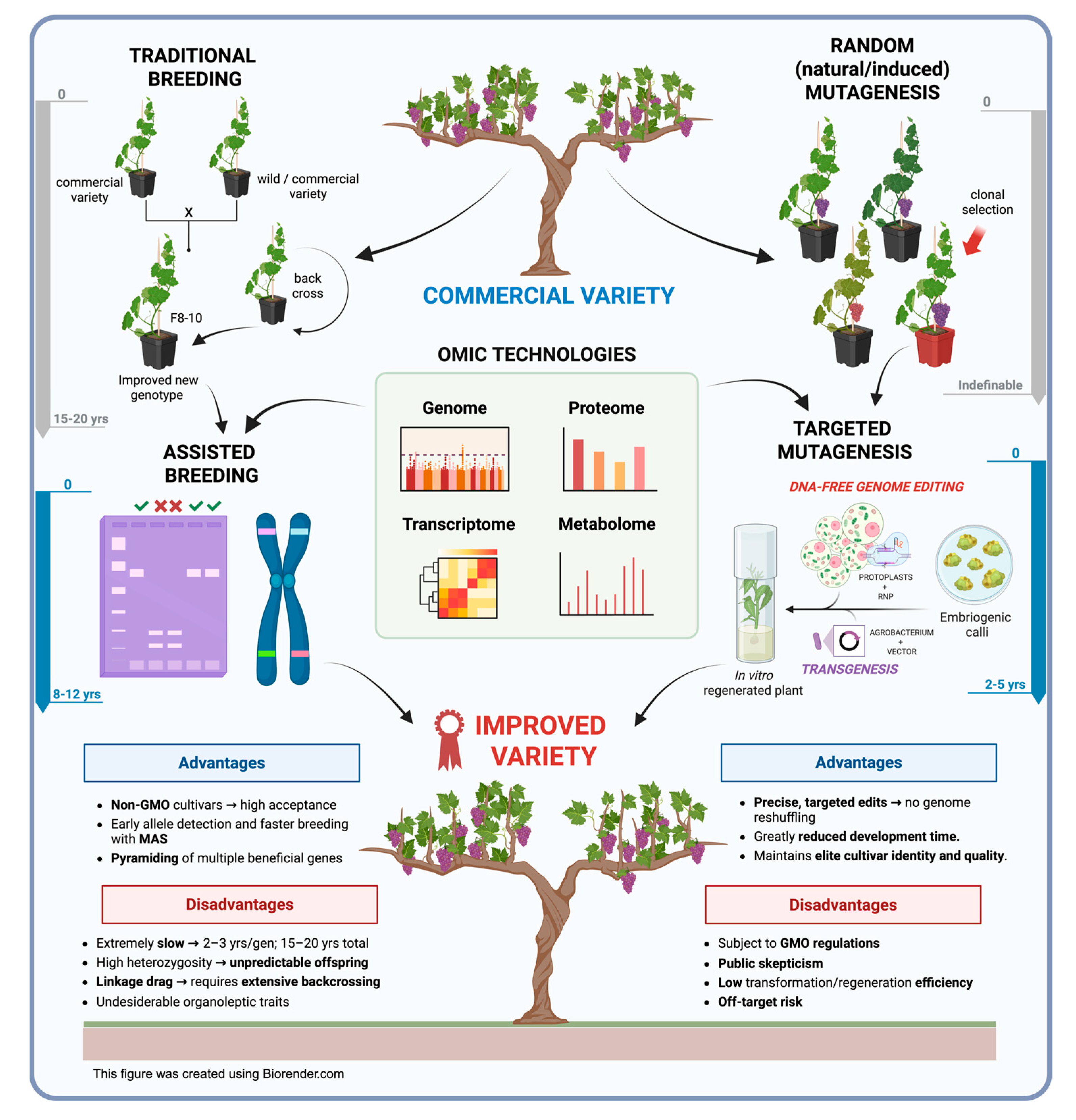
The trajectory of grapevine improvement reflects a progressive shift from empirical selection toward increasingly precise, knowledge-driven strategies (Figure 1). As climate change intensifies biotic and abiotic pressures on viticulture, the tools available to breeders have expanded from classical crossing and marker-assisted selection to a new generation of molecular technologies grounded in genomics and multi-omics research [48,49]. The following sections address the shift from traditional breeding to new genetic tools applied to research in wine grapes, on which climate change poses an increasing threat to preserve high-quality organoleptic traits.

2.1. Classical and Marker-Assisted Breeding in the Multi-Omics Era: From Genetic Resources to Molecular Precision

Clonal selection has long shaped V. vinifera diversity, yet the narrow genetic base of cultivated varieties, their perennial life cycle, and the polygenic nature of key traits have constrained the pace of progress [44,46,50,51,52,53,54]. The convergence of traditional breeding with multi-omics technologies now enables a precision-based approach to cultivar improvement [55].
Genomic resources, beginning with the Pinot Noir reference genome and its successive improvements [56,57,58,59] and expanding to graph-based pangenomes [60], have revealed extensive structural variation and identified new QTLs controlling over 25 agronomic traits. These advances have substantially strengthened the molecular basis for marker development and targeted breeding, significantly reducing the time required to identify, validate, and deploy elite alleles in breeding programs.
Integrative transcriptomic, proteomic, and metabolomic analyses have further clarified the gene networks underlying stress resilience, linking differential expression of antioxidant enzymes, HSP-related transcription factors, aquaporin regulation, and the accumulation of phenolics and stilbenes to cultivar-specific adaptive strategies [27,61,62].
The integration of multi-omics approaches with molecular breeding has profoundly transformed grapevine improvement, enabling breeders to navigate the exceptional genetic complexity of Vitis with unprecedented precision while accelerating selection cycles and shortening the overall timeline from discovery to cultivar release.
Marker-Assisted Selection (MAS) represents a cornerstone of grapevine improvement [63]. Early markers such as isozymes and SSRs provided critical tools for varietal identification and parentage reconstruction [64], while SNP arrays and sequencing platforms have advanced QTL mapping and Genome-Wide Association Study (GWAS) [65,66,67,68]. MAS has been particularly impactful for introgressing disease-resistance loci from North American species such as V. rupestris, V. aestivalis, and V. rotundifolia (Muscadine grape): key QTLs such as Rpv and Ren have been incorporated into elite V. vinifera backgrounds through targeted hybridization and molecular screening [69]. The resulting PIWI cultivars (“Pilzwiderstandsfähig”, fungus-resistant varieties), generated via interspecific hybridization and multi-generational backcrossing, combine durable partial resistance with high enological quality [70,71,72] and contribute to lowering viticulture’s environmental footprint.
Beyond disease resistance, genomic prediction and MAS increasingly support selection for fruit quality, phenology, and abiotic stress tolerance [73]. Hybridization with wild Vitis remains essential for introducing novel adaptive alleles [36], while genomic-assisted tools accelerate breeding cycles and refine parental choice [74]. The integration of multi-trait genomic selection, haplotype-based prediction, and pangenomic frameworks is transforming grapevine breeding into a predictive, data-driven discipline [75]. This shift toward multi-omics–enabled, predictive breeding is consistent with the broader emergence of computational plant breeding, a framework that emphasizes the integration of bioinformatics, advanced statistical modeling, and high-throughput data analysis into breeding decision-making [76,77].

2.2. Genome Editing in Modern Grapevine Improvement: From Selection to Design

While MASs have proven highly effective for introducing resistance loci and broadening the genetic base of cultivated grapevines, these approaches remain inherently constrained by the long generation times and limited recombination potential of V. vinifera. Moreover, the introgression of desirable traits from wild relatives often comes at the cost of altering the genetic and sensory identity of elite cultivars, challenging the preservation of their enological typicity.
Genome editing encompasses a diverse suite of molecular tools that enable targeted modifications within an organism’s own genome, representing one of the most transformative innovations in modern plant biology. Rather than relying on random mutagenesis these systems induce precise, site-specific changes, ranging from single-nucleotide substitutions to small insertions or deletions, at predetermined loci [78].
Genome editing and other New Genomics Techniques (NGTs) thus represent a genuine shift, providing precise, efficient, and potentially more socially acceptable strategies for developing resilient cultivars while preserving the identity of traditional varieties and supporting the transition toward a low input, sustainable viticulture.
Among the various platforms developed over the past two decades, the CRISPR/Cas system has become the most widely adopted owing to its high efficiency, modularity, and ease of customization [79,80]. CRISPR/Cas and its derivatives, including Cas9/12/13 nucleases as well as base- and prime-editing variants, have significantly expanded the range of feasible genomic outcomes, from simple knock-outs to subtle allelic adjustments that fine-tune gene function [81]. Table 1 provides a chronological overview of published studies employing genome editing via Agrobacterium tumefaciens-mediated transformation in grapevine. The table highlights key examples of CRISPR/Cas-based knock-out strategies applied to Vitis species, detailing targeted genes, transformation methods, and reported phenotypes.
Furthermore, the possibility of performing edits without stable transgene integration, particularly via ribonucleoprotein (RNP)-based systems, aligns this approach with the stringent regulatory landscape that governs genetically modified organisms, potentially facilitating its acceptance in viticulture. Despite these advantages, significant technical hurdles remain. Grapevine is a woody perennial species with pronounced heterozygosity and intrinsic recalcitrance to transformation and in vitro regeneration, factors that substantially constrain editing efficiency and plant recovery. The presence of multiple allelic variants at most loci often leads to monoallelic or heterozygous mutations, which are rarely sufficient to produce a detectable phenotype, particularly for dominant or quantitative traits [95]. Consequently, the generation of fully biallelic or homozygous edited lines remains one of the principal challenges to the routine implementation of genome editing technologies in V. vinifera.
Against this backdrop, demonstrations of DNA-free genome editing in grapevine highlighted both the potential and the challenges of this approach (Table 2). Malnoy et al. (2016) [96] delivered CRISPR/Cas9-RNPs into protoplasts of grapevine (V. vinifera L. cv. Chardonnay) and apple (Malus domestica cv. Golden Delicious), targeting selected genes. They demonstrated efficient site-specific genome modification in protoplasts and emphasized the importance of optimizing RNP delivery and protoplast culture conditions to maximize editing efficiency. Building on this work, Osakabe et al. (2018) [97] established a comprehensive protocol applicable to woody crops, including grapevine (V. vinifera L.; cv. Chardonnay, Thompson Seedless) and apple (Malus domestica cv. Golden Delicious), outlining critical parameters such as RNP dosage, explant selection, and tissue culture conditions to improve editing efficiency.
Subsequent studies focused on overcoming the bottlenecks in edited protoplasts regeneration. For the first time, Najafi et al. (2022) [98] demonstrated the possibility to obtain an edited DNA-free grapevine plant from regenerated protoplasts of Thompson Seedless. Then, Scintilla et al. (2022) [99] successfully generated plants from Crimson seedless and Sugraone edited protoplasts, targeting S-genes for DM and PM (VvDMR6 and VvMLO6), confirming that while transient RNPs delivery can induce site-specific modifications and non-chimeric plants, monoallelic mutations are common, reinforcing the need for improved regeneration strategies.
Efforts to increase efficiency and applicability led to technical innovations in RNPs delivery. Gambino et al. (2024) [100] applied lipofectamine-mediated delivery of Cas9 RNPs to protoplasts of the recalcitrant Nebbiolo cultivar, targeting phytoene desaturase (PDS). Compared to PEG-mediated transfection, lipofectamine improved RNP uptake and reduced cytotoxicity, particularly in genotypes with low regeneration potential. Complementing these technical advances, Tricoli and Debernardi (2023) [91] integrated predictive modeling and high-throughput screening pipelines to optimize CRISPR/Cas strategies, minimizing chimerism and off-target effects across multiple cultivars, including Thompson seedless, Colombard and Merlot (Vitis vinifera L.), as well as V. arizonica.
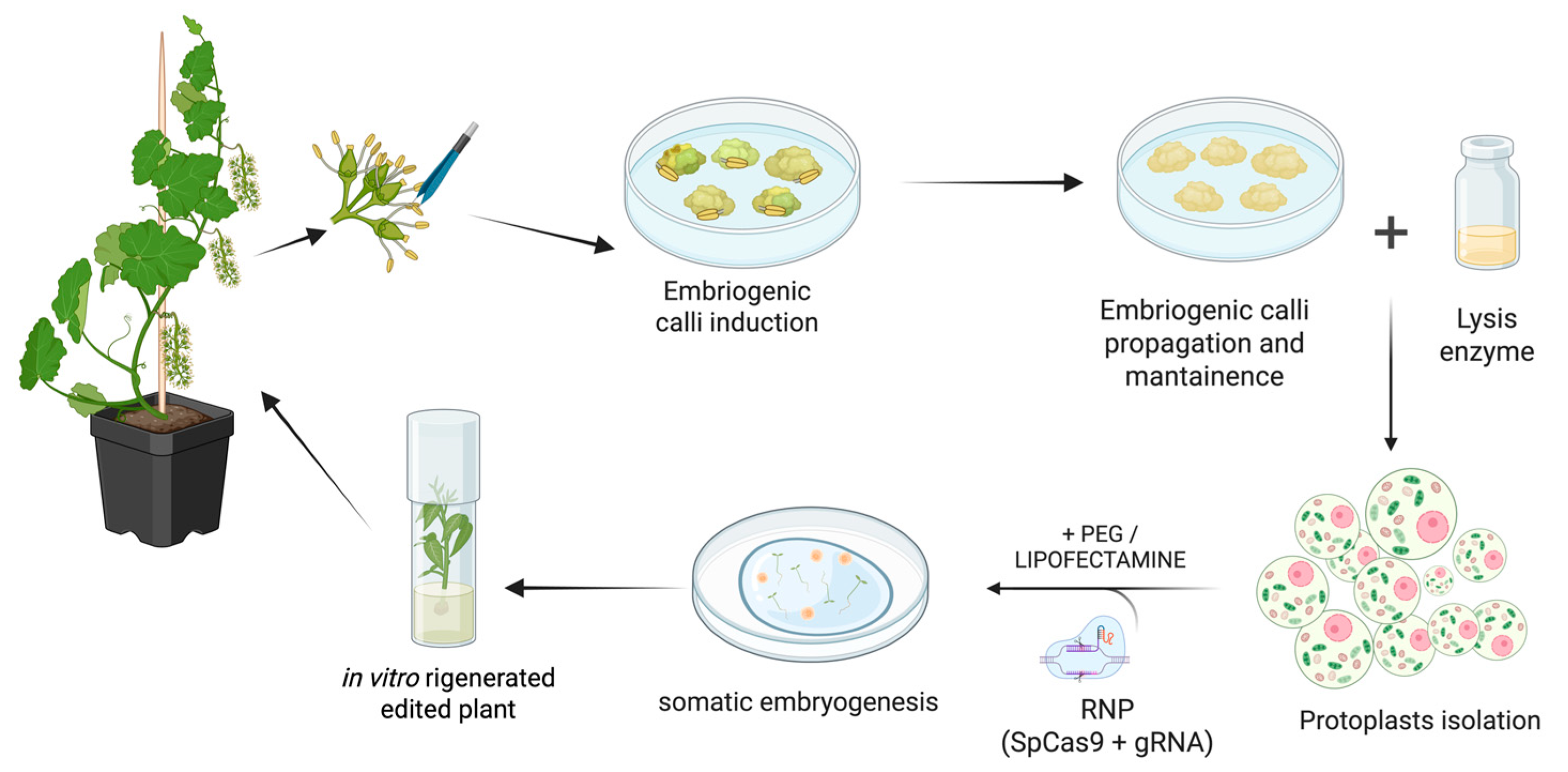
A major step forward was reported by Böttcher et al. (2025) [101], who developed an optimized protocol for DNA-free genome editing in elite winegrape cultivars, including Chardonnay, Syrah, Sauvignon Blanc and the highly recalcitrant Cabernet Sauvignon. By targeting S-genes, VvDMR6-1 and VvDMR6-2, they generated DNA-free plants with reduced susceptibility to DM, demonstrating both the feasibility of DNA-free editing in recalcitrant cultivars and its potential for rapid trait improvement. Very recently, Bertini et al. (2025) [102] optimized RNP dosage, protoplast preparation, and embryogenic callus regeneration to maximize recovery of transgene-free fully edited plants. This work provides a highly efficient framework for DNA-free editing, supporting the genetic improvement of grapevine in line with the new regulatory framework. The main steps are shown in Figure 2.
Collectively, these studies illustrate the progressive evolution of DNA-free genome editing in grapevine, with significant improvements in precision, efficiency, and plant regeneration. While transient RNP delivery circumvents transgene integration and regulatory hurdles, achieving consistent biallelic modifications remains challenging. Future strategies integrating optimized delivery methods, predictive allele-targeting, and high-throughput tissue culture protocols are expected to accelerate the routine generation of elite, precisely edited grapevine cultivars with improved disease resistance and agronomic performance.
Table 2. Transgene-free genome editing cases in grapevine. The table lists the targeted genes and their functions, the delivery systems employed to introduce the CRISPR/Cas reagents, the type of regenerated plants obtained, and the nature of the induced mutation.
AuthorsTarget Gene(s)Function/PathwayDelivery System *Regenerated Plant(s) *Type of Mutation *
Malnoy et al., 2016 [96]VvMLO-7S-gene to PMPEG + RNPsNANA
Osakabe et al., 2018 [97]VvALS1Aminoacis
biosynthesis
PEG + RNPsNANA
Najafi et al., 2022 [98]GFPGreen fluorescent proteinPEG + RNPs9 Thompson seedlessNA
Scintilla et al., 2022 [99]VvDMR6S-gene to DMLipo + RNPs5 Crimson seedless
9 Sugraone
Monoallelic and Biallelic
Scintilla et al., 2022 [99]VvMLO6S-gene to PMLipo + RNPs2 Crimson seedless
6 Sugraone
Monoallelic
Scintilla et al., 2022 [99]VvMLO6 + VvDMR6S-genes to PM and DMLipo + RNPs2 SugraoneMonoallelic
Tricoli and Debernardi, 2023 [91]VvPDSCarotenoid biosynthesisPEG + RNPs1 Thompson seedless
55 Colombard
11 Merlot
5 V. arizonica
Biallelic
Gambino et al., 2024 [100]VvPDSCarotenoid biosynthesisLipo + RNPs7 NebbioloMonoallelic and Biallelic
EDIVITE S.R.L.
Patent number: WO 2024/052866 A1 [103]
VvMLO17S-gene to PMPEG + RNPs1 ChardonnayBiallelic
Böttcher et al., 2025 [101] VvDMR6-1 +
VvDMR6-2
S-genes to DMPEG + RNPs330 Chardonnay
47 Cabernet sauvignon
79 Shiraz
63 Sauvignon blanc
Monoallelic and Biallelic
* NA, not available. PM, powdery mildew; DM, downy mildew; PEG, polyethylene glycol; RNPs, ribonucleoproteins; Lipo, lipofection-based delivery.

3. Physiological Bases and Molecular Targets for Grapevine Improvement Under Climate Stress

Grapevine productivity and berry composition are the outcomes of complex interactions among genotype, environment, and management practices [18,79]. This genotype × environment × management framework has long been recognized as central to viticultural performance and wine typicity [104]. Under current climate change scenarios, elevated temperatures and altered water availability increasingly perturb these interactions, exposing physiological constraints that directly affect yield stability and fruit quality [3,105].
Berry ripening is highly plastic but particularly sensitive to abiotic stress. Moderate water deficit can enhance phenolic accumulation and improve color intensity, whereas severe drought or excessive heat disrupt the coordination between technological maturity and phenolic and aromatic development [106]. High temperatures promote the decrease in organic acid content observed after veraison, by exacerbating the malic acid breakdown and inhibit anthocyanin biosynthesis, leading to berries characterized by high sugar content, low acidity, and reduced aromatic complexity [107,108,109,110].
Importantly, the impact of abiotic stress is not limited to ripening processes. Thermal stress during flowering impairs pollen viability, fertilization, and early berry development, resulting in increased flower abortion and reduced fruit set, with direct consequences for yield stability [18,111,112,113,114]. These stress-induced physiological trade-offs are therefore essential for translating genome-editing strategies into predictable effects on both yield stability and fruit composition.
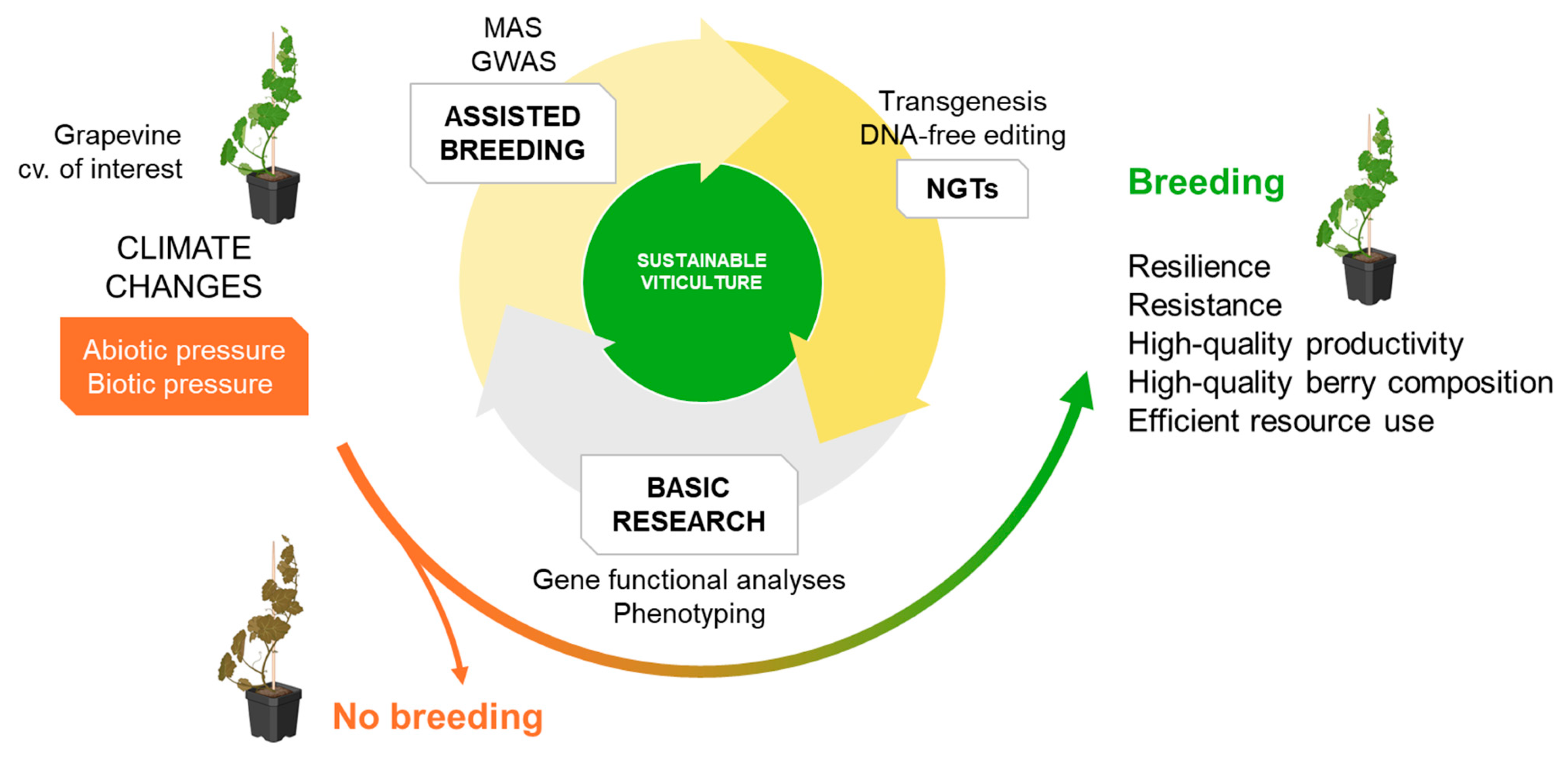
By integrating precise molecular techniques with a comprehensive understanding of whole-plant functions and environmental interactions, researchers can develop grapevines that are resilient, efficient, and capable of preserving fruit quality and cultural identity despite climate change challenges. Figure 3 shows an integrated model linking basic research, assisted breeding, and NGTs toward sustainable viticulture under climate change.

From Physiological Trade-Offs to Molecular Targets for Genome Editing

Translating stress-related physiological trade-offs into breeding strategies involves focusing on genes that regulate the timing, coordination, and environmental response of key developmental processes, rather than targeting individual downstream metabolic traits. These regulatory layers are distributed across hormonal signaling pathways, transcriptional networks, epigenetic regulation, and developmental controllers acting at various stages of berry development and reproduction.
At this level, hormonal signaling provides the first level of integration between environmental stress detection and developmental regulation. Among phytohormones, abscisic acid (ABA) plays a central role in coordinating stress responses with berry developmental timing. Transcriptomic analyses of grape berry skin show that ABA induces extensive reprogramming of gene expression that overlaps with ripening-related pathways, supporting its role as a regulator of ripening onset rather than just a stress signal [115]. Consistently, exogenous ABA accelerates sugar accumulation and anthocyanin biosynthesis, confirming its ability to modulate ripening kinetics [116,117]. However, the involvement of ABA in both stress tolerance and ripening acceleration exemplifies a fundamental physiological trade-off, where adaptive responses to drought or heat may inadvertently alter fruit composition and technological quality.
Importantly, putative gene targets for genome editing aimed at improving abiotic stress resistance often do not result in straightforward stress tolerance, as such traits are usually polygenic and closely linked with development and metabolism. Knocking out a gene that reduces susceptibility to stress may also cause pleiotropic effects, since these genes frequently function within key regulatory pathways. Therefore, thorough functional validation of candidate genes is crucial before considering them for genome editing applications.
Table 3 reports some examples of experimentally validated genes proposed as potential genome editing targets in grapevine to enhance tolerance to abiotic stresses.
In addition to negative regulators of stress responses, it is also crucial to consider genes that have been shown to play an active role in stress adaptation, as they represent potential targets for further functional studies and mechanistic understanding. Among these, various transcription factor families mediate stress-induced modulation of grapevine development. MYB, WRKY, NAC and bHLH factors are consistently upregulated in response to drought, salinity, cold, heat and UV stress, and act as key integrators of environmental signals with developmental outputs [123].
For instance, VhMYB2 and VhMYB15 enhance salt, drought and cold tolerance by modulating antioxidant capacity, ion homeostasis, proline accumulation and ROS detoxification, whereas VhWRKY44 confers drought and cold resistance through activation of stress-responsive gene networks [124,125,126].
NAC transcription factors further link hydraulic adjustment and secondary wall remodeling to drought tolerance. The dehydration-responsive bZIP VlbZIP30 directly activates VvNAC17 and peroxidase genes, enhancing lignin biosynthesis, strengthening xylem tissues, and reducing drought-induced hydraulic failure, while VvABF2 operates within the ABA core signaling cascade to enhance osmotic stress tolerance. [127,128,129].
Candidate genes involved in sugar transport and stress-responsive signaling further demonstrate how environmental perception connects to berry metabolism. The ASR-type protein VvMSA, which is associated with ABA-dependent stress responses, serves as a promising molecular link between stress signaling and ripening regulation [130]. Epigenetic regulators such as VvMET1, VvDRM2, and the histone deacetylase VvHDA6 reveal how DNA methylation and chromatin remodeling influence grapevine responses to drought, salinity, and cold, offering new targets to maintain stress memory [131].
Regulatory principles extend beyond ripening control to other climate-sensitive traits relevant to grapevine performance. The ICE–CBF–COR cascade (VvICE1, VvCBF2/3/4), heat shock regulators (VvHsfA2, HSP70/90), UV-B perception components (VviUVR1, VvMYB4), and autophagy-related genes involved in copper tolerance all represent stress-specific molecular targets for genome editing [132,133,134,135,136,137].
Meanwhile, targeting genes like VvABCF3, which are involved in thermal sensitivity during flowering, may help reduce heat-induced flower abortion and stabilize yield in future climate conditions [138].
In the table grape sector, editing genes controlling seed development, such as MYB26 or AGL11, offers a route to generate parthenocarpic, seedless varieties without extensive hybridization, delivering clear commercial and sustainability advantages [139].
These advances showcase how genome editing can separate stress tolerance from harmful developmental trade-offs. This could lead to grapevine cultivars that are both climate-resilient and capable of preserving fruit quality, thereby promoting sustainable viticulture.

4. Open Challenges of NGTs

4.1. Regulatory Landscape

The regulatory environment governing genome-edited plants in the European Union (EU) has evolved substantially in recent years, reflecting advances in genome-editing technologies, increasing sustainability objectives and a reassessment of regulatory proportionality.
This regulatory interpretation was confirmed by the 2018 ruling of the Court of Justice of the EU. Following the 2018 ruling of the Court of Justice of the European Union, genome-edited plants were regulated under the same legal framework as genetically modified organisms, regardless of the absence of foreign DNA in the final product. This interpretation significantly limited research, field testing, and commercial deployment of genome-edited grapevine material (Case C-528/16, Directive 2001/18/EC).
In response to scientific and policy concerns regarding the suitability of this framework, the European Commission adopted, on 5 July 2023, a proposal for a Regulation on plants obtained by NGTs (Regulation of the European Parliament and of the council, Brussels of 5 July 2023). The proposal, developed in the context of the EU Farm to Fork and Biodiversity strategies, introduces a differentiated, risk-based regulatory approach determined by the characteristics of the final genetic modification rather than the technique used. The proposed framework establishes two regulatory categories for NGT plants placed on the EU market (European Commission, New techniques in biotechnology).
During the transition period, several Member States have proceeded with tightly controlled research activities under existing provisions. In September 2024, Italy hosted Europe’s first open-field trial of genome-edited grapevines, demonstrating the feasibility of applying these methods under existing EU regulatory constraints [140]. DNA-free CRISPR/Cas9-edited Chardonnay vines targeting the VvDMR6-1 gene to reduce susceptibility to downy mildew were developed by the University of Verona spin-off EdiVite (Table 2), which also filed a patent covering a protoplast-based DNA-free genome-editing method (EP 4 151 084).
On 4 December 2025, a provisional political agreement on a comprehensive regulatory framework for NGTs was reached between the Council of the EU and the European Parliament (Council of the EU, press release 4 December 2025).
Under the agreed framework, “Category 1” (NGT-1) plants are defined as plants considered equivalent to those obtained through conventional breeding. An NGT plant qualifies as NGT-1 if it differs from the recipient or parental plant by no more than 20 genetic modifications per monoploid genome. In the case of targeted mutagenesis, allowable changes include up to 20-nucleotide substitutions or insertions per modification, as well as deletions of any length. The regulation also specifies other eligible types of genetic modifications and defines the conditions for cisgenic changes within the breeder’s gene pool (Annex I). NGT-1 plants are exempt from the full GMO authorization procedure and follow a simplified market-access pathway; however, plant reproductive material (e.g., seeds) remains subject to labeling requirements, national competent authorities verify NGT-1 status prior to market placement, and approved entries will be listed in a public EU database.
Category 2” (NGT-2) plants comprise organisms that do not meet the criteria for NGT-1 classification and therefore remain fully subject to existing EU GMO legislation, including pre-market risk assessment, authorization, traceability, and labeling requirements. Member States retain the right to restrict or prohibit the cultivation of NGT-2 plants within their territory.
According to the agreed institutional roadmap, the provisional agreement is expected to be formally voted by the European Parliament and the Council of the EU in the first months of 2026. Following formal adoption, a transitional period of up to two years is foreseen for the full application of the new regulatory framework, allowing Member States, competent authorities, and operators to adapt national procedures, verification systems, and market-access mechanisms. This phased implementation is intended to ensure regulatory continuity while enabling a gradual transition toward the new NGT-specific regime.
Regulatory approaches outside the EU are generally more permissive. In the United States, certain genome-edited plants without foreign DNA are typically not regulated as GMOs under established oversight pathways, while Canada applies a product-based system focused on trait novelty. Japan and Australia have also adopted approaches that exempt DNA-free genome-edited plants from GMO legislation, subject to notification or clarification requirements [141,142].
Despite these regulatory variations, societal acceptance remains a crucial determinant for the adoption of genome-edited grapevines worldwide. Transparency in communication, clear explanation that no foreign genes are introduced, and the potential to reduce chemical inputs in vineyards are key factors for public trust. Engaging growers, consumers, and policymakers in a dialog that emphasizes sustainability and tradition can ensure that genome editing is perceived as an enabler of improved viticulture rather than a disruptive technology [143].

4.2. Farmer and Public Perception

Beyond scientific and regulatory aspects, the adoption of NGTs in viticulture is strongly influenced by cultural and social factors. Viticulture is closely linked to historical cultivars, geographical indications, and established production practices, and the introduction of novel breeding approaches may raise concerns among growers and consumers regarding authenticity, identity, and product quality. Genetic improvement, however, has long been part of viticulture through clonal selection, hybridization, and rootstock development. In this context, resistant varieties and genome-edited lines obtained through NGTs represent a continuation of established breeding practices rather than a conceptual break. These approaches offer tools to address climate change, evolving pest and disease pressures, and restrictions on plant protection products, while maintaining key agronomic and sensory traits and reducing environmental impacts. Farmer acceptance depends on regulatory clarity, economic incentives, and the demonstrated agronomic performance of new plant material, whereas public perception is shaped by transparency, trust in regulatory oversight, and clear communication distinguishing genome editing from transgenic modification. Evidence of sustainability benefits, such as reduced pesticide use or improved stress tolerance, is likely to play a central role in acceptance. The effective integration of NGT-derived plant material will therefore require not only scientific progress but also supportive policy frameworks, targeted training and advisory services for growers, and communication strategies addressing consumer concerns, in line with EU sustainability objectives (European Commission, 2023).

5. Final Considerations and Future Perspectives

Looking forward, several emerging research directions deserve particular attention. One promising frontier is epigenetics, which explores how DNA methylation and histone modifications influence stress responses and clonal diversity in grapevine. Understanding and potentially harnessing epigenetic variation could open new avenues for inducing or selecting resilient phenotypes without altering the underlying DNA sequence [125]. Another trend involves the design of multi-purpose “climate-ready” vines, capable of combining multiple tolerances (drought, salinity, nematodes, and pathogens), within the same genotype or rootstock. This approach seeks to develop resilient plant systems adaptable to new latitudinal and altitudinal growing zones that may become viticulturally favorable as the climate shifts.
Equally transformative will be the integration of digital viticulture with genetic and physiological innovation. Precision agriculture tools, including predictive models, soil and canopy sensors, and geospatial analytics, will allow site-specific management of vineyards and optimal matching between genotype and environment. In this sense, the sustainable vineyard of the future will not rely solely on improved varieties, but on an ecosystem of innovation connecting genetics, data science, and agronomy into a coherent decision-support framework.
The convergence of traditional breeding, advanced genomics, genome editing, and physiological understanding offers an unprecedented opportunity to address the sustainability challenge in viticulture (Figure 3). The sector now stands at a historical crossroads, facing climatic, environmental, and socio-economic pressures without precedent, yet equipped with scientific tools of equally unparalleled potential. Until recently, the idea of deciphering the molecular basis of complex traits through multi-omics integration, predicting genetic merit through genomic selection, or reshaping the genome of elite cultivars with single-nucleotide precision would have seemed beyond reach. Today, these innovations are reshaping the way grapevines can be improved, embedding sustainability criteria into the earliest stages of selection and design [3,24,40].
Ultimately, the grapevine of the future will emerge from a thoughtful synthesis of tradition and innovation. It will inherit the enological heritage of classical cultivars while incorporating new traits that enable it to thrive under altered climatic conditions and lower-input management systems. Genetic innovations, ranging from predictive breeding to genome editing, combined with advanced biotechnologies and a deep physiological understanding of the plant, will form the cornerstone of a truly sustainable and resilient viticulture.
Continued investment in multidisciplinary research and open dialog among scientists, policymakers, producers, and consumers will be vital to realizing this vision. The future of viticulture, and of wine itself, will depend on our collective ability to innovate responsibly, ensuring that progress in genetics and technology serves the dual purpose of conserving natural resources and safeguarding the cultural identities that define the world’s great wine regions.

6. Concluding Remarks

In this review, we describe how grapevine breeding is experiencing a profound transformation driven by climate change, technological innovation, and growing sustainability demands. By combining traditional and assisted breeding methods with New Genomic Techniques and basing target selection on a functional understanding of plant physiology, emerging strategies now allow for more predictive and rational improvement of complex traits. A key part of this approach is recognizing physiological trade-offs as crucial factors influencing yield stability, fruit quality, and stress resilience under changing environmental conditions.
Traditional cultivars are the result of centuries of selection and domestication, reflecting a long history of interaction between human influence, terroir, and cultural traditions. Each cultivar, therefore, represents not just a specific genetic makeup but also the history, customs, and landscapes that have shaped viticulture over generations.
Rather than replacing traditional breeding methods, genome editing and advanced genomic tools complement existing strategies by enabling precise control of regulatory processes while maintaining varietal identity. When combined with functional genomics, multi-omics integration, and phenotyping, these tools offer a clear framework for designing grapevine genotypes suited to future climate conditions. The challenge ahead involves not only creating resilient and sustainable grape varieties but also ensuring that genetic advancements align with societal values, environmental care, and the long-term identity of viticulture.

Author Contributions

Writing—original draft preparation and data curation, C.C. and O.B.; Data curation, review and editing, A.A. and M.P.; Conceptualization and supervision, S.Z. and M.P. All authors have read and agreed to the published version of the manuscript.

Funding

This work was supported by the University of Verona through the AGRITECH National Research Center project “VALorization of genetic resources to improve FRUIT crops (VALFRUIT)”, funded by the European Union – NextGenerationEU, within the framework of the Italian National Recovery and Resilience Plan (PNRR), Mission 4 “Education and Research”, Component 2 “From Research to Business”, Investment 1.4, grant number CN00000022.

Data Availability Statement

No new data were created or analyzed in this study.

Conflicts of Interest

Authors Alessandra Amato, Mario Pezzotti and Sara Zenoni were employed by the company EdiVite s.r.l. The remaining authors declare that the research was conducted in the absence of any commercial or financial relationships that could be construed as a potential conflict of interest.

Abbreviations

The following abbreviations are used in this manuscript:
FAOFood and Agriculture Organization of the United Nations
DMDowny mildew
PMPowdery mildew
PIWIPilzwiderstandsfähig
QTLsQuantitative Trait Loci
HSPHeat Shock Proteins
MASMarker-Assisted Selection
SNPSingle Nucleotide Polymorphism
GWASGenome-Wide Association Study
NGTsNew Genomics Techniques
RNPRibonucleoprotein
PEGPolyethylene glycol
ABAAbscisic acid
GMOsGenetically modified organisms

References

  1. Organisation Internationale de la Vigne et du Vin Organisation Internationale de La Vigne et Du Vin (OIV). Available online: https://www.oiv.int/what-we-do/data-discovery-report?oiv (accessed on 14 January 2026).
  2. Food and Agriculture Organization of the United Nations (FAO). Agricultural Production Statistics 2000–2022; FAOSTAT Analytical Briefs; Food and Agriculture Organization of the United Nations (FAO): Rome, Italy, 2023. [Google Scholar] [CrossRef]
  3. van Leeuwen, C.; Darriet, P. The Impact of Climate Change on Viticulture and Wine Quality. J. Wine Econ. 2016, 11, 150–167. [Google Scholar] [CrossRef]
  4. Van Leeuwen, C.; Destrac-Irvine, A.; Dubernet, M.; Duchêne, E.; Gowdy, M.; Marguerit, E.; Pieri, P.; Parker, A.; De Rességuier, L.; Ollat, N. An Update on the Impact of Climate Change in Viticulture and Potential Adaptations. Agronomy 2019, 9, 514. [Google Scholar] [CrossRef]
  5. Hannah, L.; Roehrdanz, P.R.; Ikegami, M.; Shepard, A.V.; Shaw, M.R.; Tabor, G.; Zhi, L.; Marquet, P.A.; Hijmans, R.J. Climate Change, Wine, and Conservation. Proc. Natl. Acad. Sci. USA 2013, 110, 6907–6912. [Google Scholar] [CrossRef]
  6. Morales-Castilla, I.; De Cortázar-Atauri, I.G.; Cook, B.I.; Lacombe, T.; Parker, A.; Van Leeuwen, C.; Nicholas, K.A.; Wolkovich, E.M. Diversity Buffers Winegrowing Regions from Climate Change Losses. Proc. Natl. Acad. Sci. USA 2020, 117, 2864–2869. [Google Scholar] [CrossRef]
  7. Migicovsky, Z.; Myles, S. Exploiting Wild Relatives for Genomics-Assisted Breeding of Perennial Crops. Front. Plant Sci. 2017, 8, 460. [Google Scholar] [CrossRef] [PubMed]
  8. Atak, A. Vitis Species for Stress Tolerance/Resistance. Genet. Resour. Crop Evol. 2025, 72, 2425–2444. [Google Scholar] [CrossRef]
  9. Dong, Y.; Duan, S.; Xia, Q.; Liang, Z.; Dong, X.; Margaryan, K.; Musayev, M.; Goryslavets, S.; Zdunić, G.; Bert, P.-F.; et al. Dual Domestications and Origin of Traits in Grapevine Evolution. Science 2023, 8, 892–901. [Google Scholar] [CrossRef] [PubMed]
  10. Poni, S.; Sabbatini, P.; Palliotti, A. Facing Spring Frost Damage in Grapevine: Recent Developments and the Role of Delayed Winter Pruning—A Review. Am. J. Enol. Vitic. 2022, 73, 210–225. [Google Scholar] [CrossRef]
  11. Martínez-Lüscher, J.; Matus, J.T.; Gomès, E.; Pascual, I. Toward Understanding Grapevine Responses to Climate Change: A Multi-Stress and Holistic Approach. J. Exp. Bot. 2025, 76, 2949–2969. [Google Scholar] [CrossRef]
  12. Kapazoglou, A.; Gerakari, M.; Lazaridi, E.; Kleftogianni, K.; Sarri, E.; Tani, E.; Bebeli, P.J. Crop Wild Relatives: A Valuable Source of Tolerance to Various Abiotic Stresses. Plants 2023, 12, 328. [Google Scholar] [CrossRef]
  13. Costa, R.; Fraga, H.; Fonseca, A.; De Cortázar-Atauri, I.G.; Val, M.C.; Carlos, C.; Reis, S.; Santos, J.A. Grapevine Phenology of Cv. Touriga Franca and Touriga Nacional in the Douro Wine Region: Modelling and Climate Change Projections. Agronomy 2019, 9, 210. [Google Scholar] [CrossRef]
  14. Gambetta, G.A.; Herrera, J.C.; Dayer, S.; Feng, Q.; Hochberg, U.; Castellarin, S.D. The Physiology of Drought Stress in Grapevine: Towards an Integrative Definition of Drought Tolerance. J. Exp. Bot. 2020, 71, 4658–4676. [Google Scholar] [CrossRef]
  15. Schultz, H.R. Global Climate Change, Sustainability, and Some Challenges for Grape and Wine Production. J. Wine Econ. 2016, 11, 181–200. [Google Scholar] [CrossRef]
  16. Torres, N.; Yu, R.; Martinez-Luscher, J.; Girardello, R.C.; Kostaki, E.; Oberholster, A.; Kaan Kurtural, S. Shifts in the Phenolic Composition and Aromatic Profiles of Cabernet Sauvignon (Vitis vinifera L.) Wines Are Driven by Different Irrigation Amounts in a Hot Climate. Food Chem. 2022, 371, 131163. [Google Scholar] [CrossRef] [PubMed]
  17. Costa, J.M.; Ortuño, M.F.; Lopes, C.M.; Chaves, M.M. Grapevine Varieties Exhibiting Differences in Stomatal Response to Water Deficit. Funct. Plant Biol. 2012, 39, 179–189. [Google Scholar] [CrossRef] [PubMed]
  18. Greer, D.H.; Weston, C. Heat Stress Affects Flowering, Berry Growth, Sugar Accumulation and Photosynthesis of Vitis vinifera Cv. Semillon Grapevines Grown in a Controlled Environment. Funct. Plant Biol. 2010, 37, 206–214. [Google Scholar] [CrossRef]
  19. Previtali, P.; Shackel, K.; Cousins, P.; Dokoozlian, N. Characterization of Berry Softening and Sugar Accumulation Dynamics in a Slow-Ripening Genotype and Its Response to Abscisic Acid Treatments. In Proceedings of the Open Conference on Grapevine Physiology and Biotechnology, Logroño, Spain, 7–11 July 2024; IVES International Viticulture and Enology Society: Bordeaux, France, 2024. [Google Scholar]
  20. Falginella, L.; Magris, G.; Castellarin, S.D.; Gambetta, G.A.; Matthews, M.A.; Morgante, M.; Di Gaspero, G. Grape Ripening Speed Slowed down Using Natural Variation. Theor. Appl. Genet. 2025, 138, 130. [Google Scholar] [CrossRef]
  21. Duchêne, E.; Huard, F.; Dumas, V.; Schneider, C.; Merdinoglu, D. The Challenge of Adapting Grapevine Varieties to Climate Change. Clim. Res. 2010, 41, 193–204. [Google Scholar] [CrossRef]
  22. Stanfield, R.C.; Forrestel, E.J.; Elmendorf, K.E.; Bagshaw, S.B.; Bartlett, M.K. Phloem Anatomy Predicts Berry Sugar Accumulation across 13 Wine-Grape Cultivars. Front. Plant Sci. 2024, 15, 1360381. [Google Scholar] [CrossRef]
  23. Rogiers, S.Y.; Greer, D.H.; Liu, Y.; Baby, T.; Xiao, Z. Impact of Climate Change on Grape Berry Ripening: An Assessment of Adaptation Strategies for the Australian Vineyard. Front. Plant Sci. 2022, 13, 1094633. [Google Scholar] [CrossRef]
  24. Magon, G.; De Rosa, V.; Martina, M.; Falchi, R.; Acquadro, A.; Barcaccia, G.; Portis, E.; Vannozzi, A.; De Paoli, E. Boosting Grapevine Breeding for Climate-Smart Viticulture: From Genetic Resources to Predictive Genomics. Front. Plant Sci. 2023, 14, 1293186. [Google Scholar] [CrossRef]
  25. Fattorini, R.; Caretta, T.O.; Benyahia, F.; Zuluaga, M.Y.A.; Monterisi, S.; Agostini, A.; Andreotti, C.; Cesco, S.; Pii, Y. Double Trouble Belowground: Grapevine Rootstocks Face Drought and Copper Toxicity. Front. Agron. 2025, 7, 1682753. [Google Scholar] [CrossRef]
  26. Corso, M.; Vannozzi, A.; Maza, E.; Vitulo, N.; Meggio, F.; Pitacco, A.; Telatin, A.; D’Angelo, M.; Feltrin, E.; Negri, A.S.; et al. Comprehensive Transcript Profiling of Two Grapevine Rootstock Genotypes Contrasting in Drought Susceptibility Links the Phenylpropanoid Pathway to Enhanced Tolerance. J. Exp. Bot. 2015, 66, 5739–5752. [Google Scholar] [CrossRef]
  27. Foria, S.; Magris, G.; Jurman, I.; Schwope, R.; De Candido, M.; De Luca, E.; Ivanišević, D.; Morgante, M.; Di Gaspero, G. Extent of Wild-to-Crop Interspecific Introgression in Grapevine (Vitis vinifera) as a Consequence of Resistance Breeding and Implications for the Crop Species Definition. Hortic. Res. 2022, 9, uhab010. [Google Scholar] [CrossRef]
  28. Santos, J.A.; Fraga, H.; Malheiro, A.C.; Moutinho-Pereira, J.; Dinis, L.T.; Correia, C.; Moriondo, M.; Leolini, L.; Dibari, C.; Costafreda-Aumedes, S.; et al. A Review of the Potential Climate Change Impacts and Adaptation Options for European Viticulture. Appl. Sci. 2020, 10, 3092. [Google Scholar] [CrossRef]
  29. Merdinoglu, D.; Schneider, C.; Prado, E.; Wiedemann-Merdinoglu, S.; Mestre, P. Breeding for Durable Resistance to Downy and Powdery Mildew in Grapevine. Oeno One 2018, 52, 189–195. [Google Scholar] [CrossRef]
  30. Salinari, F.; Giosuè, S.; Tubiello, F.N.; Rettori, A.; Rossi, V.; Spanna, F.; Rosenzweig, C.; Gullino, M.L. Downy Mildew (Plasmopara viticola) Epidemics on Grapevine under Climate Change. Glob. Change Biol. 2006, 12, 1299–1307. [Google Scholar] [CrossRef]
  31. Caffarra, A.; Rinaldi, M.; Eccel, E.; Rossi, V.; Pertot, I. Modelling the Impact of Climate Change on the Interaction between Grapevine and Its Pests and Pathogens: European Grapevine Moth and Powdery Mildew. Agric. Ecosyst. Environ. 2012, 148, 89–101. [Google Scholar] [CrossRef]
  32. Chuche, J.; Thiéry, D. Biology and Ecology of the Flavescence Dorée Vector Scaphoideus Titanus: A Review Biology and Ecology of the Flavescence Dorée Vector Scaphoideus Titanus: A Review. Agron. Sustain. Dev. 2014, 34, 381–403. [Google Scholar] [CrossRef]
  33. Koledenkova, K.; Esmaeel, Q.; Jacquard, C.; Nowak, J.; Clément, C.; Ait Barka, E. Plasmopara viticola the Causal Agent of Downy Mildew of Grapevine: From Its Taxonomy to Disease Management. Front. Microbiol. 2022, 13, 889472. [Google Scholar] [CrossRef]
  34. Pedrelli, A.; Carli, M.; Panattoni, A.; Pellegrini, E.; Rizzo, D.; Nali, C.; Cotrozzi, L. Investigating a New Alarming Outbreak of Flavescence Dorée in Tuscany (Central Italy): Molecular Characterization and Map Gene Typing Elucidate the Complex Phytoplasma Ecology in the Vineyard Agroecosystem. Front. Plant Sci. 2024, 15, 1489790. [Google Scholar] [CrossRef] [PubMed]
  35. de Souza, A.L.K.; Perazzoli, V.; do Mattos, A.P.; Ogoshi, C. Performance of Disease-Resistant Grapevine Varieties with Reduction of Fungicide Spraying. Fruit Crops Sci. J. 2025, 1, e-235. [Google Scholar] [CrossRef]
  36. Alleweldt, G.; Possingham, J.V. Progress in Grapevine Breeding; Springer: Berlin/Heidelberg, Germany, 1988; Volume 75. [Google Scholar]
  37. Schneider, A.; Ruffa, P.; Tumino, G.; Fontana, M.; Boccacci, P.; Raimondi, S. Genetic Relationships and Introgression Events between Wild and Cultivated Grapevines (Vitis vinifera L.): Focus on Italian Lambruscos. Sci. Rep. 2024, 14, 12392. [Google Scholar] [CrossRef] [PubMed]
  38. Ruiz-García, L.; Gago, P.; Martínez-Mora, C.; Santiago, J.L.; Fernádez-López, D.J.; del Martínez, M.C.; Boso, S. Evaluation and Pre-Selection of New Grapevine Genotypes Resistant to Downy and Powdery Mildew, Obtained by Cross-Breeding Programs in Spain. Front. Plant Sci. 2021, 12, 674510. [Google Scholar] [CrossRef]
  39. Villano, C.; Aversano, R. Towards Grapevine (Vitis vinifera L.) Mildews Resistance: Molecular Defence Mechanisms and New Breeding Technologies. Italus Hortus 2020, 27, 1–17. [Google Scholar] [CrossRef]
  40. Gieser, J.T.; Kolb, S.; Reiff, J.M.; Riess, K.; Hunke, M.; Entling, M.H.; Schirmel, J. Limited Benefits of Organic Management and Fungicide Reduction to Ground Beetles in Vineyards. Conserv. Sci. Pract. 2025, 7, e13303. [Google Scholar] [CrossRef]
  41. Eisenmann, B.; Wingerter, C.; Dressler, M.; Freund, C.; Kortekamp, A.; Bogs, J. Fungicide-Saving Potential and Economic Advantages of Fungus-Resistant Grapevine Cultivars. Plants 2023, 12, 3120. [Google Scholar] [CrossRef]
  42. Trouvelot, S.; Bonneau, L.; Redecker, D.; van Tuinen, D.; Adrian, M.; Wipf, D. Arbuscular Mycorrhiza Symbiosis in Viticulture: A Review. Agron. Sustain. Dev. 2015, 35, 1449–1467. [Google Scholar] [CrossRef]
  43. Mustapha, A.; Hakeem, A.; Li, S.; Mustafa, G.; Elatafi, E.; Fang, J.; Zhou, C. Grapevine Rootstocks and Salt Stress Tolerance: Mechanisms, Omics Insights, and Implications for Sustainable Viticulture. Int. J. Plant Biol. 2025, 16, 129. [Google Scholar] [CrossRef]
  44. Ollat, N.; Touzard, J.-M.; van Leeuwen, C. Climate Change Impacts and Adaptations: New Challenges for the Wine Industry. J. Wine Econ. 2016, 11, 139–149. [Google Scholar] [CrossRef]
  45. Palliotti, A.; Tombesi, S.; Silvestroni, O.; Lanari, V.; Gatti, M.; Poni, S. Changes in Vineyard Establishment and Canopy Management Urged by Earlier Climate-Related Grape Ripening: A Review. Sci. Hortic. 2014, 178, 43–54. [Google Scholar] [CrossRef]
  46. Keller, M. The Science of Grapevines; Academic Press: Cambridge, MA, USA, 2020. [Google Scholar]
  47. Tomasi, D.; Battista, F.; Gaiotti, F.; Mosetti, D.; Bragato, G. Influence of Soil on Root Distribution: Implications for Quality of Tocai Friulano Berries and Wine. Am. J. Enol. Vitic. 2015, 66, 363–372. [Google Scholar] [CrossRef]
  48. Zenoni, S.; Ferrarini, A.; Giacomelli, E.; Xumerle, L.; Fasoli, M.; Malerba, G.; Bellin, D.; Pezzotti, M.; Delledonne, M. Characterization of Transcriptional Complexity during Berry Development in Vitis vinifera Using RNA-Seq. Plant Physiol. 2010, 152, 1787–1795. [Google Scholar] [CrossRef] [PubMed]
  49. Fasoli, M.; Richter, C.L.; Zenoni, S.; Bertini, E.; Vitulo, N.; Dal Santo, S.; Dokoozlian, N.; Pezzotti, M.; Tornielli, G.B. Timing and Order of the Molecular Events Marking the Onset of Berry Ripening in Grapevine. Plant Physiol. 2018, 178, 1187–1206. [Google Scholar] [CrossRef]
  50. Laucou, V.; Launay, A.; Bacilieri, R.; Lacombe, T.; Adam-Blondon, A.F.; Bérard, A.; Chauveau, A.; De Andrés, M.T.; Hausmann, L.; Ibáñez, J.; et al. Extended Diversity Analysis of Cultivated Grapevine Vitis vinifera with 10K Genome-Wide SNPs. PLoS ONE 2018, 13, e0192540. [Google Scholar] [CrossRef]
  51. Myles, S.; Boyko, A.R.; Owens, C.L.; Brown, P.J.; Grassi, F.; Aradhya, M.K.; Prins, B.; Reynolds, A.; Chia, J.M.; Ware, D.; et al. Genetic Structure and Domestication History of the Grape. Proc. Natl. Acad. Sci. USA 2011, 108, 3530–3535. [Google Scholar] [CrossRef]
  52. Zhou, Y.; Massonnet, M.; Sanjak, J.S.; Cantu, D.; Gaut, B.S. Evolutionary Genomics of Grape (Vitis vinifera ssp. vinifera) Domestication. Proc. Natl. Acad. Sci. USA 2017, 114, 11715–11720. [Google Scholar] [CrossRef]
  53. This, P.; Lacombe, T.; Thomas, M.R. Historical Origins and Genetic Diversity of Wine Grapes. Trends Genet. 2006, 22, 511–519. [Google Scholar] [CrossRef]
  54. Xiao, H.; Wang, Y.; Liu, W.; Shi, X.; Huang, S.; Cao, S.; Long, Q.; Wang, X.; Liu, Z.; Xu, X.; et al. Impacts of Reproductive Systems on Grapevine Genome and Breeding. Nat. Commun. 2025, 16, 2031. [Google Scholar] [CrossRef]
  55. Paineau, M.; Zaccheo, M.; Massonnet, M.; Cantu, D. Advances in Grape and Pathogen Genomics toward Durable Grapevine Disease Resistance. J. Exp. Bot. 2025, 76, 3059–3070. [Google Scholar] [CrossRef]
  56. Jaillon, O.; Aury, J.-M.; Noel, B.; Policriti, A.; Clepet, C.; Cassagrande, A.; Choisne, N.; Aubourg, S.; Vitulo, N.; Jubin, C. The Grapevine Genome Sequence Suggests Ancestral Hexaploidization in Major Angiosperm Phyla. Nature 2007, 449, 463–470. [Google Scholar] [CrossRef]
  57. Shi, X.; Cao, S.; Wang, X.; Huang, S.; Wang, Y.; Liu, Z.; Liu, W.; Leng, X.; Peng, Y.; Wang, N.; et al. The Complete Reference Genome for Grapevine (Vitis vinifera L.) Genetics and Breeding. Hortic. Res. 2023, 10, uhad061. [Google Scholar] [CrossRef] [PubMed]
  58. The Grapevine Genomics Encyclopedia (GRAPEDIA). An Innovative Portal to Integrate Knowledge, Resources and Services for the Grape Scientific Community and Industry. Available online: https://grapedia.org/ (accessed on 17 December 2025).
  59. Velt, A.; Frommer, B.; Blanc, S.; Holtgräwe, D.; Duchêne, É.; Dumas, V.; Grimplet, J.; Hugueney, P.; Kim, C.; Lahaye, M.; et al. An Improved Reference of the Grapevine Genome Reasserts the Origin of the PN40024 Highly Homozygous Genotype. G3 Genes Genomes Genet. 2023, 13, jkad067. [Google Scholar] [CrossRef] [PubMed]
  60. Liu, Z.; Wang, N.; Su, Y.; Long, Q.; Peng, Y.; Shangguan, L.; Zhang, F.; Cao, S.; Wang, X.; Ge, M.; et al. Grapevine Pangenome Facilitates Trait Genetics and Genomic Breeding. Nat. Genet. 2024, 56, 2804–2814. [Google Scholar] [CrossRef] [PubMed]
  61. Ghan, R.; Van Sluyter, S.C.; Hochberg, U.; Degu, A.; Hopper, D.W.; Tillet, R.L.; Schlauch, K.A.; Haynes, P.A.; Fait, A.; Cramer, G.R. Five Omic Technologies Are Concordant in Differentiating the Biochemical Characteristics of the Berries of Five Grapevine (Vitis vinifera L.) Cultivars. BMC Genomics 2015, 16, 946. [Google Scholar] [CrossRef]
  62. Shelden, M.C.; Vandeleur, R.; Kaiser, B.N.; Tyerman, S.D. A Comparison of Petiole Hydraulics and Aquaporin Expression in an Anisohydric and Isohydric Cultivar of Grapevine in Response to Water-Stress Induced Cavitation. Front. Plant Sci. 2017, 8, 1893. [Google Scholar] [CrossRef]
  63. Hospital, F.; Moreau, L.; Lacoudre, F.; Charcosset, A.; Gallais, A. More on the Efficiency of Marker-Assisted Selection; Springer: Berlin/Heidelberg, Germany, 1997; Volume 95. [Google Scholar]
  64. Tessier, C.; David, J.; This, P.; Boursiquot, J.M.; Charrier, A. Optimization of the Choice of Molecular Markers for Varietal Identification in Vitis vinifera L.; Springer: Berlin/Heidelberg, Germany, 1999; Volume 98. [Google Scholar]
  65. Moroldo, M.; Paillard, S.; Marconi, R.; Fabrice, L.; Canaguier, A.; Cruaud, C.; De Berardinis, V.; Guichard, C.; Brunaud, V.; Le Clainche, I.; et al. A Physical Map of the Heterozygous Grapevine “Cabernet Sauvignon” Allows Mapping Candidate Genes for Disease Resistance. BMC Plant Biol. 2008, 8, 66. [Google Scholar] [CrossRef]
  66. Töpfer, R.; Hausmann, L.; Harst, M.; Maul, E.; Zyprian, E.; Eibach, R. New Horizons for Grapevine Breeding. Fruit Veg. Cereal Sci. Biotechnol. 2011, 5, 79–100. [Google Scholar]
  67. Paterson, A.H.; Lander, E.S.; Hewitt, J.D.; Peterson, S.; Lincoln, S.E.; Tanksley, S.D. Resolution of Quantitative Traits into Mendelian Factors by Using a Complete Linkage Map of Restriction Fragment Length Polymorphisms. Nature 1988, 335, 721–726. [Google Scholar] [CrossRef]
  68. Emanuelli, F.; Lorenzi, S.; Grzeskowiak, L.; Catalano, V.; Stefanini, M.; Troggio, M.; Myles, S.; Martinez-Zapater, J.M.; Zyprian, E.; Moreira, F.M.; et al. Genetic Diversity and Population Structure Assessed by SSR and SNP Markers in a Large Germplasm Collection of Grape. BMC Plant Biol. 2013, 13, 39. [Google Scholar] [CrossRef]
  69. Schneider, C.; Onimus, C.; Prado, E.; Dumas, V.; Wiedemann-Merdinoglu, S.; Dorne, M.A.; Lacombe, M.C.; Piron, M.C.; Umar-Faruk, A.; Duchêne, E.; et al. INRA-ReSDUR: The French Grapevine Breeding Programme for Durable Resistance to Downy and Powdery Mildew. Int. Soc. Hortic. Sci. 2019, 1248, 207–213. [Google Scholar] [CrossRef]
  70. Scariolo, F.; Gabelli, G.; Magon, G.; Palumbo, F.; Pirrello, C.; Farinati, S.; Curioni, A.; Devillars, A.; Lucchin, M.; Barcaccia, G.; et al. The Transcriptional Landscape of Berry Skin in Red and White PIWI (“Pilzwiderstandsfähig”) Grapevines Possessing QTLs for Partial Resistance to Downy and Powdery Mildews. Plants 2024, 13, 2574. [Google Scholar] [CrossRef] [PubMed]
  71. Zini, E.; Dolzani, C.; Stefanini, M.; Gratl, V.; Bettinelli, P.; Nicolini, D.; Betta, G.; Dorigatti, C.; Velasco, R.; Letschka, T.; et al. R-Loci Arrangement Versus Downy and Powdery Mildew Resistance Level: A Vitis Hybrid Survey. Int. J. Mol. Sci. 2019, 20, 3526. [Google Scholar] [CrossRef] [PubMed]
  72. Kiefer, C.; Szolnoki, G. Adoption and Impact of Fungus-Resistant Grape Varieties within German Viticulture: A Comprehensive Mixed-Methods Study with Producers. Sustainability 2024, 16, 6068. [Google Scholar] [CrossRef]
  73. Brault, C.; Lazerges, J.; Doligez, A.; Thomas, M.; Ecarnot, M.; Roumet, P.; Bertrand, Y.; Berger, G.; Pons, T.; François, P.; et al. Interest of Phenomic Prediction as an Alternative to Genomic Prediction in Grapevine. Plant Methods 2022, 18, 108. [Google Scholar] [CrossRef]
  74. Heffner, E.L.; Sorrells, M.E.; Jannink, J.L. Genomic Selection for Crop Improvement. Crop Sci. 2009, 49, 1–12. [Google Scholar] [CrossRef]
  75. Guo, L.; Wang, X.; Ayhan, D.H.; Rhaman, M.S.; Yan, M.; Jiang, J.; Wang, D.; Zheng, W.; Mei, J.; Ji, W.; et al. Super Pangenome of Vitis Empowers Identification of Downy Mildew Resistance Genes for Grapevine Improvement. Nat. Genet. 2025, 57, 741–753. [Google Scholar] [CrossRef]
  76. Yoosefzadeh-Najafabadi, M. Merging Traditional Practices and Modern Technology through Computational Plant Breeding. Plant Physiol. 2025, 199, kiaf355. [Google Scholar] [CrossRef]
  77. Kumar, R.; Das, S.P.; Choudhury, B.U.; Kumar, A.; Prakash, N.R.; Verma, R.; Chakraborti, M.; Devi, A.G.; Bhattacharjee, B.; Das, R.; et al. Advances in Genomic Tools for Plant Breeding: Harnessing DNA Molecular Markers, Genomic Selection, and Genome Editing. Biol. Res. 2024, 57, 80. [Google Scholar] [CrossRef]
  78. Jinek, M.; Chylinski, K.; Fonfara, I.; Hauer, M.; Doudna, J.A.; Charpentier, E. A Programmable Dual-RNA-Guided DNA Endonuclease in Adaptive Bacterial Immunity. Science 2012, 337, 816–821. [Google Scholar] [CrossRef]
  79. Gao, C. Genome Engineering for Crop Improvement and Future Agriculture. Cell 2021, 184, 1621–1635. [Google Scholar] [CrossRef] [PubMed]
  80. Wang, J.Y.; Doudna, J.A. CRISPR Technology: A Decade of Genome Editing Is Only the Beginning. Science 2023, 379, eadd8643. [Google Scholar] [CrossRef] [PubMed]
  81. Zhang, Y.; Ren, Q.; Tang, X.; Liu, S.; Malzahn, A.A.; Zhou, J.; Wang, J.; Yin, D.; Pan, C.; Yuan, M.; et al. Expanding the Scope of Plant Genome Engineering with Cas12a Orthologs and Highly Multiplexable Editing Systems. Nat. Commun. 2021, 12, 1944. [Google Scholar] [CrossRef] [PubMed]
  82. Ren, C.; Liu, X.; Zhang, Z.; Wang, Y.; Duan, W.; Li, S.; Liang, Z. CRISPR/Cas9-Mediated Efficient Targeted Mutagenesis in Chardonnay (Vitis vinifera L.). Sci. Rep. 2016, 6, 32289. [Google Scholar] [CrossRef]
  83. Wang, X.; Tu, M.; Wang, D.; Liu, J.; Li, Y.; Li, Z.; Wang, Y.; Wang, X. CRISPR/Cas9-Mediated Efficient Targeted Mutagenesis in Grape in the First Generation. Plant Biotechnol. J. 2018, 16, 844–855. [Google Scholar] [CrossRef]
  84. Wan, D.Y.; Guo, Y.; Cheng, Y.; Hu, Y.; Xiao, S.; Wang, Y.; Wen, Y.Q. CRISPR/Cas9-Mediated Mutagenesis of VvMLO3 Results in Enhanced Resistance to Powdery Mildew in Grapevine (Vitis vinifera). Hortic. Res. 2020, 7, 116. [Google Scholar] [CrossRef]
  85. Ren, C.; Guo, Y.; Kong, J.; Lecourieux, F.; Dai, Z.; Li, S.; Liang, Z. Knockout of VvCCD8 Gene in Grapevine Affects Shoot Branching. BMC Plant Biol. 2020, 20, 47. [Google Scholar] [CrossRef]
  86. Olivares, F.; Loyola, R.; Olmedo, B.; de los Ángeles Miccono, M.; Aguirre, C.; Vergara, R.; Riquelme, D.; Madrid, G.; Plantat, P.; Mora, R.; et al. CRISPR/Cas9 Targeted Editing of Genes Associated With Fungal Susceptibility in Vitis vinifera L. Cv. Thompson Seedless Using Geminivirus-Derived Replicons. Front. Plant Sci. 2021, 12, 791030. [Google Scholar] [CrossRef]
  87. Iocco-Corena, P.; Chaïb, J.; Torregrosa, L.; Mackenzie, D.; Thomas, M.R.; Smith, H.M. VviPLATZ1 Is a Major Factor That Controls Female Flower Morphology Determination in Grapevine. Nat. Commun. 2021, 12, 6995. [Google Scholar] [CrossRef]
  88. Clemens, M.; Faralli, M.; Lagreze, J.; Bontempo, L.; Piazza, S.; Varotto, C.; Malnoy, M.; Oechel, W.; Rizzoli, A.; Dalla Costa, L. VvEPFL9-1 Knock-Out via CRISPR/Cas9 Reduces Stomatal Density in Grapevine. Front. Plant Sci. 2022, 13, 878001. [Google Scholar] [CrossRef]
  89. Tu, M.; Fang, J.; Zhao, R.; Liu, X.; Yin, W.; Wang, Y.; Wang, X.; Wang, X.; Fang, Y. CRISPR/Cas9-Mediated Mutagenesis of VvbZIP36 Promotes Anthocyanin Accumulation in Grapevine (Vitis vinifera). Hortic. Res. 2022, 9, uhac022. [Google Scholar] [CrossRef]
  90. Giacomelli, L.; Zeilmaker, T.; Giovannini, O.; Salvagnin, U.; Masuero, D.; Franceschi, P.; Vrhovsek, U.; Scintilla, S.; Rouppe van der Voort, J.; Moser, C. Simultaneous Editing of Two DMR6 Genes in Grapevine Results in Reduced Susceptibility to Downy Mildew. Front. Plant Sci. 2023, 14, 1242240. [Google Scholar] [CrossRef]
  91. Tricoli, D.M.; Debernardi, J.M. An Efficient Protoplast-Based Genome Editing Protocol for Vitis Species. Hortic. Res. 2023, 11, uhad266. [Google Scholar] [CrossRef] [PubMed]
  92. Moffa, L.; Mannino, G.; Bevilacqua, I.; Gambino, G.; Perrone, I.; Pagliarani, C.; Bertea, C.M.; Spada, A.; Narduzzo, A.; Zizzamia, E.; et al. CRISPR/Cas9-Driven Double Modification of Grapevine MLO6-7 Imparts Powdery Mildew Resistance, While Editing of NPR3 Augments Powdery and Downy Mildew Tolerance. Plant J. 2024, 122, e17204. [Google Scholar] [CrossRef] [PubMed]
  93. Djennane, S.; Gersch, S.; Le-Bohec, F.; Piron, M.C.; Baltenweck, R.; Lemaire, O.; Merdinoglu, D.; Hugueney, P.; Nogué, F.; Mestre, P. CRISPR/Cas9 Editing of Downy Mildew Resistant 6 (DMR6-1) in Grapevine Leads to Reduced Susceptibility to Plasmopara viticola. J. Exp. Bot. 2024, 75, 2100–2112. [Google Scholar] [CrossRef] [PubMed]
  94. Lagrèze, J.; Pajuelo, A.S.; Coculo, D.; Rojas, B.; Pizzio, G.A.; Zhang, C.; Tian, M.B.; Malnoy, M.; Vannozzi, A.; Costa, L.D.; et al. PME10 Is a Pectin Methylesterase Driving PME Activity and Immunity Against Botrytis Cinerea in Grapevine (Vitis vinifera L.). Plant Biotechnol. J. 2025, 23, 4981–4997. [Google Scholar] [CrossRef]
  95. Villette, J.; Lecourieux, F.; Bastiancig, E.; Héloir, M.C.; Poinssot, B. New Improvements in Grapevine Genome Editing: High Efficiency Biallelic Homozygous Knock-out from Regenerated Plantlets by Using an Optimized ZCas9i. Plant Methods 2024, 20, 45. [Google Scholar] [CrossRef]
  96. Malnoy, M.; Viola, R.; Jung, M.H.; Koo, O.J.; Kim, S.; Kim, J.S.; Velasco, R.; Kanchiswamy, C.N. DNA-Free Genetically Edited Grapevine and Apple Protoplast Using CRISPR/Cas9 Ribonucleoproteins. Front. Plant Sci. 2016, 7, 1904. [Google Scholar] [CrossRef]
  97. Osakabe, Y.; Liang, Z.; Ren, C.; Nishitani, C.; Osakabe, K.; Wada, M.; Komori, S.; Malnoy, M.; Velasco, R.; Poli, M.; et al. CRISPR–Cas9-Mediated Genome Editing in Apple and Grapevine. Nat. Protoc. 2018, 13, 2844–2863. [Google Scholar] [CrossRef]
  98. Najafi, S.; Bertini, E.; D’Incà, E.; Fasoli, M.; Zenoni, S. DNA-Free Genome Editing in Grapevine Using CRISPR/Cas9 Ribonucleoprotein Complexes Followed by Protoplast Regeneration. Hortic. Res. 2022, 10, uhac240. [Google Scholar] [CrossRef]
  99. Scintilla, S.; Salvagnin, U.; Giacomelli, L.; Zeilmaker, T.; Malnoy, M.A.; Rouppe van der Voort, J.; Moser, C. Regeneration of Non-Chimeric Plants from DNA-Free Edited Grapevine Protoplasts. Front. Plant Sci. 2022, 13, 1078931. [Google Scholar] [CrossRef] [PubMed]
  100. Gambino, G.; Nuzzo, F.; Moine, A.; Chitarra, W.; Pagliarani, C.; Petrelli, A.; Boccacci, P.; Delliri, A.; Velasco, R.; Nerva, L.; et al. Genome Editing of a Recalcitrant Wine Grape Genotype by Lipofectamine-Mediated Delivery of CRISPR/Cas9 Ribonucleoproteins to Protoplasts. Plant J. 2024, 119, 404–412. [Google Scholar] [CrossRef] [PubMed]
  101. Böttcher, C.; McDavid, D.; Jermakow, A.M.; Iocco-Corena, P.; Arunasiri, N.; Maffei, S.M.; Boss, P.K. Efficient DNA-Free Protoplast Gene Editing of Elite Winegrape Cultivars for the Generation of Clones With Reduced Downy Mildew Susceptibility. Aust. J. Grape Wine Res. 2025, 2025, 8867814. [Google Scholar] [CrossRef]
  102. Bertini, E.; D’Incà, E.; Zattoni, S.; Lissandrini, S.; Cattaneo, L.; Ciffolillo, C.; Amato, A.; Fasoli, M.; Zenoni, S. Transgene-Free Genome Editing in Grapevine. Bio Protoc. 2025, 15, e5190. [Google Scholar] [CrossRef]
  103. EDIVITE S.R.L. Powdery Mildew-Resistant Grapevine 2024. Patent Number WO2024052866A1, 14 March 2024. Available online: https://patents.google.com/patent/WO2024052866A1/en (accessed on 14 January 2026).
  104. Seguin, G. ‘Terroirs’ and Pedology of Wine Growing. Experientia 1986, 42, 861–873. [Google Scholar] [CrossRef]
  105. Jones, G.V.; White, M.A.; Cooper, O.R.; Storchmann, K. Climate Change and Global Wine Quality. Clim. Chang. 2005, 73, 319–343. [Google Scholar] [CrossRef]
  106. Castellarin, S.D.; Pfeiffer, A.; Sivilotti, P.; Degan, M.; Peterlunger, E.; Di Gaspero, G. Transcriptional Regulation of Anthocyanin Biosynthesis in Ripening Fruits of Grapevine under Seasonal Water Deficit. Plant Cell Environ. 2007, 30, 1381–1399. [Google Scholar] [CrossRef]
  107. Rienth, M.; Torregrosa, L.; Sarah, G.; Ardisson, M.; Brillouet, J.M.; Romieu, C. Temperature Desynchronizes Sugar and Organic Acid Metabolism in Ripening Grapevine Fruits and Remodels Their Transcriptome. BMC Plant Biol. 2016, 16, 164. [Google Scholar] [CrossRef]
  108. Mori, K.; Goto-Yamamoto, N.; Kitayama, M.; Hashizume, K. Loss of Anthocyanins in Red-Wine Grape under High Temperature. J. Exp. Bot. 2007, 58, 1935–1945. [Google Scholar] [CrossRef]
  109. Lecourieux, F.; Kappel, C.; Pieri, P.; Charon, J.; Pillet, J.; Hilbert, G.; Renaud, C.; Gomès, E.; Delrot, S.; Lecourieux, D. Dissecting the Biochemical and Transcriptomic Effects of a Locally Applied Heat Treatment on Developing Cabernet Sauvignon Grape Berries. Front. Plant Sci. 2017, 8, 53. [Google Scholar] [CrossRef]
  110. Cohen, S.D.; Tarara, J.M.; Kennedy, J.A. Assessing the Impact of Temperature on Grape Phenolic Metabolism. Anal. Chim. Acta 2008, 621, 57–67. [Google Scholar] [CrossRef] [PubMed]
  111. Keller, M.; Tarara, J.M.; Mills, L.J. Spring Temperatures Alter Reproductive Development in Grapevines. Aust. J. Grape Wine Res. 2010, 16, 445–454. [Google Scholar] [CrossRef]
  112. Pereira, H.S.; Delgado, M.; Avó, A.P.; Barão, A.; Serrano, I.; Viegas, W. Pollen Grain Development Is Highly Sensitive to Temperature Stress in Vitis vinifera. Aust. J. Grape Wine Res. 2014, 20, 474–484. [Google Scholar] [CrossRef]
  113. Pagay, V.; Collins, C. Effects of Timing and Intensity of Elevated Temperatures on Reproductive Development of Field-Grown Shiraz Grapevines. Oeno One 2017, 51, 409–421. [Google Scholar] [CrossRef]
  114. Keller, M.; Scheele-Baldinger, R.; Ferguson, J.C.; Tarara, J.M.; Mills, L.J. Inflorescence Temperature Influences Fruit Set, Phenology, and Sink Strength of Cabernet Sauvignon Grape Berries. Front. Plant Sci. 2022, 13, 864892. [Google Scholar] [CrossRef]
  115. Pilati, S.; Bagagli, G.; Sonego, P.; Moretto, M.; Brazzale, D.; Castorina, G.; Simoni, L.; Tonelli, C.; Guella, G.; Engelen, K.; et al. Abscisic Acid Is a Major Regulator of Grape Berry Ripening Onset: New Insights into ABA Signaling Network. Front. Plant Sci. 2017, 8, 1093. [Google Scholar] [CrossRef]
  116. Villalobos-González, L.; Peña-Neira, A.; Ibáñez, F.; Pastenes, C. Long-Term Effects of Abscisic Acid (ABA) on the Grape Berry Phenylpropanoid Pathway: Gene Expression and Metabolite Content. Plant Physiol. Biochem. 2016, 105, 213–223. [Google Scholar] [CrossRef]
  117. Sun, L.; Zhang, M.; Ren, J.; Qi, J.; Zhang, G.; Leng, P. Reciprocity between Abscisic Acid and Ethylene at the Onset of Berry Ripening and after Harvest. BMC Plant Biol. 2010, 10, 257. [Google Scholar] [CrossRef]
  118. Mohammadkhani, N.; Heidari, R.; Abbaspour, N.; Rahmani, F. Growth Responses and Aquaporin Expression in Grape Genotypes under Salinity. Iran J. Plant Physiol. 2012, 2, 497–507. [Google Scholar]
  119. Hou, L.; Fan, X.; Hao, J.; Liu, G.; Zhang, Z.; Liu, X. Negative Regulation by Transcription Factor VvWRKY13 in Drought Stress of Vitis vinifera L. Plant Physiol. Biochem. 2020, 148, 114–121. [Google Scholar] [CrossRef]
  120. Zhang, L.; Zhang, R.; Ye, X.; Zheng, X.; Tan, B.; Wang, W.; Li, Z.; Li, J.; Cheng, J.; Feng, J. Overexpressing VvWRKY18 from Grapevine Reduces the Drought Tolerance in Arabidopsis by Increasing Leaf Stomatal Density. J. Plant Physiol. 2022, 275, 153741. [Google Scholar] [CrossRef] [PubMed]
  121. Chen, L.; Ji, X.; Luo, C.; Song, X.; Leng, X.; Ma, Y.; Wang, J.; Fang, J.; Ren, Y. VvLBD39, a Grape LBD Transcription Factor, Regulates Plant Response to Salt and Drought Stress. Environ. Exp. Bot. 2024, 226, 105918. [Google Scholar] [CrossRef]
  122. Wang, L.; Zhao, M.; Zhang, X.; Zhao, T.; Huang, C.; Tang, Y.; Yan, Y.; Zhang, C. The Ubiquitin Ligase VviPUB19 Negatively Regulates Grape Cold Tolerance by Affecting the Stability of ICEs and CBFs. Hortic. Res. 2025, 12, uhae297. [Google Scholar] [CrossRef] [PubMed]
  123. Thilakarathne, A.S.; Liu, F.; Zou, Z. Plant Signaling Hormones and Transcription Factors: Key Regulators of Plant Responses to Growth, Development, and Stress. Plants 2025, 14, 1070. [Google Scholar] [CrossRef] [PubMed]
  124. Ren, C.; Li, Z.; Song, P.; Wang, Y.; Liu, W.; Zhang, L.; Li, X.; Li, W.; Han, D. Overexpression of a Grape MYB Transcription Factor Gene VhMYB2 Increases Salinity and Drought Tolerance in Arabidopsis thaliana. Int. J. Mol. Sci. 2023, 24, 10743. [Google Scholar] [CrossRef] [PubMed]
  125. Han, J.; Dai, J.; Chen, Z.; Li, W.; Li, X.; Zhang, L.; Yao, A.; Zhang, B.; Han, D. Overexpression of a ‘Beta’ MYB Factor Gene, VhMYB15, Increases Salinity and Drought Tolerance in Arabidopsis thaliana. Int. J. Mol. Sci. 2024, 25, 1534. [Google Scholar] [CrossRef]
  126. Zhang, L.; Xing, L.; Dai, J.; Li, Z.; Zhang, A.; Wang, T.; Liu, W.; Li, X.; Han, D. Overexpression of a Grape WRKY Transcription Factor VhWRKY44 Improves the Resistance to Cold and Salt of Arabidopsis thaliana. Int. J. Mol. Sci. 2024, 25, 7437. [Google Scholar] [CrossRef]
  127. Tu, M.; Wang, X.; Zhu, Y.; Wang, D.; Zhang, X.; Cui, Y.; Li, Y.; Gao, M.; Li, Z.; Wang, Y.; et al. VlbZIP30 of Grapevine Functions in Dehydration Tolerance via the Abscisic Acid Core Signaling Pathway. Hortic. Res. 2018, 5, 49. [Google Scholar] [CrossRef]
  128. Ju, Y.-L.; Yue, X.-F.; Min, Z.; Wang, X.-H.; Fang, Y.-L.; Zhang, J.-X. VvNAC17, a Novel Stress-Responsive Grapevine (Vitis vinifera L.) NAC Transcription Factor, Increases Sensitivity to Abscisic Acid and Enhances Salinity, Freezing, and Drought Tolerance in Transgenic Arabidopsis. Plant Physiol. Biochem. 2020, 146, 98–111. [Google Scholar] [CrossRef]
  129. Liu, J.; Chu, J.; Ma, C.; Jiang, Y.; Ma, Y.; Xiong, J.; Cheng, Z.M. Overexpression of an ABA-Dependent Grapevine BZIP Transcription Factor, VvABF2, Enhances Osmotic Stress in Arabidopsis. Plant Cell Rep. 2019, 38, 587–596. [Google Scholar] [CrossRef]
  130. Çakir, B.; Agasse, A.; Gaillard, C.; Saumonneau, A.; Delrot, S.; Atanassova, R. A Grape ASR Protein Involved in Sugar and Abscisic Acid Signaling. Plant Cell 2003, 15, 2165–2180. [Google Scholar] [CrossRef] [PubMed]
  131. Konecny, T.; Asatryan, A.; Binder, H. Responding to Stress: Diversity and Resilience of Grapevine in a Changing Climate Under the Perspective of Omics Research. Int. J. Mol. Sci. 2025, 26, 7877. [Google Scholar] [CrossRef] [PubMed]
  132. Thomashow, M.F. Molecular Basis of Plant Cold Acclimation: Insights Gained from Studying the CBF Cold Response Pathway. Plant Physiol. 2010, 154, 571–577. [Google Scholar] [CrossRef] [PubMed]
  133. Dong, C.; Zhang, Z.; Ren, J.; Qin, Y.; Huang, J.; Wang, Y.; Cai, B.; Wang, B.; Tao, J. Stress-Responsive Gene ICE1 from Vitis Amurensis Increases Cold Tolerance in Tobacco. Plant Physiol. Biochem. 2013, 71, 212–217. [Google Scholar] [CrossRef]
  134. Liu, G.T.; Wang, J.F.; Cramer, G.; Dai, Z.W.; Duan, W.; Xu, H.G.; Wu, B.H.; Fan, P.G.; Wang, L.J.; Li, S.H. Transcriptomic Analysis of Grape (Vitis vinifera L.) Leaves during and after Recovery from Heat Stress. BMC Plant Biol. 2012, 12, 174. [Google Scholar] [CrossRef]
  135. Liu, X.; Chen, H.; Li, S.; Lecourieux, D.; Duan, W.; Fan, P.; Liang, Z.; Wang, L. Natural Variations of HSFA2 Enhance Thermotolerance in Grapevine. Hortic. Res. 2023, 10, uhac250. [Google Scholar] [CrossRef]
  136. Martínez-Lüscher, J.; Torres, N.; Hilbert, G.; Richard, T.; Sánchez-Díaz, M.; Delrot, S.; Aguirreolea, J.; Pascual, I.; Gomès, E. Ultraviolet-B Radiation Modifies the Quantitative and Qualitative Profile of Flavonoids and Amino Acids in Grape Berries. Phytochemistry 2014, 102, 106–114. [Google Scholar] [CrossRef]
  137. Loyola, R.; Herrera, D.; Mas, A.; Wong, D.C.J.; Höll, J.; Cavallini, E.; Amato, A.; Azuma, A.; Ziegler, T.; Aquea, F.; et al. The Photomorphogenic Factors UV-B RECEPTOR 1, ELONGATED HYPOCOTYL 5, and HY5 HOMOLOGUE Are Part of the UV-B Signalling Pathway in Grapevine and Mediate Flavonol Accumulation in Response to the Environment. J. Exp. Bot. 2016, 67, 5429–5445. [Google Scholar] [CrossRef]
  138. Lane, T.S.; Rempe, C.S.; Davitt, J.; Staton, M.E.; Peng, Y.; Soltis, D.E.; Melkonian, M.; Deyholos, M.; Leebens-Mack, J.H.; Chase, M.; et al. Diversity of ABC Transporter Genes across the Plant Kingdom and Their Potential Utility in Biotechnology. BMC Biotechnol. 2016, 16, 47. [Google Scholar] [CrossRef]
  139. Mejía, N.; Soto, B.; Guerrero, M.; Casanueva, X.; Houel, C.; de los Ángeles Miccono, M.; Ramos, R.; Le Cunff, L.; Boursiquot, J.M.; Hinrichsen, P.; et al. Molecular, Genetic and Transcriptional Evidence for a Role of VvAGL11 in Stenospermocarpic Seedlessness in Grapevine. BMC Plant Biol. 2011, 11, 57. [Google Scholar] [CrossRef]
  140. Meldolesi, A. Italy Tests First Gene-Edited Vines for Winemaking. Nat. Biotechnol. 2024, 42, 1630. [Google Scholar] [CrossRef]
  141. Kondo, K.; Taguchi, C. Japanese Regulatory Framework and Approach for Genome-Edited Foods Based on Latest Scientific Findings. Food Saf. 2022, 10, 113–128. [Google Scholar] [CrossRef]
  142. Food Standards Australia New Zealand. Supporting Document 5: Updated Compilation of Regulatory Approaches and Definitions; Food Standards Australia New Zealand: Wellington, New Zealand, 2025.
  143. Mundorf, J.; Simon, S.; Engelhard, M. The European Commission’s Regulatory Proposal on New Genomic Techniques in Plants: A Focus on Equivalence, Complexity, and Artificial Intelligence. Environ. Sci. Eur. 2025, 37, 143. [Google Scholar] [CrossRef]
Figure 1. Schematic overview of historical evolution and current strategies for grape genetic improvement. The picture illustrates the progression from ancient clonal selection and traditional breeding to modern targeted approaches, highlighting how omics sciences have progressively supported these methodologies. Traditional breeding, based on crosses between cultivated and wild or elite germplasm followed by long selection and backcrossing cycles, has been historically constrained by the perennial nature, high heterozygosity, and long juvenile phase of grapevine. The integration of genomics and other omics tools has enabled assisted breeding approaches, such as MAS, improving selection efficiency, and reducing development times. In parallel, millennia of clonal selection through vegetative propagation have led to the establishment of today’s elite grapevine varieties, a process later formalized in structured clonal selection programs. Advances in omics sciences have further supported the transition toward targeted mutagenesis and genome editing, enabling precise modification of specific loci while preserving varietal identity and quality. Together, the figure highlights the continuum from empirical selection to precision breeding in grapevine improvement.
Horticulturae 12 00117 g001
Figure 2. Key steps for obtaining PEG-mediated DNA-free edited plants. Schematic workflow of RNP-mediated DNA-free genome editing in grapevine. Embryogenic calli are induced from floral tissues, propagated, and enzymatically digested to obtain protoplasts. Ribonucleoprotein complexes composed of SpCas9 and guide RNA are delivered into protoplasts using either polyethylene glycol (PEG)-mediated transfection or lipofection-based delivery. PEG treatment promotes transient membrane permeabilization and direct uptake of RNPs, whereas lipofection relies on lipid vesicles that encapsulate RNPs. Edited protoplasts are subsequently induced to undergo somatic embryogenesis and in vitro regeneration of whole plants.
Horticulturae 12 00117 g002
Figure 3. The figure illustrates an integrated model, in which basic research, assisted breeding approaches, and New Genomic Techniques (NGTs) operate as interconnected components of a continuous improvement cycle. Climate change-driven abiotic and biotic pressures reveal physiological trade-offs that guide the identification and prioritization of molecular targets. Insights from functional genomics and phenotyping inform both marker-assisted approaches and targeted genome editing, enabling the development of grapevine genotypes that combine resilience, high-quality berry composition, and efficient resource use while preserving varietal identity.
Horticulturae 12 00117 g003
Table 1. Overview of transgene-mediated CRISPR/Cas-based genome editing applications in grapevine. The table lists the targeted genes and their functions, the editing strategy and the outcome of the modification.
AuthorsTarget Gene(s)Function/PathwayEditing StrategyObserved Phenotype/Outcome
Ren et al., 2016 [82]VvIdnDHEnzyme in tartaric acid biosynthesisCRISPR/Cas9Knock-out reduced tartaric acid accumulation, demonstrating gene’s role in acid metabolism
Wang et al., 2018 [83]VvWRKY52Transcription factor acting as susceptibility gene to Botrytis cinereaCRISPR/Cas9Knock-out increased resistance to gray mold without growth penalties
Wan et al., 2020 [84]VvMLO3, VvMLO4Susceptibility genes to powdery mildewCRISPR/Cas9VvMLO3 knock-out lines showed strong resistance to Erysiphe necator, with reduced fungal growth and no growth penalties
Ren et al., 2020 [85]VvCCD8Strigolactone biosynthesis enzymeCRISPR/Cas9Knock-out increased shoot branching, confirming role in bud outgrowth regulation
Olivares et al., 2021 [86]VvDEL1Fungal susceptibility factorCRISPR/Cas9
(Agrobacterium-mediated + Geminivirus-replicon system)
Transgene-free line showed >90% reduction in powdery mildew symptoms
Iocco-Corena et al., 2021 [87]VvPLATZ1Zinc-finger transcription factor controlling flower sexCRISPR/ZFN hybrid systemLoss-of-function caused reflexed stamens and female flower morphology
Clemens et al., 2022 [88]VvEPFL9-1Regulator of stomatal developmentCRISPR/Cas9Reduced stomatal density and improved intrinsic water-use efficiency
Tu et al., 2022 [89]VvbZIP36Transcriptional repressor of anthocyanin biosynthesisCRISPR/Cas9Increased anthocyanin accumulation, deeper berry pigmentation
Giacomelli et al., 2023 [90] VvDMR6-1, VvDMR6-2Negative regulators of immunity (salicylic acid pathway)CRISPR/Cas9
(dual knock-out)
Double mutants exhibited strong resistance to downy mildew (Plasmopara viticola) and increased SA levels
Tricoli and Debernardi, 2023 [91]VvPDSCarotenoid biosynthesisCRISPR/Cas9 Albino plants
Tricoli and Debernardi, 2023 [91]VvGAI1Gibberellin (GA)-insensitive allele that result in dwarf grape plantsCRISPR/Cas9Severely dwarfed phenotype in vitro
Moffa et al., 2024 [92] VvNPR3
VvMLO6-7
Negative regulator of systemic acquired resistanceCRISPR/Cas9 (Agrobacterium-mediated + cisgenic Cre/lox)Enhanced resistance to both powdery and downy mildew, increased stilbene accumulation
Djennane et al., 2024 [93]VvDMR6-1Susceptibility gene to downy mildewCRISPR/Cas9Reduced P. viticola infection; some growth defects observed
Lagrèze et al., 2025 [94]VvPME10Pectin Methylesterase (PME)CRISPR/Cas9Reduced induction of PME activity and increased susceptibility to infection by B. cinerea
Table 3. Validated negative regulators of abiotic stress tolerance in grapevine as potential genome editing targets.
AuthorsAbiotic StressTarget GeneFunction/Pathway
Mohammadkhani et al. 2012 [118]SaltVvPIP2.2Differential aquaporin regulation associated with salt sensitivity
Hou et al. 2020 [119]DroughtVvWRKY13Negative regulator of drought tolerance affecting
osmotic adjustment and ROS homeostasis
Zhang et al. 2022 [120]DroughtVvWRKY18Negative regulator of drought tolerance through increased
stomatal density and reduced ABA-mediated closure
Chen et al. 2024 [121]Salt and droughtVvLBD39Transcriptional repressor of salt and drought
tolerance via inhibition of ROS scavenging
Wang et al. 2025 [122]ColdVvPUB19E3 ubiquitin ligase negatively regulating cold tolerance
Disclaimer/Publisher’s Note: The statements, opinions and data contained in all publications are solely those of the individual author(s) and contributor(s) and not of MDPI and/or the editor(s). MDPI and/or the editor(s) disclaim responsibility for any injury to people or property resulting from any ideas, methods, instructions or products referred to in the content.