Article

Peel and Leaf Volatile Profiles of the New Citrus Hybrid ‘Eugene’ and Parent Species
1
Laboratory of Pharmacognosy and Chemistry of Natural Products, Department of Pharmacy, School of Health Sciences, National & Kapodistrian University of Athens, 15771 Athens, Greece
2
Institute of Olive Tree, Subtropical Plants and Viticulture, Hellenic Agricultural Organization-DIMITRA (ELGO-DIMITRA), 73134 Chania, Greece
3
Ministry of Rural Development and Food, 10176 Athens, Greece
*
Author to whom correspondence should be addressed.
Horticulturae 2025, 11(12), 1531; https://doi.org/10.3390/horticulturae11121531
Submission received: 29 October 2025 / Revised: 10 December 2025 / Accepted: 15 December 2025 / Published: 17 December 2025
(This article belongs to the Special Issue Postharvest Physiology and Quality Improvement of Fruit Crops)

Abstract

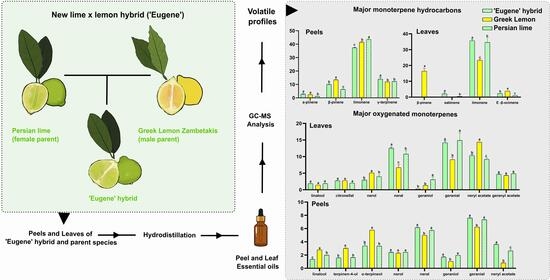
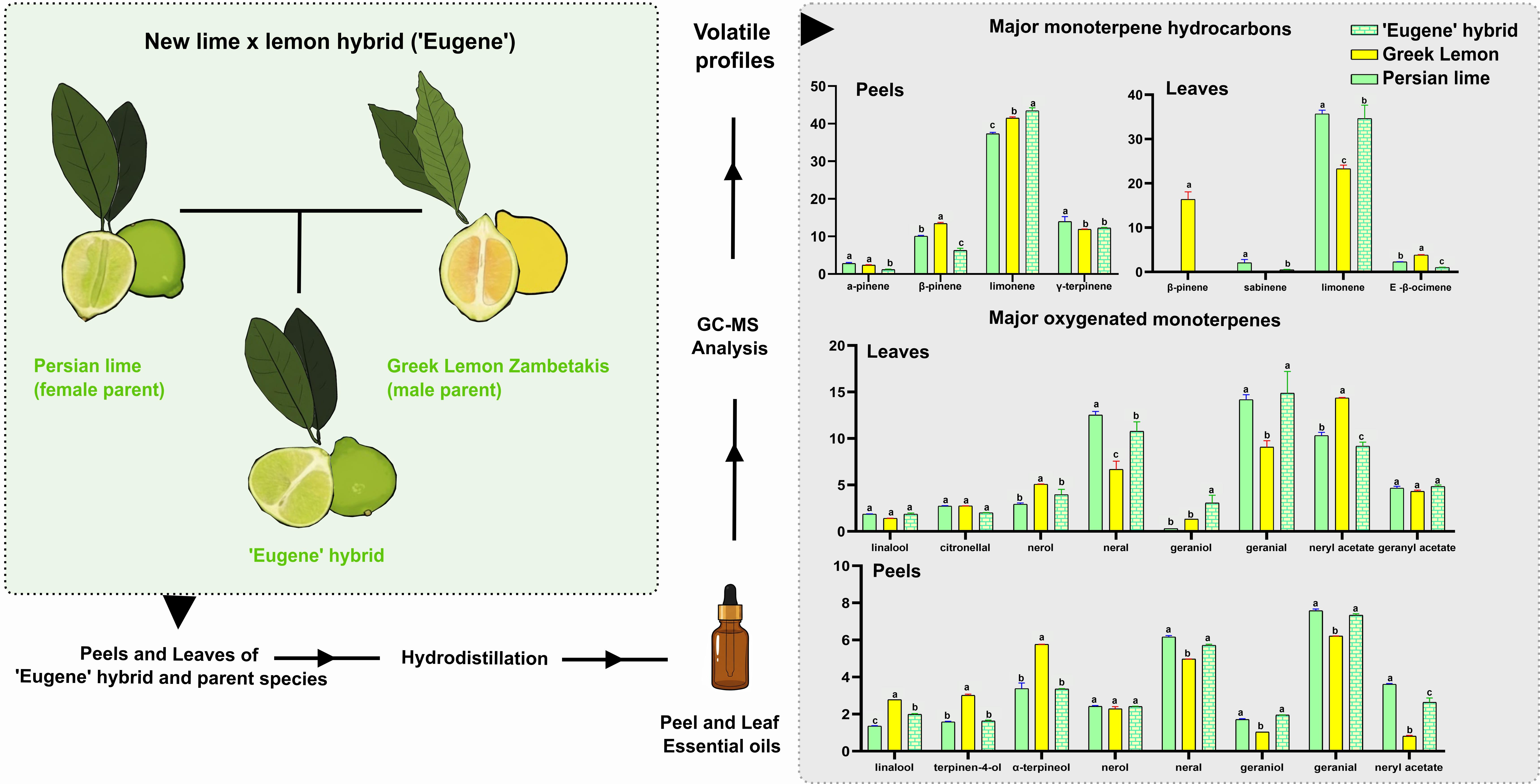
In the present study, the essential oils (EOs) of peels and leaves from the new limonime lime, ‘Eugene’ hybrid, were analyzed for the first time and compared with those of its parental plants, Citrus latifolia var. latifolia (Persian lime) and Citrus × limon cv. Zambetakis (lemon). This hybrid represents the first successful cross between these two species, exhibiting distinctive features such as aroma and shape. GC-MS analysis identified a total of 30 and 44 metabolites in the hybrid’s peel and leaf EOs, respectively. Limonene was the predominant volatile in both peels and leaves across all genotypes. In the peel EOs, the monoterpenes γ-terpinene, β-pinene, and geranial were among the most abundant compounds. In contrast, the leaf EOs showed differences between genotypes: the hybrid and Persian lime had similar volatile profiles dominated by geranial, neral, and neryl acetate, while β-pinene was only detected in lemon. Additionally, the total phenolic content and DPPH radical scavenging activity of the methanolic extracts of peels and leaves were evaluated, and revealed that lemon extracts were richer in phenolic compounds and with higher antioxidant activity compared to those of hybrid and Persian lime. Overall, the development of improved Greek varieties like the ‘Eugene’ hybrid holds significant potential to enrich the genetic diversity of Greek Citrus germplasm and broaden the commercial portfolio of citrus fruits with unique and desirable traits.

Graphical Abstract

1. Introduction

Citrus spp. (Rutaceae) are among the most important horticultural crops, as they are cultivated in approximately 140 countries around the world [1], with their annual production reaching 121 million tons [2]. Genomic and biogeographic evidence indicate that the genus Citrus originated in the southeastern foothills of the Himalayas approximately 6–8 million years ago [3] and subsequently spread from Southeast Asia to the Mediterranean Basin, where citron (C. medica) and later lemon (C. × limon) were introduced as status symbols before other species became widely cultivated [4].
Citrus species are evergreen trees or shrubs that bloom in spring. They are cultivated in regions between 35° N and 35° S and at altitudes up to 1000 m (with the optimal altitude being 400–500 m) [5]. The terminology of citrus fruits reveals a blend of mythology and linguistic evolution. The term “hesperidium”, used to describe the type of berry produced by citrus fruits, originates from the Hesperides, mythical nymphs who guarded the “golden apples”. However, it is now believed that the mythical “golden apples” were actually quinces (Cydonia oblonga) [6]. Before Linnaeus classified citrus trees under the genus Citrus, the word “citrus” referred to a coniferous tree with a characteristic sweet “woody” scent, identified as Tetraclinis articulata, that was used in ancient woodworking. Another theory links the term “citrus” to the Greek word kedros, which referred to aromatic coniferous trees, including species of Juniperus and Cedrus [6].
In Europe, Citrus cultivation and production are concentrated around the Mediterranean Basin, with Spain and Italy leading, followed by Greece [7]. The citrus fruits grown in this region are considered among the best in the world. The combination of dry summers and wet and humid winters contributes to the exceptional quality of lemons, oranges, and mandarins [8]. In Greece, citriculture spans over 41,500 hectares and includes approximately 19 million trees [9]. Citrus cultivation occurs in various regions of the country, including Crete, the Peloponnese, Central Greece, and Epirus [8].
Persian or Tahiti lime (Citrus latifolia) is reported to be a hybrid between C. aurantifolia and C. limon or C. aurantifolia and C. medica [6]. Lime varieties thrive mainly in warm climates, as they are not resistant to low temperatures. A characteristic of their cultivation is their ability to grow even in sandy soils. In Greece, only 2.6 hectares were recorded in 2021. To date, the limited cultivation of lime trees does not provide much information about production and distribution [10].
Lemon (Citrus limon) most likely originated as a hybrid between C. medica (citron) and C. aurantium (bitter orange) [6]. It is believed to have originated in the Himalayan and Persian region. Through the Silk Road, Roman expansion, and Arab trade, the lemon gradually spread westward [10]. Semi-arid irrigated and coastal areas are the most suitable for lemon cultivation, while Mediterranean climates and the sub-Himalayan foothills of India provide optimal conditions [8]. In 2021, the total lemon cultivation in Greece covered 2784 hectares, especially in the Peloponnese peninsula and West Greece [10].
Citrus fruits are cultivated especially for both fresh fruit consumption and juice production [11], while peel, pulp, seeds, and even leaves are discarded in the environment as by-products. After processing citrus fruits, nearly 50% of the fresh fruit weight is obtained in the form of seeds, pomace, and peel, which is discarded into the environment [12]. Every year, it is estimated that 15 million tons of citrus waste are produced worldwide [13]. However, these parts, and especially peels, are rich in bioactive compounds such as vitamins, dietary fibers, pectin, polyphenols, and essential oils [11].
Citrus essential oils (EOs) are obtained from the oil glands that are located in different parts of the plant, especially the peel [14] and can be extracted using various methods such as hydrodistillation, cold pressing, supercritical, or microwave-assisted extraction [15,16,17]. Citrus EOs contain a wide variety of approximately 200 compounds [18], of which 85–99% are volatile or semi-volatile, and the remaining 1–15% correspond to the non-volatile residue [19]. Citrus EOs have been classified as “Generally Recognized as Safe” and can further be utilized in the food, perfumery, and pharmaceutical industries [14]. Their use is further supported by their pleasant organoleptic properties and by consumer demands for natural, non-synthetic food additives [19].
The main aim of Citrus breeding programs is to obtain seedless fruits with easily removable peel, optimal size, and excellent organoleptic characteristics, properties highly appreciated in the fresh-fruit market [20]. From an agronomic and economic point of view, controlled pollination enables the production of plants with higher productivity and improved resistance against diseases and environmental changes [20].
In Greece, Citrus hybridization is a common and ongoing practice. The development of new plant cultivars is of fundamental importance as it serves as a crucial means for enhancing agricultural productivity and addressing the increasingly challenging conditions resulting from the climate crisis. The creation of new cultivars and/or species through hybridization was assigned to ELGO—DIMITRA via a Special Program for the creation of New Varieties from the Ministry of Rural Development and Food of Greece, in order to be utilized and registered in the National list of Varieties of plant species.
The new limonime lime (lime × lemon) hybrid (‘Eugene’ hybrid), “Citrus latifolia var. latifolia × Citrus × limon var. limon (L.) Burm. f.”, is the result of many years of effort to create new Citrus cultivars by the Institute of Olive Tree, Subtropical Plants, and Viticulture of ELGO–DIMITRA. This hybrid was the outcome of the crossing of triploid Persian or Tahiti lime (Citrus latifolia var. latifolia) (mother—provided the pistil) and the local diploid Greek Zambetakis lemon (Citrus × limon cv. Zambetakis) (father—provided the pollen). Citrus hybrids are typically generated by crossing a monoembryonic diploid female parent with a tetraploid male parent to obtain triploid, seedless progeny [21]. In this context, the ‘Eugene’ hybrid represents the first internationally reported attempt to combine these two specific parental genotypes through classical breeding technique (pollen collection and the pollination of flowers). The hybrid was successfully micropropagated in vitro, with an effective combined heat treatment and meristem tip culture used to eliminate harmful viroids, resulting in healthy plants with high survival rates both in the lab and after transfer to the greenhouse [22].
Both parent plants, as well as the hybrid, were grafted and grown on citrumelo rootstock (Citrus paradisi × Poncirus trifoliata). This specific rootstock provides the grafted plants with resistance to tristeza virus, Phytophthora spp., nematodes, and low temperatures [23]. The hybrid is highly productive and ripens from late August to mid-November. Although attempts to develop a lemon-like hybrid in many cases result in cultivars with small, inedible fruit, the ‘Eugene’ hybrid produces fruit with a “pear”-like shape and combines the desirable features of its parental plants. Its distinctive aroma, a special characteristic for Citrus cultivation, motivated the current analysis to characterize its volatile profile and compare it with those of its parent species.
It is important to note that the Greek lemon variety Citrus × limon cv. Zambetakis is the outcome of natural hybridization between Citrus × limon cv. Mikrokarpo Messaras and Citrus × limon cv. Eureka [10]. This lemon variety belongs to the Citrus Germaplast Bank of the Institute of Olive Tree, Subtropical Plants and Viticulture (ELGO—DIMITRA) at Chania, Crete, and has high commercial value [24]. Its fruit is medium-sized, with high juice content, thin rind, and is seedless [10], with the harvesting period extending from July to September. To date, two studies have been conducted on the chemical composition of the essential oil obtained from the peels and leaves [25,26]. Regarding Tahiti lime, several studies have evaluated the effect of rootstocks (including citrumelo) on fruit quality [27,28] or the composition of EOs [29].
The investigation of volatile compounds in Citrus hybrids is essential for assessing the success of hybridization, particularly when the goal is to develop new and commercially valuable aromatic profiles. Previous studies have shown that Citrus hybrids may express volatile compositions resembling one parent or exhibiting intermediate traits [21,30,31,32]. However, studies specifically examining lemon–lime combinations remain limited, and the volatile characteristics of crosses involving Persian lime and Greek lemon have not yet been documented. In this context, the chemical characterization of the ‘Eugene’ hybrid represents a critical step in evaluating its potential as a new cultivar. By comparing its volatile profile with those of its parental species, this study provides insight into the genetic regulation of aroma production and offers indications of how parental aromatic traits are inherited and expressed in the hybrid.

2. Materials and Methods

2.1. Plant Material

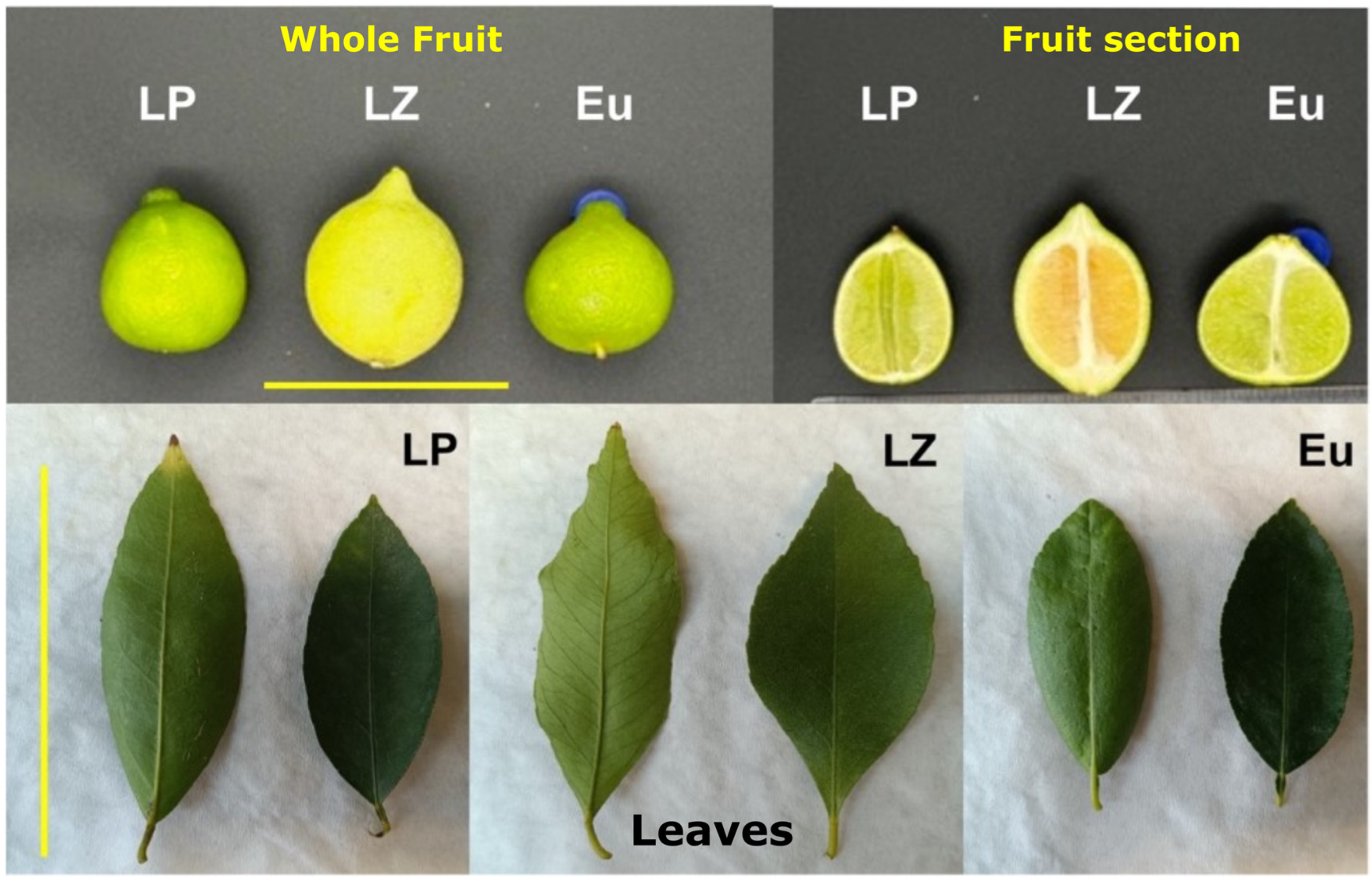
The plant material used in the present study was sourced from the citrus orchard of the Institute of Olive Tree, Subtropical Crops and Viticulture (ELGO-DIMITRA) located in Crete, Greece (Figure 1). This orchard is situated at approximately 35.49° N latitude and 24.05° E longitude, characterized by a Mediterranean climate with an average annual temperature of 18 °C and rainfall of 853 mm. The orchard features tree spacing of 4 × 6 m, with the soil being loam, composed of 45.3% sand, 19.31% clay, and 35.4% silt, containing 1.37% organic matter, an electrical conductivity of 0.2 dS·m−1, 0.31% total CaCO3, and a pH of 6.4.
Samples of leaves and fruit were collected from five randomly selected 5-year-old ‘Eugene’ hybrid trees, lime and lemons, all grafted upon Swingle citrumelo (Citrus paradisi Macf. × Poncirus trifoliata L. Raf.) rootstock (Table 1). The collection targeted fully mature leaves and fruits from the mid-height of the canopy, from four directions on the tree, during late September 2024, coinciding with harvest time.
A total of 50 fruits and 100 leaves (comprising ten fruits and twenty leaves per tree) were harvested from evenly distributed points across the canopy. The fruits appeared uniform in size, shape, and color, with no visible defects. Post-harvest, the fruits were segmented into six parts, with the flesh removed from the peel, and the peel’s albedo tissue was carefully separated and discarded. All trees involved had been cultivated under uniform environmental and management conditions throughout the experiment period from 2023 to 2024, with consistent irrigation, fertilization, and agronomic practices.

2.2. Extraction of EOs and Preparation of Methanolic Extract

For the extraction of EOs, 90 g of both fruit peel (flavedo) and leaves were cut into smaller pieces and immediately subjected to hydrodistillation by using 1 L of distilled water for 3 h using a Clevenger-type apparatus. The obtained EO of each tissue was collected in n-hexane, dried over anhydrous sodium sulfate (Na2SO4) (Lach-Ner, Neratovice, Czech Republic), and preserved in dark glass containers at a temperature of 4 to 6 °C until subsequent analysis.
A total of 10 g of fruit peel (flavedo) and leaves from each genotype, combined to form a composite biological sample by pooling material from five sampled trees, was cut into smaller pieces and subjected to methanol maceration (100 mL) at room temperature for 24 h. This extraction process was repeated three times. The combined extracts were then filtered through white filter paper and evaporated under vacuum at a maximum temperature of 40 °C using a rotary evaporator (Büchi-Waterbath B-480, (BUCHI Labortechnik AG, Flawil, Switzerland).

2.3. Gas Chromatography–Mass Spectroscopy (GC-MS) Analysis

The chemical composition of the essential oils (EOs) was analyzed using gas chromatography–mass spectrometry (GC-MS). The analysis was conducted on an Agilent Technologies Gas Chromatograph 7820A combined with an Agilent Technologies 5977B mass spectrometer system (Agilent, Santa Clara, CA, USA), employing electron impact (EI) ionization at 70 eV. The gas chromatograph was equipped with a split/splitless injector and an HP5MS capillary column measuring 30 m in length, with an internal diameter of 0.25 mm and a film thickness of 0.25 μm.
The temperature program for the analysis began at 60 °C, held for 5 min, followed by a temperature increase at a rate of 3 °C/min up to 130 °C, then a further increase at 2 °C/min to 180 °C, and finally ramping up at 5 °C/min to a final temperature of 240 °C, where it was held to conclude the program. The total analysis time was 93.33 min. Helium was used as the carrier gas at a flow rate of 0.7 mL/min. The injection volume was 2 μL, with a split ratio of 1:10, and the injector temperature was maintained at 280 °C. Compound identification was performed by comparing the acquired mass spectra against the Adams Registry of Mass Spectral Data and relevant literature sources [33].

2.4. Determination of Total Phenolic Content (TPC)

The total phenolic content (TPC) of the methanolic extract was determined using the Folin–Ciocalteu method [34]. In brief, 25 μL of either standard solutions (ranging from 2.5 to 100 μg/mL) or samples (4 mg/mL), all diluted in DMSO, were mixed in a 96-well plate with 125 μL of 10% Folin–Ciocalteu reagent, followed by 100 μL of sodium carbonate (Na2CO3). The plate was then incubated for 30 min at room temperature in the dark. Absorbance was measured at 765 nm using a TECAN Infinite m200 PRO multimode reader (Tecan Group, Männedorf, Switzerland). Measurements were performed in triplicate, and mean values were plotted against a gallic acid calibration curve (y = 0.0458x − 0.0672, R2 = 0.993). The results for TPC were expressed as milligrams of gallic acid equivalents (mg GAE) per gram of dry extract.

2.5. Determination of Antioxidant Activity by DPPH

For the DPPH• assay, discoloration of the extract solution was measured to determine the antioxidant activity [34]. Briefly, 10 μL of the sample solution (0.4 mg/mL in DMSO) or control (0.1 mg/mL gallic acid in DMSO) was mixed with 190 μL of a DPPH ethanol solution (0.124 mg/mL) in a 96-well microplate (neoLab Migge GmbH, Heidelberg, Germany). The mixture was incubated for 30 min in the dark at room temperature, and its absorbance was measured at 517 nm using a TECAN Infinite m200 PRO multimode reader (Tecan Group, Männedorf, Switzerland). All evaluations were performed in triplicate, and the results were expressed as % inhibition of DPPH (200 μg/mL), according to the equation below:
%   i n h i b i t i o n = O D c o n t r o l O D c o n t r o l b l a n k O D s a m p l e O D s a m p l e b l a n k O D c o n t r o l O D c o n t r o l b l a n k × 100
ODcontrol: Mean absorbance of the control (DMSO + DPPH).
ODcontrol (blank): Mean absorbance of the control blank (DMSO + EtOH).
ODsample: Mean absorbance of the sample (sample + DPPH).
ODsample (blank): Mean absorbance of the sample blank (sample + EtOH).

2.6. Statistical Analysis

Mean values for each compound were calculated from three replicates of EO analysis by GC-MS. Differences in relative concentrations among the compounds of the three samples were analyzed by two-way ANOVA followed by Tukey’s multiple comparison test. Differences in total phenolic content (TPC) and DPPH inhibition percentages among the three samples were assessed using one-way ANOVA with Tukey’s post hoc test. A p-value < 0.05 was considered statistically significant. All statistical analyses were performed using GraphPad Prism version 8.0.1 for Windows (GraphPad Software, La Jolla, CA, USA).

3. Results

3.1. Isolation and Yields of EOs’

The obtained EOs from the peels and leaves had a light-yellow color and the characteristic pleasant lemon-like odor, with yields (%) (expressed as mL per 100 g of fresh tissue) presented in Table 2.

3.2. Peels EOs’ Composition

A total of thirty compounds have been identified in peels EOs through GC-MS analysis (Table 3). The volatiles were chemically categorized into monoterpenoids (hydrocarbons, MHs, and oxygenated monoterpene, OMs), sesquiterpenoids (hydrocarbons, SHs, and oxygenated sesquiterpenes, OSs). The relative concentration of each chemical group is presented as % area.

3.3. Leaf EOs’ Composition

The EOs obtained from the leaves presented a more diverse profile in comparison with the peels, with a total number of forty-four compounds identified (Table 4).

3.4. TPC of the Methanolic Extracts

For the determination of TPC, the methanolic extracts from peels and the leaves of LP, LZ, and Eu were evaluated, and the results were expressed as mg GAE/g extract (Table 5).

3.5. Antioxidant Activity of the Methanolic Extracts

The antioxidant activity of methanolic extracts from the leaves and peels of LP, LZ, and Eu was assessed using the DPPH assay, and the results are expressed as the percentage of DPPH radical inhibition (Table 6).

4. Discussion

4.1. Yields of EOs

As presented in Table 2, the EO yield from peels ranged from 0.24 to 0.33 mL/100 g, with the lowest yield recorded in Eul and the highest in LZp. The EO yield from leaves varied between 0.13 and 0.27 mL/100 g, with the lowest yield observed in the LZl and the highest in Eul. In a previous study, Loizzo et al. reported a higher yield of EO from lemon peels in comparison with the leaves [35]. Accordingly, Vekiari et al. studied the seasonal variation of Citrus × limon cv. Zambetakis determined a higher yield in the peels than in the leaves [25]. The yields of Persian lime and hybrid EOs showed consistency between leaves and peels. The EO yield from lemon peel was higher than that from leaves, which is in agreement with the previously reported literature [25,35].

4.2. Chemical Composition of EOs from Citrus Peels

Thirty volatile compounds were identified in total from peel EOs of the studied genotypes (Table 3). All the detected compounds were terpenoids categorized in the three chemical groups of MHs, OMs, and SHs. Regarding the diversity of the peel volatiles, Eup exhibited the richest chemical profile with twenty-seven constituents, followed by the LPp with twenty-five and LZp with twenty metabolites. It has already been documented that monoterpenoids and sesquiterpenoids are the most frequently reported compounds in EOs of Citrus species, followed by other non-terpenoid derivatives [36].
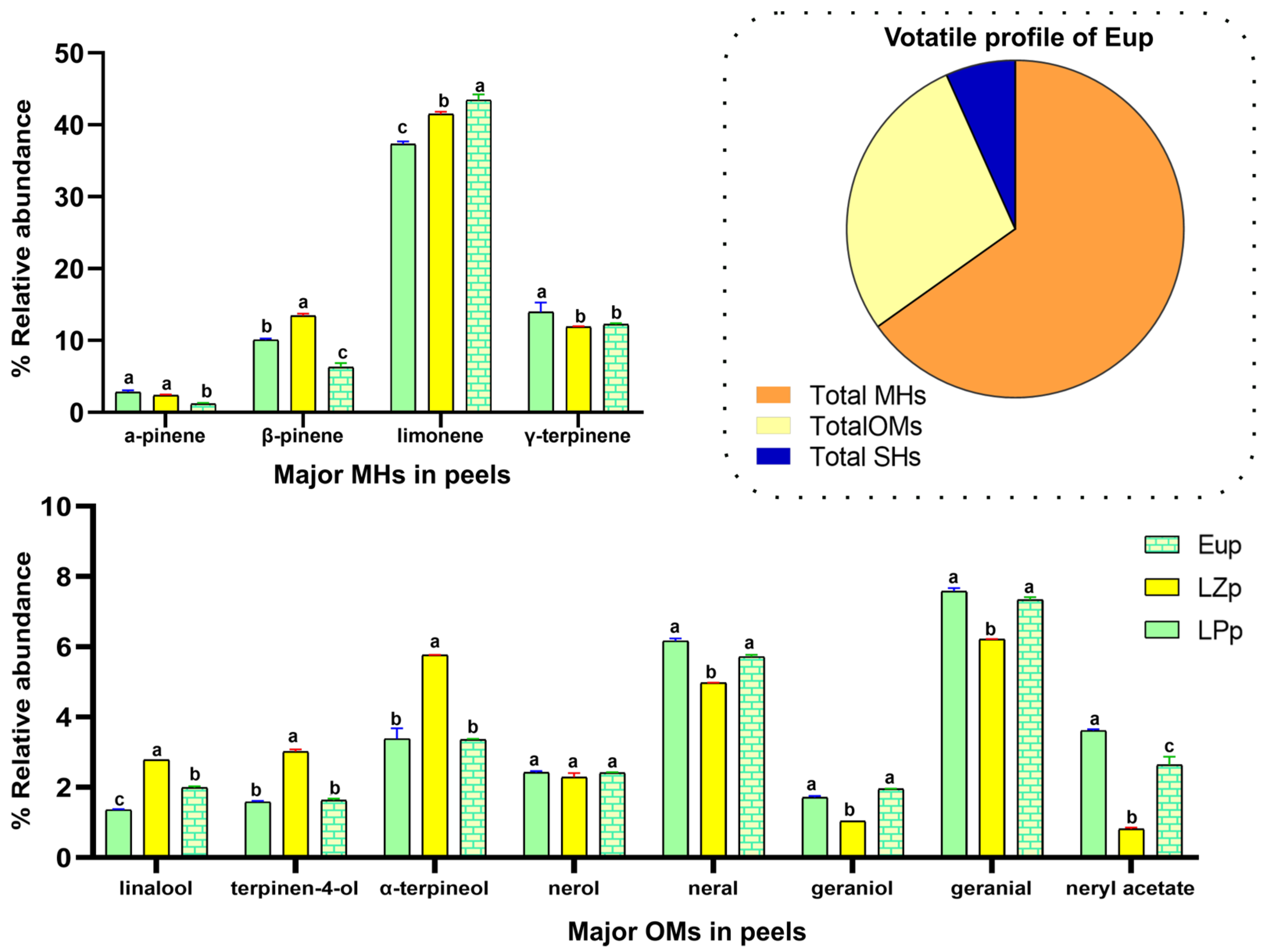
In this study, EOs from all peels revealed the predominance of monoterpenes, with MHs ranging from 64.79 to 70.09% and OMs from 27.49 to 28.71%. Sesquiterpenes were detected in lower amounts, with SHs exhibiting a percentage range of 2.24–6.65%. These results are in accordance with the literature, which shows that MHs are the predominant chemical group among Citrus species’ peels [37,38,39]. Notably, monoterpenes are responsible for giving a note of leaf-like odor in the sensory profile of the EOs [40].
Among monoterpenes, limonene, γ-terpinene, β-pinene, and geranial were the most abundant constituents in all three genotypes (Figure 2). The percentage of limonene, as the predominant component of all genotypes, ranges from 37.33 to 43.44%, with LZp and Eup exhibiting the highest content. The dominance of limonene in the EO peel from various Citrus has also been proposed by different authors [35,36,41]. γ-Terpinene and β-pinene were also abundant in all three genotypes, with β-pinene notably higher in LZp (13.44%) compared to Eup (6.28%) and LPp (10.08%), suggesting possible differential parental contributions. Other constituents present at levels above 3% included neral and α-terpineol, while neryl acetate was detected in significant amounts only in LPp and Eup. Among these volatiles, limonene is the primary compound responsible for the pleasant lemon-like aroma, which explains its widespread application as a flavoring agent in food and beverage products [42]. Beyond its use in the food industry, many researchers propose the application of limonene as a substitute for conventional organic solvents in the extraction of natural products [43,44,45]. Furthermore, β-pinene is associated with pine-like aroma, while γ-terpinene contributes with citrus-herbaceous notes to the sensory profile [46].
The total number of sesquiterpenes in the Eup is comparable to that of LPp EO, with LZp revealing a less complex profile. Among the sesquiterpenes, cis-α-bergamotene (ranging from 1.49 to 1.69%) and β-bisabolene (2.07–2.40%) were detected in notable amounts in LPp and Eul EOs. With respect to their contribution to the sensory profile, sesquiterpenes are known to provide a characteristic flower-like odor [40].
Regarding the Citrus × limon cv. Zambetakis volatile profile, Demertzis et al. previously characterized the essential oil composition of the flavedo, identifying monoterpenes limonene (31.89% ± 0.23), γ-terpinene (14.71% ± 0.04), and β-pinene (11.42% ± 1.03) as predominant components [26], which were also abundant in the present study. However, notable differences were observed in the relative concentrations of several compounds; limonene, geranial, neral, and α-terpineol were quantified at higher levels in the current study, whereas the sesquiterpenes E-caryophyllene and β-bisabolene, reported at 6.11% ± 2.06 and 4.72% ± 0.40, respectively, by Demertzis et al. [26], were detected only in trace amounts in the current study. However, such differences are expected since the chemical composition of EOs is influenced by multiple factors such as the extraction method, climatic conditions, agricultural practices, and harvesting time [47].
The dominant volatiles identified by Vekiari et al. during their investigation of seasonal variations in the essential oils of Citrus × limon cv. Zambetakis [25] are consistent with the present findings. Their results indicated limonene, β-pinene, and γ-terpinene as the major constituents of the peel essential oil, with aldehydes geranial and neral also detected in significant amounts [25]. However, direct quantitative comparisons between studies are not feasible, as the EO composition in Vekiari et al.’s work was influenced by factors such as fruit ripening stage and harvesting time [25].
Previous studies on the EO composition of Persian lime grafted onto citrumelo rootstock have reported a similar profile with LPp, with limonene (46.8%) identified as the predominant compound, followed by β-pinene (12.3%) and γ-terpinene (11.0%) [29]. These three major compounds seem to be characteristic of Persian lime, regardless in which rootstock they are grafted upon [15,29,48].

4.3. Chemical Composition of EOs from Citrus Leaves

The EOs isolated from leaves exhibited a more complex chemical profile than those from peels, with a total of forty-four compounds identified (Table 4). Among the leaf EOs, LZl demonstrated the highest chemical diversity with thirty-two constituents, followed by Eul with thirty-one and LPp with twenty-seven. MHs predominated in leaf EOs, comprising 37.15–45.34% of the total composition; however, OMs ranged from 48.48 to 53.86%, significantly exceeding their levels in peel EOs. This finding aligns with previous reports indicating less pronounced differences between MHs and OMs in leaf EOs [35,49]. SHs were also found in low amounts in the leaves (3.24–7.06%), while their oxygenated derivatives were detected in trace amounts (0.36–1.04%). Notably, OSs were not detected in peel EOs.
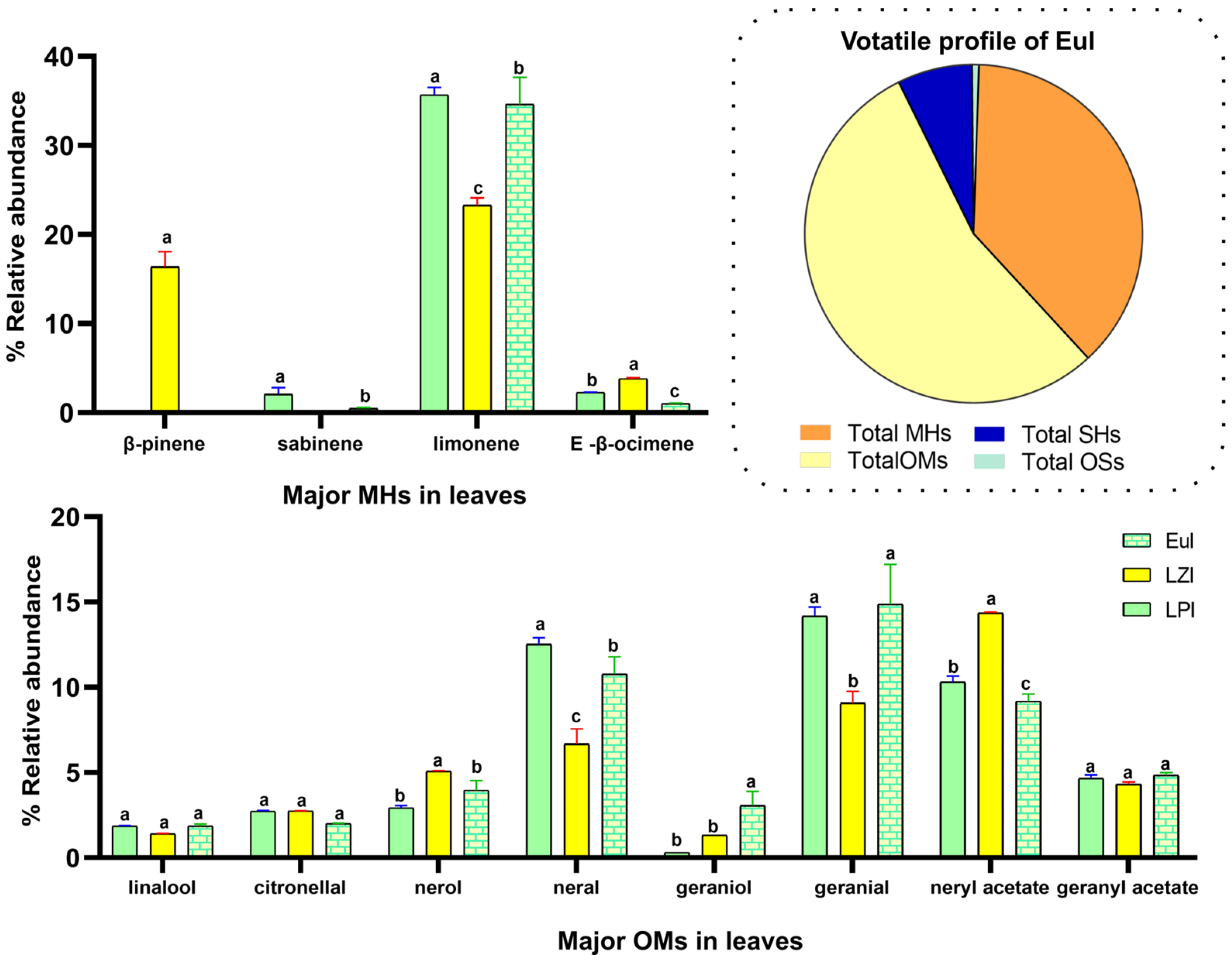
Limonene was the predominant component across all leaf genotypes, although it was detected at lower levels in leaves than in peels. Its relative concentration ranged from 23.27% to 35.69%, with the highest amounts observed in LPl (35.69%) and Eul (34.6%), and the lowest in LZl (23.27%) (Figure 3). Previous studies have also reported the predominance of limonene in Citrus peels relative to leaves [35,49].
Apart from limonene, the leaf EOs displayed more pronounced quantitative differences among the remaining major compounds compared to the peels. β-Pinene was the second most abundant compound in LZl (16.37%) but was undetected in both Eul and LPl EOs. Respectively, α-pinene was absent in LPl and Eul EOs, while it was present in low amounts in LZl (1.19%). The presence of β-pinene as the second major component in lemon leaf EOs has been previously reported by Loizzo et al. in Citrus limon cv. Femminello comune [35].
The other major constituents, geranial, neral, and neryl acetate, showed more similar profiles in LPl and Eul, while geranyl acetate showed no significant qualitative or quantitative differences across genotypes. Neryl acetate exhibited its highest relative concentration in LZl (14.35%), while LPl and Eul contained lower amounts with 10.3% and 9.18%, respectively. Aldehydes geranial and neral were abundant in LPl (14.18% and 12.52%) and Eul (14.88% and 10.78%), compared to lower levels in LZl (9.07% and 6.67%). Conversely, nerol content was highest in LZl (5.07%), followed by Eul (3.96%) and LPl (2.92%). Geranyl acetate levels were relatively stable across all genotypes, ranging from 4.31% to 4.84%, indicating minimal variation. Vekiari et al. examined seasonal variations in Citrus × limon cv. Zambetakis leaf EO composition and identified limonene as the predominant compound, with neral, geranial, β-pinene, and lower levels of neryl and geranyl acetate as main constituents [25]. These findings qualitatively agree with the present study, although the relative abundance of these compounds differs slightly in ranking.
Among sesquiterpenes, caryophyllene E (1.41–2.52%) was present in all three genotypes and found to be the predominant SH. Other sesquiterpenes, such as cis-a-bergamotene, β-bisabolene, α-humulene, were detected in all genotypes but in trace amounts.
Several studies have examined the volatile profiles of Citrus hybrids in comparison with their parental species [20,21,31,32,50]. However, hybrids derived from triploid × diploid crosses remain far less explored. Triploid genotypes such as Citrus latifolia are rarely used in breeding because their three chromosome sets cause irregular meiotic pairing, making the production of viable offspring difficult [51]. One of the few available studies, conducted by Selvaraj et al. (2002), characterized the peel and leaf EOs of the hybrid C. latifolia Tanaka × C. aurantifolia Swingle [30]. Similar to our findings, limonene was the predominant peel constituent, suggesting a strong combined influence of both parents. Several minor compounds were inherited primarily from the triploid parent, a pattern also observed in our study for OMs such as terpinen-4-ol, α-terpineol, neral, geraniol, and geranial. In contrast, Selvaraj et al. reported that leaf essential oils of C. latifolia × C. aurantifolia more closely resembled the diploid parent—an opposite trend to that observed here, where the maternal triploid genotype exerted greater influence. Comparisons with other hybrid studies further show that although limonene consistently emerges as the dominant compound, the inheritance patterns of β-pinene, γ-terpinene, geranial, neral, and related volatiles vary widely among crosses [20,21,32]. These variations are consistent with recent findings from volatile QTL mapping, which demonstrate that Citrus aroma traits are regulated by multiple genetic loci and interacting biosynthetic pathways, highlighting the complex and highly polygenic nature of volatile inheritance [52].

4.4. Total Phenolic Content

The total phenolic content (TPC) of methanolic extracts from leaves and peels is presented in Table 5. Leaf extracts contained higher levels of phenolics than peel extracts, particularly for the Eu and LZ, with TPC values ranging from 60.07 ± 2.21 to 70.57 ± 2.39 mg GAE/g extract for leaves, and 45.54 ± 0.70 to 55.83 ± 0.12 mg GAE/g extract for peels. Among leaf genotypes, LZl exhibited the highest phenolic content (70.57 ± 2.39 mg GAE/g), followed by Eul (63.07 ± 1.74 mg GAE/g) and LPl (60.07 ± 2.21 mg GAE/g), which did not have a significant statistical difference (p > 0.05). In peel extracts, LPp (55.83 ± 0.12) had the highest TPC, followed by Eup (49.08 ± 1.01), and LZp (45.54 ± 0.7) (p > 0.05) showed the lowest values.
In a comparable study of Citrus methanol extracts, TPC ranged from 2.48 ± 0.07 to 11.67 ± 0.82 mg GAE/g dry material, with Citrus limon showing relatively low phenolic content (3.83 ± 0.78 mg GAE/g) compared to other Citrus species [53]. John et al. reported a TPC of 26.58 μg GAE/mg extract in methanolic lemon extracts [54]. Other studies have also quantified TPC in lemon extracts [55,56]; however, variations in extraction techniques, solvents, and analytical protocols limit direct comparison with the current study’s results.

4.5. Antioxidant Activity

The antioxidant activity of methanolic extracts from peels and leaves was assessed using the DPPH assay (Table 6). Peel extracts exhibited inhibition percentages ranging from 15.25% to 16.69%, whereas leaf extracts showed significantly higher inhibition, particularly for LZl. This aligns with the higher TPC observed in leaves relative to peels for this genotype and the well-established positive correlation between phenolic content and antioxidant activity [57,58].
John et al. reported a higher DPPH inhibition of 41.63% for lemon peel extracts at a concentration of 200 μg/mL in comparison with the present study [54]. Furthermore, other studies have reported lower IC50 values for both peel and leaf extracts, indicating stronger antioxidant potential [54]. For instance, Khettal et al. reported an IC50 of 78.23 μg/mL for lemon leaf extracts [53], while Hafsia et al. observed an IC50 of 45 μg/mL [59]. These discrepancies can be partially attributed to differences in extraction methods, solvent systems, plant material origin, and assay conditions, all of which can significantly influence the measured antioxidant capacity.

5. Conclusions

In conclusion, this study provides a detailed characterization of the peel and leaf EOs of the newly developed ‘Eugene’ hybrid and its parental species—Citrus latifolia var. latifolia (mother) and Citrus × limon cv. Zambetakis (father)—addressing the lack of information on lemon–lime hybrids. Peel EOs of the hybrid were dominated by monoterpenes, particularly limonene (nearly 50% of the total terpenoid content) and exhibited a unique combination of oxygenated monoterpenes and reduced α- and β-pinene levels, showing contributions from both parental genotypes. Leaf oil displayed greater terpenoid diversity, closely resembling the maternal genotype with elevated limonene, neral, and neryl acetate, and a notable absence of β-pinene, which was prominent in the paternal genotype.
TPC and antioxidant activity in the hybrid were generally similar to the maternal genotype, while the paternal genotype’s leaves showed higher values. These patterns suggest complex genetic mechanisms underlying volatile metabolic pathways and demonstrate that parental contributions can be expressed differently across plant organs in lemon–lime hybrids.
The ‘Eugene’ hybrid enriches the Greek Citrus germplasm by broadening its genetic base and presenting a distinct chemical profile with potential relevance for industrial applications such as food flavoring, fragrance, or natural antioxidants. Current findings provide valuable insight into the inheritance patterns of aromatic and bioactive traits in lemon–lime hybrid combinations and offer a foundational dataset to support future efforts in Citrus improvement and cultivar development. Future studies will include cytogenetic, genomic, and metabolic analyses to determine the ploidy level, clarify the chromosomal contributions of the ‘Eugene’ hybrid, and identify inherited quality markers that can support its potential use in citrus breeding.

Author Contributions

Conceptualization, V.Z. and I.C.; methodology, K.G., V.Z. and I.C.; software: E.K. and E.P.; validation: E.P. and K.G.; formal analysis, E.K., E.P., E.N. and K.G.; investigation, E.K., E.P., K.G., E.N. and V.Z.; data curation, E.P., K.G. and V.Z.; writing—original draft preparation, E.K., E.P. and V.Z.; writing—review and editing, E.P., K.G., V.Z., and I.C.; visualization, E.P.; supervision, I.C.; project administration, V.Z. and I.C.; funding acquisition, V.Z. and I.C. All authors have read and agreed to the published version of the manuscript.

Funding

This research was partially funded by the Greek Ministry of Rural Development and Food via the Special Project of Agricultural Research for the Creation of New Plant Varieties (Project code: 22.1797.242—Limonime).

Institutional Review Board Statement

Not applicable.

Informed Consent Statement

Not applicable.

Data Availability Statement

The original contributions presented in this study are included in the article. Further inquiries can be directed to the corresponding author.

Acknowledgments

The authors would like to thank E. Kokkinos, A. Voulgarakis, and A. Karagianni for their support during the cultivation tasks and Eftichios Protopapadakis for his priceless contribution and effort to create the limonime lime hybrid.

Conflicts of Interest

The authors declare no conflicts of interest. The funders had no role in the design of the study; in the collection, analyses, or interpretation of data; in the writing of the manuscript; or in the decision to publish the results.

References

  1. Liu, Y.; Heying, E.; Tanumihardjo, S.A. History, Global Distribution, and Nutritional Importance of Citrus Fruits. Compr. Rev. Food Sci. Food Saf. 2012, 11, 530–545. [Google Scholar] [CrossRef]
  2. Patsalou, M.; Menikea, K.K.; Makri, E.; Vasquez, M.I.; Drouza, C.; Koutinas, M. Development of a Citrus Peel-Based Biorefinery Strategy for the Production of Succinic Acid. J. Clean. Prod. 2017, 166, 706–716. [Google Scholar] [CrossRef]
  3. Wu, G.A.; Terol, J.; Ibanez, V.; López-García, A.; Pérez-Román, E.; Borredá, C.; Domingo, C.; Tadeo, F.R.; Carbonell-Caballero, J.; Alonso, R.; et al. Genomics of the Origin and Evolution of Citrus. Nature 2018, 554, 311–316. [Google Scholar] [CrossRef]
  4. Langgut, D. The Citrus Route Revealed: From Southeast Asia into the Mediterranean. Horts 2017, 52, 814–822. [Google Scholar] [CrossRef]
  5. Hussain, S.Z.; Naseer, B.; Qadri, T.; Fatima, T.; Bhat, T.A. Fruits Grown in Highland Regions of the Himalayas: Nutritional and Health Benefits; Springer International Publishing: Cham, Switzerland, 2021; ISBN 978-3-030-75501-0. [Google Scholar]
  6. Mabberley, D.J. Citrus (Rutaceae): A Review of Recent Advances in Etymology, Systematics and Medical Applications. Blumea-Biodivers. Evol. Biogeogr. Plants 2004, 49, 481–498. [Google Scholar] [CrossRef]
  7. Food and Agriculture Organization of the United Nations. Citrus Fruit Fresh and Processed Statistical Bulletin 2020; FAO: Rome, Italy, 2020.
  8. Ladaniya, M. Citrus Fruit: Biology, Technology and Evaluation; Academic Press: San Diego, CA, USA, 2008; ISBN 978-0-12-374130-1. [Google Scholar]
  9. Στατιστικές Γεωργίας—Κτηνοτροφίας (Agricultural Statistics). Available online: https://www.statistics.gr/el/statistics/-/publication/SPG06/- (accessed on 28 March 2025).
  10. Ziogas, V. Monography of Citrus Cultivars; Hellenic Agricultural Organization DIMITRA: Athens, Greece, 2023; ISBN 978-618-83885-2-9. [Google Scholar]
  11. Panwar, D.; Saini, A.; Panesar, P.S.; Chopra, H.K. Unraveling the Scientific Perspectives of Citrus By-Products Utilization: Progress towards Circular Economy. Trends Food Sci. Technol. 2021, 111, 549–562. [Google Scholar] [CrossRef]
  12. Sharma, P.; Vishvakarma, R.; Gautam, K.; Vimal, A.; Kumar Gaur, V.; Farooqui, A.; Varjani, S.; Younis, K. Valorization of Citrus Peel Waste for the Sustainable Production of Value-Added Products. Bioresour. Technol. 2022, 351, 127064. [Google Scholar] [CrossRef] [PubMed]
  13. Andrade, M.A.; Barbosa, C.H.; Shah, M.A.; Ahmad, N.; Vilarinho, F.; Khwaldia, K.; Silva, A.S.; Ramos, F. Citrus By-Products: Valuable Source of Bioactive Compounds for Food Applications. Antioxidants 2022, 12, 38. [Google Scholar] [CrossRef] [PubMed]
  14. Palazzolo, E.; Armando Laudicina, V.; Antonietta Germanà, M. Current and Potential Use of Citrus Essential Oils. Curr. Org. Chem. 2013, 17, 3042–3049. [Google Scholar] [CrossRef]
  15. Atti-Santos, A.C.; Rossato, M.; Serafini, L.A.; Cassel, E.; Moyna, P. Extraction of Essential Oils from Lime (Citrus latifolia Tanaka) by Hydrodistillation and Supercritical Carbon Dioxide. Braz. Arch. Biol. Technol. 2005, 48, 155–160. [Google Scholar] [CrossRef]
  16. Brahmi, F.; Mokhtari, O.; Legssyer, B.; Hamdani, I.; Asehraou, A.; Hasnaoui, I.; Rokni, Y.; Diass, K.; Oualdi, I.; Tahani, A. Chemical and Biological Characterization of Essential Oils Extracted from Citrus Fruits Peels. Mater. Today Proc. 2021, 45, 7794–7799. [Google Scholar] [CrossRef]
  17. Ferhat, M.A.; Meklati, B.Y.; Chemat, F. Comparison of Different Isolation Methods of Essential Oil from Citrus Fruits: Cold Pressing, Hydrodistillation and Microwave ‘Dry’ Distillation. Flavour Fragr. J. 2007, 22, 494–504. [Google Scholar] [CrossRef]
  18. Tranchida, P.Q.; Bonaccorsi, I.; Dugo, P.; Mondello, L.; Dugo, G. Analysis of Citrus Essential Oils: State of the Art and Future Perspectives. A Review. Flavour Fragr. J. 2012, 27, 98–123. [Google Scholar] [CrossRef]
  19. Bora, H.; Kamle, M.; Mahato, D.K.; Tiwari, P.; Kumar, P. Citrus Essential Oils (CEOs) and Their Applications in Food: An Overview. Plants 2020, 9, 357. [Google Scholar] [CrossRef] [PubMed]
  20. Ruberto, G.; Renda, A.; Piattelli, M.; Rapisarda, P.; Starrantino, A. Essential Oil of Two New Pigmented Citrus Hybrids, Citrus clementina × Citrus sinensis. J. Agric. Food Chem. 1997, 45, 467–471. [Google Scholar] [CrossRef]
  21. Fabroni, S.; Ruberto, G.; Rapisarda, P. Essential Oil Profiles of New Citrus Hybrids, a Tool for Genetic Citrus Improvement. J. Essent. Oil Res. 2012, 24, 159–169. [Google Scholar] [CrossRef]
  22. Sarropoulou, V.; Grigoriadou, K.; Maliogka, V.I.; Sassalou, C.-L.; Ziogas, V. The Elimination of Viroids through In Vitro Thermotherapy and a Meristem Tip Culture from a New Limonime Hybrid (Citrus x limon var. limon (L.) Burm. f. x Citrus latifolia var. latifolia). BioTech 2024, 13, 37. [Google Scholar] [CrossRef]
  23. Morales Alfaro, J.; Bermejo, A.; Navarro, P.; Quiñones, A.; Salvador, A. Effect of Rootstock on Citrus Fruit Quality: A Review. Food Rev. Int. 2023, 39, 2835–2853. [Google Scholar] [CrossRef]
  24. Protopapadakis, E. Citrus. In Citrus; Agriculture and Stock-Breeding: Athens, Greece, 1992; p. 86. [Google Scholar]
  25. Vekiari, S.A.; Protopapadakis, E.E.; Papadopoulou, P.; Papanicolaou, D.; Panou, C.; Vamvakias, M. Composition and Seasonal Variation of the Essential Oil from Leaves and Peel of a Cretan Lemon Variety. J. Agric. Food Chem. 2002, 50, 147–153. [Google Scholar] [CrossRef]
  26. Demertzis, P.G.; Passa, A.I.; Akrida-Demertzi, K. Identification of Volatile Flavor Constituents of the Peel (Flavedo) from Five Greek Citrus Varieties Cultivated in the Area of Arta. In Nutrition, Functional and Sensory Properties of Foods; Ho, C.-T., Mussinan, C., Shahidi, F., Tratras Contis, E., Eds.; The Royal Society of Chemistry: London, UK, 2013; pp. 85–91. ISBN 978-1-84973-644-2. [Google Scholar]
  27. Stuchi, E.S.; Martins, A.B.G.; Lemo, R.R. Fruit Quality of ‘Tahiti’ Lime (Citrus latifolia Tanaka). Rev. Bras. Frutic. 2009, 31, 454–460. [Google Scholar] [CrossRef]
  28. García-Muñoz, M.C.; Henao-Rojas, J.C.; Moreno-Rodríguez, J.M.; Botina-Azain, B.L.; Romero-Barrera, Y. Effect of Rootstock and Environmental Factors on Fruit Quality of Persian Lime (Citrus latifolia Tanaka) Grown in Tropical Regions. J. Food Compos. Anal. 2021, 103, 104081. [Google Scholar] [CrossRef]
  29. Raddatz-Mota, D.; Franco-Mora, O.; Mendoza-Espinoza, J.A.; Rodríguez-Verástegui, L.L.; Díaz De León-Sánchez, F.; Rivera-Cabrera, F. Effect of Different Rootstocks on Persian Lime (Citrus latifolia T.) Postharvest Quality. Sci. Hortic. 2019, 257, 108716. [Google Scholar] [CrossRef]
  30. Selvaraj, Y.; Prasad, M.B.N.V.; Venkateshwarlu, G. Profiles of Essential Oils of Peel and Leaf of a New Citrus Hybrid, Citrus latifolia Tanaka x Citrus aurantifolia Swingle. J. Essent. Oil Res. 2002, 14, 369–371. [Google Scholar] [CrossRef]
  31. Ruberto, G.; Biondi, D.; Piattelli, M.; Rapisarda, P.; Starrantino, A. Essential Oil of the New Citrus Hybrid, Citrus clementina x C. limon. J. Essent. Oil Res. 1994, 6, 1–8. [Google Scholar] [CrossRef]
  32. Verzera, A.; Tripodi, G.; Cotroneo, A. Characteristics of a New Citrus Hybrid Essential Oil, Citrus clementina cv. Nules x Citrus limon cv. Cavone. J. Essent. Oil Bear. Plants 2009, 12, 293–299. [Google Scholar] [CrossRef]
  33. Adams, R.P. Identification of Essential Oil Components by Gas Chromatography Mass Spectroscopy; Allured Publishing Corporation: Carol Stream, IL, USA, 2007; ISBN 978-1-932633-21-4. [Google Scholar]
  34. Graikou, K.; Mpishinioti, A.; Tsafantakis, N.; Maloupa, E.; Grigoriadou, K.; Chinou, I. Comparative Phytochemical Analyses of Flowers from Primula veris subsp. veris Growing Wild and from Ex Situ Cultivation in Greece. Foods 2023, 12, 2623. [Google Scholar] [CrossRef] [PubMed]
  35. Loizzo, M.R.; Tundis, R.; Bonesi, M.; Sanzo, G.D.; Verardi, A.; Lopresto, C.G.; Pugliese, A.; Menichini, F.; Balducchi, R.; Calabrò, V. Chemical Profile and Antioxidant Properties of Extracts and Essential Oils from Citrus × limon (L.) Burm. cv. Femminello Comune. Chem. Biodivers. 2016, 13, 571–581. [Google Scholar] [CrossRef]
  36. González-Mas, M.C.; Rambla, J.L.; López-Gresa, M.P.; Blázquez, M.A.; Granell, A. Volatile Compounds in Citrus Essential Oils: A Comprehensive Review. Front. Plant Sci. 2019, 10, 12. [Google Scholar] [CrossRef]
  37. Li, C.; Cai, Q.; Wu, X.; Tan, Z.; Huang, S.; Wei, C.; Zhang, W.; Chen, Z.; Zhang, L.; Xiang, H. Variation in Compositions and Biological Activities of Essential Oils from Four Citrus Species: Citrus limon, Citrus sinensis, Citrus paradisi, and Citrus reticulata. Chem. Biodivers. 2022, 19, e202100910. [Google Scholar] [CrossRef]
  38. Anastasopoulou, E.; Graikou, K.; Ziogas, V.; Ganos, C.; Calapai, F.; Chinou, I. Chemical Profiles and Antimicrobial Properties of Essential Oils from Orange, Pummelo, and Tangelo Cultivated in Greece. Horticulturae 2024, 10, 792. [Google Scholar] [CrossRef]
  39. Ziogas, V.; Panou, E.; Graikou, K.; Ganos, C.; Ntamposi, E.; Chinou, I. Revealing the Influence of Rootstock Choice on Clementine Mandarin Leaves and Peel Volatile Profile. Horticulturae 2025, 11, 523. [Google Scholar] [CrossRef]
  40. Park, M.K.; Cha, J.Y.; Kang, M.; Jang, H.W.; Choi, Y. The Effects of Different Extraction Methods on Essential Oils from Orange and Tangor: From the Peel to the Essential Oil. Food Sci. Nutr. 2024, 12, 804–814. [Google Scholar] [CrossRef]
  41. Gök, A.; İsmail Kirbaşlar, Ş.; Gülay Kirbaşlar, F. Comparison of Lemon Oil Composition after Using Different Extraction Methods. J. Essent. Oil Res. 2015, 27, 17–22. [Google Scholar] [CrossRef]
  42. Vieira, A.J.; Beserra, F.P.; Souza, M.C.; Totti, B.M.; Rozza, A.L. Limonene: Aroma of Innovation in Health and Disease. Chem. Biol. Interact. 2018, 283, 97–106. [Google Scholar] [CrossRef]
  43. Liu, S.X.; Mamidipally, P.K. Quality Comparison of Rice Bran Oil Extracted with d-Limonene and Hexane. Cereal Chem. 2005, 82, 209–215. [Google Scholar] [CrossRef]
  44. Aissou, M.; Chemat-Djenni, Z.; Yara-Varón, E.; Fabiano-Tixier, A.-S.; Chemat, F. Limonene as an Agro-Chemical Building Block for the Synthesis and Extraction of Bioactive Compounds. Comptes Rendus Chim. 2016, 20, 346–358. [Google Scholar] [CrossRef]
  45. Golmakani, M.-T.; Mendiola, J.A.; Rezaei, K.; Ibáñez, E. Pressurized Limonene as an Alternative Bio-Solvent for the Extraction of Lipids from Marine Microorganisms. J. Supercrit. Fluids 2014, 92, 1–7. [Google Scholar] [CrossRef]
  46. Xiao, Z.; Fan, B.; Niu, Y.; Wu, M.; Liu, J.; Ma, S. Characterization of Odor-Active Compounds of Various Chrysanthemum Essential Oils by Gas Chromatography–Olfactometry, Gas Chromatography–Mass Spectrometry and Their Correlation with Sensory Attributes. J. Chromatogr. B 2016, 1009–1010, 152–162. [Google Scholar] [CrossRef] [PubMed]
  47. Salvatore, M.M.; Nicoletti, R.; Andolfi, A. Essential Oils in Citrus Fruit Ripening and Postharvest Quality. Horticulturae 2022, 8, 396. [Google Scholar] [CrossRef]
  48. Van, C.K.; Nguyen, P.T.N.; Nguyen, T.-T.T.; Bach, L.G. Microencapsulation of Citrus latifolia Peel Essential Oil by Spray-Drying Using Maltodextrin: Characterization, Antimicrobial Activities, and Release Profile. LWT 2024, 197, 115825. [Google Scholar] [CrossRef]
  49. Lota, M.-L.; De Rocca Serra, D.; Tomi, F.; Jacquemond, C.; Casanova, J. Volatile Components of Peel and Leaf Oils of Lemon and Lime Species. J. Agric. Food Chem. 2002, 50, 796–805. [Google Scholar] [CrossRef]
  50. Verzera, A.; Trozzi, A.; Zappalá, M.; Condurso, C.; Cotroneo, A. Essential Oil Composition of Citrus meyerii Y. Tan. and Citrus medica L. cv. Diamante and Their Lemon Hybrids. J. Agric. Food Chem. 2005, 53, 4890–4894. [Google Scholar] [CrossRef]
  51. Zhu, S.-P.; Song, J.-K.; Hu, Z.-Y.; Tan, B.; Xie, Z.-Z.; Yi, H.-L.; Deng, X. Ploidy Variation and Genetic Composition of Open- Pollinated Triploid Citrus Progenies. Bot. Stud. 2009, 50, 319–324. [Google Scholar]
  52. Ferrer, V.; Costantino, G.; Paymal, N.; Quinton, C.; Perdomo, E.C.; Paoli, M.; Mournet, P.; Ollitrault, P.; Tomi, F.; Luro, F. Inheritance and Quantitative Trait Loci Mapping of Aromatic Compounds from Clementine (Citrus × clementina Hort. Ex Tan.) and Sweet Orange (C. × sinensis (L.) Osb.) Fruit Essential Oils. Genes 2023, 14, 1800. [Google Scholar] [CrossRef]
  53. Khettal, B.; Kadri, N.; Tighilet, K.; Adjebli, A.; Dahmoune, F.; Maiza-Benabdeslam, F. Phenolic Compounds from Citrus Leaves: Antioxidant Activity and Enzymatic Browning Inhibition. J. Complement. Integr. Med. 2017, 14, 20160030. [Google Scholar] [CrossRef] [PubMed]
  54. John, S.; Monica, S.J.; Priyadarshini, S.; Sivaraj, C.; Arumugam, P. Antioxidant and Antimicrobial Efficacy of Lemon (Citrus limonum L.) Peel. Int. J. Pharm. Sci. Rev. Res. 2017, 46, 115–117. [Google Scholar]
  55. Xi, W.; Lu, J.; Qun, J.; Jiao, B. Characterization of Phenolic Profile and Antioxidant Capacity of Different Fruit Part from Lemon (Citrus limon Burm.) Cultivars. J. Food Sci. Technol. 2017, 54, 1108–1118. [Google Scholar] [CrossRef]
  56. Dong, X.; Hu, Y.; Li, Y.; Zhou, Z. The Maturity Degree, Phenolic Compounds and Antioxidant Activity of Eureka Lemon [Citrus limon (L.) Burm. f.]: A Negative Correlation between Total Phenolic Content, Antioxidant Capacity and Soluble Solid Content. Sci. Hortic. 2019, 243, 281–289. [Google Scholar] [CrossRef]
  57. Muflihah, Y.M.; Gollavelli, G.; Ling, Y.-C. Correlation Study of Antioxidant Activity with Phenolic and Flavonoid Compounds in 12 Indonesian Indigenous Herbs. Antioxidants 2021, 10, 1530. [Google Scholar] [CrossRef]
  58. Džarić, T.; Petrović, D.; Božović, M. Antioxidant Activity and Total Phenolic Content of Different Extracts from Rosa Canina L Fruits. Nat. Prod. Commun. 2025, 20, 1934578X251369590. [Google Scholar] [CrossRef]
  59. Hafsia, B.; Sabah, D.; Noura, S.; Abdelfattah, E.; Najla, H. Phytochemistry and Antioxidant Activities of the Methanolic Extract Obtained from the Leaves of Citrus limon (L.) Osbeck. Int. J. Second. Metab. 2020, 7, 47–53. [Google Scholar] [CrossRef]
Figure 1. Fruits and leaves of Citrus latifolia var. latifolia (LP), Citrus limon cv. Zambetakis (LZ), Citrus latifolia var. latifolia × Citrus × limon var. limon (L.) Burm. f. (Eu). The scale bar represents a length of 10 cm.
Horticulturae 11 01531 g001
Figure 2. Distribution of chemical groups identified in the volatile profile of Eup, presented as a pie chart; relative abundance of predominant MHs and OMs across genotypes LPp, LZp, and Eup.; Different letters (a, b, c) represent statistically significant differences (p < 0.05) among each compound.
Horticulturae 11 01531 g002
Figure 3. Distribution of chemical groups identified in the volatile profile of Eul, presented as a pie chart; relative abundance of predominant MHs and OMs across genotypes LPl, LZl, and Eul; Different letters (a, b, c) represent statistically significant differences (p < 0.05) among each compound.
Horticulturae 11 01531 g003
Table 1. Citrus genotypes.
Citrus SpeciesCommon NamePeelsLeaves
Citrus latifolia var. latifoliaPersian limeLPpLPl
Citrus limon cv. ZambetakisLemonLZpLZl
Citrus latifolia var. latifolia × Citrus × limon var. limon (L.) Burm. f.Limonime lime hybrid/“Eugene” hybridEupEul
Table 2. Yields % (v/w) of EOs from the peels and leaves.
Yield% (v/w)
PeelsLeaves
LPp0.27LPl0.26
LZp0.33LZl0.13
Eup0.24Eul0.27
Table 3. Volatile compounds in the peel EOs expressed as relative % area.
No.Chemical GroupCompoundsLPpLZpEup
1MHa-pinene2.82 ± 0.23 a2.35 ± 0.11 a1.20 ± 0.12 b
2MHβ-pinene10.08 ± 0.18 b13.44 ± 0.27 a6.28 ± 0.59 c
3MHmyrceneNDND0.76 ± 1.07 a
4MHlimonene37.33 ± 0.35 c41.49 ± 0.31 b43.44 ± 0.77 a
5MHγ-terpinene13.93 ± 1.36 a11.90 ± 0.07 b12.21 ± 0.17 b
6MHterpinolene0.94 ± 0.01 a0.91 ± 0.00 a0.90 ± 0.03 a
7OMlinalool1.35 ± 0.03 c2.78 ± 0.00 a1.99 ± 0.04 b
8OMterpinen-4-ol1.58 ± 0.03 b3.01 ± 0.07 a1.63 ± 0.05 b
9OME-isocitral0.19 ± 0.27 aND0.33 ± 0.00 a
10OMα-terpineol3.38 ± 0.30 b5.76 ± 0.01 a3.35 ± 0.03 b
11OMcitronellolND0.14 ± 0.00 aND
12OMnerol2.42 ± 0.04 a2.29 ± 0.11 a2.41 ± 0.02 a
13OMneral6.16 ± 0.08 a4.97 ± 0.01 b5.71 ± 0.06 a
14OMgeraniol1.71 ± 0.04 a1.04 ± 0.00 b1.95 ± 0.01 a
15OMgeranial7.58 ± 0.09 a6.21 ± 0.01 b7.34 ± 0.07 a
16SHδ-elemene0.17 ± 0.01 aND0.31 ± 0.00 a
17OMneryl acetate3.61 ± 0.04 a0.81 ± 0.04 c2.64 ± 0.23 b
18OMgeranyl acetate0.73 ± 0.03 a0.48 ± 0.01 a0.62 ± 0.00 a
19SHβ-elemene0.22 ± 0.00 aND0.34 ± 0.01 a
20SHE-caryophyllene0.89 ± 0.00 a0.52 ± 0.00 a0.54 ± 0.01 a
21SHγ-elemene0.10 ± 0.00 aND0.17 ± 0.00 a
22SHcis-α-bergamotene1.49 ± 0.01 a0.56 ± 0.01 b1.69 ± 0.02 a
23SHgermacrene DNDND0.14 ± 0.00
24SHE-β-farnesene0.11 ± 0.01 aND0.12 ± 0.01 a
25SHvalenceneND0.18 ± 0.00 aND
26SHbicyclogermacreneND0.13 ± 0.01 aND
27SHβ-bisabolene2.07 ± 0.04 a0.85 ± 0.00 b2.4 ± 0.04 a
28SHZ-α-bisabolene0.19 ± 0.00 aND0.23 ± 0.00 a
29SHE, E-α-farnesene0.36 ± 0.01 aND0.49 ± 0.00 a
30SHgermacrene B0.14 ± 0.01 aND0.21 ± 0.00 a
Total99.55 ± 0.11 a99.82± 0.09 a99.41± 0.43 a
Total MHs65.10 ± 0.58 b70.09 ± 0.00 a64.79 ± 0.57 b
Total OMs28.71 ± 0.41 a27.49 ± 0.09 b27.97 ± 0.06 b
Total SHs5.74 ± 0.12 b2.24 ± 0.00 c6.65 ± 0.08 a
MHs: monoterpene hydrocarbons, OMs: oxygenated monoterpenes, SHs: sesquiterpene hydrocarbons. Within each row, values indicated by different superscripts indicate a significant difference (p < 0.05). Certain low-abundance volatiles may exhibit SD values above the mean due to the very small absolute peak areas; ND: not detected.
Table 4. Volatile compounds in the leaf EOs expressed as relative % area.
No.Chemical GroupCompoundsLPlLZlEul
1MHα-pineneND1.19 ± 0.06 aND
2MHβ-pineneND16.37 ± 1.70 aND
3MHsabinene2.09 ± 0.71 aND0.47 ± 0.12 b
4MHmyrcene0.88 ± 1.17 aND1.06 ± 0.03 a
5MHlimonene35.69 ± 0.83 a23.27 ± 0.86 c34.60 ± 3.06 b
6MHsylvestreneND0.68 ± 0.95 aND
7MHE -β-ocimene2.28 ± 0.02 b3.83 ± 0.08 a1.02 ± 0.05 c
8OMlinalool1.86 ± 0.03 a1.41 ± 0.01 a1.86 ± 0.11 a
9OMexo isocitral0.50 ± 0.02 a0.27 ± 0.00 a0.41 ± 0.04 a
10OMcitronellal2.72 ± 0.06 a2.74 ± 0.01 a2.01 ± 0.01 a
11OME–isocitral2.38 ± 0.01 a0.76 ± 0.04 b1.53 ± 0.58 a,b
12OMternipen-4-olND0.17 ± 0.23 aND
13OMα-terpineolND0.81 ± 0.00 a0.89 ± 0.00 a
14OMnerol2.92 ± 0.13 b5.07 ± 0.03 a3.96 ± 0.56 b
15OMneral12.52 ± 0.38 a6.67 ± 0.89 c10.78 ± 1.01 b
16OMgeraniol0.31 ± 0.00 b1.32 ± 0.00 b3.06 ± 0.83 a
17OMgeranial14.18 ± 0.53 a9.07 ± 0.68 b14.88 ± 2.33 a
18AAundecanal0.05 ± 0.06 a0.18 ± 0.01 aND
19OMmethyl geranateND0.19 ± 0.00 aND
20SHδ-elemene0.22 ± 0.01 aND0.51 ± 0.07 a
21OMα-terpinyl acetate0.18 ± 0.02NDND
22OMcitronellyl acetate0.47 ± 0.01 a1.10 ± 0.01 a0.46 ± 0.03 a
23OMneryl acetate10.30 ± 0.36 b14.35 ± 0.06 a9.18 ± 0.42 c
24OMgeranyl acetate4.65 ± 0.20 a4.31 ± 0.13 a4.84 ± 0.15 a
25SHE–caryophyllene1.41 ± 0.06 b2.52 ± 0.10 a2.31 ± 0.03 a,b
26SHγ-elemene0.22 ± 0.01 aND0.44 ± 0.02 a
27SHcis-α-bergamotene0.18 ± 0.01 a0.18 ± 0.00 a0.65 ± 0.01 a
28SHα-humulene0.19 ± 0.01 a0.30 ± 0.01 a0.31 ± 0.01 a
29OMneryl propanoateND0.15 ± 0.01 aND
30SHgermacrene D0.13 ± 0.01 aND0.31 ± 0.02 a
31OMgeranyl propanoateND0.09 ± 0.00 aND
32SHα-selineneNDND0.08 ± 0.11 a
33SHbicyclogermacreneND0.63 ± 0.04 aND
34SHβ-bisabolene0.29 ± 0.03 a0.32 ± 0.01 a1.07 ± 0.10 a
35SHZ-α-bisaboleneNDND0.06 ± 0.08 a
36SHE, E-α-farnesene0.34 ± 0.03 aND0.77 ± 0.03 a
37SHδ-cadineneND0.11 ± 0.01 aND
38SHgermacrene B0.29 ± 0.02 aND0.55 ± 0.04 a
39OSE–nerolidolNDND0.25 ± 0.04 a
40OSspathuneolND0.34 ± 0.02 aND
41OScaryophyllene oxide0.36 ± 0.03 a0.33 ± 0.01 a0.18 ± 0.00 a
42OSα-cadinolND0.24 ± 0.01 aND
43OSselin-11-en-4- α -olNDND0.04 ± 0.06 a
44OSα-bisabololND0.13 ± 0.02 a0.20 ± 0.07 a
Total97.58± 0.97 a99.10 ±1.00 a98.74 ±0.35 a
Total MHs40.94 ± 1.03 b45.34 ± 0.14 a37.15 ± 3.16 c
Total OMs52.99 ± 1.71 a48.48 ± 0.61 b53.86 ± 2.81 a
Total SHs3.24 ± 0.20 b4.06 ± 0.18 b7.06 ± 0.52 a
Total OSs0.36 ± 0.03 a1.04 ± 0.07 a0.67 ± 0.17 a
MHs: monoterpene hydrocarbons, OMs: oxygenated monoterpenes, SHs: sesquiterpene hydrocarbons, OSs: oxygenated sesquiterpenes. Within each row, values indicated by different superscripts indicate significant difference (p < 0.05). Certain low-abundance volatiles may exhibit SD values above the mean due to the very small absolute peak areas; ND: not detected
Table 5. Total phenolic content of the peels and leaves methanolic extracts *.
TPC (mg GAE/g Extract)
PeelsLeaves
LPp55.83 ± 0.12 cLPl60.07 ± 2.21 b,c
LZp45.54 ± 0.70 dLZl70.57 ± 2.39 a
Eup49.08 ± 1.01 dEul63.07 ± 1.74 b
* Values expressed are means ± S.D. of three parallel measurements. GAE: gallic acid equivalents. Values indicated by different superscripts indicate significant difference (p < 0.05).
Table 6. DPPH scavenging activity of methanolic extracts *.
% Inhibition of DPPH (200 μg/mL)
PeelsLeaves
LPp15.25 ± 2.08 bLPl20.19 ± 2.76 b
LZp16.69 ± 3.19 bLZl34.87 ± 1.87 a
Eup16.22 ± 4.59 bEul23.12 ± 2.50 b
* Values expressed are means ± S.D. of three parallel measurements. Values indicated by different superscripts indicate significant difference (p < 0.05).
Disclaimer/Publisher’s Note: The statements, opinions and data contained in all publications are solely those of the individual author(s) and contributor(s) and not of MDPI and/or the editor(s). MDPI and/or the editor(s) disclaim responsibility for any injury to people or property resulting from any ideas, methods, instructions or products referred to in the content.