Review

Advances and Perspectives in Comprehensive Assessment of Medicinal–Ornamental Multifunctional Plants


1
East China Medicinal Botanical Garden, Lishui 323000, China
2
Laboratory of Key Trait Regulation and Germplasm Innovation in Bulbous and Perennial Herbaceous Flowers, School of Civil Engineering and Architecture, Zhejiang Sci-Tech University, Hangzhou 310018, China
3
Genomics and Genetic Engineering Laboratory of Ornamental Plants, College of Agriculture and Biotechnology, Zhejiang University, Hangzhou 310058, China
*
Authors to whom correspondence should be addressed.
Horticulturae 2025, 11(12), 1454; https://doi.org/10.3390/horticulturae11121454
Submission received: 19 October 2025 / Revised: 21 November 2025 / Accepted: 27 November 2025 / Published: 1 December 2025
(This article belongs to the Special Issue Advances in Quality Regulation and Improvement of Ornamental Plants)

Abstract

China is rich in medicinal–ornamental plants with multifunctional uses, making a significant contribution to global landscaping, environmental beautification, and the health industry. In the post-pandemic era, there is an increasing focus on improving living environments and enhancing immune health, leading to a growing demand for the development and utilization of these plant resources. Resource evaluation is fundamental to their widespread application in landscaping, commercial production, germplasm innovation, and sustainable utilization. However, current research is limited, and there is an absence of a comprehensive evaluation system. The evaluation of these plants, particularly endangered wild species, is vital for biodiversity conservation, rational resource utilization, and breeding. This study proposes a resource evaluation model based on three key aspects: ecological adaptability, medicinal value, and ornamental value. It also reviews commonly employed research methods, such as the scoring method, analytic hierarchy process (AHP), and fuzzy mathematics. Looking forward, we highlight the importance of establishing fundamental evaluation indicators, integrating new technologies, leveraging big data, and strengthening evaluations for germplasm innovation and the protection of these multifunctional medicinal–ornamental plant resources in China.

1. Introduction

Medicinal–ornamental multifunctional plants refer to plant species that combine both medicinal and ornamental values, serving important roles in landscaping, environmental beautification, healthcare, and wellness. These plants are valued not only for their therapeutic properties but also for their aesthetic appeal, making them a unique and versatile resource in modern horticulture. The term “medicinal–ornamental multifunctional plants” here is defined operationally to include two categories: (1) species in which the same organ provides both functions (e.g., Crocus sativus, where the flower is an ornamental display organ and the source of medicinal saffron), and (2) species in which different organs serve distinct purposes (e.g., Paeonia lactiflora, valued for its ornamental flowers and medicinal roots).
China, as one of the world’s biodiversity hotspots, possesses an exceptionally rich array of such plants. Its vast plant resources are a testament to its deep cultural heritage and are integral to the sustainable development of contemporary horticulture [1]. According to the Fourth National Survey of Traditional Chinese Medicine Resources, the country is home to 18,817 species of medicinal plants, underscoring its status as one of the leading global sources of medicinal plant biodiversity [2]. These plants serve as a cornerstone for traditional Chinese medicine and contribute to a wide range of applications in healthcare and wellness [3]. China is also a major global center of ornamental horticulture, with thousands of native species (e.g., Rhododendron, Meconopsis, Primula) widely cultivated for urban greening, landscape construction, and ecological restoration. However, the overlap between medicinal and ornamental groups is uneven: medicinal plants in China are predominantly herbaceous or rhizomatous species used for roots, stems, or fruits, whereas ornamental species are often selected for floral traits, canopy structure, or foliage. Understanding these biological and industrial distinctions is essential for evaluating multifunctional species, especially when different organs have conflicting harvest practices, developmental cycles, or market values.
In recent years, global market trends further underscore the importance of medicinal–ornamental plants. The global market for medicinal and aromatic plants reached approximately US $410.3 billion in 2024, and it is projected to grow at a compound annual growth rate (CAGR) of about 8.1%, potentially more than doubling by 2034. Meanwhile, the ornamental horticulture sector is also booming: according to market forecasts, the global ornamental horticulture market was valued at around US $61.8 billion in 2024 and is expected to grow at a CAGR of approximately 5.7% through 2033. On the national level, China’s flower (ornamental) industry is already massive: in 2023, the Chinese flower market’s retail value reached RMB 216.58 billion, with a steady expansion in cultivation area over the last decade. With growing emphasis on environmental improvement and immune health in the post-pandemic era, the demand for multifunctional plants, those combining medicinal and ornamental properties, has surged, further highlighting their economic and cultural significance [4].
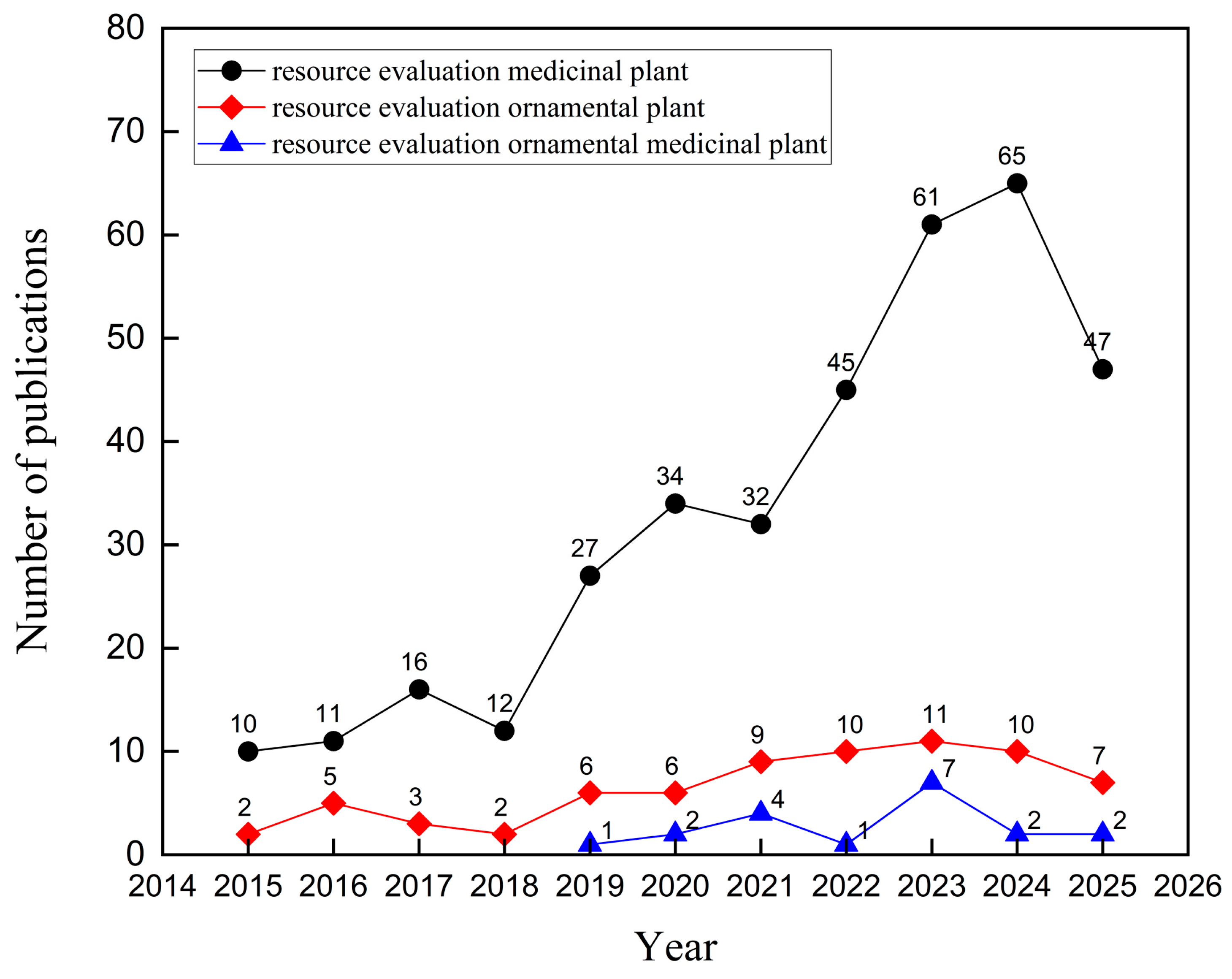
Despite this growing interest and market expansion, research on medicinal–ornamental plants continues to lag behind [5]. Resource evaluation, which forms the foundation for their effective use in landscaping, commercial production, and breeding, is still underdeveloped. To illustrate the current research landscape, we analyzed publication outputs using the Web of Science Core Collection database, with search queries including these three plant categories and filtering for articles published from 2015 to 2025. During this period, the number of publications on resource evaluation of medicinal plants increased markedly, from about 10 papers in 2015 to a peak of 65 in 2023. In contrast, publications on ornamental plants have remained relatively low and stable, fluctuating between 2 and 11 annually. Studies on medicinal–ornamental plants began much later, and publication numbers have stayed consistently low (Figure 1). While some research has focused on wild species in nature reserves and scenic areas [6,7,8], cultivated varieties and newly introduced species have not been thoroughly assessed. Furthermore, current evaluation systems are often confined to basic biological characteristics, with limited attention given to the comprehensive assessment of ecological adaptability, medicinal properties, ornamental qualities, and overall utility [3].
The need for a robust evaluation system is even more urgent given the rapid changes in the plant resource market [9]. With the continuous development of ornamental horticulture, particularly in urban landscaping, the demand for plants with both aesthetic appeal and health benefits has never been higher [10,11]. While China has made substantial progress in the introduction of new plant varieties, particularly through the importation of foreign species, the lack of a unified evaluation framework limits the country’s ability to fully harness the potential of these resources. A comprehensive assessment system is essential not only to ensure sustainable development but also to drive innovation in plant breeding and improve the efficiency of resource utilization.
This review aims to bridge the gap in research by constructing a comprehensive resource evaluation model for medicinal–ornamental multifunctional plants. It outlines the key components of such a system, focusing on ecological adaptability, medicinal value, and ornamental appeal. It is important to note that the proposed framework is conceptual: it does not yet quantify potential trade-offs between ornamental and medicinal traits, nor has it been applied regionally or to specific plant taxa. Empirical validation and analysis of such trade-offs are suggested as directions for future research, which will be necessary to refine indicator weights and improve the model’s predictive and practical utility. Furthermore, this study explores the challenges in current evaluation methodologies and proposes innovative solutions using advanced technologies like big data and artificial intelligence. These technologies could greatly enhance the precision and efficiency of plant resource evaluation, paving the way for more sustainable and scientifically grounded applications in the future.

2. Comparative Analysis of Studies on Medicinal, Ornamental, and Medicinal–Ornamental Plant Resource Evaluation

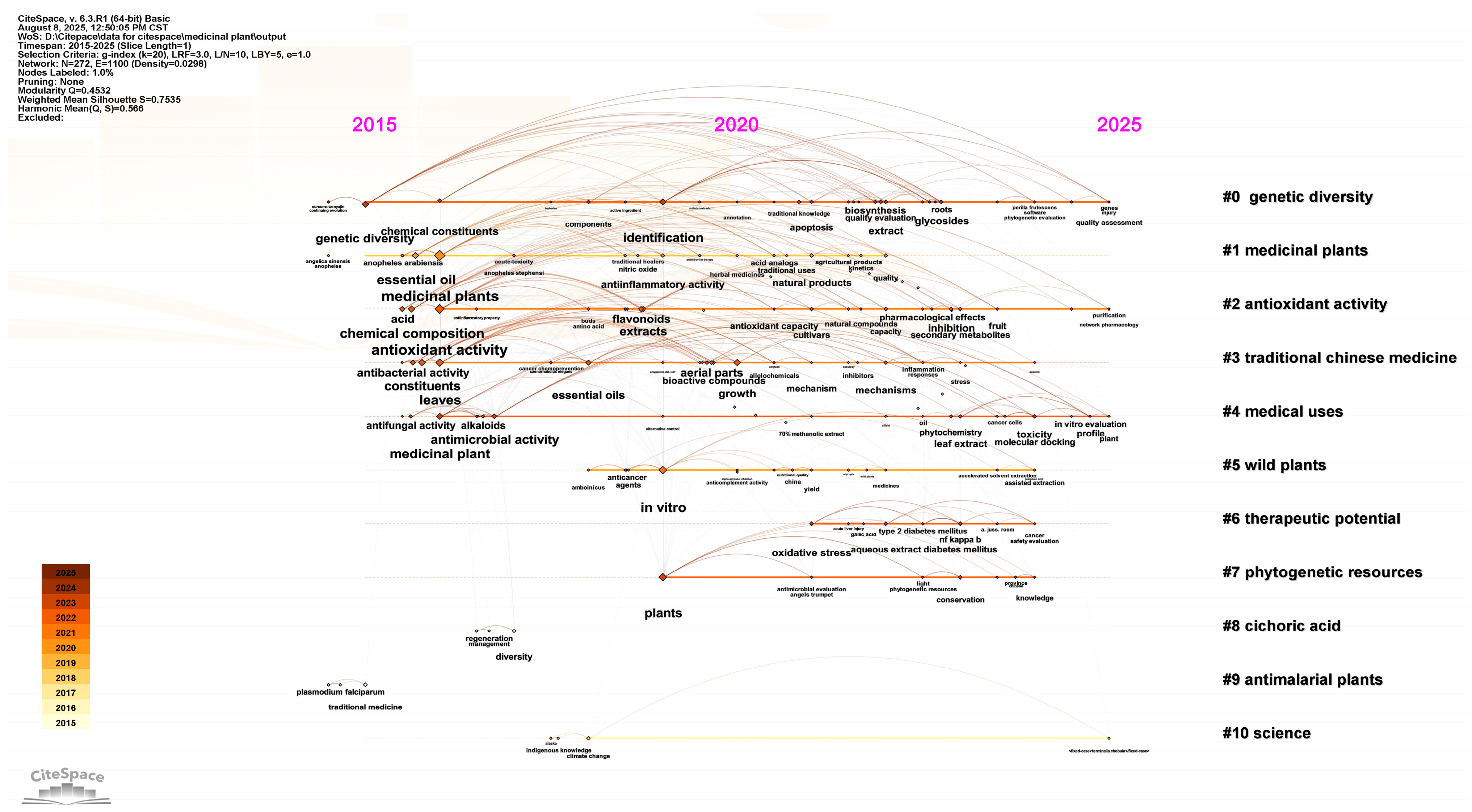
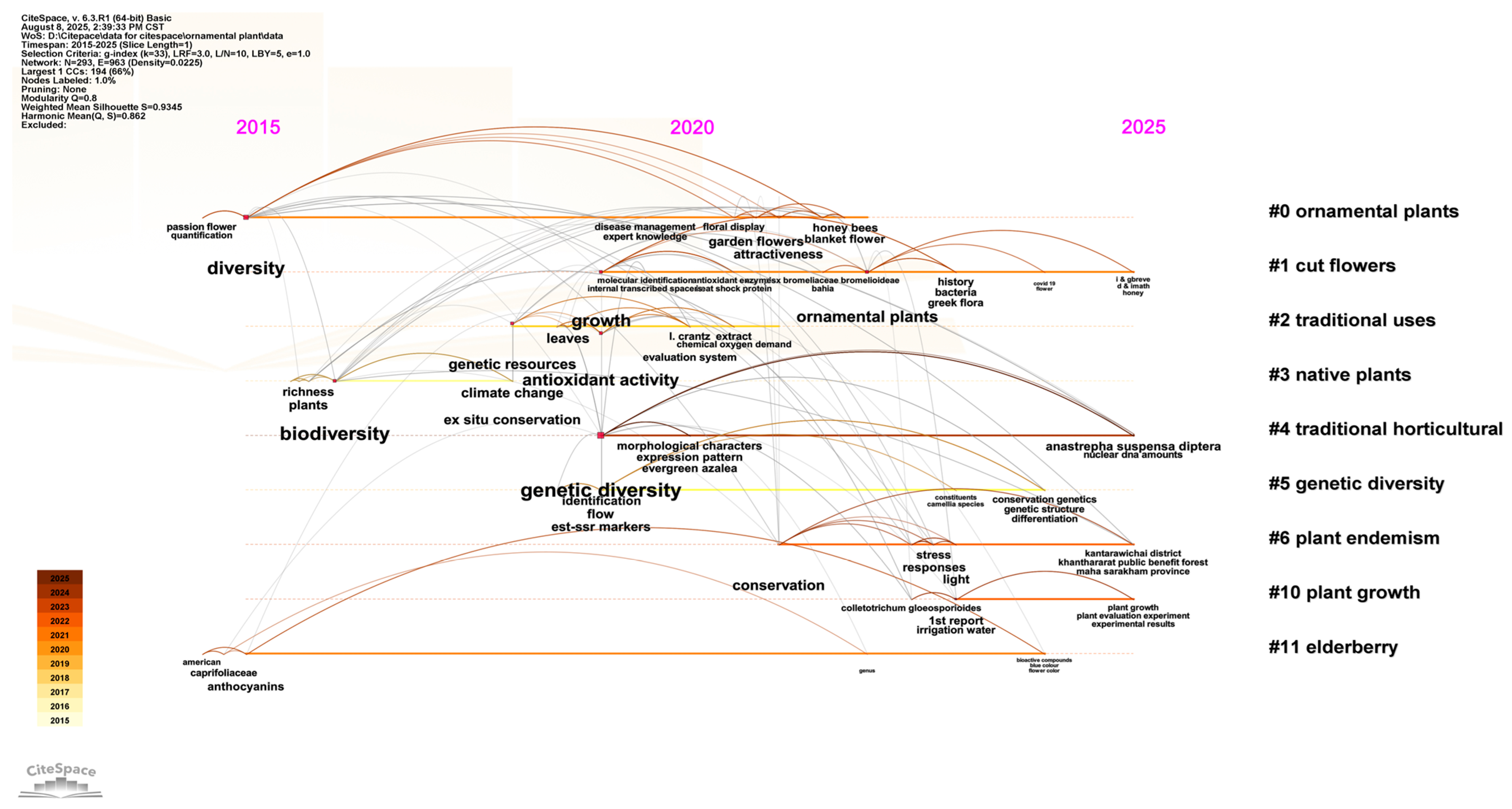
To understand the thematic evolution and research foci of three distinct yet overlapping fields—medicinal plant resource evaluation, ornamental plant resource evaluation, and medicinal–ornamental plant resource evaluation—the keyword co-occurrence networks based on published research from 2015 to 2025 were analyzed using CiteSpace 6.3.R1. In studies focusing solely on medicinal plants, the keyword network is dominated by bioactivity-related concepts (Figure 2). Key terms such as “antioxidant activity,” “flavonoids,” “essential oils,” “anti-inflammatory activity,” and “traditional Chinese medicine” highlight a strong emphasis on phytochemical composition and pharmacological effects. Research in this domain often centers on identifying bioactive compounds and evaluating their therapeutic potential, with a focus on in vitro and in vivo testing. Concepts like “oxidative stress” and “apoptosis” further indicate a clinical and mechanistic orientation.
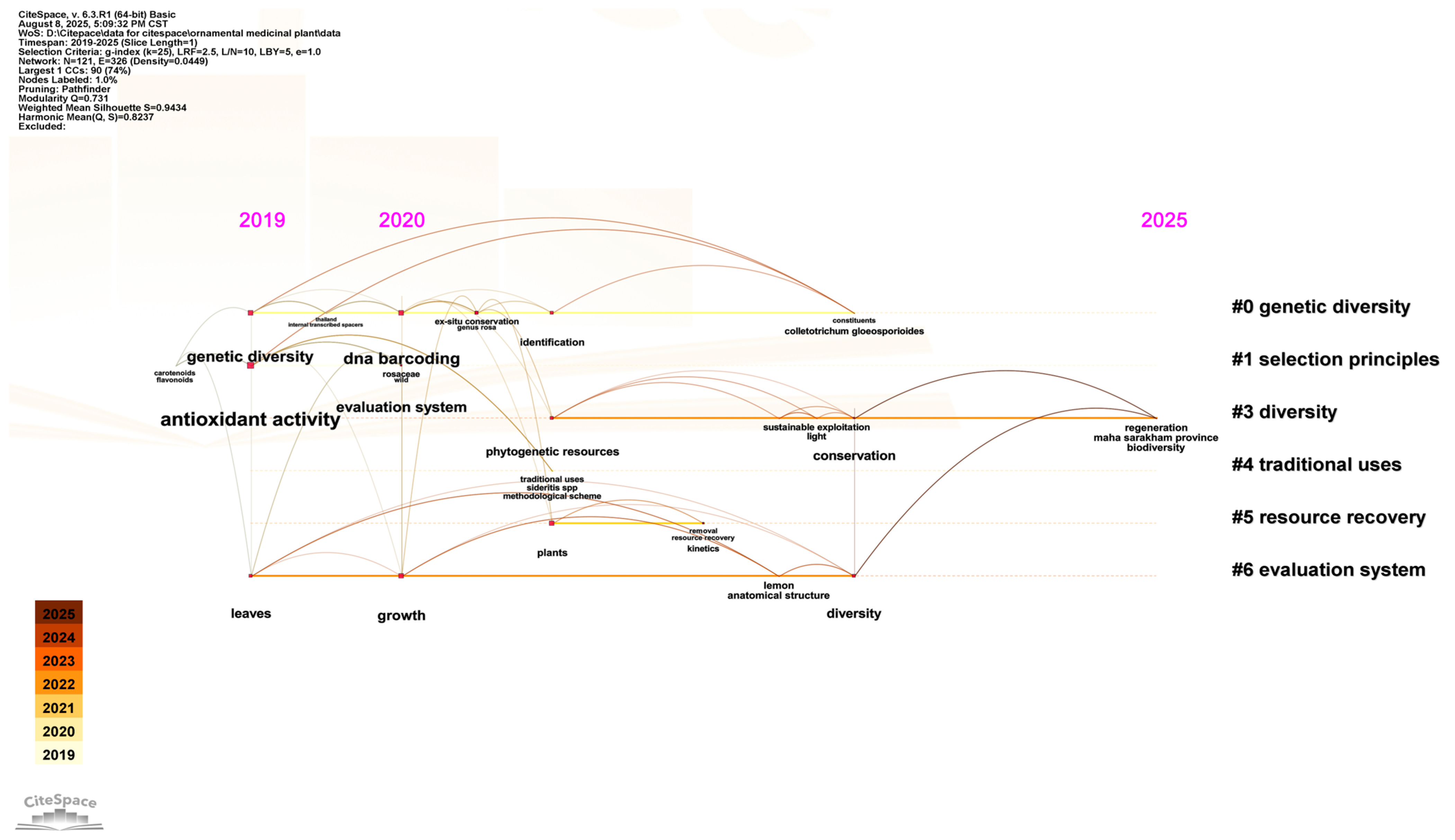
In contrast, the ornamental plant research network emphasizes aesthetic, ecological, and conservation-related keywords (Figure 3). Terms such as “genetic diversity,” “ex-situ conservation,” “DNA barcoding,” and “evaluation systems” reflect a strong focus on biodiversity preservation, genetic identification, and systematic assessment of ornamental value. The presence of “light,” “anatomical structure,” and “growth” suggests an interest in horticultural practices and environmental adaptation. Unlike medicinal plant studies, ornamental plant research tends to prioritize visual and ecological functionality, such as landscaping potential, climate resilience, and breeding for ornamental traits. However, the integration of traditional uses and local knowledge indicates that cultural significance is also acknowledged in this domain.
The medicinal–ornamental plant network represents a hybrid research field that integrates elements from both domains (Figure 4). Dominant keywords such as “genetic diversity,” “antioxidant activity,” “traditional uses,” “evaluation systems,” and “conservation” suggest that this field values both aesthetic and therapeutic qualities of plants. This dual-purpose approach is particularly evident in the co-occurrence of terms like “phytogenetic resources” and “sustainable exploitation,” which highlight the importance of holistic resource management. Temporal trends in this domain show a growing interest in multifunctional plant species that offer both medicinal benefits and ornamental appeal.
Overall, research on medicinal plants is currently the most extensively studied area, followed by research on ornamental plants. In contrast, studies focusing on the multifunctional evaluation of medicinal–ornamental plant resources are still in their preliminary stages. This emerging field represents a growing interest in plants that serve dual purposes—providing both therapeutic benefits and aesthetic value—but the studies remain limited compared to the more established resource evaluation of medicinal–ornamental plants. In the post-pandemic era, medicinal–ornamental plant research has gained prominence due to increased awareness of natural remedies and preventive healthcare. These plants uniquely combine therapeutic benefits with aesthetic value, addressing both physical and mental well-being. Their potential to enhance urban green spaces while providing accessible medicinal resources aligns with the growing demand for holistic health and sustainable living environments. Consequently, there is significant potential for interdisciplinary research to develop comprehensive evaluation frameworks for these multifunctional plant resources in addressing post-COVID-19 public health and environmental challenges.

3. The Importance of Resource Evaluation for Medicinal–Ornamental Multifunctional Plants

Resource evaluation of medicinal–ornamental multifunctional plants—those that provide both therapeutic and aesthetic benefits—is a crucial aspect of modern botanical research and application. Such evaluations facilitate the sustainable development and optimized utilization of these plants in various fields, including horticulture, pharmaceuticals, and ecological restoration. One of the foremost reasons for conducting these evaluations is to promote biodiversity conservation [12,13]. Medicinal–ornamental plants are irreplaceable natural resources, yet they face significant threats from overharvesting, habitat destruction, and climate change [14,15,16]. Systematic resource evaluations help identify vulnerable species and generate essential data on their distribution, population size, and ecological requirements [17,18]. These insights are indispensable for formulating effective strategies that safeguard species survival and preserve genetic diversity. Additionally, such evaluations support the sustainable utilization of these plants, ensuring their availability for future research, cultivation, and innovation without depleting natural populations.
Another key contribution of resource evaluation is facilitating the sustainable use of wild plant resources. China, often referred to as the “Mother of World Gardening,” is home to an extraordinary diversity of wild plants [19]. However, improper management of these resources poses significant risks. Resource evaluations help ensure that wild species are utilized responsibly and sustainably. By assessing the ornamental and medicinal potential of wild plants, such evaluations can mitigate the risk of unsustainable exploitation [20,21]. Furthermore, the identification of rare or endangered species during these evaluations enables targeted conservation actions to protect them from overuse, fostering a balance between utilization and preservation [22,23].
Additionally, resource evaluation improves the efficiency and market value of introduced plants [24,25,26]. The introduction of new plant species plays an essential role in advancing landscaping and horticultural practices. However, indiscriminate introduction of non-native plants can result in poor adaptation, increased maintenance costs, and even the establishment of invasive species [27,28]. Thorough resource evaluation prior to introduction ensures that only species with proven ornamental, ecological, and adaptive traits are selected. This process minimizes the risk of unsuitable introductions, enhances the likelihood of successful establishment, and maximizes long-term performance in both urban and rural landscapes [29,30,31].
Equally important is the role of resource evaluation in identifying superior germplasm to support breeding innovation [32,33]. The development of new plant cultivars is a cornerstone of plant breeding, and the availability of high-quality germplasm is critical to this process. Evaluations enable researchers to pinpoint plants with superior genetic traits—such as enhanced medicinal properties, increased resistance to pests, or improved ornamental qualities—for targeted breeding programs [34,35]. This approach accelerates the development of innovative cultivars, improving breeding efficiency, and ensures the conservation of rare or endangered species that can contribute valuable genes to future breeding efforts [36].
Finally, resource evaluation can enhance industry integration and growth [37,38]. Medicinal–ornamental multifunctional plants have wide-ranging applications across horticulture, pharmaceuticals, and natural health products. Comprehensive resource evaluations provide insights into their ecological, economic, and medicinal value, enabling informed decision-making and strategic market development. By evaluating the ecological, economic, and medicinal value of these plants, stakeholders can make informed choices that foster industry growth while promoting environmental sustainability. Moreover, resource integration across sectors—such as ornamental horticulture and medicinal plant cultivation—can facilitate collaboration and innovation, ultimately benefiting both the economy and ecosystem services [39,40].
In conclusion, resource evaluation of medicinal–ornamental multifunctional plants is fundamental to their sustainable use and long-term development. Through systematic and multidisciplinary assessment, it is possible to strengthen biodiversity conservation, promote responsible use of wild plant resources, optimize species introduction, identify valuable germplasm for breeding, and support coordinated industry growth. This integrated approach ensures that the full potential of these plants is realized, securing their ecological, economic, and cultural benefits for both present and future generations.

4. Construction of a Comprehensive Evaluation System for Medicinal–Ornamental Plant Resources

Medicinal–ornamental plants not only exhibit high ecological adaptability but also contain a variety of bioactive compounds, enabling an integrated combination of aesthetic value and pharmacological function [41,42]. However, due to the vast diversity and complex functionalities of these plants, their development and utilization currently lack unified and systematic evaluation standards and methodologies. Therefore, establishing a scientific and comprehensive evaluation system is crucial for the effective screening, rational allocation, and industrial application of medicinal–ornamental plant resources.
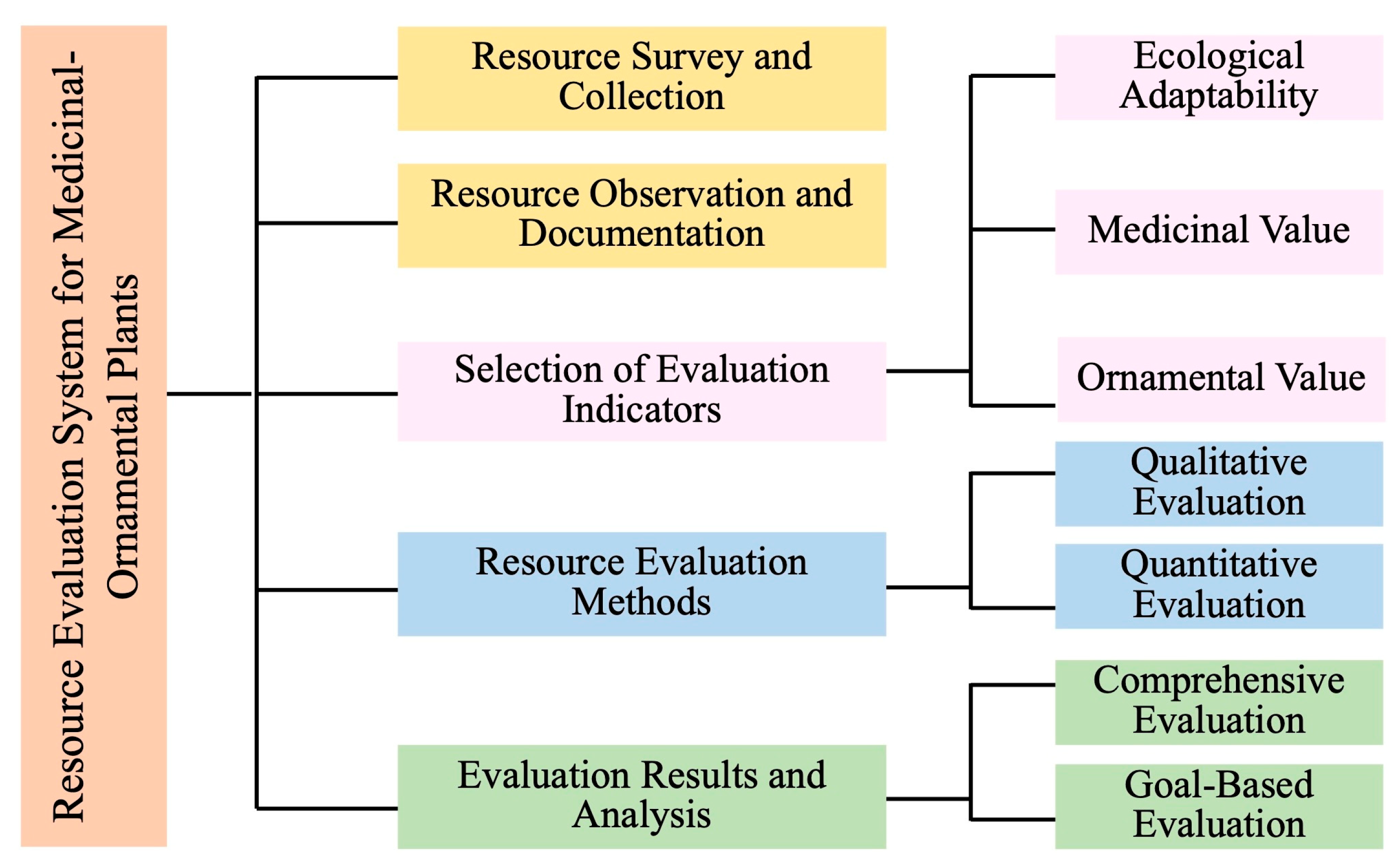
Presently, quantitative evaluation methods are predominantly employed in assessing these resources. Conducting an accurate and scientific evaluation of medicinal–ornamental plants within a specific region involves multidisciplinary knowledge spanning ecology, aesthetics, biology, pharmacognosy, horticulture, and sociology, making it a complex endeavor [43,44,45]. Building upon previous research, this study proposes a comprehensive evaluation framework composed of three hierarchical levels of indicators and provides a review of key components, including resource evaluation content and methodologies (Figure 5).

4.1. Evaluation of Resources

4.1.1. Ecological Adaptability

Ecological adaptability serves as the fundamental criterion for determining whether plant resources can thrive across diverse ecological environments, enabling broad introduction and sustainable management [46,47]. Wild medicinal–ornamental plants often develop strong environmental adaptability through long-term natural selection, allowing them to maintain stable growth under varying geographic and climatic conditions [7,48]. In contrast, cultivated varieties require thorough assessment of their ecological traits during introduction and application to ensure proper environmental configuration. Such evaluation prevents poor growth performance, reduced pharmacological effectiveness, and ecological risks, while maximizing both ornamental and medicinal value.
From a broader perspective, ecological adaptability not only underpins plant survival but also ensures sustainability in landscape use and medicinal development. Highly adaptable plant resources facilitate localized cultivation, lower maintenance costs, enhance ecological stability, and strengthen urban green systems’ resilience against environmental stresses. Consequently, prioritizing ecological adaptability within the medicinal–ornamental plant resource evaluation system carries significant theoretical and practical value. To comprehensively assess ecological adaptability, this study focuses on three key aspects: growth vigor, stress resistance, and propagation and cultivation feasibility.
(1)
Growth Vigor
Growth vigor is a comprehensive measure of a plant’s growth rate, biomass accumulation capacity, and natural reproductive expansion ability within a specific ecological environment. Plants exhibiting strong growth vigor not only demonstrate rapid development and shorter maturation cycles but also possess higher population maintenance capacity and potential for landscape formation.
In the humid and warm ecological conditions of the Yangtze River basin, growth vigor directly influences the feasibility of establishing and sustainably utilizing medicinal–ornamental plant clusters in open spaces. For example, Salvia miltiorrhiza, an important medicinal plant, shows robust adaptability in field cultivation within this region; its well-developed root system and rapid growth in moist environments contribute to high survival rates, making it an excellent variety for both medicinal development and ornamental use [49]. Similarly, Perilla frutescens can rapidly propagate under high temperature and humidity, achieving quick canopy coverage with strong visual appeal and notable medicinal activity [50,51]. Belamcanda chinensis demonstrates vigorous underground rhizome expansion and community stability, making it suitable for naturalized planting on slopes and buffer zones [52]. These species not only exhibit distinct medicinal and ornamental properties but also display strong growth vigor in practical cultivation, laying a foundation for their promotion.
Evaluation of growth vigor typically involves field trials combined with observational records, quantifying metrics such as germination rate, growth period, biomass accumulation, reproductive capacity, and annual growth increment. To enhance the timeliness and accuracy of assessments, modern technologies such as remote sensing, plant phenomics, and artificial intelligence (AI) recognition have been increasingly incorporated in recent years [53,54,55]. For instance, unmanned aerial vehicles (UAVs) equipped with high-resolution multispectral imaging devices can periodically capture vegetation indices (e.g., NDVI), canopy expansion, and vegetation coverage data to dynamically monitor growth processes [56]. Coupled with plant growth models, these data enable predictions of growth trends under varying environmental conditions [57]. Moreover, AI-based image recognition algorithms facilitate automated leaf identification, disease spot detection, and growth status evaluation, significantly improving the efficiency of large-scale medicinal–ornamental plant germplasm screening and cultivation optimization [58]. Integrating multidimensional growth data with intelligent analytical methods contributes to a more scientific and systematic evaluation of the growth potential and adaptability of medicinal–ornamental plants in specific ecological settings.
(2)
Stress Resistance
The evaluation of stress resistance focuses on plants’ tolerance to various abiotic and biotic stresses, including resistance to pests and diseases, cold, heat, and humidity. In the humid and warm environment of the Yangtze River basin, plants primarily face challenges such as fungal diseases induced by high temperature and humidity, as well as alternating stresses of summer heat and winter cold [59,60,61]. Therefore, medicinal–ornamental plants suitable for introduction in this region must possess broad adaptability to temperature and moisture fluctuations. In addition to these general considerations, extreme-climate response thresholds (e.g., minimum survivable winter temperature, upper heat-stress limits, or duration of waterlogging tolerance) and the degree to which a species relies on artificial protective measures (such as cold-weather wrapping, shade provision, or fungicide dependence) are also important aspects of stress resistance. While specific quantitative thresholds vary widely among species, acknowledging these factors helps clarify how stress-related traits may be incorporated when this conceptual framework is adapted for region-specific or species-specific applications.
For example, Lonicera japonica not only exhibits notable medicinal properties such as heat-clearing, detoxification, anti-inflammatory, and antiviral effects but also demonstrates strong resistance to multiple pests and diseases [62]. It maintains vigorous growth under the hot and humid conditions of the Yangtze River basin, making it a typical plant with excellent tolerance to heat, humidity, and biotic stress. Regarding cold tolerance, Dendrobium officinale, although native to warm and moist regions, shows considerable low-temperature tolerance in certain cultivated varieties, allowing survival during winters in southern China [63]. Heat-tolerant species such as Prunella vulgaris adapt well to sunny, hot, and dry environments, maintaining the accumulation of active medicinal compounds during high-temperature seasons [64]. These examples demonstrate that incorporating stress resistance evaluation into resource assessment is essential for identifying medicinal–ornamental plants with strong environmental adaptability, which ultimately guarantees their stable cultivation and sustainable utilization in target ecological regions.
(3)
Propagation and Cultivation Feasibility
Propagation and cultivation feasibility describes the difficulty and technical requirements involved in propagating, establishing, and managing medicinal–ornamental plants. It reflects a species’ ability to be propagated through seeds, cuttings, division, or tissue culture, as well as its stability during nursery production and field establishment. Plants with low seed set, strict germination conditions, high propagation difficulty, or specialized cultivation requirements often face limitations in large-scale utilization despite high medicinal or ornamental value. Therefore, evaluating this indicator is essential for determining whether plant resources can be sustainably developed, commercialized, and incorporated into conservation programs.
This indicator is especially important for endangered or narrowly distributed species, which often exhibit poor natural regeneration due to habitat fragmentation, environmental stress, or overharvesting. Assessing traits such as seed viability, germination rate, cutting survival, micropropagation efficiency, and field establishment success helps identify viable restoration pathways and supports ex situ conservation. For example, Paris polyphylla has extremely low seed germination and long dormancy cycles, but tissue culture and rhizome division have improved propagation efficiency and reduced pressure on wild populations. Gastrodia elata requires fungal symbionts for germination, and research on its fungal partners has enabled successful artificial cultivation. Similarly, certain alpine ornamental species, such as Primula sinensis and rare Lilium, exhibit strict environmental requirements; understanding their propagation performance in controlled environments facilitates the creation of ex situ germplasm nurseries that benefit both biodiversity conservation and horticultural development.

4.1.2. Medicinal Value

Medicinal value is the core functional attribute of medicinal–ornamental plants, distinguishing them fundamentally from purely ornamental species and serving as the primary basis for their development, utilization, and resource conservation. Unlike plants with solely aesthetic functions, medicinal–ornamental plants contain bioactive pharmacological compounds that play significant roles in disease prevention, treatment, and health maintenance.
A systematic and scientific evaluation of their medicinal potential not only provides theoretical and selection criteria for herbal resource development but also promotes efficient allocation and in-depth utilization of these resources, facilitating the synergistic enhancement of ecological benefits and economic value. Due to their combined landscape appeal and therapeutic effects, medicinal–ornamental plants are increasingly becoming critical supports for emerging industries such as medicinal–food integration, health-oriented agriculture, and ecological landscape construction. The evaluation of their medicinal value primarily involves a systematic analysis of four key aspects: application frequency, medicinal plant parts, geo-authenticity, and resource development potential.
(1)
Application Frequency
Application frequency reflects both the historical continuity of medicinal–ornamental plants within traditional medical systems and their current breadth of use in modern society. This encompasses two dimensions: frequency of medicinal use and the extent of cultivation, promotion, and industrial utilization. As medicinal resources, high application frequency often indicates proven efficacy and favorable safety profiles, supported by extensive clinical experience accumulated over long-term use. This foundation fosters strong trust and market acceptance. For example, Lonicera japonica and Salvia miltiorrhiza are frequently documented in classical pharmacopeias such as the Compendium of Materia Medica and Shennong’s Materia Medica and are widely used today in traditional Chinese patent medicines like Yin Qiao Jie Du Wan and Compound Danshen Tablets. Their traditional knowledge and modern pharmacological research complement each other, establishing them as representative high-frequency medicinal–ornamental plants.
On the other hand, application frequency also refers to the degree of promotion within modern cultivation and deep-processing industrial chains. For instance, Perilla frutescens benefits from whole-plant utilization, with its leaves, stems, and seeds extensively developed across medicinal, dietary, health supplement, and cosmetic sectors [65]. Its multi-harvest cycles, strong adaptability, and ease of large-scale cultivation endow it with substantial industrial potential based on its medicinal value. Similarly, Belamcanda chinensis and Houttuynia cordata are not only frequently used in herbal medicine but also widely planted in landscape greening and ecological restoration projects, demonstrating excellent multi-level integration of medicinal, ecological, and ornamental applications [66,67].
(2)
Medicinal Plant Parts
The number and chemical composition of medicinal plant parts directly influence the development direction, extraction techniques, and overall utilization efficiency of medicinal–ornamental plants. Generally, species with multiple medicinal parts offer higher resource availability and greater potential for comprehensive development. For instance, Acorus tatarinowii primarily utilizes its rhizomes, rich in volatile oils and sesquiterpenes, which contribute to effects such as awakening the mind, resolving dampness, and aiding digestion [68]. The development of this species focuses mainly on standardized cultivation and extraction from underground parts. Due to the limited use of aerial parts, resource conversion efficiency is constrained, and harvesting depends heavily on specific seasons, resulting in relatively higher ecological disturbance.
In contrast, some plants exhibit multipart medicinal utilization, such as Impatiens balsamina, where flowers, leaves, seeds, and roots are all pharmaceutically valuable, serving diverse functions including promoting blood circulation, reducing swelling and pain, and antifungal activity [69]. This multipart, multifunctional usage not only increases added value but also enhances economic benefits during cultivation. Conversely, species with a single medicinal part, like Scutellaria baicalensis, rely primarily on root utilization, leading to a focused development approach but facing challenges in sustainability due to harvesting cycles and environmental constraints [70]. Therefore, prioritizing species with diverse medicinal parts and complementary constituents can effectively improve the overall development value and promote environmentally sustainable resource utilization.
(3)
Geoherbalism (Daodi)
Geoherbalism, or “daodi,” is a critical indicator for the quality and consistency of traditional Chinese medicinal materials, serving as a key foundation for standardized cultivation and brand development of medicinal–ornamental plants. For example, Ligusticum chuanxiong grown in Sichuan accumulates significantly higher levels of volatile oils and ferulic acid compared to other regions, resulting in distinct authentic characteristics [71]. Such geo-authentic medicinal plants not only serve as core resources for regional brand building but also enable integration with local cultural assets, fostering models of “medicinal tourism” and “cultural landscapes” that promote coordinated economic, ecological, and cultural development.
Zhejiang Province, a major medicinal plant-producing area in southeast China, boasts numerous representative authentic medicinal–ornamental plants. For instance, Chrysanthemum morifolium from Tongxiang (Hangbaiju) develops unique aromas and medicinal compound profiles under the region’s abundant water–heat resources and organic-rich soils, establishing itself as a nationally recognized authentic variety [72]. It is widely used in traditional Chinese medicine slices and serves as a focal point for chrysanthemum cultural festivals and rural medicinal tourism economies. By deeply exploring the ecological advantages and cultural attributes of geo-authentic plants native to Zhejiang, a comprehensive utilization system integrating medicinal development, cultural promotion, and ecological landscaping can be constructed, fostering a new synergistic model of “Zhejiang medicinal plants + ecological gardens + local branding.”
(4)
Resource Development Potential
Resource development potential encompasses multiple factors such as plant reproductive modes, biomass accumulation, ease of harvest, processing adaptability, and market acceptance, serving as a core indicator for the industrialization and sustainable development prospects of medicinal–ornamental plants. For example, Lycoris radiata exhibits strong natural reproductive ability, with its underground parts rich in bioactive alkaloids like lycorine, which possess antitumor and analgesic properties [73]. The concentration of biomass in subterranean tissues facilitates mechanized harvesting and subsequent extraction, making it increasingly attractive in the development of natural anticancer drugs and expanding its market potential.
Lilium species, as typical “medicinal and edible” plants, have bulbs that serve both as traditional nourishing medicinal materials and important food ingredients with strong market acceptance. Some wild or semi-cultivated species, such as Lilium lancifolium, also possess high horticultural ornamental value, reflecting a trend toward integrated utilization in landscape design and medicinal plant development [74]. Through modern agricultural technologies such as facility cultivation and tissue culture propagation, large-scale planting and standardized harvesting of lilies have been gradually realized, providing a solid foundation for their in-depth development in functional foods and health products.

4.1.3. Ornamental Value

Undoubtedly, ornamental value is a core indicator with significant weight in the evaluation of medicinal–ornamental plant resources, directly influencing their development potential and market acceptance. Medicinal–ornamental plants possess both therapeutic and aesthetic functions; thus, their ornamental appeal not only determines their visual attraction in landscape architecture, ecological restoration, and public spaces but also affects public awareness and acceptance of these plant resources. Therefore, scientifically and systematically assessing the ornamental value of medicinal–ornamental plants is crucial for enhancing their comprehensive utilization benefits.
(1)
Plant Habit
The plant habit not only defines the landscape’s structural character but also directly influences spatial arrangement and functional positioning within garden settings, making it a key dimension in evaluating the ornamental value of medicinal–ornamental plants. Different growth forms impart distinct visual focal points and spatial perceptions, thereby affecting the overall layering and rhythm of the landscape. For example, Lilium spp. exhibit an upright, tall, and erect habit with towering flower stalks and large, vibrant blossoms, highlighting their medicinal significance while adding a strong vertical visual focus—ideal as centerpiece plants in flower borders or focal display areas [75]. In contrast, Ophiopogon japonicus has a slender, soft, tufted herbaceous habit, growing low and dense, making it suitable as ground cover that enriches landscape layers and creates a delicate, gentle visual effect [76]. Strategically incorporating medicinal–ornamental plants with diverse habits helps build rich, varied garden spaces and enhances overall aesthetic quality.
(2)
Flower, Leaf, and Fruit Color
The colors of flowers, leaves, and fruits are essential visual features that attract visitors and enhance the ornamental appeal of medicinal–ornamental plants. These colors directly affect the aesthetic quality and diversity of landscapes. Rich and varied flower colors create strong visual impact and, combined with fragrance, help cultivate a pleasant and inviting atmosphere. For example, Lonicera japonica produces flowers ranging from pure white to pale yellow that emit a fresh, intense fragrance during bloom, making it a refreshing focal point in summer gardens [77]. Similarly, Perilla frutescens has distinctive purple-red leaves rich in medicinal compounds, providing vivid color contrast that enhances depth and visual interest in the landscape [78].
Fruit colors add another layer of ornamental value through their diversity and seasonal appeal. Duchesnea indica, for instance, bears bright red berries that stand out against green foliage, extending the plant’s ornamental period and bringing vitality to autumn and winter landscapes [79]. Likewise, Lycium barbarum produces bright red fruits that serve both as important medicinal parts and as striking seasonal highlights widely used in courtyard greening and medicinal garden design [80]. The diverse and layered combination of flower, leaf, and fruit colors enriches the overall ornamental characteristics of medicinal plants and provides landscape designers with expanded creative possibilities.
(3)
Flowering Period
The length of the flowering period directly affects the landscape continuity and ornamental value of medicinal–ornamental plants in gardens, making it a key indicator for evaluating their landscape function. Plants with shorter flowering periods often produce vivid, striking blooms that serve as focal points in prominent garden areas. For example, Belamcanda chinensis has a concentrated-flowering period with brightly colored flowers that create a spectacular visual impact in a short time, effectively attracting visitors’ attention [81]. In contrast, plants with longer flowering periods provide sustained and stable floral display, extending the overall visual appeal of the landscape. By scientifically combining medicinal plants with different flowering durations, gardens can maintain seasonal highlights throughout the year while enriching visual layers and dynamic changes. For example, pairing the short-flowering Lonicera japonica with long-flowering species like Agastache rugosa ensures both peak bloom visuals and extended color duration, maximizing landscape impact.
(4)
Viewing Season
The length of the viewing season is a crucial indicator of the ornamental value of medicinal–ornamental plants, directly impacting their sustained appeal and practical use in landscape settings. Evergreen plants, which retain green foliage year-round, provide a stable visual presence across all seasons, significantly extending their period of interest. For example, the evergreen Hedera helix not only holds important medicinal value but also maintains vibrant green leaves during winter, making it a key landscape element that ensures garden appeal even in the cold season [82]. Additionally, southern evergreen shrubs such as Ilex cornuta stay green throughout the year and produce bright red berries in winter, enriching the garden’s color palette during colder months [83]. In contrast, some short-lived or concentrated-flowering plants have a shorter viewing season; although their blooms are vivid and highly attractive, their visual impact is limited to specific periods. For instance, Crocus sativus blooms primarily in early spring, serving as an early-season highlight, but its viewing window is brief, necessitating complementary plantings to prolong overall landscape interest [84].
Although the current framework has not yet been empirically tested, it offers clear advantages over existing single-dimension frameworks that assess only ornamental traits, ecological adaptability, or medicinal properties. By integrating these three essential dimensions, the model provides a unified and systematic approach to better capture the multifunctional attributes of these plants and serves as a foundation for future applied studies.

4.2. Methods for Evaluating Medicinal–Ornamental Plant Resources

Current research on the evaluation methods for medicinal–ornamental plant resources in China is relatively abundant and generally divided into two main categories: qualitative analysis and quantitative analysis. Qualitative analysis primarily involves researchers using plant resource survey data combined with their practical experience to conduct multidimensional classification and discussion based on medicinal value, ornamental traits, and other factors. This approach ultimately leads to scientifically grounded recommendations for plant development and utilization.
Quantitative analysis, on the other hand, typically selects appropriate evaluation indicators based on the evaluation objective, establishes evaluation models, and then provides assessments through data analysis. In the 1950s, the percentage scoring method was proposed, which was regarded as a pioneering approach to medicinal–ornamental plant resource evaluation in China [85]. Since the 1980s, the Analytic Hierarchy Process (AHP) has been applied to forest resource evaluations with notable success [86,87]. Entering the 21st century, evaluation methods for plant resources have diversified, with various mathematical modeling techniques—such as fuzzy number methods, gray system theory, and membership function methods—being increasingly applied.
To address the diverse evaluation needs of medicinal–ornamental plant resources, an overview of the principles, procedures, and typical application scenarios of commonly used quantitative methods was provided. The aim is to clarify their general utilities rather than to conduct a direct empirical comparison.

4.2.1. Percentage Scoring Method

The percentage scoring method was proposed and initially applied in citrus cultivar selection [85] and was later gradually adopted for evaluating other plants. This method enhances earlier cultivar selection techniques through several key steps: first, conducting a comprehensive investigation and documentation of the evaluation targets to establish preliminary principles and guidelines; second, defining the primary selection criteria based on evaluation objectives, assigning scores to each major criterion according to its relative importance, with the total scores summing to 100; third, breaking down each primary criterion into multiple secondary items, which are scored proportionally so that their total equals the score of the primary criterion; and finally, scoring the various plant varieties accordingly. Importantly, the scoring system employs cumulative points rather than rank-based grades for each sub-item.
Compared to previous methods, this approach offers significant improvements. It enables more objective and comprehensive criteria formulation by requiring thorough understanding of the subject before setting standards and ensures clear, measurable evaluation scales. Additionally, it incorporates plant characteristics while flexibly considering environmental and cultivation conditions. The method streamlines record-keeping with clear priorities and focused assessments. This method was first applied to citrus cultivar selection and subsequently extended to evaluate plum (Prunus mume), rose (Rosa rugosa), and golden camellia (Camellia nitissima), its efficiency, effectiveness, and resource-conserving advantages in cultivar selection processes [88].
In general, the percentage scoring method is most suitable for preliminary germplasm evaluations, early-stage resource surveys, and expert-based assessments where indicators are clear and data collection is relatively straightforward. Because it relies primarily on field observations and expert judgment, the data requirements are relatively low, making the method easy to implement across diverse plant groups. Its main strength lies in its simplicity, flexibility, and ability to translate expert knowledge into quantitative results; however, the method is also limited by its subjectivity, as scoring depends heavily on evaluator experience and does not fully capture complex interactions among multiple traits.

4.2.2. Analytic Hierarchy Process

The Analytic Hierarchy Process (AHP), developed in the early 1970s by operations researcher Thomas Saaty at the University of Pittsburgh, is a systematic analysis method that integrates qualitative and quantitative evaluations. By employing quantifiable, specific criteria as standards, AHP objectively enhances the validity, reliability, and feasibility of evaluation outcomes. The main steps of the method include: (1) selecting appropriate criteria based on the evaluation objective and constructing an evaluation model; (2) comparing the relative importance of each criterion by building pairwise comparison judgment matrices and conducting consistency checks to determine criterion weights; (3) establishing suitable scoring standards to assess each criterion of the plants being evaluated; and (4) calculating comprehensive scores for each plant and classifying them accordingly.
AHP has found widespread application in the evaluation of medicinal–ornamental plant resources and is currently a key tool for assessing medicinal value, ornamental traits, development potential, and ecological adaptability. By constructing a scientific evaluation index system and quantifying the weights of each criterion, AHP enables a comprehensive, objective, and systematic assessment of medicinal–ornamental plants. For example, studies have used AHP to conduct integrated evaluations of various traditional Chinese medicinal resources, focusing on medicinal value, resource abundance, and conservation difficulty, thereby providing a scientific basis for rational development and protection [89]. Other research has combined ecological adaptability with market demand to evaluate the development potential of medicinal plants, guiding resource utilization and industry planning [90]. Regarding ornamental traits, AHP-based evaluation systems incorporating flower color, flowering period, plant habit, and ecological adaptability have scientifically assessed landscape value and promoted the rational use of medicinal–ornamental plants in landscaping [91]. Additionally, integrating medicinal and ecological indicators, comprehensive evaluation systems for herbal resources have been established to support classification management and conservation decisions for medicinal plants [92].
Furthermore, AHP has been applied in medicinal plant garden resource management to systematically evaluate resource status, development potential, and conservation needs. This approach facilitates grading and optimal allocation of plants within gardens, enhancing the overall resource efficiency [93]. Thus, with its clear hierarchical structure, explicit weighting, and quantitative assessment capabilities, AHP has become an indispensable tool in the evaluation of medicinal–ornamental plant resources. It is particularly well-suited for complex, multi-criteria, and multi-level system evaluations, providing a robust theoretical foundation for rational development and scientific conservation of these valuable resources. It requires moderately structured data, including defined indicator hierarchies and pairwise comparison matrices, making it more data-intensive than simple scoring methods but accessible for most plant resource evaluations. Its key advantages include transparent weighting, strong logical structure, and balanced integration of qualitative and quantitative information. Nevertheless, the method still depends on expert judgments when assigning pairwise comparisons, meaning subjectivity cannot be completely eliminated, and the final results may be influenced by how the indicator hierarchy is constructed.

4.2.3. Gray System Theory

Gray System Theory, developed in 1982, is a theoretical framework that evolved from fuzzy mathematics [94] and has been extensively applied across various fields, including agriculture, industry, transportation, energy, meteorology, and the military. When applied to the evaluation of ornamental plant resources—primarily for cultivar assessment—the typical procedure involves four key steps: (1) investigating the main traits of the plant varieties to be evaluated; (2) establishing scoring levels and standards for cultivar traits based on plant characteristics and common evaluation practices (which can also be determined through expert panels); (3) constructing a comprehensive evaluation framework based on the interrelationships and membership relations among the measured traits; and (4) performing integrated calculations following established methodology, which includes determining classification boundaries for each trait, assigning weights to each trait indicator, and judging the variety’s gray category based on the maximum value in the row vector. Although this method is less frequently applied to purely medicinal plant resource evaluations, it is more commonly used in ornamental cultivar assessments. For instance, studies have successfully applied multi-level comprehensive gray evaluation methods to quantitatively assess key traits of Osmanthus cultivars, achieving favorable results [95]. Similarly, gray relational analysis has been employed using 14 indicators across 196 surveyed Central Plains peony cultivars, successfully identifying those with outstanding overall performance [96].
This approach is particularly useful in scenarios where datasets are small, incomplete, or uncertain—conditions common in rare, newly discovered, or poorly documented medicinal–ornamental germplasm. It performs well when conventional statistical methods cannot be applied due to limited sample sizes. The method requires moderate data inputs, such as defined standards, weights, and trait boundaries. Its advantage lies in its ability to extract meaningful patterns from partially known information. However, gray-category outputs can be less intuitive for readers unfamiliar with the framework, and the method is used less frequently for evaluations focused primarily on medicinal properties.

4.2.4. Psychophysics Method

The psychophysics method is a scientific approach that examines the relationship between environmental stimuli and human sensations, perceptions, and judgments. Using photographs as test materials, this method calculates scales reflecting plant traits based on participants’ visual responses and establishes mathematical relationships between these scales and plant characteristics. The evaluation procedure involves six key steps: (1) surveying ornamental plant resources; (2) selecting representative evaluation photographs; (3) ensuring reliability through both professional and non-professional evaluators; (4) conducting assessments using photographs as visual media with standardized instructions for score assignment; (5) decomposing plant traits into measurable elements and quantifying their values; and (6) establishing predictive models relating aesthetic values to trait elements.
While this method is widely applied in landscape evaluations, its use in evaluating medicinal–ornamental plant resources remains relatively limited. For example, the psychophysics method was applied to assess wild ornamental plants in Fujian Province, finding that flowering plants scored higher and had a greater impact on visitors, whereas plants valued for their form received lower scores due to the absence of distinctive features [97]. Similarly, wild ornamental plants within the Wuyi Mountain National Nature Reserve were evaluated using the psychophysics method, measuring aesthetic value, and obtained conclusions consistent with Wang’s findings [98].
This method is particularly applicable to studies centered on visual perception, aesthetic evaluation, visitor preference analysis, and the quantification of ornamental traits. It requires relatively high data quality, including standardized photographs, diverse evaluator participation, and statistical modeling of perceptual data. Its principal advantage is its direct reflection of human aesthetic responses, allowing trait–perception relationships to be quantified. However, because it focuses on visual stimuli, it is not suitable for evaluating medicinal value, ecological adaptability, or physiological traits, and results may vary depending on the evaluator’s background and experience.

4.2.5. Experimental Statistical Method

Some researchers, when evaluating plant resources, do not adopt a specific formal evaluation method but instead use statistical tools such as variance analysis and cluster analysis to analyze and rank plant traits. This approach is especially common for single-objective evaluations, notably in assessing plant stress resistance. For instance, several studies have applied these methods to evaluate the stress tolerance of medicinal–ornamental plants [99,100]. One example involved native Zhejiang medicinal–ornamental plant Paeonia lactiflora ‘Hang Baishao’ and nine northern ornamental peony cultivars. Researchers observed heat injury indices of peony stems and leaves under summer high temperatures and measured indicators like relative electrical conductivity, relative water content, and soluble sugars. Using the membership function method alone and combined with principal component analysis, they evaluated the heat tolerance of ten cultivars. The results showed that the membership function method is a simple, intuitive, and effective tool for heat tolerance evaluation in peony [101]. Similarly, other scholars have conducted comprehensive cold tolerance evaluations on four Liliaceae species using a combination of visual assessments, electrolyte leakage to predict semi-lethal temperature, and Evans blue staining. Their findings provide valuable insights and references for breeding cold-resistant plant varieties [102].
Such approaches are generally applicable when evaluation focuses on single objectives or when trait measurements are derived from controlled experiments. They require complete and well-structured datasets, and their strength lies in objectivity, reproducibility, and effectiveness in identifying key traits influencing performance. However, these methods do not provide a full multi-level evaluation model and rely heavily on the quality and design of the underlying experiments, limiting their utility for comprehensive resource assessments.
Taken together, these evaluation methods differ substantially in their data needs, analytical depth, and typical application contexts. While the present section provides an overview rather than a direct comparison, future research may explore systematic comparisons under varying evaluation objectives, levels of data completeness, and plant functional types, thereby improving methodological selection and model robustness in medicinal–ornamental plant resource evaluation.

5. Recommendations and Prospects

Recent studies indicate growing recognition of the critical importance of evaluating medicinal–ornamental plant resources. Evaluation approaches have gradually evolved from initial qualitative analyses to more scientific and rational quantitative frameworks. However, several challenges remain. In this section, we provide recommendations and prospects to advance resource evaluation, while highlighting the main contributions of this review: conceptual clarification of medicinal–ornamental multifunctionality, synthesis of current research on medicinal value, ornamental traits, and ecological adaptability, and the development of a preliminary framework for comprehensive assessment.

5.1. The Urgent Need to Establish a Comprehensive Evaluation System

Most current evaluations of medicinal–ornamental plant resources are based on regional wild plant surveys. While these results provide useful references for prioritizing resource development and application strategies, inconsistency in evaluation indicators, methods, and scoring standards among different researchers leads to poor comparability of findings. Moreover, resource evaluation forms the foundation of experimental research on medicinal–ornamental plants. Certain highly valued families and genera with both ornamental and medicinal uses—such as Rhododendron, Liliaceae, and Iris—still lack well-established evaluation systems, limiting further scientific progress. Therefore, it is essential to develop tailored evaluation frameworks for specific groups, such as particular families, genera, species, uses, or life forms. By selecting appropriate evaluation methods and establishing standardized, unified criteria—including indicator selection and weighting—under various assessment objectives, comparability can be enhanced and redundant efforts minimized.

5.2. Appropriately Balance Comprehensive Targeted Evaluations and Select Indicators Based on Specific Needs

Researchers often use quantitative methods to evaluate medicinal–ornamental plant resources, converting qualitative indicators—difficult to assess objectively—into scores to achieve more scientific and reliable results. A review of recent literature reveals a rapid increase in the use of the AHP for comprehensive evaluations, sometimes driven by trend-following rather than necessity. Although AHP objectively enhances the validity, reliability, and feasibility of evaluation outcomes, its application should be tailored to the specific context. It is important to strike a reasonable balance between comprehensive evaluations and targeted assessments. Moreover, many evaluation frameworks include as many indicators as possible, falling into the trap of “more is better.” This often leads to an excessive number and variety of indicators, with limited independence between them in practical application. Therefore, clearly defining the evaluation purpose at the outset is essential to selecting indicators that are truly relevant.
In contrast to food or horticultural crops, whose evaluation largely relies on quantitative traits that are easier to measure and analyze, medicinal–ornamental plants primarily involve qualitative traits—especially when assessing ornamental value—that are often abstract and challenging to evaluate objectively. Further research is needed on how to establish reasonable scoring criteria for these indicators and how to assign their weights in a scientifically sound manner.

5.3. Strengthening Resource Evaluation to Support Breeding

Germplasm resources form the foundation of breeding work. Once breeding objectives are determined, it is essential to select materials possessing the desired traits, making targeted evaluation of medicinal–ornamental plant resources indispensable. However, resource evaluation aimed at cultivating superior varieties remains relatively underdeveloped domestically. China’s systematic breeding of medicinal–ornamental plants started relatively late, and the capacity to propagate elite varieties is limited—over 60% of bulbs and seedlings are still imported, resulting in significant economic losses for the country. Therefore, developing superior varieties, new cultivars, and national brands with independent intellectual property rights holds great strategic importance. The breeding resource evaluation identified the strengths and traits requiring improvement within each taxon, providing a morphological reference for parent selection and laying a foundation for breeding. Thus, prior to breeding work, conducting resource evaluations based on plant surveys helps comprehensively understand desirable traits in plant materials, allowing for rational selection of hybrid parents and improving breeding efficiency.

5.4. Applying New Technologies and Methods in Medicinal–Ornamental Plant Resource Evaluation

With rapid advances in plant science and information technology, medicinal–ornamental plant resource evaluation is gradually shifting from traditional morphology-based scoring and expert judgment toward more precise and efficient approaches integrating multi-source data. Future research should actively incorporate high-throughput phenotyping platforms (HTPP), using drones equipped with multispectral or RGB imaging to non-destructively monitor canopy structure, flower color, and growth dynamics [103]. Combined with metabolomics and transcriptomics, this can reveal the molecular basis of ornamental traits and medicinal compounds. Additionally, deep learning and image recognition technologies have demonstrated high accuracy and strong generalization ability in automated flower identification and trait analysis [104], providing robust technical support for constructing integrated evaluation systems encompassing morphological, physiological, biochemical, and molecular data. The integration of these new technologies and methods will significantly enhance the objectivity, reproducibility, and regional applicability of medicinal–ornamental plant resource evaluation, offering a solid scientific foundation for variety breeding, landscape design, and industry development.

5.5. Constructing a Conceptual Framework for Comprehensive Assessment

The proposed conceptual evaluation framework is designed as a general tool for assessing medicinal–ornamental plants, rather than as a fully operational quantitative model for each specific type of medicinal use. Developing an integrated model that combines medicinal efficacy, biomass yield, and utilization cost would require species-specific datasets, detailed economic analyses, and pharmacological benchmarks. For plants with multiple medicinal parts, a multidimensional evaluation approach may be necessary, incorporating factors such as efficacy strength, biomass yield, harvesting cost, and processing value. The framework does not assign specific weights to these variables; as such, quantitative integration would require empirical data and species-specific validation. Moreover, for species that are both medicinal and edible, distinguishing between “medicinal grade” and “food grade” materials is crucial for accurate assessment of medicinal value.
Future studies can apply and validate this framework using representative medicinal–ornamental taxa, such as species from the Liliaceae and Iridaceae, across contrasting ecological regions (e.g., cold temperate zones in northern China or high-altitude areas in southwest China). Such applications will allow refinement of indicator weights and quantitative evaluation of the consistency between model outputs and real-world cultivation, conservation, and utilization needs. Compared with existing single-dimension frameworks that emphasize either medicinal efficacy or ornamental traits alone, this model captures the multifunctional characteristics of plants more comprehensively, providing greater relevance for germplasm conservation planning and regional suitability assessments.

6. Summary

Overall, this review clarifies the concept of medicinal–ornamental multifunctionality; synthesizes current research progress on medicinal, ornamental, and ecological traits; and develops a preliminary, flexible framework for comprehensive assessment. These contributions directly address the objectives outlined in the Introduction, providing both a conceptual foundation and practical guidance for future research and sustainable utilization of medicinal–ornamental plant resources.

Author Contributions

Conceptualization, X.F. and D.L.; methodology, X.F., Y.C. and X.W.; formal analysis, X.F., L.W., Y.C., X.W., Z.R. and Y.Y.; investigation, L.W. and Y.Y.; writing—original draft preparation, X.F. and D.L.; writing—review and editing, D.L., Z.R. and Y.X.; visualization, Y.C. and X.W.; supervision, D.L. and Y.X.; funding acquisition, Y.X. and D.L. All authors have read and agreed to the published version of the manuscript.

Funding

This research was funded by the Research Project on Collection, Evaluation, and Formation Mechanisms of Key Traits of Multifunctional Medicinal, Ornamental, and Edible Plant Resources 2023-KYY-516104-0004. The Zhejiang Sci-Tech University Start-up Fund (No. 24052162-Y).

Data Availability Statement

Not applicable.

Conflicts of Interest

The authors declare no conflicts of interest.

References

  1. Wang, G.; Chen, M. Evaluation of resource management in medicinal plant parks based on the analytic hierarchy process. Chin. Landsc. Archit. 2020, 36, 72–78. [Google Scholar]
  2. Huang, L.; Wu, C.; Zhu, N.; Guo, A.; Wang, H.; Guo, L. Species of Chinese materia medica resources based on the fourth national survey of Chinese materia medica resources. Sci. Tradit. Chin. Med. 2024, 2, 166–184. [Google Scholar] [CrossRef]
  3. Chen, S.L.; Yu, H.; Luo, H.M.; Wu, Q.; Li, C.F.; Steinmetz, A. Conservation and sustainable use of medicinal plants: Problems, progress, and prospects. Chin. Med. 2016, 11, 37. [Google Scholar] [CrossRef] [PubMed]
  4. Narandžić, T.; Ružičić, S.; Grubač, M.; Pušić, M.; Ostojić, J.; Šarac, V.; Ljubojević, M. Landscaping with Fruits: Citizens’ Perceptions toward Urban Horticulture and Design of Urban Gardens. Horticulturae 2023, 9, 1152. [Google Scholar] [CrossRef]
  5. Rao, Q.; Chen, S.; Yu, W.; Ji, W. Species Diversity and Spatial Distribution of Medicinal Ornamental Plants in Qinling-bashan Mountains Area of Shaanxi Province. Chin. Wild Plant Resour. 2024, 43, 124–132. [Google Scholar]
  6. Du, Y.P.; He, H.B.; Wang, Z.X.; Wei, C.; Li, S.; Jia, G.X. Investigation and evaluation of the genus Lilium resources native to China. Genet. Resour. Crop Evol. 2014, 61, 395–412. [Google Scholar] [CrossRef]
  7. Jia, Y.; Zhao, J.L.; Pan, Y.Z.; Xu, Y.; Sun, L.X.; Liu, Q.L. Collection and evaluation of Primula species of western Sichuan in China. Genet. Resour. Crop Evol. 2014, 61, 1245–1262. [Google Scholar] [CrossRef]
  8. Zheng, Y.; Meng, T.; Bi, X.; Li, J.; Wang, H. Investigation and evaluation of wild Iris resources in Liaoning Province, China. Genet. Resour. Crop Evol. 2017, 64, 967–978. [Google Scholar] [CrossRef]
  9. Shan, Z.J.; Ye, J.F.; Hao, D.C.; Xiao, P.G.; Chen, Z.D.; Lu, A.M. Distribution patterns and industry planning of commonly used traditional Chinese medicinal plants in China. Plant Divers. 2021, 44, 255–261. [Google Scholar] [CrossRef]
  10. Gunes, Z.; Kahraman, O. Edible ornamental plants used in landscaping areas: The case of Çanakkale City Center. AgroLife Sci. J. 2022, 11, 66–72. [Google Scholar] [CrossRef]
  11. Mirzaei, S.; Banijamali, S.M.; Azadi, P. Evaluating domestic Achillea millefolium as a suitable plant to use in the urban landscaping of dry and semi-dry regions. J. Med. Plants By-Prod. 2023, 12, 135–144. [Google Scholar] [CrossRef]
  12. Karaca, M.; Ince, A.G. Conservation of Biodiversity and Genetic Resources for Sustainable Agriculture. In Innovations in Sustainable Agriculture; Farooq, M., Pisante, M., Eds.; Springer: Cham, Switzerland, 2019. [Google Scholar] [CrossRef]
  13. Zaman, W.; Ayaz, A.; Park, S. Climate change and medicinal plant biodiversity: Conservation strategies for sustainable use and genetic resource preservation. Genet. Resour. Crop Evol. 2025, 72, 6275–6308. [Google Scholar] [CrossRef]
  14. Feng, G.; Xiong, Y.J.; Wei, H.Y.; Li, Y.; Mao, L.F. Endemic medicinal plant distribution correlated with stable climate, precipitation, and cultural diversity. Plant Divers. 2022, 45, 479–484. [Google Scholar] [CrossRef] [PubMed]
  15. Reddy, V.; Varghese, D.; Shaik, S. Towards long-term conservation of Siphonochilus aethiopicus, a critically endangered South African medicinal species: An improvement on micropropagation using in vitro shoot apices. S. Afr. J. Bot. 2025, 180, 325–336. [Google Scholar] [CrossRef]
  16. Wani, Z.A.; Pant, S.; Bhat, J.A.; Shukla, G. Distribution and survival of medicinal and aromatic plants is threatened by the anticipated climate change. Trees For. People 2024, 16, 100549. [Google Scholar] [CrossRef]
  17. D’Antraccoli, M.; Carta, A.; Astuti, G.; Franzoni, J.; Giacò, A.; Tiburtini, M.; Pinzani, L.; Peruzzi, L. A comprehensive approach to improving endemic plant species research, conservation, and popularization. J. Zool. Bot. Gard. 2023, 4, 490–506. [Google Scholar] [CrossRef]
  18. Klymenko, H.; Artemenko, D.; Klymenko, I.; Kovalenko, N.; Melnyk, A.; Butenko, S.; Horbas, S.; Tovstukha, O. Criteria for evaluating the state of rare plant species populations. Mod. Phytomorphol. 2023, 17, 98–106. [Google Scholar] [CrossRef]
  19. Wilson, E.H. China: Mother of Gardens; Stratford Company: Boston, MA, USA, 1929. [Google Scholar]
  20. Lu, M.; Zhang, L.; Kang, S.; Ren, F.; Yang, L.; Zhang, Q.; Jia, Q. Comprehensive evaluation of the nutritional properties of different germplasms of Polygonatum cyrtonema Hua. Foods 2024, 13, 815. [Google Scholar] [CrossRef]
  21. Yi, S.; Huang, Y.; Quan, J.; Pei, L.; Lei, M.; Cao, H. Resource investigation and evaluation system establishment of endangered medicinal plants in Jinfo Mountain. J. Trop. Subtrop. Bot. 2016, 24, 21–28. [Google Scholar] [CrossRef]
  22. Hamilton, A.C. Medicinal plants, conservation and livelihoods. Biodivers. Conserv. 2004, 13, 1477–1517. [Google Scholar] [CrossRef]
  23. Schippmann, U.; Leaman, D.J.; Cunningham, A.B. Impact of Cultivation and Gathering of Medicinal Plants on Biodiversity: Global Trends and Issues. In Biodiversity and the Ecosystem Approach in Agriculture, Forestry and Fisheries; Inter-Departmental Working Group on Biological Diversity for Food and Agriculture; FAO: Rome, Italy, 2002. [Google Scholar]
  24. Xu, Y.; Wang, Z.; Yang, S.; Lu, L. Application and prospect of evolutionary ecology in evaluation of germplasm resources of medicinal plants. Chin. Tradit. Herb. Drugs 2021, 52, 1221–1233. [Google Scholar] [CrossRef]
  25. Rong, Y.P.; Cao, Z.; Zhao, X.F.; Zhao, L.X. Collection, conservation, utilization and evaluation of plant germplasm resource in USA. Pratacultural Sci. 2007, 24, 22–25. [Google Scholar]
  26. Zhang, Q.; Liu, W. Advances of the apricot resources collection, evaluation and germplasm enhancement. Acta Hortic. Sin. 2018, 45, 1642–1660. [Google Scholar] [CrossRef]
  27. Koutika, L.S.; Rainey, H.J. A review of the invasive, biological and beneficial characteristics of aquatic species Eichhornia crassipes and Salvinia molesta. Appl. Ecol. Environ. Res. 2015, 13, 263–275. [Google Scholar] [CrossRef]
  28. Sakata, Y.; Yamasaki, M.; Isagi, Y.; Ohgushi, T. An exotic herbivorous insect drives the evolution of resistance in the exotic perennial herb Solidago altissima. Ecology 2014, 95, 2569–2578. [Google Scholar] [CrossRef]
  29. Jiang, Y.X.; Wang, S.S.; Lin, X.T.; Mao, Y.; Liu, Y.; Cai, Y.; Deng, C. Risk assessment of ornamental introduced plants in Xiamen Island coastal park. Chin. J. Trop. Crops 2024, 45, 1511–1520. [Google Scholar] [CrossRef]
  30. Li, C.; Yuan, M.; Gong, Y.; Zhang, G. Landscape plants’ regional research and conservation. Appl. Mech. Mater. 2014, 675–677, 1097–1100. [Google Scholar] [CrossRef]
  31. Rosso, B.S.; Pagano, E.M. Evaluation of introduced and naturalised populations of red clover (Trifolium pratense L.) at Pergamino EEA-INTA, Argentina. Genet. Resour. Crop Evol. 2005, 52, 507–511. [Google Scholar] [CrossRef]
  32. Godoy, R.; Batista, L.A.R.; Negreiros, G.D.; de Carvalho, J.R.P. Agronomical evaluation and selection of forage pigeon-pea germplasm (Cajanus cajan (L.) Milsp) from India. Rev. Da Soc. Bras. De Zootec.-J. Braz. Soc. Anim. Sci. 1997, 26, 447–453. [Google Scholar]
  33. Holland, J.B.; Goodman, M.M.; Castillo-Gonzalez, F. Identification of agronomically superior Latin American maize accessions via multi-stage evaluations. Crop Sci. 1996, 36, 778–784. [Google Scholar] [CrossRef]
  34. Liu, Y.; Wang, X.; Zhang, M.; Li, F.; Wang, Y.; Feng, Y.; Yu, H.; Gu, Y.; Liu, J.; Gao, W. Integrated assessment of phenotypic traits and bioactive compounds in Astragalus membranaceus var. mongholicus. Horticulturae 2025, 11, 317. [Google Scholar] [CrossRef]
  35. Munda, S.; Paw, M.; Saikia, S.; Begum, T.; Baruah, J.; Lal, M. Stability and selection of trait specific genotypes of Curcuma caesia Roxb. using AMMI, BLUP, GGE, WAAS and MTSI model over three years evaluation. J. Appl. Res. Med. Aromat. Plants 2022, 32, 100446. [Google Scholar] [CrossRef]
  36. Li, Y.; Wang, T.; Li, T.; Thacker, D.; Wang, S.; Zhang, Z.; Yu, J.; Wu, Y.; Yang, X.; Wang, T. Germplasm resources and genetic breeding of Paeonia: A systematic review. Hortic. Res. 2020, 7, 107. [Google Scholar] [CrossRef] [PubMed]
  37. Hu, W.J.; Yu, A.Q.; Wang, Z.B.; Meng, Y.H.; Kuang, H.X.; Wang, M. Genus Paeonia polysaccharides: A review on their extractions, purifications, structural characteristics, biological activities, structure-activity relationships and applications. Int. J. Biol. Macromol. 2024, 282, 137089. [Google Scholar] [CrossRef] [PubMed]
  38. Yang, C.J.; Zhao, Y.; Jiang, S.; Sun, X.M.; Wang, X.T.; Wang, Z.B.; Wu, Y.L.; Wu, J.; Li, Y. A breakthrough in phytochemical profiling: Ultra-sensitive surface-enhanced Raman spectroscopy platform for detecting bioactive components in medicinal and edible plants. Microchim. Acta 2024, 191, 286. [Google Scholar] [CrossRef] [PubMed]
  39. Lv, F.; Dong, L.; Cheng, X. Assessment of Vertical Greening Plants in Cities with Hot Summers and Cold Winters: A Case Study in Chongqing. In 2024 the 8th International Conference on Energy and Environmental Science and Engineering (ICEES 2024); Liu, Y., Ed.; Springer: Cham, Switzerland, 2024; pp. 197–221. [Google Scholar] [CrossRef]
  40. Zhao, X.; Yang, J.; Wang, Y.; Wang, X.; Zhao, Y.; Hou, M.; Zhang, H.; Chen, J.; Xu, J.; Zhang, J. Volatile compounds evaluation and characteristic aroma compounds screening in representative germplasm of mei (Prunus mume) based on metabolomics and sensomics. Food Chem. 2025, 489, 144994. [Google Scholar] [CrossRef]
  41. Arslan, M.; Yanmaz, R. Use of ornamental vegetables, medicinal and aromatic plants in urban landscape design. Acta Hortic. 2010, 881, 207–211. [Google Scholar] [CrossRef]
  42. Zhan, L.M.; Yu, Z.W.; Fang, B.C.; Wu, L.R.; Wang, L.F. Resources and development prospect of medicinal and ornamental plants in Thousand-island Lake. J. Zhejiang For. Sci. Technol. 2003, 23, 43–46. [Google Scholar]
  43. Dhyani, D.; Singh, S. Domestication and conservation of Incarvillea emodi: A potential ornamental wild plant. Indian J. Agric. Sci. 2010, 80, 182–185. [Google Scholar]
  44. Zhao, Y.P.; Yao, L.F.; Zhou, Y.; Cai, Z.G. Current status and ornamental potential of endangered dwarf peony in China. Acta Hortic. 2008, 769, 457–461. [Google Scholar] [CrossRef]
  45. Zhou, Y.M.; Yang, W.; Zhu, S.Y.; Wei, J.A.; Zhou, X.L.; Wang, M.L.; Lu, H.X. Evaluation of aromatic characteristics and potential applications of Hemerocallis L. based on the analytic hierarchy process. Molecules 2024, 29, 2712. [Google Scholar] [CrossRef] [PubMed]
  46. Dong, L.; Xu, W.; Yu, L. Investigation and evaluation of ornamental ferns in Beijing area. Acta Hortic. 2009, 813, 351–358. [Google Scholar] [CrossRef]
  47. Yu, X.F.; Feng, Y.; Yue, L.J. Distribution, collection and evaluation of Iris species in southwest China. Acta Sci. Pol.-Hortorum Cultus 2021, 20, 29–44. [Google Scholar] [CrossRef]
  48. Xing, G.; Qu, L.; Zhang, Y.; Xue, L.; Su, J.; Lei, J. Collection and evaluation of wild tulip (Tulipa spp.) resources in China. Genet. Resour. Crop Evol. 2017, 64, 641–652. [Google Scholar] [CrossRef]
  49. Zhang, H.L.; Gao, Z.M. Preliminary study on the characteristics of growth and development in Salvia miltiorrhiza. J. Anhui Agric. Sci. 2007, 35, 5783–5785. [Google Scholar]
  50. Gaihre, Y.R.; Tsuge, K.; Hamajima, H.; Nagata, Y.; Yanagita, T. The contents of polyphenols in Perilla frutescens (L.) Britton var. frutescens (Egoma) leaves are determined by vegetative stage, spatial leaf position, and timing of harvesting during the day. J. Oleo Sci. 2021, 70, 855–859. [Google Scholar] [CrossRef]
  51. Huang, Z.B.; Zhang, X.; Fan, L.S.; Jin, X.J.; Wang, H.Y.; Cheng, J.L.; Wang, C.Y.; Fang, Q. Quantitative comparison of yield, quality, and metabolic products of different medicinal parts of two types of Perilla frutescens cultivated in a new location from different regions. Plants 2025, 14, 1486. [Google Scholar] [CrossRef]
  52. Lu, W.L.; Li, Z.R.; Shao, Z.Q.; Zheng, C.C.; Zou, H.J.; Zhang, J.J. Lead tolerance and enrichment characteristics of several ornamentals under hydroponic culture. Bull. Environ. Contam. Toxicol. 2020, 105, 166–172. [Google Scholar] [CrossRef]
  53. Maes, W.H.; Steppe, K. Perspectives for remote sensing with unmanned aerial vehicles in precision agriculture. Trends Plant Sci. 2019, 24, 152–164. [Google Scholar] [CrossRef]
  54. Menard, G.; Sandhu, N.; Anderson, D.; Catolos, M.; Hassall, K.L.; Eastmond, P.J.; Kumar, A.; Kurup, S. Laboratory phenomics predicts field performance and identifies superior indica haplotypes for early seedling vigour in dry direct-seeded rice. Genomics 2021, 113, 4227–4236. [Google Scholar] [CrossRef] [PubMed]
  55. Zhu, F.L.; He, M.Z.; Zheng, Z.W. Data augmentation using improved cDCGAN for plant vigor rating. Comput. Electron. Agric. 2020, 175, 105603. [Google Scholar] [CrossRef]
  56. Zhang, H.D.; Wang, L.Q.; Tian, T.; Yin, J.H. A review of unmanned aerial vehicle low-altitude remote sensing (UAV-LARS) use in agricultural monitoring in China. Remote Sens. 2021, 13, 1221. [Google Scholar] [CrossRef]
  57. Muruganantham, P.; Wibowo, S.; Grandhi, S.; Samrat, N.H.; Islam, N. A systematic literature review on crop yield prediction with deep learning and remote sensing. Remote Sens. 2022, 14, 1990. [Google Scholar] [CrossRef]
  58. Bhargava, A.; Shukla, A.; Goswami, O.P.; Alsharif, M.H.; Uthansakul, P.; Uthansakul, M. Plant leaf disease detection, classification, and diagnosis using computer vision and artificial intelligence: A review. IEEE Access 2024, 12, 37443–37469. [Google Scholar] [CrossRef]
  59. Li, D.Q.; Zhang, J.; Zhang, J.P.; Li, K.; Xia, Y.P. Green period characteristics and foliar cold tolerance in 12 Iris species and cultivars in the Yangtze Delta, China. HortTechnology 2017, 27, 399–407. [Google Scholar] [CrossRef]
  60. Wang, X.B.; Shi, X.H.; Zhang, R.L.; Zhang, K.J.; Shao, L.M.; Xu, T.; Li, D.Q.; Zhang, D.; Zhang, J.P.; Xia, Y.P. Impact of summer heat stress inducing physiological and biochemical responses in herbaceous peony cultivars (Paeonia lactiflora Pall.) from different latitudes. Ind. Crops Prod. 2022, 184, 115000. [Google Scholar] [CrossRef]
  61. Xie, Y.Y.; Ying, J.J.; Fang, L.; Wu, J.; Wang, L.P.; Mao, X.Q.; Wang, H.R. First report of Fusarium solani causing fusarium wilt of Bletilla striata (Hyacinth Orchid) in Zhejiang Province of China. Plant Dis. 2024, 108, 204. [Google Scholar] [CrossRef]
  62. Song, C.; Manzoor, M.A.; Ren, Y.S.; Guo, J.J.; Zhang, P.F.; Zhang, Y.Y. Exogenous melatonin alleviates sodium chloride stress and increases vegetative growth in Lonicera japonica seedlings via gene regulation. BMC Plant Biol. 2024, 24, 790. [Google Scholar] [CrossRef]
  63. Wang, W.H.; Zheng, M.Q.; Shen, Z.J.; Meng, H.Y.; Chen, L.H.; Li, T.T.; Lin, F.C.; Hong, L.P.; Lin, Z.K.; Ye, T.; et al. Tolerance enhancement of Dendrobium officinale by salicylic acid family-related metabolic pathways under unfavorable temperature. BMC Plant Biol. 2024, 24, 770. [Google Scholar] [CrossRef]
  64. Hu, J.Y.; Yan, C.; Li, S.; Tang, H.; Chen, Y.H. Comparative physiological responses and transcriptome analysis revealing the metabolic regulatory mechanism of Prunella vulgaris L. induced by exogenous application of hydrogen peroxide. Ind. Crops Prod. 2023, 192, 116065. [Google Scholar] [CrossRef]
  65. Zhang, L.Q.; Li, W.J.; Xiao, M.F. Comparison of active components in different parts of Perilla frutescens and its pharmacological effects. Zhongguo Zhongyao Zazhi = China J. Chin. Mater. Medica 2023, 48, 6551–6571. [Google Scholar] [CrossRef]
  66. Li, N.; Su, J.; Hui, B.D.; Gong, P. Heavy metal determination of Houttuynia cordata Thunberg from coal mining fields. Sci. Technol. Food Ind. 2016, 37, 309–312. [Google Scholar] [CrossRef]
  67. Li, Z.C.; Zhuang, C.W.; Xuan, J.; Huang, L.J. Evaluation on development and application of wild ornamental grasses in nature reserves of Guangdong Province. Pratacultural Sci. 2023, 40, 258–270. [Google Scholar] [CrossRef]
  68. Wang, M.; Tang, H.P.; Wang, S.; Hu, W.J.; Li, J.Y.; Yu, A.Q.; Bai, Q.X.; Yang, B.Y.; Kuang, H.X. Acorus tatarinowii Schott: A review of its botany, traditional uses, phytochemistry, and pharmacology. Molecules 2023, 28, 4525. [Google Scholar] [CrossRef]
  69. Qian, H.Q.; Wang, B.L.; Ma, J.S.; Li, C.Y.; Zhang, Q.J.; Zhao, Y.H. Impatiens balsamina: An updated review on the ethnobotanical uses, phytochemistry, and pharmacological activity. J. Ethnopharmacol. 2023, 303, 115956. [Google Scholar] [CrossRef]
  70. Guo, F.Y.; Li, C.H.; Dou, J.X.; Liang, J.; Chen, Z.Q.; Xu, Z.S.; Wang, T. Research progress on pharmacological properties and application of probiotics in the fermentation of Scutellaria baicalensis Georgi. Front. Nutr. 2024, 11, 1407182. [Google Scholar] [CrossRef] [PubMed]
  71. Liu, C.X.; Liao, M.X.; Deng, T.L. Species and quality of geo-authentic Ligusticum chuanxiong in Sichuan Province. Chin. Tradit. Herb. Drugs 2004, 35, 2–4. [Google Scholar]
  72. Liu, Y.C.; Lu, C.F.; Zhou, J.; Zhou, F.F.; Gui, A.J.; Chu, H.L.; Shao, Q.S. Chrysanthemum morifolium as a traditional herb: A review of historical development, classification, phytochemistry, pharmacology and application. J. Ethnopharmacol. 2024, 330, 118198. [Google Scholar] [CrossRef]
  73. Xu, J.X.; Li, Q.Z.; Yang, L.Y.; Li, X.; Wang, Z.; Zhang, Y.C. Changes in carbohydrate metabolism and endogenous hormone regulation during bulblet initiation and development in Lycoris radiata. BMC Plant Biol. 2020, 20, 180. [Google Scholar] [CrossRef]
  74. Qin, Y.; Jin, J.; Zhou, R.R.; Fang, L.Z.; Liu, H.; Zhong, C.; Xie, Y.; Liu, P.A.; Qin, Y.H.; Zhang, S.H. Integrative analysis of metabolome and transcriptome provide new insights into the bitter components of Lilium lancifolium and Lilium brownii. J. Pharm. Biomed. Anal. 2022, 215, 114778. [Google Scholar] [CrossRef]
  75. Rong, L.P.; Lei, J.J.; Wang, C. Collection and evaluation of the genus Lilium resources in Northeast China. Genet. Resour. Crop Evol. 2011, 58, 115–123. [Google Scholar] [CrossRef]
  76. Liu, A.R.; Zhang, Y.B.; Huang, S.C.; Zhan, Q.W.; Jiang, Z.Y. Response of the growth of Ophiopogon japonicus and its physiological characteristics to aluminum stress. Pak. J. Bot. 2020, 52, 419–426. [Google Scholar] [CrossRef]
  77. Liu, A.C.; Yu, Q.; Wang, F.W.; Bai, G.; Wang, Q.; Li, S.; Li, Y. Changes of floral color and pigment content during flowering in several species of Lonicera L. J. Southwest Univ. 2020, 42, 22–29. [Google Scholar] [CrossRef]
  78. Wang, X.; Li, M.; Zhang, M.; Zeng, Z.; Xiang, Y.; Han, H.; Du, C.; Shen, Q. Resources collection and leaf color diversity analysis of Perilla frutescens (L.) in Guizhou Province. Chin. Agric. Sci. Bull. 2013, 29, 132–136. [Google Scholar] [CrossRef]
  79. Chen, M. Study on the ornamental value and reproductive habits of Duchesnea indica. Pract. For. Technol. 2008, 42–43. [Google Scholar]
  80. Gao, X.G.; Li, J.J.; Song, J.; Guo, Q.R. The SSR genetic diversity of wild red fruit Lycium (Lycium barbarum) in Northwest China. Forests 2023, 14, 1598. [Google Scholar] [CrossRef]
  81. Xu, N.; Cai, X.K.; Tian, M.; Xie, G.Y.; Qin, M.J. Researches on flowering characteristics and breeding system of Belamcanda chinensis. J. Plant Resour. Environ. 2019, 28, 91–99. [Google Scholar]
  82. Demirci, B.; Göppel, M.; Demirci, F.; Franz, G. HPLC profiling and quantification of active principles in leaves of Hedera helix L. Die Pharm. 2004, 59, 770–774. [Google Scholar]
  83. Zou, Y.P.; Zhang, H.M.; Yin, Y.L.; Liang, Y.W.; Zhou, P.; Hao, M.Z.; Zhang, D.L. ‘Jingshan Princess’: A new Ilex ×attenuata cultivar with entire leaf margin and yellow foliage. HortScience 2024, 59, 1393–1395. [Google Scholar] [CrossRef]
  84. Kafi, M.; Showker, T. A comparative study of saffron agronomy and production systems of Khorasan (Iran) and Kashmir (India). Acta Hortic. 2007, 739, 165–172. [Google Scholar] [CrossRef]
  85. Chen, J.Y.; Chen, J.S. A scoring method on a 100-point scale—A new approach to establishing and applying selection standards for citrus trees. J. Huazhong Agric. Coll. 1956, 84–99. [Google Scholar]
  86. Shen, J.Z. Application of the analytic hierarchy process in the adjustment of forest tree species structure. East China For. Manag. 1988, 33–36. [Google Scholar]
  87. Qin, L.M. Comprehensive evaluation of forest harvest adjustment using the analytic hierarchy process. For. Resour. Manag. 1990, 13–18. [Google Scholar]
  88. Chen, J.Y.; Deng, C.Z. Experiment on selecting superior cultivars of three Camellia species using a 100-point scoring method. J. Beijing For. Univ. 1986, 35–43. [Google Scholar]
  89. Guo, C.L.; Li, X.H.; Wang, Z.Q. Comprehensive evaluation of medicinal plant resources based on the analytic hierarchy process. China J. Chin. Mater. Medica 2015, 40, 1604–1610. [Google Scholar]
  90. Zhao, L.; Liu, J.G.; Zhang, L. Evaluation of medicinal plant development potential and resource utilization based on the analytic hierarchy process. Acta Ecol. Sin. 2017, 37, 5520–5528. [Google Scholar]
  91. Li, W.; Wang, L.; Zhang, J. Construction and application of an evaluation index system for the landscape value of medicinal-ornamental plants: A case study of a park. Gardens 2018, 34, 45–52. [Google Scholar]
  92. Zhang, N. Construction and application of a comprehensive evaluation system for Chinese medicinal plant resources. Chin. Herb. Med. 2019, 50, 1431–1437. [Google Scholar]
  93. Lu, S.; Wu, F.; Wang, Z.; Cui, Y.; Chen, C.; Wei, Y. Evaluation system and application of plants in healing landscape for the elderly. Urban For. Urban Green. 2021, 58, 126969. [Google Scholar] [CrossRef]
  94. Deng, J.L. An introduction to grey system theory. Inn. Mong. Electr. Power 1993, 3, 51–52. [Google Scholar]
  95. Liu, L.C.; Shang, F.D.; Xiang, Q.B. Comprehensive evaluation methods for plant cultivars: A case study of Osmanthus fragrans. J. Henan Univ. Nat. Sci. Ed. 2003, 14–17. [Google Scholar]
  96. Liu, Y.Y. Biological and Morphological Characteristics of Central Plains Peony Cultivars. Master’s Thesis, Beijing Forestry University, Beijing, China, 2010. [Google Scholar]
  97. Wang, J.W. Evaluation and Diversity Study of Wild Ornamental Plant Resources in Fujian. Master’s Thesis, Fujian Agriculture and Forestry University, Fuzhou, China, 2005. [Google Scholar]
  98. Fang, Y.H. Quantitative evaluation of ornamental traits of wild ornamental plants. East China For. Manag. 2005, 48–53. [Google Scholar]
  99. Guo, W.D.; Zhang, Z.Z.; Jiang, X.W.; Chen, M.G.; Zheng, J.S.; Chen, W.R. Determination of semi-lethal temperature and analysis of cold tolerance in Citrus medica under low-temperature stress. Sci. Hortic. Sin. 2009, 36, 81–86. [Google Scholar]
  100. Liu, X.D.; Zhai, X.Y.; Shi, B. Cold tolerance of yellow-leaved and purple-leaved Hamamelis cultivars. J. Northeast For. Univ. 2011, 39, 18–20. [Google Scholar]
  101. Zhang, J.P.; Li, D.Q.; Nie, J.J.; Xia, Y.P. Physiological and biochemical responses to the high temperature stress and heat resistance evaluation of Paeonia lactiflora pall. cultivars. J. Nucl. Agric. Sci. 2016, 30, 1848–1856. [Google Scholar]
  102. Yang, W.-H.; Yong, S.-H.; Park, D.-J.; Ahn, S.-J.; Kim, D.-H.; Park, K.-B.; Jin, E.-J.; Choi, M.-S. Efficient cold tolerance evaluation of four species of Liliaceae plants through cell death measurement and lethal temperature prediction. Horticulturae 2023, 9, 751. [Google Scholar] [CrossRef]
  103. Abebe, A.M.; Kim, Y.; Kim, J.; Kim, S.L.; Baek, J. Image-based high-throughput phenotyping in horticultural crops. Plants 2023, 12, 2061. [Google Scholar] [CrossRef] [PubMed]
  104. Islam, T.; Absar, N.; Adamov, A.Z.; Khandaker, M.U. A Machine Learning Driven Android Based Mobile Application for Flower Identification. In Communications in Computer and Information Science; AII 2021; Springer: Cham, Switzerland, 2021; Volume 1435, pp. 163–175. [Google Scholar] [CrossRef]
Figure 1. Number of published papers on resource evaluation of medicinal plants, ornamental plants, and medicinal–ornamental plants (2015–2025). The data were obtained from the Web of Science Core Collection, using the keywords “resource evaluation medicinal plant,” “resource evaluation ornamental plant,” and “resource evaluation medicinal ornamental plant,” with the publication years filtered from 2015 to 2025.
Horticulturae 11 01454 g001
Figure 2. Keyword co-occurrence networks of the studies on resource evaluation of medicinal plants (2015–2025). Visualization generated using CiteSpace 6.3.R1. Cluster IDs (preceded by “#”) represent results from keyword clustering, where smaller numbers indicate larger and more representative clusters. The color gradient indicates the temporal distribution of publications, with darker colors corresponding to more recent research.
Horticulturae 11 01454 g002
Figure 3. Keyword co-occurrence networks of the studies on resource evaluation of ornamental plants (2015–2025). Visualization generated using CiteSpace 6.3.R1. Cluster IDs (preceded by “#”) represent results from keyword clustering, where smaller numbers indicate larger and more representative clusters. The color gradient indicates the temporal distribution of publications, with darker colors corresponding to more recent research.
Horticulturae 11 01454 g003
Figure 4. Keyword co-occurrence networks of the studies on resource evaluation of medicinal–ornamental plants (2015–2025). Visualization generated using CiteSpace 6.3.R1. Cluster IDs (preceded by “#”) represent results from keyword clustering, where smaller numbers indicate larger and more representative clusters. The color gradient indicates the temporal distribution of publications, with darker colors corresponding to more recent research.
Horticulturae 11 01454 g004
Figure 5. A proposed resource evaluation system for medicinal–ornamental plants.
Horticulturae 11 01454 g005
Disclaimer/Publisher’s Note: The statements, opinions and data contained in all publications are solely those of the individual author(s) and contributor(s) and not of MDPI and/or the editor(s). MDPI and/or the editor(s) disclaim responsibility for any injury to people or property resulting from any ideas, methods, instructions or products referred to in the content.