Review

Advances in Physiological and Molecular Mechanisms of Cucumber Response to Low-Temperature Stress


1
College of Horticulture and Gardening, Yangtze University, Jingzhou 434025, China
2
Hubei Xueyin Agricultural Science & Technology Co., Ltd., Jingzhou 434000, China
*
Author to whom correspondence should be addressed.
These authors contributed equally to this work.
Horticulturae 2025, 11(10), 1268; https://doi.org/10.3390/horticulturae11101268

Submission received: 9 September 2025 / Revised: 5 October 2025 / Accepted: 17 October 2025 / Published: 21 October 2025

Abstract

Cucumis sativus L. is a globally important vegetable crop that occupies a significant position in protected agriculture due to its high nutritional value, short cultivation cycle, and considerable economic benefits. As a cold-sensitive plant, however, cucumber is highly susceptible to low-temperature stress. which can severely inhibit growth and development, hinder seed germination, and reduce photosynthetic efficiency. Under low-temperature stress, cucumber plants typically incur damage to cellular membrane structures, experience an accumulation of reactive oxygen species (ROS), exhibit a disruption in hormonal homeostasis, and suffer from the inhibition of pivotal metabolic pathways. In response, cucumber plants activate an array of resistance mechanisms, encompassing osmotic adjustment, reinforcement of the antioxidant system, and modulation of cold-responsive gene expression. This review summarizes the physiological and molecular mechanisms underlying cucumber’s response to low-temperature stress, aiming to provide effective strategies for improving abiotic stress resistance. The main findings are as follows: (1) Low-temperature stress damages cucumber cell membranes, suppresses photosynthesis and respiration, suppresses water and nutrient uptake/transport, and suppresses growth retardation. (2) Cucumber counters these adverse effects by orchestrating the accumulation of osmoregulators (e.g., soluble sugars, proline), activating activation defenses (e.g., SOD, CAT), and rebalancing its phytohormone network (e.g., ABA, GA, SA, ethylene). (3) At the molecular level, cucumber activates low-temperature-responsive genes (e.g., COR, GoIS) through transcription factors such as CBF, MYB, and WRKY, thereby enhancing cold tolerance. (4) Application of exogenous protectants (e.g., hydrogen sulfide, melatonin, oligosaccharides) significantly improves cucumber’s low-temperature tolerance by modulating the antioxidant system, promoting osmoregulatory substances accumulation, and regulating hormone signaling pathways. Future research should focus on elucidating the molecular regulatory network in cucumber under low-temperature stress and developing gene editing with multi-omics techniques to advance the development of cold-resistant cultivars and cultivation practices. This study offers a scientific foundation for research on cucumber cold tolerance and proposes potential solutions to agricultural challenges in the context of global climate change.

1. Introduction

Cucumis sativus L. (cucumber) is an agriculturally significant crop, valued for its substantial nutritional benefits, diverse applications, and high economic return. It ranks among the most widely cultivated vegetable crops globally and is the highest-yielding vegetable in the protected agriculture system of China [1]. According to 2022 statistics, the global cultivation area of cucumber reached 210,000 hectares, with China accounting for 60.3% of the total cultivated area and 81.6% of global production [2]. As a cold-sensitive plant, cucumber growth and development are highly influenced by temperature [3], with an optimal range of 25 °C during the day and 15 °C at night [4]. During protected cultivation in winter and spring, cucumber plants frequently experience low-temperature stress, which restricts growth and substantially reduces yield and quality [5]. This stress not only limits the geographical distribution of cucumber but also adversely affects seed germination, vegetative growth, and reproductive development, thereby constraining agricultural productivity and sustainability [6,7,8].
Low-temperature stress is a significant abiotic challenge in agriculture. Under the current trajectory of climate change, extreme low-temperature events are posing an escalating threat to crop growth and performance [9]. For instance, in a study on frost effects in apricot flowers, Gao et al. reported that exposure to temperatures between −7 °C and −8 °C caused discoloration to yellowish-brown or black. After temperatures rose, the petals abscised, and the pistils and stamens became desiccated and deformed [10]. At the physiological level, low-temperature stress compromises plant cell membrane integrity, inhibits photosynthesis and respiration, and disrupts water and nutrient uptake and transport, ultimately resulting in yield loss or crop failure [7]. As a cold-sensitive crop, cucumber shows marked sensitivity to low-temperature stress, which has become a key constraint on achieving high yield and quality [11,12,13]. Therefore, a deeper understanding of the physiological and molecular mechanisms underlying cucumber’s response to low temperature is essential for enhancing its chilling and freezing tolerance. Recent progress in molecular biology and genomics has greatly advanced our knowledge of how cucumber responds to low-temperature stress. Studies indicate that cucumber employs sophisticated physiological and molecular strategies to adapt. For instance, low-temperature stress induces the accumulation of reactive oxygen species (ROS), which in turn activates antioxidant systems to alleviate oxidative damage. Plant hormones such as abscisic acid (ABA) and gibberellins (GA) also play critical roles in modulating the response. At the molecular level, cucumber improves cold tolerance by regulating transcription factors (e.g., CBF, MYB, and WRKY), thereby activating cold-responsive genes. Beyond intrinsic mechanisms, the application of exogenous protectants has emerged as a promising approach to enhance cold tolerance. Compounds such as hydrogen sulfide (H2S), melatonin (Mel), and chitosan (CTS) have been shown to significantly improve tolerance by regulating antioxidant activity, promoting the accumulation of osmoregulatory substances, and modulating hormone signaling pathways [9]. These insights provide a critical theoretical and practical foundation for breeding and cultivating cold-resistant cucumber.
This review summarizes the impact of low-temperature stress on cucumber growth and development, delineates the cellular, physiological, and molecular responses, and discusses the use of exogenous protectants to enhance cold tolerance. By synthesizing recent research advances, this article aims to offer a scientific reference and theoretical basis for mitigating low-temperature stress in cucumber and to support the development of cold-resistant breeding and cultivation techniques. With continued progress in gene editing and molecular marker technologies, new breakthroughs are anticipated in cucumber cold tolerance research, offering viable strategies to address agricultural challenges under global climate change.

2. Effects of Low Temperature on Cucumber Growth and Development

2.1. Effects of Low Temperature on Cucumber Seed Germination

The seed germination stage is one of the most temperature-sensitive phases in plant growth and development [14]. Cucumber seeds are particularly sensitive to low temperature when the radicle emerges 24 h after imbibition. Prolonged exposure (>96 h) to 2.5 °C causes irreversible damage, with germination time positively correlated with low-temperature sensitivity [15]. Successful germination not only determines seedling establishment but also influences subsequent resistance to biotic and abiotic stresses [16]. Starch stored in the endosperm serves as the primary energy source for seed germination and early seedling growth, and its degradation depends on enzymes such as α-amylase, β-amylase, debranching enzyme, and α-glucosidase [17]. As a form of abiotic stress, low temperature negatively affects these enzymatic activities, thereby disrupting the germination process [18]. Additionally, it perturbs normal metabolism in hypocotyl cells, leading to the accumulation of ROS and hydrogen peroxide (H2O2). This oxidative burst damages cellular structure and function, impairs physiological and biochemical processes, and ultimately inhibits seed germination [19]. For instance, in maize, seed development is impaired at 15 °C and completely halted below 10 °C. In a related study on tomato, Zhang et al. reported that low expression of the SISTAT gene reduces seed germination rate and quality under low-temperature conditions [20].

2.2. Effects of Low Temperature on Cucumber Vegetative Growth

As a thermophilic and cold-intolerant crop, cucumber requires relatively high temperatures for optimal growth, typically 20–32 °C during the day and 15–18 °C at night. Suboptimal temperatures can cause significant physiological damage [21]. Low-temperature stress impairs vegetative growth by reducing growth rate, damaging cellular membrane systems, inhibiting photosynthesis and respiration, and inducing physiological drought through disrupted water metabolism. Amin et al. observed that low-temperature stress decreases fresh and dry weights of cucumber shoots and roots while also significantly impairing photosynthetic efficiency, PSII (Photosystem II, a multi-subunit pigment-protein complex embedded in the thylakoid membranes of oxygenic photosynthetic organisms, is a core component of the light-dependent reactions in photosynthesis) activity, and the antioxidant defense system [22]. Low temperature also reduces root growth rates and alters root architecture [23]. Sun et al. compared gene expression in cucumber roots under room temperature and low temperature and identified 1136 differentially expressed genes (DEGs), including 761 upregulated and 375 downregulated. These changes suppress cell division and elongation, leading to abnormal root development [24]. Furthermore, Takeuchi et al. reported leaf damage along with inhibited performance and efficiency of the photosynthetic system under low-temperature stress [25,26]. In a study on tomatoes, SAYED et al. combined grafting with application of Streptomyces griseus to enhance cold resistance, observing significant improvements in growth rate, total yield, fruit quality, and mineral content [27]. Collectively, these studies highlight that low temperature significantly reduces photosynthetic efficiency and PSII activity in plants [28].
Under low-temperature stress, cultivated cucumbers generally exhibit slow growth, leaf chlorosis, and poor root development. This is primarily due to the disruption of membrane fluidity, which leads to electrolyte leakage and metabolic dysfunction. Photosynthetic efficiency declines markedly, and suppressed PSII activity further restricts growth. In contrast, wild cucumber accessions show stronger adaptive capacity. Wild types maintain membrane integrity by increasing the content of unsaturated fatty acids, thereby minimizing electrolyte leakage. Their photosynthetic systems remain more active under low temperatures, with less inhibition of PSII, helping to sustain photosynthetic efficiency.

2.3. Effects of Low Temperature on Cucumber Reproductive Growth

Although low-temperature stress generally inhibits reproductive development, Wang et al. found that moderate low temperature promotes female flower differentiation, directly influencing fruit yield. Their study identified 1654 DEGs under low temperature, including 1147 upregulated and 507 downregulated genes, which collectively promote female flower formation [29]. Additionally, low-temperature stress affects fruit development. Using a low-temperature-induced parthenocarpic cucumber line (LT-P), Meng et al. demonstrated that fruit development was significantly suppressed under low-temperature stress [30]. In a study on date palm, SLAVKOVIĆ et al. observed a significant reduction in pollen germination rate and suppression of normal fruit development under controlled low-temperature conditions [31].

2.4. Cellular Responses of Cucumber to Low-Temperature Stress

Plants have evolved sophisticated physiological mechanisms at the cellular level to cope with abiotic stresses, enabling adaptation to fluctuating environmental conditions [32,33]. To mitigate low-temperature stress, plants synthesize protective compounds that help maintain cellular stability and metabolic balance [34]. However, such stress can induce cellular dehydration, membrane damage, and morphological alterations. Specifically, it reduces membrane fluidity and increases permeability, resulting in metabolic disorders, decreased enzyme activity, and diminished cold tolerance [35]. Among organelles, chloroplasts are the most sensitive to low temperature, while nuclei and mitochondria are relatively less affected [36]. Xia et al. constructed the first cucumber chloroplast pan-genome using 121 accessions and found that the chloroplast matK gene (involved in RNA editing and potentially stress response) is significantly upregulated under low-temperature stress. This suggests that cucumber chloroplasts adapt to low temperature by modulating lipid and ribosomal metabolism. RNA editing analysis further revealed reduced editing efficiency of certain photosynthetic genes in chloroplasts under low temperature, which further compromises photosynthetic function [37]. Under combined low-temperature and high-light stress, plants respond through chloroplast degradation, decreased activities of antioxidant enzymes (POD, SOD, CAT, APX), and increased accumulation of soluble sugars and proteins [38].

3. Physiological Responses of Cucumber to Low-Temperature Stress

3.1. Osmoregulatory Substances

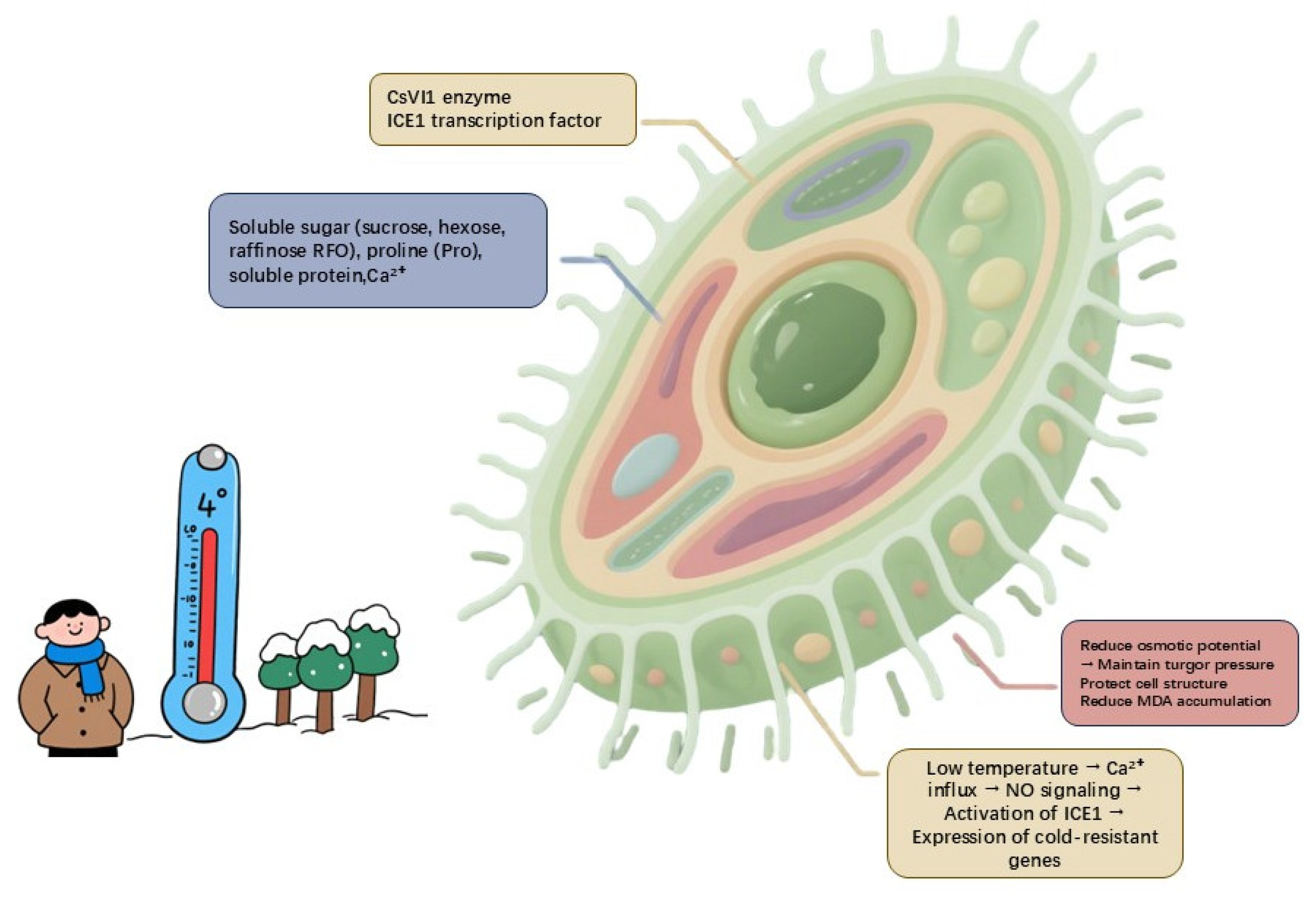
Osmotic adjustment is a key physiological mechanism enabling plants to cope with abiotic stress. It involves the accumulation of organic and inorganic solutes (Figure 1), which lowers the intracellular osmotic potential. This increase in solute concentration helps maintain cell turgor and protects cellular structure and function under stress conditions [39].
Under low-temperature stress, plants accumulate soluble sugars [40], soluble proteins [41], proline [42], and inorganic ions to mitigate chilling injury and enhance cold tolerance. Feng et al. analyzed the response of cucumber vacuolar invertase (VI) to low-temperature stress and found that CsVI1 protein hydrolyzes sucrose into hexoses, thereby improving tolerance [43]. Introducing the low-temperature-induced transcriptional regulator ICE1 into cucumber produced transgenic plants with enhanced cold tolerance, dwarfism, shortened internodes, a higher first female flower node, and a lower female flower ratio compared to wild-type plants. This demonstrates that ICE1 induces the expression of cold-responsive genes, promoting the accumulation of soluble sugars and free proline while inhibiting malondialdehyde (MDA) accumulation [44]. Zhang et al. reported that calcium ions (Ca2+) participate in nitric oxide (NO)-induced cucumber responses to low-temperature stress, regulating leaf gas exchange, PSII activity, and the expression of chlorophyll synthesis-related genes [45]. While cultivated cucumbers accumulate osmoregulatory substances (e.g., proline, soluble sugars, proteins) under low-temperature stress, the levels are usually insufficient to fully counteract osmotic stress. In contrast, wild cucumbers accumulate higher amounts of these compounds, effectively reducing intracellular osmotic potential and maintaining turgor and metabolic balance. For example, wild types accumulate large amounts of raffinose family oligosaccharides (RFOs) and proline to enhance cold hardiness.

3.2. Antioxidant System

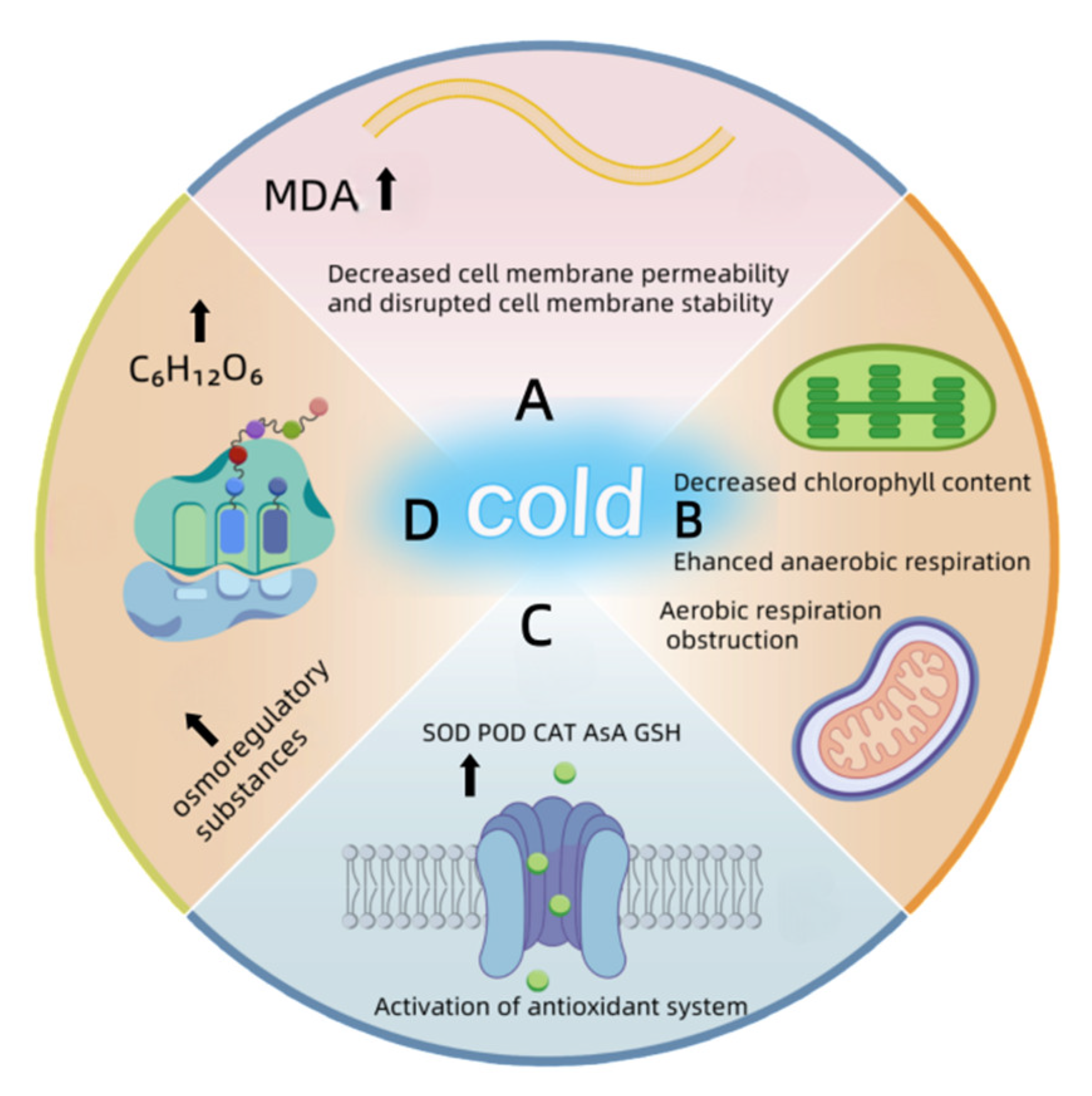
Low-temperature stress induces overproduction and accumulation of ROS, such as O2, OH, H2O2, and 1O2, leading to oxidative damage [46]. For instance, low temperature disrupts the photosynthetic electron transport chain in chloroplasts, transferring excess energy to O2 and generating ROS (Figure 2). The plant antioxidant system, which protects against ROS toxicity, comprises enzymatic components (e.g., SOD, POD, CAT, APX, GR, and MDHAR) and non-enzymatic components (e.g., ASA, GSH, phenolics, alkaloids, non-protein amino acids, and α-tocopherol) [47]. Lee et al. studied changes in antioxidant enzyme changes in cucumber leaves under low-temperature stress and observed increased activities of SOD, APX, and GR; decreased CAT activity; and a context-dependent enhancement of POD activity. This suggests that elevated activity of SOD, APX, and GR isoenzymes may promote low-temperature tolerance [48]. In pepper (Capsicum annuum L.) exposed to low temperature (8 °C), nitrosative and oxidative stress were initially induced, marked by protein tyrosine nitration and lipid peroxidation after 24 h. However, the plants transitioned to a cold-adapted state over the next two days, facilitated by a coordinated response involving the non-enzymatic antioxidants ascorbate and glutathione, NADPH-generating dehydrogenases, and the enzymatic antioxidant system, which collectively reestablished redox homeostasis [49]. Additionally, barium (Ba) treatment enhances the activities of CAT, APX, and GPX [50], while melatonin (MT) significantly upregulates the expression of CsCAT, CsAPX, CsMDHAR, CsDHAR, and CsGR, reducing oxidative damage under low-temperature stress [51]. Under low-temperature stress, cultivated cucumbers accumulate excessive ROS, causing oxidative damage. Although they activate antioxidant enzymes (e.g., SOD, CAT, APX) to scavenge ROS, their antioxidant capacity is generally weak and insufficient to fully mitigate oxidative injury. Wild cucumbers exhibit a stronger antioxidant capacity, rapidly activating enzymatic systems and accumulating higher levels of non-enzymatic antioxidants (e.g., ascorbate, glutathione) to enhance ROS clearance.

3.3. Plant Hormones

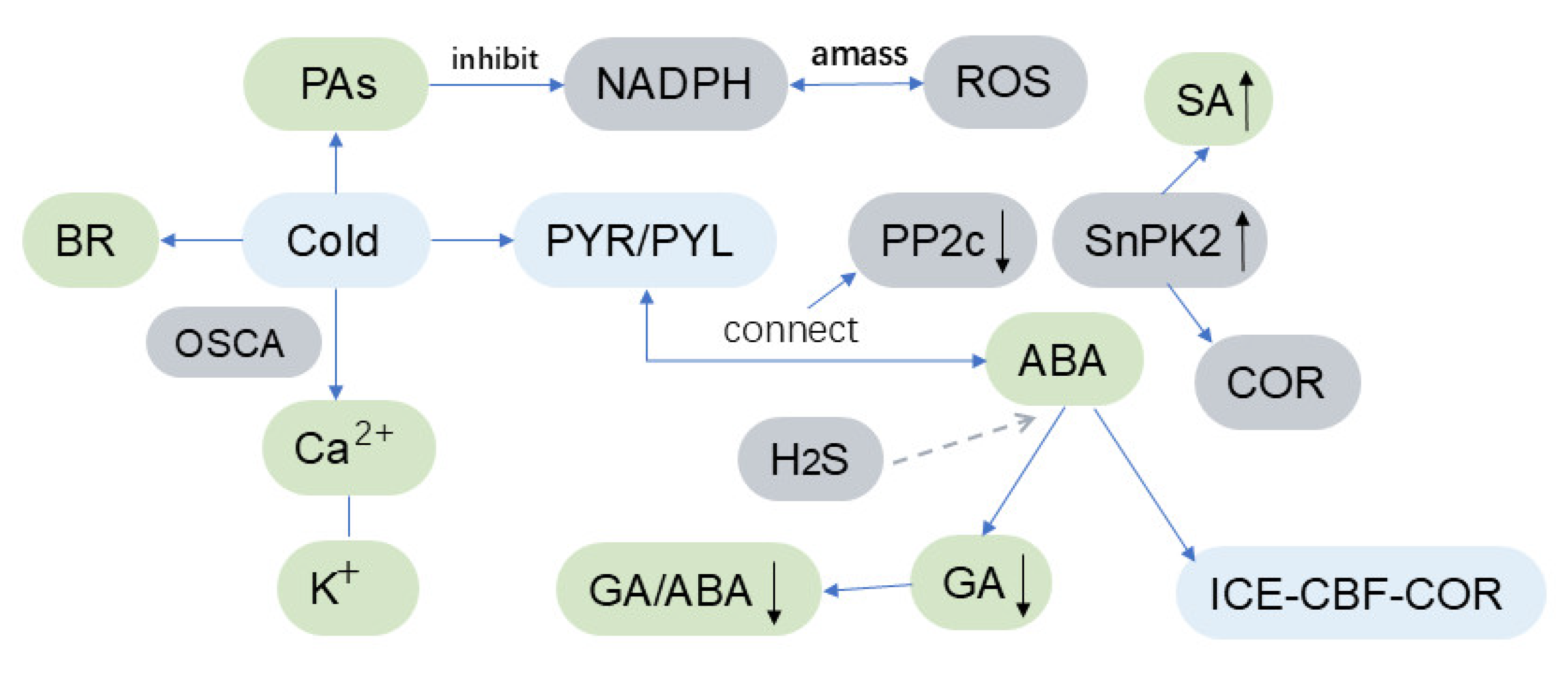
Plant hormones play vital roles in low-temperature stress responses (Figure 3). Low-temperature stress promotes biosynthesis of hormones such as ABA, salicylic acid (SA), strigolactones (SLs), brassinosteroids (BRs), ethylene (ETH), and jasmonic acid (JA), activating signaling pathways for adaptation [52]. ABA induces seed dormancy, while GA promotes seed germination [53]. Salah et al. measured hormone levels in cold-tolerant (CT90R) and cold-sensitive (CT57S) cucumbers under low-temperature stress. CT90R plants had significantly higher ABA, BR, dihydrozeatin (DZ), and inositol phosphate (IP) content than CT57S, indicating that elevated hormone levels enhance low-temperature resistance [54]. ABA enhances plant low-temperature tolerance [55]; studies show low temperature increases ABA content in cucumber roots and leaves, positively correlating with cultivar cold hardiness [56]. It was demonstrated that exogenous SA application activates the biosynthesis of ABA and H2O2 in grafted cucumber seedlings, thereby enhancing chilling tolerance [57]. Zhang et al. investigated the roles of H2O2 and IAA in H2S-induced cold tolerance and found that low temperature or exogenous H2S promotes IAA synthesis, which triggers H2O2 accumulation and enhances cold tolerance. They proposed that H2O2 acts as a downstream signal of IAA in H2S-mediated low-temperature stress responses [58]. Shen et al. demonstrated that polyamines (PAs) enhance cold tolerance by inhibiting NADPH oxidase activation and ROS generation [59]. Anwar found that 24-epibrassinolide (24-EBL) improves low-temperature tolerance by modulating endogenous hormone levels, enhancing antioxidant capacity and photosynthetic efficiency. The expression of the GA degradation gene CsGA2ox3 was upregulated, while that of GA biosynthesis genes (CsGA20ox1, CsGA3ox1) was downregulated, leading to a decreased GA/ABA ratio and consequently inhibiting cucumber seed germination [60]. These differentially expressed genes (DEGs) were associated with ethylene and auxin signal transduction pathways, as well as glucose and cysteine/methionine metabolism. Investigating genome-wide methylation changes under low temperature, Lai et al. observed upregulation of the ethylene biosynthesis gene ACO3 and downregulation of the ethylene-responsive transcription factor RAP2.4 (AP2/ERF family). This finding provides a basis for explaining low-temperature-induced female flower differentiation in cucumber [61]. Furthermore, exogenous auxin promoted parthenocarpy, whereas exogenous ethylene suppressed it. Based on these results, the authors proposed that auxin positively regulates parthenocarpic fruit development, while ethylene exerts a negative regulatory effect [30]. Cultivated cucumbers often exhibit disrupted hormone metabolism under low-temperature stress. For example, low temperature inhibits GA synthesis and promotes ABA accumulation, reducing the GA/ABA ratio and suppressing growth [62]. Wild cucumbers better maintain hormone balance, upregulating ethylene and auxin synthesis to promote female flower differentiation and fruit development under low temperature. They also enhance cold tolerance by modulating PA metabolism. Under low-temperature stress, brassinolide (BR) has been shown to protect the chloroplast structure in Paulownia leaves from damage. Khan found that brassinosteroids (BRs) act as crucial regulatory substances for tomato (Solanum lycopersicum L.) in responding to low-temperature stress: they alleviate low-temperature-induced oxidative damage by inducing the activation of the antioxidant system in tomatoes—for instance, increasing the activities of antioxidant enzymes such as superoxide dismutase (SOD) and peroxidase (POD), or promoting the accumulation of non-enzymatic antioxidants. Meanwhile, BRs can maintain the photosynthetic function and normal physiological metabolism of tomatoes under low-temperature conditions to a certain extent, thereby mitigating the inhibitory effect of low temperature on tomato yield formation. This finding provides empirical support for clarifying the application of BRs in the regulation of low-temperature resistance in Solanaceous crops [63].

4. Molecular Mechanisms of Cucumber Response to Low-Temperature Stress

4.1. Construction of a Cold Tolerance Evaluation Index System for Cucumber

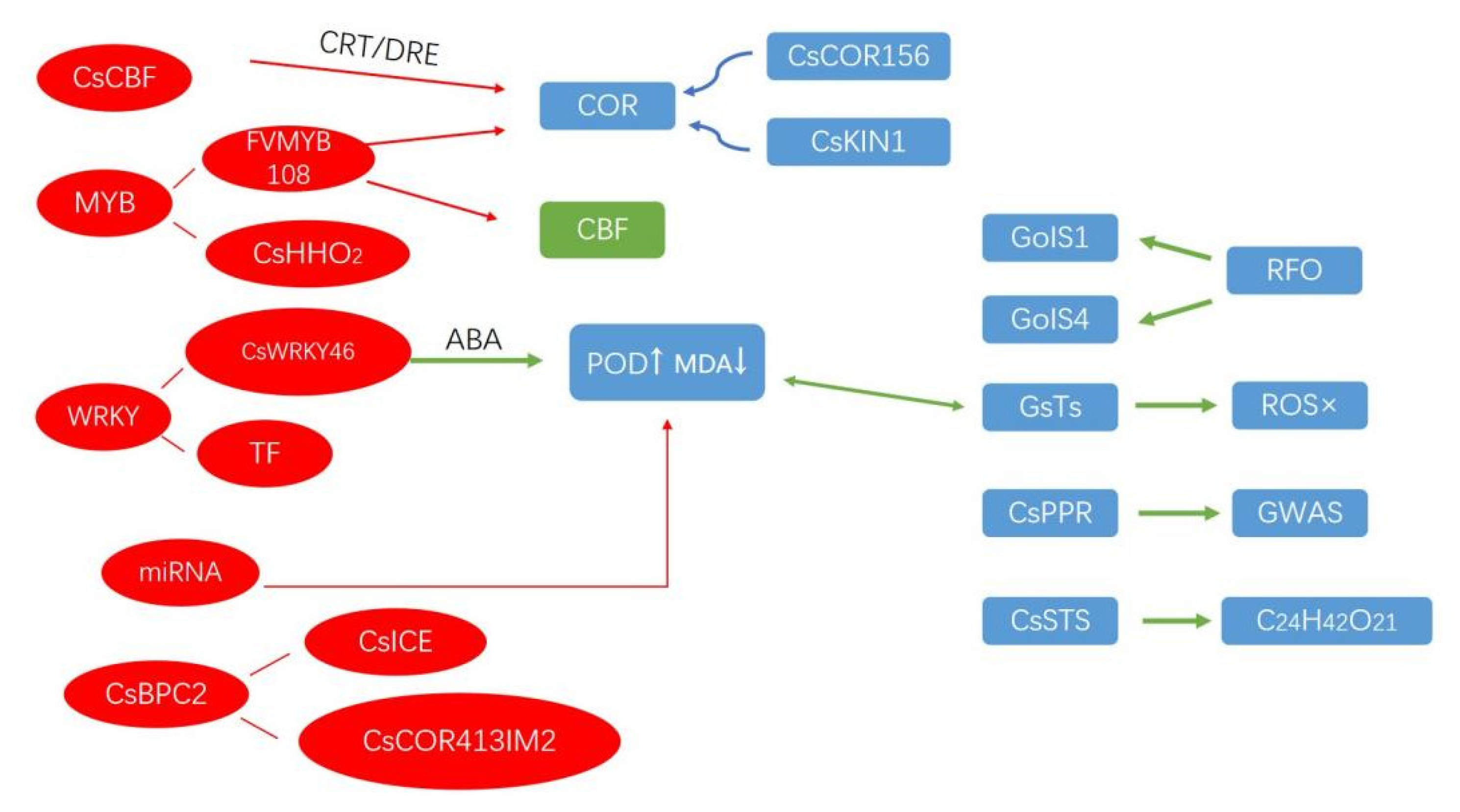
As a cold-sensitive crop, low-temperature stress severely affects cucumber growth, yield, and quality. Cucumber cold tolerance is a complex quantitative trait governed by genes. Its mechanisms involve not only physiological and biochemical changes but also induction of low-temperature-related gene expression to enhance tolerance [64]. Recent molecular studies have identified numerous key genes involved in cucumber low-temperature response (Figure 4), categorized into regulatory and functional genes based on their modes of action. HOU et al. identified the PavbHLH106 gene from the sweet cherry genome and demonstrated that its overexpression in tobacco significantly enhanced cold tolerance under low-temperature stress [65]. In a separate study on Chimonanthus praecox, DENG et al. characterized a cold-responsive COR gene, CpCOR413PM1. Their research showed that its expression is induced by ABA, which subsequently regulates chlorophyll and MDA contents, thereby alleviating low-temperature damage in plants [66].

4.2. Regulatory Genes in Cucumber Response to Low-Temperature Stress

While this review catalogs key transcription factors (TFs) involved in cucumber cold tolerance, a deeper mechanistic analysis of their specific functions and interactions is warranted. The subsequent section offers a more integrated perspective on their roles.
The CBF (C-repeat Binding Factor) TFs, central to the cold response, function not merely as listed components but as master regulators that directly orchestrate a protective transcriptome. In cucumber, the functional significance of CsCBF1/2/3 is evident from their overexpression, which enhances survival rates primarily through the direct transactivation of downstream COR (Cold-Regulated) genes. These effector genes execute physiological adaptations, including the production of LEA proteins for cellular protection, enzymes for osmolyte (e.g., proline) biosynthesis for osmotic adjustment, and antioxidant enzymes (e.g., SOD, POD) for reactive oxygen species (ROS) scavenging [67]. Beyond CBFs, CsSGR has been identified as a critical node, enhancing tolerance by coordinately regulating chlorophyll degradation, ROS homeostasis, and the expression of stress-responsive genes, positioning it as a valuable target for breeding [68].
MYB transcription factors contribute to cold tolerance through functionally distinct and context-dependent pathways. The model is not monolithic; it encompasses both CBF-dependent and CBF-independent mechanisms. For instance, FvMYB108 operates within the CBF regulon by amplifying the expression of core genes like AtCBF1 and AtDREB1A [69]. In contrast, the cucumber MYB-like TF CsHHO2 exemplifies a parallel pathway. It enhances fruit chilling tolerance independently of the CBF core by directly activating target genes like CsGR-RBP3, an RNA-binding protein, suggesting a novel layer of post-transcriptional regulation in the cold response [70].
WRKY TFs are pivotal in mediating crosstalk, particularly integrating hormone signals with stress responses. The function of CsWRKY46 extends beyond cold induction; it serves as a molecular hub within an ABA-dependent signaling pathway. Its mechanism involves promoting the accumulation of the osmoprotectant proline while concurrently mitigating oxidative and membrane damage, as evidenced by reduced MDA content and electrolyte leakage. This directly links its transcription factor activity to the critical physiological outcome of plasma membrane integrity preservation [71].
Furthermore, the cold response network includes other specialized regulators. CsBPC2 acts as an upstream positive switch, whose knockout impairs cold tolerance and downregulates key genes like CsICE1 and CsCOR413IM2, confirming its essential role in initiating the signaling cascade [72]. The systemic low-temperature responsiveness of the GRAS family suggests their potential involvement in early signal perception or transduction [73]. Finally, specific miRNAs fine-tune the response post-transcriptionally by targeting a suite of genes involved in redox balance (POD, CSD), signaling feedback (CBFs), and cell wall fortification, adding a crucial layer of regulatory precision [74].
In summary, cucumber cold tolerance is regulated by a sophisticated, multi-tiered network. This network relies on the specialized, non-redundant functions of various TFs and miRNAs, which operate through interconnected but distinct molecular pathways to ensure coordinated adaptation.

4.3. Functional Genes in Cucumber Response to Low-Temperature Stress

COR (cold-regulated) genes harbor CRT/DRE cis-elements in their promoters, which are activated by CBF under low-temperature stress to enhance cold resistance [75]. Low temperature upregulates two COR genes (CsCOR15b and CsKIN1) in wild-type and CsGG3.2-overexpressing cucumbers, with higher expression in transgenics conferring low-temperature tolerance [76].
Galactinol synthase (GoIS) is a crucial enzyme involved in raffinose family oligosaccharide (RFO) biosynthesis. Its induction under low-temperature stress promotes RFO accumulation and cold hardiness [77]. Dai et al. studied four CsGoIS genes in cucumber, all responsive to low temperature. CsGoIS1 increased RFO content in phloem, while the other three enhanced RFO in mesophyll cells. Further studies confirmed the dual function of CsGoIS1 in phloem loading and cold response, improving assimilate transport and cold resistance under stress [78]. Ma et al. cloned CsGoIS4; overexpression enhanced cold tolerance, while RNAi knockdown reduced it. They concluded that CsGoIS4 comprehensively improves cold tolerance by increasing raffinose, stachyose, and galactinol content and promoting ROS scavenging [79].
Sugar Will Eventually be Exported Transporters (SWEETs) facilitate bidirectional sugar transport across membranes along concentration gradients, enabling long-distance sugar movement from source to sink organs [80]. Extensive research shows SWEETs regulate multiple physiological processes, including phloem transport, pollen nutrition, grain filling, nectar secretion, and abiotic stress resistance [81,82]. Hu et al. performed a genome-wide analysis of the cucumber SWEET family, identifying 17 CsSWEET genes with eight stress-responsive cis-elements in their promoters [83]. Subsequent studies on CsSWEET2 revealed that its overexpression in Arabidopsis enhances low-temperature tolerance by encoding an energy-independent hexose transporter that facilitates glucose and fructose accumulation [84].
Glutathione S-transferases (GSTs) are multifunctional enzymes involved in physiological metabolism and stress responses [85]. Recent studies show that SlGSTU24 expression in tomato reduces MDA content and electrolyte leakage, while its suppression increases both [86]. Duan et al. conducted a genome-wide analysis of cucumber GSTs, identifying seven CsGSTs responsive to low temperature. These genes are induced by hormones under stress, enhancing SOD, CAT, GR, and APX activity to scavenge ROS and confer tolerance [87].
Additionally, Li et al. screened CsV3_1G044080 via GWAS; it encodes CsPPR (a pentatricopeptide repeat-containing protein), and transgenic Arabidopsis promoted cucumber germination under low temperature [88]. Lu et al. isolated the stachyose synthase (STS) gene from cucumber. CsSTS is primarily expressed in the phloem of old leaf veins and is closely associated with seedling cold tolerance [89]. Collectively, these functional genes contribute to enhanced low-temperature tolerance through diverse biochemical pathways. The molecular mechanisms of cucumber responding to low-temperature stress involve multiple genes and signaling pathways, as summarized in Table 1.

5. Enhancing Cucumber Cold Tolerance via Biotic and Abiotic Approaches

Recently, exogenous protectants have gained attention for improving cucumber cold tolerance. These protectants modulate physiological metabolism, antioxidant defense systems, osmoregulatory compound accumulation, and hormone signaling pathways to improve cold resistance.

5.1. Abiotic Approaches to Enhance Cold Tolerance

Various exogenous substances synergistically enhance cold tolerance by regulating physiological and molecular networks. Hydrogen sulfide (H2S) promotes auxin synthesis via CsARF5 upregulation and activates Ca2+ signaling, improving photosynthesis and antioxidant defense [90]. Chitosan oligosaccharides (COS, 50 mg/L) induce antioxidant enzyme activity, reduce malondialdehyde (MDA) accumulation, and regulate sugar metabolism and osmoprotection, thereby protecting cellular membranes [91]. Melatonin (Mel) enhances SOD, CAT, and GR activity to reduce ROS and boosts resistance via calcium-dependent protein kinases (CPKs) [92]. Salicylic acid (SA) coordinates antioxidant responses and hormone balance through the ‘CsNPR1-CsICE1’ axis [93]. Zinc oxide nanoparticles (ZnO NPs) elevate antioxidant enzymes (SOD/CAT/APX) and proline/soluble sugar accumulation [94]. Nitric oxide (NO) integrates antioxidant systems with Ca2+ signaling to improve photosynthesis [95]. Hydrogen-rich water (HRW) reduces MDA and activates SOD/CAT/APX enzymes [96]. Sodium selenate (Na2SeO3) simultaneously enhances antioxidant capacity and osmoprotectant biosynthesis [97]. Collectively, these agents employ a multidimensional mechanism centered on core antioxidant defense (reducing ROS/MDA) + osmotic regulation (proline/soluble sugars) + signal transduction (Ca2+/CPKs/CsNPR1) + hormone regulation (auxin) to systemically improve cucumber adaptation to low-temperature stress.

5.2. Biotic Approaches to Enhance Cold Tolerance

Biotic approaches rely on bioelicitors that activate SA/JA/CBF pathways, triggering synergistic responses, including antioxidant activity (ROS clearance), osmotic protection (proline/sugar accumulation), and antifreeze protein synthesis. This ultimately improves membrane stability and physiological resilience. Current field-applied strategies include Bacillus-based agents and arbuscular mycorrhizal fungi (AMF) inoculation, though induction intensity requires optimization to avoid adverse effects.
AMF form symbiotic associations with cucumber roots, significantly enhancing growth and secondary metabolite accumulation under low-temperature stress. Inoculated seedlings exhibit higher fresh/dry weight, enhanced antioxidant enzyme activity, and increased secondary metabolites [98]. Plant growth-promoting rhizobacteria (PGPR) induce upregulation of the core cold-regulatory TF CsCBF1 (3.2-fold increase), driving downstream antifreeze gene CsCOR47 (2.8-fold increase) [99]. SOD, POD, and CAT activities increase by 35%, 42%, and 28%, respectively, efficiently scavenging ROS. Physiologically, MDA levels decrease by 40%, electrolyte leakage by 50%, and seedling survival (4 °C for 48 h) increases from 45% to 82%. Cross-protection using attenuated cucumber mosaic virus (CMV-Δ2b) foliar spray persistently activates the SA pathway (CsNPR1 high expression), inducing heat shock protein CsHSP70 (4.1-fold increase) to stabilize denatured proteins. Antifreeze glycoprotein synthesis doubles, lowering the intracellular freezing point by 2 °C. PSII photochemical efficiency (Fv/Fm) remains at 0.75 (vs. 0.52 in controls) after 8 °C/96 h treatment [100].

6. Future Perspectives

As a globally important vegetable crop, cucumber fruit is favored for its unique taste and nutritional value. However, with increasing global climate change and extreme low-temperature events, cucumber has been exposed to low-temperature stress during growth, severely affecting yield and quality. In response to this adversity, cucumber has developed a variety of adaptive mechanisms, including morphological, physiological, biochemical, genetic, and proteomic strategies, to enhance cold resistance.
Recent advances in the understanding of plant responses to low-temperature stress—particularly discoveries related to transcription factors, signaling pathways, and regulatory networks—have provided crucial insights into the molecular mechanisms governing cucumber’s cold tolerance. Nevertheless, compared to model plants like Arabidopsis or major crops like rice, many aspects of cucumber’s molecular regulatory networks and physiological mechanisms under low-temperature stress remain insufficiently explored. Key areas requiring further investigation include the dynamic changes in endogenous hormones, mechanisms of osmoregulatory substance accumulation, and roles of critical signaling molecules.
Rapid developments in high-throughput sequencing, gene editing (e.g., CRISPR/Cas9), and multi-omics integration are poised to drive breakthroughs in identifying and characterizing cold-tolerance genes. These technologies will elucidate the molecular foundations of cucumber low-temperature responses and support the development of innovative cold-resistant germplasm and breeding strategies. Integrating genomics, transcriptomics, proteomics, and metabolomics will comprehensively reveal regulatory networks under low-temperature stress, laying a foundation for breeding high-yield, high-quality, and stress-resistant cucumber varieties.
The effects of low-temperature stress on agriculture are widespread. Beyond cucumber, numerous other vital economic crops, such as pepper and citrus (Citrus sinensis), also suffer significantly from its effects. Research suggests that, despite species differences, the core physiological pathways involved in responding to low temperatures are remarkably conserved across various plant species. For example, all of these species trigger the generation of reactive oxygen species (ROS) and reactive nitrogen species (RNS), leading to oxidative and nitrosative stress, which in turn activate complex antioxidant and osmotic regulation systems [50]. Therefore, the in-depth mechanistic analysis conducted using cucumber as a model holds significant reference value for understanding the broader physiology of plant cold tolerance. Simultaneously, different crops (such as citrus, which accumulates anthocyanins in its fruits) may have evolved unique adaptive mechanisms, providing a complementary perspective for comprehensively mapping the plant cold resistance network. Meanwhile, emerging concepts such as “secondary metabolism (e.g., anthocyanin)” and “novel transcription factors” offer promising directions for the “Future Perspectives” section of this research [101].
Furthermore, exogenous substances (e.g., hormones, osmoprotectants, signaling molecules) show significant potential in alleviating low-temperature stress and promoting growth. Optimizing application strategies in conjunction with molecular breeding approaches will further enhance cold tolerance, providing sustainable solutions to the challenges posed by climate change. In summary, with deepening research and technological progress, studies on cucumber cold-resistance mechanisms will advance, providing robust solutions for sustainable cucumber production.

Author Contributions

Y.Z.: conceptualization, formal analysis, visualization, writing—original draft. H.H.: formal analysis, visualization, writing—original draft. M.S.: visualization, writing—original draft. A.C. and D.L.: validation, investigation. M.C.: formal analysis. W.L.: visualization, revised review. J.Y. (Jiabao Ye): writing—review and editing, funding acquisition, supervision. J.Y. (Jiamei Yang): formal analysis. F.X.: writing—review and editing, supervision. All authors have read and agreed to the published version of the manuscript.

Funding

This research was funded by the Key Research and Development Program of Hubei Province, China (No. 2024BBB018).

Data Availability Statement

No new data were created or analyzed in this study.

Conflicts of Interest

Authors Anjun Chen, Meng Chen, and Dujin Luo were employed by the company Hubei Xueyin Agricultural Science &Technology Co., Ltd., Jingzhou 434025, China. The remaining authors wish to disclose that, at the time of conducting this research and submitting the manuscript, they were not subject to any commercial or financial relationships that could be perceived as a potential conflict of interest.

References

  1. Zhang, S.; Dong, S.Y.; Guan, J.T.; Miao, H.; Liu, X.P.; Gu, X.F. Research progress on molecular breeding for cucumber disease resistance. Acta Hortic. Sin. 2025, 52, 773–791. [Google Scholar] [CrossRef]
  2. Zhao, J.; Song, W.; Zhang, X. Genetic and molecular regulation of fruit development in cucumber. New Phytol. 2024, 244, 1742–1749. [Google Scholar] [CrossRef]
  3. Lu, X.T.; Yin, F.Y.; Liu, C.Y.; Liang, Y.L.; Liu, Y.F.; Shuai, L. Bioinformatics and expression analysis of cucumber cold stress response gene WRKY51. Mol. Plant Breed. 2025, 1–19. Available online: https://kns.cnki.net/kcms2/article/abstract?v=Y4WXQ1XfpS70I0Hz_B2LQYURou7uYcGPn-sdTQk-Y0JhrIPSXOu_MFDAuy92l4HaMHQeKBeSTBETgTkyIgxW6MT5pBIE1m-xbXrtKNO26Up0OC4uTZlQLSAYkJmBnt4sz_QeCzwE-Aaz1kVOLIOTYvVChooSWsPslnunsftVd0-uVXnkV3IOeA==&uniplatform=NZKPT&language=CHS (accessed on 8 September 2025).
  4. Zhang, C.; Zhang, H.N.; Yan, H.F.; Samuel, J.A.; Xing, D.K. Effects of micro sprinkler irrigation combined with drip irrigation on greenhouse high temperature environment and crop growth physiological characteristics. J. Agric. Eng. 2018, 34, 83–89. [Google Scholar] [CrossRef]
  5. Feng, Y.Q.; Qiu, S.N.; Wu, Y.; Jie, Y.; Zhang, X.W.; Bi, H.G.; Ai, X.Z. The effect of melatonin on the cold tolerance of cucumber in solar greenhouse. J. Hortic. 2024, 51, 2633–2644. [Google Scholar] [CrossRef]
  6. Zhang, J.; Tang, C.N.; Xie, J.M.; Li, J.; Zhang, X.D.; Wang, C. Exogenous strigolactones alleviate low-temperature stress in peppers seedlings by reducing the degree of photoinhibition. BMC Plant Biol. 2024, 24, 907. [Google Scholar] [CrossRef]
  7. Gong, Z.; Xiong, L.; Shi, H.; Shi, H.; Yang, S.; Herrera-Estrella, L.R.; Xu, G.; Chao, D.Y.; Li, J.; Wang, P.Y.; et al. Plant abiotic stress response and nutrient use efficiency. Sci. China Life Sci. 2020, 63, 635–674. [Google Scholar] [CrossRef]
  8. Kuk, Y.I.; Shin, J.S. Mechanisms of low-temperature tolerance in cucumber leaves of various ages. J. Am. Soc. Hortic. Sci. 2007, 132, 294–301. [Google Scholar] [CrossRef]
  9. Bhat, K.A.; Mahajan, R.; Pakhtoon, M.M.; Urwat, U.; Bashir, Z.; Shah, A.A.; Agrawal, A.; Bhat, B.; Sofi, P.A.; Masi, A.; et al. Low temperature stress tolerance: An insight into the omics approaches for legume crops. Front. Plant Sci. 2022, 13, 888710. [Google Scholar] [CrossRef]
  10. Gao, J.J.; Guo, W.B.; Liu, Q.W.; Liu, M.G.; Chen, S.; Song, Y.Q.; Hao, R.J.; Li, L.L.; Feng, X.X. The physiological response of apricot flowers to low-temperature stress. Plants 2024, 13, 1002. [Google Scholar] [CrossRef]
  11. Olechowska, E.; Somnicka, R.; Kaźmińska, K.; Olczak-Woltman, H.; Bartoszewski, G. The genetic basis of cold tolerance in cucumber (Cucumis sativus L.)—The latest developments and perspectives. J. Appl. Genet. 2022, 21, 597–608. [Google Scholar] [CrossRef]
  12. Jiang, Y.S.; Sun, M.T.; Li, Y.S.; Feng, X.J.; Li, M.L.; Shi, A.K.; He, C.X.; Yan, Y.; Wang, J.; Yu, X.C. Sodium nitrophenolate mediates brassinosteroids signaling to enhance cold tolerance of cucumber seedling. Plant Physiol. Biochem. 2024, 206, 108317. [Google Scholar] [CrossRef]
  13. Sun, J.; Chen, S.; Si, X.; Liu, W.; Yuan, M.; Guo, S.; Wang, Y. WRKY41/WRKY46-miR396b-5p-TPR module mediates abscisic acid-induced cold tolerance of grafted cucumber seedlings. Front. Plant Sci. 2022, 13, 1012439. [Google Scholar] [CrossRef]
  14. Cabrera, R.; Saltveit, M.; Owens, K. Cucumber Cultivars Differ in Their Response to Chilling Temperatures. J. Am. Soc. Hortic. Sci. 1992, 117, 802–807. [Google Scholar] [CrossRef]
  15. Jennings, P.; Saltveit, M.E. Temperature Effects on Imbibition and Germination of Cucumber (Cucumis sativus) Seeds. J. Am. Soc. Sci. 1994, 119, 464–467. [Google Scholar] [CrossRef]
  16. Foolad, M.R.; Subbiah, P.; Zhang, L. Common QTL Affect the Rate of Tomato Seed Germination under Different Stress and Nonstress Conditions. Int. J. Plant Genom. 2007, 2007, 97386. [Google Scholar] [CrossRef] [PubMed]
  17. Damaris, R.N.; Lin, Z.; Yang, P.; He, D. The Rice Alpha-Amylase, Conserved Regulator of Seed Maturation and Germination. Int. J. Mol. Sci. 2019, 20, 450. [Google Scholar] [CrossRef]
  18. Cao, Q.J.; Li, G.; Cui, Z.G.; Yang, F.T.; Jiang, X.L.; Lamine, D.; Kong, F.L. Seed Priming with Melatonin Improves the Seed Germination of Waxy Maize under Chilling Stress via Promoting the Antioxidant System and Starch Metabolism. Sci. Rep. 2019, 9, 15044. [Google Scholar] [CrossRef] [PubMed]
  19. Marta, B.; Szafrańska, K.; Posmyk, M.M. Exogenous Melatonin Improves Antioxidant Defense in Cucumber Seeds (Cucumis sativus L.) Germinated under Chilling Stress. Front. Plant Sci. 2016, 7, 575. [Google Scholar] [CrossRef]
  20. Meng, A.J.; Wen, D.X.; Zhang, C.Q. Dynamic changes in seed germination under low-temperature stress in maize. Int. J. Mol. Sci. 2022, 23, 5495. [Google Scholar] [CrossRef]
  21. Zhang, H.M.; Jin, H.J.; Bu, L.J.; Ding, X.T.; He, L.Z.; Cui, J.W.; Hu, J.J.; Yu, J.Z. Physiological response and resistance evaluation of cucumber high generation inbred lines to low temperature and weak light. Mol. Plant Breed. 2021, 19, 3415–3423. [Google Scholar] [CrossRef]
  22. Amin, B.; Atif, M.J.; Wang, X.; Meng, H.; Ghani, M.I.; Ali, M.; Ding, Y.; Li, X.; Cheng, Z. Effect of Low Temperature and High Humidity Stress on Physiology of Cucumber at Different Leaf Stages. Plant Biol. 2021, 23, 785–796. [Google Scholar] [CrossRef]
  23. Lee, S.H.; Chung, G.C.; Jang, J.Y.; Ahn, S.J.; Zwiazek, J.J. Overexpression of PIP2;5 aquaporin alleviates effects of low root temperature on cell hydraulic conductivity and growth in Arabidopsis. Plant Physiol. 2012, 159, 479–488. [Google Scholar] [CrossRef]
  24. Sun, S.; Yang, Y.; Hao, S.; Liu, Y.; Zhang, X.; Yang, P.; Zhang, X.; Luo, Y. Comparison of transcriptome and metabolome analysis revealed cold-resistant metabolic pathways in cucumber roots under low-temperature stress in root zone. Front. Plant Sci. 2024, 15, 1413716. [Google Scholar] [CrossRef]
  25. Takeuchi, K.; Ochiai, K.; Kobayashi, M.; Kuroda, K.; Ifuku, K. Light-chilling Stress Causes Hyper-accumulation of Iron in Shoot, Exacerbating Leaf Oxidative Damage in Cucumber. Plant Cell Physiol. 2024, 65, 1873–1887. [Google Scholar] [CrossRef] [PubMed]
  26. Wu, P.; Ma, Y.; Ahammed, G.J.; Hao, B.; Chen, J.; Wan, W.; Zhao, Y.; Cui, H.; Xu, W.; Cui, J.; et al. Insights into melatonin-induced photosynthetic electron transport under low-temperature stress in cucumber. J. Exp. Bot. 2022, 13, 2899–2912. [Google Scholar] [CrossRef] [PubMed]
  27. Eman, G.S.; Abdel Wahab, M.M.; Ahmed, A.; Reham, M.E.; Samah, N.A. Rootstock priming with shikimic acid and streptomyces griseus for growth, productivity. Plants 2022, 11, 2822. [Google Scholar] [CrossRef] [PubMed]
  28. Zhang, Y.; Zhao, J.; Li, J.; Li, Y.; Jiang, L.; Wang, N. Functions of Tomato (Solanum lycopersicum L.) Signal Transducer and Activator of Transcription (STAT) in Seed Germination and Low-Temperature Stress Response. Int. J. Mol. Sci. 2025, 26, 3338. [Google Scholar] [CrossRef]
  29. Wang, C.H.; Xin, M.; Zhou, X.Y.; Liu, W.F.; Liu, D.; Qin, Z.W. Transcriptome profiling reveals candidate genes associated with sex differentiation induced by night temperature in cucumber. Sci. Hortic. 2018, 232, 162–169. [Google Scholar] [CrossRef]
  30. Meng, Y.J.; Zhu, P.Y.; Gou, C.X.; Cheng, C.Y.; Li, J.; Chen, J.F. Auxin and ethylene play important roles in parthenocarpy under low-temperature stress revealed by transcriptome analysis in cucumber (Cucumis sativus L.). J. Plant Growth Regul. 2024, 43, 1137–1152. [Google Scholar] [CrossRef]
  31. Filip, S.; Amnon, G.C.; Avraham, S.C.; Hanita, Z.A.; Mazal, I.A.; Rina, K.A.; Cohen, Y. Effects of applying variable temperature conditions around inflorescences on fertilization and fruit set in date palms. Sci. Horticul. 2016, 202, 83–90. [Google Scholar] [CrossRef]
  32. Shomali, A.; Aliniaeifard, S.; Didaran, F.; Lotfi, M.; Mohammadian, M.; Seif, M.; Strobel, W.R.; Sierka, E.; Kalaji, H.M.; Shomali, A.; et al. Synergistic Effects of Melatonin and Gamma-Aminobutyric Acid on Protection of Photosynthesis System in Response to Multiple Abiotic Stressors. Cells 2021, 10, 1631. [Google Scholar] [CrossRef] [PubMed]
  33. Shomali, A.; Aliniaeifard, S. Overview of Signal Transduction in Plants Under Salt and Drought Stresses. In Salt and Drought Stress Tolerance in Plants: Signaling Networks and Adaptive Mechanisms; Springer International Publishing: Cham, Switzerland, 2020; pp. 231–258. [Google Scholar] [CrossRef]
  34. Liang, Y.; Chen, Q.; Liu, Q.; Zhang, W.; Ding, R. Exogenous silicon (Si) increases antioxidant enzyme activity and reduces lipid peroxidation in roots of salt-stressed barley (Hordeum vulgare L.). J. Plant Physiol. 2003, 160, 1157–1164. [Google Scholar] [CrossRef]
  35. Lyons, J.; Graham, D.; Raison, J.K. Low temperature stress in crop plants: The role of the membrane. Bioscience 1979, 33, 214. [Google Scholar] [CrossRef]
  36. Kratsch, H.A.; Wise, R.R. The ultrastructure of chilling stress. Plant Cell Environ. 2000, 23, 337–350. [Google Scholar] [CrossRef]
  37. Xia, L.; Wang, H.; Zhao, X.; Obel, H.O.; Yu, X.; Lou, Q.; Chen, J.; Cheng, C. Chloroplast Pan-Genomes and Comparative Transcriptomics Reveal Genetic Variation and Temperature Adaptation in the Cucumber. Int. J. Mol. Sci. 2023, 24, 8943. [Google Scholar] [CrossRef]
  38. Zhang, X.; Liu, K.; Tang, Q.; Zeng, L.; Wu, Z. Light Intensity Regulates Low-Temperature Adaptability of Tea Plant through ROS Stress and Developmental Programs. Int. J. Mol. Sci. 2023, 24, 9852. [Google Scholar] [CrossRef]
  39. Fang, Y.; Xiong, L. General mechanisms of drought response and their application in drought resistance improvement in plants. Cell. Mol. Life Sci. CMLS 2015, 72, 673–689. [Google Scholar] [CrossRef]
  40. Liang, G.; Li, Y.; Wang, P.; Jiao, S.; Wang, H.; Mao, J.; Chen, B. VaAPL1 Promotes Starch Synthesis to Constantly Contribute to Soluble Sugar Accumulation, Improving Low Temperature Tolerance in Arabidopsis and Tomato. Front. Plant Sci. 2022, 13, 920424. [Google Scholar] [CrossRef]
  41. Wallis, J.G.; Wang, H.; Guerra, D.J. Expression of a synthetic antifreeze protein in potato reduces electrolyte release at freezing temperatures. Plant Mol. Biol. 1997, 35, 323–330. [Google Scholar] [CrossRef] [PubMed]
  42. Wang, Y.H.; Xiong, F.; Nong, S.H.; Liao, J.R.; Xing, A.Q.; Shen, Q.; Ma, Y.C.; Fang, W.P.; Zhu, X.J. Effects of nitric oxide on the GABA, polyamines, and proline in tea (Camellia sinensis) roots under cold stress. Sci. Rep. 2020, 10, 12240. [Google Scholar] [CrossRef] [PubMed]
  43. Feng, Z.; Zheng, F.; Wu, S.; Li, R.; Li, Y.; Zhong, J.; Zhao, H. Functional Characterization of a Cucumber (Cucumis sativus L.) Vacuolar Invertase, CsVI1, Involved in Hexose Accumulation and Response to Low Temperature Stress. Int. J. Mol. Sci. 2021, 22, 9365. [Google Scholar] [CrossRef]
  44. Liu, L.; Duan, L.; Zhang, J.; Zhang, Z.; Mi, G.; Ren, H. Cucumber (Cucumis sativus L.) over-expressing cold-induced transcriptome regulator ICE1 exhibits changed morphological characters and enhances chilling tolerance. Sci. Hortic. 2010, 124, 29–33. [Google Scholar] [CrossRef]
  45. Zhang, Z.W.; Wu, P.; Zhang, W.B.; Yang, Z.F.; Liu, H.Y.; Ahammed, G.J.; Cui, J.X. Calcium is involved in exogenous NO-induced enhancement of photosynthesis in cucumber (Cucumis sativus L.) seedlings under low temperature. Sci. Hortic. 2020, 261, 108953. [Google Scholar] [CrossRef]
  46. Mittal, D.; Madhyastha, D.A.; Grover, A. Genome-Wide Transcriptional Profiles during Temperature and Oxidative Stress Reveal Coordinated Expression Patterns and Overlapping Regulons in Rice. PLoS ONE 2012, 7, e40899. [Google Scholar] [CrossRef]
  47. Gill, S.S.; Tuteja, N. Reactive oxygen species and antioxidant machinery in abiotic stress tolerance in crop plants. Plant Physiol. Biochem. 2010, 48, 909–930. [Google Scholar] [CrossRef]
  48. Lee, D.H.; Lee, C. Chilling stress-induced changes of antioxidant enzymes in the leaves of cucumber: In gel enzyme activity assays. Plant Sci. 2000, 159, 75–85. [Google Scholar] [CrossRef] [PubMed]
  49. Airaki, M.; Leterrier, M.; Mateos, R.M.; Valderrama, R.; Chaki, M.; Barroso, J.B.; LUIS, A.; Del, L.A.; Palma, J.M.; Copas, F.J. Metabolism of reactive oxygen species and reactive nitrogen species in pepper (Capsicum annuum L.) plants under low temperature stress. Plant Cell Environ. 2012, 35, 281–295. [Google Scholar] [CrossRef] [PubMed]
  50. Noomene, S.; Rim, K.K.; Maryem, H.A.; Renata, F.; Rosa, P.C. Barium effect on germination, plant growth, and antioxidant enzymes in Cucumis sativus L. plants. Food Sci. Nutr. 2021, 9, 2086–2094. [Google Scholar] [CrossRef]
  51. Amin, B.; Atif, M.J.; Meng, H.; Ali, M.; Li, S.; Alharby, H.F.; Majrashi, A.; Hakeem, K.R.; Cheng, Z. Melatonin Rescues Photosynthesis and Triggers Antioxidant Defense Response in Cucumis sativus Plants Challenged by Low Temperature and High Humidity. Front. Plant Sci. 2022, 13, 855900. [Google Scholar] [CrossRef]
  52. Qian, Z.; He, L.; Li, F. Understanding cold stress response mechanisms in plants: An overview. Front. Plant Sci. 2024, 15, 1443317. [Google Scholar] [CrossRef]
  53. Verma, V.; Ravindran, P.; Kumar, P.P. Plant hormone-mediated regulation of stress responses. BMC Plant Biol. 2016, 16, 86. [Google Scholar] [CrossRef]
  54. Salah, R.; Zhang, R.J.; Xia, S.W.; Song, S.S.; Hao, Q.; Hashem, M.H.; Li, H.X.; Li, Y.; Li, X.X.; Lai, Y.S. Higher Phytohormone Contents and Weaker Phytohormone Signal Transduction Were Observed in Cold-Tolerant Cucumber. Plants 2022, 11, 961. [Google Scholar] [CrossRef]
  55. Jiang, M.; Zhang, J. Involvement of plasma-membrane NADPH oxidase in abscisic acid- and water stress-induced antioxidant defense in leaves of maize seedlings. Planta 2002, 215, 1022–1030. [Google Scholar] [CrossRef]
  56. Lv, C.; Li, F.; Ai, X.; Bi, H. H2O2 participates in ABA regulation of grafting-induced chilling tolerance in cucumber. Plant Cell Rep. 2022, 41, 1115–1130. [Google Scholar] [CrossRef] [PubMed]
  57. Zhang, Y.; Fu, X.; Feng, Y.; Zhang, X.; Bi, H.; Ai, X. Abscisic Acid Mediates Salicylic Acid Induced Chilling Tolerance of Grafted Cucumber by Activating H2O2 Biosynthesis and Accumulation. Int. J. Mol. Sci. 2022, 23, 16057. [Google Scholar] [CrossRef]
  58. Zhang, X.; Zhang, Y.; Xu, C.; Liu, K.; Bi, H.; Ai, X. H2O2 Functions as a Downstream Signal of IAA to Mediate H2S-Induced Chilling Tolerance in Cucumber. Int. J. Mol. Sci. 2021, 22, 12910. [Google Scholar] [CrossRef]
  59. Shen, W.; Nada, K.; Tachibana, S. Involvement of Polyamines in the Chilling Tolerance of Cucumber Cultivars. Plant Physiol. 2000, 124, 431–439. [Google Scholar] [CrossRef]
  60. Li, C.; Dong, S.; Beckles, D.M.; Miao, H.; Sun, J.; Liu, X.; Wang, W.; Zhang, S.; Gu, X. The qLTG1.1 candidate gene CsGAI regulates low temperature seed germination in cucumber. Theor. Appl. Genet. 2022, 135, 2593–2607. [Google Scholar] [CrossRef] [PubMed]
  61. Lai, Y.S.; Zhang, X.H.; Zhang, W.; Shen, D.; Wang, H.P.; Xia, Y.D.; Qiu, Y.; Song, J.P.; Wang, C.C.; Li, X.X. The association of changes in DNA methylation with temperature-dependent sex determination in cucumber. J. Exp. Bot. 2017, 68, 2899–2912. [Google Scholar] [CrossRef]
  62. Anwar, A.; Bai, L.; Miao, L.; Liu, Y.; Li, S.; Yu, X.; Li, Y. 24-Epibrassinolide ameliorates endogenous hormone levels to enhance low-temperature stress tolerance in cucumber seedlings. Int. J. Mol. Sci. 2018, 19, 2497. [Google Scholar] [CrossRef] [PubMed]
  63. Khan, T.A.; Fariduddin, Q.; Yusuf, M. Lycopersicon esculentum under low temperature stress: An approach toward enhanced antioxidants and yield. Environ. Sci. Pollut. Res. 2015, 22, 14178–14188. [Google Scholar] [CrossRef]
  64. Aslam, M.; Fakher, B.; Ashraf, M.; Cheng, Y.; Wang, B.R.; Qin, Y. Plant Low-Temperature Stress: Signaling and Response. Agronomy 2022, 12, 702. [Google Scholar] [CrossRef]
  65. Hou, Q.; Shen, T.; Yu, R.; Deng, H.; Wen, X.; Qiao, G. Functional analysis of sweet cherry PavbHLH106 in the regulation of cold stress. Plant Cell Rep. 2023, 431, 7. [Google Scholar] [CrossRef] [PubMed]
  66. Deng, Y.; Lin, Y.; Wei, G.; Hu, X.; Zheng, Y.; Ma, J. Overexpression of the CpCOR413PM1 Gene from Wintersweet (Chimonanthus praecox) Enhances Cold and Drought Tolerance in Arabidopsis. Horticulturae 2024, 10, 599. [Google Scholar] [CrossRef]
  67. Li, J.; Li, H.; Quan, X.; Shan, Q.; Wang, W.; Yin, N.; Wang, S.; Wang, Z.; He, W. Comprehensive analysis of cucumber C-repeat/dehydration-responsive element binding factor family genes and their potential roles in cold tolerance of cucumber. BMC Plant Biol. 2022, 22, 270. [Google Scholar] [CrossRef] [PubMed]
  68. Dong, S.Y.; Li, C.X.; Tian, H.J.; Wang, W.P.; Yang, X.Y.; Beckles, D.M.; Liu, X.P.; Guan, J.T.; Gu, X.F.; Sun, J.Q.; et al. Natural variation in STAYGREEN contributes to low--temperature tolerance in cucumber. J. Int. Plant Biol. 2023, 65, 2552–2568. [Google Scholar] [CrossRef]
  69. Song, P.; Yang, R.; Jiao, K.; Guo, B.; Zhang, L.; Li, Y.; Zhang, K.; Zhou, S.; Wu, X.; Li, X. FvMYB108, a MYB Gene from Fragaria vesca, Positively Regulates Cold and Salt Tolerance of Arabidopsis. Int. J. Mol. Sci. 2024, 25, 3405. [Google Scholar] [CrossRef]
  70. Wang, B.; Wang, G.; Wang, Y.; Jiang, Y.Y.; Zhu, Y.; He, J.; Zhu, S. A cold-inducible MYB like transcription factor, CsHHO2, positively regulates chilling tolerance of cucumber fruit by enhancing CsGR-RBP3 expression. Postharvest Biol. Technol. 2024, 218, 113172. [Google Scholar] [CrossRef]
  71. Zhang, Y.; Yu, H.; Yang, X.; Li, Q.; Ling, J.; Wang, H.; Gu, X.; Huang, S.; Jiang, W. CsWRKY46, a WRKY transcription factor from cucumber, confers cold resistance in transgenic-plant by regulating a set of cold-stress responsive genes in an ABA-dependent manner. Plant Physiol. Biochem. 2016, 108, 478–487. [Google Scholar] [CrossRef]
  72. Meng, D.; Li, S.Z.; Feng, X.J.; Di, Q.H.; Zhou, M.D.; Yu, X.C.; He, C.X.; Yan, Y.; Wang, J.; Sun, M.T.; et al. CsBPC2 is essential for cucumber survival under cold stress. BMC Plant Biol. 2023, 23, 566. [Google Scholar] [CrossRef]
  73. Lu, X.; Liu, W.; Xiang, C.; Wang, Q.; Wang, T.; Liu, Z.; Zhang, J.; Gao, L.; Zhang, W. Genome-Wide Characterization of GRAS Family and Their Potential Roles in Cold Tolerance of Cucumber (Cucumis sativus L.). Int. J. Mol. Sci. 2020, 21, 3857. [Google Scholar] [CrossRef]
  74. Ma, Q.; Niu, C.; Wang, C.; Chen, C.; Li, Y.; Wei, M. Effects of differentially expressed microRNAs induced by rootstocks and silicon on improving chilling tolerance of cucumber seedlings (Cucumis sativus L.). BMC Genomics 2023, 24, 250. [Google Scholar] [CrossRef]
  75. Hwarari, D.; Guan, Y.; Ahmad, B.; Movahedi, A.; Min, T.; Hao, Z.; Lu, Y.; Chen, J.; Yang, L. ICE-CBF-COR Signaling Cascade and Its Regulation in Plants Responding to Cold Stress. Int. J. Mol. Sci. 2022, 23, 1549. [Google Scholar] [CrossRef] [PubMed]
  76. Bai, L.; Liu, Y.; Mu, Y.; Anwar, A.; He, C.; Yan, Y.; Li, Y.; Yu, X. Heterotrimeric G-protein γ subunit CsGG3.2 positively regulates the expression of CBF genes and chilling tolerance in cucumber. Front. Plant Sci. 2018, 9, 488. [Google Scholar] [CrossRef] [PubMed]
  77. Zhang, H.; Wu, J.; Zhang, W.; Bao, M. PhDREB1-PhZFP1-PhGolS1-1 regulator cascade contribute to cold tolerance by mediating galactinol and raffinose accumulation in petunia. Environ. Exp. Bot. 2023, 213, 105416. [Google Scholar] [CrossRef]
  78. Dai, H.; Zhu, Z.; Wang, Z.; Zhang, Z.; Kong, W.; Miao, M. Galactinol synthase 1 improves cucumber performance under cold stress by enhancing assimilate translocation. Hortic. Res. 2022, 9, uhab063. [Google Scholar] [CrossRef]
  79. Ma, S.; Lv, J.G.; Li, X.; Ji, T.T.; Gao, L.H. Galactinol synthase gene 4 (CsGolS4) increases cold and drought tolerance in Cucumis sativus L. by inducing RFO accumulation and ROS scavenging. Environ. Exp. Bot. 2021, 185, 104406. [Google Scholar] [CrossRef]
  80. Zhu, Y.X.; Tian, Y.; Han, S.; Wang, J.; Liu, Y.Q.; Yin, J.L. Structure, evolution, and roles of SWEET proteins in growth and stress responses in plants. Int. J. Biol. Macromol. 2024, 263, 130441. [Google Scholar] [CrossRef]
  81. Ji, J.; Yang, L.; Fang, Z.; Zhang, Y.; Zhuang, M.; Lv, H.; Wang, Y. Plant SWEET Family of Sugar Transporters: Structure, Evolution and Biological Functions. Biomolecules 2022, 12, 205. [Google Scholar] [CrossRef]
  82. Gautam, T.; Dutta, M.; Jaiswal, V.; Zinta, G.; Gahlaut, V.; Kumar, S. Emerging Roles of SWEET Sugar Transporters in Plant Development and Abiotic Stress Responses. Cells 2022, 11, 1303. [Google Scholar] [CrossRef]
  83. Su, D.; Xiang, W.; Wen, L.; Lu, W.; Shi, Y.; Liu, Y.; Li, Z. Genome-wide identification, characterization and expression analysis of BES1 gene family in tomato. BMC Plant Biol. 2021, 21, 161. [Google Scholar] [CrossRef] [PubMed]
  84. Hu, L.; Zhang, F.; Song, S.; Yu, X.; Ren, Y.; Zhao, X.; Liu, H.; Liu, G.; Wang, Y.; He, H. CsSWEET2, a Hexose Transporter from Cucumber (Cucumis sativus L.), Affects Sugar Metabolism and Improves Cold Tolerance in Arabidopsis. Int. J. Mol. Sci. 2022, 23, 3886. [Google Scholar] [CrossRef]
  85. Micic, N.; Holmelund, R.A.; Sørensen, M.; Bjarnholt, N. Overlooked and misunderstood: Can glutathione conjugates be clues to understanding plant glutathione transferases. Philos. Trans. R. Soc. Lond. B Biol. Sci. 2024, 379, 20230365. [Google Scholar] [CrossRef] [PubMed]
  86. Ding, F.; Wang, C.; Zhang, S.; Wang, M. A jasmonate-responsive glutathione S-transferase gene SlGSTU24 mitigates cold-induced oxidative stress in tomato plants. Sci. Hortic. 2022, 303, 111231. [Google Scholar] [CrossRef]
  87. Duan, X.; Yu, X.; Wang, Y.; Fu, W.; Cao, R.; Yang, L.; Ye, X. Genome-wide identification and expression analysis of glutathione S-transferase gene family to reveal their role in cold stress response in cucumber. Front. Genet. 2022, 13, 1009883. [Google Scholar] [CrossRef]
  88. Li, C.; Dong, S.; Beckles, D.M.; Liu, X.; Guan, J.; Gu, X.; Miao, H.; Zhang, S. GWAS reveals novel loci and identifies a pentatricopeptide repeat-containing protein (CsPPR) that improves low temperature germination in cucumber. Front. Plant Sci. 2023, 14, 1116214. [Google Scholar] [CrossRef]
  89. Lü, J.; Sui, X.; Ma, S.; Li, X.; Liu, H.; Zhang, Z. Suppression of cucumber stachyose synthase gene (CsSTS) inhibits phloem loading and reduces low temperature stress tolerance. Plant Mol. Biol. 2017, 95, 1–15. [Google Scholar] [CrossRef]
  90. Zhang, X.; Fu, X.; Liu, F.; Wang, Y.; Bi, H.; Ai, X. Hydrogen Sulfide Improves the Cold Stress Resistance through the CsARF5-CsDREB3 Module in Cucumber. Int. J. Mol. Sci. 2021, 22, 13229. [Google Scholar] [CrossRef]
  91. Tan, C.; Li, N.; Wang, Y.; Yu, X.; Yang, L.; Cao, R.; Ye, X. Integrated Physiological and Transcriptomic Analyses Revealed Improved Cold Tolerance in Cucumber (Cucumis sativus L.) by Exogenous Chitosan Oligosaccharide. Int. J. Mol. Sci. 2023, 24, 6202. [Google Scholar] [CrossRef] [PubMed]
  92. Ma, C.; Pei, Z.Q.; Zhu, Q.; Chai, C.H.; Xu, T.T.; Dong, C.Y.; Wang, J.; Zheng, S.; Zhang, T.G. Melatonin-mediated low-temperature tolerance of cucumber seedlings requires Ca2+/CPKs signaling pathway. Plant Physiol. Biochem. 2024, 214, 108962. [Google Scholar] [CrossRef]
  93. Fu, X.; Feng, Y.; Zhang, Y.; Bi, H.; Ai, X. Salicylic acid improves chilling tolerance via CsNPR1-CsICE1 interaction in grafted cucumbers. Hortic. Res. 2024, 11, uhae231. [Google Scholar] [CrossRef] [PubMed]
  94. Ghani, M.I.; Saleem, S.; Rather, S.A.; Rehmani, M.S.; Alamri, S.; Rajput, V.D.; Kalaji, H.M.; Saleem, N.; Sial, T.A.; Liu, M. Foliar application of zinc oxide nanoparticles: An effective strategy to mitigate drought stress in cucumber seedling by modulating antioxidant defense system and osmolytes accumulation. Chemosphere 2022, 289, 133202. [Google Scholar] [CrossRef] [PubMed]
  95. Feng, Y.; Fu, X.; Han, L.; Xu, C.; Liu, C.; Bi, H.; Ai, X. Nitric Oxide Functions as a Downstream Signal for Melatonin-Induced Cold Tolerance in Cucumber Seedlings. Front. Plant Sci. 2021, 12, 686545. [Google Scholar] [CrossRef]
  96. Wang, X.; An, Z.; Liao, J.; Ran, N.; Zhu, Y.; Ren, S.; Meng, X.; Cui, N.; Yu, Y.; Fan, H. The Role and Mechanism of Hydrogen-Rich Water in the Cucumis sativus Response to Chilling Stress. Int. J. Mol. Sci. 2023, 24, 6702. [Google Scholar] [CrossRef]
  97. Yang, N.; Sun, K.; Wang, X.; Wang, K.; Kong, X.; Gao, J.; Wen, D. Melatonin Participates in Selenium-Enhanced Cold Tolerance of Cucumber Seedlings. Front. Plant Sci. 2021, 12, 786043. [Google Scholar] [CrossRef]
  98. Chen, S.; Jin, W.; Liu, A.; Zhang, S.; Liu, D.F.; Wang, X.; Lin, C.H. Arbuscular mycorrhizal fungi (AMF) increase growth and secondary metabolism in cucumber subjected to low temperature stress. Sci. Hortic. 2013, 160, 222–229. [Google Scholar] [CrossRef]
  99. Yu, C.; Lv, J.; Xu, H. Plant growth-promoting fungi and rhizobacteria control Fusarium damping-off in Mason pine seedlings by impacting rhizosphere microbes and altering plant physiological pathways. Plant Soil 2024, 499, 503–519. [Google Scholar] [CrossRef]
  100. Wen, H.F.; Pan, J.; Chen, Y.; Chen, G.Q.; Du, H.; Zhang, L.Y.; Zhang, K.Y.; He, H.; Wang, G.; Cai, R.; et al. TERMINAL FLOWER 1 and TERMINAL FLOWER 1d respond to temperature and photoperiod signals to inhibit determinate growth in cucumber. Plant Cell Environ. 2021, 44, 14075. [Google Scholar] [CrossRef] [PubMed]
  101. Crifò, T.; Puglisi, I.; Petrone, G.; Reforgiato, G.R.; Piero, A.R.L. Expression analysis in response to low temperature stress in blood oranges: Implication of the flavonoid biosynthetic pathway. Gene 2011, 476, 0378–1119. [Google Scholar] [CrossRef]
Figure 1. Physiological response of cucumber to low-temperature stress. Low-temperature perception triggers Ca2+ influx and a subsequent nitric oxide (NO) signaling cascade that activates the ICE1 transcription factor. ICE1 induces the expression of cold-resistant genes (e.g., CsVI1), leading to the accumulation of protective osmolytes (sucrose, hexoses, raffinose, proline). This results in reduced osmotic potential, ensuring turgor maintenance, cellular structural protection, and diminished MDA accumulation, collectively enhancing cold adaptation. Arrows represent causes or activations.
Horticulturae 11 01268 g001
Figure 2. Physiological response of cucumber to low-temperature stress. (A) Membrane Lipid Peroxidation: Low temperature induces lipid peroxidation, leading to malondialdehyde (MDA) accumulation and membrane system damage; (B) Metabolic Dysregulation: Decreased chlorophyll content results in diminished photosynthesis; mitochondrial dysfunction shifts energy metabolism towards inefficient anaerobic respiration; (C) Antioxidant Response: Antioxidant enzymes such as SOD (superoxide dismutase), POD (peroxidase), and CAT (Catalase), along with molecules like ASA (Ascorbic Acid) and GSH (glutathione), are activated to collectively scavenge reactive oxygen species (ROS); (D) Osmotic Adjustment: Plants accumulate osmolytes (e.g., glucose, proline) to increase cellular osmotic pressure, maintain turgor, and counteract water stress. Arrow indicates increase.
Horticulturae 11 01268 g002
Figure 3. Physiological response of cucumber to low-temperature stress. Key components include (1) OSCA-mediated Ca2+ signaling for K+ and brassinosteroid homeostasis; (2) polyamine (PA)-modulated ROS signaling; (3) ABA-activated PYR/PYL-PP2C-SnRK2 module inducing the ICE-CBF-COR pathway and SA accumulation; and (4) ABA-GA crosstalk altering the GA/ABA ratio to balance growth and adaptation. An integrated signaling network is formed through crosstalk among these pathways. The arrows “↑” and “↓” clearly indicate an increase or decrease.
Horticulturae 11 01268 g003
Figure 4. Regulatory and functional genes of cucumber response to low-temperature stress. “×” means “Clear”, ”↑” indicates increase, and “↓” indicates decrease.
Horticulturae 11 01268 g004
Table 1. Molecular mechanisms of cucumber response to low-temperature stress.
CategoryGene/Transcription FactorFunctionSignal Pathway
Regulatory GenesCsCBF1, CsCBF2, CsCBF3Activate cold-responsive genes (e.g., COR), enhance cold toleranceCBF-COR pathway
CsHHO2Enhance CsGR-RBP3 expression, improve fruit cold resistance
CsWRKY46Regulate low-temperature signaling via ABA-dependent pathway, enhance cold toleranceABA pathway
CsBPC2Regulate key cold-resistance genes (e.g., CsICE1, CsCOR413IM2)
GRAS gene family37 GRAS genes respond to low temperature, involved in cold tolerance regulation
Functional GenesCsCOR15b, CsKIN1Upregulated under low temperature, enhance cold toleranceCBF-COR pathway
CsGoIS1, CsGoIS4Increase RFO accumulation, improve cold tolerance
CsSWEET2Regulate sugar transport, facilitate glucose/fructose accumulation, enhance low-temperature tolerance
CsGSTsEnhance antioxidant enzyme activity, scavenge ROS, improve cold tolerance
CsPPRPromote low-temperature germination
CsSTSStachyose synthase gene, crucial for seedling cold tolerance
Signal PathwaysCBF-COR pathwayCBF TFs activate COR gene expression under low temperature, enhancing cold tolerance
ABA pathwayIncreased ABA activates ICE-CBF-COR pathway, alleviating oxidative and chilling damage
H2S pathwayH2S upregulates CsARF5, promoting auxin synthesis and enhancing cold tolerance
Ca2+ pathwayCa2+ participates in NO-induced response, regulating photosynthesis and antioxidant capacity
Disclaimer/Publisher’s Note: The statements, opinions and data contained in all publications are solely those of the individual author(s) and contributor(s) and not of MDPI and/or the editor(s). MDPI and/or the editor(s) disclaim responsibility for any injury to people or property resulting from any ideas, methods, instructions or products referred to in the content.